Posted on December 10, 2025 by Michael A. Ventrella
One of the most important things a writer has to do is find their voice. That’s what’s going to make your work stand out among all the other writers out there.
I remember when I was a freshman in college, taking an English course, and submitted a story I had written for an assignment. “Hm,” the professor said, glaring at me over her glasses, “I see you’ve been reading a lot of Kurt Vonnegut lately.”
Hey, I was young, but her comments did hit me. I was copying someone else’s voice in my story—a very identifiable voice at that. I hadn’t yet found my own voice—my own unique way to tell a story.
So it goes.
That’s what really makes the best fiction enjoyable. It’s the person telling it that makes the difference; it’s why two people could witness the same event and one could relay it to you in a way that captures your attention and another puts you to sleep. It’s why two people could tell the same joke and one gets tremendous laughter and the other silence.
That only comes with practice with your own personality showing through, and I’m not sure if that is a skill that can be taught. But you need to keep that in the back of your mind as you write. If you’re trying to copy someone else’s style, you’ll fail and readers will realize it.
Your voice is a combination of your experience, your word choices, your way of looking at the world, your sense of humor or tragedy … it’s you. It’s what makes you unique, and that should come across in your writing.
So how do you find your own voice? One technique I’ve heard used is to literally try to copy someone else’s work. After a while, you get sick of it and you’ll find that your own voice will try to take over, and that’s a good thing. I’m not sure if that would work for everyone, but if that’s what it takes to break your real voice out, more power to you.
Honestly, I think the only real way to is to just write write write (as I’ve been saying all along on this blog) and eventually your natural voice will come out, as the words flow. Find a way to make your work read like you and only you.
I interviewed Nancy Springer a while ago, and she made a comment I think is very relevant. (In case you don’t recognize the name, she’s the author of many successful books, and her “Enola Holmes” series was made into films.) She said, “Students are usually anxious to ‘find their voice.’ I tell them that voice is just personality on paper. I tell them to let their personality flow out of their head, down their arms, and out through their fingers, onto the paper – or, I guess, the keypad? Anyway, some are able to do this, so they could become terrific writers, right? Nope. Sometimes students who have really and truly found their voice are just plain dull, because that’s the way they are, personally. But if a writer doesn’t find their voice, then how can readers relate? So, no, I don’t think everyone can become a good writer.”
I am not sure how to fix the problem of some people just being “dull”—but if you think that is your problem, shake it up. Do something unusual. Break your preconceived notions, have your characters do outrageous things, pretend you are possessed and write like you never would have before, and maybe the final result will surprise you and your inner voice will shine through.
MICHAEL A. VENTRELLA: I’m pleased today to be interviewing my good friend Sahar Abdulaziz!
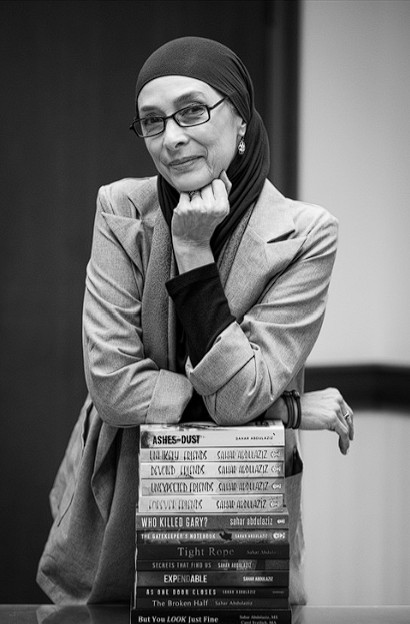
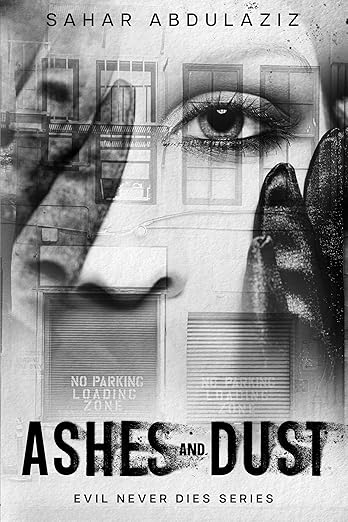
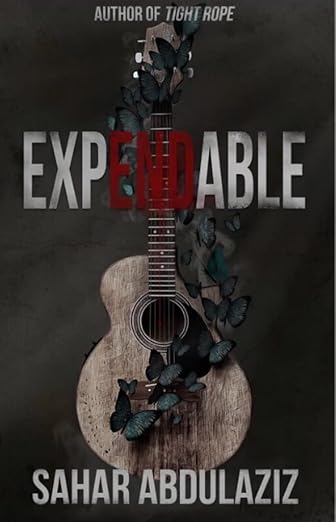
Suspense writer Sahar Abdulaziz is the author of seventeen books–including BUT YOU LOOK JUST FINE, THE BROKEN HALF, TIGHT ROPE, EXPENDABLE, UNLIKELY FRIENDS, ASHES, WHO KILLED GARY? and others. She specializes in writing psychological thrillers, suspenseful narratives, thought-provoking social commentary, and clever satire. However, there’s nothing that Sahar enjoys more than exercising her demonic proclivity for crafting intricate, multifaceted protagonists confronting formidable challenges. The more dysfunctional, the better.
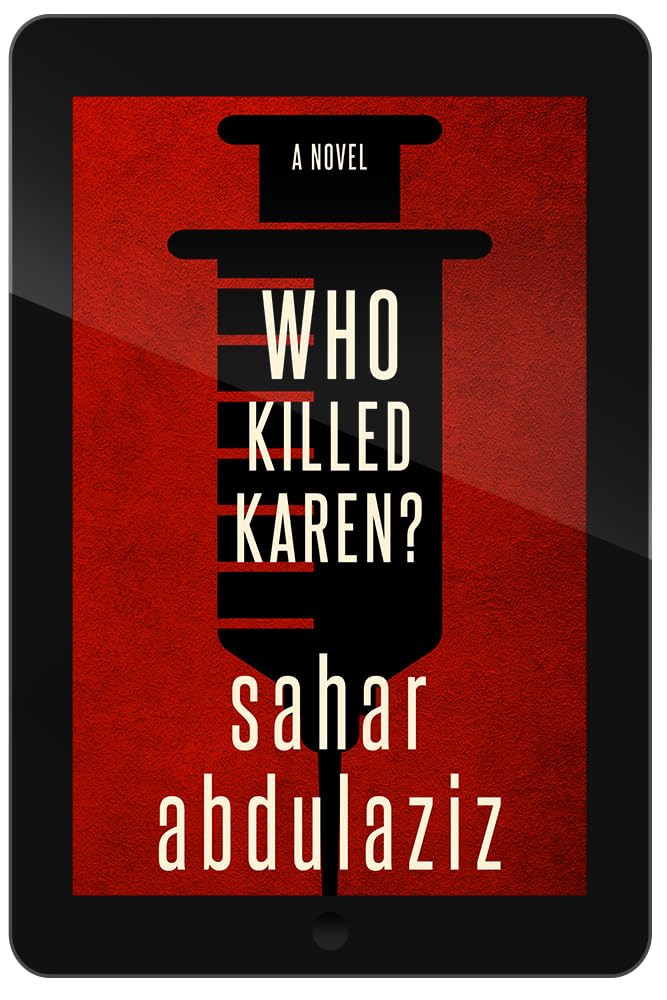
Let’s start by talking about your latest book, WHO KILLED KAREN? Tell us about the plot!
SAHAR ABDULAZIZ: WHO KILLED KAREN? is the second razor-sharp mystery in my Saber Squad series, where Grandville Luxury Apartments gains a new tenant—and another dead body. Kay W. Smith, a vicious book reviewer with a talent for tearing down even the best writers, has made more enemies than friends online and off. When her relentless critiques turn deadly, the quirky and loveable Saber Squad must jump in to unravel the mystery of her death before the killer strikes again. After all, karma doesn’t forget, and apparently, it’s got a hit list.
VENTRELLA: This is the second book in your “Saber Squad” series. How many do you think you will do?
ABDULAZIZ: Three books: Book 1: WHO KILLED GARY? Book 2: WHO KILLED KAREN? and Book 3: WHO KILLED KEVIN? I’m currently writing the third book, plotting yet another murder in Grandville while gently bringing closure to the series.
VENTRELLA: Tell us how you chose the names for your dearly departed characters.
ABDULAZIZ: As you know, the online world and its memes made the names ‘Karen,’ ‘Gary,’ and ‘Kevin’ infamous. Being “a Karen” is often depicted as a specific type of personality that exhibits privileged behavior at the expense of others, typically targeting those who are minding their own business and simply trying to coexist in peace. However, the muse for my fictional Gary came from an honest, real Gary who, like his Karen counterparts, lived to make others’ lives miserable. This particular ‘Gary’ was predictably annoying, entitled, arrogant, a rule enforcer, but also the biggest rule breaker. He was a know-it-all who knew little, but wouldn’t hesitate to harass, hassle, report, or lecture anyone they felt had ‘broken the rules.’ This ‘Gary’ also made the time to report individuals, call the police, and write lengthy diatribes on the apartment complex’s website, outlining said infraction almost with psychotic glee. It was truly something to behold..
One day, after reading pages and pages of Gary’s lengthy carping posts about so-called tenant infringements—posts that included bylaws, local codes, quotes, and Bible passages that did not exist. He made them up. Full disclosure, I was sent these pages from someone, one of Gary’s many victims, who thought I’d find his musings hysterical, which I did. And that, I’m afraid, tells you all you need to know about my warped sense of humor. Anyway, after finishing, through laughing tears and a bad case of hiccups, I thought to myself, “I’m surprised nobody’s killed this guy.”
Because, you see, the thing is, we all know a Gary, a Karen, or a Kevin, not in name, but in persona. They are people we encounter daily, whether at work, on the bus or train, waiting in line at the supermarket, buying a cup of coffee, or in my character’s case, a neighbor in the same building. They get in our face, pointing their fingers with righteous indignation, believing the world operates by their rules, and their rules alone.
Now, let’s be clear: I said this in jest. I’m a writer; we do that… more often than I should probably admit here. However, that fleeting thought, once spoken aloud, was enough to spark the entire premise of my first mystery novel—a story I decided should unfold in my imaginary apartment complex called The Grandville Luxury Apartments—a place where the walls are thin, secrets run deep, and karma always gets the last word.
VENTRELLA: Given the serious nature of most of your previous work, what made you move in this direction?
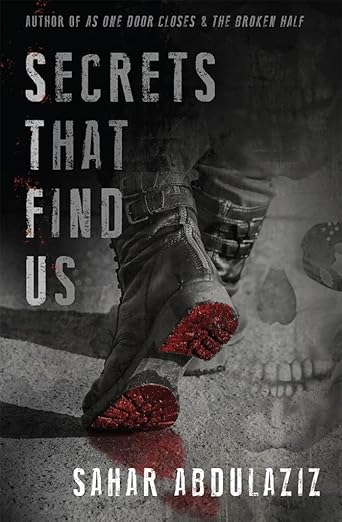
ABDULAZIZ: Great question. I have written many fictional novels that tackle complex topics. For example, my book, THE BROKEN HALF, is a raw, unflinching story of resilience, survival, and the high cost of reclaiming one’s life. AS ONE DOOR CLOSES—the legacy of generational child abuse, the trials of survivorship, and the difficult path toward healing and closure. SECRETS THAT FIND US—the deadly cost of loyalty, betrayal, and secrets too powerful to stay hidden. TIGHT ROPE: resilience, activism, and the high cost of speaking out. EXPENDABLE: the hidden horrors of an abusive marriage, and the fierce strength and bravery it takes to break free. ASHES & DUST: betrayal, sorrow, corruption, power, and how to survive in a rigged system.
There are more, but you get my point—heavy, heavy stuff. The messy, painful stuff I refuse as a writer to shy away from addressing, despite how uncomfortable it may make others. I use fictional suspense and thriller stories to weave these topics into my writing because writing fiction provides me more freedom to reveal truths. I don’t write to sensationalize violence. I write to expose malevolent, often lethal behaviors in the hope of bringing to light what predators, abusers, liars, and manipulators wish to keep locked away and in the dark. I use my writing platform to shed light on matters that are often hidden, misrepresented, misunderstood, or worse—ignored.
With that said, and while I will always tackle challenging subjects, I needed a break, or what I call a “palette cleanser,” not for my taste buds but for my brain, where I store all these characters and their dysfunctional stories. I also wanted to try a different approach—still unpacking challenging issues, such as entitlement, bullying, grief, addiction, friendships, love lost and found, and others— but through humor, because laughter is disarming. It allows us to look at ourselves with clear eyes while having the power to transcend pain and replace tears with joy.
VENTRELLA: Your previous series was also more light-hearted with an unusual main character who appears unlikable at first. Could you tell us a bit about that series?
ABDULAZIZ: Ah, you mean The Abernathy & Crane series: UNLIKELY FRIENDS, DEVOTED FRIENDS, UNEXPECTED FRIENDS, and FOREVER FRIENDS. Four novels that celebrate found family, fierce friendships, and the beautifully messy art of holding on when it’s time to let go. It also offers a heartwarming and humorous look into life’s most unexpected connections, from curmudgeonly beginnings to courageous goodbyes and all the humanly chaotic, cherished moments in between.
My main character is Irwin Abernathy. He’s an old-school librarian who prefers books to people, until a stubborn, free-spirited young girl crashes into his life and refuses to leave. Irwin despises change and wants solitude. Harper needs change and wants a friend. What follows is a charming, oddball friendship that proves even the most unlikely connections can change everything.
VENTRELLA: What did you do to make the reader identify with him?
ABDULAZIZ: Through honesty. I never rush or bypass the emotions my characters feel; instead, I pay tribute to them.
I portrayed Irwin, a man grieving and afraid to let anyone get close to him again for fear that they, too, will be taken away, as authentically and as organically as I could envision, warts and all. I also conveyed through Harper’s eyes and heart how she would see and understand him. Lastly, I tried to write each story about the human connection—loyalty, unlikely heroes, and the chaos of friendship in a perfectly imperfect world, with room enough to let my eccentric, hilariously funny characters take care of the rest.
VENTRELLA: How has your educational and professional background assisted in writing your books? (Do you think, for instance, it has helped you in creating your characters’ emotional backstories?)
ABDULAZIZ: Absolutely. I hold a Bachelor’s in Psychology and Education, as well as a Master of Science degree in Health, Wellness, and Administration. I also worked for many years as a domestic violence and sexual assault counselor/advocate. I firmly believe that my education and past experiences working with diverse communities and individuals have shaped my writing. What a waste if they hadn’t.
VENTRELLA: How have you found your publishers? And what advice might you have for new authors trying to get their book published?
ABDULAZIZ: Writing is my passion and career, while publishing is a business. With that said, I have met incredibly kind and thoughtful publishers whose love for books and commitment to producing a fabulous product is as strong as my appetite for writing for them.
I have also crossed paths with less desirable publishers and have made it a practice to steer clear of them.
I could bore your reading audience with a list of advice on what to do and not do when it comes to publishers. Still, the biggest takeaway I can share is this: Never underestimate the impact of your story but practice due diligence. Please don’t rush into publication with the first publisher willing to look at it. You worked hard to create that book, and finding a home for it that will cherish, promote, and protect your story is as important as seeing your name on the cover. Choose wisely. Pour yourself into your story, but always remember that publishing is not a favor, but a business. Make sound choices.
VENTRELLA: Do you think it’s important for writers to avoid controversial topics on social media?
ABDULAZIZ: When you say controversial, do you mean take a stand against things like oppression, racism, fascism, bigotry, sexism, book banning, and hate? Um, no. I don’t believe in avoidance. Avoidance is nothing more than comfortable cowardice. Pretending not to see doesn’t make the hate disappear. In fact, it provides room for growth and expansion, as we can see happening now.
Wasn’t it George Orwell who said, “The most effective way to destroy people is to deny and obliterate their own understanding of their history.”
History, based on fact rather than conjecture and outright lies, is a valuable lesson. If we as writers avoid controversy, calling out the oppression, then aren’t we colluding… and helping to create the very conduit to our collective self-destruction?
Fun fact: The written word is under attack. Truth is under siege. Writers are being targeted. Books are being banned. People are being ‘disappeared.’ How do we ignore that? How do we look the other way, pretending we don’t see?
So no… if you’re a writer, be a writer. Take a damn stand. Use your words for change, or stay quiet, move out of the way, and let the rest of us do our job.
VENTRELLA: How much of writing is innate? In other words, do you believe some people are born storytellers who just need to learn technique? Or can anyone become a good writer?
ABDULAZIZ: Writing is a skill, a craft that can be taught and practiced, which means there is always an opportunity for improvement.
For many, writing is also a calling. For natural storytellers, it’s a way to bring their story to life on paper. Does that mean all storytellers are natural writers? No. However, all writers are natural storytellers, and the stories they write become increasingly adept the more they are willing to put in the effort to hone their craft.
To answer your question, most people, if they are willing to put in the work, can become good writers. However, there are those among us who are innately great writers, and they serve as inspiration and aspiration.
VENTRELLA: Writers are told to “write what you know.” What does this mean to you?
ABDULAZIZ: Not much.
Because it’s disingenuous, it’s one of those catchphrases that confuse new writers until it becomes clear that it means writing about what you have felt and experienced, even if it’s secondhand through observation, and using those experiences to create layered and complex new worlds and characters. However, it also means being willing to seek out what you don’t know and learn through research and by asking the right people the right questions.
For example, when writing my suspense/thrillers, I have incorporated many dark sociopathic personalities between my pages. To get inside their heads, I have had to do the legwork—hours of research, investigation, watching documentaries, asking questions of those who work in the field, and reading—lots and lots of reading.
Not knowing something doesn’t automatically prevent me from writing about it, but it does make me, as a writer, responsible for learning enough information about the sociopathic personality and how they navigate the world so I can accurately portray this personality disorder and their dysfunctional, malevolent behavior.
The same can be said for every character I write. Irwin Abernathy in UNLIKELY FRIENDS is a librarian. I’ve never been a librarian. My character, Sydney Hanes, in ASHES & DUST is a vigilante. Nope—haven’t dabbled in that either. Terri Ann Stone in SECRETS THAT FIND US is dead. Last checked, I still have a pulse, so…
VENTRELLA: What makes your fiction unique? In other words, what is it about your stories that makes them stand out against all the other similar stories out there?
ABDULAZIZ: I want to think it’s me. That I make my fictional stories unique because they are uniquely my stories to tell, and the characters of each different story have chosen me to be the catalyst of their telling. I feel this way for several reasons, but most importantly, because the characters in my books feel as real to me as living, breathing people do. They aren’t tropes; they are complex, multifaceted personalities with backstories, histories, dreams deferred, hopes crushed, loves lost, and promises broken. They are the people we meet, hope to meet, wish never to meet, or have met but didn’t appreciate, letting them slip away. They are those we fall in love with, lust with, love to hate, and hate to love. They are those we enjoyed, those we lost, and those we wish we had never known. They are the admired, the venerated, the distrusted, the feared. They are all of this and more, and the paper is their stage.
VENTRELLA: What is your writing process?
ABDULAZIZ: I sit down and write. Some days I write a little. On other days, I write a lot. Some of it is good, but most of it sucks. Once in a while, I astonish myself with something great. At other times, I find myself staring at the computer screen, wondering if my time would be better spent watching someone else break in a new T-shirt. The bottom line is this: I show up. Not because there’s some unwritten rule that says I have to write every day to be successful, not because I’ll get into trouble if I don’t, not because of a deadline, but because I know that if I don’t invest in myself and my craft, who will?
VENTRELLA: Do you outline heavily or just jump right in, for instance?
ABDULAZIZ: I don’t write outlines. I have nothing against outlines; in truth, I think they are brilliant and would make my book writing go much smoother if I did. However, I can’t pull it off. I’ve tried everything—index cards, a board, notebooks, sticky notes, computer programs—you name it. No success. My creative brain doesn’t work that way.
I am what is called a pantser. I jump in and write without knowing where I’m going, how I’ll get there, or who I might meet along the way. I keep the story, plot, and characters in my head, with little physical notes other than the occasional back of a napkin, an envelope, or a bill, where I jot down an idea I need to remind myself about. I also send myself text messages and emails.
I research as I write. I have been known to stop in the middle of a chapter and read a half-dozen novels about a topic to get the single sentence my character says right.
Naming my characters can take me weeks. If the name doesn’t feel right, I can’t ‘see’ them, and in order for me to write them, I need them to communicate with me. At other times, I know the name of the character before the title of the book. Go figure.
If I find I have written myself into a corner and don’t know where to take the plot, I empty the dishwasher. I fold laundry, bake bread, call a friend, or take a walk. I walk a lot because I seem to be attracted to corners.
If everything else fails, I contemplate the problem as I drift off to sleep, trusting that my subconscious will step in to provide the solution. It often does but I look like crap the next day…bags under the eyes, sallow skin—some scary stuff.
I highly do not recommend my manic writing methods. I do, however, strongly endorse finding what works for you and honoring it. There’s no right or wrong, as long as you show up for you.
VENTRELLA: What do you do to avoid “info dumps”?
ABDULAZIZ: I don’t find info dumps an issue when I write. Timelines are what drive me crazy.
However, when I need to convey information pertinent to the character, plot, or story, I interweave those facts with either the character’s actions, through the reflection of others watching, or shared conversations.
Dialogue is an excellent tool, as long as you don’t info dump in it. Don’t do that. It’s one thing for a character to list off a textbook of facts about a found dinosaur bone (boring, I have Google, too), and another for a character to lift it in the air, squinting and coming to the realization that in their hands they hold a rare find—one that will secure their position in the paleontology department at their university. It’s all in the delivery.
VENTRELLA: In this rapidly changing market, with the publishing industry evolving daily, how important is the small press?
ABDULAZIZ: Small presses serve as the first line of defense. They welcome writers overlooked by the magical gatekeepers of the Big 5. They are often willing to publish controversial books that no one else would dare to release. They are eager to introduce new ideas and take risks for the love of creativity, rather than solely for marketability. Yes, they are still in the business to make money, but they also provide a haven for many creatives whose books need a home.
VENTRELLA: Who do you like to read?
ABDULAZIZ: I’m a huge reader of various genres. I prefer books with intricate plots, plenty of brilliant quirky characters, fearless prose, and well-paced dialogue.
I also enjoy reading non-fiction. I can dive into a novel about the history of pharmaceuticals like it’s nobody’s business, then read a cookbook, followed by a whodunit. As a kid, I read the backs of cereal boxes, comic books, and the Nancy Drew series. As a teen, I thought it was a good idea to do a book report on THE HAPPY HOOKER. And no, it turned out not to be a good idea.
VENTRELLA: Who are your favorite authors?
ABDULAZIZ: I enjoy the works of Agatha Christie, Sir Arthur Conan Doyle, Anthony Horowitz, Richard Osman, Octavia E. Butler, Matt Haig, Kirsten Miller, Erik Larson, Isabel Wilkerson, Fredrik Backman, Camille Pagán, and Malcolm Gladwell.
VENTRELLA: With a time machine and a universal translator, who would you invite to your ultimate dinner party?
ABDULAZIZ: Ha! Like I, of all people, would throw a dinner party!
Now, Michael, if you had asked me who I would have invited to an escape room on a deserted island with a killer on the loose, that’s easy!
Hercule Perot, Miss Marple, Elizabeth Best (From Richard Osman’s The Tuesday Murder Club), and Sherlock Holmes. Dr. Watson is also invited.
Posted on January 16, 2025 by Michael A. Ventrella
I’ve edited over a dozen anthologies as of this writing, so of course I think they are very important to new authors trying to advance their careers. It’s certainly helped my own as well.
As I’ve said elsewhere on this blog, making connections is very important. Because of connections I have made, I have been invited to be in anthologies with big name authors. People aren’t buying these anthologies for me, but for [insert Famous Author names here]. Fortunately for me, there’s my story next to the New York Times Bestseller in that anthology. Maybe I’ll pick up some new readers because of it.
So look for short story anthologies that will help you get started and will be impressive on your personal bibliography.
Let’s start by discussing the two main kinds of anthologies. There are Collection anthologies and, more commonly, Themed anthologies.
A Collection anthology would be something like “The Great Stories of Edgar Allen Poe” or “The Best Science Fiction Stories of the Year.” The stories themselves could be about anything.
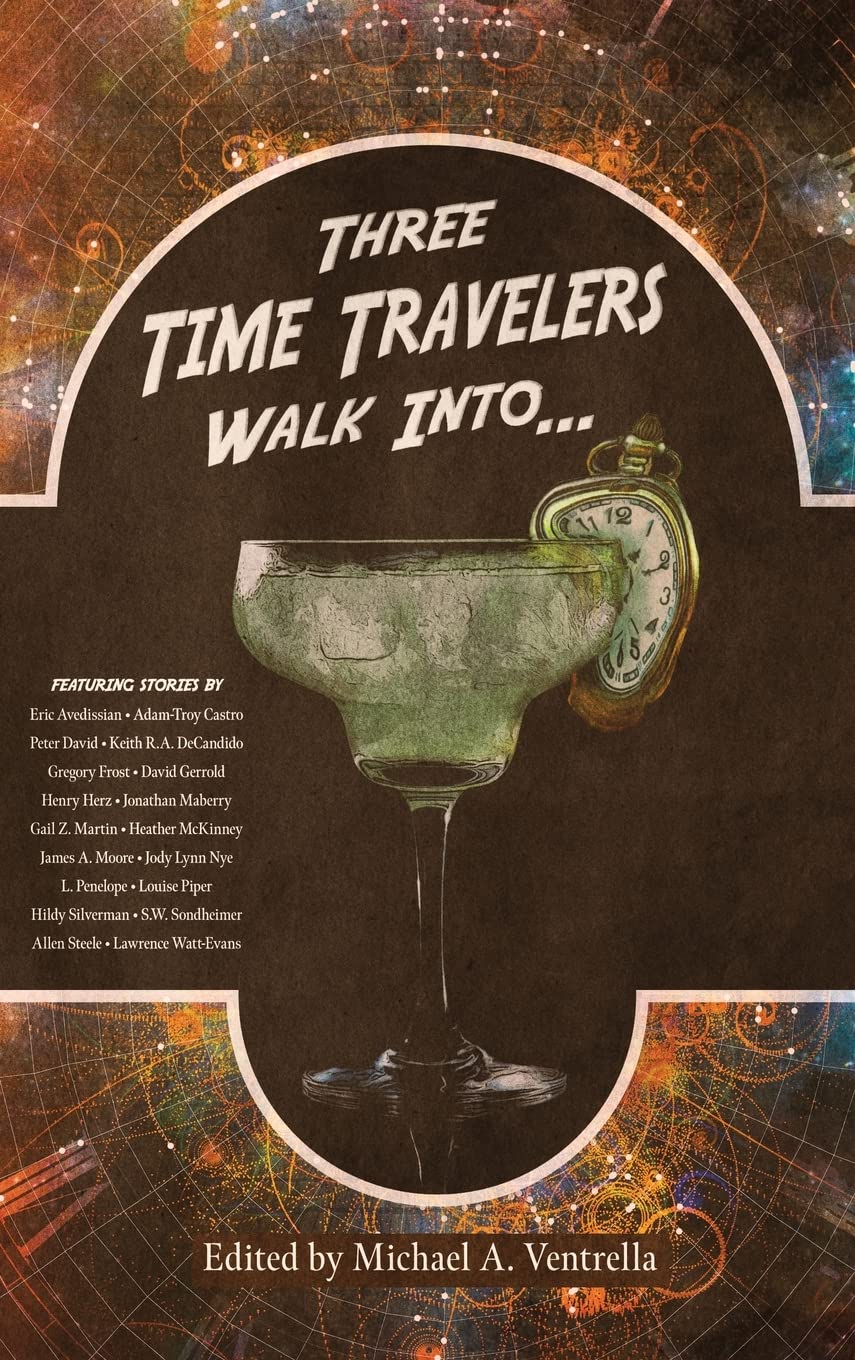
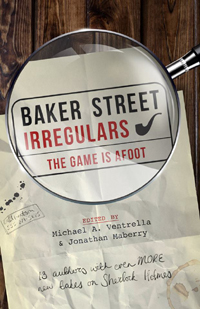
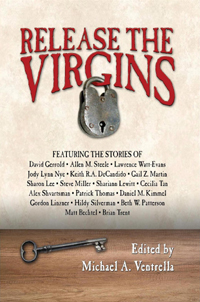
A Themed anthology would be more common, and among mine are Three Time Travelers Walk Into… (time traveler stories with real people); Across the Universe (a collection of “what if” stories about The Beatles); and Baker Street Irregulars (Sherlock Holmes stories if Sherlock was not a British man in the late 1800s). My anthology Release the Virgins was the vaguest theme, in that each story could be any genre but only had to include the phrase somewhere in the story.
Themed anthologies are a great way to read stories you may like. I wouldn’t be interested in a themed anthology about football or fishing, but someone might. Find an anthology looking for stories that you would like to read, and your enthusiasm for the story you will write for it will show. Seriously, don’t try to “write for the market” if you aren’t personally interested in what the editor wants. They’ll know.
There have been a few ways I have had my anthologies published, so let’s look at them separately.
The first is to convince a publisher that it’s a good idea and worth the investment. For the Baker Street Irregulars anthologies, I spoke to my friend and New York Times Bestselling author Jonathan Maberry about it, and he agreed to co-edit it with me. I already had an agent for it, and she shopped it around until a publisher decided it was a good idea. She then also arranged a deal for the audio books. Once that was done, we opened it up and asked for contributions, posting the submission guidelines. We sorted through all the stories and picked the ones we liked best. And yes, there were some first-time authors who were accepted.
The second way many small publishers are doing these days is through Kickstarter, which is an online way to raise money for projects. That’s how most of the rest of my anthologies were done. With Kickstarter, you can invest in the project (“pre-order your book now!”) and if the budget goal is met, you will be billed and if it isn’t, then no loss to you.
The publisher figured out a budget needed to break even. “We need to pay the authors X amount per word and the book will be around 75,000 words, and we need to pay the cover designer and the proofreader and then there’s the cost of printing all the books and mailing them and other incidental costs…”
We then start contacting some Big Name authors that will help to sell the book. Not all of them say yes (of course) but the ones that do say yes want to participate. It’s a win-win for them in this sense: They don’t have to do the work to write the story if the Kickstarter is not successful, and if it is, they know they’ll be accepted and know they’ll get paid. (They still have to go through the editing process like everyone, of course.)
The publisher then offers incentives for readers to do more than just pre-order a book. If you donate a bit more, we’ll also send you autographed copies! A bit more, and one of the authors will name a character after you (that’s called “Tuckerization”—look it up). Pay more and get bookmarks or mousepads with the book cover or candy or whatever else the publisher can think of to raise enough money to reach the goal.
There is a deadline: If the goal isn’t reached within a month, the book won’t be published. This has happened to a few friends of mine but fortunately, so far, all my Kickstarter anthologies have been successful.
If the goal is reached, a deadline is set for story submissions and we open it up for stories to fill the spots left over after the Big Name authors’ stories are squeezed in.
Here’s the important thing: At this point, there is a level playing field. With my anthologies, I opened up submissions and got stories from well-established authors as well as brand new writers, and all that mattered to me as the editor was how much I liked the story. I already have my Big Name guys, I already know the book will be published, so all I cared about at that point was making it the best possible anthology I could.
Ironically, because of space considerations, I almost always had to reject really good stories, some of which I liked better than the stories submitted by the Big Name authors! But, as I remind myself always: Writing is an art but Publishing is a business.
So look into anthologies as a good way to break into the field.
Posted on November 7, 2024 by Michael A. Ventrella
It’s time for Philcon, Philadelphia’s oldest literary convention. It’s in New Jersey. (Look, it was cheaper, okay?)
I’ve been a guest at Philcon for years, and it’s always great to go back there and see so many of my friends. This year’s event will be on the weekend of November 22-24.
If I’m not on a panel, you’ll probably find me at the Fantastic Books table in the dealer’s room. Here’s my schedule:
Meet the Pros and Art Show Reception (Friday 10 pm): The “Meet-The-Pros” is an informal get-together of our program participants on the promenade, and is open for anyone to attend.
How Come the Humor in My Story Isn’t Working? (Saturday 5 pm): Because humor is subjective, it can be hard to explain how to make something “funny” to an audience at large. However, it can be a lot easier to explain why a joke may not be landing. So let’s workshop some laughter! Caitlin Rozakis (moderator), Randee Dawn, Michael A. Ventrella, Alex Shvartsman, Isabel J. Kim
Optimistic Futures That Didn’t Arrive (Sunday 11 am): There was a time when “the future” was the 1970’s, and it was assumed that by then everybody would have household robots and flying cars, and that mankind would expand gloriously into space, colonizing the moon, Mars, the outer Solar System, and proceeding to conquer the universe. Clearly, this future did not happen, and is no longer even our vision for the near future. Is this because the 1940s and 1950s were a more optimistic time, or was the science fiction of that era simply more given to wish-fulfillment? Michael A. Ventrella (moderator), Russell J. Handelman, Lawrence Kramer, Christopher Stout, Walter H. Hunt
Posted on October 27, 2024 by Michael A. Ventrella
My 2014 novel BLOODSUCKERS: A VAMPIRE RUNS FOR PRESIDENT has been out of print for a few years because Eric Flint’s Ring of Fire Press closed down after his death. It has now been reissued with a new cover from Fantastic Books. Here’s the press release they sent out for it:
It’s been a horrific election season. Supporters on both sides are quite certain the other candidate can’t be human. Maybe we’d be better off voting for an actual monster!
Should being outed as a real vampire disqualify one from running for the presidency of the United States?Michael A. Ventrella’s hilarious BLOODSUCKERS answers that question.
Disgraced journalist Steven Edwards considers the “Batties”—the loonies who believe that vampires are real and Norman Mark is one—just another crazy tin-foil-hat extremist group. Then someone shoots at Mark, changes into a bat, and flies away before Steve’s eyes, leaving him as the prime suspect. With the help of the Batties, Steve goes underground. The only way he can establish his innocence is by proving vampires exist—not an easy task while on the run from both the FBI and the bloodsuckers.
Fantastic Books is releasing a new edition of BLOODSUCKERS right now, timed to coincide with “the most consequential presidential election in American history.” But aren’t they all? We’ve been tuned in to news of this election non-stop for years; it’s time to take a break. Read BLOODSUCKERS, and put it all into perspective.
“A wild and thoroughly entertaining steampunk adventure featuring an improbable cast of historical figures, plenty of action, and lots of fun!” – Jonathan Maberry, New York Times bestselling author of Deep Silence and V-Wars









 Michael A. Ventrella