Interview with Kermit Woodall

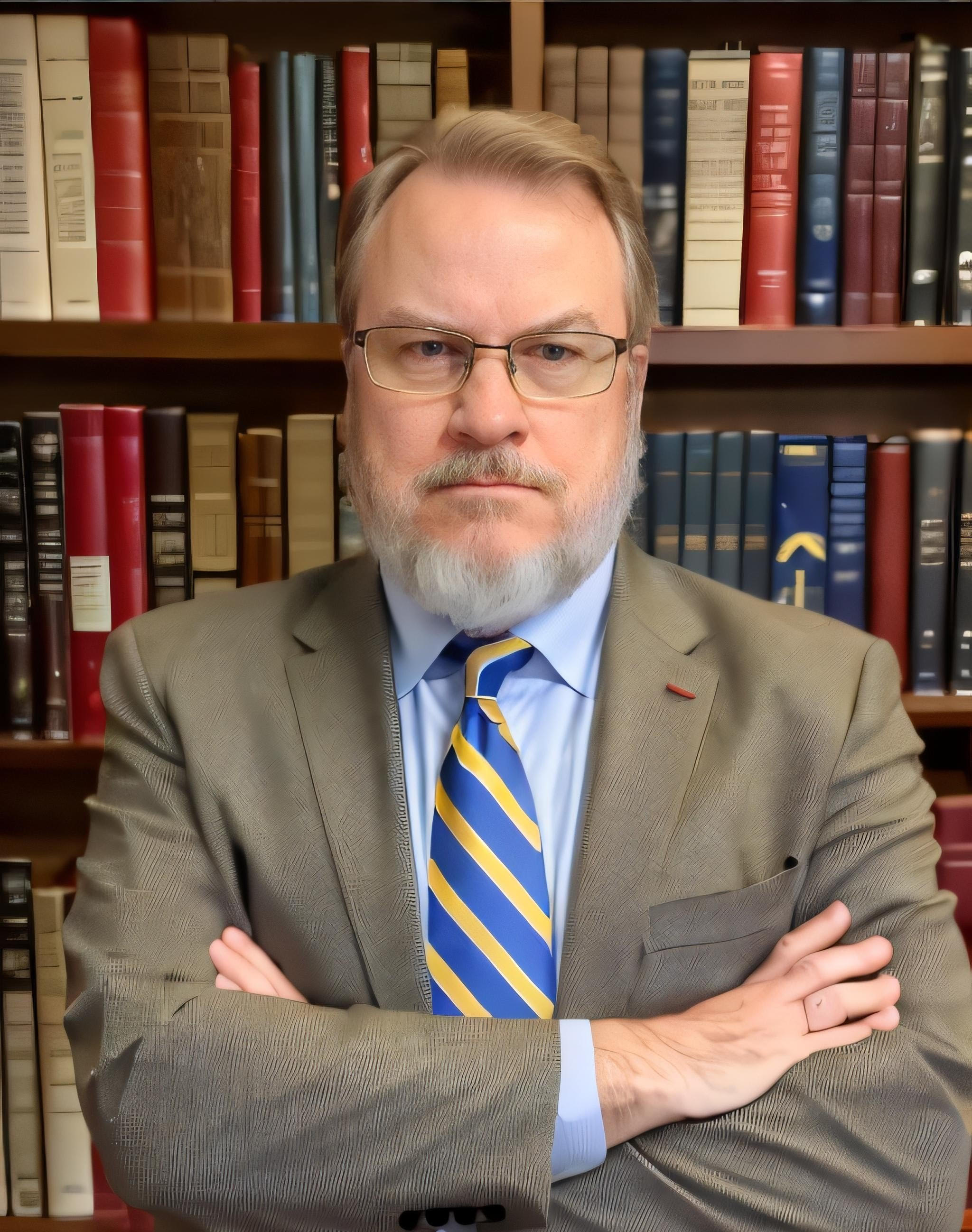
MICHAEL A. VENTRELLA: I’m pleased to be interviewing Kermit Woodall today! I first met Kermit back in college, where we both worked at the college radio station, and now he works with Amazing Stories magazine. Kermit is an omni-competent individual who grew up in a former bawdy house before relocating to his state’s capital city. His family includes many talented artists and an uncle who founded a The Church of Bigfoot. He has a passion for storytelling often exploring new ways to engage audiences.

Tell us a bit about the history of this magazine.

KERMIT WOODALL: Amazing Stories was the first Science Fiction magazine in the world. It was founded, and later losted, by Hugo Gernsback. Hugo’s first name for our genre was “Scientifiction” but later he invented the term Science FIction as well. He was even was the first person to create a definition for what science fiction is.

“By “scientifiction” I mean the Jules Verne, H. G. Wells, and Edgar Allan Poe type of story – a charming romance intermingled with scientific fact and prophetic vision.”

VENTRELLA: How did you become involved with the magazine?

WOODALL: Quite simply I read about Steve Davidson, Amazing’s owner and driving force, acquiring the trademark on the website BoingBoing.net – I then asked my friend, the late Bud Webster, if he knew Steve. Bud did. We were introduced and started making plans together. Steve and I see Science Fiction in similar ways. We also have terrible sense of humor and inflict them without regard to human life.

VENTRELLA: What are your goals for Amazing Stories?

WOODALL: We want to support more Science Fiction. You might say, “Hard Science Fiction”, but we say our goals are to seek out and publish entertaining stories based on real science and logical extrapolations into the future. Towards that, we revived the magazine for a few years, but we ran out of money raised through a Kickstarter funding drive and the magazine went on hiatus. Ultimately the problem was lack of subscribers and advertisers. At that point we switched gears to publishing weekly short stories, and serialized novels, on our website (amazingstories.com) as the ad income there supported the stories. We also invested more time in working with authors like David Gerrold, Allen Steele, John Stith, David Brin, and more to publish their books under our Amazing Selects imprint. That’s going exceptionally well.
VENTRELLA: If I recall, there is some sort of legal dispute with Steven Spielberg over the use of Amazing Stories for his old TV show. Can you tell us about that?

WOODALL: There was a dispute relating to the Apple TV revival of that show It was settled to our satisfaction and I really shouldn’t say too much more about that. Feelings would be hurt, lawyers could get involved, and no one wants that.

VENTRELLA: Tell us about the anthology (which, I must disclose, does contain my story “Impersonating Jesus”).

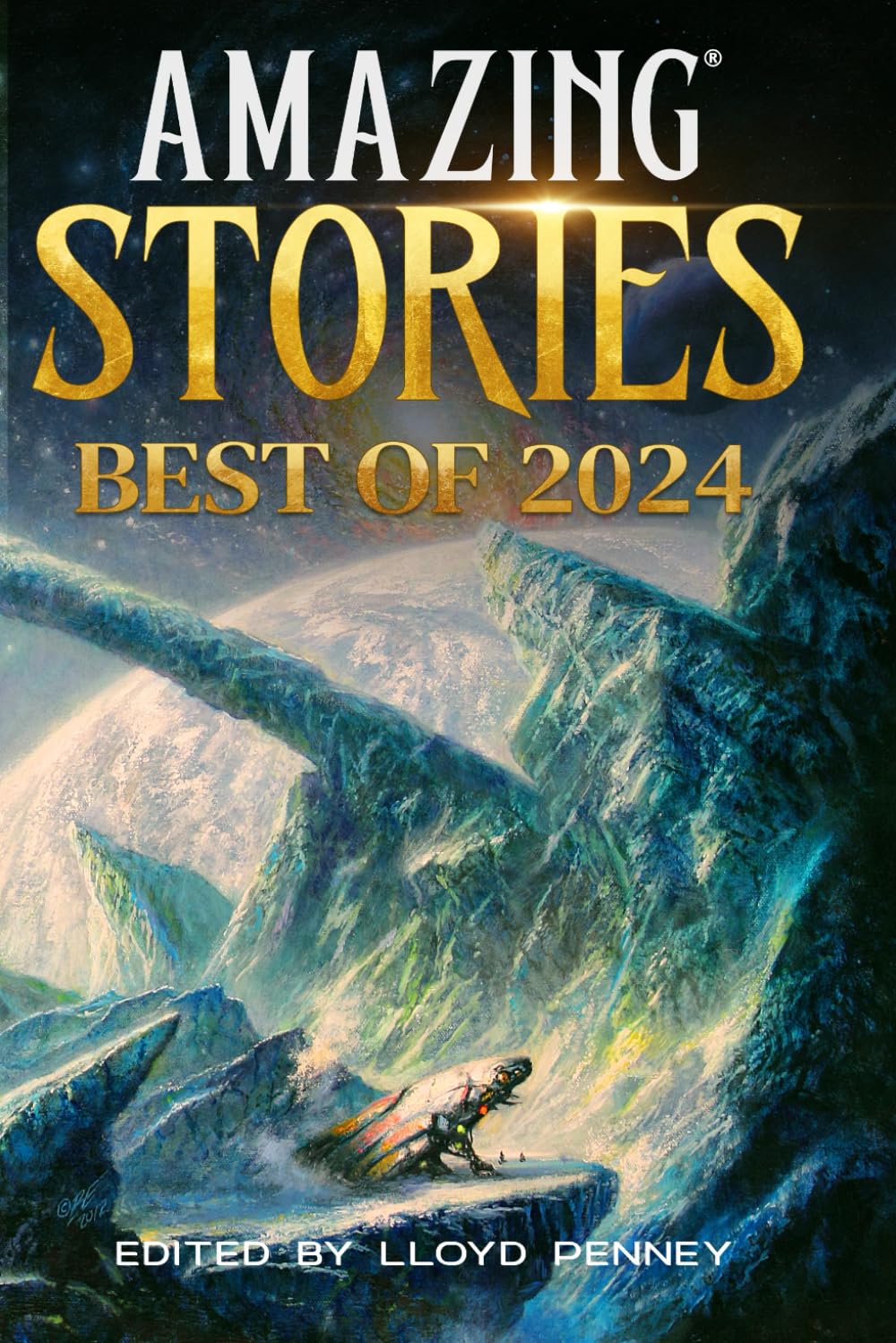
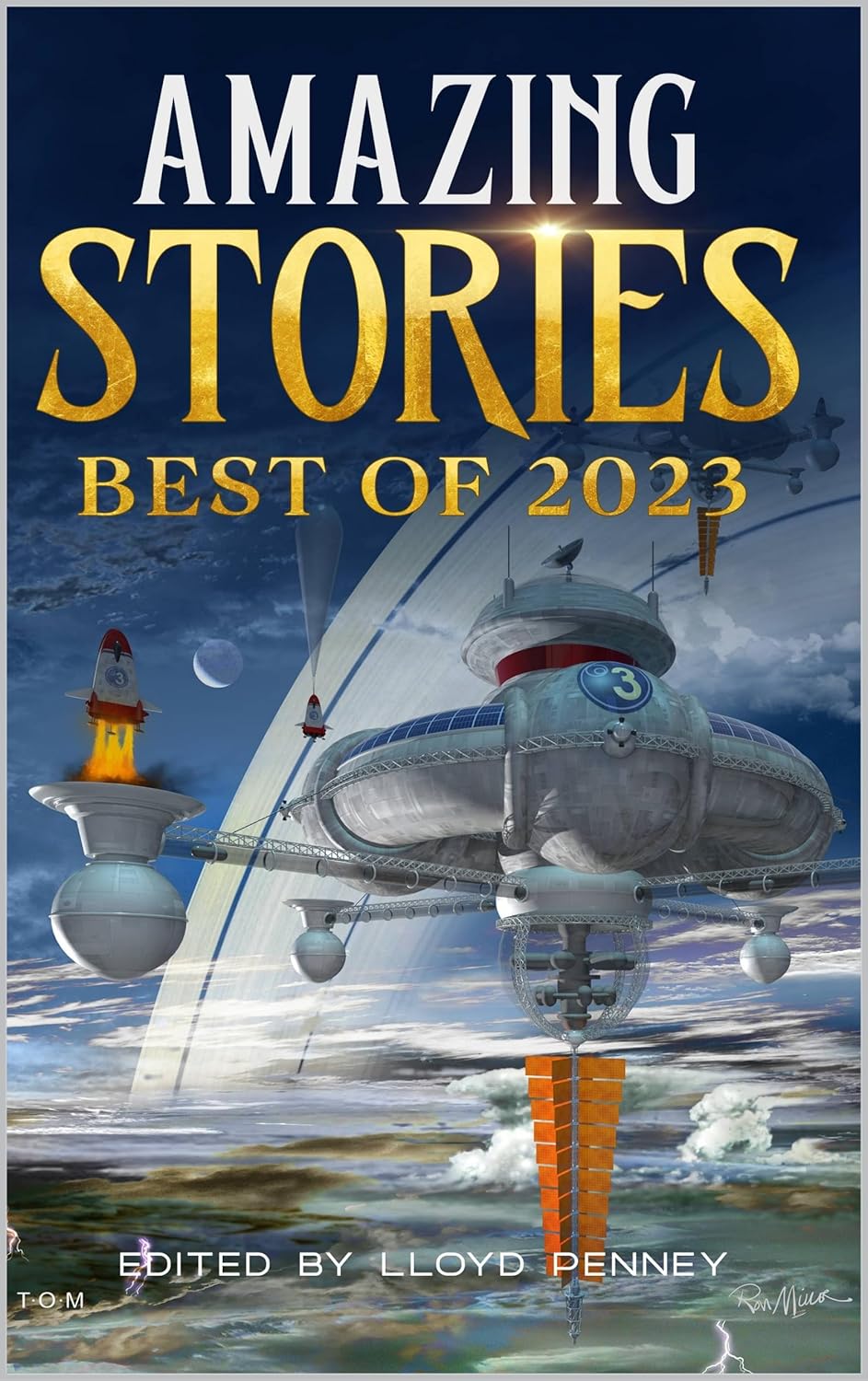
WOODALL: Last year we published Amazing Stories: Best of 2023 and this year we did it again, but we decided that using the same name would be confusing, so we called it Amazing Stories: Best of 2024. It’s that last number/digit that prevents the confusion.

The books are collections of the best stories of the year from our website. Not only does this get our authors in a print format, but we pay them again for their stories! We just published Amazing Stories: Best of 2024 even as I answer your questions. Seriously. You can find it at Amazon and any of the other bookstores listed here.

VENTRELLA: Do you plan on doing that every year?

WOODALL: Wouldn’t you?

VENTRELLA: You’re clearly a fan of science fiction. Who do you like to read? Who are your favorite authors?

WOODALL: I lean strongly towards scientifically plausible stories. Unless it’s really funny. In no particular order here are the authors I rank the highest: Ron Goulart, R.A. Lafferty, Bruce Sterling, Robert A. Heinlein, Spider Robinson, Charles Sheffield, Isaac Asimov, Robert Sheckley, James Hogan, Allen Steele, Ray Bradbury, Theodore Sturgeon, Clifford Simak, Larry Niven (and Niven and Pournelle collaborations), Authur C. Clarke, Harry Harrison, John Varley, Vernor Vinge, David Brin, John Stith … And when it comes to fantasy there is only one. Terry Pratchett he wrote the best and most satiric fantasy ever! I’ve reread his Discworld books at least three times and will likely start again soon.

VENTRELLA: How much of writing is innate? In other words, do you believe there are just some people who are born storytellers but simply need to learn technique? Or can anyone become a good writer?

WOODALL: I think anyone can become a sort-of writer — but a good writer is a highly subjective thing though. Some people, through their upbringing and perhaps a creative environment, absorb a lot of good storyteller habits. So it seems to come more naturally to them, but I think they learned the craft nonetheless. It’s not innate in my opinion. I do think that through study and education you can learn how to write. However, if your imagination and creativity are lacking, your stories may not entertain.

VENTRELLA: What’s the best way to make the antagonist a believable character?
WOODALL: Make them not over the top evil but everyday evil. If you want the readers to really hate the antagonist, as others before me have pointed out, consider the Harry Potter series and Lord Voldemort vs Delores Umbridge. Voldemort is the personification of evil and power. Few of us know anyone that truly evil. But Umbridge is a more pedestrian incarnation of evil. I’ve had teachers who were unfair, even cruel, and most people I think have had similar. I even had a teacher in second grade who beat some of us (myself included) with a wooden paddle. (Yes, it was illegal and yes, she got fired and banned from teaching.)

If you’ve been watching politics for the last several years, then I’m sure you’ve realized that no amount of unbelievable behavior prevents you from being the bad guy.

VENTRELLA: Do you think readers want to read about “believable” characters or do they really want characters that are “larger than life” in some way?

WOODALL: I think they want someone they care about, that they can identify with, or “larger than life” who faces impossible odds. They want to root for them to win!

VENTRELLA: With a time machine and a universal translator, who would you invite to your ultimate dinner party?

WOODALL: Some of this is just the lack of funds to fly everyone to the same con so we can all have dinner and fun. In a few cases, time machines. Otherwise, just see my list of favorite authors above. Given only a one-time use time machine, then I’d go to England when Terry Pratchett was still alive and spend a day with him!

Writing groups are mostly worthless

Yeah, I know—many people will tell you that you should always find a writing group to help you with your work. That’s pretty standard advice.

Back when I had only one book out and was working on the second, I went to a writing group at a local Barnes & Nobles. Everyone gathered around and read from their works in progress, soliciting comments from the other writers. One fellow read his work and then people went around the room and said how much they hated it and how it would never be published in its current form. When it was my turn, I talked about how much I liked it, because it was really good. (What the people there didn’t know, but I did, was that the person reading the story was award-winning author Michael Flynn, who had numerous novels out already which you could get at that very same Barnes & Nobles. And I really did like what he had written; I wasn’t sucking up to him. Now, when he gave me comments about my story, I listened.)

The point is that a writing group is only as good as the people in it. If you write cozy mysteries and everyone in your writing group writes gothic horror, you’re probably not going to get very good feedback from them.

The mistake many authors make is in listening to the wrong people. You should pay attention to comments (especially from editors), but ultimately, it’s your story. Don’t let these people tell you what it should be.

For one of my novels, I asked for beta readers. I made sure these were people who had not only read my previous work but liked the genre. I uploaded a chapter a week or so and had them give comments. I’d ask them what they think would happen next, which allowed me to know if I had given away too much too early or if I had not given away enough. I asked what they thought certain characters would do. And sometimes they even had ideas better than my own. It was quite useful. (Also, it gave me deadlines to get the thing done, because I knew people were waiting to read the next chapter.)

But their advice and comments often contradicted each other. I had to decide which to pay attention to and which to ignore.

Too many new authors get comments and think they have to do what is suggested. No! You need to take into consideration who made the comment, what kind of story they like, what their experience is, and whether what they suggested is just bullshit you can ignore.

And that is why critique groups and writing groups can be bad.

Get a bunch of friends together and they won’t agree on what the best movies are, what’s best on a pizza, whose music is best—anything. That’s normal. That’s what you’ll get with any random sampling. We don’t all agree, and that’s what makes life interesting.

That’s not what you want.

No great literature has been written by committee. Have you ever watched the credits of an awful movie and notice there are twelve writers credited? With a committee, things get watered down so that everyone is willing to accept the compromise, but no one is thrilled about the final product. Well, you want a story people will be thrilled about! Don’t let the critics write the story for you.

If you can find the right people who will basically act as amateur developmental editors, giving you reasonable and productive criticism, then absolutely take advantage of it. But that is hard to come by, and I’ve seen too many authors go to critique groups and then try to take everyone’s advice and end up with a crappy end result.

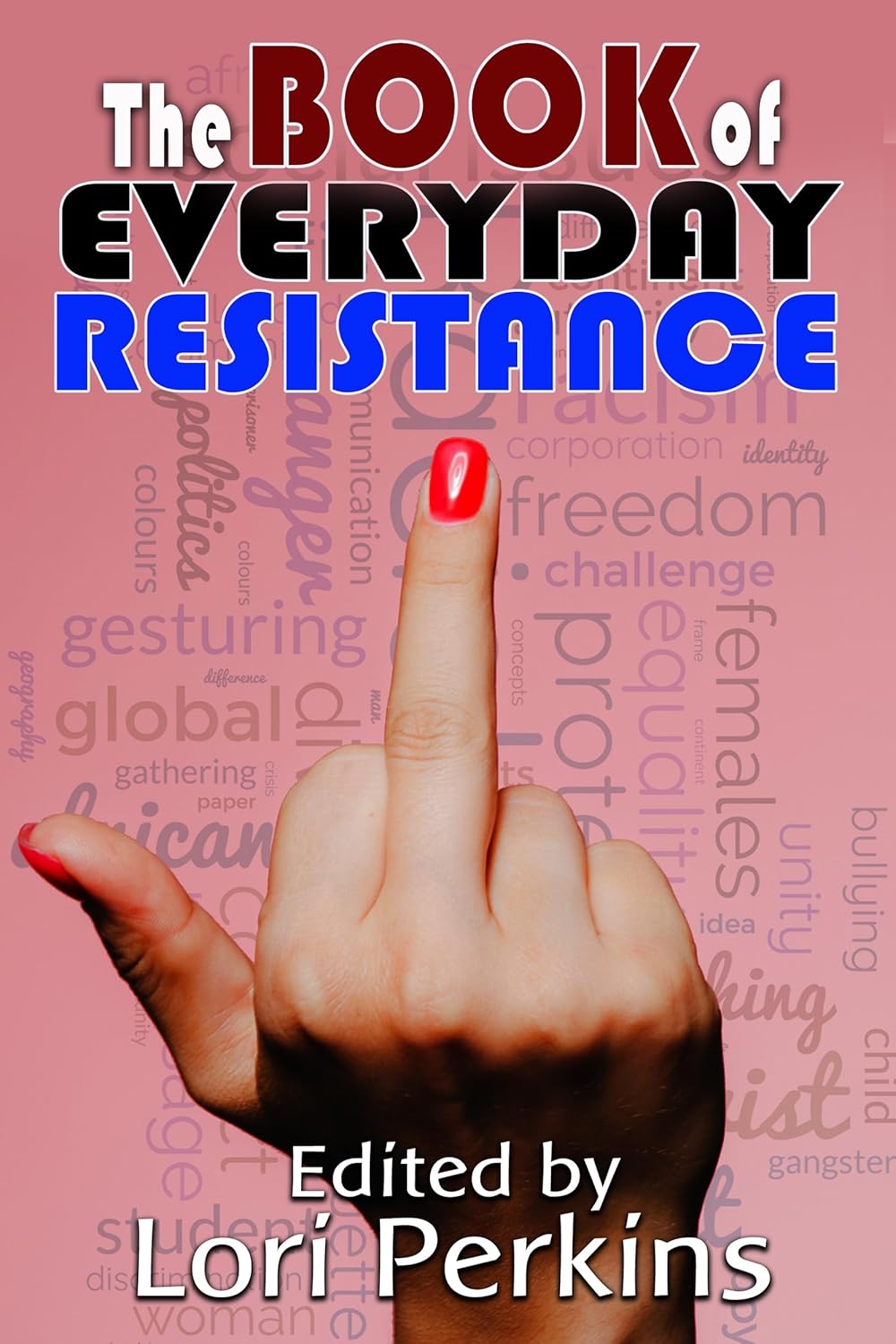
The Book of Everyday Resistance

The next four years are going to be difficult. Those of us who did not vote for this President are deeply concerned about the direction in which this country is now headed.

Agent Lori Perkins asked herself, “What can I really do?” and created THE BOOK OF EVERYDAY RESISTANCE — a collection of essays about what we can do to resist, how we resist, and why we resist. It includes my essay “Fighting Back.”

She has made the book available for FREE as a kindle download. A paperback will be available soon (although, obviously, that won’t be free.)

Get yours here!

A free writers’ conference

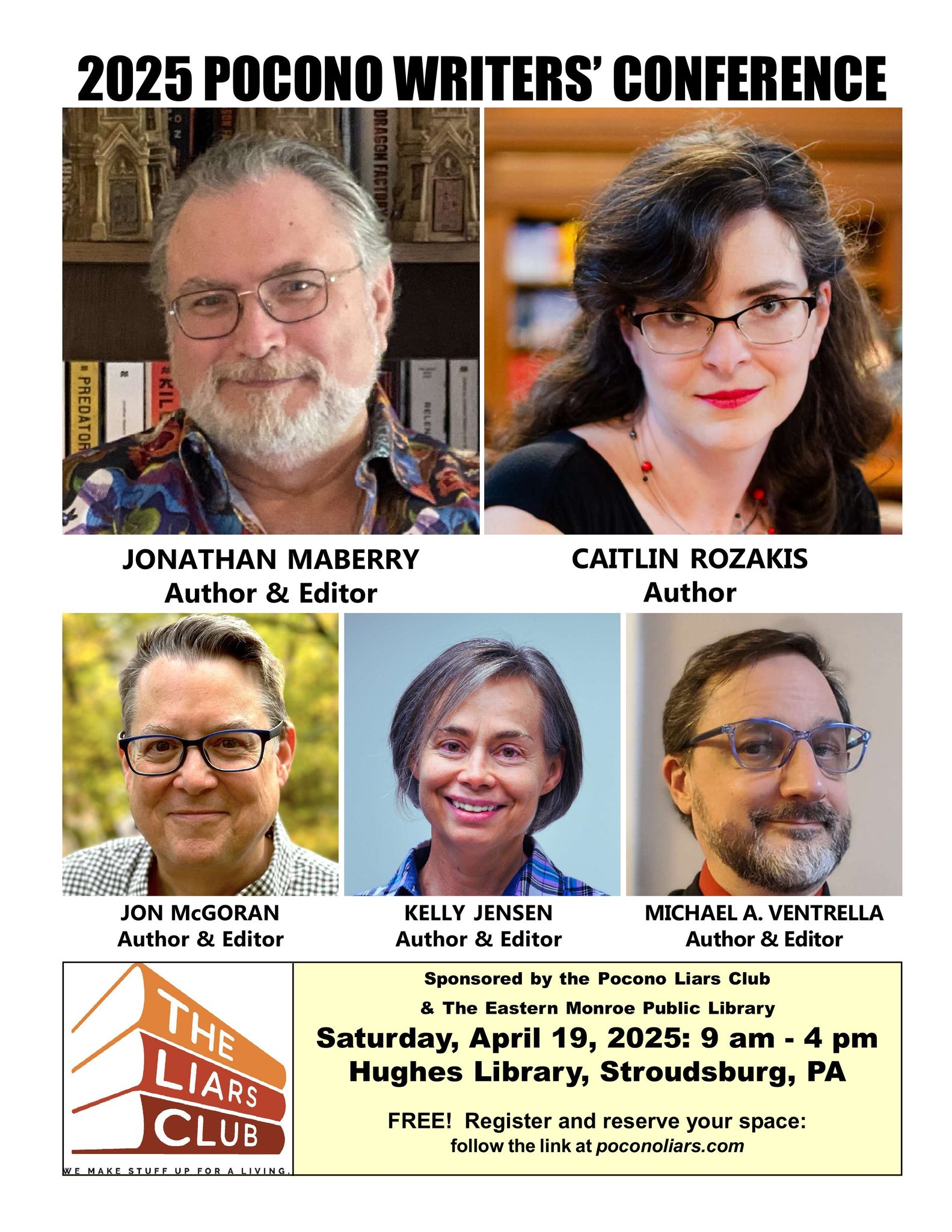
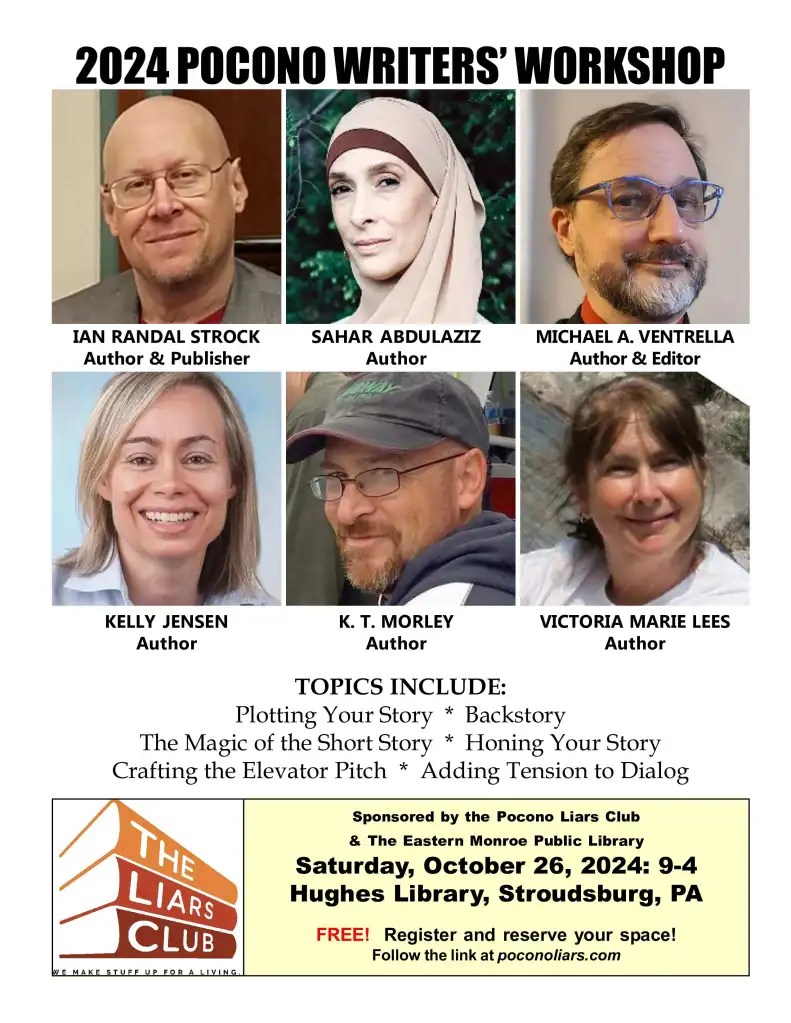
I started the Pocono Liars Club about 12 years ago and began hosting writers conferences at our local library. They’re free! If you’re going to be in the Poconos on April 19th, we still have spots available.

Why you should submit to anthologies

I’ve edited over a dozen anthologies as of this writing, so of course I think they are very important to new authors trying to advance their careers. It’s certainly helped my own as well.

As I’ve said elsewhere on this blog, making connections is very important. Because of connections I have made, I have been invited to be in anthologies with big name authors. People aren’t buying these anthologies for me, but for [insert Famous Author names here]. Fortunately for me, there’s my story next to the New York Times Bestseller in that anthology. Maybe I’ll pick up some new readers because of it.

So look for short story anthologies that will help you get started and will be impressive on your personal bibliography.

Let’s start by discussing the two main kinds of anthologies. There are Collection anthologies and, more commonly, Themed anthologies.

A Collection anthology would be something like “The Great Stories of Edgar Allen Poe” or “The Best Science Fiction Stories of the Year.” The stories themselves could be about anything.

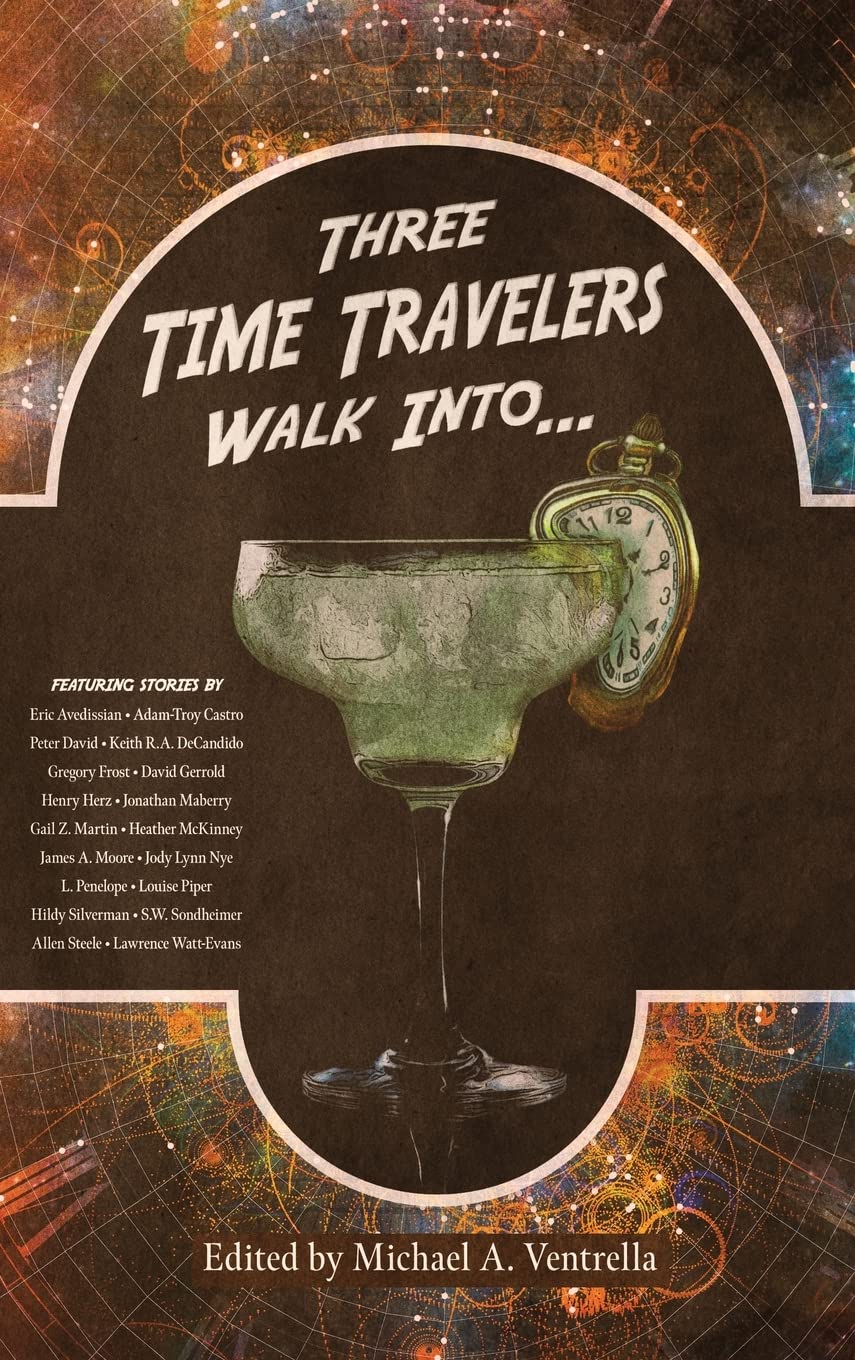
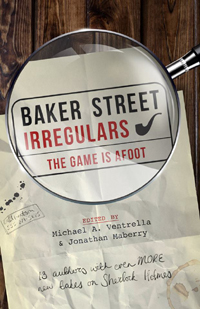
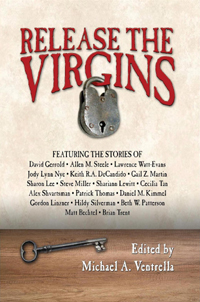
A Themed anthology would be more common, and among mine are Three Time Travelers Walk Into… (time traveler stories with real people); Across the Universe (a collection of “what if” stories about The Beatles); and Baker Street Irregulars (Sherlock Holmes stories if Sherlock was not a British man in the late 1800s). My anthology Release the Virgins was the vaguest theme, in that each story could be any genre but only had to include the phrase somewhere in the story.

Themed anthologies are a great way to read stories you may like. I wouldn’t be interested in a themed anthology about football or fishing, but someone might. Find an anthology looking for stories that you would like to read, and your enthusiasm for the story you will write for it will show. Seriously, don’t try to “write for the market” if you aren’t personally interested in what the editor wants. They’ll know.

There have been a few ways I have had my anthologies published, so let’s look at them separately.

The first is to convince a publisher that it’s a good idea and worth the investment. For the Baker Street Irregulars anthologies, I spoke to my friend and New York Times Bestselling author Jonathan Maberry about it, and he agreed to co-edit it with me. I already had an agent for it, and she shopped it around until a publisher decided it was a good idea. She then also arranged a deal for the audio books. Once that was done, we opened it up and asked for contributions, posting the submission guidelines. We sorted through all the stories and picked the ones we liked best. And yes, there were some first-time authors who were accepted.

The second way many small publishers are doing these days is through Kickstarter, which is an online way to raise money for projects. That’s how most of the rest of my anthologies were done. With Kickstarter, you can invest in the project (“pre-order your book now!”) and if the budget goal is met, you will be billed and if it isn’t, then no loss to you.

The publisher figured out a budget needed to break even. “We need to pay the authors X amount per word and the book will be around 75,000 words, and we need to pay the cover designer and the proofreader and then there’s the cost of printing all the books and mailing them and other incidental costs…”

We then start contacting some Big Name authors that will help to sell the book. Not all of them say yes (of course) but the ones that do say yes want to participate. It’s a win-win for them in this sense: They don’t have to do the work to write the story if the Kickstarter is not successful, and if it is, they know they’ll be accepted and know they’ll get paid. (They still have to go through the editing process like everyone, of course.)

The publisher then offers incentives for readers to do more than just pre-order a book. If you donate a bit more, we’ll also send you autographed copies! A bit more, and one of the authors will name a character after you (that’s called “Tuckerization”—look it up). Pay more and get bookmarks or mousepads with the book cover or candy or whatever else the publisher can think of to raise enough money to reach the goal.

There is a deadline: If the goal isn’t reached within a month, the book won’t be published. This has happened to a few friends of mine but fortunately, so far, all my Kickstarter anthologies have been successful.

If the goal is reached, a deadline is set for story submissions and we open it up for stories to fill the spots left over after the Big Name authors’ stories are squeezed in.

Here’s the important thing: At this point, there is a level playing field. With my anthologies, I opened up submissions and got stories from well-established authors as well as brand new writers, and all that mattered to me as the editor was how much I liked the story. I already have my Big Name guys, I already know the book will be published, so all I cared about at that point was making it the best possible anthology I could.

Ironically, because of space considerations, I almost always had to reject really good stories, some of which I liked better than the stories submitted by the Big Name authors! But, as I remind myself always: Writing is an art but Publishing is a business.

So look into anthologies as a good way to break into the field.

Two new books!


Two new books released this week — my 24th and 25th books overall!

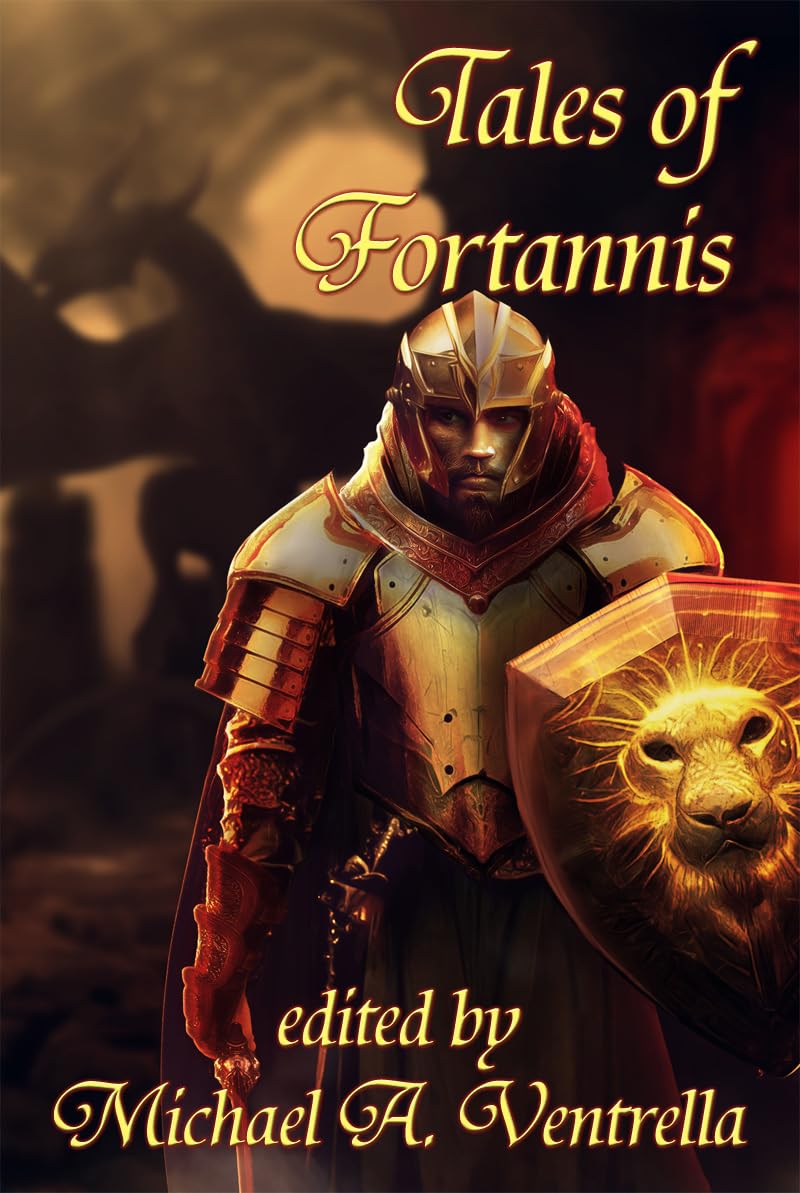
First is Tales of Fortannis — the collection of fantasy stories that take place in the land of Fortannis, where my fantasy novels appear. You’ll read stories from Derek Beebe, Susan Bianculli, Dominic Bowers-Mason, W. Adam Clarke, Jon Cory, Tera Fulbright, Jesse Grabowski, Christine L. Hardy, Henry “The Mad” Hart, Jesse Hendrix, Miles Lizak, Mark Mensch, Bernie Mojzes, Beth Patterson, Sarah Stegall, and Mike Strauss.

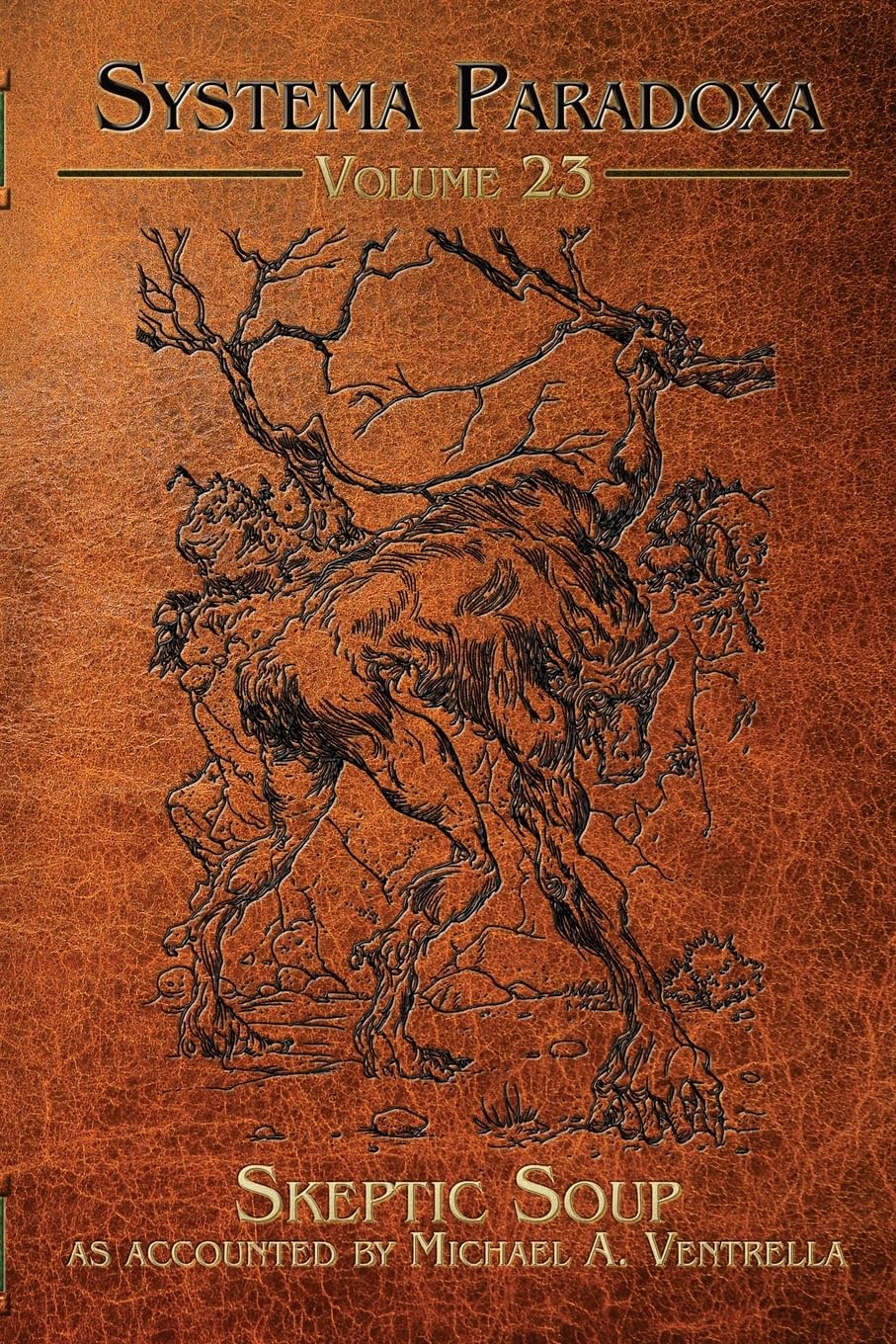
Second is my novella Skeptic Soup! It’s a humorous adventure involving three skeptical investigators checking out reports of a cryptid call the Gugwe. Here’s the blurb the publisher gave it:

There are creatures lurking in our world. Obscure creatures long relegated to myth and legend. They have been sighted by a lucky-or unlucky-few, some have even been photographed, but their existence remains unproven and unrecognized by the scientific community. These creatures, long thought gone, have somehow survived; creatures from our nightmares haunting the dark places. They swim in our lakes and bays, they soar the night skies, they hunt in the woods. Some are from our past, some from other worlds, and others have always been with us-watching us, fearing us, hunting us. These are the cryptids, and Systema Paradoxa tells their tales.

The internet: a cornucopia of informational videos, alternative news sources, and real-time footage of fantastic encounters too outrageous to believe. Or are they? Three friends for the video channel Skeptic Soup are out to debunk sensational claims, but when a first-hand account involving a missing boy takes them to the wilds of Canada, what they find may-or may not-align with their personal beliefs.Will they survive their foray into the field? Or worse, will they have to eat their words?

Check them out!

2024 Philcon Schedule

It’s time for Philcon, Philadelphia’s oldest literary convention. It’s in New Jersey.  (Look, it was cheaper, okay?)

I’ve been a guest at Philcon for years, and it’s always great to go back there and see so many of my friends. This year’s event will be on the weekend of November 22-24.

If I’m not on a panel, you’ll probably find me at the Fantastic Books table in the dealer’s room. Here’s my schedule:

Whose Line is it Anyway, SFF style! (Friday 7 pm): The panel where the rules are made up and the points don’t matter! Melody Cryptid (moderator)Abigail WelsherIan Randal StrockRandee DawnMichael A. VentrellaOdele Pax

A Funny Thing Happened on the Way to the Con (Friday 9 pm): A place to share our favorite, funniest, or most tragic convention stories. Michael A. Ventrella (moderator)Ian Randal StrockBrian T. PriceRoberta RogowTony Finan

Meet the Pros and Art Show Reception (Friday 10 pm): The “Meet-The-Pros” is an informal get-together of our program participants on the promenade, and is open for anyone to attend.

Reading (Saturday noon): Three authors each perform a 15 to 20 minute reading of their work. Randee DawnMichael A. VentrellaPhil Giunta

Autographing (Saturday 1 pm): A time to be sure to catch certain authors for autographs. Eric AvedissianMichael A. VentrellaPhil Giunta

Meet the Editors: Anthology Edition (Saturday 3 pm): Anthology editors discuss what goes into creating their publications, from the economics of staying viable in the electronic age to getting appropriate submissions. Michael A. Ventrella (moderator)Christine NorrisAnn StolinskyStorm HumbertAlex Shvartsman

How Come the Humor in My Story Isn’t Working? (Saturday 5 pm): Because humor is subjective, it can be hard to explain how to make something “funny” to an audience at large. However, it can be a lot easier to explain why a joke may not be landing. So let’s workshop some laughter! Caitlin Rozakis (moderator)Randee DawnMichael A. VentrellaAlex ShvartsmanIsabel J. Kim

Book Launch Party for Celestial Echo Press (Saturday 6 pm): Celestial Echo Press invites you to a reading and signing by many of the authors in “Ruth and Ann’s Guide to Time Travel”, Volume I and Volume II. Join us as we travel through time with some of your favorite authors, old and new. Ann Stolinsky (moderator)Carol GyzanderGordon LinznerEf DealPhil GiuntaJoanne McLaughlin, Michael A. Ventrella

Book Launch Party for eSpec Books (Saturday 8 pm): The eSpec Books Annual Launch Party – Please come help us celebrate our new releases with food, fun, prizes and loads of authors and their books. Danielle Ackley-McPhail (moderator)Carol GyzanderTy DragoTeel James GlennChristine NorrisHildy SilvermanMichael A. VentrellaEf DealMike McPhailRobert E Waters

Optimistic Futures That Didn’t Arrive (Sunday 11 am): There was a time when “the future” was the 1970’s, and it was assumed that by then everybody would have household robots and flying cars, and that mankind would expand gloriously into space, colonizing the moon, Mars, the outer Solar System, and proceeding to conquer the universe. Clearly, this future did not happen, and is no longer even our vision for the near future. Is this because the 1940s and 1950s were a more optimistic time, or was the science fiction of that era simply more given to wish-fulfillment? Michael A. Ventrella (moderator)Russell J. HandelmanLawrence KramerChristopher StoutWalter H. Hunt

Bloodsuckers reissue!

My 2014 novel BLOODSUCKERS: A VAMPIRE RUNS FOR PRESIDENT has been out of print for a few years because Eric Flint’s Ring of Fire Press closed down after his death. It has now been reissued with a new cover from Fantastic Books. Here’s the press release they sent out for it:

It’s been a horrific election season. Supporters on both sides are quite certain the other candidate can’t be human. Maybe we’d be better off voting for an actual monster!

Should being outed as a real vampire disqualify one from running for the presidency of the United States?Michael A. Ventrella’s hilarious BLOODSUCKERS answers that question.

Disgraced journalist Steven Edwards considers the “Batties”—the loonies who believe that vampires are real and Norman Mark is one—just another crazy tin-foil-hat extremist group. Then someone shoots at Mark, changes into a bat, and flies away before Steve’s eyes, leaving him as the prime suspect. With the help of the Batties, Steve goes underground. The only way he can establish his innocence is by proving vampires exist—not an easy task while on the run from both the FBI and the bloodsuckers.

Fantastic Books is releasing a new edition of BLOODSUCKERS right now, timed to coincide with “the most consequential presidential election in American history.” But aren’t they all? We’ve been tuned in to news of this election non-stop for years; it’s time to take a break. Read BLOODSUCKERS, and put it all into perspective.

Pocono Liars Writers Workshop

Over a dozen years ago, I founded the Pocono Liars Club with permission from Jonathan Maberry and the Philadelphia Liars Club. We’ve since hosted free conferences and workshops. This years’ workshop is coming up soon. If you are interested in attending, you can reserve a spot here!


My Capclave 2025 Schedule

I’ll be at Capclave near Washington DC the weekend of September 27. This is a reader-oriented convention for speculative fiction whose motto is “Where Reading is not Extinct!” The Guest of Honor this year is Matt Dinniman.

Here’s my schedule:

This One Time… (Friday 8 pm): It may not have been at band camp, but we are involved in stories our whole life. From a young age to the current day, something is almost always happening. Panelists tell brief funny stories from their life, career, and friends. With Morgan Hazelwood, Ian Randal Strock, and Jean Marie Ward.

Hold My Beer (Friday 10 pm): Just when you thought the world couldn’t get any stranger, this happened. A discussion of the current world. No topic off the table. Trigger Warning. With Danian Jerry, Jennifer R. Povey, Sheree Renée Thomas, and Jean Marie Ward.

Reading (Saturday 1 pm): I’ll be reading one of my stories! Out loud, so people can hear it.

Tribute to the Further Adventures of Grignr the Barbarian (Saturday 10 pm): Panelists and the audience read from “The Further Adventures of Grignr the Barbarian” without breaking up. Or not. Join the fun! With Sarah Avery, Morgan Hazelwood, Ian Randal Strock, Mary G. Thompson, and Jean Marie Ward.

So You Want to Be an Editor (Sunday 11 am): Well, it can be a lot of fun, but it isn’t for the fainthearted. You have to bring big vision, big heart, discipline, and helluva a lot of patience and time. Come with your questions and ideas for future projects (is there an anthology you’ve always wanted to read? A chapbook or chapbook series you’ve long wanted to create? A magazine or indie zine you’d love to edit with kindred spirits and friends?) If you can imagine you, you can create it. Let’s go! With Scott H. Andrews, Kel Coleman, Joshua Palmatier, and Sheree Renée Thomas.

Public Versus Private Faces (Sunday 12 noon): Time to put on the game face. That statement signals that a person needs to take on a public persona contrary to their private lives. How does one manage the difference? What do you do when you don’t want to be in public but the moment requires it? With Inge Heyer, Barbara Krasnoff, and L. Marie Wood