Interview with Larry Hodges

MICHAEL A. VENTRELLA:  I’m pleased to be interviewing author Larry Hodges today. His web page is here. Larry, tell us about your latest work!

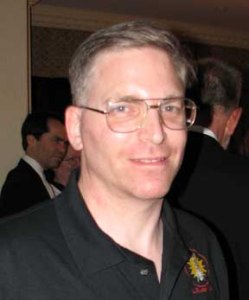
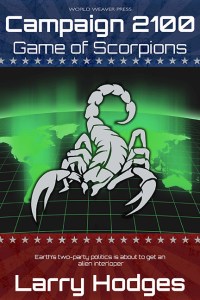
LARRY HODGES: My new novel, CAMPAIGN 2100: GAME OF SCORPIONS (from World Weaver Press), dramatizes and satirizes politics in a new sub-genre, campaign science fiction. larry1_smThe novel covers the election for president of Earth in the year 2100, when the world has adopted the American two-party electoral system. A father decides to buck the system and run for president of Earth, taking on his own daughter with a third-party moderate challenge – with an incredulous alien ambassador along for the ride.
Presidential politics has dominated the news for years, and few stories are more compelling than a bare-knuckle, fight-to-the-finish political campaign. And yet, where are the SF stories that cover this? CAMPAIGN 2100 is West Wing in the 22nd Century. The underlying theme of the novel is moderation in politics; some will read it as a Moderate Manifesto.

VENTRELLA: How did you go about finding a publisher?

HODGES: One of the toughest decisions for a new author is whether to try and get an agent, or go directly to publishers. I decided to try both, and sent numerous queries. For agents, I mostly used http://www.agentquery.com. For publishers, I mostly used http://www.ralan.com. It took three years – three years of checking email every three minutes – but then, one day, I received a note from a publisher that they really liked the novel – only . . . [and there followed a list of things that they’d like to see rewritten]. I did the rewrite. With the publisher’s blessing, I also had the novel critiqued at The Never-Ending Odyssey (an annual writer’s workshop for graduates of Odyssey), and did more rewriting from that. I sent the rewrite to the publisher, and from there on I checked email every three seconds for many months. And then came the response, which I printed out and put on my bulletin board: “I’m pleased to offer you publication with World Weaver Press for the novel CAMPAIGN 2100: GAME OF SCORPIONS…”

VENTRELLA: How did you first become interested in writing?

HODGES: I’ve been reading science fiction & fantasy since elementary school. It was inevitable that at some point I’d start writing it. My first story was “The Snowflake,” written circa seventh grade, which featured a guy read about a snowflake warning in the newspaper, and rants about how stupid that is, that they meant a snow warning. Then he sees the same snowflake warning on the TV, on the radio, from friends, and he keeps sarcastically correcting them. It ends with a giant snowflake falling onto and demolishing his house.

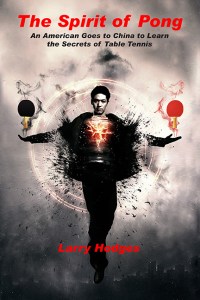
Surprisingly, it wasn’t science fiction that turned me into a professional writer – it was table tennis. Yes, ping-pong. In high school, when I wasn’t reading SF, I was training in this Olympic sport, and became first a top player, and then a top coach. (I’m in the USA Table Tennis Hall of Fame.)SpiritofPong-cover-med I began writing coaching articles, and then books on table tennis. I was hired as director and a coach for table tennis at the Olympic Training Center in Colorado Springs, and between training sessions, I began to write SF. I now have over 1600 published articles and eleven books – seven table tennis, five SF/fantasy, which adds up to twelve since one is a table tennis fantasy novel.
VENTRELLA: How do you make your protagonist a believable character?

HODGES: CAMPAIGN 2100 really has four main characters – an ensemble cast. I decided that each would get their own introductory chapter. Each had to have some major issue to deal with that affected the plot, while developing them as memorable characters.

• Toby, the de facto “main character” (since he’s the one running for president of Earth), is introduced in chapter one, which is five years before the rest of the novel. President Corbin Dubois is being sworn in as the new president of Earth – and Toby ran his campaign, assisted by daughter Lara. Only he now realizes he’s made a terrible mistake, thinking, What have I done? He’s supposed to stay on as Corbin’s political director, but decides to resign. Corbin blackmails him, threatening his daughter if he leaves, and Toby ends up staying – but leaves us with the cliffhanging thought, What can I do to fix this? His character is developed as he faces a huge conflict – his desire to fix his mistake in making Dubois president, while not destroying his daughter’s future. The novel really takes off when he finally goes to war with his own daughter! He is a gold mine of conflict – inner conflict over his past support of Dubois, his battle with his daughter, and various campaign issues; and external conflict as he runs for president against Dubois.

• Twenty-two, the alien ambassador, is introduced as she’s diving into Earth’s atmosphere on her way to landing at the seat of world government. She’s excited, wondering about this new world and its politics as she naively converses with her overly adoring ship’s computer. We learn a terrible secret about her, which the reader knows but no one in the story will learn of until the very end. And then we see the alien point of view during first contact – and how both sides react when it turns into a disaster.

• Bruce, who also helped Toby run the Dubois campaign (but quit early on when he realized it was a mistake), is a professional table tennis player. He’s introduced as he’s playing for the U.S. championship. His great intelligence and sarcasm is highlighted throughout, with him simultaneously carrying on four conversations (with his opponent, the umpire, people in the crowd, and his thought computer), and then, right when he’s about to win . . . he makes a big decision. He’s such a flamboyant character that he’s easy to write, but he can be irritating, and so it’s a high-wire act making sure he goes the Han Solo rather than the Jar Jar Binks route.

• Feodora, the tiny Russian general who is running for president, is built up in advance by hints about her almost super-hero status. When she’s introduced, she’s stuck in bureaucratic meetings, representing Russian in talks with China, Japan, Korea, and others. Her character is built up via the contrast between her somewhat whimsical and sarcastic comments there, and her contrasting thoughts. Campaign 2100 Front Final-sm(She’s practically a superhero, and so throughout the novel she is showcased doing over-the-top things.) We get a flashback history lesson on how she shot and killed the Russian lead general, took command of Russian troops, and led them to a surprising victory. Feodora originally wasn’t intended to be a major character, but when she first appeared halfway through the book in the first draft, she pretty much took over, dominating the story whenever she appeared. At the behest of critiquers, I rewrote the story so she could appear sooner. I also had to send her on various journeys to get her off the stage so the other characters could get attention!
VENTRELLA: Which of your characters was the hardest to write and why?

HODGES: The toughest was probably Toby, simply because I had to be careful that he wasn’t overshadowed by the interesting and flamboyant Twenty-two, Bruce, and Feodora. He was the heart of the story, as he struggled with his inner demons over his guilt in making Dubois president and taking on his own daughter, and his desire to make up for this by running for president. The other three were very easy to write, once I had their characters down – the naïve goody-goody with a secret alien; the brilliant in-your-face sarcastic Bruce; and the over-the-top almost superhero and yet soft-spoken Russian general Feodora. One key thing about writing all four of them is that I considered them all different facets of myself (or facets I wanted to be), and so would just become that part of me when I wrote that character.

VENTRELLA: Do you think readers want to read about “believable” characters or do they really want characters that are “larger than life” in some way?

HODGES: It’s a balancing act, but for the type of story I was writing, I needed larger than life characters, such as Feodora and Bruce. But they were balanced off by the far more believable Toby, who comes off as a more regular guy in an extraordinary and highly public position.

VENTRELLA: What makes your fiction unique? In other words, what is it about your stories that makes them stand out against all the other similar stories out there?

HODGES: I thought long and hard about what I wanted to write about, balancing my strengths and interests versus what readers might want to read. I think all new writers need to do this. I decided that I wanted to write at least three different novels, each one unique – and then I’d decide which of these sub-genres to focus on:

A political satire – CAMPAIGN 2100: GAME OF SCORPIONS. What was unique about this that it created a whole new SF subgenre – campaign science fiction. I asked myself the simple question (also noted above): “Presidential politics has dominated the news for years. Few stories are more compelling than a bare-knuckle, fight-to-the-finish political campaign. And yet, where are the SF stories that cover this?”

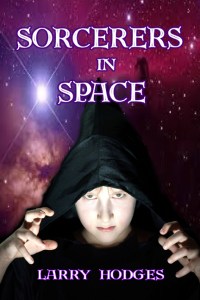
A humorous fantasy – SORCERORS IN SPACE. What was unique about this? It was potentially a new series that covered historical events but replaced the main characters with sorcerers. In this case, the novel covered the U.S.–Soviet space race of the 1960s, but with sorcerers instead of astronauts/cosmonauts. Maybe I could be the next Terry Pratchett!

A table tennis fantasy – THE SPIRIT OF PONG. What was unique about this? Well . . . how many table tennis fantasy novels are there?

VENTRELLA:  Hey, come on. My novel BLOODSUCKERS: A VAMPIRE RUNS FOR PRESIDENT is also “campaign science fiction.”  (INSERT SMILEY FACE)

What is your writing process? Do you outline heavily or just jump right in, for instance?

HODGES: This is another thing that new writers struggle with. When I first decided to write Campaign 2100, I spent a huge amount of time outlining it in great detail. Sorcerer-in-Space-cover-medThis is now some top writers operate, such as Connie Willis, who is famous for doing detailed outlines of every chapter – and then writing the novel out of sequence, writing whichever chapter she feels like writing that day. And she’s won more major awards than any other SF writing – eleven Hugos and seven Nebulas. The other extreme would be a writer like Stephen King, who only has a vague idea what he’s writing about when he starts, and often writes a huge amount before he figures out what the story is about. Another example might be Isaac Asimov, who often started with a general idea of what the story would be, and with an ending, and then wrote to that end.
So I tried the Willis method, and began to write. But it didn’t work for me. I kept coming up with creative ideas that I had to ignore, since I had already outlined what was supposed to happen, and if I changed things, then subsequent chapters wouldn’t work. And so I tried to squelch my own creativity! The result for me was rather drab writing, and it was also pretty boring to write. I finally put aside the detailed notes, and instead did a very general outline of each chapter, about one or two sentences each, and went from there – along with an ending I wanted to work toward. Often chapters would go in directions I hadn’t foreseen, and I’d just go with it – but always I’d manage to bring it back on course toward the planned ending. This method worked for me, and I’ve since adopted this.

VENTRELLA: Writers are told to “write what you know.” What does this mean to you?

HODGES: Some people mistakenly think this means write what you know now. What it means to me is two things: 1) write about stuff you know and enjoy, because you can write well about things you know, and if you enjoy it, the writing is fun; 2) research the stuff you don’t know, either because you need it in the story, or because you want to learn about something and then write about it. I’m an amateur presidential historian – I can name all 44 presidents, their term of office, and all sorts of trivia on them. I know a lot about presidential politics, and so when I wrote Campaign 2100, I knew what I was writing about – other than that thing that it was 84 years in the future, and took place in settings all over the world that I knew nothing about, with all sorts of unexpected topics coming up. And so I became an expert on such diverse topics as Tanzania; the South China Sea; Antarctica; blue whales and narwhals; wheat production; submarine bases; Brodmann Area 10, which is the moral judgment center in the brain; the United Nations; and the Hindu caste system.

VENTRELLA: What do you do to avoid “info dumps”?

HODGES: That’s a tricky subject, as it’s so easy to fall into the “As you know, Bob” syndrome, since that’s the easiest way to let the reader know what the characters already know. For Campaign 2100, it was a serious problem, in that readers needed to learn about the history – our future – as well as the political system. And so I had First Contact, bringing in the alien ambassador Twenty-two. Readers learn about Earth’s history (our future) and the political world of 2100 at the same time as the alien – and if I wrote it well, then readers will be as incredulous as Twenty-two!

VENTRELLA: What advice would you give to a starting writer that you wish someone had given to you?

HODGES: Learn the rules guidelines for writing before breaking them. There are few rules, just guidelines that range from strongly recommended to general ones, and you should understand them all – and then, when you have reason to, break them mercilessly. It’s okay to explore breaking these rules, but always have a specific reason for doing so, or your work will likely come off as amateurish. Writing is both art and craft, and you need to do both.

VENTRELLA: Who do you like to read? Who are your favorite authors?

HODGES: I mostly read science fiction & fantasy and history. My favorite authors for many years were the three most famous grandmasters – Isaac Asimov, Arthur C. Clarke, and Robert Heinlein. I read their complete works by the time I finished middle school. I periodically go back and reread some of their works; last year I reread the Foundation series from Asimov. In recent years my favorite writers have been Robert J. Sawyer and Jack McDevitt. Sawyer consistently brings us thought-provoking SF on a wide range of topics, such as his recent QUANTUM NIGHT. I read much of McDevitt, but my favorites are the Alex Benedict series, where we have a guy who researches ancient relics – but the relics are things from our future! Very interesting stuff. And yet, I’ve been debating whether to broaden my reading to some of the classics. I was on a panel with Sawyer at the recent Lunacon SF convention, and he recommended just that. After reading QUANTUM NIGHT, I’m now 60% through Stephen King’s 11/23/63, which is fascinating.

VENTRELLA: What projects are you working on now? What can we expect next from you?

HODGES: I wrote 17,000 words of the sequel to Campaign 2100 (which was 124,000 words long), but I’ve put it on hold to see how the first volume sells. If it does well, expect more futuristic campaign politics as our moderate extremists move into space, running the campaigns (or running for office themselves) in local star groups! I’ve also outlined sequels to Sorcerers in Space and The Spirit of Pong, and also have plans for several other potential novels.

Lunacon Masquerade

I had a great time hosting the costume masquerade competition at the Lunacon convention recently. Have a look!

My Lunacon 2016 schedule

sawyer_skull_w480

Robert Sawyer is the one on the right

I will be at Lunacon this weekend, one of the oldest science fiction conventions in the country. The Guest of Honor is Robert Sawyer, and I’m anxious to meet him in person having interviewed him here on the blog and talked to him on Facebook many times.

My schedule is very full (like I like it) and I’m honored that they have asked me to be the host of the Masquerade competition. Should be fun!

Promoting Your Book (Friday 6 pm): What works when promoting a book? Do book-signings really help a new author? Are bookmarks and/or postcards effective at garnering attention? What internet presence works or is a time-waster/PITA. Does a blog help or hurt an author? Does an author have to have a website? How do you find good reviewers? What tactics do NOT work? What methods might work for an established author that wouldn’t work for a beginner? Can you do it all yourself?  With Frederick Doot, C.E. Lawrence, and Paul Levinson.

The Eye of Argon (Friday 11 pm): The worst fantasy story gets a reading and the audience is invited to join in and see how far they can get before they crack up laughing. With Daniel Kimmel and Ian Randal Strock

Promoting Yourself in a Positive Way (Saturday 1 pm): Self-Promotion is an important part of building a career. Done poorly, it can do more harm than good. We will discuss items of self promotion to include book signings, postcards, bookmarks, a blog, website etc.. Do they help or hurt?  With Daniel Kimmel and David Walton

Censorship v. Free Speech (Saturday 2 pm): The arguments, the petitions, the points of view. With Marilyn Brahen, Gordon Van Gelder, and Kate Paulk  

The Biggest Mistakes New Writers Make (Saturday 5 pm): From poor openings to uninteresting characters to cliched plots, this panel will discuss the most common storytelling mistakes seen from new authors. This will also discuss promotional and business mistakes. With Gary Frank, Gordon Van Gelder, Larry Hodges, Robert J. Sawyer, and Hildy Silverman 

The Masquerade (Saturday 7 pm): Come and cheer on the best of the costumes as they march across the stage for your entertainment. (I’m the host!)

Interview with NY Times Bestselling author Heidi McLaughlin

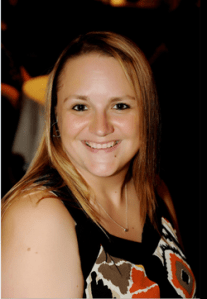
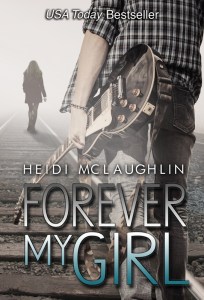
MICHAEL A. VENTRELLA: I am pleased to be interviewing Heidi McLaughlin today.  Heidi is a bestselling author now living in Vermont with her family. A movie based on her bestseller FOREVER MY GIRL is currently in production. She’s also got a great story in my “Alternate Sherlocks” anthology coming out soon!Heidi Mc

First, tell us all about your latest book.

HEIDI McLAUGHLIN: My most recent release is called BLIND REALITY, which is Big Brother meets Married at First Sight, a fun little romantic comedy that is very reality-television based. If you’re not a reality TV fan, this book isn’t for you.

VENTRELLA: Romance continues to sell, but it goes through trends like all fiction. What is popular now?

McLAUGHLIN: Probably stuff I don’t write! Everyone loves the Alpha male, the down and dirty smut and shock factor. I like to keep everything mainstream and fun.

VENTRELLA: Do you find yourself writing what is popular or do you just write what you want and hope people will like it?

McLAUGHLIN: I write what I want to write. If I have an idea and I can make it work, I’m running with it. Life is no fun when you’re thinking like everyone else. I want to set the trend, not follow.

VENTRELLA: Do you feel there is a limitation with romance in that it pretty much has to have a happy ending? Or am I mistaken in that?

McLAUGHLIN: No, you’re very on point. In BLIND REALITY, it’s a cliffhanger, albeit it minor one, and people flipped out. Funny enough, when I’ve been asked about it and asked in return why they felt that way, the reader was able to answer their own question. Compared to some enormously huge bestselling novels, my cliffhanger is a blip and barely noticeable. Unfortunately, readers don’t see it that way and I’ve paid the price.

VENTRELLA: Perhaps more than other genres, romance has to have tremendously believable characters.  Do you agree? How do you accomplish that?

McLAUGHLIN: I absolutely agree. When people read romance the way to feel like they’re the character being wooed or falling in love. They want to live in the happily ever after and avoid reality of a dirty kitchen, loads of laundry, etc… For me, modeling my characters after people I know or have encountered makes them believable. Every character I write I want the reader to feel like they know them, that they live next door or went to high school with them.6873690_orig

VENTRELLA: What’s the difference between romance and erotica?

McLAUGHLIN: Well that’s a loaded question (excuse the pun). Erotica is heavy behind the doors taboo stuff that you don’t discuss at the dinner table with Grandma sitting across from you even though Gram has probably read a good old fashioned Harlequin in her day. Romance is the light-hearted can’t-wait-to-tell-you-about-my-day happy stuff… most of the time.

VENTRELLA: What’s your opinion of FIFTY SHADES OF GRAY?

McLAUGHLIN: E.L. James hit the market when women needed something new to sink their teeth into. Erika is a marketing genius.

VENTRELLA: Have you ever had to censor yourself where you think you may have gone too far?

McLAUGHLIN: No, I’m fairly tame and am often told I need more detail with certain scenes.

VENTRELLA: Why do you think more men aren’t reading romance?

McLAUGHLIN: I have a contingent of male readers and my husband has even read JR Ward! I think some men are just afraid of what those pages hold.

VENTRELLA: What is the biggest misconception people have about romance novels (and romance novel writers)?

McLAUGHLIN: That writing is a hobby, or we’re just writing porn.

VENTRELLA: How did you first become interested in writing?

McLAUGHLIN: When I was little I was an only child for the longest time and my playmates were my aunts and uncles who were older. I had to create worlds to entertain myself when they weren’t around and my grandma always told me to write them down.1003461

VENTRELLA: How much of writing is innate? 

McLAUGHLIN: Writing is a craft. you have to learn, process and repeat. No one is “good” out of the gate.

VENTRELLA: What is your writing process?  Do you outline heavily or just jump right in, for instance?

McLAUGHLIN: I’ve never outlined. I take notes, and write. I’m a chapter by chapter and never out of order. If I have a scene in mind I’ll write it down and save it, but chances are I never come back to it.

VENTRELLA: Do you find yourself creating a plot first, a character first, or a setting first? 

McLAUGHLIN: Lately, it’s been the plot first. I hate naming my characters so I tend to do that last. But show me an image, song, or something on the news and I can give you something to work with.

VENTRELLA: Writers are told to “write what you know.”  What does this mean to you? 

McLAUGHLIN: To me that means – don’t think outside the box. I’m glad I didn’t listen because I write a Navy SEAL series that I absolutely love, but I’m not in the Navy, nor have I even been though BUD/s. If we only wrote what we knew, we’d be boring.

VENTRELLA: What criticism of your work do you disagree with the most?

McLAUGHLIN: When people tell me how I should’ve ended a story, or assume they know my characters better than I do.

VENTRELLA: How did you get started?  What was your first story or book published?

McLAUGHL3312058IN: I wrote a manuscript (my 3rd actually) and shared it with my friend who encouraged me to publish. My first story was FOREVER MY GIRL, which is slated to start production for the big screen this year.
VENTRELLA: Do you think it is important to start by trying to sell short stories or should a beginning author jump right in with a novel?

McLAUGHLIN: Short stories are fun, like the one we’re doing, but serial novels tend to make the reader wait too long for the conclusion. I do prefer a novel though.

VENTRELLA: Do you think short stories are harder to write than novels?

McLAUGHLIN: For me, yes, especially, when you’re limited on a word count.

VENTRELLA: In this market, with the publishing industry changing daily, how important is the small press?

McLAUGHLIN: Every press is important, but you can get lost with the big ones and just become a number. As with anything small, you’re always on their mind.

VENTRELLA: What sort of advice would you give an un-agented author with a manuscript?

McLAUGHLIN: Believe in yourself and the process. It does work. My first MS I queried 45 agents all to be told no, so I published and hit USA the next week and half those agents came back to work with me.

VENTRELLA: What’s the worst piece of writing advice you ever got?

McLAUGHLIN: That social media doesn’t sell books.8811796

VENTRELLA: What’s the best piece of writing advice you ever got?

McLAUGHLIN: Never give up.

VENTRELLA: What advice would you give to a starting writer that you wish someone had given to you?

McLAUGHLIN: Do not trust everyone you come in contact with, and do not share your story with you FB bestie. Keep your work close to your heart and invest in your craft.

VENTRELLA: Who do you like to read?  Who are your favorite authors?

McLAUGHLIN: I love paranormal romance, but also contemporary. However, Nelson DeMille is my favorite author.

VENTRELLA: What projects are you working on now?  What can we expect next from you?

McLAUGHLIN: Right now I’m finishing up SAVE ME, which will come out April 5th – it’s a Navy SEAL novel, and I’ll be writing my manuscripts BLOW (Virtuous Paradox 1) and LEFT FIELD (The Boys of Summer 2).


My Albacon 2016 Schedule

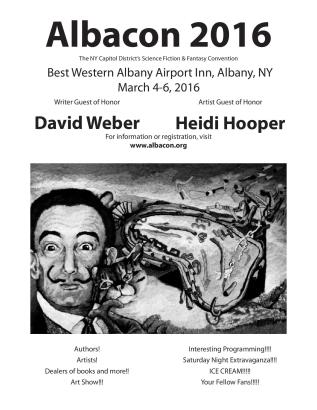
What a crazy two weeks. Last weekend we were down in Roanoke for Mysticon and this weekend, we’re off to Albany for Albacon. Albacon is special because my wife Heidi Hooper is the Artist Guest of Honor!albacon16 flyer v3-page-001

Albacon is also special because on Friday, they start very early and have what is basically a writer’s conference. It’s like a convention and a conference all in one. I am hosting some of these sessions, and I look forward to meeting some new writers there.

Here’s my schedule:

The Biggest Mistakes Made by Beginning Authors (Friday 9 am):  We’ll discuss not only writing mistakes but also promotional mistakes: How writers have screwed themselves over and killed their chances of making it in the publishing world doing easily preventable things!  With Llalania Ghose, Jim Rudnick, and David Weber

Tooting Your Own Horn with Social Media (Friday 2 pm): Self-promotion is an important part of building a career. Poorly executed, it can do more harm than good. Our panelists will discuss what works and doesn’t work. With Debi Chowdhury, Kate Laity, and Keith Willis

Ice Cream Social (Friday 8 pm): What better way to meet the Guests of Honor and other participants than in a big party, complete with ice cream and all the fixings?

The Greatest Animated Films of All Time (Friday 10 pm): A debate over the list of best animated feature films. Will our panel agree or will the discussion break out in fisticuffs?  With Susan Hanniford Crowley, J.A. Fludd, Herb Kauderer, and Dawn McKechnie 

Reading (Saturday 3:30 pm):  I’ll be reading from “Bloodsuckers” and, depending on time, perhaps a bit of a preview of some upcoming works.

The Eye of Argon (Saturday 11 pm):  The worst science fiction story ever written gets a reading by our brave panel as they compete to go the longest without tripping over a misspelled word or laughing uncontrollably. Audience members are also encouraged to take a chance. Can you keep a straight face, especially when the panel begins acting out the story?  With James Cambias, Andre Lieven, Ryk Spoor, and Ian Randal Strock

Making Politics Work in Fiction (Sunday 11 am): Real world political narratives are filled with cultural revolutions, passionate speeches about social change, war, and intricate Machievellian plots. How can you portray them convincingly in your story? From noble houses in fantasy worlds to galaxy-spanning empires in SF, how do you make them believable and engaging without burying your reader in the intricacies of your setting’s political theory? With Ian Randal Strock and David Weber


My Mysticon 2016 Schedule

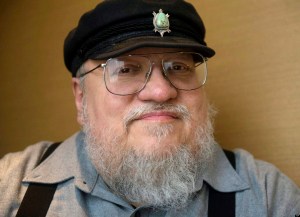
I’ll be a guest at Mysticon this weekend in Roanoke, with Guest of Honor George R.R. Martin. (My wife, award-winning artist Heidi Hooper, is also a guest and will be one of the judges for the masquerade competition.)

George RR Martin

I figured if I posted a picture of me, it wouldn’t get as much attention

Mysticon is a fun little convention which is completely sold out this year for some reason. But if you’re there, here’s where you can find me!

Anthology Don’ts (Friday 3:00): There are always rules for submitting in anthologies: length, subject matter, etc. Our panelists discuss the common errors they see (or have been guilty of) in anthology submissions. With Alexandra Christian, Tera Fulbright, and 
John G. Hartness

Opening Ceremonies (Friday 4:00): Welcoming and introduction of guests

Fantasy Worldbuilding (Friday 5:00): Whether it’s creating entire new worlds or integrating your story into everyday life, fantasy writers can find inspiration in the smallest things that can lead to a whole new world of mystery and magic. How they do it, how they choose, how they are inspired, what fans love or hate, etc. With R.S. Belcher, Ashley Chappell, Alexandra Christian, Anthony St. Clair, and Richard C. White

First Contact Improv (Friday 9:00): The panel consists of a moderator and 3-4 panelists, preferably writers, and preferably with a good sense of humor.  The panelists are charged with designing a human-alien First Contact scenario on the fly. The twist is that the moderator has over 100 improv prompts on cards that are drawn by the panelists and audience members. With Jim Beall, Steven Hancock, Emmy Jackson, Peter Prellwitz, Todd Roberts and Abigail Wallace.

The Eye of Argon (Friday 11:30): The worst science fiction story ever written gets a reading by our brave panel as they compete to go the longest without tripping over a misspelled word or laughing uncontrollably. Audience members are also encouraged to take a chance. Can you keep a straight face, especially when the panel begins acting out the story?  With Gail Z. Martin, Michael Pederson, Peter Prellwitz, and Gray Rinehart 

Match Game (Saturday 10:00): An annual MystiCon tradition – relive the glories of classic game shows, now with a Sci-Fi/Fantasy twist. Contestants from our audience will match wits with our guests. With Billy Flynn, Tally Johnson, Ben Mirabelli, Rich Sigfrit, John Watts, and Nicole Zoltack

How Much Worldbuilding Does an RPG Need? (Saturday 7:00): A game setting can be no more than a dungeon and a tavern-or an entire world with landforms, languages, plants and animals, and a history stretching over millennia. How much world-building do you do? How much does a game need? Is there a sweet spot for world-building, or do different games have different needs? With Bob Flack, Steve Long, John Watts, and Richard C. White

Building Your Brand (Sunday 9:00): Done properly, self-promotion is an important part of building a career. Poorly executed, self-promotion can do more harm than good. Our panelists will discuss what works and doesn’t work along with these common questions: Do book-signings really help a small author? Are bookmarks and/or postcards effective at garnering attention? Does a blog help or hurt an author? Does an author have to have a website? With Alexandra Christian, Pamela K Kinney, and Jim Lavene

No More Evil Priests in Red (Sunday 10:00): Understanding faith in a secular world. It’s easy to depict organized religion as evil, led by greedy rapist scumbags and followed only by the drones and sheeple, but this trope hasn’t been cutting edge for the past forty years. In setting up evil priestly straw men for our postmodern heroes to blow away, authors too often overlook why brilliant people like Boethius could walk smiling to execution, St. Francis could try to protect the animals everyone else wanted to eat, or Hildegard von Bingen could write awe-inspiring music and plays. Let’s talk about books that depict the complexities of religious faith in interesting, insightful ways. With Tony Daniel, Gail Martin, Peter Prellwitz, Gary Rinehart,  and Abigail Wallace

Black and White (Sunday 11:00): Not TVs, but the role of absolutes in literature, movies, and life. Jedi/Sith, good/bad, often SFF is dedicated to these simplistic views. Is it a reflection of our society or has our society come to reflect our literature. What about the reality of Grey? (Politics and Religion Warning) With William Lawhorn and Brian Sunderlin

Interview with Kerry Gans

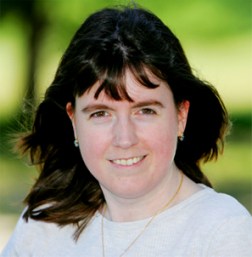
MICHAEL A. VENTRELLA: I am pleased to be interviewing good friend Kerry Gans today (We’ve both studied under the Master Jonathan Maberry). Kerry is the author of several short stories, a family history book, and the middle grade novel THE WITCH OF ZAL. She is a chocoholic theater geek, believes libraries are magic, and considers Chincoteague Island her perfect writing retreat. When not writing, she haunts cemeteries and dusty archives in search of long-dead ancestors and pursues her most important work-in-progress, her daughter.KerrySmall

Tell us about your newest book!

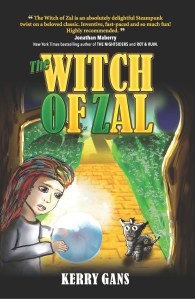
KERRY GANS: THE WITCH OF ZAL is a re-envisioning of The Wizard of Oz. It’s a genre twist, in that Dorveday is from a completely urbanized sci-fi world, which makes rural, magical Oz quite the culture shock. 12-year-old Dorveday runs away from home to protect her robotic dog from the oppressive Ministry, and she accidentally lands in Oz. A Victorian gentleman Scarecrow, a clockwork Tin Man, a literally yellow-streaked Lion, and an escaped slave boy help Dorveday to find her way home to Zal. Together they battle zombicorns, killer butterflies, and an alchemist Wicked Witch while overturning society as Oz knew it. But will Dorveday return home in time to save her mother from Ministry threats—and can one girl shake up Zal the way she did in Oz?

VENTRELLA: What made you decide to write an Oz book?

GANS: I never set out to write this book. The book started out as a homework assignment. Jonathan Maberry asked us to take the Dorothy meets the Scarecrow scene from The Wizard of Oz and rewrite it in a different genre. I made Dorothy from a science-fiction world, so rural Oz would be completely alien to her. I had so much fun writing this scene, I decided to write the entire book!

VENTRELLA: What is the main difference in writing a middle grade book and an adult book?

GANS: In a middle grade book like THE WITCH OF ZAL, there are a few guidelines (all of which can have exceptions, of course). No sex. No falling in romantic love. No swear words. Make sure the vocabulary fits the age group. Most important, the kid has to be the hero, the one who solves the problem in the end.

While I do think you can tackle any topic you want in a middle grade book (even difficult topics like abuse and death), there is a certain sensitivity you need to bring with you. Perhaps certain scenes happen off-stage that in an adult book you would see. Perhaps the language you choose is not as harsh or as stark as you might use in an adult book. So while I would never tell a writer to avoid hard topics in middle grade, be aware that if you want to get it published you probably can’t handle the topic as baldly as you would with an adult book.

VENTRELLA: Tell us about the publishing decisions made.  

GANS: I tried to get an agent for Zal, but no one showed interest. This was quite soon after the movie Oz The Great and Powerful had come out and didn’t meet expectations, so I think people were not interested in another Oz offering. Jonathan Maberry suggested I send it to a small press that was looking to start a middle grade fantasy line. Turns out that Charles Day, the publisher at Evil Jester Press, is crazy for Oz stuff and really believed in the book. So I got my first book contract with no agent—a scenario I had never envisioned. But it pays to keep your mind open and never get so tunnel-visioned on one way of publishing that you miss opportunities that come your way from unexpected sources.

Once I was on board at Evil Jester, I did book edits (several rounds) with the editor. We also needed a new title because my working title didn’t work for the market. My publisher is also an illustrator, so he did the cover art for the book. We went through multiple rounds of cover art until we settled on the one we have. Working with a small press, I had a lot more input throughout the entire process than I would have with a large traditional press.

VENTRELLA: Why did you decide to go that route? Any regrets? 

GANS: I wanted my first book to be with a press—I did not want to self-publish. I wanted to go through this entire publishing/marketing process with someone else, someone who would have my back and who could brainstorm ideas with me. In many ways, a small press is the best of both worlds, in that the author often has more control over the final product (such as cover art), while having a larger reach than they could get by themselves.

I wouldn’t say I have regrets—the people at Evil Jester are great and so supportive. I do have lessons I have learned, though. The biggest one is that while a small press gives you the best of both worlds, a small POD (print on demand) press is often trapped between the worlds of self-publishing and traditional publishing. I have found in trying to get the word out that I can’t capitalize on many self-publishing marketing strategies because I don’t have the ability to control pricing and other variables, yet because we are POD I am not eligible for many of the traditional marketing avenues, either. If your small publisher does a traditional print-run, most of those closed doors open.WitchOfZal Cover

I would never discourage someone from going the POD route—I feel it makes the most sense financially and environmentally—but be prepared to be a little more creative with your marketing. A huge self-publishing support network has grown up to serve that community, but there is not a similar system for POD small publishers. I think there is a need for it, and it may yet arise.

VENTRELLA: What is your writing process?  Do you outline heavily or just jump right in, for instance?

GANS: My writing process is constantly evolving. I’m not a huge plotter—I usually know the beginning and the end and a few scenes in between. I used to write everything straight onto the computer, but now I’m incorporating writing longhand again. I’ve found that when I write longhand, what I write has a vastly different feel and depth than what I write straight to the screen. I also find that I get “attached” to the words on the screen—I have trouble thinking outside what is already there. I don’t have that problem with handwritten pages—I can cross out, draw arrows, have notes in the margin. It frees something in my revision brain.

So my current process looks something like this: 1) a short sketch of what I know about plot and character, 2) perhaps a typed up “first draft” that acts as a fleshed-out outline and lets me get to know my characters, 3) using that as a guide, write the whole thing longhand, 4) type it in fresh from the longhand manuscript. I haven’t actually written a book from scratch since I re-incorporated my longhand writing, so I’m not certain this is the way it will work. But that’s my plan.

VENTRELLA: What do you do to avoid “info dumps”?

GANS: I write a really bad first draft, then go back and cut mercilessly. If the reader doesn’t need to know that info at that moment, then it can go. And since the first draft is complete, I can see where the information I’m cutting works better, where it actually belongs—or even if it’s not needed at all.

VENTRELLA: Do you think it is important to start by trying to sell short stories or should a beginning author jump right in with a novel?

GANS: I think it depends on the author. Writing short stories is a completely different skill set than writing a novel. Some authors are more naturally attuned to the short story skills, others to the novel skills. I will say that even if you are focused on being a novelist, gaining that short story skill set is vital. It helps sharpen your craft, and we are seeing that writing short stories using your characters and your world between novels is a great way to keep your audience rabid while they wait for your next book. Writing and publishing short stories as a stepping stone to getting a first novel published, however, is no sure-fire path to success. A few stories in high-quality publications is never a bad thing, but agents won’t take you on the basis of those stories alone—they need to know you can write the novel you’ve pitched. Bottom line, if you love to write short stories, write them, but if your heart is in the long form, follow it. There is no single “right” path to publishing success.

VENTRELLA: What’s your opinion on self-publishing?

GANS: I have no problem with self-publishing—in fact, my genealogy book is self-published. There is absolutely a place for self-publishing and it fills the voracious appetites of the readers. There is some very good self-published literature. However, there is undoubtedly a large amount of poorly written self-published work out there, which tarnishes the self-publishing “brand” for everyone. Some people hypothesize that eventually a system will rise to help readers separate the professional-level work from the first-draft level work. Amazon’s warning labels for error-riddled books may be the first step. Ironically, we may see the rise of gatekeepers on the very platforms designed to help us escape the gatekeepers.

VENTRELLA: What sort of advice would you give an un-agented author with a manuscript?

 GANS: In this day and age, there are a lot of publishing paths available. The first thing I would tell them to do is get it professionally edited—get themanuscript into top-tier condition. The second thing to do is decide what they really want from the publishing experience. Depending on their goals, they can then decide whether they want to pursue self-publishing, traditional publishing, or something in-between. But whatever road they take, make sure they put out a professional-level product.

VENTRELLA: What advice would you give to a starting writer that you wish someone had given to you?

GANS: I did get this advice when I was a novice writer, but I wish I had gotten it earlier because I would have gotten started on my career sooner.

Jonathan Maberry once told a group of us that if we were serious about wanting to be professional writers, we had to start calling ourselves writers—even if we had a day job where we did something else. For instance, we would answer, “What do you do?” with “I’m a writer and a video editor.” Once we start saying it aloud, once we own that part of ourselves, many things start to change.

Once I started following that advice, my writing career advanced. When you openly claim your writing, you look at it in a different way. It’s not a little hobby you feel you have to hide—it’s a part of you that you are proud to claim. You view yourself through a different lens, too, because you’re not denying a part of who you are anymore. You gain confidence in that. You meet others who also identify as writers. Most of all, by saying it out loud, you’re giving yourself permission to make writing a priority in your life.

VENTRELLA: What projects are you working on now?  What can we expect next from you?

GANS: I have 2 books in active revision and another on the revision back-burner. The book closest to being ready is The Curse of the Pharaoh’s Stone, which is a middle grade historical adventure. Set in 1922 Philadelphia, a 12-year-old boy tries to break the curse he believes he placed on his family. While trying to decipher the Egyptian artifact he thinks powers the curse, he places his family in very real danger from a man who would kill to possess the artifact the boy guards.

I’m deep into revisions of a Young Adult sci-fi novel, Veritas. In this book, a 16-year-old girl who has been told all her life she is worthless discovers that she controls the greatest power in the universe. But is that enough to stop a war and gain her father’s love?

My back-burner book has been out on submission to agents, but early feedback leads me to believe it’s not quite ready, so I’ll be looking at it again before I send it out anymore. The Oracle of Delphi, Kansas is a YA contemporary fantasy, where a 16-year-old daughter of Apollo is torn between her human side and her godly side. When her half-god boyfriend threatens the entire town with destruction, she must either stand with him as a god and sacrifice the people she loves or stand against him in defense of humans—and maybe lose her life.

VENTRELLA: With a time machine and a universal translator, who would you invite to your ultimate dinner party?

GANS: As a person with anxiety disorder whose panic attacks are often triggered by eating with others, I would never hold a dinner party. But if I did, I would invite my ancestors—particularly the ones where I can’t find their parents. My brick walls and dead ends. They could not only tell me their lineage, but I would find it fascinating to hear about their lives—particularly the ones who immigrated to the U.S. Most times they didn’t leave any information as to why they left their home countries for America, or what they felt as they tried to assimilate to a new culture. I’d be taking a ton of notes!


My 2016 Farpoint Schedule

I’ve been invited to be a guest author at Farpoint, a convention in Baltimore, which will be held in a little over a week (February 12 – 14). I’ve never attended before, but it looks like fun!fapoint

The main writing guest is none other than David Gerrold, and I’m looking forward to meeting him in person after interviewing him and being friends with him on Facebook for years.

They have a wonderful online schedule you can browse!

Here’s my schedule (always subject to change):

Autographs (Saturday 3:00 PM)

Readings: I’ll be reading from my work along with Kim Headlee and Keith DeCandido (Saturday 5:00 PM)

Struggles with Building an Audience & Fan Base: Advice for the starting author. With Danielle Ackley-McPhail, Kim Headlee, and Jay Smith. (Saturday 9:00 PM)

Advice for New Writers: There are so many mistakes new authors make!  With Mike McPhail and T.J. O’Connor.  (Sunday Noon)

Joining the 1%

Every once in while, you’ll come across someone who says, “I’ve decided to write a novel. I’m already at chapter three, and I know Hollywood will want to make this into a movie. I quit my job because I know this will be a best seller.”

There are deluded people everywhere, of course, but I seriously have heard variations on this, although not as extreme as the example above.dollar-sign-book

Look, face facts: When it comes to the creative arts, maybe 1% can make a living at it. I’m not talking about becoming rich, I just mean earning enough to not have to take on another job to pay the bills.

Think about it. You must know artists, musicians, actors, even athletes. They spend their free time doing what they really love and maybe they sell some art, get to play a paying gig, or land a job acting in a commercial every now and then, but how many of them can live off the income they produce?

That’s just the way it is. Don’t delude yourself.

As I’ve said before, success requires three factors: talent, hard work, and connections (meeting the right people and impressing them). I should add a fourth: Sometimes you are just in the right place at the right time to catch the public’s mood, and no one can predict when and why that happens. You can’t plan for that. Don’t give up your day job.

My wife, Heidi Hooper (the award-winning artist) often says that she has to make art to satisfy the monster within that demands it. She makes money at it, too — impressive money to many other artists, but still not enough to make a living. And that’s the bottom line — you should be creating because you love creating.

Pictures from the 2016 Pocono Writers Conference

We had a great time at the 3rd Pocono Writers Conference this past weekend, with guest speakers Keith DeCandido, Megan Erickson, Jon McGoran, and Veronica Park.  Pictures are here!

The local TV station covered it as well.