


I’ve edited over a dozen anthologies as of this writing, so of course I think they are very important to new authors trying to advance their careers. It’s certainly helped my own as well.
As I’ve said elsewhere on this blog, making connections is very important. Because of connections I have made, I have been invited to be in anthologies with big name authors. People aren’t buying these anthologies for me, but for [insert Famous Author names here]. Fortunately for me, there’s my story next to the New York Times Bestseller in that anthology. Maybe I’ll pick up some new readers because of it.
So look for short story anthologies that will help you get started and will be impressive on your personal bibliography.
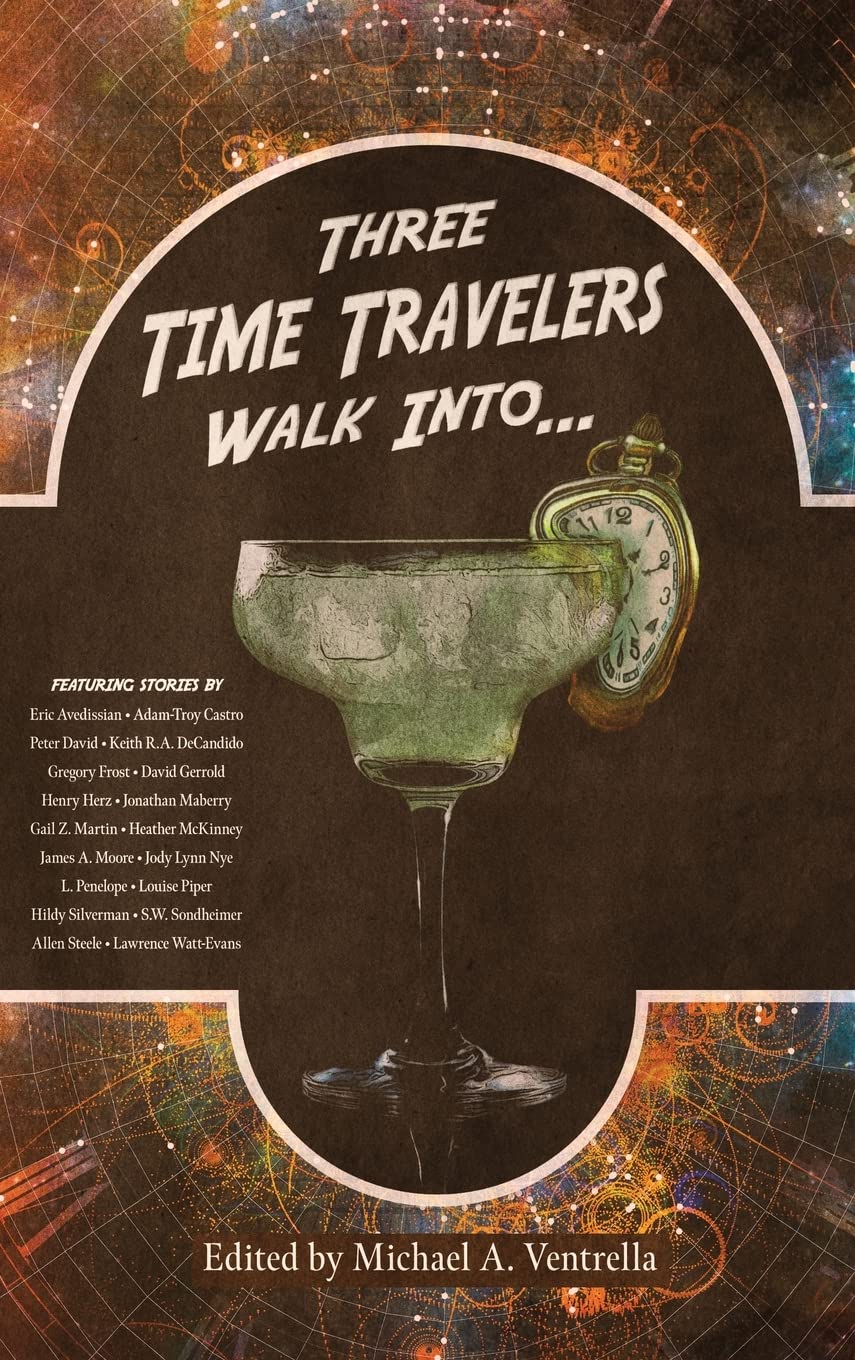
Let’s start by discussing the two main kinds of anthologies. There are Collection anthologies and, more commonly, Themed anthologies.
A Collection anthology would be something like “The Great Stories of Edgar Allen Poe” or “The Best Science Fiction Stories of the Year.” The stories themselves could be about anything.
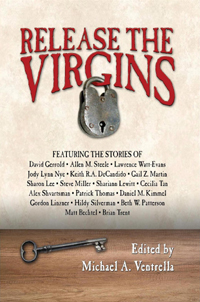
A Themed anthology would be more common, and among mine are Three Time Travelers Walk Into… (time traveler stories with real people); Across the Universe (a collection of “what if” stories about The Beatles); and Baker Street Irregulars (Sherlock Holmes stories if Sherlock was not a British man in the late 1800s). My anthology Release the Virgins was the vaguest theme, in that each story could be any genre but only had to include the phrase somewhere in the story.
Themed anthologies are a great way to read stories you may like. I wouldn’t be interested in a themed anthology about football or fishing, but someone might. Find an anthology looking for stories that you would like to read, and your enthusiasm for the story you will write for it will show. Seriously, don’t try to “write for the market” if you aren’t personally interested in what the editor wants. They’ll know.
There have been a few ways I have had my anthologies published, so let’s look at them separately.
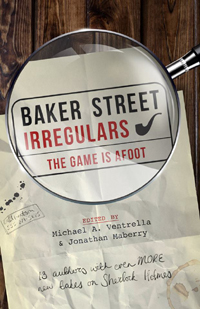
The first is to convince a publisher that it’s a good idea and worth the investment. For the Baker Street Irregulars anthologies, I spoke to my friend and New York Times Bestselling author Jonathan Maberry about it, and he agreed to co-edit it with me. I already had an agent for it, and she shopped it around until a publisher decided it was a good idea. She then also arranged a deal for the audio books. Once that was done, we opened it up and asked for contributions, posting the submission guidelines. We sorted through all the stories and picked the ones we liked best. And yes, there were some first-time authors who were accepted.
The second way many small publishers are doing these days is through Kickstarter, which is an online way to raise money for projects. That’s how most of the rest of my anthologies were done. With Kickstarter, you can invest in the project (“pre-order your book now!”) and if the budget goal is met, you will be billed and if it isn’t, then no loss to you.
The publisher figured out a budget needed to break even. “We need to pay the authors X amount per word and the book will be around 75,000 words, and we need to pay the cover designer and the proofreader and then there’s the cost of printing all the books and mailing them and other incidental costs…”
We then start contacting some Big Name authors that will help to sell the book. Not all of them say yes (of course) but the ones that do say yes want to participate. It’s a win-win for them in this sense: They don’t have to do the work to write the story if the Kickstarter is not successful, and if it is, they know they’ll be accepted and know they’ll get paid. (They still have to go through the editing process like everyone, of course.)
The publisher then offers incentives for readers to do more than just pre-order a book. If you donate a bit more, we’ll also send you autographed copies! A bit more, and one of the authors will name a character after you (that’s called “Tuckerization”—look it up). Pay more and get bookmarks or mousepads with the book cover or candy or whatever else the publisher can think of to raise enough money to reach the goal.
There is a deadline: If the goal isn’t reached within a month, the book won’t be published. This has happened to a few friends of mine but fortunately, so far, all my Kickstarter anthologies have been successful.
If the goal is reached, a deadline is set for story submissions and we open it up for stories to fill the spots left over after the Big Name authors’ stories are squeezed in.
Here’s the important thing: At this point, there is a level playing field. With my anthologies, I opened up submissions and got stories from well-established authors as well as brand new writers, and all that mattered to me as the editor was how much I liked the story. I already have my Big Name guys, I already know the book will be published, so all I cared about at that point was making it the best possible anthology I could.
Ironically, because of space considerations, I almost always had to reject really good stories, some of which I liked better than the stories submitted by the Big Name authors! But, as I remind myself always: Writing is an art but Publishing is a business.
So look into anthologies as a good way to break into the field.
Filed under: writing | Tagged: anthology, books, horror, short stories, why you should submit to anthologies, writing | Leave a comment »





 Michael A. Ventrella