Interview with NY Times Bestselling Author Tad Williams

I first became aware of Tad Williams upon reading the Memory, Sorrow and Thorn series in the early 90s and was engrossed with the characters and the great twist at the end. He’s gone on to write further acclaimed New York Times bestselling novels, comic books, and young adult novels, and I’m pleased and honored to be interviewing him today! His webpage is www.Tadwilliams.com.tadwilliams

MICHAEL A. VENTRELLA: Tad, you have a varied background with which I can identify. There’s nothing wrong with having worked in radio and been in a band, moving from one job to another and finding out what you want to do with life (I did much the same, although fortunately I never had to work in a shoe store). Was writing always in the background for you, just waiting for the will? When did you say to yourself “This is what I want to do in life”?

TAD WILLIAMS: Creative work was always in the background, but writing was only one of the things I pursued. It just happened to be the one that turned into a possible career. If I’d sold a screenplay or got a gig cartooning I might have gone that way instead.

VENTRELLA: Many aspiring writers say to me that they just can’t seem to find the time to write given that they have jobs to do and real life getting in the way. How did you do it?

WILLIAMS: If you can’t find time to write, you’re not a writer. That’s not to be glib, but some people would rather talk about the reasons they can’t do something than just do it. (My son and his homework spring to mind.) You either do it or you don’t. If you don’t write, you’re not a writer.

VENTRELLA: Was TAILCHASER’S SONG the first novel you wrote? How did you grab the attention of editors?
tailchaserTadWillilams
WILLIAMS: Yes, TAILCHASER was my first book. I was a bit naive and didn’t have an agent, but I was fortunate that the book itself caught my editors’ attention. If I had to do it again, I’d be more aware that I was very lucky. I’d probably try to get an agent first.

VENTRELLA: Has the publishing industry changed as dramatically as everyone says since that time?

WILLIAMS: It’s always been a small-margins business, but the advent of electronic media and the internet have really confused things. Nobody knows what publishing’s even going to look like in ten years, but I think it’s likely it will be less vertical — that is, one company buying books, editing books, designing books, printing books, binding books, warehousing books — and more of a collaboration between smaller businesses. Also, electronic media are only going to become a bigger part of the industry.

VENTRELLA: What do you know now about the industry that you wish you had known when you first started out?

WILLIAMS: I wish I had understood the career arc better, and the complexity of the process of publishing a book. I might have paid more attention to deadlines and to thinking long-term about what I wanted to write.

VENTRELLA: Why are the third parts of your books so huge that they have to be released in two volumes? Can’t you stop? (OK, that’s a joke question.)

WILLIAMS: I have an illness, and it’s not nice to make fun of it. Jeez.
shadowrise-by-tad-williams
VENTRELLA: You currently are working on the SHADOWMARCH series. Do you outline the series completely in advance or prepare something more basic?

WILLIAMS: I like the balance between knowing too much and knowing too little, so I certainly outline, but I leave lots of room for things to change, grow, whatever, as I write the story. That way the story stays fresh, but the fact that there’s structure means it doesn’t meander too badly.

VENTRELLA: Please tell us about SHADOWMARCH!

WILLIAMS: The end is finally in sight for this project, which has moved through three or four media and a couple of decades. It started with a possible tv series or film, then became an internet serial, and I’ve given the story its greatest realization as a series of books, of which I am now writing the ending. It’s a return to epic fantasy, but it also has its own particular twists that separates it from my other books. I’m pleased with what it’s turned into, and think it’s much better and deeper now than it would have been in another medium.

VENTRELLA: Do you see yourself working in other genres in the future?

WILLIAMS: Within reason — I probably won’t be writing any westerns, for instance. But my next set of books will be closer to modern fantasy with a touch of extreme romance (mid-level angel and high-level demon fall painfully in love), so, yeah, I’ll be skipping around like I usually do.

VENTRELLA: How is writing Young Adult series different? tadwilliamsdragon
WILLIAMS: Certainly the main difference for me is keeping the complexity down and the action fast-paced. I don’t believe in writing down to an audience, so we haven’t written anything deliberately “young”. The main characters are young, and — as with almost all good YA fiction — they are forced to solve problems the adults should solve but don’t. Other than that, though, it’s a book — all books should be written like something the writer himself or herself would enjoy reading.

VENTRELLA: Since you are using characters created by someone else when writing for comic books, do you feel constrained in any way?

WILLIAMS: I felt very constrained, but most of that was problems in communication with that particular situation. I thought I’d have more leeway than I did, and I thought I’d have more time to try to turn the thing around than I did. That said, when I can afford to do it again I probably will…

VENTRELLA: What are you most proud of? What would you like to be remembered for?

WILLIAMS: I think I’ve always brought something bigger than the genre to my genre fiction — I think of myself as a gateway drug for genre readers, leading them down the slippery slope to real literature. (This doesn’t mean that I don’t think lots of fantasy and science fiction are literature, only that because they’re genres they contain primarily books written for a genre market, ie, tending toward the formulaic.) Of all my books, I think so far the OTHERLAND novels are my signature — the best example of the width of my range.
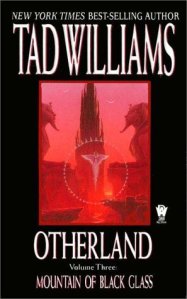
williamsotherland
VENTRELLA: Off topic a bit: What kind of music did you play in your band?

WILLIAMS: The original band was very influenced by folks like Beatles, The Who, the Bonzo Dog Band, David Bowie, Brian Eno, and maybe even the Tubes. (We would have been influenced by They Might Be Giants, but we predated them.)

VENTRELLA: What do you listen to today?

WILLIAMS: I still listen to all that sort of stuff, but also lots of modern stuff, Beck, Radiohead, Sigur Ros, and pretty much anything Damon Albarn does, just to name a few. Robyn Hitchcock. Fountains of Wayne. Yeah Yeah Yeahs. Also some hiphop, some folk, jazz occasionally, lots of classical — you name it, really.

VENTRELLA: You have very good taste in music (because it’s very similar to mine). Add in XTC, Elvis Costello and Sparks and we’d be just fine.

WILLIAMS: I like all those bands very much, Michael. I was caught between “who influenced your band” and “who do you listen to now”, and they all sort of fit into both — well, XTC not so much the former, because we were already writing music when they came out. But Elvis may be my all time favorite artist other than my top three — Beatles, Who, Bowie. (Yes, I love the Stones and the Kinks and Hendrix and a ton of other first-generation guys, but I’d probably have to put Elvis C into the top four.)

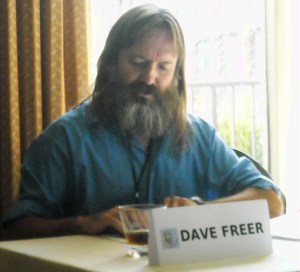
Interview with Dave Freer

This week, I am pleased to present an interview with Dave Freer. Dave writes mostly humorous or alternate history novels and has collaborated with Eric Flint and Mercedes Lackey as well. His books do not always fit into nice little categories that publishers like, but that’s also what makes them interesting. Before pursuing a writing career, Dave was an ichthyologist, and (not making this up) fish farm manager. He is a rock-climber, chef, and all around athletic kind of guy, especially when compared to most writers. He lives in South Africa with his wife and children.
daveatluna

MICHAEL A. VENTRELLA: Dave, what’s your writing process? Do you use extensive outlines?

DAVE FREER: I must write 200 words before I get up, go to ‘loo, make coffee, read e-mail, or any other displacement activity. Trust me: there is nothing like twisted legs or desperate need for coffee to focus the mind, and once focussed you often over-run the 200 by several thousand. Outlines? Oh yes, very useful… until the characters take over and ignore them. I still do them. They provide a framework to disregard… well, to build on. In the end the book fits the concept if not the verbatim outline.

VENTRELLA: What’s your writing background? Did you begin with fiction?

FREER: Writing background… when I was a final year schoolboy back just before the age of dinosaurs, I went to my English Master (Old British style Boarding School) and said “Sir, I want to be a novelist.” He laughed at me and replied: “Freer, you can’t spell, and no one can make a living at it.” He was right about the spelling, so I assumed he was right about the rest (he was a teacher, see, and teachers are right, except, as I later learned, when they are wrong), so I listened and embarked instead (after my two year stint as a conscript in Medical Corps) on a career in fantasy writing in which no could make a living. Okay, so it was lightly disguised as Fisheries Science (I am an ichthyologist) but it involved writing a lot of papers and reports about the status of the Shark Fishery and the biology of sharks. I blundered into writing from there in an unrepeatable fashion. (I started my fiction writing career in a stuck in a bathroom with amoebic dysentry for a week. There are many other better ways to do this. In fact, almost any other way works better. And is less horrible. I’m a GREAT bad example.)

VENTRELLA: What skills are needed for short story writing that are different from novel writing?

FREER: Shorts are a bitch to write well. Harder than novels. I always hold that writing shorts is best training for writing novels and I wish a lot of verbose novelists would do it. So, to me, there is no real difference.
dr2

VENTRELLA: You’ve do a lot of collaborations with other authors. Do you meet in advance? Work through email? Is it basically one person’s ideas and the other’s work? What happens when there is a disagreement?

FREER: Eric and I met through a e-flamewar that ended in mutual respect. We became good friends and offered a collab proposal to our mutual publisher. Don’t try this at home, as you’re probably not going to get as lucky with a guy who can be gentleman and admit he was wrong – or be one yourself. My publisher set the Lackey collab up. We work through e-mail in multiple colors for our replies.

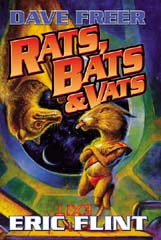
It’s usually one author’s seed-idea – for example RATS, BATS & VATS: Eric Flint had a short in which he had a talking uplifted rat and a bat rejected by one of the major magazines, with the editor profoundly informing him that the skull capacity of rats was too small for the volume of brain needed for uplift. Eric — knowing I was a biologist — asked me if this was true. I said I could think of at least three ways to solve the problem, and suggested the best. He said that would make a great story… and then we plotted the backround and setting. The book is still selling, and the mechanism I suggested was reported in Scientific Journals as a successful neurological implant technique. Of course a book is really rarely about science — it’s about the characters — and this one was no exception. I then wrote the first draft, e-mailing it to Eric to read as we went along. We’ve modified that over time — I now write the first draft with notes where I need him to put in stuff. We then do circulating edits.

SLOW TRAIN TO ARCTURUS was a similar evolution. Eric said he’d really love to do another generation ship story, they’d gone out of vogue — but it would have to be something different. So we touched on the core problem with generation ships — they take a long time to get there and it’s quite possible the planet will suck for habitability when you get there. And then you have to do it all over again… and biosystems are fragile. We solved the problems in a rather unique way.

It’s more — with us — a case of two lumps of fissionable material being pushed into close proximity, than one person’s ideas. It’s about as much fun as you can have as a writer, provided you get the right collaborator. As forthe disagreement thing… it happens. We both give ground and reach compromises. That’s ideal, but otherwise resign yourself to “yes sir,” if you’re a junior partner.

VENTRELLA: How did you break into the business? Did you start with an agent?067131940X

FREER: Through the slush pile. Took me two years to the day from submission to acceptance. No agent back then.

VENTRELLA: How important is an agent, in your opinion?

FREER: Important. Getting more important every week. I actually think this is another case of publisher penny-wise pound-foolish, as the task (and relatively small expense) of trawling slush has been handed increasingly to agents. Some are good at it, but the reality is the short term saving is recovered from publishers, because it means authors get agents right off the bat (instead of many mid career as was once true). Agented sales inevitably cost publishers more, after the initial ‘get in’ — so by saving on slush reading they’re now paying more, sooner, for more expensive books. Agents have less resources and, in some cases, less experience with publishing than junior editors at a publishing house, so it may not be wise in quality terms. But that’s the status quo, it’s not going to change soon. Live with it, and pick out the good agents. There are some excellent ones.

VENTRELLA: Here’s the question I’ve asked everyone so far: What’s the biggest mistake you have made?

FREER: Turned down a collab suggestion from publisher… He wouldn’t tell me who it was. It was David Weber.

VENTRELLA: What is the best piece of advice you could give a starting writer?

FREER: You don’t need amoebic dysentry or the approval of your English teacher to write. You just have to write.

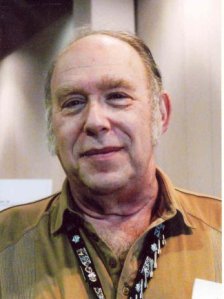
Interview with Hugo and Nebula Award Winning Author Mike Resnick

Mike Resnick has 5 Hugo Awards to his name (having been nominated 33 times — so far!) and has won numerous other awards for his fiction. As of 2009, he is first on the Locus list of all-time award winners, living or dead, for short fiction, and 4th on the Locus list of science fiction’s all-time top award winners in all fiction categories. He’ll be attending the World Science Fiction convention in Montreal in a few weeks, as will I, except he, of course, is once more nominated for a Hugo award.

His web page is here.

MICHAEL A. VENTRELLA: I am thrilled to be interviewing one of my favorite writers, Hugo and Nebula award-winning Mike Resnick.

Mr. Resnick, you seem to embody what many people advise all new writers: write a lot and write about everything. You’ve done fiction, non fiction, articles, editing, and so on. Do you agree that this is important and how do see a varied background as helping your writing?
Mike Resnick photo

MIKE RESNICK: Anything a writer can learn will eventually prove useful. Editing shows you how other people attack their stories, lets you see the strengths and weaknesses of certain approaches. Writing non-fiction teaches you to be careful of your facts, and that’s almost equally important in science fiction, where you strive for verisimilitude. Short stories and novels have different approaches, and the more you can learn about both, the less likely you are to put yourself at a competitive disadvantage against writers who do learn all that they can about their craft.

VENTRELLA: How has the publishing industry changed since you began?

RESNICK: The main change is that while they are printing more books, less houses are printing them. When I started selling in the early 1980s (I won ‘t count the three science fiction books I did in the late 1960s; my post-1980 career is a public penance for them), 18 New York publishers had science fiction lines. Today there are maybe half a dozen mass market houses with science fiction lines. Signet, Fawcett, Gold Medal, Pyramid, Lancer, Paperback Library, Playboy Press, Doubleday, and half a dozen others have gone – or seen their lines go – the way of the dodo.

VENTRELLA: Did you have an agent and do you think agents are necessary these days?

RESNICK: I had an agent after my first couple of sales; a lousy one. I got a top one in 1983, and I still have her, and she is absolutely not allowed to die or retire before I do. Yes, they’re necessary, for any number of reasons:

1. A lot of houses – most, in fact – won’t read unagented manuscripts.

2. Your agent, because of all the contracts that pass through her office and all the deals she’s negotiated, has a far better idea of what will be a contract-killer that you do, and will know what Publisher A will accept that Publisher B won’t.

3. A good agent will have a top foreign desk, will make you more money overseas than you’ll make in the US, and will have working relationships with top foreign agents in each country.

VENTRELLA: Self-publishing seems to be the trend; do you believe that if a starting writer self-publishes it destroys their chance of being taken seriously by “real” publishers and editors?

RESNICK: John Scalzi to the contrary – and he had a unique situation, with 25,000 daily hits on his blog – I believe, and have always believed, that a self-published book practically screams out that it was not good enough to compete in the economic market place. resnickflagship

VENTRELLA: What process do you use in writing? How important are outlines, for instance?

RESNICK: I have a very brief outline I use to sell the book to a publisher, and a slightly more detailed but far less formal outline – a set of notes,
actually – that I use when I sit down to write the book.

VENTRELLA: Do you plan an entire series at once or concentrate on each book separately?

RESNICK: If you’re writing a series, you have to know a little about where each book starts and finishes, but you concentrate on the book you’re writing, because if you do a lousy job there won’t be any more in the series.

VENTRELLA: Do you usually have more than one project at a time, or do you tend to get one finished and then move on? Do you think it is better to concentrate on one?

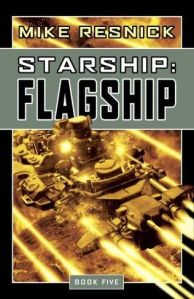
RESNICK: I only write on one novel at a time, but while I’m writing it I often take a couple of days off to write a story or an article, and then come back refreshed. For example, I just handed in STARSHIP: FLAGSHIP, the 5th and final book in that series…but while I was writing it, I wrote and sold a story to Asimov’s, 2 to Subterranean, 1 to Analog and 1 to GATEWAYS, plus an article for Challenger and one for the SFWA Bulletin. That’s probably why it took me 9 weeks to write the novel instead of 6 weeks.

VENTRELLA: What’s the biggest mistake you have made professionally? What is the biggest mistake you see new authors making?

RESNICK: I sold 3 very derivative, not-very-good science fiction books in the late 1960s. I was busy learning my trade as an anonymous hack in the “adult” field, and I made the mistake of doing hackwork in a field I cared for. I realized it very quickly, and stayed away from science fiction – as a writer, not a con-attending fan – for 11 years to give readers a chance t forget. They forgave, but those damned books still turn up at every autographing session to humiliate me.

The biggest mistake new authors make? Either sending a manuscript out when they could make it better (this is a murderously competitive field), or signing a lousy contract with a second-rate publisher just to get their book into print.

VENTRELLA: I understand that Hollywood has just taken an interest in your “Galactic Midway” series, which I recall discovering and loving back when they were published 27 years ago. How did that come about, and why that series among all of yours? Can you give any details about this deal yet?
resnickoutpost

RESNICK: There aren’t any details to give. I met with Jupiter 9 Productions when I was in Los Angeles for the Nebulas this spring. They have options on a couple of my properties, and asked what else I had. I mentioned that I had a 27-year-old novel called SIDESHOW that I have thought, from the day I wrote it, was very filmable: good story, almost no special effects, emotional rather than cerebral, all you really need is a good make-up artist and good actors. They asked to see it, I send them a copy, and they optioned it.

That doesn’t mean it’ll be a film. SANTIAGO has been under continuous option since 1990. I’ve been paid 4 times for the screenplay that Carol and I wrote. You haven’t seen it at your local theatres, have you? Another one was THE WIDOWMAKER. Sold it to Miramax; they paid Carol and me to write the screenplay, hired Peter Hyams to direct – and then lost interest. It’s currently under option with Jupiter 9. The Penelope Bailey trilogy – SOOTHSAYER, ORACLE and PROPHET – has been under option to Intrinsic Value Films for about 5 years now; they’ve had a screenplay for 4 ½ years, they hired a director 2 years ago – and you haven’t seen that one in theatres either, have you? Other projects under option include “Hunting the Snark” and KIRINYAGA. (On Hollywood’s behalf, the economics are different. If a publisher had to raise $75 million every time he wanted to publish a book, you wouldn’t see a lot of them, either.)

VENTRELLA: What is your favorite of your own work and why? Of what are you most proud?

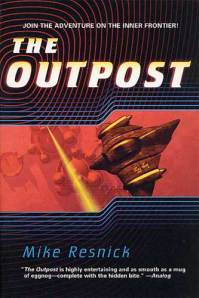
RESNICK: My favorite novel is THE OUTPOST, because it was the most fun to write. Far and away my favorite character is Lucifer Jones, who over 20 years has starred in ADVENTURES, EXPLOITS, ENCOUNTERS, and (this summer) HAZARDS, and will be in VOYAGES and INTRIGUES before he’s barred from every land mass on Earth. If I could write only one thing the rest of my life, it’d be Lucifer Jones stories; I love them.

I’m most proud of PARADISE, because no one had ever used that approach in that way, and I thought I did it about as well as it could be done. And I’m pretty proud of KIRINYAGA, which is up to 67 awards and nominations and still chugging along.

VENTRELLA: And finally, what is the best piece of advice you would give an aspiring writer?

RESNICK: Books don’t write themselves. Writers write; dilettantes who will never amount to much talk about writing.

Using outlines before you write

I often speak to aspiring writers and commonly hear “Oh, I never use outlines.”

Maybe that’s why they are still aspiring, because every published writer I know of certainly does some sort of outline beforehand.

While ARCH ENEMIES was my first novel, it was not my first writing assignment.  As a practicing trial attorney, I write many briefs.  I have also written for various magazines and newspapers over the years, as well as many events for my game.  And if there is one thing I have learned, it’s not to turn your computer off before saving your work.  No!  Wait!  I mean, never write without using an outline.  See, if I had used an outline here I wouldn’t have made that mistake.writing

My outline for ARCH ENEMIES (film rights available) was not organized in numbered paragraphs, with roman numerals for each section like they might teach you in writing school. Instead, it was the story in the most basic form:

Chapter One:  Terin is about to perform when he is grabbed by the Duke’s squires and told he has been ordered to appear.  In fear, he tries to escape, causing pandemonium at the tavern. After being captured, he is dragged to the castle. Along the way, a barbarian sees him and runs in fear, much to Terin’s wonder…

You get the idea.  I tried to end each chapter on a cliffhanger to encourage those “I couldn’t put your book down” reviews, and whenever a great new idea appeared, I worked it in and was able to set it up with some foreshadowing.

I also knew that I wanted to pace Terin’s evolution properly. What good is a story that has no effect on the main character?  His transformation from absolute coward to accepting his fate grudgingly to becoming the reluctant hero had to make sense. People don’t change without the proper stimulus, and by looking at my outline, I could plant the seeds and pace it accordingly.

Using an outline is especially important in my writing because ARCH ENEMIES and its soon-to-come sequel THE AXES OF EVIL rely so heavily on unexpected plot twists and mysteries that don’t explain themselves until the very last chapter or so.  In fact, I write the ending first and then place the clues along the way;  without an outline, this just wouldn’t work.

At the same time, I’m never tied to the outline.  Scenes I thought would take one chapter end up lasting two.  Exposition that I imagined working well early in the book proved to be stronger later.   But at least I had a guide to make sure everything I needed was mentioned and in basically the order I wished.

So for those of you aspiring writers out there:  trust me.  Use an outline.