Interview with Kelly Jameson

MICHAEL A. VENTRELLA: After last week’s blog about self-publishing, this week we have Kelly Jameson, a self-published author, to discuss her experiences. Kelly has two thrillers published, SHARDS OF SUMMER and DEAD ON.

Kelly, tell me about your books!

KELLY JAMESON: DEAD ON is the story of a medical examiner being stalked through different lifetimes by the same killer. History seems to be repeating itself. I set the story in Doylestown, PA because I grew up in the area. While the story is fictional, there are a lot of real-life places used in the book. I even put a body in the CB West football stadium. DEAD ON was film-optioned for two years by Gold Circle Films (they produced “White Noise” and “My Big Fat Greek Wedding”). It was also named Runner-Up in the 2006 DIY Los Angeles Book Festival. So I feel very fortunate and I think it shows that good things can happen with independently published books that you write and edit yourself. It is possible. In fact, when I was contacted by Gold Circle about movie rights via email, I almost fell out of my chair. The rights are back with me now and I’m working on a screenplay with another screenwriter on the script. We hope to have it completed by end of December and ready to pitch.
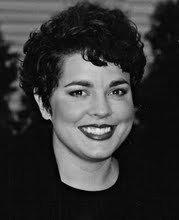
VENTRELLA: What’s your writing background?

JAMESON: I’ve wanted to be a writer since I was five years old. I used to write poetry all the time. Some of it was really bad. But that’s how you learn to be a writer—by writing. And reading.

I have a Journalism background. Got a degree from Bloomsburg University. I wanted to be a local sports reporter. Somehow I ended up a medical editor by day. Being an editor, editing my own books, has helped me to polish my indie novels and make them stand out.

VENTRELLA: How did you decide to write these books?

JAMESON: One of the characters in DEAD ON seemed to be tapping me on the shoulder and wanted to have her story told. That’s how it began. With a character and a “what if” situation. SHARDS OF SUMMER was really fun to write. I love the beach and Ocean City and wanted to write a story about lust, love, and obsession, about the wars going on inside each and every one of us every day. I like to write about flawed characters. The story starts with an elderly woman being arrested for the murder of a decorated WWII soldier on the beach 60 years ago. But of course, things aren’t as they seem … As a young woman, the main character was a dancer in a girlie show who got tangled up in an affair with a married homicide detective investigating murders in Ocean City.

VENTRELLA: How did you decide to self-publish?

JAMESON: I’m not very patient. The industry is a tough nut to crack and it seems to be changing on a daily basis. After a few positive rejections for DEAD ON, I followed my intuition and published it myself. I think that’s important in this biz—there’s more than one way to get your work out there and sometimes you just gotta take chances and do something.

VENTRELLA: Had you previously submitted your books to editors and publishers?

JAMESON: Yes. I even had an agent for eight months. However, when the recession hit, he pared his client list down and as a new writer, I was on my own again even though he thought my writing was excellent. I quickly became frustrated with the process. For my second novel, same thing. Got some positive rejections and some incoherent, nonsensical dismissals. It’s a very subjective biz. I decided to see if I could get it cookin’ myself … and fortunately I’ve had the support of established authors such as Ken Bruen (ONCE WERE COPS and GUARDS) who not only read SHARDS OF SUMMER but called it “THE GREAT GATSBY for the beach generation.” It’s so encouraging when a ‘new’ writer finds an established, best-selling author who is willing to read your material and blurb it. Jonathan Maberry says, “DEAD ON by Ann Kelly is a stunning first novel that blends ghostly happenings, romance, eroticism, time travel and intrigue into a genuine page-turner. The Ann Yang character (Bucks County, PA medical examiner) is particularly well-drawn, and the story builds nicely to a satisfying conclusion. I highly recommend it.” Kat Martin, NYT best-selling author says, “She’s a brilliant writer. No questions asked. She has a gift for the eerie. The words she chooses are absolutely brilliant. She has an incredible talent for stringing words together.”
If you like CSI meets the X-Files, you’ll probably like DEAD ON.

VENTRELLA: What do you see as the advantages of self-publishing?

JAMESON: You get to put the book out there pretty quickly and the way you want to. It’s fun to market it yourself, even on a limited budget. There are many local independent stores willing to help out. The Doylestown Bookshop sold 600 copies of DEAD ON so far! They’ve been really great. I think I’ve managed to sell about 2,000 copies of DEAD ON. I’ve read that a traditionally published first book has typical sales of 1,000. So I feel pretty good about my sales and I’d like to thank all my readers.

VENTRELLA: In my last blog, I made some comments about how there is a stigma against self-published books, even if they may be excellent. Do you agree?

JAMESON: I agree that a bias still exists against independently published novels but I think we are seeing some definite, and positive changes, in the publishing arena. I’ve had many positive experiences with my books. I don’t agree with the statement on your blog that “if you really want anyone else to consider you a real writer, avoid these things [self publishing companies] completely.” Of course most of us want to crack the traditional publishing nut and see our books at the front of bookstores everywhere.

Getting published traditionally is becoming more and more like winning the lottery. American publishing is basically averse to taking risks with new writers and tends to want to put everything in a box or a category. The ones who take a chance on multi-genre or slightly literary works still put out literary best sellers. It can happen. And I’m going to keep trying to crack the nut. I believe in my work 200% and I’m following my intuition in putting my books out there and marketing them. In fact, because of my first two novels, a small publisher who likes my style and storytelling approached me about writing a zombie novel and I just got the green light to write it based on my pitch! I’m also working on a new werewolf novel.

If you do publish yourself, investigate the companies. Some are vastly better than others and more fair. Ask other authors about their experiences. Look into the backgrounds of the companies…are there any complaints on the Internet about them? Are there glowing praises?

VENTRELLA:Did you hire an editor?

JAMESON: No … I’m an editor so I did it myself. But sometimes you don’t see things in your own work, so I also have fellow writers and family members who graciously read my work and comment.

VENTRELLA: Did your publisher provide the cover or was that your responsibility as well? Did you have any say in the decision?

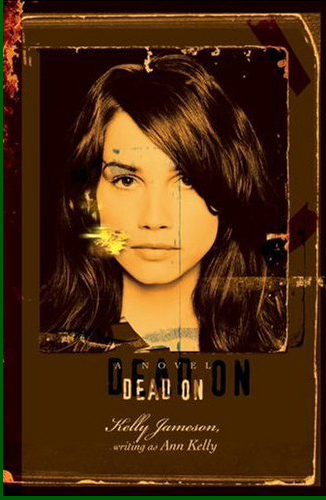
JAMESON: For DEAD ON, I gave iUniverse my idea and loved what they came back with. The front looks like sort of an old photograph that’s fading. The book goes back and forth in time between the present and the early 1900s and Ann Yang, the medical examiner, uses all her forensic skills as well as past life regression to solve the present-day crimes. I interviewed a past life regression specialist in Doylestown while writing the book and it was fascinating.
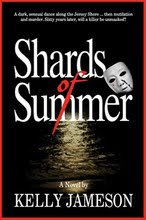
For SHARDS OF SUMMER, I did not go with the cover BookSurge provided because I felt it was too colorful and not right for the tone of the book. A designer from a small publisher helped me out and gave me a great cover, a dark mysterious cover that’s perfect for the book. I’m really pleased with it because I think it’s stunning. And covers are critical if you want readers to check out your book.

VENTRELLA: For those readers who would like to self-publish, what do you advise? How do you decide which company to go with and so on?

JAMESON: Do an Internet search. Keeping in mind your goals for the book, compare prices and services, percentage royalties paid, additional free services and distribution channels, and make a decision. Then go for it…and have fun with it. Don’t plan on making a whole lot of money. Plan on meeting lots of great people who are truly supportive of your work. Plan on making community connections. Plan on doing something that feeds your soul. Plan on your material maybe leading to other unexpected experiences, like trying your hand at screenwriting. Plan on meeting other authors and supporting each other. Set up your own local signings and write press releases and send to the local media.

I’ve also started writing short stories to practice things like dialogue and so far I’ve been published in The Summerset Review, The Mammoth Book of Best New Erotica 8 and 9, Dispatch Litareview, Amazon Shorts, Withersin Magazine, Barfing Frog Press, The Twisted Tongue, The Big Stupid Review, Ruthie’s Club, The American Drivel Review, sliptongue, ThugWorks and Ramble Underground. I have three shorts slated for publication in 2010 in Revenant magazine, TangledBank Press (Australian anthology) and Sex in the City (Paris edition).

VENTRELLA: What have you done to publicize the book?

JAMESON: For my first book, I did a lot of local signings, was interviewed by the Philadelphia Inquirer and other local newspapers, did some advertising myself (on a limited budget) and I’ve kept in touch with several hundred readers who ask for updates on my books and short stories, etc. I did co-op advertising with iUniverse and twelve authors were featured on a one page ad in the NY Times Book Review. That’s where Gold Circle saw my book and contacted iUniverse about the movie rights.

SHARDS OF SUMMER just went live on Amazon.com and so I will be setting up signings very soon. I hope to do some fun things and contests with beach glass because that’s a theme throughout the novel. I have a very limited budget so I’ll be peppering the media with news releases and hoping to do a few signings where the book is set, in Ocean City, New Jersey, too. I just set up a blog at http://kellyjameson.blogspot.com/. Hope you’ll keep in touch!

The Curse of Self-Publishing

These days many authors see an easy way to get published. Hook up with Lulu or Publish America and you too can have your own book! And look, it even gets listed on Amazon.com! It must be legit!

Well, if all you care about is having your novel available for your friends and family to buy, that’s a fine way to go. But if you really want anyone else to consider you a real writer, avoid these things completely.

Here’s a true example: Last year I went to a writer’s conference. It was the first I had ever attended and was not sure what to expect, but knew I could learn something. The conference had a number of guests who had published novels and more than a hundred participants who were, like me, there to learn and receive critiques. Quite a few of these people, I discovered, had already published their own books. One fellow was very proud of his Publish America novel.

On Sunday, they set up a question and answer period where the published authors would sit in front and discuss whatever the participants wished. I was honored when the organizers came to me and asked me to join in. The people with the Lulu books and the Publish America books were ignored completely. Even though my novel is with a relatively minor publishing house, the editors and writers who organized the conference considered it worthy.

After all, unlike these self-published books, mine had gone through the process and had been accepted. It had then been edited by a professional editor and I had worked with them to make changes. It showed a level of professionalism that the others did not.

And that’s the image you want, after all. Your work could be great, but if you publish it yourself, the message professionals get is that it was so bad that no one would publish it and that you were forced to put it out yourself.

Of course there are exceptions, which the self-publishing industry will point out as they try to get your business. There’s always that one-in-a-million time when a self-published book grabs the attention of the public and does well. Then there are the other 999,999 books that didn’t. You want to play the odds?

There are times when self-publishing works just fine. The books I edit for my live action role-playing game, for instance, are all self-published. However, I didn’t use a vanity press, because I wanted it to look more professional than that. I set up my own publishing company, paid for a bunch of ISBN numbers I could assign my books, and had them listed in Books in Print. Amazon sends me orders every now and then and Double Dragon (my publisher for the novels) has been distributing the e-book versions of them. But those are non-fiction rule books geared to a small but significant audience. They’re not the kind of thing you’d necessarily find in your local book store. If you’re pushing a novel, that’s not the way to go.

So don’t give up. There are publishers out there who might just love your book, but you may have to take a very long time to find them. And if you get absolutely nothing but rejection letters, maybe your book needs some more work. Maybe it shouldn’t be published yet.

Even by you.

Interview with Nebula Award Winning Author James Morrow

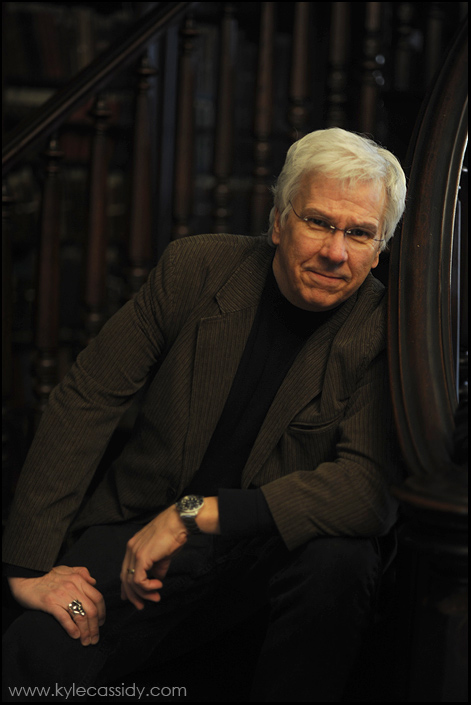
MICHAEL A. VENTRELLA: Years ago, a friend pushed the World Fantasy Award-winning novel TOWING JEHOVAH on me, and it sounded fascinating. Being a typical writer/reader, I always have dozens of books on my “Have to Read and Will Get Around to Some Day” pile. James Morrow_PhotoCredit Didier LeclercAtelier N89JEHOVAH jumped to the top of the list after I had the pleasure of meeting James Morrow at Worldcon in Montreal a few months ago as we both patiently waited in line for substandard Canadian coffee. It was as good as had been recommended (the book, not the coffee), and now I have the two sequels next in line on my “Have to Read” pile.

James Morrow is a graduate of Harvard and the University of Pennsylvania (not necessarily in that order) and has won acclaim for a variety of fantastic novels which weave together religion, politics, and philosophy. A Nebula-award winner, Morrow continues to challenge and entertain. His web page is here.

James, thanks for taking the time! It is obvious that much of your work concerns religion, from the Godhead Trilogy to ONLY BEGOTTEN DAUGHTER. What do you find in this subject that makes it so desirable?

JAMES MORROW: Every day, I wake up and I say to myself, “How extraordinary! Here I am, James Morrow, thrown into a world in which the vast majority of bipedal beings believe in benign supernatural intervention, and I don’t buy one bit of it! What’s going on here? Why am I totally at odds with most of my fellow thinking primates? How could such a large majority of humans, many of them brighter and better traveled than I, subscribe to a world-picture that is manifestly not the case? How can they imagine that the Bible enjoys a divine origin, when so much of it bespeaks our pettiest impulses? How can they not see the bankruptcy of the benevolent-God hypothesis? Why will they not face the probability that all deities are human inventions?

This paradoxical state of affairs variously confounds, amuses, saddens, frustrates, and infuriates me — but mostly it gives me the energy to create my stories and novels. I’ve been accused of writing primarily out of anger, but I believe I’m more bewildered than bitter. My bedrock perplexity seems to make for compelling fictive thought experiments, or so my more sympathetic readers tell me. towingEvidently God put me here to argue against His existence.

VENTRELLA: Have you faced any censorship or protests because of these works?

MORROW: No serious protests. Occasionally I’ll receive an e-mail from a Christian conservative who, having blundered into my website, is concerned about the status of my salvation. Normally this correspondent will prescribe a verse or two from Saint Paul, but sometimes he’ll glibly inform me that I’m going to Hell.

VENTRELLA: Are you disappointed?

You’ve actually struck a nerve here, Michael. Like all novelists, I’m a bit of a narcissist: I think my readership should be significantly larger. So, yes, I am indeed disappointed that Ralph Reed or the Vatican has not yet come gunning for me.

VENTRELLA: What was interesting to me after reading TOWING JEHOVAH was that the truth of the matter was just accepted; the novel does not disavow the Christian God nor does it satirize Him, but it certainly looks at Him in a new way. Had earlier versions and drafts taken a different approach?

MORROW: I’m glad you found that novel to be relatively nonpolemical. Preaching is the death of fiction. When I embarked on the thought experiment that became TOWING JEHOVAH, I wasn’t sure where I was going, and I was pleased to be surprised by many of the scenes that emerged from my pen. A literal pen: that particular novel was initially written in longhand.

At the start of the project, I didn’t realize TOWING JEHOVAH would give me a chance to satirize my own worldview in the form of the Central Park West Enlightenment League. Nor did I foresee the weirdly reverent tone of the inverse-Eucharist scene, in which the starving supertanker crew survives a famine by eating God’s deconsecrated flesh. And Neil Weisinger’s search for the En sof is also supposed to be taken at face value. I guess you could call TOWING JEHOVAH a novel by an atheist who’s trying to empathize — up to a point — with people of faith.

VENTRELLA: In TOWING JEHOVAH, a message is that “enlightenment” isn’t always truthful. The church wants to hide the truth in its own interest. The atheists, represented by the Central Park West Enlightenment League, also want to hide the truth for their own interest. Deceit is not something to be admired on either side, but in the sequels, the consequences of the truth are severe. Do you believe that it is sometimes better to not know the truth?

MORROW: As an equal opportunity satirist, I wanted to suggest that any group that would style itself the Central Park West Enlightenment League might very well — at the end of the day and faced with an apocalyptic challenge — decline to embrace a body of data that contradicted its worldview.18281941 When you’re in the business of fashioning sardonic comedies, nothing is sacred, not even atheism. My sympathies lie almost entirely with my secular brethren, but in a crisis I suspect that most of us would behave as mere feeble and fallible humans, not as courageous avatars of the truth.

Truth is a sticky commodity. The physical sciences long ago figured out that they can get by perfectly well without making grandiose truth claims (merely predictions based on theories), but philosophy and religion and the arts don’t have that option. Like the Ibsen of THE WILD DUCK and the O’Neill of THE ICEMAN COMETH, I can certainly imagine situations where the truth proved fundamentally destructive, and I was indeed playing with that idea in the Godhead Trilogy — though I ultimately come down on the side of truth-telling, as I also did in my novella CITY OF TRUTH.

Offhand, I can think of no greater sin than to consciously lie to a child, which is why I’m impatient with many conservative Christians, whose God is evidently so feeble that He can be sustained only through falsehoods systematically advanced on His behalf — falsehoods about the alleged evangelical foundations of the American republic, falsehoods about Darwin’s theory of natural selection, falsehoods about the blatant anti-Semitism of the Gospels, falsehoods about priestly sexual misconduct, and so on. As the saying goes, you can have your own opinions, but you can’t have your own facts.

VENTRELLA: Was the series planned in advance or did you decide to write the sequels after the first was completed?

MORROW: Based on some preliminary TOWING JEHOVAH chapters and an outline, I managed to convince Harcourt Brace to sign up for the whole trilogy. Needless to day, all three finished manuscripts departed radically from my original plan. BLAMELESS IN ABADDON was initially titled TERRA INCOGNITA, and the outline was more concerned with the trip through God’s brain, with the Trial of the Millennium functioning merely as a denouement. My first sketch for THE ETERNAL FOOTMAN had the characters searching for the Holy Grail. Eventually their quest leads them to a divine bedpan, an idea I rejected as sophomoric even by my standards.

VENTRELLA: What sort of research do you do for your novels, especially when discussing areas in which you may not be trained?

MORROW: For better or worse, the advent of Google has made the task of research 100 percent easier than in days gone by. I say “or worse” because I believe there was something vaguely romantic and even heroic about the novelist’s quest for the sort of quirky facts and period details that can bring a scene to life. But today these gritty particulars are available at the stroke of a key. It feels like cheating.

I like to say, “First I write the novel, then I do the research.” That remark is not entirely facetious. In the case of my novel-in-progress, an epic about the coming of the Darwinian worldview, I’ve already written scenes set at Darwin’s estate and on the Galapagos archipelago. I intend to visit both sites before putting the book to bed: in my experience such on-the-ground investigations can enrich a novel immeasurably — and yet the present drafts are not entirely lacking in credibility, and I could probably get away with simply claiming I’d done the primary research.

VENTRELLA: How did your education affect your writing? (As an aside, do you miss Boston? I went there for law school and loved it…)
apprentice-us
MORROW: Boston is a terrific city, commensurate in my affections with New York, Paris, and London. My days at the Harvard Graduate School of Education particularly paid off in my recent novel called THE PHILOSOPHER’S APPRENTICE, in which a philosophy student is hired to implant a conscience in an adolescent clone. When I was at Harvard, everyone was excited about Lawrence Kohlberg’s profile of children’s moral development. I ended up keying Londa Sabacthani’s education to the famous Kohlbergian dilemmas.

VENTRELLA: Do you tend to think of the story first, or a concept that will lead to a story? It seems that much of your work involves interesting questions of religion and philosophy that lead to a “what if?” scenario…

MORROW: Although most novelists, myself included, want to reach the reader at an emotional level, I believe that fiction writing is primarily an intellectual process. When a scene isn’t working, the problem is not that you’re failing to channel some cosmic Muse from a transcendent plane of reality — the problem is that you’re not thinking hard enough.

I couldn’t imagine beginning a novel or short story without an audacious premise in mind. Many writers evidently work in a completely different fashion. They’re happy to start with a memorable character, a vivid setting, a personal theme, or an intriguing initial situation, with the overarching concept emerging only during the composition process.

VENTRELLA: What do you know now about the publishing industry that you wish you had known when you first started out?

MORROW: My career was launched in a fashion that I took to be ideal: hardcover publication by a major New York house — to wit, the edition of THE WINE OF VIOLENCE that issued from Holt, Rinehart and Winston in 1981. I gradually came to realize that such an achievement, while not an occasion for sneezes, is by no means synonymous with having a career. I had not found the Holy Grail after all.

It took me awhile to figure this out, but unless the publisher is really behind you, with a fired-up sales force, a serious publicity budget, and a viable marketing strategy, any given novel is likely to die a dog’s death at the box office.hiroshima Not until TOWING JEHOVAH, my fifth book, did I actually enjoy the services of an in-house publicist.
VENTRELLA: What projects are you currently working on? Give us a teaser!

MORROW: I just finished a short story called “The Vampires of Paradox.” It will appear in IS ANYBODY OUT THERE?, a forthcoming anthology about the Fermi Paradox, edited by Nick Gevers and Marty Halpern. Now I’m free to return to the Darwin project, which I believe will be my best book yet — though I must admit I adopt that attitude towards all my novels: otherwise I would never finish them!

VENTRELLA: What sort of advice would you give an aspiring writer that you wish someone had given you?

MORROW: Try to figure out a way to make fiction writing its own reward. You can’t count on the marketplace or the publishing industry to validate your efforts — but you can learn to take satisfaction in a well-turned phrase, a witty description, a remarkable character, or a puissant idea.

VENTRELLA: What are you most proud of? What would you like to be remembered for?

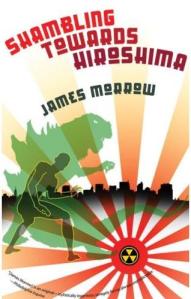
MORROW: I hope that my posthumous biographer will pay particular attention to BLAMELESS IN ABADDON and THE LAST WITCHFINDER. In those two novels I believe I came fairly close to realizing my artistic ideal — that is, fiction in which the dance of ideas is at once complex and entertaining. Among my shorter efforts, I like to think that people will be reading SHAMBLING TOWARDS HIROSHIMA long after I’ve gone to live with Jesus.

46

Interview with Gregory Frost

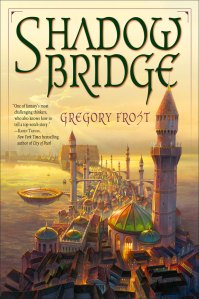
Gregory Frost is the author of the Shadowbridge duology, SHADOWBRIDGE and LORD TOPHET. His latest short fiction appears in the anthology POE, edited by Ellen Datlow. He’s been a finalist for every award in the sf, fantasy, and horror genres. Other works include LYREC, TAIN, REMSCELA, THE PURE COLD LIGHT, FITCHER’S BRIDES, and the short fiction collection ATTACK IF THE JAZZ GIANTS & OTHER STORIES. His essay on Slipstream fiction appears in Modern Fantasy Literature (Cambridge University Press), co-edited by Farah Mendelsohn. For two years he was the principal researcher for a non-fiction television producer, for shows that appeared on The Learning Channel and The Discovery Channel. Currently he is the acting Fiction Writing Workshop Director at Swarthmore College, in Swarthmore, PA, and teaches in writing programs in and around the Delaware Valley. His web page is Gregoryfrost.com.

MICHAEL A. VENTRELLA: I’m pleased to be interviewing Gregory Frost. I first became aware of Frost with his initial novel LYREC which I remember reading on the Boston subway back in the 80s. Although I have not re-read it since then, I recall it being quite fun with some real issues about religious beliefs…

Gregory, was LYREC the first novel you had written? What made you decide on that theme for your first novel? (PS: My wife says to tell you she loved that book.) Any news on it being re-issued?

GREGORY FROST: LYREC was the first novel that was published. Hardly the first one I’d written. In fact my first attempt at a novel was about 70 pages long. The second attempt was, at least, of an appropriate length, around 250 pages. But it and numerous others live in a box in a closet, which is where they belong. That second one made its way to Lin Carter, who was editing the Ballantine Adult Fantasy Series in those days (that should date me), courtesy of a letter of introduction from one David Gerrold, who’d never even met me. And Carter, bless him, did a line edit on the first 10 pages, showing me how much I did not understand of the craft. It would be a decade after that before I sold LYREC. But both Gerrold’s letter and Carter’s efforts were acts of kindness on their part. I think apiring authors should always stiffen their spines and talk to published writers. Trust me, only some of us bite. The zombie writers…yeah, you should probably not talk to the zombies.

I expect LYREC would have been a YA novel had there been such a category in ’84. Main character is an alien who has little experience with human emotions and finds himself greatly overcome by them as he inhabits a human body; he has to sort out his angry, warring and violent impulses. And his sidekick is unable to manifest as a human and so goes through the book as a large talking cat with attitude. I was trying to do something with fantasy besides interminable trilogies and quests. So there’s way more Fafhrd and the Grey Mouser in there than there is Tolkien or Robert E. Howard. I love Fritz Leiber, and those stories of his were unquestionably influential. Roger Zelazny’s work, too. It’s fresh, funny, different. I was shooting for all that with LYREC. A really good ride.

And at the moment there’s a possibility it’s coming back into print from Wilder Press this winter. Negotiations on that front continue, and I don’t know how that’ll fall out.

VENTRELLA: How did you break into the publishing business at that time?

FROST: I broke in by publishing a short story (in The Twilight Zone Magazine for the old people in the audience), and then in quick succession two more in F&SF, and around then at a convention I met Terri Windling, who at the time was an editor at Ace Books. I was in the middle of a draft of a novel based on the Irish epic The Tain, and the idea excited her. She agreed to look at LYREC, I think, pretty much on the strength of the idea that I was going to do my version of Cú Chulainn.

VENTRELLA: Has the business changed much since then?

Back then a publisher would try to develop a relationship with you—grow your career, so to speak. Now you’d better write a bloody best-seller coming out of the chute or you’re for it, mate. The bean-counters will look at your numbers and instead of thinking, “We can promote her next book and sell even more,” they go “Huh, your numbers weren’t great, so we’re not going to publish you at all!” That is the current reality. I can’t even tell you how many writers I know of who published a portion of a trilogy or series with a full character arc, only to have the publisher say in the middle of it, “Don’t bother to finish. We don’t want the last book(s) because your sales haven’t been great.” It’s ugly—and bovinely stupid—out there.

One of the books I use in teaching writing is THE GREAT GATSBY because so much of the correspondence between Fitzgerald and Maxwell Perkins, his editor, is available to us. And it’s interesting to see how much of that book was pulled together during the editing and revision process. Fitzgerald did not turn in a fine, complete, perfect manuscript. Far from it—the original Jay Gatsby was a complete cypher, even to the author. But nowadays that’s what you’re expected to do, turn in a perfect, finished work. Editors are now responsible for twenty more times the number of books in any given minute, so they can’t take the time to guide, to work in close that way. Someone like David Hartwell may still take such carewith selected authors, but he’s a dying breed. Everything now is Walmartized, the whole process. And it is not giving us better literature.

VENTRELLA: You have not limited yourself to one specific genre. While certainly that is very admirable artistically, do you feel that may harm you professionally? Should authors try to “specialize”?

FROST: I wouldn’t recommend the genre hopping as a career move. But then I wouldn’t recommend you be slow and methodical, either, in the genres.

Okay, I was having lunch with two contemporary authors a few days ago, Rachel Pastan (LADY OF THE SNAKES) and Asali Solomon (GET DOWN). And Rachel expressed to Asali how prolific I am. I mean, I had two books out last year. I’m now working on what I hope are final revisions of a supernatural mystery. I protested that I’d been working on this thing for 18 months and that was after setting it aside to write LORD TOPHET when Random House picked up SHADOWBRIDGE. And in discussing this, I realized that for a contemporary—let’s say (snootily) literary—author, a decade between books isn’t particularly shocking or unusual. Lord-Tophet_web

Asali’s collection came out a few years ago, and she’s under contract to produce a second book. But nobody’s going mad wondering where it is, and she’s still pondering it. Now, I took seven years probably from beginning to end to write SHADOWBRIDGE, and got nothing but shit about it from reviewers and interviewers. You take that much time in the genres and you’re immediately suspect. There’s this kind of “You’re writing entertainments, so if you took that long there must have been a problem” thing going on. We’re expected to knock out a book a year, in the same mold as the last book. You want a career, you should be doing that. You’re not supposed to be spending years crafting sentences.

Anyway, not answering your questions exactly, am I? Short answer: I write what I feel like writing. Always have. Always will. No, it’s not a smart career move when the industry and fan-base wants volume 18 of the seemingly endless saga of Morgock the Swordbelcher, or the eighth alternate history of some damn war that you haven’t added laser weapons to yet. Truth is, if you can stomach doing that and you’re fast, go do it, because you will definitely see more financial reward. Going off into the dark and changing up every time will likely not do this for you. Especially if you’re slow. But I’m stuck with me and that’s how I am. Contrarian by nature.

Having said that, I do write stories for anthologies that I’m invited to contribute to, provided I can think of something that fits within the proposed theme. But I have to get interested. I turned in a werewolf story for an anthology Darrell Schweitzer put together. But I only did it because I got to write a Donald Westlake werewolf story. And for another anthology of Darrell’s, of vampire stories, I wrote one because it allowed me to create a fifteen minute version of Homer’s The Iliad.

There has to be something to interest me and get me beyond the “oh, great, another vampire book” response, which is invariably my first reaction. TWILIGHT? Oh, please kill me now. (Of course, he said, mine wouldn’t be like that.) Also my response to anything to do with King Arthur, bands of small hairy men on terrible quests, or brutish brooding barbarians. The best King Arthur work since T.H. White was a throwaway piece penned originally as a Christmas card by the late John M. Ford. No one else has even come close. The best barbarian was in Ian Banks’ THE BRIDGE.Shadowbridge-web1

VENTRELLA: What is the basic theme of the SHADOWBRIDGE series? What’s the long term plan for the storyline?

FROST: The basic theme is that the books are and will be all about stories and storytelling. The first two are about Leodora aka “Jax”, who travels the world of Shadowbridge collecting stories and performing them. She sort of finds herself obsessed with learning stories and eventually discovers that her own exploits are becoming mythic, stories are being told of her. And finally her very life depends on knowing one particular story, one particular truth.

I built the world to be open-ended, and part of the first book’s challenge was winnowing down the breadth of possibilities into one large canvas on which creation myths, kitsune tales, stories about Death, and ghost stories could all float. With one exception the stories were written where they showed up. And I have a couple that never found their place, so they’re sitting off in a notebook, raring to be used somewhere, sometime.

VENTRELLA: Not every writing technique works for everyone, but what’s your writing process? Do you use extensive outlines?

FROST: No, not every technique works, and no two people have the same process. So I cannot advocate what I do in the sense of saying “you must do this.” In fact, anyone who says “You must do this” is at best telling you what they must do.

I’ve adopted what I call the John Cleese method of outlining, which sounds like a joke but isn’t. I heard him interviewed, describing how he and Connie Booth had written “Fawlty Towers” episodes by stretching a sheet of butcher’s paper across his living room and then writing the things they knew, or thought they knew, in about the place where that seemed it should happen. Started out with just a few things and then added to it, building a timeline of a sort.

So I have boxes of this old useless pinfeed paper, and I now take five or more sheets of it and do the same thing—write what I think I know, approximately where it seems to belong in the book, and then add to it. Build it up. And once it’s done, I’ll pretty much ignore it and go write. Usually by that point I’ve already done a few scenes or chapters anyway, because something got me interested. For the Shadowbridge books, I had a draft of the final dialogue between Leodora and Tophet done before I’d started the second book or had any notion of how I would arrive at that dialogue.

And about a third of the way into the book, I’ll usually find that the outline is invalid, because something better came along while I was writing and I took a left turn at Albuquerque. So I’ll do another outline as verification that I’ve still got a story going. And then I’ll write forward. And on top of that, I’m writing longhand. With a fountain pen (and Noodler’s Inks). Now, how in the world could I recommend that process to any sane human being?

VENTRELLA: Of which book are you most proud? What would you like to be remembered for?

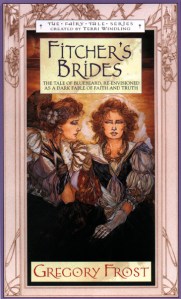
FROST: Currently, I’d like to be remembered for the Shadowbridge duology and for FITCHER’S BRIDES, which I think was a hellishly good novel of horror. I think I did up Bluebeard pretty well for Terri Windling with that book (I seem destined never to stray very far from Terri’s influence). On the other hand, since joining Facebook and other online communities, I’ve been floored by people who have read TAIN and REMSCELA to the point where the pages are falling apart and claim these are their favorite books in the world. So (to quote Bill Murray), I’ve got that going for me…which is nice. Fitcher-Cover

(Oh, and there’s a limited small-press edition of those books in one volume, by a publisher who went out of business, so if anyone’s still searching for them, get in touch, because I have all the remaining copies…)

VENTRELLA: What’s your opinion on e-books? Do you think they’re the wave of the future or a step down from traditional publishing?

FROST: It may be the thing that saves us all. My agent swears by her Kindle. I expect Apple will come up with an iNovels reader in the near future (you heard it here first) that tries to do for literature what the iPod did with music. I think we’ll reach the point where bookstores become places that make the book for you on the spot, eliminating the returns and distribution problems that plague this idiotic industry now. Put in your order, get your book in twenty minutes, like a pizza. I think if America wasn’t so pig ignorant we’d be making books from hemp paper now, which would cut costs ridiculously since, you know, it’s a weed that grows almost anywhere, like kudzu. But that would not make timber and paper industries happy, just as alternative energy sources infuriate Big Oil…so until you kill the chuckleheads, it probably won’t happen and you’ll shortly pay $10 for a mass market paperback.

Essentially, I’m for anything that puts books in the hands—and minds—of people, and makes them kill their TVs. Invite me to your house. I’ll kill your TV for you.

VENTRELLA: Tell me about the Liar’s Club and what you hope to accomplish with it. And be sure to let me know when you are accepting applications for other members.

FROST: The Liars Club of Philadelphia is a small collective of authors from across and outside the genres who felt that we could do more to promote ourselves as a collective. The baker’s dozen includes Bram Stoker Award Winner Jonathan Maberry and bestselling author William Lashner. We’ve been doing a “Liars Club Tells the Truth” tour now for about 6 months in and around the Delaware Valley, strictly at libraries and independent bookstores. We’re trying to promote the indies as well as ourselves. When the dinosaurs die (and Borders, I’m talking to you), then our hope is the independents will move back into the spaces that they were squeezed out of by these small-brained leviathans. We’re doing our part to help by throwing bashes at the bookstores and bringing in as many people as we can get. Here’s a link to our latest outing, at Aaron’s Books in Lititz, PA (http://liarsclubphilly.com/?p=189)

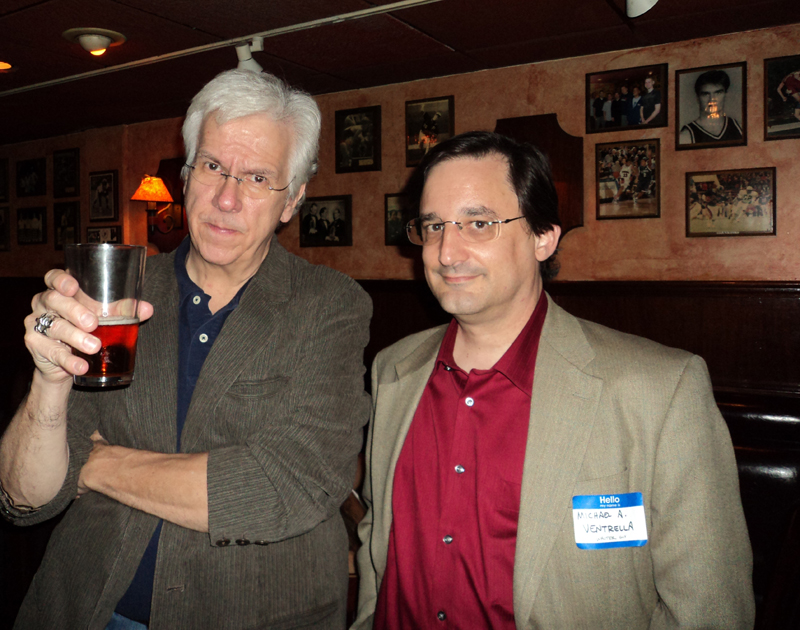
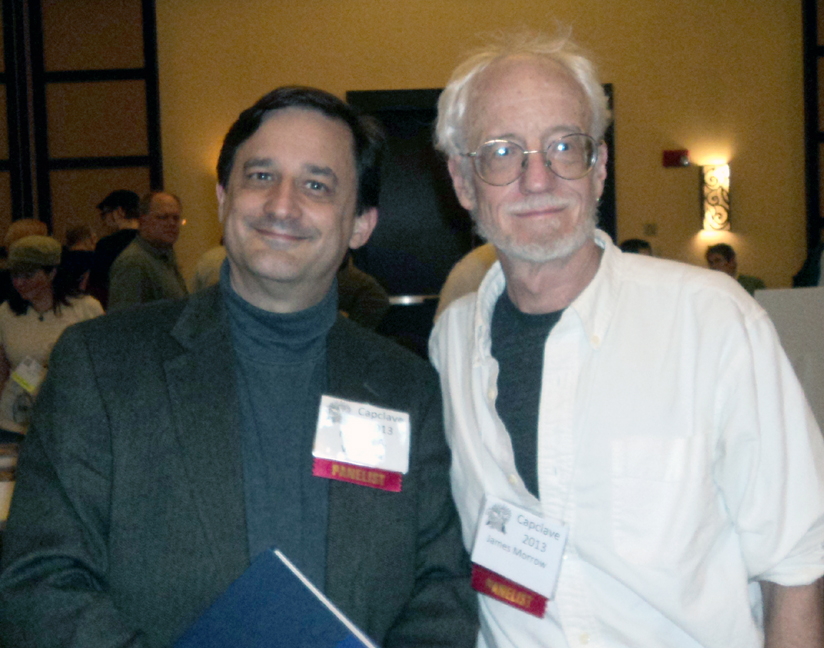
Greg and me

Interview with Author Peter Prellwitz

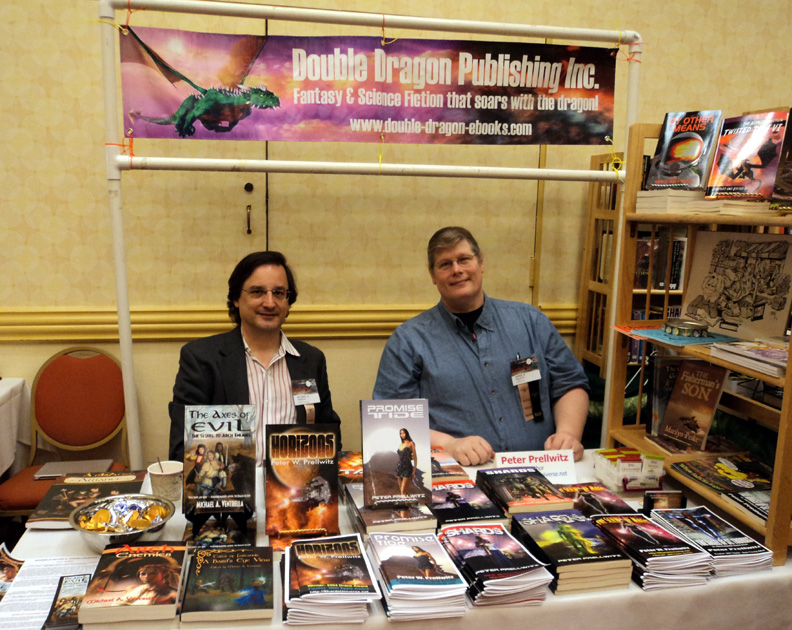
MICHAEL A. VENTRELLA: I’m pleased to be interviewing Peter Prellwitz, one of the most successful writers at my publishing house, Double Dragon. His web page is http://shardsuniverse.net/ . Peter, what made you sign up with Double Dragon, and do you regret going with a smaller press?

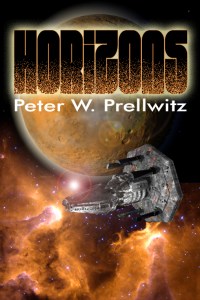
PETER PRELLWITZ: Double Dragon Publishing (DDP) was pointed out to me by a friend who was looking to start up his own publishing company. He’d read my novel Shards back when it first appeared in serial form on the CompuServe Writers Forum and became a supporter to see it published. (I’d originally written the novel just for my own enjoyment, with no intention of publishing it.) At the time, Double Dragon was conducting its first – and sadly, only – Draco Writing Contest, so I entered four of my finished novels, Horizons, Promise Tide, The Science of Magic, and The Angel of St. Thomas. I didn’t enter Shards because the four books making up the novel totalled three hundred thousand words and I knew better than to submit something of that size, having never been published. All four books fared well in the judging, with Horizons selected by finalist judge Mike Resnick as the Winner for Best Science Fiction.
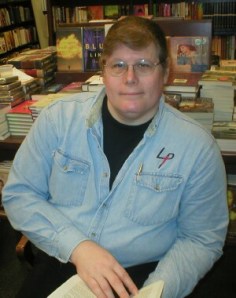
prellwitzbiopic

I have never regretted going with a smaller press, primarily because that smaller press was Double Dragon Publishing. I have always been treated cheerfully, professionally and politely. This can be tempting to think, “Sure, they treat me that way because my sales are pretty good.” But the undisputed truth is the company treats all its contributors that way.

VENTRELLA: Given the cutbacks at the big publishing houses, would you advise other starting writers to “build a portfolio” by having success with a small publisher or is it better to keep holding off for that big potential deal?

PRELLWITZ: Having just crowed over the joy of being with Double Dragon doesn’t mean there aren’t challenges and downsides to being signed by an ebook publisher. One of the biggest is the “stigma” that comes with it. The sad truth is that there are a LOT of ebook/small publishing houses out there that have poor business practices, very low standards for accepting materials, and are about as real as faster-than-light travel. The mainstream publishers and associated agents, editors and such have maintained for years that ebook/small press publishing was no better than vanity press, and not to be taken seriously. Sadly, more often than not, they’re absolutely right. There’s an overabundance of – forgive me – poor quality writing that is being published by ebook/small press publishers that has little or no merit to it and is seeing print only because of their publishers’ inexperience, vanity or outright greed. That means that real publishers like DDP, who have high submission standards, a winnowing process, and sustainable business/publishing models, are unfairly lumped into the same group as so-called publishers. Because of this, while the idea of “building a portfolio” with a small publisher sounds good, it can actually hurt you in the respect of building a reputation among the larger, more conventional publishing companies. And literary agents won’t even look at work you’ve published with ebook/small press publishers.

But there a many positives to going with the right small publisher. One is the self-realization that you’re a serious writer; you’ve tried to get your work published. Another is that your chances of getting read and signed are greater with an ebook or small publisher. Just be sure you go with a reputable publisher. I do believe the time is coming when there will be a blending of some elements in the ebook publishing and mainstream publishers. The ebook and small publishing companies are far more efficient; not wasting paper but rather using print on demand (POD) or electrons to put out books, as opposed to the tried and true but increasingly expensive and wasteful mass publishing model that the larger houses use. Being a known, respected author with a known, respected publishing house, be it ebook, POD or mass, is a good thing.

VENTRELLA: What’s your writing process? Do you use extensive outlines? And do you plan out the series or just work one book at a time?

PRELLWITZ: I’m afraid I’m a nightmare of an example when it comes to the writing process. I’m what you would call a “seat of the pants” writer. I no idea how a novel is going to end, nor even what’s going to happen in the next chapter or even the next page. Oh, I’ve tried to do the outlines, plot summaries, character direction, and etc. For ten novels now, though, it hasn’t worked. I introduce my characters to the initial conflict that needs to be resolved, then just write down what happens. If I ever try to step in and direct things, they either smack me down for meddling in their lives or they stand around and go on strike like a bunch of prima donna actors. In one novel, TAU (which stands for Those Above Us), I set up one character to be the penultimate bad guy; then traitor everybody wants dead. I built this massive case of evidence against him and then, one chapter before the end of the book, he dies a noble death. He’s NOT the villain I was certain he was. Which left me completely in the dark as to who WAS the traitor. Took me a couple weeks to figure it out, and when I did, I couldn’t believe it. But when I read through the novel, there it was. I’d laid out – rather, recorded what I saw – everything that was needed to prove the guilt of the traitor and I’d missed it all.

As for planning out series, I do and I don’t. Oftentimes when I’m working on one novel I’ll write a reference to an event or person that has only tangent relevence at that moment but promises to have a good story on its own. Several novels and a couple dozen short stories have come about that way. I will start and work on more than one book at a time, however. Generally, I don’t recommend it. In my opinion, it’s far better to focus on one novel. Right now I’m writing a Shards Universe novel and a Martian Western novel and a fantasy novel. They’re all moving forward, but slowly. They’ll probably all be finished about the same time, which will be cool because I’ll have three completed novels. But until they’re finished, I don’t have anything to offer my readers. That’s okay before you get published, but once you establish a fan base, you owe them more than vague progress updates.

VENTRELLA: What’s your writing background? Did you begin with fiction?
horizons510
PRELLWITZ: I did. My first “published” work was a Thanksgiving play I wrote in 4th grade. My teacher was so impressed that I’d written completely on my own (it wasn’t an assignment or anything), that she produced it and it played to the entire school. It was an awful play. Elements of Gilligan’s Isle and F-Troop, poor dialogue, no logical progression to plot, and a cookie-cutter ending. My mom saved me a copy of the play, so I was able to refresh my memory about it. Yep, it was awful. But it was produced and it was my creation.

I was hooked.

I wrote another, much better Thanksgiving play in fifth grade, which was also produced, this time by my fifth grade teacher. After that I started writing short stories and started about six different novels that I never took more than a hundred pages. I co-wrote a melodrama in my senior year that was produced and played in nine libraries around Orange and Los Angeles counties in 1978. We got our fist official reviews from that; two thumbs up from both the Orange County Register and The Los Angeles Times. I continued writing fiction and non-fiction through the years, my break coming in 2003 with Horizons.

VENTRELLA: Is a web page important for a starting writer?

PRELLWITZ: Yes.

Hmm… let me rephrase that:

YES!!

One trap an author can fall into is that his or her “job” is to write and only write. Indeed, in the past – say, the 19th Century – a well-known author need only send his completed manuscript to his publisher, then sit back while other people did the rest of the work. Marketing, publicity, etc. The author had only to keep writing and occasionally show up at lecture.

Not only are those days gone, I wonder how much they really ever existed. If you look at Samuel Clemons’ life, you’ll see it was nothing like that. Today, however, the author must also be the main source of publicity. Also, simply writing a novel isn’t the only option. There are so many opportunities to add to the novel’s audience and reach, that NOT taking advantage – especially when so many other authors are using the chances – that an author is really short-changing the novel’s life.

Web sites are a critical opportunity that should not be passed up. And I don’t mean a typical “Buy My Book!” vanity web site. Having a living, breathing web site that you update regularily, store plenty of free stuff on, and just generally increase a readers involvement in your writing, can be the difference between your book just sitting on the shelf and your book gaining a following.

For the starting writer, I would recommend having a web site up and running at the same time you’re writing your first novel. When I was writing Shards back in 1996, I started the ShardsUniverse.net site mostly for myself. I kept my research, connecting short stories, maps, and everything else there. I didn’t let anyone really know about it. When I’d finished Horizons in 1998, I did more of the same. It wasn’t until 2003, when Horizons was first published, that I began pushing my web site. By then, however, it was a wealth of information on my universe, with a free library of short stories, novel excerpts, research, and current news on conventions and the like. Since the majority of my novels occur in the same universe, the web site helped tie everything together.

A tip… I put up my first web site all by meself. I wish I hadn’t. Even though I’m a professional IT person, I’ve never been big on web design. If you have a couple hundred bucks, PAY a professional to set up your site if you’re seriously going into the writing world. I’m doing that now, but it’s an ugly, slow process since I have a lot of content to move over.

VENTRELLA: How does writing for comics differ from writing standard fiction?

PRELLWITZ: As you know, I’m currently working with Steve Bennett, the anime artist, in turning my young adult novel, The Angel of St. Thomas, into a web comic of the same name. It’s been challenging. Since the medium is so very different, illustrated as opposed to written, rewriting is an absolute must. Where I could use the reader’s imagination to help me tell the story in the novel, as a web comic I’m more compelled to provide visual story-telling. While this forces me to provide more detail in the form of instruction to the artist, the result is a universal representation of what I’d envisioned when I first wrote the story, as opposed to my letting the readers’ imagination fill in the blanks.
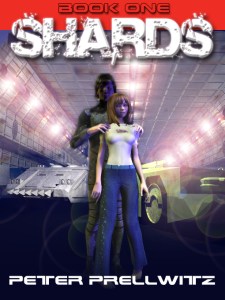
ShardOne510

Pacing is also a huge challenge. The novel can be read in two or three hours. The web comic, which only posts one page twice a week, will need three years to tell the same story. Because of that, action scenes need to be enhanced while exposition and transition sequences need to be condensed. Taking three paragraphs of exposition in a novel is a one minute read, filled with useful information. But drawing three paragraphs of information might take four or five pages, which is two weeks worth of web comics in which nothing is happening. So adjustments are needed. Sometimes major adjustments. For instance, one chapter has the main character telling the origin of the “Angels” to another character over dinner. In the web comic, we’ll be having her showing the story; the reader will go back and watch things as they occurred from three centuries earlier.

The other primary difference is also the most exciting and, yes, at times challenging difference. The story is mine. The characters are mine. But the art is Steve’s, and he’s as much a creator of the web comic as I am. What I try to convey in a script isn’t necessarily what he’s going to draw. Not one single page has been exactly as I thought it would be. But at the same time, every page, while different, has been better. He’s the artist, after all. What he doodles in two minutes I couldn’t draw in two weeks; Steve is that good. So we always have an exciting and sometimes energetic exchange of ideas. That’s forced me to better see things as an artist does, which has helped me become a better writer when it comes to scripts. And being able to write scripts is always a useful skill.

VENTRELLA: You make regular appearances at science fiction conventions as a guest author; do you find these to be a useful process to promote yourself?

PRELLWITZ: Yes, and I think your question touched on the often overlooked main point. Conventions are a great place to promote MYSELF. Almost all other means of promotions, youtube, web sites, even book signings, are to promote the book. And my books are certainly the reason some people want to meet me. So when I’m at a convention, I’ll have a table in the Dealers Room and talk about/sell my books. But this is primarily the way my readers – and potential readers – get to meet the person behind the stories. To hear my opinions and my life experiences, as well as witness my reactions to and interactions with events as they occur at the convention.

Of course, it’s a two-way street. I also get to observe, interact, and learn from readers; those who’ve already read my novels as well as those who have not. Of all the genres that exist in fictional writing, science fiction is the fastest moving target. All other genres are limited by time, be it past or present. Even fantasy – which occurs in universes significantly different from ours – can’t go into the future, since it’s the future of a universe different from ours. But science fiction has no such limits. It can – and does – cover past, present and future. And it can cover multiple realities. And anyone who reads and enjoys science fiction is going to have a mind that has been stretched and exercised by a scope of endless possibilities. Those are people I want to know and with whom I want to interact

VENTRELLA: Here’s the question I’ve asked everyone so far: What’s the biggest mistake you have made?

PRELLWITZ: : In all honesty, I don’t think I’ve made it yet. I’ve had a very fortunate career as a writer to date. I continue to write, though not as much as I should, which is a common Biggest Mistake for authors. Though I do wish I hadn’t started playing World of Warcraft. That’s eaten up hundreds of hours I could have spent adding to my universe.

A lot of my readers often ask, “Why aren’t you in all the bookstores?” which is to say, “Why aren’t you with a mainstream publisher?” But I never for one moment think of my loyalty to Double Dragon as a mistake. Yes, I might have been able to get published with a big publishing house. But I DID get published with DDP. And now that I’ve proven myself to me and to a growing number of readers, I am trying to go mainstream with my next novel, Redeeming The Plumb. And I have DDP’s blessing and support. And if I have my way, DDP will always have my ebook contracts.

So, this is the only question I guess I’m dodging, because I really haven’t made my biggest mistake.

Yet.

VENTRELLA: What is the best piece of advice you could give a starting writer?

PRELLWITZ: My advice is three-fold.

1.) Buy, read and KNOW “The Elements of Style” by William Strunk and E.B. White. This slim book is a must for any writer.

2.) Constantly improve your skill with your tools; namely grammar, vocabulary and style (see above). If you have the greatest novel up in your head, but cannot communicate it, the story has value only to you. Don’t cripple your imagination because of poor writing skills. Mark Twain said it best: “Use the right word, not its second cousin.”

3.) Write crap. If the aspiring writer accepts that he or she will be a better writer in ten years, then the writer must also accept they are a POORER writer now. Don’t wait until the perfect inspiration comes along. Flowers can grow alone and by themselves, but a truly beautiful flower requires fertilizer to grow from, as well as less beautiful flowers nearby with which to be compared. The same is true for writing. Start writing and keep at it. You will write junk. But you’ll learn. And you’ll get better.