


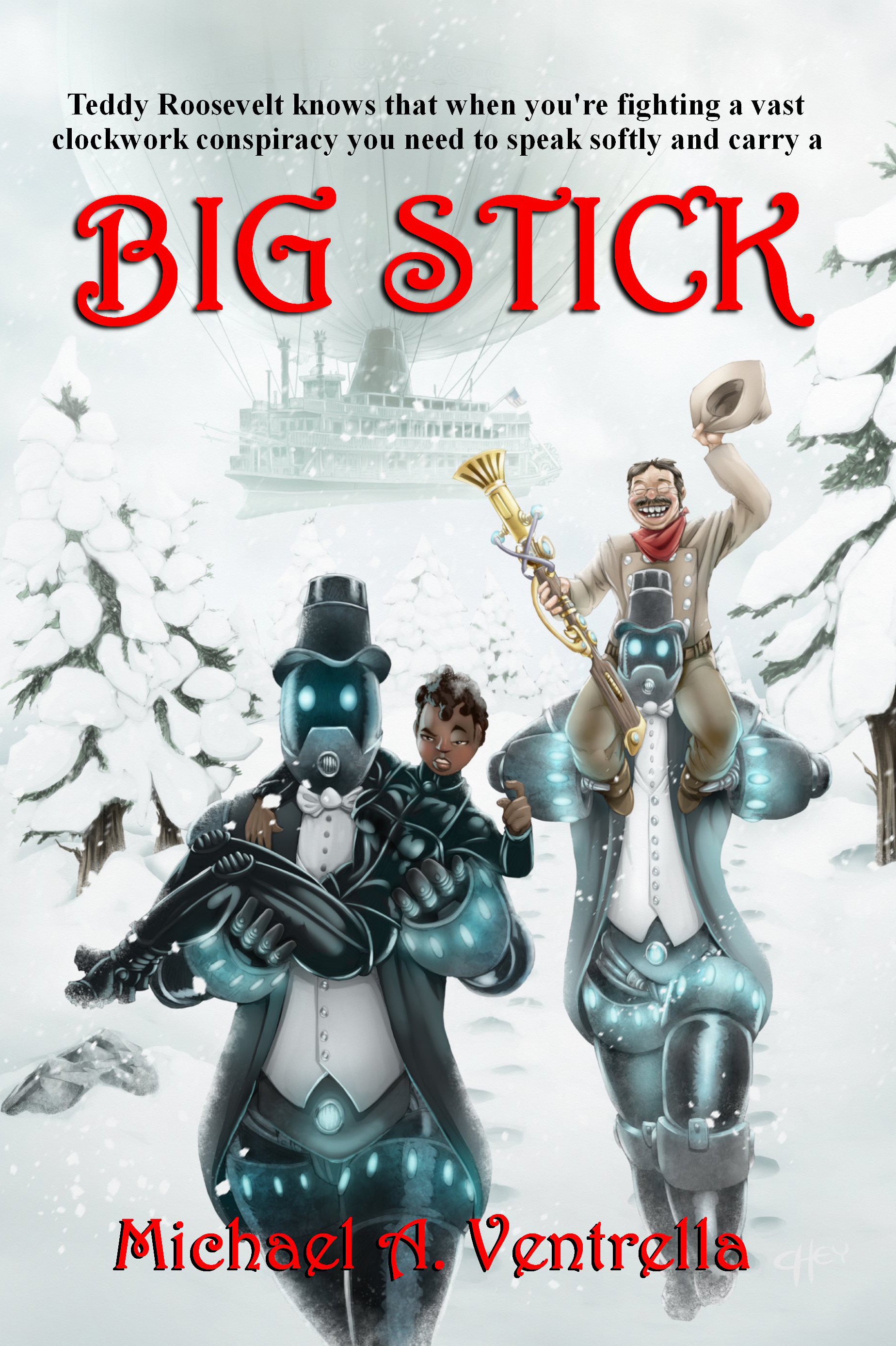
MICHAEL A. VENTRELLA: I’m happy today to be interviewing author and speaker Sally Wiener Grotta. Sally is an award-winning writer, photographer, podcaster & speaker. Her newest books are OF BEING WOMEN, a collection of feminist sci-fi stories (NobleFusion Press), and DAUGHTERS OF EVE, an essay discussion workbook that explores nature of life for modern women through the filter of biblical tales of matriarchs (Bayit Publishing). I’ve edited Sally in one of my anthologies (ACROSS THE UNIVERSE), and she will be speaking at the Pocono Liars Club Writers Workshop in October of 2026.
Sally , your background is as a journalist. How has that influenced your fiction writing?
SALLY WIENER GROTTA: I wouldn’t be the writer – or the person – I am today, if it weren’t for my experiences as a journalist.
I traveled on assignment all over the world, to all the continents (including three times in Antarctica) and many far-off islands (such as Papua New Guinea and the Falklands). I covered a wide diversity of cultures, traditions, and endeavors. And I got to know dozens (scores?) of individuals whose lives may be vastly different from mine, but with whom I could always find some commonality. Those encounters of shared humanity and personal connections live within me. When I write (whatever I’m writing), they give my work a deep sense of wonder, appreciation for human potential, and a healthy dose of common sense. What’s more, it’s why all my fiction is character-driven. While the journalist within me is compelled to look squarely at hard reality. As a journalist, I also learned that it’s the people living within that reality who intrigue me. And the ache to connect with one another which we hall have is what gives me hope even in the darkest of times (whether fictional or lived).
The other side of journalism – the business of writing and working with editors – has prepared me for a career in fiction. I learned so much during hard-working editorial meetings about the details and rhythms and sound of prose or dialog that make a story something my audience will want to read. Today, editors know me as someone who is easy to work with, who loves brainstorming and editing until a piece shines, and who delivers what I promise, when I promised it. That work ethic and my love of teamwork that I learned as a journalist has helped establish a reputation that has opened doors for me.

VENTRELLA: Is there really a difference between writing fact and fiction?
GROTTA: When I focused on non-fiction, I had to report other people’s facts, often juggling contradictory “facts.” With fiction, I write to discover my own truths.
On the other hand, with my current novel-in-progress, which is generational magical realism set in the U.S. in the 19th and 20th centuries, historical facts and real people play an important part in the scaffolding of the story. So, I need my journalistic research skills to be sure that those historic characters, events and such are based on verifiable facts.
VENTRELLA: Do you think short stories are easier to write than novels?
GROTTA: It depends on the type of writer you are. I have friends who craft great short stories, but struggle with novels. For some, it’s because they don’t have the patience or can’t keep the passion alive through the length of time that’s needed. For others, it’s that they crave the validation of working on finished pieces that can be written, submitted and published at a pace that just isn’t available with most novels.
For me, it’s the opposite. I love long form writing where I can explore the small details of lives and worlds that make them come alive for me, and for my readers. And the people! To fully understand them, all the layers of experience and contradictory needs, passions, hopes, failures, loves and hates that have made them who they are – that requires taking time with them, letting them reveal themselves through various experiences.
When I do write a short story, I sometimes resent the time spent on it, because I know I could have finished a chapter of a novel in that time. Still, the discipline of writing short fiction is good for me, and I highly recommend it for sharpening your writerly skills. In fact, I’ve recently become a fan of flash fiction, precisely for that reason.
VENTRELLA: You are a noted speaker at various conventions, workshops and seminars. What do you find about these that are valuable?

GROTTA: Every teacher I know will say that the best part of teaching is how much you can learn from your students. I love seeing how nearly everyone in my classes and workshops will interpret the lessons in their own way, filtering them through their sensibilities, histories and styles. It makes me look at writing, language and life from new perspectives, and ignites my mind with a synthesis of new ideas. Besides, it’s a blast when I see the light suddenly turn on in another’s eyes, when we work together to figure out what they had thought was a barrier or a thorny problem.
VENTRELLA: You’ll be speaking at the Pocono Liars’ Club workshop in October. Tell us about what you will be doing!
GROTTA: As I mentioned, I learned as a journalist to love the editing process. As a novelist, that has helped me realize that my first draft or even my nth draft can always be improved. That requires looking with fresh eyes at my work, to make sure my characters, plot, dialog and story arcs are the best they can be. However, I have been blindsided, too, like every writer. We’re just too close to our own stories, too familiar with our own prose. In the workshop, I’ll guide folks in using various strategies and tricks that I’ve developed to help catch writing tics, plot holes, moments when characters just aren’t being themselves, etc. Attendees will either work on their own manuscripts or use samples that I’ll bring.
VENTRELLA: How much of writing is innate? In other words, do you believe there are just some people who are born storytellers but simply need to learn technique? Or can anyone become a good writer?
GROTTA: Can anyone become a good writer? That depends on personality and how observant you are. If you read a lot, with your mind engaged, if you learn to hear the sounds of language, and how different people function, and what a room tastes like or what it feels like to walk on cobblestones. In other words, anyone who fully experiences life, and then tries to imagine what that same life would be like for another completely different from them, and then puts in the time to learn the craft… well, maybe, yes.
I believe that storytelling is hard-wired into the human mind. It’s how we learn, how we communicate, and how we function within the world. However, storytelling and writing are two different things. I’ve known a lot of people who talk a good book.Talk is cheap. Writing is expensive in terms of time, devotion, and sweat. Creating a story that others will want to read requires dedication to developing your craft, as well as consistently writing. Or, as I like to say, “Butt in chair, hands on keyboard.”I write most mornings for at least 30-45 minutes a day. I also give at least one evening a week to 2-3 hrs.
VENTRELLA: What writing projects are you working on now?

GROTTA: I’ve recently finished a novel about improbable sisterhood that I’ve been working on for years. Women of a New Moon is about six women, thrown together by an antisemitic act of violence in the Pennsylvania Poconos, who share their stories while trying to make sense of our confusing, tumultuous world.
I’m now working on a non-linear magical realist novel, set primarily in the Pennsylvania coal region (1868-1999). A bloodline of women based on biblical female archetypes (e.g. Eve and Hagar), who traditionally had little or no voice, speak out and act. Their struggles, failures and triumphs are woven into an old rug by the family’s first mother, creating links among past and future generations.
And yes, once again, I’m jumping genres, while challenging myself with increasing difficult projects. That’s how I continue to finetune and polish my craft, while following my passion for compelling character-driven stories.
VENTRELLA: Other than meeting you at our October workshop, where can folks connect with you?
GROTTA: I love engaging with people on my (always free) Substack (http://SallyWienerGrotta.Substack.com), on Facebook (https://www.facebook.com/SallyWienerGrotta) or through my website (http://SallyWienerGrotta.com). See you soon at the Eastern Monroe Public Library!
Filed under: writing | Tagged: Sally Wiener Grotta |


 Michael A. Ventrella
Leave a comment