Interview with Kerry Gans

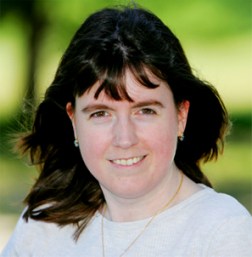
MICHAEL A. VENTRELLA: I am pleased to be interviewing good friend Kerry Gans today (We’ve both studied under the Master Jonathan Maberry). Kerry is the author of several short stories, a family history book, and the middle grade novel THE WITCH OF ZAL. She is a chocoholic theater geek, believes libraries are magic, and considers Chincoteague Island her perfect writing retreat. When not writing, she haunts cemeteries and dusty archives in search of long-dead ancestors and pursues her most important work-in-progress, her daughter.KerrySmall

Tell us about your newest book!

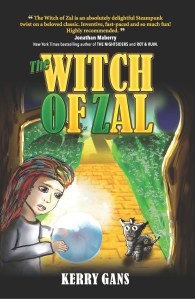
KERRY GANS: THE WITCH OF ZAL is a re-envisioning of The Wizard of Oz. It’s a genre twist, in that Dorveday is from a completely urbanized sci-fi world, which makes rural, magical Oz quite the culture shock. 12-year-old Dorveday runs away from home to protect her robotic dog from the oppressive Ministry, and she accidentally lands in Oz. A Victorian gentleman Scarecrow, a clockwork Tin Man, a literally yellow-streaked Lion, and an escaped slave boy help Dorveday to find her way home to Zal. Together they battle zombicorns, killer butterflies, and an alchemist Wicked Witch while overturning society as Oz knew it. But will Dorveday return home in time to save her mother from Ministry threats—and can one girl shake up Zal the way she did in Oz?

VENTRELLA: What made you decide to write an Oz book?

GANS: I never set out to write this book. The book started out as a homework assignment. Jonathan Maberry asked us to take the Dorothy meets the Scarecrow scene from The Wizard of Oz and rewrite it in a different genre. I made Dorothy from a science-fiction world, so rural Oz would be completely alien to her. I had so much fun writing this scene, I decided to write the entire book!

VENTRELLA: What is the main difference in writing a middle grade book and an adult book?

GANS: In a middle grade book like THE WITCH OF ZAL, there are a few guidelines (all of which can have exceptions, of course). No sex. No falling in romantic love. No swear words. Make sure the vocabulary fits the age group. Most important, the kid has to be the hero, the one who solves the problem in the end.

While I do think you can tackle any topic you want in a middle grade book (even difficult topics like abuse and death), there is a certain sensitivity you need to bring with you. Perhaps certain scenes happen off-stage that in an adult book you would see. Perhaps the language you choose is not as harsh or as stark as you might use in an adult book. So while I would never tell a writer to avoid hard topics in middle grade, be aware that if you want to get it published you probably can’t handle the topic as baldly as you would with an adult book.

VENTRELLA: Tell us about the publishing decisions made.  

GANS: I tried to get an agent for Zal, but no one showed interest. This was quite soon after the movie Oz The Great and Powerful had come out and didn’t meet expectations, so I think people were not interested in another Oz offering. Jonathan Maberry suggested I send it to a small press that was looking to start a middle grade fantasy line. Turns out that Charles Day, the publisher at Evil Jester Press, is crazy for Oz stuff and really believed in the book. So I got my first book contract with no agent—a scenario I had never envisioned. But it pays to keep your mind open and never get so tunnel-visioned on one way of publishing that you miss opportunities that come your way from unexpected sources.

Once I was on board at Evil Jester, I did book edits (several rounds) with the editor. We also needed a new title because my working title didn’t work for the market. My publisher is also an illustrator, so he did the cover art for the book. We went through multiple rounds of cover art until we settled on the one we have. Working with a small press, I had a lot more input throughout the entire process than I would have with a large traditional press.

VENTRELLA: Why did you decide to go that route? Any regrets? 

GANS: I wanted my first book to be with a press—I did not want to self-publish. I wanted to go through this entire publishing/marketing process with someone else, someone who would have my back and who could brainstorm ideas with me. In many ways, a small press is the best of both worlds, in that the author often has more control over the final product (such as cover art), while having a larger reach than they could get by themselves.

I wouldn’t say I have regrets—the people at Evil Jester are great and so supportive. I do have lessons I have learned, though. The biggest one is that while a small press gives you the best of both worlds, a small POD (print on demand) press is often trapped between the worlds of self-publishing and traditional publishing. I have found in trying to get the word out that I can’t capitalize on many self-publishing marketing strategies because I don’t have the ability to control pricing and other variables, yet because we are POD I am not eligible for many of the traditional marketing avenues, either. If your small publisher does a traditional print-run, most of those closed doors open.WitchOfZal Cover

I would never discourage someone from going the POD route—I feel it makes the most sense financially and environmentally—but be prepared to be a little more creative with your marketing. A huge self-publishing support network has grown up to serve that community, but there is not a similar system for POD small publishers. I think there is a need for it, and it may yet arise.

VENTRELLA: What is your writing process?  Do you outline heavily or just jump right in, for instance?

GANS: My writing process is constantly evolving. I’m not a huge plotter—I usually know the beginning and the end and a few scenes in between. I used to write everything straight onto the computer, but now I’m incorporating writing longhand again. I’ve found that when I write longhand, what I write has a vastly different feel and depth than what I write straight to the screen. I also find that I get “attached” to the words on the screen—I have trouble thinking outside what is already there. I don’t have that problem with handwritten pages—I can cross out, draw arrows, have notes in the margin. It frees something in my revision brain.

So my current process looks something like this: 1) a short sketch of what I know about plot and character, 2) perhaps a typed up “first draft” that acts as a fleshed-out outline and lets me get to know my characters, 3) using that as a guide, write the whole thing longhand, 4) type it in fresh from the longhand manuscript. I haven’t actually written a book from scratch since I re-incorporated my longhand writing, so I’m not certain this is the way it will work. But that’s my plan.

VENTRELLA: What do you do to avoid “info dumps”?

GANS: I write a really bad first draft, then go back and cut mercilessly. If the reader doesn’t need to know that info at that moment, then it can go. And since the first draft is complete, I can see where the information I’m cutting works better, where it actually belongs—or even if it’s not needed at all.

VENTRELLA: Do you think it is important to start by trying to sell short stories or should a beginning author jump right in with a novel?

GANS: I think it depends on the author. Writing short stories is a completely different skill set than writing a novel. Some authors are more naturally attuned to the short story skills, others to the novel skills. I will say that even if you are focused on being a novelist, gaining that short story skill set is vital. It helps sharpen your craft, and we are seeing that writing short stories using your characters and your world between novels is a great way to keep your audience rabid while they wait for your next book. Writing and publishing short stories as a stepping stone to getting a first novel published, however, is no sure-fire path to success. A few stories in high-quality publications is never a bad thing, but agents won’t take you on the basis of those stories alone—they need to know you can write the novel you’ve pitched. Bottom line, if you love to write short stories, write them, but if your heart is in the long form, follow it. There is no single “right” path to publishing success.

VENTRELLA: What’s your opinion on self-publishing?

GANS: I have no problem with self-publishing—in fact, my genealogy book is self-published. There is absolutely a place for self-publishing and it fills the voracious appetites of the readers. There is some very good self-published literature. However, there is undoubtedly a large amount of poorly written self-published work out there, which tarnishes the self-publishing “brand” for everyone. Some people hypothesize that eventually a system will rise to help readers separate the professional-level work from the first-draft level work. Amazon’s warning labels for error-riddled books may be the first step. Ironically, we may see the rise of gatekeepers on the very platforms designed to help us escape the gatekeepers.

VENTRELLA: What sort of advice would you give an un-agented author with a manuscript?

 GANS: In this day and age, there are a lot of publishing paths available. The first thing I would tell them to do is get it professionally edited—get themanuscript into top-tier condition. The second thing to do is decide what they really want from the publishing experience. Depending on their goals, they can then decide whether they want to pursue self-publishing, traditional publishing, or something in-between. But whatever road they take, make sure they put out a professional-level product.

VENTRELLA: What advice would you give to a starting writer that you wish someone had given to you?

GANS: I did get this advice when I was a novice writer, but I wish I had gotten it earlier because I would have gotten started on my career sooner.

Jonathan Maberry once told a group of us that if we were serious about wanting to be professional writers, we had to start calling ourselves writers—even if we had a day job where we did something else. For instance, we would answer, “What do you do?” with “I’m a writer and a video editor.” Once we start saying it aloud, once we own that part of ourselves, many things start to change.

Once I started following that advice, my writing career advanced. When you openly claim your writing, you look at it in a different way. It’s not a little hobby you feel you have to hide—it’s a part of you that you are proud to claim. You view yourself through a different lens, too, because you’re not denying a part of who you are anymore. You gain confidence in that. You meet others who also identify as writers. Most of all, by saying it out loud, you’re giving yourself permission to make writing a priority in your life.

VENTRELLA: What projects are you working on now?  What can we expect next from you?

GANS: I have 2 books in active revision and another on the revision back-burner. The book closest to being ready is The Curse of the Pharaoh’s Stone, which is a middle grade historical adventure. Set in 1922 Philadelphia, a 12-year-old boy tries to break the curse he believes he placed on his family. While trying to decipher the Egyptian artifact he thinks powers the curse, he places his family in very real danger from a man who would kill to possess the artifact the boy guards.

I’m deep into revisions of a Young Adult sci-fi novel, Veritas. In this book, a 16-year-old girl who has been told all her life she is worthless discovers that she controls the greatest power in the universe. But is that enough to stop a war and gain her father’s love?

My back-burner book has been out on submission to agents, but early feedback leads me to believe it’s not quite ready, so I’ll be looking at it again before I send it out anymore. The Oracle of Delphi, Kansas is a YA contemporary fantasy, where a 16-year-old daughter of Apollo is torn between her human side and her godly side. When her half-god boyfriend threatens the entire town with destruction, she must either stand with him as a god and sacrifice the people she loves or stand against him in defense of humans—and maybe lose her life.

VENTRELLA: With a time machine and a universal translator, who would you invite to your ultimate dinner party?

GANS: As a person with anxiety disorder whose panic attacks are often triggered by eating with others, I would never hold a dinner party. But if I did, I would invite my ancestors—particularly the ones where I can’t find their parents. My brick walls and dead ends. They could not only tell me their lineage, but I would find it fascinating to hear about their lives—particularly the ones who immigrated to the U.S. Most times they didn’t leave any information as to why they left their home countries for America, or what they felt as they tried to assimilate to a new culture. I’d be taking a ton of notes!


My 2016 Farpoint Schedule

I’ve been invited to be a guest author at Farpoint, a convention in Baltimore, which will be held in a little over a week (February 12 – 14). I’ve never attended before, but it looks like fun!fapoint

The main writing guest is none other than David Gerrold, and I’m looking forward to meeting him in person after interviewing him and being friends with him on Facebook for years.

They have a wonderful online schedule you can browse!

Here’s my schedule (always subject to change):

Autographs (Saturday 3:00 PM)

Readings: I’ll be reading from my work along with Kim Headlee and Keith DeCandido (Saturday 5:00 PM)

Struggles with Building an Audience & Fan Base: Advice for the starting author. With Danielle Ackley-McPhail, Kim Headlee, and Jay Smith. (Saturday 9:00 PM)

Advice for New Writers: There are so many mistakes new authors make!  With Mike McPhail and T.J. O’Connor.  (Sunday Noon)

Joining the 1%

Every once in while, you’ll come across someone who says, “I’ve decided to write a novel. I’m already at chapter three, and I know Hollywood will want to make this into a movie. I quit my job because I know this will be a best seller.”

There are deluded people everywhere, of course, but I seriously have heard variations on this, although not as extreme as the example above.dollar-sign-book

Look, face facts: When it comes to the creative arts, maybe 1% can make a living at it. I’m not talking about becoming rich, I just mean earning enough to not have to take on another job to pay the bills.

Think about it. You must know artists, musicians, actors, even athletes. They spend their free time doing what they really love and maybe they sell some art, get to play a paying gig, or land a job acting in a commercial every now and then, but how many of them can live off the income they produce?

That’s just the way it is. Don’t delude yourself.

As I’ve said before, success requires three factors: talent, hard work, and connections (meeting the right people and impressing them). I should add a fourth: Sometimes you are just in the right place at the right time to catch the public’s mood, and no one can predict when and why that happens. You can’t plan for that. Don’t give up your day job.

My wife, Heidi Hooper (the award-winning artist) often says that she has to make art to satisfy the monster within that demands it. She makes money at it, too — impressive money to many other artists, but still not enough to make a living. And that’s the bottom line — you should be creating because you love creating.

Pictures from the 2016 Pocono Writers Conference

We had a great time at the 3rd Pocono Writers Conference this past weekend, with guest speakers Keith DeCandido, Megan Erickson, Jon McGoran, and Veronica Park.  Pictures are here!

The local TV station covered it as well.


How Do I Get to Carnegie Hall?

Practice, man, practice!

No one picks up a guitar and becomes Eric Clapton. No one grabs a pencil and becomes Leonardo DaVinci. No one picks up a basketball and becomes Wilt Chamberlain. And no one sits at a keyboard and becomes Charles Dickens.

Practice, man, practice!

I’ve been writing all my life — short stories as a kid, plays as a teenager, articles for newspapers and magazines when I got older, histories for role-playing games, legal briefs, blog posts … writing, writing, writing.

And you know what?  Most of that early stuff really sucked.

But I didn’t know it. I thought I was writing masterpieces.

It’s very difficult to analyze your own work. Everyone thinks their children are smarter and prettier than everyone else’s children. I look back on things I wrote even ten years ago and see the problems.  And I look at what I am currently writing and know I’m still not where I want to be.

But fortunately for me, there were guardians protecting me along the way. Back in the 90s, I sent some short stories in to the science fiction magazines and they were all rejected. I am so glad they were now, because as I read them today, I see that they were not that good. They deserved to be rejected.

The sad thing is that with self-publishing, people think they no longer need those guardians. They can write something and get it published without having to deal with editors and those who would turn them down.

I’m not talking about the writer who has already published many times who decides to self-publish something. I’m not talking about the author who sets up his own publishing house, hiring editors and copywriters and proofreaders who provide the function of the guardians keeping bad writing away from the public.

I’m referring to the average person who wants to be a writer who thinks that self-publishing is an easy way to make it and who instead merely embarrasses himself or herself by putting out something that should never have been shared with the world.

Please. I seriously have seen it happen too often with friends and others who have asked for my advice and then ignored it. If you’re just starting out, trust those who do this for a living when they tell you your work isn’t ready yet. And most importantly: Don’t get discouraged when they do. Because your next one will be better.

Practice, man, practice.

Interview with author David Silverman

David “Mr. Atheist Pants” Silverman’s new book is provocatively called FIGHTING GOD: AN ATHEIST MANIFESTO FOR A RELIGIOUS WORLD

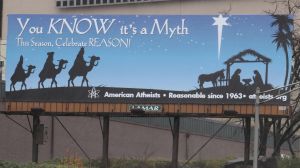
He is the President of American Atheists, and under his leadership, the organization has become quite prominent, with its “You Know It’s a Scam” billboards, the well-attended Reason Rally, and his interview with Bill O’Reilly that produced the “WTF” meme with his face.atheists-david-silverman
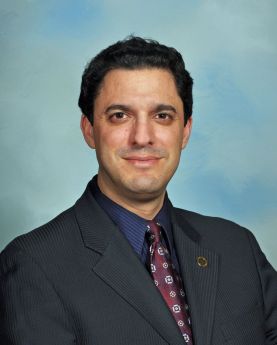
David and I have been friends for years, and we’ve been discussing this book and how it changed and progressed over those years, so it’s great to finally see it come to fruition.

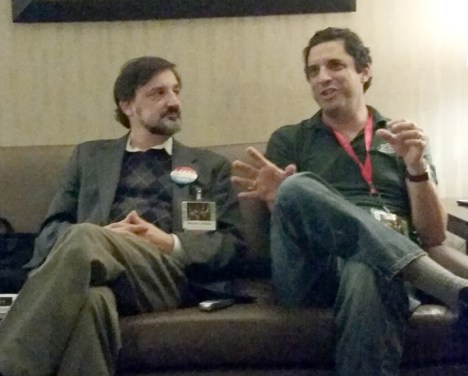
It will be released next week, but he provided me with an advance copy, which I enjoyed tremendously.  We sat down in front of an attentive audience at a convention last weekend where I interviewed him.

MICHAEL A. VENTRELLA: Tell us about FIGHTING GOD.

DAVID SILVERMAN: This book has three years in the making. The book was written because after I did the Reason Rally in 2012, a small publisher came to me and said he wanted me to write a book. I said yes, and it was called ‘I, Atheist’ and it was 50% atheism and 50% autobiographical. Right at the very last moment, my agreement with him fell through. It was a completed book, but the publisher and I parted ways amicably.

So I had a book and no publisher. I sent an email to Barack Obama’s agent. And she knew who I was, and signed me right away. Then she sent out the initial treatment to her top line of people and one was a guy from MacMillan, who was a fan of mine! And he signed me right away.

So now I’ve got this great contract with a major publisher. And he says, “Oh, three things. We’re changing the cover, we’re changing the title, and we’re taking out every part about you.”

So now I’ve not half a book and six months to fill it.

And so — is Keith DeCandido here? (audience says no)

So, what I did was structure the “Atheist Art of War” after his book THE KLINGON ART OF WAR. I added a lot of data. I added a lot of research. So what used to be my opinion is now backed up with independent quantifiable data from multiple sources.

What I’ve got now is a manifesto that puts forth the idea that firebrand atheism is more effective on a macro level, more effective on a micro level, and, more importantly, it’s the nicer thing to do.fighting god
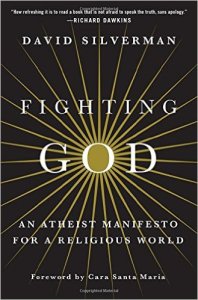
Recognizing that religion is a poison — recognizing that religion is a scam — and not saying something is a selfish act. It’s an act you’re doing to preserve yourself and not to help your fellow human. If your friend is being scammed, you would have a moral responsibility to at least mention it.

So in FIGHTING GOD, I put forward this proposal that “Live and let live” may not be the ethical choice at all.

VENTRELLA: You talk about not respecting other beliefs.  What do you mean by that?

SILVERMAN: There’s a difference between respecting a belief and respecting someone’s right to believe. If you’re talking about Constitutional rights, we as Americans all have the exact same rights. If you want to believe in a Man in the Sky, you have the right to do that.

I do not respect that.

You don’t need my respect. And I don’t need your respect to believe what I believe. What is wrong is when you go to somebody who says they believe in something you don’t respect and you lie. And you say, “Oh, I respect it.” You’re respecting a scam not worthy of respect. You are lying when you do that.

I submit that is morally wrong. That is a selfish act. That is something you are doing to make yourself feel better at the expense of somebody else.

VENTRELLA: But are we under an obligation to say something as opposed to just remaining silent?

SILVERMAN:  That’s up to you. In FIGHTING GOD, I don’t say that we should attack. We definitely should not say we respect things we don’t respect.

VENTRELLA: At the same time, you are proud to be “Mr. Atheist Pants”, and somewhat of a dick.

SILVERMAN: I am not a dick! (laughs)event_199950482
VENTRELLA: But you write that sometimes someone needs to be. You discuss the Overton Window — which is the first time I had ever heard that expression — Can you explain that to us?

SILVERMAN: The Overton Window is a business term that talks about the amount of stuff that is politically correct to say. In the 2002 election, when Mitt Romney was running for the first time, he was a Mormon and on the fringe. And then, a couple of elections later, he’s the mainstream candidate. That’s the Overton Window shifting, with Mormonism coming into the norm.

What I have been doing, and what firebrand atheism does, is shifting the window in the same way.

If you look back at when I first came into the Presidency of American Atheists, the first thing I did was put up a billboard at the New York tunnel that called religion a myth. This billboard was on the national news in nine different countries because no one had ever called religion a myth with such grandeur.

After I called it a myth, I called it a scam, I called it nonsense, I called it this, I called it that — and I moved the Overton Window and now, if I put that same billboard up, nobody would care. Calling religion a myth is now inside that window.

That’s what firebrand atheism does. Just like Mitt Romney put Mormonism into the mainstream, we’re trying to bring atheism into the mainstream and it’s succeeding. And I can quantify that with multiple data from independent sources!

VENTRELLA:  Tell us about some examples where you’ve been surprised where it’s been accepted when it wasn’t before…

SILVERMAN: When I first started in American Atheists, back in ’97, we had a convention in New Jersey. Holiday Billboard BattleWe had to look to find a hotel that would allow us to come. That hotel, that we found, would not put us up on the marquee outside. On the one inside, we were listed as “AA” (audience laughter) and if somebody called the hotel and asked if the American Atheists were there, the hotel staff would say no. That was twenty years ago.
This past year, we had our national convention in Memphis. The city of Memphis flew us out and took us on a grand tour of the city. They bought us food. Bought us booze. Showed us all the hotels. The one we stayed at was a Hilton. When we went in, they had “Welcome American Atheists” plastered on the wall.

So this is serious movement.

People get so frustrated when they look at today. They see the inequality that atheists obviously have. There are ten times as many atheists in this country as there are Jews, but we have no representation in Congress.

This is a still a lot better than it was just twenty years ago. We’re making tremendous progress. We’re not there yet but we will be there in our lifetime.

VENTRELLA: So when we see studies showing that younger people believe now, it’s major change. Most of our fights are with the old crowd. And I’m thinking of the Hobby Lobby case, which was such a step backwards. You’ve been fighting those battles. Let’s talk about the Ten Commandment monuments and what you’ve done in those regards.

SILVERMAN:  The Ten Commandment monuments are just a statement of religious privilege. It’s not about their right to do anything, it’s about them having superiority over everybody else. They put a Ten Commandments monument on the public lawn, and that’s illegal — you can’t. When we say “Take it off,” they say it’s an attack on their religious rights. When we go into a public place, there is only one choice: There must be equality.

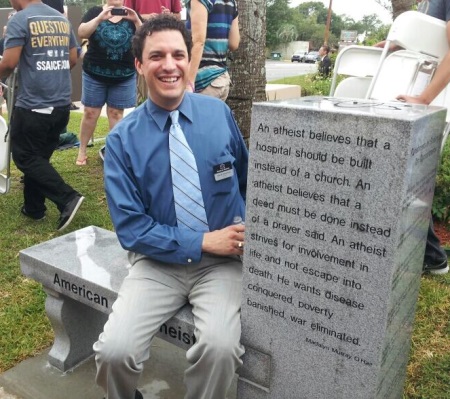
Equality can be done in many ways: You can take the Ten Commandments off, and we have equality, or you can let other people put theirs in and we have equality.atheistmonumentcr
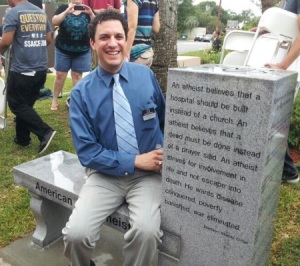
VENTRELLA: And that’s a winnable argument that has won in the Supreme Court.

SILVERMAN: What happened was there a place in Florida where they had a Ten Commandments monument on public land, alone. We went in there and sued, and we won, and we put up an atheist monument on public land. The outcry was that this was “an attack on Christianity.” They said we were attacking them and that they weren’t attacking us when they put theirs in!

VENTRELLA: One of the book’s themes is that every single battle you have fought has been in defense. You’ve never fought to keep someone else from practicing their religion.

SILVERMAN: Everything we do is defensive. Everything is about equality. Nothing is about privileging atheism over religion. Nothing is about pushing religion away from the churches or persons. Everything is about defending the separation of church and state, which is a synonym for “religious equality.” The more separate church and state is the more free we are.

VENTRELLA: There’s a section of your book about the “War on Christmas.” 

SILVERMAN: It’s starting! ‘Tis the season!

VENTRELLA: Happy War on Christmas, Everybody! (audience laughs) This is mostly an invention by Fox News, if I’m not mistaken. It never existed before they started bringing it up…

SILVERMAN: It’s all an invention by Fox News.

VENTRELLA: But it gets you lots of interviews and publicity…

SILVERMAN: And every year, I knowingly feed it. Yes, every year I attack Christians everywhere, reaching into their homes and weeding out their Christmas trees, grabbing their presents, and I do all of this by putting up a billboard or two. (audience laughs) And I say “Happy holidays!” Oh, how evil I am.

We’re putting up billboards this year. We have them going up in two major cities that I can’t announce yet. They’re going to be fun billboards that will speak to people.cityroom-billboard2-blog480

VENTRELLA: One of the things you criticize other atheists for is their refusal to call themselves that. They want to call themselves humanists or agnostics… Why do you think it’s important for atheists to come out of the closet?

SILVERMAN: We’ve got polls and we know that the entire political process is based on polls. And if you look at the religious markup of the polls, you see that atheists are about 3% of the population and Christians are about 70%. So they look at those polls, and they say, “Oh, look, it’s 70% Christian, 3% atheists. Those atheists don’t matter.”

What they don’t realize is that really, this country is closer to 30% atheist. It’s just that 90% of the atheists in this country don’t call themselves atheists. They call themselves agnostics, secular humanists, none, they call themselves Christians, Muslims, Jews. They call themselves anything but atheists.

Now, if you look at Christians — you look at Methodists, and Baptists, and Presbyterians and all the different denominations, they all call themselves Christian. So they unite, despite real differences, and we divide despite no differences at all. We just don’t like the words.

So the major push of my effort is not to convert believers. Why would we? If we looked at that that 70 to 30 chart and really crunched the numbers, we’d end up with about 55% Christian. Think about how that changes everything. We don’t have to convert anybody — we just have to do is get people to tell the truth about what they are.

If you don’t have an active belief in a god, you’re an atheist. If you don’t have an active belief in a god and you don’t like the word “atheist,” you’re an atheist.  This is simply a fact, it’s a matter of definition, it’s not a matter of self-identification.

The important point is that how you identify affects your neighbor. When 90% of the atheists in this country call themselves something totally different, like “secular” or something that nobody knows what it is, the politicians lose interest in us. We, as a force, diminish. We lose rights because people aren’t using the right word.

VENTRELLA: We’ve used the metaphor of coming out of the closet to compare this with the gay rights movement to show how quickly that changed. When people started coming out and everyone said “Oh my neighbor is gay? I have no problem with that person.” Do you think that is the atheist goal, to say “Look, we’re just like you except we don’t believe”?

SILVERMAN: That’s it. We will win once we make this change. We don’t have to convert anybody or change anybody’s mind about God. All we have to do is take atheists who are already atheists and make them know that they’re atheists. They can call themselves atheists and be loud and proud about it, and when we can get a poll that shows that we’re at least  a quarter of the population, we will be able to single-handedly influence the way the political situation works.

VENTRELLA: Do you see that as the main theme or goal of this book?

SILVERMAN: Yeah.

VENTRELLA: So why’d you call it FIGHTING GOD?

SILVERMAN: I didn’t! (audience laughs) The publisher did. But I am fighting the concept of God by telling people that they don’t have to pretend they believe any more. This is the big fight. Our lowest hanging fruit is just to get atheists to call themselves atheists.

VENTRELLA: And that’s different from the other atheist books we’ve seen from Dawkins or even Penn Jillette. You’re trying to start a movement.

SILVERMAN: The movement exists. It was started by my predecessor, Madalyn Murray O’Hair. American
Atheists was founded in 1963 by her. She led the fight to take prayer out of schools. That’s the organization I run now and I’m very proud to stand on her shoulders.

VENTRELLA: You and her are the only names anyone knows from the organization. Why do you think that is?

SILVERMAN: I think Madalyn and I had a lot in common! I take a lot from her and I dismiss a lot from her as well, because she’s a person from a different time. I think the reason we are both well known is because we are both firebrands. Maybe the interim Presidents weren’t as firebrandy as I am or she was.

I think what we have here is a specific situation where a firebrand atheist movement can beat the Republican party. I think we can fix this country. And I’m not shooting pie in the sky — I write about this in the book — this war is winnable. Everything we see from the religious right is weak. I think the base is seeing it. I think when we talk to Republicans, they see it — not the leaders, the followers.

VENTRELLA: You went to a conservative convention and got a surprising response.

SILVERMAN: Tremendous response! I went to CPAC, this huge, conservative Jesus thing for Jesus. It’s all about Jesus Jesus Jesus except it’s not. I went to CPAC to try and just drive a little wedge between Christianity and conservatism and what I found was a bunch of people on top who were all Jesus People For Jesus and a whole bunch of atheists underneath.

Not tens, not twenties — hundreds and hundreds. At CPAC! Ayn Randians, libertarians, fiscal conservatives — they are tired of the religious crap.

We got five pages of membership sign-ups — at CPAC! I went there with two one-gallon bags full of buttons that said “Conservative Atheist” and we gave them away free on the condition that you wear it. And we gave away every single button! They were all young. Everyone under thirty at CPAC was wearing a “Conservative Atheist” button. What does that do to the candidates when they see conservative atheists walking around CPAC? I’ll tell you what — Tony Perkins of the American Family Association got up on stage and acknowledged that atheists were there and part of the conservative movement. That’s an amazing thing, but I want to make it clear — I’m not all giddy that Tony Perkins likes us. (audience laughs)  I am however thrilled beyond measure that he felt the need to say that. He needed to say that because of the presence of so many atheists out and proud.

Look at us single-handedly affecting how the Republican party works. Only because we went in there and used the word “atheist” — the word that everybody understands. The word that shifts the Overton Window.

VENTRELLA: Do you have any optimism about the upcoming election?49
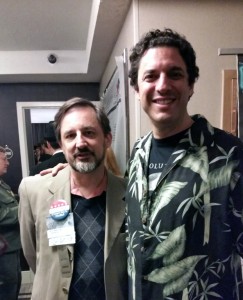
SILVERMAN: Yeah! (big smile) One of the things we’re doing at American Atheists right now is that we’re running the atheist voter campaign. It’s a grass-roots campaign that organizes people to go and see the candidate while wearing “atheist voter” t-shirts, and ask the candidates specific questions about atheists. The questions can be very broad. “I’m an atheist and I want to know if, in your cabinet, you’d have an atheist?” Things like that, just to bring out the bigotry, just to get them to address us. We’ve gotten statements now on atheism from Donald Trump, Ted Cruz, Carly Fiorino, Mike Huckabee, and I think Santorum as well.  We’re going to be publishing them soon. This is going to be something we’re going to be able to show the atheists of this country what they’re saying about us but at the same time, it’s going to show the candidates that we exist and we have to be addressed.

It’s no coincidence in my mind that Trump is the number one person in the Republican party. And everybody knows his religion is bullshit. He says, “Yeah, I read the Bible. I can’t remember anything about it.” (audience laughs) Everybody knows his religion is bullshit. He’s the only non-religious candidate on the Republican ticket and he’s number one by double digits. Why? Republican atheists. There are so many Republican atheists who are sick and tired of the religious right.

I don’t think we’re going to see a religious right candidate. I think what we’re seeing now is the beginning of the end of the religious right’s hold on Republicanism. We’re going into CPAC again this year and we’re going to push that wedge open.

I don’t know if you all know this, but there was a time when Republicanism was not the same as Christianity. Back in the olden days of Barry Goldwater, who was a staunch supporter of the separation of church and state — those days can come back. And we’re pushing that very hard with Republicans.478ed32622ba56a18a307d64989a1d74
VENTRELLA: On the Democratic side, Bernie Sanders has refused to say much about religion  …

SILVERMAN: I know! He calls himself a “non-religious Jew.” Sounds like a synonym for “atheist” to me! (audience laughs) I don’t know if you all watched the last Democratic debate, but the only person there who didn’t invoke God or prayer was Bernie Sanders. The other two snuck it in, and it was really artificial. “They have their right — I mean, their God-given right…” Bernie Sanders was the only person who didn’t do that. I think he’s an atheist. I hope he’s an atheist. And I hope he wins. If he comes out as an atheist, I will definitely vote for him, but I’m probably going to vote for him anyway. American Atheists is a 501C3 organization, we do not endorse candidates!

We see the progress. We’ve got a person on a major ticket who is an atheist. He has not professed a belief in God. When he talks about his faith, he talks about how “we’re all in this together.” This is an atheist talking and he’s a major candidate now. He’s going to be like Romney in 2002.

VENTRELLA: He’s going to move the Overton Window.

SILVERMAN: Exactly!

VENTRELLA: The new Prime Minister of Canada has something like four atheists in his cabinet.

SILVERMAN: And what would it be if the Prime Minister of Canada had a secular humanist, an agnostic, a “bright” and a “none” in his cabinet? Same four people. Think about the difference in the impact. Think of what that could do at the local level. This is what we could do simply by using the right words.

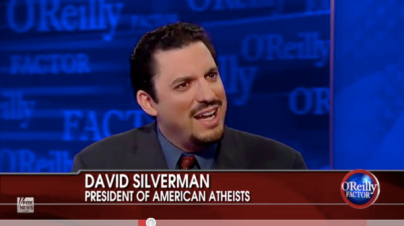
VENTRELLA: Let me ask one last question. Tell us about the “What the Fuck” face.

SILVERMAN: I’m a meme, too! That’s the more famous part of me. I did a “Mr. Deity” episode a while ago. I love Brian, if you haven’t looked it up, look up Mr. Diety. We were filming this little webisode in his house. And his daughter comes out and she’s maybe sixteen years old. Dave_Silverman.svgAnd he says “Honey, this is David Silverman! He’s the President of American Atheists!” And she says, “Oh, that’s nice.” And then he says, “He’s also the ‘What the Fuck’ face guy.” She says “No WAY! Let me take a picture! Do the face!” (audience laughs)

Basically what happens is that I go to O’Reilly. I’ve been on a couple times now, but this was the first time we actually had a chance to talk before the show. And he is, by the way, intelligent. He’s knowledgeable. He knows what he’s saying, knows what he’s doing. We had a really good conversation. And then the cameras go on.

If you watch the video, you’ll see — I was manoeuvering him into a corner. “You’re a skeptical person and you don’t really believe this shit.” And he went defensive, and he said, “I’ll tell you why God exists. The tide goes in, the tide goes out, there’s never a miscommunication, you can’t explain that.” And I made this face.  What? 

A lot of people think it was about the question. It was about the question after we had this whole intelligent conversation beforehand. So I have this look on my face of a complete disconnect. What the hell am I listening to?

And the young people at Reddit seized on it, and they created this meme. And now this face, which is public domain — I don’t get any money from it — is on pajamas, on stickers at the dollar store. I love it!

It’s good marketing, right? Because if people look it up, they will watch that video of Bill O’Reilly saying something really damned stupid.

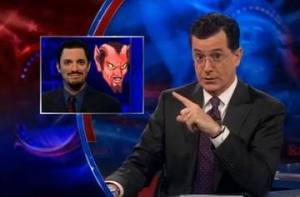
VENTRELLA: Stephen Colbert called you “Mr. Atheist Pants” after that incident.

SILVERMAN: That’s now my Twitter handle.36
—-

Reblogged on my political blog VentrellaQuest

My 2015 Philcon Schedule

I’m looking forward to the Philcon science fiction convention the weekend of November 20th. It’s Philadelphia’s oldest literary convention. It’s in New Jersey.  (Look, it was cheaper, okay?)philcon_logo

The Guest of Honor is author Wen Spencer, and other guests include Danielle Ackley-McPhail,Keith R.A. DeCandidoGregory FrostGail Z. Martin, Jon McGoranMike McPhail, Bernie Mojzes, Christine NorrisPeter PrellwitzLawrence M. Schoen, Alex Shvartsman, Hildy SilvermanAlyce Wilson, and many more people that I have yet to interview on this blog!

You can see why I always enjoy Philcon — I get to see so many of my friends again.

I’m also looking forward to interviewing American Atheist President David Silverman concerning his new book.

Here’s where you can find me:

The Eye of Argon (Friday 11 pm): The worst science fiction story ever written gets a reading by our brave panel as they compete to go the longest without tripping over a misspelled word or laughing uncontrollably. Audience members are also encouraged to take a chance. Can you keep a straight face, especially when the panel begins acting out the story? With Gail Martin, Peter Prellwitz, and Robert Zygala

The Dreaded Infodump (Saturday noon): SF requires special techniques of exposition. How do you get across backgrounds and ideas without boring your readers? With D.L. Carter, Vikki Ciaffone, Gregory Frost, Jon McGoran, and Jim Stratton

Writing Morally Ambiguous Characters (Saturday 1:00 pm): How do we make them sympathetic to the reader? Do they need to be sympathetic to engage your audience? How far can you push the limit before you create a psychopath? Or shouldn’t we create psychopaths?  With Ken Altabef, Siobhan Carroll, Russ Colchamiro, Bernie Mojzes, and Meredith Schwartz

Writing in Shared Universes (Saturday 4:00 pm): How do you handle building story arcs and developing characters when you’re not solely in charge of a world? What changes when you’re working with others at a professional level? With Keith R.A. DeCandido, Catt Kingsgrave, Dina Leacock, Mike McPhail, and T. Patrick Snyder

“Fighting God” Launch Party (Saturday 5:00 pm): The release party for American Atheist President David Silverman’s book “Fighting God”!  David will be interviewed by Michael A. Ventrella and will discuss the place of atheism in America. Are atheists at a war with religion? What can be done to protect the rights of those who do not believe? Come and join in the celebration of the new book. With David Silverman

Reconciling Faith and Fantasy Writing (Sunday 10:00 am): What difficulties do you encounter writing a world whose system of belief does not match your own? How do you avoid unintentionally investing your stories with a message you don’t mean to? Is it possible to fully enjoy works that contain elements your scripture deems as anathema?  With D.H. Aire, Phil Giunta, Gail Z. Martin, Christie Meierz, and Steve Wilson

The Uses of Time Travel (Sunday 1:00 pm): Why do you want to travel into the past or future? Knowledge? Loot? Talking yourself out of bad decisions? Setting up the best prank ever? If given the opportunity would you, or wouldn’t you? With John Ashmead, Michael L. Brachman, JJ Brannon, Lawrence Kramer, and Lawrence M. Schoen 

The 3rd Pocono Writers Conference

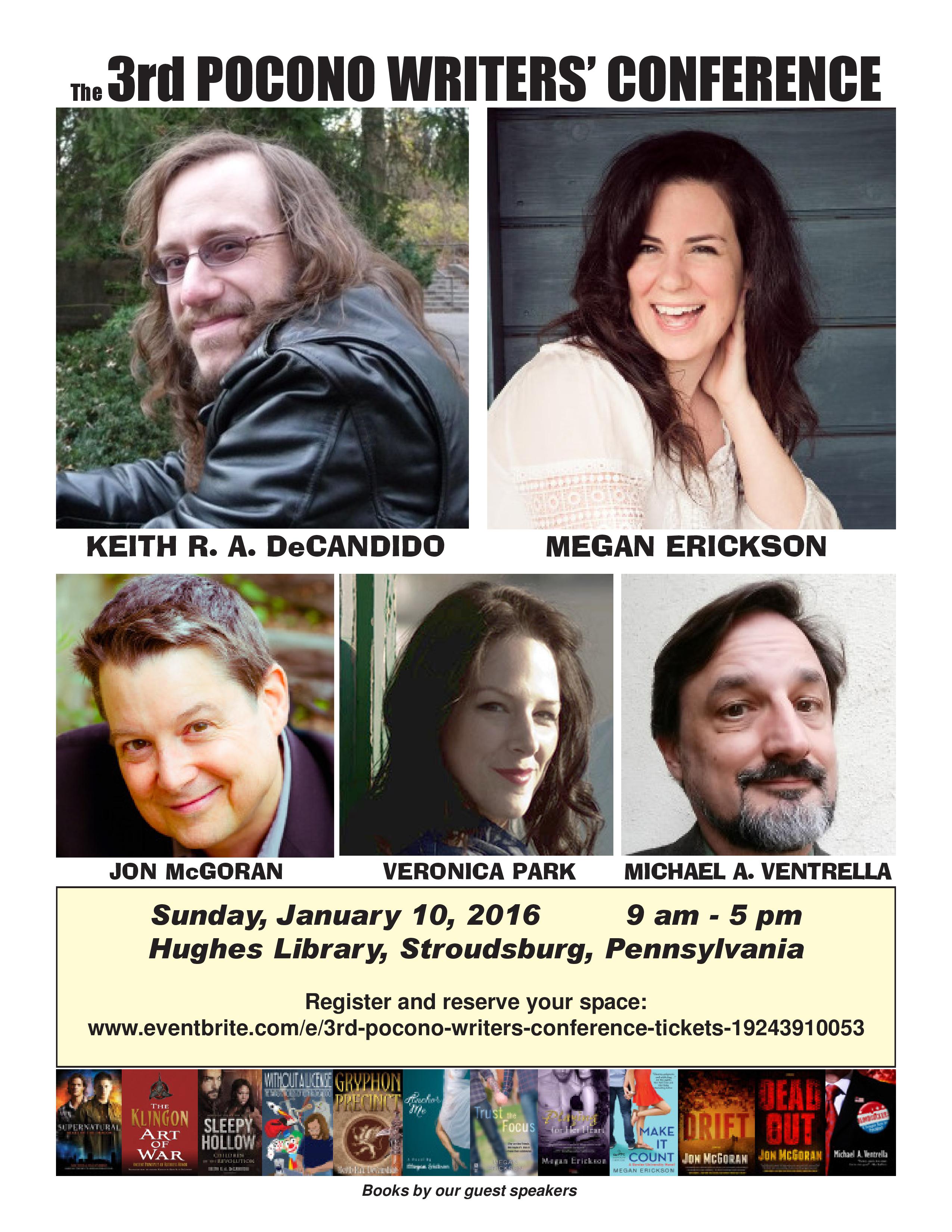
I’m pleased to announce that the 3rd Pocono Writers Conference is now accepting reservations.

I’m thrilled that this has been successful, and I’ve invited some great guests for this one.

The Conference is on January 10, 2016, held at the Hughes Library in Stroudsburg, Pennsylvania, and is free — but space is limited. And this year, we’re trying something new: individual critiques!

2016flyer-page-001

Here’s the schedule:

9:00: Introductions

9:15: VERONICA PARK: “All Hook and No Plot”: How to tell if you’ve got a good story, or just a great idea and a so-so story

10:30: JON McGORAN: “Economy and Exposition”: Turn boring info dumps into highly anticipated answers to compelling mysteries by integrating it into your narrative so it adds nuance, depth and tension to your story, instead of interrupting it.

11:45: Lunch

1:00: MEGAN ERICKSON: “Start at the Right Place”: How to grab readers from page one with the right scene and how to pace from there.

2:15: KEITH DECANDIDO: “The Business of Writing”: The parts of your writing career that don’t involve actually writing.

3:30: MICHAEL A. VENTRELLA: Panel Discussion and Question and Answer session with all panelists

Critiques:

Each of the participants are holding smaller sessions (10 maximum) during the presentations where you can have your work critiqued.

These sessions are $20 each. You can sign up for as many as you want but you must pre-register because space is limited. Instructions on how to email your writing sample will be sent to you prior to the Conference.

9:15: Megan Erickson
10:30: Keith DeCandido
1:00: Veronica Park
2:15: Jon McGoran

How to Reserve a Spot:

This conference is free but you must reserve a spot because space is limited. Please do not reserve a spot if you are not certain whether you can attend because you may be blocking someone else from attending if all the spots are filled. Go here to make your reservation.

Participant bios:

Keith R.A. DeCandido is mostly known as a best-selling, award-winning author, with dozens of media tie-in novels (most recently the Star Trek coffee-table book The Klingon Art of War, the Heroes Reborn novella Save the Cheerleader, Destroy the World, the Sleepy Hollow novel Children of the Revolution, the Stargate SG-1 novel Kali’s Wrath, and the Tales of Asgard trilogy featuring Marvel’s Thor, Sif, and the Warriors Three) and original fiction (the “Precinct” series of fantasy police procedurals) to his credit. He’s also an editor of more than 25 years’ standing, working for Byron Preiss, Library Journal magazine, Simon & Schuster, Dark Quest Books, the Society of American Baseball Research, and many more, as well as private clients via his KRADitorial service. In 2009, he was given a Lifetime Achievement Award by the International Association of Media Tie-in Writers, which means he never need to achieve anything ever again. His cheerfully retro web site is DeCandido.net.

Megan Erickson is a multi-published romance author with Avon, Berkley and Entangled. A former journalist, she switched to fiction when she decided she liked writing her own endings better. She lives in south central Pennsylvania with her own romance hero, their two kids and two cats. For more, visit meganerickson.org

Jon McGoran is the author of six novels including the biotech thrillers Drift and Deadout, as well as their forthcoming sequel, Dust Up (April 2016), all from Tor/Forge Books, as well as the novella “After Effects,” from Amazon StoryFront. Writing as D. H. Dublin, he is also author of the forensic thrillers Body Trace, Blood Poison and Freezer Burn, from Penguin Books. His short fiction and nonfiction can be found in a variety of anthologies, and his short story Bad Debt received an honorable mention in Best American Mystery Stories, 2014. He is a member of the International Thriller Writers, the Mystery Writers of America, the International Association of Crime Writers, and a founding member of the Philadelphia Liars Club, a group of published authors dedicated to writers helping writers. His website is http://www.jonmcgoran.com/

Veronica Park is an agent, author, journalist and marketing consultant with more than seven years of experience writing and editing for publication. She graduated with a BA in print journalism with an emphasis in linguistics and business marketing from Brigham Young University and went on to expand her writing skills as a broadcast journalist and independent film producer, before running away with her husband to work on cruise ships in the Caribbean as a port lecturer and luxury goods marketing specialist. In publishing, she has finally found an arena that requires her entire assortment of professional skills, while allowing her to read and write every single day.  Her web page is http://www.corvisieroagency.com/veronica-park.html

Michael A. Ventrella is a Stroudsburg writer and editor with three novels and three anthologies under his belt, with more coming. At his web page (www.MichaelAVentrella.com), he interviews writers and editors and gives advice for the starting writer. This is his third year organizing these conferences.

My Capclave 2015 schedule

Capclave is a fine little literary SF convention held near Washington DC, which this year will be on the October 9th weekend. small_dodo_transparentCome and join us and meet some of your (and my) favorite authors, including but not limited to Gordon Van Gelder, Alistair Reynolds, James Morrow, Alex Shvartsman, Lawrence Schoen, Catherine Asaro, Lawrence Watt-Evans, Allen Wold, Walter Hunt, and many more (including me!)

Here are some pictures I took from from the convention in 2013 and 2014.

Here’s my current schedule (subject to change):

Friday 10:00 pm: Improv Story-Telling (Ends at: 10:55 pm) Salon A
Panelists: Charles E. Gannon, Benjamin Rosenbaum, Hildy Silverman, Michael A. Ventrella
The audience names three things for the writer to include in an improv story and a cliffhanger to turn it over to the next author (who in turn gets three more things named to include.)
Friday 11:00 pm: Why Do Good People Do Bad Things? (Ends at: 11:55 pm) Bethesda
Panelists: Alan Loewen, C.S. MacCath, James Morrow, Michael A. Ventrella
What are the motivations for having otherwise-heroic people do villainous things in fiction? How can an author strike a balance between making an evildoer’s actions believable and somewhat sympathetic without turning them into an antihero?
Saturday 2:00 pm: The Epic Blockbuster (Ends at: 2:55 pm) Bethesda
Panelists: Sarah Avery, Alma Katsu, Dina Leacock, Michael A. Ventrella
In the 1950s and 60s, 200 page novels were common (and told a complete story). Today my bookshelf is groaning under Weeks (800 pages) and Sanderson (1000), and these doorstoppers are only part of a series. What changed? Do readers prefer long books and longer series? Are authors using these longer page counts to tell a deeper story with multiple points of view and better characterization? Or is much of this padding and a lack of editing? What books are worth the extra page count?
Saturday 6:00 pm: Building Your Audience (Ends at: 6:55 pm) Bethesda
Panelists: Kate Baker, Scott Edelman, Will McIntosh, Michael A. Ventrella
Now that you finished your book and found a publisher, how do you get people to read it? What promotional devices work and what turns potential readers off? And, after you’ve published three or four books, what can you do to expand your readership and get readers of your newest book to look at your older ones?
Saturday 11:00 pm: The Eye of Argon (Ends at: 11:55 pm) Bethesda
Panelists: Charles E. Gannon, Michael A. Ventrella
A dramatic reading, with audience participation, of one of the most notorious fantasy works ever.
Sunday 2:00 pm: Climate Change in SF (Ends at: 2:55 pm) Frederick
Panelists: James Morrow, Gordon Van Gelder, Michael A. Ventrella
What is the best approach to discussing climate change in SF? What does the modern attitude towards whether this is really science say about SF writing that features human action changing the natural environment?

How to Cheat When Writing Your Novel

Dear New Novelists:

Don’t worry if things aren’t going as well as you want with your first novel. I am a published author and I hereby give you permission to cheat.

Trust me, we all do it. Some of you just haven’t realized you can yet. You don’t think you can do these things because they feel like cheating … because when you started reading books, you never thought writers stooped so low. But believe me when I tell you: we all cheat.

Follow these tips and you, too, can cheat when writing your novel and no one will be the wiser.

Don’t write the story in order. Many starting novelists think they need to begin on page one and go in a straight line until they hit “the end.” Screw that. If you have a really exciting scene that you just can’t wait to get to, write it now while you’re all enthusiastic about it. Your desire for that scene will show in the writing and the scene will be much stronger because of it.

Or maybe you’re not quite sure how exactly you want to end it. Why not write the ending first? Then you have something to aim for, and can make sure your characters are always heading in the right direction.

If you get to a difficult part, feel free to type “and then some stuff happens” in big letters to remind yourself to get back to it later. Fight scenes are always hard for me because I know how important they are and that adds pressure, so I often write “fight scene goes here” and then come back to it later when I can take the time to choreograph the whole thing out.

Don’t feel constrained by time. Just because people read the book in order doesn’t mean you have to write it in order.

Write a crappy first draft. Seriously, I see this all the time: Writers who have the first fifty pages or so written and then they edit those pages and rewrite them and keep working on them until the fifty pages are perfect, but nothing else ever gets done on the book. They feel like they have to do this because the first draft is so crappy.

That’s okay. First drafts are supposed to be crappy — you’re just getting all the ideas down at this point. Don’t worry too much about your word choices, just get that story out. No one has to see it. Believe it or not, the majority of time you spend writing should actually be in the rewriting and editing part.

And then comes the hard part: killing your darlings. You have to be willing to cut huge sections of your work if they slow the story down or are unnecessary. My first draft of BLOODSUCKERS was around 96,000 words and the final published version ended up at 75,000 — but the pacing improved tremendously between those two versions.

Add foreshadowing afterwards. You know those cool twists and turns you love in books, where a big climactic scene ties back into something someone had said or done earlier in the books? Foreshadowing is fun and can make a great story even better, but you don’t have to plan it out. Write your story first and then figure out how to plant the foreshadowing in the earlier chapters. If you’re writing a mystery (and, as I’ve pointed out before, almost every story has some mystery within it), then you can also go back in time and plant the clues later. It’s okay. No one will fault you for this because no one will ever know.

Add character development later. Similarly, while you should have a good idea of your characters long before you start writing, there is absolutely nothing wrong with going back later and expanding on that by providing hints and clues about the character’s background. One thing starting writers tend to do too much of is create a huge backstory for a character and then think that all that has to be in the book, preferably all in a big chunk right when the character is introduced. This may help avoid that.

The bottom line to all this advice is this: Stop feeling constrained by the manuscript. Break the rules that exist in your head. The only thing that matters is the final version people read.

You can cheat all you want to get to that point.