Conventional wisdom: Self promotion to your intended audience

Talent isn’t enough.

Unless your daddy’s rich or has connections, every single person who has made themselves successful has been obsessive about their craft. They understand that it takes more than talent to get ahead — self-promotion plays a large role, along with a willingness to never give up no matter the rejections. 7

Without getting too far into that discussion, however, let’s limit this to the topic of appearing at conventions. Assuming you are an aspiring writer and assuming you want to promote yourself, you need to go where you can meet (a) other similar writers, editors and publishers, and (b) readers who may be interested in your work.

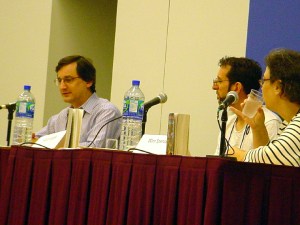
Since I write in the science fiction/fantasy genre, I have tried to attend as many science fiction conventions as possible. (See my schedule to the right under “Upcoming appearances”.) Since I had published a magazine on film animation in the 80s and early 90s (Animato!) and since I wrote a Rule Book and Players Guide for one of the largest live action roleplaying games in America (see The Alliance), I was able to present myself to these conventions as someone they would want to have as a guest, to speak on their panels. This provided me with free admission, a few perks, and the opportunity to promote myself to people who would actually be interested in what I had to say. I also was listed on their web pages and in their program books, along with a short bio.

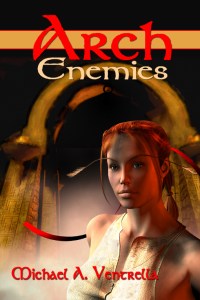
When ARCH ENEMIES was released, it provided one more opportunity for promotion, and I now was able to sell myself to the conventions as a published author.

A few days ago, I returned from the World Science Fiction Convention which this year was held in Montreal, Canada (a lovely city but with the world’s worst Chinese food, even in Chinatown). It’s in Australia next year. I don’t think I will be able to make that one.8

It was tremendous fun. I had the opportunity to meet and speak with many famous writers, editors, and artists, and was on a number of panels — the largest of which was about computer animated films. (As an aside, it was a pleasure to meet Mike Resnick in person after interviewing him for this blog a while ago. “Ask tougher questions!” he admonished me.)

Most importantly, I had my book for sale in the dealer’s room, and was listed in the program for a reading and a book signing. Not surprisingly, in a convention packed with many things to do, I did not receive a huge crowd for either, but the books in the dealer’s room sold out — a good sign that perhaps my promotions were successful.

For the reading, I decided to present the pirate short story I am working on (“X Spots the Mark”). I loved doing the pirate accents and the audience seemed to have a good time. After, they requested that I read some from ARCH ENEMIES and being the ham I am I was pleased to oblige.

The nicest encounter came during the book signing. I was given the assignment of being at the signing table from 6:30 to 7:00 pm on Saturday night, when basically everyone is at dinner and preparing for the big Masquerade an hour or so later, so I had nice conversations with the other not-so-well-known authors, artists and editors who wondered if anyone would show up. A teenage girl came to me and asked me to sign her autograph book. “Ah, in case I become famous some day?” I asked. “Well,” she shrugged, “you’re already more famous than me.”

But back to the topic: Every time you attend these things, you get better known in the community. People say “Oh, I remember him; he spoke well at that panel. Maybe I’ll try his book.”

And you make connections. I had a nice conversation with Jim Morrow, for instance, who agreed to submit to a future interview for this blog.

Now I just need some tougher questions.

Interview with Dave Freer

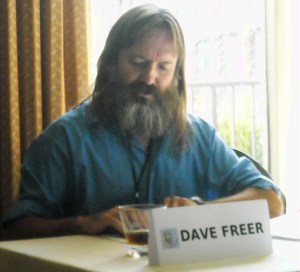
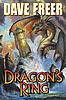
This week, I am pleased to present an interview with Dave Freer. Dave writes mostly humorous or alternate history novels and has collaborated with Eric Flint and Mercedes Lackey as well. His books do not always fit into nice little categories that publishers like, but that’s also what makes them interesting. Before pursuing a writing career, Dave was an ichthyologist, and (not making this up) fish farm manager. He is a rock-climber, chef, and all around athletic kind of guy, especially when compared to most writers. He lives in South Africa with his wife and children.
daveatluna

MICHAEL A. VENTRELLA: Dave, what’s your writing process? Do you use extensive outlines?

DAVE FREER: I must write 200 words before I get up, go to ‘loo, make coffee, read e-mail, or any other displacement activity. Trust me: there is nothing like twisted legs or desperate need for coffee to focus the mind, and once focussed you often over-run the 200 by several thousand. Outlines? Oh yes, very useful… until the characters take over and ignore them. I still do them. They provide a framework to disregard… well, to build on. In the end the book fits the concept if not the verbatim outline.

VENTRELLA: What’s your writing background? Did you begin with fiction?

FREER: Writing background… when I was a final year schoolboy back just before the age of dinosaurs, I went to my English Master (Old British style Boarding School) and said “Sir, I want to be a novelist.” He laughed at me and replied: “Freer, you can’t spell, and no one can make a living at it.” He was right about the spelling, so I assumed he was right about the rest (he was a teacher, see, and teachers are right, except, as I later learned, when they are wrong), so I listened and embarked instead (after my two year stint as a conscript in Medical Corps) on a career in fantasy writing in which no could make a living. Okay, so it was lightly disguised as Fisheries Science (I am an ichthyologist) but it involved writing a lot of papers and reports about the status of the Shark Fishery and the biology of sharks. I blundered into writing from there in an unrepeatable fashion. (I started my fiction writing career in a stuck in a bathroom with amoebic dysentry for a week. There are many other better ways to do this. In fact, almost any other way works better. And is less horrible. I’m a GREAT bad example.)

VENTRELLA: What skills are needed for short story writing that are different from novel writing?

FREER: Shorts are a bitch to write well. Harder than novels. I always hold that writing shorts is best training for writing novels and I wish a lot of verbose novelists would do it. So, to me, there is no real difference.
dr2

VENTRELLA: You’ve do a lot of collaborations with other authors. Do you meet in advance? Work through email? Is it basically one person’s ideas and the other’s work? What happens when there is a disagreement?

FREER: Eric and I met through a e-flamewar that ended in mutual respect. We became good friends and offered a collab proposal to our mutual publisher. Don’t try this at home, as you’re probably not going to get as lucky with a guy who can be gentleman and admit he was wrong – or be one yourself. My publisher set the Lackey collab up. We work through e-mail in multiple colors for our replies.

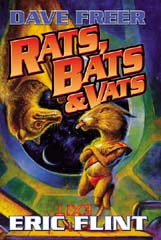
It’s usually one author’s seed-idea – for example RATS, BATS & VATS: Eric Flint had a short in which he had a talking uplifted rat and a bat rejected by one of the major magazines, with the editor profoundly informing him that the skull capacity of rats was too small for the volume of brain needed for uplift. Eric — knowing I was a biologist — asked me if this was true. I said I could think of at least three ways to solve the problem, and suggested the best. He said that would make a great story… and then we plotted the backround and setting. The book is still selling, and the mechanism I suggested was reported in Scientific Journals as a successful neurological implant technique. Of course a book is really rarely about science — it’s about the characters — and this one was no exception. I then wrote the first draft, e-mailing it to Eric to read as we went along. We’ve modified that over time — I now write the first draft with notes where I need him to put in stuff. We then do circulating edits.

SLOW TRAIN TO ARCTURUS was a similar evolution. Eric said he’d really love to do another generation ship story, they’d gone out of vogue — but it would have to be something different. So we touched on the core problem with generation ships — they take a long time to get there and it’s quite possible the planet will suck for habitability when you get there. And then you have to do it all over again… and biosystems are fragile. We solved the problems in a rather unique way.

It’s more — with us — a case of two lumps of fissionable material being pushed into close proximity, than one person’s ideas. It’s about as much fun as you can have as a writer, provided you get the right collaborator. As forthe disagreement thing… it happens. We both give ground and reach compromises. That’s ideal, but otherwise resign yourself to “yes sir,” if you’re a junior partner.

VENTRELLA: How did you break into the business? Did you start with an agent?067131940X

FREER: Through the slush pile. Took me two years to the day from submission to acceptance. No agent back then.

VENTRELLA: How important is an agent, in your opinion?

FREER: Important. Getting more important every week. I actually think this is another case of publisher penny-wise pound-foolish, as the task (and relatively small expense) of trawling slush has been handed increasingly to agents. Some are good at it, but the reality is the short term saving is recovered from publishers, because it means authors get agents right off the bat (instead of many mid career as was once true). Agented sales inevitably cost publishers more, after the initial ‘get in’ — so by saving on slush reading they’re now paying more, sooner, for more expensive books. Agents have less resources and, in some cases, less experience with publishing than junior editors at a publishing house, so it may not be wise in quality terms. But that’s the status quo, it’s not going to change soon. Live with it, and pick out the good agents. There are some excellent ones.

VENTRELLA: Here’s the question I’ve asked everyone so far: What’s the biggest mistake you have made?

FREER: Turned down a collab suggestion from publisher… He wouldn’t tell me who it was. It was David Weber.

VENTRELLA: What is the best piece of advice you could give a starting writer?

FREER: You don’t need amoebic dysentry or the approval of your English teacher to write. You just have to write.

Interview with “Space and Time” editor Hildy Silverman

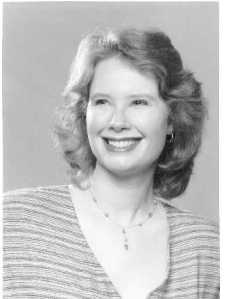
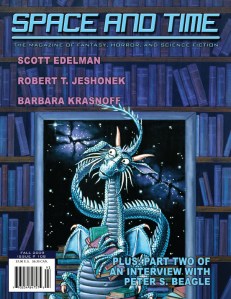
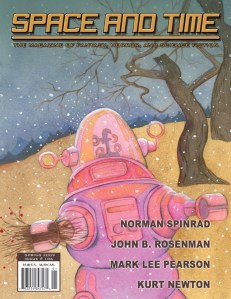
Hildy Silverman is the publisher and editor-in-chief of Space and Time, a 43-year-old magazine featuring fantasy, horror, and science fiction. She is also the author of several works of short fiction, which can be found in Wild Child, Phobos, Dark Territories (ed. Gary Frank and Mary SanGiovanni, Garden State Horror Writers, 2008), Witch Way to the Mall? (ed. Esther Friesner, Baen Books), an as yet-to-be-titled vampire anthology (ed. Esther Friesner, Baen Books) and Bad-Ass Fairies (ed. Danielle Ackley-McPhail). She is a member of the Philadelphia Science Fiction Society and the Garden State Horror Writers. She lives in New Jersey with one husband David, one daughter Rayanne, and one Bichon Frise, Frosty. She is a freelance consultant who writes corporate training, marketing communications, and SEO articles for major companies throughout the U.S.
Hildy_Silverman_B7W_Head_Smile_small

MICHAEL A. VENTRELLA: First of all, Hildy, how did you end up with this position, following in Gordon Linzner’s footsteps?

HILDY SILVERMAN: It was a spur-of-the-moment decision. I had met Gordon at a convention and saw him a few times due to mutual friends. I started reading Space and Time and really liked the unique fiction he ran. He told me that he was looking to sell the magazine and had some possible buyers interested, so I didn’t think much more about it.

Later, at a SFWA (Science Fiction Writers of America party), Gordon told me that none of the buyers had come through, so he was just going to shut down the magazine. Maybe I had a few too many Cosmos, because my response was, “Well, what if I wanted to buy it?” Long story short, we talked it over, I performed my due diligence, and in the end we were able to work out a good deal. Thus my career as a small publisher began.

VENTRELLA: When reviewing submissions, what will send a story to the slush file quickest?

SILVERMAN: Well, pretty much all of the stories start in the slush file anyway. Space and Time has six associate editors, who serve as first readers of the slush. They weed out the stories that aren’t up to snuff then forward the “goodies” to our fiction editor, Gerard Houarner. If he gives the story his blessing, it’s usually in…I just look them over and, except for a few rare occasions, rubber-stamp his choices.

If what you mean is what will get a story rejected quickest, there are a few obvious (or what should be obvious) things. Stories that are mailed to the business address without first requesting to do so are rejected out-of-hand (we accept electronic submissions only). Stories that clearly haven’t been proofread – full of typos, spelling and grammatical errors, formatting problems, etc – are also Right Out. Also, if the story doesn’t contain some sort of speculative fiction element, it is not for us. Those are the kinds of things that get weeded out first and fastest.

VENTRELLA: Do you advise aspiring writers to begin with short story submissions or do you feel that in today’s market, it is no longer necessary as a way to make a name for yourself?

SILVERMAN: I’ve heard conflicting advice and statements on this subject for awhile now. If a writer ultimately wants to make it as an author of full-length books, I’d say that writing ANYTHING until you’ve perfected your craft is a good idea. There’s certainly a lot less of a time investment in practicing your craft perfecting short stories for submission than if you write full-length manuscripts over and over. If you’re good enough to have you short stories published in a number of respected short fiction magazine and anthologies, perhaps win an award or two, it certainly wouldn’t hurt your reputation when ready to peddle a longer work to agents and editors. Credits are credit – they always look good on a submission letter.

VENTRELLA: Is there a talent needed for short stories that is separate from the skill needed for novels?
space&time1
SILVERMAN: Oh, yes. Some people mistakenly believe that because short stories are – well, shorter, they are faster and easier to write. Not true. You need to be able to convey an entire story – full plot, characterization, world building, etc. – in 10,000 words or fewer (usually fewer). That takes a great deal of skill. Your writing has to be tight, your use of language precise. Folks who write novels may have those abilities, but others will tell you they just can’t fit everything they want to say into the short story form. By the same token, there are short fiction writers who can’t “go long.”

VENTRELLA: Are there any taboos that would prevent you from accepting a story? Any trends you’re sick of?

SILVERMAN: I’m pretty hard to offend, especially when it comes to often-taboo subjects like sex or religion. In fact, I daresay I have or will publish some stories that are bound to get me into trouble with a few readers! As long as the story is well-written, with involving characters and a plot with a beginning, middle, and end I will give it fair consideration.

That said, pure “snuff” fiction holds no interest for me, mostly because there’s no plot there, just a vignette showcasing the abuse of one character by another. If someone sent me a piece featuring abuse, rape, or torture that is clearly all about wallowing in some disturbing fantasy, that’s not getting published, mostly because such work has no character, plot development, or anything of interest to say (except, maybe, “I need help.”)

As for trends I’m sick of, nope, haven’t run into any yet. We only open for submission windows, so I don’t see what a lot of other editors do, which is the same vampire plot or the same space opera story repeatedly throughout the year. There was a funny mini-trend I noticed last time we were open, though. Several stories about Quetzalcoatl came in all at once. I assume there was a planned anthology that didn’t go through; that’s usually the reason for an odd theme to suddenly rear its head in multiple submissions.

VENTRELLA: What do you personally like to read? Does that influence the choices you make as an editor?

SILVERMAN: I am a big fan of dark urban fantasy and horror these days. However, my tastes have changed over the years…I started out reading only hard science fiction (Asimov, Bova), transitioned to fantasy (Tolkien, McCaffery), and went on from there (King, Butcher). I also enjoy some literary fiction (Russo) – referencing the category here, not my personal opinion that it is more “literary” than other fiction. I supposed personal taste always comes into play when making editorial decisions, but I try to focus on how engaging a given story is, rather than be distracted by it not being my “thing.” If I feel unqualified to judge the merits of the story, I’ll leave it up to Gerard or one of the associate editors who is into that kind of story to make the final call.
Space&Time2

VENTRELLA: Does having an agent make a difference to you?

SILVERMAN: No, not for short fiction. In fact, I would find it odd to receive a piece brokered by an agent. There’s simply nothing to negotiate with a magazine publisher – our payment offerings, the rights requested, they’re all pretty standard. I can’t remember every getting a piece that was submitted by someone’s agent, though many of our authors do have agents to represent their longer works.

VENTRELLA: What’s the best piece of advice (other than “learn to write better”) you can give an aspiring writer?

SILVERMAN: Don’t forget to send your work out. It does you little good to write a huge number of short stories only to let them pile up in a drawer because you can’t or won’t get around to sending them to a market for consideration.

Also, learn the business side of writing. Too many writers are so focused on the craft – which IS important – but they never bother to learn the rules of the trade. You need to know how to research a potential market, understand guidelines, adhere to those guidelines, read a contract and understand the rights you are signing away, things like that. There are resources all over the Web and in how-to books that can tell you how to manage the money-making side of your career as well as the creative aspects. You should be equally versed in both.

VENTRELLA: As a writer yourself, what are your long term goals and what are you doing to make them happen?

SILVERMAN: Long term, I would like to see my novel published. I’ve been shopping it around to agents and have gotten some lovely rejections. Oh, that’s another thing for aspiring writers to remember – you’re going to get rejections. A lot. And some more. So has pretty much every major author you’ve ever heard of. The key is how you handle it. You can’t take them personally…it is your work being rejected, not your baby, not you. Everyone rejects work for a huge number of reasons, most of which are not because you suck as a writer. This is something I have to remind myself of all the time, because it is easy to be stung by rejection, even if you have a thick leathery skin like me.

In the meantime, I’m continuing to submit my short fiction to a variety of markets and have been enjoying some success there. I currently have three pieces published or about to be published in three different anthologies this year, plus a couple more pending.

I need to set some time aside to do more writing and submitting, but between running the magazine, my “day” job, and family life, time is a factor. I need to push past that and get on the stick, though, especially when it comes to sending out the next round of queries on the book.

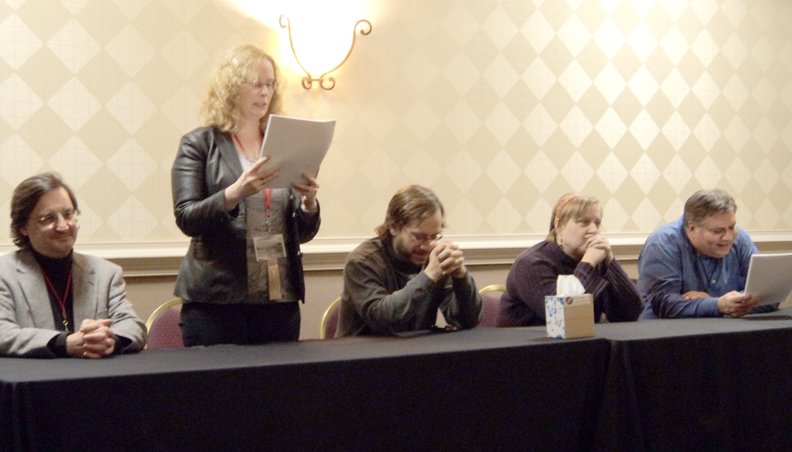
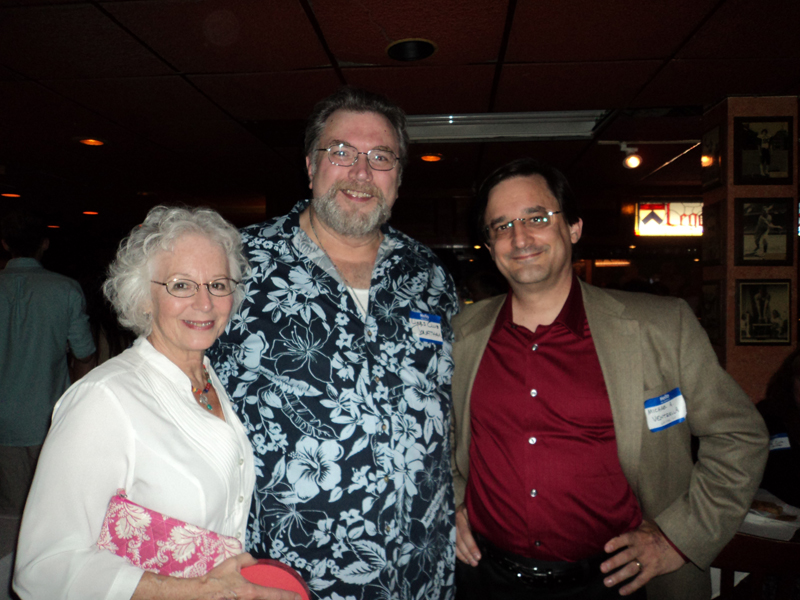
Me and Hildy at the Philcon 2010 convention

Ideas aren’t everything

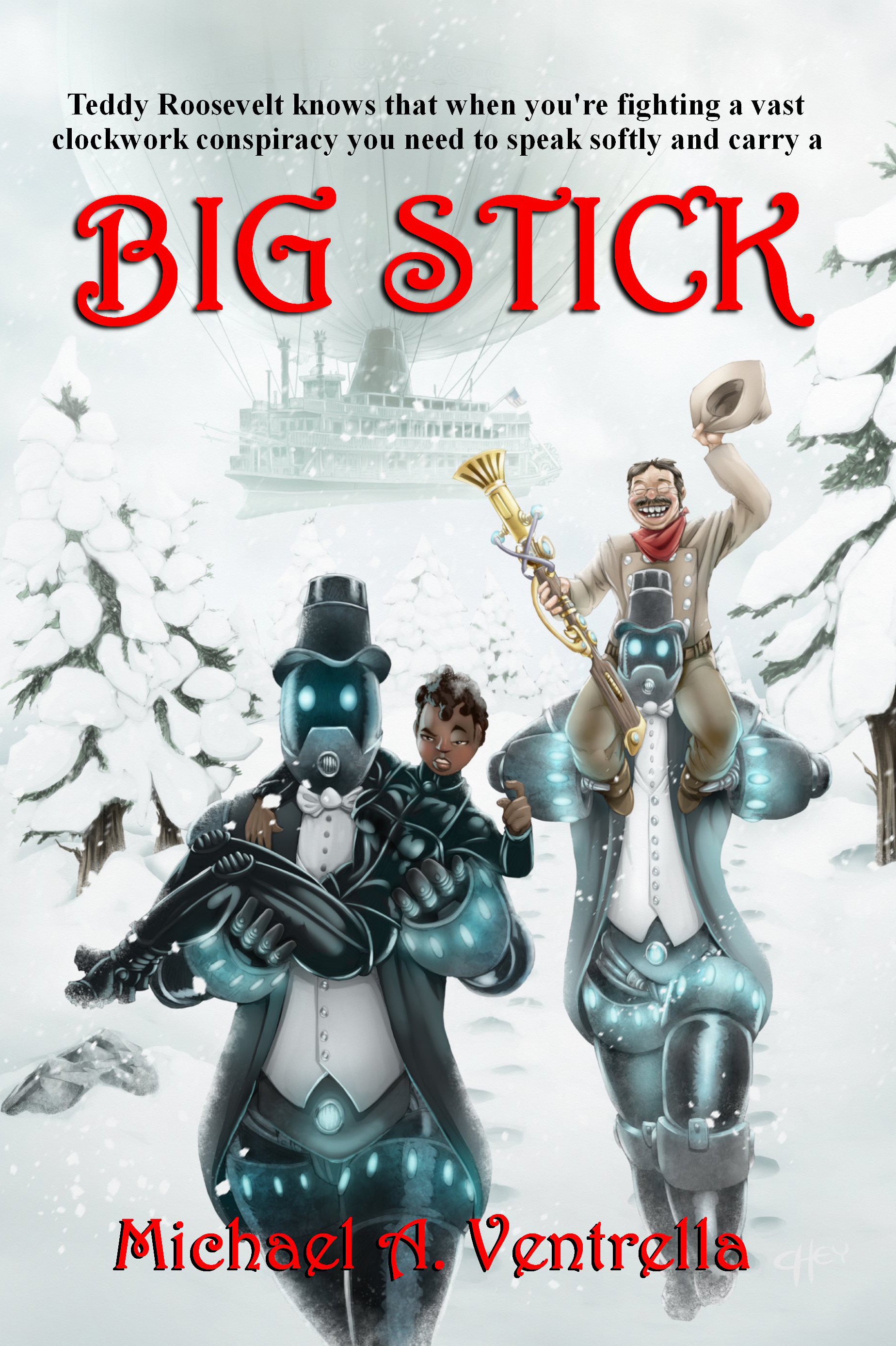
More than once, I have been approached by someone saying, “Oh, you’re a writer? Listen, I’ve got a great idea for a book. Tell you what, I’ll give you the ideas and you’ll write it and we can share authorship.”

Are these people coming to me because I am not a successful full-time author (yet)? Would they approach a famous writer with the same request?

I’ve actually had one person get upset at me when I refused, as if I had turned down free money. “Don’t you understand? I’m going to do all the hard work; all you have to do is write it down.”the-writer2

Obviously, these people have no idea what it means to write. Everyone has ideas; I have more book ideas than the time I have to write them in. And I expect everyone reading this has ideas as well.

Expressing those ideas? Not everyone can do that.

As a lawyer, I see the same thing in court. Some attorneys are much smarter than I am yet don’t go to court very often and don’t know how to present their arguments. Having control over your words is not an easy skill to acquire.

God knows, I am still trying to acquire it in my writing. Some reviews for ARCH ENEMIES spoke of the great plot twists and character development while at the same time noting that the writing was still rather pedestrian.

Hey, give me a break; it was the first novel I ever wrote. I’m just thrilled it was at least good enough to get published.

But it’s true. The sequel (THE AXES OF EVIL, expected to be published late this year or early the next) is a big improvement over the first. I’m learning each day that little tweaks here and there can make huge differences in the story.

A few months ago, I attended a writer’s workshop that pushed this further, and in the last week J. Thomas Ross, a professional editor, while once more admiring my story and characters, reduced the first two chapters of THE AXES OF EVIL to bits, making points about my writing style that seem so obvious that I slap myself and say “Why didn’t I see that?”

It’s kind of like when I learned to play guitar. I was justly proud of myself, and the bands I played in as a teenager were not bad, but in retrospect amateurish. It took years of practice and playing until I felt really confident. Writing is the same.

This blog is meant to help those writers who, like myself, are just starting out and making mistakes along the way. I learned early on that coming up with a good story is not enough. I am still working on the second part: the writing. And I probably will always be working on that part.

When I think about this topic, I am often reminded of my favorite author, Charles Dickens. I read PICKWICK PAPERS years ago, and had an epiphany at one point. Dickens was describing Pickwick’s meal and dinner conversation, and at the end of the chapter, it hit me that nothing had happened. Nothing in that chapter pushed the plot forward or developed the characters in new ways, but I couldn’t put it down. Dickens, being such a master writer, had kept me enthralled writing about nothing. Ideas aren’t everything.

Very few authors can accomplish that, but the very best can come close. And that’s the lesson for today: The best ideas in the world are meaningless if you cannot express them in a way that makes people want to read them. And that’s a skill that you have to learn.

Interview with Agent Mike Kabongo

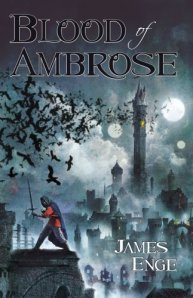
Over the past month or so, I’ve posted interviews with authors, but let’s get a perspective behind the scenes this week with Mike Kabongo, whose OnyxHawke agency represents authors like Dave Freer and James Enge. His web page is http://www.onyxhawke.com/index.php

MICHAEL A. VENTRELLA: Michael, unlike most agents, you prefer to read the work before the query letter. Why is that?

MICHAEL KABONGO: Cover/query letters are interesting, but they are not the same type of writing as a novel. Some people will tell you that if you can write X you can write Y; I think the best thing that can be said for that point of view is that it is more aggressively optimistic than is wont in anyone old enough to cross the street by themselves. That said, they do serve a purpose, and they tell their reader far more about the writer than their fiction may.

I think that on the whole the best effect a cover letter can have is a null effect. I doubt any novel has sold purely on the basis of a cover letter, I suspect that many make it no further based on them. No agent, no editor wants to work with someone who is going to take an inordinate amount of their time and energy. That said, I don’t always skip the cover letter, it’s something done almost at random. I tend to read a bit of the novel, and if I make it through a couple chapters and haven’t read the letter I’ll go back to it.freer

A writer who is an energy sink could be one in several ways, among them: A) higher than average need of editing; B) constant need for attention of some sort; C) inability to stay on task; D) inability to write something marketable; E) emotional maintenance.

VENTRELLA: Can you usually tell within a page or so whether you might be interested in representing a particular author? Anything that makes you immediately toss a manuscript in the “rejected” file?

KABONGO: I can usually tell if I’m not interested well before I can tell if I might be interested. I have had a few books that I thought “Hey, this person can actually write and not just string words together, but I think they started in the wrong place.” I’ll usually keep reading these even if the first chapter is subpar. I’ve signed one or two clients with books that started that way. I don’t think I’ll give any direct examples, but when the science is worse than BRAVE NEW WORLD or I can hear the author’s voice over the character’s, or they have done something completely counter to a character’s established character, yes I’ll toss it quickly.

VENTRELLA: At the Ravencon science fiction convention, you humorously summarized your advice to aspiring authors as simply “Don’t be an asshole.” This is, of course, good advice for anyone, but for authors, how is that rule usually broken?enge

KABONGO: Well, it’s broken in a number of ways. One of the most disgusting acts I’ve seen lately was an author who publicly told their fans (or if one is being less charitable, “sycophants”) to attack someone who had given them a bad review. Another is being (needlessly) rude to people who they encounter in public places. Towards the people in the inside of the industry, the other writers, editors, and us invisible agents it is often worse. The infighting that goes on publicly in the SF/F community is startling to me. I can’t possibly imagine the heads of new products at ATT Wireless and T-Mobile or Samsung and LG engaging in the sniping that goes on as a matter of course in our commuinty.

VENTRELLA: Do you feel you can adequately represent an author whose work doesn’t really interest you yet in whom you can see the business potential? Or do you have to love the work in order to sell it?

KABONGO: I would really, really like to love the work I pick up, or at least the writing potential of the writer, and I can’t see myself picking up any work I don’t see strong marketability in. I’ve never accepted anything I hate for sale, but I suppose if someone who’s been on the best sellers list for twenty five years came to me and said they need a new agent I’d probably say yes. This is a business after all.

VENTRELLA: Now that vampire books are on the way out, I have of course started work on mine. How much do you follow and to predict trends in the market when deciding which books to push?

KABONGO: I pay attention to what the editors are saying about stuff they reject and what they are buying. I think that is a better set of indices than what is in the bookstores now.

VENTRELLA: What’s the biggest misconception new authors have about what agents do?

KABONGO: That an agent can sell something the market won’t support.

VENTRELLA: What piece of advice do you think is imperative that never seems to get mentioned in any of the standard “How to attract an agent” articles that populate the web?

KABONGO: First: Write well. Second: Be patient.

Interview with Hugo and Nebula Award Winning Author Mike Resnick

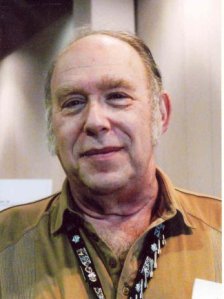
Mike Resnick has 5 Hugo Awards to his name (having been nominated 33 times — so far!) and has won numerous other awards for his fiction. As of 2009, he is first on the Locus list of all-time award winners, living or dead, for short fiction, and 4th on the Locus list of science fiction’s all-time top award winners in all fiction categories. He’ll be attending the World Science Fiction convention in Montreal in a few weeks, as will I, except he, of course, is once more nominated for a Hugo award.

His web page is here.

MICHAEL A. VENTRELLA: I am thrilled to be interviewing one of my favorite writers, Hugo and Nebula award-winning Mike Resnick.

Mr. Resnick, you seem to embody what many people advise all new writers: write a lot and write about everything. You’ve done fiction, non fiction, articles, editing, and so on. Do you agree that this is important and how do see a varied background as helping your writing?
Mike Resnick photo

MIKE RESNICK: Anything a writer can learn will eventually prove useful. Editing shows you how other people attack their stories, lets you see the strengths and weaknesses of certain approaches. Writing non-fiction teaches you to be careful of your facts, and that’s almost equally important in science fiction, where you strive for verisimilitude. Short stories and novels have different approaches, and the more you can learn about both, the less likely you are to put yourself at a competitive disadvantage against writers who do learn all that they can about their craft.

VENTRELLA: How has the publishing industry changed since you began?

RESNICK: The main change is that while they are printing more books, less houses are printing them. When I started selling in the early 1980s (I won ‘t count the three science fiction books I did in the late 1960s; my post-1980 career is a public penance for them), 18 New York publishers had science fiction lines. Today there are maybe half a dozen mass market houses with science fiction lines. Signet, Fawcett, Gold Medal, Pyramid, Lancer, Paperback Library, Playboy Press, Doubleday, and half a dozen others have gone – or seen their lines go – the way of the dodo.

VENTRELLA: Did you have an agent and do you think agents are necessary these days?

RESNICK: I had an agent after my first couple of sales; a lousy one. I got a top one in 1983, and I still have her, and she is absolutely not allowed to die or retire before I do. Yes, they’re necessary, for any number of reasons:

1. A lot of houses – most, in fact – won’t read unagented manuscripts.

2. Your agent, because of all the contracts that pass through her office and all the deals she’s negotiated, has a far better idea of what will be a contract-killer that you do, and will know what Publisher A will accept that Publisher B won’t.

3. A good agent will have a top foreign desk, will make you more money overseas than you’ll make in the US, and will have working relationships with top foreign agents in each country.

VENTRELLA: Self-publishing seems to be the trend; do you believe that if a starting writer self-publishes it destroys their chance of being taken seriously by “real” publishers and editors?

RESNICK: John Scalzi to the contrary – and he had a unique situation, with 25,000 daily hits on his blog – I believe, and have always believed, that a self-published book practically screams out that it was not good enough to compete in the economic market place. resnickflagship

VENTRELLA: What process do you use in writing? How important are outlines, for instance?

RESNICK: I have a very brief outline I use to sell the book to a publisher, and a slightly more detailed but far less formal outline – a set of notes,
actually – that I use when I sit down to write the book.

VENTRELLA: Do you plan an entire series at once or concentrate on each book separately?

RESNICK: If you’re writing a series, you have to know a little about where each book starts and finishes, but you concentrate on the book you’re writing, because if you do a lousy job there won’t be any more in the series.

VENTRELLA: Do you usually have more than one project at a time, or do you tend to get one finished and then move on? Do you think it is better to concentrate on one?

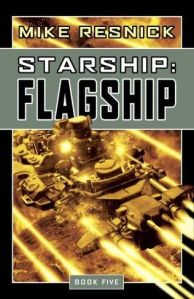
RESNICK: I only write on one novel at a time, but while I’m writing it I often take a couple of days off to write a story or an article, and then come back refreshed. For example, I just handed in STARSHIP: FLAGSHIP, the 5th and final book in that series…but while I was writing it, I wrote and sold a story to Asimov’s, 2 to Subterranean, 1 to Analog and 1 to GATEWAYS, plus an article for Challenger and one for the SFWA Bulletin. That’s probably why it took me 9 weeks to write the novel instead of 6 weeks.

VENTRELLA: What’s the biggest mistake you have made professionally? What is the biggest mistake you see new authors making?

RESNICK: I sold 3 very derivative, not-very-good science fiction books in the late 1960s. I was busy learning my trade as an anonymous hack in the “adult” field, and I made the mistake of doing hackwork in a field I cared for. I realized it very quickly, and stayed away from science fiction – as a writer, not a con-attending fan – for 11 years to give readers a chance t forget. They forgave, but those damned books still turn up at every autographing session to humiliate me.

The biggest mistake new authors make? Either sending a manuscript out when they could make it better (this is a murderously competitive field), or signing a lousy contract with a second-rate publisher just to get their book into print.

VENTRELLA: I understand that Hollywood has just taken an interest in your “Galactic Midway” series, which I recall discovering and loving back when they were published 27 years ago. How did that come about, and why that series among all of yours? Can you give any details about this deal yet?
resnickoutpost

RESNICK: There aren’t any details to give. I met with Jupiter 9 Productions when I was in Los Angeles for the Nebulas this spring. They have options on a couple of my properties, and asked what else I had. I mentioned that I had a 27-year-old novel called SIDESHOW that I have thought, from the day I wrote it, was very filmable: good story, almost no special effects, emotional rather than cerebral, all you really need is a good make-up artist and good actors. They asked to see it, I send them a copy, and they optioned it.

That doesn’t mean it’ll be a film. SANTIAGO has been under continuous option since 1990. I’ve been paid 4 times for the screenplay that Carol and I wrote. You haven’t seen it at your local theatres, have you? Another one was THE WIDOWMAKER. Sold it to Miramax; they paid Carol and me to write the screenplay, hired Peter Hyams to direct – and then lost interest. It’s currently under option with Jupiter 9. The Penelope Bailey trilogy – SOOTHSAYER, ORACLE and PROPHET – has been under option to Intrinsic Value Films for about 5 years now; they’ve had a screenplay for 4 ½ years, they hired a director 2 years ago – and you haven’t seen that one in theatres either, have you? Other projects under option include “Hunting the Snark” and KIRINYAGA. (On Hollywood’s behalf, the economics are different. If a publisher had to raise $75 million every time he wanted to publish a book, you wouldn’t see a lot of them, either.)

VENTRELLA: What is your favorite of your own work and why? Of what are you most proud?

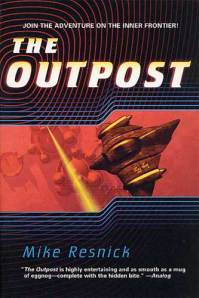
RESNICK: My favorite novel is THE OUTPOST, because it was the most fun to write. Far and away my favorite character is Lucifer Jones, who over 20 years has starred in ADVENTURES, EXPLOITS, ENCOUNTERS, and (this summer) HAZARDS, and will be in VOYAGES and INTRIGUES before he’s barred from every land mass on Earth. If I could write only one thing the rest of my life, it’d be Lucifer Jones stories; I love them.

I’m most proud of PARADISE, because no one had ever used that approach in that way, and I thought I did it about as well as it could be done. And I’m pretty proud of KIRINYAGA, which is up to 67 awards and nominations and still chugging along.

VENTRELLA: And finally, what is the best piece of advice you would give an aspiring writer?

RESNICK: Books don’t write themselves. Writers write; dilettantes who will never amount to much talk about writing.

Interview with Author Peter Prellwitz

MICHAEL A. VENTRELLA: I’m pleased to be interviewing Peter Prellwitz, one of the most successful writers at my publishing house, Double Dragon. His web page is http://shardsuniverse.net/ . Peter, what made you sign up with Double Dragon, and do you regret going with a smaller press?

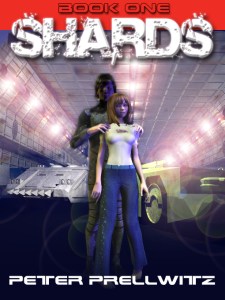
PETER PRELLWITZ: Double Dragon Publishing (DDP) was pointed out to me by a friend who was looking to start up his own publishing company. He’d read my novel Shards back when it first appeared in serial form on the CompuServe Writers Forum and became a supporter to see it published. (I’d originally written the novel just for my own enjoyment, with no intention of publishing it.) At the time, Double Dragon was conducting its first – and sadly, only – Draco Writing Contest, so I entered four of my finished novels, Horizons, Promise Tide, The Science of Magic, and The Angel of St. Thomas. I didn’t enter Shards because the four books making up the novel totalled three hundred thousand words and I knew better than to submit something of that size, having never been published. All four books fared well in the judging, with Horizons selected by finalist judge Mike Resnick as the Winner for Best Science Fiction.
prellwitzbiopic

I have never regretted going with a smaller press, primarily because that smaller press was Double Dragon Publishing. I have always been treated cheerfully, professionally and politely. This can be tempting to think, “Sure, they treat me that way because my sales are pretty good.” But the undisputed truth is the company treats all its contributors that way.

VENTRELLA: Given the cutbacks at the big publishing houses, would you advise other starting writers to “build a portfolio” by having success with a small publisher or is it better to keep holding off for that big potential deal?

PRELLWITZ: Having just crowed over the joy of being with Double Dragon doesn’t mean there aren’t challenges and downsides to being signed by an ebook publisher. One of the biggest is the “stigma” that comes with it. The sad truth is that there are a LOT of ebook/small publishing houses out there that have poor business practices, very low standards for accepting materials, and are about as real as faster-than-light travel. The mainstream publishers and associated agents, editors and such have maintained for years that ebook/small press publishing was no better than vanity press, and not to be taken seriously. Sadly, more often than not, they’re absolutely right. There’s an overabundance of – forgive me – poor quality writing that is being published by ebook/small press publishers that has little or no merit to it and is seeing print only because of their publishers’ inexperience, vanity or outright greed. That means that real publishers like DDP, who have high submission standards, a winnowing process, and sustainable business/publishing models, are unfairly lumped into the same group as so-called publishers. Because of this, while the idea of “building a portfolio” with a small publisher sounds good, it can actually hurt you in the respect of building a reputation among the larger, more conventional publishing companies. And literary agents won’t even look at work you’ve published with ebook/small press publishers.

But there a many positives to going with the right small publisher. One is the self-realization that you’re a serious writer; you’ve tried to get your work published. Another is that your chances of getting read and signed are greater with an ebook or small publisher. Just be sure you go with a reputable publisher. I do believe the time is coming when there will be a blending of some elements in the ebook publishing and mainstream publishers. The ebook and small publishing companies are far more efficient; not wasting paper but rather using print on demand (POD) or electrons to put out books, as opposed to the tried and true but increasingly expensive and wasteful mass publishing model that the larger houses use. Being a known, respected author with a known, respected publishing house, be it ebook, POD or mass, is a good thing.

VENTRELLA: What’s your writing process? Do you use extensive outlines? And do you plan out the series or just work one book at a time?

PRELLWITZ: I’m afraid I’m a nightmare of an example when it comes to the writing process. I’m what you would call a “seat of the pants” writer. I no idea how a novel is going to end, nor even what’s going to happen in the next chapter or even the next page. Oh, I’ve tried to do the outlines, plot summaries, character direction, and etc. For ten novels now, though, it hasn’t worked. I introduce my characters to the initial conflict that needs to be resolved, then just write down what happens. If I ever try to step in and direct things, they either smack me down for meddling in their lives or they stand around and go on strike like a bunch of prima donna actors. In one novel, TAU (which stands for Those Above Us), I set up one character to be the penultimate bad guy; then traitor everybody wants dead. I built this massive case of evidence against him and then, one chapter before the end of the book, he dies a noble death. He’s NOT the villain I was certain he was. Which left me completely in the dark as to who WAS the traitor. Took me a couple weeks to figure it out, and when I did, I couldn’t believe it. But when I read through the novel, there it was. I’d laid out – rather, recorded what I saw – everything that was needed to prove the guilt of the traitor and I’d missed it all.

As for planning out series, I do and I don’t. Oftentimes when I’m working on one novel I’ll write a reference to an event or person that has only tangent relevence at that moment but promises to have a good story on its own. Several novels and a couple dozen short stories have come about that way. I will start and work on more than one book at a time, however. Generally, I don’t recommend it. In my opinion, it’s far better to focus on one novel. Right now I’m writing a Shards Universe novel and a Martian Western novel and a fantasy novel. They’re all moving forward, but slowly. They’ll probably all be finished about the same time, which will be cool because I’ll have three completed novels. But until they’re finished, I don’t have anything to offer my readers. That’s okay before you get published, but once you establish a fan base, you owe them more than vague progress updates.

VENTRELLA: What’s your writing background? Did you begin with fiction?
horizons510
PRELLWITZ: I did. My first “published” work was a Thanksgiving play I wrote in 4th grade. My teacher was so impressed that I’d written completely on my own (it wasn’t an assignment or anything), that she produced it and it played to the entire school. It was an awful play. Elements of Gilligan’s Isle and F-Troop, poor dialogue, no logical progression to plot, and a cookie-cutter ending. My mom saved me a copy of the play, so I was able to refresh my memory about it. Yep, it was awful. But it was produced and it was my creation.

I was hooked.

I wrote another, much better Thanksgiving play in fifth grade, which was also produced, this time by my fifth grade teacher. After that I started writing short stories and started about six different novels that I never took more than a hundred pages. I co-wrote a melodrama in my senior year that was produced and played in nine libraries around Orange and Los Angeles counties in 1978. We got our fist official reviews from that; two thumbs up from both the Orange County Register and The Los Angeles Times. I continued writing fiction and non-fiction through the years, my break coming in 2003 with Horizons.

VENTRELLA: Is a web page important for a starting writer?

PRELLWITZ: Yes.

Hmm… let me rephrase that:

YES!!

One trap an author can fall into is that his or her “job” is to write and only write. Indeed, in the past – say, the 19th Century – a well-known author need only send his completed manuscript to his publisher, then sit back while other people did the rest of the work. Marketing, publicity, etc. The author had only to keep writing and occasionally show up at lecture.

Not only are those days gone, I wonder how much they really ever existed. If you look at Samuel Clemons’ life, you’ll see it was nothing like that. Today, however, the author must also be the main source of publicity. Also, simply writing a novel isn’t the only option. There are so many opportunities to add to the novel’s audience and reach, that NOT taking advantage – especially when so many other authors are using the chances – that an author is really short-changing the novel’s life.

Web sites are a critical opportunity that should not be passed up. And I don’t mean a typical “Buy My Book!” vanity web site. Having a living, breathing web site that you update regularily, store plenty of free stuff on, and just generally increase a readers involvement in your writing, can be the difference between your book just sitting on the shelf and your book gaining a following.

For the starting writer, I would recommend having a web site up and running at the same time you’re writing your first novel. When I was writing Shards back in 1996, I started the ShardsUniverse.net site mostly for myself. I kept my research, connecting short stories, maps, and everything else there. I didn’t let anyone really know about it. When I’d finished Horizons in 1998, I did more of the same. It wasn’t until 2003, when Horizons was first published, that I began pushing my web site. By then, however, it was a wealth of information on my universe, with a free library of short stories, novel excerpts, research, and current news on conventions and the like. Since the majority of my novels occur in the same universe, the web site helped tie everything together.

A tip… I put up my first web site all by meself. I wish I hadn’t. Even though I’m a professional IT person, I’ve never been big on web design. If you have a couple hundred bucks, PAY a professional to set up your site if you’re seriously going into the writing world. I’m doing that now, but it’s an ugly, slow process since I have a lot of content to move over.

VENTRELLA: How does writing for comics differ from writing standard fiction?

PRELLWITZ: As you know, I’m currently working with Steve Bennett, the anime artist, in turning my young adult novel, The Angel of St. Thomas, into a web comic of the same name. It’s been challenging. Since the medium is so very different, illustrated as opposed to written, rewriting is an absolute must. Where I could use the reader’s imagination to help me tell the story in the novel, as a web comic I’m more compelled to provide visual story-telling. While this forces me to provide more detail in the form of instruction to the artist, the result is a universal representation of what I’d envisioned when I first wrote the story, as opposed to my letting the readers’ imagination fill in the blanks.
ShardOne510

Pacing is also a huge challenge. The novel can be read in two or three hours. The web comic, which only posts one page twice a week, will need three years to tell the same story. Because of that, action scenes need to be enhanced while exposition and transition sequences need to be condensed. Taking three paragraphs of exposition in a novel is a one minute read, filled with useful information. But drawing three paragraphs of information might take four or five pages, which is two weeks worth of web comics in which nothing is happening. So adjustments are needed. Sometimes major adjustments. For instance, one chapter has the main character telling the origin of the “Angels” to another character over dinner. In the web comic, we’ll be having her showing the story; the reader will go back and watch things as they occurred from three centuries earlier.

The other primary difference is also the most exciting and, yes, at times challenging difference. The story is mine. The characters are mine. But the art is Steve’s, and he’s as much a creator of the web comic as I am. What I try to convey in a script isn’t necessarily what he’s going to draw. Not one single page has been exactly as I thought it would be. But at the same time, every page, while different, has been better. He’s the artist, after all. What he doodles in two minutes I couldn’t draw in two weeks; Steve is that good. So we always have an exciting and sometimes energetic exchange of ideas. That’s forced me to better see things as an artist does, which has helped me become a better writer when it comes to scripts. And being able to write scripts is always a useful skill.

VENTRELLA: You make regular appearances at science fiction conventions as a guest author; do you find these to be a useful process to promote yourself?

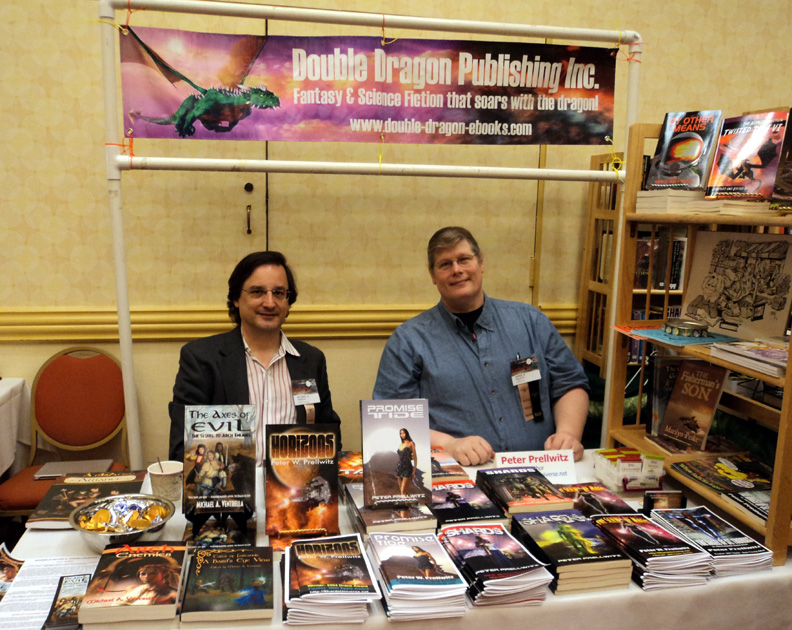
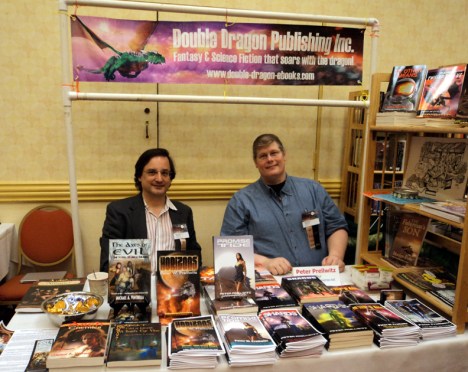
PRELLWITZ: Yes, and I think your question touched on the often overlooked main point. Conventions are a great place to promote MYSELF. Almost all other means of promotions, youtube, web sites, even book signings, are to promote the book. And my books are certainly the reason some people want to meet me. So when I’m at a convention, I’ll have a table in the Dealers Room and talk about/sell my books. But this is primarily the way my readers – and potential readers – get to meet the person behind the stories. To hear my opinions and my life experiences, as well as witness my reactions to and interactions with events as they occur at the convention.

Of course, it’s a two-way street. I also get to observe, interact, and learn from readers; those who’ve already read my novels as well as those who have not. Of all the genres that exist in fictional writing, science fiction is the fastest moving target. All other genres are limited by time, be it past or present. Even fantasy – which occurs in universes significantly different from ours – can’t go into the future, since it’s the future of a universe different from ours. But science fiction has no such limits. It can – and does – cover past, present and future. And it can cover multiple realities. And anyone who reads and enjoys science fiction is going to have a mind that has been stretched and exercised by a scope of endless possibilities. Those are people I want to know and with whom I want to interact

VENTRELLA: Here’s the question I’ve asked everyone so far: What’s the biggest mistake you have made?

PRELLWITZ: : In all honesty, I don’t think I’ve made it yet. I’ve had a very fortunate career as a writer to date. I continue to write, though not as much as I should, which is a common Biggest Mistake for authors. Though I do wish I hadn’t started playing World of Warcraft. That’s eaten up hundreds of hours I could have spent adding to my universe.

A lot of my readers often ask, “Why aren’t you in all the bookstores?” which is to say, “Why aren’t you with a mainstream publisher?” But I never for one moment think of my loyalty to Double Dragon as a mistake. Yes, I might have been able to get published with a big publishing house. But I DID get published with DDP. And now that I’ve proven myself to me and to a growing number of readers, I am trying to go mainstream with my next novel, Redeeming The Plumb. And I have DDP’s blessing and support. And if I have my way, DDP will always have my ebook contracts.

So, this is the only question I guess I’m dodging, because I really haven’t made my biggest mistake.

Yet.

VENTRELLA: What is the best piece of advice you could give a starting writer?

PRELLWITZ: My advice is three-fold.

1.) Buy, read and KNOW “The Elements of Style” by William Strunk and E.B. White. This slim book is a must for any writer.

2.) Constantly improve your skill with your tools; namely grammar, vocabulary and style (see above). If you have the greatest novel up in your head, but cannot communicate it, the story has value only to you. Don’t cripple your imagination because of poor writing skills. Mark Twain said it best: “Use the right word, not its second cousin.”

3.) Write crap. If the aspiring writer accepts that he or she will be a better writer in ten years, then the writer must also accept they are a POORER writer now. Don’t wait until the perfect inspiration comes along. Flowers can grow alone and by themselves, but a truly beautiful flower requires fertilizer to grow from, as well as less beautiful flowers nearby with which to be compared. The same is true for writing. Start writing and keep at it. You will write junk. But you’ll learn. And you’ll get better.
The Curse of Enthusiasm: “Don’t Get Cocky, Kid.”

You’ll never get anywhere in this business if you don’t have a healthy ego and believe that you are indeed producing good work that people want to read.

But in the words of a famous pilot, “Don’t get cocky, kid.”

The biggest mistake I made when I began was in being too confident in my abilities.

A few years ago, I finished writing my novel ARCH ENEMIES. Filled with enthusiasm for my baby, I rushed it off to every agent and publisher listed in the traditional resources. Surely they would see it for the masterpiece it was! How would I decide between the multiple offers that would flow my way?ArchEnemies-510

As you have guessed, I spent a year collecting rejection letters.

One reason for this, which shall be discussed in a future blog, was due to poor query letters (an art in itself, I have discovered). But the real reason was that the book deserved to be rejected.

After some time, I went back and re-read it. And found that while the characters and plot were fun, the writing itself was clumsy and pedestrian. I was so excited about my story that I had basically submitted my first draft.

I rewrote it, almost line by line, and not wanting to embarrass myself further, submitted it to the small (but growing rapidly) publisher Double Dragon, who accepted. It has since done quite well with them. But even now, I want to rewrite sections.

So today’s lesson is this: Slow down. Don’t be so enthusiastic. Take your work and set it aside for a while until you calm down, and then go over it line by line. Get that first draft out quickly to get the right feel and flow for the material, but never forget that it is a first draft.

Coming to a later post: Ideas aren’t everything. Everyone has them.

Interview with Alan Dean Foster

I am pleased to today be interviewing Alan Dean Foster, someone whose work I loved long before we ever met. Alan was one of the first subscribers to my magazine Animato, published in the 80s and early 90s, and later worked Animato into one of his novels (Quozl). I was quite honored!
Author and friend

Besides sharing the name “Alan” (mine is in the middle), Alan Dean Foster is also a political science undergraduate, but there we split; Alan went on to get a Master in Fine Arts in Cinema at UCLA. Behind all that was, of course, a love of writing, and after some short stories were published, his first novel THE TAR-AIYM KRANG was published in 1972, and many more soon followed. Among his series include 14 novels in the “Pip and Flinx” series, the Commonwealth novels, and (my favorite) The Spellsinger novels.

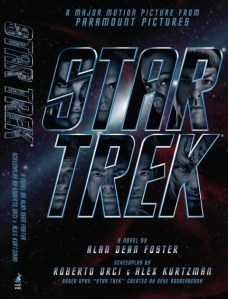
His Star Trek “Log” books kept fans entranced between the end of the animated series and the start of the movies, and his Star Wars novels include the hugely popular SPLINTER OF THE MIND’S EYE.

He has written the movie novelizations for (among others) Alien, Clash of the Titans, Outland, Starman, Alien Nation, and the most recent Star Trek movie.

Alan lives in Arizona with a beautiful wife and a beautiful house (well, I’ve seen pictures anyway). They love to travel the world.

I really shouldn’t have to go into too much detail about Alan; if you don’t know who he is, you probably wouldn’t be reading this blog!

His web page is www.alandeanfoster.com.


MICHAEL A. VENTRELLA: Alan, your first published work was with the Pip and Flinx series (unless I am mistaken) in the 1970s. How has publishing changed since then for beginning writers trying to break into the field?

ALAN DEAN FOSTER: First publications were a couple of short stories in 1971. I don’t believe it’s that much more difficult for new writers trying to break in, but the advances have shrunk and there’s more competition, thanks to the use of computers. More importantly, and especially for SF, the short story market has contracted enormously even from the ’70’s. So writers are almost forced to break in with an entire novel, which is obviously more difficult.

VENTRELLA: Too many starting authors get frustrated with trying to obtain an agent and/or publisher and turn to self-publishing as a way to get noticed. Is this wise, in your opinion?tar

FOSTER: Fifteen years ago I would have said no. But the line between “real” publishing and self-publishing grows more blurred every day. Now you have sites like Scribd that allow writers…and would-be writers…not only to self-published, but to do so easily, cheaply, and still get paid for their production. No one knows what the future will bring for this new technology, but it’s very exciting for published as well as newbie authors.

VENTRELLA: Similarly, do you advise starting authors to go with small but reputable publishers in order to gain some attention first before approaching agents and editors?

FOSTER: Not in the case of writing. Always start at the top and work down. If your work is good, why not have the best markets and the best people see it first?

VENTRELLA: Do you personally plan out series in advance or concentrate on each book on its own? Do agents and publishers want to know that a beginning author has ideas for sequels or a series?

FOSTER: It depends. With the Commonwealth and Flinx & Pip books I had no idea it was going to turn into a series…much less one that is still on-going after thirty-seven years. It just kind of growed. But with a trilogy, the entire story arc is indeed planned from the beginning. And yes, publishers are always interested in knowing if a new author has ideas for further stories in the same setting. trekcover

VENTRELLA: What really pushed your career was being approached by George Lucas for the Star Wars novelization. How did that come about?

FOSTER: Actually, my career got its first real push from the publication of a book called ICERIGGER, which went through several printings right away and spawned two eventual sequels. As to the SW novelization, my agent was contacted by Lucas’s representatives. I met with George, who though somewhat busy gave me a fair amount of his time, and all went well from then on.

VENTRELLA: You’ve done dozens of movie novelizations. Do you have your agent approach Hollywood agents for these or do they call you these days?

FOSTER: They contact me. Quite unintentionally, I’ve developed something of a reputation for them.

VENTRELLA: What’s the biggest mistake you have made professionally?

FOSTER: I’m not very good at promotion. I’m much better and more comfortable praising someone else’s work than my own. And I probably am too polite when it comes to matters that affect publication of my work. But it’s just the way I am. My wife says I have no taste…that I like everybody.

VENTRELLA: When people look back on your work, what would you like them to remember you for? What are you particularly proud of?

FOSTER: That I never sacrificed story for the sake of “art”, and that I managed to slip in one or two thoughts about the nature and future of humankind without lecturing the reader or otherwise belaboring the audience.

Interview with Award Winning Author Jonathan Maberry

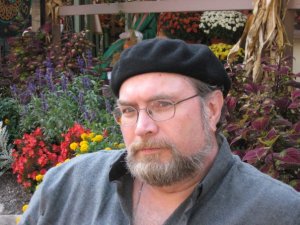
JONATHAN MABERRY is the multiple Bram Stoker Award-winning author of novels (PATIENT ZERO, GHOST ROAD BLUES, etc.), nonfiction books (ZOMBIE CSU, THE CRYPTOPEDIA, etc.), comics (BLACK PANTHER, PUNISHER: NAKED KILL and WOLVERINE: GHOSTS), and over 1100 magazine articles.  Jonathan is the co-creator (with Laura Schrock) of ON THE SLAB, an entertainment news show for ABC Disney / Stage 9, to be released on the Internet in 2009. Jonathan is a Contributing Editor for The Big Thrill (the newsletter of the International Thriller Writers), and is a member of SFWA, MWA and HWA.

Visit his website at www.jonathanmaberry.com or on Facebook and MySpace

Jonathan Maberry author photo 2009

MICHAEL A. VENTRELLA: Jonathan, thank you for being the first to submit to the interrogation, which I promise will be free from “enhanced techniques.”   To begin, can you discuss how and why you made the transition from non-fiction to fiction?

JONATHAN MABERRY:  I was doing research for a vampire folklore book –VAMPIRE UNIVERSE (Citadel Press, 2006) and realized that popular fiction rarely mines the richness of folklore for source material.  Most takes on vampires are variations of Dracula, and Bram Stoker was by no means a folklorist.  His vampires different considerably from most European vampires, and even from Transylvanian vampires.  There are hundreds of different kinds of vampires in world myth and few of them every appear in fiction.

I thought how interesting it would be to read a novel in which the characters realize they’re up against vampires but everything they try fails because all they know about vampires comes from novels and movies.  The more I thought about how much fun a book like that would be, the more I wanted to see if I could write it myself.  My only previous attempts at fiction had been a couple of shorts stories way back when that sold to magazines that pay only in contributor copies.  But…I decided to give it a shot anyway.

When I set about it, I was consciously writing the kind of book I wanted to read.  I had no expectations of it actually selling.  After I had the book roughed out I realized that it was a much larger story than I thought and it would have to be a trilogy.  That really stacked things against me because until then there had been no horror trilogies.

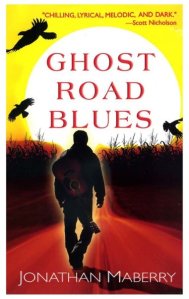
I went through the process of scouting for an agent, got the book into her hands, and she was able to place it –and the two other as-yet-unwritten books—with a major house.  That book, GHOST ROAD BLUES, was published as a paperback original by Pinnacle Books in 2006 and went on to win the Bram Stoker Award for Best First Novel and was in the running against Stephen King and Tom Piccirilli for Novel of the Year.  As you can imagine that was a pretty strong dose of validation.

And, just writing the book gave me the bug.  Now I’m totally hooked on writing fiction and am work (simultaneously) on my 8th and 9th novels, one for St. Martins Griffin and one for Simon & Schuster.

Ghost Road Blues

VENTRELLA: You have also not limited yourself in your writing, having produced novels, short stories, plays, and comic book scripts.  Do you advise a starting writer to concentrate in one area first?

MABERRY:  Always start with your strength.  I started with magazine feature writing about martial arts.  I’ve been practicing jujutsu since I was a kid, so when I pitched my first article at age twenty I was able to speak with some authority.  From there I went to how-to pieces, and later I wrote martial arts textbooks while teaching Martial Arts History, Jujutsu and Women’s Self-Defense at Temple University.  Once I had myself established as a writer I went outside my comfort zone and started pitching on what I liked.

This doesn’t always apply to fiction, though.  If I was just starting out now, with no writing credentials, I’d probably tackle a novel in the genre that I read most.  Knowledge of your favorite genre –its history, its greatest works, its best writers—creates a comfort zone that lends authority, confidence and passion to your own work.

VENTRELLA: What’s the biggest mistake you made when starting out?  What’s the best piece of advice you got?

MABERRY:  I made two whoppers.  The first was believing that I was skilled enough to represent my own books.  That came back to bite me on the ass when I published with a small press owned by a lawyer.  Looking back, that had red flags all over it, and I got bent over a barrel.  Then I wised up and got an agent.  She looks after the legal end of things, and she does a hell of a lot better job of it than I ever did.

The other mistake was believing that old propaganda that creative people are bad at business.  Once I got burned by the small press shark, I made sure that I learned everything I could about the writing business.  I found that learning the business side of things was just a matter of research, and writers are good at research.  It also helped me identify the kinds of people I needed to work with —agents, accountants, etc— and learning how the business works.  One of the first things you learn is that publishing IS a business, and everything that occurs within it is part of business.  Art is the product, not the method.

VENTRELLA: Your latest series involves Joe Ledger, who works for a top-secret government agency and who has all sorts of advanced training.  While it is true that you have a martial arts background yourself, what sort of research did you do to get into the mind of your character?

MABERRY:  I talk to pros in the field.  Like most writers I love research.  I’m a knowledge junkie.  I want to know how things work, how people do their jobs, and so on.  To get into the head of Joe Ledger I spoke with SWAT operatives and people currently or formerly in Special Ops.  Always ask the pros.  Find out what makes them tick, what drives them…and find out what they know about their job that Joe Average doesn’t know.

Because of that research I have a strong fanbase among present and former soldiers, cops and agents.

VENTRELLA: Do you think it is better for starting writers to, as they say, “write what you know” and create a main character with the writer’s experience and background?

MABERRY:  At first, sure.  If you build on your strengths you imbue the character with passion, confidence, and reality.  But don’t discount the value of paying attention to people around you.  I draw on a lot of people I know, or have known, when creating characters.  Rarely is a character made completely from whole-cloth…most have elements of real people.

VENTRELLA: What’s the best way to grab the attention of an agent?  What’s the biggest mistake you can make?

MABERRY:  Start with things in motion.  Don’t lead up to it (that’s a page waster and an interest-killer).  I like to jump in and make the characters scramble to catch up to something big and nasty already rolling.

VENTRELLA: Do you have a favorite of your own work?  Which, and why?

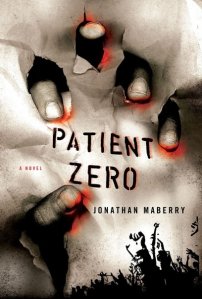
MABERRY:  So far it’s a tie between PATIENT ZERO and the second in the series, THE DRAGON FACTORY.  I delivered that a couple of months ago and my editors tell me that it’s better than the first…and they loved the first.Patient Zero SMP

In truth, though, I’m always in love with whatever I’m currently writing.

VENTRELLA: PATIENT ZERO also has the unusual (to me) technique of being written both in the first person and third person, depending on the chapter and the main character’s point of view.  How did you decide to adopt this technique and is it being used in the sequels?

MABERRY:  It’s a thriller, which means it’s a race against the clock.  In most thrillers that have a political or military angle the hero seldom gets to meet the bad guy behind everything.  I wanted Joe Ledger to tell his own story, but I wanted the reader to get to know the villains in the piece and learn who they are and why they do what they do.  So I switch from first to third.  A few other writers do this effectively.  John Connolly, Robert Crais, and others.  It works well if you stay on top of it and make sure the voice of the first person sections is different than the voice of the third person sections.

VENTRELLA: Just because I want to know:  The “zombies” in “Patient Zero” were not supernatural in the traditional sense of the word; will the Ledger novels continue in this vein?

MABERRY:  First off…zombies in most fiction aren’t supernatural.  In Night of the Living Dead it’s suggested that radiation from a returning space probe caused them to rise.  In many other stories they rise as a result of toxic spills, a mishandled bioweapon, or a mutation of some naturally occurring pathogen.  My take is that the pathogen is deliberately re-engineered to make a doomsday weapon for reasons that will benefit the villain, a pharmaceutical mogul named Sebastian Gault, who intends to profit from the panic and the resulting rush to create and distribute treatments or cures.

The other books in the series focus on different bio-threats.  In THE DRAGON FACTORY, a cabal of scientists are using cutting-edge genetic science to create pathogens for ethnic cleansing and to further the Nazi master race program.  In the third book, THE KING OF PLAGUES, a scientist discovers that the Tenth Plague of Egypt –the death of the firstborn from the story of Moses—was actually a pathogen; he recovers it and attempts to weaponize it so he can sell it to terrorists.

I have little faith in the sensible use of extreme science.  I like science, but research, profit and morality seldom occur all at once in the same people.  To me, that’s far more frightening than zombies!

maberry