Interview with author William Freeman

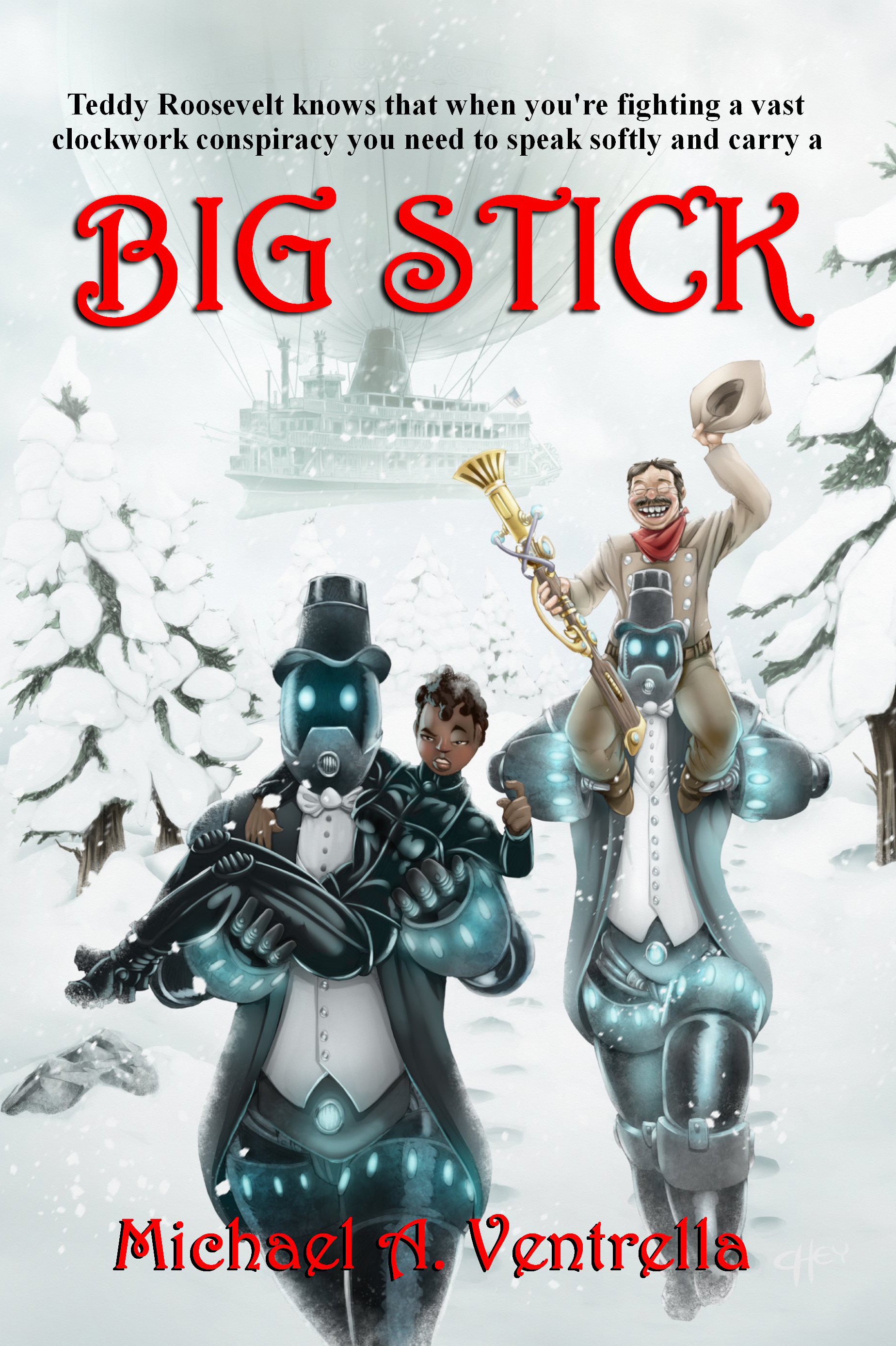
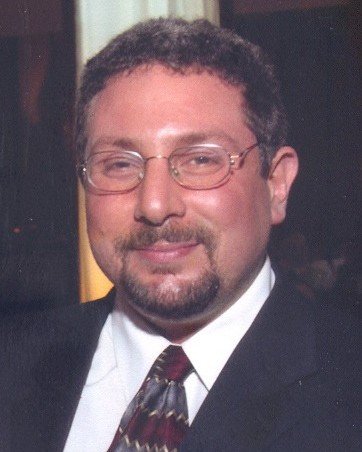
MICHAEL A. VENTRELLA: Today I welcome author William Freedman. His debut novel, LAND THAT I LOVE, was published this year by Rebel and he is currently finishing his second, MIGHTY MIGHTY. His novelette “Forever and Ever, Amen” appeared in the 2006 Spirit House chapbook and his short story “Intentions” is scheduled to be published this year in Ash-Tree Press’s HOLY HORRORS anthology. He is a founding member of the Long Island-based LISciFi critique group and has been a panelist at I-Con, Balticon, Albacon, Capclave and Arisia. He holds degrees in journalism and international business and his non-fiction work has appeared in Investor’s Business Daily, Euromoney Books, Global Finance magazine, Treasury & Risk Management magazine, and many other business and financial news outlets both in print and online.
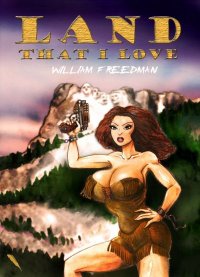
William, what is it in your background that made you want to write LAND THAT I LOVE? Was there some specific political event that triggered the idea?

WILLIAM FREEDMAN: When I began writing LAND THAT I LOVE, George W. Bush had just won the 2004 presidential race. (I hesitate to use the term “re-elected” because that presumes he was elected the first time.) Considering all the changes in American politics in the brief time since then, some might not recall the mood of the nation back then. The Republican Party controlled both chambers of Congress as well as the White House, and the Supreme Court was getting more conservative all the time. We were effectively a one-party nation. From Election Day until Katrina, dissent was rarely heard in public. I remember telling a co-worker at the time, “I’m married and raising three kids in a Republican-majority suburb, so I’m a lifestyle conservative. I’m an MBA, so I’m by definition a fiscal conservative. As someone who was in harm’s way during the Gulf War, I’m in favor of military intervention in Iraq, even if I don’t buy the reasons the White House is giving for that intervention. With a few codicils, I’m pro-life. But I don’t believe in rescinding habeus corpus. I don’t believe in warrantless wiretaps. I don’t believe in torture for torture’s sake. But what exactly am I allowed to disagree with the President about and still be considered a good American?” He didn’t have an answer to that.

By the way, it didn’t take me five years to finish writing a 55,000-word book. It took me one. But it then took three years to find a publisher and the better part of another to get through the contractual, editing and launch processes. On my blog site, LandThatILoveNovel.WordPress.com, I have a page with excerpts from some of the rejections I got from publishers and agents. At first, nobody wanted to touch the political controversy. Then, after it became fashionable again to criticize Bush, the rejections tended to say that the material was too dated — that by the time they’d be able to get it on the shelves, the war would be over. Of course, the book has been out for the better part of a year now, and we still have a hundred thousand American troops spread between Iraq and Afghanistan. I suppose I get the last laugh, but I’d give it up if it meant bringing them all home.

Incidentally, I don’t consider this book anti-war. It’s anti-arrogance. I don’t consider it anti-conservative, as its Amazon reviews would indicate. It’s anti-seeing-the-whole-world-through-only-one-lens.

VENTRELLA: Who were you inspired or influenced by? (Am I remiss in seeing the ILLUMINATI trilogy in here somewhere? fnord)

FREEMAN: I never read it. Maybe I should. I’m not really into the whole conspiracy-theory thing. Although there is an element of deception, there are no conspiracies in LAND THAT I LOVE. Everyone’s motivations are pretty clear and nobody’s manipulating anyone. It’s the naked power of a remote overlord versus the scrappy resistance of the proud locals. This plot goes back at least to the Maccabees and almost certainly before that.

I do steal the plot straight out of H.G. Wells’s THE WAR OF THE WORLDS with one exception: There are no aliens. In the corner of the Milky Way in which LAND THAT I LOVE takes place, there are no extant, high-functioning non-human civilizations. Humanity has spread throughout the sourthern spiral but hasn’t encountered much in the way of competition. And I think that will continue to be the case. It’s unlikely that we’ll ever encounter anything out there more dangerous than ourselves.

VENTRELLA: Given the good reviews you have received, how are you capitalizing on that?

FREEMAN: I get a little more respect from my local librarians. And now that I have a book in print and those kind words on Amazon and on the back cover, I feel like I have quite a decent calling card when it comes time to get serious about floating MIGHTY MIGHT, my superhero spoof/social satire, to the agenting and publishing worlds.

VENTRELLA: I met you at Albacon, a science fiction convention. Why did you decide to target that audience?

FREEMAN: Satire is my canvas, but science fiction and fantasy are my palette. These are the tropes I use. But I belong to a sci-fi/fantasy crit group, not a comedy crit group. Just as I want my writing to work on the gag level and on the message level, it absolutely has to function on the adventure level. Don Adams won the Best Actor Emmy three years in a row because Maxwell Smart, as Adams inhabited him, might spend most the show making faces, delivering a litany of trademark gag lines and stepping on rakes, but in the last five minutes he’d be swinging from chandeliers, winning sword fights, expertly manipulating some world-saving gizmo and outwitting the villains as surely as James Bond or Napoleon Solo or Matt Helm would have. And you wanted him to get together with 99, and you wanted him to impress the Chief. Get Smart worked as a parody precisely because it also worked as character-driven romantic comedy and as the kind of secret agent story that it was sending up. Of course, sci-fi and fantasy auteurs in 2010 take their genre far more seriously than the spy writers of the 1960s did. I’d probably have ruffled fewer feathers in that milieu.
Even so, I remain resolute in identifying with sci-fi (which I insist on calling “sci-fi” despite protests from people who are trying to jettison the term in some have-baked, poorly conceived and wrong-headed attempt at gaining respectability) and fantasy. My favorite author these days is Paolo Bacigalupi, whom I’ve been following like a deranged fanboy since “Pop Squad” first appeared in 2006. Over the past couple years, he’s won all kinds of awards and critical acclaim. No less august an outlet as Time magazine showed him love for THE WINDUP GIRL. In a convention green room a few months ago, he was chatting with some other writers and talking about how mainstream publishing pros are telling him to keep doing what he does, but stop calling what he writes “science fiction”. He just laughs it off. I like to think I would too. Not that I’m in any position or am ever likely to be.

VENTRELLA: Have you received any negative comments based on the political nature of the book? Or do we just assume that the targets of your book don’t read anyway?

FREEMAN: I think history has come down on my side on this one. As unpopular as President Obama is today, he’s still twice as popular as President Bush was in his final year. Even the new wave of Republicans have little good to say about Bush’s policies.

A quick word about my own politics. Like I said, I’m an independent. I tend to vote for Democrats at the national level, but I’m just as likely to vote for Republicans in local and state contests. I got my liberal arts degree from a conservative school and my business degree from a liberal school. I’m used to disgreeing, pointedly but respectfully, with my friends, then going out drinking with them afterwards. If you think I’m an extremist, it might be because you’re the extremist and believe that everyone who doesn’t agree with you on every issue is stupid, misinformed or evil. That goes for liberals, who might identify more with my broader beliefs, as well as conservatives. My non-absolutist views on the abortion debate don’t set too well with the left.

Abortion doesn’t figure in LAND THAT I LOVE’s plot. I just cite this to call out some increasingly shrill voices who expect their favorite writers to tow a party line. I refer to the former fans of Elizabeth Moon, who vilified her for expressing what I agree is a reprehensible position on how the American mainstream ought to treat the Muslim-American community. I don’t defend her stance, just her right to disagree with the rest of us. Am I supposed to burn my signed copy of ENDER’S GAME just because I’m uncomfortable with Orson Scott Card’s anti-gay rhetoric? Is it inappropriate for me to read Nietszche or listen to Wagner because I’m a Jew and they were anti-Semites? Guess I should’ve never bought that Ford then. I mean, how would those of us who are left-of-center react if Glenn Beck went on the air and told all his viewers to boycott Alec Baldwin movies? If we’re artists, aren’t we expected to draw a reaction — a strong reaction? Can we do that if we’re concerned that we’ll lose our audience if we say something they might disagree with? We won’t ever have to worry about government or corporate sponsorship if we allow others to cow us into censoring ourselves. Yeah, good luck saying something brilliant if you’re always on the defensive against saying something stupid. And good luck getting through the rest of your life without saying something stupid.

VENTRELLA: Do you think today’s political landscape is in need of more satire, or is the news itself satire enough? (Since my next book is about a liberal vampire who runs for President, I certainly hope there is a market out there still for political satire!)

FREEMAN: No, Mike. Sorry. I tapped that well dry. There’s nothing left. I feel bad for you after all that work. Tell you what: I’ll buy a copy.

VENTRELLA: What are you working on next?

MIGHTY MIGHTY takes place in a world very similar to ours but with one exception: it has roughly the same proportion of superpowered individuals as the Marvel or DC universes seem to have. As one character puts it, “There are as many people with powers as there are people with herpes.”

The reason that world is otherwise indistinguishable from ours is that we ourselves have abilities and talents we don’t use. We all have excuses: lack of ambition, lack of social graces, family responsibilities, better things to do. But we could all be making more of a difference in the world. That’s why so many of MIGHTY MIGHTY’s most powerful characters work as airport screeners or mall cops. Until Fate, i.e., me, steps in to provide them with one last chance at redemption.

VENTRELLA: Who do you like to read for pleasure?

FREEMAN: Bruce Stirling, Neil Gaiman, Terry Pratchett, Iain M. Banks. I mentioned Paolo already.

VENTRELLA: What advice would you give to a starting author that you wish someone had given you? What is the biggest mistake you see aspiring authors make?

FREEMAN: You can’t copy-edit enough. Ultimately, you have final signoff. Your name goes on the cover and any mistakes that can creep in during the editing process, you own forever. Don’t assume that leaving the editing to skilled professionals is like leaving it to infallible gods. Don’t make that final cut on a screen. Print out all hundreds of pages and read them fresh. In LAND THAT I LOVE, I had what my editor considered an unclear antecedent to the pronoun “his”. There were two possible individuals that could have been referenced, although I can only see the logic in one. She picked the other and replaced “his” with the wrong character’s name. The mistake takes me out of the story every time I read it for an audience — and it’s right there in the first chapter. Maybe I’m being overly sensitive, though, because nobody else has told me they caught the error yet.
17

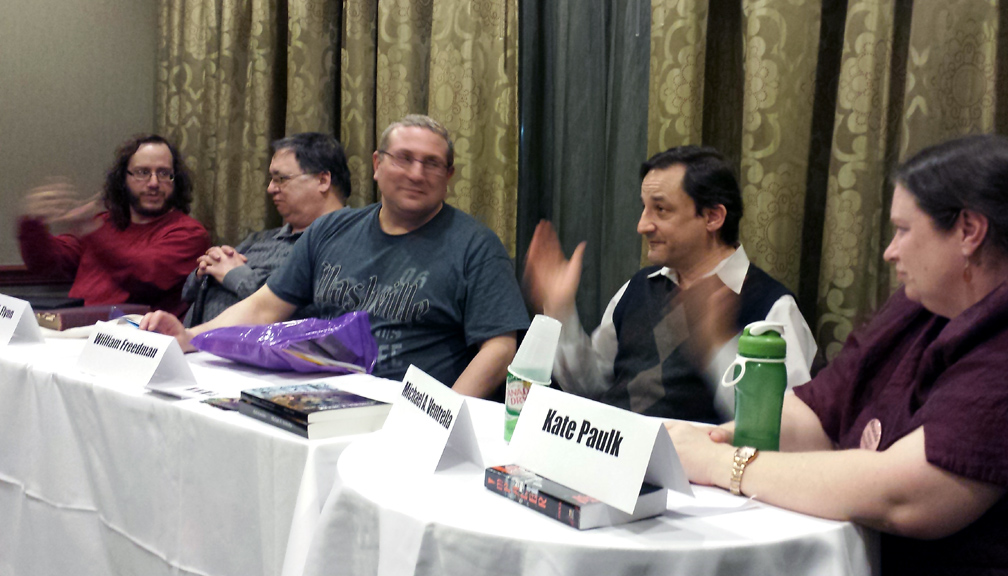
From a Lunacon panel in 2014

Interview with agent Marisa Iozzi Corvisiero

MICHAEL A. VENTRELLA: I am pleased to be interviewing Marisa Iozzi Corvisiero today.

Marisa is an attorney as well as an agent. She is the founder of The Corvisiero Law Practice, P.C., a boutique law firm in midtown New York City. She is actively building her client list and focusing on science fiction, fantasy, paranormal and romance, as well young adult and children’s literature. In non-fiction, she is interested in seeing proposals for memoirs, how-to (in any industry), guides and tales about the legal practice, parenting, self-help, and mainstream science. No text books please. She’s interested in reading your query and first fifteen pages (full book for children’s books – illustrations not necessary) to Marisa at marisa@lperkinsagency.com You can visit her agent blog at http://thoughtsfromaliteraryagent.blogspot.com and follow her on twitter @mcorvisiero.

I am always surprised to find so many fellow attorneys involved in the publishing industry, although usually I am interviewing fellow authors. I’m curious as to your start as an entertainment attorney and how that led to your becoming an agent – or did the agent thing happen independently?

MARISA IOZZI CORVISIERO: Becoming an agent sort of fell on my lap. It started with a favor for a talented fellow writer. I was writing a cross genre science fiction novel at the time, and started connecting with other authors, going to conferences, joined a critique group and so forth. Eventually, one thing led to another and I found my self sending in submissions for other writers through my law firm and really enjoying representing them.

Then one day, that one talented fellow writer said that he had rekindled a connection with a friend from grammar school, and just found out that she is now a literary agent. Not missing a beat, I asked him to introduce me to this Lori Perkins person, who sounded so fabulous. So he did, and after one conversation with Ms. Perkins, we both knew that we were meant to work together. She offered to mentor me, and to share her 23 years of experience and contacts in the industry with me. She said that after six months with her it would be like having a masters. Of course I agreed, and took on this opportunity of a life time. The six months came and went, and I’m still with the L. Perkins Agency, learning from the best.

VENTRELLA: Do you think having a legal background gives you an advantage over other agents?

CORVISIERO: I think that any additional skills or knowledge that one brings to the table gives one an advantage. Lawyers are trained to spot and solve issues, analyze, strategize, negotiate and draft legal contracts. These are very important skills for an agent, but I think that one doesn’t have to be a lawyer to posses these abilities. Most good agents out there have these skills. So I suppose that being a lawyer helps me be a good agent.

VENTRELLA: A query letter is very important for an author wishing to make an impression, but it seems that the skills necessary to write one are completely different from the skills needed to write a novel. How do you overlook a poor query letter to inspect the manuscript – or do you? (By “poor query letter” I do not mean one that contains misspellings or other obvious errors, but instead one that just does not grab your attention as it should.)

CORVISIERO: Query letters are very important. They not only showcase the author’s work, but also the author as a professional. If a query is sub-par, it is an indication of many things such as lack of attention, professionalism, skills, respect etc. I’ve written an entire blog entry on titled “Don’t Screw Up Your Query: You only get one change to make a good first impression”.

Let’s suppose for a moment that the query looks good, that there are no errors, it briefly describes the novel, says something about the author, provides genre and word count as well as a brief description of the target market and why this novel would appeal to them. If all of this works and the story line does not grab my attention I will consider not reading the work. At this point I ask my self if the storyline is interesting and unique. If not, I go back to the e-mail and type up a short decline letter and tell the author why I’m declining it. If it is interesting and unique, I go on to read a few pages. After that, if I like what I read, I ask for the full synopsis and/or the full manuscript.

VENTRELLA: How important is it for you to love the work in order to represent the client?

CORVISIERO: Very important. I only represent things that I love. My time is very limited and precious. I will not waste it on something that I don’t believe in. Even if it is selling.

VENTRELLA: Do you ever accept work that you believe has potential but needs major editing?

CORVISIERO: The short answer is yes. I have taken on a few diamonds in the rough and it usually pays off in the end. I can’t do this often due to time restraints, but if I see the potential in the work and the writer, I will go out of my way to help them.

VENTRELLA: Is there any story or plotline that you are sick of? Is there anything you wish you’d get more of?

CORVISIERO: I wouldn’t say that I’m sick of them, but I’m very conservative when it comes to vampire novels. One would think that the market is oversaturated with them, but they are still selling. So when considering a vampire story, it will need to be very unique or traditional with a unique plot. I mean seriously, enough with the clumsy but smart teen that falls in love with a vampire who simply can’t resist her. Been there, done that … let’s get creative people!

Which is a good segue into what I do want to see more of. I want good science fiction and urban fantasy. Throw in a good romance or attraction between the characters and I’m even happier. I want someone to send me a well written, fresh story with compelling characters, that will blow my mind. Give me the next Matrix, Harry Potter, Avatar, Mission to Mars, Abyss, Contact. See the pattern?

VENTRELLA: Do you think the vampire trend will end soon? (I hope not, given the manuscript I’m working on now.) Do you see anything new on the horizon?

CORVISIERO: The trend itself, or “frenzie” if you will, will most certainly end. Everyone is riding the coat tails of Stephanie and Charlene. But even after the demand for creatures of the night, or sparkling creatures of the day ends, there will still be market for vampires. I can’t think of a time longer than a couple of years, when a book or movie about vampires wasn’t released. I think its almost like a cycle. Every few years a hot vampire story emerges. Remember Anne Rice, Bram Stoker, Blade, Buffy, The Lost Boys, on and on through the years all the way back to Nosferatu in the 1920’s. People love vampires. And so I think that there will always be a market for them.

The problem is that vampires have been too glamorized. Made to seem almost human but for the need to drink blood, some even eat food and can go into the sunlight with an application of a special lotion (The Gates). Not to mention all the super powers. When I was reading Breaking Dawn (Stephanie Mayer’s 4th book) I kept thinking this is like vampires meets the X-men. So I think the key to a good new vampire story may be to bring it back to basics.

As for trends, we have gone from aliens, to vampires, to werewolves, to zombies, to fallen angels. Now there are talks about super heroes. I have personally seen some keen interest in mermaids. I’ve received at least two really good queries already. I may be the first to say it but I think that there is something there.

VENTRELLA: What do you love to read? Who are your favorite authors, and why?

CORVISIERO: Other than my fabulous clients, I would say that my favorite authors are Nora Roberts and Nicholas Sparks. Now, as you may imagine I read quite a bit and I love many, many authors, but I have to say that when it comes to Nora and Nick I enjoy them above all others. When I pick up one of their books, I know what I’m getting. I trust them. For instance, I know that any novel by Nicholas Sparks will probably make me weep and laugh, and it will provoke thoughts and promote some sort of emotional learning within me. He is fantastic at reaching the reader.

Nora Roberts is a whole different story. I call Nora “My good old reliable”. I know that I can buy any one of her books without even reading the jacket and I will like it. She is a pro at creating believable and intricate characters whom you want to follow through their journey to the end. I usually sprinkle one of her novels into my reading schedule after reading a number of manuscripts and other books. Once in a while “I need a dose of Nora”. When I saw Nora Roberts at RWA this past July I told her this, and I told her that she is one of the few writers that I trust explicitly with my time. She seemed very flattered, even though I’m sure she hears this all the time. And that makes me like her even more.

VENTRELLA: Some people advise authors to attend writer’s conferences specifically for the chance to meet agents and make pitches. Others say such a thing is useless unless the manuscript is finished. What is your opinion on writer’s conferences?

CORVISIERO: Conferences are wonderful, and writers should take every advantage of the resources and opportunities that they offer. If you can attend one or two a year, they should, even if the manuscript is not finished. Attending a conference gives authors the wonderful opportunity to meet other authors, agents, and editors. There is always something to be learned at the workshops. They are invaluable. I would however advice not to pitch a manuscript until it is finished. Also, to get more out of a conference choose one that suits the genre of your work.

VENTRELLA: How will the rise of e-publishing affect your business?

CORVISIERO: E-publishing is changing the industry to a point where sooner rather than later all books will be available as an electronic version. I’m not sure how long it will take until we stop cutting down trees to print books, but that’s something to ponder. This doesn’t affect my business significantly. Other than learning about the new e-publishers popping up everywhere, how they work, and how they like to be reached. Right now, if we sell a book only as an e-book, the advance will usually be lower than an advance from a traditional publisher would pay, but the royalties are higher, and so there is still a profit to be made for agents and authors. Either way its clear to me that e-publishing is the way of the future. As much as I love the feel of a book in my hands; the sound of the pages turning; and the smell of an old and well loved book, as well as that of a newly printed one; I still think that e-books will eventually dominate the market, if not replace it all together.

VENTRELLA: And finally, what general advice do you wish to give to aspiring authors that they may not have heard before?

CORVISIERO: I’m sure that this is not new advice, but I think that it’s good advice none the less. Writers should write what they know about, or what they are passionate about. Don’t write just to sell books, or to please people. Write to tell a good story, one that you’ve conceived. Enjoy the process, even if it means never selling your work. I know that it sounds ridiculous, but most of the great works were created by those with passion for the craft and not for money. The point is to reach the reader and whisk them into your imaginary world, where they will grow with the characters, suffer their pain, and experience their joy in the end when the conflict is resolved.

We are usually best at what we enjoy doing the most. So if you don’t enjoy writing, find a different hobby. Publishing is a tough industry. It is difficult to make good money. When you do, it’s wonderful. But don’t expect your writing to be an overnight best seller and bring you millions (it doesn’t happen that often). Don’t expect to sell your book and get an advance large enough to support you until you sell your next book. The odds are not in your favor. So don’t put all of your eggs in one basket. I had to say that because it’s always good to include a dose of reality. However, good things can happen, and they do. Just be prepared for the rejections and be persistent.

If this is really what you want to do, keep at it. Let every sentence be better than the previous one. Remember that success is a process and not a destination, so enjoy it and learn your lessons along the way. I urge you to never ever give up. If writing is your passion, and you enjoy it, don’t let anything anyone says discourage you from fulfilling your creative dream. Think big, shoot for the stars and when you look back you’ll do so to re-live your journey and not to dwell on missed opportunities!

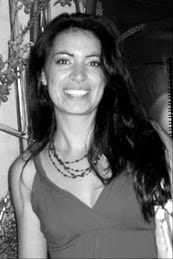
Interview with Author and Editor Cecilia Tan

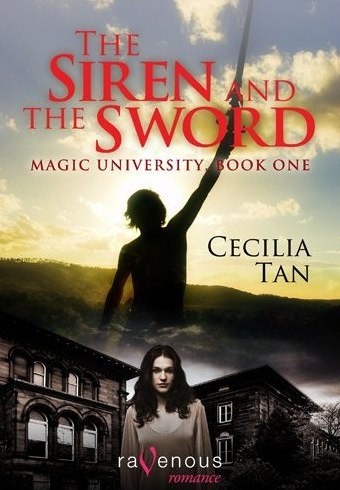
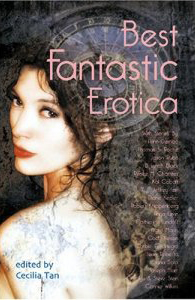
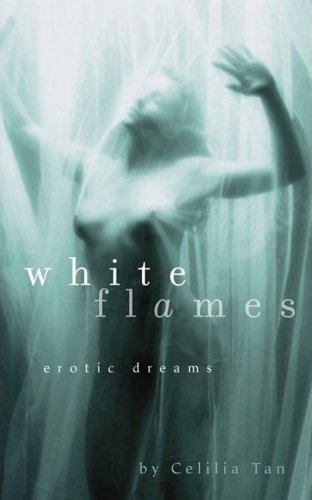
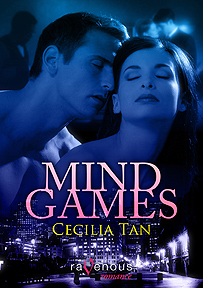
MICHAEL A. VENTRELLA: I’m pleased to be interviewing Cecilia Tan today. Cecilia has been writing and editing professionally for the better part of two decades, both independently and for the small press she founded in 1992, Circlet Press, who specialize in material that mixes the erotic with the fantastic. She has written numerous erotic romances for Ravenous Romance, has edited anthologies for Alyson Books, Thunder’s Mouth Press, Carroll & Graf, Masquerade Books, Blue Moon Books, and others, and collections of her short stories have been published by HarperCollins and Running Press. On top of all that, she also writes and edits publications on baseball.

Cecilia, What brought about the founding of Circlet Press?

CECILIA TAN: I had written a story called “Telepaths Don’t Need Safewords” and just knew at the time I finished it that it was the best story I had written to date. It mixed explicitly kinky erotic action with a science fiction plot. Then I looked around for somewhere to submit it. There was nowhere. Science fiction magazines had explicit rules against sexual content. Porn magazines had explicit rules against both science fiction and any plot beyond “two people meet, then have sex.” The BDSM magazines of the time were either exclusively lesbian or exclusively gay, and my characters were neither. I had been working in book publishing for a few years at that point so I knew the business and I thought “this is nuts. Someone has to do this!” And of course that someone ended up being me.

VENTRELLA: Has it met your expectations?

TAN: Circlet Press has met all my hopes and dreams except for the financial one. We grew by leaps and bounds, garnered fabulous critical acclaim, excellent notice, a great reputation, helped to blow the doors off the old restrictions and show how good mixing the genres could be, jumpstarted the careers of a whole generation of writers … but once the Returns Crisis hit the book publishing industry in the late 1990s, it’s been a financial uphill battle ever since. I’m too stubborn to quit, though, and the ebook has suddenly allowed us to start reaching the readership that mainstream bookstores abandoned. So all of a sudden, there’s some cash flow! Who knows? Maybe someday we’ll turn a profit. What’s most important to me is that we’re still able to connect authors to readers, and then put money back in the pocket of the authors. That part of the business is the same as always … in fact, it’s better.

VENTRELLA: There are many examples of small press these days; do you think this is good for the publishing industry or does it tend to water down the field?

TAN: Oh no. It’s the mainstream presses, not the small presses, who are the most watered down. That’s where you’ll find the most mediocre, recycled pap being packaged and put on the shelf. Granted, it’s not 100% the fault of the big publishers — it’s also the fault of the buyers at Borders and Barnes & Noble, who just want the same thing over and over again, in the hopes that what sold before will sell again. They are all chasing the book equivalent of the Top 40 radio hit and making a lot of boring noise in the process. The small presses are more directly connected with the readership and what they actually want. The small presses occupy the specialty niches.

Another way to look at it is with a comparison to restaurants. The big presses are the chain restaurants. They’re Applebee’s and the Olive Garden and Budweiser. The small presses are that great little gourmet Italian restaurant in your neighborhood, and handcrafted microbrews.

Small presses are also the minor leagues, but for the most part the authors being published in the small press aren’t any less talented than the ones in the mainstream press. They are sometimes less experienced, or less marketable, or just less lucky.

VENTRELLA: As a small press author, I thank you for that!

Has the rise of self-publishing been good for the business?

TAN: Absolutely.

VENTRELLA: When acting as an editor, what is it you look for? What will immediately get a story chucked in the trash?

TAN: The first thing I tell my assistant editors when its time to read the slush pile is DO NOT read the cover letter until after you read the story. Far too many authors think that the job of a short story cover letter is to build you up into a froth of excitement about how great the story is going to be, thus ensuring that a) you’ll be let down, and b) any suspense or joy of discovery in the story has been killed for the reader. I think many amateur writers are confused about the difference between submitting a short story and pitching a novel proposal to an agent or editor, and some just can’t imagine that all they should introduce in the letter is THEMSELVES and let the short story speak for itself.

We get a lot less utter garbage than we used to, though, honestly, and I think the reason why is that thanks to the Internet, writers are actually better informed about how to go about submitting, and they are much more likely to have practiced their grammar and spelling skills on a daily basis. It’s that or the Internet has somehow
swallowed up the attention of most of the crackpots who used to send us wacky submissions in red crayon and the like.

VENTRELLA: What sorts of things do you want in a query letter?

TAN: Since most of what we read is short stories, we don’t read queries. We just want a professional introduction of the author, with whatever credentials they have, but if none, just a firm, no-nonsense hello. It’s professional courtesy to include a cover letter. Sticking a post-it note shaped like a heart on the story is not professional.

Actually, these days, we only accept manuscripts by email, so whenever anything arrives in the mail, I know it’s likely to be from the land of psychoceramics.

VENTRELLA: As a writer of erotic and romantic fiction, what would you advise to someone wanting to enter this field?

TAN: Both romance and erotica have a lot of cliches. The whole trick to writing something that will thrill the pants (sometimes literally) off your readers is to satisfy their expectations while at the same time exceeding them. Be aware of the boundaries of any genre that you write in, and then find out how you can play with and cross those boundaries.

That is, unless thinking about that sort of thing paralyzes you and saps your will to write. In that case, forget everything I said and JUST WRITE. That’s probably the best advice. Step one, start writing. Step two, finish what you started. You’ll get better every time.

VENTRELLA: What trends do you see in the publishing industry that excite you? Which ones worry you?

TAN: I’m very excited at how social networking is allowing authors and readers to connect directly. But the problem is how do you find out about new authors you might like if you’re a reader, when now there isn’t just a publisher-wholesaler-retail chain delivering you a limited selection to choose from? A lot of things are changing now because of that.

It worries me a little that the newer system rewards authors more based on their marketing savvy than on their writing ability … but then I look at a lot of the junk that was published that still hit the New York Times best-seller list over the past 20 years and I realize that’s ALWAYS been true. There have always been populist and popular writers who weren’t particularly great artists.

VENTRELLA: Writing a short story is much different from writing a novel. What are the difficulties you have found? Why do you think some authors specialize in one or the other?

TAN: I’ve written a fair number of both and I really think they are different arts, just like painting and sculpture are different arts. A short story writer has to have guts and brio; a novelist has to have stamina and vision. For me short stories have always come pretty easily. I grab an idea and just pound it until it’s done. A novel takes a bit more planning. The one time I just grabbed hold of a novel with minimal planning, it took six years to finish and came out three times too long to be a commercial novel. (That’s DARON’S GUITAR CHRONCILES, which I’m serializing now on the web.) The next time I plotted out 12 chapters of 5,000 words each and bam, I hit my target right on the nose.

The secret to writing outlines for me is realizing that in the second half I’m going to deviate quite significantly from the outline I wrote, but that some kind of internal logic is at work in my subconscious, so if I forge on, it will all work out. I still have to write the outline, which to me is like sketching out the map of the mountain I’m going to climb. But when I get to the top, exactly halfway through the journey, and am at the turning point, I look down the other side of the mountain… and discover it always looks totally different from the top than it did from where you started at the bottom. Some of the landmarks are the same, but how you get to them changes.

VENTRELLA: Are you sick of vampire stories yet? Is there any plot you have seen too often?

TAN: I love vampires! But even sixteen years ago when I edited my very first anthology of vampire stories, called BLOOD KISS, there were some cliches I didn’t ever need to see. Like setting your vampire story in a goth nightclub … cliche cliche cliche! It really isn’t very imaginative to think “what if those spooky kids who look like vampires actually WERE?” Not exactly an original idea. I actually had to turn down a lot of stories where the “surprise” ending was that one of the two people who met in the bar turns out at the end to be… A VAMPIRE!

I had to write rejections that said things like “It’s a vampire anthology. Every readers KNOWS at least one of them is a vampire.” Then there were the millions who tried the surprise twist: they’re BOTH vampires! Argh. Or surprise twist two: the other one is a vampire hunter! I saw literally hundreds of stories with these plots even after I explicitly banned them in my submission guidelines.

Then there are some ideas that go through fads. I kid you not. One year I received no fewer than four stories all with this exact same plot: an artist falls in love with a model in a painting (usually a Renaissance painting) and gets artistically blocked, can’t paint, is wasting away… until the day the model shows up at the door to have
fantastic sex, looking just like the painting, because s/he is a vampire. Somewhere, once upon a time, that was an original plot. Now, it’s a cliche.

VENTRELLA: How do you think your education has helped your writing?

TAN: Well aside from the actual writing courses I took, it was important to me as someone who writes science fiction to learn some high level science. In college I went right for what was cutting edge at the time, cognitive science (artificial intelligence, neurology, etc) and genetics. Anything you learn that stimulates your brain is going to help your writing. I took a fair amount of psychology in that mix, as well as literature, music, etc. … Long live the liberal arts.

VENTRELLA: Besides “keep writing” what specific advice would you give an aspiring author that you wish someone had given you when you began?

TAN: I think I must have started out with some pretty good advice, because I can’t think of anything. I suppose the advice I would give is this.

You need your reader to trust you to lead them on a rollercoaster ride. For them to trust you, you have to trust yourself. To trust yourself, you have to know your craft and be constantly improving it, constantly learning about yourself and the way your writing affects your readers. So don’t write in a vacuum because you’re afraid people won’t like it. Find the ones who do like it, and write more for them!

Interview with Author and Editor Val Griswold-Ford

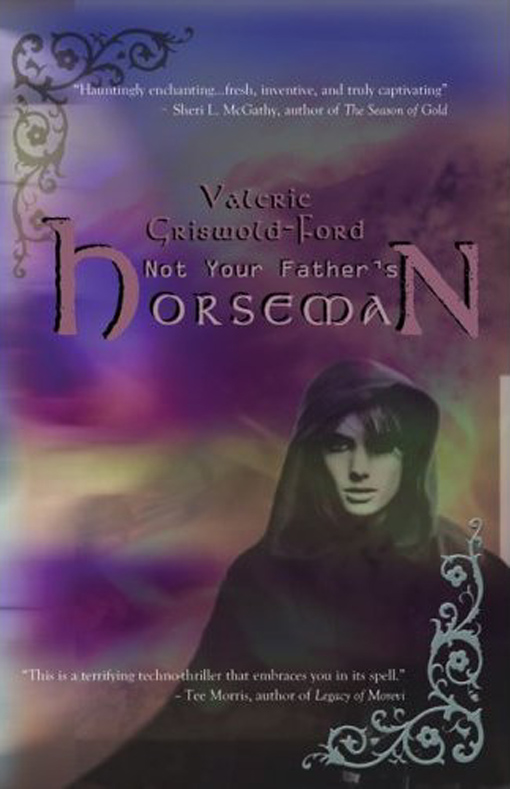
MICHAEL A. VENTRELLA: Today I am happy to be interviewing Valerie Griswold-Ford, writer and editor. Val was journalism major in college and covered several political beats, wrote a weekly column and rose to associate managing editor of The Daily Campus, the fifth largest daily newspaper in Connecticut. Val writes dark fantasy, horror, paranormal romance and urban fantasy, in addition to her nonfiction works. She is currently co-editing the third book in the “Complete Guide” series with Lai Zhao, entitled THE COMPLETE GUIDE TO WRITING FANTASY: THE AUTHOR’S GRIMOIRE. Her two dark fantasy novels NOT YOUR FATHER’S HORSEMAN and DARK MOON SEASONS are available from Dragon Moon Press, and she is working on the third book in the trilogy, LAST RITES. She lives with her husband and three kittens in Concord, New Hampshire. Her web page is www.vg-ford.com

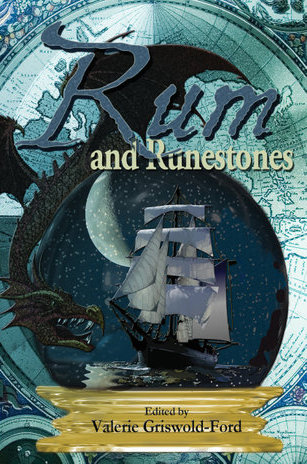
Val, your most recent work is the pirates and magic collection of short stories RUM AND RUNESTONES, due out in April of 2010. Where did the idea for this come from?

VAL GRISWOLD-FORD: Well, I’m a pirate addict. I adore pirates, and always have. So I was at a party at RavenCon last year with Misty Massey and Gail Martin, and we decided that we had to do an anthology of pirates and magic. I pitched it to Gwen Gades, the head of Dragon Moon Press, got the okay, and we were off!

VENTRELLA: Tell us about this new collection!

GRISWOLD-FORD: It’s amazing. More than I’d ever imagined. The writers were given a very simple assignment: to write a short story, under 8k, that used pirates and magic as the main impetus of the story. It was an invitation-only anthology, and I approached about 20 authors. Thirteen of them (including you!) responded. We’ve got everything from dark and creepy to love-lost-and-found to comedy. Even a song! It’s a great anthology, and I’m very proud to be the editor.

VENTRELLA: What is the process that you take as an editor when organizing short story collections?

GRISWOLD-FORD: This is my first short story collection, so I sort of made it up as I went along. I waited until I had everyone’s story in and read, then I listed them all in a word document and arranged them in an order that I thought made sense.

VENTRELLA: Some short story collections are reprints, and some (like RUM AND RUNESTONES) are by invitation. Is one easier or better?

GRISWOLD-FORD: Easier for who? The writer or the editor? : )

I think that by invitation is easier for the editor, because you can pick and choose your authors, so you’re getting a known quality as far as work. I specifically chose authors for R&R that I enjoyed reading, so I knew what level of quality I was getting. On the other hand, as a writer, I can see how the invitation-only anthologies might seem a bit cliquish. I don’t normally write short stories, but I was in one invitation-only anthology (WRITERS FOR RELIEF 2), and knowing that I had been chosen put a little bit of added pressure on me. Could I finish the story to the editor’s expectations? It can be tough.

VENTRELLA: You’ve also cowritten guides to writing, specifically THE COMPLETE GUIDE TO WRITING FANTASY. Why did you think such a book was needed?

GRISWOLD-FORD: Because there wasn’t a how-to on specifically writing fantasy. The Complete Guide is more like a reference guide than a “this is how you write.” Each book (there are three in total) goes into detail on topics that specifically apply to fantasy. The first one has topics like medieval feasts and clothing, writing fantasy fight scenes, things like that. We went a little deeper in the second book, building on the first and going into topics like combining mystery and fantasy, writing sex into your fantasy and government systems to use in fantasy. The third book was what to do once the book was written -– it went into things like querying magazines, agents and publishers, writing query letters, what to do about advertising -– things that writers don’t necessarily think about. It definitely filled a need –- I’m still getting emails from writers about what they’ve found in it.

VENTRELLA: As an editor, what submissions have you seen that just make you scream?

GRISWOLD-FORD: Hmm. Well, when we were doing the second guide, we got a submission that looked like it had been written in another language and then run through Babelfish to translate it to English. It was seriously weird -– all odd tenses and sentence construction. That was really the oddest. Most the subs I get are from professional authors, so I don’t get too many howlers.

VENTRELLA: You’ve also written novels and short stories of your own. Does a background in editing help? When an editor is assigned to your work, have there been major problems?

GRISWOLD-FORD: Not really. I tend to edit my own work before I send it off to Tina (my long-suffering editor), so she’s yet to threaten to murder me. The only time I saw her slightly aggravated was when I was having issues with a chapter in Horseman –- I actually sent her the chapter with “This sucks” as every other line. She was not impressed.

VENTRELLA: Where did the idea for NOT YOUR FATHER’S HORSEMAN come from?

GRISWOLD-FORD: I belong to a group called the Society for Creative Anachronism (SCA), and I’m part of the Storyteller’s Guild for our barony. We were doing a storytelling exercise, making up a story around a word we were given, and my word was Plague. I made up the story, and then had a dream that night about a modern-day Horseman. Nikki was the result.

VENTRELLA: Tell us about your most recent novel, DARK MOON SEASONS.

GRISWOLD-FORD: DARK MOON SEASONS is the second part of the Apocalypse trilogy. Nikki now knows both more and less than she did before, and she’s on the hunt for the other Horsemen. Now, though, she has more to deal with than just Gene-Tech –- the government has gotten involved, and she’s got to worry about Department V agents as well.

VENTRELLA: What do you do to promote your books and let people know about them?

GRISWOLD-FORD: Well, I’m on Twitter, and I run contests on my blog. I also have teabags with my books’ names on them that I put out on the freebie tables at various cons I attend. I’m going to be podcasting HORSEMAN this summer, and DREAMS this coming winter, which I hope will garner some more interest as well.

VENTRELLA: Many new authors, anxious to see their book in print, rely on self-publishing. What’s your opinion on this?

GRISWOLD-FORD: Self-publishing is a hard road. Unless you’ve exhausted all your options, and are prepared to hustle your rear off selling, I would advise against self-publishing. If you really think you can make it, go for it, but don’t make it your first choice. I know it’s a long road -– I’m still trying to find an agent -– but don’t give up. You can’t have a thin skin in this business.

VENTRELLA: Do you advise authors to start with the small press publishers and build up a reputation first, or should the pitch be given to the majors first?

GRISWOLD-FORD: Shoot for the top. Don’t get me wrong -– I adore my publisher, but seriously, if you don’t try for the apex, you’ll never know if you could have sold it to Tor, or Baen, or St. Martin’s. Believe in your work, and go for the gold.

VENTRELLA: What do you see as the future of publishing? Will e-books eventually take the largest share of the market?

GRISWOLD-FORD: Honestly, I don’t know. I like ebooks, but until the readers come done in price, I don’t know that they’ll take over. I still love my paper books, and don’t own an e-reader, although I do read books on my computer. But ebooks have definitely come, and they aren’t going away.

VENTRELLA: What’s the best piece of advice you could give aspiring writers?

GRISWOLD-FORD: Don’t stop reading and writing. Don’t judge your journey by anyone else’s. And don’t give up. Ever.

I will tell you the story of how I got HORSEMAN published as an example. Feel free to laugh, because I was a true newbie at the time.

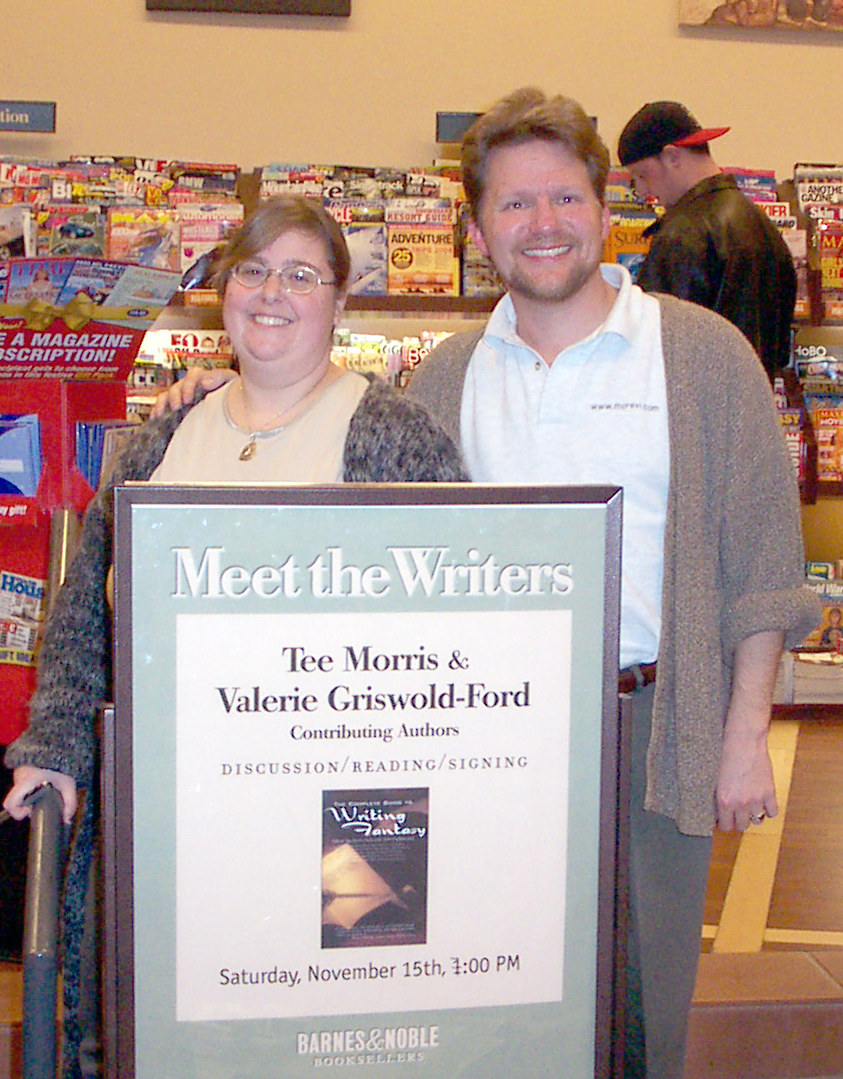
So, it’s September 2004, and THE COMPLETE GUIDE TO WRITING FANTASY has just come out. It’s my first byline since college, and I have never been published as an author before. We’re talking on the email list that spawned the Guide about what we can do to promote it, and I offer to set up a book tour up here in New Hampshire. Tee Morris (of MOREVI and Billibubb Baddings fame) takes me up on it, and we go on a 3-state, 6-stop tour in 4 days. Seriously a whirlwind. We end up with nothing to do Saturday afternoon, so we take out our laptops (another bit of advice: have something to write with at all times!) and he starts editing. I start noodling around with a story that will eventually become HORSEMAN. He reads what I have and says, “This is really good! You know I’m going to push you to write more, right?”

Flash forward to December 8, 2004. I know this date, because there was an ice storm and I stayed home from work. Tee calls me, and our conversation goes like this:

Tee: How’s the book coming?

Me: Um, it’s coming.

Tee: Good! Do you have an outline?

Me: Um, sort of?

Tee: Well, Gwen wants to see it tomorrow morning.

Me: …!

I pulled an outline from somewhere, and sent it off to her. She emailed me back and asked to see a rough draft. I finished it at 45k (yes, 45k!) and sent it off to her on Jan. 4, 2005. She came back and said that it was good, but short –- could I lengthen it? Of course!

Well, by then, Tee and I were working on OPUS MAGNUS, and we were talking to Gwen about launching at Westercon 58, which was going to be in Calgary that year. In one email she sent, Gwen mentioned three launches they were looking to do: LEGACY OF MOREVI (Tee’s book), THE GUIDE, and HORSEMAN. I sat and looked at that email for a good five minutes before I got up the courage to email her back and ask if that meant she was buying HORSEMAN. She emailed back and said she’d told Tee in December that she was. Hadn’t he told me?

Well, he hadn’t, because he’d thought she was kidding. Unknown authors do not sell books based on a chapter outline. But I had.

Which is why you never give up. Never.

The Axes of Evil

One barbarian prophecy says the legendary hero Bishortu will unite the three warring tribes. Another tribe has a prophecy that directly contradicts this, and they want Bishortu dead. And a third tribe, which may or may not be comprised of werewolves, refuses to let anyone know what their prophecy says. Meanwhile, the Duke on whose land the barbarians sit wants them all gone.

In the middle of all of this is squire Terin Ostler, who has been mistakenly identified as the great Bishortu. Under the Duke’s orders to get rid of the barbarians, he heads to their lands without the slightest idea of what to do.

Along the way, he has to avoid assassins, werewolves, lovesick barbarian princesses, and confused goblins while attempting to figure out the meaning of the magical and mysterious Wretched Axes. Nobody said being a hero would be easy.

I am so pleased to announce that my second novel THE AXES OF EVIL is now available.

I’m quite proud of it and think it’s a great improvement over the first. Partially this is due to experience (the more you write the better you should get), a good editor (as discussed in a previous blog entry) and paying attention to good advice from professional writers.

Fantasy author Gregory Frost likens it to Christopher Stasheff’s work. I read THE WARLOCK IN SPITE OF HIMSELF about 30 years ago and remember only that it was a fun adventure about a reluctant hero, and I am pleased with the comparison! (I hope I don’t go to re-read it and find plot parallels, because then I’ll be quite upset.)

“Humor, danger and a twisted tangle of unlikely prophecies make for a page-turning adventure,” said Gail Z. Martin, author of THE CHRONICLES OF THE NECROMANCER series. Award winning author Jonathan Maberry (THE DRAGON FACTORY) said it’s “a taut nail-biter of a thriller. Edgy, funny and dark.”

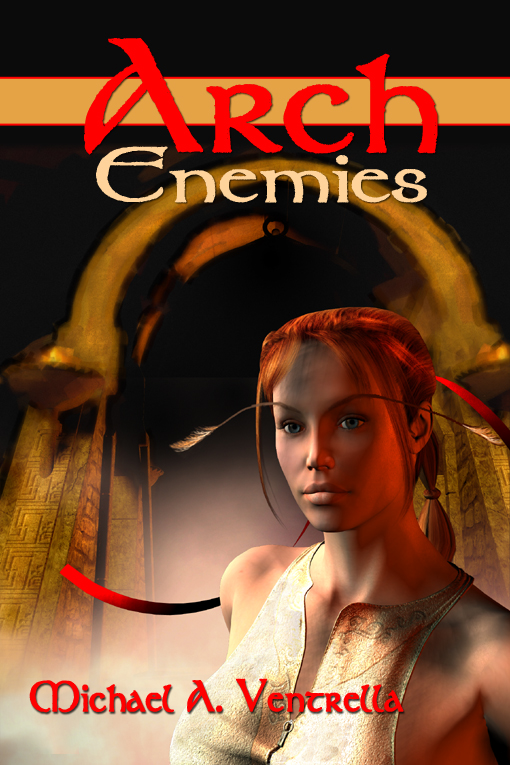
Readers of THE AXES OF EVIL should have an exciting ride, with non-stop action, humor, and unexpected plot twists. (And no, you don’t have to have read ARCH ENEMIES to enjoy this one.)

Unlike many fantasy heroes, Terin is not “the chosen one” or someone with super powers or special skills. Instead, he constantly finds himself thrown into terrible situations and finds solutions by being brave, honest, and resourceful. I always found myself identifying with average people performing extraordinary feats — to me, those are the real heroes.

The purpose of this blog is not only to allow me to interview professionals and learn from them, but also to promote my own work. (Any similar writer who says otherwise is probably not being very honest with himself or herself.) If you’ve enjoyed this blog, you may enjoy THE AXES OF EVIL. As an aspiring writer, I very much appreciate (and need) your support. I hope you will give it a try and post your comments to Amazon and other booksellers. I am always anxious to receive constructive feedback, positive or negative — I can always improve, after all, so your comments are valuable.

You can order the paperback here.

You can download the ebook here.

You can download the kindle version here.

And you can join my Facebook fan group here.

Thanks for the indulgence. Next week, back to interviews!

Interview with Agent Lori Perkins

MICHAEL A. VENTRELLA: Lori Perkins is the Editorial Director of Ravenous Romance, a new publisher of romance ebooks and audiobooks. She has been a literary agent for 20 years, and is currently President of L. Perkins Agency, which has foreign agents in 11 countries and working relationships with Hollywood agents. She was the agent for HOW TO MAKE LOVE LIKE A PORN STAR: A CAUTIONARY TALE by Jenna Jameson, which made the New York Times best-seller list for 7 weeks. She was also the agent for J.K. ROWLING: THE WIZARD BEHIND HARRY POTTER by Marc Shapiro, which was on the N.Y. Times Children’s best-seller list.

As an author herself, she has produced four books: THE CHEAPSKATE’S GUIDE TO ENTERTAINMENT; THE INSIDER’S GUIDE TO GETTING A LITERARY AGENT and THE EVERYTHING FAMILY GUIDE TO WASHINGTON D.C. and THE EVERYTHING FAMILY GUIDE TO NEW YORK. She has also written numerous articles on publishing for Writer’s Digest and Publisher’s Weekly.

As an editor, she has edited thirteen erotica anthologies. when she is not teaching at N.Y.U.’s Center for Publishing. And somehow she found time to be interviewed by me.

Lori, how did you decide to start Ravenous Romance, and has it been as successful as you hoped?

LORI PERKINS: As an agent, I sell the stuff that other agents won’t handle — SF/Fantasy, pop culture and erotica. So after 9/11 I became the literary agent for the porn industry — I am Jenna Jameson and Vivid’s literary agent. But I also wondered what had happened in the erotica world that I had read as a younger woman, and I was surprised to find that the erotica market was becoming more and more female-centric. I took on Cecelia Tan — who writes SF/Fantasy erotica, as well as baseball books (another passion of mine) — and started selling erotica anthologies. I started reading all these wonderful writers with excellent writing chops who made their living writing short stories, and groomed a few of them into novelists for this burgeoning erotic romance and chick lit market.

At that time, I met Holly Schmidt and Allan Penn, who were nonfiction packagers doing a lot of sex books. They wanted to start a romance publisher, and I suggested that there were enough romance publishers out there, but erotic romance was young and growing. When they examined the market, they came back and said, yes, let’s do all ebooks, and that’s how Ravenousromance.com was born.

VENTRELLA: What is currently selling at Ravenousromance.com, and what are you looking for?

PERKINS: We’ve made a name for ourselves by crossing genres. Our most popular category is M/M romance, which means gay male romance. We’ve taken popular romance classics and rewritten them in contemporary settings — AN OFFICER AND HIS GENTLE MAN, PRETTY MAN, SLEEPLESS IN SAN FRANCISCO. We will be doing the same thing for lesbian F/F fiction now, so we are looking for someone to write THE PRINCESS’S BRIDE and MUST LOVE CATS. You get the idea.

Our paranormal romance is selling really well. We have seven vampire series, and the zombie fiction does well. HUNGRY FOR YOUR LOVE, our zombie romance anthology, is one of our best-sellers, as is our gay zombie romance, FOR LOVE OF THE DEAD by Hal Bodner. And our kinky stuff does well too, such as our THREESOMES anthology. We currently have a call out on the RR blog, ravenousromance.blogspot.com for stories for a paranormal threesomes anthology, THREE’S A CHARM, and an historical threesome anthology, ONCE UPON A THREESOME. We have two more big anthologies coming up soon — FANGBANGERS, which is romance with anything with fangs and claws, and APOCALYPSE TODAY: LOVE AMONG THE RUINS, which is end-of-the-world romance.

VENTRELLA: Do you see e-books being the wave of the future?

PERKINS: Ebooks is the future of the mass market. There will always be collectors and bibliophiles, but when it comes to books as entertainment, you can’t beat an ebook.

VENTRELLA: Do you think there is any stigma attached to books that are primarily sold as ebooks?

PERKINS: Only if they are self-published. We published 150 titles this year and sold reprint rights to a third of them to major houses.

VENTRELLA: Given that it is relatively inexpensive to produce ebooks, is there a worry that some will assume that the standards are lower for publication?

PERKINS: It is not much less expensive to “publish” an ebook. We pay an advance against royalties; we hire an editor, a copy editor, a cover designer; the book has to be converted into eformats from Word, and then it needs to be uploaded to the various Estores that sell it. Plus we need an office and an accounting department. I sell subrights. All Estores (Amazon, B&N, Fictionwise, Audible, etc.) take a huge portion of the sale price of the book (just like a bookstore and a distributor in print). The only part of the ebook system (with a real pubisher) that is less expensive is the cost of printing, shipping and storage, and that is returned to the author in the higher than print royalties — most epublishers pay between 25% and 35% royalties.

VENTRELLA: What will usually get a submission rejected for Ravenous Romance?

PERKINS: All erotic romance must have a happy ending or a happy-for-now ending. We might ask you to change it, and if you won’t, we won’t publish it. And then just plain bad writing will get you turned down — alternating perspectives, passive voice, etc.

VENTRELLA: Have you ever liked an author’s style and voice but rejected a story based on other grounds?

PERKINS: I am an editor who can fix things, so I can usually walk an author through a rewrite.

VENTRELLA: Audiobooks also seem to be growing tremendously. How are the ones with Ravenous Romance produced?

PERKINS: Erotic romance audiobooks do very well, because there aren’t many of them (they are still quite expensive to produce, since they must be done in a studio).

VENTRELLA: Do you think eventually the book publishers will change their pricing to accommodate a new economy model?

PERKINS: I think ebooks should be affordable, and that if they are too high they will encourage pirating. I think the print world needs to get rid of “reserve against returns”, which is an antiquated system that makes the publisher and the author a lender to the book seller. I think books are entertainment, and they must learn to complete with DVDs and games and music, all of which needs to be affordable. So a new blockbuster book should be $20, an ebook $10 and a mass market/backlist $5, IMHO.

VENTRELLA: What is your background? In other words, how did you get to become a literary agent?

PERKINS: I was journalist. I was the publisher of a neighborhood newspaper in Upper Manhattan with a degree in journalism from NYU. I became an agent becuse I wanted to sell both fiction and nonficiton, but I have always been an editorial agent (I fix the books before they go out and I often come up with ideas for my authors). I’ve also written four books and edited 15 anthologies. And I teach writing/editing at NYU.

VENTRELLA: As a literary agent, what do you see as the biggest mistake new authors make?

PERKINS: They are too eager to get published. They don’t work on their craft. They have fantasies about the marketplace that are no longer real.

VENTRELLA: How do you deal with receiving work that you think is well written but to which you don’t think the market wants?

PERKINS: I’ll tell them just that and tell them what’s selling, and if they want to rework something, fine. Otherwise put it in the trunk and get me something commercial.

VENTRELLA: What’s the best way for a new writer to find a literary agent who likes their genre and style of writing?

PERKINS: Get WRITER’S DIGEST’S GUIDE TO LITERARY AGENTS or Jeff Herman’s and go through the book with a marker, making a list of all the agents who sell what you’ve written. Then email the top five, wait a week, and go on to the next five, etc. You can also join Publisher’s Lunch and look up agent sales for the past three months to see who has sold something that sounds like what you are writing. Then send a query letter that starts: “I read on Publisher’s Lunch that you recently sold a….”

VENTRELLA: And finally, who are your favorite authors? Who do you like to read, and why?

PERKINS: My three favorite books are 1984, ALICE IN WONDERLAND and DRACULA, and I would say GONE WITH THE WIND is my fourth. I love Stephen King (am reading UNDER THE DOME now). I especially loved SALEM’S LOT because it was DRACULA set in America and he deftly portrayed the death of a small town. I think MISERY is his finest book — brilliantly crafted. I also love Peter Straub, who has mastered the art of telling a story like the peeling of an onion. He always amazes me.

Get a Good Editor!

One of the hardest things for creative people to do is to look at their own work objectively.

The final edits on my second novel (THE AXES OF EVIL) are now complete, and I am very grateful that I had an excellent editor this time to help me out. J. Thomas Ross, whose blog you should all be reading, tore apart the manuscript and now the book is 100% better.

Some of the edits were based on grammatical errors and phrasing, but any good editor should point those things out. No, what made the difference was having an editor who also pointed out exposition holes and other problems.

I can clearly see a situation in my head as I am writing it, but that doesn’t mean I have explained it well enough for someone else.

Here’s an example: In AXES, there is a scene where Terin, the main character, is trying to sneak into a barbarian village. He has obtained the aid of some rather incompetent goblins, and they are hiding in a food storage shed. Peeking out the window, they observe the scene and make their plans. This is important. A reader needs to understand the layout to not only get what is happening but also to build the tension and suspense as Terin leaves the building and heads toward the prison where his friends are being held.

I thought my description was just fine, but Judy (my editor) couldn’t see it. “Doesn’t the fence get in the way?” she’d ask. “And I thought the jail was the big structure at the end of the clearing.” I eventually emailed her a quick map of the town as I saw it, and that assisted in the rewriting. Hopefully no readers will be confused now.

Another problem the original manuscript had was mentioning things that made no sense unless you had read the previous book in the series. Judy had not read ARCH ENEMIES, and this assisted me greatly, as I wanted THE AXES OF EVIL to be a stand-alone novel. We looked at the references and eliminated the ones that were irrelevant to the plot of AXES and explained the ones that were. In doing so, I tried as much as possible not to give away all of the plot to ARCH ENEMIES — what’s the fun in that? Still, some spoilers were unavoidable and necessary.

Having someone edit your work is tremendously important. If you’re receiving many rejection letters, that may just be the reason why. I have always had family and friends read my manuscripts before submitting them, but even then they may not catch everything. Someone who does this at least semi-professionally will make all the difference.

Interview with “Space and Time” editor Hildy Silverman

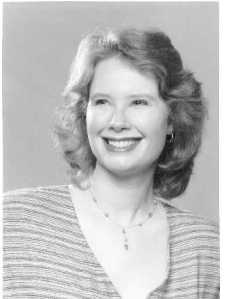
Hildy Silverman is the publisher and editor-in-chief of Space and Time, a 43-year-old magazine featuring fantasy, horror, and science fiction. She is also the author of several works of short fiction, which can be found in Wild Child, Phobos, Dark Territories (ed. Gary Frank and Mary SanGiovanni, Garden State Horror Writers, 2008), Witch Way to the Mall? (ed. Esther Friesner, Baen Books), an as yet-to-be-titled vampire anthology (ed. Esther Friesner, Baen Books) and Bad-Ass Fairies (ed. Danielle Ackley-McPhail). She is a member of the Philadelphia Science Fiction Society and the Garden State Horror Writers. She lives in New Jersey with one husband David, one daughter Rayanne, and one Bichon Frise, Frosty. She is a freelance consultant who writes corporate training, marketing communications, and SEO articles for major companies throughout the U.S.
Hildy_Silverman_B7W_Head_Smile_small

MICHAEL A. VENTRELLA: First of all, Hildy, how did you end up with this position, following in Gordon Linzner’s footsteps?

HILDY SILVERMAN: It was a spur-of-the-moment decision. I had met Gordon at a convention and saw him a few times due to mutual friends. I started reading Space and Time and really liked the unique fiction he ran. He told me that he was looking to sell the magazine and had some possible buyers interested, so I didn’t think much more about it.

Later, at a SFWA (Science Fiction Writers of America party), Gordon told me that none of the buyers had come through, so he was just going to shut down the magazine. Maybe I had a few too many Cosmos, because my response was, “Well, what if I wanted to buy it?” Long story short, we talked it over, I performed my due diligence, and in the end we were able to work out a good deal. Thus my career as a small publisher began.

VENTRELLA: When reviewing submissions, what will send a story to the slush file quickest?

SILVERMAN: Well, pretty much all of the stories start in the slush file anyway. Space and Time has six associate editors, who serve as first readers of the slush. They weed out the stories that aren’t up to snuff then forward the “goodies” to our fiction editor, Gerard Houarner. If he gives the story his blessing, it’s usually in…I just look them over and, except for a few rare occasions, rubber-stamp his choices.

If what you mean is what will get a story rejected quickest, there are a few obvious (or what should be obvious) things. Stories that are mailed to the business address without first requesting to do so are rejected out-of-hand (we accept electronic submissions only). Stories that clearly haven’t been proofread – full of typos, spelling and grammatical errors, formatting problems, etc – are also Right Out. Also, if the story doesn’t contain some sort of speculative fiction element, it is not for us. Those are the kinds of things that get weeded out first and fastest.

VENTRELLA: Do you advise aspiring writers to begin with short story submissions or do you feel that in today’s market, it is no longer necessary as a way to make a name for yourself?

SILVERMAN: I’ve heard conflicting advice and statements on this subject for awhile now. If a writer ultimately wants to make it as an author of full-length books, I’d say that writing ANYTHING until you’ve perfected your craft is a good idea. There’s certainly a lot less of a time investment in practicing your craft perfecting short stories for submission than if you write full-length manuscripts over and over. If you’re good enough to have you short stories published in a number of respected short fiction magazine and anthologies, perhaps win an award or two, it certainly wouldn’t hurt your reputation when ready to peddle a longer work to agents and editors. Credits are credit – they always look good on a submission letter.

VENTRELLA: Is there a talent needed for short stories that is separate from the skill needed for novels?
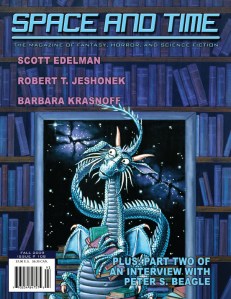
space&time1
SILVERMAN: Oh, yes. Some people mistakenly believe that because short stories are – well, shorter, they are faster and easier to write. Not true. You need to be able to convey an entire story – full plot, characterization, world building, etc. – in 10,000 words or fewer (usually fewer). That takes a great deal of skill. Your writing has to be tight, your use of language precise. Folks who write novels may have those abilities, but others will tell you they just can’t fit everything they want to say into the short story form. By the same token, there are short fiction writers who can’t “go long.”

VENTRELLA: Are there any taboos that would prevent you from accepting a story? Any trends you’re sick of?

SILVERMAN: I’m pretty hard to offend, especially when it comes to often-taboo subjects like sex or religion. In fact, I daresay I have or will publish some stories that are bound to get me into trouble with a few readers! As long as the story is well-written, with involving characters and a plot with a beginning, middle, and end I will give it fair consideration.

That said, pure “snuff” fiction holds no interest for me, mostly because there’s no plot there, just a vignette showcasing the abuse of one character by another. If someone sent me a piece featuring abuse, rape, or torture that is clearly all about wallowing in some disturbing fantasy, that’s not getting published, mostly because such work has no character, plot development, or anything of interest to say (except, maybe, “I need help.”)

As for trends I’m sick of, nope, haven’t run into any yet. We only open for submission windows, so I don’t see what a lot of other editors do, which is the same vampire plot or the same space opera story repeatedly throughout the year. There was a funny mini-trend I noticed last time we were open, though. Several stories about Quetzalcoatl came in all at once. I assume there was a planned anthology that didn’t go through; that’s usually the reason for an odd theme to suddenly rear its head in multiple submissions.

VENTRELLA: What do you personally like to read? Does that influence the choices you make as an editor?

SILVERMAN: I am a big fan of dark urban fantasy and horror these days. However, my tastes have changed over the years…I started out reading only hard science fiction (Asimov, Bova), transitioned to fantasy (Tolkien, McCaffery), and went on from there (King, Butcher). I also enjoy some literary fiction (Russo) – referencing the category here, not my personal opinion that it is more “literary” than other fiction. I supposed personal taste always comes into play when making editorial decisions, but I try to focus on how engaging a given story is, rather than be distracted by it not being my “thing.” If I feel unqualified to judge the merits of the story, I’ll leave it up to Gerard or one of the associate editors who is into that kind of story to make the final call.
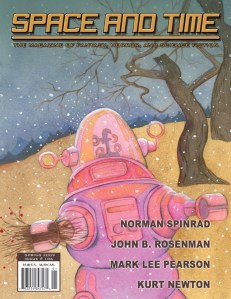
Space&Time2

VENTRELLA: Does having an agent make a difference to you?

SILVERMAN: No, not for short fiction. In fact, I would find it odd to receive a piece brokered by an agent. There’s simply nothing to negotiate with a magazine publisher – our payment offerings, the rights requested, they’re all pretty standard. I can’t remember every getting a piece that was submitted by someone’s agent, though many of our authors do have agents to represent their longer works.

VENTRELLA: What’s the best piece of advice (other than “learn to write better”) you can give an aspiring writer?

SILVERMAN: Don’t forget to send your work out. It does you little good to write a huge number of short stories only to let them pile up in a drawer because you can’t or won’t get around to sending them to a market for consideration.

Also, learn the business side of writing. Too many writers are so focused on the craft – which IS important – but they never bother to learn the rules of the trade. You need to know how to research a potential market, understand guidelines, adhere to those guidelines, read a contract and understand the rights you are signing away, things like that. There are resources all over the Web and in how-to books that can tell you how to manage the money-making side of your career as well as the creative aspects. You should be equally versed in both.

VENTRELLA: As a writer yourself, what are your long term goals and what are you doing to make them happen?

SILVERMAN: Long term, I would like to see my novel published. I’ve been shopping it around to agents and have gotten some lovely rejections. Oh, that’s another thing for aspiring writers to remember – you’re going to get rejections. A lot. And some more. So has pretty much every major author you’ve ever heard of. The key is how you handle it. You can’t take them personally…it is your work being rejected, not your baby, not you. Everyone rejects work for a huge number of reasons, most of which are not because you suck as a writer. This is something I have to remind myself of all the time, because it is easy to be stung by rejection, even if you have a thick leathery skin like me.

In the meantime, I’m continuing to submit my short fiction to a variety of markets and have been enjoying some success there. I currently have three pieces published or about to be published in three different anthologies this year, plus a couple more pending.

I need to set some time aside to do more writing and submitting, but between running the magazine, my “day” job, and family life, time is a factor. I need to push past that and get on the stick, though, especially when it comes to sending out the next round of queries on the book.

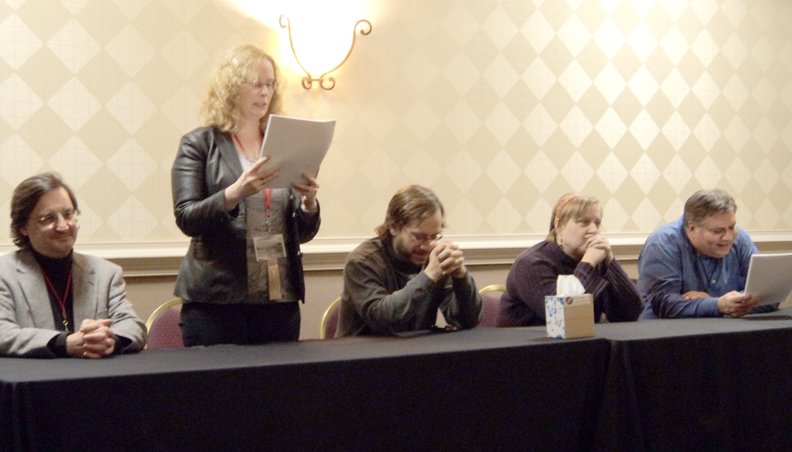
Me and Hildy at the Philcon 2010 convention