Interview with author Sahar Abdulaziz

MICHAEL A. VENTRELLA: I’m pleased today to be interviewing my good friend Sahar Abdulaziz!
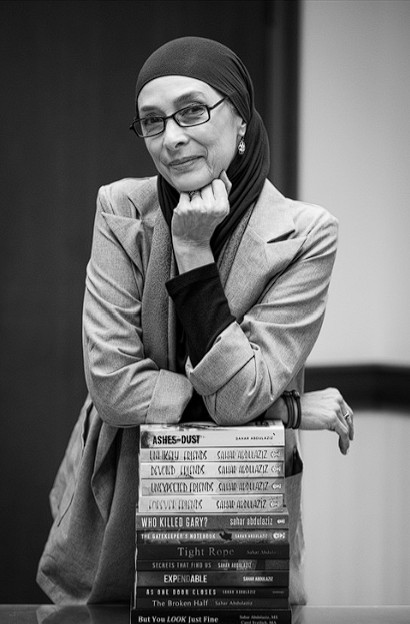
Suspense writer Sahar Abdulaziz is the author of seventeen books–including BUT YOU LOOK JUST FINE, THE BROKEN HALF, TIGHT ROPE, EXPENDABLE, UNLIKELY FRIENDS, ASHES, WHO KILLED GARY? and others. She specializes in writing psychological thrillers, suspenseful narratives, thought-provoking social commentary, and clever satire. However, there’s nothing that Sahar enjoys more than exercising her demonic proclivity for crafting intricate, multifaceted protagonists confronting formidable challenges. The more dysfunctional, the better.

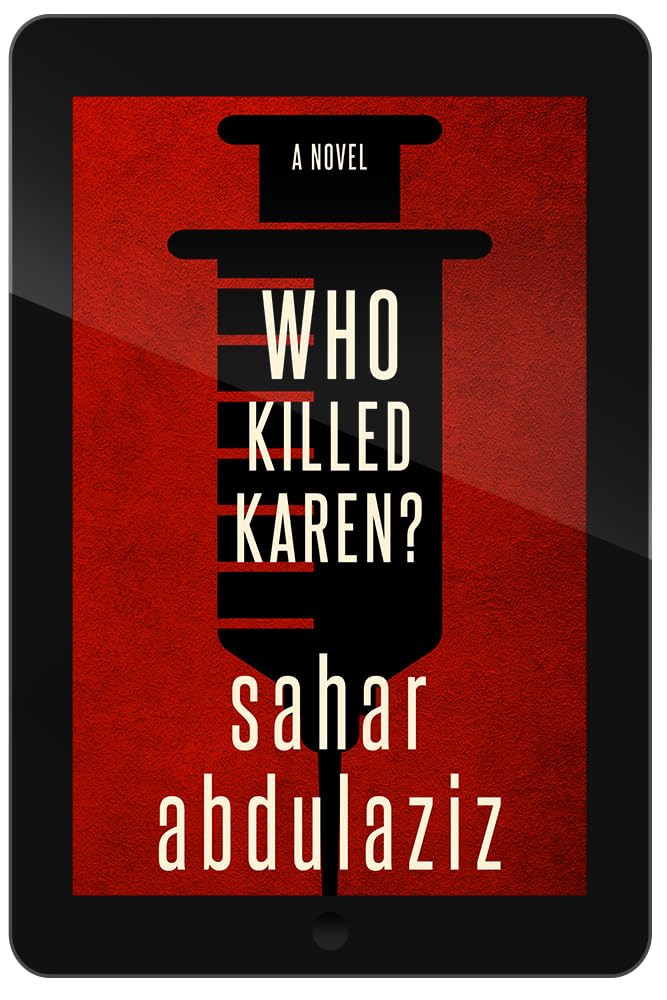
Let’s start by talking about your latest book, WHO KILLED KAREN? Tell us about the plot!

SAHAR ABDULAZIZ: WHO KILLED KAREN? is the second razor-sharp mystery in my Saber Squad series, where Grandville Luxury Apartments gains a new tenant—and another dead body. Kay W. Smith, a vicious book reviewer with a talent for tearing down even the best writers, has made more enemies than friends online and off. When her relentless critiques turn deadly, the quirky and loveable Saber Squad must jump in to unravel the mystery of her death before the killer strikes again. After all, karma doesn’t forget, and apparently, it’s got a hit list.

VENTRELLA: This is the second book in your “Saber Squad” series. How many do you think you will do?

ABDULAZIZ: Three books: Book 1: WHO KILLED GARY? Book 2: WHO KILLED KAREN? and Book 3: WHO KILLED KEVIN? I’m currently writing the third book, plotting yet another murder in Grandville while gently bringing closure to the series. 

VENTRELLA: Tell us how you chose the names for your dearly departed characters.
ABDULAZIZ: As you know, the online world and its memes made the names ‘Karen,’ ‘Gary,’ and ‘Kevin’ infamous. Being “a Karen” is often depicted as a specific type of personality that exhibits privileged behavior at the expense of others, typically targeting those who are minding their own business and simply trying to coexist in peace. However, the muse for my fictional Gary came from an honest, real Gary who, like his Karen counterparts, lived to make others’ lives miserable. This particular ‘Gary’ was predictably annoying, entitled, arrogant, a rule enforcer, but also the biggest rule breaker. He was a know-it-all who knew little, but wouldn’t hesitate to harass, hassle, report, or lecture anyone they felt had ‘broken the rules.’ This ‘Gary’ also made the time to report individuals, call the police, and write lengthy diatribes on the apartment complex’s website, outlining said infraction almost with psychotic glee. It was truly something to behold..

One day, after reading pages and pages of Gary’s lengthy carping posts about so-called tenant infringements—posts that included bylaws, local codes, quotes, and Bible passages that did not exist. He made them up. Full disclosure, I was sent these pages from someone, one of Gary’s many victims, who thought I’d find his musings hysterical, which I did. And that, I’m afraid, tells you all you need to know about my warped sense of humor. Anyway, after finishing, through laughing tears and a bad case of hiccups, I thought to myself, “I’m surprised nobody’s killed this guy.”

Because, you see, the thing is, we all know a Gary, a Karen, or a Kevin, not in name, but in persona. They are people we encounter daily, whether at work, on the bus or train, waiting in line at the supermarket, buying a cup of coffee, or in my character’s case, a neighbor in the same building. They get in our face, pointing their fingers with righteous indignation, believing the world operates by their rules, and their rules alone.

Now, let’s be clear: I said this in jest. I’m a writer; we do that… more often than I should probably admit here. However, that fleeting thought, once spoken aloud, was enough to spark the entire premise of my first mystery novel—a story I decided should unfold in my imaginary apartment complex called The Grandville Luxury Apartments—a place where the walls are thin, secrets run deep, and karma always gets the last word. 

VENTRELLA: Given the serious nature of most of your previous work, what made you move in this direction?
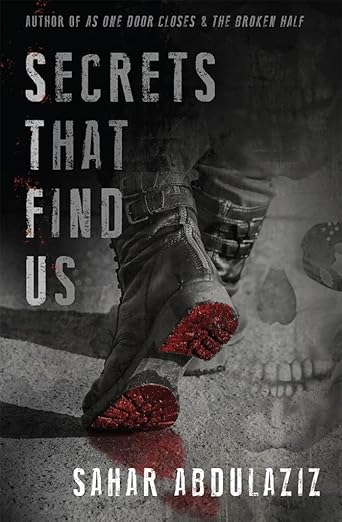
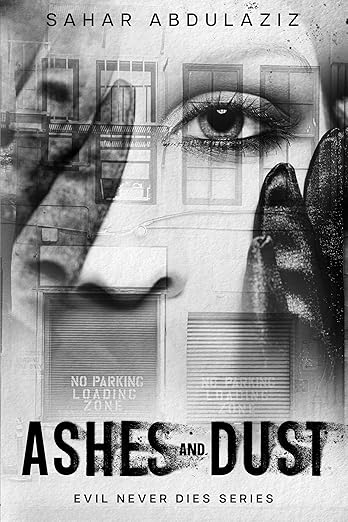
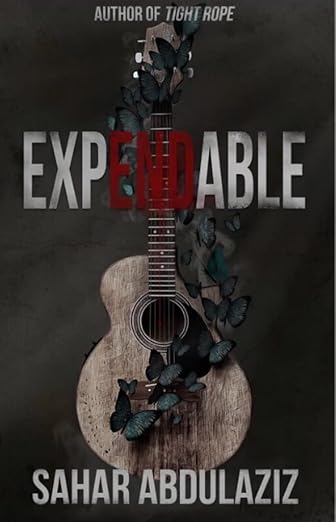
ABDULAZIZ: Great question. I have written many fictional novels that tackle complex topics. For example, my book, THE BROKEN HALF, is a raw, unflinching story of resilience, survival, and the high cost of reclaiming one’s life. AS ONE DOOR CLOSES—the legacy of generational child abuse, the trials of survivorship, and the difficult path toward healing and closure. SECRETS THAT FIND US—the deadly cost of loyalty, betrayal, and secrets too powerful to stay hidden. TIGHT ROPE: resilience, activism, and the high cost of speaking out. EXPENDABLE: the hidden horrors of an abusive marriage, and the fierce strength and bravery it takes to break free. ASHES & DUST: betrayal, sorrow, corruption, power, and how to survive in a rigged system.

There are more, but you get my point—heavy, heavy stuff. The messy, painful stuff I refuse as a writer to shy away from addressing, despite how uncomfortable it may make others. I use fictional suspense and thriller stories to weave these topics into my writing because writing fiction provides me more freedom to reveal truths. I don’t write to sensationalize violence. I write to expose malevolent, often lethal behaviors in the hope of bringing to light what predators, abusers, liars, and manipulators wish to keep locked away and in the dark. I use my writing platform to shed light on matters that are often hidden, misrepresented, misunderstood, or worse—ignored.

With that said, and while I will always tackle challenging subjects, I needed a break, or what I call a “palette cleanser,” not for my taste buds but for my brain, where I store all these characters and their dysfunctional stories. I also wanted to try a different approach—still unpacking challenging issues, such as entitlement, bullying, grief, addiction, friendships, love lost and found, and others— but through humor, because laughter is disarming. It allows us to look at ourselves with clear eyes while having the power to transcend pain and replace tears with joy.

VENTRELLA: Your previous series was also more light-hearted with an unusual main character who appears unlikable at first. Could you tell us a bit about that series?

ABDULAZIZ: Ah, you mean The Abernathy & Crane series: UNLIKELY FRIENDS, DEVOTED FRIENDS, UNEXPECTED FRIENDS, and FOREVER FRIENDS. Four novels that celebrate found family, fierce friendships, and the beautifully messy art of holding on when it’s time to let go. It also offers a heartwarming and humorous look into life’s most unexpected connections, from curmudgeonly beginnings to courageous goodbyes and all the humanly chaotic, cherished moments in between. 

My main character is Irwin Abernathy. He’s an old-school librarian who prefers books to people, until a stubborn, free-spirited young girl crashes into his life and refuses to leave. Irwin despises change and wants solitude. Harper needs change and wants a friend. What follows is a charming, oddball friendship that proves even the most unlikely connections can change everything.

VENTRELLA: What did you do to make the reader identify with him?

ABDULAZIZ: Through honesty. I never rush or bypass the emotions my characters feel; instead, I pay tribute to them.

I portrayed Irwin, a man grieving and afraid to let anyone get close to him again for fear that they, too, will be taken away, as authentically and as organically as I could envision, warts and all. I also conveyed through Harper’s eyes and heart how she would see and understand him. Lastly, I tried to write each story about the human connection—loyalty, unlikely heroes, and the chaos of friendship in a perfectly imperfect world, with room enough to let my eccentric, hilariously funny characters take care of the rest.

VENTRELLA: How has your educational and professional background assisted in writing your books?  (Do you think, for instance, it has helped you in creating your characters’ emotional backstories?)

ABDULAZIZ: Absolutely. I hold a Bachelor’s in Psychology and Education, as well as a Master of Science degree in Health, Wellness, and Administration. I also worked for many years as a domestic violence and sexual assault counselor/advocate. I firmly believe that my education and past experiences working with diverse communities and individuals have shaped my writing. What a waste if they hadn’t. 

VENTRELLA: How have you found your publishers? And what advice might you have for new authors trying to get their book published?
ABDULAZIZ: Writing is my passion and career, while publishing is a business. With that said, I have met incredibly kind and thoughtful publishers whose love for books and commitment to producing a fabulous product is as strong as my appetite for writing for them.

I have also crossed paths with less desirable publishers and have made it a practice to steer clear of them.

I could bore your reading audience with a list of advice on what to do and not do when it comes to publishers. Still, the biggest takeaway I can share is this: Never underestimate the impact of your story but practice due diligence. Please don’t rush into publication with the first publisher willing to look at it. You worked hard to create that book, and finding a home for it that will cherish, promote, and protect your story is as important as seeing your name on the cover. Choose wisely. Pour yourself into your story, but always remember that publishing is not a favor, but a business. Make sound choices.

VENTRELLA: Do you think it’s important for writers to avoid controversial topics on social media?

ABDULAZIZ: When you say controversial, do you mean take a stand against things like oppression, racism, fascism, bigotry, sexism, book banning, and hate? Um, no. I don’t believe in avoidance. Avoidance is nothing more than comfortable cowardice. Pretending not to see doesn’t make the hate disappear. In fact, it provides room for growth and expansion, as we can see happening now.

Wasn’t it George Orwell who said, “The most effective way to destroy people is to deny and obliterate their own understanding of their history.”

History, based on fact rather than conjecture and outright lies, is a valuable lesson. If we as writers avoid controversy, calling out the oppression, then aren’t we colluding… and helping to create the very conduit to our collective self-destruction?

Fun fact: The written word is under attack. Truth is under siege. Writers are being targeted. Books are being banned. People are being ‘disappeared.’ How do we ignore that? How do we look the other way, pretending we don’t see?
So no… if you’re a writer, be a writer. Take a damn stand. Use your words for change, or stay quiet, move out of the way, and let the rest of us do our job.

VENTRELLA: How much of writing is innate? In other words, do you believe some people are born storytellers who just need to learn technique? Or can anyone become a good writer?

ABDULAZIZ: Writing is a skill, a craft that can be taught and practiced, which means there is always an opportunity for improvement.

For many, writing is also a calling. For natural storytellers, it’s a way to bring their story to life on paper.  Does that mean all storytellers are natural writers? No. However, all writers are natural storytellers, and the stories they write become increasingly adept the more they are willing to put in the effort to hone their craft.

To answer your question, most people, if they are willing to put in the work, can become good writers. However, there are those among us who are innately great writers, and they serve as inspiration and aspiration. 

VENTRELLA: Writers are told to “write what you know.”  What does this mean to you? 

ABDULAZIZ: Not much.

Because it’s disingenuous, it’s one of those catchphrases that confuse new writers until it becomes clear that it means writing about what you have felt and experienced, even if it’s secondhand through observation, and using those experiences to create layered and complex new worlds and characters. However, it also means being willing to seek out what you don’t know and learn through research and by asking the right people the right questions. 

For example, when writing my suspense/thrillers, I have incorporated many dark sociopathic personalities between my pages. To get inside their heads, I have had to do the legwork—hours of research, investigation, watching documentaries, asking questions of those who work in the field, and reading—lots and lots of reading.

Not knowing something doesn’t automatically prevent me from writing about it, but it does make me, as a writer, responsible for learning enough information about the sociopathic personality and how they navigate the world so I can accurately portray this personality disorder and their dysfunctional, malevolent behavior. 

The same can be said for every character I write. Irwin Abernathy in UNLIKELY FRIENDS is a librarian. I’ve never been a librarian. My character, Sydney Hanes, in ASHES & DUST is a vigilante. Nope—haven’t dabbled in that either. Terri Ann Stone in SECRETS THAT FIND US is dead. Last checked, I still have a pulse, so…
VENTRELLA: What makes your fiction unique? In other words, what is it about your stories that makes them stand out against all the other similar stories out there?

ABDULAZIZ: I want to think it’s me. That I make my fictional stories unique because they are uniquely my stories to tell, and the characters of each different story have chosen me to be the catalyst of their telling. I feel this way for several reasons, but most importantly, because the characters in my books feel as real to me as living, breathing people do. They aren’t tropes; they are complex, multifaceted personalities with backstories, histories, dreams deferred, hopes crushed, loves lost, and promises broken. They are the people we meet, hope to meet, wish never to meet, or have met but didn’t appreciate, letting them slip away. They are those we fall in love with, lust with, love to hate, and hate to love. They are those we enjoyed, those we lost, and those we wish we had never known. They are the admired, the venerated, the distrusted, the feared. They are all of this and more, and the paper is their stage.

VENTRELLA: What is your writing process? 

ABDULAZIZ: I sit down and write. Some days I write a little. On other days, I write a lot. Some of it is good, but most of it sucks. Once in a while, I astonish myself with something great. At other times, I find myself staring at the computer screen, wondering if my time would be better spent watching someone else break in a new T-shirt. The bottom line is this: I show up. Not because there’s some unwritten rule that says I have to write every day to be successful, not because I’ll get into trouble if I don’t, not because of a deadline, but because I know that if I don’t invest in myself and my craft, who will?

VENTRELLA: Do you outline heavily or just jump right in, for instance?

ABDULAZIZ: I don’t write outlines. I have nothing against outlines; in truth, I think they are brilliant and would make my book writing go much smoother if I did. However, I can’t pull it off. I’ve tried everything—index cards, a board, notebooks, sticky notes, computer programs—you name it. No success. My creative brain doesn’t work that way. 

I am what is called a pantser. I jump in and write without knowing where I’m going, how I’ll get there, or who I might meet along the way. I keep the story, plot, and characters in my head, with little physical notes other than the occasional back of a napkin, an envelope, or a bill, where I jot down an idea I need to remind myself about. I also send myself text messages and emails.

I research as I write. I have been known to stop in the middle of a chapter and read a half-dozen novels about a topic to get the single sentence my character says right.

Naming my characters can take me weeks. If the name doesn’t feel right, I can’t ‘see’ them, and in order for me to write them, I need them to communicate with me. At other times, I know the name of the character before the title of the book. Go figure.

If I find I have written myself into a corner and don’t know where to take the plot, I empty the dishwasher. I fold laundry, bake bread, call a friend, or take a walk. I walk a lot because I seem to be attracted to corners.

If everything else fails, I contemplate the problem as I drift off to sleep, trusting that my subconscious will step in to provide the solution. It often does but I look like crap the next day…bags under the eyes, sallow skin—some scary stuff.

I highly do not recommend my manic writing methods. I do, however, strongly endorse finding what works for you and honoring it. There’s no right or wrong, as long as you show up for you.

VENTRELLA: What do you do to avoid “info dumps”?

ABDULAZIZ: I don’t find info dumps an issue when I write. Timelines are what drive me crazy.

However, when I need to convey information pertinent to the character, plot, or story, I interweave those facts with either the character’s actions, through the reflection of others watching, or shared conversations.

Dialogue is an excellent tool, as long as you don’t info dump in it. Don’t do that. It’s one thing for a character to list off a textbook of facts about a found dinosaur bone (boring, I have Google, too), and another for a character to lift it in the air, squinting and coming to the realization that in their hands they hold a rare find—one that will secure their position in the paleontology department at their university. It’s all in the delivery.

VENTRELLA: In this rapidly changing market, with the publishing industry evolving daily, how important is the small press?

ABDULAZIZ: Small presses serve as the first line of defense. They welcome writers overlooked by the magical gatekeepers of the Big 5. They are often willing to publish controversial books that no one else would dare to release. They are eager to introduce new ideas and take risks for the love of creativity, rather than solely for marketability. Yes, they are still in the business to make money, but they also provide a haven for many creatives whose books need a home.

VENTRELLA: Who do you like to read? 

ABDULAZIZ: I’m a huge reader of various genres. I prefer books with intricate plots, plenty of brilliant quirky characters, fearless prose, and well-paced dialogue.

I also enjoy reading non-fiction. I can dive into a novel about the history of pharmaceuticals like it’s nobody’s business, then read a cookbook, followed by a whodunit. As a kid, I read the backs of cereal boxes, comic books, and the Nancy Drew series. As a teen, I thought it was a good idea to do a book report on THE HAPPY HOOKER. And no, it turned out not to be a good idea.

VENTRELLA: Who are your favorite authors?

ABDULAZIZ: I enjoy the works of Agatha Christie, Sir Arthur Conan Doyle, Anthony Horowitz, Richard Osman, Octavia E. Butler, Matt Haig, Kirsten Miller, Erik Larson, Isabel Wilkerson, Fredrik Backman, Camille Pagán, and Malcolm Gladwell.

VENTRELLA: With a time machine and a universal translator, who would you invite to your ultimate dinner party?

ABDULAZIZ: Ha! Like I, of all people, would throw a dinner party!

Now, Michael, if you had asked me who I would have invited to an escape room on a deserted island with a killer on the loose, that’s easy!

Hercule Perot, Miss Marple, Elizabeth Best (From Richard Osman’s The Tuesday Murder Club), and Sherlock Holmes. Dr. Watson is also invited.

Writing groups are mostly worthless

Yeah, I know—many people will tell you that you should always find a writing group to help you with your work. That’s pretty standard advice.

Back when I had only one book out and was working on the second, I went to a writing group at a local Barnes & Nobles. Everyone gathered around and read from their works in progress, soliciting comments from the other writers. One fellow read his work and then people went around the room and said how much they hated it and how it would never be published in its current form. When it was my turn, I talked about how much I liked it, because it was really good. (What the people there didn’t know, but I did, was that the person reading the story was award-winning author Michael Flynn, who had numerous novels out already which you could get at that very same Barnes & Nobles. And I really did like what he had written; I wasn’t sucking up to him. Now, when he gave me comments about my story, I listened.)

The point is that a writing group is only as good as the people in it. If you write cozy mysteries and everyone in your writing group writes gothic horror, you’re probably not going to get very good feedback from them.

The mistake many authors make is in listening to the wrong people. You should pay attention to comments (especially from editors), but ultimately, it’s your story. Don’t let these people tell you what it should be.

For one of my novels, I asked for beta readers. I made sure these were people who had not only read my previous work but liked the genre. I uploaded a chapter a week or so and had them give comments. I’d ask them what they think would happen next, which allowed me to know if I had given away too much too early or if I had not given away enough. I asked what they thought certain characters would do. And sometimes they even had ideas better than my own. It was quite useful. (Also, it gave me deadlines to get the thing done, because I knew people were waiting to read the next chapter.)

But their advice and comments often contradicted each other. I had to decide which to pay attention to and which to ignore.

Too many new authors get comments and think they have to do what is suggested. No! You need to take into consideration who made the comment, what kind of story they like, what their experience is, and whether what they suggested is just bullshit you can ignore.

And that is why critique groups and writing groups can be bad.

Get a bunch of friends together and they won’t agree on what the best movies are, what’s best on a pizza, whose music is best—anything. That’s normal. That’s what you’ll get with any random sampling. We don’t all agree, and that’s what makes life interesting.

That’s not what you want.

No great literature has been written by committee. Have you ever watched the credits of an awful movie and notice there are twelve writers credited? With a committee, things get watered down so that everyone is willing to accept the compromise, but no one is thrilled about the final product. Well, you want a story people will be thrilled about! Don’t let the critics write the story for you.

If you can find the right people who will basically act as amateur developmental editors, giving you reasonable and productive criticism, then absolutely take advantage of it. But that is hard to come by, and I’ve seen too many authors go to critique groups and then try to take everyone’s advice and end up with a crappy end result.

Interview with Larry Hodges

MICHAEL A. VENTRELLA:  I’m pleased to be interviewing author Larry Hodges today. His web page is here. Larry, tell us about your latest work!

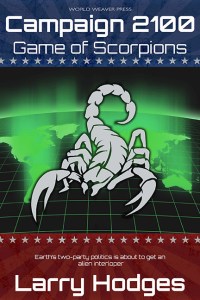
LARRY HODGES: My new novel, CAMPAIGN 2100: GAME OF SCORPIONS (from World Weaver Press), dramatizes and satirizes politics in a new sub-genre, campaign science fiction. larry1_smThe novel covers the election for president of Earth in the year 2100, when the world has adopted the American two-party electoral system. A father decides to buck the system and run for president of Earth, taking on his own daughter with a third-party moderate challenge – with an incredulous alien ambassador along for the ride.
Presidential politics has dominated the news for years, and few stories are more compelling than a bare-knuckle, fight-to-the-finish political campaign. And yet, where are the SF stories that cover this? CAMPAIGN 2100 is West Wing in the 22nd Century. The underlying theme of the novel is moderation in politics; some will read it as a Moderate Manifesto.

VENTRELLA: How did you go about finding a publisher?

HODGES: One of the toughest decisions for a new author is whether to try and get an agent, or go directly to publishers. I decided to try both, and sent numerous queries. For agents, I mostly used http://www.agentquery.com. For publishers, I mostly used http://www.ralan.com. It took three years – three years of checking email every three minutes – but then, one day, I received a note from a publisher that they really liked the novel – only . . . [and there followed a list of things that they’d like to see rewritten]. I did the rewrite. With the publisher’s blessing, I also had the novel critiqued at The Never-Ending Odyssey (an annual writer’s workshop for graduates of Odyssey), and did more rewriting from that. I sent the rewrite to the publisher, and from there on I checked email every three seconds for many months. And then came the response, which I printed out and put on my bulletin board: “I’m pleased to offer you publication with World Weaver Press for the novel CAMPAIGN 2100: GAME OF SCORPIONS…”

VENTRELLA: How did you first become interested in writing?

HODGES: I’ve been reading science fiction & fantasy since elementary school. It was inevitable that at some point I’d start writing it. My first story was “The Snowflake,” written circa seventh grade, which featured a guy read about a snowflake warning in the newspaper, and rants about how stupid that is, that they meant a snow warning. Then he sees the same snowflake warning on the TV, on the radio, from friends, and he keeps sarcastically correcting them. It ends with a giant snowflake falling onto and demolishing his house.

Surprisingly, it wasn’t science fiction that turned me into a professional writer – it was table tennis. Yes, ping-pong. In high school, when I wasn’t reading SF, I was training in this Olympic sport, and became first a top player, and then a top coach. (I’m in the USA Table Tennis Hall of Fame.)SpiritofPong-cover-med I began writing coaching articles, and then books on table tennis. I was hired as director and a coach for table tennis at the Olympic Training Center in Colorado Springs, and between training sessions, I began to write SF. I now have over 1600 published articles and eleven books – seven table tennis, five SF/fantasy, which adds up to twelve since one is a table tennis fantasy novel.
VENTRELLA: How do you make your protagonist a believable character?

HODGES: CAMPAIGN 2100 really has four main characters – an ensemble cast. I decided that each would get their own introductory chapter. Each had to have some major issue to deal with that affected the plot, while developing them as memorable characters.

• Toby, the de facto “main character” (since he’s the one running for president of Earth), is introduced in chapter one, which is five years before the rest of the novel. President Corbin Dubois is being sworn in as the new president of Earth – and Toby ran his campaign, assisted by daughter Lara. Only he now realizes he’s made a terrible mistake, thinking, What have I done? He’s supposed to stay on as Corbin’s political director, but decides to resign. Corbin blackmails him, threatening his daughter if he leaves, and Toby ends up staying – but leaves us with the cliffhanging thought, What can I do to fix this? His character is developed as he faces a huge conflict – his desire to fix his mistake in making Dubois president, while not destroying his daughter’s future. The novel really takes off when he finally goes to war with his own daughter! He is a gold mine of conflict – inner conflict over his past support of Dubois, his battle with his daughter, and various campaign issues; and external conflict as he runs for president against Dubois.

• Twenty-two, the alien ambassador, is introduced as she’s diving into Earth’s atmosphere on her way to landing at the seat of world government. She’s excited, wondering about this new world and its politics as she naively converses with her overly adoring ship’s computer. We learn a terrible secret about her, which the reader knows but no one in the story will learn of until the very end. And then we see the alien point of view during first contact – and how both sides react when it turns into a disaster.

• Bruce, who also helped Toby run the Dubois campaign (but quit early on when he realized it was a mistake), is a professional table tennis player. He’s introduced as he’s playing for the U.S. championship. His great intelligence and sarcasm is highlighted throughout, with him simultaneously carrying on four conversations (with his opponent, the umpire, people in the crowd, and his thought computer), and then, right when he’s about to win . . . he makes a big decision. He’s such a flamboyant character that he’s easy to write, but he can be irritating, and so it’s a high-wire act making sure he goes the Han Solo rather than the Jar Jar Binks route.

• Feodora, the tiny Russian general who is running for president, is built up in advance by hints about her almost super-hero status. When she’s introduced, she’s stuck in bureaucratic meetings, representing Russian in talks with China, Japan, Korea, and others. Her character is built up via the contrast between her somewhat whimsical and sarcastic comments there, and her contrasting thoughts. Campaign 2100 Front Final-sm(She’s practically a superhero, and so throughout the novel she is showcased doing over-the-top things.) We get a flashback history lesson on how she shot and killed the Russian lead general, took command of Russian troops, and led them to a surprising victory. Feodora originally wasn’t intended to be a major character, but when she first appeared halfway through the book in the first draft, she pretty much took over, dominating the story whenever she appeared. At the behest of critiquers, I rewrote the story so she could appear sooner. I also had to send her on various journeys to get her off the stage so the other characters could get attention!
VENTRELLA: Which of your characters was the hardest to write and why?

HODGES: The toughest was probably Toby, simply because I had to be careful that he wasn’t overshadowed by the interesting and flamboyant Twenty-two, Bruce, and Feodora. He was the heart of the story, as he struggled with his inner demons over his guilt in making Dubois president and taking on his own daughter, and his desire to make up for this by running for president. The other three were very easy to write, once I had their characters down – the naïve goody-goody with a secret alien; the brilliant in-your-face sarcastic Bruce; and the over-the-top almost superhero and yet soft-spoken Russian general Feodora. One key thing about writing all four of them is that I considered them all different facets of myself (or facets I wanted to be), and so would just become that part of me when I wrote that character.

VENTRELLA: Do you think readers want to read about “believable” characters or do they really want characters that are “larger than life” in some way?

HODGES: It’s a balancing act, but for the type of story I was writing, I needed larger than life characters, such as Feodora and Bruce. But they were balanced off by the far more believable Toby, who comes off as a more regular guy in an extraordinary and highly public position.

VENTRELLA: What makes your fiction unique? In other words, what is it about your stories that makes them stand out against all the other similar stories out there?

HODGES: I thought long and hard about what I wanted to write about, balancing my strengths and interests versus what readers might want to read. I think all new writers need to do this. I decided that I wanted to write at least three different novels, each one unique – and then I’d decide which of these sub-genres to focus on:

A political satire – CAMPAIGN 2100: GAME OF SCORPIONS. What was unique about this that it created a whole new SF subgenre – campaign science fiction. I asked myself the simple question (also noted above): “Presidential politics has dominated the news for years. Few stories are more compelling than a bare-knuckle, fight-to-the-finish political campaign. And yet, where are the SF stories that cover this?”

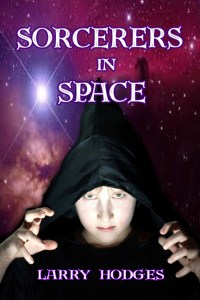
A humorous fantasy – SORCERORS IN SPACE. What was unique about this? It was potentially a new series that covered historical events but replaced the main characters with sorcerers. In this case, the novel covered the U.S.–Soviet space race of the 1960s, but with sorcerers instead of astronauts/cosmonauts. Maybe I could be the next Terry Pratchett!

A table tennis fantasy – THE SPIRIT OF PONG. What was unique about this? Well . . . how many table tennis fantasy novels are there?

VENTRELLA:  Hey, come on. My novel BLOODSUCKERS: A VAMPIRE RUNS FOR PRESIDENT is also “campaign science fiction.”  (INSERT SMILEY FACE)

What is your writing process? Do you outline heavily or just jump right in, for instance?

HODGES: This is another thing that new writers struggle with. When I first decided to write Campaign 2100, I spent a huge amount of time outlining it in great detail. Sorcerer-in-Space-cover-medThis is now some top writers operate, such as Connie Willis, who is famous for doing detailed outlines of every chapter – and then writing the novel out of sequence, writing whichever chapter she feels like writing that day. And she’s won more major awards than any other SF writing – eleven Hugos and seven Nebulas. The other extreme would be a writer like Stephen King, who only has a vague idea what he’s writing about when he starts, and often writes a huge amount before he figures out what the story is about. Another example might be Isaac Asimov, who often started with a general idea of what the story would be, and with an ending, and then wrote to that end.
So I tried the Willis method, and began to write. But it didn’t work for me. I kept coming up with creative ideas that I had to ignore, since I had already outlined what was supposed to happen, and if I changed things, then subsequent chapters wouldn’t work. And so I tried to squelch my own creativity! The result for me was rather drab writing, and it was also pretty boring to write. I finally put aside the detailed notes, and instead did a very general outline of each chapter, about one or two sentences each, and went from there – along with an ending I wanted to work toward. Often chapters would go in directions I hadn’t foreseen, and I’d just go with it – but always I’d manage to bring it back on course toward the planned ending. This method worked for me, and I’ve since adopted this.

VENTRELLA: Writers are told to “write what you know.” What does this mean to you?

HODGES: Some people mistakenly think this means write what you know now. What it means to me is two things: 1) write about stuff you know and enjoy, because you can write well about things you know, and if you enjoy it, the writing is fun; 2) research the stuff you don’t know, either because you need it in the story, or because you want to learn about something and then write about it. I’m an amateur presidential historian – I can name all 44 presidents, their term of office, and all sorts of trivia on them. I know a lot about presidential politics, and so when I wrote Campaign 2100, I knew what I was writing about – other than that thing that it was 84 years in the future, and took place in settings all over the world that I knew nothing about, with all sorts of unexpected topics coming up. And so I became an expert on such diverse topics as Tanzania; the South China Sea; Antarctica; blue whales and narwhals; wheat production; submarine bases; Brodmann Area 10, which is the moral judgment center in the brain; the United Nations; and the Hindu caste system.

VENTRELLA: What do you do to avoid “info dumps”?

HODGES: That’s a tricky subject, as it’s so easy to fall into the “As you know, Bob” syndrome, since that’s the easiest way to let the reader know what the characters already know. For Campaign 2100, it was a serious problem, in that readers needed to learn about the history – our future – as well as the political system. And so I had First Contact, bringing in the alien ambassador Twenty-two. Readers learn about Earth’s history (our future) and the political world of 2100 at the same time as the alien – and if I wrote it well, then readers will be as incredulous as Twenty-two!

VENTRELLA: What advice would you give to a starting writer that you wish someone had given to you?

HODGES: Learn the rules guidelines for writing before breaking them. There are few rules, just guidelines that range from strongly recommended to general ones, and you should understand them all – and then, when you have reason to, break them mercilessly. It’s okay to explore breaking these rules, but always have a specific reason for doing so, or your work will likely come off as amateurish. Writing is both art and craft, and you need to do both.

VENTRELLA: Who do you like to read? Who are your favorite authors?

HODGES: I mostly read science fiction & fantasy and history. My favorite authors for many years were the three most famous grandmasters – Isaac Asimov, Arthur C. Clarke, and Robert Heinlein. I read their complete works by the time I finished middle school. I periodically go back and reread some of their works; last year I reread the Foundation series from Asimov. In recent years my favorite writers have been Robert J. Sawyer and Jack McDevitt. Sawyer consistently brings us thought-provoking SF on a wide range of topics, such as his recent QUANTUM NIGHT. I read much of McDevitt, but my favorites are the Alex Benedict series, where we have a guy who researches ancient relics – but the relics are things from our future! Very interesting stuff. And yet, I’ve been debating whether to broaden my reading to some of the classics. I was on a panel with Sawyer at the recent Lunacon SF convention, and he recommended just that. After reading QUANTUM NIGHT, I’m now 60% through Stephen King’s 11/23/63, which is fascinating.

VENTRELLA: What projects are you working on now? What can we expect next from you?

HODGES: I wrote 17,000 words of the sequel to Campaign 2100 (which was 124,000 words long), but I’ve put it on hold to see how the first volume sells. If it does well, expect more futuristic campaign politics as our moderate extremists move into space, running the campaigns (or running for office themselves) in local star groups! I’ve also outlined sequels to Sorcerers in Space and The Spirit of Pong, and also have plans for several other potential novels.

Interview with Kerry Gans

MICHAEL A. VENTRELLA: I am pleased to be interviewing good friend Kerry Gans today (We’ve both studied under the Master Jonathan Maberry). Kerry is the author of several short stories, a family history book, and the middle grade novel THE WITCH OF ZAL. She is a chocoholic theater geek, believes libraries are magic, and considers Chincoteague Island her perfect writing retreat. When not writing, she haunts cemeteries and dusty archives in search of long-dead ancestors and pursues her most important work-in-progress, her daughter.KerrySmall

Tell us about your newest book!

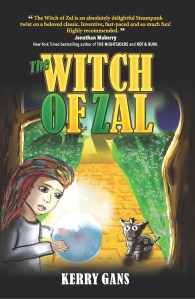
KERRY GANS: THE WITCH OF ZAL is a re-envisioning of The Wizard of Oz. It’s a genre twist, in that Dorveday is from a completely urbanized sci-fi world, which makes rural, magical Oz quite the culture shock. 12-year-old Dorveday runs away from home to protect her robotic dog from the oppressive Ministry, and she accidentally lands in Oz. A Victorian gentleman Scarecrow, a clockwork Tin Man, a literally yellow-streaked Lion, and an escaped slave boy help Dorveday to find her way home to Zal. Together they battle zombicorns, killer butterflies, and an alchemist Wicked Witch while overturning society as Oz knew it. But will Dorveday return home in time to save her mother from Ministry threats—and can one girl shake up Zal the way she did in Oz?

VENTRELLA: What made you decide to write an Oz book?

GANS: I never set out to write this book. The book started out as a homework assignment. Jonathan Maberry asked us to take the Dorothy meets the Scarecrow scene from The Wizard of Oz and rewrite it in a different genre. I made Dorothy from a science-fiction world, so rural Oz would be completely alien to her. I had so much fun writing this scene, I decided to write the entire book!

VENTRELLA: What is the main difference in writing a middle grade book and an adult book?

GANS: In a middle grade book like THE WITCH OF ZAL, there are a few guidelines (all of which can have exceptions, of course). No sex. No falling in romantic love. No swear words. Make sure the vocabulary fits the age group. Most important, the kid has to be the hero, the one who solves the problem in the end.

While I do think you can tackle any topic you want in a middle grade book (even difficult topics like abuse and death), there is a certain sensitivity you need to bring with you. Perhaps certain scenes happen off-stage that in an adult book you would see. Perhaps the language you choose is not as harsh or as stark as you might use in an adult book. So while I would never tell a writer to avoid hard topics in middle grade, be aware that if you want to get it published you probably can’t handle the topic as baldly as you would with an adult book.

VENTRELLA: Tell us about the publishing decisions made.  

GANS: I tried to get an agent for Zal, but no one showed interest. This was quite soon after the movie Oz The Great and Powerful had come out and didn’t meet expectations, so I think people were not interested in another Oz offering. Jonathan Maberry suggested I send it to a small press that was looking to start a middle grade fantasy line. Turns out that Charles Day, the publisher at Evil Jester Press, is crazy for Oz stuff and really believed in the book. So I got my first book contract with no agent—a scenario I had never envisioned. But it pays to keep your mind open and never get so tunnel-visioned on one way of publishing that you miss opportunities that come your way from unexpected sources.

Once I was on board at Evil Jester, I did book edits (several rounds) with the editor. We also needed a new title because my working title didn’t work for the market. My publisher is also an illustrator, so he did the cover art for the book. We went through multiple rounds of cover art until we settled on the one we have. Working with a small press, I had a lot more input throughout the entire process than I would have with a large traditional press.

VENTRELLA: Why did you decide to go that route? Any regrets? 

GANS: I wanted my first book to be with a press—I did not want to self-publish. I wanted to go through this entire publishing/marketing process with someone else, someone who would have my back and who could brainstorm ideas with me. In many ways, a small press is the best of both worlds, in that the author often has more control over the final product (such as cover art), while having a larger reach than they could get by themselves.

I wouldn’t say I have regrets—the people at Evil Jester are great and so supportive. I do have lessons I have learned, though. The biggest one is that while a small press gives you the best of both worlds, a small POD (print on demand) press is often trapped between the worlds of self-publishing and traditional publishing. I have found in trying to get the word out that I can’t capitalize on many self-publishing marketing strategies because I don’t have the ability to control pricing and other variables, yet because we are POD I am not eligible for many of the traditional marketing avenues, either. If your small publisher does a traditional print-run, most of those closed doors open.WitchOfZal Cover

I would never discourage someone from going the POD route—I feel it makes the most sense financially and environmentally—but be prepared to be a little more creative with your marketing. A huge self-publishing support network has grown up to serve that community, but there is not a similar system for POD small publishers. I think there is a need for it, and it may yet arise.

VENTRELLA: What is your writing process?  Do you outline heavily or just jump right in, for instance?

GANS: My writing process is constantly evolving. I’m not a huge plotter—I usually know the beginning and the end and a few scenes in between. I used to write everything straight onto the computer, but now I’m incorporating writing longhand again. I’ve found that when I write longhand, what I write has a vastly different feel and depth than what I write straight to the screen. I also find that I get “attached” to the words on the screen—I have trouble thinking outside what is already there. I don’t have that problem with handwritten pages—I can cross out, draw arrows, have notes in the margin. It frees something in my revision brain.

So my current process looks something like this: 1) a short sketch of what I know about plot and character, 2) perhaps a typed up “first draft” that acts as a fleshed-out outline and lets me get to know my characters, 3) using that as a guide, write the whole thing longhand, 4) type it in fresh from the longhand manuscript. I haven’t actually written a book from scratch since I re-incorporated my longhand writing, so I’m not certain this is the way it will work. But that’s my plan.

VENTRELLA: What do you do to avoid “info dumps”?

GANS: I write a really bad first draft, then go back and cut mercilessly. If the reader doesn’t need to know that info at that moment, then it can go. And since the first draft is complete, I can see where the information I’m cutting works better, where it actually belongs—or even if it’s not needed at all.

VENTRELLA: Do you think it is important to start by trying to sell short stories or should a beginning author jump right in with a novel?

GANS: I think it depends on the author. Writing short stories is a completely different skill set than writing a novel. Some authors are more naturally attuned to the short story skills, others to the novel skills. I will say that even if you are focused on being a novelist, gaining that short story skill set is vital. It helps sharpen your craft, and we are seeing that writing short stories using your characters and your world between novels is a great way to keep your audience rabid while they wait for your next book. Writing and publishing short stories as a stepping stone to getting a first novel published, however, is no sure-fire path to success. A few stories in high-quality publications is never a bad thing, but agents won’t take you on the basis of those stories alone—they need to know you can write the novel you’ve pitched. Bottom line, if you love to write short stories, write them, but if your heart is in the long form, follow it. There is no single “right” path to publishing success.

VENTRELLA: What’s your opinion on self-publishing?

GANS: I have no problem with self-publishing—in fact, my genealogy book is self-published. There is absolutely a place for self-publishing and it fills the voracious appetites of the readers. There is some very good self-published literature. However, there is undoubtedly a large amount of poorly written self-published work out there, which tarnishes the self-publishing “brand” for everyone. Some people hypothesize that eventually a system will rise to help readers separate the professional-level work from the first-draft level work. Amazon’s warning labels for error-riddled books may be the first step. Ironically, we may see the rise of gatekeepers on the very platforms designed to help us escape the gatekeepers.

VENTRELLA: What sort of advice would you give an un-agented author with a manuscript?

 GANS: In this day and age, there are a lot of publishing paths available. The first thing I would tell them to do is get it professionally edited—get themanuscript into top-tier condition. The second thing to do is decide what they really want from the publishing experience. Depending on their goals, they can then decide whether they want to pursue self-publishing, traditional publishing, or something in-between. But whatever road they take, make sure they put out a professional-level product.

VENTRELLA: What advice would you give to a starting writer that you wish someone had given to you?

GANS: I did get this advice when I was a novice writer, but I wish I had gotten it earlier because I would have gotten started on my career sooner.

Jonathan Maberry once told a group of us that if we were serious about wanting to be professional writers, we had to start calling ourselves writers—even if we had a day job where we did something else. For instance, we would answer, “What do you do?” with “I’m a writer and a video editor.” Once we start saying it aloud, once we own that part of ourselves, many things start to change.

Once I started following that advice, my writing career advanced. When you openly claim your writing, you look at it in a different way. It’s not a little hobby you feel you have to hide—it’s a part of you that you are proud to claim. You view yourself through a different lens, too, because you’re not denying a part of who you are anymore. You gain confidence in that. You meet others who also identify as writers. Most of all, by saying it out loud, you’re giving yourself permission to make writing a priority in your life.

VENTRELLA: What projects are you working on now?  What can we expect next from you?

GANS: I have 2 books in active revision and another on the revision back-burner. The book closest to being ready is The Curse of the Pharaoh’s Stone, which is a middle grade historical adventure. Set in 1922 Philadelphia, a 12-year-old boy tries to break the curse he believes he placed on his family. While trying to decipher the Egyptian artifact he thinks powers the curse, he places his family in very real danger from a man who would kill to possess the artifact the boy guards.

I’m deep into revisions of a Young Adult sci-fi novel, Veritas. In this book, a 16-year-old girl who has been told all her life she is worthless discovers that she controls the greatest power in the universe. But is that enough to stop a war and gain her father’s love?

My back-burner book has been out on submission to agents, but early feedback leads me to believe it’s not quite ready, so I’ll be looking at it again before I send it out anymore. The Oracle of Delphi, Kansas is a YA contemporary fantasy, where a 16-year-old daughter of Apollo is torn between her human side and her godly side. When her half-god boyfriend threatens the entire town with destruction, she must either stand with him as a god and sacrifice the people she loves or stand against him in defense of humans—and maybe lose her life.

VENTRELLA: With a time machine and a universal translator, who would you invite to your ultimate dinner party?

GANS: As a person with anxiety disorder whose panic attacks are often triggered by eating with others, I would never hold a dinner party. But if I did, I would invite my ancestors—particularly the ones where I can’t find their parents. My brick walls and dead ends. They could not only tell me their lineage, but I would find it fascinating to hear about their lives—particularly the ones who immigrated to the U.S. Most times they didn’t leave any information as to why they left their home countries for America, or what they felt as they tried to assimilate to a new culture. I’d be taking a ton of notes!


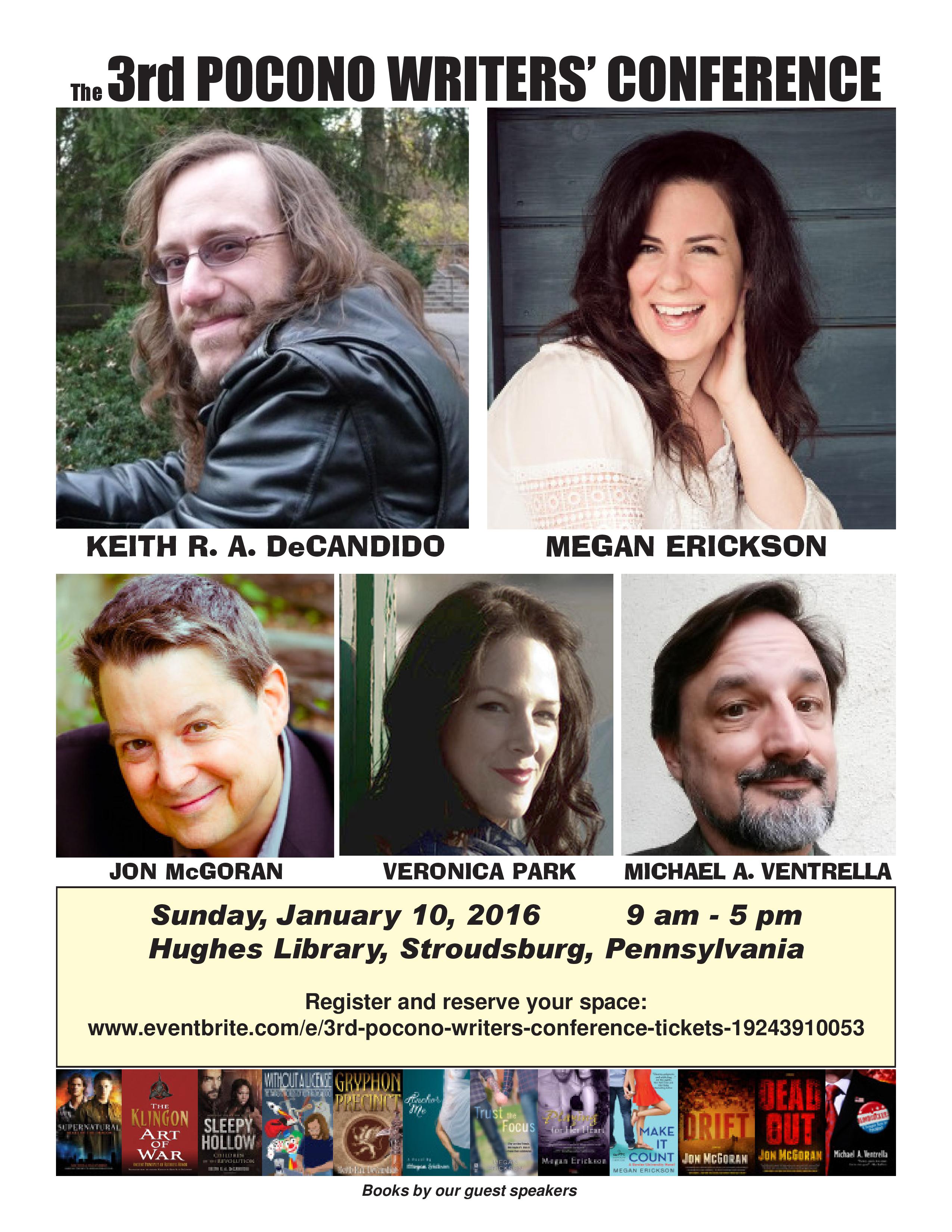
The 3rd Pocono Writers Conference

I’m pleased to announce that the 3rd Pocono Writers Conference is now accepting reservations.

I’m thrilled that this has been successful, and I’ve invited some great guests for this one.

The Conference is on January 10, 2016, held at the Hughes Library in Stroudsburg, Pennsylvania, and is free — but space is limited. And this year, we’re trying something new: individual critiques!

2016flyer-page-001

Here’s the schedule:

9:00: Introductions

9:15: VERONICA PARK: “All Hook and No Plot”: How to tell if you’ve got a good story, or just a great idea and a so-so story

10:30: JON McGORAN: “Economy and Exposition”: Turn boring info dumps into highly anticipated answers to compelling mysteries by integrating it into your narrative so it adds nuance, depth and tension to your story, instead of interrupting it.

11:45: Lunch

1:00: MEGAN ERICKSON: “Start at the Right Place”: How to grab readers from page one with the right scene and how to pace from there.

2:15: KEITH DECANDIDO: “The Business of Writing”: The parts of your writing career that don’t involve actually writing.

3:30: MICHAEL A. VENTRELLA: Panel Discussion and Question and Answer session with all panelists

Critiques:

Each of the participants are holding smaller sessions (10 maximum) during the presentations where you can have your work critiqued.

These sessions are $20 each. You can sign up for as many as you want but you must pre-register because space is limited. Instructions on how to email your writing sample will be sent to you prior to the Conference.

9:15: Megan Erickson
10:30: Keith DeCandido
1:00: Veronica Park
2:15: Jon McGoran

How to Reserve a Spot:

This conference is free but you must reserve a spot because space is limited. Please do not reserve a spot if you are not certain whether you can attend because you may be blocking someone else from attending if all the spots are filled. Go here to make your reservation.

Participant bios:

Keith R.A. DeCandido is mostly known as a best-selling, award-winning author, with dozens of media tie-in novels (most recently the Star Trek coffee-table book The Klingon Art of War, the Heroes Reborn novella Save the Cheerleader, Destroy the World, the Sleepy Hollow novel Children of the Revolution, the Stargate SG-1 novel Kali’s Wrath, and the Tales of Asgard trilogy featuring Marvel’s Thor, Sif, and the Warriors Three) and original fiction (the “Precinct” series of fantasy police procedurals) to his credit. He’s also an editor of more than 25 years’ standing, working for Byron Preiss, Library Journal magazine, Simon & Schuster, Dark Quest Books, the Society of American Baseball Research, and many more, as well as private clients via his KRADitorial service. In 2009, he was given a Lifetime Achievement Award by the International Association of Media Tie-in Writers, which means he never need to achieve anything ever again. His cheerfully retro web site is DeCandido.net.

Megan Erickson is a multi-published romance author with Avon, Berkley and Entangled. A former journalist, she switched to fiction when she decided she liked writing her own endings better. She lives in south central Pennsylvania with her own romance hero, their two kids and two cats. For more, visit meganerickson.org

Jon McGoran is the author of six novels including the biotech thrillers Drift and Deadout, as well as their forthcoming sequel, Dust Up (April 2016), all from Tor/Forge Books, as well as the novella “After Effects,” from Amazon StoryFront. Writing as D. H. Dublin, he is also author of the forensic thrillers Body Trace, Blood Poison and Freezer Burn, from Penguin Books. His short fiction and nonfiction can be found in a variety of anthologies, and his short story Bad Debt received an honorable mention in Best American Mystery Stories, 2014. He is a member of the International Thriller Writers, the Mystery Writers of America, the International Association of Crime Writers, and a founding member of the Philadelphia Liars Club, a group of published authors dedicated to writers helping writers. His website is http://www.jonmcgoran.com/

Veronica Park is an agent, author, journalist and marketing consultant with more than seven years of experience writing and editing for publication. She graduated with a BA in print journalism with an emphasis in linguistics and business marketing from Brigham Young University and went on to expand her writing skills as a broadcast journalist and independent film producer, before running away with her husband to work on cruise ships in the Caribbean as a port lecturer and luxury goods marketing specialist. In publishing, she has finally found an arena that requires her entire assortment of professional skills, while allowing her to read and write every single day.  Her web page is http://www.corvisieroagency.com/veronica-park.html

Michael A. Ventrella is a Stroudsburg writer and editor with three novels and three anthologies under his belt, with more coming. At his web page (www.MichaelAVentrella.com), he interviews writers and editors and gives advice for the starting writer. This is his third year organizing these conferences.

Interview with author Jim C. Hines

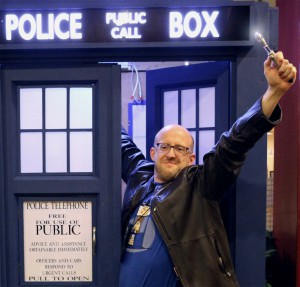
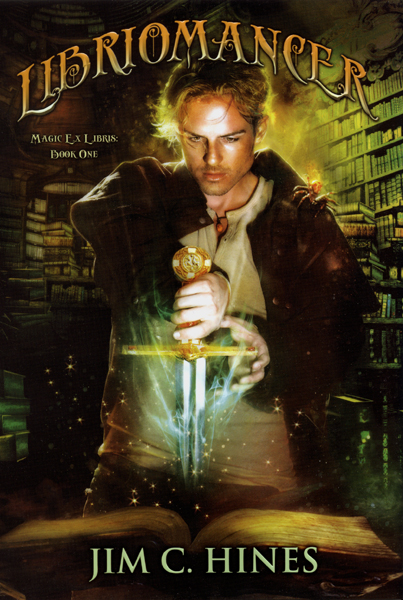
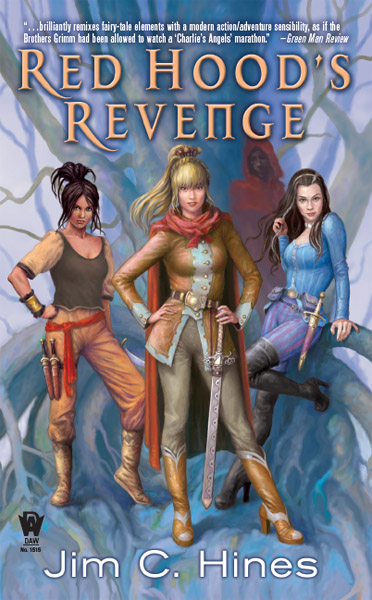
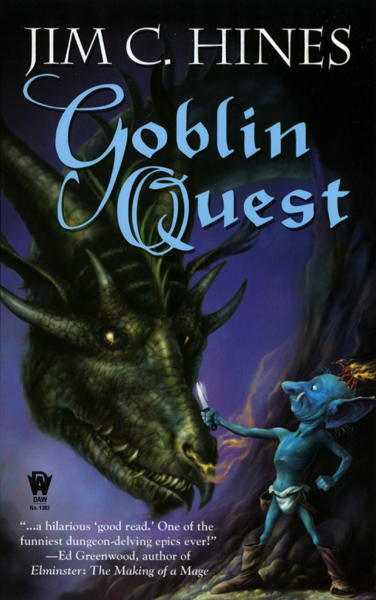
MICHAEL A. VENTRELLA: I am tremendously pleased to be interviewing Jim C. Hines today! Jim is best known as a fantasy novelist and the guy who did those gender-flipped SF/F cover poses. JCH-TARDIS-300x287His first novel was GOBLIN QUEST, the tale of a nearsighted goblin runt and his pet fire-spider. After completing the goblin trilogy, Jim went on to write the “Princess” series, four books often described as a blend of Grimm’s Fairy Tales with Charlie’s Angels. He’s currently working on the “Magic ex Libris” books, which follow the adventures of a magic-wielding librarian from northern Michigan. He’s also the author of more than forty published short stories. His web page is here.

Let’s talk about your latest news: The FABLE book, based on the best-selling game. How did that come about?

JIM C. HINES: The publisher contacted my agent to see if I’d be interested in writing the book. I’m guessing a lot had to do with my previously published work, particularly the GOBLIN QUEST series, which has some of the same fantasy and humor feel as the Fable game universe. My agent and I talked about the contract details, he went back and did a bit of negotiating, and voila – I got to write FABLE: BLOOD OF HEROES, which was a great deal of fun.

VENTRELLA: What kinds of limitations did they give you? In other words, how far away from the main narrative could you go?

HINES: I had a fair amount of freedom with the story. They wanted a book that would introduce the characters and the world, but I wasn’t novelizing the plot of the game. I had to set the story in the world of Albion, and to use the characters from FABLE LEGEND, but I was able to introduce my own villains and secondary characters, my own plotline, and even my own quirky little town.

VENTRELLA: What is it like writing a story that has already been written, with characters you didn’t develop? Did you find it liberating (“Hooray! I don’t have to spend months working all the details out!”) or confining (“Dammit, I want the character to do this but I am limited by what someone else wrote first!”) or somewhere inbetween?

HINES: I was hoping it would be a bit easier to write pre-existing characters, but as far as I can tell, nothing about writing ever ends up being easy. Libriomancer-LgLionhead came up with some interesting and entertaining characters. Sometimes it was fun to play with ideas I wouldn’t have necessarily come up with on my own. But there were also moments when I wanted to do something with a given character and couldn’t, because it didn’t fit with what Liongate had set up.

VENTRELLA: Assuming that this is like other games, your character could make different choices which could change the ending completely. How did you approach this?

HINES: I haven’t played LEGEND, but I’ve played some of the other FABLE games and read some of the previous tie-in books, so I was definitely thinking about the emphasis on choice. I tried to include some moments for the characters where they had a clear and important choice to make. Trust this character or don’t? Fight or flee? Kill or capture?

VENTRELLA: Who do you think the audience is for these kinds of books?

HINES: Well, we want it to appeal to fans of FABLE. First and foremost, I hope that all the hard-core chicken-chasers will approve. But if I’ve done my job well, you shouldn’t have to be familiar with the games to enjoy the book. If you like fantasy and quirky humor, you too can be part of the audience!

VENTRELLA: What will people who have already played the game get out of it?

HINES: Right now the game is still in beta testing. I don’t know if the book will come out before the game, or how that schedule will work. So it’s possible this could be the first real point of entry into FABLE LEGENDS world. For those who have played the previous games or participated in the beta, my hope is that they’ll get some insight into the characters, some exploration of Albion and its history, and a new adventure to enjoy.

VENTRELLA: Let’s talk about the “Goblin Quest” series. Where did the idea for that originate?

HINES: I guess I’ve always had a soft spot for the underdogs, and it’s hard to get more underdogged than the goblins. How many goblins got slaughtered in the Lord of the Rings and Hobbit movies, just for being in the wrong place at the wrong time? So I really liked the idea of taking this scrawny, nearsighted goblin runt and doing a typical fantasy adventure from his point of view, with all of his questions about fantasy logic and this so-called “heroism” stuff.

VENTRELLA: What inspired the “Princess” series?

HINES: Those books were for my daughter, who went through a princess phase when she was younger. Red-Hood-LgSome of the movies, and a lot of the merchandise, all stressed that a princess has to look pretty and be rescued and so on. I wanted stories about princesses who teamed up and kicked butt and beat the witch and saved the prince. I also wanted to play with the older fairy tales, and to do something fun with it, like turning Sleeping Beauty into a ninja, or letting Snow White run around doing mirror magic.

VENTRELLA: I’ve blogged about humor in fiction, and feel that tooLibr many authors think that if your characters crack jokes then you can’t make serious points or make them ever seem to be in danger. Since humor is a part of your work, how do you approach it? How do you find the right balance?

HINES: Humor and serious go quite well together. Just ask Joss Whedon. The contrast between humor and fear/pain/tragedy can make both more powerful. You don’t want to let the humor undermine the tension, but that’s just a matter of practice and learning how to write it. Human beings crack jokes. Even in dark times. Especially in dark times. It’s one of the ways we cope. Completely stripping that out of a story feels dishonest and hollow to me.

VENTRELLA: You haven’t avoided talking about politics on Facebook and your blog. Do you ever worry that this may alienate readers?

HINES: It’s weird. A fair amount of what I talk about are things like sexual harassment and racism and sexism, stuff I’d have assumed most people agreed were bad, regardless of politics. But it’s the internet, so everyone seems to get assigned to one “side” or the other, and that’s the end of that. It’s definitely cost me some readers. But I think these are important things to talk about, and I’ve ended up with a bit of a platform to do so. It would feel like a betrayal not to do so. I try not to be a dick about things, but it doesn’t matter how polite and “civilized” you are. There’s always someone who’ll get pissed off at you.

VENTRELLA: How much of writing is innate? In other words, do you believe there are just some people who are born storytellers but simply need to learn technique? Or can anyone become a good writer?

HINES: I think practice and skill are far more important and useful than talent. Looking back, I don’t know how much of where I started was actual talent vs. skills I’d picked up over my life, from reading and telling jokes and getting a pretty good education and so on. Goblin-Quest-LgBut wherever you start, pretty much all of us have to work to improve before we become Good Writers™.

VENTRELLA: What criticism of your work do you disagree with the most?

HINES: I try not to disagree with criticism, as a general rule. Once my book is out there, it’s up to the reader what they find in the story. Who am I to say they’re wrong?

That said, it annoys me to be told I only included a non-white or non-straight character as part of an “agenda,” or to push some mysterious “message” down people’s throats. Acknowledging the existence of people who aren’t exactly like me isn’t a message. And choosing to exclude people who aren’t like you from your stories is lazy, lousy writing.

VENTRELLA: Which of your characters was the hardest to write and why?

HINES: Lena Greenwood, the dryad character from the LIBRIOMANCER books. I’ve been working to get her character right for at least a decade. The way I wrote her and her backstory is problematic as hell. This series deals with the magic of books, and Lena was “born” as a sexual servant, one who gains in strength and independence over the course of the series. There’s a lot I’ve tried to do with her journey, but it’s so easy to mess up, and I know I’ve made mistakes along the line. For some people, she’s their absolute favorite character, but she’s been tough to write.

VENTRELLA: Writers are told to “write what you know.” What does this mean to you?

HINES: I prefer to flip it to “know what you write.” Do your research, and make sure you know what you’re talking about.

VENTRELLA: What do you do to avoid “info dumps”?

HINES: Mostly, I try to pay attention to when I’m getting bored while writing the story. There’s nothing wrong with exposition and info dumps from time to time, as long as it’s interesting. But the moment I start getting bored, that’s a clue to look more closely at the story and figure out why.

VENTRELLA: When going through second and third drafts, what do you look for? What is your main goal?

HINES: My first draft is when I get a sense of the book’s structure. I can’t hold an entire novel in my head, and outlines help, but they only work so-so. Cover2Once I’ve finished that first draft and know more or less how the book goes, I can go back and start developing the characters better, cleaning up plot problems, and generally delving deeper into the story.

VENTRELLA: Science Fiction doesn’t seem to be selling as much as fantasy these days, including urban fantasy and all the varieties. Why do you think that is?

HINES: Not a clue. I think it depends on where you look, too. Are superheroes science fiction? If so, then Marvel’s films are blowing away most of what’s out there. Video games? Paranormal romance vs. sword and sorcery? I try not to worry too much about what’s hot this year, and to just write stories I love.

VENTRELLA: Do you think it is important to start by trying to sell short stories or should a beginning author jump right in with a novel?

HINES: I was told you have to write short stories first, and I spent years doing that before really trying to write novels. That was Bad Advice. There’s no one right way to learn, and while short fiction used to be the “traditional” road for breaking into novels, these days I’d tell people to write whatever the heck they want. Enjoy short stories? Do that. Prefer books? Start writing them.

VENTRELLA: Do you think short stories are harder to write than novels?

HINES: I think they’re different. For me, short stories are much faster to write. You know, on account of being shorter. I like that. But you have some of the same challenges of characterization and worldbuilding and so on.

VENTRELLA: What’s your opinion on self-publishing?

HINES: I like anything that gives authors more options, and gives readers more ways to find stories they love. I could do without the religious crusades about the One True Way to publish, though.

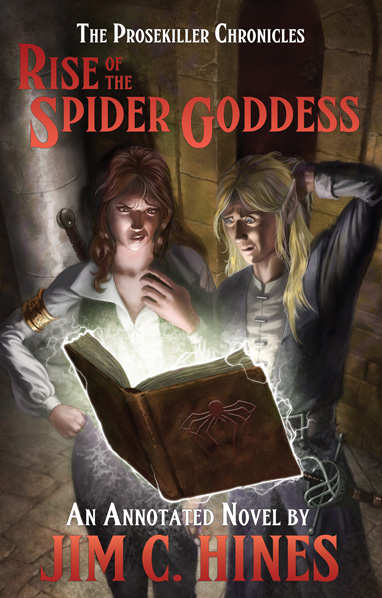
Most of my books are through DAW, a commercial publisher in New York. I’ve also self-published some electronic chapbooks, as well as a mainstream novel and a fantasy novel project that … well, let’s just say RISE OF THE SPIDER GODDESS probably wouldn’t have found a home at most self-respecting publishing houses.

VENTRELLA: In this market, with the publishing industry changing daily, how important is the small press?

HINES: I think the small impress has been and continues to be important. They have more ability to take chances and to take on projects that might not sell huge numbers, but are important and powerful nonetheless.

VENTRELLA: What sort of advice would you give an un-agented author with a manuscript?

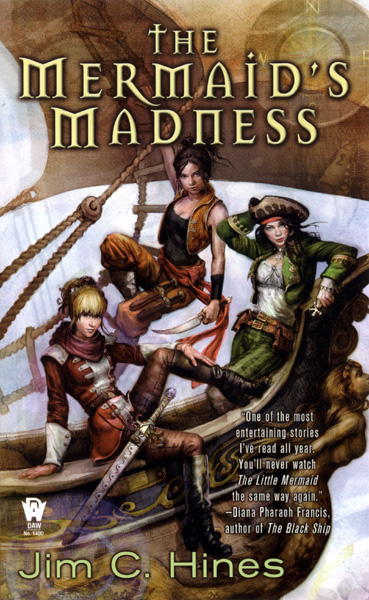
HINES: Finish the manuscript, and do some research. Learn how agented and unagented authors built their careers.Mermaid-Lg Learn the pitfalls of different paths. Read Writer Beware and other writing blogs and resources. There’s no one right way to do this, but there are definitely some wrong ways to be aware of!

VENTRELLA: What’s the worst piece of writing advice you ever got?

HINES: You have to write short stories before you can write novels.

VENTRELLA: What’s the best piece of writing advice you ever got?

HINES: I don’t know that it’s a specific piece of advice so much as a general attitude of persistence. Writing is hard, and there are times it will wear you down. Most of the successful authors I know are the ones who got stubborn and just kept writing.

VENTRELLA: What advice would you give to a starting writer that you wish someone had given to you?

HINES: Have fun. Find your own voice, and your own passion. I spent years trying to write the books and stories I thought I was “supposed” to be writing, but it wasn’t until I said the heck with it and started having fun with this goofy little goblin and his flaming pet spider that I really found myself as a writer. Coincidentally, that’s the first book I sold. Go figure.

VENTRELLA: Who do you like to read? Who are your favorite authors?

HINES: It depends on when you ask! Terry Pratchett, Janet Kagan, Nnedi Okorafor, Seanan McGuire… Heck, I’m on Goodreads. You can see my shelves here.

VENTRELLA: What projects are you working on now? What can we expect next from you?

HINES: I’m working on the fourth LIBRIOMANCER book, which is called REVISIONARY and should be out in February of 2016. I’m also finishing up the copy-edits on FABLE: BLOOD OF HEROES. Beyond that, I’m starting on INVISIBLE 2, which will be a collection of essays about representation in science fiction and fantasy. I’ve also got several anthology invites waiting for me to write short stories. So basically, I’m in no danger of getting bored any time soon!

VENTRELLA: With a time machine and a universal translator, who would you invite to your ultimate dinner party?

HINES: I’m not actually much of a party person, so I’d probably keep it small. Maybe David Tennant and my wife to start with. (So that my wife could meet David Tennant, which would make me the Best Husband Ever. And also because I’m a bit of a fanboy myself.) Janet Kagan, who was something of a mentor for me, but passed away before I could meet her in person. I’d also want to invite someone who can actually cook, you know? Oh, and maybe Gutenberg, because he’s one of the characters in my current series, and if I got him to sign one of those books, it would be a pretty awesome memento!

Talent is an Asset

Maybe you shouldn’t be a writer after all.

I don’t want to discourage anyone from pursuing their dream, but not everyone can be successful in the world of art (and yes, writing is a creative art). snoopy-writing

I’ve thought about this a lot (especially when I look at my own work and get depressed). In one previous blog I wrote about how you need talent, hard work, and connections to be successful. You don’t need them in equal amounts — if you have great connections, you don’t need as much talent, for instance (which is the only way to explain the success of some writers, musicians, and actors).

But assuming you’re an average person who wasn’t born into a well-connected family, talent is pretty much a necessity. And by “talent” I mean that creative spark that gives your work uniqueness and originality.

There are just too many creative people out there who, well, aren’t very creative.

Come on, you know it’s true. They may have all the skills but there’s still something missing.

In the past few years, as I have attended writer’s conferences and readings and so on, it’s becoming clearer. There are so many aspiring writers who know their grammar rules and understand the concept of what makes a good story who just don’t have that extra something that makes a story real. And yes, during my moments of self-doubt, I worry that I belong to that group.

I don’t know how to teach talent. I sometimes think that is something you are just born with.

When I was in High School, I wrote a musical comedy that our drama club put on. It was a silly western called “But I’m Allergic to Horses.” I got my musician friends to play for us, and I also recruited some of the students from the music department to help. There was one girl who played piano who, if you put the music in front of her, could play it without a mistake — something that always impresses me. I never learned how to read music other than the very basics. When we practiced the songs, I would give her the chords and ask her to improvise, and she was absolutely lost. She had no creative skills at all, despite her mastery of the piano in all other respects.

And there are some writers like that. They write much better than I ever could, but their stories lack originality, surprise, excitement. They have the technical part of writing down pat, but their work is predictable and boring.

Obviously, what you need is mastery of both the technical part of writing and the creative part.

But at least one of those, you can learn.

Interview with Bud Webster

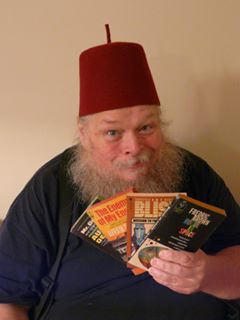
MICHAEL A. VENTRELLA: I’m pleased to be interviewing long-time friend Bud Webster today. Like previous interviewee Mark Waid, Bud was part of my old Dungeons and Dragons crew in college (Bud played a mercenary dwarf whose catchphrase was “When do we get paid?”) Bud We both worked at Peaches Records where we spent much of the day making bad jokes and entertaining the customers. We also took at least one class together that I remember — Animated Films (or something like that).

BUD WEBSTER: History of Animation, taught by the inestimable Steve Segal.

VENTRELLA: Yes indeed, thanks. Bud, as a voracious reader, you became quite the archivist? Anthologist? Expert? I’m not sure what word to use – how did that come to be?

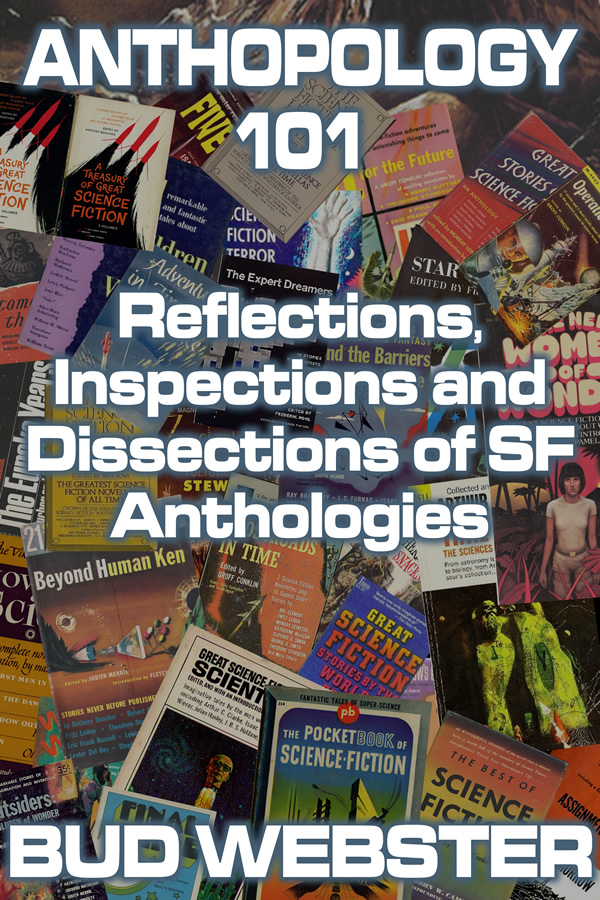
WEBSTER: “Anthopologist” is the word I coined. It happened the same way it did when I was collecting rocks, magic tricks and records. The true geek can’t shut up about his/her geekery, we’re compelled by our passionate interests to blather on about it to anyone who’ll listen (or even pretend to). I was lucky enough to have found outlets that spanned a greater audience than just a roomful at a party; first, I did some exploration in my own fanzine, Log of the Starship Aniara (later just Aniara) back in the early to mid ‘70s, then a few pieces in other ‘zines. None of that, of course, was for money, and was mostly just about books in general. I did, for instance, a long piece for Aniara in which I detailed the holdings of a special collection at the University of Virginia that originally belonged to an alum who was seriously into HPL. It wasn’t until 2001, though, that I actually did anything I consider serious with my heavy interest in anthologies. That’s when Peter Enfantino invited me to contribute something on the subject to bare*bones, the ‘zine he co-edited/published with John Scoleri. I did a fairly lengthy examination of Fred Pohl’s Star Science Fiction series for Ballantine, and had the chance to interview Fred (via mail, since he wasn’t doing e-mail at the time). He was very cooperative, happy to answer all my questions, and he continued to read the columns as they appeared elsewhere, sending me the occasional correction when they were needed. That column was reprinted in ’02 in David Hartwell’s New York Review of Science Fiction and that was the beginning of my writing about this stuff for actual, y’know, money.

VENTRELLA: Tell us about the SFWA Estates project.

WEBSTER: Well, SFWA had been tracking estates for years when I was asked to take it over in ’07, but it was catch-as-catch-can and some of the information they had was either outdated or inaccurate. I was on the verge of leaving SFWA after several events had transpired, and then-president Russell Davis and former president Michael Capobianco offered me the position of Estates Liaison not to placate me but to give me a legitimate reason to stay on and be productive. 1256I had already been able to track down a few estates through the network of email lists I was on, so it was right up my alley. It appealed to my sense of history, and it fit in with my interest in keeping classic sf and fantasy alive.

VENTRELLA: Have you had much difficulty in locating anyone?

WEBSTER: If you only knew. I have names on the list that I haven’t been able to track down since the Project was handed to me. Some of them are almost certainly legitimately orphaned – Frank Belknap Long and his wife left behind no family so his only “heir” is the State of New York – but others … Well, how easy is it going to be to find the heirs of George H. Smith?

VENTRELLA: Which writer do you think just hasn’t received the attention her or she should have (and why)?

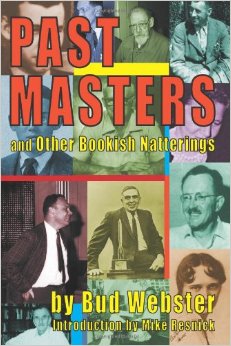
WEBSTER: How much space do you have? Seriously, there are dozens of authors whose work has been forgotten or unfairly ignored, not all of them old guys from the pulp days. Terry Carr, a fine writer as well as a prolific anthologist; Tom Reamy; Alfred Bester, who wrote two of the best novels sf has ever seen; Avram Davidson, Robert Sheckley and Richard Matheson, all of whom wrote brilliant short fiction; Cordwainer Smith, James Tiptree (aka Alice Sheldon) and R. A. Lafferty, whose work transcends any and all genre limitations… The list can go on for a long time. It’s the big reason I began writing the Past Masters columns.

VENTRELLA: Does one need to be an expert on classic SF to enjoy your essays?

WEBSTER: I’d like to think not. I don’t write them exclusively for fellow geeks, although they enjoy them too. I’m more concerned with piquing the interest of the average reader, with urging them to look for old paperbacks online or in used bookshops than I am in trading minutiae with my colleagues. I get as much pleasure from a note from a stranger telling me that they can’t wait to track down a copy of San Diego Lightfoot Sue as I do from a fellow historian saying, “Hey, I didn’t know that!”

VENTRELLA: Your fiction has received great reviews and awards as well, but you haven’t written that much of it. Do you plan to do more?

WEBSTER: Absolutely. I’ve recently placed stories with Orson Scott Card’s Intergalactic Medicine Show (“Fantasiestűck in A Major – A Flight of the Imagination in Three Movements” in #40) and The Magazine of Fantasy and Science Fiction (“Farewell Blues” upcoming in the January/February 2015 issue), and there are a couple more I’ve just sent out. 51LV1Irkn+L._SY344_BO1,204,203,200_I have plans to do at least one more Bubba Pritchert story, too. Let’s face it – writing is hard work and for some of us, non-fiction is not only a little easier but can pay better and faster. I pitch it, the editor greenlights it, I turn it in and get paid. I still have to throw fiction in over the transom like everybody else, and there’s no real guarantee. I still get rejections.

VENTRELLA: Speaking of science fiction, you had a role in the film “Futuropolis” (I missed my chance to do a cameo in it by being sick that day and I still regret it). I expected that film to become a cult favorite, something shown regularly at SF conventions, but it isn’t. Why do you think that it never caught on?

WEBSTER: Mostly because it hasn’t been available except as a video cassette. I’ve been trying to get Steve Segal and Phil Trumbo (the creators) to do a DVD, and they do think it’s a good idea; Phil mentioned recently that he’s even done a “Making Of” segment that would really add to the interest level. Maybe if we poke them enough…?

VENTRELLA: Let’s talk about fiction in general. What kinds of characters are you sick of reading about?

WEBSTER: Badly conceived and delineated ones. As long as a character can really walk and talk to me, I don’t care if it’s a sparkly vampire.

VENTRELLA: Do you think readers want to read about “believable” characters or do they really want characters that are “larger than life” in some way?

WEBSTER: Why can’t they be both? Yeah, readers have to be able to identify with and believe in characters, but there’s no real reason why there can’t be a little exaggeration as well. Bubba, for example, is an autodidact who knows what “autodidact” means; he’s down-home but intelligent. His persona tends to be a little loud and jokey, but I’ve tried to give him depth and seriousness as well.

VENTRELLA: What is your writing process? Do you outline heavily or just jump right in, for instance?

WEBSTER: Alfred Bester, one of my idols, couldn’t begin until he’d created a detailed outline. I tried it once; the story never got written because I’d scratched the itch too thoroughly with the outline. I’ve found that I need to keep a relatively comprehensive chronology as I go along, but I don’t outline beyond that.

VENTRELLA: Do you find yourself creating a plot first, a character first, or a setting first? What gets your story idea going?

WEBSTER: Depends. Sometimes I write to, sometimes I write from. Sometimes I have a specific idea, other times it’s an overall concept. I have had stories change as I wrote them, more than once. “Christus Destitutus”, for example, was originally envisioned as a satire, the sort of wry observation that Damon Knight and others used to write for Galaxy or F&SF. It turned into a dark and angry commentary on my own religious upbringing, something I honestly did not expect. I still find the story disturbing, in fact.

As a rule, though, I rarely start the actual process of writing until most of the story is clear in my mind. A lot of the time I even have the last lines right there in front of me. The-Joy-of-Booking Other times, well, it’s very different. I was doing research online one morning for my wife when I decided, just for kicks, to Google a small town not far from Richmond called Frog Level. Turns out there are two small towns in Richmond by that name, and that was the genesis of “Frog Level ≇ Frog Level”. That story wrote itself in four days, with very little rewriting.

VENTRELLA: Since we are on panels together at conventions all the time, I assume you think they’re worthwhile. Why do you find these to be a useful activity?

WEBSTER: Good question. Part of it is that in many cases, verbalizing helps me firm up my thoughts and make them workable. The exchange of ideas between the other panelists (as well as intelligent and well thought-out questions/comments from the audience) can lead me to reconsider my own opinions in a very real and constructive way. Plus I get to show off my vocabulary.

VENTRELLA: What’s your opinion on self-publishing?

WEBSTER: I’ve never had a problem with it in general, I’ve even done it myself. And there was a time when there were honest vanity presses who offered their services to people who wanted to self-publish family genealogies, poetry collections, regimental histories and the like. They made no promises of promotion, distribution, or best-sellerdom though; all they did was deliver a case or two of printed and bound books that the author was responsible for thereafter.

Is someone with a checkbook who Kinkos their own book and shows up at a convention demanding table space and signings and their own panel(s) a colleague of mine? Not necessarily, no. Anyone with a thick enough stack of credit cards can throw something together and run through their local copy shop, it takes a lot more than that. There are plenty of those who have proven to me that they are a colleague both through their own hard work as a writer, editor and publisher and though their obvious skills at promotion and willingness to go the literal extra mile to travel on their own dimes to conventions, festivals, conferences and bookshops all over the place for the possibility of a couple of dozen more sales. Why? Because that’s what it takes to market your own books, and that’s what it takes for me to take them (as well as the current conception of self-publishing) seriously – hard work.

VENTRELLA: In this market, with the publishing industry changing daily, how important is the small press?

WEBSTER: It is absolutely vital. It’s always been important, especially back in the days of Gnome Press and Arkham House, but now with the majors being inundated with more and more crap that they have to wade through to get to the Good Stuff, the small presses make it possible for a new author to reach an audience larger than they could reach on their own. If the press has a good, solid rep, it adds a cachet to the author and makes it more likely that sales will be even better: “Hey, there’s a new book out from HomminaNomicon Press! I really liked the last two, so I’ll try this one.”

VENTRELLA: What sort of advice would you give an un-agented author with a manuscript?

WEBSTER: Don’t go the “easy” route first. Find agents and/or publishers who are willing to look at new work by new writers, put together a proposal, a solid three-hots-and-a-cot (first three chapters and a synopsis), and get ‘em in the mail. AFF JUl-AUG 2007 FINAL RG.eps Be very careful, though – there are predatory “agents” out there who are dedicated to ripping you off and will sweet-talk you into believing that the Sun sets in the East if you let them. Go to the Predators and Editors website and look through the list of agents and see what their records show. There’s nothing easy about writing, no aspect that doesn’t require careful research, attention to details (especially with contracts) and hard, hard work.

VENTRELLA: What advice would you give to a starting writer?

WEBSTER: Bust your behind to get it as right as you can, pay attention, and let your work speak for itself. If you can find a good writers’ group in your area, check them out to see if you’re a good fit. They can be enormously helpful, but again, be careful; some groups can be deliberately harsh, even cruel, and there’s no quicker way to be discouraged. Critiques should be honest and firm, but never mean. Do not look for shortcuts, because there really aren’t any.

VENTRELLA: Who do you like to read? Who are your favorite authors?

WEBSTER: Boy, you really don’t want short answers, do you? Let’s see … Bester, Ellison, Heinlein, Effinger, Doyle, Simak, Russell, Niven, Niven and Pournelle, Pournelle, Pratchett, King, Haldeman, Sanders, Silverberg, Pohl, Gaiman, Davidson, Clarke, Bradbury, any Conklin anthology, Cordwainer and Doc Smith, McKenna, Bond, Leiber; how many more do you want? Oh yeah, there’s this guy named Ventura or Ventiller or something, but he writes like a sissy.

VENTRELLA: Hmph. What projects are you working on now? What can we expect next from you?

WEBSTER: I’m putting together my first fiction collection, including stories and poetry. It’s going to have most of what I’ve done over the years except the Bubba stories; they’ll have their own book with new material tying them together. Some of the stories are pretty old – going back more than 20 years. I’m hoping it will be out by the end of 2015.

VENTRELLA: With a time machine and a universal translator, who would you invite to your ultimate dinner party?

WEBSTER: In no particular order: Nelson Bond, Einstein, Buzz Aldrin, Frank Zappa, Pierre Boulez, Steve Allen, Igor Stravinsky, John Lee Hooker, Arthur Conan Doyle, Tom Lehrer, John W. Campbell, Charlie Chaplin, J. R. R. Tolkien, August Derleth, William Gaines, Mel Blanc. And my wife, or course. Have to be a big table, though.

I doubt I’d say a word, but I would video the whole damn thing and live off the revenue from the books I’d write about it for the rest of my life.

Interview with author Leona Wisoker

MICHAEL A. VENTRELLA: I’m pleased to be interviewing novelist Leona Wisoker today. Leona is a frequent guest at the conventions I attend and I always have a great time when she’s on a panel with me (as long as it’s not too early in the morning before she’s had her coffee).leona-square1 Her science-fantasy series “The Children of the Desert” is set in a world still struggling through a number of basic moral and developmental issues. Her webpage is here.

Leona, how did you first become interested in writing?

LEONA WISOKER: I’ve told stories for as long as I can remember. Whenever my older sisters were out of the house, I would sneak into their rooms and tell their stuffed animals endless fantastical tales. I have no idea if I told stories to my own toys. I probably did. But theirs were so much cooler! Besides, I wasn’t supposed to be in their rooms at all, so that added to the fun.

When I was … around ten, maybe eleven, I taught myself to type using a self-directed record and flipbook course. It made me feel important and business-y and Just Like Dad, who went to an Office every day and had a Desk and Important Grown Up Business to handle. I remember deciding, early in life, that I wanted to have a job that involved an office and a typewriter and a pencil cup and a calculator. Thankfully, I turned out to be a terrible receptionist.

I wrote quite a lot on various typewriters and computers from that point on, although for many years my first processing point was handwriting a story in a notebook. Ah, the days of scribbling away and getting blue ink all over my hands! I think I was in my late twenties before I abandoned that in favor of brainstorming on a computer.

At some point I started submitting my tales to various magazines, if you can call it that. I sent in roughly one story a year: my annual Why-Am-I-Doing-This-When-I-Know-I’m-Gonna-Get-A-Rejection-Day. I was always too busy getting in my own way, of course. I resisted learning technique or craft because I already Knew It All. I had a huge vocabulary! SecretsGallery I earned straight A’s in English class — when I turned in my homework, of course. That was always a problem. Homework is so boring…

Gaming was a lot more fun. I put far more effort into my AD&D campaigns than I ever spent on homework. I built detailed worlds and plans — I wanted to be sure that any tavern or stable the characters walked into, I had plots and hooks ready in all possible directions. By the time I was in my mid-twenties, I had a file cabinet drawer full of backstory and modules and character sheets and so on. I even developed voices for special NPCs.

Inevitably, it occurred to me that all this work would be better off used for stories. I drifted away from gaming and focused on my writing. Now I could finally showcase all the really cool stuff the gamers kept missing, and these characters wouldn’t ever insist on wandering off across town to the one spot I hadn’t developed, goddamnit–

Um. Yeah. Well, by the time I learned the flaw in that reasoning, it was too late. I already had so much time and effort invested into learning to write properly that there was nothing for it but to plow ahead. End result, happily, was a four-book publishing contract with Mercury Retrograde Press, and a handful of short stories accepted by various anthologies and short-fiction magazines.

In some ways, it was a lot more fun to tell stories to my sister’s stuffed animals. They were a fantastically supportive audience. Real life writing involves an awful lot of boring homework and practice exercises. I often miss being a GM, too; there’s something exceptionally cool about being in charge of steering a group of people from one disaster to another while they try desperately to outwit you.

But I have a desk, and a chair, and a pencil cup; I go to work in an office, and I feel very Business-y and adult. This is the life I dreamed of as a kid. And I have stuffed animals of my own now — two dragonets that ride on the dash of the Blue Dragon, my much-beloved Jeep; the mini dragons are named Marguerite and Henry. (Bonus points to anyone who gets the reference!)

I cannot confirm nor deny telling stories to my dragonets while I’m on long road trips.

VENTRELLA: the transformation from Dungeon Master to author is one I can relate to completely, as can many authors I’ve interviewed here. GuardiansGallery

Which of your characters was the hardest for you to write and why?

WISOKER: Hands down, Ellemoa has been the most difficult character in the series to date. For those unfamiliar with the series, a quick explanation is in order: Ellemoa is a ha’ra’ha from Arason, and Idisio’s mother. She is completely psychotic — by human standards, at least.

Ellemoa illustrates what happens when a ha’ra’ha loses interest in following human morality structures. The only reason she doesn’t go on a rampage and wipe out every single human being in sight is that it would hurt her son–and the last remnant of her sanity is tied to keeping Idisio safe from harm. Balancing her brutality and sympathy was a tricky process. Idisio needed to see himself as independent, Ellemoa needed to believe that she was in charge, the reader needed to see the dangerous slide toward mutual insanity underlying the entire relationship. And I needed the reader to be rooting for Ellemoa to come back from the darkness in spite of her terrible actions. So from a technical standpoint it was tough; from an emotional standpoint it was painful, because I had to really think about what she’d gone through and how she would react.

Not something I really want to do again. I’m not planning on ever developing another character quite that damaged. Once was enough, unless I want to start along Stephen King’s career path….

VENTRELLA: How do you make your protagonist and antagonist believable characters?

WISOKER: With the “Children of the Desert” series, I found it easiest to round out each character by showing them from other points of view; thus the multiple POVs in each book. For example, one person thinks Alyea is wonderful, another sees her as a spoiled noble brat; and then there’s how she sees herself. That approach brings fantastic complexity to characters.

When I’m working with a single POV, as in my short stories, I try to keep ordinary and extraordinary moments balanced. BellsGallery In one of my stories (“Silver and Iron”, Sha’Daa: Pawns), an evil fae makes plans to sacrifice her lover in order to summon demons, then goes to the grocery store and deals with traffic jams. “Believable” roots in common experiences, in keeping a foot in what we see as real life. Meals are a really easy way of hitting that shared note, because everyone has to eat. Basic weather changes also give the character and the reader to meet on common ground.

The hardest part, for me, is cutting out the fat. I tend to overwrite, and my early drafts have to be put on a drastic diet. It’s a painful but strangely satisfying process.

Speaking of process, it’s time for me to return to my fiction writing. I’m still not done with the first draft of the last book in the “Children of the Desert” series, and it’s getting both annoying and embarrassing. Fear and anger are excellent motivational forces, aren’t they?

Thank you so much for inviting me onto your blog, Mike! This was a lot of fun.

Interview with author Shane Lindemoen

MICHAEL A. VENTRELLA: I’m pleased to be interviewing author Shane Lindemoen today. Shane is a newer science fiction writer from Minnesota. He started with short literary fiction, earning honorable mention in the 2005 Lorian Hemingway competition with his story “Mount Airy,” and a Glimmer Train nod in 2011 for “Lucretius.” His debut novel ARTIFACT (Boxfire Press, 2013) won the National Independent Publisher Award (Gold, 2014). Shane has had a varied professional life, working as a private investigator, a shoe salesman, and as an Editor of National Affairs for the ezine Secret Laboratory (Maple Hills Press, 2011). He’s also an inactive, licensed Peace Officer for the state of Minnesota, and very nearly finished with his MA in Behavioral Systems Analytics. You can typically find Shane at http://www.shanelindemoen.org trying his darndest to transform his thoughts into tradeable monies.Profile

Shane, what is your writing process? Do you outline heavily or just jump right in, for instance?

SHANE LINDEMOEN: My process is an unmitigated, undifferentiated mess. My workstation is enclosed by a mountain of reference books that I call upon at any given time; my browser has thirty bookmarks open at once, always Wikipedia, always a thesaurus, always Google. My writing has this tendency to take on the language and feel of whoever I’m reading at the moment. Which is beneficial in some ways, but harmful in others: there are many books I can’t read while in the midst of writing something. I once spent two weeks obsessively reading every single Chuck Palahniuk book in existence, and when I sat down to write it was the most horrendous block of text every typed into a word processor.

I have learned to use this weird dynamic to my benefit: if a scene calls for suspense, for example, I’ll use time reading John Little, Stephen King, Joe Hill, Ronald Malfi, or John Everson, which puts me in the right mindset to write suspense. If I have an action scene, I’ll read Matthew Woodring Stover. If it’s time to paint exposition or do some world-building, I’ll read Dan Simmons, Larry Niven, Ian M. Banks, Tolkien. Alex Garland, Amy Hempel, or Cormac McCarthy if I want to say something profound and thoughtful. There’s a whole pantheon of heroes I invoke at any given time when I write. This is why I hesitate reading stuff by new authors, especially when I’m in the throes of writing a new yarn, because if I read something that’s written poorly, I’ll begin to write poorly.

As for the outline. I take that pretty seriously. Before I even drop ink on a draft, I’ll spend time drawing out on paper the various plot threads and where they intersect on the broader timeline. I’ll mark the beginning, the big events, and the end – and while I may not know exactly how things will unfold between those events, I try to make something happen every 1500 words to raise the stakes, create more peril, reveal small amounts of plot, and move things forward. I don’t spend much time on characterization, because I feel the characters flesh themselves out through interacting with each other and responding to things I throw at them. Some say it’s beneficial to have personality types in place before hand, but I get the feel of a character as I go. I simply tag them with something that readers will identify – I give them an image to anchor a voice to, and I try remaining consistent to the way each character responds to things.

VENTRELLA: How much of writing is innate? In other words, do you believe there are just some people who are born storytellers but simply need to learn technique? Or can anyone become a good writer?

LINDEMOEN: I subscribe to the belief that we’re all red-blooded, anatomically-lateral humans capable of accomplishing the same things. Our species hasn’t drifted too far from itself in something like 200,000 years, and yes, there are dimensions of difference specific to us, and yes, many do have certain predeterminations, but excluding functionally demonstrable certainties (disability, mental illness) there is nothing one human can do that another can’t. Writing is a skill – it can be learned, it can be honed, and it can be perfected like any other.

VENTRELLA: Writers are told to “write what you know.” What does this mean to you?

LINDEMOEN: I think it means to either stick to your expertise, or write what you’ve experienced. I think they say this because the yield is more authentic that way. How I’ve interpreted this is simply to know what I’m talking about in terms of research. If I’m writing a space adventure, for example, I’m going to want to know actual spacecraft design and engineering. I’ll learn about antimatter and ion propulsion and how to theoretically create artificial gravity. The goal is to sell the idea of authenticity, and swindle my readers into thinking that I know what I’m talking about. Nothing kicks readers out of perceived immersion more than illogical crap that doesn’t make sense on real terms.

VENTRELLA: Science Fiction doesn’t seem to be selling as much as fantasy these days, including urban fantasy and all the varieties. Why do you think that is?

LINDEMOEN: Reading science fiction is more work. I think it’s a genre that requires its readers to be active observers and engage with the theoretical aspects of it. In other words, reading fantasy is like a ride; reading science fiction is like a homework assignment.

A lot of science in science fiction is actually, functionally possible, which appeals more to the scientific-thinking person – someone who expects a certain amount of reality in what they’re reading. A reader of fantasy doesn’t feel compelled to analyze and measure things against functionally demonstrable laws of nature, because the expectation is that everything – from the nature of the characters, to the nature of the universe itself – is fair game and intended to be taken at face value, no matter how fantastic or absurd. This might sound like I’m making fun of fantasy or something, but that’s not my intention. Fantasy is just a different delivery system of narrative and truth, which I think appeals more to the largest bell of the readership curve. Readers won’t suddenly debate internally about the natural selection of dragons and griffens and trolls, because it isn’t possible in real terms. Readers can accept each thing for what it is and enjoy the ride as passive observers. An interstellar warp drive is possible. Suspended animation is possible. Colonizing other planets is possible. And because of this realness of things, readers of science fiction come into a story with certain expectations.

VENTRELLA: Tell us about ARTIFACT! Jacket

LINDEMOEN: ARTIFACT is my debut novel, which recently won the 2014 Independent Publishers Book Award for best science fiction. It’s about an ancient alien machine recovered from beneath the surface of Mars by interplanetary miners. When scientists bring it to Earth for study, a physicist activates something inside of it that causes him to inexplicably teleport back and forth between different points in the same timeline. As the separate moments begin to focus on some sort of singularity, the physicist must use what little time he’s given in each place to piece together exactly what happened the moment he invoked the artifact, before it rips reality apart. I’ve been comparing it to equal parts Matrix, Inception, Dark City, Stargate, and Night of the Living dead. I’m not going to lie… it’s pretty out there.

VENTRELLA: What projects are you working on now? What can we expect next from you?

LINDEMOEN: I’m currently working on another science fiction yarn tentatively titled VAGABOND. I haven’t tried soliciting it to publishers or agencies yet, so we could be talking about a slushpile candidate, but it really depends on whether or not I can sucker anyone into buying it. Here’s the setup:

The last evidence of the Endeavor spacecraft became immortalized in a single image captured by the Pinnacle telescope: A teardrop silhouette falling into the shadow of Saturn’s largest moon, moments before losing contact with Earth. The mission and its crew vanished, never to be heard of again. It was considered the last great human push into the fringes of deep space.

Years of silence, speculation, and uncertainty intervened – an uncertainty that stifled any hopes of interstellar travel – and without warning, the IDSI administration received a signal from an outpost in deep space matching the Endeavor’s distress beacon.

Commander Susan Fenroe of the International Deep Space Initiative – a veteran astronaut assigned to her last six-month rotation aboard the science station and galactic telescope, Pinnacle – is beseeched by Command to select a crew of eight, and once again tempt the final darkness. Her mission: travel to the source of the distress beacon, and ascertain the fate of her long lost contemporaries. And when her ship comes in violent contact with something close to where her predecessors disappeared, Fenroe and her crew quickly learn that they must surrender faith to each other and their training if they hope to make it back alive. Because what they find in that distant outpost of human curiosity and ambition is a force of nature that could bring about the end of all things.

A dark fantasy mixed with equal parts survival-horror and hardline science fiction, VAGABOND is one woman’s odyssey into the last of all unknowns. A poignant contemplation of being lost, of shapes moving in the dark, and of the light that keeps them there.

VENTRELLA: What’s your opinion on self-publishing?

LINDEMOEN: I think it’s great. I think it fills an important void in the market. But there’s almost no way other than word-of-mouth for the consumer to sift through the innumerable quantities of crap out there. Many serious self-published authors have the odds stacked against them, because they must somehow find a way to set themselves apart, and there’s really no validation of quality at the onset other than the author’s word. But like in anything, good stuff will always claw itself out of the lesser muck. I know of at least two people who’ve made livable money going the self-pub route after they couldn’t land any traditional contracts.

One author – Adam Nicolai – decided to publish one of his fantasy yarns (CHILDREN OF A BROKEN SKY) exclusively on his own, because he had faith in its success and wanted a larger cut of the profits. Of course, almost every self-pubbed author claims that self-pubbing is a choice, but in his case I actually believe it – Adam is an excellent writer, and his novels are good enough that it’s conceivable publishers would consider picking them up. And then there’s Andy Weir, author of the phenomenally amazing science fiction novel THE MARTIAN, who’s probably going to win the Hugo and the Nebula next year. He couldn’t sell TM at first, and decided to self-publish it. When it sold a couple thousand copies on Kindle, it was quickly picked up by Crown, and hit the New York Times Bestseller list shortly after that. So, yeah – self-pubbing is a good platform for the fierce amateur, but it’s also a thankless, unglorified, disrespected, cut-throat place in which only the serious, learned, passionate, and skilled authors will survive.

VENTRELLA: What sort of advice would you give an un-agented author with a manuscript?

LINDEMOEN: I didn’t have an agent when I made my first professional sale. But I can tell you theoretically what the process should look like. I know that you’re to solicit agencies first, before you try finding a publisher. And if none bite, you have five options. You can 1.) spend the next year refining and perfecting your manuscript, and approach agencies again with a better product, or 2.), start immediately contacting publishers directly. The reason you hit up agencies first is because they won’t normally take you if you’ve been rejected by every single publisher in existence. And most advance-paying publishers don’t accept unsolicited, albeit unagented manuscripts. But say you’ve been rejected by agencies a couple of times, and your manuscript has been refined to the extent that neither you nor your cohorts can find a single reason why it hasn’t been picked up. Well, you really have nothing to lose by pawing the mail slots of various publishing houses. Your manuscript is dead – might as well flame out on the off chance it gets picked up. And if it doesn’t, option 3.) Self-publish. Option 4.) Toss your manuscript in the garbage and start a new one. Option 5.) Enroll in creative writing classes and learn how to write better.

VENTRELLA: What’s the best piece of writing advice you ever got?

LINDEMOEN:A few sage words from one of my favorite authors, Matthew Woodring Stover:

“ ‘Unreliable narrator’ is a tautology. Belief in the reliable narrator is an act of faith intellectually equivalent to belief in the inerrancy of the Bible.”

And:

“If your writing is not a vehicle for truth, it’s just fucking product. Pink slime. Chicken paste.”

One more:

“The next time someone advises you, as an aspiring author, to ‘Show, Don’t Tell,’ advise this person in turn to read BREAKFAST OF CHAMPIONS, and then invite him on my behalf to shut the fuck up for the rest of his life.”

Last one, from Neil Gaiman:

“Whatever it takes to finish things, finish. You will learn more from a glorious failure than you ever will from something you never finished.”

Thanks for inviting to your site! If anyone needs me, I can usually be found in two places: http://www.shanelindemoen.org, or http://www.facebook.com/shanelindem. Thanks again!