When It’s OK to Self-Publish

I’ve blogged about self-publishing before, and advised new authors to avoid it completely. This has caused a few of them to challenge me, pointing out those few exceptions where it worked. As I said before, if you are a gambler and want to play those one-in-a-million odds, you go right ahead. But consider this …

There are hundreds if not thousands of self-published novels being released every week. Undoubtedly, some are very good. Unfortunately, many are not. And you’re going to start with the assumption that your book is one of the ones that is not.

With all of the small publishing houses out there these days — some with very good reputations — there’s bound to be one that will accept your book. And if you can’t find even one, then perhaps your book is not as good as you imagine it to be, and you shouldn’t be publishing it, either.

Anyway, without rehashing my previous post, let’s discuss when it is fine to self-publish.

You’re writing for family and friends. If you have no desire to ever be accepted as an author, no dream of making that your career, and only want to share your writing with friends, then none of this advice matters. This blog is for those who want to break into the publishing industry, after all!

You’re writing for a small specialized audience. For instance, if you’re a member of the Cowsills Fan Club and you’ve completed your fan fiction novel The Cowsills And The Mystery Of The Secret Cove. No problem there. Even if you want to one day be accepted by one of the major publishers for your real work, this is just a fun side project.

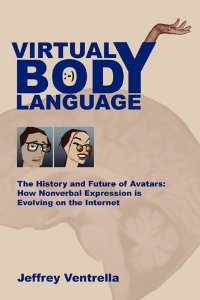
You publish non-fiction. If you are an expert in your field and have written a non-fiction book, the stigma that seems to be attached to self-published fiction does not apply. Take my brother. Please! jeffbookJeffrey Ventrella is an MIT graduate who has taught college courses and travels the world giving lectures on computer stuff I don’t understand. He’s self-published a few books that he sells at his lectures, and this is common and accepted. Many if not most lecturers do this. (Also in this category would be gaming books, riddle books, inspirational books and the like.)

You publish art books, comics or graphic novels. No problem here. Even though the graphic novels and comics are technically “fiction,” usually what you are publishing is artwork that has already been ‘published’ on the web or in a newspaper, and your fans want the collection.

You already have a following. Some well known authors are now self-publishing their new books. This is a strategic decision. As one author pointed out, he may only sell half of what he used to this way (since his self-published books are not being carried in the stores) but he’s keeping a larger percentage of the money so he personally comes out ahead. It’s your choice here — I don’t see how this will help grow your audience — but hey, if you’re at that stage of your career, you’re probably not reading this blog anyway.

What I’m really cautioning against is self-publishing your fiction if you are a starting author. Agents and editors pay attention to these things (as do conventions and writing conferences that won’t invite you because of it). Working your way up the chain to the bigger publishers requires you being taken seriously at every step, and putting out your own book, no matter how good it is, doesn’t help you there. Anyone can publish a book these days (and with scam companies like Publish America, they can be fooled into thinking it’s not self-published, but that’s another topic).

Sometimes people ask me, “How much did it cost you to publish your books?” This is somewhat insulting. I always like to point out that I haven’t paid a cent, and in fact, I get a nice royalty check every six months. If you are a creative person (artist, musician, writer), the money should only travel in one direction.

And now, two final disclaimers. First, remember that there are exceptions always. Some authors have set up their own publishing companies. They hire publicists and artists, recruit other writers, and have editors review their own works before they publish. And some of these are very successful and have good reputations. As I said, these are the exceptions. Don’t think that just because they did that you can too.

Second, keep in mind that the publishing industry is changing daily. If what you do works, then it works. All I’m trying to say is that you need to know what you’re getting into and what the odds are before you jump into the deep end of the pool.

Interview with Author Myke Cole

MICHAEL A. VENTRELLA: I’m pleased to be interviewing author Myke Cole, who constantly upstages me whenever we’re on a panel together at a convention. Headshots of Myke ColeAs a secu­rity con­tractor, gov­ern­ment civilian and mil­i­tary officer, Myke’s career has run the gamut from Coun­tert­er­rorism to Cyber War­fare to Fed­eral Law Enforce­ment. Thank goodness for fantasy.

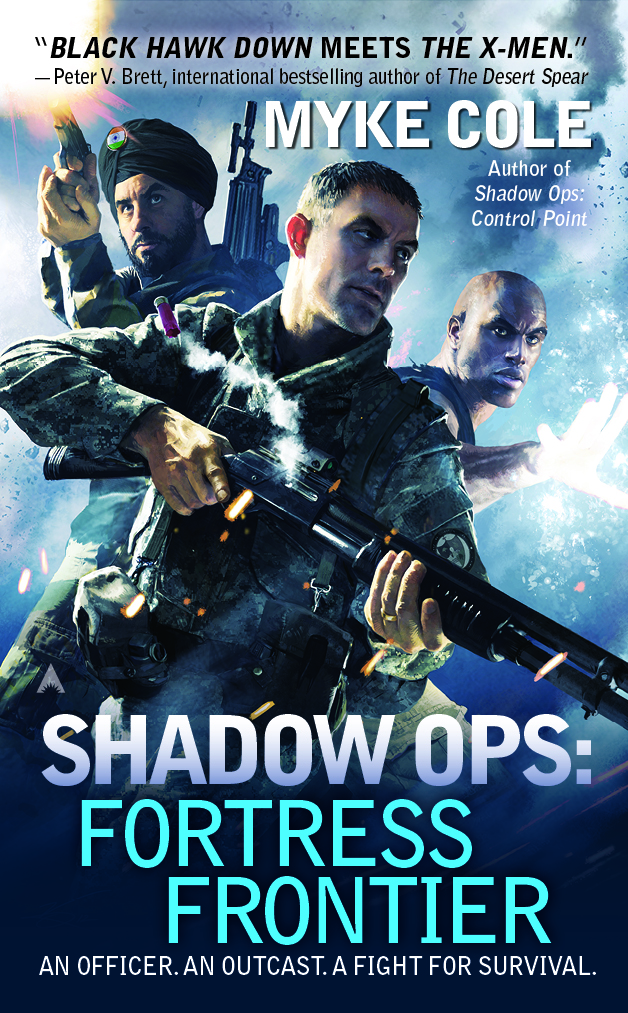
Myke, let’s start with the big news about your latest book FORTRESS FRONTIER. Give us a hint of what it’s about.

MYKE COLE: FORTRESS FRONTIER is the second book in my SHADOW OPS military fantasy series. It tells the story of a military bureaucrat suddenly forced to take command of a combat outpost against hopeless odds. The book explores the question we all ask ourselves: how would I stand up in a crisis? What would I do if I were truly tested?

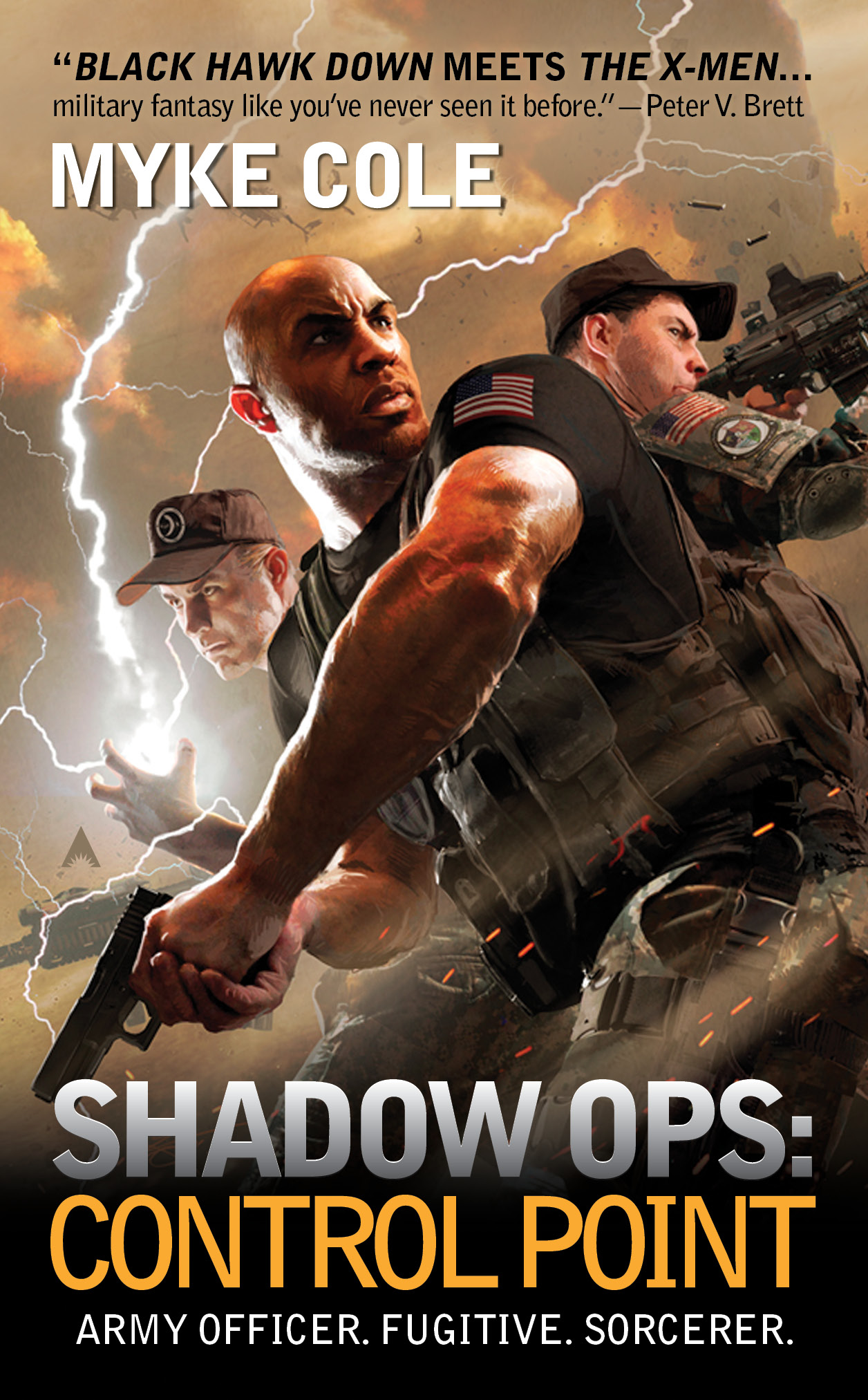
Oscar Britton, the main character in CONTROL POINT (SHADOW OPS #1) is a character in FORTRESS FRONTIER, but not the protagonist. I always intended to use a ensemble cast in this series, and FORTRESS FRONTIER is the first step in that direction.

VENTRELLA: How are you promoting it?

COLE: The same way I promoted CONTROL POINT: I’m carpet bombing the Internet with guest blog posts, interviews, giveaway contests and excerpts. I just put out a book trailer. I’m getting out to cons as much as I can. I just got back from Confusion, and I’ll be hitting Boskone and Lunacon in the next two months.

But the biggest thing I’m doing? Not being a dick. I don’t bear-bait or take polarizing stances in public. I don’t tear other people down. I respond to my fans when they email or @ me. I have adhesive backed bookplates that I can sign and send to people if they want an autographed copy of my work, but don’t want to pay the high price of shipping a book back and forth. I generally try to be accessible, available and kind to people, whether they’re industry pros, personal friends or fans I’ve never met before. That’s rarer than you’d think, and it goes a long way.

VENTRELLA: Tell us about the Shadow Ops series.

COLE: Peter V. Brett described it best when he called it “Blackhawk Down meets the X-Men.” It’s as honest a look I can provide into how the US military would deal with the existence of magic. It deals with some tough issues like the conflict between liberty and security in a free society, but it’s also crammed full of giant explosions and helicopter gunships squaring off against rocs. Win-win, if you ask me.

VENTRELLA: Do you have a set series in mind? In other words, do you have a plan for a specific number of books in the series?

COLE: I’m under contract for 6 books right now. BREACH ZONE will complete the arc of this particular story, but the other 3 will also be SHADOW OPS books. ShadowOps_FortressFrontier_US_Final1Books 4 and 5 will be prequels, taking place in the early days of the Great Reawakening before CONTROL POINT. Book 6 will follow an ancillary character from FORTRESS FRONTIER on his own adventure.

After that, I’ll take a look at the state of publishing and book selling, see how fans are reacting to my work, and decide where to go next.

VENTRELLA: I have to admit that “military fantasy” is a genre with which I am unfamiliar. Was that a hard sell to agents and editors?

COLE: I only ever tried to sell it to one agent – Joshua Bilmes. He has been a dear friend for over a decade now, and from our first conversation, I knew he was the only person in the world I wanted to represent me. He rejected 3 novels from me over 7 years before finally agreeing to represent CONTROL POINT, and a lot of people suggested I try other agents. But I never did. It was going to be Joshua, or it was never going to be.

Editors were a different story. They did balk at a blending of two genres that appeal to disparate audiences. When CONTROL POINT went out to market, it garnered rejection after rejection, many with comments like, “the story seems unsure of its voice.” I had almost given up hope when Anne Sowards made the offer.

VENTRELLA: How did you obtain Joshua Bilmes?

COLE: How did I “obtain” him? That makes it sound like I have him trussed up in my desk drawer. I knew of Joshua by doing research on who was representing authors I admired. I then deliberately sought him out at a SFWA party at Philcon in 2003. Fortunately, we hit it off amazingly, stayed up talking until 3 AM, and have been close friends ever since. As I said earlier, Joshua rejected 3 novels over 7 years from me. All that time we were visiting one another (I lived in DC at the time), exchanging phone calls and emails. The friendship was always separate from our business relationship.

But, ultimately, how did I “obtain” him? I wrote a good book and sent it to him. That’s the only way anyone ever gets an agent. There is no end run.

VENTRELLA: It appears that you started off, like me, writing mostly nonfiction. Do you feel that the skills learned in writing nonfiction are comparable to writing fiction?

COLE: In the bones, sure. Good nonfiction requires solid prose styling and feel for rhythm, the beats of your sentences. You have to be interesting and construct a narrative in essays just as much as in fiction.

The real difference for me is in Law-Enforcement/Military/Intelligence writing (reports, orders, plans, analysis, etc) that is a totally different animal.

VENTRELLA: What was your first published piece of fiction and how did you get that published?

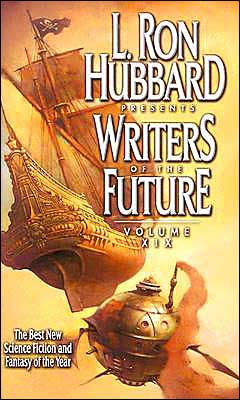
COLE: Let’s talk about the first piece of fiction I had professionally published. That would be “Blood and Horses,” a military SF short that took 3rd in the Writers of the Future contest and was published in Vol. XIX. wotf191I did it the old fashioned way, I entered a story every quarter, without fail, for 5 years.

Now, it was a great experience and there’s no doubt that it launched my career. I learned a ton out in LA, developed some critical contacts, and got the shot in the arm I needed to keep going. Unfortunately, I later learned that the contest is not firewalled from the Church of Scientology, and there are personal and financial ties there. I certainly won’t judge the beliefs of the church (or of any faith), but there’s enough reporting of physical/financial abuse tied to them that I am now very uncomfortable with having participated. There’s nothing I can do about it now, other than caution new writers who are considering getting involved.

VENTRELLA: Let’s talk about writing. Are you someone who outlines heavily or are you a “pantser”?

COLE: I am an uber outliner. I frequently have outlines as long as 50-100 pages before I write a lick of prose. I also submit my outlines for feedback before beginning prose. This way, I don’t wind up with a problem later in the manuscript that forces me to throw out 30,000 words at the 11th hour. Oh, wait. That happens all the time anyway. *sigh*

VENTRELLA: Do you start with an idea, a setting, or a character?

COLE: In the case of the SHADOW OPS series, I started with an idea: “How would the US military handle magic?”

VENTRELLA: What sort of research do you do when building a character (or a setting or plotline, for that matter)?

I use the Internet almost exclusively. It’s rare I can’t find intimate details on almost any topic (I had to research heavy crane operations for BREACH ZONE). When I hit walls on Wikipedia, I turn to friends and sometimes acquaintances and fans I know through social media.

When all else fails, I make it up. These are fantasy novels.

VENTRELLA: What techniques do you use to make your hero someone with whom the reader can relate?

COLE: The irony here is that the technique I used arguably failed. I made Oscar Britton, the protagonist of CONTROL POINT as human as possible. He’s wavering, indecisive, terrified of the decisions that face him. I feel confident that is an accurate portrayal of how a person of his background (bad family, no sense of rootedness) would handle the situation he finds himself in, but it’s also the most consistent criticism of the novel. In the end, I don’t think readers want real characters. They want dramatic, inspiring characters that feel real. There’s a big difference there.

VENTRELLA: What do you do to establish a believable fantasy world? In other words, how can you introduce the fantasy elements into the story and make them real without relying on info dumps?

COLE: I cheated. I use epigraphs at the top of each chapter that allow me to engage in as much exposition as I want without getting accused of info dumping. I mask it all in the form of quotes, newsclips, etc, but the truth is that it’s all just stuff I needed the reader to know and couldn’t think of any other way to get it to them.

VENTRELLA: When going through second and third drafts, what do you look for? What is your main goal?

COLE: First off, 2nd and 3rd drafts are hors d’oeuvres. CONTROL POINT went through 14 drafts. ShadowOpsCoverFORTRESS FRONTIER had 9. BREACH ZONE is currently on its 7th. And what is my main goal? To make the book awesome.

VENTRELLA: All writers basically write what they would like to read. So what do you like to read? Who are your favorite authors?

COLE: Totally disagree. Plenty of writers try to strike out and do something new, and others write what they think will sell. I certainly won’t pass judgment on either decision, but that’s not what I do.

My favorite authors? There isn’t room to list them all, but here’s a few: Peter V. Brett, Joe Abercrombie, Scott Lynch, George R. R. Martin, Richard K. Morgan, Naomi Novik, China Mieville, James Clavell, Bernard Cornwell, Jack Campbell, Mark Lawrence. Believe me, I could go on.

VENTRELLA: What advice would you give an aspiring author that you wish someone had given you?

Stop writing short stories. There’s like 3 people in the entire world who read short stories for pleasure. Everyone else is an aspiring writer looking for the magic key. You want to be a novelist so write novels. If you write a dynamite novel, nobody is going to care that you didn’t have a story published in F&SF or Realms of Fantasy. They’re going to buy and publish your novel because it’s awesome. Stop wasting time and learn your craft.

VENTRELLA: With the publishing industry in constant change, do you think the small press has become more acceptable, prominent, and/or desirable for beginning writers?

COLE: No.

VENTRELLA: Do you ever advise self-publishing?

Yes. I think that self-publishing is a perfectly viable way to go about bringing your work to market. The trick is making sure that you actually have work that’s good enough to bring to market and you’re just an unrecognized genius, vice doing an end-run around the bald fact that your work just isn’t there yet.

I absolutely cannot judge my own work. I need an expert to give it the nod. Self-publishing also requires a lot of project management skills. You have to be your own art director, and you have to supervise the copy-editor and the proof reader. You have to get ISBNs, you have to convert and format your text. You have to get it uploaded and figure out a good price point.

That’s a shit ton of work. I’d far rather give a professional a percentage of my profits and let them deal with all that crap.

VENTRELLA: What other projects are you working on?

COLE: After that big speech I just made about short stories and self-publishing, I’ve just completed a novelette set in the SHADOW OPS universe. It’s a piece of backstory for BREACH ZONE told from the goblin point of view. I briefly considered sending it out to short story markets, but was turned off by the market policies (no simultaneous submissions). So, now I’m toying with the idea of self-publishing it, or using my literary agency’s eBook program (for which they charge the standard fee of 15%).

14

Interview with Author Stephen Brayton

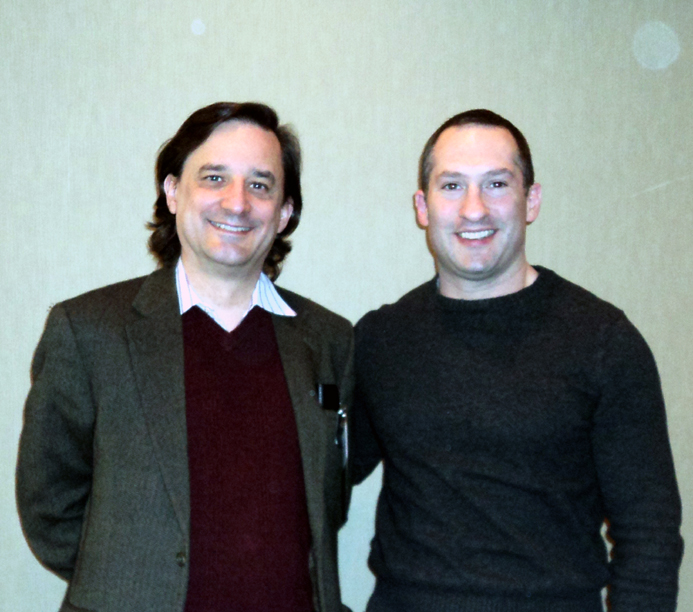
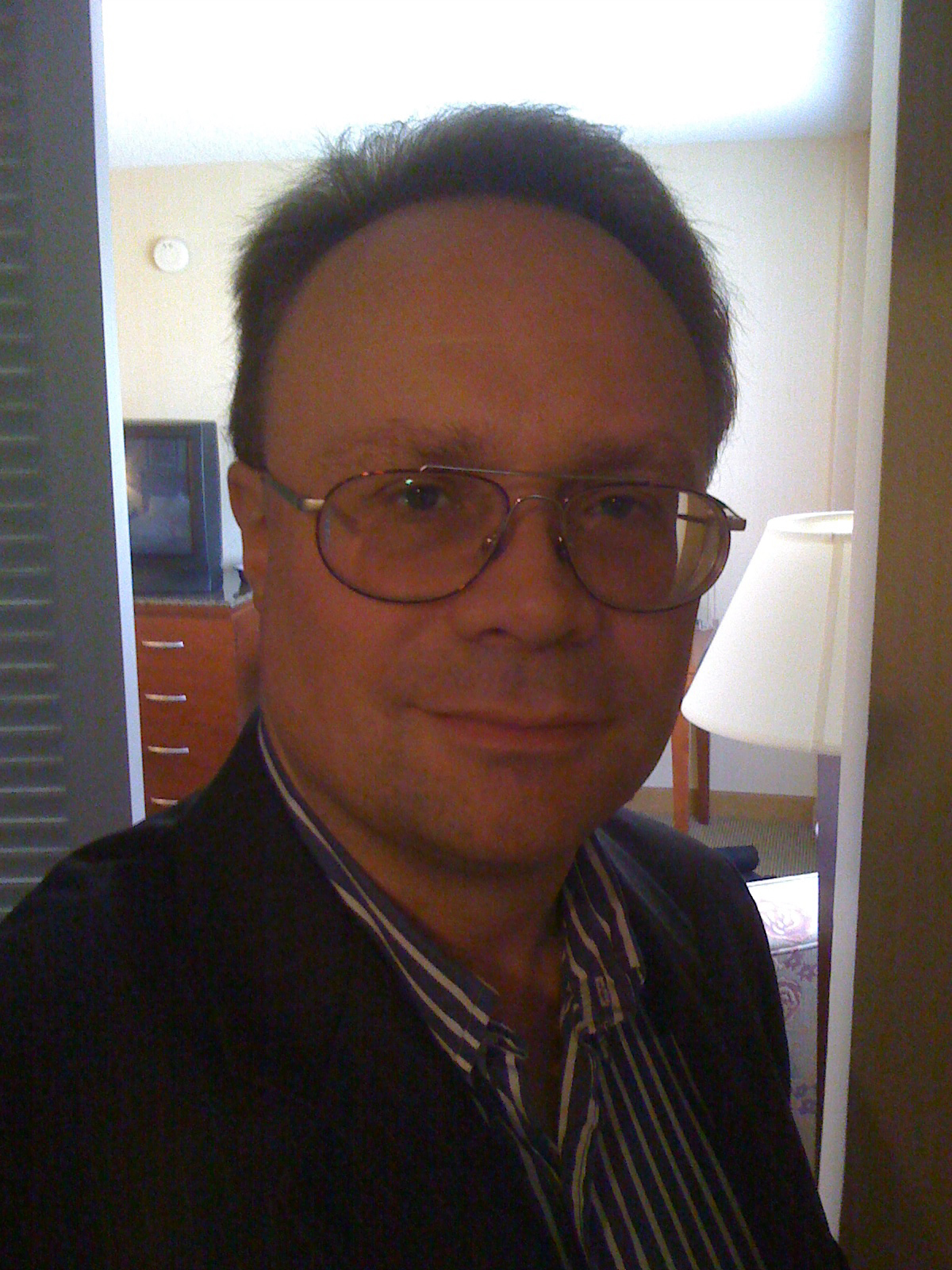
MICHAEL A. VENTRELLA: I am pleased to be interviewing Stephen L. Brayton today! He has written numerous short stories and books, mostly horror and mystery. His website is here.

Stephen, tell us about your latest work.

STPEHEN L. BRAYTON: I’m working on a book trying resolve some of the imponderable questions of life. Why do all boats have right hand drive? Why is there braille on the keys of drive through ATM machines? Does anybody really know the rules of cricket? Why do females always go to the restroom in groups?

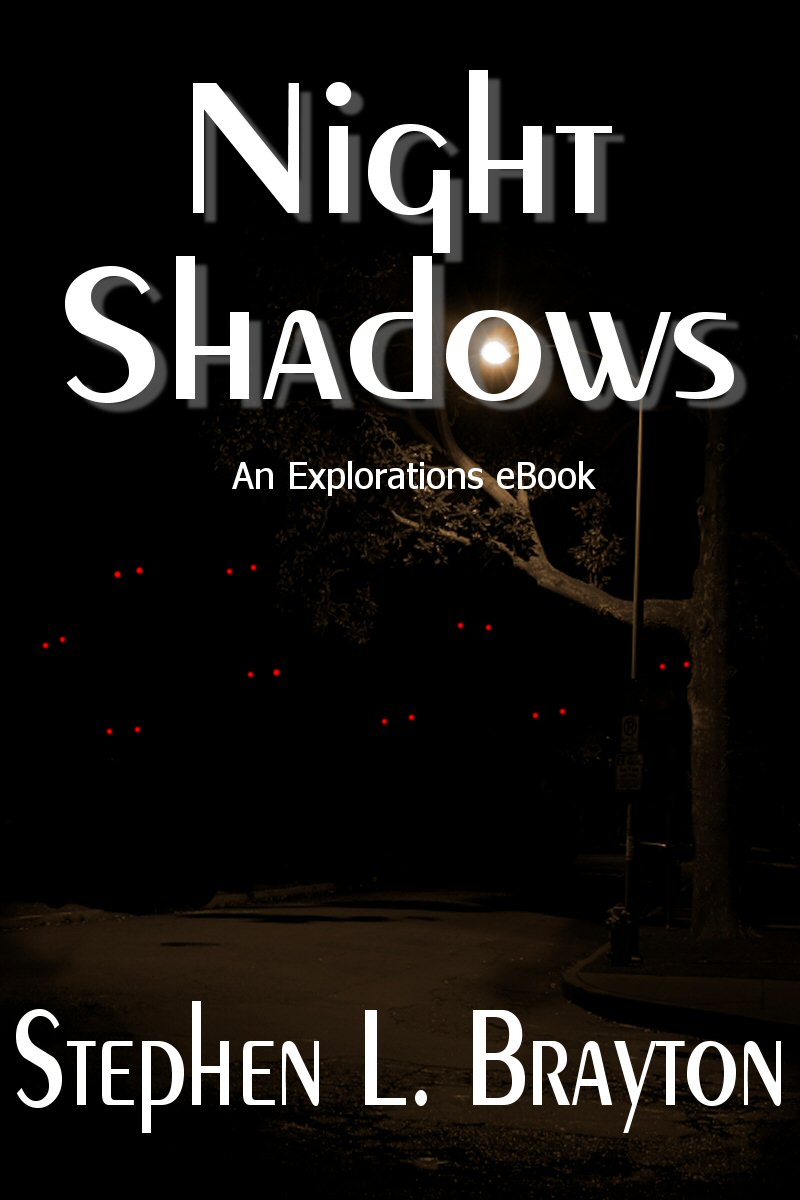
Huh? Oh, you want to know about my latest writing project. Well, it’s called ALPHA, but don’t get the idea that it’s the first book. The first book of mine to be published was called NIGHT SHADOWS, about a homicide detective and an FBI agent out to solve some supernatural murders in Des Moines.

BETA was the first book in the Mallory Petersen series. Mallory is a Fourth Degree Black Belt and private investigator in Des Moines. Most of her cases are a little odd, but every now and then she accepts something serious. In this book, she is hot on the trail of a kidnapped eight year old girl and tangles with members of a child pornography ring.

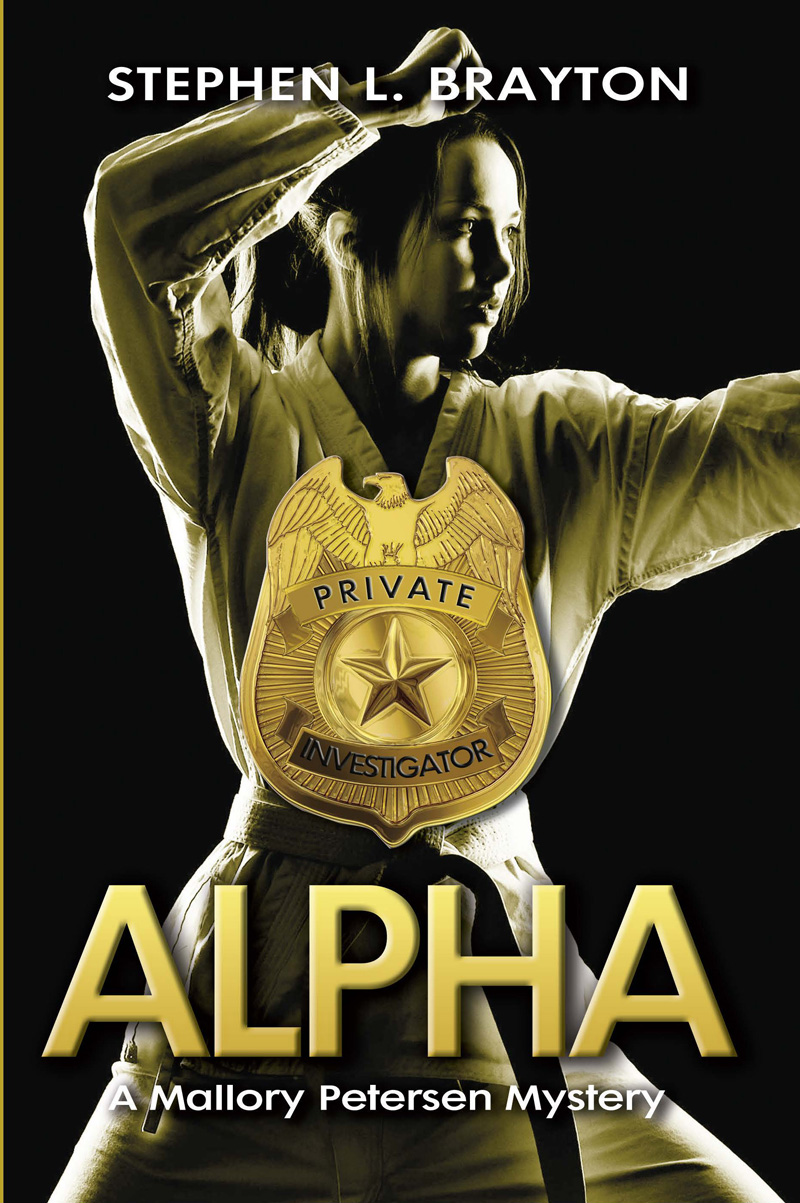
In ALPHA, published this last August, Mallory becomes involved in the investigation of the murder of her boyfriend. This time around she has to deal with crooked cops, illegal narcotics and gangs.

VENTRELLA: What is your next project?

BRAYTON: I’m working on an entirely new type of vampire story. I want these vamps to sparkle when they appear. I think it would make a great series of movies… What? Already done? Oh well.

Actually, I have three projects on my desk that I would like to finish. I’m 2/3 completed with DELTA, the next Mallory Petersen mystery. I’m also reworking the sequel to NIGHT SHADOWS. I also have another private investigator mystery’s first draft finished. It just needs hours and hours of editing and rewrites.

VENTRELLA: You’ve had more than one publisher for your works. How did you choose which publisher to use?

BRAYTON: Whichever one would succumb to blackmail first. See, I have video of…well, let’s save that for another day, shall we?

Actually, for NIGHT SHADOWS and BETA, I queried several publishers after I attended a conference in Chicago in 2009. Three of them emailed rejections, but Echelon Press accepted both novels.

A couple years later, I met Sunny Frazier, acquisition editor for Oak Tree Press and became a member of her Posse email group. In 2011, I had finished with ALPHA and queried her to see if Oak Tree would be interested in this book. She accepted and ALPHA was published as a trade paperback. The first two are currently only available as eBooks.

VENTRELLA: What advice would you give a starting author about finding a publisher?

BRAYTON: I think writers need to start promoting early. How early? Well, when did you first conceive of your idea for a story? Yes, that early. Get yourself a website, a blog, and join some of the social network sites. Attend conferences and critique groups and make contacts? How does this aid you in finding a publisher? Well, if you’re already promoting and becoming serious about writing, then it’ll be that much easier to find someone who is interested in you.

Two examples of how this can work. First, when Sunny receives a query, she doesn’t begin with the manuscript. She puts the writer’s name into an Internet search engine and sees how many times that person is listed? If the person isn’t already a presence, Sunny will be less inclined to accept the manuscript no matter how good the story is. She’s looking for marketers first, then she’ll consider the quality of the story.

A second example is, Kat, an author friend who attended a seminar in Minneapolis a couple months ago. During the two days, she attracted the attention of the presenter who became interested in Kat’s story and and asked her to finish it and submit it.

These are two of the ways to find a publisher. Then, it’s up to the writer to do some homework. Check into the publisher and find out how they operate. Do authors have multiple books with the same publisher? How do they operate? How much work are they going to put in to promote your book and how much are you going to have to do? What promotional ideas do they have?

VENTRELLA: What are the disadvantages and advantages of using a small publisher?

BRAYTON: Disadvantages: they don’t have the financial means to give you a splashy promotion. Of course, nowadays, neither do the big guys. All publishers are expecting the author to do the lion’s share of promoting. Most small publishers have a small staff who are very busy, so don’t expect things to move quickly.

Advantages: I think in some ways, the smaller presses can be more personable. Plus, they’re more willing to accept new authors because they’re looking for business. They can’t afford the well established names but there are some popular writers who have had a fair amount of success with the indies.

VENTRELLA: Do you believe that anyone can be a fiction writer or is the ability to tell a story more of an innate thing?

BRAYTON: I think everybody tells stories. Just eavesdrop on a conversation at a restaurant or a bar or when friends gather. Everybody is telling stories. Sometimes the stories relate a true incident and sometimes the person will, uh, stretch the truth to sensationalize the story.

It’s a different matter if the person can take pen to paper to tell the story in a way that is concise, has a beginning, middle, and ending. Does the person know how to follow simple grammar/punctuation/spelling rules and know when to break them? Is the story worth telling or is the person just trying to tell what happened at work today?

Serious writers will take the time to learn the craft, learn from others, and constantly work to improve.

VENTRELLA: When creating believable characters, what process do you use?

BRAYTON: I remember when I created Mallory Petersen. Nobody told me to build a character profile, I just did it. It made sense to figure out all I could about the character. Likes and dislikes, personality, quirks, favorite color and flower. The car she drives, whether she rents or owns a residence. Her friends and enemies. I don’t do this with every character (although I should), but I know enough about my characters, right now, to make them vivid and memorable. When some secondary character needs more attention, then I’ll go back to the profile and fill in a bit more.

Because I write about a woman as my main character, I am constantly asking women if I’ve stayed true to the gender. Do I understand how women act and react? Is the personality too rough or too feminine? Do I understand how a woman feels when attracted to a man? This is my challenge, to keep Mallory’s character real in each book.
Most of the time when I research a story, I’ll visit the locations for each scene and try to envision how the character will behave during the scene. I’ll try to get into the character’s head and figure out what she’s thinking and if it seems reasonable, then I’ll go with it.

VENTRELLA: What is the best way for an author to use the services of an editor?

BRAYTON: I have discovered many ways to edit a manuscript. Unfortunately, I am unable to find the time to incorporate most of them. I’d love to have a three other people to run through the story. One reads it aloud, one reads along silently, and the third one listens. Then they switch roles. This way, everybody has a different perspective and a viewpoint I might not have considered.

Of course, there are critique groups which are invaluable. You can also pay for editing, although be careful because if you get someone who doesn’t know what he/she is doing, then you’ve wasted your money. I wouldn’t waste time and money on a professional editor unless you can afford it.

Besides, once your publisher’s editor gets it, that person is going to find mistakes and make suggestions. So clean it up the best you can before it’s submitted. You’ll save everybody a lot of time.

VENTRELLA: What is your writing process? Do you outline heavily, for instance?

BRAYTON: I’ve been learning that part of my problem is I don’t outline enough. I’m so eager to get to writing, I don’t think through a lot of the potential problems and pitfalls of the story and end up wasting some time having to research and possibly rewriting sections. This is what I’m currently experiencing with DELTA. I wrote a chapter and now I’m going to rewrite it because I talked with another author about how to strengthen the scene. If I would have researched the issue a little more in depth beforehand, I might have saved some time.

Yes, I outline. Then I write linearly, that is, from Chapter One onward. Normally, I write at work (after all my duties are done, of course) because it’s quiet with few distractions. I usually have NPR classical music on for background noise. I write longhand and my first edit is inputting the longhand onto the computer. Then I’ll read chapters to a critique group and jot down their advice.

VENTRELLA: What have you done to promote your work?

BRAYTON: Social networking. Blogtalkradio. Guest posts on other blogs. Internet interviews. Radio interviews. I was featured in a local television newscast. Library and bookstore appearances. I leave business cards wherever I go and put them in the mail when sending bill payments. I have family and friends who talk me up to others.

I’m open to discussing any other venues. I think authors need to look at non-traditional ways and places to promote. I know a couple of authors who co-write a series about animals. They attended the local Pet Exposition to sell their books. This is the type of thing authors need to look at when marketing.

VENTRELLA: What general advice do you have for the aspiring author that you wish someone had given you when you began writing?

BRAYTON: Do your homework! I think I covered a lot of it above when I discussed promoting early. Learn the craft of writing.

Figure out what you want to accomplish with your writing. Do you want to make money? Be famous? Be on the New York Times bestseller list? Entertain local folks? Do you want to write just for your family and small group of friends? Whichever you decide, invest some time to research the best method of accomplishing it.

If you’re going to be serious about writing, be serious. I’m get tired of hearing authors who are still outlining after several years or still developing characters or constantly rewrite the first chapter or switch stories because one isn’t working out. Come on! Knock it off and write! Stop the excuses and write. Sure, there are ‘life’ matters to attend to, but serious writers will make time to write. Nobody had to tell me to write, I wanted to write. I still want to write. I get antsy if I don’t. I feel as if I’m letting others and myself down by not finishing that next chapter.

Learn from others and find your way of creating and writing a story.

Interview with Author Melinda Snodgrass

MICHAEL A. VENTRELLA: Today, I am very pleased to be interviewing Melinda Snodgrass! Melinda Snodgrass studied opera at the Conservatory of Vienna in Austria, graduated from U.N.M. with a degree in history, and went on to Law School. She practiced for three years, and discovered that while she loved the law she hated lawyers — so she began writing science fiction novels.

In 1988 she accepted a job on Star Trek: The Next Generation, and began her Hollywood career where she has worked on staff on numerous shows, written pilots and feature films. Her novels THE EDGE OF REASON, and THE EDGE OF RUIN are currently available from Tor books. She has delivered the first two novels in a new Urban Fantasy series featuring blood-sucking lawyers, THIS CASE IS GONNA KILL ME, and BOX OFFICE POISON, and has a story in the latest Wild Card book, FORT FREAK. She is currently adapting Wild Cards as a motion picture for Universal Pictures. Her passion (aside from writing) is riding her Lusitano stallion Vento da Broga.

Let’s start by talking about the law. It seems that many writers of speculative fiction are also lawyers (myself included). What is it about the law that makes people want to escape so much?

MELINDA SNODGRASS: I went into law thinking it was all about truth and justice. It isn’t. It’s about process, and after three years in law school I realized that was okay too. Law = civilization, and our job as attorneys is to reach some level of basic fairness. I also think that much of law is contracts, and family law. The big Constitutional cases rarely turn up in an average law office, and that was what really interested me. I am great admirer of the Constitution. It is a beautiful document that was designed to grown, stretch and change, and aside from one disastrous episode (prohibition) it has always been interpreted to expand rights. That’s it’s genius.

VENTRELLA: Absolutely agree. It’s why I like being a criminal defense attorney — I do get to argue the Constitution from time to time.

You’ve used your legal experience well in your work, and especially in the excellent Star Trek: Next Generation episode “The Measure of Man.” How did you decide upon that plotline and theme? (Reading Dred Scott?)

SNODGRASS: Yes, it was the Dred Scott decision. It worked perfectly to set up a conflict between Data and Star Fleet command. I also had a navy pilot buddy who gave me the most powerful point of all. He told me that when a ship is at sea, and you can’t utilize JAG officers then the Captain always defends and the first officer prosecutes. To pit Ricker and Picard was just too perfect.

VENTRELLA: Did the story change much between your script and what we saw on screen? If so, what changes did you like and/or dislike?

SNODGRASS: There were virtually no changes. The only thing that happened was a number of scenes got cut because the script ran very long. Now all of those deleted scenes have been restored to the new Blue Ray DVD release that is going to happen in December so folks will be able to compare the “as aired” version with the extended version. There are a couple of scenes I’m really glad are back in.

VENTRELLA: Let’s discuss writing for television. How did you get your break there?

SNODGRASS: I owe it all to George R.R. Martin. He had gone out to Hollywood to write for first the New Twilight Zone, and then for Beauty and the Beast. He called me, and said “Hey, I think you’d be pretty good at this screenwriting thing. It works to all of your strengths – strong plotting, powerful characters, and good dialog, and if you write a spec script I will show it to my agent.” I picked Star Trek because I had loved original Trek as a kid, and I didn’t want to put George on the spot if I wrote a crappy B&B script.

VENTRELLA: How does writing for television compare to writing a short story or novel?

SNODGRASS: Different mediums and you always have to keep that in mind. A short story or a novel can stand if it’s got enough atmosphere and is evocative even if it’s light on plot. That just won’t work in a screenplay. Also interior dialog can work in prose, and it has to be changed to actual dialog to work on screen. You have to be able to see it and hear – film is a visual medium.

VENTRELLA: While there are plenty of science fiction shows on TV these days, there really aren’t any traditional space-faring shows like Star Trek or Babylon 5 or Firefly any more (except perhaps for Dr. Who). In fact, even in literature, there seems to be less and less. Why do you think that is?

SNODGRASS: Expense is the primary reason. Special effects cost a lot of money. I also think there is the fear of comparison to Star Trek, and that it can’t be made different or interesting. I don’t agree that space dying out in literature. I think we are seeing a renaissance of space opera. For awhile writers did seem to think space based stories were too juvenile, but with the success of books like LEVIATHAN WAKES, and the whole collection of British space opera writers I think it’s a booming field. I, for one, am very happy about that. It’s what I like to read, and my next big project is a space opera series.

VENTRELLA: How did you get your first “big break” in publishing?

SNODGRASS: I had written my first novel in the Federal-court-judge-rides-circuit-in-outer-space series, but I couldn’t get any traction. David Hartwell offered me a chance to write a Star Trek novel, and I did. He also counseled me to write only one. I have followed that advice to the letter. The Star Trek novel was THE TEARS OF THE SINGERS.

VENTRELLA: I remember reading that years ago and really enjoying it!

Aspiring authors often seem to think that writing a book is easy and your first one is sure to be a huge hit. What writing experience did you have prior to publication?

SNODGRASS: As I said before I had trouble getting traction with my S.F. books until TEARS. But I’ve been very lucky. I broke in right at the big boom in romance. I had quit the law firm, and I needed to pay the mortgage so I wrote six romance novels under pseudonyms while I also worked on my CIRCUIT novel. The romances sold, had the advantage of teaching me how to write to deadline, and finish a book (something people have trouble with), and they paid my bills.

VENTRELLA: You certainly have not shied away from politics and religion as themes. In fact, your Edge novels deal with that theme. What spurred you to write that series?

SNODGRASS: It was New Year’s Even 1999. I was sitting with Steve Gould, and Laura Mixon, Walter Jon Williams, and several other friends in the bar at El Pinto in Albuquerque. We were drinking margaritas and watching the celebrations around the world as we entered the twenty-first century. We being science fiction writers were bitching that it was actually going to be the twenty-first century, but then a new bitch occurred to me, and I asked the group, “Where is my Moon base and my air car? Why are at the dawn of the 21st century, and people put more credence in guardian angels and healing crystals and tarot cards then they do in science?” Then I thought, maybe there’s an outside force driving us to be ignorant and hateful. That was the start of the idea.

VENTRELLA: You’ve also discussed religion and politics on your blog and Facebook. Now, as a starting writer, I’ve been advised to avoid these subjects, but I ignored that advice. Do you think writers should avoid these issues for fear of alienating potential readers?

SNODGRASS: I think people should write stories that interest them. Stories they would like to read. Of course there are going to be readers who won’t like those stories, but that’s life. Some people like chocolate ice cream and others like vanilla. You can’t produce something that makes everybody happy so you may as well write what makes you happy. Writing is hard, you shouldn’t write something if you don’t enjoy it.

VENTRELLA: To relate back to an earlier question, do you think the current anti-science nature of the religious right has had an effect on hard science in literature?

SNODGRASS: I don’t think it’s affected us in the science fiction field. I think we just ignore the gibberish about evolution not being true, or the Earth being 6000 years old. Most of us love science fiction because we love science and the wonder of discovery.

VENTRELLA: Many people would also know you from the Wild Card series with George R.R. Martin. How did that association begin?

SNODGRASS: George and I were in a role playing group with a lot of other writers – Walter Jon Williams, Victor Milan, John Jos. Miller. Vic had given George Superworld for Christmas and we were playing the game obsessively with George as our game master. One day we had played until 2 or 3 in the morning, George had stayed over at my house, and he wandered out for breakfast and said, “there has to be some way to turn this obsession into money.” That’s when we started to discuss it as a shared world anthology. We cooked it up in my dining room over pancakes and bacon and lots of coffee. I came up with the aliens and the virus because George didn’t want the usual stupid superhero origin story – “struck by lightning while standing in a toxic waste dump”.

VENTRELLA: What do you think makes the Wild Card series so popular?

SNODGRASS: The characters and their interactions. The real world problems they face. Steve Leigh wrote an absolutely heartbreaking story for FORT FREAK about a long time character who is three people fused into one body dealing with the onset of Alzheimer’s in one of the members. It literally brought me to tears. You’re not going to see something like that in most comic books.

VENTRELLA: Who are your favorite authors?

SNODGRASS: God, that’s a really hard question. Outside of the field I often reread John le Carre and Georgette Heyer. In the field I have so many writers I love that it’s hard to narrow it down. Heinlein juveniles. Clifford Simak’s WAY STATION, new young writers like James S.A. Corey and Ian Tregillis. George doesn’t need a plug from me. Most of the world knows his genius and abilities. And I tend to reread The Lord of Rings by J.R.R. Tolkien over and over. I like mysteries very much – Dorothy Sayers, Elizabeth George, Michael Connelly. I could fill pages so I’ll stop with that.

VENTRELLA: What are you working on now?

SNODGRASS: I am writing the Wild Card movie for Universal pictures. I have sent a big hunk of the third Edge book to my agent. I’m writing up the proposal and chapters for my space opera series, I have another urban fantasy book due at Tor that I’m writing under a pseudonym, Phillipa Bornikova. George and I are trying to put the next Wild Card book – LOWBALL to bed. I’m really busy. Sometimes I want to take a nap.

VENTRELLA: And finally, since this is a blog for aspiring authors, what advice do you think needs to be said that hasn’t been emphasized enough?

Write what you love. Treat it like a job. And don’t break your promises to your readers/viewers. Give them the ending that you promised in the opening chapter.

Interview with author Ryk E. Spoor

MICHEAL A. VENTRELLA: I’m pleased to be interviewing author Ryk E. Spoor today!

Ryk, like many genre writers (including myself), you read science fiction from a young age and then got into gaming. What is it about role-playing games that encourages people to become writers?
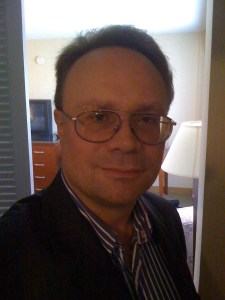
RYK SPOOR: Well, on both sides of the game – GM or player – the game itself is telling a story. It may be a very simple story, especially for beginning players or people just in it for a beer-and-pretzels amusement, but a story about how these people go out, confront problems, solve the problems, and achieve their goals. So pretty much by its very nature, RPGs make you into a storyteller … which certainly encourages you to start writing down the stories that affected you most. It’s all downhill from there.

On the GM’s side, of course, it’s even more so. You’re the person who constructs, or at the least controls and directs, the entire world. You know what the villains are doing and why, you have to figure out how they deal with things when your players do something you don’t expect (and they always do something you don’t expect), and so on. That’s pretty much what a writer does – invent a world and tell us the stories in that world. For some writers, there’s even the equivalent of those annoying plot-busting PCs; some writers find their characters taking off on their own.

So honestly, I think the fact is that the very essence of a well-run RPG is storytelling, and anyone who does that a lot will have stories they want to tell.

VENTRELLA: On a previous blog post, I wrote how important it is to make connections if you want to get ahead in the world, with publishing being no exception. Your story is a bit unusual in that regard. How did you go from being a fan/troll to a published author?

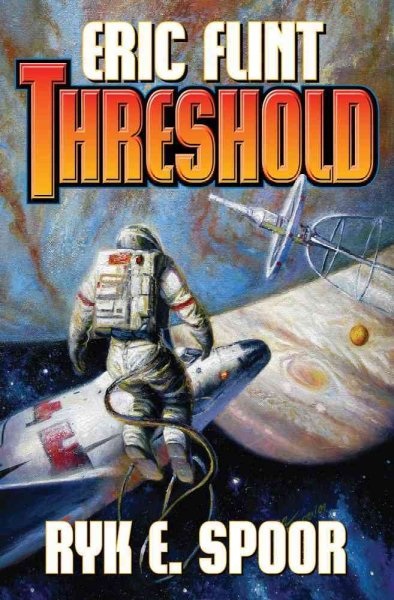
SPOOR: Heh. The short version is that I insulted the right person at the right time. I could give you the long, long version, but since this is a written (and presumably to be webbed) interview, let me just point you here; the key part starts with the sentence, “Then one day, I got into an online argument with Eric Flint”, which is a little less than halfway down that page.

VENTRELLA: Had you ever submitted any stories for publication before that?

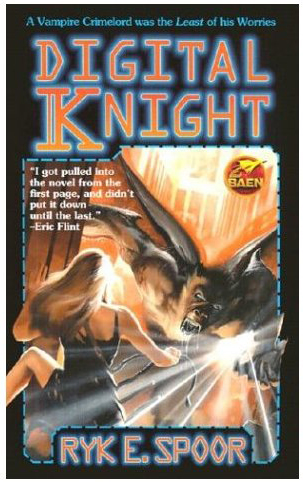
SPOOR: I actually had submitted a short story when I was 11 to a magazine (I no longer know even which one). It was some years later that I started submitting the Jason Wood stories that eventually became DIGITAL KNIGHT. All of the rejections for those stories read the same way: “This was a great story, everyone in the office loved it, but it’s way too long for magazine publication.” Of course, as individual stories, the Jason Wood stories are also far too short to be novels; they’re novelette or novella length works, which has for years been pretty much the worst length to try to publish.
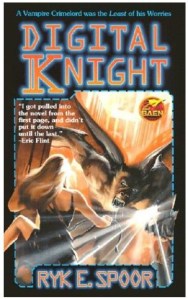
The three stories which formed the core of DIGITAL KNIGHT – “Gone in a Flash”, “Photo Finish”, and “Viewed in a Harsh Light” – were eventually collected by me and put up for electronic purchase as “Morgantown: The Jason Wood Files” at hyperbooks.com; this was long before the e-book explosion happened, of course, since they were up for several years before Baen ended up publishing me.

VENTRELLA: Who were your favorite authors when you were growing up and what was it about them that appealed to you?

SPOOR: There were a lot of them. When I was very young, the most influential was L. Frank Baum, author of the Oz books. I loved Oz – the world, the people, and the subtly macabre and more complex-than-I-appreciated universe. Laura Ingalls Wilder’s “Little House” books were very strong influences because they were a glimpse into what it was like to grow up in a world that was this one …yet not the one I knew.

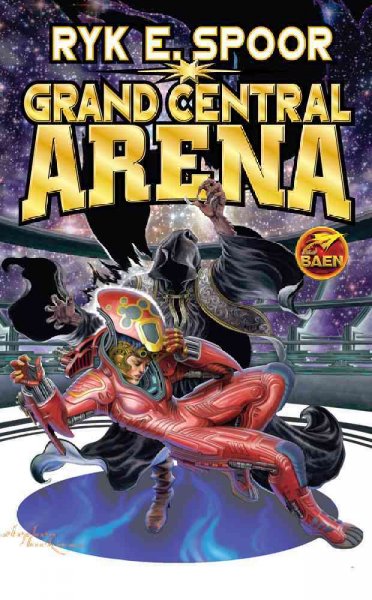
My dad had quite an SF library that I went through as I got older, but it was my 6th grade teacher, Mr. Dickinson, who introduced me to E. E. “Doc” Smith’s Lensman series by lending me a battered, somewhat cigarette-scorched copy of Second-Stage Lensmen. Doc became my single biggest influence for years; he defined “sensawunda” to me, and I in fact wrote GRAND CENTRAL ARENA specifically as a salute to him.

VENTRELLA: What is your writing process? Do you outline heavily, for instance?

SPOOR: Depends on the book, to a great extent. I have to outline when I’m working with a co-author, like Eric Flint; we discuss the general idea, then I work up an outline, he kicks holes in it, I fix it, we agree on the outline, and then I go to work.

For my own work, it still depends somewhat on which books. In DIGITAL KNIGHT, all of Jason’s major adventures were “outlined” in a single concept: the “trick” or “twist” that he uses to take down the supernatural opponent du jour. Knowing that, the only other thing I had to do was figure out who my main character was; the rest started writing itself.

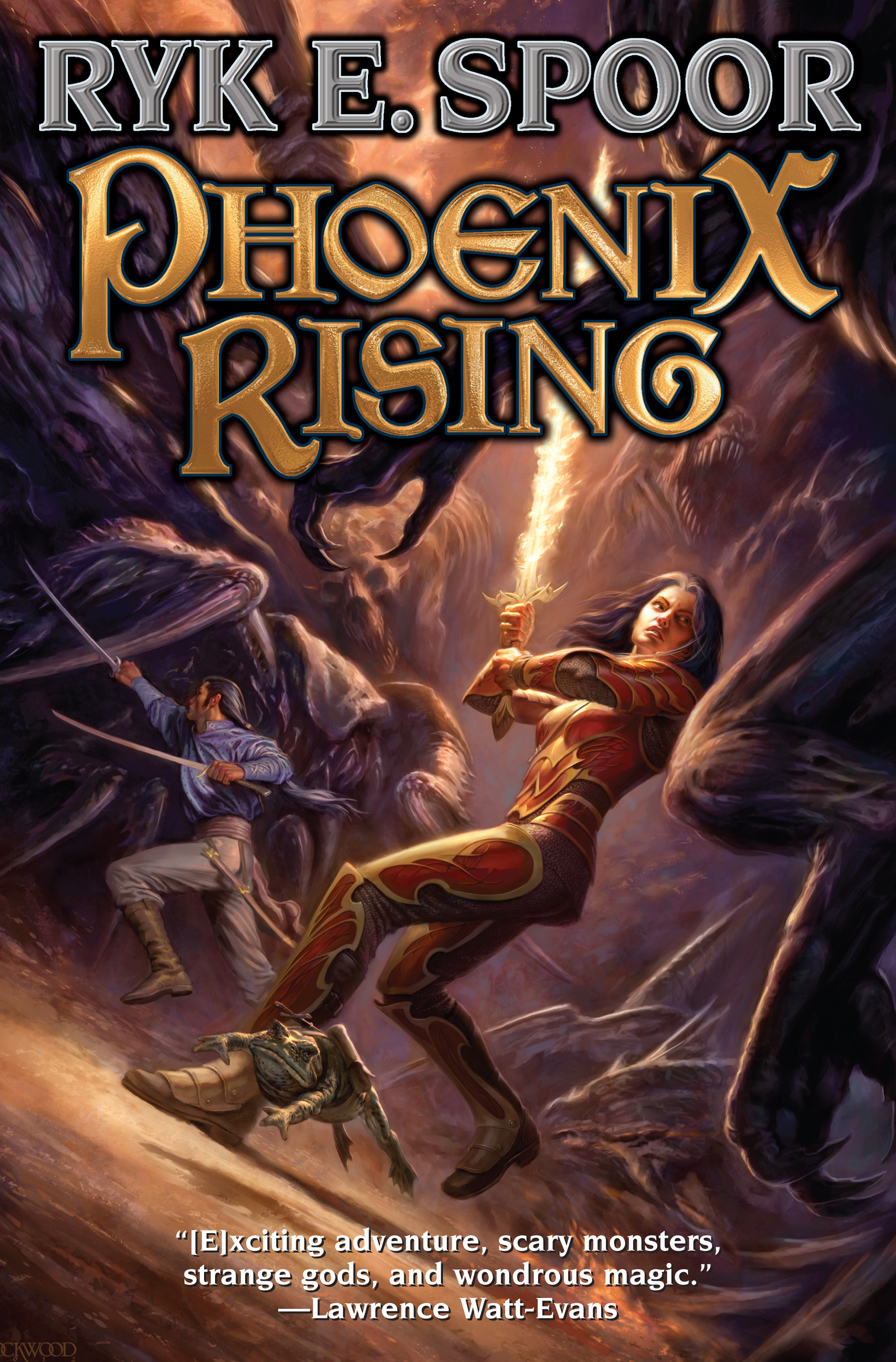
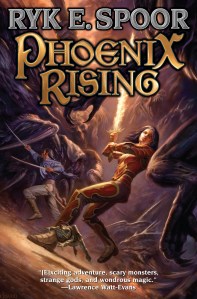
For PHOENIX RISING, I’d plotted the basic outline of Kyri’s adventures out partly during my gaming time, as Kyri was originally an RPG character. But a lot of her adventures simply fell out of the fact that I know the world so well that by now I can just write it.
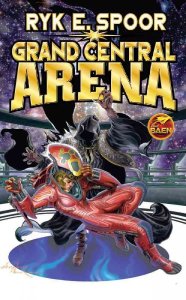
With GRAND CENTRAL ARENA I had to first construct the universe; some of that I discussed in my appearance in John Scalzi’s The Big Idea; I actually did write out an outline for it, so I could pitch it to Baen, but once I had the outline I started writing. In many ways the finished product doesn’t look all that much like the outline.

But if I know what I’m writing, my process is basically just to sit down, put on my earphones, and write. I average about 1200 words per hour once I get moving, and I don’t rewrite or edit for the most part; I can’t see flaws in my own writing unless I wait something like five years, so I depend on my beta-readers and my editors to tell me when I’ve screwed up.

VENTRELLA: Tell us about PHOENIX RISING.

SPOOR: Oh, I could talk about that all day. PHOENIX RISING is the first volume in the Balanced Sword trilogy, although since I don’t yet have a contract for the other two volumes I have done my best to give it some kind of closure on its own. The basic story focuses on Kyri Vantage, who loses first her parents and then, later, her brother to unknown forces despite what everyone had thought were strong protections against evil; when she discovers just who and what was behind this, she is forced to become a living representative of a desperate, weakened god in order to bring justice to her home and eventually, she hopes, discover and destroy the true source of this evil; the events, of course, have a far greater impact and importance than Kyri recognizes at first. Other threads in the book follow the other two main characters, Tobimar Silverun and Poplock Duckweed, as they first meet each other and then eventually catch up with Kyri at a crucial moment.

This is a terribly important book to me. I wrote the first draft of Kyri’s story in 1992, and I’ve wanted to tell her story ever since; more, this is the first appearance of my fantasy world of Zarathan, which I created back in 1978 and have been building ever since. Zarathan was mentioned, very briefly, in DIGITAL KNIGHT, but there was no real vision of what it WAS in that book.

PHOENIX RISING is also quite complicated; there are threads of plot seen which are part of other stories – for instance, one character who plays a significant role for a part of the book is actually a main character in the projected Spirit Warriors trilogy, and there’s another couple of characters we see a few times who are major players in my other projected trilogy Godswar; basically the problems sweeping the world in PHOENIX RISING are so huge and complex that no one group of heroes can deal with them all; you need at least three separate groups. For the reader, I hope such things give them the feeling of a larger, more real universe, one in which there are a million stories outside of the story we’re following.

Zarathan itself is my main fantasy RPG world (to refer back to your earlier question), and I’ve been running games in it for well over 30 years now, building it, rebuilding it, and coming to a deeper understanding of the universe every day.

VENTRELLA: If I am not mistaken, you have created a universe with both fantasy and science fiction elements for your stories. How have you made the twain meet?

SPOOR: Essentially, the rule to me is that normal physics holds sway unless something changes those rules explicitly. Magic does so, some psionic capabilities do, but that means that science works just fine; it’s just a subset of the laws of nature rather than the whole thing.
It’s really not hard to combine them; as Dave Hargrave, writer of the Arduin Grimoire series of RPG supplements, put it, where’s the alien with the ray gun going to stand out more: on the streets of our cities, or in the fantasy RPG city with the fireball-flinging wizard, magic-sword wielding barbarian, and the dragon flying overhead?

The only trick, so to speak, is to have clear rules as to how the various powers behave and interact. Technology, psionics, and magic all have various advantages and disadvantages in my universe and play off each other in various ways and situations.

Really powerful magic, though, is restricted to Zarathan itself, at least until after a certain event happens, but while I’ve written one story set after that event, overall that’ll be a while before I get there.

VENTRELLA: There seems to be a trend away from science fiction, toward fantasy, steampunk, and “urban fantasy” these days. To what do you attribute that change?

SPOOR: There’s several factors. The “low-hanging fruit” in SF was all taken years ago, and general knowledge of the way science works – and doesn’t work – disseminated more and more through the population, making some of the old-school approaches no longer viable. You can’t have your characters just tinker up a spacedrive in the basement and cruise around the solar system in a homemade rocket and expect anyone to take you seriously any more.

The big news in science has also gotten, on average, a lot less immediately accessible. This is part of the overall progression of knowledge; back in the late 1800s to very early 1900s, it was still possible for one person to be “A Scientist” – someone who was an expert in more than one of the general disciplines of physics, chemistry, biology, etc. Nowadays, it’s hard to be an expert in a splinter branch of any of them. Back then, the average (reading) layman could probably grasp in general terms most, if not all, of the key problems and ideas being explored by scientists of the day; today, many of the concepts, especially in physics, require that you understand some very esoteric concepts before you even grasp the question, let alone the answer.

Fantasy is not easier to write, really, but it’s easier to make graspable because the complexity of the rules governing the world aren’t going to be more complex than the writer wants them to be. Plus, in most cases, the fantasies assume they take place on Earth or a very Earthlike world, so the reader is expected to “fill in” lots of detail all by him or herself. From a writer’s point of view, it’s also safer. No one’s going to go to Tolkien or Brooks, or me, for that matter, and tell us that our magical worlds don’t work the way we think they do. But writers of hard SF? Yeah, we’ll have people telling us when we get it wrong. Stridently, in some cases. The fact is that even if you do a lot of research, you’ll have to stop the research somewhere and get to writing … and it’s an ironclad guarantee that you stopped just before getting to some key fact that a particular group of fans consider critical.
That doesn’t mean that you can’t have similar screwups in fantasy, but those are all going to be the kind of screwups you can get in ANY story: failure of internal consistency.

I also think it’s a change in optimism that happened over the last several decades. During the late 1800s through the 1950s, science was romantic, awesome, and wondrous. It was going to solve all our problems. We were going to create new species of plants that would grow food anywhere, make space colonies on the moon and turn Mars into a second Earth. We were going to analyze the workings of the brain and abolish mental illness; we were going to cure cancer and solve the mysteries of the universe.

But science doesn’t actually work that way, and as it ran into the fact that some problems are very resistant to solution (commercial fusion and true artificial intelligence, still 20 years away and have been all my life!), the general public began to also see some of the consequences of misuse of technology (pollution, etc.) and associate this WITH technology. The shiny glow of hope faded and the chrome-plated future got tarnished. But shining worlds of high fantasy can’t be rendered hopeless by the same process … and one can also, of course, apply the same overlay of grimness and edginess to fantasy as one can to SF, so the net result is much more fantasy and less clear SF.

(of course, we’ll note that this assumes that there’s a clear division between SF and fantasy, which isn’t the case)

VENTRELLA: Creating new worlds is fun but also difficult in that there is the need to explain the world without massive info dumps. How do you do it?

SPOOR: I’m not sure I’ve mastered it yet. Sometimes I feel like I do nothing in the beginning of a new book but try to dump the info into the readers’ head.

The main techniques that I use are the tried-and-true methods of either (A) having the characters discuss key information as part of a normal conversation – usually with one character who has some reason not to know the key info, so they’re not “As you know, Bob …” type discussions, or (B) having the information emerge from the events of the story.

This latter technique is one that is best used for pieces of information which will actually become vital sometime later in the story – Jane’s doing X, which happens to cause Y to happen, leading her to realize (along with the reader) that Z is one of the characteristics of the world. Twenty chapters later, Jane realizes that applying Z will get her out of the situation she’s in. This allows the reader to follow along and maybe guess what Jane’s going to do with this new-found knowledge. I did this in Grand Central Arena to plant all the clues for how Ariane would be able to defeat Amas-Garao in the final Challenge.
VENTRELLA: I’ve recently realized that all my stories have the everyday person who is stuck in a situation and must overcome great odds through bravery and intellect – the reluctant hero who has no extraordinary skills. Have you find any connecting threads for your protagonists?

SPOOR: I like my heroes Heroic and my villans Villanous, for the most part. I don’t usually have reluctant heroes, although inexperienced and sometimes clueless heroes, that’s fine. As I tend to write my stories (just as I run my RPGs) at a high power level, they all tend to be at the least very highly competent and at the most quite superhuman in order to survive the threats they’re up against.

All of my characters – heroes and villains – tend to be smart. That doesn’t mean they don’t make mistakes or misjudge things, but that they try not to do obviously stupid actions. The really smart ones often think many steps ahead. I want to see smart heroes VS smart villains

Most of my characters tend to be fairly modest, often underestimating their own abilities. The few arrogant ones (like A.J. Baker) usually get smacked down fairly regularly.

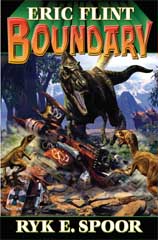
High Melodrama is my preference in writing, and most of my characters share that preference in their behavior. I have to rein in that tendency when writing hard SF like Boundary, of course.

VENTRELLA: How do you get inside the minds of your characters to make sure they all don’t talk and act alike?

SPOOR: Heh. Sometimes I don’t think they do. I actually don’t have a … technique per se. I just get to know who they are and then I know what they’d say, and how they’d say it. I couldn’t tell you why, but I know when something is right and when it isn’t, so I write it the way that sounds right.

VENTRELLA: Ryk, we met while on a panel together at Albacon some years ago. How important is it to attend conventions to promote yourself?

SPOOR: I honestly can’t say; I can’t afford to go to many at all, so if it’s important, I’m in deep doo-doo. Aside from Albacon, I used to go to Genericon; other than that I was at I-Con once, the World Fantasy Convention when it was up in Saratoga, and Worldcon when it was in Boston, but I haven’t done much promoting. I’m terrible at promoting, actually. I hate it; I’d rather spend my time writing, unless the promotion’s something fun and flashy in and of itself.

VENTRELLA: What bugs you most about the publishing industry and what would you change about it if you could?

SPOOR: I’ve had generally good experiences with publishing, so I have minimal criticisms, aside from saying that the publishers who are clinging to DRM are gonna shoot themselves in the foot. About the only thing that’s annoying is long delays in reaction times, but alas, there’s so much slush and so hard to get people to read it, so there’s not likely to be much change there.
I think publishers need to look at reaching out to the self-publishing industry and offering professional services such as editing in an organized sense. This might be one thing that can keep them alive in the changing landscape of publication.

VENTRELLA: Who do you like to read for pleasure?

There’s so many names. The old classics like RAH, Heinlein, etc., still work. Terry Brooks usually gives a good entertaining read. My preference is for worlds that are overall brighter than this one, or whose heroes at least shine brightly, so a lot of current writers tend to skirt the edge of that threshold, like Harry Connolly and Charles Stross.

Lately I’ve been reading a lot of manga, especially Naruto and Fullmetal Alchemist – some of the best stories I’ve ever read, actually.

Out of genre, some of my favorite comfort reads are Nero Wolfe novels or the adventure classics like Scaramouche, the Count of Monte-Cristo, Scarlet Pimpernel, etc.

Honestly, however, I’ve had a lot less time to read since I became an author. I probably read more stuff to my kids than I do to myself.

VENTRELLA: What advice would you give to a starting author that you wish someone had given you?

Heh. I never learned from advice, so I’m terrible at giving it. Only two things, really; they’re pieces of advice someone did tell me eventually, but not when I started writing:

1) Never make it easy on your characters.

2) Don’t let anyone tell you there’s one particular way to write; “There are nine-and-sixty ways to compose tribal lays, and every single one of them is right.” That said, writing takes work, it’s not magic.

VENTRELLA: What is the biggest mistake you see aspiring authors make?

SPOOR: Again, two, I think.

1) Thinking they have some precious, original idea that someone will steal. No, you don’t. Any idea you have, someone else already had. Probably five or ten someones. And they did it at least twenty years and maybe as many as two thousand years before you think they could possibly have done it. No one’s trying to steal your ideas. Especially other writers; we have more ideas already than we know what to do with.

2) Not reading. Especially in the genre. This would partially alleviate #1, because you’d be seeing all the other ideas. Unfortunately, a lot of new authors appear to be coming in mostly from non-print media. You really should read quite a bit of the older stuff, then the newer stuff, before you try to drop into the business, otherwise you’ll think you’re onto a new twist on an idea when it’s actually a twist we’ve seen a hundred times. I averaged a book a day from the time I was 7 or so until I was probably in my mid to late 20s. I don’t expect everyone to hit that level, but reading a bunch of the foundational classics of the genre is awfully important to ground you in this business.

VENTRELLA: What question do you wish interviewers would ask you that they never do?

SPOOR: “Would you like this check for a million dollars?”

Honestly, while all interviews skip over one question or another, all of them together seem to have hit all the questions I’d expect someone to ask. Maybe, in a few years or ten, I’ll have had enough interviews to notice something missing!
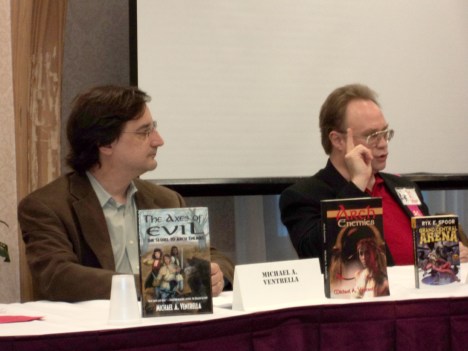
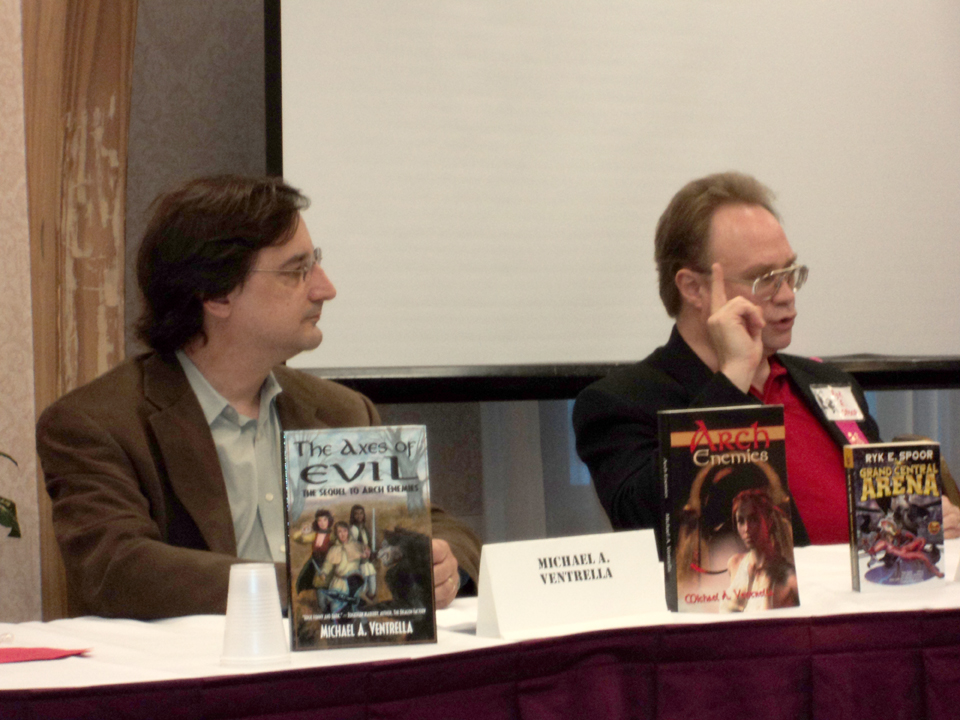
Ryk and me on a panel together at Albacon 2010

Write What You Don’t Know

One of the most misunderstood directives new writers get is to “write what you know.”

Do you think H.G. Welles actually went to the moon? Did Steinbeck travel across the dust bowl? Did Melville fight a white whale?

Too many beginning authors get paralyzed by this: “But I don’t know anything about being a spy, so how I can write a good spy novel?”

Come on, if you limit yourself to “writing what you know,” well, your work will probably be very boring. Who wants to read about someone who drinks a lot of coffee and spends hours typing in front of a computer screen?

It would be better to take the negative form of this advice: Don’t write about what you don’t know.writing

They key, then, is to research. If you’ve never ridden a horse and your character spends days in the saddle, then find out what that’s like. Make it real.

We’ve all been frustrated when we read about something with which we have personal knowledge and found it lacking. As an attorney, I get very frustrated when some courtroom drama doesn’t follow the rules of evidence or otherwise completely misrepresents what a trial is like. Computer programmers hate it when the hero hacks into systems in ways that are impossible, and historians throw away novels full of anachronisms.

You have to write what you don’t know if you want to create believable characters. I am a straight white male in his early 50s; in order to write about people different than me, I have to do some research. I have to observe other people; I have to talk to them; I have to get into their minds and imagine how they would react to the things that are happening to them in my story.

I don’t know everything. I have to learn. I have to be willing to expand my experiences, because I don’t want my readers to roll their eyes and lose their suspension of disbelief when I go so far as to be unreasonable.

While writing BLOODSUCKERS (forthcoming), I interviewed an FBI agent to learn about their procedures, used Google Maps to determine where my characters were traveling so I could describe the area accurately, did research on vampire lore across the world, and otherwise tried my best to make the world in which my fantastic story takes place be real and meaningful. I don’t want a reader to stop and say, “Oh, come on now…” when I wrote about something in their area of expertise.

So go ahead and write that spy novel. Just do some research first so that you don’t place The Louvre in Rome.

“As You Know, Bob…”

“As you know, Bob, the CloneMaster 3000 is powered by nuclear energy and is controlled by this switch over here.”

Don’t you just hate it when that scene appears? When a character explains to another character something that the second character already knows, merely as a way to get the information to the reader?

Imagine if we did this in real life. “As you know, Bob, this car we’re driving is powered by gasoline and controlled by this wheel before me.”

This is known as the “Info Dump.” It appears in many forms — from bulky prologues to long, technical paragraphs, to the “As you know, Bob” reveal. It is also something that should be avoided as much as possible, for obvious reasons.

First, you need to examine whether the information is even needed. Too many writers have this entire world in their head, and have spent many hours developing characters and places and back-history. They feel that all this must be shared, because otherwise, all that work was for nothing.

These authors are called “Self-Published.”

OK, that was snarky. There are indeed some very good self-published authors, but you see my point. These authors are wrong. All that background is very important for creating a believable work, but most of it should never find its way into the final draft. That stuff is for you.

Let’s assume your reader is smart. After all, he or she is reading, which already places them above the majority of the population. They can probably figure out what’s going on a lot of the time without it being explained in detail.

But there are definitely times you need to get necessary information to the reader. Find a way to drop it into the story unobtrusively. “The phone rang just as the Professor was readjusting the nuclear generator.”

The most common way to reveal the information that is needed is to have a secondary character. “As you don’t know, Bob…”

For instance, there’s the “Watson” technique. “Holmes, what does this mean?” A sidekick who needs the information to continue the adventure provides an excuse for the protagonist to dump the info. Done well, this can work great. The secondary character can be given only the bare minimum information or even the wrong information, yet provide enough for the reader to understand what is happening.

Then there’s the “Professor Exposition” technique. This one gets used a lot on TV and in movies, it seems to me. This is where the characters go to a specific person in order to have the plot explained to them. “Professor Exposition! We’re run across a hideous monster that eats bicycles and farts roses!” “Hmmm, let me check my Library of Deep Tomes. Ah! Here we are…” Sometimes you need to do this, but unless the Professor is one of the main recurring characters (like Giles on “Buffy”), it can seem forced.

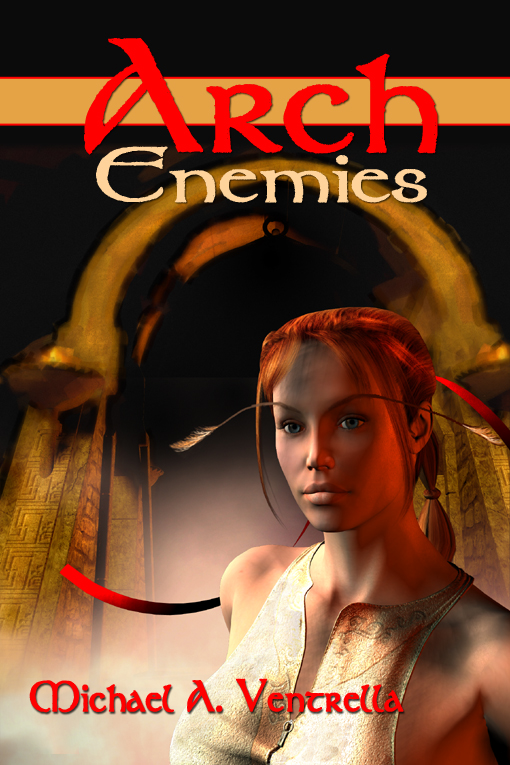
Then there’s the “Fish Out of Water”. This is what I used for my two novels, ARCH ENEMIES and THE AXES OF EVIL (as well as the upcoming BLOODSUCKERS). The protagonist is placed in a new situation and must be educated by others.

For instance, in the high fantasy ARCH ENEMIES, young Terin Ostler has run away from home to become a bard. He is grabbed and brought before the Duke and told he fits the description of the Chosen One written of in the prophecy. (As it turns out, he’s not the Chosen One, but everyone thinks he is. Hijinks ensue. And deaths.) Anyway, he’s thrown into the adventure without knowing what he is supposed to do. He doesn’t know how to wield a weapon or cast a spell.

The prophecy involves keeping a mystical Arch closed to hold the imprisoned evil within. A magic ritual had been performed over 800 years previously and the magic is weakening.

Before I started writing, I knew the history of the lands, the way magic worked in the world, and what the ritual required.

I needed Terin to know certain things in order for the thrilling climactic scene to work, but he didn’t need to know everything. And what he did need to know, he didn’t need to know all at once.

His traveling companions are two squires (who have to protect him from the treasonous Duke’s men as well as the enemies who want to keep the prophecy from being completed). While on the run, the squires find time to explain certain things to Tern and give him lessons on magic. The three of them discover clues along the way. Some of the things they learn are absolutely incorrect. And there are some things that Terin never discovers until it is much too late for him (but not for the reader).

There are huge amounts of information that never made it into the book. And that’s a good thing. It just wasn’t needed in order to tell this story.

So avoid the Dreaded Info Dump, the pause that bites, the clause that sucks. Give as little as needed, in small doses, and in ways that are unobtrusive.

The bottom line is always this: Don’t Be Boring!

Interview with author Christine Norris

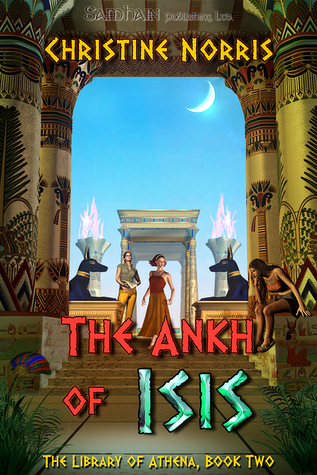
MICHAEL A. VENTRELLA: I’m glad to be interviewing friend and author Christine Norris, who has several works for children and adults, including the “Library of Athena” series and the “Zandria” duology. When she’s not out saving the world one story at a time, she is disguised as a mild mannered librarian, mother, and wife. She cares for her family of one husband-creature, a son-animal, and two felines who are steadfast in their duties as Guardian of the Bathtub and Official Lap Warmer, respectively. She has also done several English Adaptations of novels translated from other languages, and reached a new level of insanity by attending Southern Connecticut State University Graduate School to get her Master’s in Information and Library Science. She currently resides somewhere in southern New Jersey where she writes interesting opening bios for interviews. Her web page is here!

Christine, how did your first novel get published?

CHRISTINE NORRIS: I sold my soul to the devil, uh, I mean I was such a newbie. I had a book of agents and publishers, and knowing pretty much nothing about them, sent queries. And bombed horribly – got back my own letter from one, with the word ‘No’ scrawled across the top. Another came on a crookedly-copied half-sheet of paper. Ugh!

But it was the early 2000’s, and there wasn’t a lot of stuff on the internet about publishing, and most agents still took paper copies. Eventually I found a writer’s forum, Absolute Write, and I started to find out about other publishers. I found LBF, a teeny tiny publisher, in Pittsburgh at that time. They took my first book, TALISMAN OF ZANDRIA, and the sequel. Both are out of print now, but I’m doing new editions for Zumaya.

VENTRELLA: What is your writing background?

NORRIS: I really don’t have a formal background, nothing like a degree in Creative Writing or anything. I just started writing in 2001, and kept on going. I have six books now, with a seventh out with an agent (crossing fingers for an offer!) and working on number eight. Yes, it took me ten years and six novels to finally land an agent. Just goes to show it’s never too late. I really love her too, she’s just wonderful and supportive.

Someday I guess I’ll stop writing, but I don’t see any reason to at the moment. I’m like a literary Forrest Gump.

VENTRELLA: How did you find your current publisher?

NORRIS: That is an interesting story. Okay, maybe only interesting to me. The publisher that put out the first two books in the “Library of Athena” series decided to go back to strictly Romance books — which these decidedly are not. I had the third book finished, and they dropped the series. After I finished freaking out, I calmly put out an email to my friends at Broad Universe, begging, I mean, asking if any of the publishers in the organization would be interested. Elizabeth Burton at Zumaya said she would look, as long as it wasn’t a Harry Potter or Twilight clone, and she liked it enough to take it for the Thresholds imprint.

VENTRELLA: What do you think are the advantages of a smaller publisher?

NORRIS: I think there are advantages to publishers of all sizes – everyone has their pros and cons. You can be a big fish in a little pond or a small fish in a big pond. Smaller publishers are more personal, a little more homey, if you will. They also, many times, have less money to spend on promotion, which is okay if you know how to do a little guerilla marketing. They will also sometimes take a chance on a book that a bigger publisher might not feel is commercial enough. I always say that if you do your homework and are comfortable with what any publisher can give you, there’s no ‘right’ or ‘wrong’ way to publish. It’s all about what you can live with.

I was at a writer’s conference recently, and there were a lot of big agents and editors from Big Six houses attending. We hear a lot about how people ‘in the biz’ feel about smaller publishers and how they look down on us. It is just not true. They were all very professional, and more than once I heard: “Someone selected your work from a slush pile. You are just as published as anyone.” It was nice to hear, and it was nice to get that kind of respect for my work.

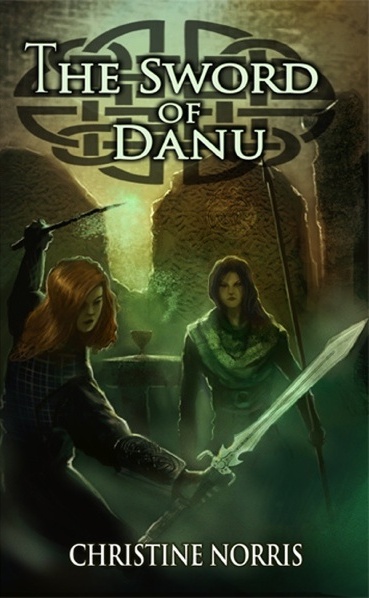
VENTRELLA: Tell us about THE SWORD OF DANU.

NORRIS: It’s the fourth book in the “Library of Athena” series. Oh, you want to know more? All right then.

Megan Montgomery, the main character, has begun to teach herself magic. After the last adventure, when she almost gave up protecting the Library of Athena altogether, she decided that she needed to arm herself against the Order of Ares, a.k.a. The Bad Guys. But her magic doesn’t always go the way it should. She has also decided that she will do whatever it takes to never, ever, never open one of the Special Collection books again. They are enchanted and suck you inside, and then things try to eat you while you solve the clues and fight the monsters to find the magical artifact hidden inside the book and get out.

Unfortunately, something has gone terribly wrong, and one of the books has escaped its pages and is now this imaginary Ireland is taking over the manor where Megan lives. So she and her friends are kind of forced into finding the artifact, in this case the Sword of Danu, so they can fix it all. There’s more to it than that, but I don’t want to give too much away. Except that, of course things try to eat them. Things are always trying to eat them. There’s the Morrigan, and Goibhniu the Celtic smith-god and all kinds of teen angst.

VENTRELLA: And, of course, you have a series based around a library. Tell us how that series came to be.

NORRIS: It was so long ago — late 2004 — that I really can’t remember when or how I came up for the idea for the series. It kind of evolved from what might have been a chapter book idea to a novel, to a series. My son was only 2 at the time, so I had never heard of the Magic Tree House series, which my books get compared to often, along with Harry Potter, Indiana Jones, and Percy Jackson. There are a lot of similar elements in them.

I do remember stating at one point, “I think I could write a hundred of these.” Uh, no way. Five is the limit. One more left to go. It was just serendipity that, years later, I became a librarian. At that time I was working a really horrible part-time job and being a stay-at-home mom. Life is just funny that way, I guess.

VENTRELLA: What was the biggest mistake you made when first starting out as a writer?

NORRIS: Just one, really? I’m sure I made all kinds of mistakes. Not knowing how to write a good query letter. Not really doing my homework when it came to submitting. Being too self-conscious with my writing — it all came out stiff and self-absorbed. I think once I realized that I actually knew what I was doing, that I had made it past most of the newbie mistakes of the technical parts of writing, like not filtering my main character’s every action through me, the narrator, that I was able to loosen up and just write better, let my unique voice out (which is mostly sarcasm thinly veiled as humor, but still …). I also think that every writer needs to make those kinds of mistakes, so that they know when they’ve got it right.

VENTRELLA: What’s your advice for authors who wish to self-publish?

NORRIS: Don’t do it unless you are willing and able to commit the time, energy, and money that it takes to do it properly. Being a self-publisher means you aren’t just the writer, but you are the publisher, and unless you understand exactly what that means, I don’t suggest you attempt it. You need to hire editors, cover artists, do marketing, and pay for it all. It’s a big job. It can be done, but those who have been successful will tell you it was hard work.

VENTRELLA: What piece of advice would you give a starting author that you wish someone had given to you?

NORRIS: Be yourself. I never wrote to trends, or tried to write fan-fiction (though I recommend it to teachers who are trying to teach younger writers the mechanics of story and writing itself), but I had this idea of what ‘good’ writing was, and I was trying to reach some ideal. That old axiom ‘write what you know’ doesn’t really apply to most fantasy writers — unless one of you out that happens to have a dragon in their backyard or owns a big secret library full of magic books — but write what you like. Make yourself happy with a story and you’ll make readers happy too.

72

Start in the Middle!

The theme of this blog is “Learn from My Mistakes.”

I just wanted to emphasize that. I don’t want anyone to think that my advice posts here are because I am an expert in the field of writing and publishing, because I am not. Almost all the things I am advising you not to do here are because I did them already, and found out they don’t work. I’ve warned you about the proper point of view, using outlines, why you should not use prologues, and other obvious writing rules that aren’t so obvious.

So today let’s discuss another bit of advice that I just had hammered into me: Starting your story in the middle.

I’ve always known that it is important to start your story with a bang, and all my books and short stories have done so. You want to grab the reader in the first page, and keep those pages turning. I jump right in and fill in the background later.

I know that.

However, there was something I was missing that, in retrospect, seems really obvious to me now.

I just received two rejections from agents looking at my latest manuscript BLOODSUCKERS. Both said the same thing. They liked my writing, but there was no urgency — the story didn’t grab them quick enough.bloodsuckers-510

And they were right.

You see, I started the story off with a beautiful naked vampire killing a Presidential candidate on the eve of his nomination (sex! violence! politics!). Soon after, a new candidate was chosen who was accused of being a vampire by crazies (called “batties”) who actually believe vampires exist. This was followed by a conspiracy to assassinate that candidate, and a plan to frame the assassination on a disgraced reporter who had written an article about the crazies. Then the plan is carried out …

Well, do you see the problem?

The main character in this story is the reporter — the guy who is framed for the assassination and then has to go into hiding, running from the vampires and the FBI. Once that happens, the story kicks into high gear. The only way he can prove his innocence is by proving that vampires exist. He gets help from the batties and eventually from some other vampires. Can he expose the candidate, will he be killed along the way, or will he be corrupted by the system?

But that didn’t happen until page 60 or so.

I mistakenly thought that all the other action was sufficient — that the conspiracies and plots would be enough.

The problem is that these early threats and dangers all concern people other than my main character … there’s not even the suggestion that he will be involved until the assassins pick him to be their scapegoat. That early stuff didn’t matter personally to him. The “middle” of my story is actually the start of the story for my character. And that’s where I needed to begin.

So it’s time for a new draft. I need to get the reader to understand the danger my protagonist is in early, so that the reader has some connection to the story and cares.

So learn from my mistakes — it’s not enough to have lots of action, drama, and “tension on every page” early on. You need to connect that tension to your protagonist if you want your reader to care.

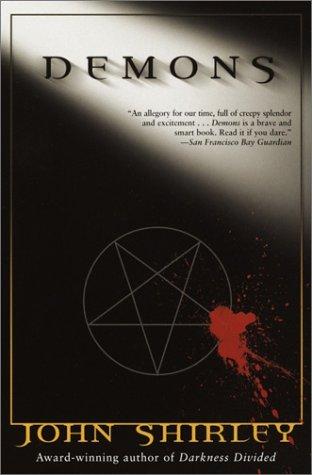
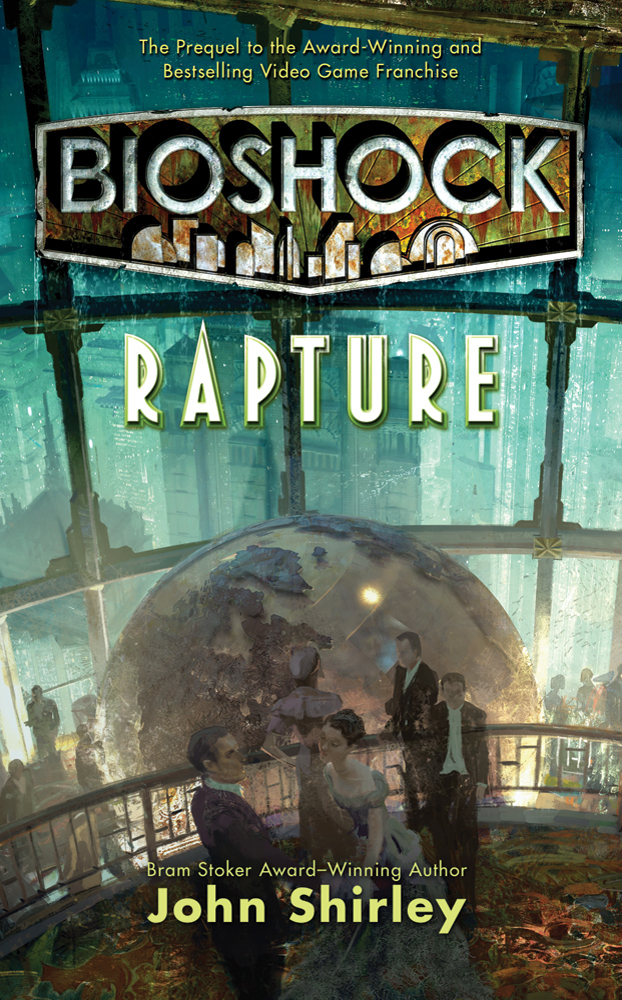
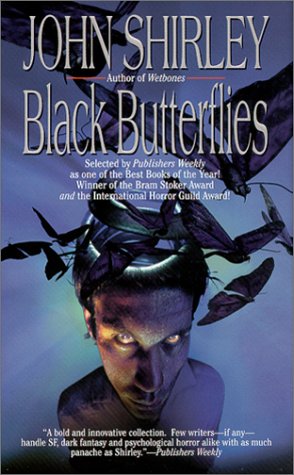
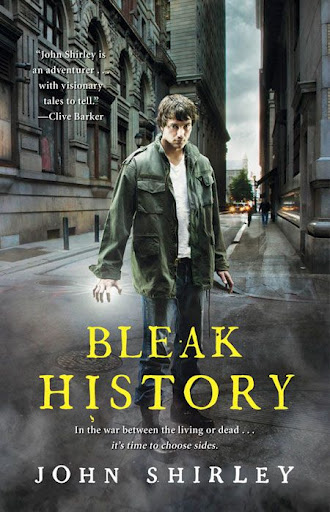
Interview with Bram Stoker Award-winning author John Shirley

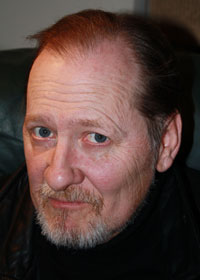
MICHAEL A. VENTRELLA: Today I am pleased to be interviewing John Shirley.

John Shirley is the author of numerous novels, story collections, screenplays (“THE CROW”), teleplays and articles. A futurologist and social critic, John was a featured speaker at TED-x in Brussels in 2011. His novels include EVERYTHING IS BROKEN, The “A Song Called Youth” cyberpunk trilogy (omnibus released in 2012), BLEAK HISTORY, DEMONS, CITY COME A-WALKIN’ and THE OTHER END. His short story collection BLACK BUTTERFLIES won the Bram Stoker Award, and was chosen by Publisher’s Weekly as one of the best books of the year. His new story collection is IN EXTREMIS: THE MOST EXTREME SHORT STORIES OF JOHN SHIRLEY. His stories have been included in three Year’s Best anthologies. He is also a songwriter (eg, for Blue Oyster Cult), and a singer. Black October records will soon be releasing a compilation of selected songs, BROKEN MIRROR GLASS: Recordings by John Shirley, 1978-2011. The authorized website is here.

John, since this is an election year, let’s start off with politics. You’ve certainly not shied away from politics, on your blog and on Facebook. Do you worry that this may alienate potential readers?

JOHN SHIRLEY: For me, I can’t worry about that and be a self respecting person.

VENTRELLA: Your novels EVERYTHING IS BROKEN and THE OTHER END are all about politics. What inspired you to write them?

SHIRLEY: I wouldn’t agree they’re all about politics. EVERYTHING IS BROKEN, however, is a political allegory as well as being a noir novel, a coming of age novel, a disaster novel (as opposed to a disastrous novel!), a suspense novel, and it’s set a bit in the future. So it’s got science fiction going on too. The trick of course is for all this to blend seamlessly. But good recipes can have a number of strong ingredients.

EVERYTHING IS BROKEN is a kind of LORD OF THE FLIES for the 21st century, perhaps. Its political center has to do with the value of community, of government itself (at its best); it shows what happens to a small coastal community, hit by a disaster, when its been stripped of its resources, its preparation, by Libertarians and Tea Party types and Privatizers. And it has ticked off some of those people. But there’s always plenty of support from the other side of the fence. It’s doing rather well. Lots of people are concerned about throwing the baby away with the bathwater—a sense of community being the baby in this case.

THE OTHER END was inspired by a desire to take the apocalypse away from the Christian right and give it to progressive people, if they want it. Why should the Christian Right define Judgment Day? And what would you do if you could create your own Judgement Day? And yes there are political overtones to much of it…It’s a fantasy about a Judgment Day that doesn’t come, exactly, from anyone’s usual idea of God…and that looks for real, social justice.

VENTRELLA: What’s the best reaction you’ve received from these political books?

SHIRLEY: Recommendations. Good reviews. Eg, “That staple of cautionary science fiction, the near future, becomes especially ‘near’ in this disaster novel from one of fantastic fiction’s most hard-hitting talents–EVERYTHING IS BROKEN emerges as a violent, vivid, viscerally upsetting and wholly unflinching nightmare of a novel, which profoundly illustrates the very point of having a civilization in the first place, and the risks we undertake by dismantling infrastructure in the name of short term savings. It’s not just a compelling read, but an important one–GRADE A.”—SciFi Magazine

VENTRELLA: Are you optimistic about the future or do you worry that the crazies on the right will cause more harm before things change?

SHIRLEY: If you mean the near future, the great worry, for me, is the Citizen’s United decision by SCOTUS, empowering billionaires and giant corporations and amoral people like the Koch Brothers to freely propagandize, to distort the President’s record, to spread the falsehood that Reaganomics, Tea Party economics, and so on, actually works to improve the economy. Actual economists dispute that fallacy. But people are buying into it. And as the Super PACs unleash more and more propaganda, politicians become more afraid of taking a stand, afraid of someone mounting a super PAC against them—and Congress becomes even more dominated by money, at the expense of ethics. If you mean the farther future—at this link is a transcript of the speech I gave to TEDx in Brussels last November, on why I’m “optimistic because everything will be terrible.”

VENTRELLA: Some of the threat of the tea partiers and their like is their anti-science position. What do you think causes that mindset?

SHIRLEY: They feel more comfortable with ignorance. It’s a sort of numb buffer around them so they don’t have to face life as it is. But also they’re being manipulated. Big Oil is opposed to accepting science on global warming, and they manipulate these people to mistrust science.

VENTRELLA: Have politics always influenced your writing? In other words, do you find yourself visiting political themes in your work?

SHIRLEY: A fair amount—and if it’s not that, I’m reaching for something meaningful, in some respect. Existential meaning matters too. Spiritual meaning. Philosophical meaning. And the human condition. I admire writers who dramatize the realities of the human condition. But it’s great when someone can combine some controlled degree of didacticism with entertainment—sometimes they have a major social impact. I’m thinking of the novel UNCLE TOM’S CABIN, the works of Charles Dickens, Upton Sinclair, and Steinbeck. Kurt Vonnegut novel’s, too, affected people deeply, he had a lot of social resonance; so did the novel CATCH-22 by Heller.

VENTRELLA: What themes have you found yourself revisiting, even if subconsciously?

SHIRLEY: The struggle with addiction—in the past, I had to carry on a bare knuckle fight with it. Fortunately I won. . .My observation that people suppress their empathy, their compassion, all too easily; that they barricade themselves away from it. That dehumanization is sadly all too human…And issues of the necessary balance between too much government and too little. I’m not in favor of too much; but on a planet with 7 billion people, we cannot have too little. Environmental issues also crop up in my work—my novel DEMONS combines most of those concerns in one work of allegorical horror.

VENTRELLA: Do you think that science fiction and fantasy help to provide a better media in which to make points about current issues?

SHIRLEY: They’re ideally suited for it. Look at 1984, or BRAVE NEW WORLD, or Atwood’s anti-fascist science fiction, or Vonnegut’s social statements in SLAUGHTERHOUSE FIVE. Philip K. Dick warned about mind controlling media and new tech that might be misused that way, in a lot of his books. Then there was John Brunner’s work, like THE SHEEP LOOK UP. You can model different kinds of societies, dystopian and utopian and everything between, in science fiction, like creating a literary computer model.

VENTRELLA: You’ve done so many different genres—what leads you to try so many new things? Does the story come first or the setting?

SHIRLEY: Sometimes it’s the marketplace, but it’s also a creative restlessness. I don’t like to be pigeonholed. It’s also freshening, energizing, to move onto another genre. It’s like traveling in a country you haven’t been to before—it’s stimulating.

VENTRELLA: You’re quite prolific: What keeps you going?

SHIRLEY: Partly necessity—I don’t have a day job. I do have quite a lot to say, a lot of stories to tell. I simply feel better when I’m productive, too. It’s what I am; I’m a writer to the bones. I’m not good at much else. Can’t fix a car.

VENTRELLA: You’ve done quite a few novelizations and tie-ins, such as BATMAN: DEAD WHITE, PREDATOR: FOREVER MIDNIGHT and DOOM. What are the advantages and disadvantages of writing already in someone else’s world?

SHIRLEY: I did those things mostly for money—the most successful one was the Bioshock novel, BIOSHOCK: RAPTURE–but it’s also because they’re in arenas I enjoy. I do love Batman, was glad to play in that sandbox. They gave me a fair amount of latitude and it varies from editor to editor. The Bioshock game people were very hands on and that was difficult. One disadvantage is, one might have to revise more than one is really being paid for. But I always manage—in some cases, the project changes while you’re writing it. They’ve sent you a movie script, but at the last moment it was changed; you were supposed to write about this game but the second one just came out and they want you to do that too … And I prefer to adapt rather than argue.

In the case of Bioshock I knew the videogame world I was writing about pretty well and had enjoyed it so that helped. I enjoyed the Predator films and it was fun to write that book but one issue that comes up is, some fans are very possessive about the franchise they love. Some fans of the Predator comic book thought I ought to have followed its internal rules, its canon—but I didn’t read the comics, wasn’t required to. I just started with the movies and launched from there. I never contradict the underlying source material I’m using…but I do get to be creative within it, and that can be a bit of a buzz.

VENTRELLA: You’ve written scripts for movies and television–have you been pleased with the results?

SHIRLEY: It’s mixed. I wrote “The Crow,” with David Schow—couldn’t be pleased when Brandon Lee was killed in the course of the production. There are always issues of struggling with producer notes, and so on. As for television, it’s very much committee writing, and it’s hard for someone like me to learn that…but I did learn. I just wrote a recent television pilot, which we’re now shopping around, but I can’t talk about it except the name: Intruder Town.

VENTRELLA: Which do you think has been most successful?

SHIRLEY: I’ve had more television scripts that came out close to what I wanted, than in movies. The most recent movie I wrote was a low budget horror film. I was not happy about it. Can’t say more about that.

The Deep Space Nine episode I wrote came out nicely, thanks to Ira Behr, the producer. But it can be very frustrating and one can’t be too identified with the writing. You have to separate yourself from it more than if you’re writing a novel or a short story. . .

VENTRELLA: How much changed between your script and what is seen on the screen?

SHIRLEY: It’s the exception if there aren’t a lot of changes. There are always exceptions—Woody Allen’s films are auteur work, he’s the director, producer, writer, they naturally come out close to what he envisioned. Clint Eastwood, I think, once he has a good script, stays with it—eg the script for Unforgiven. But mostly it’s like your script has to run across no man’s land, with bullets flying…it’s lucky to get across it intact.

VENTRELLA: Do you find novels easier to write than short stories?

SHIRLEY: Short stories are finished faster of course, but that aside, there are things one can do in novels one can’t do in short stories. As long as you have a really strong sense of pacing, and don’t drop all the balls you’re juggling, you can get into more facets of character, more ideas, than in a short story. A short story is like a knock out punch; a novel is a whole long fight with many rounds and lots of footwork.

VENTRELLA: Which is your favorite?

SHIRLEY: Apples and oranges really…

VENTRELLA: Who is your favorite character?

SHIRLEY: From my work? Maybe Rickenharp from A SONG CALLED YOUTH—the cyberpunk trilogy is out now, as an omnibus, freshened up, updated, re edited, from Prime Books, and Rickenharp is perhaps the realest character…because he’s most like me. I’ve been a rock singer, he’s the leader of a rock band, I’m a lyricist and so is he (I wrote his lyrics, sometimes quoted briefly in the novels). He has drug issues and other issues—so do I. There’s a “street minister” character in my horror novel Wetbones I identify with a lot too, as he’s found a spiritual way out of addiction…

VENTRELLA: What would you ask that character if you could meet him or her?

SHIRLEY: Rickenharp? I’d ask him if he’d go to the recording studio with me, play some guitar, write some songs. And I’d ask him if he was self sacrificial—or self destructive.

VENTRELLA: And what do you think he or she would answer?

SHIRLEY: He’d say how much you pay me to the first question and laugh and say two sides of the same coin for the second.

VENTRELLA: Writers who are trying to make a name get hammered with lots of advice: The importance of a strong opening, admonitions about “writing what you know,” warnings to have “tension on every page” – what advice do you think is commonly given that really should be ignored?

SHIRLEY: Almost any of it can be ignored (apart from advice to be grammatic and literate and write in good sentences) if it’s irrelevant to what you’re doing. I have had to learn to write “more sympathetic” likable characters, but there are also times when I don’t need them to be sympathetic or likable. Ultimately one writes what works. Probably most people would have advised Anne Rice not to write a vampire character so sympathetically, in Interview with the Vampire, before it was published—but they’d be wrong! The book worked like gangbusters, breaking a rule. If you have the talent, the voice, the insight, make your own rules. If you’re not sure, follow the rules.

VENTRELLA: What is the biggest mistake you see starting writers make?

SHIRLEY: Nowadays it’s thinking they don’t need to be well read, they don’t need to know the difference between you’re and your, they don’t need to read outside their favorite genres—any half way decent writer had better read widely.

VENTRELLA: I’ve been surprised to find many writers who are also musicians (myself included) – why do you suppose that is?

SHIRLEY: I don’t know for sure. Jack Vance plays banjo. You really never know…But you know there’s a musicality in good sentences; there are good sentences in music…it’s all art, too…

I was always in rock bands. Like Sado-Nation—you can see me on youtube if you search for Sado-Nation with John Shirley there, performing with them in 1979 when I was quite young. So it’s always been a second track for me; and there are a lot of musical references in my books, and I listen to loud music, often, when writing and no it doesn’t distract me.

VENTRELLA: Who do you listen to? Who are your favorites?

SHIRLEY: I’m an old time Blue Oyster Cult guy, and in the late 90s I started writing lyrics for them (other lyricists for them include Patti Smith and Michael Moorcock), have written 18 songs they’ve recorded so I’m pretty partial to those. Mostly those are on their albums Heaven Forbid and Curse of the Hidden Mirror. I was in punk bands, and was a big fan of the Sex Pistols and the Clash and the Ramones. I am also a fan of psychedelic music, like Jimi Hendrix, Blue Cheer, or Roky Erickson. I like the Stones, the Beatles. Frank Zappa, Captain Beefheart. I’m a big Iggy and the Stooges guy too. Outside of rock I get into John Coltrane, certain classical composers like Stravinsky.

VENTRELLA: How did your collaboration with Blue Oyster Cult come about?

SHIRLEY: Mutual friends knew they were looking for a lyricist. Plus my first novel was named after one of their songs, TRANSMANIACON, and they were aware of it.

VENTRELLA: With a time machine and a universal translator, who would you invite to your ultimate dinner party?

SHIRLEY: CS Lewis, Tolkien, because I love the way those guys talk, Ambrose Bierce because I admire him and I want to ask what the hell happened to him, Edgar Allan Poe, same thing, Cyrano De Bergerac, Yeshua of Nazareth (a Gnostic teacher now called “Jesus”), Gotama Buddha, GI Gurdjieff, Ouspensky, Mark Twain, Marcus Aurelius, Pythagoras…

And I would sit Wyatt Earp right next to me…I’m pretty into the Wild West and have written a novel about Earp, that I am going to send out when I get around to revising it…