Interview with author A. C. Crispin

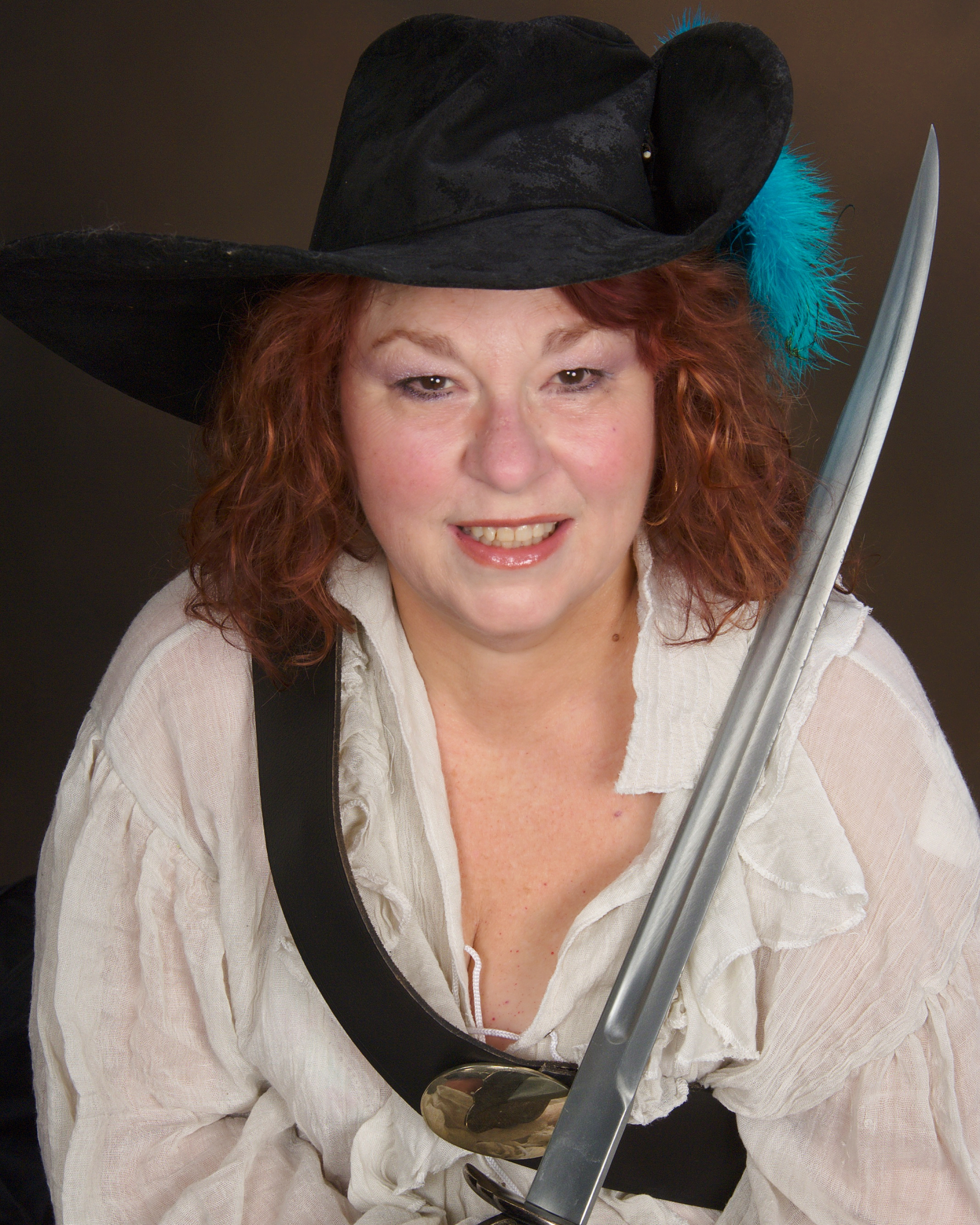
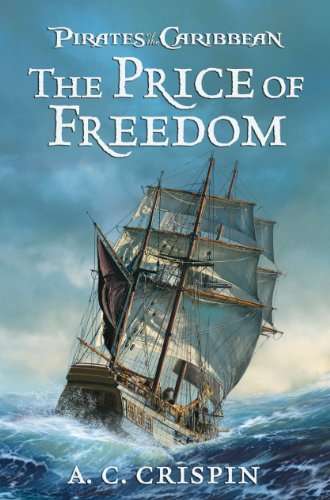
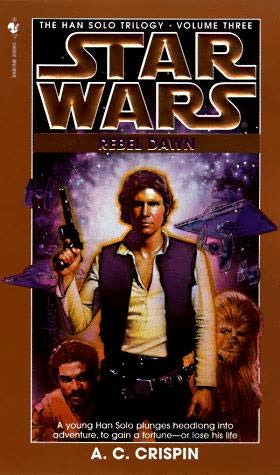
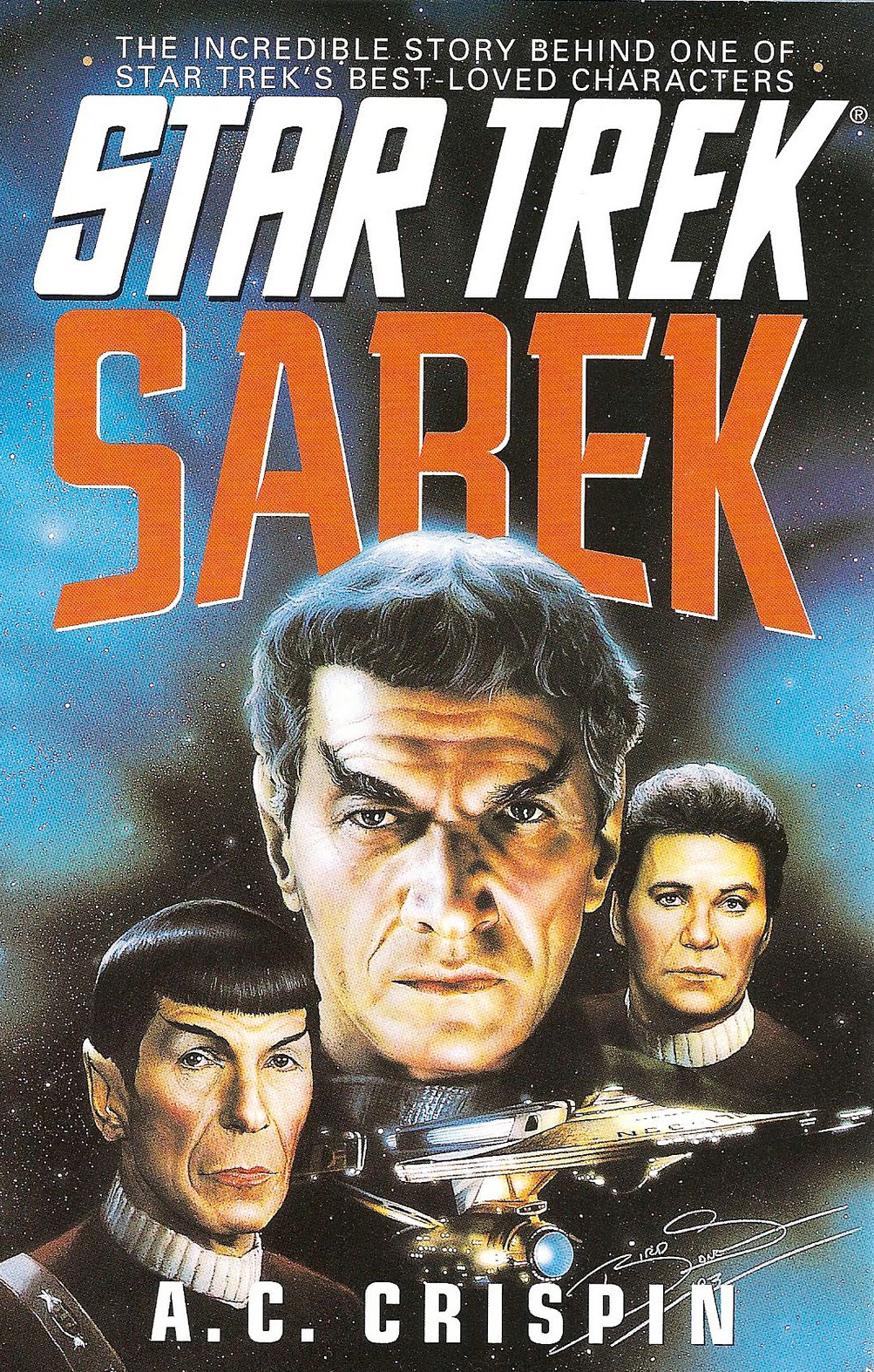
MICHAEL A. VENTRELLA: Today I’m pleased to be interviewing A.C. Crispin, whose new novel is PIRATES OF THE CARIBBEAN: THE PRICE OF FREEDOM. She’s best known for the novelization of the 1984 V TV series, but also for her bestselling Star Wars novels THE PARADISE SNARE, THE HUTT GAMBIT, and REBEL DAWN — although I first discovered her through her Star Trek novels: YESTERDAY’S SON, TIME FOR YESTERDAY, THE EYES OF THE BEHOLDERS, and SAREK.
Ann, You’ve been able to write novels in some of fandom’s favorite stories. How did you manage that?

A.C. CRISPIN: After I wrote YESTERDAY’S SON and V, publishers with franchises approached my agent when they had projects they thought would be a good match for my skills.

If your readers want to read about how to get an agent, soup to nuts, they should read “Notes on Finding a (Real) Literary Agent” on my website.

VENTRELLA: Do you make proposals or do the studios come to you directly now?

CRISPIN: For original novels I write book proposals. For tie-in work, they pretty much come to me.

VENTRELLA: Let’s discuss THE PRICE OF FREEDOM. How much freedom were you given to develop Jack Sparrow’s background?

CRISPIN: After a considerable amount of back and forth on the part of the Disney studio liaison, during which several detailed outlines were not approved, the studio liaison decided that instead of writing the project I had been originally hired to write (the story of the Isla de Muerta mutiny re: the Aztec gold) I should instead write the story of how Jack Sparrow worked for the EITC and wound up making that bargain with Davy Jones. So I knew where the story had to end up. How I got there was left pretty much up to me.

I did consult with both my editors on the book, the acquiring editor and the editor who completed the project. For example, they both agreed that there should be a “Lady Pirate” as a character, so that’s how Doña Pirata was born. The Legend of Zerzura plotline was my creation, but my editors suggested having talismans as a way to get into the Sacred Labyrinth and reach the treasure. So I then came up with the bracelets.

By the time I finished with my outline, it was over 70 single spaced pages long. Of course, THE PRICE OF FREEDOM is a long novel, some 235,000 words.

VENTRELLA: Did Disney censor any of your ideas or tell you to make major changes?

CRISPIN: My Disney editor (somewhat regretfully, because she really liked them) bowdlerized my hottest sex scene. I’m not sure you’d call that a major change. After all, we are talking Disney, here. (The scene was hot, but not graphic — she felt that it was a bit too hot.)
VENTRELLA: What were your main goals in trying to develop his character?

CRISPIN: To create the character of “Jack becoming” so that people would recognize Jack Sparrow, but also know this wasn’t quite the Jack they see in the films … this was a younger, more vulnerable, more trusting and less cynical Jack. He gets more cynical and “savvy” during the course of the book. He’s not the same Jack at the end as he was at the beginning. Of course that’s the goal of good fiction, right?

VENTRELLA: What adventures in your novel help shape Jack into the character we all know?

CRISPIN: Oh, Jack experiences betrayal, disappointment, fear of imminent death, hatred, and as a result learns to be much more wary and cunning, and to trust almost no one. Readers who want teasers can read the excerpts on my website. There are six there.

VENTRELLA: Do any other characters from the film appear in the novel?

CRISPIN: Edward Teague, Cutler Beckett, Hector Barbossa, Pintel and Ragetti, and a certain squid-faced Captain.

VENTRELLA: Were you given a peek at the script for the most recent film in order to work in some foreshadowing?

CRISPIN: No. I was given the script for “At World’s End” before the film released, but my book was finished before the script for “On Stranger Tides” was written.

VENTRELLA: The most recent movie is loosely based on Tim Powers’ novel ON STRANGER TIDES. Did you use that novel at all for reference?

CRISPIN: I’ve read ON STRANGER TIDES a couple of times, but aside from the fact that it’s an excellent pirate yarn, no.

VENTRELLA: Will there be more books in the series?

CRISPIN: That will be Disney’s call. I imagine they’ll base that decision on how well THE PRICE OF FREEDOM sells.

VENTRELLA: What’s your favorite of the Pirates movies?

CRISPIN: The Curse of the Black Pearl.

VENTRELLA: Do you find using established characters in your media novels to be a limitation?

CRISPIN: Nope. I find it a challenge to have them grow and change in ways so subtle that the studio doesn’t realize I’ve done it.

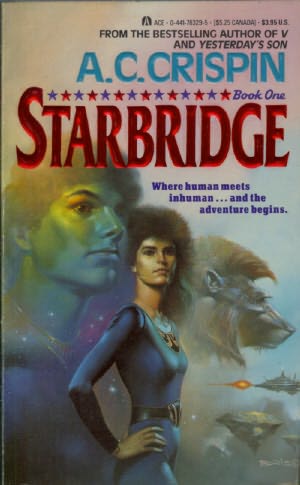
VENTRELLA: You’ve also written your own series: Starbridge. Tell us about this!

CRISPIN: Funny you should ask about that. There’s a good chance that the seven StarBridge novels will soon be re-released as e-books. There have been quite a few requests for them from readers, over the years. The series is about a school for young people from the Fifteen Known Worlds who come to an asteroid in deep space to learn to be diplomats, planetary advocates (known as “interrelators”) and explorers. The books focus on First Contact, and explore what it would be like in a galactic society.
VENTRELLA: Do you find writing books based on your own work easier?

CRISPIN: Not really. I put my full efforts into both my media tie-ins and my original novels. With the original novels, it’s generally a bit more work, because I have to create the world, the technology, the history, the geography, the society, etc. World-building and universe-building have to be done well if you want to create the illusion of reality –- something that’s essential to writing s.f. and fantasy.

VENTRELLA: We met at Balticon this year. Do you enjoy conventions and do you advise authors to attend them?

CRISPIN: You can learn a lot at conventions, and once you’ve gone pro, you can do a fair amount of networking and business at gatherings such as the Nebulas, Worldcon, etc. I enjoy conventions, still, even after all these years.

VENTRELLA: Let’s talk about Writer Beware. How did the idea for this come about?

CRISPIN: Back in 1998, Victoria Strauss and I both realized, independently of each other, that writing scams were proliferating on the internet. At some point our investigations brought us into contact with each other, and we decided to do something about it. SFWA gave us its blessing and sponsorship, and that’s how Writer Beware was born.

VENTRELLA: I meet many authors who have gone the vanity press or self publishing route and then wonder why no one takes them seriously. Other than “don’t do that” do you have any specific pieces of advice for these authors?

CRISPIN: I advise them to go to Writer Beware and read our articles about POD, vanity publishing, etc., so they’ll go into self publishing with a clear vision of what it can and can’t do for an author. E-publishing has taken off in the past six months, and it can now be a realistic way (provided the author has the sales numbers) to break into commercial publishing (advance and royalty paying publishing with a major press, that is). This is generally not true for POD and hardcopy “self publishing.” But there are exceptions.

The main problem with “self-publishing” is when authors confuse it with commercial publishing and expect their books to be on the shelves in bookstores nationwide, plus have other unrealistic expectations. It is really not a shortcut into a successful writing career for the vast majority of those who do it. I believe it’s still true that most POD and self published novels still sell fewer than 100 copies.
VENTRELLA: What bugs you most about the publishing industry and what would you change about it if you could?

CRISPIN: Here are my top two picks for that:

(1) I’d go back in time and eliminate the Thor Power Tools Supreme Court ruling. That had a terrible effect on a publisher’s ability to keep books in stock. Look it up.

(2) I’d get rid of the Internet for two reasons (A) the internet has given aspiring writers the idea that they’re entitled to be published, no matter how well or poorly they write, and (B) because of the internet, writers are getting scammed at an appalling rate.

VENTRELLA: Who do you like to read for pleasure?

CRISPIN: Terry Pratchett, Elizabeth Peters, Jane Austen, Charles Dickens, Margaret Mahy, Ursula K. LeGuin, George R.R. Martin, Lois McMaster Bujold, Charlotte Bronte, and too many others to name.

VENTRELLA: Of what work are you most proud?

CRISPIN: I do my level best on all my books. I’m pretty proud of PIRATES OF THE CARIBBEAN: THE PRICE OF FREEDOM, because I had to do so much research. It took me three years to write, and the whole time I was writing it, I was doing research on the historical period and the nautical stuff.

VENTRELLA: What is your writing process? Do you outline heavily, for instance?

CRISPIN: For tie-in work I HAVE to produce detailed outlines, so I’ve gotten used to working that way. I don’t like writing myself into corners, and a good outline usually prevents that.

VENTRELLA: Fantasy has grown tremendously in popularity over the past twenty or thirty years and now outsells science fiction. Why do you think this is? What is it about fantasy that appeals to readers that they can’t get from science fiction?

CRISPIN: I have no idea. Personally, I prefer science fiction, though I read both.

VENTRELLA: What advice would you give to a starting author that you wish someone had given you?
CRISPIN: Learn to read and analyze publishing contracts. Agents aren’t perfect, and you really need to be able to read a proposed contract and spot pitfalls.

VENTRELLA: What is the biggest mistake you see aspiring authors make?

CRISPIN: Here’s my top five list:

1. They spend years writing a Star Wars or other tie-in novel without ever researching whether they can actually submit the thing and have a chance of having it published. (With Star Wars, for example, they won’t even read the book; all Star Wars novels are contracted for in advance.)

2. They look for shortcuts, such as “self publishing” or POD publishing, often with a scammy publisher like PublishAmerica or Strategic, because it’s the easy thing to do.

3. They develop “golden words syndrome” and can’t see any flaws in their writing, and if someone points them out, they get mad. This is death to any aspiration to ever be a pro.

4. They submit first drafts.

5. They want to write fiction, but they don’t read it. I’ve never yet encountered a single writer, in the dozens, maybe hundreds of workshops I’ve taught, who wrote fiction well but wasn’t a reader. In order to write well, especially fiction, you must be an inveterate reader. No exceptions.

VENTRELLA: What question do you wish interviewers would ask you that they never do?

CRISPIN: Where readers can buy my books. There are links to purchase all my books on my website.

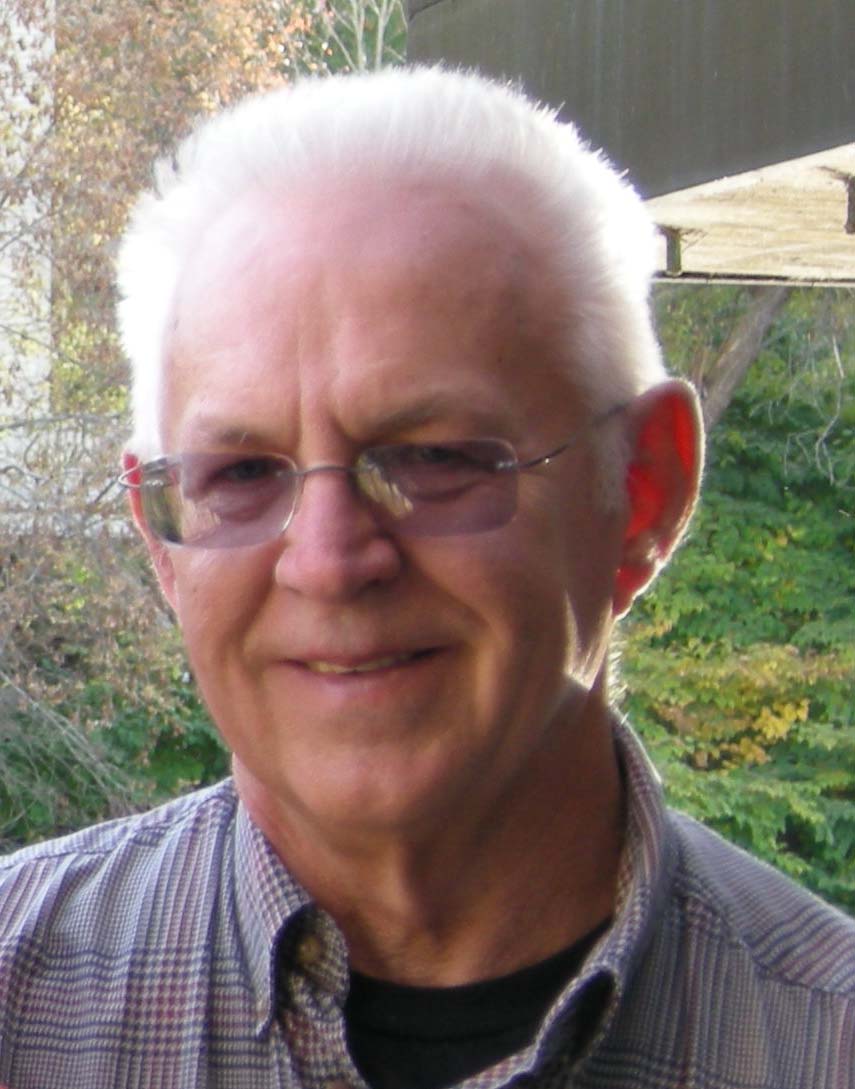
Intrerview with Nebula nominated author Bud Sparhawk

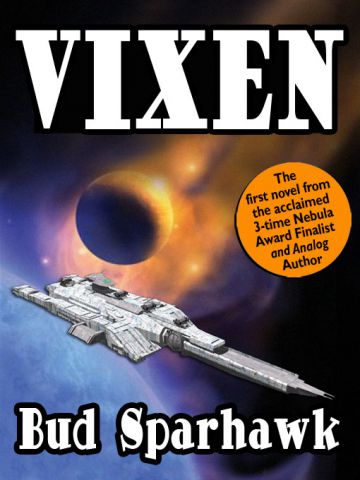
MICHAEL A. VENTRELLA: I’m pleased to be interviewing three times Nebula finalist Bud Sparhawk today. He’s primarily known for his short fiction with heavy and hard science, but also for his humor (in particular his “Sam Boone” series).

Bud, although you have extolled the virtues of outlines, do you think it’s possible to write a great story without an outline?

BUD SPARHAWK: I’m not certain “extolled” is the right word. Certainly I’ve advocated paying considerable attention to a story’s structure – the sequencing of scenes, time frames, and points of view. I don’t think I’ve ever recommended preparing a formal outline where a story is described in detail, point by point.

My own style of writing is to set up the scenes I think the story needs, block in the characters, setting, and time, and then move things around to the way I want to tell the story. Many times I write quite a bit before breaking what I’ve done into key scenes and then add sketch ideas that fill in empty spots. It’s generally a messy back and forth process but it works for me.

VENTRELLA: Have you ever done so?

SPARHAWK: Written a great story or used an outline to write it? All three of my Nebula finalists were done sans outline – just bashing along until they felt complete. I wouldn’t call any of them “great” – entertaining maybe. The one story that I felt was “great” was “Bright Red Star” and which received almost no literary comment, except from David Hartwell who included it in his Years Best SF #14. This story has now appeared in several languages and on audio pubs, which is somewhat of an affirmation. It was my response to some of the hysteria surrounding 9/11.

VENTRELLA: You’ve concentrated almost entirely on short stories and novellas. What is it about the shorter form that appeals to you?

I’ve been blogging about this very subject on budsparhawk.blogspot.com for some time. One of my latest musings dwelled on the differences between novelists and we short people. Although there are clearly differences between the two camps, my conclusion was simply that that some do and some can’t: Temperament, patience, and economic necessity are probably involved in a writers choices, but the mix would vary considerably.

VENTRELLA: Many writers consider short stories to be harder than novels. What is your experience?

SPARHAWK: I don’t think “harder” is the distinction I’d make. Some writers find it impossible to describe anything in a single sentence while I find it difficult to drone endlessly on about anything because I’m always anxious to get to the payoff. In my opinion, brevity always makes a point sharper and I usually edit down to reach that clarity. For example, I recently turned in a 15k piece that was originally 33k in second draft and around 20k in the penultimate one.

When I started writing I could write a 5-7K story in a weekend and once wrote one – “Persistence” – that I later sold to Analog – in an evening. I like to deal with issues or ideas and the short form is ideal for that. Longer pieces deal more with character development or expansion of a situation. I’ve written several as yet unsold novels and have found developing increasing complexity that forces the word count ever upwards tedious, albeit interesting.

Dedicated novelists have told me that they cannot begin a story without discovering that complications arise and they are faced with an irresistible urge to explain, describe, or comment. Then too, other characters come along with their own damn issues, backgrounds, motives and … well, you see how that goes, with the inevitable result is other than short.

VENTRELLA: What usually comes first for you – an idea or a character?

SPARHAWK: The idea or concept, always. I see characters as vehicles that carry the ideas forward, and try to make them eloquent spokespersons for what I try to say.

VENTRELLA: We’ve met at various conventions over the years. Do you enjoy conventions and do you advise authors to attend them?

SPARHAWK: I’m just a ham and enjoy the spotlight, talking to fans, and especially having the opportunity to talk writerish with the other pros. I love the readings, especially by unfamiliar writers to me.

VENTRELLA: What’s your favorite convention experience?

SPARHAWK: The random discussions that arise in the hallways or in the dealers room have be my favorite experiences. I hardly ever leave one of these random discussions without a story idea or two.

VENTRELLA: I meet many authors who have gone the vanity press or self publishing route and then wonder why no one takes them seriously. What’s your opinion on self publishing?

SPARHAWK: The line between vanity and self-published has become very thin. Established writers are self-publishing collections, reverted novels, and even original works – all to take advantage of the opportunities eBooks have created. Some non-professionals (another vague term) have been highly successful with their “vanity” publishing. Results are mixed, but in most cases it seems to depend on the degree of self-promotion one is willing to undertake. Social networking seems key to success for both types.

VENTRELLA: Do you think there is a difference if an already established author self publishes new material?

SPARHAWK: If a writer has already established a reputation, then selling new material via POD or eBook should not be a problem. Otherwise you use up a lot of time, effort, and creative juice that could be used for improving your writing.

VENTRELLA: What bugs you most about the publishing industry and what would you change about it if you could?

The lengthy delays between submission and response, which is an unfortunate consequence of limited staff and/or time available to the publisher. The industry probably needs more underpaid English majors looking for “experience” in the publishing field.

Since most editors now accept electronic submissions I can easily see the day when some maven will design an app that evaluates e-manuscripts on the fly, all tailored to an editor’s preset specifications. That would certainly change the writing game for both writers and editors. Don’t know if this would make the publishers happy or not.

VENTRELLA: What do you like to read for pleasure?

SPARHAWK: Short stories, of course, and mostly SF, but I make an exception for anything by Terry Pratchett.

VENTRELLA: Of what work are you most proud?

SPARHAWK: See above – “Bright Red Star.” Interestingly, I’ve written three more shorts in the same universe, two of which are in McPhail’s anthologies.

VENTRELLA: What are you working on now?

SPARHAWK: I’ve a long novel in penultimate editing, four or five shorts that still need work, and getting as much of my published works into eBook formats as I have time for. The novel deals with the long term effects of human expansion into the universe and what exactly makes our descendants “human.”

VENTRELLA: Fantasy has grown tremendously in popularity over the past twenty or thirty years and now outsells science fiction. Why do you think this is? What is it about fantasy that appeals to readers that they can’t get from science fiction?

SPARHAWK: It is a puzzle that in these days of instant everything and twittering phrases that short fiction does not sell better. Steven King recently observed that much of the popular long form fiction has little substance but does carry the reader along in an engaging, but superficial narrative thread that provides an immersive experience. Summer reading at the beach, in other words. I find that much of the “epic” fantasy fits this description. Clearly, fantasy in general is not my cup of tea, but there are some fantasy works that rises above the rest – like Laura Anne Gilman’s Vineart series.

VENTRELLA: What advice would you give to a starting author that you wish someone had given you?

SPARHAWK: 1. Don’t give up your day job.

2. Put some time aside for writing every day.

3. Learn humility and to accept rejection gracefully.

4. Join SFWA as soon as you can.

VENTRELLA: What is the biggest mistake you see aspiring authors make?

SPARHAWK: Endless rewriting in pursuit of perfection, which can never be achieved. The pursuit of “better” is ever the enemy of “good enough.” A writer should rewrite only until the piece achieves a satisfactory level in their own opinion and, of course, whenever an editor asks.

VENTRELLA: What question do you wish interviewers would ask you that they never do?

SPARHAWK: “Where do you get your Ideas?” to which I respond “a guy in New Jersey sends me two a week for five bucks.”. Ask a silly question …

Seriously though, no one ever asks how the magic is done and the toll it takes on family life, work, and socializing. I wrote for years while holding a fairly demanding job, raising a family, and dealing with the issues of aging parents, yet managed to eke out a few words each night, having them add up to some decent stories and a lot of less than sales worthy. The ideas bubbled up during my non-writing times and, if they were worthy of remembering, finally made it into a story. Truthfully, I have no idea where the ideas come from. I only know how much work it takes to turn them from daydreams to reality.

Short Stories

Short stories are hard. Harder than novels.

That’s what I and many other writers think, as you can see from some of the interviews here. A novel gives you time to develop characters, control the action, and create a full world. A short story has to do as much of that as possible in a very limited space.

At the same time, a short story can be completed in much less time.

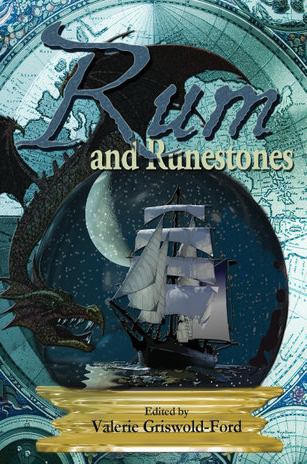
I had a short story published in the anthology RUM AND RUNESTONES last year called “X Spots the Mark” in which pirate Captain Irad the Fair follows a fake treasure map. Of course, being one of my stories, things are never as they seem and you can expect a twist at the end.rum3

The sequel will soon be published in another anthology called CUTLASS AND MUSKET: TALES OF PIRATICAL SKULLDUGGERY. And then my story “The Zombie King’s Plan” will be in the collection TALES OF FORTANNIS: A BARD’S EYE VIEW due out in June (and edited by me!)

I am doing more short stories in anthologies these days for exposure. When someone buys an anthology, they probably have never heard of me or read anything by me. They’re getting it because they like the subject or because there is another author whose story in the anthology they wish to read. But once they have the book, they may take a chance and read my story as well. And then I might have another reader who will want my novels.

Plus I get paid. I mean, come on, that’s nice too.

So if you’re a starting writer, consider short stories as a way to get noticed. In the TALES OF FORTANNIS series I am editing, I am more than happy to read stories from unpublished writers, and in fact, about half of the stories in this first collection are from first time authors. I am already planning the next edition and have set a deadline for August 1, 2011. More information is available here.

Interview with Lawrence M. Schoen

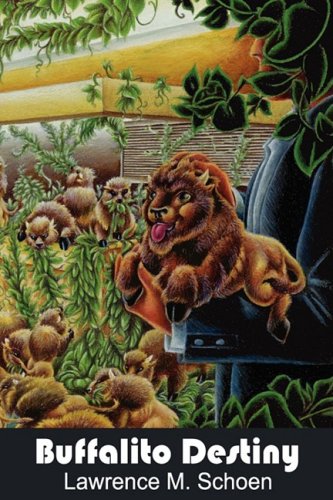
MICHAEL A. VENTRELLA: Today, I am honored to be interviewing Hugo-nominated author Lawrence M. Schoen. Lawrence holds a PhD in cognitive psychology and spent ten years as a college professor. He’s also one of the world’s foremost authorities on the Klingon language. A few years back he started Paper Golem, a speculative fiction small press aimed at serving the niche of up-and-coming new authors as well as providing a market for novellas. In 2007 he was nominated for the John W. Campbell Award for best new writer and in 2010 received a Hugo nomination for best short story. He’s the author Guest of Honor at Lunacon next weekend (March 18-20, 2011), where he’ll have a book launch for his second novel, BUFFALITO CONTINGENCY. (I’m just a regular guest, but I am on at least one panel with him!).

Lawrence, Do you enjoy conventions and do you advise authors to attend them?

LAWRENCE M. SCHOEN: I love conventions! Most of my friends are either authors or fans (or both) and they’re scattered all over. Conventions are often my only opportunity to see them and catch up. It’s become trite to talk about how writing is such a solitary experience and how only other authors can really relate to the tribulations of the life, but the reason it’s trite is because there’s so much truth in it. It’s incredibly comforting to settle in with other writers and listen as they share their own joys and complaints and be reminded that it’s actually a kind of club.

Back in my psychology days, I attended research conferences for much the same set of reasons. One of my graduate professors, a brilliant scholar named Thaddeus Cowan — the only person I know to have invented a new impossible figure! — told me that that when it comes to conferences and conventions you’re looking for three things: 1) meet up with an old friend, 2) make a new friend, and 3) come away with a fresh idea. If you do any two, it’s a good event, and if you manage all three, it’s great. Most conventions I’ve been to, I’ve been lucky enough to hit all three, over and over again.

Having said that, I don’t think every author should attend conventions. Conventions aren’t a one-size-fits-all kind of thing. I’m an extravert, a big guy with a loud voice. Having been a professor for ten years, I’m very comfortable standing in front of a room full of people and telling everyone what I think about something, at length. I’m completely at home in that kind of setting, but I know people who can’t abide crowds, let alone being trapped in a room with a bunch of loud people with big egos. Fortunately, it doesn’t have to be an either/or kind of thing. I think you can be very successful as a writer without stepping into the spotlight and bloviating. A shyer author can attend a convention, hang out in the background and chat quietly with other authors and fans, attend functions and make connections. There’s plenty of room for variety, and even people like me get tired and calm down eventually and welcome a quiet conversation before the day’s out.

VENTRELLA: You are known in large part for your promotion and publication of Klingon translations of Shakespeare and other works. What led you to the interest in the language?

SCHOEN: I’ve always been fascinated with languages. I’m not necessarily particularly talented at them — it’s not like I have a great ear for languages, or learn them quickly, I just enjoy them. My academic expertise is in psycholinguistics. I stumbled into Klingon with the right set of skills at the beginning of the internet explosion. So I was in the right place at the right time. Traditionally, the two things that hinder any language, natural or constructed, are 1) time, and 2) distance. I became immersed in Klingon at the precise moment when these factors ceased to be an issue, when the technology and expertise allowed real time communication with people almost anywhere in the world, something that other constructed languages hadn’t previously enjoyed. It was like being on a linguistic rollercoaster, and the ride’s been going nonstop for twenty years!

VENTRELLA: You also established a small press company called “Paper Golem” a few years ago. What led you to that decision?

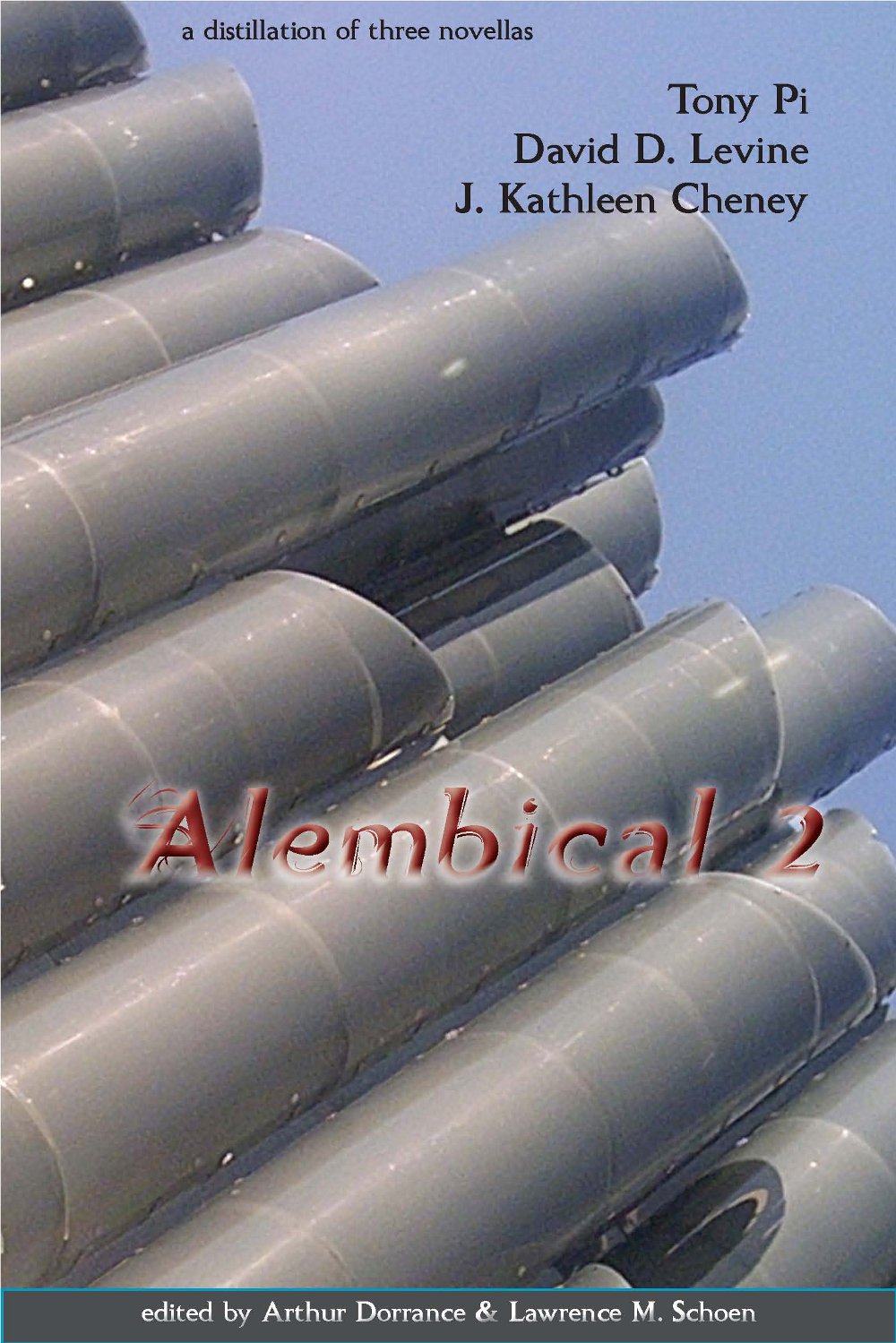
SCHOEN: I’m extraordinarily lucky. I have a good job that pays me a decent wage for part time work. That leaves me free to do things like write. A few years ago some members of Codex (an online community of writers) were kicking around ideas for generating more group identity, and I offered to edit a reprint anthology for them. When I looked at the numbers, I realized it wasn’t that much more time and money to set myself up to do additional books as it was to do just that one book. Basically, I was in a position to commit an act of “paying it forward” and that’s how Paper Golem came about. It’s not intended to make a lot of money. The goals of the press are much more modest. I’m very happy to have a book break even, and anything extra gets folded into the next project. We’ve put out four books to date, with another one due in May. And the last book, ALEMBICAL 2, has an original novella that’s up for a Nebula Award. As you can imagine I’m feeling pretty chuffed about that.

VENTRELLA: What works have you released through Paper Golem that have impressed you?

SCHOEN: We have two “series” that we do. First, I’m committed to providing a venue for novellas, because there aren’t a lot of places where you can sell a story that’s in the 20K – 40K word range, particularly if you’re not a Big Name Author. That’s what ALEMBICAL is for. Second, I like the idea of doing single author collections for writers who are producing incredible stories but haven’t yet written and sold a novel. These are authors who deserve to be read, who deserve to have their work gathered in one place so that potential readers can find them and be delighted. Our first single author collection was for Cat Rambo, and it’s absolutely beautiful. The next one, which I’m finishing up even now, is by Eric James Stone, and contains a novelette that’s also just been nominated for a Nebula Award. It’s incredibly satisfying to work with such talented authors who are going to transform this field as they progress through their careers.

VENTRELLA: Has Paper Golem been the success you hoped?

SCHOEN: Absolutely, particularly because (and this may be the same mindset that originally set me on the road of being an academician) I don’t measure success in terms of how much money is produced. Paper Golem is bringing quality fiction to print, and if you love reading good science fiction and fantasy then there really isn’t a higher mark to hit.

VENTRELLA: What does a small press offer than the larger publishing houses cannot?

SCHOEN: The ability to take chances. The opportunity to work with authors as a labor of love without having to justify it to the accountant. There are tradeoffs, of course. Would I love to publish a best seller? Sure. More sales would mean more money to do more books, but it would also mean reaching more people and introducing them to authors they might not have otherwise found. Don’t get me wrong, I love big presses, and I love what they do. But small presses serve a different niche. Small presses are all about the long tail, the specialized market. For Paper Golem that’s novella-length fiction and newer authors, and seriously, that’s not all that specialized. Somewhere I’m sure there’s a small press that is specialized to serve the reading desires of people who want nothing but humorous SF stories about talking, vampire cats solving computer crime in space. Hmm… I wonder if anyone has a novella about that…

VENTRELLA: What bugs you most about the publishing industry and what would you change about it if you could?

SCHOEN: Lately I’ve become more and more upset about the economics and how that drives what publishing does. I’ve seen author friends who are working on series get dropped by their publishers because while the series is profitable, it’s not as profitable as hoped, so the author has to change publishers, and in effect end their series (the big exception to this being Carrie Vaugh) because what new publisher would want to pick up a series with book #5 when the rights to books #1 through #4 are tied up elsewhere? I understand that publishing is a business, and it would be criminally naive to imagine otherwise, but I don’t read because doing so puts money in some editor’s pocket or employs a proof reader or marketing department; I read because I enjoy what a given author creates.

VENTRELLA: Who do you like to read for pleasure?

SCHOEN: I read anything by Walter Jon Williams, Karl Schroeder, Daniel Abraham, China Mieville. I go on binges where I’ll read everything I can get by a particular author that I’ve stumbled over or rediscovered in my library, and I’ll keep tearing through all of that author’s work for a while until I’m sated and have to come up for air. Last year I devoured books by the late Kage Baker. Right now I’m in the middle of Michael Chabon.

VENTRELLA: How has your background as a psychologist influenced your work?

SCHOEN: I trained as a researcher, and so everything comes back to a question. Everything gets turned into a testable hypothesis. Why does the character do X. What happens if the bad guy is thwarted by removing Y from his path. What are the systematic variables that can affect the outcome? This kind of worldview permeates not just my fiction, but also my daily wife. It drives my wife nuts!

VENTRELLA: How did you come up with the concept of The Amazing Conroy?

SCHOEN: Some years back I was enrolled in the two week workshop that James Gunn offers out of the University of Kansas. It was the last night; we were done. Everyone had gathered and in a celebratory mood, and this line of dialogue just popped into my head and right out of my mouth without any control. It was “Put down the buffalo dog and step away from the bar!”

As soon as I said the room went quiet and everyone was staring at me. I had no idea what it meant or where it had come from, but I vowed to one day write a story with that line. It took years, but then, one day, I found myself writing “Buffalo Dogs.” At the time, I had no idea it was going to lead to another quarter million words and a branded identity.

VENTRELLA: There seems to be a theme in much of speculative fiction about super-humans – the “chosen one” who has special powers no one else has who is the subject of a prophecy to save the world blah blah blah. Of course, that’s an old theme going back forever. The main characters in my books are just normal guys who do their best, make mistakes, yet win in the end, and you have the same attitude in your work. So why do these kinds of characters appeal to you?

SCHOEN: I blame Thornton Wilder. I had to read a lot of his stuff back in high school, and he spent a fair amount of time championing the “every man.” Ordinary people finding themselves in extraordinary circumstances are much easier for a reader to relate to than someone who is superhuman in extraordinary circumstances. Most of us are never going to be James Bond, but we very well could be the guy who lives in the apartment next door to him (of course it’s not his real apartment, just one he keeps as a cover). I like protagonists who aren’t jaded by the chaos and adventure of their lives, but rather are dragged into it by surprise, kicking all the way.

VENTRELLA: Of what work are you most proud?

SCHOEN: The answer to that is constantly changing, because I’m constantly changing as a writer. I’m very happy with the new novel, and I think it represents a new high point in my ability to craft a complex story and tell an entertaining tale. There’s a short story I wrote a while back that came out in January of last year and that I secretly (well, not so secretly now) harbor an unlikely hope that it will make the Hugo ballot. It’s called “The Wrestler and the Spearfisher” and it’s one of my infrequent jaunts into Fantasy.

VENTRELLA: What is your writing process? Do you outline heavily, for instance?

SCHOEN: I’m constantly changing how I work, trying new things. Nowadays, I’m trying to get better at blocking out the scenes in a story or novel before I do too much of the writing. I’m somewhat transitioning from being a seat-of-the-pants writer (what some like to call a “discovery writer”) to an outliner, but I suspect I’m going to stop far short of the end. I’m enjoying knowing more about a work before I sit down to write it though. It’s very different from the way I used to work. But will it last? We’ll just have to see.

VENTRELLA: What advice would you give to a starting author that you wish someone had given you? What is the biggest mistake you see aspiring authors make?

SCHOEN: Problems in Perspective. There are always going to be bigger fish, and if you constantly compare your attainments to them, you’re always going to make yourself miserable. Keep a perspective on things and don’t view this business as a zero-sum game. Instead, if you have to be competitive, compete with yourself. Are you further along now than you were at this time last year? Is your prose improving? Are your plots more involved? Work on improving yourself, rather than trying to be as good as someone else. You’ll get there sooner, and you’ll be happier along the way.

16

Interview with Publisher Deron Douglas

MICHAEL A. VENTRELLA: Today I’m interviewing Deron Douglas, publisher of Double Dragon Press, the largest science fiction and fantasy e-publisher in the world (and, I might add, the publisher of my books). Deron, is that claim based on the number of books you have available, the most sold, or what?

DERON DOUGLAS: Hi Mike, it’s based on both numbers… sales and number of editions available for purchase from DDP and all our retailer sites worldwide. However, it is a fluctuating number as well.

VENTRELLA: What is in your background that made you want to start Double Dragon?

DOUGLAS: I’ve been involved in the publishing industry, in various aspects for about 25 years. I’m also an avid Science Fiction and Fantasy reader from when I was a kid. About 10 years back I purchased one of the first ebook devices on the market called the Rocket eBook (I still own 3) and found that there weren’t very many titles that I would enjoy reading myself. After further investigation into the technology it “clicked” that I had the personal experience and technical ability to pull it off.

VENTRELLA: Have your standards changed over the years? Now that DD is doing better, are you being pickier with which manuscripts you accept?

DOUGLAS: We’ve always had high standards, but like everyone else are restricted by our submissions pool. But generally I like to select titles that I find interesting and diverse; something that I would want to read myself.

Yes, as the submissions pool gets larger we find that we can select more carefully based on market trends and an author’s current readership base.

VENTRELLA: What is the biggest mistake that aspiring authors make when they submit their work?

DOUGLAS: In a lot of cases they do not bother to read the guidelines or take the time to find out what we publish. Double Dragon Publishing is essentially a Science Fiction and Fantasy publisher, but I still have people sending me relationship books, autobiographies etc. If an author does happen to read the guidelines and are submitting within the right genre, they neglect to send their best possible “polished” work. We edit all titles before they are published, but we won’t accept a title that is still in the development stages and requires massive rewrites.

VENTRELLA: What do you personally like to read?

DOUGLAS: I like science fiction with a time-travel, time paradox sort of twist, as well as “steampunk”, alternate reality, divergent societies sort of stuff.

VENTRELLA: You’ve recently begun to expand a bit and publish other genres. Tell us about that!

DOUGLAS: Actually, from the start we accepted everything in all genres, over time we found what sells and what doesn’t. But occasionally I’ll accept something that is “out there” because it’s well written and I’m curious as to how it will be responded to by our readers. But maybe you are referring to our sister imprints, Carnal Desires Publishing and Blood Moon Publishing? Each is dedicated to a genre that we felt was growing to a degree that it deserved its own identity and staff.

VENTRELLA: You’ve been able to lure some fairly famous authors to DD for their e-books. How has that worked out?

DOUGLAS: It’s worked out very well for us. The things take seem to be common to all is that they’ve heard our reputation for a very expansive eBook distribution network, fair methods of working with authors and our “professionalism”.

VENTRELLA: Most of the paperbacks you publish are print on demand. Do you see a future where you would have regular print runs?

DOUGLAS: No, not at all. In fact I can see a near future where we will be phasing out paper book completely. Last fall (2010) is was reported by Amazon that eBooks were outselling “hardback” books on Amazon. This year in Feb It was reported by Jeff Bezos (CEO and Chairman of Amazon), that eBooks are now outselingl paperbacks. People tend to forget that Double Dragon Publishing is an eBook publisher and has always been, and as a result we are well positioned to take advantage of this huge market. After all, we are one of the pioneering ePublishers and have been involved for more than 10 years.

VENTRELLA: How do you publicize your books?

DOUGLAS: Currently we release between 100-120 titles per year, as such we are unable to publicize every title ourselves. We depend upon the author to promote themselves and build a base of readership. After all, if they leave DDP they will take this base with them. But we also provide venues of promotion such as out blog at blog.double-dragon-ebooks.com, Facebook, etc. We also provide a forum where new authors can discuss methods of publicizing themselves with other seasoned veterans.

VENTRELLA: Do you see e-books as the future? Is this good for the industry?

DOUGLAS: Ebook have taken off from where they began 10 years ago, it seems every major manufacturer is now building an affordable ebook device that allows the seamless purchasing of titles almost anywhere in the world. Yes, I think ebooks have a future and think they are also good for the industry. But the industry will change, portions such as paper book production services will die off. But eBook conversion services will sprout, are sprouting in fact.

Interview with Alyce Wilson

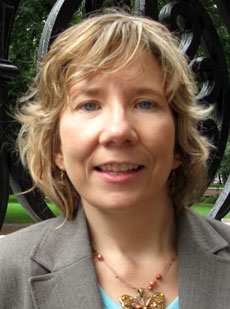
MICHAEL A. VENTRELLA: Today, I am pleased to be interviewing Alyce Wilson, whose web page proclaims her as “writer, editor, poet.” Alyce, which one of those tags best describes you?

ALYCE WILSON: It depends on the day! I would say, though, that I’ve probably considered myself a poet longer, since that started back in second grade, courtesy of a very enthusiastic teacher, Mrs. Johnnie Stahl, who taught us how to write rhyming verse. But I have to admit that I don’t necessarily write poetry every day, while I do tend to write something in prose every day. So perhaps “writer” is more apropos right now.

VENTRELLA: Tell us a little about how you became involved in the business.

WILSON: I love the Joseph Campbell quote, “When you follow your bliss… doors will open where you would not have thought there would be doors; and where there wouldn’t be a door for anyone else.” That’s what I’ve been doing. Aside for a brief flirtation with the idea of being a teacher, I’ve known from a very young age that I wanted to have a career in writing. The question has always been where and how?

In high school, I had an excellent journalism teacher, Mrs. Maryann Hoff, and began to consider that as a possible career path. But by the time I got around to declaring my major at Penn State University, I had fallen in love with radio (thanks to the college radio station, WPSU) and selected Broadcast/Cable. Perhaps if I had been less of a country mouse (raised in a small Pennsylvania town, as I was), I would have immediately sought out employment opportunities at a public radio station after graduation, but instead I felt directionless. The radio jobs available in small towns didn’t appeal to me, but I couldn’t imagine moving to a city. Fortunately, my decision to return to school, like the proverbial groundhog, waiting out six more weeks of winter, brought me to Penn State’s MFA program in Poetry. If I hadn’t panicked at the idea of city life, I wouldn’t have learned such valuable lessons that improved my poetry writing immensely.

Much as I loved grad school, however, I rebelled against the idea of remaining in academia. By that point, I had taught several undergraduate writing courses in essays and poetry, and I loved the students but hated the bureaucracy. I feared that pursuing such a career would be soul-killing and especially damaging to my writing. Instead, I felt it was important to experience life. So in my “hippie days,” I married a wispy dreamer, traveled up the Mississippi, and then took a job as a pizza delivery driver in my hometown (which served as inspiration for my second unfinished novel). Just about the time that my short-lived first marriage petered out, I found a job with the local newspaper (“The Standard-Journal,” Milton, Pennsylvania) as a reporter/assistant editor. This again, was the best thing for me, because it helped me to perfect my skills as a columnist.

However, the daily deadlines were highly stressful, and after putting on about 60 pounds and enduring a weekly migraine, I decided to get out of the newspaper business. I headed next for a PR job in Philadelphia, because after covering county politics and dealing with irate readers, living in the city no longer seemed so scary. While the PR job didn’t last, my love for Philly did, and for the past 10 years, I’ve been doing transcription work to make money and pursuing freelance and personal projects on the side. Coincidentally, spending time with college friends who had moved to Philly introduced me to my second husband, Mike Ryan, and led to our marriage and our 7-month-old son.

I’ll be the first to admit that my career path so far has been much less lucrative than, say, a career in public radio, but I believe that following my bliss has led me to becoming the person, and the writer, I am today.

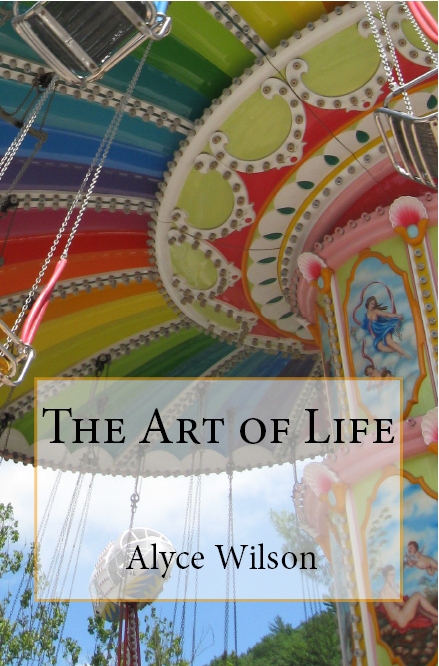
VENTRELLA: Your latest work is “The Art of Life”, a collection of essays on various topics. Where did these first appear and how did you decide which essays to include?

WILSON: The pieces in “The Art of Life” came from three different sources: my “Standard-Journal” newspaper columns; columns I wrote for the now-defunct Comcast site InYourTown.com; and blog entries written between the years 2002 and 2010.

To figure out what to include, I reread all of my blog entries and columns and pulled out the ones I liked the most. Then I reread them once again, keeping in mind the following criteria: Did it stand on its own, outside of the collection? Did it fit with the other pieces? Was it likely to appeal to a broader audience than that for which it was originally intended? If I addressed a similar topic in two pieces, I opted for the one that was stronger. Then I arranged the pieces so that they led into each other, being conscious to alternate topics and tone. Finally, I went back through the manuscript and cut any pieces I felt were not as strong until I got to a reasonable page length.

VENTRELLA: You also are editor of a quarterly online literary magazine. How did that get started?

WILSON: At the time, I was about five years out of grad school, and I felt a calling to make a place for poetry in the world. This was an idea suggested to me by my poetry professors: that it was the responsibility of a poet in these days to make a place for poetry. A friend of mine, Amanda Cornwell, had received her bachelor’s degree in art and shared similar goals. We both felt it was important to make a place for the arts, particularly when you look at how the arts have been increasingly devalued in our society.

Previously, Amanda had launched a small print literary magazine, but funding was difficult and the circulation was small. We looked at the Web as a good forum for accomplishing our goals of making the arts accessible and appealing to the general public. With Amanda doing our initial Web design and serving as the Art Editor, we launched “Wild Violet” in October 2001. After the first three volumes (12 issues), she left to pursue other projects.

VENTRELLA: You’ve also written a book giving advice to those who wish to appear in literary magazines. What’s the biggest piece of advice you can give (other than “read my book”) based on the mistakes you most often see new writers make?

WILSON: Know your market. As the editor of a literary magazine, far too often I receive submissions from people who apparently either cannot be bothered to check out our free online publication or have no clue how to direct their submission toward a specific market. We receive many submissions that are clearly inappropriate, which should be obvious to anyone who had perused the latest issue. It is essential to read the magazines to which you are considering submitting, and to decide which are most appropriate to send your work. It’s not enough just to look for magazines that publish poetry, for example; you need to find a magazine that publishes the kind of poetry you write.

VENTRELLA: “Literary” seems to have a specific meaning to some people in the publishing world. For instance, a science fiction or fantasy writer wouldn’t send their story to a literary magazine, would they?

WILSON: Actually, we receive all kinds of submissions, and we do publish some science fiction and fantasy. The term “literary” has unfortunately acquired an elitist connotation which, through “Wild Violet,” I’m trying to change. To me, “literary” means work which may be more challenging to the reader: writing which goes beyond basic storytelling, whether in terms of character development or the exploration of concepts. The science fiction we publish meets that criteria.

VENTRELLA: Do you think that talent is something that can be learned? In other words, can someone go to school to become a great writer or poet?

WILSON: Talent, that essential flare of ability, cannot be taught. Yet, more of us possess that essential flare than we may realize. A teacher can help you discover what your talents are. You might find, for example, upon taking a painting course, that it’s simply not something that comes naturally to you, but that photography does. That’s the role of education: helping people to discover and refine the talents they do have.

That said, I think education is a surer way to success for many people. There are few individuals with the right mix of raw talent and focused execution to become an overnight success, so to speak. It can happen, but those success stories are rare. Even those who enter a writing career later in life, after pursuing other careers, have more likely than not been honing their communications skills in other ways.

VENTRELLA: What do you see as the future for printed books? For book stores?

WILSON: According to Bloomberg, in the second quarter, for the first time ever, Amazon.com sold more electronic books than hardcovers. I think it’s safe to say that print books are going to take on a new role in our society. Just as with other media that have gone digital, such as music and photography, I think we’re destined for a sea change.

In some capacity, printed books will continue to sell, if for one key reason: there are always slow adopters to new technology. Plus, until somebody figures out a way to sign a digital copy, it will remain the only way to get a signed book. A lot of people like to have an object they can hold which is not subject to, say, a hard-drive crash or computer virus. So there will always be a place for books as more than just a quirky artifact. The number of print copies sold, however, will likely diminish. When you think about it, people are still buying vinyl, too, but nowadays it’s confined to discreet subcultures: namely, DJs and collectors.

Book stores will have to look at how to offer the reader an experience they can’t get from buying a digital copy. I think book stores may become more of a locus to interact: in person with authors for lectures and readings, and perhaps with other readers through reading groups and the like. I would expect at least the chain book stores to add digital kiosks to the store, where readers could sample electronic books and buy them.

If book stores don’t start planning now, they will likely find themselves running into financial trouble, much the same way that record/CD stores have in the last few years with the emergence of the MP3.

VENTRELLA: “The Art of Life” is a self-published work. What are the pros and cons of self-publishing and why did you decide to do so for this book? Would you do it for, say, a novel?

WILSON: Any means of publishing offers pros and cons, which I examined carefully when deciding how to publish “The Art of Life.”

Pros to self-publishing include more control over the finished work. The author determines the final content, layout and book cover. Aligned with that are some obvious cons: you must either do all that work yourself or find someone to do it for you. So it is much more time-consuming, especially to guarantee a high-quality final product.

Another pro of self-publishing is timeliness. You can put the book out as soon as it’s ready, without going through the delays that a publishing house would necessitate. I wanted to get “The Art of Life” out as soon as possible, because I thought it would be a great opportunity to introduce myself to the reading public. Waiting for years for a possible acceptance by a publishing company did not appeal to me. I also felt that this particular collection, because of its range of styles and content matter, would be difficult to fit into the sort of genre or subcategory that publishers prefer.

Still another con, there is still a lot of prejudice towards self-published books, in part because so many sub-standard books have been published this way: poorly edited vanity projects that make the rest of the field look bad. However, as editor of “Wild Violet,” as part of our mission of making a place for the arts, I have reviewed dozens of self-published books. I’m happy to report there is some gold amongst the flax, so I felt like I was in good company.

Yet another con: as a self-published author, you are responsible for any expenses involved in printing and promoting the book. On the pro side, when money comes in, you see it immediately and stand to earn more per copy than through a typical publisher. Along the same lines, you don’t have access to a publisher’s connections when it comes to promotion; however, as I’ve learned from watching other authors, even with a traditional publisher, much of the promotion falls on the shoulders of the author. So if you’re willing to put that time and effort in, you could stand to profit.

Since there’s a long history of self-published poetry chapbooks, I felt comfortable with going that route for my poetry book, “Picturebook of the Martyrs.” Likewise, self-published nonfiction books can still sell, so I felt good about going that route with “The Art of Life,” as well. Unfortunately, when it comes to self-published fiction, there’s a glut in the market, with too many poor-quality books cluttering the field. Therefore, for better or for worse, I think that readers tend to look at self-published fiction a bit askew. The exception here is erotica, especially electronic versions, because that seems to sell strongly no matter the publishing source.

A caveat: these observations are largely anecdotal, so I’d be happy to be corrected by someone with more direct knowledge. However, I myself would be leery of self-publishing a fiction book, unless it were an erotica title.

VENTRELLA: One of the things that I admire about you is that you also run a Monty Python Appreciation Society. How did that come about?

WILSON: Just for clarification, I’m not currently running such a society. However, I am the former president of the Penn State Monty Python Society, and my adventures with MPS are detailed in my online chronicle, “Dedicated Idiocy.” MPS began in the 1970s when “Monty Python’s Flying Circus” first hit the American airwaves. By the ’80s, interest in the group had waned, but just before I joined as a freshman in 1988, MTV had added the show to its late-night schedule, so there were a record number of new members.

I discovered the Monty Python Society through a flyer I saw while attending an Amnesty International meeting. Since the two groups met at the same time, I suppose I should be embarrassed to admit that I sided with comedy over human rights. Still, I think comedy can do a lot of good in the world. One good thing it has done for me is introduce me to some of my oldest, best friends in the world. I’ve often said the real test of friendship is whether you can get together and be silly together. With these folks, I definitely can.

Learning How To Read

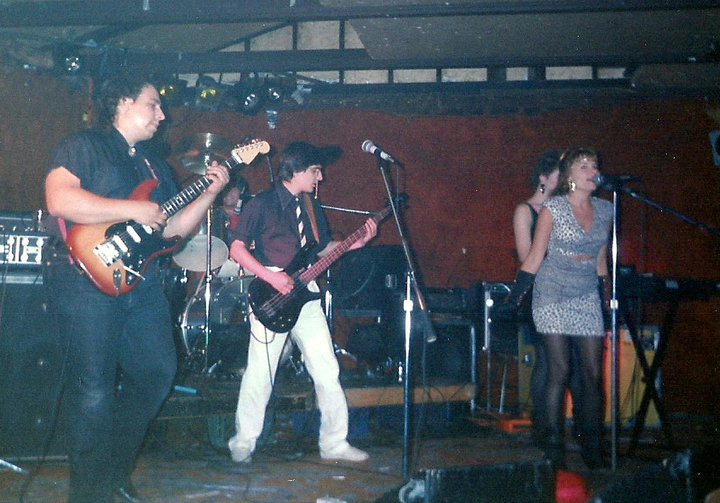
When I lived in Boston back in the 90s, I was in a band called Agent 99. Our music was often described as “Blondie meets the B-52s.” We did mostly original songs, and I wrote my fair share. (That’s me on bass.)

Our guitarist was Richard Marr, who at the time was studying at the prestigious Berklee College of Music and who now runs Galaxy Park recording studios in the Boston area. I often gave him comments about his songs which he accepted and used. I recall one time specifically where he said “You know, I’ve learned more about songwriting from you than I have from my professors.”

So what does this have to do with writing fiction?

Well, this: You can learn more about a creative endeavor by paying attention than you can any other way.

Even now, I don’t just listen to songs — I listen to how they are crafted. I pay attention to whether the writer has placed the lead before the bridge or after, how the instruments play against each other, the way the lyrics flow … everything. I can’t help it, I just do. I hear things in songs that non-musicians and non-writers don’t hear or don’t notice.

My wife is an artist, and she tells me it’s the same with her and art. We can go to a gallery and while I can admire a piece of art in general, she sees it in a completely different way, noting the artist’s techniques and processes, analyzing why the artist made the decisions he made.

And that is how you should be reading.

Oh, I don’t mean that you need to literally study what you’re reading; when I listen to music, I can still enjoy the song while noticing all the rest. But you should take notice how the author structured the story and kept it moving, how the characters become real and believable, how the author used foreshadowing, and so on.

Taking writing classes and learning how to improve your skills are one thing, but learning how to tell a story takes something more — anyone can learn grammatical rules they teach you in school, but not everyone can be a great writer with them.

To use music again as a metaphor: I never really learned how to read music other than the very basics (“OK, that’s a C sharp”). I have played with various musicians who could take a score they had never seen before and play it beautifully. But if you asked them to play a solo, they were lost. They’d ramble all over the place, producing nothing memorable. They just didn’t have the skill needed to go from technically proficient to creative.

And that’s what you need to do with your writing. Those “how to write a novel” books will not teach you as much as if you would just read! Read good books! Books in your genre. Books you will enjoy. And pay attention!

(Oh, and thank you for reading this and letting me have a bit of nostalgia about my old music days!)

Obvious Writing Rules That Aren’t That Obvious

Just because you have a book published does not mean you know everything there is to know about writing. You can always get better.

Since my first novel, I have worked with excellent editors, taken classes from professional authors, attended writer’s conferences, and participated in discussions and panels at conventions. Each one has brought new lessons for me.

And most of these lessons were obvious once I learned them. Each of these came with an “Of course! Why didn’t I see that before!” light bulb attached.

I am now editing a short story collection and have discovered that I am not the only one who was not aware of these obvious rules beforehand … many of the rejected stories were sent back for violating these rules.

So here are my five Obvious Writing Rules that Aren’t That Obvious.snoopy-writing

1. Have a character point of view and don’t change it abruptly. My first two novels were in first person, so that wasn’t an issue, but now that my new novel is in 3rd person, I am paying much more attention to this rule.

Each chapter should be told from a specific character’s point of view. (I imagine the narrator hovering over a specific character and only describing what that character sees, feels, and thinks.) To do otherwise is very jarring to the reader. If you have to switch POV, be sure to make a break somehow to make it clear.

The omnipotent narrator can work, but you’ll find that the story will flow much better by choosing a character for each chapter. And it doesn’t have to be your main character; perhaps this section is told from the point of view of someone meeting your main character, which allows you to better describe your character’s personality quirks and looks (since your main character probably won’t do that).

2. Try not to use words other than “said” and even then, try not to use “said.” And for that matter, steer away from adjectives that describe “said.”

When you use other descriptions (growled, hissed, yelled, screamed, etc.) it can be distracting from the dialog you’re trying to highlight. It should be clear from the dialog.

Better yet, try to avoid “said” whenever possible. Usually, you can indicate who is speaking from the paragraph in other ways.

“Give me that idol!” he screamed angrily.

As opposed to:

His face became red as he pounded his fist on the table. “Give me that idol!”

3. Show, don’t tell! Look at the paragraph above. See how much better the second example is? And it’s obvious who is saying it — you don’t need to add “he said” at the end.

When I’m working on my second draft, I go back and make sure that I am showing, not telling. Maybe it’s my legal training, but I imagine myself cross examining a character:

“He was mad.”

“How do you know that?”

“Well, his face turned red and he pounded his fist on the table.”

4. Trust the reader. You don’t have to spell out your plots completely. The bad guy doesn’t have to detail his evil plan. It should become obvious sooner or later anyway.

Admittedly, I kind of knew this all along. In fact, in my first novel, I even make fun of the “bad guy monologuing” cliche.

But it applies to all parts of your writing. Don’t dumb down the story; the readers will get it. Don’t explain that someone was happy or sad or angry — show it instead and the reader will get it. You don’t have to spell out what’s going on like some bad made-for-TV movie.

5. If you’re skimming over your own work, so will your readers. Leave out the boring parts. You don’t need to describe every detail of the room, or of the main character’s face. The reader will fill that in themselves.

These, then, were the five rules that made me go “Of course!” These are not the only rules for writing, just the ones that hit me recently. There are many other rules that I already knew, and I’m sure there are more I have yet to learn. (And I may come back to visit these in more detail later.)

And, of course, a final disclaimer: There really are no rules in writing. If it works, it works.

Interview with author Steve Miller

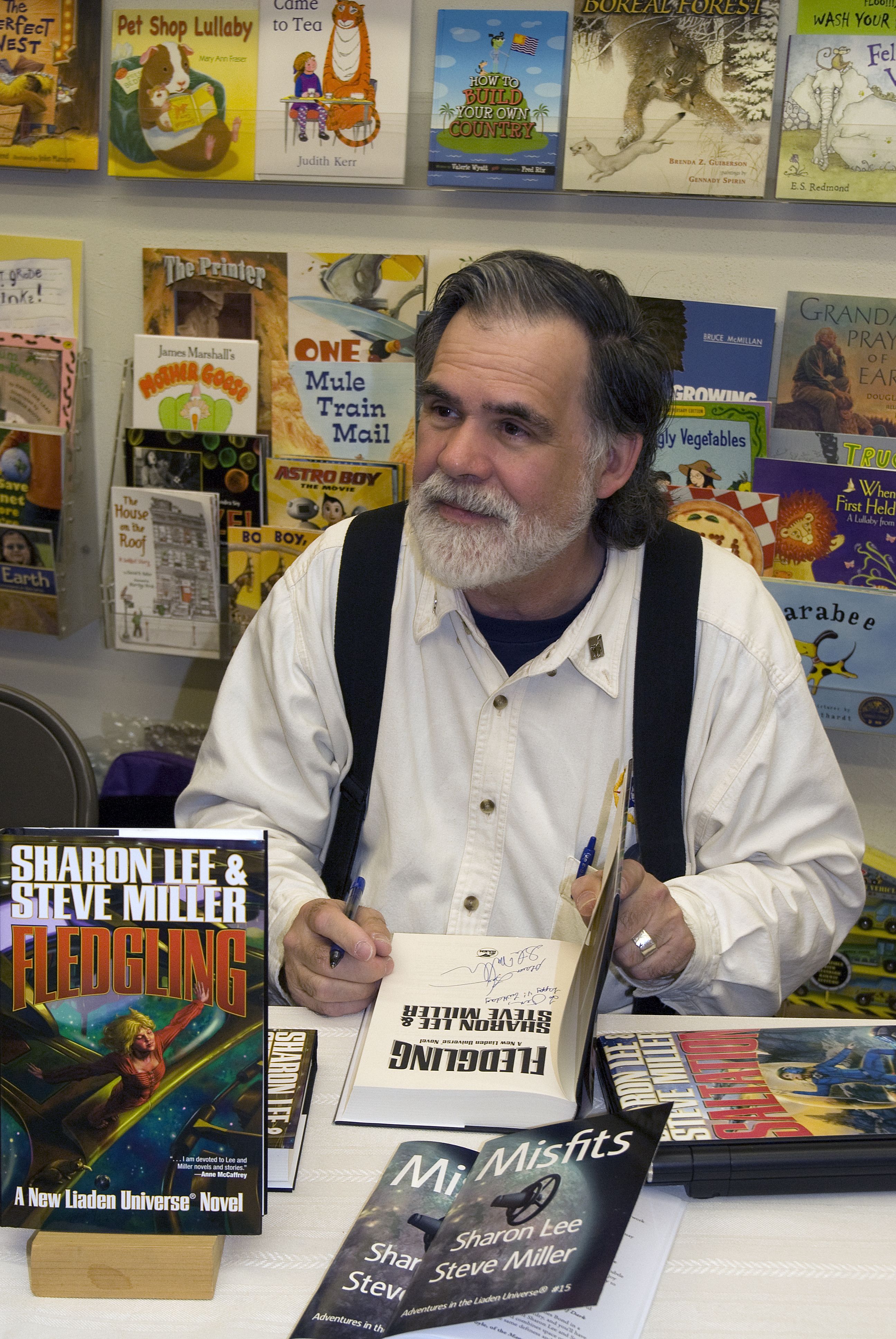
MICHAEL A. VENTRELLA: I am honored to be interviewing Steve Miller today. Steve and I have been on panels together at conventions, and I interviewed his collaborator (and wife) Sharon Lee recently. They started the first Liaden novel in 1984 and have published sixteen novels and several dozen short works together in that series alone, garnering a number of awards as well as invitations as Guests of Honor and Special Guests coast to coast in the US and Canada at many conventions. Their work has enjoyed a number of award nominations, with SCOUT’S PROGRESS being selected for the Prism Award for Best Futuristic Romance of 2001 and LOCAL CUSTOM finishing second for the same award. BALANCE OF TRADE, appeared in hardcover in February 2004 and hit Amazon.com genre bestseller lists before going on to win the Hal Clement Award as Best YA Science fiction for the year. SALTATION is a current nominee for Best SF of the Year on the Goodreads Choice Awards.

Steve, how do you and Sharon work together? What’s the process like?

STEVE MILLER: A madhouse, according to some solo authors.

We often role-play at dinner or after going over the day’s work; sometimes we’ll start driving, get in a discussion of a character or plot point and end up in Canada. The role-playing may involve standing and showing body language, or the raising of voice in character, or the rapid alternation of characters, more or less in voice — I guess, yes, our own madhouse. Sometimes one or another of us will pause at the grocery store, say “storystuff!” and we’ll discuss things right in front of the oatmeal or carrots — story takes precedence.

More prosaically, one of us generally does the typing/sketching of the first draft — Sharon will sometimes retire to the couch and write longhand notes, and I usually work on the netbook or big computer directly, my hand written notes being unreadable the next day. We sometimes switch off in the middle if timing is an issue — neither of us is automatically doing the first run. Generally, the person doing the base work is the “traffic cop” on the book, and is responsible for backing up the book, having the two foot pile of paper in their office, and etc. Since we usually agree on points as the book is written there’s not that much disagreement on things — but the traffic cop gets third vote on a book if there is an impasse about something, thus making calling in the Marines to solve something for us much less likely.

VENTRELLA: What themes do you find yourself revisiting in your work?

MILLER: Oddly enough, or perhaps predictably enough, partnership is one, as is the unreliability of formal education and educational institutions. I note that Sharon and I have both worked in university settings ….

We also tend to stress the need for individuals to have a trusted pool of competent (if not savory) people who they can depend on for advice, at least. I think I also deal with change-as-necessity. We also subscribe to the Andre Norton “there have been prior civilizations” school of thought and all that may be carried forth from there.

VENTRELLA: What makes your work different from others in the genre, in your opinion?

MILLER: I think that I’m a bridge between many of the older ideas and approaches of science fiction and the new, from the old market to the now market. I’ve had breakfast, lunch, dinner, and sometimes a morning or late night glass with writers and editors ranging from John Brunner, Damon Knight, Ted White, and Hal Clement to Roger Zelazny, Jack Chalker, Vonda McIntyre, and Toni Weiskopf; I’ve been to Clarion and I was published in Amazing before the lamented-by-me attempt to turn it into a mediamag. Having talked shop and traded manuscripts with this kind of an array brought me to face to face with idea writers and storytellers. Also, I’ve extrensivly read — not studied, but read and absorbed as a young reader and then a young writer — many of the founders of SF and Fantasy as we know it, both in short fiction and longer fiction. And not just the celebrated classic authors, but the pot-boiling writers to whom story and flow was ghod. Not too long ago I was surprised to see someone recognizably a “name” writer of the 1990s and 2000s assuming to have invented a certain genre … which actually was invented in the 1930s by a famous writer apparently unknown to the “modern” writer. What this means is that I have, and draw on, a breadth of “SF genre” that many newer writers lack — and that some disdain, to their detriment. In other words my meme farm is huge, and I’m not afraid to use it!

VENTRELLA: Everyone who is published was an “aspiring writer” once. What mistakes did you make along the way?

MILLER: How much time do you have? No, seriously, I made a lot in a very short time — especially between the ages of 20 and 24, when I’d been assured by some very good writers that I could probably make it it as a pro someday, based on what they’d seen of my work. They were the fiction writers, of course, because by that age I was already writing for newspapers, magazines, semi-pro zines, anywhere I could — particularly if there was pay involved.

What I didn’t comprehend was that a suggestion by a well-known fiction pro that maybe I should “clean this up and send it on to XXXX magazine” didn’t mean “Tell him I sent you” … and also that once I did get a nibble that I shouldn’t expect instant results, that is, that as a no-name-newbie my work was something that might fill out an issue when it would fit — of course there were more print magazine then and many of the editors had come along as I was coming along, and thought that was how it would work forever — get a foot in, become first a byline, then a signature, then a name, then an invite to write a novel.

Clearly, the biggest mistake I made was lack of patience and in the long run trying to rush things probably cost me a year or two of pro work.

VENTRELLA: What is the biggest misconception people have about being a writer?

MILLER: There are several that go together, I think — One is that being a writer is inherently glamorous and the add-on is that being a writer elevates one to a superior state of being, with all the joys thereof.

VENTRELLA: How did you first interest an agent in your work?

MILLER: Accidentally. I was working as “third key” at Williams-Sonoma in Owings Mills, Maryland — meaning I was official management and got to deal with provblems and situations the manager didn’t want to deal with, like book signings and in store demos. Thus, when we had a double whammy of that, it was me in the front line — we had a cookbook author come to the store for a demo! The day before she came we’d gotten an offer on Agent of Change from Own Locke at Del Rey. It turned out that the cookbook author also wrote fiction… and when I mentioned that we had an offer in hand she recommended us to her agent, who looked over (and improved) the contract and got us through the three Del Rey books. Once we had a record getting the next agent was a little easier, but she was uncomfortable dealing with the SF side of things, and eventually we moved on after personal meetings with several agents at conventions and we’re pleased to link up with Jennifer Jackson.

VENTRELLA: What process do you use when creating believable characters?

MILLER: I’m hoping to write a book about this, but not here. Generally there’s no concious prefabrication involved in my new characters — the story starts, the character stands out from stage left or right, and Ta Da! I rarely base a character on someone I’ve met, but it may be on someone I know — that is, based on a character I’ve met in the thousands of books and stories I’ve read. The key to believabilty is not in the original creation, but on how the character acts in the story. A multi-hundred foot tree as a character? No problem. A sentient dragon looking for love? No problem… as long as they act right by who they are and don’t just act like dolls moved form here to there in a dollhouse.

VENTRELLA: What is your background in writing? What led you to wanting to be a writer?

MILLER: I pretty much have wanted to be a writer since I started reading books, and it probably helped that my grandmother was an award-winning poet so the concept of writing for publication had a priority over writing for school from the time I was quite young.

In high school I worked on the school literary magazine several years before becoming editor as a senior and in college I joined the school newspaper in my freshman year as a reporter, and soon took over some editorial duties. I started reviewing for the school paper as well as a number of fanzine and semi-pro genre mags shortly thereafter, and eventually was Managing Editor. I also contributed to poetry publications — which led to my weekly poetry column in a local newspaper by the time I was 23, IIRC. I was the sceince fiction book reviewer for the Baltimore Sun in my mid-20s when I was also a music columnist for the Baltimore area Star newspapers — and that led to me eventually being a features editor and then to taking over as Editor of several weekly papers. The whole time, from about 17, I was also writing fiction, which began appearing in semi-pro magazines and then in Amazing and some other pro places. I did spend some summers working construction, which helped convince me that writing was the way to go when it came to making a living.

VENTRELLA: The publishing industry is changing daily. What trends do you predict and how will this affect the business and your own publishing?

MILLER: Shoot for the moon: I think IPads in he current size will become obsolete in a couple years and theat reading will increase as people have access to phone readers and more reasonably sized and priced tablets. Paper publishing will continue to be a zoo, the current returns system in the US will crumble with in next 5 years as physically moving books becomes too expensive — this will cut down print runs drastically which will cut a lot of small bookstores out of the loop. We’ll keep on writing.

VENTRELLA: What are you working on now that we can look forward to?

MILLER: I’m told that between a new yet-to-be-seen novel and new Baen editions of previous novels we have at least six books due out in 2011, so it shouldn’t be hard for a a new reader to find us. Those are all books that are written, however.

In the short term, the new stuff? I’m working on finalizing SKYBLAZE, a novella due out as a chapbook from my own SRM Publisher in February. For those familiar with the Liaden Universe(R) this will span the end of the attack from I DARE and the early SUREBLEAK period and is our holiday chapbook (delayed a bit because of my recent hospitalization and the moving of SRM’s principal office).

Beyond that, we have contracts for three more Liaden novels to be delivered over the next 18 months or so. The first is DRAGON SHIP, which is the follow-on to GHOST SHIP; I have notes on that and once SKYBLAZE is done I’ll do a week of rereading of the series and then start right in — it follows Theo from FLEDGLING, SALTATION, and GHOST SHIP as she deals with the results of her pursuit of a, let us say, nonconforming path to independent starship pilot. Also in the works is an unnamed novel set on a post-Korval-arrival Surebleak and the long-awaited JETHRI follow-on, TRADE SECRET, which, depending on where you started reading the series, is a distant prequel to the Agent sequence or a distant follow-on to the Crystal books.

We’ve also committed to several more short stories for 2011 but I can’t say more than that quite yet.

13308401_10156960383575416_1464776046358663657_o

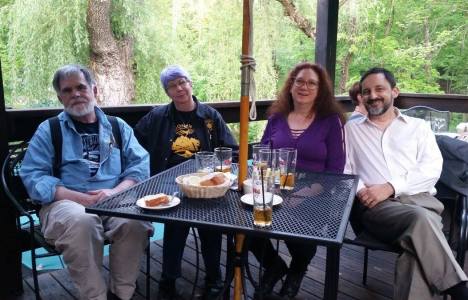
Dinner with Steve and his wife Sharon Lee (and my wife Heidi Hooper) when they visited us

Interview with Author P. N. Elrod

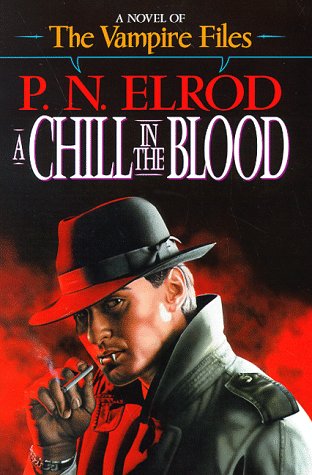
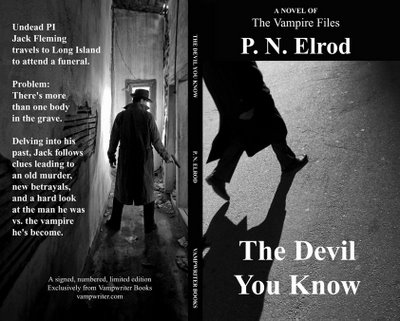
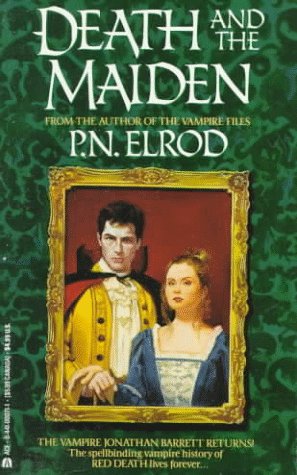
MICHAEL A. VENTRELLA: Today, I am honored to be interviewing author P.N. Elrod, best known for The Vampire Files series featuring undead private eye Jack Fleming. She’s edited award-winning anthologies, warns new writers away from scams, and is open and honest about her incurable addiction to chocolate. More about her toothy titles may be found at www.vampwriter.com.

What is it about vampires that so attracts the public?

P. N. ELROD: They’re easy on the eye, have money (if they’re doing things right), and get to kick butt—at least that’s true for the ones in my books!

VENTRELLA: Why did you decide to become the “vampire specialist” with your series?

ELROD: I didn’t decide. I like writing about the characters. You write about what interests you and that passion comes through in the words. If you’re lucky your words will touch others.

VENTRELLA: What’s your opinion on the many variances we’re seeing in vampire stories?

ELROD: I don’t have any. To each his own, let’s all have fun.

VENTRELLA: Do they bother you?

ELROD: Not even a little. I have other things on my event horizon.

VENTRELLA: Do you think this trend will die down eventually?

ELROD: I was told in the 1960s that vamps were dead. Apparently someone got that wrong and others will continue to get it wrong. I don’t pay attention to trends. If I did, then there would be no Vampire Files or any of my other books. I write the kind of stories I want to read and hope others agree with my take on things.

VENTRELLA: The concept of a vampire private eye solving his own murder must have helped sell your first novel in that series.

ELROD: The concept resulted in 20+ rejections from publishers who didn’t know what to do with a cross-genre book back then. It wasn’t a mystery or a horror and no one knew how to sell it—especially agents looking for a quick placement. It finally sold off the slushpile to Ace Science Fiction. It only took two years of shopping around—and about 20+ rewrites to get it up to a professional level. I’m glad it too so long—it resulted in a much better book!

VENTRELLA: You’ve written a sequel of sorts to Dracula. How did that come about, and what constraints did you discover?

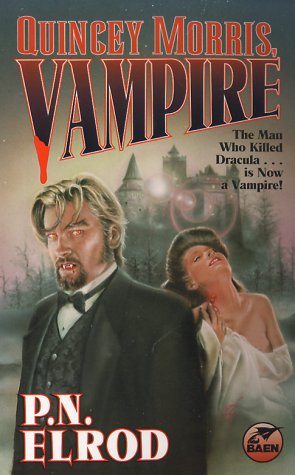
ELROD: It is a sequel to Dracula. I’ve always thought that Quincey Morris got a bum rap at the end, and wondered how it was that he knew more about vampires than all the others except for Van Helsing. I also wondered—after V.H. again and again harped about using a wooden stake—that they bumped off Dracula with a big metal knife. Well, my hero, Fred Saberhagen deftly and cleverly dealt with the latter problem in his classic The Dracula Tapes. When I was ready to do my own take on things, Quincey Morris, Vampire was the logical result!

No constraints. I wrote the kind of story I wanted to read. I love the Victorian period, the research was a joy and still is. I’m doing another Quincey book, but it will have to be scheduled after I turn in my new steampunk series.

VENTRELLA: In my next novel, a vampire runs for President (but of course, no one believes that vampires really exist). Do you think there’s a market out there for a political vampire novel?

ELROD: I wouldn’t know. Get some feedback, polish, shop it around, and find out.

VENTRELLA: When editing, what do you look for in a story?

ELROD: As little work for me to do as possible. I expect a clean, polished manuscript from writers who bothered to proofread and use the spell check.

After that, I want a beginning, middle, and satisfying ending with characters I can relate to whether they’re good guys or bad apples, and good solid writing.

I expect an enthusiastic, cheerful, professional attitude. My goal is the same as the writer’s: producing the best story possible so readers fall in love with their words. If you’re a paranoid diva whose deathless prose that must be preserved like the Dead Sea Scrolls, move on. Neither of us will enjoy the experience.

VENTRELLA: Do you generally invite others to join your short story collections or do you have open submissions? Which do you prefer?

ELROD: These days I’ve room for only nine stories in a collection. I call on a core handful of writers on my A-list choosing about four of the nine, depending on who is available. A-list writers are busy! The publisher—who is footing the bill—naturally wants to promote the writers who have books with them, and pick the other names. It’s only fair, and they are being more than generous about it.

In past projects I could handpick all the writers, inviting ones I knew would deliver good stories. I’ve asked only 2-3 otherwise unpublished writers for work, and they did not disappoint.

Those projects were not open submission, but I got stories from other writers with more cohones than sense. I let in one based on his letter and story. The letter, I later found out (this was before Google), was a gross exaggeration of his supposed “sales”. His story required extensive and repeated line edits. After that, I put him on my “do not invite” list. I don’t deal with liars.

Here’s a clue, new writers: tell the truth. You’re only as good as your reputation for honesty. If you’ve not sold anything, it’s perfectly okay. But don’t tell an editor that you’ve sold 20 stories to various publications when you really mean you just submitted stories and are waiting to hear back. These days it’s too easy to check up on you.

After speaking with other editors who have done open submission collections, I know I’d not want to work on such a project. I don’t have the time or patience.

VENTRELLA: What bugs you most about the publishing industry and what would you change about it if you could?

ELROD: They’re not cracking down on e-piracy. It’s not about freedom of information, it’s about theft of property. It’s one thing to resell a used book, but used bookstores don’t sell Xerox copies.

Contrary to popular myth, most writers don’t get paid much, and piracy cuts into the pittance they do manage to get from their hard work. Pirates are not promoting anything. If writers could make more money by giving away free e-copies of their works, they’d be doing it. Some of the more successful ones have chosen to do so, but the pirates have taken that choice away from the rest of us.

Publishers are losing millions in revenue through e-theft. If the music industry can crack down on it, so can the publishing industry. I want them to get off their duffs and shut down on these so-called “share” sites. Slap fines on the pirates and those who download from them. If anyone wants a free copy to read, go to the library. Each time a book is checked out, the librarians note that and order more from those writers. It’s good for everyone.

I believe most people want to do the right thing, so please, support your local library and the writers you love.

VENTRELLA: You’ve self published a novel, even though surely you could have sold it to a traditional established publishing house. Why did you decide to do this?

ELROD: Let’s call it commercial publishing. “Traditional” is a term used to excess by a notorious reverse vanity printer to make their customers think they’re in safe hands. In true “traditional” publishing it was the writers who paid the costs. Writers call that “the bad old days!”

I could not have sold THE DEVIL YOU KNOW to a commercial publisher, since it was always meant to be a signed, numbered, limited-edition written specifically for my fans. My publisher for that series prefers stand-alone titles—at least from me.

Commercial publishing is glacially slow. It takes time to put books through editing, copy-editing, design cover art, arrange distribution, etc. I wanted to get the book out quickly.

So I did my research of various printers, pricing, delivery times, shipping costs, got the best deal from a local company whose people I know. I did the cover myself, got a professional edit, and a lot of proofreading. The printer very kindly tweaked my interior design to cut down on the page count and thus the cost. I had some good breaks and learned a lot.

For future non-commercial venue works I’ll go through a POD service, again, doing my research so I get the lowest cost per copy, but with a professional company that can deliver the goods to the readers. While it won’t be a signed edition on acid-free paper, it will be available through my website links at a low price and won’t ever go out of print.

I see many new writers opting to self-publish—usually long before they’re ready.

Some neos think having a book finished is good enough, and that the story is so great that people will forgive any “little” errors. It’s a nasty reality check when they get bad sales and worse reviews as a result. I don’t recommend self-publishing for the new kids. I was able to get away with it, based on my experience, an obsessive attention to detail, and a sizable fan base built up over the last 20 years.

VENTRELLA: Has it been a success?

ELROD: It’s sold out the 500 copies I had printed. In self-publishing terms it was a runaway bestseller. In commercial terms it tanked.

It took a year to sell that many copies. Had it been a commercial release it would have sold that many in one day.

I was only able to do because I have a solid platform of readers. Even so, only a tiny fraction of them chose to buy. I had hoped to sell out in the first month. So despite my experience and fan base, I overestimated my sales figures. It was instructive!

If a new writer with no platform decides to self-publish, they can expect to sell 5-10 copies to family and friends, perhaps 50 if they bust their bottoms with promotion. But they can also expect the standard “If your book is so good, why couldn’t you sell it?” Unfair, but that’s how it is.

I know some writers are promoting their backlists with much success as e-books and POD copies, racking up thousands of sales. But THEY had a plenty of commercial sales that built up a good audience. At this point, writers who have pro sales, who have books in the stores, and who self-promote like mad have the edge.

A new writer with no professional sales is delusional if he/she thinks similar success will happen to them. It’s all the difference between holding a garage sale, and having a store at the mall. It’s just better business sense to try for professional publication from the get-go.

VENTRELLA: What advice would you give to a starting author that you wish someone had given you?

ELROD: Get feedback, rewrite as often as it takes, and expect rejection. No one escapes.

Send your work to venues that actually publish it. Don’t send a fantasy to a mystery house or a western to a cookbook house.

Just because you worked really, really hard on a book, don’t expect anyone to give you extra credit for the effort. Publishing is a business. Your words have to be worth buying and selling. If they aren’t you get a rejection. That’s when you ask for more feedback, rewrite, and try, try again.

VENTRELLA: What is the biggest mistake you see aspiring authors make?

ELROD: Sending unpolished work out before they’ve gotten feedback from other writers, not just friends and family. They love you and want you to feel good.

Other writers will tell you the truth.

An amateur wants to be told how good their book is. A pro wants to know what’s wrong with it so they can fix the problems. Get the problems fixed first, then start shopping. Write the next book while you shop the first.

Don’t give up. Ever read a terrible book that still somehow got professionally published? That writer didn’t give up.

Obey Yog’s Law: “Money flows toward the writer.” Never pay to publish. It’s hard to believe, but many writers still think you have to pay to play. It’s scary how many will ask me “How much did it cost to get your book published?” I’m talking about my commercial titles, not the ones I self-pub. I’m very clear that there is a huge difference between the two! (Usually the money they make. Commercial wins out every time.)

Don’t look for a publisher online, get Writer’s Market. You cut out 99% of time/money-wasting vanity and scam operations. If you google “book publisher” most of the names on the first page are scams wanting to turn you into an ATM for them.

Go into a bookstore, find books similar to what you write, then follow submission guidelines to the letter. Scams and vanity houses cannot get books into stores.

Ask other writers to recommend reputable agents in your genre. It worked for me.

Did I say to obey Yog’s Law? It’s worth repeating. Writers get paid, they don’t pay!

VENTRELLA: With a time machine and a universal translator, who would you invite to your ultimate dinner party?

I don’t give dinner parties. My cooking is lethal. Ask the few survivors.

If we ate out, I’d hang with my friends in the here and now. I’ve learned it’s often a good idea to keep some distance between oneself and one’s heroes. You might catch them on a bad day and be disappointed.

“When the legend becomes fact, print the legend.” – The Man Who Shot Liberty Valance.