


MICHAEL A. VENTRELLA: I’m pleased to be interviewing Gail Z. Martin today. Gail is the author of The Chronicles of The Necromancer series. The books are available in your favorite bookstore, as ebooks from my publisher Double Dragon, and will be released as audiobooks by Audible.com soon.  She is also host of the Ghost in the Machine Fantasy Podcast, and you can find her on MySpace, Facebook and Twitter. She enjoys attending science fiction/fantasy conventions, Renaissance fairs and living history sites. Her web page is here.
Gail, tell me about your fantasy series The Chronicles of the Necromancer.
GAIL MARTIN: The Chronicles of the Necromancer series includes four books so far: THE SUMMONER, THE BLOOD KING, DARK HAVEN and DARK LADY’S CHOSEN. The story begins when a young man’s family is murdered, and he discovers that he is heir to a very rare type of magic, the ability to intercede between the living and the dead. He needs to learn to control that magic before it destroys him in order to avenge his family. I’ve really written two two-book sets. The Summoner and The Blood King are one story arc, and then a new story arc with the characters picks up in Dark Haven and Dark Lady’s Chosen.
VENTRELLA: Do you have a set number of books planned for this series?
MARTIN: Well, I’ve given my publisher abstracts for about 20 books I’d like to write, so we’ll see! There are two exciting pieces of news about the series. First, DARK LADY’S CHOSEN comes out December 29, and it will launch as a paperback, an ebook and an audiobook. And second, Orbit Books has picked up the next four books. The Fallen Kings Cycle is the name of the new series, and it will pick up after DARK LADY’S CHOSEN. I’m already working on Book One: THE SWORN.
VENTRELLA: Do you plan the entire series in detail or do you do one book at a time?
MARTIN: A little of both. I have a pretty clear idea of the full story arc and the arc for each major character. And I’ve given my publisher abstracts for quite a few other books set in the world of the Winter Kingdoms. And my publisher asks me to turn in a chapter-by-chapter outline before each book. That said, things do arise as I’m writing that often changes the way I saw things unfolding. Usually not a change to the ultimate outcome, but changes in how things go along the way. So the overview and outlines help, but the story develops on its own as we go along.
VENTRELLA: How did you become published? Did you obtain an agent first?
MARTIN: Yes, I did get an agent first. I really didn’t have time to work, write and shop my manuscript, and I knew that fewer and fewer large publishing houses accept unagented submissions. Having an agent has been very important, especially when it comes to negotiating contracts and understanding what options exist. A good agent is also valuable for negotiating translation sales and other contracts, such as ebooks and audiobooks.
VENTRELLA: Do you think you will ever write in another genre?
MARTIN: Well, I have the first book in a new nonfiction series for writers coming out in January, THE THRIFTY AUTHOR’S GUIDE TO LAUNCHING YOUR BOOK WITHOUT LOSING YOUR MIND. 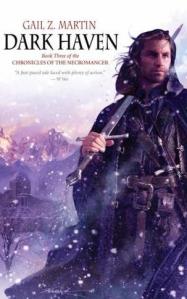 It’s a book on book marketing for authors who want to make sure readers find out about their books! And as far as fiction goes, I do have some ideas I’m developing, but they’re not ready for prime time yet!
VENTRELLA: I keep hearing that publishers are not that interested any more in traditional high fantasy. As a writer in that genre myself, I am worried. Do you find this to be the case?
MARTIN: I think the more important question to ask is, “Are readers interested in traditional high fantasy?” From my experience, I would say yes. So long as there are readers who want a certain genre, there will either be publishers who will supply it or authors will meet the demand directly by self-publishing. My bet is that so long as publishers sense there is money to be made in a genre, they will keep publishing it.
VENTRELLA: What’s your opinion on self-publishing? Do you advise new authors to go this route, or is it better to not publish at all than to be self-published?
MARTIN: I think it’s easier to succeed with nonfiction in self-publishing than fiction because most nonfiction authors have the opportunity to sell from the “back of the room” at workshops, speaking engagements, etc. Also, if nonfiction meets a need and creates a benefit, people buy it, regardless of who publishes it. Fiction is a little harder, because it doesn’t have that clear need/benefit link. With fiction, distribution through bookstores and online booksellers is still crucial, and that can be more difficult if you’re self-published.
On the other hand, a good book will find a market. THE SHACK was a self-published book that couldn’t get a publisher until it sold a gazillion copies and then was picked up by a big publishing house. If you decide to self-publish, you’ll have to work twice as hard on distribution, personal appearances, being a vendor at conventions and basic selling. But if you believe in your book, then you do what you have to do to bring it to life. I would probably advise authors to exhaust their options for traditional publishing with large and small publishers before self-publishing fiction, but I’m sure there are other authors who feel differently and that’s OK. Even when you’re traditionally published, there is a lot of work that goes into promoting the book.
VENTRELLA: Gail, you are one of the most active authors when it comes to publicity and promotion, because of your background. While it is clear that published authors must promote themselves, do you think it is appropriate for unpublished authors to maintain a web presence and otherwise promote themselves, and if so, how can that be done tastefully and effectively?
MARTIN: I think part of that depends on your definition of “unpublished.” If you post your short stories on your web site, that is a form of publishing. If you release your book as a podiobook, that’s a form of publishing.
I think you always have to be clear about what it is you’re promoting.  Some authors, like J.C. Hutchins, started out by releasing free podiobook versions of their stories and gathered so many readers/listeners that they ended up getting a book contract with a traditional publisher. So think first about what your goal is in promotion yourself and what you have to promote. If you write an entertaining blog, host a good podcast or even create an online serial that gets good buzz, you may attract a publisher.
VENTRELLA: You and I run across each other at conventions often and you attend many more than I do. Please tell us why you think attending these is important, and whether you think they are important even for unpublished authors.
MARTIN: Cons are important because they’re a great way for authors to meet other authors and of course, to meet readers. Today’s readers like to meet the authors of the books they read, just like they enjoy connecting online and on social media. It’s also a great way to attract new readers who may decide to try your books because they liked what you said on a panel, had a good chat with you in the lounge or came to a reading and liked what they heard.
For unpublished authors, cons can be great places to meet published authors and get advice. Lots of cons have writing and publishing tracks where there are panels with editors, agents and publishers, or with authors talking about the business and mechanics of writing. It’s a great free education. I definitely think it’s worth it.
VENTRELLA: What advice do you wish someone had given you when you first began trying to break into the business?
MARTIN: Expect to spend twice as much effort promoting the book as it took to write it. 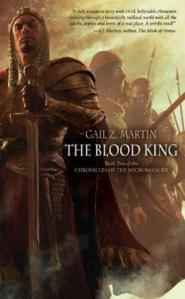 Realize that if you don’t promote the book and you don’t sell well, you don’t get invited to write a second book.
VENTRELLA: Can you think of a personal anecdote about the writing life you’d like to share?
MARTIN: Going on book tour really does require you to check your ego at the door. You spend a lot of time driving around, setting up table displays and schlepping your stuff from store to store. No matter how many big signs in the store have your photo on them, inevitably more than one person will ask you where the bathroom is or where somebody else’s book is shelved because they just assume you work there. Smile. It’s all part of being an author, and it’s worth every moment. But just to be safe, make sure you really can direct people to the bathrooms!
VENTRELLA: You’ve got audio and excerpts from DARK LADY’S CHOSEN online, plus there are other sites participating in your Days of the Dead blog tour. Where can we find all the goodies?
MARTIN: Check out my site at www.ChroniclesOfTheNecromancer.com, for all the downloads and more Days of the Dead stuff. Also, please find me on Twitter.com as GailZMartin and on Facebook and MySpace as well.
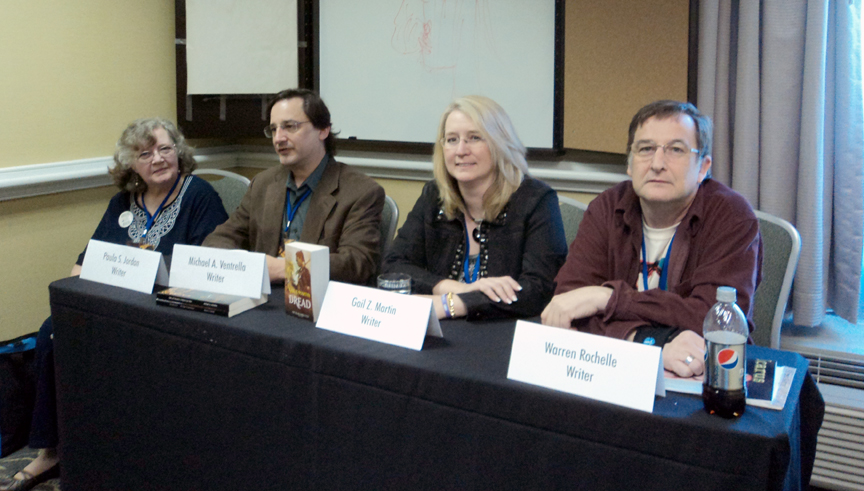
Me and Gail Z. Martin on a convention panel
Filed under: writing | Tagged: agents, convention, Double Dragon, fantasy world creation, Gail Z. Martin, promoting yourself, self-publishing | Leave a comment »




 Michael A. Ventrella