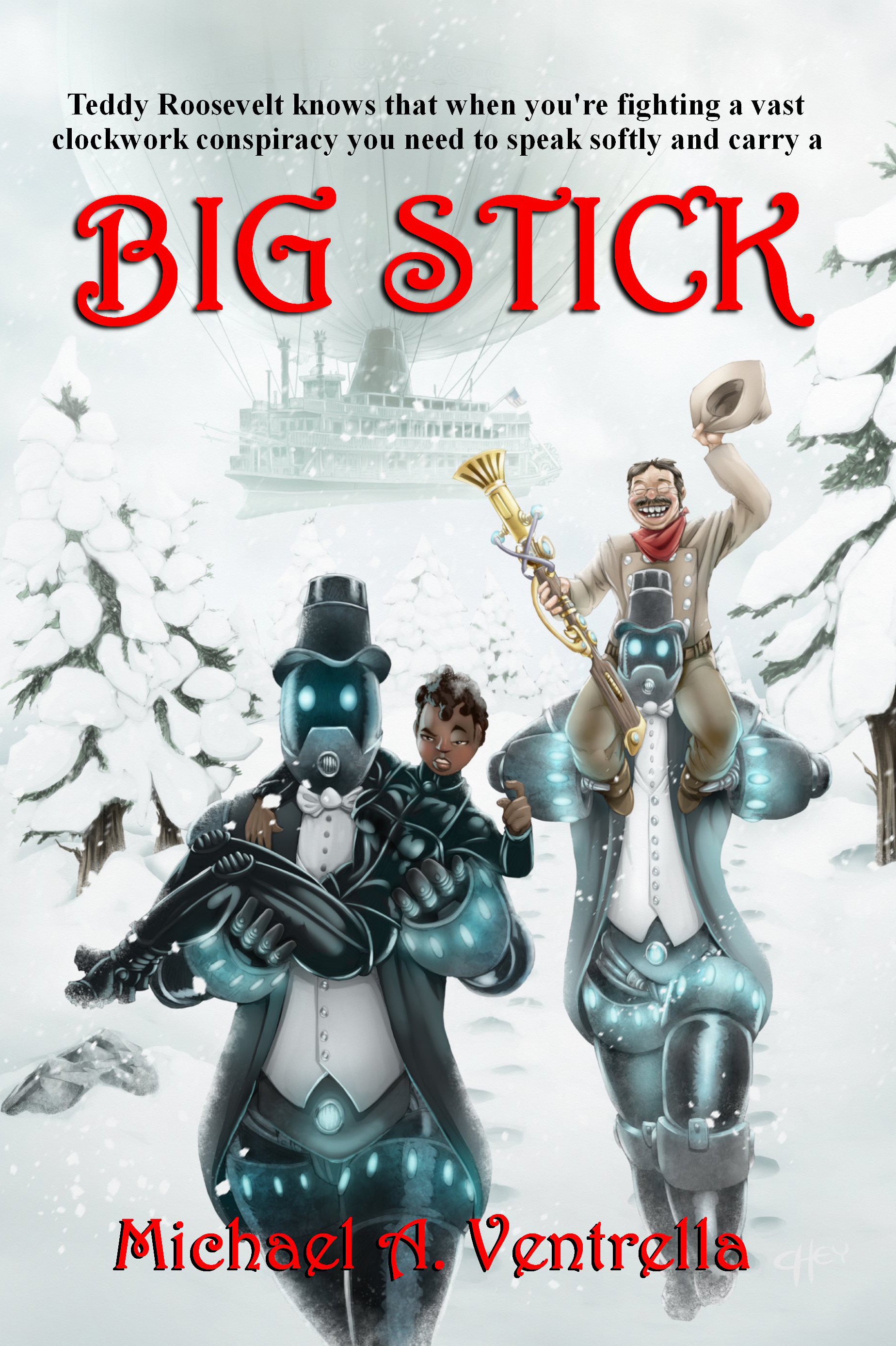
Interview with Author P. N. Elrod

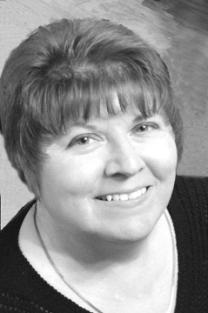
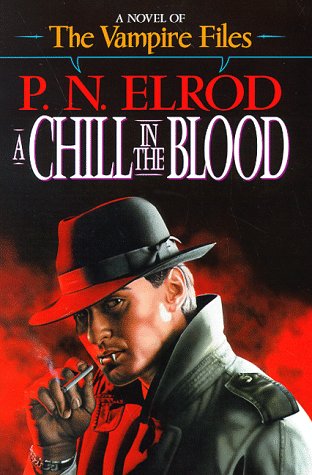
MICHAEL A. VENTRELLA: Today, I am honored to be interviewing author P.N. Elrod, best known for The Vampire Files series featuring undead private eye Jack Fleming. She’s edited award-winning anthologies, warns new writers away from scams, and is open and honest about her incurable addiction to chocolate. More about her toothy titles may be found at www.vampwriter.com.
What is it about vampires that so attracts the public?

P. N. ELROD: They’re easy on the eye, have money (if they’re doing things right), and get to kick butt—at least that’s true for the ones in my books!

VENTRELLA: Why did you decide to become the “vampire specialist” with your series?

ELROD: I didn’t decide. I like writing about the characters. You write about what interests you and that passion comes through in the words. If you’re lucky your words will touch others.

VENTRELLA: What’s your opinion on the many variances we’re seeing in vampire stories?

ELROD: I don’t have any. To each his own, let’s all have fun.

VENTRELLA: Do they bother you?

ELROD: Not even a little. I have other things on my event horizon.

VENTRELLA: Do you think this trend will die down eventually?

ELROD: I was told in the 1960s that vamps were dead. Apparently someone got that wrong and others will continue to get it wrong. I don’t pay attention to trends. If I did, then there would be no Vampire Files or any of my other books. I write the kind of stories I want to read and hope others agree with my take on things.

VENTRELLA: The concept of a vampire private eye solving his own murder must have helped sell your first novel in that series.

ELROD: The concept resulted in 20+ rejections from publishers who didn’t know what to do with a cross-genre book back then. It wasn’t a mystery or a horror and no one knew how to sell it—especially agents looking for a quick placement. It finally sold off the slushpile to Ace Science Fiction. It only took two years of shopping around—and about 20+ rewrites to get it up to a professional level. I’m glad it too so long—it resulted in a much better book!
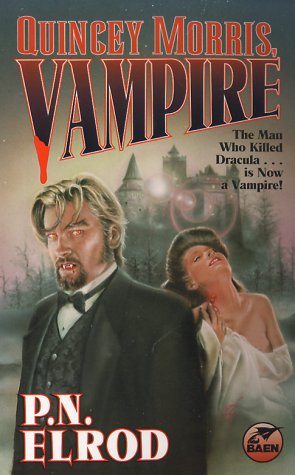
VENTRELLA: You’ve written a sequel of sorts to Dracula. How did that come about, and what constraints did you discover?

ELROD: It is a sequel to Dracula. I’ve always thought that Quincey Morris got a bum rap at the end, and wondered how it was that he knew more about vampires than all the others except for Van Helsing. I also wondered—after V.H. again and again harped about using a wooden stake—that they bumped off Dracula with a big metal knife. Well, my hero, Fred Saberhagen deftly and cleverly dealt with the latter problem in his classic The Dracula Tapes. When I was ready to do my own take on things, Quincey Morris, Vampire was the logical result!

No constraints. I wrote the kind of story I wanted to read. I love the Victorian period, the research was a joy and still is. I’m doing another Quincey book, but it will have to be scheduled after I turn in my new steampunk series.

VENTRELLA: In my next novel, a vampire runs for President (but of course, no one believes that vampires really exist). Do you think there’s a market out there for a political vampire novel?

ELROD: I wouldn’t know. Get some feedback, polish, shop it around, and find out.

VENTRELLA: When editing, what do you look for in a story?

ELROD: As little work for me to do as possible. I expect a clean, polished manuscript from writers who bothered to proofread and use the spell check.

After that, I want a beginning, middle, and satisfying ending with characters I can relate to whether they’re good guys or bad apples, and good solid writing.

I expect an enthusiastic, cheerful, professional attitude. My goal is the same as the writer’s: producing the best story possible so readers fall in love with their words. If you’re a paranoid diva whose deathless prose that must be preserved like the Dead Sea Scrolls, move on. Neither of us will enjoy the experience.
VENTRELLA: Do you generally invite others to join your short story collections or do you have open submissions? Which do you prefer?

ELROD: These days I’ve room for only nine stories in a collection. I call on a core handful of writers on my A-list choosing about four of the nine, depending on who is available. A-list writers are busy! The publisher—who is footing the bill—naturally wants to promote the writers who have books with them, and pick the other names. It’s only fair, and they are being more than generous about it.

In past projects I could handpick all the writers, inviting ones I knew would deliver good stories. I’ve asked only 2-3 otherwise unpublished writers for work, and they did not disappoint.

Those projects were not open submission, but I got stories from other writers with more cohones than sense. I let in one based on his letter and story. The letter, I later found out (this was before Google), was a gross exaggeration of his supposed “sales”. His story required extensive and repeated line edits. After that, I put him on my “do not invite” list. I don’t deal with liars.

Here’s a clue, new writers: tell the truth. You’re only as good as your reputation for honesty. If you’ve not sold anything, it’s perfectly okay. But don’t tell an editor that you’ve sold 20 stories to various publications when you really mean you just submitted stories and are waiting to hear back. These days it’s too easy to check up on you.

After speaking with other editors who have done open submission collections, I know I’d not want to work on such a project. I don’t have the time or patience.

VENTRELLA: What bugs you most about the publishing industry and what would you change about it if you could?

ELROD: They’re not cracking down on e-piracy. It’s not about freedom of information, it’s about theft of property. It’s one thing to resell a used book, but used bookstores don’t sell Xerox copies.

Contrary to popular myth, most writers don’t get paid much, and piracy cuts into the pittance they do manage to get from their hard work. Pirates are not promoting anything. If writers could make more money by giving away free e-copies of their works, they’d be doing it. Some of the more successful ones have chosen to do so, but the pirates have taken that choice away from the rest of us.
Publishers are losing millions in revenue through e-theft. If the music industry can crack down on it, so can the publishing industry. I want them to get off their duffs and shut down on these so-called “share” sites. Slap fines on the pirates and those who download from them. If anyone wants a free copy to read, go to the library. Each time a book is checked out, the librarians note that and order more from those writers. It’s good for everyone.

I believe most people want to do the right thing, so please, support your local library and the writers you love.

VENTRELLA: You’ve self published a novel, even though surely you could have sold it to a traditional established publishing house. Why did you decide to do this?

ELROD: Let’s call it commercial publishing. “Traditional” is a term used to excess by a notorious reverse vanity printer to make their customers think they’re in safe hands. In true “traditional” publishing it was the writers who paid the costs. Writers call that “the bad old days!”

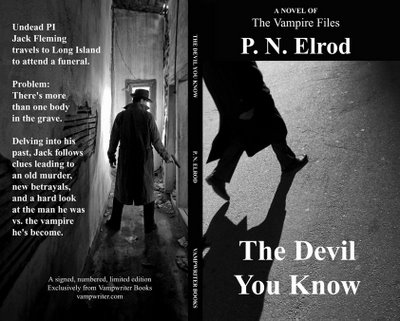
I could not have sold THE DEVIL YOU KNOW to a commercial publisher, since it was always meant to be a signed, numbered, limited-edition written specifically for my fans. My publisher for that series prefers stand-alone titles—at least from me.

Commercial publishing is glacially slow. It takes time to put books through editing, copy-editing, design cover art, arrange distribution, etc. I wanted to get the book out quickly.

So I did my research of various printers, pricing, delivery times, shipping costs, got the best deal from a local company whose people I know. I did the cover myself, got a professional edit, and a lot of proofreading. The printer very kindly tweaked my interior design to cut down on the page count and thus the cost. I had some good breaks and learned a lot.

For future non-commercial venue works I’ll go through a POD service, again, doing my research so I get the lowest cost per copy, but with a professional company that can deliver the goods to the readers. While it won’t be a signed edition on acid-free paper, it will be available through my website links at a low price and won’t ever go out of print.

I see many new writers opting to self-publish—usually long before they’re ready.
Some neos think having a book finished is good enough, and that the story is so great that people will forgive any “little” errors. It’s a nasty reality check when they get bad sales and worse reviews as a result. I don’t recommend self-publishing for the new kids. I was able to get away with it, based on my experience, an obsessive attention to detail, and a sizable fan base built up over the last 20 years.

VENTRELLA: Has it been a success?

ELROD: It’s sold out the 500 copies I had printed. In self-publishing terms it was a runaway bestseller. In commercial terms it tanked.

It took a year to sell that many copies. Had it been a commercial release it would have sold that many in one day.

I was only able to do because I have a solid platform of readers. Even so, only a tiny fraction of them chose to buy. I had hoped to sell out in the first month. So despite my experience and fan base, I overestimated my sales figures. It was instructive!

If a new writer with no platform decides to self-publish, they can expect to sell 5-10 copies to family and friends, perhaps 50 if they bust their bottoms with promotion. But they can also expect the standard “If your book is so good, why couldn’t you sell it?” Unfair, but that’s how it is.

I know some writers are promoting their backlists with much success as e-books and POD copies, racking up thousands of sales. But THEY had a plenty of commercial sales that built up a good audience. At this point, writers who have pro sales, who have books in the stores, and who self-promote like mad have the edge.

A new writer with no professional sales is delusional if he/she thinks similar success will happen to them. It’s all the difference between holding a garage sale, and having a store at the mall. It’s just better business sense to try for professional publication from the get-go.

VENTRELLA: What advice would you give to a starting author that you wish someone had given you?

ELROD: Get feedback, rewrite as often as it takes, and expect rejection. No one escapes.

Send your work to venues that actually publish it. Don’t send a fantasy to a mystery house or a western to a cookbook house.
Just because you worked really, really hard on a book, don’t expect anyone to give you extra credit for the effort. Publishing is a business. Your words have to be worth buying and selling. If they aren’t you get a rejection. That’s when you ask for more feedback, rewrite, and try, try again.

VENTRELLA: What is the biggest mistake you see aspiring authors make?

ELROD: Sending unpolished work out before they’ve gotten feedback from other writers, not just friends and family. They love you and want you to feel good.

Other writers will tell you the truth.

An amateur wants to be told how good their book is. A pro wants to know what’s wrong with it so they can fix the problems. Get the problems fixed first, then start shopping. Write the next book while you shop the first.

Don’t give up. Ever read a terrible book that still somehow got professionally published? That writer didn’t give up.

Obey Yog’s Law: “Money flows toward the writer.” Never pay to publish. It’s hard to believe, but many writers still think you have to pay to play. It’s scary how many will ask me “How much did it cost to get your book published?” I’m talking about my commercial titles, not the ones I self-pub. I’m very clear that there is a huge difference between the two! (Usually the money they make. Commercial wins out every time.)

Don’t look for a publisher online, get Writer’s Market. You cut out 99% of time/money-wasting vanity and scam operations. If you google “book publisher” most of the names on the first page are scams wanting to turn you into an ATM for them.

Go into a bookstore, find books similar to what you write, then follow submission guidelines to the letter. Scams and vanity houses cannot get books into stores.

Ask other writers to recommend reputable agents in your genre. It worked for me.

Did I say to obey Yog’s Law? It’s worth repeating. Writers get paid, they don’t pay!

VENTRELLA: With a time machine and a universal translator, who would you invite to your ultimate dinner party?

I don’t give dinner parties. My cooking is lethal. Ask the few survivors.

If we ate out, I’d hang with my friends in the here and now. I’ve learned it’s often a good idea to keep some distance between oneself and one’s heroes. You might catch them on a bad day and be disappointed.

“When the legend becomes fact, print the legend.” – The Man Who Shot Liberty Valance.

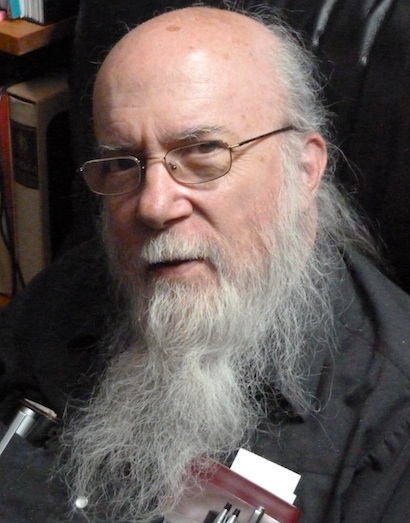
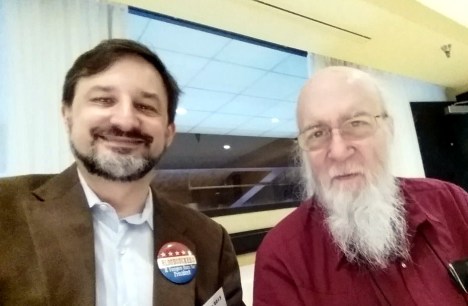
Interview with author Allen Wold

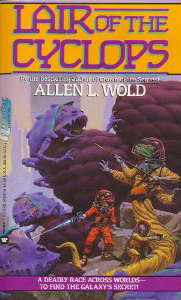
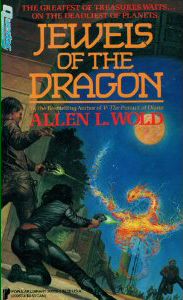
MICHAEL A. VENTRELLA: I’m pleased to be interviewing Allen Wold today. Allen Wold has published nine novels, several short stories (mostly for the Elf Quest anthologies), five non-fiction books on computers, and a number of articles, columns, reviews, and so forth, also concerning computers. He is a member of SFWA and teaches writing.

ALLEN WOLD: Many people have complimented me by assuming that I teach writing classes, at NC State or somewhere. I am not associated with any college, or university, or even a high school. The only “classes” I teach are my writing workshops, which I do at science fiction conventions. Because of people’s comments, I have begun to think of myself as a teacher, and I am quite flattered that people think of me as one. I do have some ideas about how writing can be “taught,” and about college courses in “creative writing” (Manley Wade Wellman said that “creative writing” is redundant, all writing is creative), but some of these are best saved for private conversation. There are, and have been, some excellent writing teachers in various colleges and universities, teachers who’s stories you can read in magazines, or who’s books you can buy in bookstores. But I am not one of them.

VENTRELLA: How did you first get published? Did you have an agent?

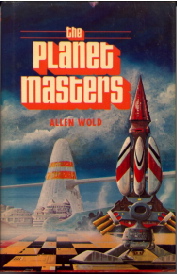
WOLD: I did have an agent. I no longer remember the exact details, I was sending my first novel THE PLANET MASTERS around over the transom. Sharon Jarvis, then fiction editor at Playboy if I remember correctly, suggested two agents to me. I picked one, Lea Braff, and she agreed to represent it. At this time, I had no knowledge of submission protocols, and it probably showed. Lea sold my book to St. Martin’s Press, and after some fluffling around in the editorial department, it finally came out in 1972.

VENTRELLA: How has the publishing industry changed since you entered it?

It has changed a lot, but I’m not really qualified to talk about that. I do not study the industry, and what I have seen, has been seen by many. So many imprints now being owned buy umbrella companies (pun intended); restriction or elimination of non-agented submissions; agents themselves taking new clients only by introduction; and, fortunately, the rise of the small independent publisher.

I felt many years ago, that the small press would, or should, or could become more important, to the average fiction writer, than the large houses, and nothing I have seen so far changes my mind about that. Some small presses lack editing skills, distribution, or money, but some have all of that and more. Big publishing is dominated by the marketing departments of the various houses, rather than by the editors. Sol Stein, one of the founders of Stein and Day, complains about that in his own company. But small presses are usually not subject to their accountants. Baen is probably the largest “small press” in the business, and the publisher, Toni Weisskopf, and her editor in chief, Hank Davis, make their own decisions. At least, that’s how I understand it, I’m sure Toni will correct me if I’m wrong.

My point here being that big publishing, it seems to me, is less concerned with books than with moving product — books or fried chicken, whatver, let’s just sell a lot. I’m not the first to think that.

VENTRELLA: How much should a writer consider the market when deciding what to write?

WOLD: Being aware of the market is essential. If you know, for example, that nobody is publishing paranormal erotica (they are, oh yes they are), and that’s what you want to write, then you have to be prepared to struggle to find a publisher, or perhaps make your story seem more like a similar genre which is being published. I don’t like that idea. Not too long ago, cross-genre work just couldn’t make it. Now it hardly matters. I suppose Lovcraftian Romance (in the sense of a story of love, as opposed to the original idea of a work of fiction) might be a hard sell, and I don’t know if anybody has tried it. Or would even want to. I could be wrong. Anime hentai tentacles…?

But if you devote too much energy to trying to figure out what is going to be popular two to three years down the line, you’ll always be wrong, and you’ll be wasting your time. Right now, paranormal romance is, in fact, doing quite well. And if you write one, just because it is doing well, by the time the book is written, and submitted, and rejected and resubmitted, it may no longer be so popular. Or it might be. But you’re worrying about anticipating a market, rather than about writing your story. If your story is good enough, somebody will take it, even if it is a bit difficult to find its place on a bookstore’s shelves.

So yes, be aware of the market, but don’t write for the market. Write what you have to write. Write a book that you’d like to read. You may start a trend. More likely you won’t, but hey, there are no guarantees in this business. None.

VENTRELLA: Do you think the emphasis on e-books is going to help the individual author?

WOLD: How can it hurt? Every sale is a sale. The more readers a writer has, the better. Several publishers, Baen for example, offer e-book versions of their hard-copy books, usually at a discount. Their cost is minimal, their profit margin is high, distribution costs them only download expenses, which is nothing compared to paper, ink, printing, trimming, binding, and so on. I’m not talking about reading books on line, but buying e-copies which you can read on your computer or your Kindle or Nook or iPad or whatever. These are actual sales, you own the book. It’s just not on paper. And the more people who read you —

Well, you have to have a good story to tell, and you have to tell a good story (not the same thing), or it doesn’t matter what format you’re in. Bad fiction goes nowhere (though some of it does get published, see Pel Toro for example). Good fiction gets found out, and is read. E-publication is something I’m keeping in mind for some of my projects, but not all. As is going with a small independent press. But never vanity, that’s a waste. If you have to pay for it, become your own press. It’s a lot cheaper.

VENTRELLA: What techniques do you use to make sure your characters are realistic and believable?

WOLD: I don’t use techniques. I use my ever increasing understanding of human nature and behavior. I watch people constantly, not deliberately most of the time, but automatically. Everybody I meet becomes a part of that compost heap in the back of my head, from which characterization (not characters) is drawn. Everything my characters do is what I have observed real people do (though I couldn’t tell you who is the model, or how many models there are), it’s the way real people behave.

Once a character begins to reveal himself, or herself, or itself to me, my task is to make sure that that behavior is consistent. One of my main gripes with the second version of Star Trek was that developed characters frequently acted out of character. Also true of the TV series V (the original, not the remake). That destroys a story for me.

I discover my characters, or at least, those that work. I discovered Larson McCade, Morgan Scott, Rikard Braeth, Freefoot, and all their supporting characters. I didn’t actually create them per se. And once I got to know them, it wasn’t that hard to portray them as they were, rather than make them go out of character for the sake of the plot.

Larson McCade, from THE PLANET MASTERS, is instructive. The story came to me in a flash of inspiration (lasting about two hours) while I was walking across the UNC-CH campus. But who would be my hero (or anti-hero, as it turned out)? I thought, what if I based McCade on myself, but on my darker self, the aspects of myself that I would never let anybody see, never allow myself to express, the shadow-me. Badly done with Spiderman, unfortunately. So I did. Since McCade was an aspect of me, I knew him intimately. I didn’t direct him on how to get from one plot point to another, I let him do it, that is, I did what I would do if I were he and in his situation, and I just wrote it down as it happened. Fortunately, I’m not Larson McCade, and we should all be thankful.

It’s taken me a long time to perfect that method, and I’m still working on it. I failed many times between now and this century. I didn’t even know what I was doing when I was doing it right. But I do now. All my Elf Quest characters, though I didn’t understand it at the time, were independent people in my head. I just presented them with problems, and let them solve them.

VENTRELLA: How do you prepare? Do you outline heavily?

WOLD: I used to outline, but not any more. My outlines could be five, ten, twenty pages. For my most recent book (rejected twice so far), I had just three plot points: I had to get here, then there, then somewhere else.

At a convention many years ago, I was on a panel with Fred Pohl. The question of outlines came up, and I said, yes, I use an outline, like a road map, or a blueprint. Some people said they hated outlines, because then they were trapped. I couldn’t understand that. Just because it’s in my outline doesn’t mean I have to do it. They said they wanted to be surprised. I felt like I didn’t want to be surprised if, without a blueprint, I discovered that I’d left out a door, or a bathroom. That has actually happened to people I know, with real houses. But Fred Pohl said “I used to outline, but I don’t any more.” I didn’t understand that either. Now I do. I do not predetermine what is going to happen, what people are going to do, what they are going to talk about. I select destinations. He discovers he’s up against a vampire and decides he has to destroy it but doesn’t know how; he is killed by the vampire and in his spirit form discovers how to destroy it but needs a corporeal body to do it; he finds a body he can take over and does what he has to do. Three points, 80,000 words. Rejected twice. But my vampires don’t sparkle. Dracula didn’t sparkle.

On the other hand, for another novel which hasn’t been rejected yet, I had a list of 198 scenes. Each scene was an objective, not a description. I kept to that “outline” as a form of discipline, and it worked. Each scene had a viewpoint character, fifty two in all, and each character was, in my mind, a real person. Sometimes the scene description was something like: Riding in the back seat, the little girl sees the blue lights around the house. Now, what happens? Well, I wrote the scene, and all the others, and we’ll see what happens.

How do I prepare? I need my main character, without which nothing happens. I need my setting, my world, however simple or complex that may be, though I don’t need elaborate details, as I’ll discover more about it later. I need the situation in which my character finds himself, or herself, or itself. (Clumsy, isn’t it? How about themself? Check the OED for the use of they/them as equivalent to “he or she.”) I need to know what my character wants. And I have to know what I, as the Creator — um, creator — want my ending to be. Luke Skywalker wants off Tatooine, to go to university, and become a pilot. George Lucas wants to destroy the Death Star, and has to lead, not push, Luke to that ending.

Then it happens.

VENTRELLA: What is the biggest misconception beginning writers have about the craft?

WOLD: That they need talent. Talent is nice. Talent makes things easy. But talent is not necessary. There are plenty of writers who do quite well and have no talent to speak of, but who have acquired the necessary skills, and the reader can’t tell the difference. Skill is far more important. Talent is what you are born with. Skill is learned, and you can learn an awful lot. Any writer who has written more than one book improves from book to book (or they don’t, depending on their talent rather than acquiring skill, and it shows). Dorothy L. Sayers first novel, WHOSE BODY, is nicely done, somewhat frivolous, and LORD PETER is definitely silly. By the time she gets to GAUDY NIGHT, she is a master, telling a story that is neither romance nor mystery, but a deep tale of two people caught up in a distressing situation. Lord Peter and Harriet Vane are real people. The book can stand alone. Dorothy L. Sayers’ talent was revealed in her first book. Her extensive skills are shown in her last book. (BUSSMAN’S HONEYMOON is a novelization of her own play, and something of a disappointment.)

There are other essentials, such as making, not finding, time; developing discipline; acquiring patience; and having the dedication to actually do it.

This last is truly important. You cannot become a writer if you don’t write. You must make the decision that you are, in fact, going to do it. You decide to acquire those other essentials, putting other aspects of your life aside, and you write. You read extensively, especially what you like to read (and you should write what you like to read, not what you “ought” to write), but read outside your field too. And read non-fiction, especially biography, history, mythology, archaeology, and anything to do with human nature and behavior.

You may discover you don’t really want to do this after all, that it takes too much effort and time, that it’s too hard, that the rewards aren’t worth it. In which case, give it up with a clean conscience. Many people who take my workshop discover that they don’t really want to be writers after all, and that’s fine. They’re now free of that obsession, and can go on to something else.

VENTRELLA: What is the biggest mistake you see beginning writers make?

See above. But not giving it enough time, thinking there’s an easy way, not listening to competent comment, not reading enough, taking TV as their model. (Oh, yes, that’s a good one. Thinking that science fiction is what you see on TV or in the movies. Thinking that characters are what you see on TV or in the movies. Huge mistake.) Not paying attention to the real world.

All good fiction is based on, and derived from, the real world in some way or another. The most bizarre fantasy has roots in the real world, at least in the way people react to the bizarreness. Also, trying to write SF without understanding science. You don’t have to have degrees, but you must have a basic understanding of how the world really works. And if you don’t know, either stuff it in a black box, or do some research. The old Tom Baker Dr. Who did this extremely well. They did not make mistakes in their science. They either knew how it worked, or they black-boxed it. I was quite impressed.

Another is not checking a publisher’s submission guidelines. Always check the guidelines, and submit that way, whether you like it or not. Do not try to save paper by printing single spaced on both sides of the page. Always use adequate margins, a header with name and title and page number. And so on. You can learn basic submission formatting, most publishers with tell you. Follow the guidelines, or you’ll be rejected out of hand. Really.

VENTRELLA: Some of your novels are currently out of print. Do you have any desire to have them released as e-books? Is that possible?

WOLD: I would love to have them come out in any format. Currently, THE PLANET MASTERS should be released soon in a print on demand format from Warren Lapine’s Wilder Books, but I don’t know when. Contact Warren and ask for it. He may be doing something more.

VENTRELLA: Do you think writers should begin with the short story market?

WOLD: A story is as long as it takes to tell it. If you try to condense an idea to a short story format, it won’t work. If you puff an idea to novel length, it won’t work. The short story market is tight, not counting on-line publication, but it’s still there. You have to do your research. Back in the day, most SF&F writers started with the magazines, back when there were more than five or six national magazines that actually paid money. These days the whole industry is completely different. If you love flash fiction, and write it, that’s what you should try to sell. If you prefer the short story format, there are all kinds of magazines (some pretty bad), and open anthologies to which you can sell. If you prefer novels, say 100,000 words or so, that’s what you should do, though it won’t be easy. Especially if you’re a beginner. I know well established writers who are suddenly being dropped by their publishers, though their books continue to sell. I have no idea why. Maybe because the publishers are more interested in moving product than selling books. I don’t know.

Write what you write, know what the market is, and find the right home. You can not write to a market, it’s too volatile, and your heart won’t be in it.

VENTRELLA: What’s the best resource a writer should use in order to find a market for their short stories?

WOLD: There are two: Ralan and Duotrope .

VENTRELLA: What have you been up to lately? What are you working on now?

WOLD: Lately? Writing, of course. That’s what I do. Every day that I can. I have obligations on Saturdays, and Sundays I try to restore my energy, but otherwise, unless something unavoidable comes up, oh, say, having my gall bladder removed, or like that, I write. Every day. See, I’m writing this today.

And I read, mostly non-fiction. And watch movies, to take me away from my writing rather than for inspiration. And attend to my household management responsibilities (my wife works full time and supports me in every way).

Right now I’m doing a complete rewrite of a book I first wrote in 1990. I learned then the absolute necessity, for me, of having my personal Death Star in mind. I threw away four false starts, totaling about 100,000 words, before I finally asked myself, how do I want this to end? When I had that, everything drove toward that ending, though my hero wanted to do something else.

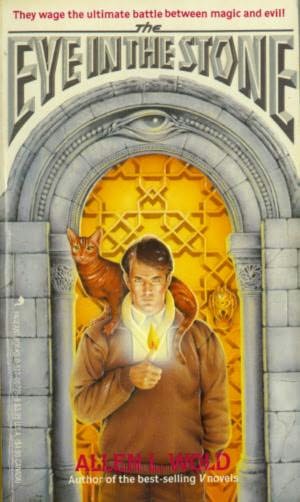
When we came back from England, in ‘98, I reread it, and it wasn’t very good. I had always wanted to do a character-driven story, instead of a plot-driven story, so I rewrote it, giving my characters free rein. It didn’t sell. Then I reread it again, saw how undisciplined my description and dialog was, and I’m rewriting it from scratch, not revising it, keeping the story as written, but tightening, cleaning up, making my characters internally consistent, cutting out unnecessary description, and tons of bad dialogue. It’s turning out pretty well. But we’ll see. When this draft is done, I’m going to do a new book set in THE EYE IN THE STONE world, then come back to STROAD’S CROSS for a final pass, and try to find a market for it. It’s a haunted village, not a haunted house, forgotten by people who live in the small town a mile away, perfectly preserved for fifty years, abandoned with food on the stove, money in cash registers, toys dropped on the floor. Finding out the truth is what the story is about.

Don’t hold your breath. These things take time.

12068598_10156131026780416_4173342998411499168_o

Interview with agent Marisa Iozzi Corvisiero

MICHAEL A. VENTRELLA: I am pleased to be interviewing Marisa Iozzi Corvisiero today.

Marisa is an attorney as well as an agent. She is the founder of The Corvisiero Law Practice, P.C., a boutique law firm in midtown New York City. She is actively building her client list and focusing on science fiction, fantasy, paranormal and romance, as well young adult and children’s literature. In non-fiction, she is interested in seeing proposals for memoirs, how-to (in any industry), guides and tales about the legal practice, parenting, self-help, and mainstream science. No text books please. She’s interested in reading your query and first fifteen pages (full book for children’s books – illustrations not necessary) to Marisa at marisa@lperkinsagency.com You can visit her agent blog at http://thoughtsfromaliteraryagent.blogspot.com and follow her on twitter @mcorvisiero.

I am always surprised to find so many fellow attorneys involved in the publishing industry, although usually I am interviewing fellow authors. I’m curious as to your start as an entertainment attorney and how that led to your becoming an agent – or did the agent thing happen independently?

MARISA IOZZI CORVISIERO: Becoming an agent sort of fell on my lap. It started with a favor for a talented fellow writer. I was writing a cross genre science fiction novel at the time, and started connecting with other authors, going to conferences, joined a critique group and so forth. Eventually, one thing led to another and I found my self sending in submissions for other writers through my law firm and really enjoying representing them.

Then one day, that one talented fellow writer said that he had rekindled a connection with a friend from grammar school, and just found out that she is now a literary agent. Not missing a beat, I asked him to introduce me to this Lori Perkins person, who sounded so fabulous. So he did, and after one conversation with Ms. Perkins, we both knew that we were meant to work together. She offered to mentor me, and to share her 23 years of experience and contacts in the industry with me. She said that after six months with her it would be like having a masters. Of course I agreed, and took on this opportunity of a life time. The six months came and went, and I’m still with the L. Perkins Agency, learning from the best.

VENTRELLA: Do you think having a legal background gives you an advantage over other agents?

CORVISIERO: I think that any additional skills or knowledge that one brings to the table gives one an advantage. Lawyers are trained to spot and solve issues, analyze, strategize, negotiate and draft legal contracts. These are very important skills for an agent, but I think that one doesn’t have to be a lawyer to posses these abilities. Most good agents out there have these skills. So I suppose that being a lawyer helps me be a good agent.

VENTRELLA: A query letter is very important for an author wishing to make an impression, but it seems that the skills necessary to write one are completely different from the skills needed to write a novel. How do you overlook a poor query letter to inspect the manuscript – or do you? (By “poor query letter” I do not mean one that contains misspellings or other obvious errors, but instead one that just does not grab your attention as it should.)

CORVISIERO: Query letters are very important. They not only showcase the author’s work, but also the author as a professional. If a query is sub-par, it is an indication of many things such as lack of attention, professionalism, skills, respect etc. I’ve written an entire blog entry on titled “Don’t Screw Up Your Query: You only get one change to make a good first impression”.

Let’s suppose for a moment that the query looks good, that there are no errors, it briefly describes the novel, says something about the author, provides genre and word count as well as a brief description of the target market and why this novel would appeal to them. If all of this works and the story line does not grab my attention I will consider not reading the work. At this point I ask my self if the storyline is interesting and unique. If not, I go back to the e-mail and type up a short decline letter and tell the author why I’m declining it. If it is interesting and unique, I go on to read a few pages. After that, if I like what I read, I ask for the full synopsis and/or the full manuscript.

VENTRELLA: How important is it for you to love the work in order to represent the client?

CORVISIERO: Very important. I only represent things that I love. My time is very limited and precious. I will not waste it on something that I don’t believe in. Even if it is selling.

VENTRELLA: Do you ever accept work that you believe has potential but needs major editing?

CORVISIERO: The short answer is yes. I have taken on a few diamonds in the rough and it usually pays off in the end. I can’t do this often due to time restraints, but if I see the potential in the work and the writer, I will go out of my way to help them.

VENTRELLA: Is there any story or plotline that you are sick of? Is there anything you wish you’d get more of?

CORVISIERO: I wouldn’t say that I’m sick of them, but I’m very conservative when it comes to vampire novels. One would think that the market is oversaturated with them, but they are still selling. So when considering a vampire story, it will need to be very unique or traditional with a unique plot. I mean seriously, enough with the clumsy but smart teen that falls in love with a vampire who simply can’t resist her. Been there, done that … let’s get creative people!

Which is a good segue into what I do want to see more of. I want good science fiction and urban fantasy. Throw in a good romance or attraction between the characters and I’m even happier. I want someone to send me a well written, fresh story with compelling characters, that will blow my mind. Give me the next Matrix, Harry Potter, Avatar, Mission to Mars, Abyss, Contact. See the pattern?

VENTRELLA: Do you think the vampire trend will end soon? (I hope not, given the manuscript I’m working on now.) Do you see anything new on the horizon?

CORVISIERO: The trend itself, or “frenzie” if you will, will most certainly end. Everyone is riding the coat tails of Stephanie and Charlene. But even after the demand for creatures of the night, or sparkling creatures of the day ends, there will still be market for vampires. I can’t think of a time longer than a couple of years, when a book or movie about vampires wasn’t released. I think its almost like a cycle. Every few years a hot vampire story emerges. Remember Anne Rice, Bram Stoker, Blade, Buffy, The Lost Boys, on and on through the years all the way back to Nosferatu in the 1920’s. People love vampires. And so I think that there will always be a market for them.

The problem is that vampires have been too glamorized. Made to seem almost human but for the need to drink blood, some even eat food and can go into the sunlight with an application of a special lotion (The Gates). Not to mention all the super powers. When I was reading Breaking Dawn (Stephanie Mayer’s 4th book) I kept thinking this is like vampires meets the X-men. So I think the key to a good new vampire story may be to bring it back to basics.

As for trends, we have gone from aliens, to vampires, to werewolves, to zombies, to fallen angels. Now there are talks about super heroes. I have personally seen some keen interest in mermaids. I’ve received at least two really good queries already. I may be the first to say it but I think that there is something there.

VENTRELLA: What do you love to read? Who are your favorite authors, and why?

CORVISIERO: Other than my fabulous clients, I would say that my favorite authors are Nora Roberts and Nicholas Sparks. Now, as you may imagine I read quite a bit and I love many, many authors, but I have to say that when it comes to Nora and Nick I enjoy them above all others. When I pick up one of their books, I know what I’m getting. I trust them. For instance, I know that any novel by Nicholas Sparks will probably make me weep and laugh, and it will provoke thoughts and promote some sort of emotional learning within me. He is fantastic at reaching the reader.

Nora Roberts is a whole different story. I call Nora “My good old reliable”. I know that I can buy any one of her books without even reading the jacket and I will like it. She is a pro at creating believable and intricate characters whom you want to follow through their journey to the end. I usually sprinkle one of her novels into my reading schedule after reading a number of manuscripts and other books. Once in a while “I need a dose of Nora”. When I saw Nora Roberts at RWA this past July I told her this, and I told her that she is one of the few writers that I trust explicitly with my time. She seemed very flattered, even though I’m sure she hears this all the time. And that makes me like her even more.

VENTRELLA: Some people advise authors to attend writer’s conferences specifically for the chance to meet agents and make pitches. Others say such a thing is useless unless the manuscript is finished. What is your opinion on writer’s conferences?

CORVISIERO: Conferences are wonderful, and writers should take every advantage of the resources and opportunities that they offer. If you can attend one or two a year, they should, even if the manuscript is not finished. Attending a conference gives authors the wonderful opportunity to meet other authors, agents, and editors. There is always something to be learned at the workshops. They are invaluable. I would however advice not to pitch a manuscript until it is finished. Also, to get more out of a conference choose one that suits the genre of your work.

VENTRELLA: How will the rise of e-publishing affect your business?

CORVISIERO: E-publishing is changing the industry to a point where sooner rather than later all books will be available as an electronic version. I’m not sure how long it will take until we stop cutting down trees to print books, but that’s something to ponder. This doesn’t affect my business significantly. Other than learning about the new e-publishers popping up everywhere, how they work, and how they like to be reached. Right now, if we sell a book only as an e-book, the advance will usually be lower than an advance from a traditional publisher would pay, but the royalties are higher, and so there is still a profit to be made for agents and authors. Either way its clear to me that e-publishing is the way of the future. As much as I love the feel of a book in my hands; the sound of the pages turning; and the smell of an old and well loved book, as well as that of a newly printed one; I still think that e-books will eventually dominate the market, if not replace it all together.

VENTRELLA: And finally, what general advice do you wish to give to aspiring authors that they may not have heard before?

CORVISIERO: I’m sure that this is not new advice, but I think that it’s good advice none the less. Writers should write what they know about, or what they are passionate about. Don’t write just to sell books, or to please people. Write to tell a good story, one that you’ve conceived. Enjoy the process, even if it means never selling your work. I know that it sounds ridiculous, but most of the great works were created by those with passion for the craft and not for money. The point is to reach the reader and whisk them into your imaginary world, where they will grow with the characters, suffer their pain, and experience their joy in the end when the conflict is resolved.

We are usually best at what we enjoy doing the most. So if you don’t enjoy writing, find a different hobby. Publishing is a tough industry. It is difficult to make good money. When you do, it’s wonderful. But don’t expect your writing to be an overnight best seller and bring you millions (it doesn’t happen that often). Don’t expect to sell your book and get an advance large enough to support you until you sell your next book. The odds are not in your favor. So don’t put all of your eggs in one basket. I had to say that because it’s always good to include a dose of reality. However, good things can happen, and they do. Just be prepared for the rejections and be persistent.

If this is really what you want to do, keep at it. Let every sentence be better than the previous one. Remember that success is a process and not a destination, so enjoy it and learn your lessons along the way. I urge you to never ever give up. If writing is your passion, and you enjoy it, don’t let anything anyone says discourage you from fulfilling your creative dream. Think big, shoot for the stars and when you look back you’ll do so to re-live your journey and not to dwell on missed opportunities!

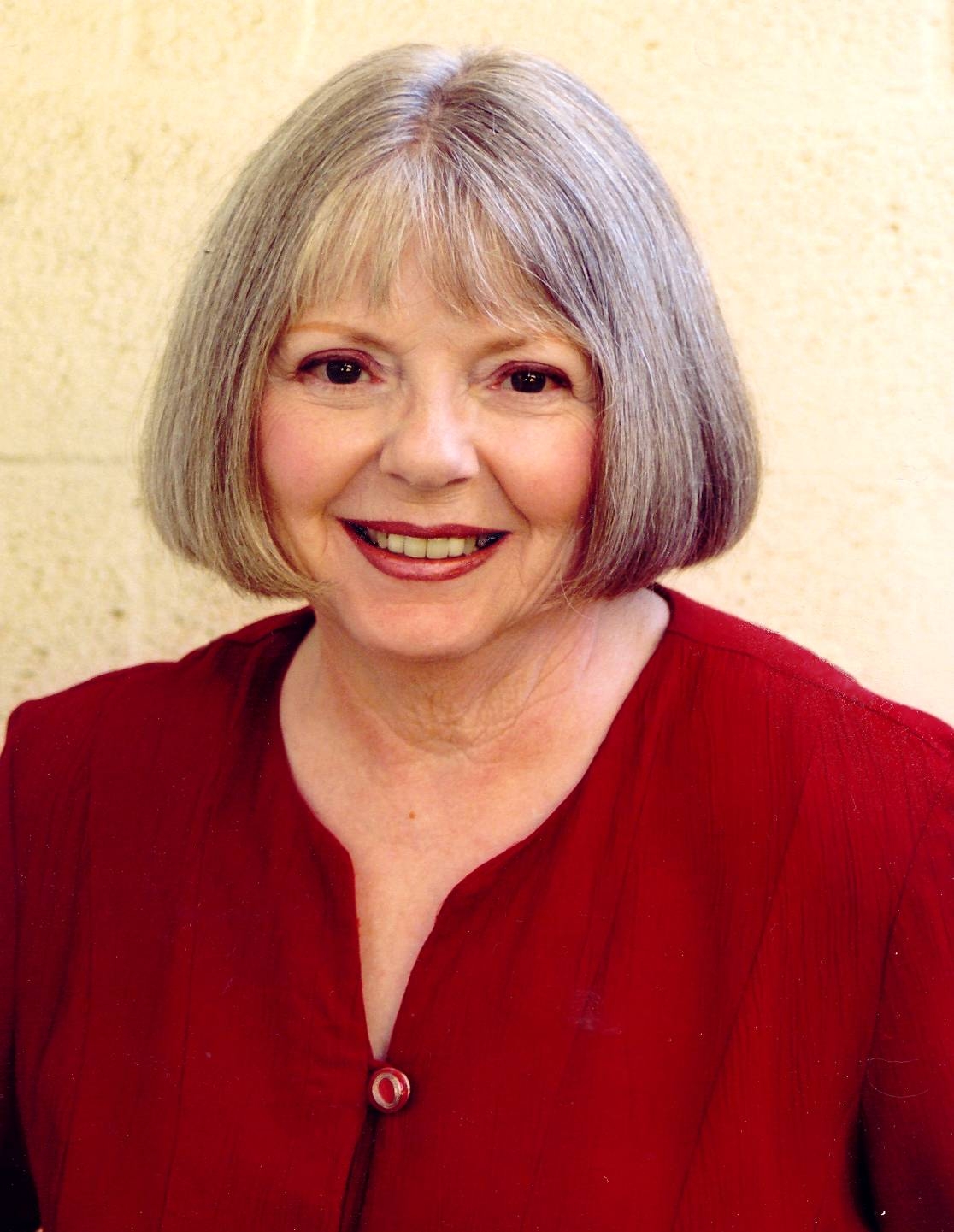
Interview with Betty Webb

MICHAEL A. VENTRELLA: Primarily I interview writers of fantasy and science fiction (since that’s what I write) but today, I am pleased to be interviewing mystery writer Betty Webb.

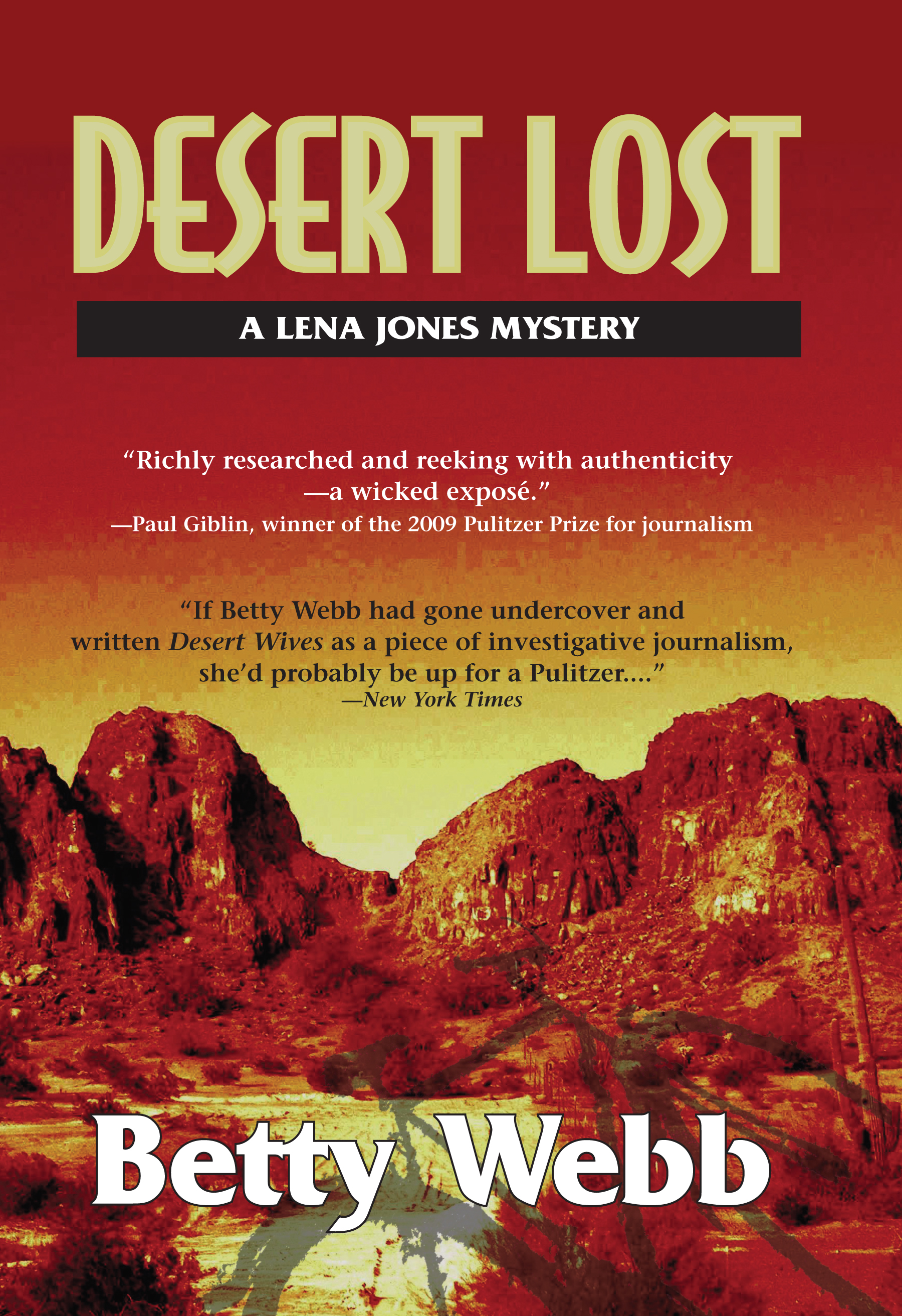
Before writing mysteries full time, Betty Webb worked as a journalist, interviewing everyone from U.S. presidents, astronauts who walked on the moon, and Nobel Prize-winners, as well as the homeless, the dying, and polygamy runaways. The six dark Lena Jones mysteries, based on stories she covered as a reporter, include DESERT LOST (judged “One of the Top Five Mysteries of 2009,
Library Journal), DESERT NOIR (“A mystery with a social conscience,” Publishers Weekly) and DESERT WIVES (“Eye-popping,” New York Times). Her humorous Gunn Zoo series debuted
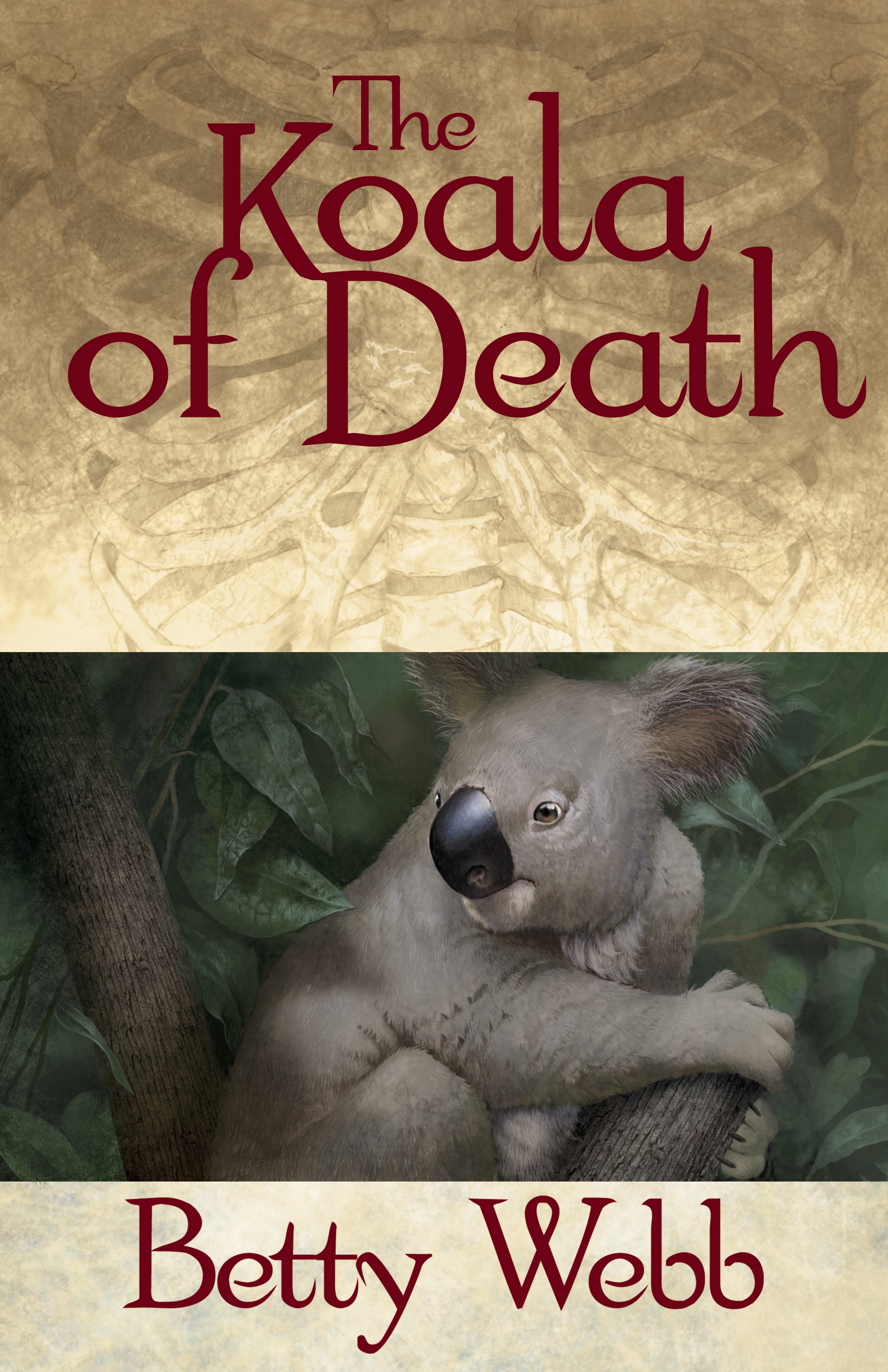
with the critically-acclaimed, THE ANTEATER OF DEATH (I love that title) to be followed this August 15 with THE KOALA OF DEATH. A long-time book reviewer at Mystery Scene Magazine, Betty is a member of National Federation of Press Women, Mystery Writers of America, and the Society of Southwestern Authors. She also volunteers at the Phoenix Zoo, which is the inspiration for her Gunn Zoo mysteries. Her web site is www.bettywebb-mystery.com.

Ms. Webb, you began your career as a journalist, writing nonfiction. Why and how did you make the switch to fiction?

BETTY WEBB: I was a full-time journalist for 20 years, but after 15 years, all that fact-checking started to drive me nuts. So I thought I’d just write a novel “for fun.” After three rejected novels, I hit pay dirt with DESERT NOIR, the first of my Lena Jones mysteries. The second Lena Jones book, DESERT WIVES: POLYGAMY CAN BE MURDER, was sold to Lifetime-TV, eventually making my retirement from journalism possible.

VENTRELLA: Do you find your writing style changes from fiction to nonfiction?

WEBB: Absolutely. In journalism, which is non-fiction to the max, you must always use non-judgmental language, especially verbs, such as “He said,” as opposed to “He shrilled.” And unless you’re a columnist — which is very, very different than straight reporting — you can never interject your own opinions in an article.

When you’re writing fiction, you can let it all hang out, as I do in both my Lena Jones novels and even the Gunn Zoo series. Of course, the Lena Jones books are much more political and issue oriented; Publishers Weekly called them “mysteries with a social conscience.” The Gunn Zoo books, being very funny and much more relaxed, are much less issue-oriented, but they do give readers a lot of information about exotic animals and a behind-the-scenes look at life in zoos. Plus they say nasty things about people who are cruel to animals.

VENTRELLA: Your Lena Jones books are based on actual cases. How do you go about preparing these mysteries?

WEBB: I spend an average of two years researching each novel, which includes trips to the area where the event happened. During that time, though, I’m doing the actual writing for the previous book. Therefore, although I’m now in the process of writing DESERT WIND, I started researching it two years ago. And I am now in the process of researching the next Gunn Zoo mystery and the Lena Jones book.

VENTRELLA: Have you received any protests for these books (from Mormons, for instance)? And how have you dealt with it?

WEBB: Mainstream Mormons weren’t bothered at all by either DESERT WIVES or DESERT LOST, which were both about polygamy. In fact, various Mormon newspapers and periodicals gave both books warm, accepting reviews. Why? Because the mainstream LDS (Latter Day Saints) church outlawed polygamy almost 150 years ago and today’s Mormons are appalled by polygamy as it is currently being practiced. Also, the state of Utah is leading the way in polygamy prosecutions. They have sent many polygamists to prison for polygamy-related crimes, such as child rape (polygamists like 13 year old girls), financial fraud, and sadly, murder. the infamous Warren Jeffs is just one of the now-imprisoned polygamists.

The people I have had a problem with are the polygamists themselves. I’ve received death threats from them, and some of the male polygamists have shown up at my book signings in order to scare me. They finally stopped doing that when I started identifying them to the audience, and asking them to stand up and take a bow. That’s when I discovered that those guys are cowards. They’re good at intimidating 13 year old girls and battered “sister wives,” but not so good at intimidating grown, non-polygamous women.

VENTRELLA: It certainly seems that you still have that journalistic goal of exposing injustice, but are working through fiction now. Is that the case? Have you had much success about informing people about these issues?

WEBB: I absolutely write the Lena Jones books to expose injustice. For instance, are you aware that we have legally allowed immigrants into this country who believe in cutting off little girls’ genitals in order to make them submissive? They see it as no different than spaying a dog or gelding a horse. Those folks continue their ghastly practice in America today. I exposed it in DESERT CUT, and I named names.

Have I had success? Again, absolutely. DESERT WIVES caused such a fuss in Arizona that the Arizona legislature enacted its first ever anti-polygamy law. Readers of DESERT WIVES continue to organize and ride herd on the still-existent polygamy compounds. DESERT CUT has been read by many social workers, medical professionals, and law enforcement officers, who are now on the lookout for it. Immigrants who continue this practice are now being sent to prison, when before it was just shrugged off as a “cultural difference.”

VENTRELLA: What other issues are you interested in that may make future books?

WEBB: Can’t tell you that. DESERT WIND is still a big secret. I always keep my subject matter secret until the book comes out.

VENTRELLA: Your character also lives in Arizona. Why did you decide to do this?

WEBB: I’ve lived in Arizona since 1982, and much of my subject matter — such as polygamy — is rampant here. Plus, Arizona is a beautiful place to write about. On the other hand, the Gunn Zoo mysteries are all set on the Central California Coast, where I vacation every year. And my zoo keeper sleuth lives on the same houseboat I once spent a summer on.

VENTRELLA: How did you make your first sale? Did you have an agent?

WEBB: I was fortunate enough to get an agent, based upon my reading of “The Literary Marketplace.” She also sold one of my books to Lifetime-TV. Thankfully, I still have my agent!

VENTRELLA: Why did you choose Poison Pen Press for your work?

WEBB: My agent sold my books to Poisoned Pen Press. In a happy coincidence, I had already written an article about that particular publishing company for the newspaper I worked for. Therefore, I was very, very comfortable with the sale. We have now enjoyed a 10-years-long relationship.

VENTRELLA: What is the biggest mistake you think new writers make?

WEBB: I think the biggest mistake they make is in thinking the first book they write deserves to be published. I didn’t write a truly publishable novels until my 4th, which was DESERT NOIR, the first Lena Jones mystery. Even though I’d been a professional journalist for years and wrote for an average of 10 hours a day, 5 days a week at my newspaper job, the two skills don’t always cross over. I had to learn to write like a novelist, and that took about 5 years of writing from 4 a.m. to 8 a.m. every single day before I went to the office. Good, publishable writing is more hard work than most beginners realize.

Another big beginner’s mistake? Writing only when they feel “inspired.” I teach creative writing, and one of the first things I tell my students is, “If you only write when you feel inspired, write a haiku. You won’t able to produce much else.” Professionals write for hours every day, regardless of how “inspired” they feel. As for the entire “inspiration” issue — I say “Baloney!” True inspiration only hits once you’ve been at your keyboard for several hours. Writing is work. Period. It’s not a game you play only when you feel like playing.

VENTRELLA: And finally, a fun question: With a time machine and a universal translator, who would you invite to your ultimate dinner party?

WEBB: William the Conqueror (1066), William’s opponent Harold Godwin (also 1066), Shakespeare, Dorothy Sayers, Dorothy Parker, Ernest Heminway, Lillian Hellman, Truman Capote, William Buckley, and Gore Vidal. Of course, I’d have to wear a suit of armor to that dinner party because it would probably turn very, very violent. And I’d enjoy every savage, bloody minute!

Interview with Author and Editor Cecilia Tan

MICHAEL A. VENTRELLA: I’m pleased to be interviewing Cecilia Tan today. Cecilia has been writing and editing professionally for the better part of two decades, both independently and for the small press she founded in 1992, Circlet Press, who specialize in material that mixes the erotic with the fantastic. She has written numerous erotic romances for Ravenous Romance, has edited anthologies for Alyson Books, Thunder’s Mouth Press, Carroll & Graf, Masquerade Books, Blue Moon Books, and others, and collections of her short stories have been published by HarperCollins and Running Press. On top of all that, she also writes and edits publications on baseball.

Cecilia, What brought about the founding of Circlet Press?

CECILIA TAN: I had written a story called “Telepaths Don’t Need Safewords” and just knew at the time I finished it that it was the best story I had written to date. It mixed explicitly kinky erotic action with a science fiction plot. Then I looked around for somewhere to submit it. There was nowhere. Science fiction magazines had explicit rules against sexual content. Porn magazines had explicit rules against both science fiction and any plot beyond “two people meet, then have sex.” The BDSM magazines of the time were either exclusively lesbian or exclusively gay, and my characters were neither. I had been working in book publishing for a few years at that point so I knew the business and I thought “this is nuts. Someone has to do this!” And of course that someone ended up being me.

VENTRELLA: Has it met your expectations?

TAN: Circlet Press has met all my hopes and dreams except for the financial one. We grew by leaps and bounds, garnered fabulous critical acclaim, excellent notice, a great reputation, helped to blow the doors off the old restrictions and show how good mixing the genres could be, jumpstarted the careers of a whole generation of writers … but once the Returns Crisis hit the book publishing industry in the late 1990s, it’s been a financial uphill battle ever since. I’m too stubborn to quit, though, and the ebook has suddenly allowed us to start reaching the readership that mainstream bookstores abandoned. So all of a sudden, there’s some cash flow! Who knows? Maybe someday we’ll turn a profit. What’s most important to me is that we’re still able to connect authors to readers, and then put money back in the pocket of the authors. That part of the business is the same as always … in fact, it’s better.

VENTRELLA: There are many examples of small press these days; do you think this is good for the publishing industry or does it tend to water down the field?

TAN: Oh no. It’s the mainstream presses, not the small presses, who are the most watered down. That’s where you’ll find the most mediocre, recycled pap being packaged and put on the shelf. Granted, it’s not 100% the fault of the big publishers — it’s also the fault of the buyers at Borders and Barnes & Noble, who just want the same thing over and over again, in the hopes that what sold before will sell again. They are all chasing the book equivalent of the Top 40 radio hit and making a lot of boring noise in the process. The small presses are more directly connected with the readership and what they actually want. The small presses occupy the specialty niches.

Another way to look at it is with a comparison to restaurants. The big presses are the chain restaurants. They’re Applebee’s and the Olive Garden and Budweiser. The small presses are that great little gourmet Italian restaurant in your neighborhood, and handcrafted microbrews.

Small presses are also the minor leagues, but for the most part the authors being published in the small press aren’t any less talented than the ones in the mainstream press. They are sometimes less experienced, or less marketable, or just less lucky.

VENTRELLA: As a small press author, I thank you for that!

Has the rise of self-publishing been good for the business?

TAN: Absolutely.

VENTRELLA: When acting as an editor, what is it you look for? What will immediately get a story chucked in the trash?

TAN: The first thing I tell my assistant editors when its time to read the slush pile is DO NOT read the cover letter until after you read the story. Far too many authors think that the job of a short story cover letter is to build you up into a froth of excitement about how great the story is going to be, thus ensuring that a) you’ll be let down, and b) any suspense or joy of discovery in the story has been killed for the reader. I think many amateur writers are confused about the difference between submitting a short story and pitching a novel proposal to an agent or editor, and some just can’t imagine that all they should introduce in the letter is THEMSELVES and let the short story speak for itself.

We get a lot less utter garbage than we used to, though, honestly, and I think the reason why is that thanks to the Internet, writers are actually better informed about how to go about submitting, and they are much more likely to have practiced their grammar and spelling skills on a daily basis. It’s that or the Internet has somehow
swallowed up the attention of most of the crackpots who used to send us wacky submissions in red crayon and the like.

VENTRELLA: What sorts of things do you want in a query letter?

TAN: Since most of what we read is short stories, we don’t read queries. We just want a professional introduction of the author, with whatever credentials they have, but if none, just a firm, no-nonsense hello. It’s professional courtesy to include a cover letter. Sticking a post-it note shaped like a heart on the story is not professional.

Actually, these days, we only accept manuscripts by email, so whenever anything arrives in the mail, I know it’s likely to be from the land of psychoceramics.

VENTRELLA: As a writer of erotic and romantic fiction, what would you advise to someone wanting to enter this field?

TAN: Both romance and erotica have a lot of cliches. The whole trick to writing something that will thrill the pants (sometimes literally) off your readers is to satisfy their expectations while at the same time exceeding them. Be aware of the boundaries of any genre that you write in, and then find out how you can play with and cross those boundaries.

That is, unless thinking about that sort of thing paralyzes you and saps your will to write. In that case, forget everything I said and JUST WRITE. That’s probably the best advice. Step one, start writing. Step two, finish what you started. You’ll get better every time.

VENTRELLA: What trends do you see in the publishing industry that excite you? Which ones worry you?

TAN: I’m very excited at how social networking is allowing authors and readers to connect directly. But the problem is how do you find out about new authors you might like if you’re a reader, when now there isn’t just a publisher-wholesaler-retail chain delivering you a limited selection to choose from? A lot of things are changing now because of that.

It worries me a little that the newer system rewards authors more based on their marketing savvy than on their writing ability … but then I look at a lot of the junk that was published that still hit the New York Times best-seller list over the past 20 years and I realize that’s ALWAYS been true. There have always been populist and popular writers who weren’t particularly great artists.

VENTRELLA: Writing a short story is much different from writing a novel. What are the difficulties you have found? Why do you think some authors specialize in one or the other?

TAN: I’ve written a fair number of both and I really think they are different arts, just like painting and sculpture are different arts. A short story writer has to have guts and brio; a novelist has to have stamina and vision. For me short stories have always come pretty easily. I grab an idea and just pound it until it’s done. A novel takes a bit more planning. The one time I just grabbed hold of a novel with minimal planning, it took six years to finish and came out three times too long to be a commercial novel. (That’s DARON’S GUITAR CHRONCILES, which I’m serializing now on the web.) The next time I plotted out 12 chapters of 5,000 words each and bam, I hit my target right on the nose.

The secret to writing outlines for me is realizing that in the second half I’m going to deviate quite significantly from the outline I wrote, but that some kind of internal logic is at work in my subconscious, so if I forge on, it will all work out. I still have to write the outline, which to me is like sketching out the map of the mountain I’m going to climb. But when I get to the top, exactly halfway through the journey, and am at the turning point, I look down the other side of the mountain… and discover it always looks totally different from the top than it did from where you started at the bottom. Some of the landmarks are the same, but how you get to them changes.

VENTRELLA: Are you sick of vampire stories yet? Is there any plot you have seen too often?

TAN: I love vampires! But even sixteen years ago when I edited my very first anthology of vampire stories, called BLOOD KISS, there were some cliches I didn’t ever need to see. Like setting your vampire story in a goth nightclub … cliche cliche cliche! It really isn’t very imaginative to think “what if those spooky kids who look like vampires actually WERE?” Not exactly an original idea. I actually had to turn down a lot of stories where the “surprise” ending was that one of the two people who met in the bar turns out at the end to be… A VAMPIRE!

I had to write rejections that said things like “It’s a vampire anthology. Every readers KNOWS at least one of them is a vampire.” Then there were the millions who tried the surprise twist: they’re BOTH vampires! Argh. Or surprise twist two: the other one is a vampire hunter! I saw literally hundreds of stories with these plots even after I explicitly banned them in my submission guidelines.

Then there are some ideas that go through fads. I kid you not. One year I received no fewer than four stories all with this exact same plot: an artist falls in love with a model in a painting (usually a Renaissance painting) and gets artistically blocked, can’t paint, is wasting away… until the day the model shows up at the door to have
fantastic sex, looking just like the painting, because s/he is a vampire. Somewhere, once upon a time, that was an original plot. Now, it’s a cliche.

VENTRELLA: How do you think your education has helped your writing?

TAN: Well aside from the actual writing courses I took, it was important to me as someone who writes science fiction to learn some high level science. In college I went right for what was cutting edge at the time, cognitive science (artificial intelligence, neurology, etc) and genetics. Anything you learn that stimulates your brain is going to help your writing. I took a fair amount of psychology in that mix, as well as literature, music, etc. … Long live the liberal arts.

VENTRELLA: Besides “keep writing” what specific advice would you give an aspiring author that you wish someone had given you when you began?

TAN: I think I must have started out with some pretty good advice, because I can’t think of anything. I suppose the advice I would give is this.

You need your reader to trust you to lead them on a rollercoaster ride. For them to trust you, you have to trust yourself. To trust yourself, you have to know your craft and be constantly improving it, constantly learning about yourself and the way your writing affects your readers. So don’t write in a vacuum because you’re afraid people won’t like it. Find the ones who do like it, and write more for them!

Interview with Tanya Huff

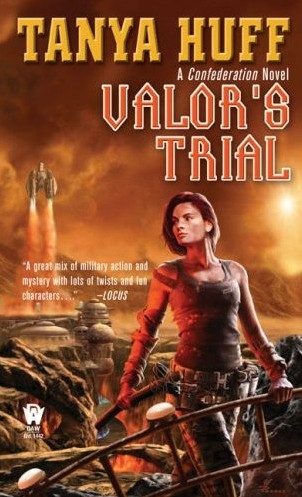
MICHAEL A. VENTRELLA: I am pleased to be interviewing Tanya Huff today! Tanya Huff lives in rural Ontario, Canada with her partner Fiona Patton and, as of last count, nine cats. Her 26 novels and 68 short stories include horror, heroic fantasy, urban fantasy, comedy, and space opera. She’s written four essays for Ben Bella’s pop culture collections. Her Blood series was turned into the 22 episode BLOOD TIES and writing episode nine allowed her to finally use her degree in Radio & Television Arts. Her latest novel is THE TRUTH OF VALOR (DAW, September 2010). When not writing, she practices her guitar and spends too much time on line.

Tanya, How did you break into the publishing business?

TANYA HUFF: I started by sending out Third Time Lucky to the digests — Asimov didn’t want it and Amazing did. At the same time, I’d finished writing CHILD OF THE GROVE (in about 80% the same shape as the published book) and sent it out as a YA to Terri Windling at one of the Ace imprints I think. It was twenty-five years ago so details are foggy. Terri suggested I submit it as an adult book.

One of the things they suggest when you’re looking for a publisher is to look at what who publishes what you read and I was split about 50/50 between DAW and Del Rey. But I had a friend, S. M. Stirling who’d sold two books to Sheila Gilbert while she was at Signet and now she was at DAW and that seemed like a sign. I was heading to NYC to see some shows and Steve said he’d call Sheila and ask if she had time to see me. Unfortunately, he forgot and when I called Sheila, she said she hadn’t heard from him in a few years but if I could get there right away, she’d just had someone cancel and could see me for about twenty minutes.

Never do this, btw. Never cold call an editor and mention you just happen to be in town. It was barely doable 25 years ago. It’s really isn’t now.

We talked, I left the manuscript for CHILD OF THE GROVE with her, eventually, a year and a rewrite later, she bought it and, in the intervening years, she’s bought another 25.

VENTRELLA: You’ve stated in the past that you decide to write a vampire book because, basically, you knew they were popular now.

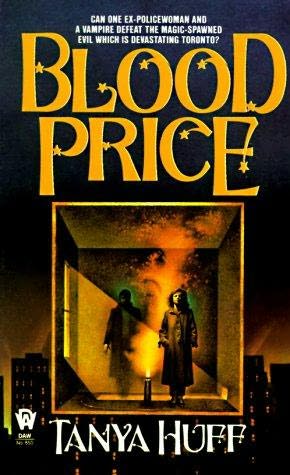
HUFF: No, what I said was, I decided to write a vampire book because I was working in a bookstore and had observed that vampire readers were very, very loyal to their genre. That they’d buy anything with fangs on the cover in the desperate hope of finding something decent to read. I figured if I wrote a good vampire book, then I’d give the vampire fans what they were looking for and they’d be that loyal to me. So I did. And they are. But twenty odd years ago when I wrote BLOOD PRICE, vampires were no where near as widely popular as they are now. This was pre-Buffy, remember.

VENTRELLA: This leads to an interesting question in general: How much of writing is about art and how much is about business? Do you think most authors write for the love of writing or because they want to be successful? Are the two incompatible? And is there anything wrong in that?

HUFF: The two are certainly not incompatible. On one level it doesn’t matter what job you do, if you’re just in it for the money, it’ll show and it won’t be pretty. On another, good writing requires a piece of your soul so you’d better love it given that you’re gouging chunks out of yourself to produce it. Also, as I tell the high school kids I occasionally talk to, you’d better love it because the odds are very good you’ll never make much money at it. On the other hand, I’ve never met a writer who doesn’t have a mulitude of ideas floating about and the smart ones will look at what’s selling, try to use that to figure out what’ll be selling in a year to eighteen months when any book you may start now will actually be published, and develop the idea that has the best chance in the market. On yet another hand, sometimes you just want to tell a particular story so badly that the market be damned and it then becomes your agent or editor’s job to reign you in.

So the short answer is, no.

VENTRELLA: You ignored many traditional vampire myths in your books. (I’m doing the same in my next novel, by the way, about a vampire who runs for President.) What led to that decision? Did you get any complaints from the hard core vampire fans?

HUFF: In order for myth to remain alive, it has to grow and change. Once a myth codifies, it dies. I used the parts of vampire myth that were relevant to my story and ignored what wasn’t. So far, no one’s complained. Well, not to me anyway.

VENTRELLA: You’ve been fortunate (and talented) enough to have a TV series based on one of your series. How did that come about?

HUFF: The wonderful guys at Kaleidoscope optioned the Blood series because they loved them and then worked their butts off to bring it to the screen. All I had to do was cash the option check. They did all the work.

VENTRELLA: Were you pleased with the result?

HUFF: I loved the result. Christina Cox was one the actors I saw playing Vicki back in the early 90’s when she was on a show called F/X THE SERIES and I was thrilled when she got the part. Dylan Neal was not how I physically saw Mike — until I saw Dylan play Mike and I loved his interpretation. I’d never been able to cast Henry Fitzroy but now I can only see Kyle Schmid in the part.

VENTRELLA: Did the TV series inspire you to make changes in future books of the series? Did you care about continuity at all, or was that not an issue?

HUFF: I wrote the last Blood book in… I think 1996 so it was totally a non issue. I said at the time that BLOOD DEBT was the last and it has been. There’s been a few short stories since Blood Ties but I have no problem keeping the show mythos and the book mythos straight.

VENTRELLA: What process do you use when preparing a novel? Do you do extensive research? Do you outline?

HUFF: First I have the idea — or, more accurately, separate the idea I’m currently excited about from the herd. Then I write up a pitch for my agent to give my editor — this is a very short outline and has, in the past, actually used the phrase, “And a bunch of stuff happens in the middle.” I always know where I’m starting from and I always know where I’m going, I just don’t always know how I’m going to get there. After the book sells, I research for two to three months until the weight of information tips me over into writing. Then I start at the beginning and tell the story until I finish. Because I edit as I go, my first draft about 95% similar to the book you buy.

VENTRELLA: How do you personally create a new fantasy world, with its own rules? In other words, how much planning and background information do you write?

HUFF: When I create a new fantasy world I need a map so I know the climate, the type of food, the industry, the type of farming, the housing needs. I need to know what time of year it is. I need to know what the religon is, and I need to work out the profanity. Most profanity is very tied to religion and is often the hardest thing to come up with in a created world.

VENTRELLA: What do you bring to the genre that other similar books miss? In other words, what is different about your books?

HUFF: Well, I don’t take myself or the genre (or various) subgenre too seriously while still respecting my readers, but I’m not the only one. I like kick ass women and witty repartee, so that’s going to be included every time. I guess the big thing that’s different about my books, is that I’ve written them…

VENTRELLA: Many aspiring authors get conned by self-publishers who pretend not to be, or by “editors” who do little more than proofreading for a large fee. How does one avoid these scams?

HUFF: They’re not hard to avoid. Publishers and editors pay you — you’re creating the product. If you’re paying them, it’s a scam.

VENTRELLA: Besides “keep writing” what specific advise would you give an aspiring author?

HUFF: Put a third of every check you receive into a separate tax account. Sure, it won’t matter for years but there will come a day when you’re actually making a living wage and the goverment will want a surprising amount of it. If you’re Canadian, you have to pay both halves of the Canada Pension Plan and that’s a surprise when it hits the first time, believe me. It’s best to remember that you’re essentially a small business all year long, not just in April.

Remember that publishers, editors, and agents all talk to each other. They will talk about you. You don’t have to be a saint, but don’t be an ass. If you get a reputation as being unprofessional or hard to work with, it won’t matter if you have all the talent in the world.

And speaking of talent, discipline matters more. I guarentee that more disciplined people with minimal talent are published than talented people with minimal discipline.

Write subjectively. Edit objectively.

Have fun.

Interview with Author and Editor Val Griswold-Ford

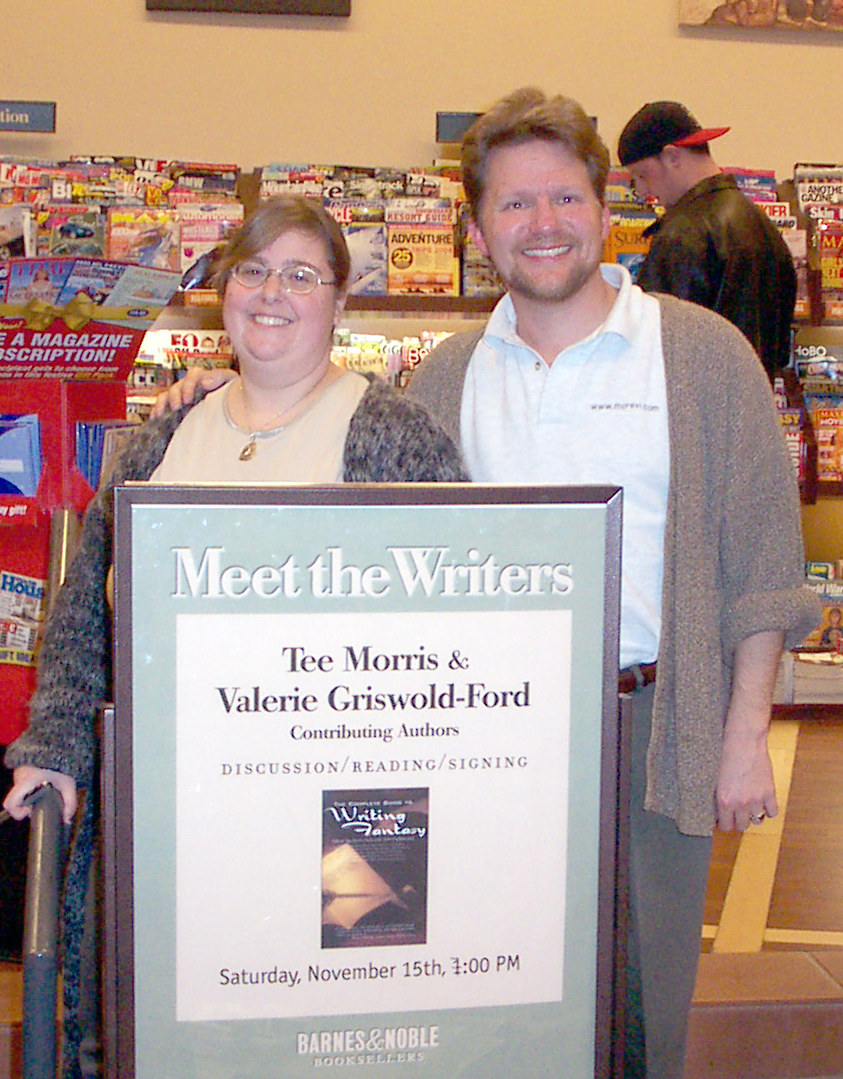
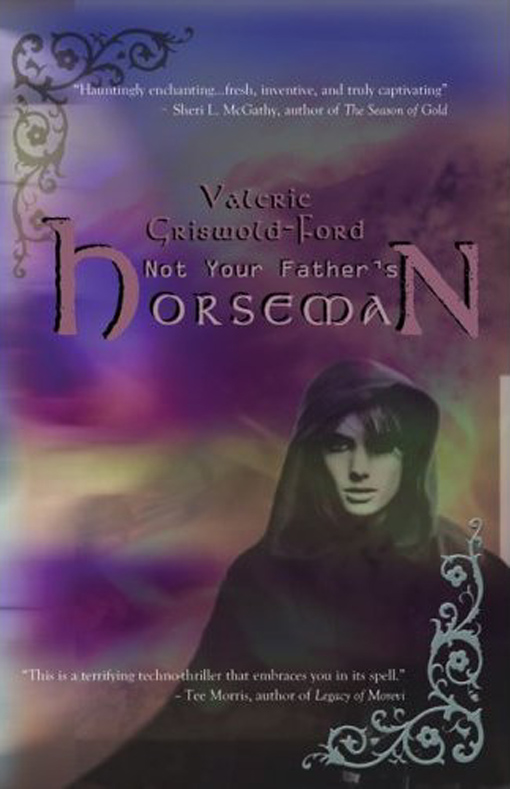
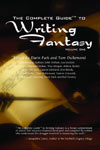
MICHAEL A. VENTRELLA: Today I am happy to be interviewing Valerie Griswold-Ford, writer and editor. Val was journalism major in college and covered several political beats, wrote a weekly column and rose to associate managing editor of The Daily Campus, the fifth largest daily newspaper in Connecticut. Val writes dark fantasy, horror, paranormal romance and urban fantasy, in addition to her nonfiction works. She is currently co-editing the third book in the “Complete Guide” series with Lai Zhao, entitled THE COMPLETE GUIDE TO WRITING FANTASY: THE AUTHOR’S GRIMOIRE. Her two dark fantasy novels NOT YOUR FATHER’S HORSEMAN and DARK MOON SEASONS are available from Dragon Moon Press, and she is working on the third book in the trilogy, LAST RITES. She lives with her husband and three kittens in Concord, New Hampshire. Her web page is www.vg-ford.com

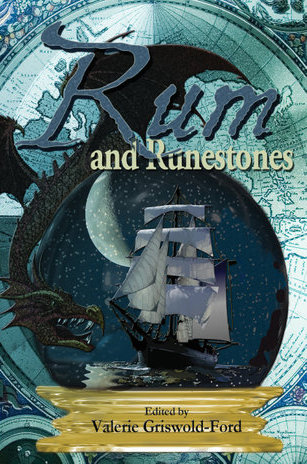
Val, your most recent work is the pirates and magic collection of short stories RUM AND RUNESTONES, due out in April of 2010. Where did the idea for this come from?

VAL GRISWOLD-FORD: Well, I’m a pirate addict. I adore pirates, and always have. So I was at a party at RavenCon last year with Misty Massey and Gail Martin, and we decided that we had to do an anthology of pirates and magic. I pitched it to Gwen Gades, the head of Dragon Moon Press, got the okay, and we were off!

VENTRELLA: Tell us about this new collection!

GRISWOLD-FORD: It’s amazing. More than I’d ever imagined. The writers were given a very simple assignment: to write a short story, under 8k, that used pirates and magic as the main impetus of the story. It was an invitation-only anthology, and I approached about 20 authors. Thirteen of them (including you!) responded. We’ve got everything from dark and creepy to love-lost-and-found to comedy. Even a song! It’s a great anthology, and I’m very proud to be the editor.

VENTRELLA: What is the process that you take as an editor when organizing short story collections?

GRISWOLD-FORD: This is my first short story collection, so I sort of made it up as I went along. I waited until I had everyone’s story in and read, then I listed them all in a word document and arranged them in an order that I thought made sense.

VENTRELLA: Some short story collections are reprints, and some (like RUM AND RUNESTONES) are by invitation. Is one easier or better?

GRISWOLD-FORD: Easier for who? The writer or the editor? : )

I think that by invitation is easier for the editor, because you can pick and choose your authors, so you’re getting a known quality as far as work. I specifically chose authors for R&R that I enjoyed reading, so I knew what level of quality I was getting. On the other hand, as a writer, I can see how the invitation-only anthologies might seem a bit cliquish. I don’t normally write short stories, but I was in one invitation-only anthology (WRITERS FOR RELIEF 2), and knowing that I had been chosen put a little bit of added pressure on me. Could I finish the story to the editor’s expectations? It can be tough.

VENTRELLA: You’ve also cowritten guides to writing, specifically THE COMPLETE GUIDE TO WRITING FANTASY. Why did you think such a book was needed?

GRISWOLD-FORD: Because there wasn’t a how-to on specifically writing fantasy. The Complete Guide is more like a reference guide than a “this is how you write.” Each book (there are three in total) goes into detail on topics that specifically apply to fantasy. The first one has topics like medieval feasts and clothing, writing fantasy fight scenes, things like that. We went a little deeper in the second book, building on the first and going into topics like combining mystery and fantasy, writing sex into your fantasy and government systems to use in fantasy. The third book was what to do once the book was written -– it went into things like querying magazines, agents and publishers, writing query letters, what to do about advertising -– things that writers don’t necessarily think about. It definitely filled a need –- I’m still getting emails from writers about what they’ve found in it.

VENTRELLA: As an editor, what submissions have you seen that just make you scream?

GRISWOLD-FORD: Hmm. Well, when we were doing the second guide, we got a submission that looked like it had been written in another language and then run through Babelfish to translate it to English. It was seriously weird -– all odd tenses and sentence construction. That was really the oddest. Most the subs I get are from professional authors, so I don’t get too many howlers.

VENTRELLA: You’ve also written novels and short stories of your own. Does a background in editing help? When an editor is assigned to your work, have there been major problems?

GRISWOLD-FORD: Not really. I tend to edit my own work before I send it off to Tina (my long-suffering editor), so she’s yet to threaten to murder me. The only time I saw her slightly aggravated was when I was having issues with a chapter in Horseman –- I actually sent her the chapter with “This sucks” as every other line. She was not impressed.

VENTRELLA: Where did the idea for NOT YOUR FATHER’S HORSEMAN come from?

GRISWOLD-FORD: I belong to a group called the Society for Creative Anachronism (SCA), and I’m part of the Storyteller’s Guild for our barony. We were doing a storytelling exercise, making up a story around a word we were given, and my word was Plague. I made up the story, and then had a dream that night about a modern-day Horseman. Nikki was the result.

VENTRELLA: Tell us about your most recent novel, DARK MOON SEASONS.

GRISWOLD-FORD: DARK MOON SEASONS is the second part of the Apocalypse trilogy. Nikki now knows both more and less than she did before, and she’s on the hunt for the other Horsemen. Now, though, she has more to deal with than just Gene-Tech –- the government has gotten involved, and she’s got to worry about Department V agents as well.

VENTRELLA: What do you do to promote your books and let people know about them?

GRISWOLD-FORD: Well, I’m on Twitter, and I run contests on my blog. I also have teabags with my books’ names on them that I put out on the freebie tables at various cons I attend. I’m going to be podcasting HORSEMAN this summer, and DREAMS this coming winter, which I hope will garner some more interest as well.

VENTRELLA: Many new authors, anxious to see their book in print, rely on self-publishing. What’s your opinion on this?

GRISWOLD-FORD: Self-publishing is a hard road. Unless you’ve exhausted all your options, and are prepared to hustle your rear off selling, I would advise against self-publishing. If you really think you can make it, go for it, but don’t make it your first choice. I know it’s a long road -– I’m still trying to find an agent -– but don’t give up. You can’t have a thin skin in this business.

VENTRELLA: Do you advise authors to start with the small press publishers and build up a reputation first, or should the pitch be given to the majors first?

GRISWOLD-FORD: Shoot for the top. Don’t get me wrong -– I adore my publisher, but seriously, if you don’t try for the apex, you’ll never know if you could have sold it to Tor, or Baen, or St. Martin’s. Believe in your work, and go for the gold.

VENTRELLA: What do you see as the future of publishing? Will e-books eventually take the largest share of the market?

GRISWOLD-FORD: Honestly, I don’t know. I like ebooks, but until the readers come done in price, I don’t know that they’ll take over. I still love my paper books, and don’t own an e-reader, although I do read books on my computer. But ebooks have definitely come, and they aren’t going away.

VENTRELLA: What’s the best piece of advice you could give aspiring writers?

GRISWOLD-FORD: Don’t stop reading and writing. Don’t judge your journey by anyone else’s. And don’t give up. Ever.

I will tell you the story of how I got HORSEMAN published as an example. Feel free to laugh, because I was a true newbie at the time.

So, it’s September 2004, and THE COMPLETE GUIDE TO WRITING FANTASY has just come out. It’s my first byline since college, and I have never been published as an author before. We’re talking on the email list that spawned the Guide about what we can do to promote it, and I offer to set up a book tour up here in New Hampshire. Tee Morris (of MOREVI and Billibubb Baddings fame) takes me up on it, and we go on a 3-state, 6-stop tour in 4 days. Seriously a whirlwind. We end up with nothing to do Saturday afternoon, so we take out our laptops (another bit of advice: have something to write with at all times!) and he starts editing. I start noodling around with a story that will eventually become HORSEMAN. He reads what I have and says, “This is really good! You know I’m going to push you to write more, right?”

Flash forward to December 8, 2004. I know this date, because there was an ice storm and I stayed home from work. Tee calls me, and our conversation goes like this:

Tee: How’s the book coming?

Me: Um, it’s coming.

Tee: Good! Do you have an outline?

Me: Um, sort of?

Tee: Well, Gwen wants to see it tomorrow morning.

Me: …!

I pulled an outline from somewhere, and sent it off to her. She emailed me back and asked to see a rough draft. I finished it at 45k (yes, 45k!) and sent it off to her on Jan. 4, 2005. She came back and said that it was good, but short –- could I lengthen it? Of course!

Well, by then, Tee and I were working on OPUS MAGNUS, and we were talking to Gwen about launching at Westercon 58, which was going to be in Calgary that year. In one email she sent, Gwen mentioned three launches they were looking to do: LEGACY OF MOREVI (Tee’s book), THE GUIDE, and HORSEMAN. I sat and looked at that email for a good five minutes before I got up the courage to email her back and ask if that meant she was buying HORSEMAN. She emailed back and said she’d told Tee in December that she was. Hadn’t he told me?

Well, he hadn’t, because he’d thought she was kidding. Unknown authors do not sell books based on a chapter outline. But I had.

Which is why you never give up. Never.

Interview with Agent Lori Perkins

MICHAEL A. VENTRELLA: Lori Perkins is the Editorial Director of Ravenous Romance, a new publisher of romance ebooks and audiobooks. She has been a literary agent for 20 years, and is currently President of L. Perkins Agency, which has foreign agents in 11 countries and working relationships with Hollywood agents. She was the agent for HOW TO MAKE LOVE LIKE A PORN STAR: A CAUTIONARY TALE by Jenna Jameson, which made the New York Times best-seller list for 7 weeks. She was also the agent for J.K. ROWLING: THE WIZARD BEHIND HARRY POTTER by Marc Shapiro, which was on the N.Y. Times Children’s best-seller list.

As an author herself, she has produced four books: THE CHEAPSKATE’S GUIDE TO ENTERTAINMENT; THE INSIDER’S GUIDE TO GETTING A LITERARY AGENT and THE EVERYTHING FAMILY GUIDE TO WASHINGTON D.C. and THE EVERYTHING FAMILY GUIDE TO NEW YORK. She has also written numerous articles on publishing for Writer’s Digest and Publisher’s Weekly.

As an editor, she has edited thirteen erotica anthologies. when she is not teaching at N.Y.U.’s Center for Publishing. And somehow she found time to be interviewed by me.

Lori, how did you decide to start Ravenous Romance, and has it been as successful as you hoped?

LORI PERKINS: As an agent, I sell the stuff that other agents won’t handle — SF/Fantasy, pop culture and erotica. So after 9/11 I became the literary agent for the porn industry — I am Jenna Jameson and Vivid’s literary agent. But I also wondered what had happened in the erotica world that I had read as a younger woman, and I was surprised to find that the erotica market was becoming more and more female-centric. I took on Cecelia Tan — who writes SF/Fantasy erotica, as well as baseball books (another passion of mine) — and started selling erotica anthologies. I started reading all these wonderful writers with excellent writing chops who made their living writing short stories, and groomed a few of them into novelists for this burgeoning erotic romance and chick lit market.

At that time, I met Holly Schmidt and Allan Penn, who were nonfiction packagers doing a lot of sex books. They wanted to start a romance publisher, and I suggested that there were enough romance publishers out there, but erotic romance was young and growing. When they examined the market, they came back and said, yes, let’s do all ebooks, and that’s how Ravenousromance.com was born.

VENTRELLA: What is currently selling at Ravenousromance.com, and what are you looking for?

PERKINS: We’ve made a name for ourselves by crossing genres. Our most popular category is M/M romance, which means gay male romance. We’ve taken popular romance classics and rewritten them in contemporary settings — AN OFFICER AND HIS GENTLE MAN, PRETTY MAN, SLEEPLESS IN SAN FRANCISCO. We will be doing the same thing for lesbian F/F fiction now, so we are looking for someone to write THE PRINCESS’S BRIDE and MUST LOVE CATS. You get the idea.

Our paranormal romance is selling really well. We have seven vampire series, and the zombie fiction does well. HUNGRY FOR YOUR LOVE, our zombie romance anthology, is one of our best-sellers, as is our gay zombie romance, FOR LOVE OF THE DEAD by Hal Bodner. And our kinky stuff does well too, such as our THREESOMES anthology. We currently have a call out on the RR blog, ravenousromance.blogspot.com for stories for a paranormal threesomes anthology, THREE’S A CHARM, and an historical threesome anthology, ONCE UPON A THREESOME. We have two more big anthologies coming up soon — FANGBANGERS, which is romance with anything with fangs and claws, and APOCALYPSE TODAY: LOVE AMONG THE RUINS, which is end-of-the-world romance.

VENTRELLA: Do you see e-books being the wave of the future?

PERKINS: Ebooks is the future of the mass market. There will always be collectors and bibliophiles, but when it comes to books as entertainment, you can’t beat an ebook.

VENTRELLA: Do you think there is any stigma attached to books that are primarily sold as ebooks?

PERKINS: Only if they are self-published. We published 150 titles this year and sold reprint rights to a third of them to major houses.

VENTRELLA: Given that it is relatively inexpensive to produce ebooks, is there a worry that some will assume that the standards are lower for publication?

PERKINS: It is not much less expensive to “publish” an ebook. We pay an advance against royalties; we hire an editor, a copy editor, a cover designer; the book has to be converted into eformats from Word, and then it needs to be uploaded to the various Estores that sell it. Plus we need an office and an accounting department. I sell subrights. All Estores (Amazon, B&N, Fictionwise, Audible, etc.) take a huge portion of the sale price of the book (just like a bookstore and a distributor in print). The only part of the ebook system (with a real pubisher) that is less expensive is the cost of printing, shipping and storage, and that is returned to the author in the higher than print royalties — most epublishers pay between 25% and 35% royalties.

VENTRELLA: What will usually get a submission rejected for Ravenous Romance?

PERKINS: All erotic romance must have a happy ending or a happy-for-now ending. We might ask you to change it, and if you won’t, we won’t publish it. And then just plain bad writing will get you turned down — alternating perspectives, passive voice, etc.

VENTRELLA: Have you ever liked an author’s style and voice but rejected a story based on other grounds?

PERKINS: I am an editor who can fix things, so I can usually walk an author through a rewrite.

VENTRELLA: Audiobooks also seem to be growing tremendously. How are the ones with Ravenous Romance produced?

PERKINS: Erotic romance audiobooks do very well, because there aren’t many of them (they are still quite expensive to produce, since they must be done in a studio).

VENTRELLA: Do you think eventually the book publishers will change their pricing to accommodate a new economy model?

PERKINS: I think ebooks should be affordable, and that if they are too high they will encourage pirating. I think the print world needs to get rid of “reserve against returns”, which is an antiquated system that makes the publisher and the author a lender to the book seller. I think books are entertainment, and they must learn to complete with DVDs and games and music, all of which needs to be affordable. So a new blockbuster book should be $20, an ebook $10 and a mass market/backlist $5, IMHO.

VENTRELLA: What is your background? In other words, how did you get to become a literary agent?

PERKINS: I was journalist. I was the publisher of a neighborhood newspaper in Upper Manhattan with a degree in journalism from NYU. I became an agent becuse I wanted to sell both fiction and nonficiton, but I have always been an editorial agent (I fix the books before they go out and I often come up with ideas for my authors). I’ve also written four books and edited 15 anthologies. And I teach writing/editing at NYU.

VENTRELLA: As a literary agent, what do you see as the biggest mistake new authors make?

PERKINS: They are too eager to get published. They don’t work on their craft. They have fantasies about the marketplace that are no longer real.

VENTRELLA: How do you deal with receiving work that you think is well written but to which you don’t think the market wants?

PERKINS: I’ll tell them just that and tell them what’s selling, and if they want to rework something, fine. Otherwise put it in the trunk and get me something commercial.

VENTRELLA: What’s the best way for a new writer to find a literary agent who likes their genre and style of writing?

PERKINS: Get WRITER’S DIGEST’S GUIDE TO LITERARY AGENTS or Jeff Herman’s and go through the book with a marker, making a list of all the agents who sell what you’ve written. Then email the top five, wait a week, and go on to the next five, etc. You can also join Publisher’s Lunch and look up agent sales for the past three months to see who has sold something that sounds like what you are writing. Then send a query letter that starts: “I read on Publisher’s Lunch that you recently sold a….”

VENTRELLA: And finally, who are your favorite authors? Who do you like to read, and why?

PERKINS: My three favorite books are 1984, ALICE IN WONDERLAND and DRACULA, and I would say GONE WITH THE WIND is my fourth. I love Stephen King (am reading UNDER THE DOME now). I especially loved SALEM’S LOT because it was DRACULA set in America and he deftly portrayed the death of a small town. I think MISERY is his finest book — brilliantly crafted. I also love Peter Straub, who has mastered the art of telling a story like the peeling of an onion. He always amazes me.

Interview with Christopher Hoare

MICHAEL A. VENTRELLA: Today I am interviewing Christopher Hoare, whose books can be found with my publisher Double Dragon. Chris was born in London, England in 1939, immigrated to Canada in 1967, and became a Canadian Citizen in 1974 but we won’t hold that against him. He led an interesting life, studying around the world, serving in the Royal Artillery and then worked in oil exploration in Libya among other things. He now writes full time, living in Alberta at the eastern edge of the Rockies with his wife of almost 40 years, Shirley, and two shelter dogs.

Chris, there are so many new authors out there. What do you say to readers to get them to check out your books?

CHRISTOPHER HOARE: Gisel Matah, the protagonist of my Iskander series, is a woman who excels in a man’s world of action and danger, driving stories that women may find a refreshing change from being treated as sidekicks or helpless targets. She becomes the top security agent for her people when the small group of moderns are stranded in a 17th century world.

VENTRELLA: How did you decide to make the main protagonist a female?

HOARE: I picked my strong and reckless female protagonist to oppose the relegating of women into accidental and amateur roles in action adventure fiction. I felt that women readers would enjoy one of their own who could stand with all the James Bonds and Rambos out there. I have heard skepticism about parts of the early stories where the young Gisel becomes the only person in the situation with the skills to take the lead, but partly because of her age. They query her action because they relate it to our society, that keeps the young in immaturity far longer than earlier societies did. I write such scenes with the age justification for her position carefully buttressed. For example, at 16 in ARRIVAL, she is picked to be Colonel M’Tov’s assistant in training a small group of parachutists because of her gymnastic experience; she then becomes the only person with the technical understanding to lead them on the operational jump when M’Tov breaks an ankle in a training exercise.

My next release is due to come out very shortly. THE WILDCAT’S BURDEN is a plunge into a dangerous writing minefield – I have Gisel both pregnant and moderately active as the governor of a rebellious city. The mothers in my writing group felt I’d mostly succeeded in depicting her in the conflicting roles, but also added their expert advice into the states of mind she should experience. The final crisis naturally takes place during her confinement and so the novel ends with attacks on her and on the city, while the plans she has prepared for the situation must unfold unattended. Another writer admitted she had a character in a fantasy give birth on a battlefield, but wouldn’t risk it again. We’ll see if readers accept this story.

VENTRELLA: What are you working on next?

HOARE: The novel I should be writing now instead of these answers. I have long wanted to write SF where the power of the mind is more important than the gadgetry. I think Lucas, in “Star Wars”, approaches this with the abilities of the Jedi, and I believe the ’50’s classics did as well in such stories as Alfred Bester’s jaunting in STARS MY DESTINATION (Tiger Tiger) and Asimov’s telepathic “Mule” in SECOND FOUNDATION.

The protagonist I introduce in MINDSTREAM is a retired professor of systems theory who has become abbot of a quasi-Buddhist monastery. He is able to access other beings – on this world, in deep space, and on other worlds – and, mentally, participate in or direct the action there. I blend a lot of the fascinating Tibetan Buddhist esotericism with String Theory in the background scenario. In the novel, Crumthorne and his assistant attend a NASA spaceflight convention to protect it against similar alien intrusion from adepts on other worlds, but it turns out that one of the Earth ‘attendees’ becomes a greater threat to all of them.

VENTRELLA: What’s the hardest part about writing?

HOARE: That’s easy – getting one’s work noticed among the cacophony of other media out there.

VENTRELLA: Have you had any formal writing training? Do you think that is necessary?

HOARE: You should have competence in the language you write in as a prerequisite. I’m appalled at the number of people who write although they have little knowledge of grammar and cannot spell; and even more appalled at those who self publish their writing without rectifying these inadequacies.

As to formal writing programs, I’m always skeptical about over-academicism because it can lead to rigidity and a failure to accept ideas that do not lend themselves to clever analysis. However, I attended a couple of university extensions that contributed greatly to my early development. A writers’ conference at NAU at Flagstaff in the late ’60s had an invited writer whose depth of analysis of fiction really opened my eyes.

VENTRELLA: How did you end up with your current publisher?

HOARE: I’m lucky to have landed with Double Dragon. Deron is supportive of ideas I sometimes spring on him, even when they turn out to be of less value than his own; he allows a writer to amass a growing body of available work without the fear of losing earlier writing to the deadly ‘shelf life’ demon of mainstream publication. Of course, that is also a function of e-publishing, where one is safe from being destroyed by the dreaded ‘returns’ policy.

I have been able to investigate the sales and distribution of POD vs e-books in my own way and learn from my mistakes (the only way I ever learn anything).

VENTRELLA: Do you have other long term goals to grab a more “mainstream” publisher?

HOARE: I would like to have a more mainstream publisher at some point, but I doubt I would find working with them (and they with me) completely successful. Really, the only thing they have that I covet is the greater exposure.”

VENTRELLA: Your short stories have also appeared in various collections, including TWISTED TALES. Do you find short story writing easier?

HOARE: Actually, I don’t like writing short fiction. The two stories accepted in TWISTED TALES II and III are the first short stories I produced since my early writing days. I doubt I will write more as I feel I was not able to get across the intentions I had in writing the stories. Possibly a fault of my lack of experience with the medium, but I really detest the literary genre that most short story writers write in.

VENTRELLA: Do you advise starting writers to concentrate first on short stories?

HOARE: Conventional wisdom when I started writing seriously said that one should always attempt to develop one’s idea first as a poem, then as a short story, and only later consider turning it into a novel. What rot. I do advise a developing writer that the shorter medium is a necessary foil when one is learning the essences of the craft of theme, tone, and plot. In a first novel one can easily lose all control over what one is writing – it certainly happened to my early attempts.

VENTRELLA: What’s your opinion on self-publishing?

HOARE: Would you recommend taking your first transatlantic flight in the captain’s seat rather than the passenger cabin? It requires an inordinate amount of hard work and luck for one’s self pub not to ditch in the ocean.

I do know a few good self published novels (other than Tolstoy’s and Dickens’) but they are exceptions. The writers were not first-time novelists and had some experience and craft knowledge to back their efforts. For a year or two I tried my hand at reviewing fiction and tried to give equal time to self-published works, but after receiving more than one that was actually painful to read I gave up on the exercise.

VENTRELLA: Do you tend to rely on outlines first or do you just plow right in?

HOARE: I much prefer to start with the characters and the opening question and write a first draft as an exploration. By the time the novel reaches the halfway point the ending should have made itself inevitable if one remains true to what has gone before.

There are times, when I’m not sure what should happen in a necessary scene or what comes next, that I will explore ahead with an outline or even an unorganized scattering of issues to determine the logical order which develops the story. I have never sat down and written a detailed outline of a story before starting to write as I feel that would destroy all the life – the illusion of real life happenings – that make the story flow.

VENTRELLA: Tell us about NovelPro.

HOARE: I learned almost all I know about writing during the five or six years I belonged. The partnership with some really brilliant authors and the hard work of extended whole novel critiques was more valuable than a conventional MFA. Not just my opinion, as I saw it expressed by other members who had MFAs.

If you can get in, I’d advise any writer to shelve their own writing ego long enough to submit to the group for awhile. Not everyone can do it. Some quit even before completing their very first novel crit – the be all, end all, of the NPro system – while others get kicked out because they become obstructive. I was cautioned a couple of times, and my posts put on ‘review’. I’m still in contact with some members and past members and have accepted that there will come a time when the writer has to accept that their own needs and the group’s no longer coincide. I still wish them all well, and wait for the time when a work from the group becomes a bigger success than THE DaVINCI CODE – as well as better written.”

In line with others in the NovelPro group I spent an inordinate length of time trying to perfect the query letter and the bit by bit perfection of the opening attention grabber to gain a top NY agent. Then I slowly began to realize that my writer profile ruled me out of their consideration. I’m a grouchy and opinionated senior who lives as far away from New York, and the New York mentality, as it’s possible to get without traveling through space. I tried to bend in the appropriate ways – I became a Toastmaster to hone my public speaking skills for those career building moments on camera, but by the time I became a CTM I realized I hated making speeches. I tried to convince myself that I could turn myself into a saleable ‘brand’ under the tutelage of a wise old literary agent, before I realized that I’m too much of a loner to fit the profile. I’ll go on writing my way and being me – and if that doesn’t fit with the NY concept – to Hell with them.

VENTRELLA: Do you have any specific advice you would give a writer trying to make it in the publishing business that they may not have heard before?

HOARE: I hope a few of the answers I’ve given above have pointed others to useful insights of their own. If there is anything I believe that I’d like to prove true it’s that in order to be a lasting writer – one who produces something that lasts – one has to be a contrarian. Not pretend to be one but to actually feel offended when life tries to squeeze you into a conventional slot.

My old physics prof at engineering college used to say, “If you want to have a brainwave, you have to have a brain, and you have to wave it.” I have absolutely no proof that these qualities will allow you to ‘make it’ in the conventional publishing business, but I assure you they will lead you to a more worthwhile life.

Interview with Tony Ruggiero

MICHAEL A. VENTRELLA: Tony Ruggiero writes science fiction and fantasy with an edgy realism designed to make people wonder: could it actually be true and could it be happening right now? His eye opening approach within the genre has run the gauntlet of responses from laughter to having people look over their shoulder more often. Either way, Tony is a very happy man. His published novels include OPERATION IMMORTAL SERVITUDE, ALIEN DECEPTION, and SATANIC CREATURES WANTED: HUMANS NEED NOT APPLY. His books are published by Dragon Moon Press (who will also be publishing a short story of mine soon as well). His web page is www.tonyruggiero.com and his email is aruggs@aol.com

TONY RUGGIERO: Hi Michael — I would like to thank you for this opportunity to talk with you as well as your readers.

VENTRELLA: One of the more difficult tasks authors have is convincing potential readers to try someone new. Tony, what do you say to readers to get them to check out your books?

RUGGIERO: If discussing my vampire series, I suggest that if they want to read something different in a vampire novel then they will want to look at the “Team of Darkness Chronicle” Series which begins with OPERATION IMMORTAL SERVITUDE. In this day of vampire stories that show a more “friendlier” vampire, I believe that my series (which has been described as “What If Anne Rice and Tom Clancy had a baby?”) has maintained the traditional lore of vampirism, yet added an approach that not only includes a military aspect, but also a point of view where the vampires see themselves as a creature of God and have a purpose in life to fulfill.

For my science fiction work, if you are a fan of space opera type stories, you will like my ALIEN DECEPTION and ALIEN REVELATION books. These are written in the classic space opera tone that has always been a favorite of mine, but I have added a bit of a twist by setting it in a current and real life scenario that involves Earth politics but also reveals that it doesn’t matter if it is alien or human politics, the same problems exist. It also begins as a light hearted story, but becomes precarious for our two protagonists, Greg and Sarah.

VENTRELLA: Do you think that your web page helps or do people generally already know you by the time they visit it?

RUGGIERO: I think it is a combination of both. We live in an age where information on the internet is a main way of communication especially for writers, so I think this is a good way to have people see their work. But I think it is also important to meet as many people as possible in person and that is where the life blood of science fiction conventions comes into play.

VENTRELLA: You are currently posting a work in progress on your web page, chapter by chapter. Tell me a bit about that story.

RUGGIERO: I was posting some chapters for a new novel called COVEN, which is a thriller-type novel that deals with witches in a modern day setting.

VENTRELLA: Have you completed the entire book and are just serializing it, or are you posting the chapters as you write them?

RUGGIERO: I stopped posting chapters because the book went into editing and my editor and I thought it was best to stop until we are done and then relook at it at that point.

VENTRELLA: What are the copyright considerations? Won’t your publisher consider it an “already published” work?

RUGGIERO: I plan to hopefully publish COVEN soon. If I do it with Dragon Moon Press, I have a very good relationship with the publisher and this will be a non-issue. The publisher realizes that as a small press, you have to work harder than a traditional press and find innovative ways to garner reader’s interest and if this means posting a good part of it on the web for free — then that’s what we need to do.

VENTRELLA: Have you had any formal writing training? Do you think that is necessary?

RUGGIERO: No formal training. I do have a master’s in English, but I believe that most of the writing skills are developed through practice. Three words of encouragement — write — write — write! I am a firm believer in learning through practice. If you have the desire to get formal training, then I am sure that it can’t hurt, but is it a prerequisite? I don’t believe so.

VENTRELLA: How did you end up with your current publisher? Do you have other long term goals to grab a more “mainstream” publisher?

RUGGIERO: Sure, I am always looking for that mainstream publisher. In terms of small press publishers, I have been with several over the past 10-12 years. I remember selling my first story for $5.00. My current relationship with Dragon Moon Press has been by far the best and I look forward to continue working with them in the future.

VENTRELLA: What’s your opinion on self-publishing?

RUGGIERO: It’s another option. If it fits your needs then you should do it. My only thought is that it should not be your first choice. Self publishing involves a cost to you and I think you should avoid that if you can. The distribution issue can also be another reason why you should look elsewhere first.

VENTRELLA: What’s next? What are you working on now?

RUGGIERO: I have two novels in the editing process: COVEN and a new science fiction novel called LAST CHANCE, which includes vampires and werewolves. I have sporadically been working on the next and last vampire novel called OPERATION END GAME. I have been teaching a full load so I am a little behind on the vampire novel which I hope to catch up with for a 2010 release.

VENTRELLA: What is your writing style? Do you tend to rely on outlines first or do you just plow right in?

RUGGIERO: Both and neither. I really don’t have a set pattern. Sometimes I just start writing and then develop an outline later. I also have a large dry marker board where I cram all those ideas on and then try to sort them out.

VENTRELLA: People say authors should “write what they know”. How has your military background influenced your writing?

RUGGIERO: It has certainly helped especially in the way that the vampires interact with the military. But it also helps with writing about diverse cultures and developing relationships. The fact that in the military also helps me to develop a good approach to the writing process by scheduling and setting time aside to accomplish writing has also been a big help.

VENTRELLA: What was your biggest mistake so far in trying to make it as an author?

RUGGIERO: Thinking that the writing was the hard part. It’s really all about selling your work to publishers and readers. Unless you’re a “name,” you have to constantly sell yourself and try and not come off as being too pushy. I think a lot of writers fail at this and they come on too strong and they alienate the reader.

VENTRELLA: Do you have any specific advice you would give a writer trying to make it in the publishing business that they may not have heard before?

RUGGIERO: Have hope and use common sense. Sure, always set your sights on that big contract, but don’t let disappointment make you file it away forever where no one will ever see it. I think it’s better to please 100 readers then to please none. If you do not make that big New York contact, then spend time in the small press realm. Dragon Moon Press has seen its share of writers that have made the transition from small press to big press so it is possible.

Me and Tony