Interview with Alyce Wilson

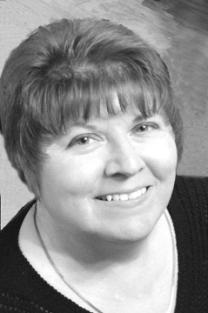
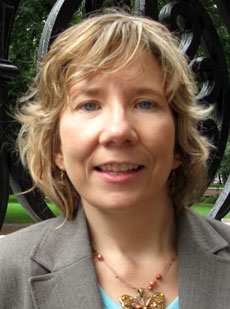
MICHAEL A. VENTRELLA: Today, I am pleased to be interviewing Alyce Wilson, whose web page proclaims her as “writer, editor, poet.” Alyce, which one of those tags best describes you?

ALYCE WILSON: It depends on the day! I would say, though, that I’ve probably considered myself a poet longer, since that started back in second grade, courtesy of a very enthusiastic teacher, Mrs. Johnnie Stahl, who taught us how to write rhyming verse. But I have to admit that I don’t necessarily write poetry every day, while I do tend to write something in prose every day. So perhaps “writer” is more apropos right now.
VENTRELLA: Tell us a little about how you became involved in the business.

WILSON: I love the Joseph Campbell quote, “When you follow your bliss… doors will open where you would not have thought there would be doors; and where there wouldn’t be a door for anyone else.” That’s what I’ve been doing. Aside for a brief flirtation with the idea of being a teacher, I’ve known from a very young age that I wanted to have a career in writing. The question has always been where and how?

In high school, I had an excellent journalism teacher, Mrs. Maryann Hoff, and began to consider that as a possible career path. But by the time I got around to declaring my major at Penn State University, I had fallen in love with radio (thanks to the college radio station, WPSU) and selected Broadcast/Cable. Perhaps if I had been less of a country mouse (raised in a small Pennsylvania town, as I was), I would have immediately sought out employment opportunities at a public radio station after graduation, but instead I felt directionless. The radio jobs available in small towns didn’t appeal to me, but I couldn’t imagine moving to a city. Fortunately, my decision to return to school, like the proverbial groundhog, waiting out six more weeks of winter, brought me to Penn State’s MFA program in Poetry. If I hadn’t panicked at the idea of city life, I wouldn’t have learned such valuable lessons that improved my poetry writing immensely.

Much as I loved grad school, however, I rebelled against the idea of remaining in academia. By that point, I had taught several undergraduate writing courses in essays and poetry, and I loved the students but hated the bureaucracy. I feared that pursuing such a career would be soul-killing and especially damaging to my writing. Instead, I felt it was important to experience life. So in my “hippie days,” I married a wispy dreamer, traveled up the Mississippi, and then took a job as a pizza delivery driver in my hometown (which served as inspiration for my second unfinished novel). Just about the time that my short-lived first marriage petered out, I found a job with the local newspaper (“The Standard-Journal,” Milton, Pennsylvania) as a reporter/assistant editor. This again, was the best thing for me, because it helped me to perfect my skills as a columnist.

However, the daily deadlines were highly stressful, and after putting on about 60 pounds and enduring a weekly migraine, I decided to get out of the newspaper business. I headed next for a PR job in Philadelphia, because after covering county politics and dealing with irate readers, living in the city no longer seemed so scary. While the PR job didn’t last, my love for Philly did, and for the past 10 years, I’ve been doing transcription work to make money and pursuing freelance and personal projects on the side. Coincidentally, spending time with college friends who had moved to Philly introduced me to my second husband, Mike Ryan, and led to our marriage and our 7-month-old son.

I’ll be the first to admit that my career path so far has been much less lucrative than, say, a career in public radio, but I believe that following my bliss has led me to becoming the person, and the writer, I am today.

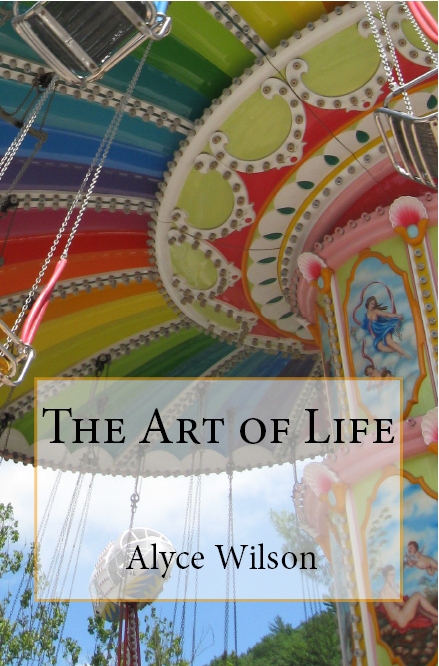
VENTRELLA: Your latest work is “The Art of Life”, a collection of essays on various topics. Where did these first appear and how did you decide which essays to include?

WILSON: The pieces in “The Art of Life” came from three different sources: my “Standard-Journal” newspaper columns; columns I wrote for the now-defunct Comcast site InYourTown.com; and blog entries written between the years 2002 and 2010.

To figure out what to include, I reread all of my blog entries and columns and pulled out the ones I liked the most. Then I reread them once again, keeping in mind the following criteria: Did it stand on its own, outside of the collection? Did it fit with the other pieces? Was it likely to appeal to a broader audience than that for which it was originally intended? If I addressed a similar topic in two pieces, I opted for the one that was stronger. Then I arranged the pieces so that they led into each other, being conscious to alternate topics and tone. Finally, I went back through the manuscript and cut any pieces I felt were not as strong until I got to a reasonable page length.
VENTRELLA: You also are editor of a quarterly online literary magazine. How did that get started?

WILSON: At the time, I was about five years out of grad school, and I felt a calling to make a place for poetry in the world. This was an idea suggested to me by my poetry professors: that it was the responsibility of a poet in these days to make a place for poetry. A friend of mine, Amanda Cornwell, had received her bachelor’s degree in art and shared similar goals. We both felt it was important to make a place for the arts, particularly when you look at how the arts have been increasingly devalued in our society.

Previously, Amanda had launched a small print literary magazine, but funding was difficult and the circulation was small. We looked at the Web as a good forum for accomplishing our goals of making the arts accessible and appealing to the general public. With Amanda doing our initial Web design and serving as the Art Editor, we launched “Wild Violet” in October 2001. After the first three volumes (12 issues), she left to pursue other projects.

VENTRELLA: You’ve also written a book giving advice to those who wish to appear in literary magazines. What’s the biggest piece of advice you can give (other than “read my book”) based on the mistakes you most often see new writers make?

WILSON: Know your market. As the editor of a literary magazine, far too often I receive submissions from people who apparently either cannot be bothered to check out our free online publication or have no clue how to direct their submission toward a specific market. We receive many submissions that are clearly inappropriate, which should be obvious to anyone who had perused the latest issue. It is essential to read the magazines to which you are considering submitting, and to decide which are most appropriate to send your work. It’s not enough just to look for magazines that publish poetry, for example; you need to find a magazine that publishes the kind of poetry you write.

VENTRELLA: “Literary” seems to have a specific meaning to some people in the publishing world. For instance, a science fiction or fantasy writer wouldn’t send their story to a literary magazine, would they?

WILSON: Actually, we receive all kinds of submissions, and we do publish some science fiction and fantasy. The term “literary” has unfortunately acquired an elitist connotation which, through “Wild Violet,” I’m trying to change. To me, “literary” means work which may be more challenging to the reader: writing which goes beyond basic storytelling, whether in terms of character development or the exploration of concepts. The science fiction we publish meets that criteria.

VENTRELLA: Do you think that talent is something that can be learned? In other words, can someone go to school to become a great writer or poet?

WILSON: Talent, that essential flare of ability, cannot be taught. Yet, more of us possess that essential flare than we may realize. A teacher can help you discover what your talents are. You might find, for example, upon taking a painting course, that it’s simply not something that comes naturally to you, but that photography does. That’s the role of education: helping people to discover and refine the talents they do have.

That said, I think education is a surer way to success for many people. There are few individuals with the right mix of raw talent and focused execution to become an overnight success, so to speak. It can happen, but those success stories are rare. Even those who enter a writing career later in life, after pursuing other careers, have more likely than not been honing their communications skills in other ways.

VENTRELLA: What do you see as the future for printed books? For book stores?

WILSON: According to Bloomberg, in the second quarter, for the first time ever, Amazon.com sold more electronic books than hardcovers. I think it’s safe to say that print books are going to take on a new role in our society. Just as with other media that have gone digital, such as music and photography, I think we’re destined for a sea change.

In some capacity, printed books will continue to sell, if for one key reason: there are always slow adopters to new technology. Plus, until somebody figures out a way to sign a digital copy, it will remain the only way to get a signed book. A lot of people like to have an object they can hold which is not subject to, say, a hard-drive crash or computer virus. So there will always be a place for books as more than just a quirky artifact. The number of print copies sold, however, will likely diminish. When you think about it, people are still buying vinyl, too, but nowadays it’s confined to discreet subcultures: namely, DJs and collectors.

Book stores will have to look at how to offer the reader an experience they can’t get from buying a digital copy. I think book stores may become more of a locus to interact: in person with authors for lectures and readings, and perhaps with other readers through reading groups and the like. I would expect at least the chain book stores to add digital kiosks to the store, where readers could sample electronic books and buy them.

If book stores don’t start planning now, they will likely find themselves running into financial trouble, much the same way that record/CD stores have in the last few years with the emergence of the MP3.

VENTRELLA: “The Art of Life” is a self-published work. What are the pros and cons of self-publishing and why did you decide to do so for this book? Would you do it for, say, a novel?

WILSON: Any means of publishing offers pros and cons, which I examined carefully when deciding how to publish “The Art of Life.”

Pros to self-publishing include more control over the finished work. The author determines the final content, layout and book cover. Aligned with that are some obvious cons: you must either do all that work yourself or find someone to do it for you. So it is much more time-consuming, especially to guarantee a high-quality final product.

Another pro of self-publishing is timeliness. You can put the book out as soon as it’s ready, without going through the delays that a publishing house would necessitate. I wanted to get “The Art of Life” out as soon as possible, because I thought it would be a great opportunity to introduce myself to the reading public. Waiting for years for a possible acceptance by a publishing company did not appeal to me. I also felt that this particular collection, because of its range of styles and content matter, would be difficult to fit into the sort of genre or subcategory that publishers prefer.
Still another con, there is still a lot of prejudice towards self-published books, in part because so many sub-standard books have been published this way: poorly edited vanity projects that make the rest of the field look bad. However, as editor of “Wild Violet,” as part of our mission of making a place for the arts, I have reviewed dozens of self-published books. I’m happy to report there is some gold amongst the flax, so I felt like I was in good company.

Yet another con: as a self-published author, you are responsible for any expenses involved in printing and promoting the book. On the pro side, when money comes in, you see it immediately and stand to earn more per copy than through a typical publisher. Along the same lines, you don’t have access to a publisher’s connections when it comes to promotion; however, as I’ve learned from watching other authors, even with a traditional publisher, much of the promotion falls on the shoulders of the author. So if you’re willing to put that time and effort in, you could stand to profit.

Since there’s a long history of self-published poetry chapbooks, I felt comfortable with going that route for my poetry book, “Picturebook of the Martyrs.” Likewise, self-published nonfiction books can still sell, so I felt good about going that route with “The Art of Life,” as well. Unfortunately, when it comes to self-published fiction, there’s a glut in the market, with too many poor-quality books cluttering the field. Therefore, for better or for worse, I think that readers tend to look at self-published fiction a bit askew. The exception here is erotica, especially electronic versions, because that seems to sell strongly no matter the publishing source.

A caveat: these observations are largely anecdotal, so I’d be happy to be corrected by someone with more direct knowledge. However, I myself would be leery of self-publishing a fiction book, unless it were an erotica title.

VENTRELLA: One of the things that I admire about you is that you also run a Monty Python Appreciation Society. How did that come about?

WILSON: Just for clarification, I’m not currently running such a society. However, I am the former president of the Penn State Monty Python Society, and my adventures with MPS are detailed in my online chronicle, “Dedicated Idiocy.” MPS began in the 1970s when “Monty Python’s Flying Circus” first hit the American airwaves. By the ’80s, interest in the group had waned, but just before I joined as a freshman in 1988, MTV had added the show to its late-night schedule, so there were a record number of new members.

I discovered the Monty Python Society through a flyer I saw while attending an Amnesty International meeting. Since the two groups met at the same time, I suppose I should be embarrassed to admit that I sided with comedy over human rights. Still, I think comedy can do a lot of good in the world. One good thing it has done for me is introduce me to some of my oldest, best friends in the world. I’ve often said the real test of friendship is whether you can get together and be silly together. With these folks, I definitely can.

Interview with Author Tracy S. Morris

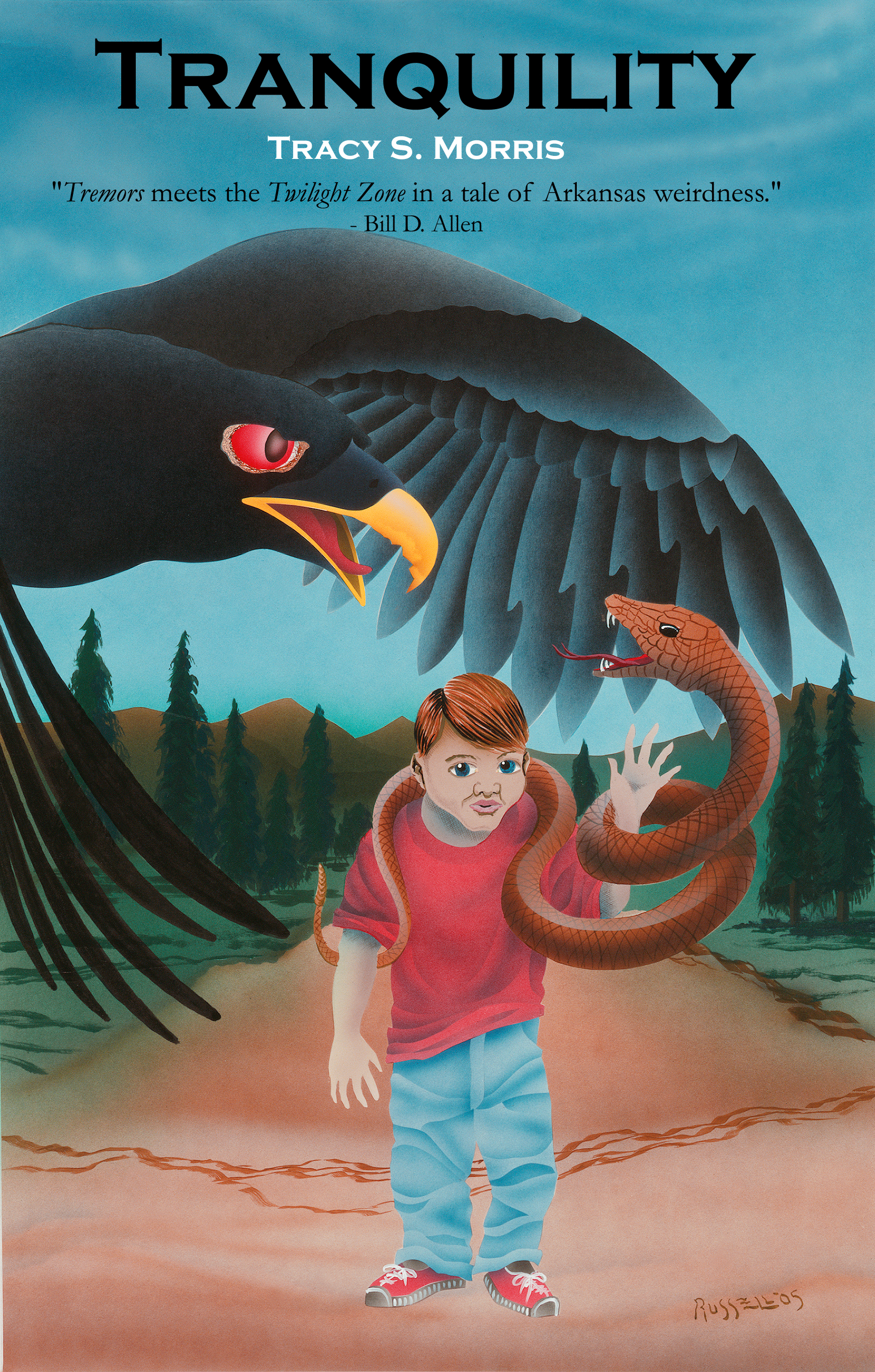
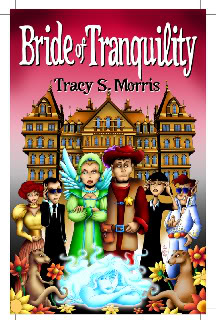
MICHAEL A. VENTRELLA: Today, I am pleased to be interviewing author Tracy S. Morris. She is the author of the Tranquility series of urban fantasy mysteries. The most recent, BRIDE OF TRANQUILITY, is a murder mystery set in a haunted hotel during a Renaissance wedding. She’s also published a number of short stories. Her web page is here.

Hi Tracy! Tell me a little bit about yourself!

TRACY S. MORRIS: I’m a professional writer, so I spend most of my days in front of my home computer in my pajamas. My specialty is service journalism in the gardening industry. Which is a fancy way of saying that I write “how to” articles that deal with topics like compost, animal manure and growing the perfect tomato. I like to call that “living the dream.” Although it probably means that I’ve got no life.

I’m also a retired newspaper photographer/reporter. On my best day, I got to shoot the president (with a camera) which probably put me in the crosshairs of a secret service sniper. On my worst day, I was suspended off of the back of a speedboat in freezing weather and driving sleet to get a picture for a news story.

I got to do some very interesting things in that job. I had a ride in a hot air balloon. I had the best seats in the house for every major sporting event. But I also had no life, no predictable schedule. And after the day with the speedboat in the sleet, I realized that there has to be a better way to make a living. Which is why I now work at home in my bathrobe.

When I do leave the house, I’m a shooting enthusiast, a martial arts black belt and a former fencer. I’m a history buff and I’ve spent some time in the Society for Creative Anachronism, which is a group that recreates history from Roman times through the late-renaissance (the boundaries are nebulous and basically cover anything that other history groups don’t cover.)

VENTRELLA: What’s something unusual or different about you that your readers probably don’t know?

MORRIS: That’s a tough one to answer. I’m pretty transparent about my life, so there isn’t a lot that my readers don’t know about me.

I like to collect antique cameras. The collection is mostly thanks to my dad, who likes to go to garage sales. I asked him to be on the lookout for antique cameras for me. So he used to pick up any old camera he saw at an auction. I have several antique bellows cameras, a couple of twin lens reflex, some very nice medium format box cameras and two or three Brownie Hawkeye still in the box. He even bought me a couple of necklaces with camera charms. Eventually I hit a point where I had no more room for them and I had to ask him to stop buying them for me.

The one camera I want most that I don’t have yet is an old Speed Graphic press camera. One of these days I’m just going to cave in and buy one on E-Bay or something.

VENTRELLA: Your “Tranquility” series seems to combine a number of different genres. How did this come about?

MORRIS: Tranquility really grew out of something I was writing for fun. Because of that, I didn’t try to stick with a formula or say “I’m going to make this just a mystery. Or just an urban fantasy. Or just a horror. I was writing for me, so I made it about the things that interested me.

I grew up on a family farm out on the border of the Ozark mountains. My family lived in that region for four generations. When I was a kid, I read a few too many bigfoot stories. So the things that scared me weren’t the monster under the bed. It was whether there was something out in the dark woods out past the barn. That’s where the horror element from Tranquility came from.

I wanted to write the book as a pure horror, but I also have a skewed sense of humor which kept slithering in. One of the major themes that appeared in the book grew out of my reaction to moving home and really seeing the oddities in my small town for the first time. This made the book feel much more like the TV series Northern Exposure, or possibly the Disney Cartoon Cars with that ‘city slicker comes to the country and discovers that it’s a pretty great place’ theme.

By the time that I finished writing the book, I finally embraced the notion that my natural writing voice is humor instead of horror.

TRANQUILITY was nominated for a Darrell award, and placed runner up in 2006. At the awards ceremony my publisher asked when I was going to give her the second book. When I sat down to write it, I decided to make it as fun and absurd as possible. So I threw in everything but the kitchen sink.

The second book in the series, BRIDE OF TRANQUILITY, came after I had been through the process of helping to plan and put on four weddings (Two of them the same year.) I had dabbled in wedding photography by that point, and I had some sarcastic, slightly cynical views about the business side of the wedding industry.

So I thought ‘what’s the worst thing that can happen at a wedding? How about a murder? What’s the worst thing that can happen in a murder investigation? Why not a killer who can move around the hotel through secret passageways – phantom of the opera style? What about if all of the hotel guests mistrusted the investigator and wouldn’t talk to him? Why would they do that? What if they were conspiracy theorists?

VENTRELLA: Do you think that not fitting into one genre made it a harder sell to editors (and the public)?

MORRIS: I didn’t actually have to sell the series. Which is almost embarrassing to admit, since so many other authors have tales of sending a novel out to 45 agents and 20 publishers before gaining acceptance. I sold TRANQUILITY to Yard Dog Press because I was friends with the publisher. When I was outlining the novel, I told Selina Rosen, the editor about this new project that I was excited about. She asked me to send it to her when it was done.

BRIDE has been easier to sell to the fans, because I have a catchy summary that makes the book sound fun. Where else would you be able to read a murder mystery set in a haunted hotel during a Renaissance wedding?

VENTRELLA: I note that they are from Baen Books in e-format but Yard Dog in paper. How does that arrangement work?

MORRIS: Yard Dog Press does not deal in e-books, so they did not contract those rights. But the publisher has a working relationship with Baen. (Baen bought the e-rights to Selina Rosen’s Misha Merlin titles as well as the Sword Masters series from Dragon Moon Press.)

Additionally, Baen had just bought the E-Rights to another popular Yard Dog Press series, The Four Redheads of the Apocalypse.

Since I already had a working relationship with Baen, Selina suggested that I offer the E-rights to them. I could have put out the E-books myself through Amazon. Authors such as Jim Hines have done that with great success. Another Yard Dog author, Margaret Bonham has put her Yard Dog Press epic fantasy novel Prophecy of Swords out that way. Since then her title has reached the top 10 in epic fantasy e-book category for Kindle.

But Baen brings with them a new audience of readers that I might not reach otherwise. That is very exciting to me.

(By the way, through the month of December 2010, if you purchase either TRANQUILITY or BRIDE OF TRANQUILITY in trade paperback from Yard Dog Press (Direct from the publisher, not from Amazon), I’ll send you a free preview of the first two chapters of the next Tranquility book that is now in progress, which is tentatively titled IT CAME TO TRANQUILITY.

The links to these books on Yard Dog Press are: TRANQUILITY and BRIDE OF TRANQUILITY.

Baen is also running a special on the E-Books. Until January 1, 2011, you can order both TRANQUILITY and BRIDE OF TRANQUILITY along with the books in the “Four Redheads of the Apocalypse” series as a Yard Dog Press bundle for $20.

You can order the E-Books at: http://www.webscription.net/m-9-yard-dog-press.aspx)

VENTRELLA: How did you make your first sale? Did you have an agent?

MORRIS: I still don’t have an agent. Instead I’ve made every sale I have the old fashioned way — by researching markets and sending manuscripts out.

My first sale was to an anthology called OCTOBERLAND that was put out by Flesh and Blood Press. It was a story entitled “Frost King” that I had basically written and rewritten multiple times.

I sold the story exactly the wrong way. It had been the first short story that I ever wrote, I made revisions with the help of an English teacher and then put it in a drawer through my college years. Once I decided to pursue writing again I started sending it out. Every time It was rejected I rewrote it using suggestions that the rejecting editor provided me. Eventually after 12 rewrites over 4 years, I sold the story.

That same week I also sold “Attack of the Godless Undead Zombies” to Yard Dog Press for one of their “Bubbas of the Apocalypse” anthologies. That story was written in the space of two days. I turned it in to Selina Rosen after my husband gave it a single editing pass.

Today I try to get a story to the point that I am happy with it before I send it out instead of changing it with every rejection. I feel much happier with the end result.

VENTRELLA: I have a short story that I can’t seem to sell, as it hardly fits into any specific genre. What advice do you have for me (and other writers reading this) for finding the right editor?

MORRIS: Before you do anything, consider your goals. Do you want to sell a story you are unhappy with for the sake of having a sale? Or do you want to have the best body of representative work you can possibly produce?

If you just want the sale, then rewrite the story along a formula so that it fits into a single genre. But if you are happy with the story as it stands, put it aside until the right editor comes along.

My personal choice would be the second option. I have been writing and reading speculative fiction for 20 years and I have seen genre conventions change drastically over the years. I never thought I would see the day that Jane Austen and Zombies were used in the same genre. I have ‘trunked’ perfectly good stories because they didn’t have the right market, only to have the perfect market for the story come along two years later.

If you change your work into something that you dislike just to make a sale, you may end up with a ‘representative body of work’ that you are unhappy with.

Also bear in mind that compared to novels, short stories are very quick to produce. You can have a short story written within a few days. So if you can’t find a home for one, you can set it aside and devote your attentions to creating and selling a new story.

VENTRELLA: You have two short stories in Baen’s online magazine “The Grantville Gazette”: “Still Life with Wolves and Canvasses” and “A Study in Redheads.” Do you think that online publications are the wave of the future?

MORRIS: Don’t forget about my co-writer for those stories, Brad Sinor.

A few months back Amazon began selling more electronic books than print books. This has a huge impact on magazines. Particularly since the publication business model is not the same as the book business model.

Most print publications don’t get their revenue from selling copies of their magazines. Instead they get revenue from ad sales. So a magazine like Fantasy Magazine once could leverage their sales numbers to attract advertisers. Fewer people are going into stores where these magazines used to sell. Instead, readership is online now.

You are already seeing more magazines online. There are several business models out there. Daily Science Fiction is delivering a story a day directly into my in box. The Grantville Gazettes require a subscription to access their online content. Fantasy Magazine has complete stories up for free with ads in the margins. Clarkesworld offers free content online, but sells their magazine with additional content through Kindle and has occasional donation drives.

When the dust settles, I think the most profitable business model will be the one we see copied.

The thing I admire about what Grantville Gazette is doing is that they are building a community around their 1632 franchise. There are the novels with the bigger name writers. But there are also message boards where fans can interact and have an impact on the storylines. Baen has an entire section devoted to the tech of the 1632 universe where experts (and there are plenty of qualified experts) can hammer out the science of the universe.

If someone wants to submit a story to the Grantville Gazettes, the story is put up on a closed message board where the Grantville fans can pick it over for conflicts with the universe timeline or the science. The author can make the changes and if the story is accepted, the same fans will buy the content.

Eventually, the ‘best of’ stories are the ones that get released in the print anthologies. Which also are bought by the community members.

Business-wise, this is smart. This is what made Dr. Horrible’s Singalong Blog such a success: Joss Whedon has an intensely loyal community that is willing to follow whatever he does.

This is also why celebrities such as Wil Wheaton, and internet celebrity Author Cleolinda Jones do so well with self publication. They’ve built a community of readers who are willing to follow what they do.

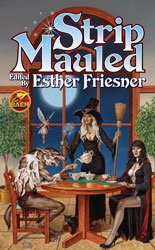
VENTRELLA: “Fish Story” is a short story you wrote which appeared in STRIP MAULED, an anthology edited by Esther Friesner. Tell me about that!

MORRIS: “Fish Story” involves a couple of characters that have been living in my mind for a while. Back when Laurel K. Hamilton and Jim Butcher first began publishing urban fantasy, I had a thought that it might be fun to write someone who would live in an urban fantasy world but eschewed magic. How would that person survive if they lived as a sort of magic conscientious objector?

The adventures I wrote were another example of a hard-to-sell genre mashup. I write funny third person. The urban fantasy of that type seems to take itself very seriously, and usually follows the noir detective novel conventions of first person point of view.

The characters are a good example of an idea that was trunked because of a lack of market, only to have the market return. I had an early story with the characters published in a magazine (now defunct) entitled “Whispers from the Shattered Forum”. After that, the Noir Detective novel in the Urban Fantasy market seemed to be dying.

Then TWILIGHT revived the interest in Urban Fantasy Vampires, which always seem to pull readers into the Noir Detective Urban Fantasy novels. And then along came a couple of great TV shows like “Supernatural.”

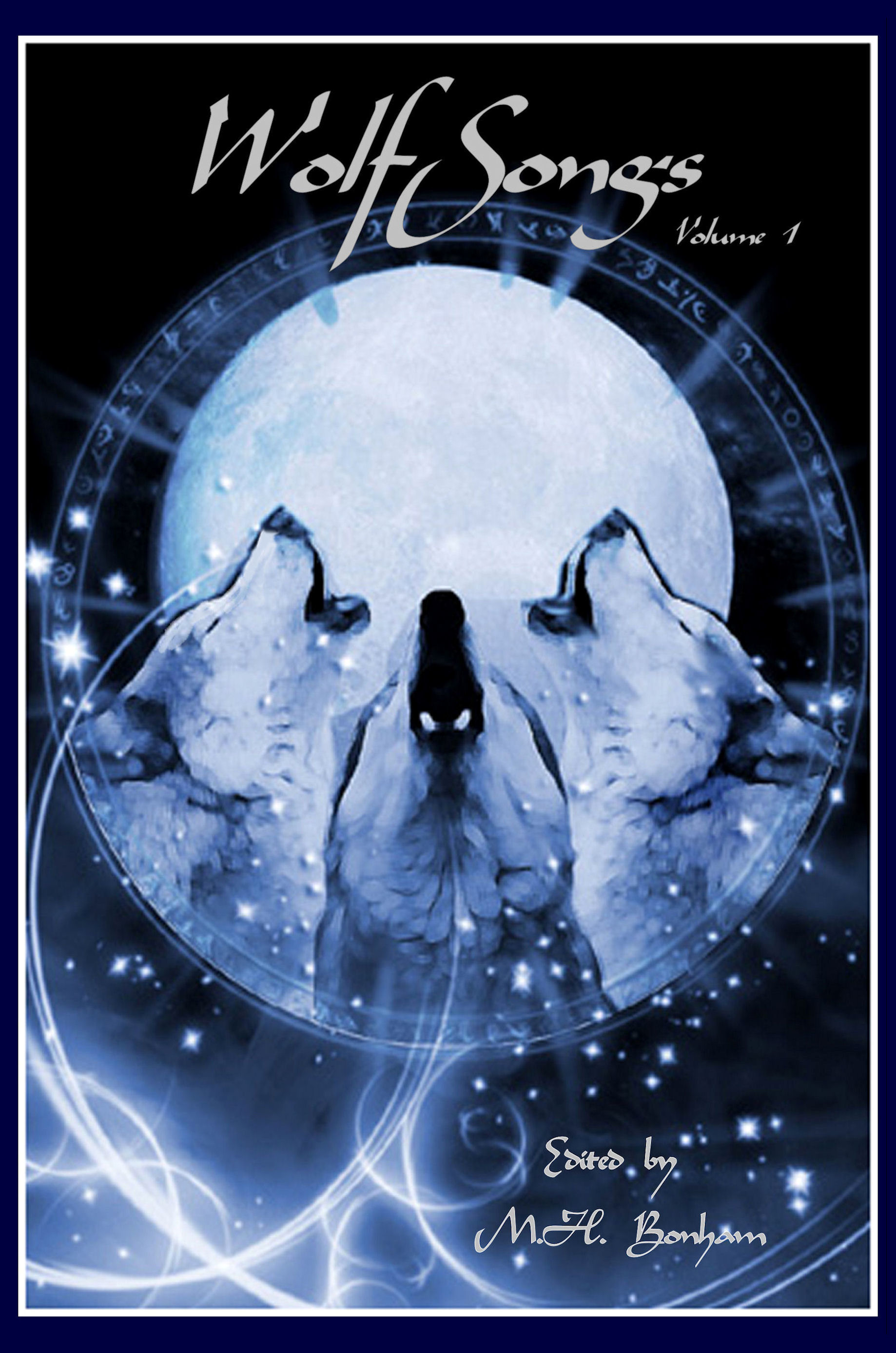
Prior to selling Fish Story, I sold a short story with these characters entitled Homo “Homini Lupis” to an anthology entitled WOLF SONGS, which was put out by Wolfsinger press. I recently finished a novel with the characters that is based on the plot to this short story.

Then Esther Friesner launched her monsters in suburbia series. The anthologies are open by invitation only. But through a mutual friend I was able to ask her if I could submit a story for consideration for her werewolf-themed anthology. I was very surprised when the story not only made it into the anthology, but was put up on Baen’s website as one of the free preview stories.

I also submitted a story to her for the vampire-themed anthology. But the competition for inclusion in that anthology was a bit stiffer, and I didn’t end up being selected.

VENTRELLA: Would you advise beginning authors to concentrate on getting short stories published first?

MORRIS: There is a huge difference between publishing a short story and publishing a novel. About 15 years ago the accepted career path was to build name recognition through short stories and leverage that to secure a novel contract. Today that wisdom doesn’t hold true. You can get a contract with an agent, or sell a manuscript to Tor or Baen if the novel is good regardless of what your name is. Conversely, you can have a big name in short stories and if your novel isn’t good enough, you won’t be able to sell it.

My advice is to concentrate on honing your craft in the medium that you want to be published in. If you want to write short stories, that’s the area you should focus in. If you want to write novels, start there.

VENTRELLA: What is your opinion on e-book publishers and Print On Demand?

MORRIS: Each publisher is different. Do your homework and contract with a respectable publisher. One good resource is SFWA’s Predators and Editors website.

VENTRELLA: How about self-publishing?

MORRIS: Rule #1 of Self-Publishing: Thou Shall Not Fooleth Thyselfeth.

First thing you must understand is that publishing a book yourself does not put you into the same league as Stephen King, J.K. Rowling or Danielle Steele. You won’t be rolling in piles of money. Nor will you spend your days poolside with a laptop, eating bon bons while you compose deathless prose.

Writing is a business. Publishing is doubly so. You will be responsible for selling the books yourself, handling the details of distributorship and all promotional marketing (these things that publishers normally do).

Additionally, you must overcome the stigma attached to self publishing. Self publishing (from what I’ve observed) is like swimming upstream against a tide of professional ostracism. In the eyes of many professionals (authors, editors, publishers, book sellers) your book lacks the quality editing work that books published with an established house have.

Promotion will be more difficult because many reviewers will give your book less priority than a book sent by a professional house. Science fiction conventions will give preferential treatment to writers who have books with professional houses. If you do manage to get paneling, you may be treated with hostility or veiled contempt by authors with credits through traditional publishers.

There are a number of authors who have been successful with self publishing. Most of them know to treat the business of writing and publishing like a business. Many of them establish a fan following through other means, and dabble in self publishing. Others have an established fan following through traditional publishing that follows them into the self publishing realm.

VENTRELLA: I assume you have cats. (Don’t all writers?) Am I wrong?

MORRIS: No cats. I am owned by two very lazy dogs. When I’m not writing, my job is to cater to their every whim.

Interview with Walter H. Hunt

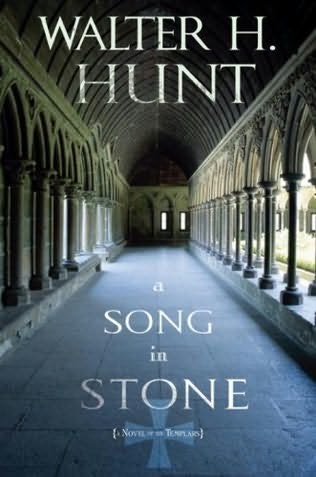
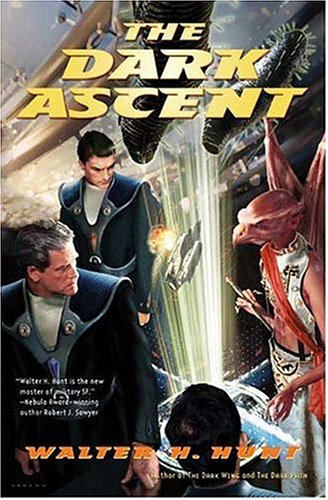
MICHAEL A. VENTRELLA: Walter H. Hunt is a science fiction writer known primarily for his “Dark Wing” series, a “military space opera.” His most recent work, A SONG IN STONE, deals with the Knights Templar. He lives near my old stomping grounds (Boston area) with his wife and daughter. His web page is here.

Walter, you began writing scenarios for games. (As a person who has done the same — albeit for LARPs — I know what that’s like!) How did you get published that way? In other words, how did you turn your hobby into a business?

WALTER H. HUNT: I had the good fortune to encounter Rich Meyer and Kerry Lloyd of Gamelords in 1981 and was pulled into the company as a writer. Between 1981 and 1984 I worked on a number of projects for them. When they stopped publishing Richard and I (along with others, including my wife) began Adventure Architects to write free-lance in the game industry. We worked for Mayfair, Iron Crown, FASA, and several other companies.

VENTRELLA: Is there still much of a market out there for writing for games?

HUNT: It seems so, though I haven’t done any of it for quite some time.

VENTRELLA: When did you decide to start writing fiction, and what were your first attempts like?

HUNT: When I was in elementary school. And it was predictably awful, though it meant that I wrote lots and lots of words and learned how to set scenes and compose dialog. I wrote six novels in middle and high school. They will never be seen, I hope.

VENTRELLA: How did you get your first big break?

HUNT: I’d shown a manuscript to a friendly editor at a convention in 1987, and when he began working for Tor Books in 2000 he contacted me through a mutual friend to see if I still had it available. The mutual friend lined up the agent, so I got the agent and the publisher at the same time. Lucky break – though it took almost 14 years for me to get so lucky.

VENTRELLA: Lately it seems that fantasy of all varieties has taken the place of science fiction on the bookshelves. To what do you attribute this change?

HUNT: Haven’t a clue. There is a lot of bad fantasy, but there is a lot of bad science fiction too – especially on television. Sturgeon’s Law, I suppose.

VENTRELLA: Your most recent work is about the Knights Templar and the Rosslyn Chapel, something most people had never heard of before Dan Brown. How did you decide to tackle that subject?

HUNT: The Order of the Temple is an interesting subject, with plenty of scope for writing. I’d heard of Rosslyn before reading the Brown book – it’s common pseudohistorical fodder in Masonic circles, and I’ve been a Freemason since 1988. When we went to Scotland for Worldcon in 2005 I put it on my itinerary, and was fortunate to receive a tour from a fellow Mason. He pointed to the ceiling of the lady-chapel and said, “that’s the Rosslyn music.” As the lead character in “Despicable Me” is fond of saying, “light bulb.” By the time I came back from Scotland the book was plotted and partially written.

VENTRELLA: You are a regular at science fiction conventions (and indeed, we have been on panels together!). Why do you attend them?

HUNT: Why, to meet fascinating colleagues. Seriously, the opportunity to meet readers and fellow writers is something not to be passed up. For professionals (or aspiring professionals), there are editors and publishers as well. I arranged my most recent book deal at NASFiC this summer by having the right conversation with the right person. And I’m still a fan: I’ve gotten to sit next to people like Robert Sheckley and Frederik Pohl and Connie Willis and David Brin and a dozen others – and talk to them (and listen to them. More listen than talk, I hope.)

VENTRELLA: What advice would you have for an aspiring genre writer for attending these things, even if they haven’t been published yet?

HUNT: Finish the book. No one buys an idea from an aspiring writer – only a manuscript. But by all means believe in your own work; I have seen too many occasions when an unpublished writer lets his/her work be folded, spindled and mutilated by people who want to make it into something else because it might be more “publishable.” Write what you understand, trust your creative instinct, and finish it.

VENTRELLA: What’s your pet peeve about the industry?

HUNT: I’ve heard it said that the criteria and market studies for genre fiction are thirty-plus years out of date. I think that some editors base decisions on what to buy and what to promote based on inaccurate perceptions of the composition and demographics of the buying public. But, again, I have no idea if this is true.

VENTRELLA: What is the biggest mistake you see aspiring authors make?

HUNT: To assume that there’s any money in this business. I’m married; as the old joke goes, “what do you call a full-time writer who’s single?” The answer is, of course, “homeless.”

VENTRELLA: What’s your opinion on small press and self-publishing?

HUNT: Small press deserves better respect, and I think the internet is helping with that. My Rosslyn book A SONG IN STONE is currently published by a small press. Self-publishing is a mistake: it says, essentially, “no one professional will buy my work, but maybe the reader will. I hope so, my garage is full of these things I paid to print.” So I’d wait to have someone buy my work.

VENTRELLA: I see you are a historian or sorts, having studied that in college. With a time machine and a universal translator, who would you invite to your ultimate dinner party?

HUNT: Top of the list would be Benjamin Franklin – polymath, wit, diplomat, Freemason. Erasmus of Rotterdam. Stanley Weinbaum and Cyril Kornbluth, two great science fiction writers. My parents, whom I miss terribly (they’ve been gone for twenty years and never saw me succeed as an author. My mom would enjoy meeting Franklin, I suspect.)

You know that Hendrik van Loon did this little thought experiment, right?

VENTRELLA: Um, no. Hendrik van Loon? Did you make that name up?

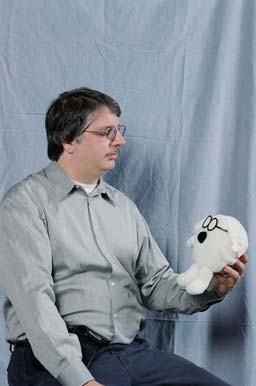
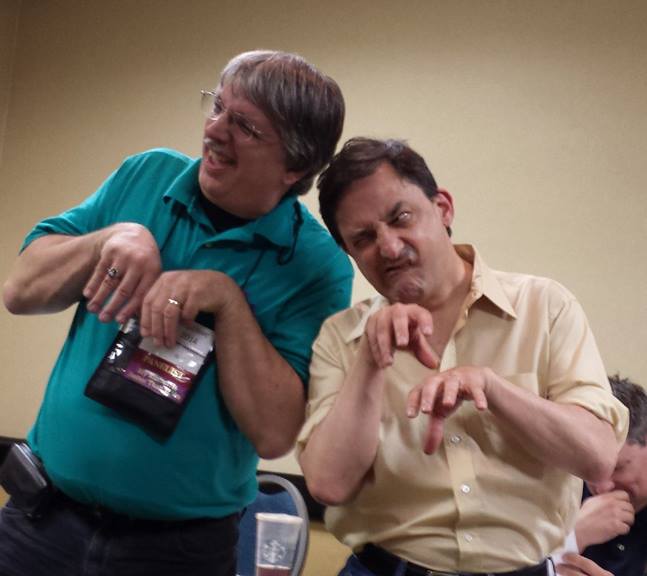
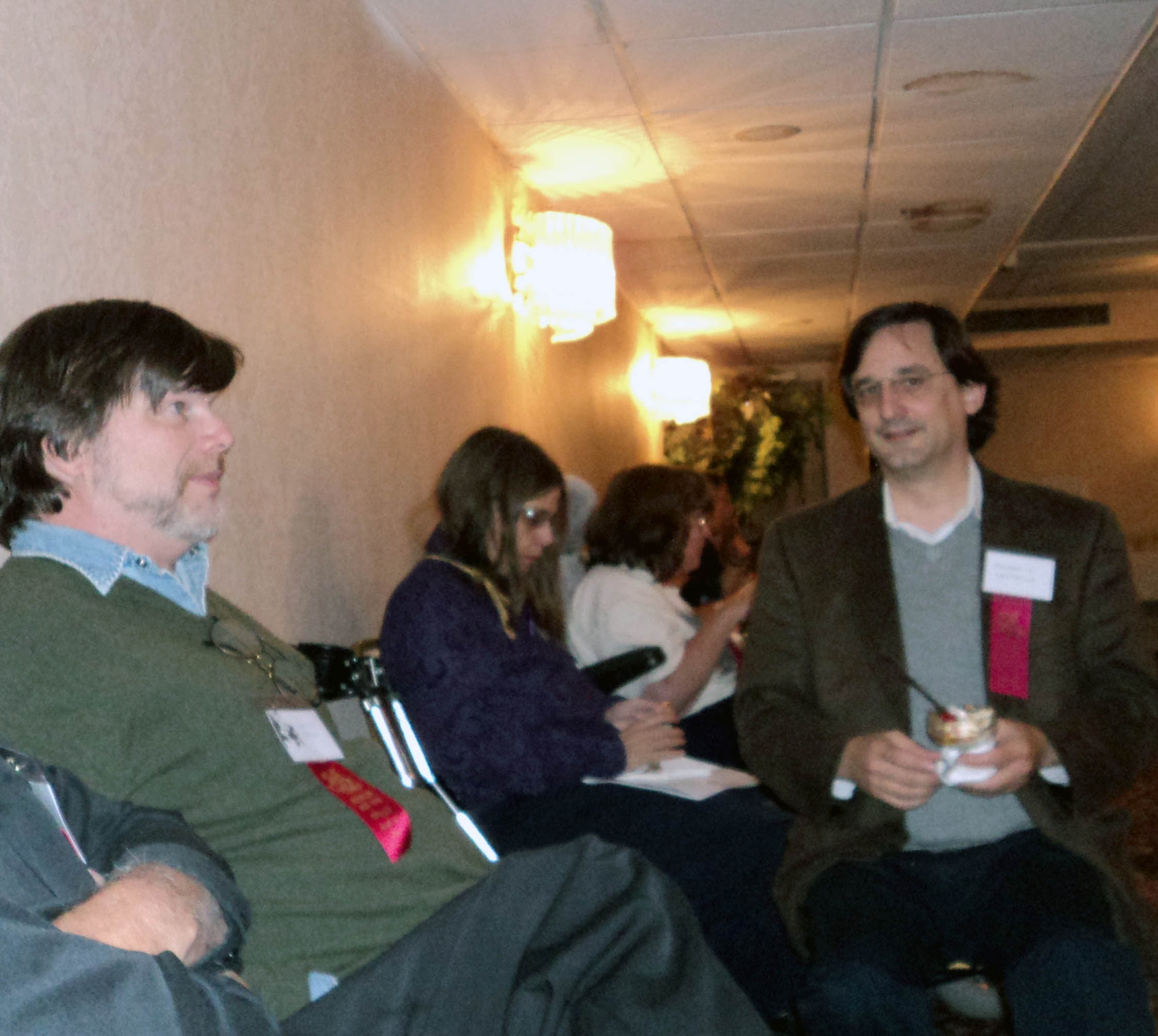
Goofing off at Capclave 2014

Goofing off at Capclave 2014

Interview with Author P. N. Elrod

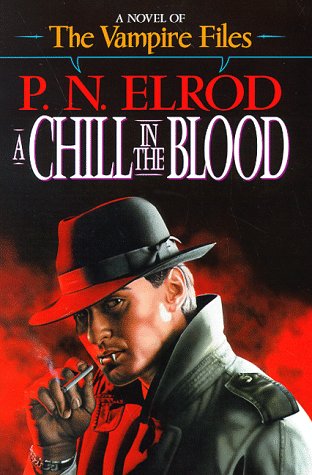
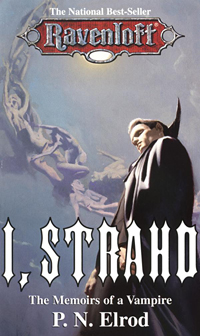
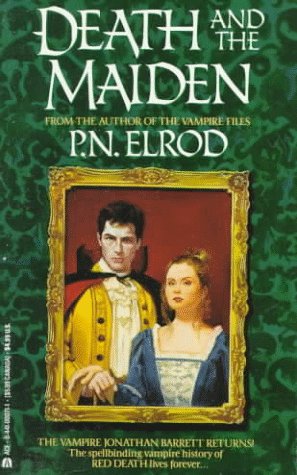
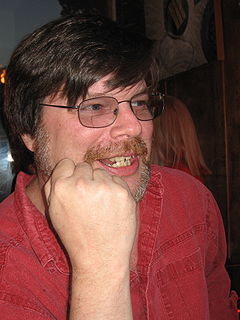
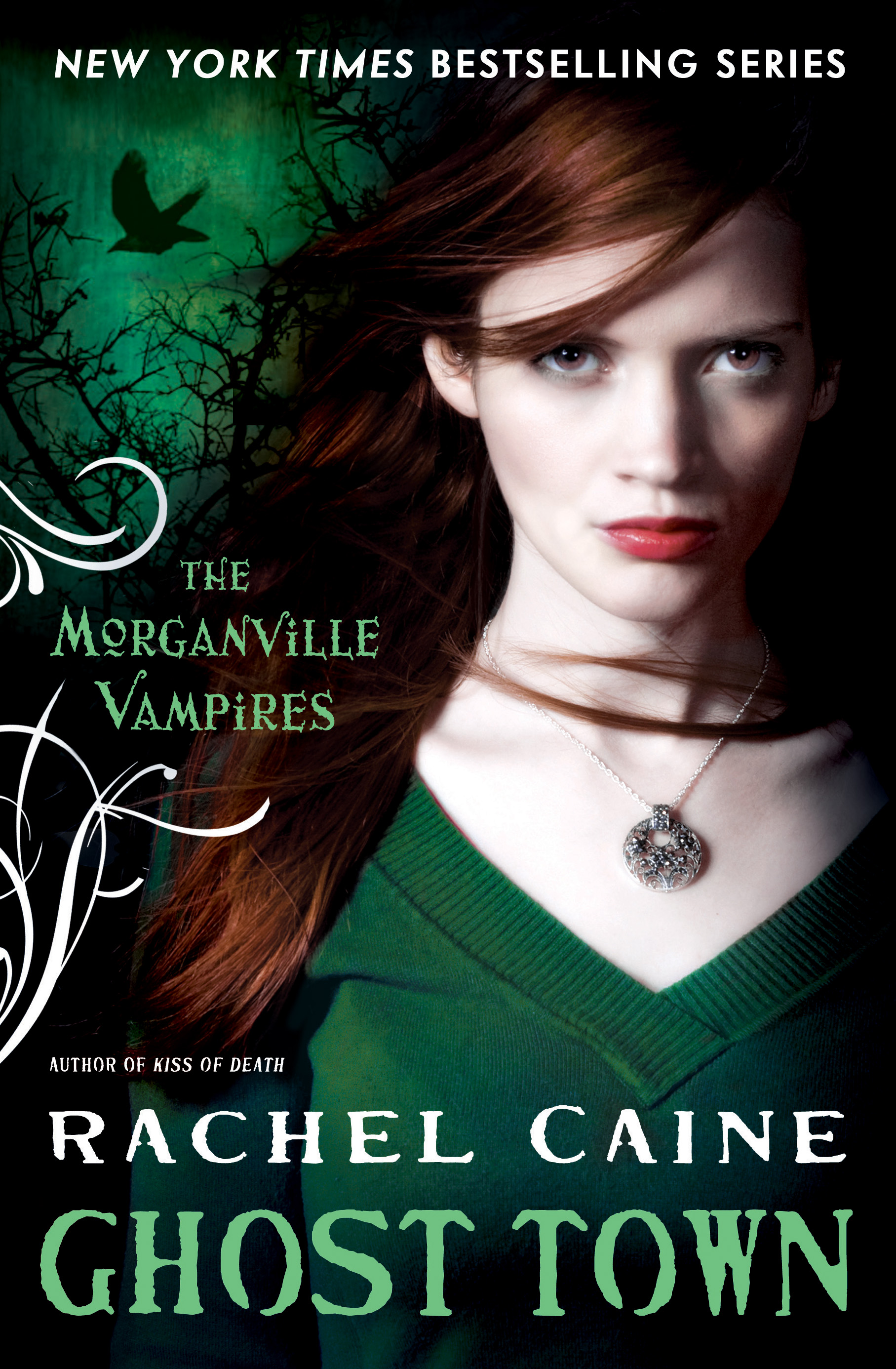
MICHAEL A. VENTRELLA: Today, I am honored to be interviewing author P.N. Elrod, best known for The Vampire Files series featuring undead private eye Jack Fleming. She’s edited award-winning anthologies, warns new writers away from scams, and is open and honest about her incurable addiction to chocolate. More about her toothy titles may be found at www.vampwriter.com.

What is it about vampires that so attracts the public?

P. N. ELROD: They’re easy on the eye, have money (if they’re doing things right), and get to kick butt—at least that’s true for the ones in my books!

VENTRELLA: Why did you decide to become the “vampire specialist” with your series?

ELROD: I didn’t decide. I like writing about the characters. You write about what interests you and that passion comes through in the words. If you’re lucky your words will touch others.

VENTRELLA: What’s your opinion on the many variances we’re seeing in vampire stories?

ELROD: I don’t have any. To each his own, let’s all have fun.

VENTRELLA: Do they bother you?

ELROD: Not even a little. I have other things on my event horizon.

VENTRELLA: Do you think this trend will die down eventually?

ELROD: I was told in the 1960s that vamps were dead. Apparently someone got that wrong and others will continue to get it wrong. I don’t pay attention to trends. If I did, then there would be no Vampire Files or any of my other books. I write the kind of stories I want to read and hope others agree with my take on things.

VENTRELLA: The concept of a vampire private eye solving his own murder must have helped sell your first novel in that series.

ELROD: The concept resulted in 20+ rejections from publishers who didn’t know what to do with a cross-genre book back then. It wasn’t a mystery or a horror and no one knew how to sell it—especially agents looking for a quick placement. It finally sold off the slushpile to Ace Science Fiction. It only took two years of shopping around—and about 20+ rewrites to get it up to a professional level. I’m glad it too so long—it resulted in a much better book!

VENTRELLA: You’ve written a sequel of sorts to Dracula. How did that come about, and what constraints did you discover?

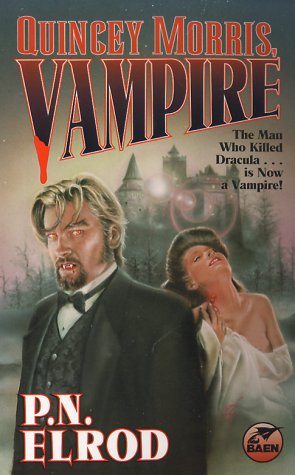
ELROD: It is a sequel to Dracula. I’ve always thought that Quincey Morris got a bum rap at the end, and wondered how it was that he knew more about vampires than all the others except for Van Helsing. I also wondered—after V.H. again and again harped about using a wooden stake—that they bumped off Dracula with a big metal knife. Well, my hero, Fred Saberhagen deftly and cleverly dealt with the latter problem in his classic The Dracula Tapes. When I was ready to do my own take on things, Quincey Morris, Vampire was the logical result!

No constraints. I wrote the kind of story I wanted to read. I love the Victorian period, the research was a joy and still is. I’m doing another Quincey book, but it will have to be scheduled after I turn in my new steampunk series.

VENTRELLA: In my next novel, a vampire runs for President (but of course, no one believes that vampires really exist). Do you think there’s a market out there for a political vampire novel?

ELROD: I wouldn’t know. Get some feedback, polish, shop it around, and find out.

VENTRELLA: When editing, what do you look for in a story?

ELROD: As little work for me to do as possible. I expect a clean, polished manuscript from writers who bothered to proofread and use the spell check.

After that, I want a beginning, middle, and satisfying ending with characters I can relate to whether they’re good guys or bad apples, and good solid writing.

I expect an enthusiastic, cheerful, professional attitude. My goal is the same as the writer’s: producing the best story possible so readers fall in love with their words. If you’re a paranoid diva whose deathless prose that must be preserved like the Dead Sea Scrolls, move on. Neither of us will enjoy the experience.

VENTRELLA: Do you generally invite others to join your short story collections or do you have open submissions? Which do you prefer?

ELROD: These days I’ve room for only nine stories in a collection. I call on a core handful of writers on my A-list choosing about four of the nine, depending on who is available. A-list writers are busy! The publisher—who is footing the bill—naturally wants to promote the writers who have books with them, and pick the other names. It’s only fair, and they are being more than generous about it.

In past projects I could handpick all the writers, inviting ones I knew would deliver good stories. I’ve asked only 2-3 otherwise unpublished writers for work, and they did not disappoint.

Those projects were not open submission, but I got stories from other writers with more cohones than sense. I let in one based on his letter and story. The letter, I later found out (this was before Google), was a gross exaggeration of his supposed “sales”. His story required extensive and repeated line edits. After that, I put him on my “do not invite” list. I don’t deal with liars.

Here’s a clue, new writers: tell the truth. You’re only as good as your reputation for honesty. If you’ve not sold anything, it’s perfectly okay. But don’t tell an editor that you’ve sold 20 stories to various publications when you really mean you just submitted stories and are waiting to hear back. These days it’s too easy to check up on you.

After speaking with other editors who have done open submission collections, I know I’d not want to work on such a project. I don’t have the time or patience.

VENTRELLA: What bugs you most about the publishing industry and what would you change about it if you could?

ELROD: They’re not cracking down on e-piracy. It’s not about freedom of information, it’s about theft of property. It’s one thing to resell a used book, but used bookstores don’t sell Xerox copies.

Contrary to popular myth, most writers don’t get paid much, and piracy cuts into the pittance they do manage to get from their hard work. Pirates are not promoting anything. If writers could make more money by giving away free e-copies of their works, they’d be doing it. Some of the more successful ones have chosen to do so, but the pirates have taken that choice away from the rest of us.

Publishers are losing millions in revenue through e-theft. If the music industry can crack down on it, so can the publishing industry. I want them to get off their duffs and shut down on these so-called “share” sites. Slap fines on the pirates and those who download from them. If anyone wants a free copy to read, go to the library. Each time a book is checked out, the librarians note that and order more from those writers. It’s good for everyone.

I believe most people want to do the right thing, so please, support your local library and the writers you love.

VENTRELLA: You’ve self published a novel, even though surely you could have sold it to a traditional established publishing house. Why did you decide to do this?

ELROD: Let’s call it commercial publishing. “Traditional” is a term used to excess by a notorious reverse vanity printer to make their customers think they’re in safe hands. In true “traditional” publishing it was the writers who paid the costs. Writers call that “the bad old days!”

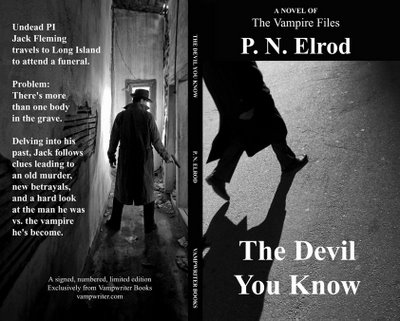
I could not have sold THE DEVIL YOU KNOW to a commercial publisher, since it was always meant to be a signed, numbered, limited-edition written specifically for my fans. My publisher for that series prefers stand-alone titles—at least from me.

Commercial publishing is glacially slow. It takes time to put books through editing, copy-editing, design cover art, arrange distribution, etc. I wanted to get the book out quickly.

So I did my research of various printers, pricing, delivery times, shipping costs, got the best deal from a local company whose people I know. I did the cover myself, got a professional edit, and a lot of proofreading. The printer very kindly tweaked my interior design to cut down on the page count and thus the cost. I had some good breaks and learned a lot.

For future non-commercial venue works I’ll go through a POD service, again, doing my research so I get the lowest cost per copy, but with a professional company that can deliver the goods to the readers. While it won’t be a signed edition on acid-free paper, it will be available through my website links at a low price and won’t ever go out of print.

I see many new writers opting to self-publish—usually long before they’re ready.

Some neos think having a book finished is good enough, and that the story is so great that people will forgive any “little” errors. It’s a nasty reality check when they get bad sales and worse reviews as a result. I don’t recommend self-publishing for the new kids. I was able to get away with it, based on my experience, an obsessive attention to detail, and a sizable fan base built up over the last 20 years.

VENTRELLA: Has it been a success?

ELROD: It’s sold out the 500 copies I had printed. In self-publishing terms it was a runaway bestseller. In commercial terms it tanked.

It took a year to sell that many copies. Had it been a commercial release it would have sold that many in one day.

I was only able to do because I have a solid platform of readers. Even so, only a tiny fraction of them chose to buy. I had hoped to sell out in the first month. So despite my experience and fan base, I overestimated my sales figures. It was instructive!

If a new writer with no platform decides to self-publish, they can expect to sell 5-10 copies to family and friends, perhaps 50 if they bust their bottoms with promotion. But they can also expect the standard “If your book is so good, why couldn’t you sell it?” Unfair, but that’s how it is.

I know some writers are promoting their backlists with much success as e-books and POD copies, racking up thousands of sales. But THEY had a plenty of commercial sales that built up a good audience. At this point, writers who have pro sales, who have books in the stores, and who self-promote like mad have the edge.

A new writer with no professional sales is delusional if he/she thinks similar success will happen to them. It’s all the difference between holding a garage sale, and having a store at the mall. It’s just better business sense to try for professional publication from the get-go.

VENTRELLA: What advice would you give to a starting author that you wish someone had given you?

ELROD: Get feedback, rewrite as often as it takes, and expect rejection. No one escapes.

Send your work to venues that actually publish it. Don’t send a fantasy to a mystery house or a western to a cookbook house.

Just because you worked really, really hard on a book, don’t expect anyone to give you extra credit for the effort. Publishing is a business. Your words have to be worth buying and selling. If they aren’t you get a rejection. That’s when you ask for more feedback, rewrite, and try, try again.

VENTRELLA: What is the biggest mistake you see aspiring authors make?

ELROD: Sending unpolished work out before they’ve gotten feedback from other writers, not just friends and family. They love you and want you to feel good.

Other writers will tell you the truth.

An amateur wants to be told how good their book is. A pro wants to know what’s wrong with it so they can fix the problems. Get the problems fixed first, then start shopping. Write the next book while you shop the first.

Don’t give up. Ever read a terrible book that still somehow got professionally published? That writer didn’t give up.

Obey Yog’s Law: “Money flows toward the writer.” Never pay to publish. It’s hard to believe, but many writers still think you have to pay to play. It’s scary how many will ask me “How much did it cost to get your book published?” I’m talking about my commercial titles, not the ones I self-pub. I’m very clear that there is a huge difference between the two! (Usually the money they make. Commercial wins out every time.)

Don’t look for a publisher online, get Writer’s Market. You cut out 99% of time/money-wasting vanity and scam operations. If you google “book publisher” most of the names on the first page are scams wanting to turn you into an ATM for them.

Go into a bookstore, find books similar to what you write, then follow submission guidelines to the letter. Scams and vanity houses cannot get books into stores.

Ask other writers to recommend reputable agents in your genre. It worked for me.

Did I say to obey Yog’s Law? It’s worth repeating. Writers get paid, they don’t pay!

VENTRELLA: With a time machine and a universal translator, who would you invite to your ultimate dinner party?

I don’t give dinner parties. My cooking is lethal. Ask the few survivors.

If we ate out, I’d hang with my friends in the here and now. I’ve learned it’s often a good idea to keep some distance between oneself and one’s heroes. You might catch them on a bad day and be disappointed.

“When the legend becomes fact, print the legend.” – The Man Who Shot Liberty Valance.

Interview with Hugo Winning Author Allen Steele

MICHAEL A. VENTRELLA: I am pleased to be interviewing two-time Hugo award winning author Allen Steele today! Allen has won numerous awards and nominations for his science fiction stories, novels, and novellas. His novels include ORBITAL DECAY, LUNAR DESCENT, THE JERICHO ITERATION, OCEANSPACE, and the “Coyote” series. His web page is here.

Allen is the Guest of Honor at the 2010 Albacon SF convention (which is next weekend as of this posting). I’ll be there too (but only as a regular ordinary guest)!

Allen,You’re one of the few authors who has been published on another planet. How did that come about?

ALLEN STEELE: A couple of years ago, NASA’s Phoenix lander made it to Mars, and aboard it is a DVD containing a library of science fiction stories and artwork about Mars that was compiled by the Planetary Society. Among them is ‘Live From The Mars Hotel”, my first published story, which was published in Asimov’s Science Fiction in 1988. The DVD is intended to be a repository for future Mars colonists, and also a tribute to SF writers and artists who’ve portrayed Mars since the 1700’s. It’s a huge honor to have my work represented in this way. In fact, I wrote a story about this that appeared in Asimov’s earlier this year: “The Emperor of Mars”, in the June 2010 issue.

VENTRELLA: You’ve been with small publishers and large. Which do you honestly prefer?

STEELE: Both have their benefits. Large publishers like Ace or HarperCollins pay better and have greater distribution; small publishers like Subterranean and Old Earth give me the advantage of more creative control and also the ability to publish individual novellas and short fiction collections, something which large publishers tend to avoid these days. So I split the difference by having my novels put out by large publishers and my short fiction by small publishers. Any preferences I may have are predicated by what I’m publishing, really.

VENTRELLA: What’s your opinion on self-publishing? Should a starting author consider such a thing?

STEELE: Only if they don’t mind not making any money from your work or not having it seen by very many people. Yes, I know there are exceptions, and that online publishing is offering yet another option, but the success stories are few and far between. Nearly every time I go to a SF convention, I see people hawking self-published novels from tables they’ve rented in the dealer’s room, and at best they sell only a handful. Bookstores won’t carry them, and reviewers simply won’t touch `em. There’s literally thousands of self-published novels and stories online, and I’d be amazed if any of them were downloaded more than a few dozen times. And once a book or story has seen print in any form, professional editors are not inclined to reprint them (again, yes, I know there’s exceptions. I can only name one or two, though). So it’s a dead end, and one that a new author should avoid.

VENTRELLA: Hard science fiction seems to be taking a back seat to high fantasy, steampunk, urban fantasy, and other genres. Why do you think that is?

STEELE: This last decade, yes, SF has been less visible. Personally, I think the principal reason is that the other genres you mention are almost entirely escapist in nature, and tend to look backward instead of forward, while SF is usually a forward-looking genre, with the best work grappling with the effects of the present while confronting plausible futures. We’re living in scary and uncertain times, so it’s little wonder that many readers are searching for that sort of literature that avoids reality, whether it be ersatz-Tolkien fantasy worlds, sexy vampires, or pseudo-Victorian settings that bear little or no resemblance to history as it actually happened.

But when you look at the history of the SF genre as a whole, you see that SF is something that periodically waxes and wanes in popularity. When my first novel was published in 1989, it was during one of those waning periods. Shortly after that was the SF boom of 90’s when a lot of new writers like myself who write this sort of thing entered the genre, but this followed by the gradual decline of the last decade. Eventually SF will make another comeback. Until then, writers like myself will continue to satisfy that solid, hard-core SF audience that has never gone away, while several hundred fantasy, horror, and steampunk writers struggle to distinguish themselves from the pack.

VENTRELLA: I can think of many SF novels that aren’t that old that didn’t predict cell phones or email, for instance, which makes them a bit quaint. How does one avoid those things?

STEELE: The purpose of science fiction isn’t the prediction of the future. When that happens, it’s by accident (and incidentally, there is an older SF novel that depicts a cell phone: TUNNEL IN THE SKY by Robert A. Heinlein, published in 1955). So claiming that a given SF novel is “quaint” because it didn’t predict the future that it depicted means you’re holding it to a double-standard that’s impossible for a writer to keep. When a SF writer comes up with a futuristic scenario, he or she is simply devising a world that doesn’t presently exist and may never; because he or she is extrapolating from our current condition, they should try to create a certain verisimilitude by keeping a close eye on what may be possible. But his or her job isn’t to predict the future, but rather to tell a good, believable story.

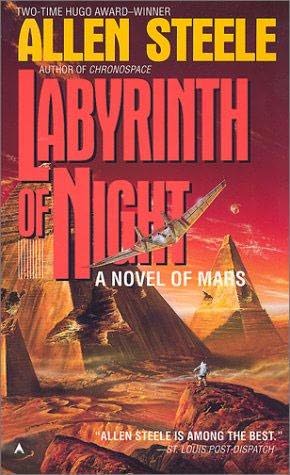
VENTRELLA: In a similar vein, LABYRINTH OF NIGHT made use of the “Face on Mars” – is this something you regret or try to avoid now?

STEELE: When I wrote “Red Planet Blues”, the 1989 novella which I later expanded to become LABYRINTH OF NIGHT, the “Face on Mars” was an astronomical oddity that relatively few people knew about. Aside from that single grainy image photographed by the Viking orbiter in 1976, it was a curiosity and nothing more. Our lack of knowledge about it gave me the liberty to use the Face as a springboard for a first-contact story. By the time the novel was published in 1992, though, the Face had become the subject of tabloid journalism and pseudo-science books, and not long after that the Cydonia region of Mars was revisited by subsequent NASA probes, during which the Face disappeared. I don’t regret the novel I wrote — it’s a good adventure story that sold many copies in both the U.S. and in Europe — but it’s now obsolete and I don’t mind that it’s gone out of print.

VENTRELLA: What is it about alternate history novels that appeals to writers and readers?

STEELE: The appeal of alternative history is obvious: depicting what might have happened if certain events had happened in a different way. It’s like futuristic SF, only in reverse. And just as it’s unwise to read a futuristic SF novel as a means of predicting the future, I think that it’s similarly unwise to read an alt-history story as a means of understanding the past. It’s just another form of storytelling, really.

VENTRELLA: What did you do to prepare for your alternate history novels?

STEELE: When I’ve researched the alt-history stories I’ve written, I’ve started by reading every reliable account I can find that depict the particular historical events upon which I’ve basing that particular story or novel. If possible, I visit actual locations; museums are another major resource. I take loads of notes, and during this period I’m fine-tuning the story and characters as well. It’s hard work, but I think it pays off in the sort of verisimilitude that you need to achieve if the reader is going to buy into the variation on history that I’m depicting.

VENTRELLA: What is the biggest mistake made by authors who write SF?

STEELE: The common mistake by novice SF writers is two-fold: not doing enough research, and then letting the research they have done get in the way of their story. Science fiction is hard to write, mainly because of the homework involved — which is a principal reason, I think, why so many new writers have taken to fantasy or horror instead; they’re easier to do — and there’s a great temptation to take shortcuts, but it’s just those sorts of shortcuts that undermine the story you’re creating. The other side of the coin is to do boatloads of research, then front-load everything you’ve learned into the story you’re writing; this can bog things down and cause the reader to lose interest. So you have to walk a line here: do your homework, but don’t bore the class by telling them every little thing that you learned.

VENTRELLA: Is writing a skill that can be learned or are the best writers born, not made?

STEELE: I think fiction writing is something that can be learned, yes … but it takes a long time to develop the skills necessary to tell a good story, and it’s a task that shouldn’t be undertaken lightly. Not every kid who joins a Little League team is going to grow up to be a pitcher for the Red Sox; not every guy who plays guitar in a garage band is cut out to tour with the Rolling Stones. Somehow, though, there’s a belief that if you know how to spell correctly and can compose a coherent paragraph, you’ve got the chops to publish a novel. Writing is hard work; it’s not something you learn overnight. And, yeah, it helps if you have a certain innate talent for this sort of thing. I once tried to learn how to play guitar, but gave up after two months of weekly classes after my instructor and I came to the realization that I have no musical talent whatsoever. So if you don’t really think you’re a writer … well, you should be honest with yourself and admit that you probably aren’t.

VENTRELLA: What’s the most interesting light bulb moment you’ve had, where you suddenly have an idea that makes the entire story?

STEELE: I had one of those moments just a couple of weeks ago. You’ll forgive me, though, if I don’t describe it in detail; I haven’t written the story yet. It involves an interesting little item I found at my next-door neighbor’s tag sale. Within five minutes of picking it up, I had an entire short story in my head. It’ll be fun … once I get around to writing it.

VENTRELLA: Amazon is reporting that e-books are now outselling traditional publications. What effect will this have on the publishing industry? For beginning authors is this a good thing or a bad thing?

STEELE: No one is really sure how ebooks are going to shape the publishing industry. There’s a lot of projections that they may eventually replace hardcovers or mass-market paperbacks. On the other hand, most readers I know tell me that they still prefer print novels. But I think ebooks are not only here to stay, but also have the potential to completely reshape how — and even what — people read. The take-off point will occur when the price of a good, reliable ebook device drops to about $50. If and when that occurs, you’ll see them all over the place.

Beginning novelists will probably have an easier time adapting to whatever changes there may be, simply because they’ll be able to take advantage of them from the get-go. It’s guys like me, who’ve had long careers writing exclusively for the print medium, who are going to have a tougher time adapting to the new environment. But we’re trying, we’re trying…

VENTRELLA: You’ll be the guest of honor at Albacon this year. What is it about attending conventions appeals to you?

STEELE: I don’t attend as many SF conventions as I used to, mainly because I’d rather spend my time writing. But when I do go to conventions — like MadCon in Madison, Wisconsin, last week, or Albacon in Albany, New York, next week — I generally have a lot of fun in a lot of different ways. I like meeting readers I haven’t met before, or seeing again those whom I’ve already met, or catching up with old friends and colleagues. I’m also a book collector, so you’ll usually find me prowling the dealer’s room in search of items to fill out my collection. And it sometimes gives me a chance to see a town I haven’t visited before, as I did in Madison.

VENTRELLA: What are you working on now? Come on, give us a peek!

STEELE: I won’t tell you what I’m currently writing except that to say that it’s a young-adult SF novel, my first of this kind. The next novel to be published is HEX, which is set in the Coyote universe and is my take on the Dyson sphere concept; it’ll be out next June from Ace. As for what I’m going to do after that … I don’t know, I’m making this up as I go along.

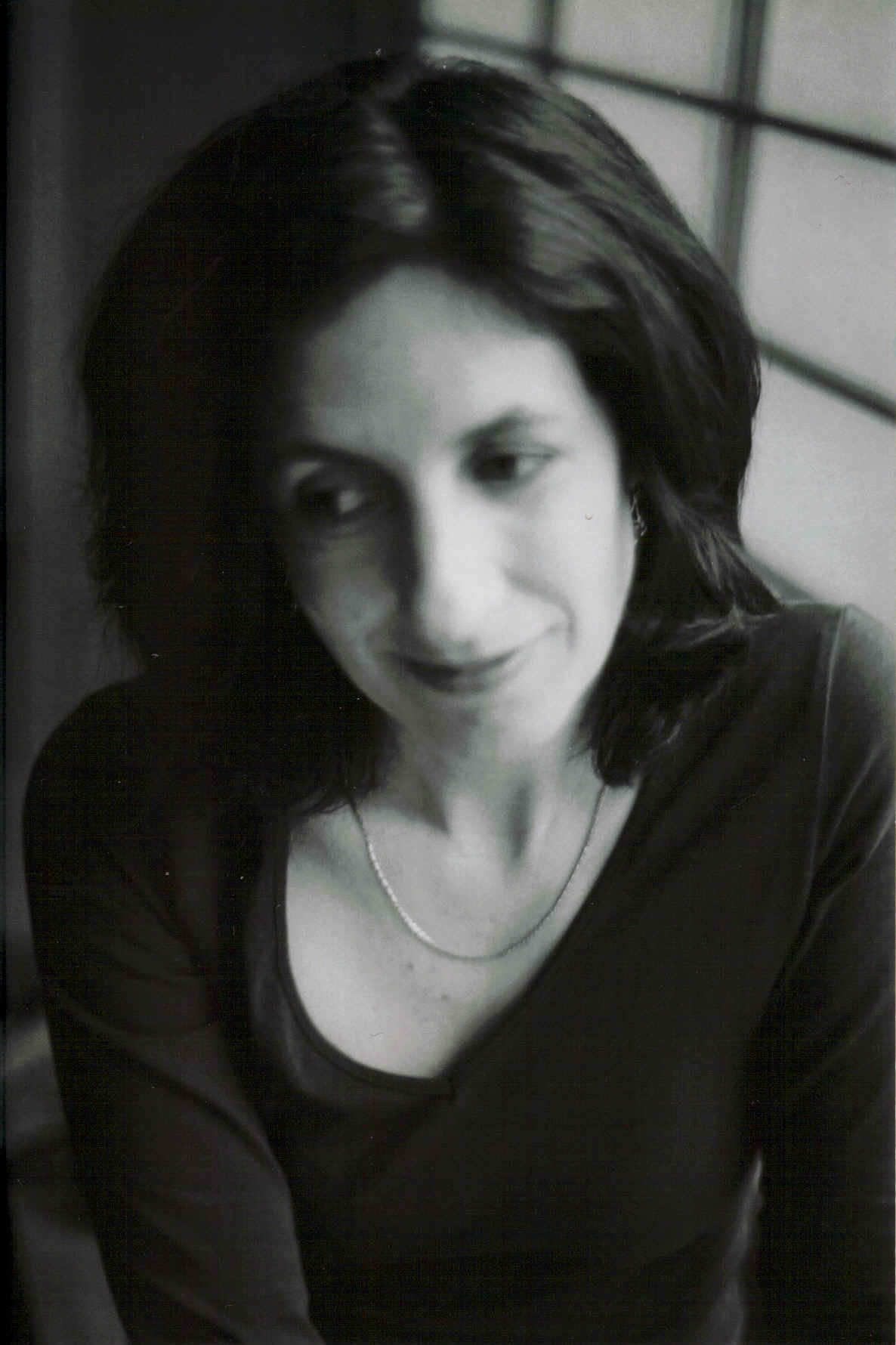
Interview with Author and Editor Cecilia Tan

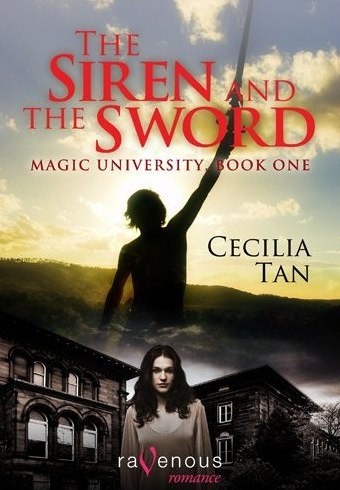
MICHAEL A. VENTRELLA: I’m pleased to be interviewing Cecilia Tan today. Cecilia has been writing and editing professionally for the better part of two decades, both independently and for the small press she founded in 1992, Circlet Press, who specialize in material that mixes the erotic with the fantastic. She has written numerous erotic romances for Ravenous Romance, has edited anthologies for Alyson Books, Thunder’s Mouth Press, Carroll & Graf, Masquerade Books, Blue Moon Books, and others, and collections of her short stories have been published by HarperCollins and Running Press. On top of all that, she also writes and edits publications on baseball.

Cecilia, What brought about the founding of Circlet Press?

CECILIA TAN: I had written a story called “Telepaths Don’t Need Safewords” and just knew at the time I finished it that it was the best story I had written to date. It mixed explicitly kinky erotic action with a science fiction plot. Then I looked around for somewhere to submit it. There was nowhere. Science fiction magazines had explicit rules against sexual content. Porn magazines had explicit rules against both science fiction and any plot beyond “two people meet, then have sex.” The BDSM magazines of the time were either exclusively lesbian or exclusively gay, and my characters were neither. I had been working in book publishing for a few years at that point so I knew the business and I thought “this is nuts. Someone has to do this!” And of course that someone ended up being me.

VENTRELLA: Has it met your expectations?

TAN: Circlet Press has met all my hopes and dreams except for the financial one. We grew by leaps and bounds, garnered fabulous critical acclaim, excellent notice, a great reputation, helped to blow the doors off the old restrictions and show how good mixing the genres could be, jumpstarted the careers of a whole generation of writers … but once the Returns Crisis hit the book publishing industry in the late 1990s, it’s been a financial uphill battle ever since. I’m too stubborn to quit, though, and the ebook has suddenly allowed us to start reaching the readership that mainstream bookstores abandoned. So all of a sudden, there’s some cash flow! Who knows? Maybe someday we’ll turn a profit. What’s most important to me is that we’re still able to connect authors to readers, and then put money back in the pocket of the authors. That part of the business is the same as always … in fact, it’s better.

VENTRELLA: There are many examples of small press these days; do you think this is good for the publishing industry or does it tend to water down the field?

TAN: Oh no. It’s the mainstream presses, not the small presses, who are the most watered down. That’s where you’ll find the most mediocre, recycled pap being packaged and put on the shelf. Granted, it’s not 100% the fault of the big publishers — it’s also the fault of the buyers at Borders and Barnes & Noble, who just want the same thing over and over again, in the hopes that what sold before will sell again. They are all chasing the book equivalent of the Top 40 radio hit and making a lot of boring noise in the process. The small presses are more directly connected with the readership and what they actually want. The small presses occupy the specialty niches.

Another way to look at it is with a comparison to restaurants. The big presses are the chain restaurants. They’re Applebee’s and the Olive Garden and Budweiser. The small presses are that great little gourmet Italian restaurant in your neighborhood, and handcrafted microbrews.

Small presses are also the minor leagues, but for the most part the authors being published in the small press aren’t any less talented than the ones in the mainstream press. They are sometimes less experienced, or less marketable, or just less lucky.

VENTRELLA: As a small press author, I thank you for that!

Has the rise of self-publishing been good for the business?

TAN: Absolutely.

VENTRELLA: When acting as an editor, what is it you look for? What will immediately get a story chucked in the trash?

TAN: The first thing I tell my assistant editors when its time to read the slush pile is DO NOT read the cover letter until after you read the story. Far too many authors think that the job of a short story cover letter is to build you up into a froth of excitement about how great the story is going to be, thus ensuring that a) you’ll be let down, and b) any suspense or joy of discovery in the story has been killed for the reader. I think many amateur writers are confused about the difference between submitting a short story and pitching a novel proposal to an agent or editor, and some just can’t imagine that all they should introduce in the letter is THEMSELVES and let the short story speak for itself.

We get a lot less utter garbage than we used to, though, honestly, and I think the reason why is that thanks to the Internet, writers are actually better informed about how to go about submitting, and they are much more likely to have practiced their grammar and spelling skills on a daily basis. It’s that or the Internet has somehow
swallowed up the attention of most of the crackpots who used to send us wacky submissions in red crayon and the like.

VENTRELLA: What sorts of things do you want in a query letter?

TAN: Since most of what we read is short stories, we don’t read queries. We just want a professional introduction of the author, with whatever credentials they have, but if none, just a firm, no-nonsense hello. It’s professional courtesy to include a cover letter. Sticking a post-it note shaped like a heart on the story is not professional.

Actually, these days, we only accept manuscripts by email, so whenever anything arrives in the mail, I know it’s likely to be from the land of psychoceramics.

VENTRELLA: As a writer of erotic and romantic fiction, what would you advise to someone wanting to enter this field?

TAN: Both romance and erotica have a lot of cliches. The whole trick to writing something that will thrill the pants (sometimes literally) off your readers is to satisfy their expectations while at the same time exceeding them. Be aware of the boundaries of any genre that you write in, and then find out how you can play with and cross those boundaries.

That is, unless thinking about that sort of thing paralyzes you and saps your will to write. In that case, forget everything I said and JUST WRITE. That’s probably the best advice. Step one, start writing. Step two, finish what you started. You’ll get better every time.

VENTRELLA: What trends do you see in the publishing industry that excite you? Which ones worry you?

TAN: I’m very excited at how social networking is allowing authors and readers to connect directly. But the problem is how do you find out about new authors you might like if you’re a reader, when now there isn’t just a publisher-wholesaler-retail chain delivering you a limited selection to choose from? A lot of things are changing now because of that.

It worries me a little that the newer system rewards authors more based on their marketing savvy than on their writing ability … but then I look at a lot of the junk that was published that still hit the New York Times best-seller list over the past 20 years and I realize that’s ALWAYS been true. There have always been populist and popular writers who weren’t particularly great artists.

VENTRELLA: Writing a short story is much different from writing a novel. What are the difficulties you have found? Why do you think some authors specialize in one or the other?

TAN: I’ve written a fair number of both and I really think they are different arts, just like painting and sculpture are different arts. A short story writer has to have guts and brio; a novelist has to have stamina and vision. For me short stories have always come pretty easily. I grab an idea and just pound it until it’s done. A novel takes a bit more planning. The one time I just grabbed hold of a novel with minimal planning, it took six years to finish and came out three times too long to be a commercial novel. (That’s DARON’S GUITAR CHRONCILES, which I’m serializing now on the web.) The next time I plotted out 12 chapters of 5,000 words each and bam, I hit my target right on the nose.

The secret to writing outlines for me is realizing that in the second half I’m going to deviate quite significantly from the outline I wrote, but that some kind of internal logic is at work in my subconscious, so if I forge on, it will all work out. I still have to write the outline, which to me is like sketching out the map of the mountain I’m going to climb. But when I get to the top, exactly halfway through the journey, and am at the turning point, I look down the other side of the mountain… and discover it always looks totally different from the top than it did from where you started at the bottom. Some of the landmarks are the same, but how you get to them changes.

VENTRELLA: Are you sick of vampire stories yet? Is there any plot you have seen too often?

TAN: I love vampires! But even sixteen years ago when I edited my very first anthology of vampire stories, called BLOOD KISS, there were some cliches I didn’t ever need to see. Like setting your vampire story in a goth nightclub … cliche cliche cliche! It really isn’t very imaginative to think “what if those spooky kids who look like vampires actually WERE?” Not exactly an original idea. I actually had to turn down a lot of stories where the “surprise” ending was that one of the two people who met in the bar turns out at the end to be… A VAMPIRE!

I had to write rejections that said things like “It’s a vampire anthology. Every readers KNOWS at least one of them is a vampire.” Then there were the millions who tried the surprise twist: they’re BOTH vampires! Argh. Or surprise twist two: the other one is a vampire hunter! I saw literally hundreds of stories with these plots even after I explicitly banned them in my submission guidelines.

Then there are some ideas that go through fads. I kid you not. One year I received no fewer than four stories all with this exact same plot: an artist falls in love with a model in a painting (usually a Renaissance painting) and gets artistically blocked, can’t paint, is wasting away… until the day the model shows up at the door to have
fantastic sex, looking just like the painting, because s/he is a vampire. Somewhere, once upon a time, that was an original plot. Now, it’s a cliche.

VENTRELLA: How do you think your education has helped your writing?

TAN: Well aside from the actual writing courses I took, it was important to me as someone who writes science fiction to learn some high level science. In college I went right for what was cutting edge at the time, cognitive science (artificial intelligence, neurology, etc) and genetics. Anything you learn that stimulates your brain is going to help your writing. I took a fair amount of psychology in that mix, as well as literature, music, etc. … Long live the liberal arts.

VENTRELLA: Besides “keep writing” what specific advice would you give an aspiring author that you wish someone had given you when you began?

TAN: I think I must have started out with some pretty good advice, because I can’t think of anything. I suppose the advice I would give is this.

You need your reader to trust you to lead them on a rollercoaster ride. For them to trust you, you have to trust yourself. To trust yourself, you have to know your craft and be constantly improving it, constantly learning about yourself and the way your writing affects your readers. So don’t write in a vacuum because you’re afraid people won’t like it. Find the ones who do like it, and write more for them!

Interview with author Marie Lamba

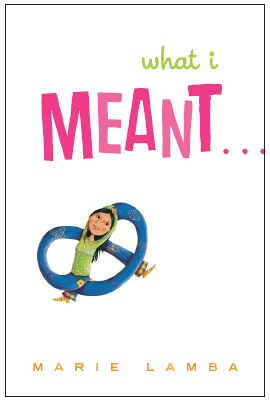
MICHAEL A. VENTRELLA: I’m pleased to be interviewing Young Adult author Marie Lamba today. Marie is the author of the humorous young adult novel WHAT I MEANT…, which Publisher’s Weekly has dubbed “an impressive debut.” She has two more novels which will be coming out soon. In addition to her fiction writing, Marie has written and published more than 100 articles, including features in national magazines such as Garden Design, Your Home, and Sports International. Her most recent piece, “Plotting a Novel Group,” appears in the February 2008 issue of Writer’s Digest. Her web page is www.marielamba.com.

MARIE LAMBA: Hi Michael. Thank you for having me on your blog.

VENTRELLA: Marie, what is it that makes a novel a Young Adult novel?

LAMBA: To me, a young adult novel is categorized primarily by the age of the main character. Since readers read about characters older than themselves, if you have a 13-year-old protagonist, you’ve just written a middle reader (not a YA), and will have mostly elementary school aged readers. Also, content figures in. Sometimes the content is not right for the YA market. But these days, almost anything goes for YA readers. The edgier the better, though you may just be banned by schools…which usually reaps great press and even better sales, interestingly enough.

VENTRELLA: You keep a pretty active blog. Do you think this is necessary to help promote your work?

LAMBA: My site helps me promote my work every single day. I’ve heard people say that if you don’t update your blog at least 3 times a week, then don’t bother having one. I heartily disagree. Sometimes it’s not about getting a huge number of subscribers, but about having a presence, and being able to be found in various ways.

While my blog may seem really active, I sometimes post as rarely as once a month. I just don’t think there’s a point in posting unless I really have something to say. Yet the site is dynamic and gets a fair number of hits everyday because I’ve got a lot going on there. In addition to offering updates about my work, essays on writing, and book reviews, I’ve made it function as my website, www.marielamba.com. So folks are going there to find out about my appearances, to read my bio, to read excerpts from my books, etc. And with links to my Twitter feed, there is always something new to see.

By combining my website with my blog, people stumble onto it while doing the weirdest searches. Like when looking for the menu of Nat’s Pizza. And then they see that my novel has a scene set there. Then they click on my link to buy my Doylestown-based novel. All because of a blog post that tagged Nat’s Pizza in it, if that makes sense?

VENTRELLA: Should unpublished authors have a blog?

LAMBA: Absolutely. It’s a great way to start establishing yourself and your voice. Everything from the color scheme you use to the tone of your bio can help create a feel for who you are. Have a page on your blog with short excerpts of your work, but don’t give away too much material there. Just enough for a taste.

If you really want to be savvy, then you could use your site for things such as book reviews and editor and publisher interviews, which would make your name familiar to the “powers that be.”

VENTRELLA: What can an author do to make their blog stand out among the many out there?

LAMBA: I think it goes back to your voice. Who you are should come through in the tone of your writing, and what you choose to highlight. Then, of course, you need to connect with your audience. That’s where bringing your site to the attention of an organization can help. For example, after I wrote a post about plotting, I saw on a children’s writing message board that I belong to that there was some recent discussion about plotting. I immediately commented there, providing my link to my post.

VENTRELLA: You also make extensive use of Twitter. How can you make your tweets stand out when there are so many people on Twitter? And do you think this is an efficient use of your time?

LAMBA: You know, Twitter is so quick that it isn’t the time suck that sites like Facebook seem to be. At least not for me. Here’s the trick though: when you post there, make it under 40 characters so that you can easily be retweeted to others. Also, try to always provide a link, whether it is to a relevant blog post or a Facebook invite to an event. Links are always too long, so go to www.bitly.com, paste the link there, and you’ll get a shorter link that you can use. And don’t always make your tweets about you. Highlight the accomplishments of others. It’s fun to do, plus I think it’s just good karma.

As for making your tweets stand out, I definitely avoid the whole “I’m getting a cup of coffee now” variety of posts. Again, I only go on there when I have something to say or I really want to respond to someone. I think then people will pay more attention to you. You aren’t the annoying talker everyone wishes would go away. And I try not to follow just anyone or anything. My list is made up of people I know, and of publishers, editors, librarians, media, authors. In short (in the spirit of Twitter), folks who might actually care to hear what I have to say.

VENTRELLA: What is your writing process? (Do you outline heavily, create character backgrounds first, come up with the basic concept and run with it, etc.?)

LAMBA: Good question. It’s evolving. For my past few novels, I knew my final scene. I had my opening dialogue. And then I was off! Kind of like knowing I’m driving to California, and therefore start heading west, but without a map. I do get to the end eventually. The fun thing about this method is the unexpected twists and turns. The not-so-fun thing is cleaning up the mess that I’ve created, trying to make it more direct and cohesive. It can take a long time.

With my current novel, I’m trying to be more organized. I’ve plotted it out, and now I’m in the outlining stage. Then I’ll start writing. I’m hoping that this will help me write faster. My last novel DRAWN (which is now out on submission), took over a year and a half to write. I want to be much more productive than that.

VENTRELLA: What are you doing in your fiction that no one else is doing? What makes your book different and exciting?

LAMBA: I think, again, it comes down to voice. I’m the only person with my point of view and my humor, and that flavors the plot and the characters. With WHAT I MEANT… (Random House YA), the book’s cast of bi-racial characters mirrors my own family’s blend of Italian-American and Asian-Indian personalities. Because WHAT I MEANT… has a mixed race protagonist, yet it is a mainstream story not focused on race, it became a standout in the field.

VENTRELLA: Have you received any surprising results from your writing?

LAMBA: It is always touching to have readers contact me saying that they identified with the characters and that WHAT I MEANT… is their favorite book. One girl even said that she never cries at anything, yet she found herself bawling at the end of my novel because it touched her. That was humbling.

On a funny note, an ex-boyfriend from high school assumed that one of the guy characters in the novel was named after him. He wasn’t.

VENTRELLA: You do a lot of personal appearances to promote your books. What are the advantages and disadvantages of doing these? How do you organize them?

LAMBA: The main advantage is making a personal connection with a reader. If someone meets you and enjoys talking with you, they’ll also remember you and feel a connection to your writing. This is really how books are sold: one reader at a time. I love meeting people, and appearances take me away from my isolated little writing spot and out into the real world. All good. The disadvantage? I can’t think of a single one. I’m careful to pick and choose where and when I go so it doesn’t take away from my writing time.

Events happen many ways. Sometimes booksellers or conferences or teachers contact me. Sometimes I get in touch with them if I have a specific event idea. And I have done presentations to hundreds and hundreds of scouts. I also have to mention that I’m a proud member of the Philly Liars Club, a collection of 13 authors who basically lie for a living. Together we stage a slew of oddball events, and have a blast.

VENTRELLA: Let’s discuss the publishing business a bit. With self-publishing and e-books becoming more prominent, how do you think this will change the demand and market for new writers?

LAMBA: I really think that self-publishing and e-books represent a revolution in publishing, the likes of which we haven’t seen since the 1460’s when old Guttenberg came onto the scene with his printing press, displacing those hard-working monks and their illuminated manuscripts. Documents at that time show that people didn’t realize the magnitude or ramifications of what was going on. Quite simply, the change was so huge that they couldn’t envision the implications.

And so it goes with us. We speculate, but we can barely foresee what all these huge changes mean. I say look to the music industry, to prevalent iPods and the dearly departed record stores. And be cautious. Will books on paper no longer exist? Will bookstores and libraries disappear? Will publishers become obsolete? The only thing I know for sure is that no matter what form content will take, someone will have to write it.

Cling to that, writers and future writers. We are not replaceable.

VENTRELLA: Do you think the stigma of being self-published will continue? Do you think it’s deserved?

LAMBA: Some self-published books are brilliant. Others are painful and shouldn’t see the light of day. Books that are horribly written and barely edited definitely ruin the reputation of others out there, sadly.

I do think that as distribution of self-published novels improves, and more established authors step into this arena, that this stigma will fade. I mean, what does an author like Stephen King really need a publisher for? Couldn’t someone of that stature just put books out into the stratosphere by himself by self-publishing? J.A. Konrath has started to do it with some success, though he still also goes the traditional route.

VENTRELLA: Who are your favorite authors? Why?

LAMBA: Anne Tyler for her beautiful imagery and quirky characters. T.H. White for his epic storytelling, sense of grandeur, and sense of humor. Audrey Niffeneger for her amazing plotting abilities. Sarah Dessen for her touching and real YA voice.

VENTRELLA: What’s the biggest mistake you see aspiring writers make?

LAMBA: Not taking the time to polish their work, and really learn their craft. Writers need to work so hard to improve everything they do. Established authors are always struggling to polish, to edit. They value pointed criticism, and vigorously revise. When I see someone with talent refusing to do this type of work to polish their manuscript, or not absorbing decent criticism, I know that they are limiting themselves, and that’s a shame.

VENTRELLA: What advice can you offer that you wish someone had offered you?

LAMBA: Writing is not only an art, it’s a business. And sometimes in this business really nasty crap will happen to you. In fact, expect it. Your novel, no matter how important it is to you, is just a commodity in the business world. Be as businesslike as you can, while protecting the sensitive artist within. And write another book. And another. And another.

VENTRELLA: And what’s next? What can we look forward to seeing from you?

LAMBA: My YA paranormal DRAWN (excerpt on my blog/website) is under consideration right now. It’s about a teen artist who moves to England in search of a normal life. But then she starts channeling one very hot ghost through her drawings. Not normal at all.

And right now I’m working on a novel for adults: When an Italian grandmother shares old fashioned recipes for sauces and for a happy life, her three granddaughters test the ingredients in fresh ways, cooking up a surprising blend of spice, passion, trouble and true love.

That pretty much sums it up! Thanks, again, for having me here.

7.28.13g

Interview with NY Times Bestselling Author Rachel Caine

MICHAEL A. VENTRELLA: I’m pleased to be interviewing NY Times bestselling author Rachel Caine. Rachel has the Morganville Vampires series, Weather Warden series, and the Outcast Season series, as well as writing paranormal romantic action/adventure and many other genres. Rachel will be the Guest of Honor at Ravencon next weekend (April 9 – 11, 2010) where I am a mere minor guest! Her web page is here.

Rachel, what is it that makes a novel a “young adult” novel?

RACHEL CAINE: The way I look at it, it’s purely a matter of the age of the central characters. My four main characters are ages 17, 18 and 19 now, and as with all characters, their ages and life experience shape the events of the book. So it’s not that I deliberately target the audience … it’s that I think in order to be faithful to the characters and the story, it should naturally appeal to a young adult audience. (Although I have plenty of adult readers of this series as well.)

VENTRELLA: It seems like you have a new book out every month! How do you manage to be so prolific?

CAINE: Ha, I don’t think it’s *every* month. But definitely 3 or 4 a year, that’s true. Most of that’s driven by the YA series (Morganville Vampires) because the schedule for that is we’re publishing one every six months vs. a year for the adult novels (Weather Warden and Outcast Season). But when you add it all together, three series going at the same time does tend to add up fast.

I think I’m lucky that I really enjoy writing to tight deadlines (generally) — it’s been a really great balance against my sometimes stressful day job.

VENTRELLA: There is an ironic balance that has to be met when writing about the supernatural, in that it has to be rooted in reality to be believable. How have you made decisions about integrating the real with fantasy?

CAINE: I’m going to shamelessly quote Jim Butcher, who once said that in order to have urban fantasy that feels realistic you need to have about as much “real” as you do “fantasy.” I believe that’s true … If you look at the success of the movie “Hellboy”, I think that first film achieved a wonderful balance in that area. Sure, you’ve got a big red devil guy running around fighting monsters, but there’s so much real world complication that it makes it all that much funnier and more outrageous. I thought that in the second film, good as it was, they forgot that balance, and slid it to about 75% fantasy, 25% real world … and I think it wasn’t as strong as the first.

So I try to balance my fantastic elements with the fact that everybody, even supernaturally gifted people, have to worry about bills and dry cleaning and child care. 🙂

VENTRELLA: What is it about vampires that attracts such attention these days? Do you think this is just a trend? (I hope not, since my third novel will be a vampire book …)

CAINE: Well, I’ve actually been in the vampire field when it was cool before (in the early 90s) and when it wasn’t (in the late 90s), and now it’s cool again, which is kind of great. Vampires never really go out of style — we’ve been afraid of them for thousands of years, and writing about them in fiction for more than 100 years. The fascinating thing is that in the beginning, vampires were soulless monsters … reflecting that hidden terror that those you know and love can suddenly become monsters. And then they took on personalities and became more sympathetic, and eventually (by the mid-70s) became actual misunderstood romantic anti-heroes. By the mid-1980s, vampires had become heroic, appearing as police officers, detectives, doctors, all kinds of professions that had always been seen as admirable. Now, it seems that they’re back to the dark, romantic Heathcliff-type heroes (at least in the romance circles), but then there’s graphic novels like 30 DAYS OF NIGHT that harken back to the terrifying soulless monster vampires prototypes. So there’s lots of room to do anything you’d like in vampires, which I think is fantastic fun.

VENTRELLA: For those unfamiliar with your work, can you give a quick description of your main series?

CAINE: The Morganville Vampires series (Young Adult) follows the adventures of Claire Danvers and her fellow housemates Eve, Shane and Michael in the town of Morganville … just your average Texas college town, except that it’s controlled by vampires, and the city taxes get collected by Bloodmobiles. Once you’re in on the secret, you’ll never make it out of town alive. Not all the vampires are bad, but they’re all unpredictable, and Claire and her friends often find themselves caught in the middle of the ultimate haves-and-have-not struggle.

The Weather Warden series (Urban fantasy) features Joanne Baldwin, a sexy, sassy woman with a secret … she can control the weather, and she’s part of a secret organization that battles the forces of nature on a regular basis. Mother Nature really doesn’t like us, and only Joanne and the Wardens stand between us and total extinction … when they’re not battling among themselves. Oh, and there are Djinn (genies) who sometimes serve the Wardens, and quite often turn on them with fatal results. Trust Joanne to engage in the most dangerous kind of romance … with one of the most powerful Djinn in existence.

The Outcast Season series (Urban fantasy) is a spin off of the Warden universe, and concerns Cassiel, a former Djinn who’s been cut off from her supernatural kin and now must survive in a human world she doesn’t understand or like, with the aid of Wardens she’s never respected. But in her struggle to survive, she finds herself drawn more and more to the humans she cares for, in particular Warden Luis Rocha — which makes things more difficult when she realizes that she may have a destiny after all: to destroy the human race.

VENTRELLA: How have you planned out the Morganville series?

CAINE: I had a six-book story arc planned, and I’m making the second set of six more standalone stories. There is a certain continuity to the storyline, but I’m trying to avoid too many cliffhangers. 🙂

VENTRELLA: What do you do to create believable characters who learn and grow from their adventures?

CAINE: I don’t know that it’s a conscious process for me … the characters really seem to do that on their own. I have found that less is more in character development … the more tics and traits you give a character, the less natural they seem over time. I find that starting small gives characters plenty of room to grow.

VENTRELLA: How did you break into the publishing business?

CAINE: Not in any way that anyone else should look on as typical! I never intended to … a friend bought me a ticket to a writer’s conference and dropped me at the door. He wanted me to learn about being a writer because I’d been writing on my own (and hiding it) for more than 15 years at that point. So I thought I’d talk to an editor or two, and that would be that.

Only the first editor I talked to hired me to do my first novel. So that worked a little better than I expected, actually. That was in 1990, and I’ve been publishing ever since … with the occasional career hiccup.

VENTRELLA: Some of your earlier works were written under other names. Why did you do that, and would you advise others to do so?

CAINE: And that would be the “occasional career hiccup” referred to above. 🙂 I wrote as Roxanne Longstreet (my maiden name) when first starting out, but my books didn’t really burn up the shelves in any significant way. When my first publisher told me they wouldn’t be able to buy more from me, I changed my name to my married name (Roxanne Conrad) and tried again, with similar results. Rachel Caine is proof that the third time is the charm, I think!

I did use the name “Julie Fortune” for a media tie-in novel for Stargate, mainly because at that time the “Rachel Caine” identity was still new and fragile, and I didn’t want to risk bad sales on something so far outside of my new areas of expertise. But Julie actually has done pretty well on her own.

VENTRELLA: Of which book are you most proud? What would you like to be remembered for?

CAINE: I don’t think I’d like to be remembered for one book … more for a body of work. I can’t really say that I prefer one book over another; from my perspective they each have different characters, but mostly in the sense of where I was emotionally at the time I did the work. I’m not the best judge of that sort of thing. I’m just happy that it seems to touch people and entertain them.

VENTRELLA: What’s your opinion on e-books? Do you think they’re the wave of the future or a step down from traditional publishing?

CAINE: I don’t think it’s a step down at all, but there are a number of people who simply don’t like to read on the screen, so I think traditional publishing will always have a place. For people who read for the experience of the story, versus collecting books, I think ebooks are perfect — portable, simple, and disposable. For collectors, nothing will replace the experience of a book.

I do think there is a real and growing problem related to ebooks … there’s a basic misunderstanding of copyright as it relates to electronic files. Buying an ebook doesn’t give someone the right to copy it wholesale and sell it on to others … and there’s a constant issue with this happening. Most of those people don’t understand that what they’re doing is setting themselves up as a digital publisher, which is robbing both the author and the publisher. Unless we can collectively get that settled, it’s going to bleed the industry dry over time.

VENTRELLA: You’ve wisely advised authors before not to self-publish. Why is that important?

CAINE: I don’t say never self-publish, but it’s not a good way to launch a career as a writer. If the person wants simply to have a book, and has no expectations of continuing to advance in it as a career, then self-publishing might be okay. But there are a lot of drawbacks to self-publishing … you’re responsible for marketing, getting your books into physical stores, and competing with authors who don’t have to do any of that for themselves. Don’t kid yourself: it takes time away from your writing, and trying to break into bookstores in any kind of volume is difficult, if not almost impossible.

Self-publishing also has a reputation — sometimes undeserved, but often accurate — of not being good quality. Often the covers aren’t very good, and unless you’re extremely good at self-editing, or employ a professional editor who knows their stuff, the product is often easy to detect as amateurish rather than professional. So you have a huge burden to overcome.

The last thing I’ll say is this: very few people have ever made decent money from self-publishing, and those that have, generally jumped to traditional publishers as quickly as possible. Don’t get fooled by companies that promise you they’ll publish your book, but then require you to pay for editorial, marketing, and other services. They make money off of you. Your chances of making money from them is pretty small.

VENTRELLA: Finally, what is it about conventions that you like?

CAINE: I love hanging out with my people. 🙂 I’ve always been drawn to conventions — where I can have endlessly fun conversations about things that I’m passionate about, whether it’s geeky obsession over a TV show or deep conversation about life, the universe, and everything (thanks, Douglas Adams!). I’ve met many of my best friends through conventions, and had some of my finest times ever.

Thanks for giving me the opportunity to talk with you! Looking forward to seeing you at RavenCon!

Interview with Hugo and Nebula Award Winning Author Norman Spinrad

MICHAEL A. VENTRELLA: I’m pleased to be interviewing Norman Spinrad, one of my favorite authors! Norman Spinrad is the author of some 20 or so novels, five or six dozen short stories, a classic “Star Trek” episode, a couple of flop movies, an album’s worth of songs, political columns, film criticism, literary criticicsm, mini-cookbooks, autobiography, and a bunch of assorted other stuff.

The latest novel to be written is a called WELCOME TO YOUR DREAMTIME, in which the reader is the viewpoint character. The latest novel to be published, in April 2010 by Tor, will be HE WALKED AMONG US.

His web page is here.

I can still recall when a friend and I both read BUG JACK BARRON within a short period of time, and spent months talking about it and saying what a good movie it would make. If you don’t mind, let’s start with that. You have written scripts before (most notably for the original “Star Trek”) and have produced one for BUG JACK BARRON, but somehow, due to Hollywood politics, it has never been made. What has stood in its way and is there the possibility that it might still happen?

NORMAN SPINRAD: This is always the wrong question. The right question is “How does any film get made?” I’ve had the experience of pitching a film project of THE BIG FLASH six times in one day, and what I was doing was walking into someone’s office and saying in effect “gimme $15 million.” Try it some time and see how it feels!

You can look at my YouTubes about this for gory details, but basically, the situation is that Universal had to pay the pick-up money when it looked like Costa Gavras was going to do it, Costa Gavras killed himself in Hollywood with HANNAH K, there were blown scripts, they didn’t like mine, never got made though any number of directors and producers have tried to get it away from Universal (in those days a “pick up” meant they owned the rights forever) because of a tax dodge in which studios keep phantom projects “alive” so they can use them to write-off annual deductions in the form of enhanced overhead for “development.” There are hundreds of such projects in the same situation in Hollywood for the same reason.

VENTRELLA: After the controversy over BUG JACK BARRON, did you make a conscious decision to push the limits even farther with your book THE IRON DREAM?

SPINRAD: No, I never do that, consciously seek to push limits, I just ignore limits.

VENTRELLA: How did you get the idea?

SPINRAD: I got the idea for THE IRON DREAM by asking Mike Moorcock how he wrote all his commercial fantasies. “Take a myth, or a story from history, run it through a lot of Freudian imagery, and there you have it,” he told me.

“You mean like for instance Nazi Germany…?”

VENTRELLA: Looking back, are you happy with the results?

SPINRAD: In retrospect, after THE IRON DREAM got all those good reviews in over a dozen countries, won an Apollo, was nominated for an American Book Award, I was finally convinced I had written a suigenerous classic. Before that I hated the novel; it took me a long time to figure out that what I hated was the unpleasant work of writing it, not the result.

VENTRELLA: Your novel HE WALKED AMONG US has gone through a most interesting publication history. Can you explain a bit about this? How much of this was by your design and how much of it was because of problems with publishers?

SPINRAD: All of it was problems with publishers, and I’m not going to go into it here. Suffice it to say that HE WALKED AMONG US was finally published by Fayard in French translation last year, a much more presitigous and serious publisher than any of those who rejected it, and will finally be published by Tor in April 2010.

VENTRELLA: You’ve dealt with language in the future in your novels. Where do you think we are heading? Is English taking over the world because of our culture?

SPINRAD: No. Our (pop, Hollywood, etc.) culture is taking over the world because of English, which is the most popular second language in the world as well as the first language of something like half a billion people. The Anglophone market is by far the biggest.

VENTRELLA: As a transplanted New Yorker, what is it about Paris that made you move?

SPINRAD: Nothing, if you mean back to NY, except financial and real estate complicatons. If you mean to Paris, I moved there for what I thought would be a year to write RUSSIAN SPRING, set primarily in Paris. But by the time I had finished, what was going on in Europe was much more interesting to me as a speculative writer, and personally I just enjoyed living in Europe, and particularly in France, much more than in the US. More diversity in the same area.

VENTRELLA: I read an interview you did with Woody Allen where you two discussed how much better artists are received in Europe. What is it about the culture that makes that possible there and not here?

SPINRAD: In part, it may be that it’s an individual thing, my work somehow resonates powerfully with the French as does Woody’s. But as a generality, I think it has a lot to do with American anti-intellectualism. If you’re living off an art, you’re less than macho, and if you are not employed, you’re a bum. How this evolved, I’m not sure, but I think it has to do with the extreme laisez faire capitalism of the US, and the idea that the bottom line is the bottom line. This is not true in France, for example, although the French are very keen on making money, where it is clearly “cultural patrimony” — literature, art, film, music, even comics, that trumps money psychologically and socially.

VENTRELLA: Do you consider yourself an optimist? Does the world today look like you imagined it when you began writing, and do you think it will improve?

SPINRAD: Neither an optimist nor a pessimist, but a realist. And I’ve imaged all sorts of contradictory futures, as have most serious writers of speculative fiction. The point is not prediction, the point is exploring possibilities, even very improbable ones.

VENTRELLA: What is your writing process?

SPINRAD: Story comes first, no story, no writing, and story, at least at novel length implies structure, at least knowing where you’re going before you start, and why you’e going there. So with novels, I don’t so much write “outlines” to begin with but treatments in the film manner, not just the events and the characters, but the voices and the styles.

With short stories, I guess I often do just start writing some stuff to see what happens.

VENTRELLA: Do you have any tricks you use for making sure that your characters are believable and consistent?

SPINRAD: Not really. Except mainly in fiction as in the real world, chez Emerson, “consistency is the hobgoglin of little minds,” meaning that fictional characters don’t have to be and probably shouldn’t be “consistent” if you want them to be “believable.”

VENTRELLA: Have you ever had to make changes you regret due to publisher/editor requests?

SPINRAD: Not really, except for some title changes.

VENTRELLA: Let’s discuss the publishing business a bit. With self-publishing and e-books becoming more prominent, how do you think this will change the demand and market for new writers?

SPINRAD: Not at all. I worked at the Scott Meredith fee reading service, which charged would-be writers for “editorial advice” and promised to try to sell what was marketable.. What was marketable was about 5% of amateur submissions. No technology will ever change this except maybe by increasing the size of editors’ slush piles.

VENTRELLA: The publishing industry still seems to be stuck in a “bricks and mortar” mentality, and is slow to embrace e-books and the like. Do you think that publishers will eventually be forced to reduce their prices on e-books?

SPINRAD: All this is in a creatively chaotic state of flux, and will be for a year or two. Publishers are not now slow to embrace ebooks, far from it, they’re almost desperately trying to figure out business models, pricing, power relationships with Amazon, Barnes and Noble, etc.

In my opinion, the devices to make ebooks take off are already here, more or less, what isn’t is realistic business models stripped of excessive greed. It seems clear to me that an ebook should be treated first like a trade paperback, later as a mass market paperback.

Meaning that when it’s a new title, it should sell for about $10 or $12, say, which is a 20% or so discount from the current standard price of a trade paperback, and this is the difference in numbers that Amazon and Macmillan were fight about, and it’s no big deal. But publishers, for titles that they want to launch in hardcover, should be able to delay ebooks for several months to protect hardcover prices, just as they now delay paperbacks a year to protect them. Once a book as been around over a year or so, the ebook price should be competative with that of a mass market paperback.

This, in general, is the just, workable model that will work, and therefore I believe it will enventually emerge. Think of it as evolution in action.

VENTRELLA: Finally, what is your favorite? For what would you like to be remembered?

SPINRAD: Like asking someone with 20 kids which is his favorite. I suppose though, I have an A list: HE WALKED AMONG US, CHILD OF FORTUNE, THE VOID CAPTAIN’S TALE, LITTLE HEROES, BUG JACK BARRON…

As for what I would like to otherwise be remembered for:

He opened doors.

Many people walked through them.

Interview with Christopher Hoare

MICHAEL A. VENTRELLA: Today I am interviewing Christopher Hoare, whose books can be found with my publisher Double Dragon. Chris was born in London, England in 1939, immigrated to Canada in 1967, and became a Canadian Citizen in 1974 but we won’t hold that against him. He led an interesting life, studying around the world, serving in the Royal Artillery and then worked in oil exploration in Libya among other things. He now writes full time, living in Alberta at the eastern edge of the Rockies with his wife of almost 40 years, Shirley, and two shelter dogs.

Chris, there are so many new authors out there. What do you say to readers to get them to check out your books?

CHRISTOPHER HOARE: Gisel Matah, the protagonist of my Iskander series, is a woman who excels in a man’s world of action and danger, driving stories that women may find a refreshing change from being treated as sidekicks or helpless targets. She becomes the top security agent for her people when the small group of moderns are stranded in a 17th century world.

VENTRELLA: How did you decide to make the main protagonist a female?

HOARE: I picked my strong and reckless female protagonist to oppose the relegating of women into accidental and amateur roles in action adventure fiction. I felt that women readers would enjoy one of their own who could stand with all the James Bonds and Rambos out there. I have heard skepticism about parts of the early stories where the young Gisel becomes the only person in the situation with the skills to take the lead, but partly because of her age. They query her action because they relate it to our society, that keeps the young in immaturity far longer than earlier societies did. I write such scenes with the age justification for her position carefully buttressed. For example, at 16 in ARRIVAL, she is picked to be Colonel M’Tov’s assistant in training a small group of parachutists because of her gymnastic experience; she then becomes the only person with the technical understanding to lead them on the operational jump when M’Tov breaks an ankle in a training exercise.

My next release is due to come out very shortly. THE WILDCAT’S BURDEN is a plunge into a dangerous writing minefield – I have Gisel both pregnant and moderately active as the governor of a rebellious city. The mothers in my writing group felt I’d mostly succeeded in depicting her in the conflicting roles, but also added their expert advice into the states of mind she should experience. The final crisis naturally takes place during her confinement and so the novel ends with attacks on her and on the city, while the plans she has prepared for the situation must unfold unattended. Another writer admitted she had a character in a fantasy give birth on a battlefield, but wouldn’t risk it again. We’ll see if readers accept this story.

VENTRELLA: What are you working on next?

HOARE: The novel I should be writing now instead of these answers. I have long wanted to write SF where the power of the mind is more important than the gadgetry. I think Lucas, in “Star Wars”, approaches this with the abilities of the Jedi, and I believe the ’50’s classics did as well in such stories as Alfred Bester’s jaunting in STARS MY DESTINATION (Tiger Tiger) and Asimov’s telepathic “Mule” in SECOND FOUNDATION.

The protagonist I introduce in MINDSTREAM is a retired professor of systems theory who has become abbot of a quasi-Buddhist monastery. He is able to access other beings – on this world, in deep space, and on other worlds – and, mentally, participate in or direct the action there. I blend a lot of the fascinating Tibetan Buddhist esotericism with String Theory in the background scenario. In the novel, Crumthorne and his assistant attend a NASA spaceflight convention to protect it against similar alien intrusion from adepts on other worlds, but it turns out that one of the Earth ‘attendees’ becomes a greater threat to all of them.

VENTRELLA: What’s the hardest part about writing?

HOARE: That’s easy – getting one’s work noticed among the cacophony of other media out there.

VENTRELLA: Have you had any formal writing training? Do you think that is necessary?

HOARE: You should have competence in the language you write in as a prerequisite. I’m appalled at the number of people who write although they have little knowledge of grammar and cannot spell; and even more appalled at those who self publish their writing without rectifying these inadequacies.

As to formal writing programs, I’m always skeptical about over-academicism because it can lead to rigidity and a failure to accept ideas that do not lend themselves to clever analysis. However, I attended a couple of university extensions that contributed greatly to my early development. A writers’ conference at NAU at Flagstaff in the late ’60s had an invited writer whose depth of analysis of fiction really opened my eyes.

VENTRELLA: How did you end up with your current publisher?

HOARE: I’m lucky to have landed with Double Dragon. Deron is supportive of ideas I sometimes spring on him, even when they turn out to be of less value than his own; he allows a writer to amass a growing body of available work without the fear of losing earlier writing to the deadly ‘shelf life’ demon of mainstream publication. Of course, that is also a function of e-publishing, where one is safe from being destroyed by the dreaded ‘returns’ policy.

I have been able to investigate the sales and distribution of POD vs e-books in my own way and learn from my mistakes (the only way I ever learn anything).

VENTRELLA: Do you have other long term goals to grab a more “mainstream” publisher?

HOARE: I would like to have a more mainstream publisher at some point, but I doubt I would find working with them (and they with me) completely successful. Really, the only thing they have that I covet is the greater exposure.”

VENTRELLA: Your short stories have also appeared in various collections, including TWISTED TALES. Do you find short story writing easier?

HOARE: Actually, I don’t like writing short fiction. The two stories accepted in TWISTED TALES II and III are the first short stories I produced since my early writing days. I doubt I will write more as I feel I was not able to get across the intentions I had in writing the stories. Possibly a fault of my lack of experience with the medium, but I really detest the literary genre that most short story writers write in.

VENTRELLA: Do you advise starting writers to concentrate first on short stories?

HOARE: Conventional wisdom when I started writing seriously said that one should always attempt to develop one’s idea first as a poem, then as a short story, and only later consider turning it into a novel. What rot. I do advise a developing writer that the shorter medium is a necessary foil when one is learning the essences of the craft of theme, tone, and plot. In a first novel one can easily lose all control over what one is writing – it certainly happened to my early attempts.

VENTRELLA: What’s your opinion on self-publishing?

HOARE: Would you recommend taking your first transatlantic flight in the captain’s seat rather than the passenger cabin? It requires an inordinate amount of hard work and luck for one’s self pub not to ditch in the ocean.

I do know a few good self published novels (other than Tolstoy’s and Dickens’) but they are exceptions. The writers were not first-time novelists and had some experience and craft knowledge to back their efforts. For a year or two I tried my hand at reviewing fiction and tried to give equal time to self-published works, but after receiving more than one that was actually painful to read I gave up on the exercise.

VENTRELLA: Do you tend to rely on outlines first or do you just plow right in?

HOARE: I much prefer to start with the characters and the opening question and write a first draft as an exploration. By the time the novel reaches the halfway point the ending should have made itself inevitable if one remains true to what has gone before.

There are times, when I’m not sure what should happen in a necessary scene or what comes next, that I will explore ahead with an outline or even an unorganized scattering of issues to determine the logical order which develops the story. I have never sat down and written a detailed outline of a story before starting to write as I feel that would destroy all the life – the illusion of real life happenings – that make the story flow.

VENTRELLA: Tell us about NovelPro.

HOARE: I learned almost all I know about writing during the five or six years I belonged. The partnership with some really brilliant authors and the hard work of extended whole novel critiques was more valuable than a conventional MFA. Not just my opinion, as I saw it expressed by other members who had MFAs.

If you can get in, I’d advise any writer to shelve their own writing ego long enough to submit to the group for awhile. Not everyone can do it. Some quit even before completing their very first novel crit – the be all, end all, of the NPro system – while others get kicked out because they become obstructive. I was cautioned a couple of times, and my posts put on ‘review’. I’m still in contact with some members and past members and have accepted that there will come a time when the writer has to accept that their own needs and the group’s no longer coincide. I still wish them all well, and wait for the time when a work from the group becomes a bigger success than THE DaVINCI CODE – as well as better written.”

In line with others in the NovelPro group I spent an inordinate length of time trying to perfect the query letter and the bit by bit perfection of the opening attention grabber to gain a top NY agent. Then I slowly began to realize that my writer profile ruled me out of their consideration. I’m a grouchy and opinionated senior who lives as far away from New York, and the New York mentality, as it’s possible to get without traveling through space. I tried to bend in the appropriate ways – I became a Toastmaster to hone my public speaking skills for those career building moments on camera, but by the time I became a CTM I realized I hated making speeches. I tried to convince myself that I could turn myself into a saleable ‘brand’ under the tutelage of a wise old literary agent, before I realized that I’m too much of a loner to fit the profile. I’ll go on writing my way and being me – and if that doesn’t fit with the NY concept – to Hell with them.

VENTRELLA: Do you have any specific advice you would give a writer trying to make it in the publishing business that they may not have heard before?

HOARE: I hope a few of the answers I’ve given above have pointed others to useful insights of their own. If there is anything I believe that I’d like to prove true it’s that in order to be a lasting writer – one who produces something that lasts – one has to be a contrarian. Not pretend to be one but to actually feel offended when life tries to squeeze you into a conventional slot.

My old physics prof at engineering college used to say, “If you want to have a brainwave, you have to have a brain, and you have to wave it.” I have absolutely no proof that these qualities will allow you to ‘make it’ in the conventional publishing business, but I assure you they will lead you to a more worthwhile life.