Interview with Hugo Nominated Author Steven Barnes

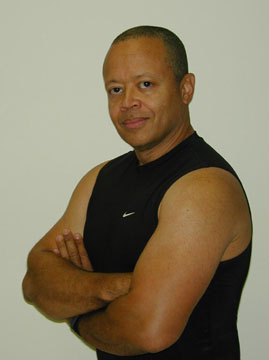
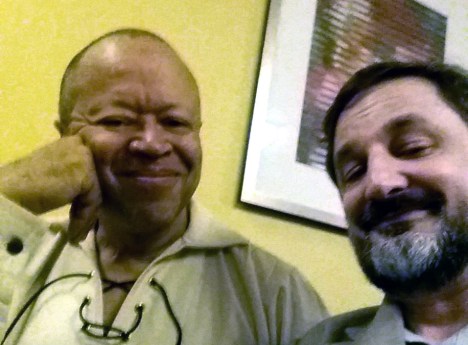
MICHAEL A. VENTRELLA: Today, I am honored to be interviewing Hugo nominated author Steven Barnes.

Steven Barnes has a very interesting background: His martial arts accomplishments include black belt in karate and judo. He is a trained hypnotherapist, and studies yoga and other physical arts. His writing includes a number of novels by himself and others, short stories, and television episode scripts.
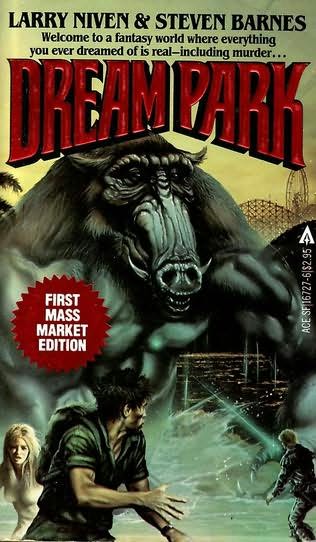
Steven, I have to begin by discussing something personal. You see, years ago friends and I read DREAM PARK and become enamored of the idea. It wasn’t too much later that we began the New England Roleplaying Organization, one of the largest Live Action Role-Playing games in North America. I edited all of their Rule Books and have since moved off and started my own group (Alliance LARP) – all because of a spark started by you and Larry Niven. And now I’m writing my own novels…

My first question, then, is: Did you realize how much of an influence that book had?

STEVEN BARNES: Not until Larry and I attended the first IFGS gaming conference. Being surrounded by hundreds of LARPers really drove it home. We’d created, or certainly influenced, an entire sub-culture.

VENTRELLA: That was not your first novel with Larry Niven. How did that relationship begin?

BARNES: I was about twenty-seven, and writing my butt off without getting anything published. My theory is that if you want to learn something, find someone else who is doing it, and figure out what they’re doing. I needed a role model…or a mentor, if I could be that lucky. A friend told me that Larry Niven and Jerry Pournelle frequented the LASFS clubhouse (Los Angeles Science Fiction/Fantasy Society) on Thursday nights. I went up there, met Larry, and convinced him to read a few of my stories. He liked what he saw, and gave me a chance to work on an unpublished story of his called “The Locusts.” Luckily, I saw a flaw in the story that my particular skills could improve. It was published in Analog, and was nominated for a Hugo.
VENTRELLA: What process do you use when you collaborate? Do you split up subplots, or does one person write and the other rewrite?

BARNES: We work out the plot outline extensively, and then I write the first draft. Larry rewrites, suggests, tells me when I’m on the crazy train.

VENTRELLA: What themes do you find yourself revisiting in your work that may pop up without planning?

BARNES: What I would call “Self Directed Human Evolution” — the process of personal growth as it has been expressed in world culture, religion, philosophy and myth.

VENTRELLA: What is it about science fiction that attracts you? You have written a few things that are out of the genre (like some “Baywatch” episodes) –- what brings you back?

BARNES: The size of the canvas, perhaps. Most probably, the fact that I was just a dreamer as a kid, and loved stories of heroic adventure against exotic back-drops. But if I had had access to Ian Fleming instead of Larry Niven, I’d be writing spy novels.

VENTRELLA: Do you feel that editors and publishers still are fairly conservative when it comes to taking chances, even with science fiction?

BARNES: No more than their audience. I consider science fiction to be quite socially conservative in some ways, but that may be another discussion.

VENTRELLA: What is your writing style? (Do you outline heavily or just jump right in? Do you tend to start with an idea, a character concept, or something else?)

BARNES: Usually I’ll start with an idea, and then create characters to people that world. I outline using 3×5 cards, outlining programs, whatever. Every way of looking at a story reveals different details.

VENTRELLA: Of what work are you most proud?

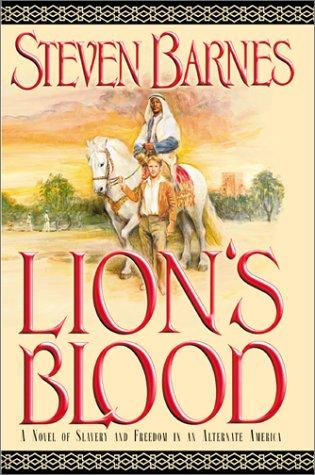
BARNES: LION’S BLOOD. I felt as if I had finally managed to create a work that expressed my core sense of social reality in America.

VENTRELLA: Have you ever run across unexpected controversy with your writing? If so, how have you dealt with it?

BARNES: Again, LION’S BLOOD, set in an alternate world in which Islamic Africans colonized the Americas, bringing European slaves. The reversal of racial roles was already pushing the edge. But 9/11 happened, and we were demonizing Muslims. That was the worst timing for a book you could imagine.
VENTRELLA: What bugs you most about the publishing industry and what would you change about it if you could?

BARNES: Oh, I don’t know if there’s anything. There are some things about human nature — tribalism — that have worked to my disadvantage, but that’s also a survival trait, so I guess I have to grin and bear it.

VENTRELLA: What advice would you give to a starting author that you wish someone had given you?

BARNES: A writer should write for the sheer passionate love of it as much as possible. You have no idea how much external success you will ever have, so you’d better find a way to be happy just being a writer.

VENTRELLA: What’s the biggest mistake you see aspiring authors make?

BARNES: Chasing the market.

VENTRELLA: You’ve posted on your Facebook page about self growth and fulfillment. What are your goals and aspirations and how well have you met them?

BARNES: I reached every goal I ever set as a kid. I wanted love, to be a martial artist, and a successful writer. Got ’em. Now I’m redefining myself, and setting up new challenges. Primarily, I don’t want to be a professional writer any more. I want to be an amateur writer, writing for the sheer love of it. That means setting up an entirely new business. In this instance, coaching writers and those who want balanced lives. I offer a free phone coaching session to anyone: your readers can reach me at steven@diamondhour.com
VENTRELLA: With a time machine and a universal translator, who would you invite to your ultimate dinner party?

BARNES: Sun Tzu, Aristotle, Shaka Zulu (leave the assagai at the door, please!), Lewis Carrol, Nelson Mandela, Thomas Jefferson, Musashi Miamoto (likewise with the katana), William Shakespeare … and the most important women in their lives.

VENTRELLA: And finally, do you find yourself optimistic about the future?

BARNES: Very optimistic. I am most worried by people who don’t believe there is much risk of overpopulation. Frankly, I think this is leftover meme from the time humans were on the brink of extinction. Overpopulation won’t destroy the world, but it could destroy the ability to sustain a technological civilization.
13346987_10156960385390416_8355725557480929681_n

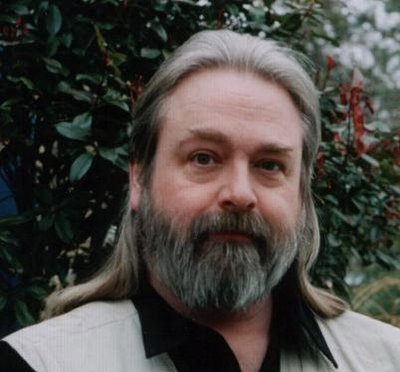
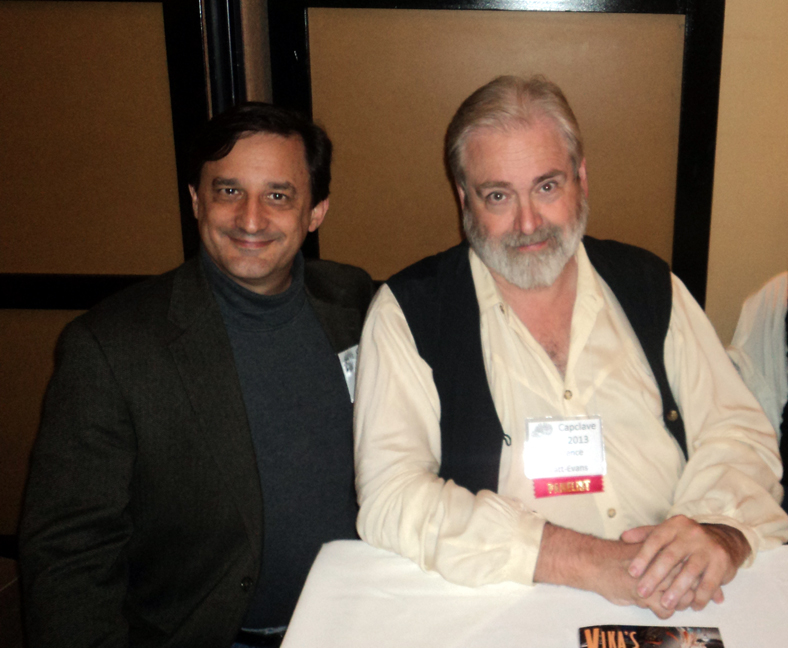
Interview with Hugo Award-winning author Lawrence Watt-Evans

Lawrence Watt Evans grew up with parents who were science fiction readers, so he grew up reading the stuff, and decided at the age of seven or eight that he wanted to write it. He has been a full-time writer for more than thirty years, producing more than forty novels, over one hundred short stories, over one hundred and fifty published articles, and a few comic books. Most of his writing has been in the fields of science fiction, fantasy, and horror, and he has received a few awards, including the Hugo for best short story in 1988, for ”Why I Left Harry’s All-Night Hamburgers.” He served as president of the Horror Writers Association from 1994 to 1996. He lives in Maryland with his wife and the obligatory writers’ cat.

MICHAEL A. VENTRELLA: Lawrence, thank you! Let’s start by letting us know what your latest work is that is available and what we can expect next.

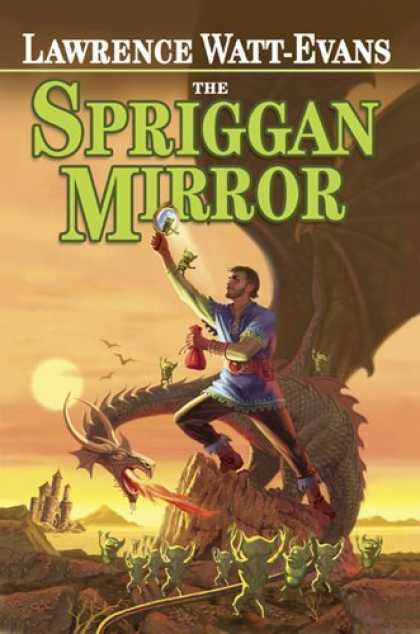
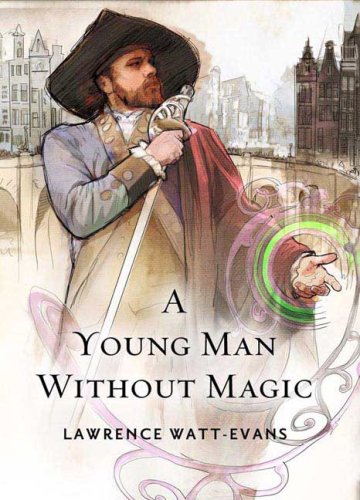
LAWRENCE WATT-EVANS: My latest novel is called A YOUNG MAN WITHOUT MAGIC; Tor released the hardcover in November of 2009. This is the first volume of a fantasy series called the Fall of the Sorcerers; the second volume, ABOVE HIS PROPER STATION, will be out in November 2010. Whether there will be more remains to be seen. If there’s sufficient interest from readers and publishers, this series could go a long time — I have about a dozen novels plotted.

VENTRELLA: You try to break down traditional plot cliches in your stories. What are your plotline pet peeves?

WATT-EVANS: My biggest is simply people doing things, or failing to do things, because it’s necessary to make the plot work, and not because that’s how real people would act. Plots that depend on people not telling each other important things when there’s no reason to keep them secret, for example. Real people generally like to talk, and keeping a secret is hard, so why do so many characters in books go to such lengths to not tell each other things?

Why don’t characters in novels call the cops more often? Why don’t they tell their friends what they’re up to?

VENTRELLA: I’ve commented on this blog before about how I dislike the typical fantasy hero who is a noble-born chosen one with special powers. Why do you think it’s important to avoid those kinds of characters?

WATT-EVANS: I don’t think it’s important to avoid them; I just think they’ve been overdone, and I prefer to focus on more ordinary people.

VENTRELLA: Do you ever worry about genre when your work crosses the line? Do your publishers and editors ever give you a hard time about it?

WATT-EVANS: When I started out I never used to worry about genre. Back in the ’80s, I wrote whatever I wanted and let the publisher worry about labeling it. By the ’90s, that looked like a bad idea — my fantasy was much more successful than my science fiction or horror, so writing SF or horror was dragging down my sales and hurting my career. My agent eventually convinced me of that, and I mostly stopped writing SF and horror novels. (In short fiction, no one cared.) I’d intended to go on writing SF under a different name, but that never really worked out. By the turn of the century I was purely a fantasy writer.

But the thing is, the market kept changing, and now readers and publishers want cross-genre stuff — pure traditional fantasy isn’t selling well anymore. Urban fantasy, crossing fantasy with hard-boiled detective stories — that’s selling. Paranormal romance is selling. Historical fantasy is selling. Since I write for a living, I can’t afford to ignore that, so I’m currently working on an urban fantasy novel called ONE-EYED JACK, and I’m looking at some other genre-bending possibilities.

I’m perfectly happy working in various genres, but I do try to keep up with what publishers are buying.

VENTRELLA: Are humorous stories easier or harder to write?

WATT-EVANS: Easier than what?

For me, each story has its own natural tone, and that has nothing to do with the difficulty of writing it. Some funny stories are easy, some are hard; some serious stories are easy, some are hard.

VENTRELLA: What difficulties and pitfalls face someone trying to write humor?

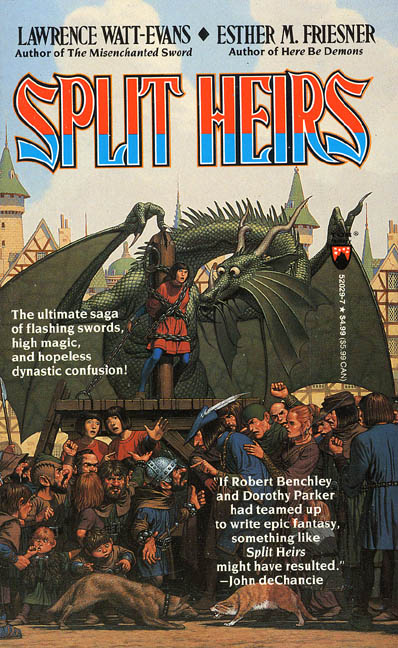
WATT-EVANS: The tricky thing about writing humor is that senses of humor vary. What one person finds funny may leave another cold. When Esther Friesner and I were writing SPLIT HEIRS, while we were mostly in accord, I found out that Esther has a more vicious sense of humor than I do, but isn’t as fond of pratfalls — with one exception, any scene in the book where death or serious injury is played for laughs, Esther wrote it, while I think all the falls are mine. Knowing what readers will find funny — well, I’m not sure there’s anything that every reader will find funny. There are people out there who don’t find Terry Pratchett funny, which I find incomprehensible.

So what you need to do is to incorporate a variety of humor. Don’t stick entirely to one thing — there’s no gag that won’t get old eventually. Maybe you think puns are the epitome of wit, but relying entirely on puns is going to leave most readers cold. SPLIT HEIRS had puns and pratfalls and pain, contrived explanations and elaborate absurdity, double entendres and drunk acts, so if a reader didn’t laugh at one bit, the next might get him. Overusing any one joke can kill it. Change it up.

Also, don’t try too hard. Don’t overdo it. Humor has to have some grounding in reality in order to work. There’s a reason the classic comedy acts always included a straight man. Have some respect for your characters, no matter how absurd their situation may become. It’s much funnier when something ridiculous happens to an ordinary guy than when it happens to a capering buffoon.

VENTRELLA: I know there isn’t a template that is used each time, but when creating a new world, what is your process? Do you first concentrate on the story and characters and then think about the politics and religion of the world?

WATT-EVANS: Oh, it varies. A lot. I mean, a lot.

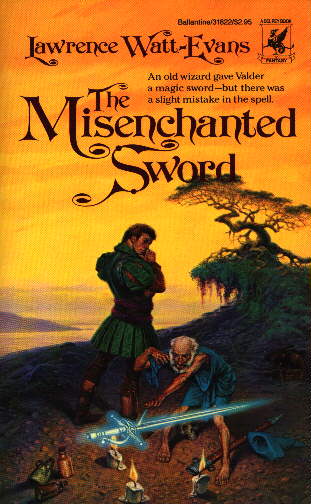
Ethshar started out as a map I drew during a boring geometry class in ninth grade; the locations of Aldagmor and the three Ethshars were where the point of a compass had marked the paper when I used it as backing for an assignment. That was 1969. I added names and worked out some of the linguistics between then and 1972, and figured out some of how warlockry functioned, then put it aside until 1977, when I started designing the other kinds of magic. History and politics and religion came along between 1977 and 1983, but I didn’t have any stories to set there until about 1982. I started writing THE MISENCHANTED SWORD in December 1983. I’m still adding details.

For the Lands of Man, on the other hand, I knew the story first, and wanted a setting. I started with the history, from the wars against the dragons to the opening of DRAGON WEATHER, but I didn’t know the geography or magic, or history before the wars, until after I started writing the novel. I never did get the linguistics straight.

NIGHTSIDE CITY was inspired by the Los Angeles of Ross Macdonald’s Lew Archer novels — “inspired” not meaning copied, at all. Lew Archer’s L.A. is a city of night, where the real world Los Angeles is a very sunny place, and that got me thinking about a city where it’s always been night, but the sun’s about to come up. (A “Little Nemo in Slumberland” strip where the sun dissolves King Morpheus’ palace may also have figured in.) So I started designing out a world where that would be possible, and even hired a planetologist, Dr. Sheridan Simon, to work out the physics for me.

VENTRELLA: Do you prefer writing short stories or novels?

WATT-EVANS: I used to find novels easier, though obviously they take longer, but somewhere in the late ’80s I got the hang of writing short stories, and since then I don’t find one more difficult than the other.

As for which I prefer, do you prefer steak or chocolate cake? They’re different. Sometimes I want one, sometimes I want the other.

VENTRELLA: What do you see as the primary difference between the two?

WATT-EVANS: The primary difference is that a short story is about a single change, while a novel is about something developing, step by step. The first time I was asked this question, many years ago, I said that a short story is a kiss, and a novel is a courtship, and I still think that’s a pretty good analogy.

VENTRELLA: Publisher’s Weekly said of your latest (A YOUNG MAN WITHOUT MAGIC) that the characters were “unlikeable” but that the “the tight plotting and absorbing new world make this tale readable.” Do you agree that the characters are “unlikable”?

WATT-EVANS: I didn’t think they were unlikable — not all of them, anyway. I like Anrel quite a bit. Several of the others are less than charming, I admit, including Anrel’s best friend, but I thought I’d come up with a protagonist readers would find pleasant company. I suspect the reviewer found him too fatalistic, a trait that fades greatly in the sequel, ABOVE HIS PROPER STATION.

VENTRELLA: How do you deal with negative criticism?

WATT-EVANS: Mostly, I ignore it. I know I can’t please everybody. In one case, though, a reader’s comment about TOUCHED BY THE GODS me rethink the whole story, which is a part (though only a small one) of why there’s no sequel and will never be one.

VENTRELLA: What themes do you find yourself revisiting in your work that may pop up without planning?

WATT-EVANS: How broadly are you defining “theme”? A lot of my stories turn out to be about someone finding a place for himself in the world. I also seem to write about a lot of immortal (or at least ancient) characters who have lived in isolation and are reconnecting with the world. And characters who are struggling to control some power that could cause great destruction if unleashed.

I don’t know why.

VENTRELLA: What is your writing style?

WATT-EVANS: It varies, but usually it goes like this:

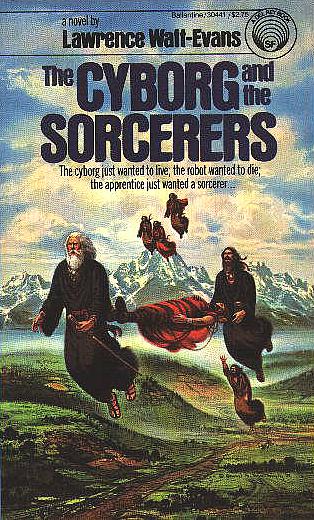
Come up with central concept, which can vary hugely in complexity — it could be a gadget, a spell, a characteristic of the setting, a plot element, a scene, a character. THE MISENCHANTED SWORD started with the spell on the sword, NIGHTSIDE CITY started with the doomed city, THE CYBORG AND THE SORCERORS started with the scene of Slant talking to the wizards of Teyzha. Sometimes this concept is the result of combining two or more old ideas I had kicking around.

Usually, I let this stew for awhile, accreting material. If I didn’t start with a character, figure out who the characters are who would be involved. Work out a background where this could take place — which might be a setting that already exists, or a new one.

Write an opening scene, to get the material fixed in my head. Sometimes this comes before the stewing.

Figure out how the story ends.

Come up with some rough plan for getting from the opening to the ending.

Start writing.

Usually, I’ll stop after awhile — usually the first time I hit a plot problem — and write up a working outline, running from three to thirty pages; when I’m satisfied with that, I’ll go on writing the story.

The first draft is usually skimpy; the second draft is largely filling in details I skipped over while working through the plot. I generally don’t know the characters all that well when I start, but I get to know them writing the first draft, so the second draft lets me flesh them out.

And after that it’s just polishing.

However, not every story follows this model. I do whatever works. Sometimes I never do write an outline. Sometimes I write one, but don’t follow it. Whatever works.

VENTRELLA: Of what work are you most proud?

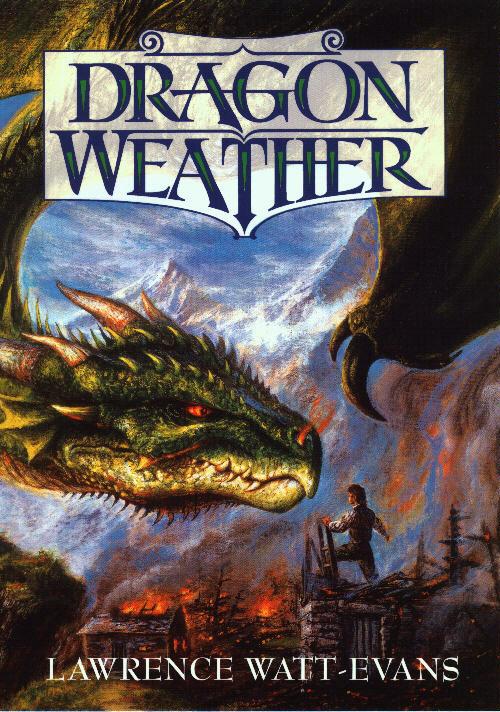
WATT-EVANS: DRAGON WEATHER. That one came out really good. Some others came close, but I’d rate that one as my best.

VENTRELLA: And finally, who do you like to read?

Terry Pratchett, Fritz Leiber Jr. — right now I’m not sure who else, as I seem to be in a transitional period where I’m losing my taste for old favorites (e.g., Robert Heinlein) and haven’t yet settled on new ones.

51

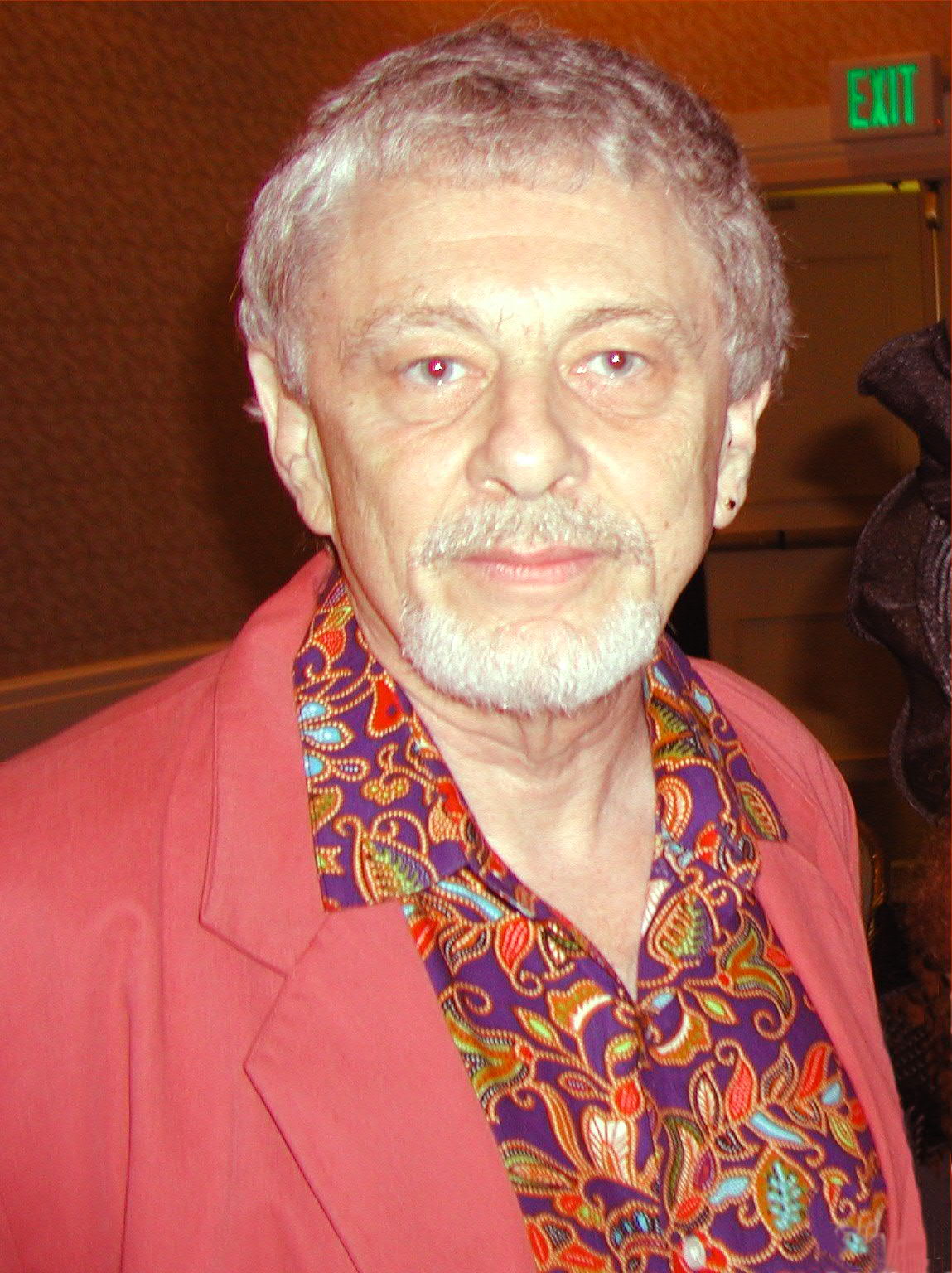
Interview with Hugo and Nebula Award Winning Author Norman Spinrad

MICHAEL A. VENTRELLA: I’m pleased to be interviewing Norman Spinrad, one of my favorite authors! Norman Spinrad is the author of some 20 or so novels, five or six dozen short stories, a classic “Star Trek” episode, a couple of flop movies, an album’s worth of songs, political columns, film criticism, literary criticicsm, mini-cookbooks, autobiography, and a bunch of assorted other stuff.

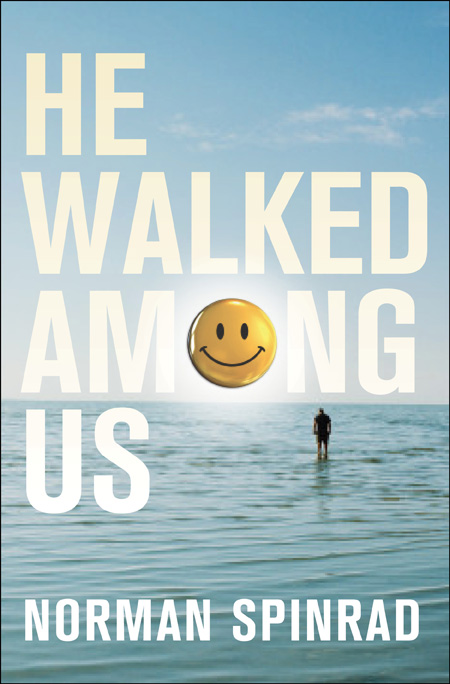
The latest novel to be written is a called WELCOME TO YOUR DREAMTIME, in which the reader is the viewpoint character. The latest novel to be published, in April 2010 by Tor, will be HE WALKED AMONG US.

His web page is here.

I can still recall when a friend and I both read BUG JACK BARRON within a short period of time, and spent months talking about it and saying what a good movie it would make. If you don’t mind, let’s start with that. You have written scripts before (most notably for the original “Star Trek”) and have produced one for BUG JACK BARRON, but somehow, due to Hollywood politics, it has never been made. What has stood in its way and is there the possibility that it might still happen?

NORMAN SPINRAD: This is always the wrong question. The right question is “How does any film get made?” I’ve had the experience of pitching a film project of THE BIG FLASH six times in one day, and what I was doing was walking into someone’s office and saying in effect “gimme $15 million.” Try it some time and see how it feels!

You can look at my YouTubes about this for gory details, but basically, the situation is that Universal had to pay the pick-up money when it looked like Costa Gavras was going to do it, Costa Gavras killed himself in Hollywood with HANNAH K, there were blown scripts, they didn’t like mine, never got made though any number of directors and producers have tried to get it away from Universal (in those days a “pick up” meant they owned the rights forever) because of a tax dodge in which studios keep phantom projects “alive” so they can use them to write-off annual deductions in the form of enhanced overhead for “development.” There are hundreds of such projects in the same situation in Hollywood for the same reason.

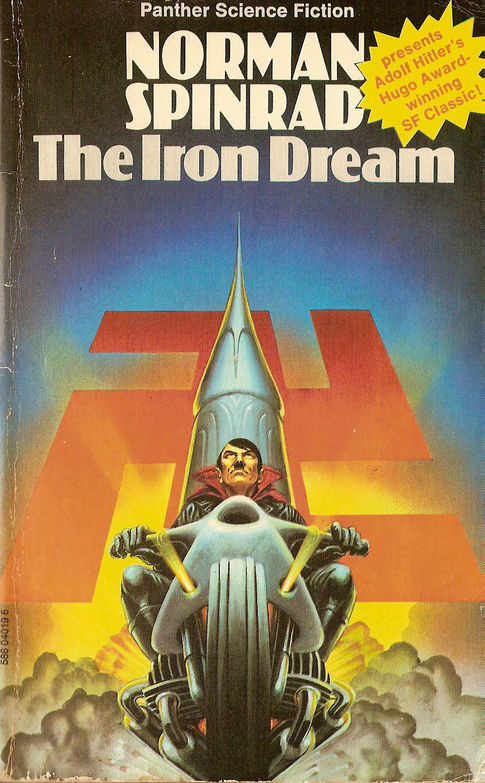
VENTRELLA: After the controversy over BUG JACK BARRON, did you make a conscious decision to push the limits even farther with your book THE IRON DREAM?

SPINRAD: No, I never do that, consciously seek to push limits, I just ignore limits.

VENTRELLA: How did you get the idea?

SPINRAD: I got the idea for THE IRON DREAM by asking Mike Moorcock how he wrote all his commercial fantasies. “Take a myth, or a story from history, run it through a lot of Freudian imagery, and there you have it,” he told me.

“You mean like for instance Nazi Germany…?”

VENTRELLA: Looking back, are you happy with the results?

SPINRAD: In retrospect, after THE IRON DREAM got all those good reviews in over a dozen countries, won an Apollo, was nominated for an American Book Award, I was finally convinced I had written a suigenerous classic. Before that I hated the novel; it took me a long time to figure out that what I hated was the unpleasant work of writing it, not the result.

VENTRELLA: Your novel HE WALKED AMONG US has gone through a most interesting publication history. Can you explain a bit about this? How much of this was by your design and how much of it was because of problems with publishers?

SPINRAD: All of it was problems with publishers, and I’m not going to go into it here. Suffice it to say that HE WALKED AMONG US was finally published by Fayard in French translation last year, a much more presitigous and serious publisher than any of those who rejected it, and will finally be published by Tor in April 2010.

VENTRELLA: You’ve dealt with language in the future in your novels. Where do you think we are heading? Is English taking over the world because of our culture?

SPINRAD: No. Our (pop, Hollywood, etc.) culture is taking over the world because of English, which is the most popular second language in the world as well as the first language of something like half a billion people. The Anglophone market is by far the biggest.

VENTRELLA: As a transplanted New Yorker, what is it about Paris that made you move?

SPINRAD: Nothing, if you mean back to NY, except financial and real estate complicatons. If you mean to Paris, I moved there for what I thought would be a year to write RUSSIAN SPRING, set primarily in Paris. But by the time I had finished, what was going on in Europe was much more interesting to me as a speculative writer, and personally I just enjoyed living in Europe, and particularly in France, much more than in the US. More diversity in the same area.

VENTRELLA: I read an interview you did with Woody Allen where you two discussed how much better artists are received in Europe. What is it about the culture that makes that possible there and not here?

SPINRAD: In part, it may be that it’s an individual thing, my work somehow resonates powerfully with the French as does Woody’s. But as a generality, I think it has a lot to do with American anti-intellectualism. If you’re living off an art, you’re less than macho, and if you are not employed, you’re a bum. How this evolved, I’m not sure, but I think it has to do with the extreme laisez faire capitalism of the US, and the idea that the bottom line is the bottom line. This is not true in France, for example, although the French are very keen on making money, where it is clearly “cultural patrimony” — literature, art, film, music, even comics, that trumps money psychologically and socially.

VENTRELLA: Do you consider yourself an optimist? Does the world today look like you imagined it when you began writing, and do you think it will improve?

SPINRAD: Neither an optimist nor a pessimist, but a realist. And I’ve imaged all sorts of contradictory futures, as have most serious writers of speculative fiction. The point is not prediction, the point is exploring possibilities, even very improbable ones.

VENTRELLA: What is your writing process?

SPINRAD: Story comes first, no story, no writing, and story, at least at novel length implies structure, at least knowing where you’re going before you start, and why you’e going there. So with novels, I don’t so much write “outlines” to begin with but treatments in the film manner, not just the events and the characters, but the voices and the styles.

With short stories, I guess I often do just start writing some stuff to see what happens.

VENTRELLA: Do you have any tricks you use for making sure that your characters are believable and consistent?

SPINRAD: Not really. Except mainly in fiction as in the real world, chez Emerson, “consistency is the hobgoglin of little minds,” meaning that fictional characters don’t have to be and probably shouldn’t be “consistent” if you want them to be “believable.”

VENTRELLA: Have you ever had to make changes you regret due to publisher/editor requests?

SPINRAD: Not really, except for some title changes.

VENTRELLA: Let’s discuss the publishing business a bit. With self-publishing and e-books becoming more prominent, how do you think this will change the demand and market for new writers?

SPINRAD: Not at all. I worked at the Scott Meredith fee reading service, which charged would-be writers for “editorial advice” and promised to try to sell what was marketable.. What was marketable was about 5% of amateur submissions. No technology will ever change this except maybe by increasing the size of editors’ slush piles.

VENTRELLA: The publishing industry still seems to be stuck in a “bricks and mortar” mentality, and is slow to embrace e-books and the like. Do you think that publishers will eventually be forced to reduce their prices on e-books?

SPINRAD: All this is in a creatively chaotic state of flux, and will be for a year or two. Publishers are not now slow to embrace ebooks, far from it, they’re almost desperately trying to figure out business models, pricing, power relationships with Amazon, Barnes and Noble, etc.

In my opinion, the devices to make ebooks take off are already here, more or less, what isn’t is realistic business models stripped of excessive greed. It seems clear to me that an ebook should be treated first like a trade paperback, later as a mass market paperback.

Meaning that when it’s a new title, it should sell for about $10 or $12, say, which is a 20% or so discount from the current standard price of a trade paperback, and this is the difference in numbers that Amazon and Macmillan were fight about, and it’s no big deal. But publishers, for titles that they want to launch in hardcover, should be able to delay ebooks for several months to protect hardcover prices, just as they now delay paperbacks a year to protect them. Once a book as been around over a year or so, the ebook price should be competative with that of a mass market paperback.

This, in general, is the just, workable model that will work, and therefore I believe it will enventually emerge. Think of it as evolution in action.

VENTRELLA: Finally, what is your favorite? For what would you like to be remembered?

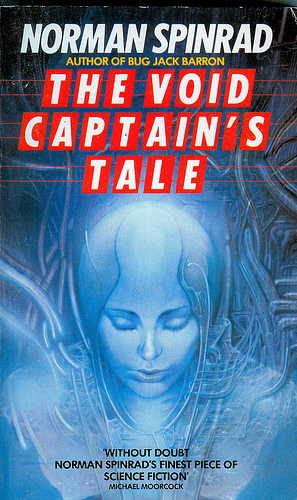
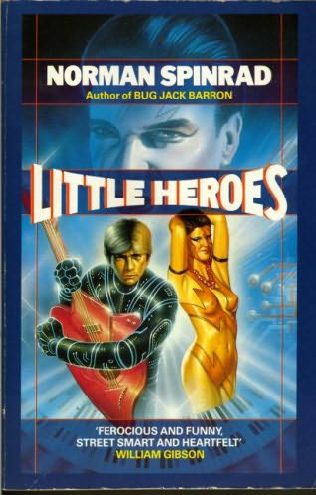
SPINRAD: Like asking someone with 20 kids which is his favorite. I suppose though, I have an A list: HE WALKED AMONG US, CHILD OF FORTUNE, THE VOID CAPTAIN’S TALE, LITTLE HEROES, BUG JACK BARRON…

As for what I would like to otherwise be remembered for:

He opened doors.

Many people walked through them.

Interview with Sharon Lee

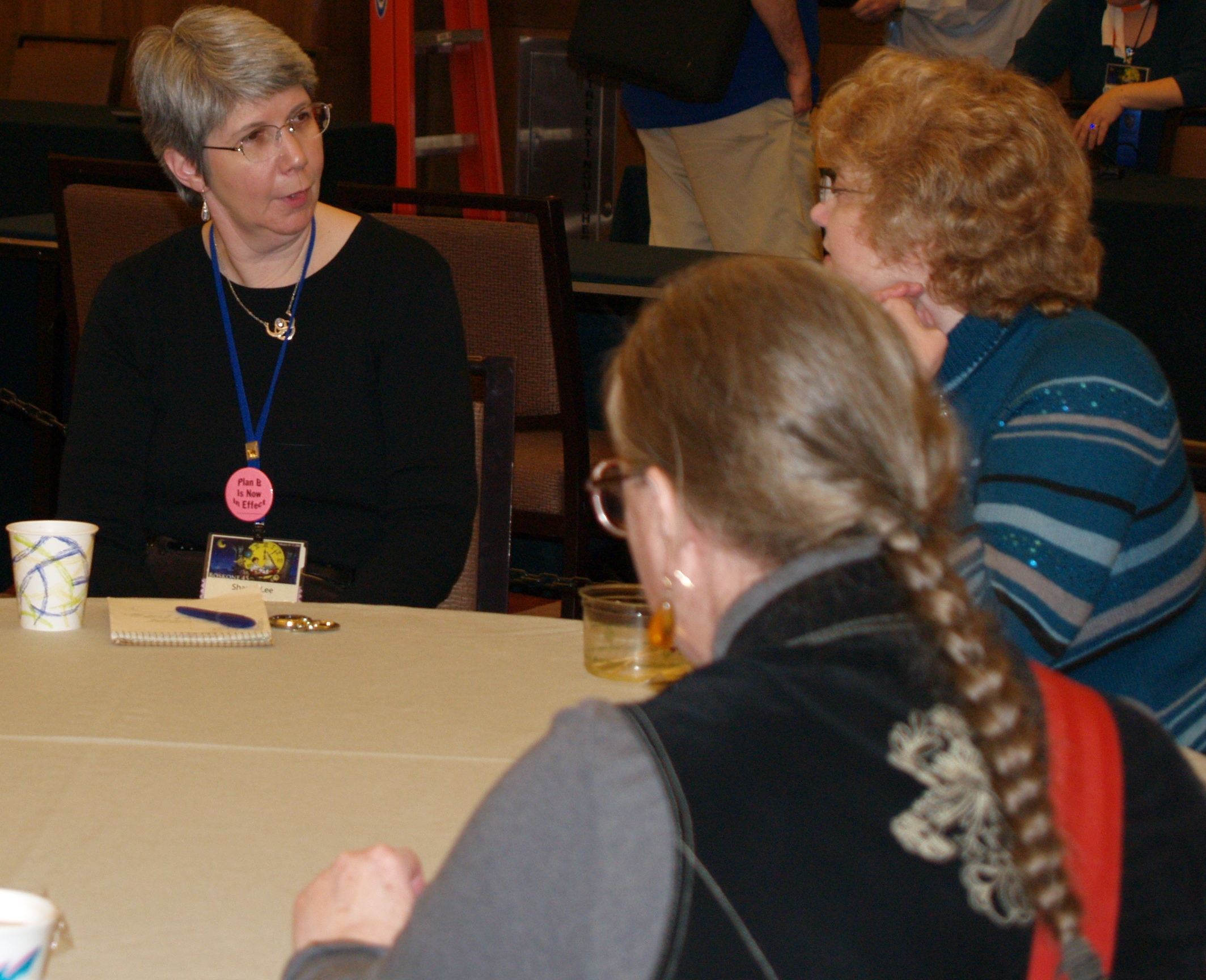
MICHAEL A. VENTRELLA: I am honored to be interviewing Sharon Lee today. Sharon Lee is, with Steve Miller, the co-author of seventeen novels, most of them set in the Liaden Universe (R). She’s been executive director, vice president and president of the Science Fiction and Fantasy Writers of America.

Creating believable and unique characters, free from cliche, is often a difficult chore. What process do you use to develop personalities for your characters?

SHARON LEE: Creating believable and unique characters is hard to do only if you concentrate on the notion that you-the-god-author are creating characters. The story isn’t about you, after all; it’s about them. If you approach a character as if you were meeting someone for the first time; ask them gentle, probing questions, display an interest in them, find out what they want — no, what they really want — it becomes surprisingly easy to write about them in a believable way, because you’re writing about people you know, not about ciphers you’ve invented.

I look at some of the “systems” for creating characters that are offered to writers, and I wonder if I’m the only person who had an imaginary friend when I was a kid.

VENTRELLA: Do you have a preference between writing science fiction or fantasy? Is one easier than the other?

LEE: There’s a false either-or here. In terms of the work required of the author, science fiction and fantasy are exactly the same. The work is: build a believable world, populated by characters people care about, who have [a] compelling problem(s).

I think, rather than fantasy or science fiction being easier or harder to write, that some stories are less and more challenging to tell. AGENT OF CHANGE, for instance, was fun and easy to write — we had the whole thing up and out the door in three months. Of course, it was our first novel; we didn’t know it was supposed to be hard. CARPE DIEM, our third novel, was difficult to write — looking back, that would have been because it was the first book where we actually had to buckle down and do continuity — which is, of course, key to writing a long series in the same universe and dealing with at least some of the same characters. Not that we knew that, then, either. We were learning by doing.

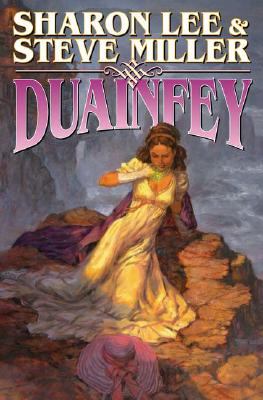
More recently the Fey Duology — DUAINFEY and LONGEYE — were difficult to write, not because they were fantasy, but because we were building the world around us at the same time we were becoming acquainted with the characters. And a book that I thought would be very difficult to write — MOUSE AND DRAGON — practically wrote itself.

VENTRELLA: How does your collaboration with Steve Miller work?

LEE: After seventeen novels and mumble-mumble short stories, I’d say it works pretty well, thanks.

Let’s see… We talk out the story-in-progress between us and role-play key scenes — kind out acting out the first draft. Usually, but not always, I do the first written draft — because I type faster, not because Steve is too Grand to undertake the work.

Some books are more one than the other of us. Because of that, and because there are two of us, each book that we write together has a traffic cop. The traffic cop is usually the one who brought the project to the table, and holds a third vote, in case of a tie. Instances of ties have been pretty low — I think we’ve each used our third vote once.

Because we do write character-driven fiction and because the story is about them, not about us, we tend to resolve most points of disagreement by studying on what the character would do and/or want. That exercise unties most knots — and it’s notable that, in the two instances where the tie-breaker was invoked, the point of disagreement was a plot issue.

VENTRELLA: Have you ever had something published and then regret it, wanting to make changes?

LEE: Certainly, there are books that I wanted more time with; that’s one of the trade-offs you make, when you’re writing to a contracted deadline, as opposed to writing on spec. Nobody cares if you take ten years to write a book on spec[ulation]– it’s your baby and you don’t have to let it go until it’s perfect. Or ever.

A book under contract, though — that comes with encumbrances: a deadline; a target word count; a place in the publisher’s schedule; a cover artist . . . A writer with a book under contract simply writes the best book she’s capable of writing at that point in her career, and within the constraints set out in the contract. Then, she does it again, with the next book.

VENTRELLA: Tell us about what you’re working on now. (Is that GHOST SHIP?) Give us a hint! We want a scoop here!

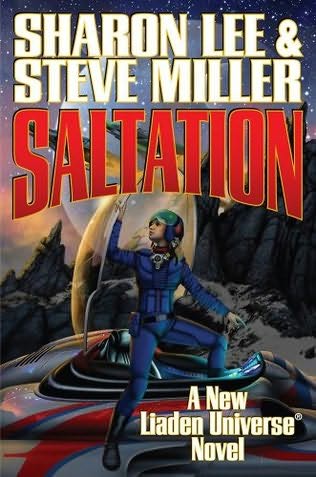
LEE: Not much of a scoop, I’m afraid, since I’ve been talking about it on my LJ, but — yes! GHOST SHIP; the long-awaited “book after I DARE” and, coincidentally, the “book immediately after SALTATION,” is our current writing project; it’s due at Baen in August. I don’t have a firm publication date, but surely not before spring or summer of 2011.

VENTRELLA: Even established authors need to promote themselves these days. What do you do in that regard?

LEE: We do interviews 🙂 We do book signings. We send out the Liaden Universe (R) InfoDump (an electronic newsletter), which has over a thousand subscribers. Hard-core fans can join the Friends of Liad, a social and discussion list has been running for, oh, a dozen years or more, I guess, most recently under the able management of Scott Raun.

Conventions. . .We go to science fiction conventions, yes, to promote our work, but also because . . . we like to go to conventions.

In terms of social networking, both Steve and I have Live Journal and Facebook accounts. I prefer LJ to Facebook, mostly because I’m an introvert and Facebook is just too “noisy.” Twitter doesn’t hold much appeal for me, as you might imagine.

However a writer decides to promote their work, the key is that they should enjoy it. If you (universal you) go to conventions, or do book signings — or tweet — and you hate it, you won’t be happy, and the people who have come to see/tweet/hear you will notice that you’re not happy, and will assume, y’know, because most people are nice, that it’s them. Plainly, you don’t want people to think that they’re making you unhappy; so you want to interact with them in an environment where everyone’s comfortable.

VENTRELLA: You had to trademark your Liaden Universe(R) to prevent its misuse. How did that come about (if you are free to discuss it)?

LEE: I can say that we had an internet stalker who was bent on mischief, and the best protection for our work was to trademark it. We made the decision because the laws governing trademark are in general more thoroughly understood, should the mischief have gone to court, than copyright.

I certainly don’t advise all authors to go to trademark; it’s a non-trivial expense and one’s trademark needs to be “protected” in ways that copyright doesn’t demand. And in most cases — absent an active mischief-maker — copyright is perfectly adequate protection.

VENTRELLA: Do you think the publishing industry is much different now than when you began? If so, how?

LEE: A lot of things are different about the business, but I’m not sure that the publishing industry has changed that much. Well, let me take that back. There are fewer publishers, with fewer imprints; fewer print magazines; the distribution system has imploded a couple of times; and the megastores want to dictate what gets published in order to maximize their profits.

OK, I guess the publishing industry has changed. Another change is the rise of smaller presses, to fill the void left by the consolidations of the bigger houses. And the willingness of practically everybody except the big houses to experiment with this internet thing for fun and potential profit.

VENTRELLA: What’s the biggest mistake you see new writers make? And what is the biggest piece of advice you would give to an unpublished author?

LEE: The biggest mistake. . .lack of research. Now, granted, the internet is full of disinformation, but it’s also full of good information. A new writer who is serious about becoming professionally published needs to find reputable sources that will teach her how to achieve her goal.

It may not be easy for a brand-new writer to figure out at first which sites are disreputable, or offering false information. Reputable sites include: The Association of Authors’ Representatives, Science Fiction and Fantasy Writers of America, specifically the author information page and Writer Beware.

The biggest piece of advice I would give an unpublished author . . . Have patience. And no, that is not easy for me to say.

VENTRELLA: Who are your favorite authors?

LEE: I think Laura Anne Gilman is perfectly charming; and I’m quite fond of Jim Morrow. Elizabeth Moon is lovely, and . . .

Oh . . . wait . . .

One of the downsides of pursuing a career as a writer is that writing cuts into your reading time. I used to have a three-book-a-week habit. I still have the habit, but I don’t have the time to indulge it.

Writers who influenced me, back when I was reading everything I could get my hands one, like a one-woman locust swarm? CJ Cherryh, Isaac Asimov, Anne McCaffrey, Poul Anderson, Georgette Heyer, Ian Fleming, Dorothy Sayers, Daphne DuMaurier, Frank Yerby, Mary Stewart, Rex Stout, Paul Gallico, Elswyth Thane, Charles Dickens, Carl Sandburg, Agatha Christie, Samuel Shellabarger, Charlotte Bronte, Jane Austen, Thorne Smith, James Thurber.

To name a few.

Nowadays, I read new books when I can, but I’m too scattershot to have a favorite author to read. In the last year, the novels I’ve read that have really stuck with me as good reads were FLESH AND FIRE by Laura Anne Gilman, SHAMBLING TOWARD HIROSHIMA by James Morrow, THIRTEENTH CHILD by Patricia C. Wrede.

VENTRELLA: Why do so many authors have cats?

LEE: Because cats keep you humble.

VENTRELLA: And finally, of all your work, what are you most proud? For what would you like to be remembered?

LEE: LOL! I’m not done yet.

1

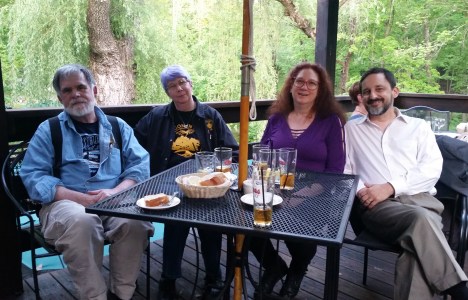
Dinner with Steve, Sharon, and my wife Heidi

Get a Good Editor!

One of the hardest things for creative people to do is to look at their own work objectively.

The final edits on my second novel (THE AXES OF EVIL) are now complete, and I am very grateful that I had an excellent editor this time to help me out. J. Thomas Ross, whose blog you should all be reading, tore apart the manuscript and now the book is 100% better.

Some of the edits were based on grammatical errors and phrasing, but any good editor should point those things out. No, what made the difference was having an editor who also pointed out exposition holes and other problems.

I can clearly see a situation in my head as I am writing it, but that doesn’t mean I have explained it well enough for someone else.

Here’s an example: In AXES, there is a scene where Terin, the main character, is trying to sneak into a barbarian village. He has obtained the aid of some rather incompetent goblins, and they are hiding in a food storage shed. Peeking out the window, they observe the scene and make their plans. This is important. A reader needs to understand the layout to not only get what is happening but also to build the tension and suspense as Terin leaves the building and heads toward the prison where his friends are being held.

I thought my description was just fine, but Judy (my editor) couldn’t see it. “Doesn’t the fence get in the way?” she’d ask. “And I thought the jail was the big structure at the end of the clearing.” I eventually emailed her a quick map of the town as I saw it, and that assisted in the rewriting. Hopefully no readers will be confused now.

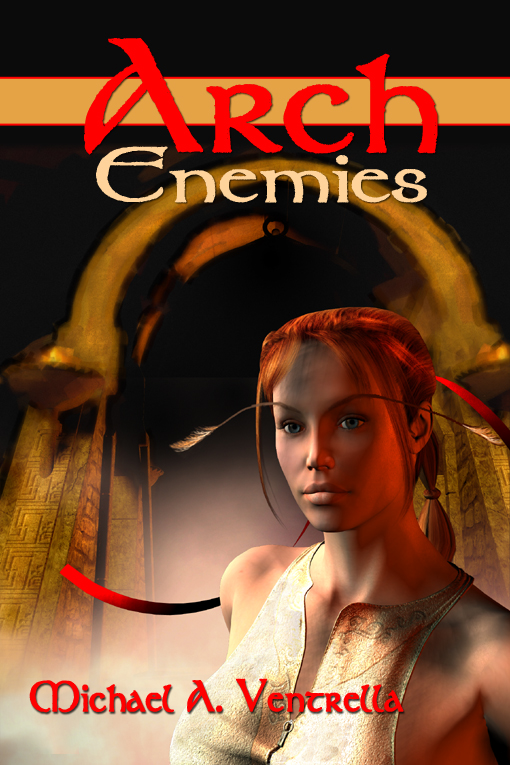
Another problem the original manuscript had was mentioning things that made no sense unless you had read the previous book in the series. Judy had not read ARCH ENEMIES, and this assisted me greatly, as I wanted THE AXES OF EVIL to be a stand-alone novel. We looked at the references and eliminated the ones that were irrelevant to the plot of AXES and explained the ones that were. In doing so, I tried as much as possible not to give away all of the plot to ARCH ENEMIES — what’s the fun in that? Still, some spoilers were unavoidable and necessary.

Having someone edit your work is tremendously important. If you’re receiving many rejection letters, that may just be the reason why. I have always had family and friends read my manuscripts before submitting them, but even then they may not catch everything. Someone who does this at least semi-professionally will make all the difference.

Interview with Christopher Hoare

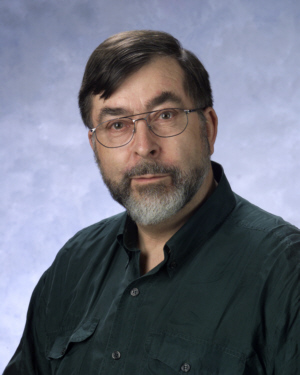
MICHAEL A. VENTRELLA: Today I am interviewing Christopher Hoare, whose books can be found with my publisher Double Dragon. Chris was born in London, England in 1939, immigrated to Canada in 1967, and became a Canadian Citizen in 1974 but we won’t hold that against him. He led an interesting life, studying around the world, serving in the Royal Artillery and then worked in oil exploration in Libya among other things. He now writes full time, living in Alberta at the eastern edge of the Rockies with his wife of almost 40 years, Shirley, and two shelter dogs.

Chris, there are so many new authors out there. What do you say to readers to get them to check out your books?

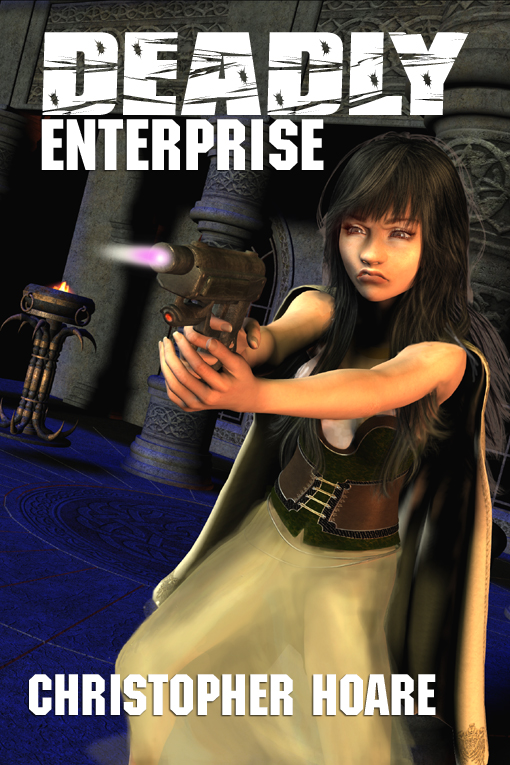
CHRISTOPHER HOARE: Gisel Matah, the protagonist of my Iskander series, is a woman who excels in a man’s world of action and danger, driving stories that women may find a refreshing change from being treated as sidekicks or helpless targets. She becomes the top security agent for her people when the small group of moderns are stranded in a 17th century world.

VENTRELLA: How did you decide to make the main protagonist a female?

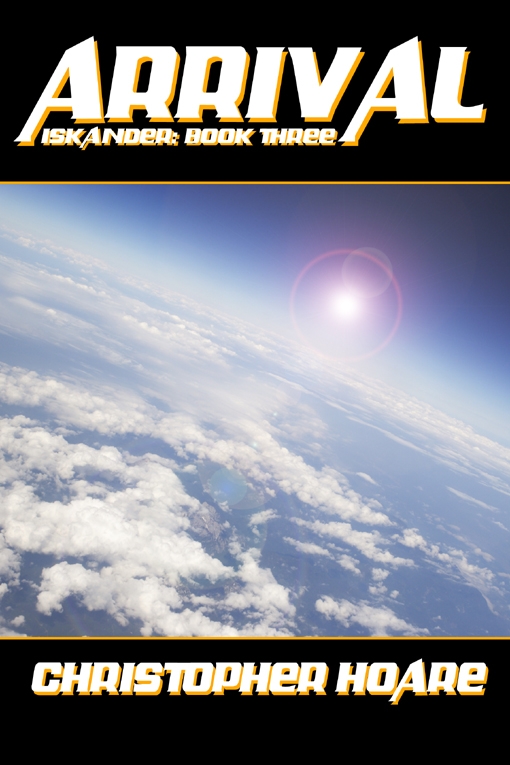
HOARE: I picked my strong and reckless female protagonist to oppose the relegating of women into accidental and amateur roles in action adventure fiction. I felt that women readers would enjoy one of their own who could stand with all the James Bonds and Rambos out there. I have heard skepticism about parts of the early stories where the young Gisel becomes the only person in the situation with the skills to take the lead, but partly because of her age. They query her action because they relate it to our society, that keeps the young in immaturity far longer than earlier societies did. I write such scenes with the age justification for her position carefully buttressed. For example, at 16 in ARRIVAL, she is picked to be Colonel M’Tov’s assistant in training a small group of parachutists because of her gymnastic experience; she then becomes the only person with the technical understanding to lead them on the operational jump when M’Tov breaks an ankle in a training exercise.

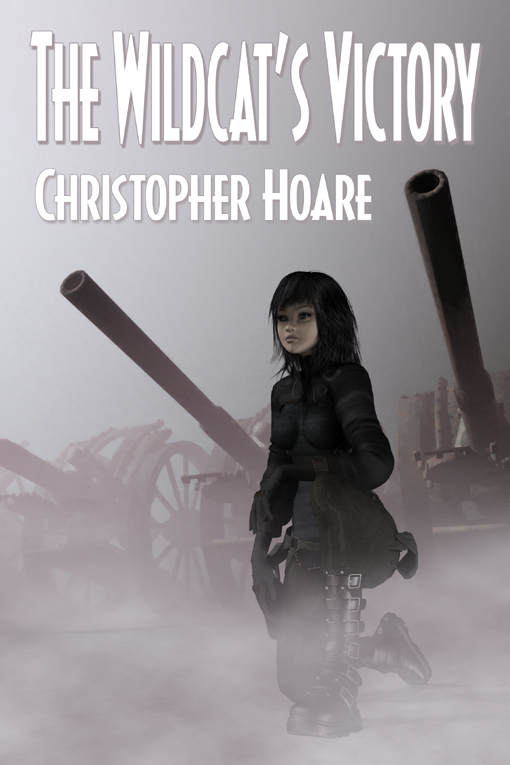
My next release is due to come out very shortly. THE WILDCAT’S BURDEN is a plunge into a dangerous writing minefield – I have Gisel both pregnant and moderately active as the governor of a rebellious city. The mothers in my writing group felt I’d mostly succeeded in depicting her in the conflicting roles, but also added their expert advice into the states of mind she should experience. The final crisis naturally takes place during her confinement and so the novel ends with attacks on her and on the city, while the plans she has prepared for the situation must unfold unattended. Another writer admitted she had a character in a fantasy give birth on a battlefield, but wouldn’t risk it again. We’ll see if readers accept this story.

VENTRELLA: What are you working on next?

HOARE: The novel I should be writing now instead of these answers. I have long wanted to write SF where the power of the mind is more important than the gadgetry. I think Lucas, in “Star Wars”, approaches this with the abilities of the Jedi, and I believe the ’50’s classics did as well in such stories as Alfred Bester’s jaunting in STARS MY DESTINATION (Tiger Tiger) and Asimov’s telepathic “Mule” in SECOND FOUNDATION.

The protagonist I introduce in MINDSTREAM is a retired professor of systems theory who has become abbot of a quasi-Buddhist monastery. He is able to access other beings – on this world, in deep space, and on other worlds – and, mentally, participate in or direct the action there. I blend a lot of the fascinating Tibetan Buddhist esotericism with String Theory in the background scenario. In the novel, Crumthorne and his assistant attend a NASA spaceflight convention to protect it against similar alien intrusion from adepts on other worlds, but it turns out that one of the Earth ‘attendees’ becomes a greater threat to all of them.

VENTRELLA: What’s the hardest part about writing?

HOARE: That’s easy – getting one’s work noticed among the cacophony of other media out there.

VENTRELLA: Have you had any formal writing training? Do you think that is necessary?

HOARE: You should have competence in the language you write in as a prerequisite. I’m appalled at the number of people who write although they have little knowledge of grammar and cannot spell; and even more appalled at those who self publish their writing without rectifying these inadequacies.

As to formal writing programs, I’m always skeptical about over-academicism because it can lead to rigidity and a failure to accept ideas that do not lend themselves to clever analysis. However, I attended a couple of university extensions that contributed greatly to my early development. A writers’ conference at NAU at Flagstaff in the late ’60s had an invited writer whose depth of analysis of fiction really opened my eyes.

VENTRELLA: How did you end up with your current publisher?

HOARE: I’m lucky to have landed with Double Dragon. Deron is supportive of ideas I sometimes spring on him, even when they turn out to be of less value than his own; he allows a writer to amass a growing body of available work without the fear of losing earlier writing to the deadly ‘shelf life’ demon of mainstream publication. Of course, that is also a function of e-publishing, where one is safe from being destroyed by the dreaded ‘returns’ policy.

I have been able to investigate the sales and distribution of POD vs e-books in my own way and learn from my mistakes (the only way I ever learn anything).

VENTRELLA: Do you have other long term goals to grab a more “mainstream” publisher?

HOARE: I would like to have a more mainstream publisher at some point, but I doubt I would find working with them (and they with me) completely successful. Really, the only thing they have that I covet is the greater exposure.”

VENTRELLA: Your short stories have also appeared in various collections, including TWISTED TALES. Do you find short story writing easier?

HOARE: Actually, I don’t like writing short fiction. The two stories accepted in TWISTED TALES II and III are the first short stories I produced since my early writing days. I doubt I will write more as I feel I was not able to get across the intentions I had in writing the stories. Possibly a fault of my lack of experience with the medium, but I really detest the literary genre that most short story writers write in.

VENTRELLA: Do you advise starting writers to concentrate first on short stories?

HOARE: Conventional wisdom when I started writing seriously said that one should always attempt to develop one’s idea first as a poem, then as a short story, and only later consider turning it into a novel. What rot. I do advise a developing writer that the shorter medium is a necessary foil when one is learning the essences of the craft of theme, tone, and plot. In a first novel one can easily lose all control over what one is writing – it certainly happened to my early attempts.

VENTRELLA: What’s your opinion on self-publishing?

HOARE: Would you recommend taking your first transatlantic flight in the captain’s seat rather than the passenger cabin? It requires an inordinate amount of hard work and luck for one’s self pub not to ditch in the ocean.

I do know a few good self published novels (other than Tolstoy’s and Dickens’) but they are exceptions. The writers were not first-time novelists and had some experience and craft knowledge to back their efforts. For a year or two I tried my hand at reviewing fiction and tried to give equal time to self-published works, but after receiving more than one that was actually painful to read I gave up on the exercise.

VENTRELLA: Do you tend to rely on outlines first or do you just plow right in?

HOARE: I much prefer to start with the characters and the opening question and write a first draft as an exploration. By the time the novel reaches the halfway point the ending should have made itself inevitable if one remains true to what has gone before.

There are times, when I’m not sure what should happen in a necessary scene or what comes next, that I will explore ahead with an outline or even an unorganized scattering of issues to determine the logical order which develops the story. I have never sat down and written a detailed outline of a story before starting to write as I feel that would destroy all the life – the illusion of real life happenings – that make the story flow.

VENTRELLA: Tell us about NovelPro.

HOARE: I learned almost all I know about writing during the five or six years I belonged. The partnership with some really brilliant authors and the hard work of extended whole novel critiques was more valuable than a conventional MFA. Not just my opinion, as I saw it expressed by other members who had MFAs.

If you can get in, I’d advise any writer to shelve their own writing ego long enough to submit to the group for awhile. Not everyone can do it. Some quit even before completing their very first novel crit – the be all, end all, of the NPro system – while others get kicked out because they become obstructive. I was cautioned a couple of times, and my posts put on ‘review’. I’m still in contact with some members and past members and have accepted that there will come a time when the writer has to accept that their own needs and the group’s no longer coincide. I still wish them all well, and wait for the time when a work from the group becomes a bigger success than THE DaVINCI CODE – as well as better written.”

In line with others in the NovelPro group I spent an inordinate length of time trying to perfect the query letter and the bit by bit perfection of the opening attention grabber to gain a top NY agent. Then I slowly began to realize that my writer profile ruled me out of their consideration. I’m a grouchy and opinionated senior who lives as far away from New York, and the New York mentality, as it’s possible to get without traveling through space. I tried to bend in the appropriate ways – I became a Toastmaster to hone my public speaking skills for those career building moments on camera, but by the time I became a CTM I realized I hated making speeches. I tried to convince myself that I could turn myself into a saleable ‘brand’ under the tutelage of a wise old literary agent, before I realized that I’m too much of a loner to fit the profile. I’ll go on writing my way and being me – and if that doesn’t fit with the NY concept – to Hell with them.

VENTRELLA: Do you have any specific advice you would give a writer trying to make it in the publishing business that they may not have heard before?

HOARE: I hope a few of the answers I’ve given above have pointed others to useful insights of their own. If there is anything I believe that I’d like to prove true it’s that in order to be a lasting writer – one who produces something that lasts – one has to be a contrarian. Not pretend to be one but to actually feel offended when life tries to squeeze you into a conventional slot.

My old physics prof at engineering college used to say, “If you want to have a brainwave, you have to have a brain, and you have to wave it.” I have absolutely no proof that these qualities will allow you to ‘make it’ in the conventional publishing business, but I assure you they will lead you to a more worthwhile life.

Interview with Tony Ruggiero

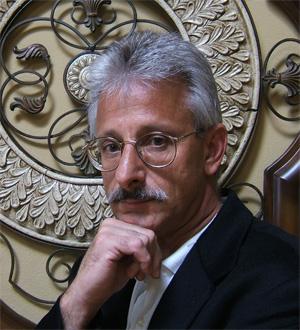
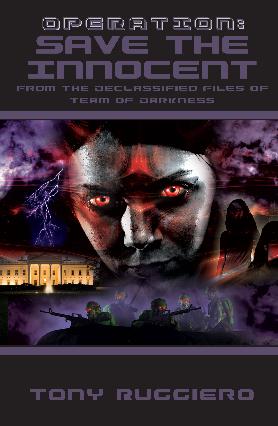
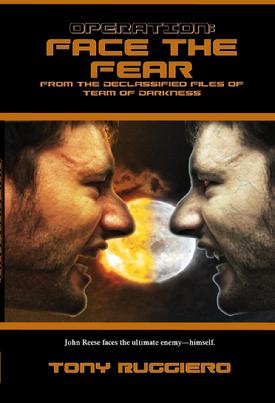
MICHAEL A. VENTRELLA: Tony Ruggiero writes science fiction and fantasy with an edgy realism designed to make people wonder: could it actually be true and could it be happening right now? His eye opening approach within the genre has run the gauntlet of responses from laughter to having people look over their shoulder more often. Either way, Tony is a very happy man. His published novels include OPERATION IMMORTAL SERVITUDE, ALIEN DECEPTION, and SATANIC CREATURES WANTED: HUMANS NEED NOT APPLY. His books are published by Dragon Moon Press (who will also be publishing a short story of mine soon as well). His web page is www.tonyruggiero.com and his email is aruggs@aol.com

TONY RUGGIERO: Hi Michael — I would like to thank you for this opportunity to talk with you as well as your readers.

VENTRELLA: One of the more difficult tasks authors have is convincing potential readers to try someone new. Tony, what do you say to readers to get them to check out your books?

RUGGIERO: If discussing my vampire series, I suggest that if they want to read something different in a vampire novel then they will want to look at the “Team of Darkness Chronicle” Series which begins with OPERATION IMMORTAL SERVITUDE. In this day of vampire stories that show a more “friendlier” vampire, I believe that my series (which has been described as “What If Anne Rice and Tom Clancy had a baby?”) has maintained the traditional lore of vampirism, yet added an approach that not only includes a military aspect, but also a point of view where the vampires see themselves as a creature of God and have a purpose in life to fulfill.

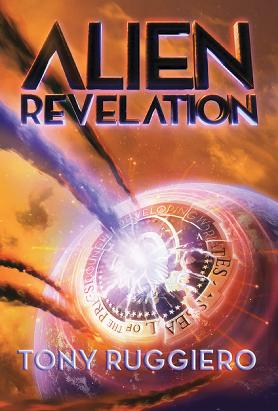
For my science fiction work, if you are a fan of space opera type stories, you will like my ALIEN DECEPTION and ALIEN REVELATION books. These are written in the classic space opera tone that has always been a favorite of mine, but I have added a bit of a twist by setting it in a current and real life scenario that involves Earth politics but also reveals that it doesn’t matter if it is alien or human politics, the same problems exist. It also begins as a light hearted story, but becomes precarious for our two protagonists, Greg and Sarah.

VENTRELLA: Do you think that your web page helps or do people generally already know you by the time they visit it?

RUGGIERO: I think it is a combination of both. We live in an age where information on the internet is a main way of communication especially for writers, so I think this is a good way to have people see their work. But I think it is also important to meet as many people as possible in person and that is where the life blood of science fiction conventions comes into play.

VENTRELLA: You are currently posting a work in progress on your web page, chapter by chapter. Tell me a bit about that story.

RUGGIERO: I was posting some chapters for a new novel called COVEN, which is a thriller-type novel that deals with witches in a modern day setting.

VENTRELLA: Have you completed the entire book and are just serializing it, or are you posting the chapters as you write them?

RUGGIERO: I stopped posting chapters because the book went into editing and my editor and I thought it was best to stop until we are done and then relook at it at that point.

VENTRELLA: What are the copyright considerations? Won’t your publisher consider it an “already published” work?

RUGGIERO: I plan to hopefully publish COVEN soon. If I do it with Dragon Moon Press, I have a very good relationship with the publisher and this will be a non-issue. The publisher realizes that as a small press, you have to work harder than a traditional press and find innovative ways to garner reader’s interest and if this means posting a good part of it on the web for free — then that’s what we need to do.

VENTRELLA: Have you had any formal writing training? Do you think that is necessary?

RUGGIERO: No formal training. I do have a master’s in English, but I believe that most of the writing skills are developed through practice. Three words of encouragement — write — write — write! I am a firm believer in learning through practice. If you have the desire to get formal training, then I am sure that it can’t hurt, but is it a prerequisite? I don’t believe so.

VENTRELLA: How did you end up with your current publisher? Do you have other long term goals to grab a more “mainstream” publisher?

RUGGIERO: Sure, I am always looking for that mainstream publisher. In terms of small press publishers, I have been with several over the past 10-12 years. I remember selling my first story for $5.00. My current relationship with Dragon Moon Press has been by far the best and I look forward to continue working with them in the future.

VENTRELLA: What’s your opinion on self-publishing?

RUGGIERO: It’s another option. If it fits your needs then you should do it. My only thought is that it should not be your first choice. Self publishing involves a cost to you and I think you should avoid that if you can. The distribution issue can also be another reason why you should look elsewhere first.

VENTRELLA: What’s next? What are you working on now?

RUGGIERO: I have two novels in the editing process: COVEN and a new science fiction novel called LAST CHANCE, which includes vampires and werewolves. I have sporadically been working on the next and last vampire novel called OPERATION END GAME. I have been teaching a full load so I am a little behind on the vampire novel which I hope to catch up with for a 2010 release.

VENTRELLA: What is your writing style? Do you tend to rely on outlines first or do you just plow right in?

RUGGIERO: Both and neither. I really don’t have a set pattern. Sometimes I just start writing and then develop an outline later. I also have a large dry marker board where I cram all those ideas on and then try to sort them out.

VENTRELLA: People say authors should “write what they know”. How has your military background influenced your writing?

RUGGIERO: It has certainly helped especially in the way that the vampires interact with the military. But it also helps with writing about diverse cultures and developing relationships. The fact that in the military also helps me to develop a good approach to the writing process by scheduling and setting time aside to accomplish writing has also been a big help.

VENTRELLA: What was your biggest mistake so far in trying to make it as an author?

RUGGIERO: Thinking that the writing was the hard part. It’s really all about selling your work to publishers and readers. Unless you’re a “name,” you have to constantly sell yourself and try and not come off as being too pushy. I think a lot of writers fail at this and they come on too strong and they alienate the reader.

VENTRELLA: Do you have any specific advice you would give a writer trying to make it in the publishing business that they may not have heard before?

RUGGIERO: Have hope and use common sense. Sure, always set your sights on that big contract, but don’t let disappointment make you file it away forever where no one will ever see it. I think it’s better to please 100 readers then to please none. If you do not make that big New York contact, then spend time in the small press realm. Dragon Moon Press has seen its share of writers that have made the transition from small press to big press so it is possible.

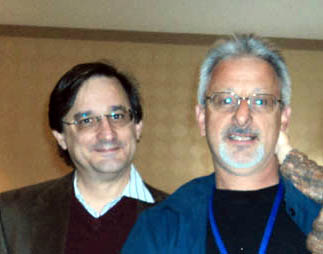
Me and Tony

Interview with James Enge

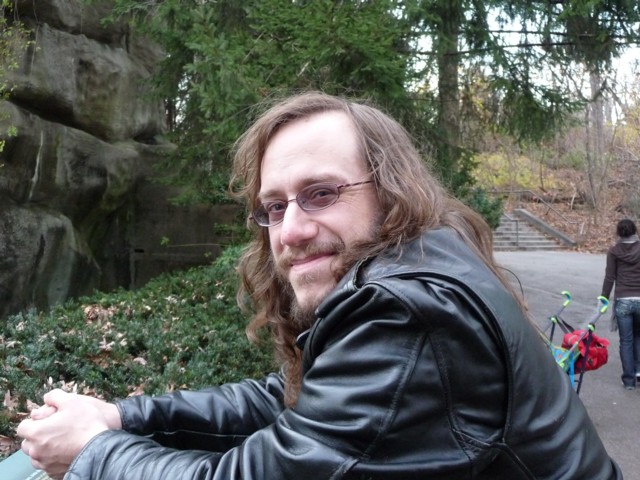
MICHAEL A. VENTRELLA: I’m pleased to be interviewing fantasy author James Enge today. James, how did you get started in the business?

JAMES ENGE: I’ve been writing since forever, but I was first published when I saw a newish magazine called “Black Gate” had started up. They specialized (and still specialize) in adventure fantasy at shorter lengths (i.e. shorter than a novel) and that’s what I was most interested in writing, so I sent them something. When the editor, John O’Neill, finally wrote me back after many months I assumed it would be another in a long string of rejections … but, in fact, he bought the story (“Turn Up This Crooked Way”) and told me he was interested in more. So that’s when it really started for me. That was in 2005, if I’m remembering right.

VENTRELLA: Creating a fantasy world is never easy, because it must be rooted in believability. What have you done to make your world both fantastic and believable? Have you found it difficult?

ENGE: I try to maintain a certain tension between free invention and concrete realism. My favorite bits in my own writing are physical descriptions which are probably invisible to everyone else. In my first story, the hero has occasion to peer through “a dark shoe-shaped patch of nothingness”. It makes perfect sense in the world of the story, but it’s not something that you’re likely to see on the street on your way to work.

VENTRELLA: Along those same lines, what steps have you taken to plant your characters in this world? In other words, many fantasy novels tend to have characters that behave like modern-day people, only in a different setting. How do you avoid that while still making the characters likeable?

ENGE: Someone called this the phenomenon of the “vegetarian Viking” — anachronistic modern attitudes grafted onto people in non-modern societies. It is tricky, because whenever the characters may be living, the audience is a modern audience and they’re not likely to laugh off chattel slavery or infant exposure (to name only two unsavory customs of the past). But, in my fantasies, it’s much more difficult to say what’s anachronistic, since it’s a secondary world. Writers can get themselves some oxygen but writing a different kind of society than lords and ladies and dukes and peasants: not every imaginary world has to be the Middle Ages with real dragons. And the actual Middle Ages were more complicated than some people think: one can plunder history for interesting ideas. Your standard Viking, for instance, would not have been a vegetarian… but he may have lived (if he came from Iceland) in a republic strikingly free from all that kingy junk we associate with medieval states. Likewise a Florentine banker (and so on).

VENTRELLA: Is religion in fantasy novels something to embrace or avoid, given the controversy it may bring?

ENGE: I think you have to tell the story that you want to tell, and if religion comes up, it comes up. Religion is a normative part of human society, so a society without any religious expression would need some justification … but that in itself might make for an interesting story or world. The novel I’m working on now is starting to feature one set of deities (the Strange Gods) very strongly. I didn’t expect it, but it’s been kind of interesting to watch it develop.

VENTRELLA: What’s your biggest gripe about fantasy novels in general?

ENGE: I can’t claim to have read a representative sample — there’s just too much out there. But I think the tendency to view multivolume narratives as the norm is really not good. The longer the narrative, the more difficult it is to bring to a satisfying conclusion. I’m not knocking George R.R. Martin, by the way: I read A GAME OF THRONES years ago and loved it. But I have resisted reading the other volumes in “A Song of Ice and Fire” since then: I’ll wait till he’s done and read the whole thing, and I have every confidence the end will live up to the beginning. But not everybody is GRRM. Also, he’d been writing for a generation, producing work of classic stature long before he tackled this heroic project.

VENTRELLA: What are your favorite fantasy novels? Favorite authors? Why?

ENGE: Tolkien, Leiber, Zelazny, Le Guin, Brackett, Vance. Zelazny has a great line in THE HAND OF OBERON. He actually speaks to his main character, Corwin, and he says that he’s writing “a philosophical romance shot through with elements of horror and morbidity.” I think that’s what all these guys do, to some extent, and that’s what I’m trying to do. I coined the term philorohorrmorbmance for it once, but it didn’t catch on for some reason, so I usually say I write sword-and-sorcery.

VENTRELLA: How important is an agent for a starting writer?

ENGE: Key. I mean, if what you want to do is sell stories to zines, you don’t need an agent. And small presses don’t usually demand that the writer be represented by an agent. But if you want to sell novels to even medium-sized publishing houses, I think writers mostly need an agent nowadays. More and more work that used to be done by publishers is being offloaded to agents — essentially, they’ve become the first readers for the publishing houses. I’m not saying there are no exceptions, but I know that my novel-writing career went nowhere until I got an agent (the great Mike Kabongo who runs the OnyxHawke Agency).

VENTRELLA: What is your writing style?

ENGE: I have to know how a story ends or I can’t make much progress on it. So I begin with the end and a beginning, and the stuff between I usually negotiate as I go.

VENTRELLA: My second novel comes out in a few months, and, like your work, it is a stand-alone story but set in the same world with the same characters as the first novel. One of the difficulties I had is in giving enough background for a new reader while not boring someone who is already familiar with the world from the first novel. How do you handle that sort of thing?

ENGE: It is hard. Mostly I’ve solved that so far by sending my hero, Morlock Ambrosius, to new places. But, in general, I think that writers have to develop a sense for what exposition is genuinely necessary for the story and what isn’t. A writer should always know more about his or her world than will fit into a story, and because the world is our creation we’re often eager to fill the audience’s ear with excessive detail. On the other hand, new and different worlds are one of the reasons people read sf/f, so what’s excessive for one reader will be just an hors d’oeuvre for others.

VENTRELLA: How has your educational background influenced your writing?

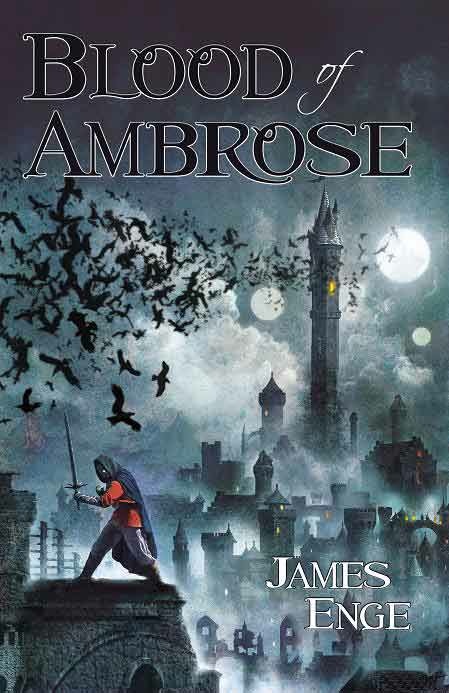
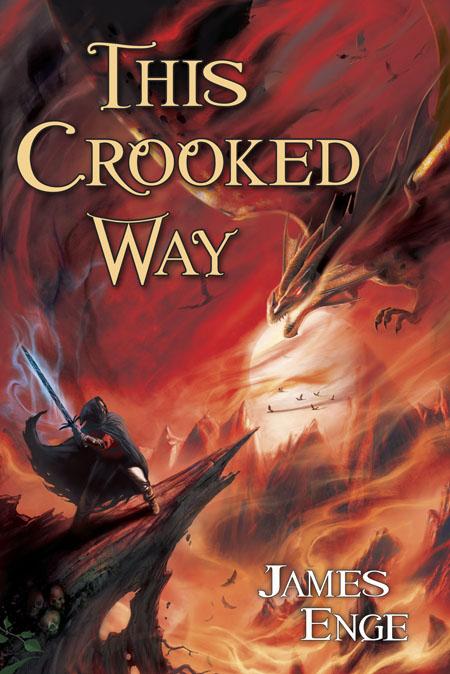
ENGE: I steal stuff from it constantly. My degrees are in Classics, and I studied a few medieval Germanic languages in school, too — all because I was (and remain) nuts about language, mythology and history (three fields that overlap more than one might think). This stuff is a tremendous storehouse for story ideas. For instance, Morlock’s move to defeat the Big Bad in BLOOD OF AMBROSE will seem a little familiar to people who know the myth of Hercules and Antaeus, and when Morlock is confronted by a stone beast in THIS CROOKED WAY he again takes a leaf (or limb) from Hercules’ book to save himself. The trick, when you steal something as blatantly as I do, is to make the borrowed element native to your work. You don’t need to know the Herc myths to read the Morlock stories, but if you do you’ll get an extra smile of recognition sometimes.

VENTRELLA: All authors these days spend a large amount of time on self-promotion, from posting a regular blog to producing podcasts to appearing at conventions. What’s your opinion on the relative value of each?

ENGE: I have no idea. There are so many forms of online community these days, one could spend a working week every week just keeping up. One thing I do feel strongly: online and offline communities may be useful for self-promotion, but they shouldn’t be used solely for that. The communities are meant to be conversational exchanges among people with common interests, and that’s really their primary value.

VENTRELLA: Do you advise aspiring novelists to begin with short stories?

ENGE: I would have said “yes” a few years ago. Now I’m not so sure: the markets are very different in what they want to see, and the forms themselves are diverging radically. When the standard novel was sixty or seventy thousand words and magazines regularly published novelettes and novellas of tens of thousands words, writers with the same skill-set could comfortably operate on book length and short-story length. Now stories seem to be getting shorter and novels are certainly getting longer (at least in sf/f). No doubt a credits-list of stories in reputable publications increases the likelihood that an agent or an editor will take a chance on a new writer. But if novels are what people want to write, maybe they should head straight for that — likewise with stories.

VENTRELLA: Of what work are you most proud?

ENGE: You force me to tell you! Okay, since I have no choice in the matter (not that I want one), I really like my second book, THIS CROOKED WAY. The story begins with Morlock’s horse, Velox, being stolen by an unknown enemy. In tracking down the horse, he has a number of adventures that turn out to be clashes with his veiled enemy. When unmasks his enemy, he finds that he’s already involved in a struggle that hinges on someone else’s life-or-death. The book is an homage to the episodic novels of sword-and-sorcery past (like Fritz Leiber’s Lankhmar books, or Vance’s Cugel books, or Moorcock’s Elric books). I got to sneak in some elements that one doesn’t usually see in a heroic fantasy, like robots (i.e. golems), the internet (a.k.a. Whisper Street) or alien species (e.g. the buglike Khroi or the wormlike dark gnomes). There’s an antiheroic dragon-fight that I’m particularly fond of. And there’s some emotional resonance for me in the over-arching plot, which deals with the death or non-death of Morlock’s mother. THIS CROOKED WAY has not, in fact, made a big splash, but even if it never sells another copy it’s the book I’m likeliest to point to and say, “That’s what I do; that stuff.”

VENTRELLA: What’s your opinion on self-publishing? Do you advise new authors to go this route, or is it better to not publish at all than to be self-published?

ENGE: Self-publishing is risky because there are so many people involved who really don’t have a realistic sense of their work’s merit. Everyone, but everyone, can afford to take a hint every now and then, and the self-publishing route usually involves trimming out all the gatekeepers who might say, “This bit doesn’t work” or “Your hero looks like a jerk here. Is that what you want?” The process of traditional publishing may keep some work from being published, but it unquestionably improves the stuff it does let into the light of day. I’m not saying that everyone involved in self-publishing is engaged in self-deception: it provides an outlet for lots of stuff, like local history, textbooks — niche work that would always have trouble with a commercial publisher but may still find an audience. But so much self-published fiction is so problematic that I think it’s a hard sell for most readers.

VENTRELLA: Any last minute words of wisdom for those wanting to break into the publishing business?

ENGE: Write the kind of stuff you’re interested in reading. This seems like obvious advice, but lots of people get involved in writing work they would never look at twice if it were written by someone else.

I’m not sure if those were words of wisdom, but at least they were words. Thanks for the chance to bend your and your audience’s collective ear!

Interview with Keith DeCandido

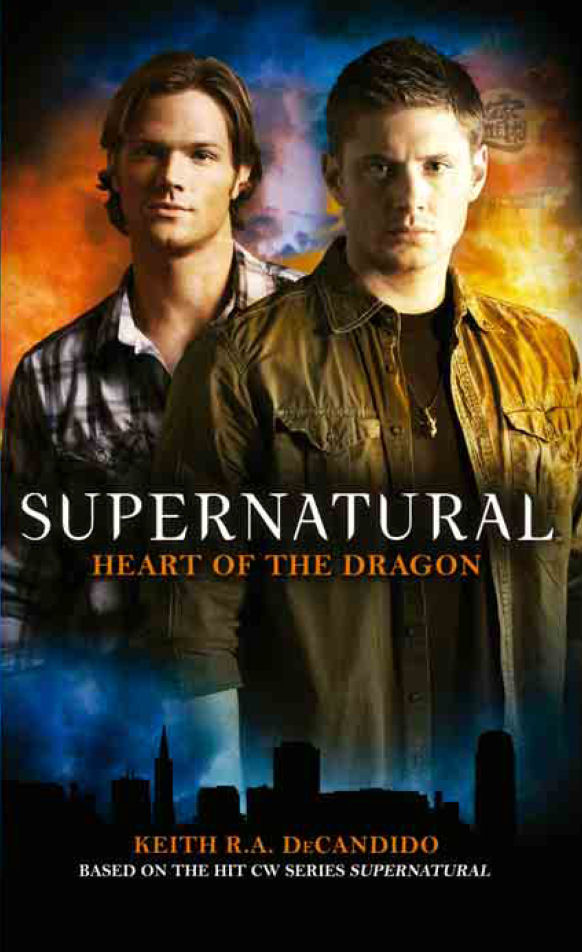
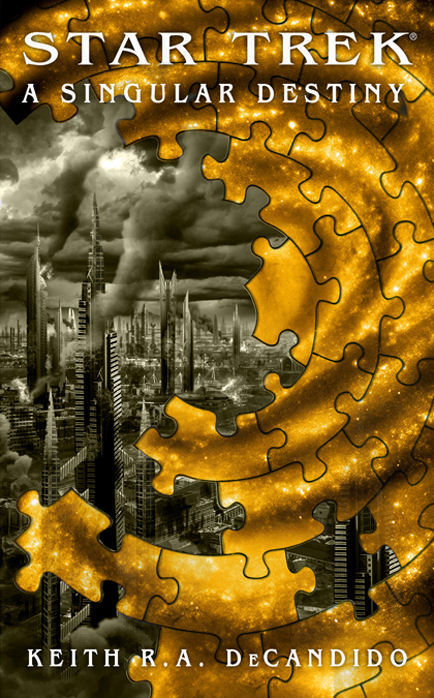
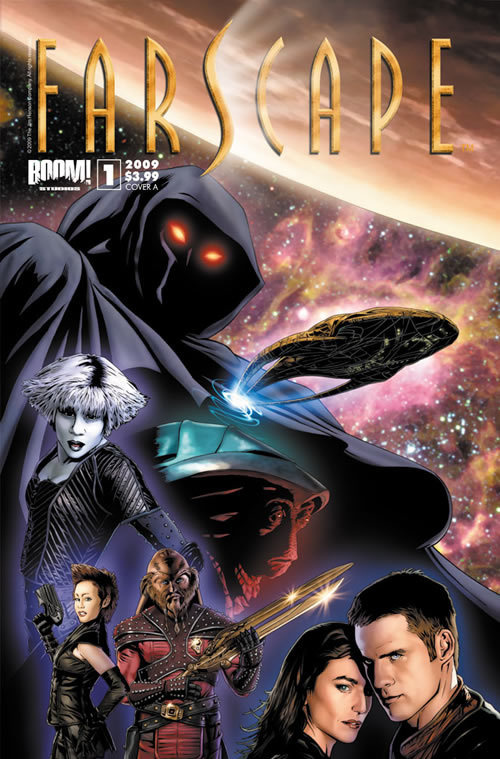
MICHAEL A. VENTRELLA: I’m pleased to be interviewing the very prolific Keith DeCandido, author of numerous novels, short stories, essays, e-books, and probably Bazooka Joe comics too for all I know. He’s best known for his Star Trek fiction, but has written tie-ins for other popular sci-fi and fantasy series as well, such as Doctor Who, Supernatural, Andromeda and Farscape, as well as comic books (Spider-Man) and videogames (World of Warcraft, Starcraft, Command & Conquer). He has also edited various anthologies, including OtherWere, Urban Nightmares, Imaginings, the Doctor Who collection Short Trips: The Quality of Leadership, and the Star Trek anthologies New Frontier: No Limits, Tales of the Dominion War, and Tales from the Captain’s Table.

Keith, you have made quite a name for yourself writing movie adaptations, novel tie-ins, and so on, from Star Trek to Resident Evil to Buffy to CSI. This seems extremely cool and fun. How did this all begin? You weren’t one of those slash writers, were you?

KEITH DeCANDIDO: No, I wasn’t a slash writer—nor, for that matter, have I written any Bazooka Joe comics. I actually got my start on the editorial side of the desk, as I was the genre editor for the late Byron Preiss from 1993-2000, where I edited a large number of tie-ins, most notably the Marvel novels that Byron co-published with Berkley Books in the mid-to-late 1990s. Through that job, I was able to get the opportunity to pitch, both for the Marvel line I worked on (someone else in the office edited me for that work) and for things like Doctor Who and Magic: The Gathering anthologies, which is where I made my first fiction sales. Eventually it snowballed into novel contracts, and now this.

VENTRELLA: Do you primarily write first and then try to sell your work or do you at this stage in your career get assignments for specific books?

DeCANDIDO: There’s never been any consistency to it. Some projects are generated in-house, some are suggested by the editor, some are wholly from the writer. Much of my Star Trek work was developed with the editor—either John Ordover or Marco Palmieri—though not all of it, but that’s always been a collaborative thing. On the extremes, my three Supernatural novels were all my own concepts, but all my work with Blizzard was very much directed by the licensor. It all varies. Sometimes people will come to me—that was what happened with Blizzard and Supernatural both—sometimes I’ll go to them—which is what happened with the new Farscape comics.

VENTRELLA: Do you find it easier to write with pre-established characters, and is that one of the reasons you can be so prolific? Or instead, do you find it somewhat constraining, in that you may anger fans who gripe and exclaim that their favorite character wouldn’t act like that?

DeCANDIDO: : I think it’s a false dichotomy. There are ways that writing your own characters is easier; there are ways that writing in another setting is easier. It depends in part on the type of story you’re trying to tell. I don’t find it constraining at all, though—it’s more of a challenge than a constraint.

VENTRELLA: Does your work get subjected to more editing and control since you do not “own the characters”?

DeCANDIDO: Again, that varies from license to license. Blizzard keeps a very tight hold on their universes—which is the source of their popularity, honestly, so that isn’t a complaint—but it also means that they do more hands-on work. On the other end of it, Tribune Entertainment was very hands-off with my Andromeda novel. With Star Trek, they tend to keep a firmer hand on whatever’s current onscreen—which currently is the JJ Abrams stuff—while letting the writers and editors be more creative with the ends of the franchise that are not being developed onscreen any longer.

VENTRELLA: Do you feel that there is any sort of bias against tie-ins in the book world? I am no expert, so correct me if I am wrong, but it seems to me that they often sell much better than traditional fiction, yet can be ignored by reviewers and awards.

DeCANDIDO: That bias has lessened in the years I’ve been working, which is good to see, though it still does exist. The lack of reviews is frustrating, but a bunch of us have gotten together to redress the award issue by creating our own. In 2006, Lee Goldberg and Max Allan Collins formed the first professional association specifically for us licensed folk, the International Association of Media Tie-in Writers. We also created our own award, the Scribes, which is awarded at Comic-Con International in San Diego every year. I’ve had three of my novels nominated for a Scribe so far, though with no winners, and I also was blessed with a Lifetime Achievement Award by the organization, along with Donald Bain and Alan Dean Foster.

VENTRELLA: Who is your favorite character to write for and why?

DeCANDIDO: Probably Worf from Star Trek. He’s always been one of my favorite characters, and I got to do a great deal of work with the character in his post-DS9 phase, as well.

VENTRELLA: And in a similar note, what’s your favorite Star Trek series and why? And how about that new film, huh?

DeCANDIDO: Deep Space Nine. It had the best writing, the best cast, the best characters, the most complex storytelling, and it really just did almost everything right. I enjoyed the new film for what it was, and I’m glad it’s revived interest in Trek, but it didn’t do much for me—but neither did any of the others. Star Trek has always, in my opinion, been far better suited to television than movies.

VENTRELLA: Have you ever been asked to write a novel based on a movie or TV show you didn’t like?

DeCANDIDO: When that has happened, I’ve found myself able to seek out and focus on the elements of the original that I do like. It’s worked wonders.

VENTRELLA: What’s your opinion on e-books and self publishing? Do you think aspiring authors should work with an e-book or POD publisher, or even self-publish?

DeCANDIDO: Well, eBooks and POD publishers and self-publishers are three entirely different things, and they only overlap in spots. I used to edit the monthly Star Trek eBook line, which were original eBooks published every month focusing on the Starfleet Corps of Engineers. I do not think that aspiring authors should work with such publishers until they’re at the point of last resort. It should be the final option, not the first one. Self-publishing is particular is fraught with difficulties because the need to print, publish, publicize, and distribute takes time away from doing more writing, which is what the writer should focus on. Finally, no author should ever under any circumstances work with a publisher who charges a fee to publish. Money flows to the writer, and any publisher that does so is a scam artist who is cheating you.

VENTRELLA: What’s the worst mistake you have made in your publishing career?

DeCANDIDO: Getting into it in the first place. This business is nuts…

VENTRELLA: And what’s the worst and best piece of advice you have received?

DeCANDIDO: PLASTICS!

5

Interview with World Fantasy Award winning author Tim Powers

Tim Powers has won the World Fantasy Award twice now, for LAST CALL and DECLARE, the Philip K. Dick award twice for THE ANUBIS GATES and DINNER AT DEVIANT’S PALACE, and has multiple Nebula award nominations.tim-powers

Tim Powers has always been one of my favorite authors. I look forward to every new release and move it to the top of my “Must Read” pile. My wife likes his work too, and turned him into a piece of dryer lint art which Tim purchased and now has hanging on his wall. (No, I’m serious — check out my wife’s page at www.HeidiHooper.com).

I met Tim at a convention a while ago and now it gives me great pleasure to be interviewing him.

MICHAEL A. VENTRELLA: Tim, one of my favorite books of yours is the pirate novel ON STRANGER TIDES. Let’s start with the big news then: How did this end up as the fourth Pirates of the Carribean film?

TIM POWERS: Disney optioned the book a couple of years ago for a projected fourth Pirates movie, and now it seems likely that the movie will happen! I imagine it’s the Fountain of Youth element in the book that they mainly want to use, but I haven’t talked to the script writers or anything, so I’m only guessing. In any case, I’m very pleased with this new attention being paid to a book I wrote 23 years ago!

VENTRELLA: Are you worried that the book may change too much upon being transferred into a film with already established characters? Do you have any say in this?

POWERS: No, I have no say in it, and that’s okay with me. I never feel that a movie must accurately reflect a book it’s based on — look at “Bladerunner”, or “To Have and Have Not”! Both were great books made into great movies, and the movies had very little to do with the original books. And obviously this movie can’t be based at all closely on the book, since the movie is using characters that are already separately established. I mainly want to be surprised when I see the movie!

VENTRELLA: Is it true that you get to have a cameo?TIDES

POWERS: No, that was an internet rumor. I’ve often said that if anybody were to make a movie of one of my books, I’d have three non-negotiable demands: (1.) That my wife and I get parts as extras in some crowd scene; (2.) That we get a free lunch from the catering truck; and (3.) that we get six of those cool jackets they make for the crew, with the movie logo on the back. This was, though, a joke!

VENTRELLA: Most of your novels follow a technique unusual for other writers, in that you take items from real history and find ways to make them interconnect in magical and fantastic ways that cause a reader to say “Aha! That makes perfect sense now!” when in fact it’s just make believe. How did this style come to being?

POWERS: Back in the mid-’70s, Roger Elwood proposed a series of books in which King Arthur was reincarnated at various points in history to save Western civilization. K. W. Jeter and Ray Nelson and I signed up to write these books, and I drew three places in history: 1529 (the Siege of Vienna), 1650 and 1810. Elwood’s project collapsed, which was just as well, but by then I had noticed the virtues of historical fiction! Such as — you get your exotic world ready-made, with its geography & maps, climate, government, currency, cuisine, mythology –! Even a lot of usable characters and events come with the package, all free. All you’ve got to do is look at the settings and the events and figure out a story that could be woven among them without knocking anything over. Find the inexplicable bits and connect the dots. It’s much easier than making up a consistent other-world, and I like to think it makes the supernatural developments more plausible, since they occur in places and among people that the reader has actually heard of.

VENTRELLA: Do you look for the connection first, or do you read a lot of history and biography and then see what jumps out at you?

POWERS: I approach it sort of like a paranoid detective. I read heaps of biographies and journals and whatnot, and my attention is polarized to look for things that don’t fit — which any biography has. And I ask myself, “Aha! What was really going on there?” And I make it a rule that nothing is a coincidence — if Keats did something on the same day that the King of Prussia did something, they’re secretly connected. And as I look for clues to the secret back-story, I eventually come up with one!

VENTRELLA: Has it ever not worked? Have you ever decided “You know, I’d love to do a book about X” and then after research, determined there wasn’t enough there?

POWERS: Not so far! I think anybody’s biography — Louisa May Alcott, Beatrix Potter — if it was thorough enough, could provide this sort of clues, this sort of evidence of a secret supernatural real story. Of course I’ve got to let the clues dictate it — it might turn out to involve vampires, or ghosts, or werewolves, or anything. If the research is going that way, I let my story go that way too.

VENTRELLA: What do you think of Dan Brown’s work? Do you think he is just copying your style, but not as well?

POWERS: Well I doubt that he’s copying me! That is, I doubt he’s read my books. But if I were ever (per impossibile) to collaborate with him, I’d tell him, “No, our made-up history has to be plausible enough to at least stand up to a quick search in the Encyclopedia Britannica!”

VENTRELLA: What gave you the idea for THREE DAYS TO NEVER? never

POWERS: It started with me noticing that, in all the photographs of Albert Einstein, his hair was white after 1928. So I wondered what had happened to him in that year — the biographies said he had some sort of stroke, or heart attack, or seizure, but I thought, “I wonder what really happened?’ So I started reading all the biographies of him, which led me to histories of Israel, and Charlie Chaplin, and Kaballah, and God knows what-all else. And of course at every turn I found odd details that couldn’t entirely be explained. One significant thing was this “maschinchen” or “little machine” that Einstein was working on for years; I eventually concluded that it must have been a time machine.

VENTRELLA: Were you a Chaplin fan before that? Or was it just research that led you to including him in?

POWERS: I wasn’t really a Chaplin fan, before I had to research him! Now I love his movies, especially “City Lights” and “Modern Times” and “The Kid.” Eventually I realized that the reason I had thought I didn’t like Chaplin was because I connected him with people like Lucille Ball and Carol Burnett doing imitations of him. Hardly fair.

VENTRELLA: You’ve commented before that you dislike it when authors try too hard to give messages or when readers try to read too much into the work. Have you been the victim of this, and how do you counter it?

POWERS: If people claim to find themes or messages in my books, that’s okay with me, as long as it’s nothing nasty. There may, for all I know, be themes and messages in them! But certainly I don’t have “things to say” in my stories — any themes that may show up are from my subconscious, not from any deliberate intention of my own.

VENTRELLA: What do you know now about the publishing industry that you wish you had known when you first started out?

POWERS: Oh — hard to say. My first publisher, Laser Books, surprised me by re-writing bits in my books, but nobody’s done that since. Really I haven’t learned anything that would have made me behave differently if I’d known it from the start! I guess I have no real complaints!DECLARE

VENTRELLA: What sort of advice would you give an aspiring writer that you wish someone had given you?

POWERS: Finish what you start, don’t do dozens of unconnected “Chapter Ones” that extend for only a couple of pages each. That’s kind of obvious, I know, but you specified what I could have benefited from hearing. To aspiring writres in general, I guess I’d say — read a whole lot, and not just in the field you want to write in and not just in the century or centuries you’ve lived in; and try to ditch your reflexive 2009 mind-set when you’re reading the old stuff. Don’t be cynical or ironic or tongue-in-cheek or Post Modern — that is, take your characters and their concerns at least as seriously as you take the elements in your own life. Don’t fret about the fact that your first drafts are dumb; they’re supposed to be. Print your stories out in the correct format and send them to editors — and start with the best publishers and magazines, don’t anticipate disappointment by starting with the lower ranks. Don’t self-publish.

VENTRELLA: And finally, what work would you like most to outlast you? What do you want to be remembered by?

POWERS: Oh gee — I suppose ANUBIS GATES or LAST CALL or DECLARE! I think those are my best. After I’m dead I won’t care, of course, but there’s something charming about the idea of somebody a hundred years from now finding a book of mine in a junk store and enjoying it, and trying to find more!