My 2015 Mysticon Schedule

On the weekend of February 27 – March 1, I will be a programming guest at Mysticon in Roanoke, Virginia. We went last year and had a blast and I’m happy to have been invited back.

The special guest this year is Sean Maher (from “Firefly”) but I’m more interested in meeting Peter David, whose books I’ve always enjoyed. MystiCon(My interview with him from a few years ago is here!) Also in attendance will be many of my friends, including some I have interviewed here on this blog: Danielle Ackley-McPhail, Gail Z. Martin, Mike McPhail, KT Pinto, Peter Prellwitz, Leona Wisoker, and Allen Wold.

And if you’re a fan of my Fortannis anthologies, you’ll find some of those authors as well (namely Davey Beauchamp, Danny Birt and Tera Fulbright, as well a few who will be in the forthcoming collection A BARD DAY’S KNIGHT — Angela Pritchett and the aforementioned KT Pinto).

Anyway, if you’re there, be sure to say hi! I’ll be on a bunch of panels and my artist wife Heidi Hooper will be judging the Masquerade competition and hosting some art panels as well.

Here is my current schedule:

The Top Animated Films of All Time (Friday 3 pm): A debate over the list of best animated films. Will our panel agree or will the discussion break out in fisticuffs?  With Billy Flynn, Stuart Jaffee, Darin Kennedy, Genesis Moss

Fantasy World Building (Friday 6 pm): Whether it’s creating entire new worlds or integrating your story into everyday life, fantasy writers can find inspiration in the smallest things that can lead to a whole new world of mystery and magic. How they do it, how they choose, how they are inspired, what fans love or hate, etc.  With R.S. Belcher, Liz Long, Gail Z. Martin

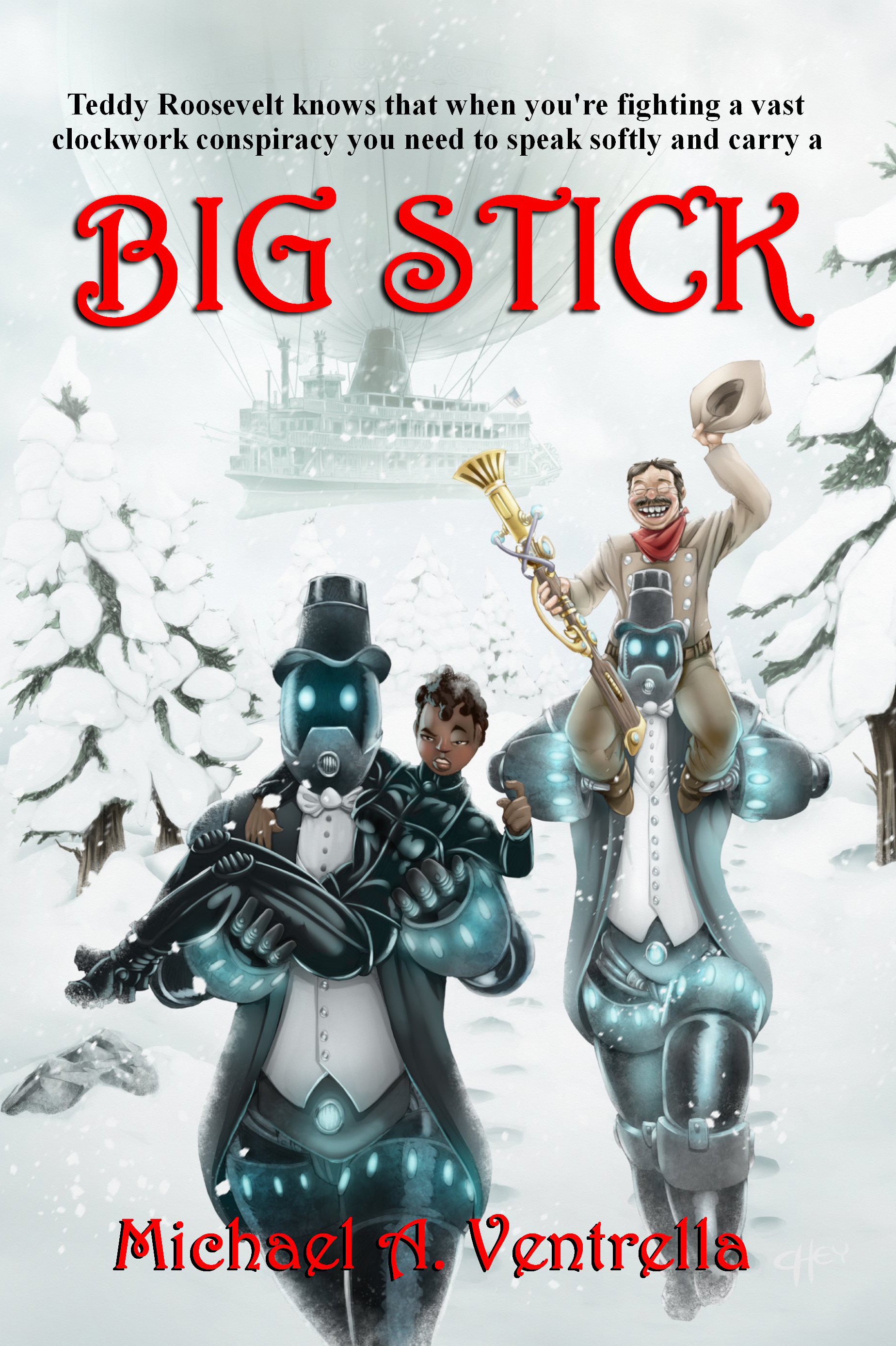
Author Reading (Friday 7 pm): Michael A. Ventrella’s humorous adventures are full of twists and turns. Come hear excerpts from his latest “Bloodsuckers: A Vampire Runs for President” and maybe his story about the Marx Brothers in Hell, depending on time.

All Dressed Up and Ready to LARP (Friday 8 pm): This panel is to give interested parties or parents an idea of what is involved in LARPing.  With Owen Anderson, Jestin Jeffers, Robert Sohl

The Eye of Argon (Friday 10 pm): The worst science fiction story ever written gets a reading by our brave panel as they compete to go the longest without tripping over a misspelled word or laughing uncontrollably. Audience members are also encouraged to take a chance. Can you keep a straight face, especially when the panel begins acting out the story?  With Peter David (maybe!), Gail Z. Martin, KT Pinto, Peter Prellwitz, Leona Wisoker

Tooting Your Own Horn With Social Media (Saturday 11 am): Done properly, self-promotion is an important part of building a career. Poorly executed, self-promotion can do more harm than good. Our panelists will discuss what works and doesn’t work along with these common questions: Do book-signings really help a small author? Are bookmarks and/or postcards effective at garnering attention? Does a blog help or hurt an author? Does an author have to have a website?  With Danielle Ackley-McPhail, Chris Kennedy, Liz Long, Steve Long

What Makes an Animated Film? (Sunday 11 am):  With CGI in almost every film, the distinction between live-action and animated film is changing.  Is “Guardians of the Galaxy” an animated film given that two of its main characters were animated?  What about the Star Wars prequels?  Does capture-motion count?  The panel will discuss various animation styles and try to determine how one can judge what exactly is an animated film these days.  With Emily Mottesheard, Christine Parker

Making Politics Work in Fiction (Sunday noon):  Real world political narratives are filled with cultural revolutions, passionate speeches about social change, war, and intricate, Machievellian plots. How can you portray them convincingly in your story? From noble houses in fantasy worlds to galaxy-spanning empires in SF, how do you make them believable and engaging without burying your reader in the intricacies of your setting’s political theory?  With Stuart Jaffee, Tally Johnson, Thomas Monaghan, Gary Rinehart

My Turn to be Interviewed

Derek Beebe interviews me on his blog this week. Check it out and leave a comment! (Bloggers love comments.)

Interview with author Jim C. Hines

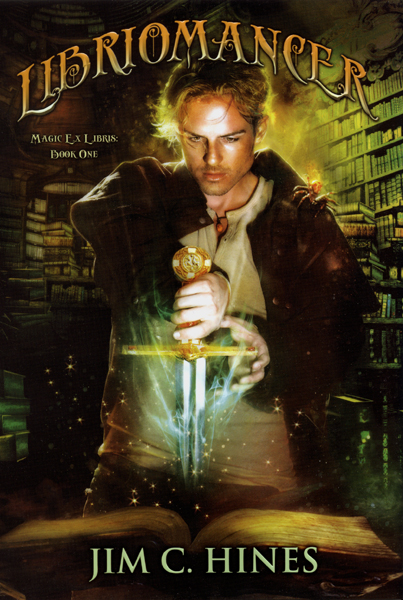
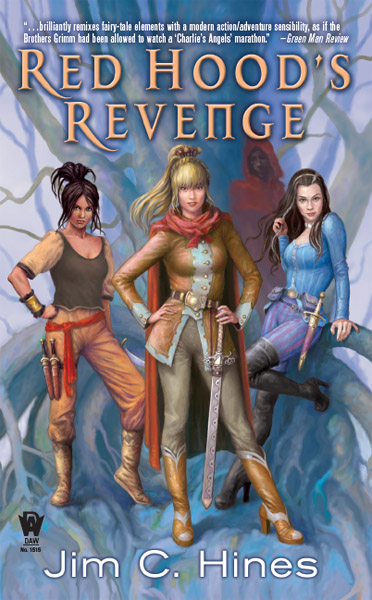
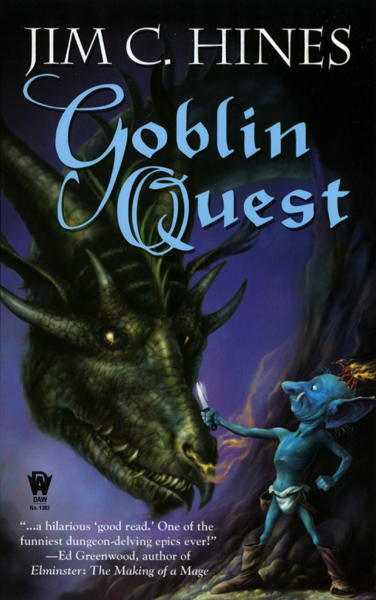
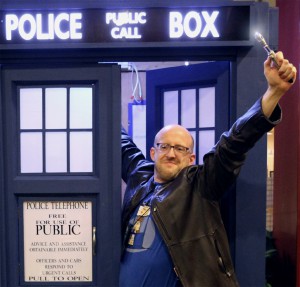
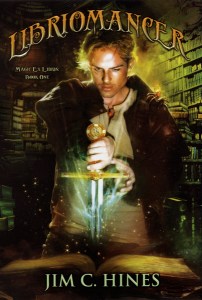
MICHAEL A. VENTRELLA: I am tremendously pleased to be interviewing Jim C. Hines today! Jim is best known as a fantasy novelist and the guy who did those gender-flipped SF/F cover poses. JCH-TARDIS-300x287His first novel was GOBLIN QUEST, the tale of a nearsighted goblin runt and his pet fire-spider. After completing the goblin trilogy, Jim went on to write the “Princess” series, four books often described as a blend of Grimm’s Fairy Tales with Charlie’s Angels. He’s currently working on the “Magic ex Libris” books, which follow the adventures of a magic-wielding librarian from northern Michigan. He’s also the author of more than forty published short stories. His web page is here.
Let’s talk about your latest news: The FABLE book, based on the best-selling game. How did that come about?

JIM C. HINES: The publisher contacted my agent to see if I’d be interested in writing the book. I’m guessing a lot had to do with my previously published work, particularly the GOBLIN QUEST series, which has some of the same fantasy and humor feel as the Fable game universe. My agent and I talked about the contract details, he went back and did a bit of negotiating, and voila – I got to write FABLE: BLOOD OF HEROES, which was a great deal of fun.

VENTRELLA: What kinds of limitations did they give you? In other words, how far away from the main narrative could you go?

HINES: I had a fair amount of freedom with the story. They wanted a book that would introduce the characters and the world, but I wasn’t novelizing the plot of the game. I had to set the story in the world of Albion, and to use the characters from FABLE LEGEND, but I was able to introduce my own villains and secondary characters, my own plotline, and even my own quirky little town.

VENTRELLA: What is it like writing a story that has already been written, with characters you didn’t develop? Did you find it liberating (“Hooray! I don’t have to spend months working all the details out!”) or confining (“Dammit, I want the character to do this but I am limited by what someone else wrote first!”) or somewhere inbetween?

HINES: I was hoping it would be a bit easier to write pre-existing characters, but as far as I can tell, nothing about writing ever ends up being easy. Libriomancer-LgLionhead came up with some interesting and entertaining characters. Sometimes it was fun to play with ideas I wouldn’t have necessarily come up with on my own. But there were also moments when I wanted to do something with a given character and couldn’t, because it didn’t fit with what Liongate had set up.
VENTRELLA: Assuming that this is like other games, your character could make different choices which could change the ending completely. How did you approach this?

HINES: I haven’t played LEGEND, but I’ve played some of the other FABLE games and read some of the previous tie-in books, so I was definitely thinking about the emphasis on choice. I tried to include some moments for the characters where they had a clear and important choice to make. Trust this character or don’t? Fight or flee? Kill or capture?

VENTRELLA: Who do you think the audience is for these kinds of books?

HINES: Well, we want it to appeal to fans of FABLE. First and foremost, I hope that all the hard-core chicken-chasers will approve. But if I’ve done my job well, you shouldn’t have to be familiar with the games to enjoy the book. If you like fantasy and quirky humor, you too can be part of the audience!

VENTRELLA: What will people who have already played the game get out of it?

HINES: Right now the game is still in beta testing. I don’t know if the book will come out before the game, or how that schedule will work. So it’s possible this could be the first real point of entry into FABLE LEGENDS world. For those who have played the previous games or participated in the beta, my hope is that they’ll get some insight into the characters, some exploration of Albion and its history, and a new adventure to enjoy.

VENTRELLA: Let’s talk about the “Goblin Quest” series. Where did the idea for that originate?

HINES: I guess I’ve always had a soft spot for the underdogs, and it’s hard to get more underdogged than the goblins. How many goblins got slaughtered in the Lord of the Rings and Hobbit movies, just for being in the wrong place at the wrong time? So I really liked the idea of taking this scrawny, nearsighted goblin runt and doing a typical fantasy adventure from his point of view, with all of his questions about fantasy logic and this so-called “heroism” stuff.

VENTRELLA: What inspired the “Princess” series?

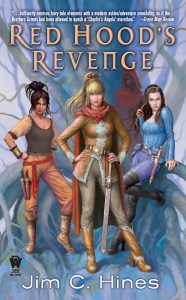
HINES: Those books were for my daughter, who went through a princess phase when she was younger. Red-Hood-LgSome of the movies, and a lot of the merchandise, all stressed that a princess has to look pretty and be rescued and so on. I wanted stories about princesses who teamed up and kicked butt and beat the witch and saved the prince. I also wanted to play with the older fairy tales, and to do something fun with it, like turning Sleeping Beauty into a ninja, or letting Snow White run around doing mirror magic.
VENTRELLA: I’ve blogged about humor in fiction, and feel that tooLibr many authors think that if your characters crack jokes then you can’t make serious points or make them ever seem to be in danger. Since humor is a part of your work, how do you approach it? How do you find the right balance?

HINES: Humor and serious go quite well together. Just ask Joss Whedon. The contrast between humor and fear/pain/tragedy can make both more powerful. You don’t want to let the humor undermine the tension, but that’s just a matter of practice and learning how to write it. Human beings crack jokes. Even in dark times. Especially in dark times. It’s one of the ways we cope. Completely stripping that out of a story feels dishonest and hollow to me.

VENTRELLA: You haven’t avoided talking about politics on Facebook and your blog. Do you ever worry that this may alienate readers?

HINES: It’s weird. A fair amount of what I talk about are things like sexual harassment and racism and sexism, stuff I’d have assumed most people agreed were bad, regardless of politics. But it’s the internet, so everyone seems to get assigned to one “side” or the other, and that’s the end of that. It’s definitely cost me some readers. But I think these are important things to talk about, and I’ve ended up with a bit of a platform to do so. It would feel like a betrayal not to do so. I try not to be a dick about things, but it doesn’t matter how polite and “civilized” you are. There’s always someone who’ll get pissed off at you.

VENTRELLA: How much of writing is innate? In other words, do you believe there are just some people who are born storytellers but simply need to learn technique? Or can anyone become a good writer?

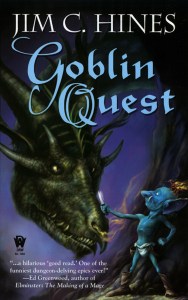
HINES: I think practice and skill are far more important and useful than talent. Looking back, I don’t know how much of where I started was actual talent vs. skills I’d picked up over my life, from reading and telling jokes and getting a pretty good education and so on. Goblin-Quest-LgBut wherever you start, pretty much all of us have to work to improve before we become Good Writers™.
VENTRELLA: What criticism of your work do you disagree with the most?

HINES: I try not to disagree with criticism, as a general rule. Once my book is out there, it’s up to the reader what they find in the story. Who am I to say they’re wrong?

That said, it annoys me to be told I only included a non-white or non-straight character as part of an “agenda,” or to push some mysterious “message” down people’s throats. Acknowledging the existence of people who aren’t exactly like me isn’t a message. And choosing to exclude people who aren’t like you from your stories is lazy, lousy writing.

VENTRELLA: Which of your characters was the hardest to write and why?

HINES: Lena Greenwood, the dryad character from the LIBRIOMANCER books. I’ve been working to get her character right for at least a decade. The way I wrote her and her backstory is problematic as hell. This series deals with the magic of books, and Lena was “born” as a sexual servant, one who gains in strength and independence over the course of the series. There’s a lot I’ve tried to do with her journey, but it’s so easy to mess up, and I know I’ve made mistakes along the line. For some people, she’s their absolute favorite character, but she’s been tough to write.

VENTRELLA: Writers are told to “write what you know.” What does this mean to you?

HINES: I prefer to flip it to “know what you write.” Do your research, and make sure you know what you’re talking about.

VENTRELLA: What do you do to avoid “info dumps”?

HINES: Mostly, I try to pay attention to when I’m getting bored while writing the story. There’s nothing wrong with exposition and info dumps from time to time, as long as it’s interesting. But the moment I start getting bored, that’s a clue to look more closely at the story and figure out why.

VENTRELLA: When going through second and third drafts, what do you look for? What is your main goal?

HINES: My first draft is when I get a sense of the book’s structure. I can’t hold an entire novel in my head, and outlines help, but they only work so-so. Cover2Once I’ve finished that first draft and know more or less how the book goes, I can go back and start developing the characters better, cleaning up plot problems, and generally delving deeper into the story.
VENTRELLA: Science Fiction doesn’t seem to be selling as much as fantasy these days, including urban fantasy and all the varieties. Why do you think that is?

HINES: Not a clue. I think it depends on where you look, too. Are superheroes science fiction? If so, then Marvel’s films are blowing away most of what’s out there. Video games? Paranormal romance vs. sword and sorcery? I try not to worry too much about what’s hot this year, and to just write stories I love.

VENTRELLA: Do you think it is important to start by trying to sell short stories or should a beginning author jump right in with a novel?

HINES: I was told you have to write short stories first, and I spent years doing that before really trying to write novels. That was Bad Advice. There’s no one right way to learn, and while short fiction used to be the “traditional” road for breaking into novels, these days I’d tell people to write whatever the heck they want. Enjoy short stories? Do that. Prefer books? Start writing them.

VENTRELLA: Do you think short stories are harder to write than novels?

HINES: I think they’re different. For me, short stories are much faster to write. You know, on account of being shorter. I like that. But you have some of the same challenges of characterization and worldbuilding and so on.

VENTRELLA: What’s your opinion on self-publishing?

HINES: I like anything that gives authors more options, and gives readers more ways to find stories they love. I could do without the religious crusades about the One True Way to publish, though.

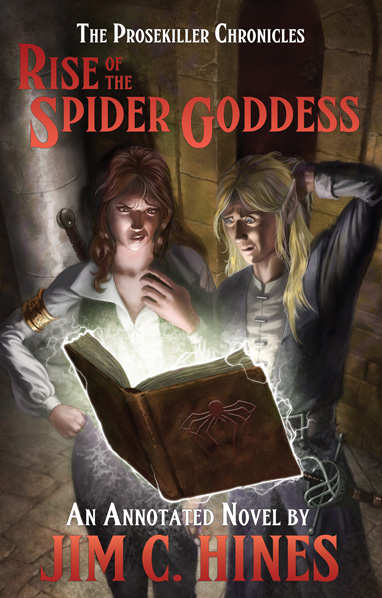
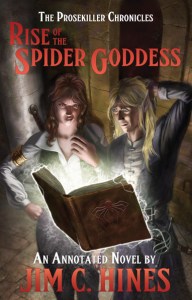
Most of my books are through DAW, a commercial publisher in New York. I’ve also self-published some electronic chapbooks, as well as a mainstream novel and a fantasy novel project that … well, let’s just say RISE OF THE SPIDER GODDESS probably wouldn’t have found a home at most self-respecting publishing houses.

VENTRELLA: In this market, with the publishing industry changing daily, how important is the small press?

HINES: I think the small impress has been and continues to be important. They have more ability to take chances and to take on projects that might not sell huge numbers, but are important and powerful nonetheless.

VENTRELLA: What sort of advice would you give an un-agented author with a manuscript?

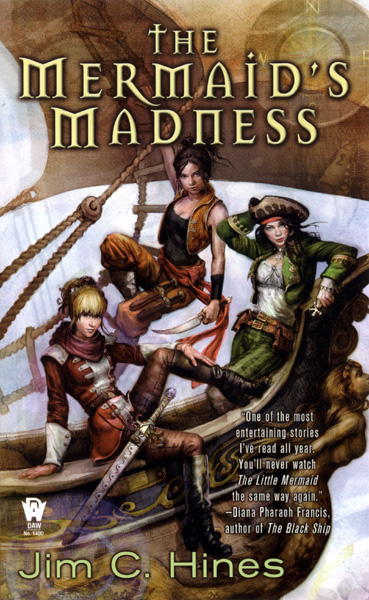
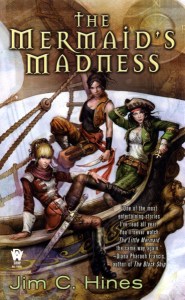
HINES: Finish the manuscript, and do some research. Learn how agented and unagented authors built their careers.Mermaid-Lg Learn the pitfalls of different paths. Read Writer Beware and other writing blogs and resources. There’s no one right way to do this, but there are definitely some wrong ways to be aware of!
VENTRELLA: What’s the worst piece of writing advice you ever got?

HINES: You have to write short stories before you can write novels.

VENTRELLA: What’s the best piece of writing advice you ever got?

HINES: I don’t know that it’s a specific piece of advice so much as a general attitude of persistence. Writing is hard, and there are times it will wear you down. Most of the successful authors I know are the ones who got stubborn and just kept writing.

VENTRELLA: What advice would you give to a starting writer that you wish someone had given to you?

HINES: Have fun. Find your own voice, and your own passion. I spent years trying to write the books and stories I thought I was “supposed” to be writing, but it wasn’t until I said the heck with it and started having fun with this goofy little goblin and his flaming pet spider that I really found myself as a writer. Coincidentally, that’s the first book I sold. Go figure.

VENTRELLA: Who do you like to read? Who are your favorite authors?

HINES: It depends on when you ask! Terry Pratchett, Janet Kagan, Nnedi Okorafor, Seanan McGuire… Heck, I’m on Goodreads. You can see my shelves here.

VENTRELLA: What projects are you working on now? What can we expect next from you?

HINES: I’m working on the fourth LIBRIOMANCER book, which is called REVISIONARY and should be out in February of 2016. I’m also finishing up the copy-edits on FABLE: BLOOD OF HEROES. Beyond that, I’m starting on INVISIBLE 2, which will be a collection of essays about representation in science fiction and fantasy. I’ve also got several anthology invites waiting for me to write short stories. So basically, I’m in no danger of getting bored any time soon!

VENTRELLA: With a time machine and a universal translator, who would you invite to your ultimate dinner party?

HINES: I’m not actually much of a party person, so I’d probably keep it small. Maybe David Tennant and my wife to start with. (So that my wife could meet David Tennant, which would make me the Best Husband Ever. And also because I’m a bit of a fanboy myself.) Janet Kagan, who was something of a mentor for me, but passed away before I could meet her in person. I’d also want to invite someone who can actually cook, you know? Oh, and maybe Gutenberg, because he’s one of the characters in my current series, and if I got him to sign one of those books, it would be a pretty awesome memento!

Interview with Bestselling Author Eoin Colfer

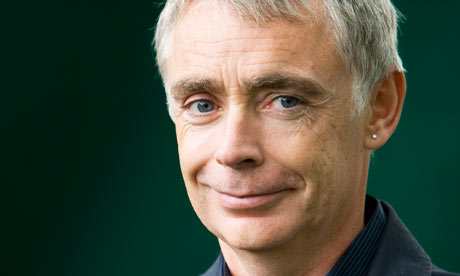
MICHAEL A. VENTRELLA: I am pleased to be interviewing Eoin Colfer today, whose “Artemis Fowl” books I’ve enjoyed for years (although I have not read THE FINAL GUARDIAN – I know, I know, it’s been out for a while now so I have no excuse)… Other titles include THE WISH LIST, THE SUPERNATURALIST, and the “Legends” series for younger readers. Eoin’s books have won numerous awards including The British Children’s Book of the Year, The Irish Book Awards Children’s Book of the Year and The German Children’s Book of the Year. The BBC made a hit series based on his book “Half Moon Investigations”. Eoin-Colfer-003In 2009, Eoin was commissioned by Douglas Adams’ estate to write AND ANOTHER THING…, the concluding episode of the HITCHHIKER’S GUIDE TO THE GALAXY series, which became a worldwide bestseller. Eoin also writes crime novels featuring Irish bouncer Daniel McEvoy. The third and final book in his WARP sci-fi series will be released in Summer 2015. Eoin is currently serving as Ireland’s Children’s Laureate and wears the medal at all times, even in the bath.

First: Will there finally be an Artemis Fowl movie? It seems that it has been in the planning stages for many years now… What’s the latest scoop?

EOIN COLFER: The Artemis movie has been in the planning stages for almost 15 years. There have been dozens of scripts, several directors and even casting search through Ireland. As far as I know the studios finally have a script they are happy with and it has been sent to a select few directors. So fingers crossed one of them will sign on the dotted line.

VENTRELLA: Where did the inspiration for Fowl come from?

COLFER: I have always been drawn to the dark side — or at least the characters who inhabit the dark side. I find these guys make interesting subjects. I have always preferred Captain Hook to Peter Pan and Hannibal Lecter to Clarice Starling. The specific inspiration for Artemis came from a photo of my brother Donal in a suit when he was making his first Communion. There was a devilish look on his face gave me the idea for a child criminal mastermind.

VENTRELLA: Many juvenile series never allow their characters to age or change. When creating Fowl, did you consider a long-term development where he gradually matured and realized some of his past mistakes or did that sort of evolve on its own?

COLFER: To be honest, I had a vague idea that I would like to do a series if anyone bought the first one. After that it went in stages. First I signed for three. 51TOGLEV4OLThen three more, then two singles. So each adventure was pretty much standalone, like the Bond books. I realized that the thread would have to be Artemis’s development and so I built in a little aging into every book. Sometimes a week went by between adventures, sometimes a year. By the end of eight books, Artemis had aged just over three years.

VENTRELLA: How much of the series was planned out in advance?

COLFER: I plan each book just before I start, but I do keep a file open for the next book into which I jot random ideas as they occur and hope that my subconscious knits them together. This actually works sometimes.

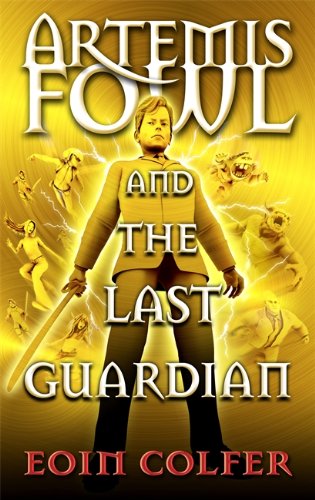
VENTRELLA: Is THE LAST GUARDIAN really the final book in the series or can you imagine coming back to the character? Or maybe a series with one or more of the other characters? (“The Butlers!”)

COLFER: That is a good idea. I might steal that. I am definitely finished with Artemis but I have always said that there are a few characters that could carry their own book. I was thinking of the Fowl Twins as they grow older and more nefarious, they could discover the fairy world all over again.

VENTRELLA: Speaking of final books that aren’t, what special problems did you face when writing the sixth book to the HITCHHIKER’S GUIDE TO THE GALAXY series? (For instance, having to deal with a cast that died in the previous book?)

COLFER: The major problem was my own insecurity. As soon as I agreed to it I wondered ‘why the hell did I do that?’ as did most of the internet. I never worried about the continuity of the storyline as Douglas had already invented the perfect solution: This is simply another parallel universe. It was his Bobby waking up in the shower solution, except more scientific(ish).

VENTRELLA: In AND ANOTHER THING… Arthur takes a backseat to Zaphod, who seems to be the main character in much of the book. How did you decide who to center the plot around?

COLFER: I have always loved Zaphod. He is so selfish and narcissistic, and exactly the kind of character who is a hoot to write. Also I thought the idea of celebrity for being outrageous worked really well in a modern context.

VENTRELLA: What is your favorite HITCHIKER’S version? Book? Radio show? TV show? Movie? (What did you think of that movie, anyway?)

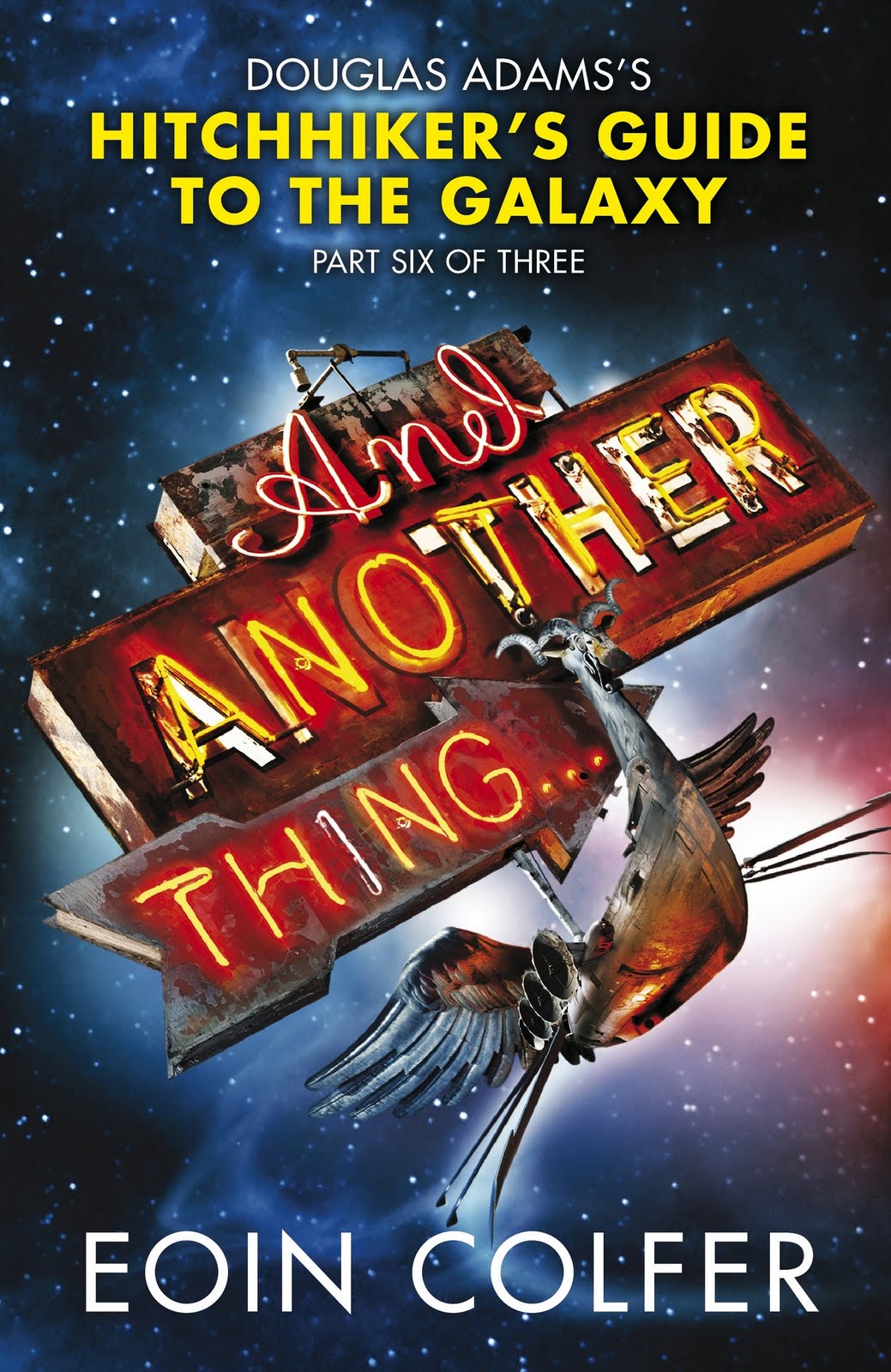
COLFER: My favourite books are numbers 1 and 2. But I have a soft spot for the radio shows and I Was lucky enough to be allowed to play the cow in the South Bank staging (maybe they were trying to tell me something). And Another Thing by Eoin Colfer I liked a lot of things about the movie. I thought the cast was wonderful. I wish they had put some of the original TV cast in somewhere though. Also at the end of the day, it wasn’t funny enough.

VENTRELLA: Will there be a seventh book? If not, why not?

COLFER: When Douglas’s family asked me to finish off the series they said that Douglas had wanted to end it more positively, and also they wished to bring the series back to the forefront of UK sci-fi. I don’t think it had ever been away but when AND ANOTHER THING came out, the entire series went back into the charts so I felt I had done what I set out to do. I don’t consider my book the official ending, I consider it a tribute that reminded people of this amazing series. I think someone with a profile should do one every five years or so, but not me. One is a tribute but two is trying to take over and no-one could ever replace Douglas Adams..

VENTRELLA: How is writing for graphic comics different? What limitations are there?

COLFER: I write them pretty much the same way with my writing partner Andrew Donkins, then he slices the story into picture sized chunks. I am spoiled really. I love graphic novels and we are doing our first original one this year.

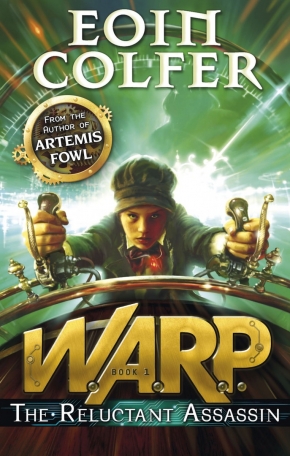
VENTRELLA: I’m working on a steampunk novel now, so I am interested in your new WARP series. What intrigued you about this story?

COLFER: I was inspired by a very old ITV series called “The Tomorrow People”. I loved the ides that people could arrive from the future armed with a bit of extra knowledge that would be a terrible advantage in the wrong hands and so of course I put it in the wrong hands. And as a reader and writer I have always loved Victorian London.

VENTRELLA: Why do you think steampunk is popular now? What is it that makes it appealing?

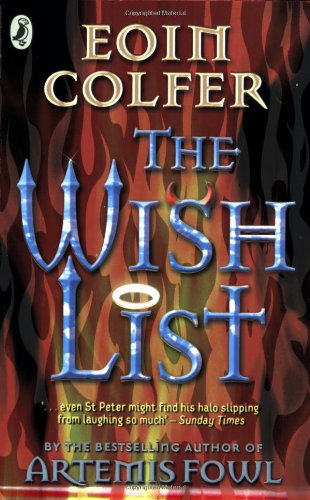
COLFER: I think these things go in cycles. It was magical fantasy for a few years, then vampires, then dystopia and steampunk is rising now. You just have to write what you write and avoid jumping on bandwagons because that wagon will have moved on by the time you get there. 51sqxUCwjpLI was very lucky that my first magical book, THE WISH LIST, came out just before the “Harry Potter” boom and so I was in the right place and the right time. Thanks JK.

VENTRELLA: How did you first become interested in writing?

COLFER: My parents were both writers. My dad was a noted historian and my mother has a women’s group who write stage plays, so there was no escape for me.

VENTRELLA: How did you get started? What was your first story or book published?

COLFER: My very first page to be published was an illustrated crossword for an annual when I was in college. I was paid £10. It was the last time I would ever be paid for artwork.

VENTRELLA:How much of writing is innate? In other words, do you believe there are just some people who are born storytellers but simply need to learn technique? Or can anyone become a good writer?

COLFER: That is a hard question. I think most writers really have to work at it. It took me 13 years of constant writing to get to a stage where I was worth publishing. There has to be some spark there I think to elevate the books to another level and I see that in other writers all the time, but never myself. Reading my own books during public readings wince and I even edit as I go.

VENTRELLA: What is your writing process? Do you outline heavily or just jump right in, for instance?

COLFER: I do an outline, nothing too serious, a few pages maybe and then jump in. Recently I find myself writing out of order and doing whatever excites me straight away.

VENTRELLA: Do you find yourself creating a plot first, a character first, or a setting first? What gets your story idea going?

COLFER: It is nearly always character with me. I think of an interesting protagonist and build the story around them, but very often it is the supporting characters who tend to take over.

VENTRELLA: Writers are told to “write what you know.” What does this mean to you?

COLFER: I think it is a good idea for the first book or two to stick to an area with which you are familiar or have some facility. After that throw off your shackles I say.

VENTRELLA: What do you do to avoid “info dumps”? 9780141341767-290x457

COLFER: I try to layer info as I go, and let the character’s personality speak through his/her actions. No-one wants ten pages of exposition, unless you can do it like Conan Doyle and make it a story within a story.

VENTRELLA: When going through second and third drafts, what do you look for? What is your main goal?

COLFER: I want to streamline and pare back the language. Less is more where writing is concerned unless it is specifically part of the character or narrator’s personality.

VENTRELLA: What criticism of your work do you disagree with the most?

COLFER: I think I found it hurtful when some reviewers thought Artemis Fowl was a dangerous book for children to read, as I thought it was quite tame. Luckily that opinion has died off mostly. I also felt wounded when I was accused of writing the HITCHHIKER for a payday when actually I wrote it as a labor of love and took a large pay cut.

VENTRELLA: Science Fiction doesn’t seem to be selling as much as fantasy these days, including urban fantasy and all the varieties. Why do you think that is?

COLFER: I think sc-fi will have its day again. Maybe Star Wars will bring it back. I think Dr. Who certainly helps.

VENTRELLA: Do you think it is important to start by trying to sell short stories or should a beginning author jump right in with a novel?

COLFER: That depends on the author. I think short stories are really difficult to write and not a practice ground for novel writing as people might think. It is up to the individual I think.

VENTRELLA: What’s your opinion on self-publishing?

COLFER: I was a bit condescending towards it, but I have a good friend who sells thousands on Amazon and keeps all the cash, so I am opening my eyes to its merits. But I think like traditional publishing, it is swamped by product.

VENTRELLA: In this market, with the publishing industry changing daily, how important is the small press?

COLFER: Small presses are vital for publishing quality works which might not have a shot in the blockbuster world. 61DzuBEFeSLI have two books with Barrington Stoke who do gorgeous print runs and I hope to do more with them. I could probably make a few bob more going with a big publisher but I love what Barrington do so much. I will have those editions forever.

VENTRELLA: What sort of advice would you give an un-agented author with a manuscript?

COLFER: I would tell them to work those first 50 pages till their fingers bleed and their brains ache, then find an agent.

VENTRELLA: What’s the worst piece of writing advice you ever got?

COLFER: I was told by a person in the industry once that I should never write fiction about minorities as I would limit my audience.

VENTRELLA: What’s the best piece of writing advice you ever got?

COLFER: A friend and co-writer once advised me to write the story that my brain could not keep inside for much longer.

VENTRELLA: What projects are you working on now? What can we expect next from you?

COLFER: I am editing the last WARP book which is coming out in June and working on a graphic novel with Andrew Donkin and Giovanni Rigaono. After that, IMAGINARY FRED, a picture book with Oliver Jeffers, comes out in October.

VENTRELLA: With a time machine and a universal translator, who would you invite to your ultimate dinner party?

COLFER: Freddie Mercury, Arthur Conan Doyle, Kate Bush, Kyril Bonfiglioli and Patricia Highsmith.

Submit a story for the next Tales of Fortannis collection

(Edited and updated 4/20/15)

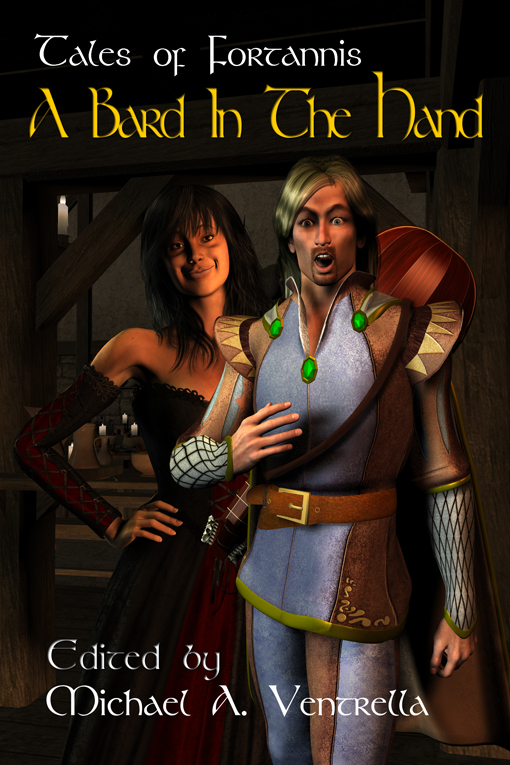
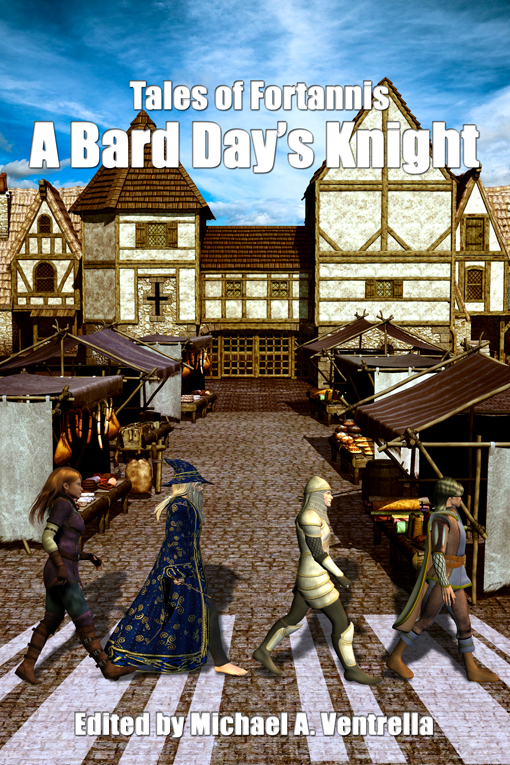
The third TALES OF FORTANNIS collection (“A BARD DAY’S KNIGHT”) has been released and now it’s time for me to begin work on the next. So I’m looking for stories.

BardInHand-510

About the collection: The TALES OF FORTANNIS series is published by Double Dragon and is available in paperback, ebook, kindle, ibook, and nook. Double Dragon is perhaps the largest science fiction and fantasy e-book publisher out there, and has been around for about fifteen years. They have a good reputation, pay royalties on time, and make sure the book is available everywhere (Amazon, Barnes and Nobles, all e-book distributors).

Previously unpublished authors are encouraged to submit, but should be aware that we ask for at least two years of exclusivity which can limit your ability to resell or republish the story later. (You can negotiate the exact terms of exclusivity with Double Dragon.) Once your story appears in TALES OF FORTANNIS, it will severely limit its future possibilities, including a future pay rate.

Note as well that while the book will be promoted in a number of ways, sales will not be huge. Don’t give up your day job. You should be submitting mostly for the exposure. As a standard warning that applies in all similar cases, you need to decide if publishing your work in e-formats and/or on the web, giving up your First Publishing Right for a token payment, is really what you want to do.

About Fortannis: Fortannis is the fantasy land where my novels ARCH ENEMIES and THE AXES OF EVIL take place. Your story does not have to take place in the same kingdom as my stories, and you can create your own kingdom and characters. It’s a high fantasy world with elves, dwarves, the mysterious biata, gryphons, goblins, and more.

Magic comes from the orderly progression of nature, and mages can learn to tap into that power to do basic spells that manipulate the earth, air, fire or water. Healing magics exist, as they speed up the body’s own healing process and tap into that power. Death magic also exists, because death is part of the orderly path of nature.

There is another source of power, and that is chaos magic, sometimes known as necromancy. This magic runs counter to the orderly progression and is used to harm and to do unnatural things like raise zombies and undead. This kind of magic is much easier to use and thus very tempting to those trying to learn the magical arts. Every spell has its chaotic counterpart which is stronger — you can either heal someone a little or hurt someone a lot. Chaos magic eventually corrupts the land and the mind of the user, and is illegal and frowned upon in decent society.

There are no gods, churches, or religions.

Keep in mind that although these are fantasy stories, you are not limited to telling tales of adventure, with knights fighting dragons and wizards casting powerful spells. abbey-bard-510The world is merely the setting for the stories. I am looking for a variety of tales, as you can see from the previous books. There is one story about someone trying to steal the recipe for his favorite pie. Another concerns three goblin children spying on the curious humans. A third involves a con artist trying to mislead a nobleman. The theme of the Tales of Fortannis series is the fantasy world, not the type of story. (To get a synopsis of the stories that have run in the previous books, check out the blog posts for A Bard’s Eye ViewA Bard in the Hand, and A Bard Day’s Knight.)

If you want to submit a story, I first suggest that you read one of my novels or one of the collections. It will help, and may give you some story ideas … and it should help prevent you from submitting a story idea that has already been done.

Submissions: Submissions are open for short stories of under 10,000 words with no minimum. (A good story should take exactly as many words as needed.) Unpublished authors are encouraged to submit, but will still face the same standards for submissions as the published authors. And of course, the less editing that your story needs, the more likely I am to accept it.

All stories should be double-spaced in rtf format with 12 point Times Roman font. There should be no spacing after the paragraphs. The first page must contain the name of the story, the word count, and your name, address, email, and phone number. Your cover letter should list any previous publications.

Note: You may want to send a proposal first to make sure your story won’t contradict another story and to make sure your idea fits within the world of Fortannis.

Proposals and inquiries must be emailed to michael.ventrella@gmail.com. DEADLINE: AUGUST 1, 2015.

The 2nd Pocono Writers’ Conference

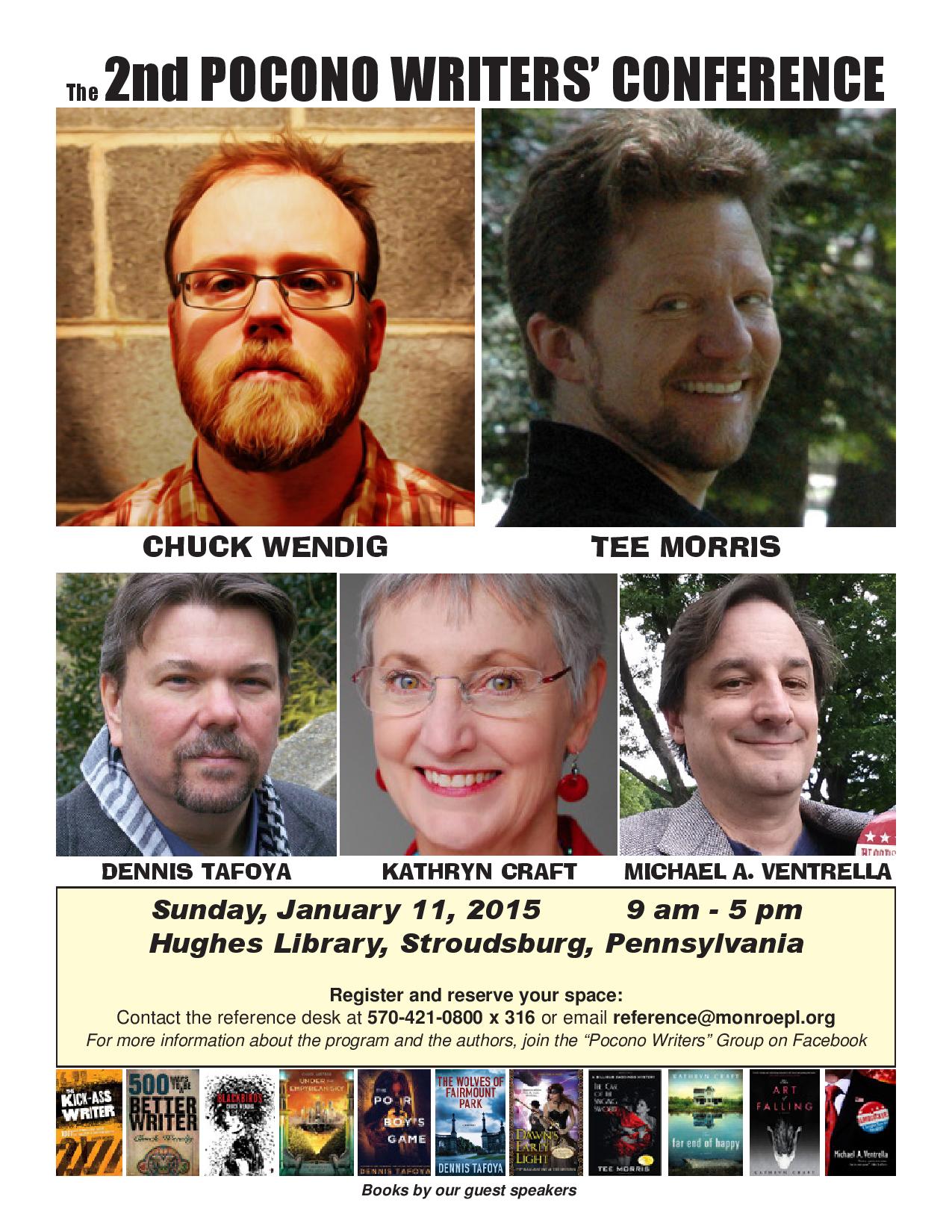
The 2nd Pocono Writers Conference is scheduled for January 11, 2015. We have some wonderful guest authors who will be making presentations and answering questions. Our Main Guest is novelist and screenwriter Chuck Wendig, who has written many advice books for authors.

PoconoWriters2015-page-001

(Click on the poster for a bigger version.  Then print it out and post it everywhere!)

Last year, we did a day-long panel discussion over a number of topics. This year, each author will give an hour long presentation and at the end of the day we will have all of them together for a question-and-answer period.

I will be the host and emcee but will participate in the final question-and-answer period.

We’re discussing among ourselves what the topics will be but are abiding by the Pocono Writers Group’s desire to concentrate on writing skills as opposed to the kind of issues that come up after the work is done (such as getting an agent, whether to self-publish, and so on). The Q&A section will address anything though.

Registration is free but space is limited. You can reserve by calling the library at 570-421-0800 x 316 or by emailing reference@monroepl.org

This will be held at the Hughes Public Library in Stroudsburg, Pennsylvania, about 80 miles from New York city, just over the border from New Jersey. It will start around 9 am and run till 5 or so. Lunch is not provided but there are plenty of places nearby, you can bring a lunch, and the library may be selling sandwiches.

To learn more about our guests, check out their web pages:

Chuck Wendig
Tee Morris
Dennis Tafoya
Kathryn Craft
Michael A. Ventrella

My turn to be interviewed

What makes a believable fantasy world? And is humor necessary for good fiction? I discuss these topics in my latest interview … please check it out!

http://www.leonawisoker.com/interview-with-the-lawyer/

Talent is an Asset

Maybe you shouldn’t be a writer after all.

I don’t want to discourage anyone from pursuing their dream, but not everyone can be successful in the world of art (and yes, writing is a creative art). snoopy-writing

I’ve thought about this a lot (especially when I look at my own work and get depressed). In one previous blog I wrote about how you need talent, hard work, and connections to be successful. You don’t need them in equal amounts — if you have great connections, you don’t need as much talent, for instance (which is the only way to explain the success of some writers, musicians, and actors).

But assuming you’re an average person who wasn’t born into a well-connected family, talent is pretty much a necessity. And by “talent” I mean that creative spark that gives your work uniqueness and originality.

There are just too many creative people out there who, well, aren’t very creative.

Come on, you know it’s true. They may have all the skills but there’s still something missing.

In the past few years, as I have attended writer’s conferences and readings and so on, it’s becoming clearer. There are so many aspiring writers who know their grammar rules and understand the concept of what makes a good story who just don’t have that extra something that makes a story real. And yes, during my moments of self-doubt, I worry that I belong to that group.

I don’t know how to teach talent. I sometimes think that is something you are just born with.

When I was in High School, I wrote a musical comedy that our drama club put on. It was a silly western called “But I’m Allergic to Horses.” I got my musician friends to play for us, and I also recruited some of the students from the music department to help. There was one girl who played piano who, if you put the music in front of her, could play it without a mistake — something that always impresses me. I never learned how to read music other than the very basics. When we practiced the songs, I would give her the chords and ask her to improvise, and she was absolutely lost. She had no creative skills at all, despite her mastery of the piano in all other respects.

And there are some writers like that. They write much better than I ever could, but their stories lack originality, surprise, excitement. They have the technical part of writing down pat, but their work is predictable and boring.

Obviously, what you need is mastery of both the technical part of writing and the creative part.

But at least one of those, you can learn.

Interview with Bud Webster

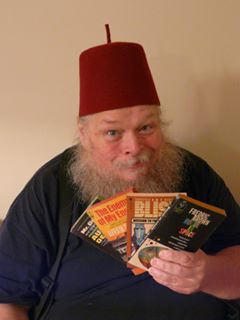
MICHAEL A. VENTRELLA: I’m pleased to be interviewing long-time friend Bud Webster today. Like previous interviewee Mark Waid, Bud was part of my old Dungeons and Dragons crew in college (Bud played a mercenary dwarf whose catchphrase was “When do we get paid?”) Bud We both worked at Peaches Records where we spent much of the day making bad jokes and entertaining the customers. We also took at least one class together that I remember — Animated Films (or something like that).

BUD WEBSTER: History of Animation, taught by the inestimable Steve Segal.

VENTRELLA: Yes indeed, thanks. Bud, as a voracious reader, you became quite the archivist? Anthologist? Expert? I’m not sure what word to use – how did that come to be?

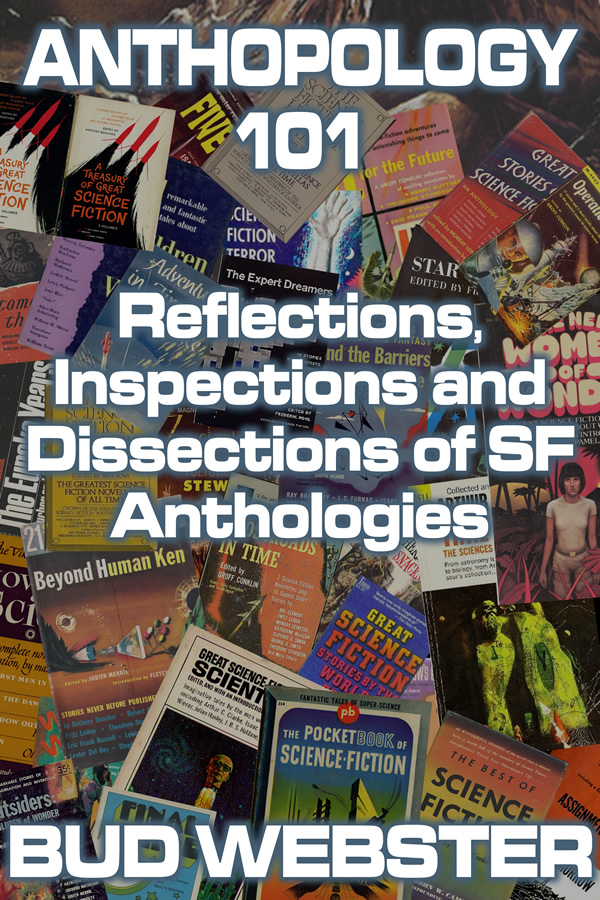
WEBSTER: “Anthopologist” is the word I coined. It happened the same way it did when I was collecting rocks, magic tricks and records. The true geek can’t shut up about his/her geekery, we’re compelled by our passionate interests to blather on about it to anyone who’ll listen (or even pretend to). I was lucky enough to have found outlets that spanned a greater audience than just a roomful at a party; first, I did some exploration in my own fanzine, Log of the Starship Aniara (later just Aniara) back in the early to mid ‘70s, then a few pieces in other ‘zines. None of that, of course, was for money, and was mostly just about books in general. I did, for instance, a long piece for Aniara in which I detailed the holdings of a special collection at the University of Virginia that originally belonged to an alum who was seriously into HPL. It wasn’t until 2001, though, that I actually did anything I consider serious with my heavy interest in anthologies. That’s when Peter Enfantino invited me to contribute something on the subject to bare*bones, the ‘zine he co-edited/published with John Scoleri. I did a fairly lengthy examination of Fred Pohl’s Star Science Fiction series for Ballantine, and had the chance to interview Fred (via mail, since he wasn’t doing e-mail at the time). He was very cooperative, happy to answer all my questions, and he continued to read the columns as they appeared elsewhere, sending me the occasional correction when they were needed. That column was reprinted in ’02 in David Hartwell’s New York Review of Science Fiction and that was the beginning of my writing about this stuff for actual, y’know, money.

VENTRELLA: Tell us about the SFWA Estates project.

WEBSTER: Well, SFWA had been tracking estates for years when I was asked to take it over in ’07, but it was catch-as-catch-can and some of the information they had was either outdated or inaccurate. I was on the verge of leaving SFWA after several events had transpired, and then-president Russell Davis and former president Michael Capobianco offered me the position of Estates Liaison not to placate me but to give me a legitimate reason to stay on and be productive. 1256I had already been able to track down a few estates through the network of email lists I was on, so it was right up my alley. It appealed to my sense of history, and it fit in with my interest in keeping classic sf and fantasy alive.

VENTRELLA: Have you had much difficulty in locating anyone?

WEBSTER: If you only knew. I have names on the list that I haven’t been able to track down since the Project was handed to me. Some of them are almost certainly legitimately orphaned – Frank Belknap Long and his wife left behind no family so his only “heir” is the State of New York – but others … Well, how easy is it going to be to find the heirs of George H. Smith?

VENTRELLA: Which writer do you think just hasn’t received the attention her or she should have (and why)?

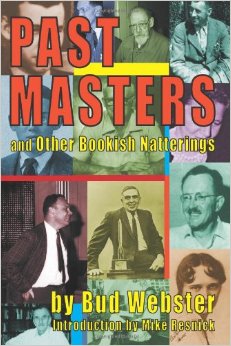
WEBSTER: How much space do you have? Seriously, there are dozens of authors whose work has been forgotten or unfairly ignored, not all of them old guys from the pulp days. Terry Carr, a fine writer as well as a prolific anthologist; Tom Reamy; Alfred Bester, who wrote two of the best novels sf has ever seen; Avram Davidson, Robert Sheckley and Richard Matheson, all of whom wrote brilliant short fiction; Cordwainer Smith, James Tiptree (aka Alice Sheldon) and R. A. Lafferty, whose work transcends any and all genre limitations… The list can go on for a long time. It’s the big reason I began writing the Past Masters columns.

VENTRELLA: Does one need to be an expert on classic SF to enjoy your essays?

WEBSTER: I’d like to think not. I don’t write them exclusively for fellow geeks, although they enjoy them too. I’m more concerned with piquing the interest of the average reader, with urging them to look for old paperbacks online or in used bookshops than I am in trading minutiae with my colleagues. I get as much pleasure from a note from a stranger telling me that they can’t wait to track down a copy of San Diego Lightfoot Sue as I do from a fellow historian saying, “Hey, I didn’t know that!”

VENTRELLA: Your fiction has received great reviews and awards as well, but you haven’t written that much of it. Do you plan to do more?

WEBSTER: Absolutely. I’ve recently placed stories with Orson Scott Card’s Intergalactic Medicine Show (“Fantasiestűck in A Major – A Flight of the Imagination in Three Movements” in #40) and The Magazine of Fantasy and Science Fiction (“Farewell Blues” upcoming in the January/February 2015 issue), and there are a couple more I’ve just sent out. 51LV1Irkn+L._SY344_BO1,204,203,200_I have plans to do at least one more Bubba Pritchert story, too. Let’s face it – writing is hard work and for some of us, non-fiction is not only a little easier but can pay better and faster. I pitch it, the editor greenlights it, I turn it in and get paid. I still have to throw fiction in over the transom like everybody else, and there’s no real guarantee. I still get rejections.

VENTRELLA: Speaking of science fiction, you had a role in the film “Futuropolis” (I missed my chance to do a cameo in it by being sick that day and I still regret it). I expected that film to become a cult favorite, something shown regularly at SF conventions, but it isn’t. Why do you think that it never caught on?

WEBSTER: Mostly because it hasn’t been available except as a video cassette. I’ve been trying to get Steve Segal and Phil Trumbo (the creators) to do a DVD, and they do think it’s a good idea; Phil mentioned recently that he’s even done a “Making Of” segment that would really add to the interest level. Maybe if we poke them enough…?

VENTRELLA: Let’s talk about fiction in general. What kinds of characters are you sick of reading about?

WEBSTER: Badly conceived and delineated ones. As long as a character can really walk and talk to me, I don’t care if it’s a sparkly vampire.

VENTRELLA: Do you think readers want to read about “believable” characters or do they really want characters that are “larger than life” in some way?

WEBSTER: Why can’t they be both? Yeah, readers have to be able to identify with and believe in characters, but there’s no real reason why there can’t be a little exaggeration as well. Bubba, for example, is an autodidact who knows what “autodidact” means; he’s down-home but intelligent. His persona tends to be a little loud and jokey, but I’ve tried to give him depth and seriousness as well.

VENTRELLA: What is your writing process? Do you outline heavily or just jump right in, for instance?

WEBSTER: Alfred Bester, one of my idols, couldn’t begin until he’d created a detailed outline. I tried it once; the story never got written because I’d scratched the itch too thoroughly with the outline. I’ve found that I need to keep a relatively comprehensive chronology as I go along, but I don’t outline beyond that.

VENTRELLA: Do you find yourself creating a plot first, a character first, or a setting first? What gets your story idea going?

WEBSTER: Depends. Sometimes I write to, sometimes I write from. Sometimes I have a specific idea, other times it’s an overall concept. I have had stories change as I wrote them, more than once. “Christus Destitutus”, for example, was originally envisioned as a satire, the sort of wry observation that Damon Knight and others used to write for Galaxy or F&SF. It turned into a dark and angry commentary on my own religious upbringing, something I honestly did not expect. I still find the story disturbing, in fact.

As a rule, though, I rarely start the actual process of writing until most of the story is clear in my mind. A lot of the time I even have the last lines right there in front of me. The-Joy-of-Booking Other times, well, it’s very different. I was doing research online one morning for my wife when I decided, just for kicks, to Google a small town not far from Richmond called Frog Level. Turns out there are two small towns in Richmond by that name, and that was the genesis of “Frog Level ≇ Frog Level”. That story wrote itself in four days, with very little rewriting.

VENTRELLA: Since we are on panels together at conventions all the time, I assume you think they’re worthwhile. Why do you find these to be a useful activity?

WEBSTER: Good question. Part of it is that in many cases, verbalizing helps me firm up my thoughts and make them workable. The exchange of ideas between the other panelists (as well as intelligent and well thought-out questions/comments from the audience) can lead me to reconsider my own opinions in a very real and constructive way. Plus I get to show off my vocabulary.

VENTRELLA: What’s your opinion on self-publishing?

WEBSTER: I’ve never had a problem with it in general, I’ve even done it myself. And there was a time when there were honest vanity presses who offered their services to people who wanted to self-publish family genealogies, poetry collections, regimental histories and the like. They made no promises of promotion, distribution, or best-sellerdom though; all they did was deliver a case or two of printed and bound books that the author was responsible for thereafter.

Is someone with a checkbook who Kinkos their own book and shows up at a convention demanding table space and signings and their own panel(s) a colleague of mine? Not necessarily, no. Anyone with a thick enough stack of credit cards can throw something together and run through their local copy shop, it takes a lot more than that. There are plenty of those who have proven to me that they are a colleague both through their own hard work as a writer, editor and publisher and though their obvious skills at promotion and willingness to go the literal extra mile to travel on their own dimes to conventions, festivals, conferences and bookshops all over the place for the possibility of a couple of dozen more sales. Why? Because that’s what it takes to market your own books, and that’s what it takes for me to take them (as well as the current conception of self-publishing) seriously – hard work.

VENTRELLA: In this market, with the publishing industry changing daily, how important is the small press?

WEBSTER: It is absolutely vital. It’s always been important, especially back in the days of Gnome Press and Arkham House, but now with the majors being inundated with more and more crap that they have to wade through to get to the Good Stuff, the small presses make it possible for a new author to reach an audience larger than they could reach on their own. If the press has a good, solid rep, it adds a cachet to the author and makes it more likely that sales will be even better: “Hey, there’s a new book out from HomminaNomicon Press! I really liked the last two, so I’ll try this one.”

VENTRELLA: What sort of advice would you give an un-agented author with a manuscript?

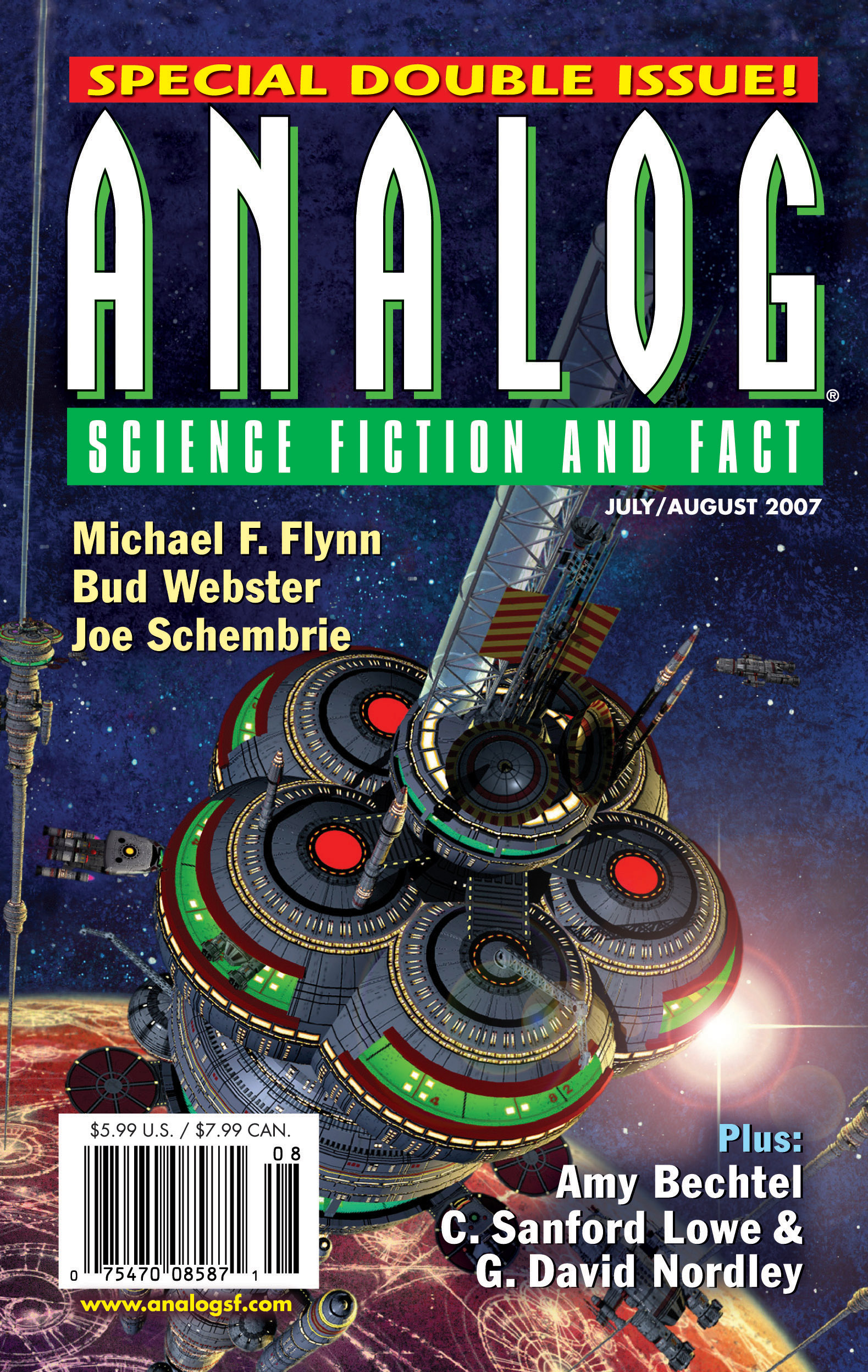
WEBSTER: Don’t go the “easy” route first. Find agents and/or publishers who are willing to look at new work by new writers, put together a proposal, a solid three-hots-and-a-cot (first three chapters and a synopsis), and get ‘em in the mail. AFF JUl-AUG 2007 FINAL RG.eps Be very careful, though – there are predatory “agents” out there who are dedicated to ripping you off and will sweet-talk you into believing that the Sun sets in the East if you let them. Go to the Predators and Editors website and look through the list of agents and see what their records show. There’s nothing easy about writing, no aspect that doesn’t require careful research, attention to details (especially with contracts) and hard, hard work.

VENTRELLA: What advice would you give to a starting writer?

WEBSTER: Bust your behind to get it as right as you can, pay attention, and let your work speak for itself. If you can find a good writers’ group in your area, check them out to see if you’re a good fit. They can be enormously helpful, but again, be careful; some groups can be deliberately harsh, even cruel, and there’s no quicker way to be discouraged. Critiques should be honest and firm, but never mean. Do not look for shortcuts, because there really aren’t any.

VENTRELLA: Who do you like to read? Who are your favorite authors?

WEBSTER: Boy, you really don’t want short answers, do you? Let’s see … Bester, Ellison, Heinlein, Effinger, Doyle, Simak, Russell, Niven, Niven and Pournelle, Pournelle, Pratchett, King, Haldeman, Sanders, Silverberg, Pohl, Gaiman, Davidson, Clarke, Bradbury, any Conklin anthology, Cordwainer and Doc Smith, McKenna, Bond, Leiber; how many more do you want? Oh yeah, there’s this guy named Ventura or Ventiller or something, but he writes like a sissy.

VENTRELLA: Hmph. What projects are you working on now? What can we expect next from you?

WEBSTER: I’m putting together my first fiction collection, including stories and poetry. It’s going to have most of what I’ve done over the years except the Bubba stories; they’ll have their own book with new material tying them together. Some of the stories are pretty old – going back more than 20 years. I’m hoping it will be out by the end of 2015.

VENTRELLA: With a time machine and a universal translator, who would you invite to your ultimate dinner party?

WEBSTER: In no particular order: Nelson Bond, Einstein, Buzz Aldrin, Frank Zappa, Pierre Boulez, Steve Allen, Igor Stravinsky, John Lee Hooker, Arthur Conan Doyle, Tom Lehrer, John W. Campbell, Charlie Chaplin, J. R. R. Tolkien, August Derleth, William Gaines, Mel Blanc. And my wife, or course. Have to be a big table, though.

I doubt I’d say a word, but I would video the whole damn thing and live off the revenue from the books I’d write about it for the rest of my life.

My Capclave 2014 Schedule

Capclave is a fine little literary SF convention held near Washington DC, which this year will be on the October 10th weekend. The Guest of Honor is Hugo- and Nebula-award winning author Paolo Bacigalupi! I’m anxious to meet him (as I really liked his novel THE WINDUP GIRL). Also in attendance will be Holly Black, Genevieve Valentine, Catherine Asaro, James Morrow, and many more (including me!)small_dodo_transparent

Here are some pictures from last year’s convention.

Here’s my current schedule (subject to change):

So You Want to be a Writer (Friday 4 pm): We did it before and we’ll do it again! Authors discuss how they became a writer, and why you should(n’t) Writers share their experiences and offer advice to those interested in becoming a professional writer. Pay it forward. With panelists Brenda W. Clough, Dina Leacock, Will McIntosh, Michael A. Ventrella, and Allen Wold

The Greatest Animated Films (Friday 6 pm): A debate over a list of the greatest animated films. Can we agree on a top ten list for the best or will the panel erupt into fisticuffs? With panelists Jim Freund, Larry Hodges, James Maxey, Sherin Nicole, and Michael A. Ventrella

War on Science? (Friday 7 pm): Some of America’s leaders don’t believe in global warming, want creationism taught in schools, and others want to ban human cloning or restrict genetic modified foods. Why this distrust of science? Is it growing? Are political leaders trying to appeal to the ignorant or do they really believe this? And what is the danger to the planet? With panelists Inge Heyer, Walter H. Hunt, Michael A. Ventrella, and Christopher Weuve

Meet the YA authors (Friday 9 pm): Last year’s meet and greet YA authors in a casual setting was such an awesome party that we decided to do it again this year! With Danielle Ackley-McPhail, Paolo Bacigalupi, Holly Black, Annette Klause, L. Jagi Lamplighter, Diana Peterfreund, Jon Skovron, Janine Spendlove, and Michael A. Ventrella

Mass Signing (Saturday 7:30 pm): The Saturday evening mass autographing session! With Danielle Ackley-McPhail, Sarah Avery, Paolo Bacigalupi, Holly Black, Marilyn “Mattie” Brahen, Neil Clarke, Tom Doyle, Andy Duncan, Scott Edelman, Jim Freund, Charles E. Gannon, Max Gladstone, David G. Hartwell, Alma Katsu, Pamela K. Kinney, Barbara Krasnoff, Dina Leacock, James Maxey, Will McIntosh, Mike McPhail, Sunny Moraine, James Morrow, Sarah Pinsker, Benjamin Rosenbaum, Lawrence M. Schoen, Darrell Schweitzer, Alex Shvartsman, Jon Skovron, Alan Smale, Bud Sparhawk, Janine Spendlove, Genevieve Valentine, Michael A. Ventrella, and Lawrence Watt-Evans

Awards Reception and Presentation (Saturday 8:30 pm): The WSFA Small Press Award winner will be announced. The Guest of Honor Gifts will also be presented.

The Eye of Argon (Saturday 11:00 pm): Our panelists read the worst fantasy story ever written, mistakes and all, and if they laugh or read it incorrectly, they are forced to act out the story. Just try not to fall over laughing! At some point, volunteers from the audience can participate and discover firsthand the author’s contentious relationship with spelling, capitalization and punctuation. With panelists Walter H. Hunt, Sarah Pinsker, Ian Randal Strock, Michael A. Ventrella, and Jean Marie Ward

Reading (Ventrella) (Sunday 1:00 pm): I’ll be reading an excerpt from BLOODSUCKERS and maybe a few other things.