Posted on November 6, 2021 by Michael A. Ventrella
I had an excellent time recently being interviewed by Russ Colchamiro, along with Mark Olshaker (Mindhunter) and John French (retired Baltimore CSI). We discussed social and racial hot button issues including Black Lives Matter, Defund the Police, and the #MeToo movement as authors and members of the criminal justice system.
Posted on September 23, 2021 by Michael A. Ventrella
So after a year and a half of avoiding conventions, I’m venturing out for one. I think I’ll take the risk, as they are requiring everyone to be fully vaccinated and masked at all times during programming.
This is taking place near Washington DC on October 1 – 3. If you go, you’ll probably find me hanging out at the Fantastic Books table where you can also find my books (what a coincidence!).
I’ll be on the following panels:
Friday 5:30 pm: Author Reading — Michael A. Ventrella: Author Michael A. Ventrella reads from their recent and upcoming work.
Friday 7:00 pm: Writing YA for Two Audiences (Martin Berman-Gorvine, Mary Fan, Mary G. Thompson, Michael Alan Ventrella): Adults comprise a large percentage of the audience for YA, and are almost all the gatekeepers-editors, publicists, librarians and book buyers. How do writers write for both audiences? Are adult readers of YA looking for different things from younger readers? What makes some books effective at satisfying both audiences?
Friday 9:00 pm: So You Want to Edit an Anthology (Neil Clarke, Mary Fan, Kristin Janz, Michael Alan Ventrella): How do you edit your own anthology? How do you decide what holds the book together – a theme, a date, a concept? How do you come up with a theme? What sells and what doesn’t? How do you get the rights to stories for reprint anthologies? If you pick the contributors, how do you decide who to include and avoid getting repetitious stories? How do authors produce varied fiction within the limits of a theme anthology? How do you find a publisher willing to print it? Do you do a Kickstarter or not?
Saturday 4:00 pm: Near Future Collisions (David Bartell, Martin Berman-Gorvine, Sarah Pinsker, Michael A. Ventrella, Ted Weber): Sarah Pinsker wrote a novel that predicted many aspects of reaction to COVID, before COVID even happened. What do writers do when their fiction turns real? How do writers keep ahead of changes in the rapidly moving real world? What do you do when new discoveries/political changes invalidate your planned novel or worse, a published one?
Saturday 6:00 pm: For The Love of Evil: Making Compelling Villains (Marilyn Brahen, Charles Gannon, Aliza Greenblatt, Karlo Yeager Rodriguez, Michael A. Ventrella): How do you creating an opponent to your hero with believable motivations yet not ones with which the readers might agree? How do you keep the villain interesting without overshadowing the hero? Is it better to show some chapters from the villain’s viewpoint or keep the villain mysterious in the background? Do you kill off your villain or keep the villain around for the sequel? What works have the best villains and what makes them attractive?
Saturday 11:00 pm: Eye of Argon (Walter H. Hunt, Hildy Silverman, Ian Randal Strock, Michael A. Ventrella): Our panelists read the worst fantasy story ever written, mistakes and all, and if they laugh or read it incorrectly, they are forced to act out the story. Just try not to fall over laughing! At some point, volunteers from the audience can participate and discover firsthand the author’s contentious relationship with spelling, capitalization and punctuation.
Posted on September 14, 2021 by Michael A. Ventrella
Take any three famous people from history, toss them together, and have an adventure.
How they got together is up to you – you could do an origin story of how they first met or you could write the story as if they had been adventuring for years. You can use a time machine or a rip in space/time or quantum magic or whatever. You could have some sort of universal translator or you can have the language barrier be part of your plotline.
And these three people should be really separate if possible, from different cultures and times. That’s part of the fun…
I’m now accepting story submissions for this upcoming anthology. You’ll be in great company, with New York Times Bestselling authors and multiple award-winning authors like David Gerrold, Jonathan Maberry, Peter David, Allen Steele, Lawrence Watt-Evans, Adam-Troy Castro, Jody Lynn Nye, Gail Z. Martin, Keith DeCandido, James Moore, and L. Penelope!
Below are the guidelines for submission and some advice. Not following either greatly reduces your chance of acceptance. Follow the guidelines!
(The actual cover will look different)
STORY LENGTH AND PAYMENT: Try to keep your story at around 4000 words. This should be sufficient for what should most likely be a somewhat humorous tale. Take as many words as you need to make a great story, but if it is too long, it had better be so great that we can’t refuse it. We will pay 5 cents a word with a top limit of 5000 words. If you absolutely have to go over that limit, it won’t disqualify you but understand that we won’t pay extra. A good but padded story may get rejected over a concise, fast-moving one, because we want to fit in as many stories as possible.
No reprints. And only one submission. If you have two stories, send your best.
FORMAT: Standard submission format. Times New Roman, 12 point, double spaced. Your name, email, and word count at the top of the first page. RTF format only, please.
Please include a short bio at the end in the same document. List previous publications or relevant experience in the bio. Don’t worry if you’ve never been published before. I have no problem accepting stories from first-time authors — but won’t overlook bad writing or spelling and grammar mistakes simply because you’re new at this. You’ll be held to the same standards as our professional writers.
DEADLINES: The stories are due by Thursday, December 9th. If you don’t get a response from me acknowledging receipt within a few days after you submit, please contact me to make sure it didn’t get lost in the internet somewhere.
My personal deadline for responding to everyone is January 6th. If you haven’t heard from me by that day, you can assume your story was rejected, but I will do everything I can to respond to everyone.
RIGHTS: First English Language Rights, with a 12-month exclusivity period (except for “Best Of” collections).
STORY IDEAS: As far as who to choose for your story: I’m looking for real people or people who are so ingrained in mythology that they could be real (Robin Hood, King Arthur, Mulan, etc.). Obviously, do not use any copyrighted characters or clearly fictional characters even if they are in the public domain (no Sherlock Holmes or Oliver Twist). If you are unsure, feel free to email me beforehand.
NOTE: Do not email me with a query like “I’m thinking of using X, Y, and Z. Would you be interested?” The answer is always “I don’t know; write the story first.” After all, the best idea in the world can fail if it’s poorly written. Only email me if you are unsure about whether a character you want to use fits my criteria.
Also, you should probably use fairly well-known people from history, because that’s what’s going to attract reader attention. Choosing three obscure people might hurt your chances of acceptance BUT what really matters is how good your story is. I don’t want to limit you or scare you away from a great story simply because you’re using three relatively unknown painters from different eras, for instance.
I have already received way too many stories with certain characters (Tesla, Einstein, H.G. Welles, Twain, Houdini) so please avoid these. Remember, your first idea has probably already been someone else’s first idea.
Below is a recent zoom chat I had with editors Keith DeCandido and Randee Dawn, discussing how to submit to a themed anthology, what editors are looking for, and what will get you rejected quickly. (No, you don’t have to watch this if you don’t want to. There are no secret passwords or “cheat codes” in this chat.)
REJECTION LETTERS: I hate sending out rejection letters, having been at the receiving end of them myself, but that is part of the business. Please understand that if I reject your story, it doesn’t necessarily mean it is a bad story. In every single anthology I’ve edited, I’ve had to reject stories I like simply because I don’t have enough room. Or perhaps I have more than one story with the same characters or themes, and I can only choose one. And sometimes it’s just a matter of taste. A story I don’t like could be loved by a different editor. (It might help if you have read some of the anthologies I’ve edited before or even my own novels to get an idea of the kinds of stories I like.)
PUBLISHER: This will be published by Fantastic Books with publisher Ian Randal Strock. Ian has published my last two anthologies (Release the Virgins and Across the Universe, with Randee Dawn). Virgins was very successful, and Across the Universe received excellent reviews from Publishers Weekly, the Library Journal, Asimov’s and Analog. (Details about those books can be found here)
SUBMISSION EMAIL: Send your submission to Michael.Ventrella@gmail.com and please put “Time travelers submission” in the subject line.
Posted on September 4, 2021 by Michael A. Ventrella
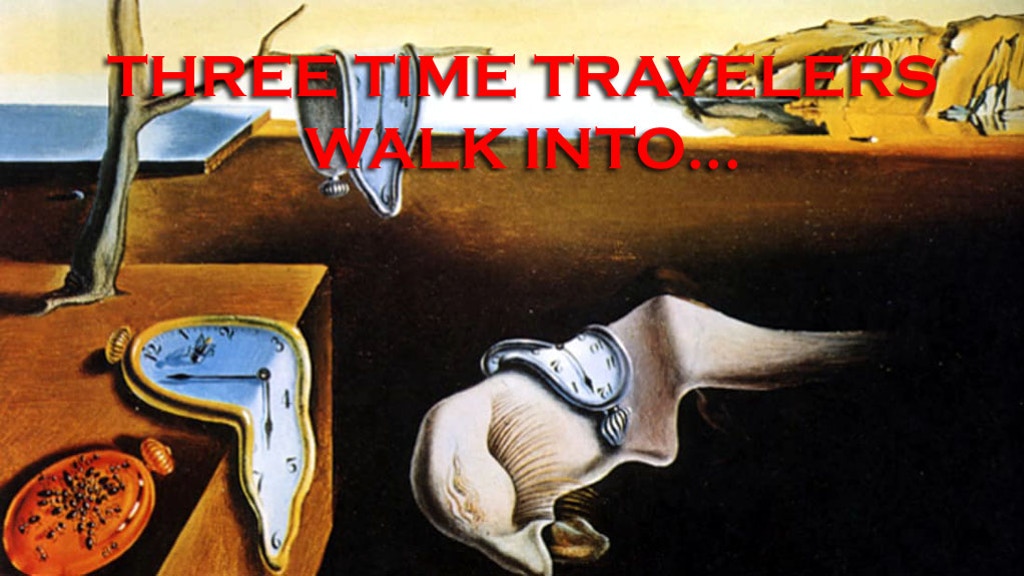
As I write this (September 4th) we’re about 60% of the way through our kickstarter campaign for the next anthology THREE TIME TRAVELERS WALK INTO… and about 60% funded.
We had a great chat at the ConTinual Facebook page a few days ago with some of the writers who will be contributing to the anthology. Check it out! You can hear from best selling authors and award-winners David Gerrold, Jonathan Maberry, Jody Lynn Nye, Gail Z. Martin, and Leslye Penelope, along with me and publisher Ian Randal Strock. The writers discuss the stories they’re interested in writing and we all talk about time travel and why it’s so fun.
Also: Aspiring authors — yes, I’ll be looking for more stories to fill this book, but that will be moot if we don’t reach our goal. So please send your pledge to the kickstarter!
A picture from the chat. Click below for the video
My new anthology! Take three random people from any time in history, get them together somehow, and give them an adventure! Three Time Travelers Walk Into…
Look who will be writing stories for this! Jonathan Maberry, Peter David, Allen Steele, Lawrence Watt-Evans, Adam-Troy Castro, Jody Lynn Nye, Gail Z. Martin, Keith DeCandido, James Moore, and L. Penelope!
As usual, there are bonuses you can get! You can pay extra and get one of the authors to name a character after you, for instance! Check out the pledges.
This is a kickstarter campaign with my publisher Fantastic Books, who previously published my anthologies Release the Virgins and Across the Universe (co-edited with Randee Dawn). In order to fund the book (and pay the authors) we ask you to contribute and pre-order your book. Don’t worry — If we don’t reach our goal, you won’t be charged.
Once we’re funded, we’ll be opening up the book for submissions, so for all you writers out there: I’ll be looking for stories! We’ll also be hiring a professional artist to do a great cover.
Some of you may be aware that in the 1980s, I founded a magazine dedicated to animated films. Animato! became quite a success, and after I sold the rights, it grew even more!
Announcing a new book I’m working on: The Animated Features Top Ten List.
I’m looking for professionals in the animation field to share their list of Top Ten Favorite Animated Features and tell why. We’ll print them all and then do a summary at the end as to which films got the most votes.
Please tell any friends in the animation community! Looking for writers, artists, voice actors, directors, animation historians, critics, and fans (although, admittedly, if space is tight, fans will be cut first).
As someone who has edited a number of anthologies — some with some very big famous names — allow me to drop a bit of encouragement your way.
All editors want to discover you.
Don’t worry if you’ve never been published before. Don’t be intimidated by all the Big Names who are already in the anthology. Don’t think you have no chance.
One of the great things about the publishing industry is that often, all that really matters is the quality of your story.
I’ve spoken to many other editors and have been on panels with them at conventions and writing seminars, and we all agree: We all want to brag that we discovered a great new writer. In fact, it’s something we can even use in the book’s promotion. It’s a plus. It’s a bonus. WE LIKE IT.
Many of the anthologies I’ve edited recently were done through kickstarter campaigns, where we get some Big Name Authors to commit to submitting a story, thus guaranteeing we can raise enough money to get the book printed. We then open it up for submissions to fill the rest of the book.
Some new authors think “My God, he’s got David Gerrold and Spider Robinson and Jonathan Maberry! I can’t compete with those best sellers!” — and then they’re too intimidated to submit their story to the anthology.
But the fact is that your story may be great. It may be exactly what the editor wants.
The editor already knows the book will be published. The editor doesn’t need more Big Names and is now looking to make the book as entertaining as possible. And if your story is good enough, the editor won’t care that you have never been published before. In fact, the editor may be thrilled that you have never been published before.
Trust me — some of my favorite stories in the anthologies I’ve edited are not from the Big Names but from the new author who either has never been published before or has only published a few times before.
All that matters is the quality of your story.
So aim high.
(However, a caveat: Don’t forget all the other basic advice when submitting a story. Don’t screw up your chance by ignoring the guidelines, having lots of grammatical and spelling errors, or pissing off the editor in other ways.)
We all know about the Four Horsemen of the Apocalypse: Death, War, Famine, and Pestilence, riding on pale horses and all that Book-of-Revelation stuff.
But why does it have to be guys on horses? Why can’t it be the Four Cheerleaders of the Apocalypse? Or the Four Customer Service Reps of the Apocalypse? Or the Four PTA Moms of the Apocalypse? Or the Four Squirrels of the Apocalypse?
A new anthology has just been announced on this concept, and a kickstarter campaign has begun to fund it. Many NY Times Bestselling authors are participating in this fun endeavor.
Among the authors are Jonathan Maberry, David Gerrold, Jody Lynn Nye, Peter David, David Mack, Michael Jan Friedman, Dayton Ward & Kevin Dilmore, Adam-Troy Castro, Keith R.A. DeCandido, Laura Anne Gilman, Robert Greenberger, Aaron Rosenberg, Danielle Ackley-McPhail, Derek Tyler Attico, Kathleen O. David, Randee Dawn, Mary Fan, Gerard Houarner, Gordon Linzner, Megan Mackie, Gail Z. Martin, Jenifer Purcell Rosenberg, Hildy Silverman, Wrenn Simms, Patrick Thomas, and me!
Check it out! There are lots of great benefits for joining the kickstarter. You can get tuckerizations (where the author fits your name into the story), ebooks for a fraction of their cost, signed copies, and more.
My story is called Horseman, Horseman, Horseman & Horseman, Attorneys at Law.
I really couldn’t have someone else read my book — it’s just too personal and, let’s face it, parts are definitely written in first person.
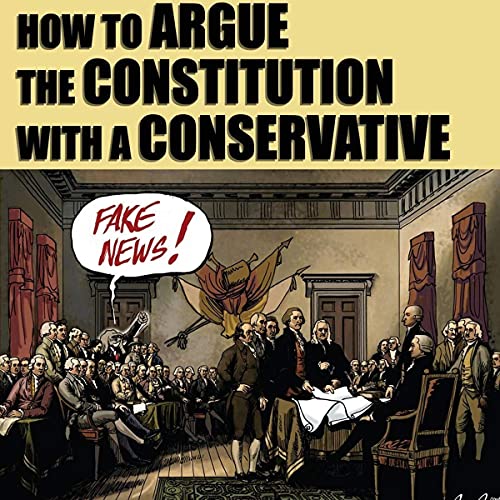
So I bought a nice microphone and recorded in my room. The quality may not be as good as I would have liked, but it’s not bad and Amazon said it was good enough for them, so now my Constitution book is available for you to listen to!
This is not my first audio book — the Baker Street Irregulars anthologies (co-edited with NY Times Bestseller Jonathan Maberry) had wonderful actors reading the stories. However, that was all arranged by the publisher and I had no control over it. They did an excellent job!
But this is the first that I got to read my own work. And, if you know me, you know I’m a ham. Give me an audience and I’m happy. I hope I did a good job!
The advantage of this audio book is that you can listen in your car or while jogging or otherwise doing something else. You also have the advantage of an updated copy, since I added a few bits here and there as the law changed (such as discussing Trump’s two impeachments which occurred after the publication of the original book).
The disadvantage of this audio book is that you’ll miss all the great cartoons from Pulitzer-Prize-winning artist Darrin Bell. So clearly, you’ll need to buy a copy as well. (And if you want many of the cartoons in color, you’ll also have to get the ebook version).
I often find myself yelling at the screen during certain movies and shows. “Just hold the damn camera still, you moron!” Hand-held cameras that jiggle all over the place make me wonder how a director can afford top-notch stars and special effects but not, apparently, a tripod.
On the other hand, I also sometimes find myself going “Wow, that Kubrick camera movement is wonderful. It’s just so beautiful to see.”
And in some ways, both extremes are bad, because instead of paying attention to the story, I’m seeing the process behind the scenes.
The same is true of fiction. “What’s the big deal if there are a few misspellings or grammatical errors?” someone recently asked me. “Isn’t the story more important?”
Well, sure. But if I am thrown out of the story because of the bad spelling or grammar? That’s the last thing any author wants. I want my readers to be lost in the story to the point where you’re not even consciously thinking “Hey, I’m reading a book right now.”
And just like the movies, it can work against you to go too far in the opposite direction. If you’re trying to show off how clever you are by using words that make people run to the dictionary to figure out your meaning, then you’ve lost them. If you’re so enamored with your flowery writing that your readers are spending their time admiring your poetry instead of caring about your characters, then it’s going to be a lot easier for them to put your book down and not pick it back up again.
Mind you, there are plenty of authors who disagree with me on this point. Maybe it’s just because of the type of books I like to read (and write). When I see the zippers on the monster’s costume, I’m no longer scared.
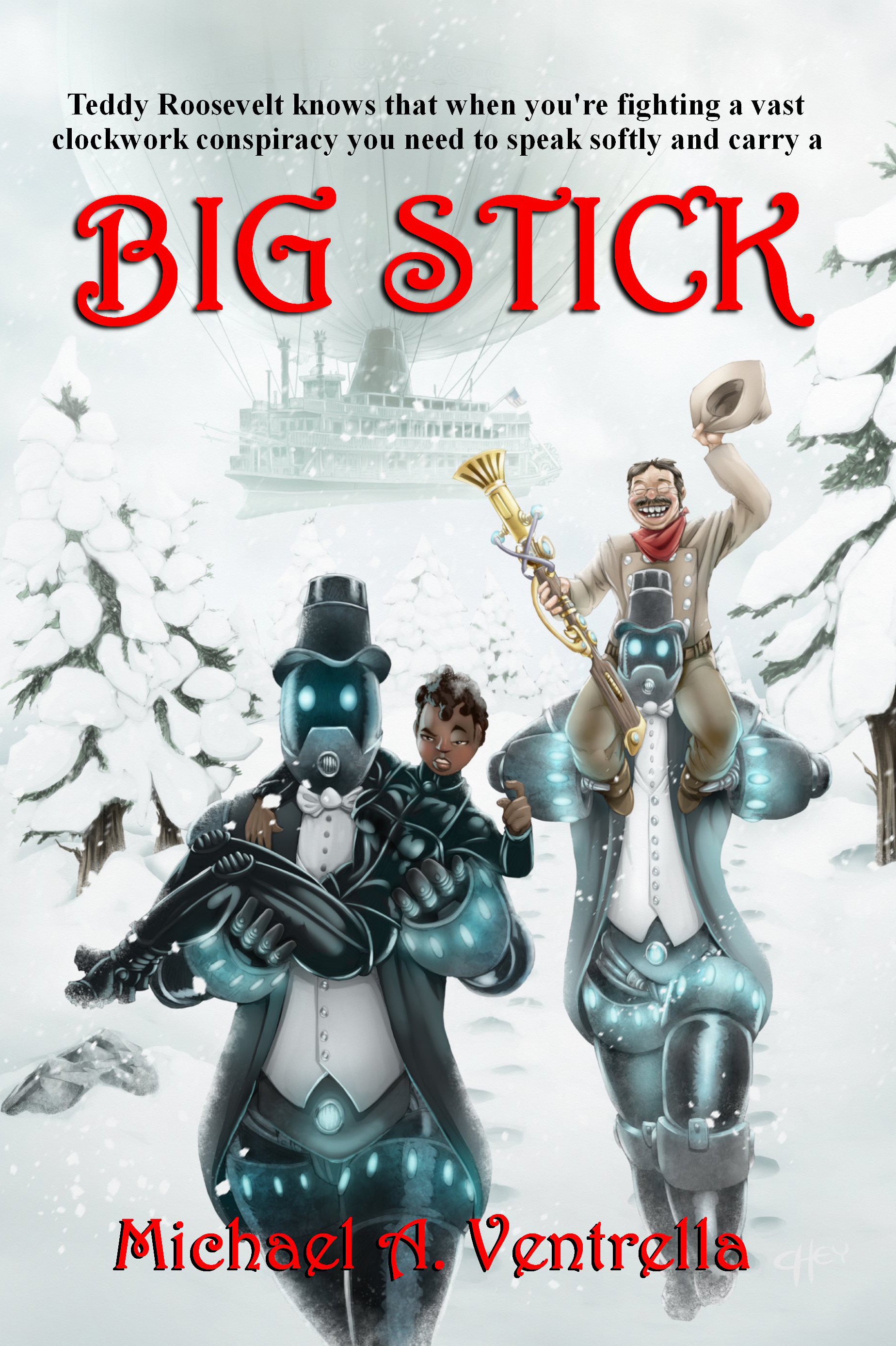
“A wild and thoroughly entertaining steampunk adventure featuring an improbable cast of historical figures, plenty of action, and lots of fun!” – Jonathan Maberry, New York Times bestselling author of Deep Silence and V-Wars