Interview with author Storm Constantine

MICHAEL A. VENTRELLA: I’m pleased to be interviewing author Storm Constantine. download Storm’s work has covered many genres from fantasy, dark fantasy and horror to science fiction and slipstream. She has so far written twenty-three novels, and currently has most of her short stories collected in four Immanion Press editions.

Let’s start by discussing the re-release of SEA DRAGON HEIR. There is always an urge to rewrite older materials when it gets re-released; what has changed with this edition?

STORM CONSTANTINE: My urge to tinker with old works is simply that some were written when I was much younger and certain incompetencies in the writing and structure of the stories were just too much to ignore. Also, in some cases, publishers had asked for sections to be removed, simply because they wanted a shorter book. When I came to republish the books myself, I could restore them to my original vision. As I’m an editor as well as a writer, it was impossible for me to keep my hands off revising and refining!

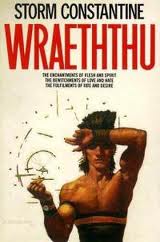
I don’t think the Wraeththu books (the original version of the trilogy) were edited as well as they could have been. I was such a fledgling writer then, and when I returned to the books fifteen years later to republish them I was astonished really at what I’d been allowed to get away with, in terms of inconsistencies, plot holes, wobbly structure, and so on. It was glaringly obvious to me where the stories could be successfully reinforced. Some things happened ‘off stage’ that shouldn’t have. The ending of ‘Enchantments of Flesh and Spirit’ was a prime example of that. I added a couple of extra chapters to the revised edition to ‘show rather than tell’ things that occurred.

I also re-edited THE MONSTROUS REGIMENT quite heavily, as I’d never been happy with that book. The sequel, ALEPH, had technical errors to be fixed, but I didn’t do that much to it other than that.

As the reissues of my back catalogue progressed, there was less for me to do, because I’d been improving as a writer through those years of creating the original books. book_aleph_new_ed_smallBy the time I got back to ‘The Magravandias Trilogy’, all I was correcting was typos. I was happy with that trilogy as it was first written.

VENTRELLA: What projects can we expect from you next?

CONSTANTINE: I have so many notes written down for both short stories and novels, but my worst obstacle to realizing them now is time. I have sent a couple of stories off to anthologies, but as I’ve not heard back from the editors yet, don’t want to say which they are, in case my stories aren’t suitable for them. I want to finish off the other four or so I’ve got half written, because it’s always handy to have unsold stories available, should I be approached by an editor. Also I simply want to get the ideas down.

Novelwise, there are several books I could write, but it’s knowing which to do first. I’ve started work on the third volume of the ‘unofficial’ third Wraeththu trilogy, which is a series of novellas set in Alba Sulh. English Wraeththu. The first two were quite emotionally grim stories about betrayal and obsession, but the third has a different tone – it just happens to have a couple of the characters in it from the first books. I want this one to be a ghost story, and already have a lot of disturbing images for it that are just pure, enjoyable, supernatural scares. There will be less angsting in this book!

Aside from that, I have notes for at least half a dozen novels that are all unconnected, some of them with chapters already written. My plan is to finish the short stories, finish the Wraeththu ghost story, then take a good long look at what I have in my ‘ideas’ folder on the computer. I just feel like I need to clear the decks before venturing into territories new.

Nonfiction-wise I’m working on some ideas with a friend for a couple of books concerning magical path-workings/visualisations. They will just be fun to do; sit down together and invent the stories for them. The difficult part will be for us to get together, since my friend is very busy and quite often off on research trips around the world. I hope to get at least one of these books out this year, though.

VENTRELLA: How did Immanion Press come to be?

CONSTANTINE: When I sold The Wraeththu Histories (the second trilogy) to TOR in America, I wished that the original trilogy had still been available in the UK. WRAThis coincided with the advent of Print of Demand publishing, which meant that it was possible for small presses to bring out books at a fraction of the price of traditional publishing. So initially, Immanion Press was set up to coincide with the Grissecon convention I ran in 2003, where I relaunched ‘The Wraeththu Chronicles’ As I was let down in the UK by a publisher who initially wanted to publish the Histories, I decided I might as well bring out my new Wraeththu trilogy in the UK too. From there came the idea to reissue all of my long unavailable back catalogue titles. Then it just grew from there. Other writers asked me about reissuing some of their out of print titles too, and I had a rather altruistic urge to help new writers get published as well. Unfortunately, the latter idea didn’t really survive contact with reality. I found that it’s incredibly difficult to sell the work of new fiction authors, so I’ve had to cut back on that dramatically.

However, the non fiction side of things does well. People buy books on certain subjects irrespective of who the author is, or what they might have written before. Generally speaking, they just want a book on a particular topic, rather than to seek a name they already know. Megalithica Books, the nonfiction imprint, came about because a friend of mine, Taylor Ellwood, was interested in getting work out through Immanion. He saw a way to expand that side of things and eventually became the manager of the non fiction line.

VENTRELLA: Many established authors are now self-publishing their back catalogues themselves, avoiding the big publishers completely. What are the disadvantages of doing so?

None really, since the big publishers are largely not interested in doing this job for us. OK, we’re not going to have big publicity budgets at our disposal, and most presses (like mine) run on a shoe string. We can’t afford to hire staff, so have to do everything ourselves, or work with volunteers. In my case I simply don’t have enough time to be a full time publicity manager as well as everything else.

For established authors, it’s great to see their often long unavailable works back in print. SEA DRAGONYou just have to make sure you have a fairly active online presence to help publicize your work, and let people know where they can buy it.

Is Immanion’s goal mostly to allow for established authors to reprint old works or are you actively looking for exciting new talent as well?
As I said above, the new author experiment didn’t go too well. Sadly, it just lost me a lot of money. We’re moving into ebooks more now, though, which have far fewer overheads, so perhaps in that medium I can still endorse new writers.

VENTRELLA: Has it been successful?

CONSTANTINE: Well, we’ve been around for 10 years this year, so we’re not doing too badly. The downside of it is that it eats into my working day like a pack of starving wolves. That’s another reason I’ve had to downsize the fiction line. I was in the position over the past five years or so where my workload had grown so much editing other people I had no time at all, and no energy, for my own writing. That had to stop. So I started to delegate more, to a fabulous woman, Sharon Sant, who volunteered to do editing for me. We’re publishing her first novel RUNNERS in June. I might not be able to pay a salary to people, but I can help out in other ways.

VENTRELLA: Starting authors often mistakenly think they can do this as well; they self-publish and then go nowhere. What advice do you have for beginning writers concerning getting published?

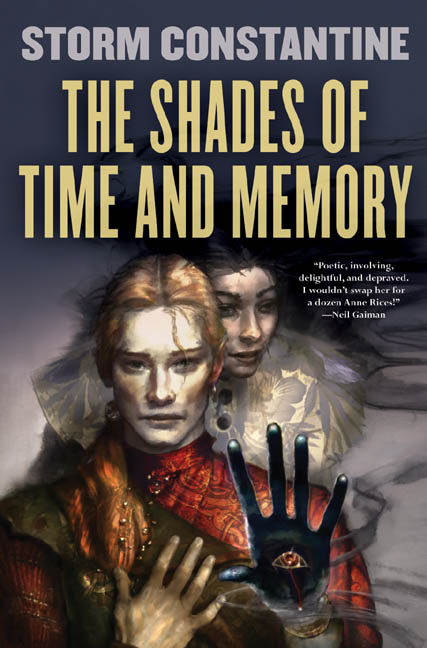
CONSTANTINE: One of the biggest downsides of everyone being able to self-publish easily, either through ebook or printed copies, is that they can do so without their work ever being looked at by a critical pair of eyes, whether that’s a professional editor or a friend who’s prepared to be honest. Editing is a very different job to writing. Even though I edit my own work to a degree, I still get someone else to do so as well. Writers are too close to their own work. We know everything that’s going on, but the readers don’t, and sometimes we don’t put enough in, or we over-write and things have to be trimmed back. The more people who can read a book before publication, the better. SHADESYou have more chance of errors being found.

Even though there are now millions more people producing books of some format or another, sadly a lot of it is let down and diminished by the fact the writing itself isn’t up to scratch, and the writers don’t know their craft.

When I ran a creative writing class, I generally had to spend the first term every year teaching the students how to write. They knew nothing of grammar, syntax, spelling, punctuation or narrative structure, (the writer’s essential tool box), not to mention how to create credible characters, a compelling plot and realistic dialogue. They just had an idea they wanted to write stories or a novel, and didn’t even think it involved any particular skills other than the storytelling urge. From what I’ve seen there is a hell of lot of new writers actually publishing works with all of those aforementioned aspects being of poor quality.

So, first advice – hone your writing skills, learn your craft, share your work with other writers to get constructive criticism. Your Mom saying, ‘yes, that’s very nice, dear’, is no use to a writer. You want and need people to tear your work apart really. You don’t have to agree with every criticism, and might choose to ignore some of it, but without this flow and exchange you’re at a disadvantage. You owe your work your best shot, and that means using the tools at your disposal to make that work as good as it can be.

Also, it’s now absolutely essential for new writers to self-promote and use the Internet and social media to their full advantage to get word about and create a buzz.

VENTRELLA: Some writers tend to avoid controversy, but that doesn’t seem to stand in your way. Have you ever avoided an idea because you thought your readers (or editors) wouldn’t accept it?

CONSTANTINE: Not so far, that I can think of!

VENTRELLA: To the other extreme, have you ever specifically written in order to make a point about religion, politics, sexual orientation and so on, or do these things just flow from the plots?

CONSTANTINE: I think a writer’s political and religious beliefs tend to permeate their work naturally. book_monstrous_regiment_smallI haven’t gone out of my way to pontificate about these things, but I don’t think any reader of my work would be in doubt about where my political and spiritual beliefs lie.

VENTRELLA: Do you think fantasy/science fiction settings allow you to tackle these issues in a way you could not otherwise?

CONSTANTINE: These genres give writers marvelous freedom to tackle issues it might be more difficult, or even risky, to tackle in a mainstream novel. Science fiction has long been used to criticize political regimes under the guise of fiction. I can’t help thinking that writers who have run into trouble over what they’ve written wouldn’t have done so if they’d set their stories in a fantasy world. It’s liberating; you can say what you like really.

VENTRELLA: How much of your own personal religious beliefs are reflected in your work?

CONSTANTINE: I am a spiritual person but not a religious person, but I do possess Pagan leanings. And yes this is reflected in my work.

VENTRELLA: What book do you advise for the starting Constantine reader and why?

CONSTANTINE: When I discover a new writer to read, I like to start at the beginning of their works if possible, but other people might feel differently. I don’t think it matters, other than it’s perhaps not the best idea to start with the second or third volume of a trilogy! I do have a number of short story collections published through Immanion Press, which can also give people a taster of my style.

VENTRELLA: The Wareththu series is probably your most famous. Do you plan on continuing to expand it?

CONSTANTINE: I think I’ll always return to it, but as I’ve concentrated on it exclusively for quite a time now, I want to explore something different for a while. I’ll continue to produce the Wraeththu story anthologies to keep my hand in. These are published roughly annually (or I hope them to be) and include stories by other writers as well as a couple by me. The first was ‘Paragenesis’, and the recently published ‘Para Imminence’. Both are available through Immanion Press, and I’m just mulling over ideas for the theme for the next one. Paragenesis explored the start of Wraeththu, and Para Imminence its far future. Anyone interested in contributing, please do get in touch via editorial@immanion-press.com

On top of the anthologies, I’ll continue to publish novels set in the Wraeththu world but written by others. A thriving online community of fan fiction writers helped keep Wraeththu alive during the years (fifteen of them) when I couldn’t sell any more Wraeththu novels to publishers. 6880909I began to publish the best of these writers, and again am always on the lookout for new ones. If anyone is interested, get in touch at the aforementioned address.

VENTRELLA: Do you think that there are things women can write about that just can’t be done by men writers?

CONSTANTINE: Not really, but perhaps it’s fair to say they might be able to write about certain aspects of life more convincingly than a man.

VENTRELLA: Are you someone who outlines heavily or are you a “pantser”?

CONSTANTINE: Not quite sure what a pantser is, but I don’t outline that heavily. I feel that stories are organic entities that tend to create themselves as they emerge. Publishers always used to demand huge outlines from me, which I found a pain to do, and quite frankly the finished books rarely had much resemblance to their synopses. Once a story is written down, then it’s time to go back and work on fine-tuning the plots, locations and characters. I can’t put all that in a synopsis. The story has to come out first.

VENTRELLA: Do you start with an idea, a setting, or a character?

CONSTANTINE: It can be any of those, just a spark of an idea, a smell, an impression, an emotion.

VENTRELLA: All writers are told to “write what you know.” What sort of research do you do before writing?

CONSTANTINE: I think it’s important to get your facts right. I often see movies about the 70s and see so many anachronisms in them. That’s why I write fantasy instead of historical novels. You have far more freedom in a fantasy novel about, say, what people might have on their breakfast tables. You don’t want to find Pop Tarts on a Victorian table in a novel, do you? But you do see that kind of thing. I really admire historical novelists; the amount of research and checking they must have to do is phenomenal.

For myself, I research aspects that apply across universes and realities. For example, I have an idea to write a fantasy novel that heavily involves the weather – so I bought some books for research on that.

VENTRELLA: What techniques do you use to make your protagonist someone with whom the reader can relate?

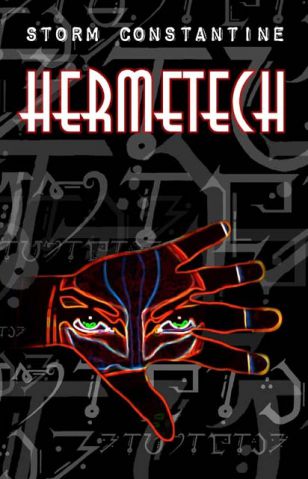
CONSTANTINE: I think it’s important to observe in reality how people speak, how they use their bodies and faces to communicate, how much a silence says. No one really speaks in formal dialogue like an updated Shakespeare play. hermetechOf course, it would be really irritating to have characters in a story talking completely realistically, so you have to impose some boundaries and restrictions, but it’s important to have an ‘ear’ for realistic speech.

Giving your characters credible behavior makes them believable, and people will relate to them more effectively. One thing I always tried to stop my students doing was using fiction clichés, such as people screaming or dropping a teacup/glass/plate in shock. When people are really frightened, I think most are more likely to swear beneath their breath, or not make a sound, than scream like someone in an old horror film. And have you ever seen someone drop something they were holding in shock? I haven’t. Also, things like collapsing/fainting. I don’t see that happen much either. Screaming might have its place, but the dropped tea cup and maidenly collapse really have to go!

VENTRELLA: What do you do to establish a believable fantasy world? In other words, how can you introduce the fantasy elements into the story and make them real without relying on info dumps?

CONSTANTINE: It’s just a case of being aware of it, and not dumping too much at once. A great amount of detail can be introduced with subtlety, such as in the ‘stage directions’ you might use for characters during lengthy dialogue. What are they doing as they’re talking? What are they picking up, leaning on, looking at, avoiding, etc etc.

VENTRELLA: When going through second and third drafts, what do you look for? What is your main goal?

CONSTANTINE: Pretty much all of the things I’ve talked about throughout the interview. Plot holes, realistic characters and situations, grammatical/syntactical errors, spelling, compelling dialogue and so on.

VENTRELLA: What criticism of your work do you disagree with the most?

CONSTANTINE: I had this one reviewer, who used to go out of his way to review my books, who absolutely hated my work. CROWNHe obviously got his jollies by being able to slag me off once a year. I disagreed with his observations because they were subjective and just plain offensive. Clearly, he wasn’t comfortable with many of the subjects I include in my work.

I don’t expect everyone to like what I write – that would be an unrealistic expectation. And everyone is entitled to their opinion. A lot of people love writers I absolutely despise, but I don’t believe I am right and the others are wrong. It’s just down to taste.

VENTRELLA: All writers basically write what they would like to read. So what do you like to read? Who are your favorite authors?

CONSTANTINE: My favourite authors are Tanith Lee, Alice Hoffman, Jack Vance, P G Wodehouse, Jonathan Carroll, to name but a few. I have just about everything the first three on that list have ever written.

VENTRELLA: What advice would you give an aspiring author that you wish someone had given you?

CONSTANTINE: Don’t expect to be rich. Let go of any attachment to outcome, and simply write because you love to do so. Write what you love, because your heart will show, and other people will be more likely to love it too.

Thanks for giving me the opportunity to talk with you about my work.

My Ravencon 2013 Schedule

On the weekend of April 5th, I’ll be a guest at Ravencon, a small but fun convention in Richmond, Virginia. This year, they’re having a steampunk theme. RavenConBannerThere’s also a costume competition and my artist wife Heidi Hooper is a judge. It’s always a lot of fun to visit my hometown, even if I hardly get to see any of it since I’m in a hotel all weekend.

Anyway, here are the panels where you can find me (and more may be added):

Books without Borders: (Friday 5 pm) Authors will talk about the various ways of publishing that are out there today. It is a brave new world for the publishing world. But which one is right for the beginning writer? And which one should an author with publishing credits under his/her belt decide is the best choice for them? With Kevin J. Anderson, Betty Cross, Laurel Anne Hill, and Rebecca Moesta.

Opening Ceremonies: (Friday 7 pm) Wherein all the guests are introduced. (To see the complete guest list, click here!)

Big Brother is Watching (Maybe): (Friday 8 pm) Cell Phones, Tablets, PCs, Laptops, Digital TVs … Panelists will discuss how today’s technologies might, or might not, be what 1984 warned us about. With Debra Killeen, Jim Bernheimer and Patrick Vanner.

The Eye of Argon: (Friday Midnight) The worst science fiction story ever written gets a reading by our brave panel as they compete to go the longest without tripping over a misspelled word or laughing uncontrollably. Audience members are also encouraged to take a chance. Can you keep a straight face? With CJ Henderson, KT Pinto and Peter Prellwitz.

The Business of Game Design: (Saturday 1 pm) You have a great idea for a new game. Now what? Our experts tell you how to turn your idea into a workable game, produce it, and market it. With Rob Balder, Robert E. Waters, and Joan Wendland.

Writing Up Close and Personal: (Sunday 10 am) This panel will cover point-of-view choices and how to “write close” to your point-of-view characters. With Laurel Anne Hill, Patrick Vanner, and Leona Wisoker.

Balancing Your Writing With the Rest of Your Life: (Sunday Noon) How to be a part time writer when you’ve got a full time family/life/job. With Tera Fulbright, Michael Hanson, Tally Johnson, Monica Mariner, and Janine Spendlove.

Interview with Hugo and Nebula award-winning author Robert J. Sawyer

MICHAEL A. VENTRELLA: I’m pleased to be interviewing one of my favorite writers, Robert J. Sawyer! Mr. Sawyer has won 51 awards for his fiction, including the Hugo and the Nebula, and the top science-fiction awards in Canada, China, France, Japan, and Spain, plus an Arthur Ellis Award from the Crime Writers of Canada. 220px-Robert_j_sawyer_in_2005The ABC TV series “Flashforward” was based on his novel of the same name. His physical home is in Toronto, and his online home is here!

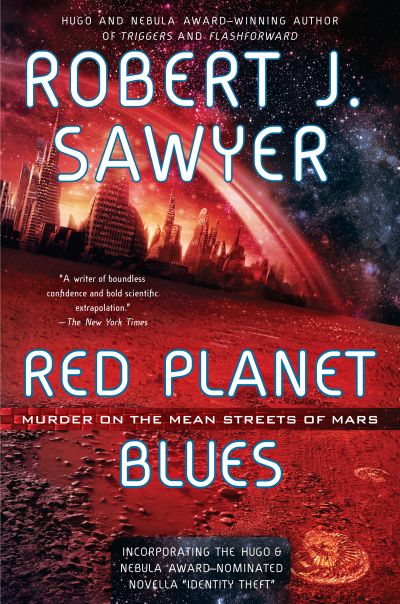
The big news is that your 22nd novel RED PLANET BLUES has just been released. It’s a detective novel set on Mars done in the noir style, first person and everything. What made you want to write this?

ROBERT J. SAWYER: It’s become increasingly hard to tell traditional detective stories set in the present day. Everyone knows about CSI-style forensics: it’s almost impossible for a killer not to leave behind fingerprints or DNA. And our public and private spaces are increasingly covered by surveillance cameras; there’s almost no room left —- on Earth anyway —- for the traditional whodunit. But RED PLANET BLUES is set on a lawless frontier Mars -— where the security cameras have been smashed —- and it involves a technology that lets people transfer their consciousnesses into gorgeous android bodies, which don’t have fingerprints and don’t shed DNA. But who is actually inside any given body is anyone’s guess, letting me tell a good-old fashioned mystery … out on the final frontier.

VENTRELLA: From the opening chapters, it almost feels as a mixture of various pulp fiction styles. Was that the desire?

SAWYER: Absolutely. “Pulp” shouldn’t be thought of as a dirty word. Two of the most successful commercial fiction genres today are science fiction and mystery, and both have their roots in pulp magazines of the 1920s through 1950s. It seemed natural to bring those two genres together in that particular voice.

VENTRELLA: Was it difficult trying to capture that style of writing?

SAWYER: It was, but it was also very rewarding. Untitled-2 I immersed myself in noir mystery fiction to get the voice right, and Raymond Chandler, one of the fathers of that genre, wrote a very helpful essay entitled “The Simple Art of Murder” in 1950, which he gives lots of advice on how to write that form.

VENTRELLA: In some ways, a good science fiction novel is like a good mystery, although usually the “mystery” involves scientific discovery, doesn’t it?

SAWYER: Yes, indeed. I’ve always felt that science fiction has much more in common with mystery than with fantasy, anyway. Science fiction, after all, is about things that plausibly might happen; fantasy is about things that never could happen —- in that sense, they’re antithetical genres. But science fiction and mystery both prize rational thought, and both ask the reader to carefully pick up the clues the author has salted into the text —- in mystery, of course, to solve the crime, and in science fiction to puzzle out the unfamiliar backdrop against which the story is being told.

VENTRELLA: How did you approach writing a more traditional mystery? Did it require more outlining and preparation, for instance?

SAWYER: Absolutely. Mystery is a very complex narrative form – every piece has to fit together, and in the end it all has to go snick-snick-snick at it falls into place. That requires a lot of planning.

VENTRELLA: This seems like it was a fun novel to write. What novel gave you the most writing pleasure?

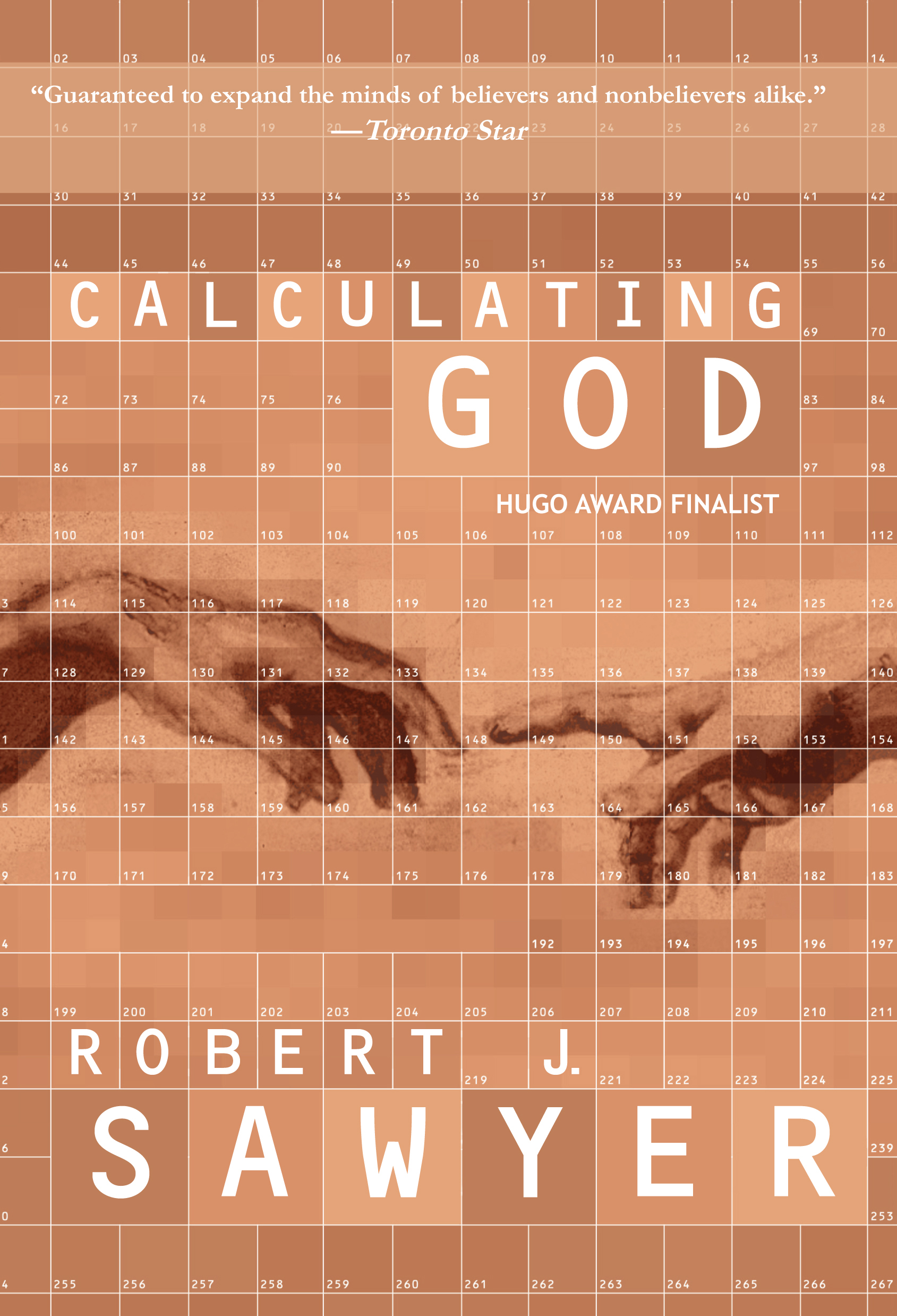
SAWYER: I think I enjoyed writing CALCULATING GOD the most; it was an absolute joy to write, in part because it was in a way an alternative version of my own life: I’d originally hoped to become a dinosaur specialist at Toronto’s Royal Ontario Museum, just like Tom Jericho, the main character in that novel.calculating-god-tp

VENTRELLA: Looking back, do you have a favorite novel (or series)?

SAWYER: My favorite series of mine is the WWW trilogy of WAKE, WATCH, and WONDER, about the World Wide Web gaining consciousness. I loved the range of characters I got to write: blind teenage math genius Caitlin Decter, her autistic father Malcolm Decter, the chimpanzee-bonobo hybrid Hobo, and Webmind itself, the vast world-spanning intelligence.

VENTRELLA: Which of your characters was the hardest for you to create?

SAWYER: Alex Lomax, the protagonist of RED PLANET BLUES because he’s so unlike me. He’s violent, coarse, hard-drinking, uneducated, and a loner; I’m a pacifist, I try to be kind, I don’t drink, I went to university, and I’m gregarious. But for RED PLANET BLUES to work as hardboiled detective fiction, Alex had to have the traits I gave him.

VENTRELLA: What book has surprised you the most upon completion?

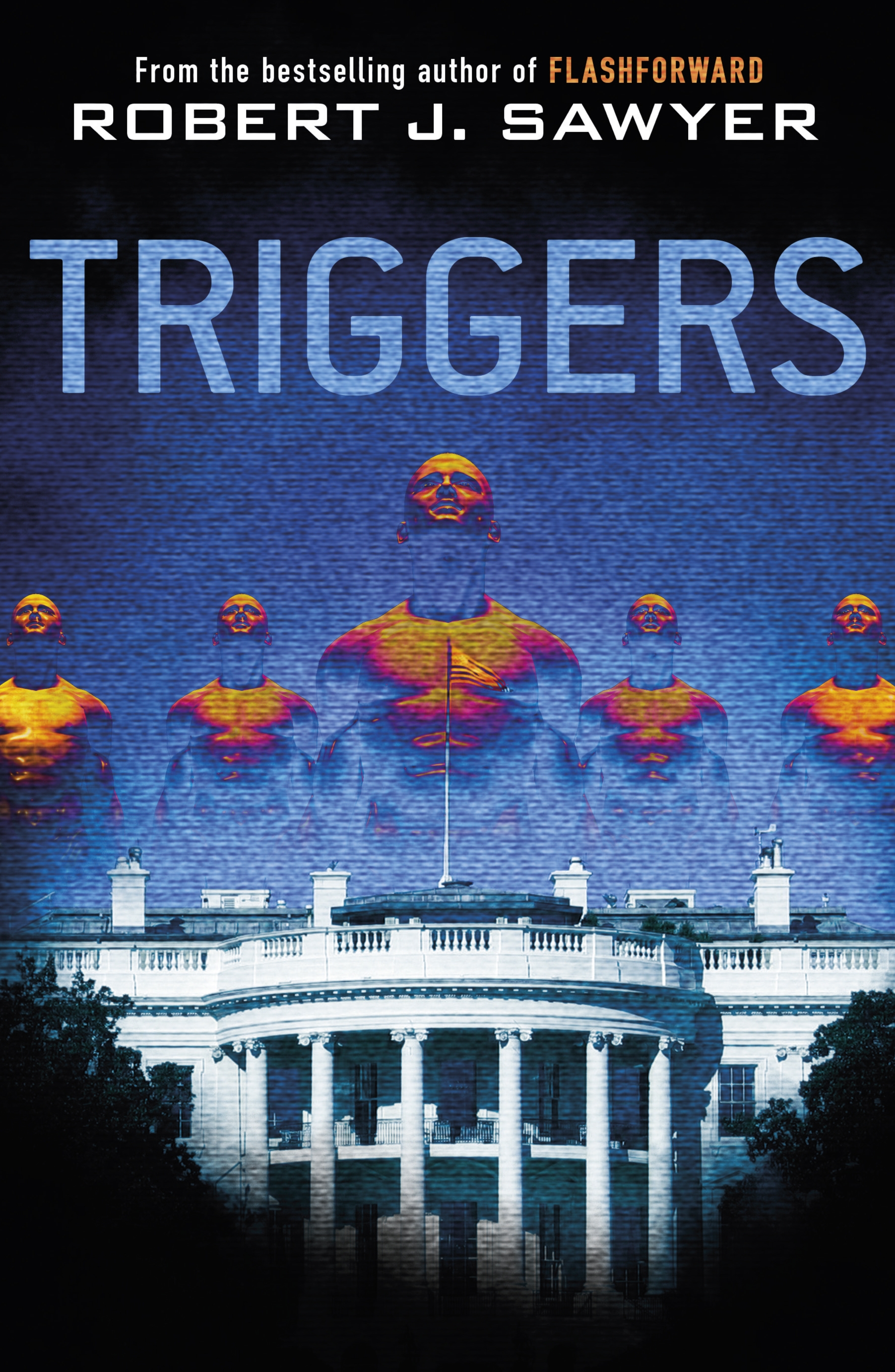
SAWYER: TRIGGERS, which has just come out in paperback in North America after a successful run in hardcover. It was unlike any book I’d ever written before -– an out-and-out page-turner thriller. I found it very challenging, but ultimately very rewarding, to write.

VENTRELLA: A common theme in your books involves science versus religion. How do you try to approach that issue without possibly alienating certain readers (or does that come into play at all)?

SAWYER: As a writer, your job isn’t to be blandly acceptable to everyone; it’s to be the favorite author of a narrow segment of the reading public. If I wasn’t alienating some people, I wouldn’t be doing my job. My editor at Tor, David G. Hartwell, used to say to me sometimes, “You know you’re going to lose some readers if you keep that bit in,” and I’d say, “Yes, I understand that,” and we’d both nod and move on. triggers-by-robert-j-sawyer I’m interested in being provocative and in getting people to think about things they perhaps haven’t pondered for years.

VENTRELLA: Here in the US, it seems that religion has trumped science much more than in Canada or Europe, especially in our political fights over creationism in the schools, abortion, and gay rights. Do you think we will ever evolve past religious belief, or will we still be believing a thousand years from now?

SAWYER: I think if we don’t evolve past fundamentalist religious belief, we won’t be here a thousand years from now; it’s fundamentalism that will lead to the wide-scale terrorism at home and abroad. As technology advances, and more and more destructive power is in the hands of individuals, someone will destroy us all, unless we as a species grow up. I tried to portray what that grown-up society might be like in my Hugo Award-winning HOMINIDS and its sequels.

VENTRELLA: Memory – or maybe “consciousness” – seems to be another thread common in your books. Who we are and what we perceive. Do you find that subject comes up subconsciously in your work or do you generally plan stories around that particular theme?

SAWYER: I’ve said that science fiction is the genre of intriguing juxtapositions, and that being a science-fiction writer is the best job for a science generalists – someone who likes to be involved with multiple disciplines. Well, there’s no more multidisciplinary area than consciousness studies, in which neuroscientists, computer scientists, cognitive theorists, quantum physicists, and philosophers all come together and spark off each other. Inner space is far more interesting to me than outer space, and so that’s what I write about.

VENTRELLA: I just finished FLASH FORWARD and noted how it ended with an idea that you later used for ROLLBACK. Had you considered making ROLLBACK a sequel originally, or did you just want to write about immortality in a similar way? fLASHfORWARD

SAWYER: I don’t like sequels. FLASHFORWARD and ROLLBACK both involve radical life prolongation because those are inevitable technologies; it’s going to happen, and if you’re writing about the future you have to acknowledge that. But the two books are unrelated to each other.

VENTRELLA: You’ve written about immortality in various ways in more than one novel. Is this because you’d like to be immortal? Is there something special about the topic that interests you?

SAWYER: What interests me about it is not dying. Sure, I’d like to live a very long time – I’m 52, and haven’t read 1% of the books I’d like to, I haven’t seen even a quarter of this planet (and I travel a lot), there is, rounded to the nearest percent, 100% of the human race I haven’t yet met. More: we still are trying to work out fundamental problems in social interaction, social justice, and international relations -– we’ve been struggling with them for thousands of years. Maybe that’s because, in all those millennia, no problem has ever been worked on for more than a few decades by any one person. We need the time to dig in and solve the really big conundrums; nature’s natural lifespan doesn’t provide enough time -– but science will.

VENTRELLA: How much input did you have in the “Flash Forward” TV series?

SAWYER: Lots. I met with David Goyer and Brannon Braga before I did the deal to let them adapt my book, and we discussed every change they wanted to make. I was consultant on every episode, spent a lot of time on the set and in the writers’ room in Los Angeles, and wrote the 19th episode, “Course Correction.”

VENTRELLA: Do you feel that the action bits they added were necessary for a TV audience and an on-going series? Did they distract too much from the story?

SAWYER: Sure, they were necessary for the TV audience. That’s why we added them. A novel can be cerebral -– people talking about ideas, or thinking about them without doing or saying anything -– but TV is a visual medium: things have to be happening constantly on screen or viewers turn away. As for distraction from the story, not at all: we had more story beats, more continuing characters, and a more involved plot, than just about any other show on the air at that time.

VENTRELLA: You’ve certainly had other works optioned before. Is there anything in the pipeline we can look forward to?

SAWYER: It looks like the movie version of THE TERMINAL EXPERIMENT is finally going to happen, and I’ve just been commissioned to write a screenplay adaptation of TRIGGERS for a feature film, and I have high hopes of that being made, too.9780765345004_p0_v1_s260x420

VENTRELLA: What is it about science fiction that attracts you?

SAWYER: The variety: I can write hardboiled detective fiction (RED PLANET BLUES), courtroom drama (ILLEGAL ALIEN), romance (ROLLBACK), thriller (TRIGGERS), allegory (FAR-SEER), and more, all without leaving the genre. Science fiction is the least-restrictive genre to be working in.

VENTRELLA: Science fiction doesn’t seem to sell as much as before; do you think we’ve just become so used to our gadgets and modern technology that reading about spaceships doesn’t hold the wonder it did when we were kids? (I’m about your age, by the way…)

SAWYER: No, I think it’s something you alluded to earlier: if you don’t teach the core truths about science –- cosmology, evolutionary biology, and so forth -– people lose interest in what the Canadian poet Archibald Lampman called “the wide awe and wonder of the night.” Yes, there’s not much science fiction about spaceships, but that never was what science fiction was all about. But it is about science, and a culture that devalues or distrusts science isn’t one that’s going to embrace a literature that’s built on it.

VENTRELLA: Who do you like to read?

SAWYER: Most of my reading is nonfiction -– Robert Wright, Steven Pinker, Ray Kurzweil, and so on. But within the science-fiction genre, I love the works of Julie E. Czerneda, Jack McDevitt, and Robert Charles Wilson.

sawyer

My Lunacon 2013 Schedule

I’m about to head out for the 2013 Lunacon convention, which I have attended for many years (most of them as a programming guest). logo_lunacon Here are the panels I am currently scheduled to be on:

Dig in. Hold on. (Saturday 12:00 PM): Great stories raise the stakes, often creating drama by pitting the hero against overwhelming odds. What is it about the hopeless battle that so strongly appeals to readers of SF/F? What are some or our favorite struggles in the genre? With Myke Cole, Neal Levin, Gail Z. Martin, and Ian Randal Strock.

Less Shitty Second Drafts. (Saturday 1:00 PM): Giving yourself permission to let your first draft suck as long as you get it out rests on the assumption that you can make it better later. But how? Beyond “kill your darlings” and critique groups, how do authors figure out what’s not working in their manuscript and what might be likely to fix it? With Russ Colchamiro, Laura Anne Gilman, C.E. Lawrence, and Lawrence M. Schoen.

When the Magic Comes Back. (Sat 2:00 PM): From Queen City Jazz to Bordertown to Tinker to The City, Not Long After, magic coming back to our mundane world is one of the few ways we see fantasy set in the future. Why is it so often associated with apocalyspe? Do authors just not want to have to write about science and technology trying to come to grips with magic and vice versa, or is something more fundamental going on? With Myke Cole, Laura Anne Gilman, Carole Ann Moleti, and Kate Nepveu.

Michael A. Ventrella Reading. (Saturday 5:00 PM): I will be reading from some of my work and talking to people about my stories.

Who Got This Belief System in my Fiction? (Saturday 6:00 PM): From the Bible to the Singularity, how to base fiction on religious and/or political convictions without alienating those who don’t agree, or those who believe it’s non-fiction. What authors and titles have handled this well? What are the pros and pitfalls of using your own beliefs, others’, or an invented belief system? With Lawrence Kramer, Jane T. Sibley and David Walton.

Larping vs. SCA. (Saturday 7:00 PM) A fight to the death! Just kidding. Seriously, differences and similarities between medieval-themed live action role playing and the Society for Creative Anachronisms. Are either or both for you? With Zorikh Lequidre, Devon Oratz, and James Prego.

The Eye of Argon. (Saturday 11:00 PM) Our panelists read the worst fantasy story ever written, mistakes and all, and if they laugh or read it incorrectly, they are forced to act out the story. Just try not to fall over laughing! With Keith R.A. DeCandido and Hildy Silverman.

Write What You Don’t Know. (Sunday 12:00 PM) Fantasy authors rarely get irate email from dragons saying they got it wrong. How to write characters from places and times that you don’t know but members of your audience do, and why it’s important to get outside your comfort zone. With Ken Altabef, Paul Calhoun, D.L. Carter, and Laura Anne Gilman.

Interview with Author and Editor J. Richard Jacobs

MICHAEL A. VENTRELLA: I’m pleased to be interviewing author J. Richard Jacobs today! jheadshot J. says he is a country boy turned scientist/engineer/naval architect turned author. He writes science fact, science fiction (usually hard), occasionally horror and fantasy. He’s also the editor of the successful “Twisted Tails” series, the most recent of which has just been released and features a story by Yours Truly. His web page is here.

So tell us about the “Twisted Tails” series!

J. RICHARD JACOBS: Well, first and foremost, The “Twisted Tails” series of anthologies is a demanding thing to get into. The reason for that is simple. I look for quality in every sense for these books. It’s a tough nut to crack for many. In one of them I received 480+ submissions—only twelve were included.

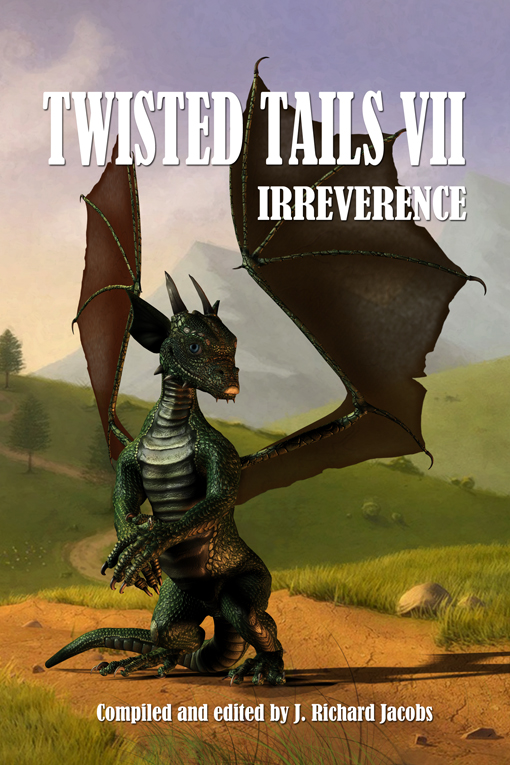
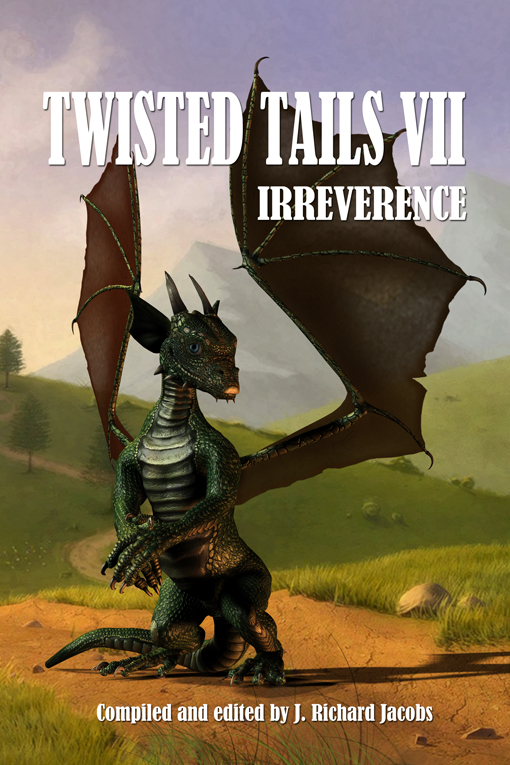
Next, they are eclectic. There is a theme for each, but no genre restrictions are set. As long as the story fits the idea of the theme, I don’t care if it’s Science Fiction, Fantasy, Mystery, Horror (the no gore kind), Paranormal or Mainstream. We’ve had a good run through seven books so far and this new one, TWISTED TAILS VII: IRREVERENCE (the eighth book in the series) is no exception.

VENTRELLA: Wait — it’s the eighth collection and it’s called TWISTED TAILS VII?

Is that a twist?

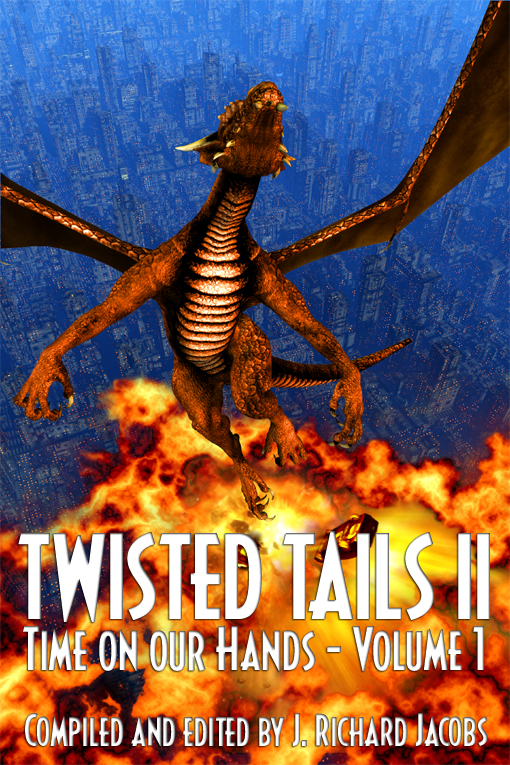
JACOBS: TWISTED TAILS II was released in two volumes and, though there is a complete edition available, TWISTED TAILS VII is actually the eighth book in the series…. Not a twist, just confusing….

Anyway, the stories have no set word count. There is one major element that must be met, and met well. TwistedTales All of them contain a twist ending (Twisted Tails). It may be subtle or a violent yank on the carpet, but it must be a logical and plausible part of the story line. Not many authors can do that.

All of them are aimed at fun and entertainment. Sometimes the fun is a mite on the dark side, but it’s still fun.

VENTRELLA: The “Twisted Tails” covers all feature dragons – because of Double Dragon Publishing, I assume. Do you think this may mislead people into thinking they’re all high fantasy stories?

JACOBS: Deron Douglas of Double Dragon Publishing and I discussed this in the very beginning as I wanted the books to become a part of the Double Dragon trademark, so to speak. We decided then and there that the way to do that would be for all the covers to feature one or more dragons. The first book, TWISTED TAILS: AN ANTHOLOGY TO PLEASE AND DELIGHT, had two dragons on the ground, a result of flying too close and getting their tails entangled. I think everyone who sees these covers will admit that Deron is quite an artist…!

As for people thinking they’re all High Fantasy, I don’t think that is necessarily true. They are listed with the genres indicated and the overleaf and inside flaps spell it out fairly well. The truth is, most of the books have had at least one Fantasy included in the collection.

VENTRELLA: What kinds of stories will we find in the new book?

JACOBS: Oh, my, now there’s a tough question to answer. Would saying that they’re all great be of any value? I guess not. This edition of the series includes examples of all genres. It drools humor and mystery and fantastic panoramas and shadows and sunshine and darkness and….

All of the authors in this one have gone several extra miles to fill the pages with delightful material that I guarantee will entertain.

VENTRELLA: How do you determine themes for the books?

JACOBS: Oh, boy, that’s a biggie. I have to think long and hard on that before I commit to a theme. Though the process is complicated, the reason is simple. I have developed what could be called a stable of authors, bless’em all, who are highly talented wordsmiths and story spinners. Without them there would be no “Twisted Tails.” TT2-510 You, by the way, are one of them. Oh, you knew that, didn’t you? Okay, so I just gave you a plug on your own blog. I’m not ashamed of that and I am proud to present you in this new one.

Anyway, I have to think about what my authors have produced in the past and how they may handle whatever little germ of a thought I have. After considering that carefully, I can then firm up the idea and name a theme. As an example; this next one in the works has as its theme: Para-Abnormal. I’ll let your imagination deal with that.

VENTRELLA: I also edit a short story collection, and it’s not as easy as it looks. What are the major problems you have had with editing?

JACOBS: Authors. There are a lot of writers in this world—there are very few authors. Now, authors are wonderful in all respects except following instruction about things like format. Also, most authors are atrocious spellers and typists. Typos and spelling errors are a large part of the job. Not so much with grammar, though it rears its ugly head on occasion. I am willing to work with any author to almost any level if they have given me a great story. I’ve even ghostwritten a couple of works for authors who have presented a compelling story.

VENTRELLA: How do you deal with telling authors you have rejected their stories?

JACOBS: That’s simple. I’ve been in this business about 57 years and saying, “What the hell is this? Did you take special classes in school to become this stupid, or does it come naturally?” is easy for me. Okay, okay, I’m really not that cold, but close to it. If someone has presented me with something that shows promise, I will tell them. If they have sent me crap, I’ll tell them that, too, but I try to be diplomatic.

VENTRELLA: What is the biggest mistake made by authors who submit to you?

JACOBS: Hah! Format. Format. Format, and telling me their work is copyrighted and I’d better not do anything with it other than what has been agreed upon. Arrogant newbies.

VENTRELLA: What advice do you have for authors wanting to write short stories?

JACOBS: Short stories are harder to write than novels. You have few words to work with, yet you need to land on the run with fully developed characters and that ain’t easy. som510 Pacing a short is not an easy thing, either. The best advice I can offer for those who would dare write short is, write until your fingers hurt, the words on the screen look like they’re printed backwards and your legs are so numb that you can’t feel your feet. Then, do it some more. Read other short stories by great authors from the dim past to see how they made it work. Then, write some more. When you think you have it wired, begin submitting your work everywhere and see what happens. Oh, and do develop a really thick skin; this business is brutal.

VENTRELLA: Which of your novels have been most successful in your opinion?

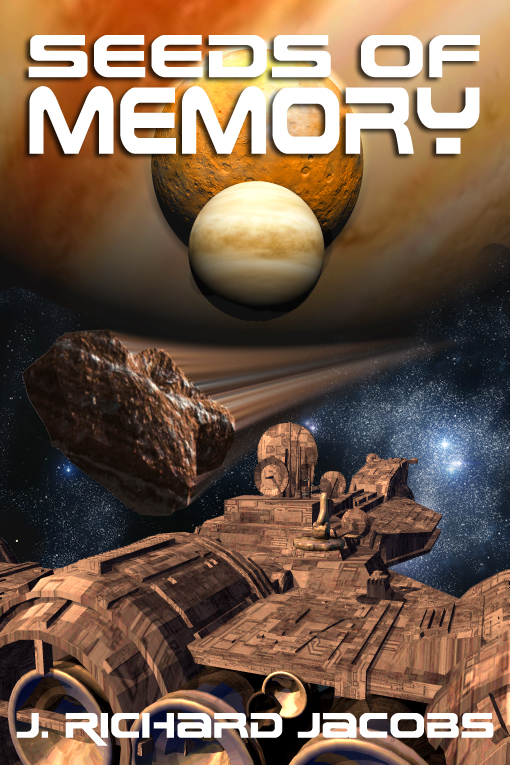
JACOBS: That depends upon how you view success, doesn’t it? If you think about sales, you have missed the point, in my opinion. Sales are nice for the wallet and, perhaps, for the ego, but personal satisfaction in what you’ve done is far more important. I have written nothing I would not love to rewrite. After having rewritten it, I would like to rewrite the rewrite. Never satisfied with my work. It could always be better. Having said that, I think SEEDS OF MEMORY has been the most successful in my way of looking at things. It took ten years of writing, head scratching, rewriting, research, more head scratching, more rewriting, putting up with constant interruptions and free advice before it was finished. I just rewrote it…!

VENTRELLA: Tell us about the “Rain” trilogy.

JACOBS: We recently had a meteor come down in Russia. People saw the videos. In short order, they will forget what they have seen and return to an all-is-well-in-the-world life of complacency. The first two books of the Rain Trilogy, STORM CLOUD RISING and MAELSTORM, are aimed at shaking that complacency by the lapels—hard. The third one, still not completed, is more of an adventure dealing with what the world is like after the rain—the hard rain.

VENTRELLA: What makes your fiction unique? In other words, what is it about your stories that makes them stand out against all the other similar stories out there?

JACOBS: Hmm. Well…they’re not similar. At least I hope they’re not. xeno-version3_03 I bring a lot to the table in terms of knowledge of subject and experience in researching things. Believe it or not, you need to know how to look for things. Merely Googling is not the answer and accepting what you find on your first or fifteenth try without cross-referencing is a waste. In my Science Fiction I’m quite at home with details most of the time. I also have many friends who are experts in their fields who have saved me much embarrassment at times. I can tell you this; my work is complex because I know life is complex. I have had many high-powered mentors in the past (no name dropping here) who have seen me through my infancy and I really hope I have done well with what they taught me.

VENTRELLA: What is it about science fiction that attracts you?

JACOBS: Horizons beyond an arm’s length and an infinite playing field for conjecture and speculation. I also like to play with science (real science) and make things work. None of the worlds I create are impossible or improbable, though they may appear to be so sometimes.

VENTRELLA: Science Fiction doesn’t seem to be selling as much as fantasy these days, including urban fantasy and all the varieties. Why do you think that is?

JACOBS: I have no idea. Science Fiction has never been one of the mainstays of the written word. It has had a better following in the past, that’s true, but why it has hit a little slump is a mystery. I look forward to that changing. We’re getting a lot of imaginative authors in the field these days and I’m sure the Phoenix shall rise again.

VENTRELLA: You’ve also written nonfiction (including something in INSIDE SCOOP which also features me!). What is different about writing nonfiction?

JACOBS: The difference is that it is not fiction.

VENTRELLA: What other projects are you working on?

JACOBS: Aside from the new one for the Twisted Tails series, TWISTED TAILS VIII, I have three anthologies I’m considering that will not be an unending series. All will be based in pulp fiction style. One will be Science Fiction, another in Mystery, and the final will be on Heroes (super-hero stuff with a twist). StormCloudRising-510 I am working on another novel, MT PROMISE, and am desperately trying to complete the third book in the Rain Trilogy.

VENTRELLA: What’s your biggest pet peeve about the writing business?

JACOBS: Small checks….

VENTRELLA: I’ve blogged a lot about self-publishing. What’s your take?

JACOBS: Frankly, I don’t like self-publishing. I know there is a bundle of good stuff written and self-published, but the majority is not worth the electrons and/or paper used to put it on the market. Self-publishing still has a stigma hanging on it (with good reason) that makes me not want to read anything offered. I am aware I’m missing a plethora of good, engaging and imaginative works that are well-written, but I’m avoiding an immense amount of disappointment and saving my bucks in the process.

VENTRELLA: Who do you like to read?

JACOBS: Everyone. No, I’m not kidding. I am selective in the things I’ll pick up, but I read across the board. All genres. Short. Medium. Long. Even Michener behemoths. My favorites remain Asimov, Sturgeon, Brin, Clarke, Brown, Dick, Shakespeare (really), Poe, Hemingway and so on. Those folks knew how to do it and do it right.

To order TWISTED TAILS, click on the “books” link above. As of this posting, the only versions available are the kindle and e-book versions. The paperback and the nook versions should be available shortly.

Interview with Hugo and Nebula Award Winning Author David Gerrold

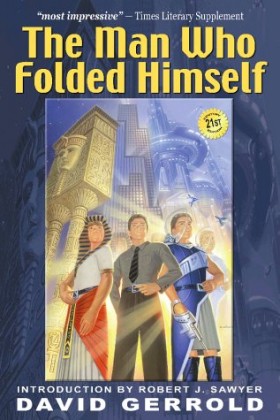
MICHAEL A. VENTRELLA: Today, I am honored to be interviewing Nebula and Hugo award winning author David Gerrold. David-GerroldDavid Gerrold is the author of over 50 books, several hundred articles and columns, and over a dozen television episodes. TV credits include episodes of Star Trek, Babylon 5, Twilight Zone, Land Of The Lost, Logan’s Run, and many others. Novels include WHEN HARLIE WAS ONE, THE MAN WHO FOLDED HIMSELF, the “War Against the Chtorr” septology, The “Star Wolf” trilogy, The “Dingilliad” young adult trilogy, and more. The autobiographical tale of his son’s adoption, THE MARTIAN CHILD won the Hugo and Nebula awards for Best Novelette of the Year and was the basis for the 2007 movie starring John Cusack, Amanda Peet, and Joan Cusack. His web page is here.

David, you’re probably best known for your first sale, the Star Trek “The Trouble with Tribbles” classic episode (which you’re probably tired of talking about). It’s kind of a Cinderella story for writers, in that your sale would never happen these days. Or would it?

DAVID GERROLD: I think it would be a lot harder for a new writer to break into a prime-time show the way I did. Back then, most shows were written by freelancers. Today, most shows are written by staff writers, and there are less episodes in a season, so there just aren’t as many opportunities. And it’s a lot harder for an unknown writer to get his outline in front of a producer, let alone have it pass the “Is this good enough to take a chance?” test.

Back then, it was a lot easier for a writer to establish a reputation. Guys like Richard Matheson and Robert Bloch and Charles Beaumont and George Clayton Johnson were well-known as go-to guys for a good script. Today, because shows are mostly staff-written, it’s a lot harder for a TV writer to establish a reputation outside of his specific show, until he becomes a producer.

VENTRELLA: You’ve also written for one my favorite shows (Babylon 5), as well as scripts for Logan’s Run, Twilight Zone, and other TV series. star trekHow much control do you have over these scripts? In other words, do they get edited greatly by Hollywood types or are the end results usually what you wanted?

GERROLD: It depends on the producer. Joe Straczynski (Babylon 5) is one of the very best. He knows what a good script looks like and he respects writers who bring their passion to the story. He trusts writers. He doesn’t rewrite scripts unnecessarily.

Other producers (unnamed) can’t drink their coffee without first peeing in it to improve the flavor. Every writer has horror stories.

VENTRELLA: Your novel THE MARTIAN CHILD has to be one of your biggest successes, and that must be very satisfying to you given the biographical aspects of the story. Do you think the personal nature of the story hindered you in any way?

GERROLD: Actually, I think the personal nature of the story was enormously liberating. I didn’t have to make stuff up. It was already there. And because the focus of the story was about the relationship between myself and my son, I had an enormous wealth of material to draw upon. The story was about how much I love my son. Whether he’s a Martian or anything else, he’s my Martian. That’s the point.

I think the success of the story has to be that every parent who read the story or saw the movie recognized the experience of falling in love with their own child. I think it’s the best love story I’ve ever lived.

VENTRELLA: Were you happy with the resulting film–both as a film and given the changes that were made to the main character?

GERROLD: Where the movie stayed true to the love story, I enjoyed it enormously. I felt that there were things added to the movie that were unnecessary—-like all that business with sun block and weight belts.martian child I wanted one sequence from the book included, which I felt would have illustrated the core of the entire relationship-—that’s the “pickled mongoose” sequence, where Dennis learns how to tell jokes. I think it would have been a better movie with that included.

VENTRELLA: Money considerations aside, do you prefer books to scripts?

GERROLD: Scripts make more money, but disappear faster. Books are harder work. They’re a much more personal creation. I view books as a special kind of love affair with one reader at a time.

VENTRELLA: Through Land of The Lost and the Star Trek animated series, you worked with a number of great science fiction writers. Do you see that sort of thing in television today?

GERROLD: There was a moment when a producer (unnamed) who should have known better, said, “Don’t hire science fiction writers. They think they know more about my show than I do.” And based on the evidence, most SF writers do know more about science fiction than most TV producers.

On the other hand, there are brilliantly written shows like Dr. Who that demonstrate that an intelligent writer-producer can push the envelope over and over again.

VENTRELLA: You were originally involved in the first season of Next Generation but left as the lawyers took over … Has TV (and the movies) turned away from the people who know science fiction best to instead rely upon standard television scriptwriters too much? If so, are there exceptions?

GERROLD: See above. The exception is Dr. Who.

VENTRELLA: What’s your opinion on all the various Star Trek incarnations? Which is your favorite? (Not counting the episode where you had a cameo…)

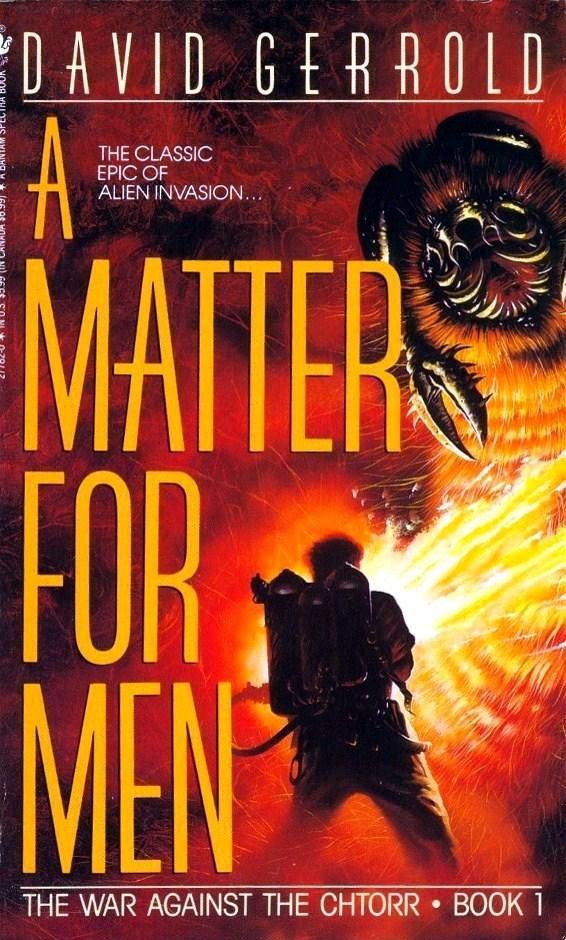
GERROLD: A lot of good people have worked on a lot of different incarnations of Star Trek. But my favorite is still the original series, the episodes produced by Gene Roddenberry and Gene L. Coon—when Star Trek was about exploring a very big, very unknown universe. Book1-AMatterForMen-DavidGerroldIt was about challenging our heroes with the question, “How does this universe work? What is our place in it? What does it mean to be a human being?” Those stories were humane, subversive, disturbing, thoughtful, and ultimately caused a whole generation to think outside the boundaries of what we had previously believed to be possible. To me, that’s what Star Trek should be—a humanistic challenge, not just a franchise for selling toys and tickets.

VENTRELLA: Did you ever have a project you really wanted to do that fell through? Do you have any new ones you’re trying to get done?

GERROLD: The Star Wolf TV series. I think that would have been a wonderful show to work on.

And yes, I have some new projects I’m working on.

VENTRELLA: Most authors agree that they write for themselves, not others. Do you agree with that assessment? Is that a good idea for a starting writer?

GERROLD: I write for myself. I let others pay for the privilege of reading over my shoulder.

VENTRELLA: I remember reading your novel THE MAN WHO FOLDED HIMSELF when it first came out, and I still recall much of its plot–probably because I love a good time travel story. More importantly, the fun of the book was not the adventure, but the possibilities and consequences of time travel and world changing. Why did you decide to go in that direction instead of a straight-ahead adventure?

GERROLD: Because that’s where the story wanted to go.

VENTRELLA: Did you ever consider doing a sequel? Someone else gets the belt?

GERROLD: A sequel would be anti-climactic. There’s nothing else to say. (Well…that’s not quite true, but I’m not going to give it away here.)

VENTRELLA: Some established authors these days have begun placing their out-of-print catalogue in e-book format and selling it on the web, avoiding a publisher completely.the-man-who-folded-himself-7 Have you considered such a thing? Why or why not?

GERROLD: It costs money to print a book and distribute it. It doesn’t cost anything to make it available as an ebook, and the income goes directly to the writer. Having your back-list available to the audience is good business. I’ve got several stories available on Amazon.

VENTRELLA: I’ve been given advice, as a small time writer, to avoid politics on Facebook and my blog. I’ve ignored that advice. I note that you also post your political views from time to time, as well as visiting a political bulletin board. Do you think this has hurt your sales in any fashion, or do you not care?

GERROLD: Larry Kramer said it, “Silence equals death.” Martin Neimoller said it, “First they came for the communists,and I didn’t speak out because I wasn’t a communist. Then they came for the socialists, and I didn’t speak out because I wasn’t a socialist. Then they came for the trade unionists, and I didn’t speak out because I wasn’t a trade unionist. Then they came for me, and there was no one left to speak for me.”

I think that it’s important to speak up. Not speaking up is surrender. And the status quo is always the enemy. But if you’re going to speak up, do your research first. I believe that the evidence is the strongest argument.

But there’s an even larger context that I would advise. Be pro-, not anti-.  If you’re going to speak up, then speak up for people, speak out against injustice, speak up for making a difference, speak out against hate-mongering. If you identify a class of people and vilify them, you’re making enemies. But if you identify a category of people who have a just cause and speak out for them, you’re showing your compassion for others.

I think that if we remain silent, our silence is interpreted as agreement. Nope. I’d rather be unpopular for speaking out than accepted for the lie of silence.

VENTRELLA: Speaking of politics, one of the biggest issues for me is the anti-science position many take these days–arguing against climate change and evolution for political or religious reasons instead of scientific ones.13806 As someone who relies on science for your fiction, what’s your opinion on this? What should we do?

GERROLD: The answer to hate speech is more speech, honest speech, accurate speech, thoughtful speech, humane speech, rational speech, compassionate speech, forgiving speech, loving speech.

The answer to stupid speech is evidence, rationality, accuracy. And occasionally, a healthy bit of ridicule.

VENTRELLA: Who do you like to read for pleasure?

GERROLD: Terry Pratchett, John Varley, Spider Robinson, George R.R. Martin, Victor Hugo, Charles Dickens, Alexandre Dumas, Laura Joh Rowland, Frederik Pohl, and about a thousand others who are stored on my Kindle and who I have not yet gotten to.

VENTRELLA: Fantasy has grown tremendously in popularity over the past twenty or thirty years and now outsells science fiction. Why do you think this is? What is it about fantasy that appeals to readers that they can’t get from science fiction?

GERROLD: Science fiction is harder to write. There’s so much new science happening every day that it’s impossible to keep up.

Fantasy doesn’t have the same restrictions, but writing a great fantasy might be even harder than writing good science fiction. I think George R.R. Martin proves that.

VENTRELLA: What advice would you give to a starting author that you wish someone had given you?

GERROLD: Quit.

If you’re going to be discouraged, be discouraged now and save yourself all that time and frustration.

But if being told to quit just pisses you off, then maybe you have the determination to keep going no matter how frustrated you get.9780812576085

VENTRELLA: Given your career, you’ve met a number of other talented and/or famous people. Who did you most enjoy meeting?

GERROLD: Robert A. Heinlein, of course. Theodore Sturgeon. Arthur C. Clarke. Spider Robinson. Anne McCaffrey, Frederik Pohl, Randall Garrett, Robert Silverberg, Harry Harrison, but especially Harlan Ellison who has been a lifelong friend.

Outside of the writing community, the entire cast of the original Star Trek series, especially William Shatner, Leonard Nimoy, De Kelley, and Nichelle Nichols.

Beyond that, Robin Williams, Virginia Madsen, Candice Bergen, Pat Tallman, Brent Spiner, Jonathan Frakes, Levar Burton, Chase Masterson…I could go on for hours.

Oh yes, and one particular former Mouseketeer I had a kind of crush on once.

VENTRELLA: With a time machine and a universal translator, who would you invite to your ultimate dinner party?

GERROLD: Suetonius, Voltaire, Charles Dickens, Mark Twain, Oscar Wilde, Kurt Vonnegut, and Gore Vidal.


12719316_10156523882800416_3978827886227917712_o

Interview with Actress and Author Claudia Christian

MICHAEL A. VENTRELLA:  I am tremendously pleased to be interviewing Claudia Christian today.  As you probably already know, Ms. Christian is an actress best known for playing Ivanova on one of my favorite TV shows of all time, Babylon 5! claudia_christian_24147 She’s done much more than that, of course, and her more detailed bio and filmography can be found here.  Today, however, we’re here to discuss her new book!

 Ms. Christian, I’ve just finished your new book BABYLON CONFIDENTIAL. This does not read like a typical Hollywood tell-all, but instead as a very personal diary of sorts.  Do you feel you accomplished what you set out to do?

CLAUDIA CHRISTIAN:  I wanted to spread the word about The Sinclair Method and save lives, so far I have accomplished both!

VENTRELLA:  You’re very forthcoming about your alcohol addiction and quite candid about other parts of your life.  Did you ever say “Nah, I’m not going to talk about that”?

CHRISTIAN:  No, I did not. I don’t believe that you can expect people to buy into something unless you are 100% honest.  besides, there is so much shame attached to addiction that I wanted other addicts to see the worst that I have been through so they could not only relate but also forgive themselves.

 VENTRELLA:  The title seems both a tribute to Babylon 5 but also the BABYLON HOLLYWOOD books that I used to read years ago.  How did you choose the title?

CHRISTIAN:  Morgan and I threw around titles for awhile then submitted them to the publisher, this one won.

 VENTRELLA:  The last few chapters of the book are almost a guide for those in a similar situation.  Have you heard from readers who were inspired by your tale to change their lives?

CHRISTIAN:  I have indeed! I have dozens of people on TSM and have helped support them, guide them and am thrilled to say that they have a nearly 100% success rate!

VENTRELLA:  The book reads like a rollercoaster – disappointment followed by great times followed by tragedy … Was there ever an attempt to sugarcoat something?BABYLON CONFIDENTIAL 

CHRISTIAN:  I’m not one to sugar coat things though I did lighten a few experiences to save face for other people. No need to be cruel in a book. I tried to be honest, period.

VENTRELLA:  Was writing the book painful or cathartic?

CHRISTIAN:  Both!

VENTRELLA: How did the writing cooperation work with Morgan Buchanan?

CHRISTIAN:  Fantastic … thank God for Skype!

VENTRELLA:  Are you happy with the reception the book has received  (Reviews, sales, comments, etc.)?

CHRISTIAN:  I am indeed though I wish more mainstream media would pick up on TSM.

VENTRELLA:  I first became aware of your work through Babylon 5, one of the best science fiction shows on TV.  Ivanova was everything we wanted in a strong leader, and many of us were tremendously disappointed when she didn’t appear in the final season (where she should have been captain!)  Anyway, sorry, let me get on with this;  I could gush about how well written, acted, and directed that series was for this entire interview.

At one point in the book, you make the comment that writer/producer J.  Michael Straczynski (who you call “Joe!”)  felt that if an actor was giving him trouble, he could always write a way to get rid of him – and in fact, that happened a few times.  Is that what happened to Marcus Cole (who played Jason Carter)?  ( I hope not, because that death was a great scene and deserved to be there!)

CHRISTIAN:  I cannot comment on things that JMS did simply because I am not in his mind…W22 114

VENTRELLA:  More importantly, do you think that happened to you?  You did not date him as he apparently wanted … I know the 5th season was not close to that incident, but do you think that he might have fought more for your return otherwise?

CHRISTIAN:  I had another job and we could not work out the schedule. It’s in the book very clearly stated how it went down.

VENTRELLA:  There were a few follow-up B5 films and sequels after the 5th season.  Have you ever been asked to be in any of them?

CHRISTIAN:  No … I only did the two TNT Babylon 5 films after the series ended and those were both fun.

VENTRELLA:  What is your one favorite scene or episode from B5?  (I have a prediction but I want to see what you think…)

CHRISTIAN: Death incarnate!

VENTRELLA:  Thought so.  (Here’s a link for those of you who are unaware).

You’ve done voice-overs in commercials, Disney’s “Atlantis” and video games such as Skyrim.  How does this kind of work compare to being in front of a camera?

CHRISTIAN: You don’t have to look good when you record!

VENTRELLA: Why do you think “Atlantis” wasn’t a bigger hit for Disney?

CHRISTIAN: Too dark and old school for these little kids nowadays … they like pink and frosting… 🙂helga

VENTRELLA:  And what is it about the name “Sinclair”?  There was Captain Sinclair in “Babylon 5”, and then your character in “Atlantis” was named Helga Sinclair, and then you were finally able to break your addiction with The Sinclair Method.  Coincidence?

CHRISTIAN: Who knows?! Conspiracy theorists arise!

VENTRELLA:  In BABYLON CONFIDENTIAL You spoke of some terrible experiences with crazed fans at conventions and the like.  (I do a lot of conventions and sadly, there are indeed people like that who attend, although the vast majority are wonderful people.)  Do the good experiences outweigh the bad enough to make attending the conventions worthwhile?

CHRISTIAN: Of course the good outweigh the bad …I love the fans.

VENTRELLA:  You also wrote a small book called MY LIFE WITH GEEKS AND FREAKS which does not seem to be available any more.  What was that about?

CHRISTIAN:  My experiences at conventions. It was a love letter to the fans, really.

VENTRELLA: Will that become available again?

CHRISTIAN: I think so.my-life-with-geeks-freaks-claudia-christian-paperback-cover-art

VENTRELLA:  Did your publisher purposely use “Star Trek” font for the book cover as a kind of inside joke?

CHRISTIAN:  Probably…

VENTRELLA:  When I read about the avant garde film “Tale of Two Sisters” I thought it might be so-bad-it’s-good worth renting, but after reading the reviews on IMDB, all of which pan it completely, I’ve changed my mind.  That must have been a very interesting experience.  Do you feel that was the worst film you’ve been in or is there something else out there you dislike more?

CHRISTIAN:  Thinking a film is bad is subjective; some people like that film … I have no idea what the worst film I have ever done is but I’m sure no two people would agree on that.

VENTRELLA:  I had never heard of the British TV show “Starhyke” until reading your book and now I want to see it!  It’s apparently never been released on DVD in America although I was able to find some clips on YouTube.  That looks like it was a lot of fun.  Why wasn’t there a second season?

CHRISTIAN:  Lack of funds.

VENTRELLA:  Then there’s “Taboo.”  Tell me about that!  How did that come about?

CHRISTIAN: I love making music…..taboo

VENTRELLA: Do you plan on  doing any more music?

CHRISTIAN:  Not really, too busy with other projects and I am not a very good singer; I just did it for the fun of it.

VENTRELLA:  You mention your huge personal library.  What do you like to read?  Who are your favorite authors?

CHRISTIAN: I love historical fiction and biographies. I love CJ Sansom, Peter Ackroyd, Bernard Cornwall, Neil Gamain, Edward Rutherfurd, etc. etc.

VENTRELLA: Have you ever read any of the Babylon 5 books?  Do you ever go “Ivanova would never do that!”?

CHRISTIAN:  No I have not, I’m not a sci fi fan.

VENTRELLA: What other projects are you working on?  When will we see (or hear) you next?

CHRISTIAN:  Tor is releasing “Wolf’s Empire” in 2014 ,another book by Christian-Buchanan

I am also still working on promoting TSM and will be doing so for the rest of my life, it’s my raison d’etre.

When It’s OK to Self-Publish

I’ve blogged about self-publishing before, and advised new authors to avoid it completely. This has caused a few of them to challenge me, pointing out those few exceptions where it worked. As I said before, if you are a gambler and want to play those one-in-a-million odds, you go right ahead. But consider this …

There are hundreds if not thousands of self-published novels being released every week. Undoubtedly, some are very good. Unfortunately, many are not. And you’re going to start with the assumption that your book is one of the ones that is not.

With all of the small publishing houses out there these days — some with very good reputations — there’s bound to be one that will accept your book. And if you can’t find even one, then perhaps your book is not as good as you imagine it to be, and you shouldn’t be publishing it, either.

Anyway, without rehashing my previous post, let’s discuss when it is fine to self-publish.

You’re writing for family and friends. If you have no desire to ever be accepted as an author, no dream of making that your career, and only want to share your writing with friends, then none of this advice matters. This blog is for those who want to break into the publishing industry, after all!

You’re writing for a small specialized audience. For instance, if you’re a member of the Cowsills Fan Club and you’ve completed your fan fiction novel The Cowsills And The Mystery Of The Secret Cove. No problem there. Even if you want to one day be accepted by one of the major publishers for your real work, this is just a fun side project.

You publish non-fiction. If you are an expert in your field and have written a non-fiction book, the stigma that seems to be attached to self-published fiction does not apply. Take my brother. Please! jeffbookJeffrey Ventrella is an MIT graduate who has taught college courses and travels the world giving lectures on computer stuff I don’t understand. He’s self-published a few books that he sells at his lectures, and this is common and accepted. Many if not most lecturers do this. (Also in this category would be gaming books, riddle books, inspirational books and the like.)

You publish art books, comics or graphic novels. No problem here. Even though the graphic novels and comics are technically “fiction,” usually what you are publishing is artwork that has already been ‘published’ on the web or in a newspaper, and your fans want the collection.

You already have a following. Some well known authors are now self-publishing their new books. This is a strategic decision. As one author pointed out, he may only sell half of what he used to this way (since his self-published books are not being carried in the stores) but he’s keeping a larger percentage of the money so he personally comes out ahead. It’s your choice here — I don’t see how this will help grow your audience — but hey, if you’re at that stage of your career, you’re probably not reading this blog anyway.

What I’m really cautioning against is self-publishing your fiction if you are a starting author. Agents and editors pay attention to these things (as do conventions and writing conferences that won’t invite you because of it). Working your way up the chain to the bigger publishers requires you being taken seriously at every step, and putting out your own book, no matter how good it is, doesn’t help you there. Anyone can publish a book these days (and with scam companies like Publish America, they can be fooled into thinking it’s not self-published, but that’s another topic).

Sometimes people ask me, “How much did it cost you to publish your books?” This is somewhat insulting. I always like to point out that I haven’t paid a cent, and in fact, I get a nice royalty check every six months. If you are a creative person (artist, musician, writer), the money should only travel in one direction.

And now, two final disclaimers. First, remember that there are exceptions always. Some authors have set up their own publishing companies. They hire publicists and artists, recruit other writers, and have editors review their own works before they publish. And some of these are very successful and have good reputations. As I said, these are the exceptions. Don’t think that just because they did that you can too.

Second, keep in mind that the publishing industry is changing daily. If what you do works, then it works. All I’m trying to say is that you need to know what you’re getting into and what the odds are before you jump into the deep end of the pool.

Interview with Author Myke Cole

MICHAEL A. VENTRELLA: I’m pleased to be interviewing author Myke Cole, who constantly upstages me whenever we’re on a panel together at a convention. Headshots of Myke ColeAs a secu­rity con­tractor, gov­ern­ment civilian and mil­i­tary officer, Myke’s career has run the gamut from Coun­tert­er­rorism to Cyber War­fare to Fed­eral Law Enforce­ment. Thank goodness for fantasy.

Myke, let’s start with the big news about your latest book FORTRESS FRONTIER. Give us a hint of what it’s about.

MYKE COLE: FORTRESS FRONTIER is the second book in my SHADOW OPS military fantasy series. It tells the story of a military bureaucrat suddenly forced to take command of a combat outpost against hopeless odds. The book explores the question we all ask ourselves: how would I stand up in a crisis? What would I do if I were truly tested?

Oscar Britton, the main character in CONTROL POINT (SHADOW OPS #1) is a character in FORTRESS FRONTIER, but not the protagonist. I always intended to use a ensemble cast in this series, and FORTRESS FRONTIER is the first step in that direction.

VENTRELLA: How are you promoting it?

COLE: The same way I promoted CONTROL POINT: I’m carpet bombing the Internet with guest blog posts, interviews, giveaway contests and excerpts. I just put out a book trailer. I’m getting out to cons as much as I can. I just got back from Confusion, and I’ll be hitting Boskone and Lunacon in the next two months.

But the biggest thing I’m doing? Not being a dick. I don’t bear-bait or take polarizing stances in public. I don’t tear other people down. I respond to my fans when they email or @ me. I have adhesive backed bookplates that I can sign and send to people if they want an autographed copy of my work, but don’t want to pay the high price of shipping a book back and forth. I generally try to be accessible, available and kind to people, whether they’re industry pros, personal friends or fans I’ve never met before. That’s rarer than you’d think, and it goes a long way.

VENTRELLA: Tell us about the Shadow Ops series.

COLE: Peter V. Brett described it best when he called it “Blackhawk Down meets the X-Men.” It’s as honest a look I can provide into how the US military would deal with the existence of magic. It deals with some tough issues like the conflict between liberty and security in a free society, but it’s also crammed full of giant explosions and helicopter gunships squaring off against rocs. Win-win, if you ask me.

VENTRELLA: Do you have a set series in mind? In other words, do you have a plan for a specific number of books in the series?

COLE: I’m under contract for 6 books right now. BREACH ZONE will complete the arc of this particular story, but the other 3 will also be SHADOW OPS books. ShadowOps_FortressFrontier_US_Final1Books 4 and 5 will be prequels, taking place in the early days of the Great Reawakening before CONTROL POINT. Book 6 will follow an ancillary character from FORTRESS FRONTIER on his own adventure.

After that, I’ll take a look at the state of publishing and book selling, see how fans are reacting to my work, and decide where to go next.

VENTRELLA: I have to admit that “military fantasy” is a genre with which I am unfamiliar. Was that a hard sell to agents and editors?

COLE: I only ever tried to sell it to one agent – Joshua Bilmes. He has been a dear friend for over a decade now, and from our first conversation, I knew he was the only person in the world I wanted to represent me. He rejected 3 novels from me over 7 years before finally agreeing to represent CONTROL POINT, and a lot of people suggested I try other agents. But I never did. It was going to be Joshua, or it was never going to be.

Editors were a different story. They did balk at a blending of two genres that appeal to disparate audiences. When CONTROL POINT went out to market, it garnered rejection after rejection, many with comments like, “the story seems unsure of its voice.” I had almost given up hope when Anne Sowards made the offer.

VENTRELLA: How did you obtain Joshua Bilmes?

COLE: How did I “obtain” him? That makes it sound like I have him trussed up in my desk drawer. I knew of Joshua by doing research on who was representing authors I admired. I then deliberately sought him out at a SFWA party at Philcon in 2003. Fortunately, we hit it off amazingly, stayed up talking until 3 AM, and have been close friends ever since. As I said earlier, Joshua rejected 3 novels over 7 years from me. All that time we were visiting one another (I lived in DC at the time), exchanging phone calls and emails. The friendship was always separate from our business relationship.

But, ultimately, how did I “obtain” him? I wrote a good book and sent it to him. That’s the only way anyone ever gets an agent. There is no end run.

VENTRELLA: It appears that you started off, like me, writing mostly nonfiction. Do you feel that the skills learned in writing nonfiction are comparable to writing fiction?

COLE: In the bones, sure. Good nonfiction requires solid prose styling and feel for rhythm, the beats of your sentences. You have to be interesting and construct a narrative in essays just as much as in fiction.

The real difference for me is in Law-Enforcement/Military/Intelligence writing (reports, orders, plans, analysis, etc) that is a totally different animal.

VENTRELLA: What was your first published piece of fiction and how did you get that published?

COLE: Let’s talk about the first piece of fiction I had professionally published. That would be “Blood and Horses,” a military SF short that took 3rd in the Writers of the Future contest and was published in Vol. XIX. wotf191I did it the old fashioned way, I entered a story every quarter, without fail, for 5 years.

Now, it was a great experience and there’s no doubt that it launched my career. I learned a ton out in LA, developed some critical contacts, and got the shot in the arm I needed to keep going. Unfortunately, I later learned that the contest is not firewalled from the Church of Scientology, and there are personal and financial ties there. I certainly won’t judge the beliefs of the church (or of any faith), but there’s enough reporting of physical/financial abuse tied to them that I am now very uncomfortable with having participated. There’s nothing I can do about it now, other than caution new writers who are considering getting involved.

VENTRELLA: Let’s talk about writing. Are you someone who outlines heavily or are you a “pantser”?

COLE: I am an uber outliner. I frequently have outlines as long as 50-100 pages before I write a lick of prose. I also submit my outlines for feedback before beginning prose. This way, I don’t wind up with a problem later in the manuscript that forces me to throw out 30,000 words at the 11th hour. Oh, wait. That happens all the time anyway. *sigh*

VENTRELLA: Do you start with an idea, a setting, or a character?

COLE: In the case of the SHADOW OPS series, I started with an idea: “How would the US military handle magic?”

VENTRELLA: What sort of research do you do when building a character (or a setting or plotline, for that matter)?

I use the Internet almost exclusively. It’s rare I can’t find intimate details on almost any topic (I had to research heavy crane operations for BREACH ZONE). When I hit walls on Wikipedia, I turn to friends and sometimes acquaintances and fans I know through social media.

When all else fails, I make it up. These are fantasy novels.

VENTRELLA: What techniques do you use to make your hero someone with whom the reader can relate?

COLE: The irony here is that the technique I used arguably failed. I made Oscar Britton, the protagonist of CONTROL POINT as human as possible. He’s wavering, indecisive, terrified of the decisions that face him. I feel confident that is an accurate portrayal of how a person of his background (bad family, no sense of rootedness) would handle the situation he finds himself in, but it’s also the most consistent criticism of the novel. In the end, I don’t think readers want real characters. They want dramatic, inspiring characters that feel real. There’s a big difference there.

VENTRELLA: What do you do to establish a believable fantasy world? In other words, how can you introduce the fantasy elements into the story and make them real without relying on info dumps?

COLE: I cheated. I use epigraphs at the top of each chapter that allow me to engage in as much exposition as I want without getting accused of info dumping. I mask it all in the form of quotes, newsclips, etc, but the truth is that it’s all just stuff I needed the reader to know and couldn’t think of any other way to get it to them.

VENTRELLA: When going through second and third drafts, what do you look for? What is your main goal?

COLE: First off, 2nd and 3rd drafts are hors d’oeuvres. CONTROL POINT went through 14 drafts. ShadowOpsCoverFORTRESS FRONTIER had 9. BREACH ZONE is currently on its 7th. And what is my main goal? To make the book awesome.

VENTRELLA: All writers basically write what they would like to read. So what do you like to read? Who are your favorite authors?

COLE: Totally disagree. Plenty of writers try to strike out and do something new, and others write what they think will sell. I certainly won’t pass judgment on either decision, but that’s not what I do.

My favorite authors? There isn’t room to list them all, but here’s a few: Peter V. Brett, Joe Abercrombie, Scott Lynch, George R. R. Martin, Richard K. Morgan, Naomi Novik, China Mieville, James Clavell, Bernard Cornwell, Jack Campbell, Mark Lawrence. Believe me, I could go on.

VENTRELLA: What advice would you give an aspiring author that you wish someone had given you?

Stop writing short stories. There’s like 3 people in the entire world who read short stories for pleasure. Everyone else is an aspiring writer looking for the magic key. You want to be a novelist so write novels. If you write a dynamite novel, nobody is going to care that you didn’t have a story published in F&SF or Realms of Fantasy. They’re going to buy and publish your novel because it’s awesome. Stop wasting time and learn your craft.

VENTRELLA: With the publishing industry in constant change, do you think the small press has become more acceptable, prominent, and/or desirable for beginning writers?

COLE: No.

VENTRELLA: Do you ever advise self-publishing?

Yes. I think that self-publishing is a perfectly viable way to go about bringing your work to market. The trick is making sure that you actually have work that’s good enough to bring to market and you’re just an unrecognized genius, vice doing an end-run around the bald fact that your work just isn’t there yet.

I absolutely cannot judge my own work. I need an expert to give it the nod. Self-publishing also requires a lot of project management skills. You have to be your own art director, and you have to supervise the copy-editor and the proof reader. You have to get ISBNs, you have to convert and format your text. You have to get it uploaded and figure out a good price point.

That’s a shit ton of work. I’d far rather give a professional a percentage of my profits and let them deal with all that crap.

VENTRELLA: What other projects are you working on?

COLE: After that big speech I just made about short stories and self-publishing, I’ve just completed a novelette set in the SHADOW OPS universe. It’s a piece of backstory for BREACH ZONE told from the goblin point of view. I briefly considered sending it out to short story markets, but was turned off by the market policies (no simultaneous submissions). So, now I’m toying with the idea of self-publishing it, or using my literary agency’s eBook program (for which they charge the standard fee of 15%).

14

My Arisia 2013 Schedule

One of my favorite science fiction literary conventions is Arisia in Boston, which this year will be on the weekend of January 18th. I’ve attended almost every one since the first (which was when I still lived in Boston back in the 80s). The Guests of Honor this year are Tananarive Due and Steven Barnes (who I have interviewed for this Blog — it will be great to meet him in person!)

Anyway, this year Arisia is keeping me busy as usual! You can read my bio and schedule on their web page, but here’s the run down.

The Movie Year in Review (Saturday 11:00 am): Our annual look back at the year in SF, horror, and fantasy film. Our panel of experts will cover every theatrical release of 2012. Find out which ones are worth catching up with. Note: time for audience participation is reserved for the end of our panel’s high speed review. With Dr. Chris, John Bowker, Garen Daly, and Daniel M. Kimmel.

Promoting Your Book (Saturday 5:30 pm): What works in promoting a book? Do book-signings really help a small author? Are bookmarks and/or postcards effective at garnering attention? Does a blog help or hurt an author? Does an author have to have a website? How do you find good reviewers? What tactics do NOT work? What methods might work for an established author that wouldn’t work for a beginner? With Kelly Hashway, Elaine Isaak, Gail Z. Martin, and Susan Soares.

So You Want to Run a LARP? (Saturday 7:00 pm): Maybe you’ve played in a LARP or three, or maybe you’ve only just learned about it. Now you want to run your own LARP. Where do you start? How do you recruit players and assistants? Where do you find a space? How much writing do you really have to do? With Anna R. Bradley, Nat Budin, James T. Henderson Jr, and Rachel Morris.

Running Great Games (Saturday 10:00 pm): How do you keep players engaged in a game? How do you manage different kinds of role-players and types of play? What about interruptions like roommates and smartphones? Share your secret techniques and best practices for running role-playing games (and other moderated games) that keep players coming back for more. With Steven Hammond, Andrew Kirschbaum, Brian Liberge, and David Nurenberg.

Death in Gaming (Saturday 11:30 pm): The consequences of death vary greatly from game to game. Almost every gamer ends up getting killed and having to deal with the death of their character. How do various systems treat death—are there differences between formats (video, tabletop, LARP, etc.)? Are there common depictions of Death as a character? With Andrew Kirschbaum, Adam Lipkin, Rachel Morris, and Scott Wilhelm.

Character Building (Sunday 10 am): Making memorable characters that resonate with the reader and fit perfectly for the story is an art. How do you find the core of a character—their traits, habits, and attitudes—and show them effectively to your audience? Our panelists discuss various methods of getting to know your character in the course of your writing. With Elaine Cunningham, Catt Kingsgrave-Ernstein, Joy Marchand, and Suzanne Palmer.

Forensic Science and Criminal Justice (Sunday 5:30 pm): Just how much can real-world forensic science and criminal justice tackle fields such as ballistics, DNA evidence, drugs, entomology, finding relationships and patterns in crime scenes and evidence? And, while forensic scientists work to improve accuracy and sensitivity, just how much are criminals able to use the same technological understanding to hide their crimes? Come discuss how and why courts (and the media) get it wrong, and how that misunderstanding differs from what is really possible. With William Hebard, Reese Jordan, Sarah Smith, and Lisa J. Steele.

All Together Now: Yellow Submarine at 45 (Monday 10 am): This year marks the 45th anniversary of the release of the Beatles’ animated movie Yellow Submarine. It is a classic musical fantasy film for children of all ages, complete with bizarre creatures, fantastical adventures, and an overarching moral theme. Nominated for a Hugo, Yellow Submarine remains transcendent beyond its litany of classic songs by the Beatles. It influenced the look and feel of animated film for many years after. With Mark L. Amidon, Adam Fromm, Victoria Janssen, Daniel Miller, and Jeff Warner.

Here’s my bio from their web page:

Michael A. Ventrella’s second fantasy novel The Axes of Evil (a sequel to Arch Enemies) was released in 2010. He is editor of the Tales from Fortannis anthologies, and his pirate short stories have appeared in the anthologies Rum and Runestones and Cutlass and Musket: Tales of Piratical Skulduggery. He’s currently working on a novel about a vampire who runs for President. Michael is one of the founders of the biggest fantasy medieval live action roleplaying group in North America and currently runs the Alliance LARP. His Rule Books and Players Guides are available in all formats. He is also the founder of Animato which was the first major magazine dedicated to animated films. He has been quoted as an animation expert in Entertainment Weekly and in various books. His blog (www.MichaelAVentrella.com) interviews other authors, editors, agents, and publishers to get advice for the starting author. In his spare time, he is a lawyer.