Interview with Agent and Author Donald Maass

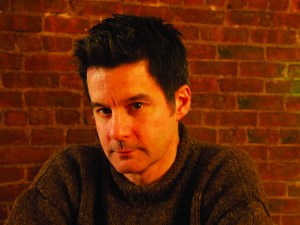
MICHAEL A. VENTRELLA: Today I am very pleased to be interviewing Mr. Donald Maass, one of the top literary agents in New York. Donald Maass’s agency sells more than 150 novels every year to major publishers in the U.S. and overseas. Donald MaassHe is the author of THE CAREER NOVELIST (1996), WRITING THE BREAKOUT NOVEL (2001), WRITING THE BREAKOUT NOVEL WORKBOOK (2004), and THE FIRE IN FICTION (2009). He is a past president of the Association of Authors’ Representatives, Inc.

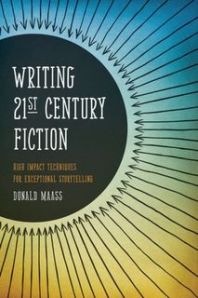
I first met Mr. Maass when he taught a writing workshop in the Lehigh Valley. I learned an awful lot from him, but when we spoke, it was mostly about John Lennon (who we both admire). I used his 2002 book WRITING THE BREAKOUT NOVEL to help tone my latest manuscript and have just finished reading his newest book, WRITING 21ST CENTURY FICTION: HIGH IMPACT TECHNIQUES FOR EXCEPTIONAL STORYTELLING.

Let me start by asking about the underlying theme of 21st century storytelling. How is that different from 20th century storytelling? Why did you make that distinction?

DONALD MAASS: There are many ways in which fiction writing has evolved. Many 20th Century techniques have dated. Objective description, scene-and-sequel, strict adherence to tense/person are all unnecessary. Genre rules are confining and regularly broken. 21ST In WRITING 21ST CENTURY FICTION I forecast the death of genre. Genre boundaries didn’t exist a century ago and won’t a century from now.

Overall, I’m pushing fiction writers to understand what gives fiction high impact, which is great stories beautifully written. High impact fiction is also highly personal, meaning that to the degree one writes according to rules, or simply to sell, one is working in a box. To write high impact fiction you’ve got to break out of your box—and “literary” can be a box too, By the way — or build an altogether new box which is wholly your own.

VENTRELLA: You list “Quirks” and “Special abilities” as ways that writers can create characters with which readers will bond. Is it possible to go overboard?

MAASS: Theoretically a character could go over the top, I suppose, but in nearly all manuscripts it’s the reverse. Characters, when they stand out, show us strength, self-awareness, strong opinions, lively voice, comprehensive world views and more. Quirks, handicaps, special abilities and even superpowers are common and useful devices nowadays, it’s true, but don’t by themselves do the whole job, or fit every story. Great characters are the sum total of what they do, who they are and how they fully experience their story world.

VENTRELLA: There are exercises after each chapter, which are similar to the ones you had me and those in your writing seminars do. Some of them made a great impression on me and were very useful. How are these different from your earlier workbook?

MAASS: They’re shorter, more prompts than step-by-step exercises. The creative brain moves at high speed. I’m trying to match that!

VENTRELLA: Have you ever made the authors you represent do these exercises?

MAASS: Oh, constantly. They ask me for that.

VENTRELLA: Your advice to always have “micro-tension” on every page has been criticized by some who, I believe, don’t completely understand your point. Is it possible to have a “page-turner” without tension on every page?

MAASS: No. Tension is not about action, explosions and shouting. It’s about generating unease in the mind of the reader. BREAKOUT There are many ways to do that, many of them subtle. Even language itself can do it. When tension exists in the mind of the reader there’s only one way to relieve it: Read the next thing on the page. Do that constantly, on every page, and readers will read every word — you have a “page turner”, no matter what your style, intent or type of story.

VENTRELLA: How much of writing is innate? In other words, do you believe there are just some people who are born storytellers but simply need to learn technique? Or can anyone become a good writer?

MAASS: I would say that anyone can become a better writer. Every writer has strengths and every writer has weaknesses. In WRITING 21ST CENTURY FICTION there’s a chapter devoted to helping authors understand the writer they are, plus the writer they’re not, and compensate. Look, some writers will never be artful stylists and some will never be maniacal plot spinners. That doesn’t matter. What matters is growing. There’s always a way to work on what you’re weak at, and succeed.

VENTRELLA: How do you balance the surprise element — where you have your character do the exact opposite of what is expected — with believability and consistency?

MAASS: Great question! Let me put this proposition to you: When your mousy librarian pulls a gun out of her purse, readers won’t object, they’ll dive deeper. It’s psychology. The expected is dull. The unexpected is intriguing. Readers will go with you when you surprise them. The mistake I think is not pulling that gun in the first place or, when it’s drawn, not fully playing out all the consequences of pointing that gun. Working that out and using it is what makes a surprise believable.

VENTRELLA: When looking at a query letter, how do agents react to authors whose previous work has been self-published?

MAASS: There’s a certain bias against that but it comes not from moral objections but from experience. That said, the fact is that there are hundreds of famous writers who first self-published. It’s not about one’s chosen path but about how well one writes.

VENTRELLA: In this market, with the publishing industry changing daily, how important are the small press?

MAASS: Very. We work with them, hoping and praying that the cash crunches that can clobber small presses don’t hit them. There even are some “digital first” models that are working, though I would stress that they’re new and evolving. fire E-books aren’t a revolution, new utopia or new paradigm. They’re simply a new opportunity in the not especially easy business that we call publishing.

VENTRELLA: Some established authors are foregoing agents and publishers altogether and are selling their work as ebooks on their web pages. Why do you advise against that?

MAASS: Your pool of potential readers is cut by three quarters, and your ability to make them aware of your book is reduced even further. You’re dependent upon three bookstores who only display one hundred titles in your category. A handful of authors have made this work but they have the minds and energy of publishers. That describes very few reading this interview, trust me.

VENTRELLA: Allow me to ask something a bit more personal. You advise authors to not worry about genres but to write the story you want. My latest manuscript mixes vampires with a political thriller. In response to my query letter, I have received rejection letters from agents that handle political thrillers saying “We don’t do vampires” and agents who like vampire stories saying “We’re not interested in political thrillers.” Should unestablished authors aim more for specific genres in order to get noticed before trying to mix things up? Or are the responses I am getting normal, and I just need to keep trying until I find the right agent?

MAASS: Cross-genre fiction can be difficult to pitch and place, yet some of the most successful authors we represent have invented new genre hybrids. One thing I’ve learned, though, is that when a speculative element is involved, say vampires, it’s often best to look first toward agents, editors and imprints comfortable with that. (Alternate history might be an exception, and YA seems to be open to anything.) Keep trying. I find that wonderfully written works always find their way into print, even if the don’t always fit neatly into a slot.

VENTRELLA: What really excites you when you find a great book? Can you tell instantly?

MAASS: I know right away when I’m in the hands of a confident storyteller. I’m drawn immediately into a full realized story world, yet there’s no rush to tell me everything about it. Characters immediately win and intrigue me, even when they’re dark. The emotional life of the characters is rich, their inner struggles are compelling, and the story immediately starts to mean something. It makes me think and feel. No problem, right?

VENTRELLA: What was the last great book you read?

MAASS: Last great book–? Argh, too many to say. Right at the moment I’m reading Susanna Kearsley’s THE ROSE GARDEN (2011), a gothic tinged past life story. Susanna counts as her influences some greats like Phyllis Whitney. She writes warmly and does history well, too. The book’s got me under its spell.

Interview with author Ryk E. Spoor

MICHEAL A. VENTRELLA: I’m pleased to be interviewing author Ryk E. Spoor today!

Ryk, like many genre writers (including myself), you read science fiction from a young age and then got into gaming. What is it about role-playing games that encourages people to become writers?

RYK SPOOR: Well, on both sides of the game – GM or player – the game itself is telling a story. It may be a very simple story, especially for beginning players or people just in it for a beer-and-pretzels amusement, but a story about how these people go out, confront problems, solve the problems, and achieve their goals. So pretty much by its very nature, RPGs make you into a storyteller … which certainly encourages you to start writing down the stories that affected you most. It’s all downhill from there.

On the GM’s side, of course, it’s even more so. You’re the person who constructs, or at the least controls and directs, the entire world. You know what the villains are doing and why, you have to figure out how they deal with things when your players do something you don’t expect (and they always do something you don’t expect), and so on. That’s pretty much what a writer does – invent a world and tell us the stories in that world. For some writers, there’s even the equivalent of those annoying plot-busting PCs; some writers find their characters taking off on their own.

So honestly, I think the fact is that the very essence of a well-run RPG is storytelling, and anyone who does that a lot will have stories they want to tell.

VENTRELLA: On a previous blog post, I wrote how important it is to make connections if you want to get ahead in the world, with publishing being no exception. Your story is a bit unusual in that regard. How did you go from being a fan/troll to a published author?

SPOOR: Heh. The short version is that I insulted the right person at the right time. I could give you the long, long version, but since this is a written (and presumably to be webbed) interview, let me just point you here; the key part starts with the sentence, “Then one day, I got into an online argument with Eric Flint”, which is a little less than halfway down that page.

VENTRELLA: Had you ever submitted any stories for publication before that?

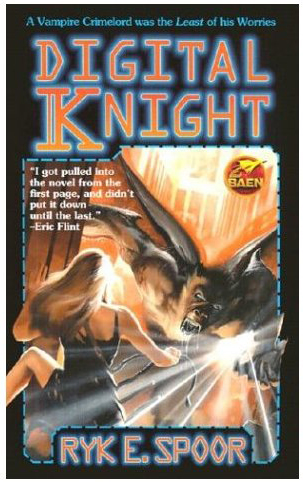
SPOOR: I actually had submitted a short story when I was 11 to a magazine (I no longer know even which one). It was some years later that I started submitting the Jason Wood stories that eventually became DIGITAL KNIGHT. All of the rejections for those stories read the same way: “This was a great story, everyone in the office loved it, but it’s way too long for magazine publication.” Of course, as individual stories, the Jason Wood stories are also far too short to be novels; they’re novelette or novella length works, which has for years been pretty much the worst length to try to publish.

The three stories which formed the core of DIGITAL KNIGHT – “Gone in a Flash”, “Photo Finish”, and “Viewed in a Harsh Light” – were eventually collected by me and put up for electronic purchase as “Morgantown: The Jason Wood Files” at hyperbooks.com; this was long before the e-book explosion happened, of course, since they were up for several years before Baen ended up publishing me.

VENTRELLA: Who were your favorite authors when you were growing up and what was it about them that appealed to you?

SPOOR: There were a lot of them. When I was very young, the most influential was L. Frank Baum, author of the Oz books. I loved Oz – the world, the people, and the subtly macabre and more complex-than-I-appreciated universe. Laura Ingalls Wilder’s “Little House” books were very strong influences because they were a glimpse into what it was like to grow up in a world that was this one …yet not the one I knew.

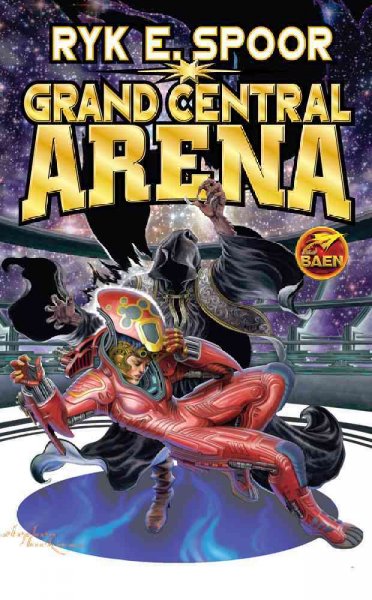
My dad had quite an SF library that I went through as I got older, but it was my 6th grade teacher, Mr. Dickinson, who introduced me to E. E. “Doc” Smith’s Lensman series by lending me a battered, somewhat cigarette-scorched copy of Second-Stage Lensmen. Doc became my single biggest influence for years; he defined “sensawunda” to me, and I in fact wrote GRAND CENTRAL ARENA specifically as a salute to him.

VENTRELLA: What is your writing process? Do you outline heavily, for instance?

SPOOR: Depends on the book, to a great extent. I have to outline when I’m working with a co-author, like Eric Flint; we discuss the general idea, then I work up an outline, he kicks holes in it, I fix it, we agree on the outline, and then I go to work.

For my own work, it still depends somewhat on which books. In DIGITAL KNIGHT, all of Jason’s major adventures were “outlined” in a single concept: the “trick” or “twist” that he uses to take down the supernatural opponent du jour. Knowing that, the only other thing I had to do was figure out who my main character was; the rest started writing itself.

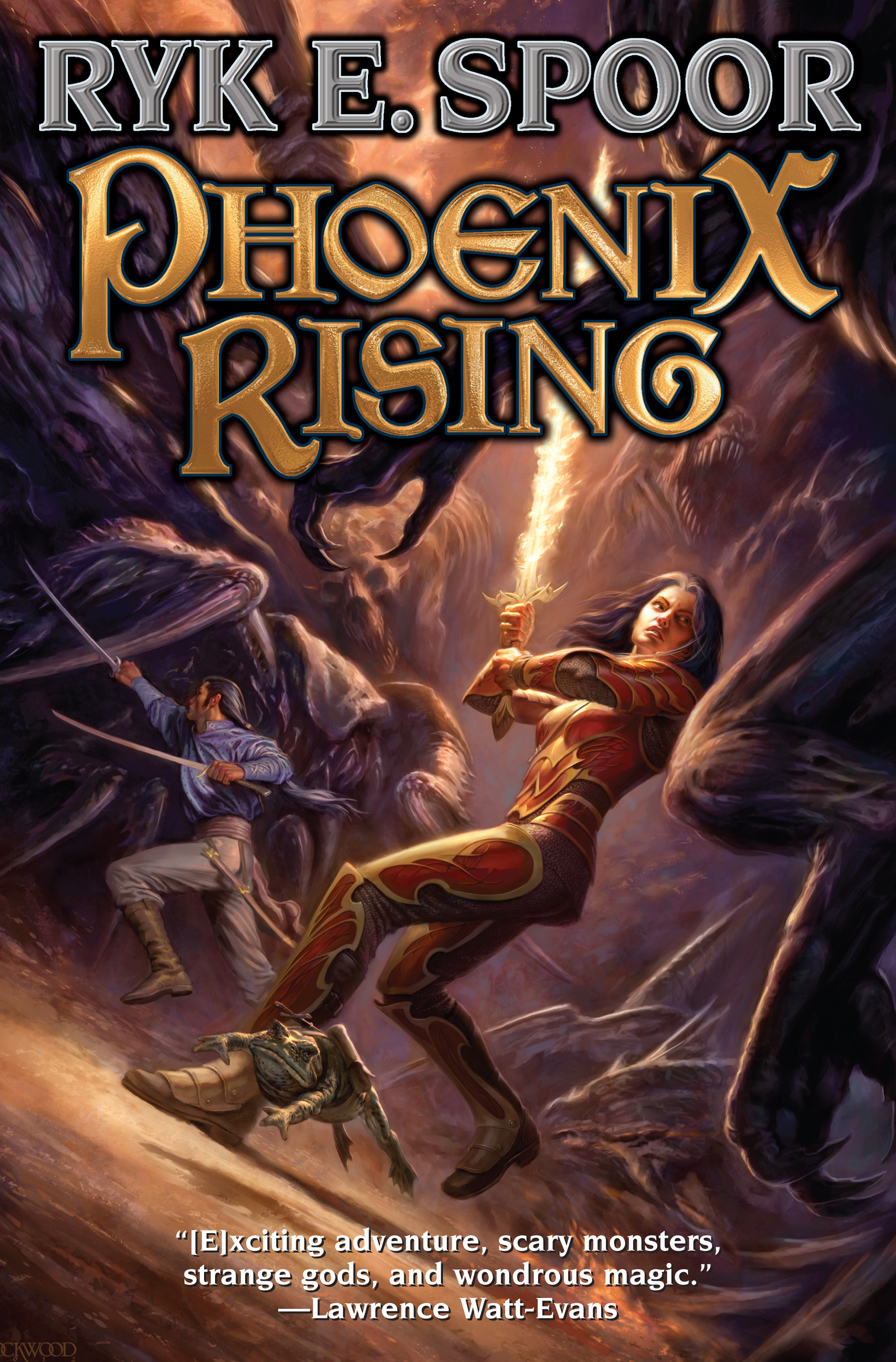
For PHOENIX RISING, I’d plotted the basic outline of Kyri’s adventures out partly during my gaming time, as Kyri was originally an RPG character. But a lot of her adventures simply fell out of the fact that I know the world so well that by now I can just write it.

With GRAND CENTRAL ARENA I had to first construct the universe; some of that I discussed in my appearance in John Scalzi’s The Big Idea; I actually did write out an outline for it, so I could pitch it to Baen, but once I had the outline I started writing. In many ways the finished product doesn’t look all that much like the outline.

But if I know what I’m writing, my process is basically just to sit down, put on my earphones, and write. I average about 1200 words per hour once I get moving, and I don’t rewrite or edit for the most part; I can’t see flaws in my own writing unless I wait something like five years, so I depend on my beta-readers and my editors to tell me when I’ve screwed up.

VENTRELLA: Tell us about PHOENIX RISING.

SPOOR: Oh, I could talk about that all day. PHOENIX RISING is the first volume in the Balanced Sword trilogy, although since I don’t yet have a contract for the other two volumes I have done my best to give it some kind of closure on its own. The basic story focuses on Kyri Vantage, who loses first her parents and then, later, her brother to unknown forces despite what everyone had thought were strong protections against evil; when she discovers just who and what was behind this, she is forced to become a living representative of a desperate, weakened god in order to bring justice to her home and eventually, she hopes, discover and destroy the true source of this evil; the events, of course, have a far greater impact and importance than Kyri recognizes at first. Other threads in the book follow the other two main characters, Tobimar Silverun and Poplock Duckweed, as they first meet each other and then eventually catch up with Kyri at a crucial moment.

This is a terribly important book to me. I wrote the first draft of Kyri’s story in 1992, and I’ve wanted to tell her story ever since; more, this is the first appearance of my fantasy world of Zarathan, which I created back in 1978 and have been building ever since. Zarathan was mentioned, very briefly, in DIGITAL KNIGHT, but there was no real vision of what it WAS in that book.

PHOENIX RISING is also quite complicated; there are threads of plot seen which are part of other stories – for instance, one character who plays a significant role for a part of the book is actually a main character in the projected Spirit Warriors trilogy, and there’s another couple of characters we see a few times who are major players in my other projected trilogy Godswar; basically the problems sweeping the world in PHOENIX RISING are so huge and complex that no one group of heroes can deal with them all; you need at least three separate groups. For the reader, I hope such things give them the feeling of a larger, more real universe, one in which there are a million stories outside of the story we’re following.

Zarathan itself is my main fantasy RPG world (to refer back to your earlier question), and I’ve been running games in it for well over 30 years now, building it, rebuilding it, and coming to a deeper understanding of the universe every day.

VENTRELLA: If I am not mistaken, you have created a universe with both fantasy and science fiction elements for your stories. How have you made the twain meet?

SPOOR: Essentially, the rule to me is that normal physics holds sway unless something changes those rules explicitly. Magic does so, some psionic capabilities do, but that means that science works just fine; it’s just a subset of the laws of nature rather than the whole thing.

It’s really not hard to combine them; as Dave Hargrave, writer of the Arduin Grimoire series of RPG supplements, put it, where’s the alien with the ray gun going to stand out more: on the streets of our cities, or in the fantasy RPG city with the fireball-flinging wizard, magic-sword wielding barbarian, and the dragon flying overhead?

The only trick, so to speak, is to have clear rules as to how the various powers behave and interact. Technology, psionics, and magic all have various advantages and disadvantages in my universe and play off each other in various ways and situations.

Really powerful magic, though, is restricted to Zarathan itself, at least until after a certain event happens, but while I’ve written one story set after that event, overall that’ll be a while before I get there.

VENTRELLA: There seems to be a trend away from science fiction, toward fantasy, steampunk, and “urban fantasy” these days. To what do you attribute that change?

SPOOR: There’s several factors. The “low-hanging fruit” in SF was all taken years ago, and general knowledge of the way science works – and doesn’t work – disseminated more and more through the population, making some of the old-school approaches no longer viable. You can’t have your characters just tinker up a spacedrive in the basement and cruise around the solar system in a homemade rocket and expect anyone to take you seriously any more.

The big news in science has also gotten, on average, a lot less immediately accessible. This is part of the overall progression of knowledge; back in the late 1800s to very early 1900s, it was still possible for one person to be “A Scientist” – someone who was an expert in more than one of the general disciplines of physics, chemistry, biology, etc. Nowadays, it’s hard to be an expert in a splinter branch of any of them. Back then, the average (reading) layman could probably grasp in general terms most, if not all, of the key problems and ideas being explored by scientists of the day; today, many of the concepts, especially in physics, require that you understand some very esoteric concepts before you even grasp the question, let alone the answer.

Fantasy is not easier to write, really, but it’s easier to make graspable because the complexity of the rules governing the world aren’t going to be more complex than the writer wants them to be. Plus, in most cases, the fantasies assume they take place on Earth or a very Earthlike world, so the reader is expected to “fill in” lots of detail all by him or herself. From a writer’s point of view, it’s also safer. No one’s going to go to Tolkien or Brooks, or me, for that matter, and tell us that our magical worlds don’t work the way we think they do. But writers of hard SF? Yeah, we’ll have people telling us when we get it wrong. Stridently, in some cases. The fact is that even if you do a lot of research, you’ll have to stop the research somewhere and get to writing … and it’s an ironclad guarantee that you stopped just before getting to some key fact that a particular group of fans consider critical.

That doesn’t mean that you can’t have similar screwups in fantasy, but those are all going to be the kind of screwups you can get in ANY story: failure of internal consistency.

I also think it’s a change in optimism that happened over the last several decades. During the late 1800s through the 1950s, science was romantic, awesome, and wondrous. It was going to solve all our problems. We were going to create new species of plants that would grow food anywhere, make space colonies on the moon and turn Mars into a second Earth. We were going to analyze the workings of the brain and abolish mental illness; we were going to cure cancer and solve the mysteries of the universe.

But science doesn’t actually work that way, and as it ran into the fact that some problems are very resistant to solution (commercial fusion and true artificial intelligence, still 20 years away and have been all my life!), the general public began to also see some of the consequences of misuse of technology (pollution, etc.) and associate this WITH technology. The shiny glow of hope faded and the chrome-plated future got tarnished. But shining worlds of high fantasy can’t be rendered hopeless by the same process … and one can also, of course, apply the same overlay of grimness and edginess to fantasy as one can to SF, so the net result is much more fantasy and less clear SF.

(of course, we’ll note that this assumes that there’s a clear division between SF and fantasy, which isn’t the case)

VENTRELLA: Creating new worlds is fun but also difficult in that there is the need to explain the world without massive info dumps. How do you do it?

SPOOR: I’m not sure I’ve mastered it yet. Sometimes I feel like I do nothing in the beginning of a new book but try to dump the info into the readers’ head.

The main techniques that I use are the tried-and-true methods of either (A) having the characters discuss key information as part of a normal conversation – usually with one character who has some reason not to know the key info, so they’re not “As you know, Bob …” type discussions, or (B) having the information emerge from the events of the story.

This latter technique is one that is best used for pieces of information which will actually become vital sometime later in the story – Jane’s doing X, which happens to cause Y to happen, leading her to realize (along with the reader) that Z is one of the characteristics of the world. Twenty chapters later, Jane realizes that applying Z will get her out of the situation she’s in. This allows the reader to follow along and maybe guess what Jane’s going to do with this new-found knowledge. I did this in Grand Central Arena to plant all the clues for how Ariane would be able to defeat Amas-Garao in the final Challenge.

VENTRELLA: I’ve recently realized that all my stories have the everyday person who is stuck in a situation and must overcome great odds through bravery and intellect – the reluctant hero who has no extraordinary skills. Have you find any connecting threads for your protagonists?

SPOOR: I like my heroes Heroic and my villans Villanous, for the most part. I don’t usually have reluctant heroes, although inexperienced and sometimes clueless heroes, that’s fine. As I tend to write my stories (just as I run my RPGs) at a high power level, they all tend to be at the least very highly competent and at the most quite superhuman in order to survive the threats they’re up against.

All of my characters – heroes and villains – tend to be smart. That doesn’t mean they don’t make mistakes or misjudge things, but that they try not to do obviously stupid actions. The really smart ones often think many steps ahead. I want to see smart heroes VS smart villains

Most of my characters tend to be fairly modest, often underestimating their own abilities. The few arrogant ones (like A.J. Baker) usually get smacked down fairly regularly.

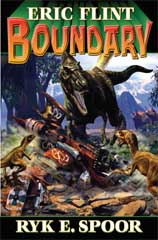
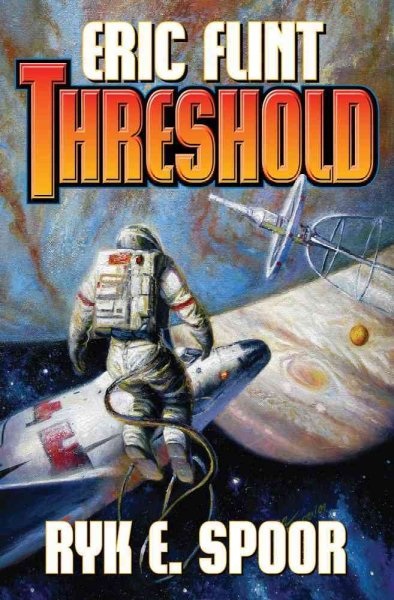
High Melodrama is my preference in writing, and most of my characters share that preference in their behavior. I have to rein in that tendency when writing hard SF like Boundary, of course.

VENTRELLA: How do you get inside the minds of your characters to make sure they all don’t talk and act alike?

SPOOR: Heh. Sometimes I don’t think they do. I actually don’t have a … technique per se. I just get to know who they are and then I know what they’d say, and how they’d say it. I couldn’t tell you why, but I know when something is right and when it isn’t, so I write it the way that sounds right.

VENTRELLA: Ryk, we met while on a panel together at Albacon some years ago. How important is it to attend conventions to promote yourself?

SPOOR: I honestly can’t say; I can’t afford to go to many at all, so if it’s important, I’m in deep doo-doo. Aside from Albacon, I used to go to Genericon; other than that I was at I-Con once, the World Fantasy Convention when it was up in Saratoga, and Worldcon when it was in Boston, but I haven’t done much promoting. I’m terrible at promoting, actually. I hate it; I’d rather spend my time writing, unless the promotion’s something fun and flashy in and of itself.

VENTRELLA: What bugs you most about the publishing industry and what would you change about it if you could?

SPOOR: I’ve had generally good experiences with publishing, so I have minimal criticisms, aside from saying that the publishers who are clinging to DRM are gonna shoot themselves in the foot. About the only thing that’s annoying is long delays in reaction times, but alas, there’s so much slush and so hard to get people to read it, so there’s not likely to be much change there.

I think publishers need to look at reaching out to the self-publishing industry and offering professional services such as editing in an organized sense. This might be one thing that can keep them alive in the changing landscape of publication.

VENTRELLA: Who do you like to read for pleasure?

There’s so many names. The old classics like RAH, Heinlein, etc., still work. Terry Brooks usually gives a good entertaining read. My preference is for worlds that are overall brighter than this one, or whose heroes at least shine brightly, so a lot of current writers tend to skirt the edge of that threshold, like Harry Connolly and Charles Stross.

Lately I’ve been reading a lot of manga, especially Naruto and Fullmetal Alchemist – some of the best stories I’ve ever read, actually.

Out of genre, some of my favorite comfort reads are Nero Wolfe novels or the adventure classics like Scaramouche, the Count of Monte-Cristo, Scarlet Pimpernel, etc.

Honestly, however, I’ve had a lot less time to read since I became an author. I probably read more stuff to my kids than I do to myself.

VENTRELLA: What advice would you give to a starting author that you wish someone had given you?

Heh. I never learned from advice, so I’m terrible at giving it. Only two things, really; they’re pieces of advice someone did tell me eventually, but not when I started writing:

1) Never make it easy on your characters.

2) Don’t let anyone tell you there’s one particular way to write; “There are nine-and-sixty ways to compose tribal lays, and every single one of them is right.” That said, writing takes work, it’s not magic.

VENTRELLA: What is the biggest mistake you see aspiring authors make?

SPOOR: Again, two, I think.

1) Thinking they have some precious, original idea that someone will steal. No, you don’t. Any idea you have, someone else already had. Probably five or ten someones. And they did it at least twenty years and maybe as many as two thousand years before you think they could possibly have done it. No one’s trying to steal your ideas. Especially other writers; we have more ideas already than we know what to do with.

2) Not reading. Especially in the genre. This would partially alleviate #1, because you’d be seeing all the other ideas. Unfortunately, a lot of new authors appear to be coming in mostly from non-print media. You really should read quite a bit of the older stuff, then the newer stuff, before you try to drop into the business, otherwise you’ll think you’re onto a new twist on an idea when it’s actually a twist we’ve seen a hundred times. I averaged a book a day from the time I was 7 or so until I was probably in my mid to late 20s. I don’t expect everyone to hit that level, but reading a bunch of the foundational classics of the genre is awfully important to ground you in this business.

VENTRELLA: What question do you wish interviewers would ask you that they never do?

SPOOR: “Would you like this check for a million dollars?”

Honestly, while all interviews skip over one question or another, all of them together seem to have hit all the questions I’d expect someone to ask. Maybe, in a few years or ten, I’ll have had enough interviews to notice something missing!

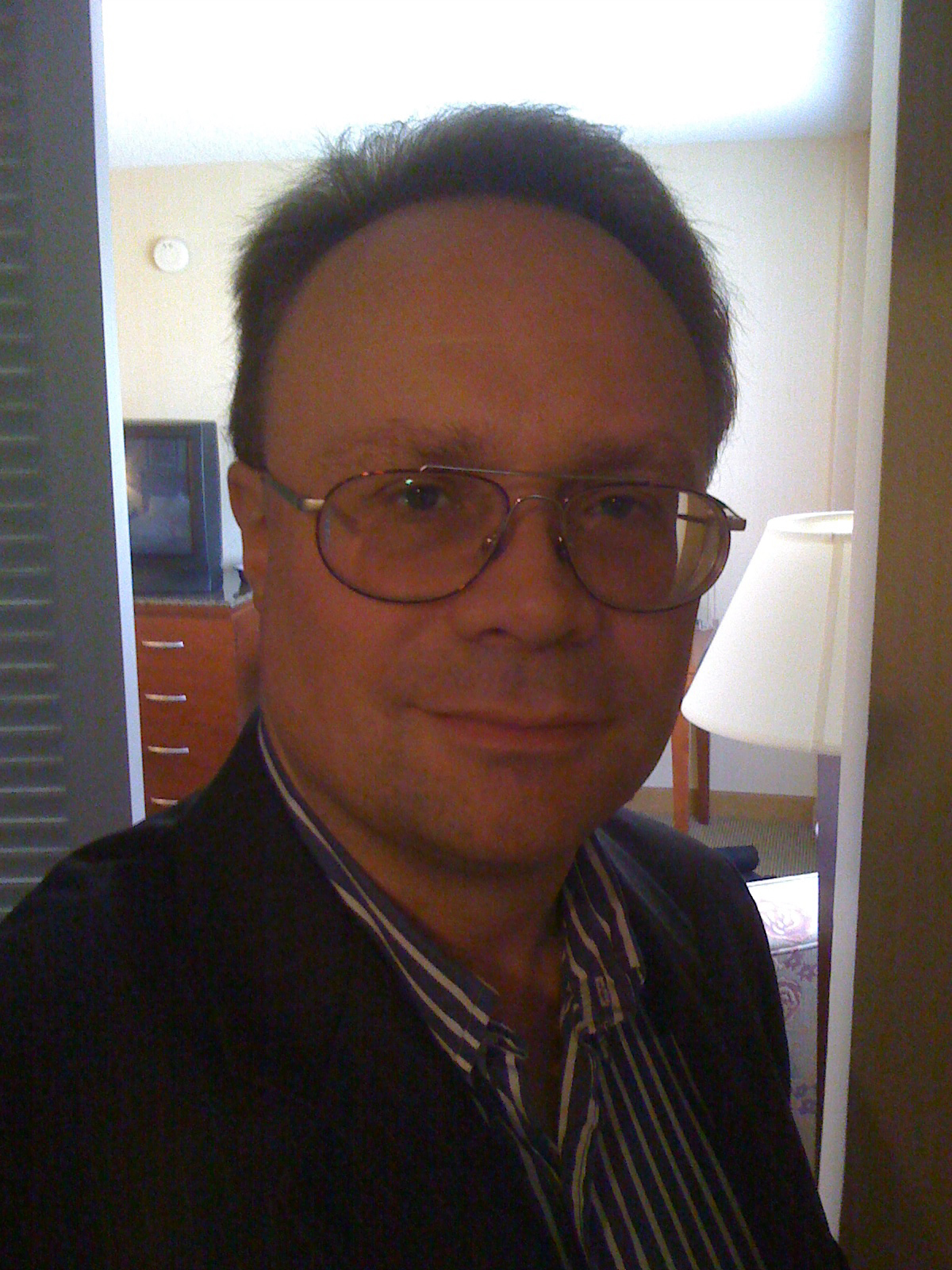
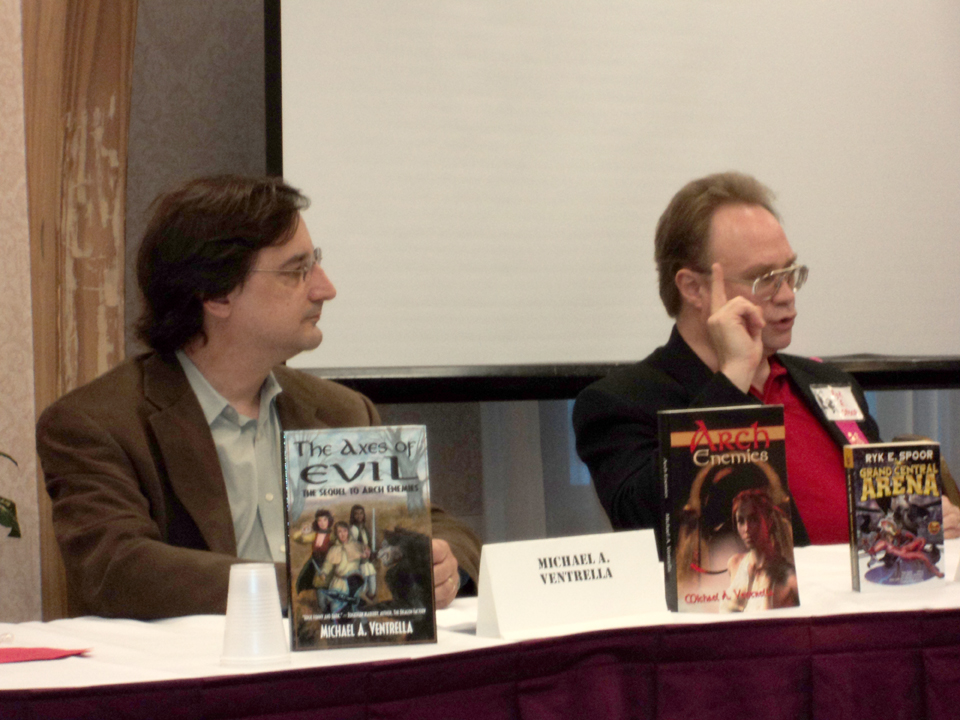
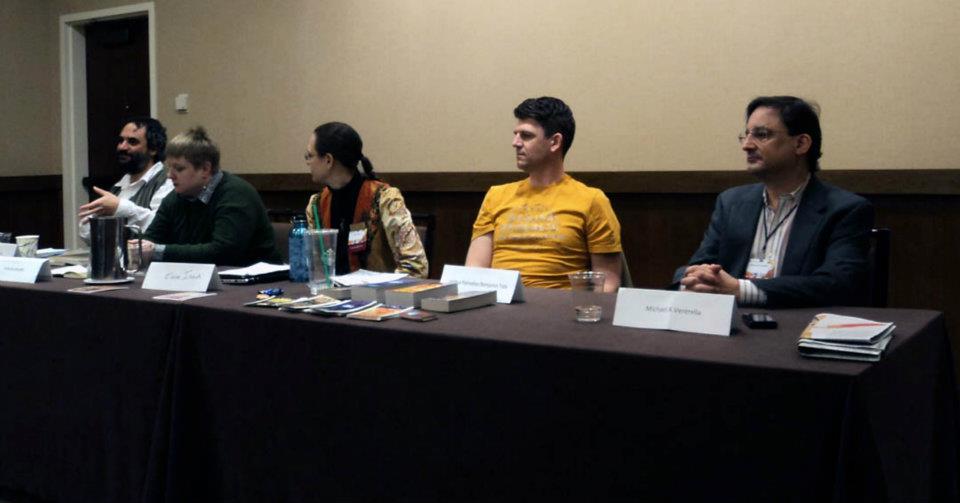
Ryk and me on a panel together at Albacon 2010

Write What You Don’t Know

One of the most misunderstood directives new writers get is to “write what you know.”

Do you think H.G. Welles actually went to the moon? Did Steinbeck travel across the dust bowl? Did Melville fight a white whale?

Too many beginning authors get paralyzed by this: “But I don’t know anything about being a spy, so how I can write a good spy novel?”

Come on, if you limit yourself to “writing what you know,” well, your work will probably be very boring. Who wants to read about someone who drinks a lot of coffee and spends hours typing in front of a computer screen?

It would be better to take the negative form of this advice: Don’t write about what you don’t know.writing

They key, then, is to research. If you’ve never ridden a horse and your character spends days in the saddle, then find out what that’s like. Make it real.

We’ve all been frustrated when we read about something with which we have personal knowledge and found it lacking. As an attorney, I get very frustrated when some courtroom drama doesn’t follow the rules of evidence or otherwise completely misrepresents what a trial is like. Computer programmers hate it when the hero hacks into systems in ways that are impossible, and historians throw away novels full of anachronisms.

You have to write what you don’t know if you want to create believable characters. I am a straight white male in his early 50s; in order to write about people different than me, I have to do some research. I have to observe other people; I have to talk to them; I have to get into their minds and imagine how they would react to the things that are happening to them in my story.

I don’t know everything. I have to learn. I have to be willing to expand my experiences, because I don’t want my readers to roll their eyes and lose their suspension of disbelief when I go so far as to be unreasonable.

While writing BLOODSUCKERS (forthcoming), I interviewed an FBI agent to learn about their procedures, used Google Maps to determine where my characters were traveling so I could describe the area accurately, did research on vampire lore across the world, and otherwise tried my best to make the world in which my fantastic story takes place be real and meaningful. I don’t want a reader to stop and say, “Oh, come on now…” when I wrote about something in their area of expertise.

So go ahead and write that spy novel. Just do some research first so that you don’t place The Louvre in Rome.

Start in the Middle!

The theme of this blog is “Learn from My Mistakes.”

I just wanted to emphasize that. I don’t want anyone to think that my advice posts here are because I am an expert in the field of writing and publishing, because I am not. Almost all the things I am advising you not to do here are because I did them already, and found out they don’t work. I’ve warned you about the proper point of view, using outlines, why you should not use prologues, and other obvious writing rules that aren’t so obvious.

So today let’s discuss another bit of advice that I just had hammered into me: Starting your story in the middle.

I’ve always known that it is important to start your story with a bang, and all my books and short stories have done so. You want to grab the reader in the first page, and keep those pages turning. I jump right in and fill in the background later.

I know that.

However, there was something I was missing that, in retrospect, seems really obvious to me now.

I just received two rejections from agents looking at my latest manuscript BLOODSUCKERS. Both said the same thing. They liked my writing, but there was no urgency — the story didn’t grab them quick enough.bloodsuckers-510

And they were right.

You see, I started the story off with a beautiful naked vampire killing a Presidential candidate on the eve of his nomination (sex! violence! politics!). Soon after, a new candidate was chosen who was accused of being a vampire by crazies (called “batties”) who actually believe vampires exist. This was followed by a conspiracy to assassinate that candidate, and a plan to frame the assassination on a disgraced reporter who had written an article about the crazies. Then the plan is carried out …

Well, do you see the problem?

The main character in this story is the reporter — the guy who is framed for the assassination and then has to go into hiding, running from the vampires and the FBI. Once that happens, the story kicks into high gear. The only way he can prove his innocence is by proving that vampires exist. He gets help from the batties and eventually from some other vampires. Can he expose the candidate, will he be killed along the way, or will he be corrupted by the system?

But that didn’t happen until page 60 or so.

I mistakenly thought that all the other action was sufficient — that the conspiracies and plots would be enough.

The problem is that these early threats and dangers all concern people other than my main character … there’s not even the suggestion that he will be involved until the assassins pick him to be their scapegoat. That early stuff didn’t matter personally to him. The “middle” of my story is actually the start of the story for my character. And that’s where I needed to begin.

So it’s time for a new draft. I need to get the reader to understand the danger my protagonist is in early, so that the reader has some connection to the story and cares.

So learn from my mistakes — it’s not enough to have lots of action, drama, and “tension on every page” early on. You need to connect that tension to your protagonist if you want your reader to care.

Interview with author Joshua Palmatier

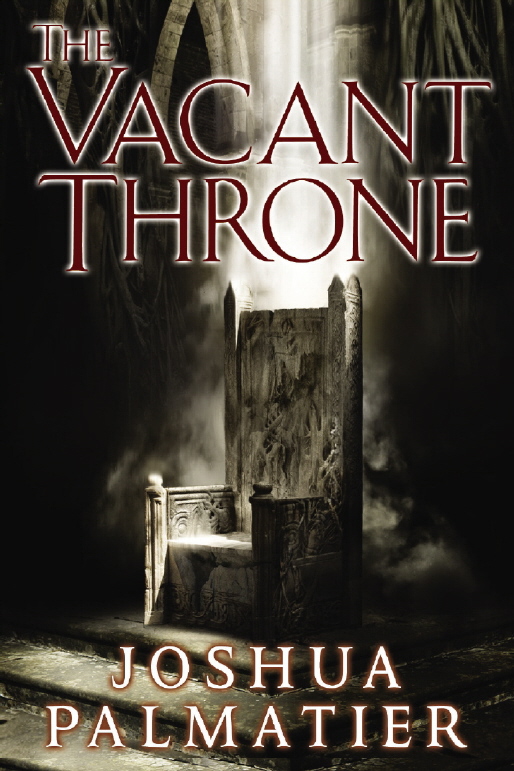
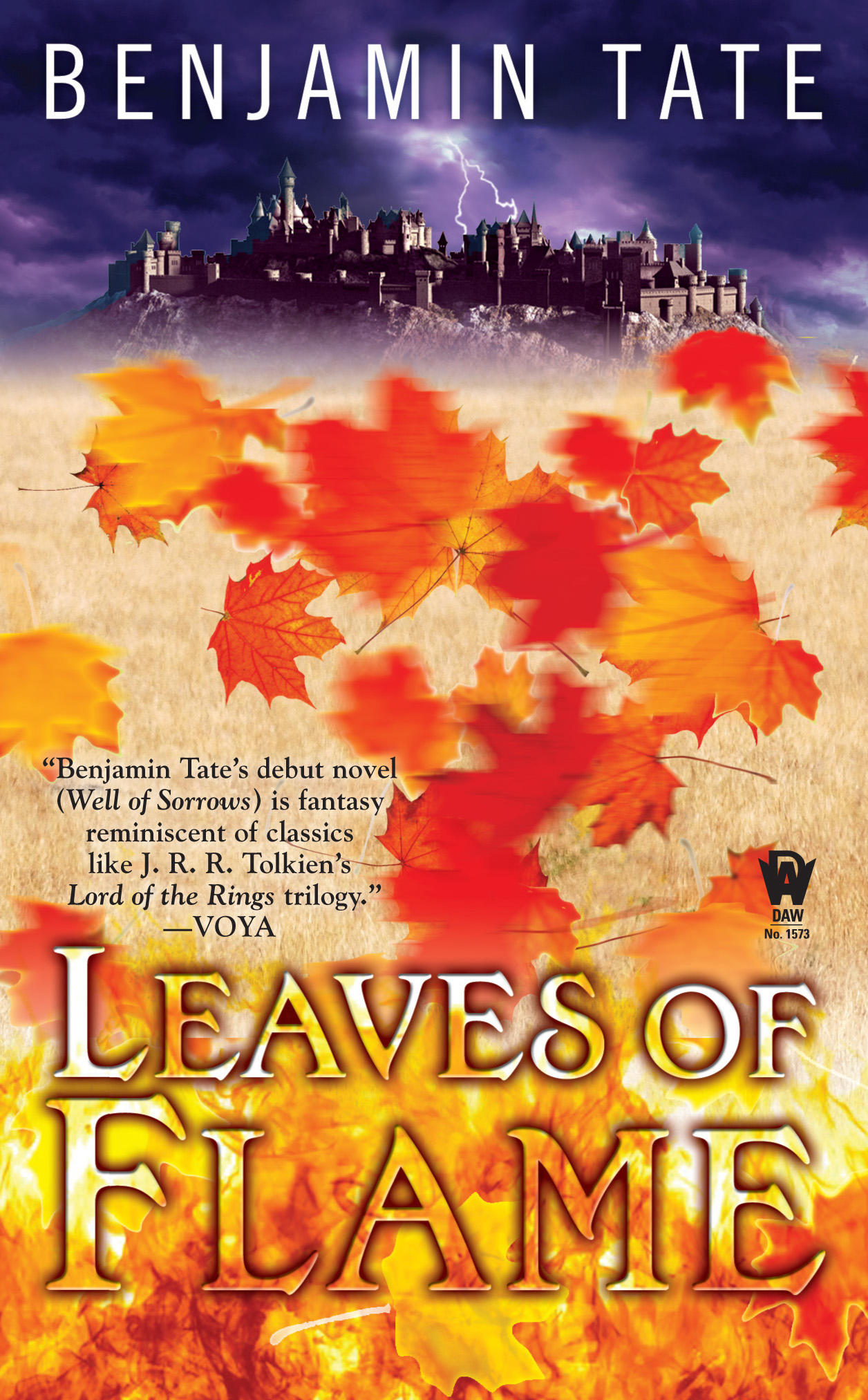
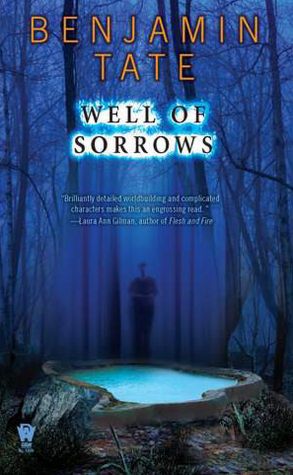
MICHAEL A. VENTRELLA: Today, I am pleased to be interviewing Joshua Palmatier. Josh and I have been on panels at various SF conventions together, and we’ve had some great discussions about writing and fantasy. Joshua is a fantasy writer with DAW Books, with two series on the shelf, a few short stories, and is co-editor with Patricia Bray of two anthologies. Check out the “Throne of Amenkor” trilogy — THE SKEWED THRONE, THE CRACKED THRONE, and THE VACANT THRONE — under the Joshua Palmatier name. And look for the “Well” series — WELL OF SORROWS and the just released LEAVES OF FLAME — by Benjamin Tate. Short stories are included in the anthologies CLOSE ENCOUNTERS OF THE URBAN KIND (edited by Jennifer Brozek), BEAUTY HAS HER WAY (Jennifer Brozek), and RIER (Alma Alexander). And the two anthologies he’s co-edited are AFTER HOURS: TALES FROM THE UR-BAR and the upcoming THE MODERN FAE’S GUIDE TO SURVIVING HUMANITY (March 2012). His web pages are www.joshuapalmatier.com and www.benjamintate.com, as well as on Facebook, LiveJournal (jpsorrow), and Twitter (bentateauthor).

Josh, your Tate books take place in the same fantasy world as the Palmatier books, although not at the same time or with the same characters. Why have two different authors? When new authors are trying to get that important name recognition, doesn’t this put you at a disadvantage?

JOSHUA PALMATIER: Well, the two names were actually a strategy brought up by the marketing department at my publisher. The idea was that we’d release the new books under the Ben Tate name and make it an open secret. Hopefully, the Joshua Palmatier fans would learn of the name switch and buy the new Tate books, while the Tate name would bypass the ordering structure of the bookstores so that they’d carry the new books on the shelves and pull in new readers. It was an attempt to increase the audience for my books. The sales for the Palmatier books were OK, but not as high as hoped, so the publisher was looking for ways to draw in additional readers. At this point, I would have to say that the ploy didn’t work, although I think there were numerous factors as to why it didn’t work.

VENTRELLA: Is the voice the same in the two series?

PALMATIER: That’s one of the reasons that I didn’t protest too much when the publisher suggested the name change for the new series —- the voice of the new series is significantly different than the original. So even though it’s set in the same world, it had different characters, was set at a different time period in the history of the world, on a completely different continent, and -— like the Palmatier books, which were focused on one character, written in first person, and were essentially “urban fantasies” set on an alternate world —- the new series was much more epic in nature. There are multiple POV characters and threads that the reader follows, and the action takes place over two different continents and over a much larger time span. So the feel of the books are different than from that original series. Both are dark in nature though, as the covers of THE VACANT THRONE and WELL OF SORROWS suggest.

VENTRELLA: How did you get your first “big break” in publishing? Did you have an agent first?

PALMATIER: My “big break” was sort of interesting actually. I wrote my first book (unpublished) and started sending it out to editors and agents at the same time (one editor at a time, but multiple agents). I spent the next ten years writing three additional novels, sending each out to editors and agents and getting rejections from all. But most of the rejections were good, meaning they said, “I’m not interested in this project, but the writing’s good and I’d like to see whatever you write next.” This was encouraging, and it allowed me to focus my attentions on those editors and agents who were interested. I basically kept a running list for each, in order of my preference and tweaked based on the responses I got.

So when it came time to send out THE SKEWED THRONE, I started at the top of my editor list (Sheila Gilbert at DAW) and the first seven agents on my list. I heard back from those first seven agents quickly (all rejections), so sent out the next batch of seven, all while DAW still had the book. I was also getting my PhD in mathematics at the same time, at the point where I was defending my dissertation. I got a call from one of the agents, Amy Stout, while prepping for that defense. After a lengthy discussion on the phone over representation, I signed on with her and told her that DAW currently had the book. Amy called up Sheila and started talking. Meanwhile, I continued my job search and defense.

I was away at a mathematics conference, doing interviews and such, when Amy called back to tell me that DAW wanted to buy THE SKEWED THRONE. I was thrilled! But they also wanted to talk about the sequels. So in the midst of finishing up my dissertation and job hunting, I worked up the proposals to THE CRACKED THRONE and THE VACANT THRONE and almost immediately had contracts for the entire trilogy. My first sale! I was on my way!

But keep in mind that it took me ten years and I wrote three other novels before THE SKEWED THRONE found a home. And I lost count of the number of rejections.

VENTRELLA: Aspiring authors often seem to think that writing a book is easy and your first one is sure to be a huge hit. What writing experience did you have prior to publication?

PALMATIER: *snort* Writing a book isn’t easy. I said before that I wrote three other novels before I sold one, but that isn’t quite true. I started writing while I was in high school and kept writing all the way through college. It wasn’t until grad school that I sat back and asked myself whether I was going to do this for fun, or if I was going to try to sell something. So it was ten years and four novels total from the moment I decided to get serious. There were ten years of “fun” writing before that.

And that “fun” writing was actually my entire set of writing experience. I took a few classes here and there in college as part of my other degrees (electives and such), but for the most part, those ten years of writing were me teaching myself how to write. I wrote my first true novel five different times, each time learning more about the craft and what was good writing and how much mine sucked. It wasn’t until the 5th draft that I finally thought I’d written something that could potentially be published. (And those first few drafts were bad. I mean bad. Indescribably bad.)

I also pretty much trained myself in how to send that manuscript out to find a publisher to call home. That simply amounted to a bunch of research and time on my part, reading up on what “manuscript format” meant and what publishers wanted in a “query” or “partial.” All of that’s even easier to research now with the internet, and I strongly suggest aspiring writers take the time to do the research and make a list of publisher and agents they want to submit to when they’re ready.

But of course, you have to have that stellar book first, and that part ain’t easy at all.

VENTRELLA: Tell us about the books!

PALMATIER: I was waiting for you to ask. *grin* All of my novels are dark fantasy, the Tate books more epic in nature than the Palmatier books.

I’ll start with the “Throne of Amenkor” series, which begins with a young girl, Varis, barely surviving in the slums of the city of Amenkor. She’s on her way to becoming lost, like so many other souls in the slums, when she runs across a Seeker—an assassin sent by the Mistress of the city to mete out justice—named Erick. Erick trains her to protect herself and uses her to hunt his marks in the slums. Of course, these marks lead Varis beyond the slums into the heart of the Amenkor and deep into its politics. Eventually, she’s hired to kill the Mistress herself, protected by the magic of the Skewed Throne.

The series continues beyond that, with attacks from a race called the Chorl from the sea, and eventually leads to Amenkor’s sister city of Venitte. But I don’t want to spoil anything. Everyone will just have to read the books to find out what happens.

My Tate novels are a little different, set on a different continent and sort of combining the settling of a newly discovered continent with fantasy elements. Colin’s family has fled the coming war in their homeland to the new continent across the ocean, landing in one of the few settlements on the new coast. But the politics of the old world have followed them to the new. In order to escape, Colin’s father accepts responsibility for a wagon train heading into the unexplored plains to form a new settlement inland. They head out . . . only to discover entire new races of people, a beautiful new world, and unexpected and magical dangers. Attacked by one such race, the wagon train is driven into a dangerous and dark forest, where Colin’s life is changed forever when he is forced to drink for the Well of Sorrows in order to survive. But the waters of the Well transform him into something more than human. Struggling to maintain his grasp on humanity, he attempts to use his newfound powers to end the war between the three clashing races —- the humans from his homeland, the dwarren, and the Alvritshai.

VENTRELLA: You are the editor of a new anthology about fae coming out soon. How did that come about?

PALMATIER: Ah, the role as editor. That actually came about at a bar. You see, a bunch of my fellow friends and authors had gotten together for a signing and afterwards we, of course, hit the bar for a few drinks. While chatting, someone brought up the idea of doing an anthology centered around a bar, and thus AFTER HOURS: TALES FROM THE UR-BAR was born. I wrote up a proposal for that and sent it out. DAW liked the idea and thus my editing career (with Patricia Bray) was born. After the bar anthology, Patricia and I proposed a few other ideas and DAW bought THE MODERN FAE’S GUIDE TO SURVIVING HUMANITY.

VENTRELLA: As someone who has edited a short story collection and is working on a second, I find that the hardest thing to do is reject stories, especially from friends. How have you handled this?

PALMATIER: Well, for the first anthology, AFTER HOURS, Patricia and I only invited around 17 authors to contribute. A few had to drop out because of their own schedules, so we ended up not needing to reject anyone for that anthology. However, for MODERN FAE we invited over 30 people to contribute stories, so of course we had to pick and choose from the selection there. Pretty much all of those invited were friends, of course, but we were up front with everyone and in the end we simply handled everything professionally. Both Patricia and I were able to separate the friendships from the editorial job, so while rejecting some of the friends (some of them friends for decades) was hard, we just . . . did it. Like ripping that band-aid off all in one go. Everyone knew that getting rejected was a possibility, and I think everyone understood why certain stories didn’t make the cut.

VENTRELLA: When editing an anthology, do you ever do any rewriting of the stories submitted yourself?

PALMATIER: All of the stories in the anthology were edited, of course. Neither Patricia nor I do what I would call “rewriting” though. Each of us reads the story and we compare notes on what we thought and how we think the story could be improved. One of us then sends out our notes about suggested revisions (we divide the authors up into two teams —- Team Patricia and Team Joshua). It’s up to the authors to revise the story, with the idea that at this stage there’s still a chance that the story will be cut if the revisions aren’t satisfactory. But all of our authors have reacted professionally to our suggestions, so we’ve never had any trouble. I think everyone realizes that we all want the best stories possible in the anthology and we’re all working toward that one goal. I think both anthologies are spectacular.

VENTRELLA: What resources do you use in creating your fantasy worlds?

PALMATIER: I use everything when creating my fantasy worlds. *grin* By this, I mean that I use bits and pieces of many different cultures all tweaked to fit the circumstances of the world where these characters and these stories are being told.

For example, in the “Well” series, I have three main cultures clashing on the plains. The human culture has aspects from the settlers who were setting out into the American West, but it’s obvious that they aren’t those settlers. For their homeland, I meshed numerous European cultures. The dwarren are reminiscent of some of the American Indian cultures, but various additions of my own, enough that I wouldn’t say they’re based on any one particular culture. What I’m trying to capture is a flavor, but I want that flavor to be unique —- familiar enough to be comfortable, but different enough to intrigue the reader.

Of course, you need to be familiar with numerous cultures in order to do this well. I wouldn’t say that I have any particular resources for this. I simply read and absorb as much about other cultures as I can.

VENTRELLA: With so many fantasy novels out these days, what have you done to make your series stand out from the rest? What’s different about them?

PALMATIER: Hmm . . . well, I’d like to think the writing. But, I also try to make the characters as interesting as possible and play around with the magic.

I think for a fantasy, you really need to pay attention to the magic and think about what makes your magic different from everyone other fantasy novel out there. In the “Throne” series, I have two main magical components that I focus on — the White Fire and the Skewed Throne. These two magics are obvious: the White Fire is a wall of white flame that passes through the city for a second time during Varis’ lifetime (it passed through once before 1000+ years ago). No one knows what this Fire is, but it touches and affects everyone in various ways. For Varis, a piece of the Fire appears to settle inside of her and she eventually learns how to use it. The Skewed Throne is designed to store all of the personalities of those who have touched it inside, so that the ruler has the ability to access this information and knowledge and, in theory, become a better ruler. The problem is that in Varis’ time, there are so many personalities stored inside the throne that it has essentially gone insane. For the “Well” series, I have the water inside the Well of Sorrows as the main magical component. This water gives the person who drinks it limited powers over time, but it also taints the drinker and eventually alters them into . . . something else.

These are the key elements that I think make my fantasy different than other fantasy novels out there. But again, that isn’t enough on its own. I think my books are darker and more realistic than other fantasies on the shelf at the moment, and I think that if you don’t have interesting, relatable characters, then all the cool magic in the world isn’t going to save you.

VENTRELLA: When creating believable characters, what techniques do you use?

PALMATIER: Wow, that couldn’t have been a better segue if I’d planned it. So, yeah, the characters are incredibly important. People won’t keep reading if they don’t care about the characters, no matter how interesting the magic or the plot. Everyone wants someone to root for. I don’t think there are too many tricks to creating believable characters though. The only real technique is to get inside of that character’s head and to seriously ask exactly what it is that the character would do in such a situation. It isn’t easy, and it takes practice to get yourself into that headspace (because it’s a slightly different headspace for each character), but you literally need to “become” that character for those scenes. You have to put yourself in that person’s world and feel them. At least, that’s how I do it. What would they think, what would they say, what would they do in this situation? Those are the key questions you have to ask in every scene.

VENTRELLA: What is your background? How did you decide to become a writer?

PALMATIER: Well, I decided to become a writer in the 8th grade, when an English teacher assigned us a “Twilight Zone” story and I wrote a rip-off of the Atlantis story with spaceships. But the teacher’s comment was, “This is good, you should write more.” I think that’s the first time it seriously crossed my mind that PEOPLE WROTE THE BOOKS I WAS READING! And that person could be me! It was a stunning revelation. I immediately began writing, doing short stories for Andre Norton’s MAGIC IN ITHKAR series (even though I never sent anything in) and eventually sitting down to write a typical “me and all my friends get transported to a fantasy world!” kind of story. It sucked of course, and I never finished it. But it was the first effort at writing something longer, and it taught me that writing wasn’t easy. I started my first SERIOUS effort at a novel shortly after that, and that one I finished (even though it sucked).

I never really had a “background” in writing. My degrees are in mathematics (something has to pay the bills) and I never really took any particular writing classes for the sole purpose of “learning” to write. I took a few creative writing classes in college, mostly for the elective credit. Everything else I taught myself.

VENTRELLA: You’re a math professor, right? Don’t those kinds of nerds usually end up writing hard science fiction?

PALMATIER: Ha! Yeah, science fiction. I think there are two reasons that I don’t write science fiction. The first is that, as a reader, I was never really drawn to science fiction. Everything I read when I was younger leaned more toward fantasy. I “discovered” fantasy and science fiction by accidentally checking out an Andre Norton book from the library. After that I was hooked. I read everything of Andre Norton’s I could get my hands on . . . but even then I gravitated toward her fantasy, not her SF. So I was a fantasy reader early on. It only made sense that I’d want to write fantasy on my own.

The other reason I write fantasy and not SF, I think, is because I needed something totally different from the mathematics to focus on while in grad school. The writing was, essentially, my “break” from all of the hardcore equations. In fact, it was such a break that Varis, my main character in the “Throne” books, hated mathematics. So when I got tired of the math, I’d switch gears and focus on the writing and the fantasy; and when the writing slowed down, I turned back to the fantasy. I think they complemented each other rather well.

In fact, I think the structure that’s the basis of mathematics helped me write better fantasy novels—keeping the plot in line and not scattered, keeping the magic realistic, with rules of its own, etc. And the fantasy helped the mathematics as well, since you need to be creative and think “out of the box” in order to come up with new ways to solve previously unsolved problems (which is what you do for your dissertation in math—solve something no one has solved before).

VENTRELLA: What was the biggest mistake you made in your career?

PALMATIER: I think the biggest mistake I made was writing the sequel to my first novel when it hasn’t sold yet. You see, I wrote that first novel and started sending it out to agents and editors. But it was the first book in a trilogy (of course), and I was so confident that it would sell that while it was out doing the rounds I worked on the sequel and got it finished. But of course, that first novel never sold. So I wasted a year of writing working on the sequel, when I should have been writing a different book completely in case that first book didn’t sell. Looking back on it, it’s obvious, but at the time I had no clue. I may have gotten published earlier if I hadn’t lost all of that time.

VENTRELLA: What do you see as the biggest mistakes starting authors make in their writing?

PALMATIER: Well, I still see people making that same mistake I made: writing that sequel when the first book hasn’t sold yet. You should work on something else, because then you have another novel to shop around, and if that first book sell you can still write the sequel. But the biggest mistake I see aspiring writers making is that they don’t take the time to do the research you need to do before you start sending manuscripts out there. Every writer needs to sit down and research the publishers and editors and get a good idea of who they’d like to publish their work. Make a list, with their top choice down. Do the same for agents, paying particular attention to make certain the publisher and agents are legitimate. Do a second list for top agent down. Research each one to see what they want from the writer (some want just a query letter, some want a partial, some will take the full manuscript, etc). Make certain the manuscript is in the proper format. Once all of this research is done, then send out the manuscript. All of this research won’t take up much time (in comparison to the time it took to write the manuscript in the first place) and it makes your submission professional. Publishers want good books first and foremost . . . but they’re also looking to work with someone who approaches them in a professional manner.

VENTRELLA: What piece of advice do you wish someone had given you when you first began writing?

PALMATIER: I think I was rather lucky in that I did get good advice pretty much right at the start, and that advice was, “Have patience.” You won’t get a contract immediately. You’re going to get rejections, and you have to realize that the rejections aren’t personal. So you have to accept the rejections (with perhaps some wine or chocolate and a few good writer friends for support) and persevere. Keep sending that manuscript out, submitting down your list, and keep writing that next project. Because by the time you get through your list, if you keep writing, you’ll have another novel ready to send out. By then you’ll have a revised list based on the rejections you’ve gotten, and that revised list gives you a better chance of success.

Joshua and I on a panel together at the 2012 Arisia convention

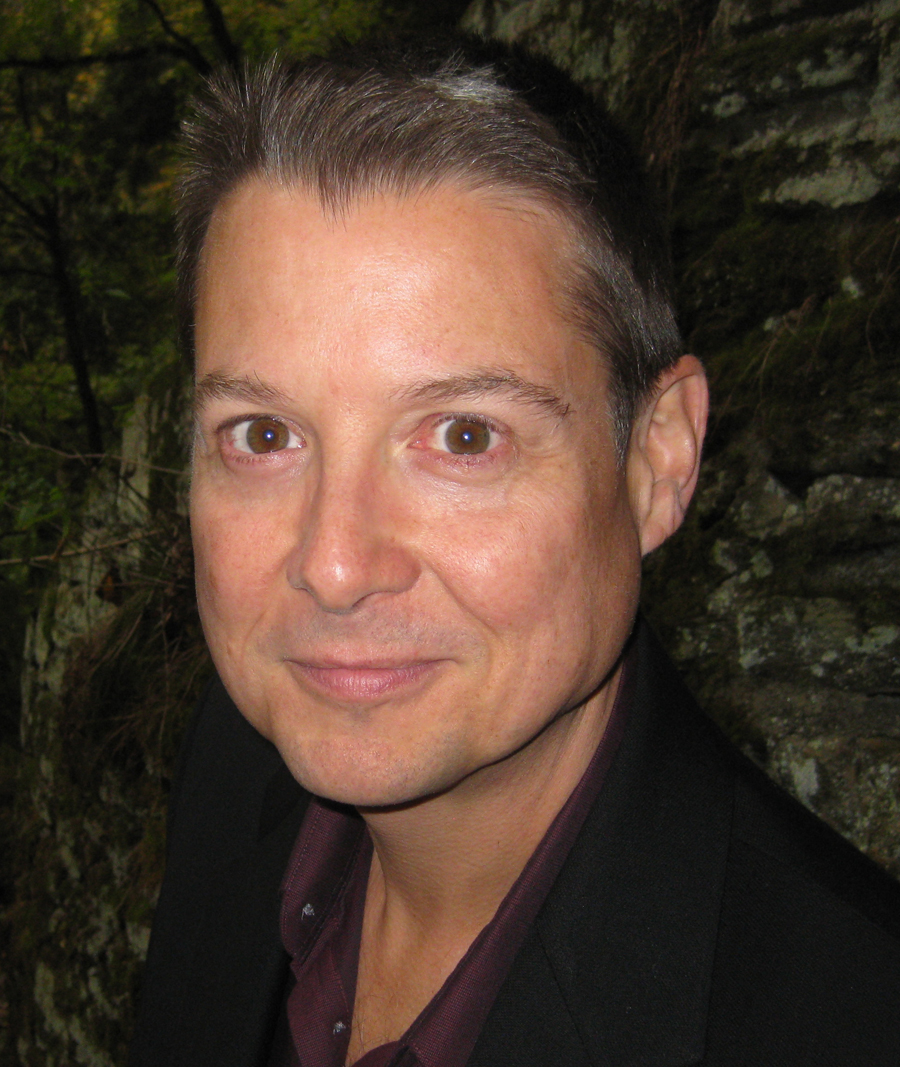
Interview with author Jon McGoran

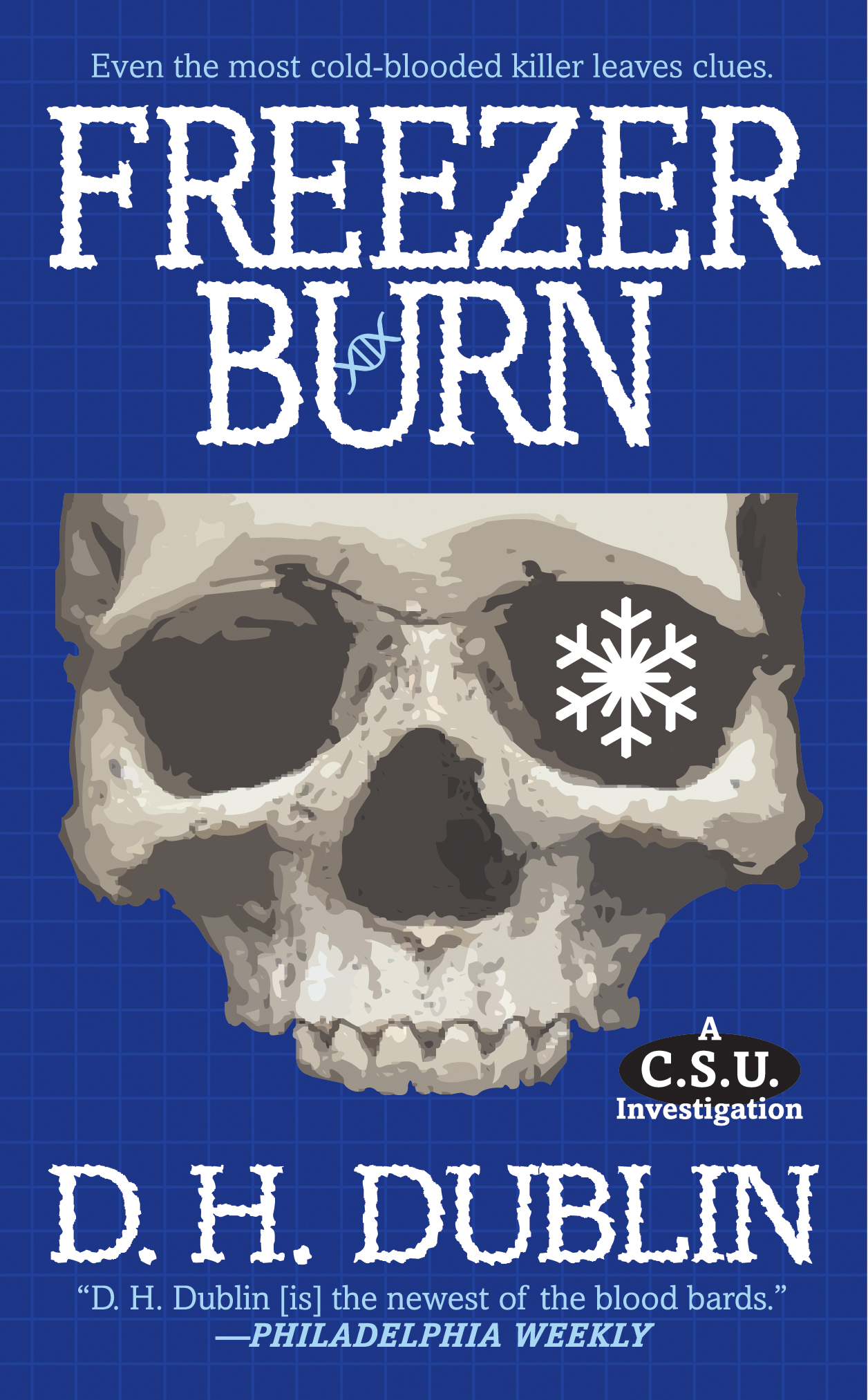
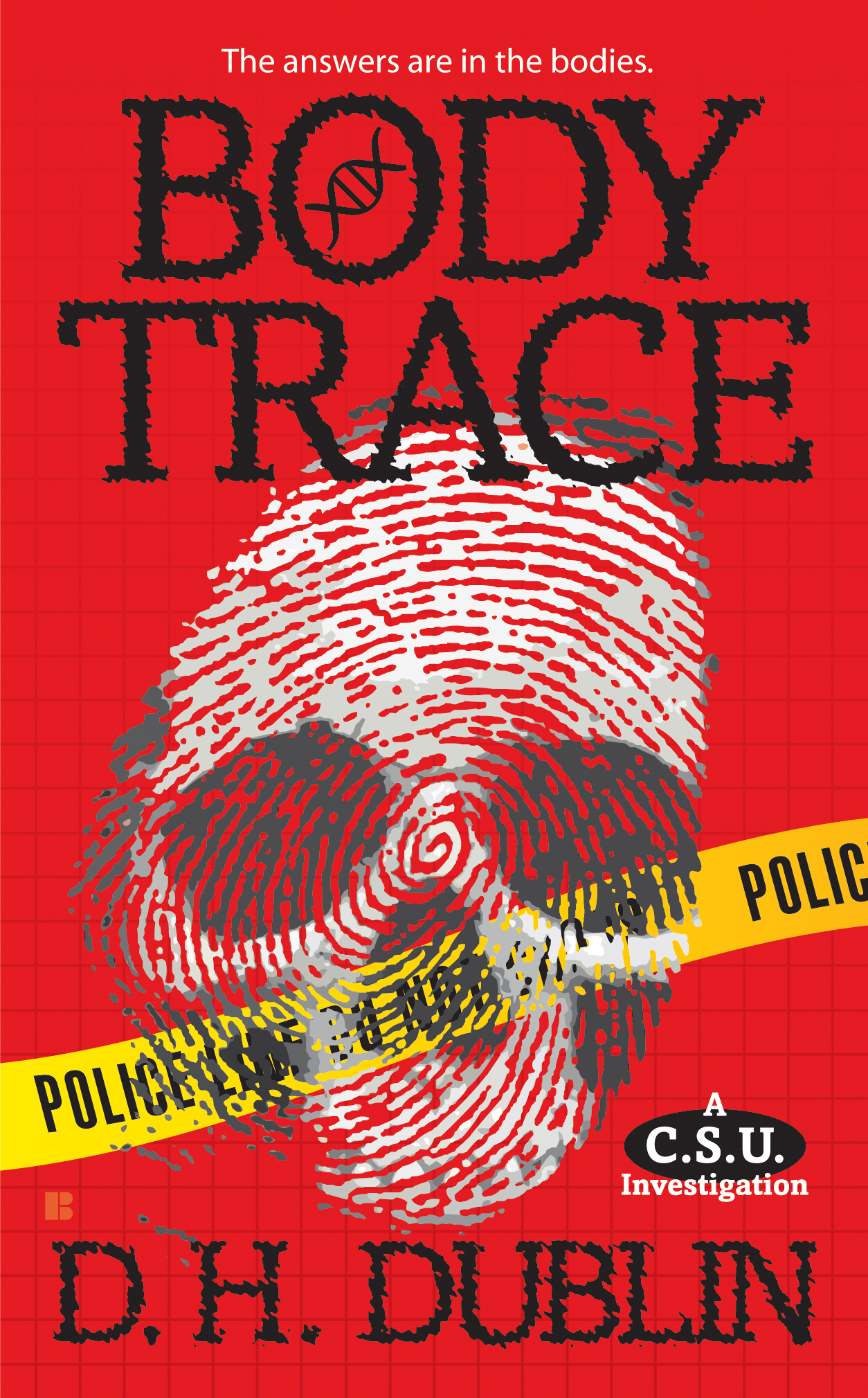
MICHAEL A. VENTRELLA: Today, I am pleased to be interviewing Jon McGoran a/k/a D. H. Dublin. Writing as D. H. Dublin, Jon McGoran is the author of the forensic crime thrillers BODY TRACE, BLOOD POISON, and FREEZER BURN from Penguin Books. As Jon McGoran, his fiction has appeared in several anthologies, including LIAR, LIAR and THE STORIES IN BETWEEN and the upcoming “Zombies Versus Robots” anthology from IDW. He is a member of the Philly Liars Club, the MWA and the ITW.

Jon and I met at the Writer’s Coffeehouse near Philadelphia and he has provided some excellent advice for me in the past concerning my fiction.

Jon, they always say “Write what you know.” What background do you bring to your crime thrillers?

JON McGORAN: I have no background in law enforcement, either side it — or zombies or robots, for that matter, — but I think the whole “Write What You Know” axiom is worth considering. It sounds like great advice, but I think it only goes so far. Everyone I have spoken to in law enforcement pretty much agrees that all fictional depictions of their jobs are wildly misrepresentation, even the good ones, and in some ways especially the good ones.

Take a private eye novel: the vast majority of what goes on in the work life of a PI would never make it into a book, not should it. No one would want to read a truly realistic portrayal of the life of most private eyes. I am not saying there are not many, many valuable insights into the world of the cop or the criminal that can only be gained by living those lives, but for the most part, there is a lot of drudgery in those jobs, and very likely most of those professionals rarely if ever encounter the excitement twists and turns in most PI novels.

I think, to be honest, most PI novels, and most genre fiction, is more informed by the conventions of the genre than by the realities of the world it purports to depict. (And if you write a series, you are almost by definition writing off any level of realism; the events in each novel would take a huge toll on the main character, and who would want to read a PI series where after the fourth book the protagonist just sits in a corner and rocks back and forth?).

People generally don’t want to read about the mundaneity of everyday life. They want to read about something special. But they want to read about those fantastic things happening to people who are on some level very real. That’s what makes them care.

So, I would replace “Write What You Know” with two other axioms: “Write Who You Know,” since the essence of writing a good novel of any sort is knowing the characters in it, and depicting them realistically; and “Know What You Write,” because while you do not have to start out an expert in the area you are writing about, you have to become one in order to do it well. Especially in a genre such as forensics, you have to do your research. Apart from the importance of writing knowledgably and with confidence about a given topic, it can be devastating to the reading experience to catch the author in an error. Research can be hugely fun and fascinating, but when it comes down to it though, your job as a writer is to make stuff up.

VENTRELLA: Having helped teach the “Write a Novel in Nine Months” course, what are the biggest mistakes you see new writers make?

McGORAN: I used to hate it when writers would pontificate that character is everything, and I still don’t like it (because nothing is everything, that’s why there is other stuff) — but character is hugely important, and while plot and setting, etc., are also important, one of the hardest things to grasp is how important it is that character thoroughly pervades every other aspect of a story. That point of view and voice impact everything, and they all stem from character. You learn about plot and setting and character as different things, but when you get to that next level, you have to learn in order for your writing to be immersive for the reader to lose themselves and get absorbed in it, everything must be experienced through the lens of character. As with so many aspects of writing, that is easier to grasp than it is to keep in mind while you are writing. One of the greatest perks in teaching the Novel in Nine Months class, apart from meeting so many talented writers, is that by reiterating the lessons of good writing, you are reminding yourself, and reinforcing your own writing.

VENTRELLA: What mistakes did you make when you first started writing?

McGORAN: The full list of mistakes I made while writing my first novel would be longer than the novel itself, but I learned a lot from making those mistakes, and even more from correcting them. The biggest mistakes had to do with point of view. It was a sprawling, raucous thriller with four or five plot lines and maybe ten different points of view. Unfortunately, it was only after I finished the first draft that I fully grasped what “Point of View” really meant. There were POV errors on every other page, and scenes with shifts of POV that were physically impossible. It took me months to sort it out, maybe full year, through several rewrites and drafts, before I had fixed all of the POV errors and inconsistencies. But through the process, I learned a lot about the importance and the subtleties of POV.

VENTRELLA: What is the process you use to create believable characters?

McGORAN: For me, writing process is closely related to character development, and getting inside the heads of characters, especially characters in some ways very different from me. I have always been a strong proponent of outlines, and the more I write, the more convinced I am of their importance. I know some writers do not outline, and it seems to work for them, but it is an essential part of my writing process. And when writing a story with a mystery at its core, outlines are particularly important, because you’re not just concerned with the structure of the plot, you also have to think about how you reveal information, both to the characters and to the readers. You almost need a second outline, just dealing with the revelation of clues and other information needed to solve the crime. When writing a forensic mystery it is even more important: you are not just getting information from witnesses or informants, you are deriving it from forensic techniques; evidence that has to be discovered, then interpreted, and often reinterpreted. The revelation of that information is part of the pacing of the story, and I think it’s almost impossible to do it well without a solid outline.

So what does all this time spent outlining have to do with believable characters and being a male author writing from a woman’s point of view? I think preparation is hugely important, and outlines are a big part of that. As I was preparing to write BODY TRACE, the first book in the D. H, Dublin series, I was a little concerned about writing from a woman’s point of view. But my outlining process helped me a lot, because the time that I spent working on the outline, I was really getting to know my characters, especially Madison, the main character. By the time I started writing the first draft, I had already been so immersed in the outline, and so immersed in Madison, that her point of view was second nature for me. This is not to say that there weren’t surprises or revelations about her while writing that draft, and there were definitely aspects of her character that revealed themselves toward the end of the book, causing revisions of earlier passages, but for the most part, I knew Madison before I started the draft. By the time I started writing, I was no longer worried about, “Is this how a woman would think or act,” I was thinking “Is this how Madison would think or act?” And by outlining so extensively, I had already answered many of those questions for myself, which helped define Madison in my mind. Writing a detailed outline helped me in the ways that a detailed outline always helps, but in addition, that added time spent living in Madison’s world before I starting the first draft helped me to become completely comfortable with her point of view, and her voice. By the time I started writing the first draft, I had a fully-formed character to occupy –- a character for whom being a woman is just one of many defining characteristics. The same is true for the other characters in the book: All that time spent in preparation is time your are getting to know all of your characters better, so that they are more or less fully formed before you start your draft.

VENTRELLA: What do you think is the biggest misconception people have about the publishing business?

McGORAN: I would say probably the biggest misconceptions in the publishing industry these days are things that were stated with absolute certainty by well-informed experts six months ago. Things are changing, and fast. Frankly, I am torn, at times trying to keep up and make sense of the constant changes, and other times keeping my head low, concentrating on my writing, and wondering what it’s all going to look like when things finally settle down.

Self-publishing is absolutely not what it used to be; it is a viable alternative, and one that many successful authors are exploring, and many new authors are having great success with. That said, some of the major knocks against it remain true: while there is a lot of great stuff being published, there is much more that is not very good, and your great self-published book will have a hard time punching through all that clutter to get any attention. And when you self publish, you are not just a self-published writer, you are now a self-publishing publisher, and you have to do all of the things that a publisher does, including all the production, promotion, distribution, and sales. Some people say the traditional publishing houses barely do that stuff anymore, but don’t kid yourself: they could certainly do more, and they could do some things better, but they do a lot. Self publishing can be a great option if you have the time to put into it, but make no mistake, you are taking on a whole other job, and a big one at that, one that could take up all that time you would have been able to spend writing that next great novel.

VENTRELLA: As a fan, who do you enjoy reading?

McGORAN: There are a number of local writers whose work I really enjoy, including our friends Jonathan Maberry and Dennis Tafoya, as well as Duane Swierczynski. Still, though, I think my favorite author is Elmore Leonard, he of the crackling dialogue and zero percent body fat prose.

7.28.13f

Interview with Hugo nominated author Michael Flynn

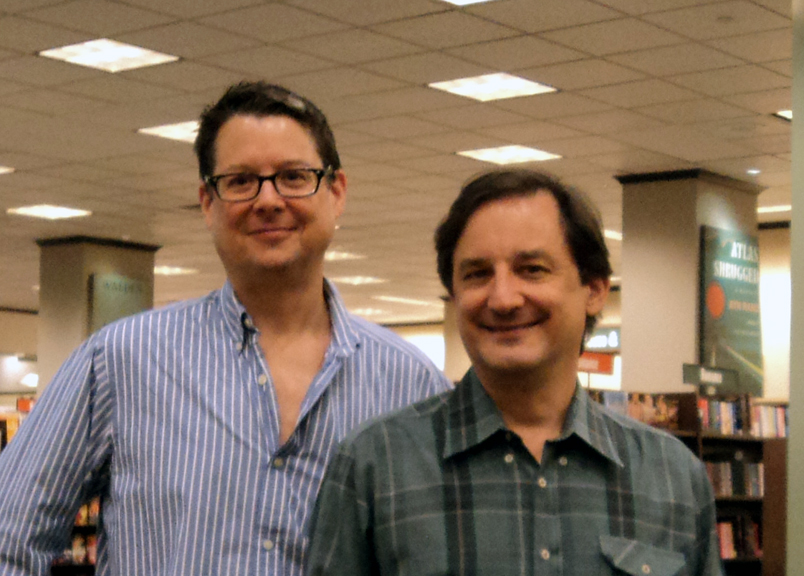
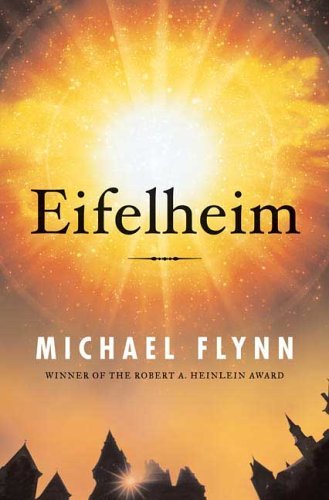
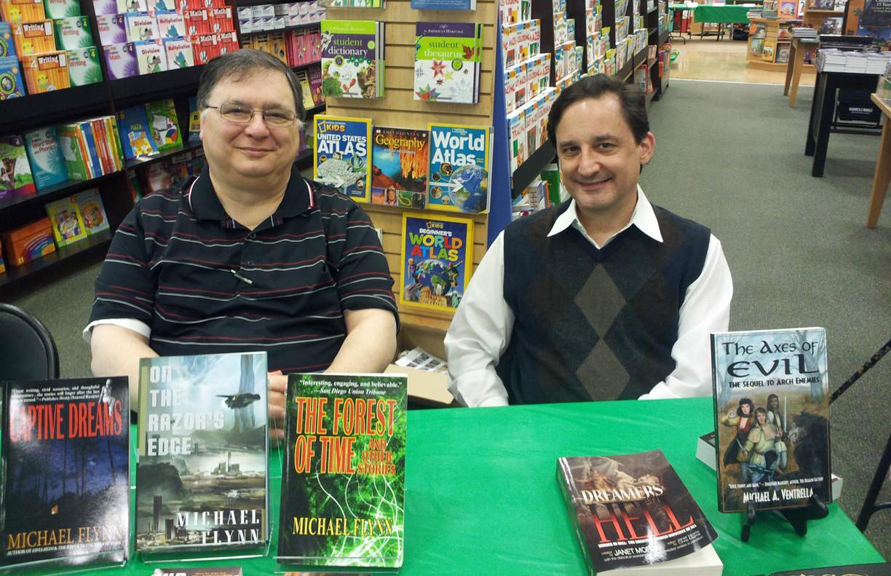
MICHAEL A. VENTRELLA: Today I am pleased to be interviewing Hugo-nominated author Michael Flynn. Mike and I met at the Greater Lehigh Valley Writer’s Group and have run across each other at Philcon and other conventions before, but we’ve never really had a conversation together, so this should resolve that.

Mike, what was your first big break into the business?

MICHAEL FLYNN: I entered a contest by Charlie Ryan, who was editor at the old Galileo magazine. It was for never-before published writers. So I wrote a story “Slan Libh,” about a fellow who has invented a time machine and decides to use it to feed his ancestors during the Irish Potato Famine. Charlie decided to buy it for the magazine instead, which was a larger payment. However, the payment was “due on publication,” and that never happened. Galileo went belly-up. My brothers, ever willing to offer encouragement, suggested the magazine folded because they had been reduced to the desperation of buying my story. For a while, Charlie tried to shop an anthology, but nothing came of it. So, I took the rights back and tried it at Analog, where Stan Schmidt bought it. It appeared in the November 1984 issue.

Two of my first four stories made it onto the Hugo ballot, which certainly did not hurt. This led another writer, the late Charles Sheffield, to urge his own agent to take me on as a client. Charles became a very dear friend, and not least because I only found out years later that he had done that.

VENTRELLA: Did you have any formal writing training before submitting your first work?

FLYNN: Nope. Just the usual English classes in HS and college. Never did workshops, either. OTOH, I did read voraciously.

VENTRELLA: You’ve done quite a few short stories. Do you find them more difficult than longer works?

FLYNN: Stories are less forgiving than novels, in that there is no space for self-indulgence. A novel can meander a bit and still keep the plot going, and has more room in it for scenes devoted to character-building, scene-setting, and the like. But shorter fiction must do all that with a greater economy of words. I find that they take longer to write relative to their length and from an economic perspective not at all cost effective. But I still write them because there are some stories that don’t need a novel to rattle around in. Take a story idea and put it in a novel, and you lose density. The whole seems fluffy. But put an idea in the right length of story and it is more dense and powerful. At least, that’s the way I think of it.

VENTRELLA: Your work is usually classified as “hard science fiction.” Do you agree with that classification?

FLYNN: Well, I’ve often considered them to be “high viscosity” science fiction, a term I coined in a moment of whimsy, but which seems appropriate. Some reviewers have made such comments as “…unlike most hard SF…” without seeming to notice that they were undermining their own idea of what hard SF means. There is an unexamined assumption that hard SF gives insufficient attention to character. But that may have been more a matter of decade than of genre. A story stands on four legs – idea, plot, setting, and character – and can remain upright on any three of them. I don’t insist that all stories have the same strengths. A captivating idea executed in a page-turner plot in a vivid setting can tolerate characters from central casting.

To this we can add the actual wordsmithing, or style. The rumor is that hard SF is less “literary” in style. I’m not entirely sure what that means, except that it leads reviewers to write things like “…unlike most hard SF…” when they notice stylistic acuteness.

VENTRELLA: How do you define “hard science fiction”?

FLYNN: As “science fiction.” Emphasis on both words. It should be a story in which some element of speculative science or technology plays a vital role, and does not serve as simple stage props. And the author takes some pains to “get the science right.” So “Flowers for Algernon” is hard SF, but “Star Wars” is not.

Of course, no one gets everything right, and sometimes the speculative science turns out to be wrong; so it’s more a matter of intent and thrust than it is of successful calculations and prognostications.

VENTRELLA: Science fiction is being outsold by fantasy these days. Why do you think that is?

FLYNN: The Modern Ages, which were among other things the Age of Science, have ended and we have moved on and/or back.

VENTRELLA: Do you find that there is less respect for science these days?

FLYNN: Yes. Partly, this is due to scientific hubris by which (mostly) fanboys of science set Science-with-a-capital-S as the colonial power of the intellectual world, invading other domains of human thought and disparaging philosophy, humanism, religion, and other endeavors. Partly, it is due to feminism, environmentalism, and government funding. Modern Science differed from Medieval Science in an important respect. The natural philosophers of old were in it to comprehend and appreciate the beauty of nature; modern science was redefined by Bacon, Descartes, and others to be subordinated to the production of useful products “to increase Man’s dominion over the universe.” They meant Man in a very masculine sense, and the exploitation of nature as completely open-ended. Hence, the feminist and environmentalist critiques in the Postmodern Age were not without some merit. Thirdly, as Eisenhower warned in his Farewell Address, the government-science funding complex meant that eventually science would be subordinated to political goals. All these strands contributed to undermining regard for science in the Late Modern Ages. When the American Chemical Society funded an exhibit on the contributions of science to modern life, they were astonished when the Smithsonian came up with an exhibit that presented American science as a series of moral debacles and environmental catastrophes: Hiroshima and Nagasaki, Silent Spring, Love Canal, Three Mile Island, and the explosion of the space shuttle.

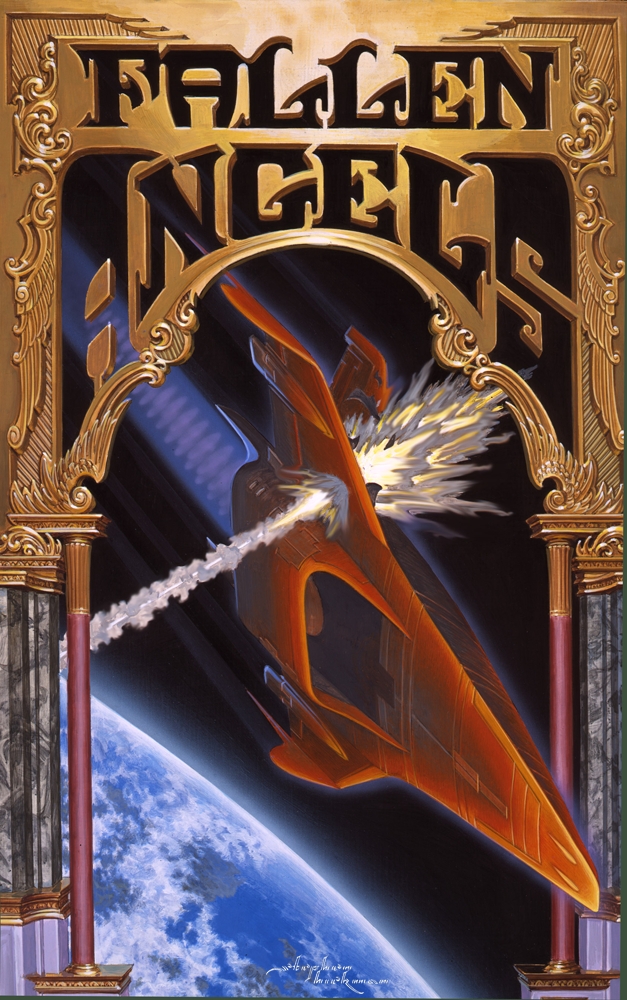
VENTRELLA: Let’s discuss FALLEN ANGEL, your collaboration with Larry Niven and Jerry Pournelle. How did that occur?

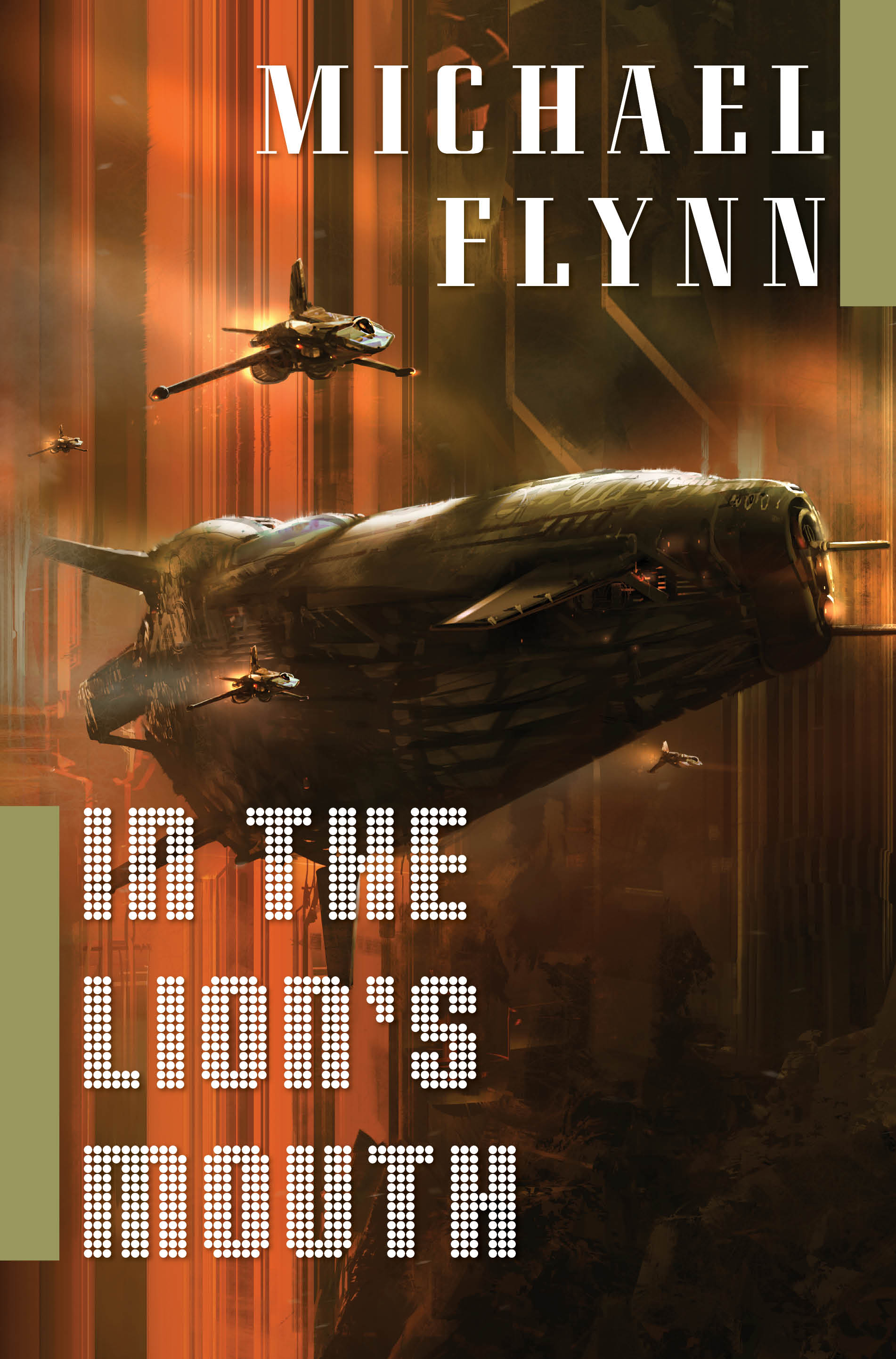
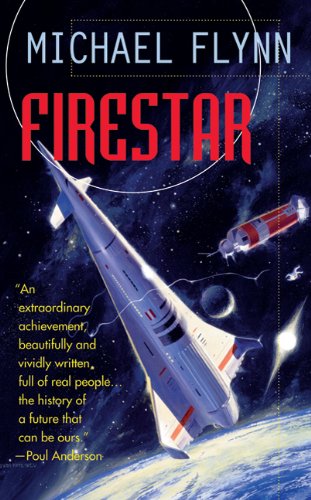
FLYNN: Niven and Pournelle had promised FALLEN ANGELS to Jim Baen, but were under contract to deliver a book to another publisher. But there was no bar to writing a Niven-Pournelle-Third Author collaboration, so they invited a friend to do the rough draft while they worked on the other book. But time went by and the other writer did nothing, so they invited him out. Then they went to Jim Baen and asked him to pick a collaborator. Jim had just published my first novel, IN THE COUNTRY OF THE BLIND, and was about to do a story collection, THE NANOTECH CHRONICLES. Larry and Jerry liked what they read, and so Jim Baen contacted my agent who passed it on to me.

VENTRELLA: How did you handle collaboration?

FLYNN: Superbly.

OK, seriously. (The three of us were on a con panel the year FALLEN ANGELS came out, we were asked that question, and gave that answer in unison.)

It befell thusly. I was given rough drafts of the first two chapters, and outline of the remainder that became sketchier as it went along, and character sketches for a bunch of characters, both fictional and real fans who would be Tuckerized. I was a speaker at a quality control convention in San Francisco and Larry came up and we talked story and batted plot ideas around.

I rewrote the first two chapters, added two more; visited East Coast conventions to harvest more characters, and showed the results to Larry and Jerry. They liked what they saw, made some suggestions, and gave me the green light.

“Showed” doesn’t cut it. This may have been the first novel written by modem. There were problems. I had a Mac, they used DOS boxes. We wound up sending files — dial up modems! Forsooth! — to Jim Baen, who was able to figure out the proper modem settings and translate from one to the other. So “showed” electronically.

Eventually, they made a breakthrough on the main book, then started doing rewrite behind me. There was two of them and only one of me, and I could write only part-time; so they began to catch up fast.

Funny thing was that I met Larry only twice — as aforesaid and at a Norwescon — and Jerry not at all until after the book was finished and I found myself on a client assignment in LA, where we all got together.

VENTRELLA: When creating worlds (either science fiction or fantasy), too often writers ignore politics. You have not done so. How do you make sure you are creating a realistic political world?

FLYNN: I used to be a filthy politician. Not the kind that runs for office — They asked once and I declined — but the kind that runs caucuses and so on. I was precinct committeeman, district captain, and eventually House District Leader. So I’ve seen politicking from backstage. Then, too, as a consultant, I have encountered all sorts of corporate-regulatory interactions. As for other settings, I read a lot of history.

VENTRELLA: When you create a story, do you begin with the characters or do you have some basic plot idea?

FLYNN: Yes.

Typically, its one thing or another. Setting, Idea, Plot, Character. Any of them can be the stimulus. For example, “Melodies of the Heart” started with an idea. In his book, THE MAN WHO MISTOOK HIS WIFE FOR A HAT, Oliver Sacks tells of cases of “incontinent nostalgia,” in which the patient re-hears music from her childhood and sometimes re-sees scenes of her childhood. That is, they don’t remember hearing or seeing in the past as such, but are hearing and seeing these things in the present time. So the notion occurred to me of a woman who as time goes by re-hears tunes from further and further in the past until one day the doctor realizes that the tunes are now “too early” and begins to wonder how old the woman is.

Okay, so what was the story? Doctor listens to old woman hum tunes is not a story. Even doctor discovers old woman’s age is not a story. Who is the doctor? Who is the woman? Why would it matter, to either one of them, how old she is? From this I developed the characters of Mae Holloway and Dr. Wilkes and why it mattered very much to them both. So this was a case of Idea then Character then Plot.

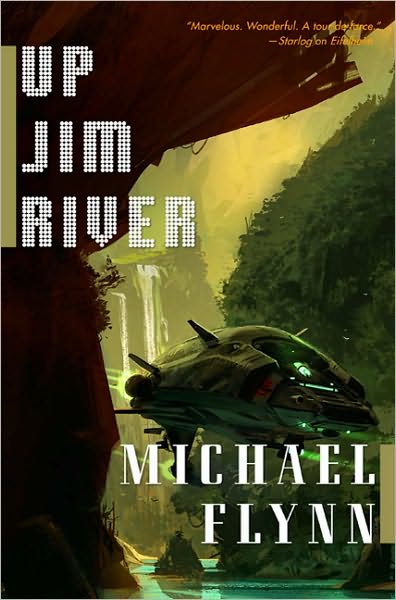
OTOH, I recently sold a novelette, “The Journeyman: On the Short-Grass Prairie,” to Analog. In this story, the Character came first: Teodorq sunna Nagarajan, the Wildman bodyguard in UP JIM RIVER. I got a kick out of his character, and the idea of writing his backstory appealed to me. Likewise, “Elmira, 1895,” started with the characters of Sam Clemens and Rudyard Kipling; while “Places Where the Roads Don’t Go” started with an abstract idea suggested by Searle’s Chinese Room and Lucas’ Goedelian Proof. It may the first hard SF where the S is not physics but metaphysics. “The Iron Shirts,” recently selected for Gardner Dozois’ annual anthology, was suggested by plot elements, as will usually be the case with alternate histories.

VENTRELLA: Tell us about the FIRESTAR cycle.

FLYNN: I was at a con once with Charles Sheffield. I forget which. And we were at the Tor party. Tom Doherty was holding forth on what Science Fiction needed, which he told me was “near future, high tech, and optimistic.” I pondered on that for a while, since I had been playing with an image of someone listening outside a high school classroom and not hearing learning taking place. The listener became an industrialist, for industry was already hurting for educated workers. But it was a very vague idea. Listening to Tom Doherty started to make it percolate. Setting up a school system to deliberately produce technologically literate students.

Then David Hartwell, an editor at Tor, called and asked if I had ever thought of writing a book for Tor and I said yes and he said what kind of book and I said, “near future, high tech, and optimistic.” Well, you know that had to be a good fit.

The original concept was of a single book covering the maturation of a cohort of students at one of these schools as they grow into the middle managers who save the world. (I had also read Strauss and Howe’s book GENERATIONS.) It was to cover a thirty-year arc; but after 200 pp. it was clearly not going to fit into a single book.

Interestingly, although the near future of FIRESTAR is now the recent past — it’s set during 1999-2007 — Tor has recently issued a second edition without any updating, making it a sort of alternate history.

VENTRELLA: What other works are you most proud?

FLYNN: I would have to say EIFELHEIM, since it was a Hugo finalist for best SF novel of the year. It did win the Seiun Award for the Japanese translation and the Prix Julie Verlanger for the French translation. The SPIRAL ARM series is shaping up nicely. THE JANUARY DANCER made #6 for SF paperbacks in October, which is not bad considering that #1-#4 was George R.R. Martin’s GAME OF THRONES books. And both UP JIM RIVER and IN THE LION’S MOUTH have gotten good reviews.

There is also THE WRECK OF THE RIVER OF STARS, which did not sell as well as it should have. It is a bit darker.

On the short fiction front, I have always been fond of “Dawn, and Sunset, and the Colours of the Earth,” of “Melodies of the Heart,” “House of Dreams,” “The Clapping Hands of God.” The forthcoming “Places Where the Roads Don’t Go” may also pass the test of time. I think. There is also a story series set in the Irish Pub, of which I think “Where the Winds Are All Asleep” is probably the best.

VENTRELLA: What would you advise a reader to go to first if they wanted to check out your fiction?

FLYNN: EIFELHEIM, because it stands alone. THE JANUARY DANCER, because it is first in the series. For short fiction, a collection THE FOREST OF TIME AND OTHER STORIES is available in ebook format, and a new collection CAPTIVE DREAMS is forthcoming. The latter overlaps one story with FOREST OF TIME, but contains three stories written specifically for the ebook.

VENTRELLA: What are you working on now?

FLYNN: Answering these questions.

Oh, wait. Books and stories…. I just sent a short, “Elmira, 1895,” to Analog, fate unknown. A fourth SPIRAL ARM book, ON THE RAZOR’S EDGE, is in the can. For the moment I am working without contract on two possible novels:

1. THE SHIPWRECK OF TIME, about tantalizing hints found in Old Books, Old Film, and Old Bones, in a story that runs from a scholar in 14th century Freiburg-im-Breisgau to historical researchers in 1960s Milwaukee, a documentary film maker in 1980s Denver, and a police detective in contemporary small town Pennsylvania.

2. THE CHIEFTAIN, an historical fantasy (yes, fantasy) revolving around David O Flynn, chieftain of the Sil Maelruain in 1224. The magical element will be not the wizard and warlock kind, but prayer and saints, a bit of a change in pace.

VENTRELLA: How have the changes in the publishing industry affected you and what do you see for the future in publishing?

FLYNN: The only effect is another channel for books, the electronic one. However, going forward I think Mike Resnik and Barry Malzberg are right, and the whole print industry will be turned upside down. Self-publishing is becoming easier; but may become too easy, flooding the market with so much self-indulgent publishing that one may have a hard time separating wheat from chaff.

VENTRELLA: What piece of advice would you give an author wanting to write science fiction?

FLYNN: 1. Learn science.

2. Learn fiction.

At least in third-party publishing, the sort of writing that got by in the 30s and 40s will no longer do, and a certain stylistic mastery will be expected. Editors will often work with promising newbies, but editors may pass away if electronic self-publishing drives third-party publishing out of the pool. The same is true of agents. You may need one to convince Tor or Ace to publish your book; but you do not need one to convince yourself. (And that is the big trap.)

It is also more difficult to write good SF about the science of the 40s or 50s or 60s. Much of what was once speculative science is now mainstream. There was a time, and not too long ago, when a story about a kid using a home computer to garner the information needed to solve a problem wold have been high SF. Now, it’s your son or daughter doing a homework problem. So learn where the cutting edge is today; and if you must use the tropes of yesteryear, give them a new spin that makes them fresh.

Writing fanfic is okay for practice and for beginners; but fanfic will always be derivative and imitative. Whatever you write had got to be genuine and genuinely yours.

flynn

Prologues: The Devil’s Work

Prologues: Do editors really hate them?

Recently, at a writer’s discussion, an aspiring author discussed his fantasy novel. It started with a prologue that explained something important that happened fifty years prior to the action that begins the first chapter.

I advised him to cut it and work that information into the book in other ways. I dislike prologues.

Too often, especially in science fiction and fantasy books, authors use a prologue to explain the world and set the scene. Instead of jumping into the story, we get a long history lesson, full of names and places we’ll instantly forget, many of which never appear again in the book.

Bor – ring.

Let us find out about that background when it’s needed. Introduce it through dialogue instead of in some “info dump.” Trust your readers.

You’ll probably find that most of the information you created isn’t really needed for the story.

Writing a background history is important — I encourage all authors writing to develop their worlds fully. It will aid you greatly in developing your characters’ personalities. However, your reader doesn’t need all that information.

ARCH ENEMIES and THE AXES OF EVIL take place in a fantasy world with a detailed history. The magic in this world works in a specific way. Terin, the teenager who gets pulled into the adventure against his will, learns what history and magic he needs to know as he progresses through the story. Amazingly enough, that’s exactly the amount the reader needs in order to follow the story and get excited about its plot.

None of the rest of that grand world history is in the book other than through passing comments. It’s not needed to tell the story.

Not all prologues are evil. Just unnecessary ones. For instance, in a tale about a haunted house, a short prologue describing the murder that took place there a hundred years ago might work just fine. There’s absolutely nothing wrong with a prologue that sets the story. But then, why not just name that “Chapter One”?

Here’s my entire first chapter for my upcoming novel BLOODSUCKERS, about a vampire who runs for President (disclaimer: This could change by the time of publication):

Norman Mark was a politician with skeletons in his closet.

Literally.

I could have called that the prologue, because it sets up the feel of the book in a concise way while not actually starting the plot at all. In fact, Norman Mark is not even the main character.

I have no problem with an introductory opening like that — and neither do editors. There are plenty of examples of books that begin this way.

Really, what I hate (and what editors hate) are info dumps — where the author needs the reader to understand certain things and gives a lesson instead of tells a story.

I’m against those at any point in the book, but especially in the beginning. Your opening words need to grab the reader, and a history lesson doesn’t do it.

Interview with writer and artist Darrin Bell

MICHAEL A. VENTRELLA: I admit; when I was younger I wanted to be a cartoonist and draw a daily comic strip. I drew comics for my school newspapers and doodled all over my schoolbooks. Even though that idea was dropped as I started college, I still have a huge collection of comic strip books.

What people do not always understand about comics are that the best ones are written. The artist thinks about characterization and plotting just like novelists do, but with huge limitations.

Anyway, today I’m pleased to be interviewing Darrin Bell, who writes one of my favorite current strips, Candorville. (Come on, this is my blog, I can interview whoever I want!) There are four books collecting the daily strips, one of which features an afterword by yours truly. Check out his web page for more information!
Darrin, you approach your strip differently than most comic strip authors do. While you still strive for that punch line every day, you also are working on a long-term plot that evolves over the years. What made you decide to go this route?

DARRIN BELL: Two words: Babylon Five.

I grew up on TV, like most kids of the Eighties. I was used to B.A. Barrachus getting shot at the end of the episode, and then being absolutely fine the next one. I was used to Spock shouting one episode, and then saying Vulcans don’t have any need to raise their voice in the next one. I was used to episodic TV, and in my mind, serialized equalled “soap opera.”

It also equalled bullshit. Because the soaps my mom watched completely ignored their own continuities. Most famously, Dallas. The Bobby Ewing-in-the-shower thing defined serialized storytelling for me. Authors would paint themselves into corners and then have to pull ridiculous stunts to get out of them.

But then Babylon 5 came along.

And Straczynski seemed to paint himself into corners, and I’d wonder how he’d get out of them, but he didn’t. He just knocked down the wall and kept going. Change became a constant.

Suddenly episodic TV seemed stale and formulaic to me. When Star Trek: Voyager came around, and the ship was nearly destroyed one episode, and new and shiny the next… and shuttles that were destroyed seemed to spontaneously reappear the next week, it was false to me.

VENTRELLA: Impressive to me was how he would plant a plot and then leave it alone for two years or more to come back to it and suddenly everything that happened earlier makes sense. (I’m thinking of the episodes where they visit Babylon 4)…

BELL: Definitely, that was my favorite aspect of the series. I’d read that he described it as a “novel for television.”

VENTRELLA: So did you decide to be a comic artist first or a storyteller first?

BELL: Storyteller.

I was lucky enough to grow up at the height of Chris Claremont’s run on X-Men, and Marv Wolfman’s run on Teen Titans, and these guys were epic storytellers. I knew that’s what I wanted to do. I also knew that the pictures John Byrne drew were equally responsible for the endless nights I spent huddled under my blanket with a flashlight and the comics I’d stolen from my brother. So to me, graphic storytelling went hand in hand with the written word. I wanted to draw comic books.
VENTRELLA: But you went to school for political science…

BELL: I did.

I actually thought about law school. For a minute or two.

The thing is, I have an older brother who practically raised me. And for the first half of my life I followed in his footsteps. Including his interest in history and politics.

But we’re different creatures. While he paid attention in class, I let my mind wander. I’d draw cartoons about whatever the teachers were talking about, and pass them around the class. I thought I was ignoring them, but oddly enough I did very well because I wasn’t just listening to them, I was letting them inspire mockery.

VENTRELLA: How did that get you into doing comics as a career?

BELL: In a roundabout way…

I was in gifted and talented programs in Jr. High and High School, and I realized my interest in history and civics was outpacing my interest in art (I’d been drawing since the age of three). That’s when the man who sparked my interest in politics (Pat Buchanan) became the same man who sparked my interest in journalism. In 1988, a Pat Buchanan ad where he portrayed a Gay Pride parade as proof we were going to hell, pissed me off. I had barely noticed politics before this, but I sure as hell paid attention to it afterward. It just seemed so monstrously unfair, and the prospect of someone like him leading the country scared the shit out of me.

Anyhow, four years later, I was flipping through channels looking for coverage of the Clinton-Bush campaign, when I saw that same guy on TV. Pat Buchanan. He was so smug and full of his own opinion, but I noticed he looked really, really happy. And it occurred to me, I’d be happy too if millions of people were listening to my bullshit ideas and taking me seriously.

So I asked a guidance counselor, how do I become a talking head on TV? She said I’d have to be a journalist first.

So I joined the school paper, and quickly became the Opinion page editor, then editor in chief.

VENTRELLA: Here’s my headline: “Bell Inspired by Pat Buchanan”

BELL: hahaha

One week, a few of my reporters didn’t turn in their work (must’ve been a party the night before that they didn’t invite me to…) So I had an hour to fill all those holes. I drew a bunch of cartoons and pasted them in (that sounds so prehistoric now). People loved them.

In college, I tried writing for the Daily Californian (at UC Berkeley). Interviewed a senator, a governor, and a congressman. I wrote a couple hard hitting articles that I barely remember now. Nobody paid attention. But at the same time, I started drawing cartoons for the paper, and again… people loved them. That’s when I knew that’s what I should be doing.

VENTRELLA: How did you end up with Matt Richtel?

BELL: While I was still a freshman, I started faxing my editorial cartoons to the LA Times, San Francisco Chronicle, and the Oakland Tribune. The LA Times was the first paper to pick them up. The editor there told me I was the youngest regular contributor to their opinion page in the paper’s history (I was 20). The Times paid well. The Chronicle and the Tribune, not so much. About $20-$30 per cartoon.

One day, I faxed a cartoon to the Tribune, and got a call. I was hoping it was the opinion editor telling me I’d be getting another $20. But it was some guy named “Matt Richtel,” who said he was the paper’s business reporter. He had started developing a comic strip called “Rudy Park,” and had a development deal with Universal Press. But Universal didn’t like the art. Matt had been walking past the Tribune’s fax machine when my cartoon came in, picked it up, and called me to ask if I thought I could adapt my style to a four panel strip.
The Daily Cal had, for a couple years, been running “Lemont Brown,” the precursor to Candorville. And I’d just built a website. So I sent him to the site. A few minutes later we were working together. The development deal fell through. I’m pretty sure we lost out to The Boondocks, which was also in development.

VENTRELLA: I assume you created Candorville because you wanted to do the writing.

BELL: I created Candorville in 1993 as a class project, and kept doing it through college for the college paper (only back then it was called “Lemont Brown”). Not doing the writing was never even a consideration for me. It was more like I was doing Rudy Park because I wanted the experience of collaborating with another living person; since the rest of the time I was holed up in my apartment writing and drawing three “Lemont Browns” and four editorial cartoons per week. I finally decided to get Candorville syndicated because the editorial cartooning market was drying up.

VENTRELLA: Which one has wider circulation?

BELL: Candorville, Ironically.

VENTRELLA: Let’s talk about writing, since that’s the theme of my blog … It’s clear that you’ve planned out a long-term plot for your strip; how detailed has that been?

BELL: It’s not very detailed, it’s more of a skeleton. An outline. I know where I want my characters to be by a certain year, but I don’t exactly know how to get them there.

And I know how it’s going to end.

VENTRELLA: End? You plan on ending the strip?

BELL: That’s where I was going with the Babylon 5 reference. The reason Straczynski never painted himself into a corner, the reason he was able to blast through the wall instead, was because he didn’t have to come back. Characters could change and not have to be redeemed, because people wouldn’t have to still like them enough to keep watching for ten or twenty years.

Candorville has a beginning, a middle, and an end. Just like B5. Only the time frame is ten times longer. The story’s gonna take fifty years to tell. Stories without ends aren’t really worth reading.

VENTRELLA: Impressive. I admire it when comic strip writers end their strips instead of carrying them on zombie-like.

BELL: Me too. I’ll never forget 1995.
VENTRELLA: When Calvin and Hobbes ended?

BELL: Not just Calvin and Hobbes. Bloom County and The Far Side too. It was a traumatic year for a comics fan like myself.

VENTRELLA: I didn’t realize those all ended the same year, although I recall it all being close.

One of the major plotlines you established early was Lemont’s fling and subsequent child … that started in the first year if I recall.

BELL: I think it was the first year. That’s something that took on a life of its own. It wasn’t in the outline at all.

VENTRELLA: Well, that’s interesting. It’s been going on strong since then… but I’d like to ask about that, especially given something you said earlier in this interview. Although your characters deal with the supernatural from time to time, they never break the 4th wall … we’re supposed to take it pretty literally. And lately, with that plotline, there are all sorts of questions about reality — is this really happening or is Lemont imagining everything?

So here’s my question…

You’re not going to pull a Dallas on us, are you?

BELL: I always ask myself, at nearly every turn, WWJMSD?

VENTRELLA: Don’t disappoint us.

BELL: What would J. Michael Straczynski do?

VENTRELLA: Yes, I know! We nerds get that stuff.

BELL: Haha! I forgot who I was talking to. I know what happened in the story. But I reserve the right to leave it open to interpretation.

VENTRELLA: Let’s talk about Lemont. First of all, did you give him the last name “Brown” as a tribute to Charlie Brown?

BELL: I did. And I gave him the first name “Lemont” in tribute to Sanford and Son.

VENTRELLA: And I assume it is no coincidence that he wants to be a writer.

BELL: No coincidence at all. Part of the outline, from the outset, has been my main character’s grasp – or lack thereof – on reality. And I had two choices if I wanted to sustain that and still explain how he feeds himself: I could make him a perpetual inmate at a psychiatric hospital, or I could make him a writer. So the time travel and all the supernatural stuff can be easily explained (by readers who just aren’t into that stuff) as being part of this writer’s imagination.

Stephen King touched on that in a Candorville storyline last year. Well…

VENTRELLA: Yes, I remember that — King admired Lemont’s imagination. Did you hear from King after that ran?
BELL: No, I doubt he’s heard of Candorville, much less that he’d take the time to write to me about it. I thought of sending the sequence to him, but never did.

VENTRELLA: Given Lemont’s love of science fiction, it’s not hard to assume he has much in common with you. How much of your family life is in his?

BELL: Bits and pieces here and there. It’s inspired by my personal life, but it’s not autobiographical.

Roxanne becoming a vampire was 100% inspired by my breakup with my ex wife. For two reasons. (1) The obvious, and (2) Where I WAS going to go with the story turned out to be way too close to home for me. Suddenly it wasn’t funny anymore and I wanted to deal with it more metaphorically.

VENTRELLA: Being funny can be a big limitation for storytelling, especially if you have to be funny every single day and with only a few panels in which to do it…. so how do you do it? I mean, you must have to be very economical with your words…

BELL: I don’t worry about it. When Candorville got syndicated, I sat down and tried to figure out exactly what it was I liked about my favorite comics as a kid. And what they all had in common was, ironically, that they often weren’t funny. I often laughed at them because of some truth they delivered to me, not because of a punchline. Calvin and Hobbes, for instance… I’ve almost never laughed at that, but it’s one of my favorites. So I don’t try to be funny, I just try to speak my truth and hope other people relate to it.

I do have to be very economical. Sometimes I wish Candorville were a TV show, where I’d have dozens of pages to set up and explore a humorous or tense situation. But I only have a couple panels in which to do that, and then a couple in which it has to pay off.

It’s actually relaxing, though, whittling my complex ideas down. It’s like trimming a bonzai tree.

VENTRELLA: Speaking of themes, you have not shied away from politics — which is one of the reasons I enjoy the strip so much. Have you found that to be something that has helped the strip’s popularity or hurt it (at least with editors)?

BELL: I used to wonder about that, but I’ve come to think it’s impossible to know. Some editors have dropped it because of the politics, but others have bought it because of the politics. And still others subscribe to it despite the politics.

VENTRELLA: Well, it wouldn’t be Candorville without the politics.

BELL: It wouldn’t.

I wouldn’t do it without the politics.

Candorville has an underlying structure, an outline. But on its surface it’s pretty stream of consciousness. And if I had to censor myself every time I was concerned with politics, it wouldn’t be fun for me.

VENTRELLA: You recently posted a pretty political 9/11 strip when every other cartoonist was doing a traditional tribute. How was that received?

BELL: A lot better than I’d expected. There was some grumbling online, but it was vastly, vastly outnumbered by people expressing relief that someone was in an introspective mood instead of joining in on the 9/11 somberpalooza and jingoism fest.
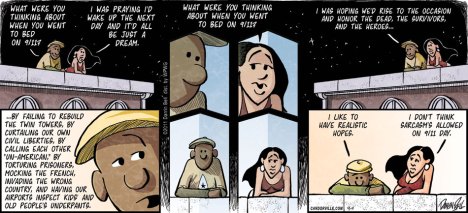
VENTRELLA: And it’s not like you hadn’t said the same things before in earlier strips.

BELL: I knew pretty much everyone else was going to focus on who we lost on 9/11, and I thought it was more useful, more productive, for me to do what I’m good at, which is speaking my mind even when others think it’s inappropriate. Especially when others think it’s inappropriate. I said a similar thing a month ago, to foreshadow this one.

VENTRELLA: But you did discuss what we lost on 9/11 — other things we lost.

BELL: Let me rephrase: Others were going to focus on who we lost. I focused on what we lost.

We lost our collective mind. We lost our soul. We lost our identity, which led to us losing our credibility.

We lost our way.

VENTRELLA: You’ve tried to remain topical… most cartoonists have to get their strips done months in advance, but you actually drew all new strips when binLaden was killed and had the syndicate put them out before anyone else.

BELL: I did, I have a one week lead time.

I went out of my way early on to establish devices I could use whenever I have a chance. One reason I made Lemont a journalist – and made it clear he’s got a wild imagination (which may or may not be reality) was so I could have him give famous people their exit interviews when they die.

VENTRELLA: Your strip today discusses Obama as Ellison’s INVISIBLE MAN – is this something to be admired, in that it’s a way to accomplish your goals behind the scenes?

BELL: I’m hoping people will read INVISIBLE MAN and that might help answer whether it’s something to be admired.

The same person who says that’s how black men have to behave, was ashamed for having done so. It’s up to readers to decide whether it’s something to be admired, or whether it’s even really necessary in 2011.
VENTRELLA: The worry is that if Obama were to be as aggressive as many of us Democrats would like, he’d be attacked as being the “angry black man”?

BELL: Not only that, but he might get assassinated. When black men in Ellison’s day didn’t act invisible, they were often persecuted, shunned, and sometimes lynched. America hasn’t come far enough that it’s willing to tolerate a black leader who isn’t humble and demure. That’s one reason why Americans respect Colin Powell, and dismiss Jesse Jackson. America may have moved past that. But we won’t know until somebody tests the waters.

VENTRELLA: Someone always has to be the first.

BELL: There’s a school of thought that the first black anything has to be humble and submissive, and quietly excel. He has to be Jesse Owens, or Jackie Robinson, or Nat King Cole. Then the next generation can be brash. The first has to be Nat King Cole. The second can be James Brown.

VENTRELLA: Let’s talk about publishing. You’ve self published your last few books.

BELL: …and am selling them exclusively online and at conventions.

VENTRELLA: Which conventions do you attend?

BELL: Last year, none. Too much personal drama (which I worked into the strip). The year before, only Wondercon in SF. I sold all the books I brought with me. I want to attend more in 2012, but only in cities where the paper runs my strip.

VENTRELLA: Ever plan on coming here to the East Coast?

BELL: I’m not planning on it, but it’s a possibility. If I ever break into an NYC paper, or if there are any conventions around Virginia or Georgia (where the strip runs in some big papers), sure. Otherwise I’m not sure it makes financial sense.

VENTRELLA: The NY Daily News just stupidly cut an entire page of comics, and I stopped buying it every day.
BELL: Papers everywhere are doing that, and they’re shooting themselves in the foot. Most people cite the comics as the #1 reason they buy the paper.

VENTRELLA: Why isn’t there a convention for comic strip fans? They could have it right before the Reuben Awards when everyone is in town…

BELL: I don’t know. Comic strips are sort of an appendage to comic book conventions.

VENTRELLA: Let’s talk about character development … what efforts do you make to keep your characters from being one dimensional?

BELL: Motivation and backstory. Every character has a backstory that I’ve never spelled out, but that I can draw on from time to time. For instance, Sasha Mitchell is a Jamaican immigrant. I never mentioned it until recently (when it became germane to the plot) but it’s always informed how she relates to men, and it is a basis for her fears and hopes. And I approach every scene the way a screenwriter would: Each character enters the scene with his/her own goal, a goal that is based on that character’s backstory. And the goals usually conflict, sometimes causing the character to become introspective.

So… motivation, backstory, and goal.

VENTRELLA: Have you taken creative writing courses or otherwise studied writing techniques?

BELL: No, everything I know about writing I learned from reading comic books and watching TV. (Oh, and reading novels)

VENTRELLA: In fact, I have a blog post about that issue, in that the best way to learn is to read others and see how they do it, so I agree with you there. But also it’s making sure your characters do not always act predictably — because people are not always predictable. And that is something I have seen you do in your strip.

BELL: Thanks for noticing.

The problem I have with most comics is, they bore the hell out of me. People never change, they always react the same way, and feel about each other the same way they did last month and last year. In real life, people can change from moment to moment, let alone from year to year.

VENTRELLA: Well, most aren’t interested in telling a story — they are joke-a-day strips.

BELL: True.

VENTRELLA: Which story comics do you like? (Don’t say Funky Winkerbean, Don’t say Funky Winkerbean…)

BELL: I won’t read that strip until I have health insurance and can afford the Prozac.

VENTRELLA: Heh!

BELL: But you may not like my answer any better: the last story strip I liked was For Better or For Worse.

VENTRELLA: No, I agree with you — I have quite a few of those collections. Good characters.

BELL: I loved how she would juggle several different storylines, and how characters would grow apart, and come back into each others lives in unpredictable ways. And the characters weren’t predictable. They made mistakes, learned lessons (sometimes the wrong ones), etc.
VENTRELLA: That is what makes us go back again and again — because we like the characters, they are real to us, and we want to know what happens to them. It’s true with TV shows and movies and all storytelling. The jokes and the special effects don’t matter if we don’t care about the characters

BELL: Neither does the artwork.

VENTRELLA: Exactly.

How about political strips? Any you really like?

BELL: I like Non Sequitur, and I liked Bloom County.

VENTRELLA: Have you been able to meet many of the artists who do strips you like?

BELL: Wiley’s a friend, and I met Berke Breathed. I signed books next to Lynn Johnston, hung out a little with Jim Borgman and Jerry Scott … Lalo Alcaraz and Keith Knight too. It’s all been very surreal.

VENTRELLA: It’s a world I’m not privvy to…

BELL: Oh, and Stephan Pastis almost killed me once.

VENTRELLA: Sounds like him. Care to share that story?

BELL: I’d driven up to Santa Rosa to help judge the comic strip category for the Reubens. Afterward, we all went out to lunch. But Stephan didn’t have any money. So I went with him while he drove to find an ATM. He was in the middle of telling me some sort of story, and talking with both hands (don’t ask me how he was steering) when a big white van pulled out into the street in front of us, to make a left. Stephan seemed to see it, but also seemed not to think anything of it. He didn’t even slow down. I have no idea what would’ve happened if that van hadn’t moved just a second before we got to it. He just continued on with his story while I filed the experience under “things to talk about years from now in interviews.”

VENTRELLA: Perfect.

BELL: Years later, he and I were on a successful panel discussion in Walnut Creek (the video’s on my site somewhere). I turned that discussion into a Candorville storyline the next year (the Stephen King story)

VENTRELLA: What’s your thoughts on the 2012 election? I came out of the 2008 one so enthusiastic for the future of our country, and now…

BELL: I feel like I’m part of the rebel alliance and this is the Battle of Hoth, and I’m just praying a Tonton will amble by so I can gut it and climb inside for warmth…while the republic crumbles.
VENTRELLA: And you thought the tea party smelled bad on the outside!

BELL: Hahaha!

I think we’re witnessing the death of the republic. Republics end when the citizenry loses respect for both their intellectuals and their government. Mitt Romney doesn’t scare me. Michelle Bachmann doesn’t scare me. Perry doesn’t keep me up at night. What scares me is how pervasive the hatred toward specialists, intellectuals, and teachers has become.

It’s hard for me to imagine anything good could come from that, or that we can pull ourselves out of that death spiral. And it is a death spiral.

VENTRELLA: The anti-science crowd and the pro-death crowd scares me. They cheered someone dying because he didn’t have health insurance at the debate recently! They’ve become the Death Panels.

BELL: They have. But I saw this coming. They’re the Orwellian party that was perfectly ok with “free speech zones” and who supported a man who said “to have peace, you have to have war.” Whatever they accuse others of doing, is pretty much what they’re going to do.

VENTRELLA: Do you think Obama will be any different if he wins re-election? Will he be more aggressive?

BELL: I think he’ll be a lame duck, with no successor for Congress to fear (Biden’s not gonna run, Hillary probably won’t run). I think he may believe he’ll be more aggressive – and he’s regularly hinted to his base that he’ll be more attentive to them later – but if he believes that, he isn’t paying attention to history. Presidents rarely exceed the achievements of their first terms. Even Clinton’s excellent second term was entirely based on what happened at the end of his first.

I think Obama’s squandered the biggest opportunity a Democrat has had since FDR’s day to shape the narrative and transform the debate and the country, and it’s too late for him to fix that. The perception of him as a weak leader has taken root among his base, and that is usually the death knell.

VENTRELLA: I’m afraid you’re right.

BELL: I would so love to be proven wrong. But even after his latest big speech, he immediately backtracked and said he’d sign whatever part of it Congress sends him, which we all know is going to be only the tax cuts. That’s not going to create jobs, it’ll just make the problem worse.

VENTRELLA: His low ranking in the polls isn’t from conservatives; they already didn’t like him. It’s from liberals and moderates who are abandoning him. So why he keeps trying to appeal to those who will never support him while ignoring his base is beyond me.

BELL: It’s not beyond me.

I come from a similar background. I’m mixed, so I’ve always felt a little like an outsider. My dad left when I was a kid, and I spent years dealing with abandonment issues. All of that leads me to want approval from people who don’t want to give it to me. It’s a constant battle, and I think creating Candorville and being so forthright with my opinions is my way of conquering that tendency. I see the same trait in Obama that I have in me, the same irrational urge to win the approval of those who will never give it to him. The same urge to reach out an open hand to people who are going to respond with a fist.

VENTRELLA: Wow, that’s a great way to end the interview. Good conclusion, and unexpected.

BELL: That’s what I do!

Interview with author Peter Orullian

MICHAEL A. VENTRELLA: Today, I am pleased to be interviewing Peter Orullian. In 2006, Peter sold his first short story to a Denise Little anthology, and has since sold numerous stories to both Denise and Marty Greenberg, as well as Orson Scott Card’s “Intergalactic Medicine Show.” Then, in early 2009, Tor purchased the first three books in an epic fantasy series Peter is writing. His web page is here.

How did you get your first “big break” in publishing? Did you have an agent first?

PETER ORULLIAN: I think my story here is pretty traditional, and maybe a tad boring. I did get an agent first, and he then sold my fantasy series, The Vault of Heaven, to Tor. The funny thing is that in today’s publishing world, the path to publication is happening in so many ways. But my “big break” was that I landed a new agent—-I’d had one prior-—who took a deep interest in my work and almost immediately sold my books. There’s much to be said for having someone who really gets behind you.

VENTRELLA: Aspiring authors often seem to think that writing a book is easy and your first one is sure to be a huge hit. What writing experience did you have prior to publication?

ORULLIAN: Well, I’d sold a dozen or so short stories. But more than this, I’d spent several years working on my craft and understanding the business side of writing and publishing by attending workshops and following the industry. That isn’t to say that I’ve got it all figured out, but if a writer is serious, he needs to commit these kinds of things.

On instant success, I get how aspiring writers start to think this way. They’re close to their own work, and they yearn to be writing full time, doing something they love. And unfortunately, the success stories of writers who have this happen to them are oft repeated in writing circles. The thing a writer needs to do is keep writing, put his heart into each book, and then move on to the next one. With that approach, things will generally continue to get better on all fronts.

VENTRELLA: What resources did you use in creating your fantasy world?

ORULLIAN: Lots of imagination. That sounds cavalier, but it’s kinda true. I’m sure that all my years of reading, and my college days, and all my wide interests have found their way into the work. And often you’ll start down a path, and realize you need to know a bit more about a particular thing, and so you’ll do some research. But I like to extol the value of invention. Plus, therein lies the fun!

VENTRELLA: What distinguishes your fantasy world and story from all the others?

ORULLIAN: At the end of the day, stories are about the characters. And I’ve got a unique bunch. Oh, there are things like magic systems, one based on music that is pretty unique —- I’m a musician, you should know. Then, of course, the cosmology is my own, and like that. But I tend to believe that we mostly read for characters, and I’ve put mine through the grinder, as they say. They’re forced to make very hard choices, and to try to reconcile doing the right thing for the wrong reason and vice versa. Those moments of intense personal conflict, I like to think, are one of the hallmarks of my series.

VENTRELLA: THE UNREMEMBERED is the first in a new series. Have you planned them all out in advance or are you taking them one at a time?

ORULLIAN: I’ve got the first three pretty well defined. And I know the ending with a great deal of clarity. Then, the space between the end of book three and the end of the series, I have in broad strokes. So, there’s still some planning to do late in the series.

VENTRELLA: Tell us about the plot for THE UNREMEMBERED.

ORULLIAN: Oh, man. I’m not good at summarizing my own work. And mostly, I don’t think it can be done well in short bits of text for any book. Suffice to say that nations and realms are on the brink of war; social upheaval is putting ideologies at odds; ancient threats and enemies are stirring; and there are some who see the coming storm who are working desperately to avoid it.

See, that’s not real awesome when you boil it down. But I’ve had readers who like George R.R. Martin, Robert Jordan, Brandon Sanderson, Patrick Rothfuss and others email me and tell me liken my work in many respects to these epic fantasists. So, that’s both humbling, and perhaps an indication of the type of books I’m writing.

VENTRELLA: Do you tend to outline heavily or just jump right in? What is your writing style?

ORULLIAN: I’m somewhere in between. I have a rough outline, that I deviate from quite a bit. But having the outline is a nice set of guideposts to get me moving. And I do a great deal of story thinking in my outline phase, which I find helpful when I sit to write. That said, a lot of discovery takes place in the writing itself.

VENTRELLA: When creating believable characters, what techniques do you use?

ORULLIAN: Think first: What matters most to my character? Then, give them conflict and real motivation.

VENTRELLA: What was the biggest mistake you made in your career?

ORULLIAN: I stuck with my first agent for longer than I should have, since he didn’t seem to have an active interest in my career.

VENTRELLA: Tell me about the book trailer. Did you produce this or hire someone to do so, or did your publisher take care of it?

ORULLIAN: I produced it with the help of some friends. I’m lucky to have folks around me with crazy amounts of talent. So, between the set of us, we’ve done some pretty cool things, I think.

VENTRELLA: Do you feel that book trailers help sales at all?

ORULLIAN: Good question. I’m not sure. I don’t have any analytics on my own stuff, so I can’t speak with any kind of authority on it. Mostly, these kinds of things are there to help create awareness of your work. So, doing at least some of these kinds of things seems right. You simply have to take a balanced approach—don’t over-index on marketing stuff. The best sales tool for your work is the work itself.

VENTRELLA: You’ve also placed a map and other information about your world on your web page. Have you found this to help sales at all or is it more for those who have already read your book and want more information?

ORULLIAN: I believe it’s both. Hopefully, readers who haven’t read my work yet might find this information and consider getting the book. But it’s also there to provide some depth for those who have already read it. Whether it helps sales or not really wasn’t my motivation though. I’m a bit of a geek for this kind of stuff, as I love finding it on the websites of authors I read. So, I went ahead and did some of it from a reader’s point of view.

VENTRELLA: Do you find short stories to be easier to write in any way?

ORULLIAN: Well, they take less time. But if you’re asking from a craft standpoint, no. It’s a bit of a different form, for sure. But each has its own unique considerations. I enjoy writing short fiction, as well as novels.

VENTRELLA: Do you advise authors to write short stories to help promote their other work?

ORULLIAN: No, I don’t advise it, as such. The main reason I do it is because I have this idea that some of the stories are too much like a data-dump, were I to drop it into one of the novels. But I like the backstory, and think others might appreciate some of the depth. So, I write the short stories for those who want to have a deeper look into my world. They’re not necessary by any means, but readers who read both the short and long stuff will have a some of those “aha” moments when they’re reading.

VENTRELLA: Many authors are now making short stories set in their world available for free online. Do you think this is a good way to grab new readers? Has it worked for you?

ORULLIAN: Again, I have to say I’m not sure if it’s a good way to grab readers or if it has worked for me. I have no way to track such a thing. For my part, I don’t do it so much as a marketing tactic, as much as I do it because I like the notion of transmedia, where using the strengths of various artistic media to tell a broader story is the goal. What that means is that you can read my book and not read my short fiction (or watch my webisodes, or explore my online map, or spend time looking through the art, etc), and you’d be just fine. But if you read and explore some of these other things, there’s a kind of larger “story experience” available to you. I really dig that possibility. That’s why you see me doing these kinds of things. I love the resonance and enlarging opportunities transmedia affords me as a storyteller. Oh, gosh, I could go on and on . . .
VENTRELLA: How do you prefer to make your short stories available – anthologies, magazines, download? What is better, in your opinion?

ORULLIAN: There’s no science to this yet, in my opinion.

VENTRELLA: Couldn’t help but notice that you’re a musician (as am I). I used music to help explain the magic in my world – has music played a part in your fiction as well?

ORULLIAN: Absolutely! As I mentioned, there’s a music magic system. And it factors heavily in several aspects of my series. Plus, I’m writing a concept album as part of the transmedia approach I mentioned above. It won’t be a retelling of the novel. It’ll be additive story, going into the early life of one of the characters, a old war, and some explanation of what I call “The Song of Suffering,” which is a song of power in my world.

On another level, I think it helps me approach a sense of lyricism in my writing. So, yeah, this is a great big question that we simply don’t have enough space to go into here . . .
VENTRELLA: Why do so many authors also tend to be musicians?

ORULLIAN: I’m not sure that’s true. Thinking now of all the writers I know, most aren’t. But yes, of course, some are, too. Rather, I’d say, “Why do so many authors also tend to engage in other artist pursuits?” Because I know writers who are painters, poets, photographers, etc. I think writers are creative types, and most creatives have more than one creative outlet, or so I’ve noticed.