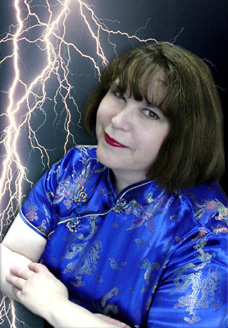
Interview with NY Times Bestselling Author Rachel Caine

MICHAEL A. VENTRELLA: I’m pleased to be interviewing NY Times bestselling author Rachel Caine. Rachel has the Morganville Vampires series, Weather Warden series, and the Outcast Season series, as well as writing paranormal romantic action/adventure and many other genres. Rachel will be the Guest of Honor at Ravencon next weekend (April 9 – 11, 2010) where I am a mere minor guest! Her web page is here.
Rachel, what is it that makes a novel a “young adult” novel?

RACHEL CAINE: The way I look at it, it’s purely a matter of the age of the central characters. My four main characters are ages 17, 18 and 19 now, and as with all characters, their ages and life experience shape the events of the book. So it’s not that I deliberately target the audience … it’s that I think in order to be faithful to the characters and the story, it should naturally appeal to a young adult audience. (Although I have plenty of adult readers of this series as well.)

VENTRELLA: It seems like you have a new book out every month! How do you manage to be so prolific?

CAINE: Ha, I don’t think it’s *every* month. But definitely 3 or 4 a year, that’s true. Most of that’s driven by the YA series (Morganville Vampires) because the schedule for that is we’re publishing one every six months vs. a year for the adult novels (Weather Warden and Outcast Season). But when you add it all together, three series going at the same time does tend to add up fast.

I think I’m lucky that I really enjoy writing to tight deadlines (generally) — it’s been a really great balance against my sometimes stressful day job.

VENTRELLA: There is an ironic balance that has to be met when writing about the supernatural, in that it has to be rooted in reality to be believable. How have you made decisions about integrating the real with fantasy?

CAINE: I’m going to shamelessly quote Jim Butcher, who once said that in order to have urban fantasy that feels realistic you need to have about as much “real” as you do “fantasy.” I believe that’s true … If you look at the success of the movie “Hellboy”, I think that first film achieved a wonderful balance in that area. Sure, you’ve got a big red devil guy running around fighting monsters, but there’s so much real world complication that it makes it all that much funnier and more outrageous. I thought that in the second film, good as it was, they forgot that balance, and slid it to about 75% fantasy, 25% real world … and I think it wasn’t as strong as the first.

So I try to balance my fantastic elements with the fact that everybody, even supernaturally gifted people, have to worry about bills and dry cleaning and child care. πŸ™‚

VENTRELLA: What is it about vampires that attracts such attention these days? Do you think this is just a trend? (I hope not, since my third novel will be a vampire book …)

CAINE: Well, I’ve actually been in the vampire field when it was cool before (in the early 90s) and when it wasn’t (in the late 90s), and now it’s cool again, which is kind of great. Vampires never really go out of style — we’ve been afraid of them for thousands of years, and writing about them in fiction for more than 100 years. The fascinating thing is that in the beginning, vampires were soulless monsters … reflecting that hidden terror that those you know and love can suddenly become monsters. And then they took on personalities and became more sympathetic, and eventually (by the mid-70s) became actual misunderstood romantic anti-heroes. By the mid-1980s, vampires had become heroic, appearing as police officers, detectives, doctors, all kinds of professions that had always been seen as admirable. Now, it seems that they’re back to the dark, romantic Heathcliff-type heroes (at least in the romance circles), but then there’s graphic novels like 30 DAYS OF NIGHT that harken back to the terrifying soulless monster vampires prototypes. So there’s lots of room to do anything you’d like in vampires, which I think is fantastic fun.
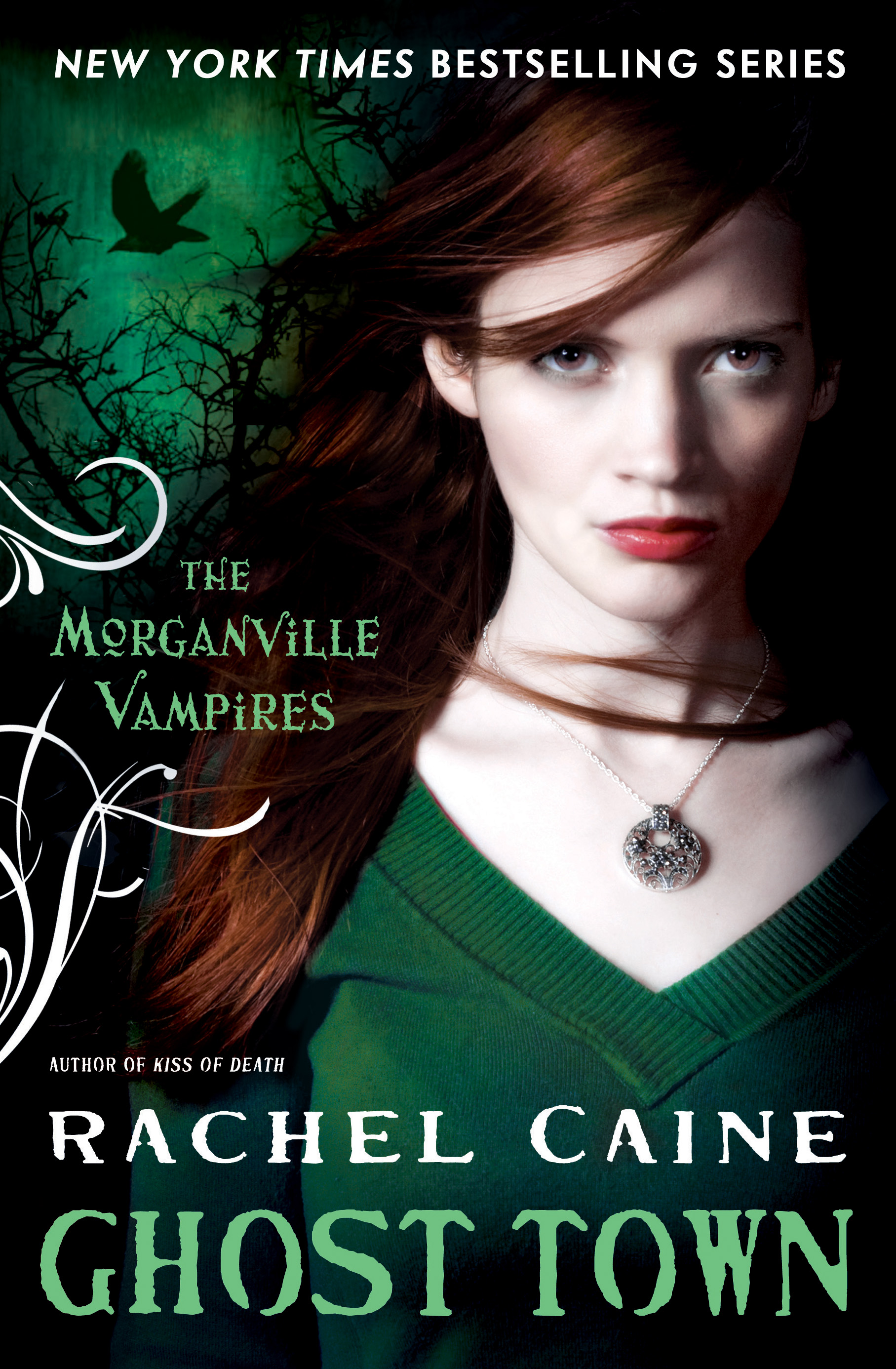
VENTRELLA: For those unfamiliar with your work, can you give a quick description of your main series?

CAINE: The Morganville Vampires series (Young Adult) follows the adventures of Claire Danvers and her fellow housemates Eve, Shane and Michael in the town of Morganville … just your average Texas college town, except that it’s controlled by vampires, and the city taxes get collected by Bloodmobiles. Once you’re in on the secret, you’ll never make it out of town alive. Not all the vampires are bad, but they’re all unpredictable, and Claire and her friends often find themselves caught in the middle of the ultimate haves-and-have-not struggle.

The Weather Warden series (Urban fantasy) features Joanne Baldwin, a sexy, sassy woman with a secret … she can control the weather, and she’s part of a secret organization that battles the forces of nature on a regular basis. Mother Nature really doesn’t like us, and only Joanne and the Wardens stand between us and total extinction … when they’re not battling among themselves. Oh, and there are Djinn (genies) who sometimes serve the Wardens, and quite often turn on them with fatal results. Trust Joanne to engage in the most dangerous kind of romance … with one of the most powerful Djinn in existence.

The Outcast Season series (Urban fantasy) is a spin off of the Warden universe, and concerns Cassiel, a former Djinn who’s been cut off from her supernatural kin and now must survive in a human world she doesn’t understand or like, with the aid of Wardens she’s never respected. But in her struggle to survive, she finds herself drawn more and more to the humans she cares for, in particular Warden Luis Rocha — which makes things more difficult when she realizes that she may have a destiny after all: to destroy the human race.

VENTRELLA: How have you planned out the Morganville series?

CAINE: I had a six-book story arc planned, and I’m making the second set of six more standalone stories. There is a certain continuity to the storyline, but I’m trying to avoid too many cliffhangers. πŸ™‚

VENTRELLA: What do you do to create believable characters who learn and grow from their adventures?

CAINE: I don’t know that it’s a conscious process for me … the characters really seem to do that on their own. I have found that less is more in character development … the more tics and traits you give a character, the less natural they seem over time. I find that starting small gives characters plenty of room to grow.

VENTRELLA: How did you break into the publishing business?

CAINE: Not in any way that anyone else should look on as typical! I never intended to … a friend bought me a ticket to a writer’s conference and dropped me at the door. He wanted me to learn about being a writer because I’d been writing on my own (and hiding it) for more than 15 years at that point. So I thought I’d talk to an editor or two, and that would be that.

Only the first editor I talked to hired me to do my first novel. So that worked a little better than I expected, actually. That was in 1990, and I’ve been publishing ever since … with the occasional career hiccup.

VENTRELLA: Some of your earlier works were written under other names. Why did you do that, and would you advise others to do so?

CAINE: And that would be the “occasional career hiccup” referred to above. πŸ™‚ I wrote as Roxanne Longstreet (my maiden name) when first starting out, but my books didn’t really burn up the shelves in any significant way. When my first publisher told me they wouldn’t be able to buy more from me, I changed my name to my married name (Roxanne Conrad) and tried again, with similar results. Rachel Caine is proof that the third time is the charm, I think!

I did use the name “Julie Fortune” for a media tie-in novel for Stargate, mainly because at that time the “Rachel Caine” identity was still new and fragile, and I didn’t want to risk bad sales on something so far outside of my new areas of expertise. But Julie actually has done pretty well on her own.

VENTRELLA: Of which book are you most proud? What would you like to be remembered for?

CAINE: I don’t think I’d like to be remembered for one book … more for a body of work. I can’t really say that I prefer one book over another; from my perspective they each have different characters, but mostly in the sense of where I was emotionally at the time I did the work. I’m not the best judge of that sort of thing. I’m just happy that it seems to touch people and entertain them.

VENTRELLA: What’s your opinion on e-books? Do you think they’re the wave of the future or a step down from traditional publishing?

CAINE: I don’t think it’s a step down at all, but there are a number of people who simply don’t like to read on the screen, so I think traditional publishing will always have a place. For people who read for the experience of the story, versus collecting books, I think ebooks are perfect — portable, simple, and disposable. For collectors, nothing will replace the experience of a book.

I do think there is a real and growing problem related to ebooks … there’s a basic misunderstanding of copyright as it relates to electronic files. Buying an ebook doesn’t give someone the right to copy it wholesale and sell it on to others … and there’s a constant issue with this happening. Most of those people don’t understand that what they’re doing is setting themselves up as a digital publisher, which is robbing both the author and the publisher. Unless we can collectively get that settled, it’s going to bleed the industry dry over time.

VENTRELLA: You’ve wisely advised authors before not to self-publish. Why is that important?

CAINE: I don’t say never self-publish, but it’s not a good way to launch a career as a writer. If the person wants simply to have a book, and has no expectations of continuing to advance in it as a career, then self-publishing might be okay. But there are a lot of drawbacks to self-publishing … you’re responsible for marketing, getting your books into physical stores, and competing with authors who don’t have to do any of that for themselves. Don’t kid yourself: it takes time away from your writing, and trying to break into bookstores in any kind of volume is difficult, if not almost impossible.

Self-publishing also has a reputation — sometimes undeserved, but often accurate — of not being good quality. Often the covers aren’t very good, and unless you’re extremely good at self-editing, or employ a professional editor who knows their stuff, the product is often easy to detect as amateurish rather than professional. So you have a huge burden to overcome.

The last thing I’ll say is this: very few people have ever made decent money from self-publishing, and those that have, generally jumped to traditional publishers as quickly as possible. Don’t get fooled by companies that promise you they’ll publish your book, but then require you to pay for editorial, marketing, and other services. They make money off of you. Your chances of making money from them is pretty small.

VENTRELLA: Finally, what is it about conventions that you like?

CAINE: I love hanging out with my people. πŸ™‚ I’ve always been drawn to conventions — where I can have endlessly fun conversations about things that I’m passionate about, whether it’s geeky obsession over a TV show or deep conversation about life, the universe, and everything (thanks, Douglas Adams!). I’ve met many of my best friends through conventions, and had some of my finest times ever.

Thanks for giving me the opportunity to talk with you! Looking forward to seeing you at RavenCon!

Conventional Wisdom: Programming

Previously I have discussed networking and attending conventions as a way to further your writing career.

I will be attending two Science Fiction conventions as a guest in the near future. My schedules below are for Lunacon (which is held just outside of New York city) and Ravencon (which is held in Richmond). The panels look to be quite interesting, and as I am the panel moderator on a few of these, I have to lead the discussion. (Note: just in case anyone is confused, these are just the panels I am on. There are hundreds of panels at each convention!)

I have also been scheduled for readings of my work and autograph sessions, which can be either great fun or a terrible embarrassment, depending on whether anyone shows up…

The big RUM AND RUNESTONES release party will be at Ravencon. The book is a collection of stories about pirates and magic and features my short story “X Spots the Mark.”

Lunacon will be held the weekend of March 19th and features some great writers: Tanya Huff, Esther Friesner, Peter Heck, Keith DeCandido, Ty Drago, Jonathan Maberry, Gail Z. Martin, Hildy Silverman and many others.

Ravencon will be held the weekend of April 9th and features Rachel Caine, James Enge, Lawrence Watt-Evans, Catherine Asaro, Peter Prellwitz, Bud Sparhawk, Tony Ruggiero, and many others.

If these panels look interesting to you, go to the convention websites and see what else they have scheduled. Attend if you can — even if you’re not a guest, you can make connections and learn more.

Here’s my Lunacon schedule:

Friday 6 pm: Larping for Beginners: What is a LARP, what kind of groups are there, where are they located? (Michael A. Ventrella)

Friday 8 pm: Networking for Writers: Just being a good writer isn’t enough these days — you have to get out there and sell your work. This panel will explain the necessity of good networking for aspiring writers. Lots of practical tips for taking the fear out of networking and making contacts successfully. (Ef Deal, Pamela Scoville, Hildy Silverman, Ian Randal Strock, Michael A. Ventrella)

Friday 9 pm: Drowning in Ink: With new markets emerging, e-zines and e-publications, small presses, and traditional publishers; writers have more publication options than ever before, not to mention self-publishing fighting for “legitimacy” among them. Is there a place for everything and everything in its place, or does confusion reign supreme? (Michael D’Ambrosio, John Douglas, Teel James Glenn, Neal Levin, Michael A. Ventrella)

Saturday 4 pm: The New Animated Film: Did anyone not cry at the beginning of “Up”? Animated films aren’t just for kids anymore, they’ve hit the mainstream and are starting to blur the lines of what we think of when we think of an animated film. Given how much of a movie now is created in a computer, what isn’t an animated film? Panelists discuss the best new animated films and how they’re changing our perceptions of cinema. (Jim Freund, Glenn Hauman, Daniel Kimmel, Ahlen Moin, Michael A. Ventrella)

Saturday 5 pm: Anybody Wanna Have Sects Tonight?: In many sci-fi and fantasy works, the author will invent entire religions for the purpose of plot or flavor. How do we go about creating gods and rites of worship that seem believable to the reader? What doesn’t work? (Alma Alexander, Sam Butler, Louis Epstein, Jane T. Sibley, Michael A. Ventrella)

Saturday 6:30 pm: Reading: Michael A. Ventrella

Sunday 12 pm: Basing Your Fiction on an RPG: It’s always tempting to take a gaming experience and turn that into a piece of fiction, but few can do so successfully. How do you avoid the problems with doing so? (Leigh Grossman, Mike McPhail, KT Pinto, Michael A. Ventrella)

Sunday 2 pm: Autographing: Michael A. Ventrella

Here’s my Ravencon schedule:

Friday 9 pm: Autographing: Michael A. Ventrella

Saturday 1:30 pm: Koffee Klatch

Saturday 2:00 pm: Don’t Give Up Your Day Job: Writers discuss criticism they have received from readers, reviewers and even family members. How do they deal with it and why it should be a positive and not a negative experience. How can you offer criticism to a writing friend in a constructive manner? (Iver Cooper, Lawrence Schoen, Rick Stratton, Michael A. Ventrella, Lawrence Watt-Evans)

Saturday 3:00 pm: The Best Way for a Writer/Artist to Avoid Being Sued: How do writers and artists get into trouble? How can these expensive and embarrassing pitfalls be avoided along with any jail time. Come and hear about experiences and what you need to know to stay out of trouble. (Mitchell Bentley, Dave Christman, Michael A. Ventrella)

Saturday 5:00 pm: Basing Your Fiction On a Game (Rob Balder, Steve Long, Michael A. Ventrella)

Saturday 8:00 pm: Using Real Life Events In Your Story: Good Idea or Not? (Andrew Fox, Peter Prellwitz, Michael A. Ventrella, Allen Wold)

Saturday 9:00 pm: Going it On Your Own? How to Avoid the Pitfalls of Self-Publishing: Traditional publishing is not for everyone but that does not mean it is simple. This workshop explores what goes into the making a book. Participants will walk through the steps of designing, refining, and promotingΒ a good book. (Denise Ackley-McPhail, Chris Impink, Michael A. Ventrella)

Saturday 11:00 pm: Vampires — drawing fiction from real life: With books, movies and television depicting modern day vampires and how they exist, how did they get their ideas? Some authors such as Konstantinos and Katherine Ramsland have actually delved into the world of vampire clubs and organizations of London, Paris, New York and LA. Some authors have based their modern fictions on this world of night. What are these places and groups like? Come and find out! (Patrick Vanner, Michael A. Ventrella)

Sunday 11:00 am: I Double Dare You to Write! If I were to write the one story I always wanted, but didn’t dare, it would be about the … (insert topic here.) Many writers have always wanted to write a type of story or a story about a taboo subject but didn’t. Or maybe they did and published it under another name? Let’s ask them and see what they say. (Malcolm Deeley, Pam Kinney, Michael A. Ventrella)

Interview with Jay Lake

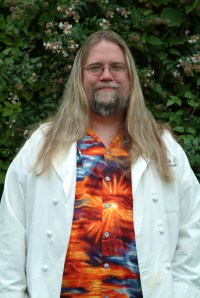
MICHAEL A. VENTRELLA: I’m pleased to be interviewing Jay Lake today. Jay is a winner of the John W. Campbell Award for Best New Writer in Science Fiction, and has been nominated for numerous Hugo awards and World Fantasy awards. His web page is here.

JAY LAKE: Michael, thank you for having me here. I’m very glad to be sharing my experiences with your readers.jay-lake_author-photo_Tor

VENTRELLA: Jay, how did you get started in the business?

LAKE: I began with short stories. Sold my first story in the spring of 2001, and two more that year. Sold about a dozen stories in 2002. Since then it’s been a big part of my writing practice. Did that for a while, all the way through earning the Campbell nod in 2004, before I got traction on novels.

That’s not to say that short fiction is the way everyone should enter the field. In some ways, novels are easier to sell. And if one wants to write novels, one certainly should. Don’t force short fiction because someone like me said it was the path.

VENTRELLA: You’ve placed a few short stories on your web page for free; do you advise this approach for new authors trying to establish themselves?

LAKE: In my case, the stories on my Web page are either Web reprints of older stories that have been in print already, or occasional one-shots of short pieces that for some reason I didn’t feel were what I wanted to market.

For a newer writer, the appeal of a “free sample” approach can be powerful, but I’m not certain of its value. You’re an unproven quantity until you’ve passed through the gateway of an editorial proxy. And most of us don’t have a good sense of the quality of our own writing. Posting something that you and the world would later see as sophomore work migh be iffy. On the other hand, I’m all about being proud of who you are.

VENTRELLA: What are the legal and contractual limitations of doing so?

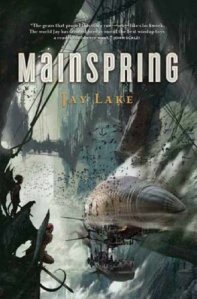
LAKE: Well, the primary issue is first rights. I’m not an attorney, and I don’t play one on the Internet, so this is not legal advice. But it is common sense advice. If you don’t already know how copyrights work, learn.books_mainspring

Basically, a copyright is a piece of property. You rent it out but you rarely if ever sell it. Each of those rentals is done by licensing a right. The rights are not explicitly defined in law. The rights themselves are defined on a case-by-case basis in each contract, and generally include such things as print rights, audio rights, electronic rights, ebook rights, gaming rights, film rights and so forth.

The first time a work is published is considered to be “First Rights”. While electronic publishing (e, appearing on a Web site) does not in fact expire the first print rights, most editors will view any prior publication as a first rights usage. So if you put someting on your Web site, you’re making it unlikely that anyone will be willing to buy it later for professional publication.

Note that aspiring writers are often concerned about protecting their ideas, or having their work stolen. While this can be an issue in Hollywood, it is rarely an issue in print fiction (defining “print” fairly loosely to include online, ebooks, and so forth). The reason that this is rarely an issue is that ideas are the easiest part of the process. Why would anyone need to steal your ideas when they can make their own?

Think about it. You write a fantasy about a quest through a magical kingdom by a mixed band of adventurers. Is that such an original idea that you’d be harmed by someone else writing such a book? There are already thousands of them in the market, an entire subgenre’s worth. Your fantasy includes a dwarf werewolf named Yoni who has a crippled foot from a sliver of moonsilver embedded in the sole when the wizard bar-Simon was assassinated by the Carmine Council. Is that such an original idea that you couldn’t make up another one just as good in the same ten seconds it took me to write that sentence? And probably better?

Short of outright plagiarism, which is quite rare for us, theft isn’t much of an issue. Where it does occur is in the area of unauthorized reprints, and ebook piracy, and those are largely concerns of established writers. To be blunt, if you have such problems it will be because you’re already succeeding.

VENTRELLA: All authors these days spend a large amount of time on self-promotion, from posting a regular blog to producing podcasts to appearing at conventions. What’s your opinion on the relative value of each?

LAKE: Writers write, first and foremost. The rest of it is just marketing, of little value if you have nothing to market, and of not much more value if you do it at the expense of further writing.

That being said, I’m a fan of doing anything to raise your profile and build your brand among readers, editors, reviewers and critics. But only if whatever you’re doing is fun for you, and more importantly, fun for the people who encounter you. In a professional sense, it’s not entertaining to read about your cat’s trip to the vet, or how many smoothies you made for breakfast this week. Likewise sitting around a convention bar griping about how your landlords keep screwing you on security deposits. But, if you can be relevant, or entertainingly tangential, in your blog or podcast or convention persona, you have a hook.

Plenty of people have done this. Mur Lafferty has made a niche for herself with her “I Should Be Writing” podcasts. I have my noisy-fat-guy-in-loud-shirt persona I wear around at cons. (And honestly, in real life, too.) Jim Van Pelt used to run a Campbell Awards Web site. Jeremiah Tolbert edited “Fortean Bureau”, and now “Escape Pod”. All of us did so while building our presence as writers. But we’re all having fun doing what we’re doing, and fun is contagious.

Doing something because you “should” is the kiss of death in this business. There are some exceptions: You “should” use standard manuscript format. You “should” enclose a SASE with postal submissions. You “should” read your contracts carefully before you sign them.

But in self-promotion, there really aren’t “shoulds”, there are only “coulds”.

Take me. I’m a demon blogger. I use my blog, across both LiveJournal and WordPress, with feeds to Twitter and Facebook, to talk about a number of things that interest me. I have regular content on a daily basis, special features several times a week, and continuing series about certain topics, such as my kid, writing processes and my journies through cancer. Some people read me for my strong leftie politics, some can’t stand that but read me for the daily round up of culture and science links. Some people follow me because they’re fans of my kid. Some people follow me for my fiction alone. I offer a range of content, all of which is interesting and engaging to me.

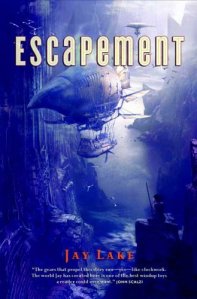
On the other hand, I’ve tried podcasting. It bores me. I don’t do podcasts much at all, because I can’t make them interesting enough, because they don’t interest me. If you like audio production, and expressing yourself through that medium, and have a lot to say, by all means, it’s a growing area. I’m probably missing out by not doing it myself. But it just doesn’t work for me.0765317095.02.LZZZZZZZ

As for conventions, I am of the first belief that one can have an entire highly successful career in this field and never set foot inside a convention. At the same time, writing is by its very nature a solitary act, and conventions are one of the few frameworks where we authors get to interact face-to-face with our peers, our editors and agents, and most importantly, our fans. If your social skills are on the outliers of the bell curve, this may not be the venue for you. Likewise if you are so introverted that groups of strangers are literally painful for you. (Both of those are true of many writers.) But if you can be personable and engaging and enjoy yourself, they’re a hell of an opportunity for networking.

VENTRELLA: How important is the social media (Facebook, Linked in, My Space and so on)?

LAKE: Ask me in five or ten years. Five or ten years ago, I couldn’t have given you a reasonable answer about how blogs would work out. I can tell you that far more people read my Twitter feed every day than read my blog directly, and that I have about as many Facebook friends as blog followers. I can also tell you that my Facebook feed gets more comments than my blog feed, at least most of the time. But the nuances of that? And the long-term value? No clue. Not yet. I do it becaus it’s fun, and because those are places where I can interact with people.

VENTRELLA: What trends in current genre literature do you hate? What vents your proverbial spleen these days?

LAKE: Enough with the vampires already. And I can rant for hours about how most magic systems violate Newton’s laws, as well as the basic rules of economics. But really? Not much hating going on. Taste, yes. I refuse to read TWILIGHT. But millions have read and loved that book and its sequels. I can’t hate on anything that gets people to look at print literature.

VENTRELLA: Who do you love to read? Who has inspired your work?

LAKE: Gene Wolfe. Ursula K. LeGuin. Jeff VanderMeer. Lois McMaster Bujold. Jeffrey Ford. K.J.Bishop. M. John Harrison. Terry Pratchett. Maureen McHugh. And so on and so on and so on. Our field is full of marvelous writers working from every direction, every theme, every plot.

VENTRELLA: Of what work are you most proud?

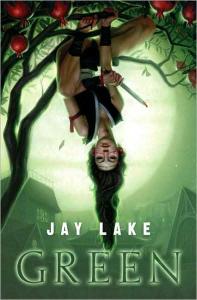
LAKE: That’s like asking me of which child I am the most proud. (Admittedly, I only have one child, so that question is not so hard to answer.) I suppose I’d point your readers to my latest Tor book, GREEN. It’s a coming of age story set in a secondary fantasy world, about a girl sold into slavery at a very young age who is trained to be a courtesan, while secretly being countertrained to assassinate the man she is intended for, a powerful Duke. green-jay-lake-largeShe rebels against both fates, tries to go back to the land of her birth, and makes a mess of a great many things before being forced to save a city, some lives, and even a god or two, in the course of repairing those messes. It’s courtly fantasy, with sex and violence and cityscapes, though not so much with the magic.

I wrote the book for and about my daughter, very much drawing from her character to build Green, the protagonist. Getting inside the head of a young girl of color with Green’s peculiar history was quite a stretch for me as a writer, but so far the readers have loved it. I hope you will, too.

VENTRELLA: What’s your opinion on self-publishing? Do you advise new authors to go this route, or is it better to not publish at all than to be self-published?

LAKE: I share the rather strong tic again self-publishing which can be found among the community of professional writers. Especially for aspiring or early career writers.

Here’s the simple reason. You don’t have any real idea how good your work is, or what its flaws are. Nobody does, especially not early on. That’s what editors are for.

I’ve been publishing professionally for almost a decade, and I’m only beginning to see it in my own work. That story of yours that is brilliant, better than anything you’ve seen in print this year? Maybe it is, maybe it isn’t. But you’re not likely to be able to judge that.

What the self-publishing route does is three things. It allows you to commit work to print that you will quite likely later come to question the wisdom of. If the work is as good as you believe, you’ve lost the ability to sell first rights by self-publishing. And it will reduce your standing in the eyes of professionals in the field, especially editors.

Note that for some purposes, self-publishing is a brilliant tool. Family histories, local interest cookbooks, private editions for a holiday gift, etc. But as a success path for commercial fiction? Not so much. And yes, there’s always a story about this author or that who got a huge contract after a self-published success, but no one ever tells you how many people didn’t.

Remember, editors and agents aren’t out to publish their friends, or suppress new talent, or any of the other things you hear people grumble about it. Quite the opposite. They want nothing more than to find hot new talent, and be the one to bring the work, and the author to market. And they do have an idea of how good work is, and what will succeed in the market.

Publishing is a meritocracy, but it’s not a just meritocracy. Nothing is ever quite fair or sensible. But if you want the credibility and impact of being commercially published, you need to follow the routes that work to enter commercial publication. And yes, it’s a game whose rules change all the time. So far, the rules haven’t changed to include self-publishing as a strongly valid option.

VENTRELLA: You’ve blogged about your fight with cancer. (As my wife is a cancer survivor, I certainly can relate in some small way.) How do you think this will affect your future writing?

LAKE: Cancer will indelibly affect my future writing. It already has. My voice, my themes, my view of myself and the world have been bent in a new direction. Not one I would ever wish on anyone, least of all myself, but there’s a lot of passion, power and pain in cancer. As I write this, I’m two weeks from surgery to remove a metastatic tumor from my lung. Second trip through the cancer mill. Believe me, I have learned new lessons in fear and terror, but I have also learned new lessons in hope, glory and blinding love.

That cannot help but change everything. Once again, I won’t know how til years down the road.

VENTRELLA: What advice do you wish someone had given you when you first began trying to break into the business?

LAKE: Really, I got plenty of good advice. I mostly wish I’d taken more of it.

I think most aspiring writers go through phases. One phase is “I’m an undiscovered genius”, and it’s characterized by a lot of hot pride. Another phase is “publishing is a conspiracy”, characterized by fear and resentment. Another phase is “I suck, and I’ll never make it”. You get the drift.

Each of those phases brings with it a certain wilful deafness. I wish, when I’d been in those phases, that some future me, or someone wise enough to speak in a way that got past my defenses, had simply said, “Shut up and write.”

Because “get back writing, then write more” is the only real advice.

In fact, it’s what I’m going to do right now. Thank you.

Interview with Gail Z. Martin

MICHAEL A. VENTRELLA: I’m pleased to be interviewing Gail Z. Martin today. Gail is the author of The Chronicles of The Necromancer series. The books are available in your favorite bookstore, as ebooks from my publisher Double Dragon, and will be released as audiobooks by Audible.com soon. 0061-eWomenNetwork She is also host of the Ghost in the Machine Fantasy Podcast, and you can find her on MySpace, Facebook and Twitter. She enjoys attending science fiction/fantasy conventions, Renaissance fairs and living history sites. Her web page is here.

Gail, tell me about your fantasy series The Chronicles of the Necromancer.

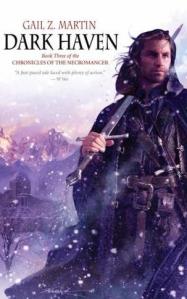
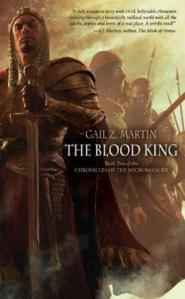
GAIL MARTIN: The Chronicles of the Necromancer series includes four books so far: THE SUMMONER, THE BLOOD KING, DARK HAVEN and DARK LADY’S CHOSEN. The story begins when a young man’s family is murdered, and he discovers that he is heir to a very rare type of magic, the ability to intercede between the living and the dead. He needs to learn to control that magic before it destroys him in order to avenge his family. I’ve really written two two-book sets. The Summoner and The Blood King are one story arc, and then a new story arc with the characters picks up in Dark Haven and Dark Lady’s Chosen.

VENTRELLA: Do you have a set number of books planned for this series?

MARTIN: Well, I’ve given my publisher abstracts for about 20 books I’d like to write, so we’ll see! There are two exciting pieces of news about the series. First, DARK LADY’S CHOSEN comes out December 29, and it will launch as a paperback, an ebook and an audiobook. And second, Orbit Books has picked up the next four books. The Fallen Kings Cycle is the name of the new series, and it will pick up after DARK LADY’S CHOSEN. I’m already working on Book One: THE SWORN.

VENTRELLA: Do you plan the entire series in detail or do you do one book at a time?

MARTIN: A little of both. I have a pretty clear idea of the full story arc and the arc for each major character. And I’ve given my publisher abstracts for quite a few other books set in the world of the Winter Kingdoms. And my publisher asks me to turn in a chapter-by-chapter outline before each book. That said, things do arise as I’m writing that often changes the way I saw things unfolding. Usually not a change to the ultimate outcome, but changes in how things go along the way. So the overview and outlines help, but the story develops on its own as we go along.

VENTRELLA: How did you become published? Did you obtain an agent first?

MARTIN: Yes, I did get an agent first. I really didn’t have time to work, write and shop my manuscript, and I knew that fewer and fewer large publishing houses accept unagented submissions. Having an agent has been very important, especially when it comes to negotiating contracts and understanding what options exist. A good agent is also valuable for negotiating translation sales and other contracts, such as ebooks and audiobooks.

VENTRELLA: Do you think you will ever write in another genre?

MARTIN: Well, I have the first book in a new nonfiction series for writers coming out in January, THE THRIFTY AUTHOR’S GUIDE TO LAUNCHING YOUR BOOK WITHOUT LOSING YOUR MIND. Dark HavenIt’s a book on book marketing for authors who want to make sure readers find out about their books! And as far as fiction goes, I do have some ideas I’m developing, but they’re not ready for prime time yet!

VENTRELLA: I keep hearing that publishers are not that interested any more in traditional high fantasy. As a writer in that genre myself, I am worried. Do you find this to be the case?

MARTIN: I think the more important question to ask is, β€œAre readers interested in traditional high fantasy?” From my experience, I would say yes. So long as there are readers who want a certain genre, there will either be publishers who will supply it or authors will meet the demand directly by self-publishing. My bet is that so long as publishers sense there is money to be made in a genre, they will keep publishing it.

VENTRELLA: What’s your opinion on self-publishing? Do you advise new authors to go this route, or is it better to not publish at all than to be self-published?

MARTIN: I think it’s easier to succeed with nonfiction in self-publishing than fiction because most nonfiction authors have the opportunity to sell from the β€œback of the room” at workshops, speaking engagements, etc. Also, if nonfiction meets a need and creates a benefit, people buy it, regardless of who publishes it. Fiction is a little harder, because it doesn’t have that clear need/benefit link. With fiction, distribution through bookstores and online booksellers is still crucial, and that can be more difficult if you’re self-published.

On the other hand, a good book will find a market. THE SHACK was a self-published book that couldn’t get a publisher until it sold a gazillion copies and then was picked up by a big publishing house. If you decide to self-publish, you’ll have to work twice as hard on distribution, personal appearances, being a vendor at conventions and basic selling. But if you believe in your book, then you do what you have to do to bring it to life. I would probably advise authors to exhaust their options for traditional publishing with large and small publishers before self-publishing fiction, but I’m sure there are other authors who feel differently and that’s OK. Even when you’re traditionally published, there is a lot of work that goes into promoting the book.

VENTRELLA: Gail, you are one of the most active authors when it comes to publicity and promotion, because of your background. While it is clear that published authors must promote themselves, do you think it is appropriate for unpublished authors to maintain a web presence and otherwise promote themselves, and if so, how can that be done tastefully and effectively?

MARTIN: I think part of that depends on your definition of β€œunpublished.” If you post your short stories on your web site, that is a form of publishing. If you release your book as a podiobook, that’s a form of publishing.

I think you always have to be clear about what it is you’re promoting. thesummonerSome authors, like J.C. Hutchins, started out by releasing free podiobook versions of their stories and gathered so many readers/listeners that they ended up getting a book contract with a traditional publisher. So think first about what your goal is in promotion yourself and what you have to promote. If you write an entertaining blog, host a good podcast or even create an online serial that gets good buzz, you may attract a publisher.
VENTRELLA: You and I run across each other at conventions often and you attend many more than I do. Please tell us why you think attending these is important, and whether you think they are important even for unpublished authors.

MARTIN: Cons are important because they’re a great way for authors to meet other authors and of course, to meet readers. Today’s readers like to meet the authors of the books they read, just like they enjoy connecting online and on social media. It’s also a great way to attract new readers who may decide to try your books because they liked what you said on a panel, had a good chat with you in the lounge or came to a reading and liked what they heard.

For unpublished authors, cons can be great places to meet published authors and get advice. Lots of cons have writing and publishing tracks where there are panels with editors, agents and publishers, or with authors talking about the business and mechanics of writing. It’s a great free education. I definitely think it’s worth it.

VENTRELLA: What advice do you wish someone had given you when you first began trying to break into the business?

MARTIN: Expect to spend twice as much effort promoting the book as it took to write it. blood_king_med_coverRealize that if you don’t promote the book and you don’t sell well, you don’t get invited to write a second book.
VENTRELLA: Can you think of a personal anecdote about the writing life you’d like to share?

MARTIN: Going on book tour really does require you to check your ego at the door. You spend a lot of time driving around, setting up table displays and schlepping your stuff from store to store. No matter how many big signs in the store have your photo on them, inevitably more than one person will ask you where the bathroom is or where somebody else’s book is shelved because they just assume you work there. Smile. It’s all part of being an author, and it’s worth every moment. But just to be safe, make sure you really can direct people to the bathrooms!

VENTRELLA: You’ve got audio and excerpts from DARK LADY’S CHOSEN online, plus there are other sites participating in your Days of the Dead blog tour. Where can we find all the goodies?

MARTIN: Check out my site at www.ChroniclesOfTheNecromancer.com, for all the downloads and more Days of the Dead stuff. Also, please find me on Twitter.com as GailZMartin and on Facebook and MySpace as well.

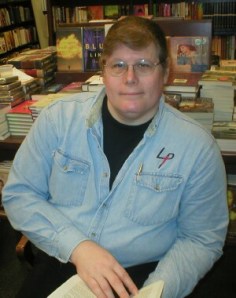
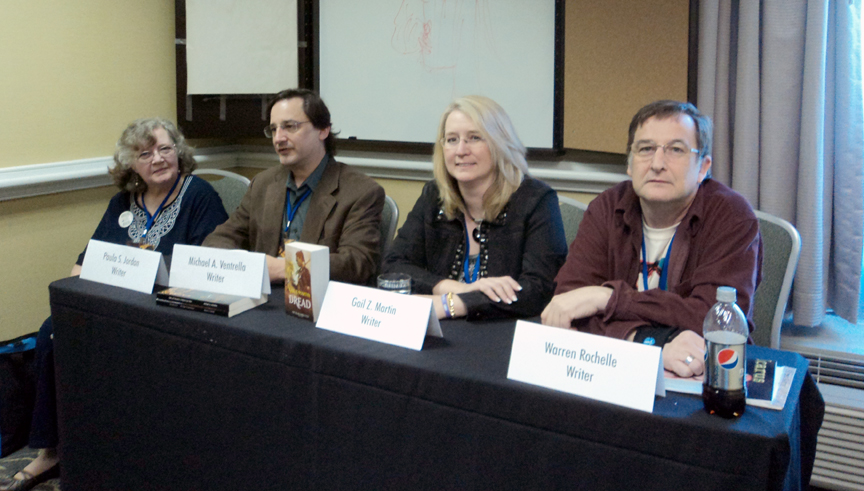
Me and Gail Z. Martin on a convention panel

Conventional wisdom: Self promotion to your intended audience

Talent isn’t enough.

Unless your daddy’s rich or has connections, every single person who has made themselves successful has been obsessive about their craft. They understand that it takes more than talent to get ahead — self-promotion plays a large role, along with a willingness to never give up no matter the rejections. 7

Without getting too far into that discussion, however, let’s limit this to the topic of appearing at conventions. Assuming you are an aspiring writer and assuming you want to promote yourself, you need to go where you can meet (a) other similar writers, editors and publishers, and (b) readers who may be interested in your work.

Since I write in the science fiction/fantasy genre, I have tried to attend as many science fiction conventions as possible. (See my schedule to the right under “Upcoming appearances”.) Since I had published a magazine on film animation in the 80s and early 90s (Animato!) and since I wrote a Rule Book and Players Guide for one of the largest live action roleplaying games in America (see The Alliance), I was able to present myself to these conventions as someone they would want to have as a guest, to speak on their panels. This provided me with free admission, a few perks, and the opportunity to promote myself to people who would actually be interested in what I had to say. I also was listed on their web pages and in their program books, along with a short bio.

When ARCH ENEMIES was released, it provided one more opportunity for promotion, and I now was able to sell myself to the conventions as a published author.

A few days ago, I returned from the World Science Fiction Convention which this year was held in Montreal, Canada (a lovely city but with the world’s worst Chinese food, even in Chinatown). It’s in Australia next year. I don’t think I will be able to make that one.8

It was tremendous fun. I had the opportunity to meet and speak with many famous writers, editors, and artists, and was on a number of panels — the largest of which was about computer animated films. (As an aside, it was a pleasure to meet Mike Resnick in person after interviewing him for this blog a while ago. “Ask tougher questions!” he admonished me.)

Most importantly, I had my book for sale in the dealer’s room, and was listed in the program for a reading and a book signing. Not surprisingly, in a convention packed with many things to do, I did not receive a huge crowd for either, but the books in the dealer’s room sold out — a good sign that perhaps my promotions were successful.

For the reading, I decided to present the pirate short story I am working on (“X Spots the Mark”). I loved doing the pirate accents and the audience seemed to have a good time. After, they requested that I read some from ARCH ENEMIES and being the ham I am I was pleased to oblige.

The nicest encounter came during the book signing. I was given the assignment of being at the signing table from 6:30 to 7:00 pm on Saturday night, when basically everyone is at dinner and preparing for the big Masquerade an hour or so later, so I had nice conversations with the other not-so-well-known authors, artists and editors who wondered if anyone would show up. A teenage girl came to me and asked me to sign her autograph book. “Ah, in case I become famous some day?” I asked. “Well,” she shrugged, “you’re already more famous than me.”

But back to the topic: Every time you attend these things, you get better known in the community. People say “Oh, I remember him; he spoke well at that panel. Maybe I’ll try his book.”

And you make connections. I had a nice conversation with Jim Morrow, for instance, who agreed to submit to a future interview for this blog.

Now I just need some tougher questions.

Interview with Author Peter Prellwitz

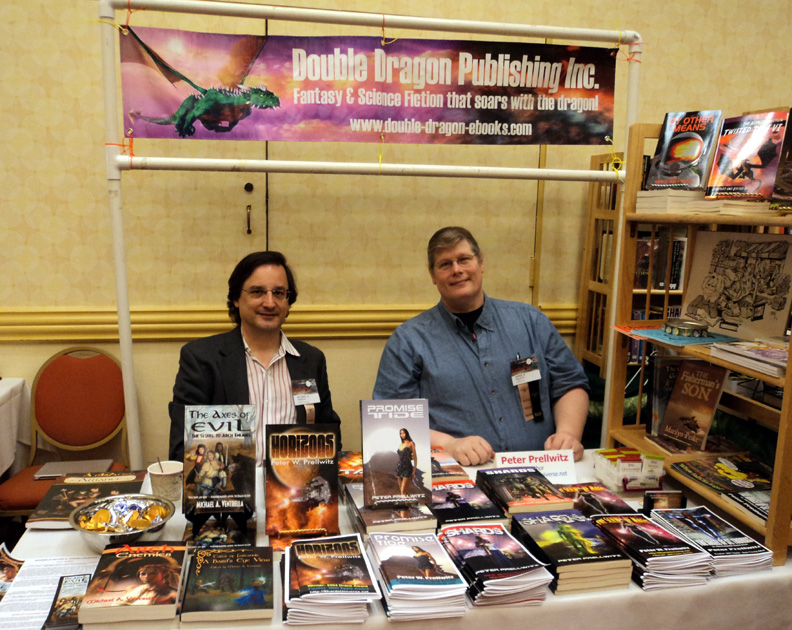
MICHAEL A. VENTRELLA: I’m pleased to be interviewing Peter Prellwitz, one of the most successful writers at my publishing house, Double Dragon. His web page is http://shardsuniverse.net/ . Peter, what made you sign up with Double Dragon, and do you regret going with a smaller press?

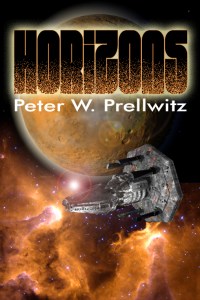
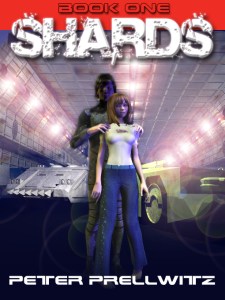
PETER PRELLWITZ: Double Dragon Publishing (DDP) was pointed out to me by a friend who was looking to start up his own publishing company. He’d read my novel Shards back when it first appeared in serial form on the CompuServe Writers Forum and became a supporter to see it published. (I’d originally written the novel just for my own enjoyment, with no intention of publishing it.) At the time, Double Dragon was conducting its first – and sadly, only – Draco Writing Contest, so I entered four of my finished novels, Horizons, Promise Tide, The Science of Magic, and The Angel of St. Thomas. I didn’t enter Shards because the four books making up the novel totalled three hundred thousand words and I knew better than to submit something of that size, having never been published. All four books fared well in the judging, with Horizons selected by finalist judge Mike Resnick as the Winner for Best Science Fiction.
prellwitzbiopic

I have never regretted going with a smaller press, primarily because that smaller press was Double Dragon Publishing. I have always been treated cheerfully, professionally and politely. This can be tempting to think, “Sure, they treat me that way because my sales are pretty good.” But the undisputed truth is the company treats all its contributors that way.

VENTRELLA: Given the cutbacks at the big publishing houses, would you advise other starting writers to “build a portfolio” by having success with a small publisher or is it better to keep holding off for that big potential deal?

PRELLWITZ: Having just crowed over the joy of being with Double Dragon doesn’t mean there aren’t challenges and downsides to being signed by an ebook publisher. One of the biggest is the “stigma” that comes with it. The sad truth is that there are a LOT of ebook/small publishing houses out there that have poor business practices, very low standards for accepting materials, and are about as real as faster-than-light travel. The mainstream publishers and associated agents, editors and such have maintained for years that ebook/small press publishing was no better than vanity press, and not to be taken seriously. Sadly, more often than not, they’re absolutely right. There’s an overabundance of – forgive me – poor quality writing that is being published by ebook/small press publishers that has little or no merit to it and is seeing print only because of their publishers’ inexperience, vanity or outright greed. That means that real publishers like DDP, who have high submission standards, a winnowing process, and sustainable business/publishing models, are unfairly lumped into the same group as so-called publishers. Because of this, while the idea of “building a portfolio” with a small publisher sounds good, it can actually hurt you in the respect of building a reputation among the larger, more conventional publishing companies. And literary agents won’t even look at work you’ve published with ebook/small press publishers.

But there a many positives to going with the right small publisher. One is the self-realization that you’re a serious writer; you’ve tried to get your work published. Another is that your chances of getting read and signed are greater with an ebook or small publisher. Just be sure you go with a reputable publisher. I do believe the time is coming when there will be a blending of some elements in the ebook publishing and mainstream publishers. The ebook and small publishing companies are far more efficient; not wasting paper but rather using print on demand (POD) or electrons to put out books, as opposed to the tried and true but increasingly expensive and wasteful mass publishing model that the larger houses use. Being a known, respected author with a known, respected publishing house, be it ebook, POD or mass, is a good thing.

VENTRELLA: What’s your writing process? Do you use extensive outlines? And do you plan out the series or just work one book at a time?

PRELLWITZ: I’m afraid I’m a nightmare of an example when it comes to the writing process. I’m what you would call a “seat of the pants” writer. I no idea how a novel is going to end, nor even what’s going to happen in the next chapter or even the next page. Oh, I’ve tried to do the outlines, plot summaries, character direction, and etc. For ten novels now, though, it hasn’t worked. I introduce my characters to the initial conflict that needs to be resolved, then just write down what happens. If I ever try to step in and direct things, they either smack me down for meddling in their lives or they stand around and go on strike like a bunch of prima donna actors. In one novel, TAU (which stands for Those Above Us), I set up one character to be the penultimate bad guy; then traitor everybody wants dead. I built this massive case of evidence against him and then, one chapter before the end of the book, he dies a noble death. He’s NOT the villain I was certain he was. Which left me completely in the dark as to who WAS the traitor. Took me a couple weeks to figure it out, and when I did, I couldn’t believe it. But when I read through the novel, there it was. I’d laid out – rather, recorded what I saw – everything that was needed to prove the guilt of the traitor and I’d missed it all.

As for planning out series, I do and I don’t. Oftentimes when I’m working on one novel I’ll write a reference to an event or person that has only tangent relevence at that moment but promises to have a good story on its own. Several novels and a couple dozen short stories have come about that way. I will start and work on more than one book at a time, however. Generally, I don’t recommend it. In my opinion, it’s far better to focus on one novel. Right now I’m writing a Shards Universe novel and a Martian Western novel and a fantasy novel. They’re all moving forward, but slowly. They’ll probably all be finished about the same time, which will be cool because I’ll have three completed novels. But until they’re finished, I don’t have anything to offer my readers. That’s okay before you get published, but once you establish a fan base, you owe them more than vague progress updates.

VENTRELLA: What’s your writing background? Did you begin with fiction?
horizons510
PRELLWITZ: I did. My first “published” work was a Thanksgiving play I wrote in 4th grade. My teacher was so impressed that I’d written completely on my own (it wasn’t an assignment or anything), that she produced it and it played to the entire school. It was an awful play. Elements of Gilligan’s Isle and F-Troop, poor dialogue, no logical progression to plot, and a cookie-cutter ending. My mom saved me a copy of the play, so I was able to refresh my memory about it. Yep, it was awful. But it was produced and it was my creation.

I was hooked.

I wrote another, much better Thanksgiving play in fifth grade, which was also produced, this time by my fifth grade teacher. After that I started writing short stories and started about six different novels that I never took more than a hundred pages. I co-wrote a melodrama in my senior year that was produced and played in nine libraries around Orange and Los Angeles counties in 1978. We got our fist official reviews from that; two thumbs up from both the Orange County Register and The Los Angeles Times. I continued writing fiction and non-fiction through the years, my break coming in 2003 with Horizons.

VENTRELLA: Is a web page important for a starting writer?

PRELLWITZ: Yes.

Hmm… let me rephrase that:

YES!!

One trap an author can fall into is that his or her “job” is to write and only write. Indeed, in the past – say, the 19th Century – a well-known author need only send his completed manuscript to his publisher, then sit back while other people did the rest of the work. Marketing, publicity, etc. The author had only to keep writing and occasionally show up at lecture.

Not only are those days gone, I wonder how much they really ever existed. If you look at Samuel Clemons’ life, you’ll see it was nothing like that. Today, however, the author must also be the main source of publicity. Also, simply writing a novel isn’t the only option. There are so many opportunities to add to the novel’s audience and reach, that NOT taking advantage – especially when so many other authors are using the chances – that an author is really short-changing the novel’s life.

Web sites are a critical opportunity that should not be passed up. And I don’t mean a typical “Buy My Book!” vanity web site. Having a living, breathing web site that you update regularily, store plenty of free stuff on, and just generally increase a readers involvement in your writing, can be the difference between your book just sitting on the shelf and your book gaining a following.

For the starting writer, I would recommend having a web site up and running at the same time you’re writing your first novel. When I was writing Shards back in 1996, I started the ShardsUniverse.net site mostly for myself. I kept my research, connecting short stories, maps, and everything else there. I didn’t let anyone really know about it. When I’d finished Horizons in 1998, I did more of the same. It wasn’t until 2003, when Horizons was first published, that I began pushing my web site. By then, however, it was a wealth of information on my universe, with a free library of short stories, novel excerpts, research, and current news on conventions and the like. Since the majority of my novels occur in the same universe, the web site helped tie everything together.

A tip… I put up my first web site all by meself. I wish I hadn’t. Even though I’m a professional IT person, I’ve never been big on web design. If you have a couple hundred bucks, PAY a professional to set up your site if you’re seriously going into the writing world. I’m doing that now, but it’s an ugly, slow process since I have a lot of content to move over.

VENTRELLA: How does writing for comics differ from writing standard fiction?

PRELLWITZ: As you know, I’m currently working with Steve Bennett, the anime artist, in turning my young adult novel, The Angel of St. Thomas, into a web comic of the same name. It’s been challenging. Since the medium is so very different, illustrated as opposed to written, rewriting is an absolute must. Where I could use the reader’s imagination to help me tell the story in the novel, as a web comic I’m more compelled to provide visual story-telling. While this forces me to provide more detail in the form of instruction to the artist, the result is a universal representation of what I’d envisioned when I first wrote the story, as opposed to my letting the readers’ imagination fill in the blanks.
ShardOne510

Pacing is also a huge challenge. The novel can be read in two or three hours. The web comic, which only posts one page twice a week, will need three years to tell the same story. Because of that, action scenes need to be enhanced while exposition and transition sequences need to be condensed. Taking three paragraphs of exposition in a novel is a one minute read, filled with useful information. But drawing three paragraphs of information might take four or five pages, which is two weeks worth of web comics in which nothing is happening. So adjustments are needed. Sometimes major adjustments. For instance, one chapter has the main character telling the origin of the “Angels” to another character over dinner. In the web comic, we’ll be having her showing the story; the reader will go back and watch things as they occurred from three centuries earlier.

The other primary difference is also the most exciting and, yes, at times challenging difference. The story is mine. The characters are mine. But the art is Steve’s, and he’s as much a creator of the web comic as I am. What I try to convey in a script isn’t necessarily what he’s going to draw. Not one single page has been exactly as I thought it would be. But at the same time, every page, while different, has been better. He’s the artist, after all. What he doodles in two minutes I couldn’t draw in two weeks; Steve is that good. So we always have an exciting and sometimes energetic exchange of ideas. That’s forced me to better see things as an artist does, which has helped me become a better writer when it comes to scripts. And being able to write scripts is always a useful skill.

VENTRELLA: You make regular appearances at science fiction conventions as a guest author; do you find these to be a useful process to promote yourself?

PRELLWITZ: Yes, and I think your question touched on the often overlooked main point. Conventions are a great place to promote MYSELF. Almost all other means of promotions, youtube, web sites, even book signings, are to promote the book. And my books are certainly the reason some people want to meet me. So when I’m at a convention, I’ll have a table in the Dealers Room and talk about/sell my books. But this is primarily the way my readers – and potential readers – get to meet the person behind the stories. To hear my opinions and my life experiences, as well as witness my reactions to and interactions with events as they occur at the convention.

Of course, it’s a two-way street. I also get to observe, interact, and learn from readers; those who’ve already read my novels as well as those who have not. Of all the genres that exist in fictional writing, science fiction is the fastest moving target. All other genres are limited by time, be it past or present. Even fantasy – which occurs in universes significantly different from ours – can’t go into the future, since it’s the future of a universe different from ours. But science fiction has no such limits. It can – and does – cover past, present and future. And it can cover multiple realities. And anyone who reads and enjoys science fiction is going to have a mind that has been stretched and exercised by a scope of endless possibilities. Those are people I want to know and with whom I want to interact

VENTRELLA: Here’s the question I’ve asked everyone so far: What’s the biggest mistake you have made?

PRELLWITZ: : In all honesty, I don’t think I’ve made it yet. I’ve had a very fortunate career as a writer to date. I continue to write, though not as much as I should, which is a common Biggest Mistake for authors. Though I do wish I hadn’t started playing World of Warcraft. That’s eaten up hundreds of hours I could have spent adding to my universe.

A lot of my readers often ask, “Why aren’t you in all the bookstores?” which is to say, “Why aren’t you with a mainstream publisher?” But I never for one moment think of my loyalty to Double Dragon as a mistake. Yes, I might have been able to get published with a big publishing house. But I DID get published with DDP. And now that I’ve proven myself to me and to a growing number of readers, I am trying to go mainstream with my next novel, Redeeming The Plumb. And I have DDP’s blessing and support. And if I have my way, DDP will always have my ebook contracts.

So, this is the only question I guess I’m dodging, because I really haven’t made my biggest mistake.

Yet.

VENTRELLA: What is the best piece of advice you could give a starting writer?

PRELLWITZ: My advice is three-fold.

1.) Buy, read and KNOW “The Elements of Style” by William Strunk and E.B. White. This slim book is a must for any writer.

2.) Constantly improve your skill with your tools; namely grammar, vocabulary and style (see above). If you have the greatest novel up in your head, but cannot communicate it, the story has value only to you. Don’t cripple your imagination because of poor writing skills. Mark Twain said it best: “Use the right word, not its second cousin.”

3.) Write crap. If the aspiring writer accepts that he or she will be a better writer in ten years, then the writer must also accept they are a POORER writer now. Don’t wait until the perfect inspiration comes along. Flowers can grow alone and by themselves, but a truly beautiful flower requires fertilizer to grow from, as well as less beautiful flowers nearby with which to be compared. The same is true for writing. Start writing and keep at it. You will write junk. But you’ll learn. And you’ll get better.