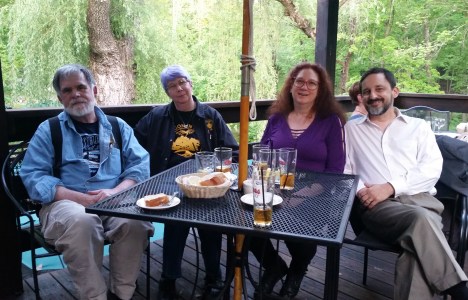
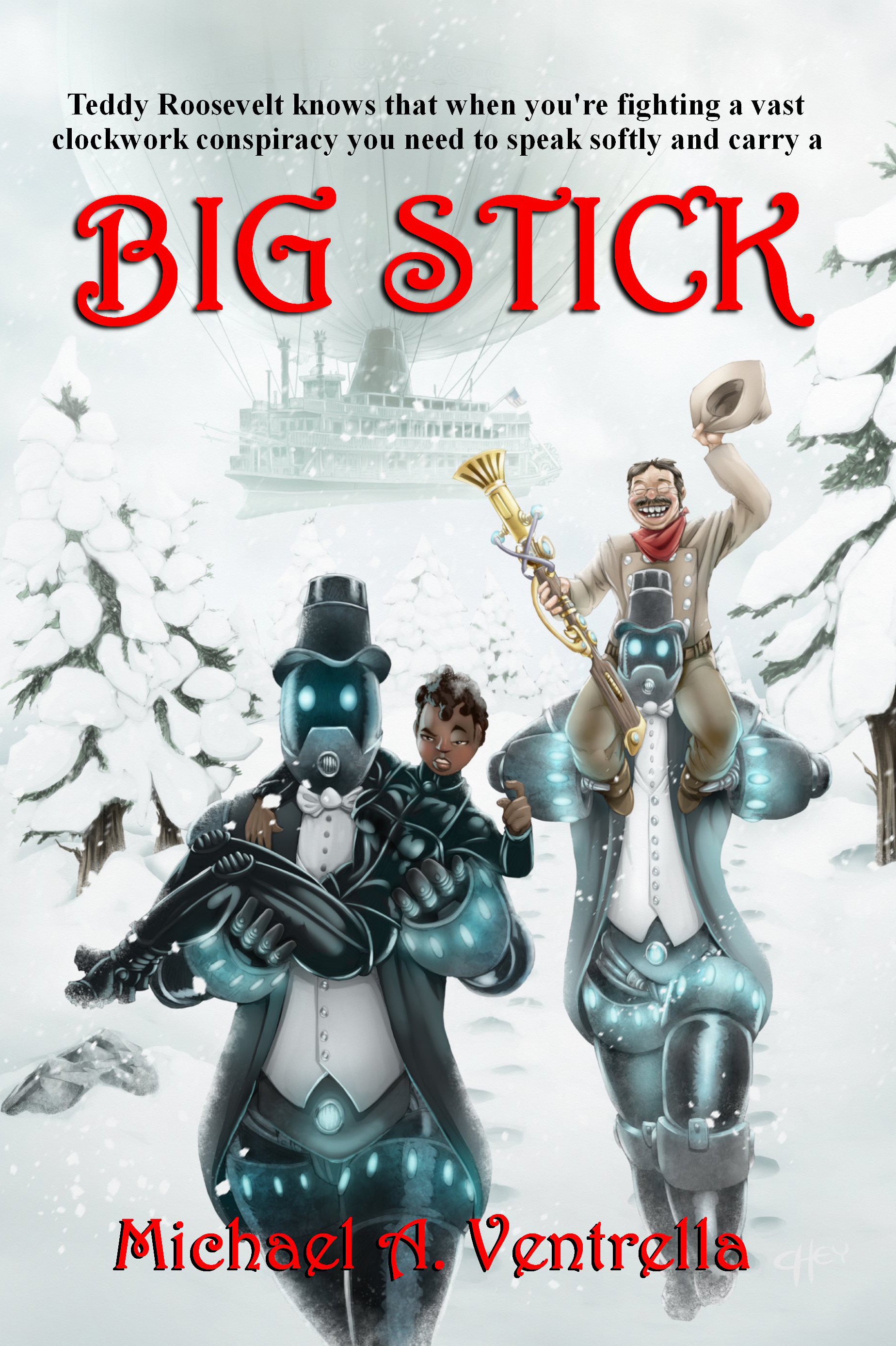
Interview with Hugo Winning Author Allen Steele

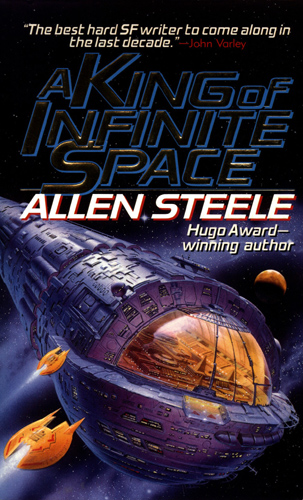
MICHAEL A. VENTRELLA: I am pleased to be interviewing two-time Hugo award winning author Allen Steele today! Allen has won numerous awards and nominations for his science fiction stories, novels, and novellas. His novels include ORBITAL DECAY, LUNAR DESCENT, THE JERICHO ITERATION, OCEANSPACE, and the “Coyote” series. His web page is here.
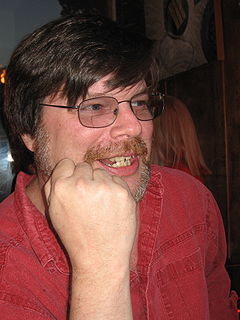
Allen is the Guest of Honor at the 2010 Albacon SF convention (which is next weekend as of this posting). I’ll be there too (but only as a regular ordinary guest)!

Allen,You’re one of the few authors who has been published on another planet. How did that come about?

ALLEN STEELE: A couple of years ago, NASA’s Phoenix lander made it to Mars, and aboard it is a DVD containing a library of science fiction stories and artwork about Mars that was compiled by the Planetary Society. Among them is ‘Live From The Mars Hotel”, my first published story, which was published in Asimov’s Science Fiction in 1988. The DVD is intended to be a repository for future Mars colonists, and also a tribute to SF writers and artists who’ve portrayed Mars since the 1700’s. It’s a huge honor to have my work represented in this way. In fact, I wrote a story about this that appeared in Asimov’s earlier this year: “The Emperor of Mars”, in the June 2010 issue.

VENTRELLA: You’ve been with small publishers and large. Which do you honestly prefer?

STEELE: Both have their benefits. Large publishers like Ace or HarperCollins pay better and have greater distribution; small publishers like Subterranean and Old Earth give me the advantage of more creative control and also the ability to publish individual novellas and short fiction collections, something which large publishers tend to avoid these days. So I split the difference by having my novels put out by large publishers and my short fiction by small publishers. Any preferences I may have are predicated by what I’m publishing, really.

VENTRELLA: What’s your opinion on self-publishing? Should a starting author consider such a thing?

STEELE: Only if they don’t mind not making any money from your work or not having it seen by very many people. Yes, I know there are exceptions, and that online publishing is offering yet another option, but the success stories are few and far between. Nearly every time I go to a SF convention, I see people hawking self-published novels from tables they’ve rented in the dealer’s room, and at best they sell only a handful. Bookstores won’t carry them, and reviewers simply won’t touch `em. There’s literally thousands of self-published novels and stories online, and I’d be amazed if any of them were downloaded more than a few dozen times. And once a book or story has seen print in any form, professional editors are not inclined to reprint them (again, yes, I know there’s exceptions. I can only name one or two, though). So it’s a dead end, and one that a new author should avoid.

VENTRELLA: Hard science fiction seems to be taking a back seat to high fantasy, steampunk, urban fantasy, and other genres. Why do you think that is?

STEELE: This last decade, yes, SF has been less visible. Personally, I think the principal reason is that the other genres you mention are almost entirely escapist in nature, and tend to look backward instead of forward, while SF is usually a forward-looking genre, with the best work grappling with the effects of the present while confronting plausible futures. We’re living in scary and uncertain times, so it’s little wonder that many readers are searching for that sort of literature that avoids reality, whether it be ersatz-Tolkien fantasy worlds, sexy vampires, or pseudo-Victorian settings that bear little or no resemblance to history as it actually happened.

But when you look at the history of the SF genre as a whole, you see that SF is something that periodically waxes and wanes in popularity. When my first novel was published in 1989, it was during one of those waning periods. Shortly after that was the SF boom of 90’s when a lot of new writers like myself who write this sort of thing entered the genre, but this followed by the gradual decline of the last decade. Eventually SF will make another comeback. Until then, writers like myself will continue to satisfy that solid, hard-core SF audience that has never gone away, while several hundred fantasy, horror, and steampunk writers struggle to distinguish themselves from the pack.

VENTRELLA: I can think of many SF novels that aren’t that old that didn’t predict cell phones or email, for instance, which makes them a bit quaint. How does one avoid those things?

STEELE: The purpose of science fiction isn’t the prediction of the future. When that happens, it’s by accident (and incidentally, there is an older SF novel that depicts a cell phone: TUNNEL IN THE SKY by Robert A. Heinlein, published in 1955). So claiming that a given SF novel is “quaint” because it didn’t predict the future that it depicted means you’re holding it to a double-standard that’s impossible for a writer to keep. When a SF writer comes up with a futuristic scenario, he or she is simply devising a world that doesn’t presently exist and may never; because he or she is extrapolating from our current condition, they should try to create a certain verisimilitude by keeping a close eye on what may be possible. But his or her job isn’t to predict the future, but rather to tell a good, believable story.

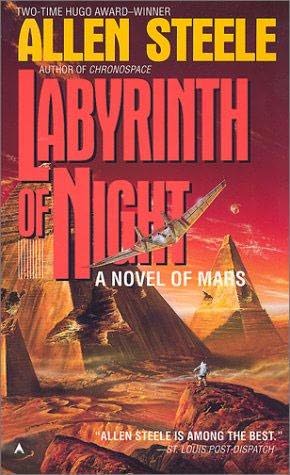
VENTRELLA: In a similar vein, LABYRINTH OF NIGHT made use of the “Face on Mars” – is this something you regret or try to avoid now?

STEELE: When I wrote “Red Planet Blues”, the 1989 novella which I later expanded to become LABYRINTH OF NIGHT, the “Face on Mars” was an astronomical oddity that relatively few people knew about. Aside from that single grainy image photographed by the Viking orbiter in 1976, it was a curiosity and nothing more. Our lack of knowledge about it gave me the liberty to use the Face as a springboard for a first-contact story. By the time the novel was published in 1992, though, the Face had become the subject of tabloid journalism and pseudo-science books, and not long after that the Cydonia region of Mars was revisited by subsequent NASA probes, during which the Face disappeared. I don’t regret the novel I wrote — it’s a good adventure story that sold many copies in both the U.S. and in Europe — but it’s now obsolete and I don’t mind that it’s gone out of print.
VENTRELLA: What is it about alternate history novels that appeals to writers and readers?

STEELE: The appeal of alternative history is obvious: depicting what might have happened if certain events had happened in a different way. It’s like futuristic SF, only in reverse. And just as it’s unwise to read a futuristic SF novel as a means of predicting the future, I think that it’s similarly unwise to read an alt-history story as a means of understanding the past. It’s just another form of storytelling, really.

VENTRELLA: What did you do to prepare for your alternate history novels?

STEELE: When I’ve researched the alt-history stories I’ve written, I’ve started by reading every reliable account I can find that depict the particular historical events upon which I’ve basing that particular story or novel. If possible, I visit actual locations; museums are another major resource. I take loads of notes, and during this period I’m fine-tuning the story and characters as well. It’s hard work, but I think it pays off in the sort of verisimilitude that you need to achieve if the reader is going to buy into the variation on history that I’m depicting.

VENTRELLA: What is the biggest mistake made by authors who write SF?

STEELE: The common mistake by novice SF writers is two-fold: not doing enough research, and then letting the research they have done get in the way of their story. Science fiction is hard to write, mainly because of the homework involved — which is a principal reason, I think, why so many new writers have taken to fantasy or horror instead; they’re easier to do — and there’s a great temptation to take shortcuts, but it’s just those sorts of shortcuts that undermine the story you’re creating. The other side of the coin is to do boatloads of research, then front-load everything you’ve learned into the story you’re writing; this can bog things down and cause the reader to lose interest. So you have to walk a line here: do your homework, but don’t bore the class by telling them every little thing that you learned.

VENTRELLA: Is writing a skill that can be learned or are the best writers born, not made?

STEELE: I think fiction writing is something that can be learned, yes … but it takes a long time to develop the skills necessary to tell a good story, and it’s a task that shouldn’t be undertaken lightly. Not every kid who joins a Little League team is going to grow up to be a pitcher for the Red Sox; not every guy who plays guitar in a garage band is cut out to tour with the Rolling Stones. Somehow, though, there’s a belief that if you know how to spell correctly and can compose a coherent paragraph, you’ve got the chops to publish a novel. Writing is hard work; it’s not something you learn overnight. And, yeah, it helps if you have a certain innate talent for this sort of thing. I once tried to learn how to play guitar, but gave up after two months of weekly classes after my instructor and I came to the realization that I have no musical talent whatsoever. So if you don’t really think you’re a writer … well, you should be honest with yourself and admit that you probably aren’t.

VENTRELLA: What’s the most interesting light bulb moment you’ve had, where you suddenly have an idea that makes the entire story?

STEELE: I had one of those moments just a couple of weeks ago. You’ll forgive me, though, if I don’t describe it in detail; I haven’t written the story yet. It involves an interesting little item I found at my next-door neighbor’s tag sale. Within five minutes of picking it up, I had an entire short story in my head. It’ll be fun … once I get around to writing it.
VENTRELLA: Amazon is reporting that e-books are now outselling traditional publications. What effect will this have on the publishing industry? For beginning authors is this a good thing or a bad thing?

STEELE: No one is really sure how ebooks are going to shape the publishing industry. There’s a lot of projections that they may eventually replace hardcovers or mass-market paperbacks. On the other hand, most readers I know tell me that they still prefer print novels. But I think ebooks are not only here to stay, but also have the potential to completely reshape how — and even what — people read. The take-off point will occur when the price of a good, reliable ebook device drops to about $50. If and when that occurs, you’ll see them all over the place.

Beginning novelists will probably have an easier time adapting to whatever changes there may be, simply because they’ll be able to take advantage of them from the get-go. It’s guys like me, who’ve had long careers writing exclusively for the print medium, who are going to have a tougher time adapting to the new environment. But we’re trying, we’re trying…

VENTRELLA: You’ll be the guest of honor at Albacon this year. What is it about attending conventions appeals to you?

STEELE: I don’t attend as many SF conventions as I used to, mainly because I’d rather spend my time writing. But when I do go to conventions — like MadCon in Madison, Wisconsin, last week, or Albacon in Albany, New York, next week — I generally have a lot of fun in a lot of different ways. I like meeting readers I haven’t met before, or seeing again those whom I’ve already met, or catching up with old friends and colleagues. I’m also a book collector, so you’ll usually find me prowling the dealer’s room in search of items to fill out my collection. And it sometimes gives me a chance to see a town I haven’t visited before, as I did in Madison.

VENTRELLA: What are you working on now? Come on, give us a peek!

STEELE: I won’t tell you what I’m currently writing except that to say that it’s a young-adult SF novel, my first of this kind. The next novel to be published is HEX, which is set in the Coyote universe and is my take on the Dyson sphere concept; it’ll be out next June from Ace. As for what I’m going to do after that … I don’t know, I’m making this up as I go along.
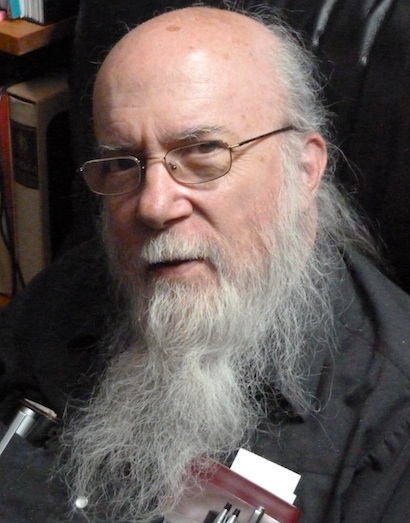
Interview with author Allen Wold

MICHAEL A. VENTRELLA: I’m pleased to be interviewing Allen Wold today. Allen Wold has published nine novels, several short stories (mostly for the Elf Quest anthologies), five non-fiction books on computers, and a number of articles, columns, reviews, and so forth, also concerning computers. He is a member of SFWA and teaches writing.

ALLEN WOLD: Many people have complimented me by assuming that I teach writing classes, at NC State or somewhere. I am not associated with any college, or university, or even a high school. The only “classes” I teach are my writing workshops, which I do at science fiction conventions. Because of people’s comments, I have begun to think of myself as a teacher, and I am quite flattered that people think of me as one. I do have some ideas about how writing can be “taught,” and about college courses in “creative writing” (Manley Wade Wellman said that “creative writing” is redundant, all writing is creative), but some of these are best saved for private conversation. There are, and have been, some excellent writing teachers in various colleges and universities, teachers who’s stories you can read in magazines, or who’s books you can buy in bookstores. But I am not one of them.

VENTRELLA: How did you first get published? Did you have an agent?

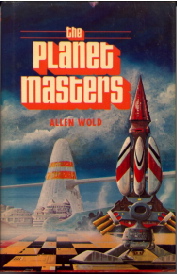
WOLD: I did have an agent. I no longer remember the exact details, I was sending my first novel THE PLANET MASTERS around over the transom. Sharon Jarvis, then fiction editor at Playboy if I remember correctly, suggested two agents to me. I picked one, Lea Braff, and she agreed to represent it. At this time, I had no knowledge of submission protocols, and it probably showed. Lea sold my book to St. Martin’s Press, and after some fluffling around in the editorial department, it finally came out in 1972.

VENTRELLA: How has the publishing industry changed since you entered it?

It has changed a lot, but I’m not really qualified to talk about that. I do not study the industry, and what I have seen, has been seen by many. So many imprints now being owned buy umbrella companies (pun intended); restriction or elimination of non-agented submissions; agents themselves taking new clients only by introduction; and, fortunately, the rise of the small independent publisher.

I felt many years ago, that the small press would, or should, or could become more important, to the average fiction writer, than the large houses, and nothing I have seen so far changes my mind about that. Some small presses lack editing skills, distribution, or money, but some have all of that and more. Big publishing is dominated by the marketing departments of the various houses, rather than by the editors. Sol Stein, one of the founders of Stein and Day, complains about that in his own company. But small presses are usually not subject to their accountants. Baen is probably the largest “small press” in the business, and the publisher, Toni Weisskopf, and her editor in chief, Hank Davis, make their own decisions. At least, that’s how I understand it, I’m sure Toni will correct me if I’m wrong.

My point here being that big publishing, it seems to me, is less concerned with books than with moving product — books or fried chicken, whatver, let’s just sell a lot. I’m not the first to think that.

VENTRELLA: How much should a writer consider the market when deciding what to write?

WOLD: Being aware of the market is essential. If you know, for example, that nobody is publishing paranormal erotica (they are, oh yes they are), and that’s what you want to write, then you have to be prepared to struggle to find a publisher, or perhaps make your story seem more like a similar genre which is being published. I don’t like that idea. Not too long ago, cross-genre work just couldn’t make it. Now it hardly matters. I suppose Lovcraftian Romance (in the sense of a story of love, as opposed to the original idea of a work of fiction) might be a hard sell, and I don’t know if anybody has tried it. Or would even want to. I could be wrong. Anime hentai tentacles…?

But if you devote too much energy to trying to figure out what is going to be popular two to three years down the line, you’ll always be wrong, and you’ll be wasting your time. Right now, paranormal romance is, in fact, doing quite well. And if you write one, just because it is doing well, by the time the book is written, and submitted, and rejected and resubmitted, it may no longer be so popular. Or it might be. But you’re worrying about anticipating a market, rather than about writing your story. If your story is good enough, somebody will take it, even if it is a bit difficult to find its place on a bookstore’s shelves.

So yes, be aware of the market, but don’t write for the market. Write what you have to write. Write a book that you’d like to read. You may start a trend. More likely you won’t, but hey, there are no guarantees in this business. None.

VENTRELLA: Do you think the emphasis on e-books is going to help the individual author?

WOLD: How can it hurt? Every sale is a sale. The more readers a writer has, the better. Several publishers, Baen for example, offer e-book versions of their hard-copy books, usually at a discount. Their cost is minimal, their profit margin is high, distribution costs them only download expenses, which is nothing compared to paper, ink, printing, trimming, binding, and so on. I’m not talking about reading books on line, but buying e-copies which you can read on your computer or your Kindle or Nook or iPad or whatever. These are actual sales, you own the book. It’s just not on paper. And the more people who read you —

Well, you have to have a good story to tell, and you have to tell a good story (not the same thing), or it doesn’t matter what format you’re in. Bad fiction goes nowhere (though some of it does get published, see Pel Toro for example). Good fiction gets found out, and is read. E-publication is something I’m keeping in mind for some of my projects, but not all. As is going with a small independent press. But never vanity, that’s a waste. If you have to pay for it, become your own press. It’s a lot cheaper.

VENTRELLA: What techniques do you use to make sure your characters are realistic and believable?

WOLD: I don’t use techniques. I use my ever increasing understanding of human nature and behavior. I watch people constantly, not deliberately most of the time, but automatically. Everybody I meet becomes a part of that compost heap in the back of my head, from which characterization (not characters) is drawn. Everything my characters do is what I have observed real people do (though I couldn’t tell you who is the model, or how many models there are), it’s the way real people behave.

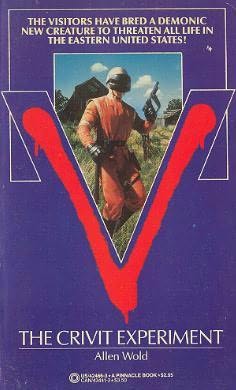
Once a character begins to reveal himself, or herself, or itself to me, my task is to make sure that that behavior is consistent. One of my main gripes with the second version of Star Trek was that developed characters frequently acted out of character. Also true of the TV series V (the original, not the remake). That destroys a story for me.

I discover my characters, or at least, those that work. I discovered Larson McCade, Morgan Scott, Rikard Braeth, Freefoot, and all their supporting characters. I didn’t actually create them per se. And once I got to know them, it wasn’t that hard to portray them as they were, rather than make them go out of character for the sake of the plot.

Larson McCade, from THE PLANET MASTERS, is instructive. The story came to me in a flash of inspiration (lasting about two hours) while I was walking across the UNC-CH campus. But who would be my hero (or anti-hero, as it turned out)? I thought, what if I based McCade on myself, but on my darker self, the aspects of myself that I would never let anybody see, never allow myself to express, the shadow-me. Badly done with Spiderman, unfortunately. So I did. Since McCade was an aspect of me, I knew him intimately. I didn’t direct him on how to get from one plot point to another, I let him do it, that is, I did what I would do if I were he and in his situation, and I just wrote it down as it happened. Fortunately, I’m not Larson McCade, and we should all be thankful.

It’s taken me a long time to perfect that method, and I’m still working on it. I failed many times between now and this century. I didn’t even know what I was doing when I was doing it right. But I do now. All my Elf Quest characters, though I didn’t understand it at the time, were independent people in my head. I just presented them with problems, and let them solve them.

VENTRELLA: How do you prepare? Do you outline heavily?

WOLD: I used to outline, but not any more. My outlines could be five, ten, twenty pages. For my most recent book (rejected twice so far), I had just three plot points: I had to get here, then there, then somewhere else.

At a convention many years ago, I was on a panel with Fred Pohl. The question of outlines came up, and I said, yes, I use an outline, like a road map, or a blueprint. Some people said they hated outlines, because then they were trapped. I couldn’t understand that. Just because it’s in my outline doesn’t mean I have to do it. They said they wanted to be surprised. I felt like I didn’t want to be surprised if, without a blueprint, I discovered that I’d left out a door, or a bathroom. That has actually happened to people I know, with real houses. But Fred Pohl said “I used to outline, but I don’t any more.” I didn’t understand that either. Now I do. I do not predetermine what is going to happen, what people are going to do, what they are going to talk about. I select destinations. He discovers he’s up against a vampire and decides he has to destroy it but doesn’t know how; he is killed by the vampire and in his spirit form discovers how to destroy it but needs a corporeal body to do it; he finds a body he can take over and does what he has to do. Three points, 80,000 words. Rejected twice. But my vampires don’t sparkle. Dracula didn’t sparkle.

On the other hand, for another novel which hasn’t been rejected yet, I had a list of 198 scenes. Each scene was an objective, not a description. I kept to that “outline” as a form of discipline, and it worked. Each scene had a viewpoint character, fifty two in all, and each character was, in my mind, a real person. Sometimes the scene description was something like: Riding in the back seat, the little girl sees the blue lights around the house. Now, what happens? Well, I wrote the scene, and all the others, and we’ll see what happens.

How do I prepare? I need my main character, without which nothing happens. I need my setting, my world, however simple or complex that may be, though I don’t need elaborate details, as I’ll discover more about it later. I need the situation in which my character finds himself, or herself, or itself. (Clumsy, isn’t it? How about themself? Check the OED for the use of they/them as equivalent to “he or she.”) I need to know what my character wants. And I have to know what I, as the Creator — um, creator — want my ending to be. Luke Skywalker wants off Tatooine, to go to university, and become a pilot. George Lucas wants to destroy the Death Star, and has to lead, not push, Luke to that ending.

Then it happens.

VENTRELLA: What is the biggest misconception beginning writers have about the craft?

WOLD: That they need talent. Talent is nice. Talent makes things easy. But talent is not necessary. There are plenty of writers who do quite well and have no talent to speak of, but who have acquired the necessary skills, and the reader can’t tell the difference. Skill is far more important. Talent is what you are born with. Skill is learned, and you can learn an awful lot. Any writer who has written more than one book improves from book to book (or they don’t, depending on their talent rather than acquiring skill, and it shows). Dorothy L. Sayers first novel, WHOSE BODY, is nicely done, somewhat frivolous, and LORD PETER is definitely silly. By the time she gets to GAUDY NIGHT, she is a master, telling a story that is neither romance nor mystery, but a deep tale of two people caught up in a distressing situation. Lord Peter and Harriet Vane are real people. The book can stand alone. Dorothy L. Sayers’ talent was revealed in her first book. Her extensive skills are shown in her last book. (BUSSMAN’S HONEYMOON is a novelization of her own play, and something of a disappointment.)

There are other essentials, such as making, not finding, time; developing discipline; acquiring patience; and having the dedication to actually do it.

This last is truly important. You cannot become a writer if you don’t write. You must make the decision that you are, in fact, going to do it. You decide to acquire those other essentials, putting other aspects of your life aside, and you write. You read extensively, especially what you like to read (and you should write what you like to read, not what you “ought” to write), but read outside your field too. And read non-fiction, especially biography, history, mythology, archaeology, and anything to do with human nature and behavior.

You may discover you don’t really want to do this after all, that it takes too much effort and time, that it’s too hard, that the rewards aren’t worth it. In which case, give it up with a clean conscience. Many people who take my workshop discover that they don’t really want to be writers after all, and that’s fine. They’re now free of that obsession, and can go on to something else.

VENTRELLA: What is the biggest mistake you see beginning writers make?

See above. But not giving it enough time, thinking there’s an easy way, not listening to competent comment, not reading enough, taking TV as their model. (Oh, yes, that’s a good one. Thinking that science fiction is what you see on TV or in the movies. Thinking that characters are what you see on TV or in the movies. Huge mistake.) Not paying attention to the real world.

All good fiction is based on, and derived from, the real world in some way or another. The most bizarre fantasy has roots in the real world, at least in the way people react to the bizarreness. Also, trying to write SF without understanding science. You don’t have to have degrees, but you must have a basic understanding of how the world really works. And if you don’t know, either stuff it in a black box, or do some research. The old Tom Baker Dr. Who did this extremely well. They did not make mistakes in their science. They either knew how it worked, or they black-boxed it. I was quite impressed.

Another is not checking a publisher’s submission guidelines. Always check the guidelines, and submit that way, whether you like it or not. Do not try to save paper by printing single spaced on both sides of the page. Always use adequate margins, a header with name and title and page number. And so on. You can learn basic submission formatting, most publishers with tell you. Follow the guidelines, or you’ll be rejected out of hand. Really.

VENTRELLA: Some of your novels are currently out of print. Do you have any desire to have them released as e-books? Is that possible?

WOLD: I would love to have them come out in any format. Currently, THE PLANET MASTERS should be released soon in a print on demand format from Warren Lapine’s Wilder Books, but I don’t know when. Contact Warren and ask for it. He may be doing something more.

VENTRELLA: Do you think writers should begin with the short story market?

WOLD: A story is as long as it takes to tell it. If you try to condense an idea to a short story format, it won’t work. If you puff an idea to novel length, it won’t work. The short story market is tight, not counting on-line publication, but it’s still there. You have to do your research. Back in the day, most SF&F writers started with the magazines, back when there were more than five or six national magazines that actually paid money. These days the whole industry is completely different. If you love flash fiction, and write it, that’s what you should try to sell. If you prefer the short story format, there are all kinds of magazines (some pretty bad), and open anthologies to which you can sell. If you prefer novels, say 100,000 words or so, that’s what you should do, though it won’t be easy. Especially if you’re a beginner. I know well established writers who are suddenly being dropped by their publishers, though their books continue to sell. I have no idea why. Maybe because the publishers are more interested in moving product than selling books. I don’t know.

Write what you write, know what the market is, and find the right home. You can not write to a market, it’s too volatile, and your heart won’t be in it.

VENTRELLA: What’s the best resource a writer should use in order to find a market for their short stories?

WOLD: There are two: Ralan and Duotrope .

VENTRELLA: What have you been up to lately? What are you working on now?

WOLD: Lately? Writing, of course. That’s what I do. Every day that I can. I have obligations on Saturdays, and Sundays I try to restore my energy, but otherwise, unless something unavoidable comes up, oh, say, having my gall bladder removed, or like that, I write. Every day. See, I’m writing this today.

And I read, mostly non-fiction. And watch movies, to take me away from my writing rather than for inspiration. And attend to my household management responsibilities (my wife works full time and supports me in every way).

Right now I’m doing a complete rewrite of a book I first wrote in 1990. I learned then the absolute necessity, for me, of having my personal Death Star in mind. I threw away four false starts, totaling about 100,000 words, before I finally asked myself, how do I want this to end? When I had that, everything drove toward that ending, though my hero wanted to do something else.

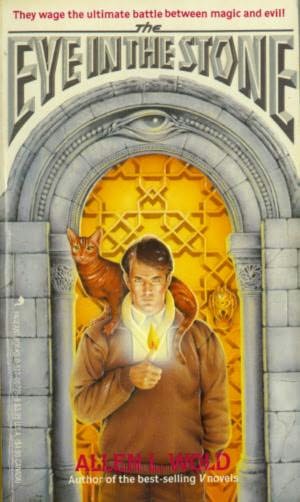
When we came back from England, in ‘98, I reread it, and it wasn’t very good. I had always wanted to do a character-driven story, instead of a plot-driven story, so I rewrote it, giving my characters free rein. It didn’t sell. Then I reread it again, saw how undisciplined my description and dialog was, and I’m rewriting it from scratch, not revising it, keeping the story as written, but tightening, cleaning up, making my characters internally consistent, cutting out unnecessary description, and tons of bad dialogue. It’s turning out pretty well. But we’ll see. When this draft is done, I’m going to do a new book set in THE EYE IN THE STONE world, then come back to STROAD’S CROSS for a final pass, and try to find a market for it. It’s a haunted village, not a haunted house, forgotten by people who live in the small town a mile away, perfectly preserved for fifty years, abandoned with food on the stove, money in cash registers, toys dropped on the floor. Finding out the truth is what the story is about.

Don’t hold your breath. These things take time.

12068598_10156131026780416_4173342998411499168_o

Interview with Janice Gable Bashman

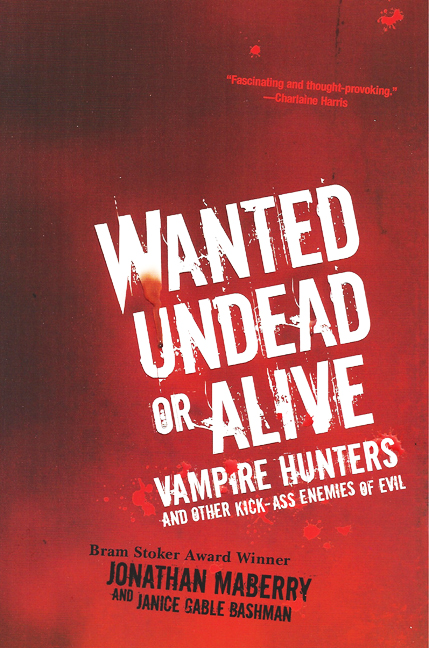
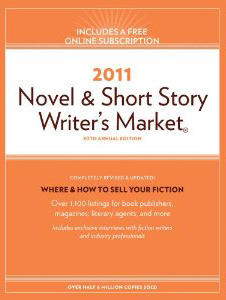
MICHAEL A. VENTRELLA: I’m pleased to be interviewing Janice Gable Bashman today. Janice is co-author (with Jonathan Maberry) of WANTED UNDEAD OR ALIVE: VAMPIRE HUNTERS AND OTHER KICK-ASS ENEMIES OF EVIL (Citadel Press, August 2010). She has written for many leading publications, including NOVEL & SHORT STORY WRITER’S MARKET, WILD RIVER REVIEW, THE WRITER, INDUSTRY TODAY, and FOOD & DRINK QUARTERLY. Janice is a member of the ITW (International Thriller Writers) and the Horror Writer’s Association, as well as a contributing editor of the ITW’s newsletter the BIG THRILL. Her writing won multiple awards at the 2007 Philadelphia Writer’s Conference.

Your book WANTED UNDEAD OR ALIVE is due out shortly. Tell us about the book!

JANICE GABLE BASHMAN: WANTED UNDEAD OR ALIVE deals with monsters of all kinds (supernatural, fictional, or real) and the people/beings/forces that fight them. It’s a pop culture book for fans of the genre. We interviewed tons of people for the book — FBI profilers, authors, screenwriters, comic writers, actors, directors, producers, criminal experts, psychologists, and others — as well as luminaries like film-maker John Carpenter, author Peter Straub, and the legendary Stan Lee. The book also has over forty illustrations from fantastic artists.

Here’s what some of the experts have to say about the book:

“WANTED UNDEAD OR ALIVE is a fascinating, far-ranging analysis of the nature of evil and those who rise to fight it … in real life, in pop culture, in literature and in legend. A must read for those who want to dive deep into the reasons for why we are fascinated by monsters … and love those who make it their business to take them down.” — Rachel Caine, New York Times and USA Today bestselling author of the Morganville Vampires series, Weather Warden series, and Outcast Season series

“WANTED UNDEAD OR ALIVE is a riveting chronicle of all things that drop fangs in the dead of night. All aficionados MUST have this in their library!” — LA Banks, New York Times best-selling author of the Vampire Huntress Legend series

“Jonathan Maberry and Janice Gable Bashman probe into pop culture’s Heart of Darkness, and what they find is both fascinating and thought-provoking.” — Charlaine Harris, creator of TRUE BLOOD and the Sookie Stackhouse novels

VENTRELLA: How did your writing styles work together?

BASHMAN: Jonathan Maberry and I each wrote individual chapters and reviewed and edited the other’s work. Other chapters were a collaborative effort. Prior to writing anything, we had to decide who was best to write each chapter. Although writing the book was research and interview intensive, we each brought our own skill sets and knowledge of the subject matter to the project; therefore, some chapters were better suited for one of us than the other.

When writing or co-writing a book, voice is important. The challenge with two authors is finding one voice that both authors can write and that fits the tone of the book. At first it takes a bit of trial and error (and writing and rewriting) to get there, but the end result is, if you do your job right, a voice from two writers that sounds like it’s from one.

VENTRELLA: Do you have any similar books planned?

BASHMAN: WANTED UNDEAD OR ALIVE is a companion to VAMPIRE UNIVERSE by Jonathan Maberry (2006) and THEY BITE by Jonathan Maberry and David F. Kramer (2009). I’m finishing up a proposal for my next non-fiction book; it’s still under wraps so I can’t share the details at this time. I can say that dozens of key players are already on board for the project and it’s sure to be a fun one.

VENTRELLA: You primarily have written nonfiction. How does that differ from writing fiction?

BASHMAN: Writing fiction and non-fiction differ and yet are the same. By that I mean that both forms of writing have a story to tell. In fiction, the story comes from your imagination (and research); in non-fiction, the story is derived from fact. Whether I’m interviewing an author for the NOVEL & SHORT STORY WRITER’S MARKET or THE BIG THRILL or interviewing a CEO of a major corporation for a trade magazine, the process is the same. I gather my facts and tell a story — the story of the person or organization I’m interviewing.

I’ve received many e-mails from authors and others I’ve interviewed thanking me for giving them such an interesting interview, one where the questions differ from those they’ve been asked so many times before. I make it my business to thoroughly research my subject before I construct an interview and find a way to take that interview to a deeper and more personal level, to get to the heart of the person and talk to them about what really matters.

But, in the end, it’s all about story. Finding the story and crafting it in a way that’s exciting for the reader. That’s my job as a writer whether I’m writing fiction or non-fiction.

VENTRELLA: How did you get started in the business?

BASHMAN: About four years ago, I decided to take a swing at publishing some articles after I became involved with a writing group. I learned to craft a query, sent out a few ideas to some local publications, and sold my first article. In the years prior, I had published my master’s thesis and a few book reviews, so I did have some, albeit minimal, publishing credentials. Once that first article was published, I began sending out more queries to both local and national markets, and the sales began rolling in. I’ve written dozens of interviews and profiles for numerous publications, but I’ve also written features, book reviews, and now a non-fiction book.

VENTRELLA: How do you pitch a nonfiction book or article?

BASHMAN: Pitching a non-fiction book is different than pitching an article, so let’s tackle a book first. To pitch a non-fiction book, the writer must write a non-fiction book proposal. The book proposal contains detailed information about the editorial format, the book contents, the author’s marketing and promotion intentions, who will buy the book, media contacts, and more. A sample chapter or two is also submitted with the book proposal. The author must then pitch the book to an agent, via a query letter, in order to find an agent to represent him in selling the book. Some publishers may accept proposals directly from an author, but most do not. So, unlike fiction, the entire book does not have to be completed before pitching to an agent or editor.

The process of writing a non-fiction book proposal is helpful beyond obtaining a sale. It helps the author flesh out and refine his ideas and really get a good handle on the book. And when it comes time to write, the author is ready to go.

Pitching an article is a different beast. To pitch a non-fiction article the writer must send a query to an editor telling that editor about the proposed article and why it’s a good fit for his publication. This is done prior to writing the article. It does help sometimes, depending on the type of article you wish to write, to have one or two quotes from “experts” in your pitch to support your proposal. For an interview or profile I have not found this necessary, but I would recommend using expert quotes for a feature article. It shows the editor that you not only have the knowledge to write the article but that you also have access to the experts who can support the material.

My experience has shown that once I’ve worked successfully with an editor, it is easier to pitch new ideas to him and have them accepted for publication, as long as the ideas are good, obviously, and fit the publication’s needs. I’ve also had editors contact me on numerous occasions asking if I would be interested in writing a particular piece for their publications. When that happens, it certainly makes life easier because I bypass the query process. If and when that happens, it’s important to remember that it’s okay to turn down an assignment if your schedule will not allow you to complete the piece on time to meet the editor’s deadline. Always, always, always meet your deadlines.

VENTRELLA: Giving a pitch to a fiction editor or agent is a skill few have. How do you manage it? What advice do you have?

BASHMAN: The hook is all important. A query letter must hook the agent or editor in the first sentence just like the first sentence of a book must hook the reader. The writer must give the agent a reason to continue reading the query letter and to request sample chapters. It may seem like a simple thing, especially after writing and editing a manuscript, but it’s not. Crafting a good query letter takes time, but it’s important for the writer to take the time to do it right. How awful would it be for a great manuscript to sit forever in a drawer because an author didn’t take the time to learn how to write a good query and therefore couldn’t get an agent or editor to read the manuscript?

My advice is simple. It takes practice. Write and rewrite your query until it sounds like something that would make you request pages if you were an agent. Run your query past a few colleagues, post it on a writer’s critique board such as Backspace or Absolute Write Water Cooler, or if you’re really brave post it online for either the Query Shark or Evil Editor to critique. But before you even get that far, read through Miss Snark’s blog achieves where you’ll find hundreds of query critiques to study as examples. Publishers Marketplace is also a good resource. Take a look at the deals page and you can easily see how authors/agents have summed-up a book’s hook in one sentence. Find books in your genre and read the back cover copy, see how the wording hooks the readers and find a way to do the same for your book.

The more a writer studies and writes queries the easier it gets, but it takes time and practice. Don’t expect perfection right out of the gate. Work on the query, study your sentence structure, word choices, etc. until you get it right. Put the same hard work into the query that you put into your book. And if you query and don’t receive requests for pages, you either need to rethink/rewrite your query letter or ensure you queried the agents/editors who are interested in your type of book. One or the other wasn’t on target.

VENTRELLA: What advice can you give an aspiring writer?

BASHMAN: Remember that you’re writing because you love to write, because you have something to say that is meaningful. Be persistent. Push through the tough times; they will come. Relish the rewards of your work. And remember that publishing is a business, so try not to take rejection too personally. A rejection may not be a reflection on your work but may simply show that what you wrote is not the right piece for the marketplace at that particular time.

VENTRELLA: What’s the worst thing you have seen writers do that ruin their potential careers?

BASHMAN: I cringe every time I see a writer bash an agent or an editor in a social media setting such as Twitter or Facebook because the agent or editor rejected that writer’s work. Agents and editors receive and respond to hundreds of queries a week and often read them on their own time outside of business hours. They are searching for that next great book to represent, the book they love, and the book they believe readers will love too. They’re in the publishing business because they love books, and believe me, they want to find the next great book just as much as the writer wants to write it.

Rejection is part of the business, and a writer’s response to that rejection should be kept private or shared with a few select friends. It’s okay to feel disappointed, hurt or upset, but publically airing those feelings and lashing out at agent or editor either online or via e-mail is awful. First of all, it’s cruel. It’s done out of anger and feelings of rejection — that the writer’s work isn’t good enough, which may or may not be true. Second, agents and editors know one another, so when a writer bashes an agent or editor, that writer is labeled as trouble based on their online or e-mail rant. The writer may have written a great manuscript, but who wants to work with a difficult author, especially one just starting out in the business?

VENTRELLA: How do you manage promotion for your work? What things do you have planned?

BASHMAN: Promotion takes a lot of time, but it’s a necessary part of business. Today, authors are expected to do most, if not all, of their own promotion. It’s important to have a game plan and follow-through with it. A writer can write a great book, but if no one buys it the book is considered a failure.

For WANTED UNDEAD OR ALIVE, we’ll be posting expanded interviews on our websites with some of the people we interviewed for the book, we’ll reach out to readers through social media, we’ll attend upcoming comic, horror, and other events, we’ll participate in speaking engagements at local libraries and other organizations, we’ll attend book fairs, hold book signings, and a whole slew of other things to get our book out there and to bring it to the attention of readers.

VENTRELLA: How important is it for a writer to post on Twitter and Facebook and keep a blog? And what can a writer do to make his or her blog different and noticeable?

BASHMAN: It’s extremely important for a writer to connect with as many potential readers as possible. The internet has given authors a powerful arsenal of tools to connect with readers through social media, blogs, Yahoo! groups, websites, etc., and authors need to recognize those opportunities and use them. I recently spoke about building your buzz to drive up sales at the Backspace Writers Conference, and I’ll be speaking about it again to the Brandywine Valley Writers Group in September. I embrace these social media and online opportunities and have found them instrumental in helping propel my writing career forward. I’m on Twitter , Facebook, LibraryThing, Shelfari, LinkedIn, and a bunch of Yahoo! groups. I also follow and comment on numerous blogs and post to my own blog, usually about the writing business.

In order for a writer to make his blog noticeable, the writer must provide content that is engaging and relevant to the blog readers. In order to achieve that, the writer must identify his blog audience—who are they and why they are there. Also, what does the writer want to talk about? How can the writer make that interesting for his readers? If the writer’s target audience is other writers, for example, how can a blog post on writing draw in potential readers, agents, editors, etc.? Find ways to target new audiences while maintaining the readers you already have? Study those blogs you admire and see what they are doing and how they are doing it. Learn by example. Then try your twist on it and see if it works. If it doesn’t draw the response you desire, tweak your approach and try again. There’s no sure-fire formula for success. Just do what you do and do your best.

VENTRELLA: What projects do you have upcoming?

BASHMAN: In addition to the upcoming non-fiction book project I mentioned earlier, I continue to write for various publications. I’ll also be shopping a young adult novel shortly.

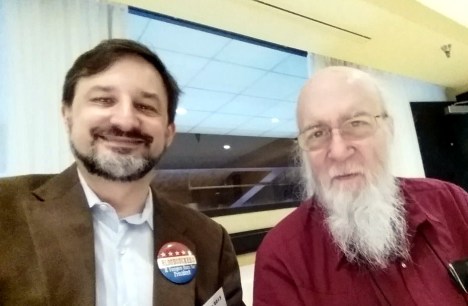
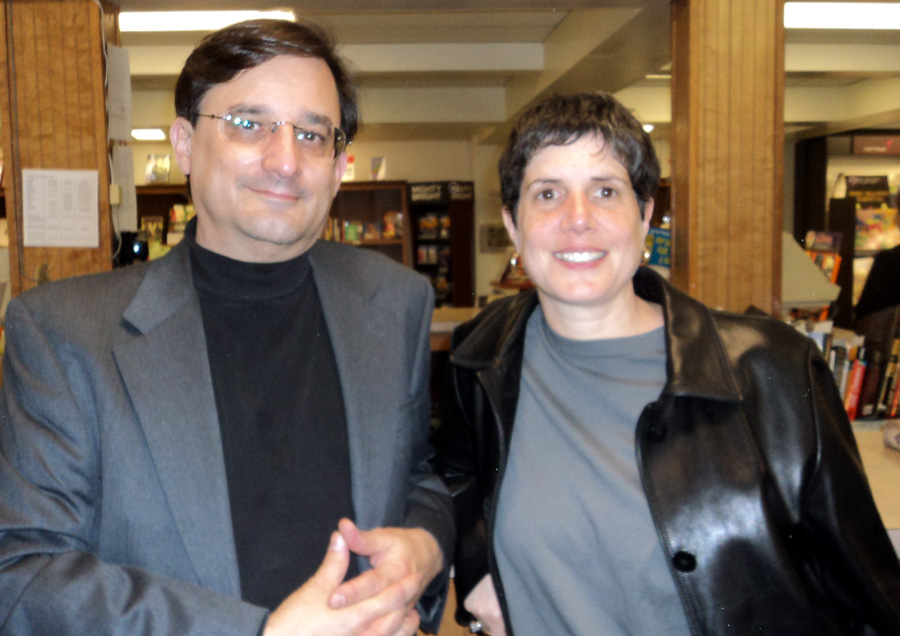
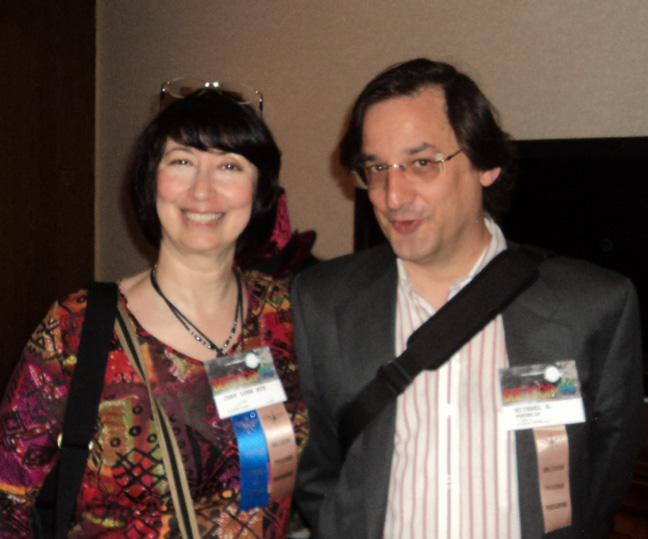
Me and Janice

Interview with Jody Lynn Nye

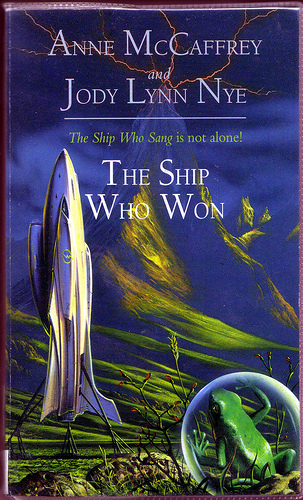
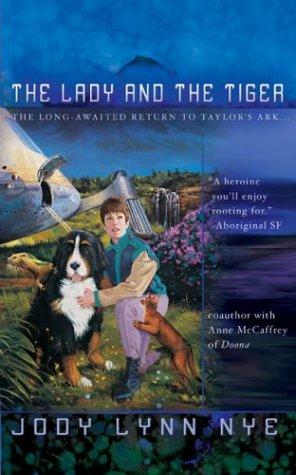
MICHAEL A. VENTRELLA: I’m pleased to be interviewing Jody Lynn Nye today. Since 1985, she has published 39 books and over 100 short stories. Among them are her epic fantasy series The Dreamland, five contemporary humorous fantasies starting with MYTHOLOGY 101, and three medical science fiction novels starting with TAYLOR’S ARK. STRONG ARM TACTICS, a humorous military science fiction novel, is the first of Jody’s new series, The Wolfe Pack. Jody collaborated with Anne McCaffrey on four science fiction novels, and edited an anthology of humorous stories about mothers in science fiction, fantasy, myth and legend, entitled DON’T FORGET YOUR SPACESUIT, DEAR! She has written eight books with the late Robert Lynn Asprin. Her web page is http://www.sff.net/people/jodynye.

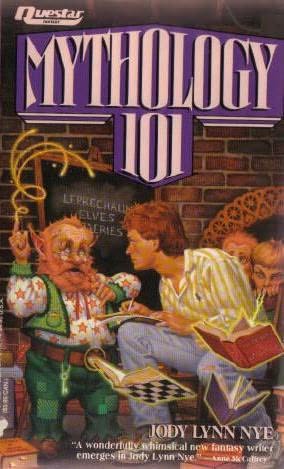
Jody, I first became aware of your work with the fun MYTHOLOGY 101 series. Was MYTHOLOGY 101 your first published work?

JODY LYNN NYE: MYTHOLOGY 101 was my first solo novel, but not my first published work. I wrote some humor and short pieces (unpaid) for various digests and newsletters after college. While I was working for WFBN-TV in Chicago, I contributed technical articles for Video Action magazine. For those, I was paid sometimes in money, but sometimes with technology items that VA had been given to review. My first paid work was for Mayfair Games, Inc. They published the Role-Aids game supplements to Dungeons and Dragons. I wrote modules for D&D and the Ellery Queen Mystery Magazine game.

Because of the game materials, I had credentials to ask to be included in the Crossroads game book series for TOR Books, which were choose-your-path novels but based upon established science fiction or fantasy series. I had volunteered to write adventures for a couple of other books in the series until Anne McCaffrey gave consent to allow the creator/editor of Crossroads, Bill Fawcett, to commission Pern-based adventures. As a big fan of Anne’s, I couldn’t resist dropping my previous selections and writing one of those.

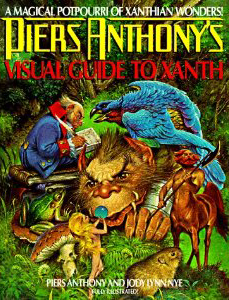
That first Crossroads book was DRAGONHARPER (not to be confused with the current novel by Anne & Todd McCaffrey, DRAGON HARPER). It was published in 1987. I eventually wrote four Crossroads adventures, two in Pern and two in Piers Anthony’s Xanth. Once Anne and Piers found I was easy to work with and respected their worlds, Bill had me write the VISUAL GUIDE TO XANTH and the DRAGONLOVER’S GUIDE TO PERN. The DLG is in its second edition and who knows which printing.

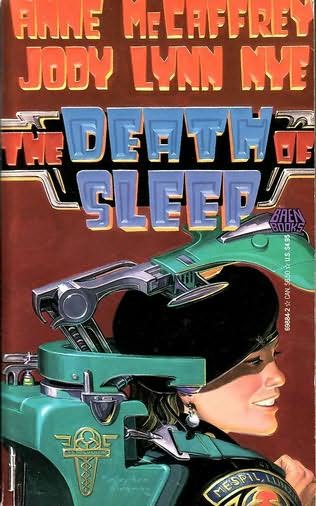
I wanted to work on my own novels, of course. I sold MYTHOLOGY 101 to Brian Thomsen of Warner Books in 1988. I did not have an agent, but as you may know, SF/fantasy editors are far more accessible to fans and would-be writers than in many other genres. I got to know Brian through friends and professional contacts. At a SF convention, I chatted with him about my concept for the series, and he asked to have me send a proposal to him at Warner (note to aspiring writers: do not try and load an editor down with paperwork at a convention. Always send it to their offices.). He bought it, and I was off to the races. MYTHOLOGY 101 came out the same year as the first of my collaborations with Anne McCaffrey, THE DEATH OF SLEEP. So far, there have been four books in the series.

VENTRELLA: I always imagined that the idea must have come to you while secreted in some college library. Is that true? What was your influence for this series?

NYE: You are absolutely right. The Midwestern University college library is based upon a real library. If you had ever seen the original, you would be able to identify it. Some alumni of that university have come up to me and asked about it.

In fact, the library itself was the influence for the series, not the characters. Those came later. In the carrels among the nine-story stacks, it was warm and quiet — except for the sounds of distant voices. I could never make out what they were saying. It was odd, because no one around me was talking, nor was anyone in the reading rooms out front. The sensation of the disembodied voices stuck in my mind for years. Finally, one day I began to think about it. Where were those voices coming from? Who were the speakers? And somehow, they became the little people who lived in the basement of the library.

VENTRELLA: Will we ever see another MYTHOLOGY 101 book?

NYE: I certainly hope so. From Warner, the series moved to Meisha Merlin Publishing, which ceased to publish a few years ago. I would dearly love to place the Mythology series with another house. I have more stories to tell. After all, Keith and Diane finally got engaged!

VENTRELLA: More than most authors, you’ve managed to work with some of the biggest names in speculative fiction. How did these arrangements come about?

NYE: SF actors Wil Wheaton, Roxann Dawson, Armin Shimerman and Nigel Bennett were once on a panel at a convention when the subject came up how some of them had become published authors. Armin, Roxann and Nigel each said that because they knew Bill Fawcett, they had been approached to co-author books with science-fiction writers for the Star Line, an imprint of Baen Books that had been arranged and packaged by Bill. Wil noted down carefully, that to become published, one needed to “know Bill Fawcett.”

One of the many hats Bill wears is that of ‘book packager.’ His function is to create a book or series, staff it with one or more authors, supply illustrations and maps if needed, possibly even commission the cover from an artist, and put the whole, production-ready package into the hands of a publisher. It is what a publishing house would do for itself if it had far more employees than one typically does.

In the late 1980s, Bill created a package for Baen Books that paired CJ Cherryh with three junior writers apiece to write a series of co-authored novels. CJ’s was “Sword of Knowledge”, and included Nancy Asire, the well-known filker Lesley Fish, and a new fantasy writer named Mercedes Lackey. These series gave the senior writer a chance to have ideas for which s/he had no time to do alone, and gave a boost to the career of the junior writers, who would get to work closely with a noted name in the field whom they admired.

A few years later, Bill interested Anne McCaffrey in trying the same thing. She liked the idea, because she had always had more ideas than she would ever have time to write in some of her non-Pern series. I was one of the three noobs who were signed on to co-author books in the Planet Pirate trilogy with her. She already knew my work from the DLG and two Pern Crossroads books. She and I wrote THE DEATH OF SLEEP. Chronologically, it is the first novel in the trio, but was published second, after SASSINAK, by Anne and Elizabeth Moon.

VENTRELLA: How did you meet Robert Asprin?

NYE: I read ANOTHER FINE MYTH the year it was published in mass market paperback by Ace Books. I loved it. At the time I never thought I would ever meet any author at all, let alone end up collaborating with Robert Asprin on eight books.

It’s funny, but I seemed to have been following Bob into so many places long before I met him. I was a member of the Society for Creative Anachronism in the late 1970s, early 80s, but he, known there as Yang the Nauseating, had already stopped going to events. His legend, however, persisted. I knew dozens of stories about him. How he had founded the Dark Horde. How he was mischievously disrespectful to the king. His songs. His quips. His legendary prowess with women.

When a friend whom I knew from the SCA took me to my first convention, I found at least one more Myth book in the dealers’ room. I heard legends of Bob. His perpetual ‘office’ in the hotel bar (sort of a permanent party). His love of Irish whisky. His friendship with Gordon R. Dickson. His irrepressible humor and memorable filks. His legendary prowess with women. But he had already stopped going to so many conventions, so I never ran into him.

It was not until Bill, then my fiancé, took me up to Ann Arbor to meet Bob and his wife, fantasy author Lynn Abbey, that I met the man himself. Bill was one of Bob’s closest circle of friends. At the time, Bob was writing his own books as well as co-editing the shared-world anthology series Thieves’ World with Lynn. He and Lynn were so kind and gracious to me, a baby writer, that the impression has never faded. Bob was encouraging about my efforts in humor fiction, but at that time the subject of collaborating didn’t come up.

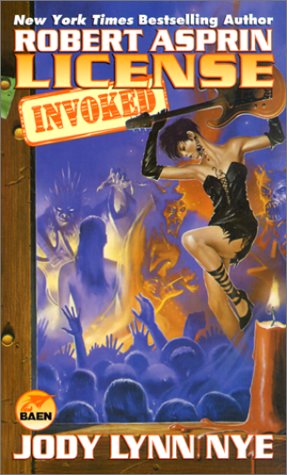
Later, when Bob had some trouble with writer’s block, we agreed to try writing together. We found we were very compatible as co-writers. We had a lot of interests in common, which meant we got one another’s jokes. Our first book was LICENSE INVOKED, a novel about spies, magic and rock and roll.

VENTRELLA: When working on the Myth Adventures series with him, how much input did he have?

NYE: We communicated mainly by e-mail and in person at conventions. After the first Myth novel, MYTH ALLIANCES, we would get together at DragonCon in Atlanta every Labor Day weekend and work out the plot over a table in one of the restaurants. When we got going, the ideas came out faster and more furious than a hive of angry bees. It was a lot of fun. We threw around plenty of concepts; what we didn’t use for the book that year I squirreled away in a laptop file to discuss at future dates. Bob was not great at keeping notes, and I type faster than he did.

VENTRELLA: What sort of arrangement do you have to continue the series?

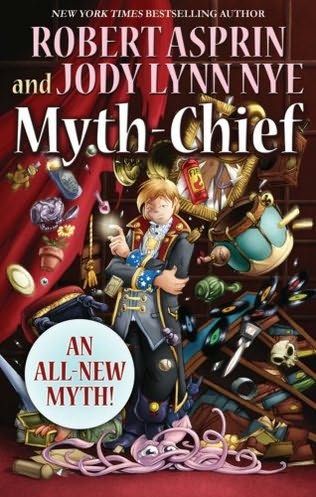
NYE: Ace Books has purchased two new Myth novels (and one Dragons novel). I am already working on the first one.

VENTRELLA: How did your collaboration with Anne McCaffrey work?

NYE: Each of the four collabs I did with her was different. On THE DEATH OF SLEEP, she had a basic outline for each of the three novels. Since they were being written simultaneously we juniors had to adhere to the structure we were given to maintain series continuity, though we had room to add our own ideas. I wrote the first draft and sent it to Anne. She worked on it and sent it back to me. I made changes or corrections, then it went back to her for a final look and polish. As the senior writer she had the final say on everything, but she was intensely generous with me. For example, she had no problem using one of my ideas if she liked it better than her own. I learned an incredible amount from her.

VENTRELLA: Do you find collaborations easier or harder than writing on your own?

NYE: They go faster than solo books. When you are bouncing ideas off another person, you can crank out a lot of energy. That’s not to say that when I am working alone I don’t cackle over my keyboard at something that strikes me as funny and pound the keys at top speed to get it down. Collaborations are more work because you can’t just keep an idea in your mind and come back to it later. You must share everything with your co-writer that you expect or hope to have in the final manuscript. You must prepare to compromise and respect your co-writer’s opinion and skills. Only in solo books can you get your way on everything. I think it’s worthwhile to learn to work with someone else. It’s like teaching: you learn a good deal about your craft when you have to explain something to someone else.

VENTRELLA: Some writers tend to think that humor in fiction means that it can’t be taken seriously as literature, and therefore should not be considered as “worthy”. What’s your take?

NYE: I deplore the fact that just because something makes one laugh that it is not worthy of the respect enjoyed by tragedy. Without the light moments, no one could stand all the dark ones. Those writers who don’t consider humor to be literature have to turn their backs on Mark Twain, Anthony Trollope and many others whose books occupy the Literature shelves in bookstores and libraries. Shakespeare’s comedies are held in the same esteem as his dramas. I would put up a Terry Pratchett Discworld novel against any number of popular dramatic novels that I don’t consider nearly as well written.

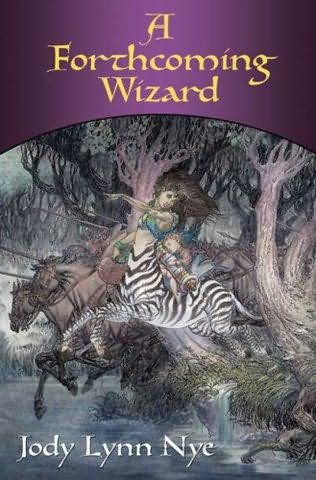
VENTRELLA: Your most recent work, A FORTHCOMING WIZARD, is a stand-alone novel. What’s it about?

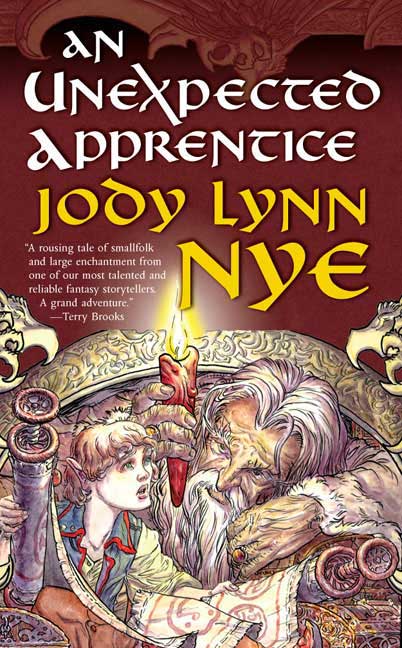
NYE: That is actually the second half of an epic fantasy I wrote for TOR. It does stand alone, the vicissitudes of publishing being what they are, but I hope people will seek out both books. The first half is called AN UNEXPECTED APPRENTICE. The story concerns a smallfolk girl named Tildi Summerbee who, like Frodo Baggins, is thrown into an epic struggle not of her making. She comes into possession of a page of the Great Book, a magical tome that can change reality. Only Tildi, because of a chance gift from her parents, can touch the book without being harmed. She becomes part of a fellowship to regain possession of the book and restore it to a place of safety before it destroys the world.

VENTRELLA: What are you working on now?

NYE: Already finished and heading for your shelves in December is DRAGONS DEAL. This is the third in the Dragons series created and written by Robert Asprin for Ace Books. The first two were DRAGONS WILD and DRAGONS LUCK. The copy-edited manuscript of the second landed on my doorstep only a few weeks after Bob died. I took care of it, and some time later, when we had all recovered a little, the editor asked me if I could and would continue the series. I hope that our readers will enjoy it. The Dragons series is about a brother and sister named Griffen and Valerie McCandles who discover that they are hereditary dragons. And they are by no means the only dragons out there. Hence, drama and comedy ensues. DEAL takes place during Mardi Gras. As the series is set in New Orleans, where Bob lived the last many years of his life, I felt that was fitting.

At Baen Books, I have an entirely new humorous SF book, which I hope will become a series, called VIEW FROM THE IMPERIUM. If you ever read P.G. Wodehouse’s Jeeves and Wooster books, you will understand something about my two main characters. Thomas Innes Loche Kinago is a foolish, spoiled, rich, good-hearted young noble who has never had to work a day in his life. He has just graduated from the space academy and is serving his required stint on a warship. His duties, as he is a noble (pretty nearly useless in this society), are nominal. That’s not to say he can’t spin a perfectly ordinary assignment into chaos. To keep him from doing more damage than is strictly necessary, Thomas has assigned to him an aide de camp, Commander Parsons, who seems to know absolutely everything, and is never at a loss for the right action to take. VIEW FROM THE IMPERIUM is due out in April of 2011.

VENTRELLA: When creating characters, how do you make them real and believable to a reader?

NYE: As CJ Cherryh said during a panel discussion I once sat on with her, in the end all stories are about people. The protagonist of a story, or at the very most distant, the sidekick, needs to be someone with whom the reader can identify. In the Sherlock Holmes stories, it is Dr. Watson, a nice, normal human being, intelligent, caring and devoted, with whom most readers feel empathy. For us, Watson asks why. Through him we feel involved in the action. The reader will be drawn into the book by a compelling proxy.

I need to know what motivates my characters. Often, a new writer will only know what s/he wants a character to do, but maybe not why. Such characters will feel wooden and artificial. Once you know where your character is coming from, you can see how it will behave in various situations.

All beings have flaws. Perfect people are irritating or boring (or both). Imperfections give characters vulnerability that we understand, or can learn to understand. Hidden hurts or past events in my characters’ back stories inform their behavior.

When I create a character, an image often appears in my mind. A few of my writer friends like to use celebrities as the basis of their cast, but that hasn’t worked for me. Only once have I ever run into anyone who resembled one of my characters.

One thing I dislike enormously is having a character do something stupid just to advance a plot. If I have created realistic personalities, it will feel wrong if I try to steer them into an unrealistic situation. That’s not to say I can’t have a character behave stupidly –- people do dumb things all the time -– but it can’t be to make things easy for me as the writer. I owe my readers real people.

VENTRELLA: I tried to avoid cliches in my fantasy novels (regarding the typical “chosen one” hero and so on) while also relying upon them too (elves, dwarves, wizards…). How does one meet the balance of creating a world that balances both?

NYE: There is always an element of the “chosen one,” or else why are we reading about him or her? If that character isn’t special, then can anyone do what s/he does? What if there had been a hundred Arthurs who could have pulled the sword from the stone, but he just happened to be the one who tried that day? (Hmm, there’s an unexplored story.) But why that one, and what happened afterward to all the others? When I write a story, I have to focus upon my protagonist. What is extraordinary about this person? How can s/he succeed when others have failed? I think a successful story will tweak the reader’s perception and give a new way of thinking about the meaning of a hero/ine. Archetypes exist because they have a core of truth about the eternal journey. Cliches exist because some storytellers can only think of telling an archetypal story the way we have always heard it.

I agree, there have been a LOT of books lately featuring familiar tropes like elves, dwarves, werewolves, pirates, vampires, pixies, princesses, and so on. There’s nothing wrong with using these creatures, as long as you don’t necessarily believe that they all belong in the same worlds all the time. Or if you do, have a good reason for it. Only in D&D do Aztec gods occupy the same sphere as leprechauns.

VENTRELLA: You’ve also written role-playing books (a subject close to my heart, since I have been doing that for 20 years now myself). How did you arrange those?

NYE: I’ve been affiliated with the gaming industry for a long time. I got into D&D role-playing when I was nineteen. It’s always been dear to my heart, though I haven’t played in a long while. My first DM introduced me to one of the partners at TSR whom I dated for a year. I ended up typing out Gary Gygax’s manuscripts for the new Player’s Handbook, Dungeon Master’s Guide and Monster Manual for Advanced Dungeons & Dragons. I guess you could call that my first job in publishing. It made me aware of the game industry, where I met an amazing number of creative people. For a short time, I worked with a couple of fellow players who wanted to create game materials. I attended every GenCon from 1977 until it moved from Wisconsin to Indianapolis. Because I had a background in role-play, I had the expertise to write for Mayfair Games and later for TOR Books’ Crossroads series, as I mentioned above.

VENTRELLA: And finally, tell me… why do so many writers have cats? (I have four, by the way…)

NYE: Cats are the superior species in the universe, or haven’t they told you that? I like to use the Two Cat System of writing, my take on Dave Barry’s Two Dog System. My cats specialize in holding me in one place, usually through Cat Gravity (read Robin Woods’s excellent small book on her Theory), so I have to stay put and work. Other writers I know use more or fewer cats, depending on how much inspiration they require. Some writers, like Mr. Barry, use dogs for inspiration. Cats are a convenient size for laps and do not need to be walked in the rain, so I prefer them. Also, purring is a near-magical soother to a creative person’s troubled soul. I often rely upon purring to get me through a complicated story.

Thanks for interviewing me! I enjoyed your questions.

Interview with Author and Editor Cecilia Tan

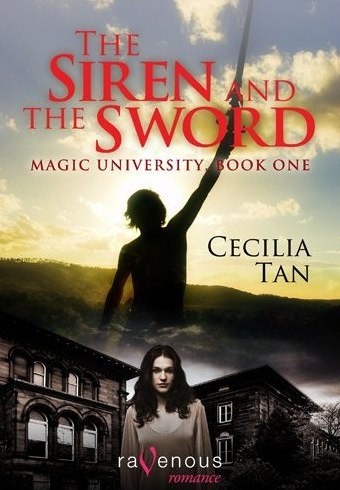
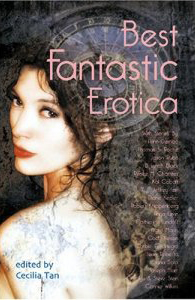
MICHAEL A. VENTRELLA: I’m pleased to be interviewing Cecilia Tan today. Cecilia has been writing and editing professionally for the better part of two decades, both independently and for the small press she founded in 1992, Circlet Press, who specialize in material that mixes the erotic with the fantastic. She has written numerous erotic romances for Ravenous Romance, has edited anthologies for Alyson Books, Thunder’s Mouth Press, Carroll & Graf, Masquerade Books, Blue Moon Books, and others, and collections of her short stories have been published by HarperCollins and Running Press. On top of all that, she also writes and edits publications on baseball.

Cecilia, What brought about the founding of Circlet Press?

CECILIA TAN: I had written a story called “Telepaths Don’t Need Safewords” and just knew at the time I finished it that it was the best story I had written to date. It mixed explicitly kinky erotic action with a science fiction plot. Then I looked around for somewhere to submit it. There was nowhere. Science fiction magazines had explicit rules against sexual content. Porn magazines had explicit rules against both science fiction and any plot beyond “two people meet, then have sex.” The BDSM magazines of the time were either exclusively lesbian or exclusively gay, and my characters were neither. I had been working in book publishing for a few years at that point so I knew the business and I thought “this is nuts. Someone has to do this!” And of course that someone ended up being me.

VENTRELLA: Has it met your expectations?

TAN: Circlet Press has met all my hopes and dreams except for the financial one. We grew by leaps and bounds, garnered fabulous critical acclaim, excellent notice, a great reputation, helped to blow the doors off the old restrictions and show how good mixing the genres could be, jumpstarted the careers of a whole generation of writers … but once the Returns Crisis hit the book publishing industry in the late 1990s, it’s been a financial uphill battle ever since. I’m too stubborn to quit, though, and the ebook has suddenly allowed us to start reaching the readership that mainstream bookstores abandoned. So all of a sudden, there’s some cash flow! Who knows? Maybe someday we’ll turn a profit. What’s most important to me is that we’re still able to connect authors to readers, and then put money back in the pocket of the authors. That part of the business is the same as always … in fact, it’s better.

VENTRELLA: There are many examples of small press these days; do you think this is good for the publishing industry or does it tend to water down the field?

TAN: Oh no. It’s the mainstream presses, not the small presses, who are the most watered down. That’s where you’ll find the most mediocre, recycled pap being packaged and put on the shelf. Granted, it’s not 100% the fault of the big publishers — it’s also the fault of the buyers at Borders and Barnes & Noble, who just want the same thing over and over again, in the hopes that what sold before will sell again. They are all chasing the book equivalent of the Top 40 radio hit and making a lot of boring noise in the process. The small presses are more directly connected with the readership and what they actually want. The small presses occupy the specialty niches.

Another way to look at it is with a comparison to restaurants. The big presses are the chain restaurants. They’re Applebee’s and the Olive Garden and Budweiser. The small presses are that great little gourmet Italian restaurant in your neighborhood, and handcrafted microbrews.

Small presses are also the minor leagues, but for the most part the authors being published in the small press aren’t any less talented than the ones in the mainstream press. They are sometimes less experienced, or less marketable, or just less lucky.

VENTRELLA: As a small press author, I thank you for that!

Has the rise of self-publishing been good for the business?

TAN: Absolutely.

VENTRELLA: When acting as an editor, what is it you look for? What will immediately get a story chucked in the trash?

TAN: The first thing I tell my assistant editors when its time to read the slush pile is DO NOT read the cover letter until after you read the story. Far too many authors think that the job of a short story cover letter is to build you up into a froth of excitement about how great the story is going to be, thus ensuring that a) you’ll be let down, and b) any suspense or joy of discovery in the story has been killed for the reader. I think many amateur writers are confused about the difference between submitting a short story and pitching a novel proposal to an agent or editor, and some just can’t imagine that all they should introduce in the letter is THEMSELVES and let the short story speak for itself.

We get a lot less utter garbage than we used to, though, honestly, and I think the reason why is that thanks to the Internet, writers are actually better informed about how to go about submitting, and they are much more likely to have practiced their grammar and spelling skills on a daily basis. It’s that or the Internet has somehow
swallowed up the attention of most of the crackpots who used to send us wacky submissions in red crayon and the like.

VENTRELLA: What sorts of things do you want in a query letter?

TAN: Since most of what we read is short stories, we don’t read queries. We just want a professional introduction of the author, with whatever credentials they have, but if none, just a firm, no-nonsense hello. It’s professional courtesy to include a cover letter. Sticking a post-it note shaped like a heart on the story is not professional.

Actually, these days, we only accept manuscripts by email, so whenever anything arrives in the mail, I know it’s likely to be from the land of psychoceramics.

VENTRELLA: As a writer of erotic and romantic fiction, what would you advise to someone wanting to enter this field?

TAN: Both romance and erotica have a lot of cliches. The whole trick to writing something that will thrill the pants (sometimes literally) off your readers is to satisfy their expectations while at the same time exceeding them. Be aware of the boundaries of any genre that you write in, and then find out how you can play with and cross those boundaries.

That is, unless thinking about that sort of thing paralyzes you and saps your will to write. In that case, forget everything I said and JUST WRITE. That’s probably the best advice. Step one, start writing. Step two, finish what you started. You’ll get better every time.

VENTRELLA: What trends do you see in the publishing industry that excite you? Which ones worry you?

TAN: I’m very excited at how social networking is allowing authors and readers to connect directly. But the problem is how do you find out about new authors you might like if you’re a reader, when now there isn’t just a publisher-wholesaler-retail chain delivering you a limited selection to choose from? A lot of things are changing now because of that.

It worries me a little that the newer system rewards authors more based on their marketing savvy than on their writing ability … but then I look at a lot of the junk that was published that still hit the New York Times best-seller list over the past 20 years and I realize that’s ALWAYS been true. There have always been populist and popular writers who weren’t particularly great artists.

VENTRELLA: Writing a short story is much different from writing a novel. What are the difficulties you have found? Why do you think some authors specialize in one or the other?

TAN: I’ve written a fair number of both and I really think they are different arts, just like painting and sculpture are different arts. A short story writer has to have guts and brio; a novelist has to have stamina and vision. For me short stories have always come pretty easily. I grab an idea and just pound it until it’s done. A novel takes a bit more planning. The one time I just grabbed hold of a novel with minimal planning, it took six years to finish and came out three times too long to be a commercial novel. (That’s DARON’S GUITAR CHRONCILES, which I’m serializing now on the web.) The next time I plotted out 12 chapters of 5,000 words each and bam, I hit my target right on the nose.

The secret to writing outlines for me is realizing that in the second half I’m going to deviate quite significantly from the outline I wrote, but that some kind of internal logic is at work in my subconscious, so if I forge on, it will all work out. I still have to write the outline, which to me is like sketching out the map of the mountain I’m going to climb. But when I get to the top, exactly halfway through the journey, and am at the turning point, I look down the other side of the mountain… and discover it always looks totally different from the top than it did from where you started at the bottom. Some of the landmarks are the same, but how you get to them changes.

VENTRELLA: Are you sick of vampire stories yet? Is there any plot you have seen too often?

TAN: I love vampires! But even sixteen years ago when I edited my very first anthology of vampire stories, called BLOOD KISS, there were some cliches I didn’t ever need to see. Like setting your vampire story in a goth nightclub … cliche cliche cliche! It really isn’t very imaginative to think “what if those spooky kids who look like vampires actually WERE?” Not exactly an original idea. I actually had to turn down a lot of stories where the “surprise” ending was that one of the two people who met in the bar turns out at the end to be… A VAMPIRE!

I had to write rejections that said things like “It’s a vampire anthology. Every readers KNOWS at least one of them is a vampire.” Then there were the millions who tried the surprise twist: they’re BOTH vampires! Argh. Or surprise twist two: the other one is a vampire hunter! I saw literally hundreds of stories with these plots even after I explicitly banned them in my submission guidelines.

Then there are some ideas that go through fads. I kid you not. One year I received no fewer than four stories all with this exact same plot: an artist falls in love with a model in a painting (usually a Renaissance painting) and gets artistically blocked, can’t paint, is wasting away… until the day the model shows up at the door to have
fantastic sex, looking just like the painting, because s/he is a vampire. Somewhere, once upon a time, that was an original plot. Now, it’s a cliche.

VENTRELLA: How do you think your education has helped your writing?

TAN: Well aside from the actual writing courses I took, it was important to me as someone who writes science fiction to learn some high level science. In college I went right for what was cutting edge at the time, cognitive science (artificial intelligence, neurology, etc) and genetics. Anything you learn that stimulates your brain is going to help your writing. I took a fair amount of psychology in that mix, as well as literature, music, etc. … Long live the liberal arts.

VENTRELLA: Besides “keep writing” what specific advice would you give an aspiring author that you wish someone had given you when you began?

TAN: I think I must have started out with some pretty good advice, because I can’t think of anything. I suppose the advice I would give is this.

You need your reader to trust you to lead them on a rollercoaster ride. For them to trust you, you have to trust yourself. To trust yourself, you have to know your craft and be constantly improving it, constantly learning about yourself and the way your writing affects your readers. So don’t write in a vacuum because you’re afraid people won’t like it. Find the ones who do like it, and write more for them!

Interview with author Marie Lamba

MICHAEL A. VENTRELLA: I’m pleased to be interviewing Young Adult author Marie Lamba today. Marie is the author of the humorous young adult novel WHAT I MEANT…, which Publisher’s Weekly has dubbed “an impressive debut.” She has two more novels which will be coming out soon. In addition to her fiction writing, Marie has written and published more than 100 articles, including features in national magazines such as Garden Design, Your Home, and Sports International. Her most recent piece, “Plotting a Novel Group,” appears in the February 2008 issue of Writer’s Digest. Her web page is www.marielamba.com.

MARIE LAMBA: Hi Michael. Thank you for having me on your blog.

VENTRELLA: Marie, what is it that makes a novel a Young Adult novel?

LAMBA: To me, a young adult novel is categorized primarily by the age of the main character. Since readers read about characters older than themselves, if you have a 13-year-old protagonist, you’ve just written a middle reader (not a YA), and will have mostly elementary school aged readers. Also, content figures in. Sometimes the content is not right for the YA market. But these days, almost anything goes for YA readers. The edgier the better, though you may just be banned by schools…which usually reaps great press and even better sales, interestingly enough.

VENTRELLA: You keep a pretty active blog. Do you think this is necessary to help promote your work?

LAMBA: My site helps me promote my work every single day. I’ve heard people say that if you don’t update your blog at least 3 times a week, then don’t bother having one. I heartily disagree. Sometimes it’s not about getting a huge number of subscribers, but about having a presence, and being able to be found in various ways.

While my blog may seem really active, I sometimes post as rarely as once a month. I just don’t think there’s a point in posting unless I really have something to say. Yet the site is dynamic and gets a fair number of hits everyday because I’ve got a lot going on there. In addition to offering updates about my work, essays on writing, and book reviews, I’ve made it function as my website, www.marielamba.com. So folks are going there to find out about my appearances, to read my bio, to read excerpts from my books, etc. And with links to my Twitter feed, there is always something new to see.

By combining my website with my blog, people stumble onto it while doing the weirdest searches. Like when looking for the menu of Nat’s Pizza. And then they see that my novel has a scene set there. Then they click on my link to buy my Doylestown-based novel. All because of a blog post that tagged Nat’s Pizza in it, if that makes sense?

VENTRELLA: Should unpublished authors have a blog?

LAMBA: Absolutely. It’s a great way to start establishing yourself and your voice. Everything from the color scheme you use to the tone of your bio can help create a feel for who you are. Have a page on your blog with short excerpts of your work, but don’t give away too much material there. Just enough for a taste.

If you really want to be savvy, then you could use your site for things such as book reviews and editor and publisher interviews, which would make your name familiar to the “powers that be.”

VENTRELLA: What can an author do to make their blog stand out among the many out there?

LAMBA: I think it goes back to your voice. Who you are should come through in the tone of your writing, and what you choose to highlight. Then, of course, you need to connect with your audience. That’s where bringing your site to the attention of an organization can help. For example, after I wrote a post about plotting, I saw on a children’s writing message board that I belong to that there was some recent discussion about plotting. I immediately commented there, providing my link to my post.

VENTRELLA: You also make extensive use of Twitter. How can you make your tweets stand out when there are so many people on Twitter? And do you think this is an efficient use of your time?

LAMBA: You know, Twitter is so quick that it isn’t the time suck that sites like Facebook seem to be. At least not for me. Here’s the trick though: when you post there, make it under 40 characters so that you can easily be retweeted to others. Also, try to always provide a link, whether it is to a relevant blog post or a Facebook invite to an event. Links are always too long, so go to www.bitly.com, paste the link there, and you’ll get a shorter link that you can use. And don’t always make your tweets about you. Highlight the accomplishments of others. It’s fun to do, plus I think it’s just good karma.

As for making your tweets stand out, I definitely avoid the whole “I’m getting a cup of coffee now” variety of posts. Again, I only go on there when I have something to say or I really want to respond to someone. I think then people will pay more attention to you. You aren’t the annoying talker everyone wishes would go away. And I try not to follow just anyone or anything. My list is made up of people I know, and of publishers, editors, librarians, media, authors. In short (in the spirit of Twitter), folks who might actually care to hear what I have to say.

VENTRELLA: What is your writing process? (Do you outline heavily, create character backgrounds first, come up with the basic concept and run with it, etc.?)

LAMBA: Good question. It’s evolving. For my past few novels, I knew my final scene. I had my opening dialogue. And then I was off! Kind of like knowing I’m driving to California, and therefore start heading west, but without a map. I do get to the end eventually. The fun thing about this method is the unexpected twists and turns. The not-so-fun thing is cleaning up the mess that I’ve created, trying to make it more direct and cohesive. It can take a long time.

With my current novel, I’m trying to be more organized. I’ve plotted it out, and now I’m in the outlining stage. Then I’ll start writing. I’m hoping that this will help me write faster. My last novel DRAWN (which is now out on submission), took over a year and a half to write. I want to be much more productive than that.

VENTRELLA: What are you doing in your fiction that no one else is doing? What makes your book different and exciting?

LAMBA: I think, again, it comes down to voice. I’m the only person with my point of view and my humor, and that flavors the plot and the characters. With WHAT I MEANT… (Random House YA), the book’s cast of bi-racial characters mirrors my own family’s blend of Italian-American and Asian-Indian personalities. Because WHAT I MEANT… has a mixed race protagonist, yet it is a mainstream story not focused on race, it became a standout in the field.

VENTRELLA: Have you received any surprising results from your writing?

LAMBA: It is always touching to have readers contact me saying that they identified with the characters and that WHAT I MEANT… is their favorite book. One girl even said that she never cries at anything, yet she found herself bawling at the end of my novel because it touched her. That was humbling.

On a funny note, an ex-boyfriend from high school assumed that one of the guy characters in the novel was named after him. He wasn’t.

VENTRELLA: You do a lot of personal appearances to promote your books. What are the advantages and disadvantages of doing these? How do you organize them?

LAMBA: The main advantage is making a personal connection with a reader. If someone meets you and enjoys talking with you, they’ll also remember you and feel a connection to your writing. This is really how books are sold: one reader at a time. I love meeting people, and appearances take me away from my isolated little writing spot and out into the real world. All good. The disadvantage? I can’t think of a single one. I’m careful to pick and choose where and when I go so it doesn’t take away from my writing time.

Events happen many ways. Sometimes booksellers or conferences or teachers contact me. Sometimes I get in touch with them if I have a specific event idea. And I have done presentations to hundreds and hundreds of scouts. I also have to mention that I’m a proud member of the Philly Liars Club, a collection of 13 authors who basically lie for a living. Together we stage a slew of oddball events, and have a blast.

VENTRELLA: Let’s discuss the publishing business a bit. With self-publishing and e-books becoming more prominent, how do you think this will change the demand and market for new writers?

LAMBA: I really think that self-publishing and e-books represent a revolution in publishing, the likes of which we haven’t seen since the 1460’s when old Guttenberg came onto the scene with his printing press, displacing those hard-working monks and their illuminated manuscripts. Documents at that time show that people didn’t realize the magnitude or ramifications of what was going on. Quite simply, the change was so huge that they couldn’t envision the implications.

And so it goes with us. We speculate, but we can barely foresee what all these huge changes mean. I say look to the music industry, to prevalent iPods and the dearly departed record stores. And be cautious. Will books on paper no longer exist? Will bookstores and libraries disappear? Will publishers become obsolete? The only thing I know for sure is that no matter what form content will take, someone will have to write it.

Cling to that, writers and future writers. We are not replaceable.

VENTRELLA: Do you think the stigma of being self-published will continue? Do you think it’s deserved?

LAMBA: Some self-published books are brilliant. Others are painful and shouldn’t see the light of day. Books that are horribly written and barely edited definitely ruin the reputation of others out there, sadly.

I do think that as distribution of self-published novels improves, and more established authors step into this arena, that this stigma will fade. I mean, what does an author like Stephen King really need a publisher for? Couldn’t someone of that stature just put books out into the stratosphere by himself by self-publishing? J.A. Konrath has started to do it with some success, though he still also goes the traditional route.

VENTRELLA: Who are your favorite authors? Why?

LAMBA: Anne Tyler for her beautiful imagery and quirky characters. T.H. White for his epic storytelling, sense of grandeur, and sense of humor. Audrey Niffeneger for her amazing plotting abilities. Sarah Dessen for her touching and real YA voice.

VENTRELLA: What’s the biggest mistake you see aspiring writers make?

LAMBA: Not taking the time to polish their work, and really learn their craft. Writers need to work so hard to improve everything they do. Established authors are always struggling to polish, to edit. They value pointed criticism, and vigorously revise. When I see someone with talent refusing to do this type of work to polish their manuscript, or not absorbing decent criticism, I know that they are limiting themselves, and that’s a shame.

VENTRELLA: What advice can you offer that you wish someone had offered you?

LAMBA: Writing is not only an art, it’s a business. And sometimes in this business really nasty crap will happen to you. In fact, expect it. Your novel, no matter how important it is to you, is just a commodity in the business world. Be as businesslike as you can, while protecting the sensitive artist within. And write another book. And another. And another.

VENTRELLA: And what’s next? What can we look forward to seeing from you?

LAMBA: My YA paranormal DRAWN (excerpt on my blog/website) is under consideration right now. It’s about a teen artist who moves to England in search of a normal life. But then she starts channeling one very hot ghost through her drawings. Not normal at all.

And right now I’m working on a novel for adults: When an Italian grandmother shares old fashioned recipes for sauces and for a happy life, her three granddaughters test the ingredients in fresh ways, cooking up a surprising blend of spice, passion, trouble and true love.

That pretty much sums it up! Thanks, again, for having me here.

7.28.13g

Interview with Author and Editor Val Griswold-Ford

MICHAEL A. VENTRELLA: Today I am happy to be interviewing Valerie Griswold-Ford, writer and editor. Val was journalism major in college and covered several political beats, wrote a weekly column and rose to associate managing editor of The Daily Campus, the fifth largest daily newspaper in Connecticut. Val writes dark fantasy, horror, paranormal romance and urban fantasy, in addition to her nonfiction works. She is currently co-editing the third book in the “Complete Guide” series with Lai Zhao, entitled THE COMPLETE GUIDE TO WRITING FANTASY: THE AUTHOR’S GRIMOIRE. Her two dark fantasy novels NOT YOUR FATHER’S HORSEMAN and DARK MOON SEASONS are available from Dragon Moon Press, and she is working on the third book in the trilogy, LAST RITES. She lives with her husband and three kittens in Concord, New Hampshire. Her web page is www.vg-ford.com

Val, your most recent work is the pirates and magic collection of short stories RUM AND RUNESTONES, due out in April of 2010. Where did the idea for this come from?

VAL GRISWOLD-FORD: Well, I’m a pirate addict. I adore pirates, and always have. So I was at a party at RavenCon last year with Misty Massey and Gail Martin, and we decided that we had to do an anthology of pirates and magic. I pitched it to Gwen Gades, the head of Dragon Moon Press, got the okay, and we were off!

VENTRELLA: Tell us about this new collection!

GRISWOLD-FORD: It’s amazing. More than I’d ever imagined. The writers were given a very simple assignment: to write a short story, under 8k, that used pirates and magic as the main impetus of the story. It was an invitation-only anthology, and I approached about 20 authors. Thirteen of them (including you!) responded. We’ve got everything from dark and creepy to love-lost-and-found to comedy. Even a song! It’s a great anthology, and I’m very proud to be the editor.

VENTRELLA: What is the process that you take as an editor when organizing short story collections?

GRISWOLD-FORD: This is my first short story collection, so I sort of made it up as I went along. I waited until I had everyone’s story in and read, then I listed them all in a word document and arranged them in an order that I thought made sense.

VENTRELLA: Some short story collections are reprints, and some (like RUM AND RUNESTONES) are by invitation. Is one easier or better?

GRISWOLD-FORD: Easier for who? The writer or the editor? : )

I think that by invitation is easier for the editor, because you can pick and choose your authors, so you’re getting a known quality as far as work. I specifically chose authors for R&R that I enjoyed reading, so I knew what level of quality I was getting. On the other hand, as a writer, I can see how the invitation-only anthologies might seem a bit cliquish. I don’t normally write short stories, but I was in one invitation-only anthology (WRITERS FOR RELIEF 2), and knowing that I had been chosen put a little bit of added pressure on me. Could I finish the story to the editor’s expectations? It can be tough.

VENTRELLA: You’ve also cowritten guides to writing, specifically THE COMPLETE GUIDE TO WRITING FANTASY. Why did you think such a book was needed?

GRISWOLD-FORD: Because there wasn’t a how-to on specifically writing fantasy. The Complete Guide is more like a reference guide than a “this is how you write.” Each book (there are three in total) goes into detail on topics that specifically apply to fantasy. The first one has topics like medieval feasts and clothing, writing fantasy fight scenes, things like that. We went a little deeper in the second book, building on the first and going into topics like combining mystery and fantasy, writing sex into your fantasy and government systems to use in fantasy. The third book was what to do once the book was written -– it went into things like querying magazines, agents and publishers, writing query letters, what to do about advertising -– things that writers don’t necessarily think about. It definitely filled a need –- I’m still getting emails from writers about what they’ve found in it.

VENTRELLA: As an editor, what submissions have you seen that just make you scream?

GRISWOLD-FORD: Hmm. Well, when we were doing the second guide, we got a submission that looked like it had been written in another language and then run through Babelfish to translate it to English. It was seriously weird -– all odd tenses and sentence construction. That was really the oddest. Most the subs I get are from professional authors, so I don’t get too many howlers.

VENTRELLA: You’ve also written novels and short stories of your own. Does a background in editing help? When an editor is assigned to your work, have there been major problems?

GRISWOLD-FORD: Not really. I tend to edit my own work before I send it off to Tina (my long-suffering editor), so she’s yet to threaten to murder me. The only time I saw her slightly aggravated was when I was having issues with a chapter in Horseman –- I actually sent her the chapter with “This sucks” as every other line. She was not impressed.

VENTRELLA: Where did the idea for NOT YOUR FATHER’S HORSEMAN come from?

GRISWOLD-FORD: I belong to a group called the Society for Creative Anachronism (SCA), and I’m part of the Storyteller’s Guild for our barony. We were doing a storytelling exercise, making up a story around a word we were given, and my word was Plague. I made up the story, and then had a dream that night about a modern-day Horseman. Nikki was the result.

VENTRELLA: Tell us about your most recent novel, DARK MOON SEASONS.

GRISWOLD-FORD: DARK MOON SEASONS is the second part of the Apocalypse trilogy. Nikki now knows both more and less than she did before, and she’s on the hunt for the other Horsemen. Now, though, she has more to deal with than just Gene-Tech –- the government has gotten involved, and she’s got to worry about Department V agents as well.

VENTRELLA: What do you do to promote your books and let people know about them?

GRISWOLD-FORD: Well, I’m on Twitter, and I run contests on my blog. I also have teabags with my books’ names on them that I put out on the freebie tables at various cons I attend. I’m going to be podcasting HORSEMAN this summer, and DREAMS this coming winter, which I hope will garner some more interest as well.

VENTRELLA: Many new authors, anxious to see their book in print, rely on self-publishing. What’s your opinion on this?

GRISWOLD-FORD: Self-publishing is a hard road. Unless you’ve exhausted all your options, and are prepared to hustle your rear off selling, I would advise against self-publishing. If you really think you can make it, go for it, but don’t make it your first choice. I know it’s a long road -– I’m still trying to find an agent -– but don’t give up. You can’t have a thin skin in this business.

VENTRELLA: Do you advise authors to start with the small press publishers and build up a reputation first, or should the pitch be given to the majors first?

GRISWOLD-FORD: Shoot for the top. Don’t get me wrong -– I adore my publisher, but seriously, if you don’t try for the apex, you’ll never know if you could have sold it to Tor, or Baen, or St. Martin’s. Believe in your work, and go for the gold.

VENTRELLA: What do you see as the future of publishing? Will e-books eventually take the largest share of the market?

GRISWOLD-FORD: Honestly, I don’t know. I like ebooks, but until the readers come done in price, I don’t know that they’ll take over. I still love my paper books, and don’t own an e-reader, although I do read books on my computer. But ebooks have definitely come, and they aren’t going away.

VENTRELLA: What’s the best piece of advice you could give aspiring writers?

GRISWOLD-FORD: Don’t stop reading and writing. Don’t judge your journey by anyone else’s. And don’t give up. Ever.

I will tell you the story of how I got HORSEMAN published as an example. Feel free to laugh, because I was a true newbie at the time.

So, it’s September 2004, and THE COMPLETE GUIDE TO WRITING FANTASY has just come out. It’s my first byline since college, and I have never been published as an author before. We’re talking on the email list that spawned the Guide about what we can do to promote it, and I offer to set up a book tour up here in New Hampshire. Tee Morris (of MOREVI and Billibubb Baddings fame) takes me up on it, and we go on a 3-state, 6-stop tour in 4 days. Seriously a whirlwind. We end up with nothing to do Saturday afternoon, so we take out our laptops (another bit of advice: have something to write with at all times!) and he starts editing. I start noodling around with a story that will eventually become HORSEMAN. He reads what I have and says, “This is really good! You know I’m going to push you to write more, right?”

Flash forward to December 8, 2004. I know this date, because there was an ice storm and I stayed home from work. Tee calls me, and our conversation goes like this:

Tee: How’s the book coming?

Me: Um, it’s coming.

Tee: Good! Do you have an outline?

Me: Um, sort of?

Tee: Well, Gwen wants to see it tomorrow morning.

Me: …!

I pulled an outline from somewhere, and sent it off to her. She emailed me back and asked to see a rough draft. I finished it at 45k (yes, 45k!) and sent it off to her on Jan. 4, 2005. She came back and said that it was good, but short –- could I lengthen it? Of course!

Well, by then, Tee and I were working on OPUS MAGNUS, and we were talking to Gwen about launching at Westercon 58, which was going to be in Calgary that year. In one email she sent, Gwen mentioned three launches they were looking to do: LEGACY OF MOREVI (Tee’s book), THE GUIDE, and HORSEMAN. I sat and looked at that email for a good five minutes before I got up the courage to email her back and ask if that meant she was buying HORSEMAN. She emailed back and said she’d told Tee in December that she was. Hadn’t he told me?

Well, he hadn’t, because he’d thought she was kidding. Unknown authors do not sell books based on a chapter outline. But I had.

Which is why you never give up. Never.

Interview with Hugo Nominated Author Steven Barnes

MICHAEL A. VENTRELLA: Today, I am honored to be interviewing Hugo nominated author Steven Barnes.

Steven Barnes has a very interesting background: His martial arts accomplishments include black belt in karate and judo. He is a trained hypnotherapist, and studies yoga and other physical arts. His writing includes a number of novels by himself and others, short stories, and television episode scripts.

Steven, I have to begin by discussing something personal. You see, years ago friends and I read DREAM PARK and become enamored of the idea. It wasn’t too much later that we began the New England Roleplaying Organization, one of the largest Live Action Role-Playing games in North America. I edited all of their Rule Books and have since moved off and started my own group (Alliance LARP) – all because of a spark started by you and Larry Niven. And now I’m writing my own novels…

My first question, then, is: Did you realize how much of an influence that book had?

STEVEN BARNES: Not until Larry and I attended the first IFGS gaming conference. Being surrounded by hundreds of LARPers really drove it home. We’d created, or certainly influenced, an entire sub-culture.

VENTRELLA: That was not your first novel with Larry Niven. How did that relationship begin?

BARNES: I was about twenty-seven, and writing my butt off without getting anything published. My theory is that if you want to learn something, find someone else who is doing it, and figure out what they’re doing. I needed a role model…or a mentor, if I could be that lucky. A friend told me that Larry Niven and Jerry Pournelle frequented the LASFS clubhouse (Los Angeles Science Fiction/Fantasy Society) on Thursday nights. I went up there, met Larry, and convinced him to read a few of my stories. He liked what he saw, and gave me a chance to work on an unpublished story of his called “The Locusts.” Luckily, I saw a flaw in the story that my particular skills could improve. It was published in Analog, and was nominated for a Hugo.

VENTRELLA: What process do you use when you collaborate? Do you split up subplots, or does one person write and the other rewrite?

BARNES: We work out the plot outline extensively, and then I write the first draft. Larry rewrites, suggests, tells me when I’m on the crazy train.

VENTRELLA: What themes do you find yourself revisiting in your work that may pop up without planning?

BARNES: What I would call “Self Directed Human Evolution” — the process of personal growth as it has been expressed in world culture, religion, philosophy and myth.

VENTRELLA: What is it about science fiction that attracts you? You have written a few things that are out of the genre (like some “Baywatch” episodes) –- what brings you back?

BARNES: The size of the canvas, perhaps. Most probably, the fact that I was just a dreamer as a kid, and loved stories of heroic adventure against exotic back-drops. But if I had had access to Ian Fleming instead of Larry Niven, I’d be writing spy novels.

VENTRELLA: Do you feel that editors and publishers still are fairly conservative when it comes to taking chances, even with science fiction?

BARNES: No more than their audience. I consider science fiction to be quite socially conservative in some ways, but that may be another discussion.

VENTRELLA: What is your writing style? (Do you outline heavily or just jump right in? Do you tend to start with an idea, a character concept, or something else?)

BARNES: Usually I’ll start with an idea, and then create characters to people that world. I outline using 3×5 cards, outlining programs, whatever. Every way of looking at a story reveals different details.

VENTRELLA: Of what work are you most proud?

BARNES: LION’S BLOOD. I felt as if I had finally managed to create a work that expressed my core sense of social reality in America.

VENTRELLA: Have you ever run across unexpected controversy with your writing? If so, how have you dealt with it?

BARNES: Again, LION’S BLOOD, set in an alternate world in which Islamic Africans colonized the Americas, bringing European slaves. The reversal of racial roles was already pushing the edge. But 9/11 happened, and we were demonizing Muslims. That was the worst timing for a book you could imagine.

VENTRELLA: What bugs you most about the publishing industry and what would you change about it if you could?

BARNES: Oh, I don’t know if there’s anything. There are some things about human nature — tribalism — that have worked to my disadvantage, but that’s also a survival trait, so I guess I have to grin and bear it.

VENTRELLA: What advice would you give to a starting author that you wish someone had given you?

BARNES: A writer should write for the sheer passionate love of it as much as possible. You have no idea how much external success you will ever have, so you’d better find a way to be happy just being a writer.

VENTRELLA: What’s the biggest mistake you see aspiring authors make?

BARNES: Chasing the market.

VENTRELLA: You’ve posted on your Facebook page about self growth and fulfillment. What are your goals and aspirations and how well have you met them?

BARNES: I reached every goal I ever set as a kid. I wanted love, to be a martial artist, and a successful writer. Got ’em. Now I’m redefining myself, and setting up new challenges. Primarily, I don’t want to be a professional writer any more. I want to be an amateur writer, writing for the sheer love of it. That means setting up an entirely new business. In this instance, coaching writers and those who want balanced lives. I offer a free phone coaching session to anyone: your readers can reach me at steven@diamondhour.com

VENTRELLA: With a time machine and a universal translator, who would you invite to your ultimate dinner party?

BARNES: Sun Tzu, Aristotle, Shaka Zulu (leave the assagai at the door, please!), Lewis Carrol, Nelson Mandela, Thomas Jefferson, Musashi Miamoto (likewise with the katana), William Shakespeare … and the most important women in their lives.

VENTRELLA: And finally, do you find yourself optimistic about the future?

BARNES: Very optimistic. I am most worried by people who don’t believe there is much risk of overpopulation. Frankly, I think this is leftover meme from the time humans were on the brink of extinction. Overpopulation won’t destroy the world, but it could destroy the ability to sustain a technological civilization.

13346987_10156960385390416_8355725557480929681_n

The Axes of Evil

One barbarian prophecy says the legendary hero Bishortu will unite the three warring tribes. Another tribe has a prophecy that directly contradicts this, and they want Bishortu dead. And a third tribe, which may or may not be comprised of werewolves, refuses to let anyone know what their prophecy says. Meanwhile, the Duke on whose land the barbarians sit wants them all gone.

In the middle of all of this is squire Terin Ostler, who has been mistakenly identified as the great Bishortu. Under the Duke’s orders to get rid of the barbarians, he heads to their lands without the slightest idea of what to do.

Along the way, he has to avoid assassins, werewolves, lovesick barbarian princesses, and confused goblins while attempting to figure out the meaning of the magical and mysterious Wretched Axes. Nobody said being a hero would be easy.

I am so pleased to announce that my second novel THE AXES OF EVIL is now available.

I’m quite proud of it and think it’s a great improvement over the first. Partially this is due to experience (the more you write the better you should get), a good editor (as discussed in a previous blog entry) and paying attention to good advice from professional writers.

Fantasy author Gregory Frost likens it to Christopher Stasheff’s work. I read THE WARLOCK IN SPITE OF HIMSELF about 30 years ago and remember only that it was a fun adventure about a reluctant hero, and I am pleased with the comparison! (I hope I don’t go to re-read it and find plot parallels, because then I’ll be quite upset.)

“Humor, danger and a twisted tangle of unlikely prophecies make for a page-turning adventure,” said Gail Z. Martin, author of THE CHRONICLES OF THE NECROMANCER series. Award winning author Jonathan Maberry (THE DRAGON FACTORY) said it’s “a taut nail-biter of a thriller. Edgy, funny and dark.”

Readers of THE AXES OF EVIL should have an exciting ride, with non-stop action, humor, and unexpected plot twists. (And no, you don’t have to have read ARCH ENEMIES to enjoy this one.)

Unlike many fantasy heroes, Terin is not “the chosen one” or someone with super powers or special skills. Instead, he constantly finds himself thrown into terrible situations and finds solutions by being brave, honest, and resourceful. I always found myself identifying with average people performing extraordinary feats — to me, those are the real heroes.

The purpose of this blog is not only to allow me to interview professionals and learn from them, but also to promote my own work. (Any similar writer who says otherwise is probably not being very honest with himself or herself.) If you’ve enjoyed this blog, you may enjoy THE AXES OF EVIL. As an aspiring writer, I very much appreciate (and need) your support. I hope you will give it a try and post your comments to Amazon and other booksellers. I am always anxious to receive constructive feedback, positive or negative — I can always improve, after all, so your comments are valuable.

You can order the paperback here.

You can download the ebook here.

You can download the kindle version here.

And you can join my Facebook fan group here.

Thanks for the indulgence. Next week, back to interviews!

Interview with Sharon Lee

MICHAEL A. VENTRELLA: I am honored to be interviewing Sharon Lee today. Sharon Lee is, with Steve Miller, the co-author of seventeen novels, most of them set in the Liaden Universe (R). She’s been executive director, vice president and president of the Science Fiction and Fantasy Writers of America.

Creating believable and unique characters, free from cliche, is often a difficult chore. What process do you use to develop personalities for your characters?

SHARON LEE: Creating believable and unique characters is hard to do only if you concentrate on the notion that you-the-god-author are creating characters. The story isn’t about you, after all; it’s about them. If you approach a character as if you were meeting someone for the first time; ask them gentle, probing questions, display an interest in them, find out what they want — no, what they really want — it becomes surprisingly easy to write about them in a believable way, because you’re writing about people you know, not about ciphers you’ve invented.

I look at some of the “systems” for creating characters that are offered to writers, and I wonder if I’m the only person who had an imaginary friend when I was a kid.

VENTRELLA: Do you have a preference between writing science fiction or fantasy? Is one easier than the other?

LEE: There’s a false either-or here. In terms of the work required of the author, science fiction and fantasy are exactly the same. The work is: build a believable world, populated by characters people care about, who have [a] compelling problem(s).

I think, rather than fantasy or science fiction being easier or harder to write, that some stories are less and more challenging to tell. AGENT OF CHANGE, for instance, was fun and easy to write — we had the whole thing up and out the door in three months. Of course, it was our first novel; we didn’t know it was supposed to be hard. CARPE DIEM, our third novel, was difficult to write — looking back, that would have been because it was the first book where we actually had to buckle down and do continuity — which is, of course, key to writing a long series in the same universe and dealing with at least some of the same characters. Not that we knew that, then, either. We were learning by doing.

More recently the Fey Duology — DUAINFEY and LONGEYE — were difficult to write, not because they were fantasy, but because we were building the world around us at the same time we were becoming acquainted with the characters. And a book that I thought would be very difficult to write — MOUSE AND DRAGON — practically wrote itself.

VENTRELLA: How does your collaboration with Steve Miller work?

LEE: After seventeen novels and mumble-mumble short stories, I’d say it works pretty well, thanks.

Let’s see… We talk out the story-in-progress between us and role-play key scenes — kind out acting out the first draft. Usually, but not always, I do the first written draft — because I type faster, not because Steve is too Grand to undertake the work.

Some books are more one than the other of us. Because of that, and because there are two of us, each book that we write together has a traffic cop. The traffic cop is usually the one who brought the project to the table, and holds a third vote, in case of a tie. Instances of ties have been pretty low — I think we’ve each used our third vote once.

Because we do write character-driven fiction and because the story is about them, not about us, we tend to resolve most points of disagreement by studying on what the character would do and/or want. That exercise unties most knots — and it’s notable that, in the two instances where the tie-breaker was invoked, the point of disagreement was a plot issue.

VENTRELLA: Have you ever had something published and then regret it, wanting to make changes?

LEE: Certainly, there are books that I wanted more time with; that’s one of the trade-offs you make, when you’re writing to a contracted deadline, as opposed to writing on spec. Nobody cares if you take ten years to write a book on spec[ulation]– it’s your baby and you don’t have to let it go until it’s perfect. Or ever.

A book under contract, though — that comes with encumbrances: a deadline; a target word count; a place in the publisher’s schedule; a cover artist . . . A writer with a book under contract simply writes the best book she’s capable of writing at that point in her career, and within the constraints set out in the contract. Then, she does it again, with the next book.

VENTRELLA: Tell us about what you’re working on now. (Is that GHOST SHIP?) Give us a hint! We want a scoop here!

LEE: Not much of a scoop, I’m afraid, since I’ve been talking about it on my LJ, but — yes! GHOST SHIP; the long-awaited “book after I DARE” and, coincidentally, the “book immediately after SALTATION,” is our current writing project; it’s due at Baen in August. I don’t have a firm publication date, but surely not before spring or summer of 2011.

VENTRELLA: Even established authors need to promote themselves these days. What do you do in that regard?

LEE: We do interviews 🙂 We do book signings. We send out the Liaden Universe (R) InfoDump (an electronic newsletter), which has over a thousand subscribers. Hard-core fans can join the Friends of Liad, a social and discussion list has been running for, oh, a dozen years or more, I guess, most recently under the able management of Scott Raun.

Conventions. . .We go to science fiction conventions, yes, to promote our work, but also because . . . we like to go to conventions.

In terms of social networking, both Steve and I have Live Journal and Facebook accounts. I prefer LJ to Facebook, mostly because I’m an introvert and Facebook is just too “noisy.” Twitter doesn’t hold much appeal for me, as you might imagine.

However a writer decides to promote their work, the key is that they should enjoy it. If you (universal you) go to conventions, or do book signings — or tweet — and you hate it, you won’t be happy, and the people who have come to see/tweet/hear you will notice that you’re not happy, and will assume, y’know, because most people are nice, that it’s them. Plainly, you don’t want people to think that they’re making you unhappy; so you want to interact with them in an environment where everyone’s comfortable.

VENTRELLA: You had to trademark your Liaden Universe(R) to prevent its misuse. How did that come about (if you are free to discuss it)?

LEE: I can say that we had an internet stalker who was bent on mischief, and the best protection for our work was to trademark it. We made the decision because the laws governing trademark are in general more thoroughly understood, should the mischief have gone to court, than copyright.

I certainly don’t advise all authors to go to trademark; it’s a non-trivial expense and one’s trademark needs to be “protected” in ways that copyright doesn’t demand. And in most cases — absent an active mischief-maker — copyright is perfectly adequate protection.

VENTRELLA: Do you think the publishing industry is much different now than when you began? If so, how?

LEE: A lot of things are different about the business, but I’m not sure that the publishing industry has changed that much. Well, let me take that back. There are fewer publishers, with fewer imprints; fewer print magazines; the distribution system has imploded a couple of times; and the megastores want to dictate what gets published in order to maximize their profits.

OK, I guess the publishing industry has changed. Another change is the rise of smaller presses, to fill the void left by the consolidations of the bigger houses. And the willingness of practically everybody except the big houses to experiment with this internet thing for fun and potential profit.

VENTRELLA: What’s the biggest mistake you see new writers make? And what is the biggest piece of advice you would give to an unpublished author?

LEE: The biggest mistake. . .lack of research. Now, granted, the internet is full of disinformation, but it’s also full of good information. A new writer who is serious about becoming professionally published needs to find reputable sources that will teach her how to achieve her goal.

It may not be easy for a brand-new writer to figure out at first which sites are disreputable, or offering false information. Reputable sites include: The Association of Authors’ Representatives, Science Fiction and Fantasy Writers of America, specifically the author information page and Writer Beware.

The biggest piece of advice I would give an unpublished author . . . Have patience. And no, that is not easy for me to say.

VENTRELLA: Who are your favorite authors?

LEE: I think Laura Anne Gilman is perfectly charming; and I’m quite fond of Jim Morrow. Elizabeth Moon is lovely, and . . .

Oh . . . wait . . .

One of the downsides of pursuing a career as a writer is that writing cuts into your reading time. I used to have a three-book-a-week habit. I still have the habit, but I don’t have the time to indulge it.

Writers who influenced me, back when I was reading everything I could get my hands one, like a one-woman locust swarm? CJ Cherryh, Isaac Asimov, Anne McCaffrey, Poul Anderson, Georgette Heyer, Ian Fleming, Dorothy Sayers, Daphne DuMaurier, Frank Yerby, Mary Stewart, Rex Stout, Paul Gallico, Elswyth Thane, Charles Dickens, Carl Sandburg, Agatha Christie, Samuel Shellabarger, Charlotte Bronte, Jane Austen, Thorne Smith, James Thurber.

To name a few.

Nowadays, I read new books when I can, but I’m too scattershot to have a favorite author to read. In the last year, the novels I’ve read that have really stuck with me as good reads were FLESH AND FIRE by Laura Anne Gilman, SHAMBLING TOWARD HIROSHIMA by James Morrow, THIRTEENTH CHILD by Patricia C. Wrede.

VENTRELLA: Why do so many authors have cats?

LEE: Because cats keep you humble.

VENTRELLA: And finally, of all your work, what are you most proud? For what would you like to be remembered?

LEE: LOL! I’m not done yet.

1

Dinner with Steve, Sharon, and my wife Heidi