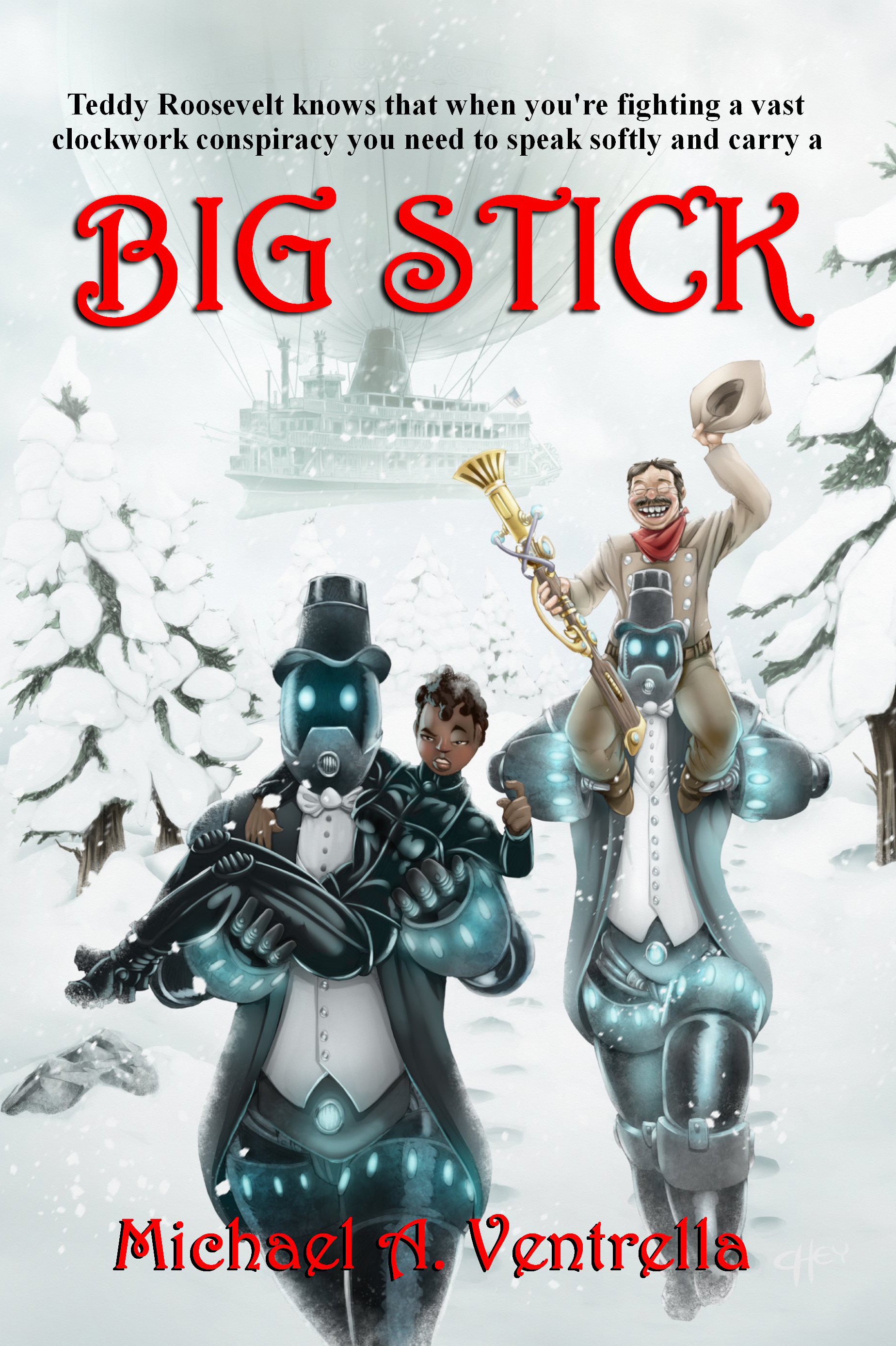
Interview with Hugo nominated author Michael Flynn

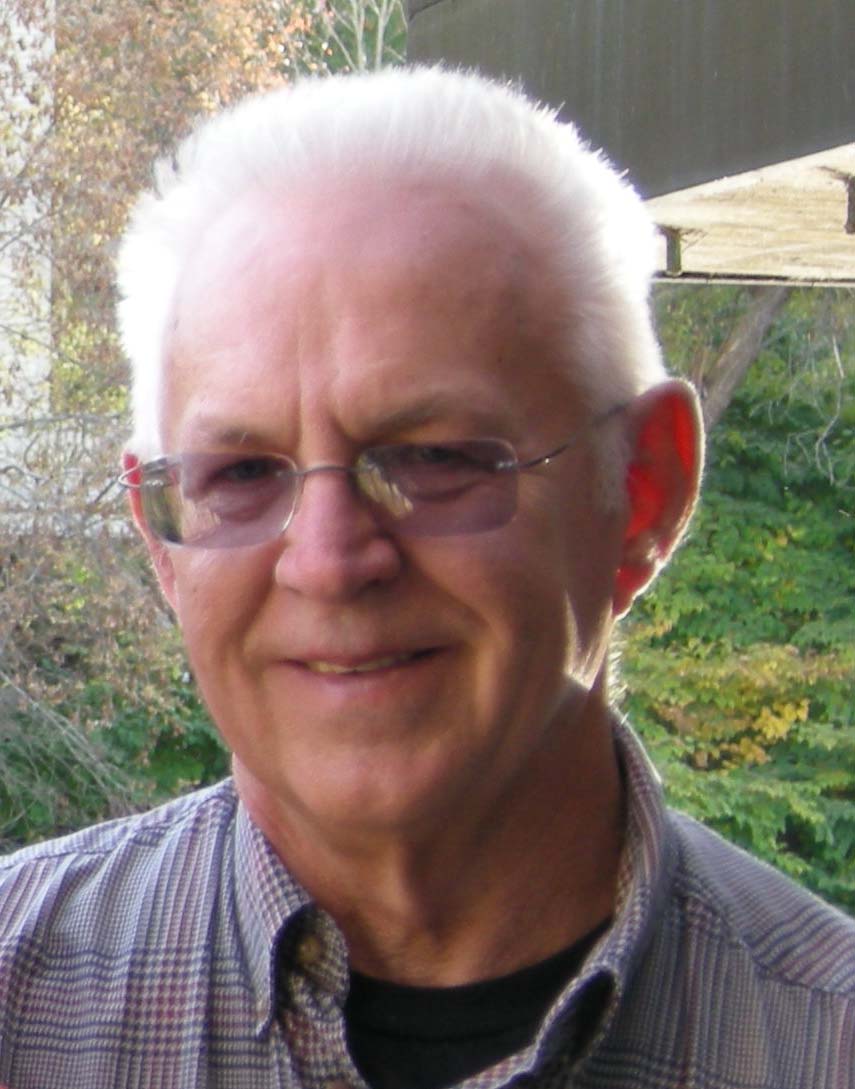
MICHAEL A. VENTRELLA: Today I am pleased to be interviewing Hugo-nominated author Michael Flynn. Mike and I met at the Greater Lehigh Valley Writer’s Group and have run across each other at Philcon and other conventions before, but we’ve never really had a conversation together, so this should resolve that.

Mike, what was your first big break into the business?

MICHAEL FLYNN: I entered a contest by Charlie Ryan, who was editor at the old Galileo magazine. It was for never-before published writers. So I wrote a story “Slan Libh,” about a fellow who has invented a time machine and decides to use it to feed his ancestors during the Irish Potato Famine. Charlie decided to buy it for the magazine instead, which was a larger payment. However, the payment was “due on publication,” and that never happened. Galileo went belly-up. My brothers, ever willing to offer encouragement, suggested the magazine folded because they had been reduced to the desperation of buying my story. For a while, Charlie tried to shop an anthology, but nothing came of it. So, I took the rights back and tried it at Analog, where Stan Schmidt bought it. It appeared in the November 1984 issue.

Two of my first four stories made it onto the Hugo ballot, which certainly did not hurt. This led another writer, the late Charles Sheffield, to urge his own agent to take me on as a client. Charles became a very dear friend, and not least because I only found out years later that he had done that.

VENTRELLA: Did you have any formal writing training before submitting your first work?

FLYNN: Nope. Just the usual English classes in HS and college. Never did workshops, either. OTOH, I did read voraciously.

VENTRELLA: You’ve done quite a few short stories. Do you find them more difficult than longer works?

FLYNN: Stories are less forgiving than novels, in that there is no space for self-indulgence. A novel can meander a bit and still keep the plot going, and has more room in it for scenes devoted to character-building, scene-setting, and the like. But shorter fiction must do all that with a greater economy of words. I find that they take longer to write relative to their length and from an economic perspective not at all cost effective. But I still write them because there are some stories that don’t need a novel to rattle around in. Take a story idea and put it in a novel, and you lose density. The whole seems fluffy. But put an idea in the right length of story and it is more dense and powerful. At least, that’s the way I think of it.

VENTRELLA: Your work is usually classified as “hard science fiction.” Do you agree with that classification?

FLYNN: Well, I’ve often considered them to be “high viscosity” science fiction, a term I coined in a moment of whimsy, but which seems appropriate. Some reviewers have made such comments as “…unlike most hard SF…” without seeming to notice that they were undermining their own idea of what hard SF means. There is an unexamined assumption that hard SF gives insufficient attention to character. But that may have been more a matter of decade than of genre. A story stands on four legs – idea, plot, setting, and character – and can remain upright on any three of them. I don’t insist that all stories have the same strengths. A captivating idea executed in a page-turner plot in a vivid setting can tolerate characters from central casting.
To this we can add the actual wordsmithing, or style. The rumor is that hard SF is less “literary” in style. I’m not entirely sure what that means, except that it leads reviewers to write things like “…unlike most hard SF…” when they notice stylistic acuteness.

VENTRELLA: How do you define “hard science fiction”?

FLYNN: As “science fiction.” Emphasis on both words. It should be a story in which some element of speculative science or technology plays a vital role, and does not serve as simple stage props. And the author takes some pains to “get the science right.” So “Flowers for Algernon” is hard SF, but “Star Wars” is not.

Of course, no one gets everything right, and sometimes the speculative science turns out to be wrong; so it’s more a matter of intent and thrust than it is of successful calculations and prognostications.

VENTRELLA: Science fiction is being outsold by fantasy these days. Why do you think that is?

FLYNN: The Modern Ages, which were among other things the Age of Science, have ended and we have moved on and/or back.

VENTRELLA: Do you find that there is less respect for science these days?

FLYNN: Yes. Partly, this is due to scientific hubris by which (mostly) fanboys of science set Science-with-a-capital-S as the colonial power of the intellectual world, invading other domains of human thought and disparaging philosophy, humanism, religion, and other endeavors. Partly, it is due to feminism, environmentalism, and government funding. Modern Science differed from Medieval Science in an important respect. The natural philosophers of old were in it to comprehend and appreciate the beauty of nature; modern science was redefined by Bacon, Descartes, and others to be subordinated to the production of useful products “to increase Man’s dominion over the universe.” They meant Man in a very masculine sense, and the exploitation of nature as completely open-ended. Hence, the feminist and environmentalist critiques in the Postmodern Age were not without some merit. Thirdly, as Eisenhower warned in his Farewell Address, the government-science funding complex meant that eventually science would be subordinated to political goals. All these strands contributed to undermining regard for science in the Late Modern Ages. When the American Chemical Society funded an exhibit on the contributions of science to modern life, they were astonished when the Smithsonian came up with an exhibit that presented American science as a series of moral debacles and environmental catastrophes: Hiroshima and Nagasaki, Silent Spring, Love Canal, Three Mile Island, and the explosion of the space shuttle.

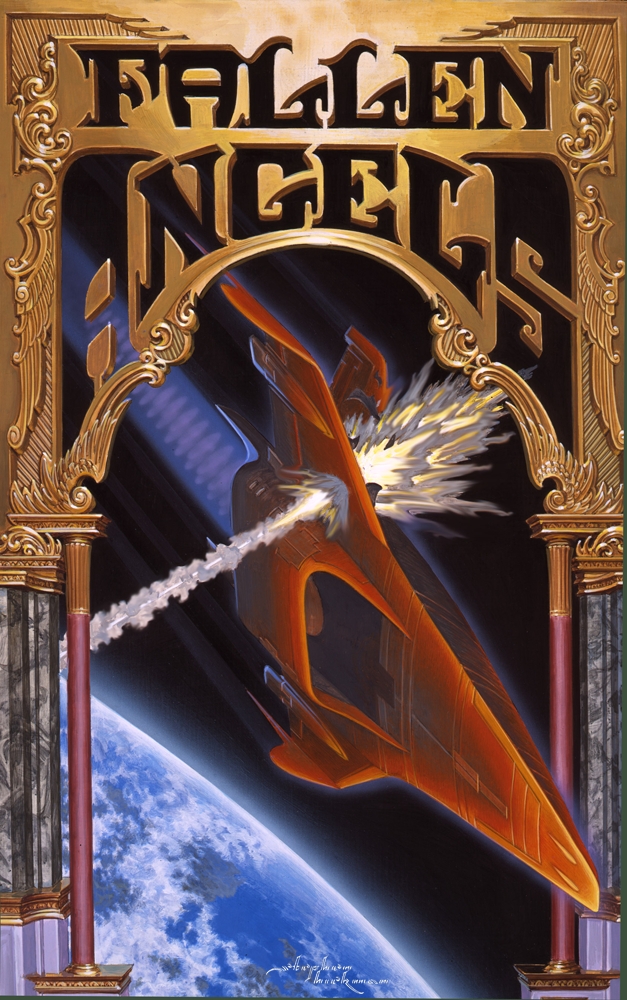
VENTRELLA: Let’s discuss FALLEN ANGEL, your collaboration with Larry Niven and Jerry Pournelle. How did that occur?

FLYNN: Niven and Pournelle had promised FALLEN ANGELS to Jim Baen, but were under contract to deliver a book to another publisher. But there was no bar to writing a Niven-Pournelle-Third Author collaboration, so they invited a friend to do the rough draft while they worked on the other book. But time went by and the other writer did nothing, so they invited him out. Then they went to Jim Baen and asked him to pick a collaborator. Jim had just published my first novel, IN THE COUNTRY OF THE BLIND, and was about to do a story collection, THE NANOTECH CHRONICLES. Larry and Jerry liked what they read, and so Jim Baen contacted my agent who passed it on to me.
VENTRELLA: How did you handle collaboration?

FLYNN: Superbly.

OK, seriously. (The three of us were on a con panel the year FALLEN ANGELS came out, we were asked that question, and gave that answer in unison.)

It befell thusly. I was given rough drafts of the first two chapters, and outline of the remainder that became sketchier as it went along, and character sketches for a bunch of characters, both fictional and real fans who would be Tuckerized. I was a speaker at a quality control convention in San Francisco and Larry came up and we talked story and batted plot ideas around.

I rewrote the first two chapters, added two more; visited East Coast conventions to harvest more characters, and showed the results to Larry and Jerry. They liked what they saw, made some suggestions, and gave me the green light.

“Showed” doesn’t cut it. This may have been the first novel written by modem. There were problems. I had a Mac, they used DOS boxes. We wound up sending files — dial up modems! Forsooth! — to Jim Baen, who was able to figure out the proper modem settings and translate from one to the other. So “showed” electronically.

Eventually, they made a breakthrough on the main book, then started doing rewrite behind me. There was two of them and only one of me, and I could write only part-time; so they began to catch up fast.

Funny thing was that I met Larry only twice — as aforesaid and at a Norwescon — and Jerry not at all until after the book was finished and I found myself on a client assignment in LA, where we all got together.

VENTRELLA: When creating worlds (either science fiction or fantasy), too often writers ignore politics. You have not done so. How do you make sure you are creating a realistic political world?

FLYNN: I used to be a filthy politician. Not the kind that runs for office — They asked once and I declined — but the kind that runs caucuses and so on. I was precinct committeeman, district captain, and eventually House District Leader. So I’ve seen politicking from backstage. Then, too, as a consultant, I have encountered all sorts of corporate-regulatory interactions. As for other settings, I read a lot of history.

VENTRELLA: When you create a story, do you begin with the characters or do you have some basic plot idea?

FLYNN: Yes.

Typically, its one thing or another. Setting, Idea, Plot, Character. Any of them can be the stimulus. For example, “Melodies of the Heart” started with an idea. In his book, THE MAN WHO MISTOOK HIS WIFE FOR A HAT, Oliver Sacks tells of cases of “incontinent nostalgia,” in which the patient re-hears music from her childhood and sometimes re-sees scenes of her childhood. That is, they don’t remember hearing or seeing in the past as such, but are hearing and seeing these things in the present time. So the notion occurred to me of a woman who as time goes by re-hears tunes from further and further in the past until one day the doctor realizes that the tunes are now “too early” and begins to wonder how old the woman is.
Okay, so what was the story? Doctor listens to old woman hum tunes is not a story. Even doctor discovers old woman’s age is not a story. Who is the doctor? Who is the woman? Why would it matter, to either one of them, how old she is? From this I developed the characters of Mae Holloway and Dr. Wilkes and why it mattered very much to them both. So this was a case of Idea then Character then Plot.

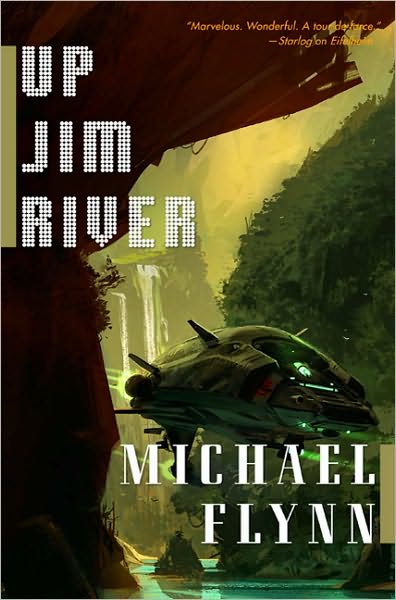
OTOH, I recently sold a novelette, “The Journeyman: On the Short-Grass Prairie,” to Analog. In this story, the Character came first: Teodorq sunna Nagarajan, the Wildman bodyguard in UP JIM RIVER. I got a kick out of his character, and the idea of writing his backstory appealed to me. Likewise, “Elmira, 1895,” started with the characters of Sam Clemens and Rudyard Kipling; while “Places Where the Roads Don’t Go” started with an abstract idea suggested by Searle’s Chinese Room and Lucas’ Goedelian Proof. It may the first hard SF where the S is not physics but metaphysics. “The Iron Shirts,” recently selected for Gardner Dozois’ annual anthology, was suggested by plot elements, as will usually be the case with alternate histories.

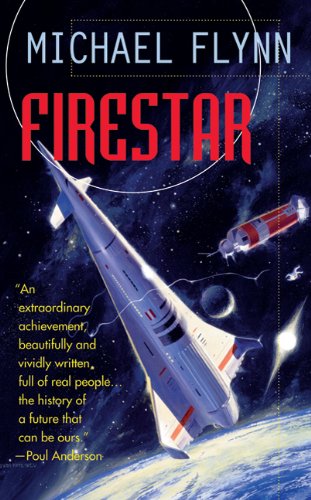
VENTRELLA: Tell us about the FIRESTAR cycle.

FLYNN: I was at a con once with Charles Sheffield. I forget which. And we were at the Tor party. Tom Doherty was holding forth on what Science Fiction needed, which he told me was “near future, high tech, and optimistic.” I pondered on that for a while, since I had been playing with an image of someone listening outside a high school classroom and not hearing learning taking place. The listener became an industrialist, for industry was already hurting for educated workers. But it was a very vague idea. Listening to Tom Doherty started to make it percolate. Setting up a school system to deliberately produce technologically literate students.

Then David Hartwell, an editor at Tor, called and asked if I had ever thought of writing a book for Tor and I said yes and he said what kind of book and I said, “near future, high tech, and optimistic.” Well, you know that had to be a good fit.

The original concept was of a single book covering the maturation of a cohort of students at one of these schools as they grow into the middle managers who save the world. (I had also read Strauss and Howe’s book GENERATIONS.) It was to cover a thirty-year arc; but after 200 pp. it was clearly not going to fit into a single book.

Interestingly, although the near future of FIRESTAR is now the recent past — it’s set during 1999-2007 — Tor has recently issued a second edition without any updating, making it a sort of alternate history.

VENTRELLA: What other works are you most proud?

FLYNN: I would have to say EIFELHEIM, since it was a Hugo finalist for best SF novel of the year. It did win the Seiun Award for the Japanese translation and the Prix Julie Verlanger for the French translation. The SPIRAL ARM series is shaping up nicely. THE JANUARY DANCER made #6 for SF paperbacks in October, which is not bad considering that #1-#4 was George R.R. Martin’s GAME OF THRONES books. And both UP JIM RIVER and IN THE LION’S MOUTH have gotten good reviews.
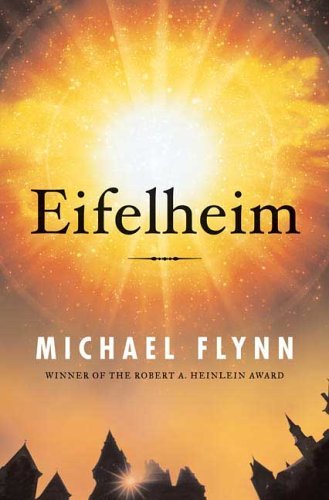
There is also THE WRECK OF THE RIVER OF STARS, which did not sell as well as it should have. It is a bit darker.

On the short fiction front, I have always been fond of “Dawn, and Sunset, and the Colours of the Earth,” of “Melodies of the Heart,” “House of Dreams,” “The Clapping Hands of God.” The forthcoming “Places Where the Roads Don’t Go” may also pass the test of time. I think. There is also a story series set in the Irish Pub, of which I think “Where the Winds Are All Asleep” is probably the best.

VENTRELLA: What would you advise a reader to go to first if they wanted to check out your fiction?

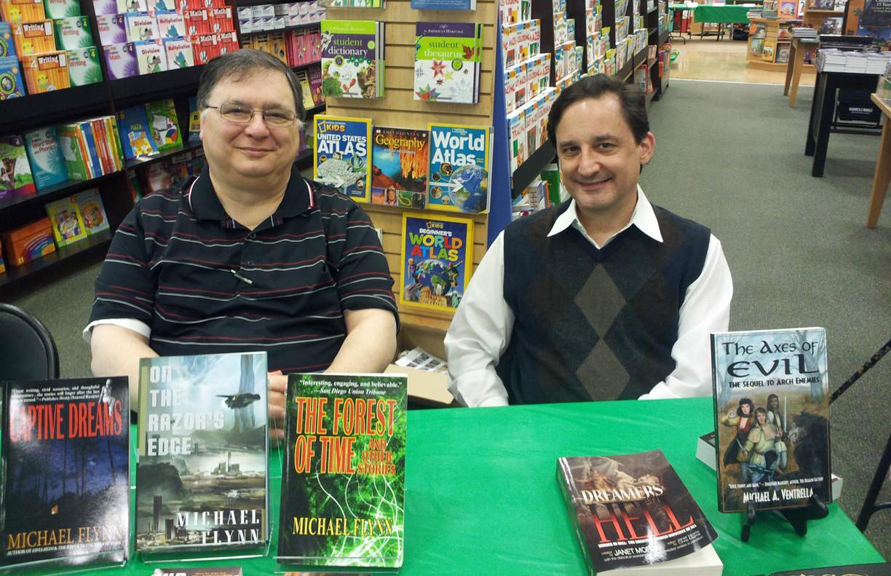
FLYNN: EIFELHEIM, because it stands alone. THE JANUARY DANCER, because it is first in the series. For short fiction, a collection THE FOREST OF TIME AND OTHER STORIES is available in ebook format, and a new collection CAPTIVE DREAMS is forthcoming. The latter overlaps one story with FOREST OF TIME, but contains three stories written specifically for the ebook.

VENTRELLA: What are you working on now?

FLYNN: Answering these questions.

Oh, wait. Books and stories…. I just sent a short, “Elmira, 1895,” to Analog, fate unknown. A fourth SPIRAL ARM book, ON THE RAZOR’S EDGE, is in the can. For the moment I am working without contract on two possible novels:

1. THE SHIPWRECK OF TIME, about tantalizing hints found in Old Books, Old Film, and Old Bones, in a story that runs from a scholar in 14th century Freiburg-im-Breisgau to historical researchers in 1960s Milwaukee, a documentary film maker in 1980s Denver, and a police detective in contemporary small town Pennsylvania.

2. THE CHIEFTAIN, an historical fantasy (yes, fantasy) revolving around David O Flynn, chieftain of the Sil Maelruain in 1224. The magical element will be not the wizard and warlock kind, but prayer and saints, a bit of a change in pace.

VENTRELLA: How have the changes in the publishing industry affected you and what do you see for the future in publishing?

FLYNN: The only effect is another channel for books, the electronic one. However, going forward I think Mike Resnik and Barry Malzberg are right, and the whole print industry will be turned upside down. Self-publishing is becoming easier; but may become too easy, flooding the market with so much self-indulgent publishing that one may have a hard time separating wheat from chaff.

VENTRELLA: What piece of advice would you give an author wanting to write science fiction?
FLYNN: 1. Learn science.

2. Learn fiction.

At least in third-party publishing, the sort of writing that got by in the 30s and 40s will no longer do, and a certain stylistic mastery will be expected. Editors will often work with promising newbies, but editors may pass away if electronic self-publishing drives third-party publishing out of the pool. The same is true of agents. You may need one to convince Tor or Ace to publish your book; but you do not need one to convince yourself. (And that is the big trap.)

It is also more difficult to write good SF about the science of the 40s or 50s or 60s. Much of what was once speculative science is now mainstream. There was a time, and not too long ago, when a story about a kid using a home computer to garner the information needed to solve a problem wold have been high SF. Now, it’s your son or daughter doing a homework problem. So learn where the cutting edge is today; and if you must use the tropes of yesteryear, give them a new spin that makes them fresh.

Writing fanfic is okay for practice and for beginners; but fanfic will always be derivative and imitative. Whatever you write had got to be genuine and genuinely yours.
flynn

Interview with author Mike McPhail

MICHAEL VENTRELLA: Today I am pleased to interview author Mike McPhail. Author and artist Mike McPhail is best known as the editor of the award-winning Defending the Future (DTF) series of military science fiction anthologies. Currently he is the administrator for the Dark Quest Books’ imprints DTF Publications (MilSciFi) and Starsong Press (SciFi).

He is the creator of the science fiction universe the Alliance Archives (All’Arc), which serves as the backdrop to his (and other authors’) stories. Its related role-playing game is part of the dC percentile family of game mechanics, as used in the Martial Role-Playing Game (MRPG) series.

As a member of the Military Writers Society of America, he is dedicated to helping his fellow service members (and deserving civilians) in their efforts to become authors, as well as supporting related organizations in their efforts to help those “who have given their all for us.”

Mike – you began, like me, developing plots and worlds for games. How did you decide to start writing fiction?

MIKE McPHAIL: It was an accident, no really it was. My wife (the award-winning Danielle Ackley-McPhail), had long been after me to let her write a story set within my gaming universe — The Alliance Archives (All’Arc) — but I was worried that she didn’t have enough experience playing the game to get the finer points right. So I wrote a back story (a little more advanced than you would for a game scenario), which was heavily laden with techno-babble, terminology, and in-game historical reference, in order to help her along.

Well she read it and said, “I don’t need to write the story, you can do it yourself.” and thus I was proclaimed to a writer.

VENTRELLA: Were your first attempts successful?

McPHAIL: Yes, but I had the advantage of working with people that already “had been there,” to advise me on how to pick and work for a specific project, rather than just sending work out, and hoping someone would buy it. Plus not having any “dreams of grandeur” helped; I hadn’t planned to be an author, so whatever came my way, I looked at as a blessing.

VENTRELLA: Let’s talk about the problems inherent in using games as a foundation for your fiction. I have advised those who have asked that they should begin by throwing out all the game rules. Have you found that to be the case?

McPHAIL: Not in my case. The All’Arc game mechanics were developed during my Academy days to allow the Marines in the group to have a more realistic portrayal of combat (a.k.a. what they learned and did in real life). But generally I would agree with that statement, since most gaming systems don’t have a real-world application, it could very easily get in the way of making your story seem plausible.

VENTRELLA: The goal in my fantasy fiction has been to make sure it doesn’t read like it was based on a game. Do you agree, and if so, what techniques do you use to accomplish this goal?

McPHAIL: Overall I would agree, that is unless your writing a tie-in book for a game, then I think the readers are hoping for some form of homage to the original work. The most realistic way is just to have a character make a game reference, just as I’ve seen them do in real life combat. “Well that bad-guy didn’t make his luck roll.”

VENTRELLA: What advice would you give to someone wanting to write a story in a game world?

McPHAIL: Don’t take it verbatim from a game you have played. What works when a group of friends are sitting around a table enjoying themselves almost never translates. So use the game only as inspiration, taking from it the key facts, and relating some of the more interesting events. Above all, have people outside your gaming group read your work, since your players are going to be too close to be objective about how good, or bad it is, or what needs to be done to advance it.

VENTRELLA: Tell us about your novels.

McPHAIL: I don’t have an “inner need” to write novels. I’m much happier doing short stories. But having said that, my publisher is looking to have me write some game tie-in novellas to go along with the re-release (or should I say, his release) of the All’Arc, now to be known as the Martial Role-Playing Game (MRPG) Core Manual.

VENTRELLA: Do the short story collections you edit take place in the world of your novels?

McPHAIL: I haven’t done an Archives collection yet, but my stories in the DTF anthology series are set within the realm of the All’Arc. In Dani’s case, she writes in the “universe” using the technology/terminology, but her stories aren’t part of the game’s original timeline.

VENTRELLA: What are the biggest difficulties you have faced when editing a collection?

McPHAIL: Keeping all the contributing authors “happy.” We’ve be fortunate enough to have in the DTF series some of the biggest names in science fiction, and their participation is purely due to them knowing us. As the saying goes, “small-press, small-pay,” so they are not in it for the money. Over time we have had problems with the books’ publishers, and naturally the authors come to us when they have issues. Then I would chase down the publisher for answers. Now-a-days, that chain of command is shorter. Dark Quest Books (the current publisher of the series), made me an administrator for one of their imprints, so now I’m in charge of publishing the series. And yes I yell at myself all the time over it.

VENTRELLA: What is your military background?

McPHAIL: I enlisted in the Air National Guard; originally I was hoping for ordinance, but the only opening was in Air Cargo, so by the family standards, I’m a slacker. Dad joined the Army Air Corp in WWII, and served until Vietnam; my father-in-law was a Navy attack pilot in Vietnam; and my wayward-son is an Army Lieutenant, winner of the Bronze Star.

VENTRELLA: Do you believe it is important to “write what you know”?

McPHAIL: Yes, but that doesn’t mean you can’t learn new things to write about. Typically I spend a third of my time writing, the rest either looking things up on the internet (or in my reference library, yes I’m talking about books), or calling someone I know that is in that related field.

The more of your own life experiences you can introduce in to your characters, the more believable and relatable they will become to your readers.

VENTRELLA: What projects are you working on now?

McPHAIL: For 2012, besides the re-release of the Dark Quest version of the MRPG, we have started working on DTF5 Best Laid Plans; producing Phoebe Wray’s Jemma 7729 and J2; updating James Daniel Ross’ Radiation Angels series; David Sherman also has something in the pipeline. With 2013’s projects already forming up in the queue.

VENTRELLA: Have you found that publishing short stories has helped you gather new readers?

McPHAIL: Name association from the DTF anthologies is priceless. For example if you did an Amazon search for say Jack Campbell (LOST FLEET), well he’s been in several of the books I’m in, so my work show up as a related title.

VENTRELLA: How did you find your publisher?

McPHAIL: We met at a gaming convention, things where slow, so we sat and talked. I told him about the game I came up with at the Academy, and how I put it on the shelf and only used it as reference for my writing. Well, the small press that had published my first DTF book (BREACH THE HULL) gave us the go-a-head to do the second one (SO IT BEGINS), but, when the time came for us to transfer the finished file so he could send it off to press, all of a sudden, his publishing empire was no more.

Then we remembered that game publisher we had met at the convention, he had said something about wanting to do books as well as games, and the rest his history.

VENTRELLA: What are the advantages of a small press?

McPHAIL: Accessibly. The big-houses are pretty much out of reach for a new writer, all they seem to want these days are top seller author, and even at that you only have a few months to prove your worth or you’re out.

VENTRELLA: What’s your opinion on self-publishing? Do you advise starting writers to consider that?

McPHAIL: Generally I would not advice self-publishing if you’re looking to become a “main-stream” author; writing the story is only part of the process. There are a lot of different skills needed to produce a professional-looking book, everything from editing and layout, to cover art and back cover copy, and yes, you will be judged by the cover of your book.

My wife and I have been out on the frontline as authors, books sellers and promoters for over a decade now. In our case, we had the advantage having worked in the printing / publishing industry.

Mike’s Websites: www.mcp-concepts.com
www.milscifi.com
www.allianceacrchives.net
www.defendingthefuture.com

4

Prologues: The Devil’s Work

Prologues: Do editors really hate them?

Recently, at a writer’s discussion, an aspiring author discussed his fantasy novel. It started with a prologue that explained something important that happened fifty years prior to the action that begins the first chapter.

I advised him to cut it and work that information into the book in other ways. I dislike prologues.

Too often, especially in science fiction and fantasy books, authors use a prologue to explain the world and set the scene. Instead of jumping into the story, we get a long history lesson, full of names and places we’ll instantly forget, many of which never appear again in the book.

Bor – ring.

Let us find out about that background when it’s needed. Introduce it through dialogue instead of in some “info dump.” Trust your readers.

You’ll probably find that most of the information you created isn’t really needed for the story.

Writing a background history is important — I encourage all authors writing to develop their worlds fully. It will aid you greatly in developing your characters’ personalities. However, your reader doesn’t need all that information.

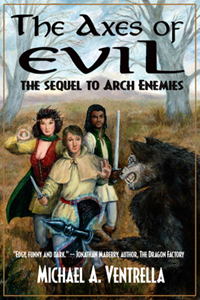
ARCH ENEMIES and THE AXES OF EVIL take place in a fantasy world with a detailed history. The magic in this world works in a specific way. Terin, the teenager who gets pulled into the adventure against his will, learns what history and magic he needs to know as he progresses through the story. Amazingly enough, that’s exactly the amount the reader needs in order to follow the story and get excited about its plot.

None of the rest of that grand world history is in the book other than through passing comments. It’s not needed to tell the story.

Not all prologues are evil. Just unnecessary ones. For instance, in a tale about a haunted house, a short prologue describing the murder that took place there a hundred years ago might work just fine. There’s absolutely nothing wrong with a prologue that sets the story. But then, why not just name that “Chapter One”?

Here’s my entire first chapter for my upcoming novel BLOODSUCKERS, about a vampire who runs for President (disclaimer: This could change by the time of publication):

Norman Mark was a politician with skeletons in his closet.

Literally.

I could have called that the prologue, because it sets up the feel of the book in a concise way while not actually starting the plot at all. In fact, Norman Mark is not even the main character.

I have no problem with an introductory opening like that — and neither do editors. There are plenty of examples of books that begin this way.

Really, what I hate (and what editors hate) are info dumps — where the author needs the reader to understand certain things and gives a lesson instead of tells a story.

I’m against those at any point in the book, but especially in the beginning. Your opening words need to grab the reader, and a history lesson doesn’t do it.

Interview with author A. C. Crispin

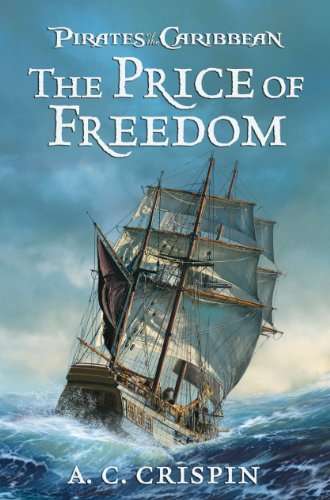
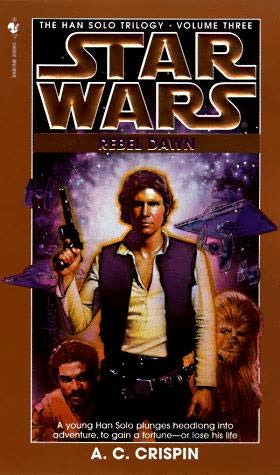
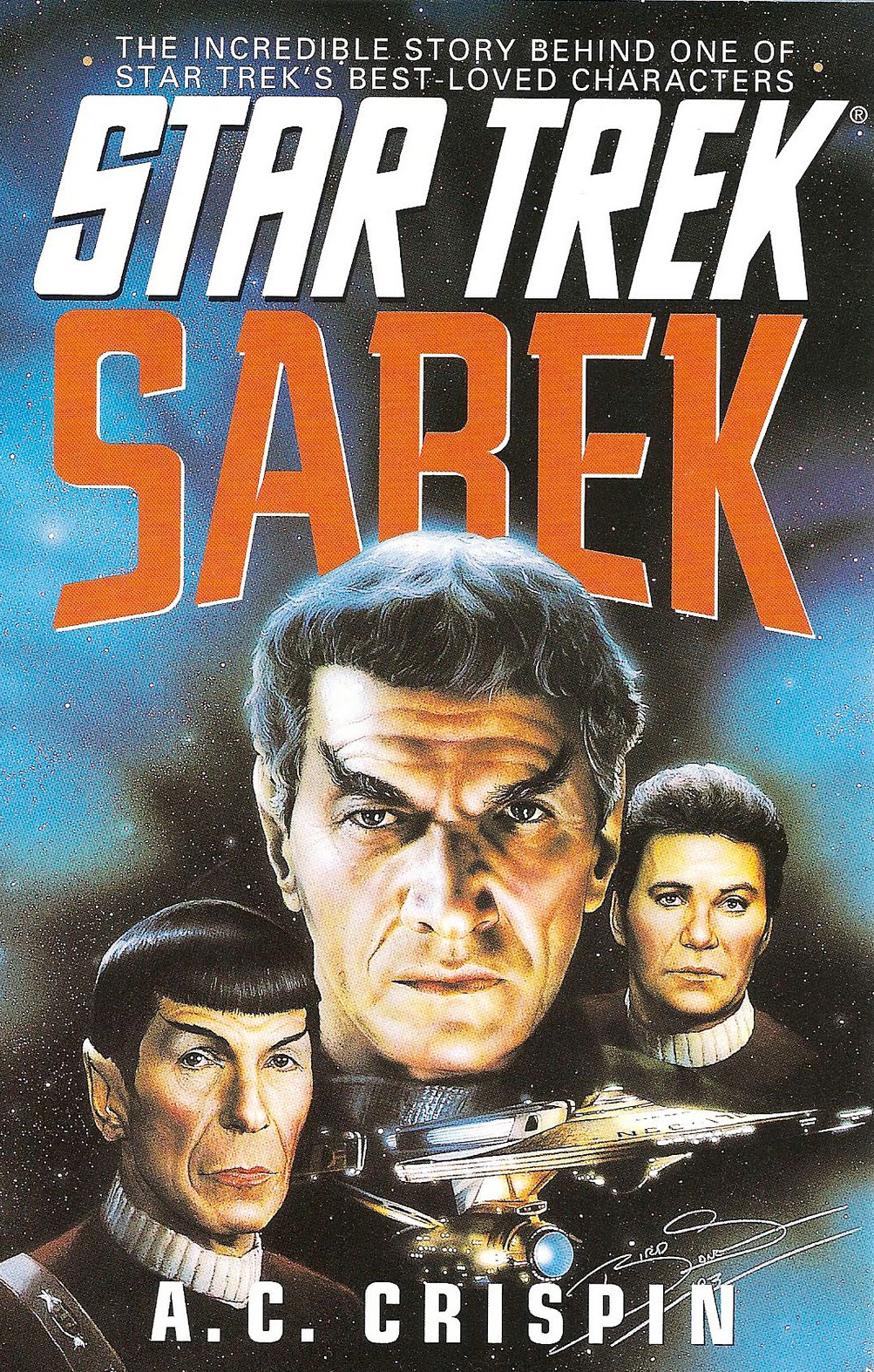
MICHAEL A. VENTRELLA: Today I’m pleased to be interviewing A.C. Crispin, whose new novel is PIRATES OF THE CARIBBEAN: THE PRICE OF FREEDOM. She’s best known for the novelization of the 1984 V TV series, but also for her bestselling Star Wars novels THE PARADISE SNARE, THE HUTT GAMBIT, and REBEL DAWN — although I first discovered her through her Star Trek novels: YESTERDAY’S SON, TIME FOR YESTERDAY, THE EYES OF THE BEHOLDERS, and SAREK.

Ann, You’ve been able to write novels in some of fandom’s favorite stories. How did you manage that?

A.C. CRISPIN: After I wrote YESTERDAY’S SON and V, publishers with franchises approached my agent when they had projects they thought would be a good match for my skills.

If your readers want to read about how to get an agent, soup to nuts, they should read “Notes on Finding a (Real) Literary Agent” on my website.

VENTRELLA: Do you make proposals or do the studios come to you directly now?

CRISPIN: For original novels I write book proposals. For tie-in work, they pretty much come to me.

VENTRELLA: Let’s discuss THE PRICE OF FREEDOM. How much freedom were you given to develop Jack Sparrow’s background?

CRISPIN: After a considerable amount of back and forth on the part of the Disney studio liaison, during which several detailed outlines were not approved, the studio liaison decided that instead of writing the project I had been originally hired to write (the story of the Isla de Muerta mutiny re: the Aztec gold) I should instead write the story of how Jack Sparrow worked for the EITC and wound up making that bargain with Davy Jones. So I knew where the story had to end up. How I got there was left pretty much up to me.

I did consult with both my editors on the book, the acquiring editor and the editor who completed the project. For example, they both agreed that there should be a “Lady Pirate” as a character, so that’s how Doña Pirata was born. The Legend of Zerzura plotline was my creation, but my editors suggested having talismans as a way to get into the Sacred Labyrinth and reach the treasure. So I then came up with the bracelets.

By the time I finished with my outline, it was over 70 single spaced pages long. Of course, THE PRICE OF FREEDOM is a long novel, some 235,000 words.

VENTRELLA: Did Disney censor any of your ideas or tell you to make major changes?

CRISPIN: My Disney editor (somewhat regretfully, because she really liked them) bowdlerized my hottest sex scene. I’m not sure you’d call that a major change. After all, we are talking Disney, here. (The scene was hot, but not graphic — she felt that it was a bit too hot.)

VENTRELLA: What were your main goals in trying to develop his character?

CRISPIN: To create the character of “Jack becoming” so that people would recognize Jack Sparrow, but also know this wasn’t quite the Jack they see in the films … this was a younger, more vulnerable, more trusting and less cynical Jack. He gets more cynical and “savvy” during the course of the book. He’s not the same Jack at the end as he was at the beginning. Of course that’s the goal of good fiction, right?

VENTRELLA: What adventures in your novel help shape Jack into the character we all know?

CRISPIN: Oh, Jack experiences betrayal, disappointment, fear of imminent death, hatred, and as a result learns to be much more wary and cunning, and to trust almost no one. Readers who want teasers can read the excerpts on my website. There are six there.

VENTRELLA: Do any other characters from the film appear in the novel?

CRISPIN: Edward Teague, Cutler Beckett, Hector Barbossa, Pintel and Ragetti, and a certain squid-faced Captain.

VENTRELLA: Were you given a peek at the script for the most recent film in order to work in some foreshadowing?

CRISPIN: No. I was given the script for “At World’s End” before the film released, but my book was finished before the script for “On Stranger Tides” was written.

VENTRELLA: The most recent movie is loosely based on Tim Powers’ novel ON STRANGER TIDES. Did you use that novel at all for reference?

CRISPIN: I’ve read ON STRANGER TIDES a couple of times, but aside from the fact that it’s an excellent pirate yarn, no.

VENTRELLA: Will there be more books in the series?

CRISPIN: That will be Disney’s call. I imagine they’ll base that decision on how well THE PRICE OF FREEDOM sells.

VENTRELLA: What’s your favorite of the Pirates movies?

CRISPIN: The Curse of the Black Pearl.

VENTRELLA: Do you find using established characters in your media novels to be a limitation?

CRISPIN: Nope. I find it a challenge to have them grow and change in ways so subtle that the studio doesn’t realize I’ve done it.

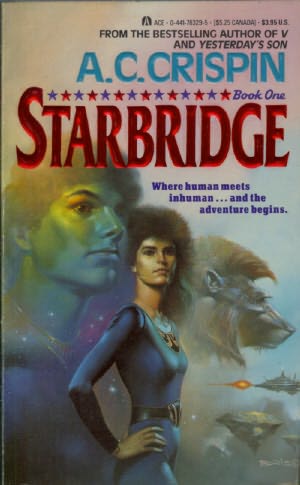
VENTRELLA: You’ve also written your own series: Starbridge. Tell us about this!

CRISPIN: Funny you should ask about that. There’s a good chance that the seven StarBridge novels will soon be re-released as e-books. There have been quite a few requests for them from readers, over the years. The series is about a school for young people from the Fifteen Known Worlds who come to an asteroid in deep space to learn to be diplomats, planetary advocates (known as “interrelators”) and explorers. The books focus on First Contact, and explore what it would be like in a galactic society.

VENTRELLA: Do you find writing books based on your own work easier?

CRISPIN: Not really. I put my full efforts into both my media tie-ins and my original novels. With the original novels, it’s generally a bit more work, because I have to create the world, the technology, the history, the geography, the society, etc. World-building and universe-building have to be done well if you want to create the illusion of reality –- something that’s essential to writing s.f. and fantasy.

VENTRELLA: We met at Balticon this year. Do you enjoy conventions and do you advise authors to attend them?

CRISPIN: You can learn a lot at conventions, and once you’ve gone pro, you can do a fair amount of networking and business at gatherings such as the Nebulas, Worldcon, etc. I enjoy conventions, still, even after all these years.

VENTRELLA: Let’s talk about Writer Beware. How did the idea for this come about?

CRISPIN: Back in 1998, Victoria Strauss and I both realized, independently of each other, that writing scams were proliferating on the internet. At some point our investigations brought us into contact with each other, and we decided to do something about it. SFWA gave us its blessing and sponsorship, and that’s how Writer Beware was born.

VENTRELLA: I meet many authors who have gone the vanity press or self publishing route and then wonder why no one takes them seriously. Other than “don’t do that” do you have any specific pieces of advice for these authors?

CRISPIN: I advise them to go to Writer Beware and read our articles about POD, vanity publishing, etc., so they’ll go into self publishing with a clear vision of what it can and can’t do for an author. E-publishing has taken off in the past six months, and it can now be a realistic way (provided the author has the sales numbers) to break into commercial publishing (advance and royalty paying publishing with a major press, that is). This is generally not true for POD and hardcopy “self publishing.” But there are exceptions.

The main problem with “self-publishing” is when authors confuse it with commercial publishing and expect their books to be on the shelves in bookstores nationwide, plus have other unrealistic expectations. It is really not a shortcut into a successful writing career for the vast majority of those who do it. I believe it’s still true that most POD and self published novels still sell fewer than 100 copies.

VENTRELLA: What bugs you most about the publishing industry and what would you change about it if you could?

CRISPIN: Here are my top two picks for that:

(1) I’d go back in time and eliminate the Thor Power Tools Supreme Court ruling. That had a terrible effect on a publisher’s ability to keep books in stock. Look it up.

(2) I’d get rid of the Internet for two reasons (A) the internet has given aspiring writers the idea that they’re entitled to be published, no matter how well or poorly they write, and (B) because of the internet, writers are getting scammed at an appalling rate.

VENTRELLA: Who do you like to read for pleasure?

CRISPIN: Terry Pratchett, Elizabeth Peters, Jane Austen, Charles Dickens, Margaret Mahy, Ursula K. LeGuin, George R.R. Martin, Lois McMaster Bujold, Charlotte Bronte, and too many others to name.

VENTRELLA: Of what work are you most proud?

CRISPIN: I do my level best on all my books. I’m pretty proud of PIRATES OF THE CARIBBEAN: THE PRICE OF FREEDOM, because I had to do so much research. It took me three years to write, and the whole time I was writing it, I was doing research on the historical period and the nautical stuff.

VENTRELLA: What is your writing process? Do you outline heavily, for instance?

CRISPIN: For tie-in work I HAVE to produce detailed outlines, so I’ve gotten used to working that way. I don’t like writing myself into corners, and a good outline usually prevents that.

VENTRELLA: Fantasy has grown tremendously in popularity over the past twenty or thirty years and now outsells science fiction. Why do you think this is? What is it about fantasy that appeals to readers that they can’t get from science fiction?

CRISPIN: I have no idea. Personally, I prefer science fiction, though I read both.

VENTRELLA: What advice would you give to a starting author that you wish someone had given you?

CRISPIN: Learn to read and analyze publishing contracts. Agents aren’t perfect, and you really need to be able to read a proposed contract and spot pitfalls.

VENTRELLA: What is the biggest mistake you see aspiring authors make?

CRISPIN: Here’s my top five list:

1. They spend years writing a Star Wars or other tie-in novel without ever researching whether they can actually submit the thing and have a chance of having it published. (With Star Wars, for example, they won’t even read the book; all Star Wars novels are contracted for in advance.)

2. They look for shortcuts, such as “self publishing” or POD publishing, often with a scammy publisher like PublishAmerica or Strategic, because it’s the easy thing to do.

3. They develop “golden words syndrome” and can’t see any flaws in their writing, and if someone points them out, they get mad. This is death to any aspiration to ever be a pro.

4. They submit first drafts.

5. They want to write fiction, but they don’t read it. I’ve never yet encountered a single writer, in the dozens, maybe hundreds of workshops I’ve taught, who wrote fiction well but wasn’t a reader. In order to write well, especially fiction, you must be an inveterate reader. No exceptions.

VENTRELLA: What question do you wish interviewers would ask you that they never do?

CRISPIN: Where readers can buy my books. There are links to purchase all my books on my website.

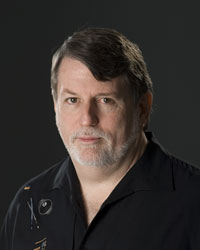
Intrerview with Nebula nominated author Bud Sparhawk

MICHAEL A. VENTRELLA: I’m pleased to be interviewing three times Nebula finalist Bud Sparhawk today. He’s primarily known for his short fiction with heavy and hard science, but also for his humor (in particular his “Sam Boone” series).

Bud, although you have extolled the virtues of outlines, do you think it’s possible to write a great story without an outline?

BUD SPARHAWK: I’m not certain “extolled” is the right word. Certainly I’ve advocated paying considerable attention to a story’s structure – the sequencing of scenes, time frames, and points of view. I don’t think I’ve ever recommended preparing a formal outline where a story is described in detail, point by point.

My own style of writing is to set up the scenes I think the story needs, block in the characters, setting, and time, and then move things around to the way I want to tell the story. Many times I write quite a bit before breaking what I’ve done into key scenes and then add sketch ideas that fill in empty spots. It’s generally a messy back and forth process but it works for me.

VENTRELLA: Have you ever done so?

SPARHAWK: Written a great story or used an outline to write it? All three of my Nebula finalists were done sans outline – just bashing along until they felt complete. I wouldn’t call any of them “great” – entertaining maybe. The one story that I felt was “great” was “Bright Red Star” and which received almost no literary comment, except from David Hartwell who included it in his Years Best SF #14. This story has now appeared in several languages and on audio pubs, which is somewhat of an affirmation. It was my response to some of the hysteria surrounding 9/11.

VENTRELLA: You’ve concentrated almost entirely on short stories and novellas. What is it about the shorter form that appeals to you?

I’ve been blogging about this very subject on budsparhawk.blogspot.com for some time. One of my latest musings dwelled on the differences between novelists and we short people. Although there are clearly differences between the two camps, my conclusion was simply that that some do and some can’t: Temperament, patience, and economic necessity are probably involved in a writers choices, but the mix would vary considerably.

VENTRELLA: Many writers consider short stories to be harder than novels. What is your experience?

SPARHAWK: I don’t think “harder” is the distinction I’d make. Some writers find it impossible to describe anything in a single sentence while I find it difficult to drone endlessly on about anything because I’m always anxious to get to the payoff. In my opinion, brevity always makes a point sharper and I usually edit down to reach that clarity. For example, I recently turned in a 15k piece that was originally 33k in second draft and around 20k in the penultimate one.

When I started writing I could write a 5-7K story in a weekend and once wrote one – “Persistence” – that I later sold to Analog – in an evening. I like to deal with issues or ideas and the short form is ideal for that. Longer pieces deal more with character development or expansion of a situation. I’ve written several as yet unsold novels and have found developing increasing complexity that forces the word count ever upwards tedious, albeit interesting.

Dedicated novelists have told me that they cannot begin a story without discovering that complications arise and they are faced with an irresistible urge to explain, describe, or comment. Then too, other characters come along with their own damn issues, backgrounds, motives and … well, you see how that goes, with the inevitable result is other than short.

VENTRELLA: What usually comes first for you – an idea or a character?

SPARHAWK: The idea or concept, always. I see characters as vehicles that carry the ideas forward, and try to make them eloquent spokespersons for what I try to say.

VENTRELLA: We’ve met at various conventions over the years. Do you enjoy conventions and do you advise authors to attend them?

SPARHAWK: I’m just a ham and enjoy the spotlight, talking to fans, and especially having the opportunity to talk writerish with the other pros. I love the readings, especially by unfamiliar writers to me.

VENTRELLA: What’s your favorite convention experience?

SPARHAWK: The random discussions that arise in the hallways or in the dealers room have be my favorite experiences. I hardly ever leave one of these random discussions without a story idea or two.

VENTRELLA: I meet many authors who have gone the vanity press or self publishing route and then wonder why no one takes them seriously. What’s your opinion on self publishing?

SPARHAWK: The line between vanity and self-published has become very thin. Established writers are self-publishing collections, reverted novels, and even original works – all to take advantage of the opportunities eBooks have created. Some non-professionals (another vague term) have been highly successful with their “vanity” publishing. Results are mixed, but in most cases it seems to depend on the degree of self-promotion one is willing to undertake. Social networking seems key to success for both types.

VENTRELLA: Do you think there is a difference if an already established author self publishes new material?

SPARHAWK: If a writer has already established a reputation, then selling new material via POD or eBook should not be a problem. Otherwise you use up a lot of time, effort, and creative juice that could be used for improving your writing.

VENTRELLA: What bugs you most about the publishing industry and what would you change about it if you could?

The lengthy delays between submission and response, which is an unfortunate consequence of limited staff and/or time available to the publisher. The industry probably needs more underpaid English majors looking for “experience” in the publishing field.

Since most editors now accept electronic submissions I can easily see the day when some maven will design an app that evaluates e-manuscripts on the fly, all tailored to an editor’s preset specifications. That would certainly change the writing game for both writers and editors. Don’t know if this would make the publishers happy or not.

VENTRELLA: What do you like to read for pleasure?

SPARHAWK: Short stories, of course, and mostly SF, but I make an exception for anything by Terry Pratchett.

VENTRELLA: Of what work are you most proud?

SPARHAWK: See above – “Bright Red Star.” Interestingly, I’ve written three more shorts in the same universe, two of which are in McPhail’s anthologies.

VENTRELLA: What are you working on now?

SPARHAWK: I’ve a long novel in penultimate editing, four or five shorts that still need work, and getting as much of my published works into eBook formats as I have time for. The novel deals with the long term effects of human expansion into the universe and what exactly makes our descendants “human.”

VENTRELLA: Fantasy has grown tremendously in popularity over the past twenty or thirty years and now outsells science fiction. Why do you think this is? What is it about fantasy that appeals to readers that they can’t get from science fiction?

SPARHAWK: It is a puzzle that in these days of instant everything and twittering phrases that short fiction does not sell better. Steven King recently observed that much of the popular long form fiction has little substance but does carry the reader along in an engaging, but superficial narrative thread that provides an immersive experience. Summer reading at the beach, in other words. I find that much of the “epic” fantasy fits this description. Clearly, fantasy in general is not my cup of tea, but there are some fantasy works that rises above the rest – like Laura Anne Gilman’s Vineart series.

VENTRELLA: What advice would you give to a starting author that you wish someone had given you?

SPARHAWK: 1. Don’t give up your day job.

2. Put some time aside for writing every day.

3. Learn humility and to accept rejection gracefully.

4. Join SFWA as soon as you can.

VENTRELLA: What is the biggest mistake you see aspiring authors make?

SPARHAWK: Endless rewriting in pursuit of perfection, which can never be achieved. The pursuit of “better” is ever the enemy of “good enough.” A writer should rewrite only until the piece achieves a satisfactory level in their own opinion and, of course, whenever an editor asks.

VENTRELLA: What question do you wish interviewers would ask you that they never do?

SPARHAWK: “Where do you get your Ideas?” to which I respond “a guy in New Jersey sends me two a week for five bucks.”. Ask a silly question …

Seriously though, no one ever asks how the magic is done and the toll it takes on family life, work, and socializing. I wrote for years while holding a fairly demanding job, raising a family, and dealing with the issues of aging parents, yet managed to eke out a few words each night, having them add up to some decent stories and a lot of less than sales worthy. The ideas bubbled up during my non-writing times and, if they were worthy of remembering, finally made it into a story. Truthfully, I have no idea where the ideas come from. I only know how much work it takes to turn them from daydreams to reality.

Interview with author Mark L. Van Name

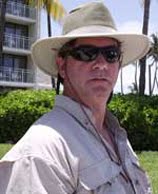
MICHAEL A. VENTRELLA: Today, I am pleased to be interviewing Mark L. Van Name, who I had the pleasure of meeting at the Arisia convention in Boston recently. Mark has worked in the high-tech industry for over thirty years and today runs a technology assessment company in the Research Triangle area of North Carolina. He’s published over a thousand computer-related articles and multiple science fiction stories in a variety of magazines and anthologies.

How important is it that writers of hard SF especially have a background in science?

MARK L. VAN NAME: There are no hard and fast rules about writing, SF or otherwise. The right good, smart writer can pull off just about anything. You can learn so much via research that not having formal training in an area is no excuse for not learning about it. So, I don’t think it’s vital that hard SF writers have a science background.

That said, I do think it’s helpful to have a solid base in any areas you try to cover in depth. Without that base, you better do your research, because otherwise, you’ll make mistakes, and your readers will spot them.

VENTRELLA: Since all of speculative fiction relies on things that are not, do you think a beginning writer should be wary when writing about things of which they have no experience?

VAN NAME: Wary, yes, but afraid to tackle it, no. You just have to respect the material you’re using. If you haven’t been a fire fighter and want to write about them, reading about their work and talking to some would be a very good idea. Making it up entirely based on what you’ve seen on TV, though possibly better than no research at all, is rarely enough for your work to have the verisimilitude it should.

VENTRELLA: Given your background, are you worried about the growing anti-science attitude we are seeing in much of politics these days?

VAN NAME: Definitely, though I have to say that particular concern is lower on my list than many others, including global climate change, the huge levels of hunger and poverty around the world, our national debt, child soldiers, and many other causes. There have always been groups opposed to rationality, and there always will be.

VENTRELLA: How did you break into the field? What was your first sale and how did it come about?

VAN NAME: My first fiction sale of any type was a short story, “Going Back,” to a now-defunct, small-press, feminist SF magazine, Pandora. My first professional (by SFWA guidelines) sale was a short time later, a story, “My Sister, My Self,” that went to Asimov’s but ended up in their original anthology, ISAAC ASIMOV’S TOMORROW’S VOICES. In both cases, the sale went down in the usual way: I mailed them the manuscript, and they bought it. For the first story, the editors asked that I interview some battered women–the protagonist was one–and then do a rewrite based on what I learned. I did, I learned a lot, I rewrote the story, and they bought it. For the Asimov’s piece, I mailed it, and they bought it. Not very exciting, I’m afraid.

VENTRELLA: Did you get an agent?

VAN NAME: Nope. Only after I’d sold the first four novels did I talk to an agent. I’m not at all convinced that agents help beginning writers sell short stories. More to the point, I suspect that few agents you would want to represent you would take you if you were writing only short pieces, and that’s all I was doing for many years.

VENTRELLA: Tell us about the Jon and Lobo series!

VAN NAME: Talking about a multi-novel series is a lot like describing a multi-course meal of experimental cuisine: whether you focus on the individual dishes or the overall meal, you’re bound to miss a lot. I’ll try it a bit from both perspectives.

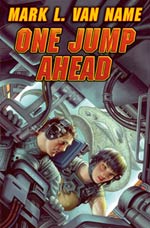
The overall series is a future history that I tell from the first-person perspective of one man, Jon Moore. I’ve always found history more interesting when it comes directly from the people who were there, so I wanted to chronicle a very important time in humanity’s far future–I’m writing about a time roughly 500 years from now–but limit myself largely to what Jon can see and experience. Of course, he’s a most unusual man, as far as he knows the only nanotech-enhanced human alive, so he naturally ends up in quite a few interesting situations. In the first novel, ONE JUMP AHEAD, he meets and becomes first the owner and then the friend of Lobo, an extraordinarily intelligent assault vehicle that can go anywhere–on land, under water, in the air, or in space. Over the course of the many books the series will take to complete–I’m estimating about eighteen, but that’s just an estimate–the characters and the universe will undergo many significant changes.

On an individual book level, each part of the series is simply a novel that should stand entirely on its own. You can pick up any book in the series and enjoy it. You can read them in any order. If you read them all, however, and further, if you read them in order, then you should have a richer experience. I’ve talked to lots of readers who’ve joined the series several books in, and so far, all of them have been able to enjoy whatever books happened to be their starting points.

VENTRELLA: You like to attend science fiction conventions. Are they really worth it, given the expense?

VAN NAME: I have no clue, because hard data on the sales value of cons–or blogs or pretty much any other marketing tool–is almost impossible to get. That said, I don’t go simply to increase sales. I attend cons to be part of the community, to see friends, visit new cities, eat at good restaurants, and so on. You can’t be sure you’ll boost your sales, but you can be sure to see friends and have an entertaining time.

VENTRELLA: What’s the funniest experience you ever had at a convention?

VAN NAME: I’ve done a lot of humor panels at cons, and I’ve done stand-up comedy/spoken-word shows, so that’s a tougher question than you might imagine. Certainly one of the funniest hours I’ve spent was listening to my friend, Lew Shiner, give a talk on humorous mimetic short fiction at a long-ago Disclave at which he was the guest of honor. He delivered the entire thing in very scholarly style, but it was just an excuse to tell a ton of jokes–which he did, brilliantly.

VENTRELLA: What process do you use in order to make believable, realistic characters?

VAN NAME: I don’t see that process as separate from the overall writing process. I sit down to tell a story. The story becomes very real in my head, because I spend a great deal of time living in the world of the story. The story includes people. I get to know those people. Like any other folks, they behave the way they do because of who they are. If I try to make a character do something that she or he simply wouldn’t do, it feels bad, wrong, as wrong as it would feel if a friend suddenly behaved completely out of character. I listen to those feelings. I write the story. The characters behave as they would. That’s about it.

I should probably clarify that I’m not one of those writers who believes his characters are real humans. I know they’re not. I know I control them. I know I could make them do anything I want. I also know, however, that doing so, that violating a character’s identity simply for the sake of a plot, would be bad craft. I don’t want to do that.

VENTRELLA: What is your writing process–-do you outline heavily, for instance?

VAN NAME: I generally outline, but how detailed the outline is varies widely. For a thriller, FATAL CIRCLE, that I’m partway through and hope one day to finish, I had to do some research in key areas and consult with some experts. The result was a very detailed, very long outline–over twenty-six thousand words, a quarter of a typical novel. For CHILDREN NO MORE, I went with an outline of barely three thousand words. I outline to the level I feel necessary before I’m ready to start writing the book, and then I write.

I do some writing work every day. That’s been the key to changing me from someone who sold a story every few years to someone who has multiple novels out. I don’t, though, have a word-count quota. I avoid that sort of goal because it’s so easy to fail at it, and I hate failing. Instead, I have a time requirement: I must devote at least half an hour a day solely to writing work. As long as I’ve done that, I’ve succeeded. Most days, I do more. Most days, I get a fair number of words on the page. Some days, I produce very few. As long as I’ve tried for half an hour minimum, I call it a success.

VENTRELLA: What do you see as the future for printed books? For book stores?

VAN NAME: I love books. I really do. My house is full of them. They’re everywhere. Sadly, I believe the printed book is going to become a minority taste. I’m not sure if the transition will take ten years or fifty, but I believe it’s coming. That said, in the fiction world, books are containers for stories, and ebooks are simply other containers for stories. Similarly, I believe bookstores will continue to exist, but they will evolve, and in time their numbers will shrink. I will hate that, because I love bookstores almost as much as I love books.

I hasten to add that I don’t see any of this as the demise of writers or of people paying for stories. They’ll just pay for those stories in other forms.

VENTRELLA: What’s your opinion on self-publishing?

VAN NAME: Rather mixed. I write a blog, so in a sense I self-publish. I sell all my fiction, however, to traditional publishers. I know that some writers can make a great deal of money self-publishing, but being a publisher is a lot of work, and most of that work is not writing, which is what I most want to do. So, for me, selling to a publisher remains the way I hope to continue to bring my fiction to the market.

I also expect most people who self-publish are unlikely to make a lot of money doing so. The sales and marketing experience that a publisher brings to its job helps make each writer a brand–some obviously much bigger brands than others–and it’s hard to manage that feat on your own. Plus, self-publishers have to be good enough at analyzing their own work to know when it’s of publishable quality. I’ve read some who are indeed good at that job, but I’ve also read many who are not.

Like so many things, if others want to do it, I wish them the best. For the most part, though, it’s not for me, at least not now. I add that last bit because even for those of us who work in the future every day, it’s pretty darn hard to predict.

VENTRELLA: With a time machine and a universal translator, who would you invite to your ultimate dinner party?

VAN NAME: I agonized over this question for months. In fact, it’s the biggest reason I’ve been so late getting this interview back to you. I really took the challenge seriously, and I found I simply couldn’t come up with a single ultimate dinner party. I won’t let myself cop out completely, though, so I’m going to give you, in no particular order, a few that particularly caught my fancy.

Each on his own, just so I could focus exclusively on him: Homer, Shakespeare, Keats, and my biological father, whom I’ve met only once for a couple of hours.

My mother as a young woman, but with someone standing by to knock me out if I started to give away the future.

Several women I care about deeply, each alone, each as a young girl, just so I could see who they once were.

I could go on and on, but one thing is clear: I’d be greedy, going for one-on-one time rather than organizing a group.

Interview with Publisher Deron Douglas

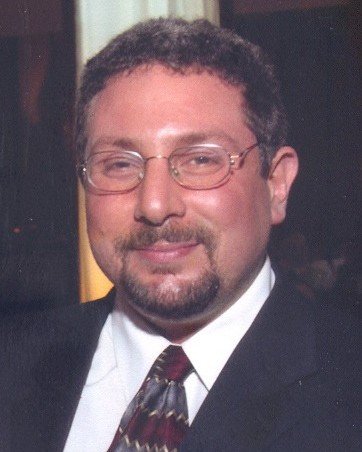
MICHAEL A. VENTRELLA: Today I’m interviewing Deron Douglas, publisher of Double Dragon Press, the largest science fiction and fantasy e-publisher in the world (and, I might add, the publisher of my books). Deron, is that claim based on the number of books you have available, the most sold, or what?

DERON DOUGLAS: Hi Mike, it’s based on both numbers… sales and number of editions available for purchase from DDP and all our retailer sites worldwide. However, it is a fluctuating number as well.

VENTRELLA: What is in your background that made you want to start Double Dragon?

DOUGLAS: I’ve been involved in the publishing industry, in various aspects for about 25 years. I’m also an avid Science Fiction and Fantasy reader from when I was a kid. About 10 years back I purchased one of the first ebook devices on the market called the Rocket eBook (I still own 3) and found that there weren’t very many titles that I would enjoy reading myself. After further investigation into the technology it “clicked” that I had the personal experience and technical ability to pull it off.

VENTRELLA: Have your standards changed over the years? Now that DD is doing better, are you being pickier with which manuscripts you accept?

DOUGLAS: We’ve always had high standards, but like everyone else are restricted by our submissions pool. But generally I like to select titles that I find interesting and diverse; something that I would want to read myself.

Yes, as the submissions pool gets larger we find that we can select more carefully based on market trends and an author’s current readership base.

VENTRELLA: What is the biggest mistake that aspiring authors make when they submit their work?

DOUGLAS: In a lot of cases they do not bother to read the guidelines or take the time to find out what we publish. Double Dragon Publishing is essentially a Science Fiction and Fantasy publisher, but I still have people sending me relationship books, autobiographies etc. If an author does happen to read the guidelines and are submitting within the right genre, they neglect to send their best possible “polished” work. We edit all titles before they are published, but we won’t accept a title that is still in the development stages and requires massive rewrites.

VENTRELLA: What do you personally like to read?

DOUGLAS: I like science fiction with a time-travel, time paradox sort of twist, as well as “steampunk”, alternate reality, divergent societies sort of stuff.

VENTRELLA: You’ve recently begun to expand a bit and publish other genres. Tell us about that!

DOUGLAS: Actually, from the start we accepted everything in all genres, over time we found what sells and what doesn’t. But occasionally I’ll accept something that is “out there” because it’s well written and I’m curious as to how it will be responded to by our readers. But maybe you are referring to our sister imprints, Carnal Desires Publishing and Blood Moon Publishing? Each is dedicated to a genre that we felt was growing to a degree that it deserved its own identity and staff.

VENTRELLA: You’ve been able to lure some fairly famous authors to DD for their e-books. How has that worked out?

DOUGLAS: It’s worked out very well for us. The things take seem to be common to all is that they’ve heard our reputation for a very expansive eBook distribution network, fair methods of working with authors and our “professionalism”.

VENTRELLA: Most of the paperbacks you publish are print on demand. Do you see a future where you would have regular print runs?

DOUGLAS: No, not at all. In fact I can see a near future where we will be phasing out paper book completely. Last fall (2010) is was reported by Amazon that eBooks were outselling “hardback” books on Amazon. This year in Feb It was reported by Jeff Bezos (CEO and Chairman of Amazon), that eBooks are now outselingl paperbacks. People tend to forget that Double Dragon Publishing is an eBook publisher and has always been, and as a result we are well positioned to take advantage of this huge market. After all, we are one of the pioneering ePublishers and have been involved for more than 10 years.

VENTRELLA: How do you publicize your books?

DOUGLAS: Currently we release between 100-120 titles per year, as such we are unable to publicize every title ourselves. We depend upon the author to promote themselves and build a base of readership. After all, if they leave DDP they will take this base with them. But we also provide venues of promotion such as out blog at blog.double-dragon-ebooks.com, Facebook, etc. We also provide a forum where new authors can discuss methods of publicizing themselves with other seasoned veterans.

VENTRELLA: Do you see e-books as the future? Is this good for the industry?

DOUGLAS: Ebook have taken off from where they began 10 years ago, it seems every major manufacturer is now building an affordable ebook device that allows the seamless purchasing of titles almost anywhere in the world. Yes, I think ebooks have a future and think they are also good for the industry. But the industry will change, portions such as paper book production services will die off. But eBook conversion services will sprout, are sprouting in fact.

Interview with New York Times Bestselling Author John Ringo

MICHAEL A. VENTRELLA: Today, I am honored to be interviewing New York Times bestselling author John Ringo, who will be the Guest of Honor at this year’s Ravencon convention. (I’ll be there, too!)

John has has over two million copies of his books in print, and his works have been translated into seven different languages. His books range from straightforward science fiction to a mix of military and political thrillers.

You’ve had an interesting background. What made you decide you wanted to be a writer?

JOHN RINGO: My family tells me I’ve always written but you wouldn’t know it by my memory. I was always the kid who never turned in his essays. But I guess I’ve puttered at writing most of my life. And it’s better than a 9-5 job.

VENTRELLA: You’re also quite unique in that you did not collect a pile of rejection letters before your first novel was published. What’s the secret? Who did you bribe?

RINGO: Sigh. I need to just make a copy of this reply somewhere so I can cut and paste. 🙂

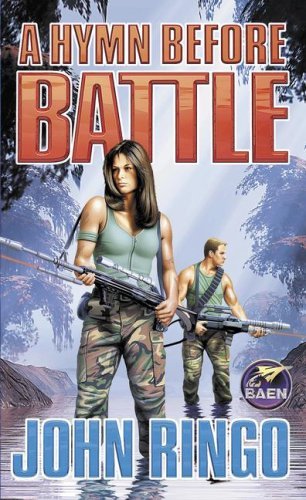
I wrote A HYMN BEFORE BATTLE in two chunks in the mid to late ’90s. It was the second “novel” I’d written. (The quotes are because neither the original version of HYMN nor my first novel were current novel length. And the ‘first story’ is never going to see the light of day.) When I’d finished, at least as well as I knew how at the time, I consulted ‘The Writer’s Digest’ then submitted it to Baen following all the submission requirements exactly. I’d already determined that it was more or less center of the lane for what they published.

I knew it would take months to even get reviewed so in the meantime I started on the sequel (one of my big suggestions to aspiring authors) and poked around on the Baen website. There I found one of the first ‘webforums’ (Baen’s Bar). Being a shy and retiring type, I, of course, just lurked. Hah! By the end of the first month I was one of the top three posters. 🙂

Another top poster was Jim Baen. He’d been active on the internet practically since it was opened to private and business use and he actively involved himself in the discussions. Which meant we were trading frequent discussions (as well as japes, gibes and jousts.) One point to make is that I did not go on there saying ‘I’m an aspiring author! Read my manuscript!’ I just got involved in the discussions. But at one point there was a discussion going on on the Aquatic Ape Theory. Jim was a proponent. I said ‘I think you’re crazy but I have to be nice to you cause I’ve got a book on your slushpile.’ His response was ‘Marla! Find me this manuscript!’ I took that as a jest suggesting that he was going to shred it.

About a week later I got a rejection. Just a mailed form letter with the title (A HYMN BEFORE BATTLE) squeezed into the title blank in a woman’s hand.

By that time I knew enough about Jim that if he had rejected it he’d have sent a personal message. So I sort of put it aside (I think I threw it away, I wish now I’d kept it!) and continued work on the sequel. I knew by then that Lois Bujold had been rejected three times before she published so I wasn’t worried. I had a day job and I’d just keep plugging along until I got published.

A week after I got the rejection (two weeks after Jim’s comment) I got the first email I’d ever gotten from Jim. ‘Nobody can find your manuscript. Send me an rtf.’

I then wrote a really abject letter explaining that it had been rejected but that was planning on reworking it as well as I could and I understood if he didn’t want to override his first reader…

I didn’t know Jim very well at that point. When he read the manuscript he fired the person who rejected it. 🙂

Anyway, I sent him HYMN as well as as much as I’d finished of GUST FRONT. One point that had come up during the discussions was that publishers look for ‘more than a one trick pony.’ They want someone who is going to be able to keep putting out stories. So I wanted to show I had more than one book in me.

He read it then sent me a series of emails telling me what was wrong with it. And the last was ‘if you fix it the way I told you, I’ll buy it.’ (Yes, every aspiring author’s dream.) So I did and he did.

The denouement to the story occurred a few month’s later. Jim accepted HYMN in April of 1998. In August I was puttering around on the computer and got an email from Jim. (Ding! You’ve Got Mail! Remember those days?) 🙂 The email read ‘Your mss Gust Front stops in media res. You have ten minutes.’ 🙂

I’d mentioned that I’d sent ‘as much as I’d finished’ of the sequel to Hymn when I sent Jim the Hymn mss. Well, it was exactly as much as I’d finished. I was working on it at the time so it ended in the middle of a battle in the middle of a sentence in the middle of a prepositional phrase. The last word of the mss was ‘of.’. 🙂

Fortunately, I’d finished it by that time and I sent him the whole thing. And he bought that. It was also when he hooked me up with David Weber.

VENTRELLA: Do you think that someone can learn to be a good writer? In other words, can a distinction be made between the technical skill and the creative skill?

RINGO: I think that any competent person can learn to be a competent writer and sometimes that’s all it takes. To be a really good author, though, I think requires talent. That may seem pompous but… I love music. I listen to music all the time. I have a head for lyrics. I absolutely suck at music. I have zero talent. I can’t figure out how to play the most basic notes, I’m flat as a singer. I just really suck. So I leave the music to people with the talent and admire that talent but I don’t go inflicting it on people.

But talent alone is not enough. ‘How do I get to Carnegie Hall?’ ‘Practice.’ As I mentioned above, I wrote a ‘full’ really really crappy novel before HYMN. And, yes, lots of other stuff before that. (Even if I was lousy about turning in homework.) Figure that you’re going to write a million words before you’re good enough to be published. But don’t get freaked by that. Those ‘million words’ are all the letters you write, emails, blog discussions, essays, etc. If you write them well, you’re advancing in the craft. Go for leet and you’re setting yourself up for failure. (At least until novels are primarily published in leet. 🙂

VENTRELLA: What themes do you find yourself revisiting in your work that may pop up without planning?

RINGO: The competent individual trying to achieve goals using a system in which he has to use people who are below his level of competence to achieve those goals.

Real life in other words. 🙂

VENTRELLA: What is it about science fiction that attracts you?

RINGO: The pallette. In SF you can pretty much create the starting environment and then work within that new millieu.

VENTRELLA: What science fiction stories (literature or movies) have inspired you?

RINGO: Heh. Either due to innate anti-socialness or the fact that I was always the ‘New Kid’, I grew up without alot of friends. Middle school and early HS was particularly bad. So I read instead of, you know, having a social life. So the list is…long.

Heinlein in general. (At least his earlier stuff.) The juveniles, STARSHIP TROOPER, obviously, the first part of TIME ENOUGH FOR LOVE is probably my favorite book of all time. (The latter part being nearly my least favorite Heinlein.) Clarke’s DEEP RANGE was awesome. The list is endless.

VENTRELLA: Lately, fantasy has been outselling science fiction. Why do you think that is?

RINGO: Education. The educational system in the ‘West’ in general has been dumbed down so much that people’s brains aren’t well exercised. SF is designed to make people think. If you’re not used to that it, literally, hurts. A new thought causes increased blood flow to new areas of the brain. This is a good thing but it causes a slight headache. Since people’s brains aren’t broadly stressed by their education and day to day interactions reading SF gives them a headache.

In addition, alot of the traditional ‘core’ SF readers are now doing gaming instead of reading.

Combine the two and you have the relative success of fantasy.

However, thank God for it. For a while there nobody was reading. The population which graduated in the mid 80s into the late 90s contained a miniscule fraction of readers compared to newer graduates. Harry Potter has made reading ‘okay’ again. That’s a good thing.

VENTRELLA: Often, new writers are told to “write what you know.” This would seem to preclude anyone from ever writing science fiction or fantasy. Is this good advice at all?

RINGO: At one point it was suggested that I take over a writer’s workshop at a major convention. (Which idea I rejected.) But the joke was that the first thing I’d do is tell people to get some experiences. ‘The first writing exercise is to RUN to the top of this 22 story hotel! THEN BACK DOWN! When you get back I want a five hundred word essay on HOW YOUR FEET FEEL! MOVE IT MAGGOTS! MOVE IT! 🙂

What ‘write what you know’ means in SF is have a base of experience upon which to draw so as to more effectively tell the story and create the environment. I recently had to write a scene where a space welder is in an out-of-air situation. Have I ever been in an out-of-air situation in space? Nope. But I’ve been in one diving at least six times. (The last one during a cave dive which is why I now have claustrophobia.) So my big suggestion is always ‘Experience life. Then write. That way you’ve got something you ‘know.’

VENTRELLA: What is your writing style? (Do you outline heavily or just jump right in? Do you tend to start with an idea, a character concept, or something else?)

RINGO: Generally I jump right in. But … The ideation for the story is usually solid from months and even years of thinking about and building scenes and concepts. And I generally start with a general idea and a scene. Then, in general, I have scenes that I write to, what I call ‘stringing the pearls.’ Those scenes (‘visions of fire’) are what drive me to keep writing and are, generally, the really good part of my books.

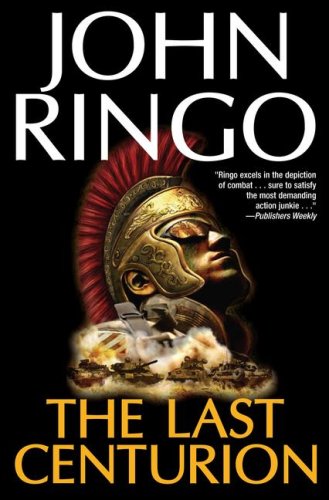
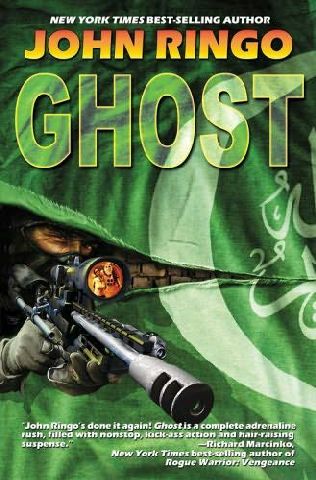
Sometimes stuff comes out of nowhere and requires itself to be written. INTO THE LOOKING GLASS, GUST FRONT, GHOST and THE LAST CENTURION are in that category. Those write themselves and write themselves fast. LOOKING GLASS was a couple of weeks, GUST FRONT (one of my longest books) was a couple of months while I was working, GHOST was a month, LAST CENTURION was seven net days. (153k words)

I love those.

VENTRELLA: Of what work are you most proud?

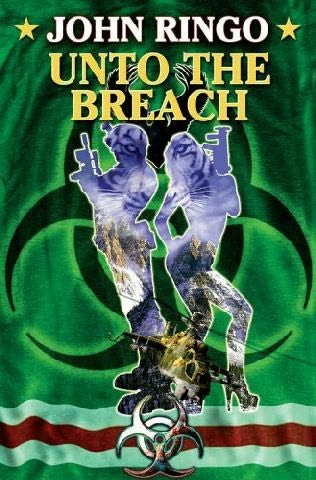
RINGO: UNTO THE BREACH. I don’t recommend the series. Despite it’s popularity (and it’s immensely popular) it’s not everyone’s cuppa.

But UNTO THE BREACH is outstanding. It’s one of the few books of mine I recommend. The last book that was that good was GUST FRONT but GF is weak in prose and grammar. (Early author mistakes.)

VENTRELLA: You’ve done quite a few collaborations. What do you see as the advantage of doing so?

RINGO: For the junior author the advantages are several. They build market by introducing the new author to the established author’s fanbase. They help teach the craft of writing as well as working in the publishing industry. And you can generally get more money from doing a collab as a new author than your own work.

For the senior author they’ve got two or three values. They permit the author to get a story out there that they either don’t have time to write or don’t have quite the right skill set to write. (See ‘write what you know.’) And the senior author gets fairly good money for slightly less work than a full novel.

VENTRELLA: They have obviously worked out, as you continue to do them. Is it a truly collaborative effort, or does one author primarily do the writing and the other act as guide and editor? How do you divide up the responsibilities?

RINGO: Every collaboration is different. I’ve done collaborations where I wrote a 35k outline for the junior author, (THE ROAD TO DAMASCUS, HERO) one where it was the junior author’s idea and I took portions of it as well as teaching the craft of writing, (VON NEUMANN’S WAR) wrote most of it and left portions for the junior author to ‘fill in’ (Vorpal Blade series) to ones where I basically gave the junior author a vague concept and they ran with it. (TULORIAD.)

Every collaboration is different.

VENTRELLA: Have you ever run across unexpected controversy with your writing? If so, how have you dealt with it?

RINGO: Unexpected? No. I’m considered a ‘controversial conservative SF author.’ Not to mention GHOST, which… well, you just don’t get more controversial unless you’re a gangsta rappah under indictment for murder. How do I deal with it? Generally I try to swallow my rage and smile. Because with the exception of some of the stuff in the Ghost series, I really don’t see what I say, what my characters do and say, as particularly controversial, crazy, evil or illogical. I see the people who consider it ‘controversial’ as idiots and morons. (Whereas they view me as a ‘racist, homophobic, xenophobic, genocidal asshole’ in the words of Mercedes Lackey.)

So, mostly, I ignore it.

VENTRELLA: You’ve never shied away from political issues as well (nor have I) – we have had a few interesting discussions in this area. Do you think it is wise for authors to take stands which may alienate readers?

RINGO: As I said in a recent email to a family member, politics has become religion and there is virtually nothing which is not politicized. You can take the PC approach of having the enemy be alter versions of what the Left hates (the US military as in Avatar, Christians, middle-class white males) in which case you can alienate the core readers of SF. Or you can alienate the Left by being a human and American exceptionalist and having characters who, whatever their race, nationality, creed or sex, act in a traditional self-determinant manner and worry about PC after the Human Race has been saved.

Whatever people think, you don’t get the choice to not piss anyone off. ‘You can please some of the people all of the time, all of the people some of the time but you can’t please all of the people all of the time.’

VENTRELLA: Do you think this has affected your sales in any way? Do you care?

RINGO: If anything in the positive. My ‘controversial stands’ fit the market of my core writing. And, no, I don’t even if it’s in the net negative.

VENTRELLA: What advice would you give to a starting author that you wish someone had given you?

RINGO: Get an accountant.

VENTRELLA: What is the biggest mistake you see aspiring authors make?

RINGO: I tend to get sarcastic about this question. Impatience is one. There are alot of people out there that want to get published. Publishers who are even willing to look at unsolicited manuscripts are overwhelmed. So don’t think it’s going to be a fast process. Fill the time by writing your next book. Publishers also want people who have more than one book in you and if you’re a writer you’re going to want to write that one, too. Just write it. It may take years to get published. Unless you’re in your ’60s, you should have them. Be patient and keep writing in the meantime.

‘Puff reads.’ I made this mistake. After HYMN got accepted I asked Jerry Pournelle if he’d read it. He sent me a reply which at the time I took to be very rude to the effect that I’d asked him to do the most odorous chore of a professional writer so, no. Since then I’ve gotten to know more about Jerry and being asked to ‘read my manuscript’ and for Jerry he was being really damned polite.

There are authors who really enjoy that sort of thing. I don’t. Most don’t. So… please don’t ask. When we say ‘Yes’ we’re not really happy about it and when we say ‘No’ we feel like we’re dissing somebody’s baby. So … Don’t ask. Kay?

VENTRELLA: Finally: What’s the latest news on the possibility of movie adaptations? What other exciting scoops can you share?

RINGO: Zero. Nothing moving on that area. It sort of norks me that I’ve got 33 novels published or in the pipeline and so far I don’t have option or contract one. OTOH, given that I’m a ‘controversial conservative sf author’ (three strikes against me since even Syfy no longer does SF) I’m not really surprised. Just…norked. (Mildly irritated.)

Interview with author William Freeman

MICHAEL A. VENTRELLA: Today I welcome author William Freedman. His debut novel, LAND THAT I LOVE, was published this year by Rebel and he is currently finishing his second, MIGHTY MIGHTY. His novelette “Forever and Ever, Amen” appeared in the 2006 Spirit House chapbook and his short story “Intentions” is scheduled to be published this year in Ash-Tree Press’s HOLY HORRORS anthology. He is a founding member of the Long Island-based LISciFi critique group and has been a panelist at I-Con, Balticon, Albacon, Capclave and Arisia. He holds degrees in journalism and international business and his non-fiction work has appeared in Investor’s Business Daily, Euromoney Books, Global Finance magazine, Treasury & Risk Management magazine, and many other business and financial news outlets both in print and online.

William, what is it in your background that made you want to write LAND THAT I LOVE? Was there some specific political event that triggered the idea?

WILLIAM FREEDMAN: When I began writing LAND THAT I LOVE, George W. Bush had just won the 2004 presidential race. (I hesitate to use the term “re-elected” because that presumes he was elected the first time.) Considering all the changes in American politics in the brief time since then, some might not recall the mood of the nation back then. The Republican Party controlled both chambers of Congress as well as the White House, and the Supreme Court was getting more conservative all the time. We were effectively a one-party nation. From Election Day until Katrina, dissent was rarely heard in public. I remember telling a co-worker at the time, “I’m married and raising three kids in a Republican-majority suburb, so I’m a lifestyle conservative. I’m an MBA, so I’m by definition a fiscal conservative. As someone who was in harm’s way during the Gulf War, I’m in favor of military intervention in Iraq, even if I don’t buy the reasons the White House is giving for that intervention. With a few codicils, I’m pro-life. But I don’t believe in rescinding habeus corpus. I don’t believe in warrantless wiretaps. I don’t believe in torture for torture’s sake. But what exactly am I allowed to disagree with the President about and still be considered a good American?” He didn’t have an answer to that.

By the way, it didn’t take me five years to finish writing a 55,000-word book. It took me one. But it then took three years to find a publisher and the better part of another to get through the contractual, editing and launch processes. On my blog site, LandThatILoveNovel.WordPress.com, I have a page with excerpts from some of the rejections I got from publishers and agents. At first, nobody wanted to touch the political controversy. Then, after it became fashionable again to criticize Bush, the rejections tended to say that the material was too dated — that by the time they’d be able to get it on the shelves, the war would be over. Of course, the book has been out for the better part of a year now, and we still have a hundred thousand American troops spread between Iraq and Afghanistan. I suppose I get the last laugh, but I’d give it up if it meant bringing them all home.

Incidentally, I don’t consider this book anti-war. It’s anti-arrogance. I don’t consider it anti-conservative, as its Amazon reviews would indicate. It’s anti-seeing-the-whole-world-through-only-one-lens.

VENTRELLA: Who were you inspired or influenced by? (Am I remiss in seeing the ILLUMINATI trilogy in here somewhere? fnord)

FREEMAN: I never read it. Maybe I should. I’m not really into the whole conspiracy-theory thing. Although there is an element of deception, there are no conspiracies in LAND THAT I LOVE. Everyone’s motivations are pretty clear and nobody’s manipulating anyone. It’s the naked power of a remote overlord versus the scrappy resistance of the proud locals. This plot goes back at least to the Maccabees and almost certainly before that.

I do steal the plot straight out of H.G. Wells’s THE WAR OF THE WORLDS with one exception: There are no aliens. In the corner of the Milky Way in which LAND THAT I LOVE takes place, there are no extant, high-functioning non-human civilizations. Humanity has spread throughout the sourthern spiral but hasn’t encountered much in the way of competition. And I think that will continue to be the case. It’s unlikely that we’ll ever encounter anything out there more dangerous than ourselves.

VENTRELLA: Given the good reviews you have received, how are you capitalizing on that?

FREEMAN: I get a little more respect from my local librarians. And now that I have a book in print and those kind words on Amazon and on the back cover, I feel like I have quite a decent calling card when it comes time to get serious about floating MIGHTY MIGHT, my superhero spoof/social satire, to the agenting and publishing worlds.

VENTRELLA: I met you at Albacon, a science fiction convention. Why did you decide to target that audience?

FREEMAN: Satire is my canvas, but science fiction and fantasy are my palette. These are the tropes I use. But I belong to a sci-fi/fantasy crit group, not a comedy crit group. Just as I want my writing to work on the gag level and on the message level, it absolutely has to function on the adventure level. Don Adams won the Best Actor Emmy three years in a row because Maxwell Smart, as Adams inhabited him, might spend most the show making faces, delivering a litany of trademark gag lines and stepping on rakes, but in the last five minutes he’d be swinging from chandeliers, winning sword fights, expertly manipulating some world-saving gizmo and outwitting the villains as surely as James Bond or Napoleon Solo or Matt Helm would have. And you wanted him to get together with 99, and you wanted him to impress the Chief. Get Smart worked as a parody precisely because it also worked as character-driven romantic comedy and as the kind of secret agent story that it was sending up. Of course, sci-fi and fantasy auteurs in 2010 take their genre far more seriously than the spy writers of the 1960s did. I’d probably have ruffled fewer feathers in that milieu.

Even so, I remain resolute in identifying with sci-fi (which I insist on calling “sci-fi” despite protests from people who are trying to jettison the term in some have-baked, poorly conceived and wrong-headed attempt at gaining respectability) and fantasy. My favorite author these days is Paolo Bacigalupi, whom I’ve been following like a deranged fanboy since “Pop Squad” first appeared in 2006. Over the past couple years, he’s won all kinds of awards and critical acclaim. No less august an outlet as Time magazine showed him love for THE WINDUP GIRL. In a convention green room a few months ago, he was chatting with some other writers and talking about how mainstream publishing pros are telling him to keep doing what he does, but stop calling what he writes “science fiction”. He just laughs it off. I like to think I would too. Not that I’m in any position or am ever likely to be.

VENTRELLA: Have you received any negative comments based on the political nature of the book? Or do we just assume that the targets of your book don’t read anyway?

FREEMAN: I think history has come down on my side on this one. As unpopular as President Obama is today, he’s still twice as popular as President Bush was in his final year. Even the new wave of Republicans have little good to say about Bush’s policies.

A quick word about my own politics. Like I said, I’m an independent. I tend to vote for Democrats at the national level, but I’m just as likely to vote for Republicans in local and state contests. I got my liberal arts degree from a conservative school and my business degree from a liberal school. I’m used to disgreeing, pointedly but respectfully, with my friends, then going out drinking with them afterwards. If you think I’m an extremist, it might be because you’re the extremist and believe that everyone who doesn’t agree with you on every issue is stupid, misinformed or evil. That goes for liberals, who might identify more with my broader beliefs, as well as conservatives. My non-absolutist views on the abortion debate don’t set too well with the left.

Abortion doesn’t figure in LAND THAT I LOVE’s plot. I just cite this to call out some increasingly shrill voices who expect their favorite writers to tow a party line. I refer to the former fans of Elizabeth Moon, who vilified her for expressing what I agree is a reprehensible position on how the American mainstream ought to treat the Muslim-American community. I don’t defend her stance, just her right to disagree with the rest of us. Am I supposed to burn my signed copy of ENDER’S GAME just because I’m uncomfortable with Orson Scott Card’s anti-gay rhetoric? Is it inappropriate for me to read Nietszche or listen to Wagner because I’m a Jew and they were anti-Semites? Guess I should’ve never bought that Ford then. I mean, how would those of us who are left-of-center react if Glenn Beck went on the air and told all his viewers to boycott Alec Baldwin movies? If we’re artists, aren’t we expected to draw a reaction — a strong reaction? Can we do that if we’re concerned that we’ll lose our audience if we say something they might disagree with? We won’t ever have to worry about government or corporate sponsorship if we allow others to cow us into censoring ourselves. Yeah, good luck saying something brilliant if you’re always on the defensive against saying something stupid. And good luck getting through the rest of your life without saying something stupid.

VENTRELLA: Do you think today’s political landscape is in need of more satire, or is the news itself satire enough? (Since my next book is about a liberal vampire who runs for President, I certainly hope there is a market out there still for political satire!)

FREEMAN: No, Mike. Sorry. I tapped that well dry. There’s nothing left. I feel bad for you after all that work. Tell you what: I’ll buy a copy.

VENTRELLA: What are you working on next?

MIGHTY MIGHTY takes place in a world very similar to ours but with one exception: it has roughly the same proportion of superpowered individuals as the Marvel or DC universes seem to have. As one character puts it, “There are as many people with powers as there are people with herpes.”

The reason that world is otherwise indistinguishable from ours is that we ourselves have abilities and talents we don’t use. We all have excuses: lack of ambition, lack of social graces, family responsibilities, better things to do. But we could all be making more of a difference in the world. That’s why so many of MIGHTY MIGHTY’s most powerful characters work as airport screeners or mall cops. Until Fate, i.e., me, steps in to provide them with one last chance at redemption.

VENTRELLA: Who do you like to read for pleasure?

FREEMAN: Bruce Stirling, Neil Gaiman, Terry Pratchett, Iain M. Banks. I mentioned Paolo already.

VENTRELLA: What advice would you give to a starting author that you wish someone had given you? What is the biggest mistake you see aspiring authors make?

FREEMAN: You can’t copy-edit enough. Ultimately, you have final signoff. Your name goes on the cover and any mistakes that can creep in during the editing process, you own forever. Don’t assume that leaving the editing to skilled professionals is like leaving it to infallible gods. Don’t make that final cut on a screen. Print out all hundreds of pages and read them fresh. In LAND THAT I LOVE, I had what my editor considered an unclear antecedent to the pronoun “his”. There were two possible individuals that could have been referenced, although I can only see the logic in one. She picked the other and replaced “his” with the wrong character’s name. The mistake takes me out of the story every time I read it for an audience — and it’s right there in the first chapter. Maybe I’m being overly sensitive, though, because nobody else has told me they caught the error yet.

17

From a Lunacon panel in 2014

Interview with Hugo award winning author Peter Beagle

MICHAEL A. VENTRELLA: Today, I am honored to be interviewing Hugo award winning author Peter Beagle. I emailed some questions to him and was thrilled when he took some time from his busy schedule to send me back a voice recording of his answers!

Peter Beagle is probably best known for his novel and screenplay of THE LAST UNICORN. His other acclaimed novels include A FINE AND PRIVATE PLACE, TAMSIN, and THE INNKEEPER’S SONG. He also has a number of short story collections and nonfiction works to his name.

Besides THE LAST UNICORN screenplay, he has also written the screenplays for Ralph Bakshi’s animated The Lord of the Rings and the episode “Sarek” for Star Trek: The Next Generation.

The transcript follows:

Mr. Beagle, THE LAST UNICORN was made into an animated film back in the days when maybe we’d get two animated features a year. How did that arrangement come about?

PETER BEAGLE: It came about because a red-headed rascal named Michael Chase Walker not only optioned the book from me but eventually — and this doesn’t often happen with options — eventually paid the purchase price to buy the rights to the book and then turned around desperately looking for a deal to make believing that somebody would want to make this book into a movie. He ran through a lot of people back then before he finally got Rankin and Bass to fall in love with it.

VENTRELLA: Were you happy with the results artistically?

BEAGLE: I’m as happy with it as their budget would allow them to be themselves. They did some wonderful work in it. There’s nothing that appalls me; nothing that makes me want to leave the country. At its best, it’s marvelous. It rarely has a ‘worst’ to it. I found myself saying, when watching it a year or so ago, “Oh my god, the damn thing’s a classic.”

VENTRELLA: How did the “lost” version of that book come about?

BEAGLE: Well, I started the book when I was twenty three. That summer I was sharing a cabin in the Berkshires in Massachusetts with my closest friend from childhood who was a painter, and still is. I began writing a story — just a story about a unicorn going somewhere with a companion who I couldn’t see, because he was out all day working on an enormous landscape. He’d make his lunch and then pack the landscape on the back of his motor scooter and I wouldn’t see him all day, and I wanted to show him that I had been working on something all day and not just fooling around in the warm sun or playing with the guitar. So I tried several stories that summer, and none of them seemed to work.

And then I found myself writing this story about a unicorn traveling somewhere in search of her people. It was almost completely different from THE LAST UNICORN that people know. I got about 85 pages done that summer and then simply hit the wall. I didn’t know what I was doing — well, I didn’t know what I was doing writing the whole book anyway — but I really didn’t know where this should go and I just dropped it. I put it aside, about 85 pages in, and wrote another book, nonfiction, about crossing the country with the same friend on a couple of motorscooters.

And then the mother of my children gently nagged me to get back to it. She’d read the original version and wanted to know what comes next. And I threw out — or thought I had thrown out (my mother kept everything, thank goodness) — I threw out everything but the first couple of pages from the earlier version and started over. What is out as the “lost version” was printed and will be republished is basically that first 85 pages. A reader would recognize certain things at the beginning and be absolutely baffled by a whole lot else.

VENTRELLA: Do you prefer screenplays to novels?

BEAGLE: Fiction is more fun — writing books in general is more fun — but screenplays pay better.

VENTRELLA: You are the Guest of Honor at Philcon this year. (I’m just a regular guest, but I’m hoping to maybe be on at least one panel with you!). Do you enjoy conventions and do you advise authors to attend them?

BEAGLE: When I pull into a convention, I always imagine myself and my business manager as a couple of peddlers coming to town with their cart and their mule, setting up shop by the roadside, and selling out of the wagon. There are extra elements to a convention. There are people I only meet there — there are friends I make at conventions that I never see during the rest of the year — and generally, I’ve had very good experiences. Some have touched me very deeply. And there are people I look forward to seeing when I know I am going to be in that town and I know they’ll be coming. But I never advise a writer to do too much of it. I didn’t do conventions at all for years, and I’m trying to cut down, because one is supposed to be home working and it’s not simply the time, it’s the energy. You only have so much and it usually takes me a couple of days to get charged up again after a convention. At a convention, you’re running on adrenaline, and that’s not the same thing.

VENTRELLA: What themes do you find yourself revisiting in your work that may pop up without planning?

BEAGLE: I’m trying seriously to at least cut down on the elder goddesses, cats, and music, as well as shapeshifters. Gotta watch it with the shapeshifters, they’ll turn up in my work. I’m doing pretty well with most of them but you have to watch the cats. Every time you take your eye off a cat, it shows up in your story.

VENTRELLA: Who do you like to read for pleasure?

BEAGLE: Well, I read far less fantasy and science fiction than you might think. I read a lot of history because my father was a history teacher and I have a taste for it. I’m getting back to reading poetry — I got scared off in college, which happens to a lot of people. And I have favorite writers whose books I’ll pounce on. Right now, I’m reading a novel I missed by John le Carre. I like mysteries very much and le Carre has an extra dimension, an extra depth that most mystery writers don’t have.

In fantasy, I look for books by old friends like Patricia McKillip and Robin McKinley and Patrick Rothfuss — I’m still waiting for his second book to come out. And I re-read a lot. I re-read books I haven’t read in years that I just want to see again, like visiting an old friend. I re-read George McDonald Fraser’s FLASHMAN novels. Flashman is an absolute scoundrel. There is nothing to be said for Flashman. It’s a rat’s eye view of 19th century English European history. There’s something just inspiring about Flashman’s badness because at least he never pretends he is anything other than what he really is! You can’t ask more from a character.

VENTRELLA: What advice would you give to a starting author that you wish someone had given you? What is the biggest mistake you see aspiring authors make?

BEAGLE: The biggest mistake — it’s not even a mistake, but something I wish an author had told me: Don’t get too mad at yourself when you do it wrong. Just do it again. Because that’s most of it, just doing it again, learning by doing it wrong.

The thing I always tell people who want to write is that you have to show up for work. Most people haven’t got the patience. The talent doesn’t have anything to do with it. I know a lot of people with as much or more talent than I have … But I will sit there, even when nothing is coming. Anybody can write when the stuff is flowing. But I’ll sit there until, as Red Smith, the great sportswriter said, “I’ll stare at the blank screen or page until little drops of blood start to come out of my forehead.” That’s how you know you’re writing.

When I was fifteen or sixteen, I met a writer through friends named Charles Jackson who I’m sure isn’t remembered these days except for the movie that was made out of his novel THE LAST UNICORN. [laughs] I’m sorry, THE LOST WEEKEND, which was about an alcoholic. It was made into a movie, and was very successful. But when I met him, he wasn’t writing fiction. He was working for one of the early television soap operas. And being the age I was, I was immensely snobbish. How can somebody who wrote THE LOST WEEKEND lower himself to write for a TV soap? We rode in on the train together from Connecticut to New York, and he told me, among other things, “I can only really write about something that’s a part of me. I am an alcoholic, so THE LOST WEEKEND came out of what I know. And there hasn’t really been anything like that since.” I remember him telling me this: “I can probably get a hundred thousand dollar advance on my name for a new book of any sort, but you can’t do that. It’s not honorable. What I’m doing may not seem like much to you, writing for this soap opera, but it’s honorable work, and it’s professional. And when something erupts in my life that wants me to write about it, then I will. Meanwhile, I’ll do this.”

He wasn’t scolding me. He wasn’t coming down on me or anything like that; he was very gentle. But he taught me a thing about what is professional and honorable. What you can do and what you can’t, even if you need the money.

Charles Jackson had principles. I make jokes about having no principles of my own because I can’t afford them, but when I do come up against a principle, I know what it is. I’ve usually got ten seconds to make a decision. I hate it, but I think of Charles Jackson. He was gay, by the way, which he didn’t go into, and he did write a novel after that — again, this was in the 1950s — from the point of view of a gay man. He’s long dead. If anyone reads anything of his, it’s probably for a film class that included THE LOST WEEKEND. But he was a good guy and I’ve never forgotten him.

The biggest mistake an aspiring author makes is thinking either that nothing you write is any good or that everything you write is good, and neither one is true. The biggest mistake is listening to too many people and also — and this I talk about a lot — confusing writing with publishing. It’s not the same thing at all. Publishing is a business. Publishing involves making someone else some money and maybe a little bit for yourself. Writing, storytelling, art — that’s another matter. I’m not being romantic about it; there’s just not a lot of connection between the two.

There’s a saying that an artist is someone who can’t not be an artist, and that’s really what matters. If you can’t do without being an artist, then it really doesn’t matter if it doesn’t sell. You don’t burn the manuscript, for heaven’s sake, you find a place for it … The only publication that would touch my story “Lila the Werewolf” back in the 1960s was a college magazine at UC Santa Cruz. Later on, it got picked up, but I just wanted it published.

Me and Peter Beagle