Interview with Agent and Author Donald Maass

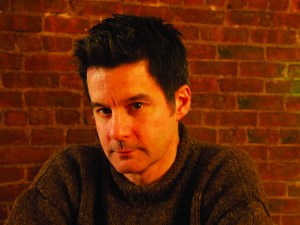
MICHAEL A. VENTRELLA: Today I am very pleased to be interviewing Mr. Donald Maass, one of the top literary agents in New York. Donald Maass’s agency sells more than 150 novels every year to major publishers in the U.S. and overseas. Donald MaassHe is the author of THE CAREER NOVELIST (1996), WRITING THE BREAKOUT NOVEL (2001), WRITING THE BREAKOUT NOVEL WORKBOOK (2004), and THE FIRE IN FICTION (2009). He is a past president of the Association of Authors’ Representatives, Inc.

I first met Mr. Maass when he taught a writing workshop in the Lehigh Valley. I learned an awful lot from him, but when we spoke, it was mostly about John Lennon (who we both admire). I used his 2002 book WRITING THE BREAKOUT NOVEL to help tone my latest manuscript and have just finished reading his newest book, WRITING 21ST CENTURY FICTION: HIGH IMPACT TECHNIQUES FOR EXCEPTIONAL STORYTELLING.

Let me start by asking about the underlying theme of 21st century storytelling. How is that different from 20th century storytelling? Why did you make that distinction?

DONALD MAASS: There are many ways in which fiction writing has evolved. Many 20th Century techniques have dated. Objective description, scene-and-sequel, strict adherence to tense/person are all unnecessary. Genre rules are confining and regularly broken. 21ST In WRITING 21ST CENTURY FICTION I forecast the death of genre. Genre boundaries didn’t exist a century ago and won’t a century from now.

Overall, I’m pushing fiction writers to understand what gives fiction high impact, which is great stories beautifully written. High impact fiction is also highly personal, meaning that to the degree one writes according to rules, or simply to sell, one is working in a box. To write high impact fiction you’ve got to break out of your box—and “literary” can be a box too, By the way — or build an altogether new box which is wholly your own.

VENTRELLA: You list “Quirks” and “Special abilities” as ways that writers can create characters with which readers will bond. Is it possible to go overboard?

MAASS: Theoretically a character could go over the top, I suppose, but in nearly all manuscripts it’s the reverse. Characters, when they stand out, show us strength, self-awareness, strong opinions, lively voice, comprehensive world views and more. Quirks, handicaps, special abilities and even superpowers are common and useful devices nowadays, it’s true, but don’t by themselves do the whole job, or fit every story. Great characters are the sum total of what they do, who they are and how they fully experience their story world.

VENTRELLA: There are exercises after each chapter, which are similar to the ones you had me and those in your writing seminars do. Some of them made a great impression on me and were very useful. How are these different from your earlier workbook?

MAASS: They’re shorter, more prompts than step-by-step exercises. The creative brain moves at high speed. I’m trying to match that!

VENTRELLA: Have you ever made the authors you represent do these exercises?

MAASS: Oh, constantly. They ask me for that.

VENTRELLA: Your advice to always have “micro-tension” on every page has been criticized by some who, I believe, don’t completely understand your point. Is it possible to have a “page-turner” without tension on every page?

MAASS: No. Tension is not about action, explosions and shouting. It’s about generating unease in the mind of the reader. BREAKOUT There are many ways to do that, many of them subtle. Even language itself can do it. When tension exists in the mind of the reader there’s only one way to relieve it: Read the next thing on the page. Do that constantly, on every page, and readers will read every word — you have a “page turner”, no matter what your style, intent or type of story.

VENTRELLA: How much of writing is innate? In other words, do you believe there are just some people who are born storytellers but simply need to learn technique? Or can anyone become a good writer?

MAASS: I would say that anyone can become a better writer. Every writer has strengths and every writer has weaknesses. In WRITING 21ST CENTURY FICTION there’s a chapter devoted to helping authors understand the writer they are, plus the writer they’re not, and compensate. Look, some writers will never be artful stylists and some will never be maniacal plot spinners. That doesn’t matter. What matters is growing. There’s always a way to work on what you’re weak at, and succeed.

VENTRELLA: How do you balance the surprise element — where you have your character do the exact opposite of what is expected — with believability and consistency?

MAASS: Great question! Let me put this proposition to you: When your mousy librarian pulls a gun out of her purse, readers won’t object, they’ll dive deeper. It’s psychology. The expected is dull. The unexpected is intriguing. Readers will go with you when you surprise them. The mistake I think is not pulling that gun in the first place or, when it’s drawn, not fully playing out all the consequences of pointing that gun. Working that out and using it is what makes a surprise believable.

VENTRELLA: When looking at a query letter, how do agents react to authors whose previous work has been self-published?

MAASS: There’s a certain bias against that but it comes not from moral objections but from experience. That said, the fact is that there are hundreds of famous writers who first self-published. It’s not about one’s chosen path but about how well one writes.

VENTRELLA: In this market, with the publishing industry changing daily, how important are the small press?

MAASS: Very. We work with them, hoping and praying that the cash crunches that can clobber small presses don’t hit them. There even are some “digital first” models that are working, though I would stress that they’re new and evolving. fire E-books aren’t a revolution, new utopia or new paradigm. They’re simply a new opportunity in the not especially easy business that we call publishing.

VENTRELLA: Some established authors are foregoing agents and publishers altogether and are selling their work as ebooks on their web pages. Why do you advise against that?

MAASS: Your pool of potential readers is cut by three quarters, and your ability to make them aware of your book is reduced even further. You’re dependent upon three bookstores who only display one hundred titles in your category. A handful of authors have made this work but they have the minds and energy of publishers. That describes very few reading this interview, trust me.

VENTRELLA: Allow me to ask something a bit more personal. You advise authors to not worry about genres but to write the story you want. My latest manuscript mixes vampires with a political thriller. In response to my query letter, I have received rejection letters from agents that handle political thrillers saying “We don’t do vampires” and agents who like vampire stories saying “We’re not interested in political thrillers.” Should unestablished authors aim more for specific genres in order to get noticed before trying to mix things up? Or are the responses I am getting normal, and I just need to keep trying until I find the right agent?

MAASS: Cross-genre fiction can be difficult to pitch and place, yet some of the most successful authors we represent have invented new genre hybrids. One thing I’ve learned, though, is that when a speculative element is involved, say vampires, it’s often best to look first toward agents, editors and imprints comfortable with that. (Alternate history might be an exception, and YA seems to be open to anything.) Keep trying. I find that wonderfully written works always find their way into print, even if the don’t always fit neatly into a slot.

VENTRELLA: What really excites you when you find a great book? Can you tell instantly?

MAASS: I know right away when I’m in the hands of a confident storyteller. I’m drawn immediately into a full realized story world, yet there’s no rush to tell me everything about it. Characters immediately win and intrigue me, even when they’re dark. The emotional life of the characters is rich, their inner struggles are compelling, and the story immediately starts to mean something. It makes me think and feel. No problem, right?

VENTRELLA: What was the last great book you read?

MAASS: Last great book–? Argh, too many to say. Right at the moment I’m reading Susanna Kearsley’s THE ROSE GARDEN (2011), a gothic tinged past life story. Susanna counts as her influences some greats like Phyllis Whitney. She writes warmly and does history well, too. The book’s got me under its spell.

Interview with author Christine Norris

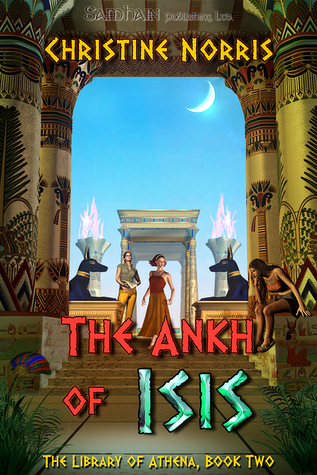
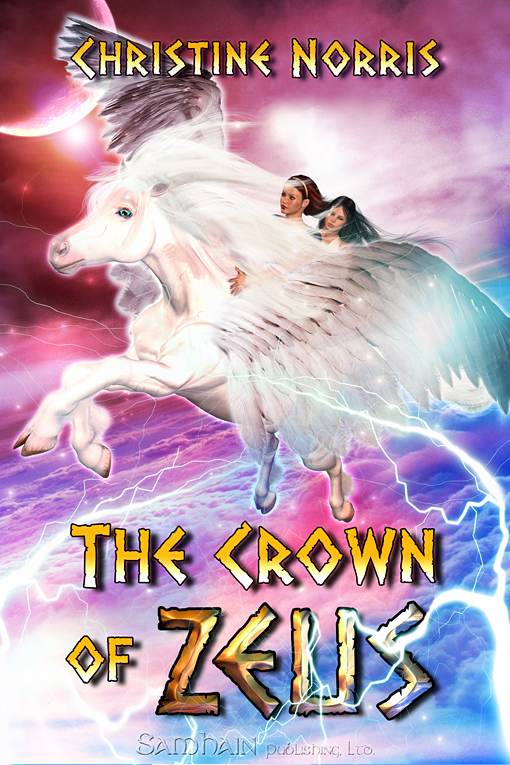
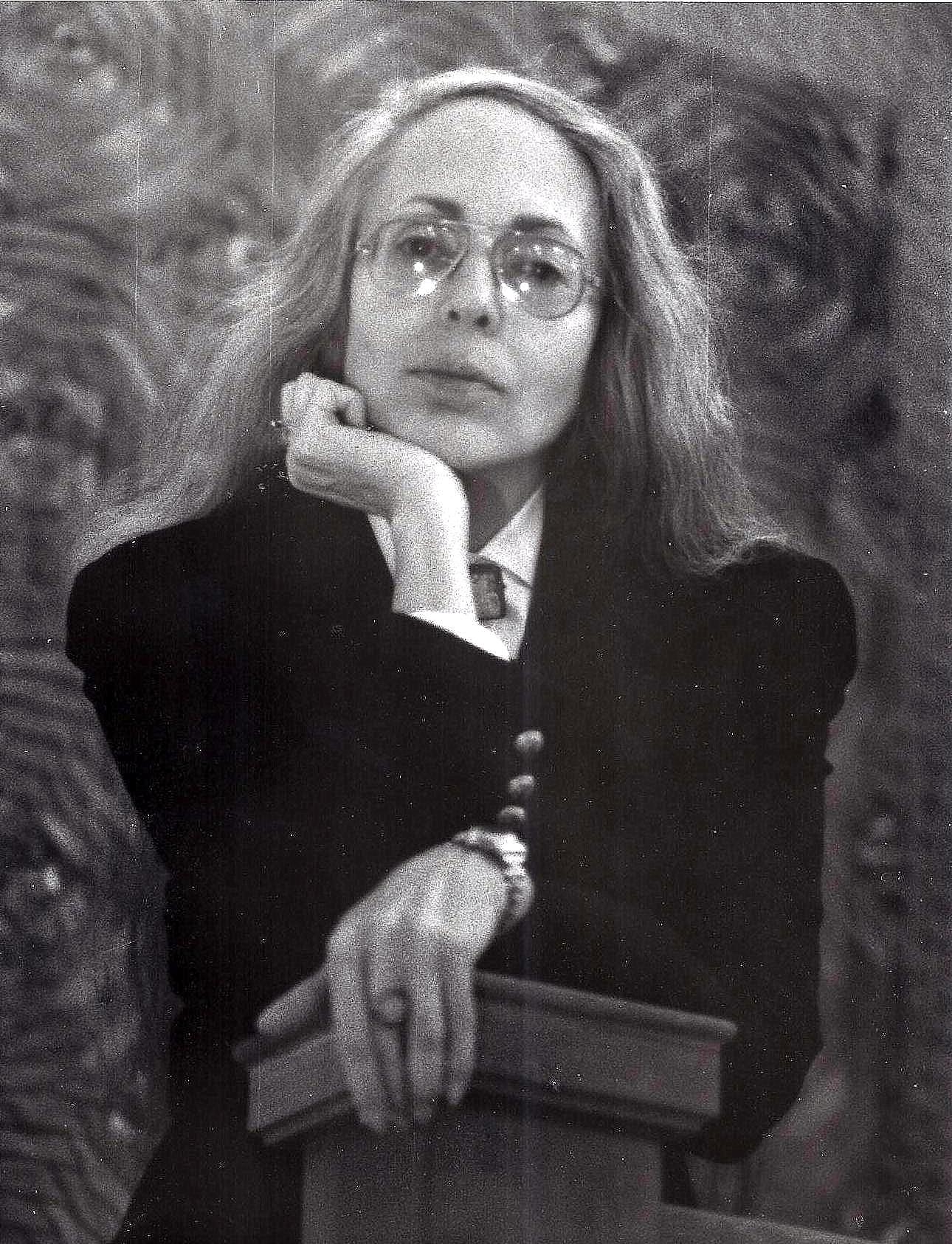
MICHAEL A. VENTRELLA: I’m glad to be interviewing friend and author Christine Norris, who has several works for children and adults, including the “Library of Athena” series and the “Zandria” duology. When she’s not out saving the world one story at a time, she is disguised as a mild mannered librarian, mother, and wife. She cares for her family of one husband-creature, a son-animal, and two felines who are steadfast in their duties as Guardian of the Bathtub and Official Lap Warmer, respectively. She has also done several English Adaptations of novels translated from other languages, and reached a new level of insanity by attending Southern Connecticut State University Graduate School to get her Master’s in Information and Library Science. She currently resides somewhere in southern New Jersey where she writes interesting opening bios for interviews. Her web page is here!

Christine, how did your first novel get published?

CHRISTINE NORRIS: I sold my soul to the devil, uh, I mean I was such a newbie. I had a book of agents and publishers, and knowing pretty much nothing about them, sent queries. And bombed horribly – got back my own letter from one, with the word ‘No’ scrawled across the top. Another came on a crookedly-copied half-sheet of paper. Ugh!

But it was the early 2000’s, and there wasn’t a lot of stuff on the internet about publishing, and most agents still took paper copies. Eventually I found a writer’s forum, Absolute Write, and I started to find out about other publishers. I found LBF, a teeny tiny publisher, in Pittsburgh at that time. They took my first book, TALISMAN OF ZANDRIA, and the sequel. Both are out of print now, but I’m doing new editions for Zumaya.

VENTRELLA: What is your writing background?

NORRIS: I really don’t have a formal background, nothing like a degree in Creative Writing or anything. I just started writing in 2001, and kept on going. I have six books now, with a seventh out with an agent (crossing fingers for an offer!) and working on number eight. Yes, it took me ten years and six novels to finally land an agent. Just goes to show it’s never too late. I really love her too, she’s just wonderful and supportive.

Someday I guess I’ll stop writing, but I don’t see any reason to at the moment. I’m like a literary Forrest Gump.

VENTRELLA: How did you find your current publisher?

NORRIS: That is an interesting story. Okay, maybe only interesting to me. The publisher that put out the first two books in the “Library of Athena” series decided to go back to strictly Romance books — which these decidedly are not. I had the third book finished, and they dropped the series. After I finished freaking out, I calmly put out an email to my friends at Broad Universe, begging, I mean, asking if any of the publishers in the organization would be interested. Elizabeth Burton at Zumaya said she would look, as long as it wasn’t a Harry Potter or Twilight clone, and she liked it enough to take it for the Thresholds imprint.

VENTRELLA: What do you think are the advantages of a smaller publisher?

NORRIS: I think there are advantages to publishers of all sizes – everyone has their pros and cons. You can be a big fish in a little pond or a small fish in a big pond. Smaller publishers are more personal, a little more homey, if you will. They also, many times, have less money to spend on promotion, which is okay if you know how to do a little guerilla marketing. They will also sometimes take a chance on a book that a bigger publisher might not feel is commercial enough. I always say that if you do your homework and are comfortable with what any publisher can give you, there’s no ‘right’ or ‘wrong’ way to publish. It’s all about what you can live with.

I was at a writer’s conference recently, and there were a lot of big agents and editors from Big Six houses attending. We hear a lot about how people ‘in the biz’ feel about smaller publishers and how they look down on us. It is just not true. They were all very professional, and more than once I heard: “Someone selected your work from a slush pile. You are just as published as anyone.” It was nice to hear, and it was nice to get that kind of respect for my work.

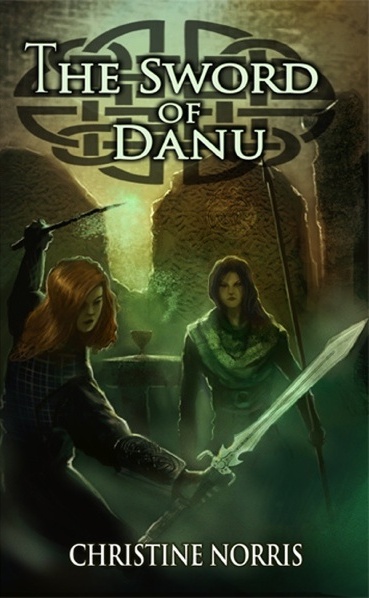
VENTRELLA: Tell us about THE SWORD OF DANU.

NORRIS: It’s the fourth book in the “Library of Athena” series. Oh, you want to know more? All right then.

Megan Montgomery, the main character, has begun to teach herself magic. After the last adventure, when she almost gave up protecting the Library of Athena altogether, she decided that she needed to arm herself against the Order of Ares, a.k.a. The Bad Guys. But her magic doesn’t always go the way it should. She has also decided that she will do whatever it takes to never, ever, never open one of the Special Collection books again. They are enchanted and suck you inside, and then things try to eat you while you solve the clues and fight the monsters to find the magical artifact hidden inside the book and get out.

Unfortunately, something has gone terribly wrong, and one of the books has escaped its pages and is now this imaginary Ireland is taking over the manor where Megan lives. So she and her friends are kind of forced into finding the artifact, in this case the Sword of Danu, so they can fix it all. There’s more to it than that, but I don’t want to give too much away. Except that, of course things try to eat them. Things are always trying to eat them. There’s the Morrigan, and Goibhniu the Celtic smith-god and all kinds of teen angst.

VENTRELLA: And, of course, you have a series based around a library. Tell us how that series came to be.

NORRIS: It was so long ago — late 2004 — that I really can’t remember when or how I came up for the idea for the series. It kind of evolved from what might have been a chapter book idea to a novel, to a series. My son was only 2 at the time, so I had never heard of the Magic Tree House series, which my books get compared to often, along with Harry Potter, Indiana Jones, and Percy Jackson. There are a lot of similar elements in them.

I do remember stating at one point, “I think I could write a hundred of these.” Uh, no way. Five is the limit. One more left to go. It was just serendipity that, years later, I became a librarian. At that time I was working a really horrible part-time job and being a stay-at-home mom. Life is just funny that way, I guess.

VENTRELLA: What was the biggest mistake you made when first starting out as a writer?

NORRIS: Just one, really? I’m sure I made all kinds of mistakes. Not knowing how to write a good query letter. Not really doing my homework when it came to submitting. Being too self-conscious with my writing — it all came out stiff and self-absorbed. I think once I realized that I actually knew what I was doing, that I had made it past most of the newbie mistakes of the technical parts of writing, like not filtering my main character’s every action through me, the narrator, that I was able to loosen up and just write better, let my unique voice out (which is mostly sarcasm thinly veiled as humor, but still …). I also think that every writer needs to make those kinds of mistakes, so that they know when they’ve got it right.

VENTRELLA: What’s your advice for authors who wish to self-publish?

NORRIS: Don’t do it unless you are willing and able to commit the time, energy, and money that it takes to do it properly. Being a self-publisher means you aren’t just the writer, but you are the publisher, and unless you understand exactly what that means, I don’t suggest you attempt it. You need to hire editors, cover artists, do marketing, and pay for it all. It’s a big job. It can be done, but those who have been successful will tell you it was hard work.

VENTRELLA: What piece of advice would you give a starting author that you wish someone had given to you?

NORRIS: Be yourself. I never wrote to trends, or tried to write fan-fiction (though I recommend it to teachers who are trying to teach younger writers the mechanics of story and writing itself), but I had this idea of what ‘good’ writing was, and I was trying to reach some ideal. That old axiom ‘write what you know’ doesn’t really apply to most fantasy writers — unless one of you out that happens to have a dragon in their backyard or owns a big secret library full of magic books — but write what you like. Make yourself happy with a story and you’ll make readers happy too.

72

Interview with Hugo-Nominated Author Janet Morris

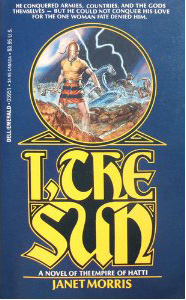
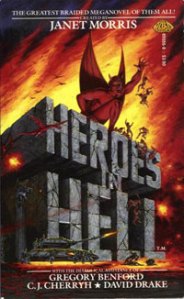
MICHAEL A. VENTRELLA: Today, I am pleased to be interviewing Hugo-nominated author Janet Morris. Janet is probably best known for her Silistra series. She has contributed short fiction to the shared universe fantasy series “Thieves World” and then created, orchestrated, and edited the fantasy series “Heroes in Hell,” writing stories for the series. Most of her fiction work has been in the fantasy and science fiction genres, although she has also written historical and other novels. Her 1983 book I, THE SUN, a detailed biographical novel about the Hittite King Suppiluliuma I, was praised for its historical accuracy.
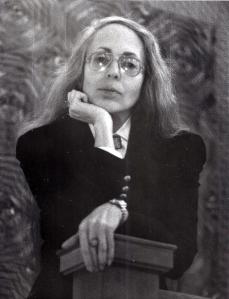
Janet, let’s start by talking about the Kindle promotion going on right now.

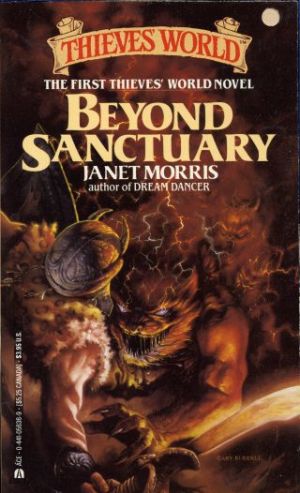
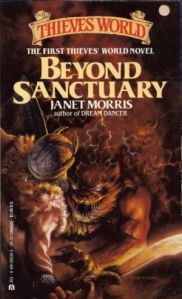
JANET MORRIS: There is an Amazon giveaway (May 15-17) of the author’s cut reissue of BEYOND SANCTUARY as a Kindle book. This is the only time this book will be offered as a free Kindle download.

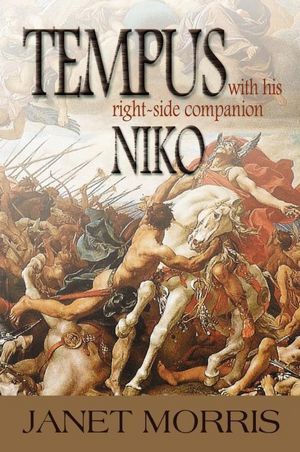
It the first novel in the “Author’s Cut” group of reissues: each “Author’s Cut” volume is compeltely revised and expanded by the author(s) and contain new material never before available. The other “Author’s Cut” volumes that have been released as ebooks and as trade paperbacks are TEMPUS WITH HIS RIGHT-SIDE COMPANION NIKO (2011) and THE FISH THE FIGHTERS AND THE SONG-GIRL (2012). The next “Author’s Cut” edition will be BEYOND THE VEIL (2013), second of the three “Beyond novels” in the Sacred Band of Stepsons series. We will eventually reissue all the Sacred Band of Stepsons books, and then more of our backlist, in this ‘author’s cut’ program. It’s very satisfying to get all the errors and deficiencies corrected, and have a chance to enhance these perennial sellers.

Most Sacred Band novels will not have giveaways; we chose BEYOND SANCTUARY as a good starting place for those new to the series and, in its enhanced and expanded form, as an attraction for those who loved these books and stories in the 20th century. We are planning to do a few Sacred Band stories as Kindle shorts as time goes by, but nothing specific has been decided.

VENTRELLA: You started your publication history with the Silistra series. How did you make that first sale?

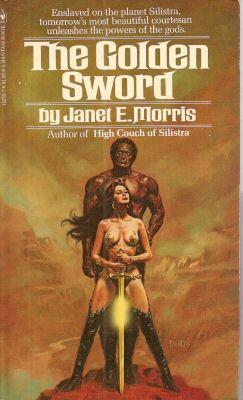
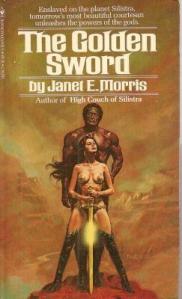
MORRIS: I wrote HIGH COUCH in 1975 and its two follow-ons, THE GOLDEN SWORD and WIND FROM THE ABYSS thereafter for fun: following the story for my husband and our friends. I knew no one in publishing and had no aspirations to break into the business.

One friend said her husband knew an agent and the book (HIGH COUCH) should be published but I would need to provide the manuscript in a clean, double-spaced copy, not single-space with handwritten corrections. I had my dad’s ancient typewriter (non-electric, non-correcting; the “p” key stuck) and was a terrible typist. I found out it would cost $1.00 per page to have the manuscript typed by a professional, which meant a $250.00 investment. So I didn’t do that for over a year; by then my second book was finished. In 1976 my friend sent the typed HIGH COUCH manuscript to an agent, Perry Knowlton, president of Curtis Brown, Ltd.. Perry called me and said I was a natural storyteller and he wanted to represent me and the book, and did I have any other books? I said I did but they weren’t typed up. He said, “Get them typed.”

Perry remained my only agent until his death. By the time I had the other books typed, he had sold HIGH COUCH for five figures to Frederik Pohl and Sydney Weinberg at Bantam and I was able to quit my day job. Then Perry sold THE GOLDEN SWORD and WIND FROM THE ABYSS to them in a package. By then I was writing THE CARNELIAN THRONE. By the time THRONE came out, Bantam had over 4M copies of the first three in print.

They bought THE CARNELIAN THRONE also, and my next series went to auction in two countries simultaneously based on sample chapters: I still don’t like to write outlines.

Silistra got many foreign rights deals, but only the French one is a divergent manuscript: for a sizable additional sum, I provided extra ‘erotic passages.’ ‘Erotic’ in those days was much less explicit than now, but even so, SILISTRA shook a lot of people from complacency: it wasn’t feminist, nor was it conservative; it featured pansexual characters and dealt with philosophical and sociobiological questions about sexuality and abuse of power; the main female character was powerful and had a sword: all these elements were challenging to the fantasy and SF community. And the book didn’t fit a neat category. In what was then a very hidebound and immature market, it blazed tough trails and still today doesn’t fit any simplistic or political model.
VENTRELLA: How has the publishing world changed since then?

MORRIS: E-publishing is a big change. Deconstructionism is rampant: the continual division of the novel into smaller and smaller subsets of its constituent elements (such as mystery, thriller, erotic, adventure, romance, horror, etc.) either mirrors or leads the deconstruction of politics and of society. Writing outside established marketing categories is increasingly difficult; the mid-list book, which was an incubator of talent, is all but gone in print publishing.

As an ox-gorer and a windmill-tilter who writes mythic novels with political subtexts and who never has been easy to categorize, I think e-publishing is a good thing. I no longer have to cut a big idea into three volume-sized chunks: I can write the book at the length it needs; I don’t have to fix or endure additional errors from semi-educated production people; I can control my covers and the book’s sell copy. The downside is there is much more free reading material (some worth the price, some not), and a lower educational level among some groups – but there have always been books and writers for every echelon of society.

VENTRELLA: Do you see a future where self-publishing will be accepted?

MORRIS: Sure, eventually. When we decided to return to fiction (after taking 20 years off to create the nonlethal weapons mandate, the nonlethality concept, and other initiatives in the defense policy and planning realms), we wanted to keep our fiction e-rights and at that time my agent (Perry Knowlton’s son, Tim, at Curtis Brown) said it was impossible to make a deal like that with a major house. So we decided to put together a small publishing house that did e-books and trades and make strategic alliances with other small publishing houses who produced quality hardcovers. We did this because the self-publishing road is still stigmatized, and because the production learning curve is steep. Kerlak did our first two hardcovers and gave me what I wanted: sewn binding, linen boards, generous print size, etc.

The stigmatization of self-publishing is primarily from the big chains, who look down on POD but POD was what attracted me to small publishing: no remaindered books; no books going to dumpsites; no torn-off covers returned and no tax liability for unsold stock. When we do reissues, we do “Author’s Cut” editions in which we can correct and expand and enhance each book that we’re releasing with better covers and production values than the twentieth century originals: an approach possible now but not practical even ten years ago.

Machiavelli commented in THE PRINCE as follows: “There is nothing more difficult to carry out nor more uncertain of success nor more dangerous to handle than to initiate a new order of things: for the reformer has enemies in all those who profit by the old order, and only lukewarm defenders in those who would profit by the new; this weak support arising partly from the incredulity of mankind who does not truly believe in anything new until they actually experience it.” We found this when initiating the nonlethal weapons programmatics: twenty years later, we are where we should have been in five years in nonlethals, and at absurd cost because nothing is adopted until big things take that viewpoint onboard commercially. Similarly, with publishing, as vested interests deal themselves in and competitive entities are created, things will stabilize – hopefully with new players, but with many of the old entities in new guises.
VENTRELLA: Will the rise of smaller publishing houses and e-books mean that these may someday be better accepted? For instance, will SFWA someday accept more of these publishers? Would that be a good thing?

MORRIS: Eventually the writers organizations must accept reality. E-books and small publishing are part of the new reality. SFWA, like all bureaucracies, protests that it protects its membership while it actually protects primarily itself. When SFWA sees that it must change to survive, it will change. Adaptation is always necessary for survival.

VENTRELLA: Now let’s talk about something more fun: Writing! What led you to write fantasy?

MORRIS: My work doesn’t fit many contemporary definitions of fantasy. I really write mythic novels and stories, sometimes in an SF and sometimes in a fantasy context, but there’s nothing ‘sweet’ or ‘pastel’ about my work: my characters face challenges and so do my readers.

When I write something that publishers call ‘fantasy’ I am writing in what I think is the most important tradition of fiction: starting with Homer and up through Shakespeare and Milton, the most important themes to tackle are those of the mythopoeic domain, tales of the body and mind seen through a temperament and a cosmos divorced from current reality so what is said can be more clear. For me, myth is the ‘common’ language of us all – or has been until these days of stories reduced to their lowest mechanical nature. My stories have a historical cognizance, a literary cognizance, and a philosophical/ scientific cognizance.

Bantam once wanted to separate a book of mine into two books: a short ‘wisdom literature’ book and a longer ‘mainstream’ book. I didn’t do that, but in retrospect it was a well-thought impulse on the publisher’s part.

I’ve also written nonfiction; a rigorous historical about Suppiluliumas, a Hittite king; a pseudonymous ‘novel’; other pseudonymous ‘high-tech thrillers’ (or what you will) with strong technology drivers. I make more money when I write under one male name than when I write under one female name or, as reality dictates, as “Janet Morris and Chris Morris.” But I write the book, each time, that forces me to write it, whether fiction or nonfiction. If the book is fiction, I write only when the story and characters demand that I give up my real life because what they will say is more important.

VENTRELLA: How do you create a realistic, believable fantasy world without just looking like every other realistic, believable fantasy world out there?

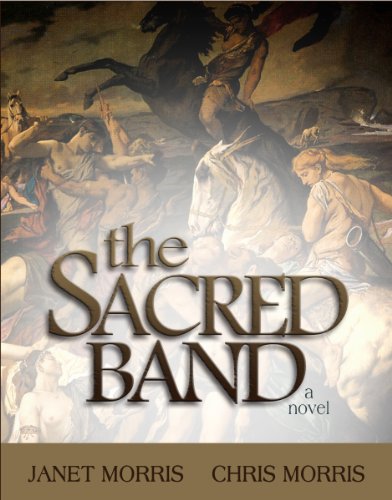
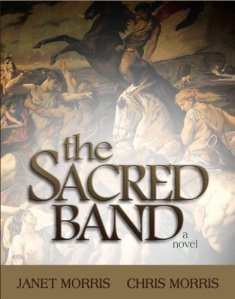
MORRIS: We say about THE SACRED BAND, our newest mythic novel, that it is “an adventure like no other.” This book had waited since the late 1970s to be written.

My books are remarkably unlike most of what else is available in contemporary fiction, so making the story or milieu ‘unique’ is not an effort for me. We started ‘The Sacred Band of Stepsons’ series and characters in the ‘shared world’ universe of Thieves’ World®, and so wrote in a milieu populated with other writers: making my work ‘fit’ their construct was a challenge. I have a deep love for the third, second and first millennia BCE, and my ancient characters always are touchstones to historical reality: I don’t “try” to make my fantasy world different from reality: I try to take you into the mythos of humanity. Silistra had a complete language, a glossary, a unique context, a rigorous rationale actually based on sociobiology and genetics, but had sword-wielding women and horses and ancient skirmishers as well as high-tech outsiders trying to understand it. The “Dream Dancer” series, also ‘science-fantasy,’ was set in space habitats primarily. It’s very easy for me to establish a credible world construct and posit behaviors there: I have predicted several major events in the real world over a number of years based on that ability to identify the most likely course of action that a country or individual will take in a given context. Now this skill is beginning to become a field of study called “intuitive decision making” and also “implied learning.” We once called it “speed understanding.” Writers often have this ability, and it allows creators to make their characters and societies credible. The writers who don’t have it can’t make their characters, or worlds, credible enough to please me.
If you want to write something completely unique, you will probably fail or at best write something without redeeming value. The mind works in certain patterns: the mind organizes facts in story form; it is your commonality with that body of human thought that makes a good book, not its estrangement from the common values that humans share.

VENTRELLA: As one of the original THIEVES’ WORLD gang, you’ve had a huge influence on modern fantasy fiction. It’s one of the first (or maybe the first?) shared world anthology. (I copied it completely and stole this idea for my TALES OF FORTANNIS series, by the way.) Where did the idea for this originate?

MORRIS: TW had one volume published when I was asked to come aboard: “Thieves’ World,” which had Joe Haldeman and Andy Offutt and Bob Asprin and others. Bob had the original idea for the “worst town in fantasy, the grittiest, meanest, seediest place possible.” He asked me to write for it at a convention and I said, “How serious are you about gritty?” I had written a very short piece about a woman who killed sorcerers for a living, and I proposed to bring those characters into Thieves’ World, plus an immortalized and very unhappy mercenary who regenerated. Bob said okay, I could bring the characters and take them out again afterward.

I started the story “Vashanka’s Minion,” that introduced Tempus (a/k/a the Riddler, Favorite of the Storm God, the Obscure, the Black). He has a metaphysical link to Herakleitos of Ephesus, and lives as a warrior in a Herakleitan/Hittite cosmos that I overlayed on what Bob and Andy already had done. But when Tempus got down to the dock and Askelon of Meridian got off the boat, Tempus said, “You, get out of my story. There’s not room enough here for both of us.” So Askelon didn’t arrive in Thieves’ World until “Wizard Weather,” although Cime, Tempus’ sister-in-arms, did show up. Tempus forms the Sacred Band of Stepsons in Thieves’ World #2, meets the patron shade of the Sacred Band in #3, and puts the Band together.

Then the TW books start to succeed and people get cranky. I called Bob and asked for a letter because I wanted to take my characters out of the shared town and do a group of novels with them, since Bob was complaining my characters were “too big.” So we agreed on that plan. These tensions made the stories more fun: people came and went; I took my characters into my own constructs such as Wizardwall and into the real ancient-world settlements of Nisibis and Mygdonia. Everyone contributed something useful to TW, and its fabric is still very rich.

I got Lynn Abbey’s permission, after Bob died, to bring the Sacred Band back to Sanctuary for a big novel to tie up loose ends that was set ten years after the Stepsons left town in TW #11 and well before Lynn’s own novel, since that milieu wouldn’t work for me. This project became THE SACRED BAND. As agreed with Lynn, THE SACRED BAND was followed by a novella, “the Fish the Fighters and the Song-girl” (the title story from the second “Sacred Band Tales” anthology), which takes the Stepsons back out of Sanctuary again and sweeps up all my TW stories not previously collected. So now, between “Tempus with his right-side companion Niko” and “the Fish the Fighters and the Song-girl” all our ten TW Sacred Band stories are assembled in two volumes, along with other Stepsons tales not available elsewhere.
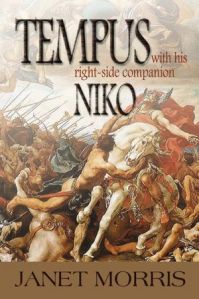
As for fun quotient, I get more joy from the Sacred Band of Stepsons than from any other characters. And the SBS character list is expanding….

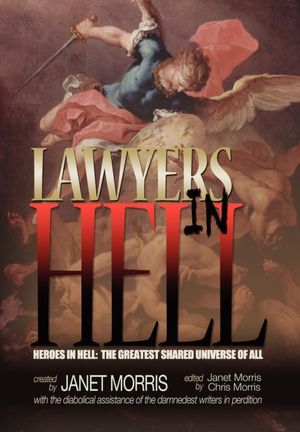
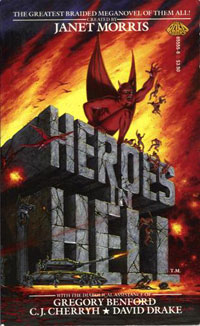
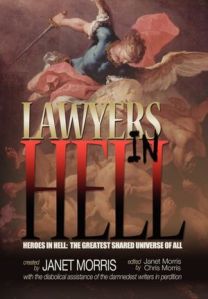
VENTRELLA: Another great series you’ve run is the HEROES IN HELL series (which now apparently includes LAWYERS IN HELL, which could be the name of my autobiography). What future themes can we expect to see?

MORRIS: If I’d known you, I’d have invited you to contribute to LAWYERS. In the 21st century Heroes in Hell books, next up is “Rogues,” to be followed by “Dreamers” (or “Visionaries,” I haven’t finalized the title), then “Poets,” then “Pirates” (or “Swashbucklers”). “Doctors” is a distinct possibility. There are many stories left to tell in hell, especially now that we have met hell’s landlords and heaven has sent down auditors to make sure hell is sufficiently hellish.

VENTRELLA: How do you work with the authors to make sure there is consistency in the world setting for these collections?

MORRIS: Each hell book takes a year to write and assemble, and the writers must coordinate more completely than was possible before the internet: we have a “secret” working group on Facebook where the writers interact and arcs and meta-arcs are chosen and polished. They choose characters. Our “Muse of Hell,” Sarah Hulcy, has put up 130 orientation docs, so there’s plenty of available information. When they choose the characters, we check to see if those characters have been used previously, and if the characters are available and meet our criteria, they can “claim” those characters for the time they write for the series. If they leave, they can’t take the characters: characters come back to me and stay in hell to be recycled.

Then they work on a short “two or three sentence” synopsis. I must accept the synopsis and the characters before they start to write. They can use legendary, historical, or mythical characters. They can’t use characters from modern fiction (post 1900) and they can’t use recently dead or living people. Then writers are allowed to post in-progress snippets which the group can read, and comment upon – or not. Chris and I write “guide stories” (two or three), setting up the current long arcs and the general tone of the volume at its beginning and end. Between these “bookends,” the other writers must set their stories.

When the stories are generally selected, I edit for continuity and tone, and Sarah Hulcy follows me with a copy-edit. Chris Morris is the final editorial reader, and with the three of us working on the stories for continuity and cohesion, we get a strong result and a better book than we could have produced before the internet.

VENTRELLA: I assume your anthologies are primarily invitation-only (correct me if I am wrong). How do you deal with stories that don’t meet your standard or are rejected for other reasons?
MORRIS: We are invitation-only. The milieu of our hell belongs to Chris and me. The authors know that from the outset. We usually won’t let them write a story we don’t think will work: by the time we’ve approved characters and synopsis, we know what the story will be and how we’ll use it. If someone simply fails to write a useful story, they probably haven’t met our guidelines. Our hell universe is easily recognizable. Each writer has left a clear trail of participation. If they want to rewrite a story we won’t accept and take out the arguably HIH context and characters, of course they can try.

VENTRELLA: Let’s discuss your novels. Which is your favorite?

MORRIS: In fantasy: THE SACRED BAND (Janet Morris and Chris Morris; Paradise, 2010; Kerlak, 2011), the mythic novel of the Sacred Band of Stepsons uniting with the Sacred Band of Thebes and returning to Sanctuary. In historical: I, THE SUN (Janet Morris, Dell, 1987).

VENTRELLA: Who is your favorite character?

MORRIS: Tempus and then Niko and the Sacred Band of Stepsons fighters.

VENTRELLA: What would you ask that character if you could meet him or her?

MORRIS: Tempus lives in my skull. I meet him on a regular basis and I’m happy to have a character so available. He’s been there since 1979. I went to the White House and he said, “Kinda small, isn’t it?” I would ask him, in all seriousness, whether he truly believes that “character is destiny,” a line he shares with Herakleitos.

VENTRELLA: And what do you think he or she would answer?

MORRIS: “The sun is new every day.” We call him the Riddler, remember.

VENTRELLA: Do you prefer writing fantasy or science fiction?

MORRIS: Fantasy, because very little in SF can transcend the gimmickry of a technical conceit, yet without that conceit at its heart a book isn’t truly science fiction. Furthermore, so little emerging thought and technology is employed by sf writers today that the genre is lagging far behind reality both in the cosmology area and the technology area: sf is no longer a place to experiment, but is now very derivative.

VENTRELLA: Do you find novels easier to write than short stories?

MORRIS: A novel is a major commitment, and must move smoothly along its trajectory. A “short story,” if it’s more than three thousand words, actually lets you focus more deeply on a circumscribed area or event. I think short stories and novels are different; each form is unique and equally demanding. I prefer novels but short stories are good exercises in discipline.
VENTRELLA: Do you tend to outline heavily or just jump right in? What is your writing style?

MORRIS: I don’t “outline” in the way that you mean. I get characters, and their background; I immerse my intelligence in a milieu that’s fully realized: a place with weather and politics and problems and a special nature. I use square post-it notes to write down certain things that must happen during a sitting: a line of dialogue, a particular event, where I need to be when the section is done; a section or chapter or story title. I know where I want the story or chapter or novel to end; I know where I want to start each section: how I get there is the fun for me.

Often times the question for me is which viewpoint character will have the best take on a particular set of events. When I have (twice) sold a project based on outline, it took all the fun out of it.

VENTRELLA: When creating believable characters, what techniques do you use?

MORRIS: I wait. I lie on the bed or go for a drive with paper in my pocket and wait for the characters to start to interact with me, or to tell their story to me. I need to “see something moving” and other writers who write this way all agree – if there’s something moving in your mind’s eye, there’s a character there.

Abarsis was a good example: I knew I wanted to do “A Man and His God” in which at the end the Slaughter Priest would die in Tempus’ arms. I got a character called Abarsis. I thought he and the Slaughter Priest would be two different people but the character wanted to be “Abarsis, the Slaughter Priest.” This was a very big, very strong character and I argued that if Abarsis was the Slaughter Priest then he would die. He said that was fine. Susan Allison of Ace called me up after she read it and confessed that the story made her cry. And Abarsis came back as patron shade of the Sacred Band: the character knew more than I what to do and how, in order to be memorable. Sometimes with good characters you must let go and let them forge ahead. This requires belief in your Muse.

VENTRELLA: You’ve collaborated with other prominent authors, at least one of whom lives with you, which makes it easier. How have these worked? (For instance, do you share writing equally? Does one author do the basic work and the other expand from that outline?)

MORRIS: With whatever writer, we talk about the story line, points of interest, what needs to be accomplished. If it’s Chris, he may come up with a title or a concept. I usually do draft or if I write with others, I’ll often write first: I like beginnings. With some writers, I send sections and they pick up the action; with others, I’ll do a draft and then they will add to it after I’ve done all I want to do, from beginning to end.
Everyone has a special genius, and working with each person is different. If the other writer starts, that’s a different process for me: I work on the story they’ve sent in Track Changes, do what I want to the entire manuscript. Then they accept or reject or we go back and forth. I worked a number of projects with a writer who was outline-driven and I could never figure out what those notations were supposed to evoke, so I’d call to discuss it. The outline made the other writer feel better. I can do a series of chapter titles and use those as an outline, but beyond that, outlines don’t help me. I often work with other writers who don’t like to outline either, or outline in the most cursory way.

VENTRELLA: Writers who are trying to make a name get hammered with lots of advice: The importance of a strong opening, admonitions about “writing what you know,” warnings to have “tension on every page” – what advice do you think is commonly given that really should be ignored?

MORRIS: All advice should be ignored. Every real writer is different. Every story has a nature, an organic way it wants to unfold. Tell a story that sweeps you up, that you want to hear, that keeps YOU on the edge of your seat. Some stories start best with dialogue, others with narrative: writing is catching the wave of creativity. The wave must be there for you to catch.

Writers learn from reading other writers whom they can admire, and writers whom they detest. Before Silistra, I bought a paperback by a famous writer and when I was done I threw it in the wastebasket, said “I can do better than that,” and did. When I read, I try to read writers who can teach me something, who are better at some things than I am. But print-through is always an issue: often when I am writing fiction I read only nonfiction, and vice versa.

The only person who should ask you to make changes in your book is some editor who has paid a lot of money for it. Even then, changes are risky: the story unfolds on the first pass the way the universe unfolded in the first moments of creation: in the way that it must.

VENTRELLA: What is the biggest mistake you see starting writers make?

MORRIS: Writers who have no characters and force a story bore me. Writers who are good at one thing – such as dialogue – may do that one thing too much: talking heads don’t work except very occasionally, when they can work very well. Knowing when to do something is part of the art of writing. Sometimes I act as an acquisitions editor. If you want to sell to me, you’ll tell me who, where, what, and why, and then finally how – all on the first page, hopefully in the first couple paragraphs: where I am, what it’s like, who cares about what’s happening. I want to fall through the words into a different place. But most of all, you must make me care almost immediately.

VENTRELLA: With a time machine and a universal translator, who would you invite to your ultimate dinner party?

MORRIS: Homer, Hesiod, Tiye, Virgil, Marcus Aurelius, Herakleitos, Einstein, DaVinci, Xenophon, Kikkuli, Thales, Plato, Odysseus (assuming he was Homer’s grandfather), Epaminondas, T.E. Lawrence, Marlowe, Shakespeare, Byron, Mary Shelley, Evelyn Waugh, Emil Zola, Dwight Eisenhower, Sun Tzu, Aspasia, Aristotle, Marguerite Yourcenar, Henry James, Suppiluliumas, Anksepaaten, Herodotus, Sappho, Emily Dickinson, Richmond Lattimore, Solomon, the Biblical “J.” And I’d really like to have Roger Penrose as toastmaster, but he’s still alive.

Interview with Author KT Pinto

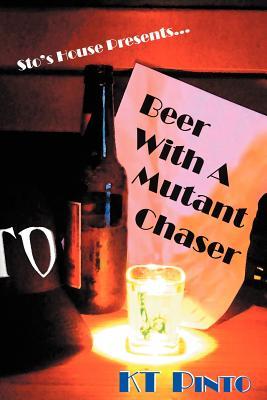
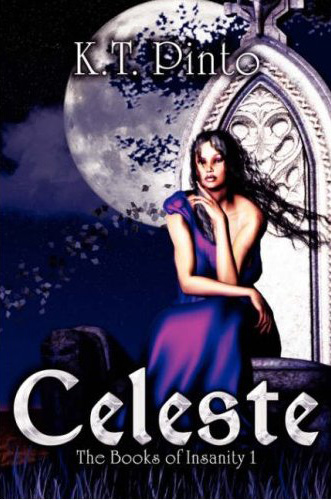
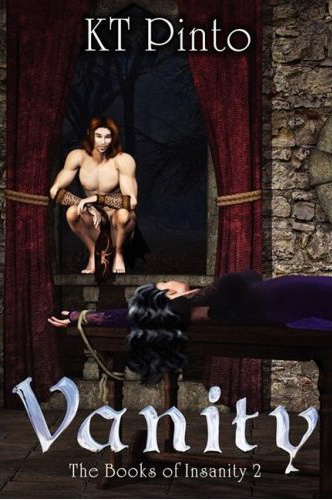
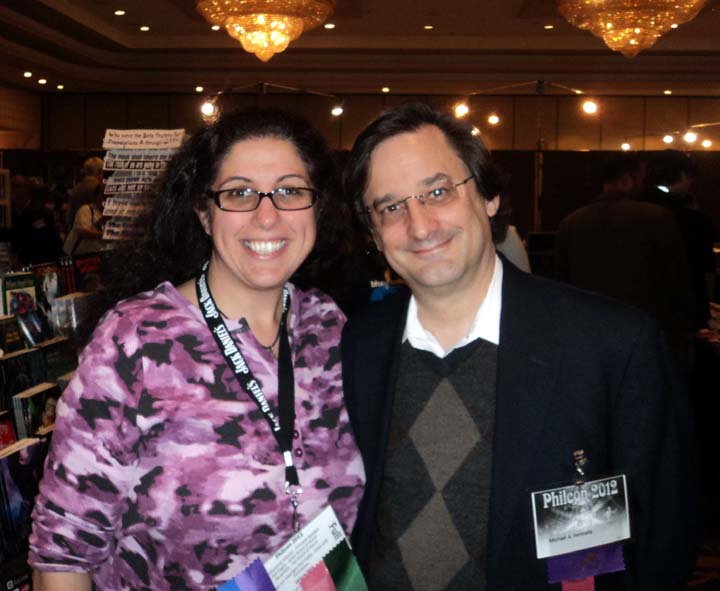
MICHAEL A. VENTRELLA: Today, I am pleased to be interviewing KT Pinto. KT has been writing since she was twelve, finally getting her first book published in 2007. She writes alternate history (The Books of Insanity series) with vampyres and alternate reality (The Sto’s House Presents series) with mutants. She is a modern mythologist and a self-proclaimed ‘fluffy goth’ who would sooner wear pink with sparkles than black velvet. She will be a guest at Balticon in a few weeks (where I also will be a guest). KT will be promoting her latest novel and participating in a book release party.

KT, let’s talk first about your latest big news. You received a grant! Tell us about the End of the Rainbow project.

KT PINTO: I received a DCA Premier Grant from the Council on the Arts & Humanities for Staten Island (COAHSI), with public funding from the NYC Department of Cultural Affairs to re-write the myths from an alternate lifestyle perspective. I am going to be rewriting myths from Greek, Roman, Norse, Egyptian, and Gaelic cultures. You could read an excerpt of the book here.

I will also be doing a reading of this book at Bent Pages, NYC’s only remaining LGBT bookstore (391 Van Duzer Street, Staten Island, New York) on Thursday, October 11, 2012 at 7:00 PM.

VENTRELLA: And there’s a raffle, too?

PINTO: Yes! The proceeds from this raffle will go towards completing my End of the Rainbow grant project and the winner will be announced at the end of the Staten Island LGBT Festival on June 2nd! There will be 10 different prize “baskets” (the prizes will not actually be presented in baskets), each with a different theme. All of the basket items were donated (it’s great that people are so generous!), and the baskets range in value from $70 – $220. Details on the baskets can be found here!

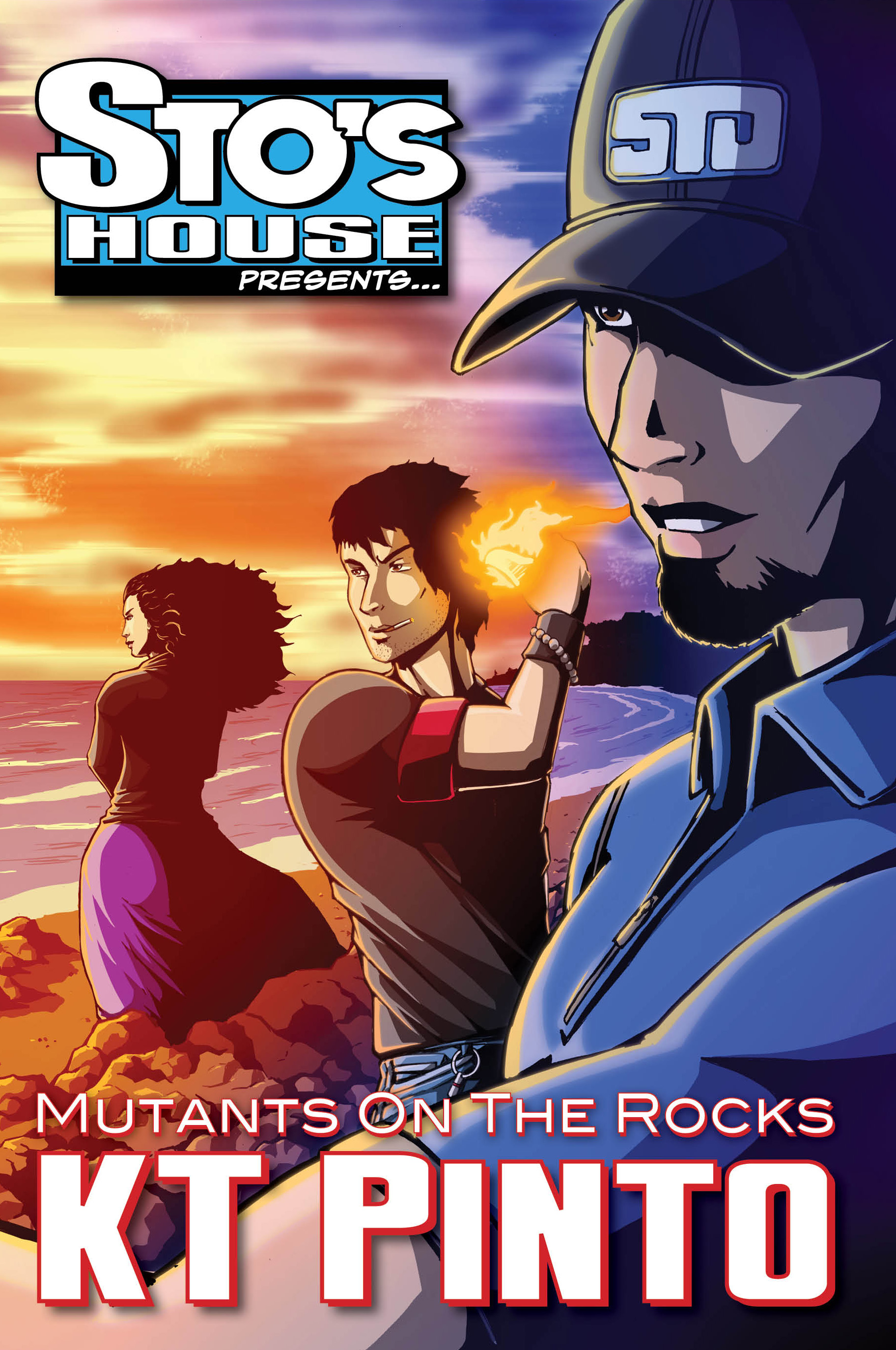
VENTRELLA: MUTANTS ON THE ROCKS is about to be released and is the latest in your “Sto’s House” series. Where did you come up with the idea?

PINTO: I had been having a really hard time with my vampyre series, and I realized that being in that dark place all the time wasn’t good for my creativity, so I decided to start writing some more light-hearted stories. I took the idea from an RPG I created called Sto’s House, which is about a bunch of 20-somethings who are mutated by the toxic waste in the Staten Island Dump. They don’t want to save the world, just find the world’s best microbrew.

The characters are based on my friend Christopher Mancuso (aka Sto) and the people we used to hang out with at his house when we were in our 20s. I hadn’t planned on it becoming novel-length, but one day I noticed that I had written 10 short stories, and had enough material for a really good (if I do say so myself) novel.

VENTRELLA: How has the series been received so far?

PINTO: People seem to be having a good time with it. I wasn’t sure how it would be received on Staten Island especially, but people seem to really enjoy the humor and there are enough different characters that readers can relate to one or more of them.

VENTRELLA: You’re having a release party at Balticon. Tell us about that!

PINTO: I personally am not having the party. Dark Quest Books, who publishes my Sto’s House Presents… series, is having a party highlighting their new releases for the spring. I think four authors are being highlighted there including myself and MUTANTS ON THE ROCKS, which is the second book in the Sto’s House Presents… series.

VENTRELLA: Like me, you’re a regular on the east coast convention circuit. What are the advantages of attending these?

PINTO: Conventions give you a chance to interact with fans as well as getting together with fellow authors and networking with publishers and agents. For me, it’s also good to be on the circuit because I get a chance to see what’s going on in other genres and other disciplines (like costuming and gaming). I actually am starting to cut back on some local conventions and travel to further locations, like Pittsburgh, Pa. and Roanoke Va. because I want to connect with more fans and professionals.

VENTRELLA: These days, it takes much more to be a successful author than merely writing a good book. What other efforts have you made to publicize yourself and do you think they have been worth your time?

PINTO: I have gotten very involved with my local arts organization, COAHSI, which is a good resource not only for grants, but to meet other local artists, find out about community events, help promote you and your work and even to learn about more mundane information like jobs, insurance and other resources.

I’ve been on Live Journal for a really long time, and don’t plan on leaving it any time soon. Not only am I able to write full journal entries, but I can also link it to my facebook and twitter accounts. Facebook used to be a good resource, but it’s gotten so big (I’m up to 1000 friends) and has made so many changes, networking has become difficult.

Inanna from By Light Unseen Media – who published MARCO, the third book in my vampyre series – suggested that Goodreads may be a better site for promotions, so I’m feeling my way through that site as well.

I also have an account with Constant Contact, which helps me send out a newsletter to a mailing list that I developed by going to conventions.

VENTRELLA: What was your first professionally published work?

PINTO: My first work was “E-mails 10”, which was a short story published in Nth Degree Magazine (which is now Nthzine on-line).

VENTRELLA: You have a LARP background (as do I). How has that led to you writing fiction?

PINTO: Although I have been writing since I was 12, LARPing was what helped me create my world and characters of The Books of Insanity series. I used to own a gaming company that ran LARPs around the Hudson Valley, NY and at conventions.

During that time I created some original LARPS (ex: Sto’s House) and some murder mystery nights, the main game that we ran was vampyre LARP. So I was not only able to create evil, blood-sucking fiends, but I was able to become them as NPCs

I had created a character that was supposed to only be a one-shot ‘big bad’ that the players were supposed to kill in a one-night (possibly two-night) story line. More than a year later, she still existed, because instead of people trying to kill her, they wanted to join forces and build storylines around her.

That character’s name was Celeste, and she became the main character in my Books of Insanity series.

VENTRELLA: What are the differences between writing for a LARP and writing fiction?

PINTO: When writing a storyline for a LARP, you have to be prepared that all of your plans are going to be destroyed within the first five minutes of the game. You have to plan for different levels of gamers and prepare to lead them through a storyline if necessary. Other times your PCs make their story their own and all you have to do is keep track of the rules (in my case, the staff kept track of the rules; I was more a storyline/character person).

With fiction, it’s all on you to keep the audience’s attention and creating all the drama and action. On the upside, you don’t have to worry about almost 500 characters trying to do their own thing…

VENTRELLA: Boy, do I know that feeling. Do you prefer short stories or longer works?

PINTO: I used to dislike writing short stories, but the more I do (and the more I get published!) the more I like them. I think I have developed a rhythm to creating a short in a concise manner, unlike when I write a novel.

When it comes to my reading, my preference has always been novels. I tend to feel gypped when I read a really good short story and it ends. It always feels like it ended too soon and leaves me wanting more.

VENTRELLA: You’ve mostly dealt with mid-sized press (like me!). What are the advantages of dealing with a smaller press?

PINTO: Mid-sized presses are good because they’re more open to different ideas and you are able to communicate with the senior staff on a regular basis. You also don’t need an agent in most cases to work with a mid-sized press.

Working with mid-sized presses also gives you a chance to work with and recommend other professionals in different disciples, like editors, artists, typesetters… for example, the cover for MUTANTS ON THE ROCKS was created by Victor Toro, an artist that I recommended to Neal, the publisher of Dark Quest Books.

The downside to a smaller press is they don’t get the respect that they deserve from bookstores, reviewers, some conventions…

VENTRELLA: Do you advise new authors to consider self-publishing?

PINTO: I think self-publishing is good if you have the same knowledge as a publisher would, in order to protect yourself legally and financially.

I think self-publishing is good for someone doing a photography or art book, because it’s a way of highlighting your art form. But for me, I think mid-sized presses are a good way to interact with other writers and learn about more writing opportunities that are both with other publishers and with your own company.

VENTRELLA: Let’s talk about your writing style. Do you tend to outline heavily or just jump right in?

PINTO: It depends on my project. My Books of Insanity series happens over 2000 years, so not only do I have to plan out each book story as I write them, but also had to plan out the arch of the series (I have 13 books planned, but once you hit the world wars, that number can become bigger).

The Sto’s House Presents… series, on the other hand, is completely off the cuff.

VENTRELLA: What predictions can you make about the future of publishing, given current trends towards e-books and self-publishing?

PINTO: I think publishing is always going to stay around; it’s just going to change form. For example, we no longer write on stone or papyrus. I also think with the popularity of ‘nerds’ with all their crazy book reading, along with the eventual (hopefully) return of a good economy, the publishing world will flourish. Just not as much in the brick and mortar form.

I also think that with the healing of the economy will also come a rise in vampires again. Lately zombies and steampunk (and sometimes both) have taken over readers’ interests, but eventually it will shift back again. And then my vampyres will rise and take over the world… and my mutants will crack open a beer and enjoy the show.

Interview with author Gabrielle Faust

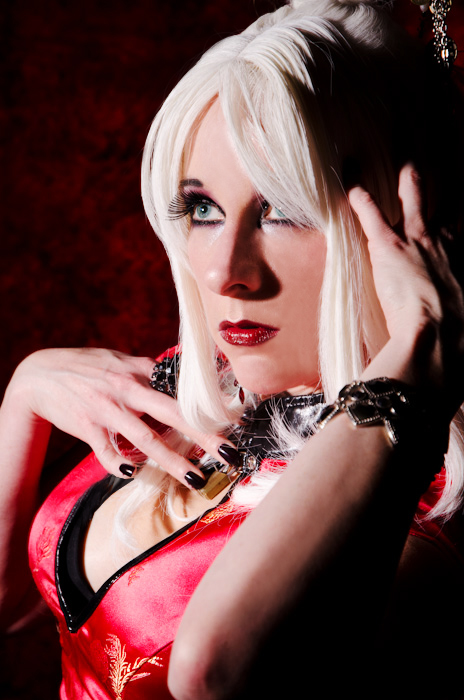
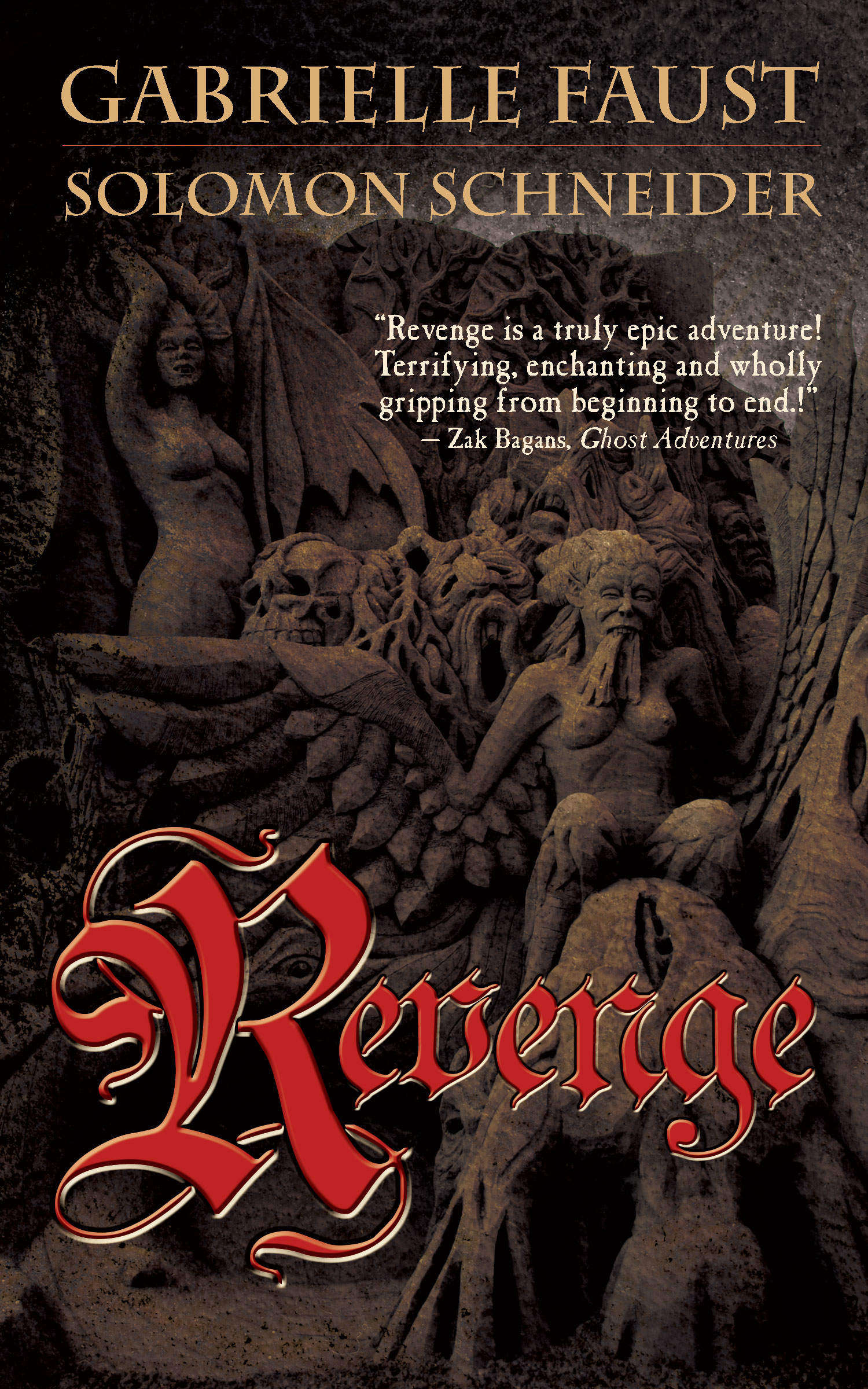
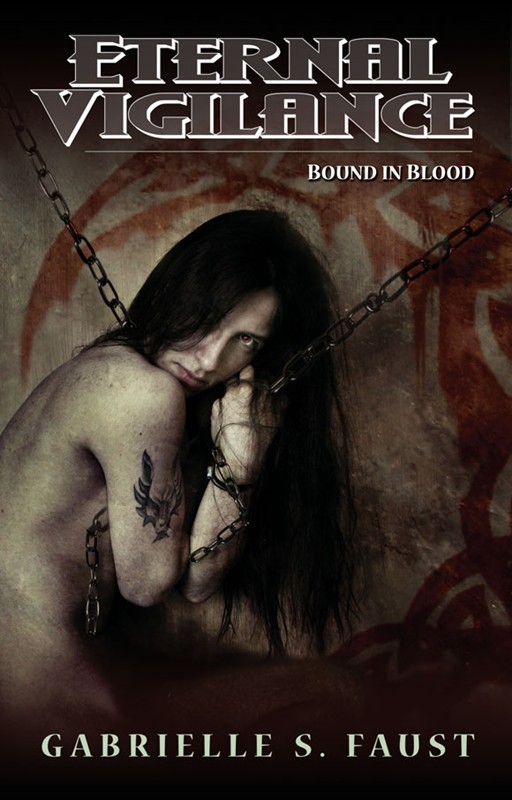
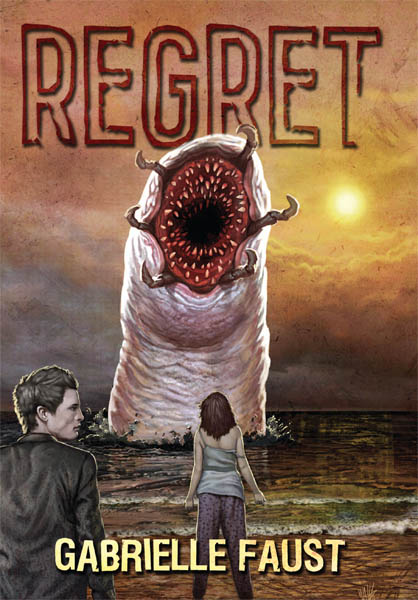
MICHAEL A. VENTRELLA: Today, I am pleased to be interviewing Gabrielle Faust, author of the acclaimed vampire series ETERNAL VIGILANCE, three collections of poetry entitled BEFORE ICARUS, AFTER ACHILLES, CROSSROADS and THE BEGINNING OF NIGHTS, the horror novella REGRET and the celebrated new dark fantasy adventure novel REVENGE. Her short stories, illustrations and editorial commentary have appeared in a variety of online and print publications such as SciFiWire, Blaster, Doorways Magazine, Girls & Corpses Magazine and Fear Zone. She was the Guest of Honor at the Queen of the Damned Vampire Ball in 2008. In 2009 she was crowned “New Orleans Vampire Royalty” by the Vampire Lestat Fan Club at the Tru Blood & Gold vampire ball and was a Special Guest and performer at the House of Blues for the 2011 Endless Night ball. In 2011 Faust was awarded the Texas Social Media Award by the Austin American Statesman. More information on Gabrielle can be found at www.gabriellefaust.com.

Your latest novel REVENGE comes out soon. What’s it about?

GABRIELLE FAUST: My co-author, Solomon Schneider, and I are absolutely thrilled to see this project finally finding its way into the hands of our readership. It was a project that was born of chaos, in chaos and has experienced a rather turbulent road to publication over the past year. That said, we feel strongly that it is some of the finest work we have produced. This will be my seventh book I have had published. However, it will be Solomon’s first foray into the world of novel writing as he has primarily been a poet, philosopher and musician up until this point. Or, as he likes to say, a “wandering wizard”.

As for the tale itself, here is a brief synopsis to give you a bit more of an insight into the epic dark fantasy tale, which I like to describe as “Lord of the Rings” meets “Dante’s Inferno” — “When Marcus Glenfield committed suicide, he took his place among the Legions of Hell as the Demon of Regret. When he learns that the Prince of Wickedness, Belial, is planning to take his former fiancé, Brenda, as his consort, Marcus’ newfound belief in a second chance is quickly shattered in a fit of all too human rage. Incensed by the new demon’s disrespectful hostility, Belial plunges Marcus into the deepest pits of Hell.

But Lucifer has other plans for Marcus. For in the tormented lands of Purgatory, a strange and powerful uprising has gathered to form a new plane of existence—one that would break the ancient caste system of Heaven, Hell, Purgatory, Limbo and Earth, thwarting both God and Satan’s permanency within the universe. Not only have these brash metaphysical pirates kidnapped the powerful child born of Brenda and Belial’s union, they have also guided Marcus out of the prisons of Hell to their new realm.

When they promise Marcus freedom in return for his help, he realizes that he will finally have to choose a side. But can he find one that he can truly believe in?”

VENTRELLA: This is your first collaboration. How did that work out? Did you share the writing equally or was there some other method?

FAUST: Yes, this is the first time I have collaborated with another author on a project for the novel itself. Prior to this, I teamed up with Michael Marano to complete a series of illustrations for his collection “Stories From the Plague Years” in 2010.

The collaboration with Solomon Schneider came about in 2010 when I came across an ancient cryptic blog post he had posted in 2005 which ended up inspiring me for the sequel to a novella I was working on. Solomon is a masterful storyteller and I saw it as an opportunity for us to mesh creative minds and really produce something otherworldly. The first 5 chapters of REVENGE are actually the original novella REGRET, which I combined with this manuscript to give it a true “first book in a series” beginning. After that, we divvyed up the chapters based on the characters we felt most passionate about. There were particular characters who were solely Sol’s invention and vice versa. After the creation of these separate chapters, however, it was up to me to take everything and make it mesh so that it sounds like one cohesive author’s voice throughout the book. I’m quite pleased with how it turned out!

VENTRELLA: Your work has been distributed mostly through mid-sized publishers (like me!). What are the advantages and disadvantages of this?

FAUST: The advantage to mid-size publishers is a personal connection with the publisher and an ability to, usually, contact them directly about issues. However, as all authors know, there are a lot of untrustworthy publishers out there in the mid-size world and, unfortunately, an author must keep their wits about them at all time. There is also the issue of a lack of marketing budget. Thus, the author must be prepared to pay for their own book tours, organize most of their own publicity, etc. I feel quite blessed to be with my current publisher, Barking Rain Press, as they have been a true breath of fresh air! I’m just thrilled to be working with them.

VENTRELLA: Aspiring authors often seem to think that writing a book is easy and your first one is sure to be a huge hit…

FAUST: HA! Writing a book is never an easy task. In fact, many an author have compared it to childbirth. However, if it is your passion, you will embrace the process, which may very well drive you insane by the words “THE END” are typed, and revel in all of its glory and madness. There is no guarantee your first book will be a “huge hit”. In fact, that is a very rare anomaly. As with all artistic processes, we learn about our strengths and weaknesses with each project. We learn what our audience gravitates towards with zeal and, at times, we cringe at the mistakes we made.

VENTRELLA: What was the biggest mistake you made when first starting out as a writer?

FAUST: I’d say I made two big mistakes when I first started out: as aforementioned in the above question, I truly believed my first book was going to make millions and I was going to galavant around the world riding trains and living the romantic dream of the author of old. It was a brutal awakening to realize that the world just doesn’t work that way and, no matter how many stellar reviews I received, it was still going to be a very hard road to true success. As I like to say, “You can’t eat critical acclaim.”

The other mistake I made was to trust blindly that your editor is going to catch every single typo. That’s just not the case. The editing process is a two-way street and each time an editor sends you a PDF to review you have to carve out a week and comb over each and every page with a magnifying glass. Editors, no matter how amazing and detail oriented they may be, are still human. That said, every book I have ever come across has had at least one typo in them and, so long as there are just one or two, it’s simply not the end of the world.

VENTRELLA: I admittedly don’t read much horror so I’m not sure where in ones inner self you would find these ideas… What’s your process in developing a story?

FAUST: Everyone has their inner demons. We wrestle with darkness on a daily basis. The human species is only one step away from their animal instincts at all time and it really and truly takes very little push someone to their breaking point. It’s terrifying but true. For me, that is the true “evil”. Not hell-spawned demons or other mischievious paranormal and supernatural entities, but our fellow human beings. One simply has to turn on the evening news to find inspiration for a horror novel.

VENTRELLA: Do you tend to outline heavily or just jump right in? What is your writing style?

FAUST: Lately I have begun outlining more and more for the initial stages of my novels. This is primarily because the plotlines are becoming more intense involving multiple levels and dozens of characters. It’s really the only way I can keep track of them all. However, I always like to leave at least a little organic process to my writing. I may know all of the key points that need to happen throughout the book to get from A to Z but what happens between A and B is still a mystery even to me.

VENTRELLA: Do you enjoy the labels people have put on your work or do you think it may limit your audience?

FAUST: I actually find it highly amusing when people try to label my work because they always do it with a slight degree of confused uncertainty. The fact is that my work can’t really be pigeonholed because there are multiple elements running throughout. However, people do adore their labels.

VENTRELLA: When I have discussed the current novel I am working on (BLOODSUCKERS, about a vampire who runs for President), many agents and editors roll their eyes and say “Oh, not another vampire book.” Yet vampire books continue to sell. Do you think the market is oversaturated or will people always be interested in this?

FAUST: Vampires will always sell because people identify with the vampire on a primal level. The vampire is also the penultimate escapism in the supernatural world. Right now, I do believe there is an oversaturation of the “paranormal romance” vampire story which has basically, in my opinion, defanged our beloved predators and turned them into GQ playboys. However, I will always remain true to my own vampire mythos and will never feel in the least bit threatened. When people tire of their frolicking, sparkly playthings, they know where to find vampires with real “bite”!

VENTRELLA: What’s your opinion on self-publishing? Do you think this is a good idea for first-time authors?

FAUST: Honestly, unless you already have an established, widespread fanbase before you even release the book, you should try to publish traditionally first. Self-publishing is very expensive, time consuming and most bookstores will still not carry your work if they know it’s self-published because of the reputation that industry has for low-quality work.

VENTRELLA: What does the future hold for you? What projects are in the pipeline?

FAUST: I am currently working on the fourth ETERNAL VIGILANCE book, which I hope to have completed by the end of 2012. I will also begin work on the sequel to REVENGE next month. I will be touring extensively throughout the year to promote REVENGE.

Interview with author Mike McPhail

MICHAEL VENTRELLA: Today I am pleased to interview author Mike McPhail. Author and artist Mike McPhail is best known as the editor of the award-winning Defending the Future (DTF) series of military science fiction anthologies. Currently he is the administrator for the Dark Quest Books’ imprints DTF Publications (MilSciFi) and Starsong Press (SciFi).

He is the creator of the science fiction universe the Alliance Archives (All’Arc), which serves as the backdrop to his (and other authors’) stories. Its related role-playing game is part of the dC percentile family of game mechanics, as used in the Martial Role-Playing Game (MRPG) series.

As a member of the Military Writers Society of America, he is dedicated to helping his fellow service members (and deserving civilians) in their efforts to become authors, as well as supporting related organizations in their efforts to help those “who have given their all for us.”

Mike – you began, like me, developing plots and worlds for games. How did you decide to start writing fiction?

MIKE McPHAIL: It was an accident, no really it was. My wife (the award-winning Danielle Ackley-McPhail), had long been after me to let her write a story set within my gaming universe — The Alliance Archives (All’Arc) — but I was worried that she didn’t have enough experience playing the game to get the finer points right. So I wrote a back story (a little more advanced than you would for a game scenario), which was heavily laden with techno-babble, terminology, and in-game historical reference, in order to help her along.

Well she read it and said, “I don’t need to write the story, you can do it yourself.” and thus I was proclaimed to a writer.

VENTRELLA: Were your first attempts successful?

McPHAIL: Yes, but I had the advantage of working with people that already “had been there,” to advise me on how to pick and work for a specific project, rather than just sending work out, and hoping someone would buy it. Plus not having any “dreams of grandeur” helped; I hadn’t planned to be an author, so whatever came my way, I looked at as a blessing.

VENTRELLA: Let’s talk about the problems inherent in using games as a foundation for your fiction. I have advised those who have asked that they should begin by throwing out all the game rules. Have you found that to be the case?

McPHAIL: Not in my case. The All’Arc game mechanics were developed during my Academy days to allow the Marines in the group to have a more realistic portrayal of combat (a.k.a. what they learned and did in real life). But generally I would agree with that statement, since most gaming systems don’t have a real-world application, it could very easily get in the way of making your story seem plausible.

VENTRELLA: The goal in my fantasy fiction has been to make sure it doesn’t read like it was based on a game. Do you agree, and if so, what techniques do you use to accomplish this goal?

McPHAIL: Overall I would agree, that is unless your writing a tie-in book for a game, then I think the readers are hoping for some form of homage to the original work. The most realistic way is just to have a character make a game reference, just as I’ve seen them do in real life combat. “Well that bad-guy didn’t make his luck roll.”

VENTRELLA: What advice would you give to someone wanting to write a story in a game world?

McPHAIL: Don’t take it verbatim from a game you have played. What works when a group of friends are sitting around a table enjoying themselves almost never translates. So use the game only as inspiration, taking from it the key facts, and relating some of the more interesting events. Above all, have people outside your gaming group read your work, since your players are going to be too close to be objective about how good, or bad it is, or what needs to be done to advance it.

VENTRELLA: Tell us about your novels.

McPHAIL: I don’t have an “inner need” to write novels. I’m much happier doing short stories. But having said that, my publisher is looking to have me write some game tie-in novellas to go along with the re-release (or should I say, his release) of the All’Arc, now to be known as the Martial Role-Playing Game (MRPG) Core Manual.

VENTRELLA: Do the short story collections you edit take place in the world of your novels?

McPHAIL: I haven’t done an Archives collection yet, but my stories in the DTF anthology series are set within the realm of the All’Arc. In Dani’s case, she writes in the “universe” using the technology/terminology, but her stories aren’t part of the game’s original timeline.

VENTRELLA: What are the biggest difficulties you have faced when editing a collection?

McPHAIL: Keeping all the contributing authors “happy.” We’ve be fortunate enough to have in the DTF series some of the biggest names in science fiction, and their participation is purely due to them knowing us. As the saying goes, “small-press, small-pay,” so they are not in it for the money. Over time we have had problems with the books’ publishers, and naturally the authors come to us when they have issues. Then I would chase down the publisher for answers. Now-a-days, that chain of command is shorter. Dark Quest Books (the current publisher of the series), made me an administrator for one of their imprints, so now I’m in charge of publishing the series. And yes I yell at myself all the time over it.

VENTRELLA: What is your military background?

McPHAIL: I enlisted in the Air National Guard; originally I was hoping for ordinance, but the only opening was in Air Cargo, so by the family standards, I’m a slacker. Dad joined the Army Air Corp in WWII, and served until Vietnam; my father-in-law was a Navy attack pilot in Vietnam; and my wayward-son is an Army Lieutenant, winner of the Bronze Star.

VENTRELLA: Do you believe it is important to “write what you know”?

McPHAIL: Yes, but that doesn’t mean you can’t learn new things to write about. Typically I spend a third of my time writing, the rest either looking things up on the internet (or in my reference library, yes I’m talking about books), or calling someone I know that is in that related field.

The more of your own life experiences you can introduce in to your characters, the more believable and relatable they will become to your readers.

VENTRELLA: What projects are you working on now?

McPHAIL: For 2012, besides the re-release of the Dark Quest version of the MRPG, we have started working on DTF5 Best Laid Plans; producing Phoebe Wray’s Jemma 7729 and J2; updating James Daniel Ross’ Radiation Angels series; David Sherman also has something in the pipeline. With 2013’s projects already forming up in the queue.

VENTRELLA: Have you found that publishing short stories has helped you gather new readers?

McPHAIL: Name association from the DTF anthologies is priceless. For example if you did an Amazon search for say Jack Campbell (LOST FLEET), well he’s been in several of the books I’m in, so my work show up as a related title.

VENTRELLA: How did you find your publisher?

McPHAIL: We met at a gaming convention, things where slow, so we sat and talked. I told him about the game I came up with at the Academy, and how I put it on the shelf and only used it as reference for my writing. Well, the small press that had published my first DTF book (BREACH THE HULL) gave us the go-a-head to do the second one (SO IT BEGINS), but, when the time came for us to transfer the finished file so he could send it off to press, all of a sudden, his publishing empire was no more.

Then we remembered that game publisher we had met at the convention, he had said something about wanting to do books as well as games, and the rest his history.

VENTRELLA: What are the advantages of a small press?

McPHAIL: Accessibly. The big-houses are pretty much out of reach for a new writer, all they seem to want these days are top seller author, and even at that you only have a few months to prove your worth or you’re out.

VENTRELLA: What’s your opinion on self-publishing? Do you advise starting writers to consider that?

McPHAIL: Generally I would not advice self-publishing if you’re looking to become a “main-stream” author; writing the story is only part of the process. There are a lot of different skills needed to produce a professional-looking book, everything from editing and layout, to cover art and back cover copy, and yes, you will be judged by the cover of your book.

My wife and I have been out on the frontline as authors, books sellers and promoters for over a decade now. In our case, we had the advantage having worked in the printing / publishing industry.

Mike’s Websites: www.mcp-concepts.com
www.milscifi.com
www.allianceacrchives.net
www.defendingthefuture.com

4

Interview with author A. C. Crispin

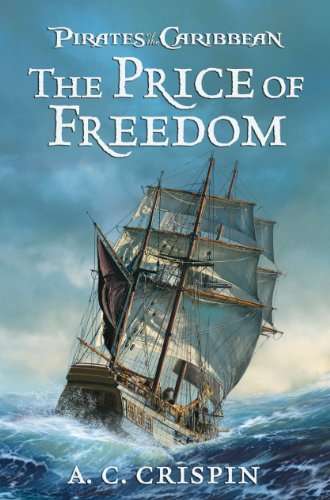
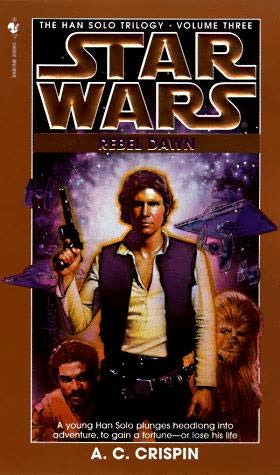
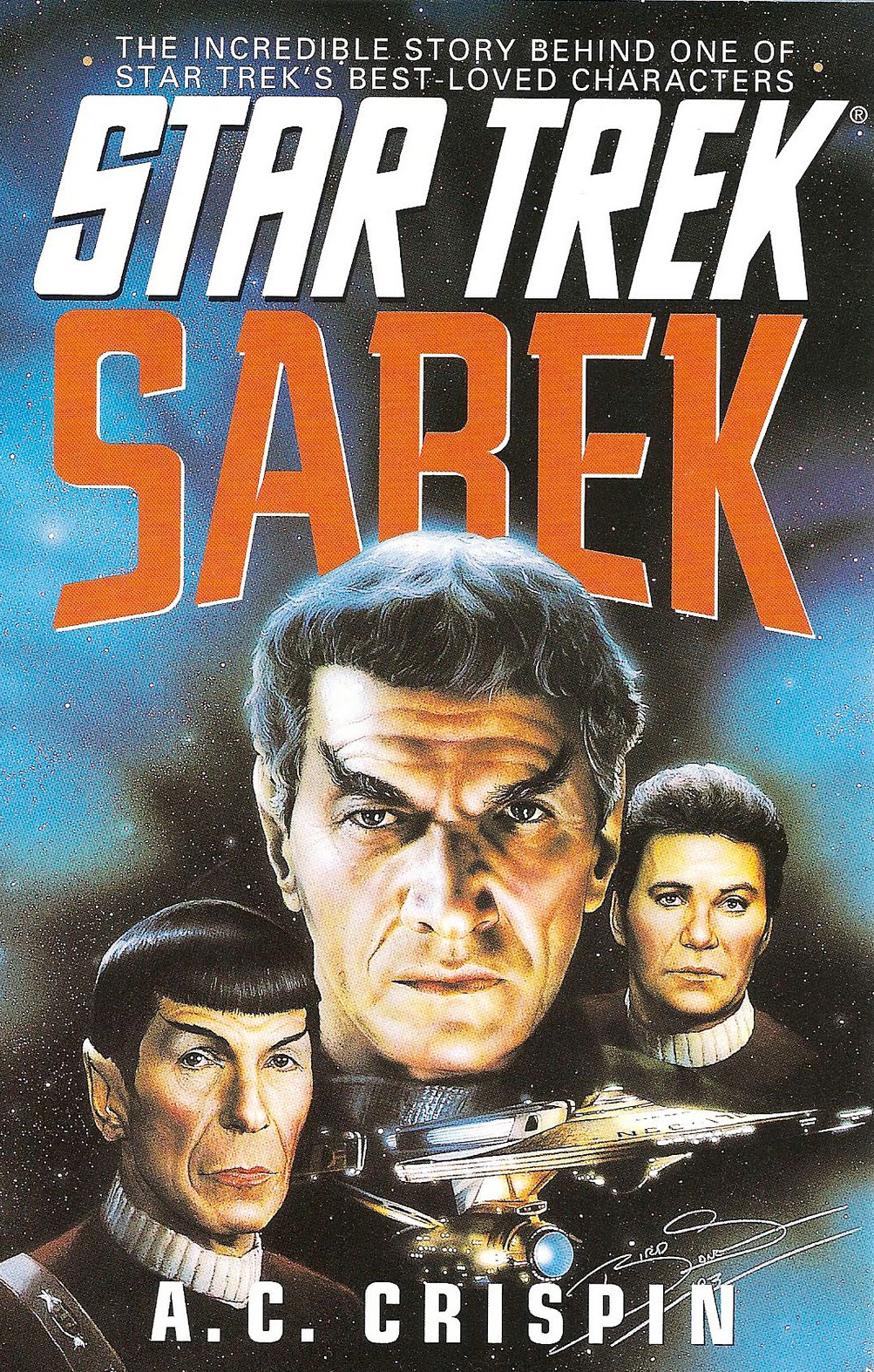
MICHAEL A. VENTRELLA: Today I’m pleased to be interviewing A.C. Crispin, whose new novel is PIRATES OF THE CARIBBEAN: THE PRICE OF FREEDOM. She’s best known for the novelization of the 1984 V TV series, but also for her bestselling Star Wars novels THE PARADISE SNARE, THE HUTT GAMBIT, and REBEL DAWN — although I first discovered her through her Star Trek novels: YESTERDAY’S SON, TIME FOR YESTERDAY, THE EYES OF THE BEHOLDERS, and SAREK.

Ann, You’ve been able to write novels in some of fandom’s favorite stories. How did you manage that?

A.C. CRISPIN: After I wrote YESTERDAY’S SON and V, publishers with franchises approached my agent when they had projects they thought would be a good match for my skills.

If your readers want to read about how to get an agent, soup to nuts, they should read “Notes on Finding a (Real) Literary Agent” on my website.

VENTRELLA: Do you make proposals or do the studios come to you directly now?

CRISPIN: For original novels I write book proposals. For tie-in work, they pretty much come to me.

VENTRELLA: Let’s discuss THE PRICE OF FREEDOM. How much freedom were you given to develop Jack Sparrow’s background?

CRISPIN: After a considerable amount of back and forth on the part of the Disney studio liaison, during which several detailed outlines were not approved, the studio liaison decided that instead of writing the project I had been originally hired to write (the story of the Isla de Muerta mutiny re: the Aztec gold) I should instead write the story of how Jack Sparrow worked for the EITC and wound up making that bargain with Davy Jones. So I knew where the story had to end up. How I got there was left pretty much up to me.

I did consult with both my editors on the book, the acquiring editor and the editor who completed the project. For example, they both agreed that there should be a “Lady Pirate” as a character, so that’s how Doña Pirata was born. The Legend of Zerzura plotline was my creation, but my editors suggested having talismans as a way to get into the Sacred Labyrinth and reach the treasure. So I then came up with the bracelets.

By the time I finished with my outline, it was over 70 single spaced pages long. Of course, THE PRICE OF FREEDOM is a long novel, some 235,000 words.

VENTRELLA: Did Disney censor any of your ideas or tell you to make major changes?

CRISPIN: My Disney editor (somewhat regretfully, because she really liked them) bowdlerized my hottest sex scene. I’m not sure you’d call that a major change. After all, we are talking Disney, here. (The scene was hot, but not graphic — she felt that it was a bit too hot.)

VENTRELLA: What were your main goals in trying to develop his character?

CRISPIN: To create the character of “Jack becoming” so that people would recognize Jack Sparrow, but also know this wasn’t quite the Jack they see in the films … this was a younger, more vulnerable, more trusting and less cynical Jack. He gets more cynical and “savvy” during the course of the book. He’s not the same Jack at the end as he was at the beginning. Of course that’s the goal of good fiction, right?

VENTRELLA: What adventures in your novel help shape Jack into the character we all know?

CRISPIN: Oh, Jack experiences betrayal, disappointment, fear of imminent death, hatred, and as a result learns to be much more wary and cunning, and to trust almost no one. Readers who want teasers can read the excerpts on my website. There are six there.

VENTRELLA: Do any other characters from the film appear in the novel?

CRISPIN: Edward Teague, Cutler Beckett, Hector Barbossa, Pintel and Ragetti, and a certain squid-faced Captain.

VENTRELLA: Were you given a peek at the script for the most recent film in order to work in some foreshadowing?

CRISPIN: No. I was given the script for “At World’s End” before the film released, but my book was finished before the script for “On Stranger Tides” was written.

VENTRELLA: The most recent movie is loosely based on Tim Powers’ novel ON STRANGER TIDES. Did you use that novel at all for reference?

CRISPIN: I’ve read ON STRANGER TIDES a couple of times, but aside from the fact that it’s an excellent pirate yarn, no.

VENTRELLA: Will there be more books in the series?

CRISPIN: That will be Disney’s call. I imagine they’ll base that decision on how well THE PRICE OF FREEDOM sells.

VENTRELLA: What’s your favorite of the Pirates movies?

CRISPIN: The Curse of the Black Pearl.

VENTRELLA: Do you find using established characters in your media novels to be a limitation?

CRISPIN: Nope. I find it a challenge to have them grow and change in ways so subtle that the studio doesn’t realize I’ve done it.

VENTRELLA: You’ve also written your own series: Starbridge. Tell us about this!

CRISPIN: Funny you should ask about that. There’s a good chance that the seven StarBridge novels will soon be re-released as e-books. There have been quite a few requests for them from readers, over the years. The series is about a school for young people from the Fifteen Known Worlds who come to an asteroid in deep space to learn to be diplomats, planetary advocates (known as “interrelators”) and explorers. The books focus on First Contact, and explore what it would be like in a galactic society.

VENTRELLA: Do you find writing books based on your own work easier?

CRISPIN: Not really. I put my full efforts into both my media tie-ins and my original novels. With the original novels, it’s generally a bit more work, because I have to create the world, the technology, the history, the geography, the society, etc. World-building and universe-building have to be done well if you want to create the illusion of reality –- something that’s essential to writing s.f. and fantasy.

VENTRELLA: We met at Balticon this year. Do you enjoy conventions and do you advise authors to attend them?

CRISPIN: You can learn a lot at conventions, and once you’ve gone pro, you can do a fair amount of networking and business at gatherings such as the Nebulas, Worldcon, etc. I enjoy conventions, still, even after all these years.

VENTRELLA: Let’s talk about Writer Beware. How did the idea for this come about?

CRISPIN: Back in 1998, Victoria Strauss and I both realized, independently of each other, that writing scams were proliferating on the internet. At some point our investigations brought us into contact with each other, and we decided to do something about it. SFWA gave us its blessing and sponsorship, and that’s how Writer Beware was born.

VENTRELLA: I meet many authors who have gone the vanity press or self publishing route and then wonder why no one takes them seriously. Other than “don’t do that” do you have any specific pieces of advice for these authors?

CRISPIN: I advise them to go to Writer Beware and read our articles about POD, vanity publishing, etc., so they’ll go into self publishing with a clear vision of what it can and can’t do for an author. E-publishing has taken off in the past six months, and it can now be a realistic way (provided the author has the sales numbers) to break into commercial publishing (advance and royalty paying publishing with a major press, that is). This is generally not true for POD and hardcopy “self publishing.” But there are exceptions.

The main problem with “self-publishing” is when authors confuse it with commercial publishing and expect their books to be on the shelves in bookstores nationwide, plus have other unrealistic expectations. It is really not a shortcut into a successful writing career for the vast majority of those who do it. I believe it’s still true that most POD and self published novels still sell fewer than 100 copies.

VENTRELLA: What bugs you most about the publishing industry and what would you change about it if you could?

CRISPIN: Here are my top two picks for that:

(1) I’d go back in time and eliminate the Thor Power Tools Supreme Court ruling. That had a terrible effect on a publisher’s ability to keep books in stock. Look it up.

(2) I’d get rid of the Internet for two reasons (A) the internet has given aspiring writers the idea that they’re entitled to be published, no matter how well or poorly they write, and (B) because of the internet, writers are getting scammed at an appalling rate.

VENTRELLA: Who do you like to read for pleasure?

CRISPIN: Terry Pratchett, Elizabeth Peters, Jane Austen, Charles Dickens, Margaret Mahy, Ursula K. LeGuin, George R.R. Martin, Lois McMaster Bujold, Charlotte Bronte, and too many others to name.

VENTRELLA: Of what work are you most proud?

CRISPIN: I do my level best on all my books. I’m pretty proud of PIRATES OF THE CARIBBEAN: THE PRICE OF FREEDOM, because I had to do so much research. It took me three years to write, and the whole time I was writing it, I was doing research on the historical period and the nautical stuff.

VENTRELLA: What is your writing process? Do you outline heavily, for instance?

CRISPIN: For tie-in work I HAVE to produce detailed outlines, so I’ve gotten used to working that way. I don’t like writing myself into corners, and a good outline usually prevents that.

VENTRELLA: Fantasy has grown tremendously in popularity over the past twenty or thirty years and now outsells science fiction. Why do you think this is? What is it about fantasy that appeals to readers that they can’t get from science fiction?

CRISPIN: I have no idea. Personally, I prefer science fiction, though I read both.

VENTRELLA: What advice would you give to a starting author that you wish someone had given you?

CRISPIN: Learn to read and analyze publishing contracts. Agents aren’t perfect, and you really need to be able to read a proposed contract and spot pitfalls.

VENTRELLA: What is the biggest mistake you see aspiring authors make?

CRISPIN: Here’s my top five list:

1. They spend years writing a Star Wars or other tie-in novel without ever researching whether they can actually submit the thing and have a chance of having it published. (With Star Wars, for example, they won’t even read the book; all Star Wars novels are contracted for in advance.)

2. They look for shortcuts, such as “self publishing” or POD publishing, often with a scammy publisher like PublishAmerica or Strategic, because it’s the easy thing to do.

3. They develop “golden words syndrome” and can’t see any flaws in their writing, and if someone points them out, they get mad. This is death to any aspiration to ever be a pro.

4. They submit first drafts.

5. They want to write fiction, but they don’t read it. I’ve never yet encountered a single writer, in the dozens, maybe hundreds of workshops I’ve taught, who wrote fiction well but wasn’t a reader. In order to write well, especially fiction, you must be an inveterate reader. No exceptions.

VENTRELLA: What question do you wish interviewers would ask you that they never do?

CRISPIN: Where readers can buy my books. There are links to purchase all my books on my website.

Intrerview with Nebula nominated author Bud Sparhawk

MICHAEL A. VENTRELLA: I’m pleased to be interviewing three times Nebula finalist Bud Sparhawk today. He’s primarily known for his short fiction with heavy and hard science, but also for his humor (in particular his “Sam Boone” series).

Bud, although you have extolled the virtues of outlines, do you think it’s possible to write a great story without an outline?

BUD SPARHAWK: I’m not certain “extolled” is the right word. Certainly I’ve advocated paying considerable attention to a story’s structure – the sequencing of scenes, time frames, and points of view. I don’t think I’ve ever recommended preparing a formal outline where a story is described in detail, point by point.

My own style of writing is to set up the scenes I think the story needs, block in the characters, setting, and time, and then move things around to the way I want to tell the story. Many times I write quite a bit before breaking what I’ve done into key scenes and then add sketch ideas that fill in empty spots. It’s generally a messy back and forth process but it works for me.

VENTRELLA: Have you ever done so?

SPARHAWK: Written a great story or used an outline to write it? All three of my Nebula finalists were done sans outline – just bashing along until they felt complete. I wouldn’t call any of them “great” – entertaining maybe. The one story that I felt was “great” was “Bright Red Star” and which received almost no literary comment, except from David Hartwell who included it in his Years Best SF #14. This story has now appeared in several languages and on audio pubs, which is somewhat of an affirmation. It was my response to some of the hysteria surrounding 9/11.

VENTRELLA: You’ve concentrated almost entirely on short stories and novellas. What is it about the shorter form that appeals to you?

I’ve been blogging about this very subject on budsparhawk.blogspot.com for some time. One of my latest musings dwelled on the differences between novelists and we short people. Although there are clearly differences between the two camps, my conclusion was simply that that some do and some can’t: Temperament, patience, and economic necessity are probably involved in a writers choices, but the mix would vary considerably.

VENTRELLA: Many writers consider short stories to be harder than novels. What is your experience?

SPARHAWK: I don’t think “harder” is the distinction I’d make. Some writers find it impossible to describe anything in a single sentence while I find it difficult to drone endlessly on about anything because I’m always anxious to get to the payoff. In my opinion, brevity always makes a point sharper and I usually edit down to reach that clarity. For example, I recently turned in a 15k piece that was originally 33k in second draft and around 20k in the penultimate one.

When I started writing I could write a 5-7K story in a weekend and once wrote one – “Persistence” – that I later sold to Analog – in an evening. I like to deal with issues or ideas and the short form is ideal for that. Longer pieces deal more with character development or expansion of a situation. I’ve written several as yet unsold novels and have found developing increasing complexity that forces the word count ever upwards tedious, albeit interesting.

Dedicated novelists have told me that they cannot begin a story without discovering that complications arise and they are faced with an irresistible urge to explain, describe, or comment. Then too, other characters come along with their own damn issues, backgrounds, motives and … well, you see how that goes, with the inevitable result is other than short.

VENTRELLA: What usually comes first for you – an idea or a character?

SPARHAWK: The idea or concept, always. I see characters as vehicles that carry the ideas forward, and try to make them eloquent spokespersons for what I try to say.

VENTRELLA: We’ve met at various conventions over the years. Do you enjoy conventions and do you advise authors to attend them?

SPARHAWK: I’m just a ham and enjoy the spotlight, talking to fans, and especially having the opportunity to talk writerish with the other pros. I love the readings, especially by unfamiliar writers to me.

VENTRELLA: What’s your favorite convention experience?

SPARHAWK: The random discussions that arise in the hallways or in the dealers room have be my favorite experiences. I hardly ever leave one of these random discussions without a story idea or two.

VENTRELLA: I meet many authors who have gone the vanity press or self publishing route and then wonder why no one takes them seriously. What’s your opinion on self publishing?

SPARHAWK: The line between vanity and self-published has become very thin. Established writers are self-publishing collections, reverted novels, and even original works – all to take advantage of the opportunities eBooks have created. Some non-professionals (another vague term) have been highly successful with their “vanity” publishing. Results are mixed, but in most cases it seems to depend on the degree of self-promotion one is willing to undertake. Social networking seems key to success for both types.
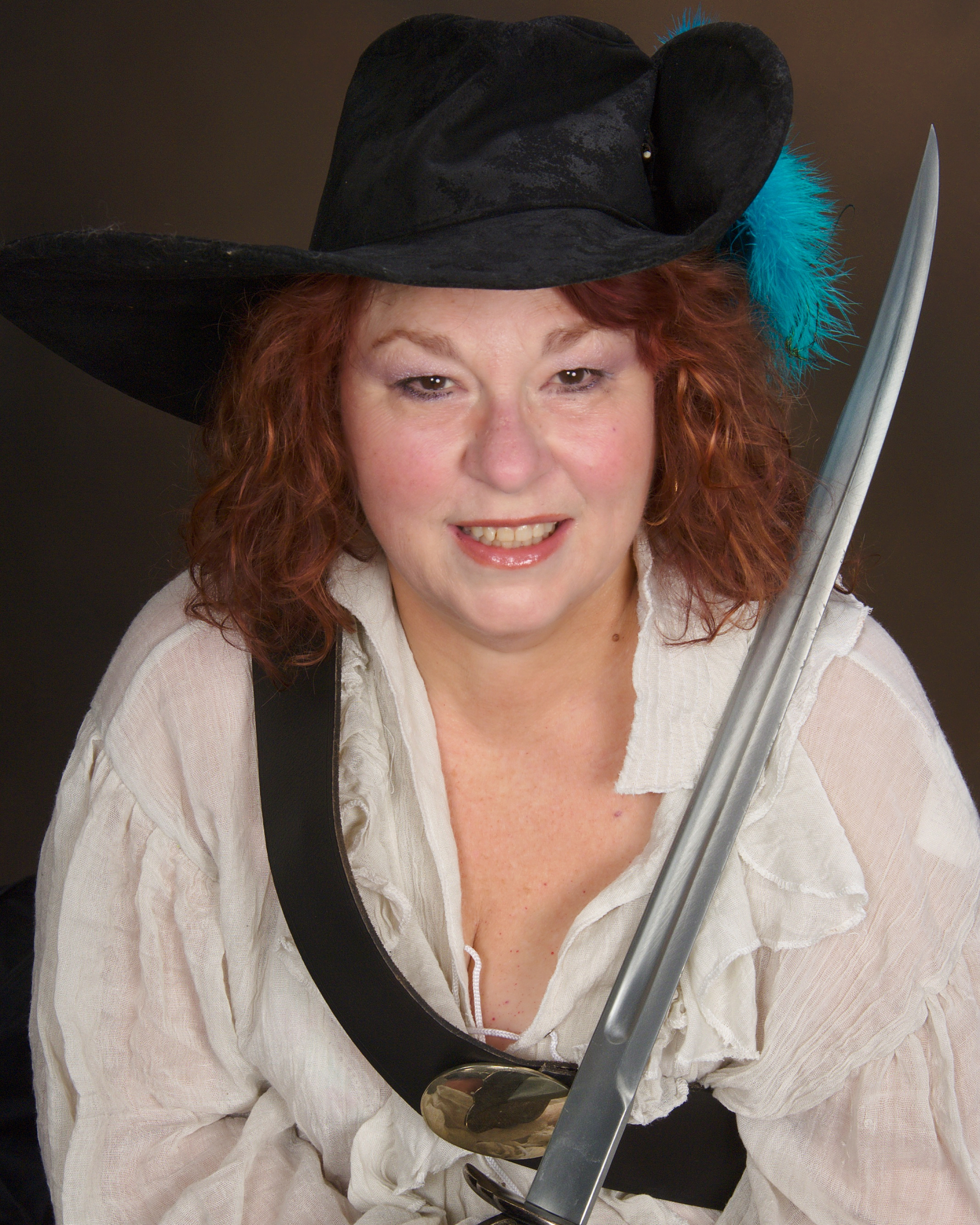
VENTRELLA: Do you think there is a difference if an already established author self publishes new material?

SPARHAWK: If a writer has already established a reputation, then selling new material via POD or eBook should not be a problem. Otherwise you use up a lot of time, effort, and creative juice that could be used for improving your writing.

VENTRELLA: What bugs you most about the publishing industry and what would you change about it if you could?

The lengthy delays between submission and response, which is an unfortunate consequence of limited staff and/or time available to the publisher. The industry probably needs more underpaid English majors looking for “experience” in the publishing field.

Since most editors now accept electronic submissions I can easily see the day when some maven will design an app that evaluates e-manuscripts on the fly, all tailored to an editor’s preset specifications. That would certainly change the writing game for both writers and editors. Don’t know if this would make the publishers happy or not.

VENTRELLA: What do you like to read for pleasure?

SPARHAWK: Short stories, of course, and mostly SF, but I make an exception for anything by Terry Pratchett.

VENTRELLA: Of what work are you most proud?

SPARHAWK: See above – “Bright Red Star.” Interestingly, I’ve written three more shorts in the same universe, two of which are in McPhail’s anthologies.

VENTRELLA: What are you working on now?

SPARHAWK: I’ve a long novel in penultimate editing, four or five shorts that still need work, and getting as much of my published works into eBook formats as I have time for. The novel deals with the long term effects of human expansion into the universe and what exactly makes our descendants “human.”

VENTRELLA: Fantasy has grown tremendously in popularity over the past twenty or thirty years and now outsells science fiction. Why do you think this is? What is it about fantasy that appeals to readers that they can’t get from science fiction?

SPARHAWK: It is a puzzle that in these days of instant everything and twittering phrases that short fiction does not sell better. Steven King recently observed that much of the popular long form fiction has little substance but does carry the reader along in an engaging, but superficial narrative thread that provides an immersive experience. Summer reading at the beach, in other words. I find that much of the “epic” fantasy fits this description. Clearly, fantasy in general is not my cup of tea, but there are some fantasy works that rises above the rest – like Laura Anne Gilman’s Vineart series.

VENTRELLA: What advice would you give to a starting author that you wish someone had given you?

SPARHAWK: 1. Don’t give up your day job.

2. Put some time aside for writing every day.

3. Learn humility and to accept rejection gracefully.

4. Join SFWA as soon as you can.

VENTRELLA: What is the biggest mistake you see aspiring authors make?

SPARHAWK: Endless rewriting in pursuit of perfection, which can never be achieved. The pursuit of “better” is ever the enemy of “good enough.” A writer should rewrite only until the piece achieves a satisfactory level in their own opinion and, of course, whenever an editor asks.

VENTRELLA: What question do you wish interviewers would ask you that they never do?

SPARHAWK: “Where do you get your Ideas?” to which I respond “a guy in New Jersey sends me two a week for five bucks.”. Ask a silly question …

Seriously though, no one ever asks how the magic is done and the toll it takes on family life, work, and socializing. I wrote for years while holding a fairly demanding job, raising a family, and dealing with the issues of aging parents, yet managed to eke out a few words each night, having them add up to some decent stories and a lot of less than sales worthy. The ideas bubbled up during my non-writing times and, if they were worthy of remembering, finally made it into a story. Truthfully, I have no idea where the ideas come from. I only know how much work it takes to turn them from daydreams to reality.

Interview with Agent Alia Hanna Habib

MICHAEL A. VENTRELLA: Today, I am happy to be interviewing Alia Hanna Habib, a literary agent at McCormick & Williams. She represents narrative non-fiction, memoir, and cookbooks, as well as the occasional novel that strikes her fancy. Before joining McCormick & Williams, she was a publicist at Houghton Mifflin Harcourt. She is a graduate of Barnard College and lives in Brooklyn, New York.

How did you get involved in the publishing business and end up where you are?

ALIA HANNA HABIB: I’d always loved reading, and I knew I’d end up doing something with books. My first job out of college was at Houghton, in the publicity department. I did a bunch of different things between then and now, including non publishing related stuff, but eventually I returned to publishing and realized I really wanted to develop my own projects. Being an agent seemed the best way to do so.

VENTRELLA: Who have you represented in the past? What has been your biggest success?

HABIB: I moved over to being an agent from being a publicist just over a year ago, so none of the books I’ve sold have hit the shelves yet! But I’m very proud to have sold a narrative history of autism by Nightline correspondent John Donvan and television journalist Caren Zucker, a book I think will make a big difference in the life of parents and kids of all stripes. I also have a longtime interest in education — I was the publicist for Paul Tough’s wonderful book on Geoffrey Canada, WHATEVER IT TAKES — so I was thrilled to get to sell Elizabeth Green’s expansion of her wonderful New York Times Magazine cover story on “Building a Better Teacher” to Norton last summer. I think it will really change the way we talk about teachers and education reform.

VENTRELLA: What do you enjoy reading for pleasure?

HABIB: It really runs the gamut. I love what I call spooky literary fiction: Sarah Waters, Lionel Shriver, Jennifer Egan, work that is a little uncanny yet very well-plotted. I represent cookbooks, and they’re my bedtime reading. And as I’m always looking for book ideas, I read a ton of magazines and blogs.

VENTRELLA: New writers trying to get an agent make a ton of mistakes. This blog’s purpose is to try to minimize these mistakes. So let’s discuss a few. First, there is the query letter. What do you look for in a query letter?

HABIB: I like an original idea, and a healthy mix of confidence and humility. I also like to see some sort of publication track record or media platform, particularly for non-fiction.

VENTRELLA: What are some examples of bad query letters you’ve received?

HABIB: I did my graduate degree in nineteenth-century literature, which is easy to figure out with a quick Google search. Someone wrote to me saying I’d like his book because it had all the verve of Dickens and wasn’t prissy and bloodless like Austen. I don’t think anything could have alienated more quickly than insulting Jane Austen. She’s why I went to grad school in the first place! The takeaway from this is your query letter should be about selling you, not denigrating others. That just makes you sound bitter and arrogant, plus you could very well be addressing a fan of the writer you’re taking down.

VENTRELLA: Some agents hardly pay attention to the query letter, stating that writing a good query letter doesn’t mean you’ve written a good book, and vice versa. What’s your view?

HABIB: It’s helpful to see how someone talks about their book, so I’d say a good query is very useful.

VENTRELLA: When you do ask to see a manuscript, what mistakes are most common?

HABIB: You know, once I’ve asked for the manuscript, I really just want to see if the person can write or not and if they can grab the reader from the first page. Don’t bury your story forty pages in.

VENTRELLA: Have you ever had an unimpressive first page yet you continued reading and found it worthy?

HABIB: If I really like the concept, yes, or if it’s a client referral and I know and trust the client’s taste. It’s a lot like picking up a book at the book store. Sometimes you’ll see it through to the end, if you feel invested in the bigger idea, and sometimes you won’t.

VENTRELLA: Let’s talk about the publishing industry. Do you think the rise of e-books will encourage more experimentation and risk-taking among the big publishers?

HABIB: I hope so. I think it’s also shaking up how we think about formats and categories.

VENTRELLA: Is the small press getting more respect due to e-book sales?

HABIB: Yes, and small presses have also been putting out things of really high quality.

VENTRELLA: If a writer had self-published his or her first book, how does that factor into your decision making?

HABIB: If they self-published well, and have a sales track to prove it, I’m always interested.

VENTRELLA: Assuming you are impressed by the manuscript, how important is the writer’s personality to deciding whether to represent him or her? Have you refused to represent someone because of that?

HABIB: The agent/writer relationship is pretty close. I haven’t refused anyone because of personality reservations– and all my clients are really great, so I really haven’t had to– but you do want to keep your relationship with your agent (and eventually your editor and your publicist) as collegial as possible. You want them to want to talk to you.

VENTRELLA: Is there any final piece of advice you’d like to give that I haven’t asked about here?

HABIB: Be nice to everyone you meet along the way!

Interview with author Mark L. Van Name

MICHAEL A. VENTRELLA: Today, I am pleased to be interviewing Mark L. Van Name, who I had the pleasure of meeting at the Arisia convention in Boston recently. Mark has worked in the high-tech industry for over thirty years and today runs a technology assessment company in the Research Triangle area of North Carolina. He’s published over a thousand computer-related articles and multiple science fiction stories in a variety of magazines and anthologies.

How important is it that writers of hard SF especially have a background in science?

MARK L. VAN NAME: There are no hard and fast rules about writing, SF or otherwise. The right good, smart writer can pull off just about anything. You can learn so much via research that not having formal training in an area is no excuse for not learning about it. So, I don’t think it’s vital that hard SF writers have a science background.
That said, I do think it’s helpful to have a solid base in any areas you try to cover in depth. Without that base, you better do your research, because otherwise, you’ll make mistakes, and your readers will spot them.

VENTRELLA: Since all of speculative fiction relies on things that are not, do you think a beginning writer should be wary when writing about things of which they have no experience?

VAN NAME: Wary, yes, but afraid to tackle it, no. You just have to respect the material you’re using. If you haven’t been a fire fighter and want to write about them, reading about their work and talking to some would be a very good idea. Making it up entirely based on what you’ve seen on TV, though possibly better than no research at all, is rarely enough for your work to have the verisimilitude it should.
VENTRELLA: Given your background, are you worried about the growing anti-science attitude we are seeing in much of politics these days?

VAN NAME: Definitely, though I have to say that particular concern is lower on my list than many others, including global climate change, the huge levels of hunger and poverty around the world, our national debt, child soldiers, and many other causes. There have always been groups opposed to rationality, and there always will be.

VENTRELLA: How did you break into the field? What was your first sale and how did it come about?

VAN NAME: My first fiction sale of any type was a short story, “Going Back,” to a now-defunct, small-press, feminist SF magazine, Pandora. My first professional (by SFWA guidelines) sale was a short time later, a story, “My Sister, My Self,” that went to Asimov’s but ended up in their original anthology, ISAAC ASIMOV’S TOMORROW’S VOICES. In both cases, the sale went down in the usual way: I mailed them the manuscript, and they bought it. For the first story, the editors asked that I interview some battered women–the protagonist was one–and then do a rewrite based on what I learned. I did, I learned a lot, I rewrote the story, and they bought it. For the Asimov’s piece, I mailed it, and they bought it. Not very exciting, I’m afraid.

VENTRELLA: Did you get an agent?

VAN NAME: Nope. Only after I’d sold the first four novels did I talk to an agent. I’m not at all convinced that agents help beginning writers sell short stories. More to the point, I suspect that few agents you would want to represent you would take you if you were writing only short pieces, and that’s all I was doing for many years.

VENTRELLA: Tell us about the Jon and Lobo series!

VAN NAME: Talking about a multi-novel series is a lot like describing a multi-course meal of experimental cuisine: whether you focus on the individual dishes or the overall meal, you’re bound to miss a lot. I’ll try it a bit from both perspectives.

The overall series is a future history that I tell from the first-person perspective of one man, Jon Moore. I’ve always found history more interesting when it comes directly from the people who were there, so I wanted to chronicle a very important time in humanity’s far future–I’m writing about a time roughly 500 years from now–but limit myself largely to what Jon can see and experience. Of course, he’s a most unusual man, as far as he knows the only nanotech-enhanced human alive, so he naturally ends up in quite a few interesting situations. In the first novel, ONE JUMP AHEAD, he meets and becomes first the owner and then the friend of Lobo, an extraordinarily intelligent assault vehicle that can go anywhere–on land, under water, in the air, or in space. Over the course of the many books the series will take to complete–I’m estimating about eighteen, but that’s just an estimate–the characters and the universe will undergo many significant changes.

On an individual book level, each part of the series is simply a novel that should stand entirely on its own. You can pick up any book in the series and enjoy it. You can read them in any order. If you read them all, however, and further, if you read them in order, then you should have a richer experience. I’ve talked to lots of readers who’ve joined the series several books in, and so far, all of them have been able to enjoy whatever books happened to be their starting points.

VENTRELLA: You like to attend science fiction conventions. Are they really worth it, given the expense?

VAN NAME: I have no clue, because hard data on the sales value of cons–or blogs or pretty much any other marketing tool–is almost impossible to get. That said, I don’t go simply to increase sales. I attend cons to be part of the community, to see friends, visit new cities, eat at good restaurants, and so on. You can’t be sure you’ll boost your sales, but you can be sure to see friends and have an entertaining time.

VENTRELLA: What’s the funniest experience you ever had at a convention?

VAN NAME: I’ve done a lot of humor panels at cons, and I’ve done stand-up comedy/spoken-word shows, so that’s a tougher question than you might imagine. Certainly one of the funniest hours I’ve spent was listening to my friend, Lew Shiner, give a talk on humorous mimetic short fiction at a long-ago Disclave at which he was the guest of honor. He delivered the entire thing in very scholarly style, but it was just an excuse to tell a ton of jokes–which he did, brilliantly.

VENTRELLA: What process do you use in order to make believable, realistic characters?

VAN NAME: I don’t see that process as separate from the overall writing process. I sit down to tell a story. The story becomes very real in my head, because I spend a great deal of time living in the world of the story. The story includes people. I get to know those people. Like any other folks, they behave the way they do because of who they are. If I try to make a character do something that she or he simply wouldn’t do, it feels bad, wrong, as wrong as it would feel if a friend suddenly behaved completely out of character. I listen to those feelings. I write the story. The characters behave as they would. That’s about it.

I should probably clarify that I’m not one of those writers who believes his characters are real humans. I know they’re not. I know I control them. I know I could make them do anything I want. I also know, however, that doing so, that violating a character’s identity simply for the sake of a plot, would be bad craft. I don’t want to do that.

VENTRELLA: What is your writing process–-do you outline heavily, for instance?

VAN NAME: I generally outline, but how detailed the outline is varies widely. For a thriller, FATAL CIRCLE, that I’m partway through and hope one day to finish, I had to do some research in key areas and consult with some experts. The result was a very detailed, very long outline–over twenty-six thousand words, a quarter of a typical novel. For CHILDREN NO MORE, I went with an outline of barely three thousand words. I outline to the level I feel necessary before I’m ready to start writing the book, and then I write.

I do some writing work every day. That’s been the key to changing me from someone who sold a story every few years to someone who has multiple novels out. I don’t, though, have a word-count quota. I avoid that sort of goal because it’s so easy to fail at it, and I hate failing. Instead, I have a time requirement: I must devote at least half an hour a day solely to writing work. As long as I’ve done that, I’ve succeeded. Most days, I do more. Most days, I get a fair number of words on the page. Some days, I produce very few. As long as I’ve tried for half an hour minimum, I call it a success.
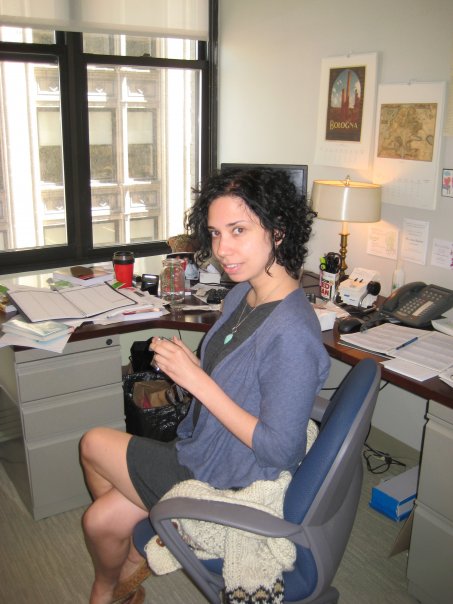
VENTRELLA: What do you see as the future for printed books? For book stores?

VAN NAME: I love books. I really do. My house is full of them. They’re everywhere. Sadly, I believe the printed book is going to become a minority taste. I’m not sure if the transition will take ten years or fifty, but I believe it’s coming. That said, in the fiction world, books are containers for stories, and ebooks are simply other containers for stories. Similarly, I believe bookstores will continue to exist, but they will evolve, and in time their numbers will shrink. I will hate that, because I love bookstores almost as much as I love books.
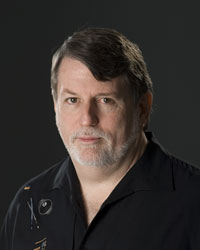
I hasten to add that I don’t see any of this as the demise of writers or of people paying for stories. They’ll just pay for those stories in other forms.

VENTRELLA: What’s your opinion on self-publishing?

VAN NAME: Rather mixed. I write a blog, so in a sense I self-publish. I sell all my fiction, however, to traditional publishers. I know that some writers can make a great deal of money self-publishing, but being a publisher is a lot of work, and most of that work is not writing, which is what I most want to do. So, for me, selling to a publisher remains the way I hope to continue to bring my fiction to the market.

I also expect most people who self-publish are unlikely to make a lot of money doing so. The sales and marketing experience that a publisher brings to its job helps make each writer a brand–some obviously much bigger brands than others–and it’s hard to manage that feat on your own. Plus, self-publishers have to be good enough at analyzing their own work to know when it’s of publishable quality. I’ve read some who are indeed good at that job, but I’ve also read many who are not.

Like so many things, if others want to do it, I wish them the best. For the most part, though, it’s not for me, at least not now. I add that last bit because even for those of us who work in the future every day, it’s pretty darn hard to predict.

VENTRELLA: With a time machine and a universal translator, who would you invite to your ultimate dinner party?

VAN NAME: I agonized over this question for months. In fact, it’s the biggest reason I’ve been so late getting this interview back to you. I really took the challenge seriously, and I found I simply couldn’t come up with a single ultimate dinner party. I won’t let myself cop out completely, though, so I’m going to give you, in no particular order, a few that particularly caught my fancy.

Each on his own, just so I could focus exclusively on him: Homer, Shakespeare, Keats, and my biological father, whom I’ve met only once for a couple of hours.

My mother as a young woman, but with someone standing by to knock me out if I started to give away the future.

Several women I care about deeply, each alone, each as a young girl, just so I could see who they once were.

I could go on and on, but one thing is clear: I’d be greedy, going for one-on-one time rather than organizing a group.