Interview with Bram Stoker Award-winning author John Shirley

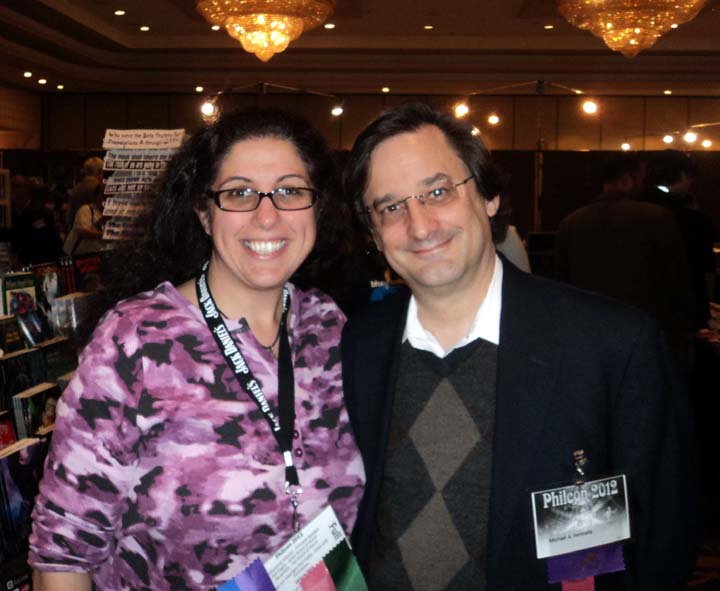
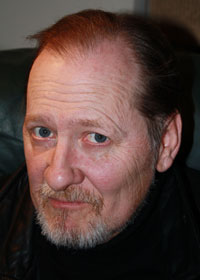
MICHAEL A. VENTRELLA: Today I am pleased to be interviewing John Shirley.

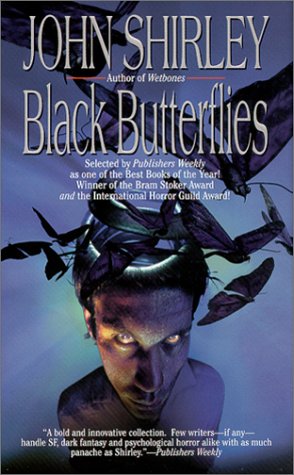
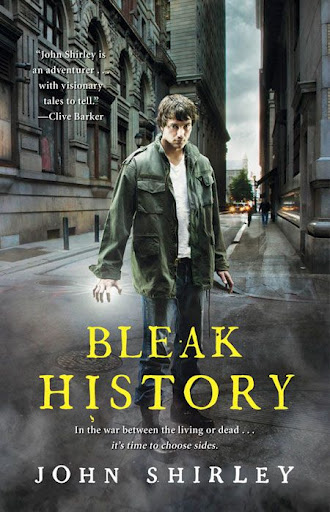
John Shirley is the author of numerous novels, story collections, screenplays (“THE CROW”), teleplays and articles. A futurologist and social critic, John was a featured speaker at TED-x in Brussels in 2011. His novels include EVERYTHING IS BROKEN, The “A Song Called Youth” cyberpunk trilogy (omnibus released in 2012), BLEAK HISTORY, DEMONS, CITY COME A-WALKIN’ and THE OTHER END. His short story collection BLACK BUTTERFLIES won the Bram Stoker Award, and was chosen by Publisher’s Weekly as one of the best books of the year. His new story collection is IN EXTREMIS: THE MOST EXTREME SHORT STORIES OF JOHN SHIRLEY. His stories have been included in three Year’s Best anthologies. He is also a songwriter (eg, for Blue Oyster Cult), and a singer. Black October records will soon be releasing a compilation of selected songs, BROKEN MIRROR GLASS: Recordings by John Shirley, 1978-2011. The authorized website is here.
John, since this is an election year, let’s start off with politics. You’ve certainly not shied away from politics, on your blog and on Facebook. Do you worry that this may alienate potential readers?

JOHN SHIRLEY: For me, I can’t worry about that and be a self respecting person.

VENTRELLA: Your novels EVERYTHING IS BROKEN and THE OTHER END are all about politics. What inspired you to write them?

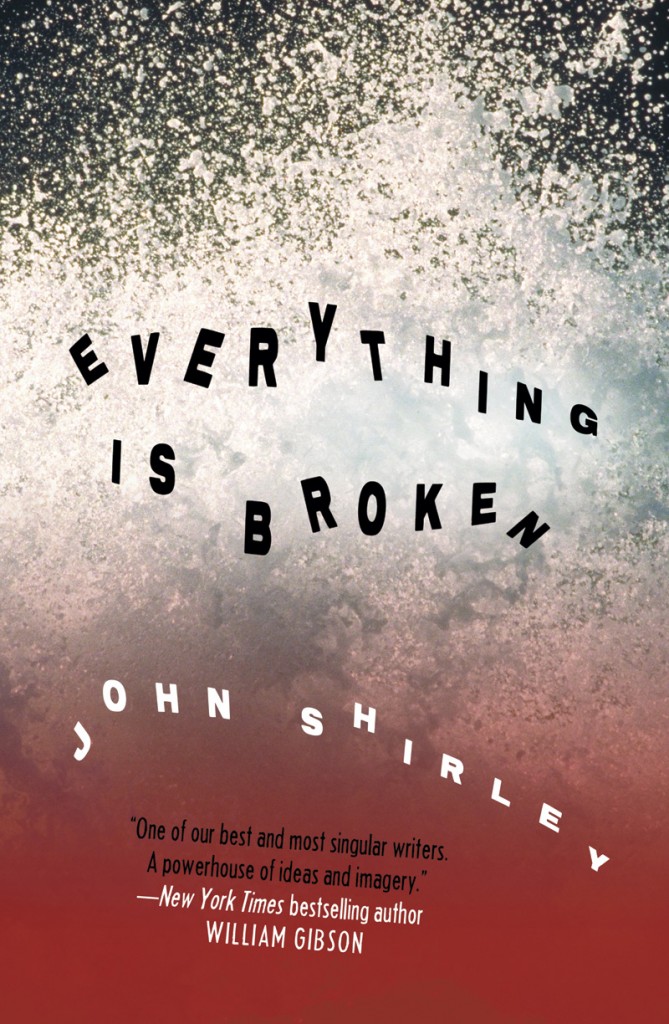
SHIRLEY: I wouldn’t agree they’re all about politics. EVERYTHING IS BROKEN, however, is a political allegory as well as being a noir novel, a coming of age novel, a disaster novel (as opposed to a disastrous novel!), a suspense novel, and it’s set a bit in the future. So it’s got science fiction going on too. The trick of course is for all this to blend seamlessly. But good recipes can have a number of strong ingredients.

EVERYTHING IS BROKEN is a kind of LORD OF THE FLIES for the 21st century, perhaps. Its political center has to do with the value of community, of government itself (at its best); it shows what happens to a small coastal community, hit by a disaster, when its been stripped of its resources, its preparation, by Libertarians and Tea Party types and Privatizers. And it has ticked off some of those people. But there’s always plenty of support from the other side of the fence. It’s doing rather well. Lots of people are concerned about throwing the baby away with the bathwater—a sense of community being the baby in this case.

THE OTHER END was inspired by a desire to take the apocalypse away from the Christian right and give it to progressive people, if they want it. Why should the Christian Right define Judgment Day? And what would you do if you could create your own Judgement Day? And yes there are political overtones to much of it…It’s a fantasy about a Judgment Day that doesn’t come, exactly, from anyone’s usual idea of God…and that looks for real, social justice.

VENTRELLA: What’s the best reaction you’ve received from these political books?

SHIRLEY: Recommendations. Good reviews. Eg, “That staple of cautionary science fiction, the near future, becomes especially ‘near’ in this disaster novel from one of fantastic fiction’s most hard-hitting talents–EVERYTHING IS BROKEN emerges as a violent, vivid, viscerally upsetting and wholly unflinching nightmare of a novel, which profoundly illustrates the very point of having a civilization in the first place, and the risks we undertake by dismantling infrastructure in the name of short term savings. It’s not just a compelling read, but an important one–GRADE A.”—SciFi Magazine
VENTRELLA: Are you optimistic about the future or do you worry that the crazies on the right will cause more harm before things change?

SHIRLEY: If you mean the near future, the great worry, for me, is the Citizen’s United decision by SCOTUS, empowering billionaires and giant corporations and amoral people like the Koch Brothers to freely propagandize, to distort the President’s record, to spread the falsehood that Reaganomics, Tea Party economics, and so on, actually works to improve the economy. Actual economists dispute that fallacy. But people are buying into it. And as the Super PACs unleash more and more propaganda, politicians become more afraid of taking a stand, afraid of someone mounting a super PAC against them—and Congress becomes even more dominated by money, at the expense of ethics. If you mean the farther future—at this link is a transcript of the speech I gave to TEDx in Brussels last November, on why I’m “optimistic because everything will be terrible.”

VENTRELLA: Some of the threat of the tea partiers and their like is their anti-science position. What do you think causes that mindset?

SHIRLEY: They feel more comfortable with ignorance. It’s a sort of numb buffer around them so they don’t have to face life as it is. But also they’re being manipulated. Big Oil is opposed to accepting science on global warming, and they manipulate these people to mistrust science.

VENTRELLA: Have politics always influenced your writing? In other words, do you find yourself visiting political themes in your work?

SHIRLEY: A fair amount—and if it’s not that, I’m reaching for something meaningful, in some respect. Existential meaning matters too. Spiritual meaning. Philosophical meaning. And the human condition. I admire writers who dramatize the realities of the human condition. But it’s great when someone can combine some controlled degree of didacticism with entertainment—sometimes they have a major social impact. I’m thinking of the novel UNCLE TOM’S CABIN, the works of Charles Dickens, Upton Sinclair, and Steinbeck. Kurt Vonnegut novel’s, too, affected people deeply, he had a lot of social resonance; so did the novel CATCH-22 by Heller.

VENTRELLA: What themes have you found yourself revisiting, even if subconsciously?

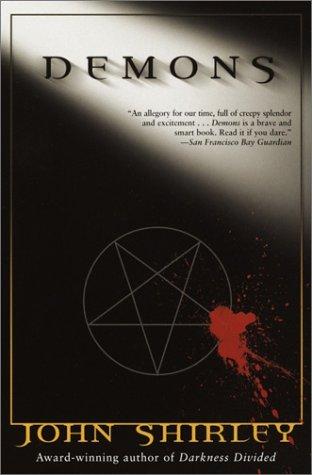
SHIRLEY: The struggle with addiction—in the past, I had to carry on a bare knuckle fight with it. Fortunately I won. . .My observation that people suppress their empathy, their compassion, all too easily; that they barricade themselves away from it. That dehumanization is sadly all too human…And issues of the necessary balance between too much government and too little. I’m not in favor of too much; but on a planet with 7 billion people, we cannot have too little. Environmental issues also crop up in my work—my novel DEMONS combines most of those concerns in one work of allegorical horror.
VENTRELLA: Do you think that science fiction and fantasy help to provide a better media in which to make points about current issues?

SHIRLEY: They’re ideally suited for it. Look at 1984, or BRAVE NEW WORLD, or Atwood’s anti-fascist science fiction, or Vonnegut’s social statements in SLAUGHTERHOUSE FIVE. Philip K. Dick warned about mind controlling media and new tech that might be misused that way, in a lot of his books. Then there was John Brunner’s work, like THE SHEEP LOOK UP. You can model different kinds of societies, dystopian and utopian and everything between, in science fiction, like creating a literary computer model.

VENTRELLA: You’ve done so many different genres—what leads you to try so many new things? Does the story come first or the setting?

SHIRLEY: Sometimes it’s the marketplace, but it’s also a creative restlessness. I don’t like to be pigeonholed. It’s also freshening, energizing, to move onto another genre. It’s like traveling in a country you haven’t been to before—it’s stimulating.

VENTRELLA: You’re quite prolific: What keeps you going?

SHIRLEY: Partly necessity—I don’t have a day job. I do have quite a lot to say, a lot of stories to tell. I simply feel better when I’m productive, too. It’s what I am; I’m a writer to the bones. I’m not good at much else. Can’t fix a car.

VENTRELLA: You’ve done quite a few novelizations and tie-ins, such as BATMAN: DEAD WHITE, PREDATOR: FOREVER MIDNIGHT and DOOM. What are the advantages and disadvantages of writing already in someone else’s world?

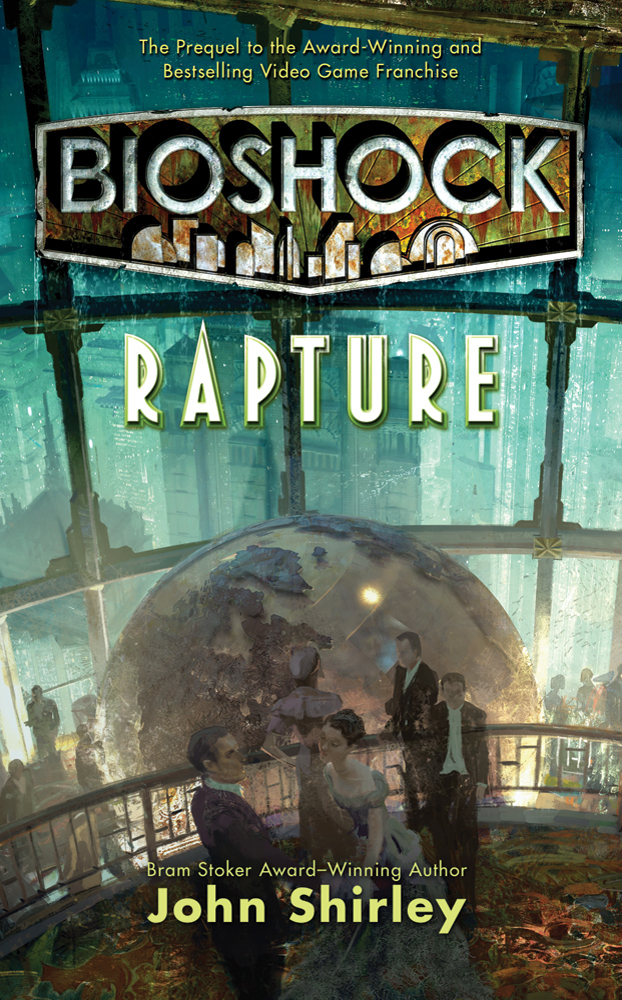
SHIRLEY: I did those things mostly for money—the most successful one was the Bioshock novel, BIOSHOCK: RAPTURE–but it’s also because they’re in arenas I enjoy. I do love Batman, was glad to play in that sandbox. They gave me a fair amount of latitude and it varies from editor to editor. The Bioshock game people were very hands on and that was difficult. One disadvantage is, one might have to revise more than one is really being paid for. But I always manage—in some cases, the project changes while you’re writing it. They’ve sent you a movie script, but at the last moment it was changed; you were supposed to write about this game but the second one just came out and they want you to do that too … And I prefer to adapt rather than argue.

In the case of Bioshock I knew the videogame world I was writing about pretty well and had enjoyed it so that helped. I enjoyed the Predator films and it was fun to write that book but one issue that comes up is, some fans are very possessive about the franchise they love. Some fans of the Predator comic book thought I ought to have followed its internal rules, its canon—but I didn’t read the comics, wasn’t required to. I just started with the movies and launched from there. I never contradict the underlying source material I’m using…but I do get to be creative within it, and that can be a bit of a buzz.
VENTRELLA: You’ve written scripts for movies and television–have you been pleased with the results?

SHIRLEY: It’s mixed. I wrote “The Crow,” with David Schow—couldn’t be pleased when Brandon Lee was killed in the course of the production. There are always issues of struggling with producer notes, and so on. As for television, it’s very much committee writing, and it’s hard for someone like me to learn that…but I did learn. I just wrote a recent television pilot, which we’re now shopping around, but I can’t talk about it except the name: Intruder Town.

VENTRELLA: Which do you think has been most successful?

SHIRLEY: I’ve had more television scripts that came out close to what I wanted, than in movies. The most recent movie I wrote was a low budget horror film. I was not happy about it. Can’t say more about that.

The Deep Space Nine episode I wrote came out nicely, thanks to Ira Behr, the producer. But it can be very frustrating and one can’t be too identified with the writing. You have to separate yourself from it more than if you’re writing a novel or a short story. . .

VENTRELLA: How much changed between your script and what is seen on the screen?

SHIRLEY: It’s the exception if there aren’t a lot of changes. There are always exceptions—Woody Allen’s films are auteur work, he’s the director, producer, writer, they naturally come out close to what he envisioned. Clint Eastwood, I think, once he has a good script, stays with it—eg the script for Unforgiven. But mostly it’s like your script has to run across no man’s land, with bullets flying…it’s lucky to get across it intact.

VENTRELLA: Do you find novels easier to write than short stories?

SHIRLEY: Short stories are finished faster of course, but that aside, there are things one can do in novels one can’t do in short stories. As long as you have a really strong sense of pacing, and don’t drop all the balls you’re juggling, you can get into more facets of character, more ideas, than in a short story. A short story is like a knock out punch; a novel is a whole long fight with many rounds and lots of footwork.
VENTRELLA: Which is your favorite?

SHIRLEY: Apples and oranges really…

VENTRELLA: Who is your favorite character?

SHIRLEY: From my work? Maybe Rickenharp from A SONG CALLED YOUTH—the cyberpunk trilogy is out now, as an omnibus, freshened up, updated, re edited, from Prime Books, and Rickenharp is perhaps the realest character…because he’s most like me. I’ve been a rock singer, he’s the leader of a rock band, I’m a lyricist and so is he (I wrote his lyrics, sometimes quoted briefly in the novels). He has drug issues and other issues—so do I. There’s a “street minister” character in my horror novel Wetbones I identify with a lot too, as he’s found a spiritual way out of addiction…

VENTRELLA: What would you ask that character if you could meet him or her?

SHIRLEY: Rickenharp? I’d ask him if he’d go to the recording studio with me, play some guitar, write some songs. And I’d ask him if he was self sacrificial—or self destructive.

VENTRELLA: And what do you think he or she would answer?

SHIRLEY: He’d say how much you pay me to the first question and laugh and say two sides of the same coin for the second.

VENTRELLA: Writers who are trying to make a name get hammered with lots of advice: The importance of a strong opening, admonitions about “writing what you know,” warnings to have “tension on every page” – what advice do you think is commonly given that really should be ignored?

SHIRLEY: Almost any of it can be ignored (apart from advice to be grammatic and literate and write in good sentences) if it’s irrelevant to what you’re doing. I have had to learn to write “more sympathetic” likable characters, but there are also times when I don’t need them to be sympathetic or likable. Ultimately one writes what works. Probably most people would have advised Anne Rice not to write a vampire character so sympathetically, in Interview with the Vampire, before it was published—but they’d be wrong! The book worked like gangbusters, breaking a rule. If you have the talent, the voice, the insight, make your own rules. If you’re not sure, follow the rules.
VENTRELLA: What is the biggest mistake you see starting writers make?

SHIRLEY: Nowadays it’s thinking they don’t need to be well read, they don’t need to know the difference between you’re and your, they don’t need to read outside their favorite genres—any half way decent writer had better read widely.

VENTRELLA: I’ve been surprised to find many writers who are also musicians (myself included) – why do you suppose that is?

SHIRLEY: I don’t know for sure. Jack Vance plays banjo. You really never know…But you know there’s a musicality in good sentences; there are good sentences in music…it’s all art, too…

I was always in rock bands. Like Sado-Nation—you can see me on youtube if you search for Sado-Nation with John Shirley there, performing with them in 1979 when I was quite young. So it’s always been a second track for me; and there are a lot of musical references in my books, and I listen to loud music, often, when writing and no it doesn’t distract me.

VENTRELLA: Who do you listen to? Who are your favorites?

SHIRLEY: I’m an old time Blue Oyster Cult guy, and in the late 90s I started writing lyrics for them (other lyricists for them include Patti Smith and Michael Moorcock), have written 18 songs they’ve recorded so I’m pretty partial to those. Mostly those are on their albums Heaven Forbid and Curse of the Hidden Mirror. I was in punk bands, and was a big fan of the Sex Pistols and the Clash and the Ramones. I am also a fan of psychedelic music, like Jimi Hendrix, Blue Cheer, or Roky Erickson. I like the Stones, the Beatles. Frank Zappa, Captain Beefheart. I’m a big Iggy and the Stooges guy too. Outside of rock I get into John Coltrane, certain classical composers like Stravinsky.

VENTRELLA: How did your collaboration with Blue Oyster Cult come about?

SHIRLEY: Mutual friends knew they were looking for a lyricist. Plus my first novel was named after one of their songs, TRANSMANIACON, and they were aware of it.

VENTRELLA: With a time machine and a universal translator, who would you invite to your ultimate dinner party?

SHIRLEY: CS Lewis, Tolkien, because I love the way those guys talk, Ambrose Bierce because I admire him and I want to ask what the hell happened to him, Edgar Allan Poe, same thing, Cyrano De Bergerac, Yeshua of Nazareth (a Gnostic teacher now called “Jesus”), Gotama Buddha, GI Gurdjieff, Ouspensky, Mark Twain, Marcus Aurelius, Pythagoras…

And I would sit Wyatt Earp right next to me…I’m pretty into the Wild West and have written a novel about Earp, that I am going to send out when I get around to revising it…

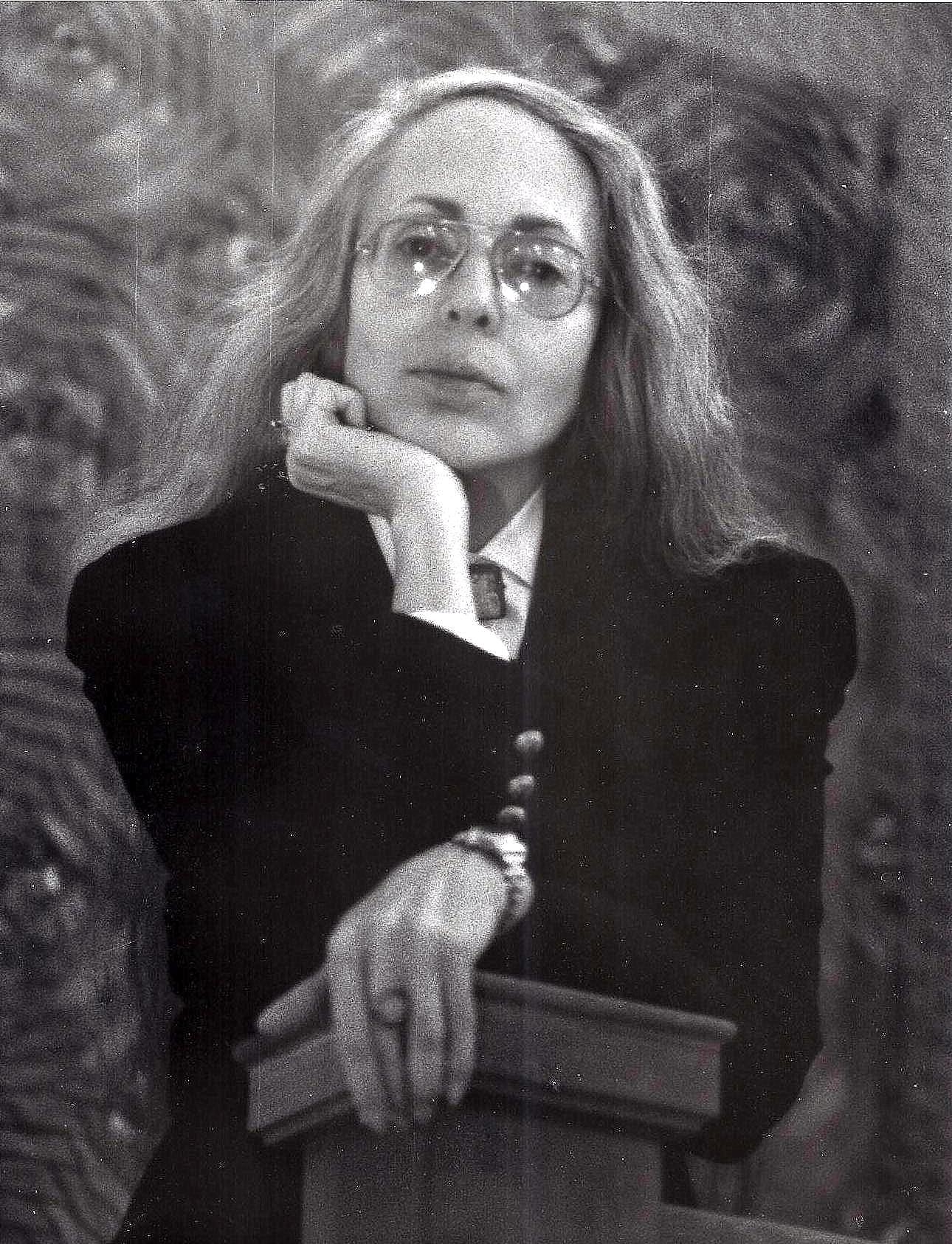
Interview with Hugo-Nominated Author Janet Morris

MICHAEL A. VENTRELLA: Today, I am pleased to be interviewing Hugo-nominated author Janet Morris. Janet is probably best known for her Silistra series. She has contributed short fiction to the shared universe fantasy series “Thieves World” and then created, orchestrated, and edited the fantasy series “Heroes in Hell,” writing stories for the series. Most of her fiction work has been in the fantasy and science fiction genres, although she has also written historical and other novels. Her 1983 book I, THE SUN, a detailed biographical novel about the Hittite King Suppiluliuma I, was praised for its historical accuracy.

Janet, let’s start by talking about the Kindle promotion going on right now.

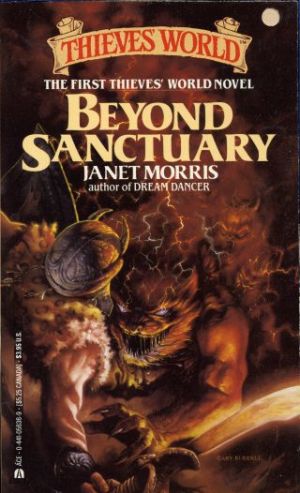
JANET MORRIS: There is an Amazon giveaway (May 15-17) of the author’s cut reissue of BEYOND SANCTUARY as a Kindle book. This is the only time this book will be offered as a free Kindle download.

It the first novel in the “Author’s Cut” group of reissues: each “Author’s Cut” volume is compeltely revised and expanded by the author(s) and contain new material never before available. The other “Author’s Cut” volumes that have been released as ebooks and as trade paperbacks are TEMPUS WITH HIS RIGHT-SIDE COMPANION NIKO (2011) and THE FISH THE FIGHTERS AND THE SONG-GIRL (2012). The next “Author’s Cut” edition will be BEYOND THE VEIL (2013), second of the three “Beyond novels” in the Sacred Band of Stepsons series. We will eventually reissue all the Sacred Band of Stepsons books, and then more of our backlist, in this ‘author’s cut’ program. It’s very satisfying to get all the errors and deficiencies corrected, and have a chance to enhance these perennial sellers.

Most Sacred Band novels will not have giveaways; we chose BEYOND SANCTUARY as a good starting place for those new to the series and, in its enhanced and expanded form, as an attraction for those who loved these books and stories in the 20th century. We are planning to do a few Sacred Band stories as Kindle shorts as time goes by, but nothing specific has been decided.

VENTRELLA: You started your publication history with the Silistra series. How did you make that first sale?

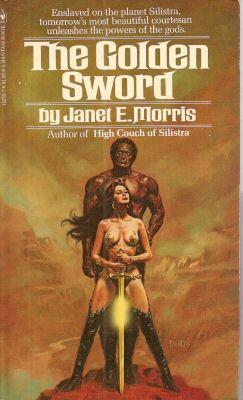
MORRIS: I wrote HIGH COUCH in 1975 and its two follow-ons, THE GOLDEN SWORD and WIND FROM THE ABYSS thereafter for fun: following the story for my husband and our friends. I knew no one in publishing and had no aspirations to break into the business.

One friend said her husband knew an agent and the book (HIGH COUCH) should be published but I would need to provide the manuscript in a clean, double-spaced copy, not single-space with handwritten corrections. I had my dad’s ancient typewriter (non-electric, non-correcting; the “p” key stuck) and was a terrible typist. I found out it would cost $1.00 per page to have the manuscript typed by a professional, which meant a $250.00 investment. So I didn’t do that for over a year; by then my second book was finished. In 1976 my friend sent the typed HIGH COUCH manuscript to an agent, Perry Knowlton, president of Curtis Brown, Ltd.. Perry called me and said I was a natural storyteller and he wanted to represent me and the book, and did I have any other books? I said I did but they weren’t typed up. He said, “Get them typed.”

Perry remained my only agent until his death. By the time I had the other books typed, he had sold HIGH COUCH for five figures to Frederik Pohl and Sydney Weinberg at Bantam and I was able to quit my day job. Then Perry sold THE GOLDEN SWORD and WIND FROM THE ABYSS to them in a package. By then I was writing THE CARNELIAN THRONE. By the time THRONE came out, Bantam had over 4M copies of the first three in print.

They bought THE CARNELIAN THRONE also, and my next series went to auction in two countries simultaneously based on sample chapters: I still don’t like to write outlines.

Silistra got many foreign rights deals, but only the French one is a divergent manuscript: for a sizable additional sum, I provided extra ‘erotic passages.’ ‘Erotic’ in those days was much less explicit than now, but even so, SILISTRA shook a lot of people from complacency: it wasn’t feminist, nor was it conservative; it featured pansexual characters and dealt with philosophical and sociobiological questions about sexuality and abuse of power; the main female character was powerful and had a sword: all these elements were challenging to the fantasy and SF community. And the book didn’t fit a neat category. In what was then a very hidebound and immature market, it blazed tough trails and still today doesn’t fit any simplistic or political model.

VENTRELLA: How has the publishing world changed since then?

MORRIS: E-publishing is a big change. Deconstructionism is rampant: the continual division of the novel into smaller and smaller subsets of its constituent elements (such as mystery, thriller, erotic, adventure, romance, horror, etc.) either mirrors or leads the deconstruction of politics and of society. Writing outside established marketing categories is increasingly difficult; the mid-list book, which was an incubator of talent, is all but gone in print publishing.

As an ox-gorer and a windmill-tilter who writes mythic novels with political subtexts and who never has been easy to categorize, I think e-publishing is a good thing. I no longer have to cut a big idea into three volume-sized chunks: I can write the book at the length it needs; I don’t have to fix or endure additional errors from semi-educated production people; I can control my covers and the book’s sell copy. The downside is there is much more free reading material (some worth the price, some not), and a lower educational level among some groups – but there have always been books and writers for every echelon of society.

VENTRELLA: Do you see a future where self-publishing will be accepted?

MORRIS: Sure, eventually. When we decided to return to fiction (after taking 20 years off to create the nonlethal weapons mandate, the nonlethality concept, and other initiatives in the defense policy and planning realms), we wanted to keep our fiction e-rights and at that time my agent (Perry Knowlton’s son, Tim, at Curtis Brown) said it was impossible to make a deal like that with a major house. So we decided to put together a small publishing house that did e-books and trades and make strategic alliances with other small publishing houses who produced quality hardcovers. We did this because the self-publishing road is still stigmatized, and because the production learning curve is steep. Kerlak did our first two hardcovers and gave me what I wanted: sewn binding, linen boards, generous print size, etc.

The stigmatization of self-publishing is primarily from the big chains, who look down on POD but POD was what attracted me to small publishing: no remaindered books; no books going to dumpsites; no torn-off covers returned and no tax liability for unsold stock. When we do reissues, we do “Author’s Cut” editions in which we can correct and expand and enhance each book that we’re releasing with better covers and production values than the twentieth century originals: an approach possible now but not practical even ten years ago.

Machiavelli commented in THE PRINCE as follows: “There is nothing more difficult to carry out nor more uncertain of success nor more dangerous to handle than to initiate a new order of things: for the reformer has enemies in all those who profit by the old order, and only lukewarm defenders in those who would profit by the new; this weak support arising partly from the incredulity of mankind who does not truly believe in anything new until they actually experience it.” We found this when initiating the nonlethal weapons programmatics: twenty years later, we are where we should have been in five years in nonlethals, and at absurd cost because nothing is adopted until big things take that viewpoint onboard commercially. Similarly, with publishing, as vested interests deal themselves in and competitive entities are created, things will stabilize – hopefully with new players, but with many of the old entities in new guises.

VENTRELLA: Will the rise of smaller publishing houses and e-books mean that these may someday be better accepted? For instance, will SFWA someday accept more of these publishers? Would that be a good thing?

MORRIS: Eventually the writers organizations must accept reality. E-books and small publishing are part of the new reality. SFWA, like all bureaucracies, protests that it protects its membership while it actually protects primarily itself. When SFWA sees that it must change to survive, it will change. Adaptation is always necessary for survival.

VENTRELLA: Now let’s talk about something more fun: Writing! What led you to write fantasy?

MORRIS: My work doesn’t fit many contemporary definitions of fantasy. I really write mythic novels and stories, sometimes in an SF and sometimes in a fantasy context, but there’s nothing ‘sweet’ or ‘pastel’ about my work: my characters face challenges and so do my readers.

When I write something that publishers call ‘fantasy’ I am writing in what I think is the most important tradition of fiction: starting with Homer and up through Shakespeare and Milton, the most important themes to tackle are those of the mythopoeic domain, tales of the body and mind seen through a temperament and a cosmos divorced from current reality so what is said can be more clear. For me, myth is the ‘common’ language of us all – or has been until these days of stories reduced to their lowest mechanical nature. My stories have a historical cognizance, a literary cognizance, and a philosophical/ scientific cognizance.

Bantam once wanted to separate a book of mine into two books: a short ‘wisdom literature’ book and a longer ‘mainstream’ book. I didn’t do that, but in retrospect it was a well-thought impulse on the publisher’s part.

I’ve also written nonfiction; a rigorous historical about Suppiluliumas, a Hittite king; a pseudonymous ‘novel’; other pseudonymous ‘high-tech thrillers’ (or what you will) with strong technology drivers. I make more money when I write under one male name than when I write under one female name or, as reality dictates, as “Janet Morris and Chris Morris.” But I write the book, each time, that forces me to write it, whether fiction or nonfiction. If the book is fiction, I write only when the story and characters demand that I give up my real life because what they will say is more important.

VENTRELLA: How do you create a realistic, believable fantasy world without just looking like every other realistic, believable fantasy world out there?

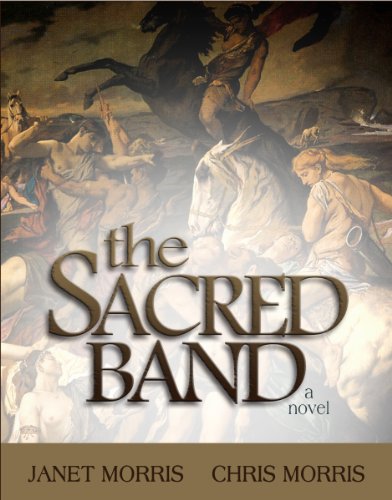
MORRIS: We say about THE SACRED BAND, our newest mythic novel, that it is “an adventure like no other.” This book had waited since the late 1970s to be written.

My books are remarkably unlike most of what else is available in contemporary fiction, so making the story or milieu ‘unique’ is not an effort for me. We started ‘The Sacred Band of Stepsons’ series and characters in the ‘shared world’ universe of Thieves’ World®, and so wrote in a milieu populated with other writers: making my work ‘fit’ their construct was a challenge. I have a deep love for the third, second and first millennia BCE, and my ancient characters always are touchstones to historical reality: I don’t “try” to make my fantasy world different from reality: I try to take you into the mythos of humanity. Silistra had a complete language, a glossary, a unique context, a rigorous rationale actually based on sociobiology and genetics, but had sword-wielding women and horses and ancient skirmishers as well as high-tech outsiders trying to understand it. The “Dream Dancer” series, also ‘science-fantasy,’ was set in space habitats primarily. It’s very easy for me to establish a credible world construct and posit behaviors there: I have predicted several major events in the real world over a number of years based on that ability to identify the most likely course of action that a country or individual will take in a given context. Now this skill is beginning to become a field of study called “intuitive decision making” and also “implied learning.” We once called it “speed understanding.” Writers often have this ability, and it allows creators to make their characters and societies credible. The writers who don’t have it can’t make their characters, or worlds, credible enough to please me.

If you want to write something completely unique, you will probably fail or at best write something without redeeming value. The mind works in certain patterns: the mind organizes facts in story form; it is your commonality with that body of human thought that makes a good book, not its estrangement from the common values that humans share.

VENTRELLA: As one of the original THIEVES’ WORLD gang, you’ve had a huge influence on modern fantasy fiction. It’s one of the first (or maybe the first?) shared world anthology. (I copied it completely and stole this idea for my TALES OF FORTANNIS series, by the way.) Where did the idea for this originate?

MORRIS: TW had one volume published when I was asked to come aboard: “Thieves’ World,” which had Joe Haldeman and Andy Offutt and Bob Asprin and others. Bob had the original idea for the “worst town in fantasy, the grittiest, meanest, seediest place possible.” He asked me to write for it at a convention and I said, “How serious are you about gritty?” I had written a very short piece about a woman who killed sorcerers for a living, and I proposed to bring those characters into Thieves’ World, plus an immortalized and very unhappy mercenary who regenerated. Bob said okay, I could bring the characters and take them out again afterward.

I started the story “Vashanka’s Minion,” that introduced Tempus (a/k/a the Riddler, Favorite of the Storm God, the Obscure, the Black). He has a metaphysical link to Herakleitos of Ephesus, and lives as a warrior in a Herakleitan/Hittite cosmos that I overlayed on what Bob and Andy already had done. But when Tempus got down to the dock and Askelon of Meridian got off the boat, Tempus said, “You, get out of my story. There’s not room enough here for both of us.” So Askelon didn’t arrive in Thieves’ World until “Wizard Weather,” although Cime, Tempus’ sister-in-arms, did show up. Tempus forms the Sacred Band of Stepsons in Thieves’ World #2, meets the patron shade of the Sacred Band in #3, and puts the Band together.

Then the TW books start to succeed and people get cranky. I called Bob and asked for a letter because I wanted to take my characters out of the shared town and do a group of novels with them, since Bob was complaining my characters were “too big.” So we agreed on that plan. These tensions made the stories more fun: people came and went; I took my characters into my own constructs such as Wizardwall and into the real ancient-world settlements of Nisibis and Mygdonia. Everyone contributed something useful to TW, and its fabric is still very rich.

I got Lynn Abbey’s permission, after Bob died, to bring the Sacred Band back to Sanctuary for a big novel to tie up loose ends that was set ten years after the Stepsons left town in TW #11 and well before Lynn’s own novel, since that milieu wouldn’t work for me. This project became THE SACRED BAND. As agreed with Lynn, THE SACRED BAND was followed by a novella, “the Fish the Fighters and the Song-girl” (the title story from the second “Sacred Band Tales” anthology), which takes the Stepsons back out of Sanctuary again and sweeps up all my TW stories not previously collected. So now, between “Tempus with his right-side companion Niko” and “the Fish the Fighters and the Song-girl” all our ten TW Sacred Band stories are assembled in two volumes, along with other Stepsons tales not available elsewhere.

As for fun quotient, I get more joy from the Sacred Band of Stepsons than from any other characters. And the SBS character list is expanding….

VENTRELLA: Another great series you’ve run is the HEROES IN HELL series (which now apparently includes LAWYERS IN HELL, which could be the name of my autobiography). What future themes can we expect to see?

MORRIS: If I’d known you, I’d have invited you to contribute to LAWYERS. In the 21st century Heroes in Hell books, next up is “Rogues,” to be followed by “Dreamers” (or “Visionaries,” I haven’t finalized the title), then “Poets,” then “Pirates” (or “Swashbucklers”). “Doctors” is a distinct possibility. There are many stories left to tell in hell, especially now that we have met hell’s landlords and heaven has sent down auditors to make sure hell is sufficiently hellish.

VENTRELLA: How do you work with the authors to make sure there is consistency in the world setting for these collections?

MORRIS: Each hell book takes a year to write and assemble, and the writers must coordinate more completely than was possible before the internet: we have a “secret” working group on Facebook where the writers interact and arcs and meta-arcs are chosen and polished. They choose characters. Our “Muse of Hell,” Sarah Hulcy, has put up 130 orientation docs, so there’s plenty of available information. When they choose the characters, we check to see if those characters have been used previously, and if the characters are available and meet our criteria, they can “claim” those characters for the time they write for the series. If they leave, they can’t take the characters: characters come back to me and stay in hell to be recycled.

Then they work on a short “two or three sentence” synopsis. I must accept the synopsis and the characters before they start to write. They can use legendary, historical, or mythical characters. They can’t use characters from modern fiction (post 1900) and they can’t use recently dead or living people. Then writers are allowed to post in-progress snippets which the group can read, and comment upon – or not. Chris and I write “guide stories” (two or three), setting up the current long arcs and the general tone of the volume at its beginning and end. Between these “bookends,” the other writers must set their stories.

When the stories are generally selected, I edit for continuity and tone, and Sarah Hulcy follows me with a copy-edit. Chris Morris is the final editorial reader, and with the three of us working on the stories for continuity and cohesion, we get a strong result and a better book than we could have produced before the internet.

VENTRELLA: I assume your anthologies are primarily invitation-only (correct me if I am wrong). How do you deal with stories that don’t meet your standard or are rejected for other reasons?

MORRIS: We are invitation-only. The milieu of our hell belongs to Chris and me. The authors know that from the outset. We usually won’t let them write a story we don’t think will work: by the time we’ve approved characters and synopsis, we know what the story will be and how we’ll use it. If someone simply fails to write a useful story, they probably haven’t met our guidelines. Our hell universe is easily recognizable. Each writer has left a clear trail of participation. If they want to rewrite a story we won’t accept and take out the arguably HIH context and characters, of course they can try.

VENTRELLA: Let’s discuss your novels. Which is your favorite?

MORRIS: In fantasy: THE SACRED BAND (Janet Morris and Chris Morris; Paradise, 2010; Kerlak, 2011), the mythic novel of the Sacred Band of Stepsons uniting with the Sacred Band of Thebes and returning to Sanctuary. In historical: I, THE SUN (Janet Morris, Dell, 1987).

VENTRELLA: Who is your favorite character?

MORRIS: Tempus and then Niko and the Sacred Band of Stepsons fighters.

VENTRELLA: What would you ask that character if you could meet him or her?

MORRIS: Tempus lives in my skull. I meet him on a regular basis and I’m happy to have a character so available. He’s been there since 1979. I went to the White House and he said, “Kinda small, isn’t it?” I would ask him, in all seriousness, whether he truly believes that “character is destiny,” a line he shares with Herakleitos.

VENTRELLA: And what do you think he or she would answer?

MORRIS: “The sun is new every day.” We call him the Riddler, remember.

VENTRELLA: Do you prefer writing fantasy or science fiction?

MORRIS: Fantasy, because very little in SF can transcend the gimmickry of a technical conceit, yet without that conceit at its heart a book isn’t truly science fiction. Furthermore, so little emerging thought and technology is employed by sf writers today that the genre is lagging far behind reality both in the cosmology area and the technology area: sf is no longer a place to experiment, but is now very derivative.

VENTRELLA: Do you find novels easier to write than short stories?

MORRIS: A novel is a major commitment, and must move smoothly along its trajectory. A “short story,” if it’s more than three thousand words, actually lets you focus more deeply on a circumscribed area or event. I think short stories and novels are different; each form is unique and equally demanding. I prefer novels but short stories are good exercises in discipline.

VENTRELLA: Do you tend to outline heavily or just jump right in? What is your writing style?

MORRIS: I don’t “outline” in the way that you mean. I get characters, and their background; I immerse my intelligence in a milieu that’s fully realized: a place with weather and politics and problems and a special nature. I use square post-it notes to write down certain things that must happen during a sitting: a line of dialogue, a particular event, where I need to be when the section is done; a section or chapter or story title. I know where I want the story or chapter or novel to end; I know where I want to start each section: how I get there is the fun for me.

Often times the question for me is which viewpoint character will have the best take on a particular set of events. When I have (twice) sold a project based on outline, it took all the fun out of it.

VENTRELLA: When creating believable characters, what techniques do you use?

MORRIS: I wait. I lie on the bed or go for a drive with paper in my pocket and wait for the characters to start to interact with me, or to tell their story to me. I need to “see something moving” and other writers who write this way all agree – if there’s something moving in your mind’s eye, there’s a character there.

Abarsis was a good example: I knew I wanted to do “A Man and His God” in which at the end the Slaughter Priest would die in Tempus’ arms. I got a character called Abarsis. I thought he and the Slaughter Priest would be two different people but the character wanted to be “Abarsis, the Slaughter Priest.” This was a very big, very strong character and I argued that if Abarsis was the Slaughter Priest then he would die. He said that was fine. Susan Allison of Ace called me up after she read it and confessed that the story made her cry. And Abarsis came back as patron shade of the Sacred Band: the character knew more than I what to do and how, in order to be memorable. Sometimes with good characters you must let go and let them forge ahead. This requires belief in your Muse.

VENTRELLA: You’ve collaborated with other prominent authors, at least one of whom lives with you, which makes it easier. How have these worked? (For instance, do you share writing equally? Does one author do the basic work and the other expand from that outline?)

MORRIS: With whatever writer, we talk about the story line, points of interest, what needs to be accomplished. If it’s Chris, he may come up with a title or a concept. I usually do draft or if I write with others, I’ll often write first: I like beginnings. With some writers, I send sections and they pick up the action; with others, I’ll do a draft and then they will add to it after I’ve done all I want to do, from beginning to end.

Everyone has a special genius, and working with each person is different. If the other writer starts, that’s a different process for me: I work on the story they’ve sent in Track Changes, do what I want to the entire manuscript. Then they accept or reject or we go back and forth. I worked a number of projects with a writer who was outline-driven and I could never figure out what those notations were supposed to evoke, so I’d call to discuss it. The outline made the other writer feel better. I can do a series of chapter titles and use those as an outline, but beyond that, outlines don’t help me. I often work with other writers who don’t like to outline either, or outline in the most cursory way.

VENTRELLA: Writers who are trying to make a name get hammered with lots of advice: The importance of a strong opening, admonitions about “writing what you know,” warnings to have “tension on every page” – what advice do you think is commonly given that really should be ignored?

MORRIS: All advice should be ignored. Every real writer is different. Every story has a nature, an organic way it wants to unfold. Tell a story that sweeps you up, that you want to hear, that keeps YOU on the edge of your seat. Some stories start best with dialogue, others with narrative: writing is catching the wave of creativity. The wave must be there for you to catch.

Writers learn from reading other writers whom they can admire, and writers whom they detest. Before Silistra, I bought a paperback by a famous writer and when I was done I threw it in the wastebasket, said “I can do better than that,” and did. When I read, I try to read writers who can teach me something, who are better at some things than I am. But print-through is always an issue: often when I am writing fiction I read only nonfiction, and vice versa.

The only person who should ask you to make changes in your book is some editor who has paid a lot of money for it. Even then, changes are risky: the story unfolds on the first pass the way the universe unfolded in the first moments of creation: in the way that it must.

VENTRELLA: What is the biggest mistake you see starting writers make?

MORRIS: Writers who have no characters and force a story bore me. Writers who are good at one thing – such as dialogue – may do that one thing too much: talking heads don’t work except very occasionally, when they can work very well. Knowing when to do something is part of the art of writing. Sometimes I act as an acquisitions editor. If you want to sell to me, you’ll tell me who, where, what, and why, and then finally how – all on the first page, hopefully in the first couple paragraphs: where I am, what it’s like, who cares about what’s happening. I want to fall through the words into a different place. But most of all, you must make me care almost immediately.

VENTRELLA: With a time machine and a universal translator, who would you invite to your ultimate dinner party?

MORRIS: Homer, Hesiod, Tiye, Virgil, Marcus Aurelius, Herakleitos, Einstein, DaVinci, Xenophon, Kikkuli, Thales, Plato, Odysseus (assuming he was Homer’s grandfather), Epaminondas, T.E. Lawrence, Marlowe, Shakespeare, Byron, Mary Shelley, Evelyn Waugh, Emil Zola, Dwight Eisenhower, Sun Tzu, Aspasia, Aristotle, Marguerite Yourcenar, Henry James, Suppiluliumas, Anksepaaten, Herodotus, Sappho, Emily Dickinson, Richmond Lattimore, Solomon, the Biblical “J.” And I’d really like to have Roger Penrose as toastmaster, but he’s still alive.

Interview with Author KT Pinto

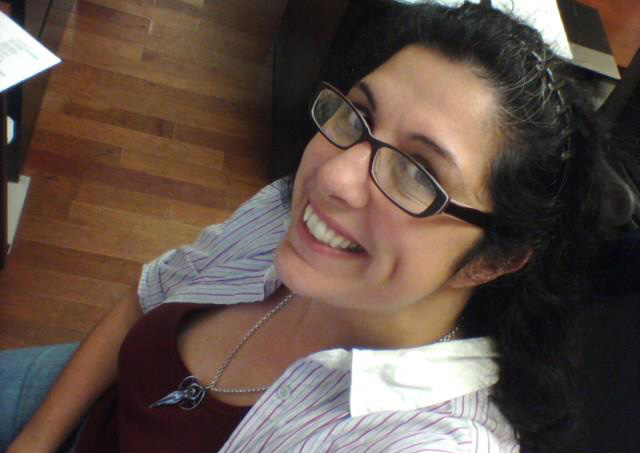
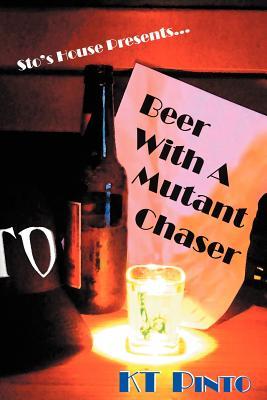
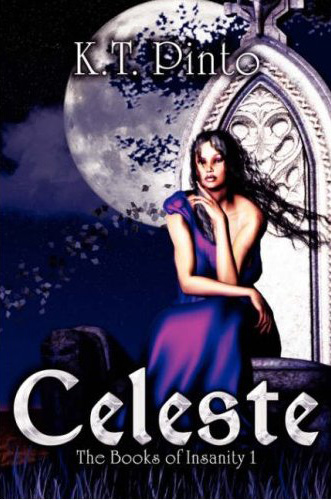
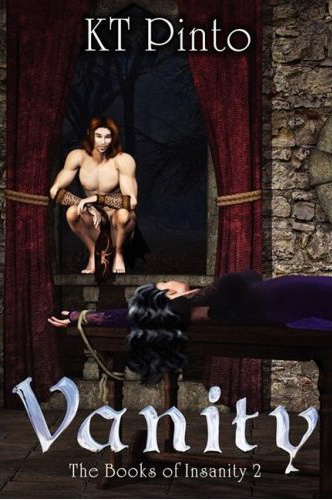
MICHAEL A. VENTRELLA: Today, I am pleased to be interviewing KT Pinto. KT has been writing since she was twelve, finally getting her first book published in 2007. She writes alternate history (The Books of Insanity series) with vampyres and alternate reality (The Sto’s House Presents series) with mutants. She is a modern mythologist and a self-proclaimed ‘fluffy goth’ who would sooner wear pink with sparkles than black velvet. She will be a guest at Balticon in a few weeks (where I also will be a guest). KT will be promoting her latest novel and participating in a book release party.

KT, let’s talk first about your latest big news. You received a grant! Tell us about the End of the Rainbow project.

KT PINTO: I received a DCA Premier Grant from the Council on the Arts & Humanities for Staten Island (COAHSI), with public funding from the NYC Department of Cultural Affairs to re-write the myths from an alternate lifestyle perspective. I am going to be rewriting myths from Greek, Roman, Norse, Egyptian, and Gaelic cultures. You could read an excerpt of the book here.

I will also be doing a reading of this book at Bent Pages, NYC’s only remaining LGBT bookstore (391 Van Duzer Street, Staten Island, New York) on Thursday, October 11, 2012 at 7:00 PM.

VENTRELLA: And there’s a raffle, too?

PINTO: Yes! The proceeds from this raffle will go towards completing my End of the Rainbow grant project and the winner will be announced at the end of the Staten Island LGBT Festival on June 2nd! There will be 10 different prize “baskets” (the prizes will not actually be presented in baskets), each with a different theme. All of the basket items were donated (it’s great that people are so generous!), and the baskets range in value from $70 – $220. Details on the baskets can be found here!

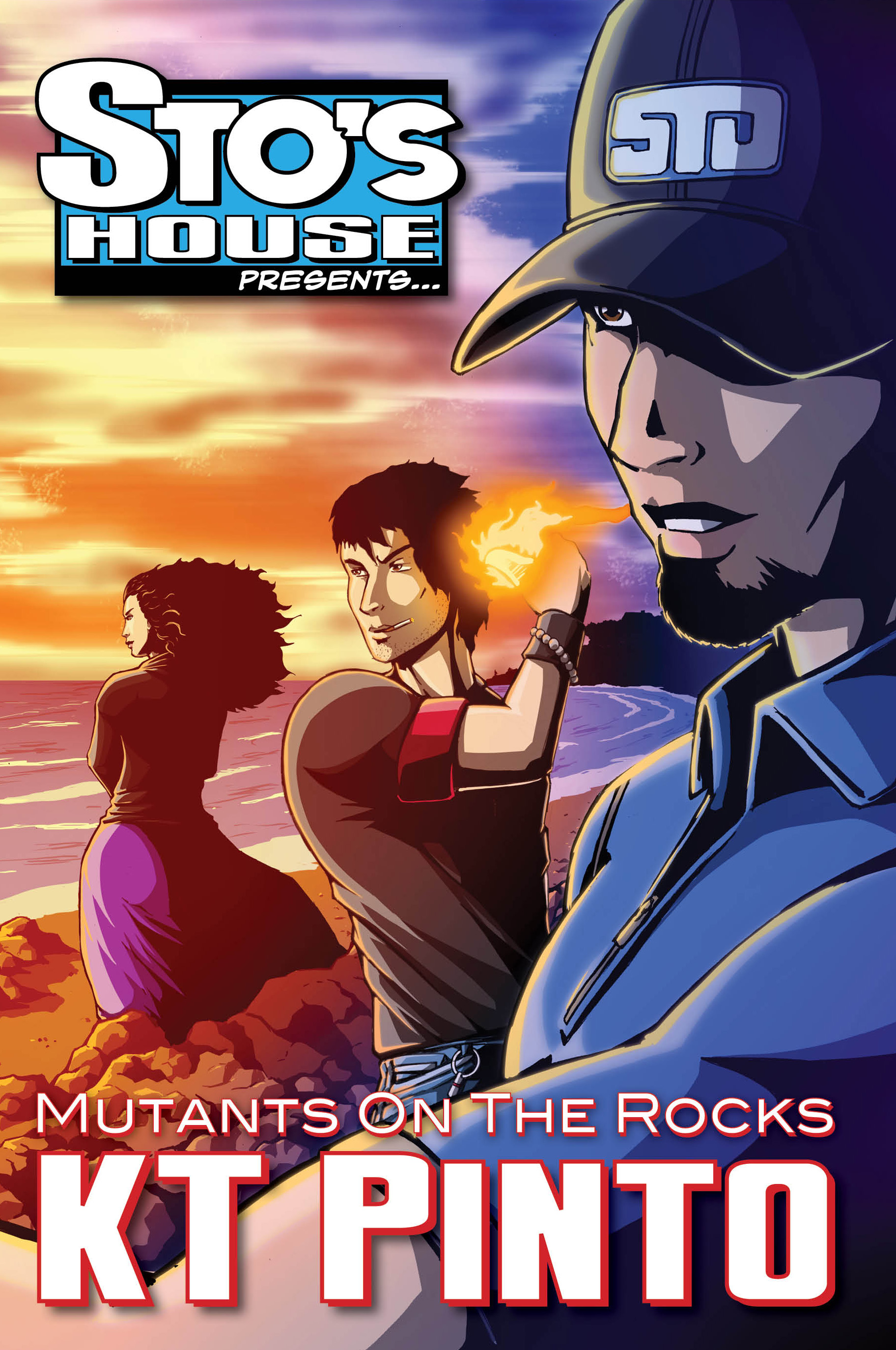
VENTRELLA: MUTANTS ON THE ROCKS is about to be released and is the latest in your “Sto’s House” series. Where did you come up with the idea?

PINTO: I had been having a really hard time with my vampyre series, and I realized that being in that dark place all the time wasn’t good for my creativity, so I decided to start writing some more light-hearted stories. I took the idea from an RPG I created called Sto’s House, which is about a bunch of 20-somethings who are mutated by the toxic waste in the Staten Island Dump. They don’t want to save the world, just find the world’s best microbrew.

The characters are based on my friend Christopher Mancuso (aka Sto) and the people we used to hang out with at his house when we were in our 20s. I hadn’t planned on it becoming novel-length, but one day I noticed that I had written 10 short stories, and had enough material for a really good (if I do say so myself) novel.

VENTRELLA: How has the series been received so far?

PINTO: People seem to be having a good time with it. I wasn’t sure how it would be received on Staten Island especially, but people seem to really enjoy the humor and there are enough different characters that readers can relate to one or more of them.

VENTRELLA: You’re having a release party at Balticon. Tell us about that!

PINTO: I personally am not having the party. Dark Quest Books, who publishes my Sto’s House Presents… series, is having a party highlighting their new releases for the spring. I think four authors are being highlighted there including myself and MUTANTS ON THE ROCKS, which is the second book in the Sto’s House Presents… series.

VENTRELLA: Like me, you’re a regular on the east coast convention circuit. What are the advantages of attending these?

PINTO: Conventions give you a chance to interact with fans as well as getting together with fellow authors and networking with publishers and agents. For me, it’s also good to be on the circuit because I get a chance to see what’s going on in other genres and other disciplines (like costuming and gaming). I actually am starting to cut back on some local conventions and travel to further locations, like Pittsburgh, Pa. and Roanoke Va. because I want to connect with more fans and professionals.

VENTRELLA: These days, it takes much more to be a successful author than merely writing a good book. What other efforts have you made to publicize yourself and do you think they have been worth your time?

PINTO: I have gotten very involved with my local arts organization, COAHSI, which is a good resource not only for grants, but to meet other local artists, find out about community events, help promote you and your work and even to learn about more mundane information like jobs, insurance and other resources.

I’ve been on Live Journal for a really long time, and don’t plan on leaving it any time soon. Not only am I able to write full journal entries, but I can also link it to my facebook and twitter accounts. Facebook used to be a good resource, but it’s gotten so big (I’m up to 1000 friends) and has made so many changes, networking has become difficult.

Inanna from By Light Unseen Media – who published MARCO, the third book in my vampyre series – suggested that Goodreads may be a better site for promotions, so I’m feeling my way through that site as well.

I also have an account with Constant Contact, which helps me send out a newsletter to a mailing list that I developed by going to conventions.

VENTRELLA: What was your first professionally published work?

PINTO: My first work was “E-mails 10”, which was a short story published in Nth Degree Magazine (which is now Nthzine on-line).

VENTRELLA: You have a LARP background (as do I). How has that led to you writing fiction?

PINTO: Although I have been writing since I was 12, LARPing was what helped me create my world and characters of The Books of Insanity series. I used to own a gaming company that ran LARPs around the Hudson Valley, NY and at conventions.

During that time I created some original LARPS (ex: Sto’s House) and some murder mystery nights, the main game that we ran was vampyre LARP. So I was not only able to create evil, blood-sucking fiends, but I was able to become them as NPCs

I had created a character that was supposed to only be a one-shot ‘big bad’ that the players were supposed to kill in a one-night (possibly two-night) story line. More than a year later, she still existed, because instead of people trying to kill her, they wanted to join forces and build storylines around her.

That character’s name was Celeste, and she became the main character in my Books of Insanity series.

VENTRELLA: What are the differences between writing for a LARP and writing fiction?

PINTO: When writing a storyline for a LARP, you have to be prepared that all of your plans are going to be destroyed within the first five minutes of the game. You have to plan for different levels of gamers and prepare to lead them through a storyline if necessary. Other times your PCs make their story their own and all you have to do is keep track of the rules (in my case, the staff kept track of the rules; I was more a storyline/character person).

With fiction, it’s all on you to keep the audience’s attention and creating all the drama and action. On the upside, you don’t have to worry about almost 500 characters trying to do their own thing…

VENTRELLA: Boy, do I know that feeling. Do you prefer short stories or longer works?

PINTO: I used to dislike writing short stories, but the more I do (and the more I get published!) the more I like them. I think I have developed a rhythm to creating a short in a concise manner, unlike when I write a novel.

When it comes to my reading, my preference has always been novels. I tend to feel gypped when I read a really good short story and it ends. It always feels like it ended too soon and leaves me wanting more.

VENTRELLA: You’ve mostly dealt with mid-sized press (like me!). What are the advantages of dealing with a smaller press?

PINTO: Mid-sized presses are good because they’re more open to different ideas and you are able to communicate with the senior staff on a regular basis. You also don’t need an agent in most cases to work with a mid-sized press.

Working with mid-sized presses also gives you a chance to work with and recommend other professionals in different disciples, like editors, artists, typesetters… for example, the cover for MUTANTS ON THE ROCKS was created by Victor Toro, an artist that I recommended to Neal, the publisher of Dark Quest Books.

The downside to a smaller press is they don’t get the respect that they deserve from bookstores, reviewers, some conventions…

VENTRELLA: Do you advise new authors to consider self-publishing?

PINTO: I think self-publishing is good if you have the same knowledge as a publisher would, in order to protect yourself legally and financially.

I think self-publishing is good for someone doing a photography or art book, because it’s a way of highlighting your art form. But for me, I think mid-sized presses are a good way to interact with other writers and learn about more writing opportunities that are both with other publishers and with your own company.

VENTRELLA: Let’s talk about your writing style. Do you tend to outline heavily or just jump right in?

PINTO: It depends on my project. My Books of Insanity series happens over 2000 years, so not only do I have to plan out each book story as I write them, but also had to plan out the arch of the series (I have 13 books planned, but once you hit the world wars, that number can become bigger).

The Sto’s House Presents… series, on the other hand, is completely off the cuff.

VENTRELLA: What predictions can you make about the future of publishing, given current trends towards e-books and self-publishing?

PINTO: I think publishing is always going to stay around; it’s just going to change form. For example, we no longer write on stone or papyrus. I also think with the popularity of ‘nerds’ with all their crazy book reading, along with the eventual (hopefully) return of a good economy, the publishing world will flourish. Just not as much in the brick and mortar form.

I also think that with the healing of the economy will also come a rise in vampires again. Lately zombies and steampunk (and sometimes both) have taken over readers’ interests, but eventually it will shift back again. And then my vampyres will rise and take over the world… and my mutants will crack open a beer and enjoy the show.

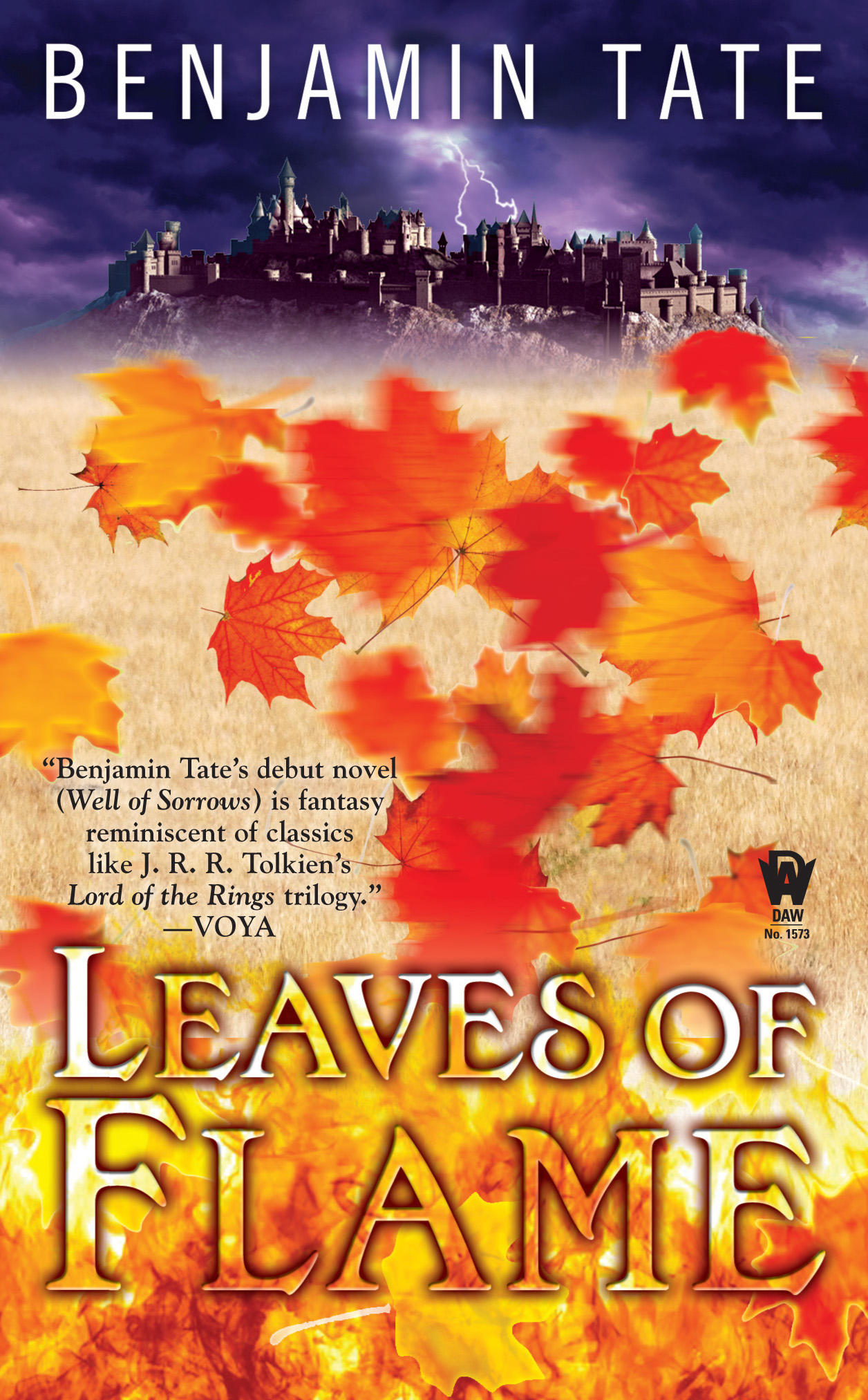
Interview with author Joshua Palmatier

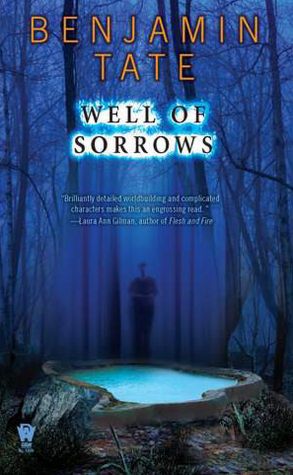
MICHAEL A. VENTRELLA: Today, I am pleased to be interviewing Joshua Palmatier. Josh and I have been on panels at various SF conventions together, and we’ve had some great discussions about writing and fantasy. Joshua is a fantasy writer with DAW Books, with two series on the shelf, a few short stories, and is co-editor with Patricia Bray of two anthologies. Check out the “Throne of Amenkor” trilogy — THE SKEWED THRONE, THE CRACKED THRONE, and THE VACANT THRONE — under the Joshua Palmatier name. And look for the “Well” series — WELL OF SORROWS and the just released LEAVES OF FLAME — by Benjamin Tate. Short stories are included in the anthologies CLOSE ENCOUNTERS OF THE URBAN KIND (edited by Jennifer Brozek), BEAUTY HAS HER WAY (Jennifer Brozek), and RIER (Alma Alexander). And the two anthologies he’s co-edited are AFTER HOURS: TALES FROM THE UR-BAR and the upcoming THE MODERN FAE’S GUIDE TO SURVIVING HUMANITY (March 2012). His web pages are www.joshuapalmatier.com and www.benjamintate.com, as well as on Facebook, LiveJournal (jpsorrow), and Twitter (bentateauthor).

Josh, your Tate books take place in the same fantasy world as the Palmatier books, although not at the same time or with the same characters. Why have two different authors? When new authors are trying to get that important name recognition, doesn’t this put you at a disadvantage?

JOSHUA PALMATIER: Well, the two names were actually a strategy brought up by the marketing department at my publisher. The idea was that we’d release the new books under the Ben Tate name and make it an open secret. Hopefully, the Joshua Palmatier fans would learn of the name switch and buy the new Tate books, while the Tate name would bypass the ordering structure of the bookstores so that they’d carry the new books on the shelves and pull in new readers. It was an attempt to increase the audience for my books. The sales for the Palmatier books were OK, but not as high as hoped, so the publisher was looking for ways to draw in additional readers. At this point, I would have to say that the ploy didn’t work, although I think there were numerous factors as to why it didn’t work.

VENTRELLA: Is the voice the same in the two series?

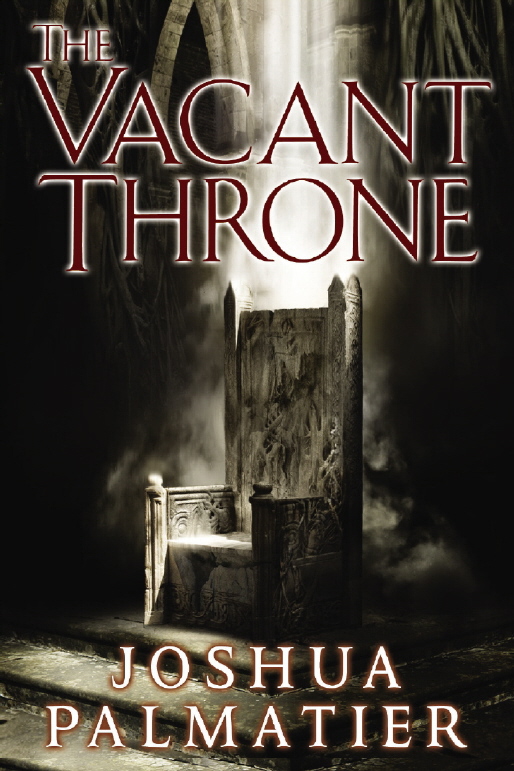
PALMATIER: That’s one of the reasons that I didn’t protest too much when the publisher suggested the name change for the new series —- the voice of the new series is significantly different than the original. So even though it’s set in the same world, it had different characters, was set at a different time period in the history of the world, on a completely different continent, and -— like the Palmatier books, which were focused on one character, written in first person, and were essentially “urban fantasies” set on an alternate world —- the new series was much more epic in nature. There are multiple POV characters and threads that the reader follows, and the action takes place over two different continents and over a much larger time span. So the feel of the books are different than from that original series. Both are dark in nature though, as the covers of THE VACANT THRONE and WELL OF SORROWS suggest.

VENTRELLA: How did you get your first “big break” in publishing? Did you have an agent first?

PALMATIER: My “big break” was sort of interesting actually. I wrote my first book (unpublished) and started sending it out to editors and agents at the same time (one editor at a time, but multiple agents). I spent the next ten years writing three additional novels, sending each out to editors and agents and getting rejections from all. But most of the rejections were good, meaning they said, “I’m not interested in this project, but the writing’s good and I’d like to see whatever you write next.” This was encouraging, and it allowed me to focus my attentions on those editors and agents who were interested. I basically kept a running list for each, in order of my preference and tweaked based on the responses I got.

So when it came time to send out THE SKEWED THRONE, I started at the top of my editor list (Sheila Gilbert at DAW) and the first seven agents on my list. I heard back from those first seven agents quickly (all rejections), so sent out the next batch of seven, all while DAW still had the book. I was also getting my PhD in mathematics at the same time, at the point where I was defending my dissertation. I got a call from one of the agents, Amy Stout, while prepping for that defense. After a lengthy discussion on the phone over representation, I signed on with her and told her that DAW currently had the book. Amy called up Sheila and started talking. Meanwhile, I continued my job search and defense.

I was away at a mathematics conference, doing interviews and such, when Amy called back to tell me that DAW wanted to buy THE SKEWED THRONE. I was thrilled! But they also wanted to talk about the sequels. So in the midst of finishing up my dissertation and job hunting, I worked up the proposals to THE CRACKED THRONE and THE VACANT THRONE and almost immediately had contracts for the entire trilogy. My first sale! I was on my way!

But keep in mind that it took me ten years and I wrote three other novels before THE SKEWED THRONE found a home. And I lost count of the number of rejections.

VENTRELLA: Aspiring authors often seem to think that writing a book is easy and your first one is sure to be a huge hit. What writing experience did you have prior to publication?

PALMATIER: *snort* Writing a book isn’t easy. I said before that I wrote three other novels before I sold one, but that isn’t quite true. I started writing while I was in high school and kept writing all the way through college. It wasn’t until grad school that I sat back and asked myself whether I was going to do this for fun, or if I was going to try to sell something. So it was ten years and four novels total from the moment I decided to get serious. There were ten years of “fun” writing before that.

And that “fun” writing was actually my entire set of writing experience. I took a few classes here and there in college as part of my other degrees (electives and such), but for the most part, those ten years of writing were me teaching myself how to write. I wrote my first true novel five different times, each time learning more about the craft and what was good writing and how much mine sucked. It wasn’t until the 5th draft that I finally thought I’d written something that could potentially be published. (And those first few drafts were bad. I mean bad. Indescribably bad.)

I also pretty much trained myself in how to send that manuscript out to find a publisher to call home. That simply amounted to a bunch of research and time on my part, reading up on what “manuscript format” meant and what publishers wanted in a “query” or “partial.” All of that’s even easier to research now with the internet, and I strongly suggest aspiring writers take the time to do the research and make a list of publisher and agents they want to submit to when they’re ready.

But of course, you have to have that stellar book first, and that part ain’t easy at all.

VENTRELLA: Tell us about the books!

PALMATIER: I was waiting for you to ask. *grin* All of my novels are dark fantasy, the Tate books more epic in nature than the Palmatier books.

I’ll start with the “Throne of Amenkor” series, which begins with a young girl, Varis, barely surviving in the slums of the city of Amenkor. She’s on her way to becoming lost, like so many other souls in the slums, when she runs across a Seeker—an assassin sent by the Mistress of the city to mete out justice—named Erick. Erick trains her to protect herself and uses her to hunt his marks in the slums. Of course, these marks lead Varis beyond the slums into the heart of the Amenkor and deep into its politics. Eventually, she’s hired to kill the Mistress herself, protected by the magic of the Skewed Throne.

The series continues beyond that, with attacks from a race called the Chorl from the sea, and eventually leads to Amenkor’s sister city of Venitte. But I don’t want to spoil anything. Everyone will just have to read the books to find out what happens.

My Tate novels are a little different, set on a different continent and sort of combining the settling of a newly discovered continent with fantasy elements. Colin’s family has fled the coming war in their homeland to the new continent across the ocean, landing in one of the few settlements on the new coast. But the politics of the old world have followed them to the new. In order to escape, Colin’s father accepts responsibility for a wagon train heading into the unexplored plains to form a new settlement inland. They head out . . . only to discover entire new races of people, a beautiful new world, and unexpected and magical dangers. Attacked by one such race, the wagon train is driven into a dangerous and dark forest, where Colin’s life is changed forever when he is forced to drink for the Well of Sorrows in order to survive. But the waters of the Well transform him into something more than human. Struggling to maintain his grasp on humanity, he attempts to use his newfound powers to end the war between the three clashing races —- the humans from his homeland, the dwarren, and the Alvritshai.

VENTRELLA: You are the editor of a new anthology about fae coming out soon. How did that come about?

PALMATIER: Ah, the role as editor. That actually came about at a bar. You see, a bunch of my fellow friends and authors had gotten together for a signing and afterwards we, of course, hit the bar for a few drinks. While chatting, someone brought up the idea of doing an anthology centered around a bar, and thus AFTER HOURS: TALES FROM THE UR-BAR was born. I wrote up a proposal for that and sent it out. DAW liked the idea and thus my editing career (with Patricia Bray) was born. After the bar anthology, Patricia and I proposed a few other ideas and DAW bought THE MODERN FAE’S GUIDE TO SURVIVING HUMANITY.

VENTRELLA: As someone who has edited a short story collection and is working on a second, I find that the hardest thing to do is reject stories, especially from friends. How have you handled this?

PALMATIER: Well, for the first anthology, AFTER HOURS, Patricia and I only invited around 17 authors to contribute. A few had to drop out because of their own schedules, so we ended up not needing to reject anyone for that anthology. However, for MODERN FAE we invited over 30 people to contribute stories, so of course we had to pick and choose from the selection there. Pretty much all of those invited were friends, of course, but we were up front with everyone and in the end we simply handled everything professionally. Both Patricia and I were able to separate the friendships from the editorial job, so while rejecting some of the friends (some of them friends for decades) was hard, we just . . . did it. Like ripping that band-aid off all in one go. Everyone knew that getting rejected was a possibility, and I think everyone understood why certain stories didn’t make the cut.

VENTRELLA: When editing an anthology, do you ever do any rewriting of the stories submitted yourself?

PALMATIER: All of the stories in the anthology were edited, of course. Neither Patricia nor I do what I would call “rewriting” though. Each of us reads the story and we compare notes on what we thought and how we think the story could be improved. One of us then sends out our notes about suggested revisions (we divide the authors up into two teams —- Team Patricia and Team Joshua). It’s up to the authors to revise the story, with the idea that at this stage there’s still a chance that the story will be cut if the revisions aren’t satisfactory. But all of our authors have reacted professionally to our suggestions, so we’ve never had any trouble. I think everyone realizes that we all want the best stories possible in the anthology and we’re all working toward that one goal. I think both anthologies are spectacular.

VENTRELLA: What resources do you use in creating your fantasy worlds?

PALMATIER: I use everything when creating my fantasy worlds. *grin* By this, I mean that I use bits and pieces of many different cultures all tweaked to fit the circumstances of the world where these characters and these stories are being told.

For example, in the “Well” series, I have three main cultures clashing on the plains. The human culture has aspects from the settlers who were setting out into the American West, but it’s obvious that they aren’t those settlers. For their homeland, I meshed numerous European cultures. The dwarren are reminiscent of some of the American Indian cultures, but various additions of my own, enough that I wouldn’t say they’re based on any one particular culture. What I’m trying to capture is a flavor, but I want that flavor to be unique —- familiar enough to be comfortable, but different enough to intrigue the reader.

Of course, you need to be familiar with numerous cultures in order to do this well. I wouldn’t say that I have any particular resources for this. I simply read and absorb as much about other cultures as I can.

VENTRELLA: With so many fantasy novels out these days, what have you done to make your series stand out from the rest? What’s different about them?

PALMATIER: Hmm . . . well, I’d like to think the writing. But, I also try to make the characters as interesting as possible and play around with the magic.

I think for a fantasy, you really need to pay attention to the magic and think about what makes your magic different from everyone other fantasy novel out there. In the “Throne” series, I have two main magical components that I focus on — the White Fire and the Skewed Throne. These two magics are obvious: the White Fire is a wall of white flame that passes through the city for a second time during Varis’ lifetime (it passed through once before 1000+ years ago). No one knows what this Fire is, but it touches and affects everyone in various ways. For Varis, a piece of the Fire appears to settle inside of her and she eventually learns how to use it. The Skewed Throne is designed to store all of the personalities of those who have touched it inside, so that the ruler has the ability to access this information and knowledge and, in theory, become a better ruler. The problem is that in Varis’ time, there are so many personalities stored inside the throne that it has essentially gone insane. For the “Well” series, I have the water inside the Well of Sorrows as the main magical component. This water gives the person who drinks it limited powers over time, but it also taints the drinker and eventually alters them into . . . something else.

These are the key elements that I think make my fantasy different than other fantasy novels out there. But again, that isn’t enough on its own. I think my books are darker and more realistic than other fantasies on the shelf at the moment, and I think that if you don’t have interesting, relatable characters, then all the cool magic in the world isn’t going to save you.

VENTRELLA: When creating believable characters, what techniques do you use?

PALMATIER: Wow, that couldn’t have been a better segue if I’d planned it. So, yeah, the characters are incredibly important. People won’t keep reading if they don’t care about the characters, no matter how interesting the magic or the plot. Everyone wants someone to root for. I don’t think there are too many tricks to creating believable characters though. The only real technique is to get inside of that character’s head and to seriously ask exactly what it is that the character would do in such a situation. It isn’t easy, and it takes practice to get yourself into that headspace (because it’s a slightly different headspace for each character), but you literally need to “become” that character for those scenes. You have to put yourself in that person’s world and feel them. At least, that’s how I do it. What would they think, what would they say, what would they do in this situation? Those are the key questions you have to ask in every scene.

VENTRELLA: What is your background? How did you decide to become a writer?

PALMATIER: Well, I decided to become a writer in the 8th grade, when an English teacher assigned us a “Twilight Zone” story and I wrote a rip-off of the Atlantis story with spaceships. But the teacher’s comment was, “This is good, you should write more.” I think that’s the first time it seriously crossed my mind that PEOPLE WROTE THE BOOKS I WAS READING! And that person could be me! It was a stunning revelation. I immediately began writing, doing short stories for Andre Norton’s MAGIC IN ITHKAR series (even though I never sent anything in) and eventually sitting down to write a typical “me and all my friends get transported to a fantasy world!” kind of story. It sucked of course, and I never finished it. But it was the first effort at writing something longer, and it taught me that writing wasn’t easy. I started my first SERIOUS effort at a novel shortly after that, and that one I finished (even though it sucked).

I never really had a “background” in writing. My degrees are in mathematics (something has to pay the bills) and I never really took any particular writing classes for the sole purpose of “learning” to write. I took a few creative writing classes in college, mostly for the elective credit. Everything else I taught myself.

VENTRELLA: You’re a math professor, right? Don’t those kinds of nerds usually end up writing hard science fiction?

PALMATIER: Ha! Yeah, science fiction. I think there are two reasons that I don’t write science fiction. The first is that, as a reader, I was never really drawn to science fiction. Everything I read when I was younger leaned more toward fantasy. I “discovered” fantasy and science fiction by accidentally checking out an Andre Norton book from the library. After that I was hooked. I read everything of Andre Norton’s I could get my hands on . . . but even then I gravitated toward her fantasy, not her SF. So I was a fantasy reader early on. It only made sense that I’d want to write fantasy on my own.

The other reason I write fantasy and not SF, I think, is because I needed something totally different from the mathematics to focus on while in grad school. The writing was, essentially, my “break” from all of the hardcore equations. In fact, it was such a break that Varis, my main character in the “Throne” books, hated mathematics. So when I got tired of the math, I’d switch gears and focus on the writing and the fantasy; and when the writing slowed down, I turned back to the fantasy. I think they complemented each other rather well.

In fact, I think the structure that’s the basis of mathematics helped me write better fantasy novels—keeping the plot in line and not scattered, keeping the magic realistic, with rules of its own, etc. And the fantasy helped the mathematics as well, since you need to be creative and think “out of the box” in order to come up with new ways to solve previously unsolved problems (which is what you do for your dissertation in math—solve something no one has solved before).

VENTRELLA: What was the biggest mistake you made in your career?

PALMATIER: I think the biggest mistake I made was writing the sequel to my first novel when it hasn’t sold yet. You see, I wrote that first novel and started sending it out to agents and editors. But it was the first book in a trilogy (of course), and I was so confident that it would sell that while it was out doing the rounds I worked on the sequel and got it finished. But of course, that first novel never sold. So I wasted a year of writing working on the sequel, when I should have been writing a different book completely in case that first book didn’t sell. Looking back on it, it’s obvious, but at the time I had no clue. I may have gotten published earlier if I hadn’t lost all of that time.

VENTRELLA: What do you see as the biggest mistakes starting authors make in their writing?

PALMATIER: Well, I still see people making that same mistake I made: writing that sequel when the first book hasn’t sold yet. You should work on something else, because then you have another novel to shop around, and if that first book sell you can still write the sequel. But the biggest mistake I see aspiring writers making is that they don’t take the time to do the research you need to do before you start sending manuscripts out there. Every writer needs to sit down and research the publishers and editors and get a good idea of who they’d like to publish their work. Make a list, with their top choice down. Do the same for agents, paying particular attention to make certain the publisher and agents are legitimate. Do a second list for top agent down. Research each one to see what they want from the writer (some want just a query letter, some want a partial, some will take the full manuscript, etc). Make certain the manuscript is in the proper format. Once all of this research is done, then send out the manuscript. All of this research won’t take up much time (in comparison to the time it took to write the manuscript in the first place) and it makes your submission professional. Publishers want good books first and foremost . . . but they’re also looking to work with someone who approaches them in a professional manner.

VENTRELLA: What piece of advice do you wish someone had given you when you first began writing?

PALMATIER: I think I was rather lucky in that I did get good advice pretty much right at the start, and that advice was, “Have patience.” You won’t get a contract immediately. You’re going to get rejections, and you have to realize that the rejections aren’t personal. So you have to accept the rejections (with perhaps some wine or chocolate and a few good writer friends for support) and persevere. Keep sending that manuscript out, submitting down your list, and keep writing that next project. Because by the time you get through your list, if you keep writing, you’ll have another novel ready to send out. By then you’ll have a revised list based on the rejections you’ve gotten, and that revised list gives you a better chance of success.

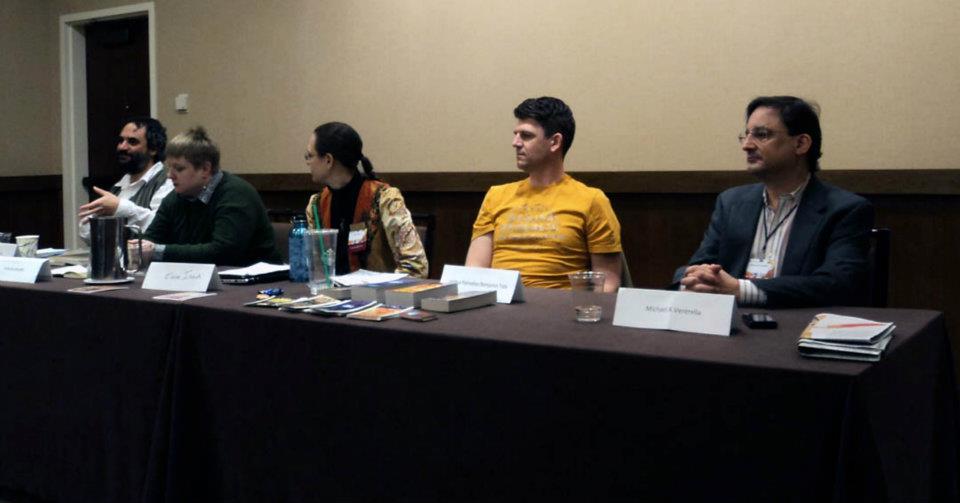
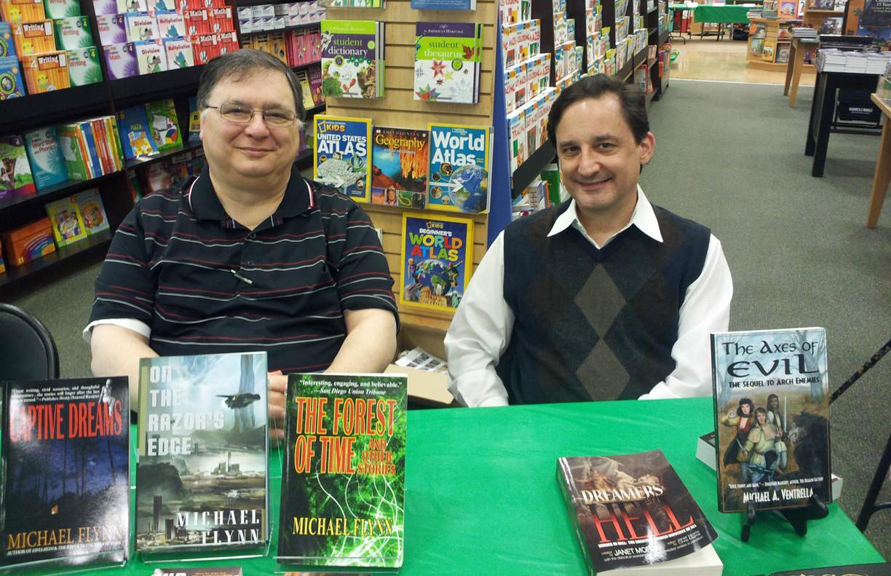
Joshua and I on a panel together at the 2012 Arisia convention

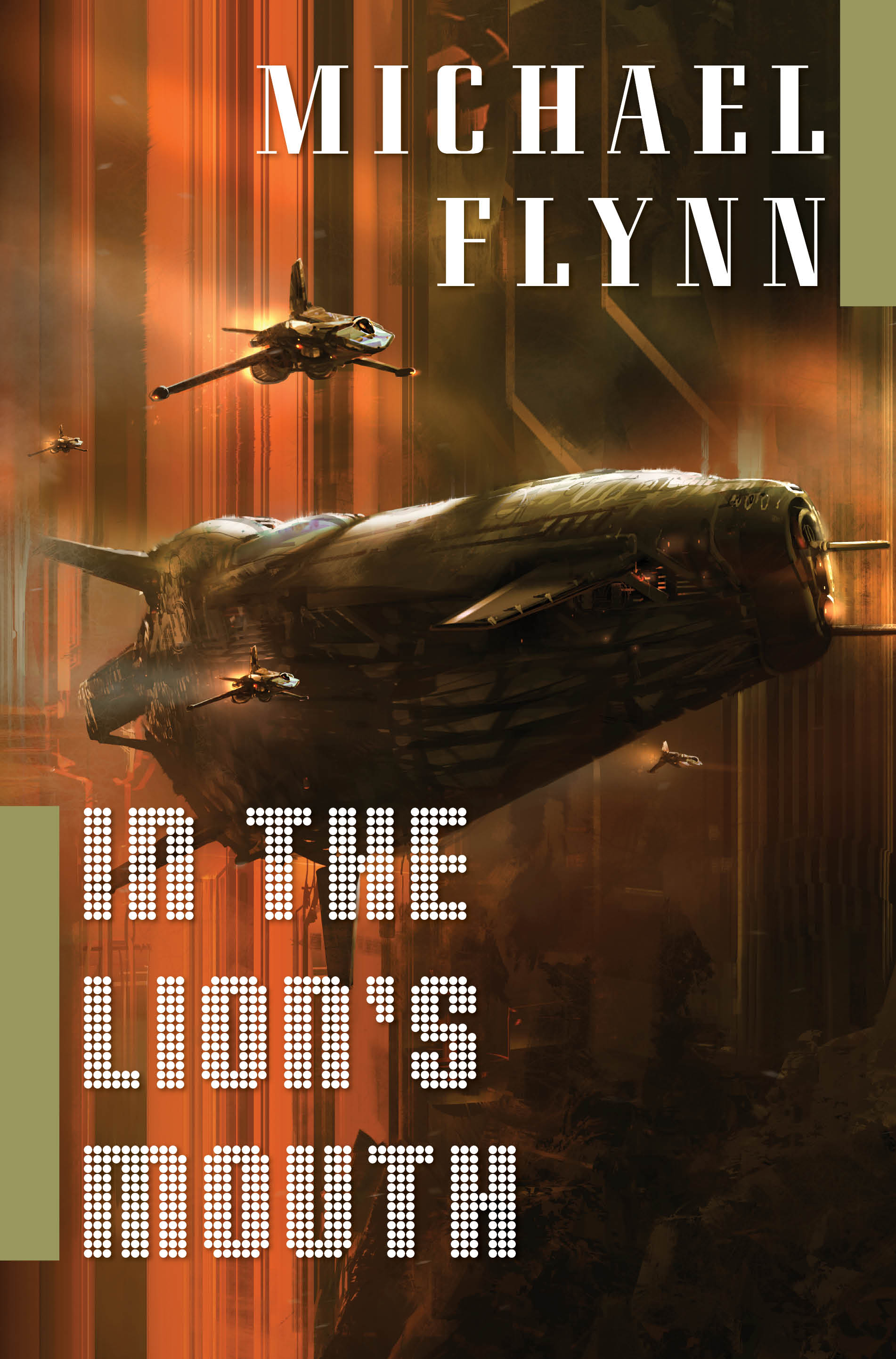
Interview with Hugo nominated author Michael Flynn

MICHAEL A. VENTRELLA: Today I am pleased to be interviewing Hugo-nominated author Michael Flynn. Mike and I met at the Greater Lehigh Valley Writer’s Group and have run across each other at Philcon and other conventions before, but we’ve never really had a conversation together, so this should resolve that.

Mike, what was your first big break into the business?

MICHAEL FLYNN: I entered a contest by Charlie Ryan, who was editor at the old Galileo magazine. It was for never-before published writers. So I wrote a story “Slan Libh,” about a fellow who has invented a time machine and decides to use it to feed his ancestors during the Irish Potato Famine. Charlie decided to buy it for the magazine instead, which was a larger payment. However, the payment was “due on publication,” and that never happened. Galileo went belly-up. My brothers, ever willing to offer encouragement, suggested the magazine folded because they had been reduced to the desperation of buying my story. For a while, Charlie tried to shop an anthology, but nothing came of it. So, I took the rights back and tried it at Analog, where Stan Schmidt bought it. It appeared in the November 1984 issue.

Two of my first four stories made it onto the Hugo ballot, which certainly did not hurt. This led another writer, the late Charles Sheffield, to urge his own agent to take me on as a client. Charles became a very dear friend, and not least because I only found out years later that he had done that.

VENTRELLA: Did you have any formal writing training before submitting your first work?

FLYNN: Nope. Just the usual English classes in HS and college. Never did workshops, either. OTOH, I did read voraciously.

VENTRELLA: You’ve done quite a few short stories. Do you find them more difficult than longer works?

FLYNN: Stories are less forgiving than novels, in that there is no space for self-indulgence. A novel can meander a bit and still keep the plot going, and has more room in it for scenes devoted to character-building, scene-setting, and the like. But shorter fiction must do all that with a greater economy of words. I find that they take longer to write relative to their length and from an economic perspective not at all cost effective. But I still write them because there are some stories that don’t need a novel to rattle around in. Take a story idea and put it in a novel, and you lose density. The whole seems fluffy. But put an idea in the right length of story and it is more dense and powerful. At least, that’s the way I think of it.

VENTRELLA: Your work is usually classified as “hard science fiction.” Do you agree with that classification?

FLYNN: Well, I’ve often considered them to be “high viscosity” science fiction, a term I coined in a moment of whimsy, but which seems appropriate. Some reviewers have made such comments as “…unlike most hard SF…” without seeming to notice that they were undermining their own idea of what hard SF means. There is an unexamined assumption that hard SF gives insufficient attention to character. But that may have been more a matter of decade than of genre. A story stands on four legs – idea, plot, setting, and character – and can remain upright on any three of them. I don’t insist that all stories have the same strengths. A captivating idea executed in a page-turner plot in a vivid setting can tolerate characters from central casting.

To this we can add the actual wordsmithing, or style. The rumor is that hard SF is less “literary” in style. I’m not entirely sure what that means, except that it leads reviewers to write things like “…unlike most hard SF…” when they notice stylistic acuteness.

VENTRELLA: How do you define “hard science fiction”?

FLYNN: As “science fiction.” Emphasis on both words. It should be a story in which some element of speculative science or technology plays a vital role, and does not serve as simple stage props. And the author takes some pains to “get the science right.” So “Flowers for Algernon” is hard SF, but “Star Wars” is not.

Of course, no one gets everything right, and sometimes the speculative science turns out to be wrong; so it’s more a matter of intent and thrust than it is of successful calculations and prognostications.

VENTRELLA: Science fiction is being outsold by fantasy these days. Why do you think that is?

FLYNN: The Modern Ages, which were among other things the Age of Science, have ended and we have moved on and/or back.

VENTRELLA: Do you find that there is less respect for science these days?

FLYNN: Yes. Partly, this is due to scientific hubris by which (mostly) fanboys of science set Science-with-a-capital-S as the colonial power of the intellectual world, invading other domains of human thought and disparaging philosophy, humanism, religion, and other endeavors. Partly, it is due to feminism, environmentalism, and government funding. Modern Science differed from Medieval Science in an important respect. The natural philosophers of old were in it to comprehend and appreciate the beauty of nature; modern science was redefined by Bacon, Descartes, and others to be subordinated to the production of useful products “to increase Man’s dominion over the universe.” They meant Man in a very masculine sense, and the exploitation of nature as completely open-ended. Hence, the feminist and environmentalist critiques in the Postmodern Age were not without some merit. Thirdly, as Eisenhower warned in his Farewell Address, the government-science funding complex meant that eventually science would be subordinated to political goals. All these strands contributed to undermining regard for science in the Late Modern Ages. When the American Chemical Society funded an exhibit on the contributions of science to modern life, they were astonished when the Smithsonian came up with an exhibit that presented American science as a series of moral debacles and environmental catastrophes: Hiroshima and Nagasaki, Silent Spring, Love Canal, Three Mile Island, and the explosion of the space shuttle.

VENTRELLA: Let’s discuss FALLEN ANGEL, your collaboration with Larry Niven and Jerry Pournelle. How did that occur?

FLYNN: Niven and Pournelle had promised FALLEN ANGELS to Jim Baen, but were under contract to deliver a book to another publisher. But there was no bar to writing a Niven-Pournelle-Third Author collaboration, so they invited a friend to do the rough draft while they worked on the other book. But time went by and the other writer did nothing, so they invited him out. Then they went to Jim Baen and asked him to pick a collaborator. Jim had just published my first novel, IN THE COUNTRY OF THE BLIND, and was about to do a story collection, THE NANOTECH CHRONICLES. Larry and Jerry liked what they read, and so Jim Baen contacted my agent who passed it on to me.

VENTRELLA: How did you handle collaboration?

FLYNN: Superbly.

OK, seriously. (The three of us were on a con panel the year FALLEN ANGELS came out, we were asked that question, and gave that answer in unison.)

It befell thusly. I was given rough drafts of the first two chapters, and outline of the remainder that became sketchier as it went along, and character sketches for a bunch of characters, both fictional and real fans who would be Tuckerized. I was a speaker at a quality control convention in San Francisco and Larry came up and we talked story and batted plot ideas around.

I rewrote the first two chapters, added two more; visited East Coast conventions to harvest more characters, and showed the results to Larry and Jerry. They liked what they saw, made some suggestions, and gave me the green light.

“Showed” doesn’t cut it. This may have been the first novel written by modem. There were problems. I had a Mac, they used DOS boxes. We wound up sending files — dial up modems! Forsooth! — to Jim Baen, who was able to figure out the proper modem settings and translate from one to the other. So “showed” electronically.

Eventually, they made a breakthrough on the main book, then started doing rewrite behind me. There was two of them and only one of me, and I could write only part-time; so they began to catch up fast.

Funny thing was that I met Larry only twice — as aforesaid and at a Norwescon — and Jerry not at all until after the book was finished and I found myself on a client assignment in LA, where we all got together.

VENTRELLA: When creating worlds (either science fiction or fantasy), too often writers ignore politics. You have not done so. How do you make sure you are creating a realistic political world?

FLYNN: I used to be a filthy politician. Not the kind that runs for office — They asked once and I declined — but the kind that runs caucuses and so on. I was precinct committeeman, district captain, and eventually House District Leader. So I’ve seen politicking from backstage. Then, too, as a consultant, I have encountered all sorts of corporate-regulatory interactions. As for other settings, I read a lot of history.

VENTRELLA: When you create a story, do you begin with the characters or do you have some basic plot idea?

FLYNN: Yes.

Typically, its one thing or another. Setting, Idea, Plot, Character. Any of them can be the stimulus. For example, “Melodies of the Heart” started with an idea. In his book, THE MAN WHO MISTOOK HIS WIFE FOR A HAT, Oliver Sacks tells of cases of “incontinent nostalgia,” in which the patient re-hears music from her childhood and sometimes re-sees scenes of her childhood. That is, they don’t remember hearing or seeing in the past as such, but are hearing and seeing these things in the present time. So the notion occurred to me of a woman who as time goes by re-hears tunes from further and further in the past until one day the doctor realizes that the tunes are now “too early” and begins to wonder how old the woman is.

Okay, so what was the story? Doctor listens to old woman hum tunes is not a story. Even doctor discovers old woman’s age is not a story. Who is the doctor? Who is the woman? Why would it matter, to either one of them, how old she is? From this I developed the characters of Mae Holloway and Dr. Wilkes and why it mattered very much to them both. So this was a case of Idea then Character then Plot.

OTOH, I recently sold a novelette, “The Journeyman: On the Short-Grass Prairie,” to Analog. In this story, the Character came first: Teodorq sunna Nagarajan, the Wildman bodyguard in UP JIM RIVER. I got a kick out of his character, and the idea of writing his backstory appealed to me. Likewise, “Elmira, 1895,” started with the characters of Sam Clemens and Rudyard Kipling; while “Places Where the Roads Don’t Go” started with an abstract idea suggested by Searle’s Chinese Room and Lucas’ Goedelian Proof. It may the first hard SF where the S is not physics but metaphysics. “The Iron Shirts,” recently selected for Gardner Dozois’ annual anthology, was suggested by plot elements, as will usually be the case with alternate histories.

VENTRELLA: Tell us about the FIRESTAR cycle.

FLYNN: I was at a con once with Charles Sheffield. I forget which. And we were at the Tor party. Tom Doherty was holding forth on what Science Fiction needed, which he told me was “near future, high tech, and optimistic.” I pondered on that for a while, since I had been playing with an image of someone listening outside a high school classroom and not hearing learning taking place. The listener became an industrialist, for industry was already hurting for educated workers. But it was a very vague idea. Listening to Tom Doherty started to make it percolate. Setting up a school system to deliberately produce technologically literate students.

Then David Hartwell, an editor at Tor, called and asked if I had ever thought of writing a book for Tor and I said yes and he said what kind of book and I said, “near future, high tech, and optimistic.” Well, you know that had to be a good fit.

The original concept was of a single book covering the maturation of a cohort of students at one of these schools as they grow into the middle managers who save the world. (I had also read Strauss and Howe’s book GENERATIONS.) It was to cover a thirty-year arc; but after 200 pp. it was clearly not going to fit into a single book.

Interestingly, although the near future of FIRESTAR is now the recent past — it’s set during 1999-2007 — Tor has recently issued a second edition without any updating, making it a sort of alternate history.

VENTRELLA: What other works are you most proud?

FLYNN: I would have to say EIFELHEIM, since it was a Hugo finalist for best SF novel of the year. It did win the Seiun Award for the Japanese translation and the Prix Julie Verlanger for the French translation. The SPIRAL ARM series is shaping up nicely. THE JANUARY DANCER made #6 for SF paperbacks in October, which is not bad considering that #1-#4 was George R.R. Martin’s GAME OF THRONES books. And both UP JIM RIVER and IN THE LION’S MOUTH have gotten good reviews.

There is also THE WRECK OF THE RIVER OF STARS, which did not sell as well as it should have. It is a bit darker.

On the short fiction front, I have always been fond of “Dawn, and Sunset, and the Colours of the Earth,” of “Melodies of the Heart,” “House of Dreams,” “The Clapping Hands of God.” The forthcoming “Places Where the Roads Don’t Go” may also pass the test of time. I think. There is also a story series set in the Irish Pub, of which I think “Where the Winds Are All Asleep” is probably the best.

VENTRELLA: What would you advise a reader to go to first if they wanted to check out your fiction?

FLYNN: EIFELHEIM, because it stands alone. THE JANUARY DANCER, because it is first in the series. For short fiction, a collection THE FOREST OF TIME AND OTHER STORIES is available in ebook format, and a new collection CAPTIVE DREAMS is forthcoming. The latter overlaps one story with FOREST OF TIME, but contains three stories written specifically for the ebook.

VENTRELLA: What are you working on now?

FLYNN: Answering these questions.

Oh, wait. Books and stories…. I just sent a short, “Elmira, 1895,” to Analog, fate unknown. A fourth SPIRAL ARM book, ON THE RAZOR’S EDGE, is in the can. For the moment I am working without contract on two possible novels:

1. THE SHIPWRECK OF TIME, about tantalizing hints found in Old Books, Old Film, and Old Bones, in a story that runs from a scholar in 14th century Freiburg-im-Breisgau to historical researchers in 1960s Milwaukee, a documentary film maker in 1980s Denver, and a police detective in contemporary small town Pennsylvania.

2. THE CHIEFTAIN, an historical fantasy (yes, fantasy) revolving around David O Flynn, chieftain of the Sil Maelruain in 1224. The magical element will be not the wizard and warlock kind, but prayer and saints, a bit of a change in pace.

VENTRELLA: How have the changes in the publishing industry affected you and what do you see for the future in publishing?

FLYNN: The only effect is another channel for books, the electronic one. However, going forward I think Mike Resnik and Barry Malzberg are right, and the whole print industry will be turned upside down. Self-publishing is becoming easier; but may become too easy, flooding the market with so much self-indulgent publishing that one may have a hard time separating wheat from chaff.

VENTRELLA: What piece of advice would you give an author wanting to write science fiction?

FLYNN: 1. Learn science.

2. Learn fiction.

At least in third-party publishing, the sort of writing that got by in the 30s and 40s will no longer do, and a certain stylistic mastery will be expected. Editors will often work with promising newbies, but editors may pass away if electronic self-publishing drives third-party publishing out of the pool. The same is true of agents. You may need one to convince Tor or Ace to publish your book; but you do not need one to convince yourself. (And that is the big trap.)

It is also more difficult to write good SF about the science of the 40s or 50s or 60s. Much of what was once speculative science is now mainstream. There was a time, and not too long ago, when a story about a kid using a home computer to garner the information needed to solve a problem wold have been high SF. Now, it’s your son or daughter doing a homework problem. So learn where the cutting edge is today; and if you must use the tropes of yesteryear, give them a new spin that makes them fresh.

Writing fanfic is okay for practice and for beginners; but fanfic will always be derivative and imitative. Whatever you write had got to be genuine and genuinely yours.

flynn

Interview with Author and Publisher Karen Syed

MICHAEL A. VENTRELLA: Today, I am pleased to be interviewing Karen Syed, bookseller, author, publisher, and all around awesome gal. There are so many things floating around about Karen, but the only truth is that she is really cool. She recently (four days before the date of her doing this interview) moved to Orlando. Having been raised in Florida (and swearing she would never move back), she spent ten years in Texas, two years in Tennessee, and then five years in Maryland, she headed back to the sunshine state with her totally awesome husband. When asked why she decided to move back to Florida, she will simply tell you it is to be closer to Mickey, Pooh, and Tinkerbell. Her favorite food is dill pickles (especially Kosher deli dills) and fried chicken, which her husband won’t let her eat very often since she got the Pacemaker/defibrillator. Heart failure and an enlarged heart sucks. (Disclaimer: Karen might have written this intro herself … but who really knows…)

You come from an interesting background in that you expanded your bookstore into a publishing company. This sounds like a fascinating story; please share it with us!

KAREN SYED: I knew at a very early age that I would be a writer. I would write on anything. I also knew I loved books. I have been reading (well) since I was four. I read everything from shampoo bottles and air freshener cans to books. So when I met my (now husband of 15 years) and he offered to buy me a bookstore, I knew I had hit the motherload of love … books and a great man. Boy howdy!

At the end of my first year as a bookseller, I was nominated for the Publishers Weekly Bookseller of the Year. I still have no idea who nominated me, but some store in Indiana won. Oh well. So after about four years in the store, a friend and I started Echelon Press. Within eighteen months, I knew I wanted to do the publishing full time. So, I sold the store and forged ahead. During my bookstore days I managed to get a couple books published very badly.

I was so desperate to be a published author that I signed my rights away to my work for seventy years past my natural life … not once, but twice — two different companies. Oy!

So the reason for Echelon Press was to give new writers a place to break into the business. Ten years later, we’ve done okay.

VENTRELLA: How does your fiction writing fit in?

SYED: I’ve been writing for so long I don’t even know when it actually started. It wasn’t until 1987 that I considered writing as a career. My grandmother and mother were great at encouraging me and my Gramma event bought me a brand new Brother electric typewriter. It was such a vote of confidence, I knew I couldn’t let her down.

I wrote a lot for several years and even after I had the store. But once the publishing house started to take off, I had to make the tough choice; my own writing or discovering potential bestsellers. Finding awesome writers to publish is way cooler than revising my own work. But I do miss the writing. So much in fact that I did NaNoWriMo in 2010 and write a Steampunk novel that I have yet to revise. But I loved it, and I am a winner.

VENTRELLA: The future of publishing certainly is heading in the direction of e-books; however, there is still a stigma attached to books that are either not available in a hard copy or only available as a POD. Do you see that changing in the future?

SYED: Oooh, I just wanna smack people who feel the need to feed the distinction. A book is a book is a book. I say this in almost every interview I have done for the last ten years. There doesn’t need to be one or the other. I love my Kindle, but I also love my paperbacks. I just moved and cursed all twenty or so boxes of books I had to lug on and off the moving truck.

The sooner people realize it is a personal choice, the happier we will all be. I don’t see print becoming obsolete until we run out of trees, which means that it is perfectly safe for people to stop beating a dead horse and give eBooks the credit they have earned.

VENTRELLA: There seems to be a (relatively) easy path for printing these days in that just about anyone can claim to be a “publisher” by getting software for distributing e-books and using someone else to do some PODs. Is this a good or a bad thing?

SYED: I admit to being torn on this issue. Educating people on the value of POD printing has been a tough road, but the growth of the self-publishing industry has helped with that. Of course, with one solution comes another problem. Sadly, anyone can become a publisher or an author, but not many actually become “good” publishers or authors. There is a lot of laziness in the self-publishing industry. Ugly covers, lack of effective editing, and low quality materials. This does not have to be the case. It all boils down to pride in product.

This is kinda like “Made in the USA” merchandise. A lot of times we buy stuff from other countries because the quality is better. Same thing with books. Most of us (readers) will try anything, but if you screw us once, we will move on. I read very few NYT best-selling authors because their work simply isn’t as good as most of the midlist authors I like. Why? Because the big authors know their books will sell whether they are good or not. Okay, this is not the case with all and that was a very general statement, but I think everyone knows what I mean.

Just because someone says he is a publisher doesn’t mean he is any good at it. Good publishing is not easy and if anyone says it is, he is lying like an old Oriental rug.

VENTRELLA: How can readers and writers know they are dealing with a publisher that is legitimate — where there is a standard for acceptance and books are edited before they are published?

SYED: Do your homework. Don’t assume that because they have a website they are good at what they do. As you said, anyone can say it. Talk to authors who have been with them, current and previous. If you only get awesome answers and high praise, dig a little deeper. We all have some issues and if it sounds too good to be true, then it probably is.

I’ll be honest; there are people out there who will tell you I am a horrible publisher. They lie! No, honestly, there are a few cases where authors previously with Echelon have legitimate gripes, but pay careful attention to what is fact and what are sour grapes. I’d like to think that our successes far exceed our failures and we can’t be everything to everyone. But I will probably die trying.

Make sure that when you are considering a publisher that they share your vision. If you are not on the same page, neither the author, nor the publisher will be happy.

VENTRELLA: We met at a writer’s conference earlier this year. Have you found these to be a successful way for authors to find publishers?

SYED: Conferences have been outstanding for Echelon. I have literally found 50% of our authors at conferences, conventions, festivals, and even one at a craft sale. I need to connect with people and the only way to do that is to be out in the industry. I am a people person and I need that interaction. I also need to see a person’s face when they tell me what they are willing to do. I have learned (the hard way) who the liars are, and they are out there.

VENTRELLA: I still remember your expression when I mentioned I had written a vampire book; admittedly, it improved when you discovered the plot was not just another typical copycat. So here’s my question: What types of stories are you tired of receiving?

SYED: Pretty much vampire stuff. Heehee! Just kidding … sorta. I am truly sick to death of terrorist stories. I am of the mind that if the media and the entertainment industry continues to glamorize the horrific nature of terrorism, it will only continue to feed the fear and misunderstanding. I love thrillers as much as the next guy/gal, but there needs to be a limit and I simply don’t want to be the one to publish it. Reality sucks, why keep that fire burning so brightly.

VENTRELLA: How much of a story do you need to read before you can tell you’re going to reject it?

SYED: Totally depends on the story. I have read as few as two pages and knew I would rather gouge my eyes out than read any more, but I have also made it all the way to the end of some books and still couldn’t justify publishing it. It’s sad really when I find a book that I love, but I know I can’t make it sell. For example. I recently experienced the opposite. I got a submission (MARCEL’S GIFT) from an author named Marie Colligan. Her book is women’s fiction and involves a marriage, a tryst, a priest, the Pope, and a lot of love, understanding, and acceptance. I was shocked at the concept, but intrigued enough to keep reading. I kept telling my husband I didn’t have any idea how I could sell this book, but by the time I got to the end, I was so swept away, I am confident people will either love this book or hate it, but I know it will sell.

VENTRELLA: Have you rejected a book because you didn’t think you could work with an author, or thought the author wouldn’t promote their own material sufficiently? (Looking for anecdotes here but not names!)

SYED: Hey, I’ll give you names. This was not an immediate rejection, but … I contracted an author named Martin Bartloff. He wrote a book called TORN FROM NORMAL. It is a YA story that is very dark and very emotional. It deals with teen suicide. I was intrigued with the idea, but it was the recommendation of one of my editors that led me to contract it. We got to work and I soon discovered that Martin’s personality was far too powerful for me to tolerate in a working relationship. I know that sounds horrible, but I just couldn’t do it. I didn’t doubt his enthusiasm, or his desire to sell; it was specifically our personalities. I reverted his rights and suggested he self-publish. Martin needed to be in the driver’s seat. He did what I suggested.

Now, I admit that I have been a bit of a mentor to him through it all, but it was on his terms and I knew I could walk away any time. Martin is doing very well with his book and we have become very good friends. I enjoy him as a person so much more than I did as an author — don’t get me wrong, he is a great author — I just knew that if I had not made that decision, a very hard one, things would have ended very badly. As it were, things went better than either of us could have considered.

VENTRELLA: What’s the best piece of advice you could give a starting author that isn’t obvious and hasn’t been stated many times before?

SYED: Don’t be stupid and don’t be conceited. You are not all that and a bag of chips. We are all just people and we all need help and guidance in all that we do. We are not born brilliant; it’s very hard work. In order to find great success, you must be willing to admit when you are wrong. Know when to ask for help. More than anything, do not assume you know more than everyone else just because you wrote the book. I don’t care what anyone says, writing the book is the easy part. I can say that I’ve done it all. I know.

If you think you can be a successful author just by writing book after book, think again. You can write a hundred books, but if you don’t get anyone to read them, you are just a writer, not an author. Whether you go with a traditional publisher or self-publish, you better be willing to learn how to market and sell or you better be satisfied with selling a few dozen books to your family.

VENTRELLA: We discussed some of your success stories concerning authors who submitted short stories for download. I’ve had short stories published in anthologies, but have never gone to the “download just the story” route. Do you think that is the way of the future, given that anthology sales keep dropping?

SYED: I am not a fan of anthologies. I sincerely hope that more writers will learn the value of electronically publishing short stories. eBooks could seriously revive the short story industry.

VENTRELLA: What are the advantages and disadvantages of that?

SYED: Think about it. A writer who has spent years writing shorts, but never finding the “right” anthology to accept them. How sad is that? Short stories are a great way to develop your writing skills and to increase you readership. There is no downside to eBook shorts.

VENTRELLA: How important are agents for publishers like yourself?

SYED: Disclaimer: I have met quite a few agents that I personally liked. However, I have only found one agent that has been worth anything with regard to working with me. More times than not, agents turn out to be more trouble for me than good. Being a smaller (or boutique) publisher, we don’t have the perks to offer than a NY house does. We often don’t pay as much as a larger house (for obvious reasons) so why would an author want to give 15% to an agent when there is little to nothing an agent can do to help them with me?

The few times I have tried to work with agents, it has meant me giving up every bit of legal protection for my company so the author could have every little thing they wanted, with no compromise.

VENTRELLA: Let’s talk about your books. You originally started out writing primarily romance. Tell us about those!

SYED: They are brilliant. No, really. Okay, they are damn good. I have a tendency to write what I want and that made it impossible for me to find a traditional publisher. I wrote between the cracks as a very nice editor at Mills & Boon told me one Christmas Eve as she was rejecting me. Nice, huh? I worked in daycare for fifteen years so almost all my books have some strong young characters to compliment the lead couples.

I also tend to write flawed characters. DARK SHINES MY LOVE has a blind hero. LOST AND FOUND has an orphaned teen with an emotionally devastated uncle as her guardian. THE WINGS OF LOVE deals with a man’s issues with his family and his belief in himself and things in general.

I have always been a fixer, so I write people who I can fix. Romance is about happily ever after and redemption. I do both pretty well. If I do say so myself.

I am currently toying with a mystery and a Steampunk novel. I met an author named Nick Valentino at a conference in San Diego and he introduced me to the Steampunk genre. His novel, THOMAS RILEY, was our first Steampunk novel and has been one of our most successful to date. It totally rocks. I-was-blown-away! Have become a wee bit obsessed with it — both reading and writing it.

VENTRELLA: You’ve also written under a pseudonym. Why did you decide to do that?

SYED: Well, in the beginning I felt like I needed to keep my writing separate from the bookstore/bookseller. How goofy was I? (Rhetorical) It was nearly impossible to explain my resonating to people and now that I just wanna be me, it is a huge pain in the butt trying to switch things back over. If you decide to write under a pseudonym, please know that it is NOT as easy as Nora Roberts makes it look.

VENTRELLA: Tell us about your new Steampunk books.

SYED: Dude, Steampunk is just the coolest thing ever, almost as cool as faeries. I knew after meeting Nick that I was hooked. So when NaNoWriMo came up last year, it was my chance to do a couple things. I spent a solid month writing, and it was bliss. I also got to delve into this totally awesome and explosive genre. My series (I never come up with book ideas, I always come up with series ideas) is called Petticoat Junction and is about four girls from very different lifestyles who join together to make a very formidable band of vigilantes. Each one has a special trait and together they are incredible. Toss in the automatons, alchemy, and big flying things, and it is bliss. Isn’t that a cool word? Bliss .. ahh.

VENTRELLA: Who do you enjoy reading?

SYED: Oy, good thing you are okay with long answers. I have three favorites, oh hey, stories.

My favorite is Caroline Bourne who writes the most incredible historical romances (the best being RIVERBOAT SEDUCTION). Many years ago, I belonged to the Prodigy Romance Writers Group and I ran across a very nice lady named Carol. She became a friend and a mentor of sorts. She was incredibly supportive of me and my writing. After a bit of time, I found out she was actually Caroline Bourne (I had been reading her books for some years and she was already my favorite.) It was like fate had brought her into my life and we have been friends since. We did lose touch for a while, but thanks to Facebook, she found me and I am so freaking pleased to say that within the next couple months we will begin a new journey together. Echelon will be reissuing her previously published romances, as well as new stories (Talon’s Heart) from her. This is as cool as when Robert Goldsborough (who wrote several Nero Wolfe books after the passing of Rex Stout) called me and said he wanted to submit his mystery to Echelon. We published THREE STRIKES YOU’RE DEAD which turned out to be the first in his original Snap Malek mystery series. We have published five in the series so far, along with a couple shorts.

I also adore Jill Barnett. Her paranormal romance, BEWITCHING, was a light in the darkness for me when my first marriage was falling apart. I have never read a book by her that I did not love. And she is a wonderfully nice lady.

Julia Spencer Fleming opened a new genre for me with her IN THE BLEAK MIDWINTER (A Claire Fergguson Novel). Her writing is some of the best I have ever read and her characters are just so real, you really feel like you know them.

I mentioned thrillers up a bit and once of my favorite thriller writers is James Rollins. I discovered his Sigma books a few years back and wow! I have been going back to his earlier books and love them just as much. I highly recommend THE DEVIL COLONY, his latest. Mesmerizing.

And this is not the end of the list, but I cannot ignore James Lee Burke. Have been rading his Dave Robicheaux series for years and it is one of the best.

I did recently read my first books from Jacquelyn Winspear and Seanan McGuire and they may just get added to my favorite list.

Interview with author Peter Orullian

MICHAEL A. VENTRELLA: Today, I am pleased to be interviewing Peter Orullian. In 2006, Peter sold his first short story to a Denise Little anthology, and has since sold numerous stories to both Denise and Marty Greenberg, as well as Orson Scott Card’s “Intergalactic Medicine Show.” Then, in early 2009, Tor purchased the first three books in an epic fantasy series Peter is writing. His web page is here.

How did you get your first “big break” in publishing? Did you have an agent first?

PETER ORULLIAN: I think my story here is pretty traditional, and maybe a tad boring. I did get an agent first, and he then sold my fantasy series, The Vault of Heaven, to Tor. The funny thing is that in today’s publishing world, the path to publication is happening in so many ways. But my “big break” was that I landed a new agent—-I’d had one prior-—who took a deep interest in my work and almost immediately sold my books. There’s much to be said for having someone who really gets behind you.

VENTRELLA: Aspiring authors often seem to think that writing a book is easy and your first one is sure to be a huge hit. What writing experience did you have prior to publication?

ORULLIAN: Well, I’d sold a dozen or so short stories. But more than this, I’d spent several years working on my craft and understanding the business side of writing and publishing by attending workshops and following the industry. That isn’t to say that I’ve got it all figured out, but if a writer is serious, he needs to commit these kinds of things.

On instant success, I get how aspiring writers start to think this way. They’re close to their own work, and they yearn to be writing full time, doing something they love. And unfortunately, the success stories of writers who have this happen to them are oft repeated in writing circles. The thing a writer needs to do is keep writing, put his heart into each book, and then move on to the next one. With that approach, things will generally continue to get better on all fronts.

VENTRELLA: What resources did you use in creating your fantasy world?

ORULLIAN: Lots of imagination. That sounds cavalier, but it’s kinda true. I’m sure that all my years of reading, and my college days, and all my wide interests have found their way into the work. And often you’ll start down a path, and realize you need to know a bit more about a particular thing, and so you’ll do some research. But I like to extol the value of invention. Plus, therein lies the fun!

VENTRELLA: What distinguishes your fantasy world and story from all the others?

ORULLIAN: At the end of the day, stories are about the characters. And I’ve got a unique bunch. Oh, there are things like magic systems, one based on music that is pretty unique —- I’m a musician, you should know. Then, of course, the cosmology is my own, and like that. But I tend to believe that we mostly read for characters, and I’ve put mine through the grinder, as they say. They’re forced to make very hard choices, and to try to reconcile doing the right thing for the wrong reason and vice versa. Those moments of intense personal conflict, I like to think, are one of the hallmarks of my series.

VENTRELLA: THE UNREMEMBERED is the first in a new series. Have you planned them all out in advance or are you taking them one at a time?

ORULLIAN: I’ve got the first three pretty well defined. And I know the ending with a great deal of clarity. Then, the space between the end of book three and the end of the series, I have in broad strokes. So, there’s still some planning to do late in the series.

VENTRELLA: Tell us about the plot for THE UNREMEMBERED.

ORULLIAN: Oh, man. I’m not good at summarizing my own work. And mostly, I don’t think it can be done well in short bits of text for any book. Suffice to say that nations and realms are on the brink of war; social upheaval is putting ideologies at odds; ancient threats and enemies are stirring; and there are some who see the coming storm who are working desperately to avoid it.

See, that’s not real awesome when you boil it down. But I’ve had readers who like George R.R. Martin, Robert Jordan, Brandon Sanderson, Patrick Rothfuss and others email me and tell me liken my work in many respects to these epic fantasists. So, that’s both humbling, and perhaps an indication of the type of books I’m writing.

VENTRELLA: Do you tend to outline heavily or just jump right in? What is your writing style?

ORULLIAN: I’m somewhere in between. I have a rough outline, that I deviate from quite a bit. But having the outline is a nice set of guideposts to get me moving. And I do a great deal of story thinking in my outline phase, which I find helpful when I sit to write. That said, a lot of discovery takes place in the writing itself.

VENTRELLA: When creating believable characters, what techniques do you use?

ORULLIAN: Think first: What matters most to my character? Then, give them conflict and real motivation.

VENTRELLA: What was the biggest mistake you made in your career?

ORULLIAN: I stuck with my first agent for longer than I should have, since he didn’t seem to have an active interest in my career.

VENTRELLA: Tell me about the book trailer. Did you produce this or hire someone to do so, or did your publisher take care of it?

ORULLIAN: I produced it with the help of some friends. I’m lucky to have folks around me with crazy amounts of talent. So, between the set of us, we’ve done some pretty cool things, I think.

VENTRELLA: Do you feel that book trailers help sales at all?

ORULLIAN: Good question. I’m not sure. I don’t have any analytics on my own stuff, so I can’t speak with any kind of authority on it. Mostly, these kinds of things are there to help create awareness of your work. So, doing at least some of these kinds of things seems right. You simply have to take a balanced approach—don’t over-index on marketing stuff. The best sales tool for your work is the work itself.

VENTRELLA: You’ve also placed a map and other information about your world on your web page. Have you found this to help sales at all or is it more for those who have already read your book and want more information?

ORULLIAN: I believe it’s both. Hopefully, readers who haven’t read my work yet might find this information and consider getting the book. But it’s also there to provide some depth for those who have already read it. Whether it helps sales or not really wasn’t my motivation though. I’m a bit of a geek for this kind of stuff, as I love finding it on the websites of authors I read. So, I went ahead and did some of it from a reader’s point of view.

VENTRELLA: Do you find short stories to be easier to write in any way?

ORULLIAN: Well, they take less time. But if you’re asking from a craft standpoint, no. It’s a bit of a different form, for sure. But each has its own unique considerations. I enjoy writing short fiction, as well as novels.

VENTRELLA: Do you advise authors to write short stories to help promote their other work?

ORULLIAN: No, I don’t advise it, as such. The main reason I do it is because I have this idea that some of the stories are too much like a data-dump, were I to drop it into one of the novels. But I like the backstory, and think others might appreciate some of the depth. So, I write the short stories for those who want to have a deeper look into my world. They’re not necessary by any means, but readers who read both the short and long stuff will have a some of those “aha” moments when they’re reading.

VENTRELLA: Many authors are now making short stories set in their world available for free online. Do you think this is a good way to grab new readers? Has it worked for you?

ORULLIAN: Again, I have to say I’m not sure if it’s a good way to grab readers or if it has worked for me. I have no way to track such a thing. For my part, I don’t do it so much as a marketing tactic, as much as I do it because I like the notion of transmedia, where using the strengths of various artistic media to tell a broader story is the goal. What that means is that you can read my book and not read my short fiction (or watch my webisodes, or explore my online map, or spend time looking through the art, etc), and you’d be just fine. But if you read and explore some of these other things, there’s a kind of larger “story experience” available to you. I really dig that possibility. That’s why you see me doing these kinds of things. I love the resonance and enlarging opportunities transmedia affords me as a storyteller. Oh, gosh, I could go on and on . . .

VENTRELLA: How do you prefer to make your short stories available – anthologies, magazines, download? What is better, in your opinion?

ORULLIAN: There’s no science to this yet, in my opinion.

VENTRELLA: Couldn’t help but notice that you’re a musician (as am I). I used music to help explain the magic in my world – has music played a part in your fiction as well?

ORULLIAN: Absolutely! As I mentioned, there’s a music magic system. And it factors heavily in several aspects of my series. Plus, I’m writing a concept album as part of the transmedia approach I mentioned above. It won’t be a retelling of the novel. It’ll be additive story, going into the early life of one of the characters, a old war, and some explanation of what I call “The Song of Suffering,” which is a song of power in my world.

On another level, I think it helps me approach a sense of lyricism in my writing. So, yeah, this is a great big question that we simply don’t have enough space to go into here . . .

VENTRELLA: Why do so many authors also tend to be musicians?

ORULLIAN: I’m not sure that’s true. Thinking now of all the writers I know, most aren’t. But yes, of course, some are, too. Rather, I’d say, “Why do so many authors also tend to engage in other artist pursuits?” Because I know writers who are painters, poets, photographers, etc. I think writers are creative types, and most creatives have more than one creative outlet, or so I’ve noticed.

Intrerview with Nebula nominated author Bud Sparhawk

MICHAEL A. VENTRELLA: I’m pleased to be interviewing three times Nebula finalist Bud Sparhawk today. He’s primarily known for his short fiction with heavy and hard science, but also for his humor (in particular his “Sam Boone” series).

Bud, although you have extolled the virtues of outlines, do you think it’s possible to write a great story without an outline?

BUD SPARHAWK: I’m not certain “extolled” is the right word. Certainly I’ve advocated paying considerable attention to a story’s structure – the sequencing of scenes, time frames, and points of view. I don’t think I’ve ever recommended preparing a formal outline where a story is described in detail, point by point.

My own style of writing is to set up the scenes I think the story needs, block in the characters, setting, and time, and then move things around to the way I want to tell the story. Many times I write quite a bit before breaking what I’ve done into key scenes and then add sketch ideas that fill in empty spots. It’s generally a messy back and forth process but it works for me.

VENTRELLA: Have you ever done so?

SPARHAWK: Written a great story or used an outline to write it? All three of my Nebula finalists were done sans outline – just bashing along until they felt complete. I wouldn’t call any of them “great” – entertaining maybe. The one story that I felt was “great” was “Bright Red Star” and which received almost no literary comment, except from David Hartwell who included it in his Years Best SF #14. This story has now appeared in several languages and on audio pubs, which is somewhat of an affirmation. It was my response to some of the hysteria surrounding 9/11.

VENTRELLA: You’ve concentrated almost entirely on short stories and novellas. What is it about the shorter form that appeals to you?

I’ve been blogging about this very subject on budsparhawk.blogspot.com for some time. One of my latest musings dwelled on the differences between novelists and we short people. Although there are clearly differences between the two camps, my conclusion was simply that that some do and some can’t: Temperament, patience, and economic necessity are probably involved in a writers choices, but the mix would vary considerably.

VENTRELLA: Many writers consider short stories to be harder than novels. What is your experience?

SPARHAWK: I don’t think “harder” is the distinction I’d make. Some writers find it impossible to describe anything in a single sentence while I find it difficult to drone endlessly on about anything because I’m always anxious to get to the payoff. In my opinion, brevity always makes a point sharper and I usually edit down to reach that clarity. For example, I recently turned in a 15k piece that was originally 33k in second draft and around 20k in the penultimate one.

When I started writing I could write a 5-7K story in a weekend and once wrote one – “Persistence” – that I later sold to Analog – in an evening. I like to deal with issues or ideas and the short form is ideal for that. Longer pieces deal more with character development or expansion of a situation. I’ve written several as yet unsold novels and have found developing increasing complexity that forces the word count ever upwards tedious, albeit interesting.

Dedicated novelists have told me that they cannot begin a story without discovering that complications arise and they are faced with an irresistible urge to explain, describe, or comment. Then too, other characters come along with their own damn issues, backgrounds, motives and … well, you see how that goes, with the inevitable result is other than short.

VENTRELLA: What usually comes first for you – an idea or a character?

SPARHAWK: The idea or concept, always. I see characters as vehicles that carry the ideas forward, and try to make them eloquent spokespersons for what I try to say.

VENTRELLA: We’ve met at various conventions over the years. Do you enjoy conventions and do you advise authors to attend them?

SPARHAWK: I’m just a ham and enjoy the spotlight, talking to fans, and especially having the opportunity to talk writerish with the other pros. I love the readings, especially by unfamiliar writers to me.

VENTRELLA: What’s your favorite convention experience?

SPARHAWK: The random discussions that arise in the hallways or in the dealers room have be my favorite experiences. I hardly ever leave one of these random discussions without a story idea or two.

VENTRELLA: I meet many authors who have gone the vanity press or self publishing route and then wonder why no one takes them seriously. What’s your opinion on self publishing?

SPARHAWK: The line between vanity and self-published has become very thin. Established writers are self-publishing collections, reverted novels, and even original works – all to take advantage of the opportunities eBooks have created. Some non-professionals (another vague term) have been highly successful with their “vanity” publishing. Results are mixed, but in most cases it seems to depend on the degree of self-promotion one is willing to undertake. Social networking seems key to success for both types.

VENTRELLA: Do you think there is a difference if an already established author self publishes new material?

SPARHAWK: If a writer has already established a reputation, then selling new material via POD or eBook should not be a problem. Otherwise you use up a lot of time, effort, and creative juice that could be used for improving your writing.

VENTRELLA: What bugs you most about the publishing industry and what would you change about it if you could?

The lengthy delays between submission and response, which is an unfortunate consequence of limited staff and/or time available to the publisher. The industry probably needs more underpaid English majors looking for “experience” in the publishing field.

Since most editors now accept electronic submissions I can easily see the day when some maven will design an app that evaluates e-manuscripts on the fly, all tailored to an editor’s preset specifications. That would certainly change the writing game for both writers and editors. Don’t know if this would make the publishers happy or not.

VENTRELLA: What do you like to read for pleasure?

SPARHAWK: Short stories, of course, and mostly SF, but I make an exception for anything by Terry Pratchett.

VENTRELLA: Of what work are you most proud?

SPARHAWK: See above – “Bright Red Star.” Interestingly, I’ve written three more shorts in the same universe, two of which are in McPhail’s anthologies.

VENTRELLA: What are you working on now?

SPARHAWK: I’ve a long novel in penultimate editing, four or five shorts that still need work, and getting as much of my published works into eBook formats as I have time for. The novel deals with the long term effects of human expansion into the universe and what exactly makes our descendants “human.”

VENTRELLA: Fantasy has grown tremendously in popularity over the past twenty or thirty years and now outsells science fiction. Why do you think this is? What is it about fantasy that appeals to readers that they can’t get from science fiction?

SPARHAWK: It is a puzzle that in these days of instant everything and twittering phrases that short fiction does not sell better. Steven King recently observed that much of the popular long form fiction has little substance but does carry the reader along in an engaging, but superficial narrative thread that provides an immersive experience. Summer reading at the beach, in other words. I find that much of the “epic” fantasy fits this description. Clearly, fantasy in general is not my cup of tea, but there are some fantasy works that rises above the rest – like Laura Anne Gilman’s Vineart series.

VENTRELLA: What advice would you give to a starting author that you wish someone had given you?

SPARHAWK: 1. Don’t give up your day job.

2. Put some time aside for writing every day.

3. Learn humility and to accept rejection gracefully.

4. Join SFWA as soon as you can.

VENTRELLA: What is the biggest mistake you see aspiring authors make?

SPARHAWK: Endless rewriting in pursuit of perfection, which can never be achieved. The pursuit of “better” is ever the enemy of “good enough.” A writer should rewrite only until the piece achieves a satisfactory level in their own opinion and, of course, whenever an editor asks.

VENTRELLA: What question do you wish interviewers would ask you that they never do?

SPARHAWK: “Where do you get your Ideas?” to which I respond “a guy in New Jersey sends me two a week for five bucks.”. Ask a silly question …

Seriously though, no one ever asks how the magic is done and the toll it takes on family life, work, and socializing. I wrote for years while holding a fairly demanding job, raising a family, and dealing with the issues of aging parents, yet managed to eke out a few words each night, having them add up to some decent stories and a lot of less than sales worthy. The ideas bubbled up during my non-writing times and, if they were worthy of remembering, finally made it into a story. Truthfully, I have no idea where the ideas come from. I only know how much work it takes to turn them from daydreams to reality.

Heroes

Jeremy Wembley grabbed the broom by the handle. He took forceful steps toward the back of the room where Patrick stood unaware. Patrick paid no notice as Jeremy shortened the distance between them, and seemed completely oblivious to Jeremy’s presence.

Jeremy raised the broom just as Patrick turned around.

“I’ll sweep the stockroom now, Mr. Brenner,” he said.

Jeremy knew that if he continued to impress his boss, it would not be long before he could get that promotion—and soon after, get the real reward he desired: night manager of the Fredricksburg 7-11 on West Norton Avenue.

Unless his arch-nemesis, that kiss-up Eric Stoher got there first…

All the elements are there. There is a goal the main character wishes to reach, and an obstacle that can prevent him. There is character development and conflict.

But, you know, who gives a flying you-know-what?

The fact of the matter is that we want to read stories about people and events that are larger than life. We want to read about heroes to do great things, make clever comments, overcome great odds.

This is nothing new. The ancient Greeks didn’t do plays about the guy who cleaned the stables.

And I am no exception. My books have been about wars and world-shaping events and the heroes whose presence made a difference.

However, at the same time, I have consciously avoided the standard hero that is a mainstay of much of fiction (and especially fantasy). You know the type – the Chosen One from Prophecy who is the seventh son of the seventh son who is the only one who can wield the magic sword Noonah because he has surplus midichlorians and blah blah blah. Maybe this hero starts off the book as a nobody, but he or she ends up as the World’s Greatest Swordsman or Most Powerful Wizard by the end and thus, being superior to us lowly humans, saves the day.

In my two published novels (ARCH ENEMIES and THE AXES OF EVIL) and in a short story in the just released anthology TALES OF FORTANNIS: A BARD’S EYE VIEW, my main character is a teenager named Terin. His problem is that, thanks to a mistake, everyone thinks he’s the Chosen One Who Can Save The Day.

By the end of ARCH ENEMIES, Terin is still running when a fight breaks out and still can barely cast a minor spell. So what makes him the hero?

To me, what makes a real hero is someone who doesn’t have all those skills and yet, through bravery and intelligence, rises above what is expected and does the extraordinary. Terin is the hero because he figures out a solution – he finds a way to solve the problem that is more than merely “hitting the bad guy with the weapon until he falls down.”

I like these kinds of heroes because they remind us that we all can be heroes sometimes.

Oh, I don’t mean to knock down the more traditional heroes: I love Batman and Luke Skywalker as much as the next fan. But when I create a hero for my stories, they tend to be average people put into extraordinary circumstances who must then find something special within themselves to make things right.

In the sequel THE AXES OF EVIL, people are now thoroughly convinced that Terin has wondrous powers, even though he doesn’t. Now he’s confronted with a trio of barbarian prophecies which, he later discovers, contradict each other. On top of this, his liege wants him to get all the barbarians off his land, and a bunch of silly goblins think Terin’s the one who will lead them to victory over the evil humans who oppress them.

These are problems that cannot be resolved by being the biggest fighter. Terin solves them all by the end of the book through his cleverness and resourcefulness, and by being brave and willing to risk it all.

That, to me, is very admirable. It’s what I admire about my real life heroes (Benjamin Franklin and Martin Luther King, to name two). And it’s the kind of hero I like writing about, because I can identify with him and understand his fears and worries.

Tales of Fortannis: A Bard’s Eye View

The new collection of short stories taking place in the world of my two novels is here!

TALES OF FORTANNIS: A BARD’S EYE VIEW is the first in a planned series. I’m very pleased with the stories collected here. There is a wide variety of tales being told in a myriad of styles.

“A Bard’ Eye View is a wild and weird collection of fantasy stories that present some of the freshest writing around. Derring-do with a great sense of fun. Highly recommended.” – New York Times bestseller Jonathan Maberry, author of THE KING OF PLAGUES and DUST & DECAY

“Rollicking good fun perfect for a beach read, subway read, airplane read—heck, just buy it and read it! Mirth, mayhem and magic in an intriguing world.” – Gail Z. Martin, author of the Chronicles of the Necromancer series

“A Bard’s Eye View is a varied collection of adventures, whimsies, variously grim, grand and comedic; this book will appeal to fans of gaming and fantasy alike.” – Jay Lake, Campbell Award-winning author of GREEN and MAINSPRING

“You don’t need to know the background material to enjoy the range of stories from the talespinners assembled here. It has plenty of adventures that end with a twist that leave you shaking your head in pleased surprise. I’ll be happy to look for many of these writers in days to come.” – Jody Lynn Nye, author of VIEW FROM THE IMPERIUM and DRAGON’S DEAL

Here’s a short summary of the stories you’ll find:

The Zombie King’s Plan by Michael A. Ventrella: Squire Terin and his friends from the novels ARCH ENEMIES and THE AXES OF EVIL journey to retrieve the last magical ring for a biata girl whose memory was stolen. As they fight through zombies, they begin to discover that something isn’t right…

Stealing the Sky by Danny Birt: A brave admiral — who, as a youth, had his arm bitten off by a gryphon from the lands of Thessi — has been planning his revenge for a very long time. Determined that no one else should suffer his fate, he gathers his army and, with the help of the dwarves, moves against the gryphons with his plan.

Listen to a Tale, My Friends by Mike Strauss: A traveling minstrel fascinates the local townspeople with a horrifying tale of a necromancer — and and provides a surprise ending.

Bad Debts by Bernie Mojzes: A simple job turns out to be anything but simple. An evil ritual, a nameless monster, a dead patron — and a young woman must come to terms with her ex-lover and his new flame before she can defeat the threat.

Grip of Chaos by Laurel Anne Hill: When his squire brother does not return from his quest to fight the Ice Queen, an untrained young man has to face his fears and confront the necromantic creature himself.

The Great Green Kettle Pie Recipe Caper by Roy C. Booth and Brian Woods: A timid hobling decides the only way to obtain his favorite pie from the baker who refuses to share is to break in and steal the recipe — but things never go as planned.

Behind the Bar by Mark Mensch: Nigel the tavernkeeper has a successful business. And he has a secret panel in his back room and a secret retirement plan — a plan that not one of his satisfied patrons suspects.

A Rock is a Rock is a Rock … Or Is It? by J. Thomas Ross: When a group of goblin children sneak into the human’s cave to see what riches the humans are mining, they find no gold or gems … but discover a strange secret.

The Messenger’s Trap by Matthew C. Plourde: A mercenary is not sure who to trust when he is released from prison after promising to deliver a simple message.

Faith by Tera Fulbright: A biata bent on revenge learns his true mettle when faced with a life-threatening emergency.

A Child’s Tale by Davey Beauchamp: The kids love to hear stories of their heroes Oliver Songbringer and Aramis Llyrr, but will they act as bravely when they encounter danger in the woods?

Suffer the Liar by Ron. F. Leota: Two con men who spin fabricated tales of mighty adventures suddenly find themselves in an all-too-real situation fighting ice trolls. Can they discover a way to save their skins from both the monsters and the townspeople?

The Long Sleep by Nick Bond: The ancient forest has awakened its defender, who must seek out the necromancers who have stolen its heart.

The Otherside Alliance by Jon Cory: A lazy knight, whose king demands that he arrange an alliance with Duke Frost or die, comes up with a brilliant plan to obtain the Duke’s support — so long as no one sees through the ruse.

J. Thomas Ross was the copy editor and the cover is by Sheila Haswell.

Next week the authors themselves will introduce themselves and discuss their stories here!

Click here to order your copy!