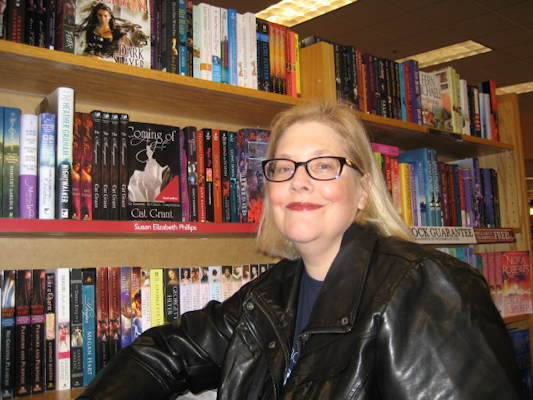
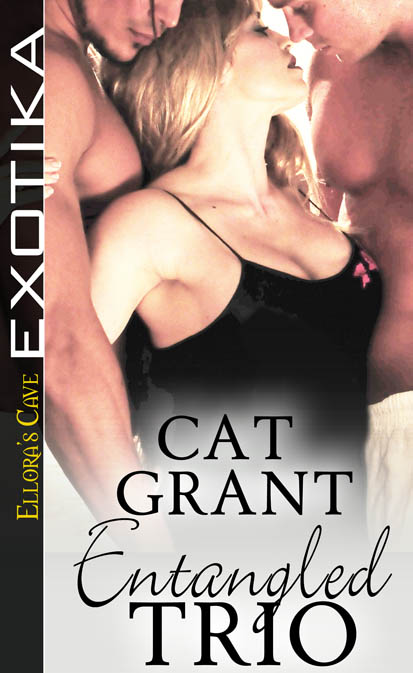
Interview with Author Cat Grant

MICHAEL A. VENTRELLA: Usually on this blog, I concentrate on fantasy and science fiction since that’s primarily what I read (and write). This means I am missing out on a large portion of the market, and not necessarily providing information for authors who are interested in other genres.

So today I am pleased to be interviewing Cat Grant, writer of what has become to be called “erotic fiction.”

Cat, thanks for answering my questions. What’s the difference between “erotic fiction” and “romance”?

CAT GRANT: People sometimes get the two confused, but they’re really very different. Erotica is about one character’s (or two, or three!) sexual journey. The emotional component, and even the plot, is downplayed in favor of sex scenes – the hotter, the better. Romance is all about characters connecting emotionally. The plot centers around the protagonists and their relationship.

The biggest difference between erotica and romance is that erotica doesn’t require a happy ending. Romance does.

VENTRELLA: Is there a bias against same sex romances that limits your options?

GRANT: Not in e-publishing – in fact, quite the opposite. There are a number of e-presses devoted to same-sex romance, and more are jumping into the pool all the time. There’s no shortage of places to sell my work!

VENTRELLA: Who do you find to be your primary audience?

GRANT: Women, mostly, with gay men a close second.

VENTRELLA: What are the advantages of a small press?

GRANT: In e-publishing, I would say the biggest advantage is that once your manuscript is accepted, it usually doesn’t take very long before it’s published – unlike traditional New York publishing, where it can be a year or more before an accepted manuscript sees print. And also, you get paid a lot faster. Most of the publishers I’ve worked with pay on a monthly basis.

VENTRELLA: Please tell me about how you found your publisher(s) or how they found you.

GRANT: I found my first publisher, Lyrical Press, the usual way – I checked out their website and submitted my first book, THE ARRANGEMENT, to them. They liked it so much, they offered a contract the same day. I ended up publishing five books with them. Then I got an invitation to submit to Amber Quill. Later that year (2010), I went to the Romantic Times convention and met Kelli Collins, the Editor in Chief at Ellora’s Cave, and she invited me to submit to EC. For my latest book, ONCE A MARINE, (due out this November) I’ve decided to go with this amazing new start-up, Riptide Publishing, the brainchild of my good friends Aleksandr Voinov and Rachel Haimowitz. They’re a class act, and I’m very excited to join them.

They will also be republishing my Courtland Chronicles series – re-edited, and in proper reading order – starting in 2012.

VENTRELLA: Of the few romance authors I’ve known, the constant problem they all have is that people tend to think they are writing from experience and have participated in all sorts of sexual situations – have you had this problem and if so, how do you deal with it?

GRANT: Yeah, it can be a bit of a problem, especially with men I’ve met lately. It’s gotten to the point where I don’t tell them what I write until I decide if they’re “keepers” or not! LOL!

VENTRELLA: Do the romance writers have conventions where they can meet readers like the science fiction writers do?

GRANT: Ohh, yes! In fact, I’m attending three of them fairly soon: Authors After Dark in Philadelphia from August 10th through the 14th, Ellora’s Cave’s RomantiCon at the end of September, and the Gay Rom Lit retreat in New Orleans this October.

VENTRELLA: Of what are you most proud?

GRANT: I’m proud of all my work. Getting published is a hard slog, and you won’t make it if you’re not constantly upping your game. However, I do have what I call “books of my heart.” THE ARRANGEMENT was my first published book, so it will always hold a special place for me. Then there’s ALLEGRO VIVACE, which marked a quantum leap forward in my writing ability. ONCE A MARINE is also a favorite. I love Marc and Cole, my two protagonists. And I’m getting some amazing editing from Aleks and Rachel on this one. I can see the book improving with every page I revise. It may very well be my best work yet.

VENTRELLA: What piece of advice would you give an author wanting to write erotic fiction?

GRANT: The same advice I’d give any writer – don’t give up. People will diss you and try to knock you down at every turn, but if this is really, really what you want to do, ignore the naysayers and listen to your instincts. They won’t steer you wrong.

It’s the Characters, Stupid

As I write this, the last Harry Potter movie just opened. Harry Potter has made writer Jo Rowlings one of the richest people in the world, and deservedly so.

But why? People have written novels about kids going to magic schools before. Many of the plots are similar to standard fantasy fare, and in some cases even quite predictable. What did she do to make it all work so well?

It boils down to something successful authors understand: A story is not about what it’s about — it’s about the characters.potter

We go back to the books (and movies) we love not because of the idea behind the story, but because of the characters.

When ARCH ENEMIES came out (my first novel) the comments that pleased me most were from readers who talked about how much they liked Terin or Darlissa — how they related to them, and saw how they changed during the course of the story. This was something I specifically set out to accomplish: not just to create believable characters who didn’t act cliche, but also to remember that no matter how clever my plotline was, no matter how surprising my twist ending, it would mean nothing if the reader didn’t care about the characters.

At writers’ conferences and writing groups I’ve attended over the years, I’ve listened to and read works by aspiring authors that I know will never make it unless they realize this point. They have stories about monsters and gadgets and world-shaking events and the characters are secondary. The cleverest idea in the world won’t matter if no one cares what happens to your boring, uninteresting, or cliched hero.

Seriously, think about books you may have stopped reading because you became bored. Think about all those special effects movies that you watch once and never want to see again. I am willing to bet that there is one thing these have in common, and that is uninteresting characters.

I could go on and on — Entire books have been written about how to create believable characters in fiction, but it all boils down to you, the writer, remembering that the characters are the most important element of your story.

So create those characters that are larger than life. They should say clever things, perform amazing acts of bravery, never give up. They should be people we want to read about. (See my last blog on this subject!)

At the same time, they should have definite weaknesses. They should make mistakes, lose their temper, and act like real people act. They don’t have to be likable, just interesting! Sherlock Holmes has many character flaws, but he’s a fascinating character, isn’t he?

Note that I am not limiting this to your protagonist. Too often, writers create a likable good guy hero and then place that person against a “bad guy” who apparently exists only to do bad things. Instead, you should remember that your antagonist is the protagonist in his or her own story. Unless that character is insane in some way, they do not consider themselves evil. Think through their motivations, and give them good attributes to prevent them from being cliched and predictable.

Just always remember: Your story is about characters.

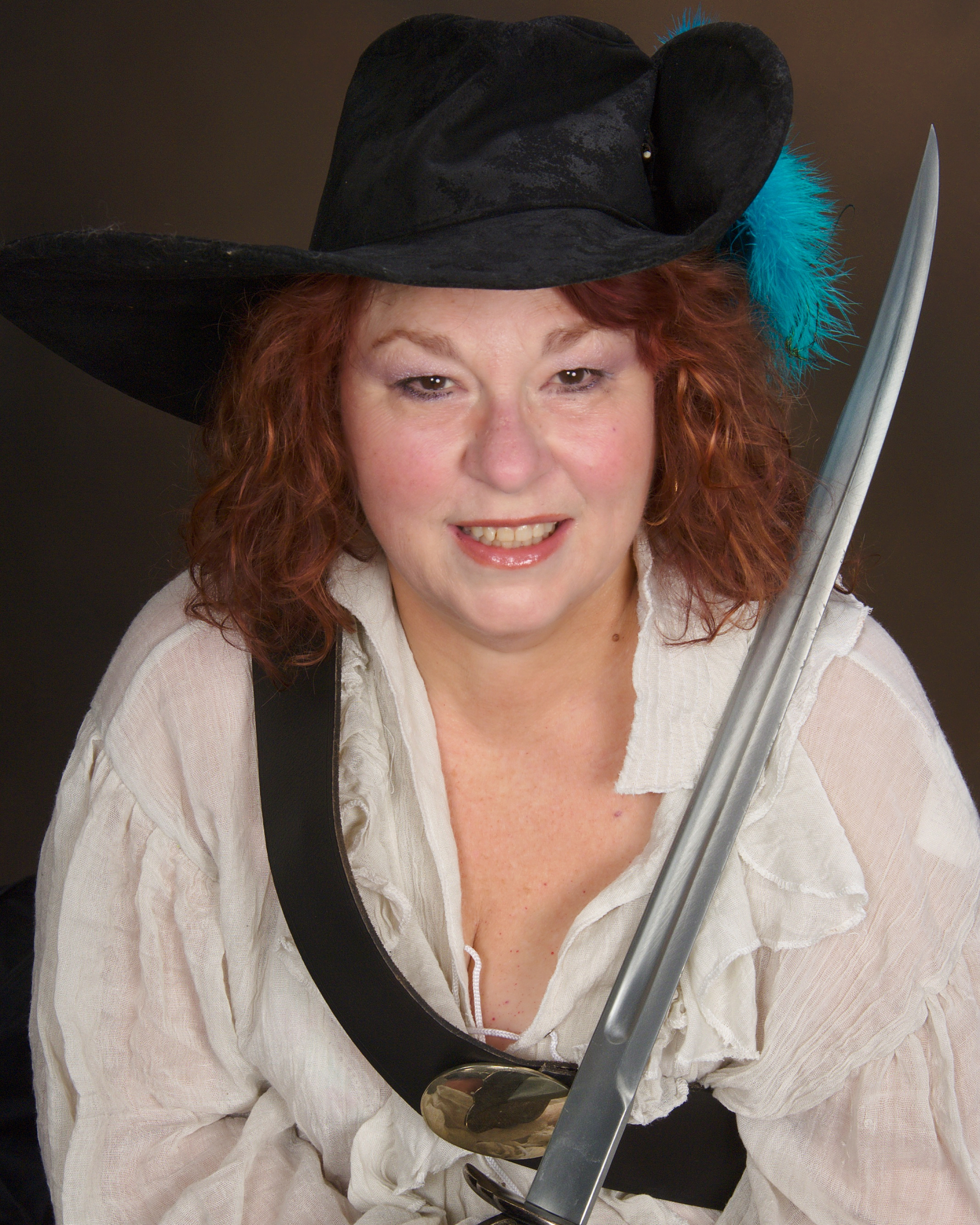
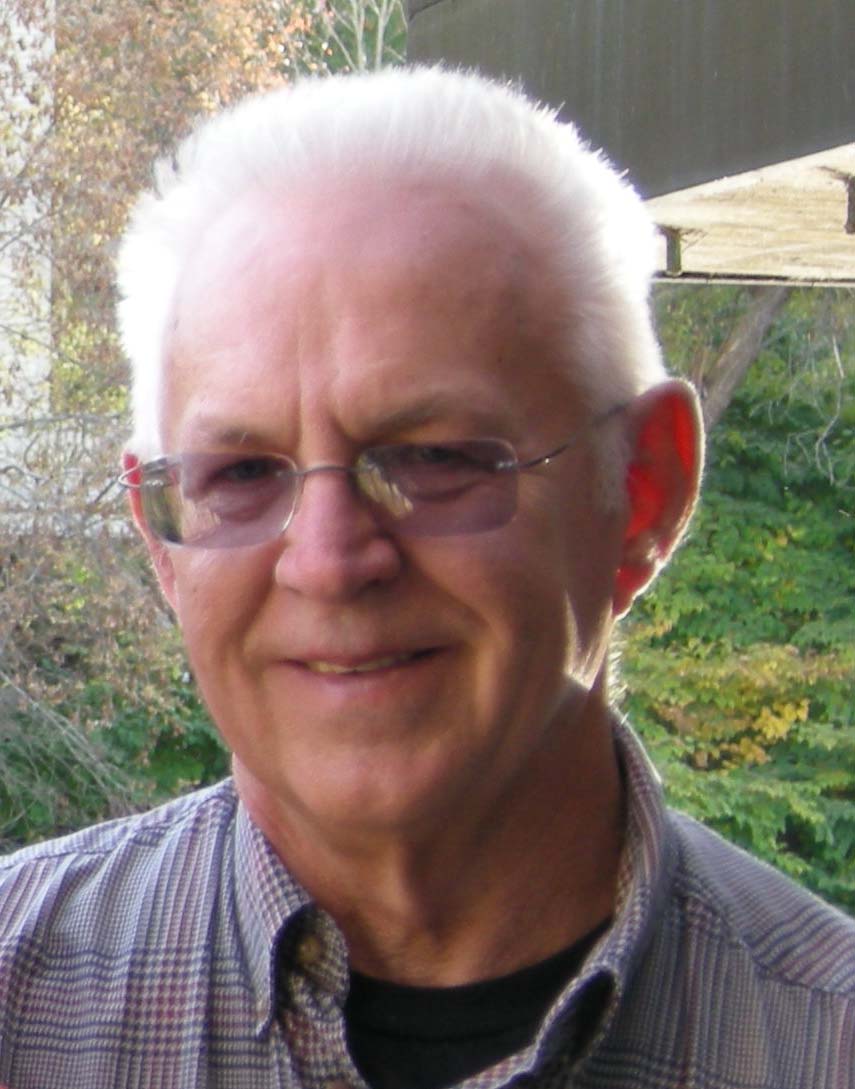
Interview with author A. C. Crispin

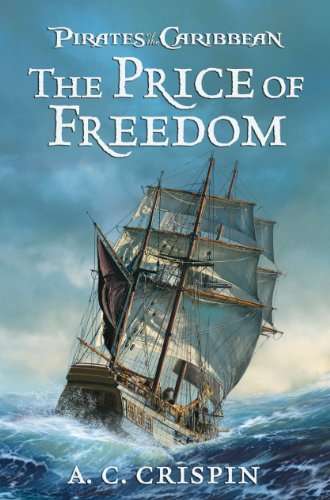
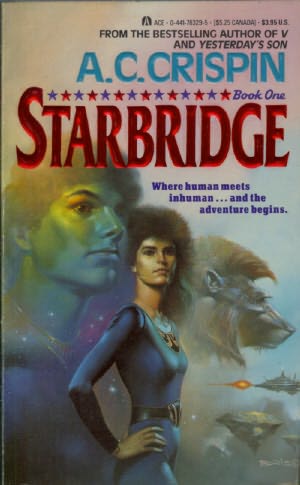
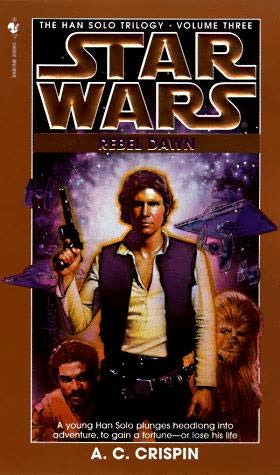
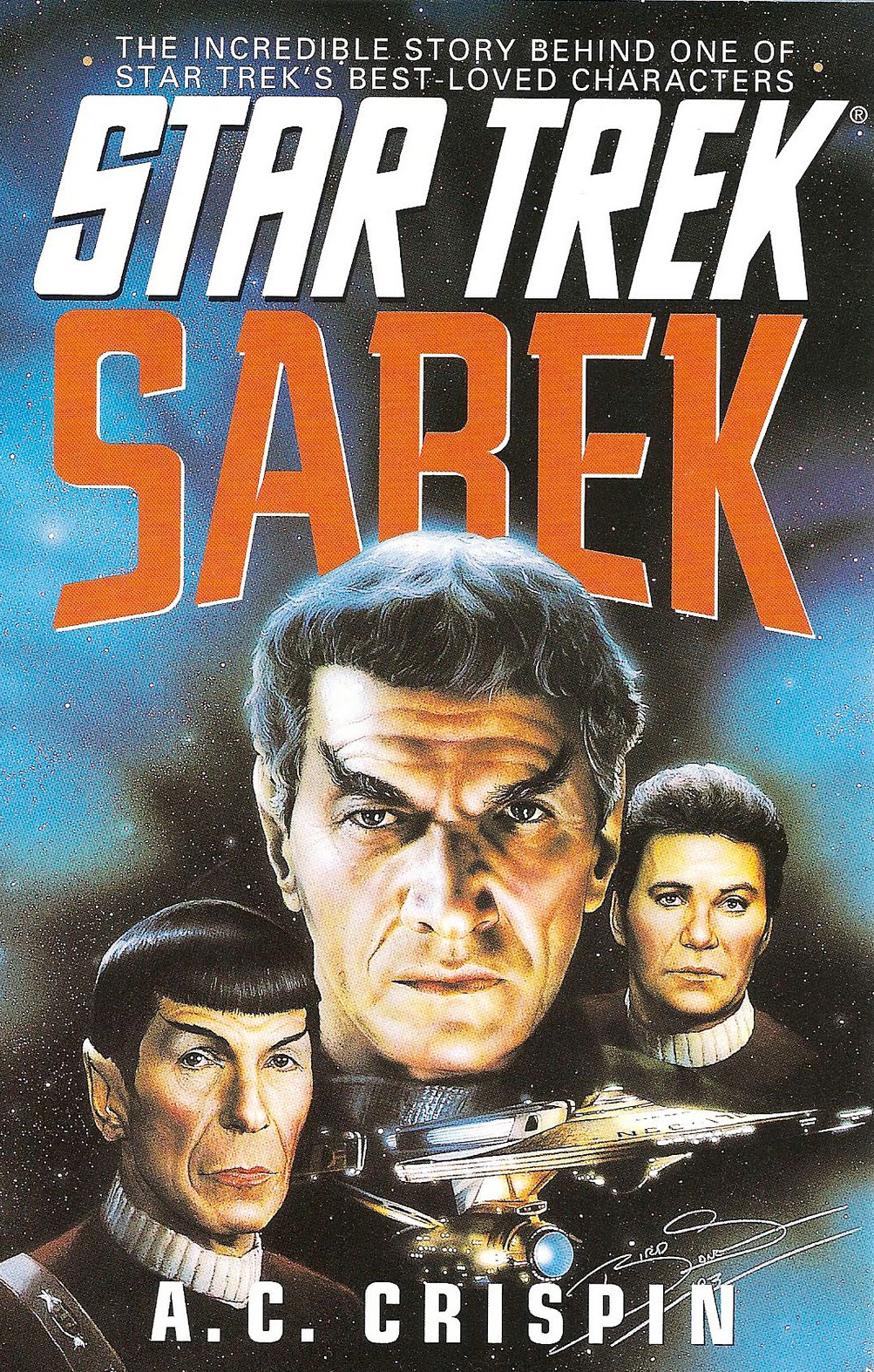
MICHAEL A. VENTRELLA: Today I’m pleased to be interviewing A.C. Crispin, whose new novel is PIRATES OF THE CARIBBEAN: THE PRICE OF FREEDOM. She’s best known for the novelization of the 1984 V TV series, but also for her bestselling Star Wars novels THE PARADISE SNARE, THE HUTT GAMBIT, and REBEL DAWN — although I first discovered her through her Star Trek novels: YESTERDAY’S SON, TIME FOR YESTERDAY, THE EYES OF THE BEHOLDERS, and SAREK.

Ann, You’ve been able to write novels in some of fandom’s favorite stories. How did you manage that?

A.C. CRISPIN: After I wrote YESTERDAY’S SON and V, publishers with franchises approached my agent when they had projects they thought would be a good match for my skills.

If your readers want to read about how to get an agent, soup to nuts, they should read “Notes on Finding a (Real) Literary Agent” on my website.

VENTRELLA: Do you make proposals or do the studios come to you directly now?

CRISPIN: For original novels I write book proposals. For tie-in work, they pretty much come to me.

VENTRELLA: Let’s discuss THE PRICE OF FREEDOM. How much freedom were you given to develop Jack Sparrow’s background?

CRISPIN: After a considerable amount of back and forth on the part of the Disney studio liaison, during which several detailed outlines were not approved, the studio liaison decided that instead of writing the project I had been originally hired to write (the story of the Isla de Muerta mutiny re: the Aztec gold) I should instead write the story of how Jack Sparrow worked for the EITC and wound up making that bargain with Davy Jones. So I knew where the story had to end up. How I got there was left pretty much up to me.

I did consult with both my editors on the book, the acquiring editor and the editor who completed the project. For example, they both agreed that there should be a “Lady Pirate” as a character, so that’s how Doña Pirata was born. The Legend of Zerzura plotline was my creation, but my editors suggested having talismans as a way to get into the Sacred Labyrinth and reach the treasure. So I then came up with the bracelets.

By the time I finished with my outline, it was over 70 single spaced pages long. Of course, THE PRICE OF FREEDOM is a long novel, some 235,000 words.

VENTRELLA: Did Disney censor any of your ideas or tell you to make major changes?

CRISPIN: My Disney editor (somewhat regretfully, because she really liked them) bowdlerized my hottest sex scene. I’m not sure you’d call that a major change. After all, we are talking Disney, here. (The scene was hot, but not graphic — she felt that it was a bit too hot.)

VENTRELLA: What were your main goals in trying to develop his character?

CRISPIN: To create the character of “Jack becoming” so that people would recognize Jack Sparrow, but also know this wasn’t quite the Jack they see in the films … this was a younger, more vulnerable, more trusting and less cynical Jack. He gets more cynical and “savvy” during the course of the book. He’s not the same Jack at the end as he was at the beginning. Of course that’s the goal of good fiction, right?

VENTRELLA: What adventures in your novel help shape Jack into the character we all know?

CRISPIN: Oh, Jack experiences betrayal, disappointment, fear of imminent death, hatred, and as a result learns to be much more wary and cunning, and to trust almost no one. Readers who want teasers can read the excerpts on my website. There are six there.

VENTRELLA: Do any other characters from the film appear in the novel?

CRISPIN: Edward Teague, Cutler Beckett, Hector Barbossa, Pintel and Ragetti, and a certain squid-faced Captain.

VENTRELLA: Were you given a peek at the script for the most recent film in order to work in some foreshadowing?

CRISPIN: No. I was given the script for “At World’s End” before the film released, but my book was finished before the script for “On Stranger Tides” was written.

VENTRELLA: The most recent movie is loosely based on Tim Powers’ novel ON STRANGER TIDES. Did you use that novel at all for reference?

CRISPIN: I’ve read ON STRANGER TIDES a couple of times, but aside from the fact that it’s an excellent pirate yarn, no.

VENTRELLA: Will there be more books in the series?

CRISPIN: That will be Disney’s call. I imagine they’ll base that decision on how well THE PRICE OF FREEDOM sells.

VENTRELLA: What’s your favorite of the Pirates movies?

CRISPIN: The Curse of the Black Pearl.

VENTRELLA: Do you find using established characters in your media novels to be a limitation?

CRISPIN: Nope. I find it a challenge to have them grow and change in ways so subtle that the studio doesn’t realize I’ve done it.

VENTRELLA: You’ve also written your own series: Starbridge. Tell us about this!

CRISPIN: Funny you should ask about that. There’s a good chance that the seven StarBridge novels will soon be re-released as e-books. There have been quite a few requests for them from readers, over the years. The series is about a school for young people from the Fifteen Known Worlds who come to an asteroid in deep space to learn to be diplomats, planetary advocates (known as “interrelators”) and explorers. The books focus on First Contact, and explore what it would be like in a galactic society.

VENTRELLA: Do you find writing books based on your own work easier?

CRISPIN: Not really. I put my full efforts into both my media tie-ins and my original novels. With the original novels, it’s generally a bit more work, because I have to create the world, the technology, the history, the geography, the society, etc. World-building and universe-building have to be done well if you want to create the illusion of reality –- something that’s essential to writing s.f. and fantasy.

VENTRELLA: We met at Balticon this year. Do you enjoy conventions and do you advise authors to attend them?

CRISPIN: You can learn a lot at conventions, and once you’ve gone pro, you can do a fair amount of networking and business at gatherings such as the Nebulas, Worldcon, etc. I enjoy conventions, still, even after all these years.

VENTRELLA: Let’s talk about Writer Beware. How did the idea for this come about?

CRISPIN: Back in 1998, Victoria Strauss and I both realized, independently of each other, that writing scams were proliferating on the internet. At some point our investigations brought us into contact with each other, and we decided to do something about it. SFWA gave us its blessing and sponsorship, and that’s how Writer Beware was born.

VENTRELLA: I meet many authors who have gone the vanity press or self publishing route and then wonder why no one takes them seriously. Other than “don’t do that” do you have any specific pieces of advice for these authors?

CRISPIN: I advise them to go to Writer Beware and read our articles about POD, vanity publishing, etc., so they’ll go into self publishing with a clear vision of what it can and can’t do for an author. E-publishing has taken off in the past six months, and it can now be a realistic way (provided the author has the sales numbers) to break into commercial publishing (advance and royalty paying publishing with a major press, that is). This is generally not true for POD and hardcopy “self publishing.” But there are exceptions.

The main problem with “self-publishing” is when authors confuse it with commercial publishing and expect their books to be on the shelves in bookstores nationwide, plus have other unrealistic expectations. It is really not a shortcut into a successful writing career for the vast majority of those who do it. I believe it’s still true that most POD and self published novels still sell fewer than 100 copies.

VENTRELLA: What bugs you most about the publishing industry and what would you change about it if you could?

CRISPIN: Here are my top two picks for that:

(1) I’d go back in time and eliminate the Thor Power Tools Supreme Court ruling. That had a terrible effect on a publisher’s ability to keep books in stock. Look it up.

(2) I’d get rid of the Internet for two reasons (A) the internet has given aspiring writers the idea that they’re entitled to be published, no matter how well or poorly they write, and (B) because of the internet, writers are getting scammed at an appalling rate.

VENTRELLA: Who do you like to read for pleasure?

CRISPIN: Terry Pratchett, Elizabeth Peters, Jane Austen, Charles Dickens, Margaret Mahy, Ursula K. LeGuin, George R.R. Martin, Lois McMaster Bujold, Charlotte Bronte, and too many others to name.

VENTRELLA: Of what work are you most proud?

CRISPIN: I do my level best on all my books. I’m pretty proud of PIRATES OF THE CARIBBEAN: THE PRICE OF FREEDOM, because I had to do so much research. It took me three years to write, and the whole time I was writing it, I was doing research on the historical period and the nautical stuff.

VENTRELLA: What is your writing process? Do you outline heavily, for instance?

CRISPIN: For tie-in work I HAVE to produce detailed outlines, so I’ve gotten used to working that way. I don’t like writing myself into corners, and a good outline usually prevents that.

VENTRELLA: Fantasy has grown tremendously in popularity over the past twenty or thirty years and now outsells science fiction. Why do you think this is? What is it about fantasy that appeals to readers that they can’t get from science fiction?

CRISPIN: I have no idea. Personally, I prefer science fiction, though I read both.

VENTRELLA: What advice would you give to a starting author that you wish someone had given you?

CRISPIN: Learn to read and analyze publishing contracts. Agents aren’t perfect, and you really need to be able to read a proposed contract and spot pitfalls.

VENTRELLA: What is the biggest mistake you see aspiring authors make?

CRISPIN: Here’s my top five list:

1. They spend years writing a Star Wars or other tie-in novel without ever researching whether they can actually submit the thing and have a chance of having it published. (With Star Wars, for example, they won’t even read the book; all Star Wars novels are contracted for in advance.)

2. They look for shortcuts, such as “self publishing” or POD publishing, often with a scammy publisher like PublishAmerica or Strategic, because it’s the easy thing to do.

3. They develop “golden words syndrome” and can’t see any flaws in their writing, and if someone points them out, they get mad. This is death to any aspiration to ever be a pro.

4. They submit first drafts.

5. They want to write fiction, but they don’t read it. I’ve never yet encountered a single writer, in the dozens, maybe hundreds of workshops I’ve taught, who wrote fiction well but wasn’t a reader. In order to write well, especially fiction, you must be an inveterate reader. No exceptions.

VENTRELLA: What question do you wish interviewers would ask you that they never do?

CRISPIN: Where readers can buy my books. There are links to purchase all my books on my website.

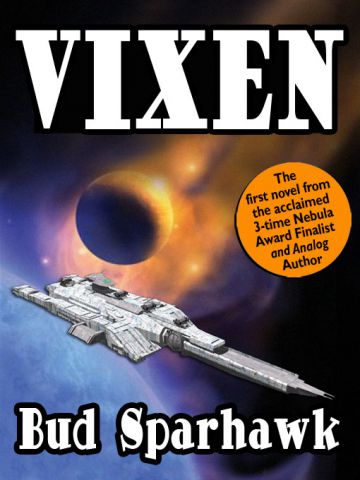
Intrerview with Nebula nominated author Bud Sparhawk

MICHAEL A. VENTRELLA: I’m pleased to be interviewing three times Nebula finalist Bud Sparhawk today. He’s primarily known for his short fiction with heavy and hard science, but also for his humor (in particular his “Sam Boone” series).

Bud, although you have extolled the virtues of outlines, do you think it’s possible to write a great story without an outline?

BUD SPARHAWK: I’m not certain “extolled” is the right word. Certainly I’ve advocated paying considerable attention to a story’s structure – the sequencing of scenes, time frames, and points of view. I don’t think I’ve ever recommended preparing a formal outline where a story is described in detail, point by point.

My own style of writing is to set up the scenes I think the story needs, block in the characters, setting, and time, and then move things around to the way I want to tell the story. Many times I write quite a bit before breaking what I’ve done into key scenes and then add sketch ideas that fill in empty spots. It’s generally a messy back and forth process but it works for me.

VENTRELLA: Have you ever done so?

SPARHAWK: Written a great story or used an outline to write it? All three of my Nebula finalists were done sans outline – just bashing along until they felt complete. I wouldn’t call any of them “great” – entertaining maybe. The one story that I felt was “great” was “Bright Red Star” and which received almost no literary comment, except from David Hartwell who included it in his Years Best SF #14. This story has now appeared in several languages and on audio pubs, which is somewhat of an affirmation. It was my response to some of the hysteria surrounding 9/11.

VENTRELLA: You’ve concentrated almost entirely on short stories and novellas. What is it about the shorter form that appeals to you?

I’ve been blogging about this very subject on budsparhawk.blogspot.com for some time. One of my latest musings dwelled on the differences between novelists and we short people. Although there are clearly differences between the two camps, my conclusion was simply that that some do and some can’t: Temperament, patience, and economic necessity are probably involved in a writers choices, but the mix would vary considerably.

VENTRELLA: Many writers consider short stories to be harder than novels. What is your experience?

SPARHAWK: I don’t think “harder” is the distinction I’d make. Some writers find it impossible to describe anything in a single sentence while I find it difficult to drone endlessly on about anything because I’m always anxious to get to the payoff. In my opinion, brevity always makes a point sharper and I usually edit down to reach that clarity. For example, I recently turned in a 15k piece that was originally 33k in second draft and around 20k in the penultimate one.

When I started writing I could write a 5-7K story in a weekend and once wrote one – “Persistence” – that I later sold to Analog – in an evening. I like to deal with issues or ideas and the short form is ideal for that. Longer pieces deal more with character development or expansion of a situation. I’ve written several as yet unsold novels and have found developing increasing complexity that forces the word count ever upwards tedious, albeit interesting.

Dedicated novelists have told me that they cannot begin a story without discovering that complications arise and they are faced with an irresistible urge to explain, describe, or comment. Then too, other characters come along with their own damn issues, backgrounds, motives and … well, you see how that goes, with the inevitable result is other than short.

VENTRELLA: What usually comes first for you – an idea or a character?

SPARHAWK: The idea or concept, always. I see characters as vehicles that carry the ideas forward, and try to make them eloquent spokespersons for what I try to say.

VENTRELLA: We’ve met at various conventions over the years. Do you enjoy conventions and do you advise authors to attend them?

SPARHAWK: I’m just a ham and enjoy the spotlight, talking to fans, and especially having the opportunity to talk writerish with the other pros. I love the readings, especially by unfamiliar writers to me.

VENTRELLA: What’s your favorite convention experience?

SPARHAWK: The random discussions that arise in the hallways or in the dealers room have be my favorite experiences. I hardly ever leave one of these random discussions without a story idea or two.

VENTRELLA: I meet many authors who have gone the vanity press or self publishing route and then wonder why no one takes them seriously. What’s your opinion on self publishing?

SPARHAWK: The line between vanity and self-published has become very thin. Established writers are self-publishing collections, reverted novels, and even original works – all to take advantage of the opportunities eBooks have created. Some non-professionals (another vague term) have been highly successful with their “vanity” publishing. Results are mixed, but in most cases it seems to depend on the degree of self-promotion one is willing to undertake. Social networking seems key to success for both types.

VENTRELLA: Do you think there is a difference if an already established author self publishes new material?

SPARHAWK: If a writer has already established a reputation, then selling new material via POD or eBook should not be a problem. Otherwise you use up a lot of time, effort, and creative juice that could be used for improving your writing.

VENTRELLA: What bugs you most about the publishing industry and what would you change about it if you could?

The lengthy delays between submission and response, which is an unfortunate consequence of limited staff and/or time available to the publisher. The industry probably needs more underpaid English majors looking for “experience” in the publishing field.

Since most editors now accept electronic submissions I can easily see the day when some maven will design an app that evaluates e-manuscripts on the fly, all tailored to an editor’s preset specifications. That would certainly change the writing game for both writers and editors. Don’t know if this would make the publishers happy or not.

VENTRELLA: What do you like to read for pleasure?

SPARHAWK: Short stories, of course, and mostly SF, but I make an exception for anything by Terry Pratchett.

VENTRELLA: Of what work are you most proud?

SPARHAWK: See above – “Bright Red Star.” Interestingly, I’ve written three more shorts in the same universe, two of which are in McPhail’s anthologies.

VENTRELLA: What are you working on now?

SPARHAWK: I’ve a long novel in penultimate editing, four or five shorts that still need work, and getting as much of my published works into eBook formats as I have time for. The novel deals with the long term effects of human expansion into the universe and what exactly makes our descendants “human.”

VENTRELLA: Fantasy has grown tremendously in popularity over the past twenty or thirty years and now outsells science fiction. Why do you think this is? What is it about fantasy that appeals to readers that they can’t get from science fiction?

SPARHAWK: It is a puzzle that in these days of instant everything and twittering phrases that short fiction does not sell better. Steven King recently observed that much of the popular long form fiction has little substance but does carry the reader along in an engaging, but superficial narrative thread that provides an immersive experience. Summer reading at the beach, in other words. I find that much of the “epic” fantasy fits this description. Clearly, fantasy in general is not my cup of tea, but there are some fantasy works that rises above the rest – like Laura Anne Gilman’s Vineart series.

VENTRELLA: What advice would you give to a starting author that you wish someone had given you?

SPARHAWK: 1. Don’t give up your day job.

2. Put some time aside for writing every day.

3. Learn humility and to accept rejection gracefully.

4. Join SFWA as soon as you can.

VENTRELLA: What is the biggest mistake you see aspiring authors make?

SPARHAWK: Endless rewriting in pursuit of perfection, which can never be achieved. The pursuit of “better” is ever the enemy of “good enough.” A writer should rewrite only until the piece achieves a satisfactory level in their own opinion and, of course, whenever an editor asks.

VENTRELLA: What question do you wish interviewers would ask you that they never do?

SPARHAWK: “Where do you get your Ideas?” to which I respond “a guy in New Jersey sends me two a week for five bucks.”. Ask a silly question …

Seriously though, no one ever asks how the magic is done and the toll it takes on family life, work, and socializing. I wrote for years while holding a fairly demanding job, raising a family, and dealing with the issues of aging parents, yet managed to eke out a few words each night, having them add up to some decent stories and a lot of less than sales worthy. The ideas bubbled up during my non-writing times and, if they were worthy of remembering, finally made it into a story. Truthfully, I have no idea where the ideas come from. I only know how much work it takes to turn them from daydreams to reality.

Heroes

Jeremy Wembley grabbed the broom by the handle. He took forceful steps toward the back of the room where Patrick stood unaware. Patrick paid no notice as Jeremy shortened the distance between them, and seemed completely oblivious to Jeremy’s presence.

Jeremy raised the broom just as Patrick turned around.

“I’ll sweep the stockroom now, Mr. Brenner,” he said.

Jeremy knew that if he continued to impress his boss, it would not be long before he could get that promotion—and soon after, get the real reward he desired: night manager of the Fredricksburg 7-11 on West Norton Avenue.

Unless his arch-nemesis, that kiss-up Eric Stoher got there first…

All the elements are there. There is a goal the main character wishes to reach, and an obstacle that can prevent him. There is character development and conflict.

But, you know, who gives a flying you-know-what?

The fact of the matter is that we want to read stories about people and events that are larger than life. We want to read about heroes to do great things, make clever comments, overcome great odds.

This is nothing new. The ancient Greeks didn’t do plays about the guy who cleaned the stables.

And I am no exception. My books have been about wars and world-shaping events and the heroes whose presence made a difference.

However, at the same time, I have consciously avoided the standard hero that is a mainstay of much of fiction (and especially fantasy). You know the type – the Chosen One from Prophecy who is the seventh son of the seventh son who is the only one who can wield the magic sword Noonah because he has surplus midichlorians and blah blah blah. Maybe this hero starts off the book as a nobody, but he or she ends up as the World’s Greatest Swordsman or Most Powerful Wizard by the end and thus, being superior to us lowly humans, saves the day.

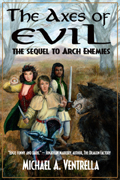
In my two published novels (ARCH ENEMIES and THE AXES OF EVIL) and in a short story in the just released anthology TALES OF FORTANNIS: A BARD’S EYE VIEW, my main character is a teenager named Terin. His problem is that, thanks to a mistake, everyone thinks he’s the Chosen One Who Can Save The Day.

By the end of ARCH ENEMIES, Terin is still running when a fight breaks out and still can barely cast a minor spell. So what makes him the hero?

To me, what makes a real hero is someone who doesn’t have all those skills and yet, through bravery and intelligence, rises above what is expected and does the extraordinary. Terin is the hero because he figures out a solution – he finds a way to solve the problem that is more than merely “hitting the bad guy with the weapon until he falls down.”

I like these kinds of heroes because they remind us that we all can be heroes sometimes.

Oh, I don’t mean to knock down the more traditional heroes: I love Batman and Luke Skywalker as much as the next fan. But when I create a hero for my stories, they tend to be average people put into extraordinary circumstances who must then find something special within themselves to make things right.

In the sequel THE AXES OF EVIL, people are now thoroughly convinced that Terin has wondrous powers, even though he doesn’t. Now he’s confronted with a trio of barbarian prophecies which, he later discovers, contradict each other. On top of this, his liege wants him to get all the barbarians off his land, and a bunch of silly goblins think Terin’s the one who will lead them to victory over the evil humans who oppress them.

These are problems that cannot be resolved by being the biggest fighter. Terin solves them all by the end of the book through his cleverness and resourcefulness, and by being brave and willing to risk it all.

That, to me, is very admirable. It’s what I admire about my real life heroes (Benjamin Franklin and Martin Luther King, to name two). And it’s the kind of hero I like writing about, because I can identify with him and understand his fears and worries.

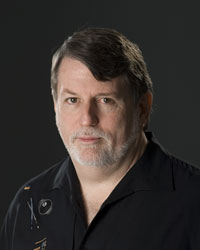
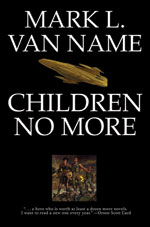
Interview with author Mark L. Van Name

MICHAEL A. VENTRELLA: Today, I am pleased to be interviewing Mark L. Van Name, who I had the pleasure of meeting at the Arisia convention in Boston recently. Mark has worked in the high-tech industry for over thirty years and today runs a technology assessment company in the Research Triangle area of North Carolina. He’s published over a thousand computer-related articles and multiple science fiction stories in a variety of magazines and anthologies.

How important is it that writers of hard SF especially have a background in science?

MARK L. VAN NAME: There are no hard and fast rules about writing, SF or otherwise. The right good, smart writer can pull off just about anything. You can learn so much via research that not having formal training in an area is no excuse for not learning about it. So, I don’t think it’s vital that hard SF writers have a science background.

That said, I do think it’s helpful to have a solid base in any areas you try to cover in depth. Without that base, you better do your research, because otherwise, you’ll make mistakes, and your readers will spot them.

VENTRELLA: Since all of speculative fiction relies on things that are not, do you think a beginning writer should be wary when writing about things of which they have no experience?

VAN NAME: Wary, yes, but afraid to tackle it, no. You just have to respect the material you’re using. If you haven’t been a fire fighter and want to write about them, reading about their work and talking to some would be a very good idea. Making it up entirely based on what you’ve seen on TV, though possibly better than no research at all, is rarely enough for your work to have the verisimilitude it should.

VENTRELLA: Given your background, are you worried about the growing anti-science attitude we are seeing in much of politics these days?

VAN NAME: Definitely, though I have to say that particular concern is lower on my list than many others, including global climate change, the huge levels of hunger and poverty around the world, our national debt, child soldiers, and many other causes. There have always been groups opposed to rationality, and there always will be.

VENTRELLA: How did you break into the field? What was your first sale and how did it come about?

VAN NAME: My first fiction sale of any type was a short story, “Going Back,” to a now-defunct, small-press, feminist SF magazine, Pandora. My first professional (by SFWA guidelines) sale was a short time later, a story, “My Sister, My Self,” that went to Asimov’s but ended up in their original anthology, ISAAC ASIMOV’S TOMORROW’S VOICES. In both cases, the sale went down in the usual way: I mailed them the manuscript, and they bought it. For the first story, the editors asked that I interview some battered women–the protagonist was one–and then do a rewrite based on what I learned. I did, I learned a lot, I rewrote the story, and they bought it. For the Asimov’s piece, I mailed it, and they bought it. Not very exciting, I’m afraid.

VENTRELLA: Did you get an agent?

VAN NAME: Nope. Only after I’d sold the first four novels did I talk to an agent. I’m not at all convinced that agents help beginning writers sell short stories. More to the point, I suspect that few agents you would want to represent you would take you if you were writing only short pieces, and that’s all I was doing for many years.

VENTRELLA: Tell us about the Jon and Lobo series!

VAN NAME: Talking about a multi-novel series is a lot like describing a multi-course meal of experimental cuisine: whether you focus on the individual dishes or the overall meal, you’re bound to miss a lot. I’ll try it a bit from both perspectives.

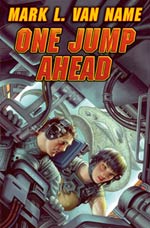
The overall series is a future history that I tell from the first-person perspective of one man, Jon Moore. I’ve always found history more interesting when it comes directly from the people who were there, so I wanted to chronicle a very important time in humanity’s far future–I’m writing about a time roughly 500 years from now–but limit myself largely to what Jon can see and experience. Of course, he’s a most unusual man, as far as he knows the only nanotech-enhanced human alive, so he naturally ends up in quite a few interesting situations. In the first novel, ONE JUMP AHEAD, he meets and becomes first the owner and then the friend of Lobo, an extraordinarily intelligent assault vehicle that can go anywhere–on land, under water, in the air, or in space. Over the course of the many books the series will take to complete–I’m estimating about eighteen, but that’s just an estimate–the characters and the universe will undergo many significant changes.

On an individual book level, each part of the series is simply a novel that should stand entirely on its own. You can pick up any book in the series and enjoy it. You can read them in any order. If you read them all, however, and further, if you read them in order, then you should have a richer experience. I’ve talked to lots of readers who’ve joined the series several books in, and so far, all of them have been able to enjoy whatever books happened to be their starting points.

VENTRELLA: You like to attend science fiction conventions. Are they really worth it, given the expense?

VAN NAME: I have no clue, because hard data on the sales value of cons–or blogs or pretty much any other marketing tool–is almost impossible to get. That said, I don’t go simply to increase sales. I attend cons to be part of the community, to see friends, visit new cities, eat at good restaurants, and so on. You can’t be sure you’ll boost your sales, but you can be sure to see friends and have an entertaining time.

VENTRELLA: What’s the funniest experience you ever had at a convention?

VAN NAME: I’ve done a lot of humor panels at cons, and I’ve done stand-up comedy/spoken-word shows, so that’s a tougher question than you might imagine. Certainly one of the funniest hours I’ve spent was listening to my friend, Lew Shiner, give a talk on humorous mimetic short fiction at a long-ago Disclave at which he was the guest of honor. He delivered the entire thing in very scholarly style, but it was just an excuse to tell a ton of jokes–which he did, brilliantly.

VENTRELLA: What process do you use in order to make believable, realistic characters?

VAN NAME: I don’t see that process as separate from the overall writing process. I sit down to tell a story. The story becomes very real in my head, because I spend a great deal of time living in the world of the story. The story includes people. I get to know those people. Like any other folks, they behave the way they do because of who they are. If I try to make a character do something that she or he simply wouldn’t do, it feels bad, wrong, as wrong as it would feel if a friend suddenly behaved completely out of character. I listen to those feelings. I write the story. The characters behave as they would. That’s about it.

I should probably clarify that I’m not one of those writers who believes his characters are real humans. I know they’re not. I know I control them. I know I could make them do anything I want. I also know, however, that doing so, that violating a character’s identity simply for the sake of a plot, would be bad craft. I don’t want to do that.

VENTRELLA: What is your writing process–-do you outline heavily, for instance?

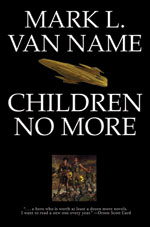
VAN NAME: I generally outline, but how detailed the outline is varies widely. For a thriller, FATAL CIRCLE, that I’m partway through and hope one day to finish, I had to do some research in key areas and consult with some experts. The result was a very detailed, very long outline–over twenty-six thousand words, a quarter of a typical novel. For CHILDREN NO MORE, I went with an outline of barely three thousand words. I outline to the level I feel necessary before I’m ready to start writing the book, and then I write.

I do some writing work every day. That’s been the key to changing me from someone who sold a story every few years to someone who has multiple novels out. I don’t, though, have a word-count quota. I avoid that sort of goal because it’s so easy to fail at it, and I hate failing. Instead, I have a time requirement: I must devote at least half an hour a day solely to writing work. As long as I’ve done that, I’ve succeeded. Most days, I do more. Most days, I get a fair number of words on the page. Some days, I produce very few. As long as I’ve tried for half an hour minimum, I call it a success.

VENTRELLA: What do you see as the future for printed books? For book stores?

VAN NAME: I love books. I really do. My house is full of them. They’re everywhere. Sadly, I believe the printed book is going to become a minority taste. I’m not sure if the transition will take ten years or fifty, but I believe it’s coming. That said, in the fiction world, books are containers for stories, and ebooks are simply other containers for stories. Similarly, I believe bookstores will continue to exist, but they will evolve, and in time their numbers will shrink. I will hate that, because I love bookstores almost as much as I love books.

I hasten to add that I don’t see any of this as the demise of writers or of people paying for stories. They’ll just pay for those stories in other forms.

VENTRELLA: What’s your opinion on self-publishing?

VAN NAME: Rather mixed. I write a blog, so in a sense I self-publish. I sell all my fiction, however, to traditional publishers. I know that some writers can make a great deal of money self-publishing, but being a publisher is a lot of work, and most of that work is not writing, which is what I most want to do. So, for me, selling to a publisher remains the way I hope to continue to bring my fiction to the market.

I also expect most people who self-publish are unlikely to make a lot of money doing so. The sales and marketing experience that a publisher brings to its job helps make each writer a brand–some obviously much bigger brands than others–and it’s hard to manage that feat on your own. Plus, self-publishers have to be good enough at analyzing their own work to know when it’s of publishable quality. I’ve read some who are indeed good at that job, but I’ve also read many who are not.

Like so many things, if others want to do it, I wish them the best. For the most part, though, it’s not for me, at least not now. I add that last bit because even for those of us who work in the future every day, it’s pretty darn hard to predict.

VENTRELLA: With a time machine and a universal translator, who would you invite to your ultimate dinner party?

VAN NAME: I agonized over this question for months. In fact, it’s the biggest reason I’ve been so late getting this interview back to you. I really took the challenge seriously, and I found I simply couldn’t come up with a single ultimate dinner party. I won’t let myself cop out completely, though, so I’m going to give you, in no particular order, a few that particularly caught my fancy.

Each on his own, just so I could focus exclusively on him: Homer, Shakespeare, Keats, and my biological father, whom I’ve met only once for a couple of hours.

My mother as a young woman, but with someone standing by to knock me out if I started to give away the future.

Several women I care about deeply, each alone, each as a young girl, just so I could see who they once were.

I could go on and on, but one thing is clear: I’d be greedy, going for one-on-one time rather than organizing a group.

Interview with Lawrence M. Schoen

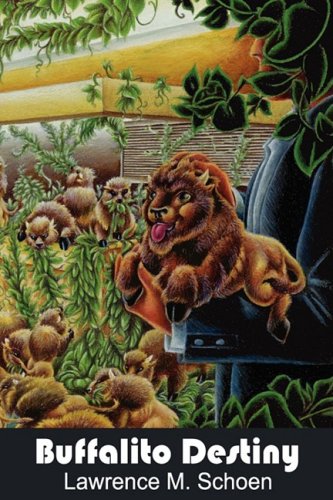
MICHAEL A. VENTRELLA: Today, I am honored to be interviewing Hugo-nominated author Lawrence M. Schoen. Lawrence holds a PhD in cognitive psychology and spent ten years as a college professor. He’s also one of the world’s foremost authorities on the Klingon language. A few years back he started Paper Golem, a speculative fiction small press aimed at serving the niche of up-and-coming new authors as well as providing a market for novellas. In 2007 he was nominated for the John W. Campbell Award for best new writer and in 2010 received a Hugo nomination for best short story. He’s the author Guest of Honor at Lunacon next weekend (March 18-20, 2011), where he’ll have a book launch for his second novel, BUFFALITO CONTINGENCY. (I’m just a regular guest, but I am on at least one panel with him!).

Lawrence, Do you enjoy conventions and do you advise authors to attend them?

LAWRENCE M. SCHOEN: I love conventions! Most of my friends are either authors or fans (or both) and they’re scattered all over. Conventions are often my only opportunity to see them and catch up. It’s become trite to talk about how writing is such a solitary experience and how only other authors can really relate to the tribulations of the life, but the reason it’s trite is because there’s so much truth in it. It’s incredibly comforting to settle in with other writers and listen as they share their own joys and complaints and be reminded that it’s actually a kind of club.

Back in my psychology days, I attended research conferences for much the same set of reasons. One of my graduate professors, a brilliant scholar named Thaddeus Cowan — the only person I know to have invented a new impossible figure! — told me that that when it comes to conferences and conventions you’re looking for three things: 1) meet up with an old friend, 2) make a new friend, and 3) come away with a fresh idea. If you do any two, it’s a good event, and if you manage all three, it’s great. Most conventions I’ve been to, I’ve been lucky enough to hit all three, over and over again.

Having said that, I don’t think every author should attend conventions. Conventions aren’t a one-size-fits-all kind of thing. I’m an extravert, a big guy with a loud voice. Having been a professor for ten years, I’m very comfortable standing in front of a room full of people and telling everyone what I think about something, at length. I’m completely at home in that kind of setting, but I know people who can’t abide crowds, let alone being trapped in a room with a bunch of loud people with big egos. Fortunately, it doesn’t have to be an either/or kind of thing. I think you can be very successful as a writer without stepping into the spotlight and bloviating. A shyer author can attend a convention, hang out in the background and chat quietly with other authors and fans, attend functions and make connections. There’s plenty of room for variety, and even people like me get tired and calm down eventually and welcome a quiet conversation before the day’s out.

VENTRELLA: You are known in large part for your promotion and publication of Klingon translations of Shakespeare and other works. What led you to the interest in the language?

SCHOEN: I’ve always been fascinated with languages. I’m not necessarily particularly talented at them — it’s not like I have a great ear for languages, or learn them quickly, I just enjoy them. My academic expertise is in psycholinguistics. I stumbled into Klingon with the right set of skills at the beginning of the internet explosion. So I was in the right place at the right time. Traditionally, the two things that hinder any language, natural or constructed, are 1) time, and 2) distance. I became immersed in Klingon at the precise moment when these factors ceased to be an issue, when the technology and expertise allowed real time communication with people almost anywhere in the world, something that other constructed languages hadn’t previously enjoyed. It was like being on a linguistic rollercoaster, and the ride’s been going nonstop for twenty years!

VENTRELLA: You also established a small press company called “Paper Golem” a few years ago. What led you to that decision?

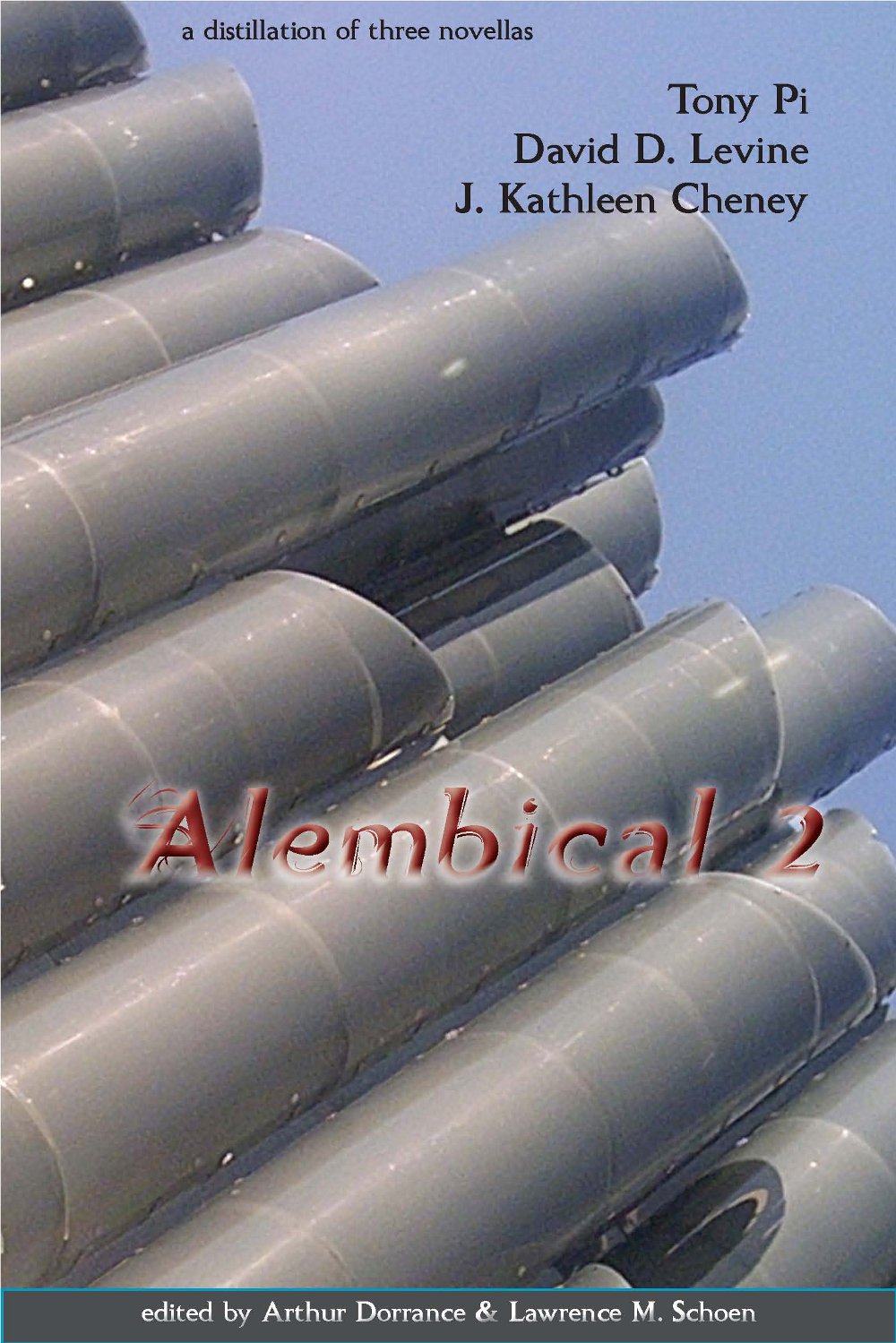
SCHOEN: I’m extraordinarily lucky. I have a good job that pays me a decent wage for part time work. That leaves me free to do things like write. A few years ago some members of Codex (an online community of writers) were kicking around ideas for generating more group identity, and I offered to edit a reprint anthology for them. When I looked at the numbers, I realized it wasn’t that much more time and money to set myself up to do additional books as it was to do just that one book. Basically, I was in a position to commit an act of “paying it forward” and that’s how Paper Golem came about. It’s not intended to make a lot of money. The goals of the press are much more modest. I’m very happy to have a book break even, and anything extra gets folded into the next project. We’ve put out four books to date, with another one due in May. And the last book, ALEMBICAL 2, has an original novella that’s up for a Nebula Award. As you can imagine I’m feeling pretty chuffed about that.

VENTRELLA: What works have you released through Paper Golem that have impressed you?

SCHOEN: We have two “series” that we do. First, I’m committed to providing a venue for novellas, because there aren’t a lot of places where you can sell a story that’s in the 20K – 40K word range, particularly if you’re not a Big Name Author. That’s what ALEMBICAL is for. Second, I like the idea of doing single author collections for writers who are producing incredible stories but haven’t yet written and sold a novel. These are authors who deserve to be read, who deserve to have their work gathered in one place so that potential readers can find them and be delighted. Our first single author collection was for Cat Rambo, and it’s absolutely beautiful. The next one, which I’m finishing up even now, is by Eric James Stone, and contains a novelette that’s also just been nominated for a Nebula Award. It’s incredibly satisfying to work with such talented authors who are going to transform this field as they progress through their careers.

VENTRELLA: Has Paper Golem been the success you hoped?

SCHOEN: Absolutely, particularly because (and this may be the same mindset that originally set me on the road of being an academician) I don’t measure success in terms of how much money is produced. Paper Golem is bringing quality fiction to print, and if you love reading good science fiction and fantasy then there really isn’t a higher mark to hit.

VENTRELLA: What does a small press offer than the larger publishing houses cannot?

SCHOEN: The ability to take chances. The opportunity to work with authors as a labor of love without having to justify it to the accountant. There are tradeoffs, of course. Would I love to publish a best seller? Sure. More sales would mean more money to do more books, but it would also mean reaching more people and introducing them to authors they might not have otherwise found. Don’t get me wrong, I love big presses, and I love what they do. But small presses serve a different niche. Small presses are all about the long tail, the specialized market. For Paper Golem that’s novella-length fiction and newer authors, and seriously, that’s not all that specialized. Somewhere I’m sure there’s a small press that is specialized to serve the reading desires of people who want nothing but humorous SF stories about talking, vampire cats solving computer crime in space. Hmm… I wonder if anyone has a novella about that…

VENTRELLA: What bugs you most about the publishing industry and what would you change about it if you could?

SCHOEN: Lately I’ve become more and more upset about the economics and how that drives what publishing does. I’ve seen author friends who are working on series get dropped by their publishers because while the series is profitable, it’s not as profitable as hoped, so the author has to change publishers, and in effect end their series (the big exception to this being Carrie Vaugh) because what new publisher would want to pick up a series with book #5 when the rights to books #1 through #4 are tied up elsewhere? I understand that publishing is a business, and it would be criminally naive to imagine otherwise, but I don’t read because doing so puts money in some editor’s pocket or employs a proof reader or marketing department; I read because I enjoy what a given author creates.

VENTRELLA: Who do you like to read for pleasure?

SCHOEN: I read anything by Walter Jon Williams, Karl Schroeder, Daniel Abraham, China Mieville. I go on binges where I’ll read everything I can get by a particular author that I’ve stumbled over or rediscovered in my library, and I’ll keep tearing through all of that author’s work for a while until I’m sated and have to come up for air. Last year I devoured books by the late Kage Baker. Right now I’m in the middle of Michael Chabon.

VENTRELLA: How has your background as a psychologist influenced your work?

SCHOEN: I trained as a researcher, and so everything comes back to a question. Everything gets turned into a testable hypothesis. Why does the character do X. What happens if the bad guy is thwarted by removing Y from his path. What are the systematic variables that can affect the outcome? This kind of worldview permeates not just my fiction, but also my daily wife. It drives my wife nuts!

VENTRELLA: How did you come up with the concept of The Amazing Conroy?

SCHOEN: Some years back I was enrolled in the two week workshop that James Gunn offers out of the University of Kansas. It was the last night; we were done. Everyone had gathered and in a celebratory mood, and this line of dialogue just popped into my head and right out of my mouth without any control. It was “Put down the buffalo dog and step away from the bar!”

As soon as I said the room went quiet and everyone was staring at me. I had no idea what it meant or where it had come from, but I vowed to one day write a story with that line. It took years, but then, one day, I found myself writing “Buffalo Dogs.” At the time, I had no idea it was going to lead to another quarter million words and a branded identity.

VENTRELLA: There seems to be a theme in much of speculative fiction about super-humans – the “chosen one” who has special powers no one else has who is the subject of a prophecy to save the world blah blah blah. Of course, that’s an old theme going back forever. The main characters in my books are just normal guys who do their best, make mistakes, yet win in the end, and you have the same attitude in your work. So why do these kinds of characters appeal to you?

SCHOEN: I blame Thornton Wilder. I had to read a lot of his stuff back in high school, and he spent a fair amount of time championing the “every man.” Ordinary people finding themselves in extraordinary circumstances are much easier for a reader to relate to than someone who is superhuman in extraordinary circumstances. Most of us are never going to be James Bond, but we very well could be the guy who lives in the apartment next door to him (of course it’s not his real apartment, just one he keeps as a cover). I like protagonists who aren’t jaded by the chaos and adventure of their lives, but rather are dragged into it by surprise, kicking all the way.

VENTRELLA: Of what work are you most proud?

SCHOEN: The answer to that is constantly changing, because I’m constantly changing as a writer. I’m very happy with the new novel, and I think it represents a new high point in my ability to craft a complex story and tell an entertaining tale. There’s a short story I wrote a while back that came out in January of last year and that I secretly (well, not so secretly now) harbor an unlikely hope that it will make the Hugo ballot. It’s called “The Wrestler and the Spearfisher” and it’s one of my infrequent jaunts into Fantasy.

VENTRELLA: What is your writing process? Do you outline heavily, for instance?

SCHOEN: I’m constantly changing how I work, trying new things. Nowadays, I’m trying to get better at blocking out the scenes in a story or novel before I do too much of the writing. I’m somewhat transitioning from being a seat-of-the-pants writer (what some like to call a “discovery writer”) to an outliner, but I suspect I’m going to stop far short of the end. I’m enjoying knowing more about a work before I sit down to write it though. It’s very different from the way I used to work. But will it last? We’ll just have to see.

VENTRELLA: What advice would you give to a starting author that you wish someone had given you? What is the biggest mistake you see aspiring authors make?

SCHOEN: Problems in Perspective. There are always going to be bigger fish, and if you constantly compare your attainments to them, you’re always going to make yourself miserable. Keep a perspective on things and don’t view this business as a zero-sum game. Instead, if you have to be competitive, compete with yourself. Are you further along now than you were at this time last year? Is your prose improving? Are your plots more involved? Work on improving yourself, rather than trying to be as good as someone else. You’ll get there sooner, and you’ll be happier along the way.

16

Interview with New York Times Bestselling Author John Ringo

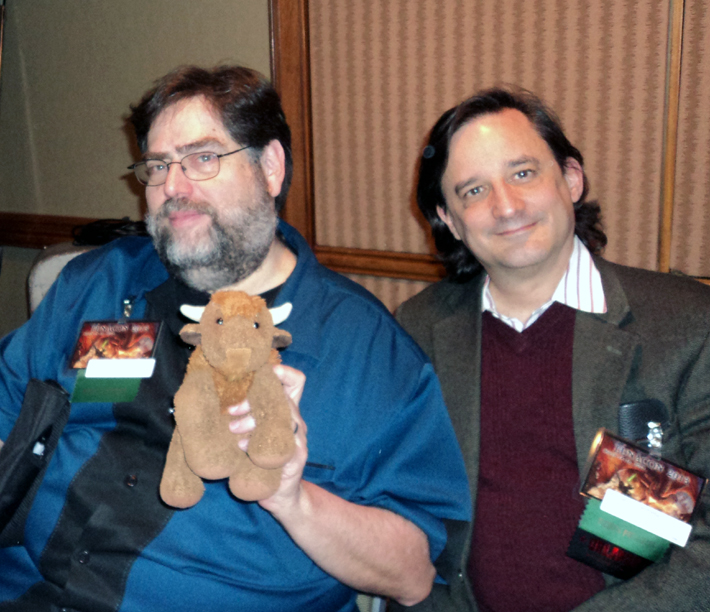
MICHAEL A. VENTRELLA: Today, I am honored to be interviewing New York Times bestselling author John Ringo, who will be the Guest of Honor at this year’s Ravencon convention. (I’ll be there, too!)

John has has over two million copies of his books in print, and his works have been translated into seven different languages. His books range from straightforward science fiction to a mix of military and political thrillers.
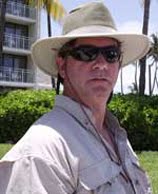
You’ve had an interesting background. What made you decide you wanted to be a writer?

JOHN RINGO: My family tells me I’ve always written but you wouldn’t know it by my memory. I was always the kid who never turned in his essays. But I guess I’ve puttered at writing most of my life. And it’s better than a 9-5 job.

VENTRELLA: You’re also quite unique in that you did not collect a pile of rejection letters before your first novel was published. What’s the secret? Who did you bribe?

RINGO: Sigh. I need to just make a copy of this reply somewhere so I can cut and paste. 🙂

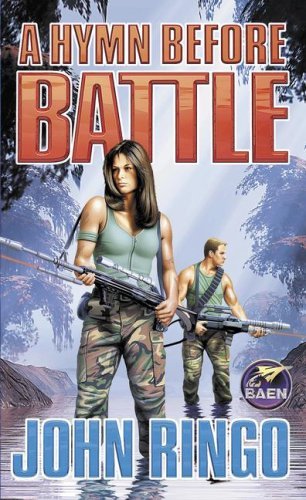
I wrote A HYMN BEFORE BATTLE in two chunks in the mid to late ’90s. It was the second “novel” I’d written. (The quotes are because neither the original version of HYMN nor my first novel were current novel length. And the ‘first story’ is never going to see the light of day.) When I’d finished, at least as well as I knew how at the time, I consulted ‘The Writer’s Digest’ then submitted it to Baen following all the submission requirements exactly. I’d already determined that it was more or less center of the lane for what they published.

I knew it would take months to even get reviewed so in the meantime I started on the sequel (one of my big suggestions to aspiring authors) and poked around on the Baen website. There I found one of the first ‘webforums’ (Baen’s Bar). Being a shy and retiring type, I, of course, just lurked. Hah! By the end of the first month I was one of the top three posters. 🙂

Another top poster was Jim Baen. He’d been active on the internet practically since it was opened to private and business use and he actively involved himself in the discussions. Which meant we were trading frequent discussions (as well as japes, gibes and jousts.) One point to make is that I did not go on there saying ‘I’m an aspiring author! Read my manuscript!’ I just got involved in the discussions. But at one point there was a discussion going on on the Aquatic Ape Theory. Jim was a proponent. I said ‘I think you’re crazy but I have to be nice to you cause I’ve got a book on your slushpile.’ His response was ‘Marla! Find me this manuscript!’ I took that as a jest suggesting that he was going to shred it.
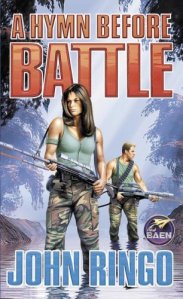
About a week later I got a rejection. Just a mailed form letter with the title (A HYMN BEFORE BATTLE) squeezed into the title blank in a woman’s hand.

By that time I knew enough about Jim that if he had rejected it he’d have sent a personal message. So I sort of put it aside (I think I threw it away, I wish now I’d kept it!) and continued work on the sequel. I knew by then that Lois Bujold had been rejected three times before she published so I wasn’t worried. I had a day job and I’d just keep plugging along until I got published.

A week after I got the rejection (two weeks after Jim’s comment) I got the first email I’d ever gotten from Jim. ‘Nobody can find your manuscript. Send me an rtf.’

I then wrote a really abject letter explaining that it had been rejected but that was planning on reworking it as well as I could and I understood if he didn’t want to override his first reader…

I didn’t know Jim very well at that point. When he read the manuscript he fired the person who rejected it. 🙂

Anyway, I sent him HYMN as well as as much as I’d finished of GUST FRONT. One point that had come up during the discussions was that publishers look for ‘more than a one trick pony.’ They want someone who is going to be able to keep putting out stories. So I wanted to show I had more than one book in me.

He read it then sent me a series of emails telling me what was wrong with it. And the last was ‘if you fix it the way I told you, I’ll buy it.’ (Yes, every aspiring author’s dream.) So I did and he did.

The denouement to the story occurred a few month’s later. Jim accepted HYMN in April of 1998. In August I was puttering around on the computer and got an email from Jim. (Ding! You’ve Got Mail! Remember those days?) 🙂 The email read ‘Your mss Gust Front stops in media res. You have ten minutes.’ 🙂

I’d mentioned that I’d sent ‘as much as I’d finished’ of the sequel to Hymn when I sent Jim the Hymn mss. Well, it was exactly as much as I’d finished. I was working on it at the time so it ended in the middle of a battle in the middle of a sentence in the middle of a prepositional phrase. The last word of the mss was ‘of.’. 🙂

Fortunately, I’d finished it by that time and I sent him the whole thing. And he bought that. It was also when he hooked me up with David Weber.

VENTRELLA: Do you think that someone can learn to be a good writer? In other words, can a distinction be made between the technical skill and the creative skill?

RINGO: I think that any competent person can learn to be a competent writer and sometimes that’s all it takes. To be a really good author, though, I think requires talent. That may seem pompous but… I love music. I listen to music all the time. I have a head for lyrics. I absolutely suck at music. I have zero talent. I can’t figure out how to play the most basic notes, I’m flat as a singer. I just really suck. So I leave the music to people with the talent and admire that talent but I don’t go inflicting it on people.
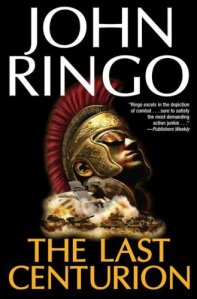
But talent alone is not enough. ‘How do I get to Carnegie Hall?’ ‘Practice.’ As I mentioned above, I wrote a ‘full’ really really crappy novel before HYMN. And, yes, lots of other stuff before that. (Even if I was lousy about turning in homework.) Figure that you’re going to write a million words before you’re good enough to be published. But don’t get freaked by that. Those ‘million words’ are all the letters you write, emails, blog discussions, essays, etc. If you write them well, you’re advancing in the craft. Go for leet and you’re setting yourself up for failure. (At least until novels are primarily published in leet. 🙂

VENTRELLA: What themes do you find yourself revisiting in your work that may pop up without planning?

RINGO: The competent individual trying to achieve goals using a system in which he has to use people who are below his level of competence to achieve those goals.

Real life in other words. 🙂

VENTRELLA: What is it about science fiction that attracts you?

RINGO: The pallette. In SF you can pretty much create the starting environment and then work within that new millieu.

VENTRELLA: What science fiction stories (literature or movies) have inspired you?

RINGO: Heh. Either due to innate anti-socialness or the fact that I was always the ‘New Kid’, I grew up without alot of friends. Middle school and early HS was particularly bad. So I read instead of, you know, having a social life. So the list is…long.

Heinlein in general. (At least his earlier stuff.) The juveniles, STARSHIP TROOPER, obviously, the first part of TIME ENOUGH FOR LOVE is probably my favorite book of all time. (The latter part being nearly my least favorite Heinlein.) Clarke’s DEEP RANGE was awesome. The list is endless.

VENTRELLA: Lately, fantasy has been outselling science fiction. Why do you think that is?

RINGO: Education. The educational system in the ‘West’ in general has been dumbed down so much that people’s brains aren’t well exercised. SF is designed to make people think. If you’re not used to that it, literally, hurts. A new thought causes increased blood flow to new areas of the brain. This is a good thing but it causes a slight headache. Since people’s brains aren’t broadly stressed by their education and day to day interactions reading SF gives them a headache.

In addition, alot of the traditional ‘core’ SF readers are now doing gaming instead of reading.

Combine the two and you have the relative success of fantasy.

However, thank God for it. For a while there nobody was reading. The population which graduated in the mid 80s into the late 90s contained a miniscule fraction of readers compared to newer graduates. Harry Potter has made reading ‘okay’ again. That’s a good thing.

VENTRELLA: Often, new writers are told to “write what you know.” This would seem to preclude anyone from ever writing science fiction or fantasy. Is this good advice at all?

RINGO: At one point it was suggested that I take over a writer’s workshop at a major convention. (Which idea I rejected.) But the joke was that the first thing I’d do is tell people to get some experiences. ‘The first writing exercise is to RUN to the top of this 22 story hotel! THEN BACK DOWN! When you get back I want a five hundred word essay on HOW YOUR FEET FEEL! MOVE IT MAGGOTS! MOVE IT! 🙂

What ‘write what you know’ means in SF is have a base of experience upon which to draw so as to more effectively tell the story and create the environment. I recently had to write a scene where a space welder is in an out-of-air situation. Have I ever been in an out-of-air situation in space? Nope. But I’ve been in one diving at least six times. (The last one during a cave dive which is why I now have claustrophobia.) So my big suggestion is always ‘Experience life. Then write. That way you’ve got something you ‘know.’
VENTRELLA: What is your writing style? (Do you outline heavily or just jump right in? Do you tend to start with an idea, a character concept, or something else?)

RINGO: Generally I jump right in. But … The ideation for the story is usually solid from months and even years of thinking about and building scenes and concepts. And I generally start with a general idea and a scene. Then, in general, I have scenes that I write to, what I call ‘stringing the pearls.’ Those scenes (‘visions of fire’) are what drive me to keep writing and are, generally, the really good part of my books.

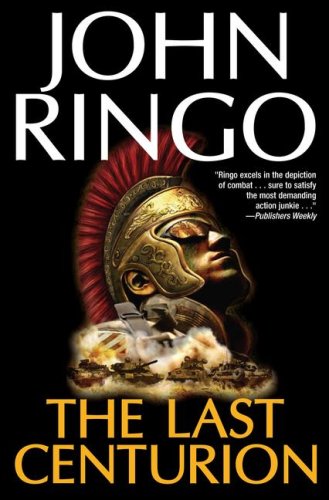
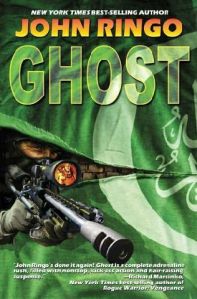
Sometimes stuff comes out of nowhere and requires itself to be written. INTO THE LOOKING GLASS, GUST FRONT, GHOST and THE LAST CENTURION are in that category. Those write themselves and write themselves fast. LOOKING GLASS was a couple of weeks, GUST FRONT (one of my longest books) was a couple of months while I was working, GHOST was a month, LAST CENTURION was seven net days. (153k words)

I love those.

VENTRELLA: Of what work are you most proud?

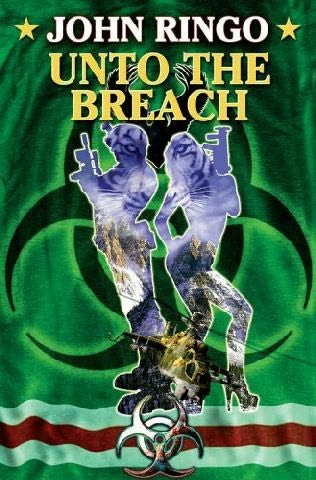
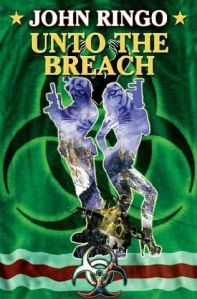
RINGO: UNTO THE BREACH. I don’t recommend the series. Despite it’s popularity (and it’s immensely popular) it’s not everyone’s cuppa.

But UNTO THE BREACH is outstanding. It’s one of the few books of mine I recommend. The last book that was that good was GUST FRONT but GF is weak in prose and grammar. (Early author mistakes.)

VENTRELLA: You’ve done quite a few collaborations. What do you see as the advantage of doing so?

RINGO: For the junior author the advantages are several. They build market by introducing the new author to the established author’s fanbase. They help teach the craft of writing as well as working in the publishing industry. And you can generally get more money from doing a collab as a new author than your own work.

For the senior author they’ve got two or three values. They permit the author to get a story out there that they either don’t have time to write or don’t have quite the right skill set to write. (See ‘write what you know.’) And the senior author gets fairly good money for slightly less work than a full novel.

VENTRELLA: They have obviously worked out, as you continue to do them. Is it a truly collaborative effort, or does one author primarily do the writing and the other act as guide and editor? How do you divide up the responsibilities?

RINGO: Every collaboration is different. I’ve done collaborations where I wrote a 35k outline for the junior author, (THE ROAD TO DAMASCUS, HERO) one where it was the junior author’s idea and I took portions of it as well as teaching the craft of writing, (VON NEUMANN’S WAR) wrote most of it and left portions for the junior author to ‘fill in’ (Vorpal Blade series) to ones where I basically gave the junior author a vague concept and they ran with it. (TULORIAD.)
Every collaboration is different.

VENTRELLA: Have you ever run across unexpected controversy with your writing? If so, how have you dealt with it?

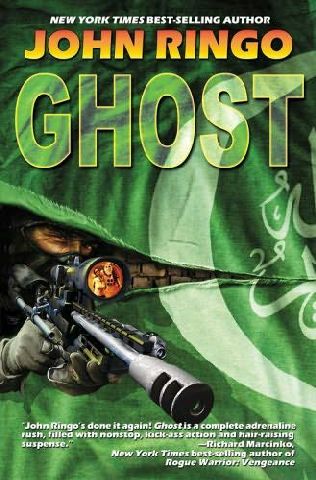
RINGO: Unexpected? No. I’m considered a ‘controversial conservative SF author.’ Not to mention GHOST, which… well, you just don’t get more controversial unless you’re a gangsta rappah under indictment for murder. How do I deal with it? Generally I try to swallow my rage and smile. Because with the exception of some of the stuff in the Ghost series, I really don’t see what I say, what my characters do and say, as particularly controversial, crazy, evil or illogical. I see the people who consider it ‘controversial’ as idiots and morons. (Whereas they view me as a ‘racist, homophobic, xenophobic, genocidal asshole’ in the words of Mercedes Lackey.)

So, mostly, I ignore it.

VENTRELLA: You’ve never shied away from political issues as well (nor have I) – we have had a few interesting discussions in this area. Do you think it is wise for authors to take stands which may alienate readers?

RINGO: As I said in a recent email to a family member, politics has become religion and there is virtually nothing which is not politicized. You can take the PC approach of having the enemy be alter versions of what the Left hates (the US military as in Avatar, Christians, middle-class white males) in which case you can alienate the core readers of SF. Or you can alienate the Left by being a human and American exceptionalist and having characters who, whatever their race, nationality, creed or sex, act in a traditional self-determinant manner and worry about PC after the Human Race has been saved.

Whatever people think, you don’t get the choice to not piss anyone off. ‘You can please some of the people all of the time, all of the people some of the time but you can’t please all of the people all of the time.’

VENTRELLA: Do you think this has affected your sales in any way? Do you care?

RINGO: If anything in the positive. My ‘controversial stands’ fit the market of my core writing. And, no, I don’t even if it’s in the net negative.

VENTRELLA: What advice would you give to a starting author that you wish someone had given you?

RINGO: Get an accountant.

VENTRELLA: What is the biggest mistake you see aspiring authors make?

RINGO: I tend to get sarcastic about this question. Impatience is one. There are alot of people out there that want to get published. Publishers who are even willing to look at unsolicited manuscripts are overwhelmed. So don’t think it’s going to be a fast process. Fill the time by writing your next book. Publishers also want people who have more than one book in you and if you’re a writer you’re going to want to write that one, too. Just write it. It may take years to get published. Unless you’re in your ’60s, you should have them. Be patient and keep writing in the meantime.
‘Puff reads.’ I made this mistake. After HYMN got accepted I asked Jerry Pournelle if he’d read it. He sent me a reply which at the time I took to be very rude to the effect that I’d asked him to do the most odorous chore of a professional writer so, no. Since then I’ve gotten to know more about Jerry and being asked to ‘read my manuscript’ and for Jerry he was being really damned polite.

There are authors who really enjoy that sort of thing. I don’t. Most don’t. So… please don’t ask. When we say ‘Yes’ we’re not really happy about it and when we say ‘No’ we feel like we’re dissing somebody’s baby. So … Don’t ask. Kay?

VENTRELLA: Finally: What’s the latest news on the possibility of movie adaptations? What other exciting scoops can you share?

RINGO: Zero. Nothing moving on that area. It sort of norks me that I’ve got 33 novels published or in the pipeline and so far I don’t have option or contract one. OTOH, given that I’m a ‘controversial conservative sf author’ (three strikes against me since even Syfy no longer does SF) I’m not really surprised. Just…norked. (Mildly irritated.)

Learning How To Read

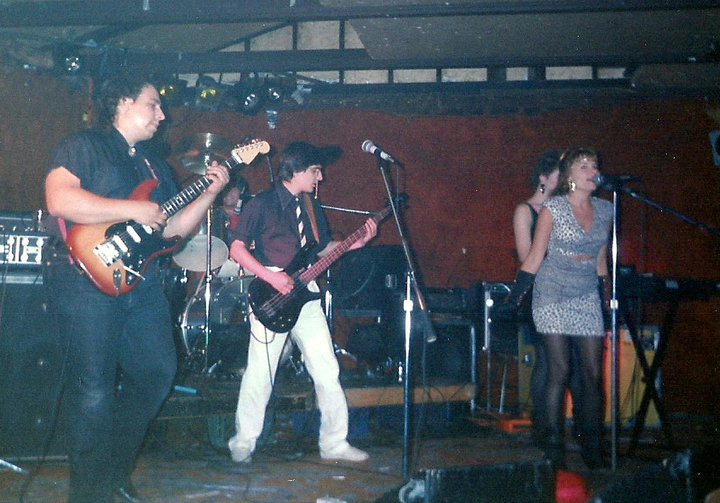
When I lived in Boston back in the 90s, I was in a band called Agent 99. Our music was often described as “Blondie meets the B-52s.” We did mostly original songs, and I wrote my fair share. (That’s me on bass.)

Our guitarist was Richard Marr, who at the time was studying at the prestigious Berklee College of Music and who now runs Galaxy Park recording studios in the Boston area. I often gave him comments about his songs which he accepted and used. I recall one time specifically where he said “You know, I’ve learned more about songwriting from you than I have from my professors.”

So what does this have to do with writing fiction?

Well, this: You can learn more about a creative endeavor by paying attention than you can any other way.

Even now, I don’t just listen to songs — I listen to how they are crafted. I pay attention to whether the writer has placed the lead before the bridge or after, how the instruments play against each other, the way the lyrics flow … everything. I can’t help it, I just do. I hear things in songs that non-musicians and non-writers don’t hear or don’t notice.

My wife is an artist, and she tells me it’s the same with her and art. We can go to a gallery and while I can admire a piece of art in general, she sees it in a completely different way, noting the artist’s techniques and processes, analyzing why the artist made the decisions he made.

And that is how you should be reading.

Oh, I don’t mean that you need to literally study what you’re reading; when I listen to music, I can still enjoy the song while noticing all the rest. But you should take notice how the author structured the story and kept it moving, how the characters become real and believable, how the author used foreshadowing, and so on.

Taking writing classes and learning how to improve your skills are one thing, but learning how to tell a story takes something more — anyone can learn grammatical rules they teach you in school, but not everyone can be a great writer with them.

To use music again as a metaphor: I never really learned how to read music other than the very basics (“OK, that’s a C sharp”). I have played with various musicians who could take a score they had never seen before and play it beautifully. But if you asked them to play a solo, they were lost. They’d ramble all over the place, producing nothing memorable. They just didn’t have the skill needed to go from technically proficient to creative.

And that’s what you need to do with your writing. Those “how to write a novel” books will not teach you as much as if you would just read! Read good books! Books in your genre. Books you will enjoy. And pay attention!

(Oh, and thank you for reading this and letting me have a bit of nostalgia about my old music days!)

Obvious Writing Rules That Aren’t That Obvious

Just because you have a book published does not mean you know everything there is to know about writing. You can always get better.

Since my first novel, I have worked with excellent editors, taken classes from professional authors, attended writer’s conferences, and participated in discussions and panels at conventions. Each one has brought new lessons for me.

And most of these lessons were obvious once I learned them. Each of these came with an “Of course! Why didn’t I see that before!” light bulb attached.

I am now editing a short story collection and have discovered that I am not the only one who was not aware of these obvious rules beforehand … many of the rejected stories were sent back for violating these rules.

So here are my five Obvious Writing Rules that Aren’t That Obvious.snoopy-writing

1. Have a character point of view and don’t change it abruptly. My first two novels were in first person, so that wasn’t an issue, but now that my new novel is in 3rd person, I am paying much more attention to this rule.

Each chapter should be told from a specific character’s point of view. (I imagine the narrator hovering over a specific character and only describing what that character sees, feels, and thinks.) To do otherwise is very jarring to the reader. If you have to switch POV, be sure to make a break somehow to make it clear.

The omnipotent narrator can work, but you’ll find that the story will flow much better by choosing a character for each chapter. And it doesn’t have to be your main character; perhaps this section is told from the point of view of someone meeting your main character, which allows you to better describe your character’s personality quirks and looks (since your main character probably won’t do that).

2. Try not to use words other than “said” and even then, try not to use “said.” And for that matter, steer away from adjectives that describe “said.”

When you use other descriptions (growled, hissed, yelled, screamed, etc.) it can be distracting from the dialog you’re trying to highlight. It should be clear from the dialog.

Better yet, try to avoid “said” whenever possible. Usually, you can indicate who is speaking from the paragraph in other ways.

“Give me that idol!” he screamed angrily.

As opposed to:

His face became red as he pounded his fist on the table. “Give me that idol!”

3. Show, don’t tell! Look at the paragraph above. See how much better the second example is? And it’s obvious who is saying it — you don’t need to add “he said” at the end.

When I’m working on my second draft, I go back and make sure that I am showing, not telling. Maybe it’s my legal training, but I imagine myself cross examining a character:

“He was mad.”

“How do you know that?”

“Well, his face turned red and he pounded his fist on the table.”

4. Trust the reader. You don’t have to spell out your plots completely. The bad guy doesn’t have to detail his evil plan. It should become obvious sooner or later anyway.

Admittedly, I kind of knew this all along. In fact, in my first novel, I even make fun of the “bad guy monologuing” cliche.

But it applies to all parts of your writing. Don’t dumb down the story; the readers will get it. Don’t explain that someone was happy or sad or angry — show it instead and the reader will get it. You don’t have to spell out what’s going on like some bad made-for-TV movie.

5. If you’re skimming over your own work, so will your readers. Leave out the boring parts. You don’t need to describe every detail of the room, or of the main character’s face. The reader will fill that in themselves.

These, then, were the five rules that made me go “Of course!” These are not the only rules for writing, just the ones that hit me recently. There are many other rules that I already knew, and I’m sure there are more I have yet to learn. (And I may come back to visit these in more detail later.)

And, of course, a final disclaimer: There really are no rules in writing. If it works, it works.