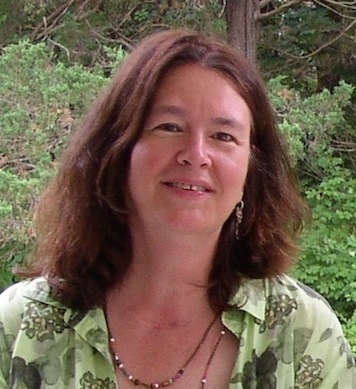
MICHAEL A. VENTRELLA: Today I am pleased to be interviewing Catherine Stine, writer of suspense and speculation. Her newly released crossover sci-fi thriller is RUBY’S FIRE.
Catherine, tell us about this new series. What makes your series different?
CATHERINE STINE: It takes place on a future earth (2099), and the world has suffered from extreme weather and border wars, but it is not an oppressively dystopian atmosphere. There are signs of renewal. I’m more interested in what takes place during a perilously delicate recovery, and what kinds of events and people affect it.
VENTRELLA: My fantasy novels are also considered “young adult” books, primarily because of the age of the protagonist. What else makes a story YA?
STINE: The hallmarks of YA are yes, the age of the protagonist (14 to 18), but the pacing must be fast and the plot high stakes. There is always a romance, yet the romance is not graphic. Themes are geared to teen concerns. RUBY’S FIRE addresses drug use, core identity issues, runaways, love triangles, extreme peer competition and genetic mutation. How’s that for suspense?!
VENTRELLA: When you’re approaching a story, how do you begin — characters, plot or themes? What’s your writing style? Do you outline or just jump in?
STINE: I begin with a compelling situation and characters. Then I construct the plot. I always outline, and I do thematic freewrites. The more I think through the novel and outline beforehand, the stronger and more focused the novel becomes. I advise my students to outline, even a few lines per chapter. I encourage them to think of it as a fluid entity they can tweak as they go. This seems to help.
VENTRELLA: Who do you like to read?
STINE: I read adult and YA speculative fiction. That includes horror, sci-fi and techno thrillers. Occasionally I’ll read a literary mystery to study how to craft tension.
VENTRELLA: Tell us about how you got RUBY’S FIRE published.
STINE: I published Ruby’s Fire with my own imprint, Konjur Road Press. That said, I’ve also published with Random House, American Girl and Scholastic. I’m a hybrid author, meaning I’ve done it both ways, and would like to continue publishing both ways. Why not? I do have an agent. He’s okay with that.
VENTRELLA: What do you think we will see in the future of publishing?
STINE: I think more and more authors will publish both ways. Even well published authors are choosing to self-publish certain projects. For instance, one trend is to write a “short” or a novella with one of the characters in a novel, between longer projects, and self-publish the shorts. It satisfies readers while they wait for your longer opus.
VENTRELLA: Even authors with major publishers need to know how to market. What are the smartest things one can do to promote a book?
STINE: For RUBY’S FIRE, I’m doing a big blog tour. Last time I organized it all myself. This go-around I hired a book tour host. But from my first experience, I “met” so many great book reviewers that this time I was able to contact them again, and they were thrilled to read the next book, and also to blurb. People are very generous online and they love getting the word out about books they like. The funny thing is that I have a friend who is published with one of the Big 6, and her publicist is approaching the very same bloggers I have a relationship with. The whole process has become democratized. It’s also good to do giveaways on Goodreads, and to host other authors.
VENTRELLA: You’ve received quite a few good reviews and awards for your work. How did those come about? Do you have to search them out or do they contact you?
STINE: Write the best book you can, and good reviews will follow. I did apply to certain indie award sites; there are good ones, and questionable ones. Do your homework. More and more, these organizations and awards will be helpful to readers to discern the best of the indies.
The “Heroes in Hell” anthology series launched in 1986. The theme features the denizens of Hell and how they continue to live their evil lives in the afterworld. This allows for hugely creative stories featuring the famous and infamous.
The series, edited by Janet Morris, has seen some of the biggest names in the genre, including Robert Silverberg (who won a Hugo award for his “Hell” story), C.J. Cherryh, Gregory Benford, David Drake, Robert Asprin, George Alec Effinger, and now, some guy named Michael A. Ventrella.
I remember reading these books way back when. I never thought I’d ever be in them as an author.
My story “Hell, I Must Be Going” is in the latest version. Here are links to the paperback, kindle and Nook versions. This is a huge book with lots of great stories!
Below is a list of the stories you’ll find in this collection. I asked each author to give me a short description of their stories, and the ones who responded are included.
“Barefoot, on Brimstone” by Sara M. Harvey
“In the Shadow of Paradise” by Jason Cordova: The only way to escape Hell is by redemption. But how can a man who is irredeemable escape? Ponce de Leon must answer this question as he struggles to find another way before he is damned forever.
“Face of the Enemy” by Leo Champion: Che Guevara discovers an appreciation for capitalism with the success of a revolution-branded T-shirt factory – but an old victim is plotting revenge.
“Siegfreid’s Blade” by Petra Jorns: Once in hell, Kriemhild finds out that she herself was guilty for Siegfried´s death, her beloved, and this is her own, private hell.
“More Light! Goeth” by Bettina Meister: To his great dismay Goethe, the poet laureate, finds himself in hell instead of heaven. This can not be accepted. After all, he is The Goethe – poet, scientist, master sorcerer. Brace yourself, Goethe, for hell knows every secret of yours!
“Alms for Oblivion” by Janet Morris: The Devil and the Angel of Death conspire to expose the unrepentant damned.
“Fools in Hell” by Janet Morris and Chris Morris: Shakespeare and Marlowe must write a new play to please Satan.
“The Unholy Hole” by Nancy Asire
“Ophie and the Undertaker” by Shebat Legion: It’s a face off between Ophelia and The Undertaker! Will the rebellious Ophelia still have a face when they are done?
“Hell I Must Be Going” by Michael A. Ventrella: Groucho and Chico Marx cause havoc in the Bureau of Hellish Assignments, but their chaos has a purpose …
“Blood and Ash” by Tom Barczak: Beowulf, Boudica and Joan of Arc find a common bond, and some unexpected help from Lewis Carroll to escape the Gates of Hell.
“Just Dessert” by John Manning: Joseph Mengele and the other Nazis are forced to do scullery work supervised by the Purple Gang’s Jewish mobsters while Matthew Hopkins and John Stearns attempt to assassinate Satan at the grand reopening of the Hellexandria Memorial Library.
“The Wager” by Deborah Koren
“The ITTT” by Michael H. Hanson: The Institute of Terrified and Tortured Technicians is throwing its annual convention: Sergei Korolev, Father of the Soviet Space Program, is crashing the party.
“Zero Sum Game” by Richard Groller: Nikolai Tesla and Thomas Edison re-fight the “War of the Currents” with disastrous results for New Hell City.
“Essence Helliance” by Yelle Hughes: Where you donate to receive a break. Maybe.
“And the Truth Will Set You Free” by Jack William Finley: Some times the greatest wisdom in life or death is in knowing what questions should never be asked, because sometimes the truth isn’t all it’s cracked up to be.
“Stairway to Heaven” by Ed McKeown: Frank Hopkins and the demon Smoke are drawn into Emile Du Chatelet’s plan to escape hell and demand redress in heaven, or failing that, to depose God.
“Head Games” by Bill Snider: Fionn mac Cumhaill learns what happens when two sentient weapons meet; and, he gets to meet Caliban’s Mom … Freud also asks: Got Wood?
“Knocking on Heaven’s Gates” by Larry Atchley, Jr.: Anton LaVey gets psychotherapy from William James to help him battle with his inner demons, while Guy Fawkes leads the vanguard of an assault on Heaven in an attempt to escape Hell and confront the God who damned him.
“The Knife Edge Bridge” by David L. Burkhead: William Dunlap Simpson, Jim Bridger, and Perseus, Son of Zeus, fall off the Knife Edge Bridge into a terrifying deeper level of Hell.
“Hellexandria the Great” by Sarah Snyder Gray Hulcy: Preparations for the reopening gala of the Hellexandria Memorial Library are racing to a finish… and so are some of the guests.
“Hell Bent” by Janet Morris: Hell’d over, by unpopular demand: the play that proves Christopher Marlowe’s point: ‘Hell is just a frame of mind.’
If you’re reading this blog, you’re either a reader interested in the authors I’ve interviewed or a writer looking for advice.
So here’s to that second group.
The second TALES OF FORTANNIS collection has been released and now it’s time for me to begin work on the third. So I’m looking for stories.
About the collection: The TALES OF FORTANNIS series is published by Double Dragon and is available in paperback, ebook, kindle, and nook. Double Dragon is perhaps the largest science fiction and fantasy e-book publisher out there, and has been around for about a dozen years. They have a good reputation, pay royalties on time, and make sure the book is available everywhere (Amazon, Barnes and Nobles, all e-book distributors).
Previously unpublished authors are encouraged to submit, but should be aware that we ask for at least two years of exclusivity which can limit your ability to resell or republish the story later. (You can negotiate the exact terms of exclusivity with Double Dragon.) Once your story appears in TALES OF FORTANNIS, it will severely limit its future possibilities, including a future pay rate. Note as well that while the book will be promoted in a number of ways, sales will not be huge. Don’t give up your day job. You should be submitting mostly for the exposure. As a standard warning that applies in all similar cases, you need to decide if publishing your work in e-formats and/or on the web, giving up your First Publishing Right for a token payment, is really what you want to do.
About Fortannis: Fortannis is the fantasy land where my novels ARCH ENEMIES and THE AXES OF EVIL take place. Your story does not have to take place in the same kingdom as my stories, and you can create your own kingdom and characters. It’s a high fantasy world with elves, dwarves, the mysterious biata, gryphons, goblins, and more.
Magic comes from the orderly progression of nature, and mages can learn to tap into that power to do basic spells that manipulate the earth, air, fire or water. Healing magics exist, as they speed up the body’s own healing process and tap into that power. Death magic also exists, because death is part of the orderly path of nature.
There is another source of power, and that is chaos magic, sometimes known as necromancy. This magic runs counter to the orderly progression and is used to harm and to do unnatural things like raise zombies and undead. This kind of magic is much easier to use and thus very tempting to those trying to learn the magical arts. Every spell has its chaotic counterpart which is stronger — you can either heal someone a little or hurt someone a lot. Chaos magic eventually corrupts the land and the mind of the user, and is illegal and frowned upon in decent society.
There are no gods, churches, or religions.
Keep in mind that although these are fantasy stories, you are not limited to telling tales of adventure, with knights fighting dragons and wizards casting powerful spells. The world is merely the setting for the stories. I am looking for a variety of tales, as you can see from the previous books. There is one story about someone trying to steal the recipe for his favorite pie. Another concerns three goblin children spying on the curious humans. A third involves a con artist trying to mislead a nobleman. The theme of the Tales of Fortannis series is the fantasy world, not the type of story. (To get a synopsis of the stories that have run in the previous books, check out the blog posts for A Bard’s Eye View and A Bard in the Hand.)
If you want to submit a story, I first suggest that you read one of my novels or one of the collections. It will help.
Submissions: Submissions are open for short stories of under 10,000 words with no minimum. (A good story should take exactly as many words as needed.) This is an ongoing submission — when I have enough good stories, the next edition will be published. Unpublished authors are encouraged to submit, but will still face the same standards for submissions as the published authors. .
All stories should be double-spaced in rtf format with 12 point Times Roman font. There should be no spacing after the paragraphs. The first page must contain the name of the story, the word count, and your name, address, email, and phone number. Your cover letter should list any previous publications.
I’m very excited to be going to Balticon this year, because not only am I on some great panels, but we’re doing a major book release party for A BARD IN THE HAND (along with a few other books from my publisher Double Dragon).
Balticon will be held on the weekend of May 24 – 27. Below is my schedule (although, as usual, there may be some additions and changes by the convention):
…
FRIDAY
Project Tracking for Editors (6:00 pm) with Lesley Conner, Elektra Hammond, Brian Koscienski, Neal Levin and Trish J. Wooldridge: How to make sure all the ducks line up in a row when working on a project. Editors share war stories and recommendations on how to get organized, stay organized, and how to deal with the unexpected.
Opening Ceremonies (8:00 pm): Where the Guests of Honor and other participants rub elbows with Balticon attendees (usually with wine and cheese).
World or Plot (10:00 pm) with Charles E. Gannon, Paula S. Jordan, Richard Allen Leider, and T. C. McCarthy: Do you start with a world and build the rest around it? Or do you start with a plot outline and allow the worldbuilding to grow out of that? What do you do when you start with a plot in mind and the world that develops seems to send the plot in another direction?
…
SATURDAY
Editor’s Pet Peeves (9:00 am) with Danielle Ackerly-McPhail, Walt Boyes, Alex Shvartsman, and Leona Wisoker. A head’s up for writers on what editors don’t like to see or deal with from their authors. Headaches they’ve encountered in publishing.
Worldbuilding in Role-playing Games (3:00 pm) with L. Jagi Lamplighter, Neal Levin, Mike McPhail, and Robert Waters. How do you build a believable world for your game?
Reading (6:00 pm) with Mur Lafferty and KT Pinto: Authors read from their latest works
…
SUNDAY
Double Dragon Book Release Party (10:00 am) with Gail Z. Martin, Bernie Mozjes and Peter Prellwitz: Come celebrate the latest Double Dragon releases (including my own A BARD IN THE HAND and TWISTED TAILS IV which features one of my stories). Coffee, donuts, hard-boiled eggs, and books! Donwload flyer
You Have Gaming in my Fiction (2:30 pm) with L. Jagi Lamplighter, Neal Levin, Mike McPhail, and Alex Shvartsman: All about how to write media tie-in fiction for games.
Editor’s Q&A (4:00 pm) with Danielle Ackley-McPhail, Scott H. Andrews, Richard Allen Leider, Patrick Thomas, and Trisha J. Wooldridge: Audience asks the panel of editors questions about submissions, acceptances, and the publishing process.
Promoting Your Book (10:00 pm) with Jean Marie Ward: What works in promoting a book? Do book-signings really help a small author? Are bookmarks and/or postcards effective at garnering attention? Does a blog help or hurt an author? Does an author have to have a website? How do you find good reviewers? What tactics do not work? What methods might work for an established author that wouldn’t work for a beginner?
…
MONDAY
Plotters verse Pantsers (10:00 am) with Jack Campbell, Doc Coleman, Kat Otis, Jennifer Povey, Alex Shvartsman, and Leona Wisoker: Do you plan your story or write by the seat of your pants? Panelists share the quirks and foibles of their working method with readers. A Round Table discussion.
Making Better NPCs (Noon) with Victor Hutcherson, L. Jagi Lamplighter, Neal Levin, and Mike McPhail. How to create believable and real characters for your gaming players to interact with.
I was thrilled to be given the opportunity do a phone interview with Howard Kaylan concerning his new book SHELL SHOCKED, about his life in the world of music. We spoke for about 45 minutes, had some great laughs, and talked about his interesting life. If you haven’t read the book or don’t know a lot about him, some of these questions may seem quite obscure, but for fans like me, this was a great opportunity to ask more than the traditional basic questions. If something in this grabs your attention and you want to know more, get the book! I highly recommend it.
MICHAEL A. VENTRELLA: I have been a fan for so long and it’s an honor to be talking to you. What made you decide to write a book now?
HOWARD KAYLAN: I had always planned on writing a book when it was later in my life but then I looked around and realized that it was later in my life, and if I didn’t tell stories now, I’d probably never get to tell the stories at all. I’d get too old or feeble or alzheimer’s would set in or lord knows — so I decided to get it all off my chest. What are they going to do to me now?
VENTRELLA: You kept a diary all your life which helped a lot.
KAYLAN: I really didn’t need it until I got up until the ’80s and then it just all became a blur, as most of the ’80s did for those of us who lived through it.
VENTRELLA: I definitely enjoyed SHELL SHOCKED and one of the things I liked about it was that it answered a lot of the questions I was going to ask you–
KAYLAN: OK then, it’s been great talking to you, Michael!
VENTRELLA: (laughs) Which brings me to a point, about the sense of humor. The book is full of humor, of course, but so were the Turtles and your entire career. Was that unusual, especially when you were first starting with the Turtles?
KAYLAN: It’s unusual now. In any era to have a band with a sense of humor. Mr. Zappa used to say that America wasn’t ready for music with a sense of humor. In his case, he was mostly right. He proved it by lack of commercial success, in his early works especially. After us, he later made it his mission to get on the charts as many times as he could, he did really well at that.
But yes, sense of humor is very important in music. It drives me crazy to hear bands that are supposedly carrying on a sense of humor and they don’t really have one, or it’s a fake one. I don’t think it’s something you can learn.
VENTRELLA: I agree, and one of the things I enjoyed about my Turtles albums was that you sound like you’re having so much fun. And then you do songs like “Eleanor” which is almost a satire of your earlier work …
KAYLAN: Well, if you don’t have an attitude about your work and your life, then people know. It’s not like they have to look at the whole body of your work to understand that some things are a little tongue-in-cheek, they just have to understand from the get-go that not everything they see is quite as it seems. I mean, the Turtles have never held back a sense of humor. From “The Battle of the Bands” to our B sides: “Can You Hear the Cows” all the way back to “Umbassa and the Dragon” — we’re talking 1966 — we were trying to do humorous, Stan Freberg kind of B sides on Turtles records and wondering if there was an audience for it. And years later, people discovered these things. Yes, there’s an audience and all of those things are on i-tunes and as I go through my BMI statement at the end of the year I cannot believe how many people have downloaded “Can You Hear the Cows” or “Umbassa and the Dragon” or these bizarre “throw-away” B sides that we did. Trying to generate a little sense of humor out there!
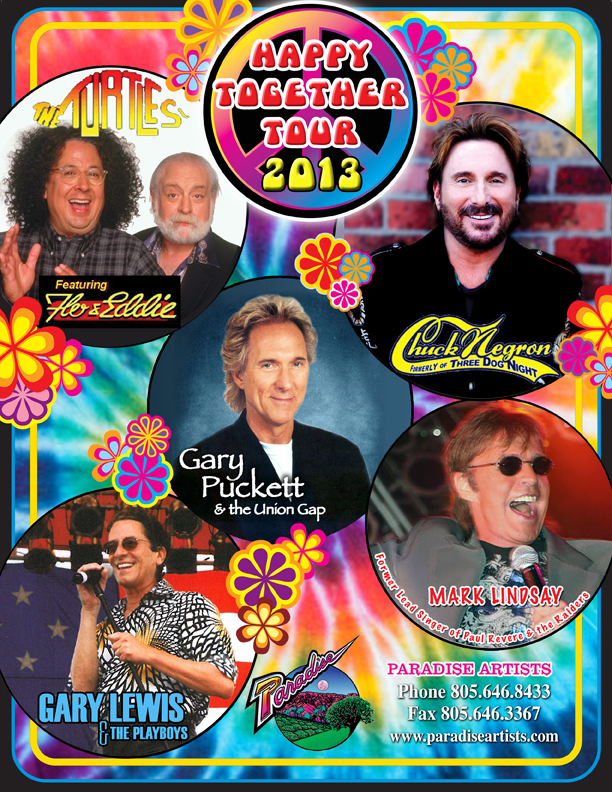
If you go to a Turtles concert now as part of the “Happy Together” concert you’ll see –and I hope somebody out there does this summer — it’s our 7th year. We’ve picked up more and more shows every year and this summer is just going to be ridiculous as far as the amount of cities that we’re going to and the shows themselves … But you’ll notice at least in our portion of the show (I don’t care about anybody else), there is a huge sense of humor. We don’t get that much time to show it off in between hits because we have to get on with the show, but we show people that we still had a sense of humor, that we still look at this career of ours as just something that fell from outer space and not something we earned like a bunch of arrogant pricks.
There are people out there that are doing music in their 70s and 80s that charge you $350 a ticket (I won’t name names) and they come out, they do their hits, they do their happy little show, they won’t talk to the other members at all, they all come in separate limos and when the show is over they all go back to their little Canyon homes maybe $10 million richer — but let me tell you something. If you got to spend that kind of money to watch a bunch of guys in flannel shirts pretend they had a good time once in the Canyon someplace and you’re being forced to absorb that now … well, if you think that’s fun, then your idea of music in a live sense is severely lacking. And I recommend that you go out and see a show where you can smile through it — where you’re not going “Jesus, I can’t believe I paid for this.”
Ultimately you’re a lot better off just buying the CD and putting your headphones on. If you want the concert experience, do that. Don’t spend the $350.
VENTRELLA: Absolutely.
KAYLAN: We’ve always contended that if you see us having fun on stage, you’ll have fun in your seats. That’s one of the largest reasons that we don’t do sound checks, that we don’t do rehearsals. Everybody’s flying in to our first show which is the Hard Rock Casino in Biloxi on June 8th and I’m coming in the day of the show. I don’t want to rehearse. I don’t want to see the room first. I don’t want to meet anybody that I’m working with. That keeps it new for me.
I’ve been doing this for fifty years. When people ask “Why do you even bother?” “Is there anything new for you?” “Is there anything left for you?” “Are you bored silly doing the same show for forty-seven years?” I tell them, “No, because quite frankly, I don’t know what’s going to happen. I really don’t, and that’s the way I want it. It’s the only edge I’ve got left. It’s the only thing that keeps me on my toes. I don’t want to be bored. I want to have as much fun every night as I hope the people in the audience have, because for most of them, that’s the only chance in their lifetimes to see us.
VENTRELLA: You’re doing a huge tour this summer. Are you meeting people afterwards and signing the book?
KAYLAN: I will pre-sign the book. Meeting people is difficult to deal with because we’ve got hundreds of miles to go to the next show and we’re leaving right after the show ends. It’s not because I’m anti-social. But I’ll pre-sign all that stuff; records too, and CDs.
We’re also selling a box set of 45s this summer which should be a very interesting experience to those vinyl lovers out there. For those who aren’t quite sure if their turntables still work, we’re including a special Turtles/Flo and Eddie spindle so you can play the 45s on your existing record player. But that’s the kind of guys we are.
VENTRELLA: Let’s go back to talk about “The Battle of the Bands” which is one of my favorite albums. I remember getting that and at first being confused because I thought it really was a bunch of different bands — but I was twelve. That was your first album that really was dedicated to being an album as opposed to a collection of singles and songs. And you had quite a few hits on there and a remake of “Chicken Little Was Right” which was one of those B sides you talked about… I think that album has stood up over the years.
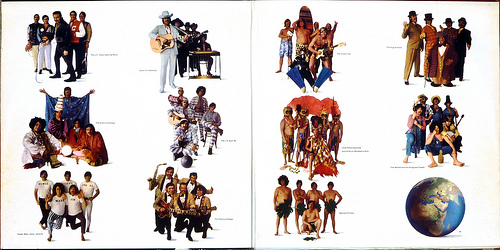
KAYLAN: That was our only concept album. I don’t know that it did us any good but you’re right — we did have a couple of big hits off it. It was a lot of fun and if you paid attention to it and got the fact that there we were on the inside of the record dressing up like twelve different groups and sounding like twelve different groups … I’m not sure that the public understood it but I’ll tell you, Zappa did.
VENTRELLA: I also want to talk about a couple other of your old songs before we discuss Zappa. “Sound Asleep” — you talked about that a bit in the book about how much work went into it. That’s kind of like your “Good Vibrations.” I’ve got to tell you how happy I was when I finally found a stereo version back in the late 70s because it just sounds so much better. Are you disappointed that didn’t do better? To me, that should have been another of your huge hits.
KAYLAN: I don’t think so. I think any time you put a bunch of clucking chickens and saws and trees falling from speaker to speaker — which in stereo you’ve got to admit makes a big difference as opposed to the mono version of “Sound Asleep” which is “What’s that? What is that noise? Is that a frog? Is that a ratchet? I can’t tell…” — so there are a lot of sounds. We weren’t consciously trying to do anything like “Good Vibrations.” If anything, we wanted to create a sort of a little mini rock opera but we didn’t know what the hell we were doing.
It was the first time we didn’t have any studio supervision. We had no one telling us what we could do or couldn’t do. So we made a record as if we were doing it for ourselves. We didn’t care if it worked. All we were trying to say to White Whale records was “We’re sick and tired of your corporate producers. We’re going to do it ourselves and if you don’t like it, you can bring in somebody else and we’ll try him out.” They didn’t take us seriously so we gave them “Sound Asleep” and it had a logo on it at the time saying we were the producers and all of a sudden, after so many years, they were forced to buy in to whatever we gave them.
It turned out well eventually but it took a minute for us to get our sea legs. We wanted to be The Beatles so we became Blimp. We were just a bunch of kids and we didn’t know what we were doing. By the time we figured it out, we got it to work in our favor. We had three separate periods of hit records during the years that were separated by periods of anxiety. Every group goes through it. That’s when you need a sense of humor.
VENTRELLA: What do you think is your most under-appreciated Turtles song that you wish had gotten more attention?
KAYLAN: “She’s My Girl.”
VENTRELLA: That’s a great song. Another one that changes tempo and does a lot of interesting things in stereo.
KAYLAN: “Interesting” was the idea. We were interesting, but the label would give us things like “Who Would Ever Think That I Would Marry Margaret.” And I’d say “Wait a minute; I’ve got as much sense of humor as the next guy but I will not throw my work out into the street like that.” That’s just crap. Even listening to it all these years later. That was the most bullshit record I have ever been a part of. I wasn’t wrong.
VENTRELLA: And it wasn’t a hit, either.
KAYLAN: That’s why we left the company. That’s what it meant to us. They had us by the short and curlies but they were never the bosses of us. And we walked. And we gave them “Lady-O” — one final song — and we knew it wasn’t going to chart. I just wanted it to be the last thing we said. It had a luscious arrangement. And that was our last record. It was posthumous, but we didn’t care.
VENTRELLA: One of the things I liked about the book is that you name names. You’re not afraid to name groupies, ex-wives, friends, enemies — Anyone objected to that yet?
KAYLAN: Oh yeah, everybody! What are they going to do? I mean, what is their recourse here? Are you going to take me to court? Are you really going to call attention to yourself by taking me to court after all this time?
Ex-wives will come to me and say “What are you thinking?” First of all, they’re surprised to hear that they’re in the book. I would say to them, “What do you mean you’re surprised? I married you. What, I’m not going to talk about it?” That would be dumb. Obviously, you’re in the book. “But I was a naughty person back then!” Oh, were you? Well, own it. “But my kids are grown up and they’re going to read that!” Well, Honey, they’ll realize that their mom had a sex life and it’s better than they thought. And she was cool way back when. So I think that’s a credit to you. And besides, you had my name and according to my lawyer, anybody who had my name? Fair game, baby.
VENTRELLA: And then you went on to work with Frank Zappa of all people. That was very successful at least in my mind. You called him a “father figure” in the book, which kind of surprised me but I can understand. I mean, he wasn’t that much older than you but he had that sort of authoritarian but yet gentle nature about him. Am I reading too much into that?
KAYLAN: Well no, you’re absolutely right. He was a very gentle man and he did not threaten. He was not that kind of a guy. He was very soft-spoken. Any criticism he gave you was well-intentioned. He was never mean for the sake of it. He was not at all that sort of authoritarian. He was just a perfectionist. This was his music and this was his band, and we had to understand when we joined Zappa that you rented yourself out, body and soul.
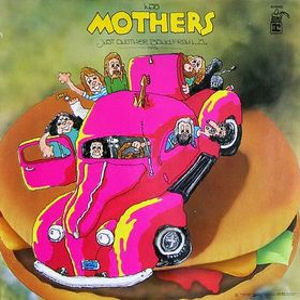
We knew it. The earlier Mothers should have known it. They were still bitching and moaning that they hadn’t gotten paid for their recordings. Well, get used to it, boy. You’re signing off.
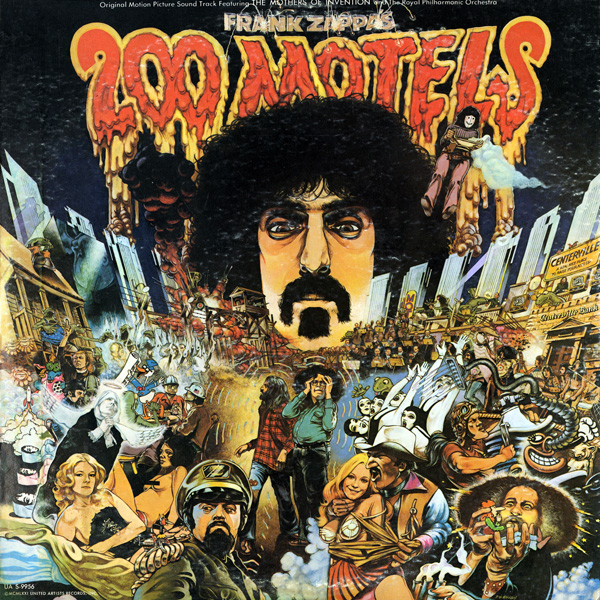
And part of Frank’s genius was to take the folklore of the band, take whatever he heard and take whatever he saw around him — in the dressing room, backstage, on stage — and turn it into script. He’d turn it into stuff that he would recycle. Just like the words from “200 Motels” that came back to haunt Jeff Simmons. All of his words eventually were recycled into script that became a very good part of the show half of the time. It was a 50/50 proposition. Once Frank heard it, it never went away. And you stood a real good chance of having your words shoved back into your face. We were in no position to regret it — we said it! And so you had to own it and it was fun! It created a great bond between all of us. We were a band! We could share that kind of thing. It was fun.
VENTRELLA: Was “200 Motels” mostly scripted or was there any improvisation? Because it feels like it’s improvised in various parts.
KAYLAN: It truly wasn’t improvised. It was tight little script.
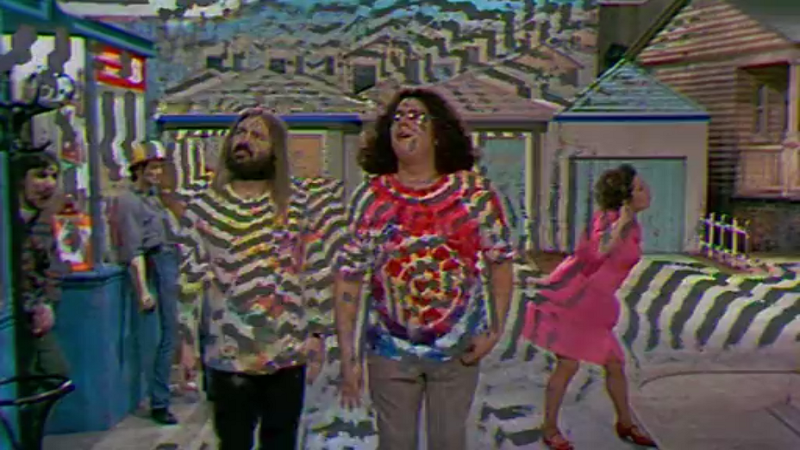
We never shot the ending, though, as I pointed out. There weren’t very many chances at that stage to improvise. The improvisation had all been done on stage or in the buses or the dressing rooms. The entire story of “200 Motels” and indeed the ending that never got filmed (which turned out to be the end of the “Fillmore” album) cohesively made that one total groupie story. “Do You Like My New Car” all the way to the end. There was the “Penis Dimension” stuff and taking it into the penismobile which was designed and totally functional and ready for scripting and we never got around to doing it because we ran out of time. Frank then composed that finale very very quickly. We learned it in a day and we shot it the same day. That was the end of the movie. We had no choice.
They threw us out of Pinewood Studios and we crossed our fingers and hoped they could edit it into something. You tell me if it worked.
VENTRELLA: I’ve seen it probably about three times, although admittedly not in the past twenty years or so. When you do “Strictly Genteel” at the end, was that scripted as well? Because it certainly doesn’t sound like it.
KAYLAN: What particular part are you talking about?
VENTRELLA: When you say “See that man over there? He’s making me do all this. Frank’s making me do all this!”
KAYLAN: No, that was not scripted. (laughs) I thought my mike was off! I thought the only guy that could hear me was in the recording room. I didn’t think Frank would ever listen to it. In fact, I’m positive he didn’t listen to it for a very long time. I don’t know how long it took him to get to that bit but I know that he was pondering what he was going to do for the ending and he really didn’t have it. I don’t think he had even opened up that mike yet; I don’t think he had found that track.
But that sort of pulled it all together at the end and turned it into a Mothers of Invention thing again. Why are we out here? When do we get paid? You know, it was just repeating what Jimmy Carl Black had been saying. And that’s what Frank wanted. That was the theme of the movie. Touring can make you crazy.
Look at me! Here it is, all those many years later — Frank is no longer with us, but I’m still on the road.
VENTRELLA: One of the charms about Zappa is that his music is so tremendously tight and yet at the same time it almost feels as if they’re making it up as they go along. You take something like “Billy the Mountain” which seems to be just telling a story and then all of a sudden without a cue, things change and it’s obviously very well practiced. Right?
KAYLAN: Well, you know, we worked twelve hours a day every day. We did not take holidays off. We didn’t do that. We would work as long as it took to get it absolutely perfect.
Now, “absolutely perfect” to Frank meant on any given night, particularly on “Billy the Mountain”, we had to figure out where we were because we had to throw in an awful lot of local references. So we had to learn the cities where we were, what the local hot spots were, where the kids went to make out, what the supermarket chain was, so we could throw names in that were familiar to a crowd in San Antonio or Minneapolis or Shreveport or whatever and personalize the show a little bit. It made for a lot better audience experience and it made Frank laugh! If you read the book, you know that’s the key — making Frank laugh was always the best thing we could do.
VENTRELLA: Absolutely. Then you had that terrible European tour where Frank got hurt and there was the whole “smoke on the water” situation. After that was over and he recovered, he redid his band and he did not ask you back. Was that because he was trying to go in a different direction or do you think there was something else there?
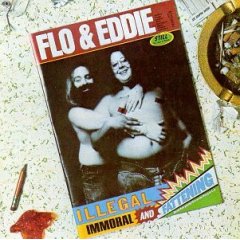
KAYLAN: By the time Frank reformed anything, we had gone on and signed our deal with Warner Brothers and taken the old band with us. There was no hope of reforming Frank’s band because Flo and Eddie’s drummer was Aynsley. Flo and Eddie’s keyboard player was Donnie. Flo and Eddie’s bass player was Pons. That was the band!
We were the guys. And they were tired of waiting around to hear from the Zappa office just like Mark and I were. We didn’t hear from anybody there, Frank included, for eight months. I don’t know about you, but I can’t live without knowing where my next meal is coming from for eight months, just waiting by the telephone and hoping somebody would tell me we’re a group again.
I knew it wasn’t going to happen and the main reason it didn’t happen was that we had been a tight-knit little bunch and it cost Frank dearly. In his time of his recuperation, the only person who had his ear was the lovely Miss Gail Zappa. She put it into his ear that it wasn’t a really good idea to get close to a group anyway because that would only be a heartache situation somewhere down the line and it was better off not having the Mothers at all. It would be better if he was just Zappa for a while.
I know that later we were certainly approached three separate times through members of Zappa but I can’t do that. I have been my own guy for a lot of years. Nobody wants to be in a band named Kaylan. And I certainly wouldn’t! I pity the fool who would do that, because I know what the situation was at that point, when you’re somebody else’s vocalist. It’s different. It will never be a group any more. I had been spoiled as far as working with Zappa was concerned. If I couldn’t have it that way, I didn’t want it any other way. Gail had ways of making sure that there would be a distance between us instead of the closeness we had.
VENTRELLA: Speaking of band names, you ended up with Flo and Eddie, which you were not very happy with as far as identification, but it was too late to change it at that point, right?
KAYLAN: What would you do?
VENTRELLA: I don’t know!
KAYLAN: Well, Warner Brothers thought it was a brand name worth keeping. By the time we got to Columbia, they felt the same way. It was years and years later. We had a lot of FM radio cred. We were huge on college. When you look at today’s market, for instance, and see a band with a huge college following and it still works — like Yo Lo Tengo — they can stick around for fifteen or twenty years and only appeal to college audiences, then you’ve got something. That is gold. I see those guys work it and it’s amazing to me.
VENTRELLA: “Moving Targets” came out when I was in college. I was the program director of my college radio station, and I must have played “Keep it Warm” every time I was on the air.
KAYLAN: Thank you! And you played the “Keep it Warm” from the album with all the real verses in it, not the truncated bullshit 45 that Columbia released where they took out all the good verses, made the most uncomfortable edits I have ever heard, did it on their own, didn’t call me, just did it, and it was really really bad. They didn’t give us a fighting chance.
VENTRELLA: Well, I’m glad I’ve never heard that version.
KAYLAN: Well, I’m glad it made it to FM radio. It still gets played on FM radio. I see who plays it; I see who downloads it. We do much better now than we have in the last decade or two.
VENTRELLA: “Guns” was another of my favorites off that album that I’d play a lot.
KAYLAN: Great song! Credit where credit is due — Jim Pons had a lot to do with that song. And Graeme “Shirley” Strachan from Skyhooks was wonderful. Australian dude, really helped on that.
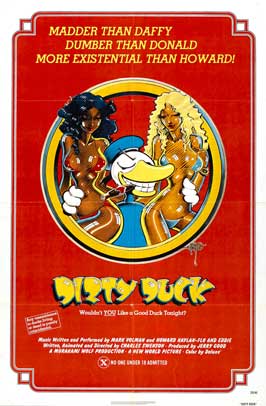
VENTRELLA: In the meantime, you did a film called “Dirty Duck.” I remember seeing that when I was in college, too, and I must say I was not impressed. That one looked improvised.
KAYLAN: That one kind of was improvised. We had a very loose script, and the guy who directed it knew what he wanted to do and knew what the characters were going to look like. We told him from the get-go, “You’re out of your mind. There’s no way you’re going to make money with this!” He said, “I’m cool; I don’t care.”
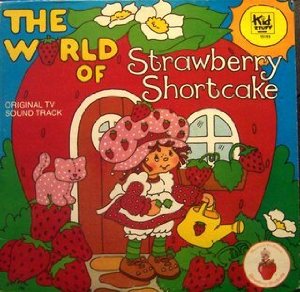
This is the same guy who, within the production of “200 Motels” made everyone say “This guy is crazy” and then he came back with Strawberry Shortcake, thank you very much. So they weren’t that nuts.
This was a flying shot in hell. It was a personal flavor of love for Chuck Swenson, the guy who did it. Now, a fine artist. You can see his stuff online now. He is the artiste, man. He doesn’t know from cartoons any more. But at the time, that’s what he wanted to do. He knew what those voices were going to sound like and knew Mark and me from the movie so he knew exactly what kind of characters he could create for us. Me, once again the straight man, the Louie Prima of the group, being Williard Isenbaum the insurance salesman and Mark being The Duck, as he is in life. He’s sort of my real life nemesis! It was closer to his personality than he wanted to hear …
A lot of those throw-away lines whether they were to your liking at the time or not — well, I dare you to go back and look at that movie now and not get a few really good laughs because there is some pretty cool shit in there. So I’m pretty proud of the movie that would up as “Down and Dirty Duck” or whatever it was called in your X-rated theater.
But I do know that the executive producer of the movie was Roger Corman, who I was thrilled to meet and work with over the course of this thing. He’s a wonderful man and I love and admire him dearly. But he had no idea what to do with this picture. He had it opening up in XXX theaters and downtowns all over America next to XXX porno movies because he didn’t know how to sell it.
VENTRELLA: We saw it as a midnight showing at our college.
KAYLAN: Instant cult. If it has the name “Corman” on it or it says “New World Pictures” in it, you know you’re in for a night of thrills. I’m always thrilled to work with new directors, new producers, people I haven’t worked with, just to see how they work. And I didn’t even mention Roger Corman in the book at all, but I’ve got to put him right up there with one of the big influences on my life. Getting to work with him was stellar! There’s an extra bonus story that isn’t in SHELL SHOCKED that I’m just now recalling for my own self.
VENTRELLA: I’ve got an exclusive!
KAYLAN: That’s a blogosphere extra.
VENTRELLA: Thank you. Now, Strawberry Shortcake is the biggest surprise in your book. Well, maybe the White House story. But the fact that you were writing the songs for Strawberry Shortcake. That must have been a nice little paycheck.
KAYLAN: It was glorious! Truly. It wasn’t just the records. It was a TV show and they ran that thing into the ground, and then the album got very, very popular. If you grew up in the ’80s, you know those songs. You were forced, especially if you were a little girl, to listen to that shit. I know an entire generation of girls that grew up on that who still kind of melt when you sing those words. I guess I can be a “father complex guy” for a night; what’s your pleasure?
VENTRELLA: The idea that the man who sang “Penis Dimension” was doing “Strawberry Shortcake” was kind of interesting …
KAYLAN: You got to wear a lot of hats in this business, Michael!
VENTRELLA: Of course! Of all the people you’ve met — you have some great stories in the book about Lennon and Hendrix — and a lot of sad losses, too, with Nilsson and Bolan and Zappa … Is there anyone you wish you could have worked with that you didn’t?
KAYLAN: George Harrison. I never even met George Harrison. It’s just bizarre. It would have happened had I not been carted off from that party on Blue Jay Way that night in 1966. I could see him —
VENTRELLA: Through the window, yes —
KAYLAN: I could have waved had I not been handcuffed. But that was as close as I ever got to George. So I never was given the pleasure of meeting the man. I would have flown myself anywhere in the world to put my voice on his records.
VENTRELLA: The Hendrix story is one of my favorites but you’ve regaled that a couple of times in other interviews. Any other stories you’ve thought of since the book got out that you want to share?
KAYLAN: No, I’ve decided I’m done! I’m not going to do any more stories even if I think about them even if encouraged to do like you just did moments ago. I’m done, I did it. I’ve had a million nights and a million days like that, with short little brushes with danger. I never told my little happy Phil Spector story about him and his posse coming to see us at the Hard Rock Hotel — wasn’t really a hotel, it’s just this dump on Sunset Boulevard. Whatever they call it. Cafe! And he brought his bodyguards and he had this upstairs private room and there were guns on the table. It was outrageous! And we’re only talking maybe seven, eight years ago. Some of these things you don’t even want to talk about. I’m more worried about what Phil Spector can still do to me than I am what names I’ve actually called out in the book.
VENTRELLA: Got it. Understood. Now, the best news is that you eventually got the rights to the Turtles name and catalog, which has to be one of the best investments ever. You’re doing the “Happy Together” tour which also is very successful. Do you have any other plans? Are you ever going to record a new album?
KAYLAN: No, I don’t have any other plans and that’s the best part of my life. If I had plans, I’d feel like I was back on an itinerary. Except for the three months in summer, I have no plans.
We’ll see what happens ultimately but my plan is to finish this summer. I’m writing another book during the course of the summer.
We’re taking a bunch of interns with us like we did last year to handle the equipment, to do the lights, tour bus, all that crap with us. They’re from Belmont University. They pay the tuition, they come out for the summer and they get to go on the road with the Happy Together tour. It’s a very bizarre thing we do that I’m not sure anyone has ever done before. It’s a book unto itself, actually. Nonetheless, that’s what makes touring fun for me in that I get to involve myself in the creation of something else and then I do a show! Then I get back into my fantasy world …
I don’t know yet if I’m going to be working on an autobiography or rather a biography for somebody else that I’m close to, or was close to, and was mentioned in the book, or whether it will be a work of fiction. I don’t know if it’s going to work. But I’m doing it just to keep myself busy. I think that’s the most important thing. If you can just keep yourself busy then you can hang out for the rest of your life doing what you like.
VENTRELLA: Well, you’re a good writer. You were obviously the smart kid in your school so I don’t think you’ll have any problem. I’m looking forward to reading it. I’m also looking forward to seeing you when you play at Jim Thorpe, Pennsylvania, which is near me. I plan on being there this summer, so I’ll wave to you.
KAYLAN: Where is that? Where the hell is Jim Thorpe? I didn’t know there was a town named that.
VENTRELLA: Isn’t that amazing? It’s a place called Penn’s Peak.
KAYLAN: How big is this town?
VENTRELLA: It’s very small but it’s a big tourist area — I don’t live in that particular town, but it’s pretty central to other areas and lots of colleges and you might have a good crowd!
KAYLAN: That sounds great! It’s a really good tour this summer. We’re often judged by the people we bring in with us, for some reason that’s OK with me. I’ll take credit or blame for the lineup this year, because I think it’s really strong. There are acts that people haven’t seen in a long long time, myself included. I’m thrilled to be touring with a bunch of people that I have respect for. These are the guys that did the singing. This isn’t some rip-off thing. I’m pleased to always be associated with this particular tour. It has the “Happy Together” Stamp of Approval as far as I’m concerned because if it says “Happy Together” without my Stamp of Approval, I’ll fucking sue ya.
VENTRELLA: And with that, I’ll thank you very much for the interview unless you have any final comments you want to make.
KAYLAN: Done, sir. Done, done done.
VENTRELLA: I really appreciate it. I’ve been a fan of yours for so long and so glad that you were willing to talk to me. Thank you very much.
Donna Galanti interviews me on her blog this week. We discuss the new Fortannis book, the best writing advice I’ve ever received, and the Monkees. I think it’s an interesting read and I hope you will, too!
Adventure! Drama! Mystery! Humor! It’s all here in the newest TALES OF FORTANNIS anthology.
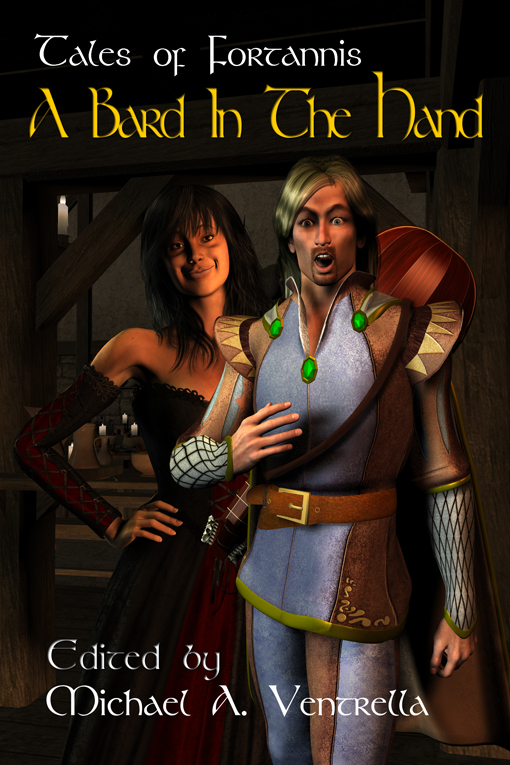
A BARD IN THE HAND is the second book in this series, featuring stories set in the world of my novels. The ebook version is now available, soon to be followed by the paperback, nook, and kindle versions.
Here are the cover blurbs:
“Magic. Knights. Werewolves. Doppelgangers. Elves. There’s no telling what will pop up in Michael A. Ventrella’s Fortannis fantasy series when he invites other writers to play in his sandbox. No need to wait for any ‘extended editions.’ These stories are good to go now.” – Daniel M. Kimmel, author of the Hugo-nominated JAR JAR BINKS MUST DIE and SHH! IT’S A SECRET.
“A very fun anthology of tales in a world both expected and very different indeed! In A BARD IN THE HAND, Michael Ventrella and others revisit the world of Fortannis and emerge with tales to astound, amuse, and bemuse; here is sword-and-sorcery to stand well next to that of Leiber and Moorcock, and ordinary people swept up into events far larger than they which can still be addressed with some common sense and cleverness. A young woman makes a choice, and faces the consequences of choice and the price of learning, while another duels in darkness for the soul of a child, and an old man recounts an adventure of his youth that kindles a spark in those who listen. A fun book, well worth reading!” – Ryk Spoor, author of PHOENIX RISING and GRAND CENTRAL ARENA.
“Curl up in your favorite chair with your favorite beverage and get ready for adventure, action and derring-do—it’s all here!” – Gail Z Martin, author of ICE FORGED
This edition features the following tales:
“The Mystery of the Black-Bearded Dwarf” by Michael A. Ventrella: Terin and his fellow squires find themselves in dwarven lands, having to solve a murder where everyone has a motive and an alibi. Can they figure out whodunnit and prevent the dwarven clans from going to war?
“Embarrassing Relations” by Bernie Mojzes and Bob Norwicke: After defending Ashbury from an unspeakable horror from beyond time and space, Maris Goselin finds herself with a new assignment: help the Duke avoid spending quality time with a gibbering out-of-town relative. It seems easy, but Maris soon realizes that although the relative may be insane, insanity is relative, and sometimes making a living has life-threatening consequences.
“Knight’s Gambit” by Tera Fulbright: A newly ordained Knight learns that some things really are black and white.
“Curso and the Perilous Purple Pixie Problem” by Roy C. Booth and Brian Woods: Curso and his friends find themselves traveling to a mysterious cave in order to save a pixie who may be more trouble than she’s worth.
“A Hero of Padrin’s Hold” by Mike Strauss: Sometimes a hero does things that are necessary, and sometimes it is best when no one knows.
“The Golden Gifts” by Laurel Anne Hill: Artha, a biata gifted in magic, must outwit a powerful necromancer. Only a few hours to complete this task remain. If Artha succeeds, her brother’s dying daughter will rest in peace forever. Failure, however, will doom Artha and her beloved young niece to the ranks of the undead.
“A Hero is Born” by Davey Beauchamp: A young man finds himself traveling with a mysterious and possibly crazy bard — which leads him meet a group of villains out to awaken a long-asleep powerful creature. If only a hero would arrive …
“The Vacarran Corsair” by Jesse Grabowski: The streets of Dockside were never the safest of places, even in broad daylight, and even for a skilled pirate. This is a place for homeless children, wealthy and ruthless thieves, and corruption. Here, even the heart of a pirate can change. Loss of innocence can sometimes remove thoughts of plunder and loot … sometimes.
“The Chandler’s Tale” by Henry Hart: Pursued by monsters, a boy becomes lost in the elven wood where he learns that some things are worth dying for.
“Beyond the Bitter River” by Jon Cory: After being banished from the kingdom, Sarlon races for the border, pursued by the king’s guards. His only hope lies in a mysterious elven girl who has taught herself how to do magic … poorly.
“Dreamed Tortures” by Mark Mensch: Nigel finds himself in the home of his long lost love, Kayleigh –however not everything is as it seems. All actions have consequences and the people he relieved of their valuable artifact have some type of payment in mind.
There is a successful series of anthologies which has as its thread twisted endings and surprises.
Anyone who has read my stories know that this is a perfect fit for me!
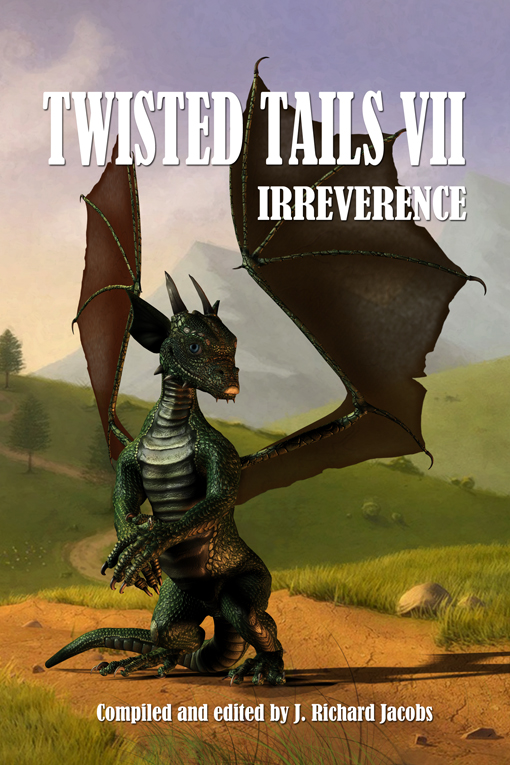
The series is called TWISTED TAILS and each cover features a dragon since it is published by Double Dragon books. I have a story in the latest edition, just released! My story is called “The Jesus Secret” in which the discovery of a new Dead Sea Scroll provides new facts about Jesus’ life which the Catholic Church wants to keep secret. And, of course, there’s a twist.
The series is edited by J. Richard Jacobs. This volume has as its connecting theme “Irreverence.” He explain it thusly:
Irreverence is not limited to what many people think — something to do with religion, although that can be a large part of it. Nope, it is a big word with broad meaning. Let me give you a few examples of how it is used:
Irreverent is the adjective from which the noun “irreverence” comes.
Its basic meaning is “disrespectful”. Now you have an idea of just how broad it can be. I’ll wager you can think of a lot of ways to be disrespectful. There is a whole world of irreverence in the pot. Our authors gleefully dip their pens into that pot and scribble out their twisted views of this world-or other worlds.
Words that can be used in place of irreverent (synonyms) are: aweless, cheeky, cocky, contemptuous, crusty, derisive, flip, flippant, fresh, iconoclastic, impertinent, impious, impudent, insolent, irreverential, mocking, out-of-line, profane, rude, sacrilegious, sassy, saucy, tongue-in-cheek, ungodly, unhallowed, unholy and so forth. As you can readily see, the majority of the Twisted Tails authors are world class representatives of the word in all its specific meanings; not just a couple.
I have gathered together several cheeky authors whose impiety is well known and asked them to grace these pages with words of insolence for your reading pleasure. As always, there is no genre restriction. Here you’ll find Science Fiction, Fantasy, Mystery, Thrill-a-minute-even Mainstream. The only common element here is Irreverence. The other big deal about the Twisted Tails series that is a must are unexpected endings and sheer quality of writing. Each author brings his/her unique style and voice to the page, but to get to the page the quality of writing demanded in the Twisted Tails series of anthologies had to have been there or it would have been a “no-go”. Just another rejection slip to add to the stack in an author’s dark corner. Have fun while you cringe at their out-of-line talent at twisting irreverent tales and we hope to see you again-should there be a next time. I have it on good authority that there probably will be a next time, so keep a watch for it.
Here’s the Table of Contents:
1. DEAD BABIES by Jay Greenstein
2. THE JESUS SECRET by Michael A. Ventrella
3. LUCKY CHARLIE’S ESCAPE by Margret Treiber
4. BLOOD RED by Dave Kuzminski
5. PERPETUAL STARLIT NIGHTby Michael D. Smith
6. BEYOND THE REALMS OF DEATH by J. Malcolm Stewart
7. DOOMSDAY CLUB by John Klawitter
8. WINNING IS FOR THE LOSER by J. Richard Jacobs
9. SHOCK THERAPY by Sam Bellotto Jr.
10. INTERVENTION by Eugen Bacon
11. IF TIME PERMITS by Joe Occhipinti
12. THE PROBLEM ON P3 by J. Richard Jacobs
13. JUMPING AT SHADOWS by Joe Powers
14. LADIES OF THE FOUNTAIN by Biff Mitchell
15. TWO GUYS MEET IN A BAR by Margret Treiber
16. COLLECTOR by J. Richard Jacobs
It’s available in every format you can imagine (paperback, ebook, kindle, nook…) Check it out! Get your copy today and let me know what you think of my story!
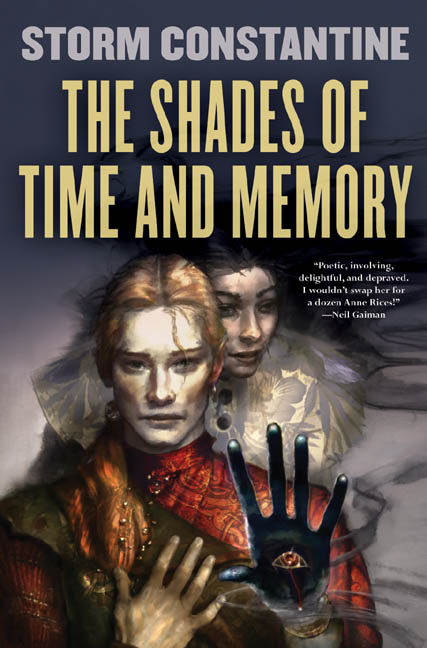
MICHAEL A. VENTRELLA: I’m pleased to be interviewing author Storm Constantine. Storm’s work has covered many genres from fantasy, dark fantasy and horror to science fiction and slipstream. She has so far written twenty-three novels, and currently has most of her short stories collected in four Immanion Press editions.
Let’s start by discussing the re-release of SEA DRAGON HEIR. There is always an urge to rewrite older materials when it gets re-released; what has changed with this edition?
STORM CONSTANTINE: My urge to tinker with old works is simply that some were written when I was much younger and certain incompetencies in the writing and structure of the stories were just too much to ignore. Also, in some cases, publishers had asked for sections to be removed, simply because they wanted a shorter book. When I came to republish the books myself, I could restore them to my original vision. As I’m an editor as well as a writer, it was impossible for me to keep my hands off revising and refining!
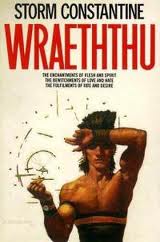
I don’t think the Wraeththu books (the original version of the trilogy) were edited as well as they could have been. I was such a fledgling writer then, and when I returned to the books fifteen years later to republish them I was astonished really at what I’d been allowed to get away with, in terms of inconsistencies, plot holes, wobbly structure, and so on. It was glaringly obvious to me where the stories could be successfully reinforced. Some things happened ‘off stage’ that shouldn’t have. The ending of ‘Enchantments of Flesh and Spirit’ was a prime example of that. I added a couple of extra chapters to the revised edition to ‘show rather than tell’ things that occurred.
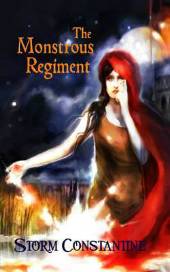
I also re-edited THE MONSTROUS REGIMENT quite heavily, as I’d never been happy with that book. The sequel, ALEPH, had technical errors to be fixed, but I didn’t do that much to it other than that.
As the reissues of my back catalogue progressed, there was less for me to do, because I’d been improving as a writer through those years of creating the original books. By the time I got back to ‘The Magravandias Trilogy’, all I was correcting was typos. I was happy with that trilogy as it was first written.
VENTRELLA: What projects can we expect from you next?
CONSTANTINE: I have so many notes written down for both short stories and novels, but my worst obstacle to realizing them now is time. I have sent a couple of stories off to anthologies, but as I’ve not heard back from the editors yet, don’t want to say which they are, in case my stories aren’t suitable for them. I want to finish off the other four or so I’ve got half written, because it’s always handy to have unsold stories available, should I be approached by an editor. Also I simply want to get the ideas down.
Novelwise, there are several books I could write, but it’s knowing which to do first. I’ve started work on the third volume of the ‘unofficial’ third Wraeththu trilogy, which is a series of novellas set in Alba Sulh. English Wraeththu. The first two were quite emotionally grim stories about betrayal and obsession, but the third has a different tone – it just happens to have a couple of the characters in it from the first books. I want this one to be a ghost story, and already have a lot of disturbing images for it that are just pure, enjoyable, supernatural scares. There will be less angsting in this book!
Aside from that, I have notes for at least half a dozen novels that are all unconnected, some of them with chapters already written. My plan is to finish the short stories, finish the Wraeththu ghost story, then take a good long look at what I have in my ‘ideas’ folder on the computer. I just feel like I need to clear the decks before venturing into territories new.
Nonfiction-wise I’m working on some ideas with a friend for a couple of books concerning magical path-workings/visualisations. They will just be fun to do; sit down together and invent the stories for them. The difficult part will be for us to get together, since my friend is very busy and quite often off on research trips around the world. I hope to get at least one of these books out this year, though.
VENTRELLA: How did Immanion Press come to be?
CONSTANTINE: When I sold The Wraeththu Histories (the second trilogy) to TOR in America, I wished that the original trilogy had still been available in the UK. This coincided with the advent of Print of Demand publishing, which meant that it was possible for small presses to bring out books at a fraction of the price of traditional publishing. So initially, Immanion Press was set up to coincide with the Grissecon convention I ran in 2003, where I relaunched ‘The Wraeththu Chronicles’ As I was let down in the UK by a publisher who initially wanted to publish the Histories, I decided I might as well bring out my new Wraeththu trilogy in the UK too. From there came the idea to reissue all of my long unavailable back catalogue titles. Then it just grew from there. Other writers asked me about reissuing some of their out of print titles too, and I had a rather altruistic urge to help new writers get published as well. Unfortunately, the latter idea didn’t really survive contact with reality. I found that it’s incredibly difficult to sell the work of new fiction authors, so I’ve had to cut back on that dramatically.
However, the non fiction side of things does well. People buy books on certain subjects irrespective of who the author is, or what they might have written before. Generally speaking, they just want a book on a particular topic, rather than to seek a name they already know. Megalithica Books, the nonfiction imprint, came about because a friend of mine, Taylor Ellwood, was interested in getting work out through Immanion. He saw a way to expand that side of things and eventually became the manager of the non fiction line.
VENTRELLA: Many established authors are now self-publishing their back catalogues themselves, avoiding the big publishers completely. What are the disadvantages of doing so?
None really, since the big publishers are largely not interested in doing this job for us. OK, we’re not going to have big publicity budgets at our disposal, and most presses (like mine) run on a shoe string. We can’t afford to hire staff, so have to do everything ourselves, or work with volunteers. In my case I simply don’t have enough time to be a full time publicity manager as well as everything else.
For established authors, it’s great to see their often long unavailable works back in print. You just have to make sure you have a fairly active online presence to help publicize your work, and let people know where they can buy it.
Is Immanion’s goal mostly to allow for established authors to reprint old works or are you actively looking for exciting new talent as well?
As I said above, the new author experiment didn’t go too well. Sadly, it just lost me a lot of money. We’re moving into ebooks more now, though, which have far fewer overheads, so perhaps in that medium I can still endorse new writers.
VENTRELLA: Has it been successful?
CONSTANTINE: Well, we’ve been around for 10 years this year, so we’re not doing too badly. The downside of it is that it eats into my working day like a pack of starving wolves. That’s another reason I’ve had to downsize the fiction line. I was in the position over the past five years or so where my workload had grown so much editing other people I had no time at all, and no energy, for my own writing. That had to stop. So I started to delegate more, to a fabulous woman, Sharon Sant, who volunteered to do editing for me. We’re publishing her first novel RUNNERS in June. I might not be able to pay a salary to people, but I can help out in other ways.
VENTRELLA: Starting authors often mistakenly think they can do this as well; they self-publish and then go nowhere. What advice do you have for beginning writers concerning getting published?
CONSTANTINE: One of the biggest downsides of everyone being able to self-publish easily, either through ebook or printed copies, is that they can do so without their work ever being looked at by a critical pair of eyes, whether that’s a professional editor or a friend who’s prepared to be honest. Editing is a very different job to writing. Even though I edit my own work to a degree, I still get someone else to do so as well. Writers are too close to their own work. We know everything that’s going on, but the readers don’t, and sometimes we don’t put enough in, or we over-write and things have to be trimmed back. The more people who can read a book before publication, the better. You have more chance of errors being found.
Even though there are now millions more people producing books of some format or another, sadly a lot of it is let down and diminished by the fact the writing itself isn’t up to scratch, and the writers don’t know their craft.
When I ran a creative writing class, I generally had to spend the first term every year teaching the students how to write. They knew nothing of grammar, syntax, spelling, punctuation or narrative structure, (the writer’s essential tool box), not to mention how to create credible characters, a compelling plot and realistic dialogue. They just had an idea they wanted to write stories or a novel, and didn’t even think it involved any particular skills other than the storytelling urge. From what I’ve seen there is a hell of lot of new writers actually publishing works with all of those aforementioned aspects being of poor quality.
So, first advice – hone your writing skills, learn your craft, share your work with other writers to get constructive criticism. Your Mom saying, ‘yes, that’s very nice, dear’, is no use to a writer. You want and need people to tear your work apart really. You don’t have to agree with every criticism, and might choose to ignore some of it, but without this flow and exchange you’re at a disadvantage. You owe your work your best shot, and that means using the tools at your disposal to make that work as good as it can be.
Also, it’s now absolutely essential for new writers to self-promote and use the Internet and social media to their full advantage to get word about and create a buzz.
VENTRELLA: Some writers tend to avoid controversy, but that doesn’t seem to stand in your way. Have you ever avoided an idea because you thought your readers (or editors) wouldn’t accept it?
CONSTANTINE: Not so far, that I can think of!
VENTRELLA: To the other extreme, have you ever specifically written in order to make a point about religion, politics, sexual orientation and so on, or do these things just flow from the plots?
CONSTANTINE: I think a writer’s political and religious beliefs tend to permeate their work naturally. I haven’t gone out of my way to pontificate about these things, but I don’t think any reader of my work would be in doubt about where my political and spiritual beliefs lie.
VENTRELLA: Do you think fantasy/science fiction settings allow you to tackle these issues in a way you could not otherwise?
CONSTANTINE: These genres give writers marvelous freedom to tackle issues it might be more difficult, or even risky, to tackle in a mainstream novel. Science fiction has long been used to criticize political regimes under the guise of fiction. I can’t help thinking that writers who have run into trouble over what they’ve written wouldn’t have done so if they’d set their stories in a fantasy world. It’s liberating; you can say what you like really.
VENTRELLA: How much of your own personal religious beliefs are reflected in your work?
CONSTANTINE: I am a spiritual person but not a religious person, but I do possess Pagan leanings. And yes this is reflected in my work.
VENTRELLA: What book do you advise for the starting Constantine reader and why?
CONSTANTINE: When I discover a new writer to read, I like to start at the beginning of their works if possible, but other people might feel differently. I don’t think it matters, other than it’s perhaps not the best idea to start with the second or third volume of a trilogy! I do have a number of short story collections published through Immanion Press, which can also give people a taster of my style.
VENTRELLA: The Wareththu series is probably your most famous. Do you plan on continuing to expand it?
CONSTANTINE: I think I’ll always return to it, but as I’ve concentrated on it exclusively for quite a time now, I want to explore something different for a while. I’ll continue to produce the Wraeththu story anthologies to keep my hand in. These are published roughly annually (or I hope them to be) and include stories by other writers as well as a couple by me. The first was ‘Paragenesis’, and the recently published ‘Para Imminence’. Both are available through Immanion Press, and I’m just mulling over ideas for the theme for the next one. Paragenesis explored the start of Wraeththu, and Para Imminence its far future. Anyone interested in contributing, please do get in touch via editorial@immanion-press.com
On top of the anthologies, I’ll continue to publish novels set in the Wraeththu world but written by others. A thriving online community of fan fiction writers helped keep Wraeththu alive during the years (fifteen of them) when I couldn’t sell any more Wraeththu novels to publishers. I began to publish the best of these writers, and again am always on the lookout for new ones. If anyone is interested, get in touch at the aforementioned address.
VENTRELLA: Do you think that there are things women can write about that just can’t be done by men writers?
CONSTANTINE: Not really, but perhaps it’s fair to say they might be able to write about certain aspects of life more convincingly than a man.
VENTRELLA: Are you someone who outlines heavily or are you a “pantser”?
CONSTANTINE: Not quite sure what a pantser is, but I don’t outline that heavily. I feel that stories are organic entities that tend to create themselves as they emerge. Publishers always used to demand huge outlines from me, which I found a pain to do, and quite frankly the finished books rarely had much resemblance to their synopses. Once a story is written down, then it’s time to go back and work on fine-tuning the plots, locations and characters. I can’t put all that in a synopsis. The story has to come out first.
VENTRELLA: Do you start with an idea, a setting, or a character?
CONSTANTINE: It can be any of those, just a spark of an idea, a smell, an impression, an emotion.
VENTRELLA: All writers are told to “write what you know.” What sort of research do you do before writing?
CONSTANTINE: I think it’s important to get your facts right. I often see movies about the 70s and see so many anachronisms in them. That’s why I write fantasy instead of historical novels. You have far more freedom in a fantasy novel about, say, what people might have on their breakfast tables. You don’t want to find Pop Tarts on a Victorian table in a novel, do you? But you do see that kind of thing. I really admire historical novelists; the amount of research and checking they must have to do is phenomenal.
For myself, I research aspects that apply across universes and realities. For example, I have an idea to write a fantasy novel that heavily involves the weather – so I bought some books for research on that.
VENTRELLA: What techniques do you use to make your protagonist someone with whom the reader can relate?
CONSTANTINE: I think it’s important to observe in reality how people speak, how they use their bodies and faces to communicate, how much a silence says. No one really speaks in formal dialogue like an updated Shakespeare play. Of course, it would be really irritating to have characters in a story talking completely realistically, so you have to impose some boundaries and restrictions, but it’s important to have an ‘ear’ for realistic speech.
Giving your characters credible behavior makes them believable, and people will relate to them more effectively. One thing I always tried to stop my students doing was using fiction clichés, such as people screaming or dropping a teacup/glass/plate in shock. When people are really frightened, I think most are more likely to swear beneath their breath, or not make a sound, than scream like someone in an old horror film. And have you ever seen someone drop something they were holding in shock? I haven’t. Also, things like collapsing/fainting. I don’t see that happen much either. Screaming might have its place, but the dropped tea cup and maidenly collapse really have to go!
VENTRELLA: What do you do to establish a believable fantasy world? In other words, how can you introduce the fantasy elements into the story and make them real without relying on info dumps?
CONSTANTINE: It’s just a case of being aware of it, and not dumping too much at once. A great amount of detail can be introduced with subtlety, such as in the ‘stage directions’ you might use for characters during lengthy dialogue. What are they doing as they’re talking? What are they picking up, leaning on, looking at, avoiding, etc etc.
VENTRELLA: When going through second and third drafts, what do you look for? What is your main goal?
CONSTANTINE: Pretty much all of the things I’ve talked about throughout the interview. Plot holes, realistic characters and situations, grammatical/syntactical errors, spelling, compelling dialogue and so on.
VENTRELLA: What criticism of your work do you disagree with the most?
CONSTANTINE: I had this one reviewer, who used to go out of his way to review my books, who absolutely hated my work. He obviously got his jollies by being able to slag me off once a year. I disagreed with his observations because they were subjective and just plain offensive. Clearly, he wasn’t comfortable with many of the subjects I include in my work.
I don’t expect everyone to like what I write – that would be an unrealistic expectation. And everyone is entitled to their opinion. A lot of people love writers I absolutely despise, but I don’t believe I am right and the others are wrong. It’s just down to taste.
VENTRELLA: All writers basically write what they would like to read. So what do you like to read? Who are your favorite authors?
CONSTANTINE: My favourite authors are Tanith Lee, Alice Hoffman, Jack Vance, P G Wodehouse, Jonathan Carroll, to name but a few. I have just about everything the first three on that list have ever written.
VENTRELLA: What advice would you give an aspiring author that you wish someone had given you?
CONSTANTINE: Don’t expect to be rich. Let go of any attachment to outcome, and simply write because you love to do so. Write what you love, because your heart will show, and other people will be more likely to love it too.
Thanks for giving me the opportunity to talk with you about my work.
On the weekend of April 5th, I’ll be a guest at Ravencon, a small but fun convention in Richmond, Virginia. This year, they’re having a steampunk theme. There’s also a costume competition and my artist wife Heidi Hooper is a judge. It’s always a lot of fun to visit my hometown, even if I hardly get to see any of it since I’m in a hotel all weekend.
Anyway, here are the panels where you can find me (and more may be added):
Books without Borders: (Friday 5 pm) Authors will talk about the various ways of publishing that are out there today. It is a brave new world for the publishing world. But which one is right for the beginning writer? And which one should an author with publishing credits under his/her belt decide is the best choice for them? With Kevin J. Anderson, Betty Cross, Laurel Anne Hill, and Rebecca Moesta.
Opening Ceremonies: (Friday 7 pm) Wherein all the guests are introduced. (To see the complete guest list, click here!)
Big Brother is Watching (Maybe): (Friday 8 pm) Cell Phones, Tablets, PCs, Laptops, Digital TVs … Panelists will discuss how today’s technologies might, or might not, be what 1984 warned us about. With Debra Killeen, Jim Bernheimer and Patrick Vanner.
The Eye of Argon: (Friday Midnight) The worst science fiction story ever written gets a reading by our brave panel as they compete to go the longest without tripping over a misspelled word or laughing uncontrollably. Audience members are also encouraged to take a chance. Can you keep a straight face? With CJ Henderson, KT Pinto and Peter Prellwitz.
The Business of Game Design: (Saturday 1 pm) You have a great idea for a new game. Now what? Our experts tell you how to turn your idea into a workable game, produce it, and market it. With Rob Balder, Robert E. Waters, and Joan Wendland.
Writing Up Close and Personal: (Sunday 10 am) This panel will cover point-of-view choices and how to “write close” to your point-of-view characters. With Laurel Anne Hill, Patrick Vanner, and Leona Wisoker.
Balancing Your Writing With the Rest of Your Life: (Sunday Noon) How to be a part time writer when you’ve got a full time family/life/job. With Tera Fulbright, Michael Hanson, Tally Johnson, Monica Mariner, and Janine Spendlove.
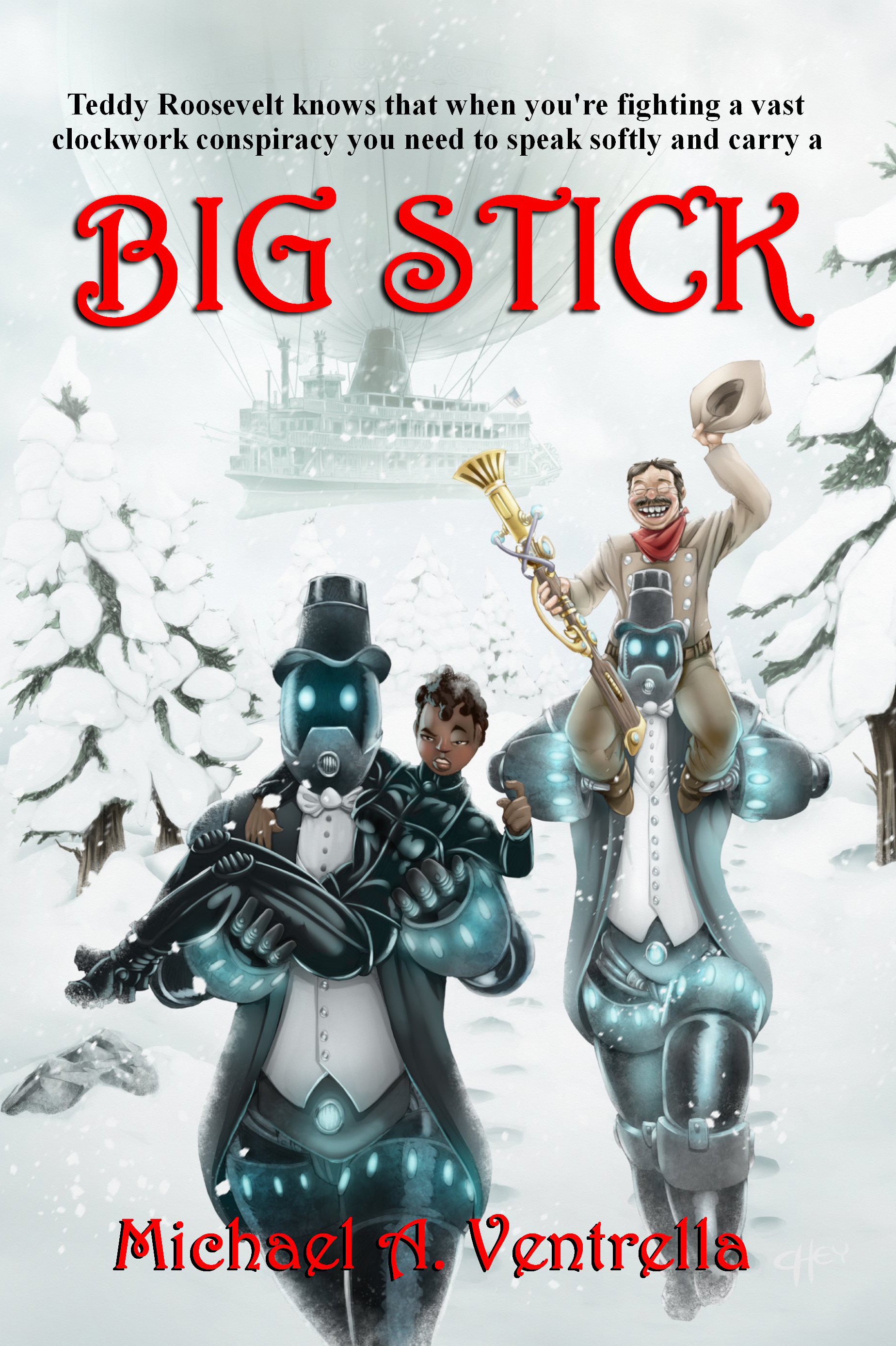
“A wild and thoroughly entertaining steampunk adventure featuring an improbable cast of historical figures, plenty of action, and lots of fun!” – Jonathan Maberry, New York Times bestselling author of Deep Silence and V-Wars


 Her newly released crossover sci-fi thriller is RUBY’S FIRE.
  I advise my students to outline, even a few lines per chapter. I encourage them to think of it as a fluid entity they can tweak as they go. This seems to help.
 But from my first experience, I “met” so many great book reviewers that this time I was able to contact them again, and they were thrilled to read the next book, and also to blurb. People are very generous online and they love getting the word out about books they like. The funny thing is that I have a friend who is published with one of the Big 6, and her publicist is approaching the very same bloggers I have a relationship with. The whole process has become democratized. It’s also good to do giveaways on Goodreads, and to host other authors.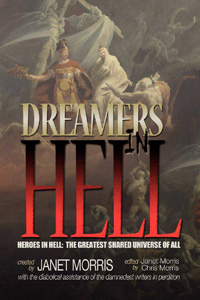










 Michael A. Ventrella