Interview with author Mark Arnold

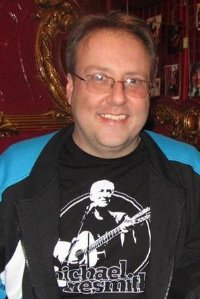
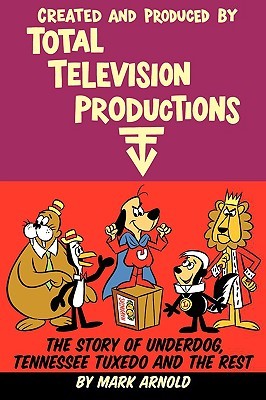
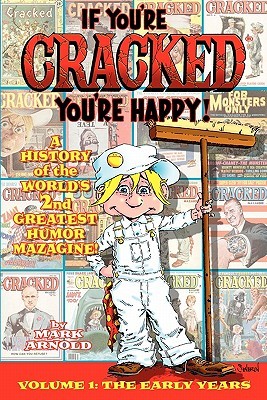
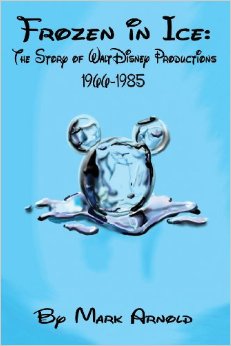
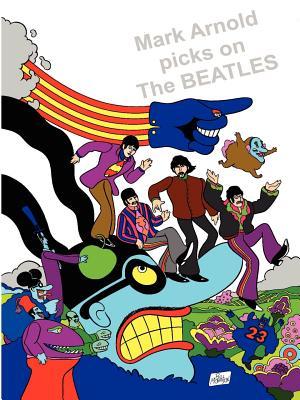
MICHAEL A. VENTRELLA: I’m pleased to be interviewing author Mark Arnold today. Mark is a comic book and animation historian, and has had many articles published in various publications. Arnold He has a BA in Broadcast Communication Arts from San Francisco State and has published “The Harveyville Fun Times!” since 1990. His books include IF YOU’RE CRACKED, YOU’RE HAPPY: THE STORY OF CRACKED MAGAZINE, THE BEST OF THE HARVEYVILLE FUN TIMES, MARK ARNOLD PICKS ON THE BEATLES, and CREATED AND PRODUCED BY TOTAL TELEVISION PRODUCTIONS. His most recent is FROZEN IN ICE; THE STORY OF WALT DISNEY PRODUCTIONS 1966 – 1985. He has also produced and recorded DVD commentaries for Shout! Factory and has helped the San Francisco Cartoon Art Museum with various art shows.

Mark, how did you first get involved in writing?

MARK ARNOLD: I always liked writing since I was very young. I learned how to read and write probably around age four. I was plopped down in front of “Sesame Street” the day it debuted at age 2½ and by the time I entered pre-school I know I could read and probably write.

VENTRELLA: What sparked your interest in comics?

ARNOLD: Comic books were always around the house. I always enjoyed the pictures and liked them more once I knew how to read them. I also always had an interest in animated cartoons and movies and everything kind of just blossomed from there.

VENTRELLA: There are lots of comic book historians dealing with superhero comics (which I, admittedly, never got into) but fewer dealing with the humorous comics (which I read a lot of). Why do you think that is?

ARNOLD: I don’t know. I guess others identify with superheroes or aspire to be them. I always liked superheroes to a point, but always wanted a little humor behind them like on the “Batman” TV show with Adam West. I always wanted to laugh. I started off with Harvey Comics and other funny animal books and then graduated to Archie Comics and then superheroes. I shouldn’t say graduated actually, because I never stopped reading the Harveys and the Archies, I just added to my reading. Over time, as superheroes got more realistic, I found them to be more boring and eventually I stopped reading them, but I still admire the DC comics from the Golden Age and the Marvel comics from the Silver Age. HarveyvilleI’m even disinterested in the live-action movies they make these days, but I eventually see them just to keep up, but my favorite comic book stuff was and is humor comics, especially those done by Harvey and Archie and Gold Key and humor magazines like Mad and Cracked, etc.

VENTRELLA: What was your first book?

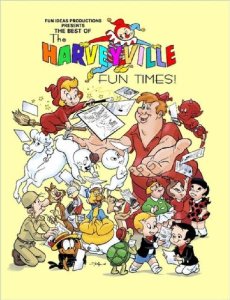
ARNOLD: My first book was THE BEST OF THE HARVEYVILLE FUN TIMES! which featured reprints from my long-running Harvey Comics fanzine (1990-2011). It was self-published as was the fanzine and was my attempt to see if I could actually publish a book.

VENTRELLA: How did you arrange the publishing?

ARNOLD: I went to the APE in 2005 and bought a book from someone that said it was published by Lulu. I had heard about Lulu, but what I didn’t know is that the books they publish look and feel like real books and have bar codes and ISBN numbers and everything. I published my first book through Lulu in 2006. Prior to that, I always dreamed about publishing a book, but felt that I didn’t have the connections or the funds to do it. Lulu.com made it easy, because all you really need is around $150 and Lulu prints what you need on demand and it gets listed on all the major book sites such as Amazon and Barnes & Noble and you get an ISBN bar code. It doesn’t get into bookstores this way, but that’s no big deal as more and more people are buying books online anyway than in stores, but I did get it distributed through Diamond, who is the major distributor to comic book stores. It sold quite well, actually.

VENTRELLA: Tell us about BearManor Media.

ARNOLD: BearManor Media is also print on demand as is Lulu.com, but the difference is, you don’t have to format the book and do all the production work yourself. They do it for you. Your commission for each book sold is less than if you self-publish, but I feel that it is worth it, in order to not have to do all that stuff and stick with the creative end such as writing. BearManor’s focus is on pop culture books, so if you want to write a novel, they are not the publisher for you, but there are others that do focus on fiction and they can help those wanting to get published. Check Google to find out who.

VENTRELLA: You’ve also written the Cracked magazine history. Did you get assistance with that from Cracked? Did anyone from the magazine object?

ARNOLD: I went to the current owners of Cracked.com, the website that is owned by Demand Media. They really didn’t care that I was doing a history of Cracked magazine. All they were interested in was whether I was reprinting anything from the website, which I wasn’t. CrackedIn fact, I told them I wasn’t interested in discussing the website at all except for the fact that it needed to be mentioned in the history to say what happened to Cracked after it ceased publishing as a print magazine. I got no assistance from the current owners and did not interview any of them. I got the most assistance from Mort Todd, who was editor of Cracked magazine from 1985-1990 and he helped design and layout the book cover using new artwork from the great John Severin.
VENTRELLA: What do you think of their current web page, which is not at like the magazine?

ARNOLD: I actually do like the website and the two books that they have published with material from it, but it really isn’t Cracked. The funny thing is that the current owners paid a big amount (I think it was in the millions) and basically ended up with a name, since all the films from the old magazines had to be destroyed after anthrax was sent to the National Enquirer offices in Boca Raton, Florida where the films of the old Cracked magazine issues just happened to be housed. This was the same anthrax that hit the world news shortly after 9/11 and at least one person died as a result. If someone was to do a “Best of Cracked” now, they would have to get permission from Demand Media to do so, and they would also have to scan all the old issues or the original artwork in order to do it. I am trying to work on this as we speak.

VENTRELLA: Your latest book, FROZEN IN ICE, is about the Disney films in one of their darkest and least successful eras. What made you decide to look at those years?

ARNOLD: Those were the years that I grew up and I didn’t have problems with the films as others have. I actually enjoyed Disney during the 1970s, especially the gimmick films which I dubbed the “dopey Disney comedies”, where they took some premise like invisibility or the goose that laid golden eggs and ran with it. I didn’t necessarily think that the Disney of the 1950s or 1960s was that much different. The animation was different with the Xeroxing, but Disney had this nice habit of reissuing all of their old product, so it seemed like these old cartoons like “Snow White” and “Pinocchio” were fresh and new to me. Also, many books about Disney tended to say something like: “And then Walt Disney died and after a few years, Michael Eisner took over and revitalized the company.” I wanted to cover the years that always seemed to be glossed over by most Disney history books.

VENTRELLA: For those of us of a certain age, this book brings back many memories, since these were always kid-friendly films my Mom could safely take me to. I was surprised at how many were familiar. Did you rewatch all of these films to write this?

ARNOLD: Yes I did. There are approximately 75 new theatrical Disney films that they released during the time period covered and even in this day of mass marketed DVDs, it’s amazing that there are a few of them that just are not on home video in any form. I was still able to secure copies, but it took some doing.

VENTRELLA: Which ones stick out as particularly better or worse than you thought they’d be?

ARNOLD: When I was a kid, I was never a fan of the nature films. I felt like I was in school. As an adult rewatching them, I was amazed at how well done some of them are like “Rascal” (1969) or “Run, Cougar, Run” (1972). Others were as bad as I expected like “Scandalous John” (1971) and others like “Smith!” (1969) were actually surprisingly good. I never saw the last two as a kid. One example that I particularly like was “The Littlest Horse Thieves” which was released in the US in 1976. It is a surprisingly good film and grossly overlooked, then as now.

VENTRELLA: Your analysis of the films is pretty straightforward, although you do give personal comments at times. Why did you decide not to be more subjective?

ARNOLD: I was following in the format of Leonard Maltin’s THE DISNEY FILMS, but I put my own spin on it. Frozen in IceI didn’t want to be too dry but I did follow Maltin’s format of film synopsis and commentary. Some have complained that there might be too much synopses in the book, but it is a reference book, not a straight narrative and I wanted people to use it in tandem with Maltin’s work which ends its detailed coverage of films in 1967.
VENTRELLA: Was the main problem with Disney at the time the “What Would Walt Do?” mentality? Did it keep them from progressing?

ARNOLD: Initially, the “What would Walt do?” mentality worked well for them. Walt had left such a wealth of unfinished ideas and had such a talented staff that everything ran kind of like a well-oiled machine running on auto pilot for the first few years after his death. The company was very profitable during these years (1967-1975), but by the end of that period came the end of Walt’s ideas. Then the big movie release of “Star Wars” in 1977 and that really did them in. Movies for kids had started to change and improve with higher production values, but Disney was slow to change with it. By the time they did, Walt Disney Productions was in serious trouble. Their official answer in 1979, “The Black Hole” was somewhat disappointing, even though the film has its moments and its fans.

VENTRELLA: You also discuss Disney’s other projects during this time, although not in the great detail in which you discuss the films. Why do you think that is important?

ARNOLD: The films were what made Walt Disney Productions. I do mention what happened at the Disney parks and TV shows, comic books and record albums. I don’t go into a lot of detail because there are other books that go into each of these areas in greater detail and those are mentioned in my bibliography if people want to research this period further.

VENTRELLA: I founded and edited a magazine called Animato! during that period. We were thrilled when “The Black Cauldron” came out, mostly because back then we’d be excited if any animated feature was released since they were so rare. Why do you think Disney ignores that film now? Was it that bad?

ARNOLD: I love Animato! and wished it still existed. I have every issue!

Actually, I didn’t mention “The Black Cauldron” when you asked about films that I felt are better now than when I first saw them. It’s still not a great film, but I liked it a lot better when I viewed it back in 1985. I think that because there was such a long gap between Disney animated films back then, there was higher anticipation for each film, especially when it was a Disney cartoon and that one took an especially long time to get finished and released.

Nowadays, it seems, there is a new CGI film released each week by any number of studios and unfortunately, they are all starting to look the same. It’s a group of animals or birds or cars or monsters or toys that have to overcome some obstacle and they are happy at the end. It used to be an individual on a quest. Now it’s all of these groups. It was James Bond. Now, it’s The Expendables. There are some good ones now, but unfortunately, a lot of bad ones and many of those are made by Disney.

I think Disney doesn’t think too highly of “The Black Cauldron” because it’s not based on a classic fairy tale and it’s slightly bit gorier than other Disney films being the first PG-rated animated Disney film. Also, at the time and now, it was hard to market that film. Total TelevisionThere wasn’t a lot of merchandise, the characters didn’t walk around Disneyland and it was released during a time of transition and Michael Eisner really wanted to sweep it under the carpet and work on animated films that he was planning like “The Great Mouse Detective” rather than looking backwards. It’s taken Robert Iger to embrace the Disney past better with a newer Love Bug and Witch Mountain films. “The Black Cauldron” is still kind of lost in the shuffle, but so have latter day Disney films like “Brother Bear” and “Dinosaur”.

VENTRELLA: You also wrote a book analyzing Beatles songs. What led you to do that, when there are so many Beatles books on the market now?

ARNOLD: My book covered every Beatles song, group and solo, released and unreleased. With the era of illegal downloading and YouTube, it is now easier than ever to listen to unreleased Beatles songs. I felt that a guide was needed and that was sort of a vanity project for me. For MARK ARNOLD PICKS ON THE BEATLES, I self-published once again with Lulu and got a lot of my friends in the cartoon and animation fields to submit Beatles drawings like Bill Morrison and Patrick Owsley. It was a fun project to do because I love listening to the Beatles music so much. I know The Beatles keep releasing “new” product like “The BBC Sessions, Volume 2”, the songs off which I’ve owned on a bootleg for years, but for me, it’s old news. Ultimately, I have to confess, it has been my worst seller and I’ve concluded that people would rather listen to Beatles music that read about it. I don’t know how most of these other books fare. I’m sure some do well, but probably many do not and are releasing a Beatles book in hopes of making a quick buck.

VENTRELLA: What do you offer in that Beatles book that is different from all the others?

ARNOLD: As I said, it’s my own opinions about the songs and I add my own sense of humor. Most people dis or completely ignore Ringo, for example. I’ve called him in the book “the Yoko of The Beatles.” I also give a ratings systems that ranks from four Beatles down to one and the few songs that do rate a zero star is represented by Pete Best. It’s all in fun and I had a blast doing it. I also have an “intermission” in the middle of the book where I discuss the comic books on Paul’s Hammond organ stand as featured in “Help!” With the help of the Grand Comics Database and Jerry Beck and Lee Hester, I was able to determine which comics were on the easeL. I offered the article to “Beatlefan” and they turned it down, so I used it for my book.

VENTRELLA: Do you plan on attending any Beatles conventions to promote that book? (There’s a big one just outside of NYC that I attend almost every year…)

ARNOLD: Strangely, Beatles conventions on the West Coast are not very common. There’s finally going to be one on in Los Angeles in late 2014 after none for many, many years. I might do that one, or I might just attend it. I’ve never attended an East Coast show and certainly never have exhibited on the East Coast. I have been to New York a few times, most recently for my own Harvey Art Show at the MoCCA in 2009, which did have my Harvey book for sale.

VENTRELLA: How do you promote your work?

ARNOLD: Initially, I promoted my work when I started “The Harveyville Fun Times!” in 1990 by attending the San Diego Comic Convention and getting mentioned in the Overstreet “Comic Book Price Guide.” I’ve never had a ton of money for promotion, but I did take out ads in “Comic Buyer’s Guide” and other publications that no longer exist that resulted in a good subscriber base.

When email and the Internet came along, I developed an email list and had a website very early on, like around 1995 or 1996 and promoted things that way.Beatles Later, I started a blog and still write on it to this day every so often.
Currently, for my books, I have used Facebook as my prime way of promotion and I pay a guy named Jon Guerzon to help me promote things all around the Internet as I don’t have as much time as I used to in order to promote and write and do the other stuff that I do. I have a Facebook page for each of my books and my email signature promotes my books and I promote myself when I write for magazines like “Back Issue” and still have my email list. I also print up postcards through Next Day Flyers and distribute them through the mail and at shows.

BearManor now does much better promotion than they used to and they also print up postcards and mail them out and take out print ads in various targeted magazines.

VENTRELLA: Although I advise fiction writers on my blog to never self-publish, there is no stigma attached to non-fiction self-publishing (and I have done that myself with my gaming books). What advice do you have to writers about self-publishing (if any)?

ARNOLD: If you want your book to be in a brick-and-mortar store, please be aware that if you do any print on demand publishers like BearManor or services like Lulu.com, that most bookstores will not carry your book. You will have to contact each bookstore or bookstore chain independently and they probably will ask you to pay a consignment fee for carrying your book, so it might not even be worth doing. In this day of Amazon, I find it almost unnecessary to be in a bookstore, but if you do have a book that you want to be distributed, Diamond will carry self-published books and distribute them to bookstores, but they have to sell a certain amount and Diamond has to approve the listing, which can be trickier with fiction than with non-fiction about a known quantity like Disney or The Beatles.

Now, if you get involved with a larger publisher like say Random House, you will get in the bookstores, but now you have to face the problem of your book not selling and then being returned and then going out of print and the remaining stock sold as remainder stock at a loss. So, there are hurdles either way you go.

VENTRELLA: Where do you see the future of publishing heading?

ARNOLD: I think books will coexist as both print items and digital items. The important thing is if you have a passion for writing and want to get your work out there, things are easier now than they ever have been to get published or to publish yourself. It still helps to know people and also to learn so you know what you’re doing, but gone are the days where you had to pay a publisher to print 1000 copies of your book only to have them sit in your garage gathering dust. There’s no need to have stock anymore. You can even publish solely in an ebook format or online. It’s up to you. The harder part is making a lot of money at it. If that’s the only reason you are writing or publishing a book, you might as well stop now, because you will be very disappointed. The odds of success there are still the same unless you come up with a story about a boy learning to become a witch or teen vampires that fall in love with each other or anything about zombies.

My Philcon 2013 schedule

I’ll be at the Philcon science fiction convention this weekend (November 8 – 10).

The Guest of Honor is Allen Steele, and other guests include Danielle Ackley-McPhail, Keith R.A. DeCandido, Gardner Dozois, Michael F. Flynn, Gregory Frost, Sharon Lee, Gail Z. Martin, Mike McPhail, Steve Miller, Christine Norris, KT Pinto, Peter Prellwitz, Lawrence M. Schoen, Alyce Wilson, and many more people that I have yet to interview on this blog!

You can see why I always enjoy Philcon — I get to see so many of my friends again.

I’ll also be found at my publisher’s table in the dealer’s room from time to time.

Here’s my schedule (as of the Sunday before the event; sometimes I get added to other panels):

The Evolution of the Vampire (Friday 10 pm): Not all of them sparkle, y’know. A look at the literary vampire, from a century before Dracula to the modern day. With Susan Hanniford Crowley, KT Pinto, and Rebecca Whitman.

Political Correctness in Science Fiction (Saturday 2 pm): No writer wants to be considered bigoted or prejudiced, but at the same time, no writer wants to be censored, either. And, if certain topics can’t be discussed, does that mean that they can’t be properly discarded, either? What are the limits on proper discourse, and who gets to set them? With Brenda W. Clough, Orenthal Hawkins, Jeff Warner, and A.C. Wise.

The Future of Privacy (Sunday 2 pm): Will the modern concept of privacy be considered anachronistic in the future? And if not, what will “privacy” mean? With Ellen Asher and Christie Meierz.

Interview with NY Times Bestseller Steven Brust

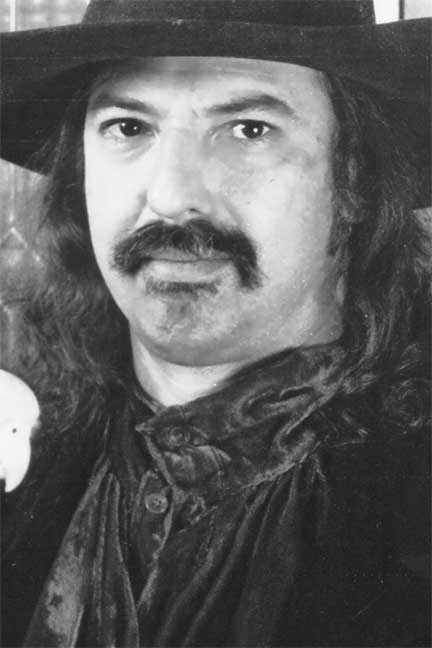
MICHAEL A. VENTRELLA: I am pleased to be interviewing Steven Brust today. BrustSteven is best known for his novels about the assassin Vlad Taltos, and has written many short stories in shared universes (including Emma Bull’s and Will Shetterly’s “Liavek,” Robert Asprin’s “Thieves’ World,” Neil Gaiman’s “Sandman” and Terri Windling’s “Borderland” series.

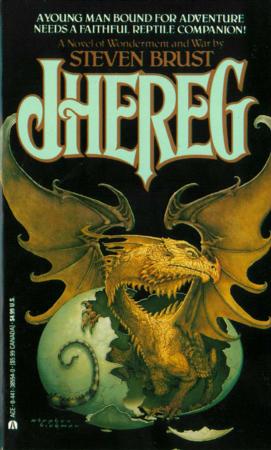
I read JHEREG back when it was released, and enjoyed it tremendously. Did you ever have in mind writing a series, or did that happen on its own?

STEVEN BRUST: Yeah, here’s what happened. I wrote that one as a stand-alone, peppering it with foreshadowing and flashbacks because I like that stuff. Then I wrote TO REIGN IN HELL, which was a very hard book for me to write. When it was finally done, I was thinking that I just wanted to relax and write something fun and easy, and it seemed obvious that I could just go back to Vlad, because I knew so much of his backstory from having played him in a table-top role-playing game. So I did, and just sort of dashed off a book called “Duel.” But when the marketing department at Ace got it, they said, roughly, “But his first book did really well, and it had a funny one-word title. Can’t he find another funny one-world title?” Well, YENDI was pretty obvious, so I renamed it.

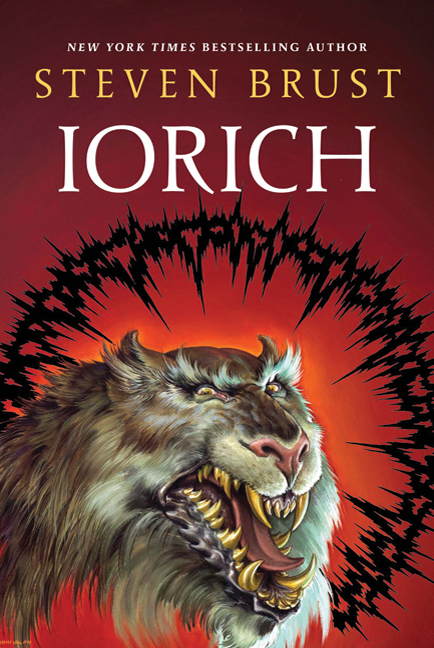
Then, after writing BROKEDOWN PALACE, various things hit me about fantasy tropes, and I wanted to examine them. It seemed like Vlad’s world would be the perfect place to do that, and TECKLA was the perfect title for the book. By then I was writing a series, and I knew the major events of Vlad’s life, but I don’t remember if I admitted to myself that it was a series until I did TALTOS. I’m pretty good at lying to myself.

VENTRELLA: You plan on ending the series with a 19th book. jhereg Was this the original plan, or have you decided that the time is right?

BRUST: That was the plan from at least the time I finished TALTOS, and maybe earlier; I don’t remember for sure.

VENTRELLA: Were the books based on a role-playing game? It has that feel with resurrections, especially, which is something you normally don’t see in most fantasy novels.

BRUST: Yes, a game created by Robert Sloan. Such things as the relationship between Kiera and Sethra, and between Aliera and Morrolan, and between Vlad and Kragar (to pick just a few examples) go back to the game.

VENTRELLA: You have specifically tried to vary your writing styles and points of view in the novels, which give them different feels – why did you decide to do this?

BRUST: Discovering the relationship between the story and how the story is told is one of the joys of writing. I just flat out love playing with that stuff; I get excited as hell when I realize that the best way to tell a given story would be something I haven’t tried yet.

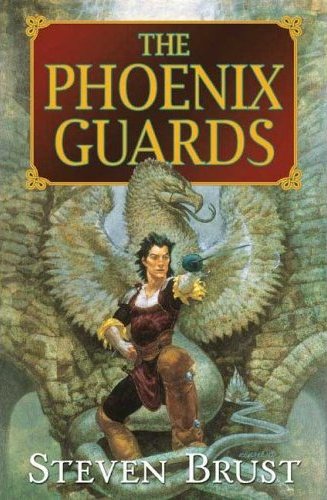
VENTRELLA: THE PHOENIX GUARDS especially reads like a lost Musketeer novel. I assume that was by specific design? Did you go back and change things to make it read more like Dumas?

BRUST: Go back and change things? Oh, no; that was there from the beginning, from the first page of the first draft. That was the whole reason I wrote it. It was so much fun!

VENTRELLA: You certainly have not shied away from politics, both in your books and on Facbook and other social media. Do you believe this has affected your sales (in either direction)?

BRUST: No idea.

VENTRELLA: What’s your opinion on the current state of the political situation in America? 9780765328892 Optimistic or not?

BRUST: Very optimistic–in the world, you can see signs of people fighting back everywhere you look. In this country, it is taking longer, but even here you can see it. The initial success of Occupy Wall Street is as much of an indication of people’s outrage as it’s ultimate failure is of it’s lack of program; and the overwhelming public support of Snowden is a very healthy sign.

VENTRELLA: Do you think there is a place for a third party in America?

BRUST: I don’t know. I’d like to start with a second party and see what happens after that.

VENTRELLA: Back to books: Amazon is reporting that e-books are now outselling traditional publications. What effect will this have on the publishing industry? For beginning authors is this a good thing or a bad thing?

BRUST: No clue. I know nothing about the industry, and I work very hard to keep it that way; it just interferes with my work.

VENTRELLA: Your “Cool stuff” theory of literature explains a lot, actually, and boils down what many “how to write” articles fail to address. Or is the advice basically “Write what you like”?

BRUST: Write what you like to read. Write something you wish someone else had written because you want to read it. The Cool Stuff Theory of Literature was an offshoot of something Gene Wolfe originally said.

VENTRELLA: Is writing a skill that can be learned or are the best writers born, not made?

BRUST: I firmly believe it is a skill that can be learned.pglg

VENTRELLA: Who do you like to read?

BRUST: These days, I’m mostly reading non-fiction, especially history.

VENTRELLA: New authors can make huge mistakes. What big mistake bugs you the most, and how can writers avoid making it?

BRUST: Mostly they over-explain. Write for people as smart as you are. If you’d figure it out, and if you’d enjoy the process of figuring it out, chances are the reader will too.

VENTRELLA: Do you attend science fiction conventions? If so, do you find these useful?

BRUST: Yes, I do. I don’t know if they’re useful, but they sure are fun.

VENTRELLA: What are you working on now?

BRUST: A sequel to THE INCREMENTALISTS with Skyler White.

brust

Breaking the rules

I had a conversation with one of the contributors to the TALES OF FORTANNIS anthologies I edit that went something like this (adjusted for humor):

Me: You need to cut out the first six pages and start the story here.Broken Rules Falls to Chaos Anarchy Pieces

Writer: Why?

Me: Because you need to grab readers earlier. All this other stuff is background that isn’t important to the story.

Writer: But I want it to establish character. Who says I have to start off with action?

Me: That’s what every writer’s seminar will advise you to do.

Writer: Well, you don’t have to listen to the Man! Break the rules once in a while! Who are you to say we should do what they say?

Me: I’m the editor. And if you don’t do it, I won’t buy your story.

Writer: Ah, OK. Why didn’t you say that before? (grumble grumble)

All over this blog and elsewhere, authors will be giving you advice. Don’t use prologues. Introduce information gradually instead of in an “info dump.” Show, don’t tell.

There are “rules” for writing that are very common. Go ahead, google “rules for writing” and see how many pop up. The most famous (and best, in my opinion) come from Elmore Leonard:

1. Never open a book with weather.
2. Avoid prologues.
3. Never use a verb other than “said” to carry dialogue.
4. Never use an adverb to modify the verb “said” . . .he admonished gravely.
5. Keep your exclamation points under control. You are allowed no more than two or three per 100,000 words of prose.
6. Never use the words “suddenly” or “all hell broke loose.”
7. Use regional dialect, patois, sparingly.
8. Avoid detailed descriptions of characters.
9. Don’t go into great detail describing places and things.
10. Try to leave out the part that readers tend to skip.

But writers don’t like to be trapped. We like to be creative. We like to break the rules!

Well, don’t. Unless you can.

There are wonderful examples of writers who break the rules all the time, because they know how. They have the experience (and perhaps talent) the rest of us don’t have.

Follow the rules as much as you can when you’re getting started. People are advising you to follow them for a reason. They’re not just being mean and stifling your creative genius. You do want people to read your work, don’t you?

Jazz musicians break the rules all the time. They play notes that don’t belong in that key, change time signatures to contradict what the other musicians are playing, and just go with the feel. And they’ve spent years learning the rules to know when and how to break them.

Inexperienced newbies doing those things just make noise.

Young Adult Authors Panel

I will be a guest author at the Doylestown Book Store’s Young Adult Author Panel this weekend. (The books are written for young adults, not that the authors are young adults.)

Also participating will be Josh Berk, Kate Brian, Alissa Grosso, E.C. Myers, Jennifer Murgia, Tiffany Schmidt, and Nicole Zoltack.

This will be on Friday, October 18th at 7:00 pm. Details are here on their web page. Do not let the picture of Newt Gingrich on the top scare you away; his book promotion tour won’t be there that night.

My Capclave 2013 schedule

This year, I will be attending the Washington DC convention Capclave for the first time, and it looks to be great fun. small_dodo_transparent The Guest of Honor is George R. R. Martin, and other guests include many people who you may have met through my interviews here: Danielle Ackley-McPhail, Philippa Ballantine, Gardner Dozois, Val Griswold-Ford, Mike McPhail, Tee Morris, James Morrow, Lawrence M. Schoen, Hildy Silverman, Bud Sparhawk, Lawrence Watt-Evans, and Allen Wold, among many others. Links to each of these interviews are to the left.)

Capclave is held over the Columbus Day weekend (October 11th)

They’re keeping me busy, as I like, and I’m moderating a few of these panels.

Here’s my schedule:

So You Want To Be A Writer?: We did it before and we’ll do it again! Authors discuss how they became a writer, and why you should(n’t) Writers share their experiences and offer advice to those interested in becoming a professional writer. Pay it forward. With Matt Betts, Michael Dirda, Laura Anne Gilman, Alma Katsu, Dina Leacock, and Bud Sparhawk. (Friday 4 pm)

Saturday Morning Cartoons: Once we could only watch cartoons on Saturday morning, now they get entire channels. What are the best sf/fantasy cartoons ever? What did you learn from them? How have cartoons influenced other media and even reality? With Matt Betts, E.C. Myers, Sherin Nicole, and Steve Stiles. (Friday 5 pm)

Buy My Book: Self promotion and you. Nervous about talking about your books and stories? There are some things you should do and avoid when talking about your writing. With Philippa Ballantine, Jennifer Barnes, and John Edward Lawson (Friday 6 pm)

Reading: This is where I will read from my work, and probably my humorous short story “The Jesus Secret.” (Saturday 9:30 am)

Moving Beyond the Small Press: A look at how small presses in the age of the eReaders – where anyone can be a publisher – have their limits, and what to do when you’ve hit them. There is also the additional pressure of performing on a higher level. Listen to panelists describe what to do when you have plateaued with your own independent publisher, and what lies ahead if or when you step up to corporate publishers. With Philippa Ballantine, Ron Garner, and Lawrence M. Schoen (Saturday 10 am)

Mass Signing: The Saturday evening mass autographing session. With Danielle Ackley-McPhail, Catherine Asaro, Eric Bakutis, Philippa Ballantine, Matt Betts, Matt Bishop, Neil Clarke, Tom Doyle, Andrew Fox, Charles E. Gannon, Carolyn Ives Gilman, Laura Anne Gilman, Bob Greenberger, John G. Hemry, Alma Katsu, Annette Klause, John Edward Lawson, Dina Leacock, Edward M. Lerner, Marianne Mancusi, George R.R. Martin, James Maxey, Heidi Ruby Miller, Jason Jack Miller, James Morrow, Diana Peterfreund, Patrick Scaffido, Lawrence M. Schoen, Jon Skovron, Alan Smale, Michelle D. Sonnier, Bud Sparhawk, Janine Spendlove, Michael Swanwick, Jean Marie Ward, Lawrence Watt-Evans, Steven H. Wilson, Leona Wisoker, and K. Ceres Wright (Saturday 7:30 pm)

The Eye of Argon: Our panelists read the worst fantasy story ever written, mistakes and all, and if they laugh or read it incorrectly, they are forced to act out the story. Just try not to fall over laughing! With Tee Morris, Hildy Silverman, and Ian Randal Strock (Saturday midnight)

Not Another Lawyer Joke: So we all know lawyers just make the stuff up as they go along. Or is that just the ones in fiction? How does fiction and popular media portray the law and lawyers? What do they do right and wrong? What about all those Law and Order shows? With Day Al-Mohamed and Jim Stratton (Sunday 9 am)

Interview with Campbell award-winning author Mur Lafferty

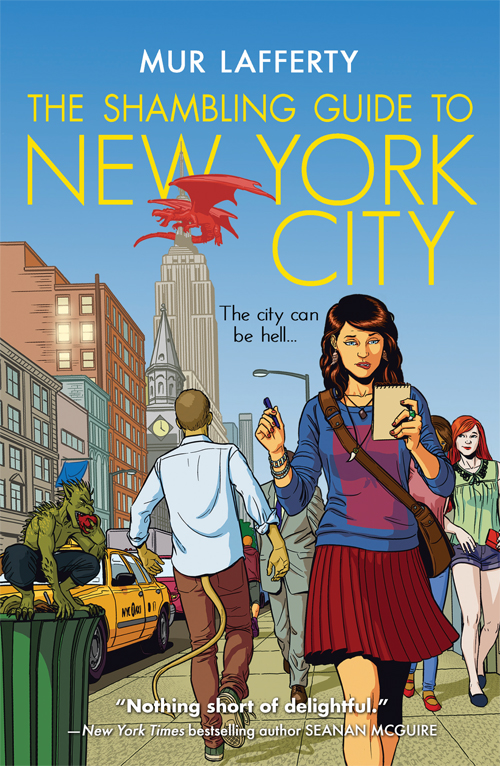
MICHAEL A. VENTRELLA: I am pleased to be interviewing Mur Lafferty, who just recently won the John W. Campbell award for Best New Writer. Mur lives in Durham, North Carolina, and her web page is here. mur laffertyShe is a podcaster and her first traditionally published book is THE SHAMBLING GUIDE TO NEW YORK CITY, published in May from Orbit.

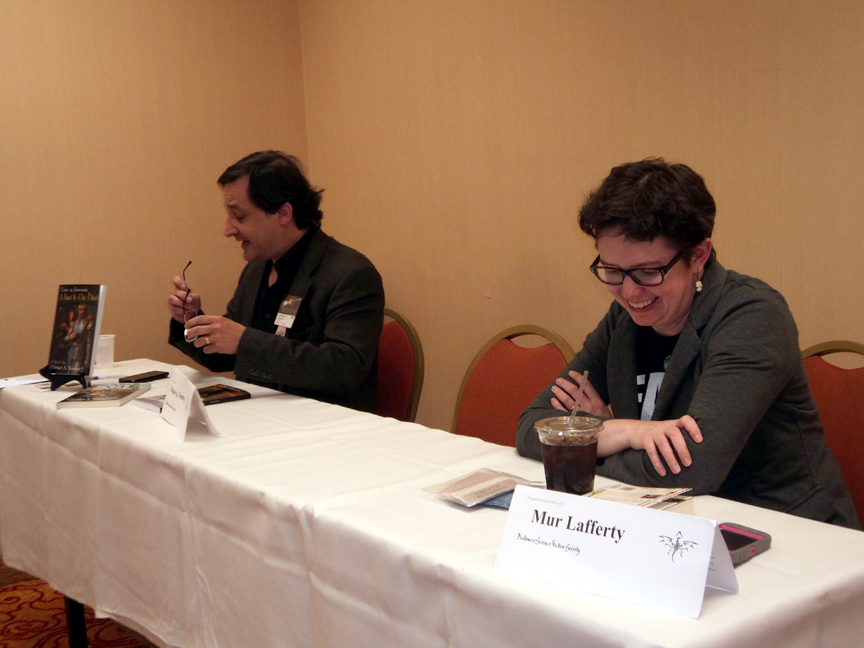
I was fortunate enough to share a reading with her at a recent convention, and enjoyed it tremendously!

Mur, after hearing your reading, I didn’t think I could be further impressed by you, and then you went and won the John W. Campbell award for Best New Writer! Tell us about that!

MUR LAFFERTY: It was an amazing experience. I was in my second and last year of eligibility and it was a tight field. Oddly enough, last year several people told me they thought I had a good chance (I came in 4th), while this year everyone looked doubtful and said it was a really strong field and they didn’t know who would take it. Which was good because I didn’t get my hopes up, and was really surprised when I won.

VENTRELLA: Let’s discuss the podcasts. How did you first become involved in that?

LAFFERTY: I heard about podcasting in 2004 soon after it was created and knew I wanted to be involved. It took a couple of months to decide what I wanted to talk about, but I launched my first geek-oriented show that December. I’ve done several different shows since, and still enjoying it a great deal.

VENTRELLA: Many of your podcast stories are now available as kindle downloads – did you use a specific publisher for these? Lafferty_ShamblingGuidetoNYC-TP1

LAFFERTY: No, I hired freelancers for layout and editing and cover art, but I published them myself.

VENTRELLA: Can we expect paperback editions soon?

LAFFERTY: It’s unlikely. I like the concept of POD (I used to work at Lulu) but I’ve found the cost per book too high for reasonable sales.

VENTRELLA: Do you advise other authors to podcast their work, or do you think this would only be worthwhile for a certain type of fiction?

LAFFERTY: It’s hard to say. The podcast fiction market is pretty busy right now, and it’s so much work for not a lot of return. When I started doing it, there were far fewer authors doing it, so it was easier to stand out. I’m not sure I would do it these days if I didn’t already have some kind of blog/podcast following.

VENTRELLA: You have also written about gaming (which is where I also got my start, in Dragon magazine all those years ago) … did you write about games or were you creating games (or modules) yourself?

LAFFERTY: Both. I was writing for RPGs at White Wolf, but I also had a nonfiction column in Knights of the Dinner Table for several years. I discussed the geeky lifestyle, parenting as a gamer, and other topics important to me as a gamer, a writer, a mom, a geek, and a woman.

VENTRELLA: How do you publicize yourself and get the word out?

LAFFERTY: I’ve been active on Twitter and Facebook for years, and my podcast is another way to promote myself. I just try to stay active, talk about things that I enjoy, and help promote others.

VENTRELLA: For the Shambling Guides, did you get an agent? If so, tell us about the process! MurLafferty-MatRG

LAFFERTY: My agent story is long and detailed and likely far too long. In short, my agent at the time was more interested in selling another one of my books, and in networking via conventions I got my book in the hands of the editors at Orbit. They sent me an offer and I sent it to my agent to negotiate it.

I had had unproductive experiences with agents in the past, and this one was looking at successful Kickstarter campaigns and found the campaign I did for my novella series, The Afterlife Series, and contacted me. I was hesitant, but she convinced me. A year later she quit being an agent and I got picked up by my current agent at the same agency.

None of my agent experiences are standard, or contain advice I could give others, I’m afraid. It’s been a strange road.

The only advice I can give is a bad agent relationship (and I’m not even talking about crooks, just agents you don’t click with) is worse than no relationship at all.

VENTRELLA: How do you research? Did you live in New York for a while?

LAFFERTY: I wish! I love the city, visited a couple of times, and did a lot of research in books and online and with friends who live in the city.

VENTRELLA: Your next Shambling Guide is for New Orleans – why did you pick that city?

LAFFERTY: The series began in NOLA with a short story I’d written for a charity guide to benefit the Red Cross after Hurricane Katrina. By the time I wrote the New York book, the fictional world had changed a bit, and I’d always meant to go back and revisit the city that got me started.

VENTRELLA: Where do you expect to go next?playing keeps

LAFFERTY: I’d love to go to Orlando, Vegas, San Francisco, or London. I’m not contracted for any more, though, so it’s up in the air.

VENTRELLA: Do you find yourself creating the setting first, characters first, or plot first? How do you organize your work? Are you an outliner or a pantser?

LAFFERTY: I get a plot first, and then put characters in it. Setting depends on the book I’m writing; if it’s a Shambling Guide, of course it’s a decision made early in the book, otherwise it could be later. I’m a pantser but wish I could outline. I’ve tried. Really.

VENTRELLA: How have you handled collaboration?

LAFFERTY: I’ve only collaborated on one thing, a self published novella + photography project called HER SIDE I did with my friend JR Blackwell, a very dark and bloody story about the birth of a serial killer. We brainstormed about it, usually her telling me a vague idea, me fine tuning it, then she took her photographs and sent her favorites to me and I chose the ones I wanted to include with the book. She’s a writer as well, so I listened when she had issue on the climax, and her comments made it a lot better.

VENTRELLA: What advice do you have for beginning writers concerning getting published? Is self-publishing a reasonable way to begin?

LAFFERTY: I have no idea these days! The self publishing world is getting very clogged with content and it’s hard to stand out. The people making millions are the exceptions, I’m afraid. I don’t look down on self publishing — I can’t, I do it myself — but I do worry that a lot of people are doing it because they are afraid of rejection in the publishing world. But they don’t realize that often the publishing world is a lot more professional with their rejections than, say, a bad Amazon review.her side I recommend attempting traditional publishing while self publishing, but always being confident in your work. Make sure you’re publishing good stuff.

When it comes to self publishing, remember, you need to make it professional, a lot of people overlook the need for editing, the need for proper ebook layout, and the need for a good cover. They’re unwilling to spend the money, and put out non-professional books. Don’t do that.

VENTRELLA: Tell us about “I Should Be Writing” which is something in which all aspiring writers should have an interest…

LAFFERTY: In 2005, Michael A. Stackpole had a writing podcast called “The Secrets”, a show from the POV of a veteran writer. I enjoyed it, but wondered if we could use a show that spoke to writers about the things that really slow us down at the beginning, namely the angst within that tells us over and over to quit. So I discuss how the writing career is full of rejections, and nothing will kill you (Salmon Rushdie is the exception), and persistence is key. I also explore my own anxieties mainly to let people know that they are not alone. It’s also a platform for me to interview established writers to promote them and have them give their own writing advice.

VENTRELLA: What criticism of your work do you disagree with the most?

LAFFERTY: Gosh, I don’t know. I am so critical of myself I often agree with criticisms. Publishers Weekly mentioned my weak romantic plot, and I’ve always felt romance is a weakness of mine, so I couldn’t really get mad about that. And I try to avoid online reviews for a variety of reasons — if I’m a grownup, I say that the reviews are for the reader, not for me, and if I’m a little less mature I just say, well, there’s nothing I can do about it if it’s negative, Hell Lafferty it’s not like I can edit the book to suit them (and likely can’t edit the next one either because it’s already turned in), and if I’m not mature at all I’ll admit I’m a fragile flower and don’t like reading things that make me sad. So criticisms are either a) from my editor and something to work on, b) things I agree with, or c) something I haven’t read because I don’t want to cry.

VENTRELLA: All writers basically write what they would like to read. So what do you like to read? Who are your favorite authors?

LAFFERTY: Growing up, it was Robin McKinley, Anne McCaffrey, and Madeline L’Engle. They wrote fantasy with prominent female characters and I was delighted to find books with a hero I could identify with.

VENTRELLA: What advice would you give an aspiring author that you wish someone had given you?

LAFFERTY: You will make mistakes, and there are very few mistakes that will kill your career. There will be stumbles and mistakes and bad decisions, but the only thing that will stop you from writing is yourself.

Also, there will always be someone better than you. That’s OK. it should drive you to write more, not less.

Me & Mur at Balticon 2013

Me & Mur at Balticon 2013

Interview with NY Times Bestselling author Kevin J. Anderson

MICHAEL A. VENTRELLA: I’m pleased to be interviewing author Kevin J. Anderson, the author of 120 books, 51 of which appeared on bestseller lists; he has 23 million copies in print in 30 languages. KJAlibraryKevin coauthored thirteen DUNE novels with Brian Herbert, as well as their original HELLHOLE trilogy. He followed his epic “Saga of Seven Suns” series with his “Terra Incognita” fantasy trilogy, and wrote the novel CLOCKWORK ANGELS based on the new Rush album. He recently launched a hilarious new series featuring Dan Shamble, Zombie PI. In addition to numerous STAR WARS projects, he wrote three X-FILES novels and collaborated with Dean Koontz on FRANKENSTEIN: PRODIGAL SON. He is also one of the founding members of the premiere seminar for writing careers, Superstars Writing Seminars. His web page is here.

Science fiction and fantasy can often overlap. Do you tend to think about balancing the two in your books?

KEVIN J. ANDERSON:No, I think about the story and not about the genre. Much of my science fiction epics are modeled after fantasy epics and tropes, but they are still science fiction. My Saga of Seven Suns and the follow-up the Saga of Shadows are like big fantasy series in the plot structure, character archetypes, and the sweep of the story.

VENTRELLA: As a scientist, do you try to find scientific ways to explain magic?

ANDERSON: I apply my scientific experience in my worldbuilding, which is what I’m probably best known for. kd3f If it’s a fantasy series, I develop the magic system as rigorously as I develop alien cultures or environments. In the only big fantasy trilogy I’ve done, Terra Incognita, I have a very complex system of sympathetic magic (no wizards waving wands at singing elves), but the culture and history are based on meticulous research into our Age of Discovery, Prince Henry the Navigator, the Crusades, sailing ships. I like to get the details right.

VENTRELLA: Would you ever consider writing a standard fantasy with wizards and elves? If not, can you think of an example where it would interest you?

ANDERSON: I did write a trilogy — GAMEARTH, GAMEPLAY, and GAME’S END — set in a Dungeons & Dragons type of role-playing game, which has dragons, ogres, big evil. But it’s also got some interesting twists, a meta-fiction both inside and outside the game. That was how I made it interesting to me.

VENTRELLA: Do you find yourself creating the setting first, characters first, or plot first? How do you organize your work?

ANDERSON: You don’t build a giant cathedral without drawing a blueprint first. My big novels — the Dune series, Hellhole, the Saga of Seven Suns, Terra Incognita — are all immensely complex with myriad plot strands, interacting characters, choreographed battles. I create the setting, characters, and plot all together interactively.

VENTRELLA: You’ve also written superhero stories — do you consider those science fiction or fantasy or neither?

ANDERSON: I wrote THE LAST DAYS OF KRYPTON, a detailed science fiction epic about the fall of the planet Krypton, written with as much ambitious plotting as my own big epics. kryptonENEMIES & ALLIES is a very rational superhero story set during the Cold War, with Bruce Wayne trying to analyze scientifically how to reproduce Superman’s superpowers.

VENTRELLA: Do you like writing in someone else’s universe? What are the advantages and disadvantages?

ANDERSON: I am a fanboy and I love the media universes I work in. I grew up with Superman and Batman; I saw Star Wars when it first showed in theaters; I watched every episode of Star Trek, day after day. I love writing those stories, even if it means headaches with the licensor’s lawyers or continuity experts. You certainly get a lot of readers who come to those books, and many of those readers go on to read my other work.

VENTRELLA: It seems that the advantage of novels over graphic comics is being able to get into the heads of your characters more -– is that what attracted you to the idea?

ANDERSON: I got into writing comics much later, after having published many novels. There are different strengths to the mediums. My first comics were for Star Wars, which is an amazing visual property, and I leveraged that with my comics.

VENTRELLA: When writing about Batman or Superman, do you have a specific one in mind? A specific writer or actor? Or do you create your own version?

ANDERSON: I had my very favorites among the comics and movie versions, but I tried to make it all fit into an original interpretation.

VENTRELLA: When adding new Dune stories, have you tried to copy Herbert’s style at all? kja2Did you feel limited in any way?

ANDERSON: Not at all. Brian Herbert and I each developed our own styles over the course of our careers, and Frank Herbert was such a master with his own distinct voice we would never try to copy it. We set our stories in the world Frank Herbert created, but we don’t try to imitate him.

VENTRELLA: Of all of the other universes you’ve been allowed to play in, which is your favorite?

ANDERSON: Oh, don’t make me pick! If I had to, I suppose Star Wars and Krypton were my favorites.

VENTRELLA: How have you handled collaboration? Do you and Rebecca (for instance) plan out a story together or does one do a first draft and the next polish and so on? Is it different with other collaborators?

ANDERSON: Each collaboration is different, each partner is different. In my collaborations, we follow the same model: we discuss the complete novel, work out all the plot details together, then write the outline. We divide up the chapters, each writer taking half, then we each write our chapters and swap them for as many edits as it takes.

VENTRELLA: You maintain a great presence with your fans — an active blog, convention appearances, Facebook posts and the like. How do you manage to find time to write? And is this all that important?

ANDERSON: It’s extremely important to maintain contact with your fans. 9780758290106_p0_v1_s260x420They are the ones who keep your books alive, who tell their friends and spread the word. Social media makes it much easier and much more personal. I make the time for it because I think it’s vital. If I didn’t have dedicated fans, I wouldn’t be able to have the job I love.

VENTRELLA: Do you think it is important to fight back politically against those who would deny science?

ANDERSON: That is such a hard one. I used to get involved in vocal arguments over political disagreements, but that absorbed huge amounts of my time and energy … and I lost a lot of readers. I now keep my politics to myself.

VENTRELLA: Many established authors are now self-publishing their back catalogues themselves, avoiding the big publishers completely. Some are even handling their new releases on their own. What are the disadvantages of doing so?

ANDERSON: You have to do all the work, and many writers don’t know how to do all of those steps. That’s the pitfall. You can do it all, but sometimes you need a professional. Kind of like putting in new plumbing. That said, I’ve spent the past twenty five years learning all the steps and i feel I do know what I’m doing. My wife and I are the publishers of WordFire Press, which now has over 80 titles up, not just of my own back stock but of other authors as well, including Frank Herbert, Brian Herbert, Bill Ransom, Doug Beason, Neil Peart, Brad R. Torgersen, Michael A. Baron, and Pulitzer prize winner Allen Drury. We’ve done very well with it.

VENTRELLA: What book do you advise for the starting Anderson reader and why?

ANDERSON: I think I would suggest CLOCKWORK ANGELS Layout 1(a wonderful steampunk fantasy based on the new Rush concept album), CAPTAIN NEMO (an alternate historical about Jules Verne and his creation), and especially the Dan Shamble, Zombie PI series. Those were the books I had the most fun with.

VENTRELLA: What criticism of your work do you disagree with the most?

ANDERSON: When people dislike a book I wrote before they even read it (this from some die-hard media fans who refuse to consider anybody else’s interpretation)

VENTRELLA: All writers basically write what they would like to read. So what do you like to read? Who are your favorite authors?

ANDERSON: I like to sink my teeth into big epics, such as the works of Dan Simmons, Larry McMurtry, and Frank Herbert.

VENTRELLA: What advice would you give an aspiring author that you wish someone had given you?

ANDERSON: Learn your business and treat writing as a business, a career, not just a creative exercise.

VENTRELLA: What projects can we expect from you next?

ANDERSON: I’ve got more Dan Shamble Zombie PI books coming, then MENTATS OF DUNE in March, a new trilogy set in the Seven Suns universe, THE DARK BETWEEN THE STARS, out next June, and the third and final HELLHOLE novel out next August.

36

What’s in a Query letter?

Over a year ago, I discussed query letters and mentioned that I’d share mine, which could be used as an example.

My goal was to post it and then say, “Thanks to this letter, I now have an agent who is shopping around my manuscript.”

Well, that hasn’t happened (yet).

Admittedly, I tend to send out a bunch and then wait, instead of making this a regular process. I have a friend who sent out over a hundred before finding an agent, and there are plenty of stories of very successful authors — such as J.K. Rowling — who had similar experiences. I haven’t sent out that many yet, so maybe there’s still hope for me.

(an example of a bad query letter)

A query letter, however, is not like bait on a fish hook. An agent may really like your work but is not sure how to sell it, or thinks the market won’t be interested, or just doesn’t handle that kind of literature. (After all, if you are a heavy metal band, you don’t want to approach an agent who only represents bluegrass bands.)

I’ve shown my query letter to a number of professionals in the business who think it’s pretty good, so at least I am presenting myself properly. Let’s go over it, so you can use it as a guideline. (Note: Your query letter should not look exactly like mine. You are a writer; be yourself. Just make sure you include the important parts the agents look for.)

I start my query letter off with a personal note to the agent explaining why I am sending the letter to him or her. This is important. You’re not just randomly picking agent names off a list, after all — you’re doing your research (right?). You are looking for agents that handle your genre and who represent writers whose style may be similar to yours.

And of course, make sure you have their name spelled right! (These are all fake names below, by the way.)

Dear Ms. Dent,

Given your representation of Edward Pendleton and your recent Penguin deal for Louise Franks, I believe my latest manuscript may interest you.

With these few comments, I have shown that (a) I am professional enough to use Publisher’s Marketplace and (b) I have done my research as to which agents may be right for my work.

Next, I give a short description of the book, listing the word count and the genre. SPOILER ALERT.

“Bloodsuckers” is an 77,000 word political thriller punctuated by character-driven humor. It’s where The West Wing meets the bat wing.

In “Bloodsuckers,” disgraced journalist Steven Edwards considers the “Batties”—the loonies who believe that vampires are real and that Presidential candidate Norman Mark is one—just another crazy tin-foil extremist group. Then someone shoots at Mark, changes into a bat, and flies away before Steve’s eyes, leaving him as the prime suspect. With the help of the Batties, Steve goes underground. The only way he can establish his innocence is by proving vampires exist—not an easy task while on the run from both the FBI and the bloodsuckers.

The novel explores the choices we make in politics, as the protagonist is slowly seduced into abandoning his ethics for a greater goal—which becomes a delicious irony when the vampire candidate is ultimately revealed to be Niccolo Machiavelli himself.

This description has worked a few times. I’ve had three agents like the idea and ask to see the manuscript. Unfortunately, two decided not to go forward, and one has yet to get back to me.

Note that the description does contain a spoiler. Agents want to know that you can end the story well. If the agent has requested a synopsis, it should not be a teaser.

Next, I give a short biography. First, I mention my experience in the area to show that I am “writing what I know.” For instance, if your novel takes place in Australia and you are an Australian resident, mention that. If it’s a novel about bowling and you are a professional bowler, that’s something that’s important.

I then mention previous publications, to show that I have been edited and published before. This helps a lot, even if all you have are short stories. Self-published works aren’t as impressive unless you can add “and have sold 10,000 copies” or something similar.

I then mention social media and promotional appearances to show that I am willing to help sell the book. Finally, I point out that my books have been reviewed by published authors, which hopefully will encourage the agent to check out my web page.

Note that this is all really basic and short. I could easily spend three paragraphs on all this, but the agent doesn’t need all that just yet.

I am an attorney with a Political Science degree who has managed many campaigns over the years. Double Dragon has published my two novels and two short story collections I have edited, and other short stories have appeared in various anthologies. I have been actively promoting my work through my blog, Facebook and Twitter, and by being a guest panelist at science fiction conventions and writing seminars. My web page (www.MichaelAVentrella.com) lists reviews and endorsements by bestselling authors.

Next, you need to follow the agent’s guidelines. Do they want a short synopsis? The first ten pages? Do they want it inserted in the email or as an attachment? If you can’t follow the simple instructions the agent provides, you won’t seem very professional to them. After all, they want to represent someone who won’t need to have their hand held through the process.

Below are the first ten pages. A synopsis and the complete manuscript are ready.

Thank you for your interest and I look forward to hearing from you.

I’ve been told that is a good query letter. Now it’s just a matter of finding the right agent!

Please note that in the year or so I’ve been sending these out, I have not stopped writing. I am finishing up a middle-grade pirate novel now, have published three short stories and edited an anthology. I’ve also revised BLOODSUCKERS a few times (and have blogged about it) but don’t want to just keep polishing the same story over and over again. I believe BLOODSUCKERS is better than anything I’ve written before, and I expect the next one will be better yet. You’re supposed to improve over time, after all!

Interview with author Sara M. Harvey

MICHAEL A. VENTRELLA: Please welcome to the blog today Sara M. Harvey. Sara is a genre-crossing author whose work has been described by Jacqueline Carey as “a compelling blend of the numinous and the creepy”. sara harvey Her webpage is here!

Sara, your first work was the romantic urban fantasy A YEAR AND A DAY. Tell us about it!

SARA M. HARVEY: That book was such a work of the heart. I was lonely, living in Orlando, Florida, working for Disney, missing NYC, in the uncertain beginnings of a long-distance relationship, flat broke and spiraling deeper into debt, and I needed a distraction from my life. I came home from work exhausted every night and sat down and wrote about angels living in the East Village and it was magical and got me through a very rough patch.

It got published as a “contemporary romance” but I’d call it more urban fantasy than romance. Sure, there’s a love story, but the main love story is between me and New York City, or so I’m told. This was my NYC, the one that I got to know and love.

The short version is the Angel of Vengeance and the Angel of Joy are roommates in NYC’s East Village, Hijinks ensue!

You can still get it as a used paperback via ebay and the usual online outlets — Powell’s, Amazon Marketplace, etc. Or if you prefer ebooks, Baen Ebooks is your go-to spot DRM-free for any and all devices!

VENTRELLA: How did you get that published?

HARVEY: Funny story, really. I was working as a temp at a temp agency (totally meta, I know!) and one of the managers belonged to a women in business group to whom this local publisher came and gave a pitch. They had a contract with CVS Pharmacies to put out some mass market romances. She remembered that I mentioned I wrote so she brought me their info. What followed was the very worst query letter I ever sent. I literally said “I don’t think you’ll want this but…”

It’s a nice thing to say I sold 35,000 copies through CVS stores nationwide … but the publishing company soon went bankrupt, showed their true colors, and although I finally (after legal action) got my rights back, they still owe me $1700 that I will never see.

VENTRELLA: You then delved into steampunk with your BLOOD OF ANGELS novellas from Apex. How has that been received?

HARVEY: The reception has been overall really great!convent The first of the series THE COVENT OF THE PURE was reviewed by Publisher’s Weekly and it still sells and reviews really well, even years later!

I found Steampunk to be an exceptionally fun genre to work in, there are so many facets and permutations to explore. I really love history and exploring all the dark and twisty “what if?” paths!

VENTRELLA: Do you find novellas easier than full works?

HARVEY: It was a challenge. I really throw the reader into a no-holds-barred roller coaster ride with very few places to stop and breathe. This makes for an exciting but exhausting read. So on the one side, it’s good the size is smaller, but on the other, were I writing a full 100k word range novel I would have done a lot of things differently. So … easier? No, it just didn’t take quite as long.

VENTRELLA: What are the advantages of a novella?

HARVEY: Time commitment, both on the side of the reader and the writer; there’s a certain amount of time sunk into a full novel. Some concepts are just not novel-length so a shorter format allows more freedom to tell those stories without trying to pack in filler to pad the word count. With the ever-expanding self-pub and small-press markets, novellas are really gaining ground as companion pieces to larger works and standalone treasures.

VENTRELLA: Your newest work is SEVEN TIMES A WOMAN set in mythic Japan. What sort of research did you do for this work?

HARVEY: My background is in theatre and history. I have a bachelor’s degree in costume design and a master’s in costume history. I have also had a lifelong love of kimono and all things Japanese. I actually started writing SEVEN TIMES A WOMAN before A YEAR AND A DAY, when I was still living in NYC and had access to the Japanese wing of the Metropolitan Museum of Art, took classes at the Japanese consulate, and had a lot more Japanese people in my life. 7TimesAWoman_FinalSo the research was fairly organic and I had an amazing set of resources at my fingertips. Also, the internet is a wonderful tool! But having the real life experts to fact check stuff made weeding through the bad research online a lot easier!

VENTRELLA: I note that you have been with many different small publishers. What are the advantages of using different publishers?

HARVEY: I am a pretty eclectic author and I write in a variety of sub-genres of fantasy. Each publisher has a little bit of a different flavor to their oeuvre and since I have a lot of facets to my work, I have been able to find different publishers that sync up with each!

VENTRELLA: You also wrote the opening story in the recent DREAMERS IN HELL, part of the “Heroes in Hell” series (Shameless plug: I’m in the book, too). How did that come to be?

HARVEY: I have some friends among the early recruits for the Heroes in Hell reboot and was invited and accepted to ROGUES IN HELL, but my story got pushed back to DREAMERS IN HELL, where is it much more fitting. I couldn’t be happier to have it there!

VENTRELLA: Is it difficult writing in someone else’s world?

HARVEY: Yes and no. I have written my fair share of fanfic and I find the constraints of fitting original stories and concepts into other people’s worlds and characters to be pleasantly challenging. HEROES IN HELL was a larger challenge because there are so many books and such an enormous cast of characters. Keeping everything organized was really challenging. So I ended up writing what Janet Morris calls an “outlier” story, one that fits generally into the overall story but not directly or linearly.

It was kinda cheating, but also a good way to get my feet wet. With such a robust history, I didn’t want to dive right into the deep end on my first shared-world swim!

VENTRELLA: What can we expect next from you?

HARVEY: Currently shopping out an urban fantasy novel that takes place in Nashville. And my latest piece of short (but also kinda long) fiction is the the MOUNTAIN DEAD chapbook accompanying the Appalachian Undead zombie anthology from Apex Publications.

VENTRELLA: When you’re approaching a story, how do you begin? Pageflex Persona [document: PRS0000039_00075]Characters, plot, themes? What is your writing style? Do you outline heavily, for instance, or just jump right in?

HARVEY: Usually there are characters first, followed very closely by a setting (actors and location) and then I have to work out the specifics of the very vague plot idea I have for them. BUT I just started a YA fantasy where I had a really detailed plot and no characters and no setting. Which is just the opposite of my usual mode of operations. But I’m having a good time with the research and construction. I never shy away from a new way of thinking about writing!

I’m an academic at heart so I always make an outline. I never stick to it, but I make one.

Mostly, I’m a pants-er when it comes to writing. I just jump right in! Even when I wrote longhand, Mead notebooks and Bic pens were cheap, I filled drawers with them. These days I have whole folders of dribbles and drabbles in Word documents. They take up very little hard drive space and fit easily onto a 2GB thumb drive.

VENTRELLA: Who do you like to read?

HARVEY: Jacqueline Carey, Cherie Priest, Neil Gaiman, Catherynne Valente, 1990s era Francesca Lia Block, early Anne Rice, early Stephen King, Lovecraft, Shakespeare, Tolkien, historical fiction, non-fiction history and fashion/costume books.

VENTRELLA: These days, even authors with major publishers need to know how to market themselves. What are some of the smartest things an author can do to promote their own work?

HARVEY: Like Wil Wheaton says, Don’t Be A Dick! Have a platform of actual content or wit or something. You can’t just plug your book over and over. Don’t use birthday greetings on Facebook to market your book, be a cheerleader for others and pay it forward or back or sideways — generally be involved in your community and genre, and most importantly be yourself. Be genuine in your dealings with the people you meet online or in person at conventions or signings or events. You never know who is a fan or a potential fan and you have so many opportunities to make someone’s day by just being you. Be mindful of that, think about how you’d like to be advertised to and apply that to your marketing strategy!

VENTRELLA: Should beginning authors ever consider self-publishing?

HARVEY: I think self-publishing is still the elephant in the room no one wants to talk about. I have a pretty good fanbase but still haven’t moved much of my self-pubbed piece (a novelette called “Allegiance to a Dead Man” about Emperor Norton, available for Kindle and Nook!) but I know a lot of authors who do okay at it. I don’t know anyone quitting their day job, however. The industry is really in flux right now and I think self-pubbing will be with us for a very long time, if not forever. It isn’t the stigma it used to be, but it isn’t the magic wand promised by so many. So I’d say, research all your options and be prepared to go it alone. Alone. Even small presses have marketing teams, blogs, media connections, etc. Have a plan in place, a good and solid plan, before you even think of self-pubbing. Dreamers-in-HellAnd I say, try out your small press options first. Especially your first time out of the gate.

VENTRELLA: What do you see as the future of publishing?

HARVEY: Publishing needs to lose the megalithic “Big Six” or “Big Five” or however few of the major labels there are. They are going to crumble like the big recording labels did ten years ago. Sure, those labels are still around, but they don’t have the same strangle-hold on content like they once did. We’re in a really turbulent time right now and I think there are still a lot more upheavals to come.

That said, we still need gatekeepers. So much self-pubbed and a lot of small-press stuff it a terrible waste of time and an exercise in ego. Wading through that muck is hard on readers. But we have an unprecedented amount of literature available in an unprecedented number of ways — paper books, ebooks, audiobooks, online, etc. and there is nothing bad in that! There just needs to be a higher signal-to-noise ratio, and that’ll come with time. Remember the internet 10 years ago … it was the WWWild West! And things sorted themselves out. Publishing will do the same.

Readers aren’t going anywhere and as things have shown, there are more and more of them and they are engaging with authors in new ways every day and that right there is a thing of beauty and tells me that we’ve got nothing to worry about.