Interview with Author Myke Cole

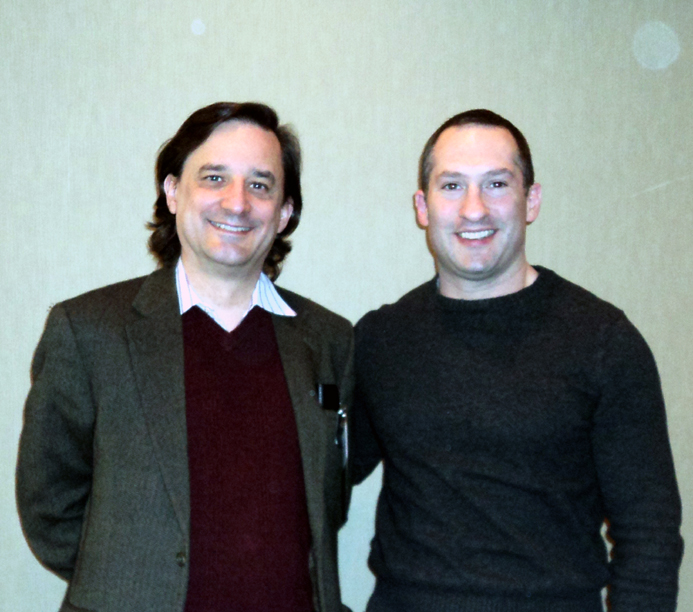
MICHAEL A. VENTRELLA: I’m pleased to be interviewing author Myke Cole, who constantly upstages me whenever we’re on a panel together at a convention. Headshots of Myke ColeAs a secu­rity con­tractor, gov­ern­ment civilian and mil­i­tary officer, Myke’s career has run the gamut from Coun­tert­er­rorism to Cyber War­fare to Fed­eral Law Enforce­ment. Thank goodness for fantasy.

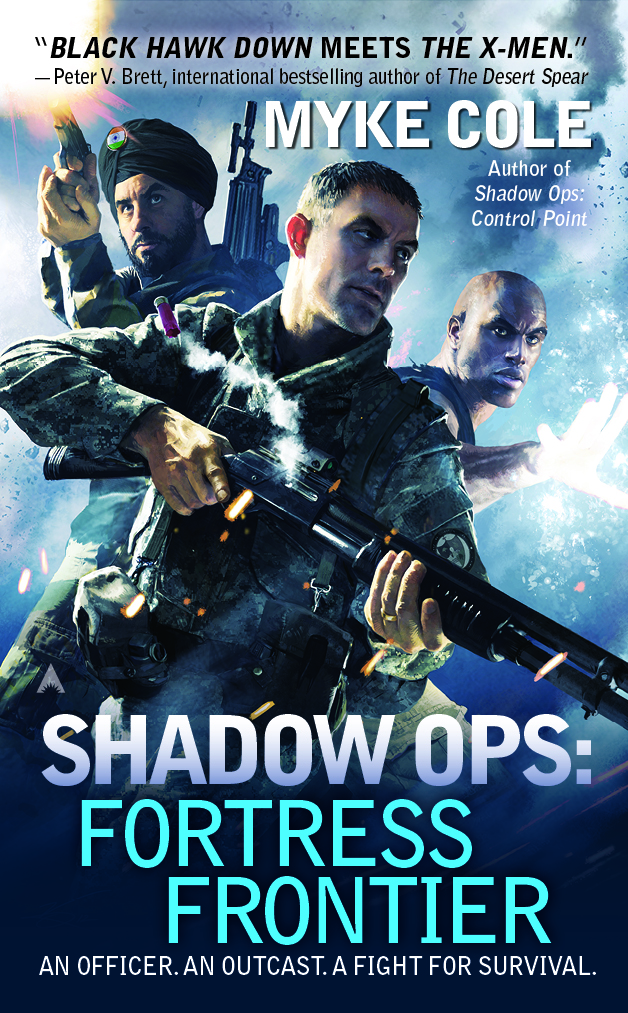
Myke, let’s start with the big news about your latest book FORTRESS FRONTIER. Give us a hint of what it’s about.

MYKE COLE: FORTRESS FRONTIER is the second book in my SHADOW OPS military fantasy series. It tells the story of a military bureaucrat suddenly forced to take command of a combat outpost against hopeless odds. The book explores the question we all ask ourselves: how would I stand up in a crisis? What would I do if I were truly tested?

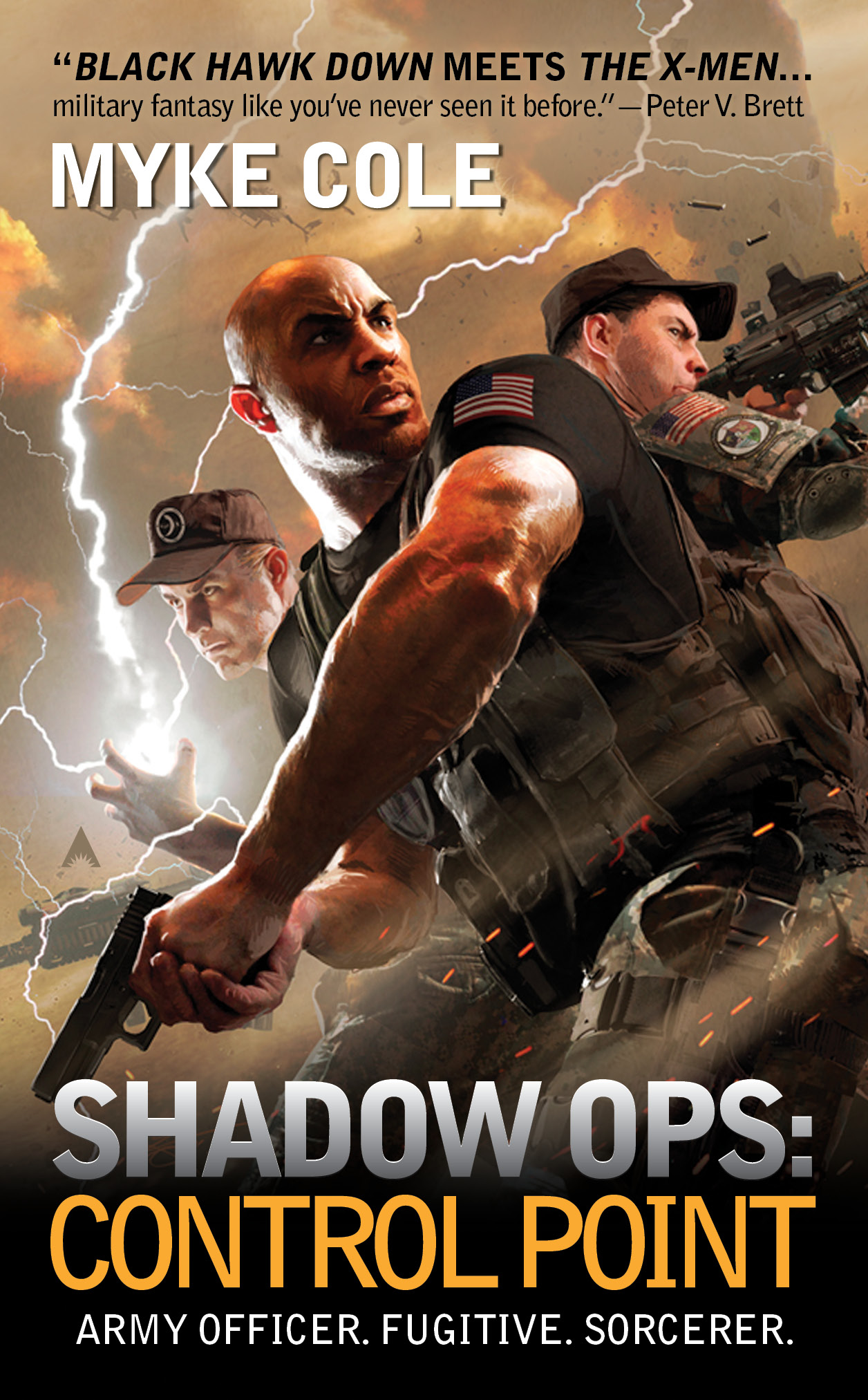
Oscar Britton, the main character in CONTROL POINT (SHADOW OPS #1) is a character in FORTRESS FRONTIER, but not the protagonist. I always intended to use a ensemble cast in this series, and FORTRESS FRONTIER is the first step in that direction.

VENTRELLA: How are you promoting it?

COLE: The same way I promoted CONTROL POINT: I’m carpet bombing the Internet with guest blog posts, interviews, giveaway contests and excerpts. I just put out a book trailer. I’m getting out to cons as much as I can. I just got back from Confusion, and I’ll be hitting Boskone and Lunacon in the next two months.

But the biggest thing I’m doing? Not being a dick. I don’t bear-bait or take polarizing stances in public. I don’t tear other people down. I respond to my fans when they email or @ me. I have adhesive backed bookplates that I can sign and send to people if they want an autographed copy of my work, but don’t want to pay the high price of shipping a book back and forth. I generally try to be accessible, available and kind to people, whether they’re industry pros, personal friends or fans I’ve never met before. That’s rarer than you’d think, and it goes a long way.

VENTRELLA: Tell us about the Shadow Ops series.

COLE: Peter V. Brett described it best when he called it “Blackhawk Down meets the X-Men.” It’s as honest a look I can provide into how the US military would deal with the existence of magic. It deals with some tough issues like the conflict between liberty and security in a free society, but it’s also crammed full of giant explosions and helicopter gunships squaring off against rocs. Win-win, if you ask me.

VENTRELLA: Do you have a set series in mind? In other words, do you have a plan for a specific number of books in the series?

COLE: I’m under contract for 6 books right now. BREACH ZONE will complete the arc of this particular story, but the other 3 will also be SHADOW OPS books. ShadowOps_FortressFrontier_US_Final1Books 4 and 5 will be prequels, taking place in the early days of the Great Reawakening before CONTROL POINT. Book 6 will follow an ancillary character from FORTRESS FRONTIER on his own adventure.

After that, I’ll take a look at the state of publishing and book selling, see how fans are reacting to my work, and decide where to go next.

VENTRELLA: I have to admit that “military fantasy” is a genre with which I am unfamiliar. Was that a hard sell to agents and editors?

COLE: I only ever tried to sell it to one agent – Joshua Bilmes. He has been a dear friend for over a decade now, and from our first conversation, I knew he was the only person in the world I wanted to represent me. He rejected 3 novels from me over 7 years before finally agreeing to represent CONTROL POINT, and a lot of people suggested I try other agents. But I never did. It was going to be Joshua, or it was never going to be.

Editors were a different story. They did balk at a blending of two genres that appeal to disparate audiences. When CONTROL POINT went out to market, it garnered rejection after rejection, many with comments like, “the story seems unsure of its voice.” I had almost given up hope when Anne Sowards made the offer.

VENTRELLA: How did you obtain Joshua Bilmes?

COLE: How did I “obtain” him? That makes it sound like I have him trussed up in my desk drawer. I knew of Joshua by doing research on who was representing authors I admired. I then deliberately sought him out at a SFWA party at Philcon in 2003. Fortunately, we hit it off amazingly, stayed up talking until 3 AM, and have been close friends ever since. As I said earlier, Joshua rejected 3 novels over 7 years from me. All that time we were visiting one another (I lived in DC at the time), exchanging phone calls and emails. The friendship was always separate from our business relationship.

But, ultimately, how did I “obtain” him? I wrote a good book and sent it to him. That’s the only way anyone ever gets an agent. There is no end run.

VENTRELLA: It appears that you started off, like me, writing mostly nonfiction. Do you feel that the skills learned in writing nonfiction are comparable to writing fiction?

COLE: In the bones, sure. Good nonfiction requires solid prose styling and feel for rhythm, the beats of your sentences. You have to be interesting and construct a narrative in essays just as much as in fiction.

The real difference for me is in Law-Enforcement/Military/Intelligence writing (reports, orders, plans, analysis, etc) that is a totally different animal.

VENTRELLA: What was your first published piece of fiction and how did you get that published?

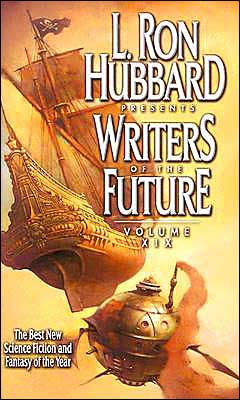
COLE: Let’s talk about the first piece of fiction I had professionally published. That would be “Blood and Horses,” a military SF short that took 3rd in the Writers of the Future contest and was published in Vol. XIX. wotf191I did it the old fashioned way, I entered a story every quarter, without fail, for 5 years.

Now, it was a great experience and there’s no doubt that it launched my career. I learned a ton out in LA, developed some critical contacts, and got the shot in the arm I needed to keep going. Unfortunately, I later learned that the contest is not firewalled from the Church of Scientology, and there are personal and financial ties there. I certainly won’t judge the beliefs of the church (or of any faith), but there’s enough reporting of physical/financial abuse tied to them that I am now very uncomfortable with having participated. There’s nothing I can do about it now, other than caution new writers who are considering getting involved.

VENTRELLA: Let’s talk about writing. Are you someone who outlines heavily or are you a “pantser”?

COLE: I am an uber outliner. I frequently have outlines as long as 50-100 pages before I write a lick of prose. I also submit my outlines for feedback before beginning prose. This way, I don’t wind up with a problem later in the manuscript that forces me to throw out 30,000 words at the 11th hour. Oh, wait. That happens all the time anyway. *sigh*

VENTRELLA: Do you start with an idea, a setting, or a character?

COLE: In the case of the SHADOW OPS series, I started with an idea: “How would the US military handle magic?”

VENTRELLA: What sort of research do you do when building a character (or a setting or plotline, for that matter)?

I use the Internet almost exclusively. It’s rare I can’t find intimate details on almost any topic (I had to research heavy crane operations for BREACH ZONE). When I hit walls on Wikipedia, I turn to friends and sometimes acquaintances and fans I know through social media.

When all else fails, I make it up. These are fantasy novels.

VENTRELLA: What techniques do you use to make your hero someone with whom the reader can relate?

COLE: The irony here is that the technique I used arguably failed. I made Oscar Britton, the protagonist of CONTROL POINT as human as possible. He’s wavering, indecisive, terrified of the decisions that face him. I feel confident that is an accurate portrayal of how a person of his background (bad family, no sense of rootedness) would handle the situation he finds himself in, but it’s also the most consistent criticism of the novel. In the end, I don’t think readers want real characters. They want dramatic, inspiring characters that feel real. There’s a big difference there.

VENTRELLA: What do you do to establish a believable fantasy world? In other words, how can you introduce the fantasy elements into the story and make them real without relying on info dumps?

COLE: I cheated. I use epigraphs at the top of each chapter that allow me to engage in as much exposition as I want without getting accused of info dumping. I mask it all in the form of quotes, newsclips, etc, but the truth is that it’s all just stuff I needed the reader to know and couldn’t think of any other way to get it to them.

VENTRELLA: When going through second and third drafts, what do you look for? What is your main goal?

COLE: First off, 2nd and 3rd drafts are hors d’oeuvres. CONTROL POINT went through 14 drafts. ShadowOpsCoverFORTRESS FRONTIER had 9. BREACH ZONE is currently on its 7th. And what is my main goal? To make the book awesome.

VENTRELLA: All writers basically write what they would like to read. So what do you like to read? Who are your favorite authors?

COLE: Totally disagree. Plenty of writers try to strike out and do something new, and others write what they think will sell. I certainly won’t pass judgment on either decision, but that’s not what I do.

My favorite authors? There isn’t room to list them all, but here’s a few: Peter V. Brett, Joe Abercrombie, Scott Lynch, George R. R. Martin, Richard K. Morgan, Naomi Novik, China Mieville, James Clavell, Bernard Cornwell, Jack Campbell, Mark Lawrence. Believe me, I could go on.

VENTRELLA: What advice would you give an aspiring author that you wish someone had given you?

Stop writing short stories. There’s like 3 people in the entire world who read short stories for pleasure. Everyone else is an aspiring writer looking for the magic key. You want to be a novelist so write novels. If you write a dynamite novel, nobody is going to care that you didn’t have a story published in F&SF or Realms of Fantasy. They’re going to buy and publish your novel because it’s awesome. Stop wasting time and learn your craft.

VENTRELLA: With the publishing industry in constant change, do you think the small press has become more acceptable, prominent, and/or desirable for beginning writers?

COLE: No.

VENTRELLA: Do you ever advise self-publishing?

Yes. I think that self-publishing is a perfectly viable way to go about bringing your work to market. The trick is making sure that you actually have work that’s good enough to bring to market and you’re just an unrecognized genius, vice doing an end-run around the bald fact that your work just isn’t there yet.

I absolutely cannot judge my own work. I need an expert to give it the nod. Self-publishing also requires a lot of project management skills. You have to be your own art director, and you have to supervise the copy-editor and the proof reader. You have to get ISBNs, you have to convert and format your text. You have to get it uploaded and figure out a good price point.

That’s a shit ton of work. I’d far rather give a professional a percentage of my profits and let them deal with all that crap.

VENTRELLA: What other projects are you working on?

COLE: After that big speech I just made about short stories and self-publishing, I’ve just completed a novelette set in the SHADOW OPS universe. It’s a piece of backstory for BREACH ZONE told from the goblin point of view. I briefly considered sending it out to short story markets, but was turned off by the market policies (no simultaneous submissions). So, now I’m toying with the idea of self-publishing it, or using my literary agency’s eBook program (for which they charge the standard fee of 15%).

14

My Arisia 2013 Schedule

One of my favorite science fiction literary conventions is Arisia in Boston, which this year will be on the weekend of January 18th. I’ve attended almost every one since the first (which was when I still lived in Boston back in the 80s). The Guests of Honor this year are Tananarive Due and Steven Barnes (who I have interviewed for this Blog — it will be great to meet him in person!)

Anyway, this year Arisia is keeping me busy as usual! You can read my bio and schedule on their web page, but here’s the run down.

The Movie Year in Review (Saturday 11:00 am): Our annual look back at the year in SF, horror, and fantasy film. Our panel of experts will cover every theatrical release of 2012. Find out which ones are worth catching up with. Note: time for audience participation is reserved for the end of our panel’s high speed review. With Dr. Chris, John Bowker, Garen Daly, and Daniel M. Kimmel.

Promoting Your Book (Saturday 5:30 pm): What works in promoting a book? Do book-signings really help a small author? Are bookmarks and/or postcards effective at garnering attention? Does a blog help or hurt an author? Does an author have to have a website? How do you find good reviewers? What tactics do NOT work? What methods might work for an established author that wouldn’t work for a beginner? With Kelly Hashway, Elaine Isaak, Gail Z. Martin, and Susan Soares.

So You Want to Run a LARP? (Saturday 7:00 pm): Maybe you’ve played in a LARP or three, or maybe you’ve only just learned about it. Now you want to run your own LARP. Where do you start? How do you recruit players and assistants? Where do you find a space? How much writing do you really have to do? With Anna R. Bradley, Nat Budin, James T. Henderson Jr, and Rachel Morris.

Running Great Games (Saturday 10:00 pm): How do you keep players engaged in a game? How do you manage different kinds of role-players and types of play? What about interruptions like roommates and smartphones? Share your secret techniques and best practices for running role-playing games (and other moderated games) that keep players coming back for more. With Steven Hammond, Andrew Kirschbaum, Brian Liberge, and David Nurenberg.

Death in Gaming (Saturday 11:30 pm): The consequences of death vary greatly from game to game. Almost every gamer ends up getting killed and having to deal with the death of their character. How do various systems treat death—are there differences between formats (video, tabletop, LARP, etc.)? Are there common depictions of Death as a character? With Andrew Kirschbaum, Adam Lipkin, Rachel Morris, and Scott Wilhelm.

Character Building (Sunday 10 am): Making memorable characters that resonate with the reader and fit perfectly for the story is an art. How do you find the core of a character—their traits, habits, and attitudes—and show them effectively to your audience? Our panelists discuss various methods of getting to know your character in the course of your writing. With Elaine Cunningham, Catt Kingsgrave-Ernstein, Joy Marchand, and Suzanne Palmer.

Forensic Science and Criminal Justice (Sunday 5:30 pm): Just how much can real-world forensic science and criminal justice tackle fields such as ballistics, DNA evidence, drugs, entomology, finding relationships and patterns in crime scenes and evidence? And, while forensic scientists work to improve accuracy and sensitivity, just how much are criminals able to use the same technological understanding to hide their crimes? Come discuss how and why courts (and the media) get it wrong, and how that misunderstanding differs from what is really possible. With William Hebard, Reese Jordan, Sarah Smith, and Lisa J. Steele.

All Together Now: Yellow Submarine at 45 (Monday 10 am): This year marks the 45th anniversary of the release of the Beatles’ animated movie Yellow Submarine. It is a classic musical fantasy film for children of all ages, complete with bizarre creatures, fantastical adventures, and an overarching moral theme. Nominated for a Hugo, Yellow Submarine remains transcendent beyond its litany of classic songs by the Beatles. It influenced the look and feel of animated film for many years after. With Mark L. Amidon, Adam Fromm, Victoria Janssen, Daniel Miller, and Jeff Warner.

Here’s my bio from their web page:

Michael A. Ventrella’s second fantasy novel The Axes of Evil (a sequel to Arch Enemies) was released in 2010. He is editor of the Tales from Fortannis anthologies, and his pirate short stories have appeared in the anthologies Rum and Runestones and Cutlass and Musket: Tales of Piratical Skulduggery. He’s currently working on a novel about a vampire who runs for President. Michael is one of the founders of the biggest fantasy medieval live action roleplaying group in North America and currently runs the Alliance LARP. His Rule Books and Players Guides are available in all formats. He is also the founder of Animato which was the first major magazine dedicated to animated films. He has been quoted as an animation expert in Entertainment Weekly and in various books. His blog (www.MichaelAVentrella.com) interviews other authors, editors, agents, and publishers to get advice for the starting author. In his spare time, he is a lawyer.

Interview with Agent and Author Donald Maass

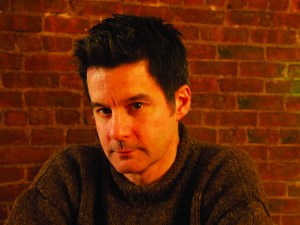
MICHAEL A. VENTRELLA: Today I am very pleased to be interviewing Mr. Donald Maass, one of the top literary agents in New York. Donald Maass’s agency sells more than 150 novels every year to major publishers in the U.S. and overseas. Donald MaassHe is the author of THE CAREER NOVELIST (1996), WRITING THE BREAKOUT NOVEL (2001), WRITING THE BREAKOUT NOVEL WORKBOOK (2004), and THE FIRE IN FICTION (2009). He is a past president of the Association of Authors’ Representatives, Inc.

I first met Mr. Maass when he taught a writing workshop in the Lehigh Valley. I learned an awful lot from him, but when we spoke, it was mostly about John Lennon (who we both admire). I used his 2002 book WRITING THE BREAKOUT NOVEL to help tone my latest manuscript and have just finished reading his newest book, WRITING 21ST CENTURY FICTION: HIGH IMPACT TECHNIQUES FOR EXCEPTIONAL STORYTELLING.

Let me start by asking about the underlying theme of 21st century storytelling. How is that different from 20th century storytelling? Why did you make that distinction?

DONALD MAASS: There are many ways in which fiction writing has evolved. Many 20th Century techniques have dated. Objective description, scene-and-sequel, strict adherence to tense/person are all unnecessary. Genre rules are confining and regularly broken. 21ST In WRITING 21ST CENTURY FICTION I forecast the death of genre. Genre boundaries didn’t exist a century ago and won’t a century from now.

Overall, I’m pushing fiction writers to understand what gives fiction high impact, which is great stories beautifully written. High impact fiction is also highly personal, meaning that to the degree one writes according to rules, or simply to sell, one is working in a box. To write high impact fiction you’ve got to break out of your box—and “literary” can be a box too, By the way — or build an altogether new box which is wholly your own.

VENTRELLA: You list “Quirks” and “Special abilities” as ways that writers can create characters with which readers will bond. Is it possible to go overboard?

MAASS: Theoretically a character could go over the top, I suppose, but in nearly all manuscripts it’s the reverse. Characters, when they stand out, show us strength, self-awareness, strong opinions, lively voice, comprehensive world views and more. Quirks, handicaps, special abilities and even superpowers are common and useful devices nowadays, it’s true, but don’t by themselves do the whole job, or fit every story. Great characters are the sum total of what they do, who they are and how they fully experience their story world.

VENTRELLA: There are exercises after each chapter, which are similar to the ones you had me and those in your writing seminars do. Some of them made a great impression on me and were very useful. How are these different from your earlier workbook?

MAASS: They’re shorter, more prompts than step-by-step exercises. The creative brain moves at high speed. I’m trying to match that!

VENTRELLA: Have you ever made the authors you represent do these exercises?

MAASS: Oh, constantly. They ask me for that.

VENTRELLA: Your advice to always have “micro-tension” on every page has been criticized by some who, I believe, don’t completely understand your point. Is it possible to have a “page-turner” without tension on every page?

MAASS: No. Tension is not about action, explosions and shouting. It’s about generating unease in the mind of the reader. BREAKOUT There are many ways to do that, many of them subtle. Even language itself can do it. When tension exists in the mind of the reader there’s only one way to relieve it: Read the next thing on the page. Do that constantly, on every page, and readers will read every word — you have a “page turner”, no matter what your style, intent or type of story.

VENTRELLA: How much of writing is innate? In other words, do you believe there are just some people who are born storytellers but simply need to learn technique? Or can anyone become a good writer?

MAASS: I would say that anyone can become a better writer. Every writer has strengths and every writer has weaknesses. In WRITING 21ST CENTURY FICTION there’s a chapter devoted to helping authors understand the writer they are, plus the writer they’re not, and compensate. Look, some writers will never be artful stylists and some will never be maniacal plot spinners. That doesn’t matter. What matters is growing. There’s always a way to work on what you’re weak at, and succeed.

VENTRELLA: How do you balance the surprise element — where you have your character do the exact opposite of what is expected — with believability and consistency?

MAASS: Great question! Let me put this proposition to you: When your mousy librarian pulls a gun out of her purse, readers won’t object, they’ll dive deeper. It’s psychology. The expected is dull. The unexpected is intriguing. Readers will go with you when you surprise them. The mistake I think is not pulling that gun in the first place or, when it’s drawn, not fully playing out all the consequences of pointing that gun. Working that out and using it is what makes a surprise believable.

VENTRELLA: When looking at a query letter, how do agents react to authors whose previous work has been self-published?

MAASS: There’s a certain bias against that but it comes not from moral objections but from experience. That said, the fact is that there are hundreds of famous writers who first self-published. It’s not about one’s chosen path but about how well one writes.

VENTRELLA: In this market, with the publishing industry changing daily, how important are the small press?

MAASS: Very. We work with them, hoping and praying that the cash crunches that can clobber small presses don’t hit them. There even are some “digital first” models that are working, though I would stress that they’re new and evolving. fire E-books aren’t a revolution, new utopia or new paradigm. They’re simply a new opportunity in the not especially easy business that we call publishing.

VENTRELLA: Some established authors are foregoing agents and publishers altogether and are selling their work as ebooks on their web pages. Why do you advise against that?

MAASS: Your pool of potential readers is cut by three quarters, and your ability to make them aware of your book is reduced even further. You’re dependent upon three bookstores who only display one hundred titles in your category. A handful of authors have made this work but they have the minds and energy of publishers. That describes very few reading this interview, trust me.

VENTRELLA: Allow me to ask something a bit more personal. You advise authors to not worry about genres but to write the story you want. My latest manuscript mixes vampires with a political thriller. In response to my query letter, I have received rejection letters from agents that handle political thrillers saying “We don’t do vampires” and agents who like vampire stories saying “We’re not interested in political thrillers.” Should unestablished authors aim more for specific genres in order to get noticed before trying to mix things up? Or are the responses I am getting normal, and I just need to keep trying until I find the right agent?

MAASS: Cross-genre fiction can be difficult to pitch and place, yet some of the most successful authors we represent have invented new genre hybrids. One thing I’ve learned, though, is that when a speculative element is involved, say vampires, it’s often best to look first toward agents, editors and imprints comfortable with that. (Alternate history might be an exception, and YA seems to be open to anything.) Keep trying. I find that wonderfully written works always find their way into print, even if the don’t always fit neatly into a slot.

VENTRELLA: What really excites you when you find a great book? Can you tell instantly?

MAASS: I know right away when I’m in the hands of a confident storyteller. I’m drawn immediately into a full realized story world, yet there’s no rush to tell me everything about it. Characters immediately win and intrigue me, even when they’re dark. The emotional life of the characters is rich, their inner struggles are compelling, and the story immediately starts to mean something. It makes me think and feel. No problem, right?

VENTRELLA: What was the last great book you read?

MAASS: Last great book–? Argh, too many to say. Right at the moment I’m reading Susanna Kearsley’s THE ROSE GARDEN (2011), a gothic tinged past life story. Susanna counts as her influences some greats like Phyllis Whitney. She writes warmly and does history well, too. The book’s got me under its spell.

Interview with Author Stephen Brayton

MICHAEL A. VENTRELLA: I am pleased to be interviewing Stephen L. Brayton today! He has written numerous short stories and books, mostly horror and mystery. His website is here.

Stephen, tell us about your latest work.

STPEHEN L. BRAYTON: I’m working on a book trying resolve some of the imponderable questions of life. Why do all boats have right hand drive? Why is there braille on the keys of drive through ATM machines? Does anybody really know the rules of cricket? Why do females always go to the restroom in groups?

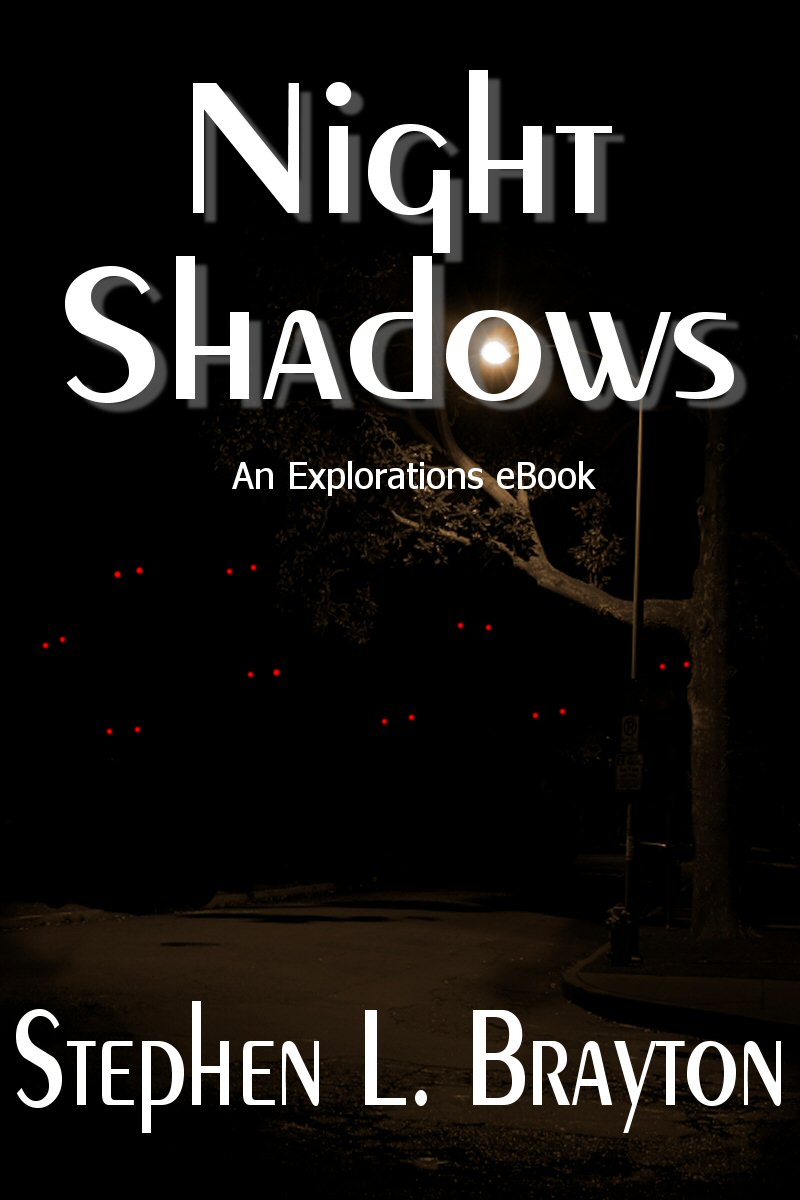
Huh? Oh, you want to know about my latest writing project. Well, it’s called ALPHA, but don’t get the idea that it’s the first book. The first book of mine to be published was called NIGHT SHADOWS, about a homicide detective and an FBI agent out to solve some supernatural murders in Des Moines.

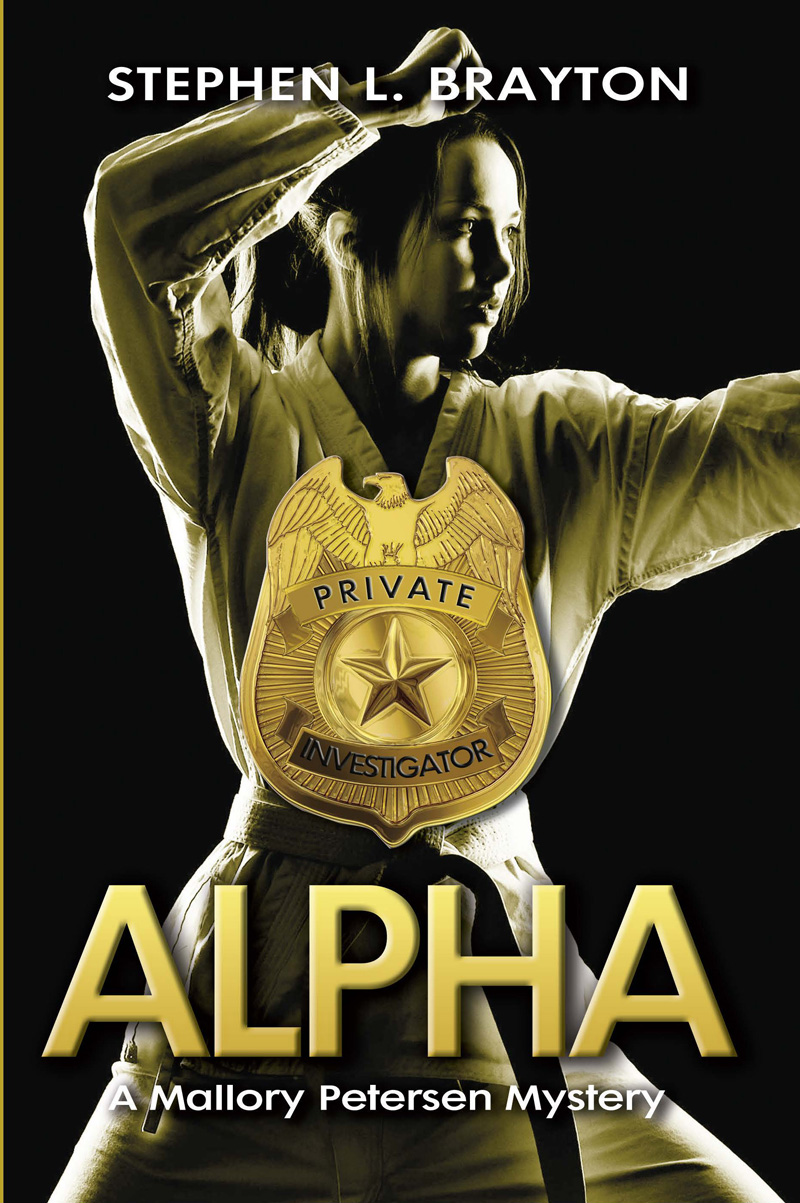
BETA was the first book in the Mallory Petersen series. Mallory is a Fourth Degree Black Belt and private investigator in Des Moines. Most of her cases are a little odd, but every now and then she accepts something serious. In this book, she is hot on the trail of a kidnapped eight year old girl and tangles with members of a child pornography ring.

In ALPHA, published this last August, Mallory becomes involved in the investigation of the murder of her boyfriend. This time around she has to deal with crooked cops, illegal narcotics and gangs.

VENTRELLA: What is your next project?

BRAYTON: I’m working on an entirely new type of vampire story. I want these vamps to sparkle when they appear. I think it would make a great series of movies… What? Already done? Oh well.

Actually, I have three projects on my desk that I would like to finish. I’m 2/3 completed with DELTA, the next Mallory Petersen mystery. I’m also reworking the sequel to NIGHT SHADOWS. I also have another private investigator mystery’s first draft finished. It just needs hours and hours of editing and rewrites.

VENTRELLA: You’ve had more than one publisher for your works. How did you choose which publisher to use?

BRAYTON: Whichever one would succumb to blackmail first. See, I have video of…well, let’s save that for another day, shall we?

Actually, for NIGHT SHADOWS and BETA, I queried several publishers after I attended a conference in Chicago in 2009. Three of them emailed rejections, but Echelon Press accepted both novels.

A couple years later, I met Sunny Frazier, acquisition editor for Oak Tree Press and became a member of her Posse email group. In 2011, I had finished with ALPHA and queried her to see if Oak Tree would be interested in this book. She accepted and ALPHA was published as a trade paperback. The first two are currently only available as eBooks.

VENTRELLA: What advice would you give a starting author about finding a publisher?

BRAYTON: I think writers need to start promoting early. How early? Well, when did you first conceive of your idea for a story? Yes, that early. Get yourself a website, a blog, and join some of the social network sites. Attend conferences and critique groups and make contacts? How does this aid you in finding a publisher? Well, if you’re already promoting and becoming serious about writing, then it’ll be that much easier to find someone who is interested in you.

Two examples of how this can work. First, when Sunny receives a query, she doesn’t begin with the manuscript. She puts the writer’s name into an Internet search engine and sees how many times that person is listed? If the person isn’t already a presence, Sunny will be less inclined to accept the manuscript no matter how good the story is. She’s looking for marketers first, then she’ll consider the quality of the story.

A second example is, Kat, an author friend who attended a seminar in Minneapolis a couple months ago. During the two days, she attracted the attention of the presenter who became interested in Kat’s story and and asked her to finish it and submit it.

These are two of the ways to find a publisher. Then, it’s up to the writer to do some homework. Check into the publisher and find out how they operate. Do authors have multiple books with the same publisher? How do they operate? How much work are they going to put in to promote your book and how much are you going to have to do? What promotional ideas do they have?

VENTRELLA: What are the disadvantages and advantages of using a small publisher?

BRAYTON: Disadvantages: they don’t have the financial means to give you a splashy promotion. Of course, nowadays, neither do the big guys. All publishers are expecting the author to do the lion’s share of promoting. Most small publishers have a small staff who are very busy, so don’t expect things to move quickly.

Advantages: I think in some ways, the smaller presses can be more personable. Plus, they’re more willing to accept new authors because they’re looking for business. They can’t afford the well established names but there are some popular writers who have had a fair amount of success with the indies.

VENTRELLA: Do you believe that anyone can be a fiction writer or is the ability to tell a story more of an innate thing?

BRAYTON: I think everybody tells stories. Just eavesdrop on a conversation at a restaurant or a bar or when friends gather. Everybody is telling stories. Sometimes the stories relate a true incident and sometimes the person will, uh, stretch the truth to sensationalize the story.

It’s a different matter if the person can take pen to paper to tell the story in a way that is concise, has a beginning, middle, and ending. Does the person know how to follow simple grammar/punctuation/spelling rules and know when to break them? Is the story worth telling or is the person just trying to tell what happened at work today?

Serious writers will take the time to learn the craft, learn from others, and constantly work to improve.

VENTRELLA: When creating believable characters, what process do you use?

BRAYTON: I remember when I created Mallory Petersen. Nobody told me to build a character profile, I just did it. It made sense to figure out all I could about the character. Likes and dislikes, personality, quirks, favorite color and flower. The car she drives, whether she rents or owns a residence. Her friends and enemies. I don’t do this with every character (although I should), but I know enough about my characters, right now, to make them vivid and memorable. When some secondary character needs more attention, then I’ll go back to the profile and fill in a bit more.

Because I write about a woman as my main character, I am constantly asking women if I’ve stayed true to the gender. Do I understand how women act and react? Is the personality too rough or too feminine? Do I understand how a woman feels when attracted to a man? This is my challenge, to keep Mallory’s character real in each book.
Most of the time when I research a story, I’ll visit the locations for each scene and try to envision how the character will behave during the scene. I’ll try to get into the character’s head and figure out what she’s thinking and if it seems reasonable, then I’ll go with it.

VENTRELLA: What is the best way for an author to use the services of an editor?

BRAYTON: I have discovered many ways to edit a manuscript. Unfortunately, I am unable to find the time to incorporate most of them. I’d love to have a three other people to run through the story. One reads it aloud, one reads along silently, and the third one listens. Then they switch roles. This way, everybody has a different perspective and a viewpoint I might not have considered.

Of course, there are critique groups which are invaluable. You can also pay for editing, although be careful because if you get someone who doesn’t know what he/she is doing, then you’ve wasted your money. I wouldn’t waste time and money on a professional editor unless you can afford it.

Besides, once your publisher’s editor gets it, that person is going to find mistakes and make suggestions. So clean it up the best you can before it’s submitted. You’ll save everybody a lot of time.

VENTRELLA: What is your writing process? Do you outline heavily, for instance?

BRAYTON: I’ve been learning that part of my problem is I don’t outline enough. I’m so eager to get to writing, I don’t think through a lot of the potential problems and pitfalls of the story and end up wasting some time having to research and possibly rewriting sections. This is what I’m currently experiencing with DELTA. I wrote a chapter and now I’m going to rewrite it because I talked with another author about how to strengthen the scene. If I would have researched the issue a little more in depth beforehand, I might have saved some time.

Yes, I outline. Then I write linearly, that is, from Chapter One onward. Normally, I write at work (after all my duties are done, of course) because it’s quiet with few distractions. I usually have NPR classical music on for background noise. I write longhand and my first edit is inputting the longhand onto the computer. Then I’ll read chapters to a critique group and jot down their advice.

VENTRELLA: What have you done to promote your work?

BRAYTON: Social networking. Blogtalkradio. Guest posts on other blogs. Internet interviews. Radio interviews. I was featured in a local television newscast. Library and bookstore appearances. I leave business cards wherever I go and put them in the mail when sending bill payments. I have family and friends who talk me up to others.

I’m open to discussing any other venues. I think authors need to look at non-traditional ways and places to promote. I know a couple of authors who co-write a series about animals. They attended the local Pet Exposition to sell their books. This is the type of thing authors need to look at when marketing.

VENTRELLA: What general advice do you have for the aspiring author that you wish someone had given you when you began writing?

BRAYTON: Do your homework! I think I covered a lot of it above when I discussed promoting early. Learn the craft of writing.

Figure out what you want to accomplish with your writing. Do you want to make money? Be famous? Be on the New York Times bestseller list? Entertain local folks? Do you want to write just for your family and small group of friends? Whichever you decide, invest some time to research the best method of accomplishing it.

If you’re going to be serious about writing, be serious. I’m get tired of hearing authors who are still outlining after several years or still developing characters or constantly rewrite the first chapter or switch stories because one isn’t working out. Come on! Knock it off and write! Stop the excuses and write. Sure, there are ‘life’ matters to attend to, but serious writers will make time to write. Nobody had to tell me to write, I wanted to write. I still want to write. I get antsy if I don’t. I feel as if I’m letting others and myself down by not finishing that next chapter.

Learn from others and find your way of creating and writing a story.

My Philcon 2012 Schedule

This weekend is the Philcon Science Fiction Convention, which is held every year in New Jersey. (Don’t ask).

The main guest this year is author Catherynne Valente. Artist Guest of Honor is Phil Foglio. I’ve been a fan of Phil’s for years (and I have an original piece of art I bought from him at an Arisia convention way back in 1986!) I keep trying to interview him for this blog, so maybe I can corner him at the convention for a few words.

Here is an incomplete list of guest panelists, which includes many people who have been interviewed on this blog: Danielle Ackley-McPhail, Keith R.A. DeCandido, Michael F. Flynn, Gregory Frost, Gail Z. Martin, Mike McPhail, Christine Norris, KT Pinto, Peter Prellwitz, Tony Ruggiero, Lawrence M. Schoen, and Hildy Silverman.

I’m a guest author too, of course. I’ll be there to participate in a few panels… so if you’re attending, be sure to say hi. You’ll probably find me hanging out at my publisher’s booth in the Dealer’s Room when things are slow. Look for the “Double Dragon” sign!

Here’s my schedule (subject to change):

Saturday 3:00 PM: The Reinvention of the Vampire (with fellow panelists KT Pinto, Brent Monahan, and Tony Ruggiero) What can be done in the post-Twilight era? Do we look forward to a time when vampires no longer sparkle? What new approaches can be taken with a monster that has haunted our imagination since the beginning of history?

Sunday 10:00 AM: God 2.0 (with fellow panelists Judith Moffett, Gary Frank, Ty Drago, and Wayne Zimmerman) If we were to design a Divinity deliberately rather than merely let it evolve naturally, what characteristics would we include and why?

Sun 11:00 AM: Reading (with just me!) That’s right, I’ll be reading from THE AXES OF EVIL and, depending on time and audience desires, my upcoming BLOODSUCKERS.

It’s a fairly short schedule for me … usually they keep me much busier, but I’ve been told Philcon has cut back on the number of guests and panels, so I suppose I can’t complain. I’ll have lot of fun talking about books and writing with everyone.

I’ll also be jealously watching my wife, who was assigned to be on two panels with Phil Foglio!

UPDATE: Pictures from the convention are here!

Interview with Author Melinda Snodgrass

MICHAEL A. VENTRELLA: Today, I am very pleased to be interviewing Melinda Snodgrass! Melinda Snodgrass studied opera at the Conservatory of Vienna in Austria, graduated from U.N.M. with a degree in history, and went on to Law School. She practiced for three years, and discovered that while she loved the law she hated lawyers — so she began writing science fiction novels.

In 1988 she accepted a job on Star Trek: The Next Generation, and began her Hollywood career where she has worked on staff on numerous shows, written pilots and feature films. Her novels THE EDGE OF REASON, and THE EDGE OF RUIN are currently available from Tor books. She has delivered the first two novels in a new Urban Fantasy series featuring blood-sucking lawyers, THIS CASE IS GONNA KILL ME, and BOX OFFICE POISON, and has a story in the latest Wild Card book, FORT FREAK. She is currently adapting Wild Cards as a motion picture for Universal Pictures. Her passion (aside from writing) is riding her Lusitano stallion Vento da Broga.

Let’s start by talking about the law. It seems that many writers of speculative fiction are also lawyers (myself included). What is it about the law that makes people want to escape so much?

MELINDA SNODGRASS: I went into law thinking it was all about truth and justice. It isn’t. It’s about process, and after three years in law school I realized that was okay too. Law = civilization, and our job as attorneys is to reach some level of basic fairness. I also think that much of law is contracts, and family law. The big Constitutional cases rarely turn up in an average law office, and that was what really interested me. I am great admirer of the Constitution. It is a beautiful document that was designed to grown, stretch and change, and aside from one disastrous episode (prohibition) it has always been interpreted to expand rights. That’s it’s genius.

VENTRELLA: Absolutely agree. It’s why I like being a criminal defense attorney — I do get to argue the Constitution from time to time.

You’ve used your legal experience well in your work, and especially in the excellent Star Trek: Next Generation episode “The Measure of Man.” How did you decide upon that plotline and theme? (Reading Dred Scott?)

SNODGRASS: Yes, it was the Dred Scott decision. It worked perfectly to set up a conflict between Data and Star Fleet command. I also had a navy pilot buddy who gave me the most powerful point of all. He told me that when a ship is at sea, and you can’t utilize JAG officers then the Captain always defends and the first officer prosecutes. To pit Ricker and Picard was just too perfect.

VENTRELLA: Did the story change much between your script and what we saw on screen? If so, what changes did you like and/or dislike?

SNODGRASS: There were virtually no changes. The only thing that happened was a number of scenes got cut because the script ran very long. Now all of those deleted scenes have been restored to the new Blue Ray DVD release that is going to happen in December so folks will be able to compare the “as aired” version with the extended version. There are a couple of scenes I’m really glad are back in.

VENTRELLA: Let’s discuss writing for television. How did you get your break there?

SNODGRASS: I owe it all to George R.R. Martin. He had gone out to Hollywood to write for first the New Twilight Zone, and then for Beauty and the Beast. He called me, and said “Hey, I think you’d be pretty good at this screenwriting thing. It works to all of your strengths – strong plotting, powerful characters, and good dialog, and if you write a spec script I will show it to my agent.” I picked Star Trek because I had loved original Trek as a kid, and I didn’t want to put George on the spot if I wrote a crappy B&B script.

VENTRELLA: How does writing for television compare to writing a short story or novel?

SNODGRASS: Different mediums and you always have to keep that in mind. A short story or a novel can stand if it’s got enough atmosphere and is evocative even if it’s light on plot. That just won’t work in a screenplay. Also interior dialog can work in prose, and it has to be changed to actual dialog to work on screen. You have to be able to see it and hear – film is a visual medium.

VENTRELLA: While there are plenty of science fiction shows on TV these days, there really aren’t any traditional space-faring shows like Star Trek or Babylon 5 or Firefly any more (except perhaps for Dr. Who). In fact, even in literature, there seems to be less and less. Why do you think that is?

SNODGRASS: Expense is the primary reason. Special effects cost a lot of money. I also think there is the fear of comparison to Star Trek, and that it can’t be made different or interesting. I don’t agree that space dying out in literature. I think we are seeing a renaissance of space opera. For awhile writers did seem to think space based stories were too juvenile, but with the success of books like LEVIATHAN WAKES, and the whole collection of British space opera writers I think it’s a booming field. I, for one, am very happy about that. It’s what I like to read, and my next big project is a space opera series.

VENTRELLA: How did you get your first “big break” in publishing?

SNODGRASS: I had written my first novel in the Federal-court-judge-rides-circuit-in-outer-space series, but I couldn’t get any traction. David Hartwell offered me a chance to write a Star Trek novel, and I did. He also counseled me to write only one. I have followed that advice to the letter. The Star Trek novel was THE TEARS OF THE SINGERS.

VENTRELLA: I remember reading that years ago and really enjoying it!

Aspiring authors often seem to think that writing a book is easy and your first one is sure to be a huge hit. What writing experience did you have prior to publication?

SNODGRASS: As I said before I had trouble getting traction with my S.F. books until TEARS. But I’ve been very lucky. I broke in right at the big boom in romance. I had quit the law firm, and I needed to pay the mortgage so I wrote six romance novels under pseudonyms while I also worked on my CIRCUIT novel. The romances sold, had the advantage of teaching me how to write to deadline, and finish a book (something people have trouble with), and they paid my bills.

VENTRELLA: You certainly have not shied away from politics and religion as themes. In fact, your Edge novels deal with that theme. What spurred you to write that series?

SNODGRASS: It was New Year’s Even 1999. I was sitting with Steve Gould, and Laura Mixon, Walter Jon Williams, and several other friends in the bar at El Pinto in Albuquerque. We were drinking margaritas and watching the celebrations around the world as we entered the twenty-first century. We being science fiction writers were bitching that it was actually going to be the twenty-first century, but then a new bitch occurred to me, and I asked the group, “Where is my Moon base and my air car? Why are at the dawn of the 21st century, and people put more credence in guardian angels and healing crystals and tarot cards then they do in science?” Then I thought, maybe there’s an outside force driving us to be ignorant and hateful. That was the start of the idea.

VENTRELLA: You’ve also discussed religion and politics on your blog and Facebook. Now, as a starting writer, I’ve been advised to avoid these subjects, but I ignored that advice. Do you think writers should avoid these issues for fear of alienating potential readers?

SNODGRASS: I think people should write stories that interest them. Stories they would like to read. Of course there are going to be readers who won’t like those stories, but that’s life. Some people like chocolate ice cream and others like vanilla. You can’t produce something that makes everybody happy so you may as well write what makes you happy. Writing is hard, you shouldn’t write something if you don’t enjoy it.

VENTRELLA: To relate back to an earlier question, do you think the current anti-science nature of the religious right has had an effect on hard science in literature?

SNODGRASS: I don’t think it’s affected us in the science fiction field. I think we just ignore the gibberish about evolution not being true, or the Earth being 6000 years old. Most of us love science fiction because we love science and the wonder of discovery.

VENTRELLA: Many people would also know you from the Wild Card series with George R.R. Martin. How did that association begin?

SNODGRASS: George and I were in a role playing group with a lot of other writers – Walter Jon Williams, Victor Milan, John Jos. Miller. Vic had given George Superworld for Christmas and we were playing the game obsessively with George as our game master. One day we had played until 2 or 3 in the morning, George had stayed over at my house, and he wandered out for breakfast and said, “there has to be some way to turn this obsession into money.” That’s when we started to discuss it as a shared world anthology. We cooked it up in my dining room over pancakes and bacon and lots of coffee. I came up with the aliens and the virus because George didn’t want the usual stupid superhero origin story – “struck by lightning while standing in a toxic waste dump”.

VENTRELLA: What do you think makes the Wild Card series so popular?

SNODGRASS: The characters and their interactions. The real world problems they face. Steve Leigh wrote an absolutely heartbreaking story for FORT FREAK about a long time character who is three people fused into one body dealing with the onset of Alzheimer’s in one of the members. It literally brought me to tears. You’re not going to see something like that in most comic books.

VENTRELLA: Who are your favorite authors?

SNODGRASS: God, that’s a really hard question. Outside of the field I often reread John le Carre and Georgette Heyer. In the field I have so many writers I love that it’s hard to narrow it down. Heinlein juveniles. Clifford Simak’s WAY STATION, new young writers like James S.A. Corey and Ian Tregillis. George doesn’t need a plug from me. Most of the world knows his genius and abilities. And I tend to reread The Lord of Rings by J.R.R. Tolkien over and over. I like mysteries very much – Dorothy Sayers, Elizabeth George, Michael Connelly. I could fill pages so I’ll stop with that.

VENTRELLA: What are you working on now?

SNODGRASS: I am writing the Wild Card movie for Universal pictures. I have sent a big hunk of the third Edge book to my agent. I’m writing up the proposal and chapters for my space opera series, I have another urban fantasy book due at Tor that I’m writing under a pseudonym, Phillipa Bornikova. George and I are trying to put the next Wild Card book – LOWBALL to bed. I’m really busy. Sometimes I want to take a nap.

VENTRELLA: And finally, since this is a blog for aspiring authors, what advice do you think needs to be said that hasn’t been emphasized enough?

Write what you love. Treat it like a job. And don’t break your promises to your readers/viewers. Give them the ending that you promised in the opening chapter.

Interview with author Ryk E. Spoor

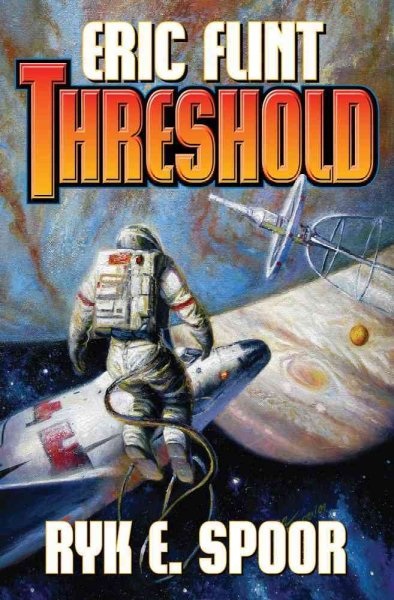
MICHEAL A. VENTRELLA: I’m pleased to be interviewing author Ryk E. Spoor today!

Ryk, like many genre writers (including myself), you read science fiction from a young age and then got into gaming. What is it about role-playing games that encourages people to become writers?

RYK SPOOR: Well, on both sides of the game – GM or player – the game itself is telling a story. It may be a very simple story, especially for beginning players or people just in it for a beer-and-pretzels amusement, but a story about how these people go out, confront problems, solve the problems, and achieve their goals. So pretty much by its very nature, RPGs make you into a storyteller … which certainly encourages you to start writing down the stories that affected you most. It’s all downhill from there.

On the GM’s side, of course, it’s even more so. You’re the person who constructs, or at the least controls and directs, the entire world. You know what the villains are doing and why, you have to figure out how they deal with things when your players do something you don’t expect (and they always do something you don’t expect), and so on. That’s pretty much what a writer does – invent a world and tell us the stories in that world. For some writers, there’s even the equivalent of those annoying plot-busting PCs; some writers find their characters taking off on their own.

So honestly, I think the fact is that the very essence of a well-run RPG is storytelling, and anyone who does that a lot will have stories they want to tell.

VENTRELLA: On a previous blog post, I wrote how important it is to make connections if you want to get ahead in the world, with publishing being no exception. Your story is a bit unusual in that regard. How did you go from being a fan/troll to a published author?

SPOOR: Heh. The short version is that I insulted the right person at the right time. I could give you the long, long version, but since this is a written (and presumably to be webbed) interview, let me just point you here; the key part starts with the sentence, “Then one day, I got into an online argument with Eric Flint”, which is a little less than halfway down that page.

VENTRELLA: Had you ever submitted any stories for publication before that?

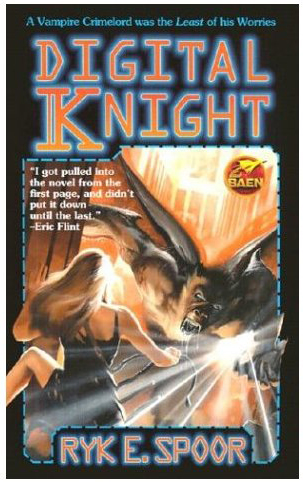
SPOOR: I actually had submitted a short story when I was 11 to a magazine (I no longer know even which one). It was some years later that I started submitting the Jason Wood stories that eventually became DIGITAL KNIGHT. All of the rejections for those stories read the same way: “This was a great story, everyone in the office loved it, but it’s way too long for magazine publication.” Of course, as individual stories, the Jason Wood stories are also far too short to be novels; they’re novelette or novella length works, which has for years been pretty much the worst length to try to publish.

The three stories which formed the core of DIGITAL KNIGHT – “Gone in a Flash”, “Photo Finish”, and “Viewed in a Harsh Light” – were eventually collected by me and put up for electronic purchase as “Morgantown: The Jason Wood Files” at hyperbooks.com; this was long before the e-book explosion happened, of course, since they were up for several years before Baen ended up publishing me.

VENTRELLA: Who were your favorite authors when you were growing up and what was it about them that appealed to you?

SPOOR: There were a lot of them. When I was very young, the most influential was L. Frank Baum, author of the Oz books. I loved Oz – the world, the people, and the subtly macabre and more complex-than-I-appreciated universe. Laura Ingalls Wilder’s “Little House” books were very strong influences because they were a glimpse into what it was like to grow up in a world that was this one …yet not the one I knew.

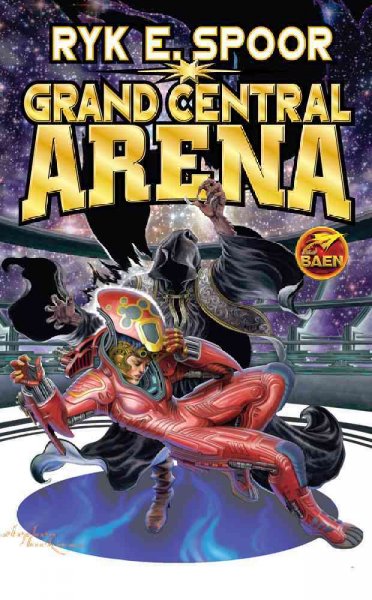
My dad had quite an SF library that I went through as I got older, but it was my 6th grade teacher, Mr. Dickinson, who introduced me to E. E. “Doc” Smith’s Lensman series by lending me a battered, somewhat cigarette-scorched copy of Second-Stage Lensmen. Doc became my single biggest influence for years; he defined “sensawunda” to me, and I in fact wrote GRAND CENTRAL ARENA specifically as a salute to him.

VENTRELLA: What is your writing process? Do you outline heavily, for instance?

SPOOR: Depends on the book, to a great extent. I have to outline when I’m working with a co-author, like Eric Flint; we discuss the general idea, then I work up an outline, he kicks holes in it, I fix it, we agree on the outline, and then I go to work.

For my own work, it still depends somewhat on which books. In DIGITAL KNIGHT, all of Jason’s major adventures were “outlined” in a single concept: the “trick” or “twist” that he uses to take down the supernatural opponent du jour. Knowing that, the only other thing I had to do was figure out who my main character was; the rest started writing itself.

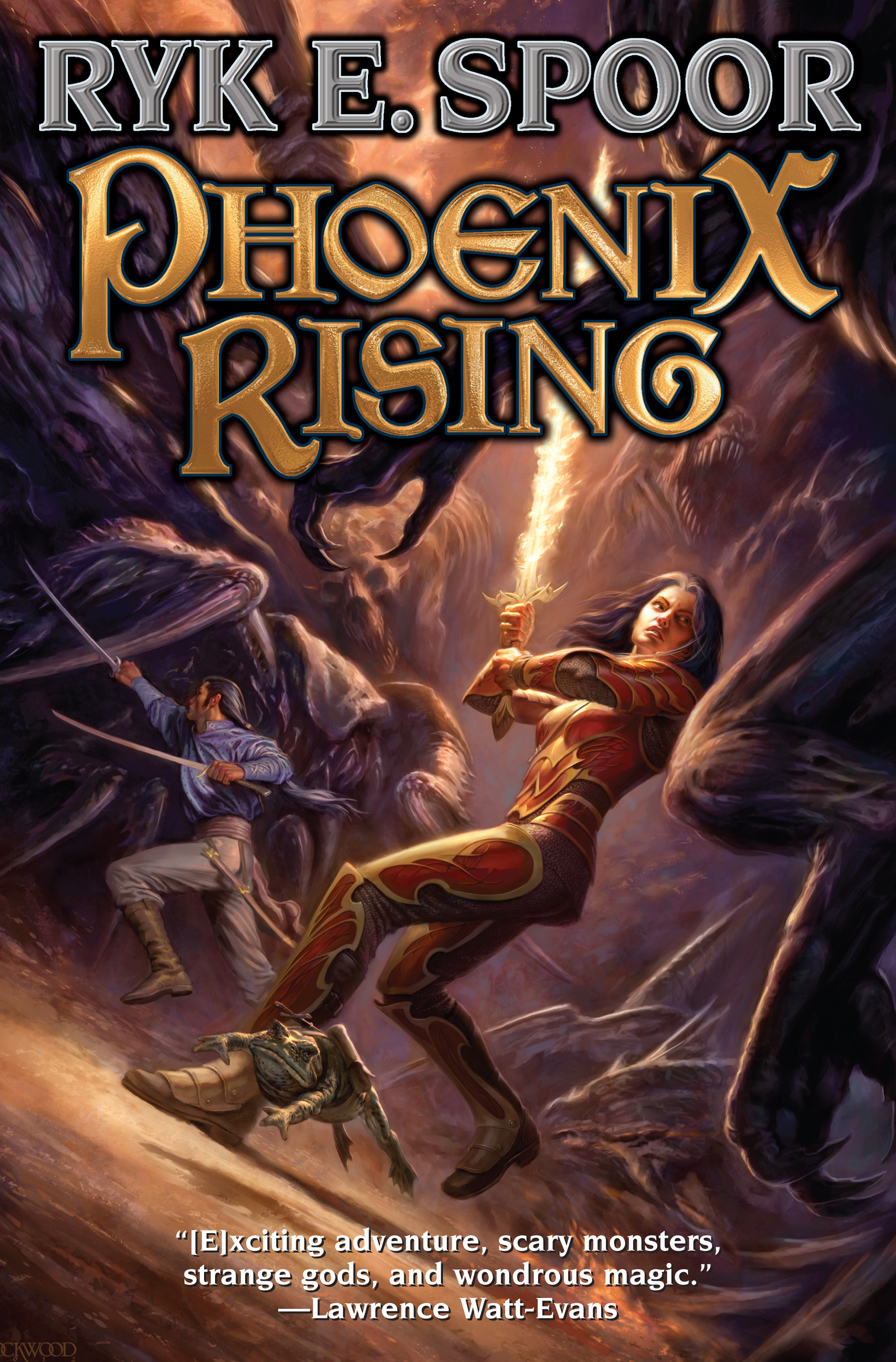
For PHOENIX RISING, I’d plotted the basic outline of Kyri’s adventures out partly during my gaming time, as Kyri was originally an RPG character. But a lot of her adventures simply fell out of the fact that I know the world so well that by now I can just write it.

With GRAND CENTRAL ARENA I had to first construct the universe; some of that I discussed in my appearance in John Scalzi’s The Big Idea; I actually did write out an outline for it, so I could pitch it to Baen, but once I had the outline I started writing. In many ways the finished product doesn’t look all that much like the outline.

But if I know what I’m writing, my process is basically just to sit down, put on my earphones, and write. I average about 1200 words per hour once I get moving, and I don’t rewrite or edit for the most part; I can’t see flaws in my own writing unless I wait something like five years, so I depend on my beta-readers and my editors to tell me when I’ve screwed up.

VENTRELLA: Tell us about PHOENIX RISING.

SPOOR: Oh, I could talk about that all day. PHOENIX RISING is the first volume in the Balanced Sword trilogy, although since I don’t yet have a contract for the other two volumes I have done my best to give it some kind of closure on its own. The basic story focuses on Kyri Vantage, who loses first her parents and then, later, her brother to unknown forces despite what everyone had thought were strong protections against evil; when she discovers just who and what was behind this, she is forced to become a living representative of a desperate, weakened god in order to bring justice to her home and eventually, she hopes, discover and destroy the true source of this evil; the events, of course, have a far greater impact and importance than Kyri recognizes at first. Other threads in the book follow the other two main characters, Tobimar Silverun and Poplock Duckweed, as they first meet each other and then eventually catch up with Kyri at a crucial moment.

This is a terribly important book to me. I wrote the first draft of Kyri’s story in 1992, and I’ve wanted to tell her story ever since; more, this is the first appearance of my fantasy world of Zarathan, which I created back in 1978 and have been building ever since. Zarathan was mentioned, very briefly, in DIGITAL KNIGHT, but there was no real vision of what it WAS in that book.

PHOENIX RISING is also quite complicated; there are threads of plot seen which are part of other stories – for instance, one character who plays a significant role for a part of the book is actually a main character in the projected Spirit Warriors trilogy, and there’s another couple of characters we see a few times who are major players in my other projected trilogy Godswar; basically the problems sweeping the world in PHOENIX RISING are so huge and complex that no one group of heroes can deal with them all; you need at least three separate groups. For the reader, I hope such things give them the feeling of a larger, more real universe, one in which there are a million stories outside of the story we’re following.

Zarathan itself is my main fantasy RPG world (to refer back to your earlier question), and I’ve been running games in it for well over 30 years now, building it, rebuilding it, and coming to a deeper understanding of the universe every day.

VENTRELLA: If I am not mistaken, you have created a universe with both fantasy and science fiction elements for your stories. How have you made the twain meet?

SPOOR: Essentially, the rule to me is that normal physics holds sway unless something changes those rules explicitly. Magic does so, some psionic capabilities do, but that means that science works just fine; it’s just a subset of the laws of nature rather than the whole thing.

It’s really not hard to combine them; as Dave Hargrave, writer of the Arduin Grimoire series of RPG supplements, put it, where’s the alien with the ray gun going to stand out more: on the streets of our cities, or in the fantasy RPG city with the fireball-flinging wizard, magic-sword wielding barbarian, and the dragon flying overhead?

The only trick, so to speak, is to have clear rules as to how the various powers behave and interact. Technology, psionics, and magic all have various advantages and disadvantages in my universe and play off each other in various ways and situations.

Really powerful magic, though, is restricted to Zarathan itself, at least until after a certain event happens, but while I’ve written one story set after that event, overall that’ll be a while before I get there.

VENTRELLA: There seems to be a trend away from science fiction, toward fantasy, steampunk, and “urban fantasy” these days. To what do you attribute that change?

SPOOR: There’s several factors. The “low-hanging fruit” in SF was all taken years ago, and general knowledge of the way science works – and doesn’t work – disseminated more and more through the population, making some of the old-school approaches no longer viable. You can’t have your characters just tinker up a spacedrive in the basement and cruise around the solar system in a homemade rocket and expect anyone to take you seriously any more.

The big news in science has also gotten, on average, a lot less immediately accessible. This is part of the overall progression of knowledge; back in the late 1800s to very early 1900s, it was still possible for one person to be “A Scientist” – someone who was an expert in more than one of the general disciplines of physics, chemistry, biology, etc. Nowadays, it’s hard to be an expert in a splinter branch of any of them. Back then, the average (reading) layman could probably grasp in general terms most, if not all, of the key problems and ideas being explored by scientists of the day; today, many of the concepts, especially in physics, require that you understand some very esoteric concepts before you even grasp the question, let alone the answer.

Fantasy is not easier to write, really, but it’s easier to make graspable because the complexity of the rules governing the world aren’t going to be more complex than the writer wants them to be. Plus, in most cases, the fantasies assume they take place on Earth or a very Earthlike world, so the reader is expected to “fill in” lots of detail all by him or herself. From a writer’s point of view, it’s also safer. No one’s going to go to Tolkien or Brooks, or me, for that matter, and tell us that our magical worlds don’t work the way we think they do. But writers of hard SF? Yeah, we’ll have people telling us when we get it wrong. Stridently, in some cases. The fact is that even if you do a lot of research, you’ll have to stop the research somewhere and get to writing … and it’s an ironclad guarantee that you stopped just before getting to some key fact that a particular group of fans consider critical.

That doesn’t mean that you can’t have similar screwups in fantasy, but those are all going to be the kind of screwups you can get in ANY story: failure of internal consistency.

I also think it’s a change in optimism that happened over the last several decades. During the late 1800s through the 1950s, science was romantic, awesome, and wondrous. It was going to solve all our problems. We were going to create new species of plants that would grow food anywhere, make space colonies on the moon and turn Mars into a second Earth. We were going to analyze the workings of the brain and abolish mental illness; we were going to cure cancer and solve the mysteries of the universe.

But science doesn’t actually work that way, and as it ran into the fact that some problems are very resistant to solution (commercial fusion and true artificial intelligence, still 20 years away and have been all my life!), the general public began to also see some of the consequences of misuse of technology (pollution, etc.) and associate this WITH technology. The shiny glow of hope faded and the chrome-plated future got tarnished. But shining worlds of high fantasy can’t be rendered hopeless by the same process … and one can also, of course, apply the same overlay of grimness and edginess to fantasy as one can to SF, so the net result is much more fantasy and less clear SF.

(of course, we’ll note that this assumes that there’s a clear division between SF and fantasy, which isn’t the case)

VENTRELLA: Creating new worlds is fun but also difficult in that there is the need to explain the world without massive info dumps. How do you do it?

SPOOR: I’m not sure I’ve mastered it yet. Sometimes I feel like I do nothing in the beginning of a new book but try to dump the info into the readers’ head.

The main techniques that I use are the tried-and-true methods of either (A) having the characters discuss key information as part of a normal conversation – usually with one character who has some reason not to know the key info, so they’re not “As you know, Bob …” type discussions, or (B) having the information emerge from the events of the story.

This latter technique is one that is best used for pieces of information which will actually become vital sometime later in the story – Jane’s doing X, which happens to cause Y to happen, leading her to realize (along with the reader) that Z is one of the characteristics of the world. Twenty chapters later, Jane realizes that applying Z will get her out of the situation she’s in. This allows the reader to follow along and maybe guess what Jane’s going to do with this new-found knowledge. I did this in Grand Central Arena to plant all the clues for how Ariane would be able to defeat Amas-Garao in the final Challenge.

VENTRELLA: I’ve recently realized that all my stories have the everyday person who is stuck in a situation and must overcome great odds through bravery and intellect – the reluctant hero who has no extraordinary skills. Have you find any connecting threads for your protagonists?

SPOOR: I like my heroes Heroic and my villans Villanous, for the most part. I don’t usually have reluctant heroes, although inexperienced and sometimes clueless heroes, that’s fine. As I tend to write my stories (just as I run my RPGs) at a high power level, they all tend to be at the least very highly competent and at the most quite superhuman in order to survive the threats they’re up against.

All of my characters – heroes and villains – tend to be smart. That doesn’t mean they don’t make mistakes or misjudge things, but that they try not to do obviously stupid actions. The really smart ones often think many steps ahead. I want to see smart heroes VS smart villains

Most of my characters tend to be fairly modest, often underestimating their own abilities. The few arrogant ones (like A.J. Baker) usually get smacked down fairly regularly.

High Melodrama is my preference in writing, and most of my characters share that preference in their behavior. I have to rein in that tendency when writing hard SF like Boundary, of course.

VENTRELLA: How do you get inside the minds of your characters to make sure they all don’t talk and act alike?

SPOOR: Heh. Sometimes I don’t think they do. I actually don’t have a … technique per se. I just get to know who they are and then I know what they’d say, and how they’d say it. I couldn’t tell you why, but I know when something is right and when it isn’t, so I write it the way that sounds right.

VENTRELLA: Ryk, we met while on a panel together at Albacon some years ago. How important is it to attend conventions to promote yourself?

SPOOR: I honestly can’t say; I can’t afford to go to many at all, so if it’s important, I’m in deep doo-doo. Aside from Albacon, I used to go to Genericon; other than that I was at I-Con once, the World Fantasy Convention when it was up in Saratoga, and Worldcon when it was in Boston, but I haven’t done much promoting. I’m terrible at promoting, actually. I hate it; I’d rather spend my time writing, unless the promotion’s something fun and flashy in and of itself.

VENTRELLA: What bugs you most about the publishing industry and what would you change about it if you could?

SPOOR: I’ve had generally good experiences with publishing, so I have minimal criticisms, aside from saying that the publishers who are clinging to DRM are gonna shoot themselves in the foot. About the only thing that’s annoying is long delays in reaction times, but alas, there’s so much slush and so hard to get people to read it, so there’s not likely to be much change there.

I think publishers need to look at reaching out to the self-publishing industry and offering professional services such as editing in an organized sense. This might be one thing that can keep them alive in the changing landscape of publication.

VENTRELLA: Who do you like to read for pleasure?

There’s so many names. The old classics like RAH, Heinlein, etc., still work. Terry Brooks usually gives a good entertaining read. My preference is for worlds that are overall brighter than this one, or whose heroes at least shine brightly, so a lot of current writers tend to skirt the edge of that threshold, like Harry Connolly and Charles Stross.

Lately I’ve been reading a lot of manga, especially Naruto and Fullmetal Alchemist – some of the best stories I’ve ever read, actually.

Out of genre, some of my favorite comfort reads are Nero Wolfe novels or the adventure classics like Scaramouche, the Count of Monte-Cristo, Scarlet Pimpernel, etc.

Honestly, however, I’ve had a lot less time to read since I became an author. I probably read more stuff to my kids than I do to myself.

VENTRELLA: What advice would you give to a starting author that you wish someone had given you?

Heh. I never learned from advice, so I’m terrible at giving it. Only two things, really; they’re pieces of advice someone did tell me eventually, but not when I started writing:

1) Never make it easy on your characters.

2) Don’t let anyone tell you there’s one particular way to write; “There are nine-and-sixty ways to compose tribal lays, and every single one of them is right.” That said, writing takes work, it’s not magic.

VENTRELLA: What is the biggest mistake you see aspiring authors make?

SPOOR: Again, two, I think.

1) Thinking they have some precious, original idea that someone will steal. No, you don’t. Any idea you have, someone else already had. Probably five or ten someones. And they did it at least twenty years and maybe as many as two thousand years before you think they could possibly have done it. No one’s trying to steal your ideas. Especially other writers; we have more ideas already than we know what to do with.

2) Not reading. Especially in the genre. This would partially alleviate #1, because you’d be seeing all the other ideas. Unfortunately, a lot of new authors appear to be coming in mostly from non-print media. You really should read quite a bit of the older stuff, then the newer stuff, before you try to drop into the business, otherwise you’ll think you’re onto a new twist on an idea when it’s actually a twist we’ve seen a hundred times. I averaged a book a day from the time I was 7 or so until I was probably in my mid to late 20s. I don’t expect everyone to hit that level, but reading a bunch of the foundational classics of the genre is awfully important to ground you in this business.

VENTRELLA: What question do you wish interviewers would ask you that they never do?

SPOOR: “Would you like this check for a million dollars?”

Honestly, while all interviews skip over one question or another, all of them together seem to have hit all the questions I’d expect someone to ask. Maybe, in a few years or ten, I’ll have had enough interviews to notice something missing!

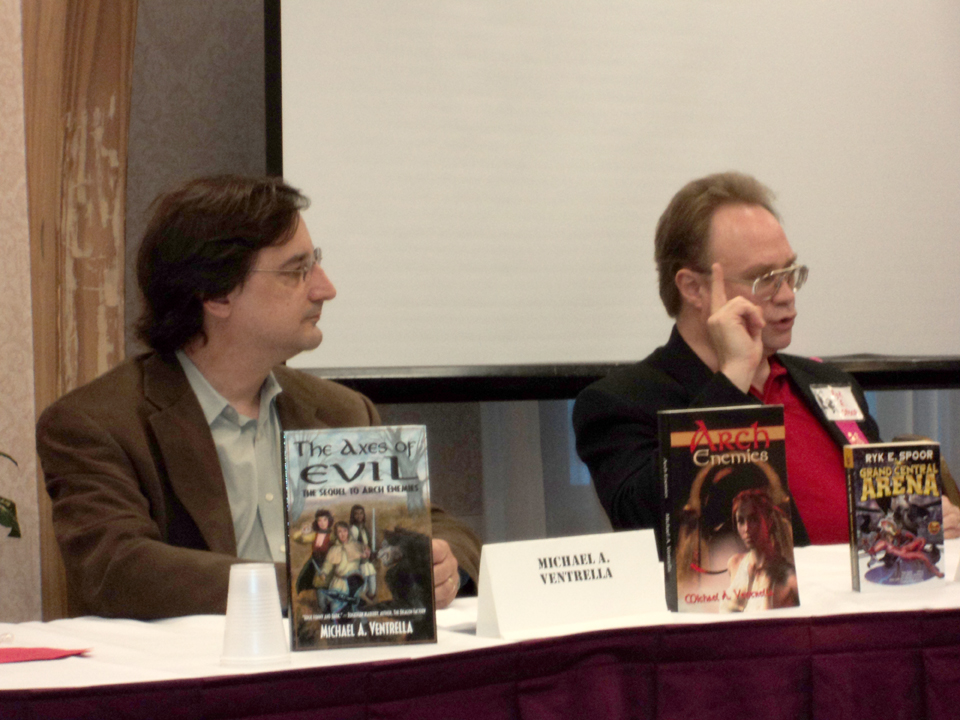
Ryk and me on a panel together at Albacon 2010

Write What You Don’t Know

One of the most misunderstood directives new writers get is to “write what you know.”

Do you think H.G. Welles actually went to the moon? Did Steinbeck travel across the dust bowl? Did Melville fight a white whale?

Too many beginning authors get paralyzed by this: “But I don’t know anything about being a spy, so how I can write a good spy novel?”

Come on, if you limit yourself to “writing what you know,” well, your work will probably be very boring. Who wants to read about someone who drinks a lot of coffee and spends hours typing in front of a computer screen?

It would be better to take the negative form of this advice: Don’t write about what you don’t know.writing

They key, then, is to research. If you’ve never ridden a horse and your character spends days in the saddle, then find out what that’s like. Make it real.

We’ve all been frustrated when we read about something with which we have personal knowledge and found it lacking. As an attorney, I get very frustrated when some courtroom drama doesn’t follow the rules of evidence or otherwise completely misrepresents what a trial is like. Computer programmers hate it when the hero hacks into systems in ways that are impossible, and historians throw away novels full of anachronisms.

You have to write what you don’t know if you want to create believable characters. I am a straight white male in his early 50s; in order to write about people different than me, I have to do some research. I have to observe other people; I have to talk to them; I have to get into their minds and imagine how they would react to the things that are happening to them in my story.

I don’t know everything. I have to learn. I have to be willing to expand my experiences, because I don’t want my readers to roll their eyes and lose their suspension of disbelief when I go so far as to be unreasonable.

While writing BLOODSUCKERS (forthcoming), I interviewed an FBI agent to learn about their procedures, used Google Maps to determine where my characters were traveling so I could describe the area accurately, did research on vampire lore across the world, and otherwise tried my best to make the world in which my fantastic story takes place be real and meaningful. I don’t want a reader to stop and say, “Oh, come on now…” when I wrote about something in their area of expertise.

So go ahead and write that spy novel. Just do some research first so that you don’t place The Louvre in Rome.

Interview with Jerry Beck

MICHAEL A. VENTRELLA: Way back in the 80s, I started Animato!, a magazine dedicated to animated movies. Through that, I met many great animators and writers, including Jerry Beck. I was familiar with Jerry from his book THE WARNER BROTHERS CARTOONS, and he later became a regular contributor to Animato!

Things were so much different then. Animation was not treated seriously, even by film critics (with a few exceptions). Jerry’s book was a light in the darkness.

Jerry later went on to organize animation film festivals, write more books and articles, and even work at Nickelodeon for a time (where he gave me a tour and a Ren and Stimpy t-shirt I still have). He’s now considered one of the top experts in animated films in the world (if not THE top expert).

This is a blog about writing. Usually I cover fiction (since that’s what I mostly write these days), but it’s my blog, and I can interview whoever I want! So there.

Welcome, Jerry! You’ve managed to create a nice career for yourself as one of the top animation experts in the world. How did you first become interested in animation?

JERRY BECK: I loved comic books as a kid and used to draw all the time. When I was in high school I was hoping to become a professional cartoonist some day. I also developed a healthy interest in movies and at some point realized that animation was a convergence of both cartooning and movie making. So I looked into becoming an animator and went to SVA (The School Of Visual Arts) after graduating high school.

VENTRELLA: I had always been interested in animation, but got hooked after taking a course in college from animator Steve Segal, using Leonard Maltin’s OF MICE AND MAGIC book. I understand you were involved in that book. How did that come about?

BECK: First, let me acknowledge Steve Segal, a good friend of mine – and an incredible filmmaker. I think I met Steve when I was taking a college course taught by Leonard Maltin at the New School for Social Research in New York. At the same time (in the mid-1970s) that I was attending SVA, I took an animation history course Leonard was conducting. It was a real, for credit, college course. Leonard and I became good friends from that time onward. Leonard had already written THE DISNEY FILMS and THE GREAT MOVIE SHORTS – but he wasn’t planning to write a book about animated cartoons. Yet, here he was teaching a class about its history – and there weren’t any books on Hollywood cartoons out then (with the exception of several Disney books, Joe Adamson’s Tex Avery book and Leslie Cabarga’s FLEISCHER STORY). In those days before the internet, there was hardly any information on animators in print form. Somehow he came around to the idea of doing a book about it – and as I was an instigator, he asked me to be his “research associate” on the project. I had already started compiling, on my own, what would become the filmographies in the back of the book, so I already had a head start.

VENTRELLA: Soon after, your first book came out (THE WARNER BROTHERS CARTOONS), written with Will Friedwald. It catalogued all the WB cartoons and is a wonderful resource tool, even if it had no pictures. How were you able to research it, given how difficult it was to see many of those films in those days?

BECK: Will Friedwald – who has gone on to become a jazz music historian with several notable books and writer for The Wall Street Journal – was 14 or 15 when he started hanging out at Leonard’s class back in the 1970s and I enlisted him to help me compile my cartoon filmographies. After finishing OF MICE AND MAGIC, Will and I got the idea of collecting our Warner Bros. cartoon research and notes into a book. True, we didn’t have DVDs or You Tube to help us to research the cartoons – but we did have access to 16mm film prints and we were plugged into a network of collectors who would screen films for us. I have a pretty large collection of 16mm prints to this day.

VENTRELLA: How did you get the book published?

BECK: I think we did a few years of our Warner Bros. filmography – I seem to recall it was several years of the 1940s – and sent them to Scarecrow Press on a lark. They were immediately interested and we had a book contract right away. A lot of people like that book. To me it is “amateur hour”, sort of a mess. But it was a great way for me to learn what to do and what not to do. Spent the next several years trying to re-do the book, re-write it and get permission from Warners to use pictures. I succeeded in doing that in 1988 and a revised version, called LOONEY TUNES AND MERRIE MELODIES: A COMPLETE ILLUSTRATED GUIDE TO THE WARNER BROS. CARTOONS came out in 1989.

VENTRELLA: Do you approach publishers these days with ideas for books or do they approach you?

BECK: Works both ways. After establishing myself with the first Warner Bros. book, I started getting publishers coming to me – first to do a Tweety & Sylvester book, then most of the other character based books (The Pink Panther, Nicktoons, the Art-Of books). I pitched several books like THE 100 GREATEST LOONEY TUNES and THE ANIMATED MOVIE GUIDE, but most of my books came to me via the publishers.

VENTRELLA: What’s been your best seller?

BECK: That’s hard to say. I don’t always get the sales figures, believe it or not. I know THE HANNA BARBERA TREASURY sold very well. So did THE 100 GREATEST LOONEY TUNES. I’ve never had any publisher complain about sales and you’ll note I’ve worked with several publishers more than once.

VENTRELLA: You interviewed many animation experts for THE 50 GREATEST CARTOONS book. Are there any cartoons you were upset that are in the book that, in your opinion, don’t deserve to be there?

BECK: The book is supposed to be a consensus of expert opinion, so I’m pleased with most of the choices in that book. Is FELIX IN HOLLYWOOD the best Felix the Cat cartoon? Probably not. But it was the easiest to see at that time. There probably should have been a Koko the Clown cartoon, and there are probably a dozen Warner or Disney cartoons that could have made the cut.

VENTRELLA: How were the films chosen for THE 100 GREATEST LOONEY TOONS CARTOONS?

BECK: Thanks the internet, we were able to poll cartoon fans via my blog (Cartoon Brew) and several other sites and counting up the votes was probably the hardest part of putting it together. We gave special consideration to a host of animation historians, experts and writers and requested their lists of favorites.

VENTRELLA: And why did you choose that title (since Merrie Melodies were also included)?

BECK: The book was officially licensed through Warner Bros. and to them, the series titles Looney Tunes and Merrie Melodies mean the same thing. That’s true of general public perception. It’s easier to sell… though I’ve often thought we could do a sequel called The 100 Greatest Merrie Melodies.

VENTRELLA: Considering the classic theatrical animation directors, who is your favorite?

BECK: Bob Clampett – though Chuck Jones and Tex Avery would follow right behind. Friz Freleng, Frank Tashlin, “Fleischer Studios” and Ward Kimball would be near the top of the list too. But Clampett made very few weak cartoons – all are pretty strong – and unlike Avery, they are really unpredictable.

VENTRELLA: My tastes match yours, then. What great animation has been vastly overlooked in your opinion?

BECK: Gosh, there are so many important aspects of the history that are over looked. The silent and early talkie era needs more attention, for one. My favorite “overlooked” animation is the post-UPA era, like the Gene Deitch Terrytoons period (1956-1958) – which spawned Flebus, Tom Teriffic and Sick Sick Sidney the elephant among others – and the oddball Paramount cartoons of the 1960s. There is some bad stuff in there, but the good stuff is pretty incredible.

VENTRELLA: You’ve released dozens of books on all sorts of animation except Disney. Why not?

BECK: Mainly because they don’t need me. There are dozens of great Disney historians doing great work – J.B. Kaufman, John Canemaker, Charles Solomon, David Gerstein, Michael Barrier and others. I like to research the studios that don’t have their own archives (like Disney does). Warner Bros., Lantz, Terrytoons, need their champions and cheerleaders. I like to remind people that animation isn’t just Disney.

VENTRELLA: Of which book are you most proud?

BECK: That’s hard to say. LOONEY TUNES AND MERRIE MELODIES was an accomplishment at the time – and it’s certainly the one book of mine I use over and over again to this day. THE 50 GREATEST CARTOONS has lots of fans. THE HANNA BARBERA TREASURY is the only book that came out better than I thought it would be while working on it. I really like the two Ultimate Guides I did for DK (Looney Tunes and The Pink Panther). OUTLAW ANIMATION is a book many I’ve gotten great feedback on over the years. I’m proud of my involvement in OF MICE AND MAGIC and that I was able to loan assistance to many authors (friends and colleagues) on their books. Sorry, I have no one answer for this question.

VENTRELLA: Many of your books are not necessarily for the animated film buff, but for the general public that has a passing interest. Which would you recommend for those who want a deeper analysis?

BECK: Deeper analysis?? Cartoons are fun – and I try to impart that in my projects. I want the general public to see these films as I do. THE ANIMATED MOVIE GUIDE (which I am also very proud of – I forgot to mention that before) has a lot of good information and analysis in it. I’ve also been happy to hear that a book I edited and compiled, ANIMATION ART (my only book to be reviewed in The New Yorker!), has been adopted by animation professors as a text book. I recommend these two for more hard-core info.

VENTRELLA: You’ve overseen quite a few DVD releases of classic films. What is still out there that you want to see released?

BECK: I’d like to see the Fleischer cartoons restored and released properly. Betty Boop, Color Classics, Talkartoons, Screen Songs, even Animated Antics and Stone Age cartoons, everything. It’s a crime these aren’t available as they could – and should – be. The MGM Tex Avery cartoons are also not yet on DVD. At the other end of the spectrum, I think the Terrytoon library (Mighty Mouse, Heckle & Jeckle, etc.) needs a proper release. On a purely personal basis, I’d like to see Columbia’s Fox & Crow cartoons on DVD. There are still many great Warner Bros. cartoons that haven’t been restored – and I’m chomping at the bit to see a release of the Famous Studios color Popeye theatricals.

VENTRELLA: I completely agree, especially about Tex Avery. I was thrilled with the recent Droopy collection, but there are so many more that are missing.

What are your favorite recent animated releases (features and TV shows)?

BECK: “Adventure Time” on Cartoon Network I the best “new” thing on TV. I still enjoy “The Simpsons” and “Futurama.” I loved “The Fantasic Mr. Fox” from a few years ago and am delighted with all the stop-mo features we’ve had lately. I’m still waiting for a new hand drawn feature to blow everyone away and bring back that artform to theatres. I have other favorite films from recent years – ranging from “The Incredibles” to “Puss In Boots” (believe it or not). Nina Paley’s “Sita Sings The Blues” was superb.

VENTRELLA: Once more, our tastes are similar. I was truly surprised with “Puss in Boots” so there’s no “believe it or not” there!

Who is your favorite current animation director?

BECK: Brad Bird. He’s got it all – and knows what he’s doing. I hope he returns to animation soon. In the independent world, Nick Cross is a person to keep your eyes on.

VENTRELLA: Back when you first started writing about animation, we would be lucky to get one new animated feature film a year. Now there’s one every few weeks it seems. What happened in our culture to bring about that change?

BECK: The great thing about the animation renaissance of the 1990s is that it allowed for the creation of many great films (“The Lion King”, “Toy Story”, etc.). Hollywood saw that audiences could take animation seriously – it wasn’t just cheap kids fare. Now every studio has jumped into it. I think that’s great. Every year we get a few great films (and a few duds) – and now the Academy of Motion Pictures Arts and Sciences recognizes the medium. What’s also exciting is that many animated films are blockbuster hits – cash cows for the studios. This insures the health of the art.

VENTRELLA: What is it that makes a great animated film, and why can’t Hollywood produce more of them?

BECK: Well, if I knew the secret of making great animated films I’d be making them myself – but I’d say it takes a filmmaker with a passion for the field – Brad Bird, Tomm Moore (“Secret of Kells”), even Wes Anderson. Hollywood doesn’t like to take risks and animation is always risky. That’s why Hollywood relies on formulas (musicals, fairy tales, CGI, Dr. Suess, etc.). But when one great filmmaker breaks trough, it can make a huge difference.

“As You Know, Bob…”

“As you know, Bob, the CloneMaster 3000 is powered by nuclear energy and is controlled by this switch over here.”

Don’t you just hate it when that scene appears? When a character explains to another character something that the second character already knows, merely as a way to get the information to the reader?

Imagine if we did this in real life. “As you know, Bob, this car we’re driving is powered by gasoline and controlled by this wheel before me.”

This is known as the “Info Dump.” It appears in many forms — from bulky prologues to long, technical paragraphs, to the “As you know, Bob” reveal. It is also something that should be avoided as much as possible, for obvious reasons.

First, you need to examine whether the information is even needed. Too many writers have this entire world in their head, and have spent many hours developing characters and places and back-history. They feel that all this must be shared, because otherwise, all that work was for nothing.

These authors are called “Self-Published.”

OK, that was snarky. There are indeed some very good self-published authors, but you see my point. These authors are wrong. All that background is very important for creating a believable work, but most of it should never find its way into the final draft. That stuff is for you.

Let’s assume your reader is smart. After all, he or she is reading, which already places them above the majority of the population. They can probably figure out what’s going on a lot of the time without it being explained in detail.

But there are definitely times you need to get necessary information to the reader. Find a way to drop it into the story unobtrusively. “The phone rang just as the Professor was readjusting the nuclear generator.”

The most common way to reveal the information that is needed is to have a secondary character. “As you don’t know, Bob…”

For instance, there’s the “Watson” technique. “Holmes, what does this mean?” A sidekick who needs the information to continue the adventure provides an excuse for the protagonist to dump the info. Done well, this can work great. The secondary character can be given only the bare minimum information or even the wrong information, yet provide enough for the reader to understand what is happening.

Then there’s the “Professor Exposition” technique. This one gets used a lot on TV and in movies, it seems to me. This is where the characters go to a specific person in order to have the plot explained to them. “Professor Exposition! We’re run across a hideous monster that eats bicycles and farts roses!” “Hmmm, let me check my Library of Deep Tomes. Ah! Here we are…” Sometimes you need to do this, but unless the Professor is one of the main recurring characters (like Giles on “Buffy”), it can seem forced.

Then there’s the “Fish Out of Water”. This is what I used for my two novels, ARCH ENEMIES and THE AXES OF EVIL (as well as the upcoming BLOODSUCKERS). The protagonist is placed in a new situation and must be educated by others.

For instance, in the high fantasy ARCH ENEMIES, young Terin Ostler has run away from home to become a bard. He is grabbed and brought before the Duke and told he fits the description of the Chosen One written of in the prophecy. (As it turns out, he’s not the Chosen One, but everyone thinks he is. Hijinks ensue. And deaths.) Anyway, he’s thrown into the adventure without knowing what he is supposed to do. He doesn’t know how to wield a weapon or cast a spell.

The prophecy involves keeping a mystical Arch closed to hold the imprisoned evil within. A magic ritual had been performed over 800 years previously and the magic is weakening.

Before I started writing, I knew the history of the lands, the way magic worked in the world, and what the ritual required.

I needed Terin to know certain things in order for the thrilling climactic scene to work, but he didn’t need to know everything. And what he did need to know, he didn’t need to know all at once.

His traveling companions are two squires (who have to protect him from the treasonous Duke’s men as well as the enemies who want to keep the prophecy from being completed). While on the run, the squires find time to explain certain things to Tern and give him lessons on magic. The three of them discover clues along the way. Some of the things they learn are absolutely incorrect. And there are some things that Terin never discovers until it is much too late for him (but not for the reader).

There are huge amounts of information that never made it into the book. And that’s a good thing. It just wasn’t needed in order to tell this story.

So avoid the Dreaded Info Dump, the pause that bites, the clause that sucks. Give as little as needed, in small doses, and in ways that are unobtrusive.

The bottom line is always this: Don’t Be Boring!