Interview with author Christine Norris

MICHAEL A. VENTRELLA: I’m glad to be interviewing friend and author Christine Norris, who has several works for children and adults, including the “Library of Athena” series and the “Zandria” duology. When she’s not out saving the world one story at a time, she is disguised as a mild mannered librarian, mother, and wife. She cares for her family of one husband-creature, a son-animal, and two felines who are steadfast in their duties as Guardian of the Bathtub and Official Lap Warmer, respectively. She has also done several English Adaptations of novels translated from other languages, and reached a new level of insanity by attending Southern Connecticut State University Graduate School to get her Master’s in Information and Library Science. She currently resides somewhere in southern New Jersey where she writes interesting opening bios for interviews. Her web page is here!

Christine, how did your first novel get published?

CHRISTINE NORRIS: I sold my soul to the devil, uh, I mean I was such a newbie. I had a book of agents and publishers, and knowing pretty much nothing about them, sent queries. And bombed horribly – got back my own letter from one, with the word ‘No’ scrawled across the top. Another came on a crookedly-copied half-sheet of paper. Ugh!

But it was the early 2000’s, and there wasn’t a lot of stuff on the internet about publishing, and most agents still took paper copies. Eventually I found a writer’s forum, Absolute Write, and I started to find out about other publishers. I found LBF, a teeny tiny publisher, in Pittsburgh at that time. They took my first book, TALISMAN OF ZANDRIA, and the sequel. Both are out of print now, but I’m doing new editions for Zumaya.

VENTRELLA: What is your writing background?

NORRIS: I really don’t have a formal background, nothing like a degree in Creative Writing or anything. I just started writing in 2001, and kept on going. I have six books now, with a seventh out with an agent (crossing fingers for an offer!) and working on number eight. Yes, it took me ten years and six novels to finally land an agent. Just goes to show it’s never too late. I really love her too, she’s just wonderful and supportive.

Someday I guess I’ll stop writing, but I don’t see any reason to at the moment. I’m like a literary Forrest Gump.

VENTRELLA: How did you find your current publisher?

NORRIS: That is an interesting story. Okay, maybe only interesting to me. The publisher that put out the first two books in the “Library of Athena” series decided to go back to strictly Romance books — which these decidedly are not. I had the third book finished, and they dropped the series. After I finished freaking out, I calmly put out an email to my friends at Broad Universe, begging, I mean, asking if any of the publishers in the organization would be interested. Elizabeth Burton at Zumaya said she would look, as long as it wasn’t a Harry Potter or Twilight clone, and she liked it enough to take it for the Thresholds imprint.

VENTRELLA: What do you think are the advantages of a smaller publisher?

NORRIS: I think there are advantages to publishers of all sizes – everyone has their pros and cons. You can be a big fish in a little pond or a small fish in a big pond. Smaller publishers are more personal, a little more homey, if you will. They also, many times, have less money to spend on promotion, which is okay if you know how to do a little guerilla marketing. They will also sometimes take a chance on a book that a bigger publisher might not feel is commercial enough. I always say that if you do your homework and are comfortable with what any publisher can give you, there’s no ‘right’ or ‘wrong’ way to publish. It’s all about what you can live with.

I was at a writer’s conference recently, and there were a lot of big agents and editors from Big Six houses attending. We hear a lot about how people ‘in the biz’ feel about smaller publishers and how they look down on us. It is just not true. They were all very professional, and more than once I heard: “Someone selected your work from a slush pile. You are just as published as anyone.” It was nice to hear, and it was nice to get that kind of respect for my work.

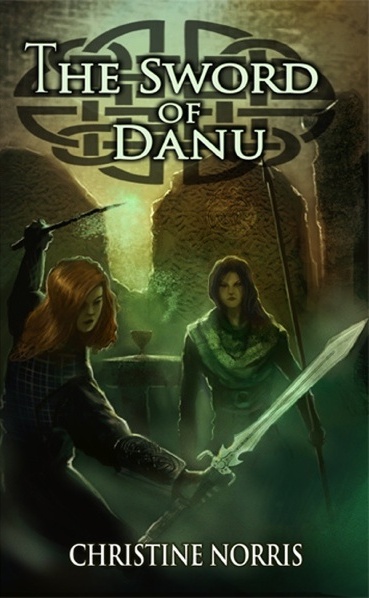
VENTRELLA: Tell us about THE SWORD OF DANU.

NORRIS: It’s the fourth book in the “Library of Athena” series. Oh, you want to know more? All right then.

Megan Montgomery, the main character, has begun to teach herself magic. After the last adventure, when she almost gave up protecting the Library of Athena altogether, she decided that she needed to arm herself against the Order of Ares, a.k.a. The Bad Guys. But her magic doesn’t always go the way it should. She has also decided that she will do whatever it takes to never, ever, never open one of the Special Collection books again. They are enchanted and suck you inside, and then things try to eat you while you solve the clues and fight the monsters to find the magical artifact hidden inside the book and get out.

Unfortunately, something has gone terribly wrong, and one of the books has escaped its pages and is now this imaginary Ireland is taking over the manor where Megan lives. So she and her friends are kind of forced into finding the artifact, in this case the Sword of Danu, so they can fix it all. There’s more to it than that, but I don’t want to give too much away. Except that, of course things try to eat them. Things are always trying to eat them. There’s the Morrigan, and Goibhniu the Celtic smith-god and all kinds of teen angst.

VENTRELLA: And, of course, you have a series based around a library. Tell us how that series came to be.

NORRIS: It was so long ago — late 2004 — that I really can’t remember when or how I came up for the idea for the series. It kind of evolved from what might have been a chapter book idea to a novel, to a series. My son was only 2 at the time, so I had never heard of the Magic Tree House series, which my books get compared to often, along with Harry Potter, Indiana Jones, and Percy Jackson. There are a lot of similar elements in them.

I do remember stating at one point, “I think I could write a hundred of these.” Uh, no way. Five is the limit. One more left to go. It was just serendipity that, years later, I became a librarian. At that time I was working a really horrible part-time job and being a stay-at-home mom. Life is just funny that way, I guess.

VENTRELLA: What was the biggest mistake you made when first starting out as a writer?

NORRIS: Just one, really? I’m sure I made all kinds of mistakes. Not knowing how to write a good query letter. Not really doing my homework when it came to submitting. Being too self-conscious with my writing — it all came out stiff and self-absorbed. I think once I realized that I actually knew what I was doing, that I had made it past most of the newbie mistakes of the technical parts of writing, like not filtering my main character’s every action through me, the narrator, that I was able to loosen up and just write better, let my unique voice out (which is mostly sarcasm thinly veiled as humor, but still …). I also think that every writer needs to make those kinds of mistakes, so that they know when they’ve got it right.

VENTRELLA: What’s your advice for authors who wish to self-publish?

NORRIS: Don’t do it unless you are willing and able to commit the time, energy, and money that it takes to do it properly. Being a self-publisher means you aren’t just the writer, but you are the publisher, and unless you understand exactly what that means, I don’t suggest you attempt it. You need to hire editors, cover artists, do marketing, and pay for it all. It’s a big job. It can be done, but those who have been successful will tell you it was hard work.

VENTRELLA: What piece of advice would you give a starting author that you wish someone had given to you?

NORRIS: Be yourself. I never wrote to trends, or tried to write fan-fiction (though I recommend it to teachers who are trying to teach younger writers the mechanics of story and writing itself), but I had this idea of what ‘good’ writing was, and I was trying to reach some ideal. That old axiom ‘write what you know’ doesn’t really apply to most fantasy writers — unless one of you out that happens to have a dragon in their backyard or owns a big secret library full of magic books — but write what you like. Make yourself happy with a story and you’ll make readers happy too.

72

Start in the Middle!

The theme of this blog is “Learn from My Mistakes.”

I just wanted to emphasize that. I don’t want anyone to think that my advice posts here are because I am an expert in the field of writing and publishing, because I am not. Almost all the things I am advising you not to do here are because I did them already, and found out they don’t work. I’ve warned you about the proper point of view, using outlines, why you should not use prologues, and other obvious writing rules that aren’t so obvious.

So today let’s discuss another bit of advice that I just had hammered into me: Starting your story in the middle.

I’ve always known that it is important to start your story with a bang, and all my books and short stories have done so. You want to grab the reader in the first page, and keep those pages turning. I jump right in and fill in the background later.

I know that.

However, there was something I was missing that, in retrospect, seems really obvious to me now.

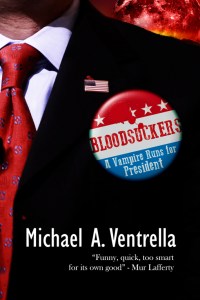
I just received two rejections from agents looking at my latest manuscript BLOODSUCKERS. Both said the same thing. They liked my writing, but there was no urgency — the story didn’t grab them quick enough.bloodsuckers-510

And they were right.

You see, I started the story off with a beautiful naked vampire killing a Presidential candidate on the eve of his nomination (sex! violence! politics!). Soon after, a new candidate was chosen who was accused of being a vampire by crazies (called “batties”) who actually believe vampires exist. This was followed by a conspiracy to assassinate that candidate, and a plan to frame the assassination on a disgraced reporter who had written an article about the crazies. Then the plan is carried out …

Well, do you see the problem?

The main character in this story is the reporter — the guy who is framed for the assassination and then has to go into hiding, running from the vampires and the FBI. Once that happens, the story kicks into high gear. The only way he can prove his innocence is by proving that vampires exist. He gets help from the batties and eventually from some other vampires. Can he expose the candidate, will he be killed along the way, or will he be corrupted by the system?

But that didn’t happen until page 60 or so.

I mistakenly thought that all the other action was sufficient — that the conspiracies and plots would be enough.

The problem is that these early threats and dangers all concern people other than my main character … there’s not even the suggestion that he will be involved until the assassins pick him to be their scapegoat. That early stuff didn’t matter personally to him. The “middle” of my story is actually the start of the story for my character. And that’s where I needed to begin.

So it’s time for a new draft. I need to get the reader to understand the danger my protagonist is in early, so that the reader has some connection to the story and cares.

So learn from my mistakes — it’s not enough to have lots of action, drama, and “tension on every page” early on. You need to connect that tension to your protagonist if you want your reader to care.

Interview with authors Jeffrey Davis and Peter Desberg

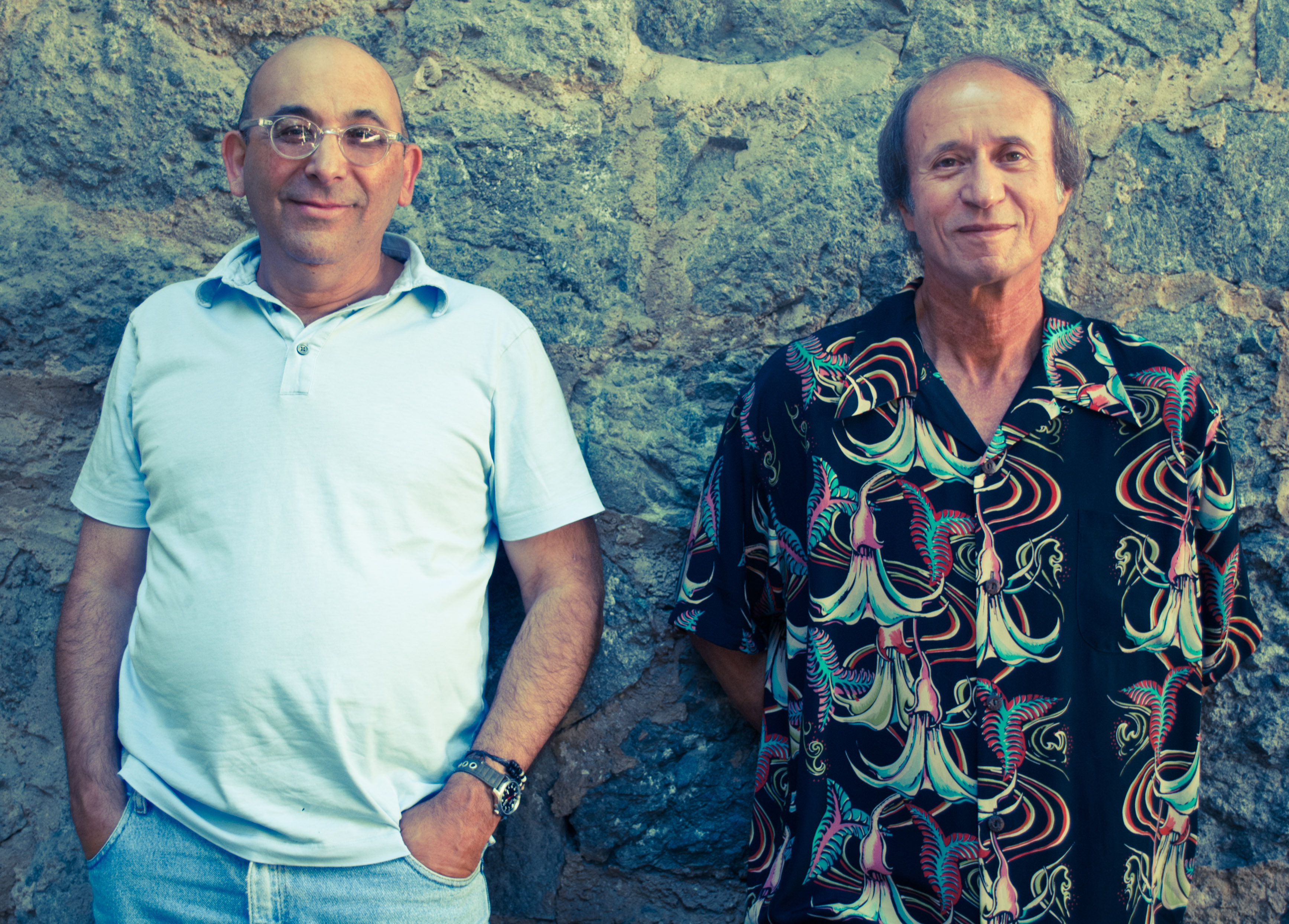
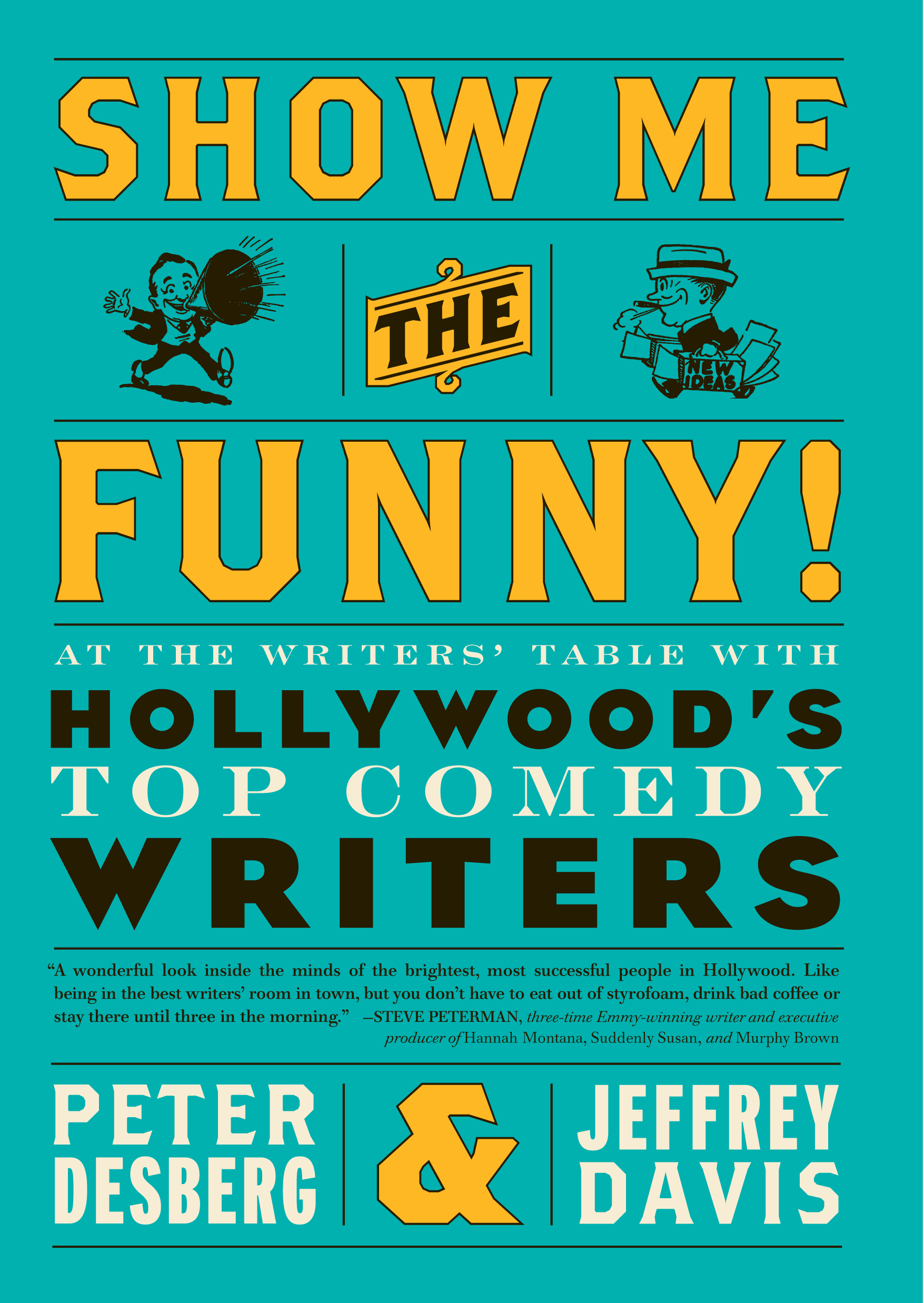
MICHAEL A. VENTRELLA: Today I am pleased be to interviewing comedy writers Jeffrey Davis and Peter Desberg (That’s Jeffrey on the left). Their book SHOW ME THE FUNNY! AT THE WRITERS TABLE WITH HOLLYWOOD’S TOP COMEDY WRITERS presents twenty-eight top comedy screenwriters from the revered figures of television’s “Golden Age” to today’s favorite movie jokesters. Desberg is a joke writer, California State University Dominguez Hills professor and a licensed clinical psychologist who specializes in the area of stage fright. Davis is a produced screenwriter, playwright and the Screenwriting Department Chair and associate professor of film and TV writing at Loyola Marymount University. Their web page is here.

Let’s begin by discussing the business end. How did the idea for this book come about?

DESBERG: Jeffrey and I are interested in the comedy writing process. We thought the best way to find out more about it was to interview some of Hollywood’s top comedy writers from the Golden Age of Television to Phil Rosenthal, co-creator of Everybody Loves Raymond. They’ve all done many interviews and we weren’t sure that their descriptions of their processes would be accurate. There’s an old phrase “The autobiography is the highest form of fiction.” Instead, we wrote a short, generic comedy premise about a single working woman in her 30’s whose mother is forced to move in with her. We asked each of them to develop it. We told them there were no rules or boundaries. They could go anywhere they wanted. This was just as well since they are comedy writers not accountants, they wouldn’t have listened to us any way.

The result is that we watch twenty-eight writers come up with twenty-two stories starting from the same place. We worked to create the feel of a Writers’ Room spitballing ideas. If they had as much fun as we did, this book is a huge success.

VENTRELLA: How did it get published? Did you approach an agent or an editor first or did someone approach you?

DESBERG: We went through our Literary Agent.

VENTRELLA: Are you pleased with the result?

DAVIS: Yes … the extent that any author is happy with an agent or publisher (That’s the politically correct answer.).

VENTRELLA: Do you expect to do a follow-up?

DAVIS: Yes … keep checking our website (www.smtfo.com). You can also like us on FaceBook and follow us on Twitter.

VENTRELLA: Which interview do you like best?

DESBERG: That’s like asking a parent which child they like best.

VENTRELLA: How did these writers react to being put on the spot and have to create under pressure?

DESBERG: What surprised us was that at every one of them, at some time during the interview, said they were nervous. Even though they were doing what they were great at, they knew they only had one shot at it, and they would be compared to their illustrious peers.

VENTRELLA: Did anyone you ask refuse to be interviewed?

DAVIS: One half of one partnership refused to participate. And we got to witness a well-executed tantrum. We can’t wait for our next contract negotiation to try what we saw.

VENTRELLA: How have you gone about convincing others that this book would be interesting to them, and not just to writers?

DAVIS: We believe this book has a wide audience. At its core it is a great study in creativity. For fans of Hollywood, the writers said they revealed stories here that don’t come out in other interviews because of our format. It’s also real funny.

VENTRELLA: What facts revealed in the book will surprise TV fans the most?

DESBERG: The most surprising fact is that all of the writers agreed that the basis for all comedy is conflict. They also agreed that in good comedies … jokes are expendable. If they don’t propel the story or reveal something important about the character … they are out. The days of the network requirement that sitcoms must have three jokes per page are over.

VENTRELLA: What were your favorite comedy TV shows growing up?

DAVIS: Mine were Bewitched, The Odd Couple and McHale’s Navy

DESBERG: Taxi, The Honeymooners and I Love Lucy.

DAVIS: Well, come on. Who doesn’t love The Honeymooners and Lucy?

VENTRELLA: What do you think are the best-written comedy shows ever?

DAVIS: Taxi and the Odd Couple

VENTRELLA: What shows do you like now?

DAVIS: Nurse Jackie, Psych and Modern Family

DESBERG: Big Bang Theory, Modern Family and Weeds.

VENTRELLA: What are the big limitations when writing for television?

DAVIS: Networks! As he said in his interview, in the days when Sherwood Schwartz was working on Gilligan’s Island and a writer would come in with something that was on My Three Sons the week before he’d say, “We’ve seen it. We’re not going to do that.” Today’s networks want to play it safe by doing what’s been done and proven successful (which means it will make money). And then of course, they are limited by Standards and Practices, sponsors and the general lowering of the audiences’ expectations. For me, when a show like Modern Family gets on, it’s a miracle akin to the parting of the Red Sea.

VENTRELLA: Has cable – with so many more shows available – made things better or worse?

DAVIS: Cable has made things different, not necessarily better. USA is extremely successful, a little wittier and a touch more risqué. They started with Monk and ten years later they’ve evolved a formula that’s we’re seeing everywhere. On the other hand, the networks must see the writing on the wall with their shares falling: They own the basic cable networks.

VENTRELLA: Jeffrey, your dad was a comedy writer. How did that shape your own pursuit of comedic writing?

DAVIS: I had the great good fortune to grow up around the best comedy writers in the business. They always said it was character and conflict that mattered. Structure would find you. They never used the word “plot.” They were a different breed. They had been journalists, novelists and playwrights. Because of this they had a wider frame of reference. This is something I try to pass along to my students. Read, go to movies, theater, museums, read more. Don’t be afraid to borrow what you love and make it your own.

VENTRELLA: You’re both also comedy and joke writers yourselves. How do you teach comedy writing to your students?

DAVIS: I was fortunate to have my Dad and Danny Simon (Neil’s brother) as mentors. I teach by starting with the premise, working toward story and then script. It doesn’t matter what’s on page fifteen if there are no interesting characters and no conflict. Structure is easy to teach. Too easy. I believe in replicating the Writers’ Room. We workshop everything. Everyone contributes. Contribution is supposed to mean participation. I had a shy student whose only contribution was bringing me an Apple…fortunately it had the new higher resolution screen.

VENTRELLA: Are you accepting new pitch ideas for the premise you included in the book? Where can people go for more information?

DESBERG: We will soon have a release form on our website and then we hope people will read the premise we gave our writers and submit their own

Interview with Bram Stoker Award-winning author John Shirley

MICHAEL A. VENTRELLA: Today I am pleased to be interviewing John Shirley.

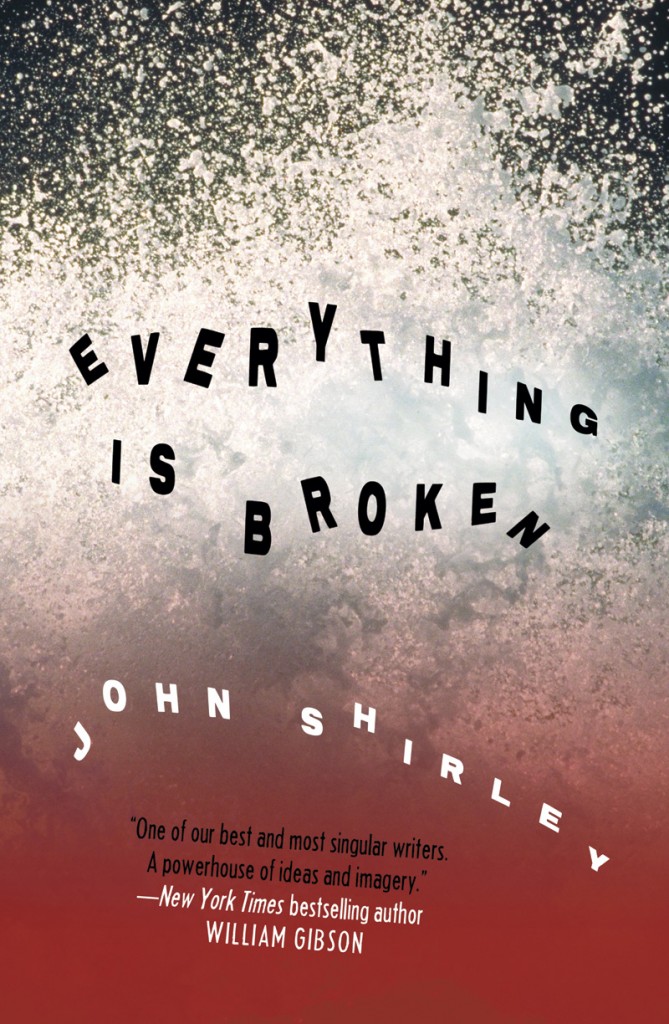
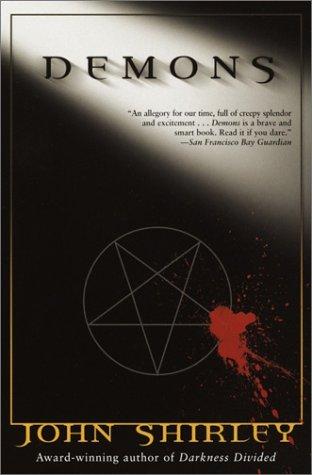
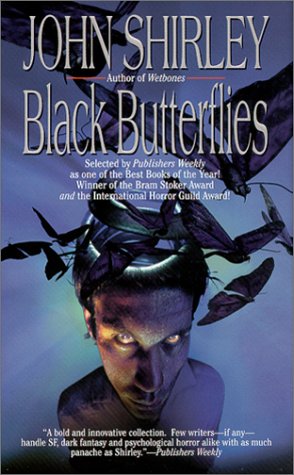
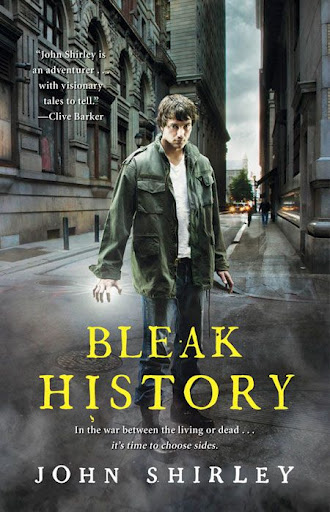
John Shirley is the author of numerous novels, story collections, screenplays (“THE CROW”), teleplays and articles. A futurologist and social critic, John was a featured speaker at TED-x in Brussels in 2011. His novels include EVERYTHING IS BROKEN, The “A Song Called Youth” cyberpunk trilogy (omnibus released in 2012), BLEAK HISTORY, DEMONS, CITY COME A-WALKIN’ and THE OTHER END. His short story collection BLACK BUTTERFLIES won the Bram Stoker Award, and was chosen by Publisher’s Weekly as one of the best books of the year. His new story collection is IN EXTREMIS: THE MOST EXTREME SHORT STORIES OF JOHN SHIRLEY. His stories have been included in three Year’s Best anthologies. He is also a songwriter (eg, for Blue Oyster Cult), and a singer. Black October records will soon be releasing a compilation of selected songs, BROKEN MIRROR GLASS: Recordings by John Shirley, 1978-2011. The authorized website is here.

John, since this is an election year, let’s start off with politics. You’ve certainly not shied away from politics, on your blog and on Facebook. Do you worry that this may alienate potential readers?

JOHN SHIRLEY: For me, I can’t worry about that and be a self respecting person.

VENTRELLA: Your novels EVERYTHING IS BROKEN and THE OTHER END are all about politics. What inspired you to write them?

SHIRLEY: I wouldn’t agree they’re all about politics. EVERYTHING IS BROKEN, however, is a political allegory as well as being a noir novel, a coming of age novel, a disaster novel (as opposed to a disastrous novel!), a suspense novel, and it’s set a bit in the future. So it’s got science fiction going on too. The trick of course is for all this to blend seamlessly. But good recipes can have a number of strong ingredients.

EVERYTHING IS BROKEN is a kind of LORD OF THE FLIES for the 21st century, perhaps. Its political center has to do with the value of community, of government itself (at its best); it shows what happens to a small coastal community, hit by a disaster, when its been stripped of its resources, its preparation, by Libertarians and Tea Party types and Privatizers. And it has ticked off some of those people. But there’s always plenty of support from the other side of the fence. It’s doing rather well. Lots of people are concerned about throwing the baby away with the bathwater—a sense of community being the baby in this case.

THE OTHER END was inspired by a desire to take the apocalypse away from the Christian right and give it to progressive people, if they want it. Why should the Christian Right define Judgment Day? And what would you do if you could create your own Judgement Day? And yes there are political overtones to much of it…It’s a fantasy about a Judgment Day that doesn’t come, exactly, from anyone’s usual idea of God…and that looks for real, social justice.

VENTRELLA: What’s the best reaction you’ve received from these political books?

SHIRLEY: Recommendations. Good reviews. Eg, “That staple of cautionary science fiction, the near future, becomes especially ‘near’ in this disaster novel from one of fantastic fiction’s most hard-hitting talents–EVERYTHING IS BROKEN emerges as a violent, vivid, viscerally upsetting and wholly unflinching nightmare of a novel, which profoundly illustrates the very point of having a civilization in the first place, and the risks we undertake by dismantling infrastructure in the name of short term savings. It’s not just a compelling read, but an important one–GRADE A.”—SciFi Magazine

VENTRELLA: Are you optimistic about the future or do you worry that the crazies on the right will cause more harm before things change?

SHIRLEY: If you mean the near future, the great worry, for me, is the Citizen’s United decision by SCOTUS, empowering billionaires and giant corporations and amoral people like the Koch Brothers to freely propagandize, to distort the President’s record, to spread the falsehood that Reaganomics, Tea Party economics, and so on, actually works to improve the economy. Actual economists dispute that fallacy. But people are buying into it. And as the Super PACs unleash more and more propaganda, politicians become more afraid of taking a stand, afraid of someone mounting a super PAC against them—and Congress becomes even more dominated by money, at the expense of ethics. If you mean the farther future—at this link is a transcript of the speech I gave to TEDx in Brussels last November, on why I’m “optimistic because everything will be terrible.”

VENTRELLA: Some of the threat of the tea partiers and their like is their anti-science position. What do you think causes that mindset?

SHIRLEY: They feel more comfortable with ignorance. It’s a sort of numb buffer around them so they don’t have to face life as it is. But also they’re being manipulated. Big Oil is opposed to accepting science on global warming, and they manipulate these people to mistrust science.

VENTRELLA: Have politics always influenced your writing? In other words, do you find yourself visiting political themes in your work?

SHIRLEY: A fair amount—and if it’s not that, I’m reaching for something meaningful, in some respect. Existential meaning matters too. Spiritual meaning. Philosophical meaning. And the human condition. I admire writers who dramatize the realities of the human condition. But it’s great when someone can combine some controlled degree of didacticism with entertainment—sometimes they have a major social impact. I’m thinking of the novel UNCLE TOM’S CABIN, the works of Charles Dickens, Upton Sinclair, and Steinbeck. Kurt Vonnegut novel’s, too, affected people deeply, he had a lot of social resonance; so did the novel CATCH-22 by Heller.

VENTRELLA: What themes have you found yourself revisiting, even if subconsciously?

SHIRLEY: The struggle with addiction—in the past, I had to carry on a bare knuckle fight with it. Fortunately I won. . .My observation that people suppress their empathy, their compassion, all too easily; that they barricade themselves away from it. That dehumanization is sadly all too human…And issues of the necessary balance between too much government and too little. I’m not in favor of too much; but on a planet with 7 billion people, we cannot have too little. Environmental issues also crop up in my work—my novel DEMONS combines most of those concerns in one work of allegorical horror.

VENTRELLA: Do you think that science fiction and fantasy help to provide a better media in which to make points about current issues?

SHIRLEY: They’re ideally suited for it. Look at 1984, or BRAVE NEW WORLD, or Atwood’s anti-fascist science fiction, or Vonnegut’s social statements in SLAUGHTERHOUSE FIVE. Philip K. Dick warned about mind controlling media and new tech that might be misused that way, in a lot of his books. Then there was John Brunner’s work, like THE SHEEP LOOK UP. You can model different kinds of societies, dystopian and utopian and everything between, in science fiction, like creating a literary computer model.

VENTRELLA: You’ve done so many different genres—what leads you to try so many new things? Does the story come first or the setting?

SHIRLEY: Sometimes it’s the marketplace, but it’s also a creative restlessness. I don’t like to be pigeonholed. It’s also freshening, energizing, to move onto another genre. It’s like traveling in a country you haven’t been to before—it’s stimulating.

VENTRELLA: You’re quite prolific: What keeps you going?

SHIRLEY: Partly necessity—I don’t have a day job. I do have quite a lot to say, a lot of stories to tell. I simply feel better when I’m productive, too. It’s what I am; I’m a writer to the bones. I’m not good at much else. Can’t fix a car.

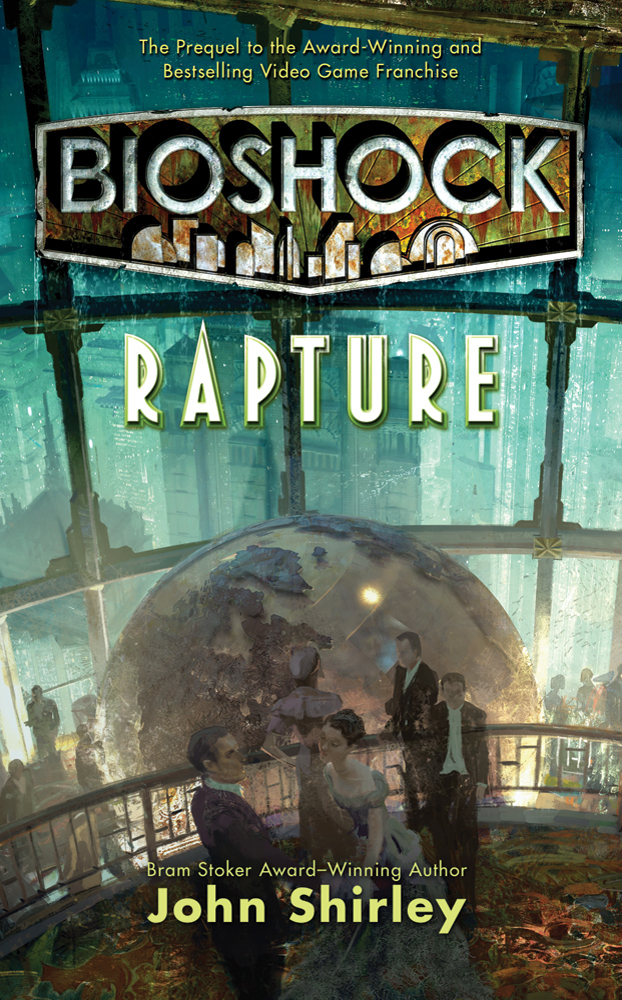
VENTRELLA: You’ve done quite a few novelizations and tie-ins, such as BATMAN: DEAD WHITE, PREDATOR: FOREVER MIDNIGHT and DOOM. What are the advantages and disadvantages of writing already in someone else’s world?

SHIRLEY: I did those things mostly for money—the most successful one was the Bioshock novel, BIOSHOCK: RAPTURE–but it’s also because they’re in arenas I enjoy. I do love Batman, was glad to play in that sandbox. They gave me a fair amount of latitude and it varies from editor to editor. The Bioshock game people were very hands on and that was difficult. One disadvantage is, one might have to revise more than one is really being paid for. But I always manage—in some cases, the project changes while you’re writing it. They’ve sent you a movie script, but at the last moment it was changed; you were supposed to write about this game but the second one just came out and they want you to do that too … And I prefer to adapt rather than argue.

In the case of Bioshock I knew the videogame world I was writing about pretty well and had enjoyed it so that helped. I enjoyed the Predator films and it was fun to write that book but one issue that comes up is, some fans are very possessive about the franchise they love. Some fans of the Predator comic book thought I ought to have followed its internal rules, its canon—but I didn’t read the comics, wasn’t required to. I just started with the movies and launched from there. I never contradict the underlying source material I’m using…but I do get to be creative within it, and that can be a bit of a buzz.

VENTRELLA: You’ve written scripts for movies and television–have you been pleased with the results?

SHIRLEY: It’s mixed. I wrote “The Crow,” with David Schow—couldn’t be pleased when Brandon Lee was killed in the course of the production. There are always issues of struggling with producer notes, and so on. As for television, it’s very much committee writing, and it’s hard for someone like me to learn that…but I did learn. I just wrote a recent television pilot, which we’re now shopping around, but I can’t talk about it except the name: Intruder Town.

VENTRELLA: Which do you think has been most successful?

SHIRLEY: I’ve had more television scripts that came out close to what I wanted, than in movies. The most recent movie I wrote was a low budget horror film. I was not happy about it. Can’t say more about that.

The Deep Space Nine episode I wrote came out nicely, thanks to Ira Behr, the producer. But it can be very frustrating and one can’t be too identified with the writing. You have to separate yourself from it more than if you’re writing a novel or a short story. . .

VENTRELLA: How much changed between your script and what is seen on the screen?

SHIRLEY: It’s the exception if there aren’t a lot of changes. There are always exceptions—Woody Allen’s films are auteur work, he’s the director, producer, writer, they naturally come out close to what he envisioned. Clint Eastwood, I think, once he has a good script, stays with it—eg the script for Unforgiven. But mostly it’s like your script has to run across no man’s land, with bullets flying…it’s lucky to get across it intact.

VENTRELLA: Do you find novels easier to write than short stories?

SHIRLEY: Short stories are finished faster of course, but that aside, there are things one can do in novels one can’t do in short stories. As long as you have a really strong sense of pacing, and don’t drop all the balls you’re juggling, you can get into more facets of character, more ideas, than in a short story. A short story is like a knock out punch; a novel is a whole long fight with many rounds and lots of footwork.

VENTRELLA: Which is your favorite?

SHIRLEY: Apples and oranges really…

VENTRELLA: Who is your favorite character?

SHIRLEY: From my work? Maybe Rickenharp from A SONG CALLED YOUTH—the cyberpunk trilogy is out now, as an omnibus, freshened up, updated, re edited, from Prime Books, and Rickenharp is perhaps the realest character…because he’s most like me. I’ve been a rock singer, he’s the leader of a rock band, I’m a lyricist and so is he (I wrote his lyrics, sometimes quoted briefly in the novels). He has drug issues and other issues—so do I. There’s a “street minister” character in my horror novel Wetbones I identify with a lot too, as he’s found a spiritual way out of addiction…

VENTRELLA: What would you ask that character if you could meet him or her?

SHIRLEY: Rickenharp? I’d ask him if he’d go to the recording studio with me, play some guitar, write some songs. And I’d ask him if he was self sacrificial—or self destructive.

VENTRELLA: And what do you think he or she would answer?

SHIRLEY: He’d say how much you pay me to the first question and laugh and say two sides of the same coin for the second.

VENTRELLA: Writers who are trying to make a name get hammered with lots of advice: The importance of a strong opening, admonitions about “writing what you know,” warnings to have “tension on every page” – what advice do you think is commonly given that really should be ignored?

SHIRLEY: Almost any of it can be ignored (apart from advice to be grammatic and literate and write in good sentences) if it’s irrelevant to what you’re doing. I have had to learn to write “more sympathetic” likable characters, but there are also times when I don’t need them to be sympathetic or likable. Ultimately one writes what works. Probably most people would have advised Anne Rice not to write a vampire character so sympathetically, in Interview with the Vampire, before it was published—but they’d be wrong! The book worked like gangbusters, breaking a rule. If you have the talent, the voice, the insight, make your own rules. If you’re not sure, follow the rules.

VENTRELLA: What is the biggest mistake you see starting writers make?

SHIRLEY: Nowadays it’s thinking they don’t need to be well read, they don’t need to know the difference between you’re and your, they don’t need to read outside their favorite genres—any half way decent writer had better read widely.

VENTRELLA: I’ve been surprised to find many writers who are also musicians (myself included) – why do you suppose that is?

SHIRLEY: I don’t know for sure. Jack Vance plays banjo. You really never know…But you know there’s a musicality in good sentences; there are good sentences in music…it’s all art, too…

I was always in rock bands. Like Sado-Nation—you can see me on youtube if you search for Sado-Nation with John Shirley there, performing with them in 1979 when I was quite young. So it’s always been a second track for me; and there are a lot of musical references in my books, and I listen to loud music, often, when writing and no it doesn’t distract me.

VENTRELLA: Who do you listen to? Who are your favorites?

SHIRLEY: I’m an old time Blue Oyster Cult guy, and in the late 90s I started writing lyrics for them (other lyricists for them include Patti Smith and Michael Moorcock), have written 18 songs they’ve recorded so I’m pretty partial to those. Mostly those are on their albums Heaven Forbid and Curse of the Hidden Mirror. I was in punk bands, and was a big fan of the Sex Pistols and the Clash and the Ramones. I am also a fan of psychedelic music, like Jimi Hendrix, Blue Cheer, or Roky Erickson. I like the Stones, the Beatles. Frank Zappa, Captain Beefheart. I’m a big Iggy and the Stooges guy too. Outside of rock I get into John Coltrane, certain classical composers like Stravinsky.

VENTRELLA: How did your collaboration with Blue Oyster Cult come about?

SHIRLEY: Mutual friends knew they were looking for a lyricist. Plus my first novel was named after one of their songs, TRANSMANIACON, and they were aware of it.

VENTRELLA: With a time machine and a universal translator, who would you invite to your ultimate dinner party?

SHIRLEY: CS Lewis, Tolkien, because I love the way those guys talk, Ambrose Bierce because I admire him and I want to ask what the hell happened to him, Edgar Allan Poe, same thing, Cyrano De Bergerac, Yeshua of Nazareth (a Gnostic teacher now called “Jesus”), Gotama Buddha, GI Gurdjieff, Ouspensky, Mark Twain, Marcus Aurelius, Pythagoras…

And I would sit Wyatt Earp right next to me…I’m pretty into the Wild West and have written a novel about Earp, that I am going to send out when I get around to revising it…

The P.O.V. Waltz

“I wonder why I have to have another point of view…” — Harry Nilsson, “P.O.V. Waltz”

As I am working on editing the second TALES OF FORTANNIS anthology, I once again am finding that the biggest problem starting authors have is with Point of View.

I don’t mean the difference between 1st person, 2nd person, and 3rd person — I assume everyone reading this blog knows what that means — but instead the difference between omniscient POV and limited third person POV.

Some authors can successfully write an omniscient POV, but it’s a rare talent — one most writers don’t have.

Most starting writers don’t even think about the POV, and there’s the problem.

Here, look at this paragraph:

John marched into the room. His anger raged within, like a volcano about to erupt. He stared at Mary, who stepped backwards, scared. She couldn’t help but admire the shirtless Adonis before her, but feared his power. Mary wondered if she could reach the knife in the drawer before John came closer. Fido barked, wanting only to be fed and have someone scratch his ears.

With whom does the reader identify? Is the main character John? Is it Mary? It could even be Fido!

Jumping around from head to head tells the tale, but at a distance, with the reader removed from any one character. It’s clumsy, and often makes the reader have to go back and re-read a section to make sure it is understood. And that is something you definitely don’t want.

“And suddenly the strangest things are happening…” — Nilsson again, “P.O.V. Waltz”

By making each scene take place with a limited third person view — where everything is told from one character’s point of view — you can add drama, suspense, and most importantly get your reader to identify with that character and feel a part of the story.

John marched into the room. His anger raged within, like a volcano about to erupt. He stared at Mary, who backed away. Her eyes scanned his body as she softly licked her lips, and then her view darted to the kitchen. The dog barked once, its tail wagging happily.

This version allows the reader to identify with John. We still get the idea of what Mary is thinking, but through John’s POV. We also know the dog’s bark is friendly without having to analyze the dog’s thoughts.

Whenever there is a scene with your main character, the story should be in that person’s POV. Imagine residing in that character’s head. Descriptions of other characters will be from your protagonist’s POV and may not even be accurate.

Sometimes there will be scenes with minor characters, and then you need to decide whose POV will best tell the story. In my next novel BLOODSUCKERS, the first chapter was originally told from the POV of a senator who is surprised at the arrival of an intruder into his room (who turns out to be a vampire assassin). Later, I rewrote it from the vampire’s POV and the suspense level rose exponentially. It grabs the reader better, lets them know something terrible is about to happen, and also provides the reader with a proper set-up for the way the vampires think and what their plans are.

Later, there is another scene where this same vampire is trying to find the protagonist and is questioning someone. Despite the fact that a previous chapter had been told from her point of view, this chapter is told from the POV of the victim. Why? Because it helps build the suspense once again.

It might be a good exercise to take some of your scenes and rewrite them, telling them from the POV of one of the secondary characters. Even if you don’t end up using it, the practice should tell you something about that secondary character you might not have known before, and can only help make your characters more real to the reader.

Not having a consistent POV is a sure sign that you’re a starting author. If you’re piling up the rejection letters, look to that first — it sure seems common among the stories I have been receiving for my anthology, so I’m sure it’s true elsewhere. Don’t make this mistake!

“I hope it’s not the last time…” — Nilsson again, “P.O.V. Waltz”

My Balticon 2012 Schedule

I’ll be a guest at the science fiction convention Balticon next weekend (May 25-28, 2012) in Baltimore. I’ll be talking about writing and editing and, of course, making a fool of myself at the “Eye of Argon” panel. The Guest of Honor is Jodi Lynn Nye, who (as you might know) wrote a great blurb for my TALES OF FORTANNIS book!

The nice people at Balticon scheduled me for a plethora of panels!

Friday 9:00 pm: Meet the Pros: Mix and mingle with the Guests of Honor and Balticon 46 Program Participants.

Friday 10:00 pm: The Role of Anthologies: As both a source of fiction and a means of promotion, what do anthologies have to offer? Fan and author panelists discuss. With Danielle Ackley-McPhail, Joshua Bilmes, C. J. Henderson, Bernie Mojzes, Pete Prellwitz, Jean Marie Ward, and Trisha J. Wooldridge

Friday 11:00 p.m.: Readings: Authors read from their works. With James Maxey and Jeff Young

Saturday 10:00 am: Editor’s Roundtable: Editors discuss the way they work with authors and how that differs when working on a single author project, a collaborative project, or an anthology project. With Carl Cipra, Joshua Bilmes, Barbara Friend Ish, Bill Fawcett, Joshua Palmatier, Ian Randal Strock, and Steven H. Wilson

Saturday Noon: Magical Systems in Fantasy Literature — A Round Table Discussion: Panelists look at what are some of the things we expect to see in magical systems and give examples of works that are missing those factors, but work just fine for the reader anyway. With Gail Z. Martin, Hildy Silverman, Trisha J. Wooldridge, Myke Cole, Jody Lynn Nye (Guest of Honor), David Wood, Barbara Friend Ish, Elektra Hammond, Bill Fawcett, and Jean Marie Ward

Sunday 10:00 am: Editors Looking For Submissions: Meet editors who are actively looking for writing and/or artwork for their publications. Get tips on what they like and dislike. Find out what kind of work they need right now. With Vonnie Winslow Crist, Bernie Mojzes, Brian Koscienski, Kate Kaynak, and Michael D. Pederson

Sunday 11:00 am: Liberty and Other Inalienable Rights: Will Basic Rights Change in the Future? In what ways? With Danny Birt, D. H. Aire, and Steven H. Wilson

Sunday 8:00 pm: Young Adult Fiction: Is YA Science Fiction Failing to Educate While It Entertains? Should it be aspiring to do so? With Peter Prellwitz, Jagi Lamplighter, Maria V. Snyder, and Janine K. Spendlove

Sunday Midnight: Eye of Argon — The Play “One of the genre’s most beloved pieces of appalling prose” read by some of the best narrators, presented in all its theatrical glory and critiqued by those who can’t keep a straight face. The history of this tome is discussed, and experts weigh in on why this book is so horrible. Sadly, due to hotel fire laws, we cannot burn anything. Not for people who have weak stomachs or suicidal tendencies. With Susan de Guardiola, Walter H. Hunt, Grig Larson, and Hildy Silverman

Monday Noon: The Role of Alcoholic Beverages in Fantasy: How are intoxicants treated in fantasy? Beers, hard liquor, absinthe, etc – where do the culture of obliteration and that of escapism intersect? What about that cliche about writers and drinking? Does it apply to writers of speculative fiction in the same way, and how does it effect the works they produce? With Jagi Lamplighter, Ruth Lampi, Maria V. Snyder, and Janine K. Spendlove

Interview with Hugo-Nominated Author Janet Morris

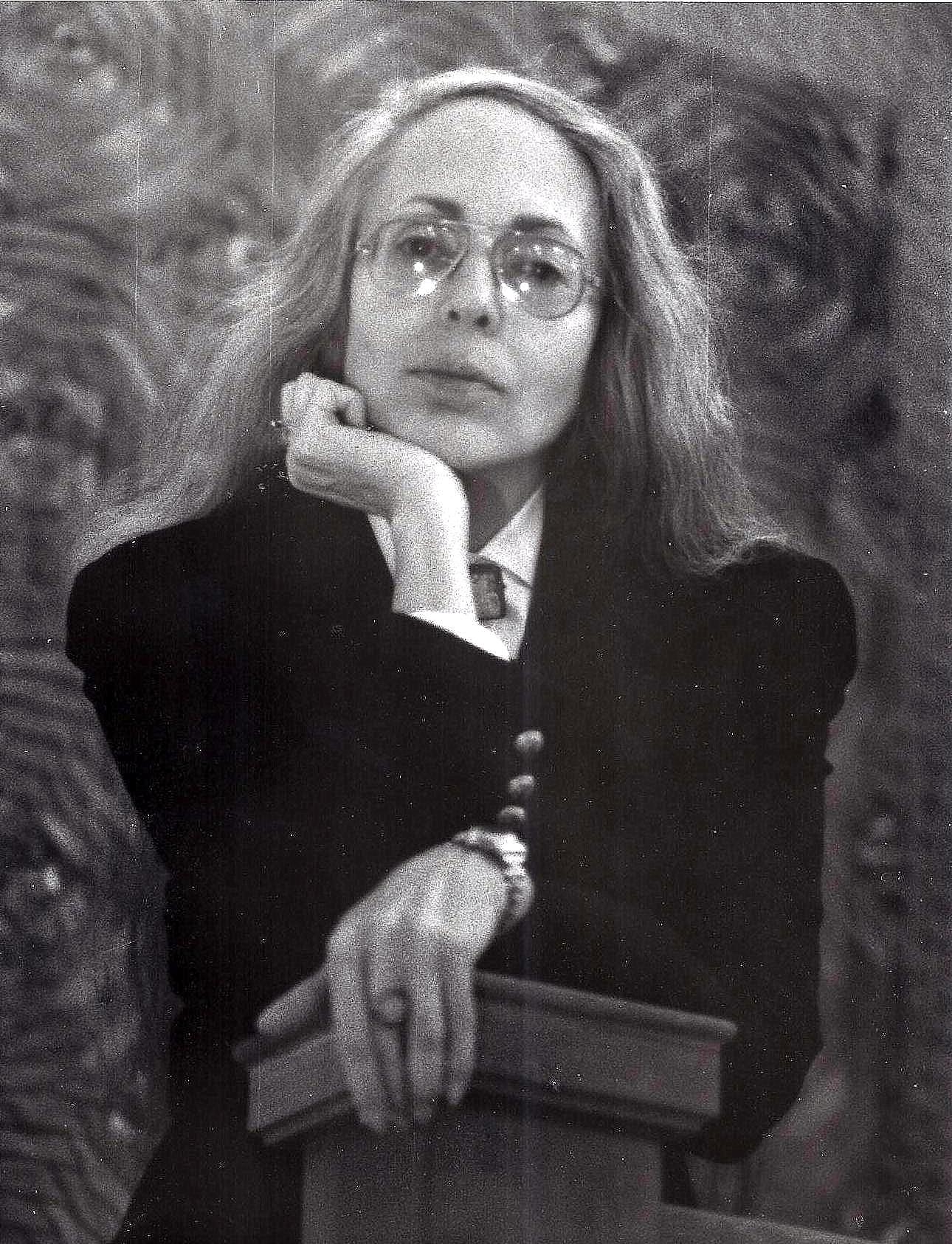
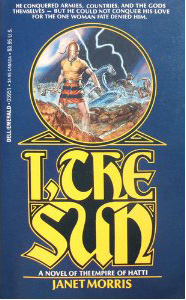
MICHAEL A. VENTRELLA: Today, I am pleased to be interviewing Hugo-nominated author Janet Morris. Janet is probably best known for her Silistra series. She has contributed short fiction to the shared universe fantasy series “Thieves World” and then created, orchestrated, and edited the fantasy series “Heroes in Hell,” writing stories for the series. Most of her fiction work has been in the fantasy and science fiction genres, although she has also written historical and other novels. Her 1983 book I, THE SUN, a detailed biographical novel about the Hittite King Suppiluliuma I, was praised for its historical accuracy.
Janet, let’s start by talking about the Kindle promotion going on right now.

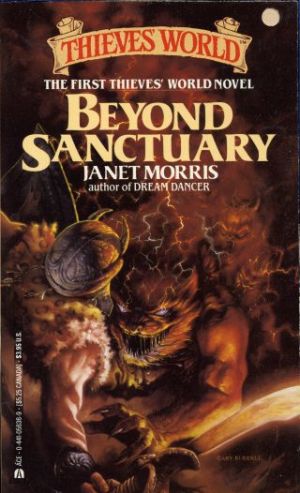
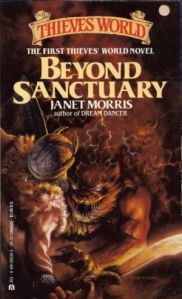
JANET MORRIS: There is an Amazon giveaway (May 15-17) of the author’s cut reissue of BEYOND SANCTUARY as a Kindle book. This is the only time this book will be offered as a free Kindle download.

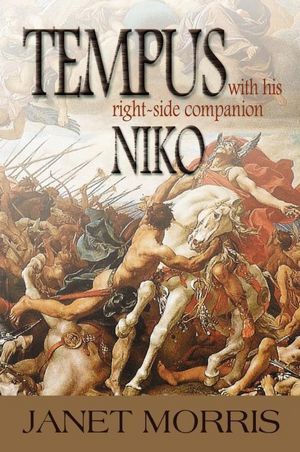
It the first novel in the “Author’s Cut” group of reissues: each “Author’s Cut” volume is compeltely revised and expanded by the author(s) and contain new material never before available. The other “Author’s Cut” volumes that have been released as ebooks and as trade paperbacks are TEMPUS WITH HIS RIGHT-SIDE COMPANION NIKO (2011) and THE FISH THE FIGHTERS AND THE SONG-GIRL (2012). The next “Author’s Cut” edition will be BEYOND THE VEIL (2013), second of the three “Beyond novels” in the Sacred Band of Stepsons series. We will eventually reissue all the Sacred Band of Stepsons books, and then more of our backlist, in this ‘author’s cut’ program. It’s very satisfying to get all the errors and deficiencies corrected, and have a chance to enhance these perennial sellers.

Most Sacred Band novels will not have giveaways; we chose BEYOND SANCTUARY as a good starting place for those new to the series and, in its enhanced and expanded form, as an attraction for those who loved these books and stories in the 20th century. We are planning to do a few Sacred Band stories as Kindle shorts as time goes by, but nothing specific has been decided.

VENTRELLA: You started your publication history with the Silistra series. How did you make that first sale?

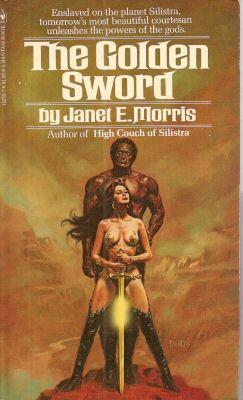
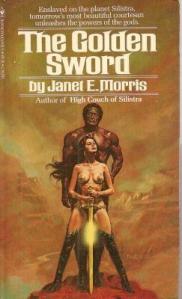
MORRIS: I wrote HIGH COUCH in 1975 and its two follow-ons, THE GOLDEN SWORD and WIND FROM THE ABYSS thereafter for fun: following the story for my husband and our friends. I knew no one in publishing and had no aspirations to break into the business.

One friend said her husband knew an agent and the book (HIGH COUCH) should be published but I would need to provide the manuscript in a clean, double-spaced copy, not single-space with handwritten corrections. I had my dad’s ancient typewriter (non-electric, non-correcting; the “p” key stuck) and was a terrible typist. I found out it would cost $1.00 per page to have the manuscript typed by a professional, which meant a $250.00 investment. So I didn’t do that for over a year; by then my second book was finished. In 1976 my friend sent the typed HIGH COUCH manuscript to an agent, Perry Knowlton, president of Curtis Brown, Ltd.. Perry called me and said I was a natural storyteller and he wanted to represent me and the book, and did I have any other books? I said I did but they weren’t typed up. He said, “Get them typed.”

Perry remained my only agent until his death. By the time I had the other books typed, he had sold HIGH COUCH for five figures to Frederik Pohl and Sydney Weinberg at Bantam and I was able to quit my day job. Then Perry sold THE GOLDEN SWORD and WIND FROM THE ABYSS to them in a package. By then I was writing THE CARNELIAN THRONE. By the time THRONE came out, Bantam had over 4M copies of the first three in print.

They bought THE CARNELIAN THRONE also, and my next series went to auction in two countries simultaneously based on sample chapters: I still don’t like to write outlines.

Silistra got many foreign rights deals, but only the French one is a divergent manuscript: for a sizable additional sum, I provided extra ‘erotic passages.’ ‘Erotic’ in those days was much less explicit than now, but even so, SILISTRA shook a lot of people from complacency: it wasn’t feminist, nor was it conservative; it featured pansexual characters and dealt with philosophical and sociobiological questions about sexuality and abuse of power; the main female character was powerful and had a sword: all these elements were challenging to the fantasy and SF community. And the book didn’t fit a neat category. In what was then a very hidebound and immature market, it blazed tough trails and still today doesn’t fit any simplistic or political model.
VENTRELLA: How has the publishing world changed since then?

MORRIS: E-publishing is a big change. Deconstructionism is rampant: the continual division of the novel into smaller and smaller subsets of its constituent elements (such as mystery, thriller, erotic, adventure, romance, horror, etc.) either mirrors or leads the deconstruction of politics and of society. Writing outside established marketing categories is increasingly difficult; the mid-list book, which was an incubator of talent, is all but gone in print publishing.

As an ox-gorer and a windmill-tilter who writes mythic novels with political subtexts and who never has been easy to categorize, I think e-publishing is a good thing. I no longer have to cut a big idea into three volume-sized chunks: I can write the book at the length it needs; I don’t have to fix or endure additional errors from semi-educated production people; I can control my covers and the book’s sell copy. The downside is there is much more free reading material (some worth the price, some not), and a lower educational level among some groups – but there have always been books and writers for every echelon of society.

VENTRELLA: Do you see a future where self-publishing will be accepted?

MORRIS: Sure, eventually. When we decided to return to fiction (after taking 20 years off to create the nonlethal weapons mandate, the nonlethality concept, and other initiatives in the defense policy and planning realms), we wanted to keep our fiction e-rights and at that time my agent (Perry Knowlton’s son, Tim, at Curtis Brown) said it was impossible to make a deal like that with a major house. So we decided to put together a small publishing house that did e-books and trades and make strategic alliances with other small publishing houses who produced quality hardcovers. We did this because the self-publishing road is still stigmatized, and because the production learning curve is steep. Kerlak did our first two hardcovers and gave me what I wanted: sewn binding, linen boards, generous print size, etc.

The stigmatization of self-publishing is primarily from the big chains, who look down on POD but POD was what attracted me to small publishing: no remaindered books; no books going to dumpsites; no torn-off covers returned and no tax liability for unsold stock. When we do reissues, we do “Author’s Cut” editions in which we can correct and expand and enhance each book that we’re releasing with better covers and production values than the twentieth century originals: an approach possible now but not practical even ten years ago.

Machiavelli commented in THE PRINCE as follows: “There is nothing more difficult to carry out nor more uncertain of success nor more dangerous to handle than to initiate a new order of things: for the reformer has enemies in all those who profit by the old order, and only lukewarm defenders in those who would profit by the new; this weak support arising partly from the incredulity of mankind who does not truly believe in anything new until they actually experience it.” We found this when initiating the nonlethal weapons programmatics: twenty years later, we are where we should have been in five years in nonlethals, and at absurd cost because nothing is adopted until big things take that viewpoint onboard commercially. Similarly, with publishing, as vested interests deal themselves in and competitive entities are created, things will stabilize – hopefully with new players, but with many of the old entities in new guises.
VENTRELLA: Will the rise of smaller publishing houses and e-books mean that these may someday be better accepted? For instance, will SFWA someday accept more of these publishers? Would that be a good thing?

MORRIS: Eventually the writers organizations must accept reality. E-books and small publishing are part of the new reality. SFWA, like all bureaucracies, protests that it protects its membership while it actually protects primarily itself. When SFWA sees that it must change to survive, it will change. Adaptation is always necessary for survival.

VENTRELLA: Now let’s talk about something more fun: Writing! What led you to write fantasy?

MORRIS: My work doesn’t fit many contemporary definitions of fantasy. I really write mythic novels and stories, sometimes in an SF and sometimes in a fantasy context, but there’s nothing ‘sweet’ or ‘pastel’ about my work: my characters face challenges and so do my readers.

When I write something that publishers call ‘fantasy’ I am writing in what I think is the most important tradition of fiction: starting with Homer and up through Shakespeare and Milton, the most important themes to tackle are those of the mythopoeic domain, tales of the body and mind seen through a temperament and a cosmos divorced from current reality so what is said can be more clear. For me, myth is the ‘common’ language of us all – or has been until these days of stories reduced to their lowest mechanical nature. My stories have a historical cognizance, a literary cognizance, and a philosophical/ scientific cognizance.

Bantam once wanted to separate a book of mine into two books: a short ‘wisdom literature’ book and a longer ‘mainstream’ book. I didn’t do that, but in retrospect it was a well-thought impulse on the publisher’s part.

I’ve also written nonfiction; a rigorous historical about Suppiluliumas, a Hittite king; a pseudonymous ‘novel’; other pseudonymous ‘high-tech thrillers’ (or what you will) with strong technology drivers. I make more money when I write under one male name than when I write under one female name or, as reality dictates, as “Janet Morris and Chris Morris.” But I write the book, each time, that forces me to write it, whether fiction or nonfiction. If the book is fiction, I write only when the story and characters demand that I give up my real life because what they will say is more important.

VENTRELLA: How do you create a realistic, believable fantasy world without just looking like every other realistic, believable fantasy world out there?

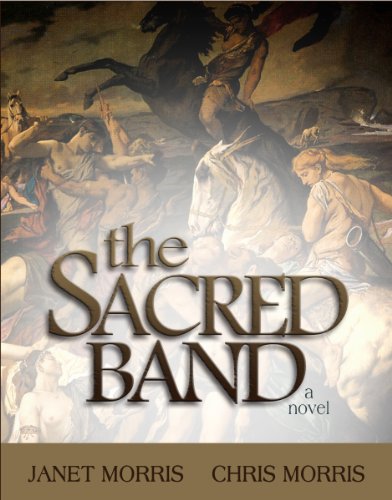
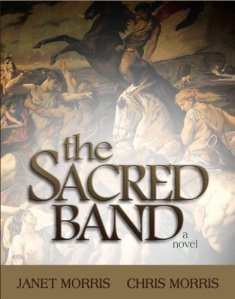
MORRIS: We say about THE SACRED BAND, our newest mythic novel, that it is “an adventure like no other.” This book had waited since the late 1970s to be written.

My books are remarkably unlike most of what else is available in contemporary fiction, so making the story or milieu ‘unique’ is not an effort for me. We started ‘The Sacred Band of Stepsons’ series and characters in the ‘shared world’ universe of Thieves’ World®, and so wrote in a milieu populated with other writers: making my work ‘fit’ their construct was a challenge. I have a deep love for the third, second and first millennia BCE, and my ancient characters always are touchstones to historical reality: I don’t “try” to make my fantasy world different from reality: I try to take you into the mythos of humanity. Silistra had a complete language, a glossary, a unique context, a rigorous rationale actually based on sociobiology and genetics, but had sword-wielding women and horses and ancient skirmishers as well as high-tech outsiders trying to understand it. The “Dream Dancer” series, also ‘science-fantasy,’ was set in space habitats primarily. It’s very easy for me to establish a credible world construct and posit behaviors there: I have predicted several major events in the real world over a number of years based on that ability to identify the most likely course of action that a country or individual will take in a given context. Now this skill is beginning to become a field of study called “intuitive decision making” and also “implied learning.” We once called it “speed understanding.” Writers often have this ability, and it allows creators to make their characters and societies credible. The writers who don’t have it can’t make their characters, or worlds, credible enough to please me.
If you want to write something completely unique, you will probably fail or at best write something without redeeming value. The mind works in certain patterns: the mind organizes facts in story form; it is your commonality with that body of human thought that makes a good book, not its estrangement from the common values that humans share.

VENTRELLA: As one of the original THIEVES’ WORLD gang, you’ve had a huge influence on modern fantasy fiction. It’s one of the first (or maybe the first?) shared world anthology. (I copied it completely and stole this idea for my TALES OF FORTANNIS series, by the way.) Where did the idea for this originate?

MORRIS: TW had one volume published when I was asked to come aboard: “Thieves’ World,” which had Joe Haldeman and Andy Offutt and Bob Asprin and others. Bob had the original idea for the “worst town in fantasy, the grittiest, meanest, seediest place possible.” He asked me to write for it at a convention and I said, “How serious are you about gritty?” I had written a very short piece about a woman who killed sorcerers for a living, and I proposed to bring those characters into Thieves’ World, plus an immortalized and very unhappy mercenary who regenerated. Bob said okay, I could bring the characters and take them out again afterward.

I started the story “Vashanka’s Minion,” that introduced Tempus (a/k/a the Riddler, Favorite of the Storm God, the Obscure, the Black). He has a metaphysical link to Herakleitos of Ephesus, and lives as a warrior in a Herakleitan/Hittite cosmos that I overlayed on what Bob and Andy already had done. But when Tempus got down to the dock and Askelon of Meridian got off the boat, Tempus said, “You, get out of my story. There’s not room enough here for both of us.” So Askelon didn’t arrive in Thieves’ World until “Wizard Weather,” although Cime, Tempus’ sister-in-arms, did show up. Tempus forms the Sacred Band of Stepsons in Thieves’ World #2, meets the patron shade of the Sacred Band in #3, and puts the Band together.

Then the TW books start to succeed and people get cranky. I called Bob and asked for a letter because I wanted to take my characters out of the shared town and do a group of novels with them, since Bob was complaining my characters were “too big.” So we agreed on that plan. These tensions made the stories more fun: people came and went; I took my characters into my own constructs such as Wizardwall and into the real ancient-world settlements of Nisibis and Mygdonia. Everyone contributed something useful to TW, and its fabric is still very rich.

I got Lynn Abbey’s permission, after Bob died, to bring the Sacred Band back to Sanctuary for a big novel to tie up loose ends that was set ten years after the Stepsons left town in TW #11 and well before Lynn’s own novel, since that milieu wouldn’t work for me. This project became THE SACRED BAND. As agreed with Lynn, THE SACRED BAND was followed by a novella, “the Fish the Fighters and the Song-girl” (the title story from the second “Sacred Band Tales” anthology), which takes the Stepsons back out of Sanctuary again and sweeps up all my TW stories not previously collected. So now, between “Tempus with his right-side companion Niko” and “the Fish the Fighters and the Song-girl” all our ten TW Sacred Band stories are assembled in two volumes, along with other Stepsons tales not available elsewhere.
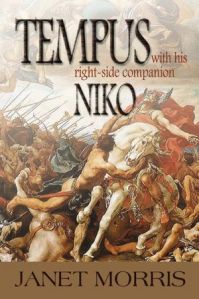
As for fun quotient, I get more joy from the Sacred Band of Stepsons than from any other characters. And the SBS character list is expanding….

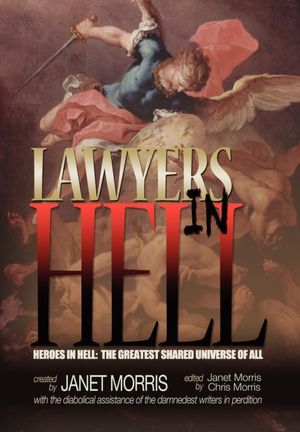
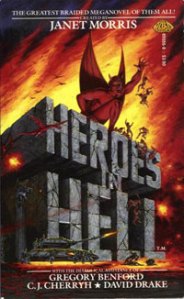
VENTRELLA: Another great series you’ve run is the HEROES IN HELL series (which now apparently includes LAWYERS IN HELL, which could be the name of my autobiography). What future themes can we expect to see?

MORRIS: If I’d known you, I’d have invited you to contribute to LAWYERS. In the 21st century Heroes in Hell books, next up is “Rogues,” to be followed by “Dreamers” (or “Visionaries,” I haven’t finalized the title), then “Poets,” then “Pirates” (or “Swashbucklers”). “Doctors” is a distinct possibility. There are many stories left to tell in hell, especially now that we have met hell’s landlords and heaven has sent down auditors to make sure hell is sufficiently hellish.

VENTRELLA: How do you work with the authors to make sure there is consistency in the world setting for these collections?

MORRIS: Each hell book takes a year to write and assemble, and the writers must coordinate more completely than was possible before the internet: we have a “secret” working group on Facebook where the writers interact and arcs and meta-arcs are chosen and polished. They choose characters. Our “Muse of Hell,” Sarah Hulcy, has put up 130 orientation docs, so there’s plenty of available information. When they choose the characters, we check to see if those characters have been used previously, and if the characters are available and meet our criteria, they can “claim” those characters for the time they write for the series. If they leave, they can’t take the characters: characters come back to me and stay in hell to be recycled.

Then they work on a short “two or three sentence” synopsis. I must accept the synopsis and the characters before they start to write. They can use legendary, historical, or mythical characters. They can’t use characters from modern fiction (post 1900) and they can’t use recently dead or living people. Then writers are allowed to post in-progress snippets which the group can read, and comment upon – or not. Chris and I write “guide stories” (two or three), setting up the current long arcs and the general tone of the volume at its beginning and end. Between these “bookends,” the other writers must set their stories.

When the stories are generally selected, I edit for continuity and tone, and Sarah Hulcy follows me with a copy-edit. Chris Morris is the final editorial reader, and with the three of us working on the stories for continuity and cohesion, we get a strong result and a better book than we could have produced before the internet.

VENTRELLA: I assume your anthologies are primarily invitation-only (correct me if I am wrong). How do you deal with stories that don’t meet your standard or are rejected for other reasons?
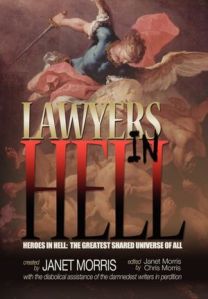
MORRIS: We are invitation-only. The milieu of our hell belongs to Chris and me. The authors know that from the outset. We usually won’t let them write a story we don’t think will work: by the time we’ve approved characters and synopsis, we know what the story will be and how we’ll use it. If someone simply fails to write a useful story, they probably haven’t met our guidelines. Our hell universe is easily recognizable. Each writer has left a clear trail of participation. If they want to rewrite a story we won’t accept and take out the arguably HIH context and characters, of course they can try.

VENTRELLA: Let’s discuss your novels. Which is your favorite?

MORRIS: In fantasy: THE SACRED BAND (Janet Morris and Chris Morris; Paradise, 2010; Kerlak, 2011), the mythic novel of the Sacred Band of Stepsons uniting with the Sacred Band of Thebes and returning to Sanctuary. In historical: I, THE SUN (Janet Morris, Dell, 1987).

VENTRELLA: Who is your favorite character?

MORRIS: Tempus and then Niko and the Sacred Band of Stepsons fighters.

VENTRELLA: What would you ask that character if you could meet him or her?

MORRIS: Tempus lives in my skull. I meet him on a regular basis and I’m happy to have a character so available. He’s been there since 1979. I went to the White House and he said, “Kinda small, isn’t it?” I would ask him, in all seriousness, whether he truly believes that “character is destiny,” a line he shares with Herakleitos.

VENTRELLA: And what do you think he or she would answer?

MORRIS: “The sun is new every day.” We call him the Riddler, remember.

VENTRELLA: Do you prefer writing fantasy or science fiction?

MORRIS: Fantasy, because very little in SF can transcend the gimmickry of a technical conceit, yet without that conceit at its heart a book isn’t truly science fiction. Furthermore, so little emerging thought and technology is employed by sf writers today that the genre is lagging far behind reality both in the cosmology area and the technology area: sf is no longer a place to experiment, but is now very derivative.

VENTRELLA: Do you find novels easier to write than short stories?

MORRIS: A novel is a major commitment, and must move smoothly along its trajectory. A “short story,” if it’s more than three thousand words, actually lets you focus more deeply on a circumscribed area or event. I think short stories and novels are different; each form is unique and equally demanding. I prefer novels but short stories are good exercises in discipline.
VENTRELLA: Do you tend to outline heavily or just jump right in? What is your writing style?

MORRIS: I don’t “outline” in the way that you mean. I get characters, and their background; I immerse my intelligence in a milieu that’s fully realized: a place with weather and politics and problems and a special nature. I use square post-it notes to write down certain things that must happen during a sitting: a line of dialogue, a particular event, where I need to be when the section is done; a section or chapter or story title. I know where I want the story or chapter or novel to end; I know where I want to start each section: how I get there is the fun for me.

Often times the question for me is which viewpoint character will have the best take on a particular set of events. When I have (twice) sold a project based on outline, it took all the fun out of it.

VENTRELLA: When creating believable characters, what techniques do you use?

MORRIS: I wait. I lie on the bed or go for a drive with paper in my pocket and wait for the characters to start to interact with me, or to tell their story to me. I need to “see something moving” and other writers who write this way all agree – if there’s something moving in your mind’s eye, there’s a character there.

Abarsis was a good example: I knew I wanted to do “A Man and His God” in which at the end the Slaughter Priest would die in Tempus’ arms. I got a character called Abarsis. I thought he and the Slaughter Priest would be two different people but the character wanted to be “Abarsis, the Slaughter Priest.” This was a very big, very strong character and I argued that if Abarsis was the Slaughter Priest then he would die. He said that was fine. Susan Allison of Ace called me up after she read it and confessed that the story made her cry. And Abarsis came back as patron shade of the Sacred Band: the character knew more than I what to do and how, in order to be memorable. Sometimes with good characters you must let go and let them forge ahead. This requires belief in your Muse.

VENTRELLA: You’ve collaborated with other prominent authors, at least one of whom lives with you, which makes it easier. How have these worked? (For instance, do you share writing equally? Does one author do the basic work and the other expand from that outline?)

MORRIS: With whatever writer, we talk about the story line, points of interest, what needs to be accomplished. If it’s Chris, he may come up with a title or a concept. I usually do draft or if I write with others, I’ll often write first: I like beginnings. With some writers, I send sections and they pick up the action; with others, I’ll do a draft and then they will add to it after I’ve done all I want to do, from beginning to end.
Everyone has a special genius, and working with each person is different. If the other writer starts, that’s a different process for me: I work on the story they’ve sent in Track Changes, do what I want to the entire manuscript. Then they accept or reject or we go back and forth. I worked a number of projects with a writer who was outline-driven and I could never figure out what those notations were supposed to evoke, so I’d call to discuss it. The outline made the other writer feel better. I can do a series of chapter titles and use those as an outline, but beyond that, outlines don’t help me. I often work with other writers who don’t like to outline either, or outline in the most cursory way.

VENTRELLA: Writers who are trying to make a name get hammered with lots of advice: The importance of a strong opening, admonitions about “writing what you know,” warnings to have “tension on every page” – what advice do you think is commonly given that really should be ignored?

MORRIS: All advice should be ignored. Every real writer is different. Every story has a nature, an organic way it wants to unfold. Tell a story that sweeps you up, that you want to hear, that keeps YOU on the edge of your seat. Some stories start best with dialogue, others with narrative: writing is catching the wave of creativity. The wave must be there for you to catch.

Writers learn from reading other writers whom they can admire, and writers whom they detest. Before Silistra, I bought a paperback by a famous writer and when I was done I threw it in the wastebasket, said “I can do better than that,” and did. When I read, I try to read writers who can teach me something, who are better at some things than I am. But print-through is always an issue: often when I am writing fiction I read only nonfiction, and vice versa.

The only person who should ask you to make changes in your book is some editor who has paid a lot of money for it. Even then, changes are risky: the story unfolds on the first pass the way the universe unfolded in the first moments of creation: in the way that it must.

VENTRELLA: What is the biggest mistake you see starting writers make?

MORRIS: Writers who have no characters and force a story bore me. Writers who are good at one thing – such as dialogue – may do that one thing too much: talking heads don’t work except very occasionally, when they can work very well. Knowing when to do something is part of the art of writing. Sometimes I act as an acquisitions editor. If you want to sell to me, you’ll tell me who, where, what, and why, and then finally how – all on the first page, hopefully in the first couple paragraphs: where I am, what it’s like, who cares about what’s happening. I want to fall through the words into a different place. But most of all, you must make me care almost immediately.

VENTRELLA: With a time machine and a universal translator, who would you invite to your ultimate dinner party?

MORRIS: Homer, Hesiod, Tiye, Virgil, Marcus Aurelius, Herakleitos, Einstein, DaVinci, Xenophon, Kikkuli, Thales, Plato, Odysseus (assuming he was Homer’s grandfather), Epaminondas, T.E. Lawrence, Marlowe, Shakespeare, Byron, Mary Shelley, Evelyn Waugh, Emil Zola, Dwight Eisenhower, Sun Tzu, Aspasia, Aristotle, Marguerite Yourcenar, Henry James, Suppiluliumas, Anksepaaten, Herodotus, Sappho, Emily Dickinson, Richmond Lattimore, Solomon, the Biblical “J.” And I’d really like to have Roger Penrose as toastmaster, but he’s still alive.

Interview with Author KT Pinto

MICHAEL A. VENTRELLA: Today, I am pleased to be interviewing KT Pinto. KT has been writing since she was twelve, finally getting her first book published in 2007. She writes alternate history (The Books of Insanity series) with vampyres and alternate reality (The Sto’s House Presents series) with mutants. She is a modern mythologist and a self-proclaimed ‘fluffy goth’ who would sooner wear pink with sparkles than black velvet. She will be a guest at Balticon in a few weeks (where I also will be a guest). KT will be promoting her latest novel and participating in a book release party.

KT, let’s talk first about your latest big news. You received a grant! Tell us about the End of the Rainbow project.

KT PINTO: I received a DCA Premier Grant from the Council on the Arts & Humanities for Staten Island (COAHSI), with public funding from the NYC Department of Cultural Affairs to re-write the myths from an alternate lifestyle perspective. I am going to be rewriting myths from Greek, Roman, Norse, Egyptian, and Gaelic cultures. You could read an excerpt of the book here.

I will also be doing a reading of this book at Bent Pages, NYC’s only remaining LGBT bookstore (391 Van Duzer Street, Staten Island, New York) on Thursday, October 11, 2012 at 7:00 PM.

VENTRELLA: And there’s a raffle, too?

PINTO: Yes! The proceeds from this raffle will go towards completing my End of the Rainbow grant project and the winner will be announced at the end of the Staten Island LGBT Festival on June 2nd! There will be 10 different prize “baskets” (the prizes will not actually be presented in baskets), each with a different theme. All of the basket items were donated (it’s great that people are so generous!), and the baskets range in value from $70 – $220. Details on the baskets can be found here!

VENTRELLA: MUTANTS ON THE ROCKS is about to be released and is the latest in your “Sto’s House” series. Where did you come up with the idea?

PINTO: I had been having a really hard time with my vampyre series, and I realized that being in that dark place all the time wasn’t good for my creativity, so I decided to start writing some more light-hearted stories. I took the idea from an RPG I created called Sto’s House, which is about a bunch of 20-somethings who are mutated by the toxic waste in the Staten Island Dump. They don’t want to save the world, just find the world’s best microbrew.

The characters are based on my friend Christopher Mancuso (aka Sto) and the people we used to hang out with at his house when we were in our 20s. I hadn’t planned on it becoming novel-length, but one day I noticed that I had written 10 short stories, and had enough material for a really good (if I do say so myself) novel.

VENTRELLA: How has the series been received so far?

PINTO: People seem to be having a good time with it. I wasn’t sure how it would be received on Staten Island especially, but people seem to really enjoy the humor and there are enough different characters that readers can relate to one or more of them.

VENTRELLA: You’re having a release party at Balticon. Tell us about that!

PINTO: I personally am not having the party. Dark Quest Books, who publishes my Sto’s House Presents… series, is having a party highlighting their new releases for the spring. I think four authors are being highlighted there including myself and MUTANTS ON THE ROCKS, which is the second book in the Sto’s House Presents… series.

VENTRELLA: Like me, you’re a regular on the east coast convention circuit. What are the advantages of attending these?

PINTO: Conventions give you a chance to interact with fans as well as getting together with fellow authors and networking with publishers and agents. For me, it’s also good to be on the circuit because I get a chance to see what’s going on in other genres and other disciplines (like costuming and gaming). I actually am starting to cut back on some local conventions and travel to further locations, like Pittsburgh, Pa. and Roanoke Va. because I want to connect with more fans and professionals.

VENTRELLA: These days, it takes much more to be a successful author than merely writing a good book. What other efforts have you made to publicize yourself and do you think they have been worth your time?

PINTO: I have gotten very involved with my local arts organization, COAHSI, which is a good resource not only for grants, but to meet other local artists, find out about community events, help promote you and your work and even to learn about more mundane information like jobs, insurance and other resources.

I’ve been on Live Journal for a really long time, and don’t plan on leaving it any time soon. Not only am I able to write full journal entries, but I can also link it to my facebook and twitter accounts. Facebook used to be a good resource, but it’s gotten so big (I’m up to 1000 friends) and has made so many changes, networking has become difficult.

Inanna from By Light Unseen Media – who published MARCO, the third book in my vampyre series – suggested that Goodreads may be a better site for promotions, so I’m feeling my way through that site as well.

I also have an account with Constant Contact, which helps me send out a newsletter to a mailing list that I developed by going to conventions.

VENTRELLA: What was your first professionally published work?

PINTO: My first work was “E-mails 10”, which was a short story published in Nth Degree Magazine (which is now Nthzine on-line).

VENTRELLA: You have a LARP background (as do I). How has that led to you writing fiction?

PINTO: Although I have been writing since I was 12, LARPing was what helped me create my world and characters of The Books of Insanity series. I used to own a gaming company that ran LARPs around the Hudson Valley, NY and at conventions.

During that time I created some original LARPS (ex: Sto’s House) and some murder mystery nights, the main game that we ran was vampyre LARP. So I was not only able to create evil, blood-sucking fiends, but I was able to become them as NPCs

I had created a character that was supposed to only be a one-shot ‘big bad’ that the players were supposed to kill in a one-night (possibly two-night) story line. More than a year later, she still existed, because instead of people trying to kill her, they wanted to join forces and build storylines around her.

That character’s name was Celeste, and she became the main character in my Books of Insanity series.

VENTRELLA: What are the differences between writing for a LARP and writing fiction?

PINTO: When writing a storyline for a LARP, you have to be prepared that all of your plans are going to be destroyed within the first five minutes of the game. You have to plan for different levels of gamers and prepare to lead them through a storyline if necessary. Other times your PCs make their story their own and all you have to do is keep track of the rules (in my case, the staff kept track of the rules; I was more a storyline/character person).

With fiction, it’s all on you to keep the audience’s attention and creating all the drama and action. On the upside, you don’t have to worry about almost 500 characters trying to do their own thing…

VENTRELLA: Boy, do I know that feeling. Do you prefer short stories or longer works?

PINTO: I used to dislike writing short stories, but the more I do (and the more I get published!) the more I like them. I think I have developed a rhythm to creating a short in a concise manner, unlike when I write a novel.

When it comes to my reading, my preference has always been novels. I tend to feel gypped when I read a really good short story and it ends. It always feels like it ended too soon and leaves me wanting more.

VENTRELLA: You’ve mostly dealt with mid-sized press (like me!). What are the advantages of dealing with a smaller press?

PINTO: Mid-sized presses are good because they’re more open to different ideas and you are able to communicate with the senior staff on a regular basis. You also don’t need an agent in most cases to work with a mid-sized press.

Working with mid-sized presses also gives you a chance to work with and recommend other professionals in different disciples, like editors, artists, typesetters… for example, the cover for MUTANTS ON THE ROCKS was created by Victor Toro, an artist that I recommended to Neal, the publisher of Dark Quest Books.

The downside to a smaller press is they don’t get the respect that they deserve from bookstores, reviewers, some conventions…

VENTRELLA: Do you advise new authors to consider self-publishing?

PINTO: I think self-publishing is good if you have the same knowledge as a publisher would, in order to protect yourself legally and financially.

I think self-publishing is good for someone doing a photography or art book, because it’s a way of highlighting your art form. But for me, I think mid-sized presses are a good way to interact with other writers and learn about more writing opportunities that are both with other publishers and with your own company.

VENTRELLA: Let’s talk about your writing style. Do you tend to outline heavily or just jump right in?

PINTO: It depends on my project. My Books of Insanity series happens over 2000 years, so not only do I have to plan out each book story as I write them, but also had to plan out the arch of the series (I have 13 books planned, but once you hit the world wars, that number can become bigger).

The Sto’s House Presents… series, on the other hand, is completely off the cuff.

VENTRELLA: What predictions can you make about the future of publishing, given current trends towards e-books and self-publishing?

PINTO: I think publishing is always going to stay around; it’s just going to change form. For example, we no longer write on stone or papyrus. I also think with the popularity of ‘nerds’ with all their crazy book reading, along with the eventual (hopefully) return of a good economy, the publishing world will flourish. Just not as much in the brick and mortar form.

I also think that with the healing of the economy will also come a rise in vampires again. Lately zombies and steampunk (and sometimes both) have taken over readers’ interests, but eventually it will shift back again. And then my vampyres will rise and take over the world… and my mutants will crack open a beer and enjoy the show.

Damn you, Real Life!

As I type this now, I am sitting in a hotel room in Harrisburg, Pennsylvania. I’m here for a legal seminar. As an attorney, I am required to take a certain number of courses per year to make sure I am up to date on the latest laws and cases. I guess that’s why it’s called a “practice.”

I just finished a trial that lasted three weeks, and I have two more scheduled for next week. I also run a nationwide live action role-playing game, act as parliamentarian for the local Democratic party, and take care of my wife (a cancer survivor who is a bit handicapped because of it). Sometimes I get to go to conventions where I can talk about the writing that I am not doing.

I’d bet each one of you have similar time problems.writing

I know that professional writers say “Be sure to write something every day” and that’s a great piece of advice. I’d gladly do it if Real Life didn’t get in the way. And sometimes Real Life is so stressful that I don’t want to do the thinking that writing involves. I’d rather load up a computer game and kill some zombies, watch a movie, or read a book. Or watch a movie based on a book about killing zombies.

I know that the more I write, the better I get. I can see it in my work. I know I should try to spend some time every day writing.

But damn, that’s hard to do!

I guess some of it is a matter of priorities. I have already cut back on the amount I do for the game; I do not volunteer as much for political campaigns as in the past.

But as far as work goes? Hey, I have to pay the bills.

Then I think to myself “If my new book gets picked up by an agent and then is published by a major house and produces some income, maybe I can cut back on the legal work.” It’s nice to dream.

But until that day, I will write whenever I can while shaking my fist at Real Life.

My Ravencon 2012 Schedule

I’m looking forward to attending Ravencon on the weekend of April 13th. As a son of Richmond, I love going back and visiting friends and seeing the city — or at least as much as I can, since I’m mostly in a hotel all weekend.

Here’s what they have planned for me:

Building Suspense (Friday 4:00 pm) Panelists discuss how to structure a mystery and keep the reader’s interest without frustrating them or giving too much away. With Austin S. Camacho, A.J. Hartley, Gail Z. Martin, and Kate Paulk

Ghost Hunters verses Mythbusters (Friday 6:00 pm): Are we still as gullible as our ancestors? Do we really still believe in ghosts and goblins, or is it all just camp fire stories? With Diana Bastine, Ben Davis, Pamela K. Kinney, and Christopher Weuve

Opening Ceremonies (Friday 7:00 pm): The guests are introduced and there is much merrymaking.

Science Fiction Motifs in Fantasy (Friday 9:00 pm): What happens when fantasy uses science fiction motifs? Is it now science fiction, or at least not “real” fantasy? Panelists discuss F/SF mash-ups and their potential to destroy civilization as we know it. With Diana Bastine, Barbara Friend Ish, Monica Marier, Ahlen Moin, and Janine K. Spendlove

Pervy Elf Fanciers (Friday 10:00 pm): Panelists discuss the romantic appeal of humanoid but non-human creatures such as elves, vampires, fairies, and so on, as well as the ramifications of human-nonhuman interbreeding. With Anita Allen, Rachael Hixon, Monica Marier, KT Pinto, and Erin “Zenobia” Woods

What Harry Potter Did Right (Saturday 9:00 am): What did J.K. Rowling do right, and what can an aspiring author learn from that? With Paula S. Jordan, Gail Z. Martin, and Warren Rochelle.

Self Promotion and Social Anxiety Disorder (Saturday 1:00 pm): … At Least Your Mom Still Loves You (Maybe). Talking about your work isn’t as hard as you think. How to promote your work without driving yourself crazy. With Austin S. Camacho, S. Reesa Herberth, Ahlen Moin, Michelle Moore, and Leona Wisoker

Disturbing Ramifications of Harry Potter (Saturday 10:00 pm): What does trust mean in a world with polyjuice potions, love potions, and the Imperius curse? And what really happened to Dolores Umbridge? With Mike Kabongo, Gail Z. Martin, Tedd Roberts, Patrick A. Vanner, and Robert E Waters.