


Author Alyce Wilson interviews me today on her blog. Please check it out and leave a comment! (Blog writers love to get comments)
Filed under: writing | Leave a comment »
Author Alyce Wilson interviews me today on her blog. Please check it out and leave a comment! (Blog writers love to get comments)
Filed under: writing | Leave a comment »
MICHAEL A. VENTRELLA: I am honored to be interviewing Steve Miller today. Steve and I have been on panels together at conventions, and I interviewed his collaborator (and wife) Sharon Lee recently. 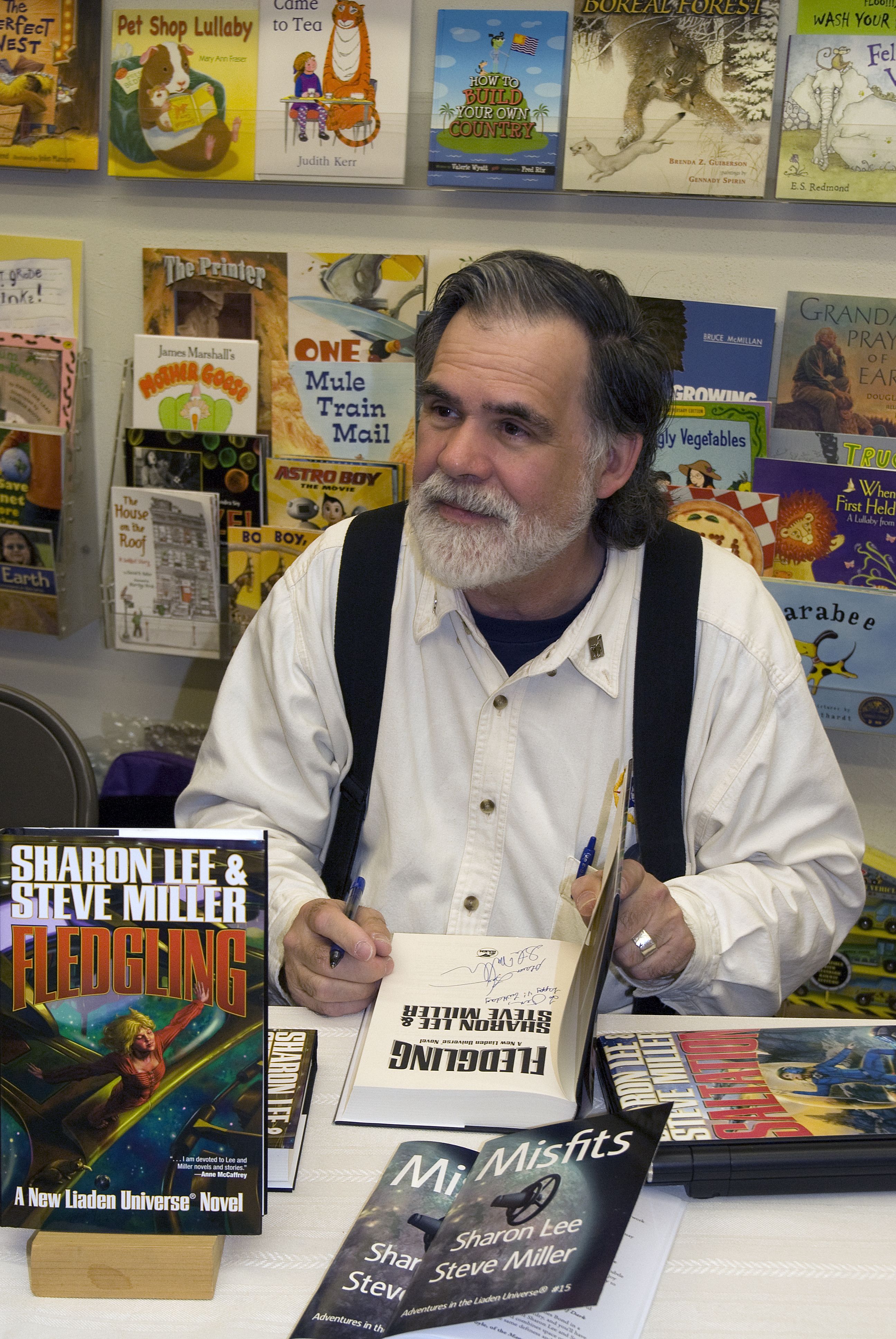 They started the first Liaden novel in 1984 and have published sixteen novels and several dozen short works together in that series alone, garnering a number of awards as well as invitations as Guests of Honor and Special Guests coast to coast in the US and Canada at many conventions. Their work has enjoyed a number of award nominations, with SCOUT’S PROGRESS being selected for the Prism Award for Best Futuristic Romance of 2001 and LOCAL CUSTOM finishing second for the same award. BALANCE OF TRADE, appeared in hardcover in February 2004 and hit Amazon.com genre bestseller lists before going on to win the Hal Clement Award as Best YA Science fiction for the year. SALTATION is a current nominee for Best SF of the Year on the Goodreads Choice Awards.
Steve, how do you and Sharon work together? What’s the process like?
STEVE MILLER: A madhouse, according to some solo authors.
We often role-play at dinner or after going over the day’s work; sometimes we’ll start driving, get in a discussion of a character or plot point and end up in Canada. The role-playing may involve standing and showing body language, or the raising of voice in character, or the rapid alternation of characters, more or less in voice — I guess, yes, our own madhouse. Sometimes one or another of us will pause at the grocery store, say “storystuff!” and we’ll discuss things right in front of the oatmeal or carrots — story takes precedence.
More prosaically, one of us generally does the typing/sketching of the first draft — Sharon will sometimes retire to the couch and write longhand notes, and I usually work on the netbook or big computer directly, my hand written notes being unreadable the next day. We sometimes switch off in the middle if timing is an issue — neither of us is automatically doing the first run. Generally, the person doing the base work is the “traffic cop” on the book, and is responsible for backing up the book, having the two foot pile of paper in their office, and etc. Since we usually agree on points as the book is written there’s not that much disagreement on things — but the traffic cop gets third vote on a book if there is an impasse about something, thus making calling in the Marines to solve something for us much less likely.
VENTRELLA: What themes do you find yourself revisiting in your work?
MILLER: Oddly enough, or perhaps predictably enough, partnership is one, as is the unreliability of formal education and educational institutions. I note that Sharon and I have both worked in university settings ….
We also tend to stress the need for individuals to have a trusted pool of competent (if not savory) people who they can depend on for advice, at least.  I think I also deal with change-as-necessity. We also subscribe to the Andre Norton “there have been prior civilizations” school of thought and all that may be carried forth from there.
VENTRELLA: What makes your work different from others in the genre, in your opinion?
MILLER: I think that I’m a bridge between many of the older ideas and approaches of science fiction and the new, from the old market to the now market. I’ve had breakfast, lunch, dinner, and sometimes a morning or late night glass with writers and editors ranging from John Brunner, Damon Knight, Ted White, and Hal Clement to Roger Zelazny, Jack Chalker, Vonda McIntyre, and Toni Weiskopf; I’ve been to Clarion and I was published in Amazing before the lamented-by-me attempt to turn it into a mediamag. Having talked shop and traded manuscripts with this kind of an array brought me to face to face with idea writers and storytellers. Also, I’ve extrensivly read — not studied, but read and absorbed as a young reader and then a young writer — many of the founders of SF and Fantasy as we know it, both in short fiction and longer fiction. And not just the celebrated classic authors, but the pot-boiling writers to whom story and flow was ghod. Not too long ago I was surprised to see someone recognizably a “name” writer of the 1990s and 2000s assuming to have invented a certain genre … which actually was invented in the 1930s by a famous writer apparently unknown to the “modern” writer. What this means is that I have, and draw on, a breadth of “SF genre” that many newer writers lack — and that some disdain, to their detriment. In other words my meme farm is huge, and I’m not afraid to use it!
VENTRELLA: Everyone who is published was an “aspiring writer” once. What mistakes did you make along the way?
MILLER: How much time do you have? No, seriously, I made a lot in a very short time — especially between the ages of 20 and 24, when I’d been assured by some very good writers that I could probably make it it as a pro someday, based on what they’d seen of my work. They were the fiction writers, of course, because by that age I was already writing for newspapers, magazines, semi-pro zines, anywhere I could — particularly if there was pay involved.
What I didn’t comprehend was that a suggestion by a well-known fiction pro that maybe I should “clean this up and send it on to XXXX magazine” didn’t mean “Tell him I sent you” … 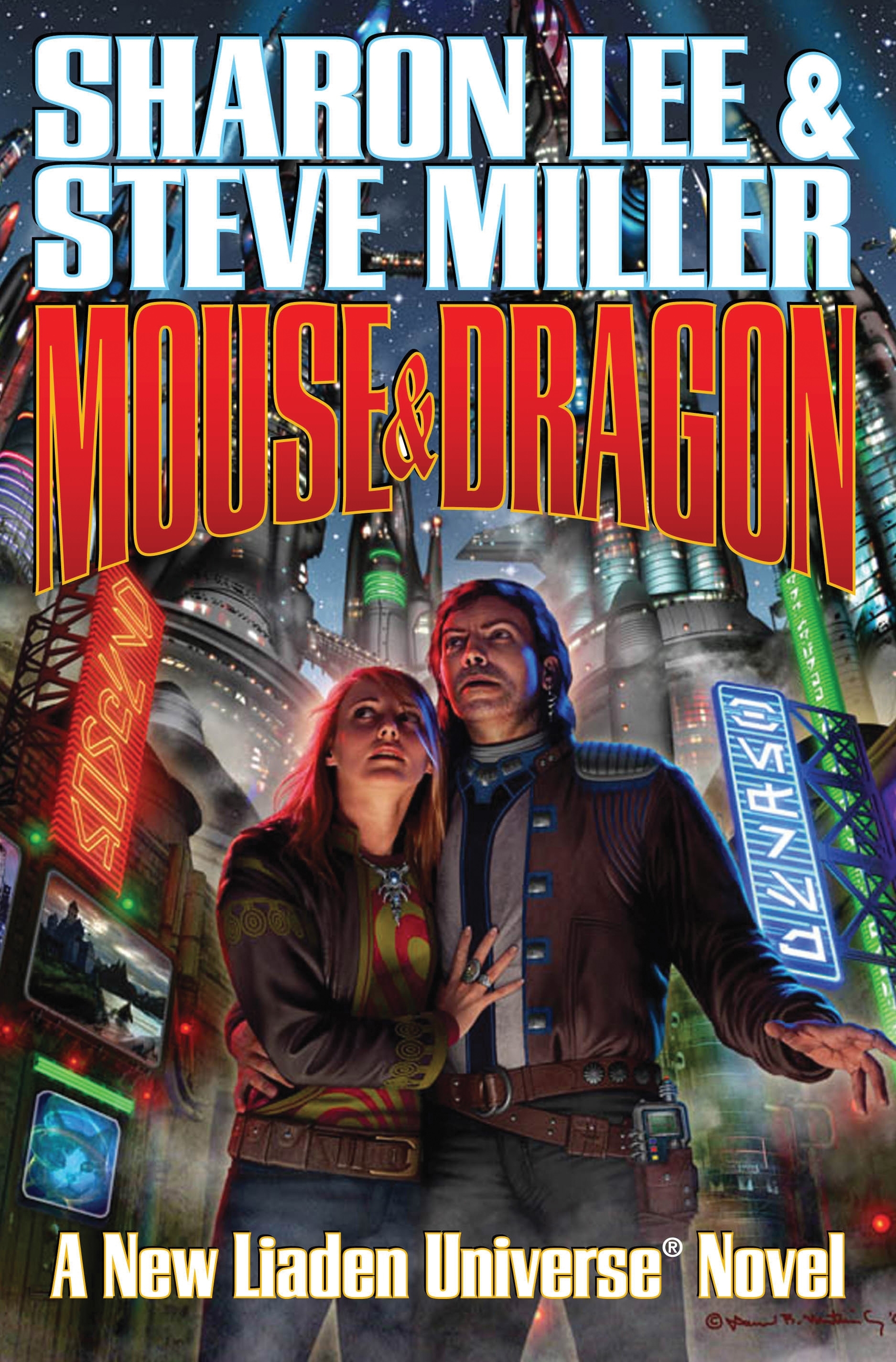 and also that once I did get a nibble that I shouldn’t expect instant results, that is, that as a no-name-newbie my work was something that might fill out an issue when it would fit — of course there were more print magazine then and many of the editors had come along as I was coming along, and thought that was how it would work forever — get a foot in, become first a byline, then a signature, then a name, then an invite to write a novel.
Clearly, the biggest mistake I made was lack of patience and in the long run trying to rush things probably cost me a year or two of pro work.
VENTRELLA: What is the biggest misconception people have about being a writer?
MILLER: There are several that go together, I think — One is that being a writer is inherently glamorous and the add-on is that being a writer elevates one to a superior state of being, with all the joys thereof.
VENTRELLA: How did you first interest an agent in your work?
MILLER: Accidentally. I was working as “third key” at Williams-Sonoma in Owings Mills, Maryland — meaning I was official management and got to deal with provblems and situations the manager didn’t want to deal with, like book signings and in store demos. Thus, when we had a double whammy of that, it was me in the front line — we had a cookbook author come to the store for a demo! The day before she came we’d gotten an offer on Agent of Change from Own Locke at Del Rey. It turned out that the cookbook author also wrote fiction… and when I mentioned that we had an offer in hand she recommended us to her agent, who looked over (and improved) the contract and got us through the three Del Rey books. Once we had a record getting the next agent was a little easier, but she was uncomfortable dealing with the SF side of things, and eventually we moved on after personal meetings with several agents at conventions and we’re pleased to link up with Jennifer Jackson.
VENTRELLA: What process do you use when creating believable characters?
MILLER: I’m hoping to write a book about this, but not here. Generally there’s no concious prefabrication involved in my new characters — the story starts, the character stands out from stage left or right, and Ta Da! I rarely base a character on someone I’ve met, but it may be on someone I know — that is, based on a character I’ve met in the thousands of books and stories I’ve read. The key to believabilty is not in the original creation, but on how the character acts in the story. A multi-hundred foot tree as a character? No problem. A sentient dragon looking for love? No problem… as long as they act right by who they are and don’t just act like dolls moved form here to there in a dollhouse.
VENTRELLA: What is your background in writing? What led you to wanting to be a writer?
MILLER: I pretty much have wanted to be a writer since I started reading books, and it probably helped that my grandmother was an award-winning poet so the concept of writing for publication had a priority over writing for school from the time I was quite young. 
In high school I worked on the school literary magazine several years before becoming editor as a senior and in college I joined the school newspaper in my freshman year as a reporter, and soon took over some editorial duties. I started reviewing for the school paper as well as a number of fanzine and semi-pro genre mags shortly thereafter, and eventually was Managing Editor. I also contributed to poetry publications — which led to my weekly poetry column in a local newspaper by the time I was 23, IIRC. I was the sceince fiction book reviewer for the Baltimore Sun in my mid-20s when I was also a music columnist for the Baltimore area Star newspapers — and that led to me eventually being a features editor and then to taking over as Editor of several weekly papers. The whole time, from about 17, I was also writing fiction, which began appearing in semi-pro magazines and then in Amazing and some other pro places. I did spend some summers working construction, which helped convince me that writing was the way to go when it came to making a living.
VENTRELLA: The publishing industry is changing daily. What trends do you predict and how will this affect the business and your own publishing?
MILLER: Shoot for the moon: I think IPads in he current size will become obsolete in a couple years and theat reading will increase as people have access to phone readers and more reasonably sized and priced tablets. Paper publishing will continue to be a zoo, the current returns system in the US will crumble with in next 5 years as physically moving books becomes too expensive — this will cut down print runs drastically which will cut a lot of small bookstores out of the loop. We’ll keep on writing.
VENTRELLA: What are you working on now that we can look forward to?
MILLER: I’m told that between a new yet-to-be-seen novel and new Baen editions of previous novels we have at least six books due out in 2011, so it shouldn’t be hard for a a new reader to find us. Those are all books that are written, however.
In the short term, the new stuff? I’m working on finalizing SKYBLAZE, a novella due out as a chapbook from my own SRM Publisher in February. For those familiar with the Liaden Universe(R) this will span the end of the attack from I DARE and the early SUREBLEAK period and is our holiday chapbook (delayed a bit because of my recent hospitalization and the moving of SRM’s principal office). 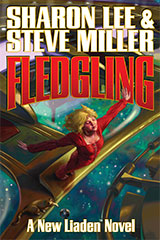
Beyond that, we have contracts for three more Liaden novels to be delivered over the next 18 months or so. The first is DRAGON SHIP, which is the follow-on to GHOST SHIP; I have notes on that and once SKYBLAZE is done I’ll do a week of rereading of the series and then start right in — it follows Theo from FLEDGLING, SALTATION, and GHOST SHIP as she deals with the results of her pursuit of a, let us say, nonconforming path to independent starship pilot. Also in the works is an unnamed novel set on a post-Korval-arrival Surebleak and the long-awaited JETHRI follow-on, TRADE SECRET, which, depending on where you started reading the series, is a distant prequel to the Agent sequence or a distant follow-on to the Crystal books.
We’ve also committed to several more short stories for 2011 but I can’t say more than that quite yet.
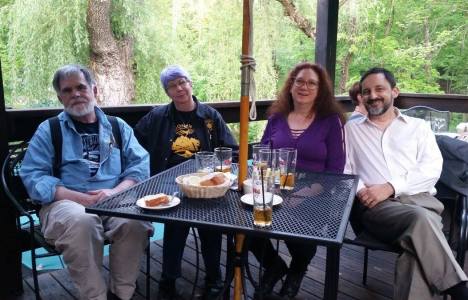
Dinner with Steve and his wife Sharon Lee (and my wife Heidi Hooper) when they visited us
Filed under: writing | Tagged: fantasy world creation, ideas, new writers, Sharon Lee, Steve Miller, writing advice | Leave a comment »
MICHAEL A. VENTRELLA: Today, I am pleased to be interviewing author Tracy S. Morris. She is the author of the Tranquility series of urban fantasy mysteries. The most recent, BRIDE OF TRANQUILITY, is a murder mystery set in a haunted hotel during a Renaissance wedding. 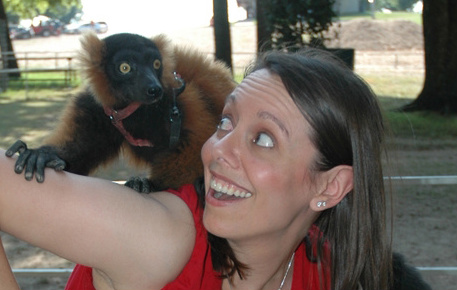 She’s also published a number of short stories. Her web page is here.
Hi Tracy! Tell me a little bit about yourself!
TRACY S. MORRIS: I’m a professional writer, so I spend most of my days in front of my home computer in my pajamas. My specialty is service journalism in the gardening industry. Which is a fancy way of saying that I write “how to” articles that deal with topics like compost, animal manure and growing the perfect tomato. I like to call that “living the dream.” Although it probably means that I’ve got no life.
I’m also a retired newspaper photographer/reporter. On my best day, I got to shoot the president (with a camera) which probably put me in the crosshairs of a secret service sniper. On my worst day, I was suspended off of the back of a speedboat in freezing weather and driving sleet to get a picture for a news story.
I got to do some very interesting things in that job. I had a ride in a hot air balloon. I had the best seats in the house for every major sporting event. But I also had no life, no predictable schedule. And after the day with the speedboat in the sleet, I realized that there has to be a better way to make a living. Which is why I now work at home in my bathrobe.
When I do leave the house, I’m a shooting enthusiast, a martial arts black belt and a former fencer. I’m a history buff and I’ve spent some time in the Society for Creative Anachronism, which is a group that recreates history from Roman times through the late-renaissance (the boundaries are nebulous and basically cover anything that other history groups don’t cover.)
VENTRELLA: What’s something unusual or different about you that your readers probably don’t know?
MORRIS: That’s a tough one to answer. I’m pretty transparent about my life, so there isn’t a lot that my readers don’t know about me.
I like to collect antique cameras. The collection is mostly thanks to my dad, who likes to go to garage sales. I asked him to be on the lookout for antique cameras for me. So he used to pick up any old camera he saw at an auction. I have several antique bellows cameras, a couple of twin lens reflex, some very nice medium format box cameras and two or three Brownie Hawkeye still in the box. He even bought me a couple of necklaces with camera charms. Eventually I hit a point where I had no more room for them and I had to ask him to stop buying them for me.
The one camera I want most that I don’t have yet is an old Speed Graphic press camera. One of these days I’m just going to cave in and buy one on E-Bay or something.
VENTRELLA: Your “Tranquility” series seems to combine a number of different genres. How did this come about?
MORRIS: Tranquility really grew out of something I was writing for fun. 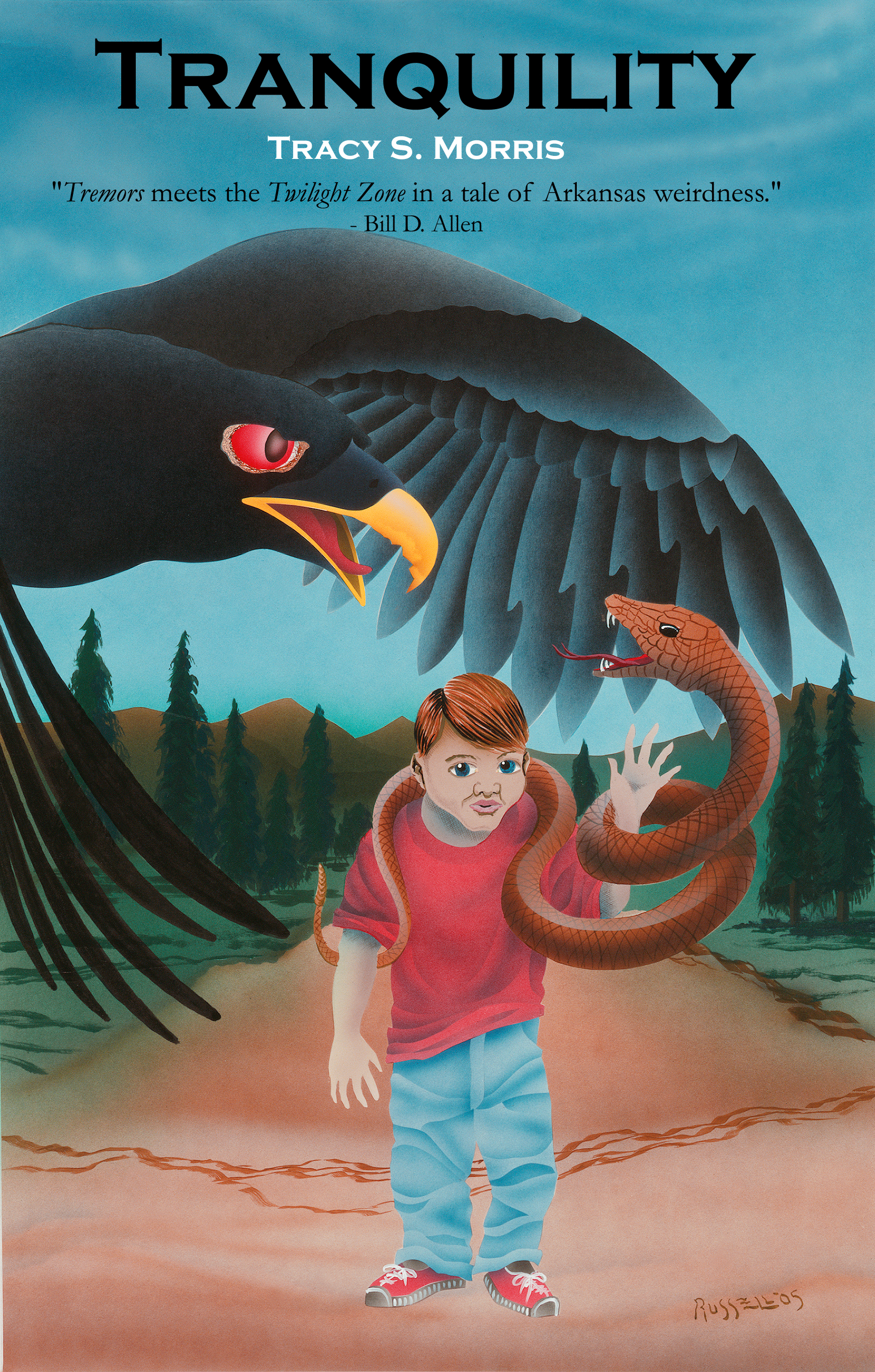 Because of that, I didn’t try to stick with a formula or say “I’m going to make this just a mystery. Or just an urban fantasy. Or just a horror. I was writing for me, so I made it about the things that interested me.
I grew up on a family farm out on the border of the Ozark mountains. My family lived in that region for four generations. When I was a kid, I read a few too many bigfoot stories. So the things that scared me weren’t the monster under the bed. It was whether there was something out in the dark woods out past the barn. That’s where the horror element from Tranquility came from.
I wanted to write the book as a pure horror, but I also have a skewed sense of humor which kept slithering in. One of the major themes that appeared in the book grew out of my reaction to moving home and really seeing the oddities in my small town for the first time. This made the book feel much more like the TV series Northern Exposure, or possibly the Disney Cartoon Cars with that ‘city slicker comes to the country and discovers that it’s a pretty great place’ theme.
By the time that I finished writing the book, I finally embraced the notion that my natural writing voice is humor instead of horror.
TRANQUILITY was nominated for a Darrell award, and placed runner up in 2006. At the awards ceremony my publisher asked when I was going to give her the second book. When I sat down to write it, I decided to make it as fun and absurd as possible. So I threw in everything but the kitchen sink.
The second book in the series, BRIDE OF TRANQUILITY, came after I had been through the process of helping to plan and put on four weddings (Two of them the same year.) I had dabbled in wedding photography by that point, and I had some sarcastic, slightly cynical views about the business side of the wedding industry.
So I thought ‘what’s the worst thing that can happen at a wedding? How about a murder? What’s the worst thing that can happen in a murder investigation? Why not a killer who can move around the hotel through secret passageways – phantom of the opera style? What about if all of the hotel guests mistrusted the investigator and wouldn’t talk to him? Why would they do that? What if they were conspiracy theorists?
VENTRELLA: Do you think that not fitting into one genre made it a harder sell to editors (and the public)?
MORRIS: I didn’t actually have to sell the series. Which is almost embarrassing to admit, since so many other authors have tales of sending a novel out to 45 agents and 20 publishers before gaining acceptance. I sold TRANQUILITY to Yard Dog Press because I was friends with the publisher. When I was outlining the novel, I told Selina Rosen, the editor about this new project that I was excited about. She asked me to send it to her when it was done.
BRIDE has been easier to sell to the fans, because I have a catchy summary that makes the book sound fun. Where else would you be able to read a murder mystery set in a haunted hotel during a Renaissance wedding?
VENTRELLA: I note that they are from Baen Books in e-format but Yard Dog in paper. How does that arrangement work?
MORRIS: Yard Dog Press does not deal in e-books, so they did not contract those rights. But the publisher has a working relationship with Baen. (Baen bought the e-rights to Selina Rosen’s Misha Merlin titles as well as the Sword Masters series from Dragon Moon Press.)
Additionally, Baen had just bought the E-Rights to another popular Yard Dog Press series, The Four Redheads of the Apocalypse.
Since I already had a working relationship with Baen, Selina suggested that I offer the E-rights to them. I could have put out the E-books myself through Amazon. Authors such as Jim Hines have done that with great success. Another Yard Dog author, Margaret Bonham has put her Yard Dog Press epic fantasy novel Prophecy of Swords out that way. Since then her title has reached the top 10 in epic fantasy e-book category for Kindle.
But Baen brings with them a new audience of readers that I might not reach otherwise. That is very exciting to me.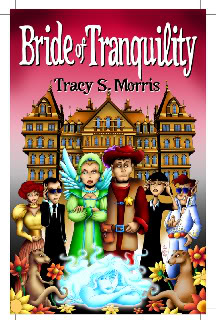
(By the way, through the month of December 2010, if you purchase either TRANQUILITY or BRIDE OF TRANQUILITY in trade paperback from Yard Dog Press (Direct from the publisher, not from Amazon), I’ll send you a free preview of the first two chapters of the next Tranquility book that is now in progress, which is tentatively titled IT CAME TO TRANQUILITY.
The links to these books on Yard Dog Press are: TRANQUILITY and BRIDE OF TRANQUILITY.
Baen is also running a special on the E-Books. Until January 1, 2011, you can order both TRANQUILITY and BRIDE OF TRANQUILITY along with the books in the “Four Redheads of the Apocalypse” series as a Yard Dog Press bundle for $20.
You can order the E-Books at: http://www.webscription.net/m-9-yard-dog-press.aspx)
VENTRELLA: How did you make your first sale? Did you have an agent?
MORRIS: I still don’t have an agent. Instead I’ve made every sale I have the old fashioned way — by researching markets and sending manuscripts out.
My first sale was to an anthology called OCTOBERLAND that was put out by Flesh and Blood Press. It was a story entitled “Frost King” that I had basically written and rewritten multiple times.
I sold the story exactly the wrong way. It had been the first short story that I ever wrote, I made revisions with the help of an English teacher and then put it in a drawer through my college years. Once I decided to pursue writing again I started sending it out. Every time It was rejected I rewrote it using suggestions that the rejecting editor provided me. Eventually after 12 rewrites over 4 years, I sold the story.
That same week I also sold “Attack of the Godless Undead Zombies” to Yard Dog Press for one of their “Bubbas of the Apocalypse” anthologies. That story was written in the space of two days. I turned it in to Selina Rosen after my husband gave it a single editing pass.
Today I try to get a story to the point that I am happy with it before I send it out instead of changing it with every rejection. I feel much happier with the end result.
VENTRELLA: I have a short story that I can’t seem to sell, as it hardly fits into any specific genre. What advice do you have for me (and other writers reading this) for finding the right editor?
MORRIS: Before you do anything, consider your goals. Do you want to sell a story you are unhappy with for the sake of having a sale? Or do you want to have the best body of representative work you can possibly produce?
If you just want the sale, then rewrite the story along a formula so that it fits into a single genre. But if you are happy with the story as it stands, put it aside until the right editor comes along.
My personal choice would be the second option. I have been writing and reading speculative fiction for 20 years and I have seen genre conventions change drastically over the years. I never thought I would see the day that Jane Austen and Zombies were used in the same genre. I have ‘trunked’ perfectly good stories because they didn’t have the right market, only to have the perfect market for the story come along two years later.
If you change your work into something that you dislike just to make a sale, you may end up with a ‘representative body of work’ that you are unhappy with.
Also bear in mind that compared to novels, short stories are very quick to produce. You can have a short story written within a few days. So if you can’t find a home for one, you can set it aside and devote your attentions to creating and selling a new story.
VENTRELLA: You have two short stories in Baen’s online magazine “The Grantville Gazette”: “Still Life with Wolves and Canvasses” and “A Study in Redheads.” Do you think that online publications are the wave of the future?
MORRIS: Don’t forget about my co-writer for those stories, Brad Sinor.
A few months back Amazon began selling more electronic books than print books. This has a huge impact on magazines. Particularly since the publication business model is not the same as the book business model.
Most print publications don’t get their revenue from selling copies of their magazines. 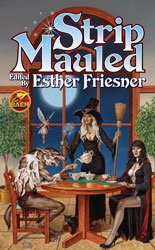 Instead they get revenue from ad sales. So a magazine like Fantasy Magazine once could leverage their sales numbers to attract advertisers. Fewer people are going into stores where these magazines used to sell. Instead, readership is online now.
You are already seeing more magazines online. There are several business models out there. Daily Science Fiction is delivering a story a day directly into my in box. The Grantville Gazettes require a subscription to access their online content. Fantasy Magazine has complete stories up for free with ads in the margins. Clarkesworld offers free content online, but sells their magazine with additional content through Kindle and has occasional donation drives.
When the dust settles, I think the most profitable business model will be the one we see copied.
The thing I admire about what Grantville Gazette is doing is that they are building a community around their 1632 franchise. There are the novels with the bigger name writers. But there are also message boards where fans can interact and have an impact on the storylines. Baen has an entire section devoted to the tech of the 1632 universe where experts (and there are plenty of qualified experts) can hammer out the science of the universe.
If someone wants to submit a story to the Grantville Gazettes, the story is put up on a closed message board where the Grantville fans can pick it over for conflicts with the universe timeline or the science. The author can make the changes and if the story is accepted, the same fans will buy the content.
Eventually, the ‘best of’ stories are the ones that get released in the print anthologies. Which also are bought by the community members.
Business-wise, this is smart. This is what made Dr. Horrible’s Singalong Blog such a success: Joss Whedon has an intensely loyal community that is willing to follow whatever he does.
This is also why celebrities such as Wil Wheaton, and internet celebrity Author Cleolinda Jones do so well with self publication. They’ve built a community of readers who are willing to follow what they do.
VENTRELLA: “Fish Story” is a short story you wrote which appeared in STRIP MAULED, an anthology edited by Esther Friesner. Tell me about that!
MORRIS: “Fish Story” involves a couple of characters that have been living in my mind for a while. Back when Laurel K. Hamilton and Jim Butcher first began publishing urban fantasy, I had a thought that it might be fun to write someone who would live in an urban fantasy world but eschewed magic. How would that person survive if they lived as a sort of magic conscientious objector?
The adventures I wrote were another example of a hard-to-sell genre mashup. I write funny third person. The urban fantasy of that type seems to take itself very seriously, and usually follows the noir detective novel conventions of first person point of view.
The characters are a good example of an idea that was trunked because of a lack of market, only to have the market return. I had an early story with the characters published in a magazine (now defunct) entitled “Whispers from the Shattered Forum”. After that, the Noir Detective novel in the Urban Fantasy market seemed to be dying.
Then TWILIGHT revived the interest in Urban Fantasy Vampires, which always seem to pull readers into the Noir Detective Urban Fantasy novels. And then along came a couple of great TV shows like “Supernatural.”
Prior to selling Fish Story, I sold a short story with these characters entitled Homo “Homini Lupis” to an anthology entitled WOLF SONGS, which was put out by Wolfsinger press. I recently finished a novel with the characters that is based on the plot to this short story.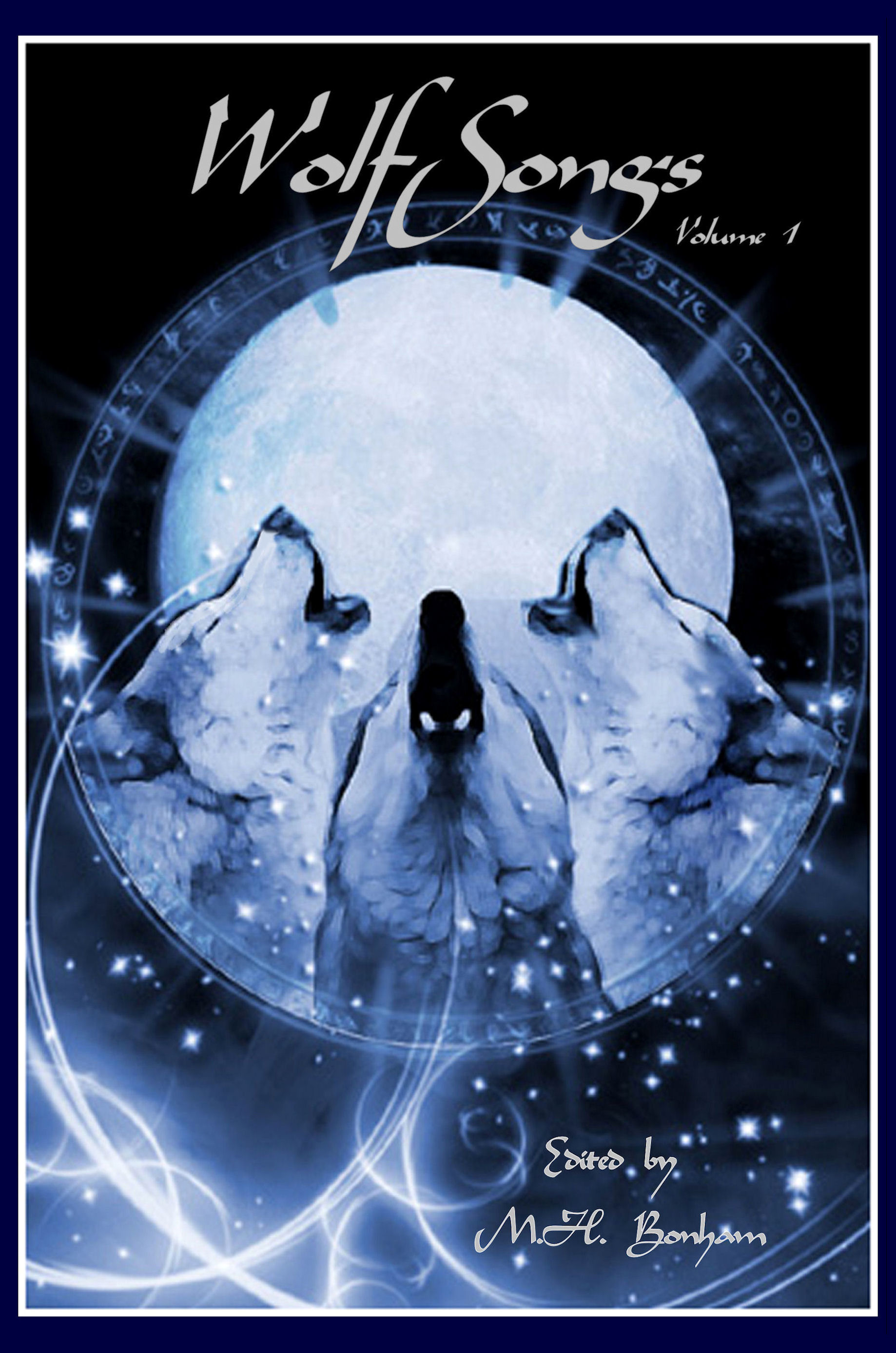
Then Esther Friesner launched her monsters in suburbia series. The anthologies are open by invitation only. But through a mutual friend I was able to ask her if I could submit a story for consideration for her werewolf-themed anthology. I was very surprised when the story not only made it into the anthology, but was put up on Baen’s website as one of the free preview stories.
I also submitted a story to her for the vampire-themed anthology. But the competition for inclusion in that anthology was a bit stiffer, and I didn’t end up being selected.
VENTRELLA: Would you advise beginning authors to concentrate on getting short stories published first?
MORRIS: There is a huge difference between publishing a short story and publishing a novel. About 15 years ago the accepted career path was to build name recognition through short stories and leverage that to secure a novel contract. Today that wisdom doesn’t hold true. You can get a contract with an agent, or sell a manuscript to Tor or Baen if the novel is good regardless of what your name is. Conversely, you can have a big name in short stories and if your novel isn’t good enough, you won’t be able to sell it.
My advice is to concentrate on honing your craft in the medium that you want to be published in. If you want to write short stories, that’s the area you should focus in. If you want to write novels, start there.
VENTRELLA: What is your opinion on e-book publishers and Print On Demand?
MORRIS: Each publisher is different. Do your homework and contract with a respectable publisher. One good resource is SFWA’s Predators and Editors website.
VENTRELLA: How about self-publishing?
MORRIS: Rule #1 of Self-Publishing: Thou Shall Not Fooleth Thyselfeth.
First thing you must understand is that publishing a book yourself does not put you into the same league as Stephen King, J.K. Rowling or Danielle Steele. You won’t be rolling in piles of money. Nor will you spend your days poolside with a laptop, eating bon bons while you compose deathless prose.
Writing is a business. Publishing is doubly so. You will be responsible for selling the books yourself, handling the details of distributorship and all promotional marketing (these things that publishers normally do).
Additionally, you must overcome the stigma attached to self publishing. Self publishing (from what I’ve observed) is like swimming upstream against a tide of professional ostracism. In the eyes of many professionals (authors, editors, publishers, book sellers) your book lacks the quality editing work that books published with an established house have.
Promotion will be more difficult because many reviewers will give your book less priority than a book sent by a professional house. Science fiction conventions will give preferential treatment to writers who have books with professional houses. If you do manage to get paneling, you may be treated with hostility or veiled contempt by authors with credits through traditional publishers.
There are a number of authors who have been successful with self publishing. Most of them know to treat the business of writing and publishing like a business. Many of them establish a fan following through other means, and dabble in self publishing. Others have an established fan following through traditional publishing that follows them into the self publishing realm.
VENTRELLA: I assume you have cats. (Don’t all writers?) Am I wrong?
MORRIS: No cats. I am owned by two very lazy dogs. When I’m not writing, my job is to cater to their every whim.
Filed under: writing | Tagged: agents, e-book, editors, promoting yourself, publishing house, self-publishing, short stories | 1 Comment »
The Blog “Rambling Roses, Purple Prose and other Asinine Alliteration” has a very nice interview with me today! Please check it out. http://writertracy.livejournal.com/197182.html
Filed under: writing | Leave a comment »
MICHAEL A. VENTRELLA: Today I welcome author William Freedman. His debut novel, LAND THAT I LOVE, was published this year by Rebel and he is currently finishing his second, MIGHTY MIGHTY. His novelette “Forever and Ever, Amen” appeared in the 2006 Spirit House chapbook and his short story “Intentions” is scheduled to be published this year in Ash-Tree Press’s HOLY HORRORS anthology. He is a founding member of the Long Island-based LISciFi critique group and has been a panelist at I-Con, Balticon, Albacon, Capclave and Arisia.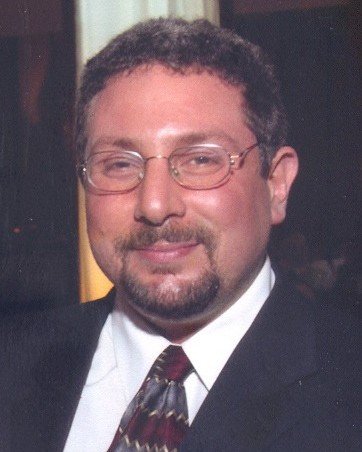 He holds degrees in journalism and international business and his non-fiction work has appeared in Investor’s Business Daily, Euromoney Books, Global Finance magazine, Treasury & Risk Management magazine, and many other business and financial news outlets both in print and online.
William, what is it in your background that made you want to write LAND THAT I LOVE? Was there some specific political event that triggered the idea?
WILLIAM FREEDMAN: When I began writing LAND THAT I LOVE, George W. Bush had just won the 2004 presidential race. (I hesitate to use the term “re-elected” because that presumes he was elected the first time.) Considering all the changes in American politics in the brief time since then, some might not recall the mood of the nation back then. The Republican Party controlled both chambers of Congress as well as the White House, and the Supreme Court was getting more conservative all the time. We were effectively a one-party nation. From Election Day until Katrina, dissent was rarely heard in public. I remember telling a co-worker at the time, “I’m married and raising three kids in a Republican-majority suburb, so I’m a lifestyle conservative. I’m an MBA, so I’m by definition a fiscal conservative. As someone who was in harm’s way during the Gulf War, I’m in favor of military intervention in Iraq, even if I don’t buy the reasons the White House is giving for that intervention. With a few codicils, I’m pro-life. But I don’t believe in rescinding habeus corpus. I don’t believe in warrantless wiretaps. I don’t believe in torture for torture’s sake. But what exactly am I allowed to disagree with the President about and still be considered a good American?” He didn’t have an answer to that.
By the way, it didn’t take me five years to finish writing a 55,000-word book. It took me one. But it then took three years to find a publisher and the better part of another to get through the contractual, editing and launch processes. On my blog site, LandThatILoveNovel.WordPress.com, I have a page with excerpts from some of the rejections I got from publishers and agents. At first, nobody wanted to touch the political controversy. Then, after it became fashionable again to criticize Bush, the rejections tended to say that the material was too dated — that by the time they’d be able to get it on the shelves, the war would be over. Of course, the book has been out for the better part of a year now, and we still have a hundred thousand American troops spread between Iraq and Afghanistan. I suppose I get the last laugh, but I’d give it up if it meant bringing them all home.
Incidentally, I don’t consider this book anti-war. It’s anti-arrogance. I don’t consider it anti-conservative, as its Amazon reviews would indicate. It’s anti-seeing-the-whole-world-through-only-one-lens.
VENTRELLA: Who were you inspired or influenced by? (Am I remiss in seeing the ILLUMINATI trilogy in here somewhere? fnord)
FREEMAN: I never read it. Maybe I should. I’m not really into the whole conspiracy-theory thing. Although there is an element of deception, there are no conspiracies in LAND THAT I LOVE. Everyone’s motivations are pretty clear and nobody’s manipulating anyone. It’s the naked power of a remote overlord versus the scrappy resistance of the proud locals. This plot goes back at least to the Maccabees and almost certainly before that.
I do steal the plot straight out of H.G. Wells’s THE WAR OF THE WORLDS with one exception: There are no aliens. In the corner of the Milky Way in which LAND THAT I LOVE takes place, there are no extant, high-functioning non-human civilizations. Humanity has spread throughout the sourthern spiral but hasn’t encountered much in the way of competition. And I think that will continue to be the case. It’s unlikely that we’ll ever encounter anything out there more dangerous than ourselves.
VENTRELLA: Given the good reviews you have received, how are you capitalizing on that?
FREEMAN: I get a little more respect from my local librarians. And now that I have a book in print and those kind words on Amazon and on the back cover, I feel like I have quite a decent calling card when it comes time to get serious about floating MIGHTY MIGHT, my superhero spoof/social satire, to the agenting and publishing worlds.
VENTRELLA: I met you at Albacon, a science fiction convention. Why did you decide to target that audience?
FREEMAN: Satire is my canvas, but science fiction and fantasy are my palette. These are the tropes I use. But I belong to a sci-fi/fantasy crit group, not a comedy crit group. Just as I want my writing to work on the gag level and on the message level, it absolutely has to function on the adventure level. Don Adams won the Best Actor Emmy three years in a row because Maxwell Smart, as Adams inhabited him, might spend most the show making faces, delivering a litany of trademark gag lines and stepping on rakes, but in the last five minutes he’d be swinging from chandeliers, winning sword fights, expertly manipulating some world-saving gizmo and outwitting the villains as surely as James Bond or Napoleon Solo or Matt Helm would have. 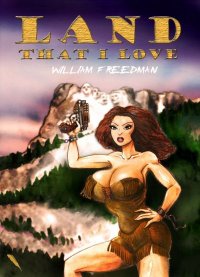 And you wanted him to get together with 99, and you wanted him to impress the Chief. Get Smart worked as a parody precisely because it also worked as character-driven romantic comedy and as the kind of secret agent story that it was sending up. Of course, sci-fi and fantasy auteurs in 2010 take their genre far more seriously than the spy writers of the 1960s did. I’d probably have ruffled fewer feathers in that milieu.
Even so, I remain resolute in identifying with sci-fi (which I insist on calling “sci-fi” despite protests from people who are trying to jettison the term in some have-baked, poorly conceived and wrong-headed attempt at gaining respectability) and fantasy. My favorite author these days is Paolo Bacigalupi, whom I’ve been following like a deranged fanboy since “Pop Squad” first appeared in 2006. Over the past couple years, he’s won all kinds of awards and critical acclaim. No less august an outlet as Time magazine showed him love for THE WINDUP GIRL. In a convention green room a few months ago, he was chatting with some other writers and talking about how mainstream publishing pros are telling him to keep doing what he does, but stop calling what he writes “science fiction”. He just laughs it off. I like to think I would too. Not that I’m in any position or am ever likely to be.
VENTRELLA: Have you received any negative comments based on the political nature of the book? Or do we just assume that the targets of your book don’t read anyway?
FREEMAN: I think history has come down on my side on this one. As unpopular as President Obama is today, he’s still twice as popular as President Bush was in his final year. Even the new wave of Republicans have little good to say about Bush’s policies.
A quick word about my own politics. Like I said, I’m an independent. I tend to vote for Democrats at the national level, but I’m just as likely to vote for Republicans in local and state contests. I got my liberal arts degree from a conservative school and my business degree from a liberal school. I’m used to disgreeing, pointedly but respectfully, with my friends, then going out drinking with them afterwards. If you think I’m an extremist, it might be because you’re the extremist and believe that everyone who doesn’t agree with you on every issue is stupid, misinformed or evil. That goes for liberals, who might identify more with my broader beliefs, as well as conservatives. My non-absolutist views on the abortion debate don’t set too well with the left.
Abortion doesn’t figure in LAND THAT I LOVE’s plot. I just cite this to call out some increasingly shrill voices who expect their favorite writers to tow a party line. I refer to the former fans of Elizabeth Moon, who vilified her for expressing what I agree is a reprehensible position on how the American mainstream ought to treat the Muslim-American community. I don’t defend her stance, just her right to disagree with the rest of us. Am I supposed to burn my signed copy of ENDER’S GAME just because I’m uncomfortable with Orson Scott Card’s anti-gay rhetoric? Is it inappropriate for me to read Nietszche or listen to Wagner because I’m a Jew and they were anti-Semites? Guess I should’ve never bought that Ford then. I mean, how would those of us who are left-of-center react if Glenn Beck went on the air and told all his viewers to boycott Alec Baldwin movies? If we’re artists, aren’t we expected to draw a reaction — a strong reaction? Can we do that if we’re concerned that we’ll lose our audience if we say something they might disagree with? We won’t ever have to worry about government or corporate sponsorship if we allow others to cow us into censoring ourselves. Yeah, good luck saying something brilliant if you’re always on the defensive against saying something stupid. And good luck getting through the rest of your life without saying something stupid.
VENTRELLA: Do you think today’s political landscape is in need of more satire, or is the news itself satire enough? (Since my next book is about a liberal vampire who runs for President, I certainly hope there is a market out there still for political satire!)
FREEMAN: No, Mike. Sorry. I tapped that well dry. There’s nothing left. I feel bad for you after all that work. Tell you what: I’ll buy a copy.
VENTRELLA: What are you working on next?
MIGHTY MIGHTY takes place in a world very similar to ours but with one exception: it has roughly the same proportion of superpowered individuals as the Marvel or DC universes seem to have. As one character puts it, “There are as many people with powers as there are people with herpes.”
The reason that world is otherwise indistinguishable from ours is that we ourselves have abilities and talents we don’t use. We all have excuses: lack of ambition, lack of social graces, family responsibilities, better things to do. But we could all be making more of a difference in the world. That’s why so many of MIGHTY MIGHTY’s most powerful characters work as airport screeners or mall cops. Until Fate, i.e., me, steps in to provide them with one last chance at redemption.
VENTRELLA: Who do you like to read for pleasure?
FREEMAN: Bruce Stirling, Neil Gaiman, Terry Pratchett, Iain M. Banks. I mentioned Paolo already.
VENTRELLA: What advice would you give to a starting author that you wish someone had given you? What is the biggest mistake you see aspiring authors make?
FREEMAN: You can’t copy-edit enough. Ultimately, you have final signoff. Your name goes on the cover and any mistakes that can creep in during the editing process, you own forever. Don’t assume that leaving the editing to skilled professionals is like leaving it to infallible gods. Don’t make that final cut on a screen. Print out all hundreds of pages and read them fresh. In LAND THAT I LOVE, I had what my editor considered an unclear antecedent to the pronoun “his”. There were two possible individuals that could have been referenced, although I can only see the logic in one. She picked the other and replaced “his” with the wrong character’s name. The mistake takes me out of the story every time I read it for an audience — and it’s right there in the first chapter. Maybe I’m being overly sensitive, though, because nobody else has told me they caught the error yet.
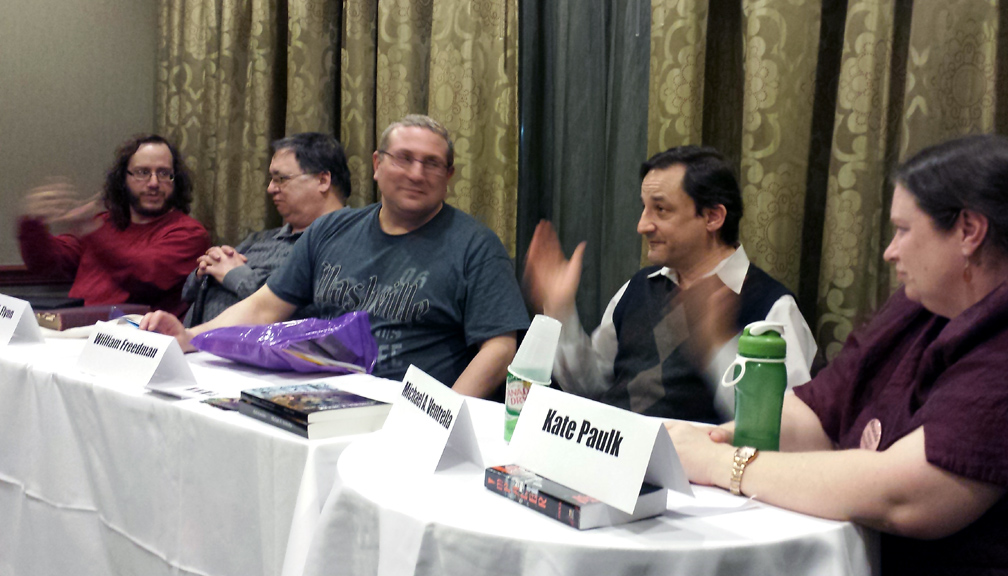
From a Lunacon panel in 2014
Filed under: writing | Tagged: editors, ideas, science fiction, writing advice | Leave a comment »
I’ll be a guest at the Philadelphia science fiction convention Philcon this weekend (along with Peter Beagle, whose interview is just below this post in case you’re looking for it!). I hope to see some of you there!
Here’s the schedule of panels I will be on:
Fri 7:00 PM: INTO THE PENSIEVE: THE HARRY POTTER FILMS [Panelists: Gail Z. Martin, Susan Casper, Michael A. Ventrella, Susan Toker] Now that the first half of “Deathly Hallows” is coming out of film (the same weekend as Philcon!), maybe it’s time to take a look back at the movie series about The Boy Who Lived, and remember some of the highlights (and lowlights) of the series until now… as well as what we’re looking forward to from the last two films.
Fri 8:00 PM: HOW DO YOUNG ADULT WRITERS KEEP UP [Panelists: Christine Norris, Jonathan Maberry, Michael A. Ventrella, Anna Kashina] How do you keep it real with the YA audience?
Fri 11:59 PM: EYE OF ARGON READING [Panelists: Oz Fontecchio, Keith R.A. DeCandido, Victoria Janssen, Gregory Frost, Hildy Silverman, Michael A. Ventrella] Science fiction professionals and members of the audience compete in a live reading contest of what may well be the genre’s worst story ever. Last year’s contest played to an audience that spilled half way down the hall and to peals of laughter. Come see what all the guffawing is about!
Sat 8:00 PM: COPYRIGHTS AND WRONGS: IP, FAIR USE, AND DERIVATIVE WORK FOR THE REST OF US. [Panelists: Jim Stratton, Rob Balder, Michael A. Ventrella, John Gregory Betancourt] Is it OK to use characters and settings from my favorite book or movie in my fanfiction? Can I make a music video using footage from that TV show? Can I put them up on the internet, as long as I don’t make any money off of them? There are a lot of questions about copyright, intellectual property, and using someone else’s creations as the basis for your own. With this panel, we hope to provide some answers.
Sun 1:00 PM: VAMPIRES THICK AS FLEAS [Panelists: Victoria Janssen, Jonathan Maberry, Genevieve Iseult Eldredge, Michael A. Ventrella] Has this trend crested? Is it going to take over the field or has it become a ghetto unto itself?
Sun 2:00 PM: IT’S ALL A PLOT! [Panelists: Dina Leacock, Michael A. Ventrella, Jim Stratton, Andrew Breslin] The fine boundary between fiction about conspiracies and fiction that people are supposed to believe. Examples are The Illuminatus Trilogy, the Shaver Mystery and the Da Vinci Code
Filed under: writing | 1 Comment »
MICHAEL A. VENTRELLA: Today, I am honored to be interviewing Hugo award winning author Peter Beagle.  I emailed some questions to him and was thrilled when he took some time from his busy schedule to send me back a voice recording of his answers!
Peter Beagle is probably best known for his novel and screenplay of THE LAST UNICORN. His other acclaimed novels include A FINE AND PRIVATE PLACE, TAMSIN, and THE INNKEEPER’S SONG. He also has a number of short story collections and nonfiction works to his name.
Besides THE LAST UNICORN screenplay, he has also written the screenplays for Ralph Bakshi’s animated The Lord of the Rings and the episode “Sarek” for Star Trek: The Next Generation.
The transcript follows:
Mr. Beagle, THE LAST UNICORN was made into an animated film back in the days when maybe we’d get two animated features a year. How did that arrangement come about?
PETER BEAGLE: It came about because a red-headed rascal named Michael Chase Walker not only optioned the book from me but eventually — and this doesn’t often happen with options — eventually paid the purchase price to buy the rights to the book and then turned around desperately looking for a deal to make believing that somebody would want to make this book into a movie. He ran through a lot of people back then before he finally got Rankin and Bass to fall in love with it.
VENTRELLA: Were you happy with the results artistically?
BEAGLE: I’m as happy with it as their budget would allow them to be themselves. They did some wonderful work in it. There’s nothing that appalls me; nothing that makes me want to leave the country. At its best, it’s marvelous. It rarely has a ‘worst’ to it. I found myself saying, when watching it a year or so ago, “Oh my god, the damn thing’s a classic.”
VENTRELLA: How did the “lost” version of that book come about?
BEAGLE: Well, I started the book when I was twenty three. That summer I was sharing a cabin in the Berkshires in Massachusetts with my closest friend from childhood who was a painter, and still is.  I began writing a story — just a story about a unicorn going somewhere with a companion who I couldn’t see, because he was out all day working on an enormous landscape. He’d make his lunch and then pack the landscape on the back of his motor scooter and I wouldn’t see him all day, and I wanted to show him that I had been working on something all day and not just fooling around in the warm sun or playing with the guitar. So I tried several stories that summer, and none of them seemed to work.
And then I found myself writing this story about a unicorn traveling somewhere in search of her people. It was almost completely different from THE LAST UNICORN that people know. I got about 85 pages done that summer and then simply hit the wall. I didn’t know what I was doing — well, I didn’t know what I was doing writing the whole book anyway — but I really didn’t know where this should go and I just dropped it. I put it aside, about 85 pages in, and wrote another book, nonfiction, about crossing the country with the same friend on a couple of motorscooters.
And then the mother of my children gently nagged me to get back to it. She’d read the original version and wanted to know what comes next. And I threw out — or thought I had thrown out (my mother kept everything, thank goodness) — I threw out everything but the first couple of pages from the earlier version and started over. What is out as the “lost version” was printed and will be republished is basically that first 85 pages. A reader would recognize certain things at the beginning and be absolutely baffled by a whole lot else.
VENTRELLA: Do you prefer screenplays to novels?
BEAGLE: Fiction is more fun — writing books in general is more fun — but screenplays pay better.
VENTRELLA: You are the Guest of Honor at Philcon this year. (I’m just a regular guest, but I’m hoping to maybe be on at least one panel with you!). Do you enjoy conventions and do you advise authors to attend them?
BEAGLE: When I pull into a convention, I always imagine myself and my business manager as a couple of peddlers coming to town with their cart and their mule, setting up shop by the roadside, and selling out of the wagon.  There are extra elements to a convention. There are people I only meet there — there are friends I make at conventions that I never see during the rest of the year — and generally, I’ve had very good experiences. Some have touched me very deeply. And there are people I look forward to seeing when I know I am going to be in that town and I know they’ll be coming. But I never advise a writer to do too much of it. I didn’t do conventions at all for years, and I’m trying to cut down, because one is supposed to be home working and it’s not simply the time, it’s the energy. You only have so much and it usually takes me a couple of days to get charged up again after a convention. At a convention, you’re running on adrenaline, and that’s not the same thing.
VENTRELLA: What themes do you find yourself revisiting in your work that may pop up without planning?
BEAGLE: I’m trying seriously to at least cut down on the elder goddesses, cats, and music, as well as shapeshifters. Gotta watch it with the shapeshifters, they’ll turn up in my work. I’m doing pretty well with most of them but you have to watch the cats. Every time you take your eye off a cat, it shows up in your story.
VENTRELLA: Who do you like to read for pleasure?
BEAGLE: Well, I read far less fantasy and science fiction than you might think. I read a lot of history because my father was a history teacher and I have a taste for it. I’m getting back to reading poetry — I got scared off in college, which happens to a lot of people. And I have favorite writers whose books I’ll pounce on. Right now, I’m reading a novel I missed by John le Carre. I like mysteries very much and le Carre has an extra dimension, an extra depth that most mystery writers don’t have.
In fantasy, I look for books by old friends like Patricia McKillip and Robin McKinley and Patrick Rothfuss — I’m still waiting for his second book to come out. And I re-read a lot. I re-read books I haven’t read in years that I just want to see again, like visiting an old friend. I re-read George McDonald Fraser’s FLASHMAN novels. Flashman is an absolute scoundrel. There is nothing to be said for Flashman. It’s a rat’s eye view of 19th century English European history. There’s something just inspiring about Flashman’s badness because at least he never pretends he is anything other than what he really is! You can’t ask more from a character.
VENTRELLA: What advice would you give to a starting author that you wish someone had given you? What is the biggest mistake you see aspiring authors make?
BEAGLE: The biggest mistake — it’s not even a mistake, but something I wish an author had told me: Don’t get too mad at yourself when you do it wrong. Just do it again. Because that’s most of it, just doing it again, learning by doing it wrong.
The thing I always tell people who want to write is that you have to show up for work. Most people haven’t got the patience. The talent doesn’t have anything to do with it. I know a lot of people with as much or more talent than I have … But I will sit there, even when nothing is coming. 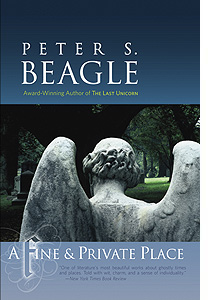 Anybody can write when the stuff is flowing. But I’ll sit there until, as Red Smith, the great sportswriter said, “I’ll stare at the blank screen or page until little drops of blood start to come out of my forehead.” That’s how you know you’re writing.
When I was fifteen or sixteen, I met a writer through friends named Charles Jackson who I’m sure isn’t remembered these days except for the movie that was made out of his novel THE LAST UNICORN. [laughs] I’m sorry, THE LOST WEEKEND, which was about an alcoholic. It was made into a movie, and was very successful. But when I met him, he wasn’t writing fiction. He was working for one of the early television soap operas. And being the age I was, I was immensely snobbish. How can somebody who wrote THE LOST WEEKEND lower himself to write for a TV soap? We rode in on the train together from Connecticut to New York, and he told me, among other things, “I can only really write about something that’s a part of me. I am an alcoholic, so THE LOST WEEKEND came out of what I know. And there hasn’t really been anything like that since.” I remember him telling me this: “I can probably get a hundred thousand dollar advance on my name for a new book of any sort, but you can’t do that. It’s not honorable. What I’m doing may not seem like much to you, writing for this soap opera, but it’s honorable work, and it’s professional. And when something erupts in my life that wants me to write about it, then I will. Meanwhile, I’ll do this.”
He wasn’t scolding me. He wasn’t coming down on me or anything like that; he was very gentle. But he taught me a thing about what is professional and honorable. What you can do and what you can’t, even if you need the money.
Charles Jackson had principles. I make jokes about having no principles of my own because I can’t afford them, but when I do come up against a principle, I know what it is. I’ve usually got ten seconds to make a decision. I hate it, but I think of Charles Jackson. He was gay, by the way, which he didn’t go into, and he did write a novel after that — again, this was in the 1950s — from the point of view of a gay man. He’s long dead. If anyone reads anything of his, it’s probably for a film class that included THE LOST WEEKEND. But he was a good guy and I’ve never forgotten him.
The biggest mistake an aspiring author makes is thinking either that nothing you write is any good or that everything you write is good, and neither one is true. The biggest mistake is listening to too many people and also — and this I talk about a lot — confusing writing with publishing. It’s not the same thing at all. Publishing is a business. Publishing involves making someone else some money and maybe a little bit for yourself. Writing, storytelling, art — that’s another matter. I’m not being romantic about it; there’s just not a lot of connection between the two.
There’s a saying that an artist is someone who can’t not be an artist, and that’s really what matters. If you can’t do without being an artist, then it really doesn’t matter if it doesn’t sell. You don’t burn the manuscript, for heaven’s sake, you find a place for it … The only publication that would touch my story “Lila the Werewolf” back in the 1960s was a college magazine at UC Santa Cruz. Later on, it got picked up, but I just wanted it published.
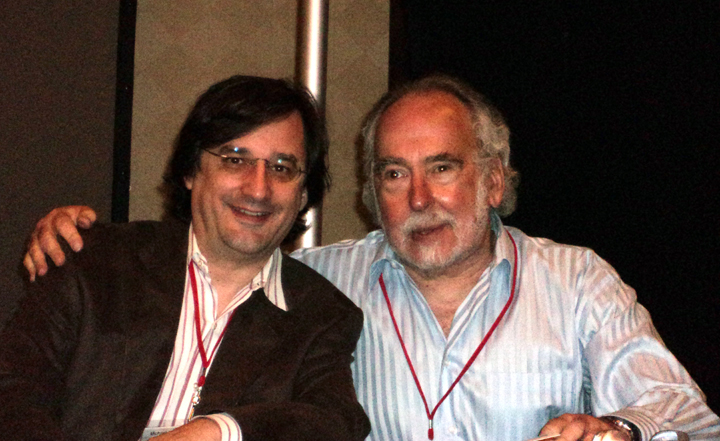
Me and Peter Beagle
Filed under: writing | Tagged: convention, fantasy world creation, Peter Beagle, science fiction, short stories, Star Trek | Leave a comment »
MICHAEL A. VENTRELLA: Walter H. Hunt is a science fiction writer known primarily for his “Dark Wing” series, a “military space opera.” His most recent work, A SONG IN STONE, deals with the Knights Templar. He lives near my old stomping grounds (Boston area) with his wife and daughter. His web page is here. 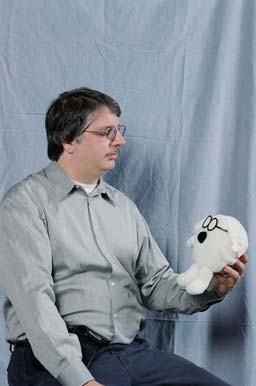
Walter, you began writing scenarios for games. (As a person who has done the same — albeit for LARPs — I know what that’s like!) How did you get published that way? In other words, how did you turn your hobby into a business?
WALTER H. HUNT: I had the good fortune to encounter Rich Meyer and Kerry Lloyd of Gamelords in 1981 and was pulled into the company as a writer. Between 1981 and 1984 I worked on a number of projects for them. When they stopped publishing Richard and I (along with others, including my wife) began Adventure Architects to write free-lance in the game industry. We worked for Mayfair, Iron Crown, FASA, and several other companies.
VENTRELLA: Is there still much of a market out there for writing for games?
HUNT: It seems so, though I haven’t done any of it for quite some time.
VENTRELLA: When did you decide to start writing fiction, and what were your first attempts like?
HUNT: When I was in elementary school. And it was predictably awful, though it meant that I wrote lots and lots of words and learned how to set scenes and compose dialog. I wrote six novels in middle and high school. They will never be seen, I hope.
VENTRELLA: How did you get your first big break?
HUNT: I’d shown a manuscript to a friendly editor at a convention in 1987, and when he began working for Tor Books in 2000 he contacted me through a mutual friend to see if I still had it available. The mutual friend lined up the agent, so I got the agent and the publisher at the same time. Lucky break – though it took almost 14 years for me to get so lucky.
VENTRELLA: Lately it seems that fantasy of all varieties has taken the place of science fiction on the bookshelves. To what do you attribute this change?
HUNT: Haven’t a clue. There is a lot of bad fantasy, but there is a lot of bad science fiction too – especially on television. Sturgeon’s Law, I suppose.
VENTRELLA: Your most recent work is about the Knights Templar and the Rosslyn Chapel, something most people had never heard of before Dan Brown. How did you decide to tackle that subject?
HUNT: The Order of the Temple is an interesting subject, with plenty of scope for writing. I’d heard of Rosslyn before reading the Brown book – it’s common pseudohistorical fodder in Masonic circles, and I’ve been a Freemason since 1988. 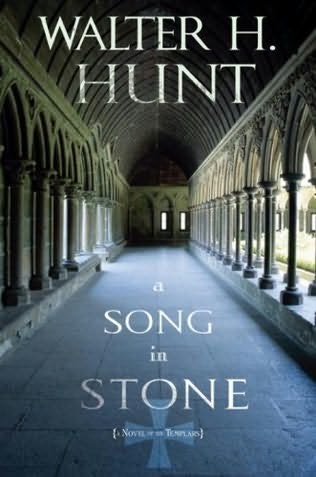 When we went to Scotland for Worldcon in 2005 I put it on my itinerary, and was fortunate to receive a tour from a fellow Mason. He pointed to the ceiling of the lady-chapel and said, “that’s the Rosslyn music.” As the lead character in “Despicable Me” is fond of saying, “light bulb.” By the time I came back from Scotland the book was plotted and partially written.
VENTRELLA: You are a regular at science fiction conventions (and indeed, we have been on panels together!). Why do you attend them?
HUNT: Why, to meet fascinating colleagues. Seriously, the opportunity to meet readers and fellow writers is something not to be passed up. For professionals (or aspiring professionals), there are editors and publishers as well. I arranged my most recent book deal at NASFiC this summer by having the right conversation with the right person. And I’m still a fan: I’ve gotten to sit next to people like Robert Sheckley and Frederik Pohl and Connie Willis and David Brin and a dozen others – and talk to them (and listen to them. More listen than talk, I hope.)
VENTRELLA: What advice would you have for an aspiring genre writer for attending these things, even if they haven’t been published yet?
HUNT: Finish the book. No one buys an idea from an aspiring writer – only a manuscript. But by all means believe in your own work; I have seen too many occasions when an unpublished writer lets his/her work be folded, spindled and mutilated by people who want to make it into something else because it might be more “publishable.” Write what you understand, trust your creative instinct, and finish it.
VENTRELLA: What’s your pet peeve about the industry?
HUNT: I’ve heard it said that the criteria and market studies for genre fiction are thirty-plus years out of date. I think that some editors base decisions on what to buy and what to promote based on inaccurate perceptions of the composition and demographics of the buying public. 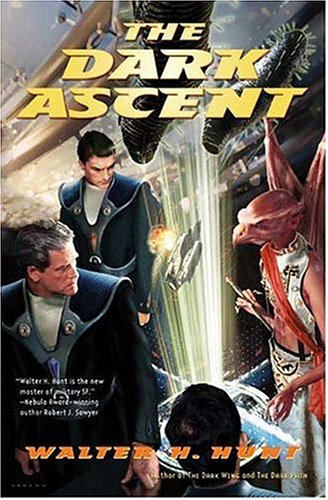 But, again, I have no idea if this is true.
VENTRELLA: What is the biggest mistake you see aspiring authors make?
HUNT: To assume that there’s any money in this business. I’m married; as the old joke goes, “what do you call a full-time writer who’s single?” The answer is, of course, “homeless.”
VENTRELLA: What’s your opinion on small press and self-publishing?
HUNT: Small press deserves better respect, and I think the internet is helping with that. My Rosslyn book A SONG IN STONE is currently published by a small press. Self-publishing is a mistake: it says, essentially, “no one professional will buy my work, but maybe the reader will. I hope so, my garage is full of these things I paid to print.” So I’d wait to have someone buy my work.
VENTRELLA: I see you are a historian or sorts, having studied that in college. With a time machine and a universal translator, who would you invite to your ultimate dinner party?
HUNT: Top of the list would be Benjamin Franklin – polymath, wit, diplomat, Freemason. Erasmus of Rotterdam. Stanley Weinbaum and Cyril Kornbluth, two great science fiction writers. My parents, whom I miss terribly (they’ve been gone for twenty years and never saw me succeed as an author. My mom would enjoy meeting Franklin, I suspect.)
You know that Hendrik van Loon did this little thought experiment, right?
VENTRELLA: Um, no. Hendrik van Loon? Did you make that name up?
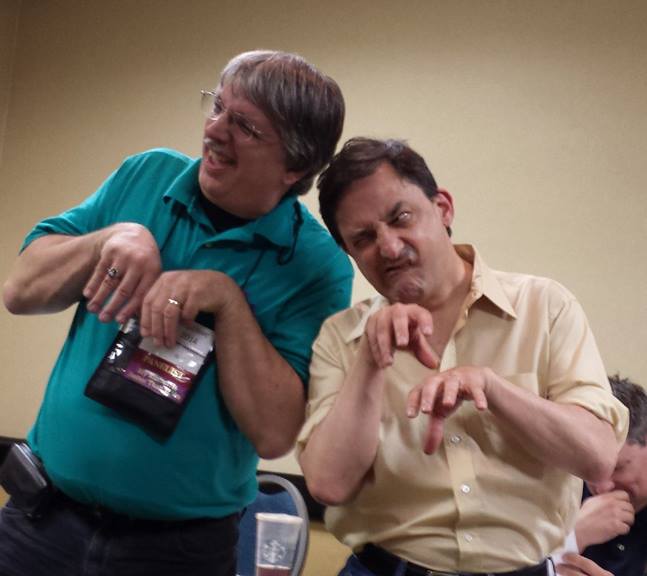
Goofing off at Capclave 2014
Filed under: writing | Tagged: agents, convention, ideas, science fiction, self-publishing, Walter H. Hunt | Leave a comment »
MICHAEL A. VENTRELLA: Today, I am honored to be interviewing author P.N. Elrod, best known for The Vampire Files series featuring undead private eye Jack Fleming. She’s edited award-winning anthologies, warns new writers away from scams, and is open and honest about her incurable addiction to chocolate. 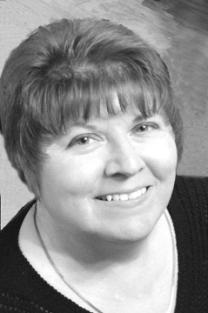 More about her toothy titles may be found at www.vampwriter.com.
What is it about vampires that so attracts the public?
P. N. ELROD: They’re easy on the eye, have money (if they’re doing things right), and get to kick butt—at least that’s true for the ones in my books!
VENTRELLA: Why did you decide to become the “vampire specialist” with your series?
ELROD: I didn’t decide. I like writing about the characters. You write about what interests you and that passion comes through in the words. If you’re lucky your words will touch others.
VENTRELLA: What’s your opinion on the many variances we’re seeing in vampire stories?
ELROD: I don’t have any. To each his own, let’s all have fun.
VENTRELLA: Do they bother you?
ELROD: Not even a little. I have other things on my event horizon.
VENTRELLA: Do you think this trend will die down eventually?
ELROD: I was told in the 1960s that vamps were dead. Apparently someone got that wrong and others will continue to get it wrong. I don’t pay attention to trends. If I did, then there would be no Vampire Files or any of my other books. I write the kind of stories I want to read and hope others agree with my take on things.
VENTRELLA: The concept of a vampire private eye solving his own murder must have helped sell your first novel in that series.
ELROD: The concept resulted in 20+ rejections from publishers who didn’t know what to do with a cross-genre book back then. It wasn’t a mystery or a horror and no one knew how to sell it—especially agents looking for a quick placement. 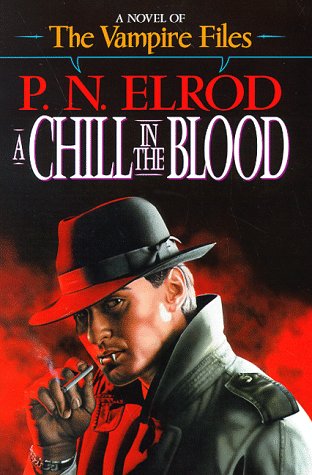 It finally sold off the slushpile to Ace Science Fiction. It only took two years of shopping around—and about 20+ rewrites to get it up to a professional level. I’m glad it too so long—it resulted in a much better book!
VENTRELLA: You’ve written a sequel of sorts to Dracula. How did that come about, and what constraints did you discover?
ELROD: It is a sequel to Dracula. I’ve always thought that Quincey Morris got a bum rap at the end, and wondered how it was that he knew more about vampires than all the others except for Van Helsing. I also wondered—after V.H. again and again harped about using a wooden stake—that they bumped off Dracula with a big metal knife. Well, my hero, Fred Saberhagen deftly and cleverly dealt with the latter problem in his classic The Dracula Tapes. When I was ready to do my own take on things, Quincey Morris, Vampire was the logical result!
No constraints. I wrote the kind of story I wanted to read. I love the Victorian period, the research was a joy and still is. I’m doing another Quincey book, but it will have to be scheduled after I turn in my new steampunk series.
VENTRELLA: In my next novel, a vampire runs for President (but of course, no one believes that vampires really exist). Do you think there’s a market out there for a political vampire novel?
ELROD: I wouldn’t know. Get some feedback, polish, shop it around, and find out.
VENTRELLA: When editing, what do you look for in a story?
ELROD: As little work for me to do as possible. I expect a clean, polished manuscript from writers who bothered to proofread and use the spell check.
After that, I want a beginning, middle, and satisfying ending with characters I can relate to whether they’re good guys or bad apples, and good solid writing.
I expect an enthusiastic, cheerful, professional attitude. My goal is the same as the writer’s: producing the best story possible so readers fall in love with their words.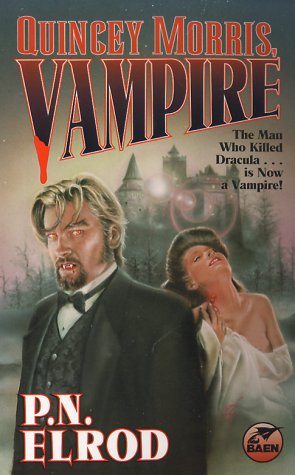 If you’re a paranoid diva whose deathless prose that must be preserved like the Dead Sea Scrolls, move on. Neither of us will enjoy the experience.
VENTRELLA: Do you generally invite others to join your short story collections or do you have open submissions? Which do you prefer?
ELROD: These days I’ve room for only nine stories in a collection. I call on a core handful of writers on my A-list choosing about four of the nine, depending on who is available. A-list writers are busy! The publisher—who is footing the bill—naturally wants to promote the writers who have books with them, and pick the other names. It’s only fair, and they are being more than generous about it.
In past projects I could handpick all the writers, inviting ones I knew would deliver good stories. I’ve asked only 2-3 otherwise unpublished writers for work, and they did not disappoint.
Those projects were not open submission, but I got stories from other writers with more cohones than sense. I let in one based on his letter and story. The letter, I later found out (this was before Google), was a gross exaggeration of his supposed “sales”. His story required extensive and repeated line edits. After that, I put him on my “do not invite” list. I don’t deal with liars.
Here’s a clue, new writers: tell the truth. You’re only as good as your reputation for honesty. If you’ve not sold anything, it’s perfectly okay. But don’t tell an editor that you’ve sold 20 stories to various publications when you really mean you just submitted stories and are waiting to hear back. These days it’s too easy to check up on you.
After speaking with other editors who have done open submission collections, I know I’d not want to work on such a project. I don’t have the time or patience.
VENTRELLA: What bugs you most about the publishing industry and what would you change about it if you could?
ELROD: They’re not cracking down on e-piracy. It’s not about freedom of information, it’s about theft of property. It’s one thing to resell a used book, but used bookstores don’t sell Xerox copies.
Contrary to popular myth, most writers don’t get paid much, and piracy cuts into the pittance they do manage to get from their hard work. Pirates are not promoting anything. If writers could make more money by giving away free e-copies of their works, they’d be doing it.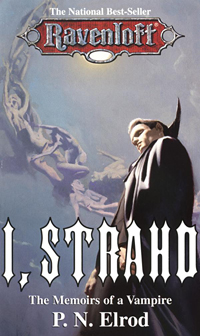 Some of the more successful ones have chosen to do so, but the pirates have taken that choice away from the rest of us.
Publishers are losing millions in revenue through e-theft. If the music industry can crack down on it, so can the publishing industry. I want them to get off their duffs and shut down on these so-called “share” sites. Slap fines on the pirates and those who download from them. If anyone wants a free copy to read, go to the library. Each time a book is checked out, the librarians note that and order more from those writers. It’s good for everyone.
I believe most people want to do the right thing, so please, support your local library and the writers you love.
VENTRELLA: You’ve self published a novel, even though surely you could have sold it to a traditional established publishing house. Why did you decide to do this?
ELROD: Let’s call it commercial publishing. “Traditional” is a term used to excess by a notorious reverse vanity printer to make their customers think they’re in safe hands. In true “traditional” publishing it was the writers who paid the costs. Writers call that “the bad old days!”
I could not have sold THE DEVIL YOU KNOW to a commercial publisher, since it was always meant to be a signed, numbered, limited-edition written specifically for my fans. My publisher for that series prefers stand-alone titles—at least from me.
Commercial publishing is glacially slow. It takes time to put books through editing, copy-editing, design cover art, arrange distribution, etc. I wanted to get the book out quickly.
So I did my research of various printers, pricing, delivery times, shipping costs, got the best deal from a local company whose people I know. I did the cover myself, got a professional edit, and a lot of proofreading. The printer very kindly tweaked my interior design to cut down on the page count and thus the cost. I had some good breaks and learned a lot.
For future non-commercial venue works I’ll go through a POD service, again, doing my research so I get the lowest cost per copy, but with a professional company that can deliver the goods to the readers. While it won’t be a signed edition on acid-free paper, it will be available through my website links at a low price and won’t ever go out of print.
I see many new writers opting to self-publish—usually long before they’re ready.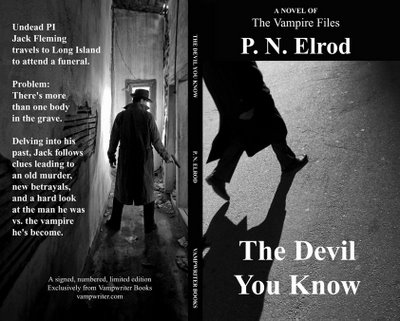
Some neos think having a book finished is good enough, and that the story is so great that people will forgive any “little” errors. It’s a nasty reality check when they get bad sales and worse reviews as a result. I don’t recommend self-publishing for the new kids. I was able to get away with it, based on my experience, an obsessive attention to detail, and a sizable fan base built up over the last 20 years.
VENTRELLA: Has it been a success?
ELROD: It’s sold out the 500 copies I had printed. In self-publishing terms it was a runaway bestseller. In commercial terms it tanked.
It took a year to sell that many copies. Had it been a commercial release it would have sold that many in one day.
I was only able to do because I have a solid platform of readers. Even so, only a tiny fraction of them chose to buy. I had hoped to sell out in the first month. So despite my experience and fan base, I overestimated my sales figures. It was instructive!
If a new writer with no platform decides to self-publish, they can expect to sell 5-10 copies to family and friends, perhaps 50 if they bust their bottoms with promotion. But they can also expect the standard “If your book is so good, why couldn’t you sell it?” Unfair, but that’s how it is.
I know some writers are promoting their backlists with much success as e-books and POD copies, racking up thousands of sales. But THEY had a plenty of commercial sales that built up a good audience. At this point, writers who have pro sales, who have books in the stores, and who self-promote like mad have the edge.
A new writer with no professional sales is delusional if he/she thinks similar success will happen to them. It’s all the difference between holding a garage sale, and having a store at the mall. It’s just better business sense to try for professional publication from the get-go.
VENTRELLA: What advice would you give to a starting author that you wish someone had given you?
ELROD: Get feedback, rewrite as often as it takes, and expect rejection. No one escapes.
Send your work to venues that actually publish it. Don’t send a fantasy to a mystery house or a western to a cookbook house.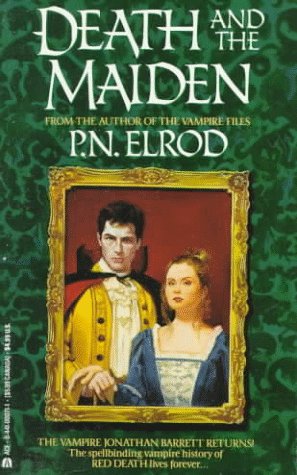
Just because you worked really, really hard on a book, don’t expect anyone to give you extra credit for the effort. Publishing is a business. Your words have to be worth buying and selling. If they aren’t you get a rejection. That’s when you ask for more feedback, rewrite, and try, try again.
VENTRELLA: What is the biggest mistake you see aspiring authors make?
ELROD: Sending unpolished work out before they’ve gotten feedback from other writers, not just friends and family. They love you and want you to feel good.
Other writers will tell you the truth.
An amateur wants to be told how good their book is. A pro wants to know what’s wrong with it so they can fix the problems. Get the problems fixed first, then start shopping. Write the next book while you shop the first.
Don’t give up. Ever read a terrible book that still somehow got professionally published? That writer didn’t give up.
Obey Yog’s Law: “Money flows toward the writer.” Never pay to publish. It’s hard to believe, but many writers still think you have to pay to play. It’s scary how many will ask me “How much did it cost to get your book published?” I’m talking about my commercial titles, not the ones I self-pub. I’m very clear that there is a huge difference between the two! (Usually the money they make. Commercial wins out every time.)
Don’t look for a publisher online, get Writer’s Market. You cut out 99% of time/money-wasting vanity and scam operations. If you google “book publisher” most of the names on the first page are scams wanting to turn you into an ATM for them.
Go into a bookstore, find books similar to what you write, then follow submission guidelines to the letter. Scams and vanity houses cannot get books into stores.
Ask other writers to recommend reputable agents in your genre. It worked for me.
Did I say to obey Yog’s Law? It’s worth repeating. Writers get paid, they don’t pay!
VENTRELLA: With a time machine and a universal translator, who would you invite to your ultimate dinner party?
I don’t give dinner parties. My cooking is lethal. Ask the few survivors.
If we ate out, I’d hang with my friends in the here and now. I’ve learned it’s often a good idea to keep some distance between oneself and one’s heroes. You might catch them on a bad day and be disappointed.
“When the legend becomes fact, print the legend.” – The Man Who Shot Liberty Valance.
Filed under: writing | Tagged: Dracula, e-piracy, new writers, P.N. Elrod, POD, print on demand, publishing house, rejection letters, self-publishing, short stories, vampire, Vampire Files, writing advice | Leave a comment »
Writers don’t like rules. Actually, most creative people don’t like rules.
But the fact is that you must follow certain basic rules in order to tell good stories. And this is nothing new — it hasn’t changed since the ancient Greeks.
All good storytelling has three acts. And no, this isn’t just “the beginning, the middle, and the end.” There is a structure that should be followed in order for your story to have the greatest impact.
Now, some of this is common sense that a good writer knows instinctively. However, I’ve never taken any writing classes and never really thought about it much until recently, as I’ve been trying to educate myself. (Hence the purpose of this blog).
Act one is the introduction of the main character and the conflict he or she faces. (This doesn’t mean you shouldn’t start in the middle of the action — you want it to be gripping and exciting, of course.) Here is where the reader gets an impression of your character and decides whether the character is likeable or at least interesting enough to follow.
Act one can theoretically be quite short, but it’s the foundation upon which the rest of the book rests.
Act two is where the main character is pulled into the conflict in some way that he or she cannot avoid.
Understand that the conflict mentioned here doesn’t mean action. It could be a moral conflict, or a lover’s disagreement. It must however be something that requires the character to do something to resolve it. The character can’t just wait around talking about it, and the character should not have someone else solve the problem for them.
Act two ends at the lowest point in the character’s attempt to resolve this problem. He or she looks defeated; there seems to be no way out.
Act three then is the character’s redemption and salvation. This is the resolution, and like act one, it may be very short in comparison.
You can see this very clearly in good movies. Well, actually, you can also see it in bad movies that don’t follow this formula. Usually it’s because the writer hasn’t paid enough attention to act two — the conflict is not serious enough or the character can easily avoid it.
Now for the disclaimer.
This does not mean that you should think of your story as existing in three equal acts. You can see a three-act play and the “second act” of the story can take place ten minutes into the first act of the play. Even one-act plays have three “story acts.” Hour-long TV show scripts have seven “acts” (to allow for commercials).
That’s why I think it’s much better to think of your story as having three unequal parts. If you think of three “acts” you invariably begin structuring your story too much. Give your character a conflict; make it unavoidable; and then resolve it.
Filed under: writing | Tagged: three acts, writing advice | Leave a comment »
“A wild and thoroughly entertaining steampunk adventure featuring an improbable cast of historical figures, plenty of action, and lots of fun!” – Jonathan Maberry, New York Times bestselling author of Deep Silence and V-Wars


 Michael A. Ventrella