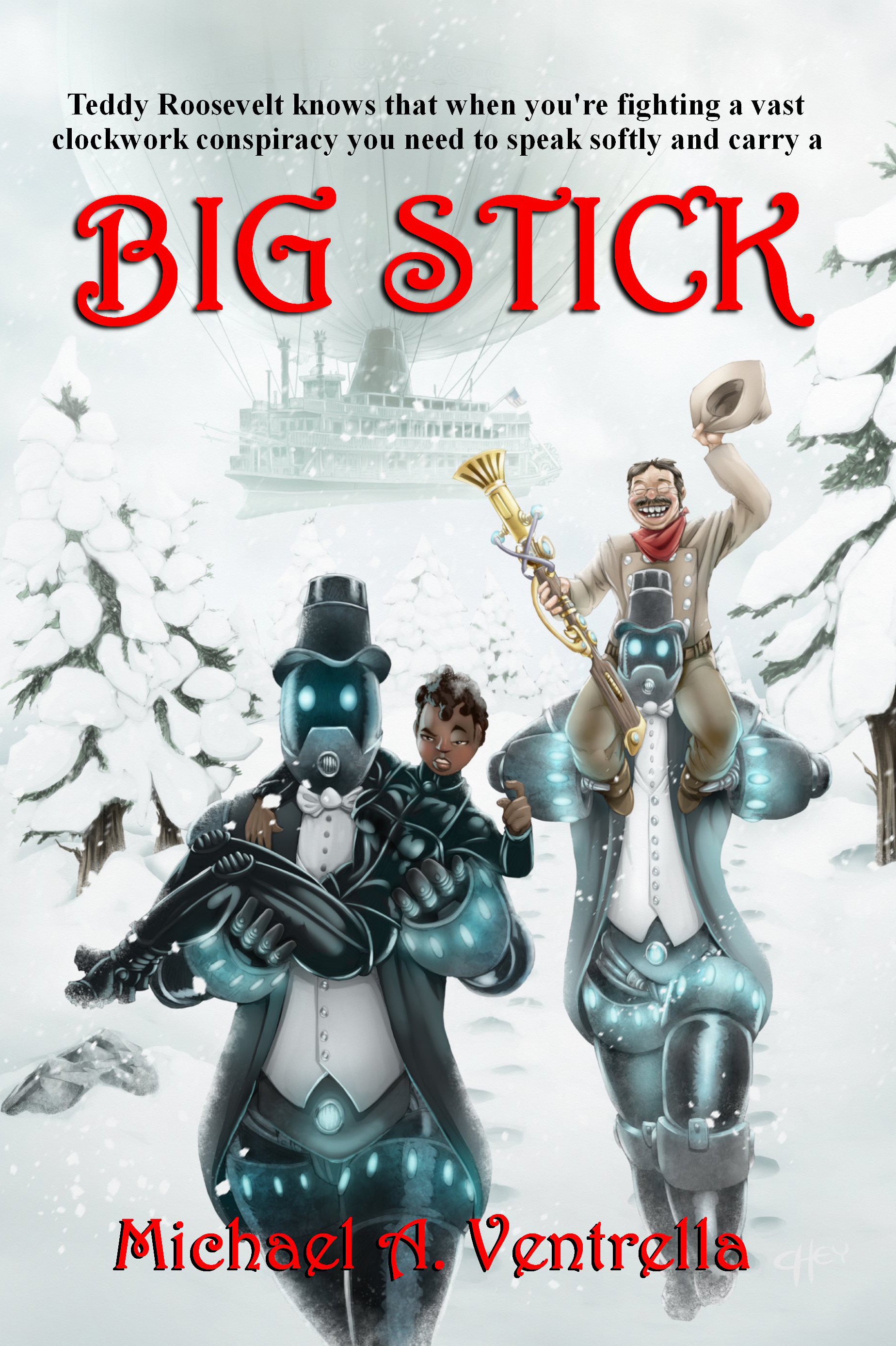
Rum and Runestones

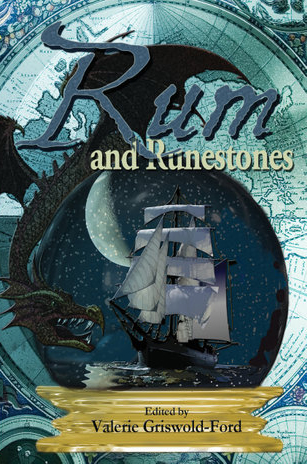
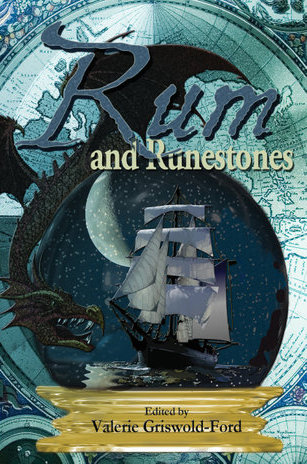
Yarr, ye scurvy landlubbers! There be a new collection of short stories about pirates and magic! It be called “Rum and Runestones” and a picture of the tome appears before ye!

‘Tis edited by Valerie Griswold-Ford and contains short stories from many gifted writers, including Yours Truly, who apparently thinks today is “Talk Like a Pirate Day.”

My story be called “X Spots the Mark”. ‘Tis about Irad the Pirate Captain and a treasure map — but was he fooled into buying a fake one? With almost all of his crew gone, victims of deadly traps, will he complete his quest to obtain the booty of his hated enemy Rummy Jack? Well, since this be a Ventrella story, ye can be sure of some rough sailin’ ahead with many unexpected twists and turns!

Other contributors include:

Danielle Ackerly-McPhail

Danny Beauchamp

Danny Birt

M.J. Blehart

B.A. Collins

Tara Fullbright

Laurel Anne Hill

Stuart Jaffe

Gail Z. Martin

Misty Massey

James R. Stratton

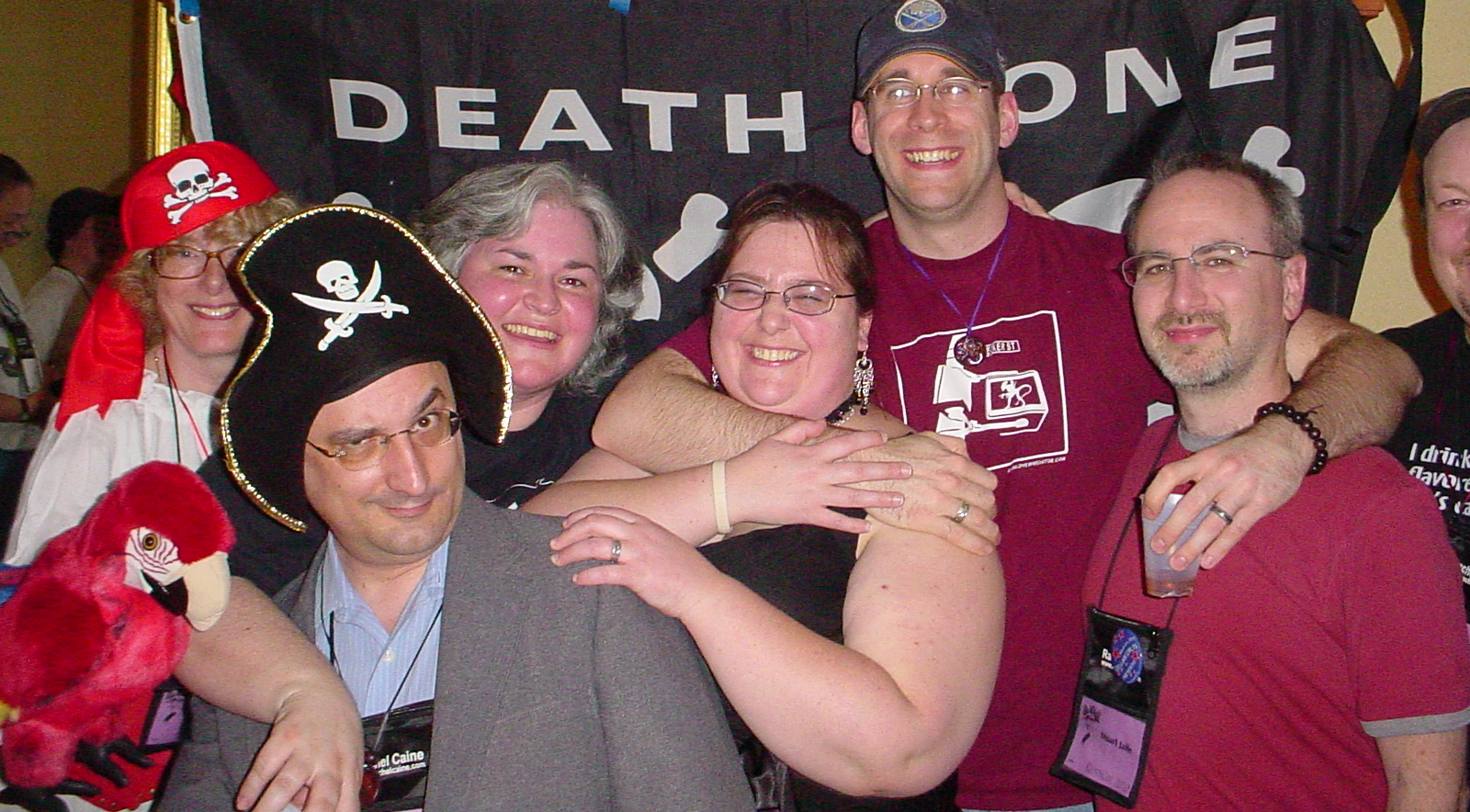
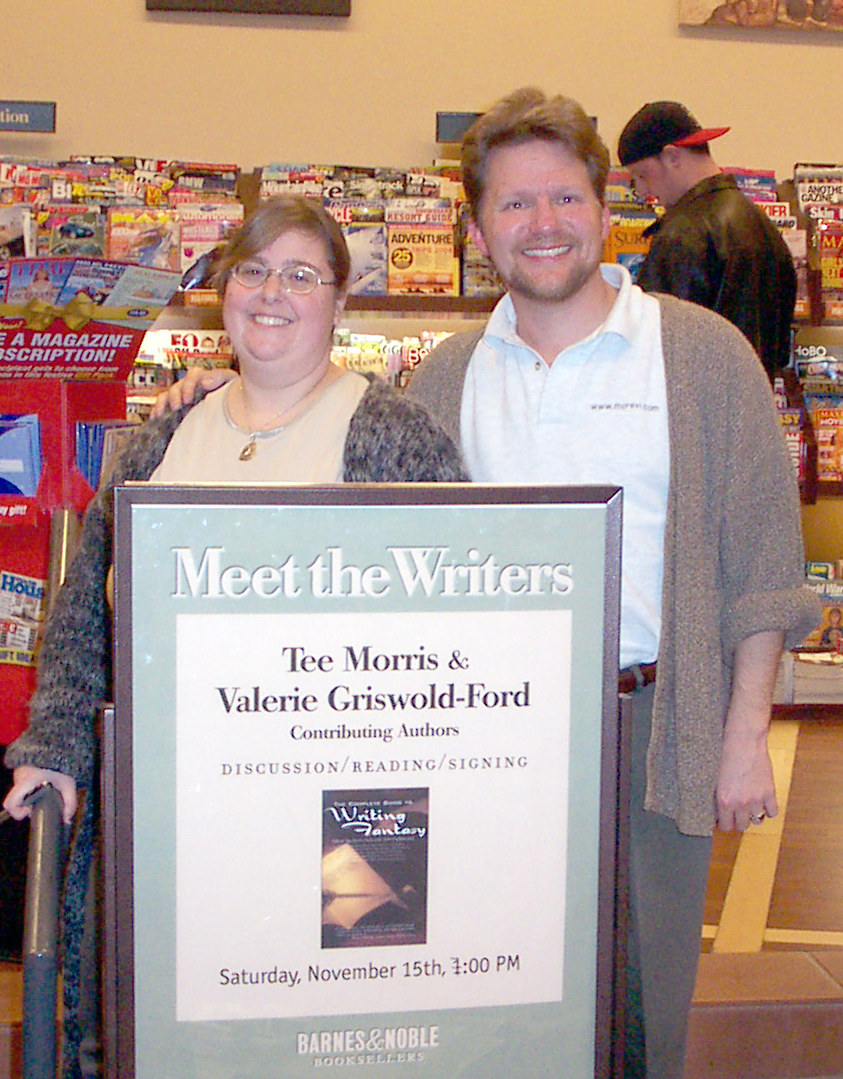
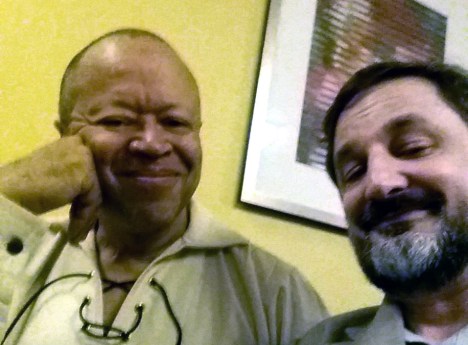
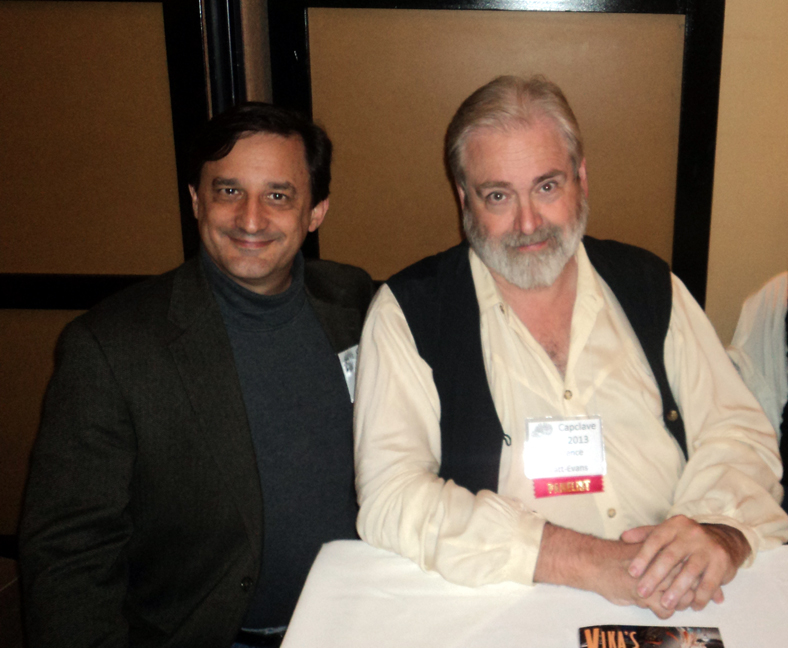
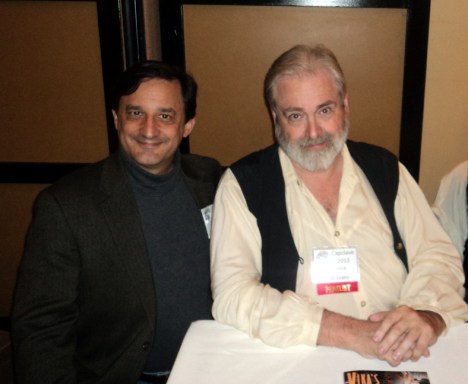
Some of these scoundrels were seen at a convention in Virginia recently for a book release party, standing before a jolly roger and enjoying quite a lot of rum while tryin’ to scratch their autographs on the parchment! And thar be Ventrella himself in his pirate hat. Yarr!

The book can be purchased on Amazon now, so what are ye waitin’ for?

Interview with NY Times Bestselling Author Rachel Caine

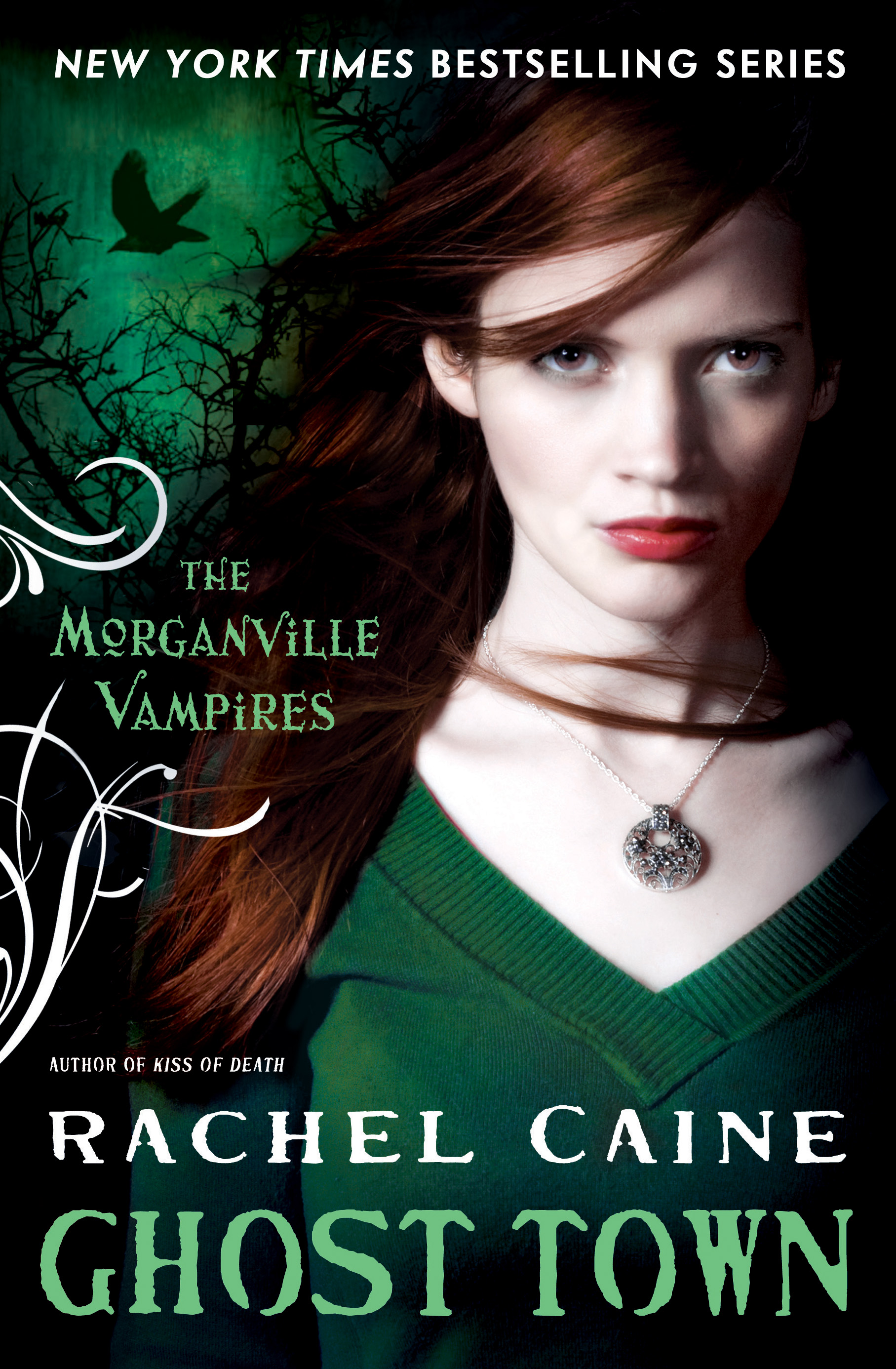
MICHAEL A. VENTRELLA: I’m pleased to be interviewing NY Times bestselling author Rachel Caine. Rachel has the Morganville Vampires series, Weather Warden series, and the Outcast Season series, as well as writing paranormal romantic action/adventure and many other genres. Rachel will be the Guest of Honor at Ravencon next weekend (April 9 – 11, 2010) where I am a mere minor guest! Her web page is here.

Rachel, what is it that makes a novel a “young adult” novel?

RACHEL CAINE: The way I look at it, it’s purely a matter of the age of the central characters. My four main characters are ages 17, 18 and 19 now, and as with all characters, their ages and life experience shape the events of the book. So it’s not that I deliberately target the audience … it’s that I think in order to be faithful to the characters and the story, it should naturally appeal to a young adult audience. (Although I have plenty of adult readers of this series as well.)

VENTRELLA: It seems like you have a new book out every month! How do you manage to be so prolific?

CAINE: Ha, I don’t think it’s *every* month. But definitely 3 or 4 a year, that’s true. Most of that’s driven by the YA series (Morganville Vampires) because the schedule for that is we’re publishing one every six months vs. a year for the adult novels (Weather Warden and Outcast Season). But when you add it all together, three series going at the same time does tend to add up fast.

I think I’m lucky that I really enjoy writing to tight deadlines (generally) — it’s been a really great balance against my sometimes stressful day job.

VENTRELLA: There is an ironic balance that has to be met when writing about the supernatural, in that it has to be rooted in reality to be believable. How have you made decisions about integrating the real with fantasy?

CAINE: I’m going to shamelessly quote Jim Butcher, who once said that in order to have urban fantasy that feels realistic you need to have about as much “real” as you do “fantasy.” I believe that’s true … If you look at the success of the movie “Hellboy”, I think that first film achieved a wonderful balance in that area. Sure, you’ve got a big red devil guy running around fighting monsters, but there’s so much real world complication that it makes it all that much funnier and more outrageous. I thought that in the second film, good as it was, they forgot that balance, and slid it to about 75% fantasy, 25% real world … and I think it wasn’t as strong as the first.

So I try to balance my fantastic elements with the fact that everybody, even supernaturally gifted people, have to worry about bills and dry cleaning and child care. 🙂

VENTRELLA: What is it about vampires that attracts such attention these days? Do you think this is just a trend? (I hope not, since my third novel will be a vampire book …)

CAINE: Well, I’ve actually been in the vampire field when it was cool before (in the early 90s) and when it wasn’t (in the late 90s), and now it’s cool again, which is kind of great. Vampires never really go out of style — we’ve been afraid of them for thousands of years, and writing about them in fiction for more than 100 years. The fascinating thing is that in the beginning, vampires were soulless monsters … reflecting that hidden terror that those you know and love can suddenly become monsters. And then they took on personalities and became more sympathetic, and eventually (by the mid-70s) became actual misunderstood romantic anti-heroes. By the mid-1980s, vampires had become heroic, appearing as police officers, detectives, doctors, all kinds of professions that had always been seen as admirable. Now, it seems that they’re back to the dark, romantic Heathcliff-type heroes (at least in the romance circles), but then there’s graphic novels like 30 DAYS OF NIGHT that harken back to the terrifying soulless monster vampires prototypes. So there’s lots of room to do anything you’d like in vampires, which I think is fantastic fun.

VENTRELLA: For those unfamiliar with your work, can you give a quick description of your main series?

CAINE: The Morganville Vampires series (Young Adult) follows the adventures of Claire Danvers and her fellow housemates Eve, Shane and Michael in the town of Morganville … just your average Texas college town, except that it’s controlled by vampires, and the city taxes get collected by Bloodmobiles. Once you’re in on the secret, you’ll never make it out of town alive. Not all the vampires are bad, but they’re all unpredictable, and Claire and her friends often find themselves caught in the middle of the ultimate haves-and-have-not struggle.

The Weather Warden series (Urban fantasy) features Joanne Baldwin, a sexy, sassy woman with a secret … she can control the weather, and she’s part of a secret organization that battles the forces of nature on a regular basis. Mother Nature really doesn’t like us, and only Joanne and the Wardens stand between us and total extinction … when they’re not battling among themselves. Oh, and there are Djinn (genies) who sometimes serve the Wardens, and quite often turn on them with fatal results. Trust Joanne to engage in the most dangerous kind of romance … with one of the most powerful Djinn in existence.

The Outcast Season series (Urban fantasy) is a spin off of the Warden universe, and concerns Cassiel, a former Djinn who’s been cut off from her supernatural kin and now must survive in a human world she doesn’t understand or like, with the aid of Wardens she’s never respected. But in her struggle to survive, she finds herself drawn more and more to the humans she cares for, in particular Warden Luis Rocha — which makes things more difficult when she realizes that she may have a destiny after all: to destroy the human race.

VENTRELLA: How have you planned out the Morganville series?

CAINE: I had a six-book story arc planned, and I’m making the second set of six more standalone stories. There is a certain continuity to the storyline, but I’m trying to avoid too many cliffhangers. 🙂

VENTRELLA: What do you do to create believable characters who learn and grow from their adventures?

CAINE: I don’t know that it’s a conscious process for me … the characters really seem to do that on their own. I have found that less is more in character development … the more tics and traits you give a character, the less natural they seem over time. I find that starting small gives characters plenty of room to grow.

VENTRELLA: How did you break into the publishing business?

CAINE: Not in any way that anyone else should look on as typical! I never intended to … a friend bought me a ticket to a writer’s conference and dropped me at the door. He wanted me to learn about being a writer because I’d been writing on my own (and hiding it) for more than 15 years at that point. So I thought I’d talk to an editor or two, and that would be that.

Only the first editor I talked to hired me to do my first novel. So that worked a little better than I expected, actually. That was in 1990, and I’ve been publishing ever since … with the occasional career hiccup.

VENTRELLA: Some of your earlier works were written under other names. Why did you do that, and would you advise others to do so?

CAINE: And that would be the “occasional career hiccup” referred to above. 🙂 I wrote as Roxanne Longstreet (my maiden name) when first starting out, but my books didn’t really burn up the shelves in any significant way. When my first publisher told me they wouldn’t be able to buy more from me, I changed my name to my married name (Roxanne Conrad) and tried again, with similar results. Rachel Caine is proof that the third time is the charm, I think!

I did use the name “Julie Fortune” for a media tie-in novel for Stargate, mainly because at that time the “Rachel Caine” identity was still new and fragile, and I didn’t want to risk bad sales on something so far outside of my new areas of expertise. But Julie actually has done pretty well on her own.

VENTRELLA: Of which book are you most proud? What would you like to be remembered for?

CAINE: I don’t think I’d like to be remembered for one book … more for a body of work. I can’t really say that I prefer one book over another; from my perspective they each have different characters, but mostly in the sense of where I was emotionally at the time I did the work. I’m not the best judge of that sort of thing. I’m just happy that it seems to touch people and entertain them.

VENTRELLA: What’s your opinion on e-books? Do you think they’re the wave of the future or a step down from traditional publishing?

CAINE: I don’t think it’s a step down at all, but there are a number of people who simply don’t like to read on the screen, so I think traditional publishing will always have a place. For people who read for the experience of the story, versus collecting books, I think ebooks are perfect — portable, simple, and disposable. For collectors, nothing will replace the experience of a book.

I do think there is a real and growing problem related to ebooks … there’s a basic misunderstanding of copyright as it relates to electronic files. Buying an ebook doesn’t give someone the right to copy it wholesale and sell it on to others … and there’s a constant issue with this happening. Most of those people don’t understand that what they’re doing is setting themselves up as a digital publisher, which is robbing both the author and the publisher. Unless we can collectively get that settled, it’s going to bleed the industry dry over time.

VENTRELLA: You’ve wisely advised authors before not to self-publish. Why is that important?

CAINE: I don’t say never self-publish, but it’s not a good way to launch a career as a writer. If the person wants simply to have a book, and has no expectations of continuing to advance in it as a career, then self-publishing might be okay. But there are a lot of drawbacks to self-publishing … you’re responsible for marketing, getting your books into physical stores, and competing with authors who don’t have to do any of that for themselves. Don’t kid yourself: it takes time away from your writing, and trying to break into bookstores in any kind of volume is difficult, if not almost impossible.

Self-publishing also has a reputation — sometimes undeserved, but often accurate — of not being good quality. Often the covers aren’t very good, and unless you’re extremely good at self-editing, or employ a professional editor who knows their stuff, the product is often easy to detect as amateurish rather than professional. So you have a huge burden to overcome.

The last thing I’ll say is this: very few people have ever made decent money from self-publishing, and those that have, generally jumped to traditional publishers as quickly as possible. Don’t get fooled by companies that promise you they’ll publish your book, but then require you to pay for editorial, marketing, and other services. They make money off of you. Your chances of making money from them is pretty small.

VENTRELLA: Finally, what is it about conventions that you like?

CAINE: I love hanging out with my people. 🙂 I’ve always been drawn to conventions — where I can have endlessly fun conversations about things that I’m passionate about, whether it’s geeky obsession over a TV show or deep conversation about life, the universe, and everything (thanks, Douglas Adams!). I’ve met many of my best friends through conventions, and had some of my finest times ever.

Thanks for giving me the opportunity to talk with you! Looking forward to seeing you at RavenCon!

Interview with Author and Editor Val Griswold-Ford

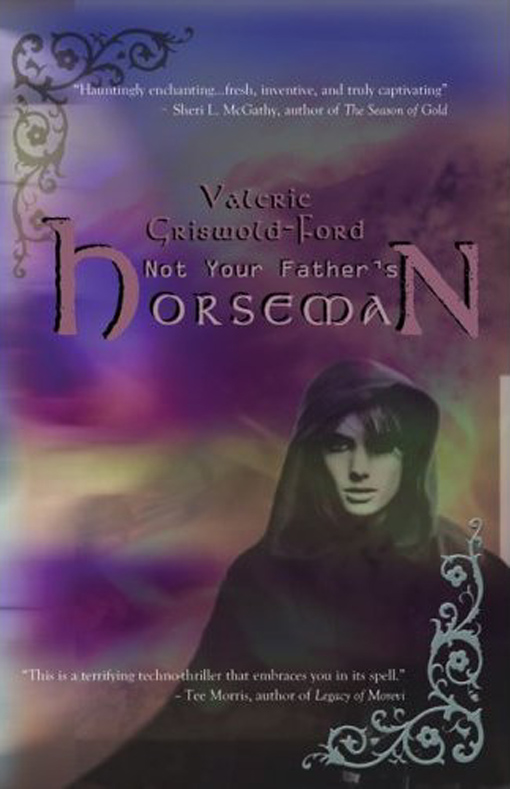
MICHAEL A. VENTRELLA: Today I am happy to be interviewing Valerie Griswold-Ford, writer and editor. Val was journalism major in college and covered several political beats, wrote a weekly column and rose to associate managing editor of The Daily Campus, the fifth largest daily newspaper in Connecticut. Val writes dark fantasy, horror, paranormal romance and urban fantasy, in addition to her nonfiction works. She is currently co-editing the third book in the “Complete Guide” series with Lai Zhao, entitled THE COMPLETE GUIDE TO WRITING FANTASY: THE AUTHOR’S GRIMOIRE. Her two dark fantasy novels NOT YOUR FATHER’S HORSEMAN and DARK MOON SEASONS are available from Dragon Moon Press, and she is working on the third book in the trilogy, LAST RITES. She lives with her husband and three kittens in Concord, New Hampshire. Her web page is www.vg-ford.com

Val, your most recent work is the pirates and magic collection of short stories RUM AND RUNESTONES, due out in April of 2010. Where did the idea for this come from?

VAL GRISWOLD-FORD: Well, I’m a pirate addict. I adore pirates, and always have. So I was at a party at RavenCon last year with Misty Massey and Gail Martin, and we decided that we had to do an anthology of pirates and magic. I pitched it to Gwen Gades, the head of Dragon Moon Press, got the okay, and we were off!

VENTRELLA: Tell us about this new collection!

GRISWOLD-FORD: It’s amazing. More than I’d ever imagined. The writers were given a very simple assignment: to write a short story, under 8k, that used pirates and magic as the main impetus of the story. It was an invitation-only anthology, and I approached about 20 authors. Thirteen of them (including you!) responded. We’ve got everything from dark and creepy to love-lost-and-found to comedy. Even a song! It’s a great anthology, and I’m very proud to be the editor.

VENTRELLA: What is the process that you take as an editor when organizing short story collections?

GRISWOLD-FORD: This is my first short story collection, so I sort of made it up as I went along. I waited until I had everyone’s story in and read, then I listed them all in a word document and arranged them in an order that I thought made sense.

VENTRELLA: Some short story collections are reprints, and some (like RUM AND RUNESTONES) are by invitation. Is one easier or better?

GRISWOLD-FORD: Easier for who? The writer or the editor? : )

I think that by invitation is easier for the editor, because you can pick and choose your authors, so you’re getting a known quality as far as work. I specifically chose authors for R&R that I enjoyed reading, so I knew what level of quality I was getting. On the other hand, as a writer, I can see how the invitation-only anthologies might seem a bit cliquish. I don’t normally write short stories, but I was in one invitation-only anthology (WRITERS FOR RELIEF 2), and knowing that I had been chosen put a little bit of added pressure on me. Could I finish the story to the editor’s expectations? It can be tough.

VENTRELLA: You’ve also cowritten guides to writing, specifically THE COMPLETE GUIDE TO WRITING FANTASY. Why did you think such a book was needed?

GRISWOLD-FORD: Because there wasn’t a how-to on specifically writing fantasy. The Complete Guide is more like a reference guide than a “this is how you write.” Each book (there are three in total) goes into detail on topics that specifically apply to fantasy. The first one has topics like medieval feasts and clothing, writing fantasy fight scenes, things like that. We went a little deeper in the second book, building on the first and going into topics like combining mystery and fantasy, writing sex into your fantasy and government systems to use in fantasy. The third book was what to do once the book was written -– it went into things like querying magazines, agents and publishers, writing query letters, what to do about advertising -– things that writers don’t necessarily think about. It definitely filled a need –- I’m still getting emails from writers about what they’ve found in it.

VENTRELLA: As an editor, what submissions have you seen that just make you scream?

GRISWOLD-FORD: Hmm. Well, when we were doing the second guide, we got a submission that looked like it had been written in another language and then run through Babelfish to translate it to English. It was seriously weird -– all odd tenses and sentence construction. That was really the oddest. Most the subs I get are from professional authors, so I don’t get too many howlers.

VENTRELLA: You’ve also written novels and short stories of your own. Does a background in editing help? When an editor is assigned to your work, have there been major problems?

GRISWOLD-FORD: Not really. I tend to edit my own work before I send it off to Tina (my long-suffering editor), so she’s yet to threaten to murder me. The only time I saw her slightly aggravated was when I was having issues with a chapter in Horseman –- I actually sent her the chapter with “This sucks” as every other line. She was not impressed.

VENTRELLA: Where did the idea for NOT YOUR FATHER’S HORSEMAN come from?

GRISWOLD-FORD: I belong to a group called the Society for Creative Anachronism (SCA), and I’m part of the Storyteller’s Guild for our barony. We were doing a storytelling exercise, making up a story around a word we were given, and my word was Plague. I made up the story, and then had a dream that night about a modern-day Horseman. Nikki was the result.

VENTRELLA: Tell us about your most recent novel, DARK MOON SEASONS.

GRISWOLD-FORD: DARK MOON SEASONS is the second part of the Apocalypse trilogy. Nikki now knows both more and less than she did before, and she’s on the hunt for the other Horsemen. Now, though, she has more to deal with than just Gene-Tech –- the government has gotten involved, and she’s got to worry about Department V agents as well.

VENTRELLA: What do you do to promote your books and let people know about them?

GRISWOLD-FORD: Well, I’m on Twitter, and I run contests on my blog. I also have teabags with my books’ names on them that I put out on the freebie tables at various cons I attend. I’m going to be podcasting HORSEMAN this summer, and DREAMS this coming winter, which I hope will garner some more interest as well.

VENTRELLA: Many new authors, anxious to see their book in print, rely on self-publishing. What’s your opinion on this?

GRISWOLD-FORD: Self-publishing is a hard road. Unless you’ve exhausted all your options, and are prepared to hustle your rear off selling, I would advise against self-publishing. If you really think you can make it, go for it, but don’t make it your first choice. I know it’s a long road -– I’m still trying to find an agent -– but don’t give up. You can’t have a thin skin in this business.

VENTRELLA: Do you advise authors to start with the small press publishers and build up a reputation first, or should the pitch be given to the majors first?

GRISWOLD-FORD: Shoot for the top. Don’t get me wrong -– I adore my publisher, but seriously, if you don’t try for the apex, you’ll never know if you could have sold it to Tor, or Baen, or St. Martin’s. Believe in your work, and go for the gold.

VENTRELLA: What do you see as the future of publishing? Will e-books eventually take the largest share of the market?

GRISWOLD-FORD: Honestly, I don’t know. I like ebooks, but until the readers come done in price, I don’t know that they’ll take over. I still love my paper books, and don’t own an e-reader, although I do read books on my computer. But ebooks have definitely come, and they aren’t going away.

VENTRELLA: What’s the best piece of advice you could give aspiring writers?

GRISWOLD-FORD: Don’t stop reading and writing. Don’t judge your journey by anyone else’s. And don’t give up. Ever.

I will tell you the story of how I got HORSEMAN published as an example. Feel free to laugh, because I was a true newbie at the time.

So, it’s September 2004, and THE COMPLETE GUIDE TO WRITING FANTASY has just come out. It’s my first byline since college, and I have never been published as an author before. We’re talking on the email list that spawned the Guide about what we can do to promote it, and I offer to set up a book tour up here in New Hampshire. Tee Morris (of MOREVI and Billibubb Baddings fame) takes me up on it, and we go on a 3-state, 6-stop tour in 4 days. Seriously a whirlwind. We end up with nothing to do Saturday afternoon, so we take out our laptops (another bit of advice: have something to write with at all times!) and he starts editing. I start noodling around with a story that will eventually become HORSEMAN. He reads what I have and says, “This is really good! You know I’m going to push you to write more, right?”

Flash forward to December 8, 2004. I know this date, because there was an ice storm and I stayed home from work. Tee calls me, and our conversation goes like this:

Tee: How’s the book coming?

Me: Um, it’s coming.

Tee: Good! Do you have an outline?

Me: Um, sort of?

Tee: Well, Gwen wants to see it tomorrow morning.

Me: …!

I pulled an outline from somewhere, and sent it off to her. She emailed me back and asked to see a rough draft. I finished it at 45k (yes, 45k!) and sent it off to her on Jan. 4, 2005. She came back and said that it was good, but short –- could I lengthen it? Of course!

Well, by then, Tee and I were working on OPUS MAGNUS, and we were talking to Gwen about launching at Westercon 58, which was going to be in Calgary that year. In one email she sent, Gwen mentioned three launches they were looking to do: LEGACY OF MOREVI (Tee’s book), THE GUIDE, and HORSEMAN. I sat and looked at that email for a good five minutes before I got up the courage to email her back and ask if that meant she was buying HORSEMAN. She emailed back and said she’d told Tee in December that she was. Hadn’t he told me?

Well, he hadn’t, because he’d thought she was kidding. Unknown authors do not sell books based on a chapter outline. But I had.

Which is why you never give up. Never.

My Turn to be Interviewed

Listen to a fun podcast where fantasy author Gail Z. Martin and I discuss “popcorn” books. Who says that good books have to be serious and deep? What’s wrong with a fast paced adventure? Give a listen!

Interview with Hugo Nominated Author Steven Barnes

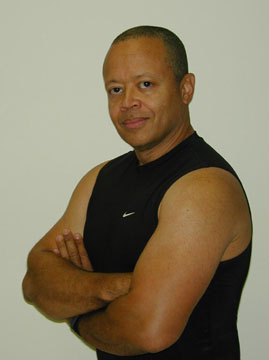
MICHAEL A. VENTRELLA: Today, I am honored to be interviewing Hugo nominated author Steven Barnes.

Steven Barnes has a very interesting background: His martial arts accomplishments include black belt in karate and judo. He is a trained hypnotherapist, and studies yoga and other physical arts. His writing includes a number of novels by himself and others, short stories, and television episode scripts.

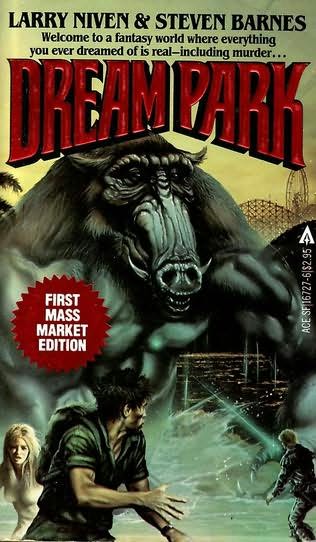
Steven, I have to begin by discussing something personal. You see, years ago friends and I read DREAM PARK and become enamored of the idea. It wasn’t too much later that we began the New England Roleplaying Organization, one of the largest Live Action Role-Playing games in North America. I edited all of their Rule Books and have since moved off and started my own group (Alliance LARP) – all because of a spark started by you and Larry Niven. And now I’m writing my own novels…

My first question, then, is: Did you realize how much of an influence that book had?

STEVEN BARNES: Not until Larry and I attended the first IFGS gaming conference. Being surrounded by hundreds of LARPers really drove it home. We’d created, or certainly influenced, an entire sub-culture.

VENTRELLA: That was not your first novel with Larry Niven. How did that relationship begin?

BARNES: I was about twenty-seven, and writing my butt off without getting anything published. My theory is that if you want to learn something, find someone else who is doing it, and figure out what they’re doing. I needed a role model…or a mentor, if I could be that lucky. A friend told me that Larry Niven and Jerry Pournelle frequented the LASFS clubhouse (Los Angeles Science Fiction/Fantasy Society) on Thursday nights. I went up there, met Larry, and convinced him to read a few of my stories. He liked what he saw, and gave me a chance to work on an unpublished story of his called “The Locusts.” Luckily, I saw a flaw in the story that my particular skills could improve. It was published in Analog, and was nominated for a Hugo.

VENTRELLA: What process do you use when you collaborate? Do you split up subplots, or does one person write and the other rewrite?

BARNES: We work out the plot outline extensively, and then I write the first draft. Larry rewrites, suggests, tells me when I’m on the crazy train.

VENTRELLA: What themes do you find yourself revisiting in your work that may pop up without planning?

BARNES: What I would call “Self Directed Human Evolution” — the process of personal growth as it has been expressed in world culture, religion, philosophy and myth.

VENTRELLA: What is it about science fiction that attracts you? You have written a few things that are out of the genre (like some “Baywatch” episodes) –- what brings you back?

BARNES: The size of the canvas, perhaps. Most probably, the fact that I was just a dreamer as a kid, and loved stories of heroic adventure against exotic back-drops. But if I had had access to Ian Fleming instead of Larry Niven, I’d be writing spy novels.

VENTRELLA: Do you feel that editors and publishers still are fairly conservative when it comes to taking chances, even with science fiction?

BARNES: No more than their audience. I consider science fiction to be quite socially conservative in some ways, but that may be another discussion.

VENTRELLA: What is your writing style? (Do you outline heavily or just jump right in? Do you tend to start with an idea, a character concept, or something else?)

BARNES: Usually I’ll start with an idea, and then create characters to people that world. I outline using 3×5 cards, outlining programs, whatever. Every way of looking at a story reveals different details.

VENTRELLA: Of what work are you most proud?

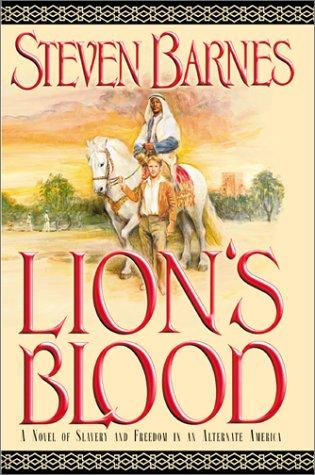
BARNES: LION’S BLOOD. I felt as if I had finally managed to create a work that expressed my core sense of social reality in America.

VENTRELLA: Have you ever run across unexpected controversy with your writing? If so, how have you dealt with it?

BARNES: Again, LION’S BLOOD, set in an alternate world in which Islamic Africans colonized the Americas, bringing European slaves. The reversal of racial roles was already pushing the edge. But 9/11 happened, and we were demonizing Muslims. That was the worst timing for a book you could imagine.

VENTRELLA: What bugs you most about the publishing industry and what would you change about it if you could?

BARNES: Oh, I don’t know if there’s anything. There are some things about human nature — tribalism — that have worked to my disadvantage, but that’s also a survival trait, so I guess I have to grin and bear it.

VENTRELLA: What advice would you give to a starting author that you wish someone had given you?

BARNES: A writer should write for the sheer passionate love of it as much as possible. You have no idea how much external success you will ever have, so you’d better find a way to be happy just being a writer.

VENTRELLA: What’s the biggest mistake you see aspiring authors make?

BARNES: Chasing the market.

VENTRELLA: You’ve posted on your Facebook page about self growth and fulfillment. What are your goals and aspirations and how well have you met them?

BARNES: I reached every goal I ever set as a kid. I wanted love, to be a martial artist, and a successful writer. Got ’em. Now I’m redefining myself, and setting up new challenges. Primarily, I don’t want to be a professional writer any more. I want to be an amateur writer, writing for the sheer love of it. That means setting up an entirely new business. In this instance, coaching writers and those who want balanced lives. I offer a free phone coaching session to anyone: your readers can reach me at steven@diamondhour.com

VENTRELLA: With a time machine and a universal translator, who would you invite to your ultimate dinner party?

BARNES: Sun Tzu, Aristotle, Shaka Zulu (leave the assagai at the door, please!), Lewis Carrol, Nelson Mandela, Thomas Jefferson, Musashi Miamoto (likewise with the katana), William Shakespeare … and the most important women in their lives.

VENTRELLA: And finally, do you find yourself optimistic about the future?

BARNES: Very optimistic. I am most worried by people who don’t believe there is much risk of overpopulation. Frankly, I think this is leftover meme from the time humans were on the brink of extinction. Overpopulation won’t destroy the world, but it could destroy the ability to sustain a technological civilization.

13346987_10156960385390416_8355725557480929681_n

My Turn to be Interviewed

The Teen Book Connection asked some good questions for my recent interview. Please check it out!

Conventional Wisdom: Programming

Previously I have discussed networking and attending conventions as a way to further your writing career.

I will be attending two Science Fiction conventions as a guest in the near future. My schedules below are for Lunacon (which is held just outside of New York city) and Ravencon (which is held in Richmond). The panels look to be quite interesting, and as I am the panel moderator on a few of these, I have to lead the discussion. (Note: just in case anyone is confused, these are just the panels I am on. There are hundreds of panels at each convention!)

I have also been scheduled for readings of my work and autograph sessions, which can be either great fun or a terrible embarrassment, depending on whether anyone shows up…

The big RUM AND RUNESTONES release party will be at Ravencon. The book is a collection of stories about pirates and magic and features my short story “X Spots the Mark.”

Lunacon will be held the weekend of March 19th and features some great writers: Tanya Huff, Esther Friesner, Peter Heck, Keith DeCandido, Ty Drago, Jonathan Maberry, Gail Z. Martin, Hildy Silverman and many others.

Ravencon will be held the weekend of April 9th and features Rachel Caine, James Enge, Lawrence Watt-Evans, Catherine Asaro, Peter Prellwitz, Bud Sparhawk, Tony Ruggiero, and many others.

If these panels look interesting to you, go to the convention websites and see what else they have scheduled. Attend if you can — even if you’re not a guest, you can make connections and learn more.

Here’s my Lunacon schedule:

Friday 6 pm: Larping for Beginners: What is a LARP, what kind of groups are there, where are they located? (Michael A. Ventrella)

Friday 8 pm: Networking for Writers: Just being a good writer isn’t enough these days — you have to get out there and sell your work. This panel will explain the necessity of good networking for aspiring writers. Lots of practical tips for taking the fear out of networking and making contacts successfully. (Ef Deal, Pamela Scoville, Hildy Silverman, Ian Randal Strock, Michael A. Ventrella)

Friday 9 pm: Drowning in Ink: With new markets emerging, e-zines and e-publications, small presses, and traditional publishers; writers have more publication options than ever before, not to mention self-publishing fighting for “legitimacy” among them. Is there a place for everything and everything in its place, or does confusion reign supreme? (Michael D’Ambrosio, John Douglas, Teel James Glenn, Neal Levin, Michael A. Ventrella)

Saturday 4 pm: The New Animated Film: Did anyone not cry at the beginning of “Up”? Animated films aren’t just for kids anymore, they’ve hit the mainstream and are starting to blur the lines of what we think of when we think of an animated film. Given how much of a movie now is created in a computer, what isn’t an animated film? Panelists discuss the best new animated films and how they’re changing our perceptions of cinema. (Jim Freund, Glenn Hauman, Daniel Kimmel, Ahlen Moin, Michael A. Ventrella)

Saturday 5 pm: Anybody Wanna Have Sects Tonight?: In many sci-fi and fantasy works, the author will invent entire religions for the purpose of plot or flavor. How do we go about creating gods and rites of worship that seem believable to the reader? What doesn’t work? (Alma Alexander, Sam Butler, Louis Epstein, Jane T. Sibley, Michael A. Ventrella)

Saturday 6:30 pm: Reading: Michael A. Ventrella

Sunday 12 pm: Basing Your Fiction on an RPG: It’s always tempting to take a gaming experience and turn that into a piece of fiction, but few can do so successfully. How do you avoid the problems with doing so? (Leigh Grossman, Mike McPhail, KT Pinto, Michael A. Ventrella)

Sunday 2 pm: Autographing: Michael A. Ventrella

Here’s my Ravencon schedule:

Friday 9 pm: Autographing: Michael A. Ventrella

Saturday 1:30 pm: Koffee Klatch

Saturday 2:00 pm: Don’t Give Up Your Day Job: Writers discuss criticism they have received from readers, reviewers and even family members. How do they deal with it and why it should be a positive and not a negative experience. How can you offer criticism to a writing friend in a constructive manner? (Iver Cooper, Lawrence Schoen, Rick Stratton, Michael A. Ventrella, Lawrence Watt-Evans)

Saturday 3:00 pm: The Best Way for a Writer/Artist to Avoid Being Sued: How do writers and artists get into trouble? How can these expensive and embarrassing pitfalls be avoided along with any jail time. Come and hear about experiences and what you need to know to stay out of trouble. (Mitchell Bentley, Dave Christman, Michael A. Ventrella)

Saturday 5:00 pm: Basing Your Fiction On a Game (Rob Balder, Steve Long, Michael A. Ventrella)

Saturday 8:00 pm: Using Real Life Events In Your Story: Good Idea or Not? (Andrew Fox, Peter Prellwitz, Michael A. Ventrella, Allen Wold)

Saturday 9:00 pm: Going it On Your Own? How to Avoid the Pitfalls of Self-Publishing: Traditional publishing is not for everyone but that does not mean it is simple. This workshop explores what goes into the making a book. Participants will walk through the steps of designing, refining, and promoting a good book. (Denise Ackley-McPhail, Chris Impink, Michael A. Ventrella)

Saturday 11:00 pm: Vampires — drawing fiction from real life: With books, movies and television depicting modern day vampires and how they exist, how did they get their ideas? Some authors such as Konstantinos and Katherine Ramsland have actually delved into the world of vampire clubs and organizations of London, Paris, New York and LA. Some authors have based their modern fictions on this world of night. What are these places and groups like? Come and find out! (Patrick Vanner, Michael A. Ventrella)

Sunday 11:00 am: I Double Dare You to Write! If I were to write the one story I always wanted, but didn’t dare, it would be about the … (insert topic here.) Many writers have always wanted to write a type of story or a story about a taboo subject but didn’t. Or maybe they did and published it under another name? Let’s ask them and see what they say. (Malcolm Deeley, Pam Kinney, Michael A. Ventrella)

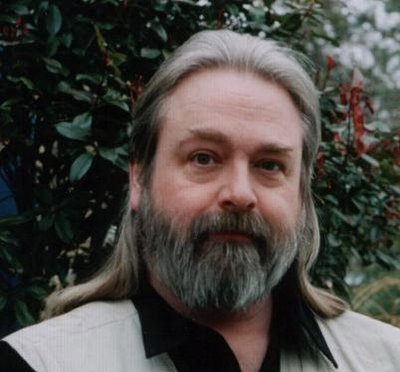
Interview with Hugo Award-winning author Lawrence Watt-Evans

Lawrence Watt Evans grew up with parents who were science fiction readers, so he grew up reading the stuff, and decided at the age of seven or eight that he wanted to write it. He has been a full-time writer for more than thirty years, producing more than forty novels, over one hundred short stories, over one hundred and fifty published articles, and a few comic books. Most of his writing has been in the fields of science fiction, fantasy, and horror, and he has received a few awards, including the Hugo for best short story in 1988, for ”Why I Left Harry’s All-Night Hamburgers.” He served as president of the Horror Writers Association from 1994 to 1996. He lives in Maryland with his wife and the obligatory writers’ cat.
MICHAEL A. VENTRELLA: Lawrence, thank you! Let’s start by letting us know what your latest work is that is available and what we can expect next.

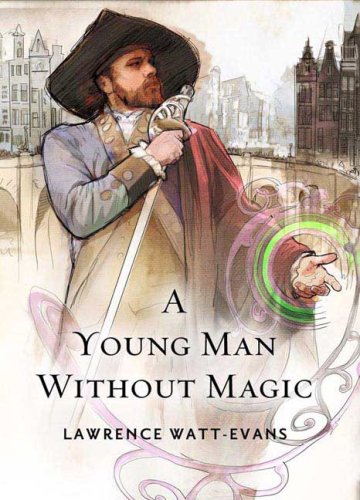
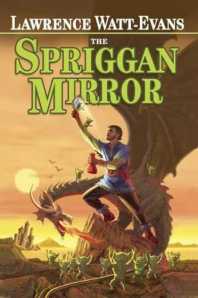
LAWRENCE WATT-EVANS: My latest novel is called A YOUNG MAN WITHOUT MAGIC; Tor released the hardcover in November of 2009. This is the first volume of a fantasy series called the Fall of the Sorcerers; the second volume, ABOVE HIS PROPER STATION, will be out in November 2010. Whether there will be more remains to be seen. If there’s sufficient interest from readers and publishers, this series could go a long time — I have about a dozen novels plotted.

VENTRELLA: You try to break down traditional plot cliches in your stories. What are your plotline pet peeves?

WATT-EVANS: My biggest is simply people doing things, or failing to do things, because it’s necessary to make the plot work, and not because that’s how real people would act. Plots that depend on people not telling each other important things when there’s no reason to keep them secret, for example. Real people generally like to talk, and keeping a secret is hard, so why do so many characters in books go to such lengths to not tell each other things?

Why don’t characters in novels call the cops more often? Why don’t they tell their friends what they’re up to?

VENTRELLA: I’ve commented on this blog before about how I dislike the typical fantasy hero who is a noble-born chosen one with special powers. Why do you think it’s important to avoid those kinds of characters?
WATT-EVANS: I don’t think it’s important to avoid them; I just think they’ve been overdone, and I prefer to focus on more ordinary people.

VENTRELLA: Do you ever worry about genre when your work crosses the line? Do your publishers and editors ever give you a hard time about it?

WATT-EVANS: When I started out I never used to worry about genre. Back in the ’80s, I wrote whatever I wanted and let the publisher worry about labeling it. By the ’90s, that looked like a bad idea — my fantasy was much more successful than my science fiction or horror, so writing SF or horror was dragging down my sales and hurting my career. My agent eventually convinced me of that, and I mostly stopped writing SF and horror novels. (In short fiction, no one cared.) I’d intended to go on writing SF under a different name, but that never really worked out. By the turn of the century I was purely a fantasy writer.

But the thing is, the market kept changing, and now readers and publishers want cross-genre stuff — pure traditional fantasy isn’t selling well anymore. Urban fantasy, crossing fantasy with hard-boiled detective stories — that’s selling. Paranormal romance is selling. Historical fantasy is selling. Since I write for a living, I can’t afford to ignore that, so I’m currently working on an urban fantasy novel called ONE-EYED JACK, and I’m looking at some other genre-bending possibilities.

I’m perfectly happy working in various genres, but I do try to keep up with what publishers are buying.

VENTRELLA: Are humorous stories easier or harder to write?

WATT-EVANS: Easier than what?

For me, each story has its own natural tone, and that has nothing to do with the difficulty of writing it. Some funny stories are easy, some are hard; some serious stories are easy, some are hard.

VENTRELLA: What difficulties and pitfalls face someone trying to write humor?

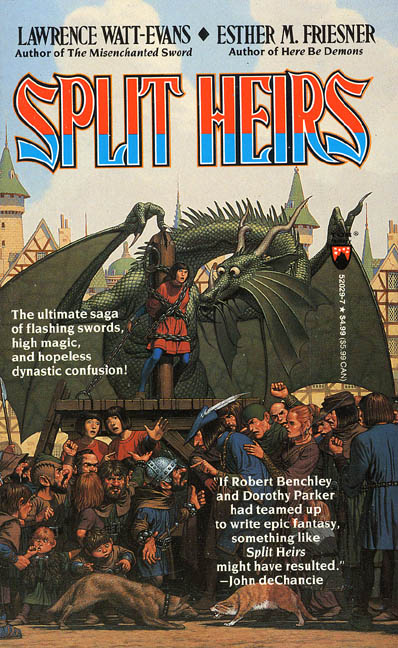
WATT-EVANS: The tricky thing about writing humor is that senses of humor vary. What one person finds funny may leave another cold. When Esther Friesner and I were writing SPLIT HEIRS, while we were mostly in accord, I found out that Esther has a more vicious sense of humor than I do, but isn’t as fond of pratfalls — with one exception, any scene in the book where death or serious injury is played for laughs, Esther wrote it, while I think all the falls are mine. Knowing what readers will find funny — well, I’m not sure there’s anything that every reader will find funny. There are people out there who don’t find Terry Pratchett funny, which I find incomprehensible.
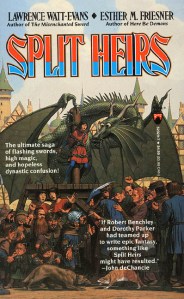
So what you need to do is to incorporate a variety of humor. Don’t stick entirely to one thing — there’s no gag that won’t get old eventually. Maybe you think puns are the epitome of wit, but relying entirely on puns is going to leave most readers cold. SPLIT HEIRS had puns and pratfalls and pain, contrived explanations and elaborate absurdity, double entendres and drunk acts, so if a reader didn’t laugh at one bit, the next might get him. Overusing any one joke can kill it. Change it up.

Also, don’t try too hard. Don’t overdo it. Humor has to have some grounding in reality in order to work. There’s a reason the classic comedy acts always included a straight man. Have some respect for your characters, no matter how absurd their situation may become. It’s much funnier when something ridiculous happens to an ordinary guy than when it happens to a capering buffoon.

VENTRELLA: I know there isn’t a template that is used each time, but when creating a new world, what is your process? Do you first concentrate on the story and characters and then think about the politics and religion of the world?

WATT-EVANS: Oh, it varies. A lot. I mean, a lot.

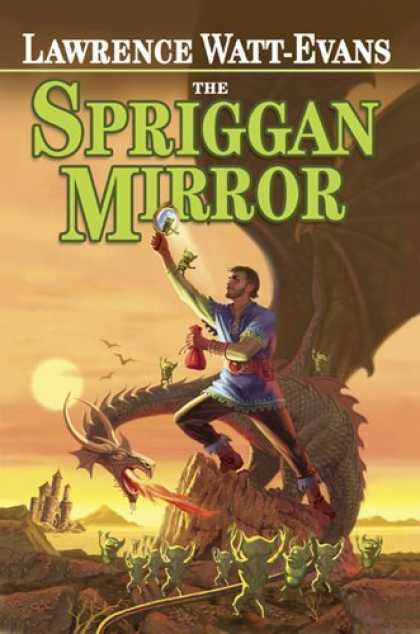
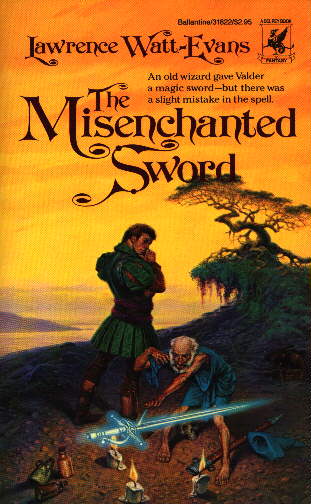
Ethshar started out as a map I drew during a boring geometry class in ninth grade; the locations of Aldagmor and the three Ethshars were where the point of a compass had marked the paper when I used it as backing for an assignment. That was 1969. I added names and worked out some of the linguistics between then and 1972, and figured out some of how warlockry functioned, then put it aside until 1977, when I started designing the other kinds of magic. History and politics and religion came along between 1977 and 1983, but I didn’t have any stories to set there until about 1982. I started writing THE MISENCHANTED SWORD in December 1983. I’m still adding details.
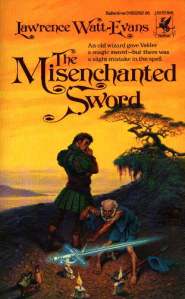
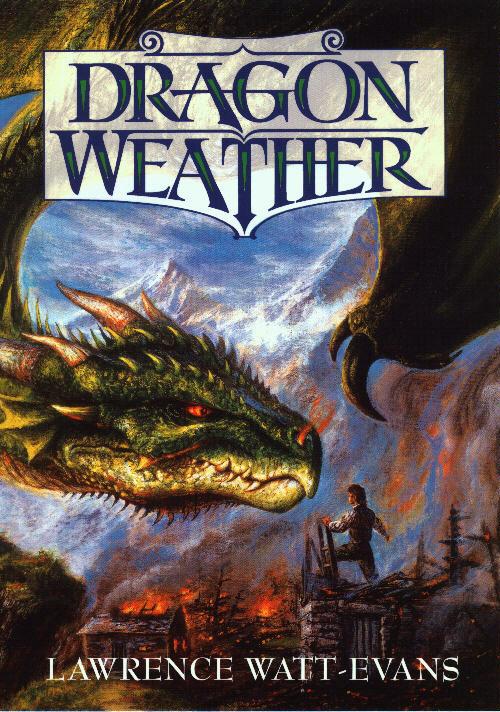
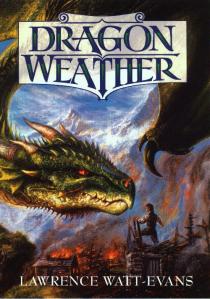
For the Lands of Man, on the other hand, I knew the story first, and wanted a setting. I started with the history, from the wars against the dragons to the opening of DRAGON WEATHER, but I didn’t know the geography or magic, or history before the wars, until after I started writing the novel. I never did get the linguistics straight.

NIGHTSIDE CITY was inspired by the Los Angeles of Ross Macdonald’s Lew Archer novels — “inspired” not meaning copied, at all. Lew Archer’s L.A. is a city of night, where the real world Los Angeles is a very sunny place, and that got me thinking about a city where it’s always been night, but the sun’s about to come up. (A “Little Nemo in Slumberland” strip where the sun dissolves King Morpheus’ palace may also have figured in.) So I started designing out a world where that would be possible, and even hired a planetologist, Dr. Sheridan Simon, to work out the physics for me.

VENTRELLA: Do you prefer writing short stories or novels?

WATT-EVANS: I used to find novels easier, though obviously they take longer, but somewhere in the late ’80s I got the hang of writing short stories, and since then I don’t find one more difficult than the other.

As for which I prefer, do you prefer steak or chocolate cake? They’re different. Sometimes I want one, sometimes I want the other.

VENTRELLA: What do you see as the primary difference between the two?

WATT-EVANS: The primary difference is that a short story is about a single change, while a novel is about something developing, step by step. The first time I was asked this question, many years ago, I said that a short story is a kiss, and a novel is a courtship, and I still think that’s a pretty good analogy.

VENTRELLA: Publisher’s Weekly said of your latest (A YOUNG MAN WITHOUT MAGIC) that the characters were “unlikeable” but that the “the tight plotting and absorbing new world make this tale readable.” Do you agree that the characters are “unlikable”?
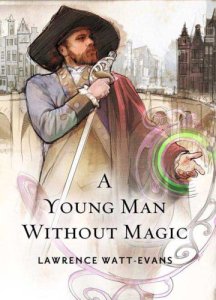
WATT-EVANS: I didn’t think they were unlikable — not all of them, anyway. I like Anrel quite a bit. Several of the others are less than charming, I admit, including Anrel’s best friend, but I thought I’d come up with a protagonist readers would find pleasant company. I suspect the reviewer found him too fatalistic, a trait that fades greatly in the sequel, ABOVE HIS PROPER STATION.

VENTRELLA: How do you deal with negative criticism?

WATT-EVANS: Mostly, I ignore it. I know I can’t please everybody. In one case, though, a reader’s comment about TOUCHED BY THE GODS me rethink the whole story, which is a part (though only a small one) of why there’s no sequel and will never be one.

VENTRELLA: What themes do you find yourself revisiting in your work that may pop up without planning?

WATT-EVANS: How broadly are you defining “theme”? A lot of my stories turn out to be about someone finding a place for himself in the world. I also seem to write about a lot of immortal (or at least ancient) characters who have lived in isolation and are reconnecting with the world. And characters who are struggling to control some power that could cause great destruction if unleashed.

I don’t know why.

VENTRELLA: What is your writing style?

WATT-EVANS: It varies, but usually it goes like this:

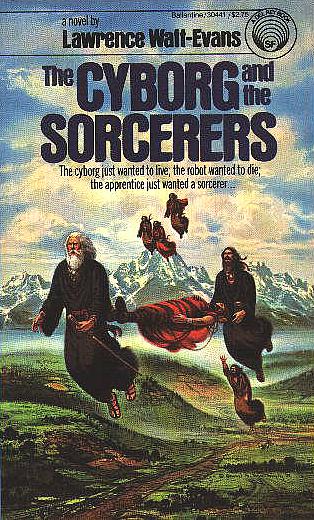
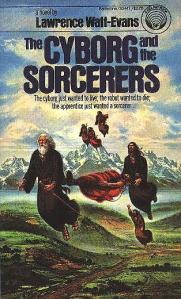
Come up with central concept, which can vary hugely in complexity — it could be a gadget, a spell, a characteristic of the setting, a plot element, a scene, a character. THE MISENCHANTED SWORD started with the spell on the sword, NIGHTSIDE CITY started with the doomed city, THE CYBORG AND THE SORCERORS started with the scene of Slant talking to the wizards of Teyzha. Sometimes this concept is the result of combining two or more old ideas I had kicking around.
Usually, I let this stew for awhile, accreting material. If I didn’t start with a character, figure out who the characters are who would be involved. Work out a background where this could take place — which might be a setting that already exists, or a new one.

Write an opening scene, to get the material fixed in my head. Sometimes this comes before the stewing.

Figure out how the story ends.

Come up with some rough plan for getting from the opening to the ending.

Start writing.

Usually, I’ll stop after awhile — usually the first time I hit a plot problem — and write up a working outline, running from three to thirty pages; when I’m satisfied with that, I’ll go on writing the story.

The first draft is usually skimpy; the second draft is largely filling in details I skipped over while working through the plot. I generally don’t know the characters all that well when I start, but I get to know them writing the first draft, so the second draft lets me flesh them out.
And after that it’s just polishing.

However, not every story follows this model. I do whatever works. Sometimes I never do write an outline. Sometimes I write one, but don’t follow it. Whatever works.

VENTRELLA: Of what work are you most proud?

WATT-EVANS: DRAGON WEATHER. That one came out really good. Some others came close, but I’d rate that one as my best.

VENTRELLA: And finally, who do you like to read?

Terry Pratchett, Fritz Leiber Jr. — right now I’m not sure who else, as I seem to be in a transitional period where I’m losing my taste for old favorites (e.g., Robert Heinlein) and haven’t yet settled on new ones.
51

Interview with author May Pang

MICHAEL A. VENTRELLA: Usually I tend to interview writers of fantasy and science fiction, since that’s what I write, but we’re going to take a bit of a turn this week. I’ve been given the opportunity to interview May Pang, and no true Beatles fan would turn that opportunity down!

May Pang grew up loving music. Her very first job was at the Beatles’ management company, ABKCO Industries, where one of her responsibilities was assisting John Lennon and Yoko Ono. As exciting as this was, little did she know what fate had in store. One day in June 1973, Yoko approached her and explained that she and John needed a break from each other. Yoko had also decided that May would be his “ideal companion.”

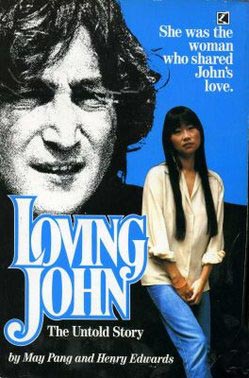
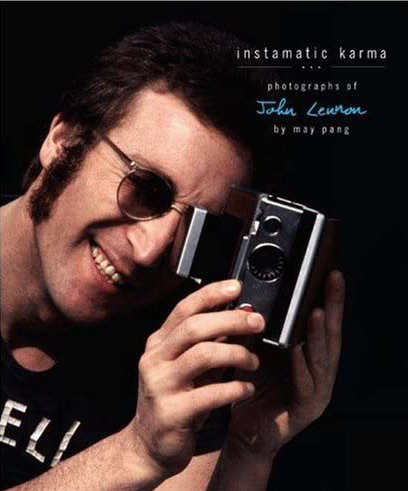
So began an 18-month relationship that had become known misleadingly as “Lennon’s Lost Weekend.” In 1983, in order to clean up many misconceptions about that time and to set the record straight, she wrote her memoir, LOVING JOHN. In 2008, she shared her private photographs from her collection in a book titled INSTAMATIC KARMA.

Today, May is a full-time single mom, but her heart is still in rock n’ roll. She is currently a photographer, artist and Feng Shui jewelry and furniture designer. She lives in New York.

Ms. Pang, what was the reason for LOVING JOHN, your first book?

MAY PANG: The reason I agreed to write the book was simply to set the record straight. I understood the need for John to diplomatically refer to our time together as a “lost weekend” and to imply it wasn’t a good time for him. While John was still here, he’d tell me, “I’m going to have to say this, you understand…” and I did and it was fine. After his death, however, the myths of the depth of his misery not only continued, but grew. And people who were not even around us jumped onto the bandwagon and would say things that were so out there, it didn’t even make sense. That was hurtful.

VENTRELLA: Did you approach a publisher or editor with the idea? In other words, what was the process that resulted in the book being printed?

PANG: Actually, my co-author, Henry Edwards, approached me. He was a well known music journalist who had a history with John and Yoko and had had a couple of books out himself. He also knew me and he thought I had a fascinating story to tell.

VENTRELLA: How did your collaboration with Henry Edwards work?

PANG: We worked well together, but I think even he had a hard time believing some of the things that happened. Also, mine was the second book to come out after John was killed, so these stories were new to most people and, in retrospect, perhaps a little too soon after the tragedy. But, compared to the slew of books that have come out since, mine was tame and kind to everyone involved.

VENTRELLA: This book was later edited down to concentrate less on the music and released as THE LOST WEEKEND. Whose decision was that?

PANG: You’re referring to a the title of a reissue, which was the same book with an updated end chapter. The original book Henry and I submitted in 1983 was over 600 pages and talked about the creative aspects during our time together. The publisher, who had just had great success with the Jim Morrison bio NOBODY GETS OUT OF HERE ALIVE wanted to recreate that, which this wasn’t. So it was released with a lot of the important stuff edited out and the more salacious, for lack of a better word, in. Of course, without the balance, a lot of that was out of context.

VENTRELLA: The book is now out of print. Do you still have the rights? Could you release it by self-publishing it?

PANG: I have the co-rights, with Henry, but I have no interest in re-releasing it. It would have to appear in the same edited form, which is unacceptable now.

VENTRELLA: Your most recent book is INSTAMATIC KARMA, a collection of photographs from the so-called “Lost Weekend.” It’s received excellent reviews. How did you decide to write that?

PANG: Again, it was a friend who suggested I do this one. He was tired of hearing about the “miserable time” and had seen the photos from way back when they were taken. He said, “Rather than try to explain it wasn’t so bad, why don’t you just show them?” and so that was how that came about. It does have some text, but just to put the photographs into context. In fact, the only criticism of INSTAMATIC KARMA was that people wanted more stories.

VENTRELLA: You have been promoting these books at Beatles conventions and shows, I understand. There is a Beatles cruise coming up shortly where you are one of the honored guests. How did this come about? Are you looking forward to it?

PANG: I actually didn’t do the Beatle conventions for INSTAMATIC KARMA, but I did do signings at bookstores and galleries and the cruise was something that sounded like fun when approached by the promoter and I would be spending time with old friends and fans.

VENTRELLA: Do you enjoy these events?

PANG: I do enjoy them, because the people who come loved John and want to know more about what happened during his most prolific period as a solo artist.

VENTRELLA: John seemed to have perhaps his most creative period musically during the time he spent with you. In that 18 month period, he wrote and released the albums “Mind Games”, “Walls and Bridges” and “Rock and Roll.” He played on Elton John’s #1 hit “Lucy in the Sky With Diamonds” and helped write and play on David Bowie’s “Fame.” He produced songs for Ringo and an album for Nilsson. (I remember this time greatly! It seemed like every few weeks there was something new from him. It was a great time to be a fan!) What do you think brought about this period of creativity?

PANG: Yes, it was all that certainly, but more importantly, there was a positive change in him as a person. He and (his first son) Julian resumed a relationship. John had also mended fences with the other Beatles and was particularly outgoing during this time. Some of the radio interviews he did, displaying that old wit and upbeat humor, are now legendary.

VENTRELLA: Do you appear anywhere else on the albums other than the “John” line in “Number Nine Dream”?

PANG: I’m also singing the backup “Ah, bowakawas…” on that song. And I’m on the end chorus of Ringo’s “Goodnight Vienna,” John’s “Do You Wanna Dance” (Rock’n’Roll) — and also in the chorus of “Happy Xmas (War Is Over)” from way back in 1971, when John and Yoko first came to New York.

VENTRELLA: You’re also the only other woman John wrote a song about in his solo career (“Sweet Bird of Paradox”). What does that song say to you? What do you think John was trying to say?

PANG: What can I say? I was floored when he played it for me. It was written early on in our relationship. The song was called “Surprise, Surprise” because our relationship and his feelings for me caught him off guard.

VENTRELLA: In some ways, just hanging out with all these great rock stars must have been a dream come true for you. Of the people you’ve met, who impressed you the most? Did anyone contradict their public persona?

PANG: I’ve met a lot of wonderful people. And almost everyone of them contradicts their ‘public’ persona to a degree, in that they’re all human; shy, vulnerable, somewhat reserved in real life. People always expect their heroes to be “on.” I know fans were always expecting the John from “A Hard Day’s Night” when they’d meet him and be surprised, for the most part pleasantly, when he’d be just warm, unassuming, what they’d call ‘down-to-earth’.

VENTRELLA: I note that you worked for Island records for a while in the mid 70s. Did you get to meet Sparks? (They’re one of my favorite bands, especially from that era.) Any interesting stories about them?

PANG: I didn’t meet them back then, but I did after I married Tony Visconti, who produced them. They were fun to hang out with … I remember Ron Mael driving around L.A. in his Volkswagen’s Thing. Talented brothers.

VENTRELLA: How did the David Bowie video (“Fashion“) come about?

PANG: David and I were old friends, he just asked me to do it.

VENTRELLA: The public image Yoko created is that John was “lost and misguided” during those 18 months, and then she forgave him and he came back and baked bread for 5 years (before releasing “Double Fantasy” – the album that had about as much rebellion and rock and roll as a Carpenters album). Is any of that image true?

PANG: Well, we can’t lay all the blame on Yoko; John helped with that myth.

VENTRELLA: A lot of misconceptions exist about that period of John’s life. Which ones bother you the most?

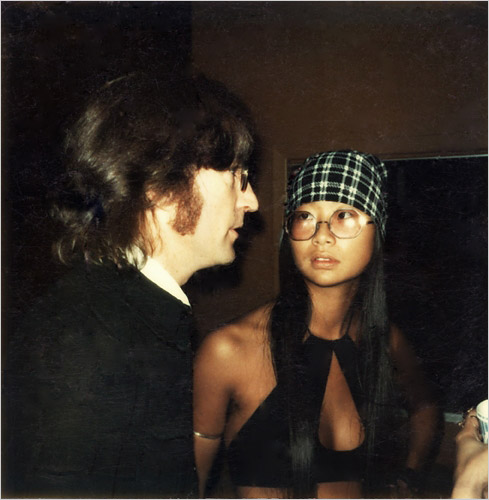
PANG: Three bother me equally. That John was so miserable and that it was 18 months of drunken chaos. Yes, a couple of high-profile nutty things happened. But, as you pointed out, there was some great music and great artistic productivity. And, as history shows, it was the last time he spent any quality time with his first son and his musical brothers. And finally the word “mistress” and its connotation. John and Yoko were officially separated and we were living openly at our own apartment across town where Paul & Linda, Bowie, Jagger, etc. came by to visit us and most importantly where Julian stayed. It was all above board.

The Axes of Evil

One barbarian prophecy says the legendary hero Bishortu will unite the three warring tribes. Another tribe has a prophecy that directly contradicts this, and they want Bishortu dead. And a third tribe, which may or may not be comprised of werewolves, refuses to let anyone know what their prophecy says. Meanwhile, the Duke on whose land the barbarians sit wants them all gone.

In the middle of all of this is squire Terin Ostler, who has been mistakenly identified as the great Bishortu. Under the Duke’s orders to get rid of the barbarians, he heads to their lands without the slightest idea of what to do.

Along the way, he has to avoid assassins, werewolves, lovesick barbarian princesses, and confused goblins while attempting to figure out the meaning of the magical and mysterious Wretched Axes. Nobody said being a hero would be easy.

I am so pleased to announce that my second novel THE AXES OF EVIL is now available.

I’m quite proud of it and think it’s a great improvement over the first. Partially this is due to experience (the more you write the better you should get), a good editor (as discussed in a previous blog entry) and paying attention to good advice from professional writers.

Fantasy author Gregory Frost likens it to Christopher Stasheff’s work. I read THE WARLOCK IN SPITE OF HIMSELF about 30 years ago and remember only that it was a fun adventure about a reluctant hero, and I am pleased with the comparison! (I hope I don’t go to re-read it and find plot parallels, because then I’ll be quite upset.)

“Humor, danger and a twisted tangle of unlikely prophecies make for a page-turning adventure,” said Gail Z. Martin, author of THE CHRONICLES OF THE NECROMANCER series. Award winning author Jonathan Maberry (THE DRAGON FACTORY) said it’s “a taut nail-biter of a thriller. Edgy, funny and dark.”

Readers of THE AXES OF EVIL should have an exciting ride, with non-stop action, humor, and unexpected plot twists. (And no, you don’t have to have read ARCH ENEMIES to enjoy this one.)

Unlike many fantasy heroes, Terin is not “the chosen one” or someone with super powers or special skills. Instead, he constantly finds himself thrown into terrible situations and finds solutions by being brave, honest, and resourceful. I always found myself identifying with average people performing extraordinary feats — to me, those are the real heroes.

The purpose of this blog is not only to allow me to interview professionals and learn from them, but also to promote my own work. (Any similar writer who says otherwise is probably not being very honest with himself or herself.) If you’ve enjoyed this blog, you may enjoy THE AXES OF EVIL. As an aspiring writer, I very much appreciate (and need) your support. I hope you will give it a try and post your comments to Amazon and other booksellers. I am always anxious to receive constructive feedback, positive or negative — I can always improve, after all, so your comments are valuable.

You can order the paperback here.

You can download the ebook here.

You can download the kindle version here.

And you can join my Facebook fan group here.

Thanks for the indulgence. Next week, back to interviews!