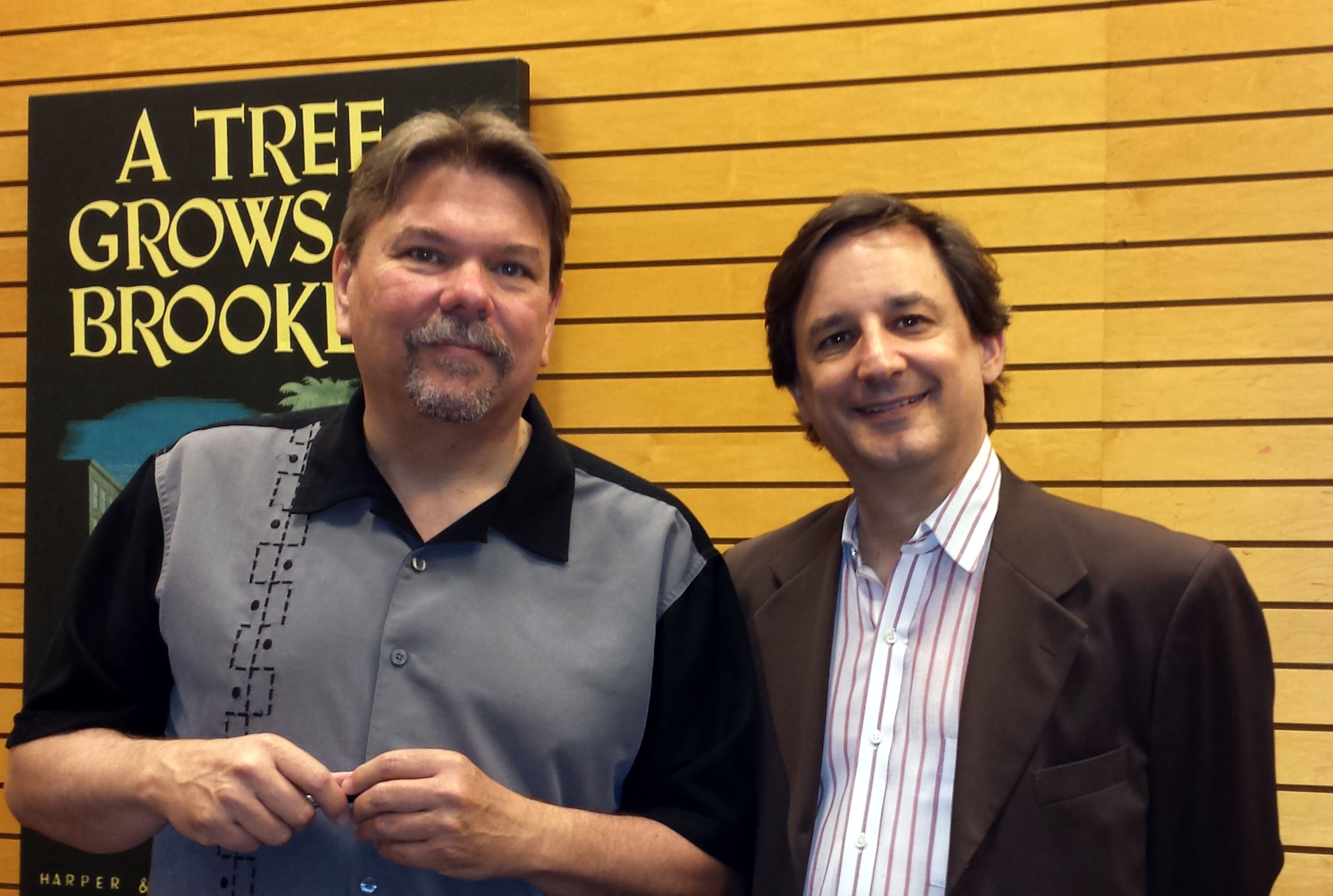
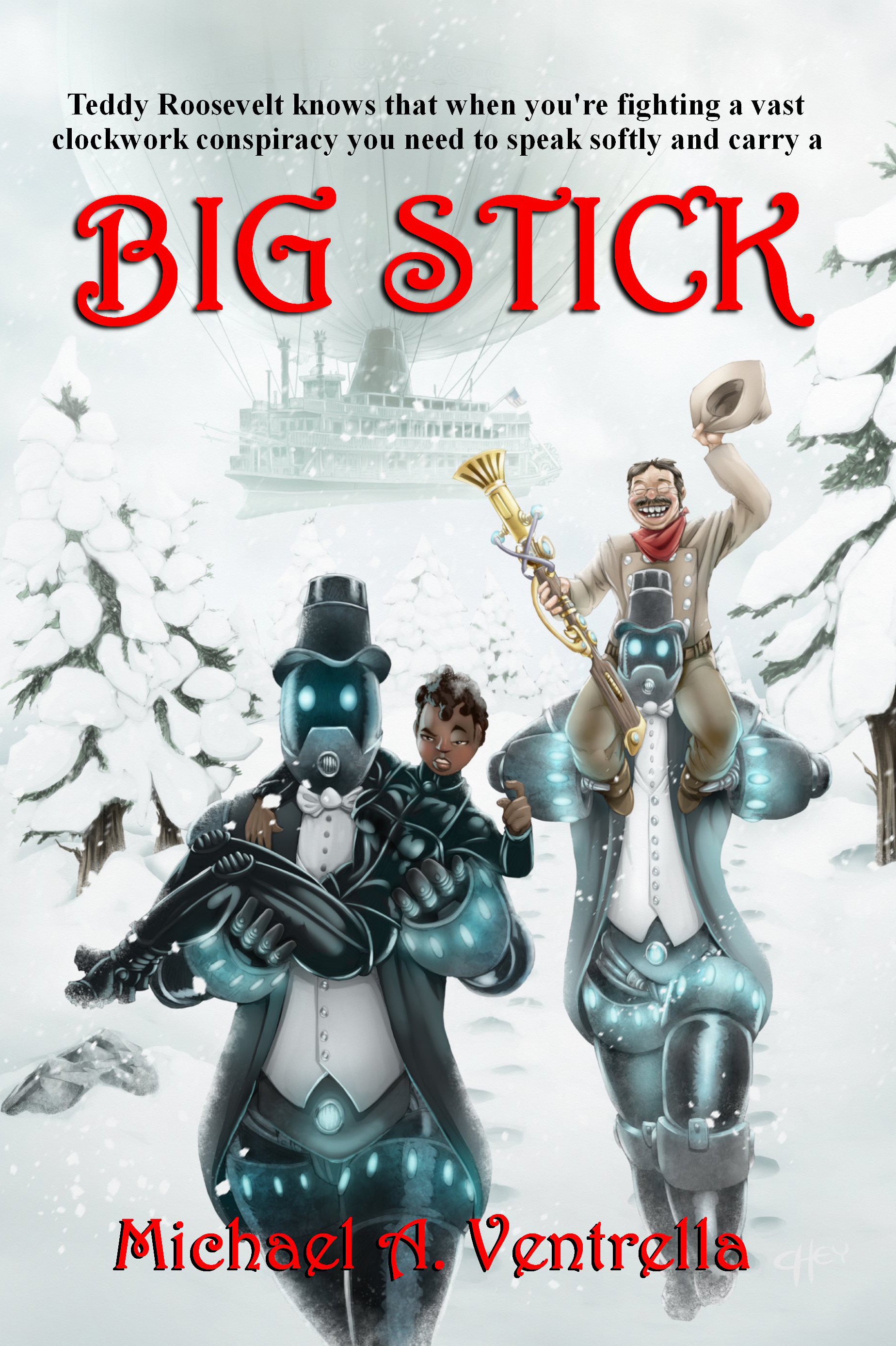
Interview with author Alan Goldsher

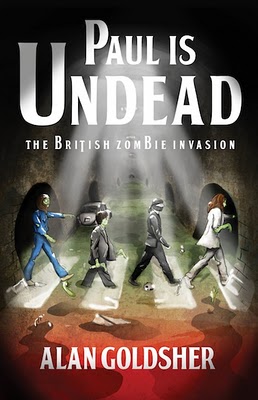
I recently interviewed author Alan Goldsher, whose zombie novel PAUL IS UNDEAD has just been released. Most of my interviews are done over email but Alan was willing to do it through a phone call, which I enjoyed quite a bit!

MICHAEL A. VENTRELLA: I just finished reading PAUL IS UNDEAD, being the big Beatles fan that I am. I hear rumors that this has already has the film rights sold. Is that true?

ALAN GOLDSHER: What was bought was an option from Double Feature Films which is owned by Stacey Sher and Michael Shamberg. They produced “Pulp Fiction” and “Erin Brockovitch” – they’ve done a whole bunch of great stuff. When we were shopping around the novel, they read it from top to bottom and fell in love with it.

Right now they’re putting together talent – screenwriter, director, some stars…

I produced a screenplay for it and I’m really happy with it but if they want to go in another direction if someone wants to, I’m sure they’ll find someone to knock it out of the ballpark. That’s it! Cross your fingers.

VENTRELLA: You actually sold the rights before the book was published?

GOLDSHER: That is correct.

VENTRELLA: Wow. You’ve got a good agent.

GOLDHER: Well, you’ve read it – I’m sure you’ll agree that it’s a particularly visual book, wouldn’t you say?

VENTRELLA: I would think so! I assume they’re going to make it sort of as a mockumentary, sort of like how the book was?

GOLDSHER: You know, that’s like the screenplay that I wrote but there is a concern among some that they should shy away from mockumentaries. I feel that you’ve got “Best in Show” and “Spinal Tap” – and those are classics. Zombies with a documentary format I’d like to think that has the potential to reach that audience that will be loyal and stick with it.

But if they want to do a typical three act thing, I’m sure they’ll find someone great to do it.

VENTRELLA: Do you think there will be any sort of issue over the rights to the songs?

GOLDSHER: That’s certainly an issue. The hard part (and the expensive part) would be using their versions of the songs. If we were to do cover versions, it’s significantly more affordable. For “Across the Universe” they paid $23 million dollars to get the rights, and that’s the budget of an entire movie in some cases.
I have one idea that’s pretty cool, but I’m not sure if anyone is going to bite on it… since we’re dealing with an alternate universe, take the existing songs, throw away the melodies, leave the lyrics and get completely different Beatleseque melodies, and get a very Beatles-sounding band…

VENTRELLA: Sort of a Rutles thing?

GOLDSHER: Yeah, except with the original lyrics. The only thing that will be similar will be the sonic aspect of it. You know, make a song from ’62 sound like it was recorded in ’62. I think that would be cool in that (a) it will be different and interesting and (b) it makes the soundtrack a hot item.

VENTRELLA: That’s true. I certainly bought the Rutles albums…

GOLDSHER: So we’ll see. There’s a lot in the air but as is the case with most books translated to screen situations, the writer doesn’t have too much say. Still, they’re open to hearing my ideas but they’re the pros. They’ll make the final decision.

VENTRELLA: So do you think Paul, as a vegetarian, will object to being portrayed as somebody who eats brains?

GOLDSHER: That’s a good question! Do you want to hear the Paul story?

VENTRELLA: Absolutely!

GOLDSHER: I heard this from a London Times reporter maybe three months before the book came out. He told me that he was at the BAFTA awards speaking with Jason Reichtman and who wanders over but Paul McCartney! Paul and Jason have a long mutual admiration society discussion and there’s this reporter – this is the first time he has ever met a Beatle – God knows why he said this, but he said “Have you ever heard of PAUL IS UNDEAD?”

I mean, if I’m meeting a Beatle, I’m not mentioning my book!

But he asked if Paul had ever heard of PAUL IS UNDEAD and Paul said “We put that rubbish to bed in the 60s.”

And the reporter said, “No, not ‘Paul is dead’ but PAUL IS UNDEAD. It’s a book about you guys as zombies.”

And Paul said “Oh. Heh heh heh” and then he walked away.

VENTRELLA: So now he knows of it.

GOLDSHER: He knows it exists. Ringo knows it exists too because a New York Times reporter mentioned it to him in an interview last month, before his 70th birthday. Ringo was very diplomatic as you would expect from Ringo who is just clearly a nice man. “Well, I don’t read any of the books about the Beatles, I’m just glad the records keep going.” I don’t think he’s going to say a bad thing about anyone.

VENTRELLA: Well, he definitely came across in the book as the nicest guy of the four, you’ve got to admit.

GOLDSHER: I’m sure you’ve watched the Anthology set…

VENTRELLA: Oh, of course.

GOLDSHER: He’s just such a nice man. I’ve watched the Anthology about six or seven times all the way through. At the end of it, Ringo gets kind of teary-eyed and says, “The Beatles were about four guys who really loved each other.” That kind of stuck in my head as I was writing the book. Ringo’s just a sweetheart and he was also the last in the band and he always seemed a little put upon because he wasn’t part of the original gang.
That’s part of why I made him a ninja. It’s kind of a huge metaphor for that. Also, often times in horror books – DRACULA, for instance – there is a living, breathing guide to the underworldy beings. So Ringo’s kind of that guide. He makes sure that nothing bad happens to them on this earth.

VENTRELLA: Did you have any problems with the characters being unlikable in that, you know, they murder people and eat their brains?

GOLDSHER: I think since you’re coming in with a preconception since the Beatles are intrinsically likable, since the humor is so silly and the gore is over the top that it’s kind of hard to dislike them.

VENTRELLA: I agree that you can’t take the book seriously in that regard in that it’s kind of a satire… well, it’s not really a satire… I don’t know! How do you describe it?

GOLDSHER: We had all kinds of discussions before we started the book deal about the legalities of it. There’s some law – if it’s satire or parody, you’d know this better than I would – if it’s very obviously satire then you’re cool as long as you don’t libel anybody.

VENTRELLA: Yes.

GOLDSHER: We were very very careful. We didn’t say anything out-and-out bad like “This guy’s an asshole” or “This guy’s a dick.” Instead it was “Here’s what he knows in this alternate universe.” There’s no way you can believe it, it’s very obviously a parody.

I also tried very hard to tell it with as much love as possible. I really do love the Beatles! I love the band and I hope that comes across.

VENTRELLA: It does.

GOLDSHER: And I’d like to think that if they do read it – If Paul or Ringo or Yoko or anybody associated with the group or who was mentioned in the book reads it that they will realize we’re just having fun, and that’s just a gory, disgusting love letter.

VENTRELLA: Did you ever say to yourself “Oh, this reference is too obscure.” I certainly caught things that an average reader would not… such as John’s first girlfriend, that kind of stuff…

GOLDSHER: I wanted to include as many obscure facts as I could for people like you, who would read it. To me, it made it feel very insider for all the Beatles nerds to take Thelma Pickles’ name and laugh at it since it’s so ridiculous. The whole thing about Jimmy Nichols – those are the kinds that keep Beatles fans from looking at me and thinking “Wow, he’s just trying to wreck the Beatles name and he doesn’t really care about the group.”

I care about the group! I did research for things like when I named their instruments. I was very careful. “This was the instrument Paul was using in ’64 so here’s what he would throw against the wall.” Little nerd stuff like that. Many fans know that stuff right off the top of their heads. I have some incredible nerdy friends. Yeah, I wanted there to be this stuff so people like me wouldn’t get offended.

VENTRELLA: It’s nice when you can make that kind of insider joke and someone else will get it. I was in a band in Boston and playing in a club and a bunch of German sailors were in the audience who were cheering and yelling. My friend Matt then shouted out “Mach Shau!” and maybe three people got it… but it was nice to know someone did.

GOLDSHER: Yeah, if one person gets it, it’s cool. But we are nerds together.

VENTRELLA: Are you working on a sequel now for the solo years?

GOLDSHER: Well, not for the solo years. It’s called POPPERMOST OVER AMERICA will take place immediately after PAUL IS DEAD ends.

VENTRELLA: So you’ll be a zombie in the sequel?

GOLDSHER: No, I actually don’t get turned into a zombie! Put down “Spoiler Alert!” They kidnap me and take me along on their Poppermost Over America tour, where they will continue their quest to take over the world. And depending on what the legal department of whatever publisher I end up going with will say, I’ll put current musicians in there and contemporary figures who will try to stop the Beatles from taking over.

VENTRELLA: Have you read any other similar books? Have you read PAPERBACK WRITER by Mark Shipper?

GOLDSHER: I did not. A number of people have pointed out to me that the book exists, but I didn’t know about it.

VENTRELLA: It’s nothing like yours other than the fact that it’s a fake Beatles history.

GOLDSHER: Is it fun? Is it a good book?

VENTRELLA: Oh, it’s hilarious! It rewrites the history and is full of insider jokes, but it’s been out of print for years.

GOLDSHER: When was it written?

VENTRELLA: Probably in the early 80s, I’m guessing (EDIT: Turns out it was in 1977.)

GOLDSHER: I should probably seek it out so I am knowledgeable in case anyone else ever asks me about it.

VENTRELLA: It’s only because yours are the only two I know of that are fake Beatles histories. Other than that, there’s no relationship. He just changed history and made it funnier.

GOLDSHER: There’s a mythology about the Beatles, so it’s kind of easy to take these events and twist them because they’re already fun to start with!

VENTRELLA: Well, PAPERBACK WRITER came before the Rutles so it’s kind of the Rutles except they didn’t change the names.

Let’s talk about some of your other books. Was JAM your first novel?

GOLDSHER: JAM was the first, and that was almost an experiment to see if I could write a novel. It turned out pretty OK and people seemed to like it. I wrote it in ’96 and finished in ’97. Any writer who has written a number of books knows that it’s embarrassing to reflect on your first novel.
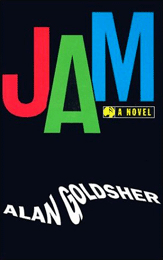
VENTRELLA: Well, I’ll agree with you there; I’d like to go back and rewrite mine. JAM is another music novel though, right?

GOLDSHER: It’s semi-autobiographical. I kind of put my own life in every book. At the beginning of PAUL IS UNDEAD, I discuss how I fell in love with McCartney’s music. That’s the absolute truth. I didn’t know who the Beatles were until I heard “Uncle Albert/Admiral Halsey.”

VENTRELLA: I’m a little bit older than you, I guess. I got into them after “Let It Be” which was probably one of their weakest. At the time, I was still 12 years old or something, I was into the Monkees. Then I heard “Let It Be” and went “Hey, these guys are better than the Monkees!”

GOLDSHER: The first Beatles music I remember having was a 45 of “Hey Jude.” I had the close-and-play record player, and I brought it outside on a hot and sunny day and it melted! I don’t know how much it would be worth now, but it sure would be nice to have it…

Then I got the red and blue greatest hits album, and kind of worked my way backwards.

VENTRELLA: I remember my friend finally got the White Album and back then we didn’t know anything about it. He came to me with a list of songs on the album, and I thought he had made them up. “Oh, really? You expect me to believe there’s a song called ‘The Continuing Story of Bungalow Bill’?”

GOLDSHER: (laughs) “There’s a song called ‘Piggies.”?

VENTRELLA: “‘Everybody’s Got Something To Hide Except For Me And My Monkey’?” Yeah, sure.”

GOLDSHER: How many animal songs on that record?

VENTRELLA: That’s true! I should count them. Back to your books though… you wrote some chick lit books?

GOLDSHER: I was working with a literary agent who said “You have an interesting ability to write in different voices and for an exercise, why don’t you write a chicklit book?” This was around 2004 and the chicklit market was happening at that point and he thought it could be something I could be part of. So I took JAM and took that basic outline and rewrote it with a female protagonist. And then on the second draft through, I threw all that out the window and it became its own entity.
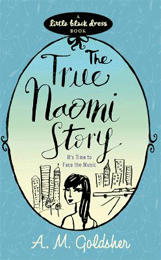
I found a place for it with a publisher in the UK called Little Black Dress. For God knows what reason, they signed me to a three book deal. All three came out and they’ve done pretty well. Up until PAUL IS UNDEAD they were my bestselling books.

I’m working on a new one now called NO ORDINARY GIRL which is a paranormal chicklit book. It’s about a girl who has superpowers. It’s kind of a metaphor for – you know that these books are geared toward a very tight demographic? 21 to 29 women… the metaphor is that women have a certain part of them that they’re not happy with: “Oh, my ass is too big, I’ve got this mole on my face…” and this woman says, “Oh, I’ve got these superpowers.” So it’s about how she comes to terms with something she’s had since birth.

VENTRELLA: You started off writing nonfiction though, correct?

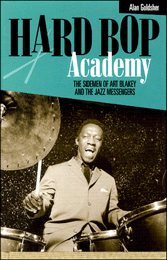
GOLDSHER: The first actual book I wrote was fiction. Then I wrote the book about jazz drummer Art Blakey. I was also doing magazine work at the time.

In a perfect world, I’d write whatever I want! Like right now, I’m jonesing to write a book about Miles Davis. My agent and I are trying to pitch the concept around, because (a) I love Miles Davis and (b) the Miles Davis books that are out there now – some of which are very, very good – are for jazz nerds like me. I’d like to write something that’s a little more populist. I think that would be a cool thing for the jazz canon. My first love was jazz.

VENTRELLA: You were a ghostwriter for quite a few people as well.

GOLDSHER: It’s exciting when it comes along.

VENTRELLA: How do you get those kinds of jobs? How do they seek you out?

GOLDSHER: It starts out with literary agents. The first project I did with a celebrity was Bernie Mac in 2000. He was working on his first book and this agent that I knew reached out and said “Would you be interested in ghostwriting the book and the proposal?”

“Absolutely,” I said. Bernie Mac is a funny, funny man and this was right before he was on the cusp of stardom. He’s from Chicago, and I’m from Chicago, and we hung out and had a great old time. We sold the book and then he ended up going with a ghostwriter who had a little more experience, which is one of the catch-22s about the entertainment industry: You can’t get the gig unless you have more experience and you can’t get more experience unless you get the gig.

That was a great notch in my belt, so in 2007, when I was working with another literary agent and another ghostwriting thing came up, I was ready and was attractive to potential clients.

The ghostwriting project I am proudest out was a book I did with a woman named Sarah Reinestsen. Sarah was the first female above-the-knee amputee to complete the Iron Man triathalon in Hawaii, and she is an absolute inspiration. She has a great joy and was very honest about relaying painful facts. The most painful one was that her father abused her. Her leg was amputated when she was seven, and her father physically and verbally abused her to the point where one consistent punishment for a while was threatening to take away her prosthetic leg if she wouldn’t wash the dishes or something. But she impressed me and it really shows in the book.
I did Robert Englund’s book which was a nice project. Robert was a sweet sweet man and if you were going to say there was a weakness about the project it was that he was too nice! He wouldn’t dish anything. I mean, you get Mackenzie Phillips coming out and saying “Oh, I slept with my dad” and the book is an immediate sensation and sells a lot of copies. With Robert, he talks about how much he loves this person and that person. That doesn’t really translate into sales. I don’t think he has a problem with that, though. He’s proud of the book as it is.

VENTRELLA: I assume as a ghostwriter you get paid a set amount as opposed to a percentage of the book sales.

GOLDSHER: Depends on your negotiations. David Ritz, one of the best pop culture ghostwriters out there, I guarantee gets a percentage of the books because he’s one of those guys whose name brings cache to the table.

VENTRELLA: Are you planning on going to any Beatles conventions to promote PAUL IS UNDEAD?

GOLDSHER: Maybe next year if the book is still doing well, and that’s not out of realm of possibility. PRIDE AND PREJUDICE AND ZOMBIES is still doing well after a year. I will be at the Chicago Comic Con on the weekend of August 20, and then I’ll be at the Comic Con in New York on a panel on October 10.

VENTRELLA: I was going to be on a panel there as well until I realized it conflicted with another convention I had already committed to that exact same weekend.

GOLDSHER: I’m looking forward to it. I think that’s the best place to reach the people who would obviously like the book.

VENTRELLA: Most writers I know who have books on the bestseller lists still have jobs, too. It’s always amazing to me how (with a few exceptions) this is not as profitable an occupation as many people think.

GOLDSHER: I’m doing OK! We make the rent, and my wife and I are trying to start a family. I think there are two things that really help me are (1) I take rejection really well! How do we make this work? How can we get this off the ground? And (2) I have a legitimate interest in writing about all kinds of stuff in all kinds of different platforms and formats.

For instance, my agent hooked me up with a gentleman who had written a 175,000 word novel. That’s a long novel! There was a book buried in there and I had to dig it out. That was a bunch of work, just as if I had worked for a month anywhere else.

So I have all kinds of projects like that, like the superheroine book and a couple other mash-ups in the coffer – I’m doing one called FRANKENSTEIN HAS LEFT THE BUILDING, which is a retelling of the Frankenstein story with Elvis as the creature.

VENTRELLA: That’s the key, I think. The writers who do make a living at it are writing constantly, and they write all kinds of different things. Jonathan Maberry comes to mind; I notice that he gave you a quote for your book cover … He did the same for me, actually!

GOLDSHER: Jonathan’s a nice guy and I would love his career. He’s done wonders for himself. He’s a hustler and that’s also part of the business. And he’s like me in that he takes rejection really well. It seems like he comes up with an idea a day. He’s writing comic books and all sorts of stuff. Total admiration for Jonathan.

(Here we got into a prolonged discussion about bass guitars since both of us play bass. The conversation continued on after the tape ran out!)

Plowing Through That First Draft

One piece of advice that professional writers have given me over and over again is to just keep writing until that first draft is done.

It’s also one of the hardest things I’ve found to do!

But it’s true. If you don’t force yourself to write — even if what you’re writing is crap — you’ll never get anything done. It’s better to just plow ahead with your story and worry about the pacing and the details later.

Just keep saying to yourself “It’s just a first draft.” No one will see it unless you show it to them.

But you have to at least get that done if you expect to ever have a book completed.

I’ve met so many potential authors who have commented that they have a book started that they never finished. They do the first few chapters and then go back and polish those up and then polish them some more and some more, and the book never gets done. Meanwhile, others who may not be as talented actually get theirs completed and published, because no editor will be interested in looking at your incomplete manuscript no matter how good it is.

The hardest part is pushing onward, no matter what. It is very tempting to go back and make changes. Instead you need to fight the temptation and say to yourself “I’m not allowed to make changes until I get to the end of the book.” That way, it becomes a reward you can give yourself when you finish.

This is especially difficult when you’re facing that dreaded Writer’s Block. Sometimes I’m at point A and I need to get to point B but am not sure exactly how to do that, so I just plow ahead. Even if what you write is later tossed completely, it should get you past that hump and onto the next section. And sometimes an idea will hit you that you never would have thought of had you planned it all out in advance.

For instance, in AXES OF EVIL, there is a climatic scene near the end where our hero — the coward Terin Ostler — meets his enemy, who has the most powerful magic weapon in the world. Terin, who has no skills whatsoever, must defeat the villain. How to do this? I wasn’t quite sure, so I began writing the scene. I just plowed ahead, figuring I can always come back to it later and fill in the blanks. Instead, when I was done I realized that my solution was perfect — not only did it make logical plot sense for the characters to act that way, but it was even foreshadowed in an ironic way. I guess my subconscious knew something I didn’t.

And don’t wait for inspiration. Writing is work! If you wait for that moment to hit, you’ll never get anything accomplished. Force yourself to write.

Imagine a sculptor staring at a lump of clay. In his mind, he has his outline of what he wants to accomplish — a horse, for instance — but he’s not quite certain exactly what the final version will look like. He starts molding the clay to the form he wants, and after a while, he can step back and look at his “first draft” and realize that even though it’s rough and crude, it certainly looks like a horse. He now knows how it will be posing and the rest is easier, because it’s the clean up and polishing.

If instead he had concentrated on the horse’s left foot, he’d end up having spent the same amount of time with a lump of clay with a very nice foot sticking out of it. Seeing that little bit done doesn’t encourage you to work harder, I don’t think. Instead, I think it depresses you that so much effort has been spent on a foot, no matter how good it is.

I always enjoyed working on the second and third drafts, because that’s where you can flesh out your character’s personalities better, insert some foreshadowing you hadn’t thought of before, and really turn the work from a passable story to something special. But getting through that first draft — that’s the hard part!

Interview with Janice Gable Bashman

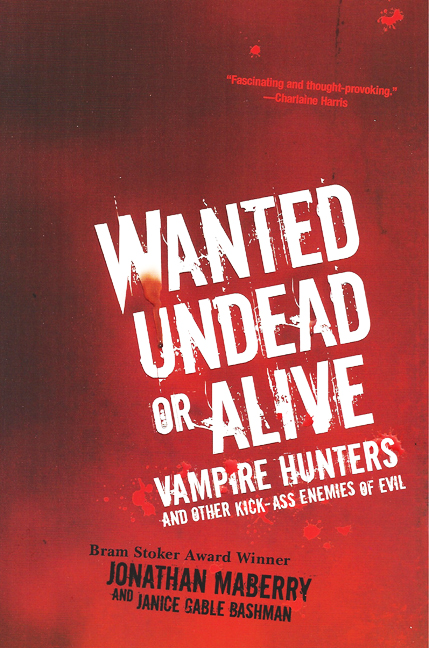
MICHAEL A. VENTRELLA: I’m pleased to be interviewing Janice Gable Bashman today. Janice is co-author (with Jonathan Maberry) of WANTED UNDEAD OR ALIVE: VAMPIRE HUNTERS AND OTHER KICK-ASS ENEMIES OF EVIL (Citadel Press, August 2010). She has written for many leading publications, including NOVEL & SHORT STORY WRITER’S MARKET, WILD RIVER REVIEW, THE WRITER, INDUSTRY TODAY, and FOOD & DRINK QUARTERLY. Janice is a member of the ITW (International Thriller Writers) and the Horror Writer’s Association, as well as a contributing editor of the ITW’s newsletter the BIG THRILL. Her writing won multiple awards at the 2007 Philadelphia Writer’s Conference.

Your book WANTED UNDEAD OR ALIVE is due out shortly. Tell us about the book!

JANICE GABLE BASHMAN: WANTED UNDEAD OR ALIVE deals with monsters of all kinds (supernatural, fictional, or real) and the people/beings/forces that fight them. It’s a pop culture book for fans of the genre. We interviewed tons of people for the book — FBI profilers, authors, screenwriters, comic writers, actors, directors, producers, criminal experts, psychologists, and others — as well as luminaries like film-maker John Carpenter, author Peter Straub, and the legendary Stan Lee. The book also has over forty illustrations from fantastic artists.

Here’s what some of the experts have to say about the book:

“WANTED UNDEAD OR ALIVE is a fascinating, far-ranging analysis of the nature of evil and those who rise to fight it … in real life, in pop culture, in literature and in legend. A must read for those who want to dive deep into the reasons for why we are fascinated by monsters … and love those who make it their business to take them down.” — Rachel Caine, New York Times and USA Today bestselling author of the Morganville Vampires series, Weather Warden series, and Outcast Season series

“WANTED UNDEAD OR ALIVE is a riveting chronicle of all things that drop fangs in the dead of night. All aficionados MUST have this in their library!” — LA Banks, New York Times best-selling author of the Vampire Huntress Legend series

“Jonathan Maberry and Janice Gable Bashman probe into pop culture’s Heart of Darkness, and what they find is both fascinating and thought-provoking.” — Charlaine Harris, creator of TRUE BLOOD and the Sookie Stackhouse novels

VENTRELLA: How did your writing styles work together?

BASHMAN: Jonathan Maberry and I each wrote individual chapters and reviewed and edited the other’s work. Other chapters were a collaborative effort. Prior to writing anything, we had to decide who was best to write each chapter. Although writing the book was research and interview intensive, we each brought our own skill sets and knowledge of the subject matter to the project; therefore, some chapters were better suited for one of us than the other.

When writing or co-writing a book, voice is important. The challenge with two authors is finding one voice that both authors can write and that fits the tone of the book. At first it takes a bit of trial and error (and writing and rewriting) to get there, but the end result is, if you do your job right, a voice from two writers that sounds like it’s from one.

VENTRELLA: Do you have any similar books planned?

BASHMAN: WANTED UNDEAD OR ALIVE is a companion to VAMPIRE UNIVERSE by Jonathan Maberry (2006) and THEY BITE by Jonathan Maberry and David F. Kramer (2009). I’m finishing up a proposal for my next non-fiction book; it’s still under wraps so I can’t share the details at this time. I can say that dozens of key players are already on board for the project and it’s sure to be a fun one.

VENTRELLA: You primarily have written nonfiction. How does that differ from writing fiction?

BASHMAN: Writing fiction and non-fiction differ and yet are the same. By that I mean that both forms of writing have a story to tell. In fiction, the story comes from your imagination (and research); in non-fiction, the story is derived from fact. Whether I’m interviewing an author for the NOVEL & SHORT STORY WRITER’S MARKET or THE BIG THRILL or interviewing a CEO of a major corporation for a trade magazine, the process is the same. I gather my facts and tell a story — the story of the person or organization I’m interviewing.

I’ve received many e-mails from authors and others I’ve interviewed thanking me for giving them such an interesting interview, one where the questions differ from those they’ve been asked so many times before. I make it my business to thoroughly research my subject before I construct an interview and find a way to take that interview to a deeper and more personal level, to get to the heart of the person and talk to them about what really matters.

But, in the end, it’s all about story. Finding the story and crafting it in a way that’s exciting for the reader. That’s my job as a writer whether I’m writing fiction or non-fiction.

VENTRELLA: How did you get started in the business?

BASHMAN: About four years ago, I decided to take a swing at publishing some articles after I became involved with a writing group. I learned to craft a query, sent out a few ideas to some local publications, and sold my first article. In the years prior, I had published my master’s thesis and a few book reviews, so I did have some, albeit minimal, publishing credentials. Once that first article was published, I began sending out more queries to both local and national markets, and the sales began rolling in. I’ve written dozens of interviews and profiles for numerous publications, but I’ve also written features, book reviews, and now a non-fiction book.

VENTRELLA: How do you pitch a nonfiction book or article?

BASHMAN: Pitching a non-fiction book is different than pitching an article, so let’s tackle a book first. To pitch a non-fiction book, the writer must write a non-fiction book proposal. The book proposal contains detailed information about the editorial format, the book contents, the author’s marketing and promotion intentions, who will buy the book, media contacts, and more. A sample chapter or two is also submitted with the book proposal. The author must then pitch the book to an agent, via a query letter, in order to find an agent to represent him in selling the book. Some publishers may accept proposals directly from an author, but most do not. So, unlike fiction, the entire book does not have to be completed before pitching to an agent or editor.

The process of writing a non-fiction book proposal is helpful beyond obtaining a sale. It helps the author flesh out and refine his ideas and really get a good handle on the book. And when it comes time to write, the author is ready to go.

Pitching an article is a different beast. To pitch a non-fiction article the writer must send a query to an editor telling that editor about the proposed article and why it’s a good fit for his publication. This is done prior to writing the article. It does help sometimes, depending on the type of article you wish to write, to have one or two quotes from “experts” in your pitch to support your proposal. For an interview or profile I have not found this necessary, but I would recommend using expert quotes for a feature article. It shows the editor that you not only have the knowledge to write the article but that you also have access to the experts who can support the material.

My experience has shown that once I’ve worked successfully with an editor, it is easier to pitch new ideas to him and have them accepted for publication, as long as the ideas are good, obviously, and fit the publication’s needs. I’ve also had editors contact me on numerous occasions asking if I would be interested in writing a particular piece for their publications. When that happens, it certainly makes life easier because I bypass the query process. If and when that happens, it’s important to remember that it’s okay to turn down an assignment if your schedule will not allow you to complete the piece on time to meet the editor’s deadline. Always, always, always meet your deadlines.

VENTRELLA: Giving a pitch to a fiction editor or agent is a skill few have. How do you manage it? What advice do you have?

BASHMAN: The hook is all important. A query letter must hook the agent or editor in the first sentence just like the first sentence of a book must hook the reader. The writer must give the agent a reason to continue reading the query letter and to request sample chapters. It may seem like a simple thing, especially after writing and editing a manuscript, but it’s not. Crafting a good query letter takes time, but it’s important for the writer to take the time to do it right. How awful would it be for a great manuscript to sit forever in a drawer because an author didn’t take the time to learn how to write a good query and therefore couldn’t get an agent or editor to read the manuscript?

My advice is simple. It takes practice. Write and rewrite your query until it sounds like something that would make you request pages if you were an agent. Run your query past a few colleagues, post it on a writer’s critique board such as Backspace or Absolute Write Water Cooler, or if you’re really brave post it online for either the Query Shark or Evil Editor to critique. But before you even get that far, read through Miss Snark’s blog achieves where you’ll find hundreds of query critiques to study as examples. Publishers Marketplace is also a good resource. Take a look at the deals page and you can easily see how authors/agents have summed-up a book’s hook in one sentence. Find books in your genre and read the back cover copy, see how the wording hooks the readers and find a way to do the same for your book.

The more a writer studies and writes queries the easier it gets, but it takes time and practice. Don’t expect perfection right out of the gate. Work on the query, study your sentence structure, word choices, etc. until you get it right. Put the same hard work into the query that you put into your book. And if you query and don’t receive requests for pages, you either need to rethink/rewrite your query letter or ensure you queried the agents/editors who are interested in your type of book. One or the other wasn’t on target.

VENTRELLA: What advice can you give an aspiring writer?

BASHMAN: Remember that you’re writing because you love to write, because you have something to say that is meaningful. Be persistent. Push through the tough times; they will come. Relish the rewards of your work. And remember that publishing is a business, so try not to take rejection too personally. A rejection may not be a reflection on your work but may simply show that what you wrote is not the right piece for the marketplace at that particular time.

VENTRELLA: What’s the worst thing you have seen writers do that ruin their potential careers?

BASHMAN: I cringe every time I see a writer bash an agent or an editor in a social media setting such as Twitter or Facebook because the agent or editor rejected that writer’s work. Agents and editors receive and respond to hundreds of queries a week and often read them on their own time outside of business hours. They are searching for that next great book to represent, the book they love, and the book they believe readers will love too. They’re in the publishing business because they love books, and believe me, they want to find the next great book just as much as the writer wants to write it.

Rejection is part of the business, and a writer’s response to that rejection should be kept private or shared with a few select friends. It’s okay to feel disappointed, hurt or upset, but publically airing those feelings and lashing out at agent or editor either online or via e-mail is awful. First of all, it’s cruel. It’s done out of anger and feelings of rejection — that the writer’s work isn’t good enough, which may or may not be true. Second, agents and editors know one another, so when a writer bashes an agent or editor, that writer is labeled as trouble based on their online or e-mail rant. The writer may have written a great manuscript, but who wants to work with a difficult author, especially one just starting out in the business?

VENTRELLA: How do you manage promotion for your work? What things do you have planned?

BASHMAN: Promotion takes a lot of time, but it’s a necessary part of business. Today, authors are expected to do most, if not all, of their own promotion. It’s important to have a game plan and follow-through with it. A writer can write a great book, but if no one buys it the book is considered a failure.

For WANTED UNDEAD OR ALIVE, we’ll be posting expanded interviews on our websites with some of the people we interviewed for the book, we’ll reach out to readers through social media, we’ll attend upcoming comic, horror, and other events, we’ll participate in speaking engagements at local libraries and other organizations, we’ll attend book fairs, hold book signings, and a whole slew of other things to get our book out there and to bring it to the attention of readers.

VENTRELLA: How important is it for a writer to post on Twitter and Facebook and keep a blog? And what can a writer do to make his or her blog different and noticeable?

BASHMAN: It’s extremely important for a writer to connect with as many potential readers as possible. The internet has given authors a powerful arsenal of tools to connect with readers through social media, blogs, Yahoo! groups, websites, etc., and authors need to recognize those opportunities and use them. I recently spoke about building your buzz to drive up sales at the Backspace Writers Conference, and I’ll be speaking about it again to the Brandywine Valley Writers Group in September. I embrace these social media and online opportunities and have found them instrumental in helping propel my writing career forward. I’m on Twitter , Facebook, LibraryThing, Shelfari, LinkedIn, and a bunch of Yahoo! groups. I also follow and comment on numerous blogs and post to my own blog, usually about the writing business.

In order for a writer to make his blog noticeable, the writer must provide content that is engaging and relevant to the blog readers. In order to achieve that, the writer must identify his blog audience—who are they and why they are there. Also, what does the writer want to talk about? How can the writer make that interesting for his readers? If the writer’s target audience is other writers, for example, how can a blog post on writing draw in potential readers, agents, editors, etc.? Find ways to target new audiences while maintaining the readers you already have? Study those blogs you admire and see what they are doing and how they are doing it. Learn by example. Then try your twist on it and see if it works. If it doesn’t draw the response you desire, tweak your approach and try again. There’s no sure-fire formula for success. Just do what you do and do your best.

VENTRELLA: What projects do you have upcoming?

BASHMAN: In addition to the upcoming non-fiction book project I mentioned earlier, I continue to write for various publications. I’ll also be shopping a young adult novel shortly.

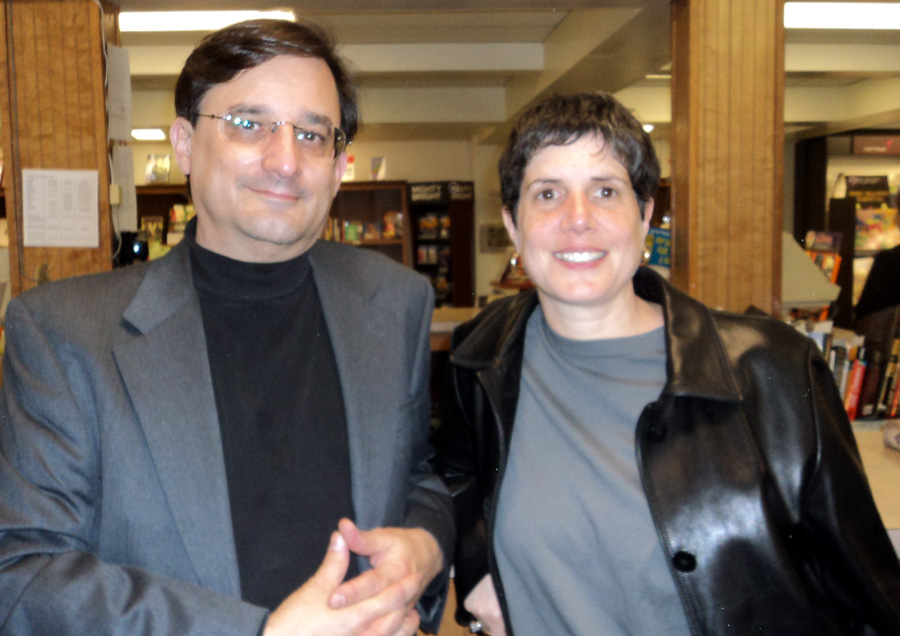
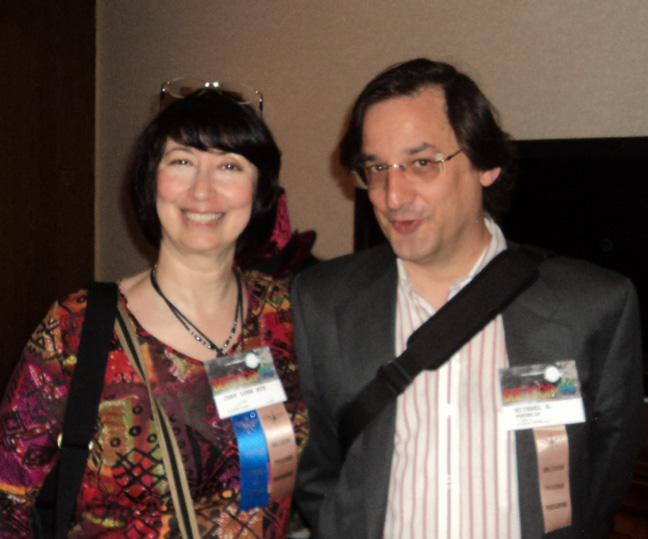
Me and Janice

Interview with Jody Lynn Nye

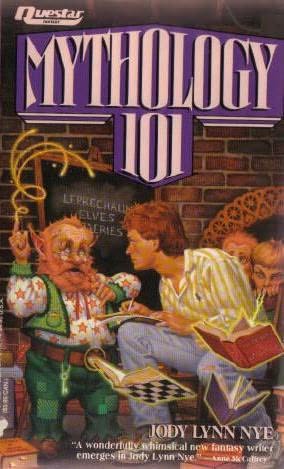
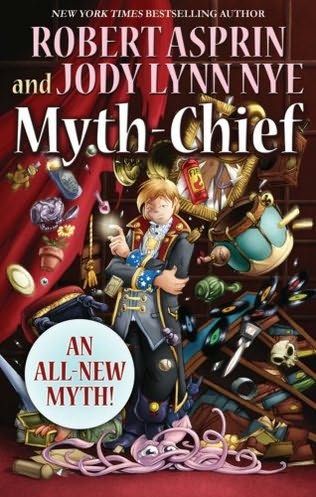
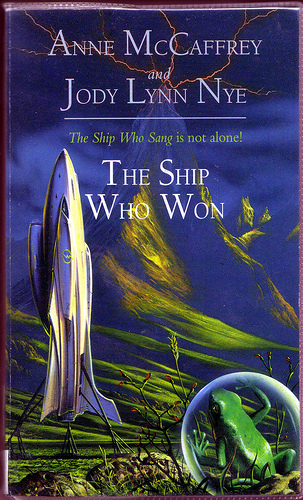
MICHAEL A. VENTRELLA: I’m pleased to be interviewing Jody Lynn Nye today. Since 1985, she has published 39 books and over 100 short stories. Among them are her epic fantasy series The Dreamland, five contemporary humorous fantasies starting with MYTHOLOGY 101, and three medical science fiction novels starting with TAYLOR’S ARK. STRONG ARM TACTICS, a humorous military science fiction novel, is the first of Jody’s new series, The Wolfe Pack. Jody collaborated with Anne McCaffrey on four science fiction novels, and edited an anthology of humorous stories about mothers in science fiction, fantasy, myth and legend, entitled DON’T FORGET YOUR SPACESUIT, DEAR! She has written eight books with the late Robert Lynn Asprin. Her web page is http://www.sff.net/people/jodynye.

Jody, I first became aware of your work with the fun MYTHOLOGY 101 series. Was MYTHOLOGY 101 your first published work?

JODY LYNN NYE: MYTHOLOGY 101 was my first solo novel, but not my first published work. I wrote some humor and short pieces (unpaid) for various digests and newsletters after college. While I was working for WFBN-TV in Chicago, I contributed technical articles for Video Action magazine. For those, I was paid sometimes in money, but sometimes with technology items that VA had been given to review. My first paid work was for Mayfair Games, Inc. They published the Role-Aids game supplements to Dungeons and Dragons. I wrote modules for D&D and the Ellery Queen Mystery Magazine game.

Because of the game materials, I had credentials to ask to be included in the Crossroads game book series for TOR Books, which were choose-your-path novels but based upon established science fiction or fantasy series. I had volunteered to write adventures for a couple of other books in the series until Anne McCaffrey gave consent to allow the creator/editor of Crossroads, Bill Fawcett, to commission Pern-based adventures. As a big fan of Anne’s, I couldn’t resist dropping my previous selections and writing one of those.

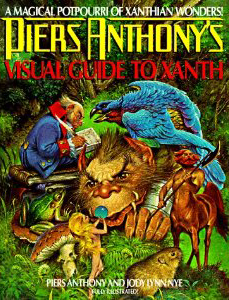
That first Crossroads book was DRAGONHARPER (not to be confused with the current novel by Anne & Todd McCaffrey, DRAGON HARPER). It was published in 1987. I eventually wrote four Crossroads adventures, two in Pern and two in Piers Anthony’s Xanth. Once Anne and Piers found I was easy to work with and respected their worlds, Bill had me write the VISUAL GUIDE TO XANTH and the DRAGONLOVER’S GUIDE TO PERN. The DLG is in its second edition and who knows which printing.

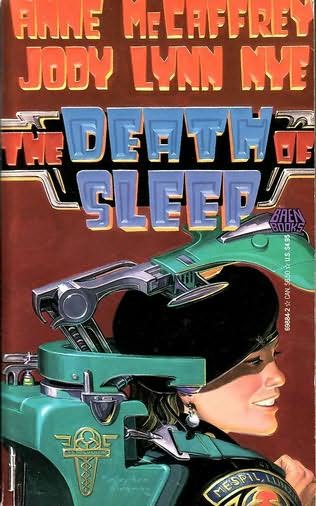
I wanted to work on my own novels, of course. I sold MYTHOLOGY 101 to Brian Thomsen of Warner Books in 1988. I did not have an agent, but as you may know, SF/fantasy editors are far more accessible to fans and would-be writers than in many other genres. I got to know Brian through friends and professional contacts. At a SF convention, I chatted with him about my concept for the series, and he asked to have me send a proposal to him at Warner (note to aspiring writers: do not try and load an editor down with paperwork at a convention. Always send it to their offices.). He bought it, and I was off to the races. MYTHOLOGY 101 came out the same year as the first of my collaborations with Anne McCaffrey, THE DEATH OF SLEEP. So far, there have been four books in the series.

VENTRELLA: I always imagined that the idea must have come to you while secreted in some college library. Is that true? What was your influence for this series?

NYE: You are absolutely right. The Midwestern University college library is based upon a real library. If you had ever seen the original, you would be able to identify it. Some alumni of that university have come up to me and asked about it.

In fact, the library itself was the influence for the series, not the characters. Those came later. In the carrels among the nine-story stacks, it was warm and quiet — except for the sounds of distant voices. I could never make out what they were saying. It was odd, because no one around me was talking, nor was anyone in the reading rooms out front. The sensation of the disembodied voices stuck in my mind for years. Finally, one day I began to think about it. Where were those voices coming from? Who were the speakers? And somehow, they became the little people who lived in the basement of the library.

VENTRELLA: Will we ever see another MYTHOLOGY 101 book?

NYE: I certainly hope so. From Warner, the series moved to Meisha Merlin Publishing, which ceased to publish a few years ago. I would dearly love to place the Mythology series with another house. I have more stories to tell. After all, Keith and Diane finally got engaged!

VENTRELLA: More than most authors, you’ve managed to work with some of the biggest names in speculative fiction. How did these arrangements come about?

NYE: SF actors Wil Wheaton, Roxann Dawson, Armin Shimerman and Nigel Bennett were once on a panel at a convention when the subject came up how some of them had become published authors. Armin, Roxann and Nigel each said that because they knew Bill Fawcett, they had been approached to co-author books with science-fiction writers for the Star Line, an imprint of Baen Books that had been arranged and packaged by Bill. Wil noted down carefully, that to become published, one needed to “know Bill Fawcett.”

One of the many hats Bill wears is that of ‘book packager.’ His function is to create a book or series, staff it with one or more authors, supply illustrations and maps if needed, possibly even commission the cover from an artist, and put the whole, production-ready package into the hands of a publisher. It is what a publishing house would do for itself if it had far more employees than one typically does.

In the late 1980s, Bill created a package for Baen Books that paired CJ Cherryh with three junior writers apiece to write a series of co-authored novels. CJ’s was “Sword of Knowledge”, and included Nancy Asire, the well-known filker Lesley Fish, and a new fantasy writer named Mercedes Lackey. These series gave the senior writer a chance to have ideas for which s/he had no time to do alone, and gave a boost to the career of the junior writers, who would get to work closely with a noted name in the field whom they admired.

A few years later, Bill interested Anne McCaffrey in trying the same thing. She liked the idea, because she had always had more ideas than she would ever have time to write in some of her non-Pern series. I was one of the three noobs who were signed on to co-author books in the Planet Pirate trilogy with her. She already knew my work from the DLG and two Pern Crossroads books. She and I wrote THE DEATH OF SLEEP. Chronologically, it is the first novel in the trio, but was published second, after SASSINAK, by Anne and Elizabeth Moon.

VENTRELLA: How did you meet Robert Asprin?

NYE: I read ANOTHER FINE MYTH the year it was published in mass market paperback by Ace Books. I loved it. At the time I never thought I would ever meet any author at all, let alone end up collaborating with Robert Asprin on eight books.

It’s funny, but I seemed to have been following Bob into so many places long before I met him. I was a member of the Society for Creative Anachronism in the late 1970s, early 80s, but he, known there as Yang the Nauseating, had already stopped going to events. His legend, however, persisted. I knew dozens of stories about him. How he had founded the Dark Horde. How he was mischievously disrespectful to the king. His songs. His quips. His legendary prowess with women.

When a friend whom I knew from the SCA took me to my first convention, I found at least one more Myth book in the dealers’ room. I heard legends of Bob. His perpetual ‘office’ in the hotel bar (sort of a permanent party). His love of Irish whisky. His friendship with Gordon R. Dickson. His irrepressible humor and memorable filks. His legendary prowess with women. But he had already stopped going to so many conventions, so I never ran into him.

It was not until Bill, then my fiancé, took me up to Ann Arbor to meet Bob and his wife, fantasy author Lynn Abbey, that I met the man himself. Bill was one of Bob’s closest circle of friends. At the time, Bob was writing his own books as well as co-editing the shared-world anthology series Thieves’ World with Lynn. He and Lynn were so kind and gracious to me, a baby writer, that the impression has never faded. Bob was encouraging about my efforts in humor fiction, but at that time the subject of collaborating didn’t come up.

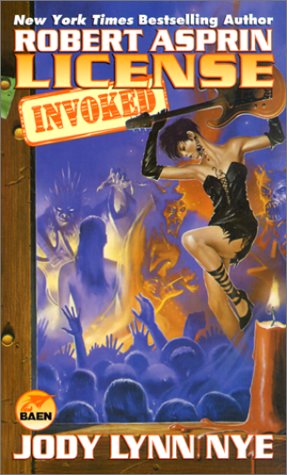
Later, when Bob had some trouble with writer’s block, we agreed to try writing together. We found we were very compatible as co-writers. We had a lot of interests in common, which meant we got one another’s jokes. Our first book was LICENSE INVOKED, a novel about spies, magic and rock and roll.

VENTRELLA: When working on the Myth Adventures series with him, how much input did he have?

NYE: We communicated mainly by e-mail and in person at conventions. After the first Myth novel, MYTH ALLIANCES, we would get together at DragonCon in Atlanta every Labor Day weekend and work out the plot over a table in one of the restaurants. When we got going, the ideas came out faster and more furious than a hive of angry bees. It was a lot of fun. We threw around plenty of concepts; what we didn’t use for the book that year I squirreled away in a laptop file to discuss at future dates. Bob was not great at keeping notes, and I type faster than he did.

VENTRELLA: What sort of arrangement do you have to continue the series?

NYE: Ace Books has purchased two new Myth novels (and one Dragons novel). I am already working on the first one.

VENTRELLA: How did your collaboration with Anne McCaffrey work?

NYE: Each of the four collabs I did with her was different. On THE DEATH OF SLEEP, she had a basic outline for each of the three novels. Since they were being written simultaneously we juniors had to adhere to the structure we were given to maintain series continuity, though we had room to add our own ideas. I wrote the first draft and sent it to Anne. She worked on it and sent it back to me. I made changes or corrections, then it went back to her for a final look and polish. As the senior writer she had the final say on everything, but she was intensely generous with me. For example, she had no problem using one of my ideas if she liked it better than her own. I learned an incredible amount from her.

VENTRELLA: Do you find collaborations easier or harder than writing on your own?

NYE: They go faster than solo books. When you are bouncing ideas off another person, you can crank out a lot of energy. That’s not to say that when I am working alone I don’t cackle over my keyboard at something that strikes me as funny and pound the keys at top speed to get it down. Collaborations are more work because you can’t just keep an idea in your mind and come back to it later. You must share everything with your co-writer that you expect or hope to have in the final manuscript. You must prepare to compromise and respect your co-writer’s opinion and skills. Only in solo books can you get your way on everything. I think it’s worthwhile to learn to work with someone else. It’s like teaching: you learn a good deal about your craft when you have to explain something to someone else.

VENTRELLA: Some writers tend to think that humor in fiction means that it can’t be taken seriously as literature, and therefore should not be considered as “worthy”. What’s your take?

NYE: I deplore the fact that just because something makes one laugh that it is not worthy of the respect enjoyed by tragedy. Without the light moments, no one could stand all the dark ones. Those writers who don’t consider humor to be literature have to turn their backs on Mark Twain, Anthony Trollope and many others whose books occupy the Literature shelves in bookstores and libraries. Shakespeare’s comedies are held in the same esteem as his dramas. I would put up a Terry Pratchett Discworld novel against any number of popular dramatic novels that I don’t consider nearly as well written.

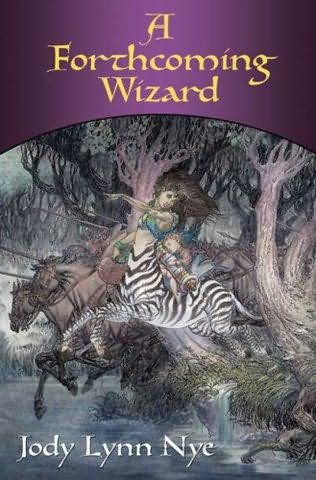
VENTRELLA: Your most recent work, A FORTHCOMING WIZARD, is a stand-alone novel. What’s it about?

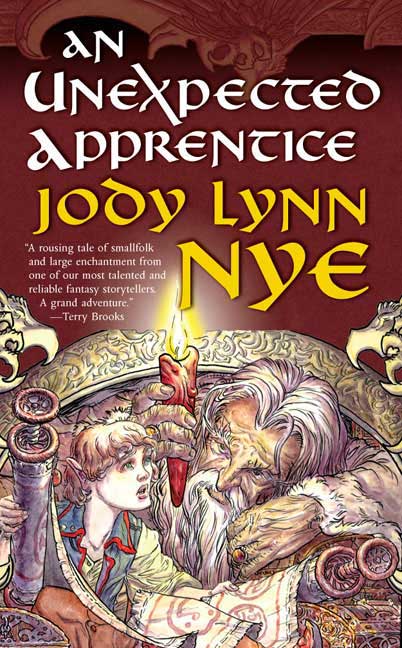
NYE: That is actually the second half of an epic fantasy I wrote for TOR. It does stand alone, the vicissitudes of publishing being what they are, but I hope people will seek out both books. The first half is called AN UNEXPECTED APPRENTICE. The story concerns a smallfolk girl named Tildi Summerbee who, like Frodo Baggins, is thrown into an epic struggle not of her making. She comes into possession of a page of the Great Book, a magical tome that can change reality. Only Tildi, because of a chance gift from her parents, can touch the book without being harmed. She becomes part of a fellowship to regain possession of the book and restore it to a place of safety before it destroys the world.

VENTRELLA: What are you working on now?

NYE: Already finished and heading for your shelves in December is DRAGONS DEAL. This is the third in the Dragons series created and written by Robert Asprin for Ace Books. The first two were DRAGONS WILD and DRAGONS LUCK. The copy-edited manuscript of the second landed on my doorstep only a few weeks after Bob died. I took care of it, and some time later, when we had all recovered a little, the editor asked me if I could and would continue the series. I hope that our readers will enjoy it. The Dragons series is about a brother and sister named Griffen and Valerie McCandles who discover that they are hereditary dragons. And they are by no means the only dragons out there. Hence, drama and comedy ensues. DEAL takes place during Mardi Gras. As the series is set in New Orleans, where Bob lived the last many years of his life, I felt that was fitting.

At Baen Books, I have an entirely new humorous SF book, which I hope will become a series, called VIEW FROM THE IMPERIUM. If you ever read P.G. Wodehouse’s Jeeves and Wooster books, you will understand something about my two main characters. Thomas Innes Loche Kinago is a foolish, spoiled, rich, good-hearted young noble who has never had to work a day in his life. He has just graduated from the space academy and is serving his required stint on a warship. His duties, as he is a noble (pretty nearly useless in this society), are nominal. That’s not to say he can’t spin a perfectly ordinary assignment into chaos. To keep him from doing more damage than is strictly necessary, Thomas has assigned to him an aide de camp, Commander Parsons, who seems to know absolutely everything, and is never at a loss for the right action to take. VIEW FROM THE IMPERIUM is due out in April of 2011.

VENTRELLA: When creating characters, how do you make them real and believable to a reader?

NYE: As CJ Cherryh said during a panel discussion I once sat on with her, in the end all stories are about people. The protagonist of a story, or at the very most distant, the sidekick, needs to be someone with whom the reader can identify. In the Sherlock Holmes stories, it is Dr. Watson, a nice, normal human being, intelligent, caring and devoted, with whom most readers feel empathy. For us, Watson asks why. Through him we feel involved in the action. The reader will be drawn into the book by a compelling proxy.

I need to know what motivates my characters. Often, a new writer will only know what s/he wants a character to do, but maybe not why. Such characters will feel wooden and artificial. Once you know where your character is coming from, you can see how it will behave in various situations.

All beings have flaws. Perfect people are irritating or boring (or both). Imperfections give characters vulnerability that we understand, or can learn to understand. Hidden hurts or past events in my characters’ back stories inform their behavior.

When I create a character, an image often appears in my mind. A few of my writer friends like to use celebrities as the basis of their cast, but that hasn’t worked for me. Only once have I ever run into anyone who resembled one of my characters.

One thing I dislike enormously is having a character do something stupid just to advance a plot. If I have created realistic personalities, it will feel wrong if I try to steer them into an unrealistic situation. That’s not to say I can’t have a character behave stupidly –- people do dumb things all the time -– but it can’t be to make things easy for me as the writer. I owe my readers real people.

VENTRELLA: I tried to avoid cliches in my fantasy novels (regarding the typical “chosen one” hero and so on) while also relying upon them too (elves, dwarves, wizards…). How does one meet the balance of creating a world that balances both?

NYE: There is always an element of the “chosen one,” or else why are we reading about him or her? If that character isn’t special, then can anyone do what s/he does? What if there had been a hundred Arthurs who could have pulled the sword from the stone, but he just happened to be the one who tried that day? (Hmm, there’s an unexplored story.) But why that one, and what happened afterward to all the others? When I write a story, I have to focus upon my protagonist. What is extraordinary about this person? How can s/he succeed when others have failed? I think a successful story will tweak the reader’s perception and give a new way of thinking about the meaning of a hero/ine. Archetypes exist because they have a core of truth about the eternal journey. Cliches exist because some storytellers can only think of telling an archetypal story the way we have always heard it.

I agree, there have been a LOT of books lately featuring familiar tropes like elves, dwarves, werewolves, pirates, vampires, pixies, princesses, and so on. There’s nothing wrong with using these creatures, as long as you don’t necessarily believe that they all belong in the same worlds all the time. Or if you do, have a good reason for it. Only in D&D do Aztec gods occupy the same sphere as leprechauns.

VENTRELLA: You’ve also written role-playing books (a subject close to my heart, since I have been doing that for 20 years now myself). How did you arrange those?

NYE: I’ve been affiliated with the gaming industry for a long time. I got into D&D role-playing when I was nineteen. It’s always been dear to my heart, though I haven’t played in a long while. My first DM introduced me to one of the partners at TSR whom I dated for a year. I ended up typing out Gary Gygax’s manuscripts for the new Player’s Handbook, Dungeon Master’s Guide and Monster Manual for Advanced Dungeons & Dragons. I guess you could call that my first job in publishing. It made me aware of the game industry, where I met an amazing number of creative people. For a short time, I worked with a couple of fellow players who wanted to create game materials. I attended every GenCon from 1977 until it moved from Wisconsin to Indianapolis. Because I had a background in role-play, I had the expertise to write for Mayfair Games and later for TOR Books’ Crossroads series, as I mentioned above.

VENTRELLA: And finally, tell me… why do so many writers have cats? (I have four, by the way…)

NYE: Cats are the superior species in the universe, or haven’t they told you that? I like to use the Two Cat System of writing, my take on Dave Barry’s Two Dog System. My cats specialize in holding me in one place, usually through Cat Gravity (read Robin Woods’s excellent small book on her Theory), so I have to stay put and work. Other writers I know use more or fewer cats, depending on how much inspiration they require. Some writers, like Mr. Barry, use dogs for inspiration. Cats are a convenient size for laps and do not need to be walked in the rain, so I prefer them. Also, purring is a near-magical soother to a creative person’s troubled soul. I often rely upon purring to get me through a complicated story.

Thanks for interviewing me! I enjoyed your questions.

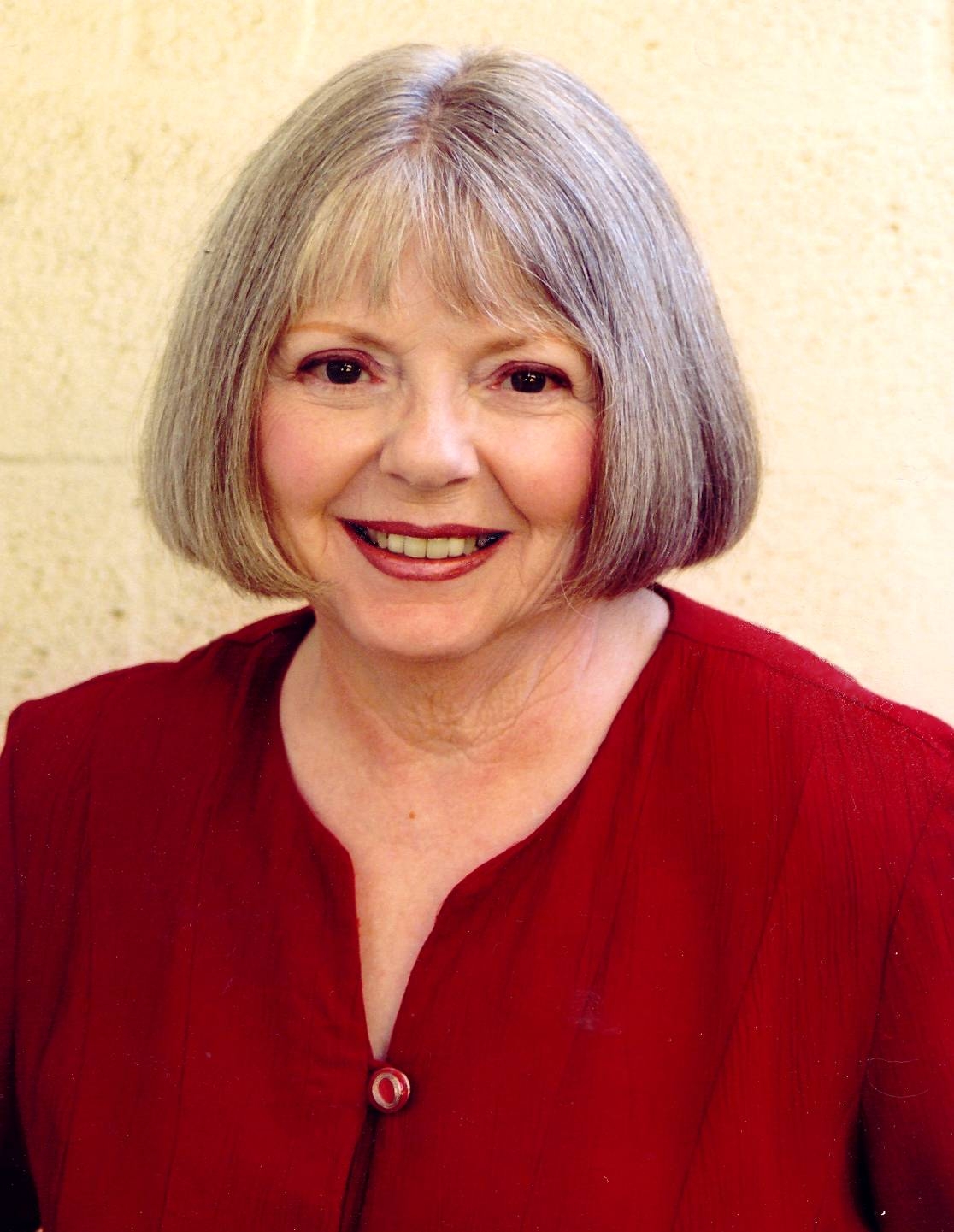
Interview with Betty Webb

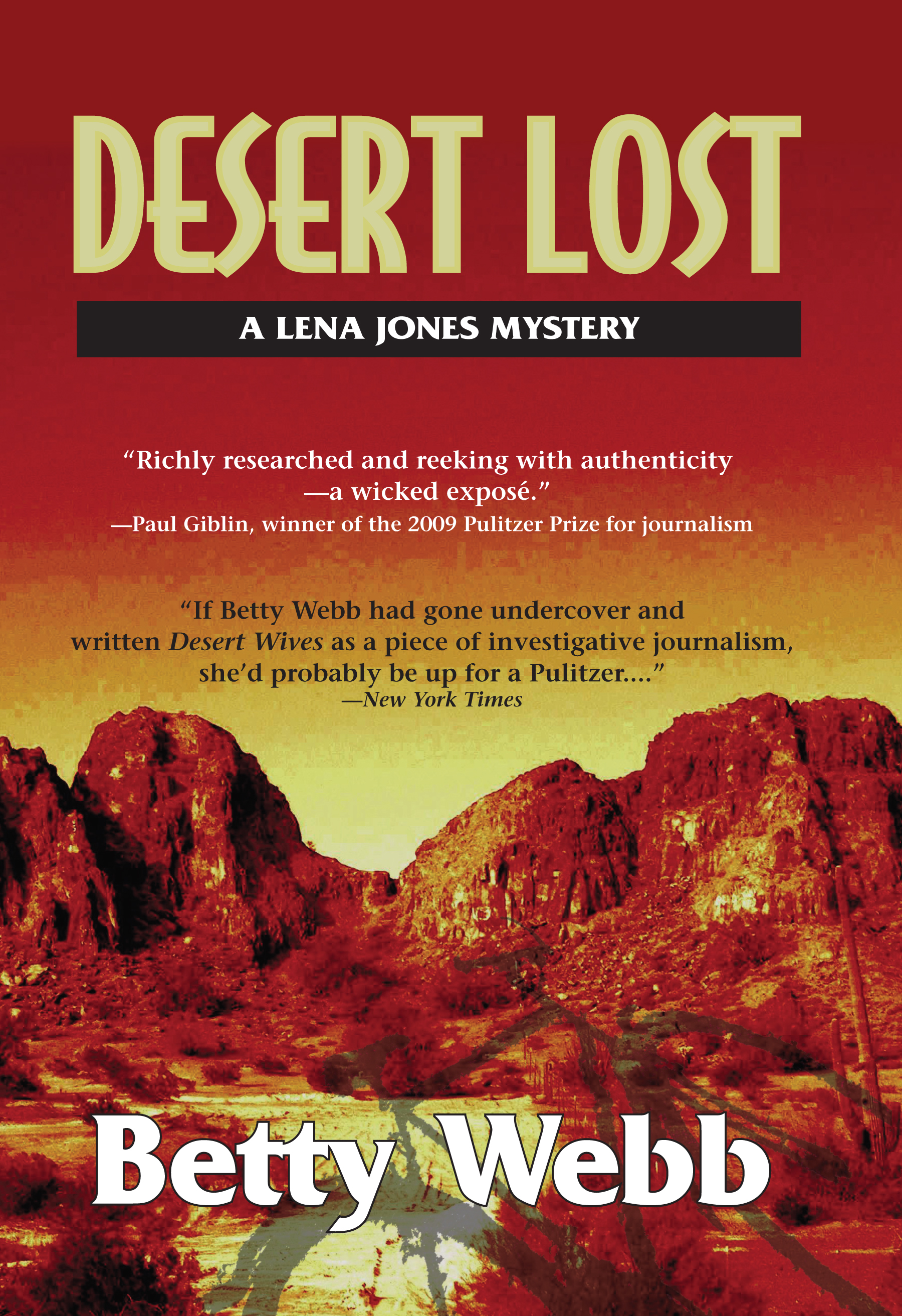
MICHAEL A. VENTRELLA: Primarily I interview writers of fantasy and science fiction (since that’s what I write) but today, I am pleased to be interviewing mystery writer Betty Webb.

Before writing mysteries full time, Betty Webb worked as a journalist, interviewing everyone from U.S. presidents, astronauts who walked on the moon, and Nobel Prize-winners, as well as the homeless, the dying, and polygamy runaways. The six dark Lena Jones mysteries, based on stories she covered as a reporter, include DESERT LOST (judged “One of the Top Five Mysteries of 2009,
Library Journal), DESERT NOIR (“A mystery with a social conscience,” Publishers Weekly) and DESERT WIVES (“Eye-popping,” New York Times). Her humorous Gunn Zoo series debuted
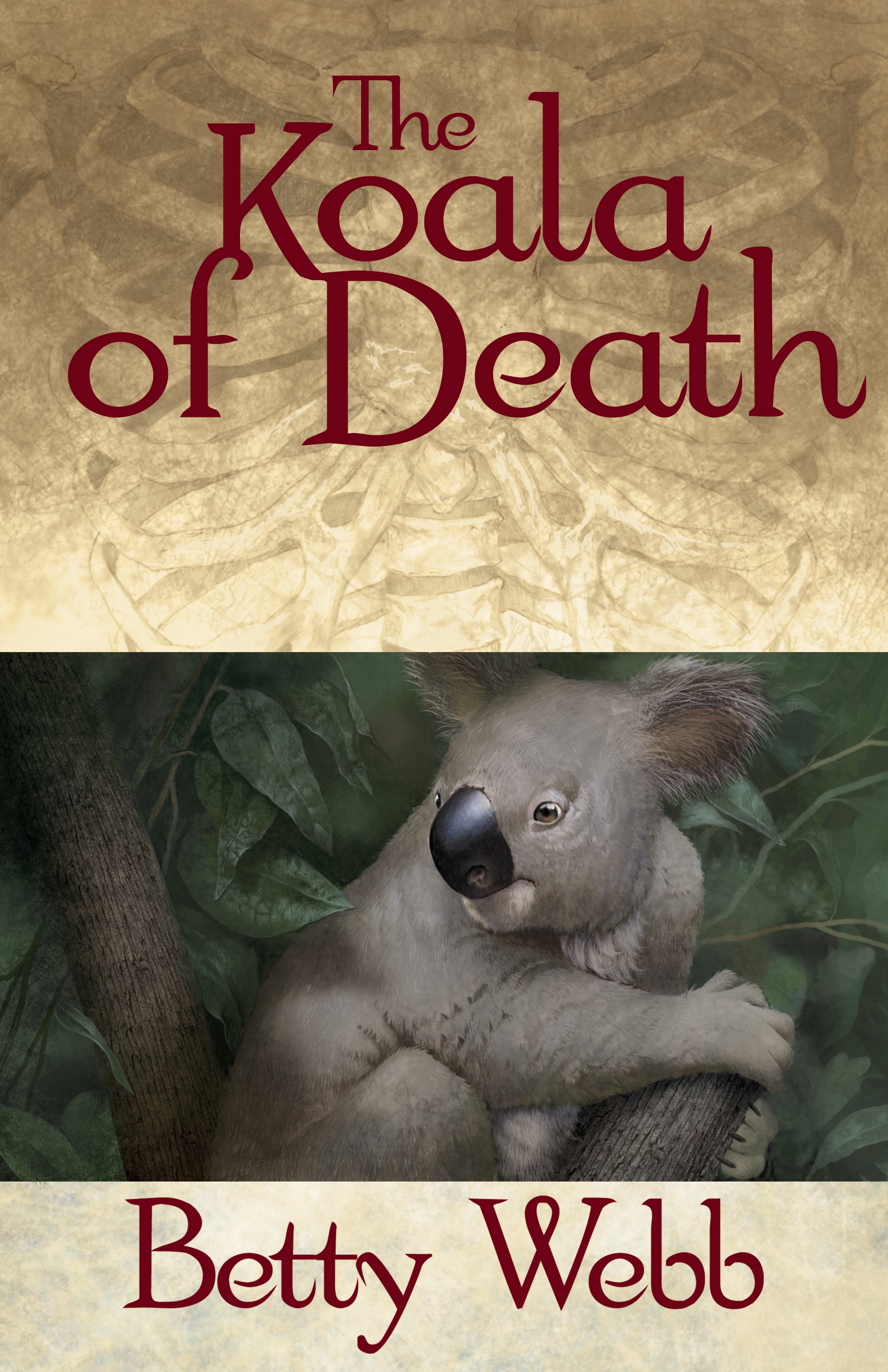
with the critically-acclaimed, THE ANTEATER OF DEATH (I love that title) to be followed this August 15 with THE KOALA OF DEATH. A long-time book reviewer at Mystery Scene Magazine, Betty is a member of National Federation of Press Women, Mystery Writers of America, and the Society of Southwestern Authors. She also volunteers at the Phoenix Zoo, which is the inspiration for her Gunn Zoo mysteries. Her web site is www.bettywebb-mystery.com.

Ms. Webb, you began your career as a journalist, writing nonfiction. Why and how did you make the switch to fiction?

BETTY WEBB: I was a full-time journalist for 20 years, but after 15 years, all that fact-checking started to drive me nuts. So I thought I’d just write a novel “for fun.” After three rejected novels, I hit pay dirt with DESERT NOIR, the first of my Lena Jones mysteries. The second Lena Jones book, DESERT WIVES: POLYGAMY CAN BE MURDER, was sold to Lifetime-TV, eventually making my retirement from journalism possible.

VENTRELLA: Do you find your writing style changes from fiction to nonfiction?

WEBB: Absolutely. In journalism, which is non-fiction to the max, you must always use non-judgmental language, especially verbs, such as “He said,” as opposed to “He shrilled.” And unless you’re a columnist — which is very, very different than straight reporting — you can never interject your own opinions in an article.

When you’re writing fiction, you can let it all hang out, as I do in both my Lena Jones novels and even the Gunn Zoo series. Of course, the Lena Jones books are much more political and issue oriented; Publishers Weekly called them “mysteries with a social conscience.” The Gunn Zoo books, being very funny and much more relaxed, are much less issue-oriented, but they do give readers a lot of information about exotic animals and a behind-the-scenes look at life in zoos. Plus they say nasty things about people who are cruel to animals.

VENTRELLA: Your Lena Jones books are based on actual cases. How do you go about preparing these mysteries?

WEBB: I spend an average of two years researching each novel, which includes trips to the area where the event happened. During that time, though, I’m doing the actual writing for the previous book. Therefore, although I’m now in the process of writing DESERT WIND, I started researching it two years ago. And I am now in the process of researching the next Gunn Zoo mystery and the Lena Jones book.

VENTRELLA: Have you received any protests for these books (from Mormons, for instance)? And how have you dealt with it?

WEBB: Mainstream Mormons weren’t bothered at all by either DESERT WIVES or DESERT LOST, which were both about polygamy. In fact, various Mormon newspapers and periodicals gave both books warm, accepting reviews. Why? Because the mainstream LDS (Latter Day Saints) church outlawed polygamy almost 150 years ago and today’s Mormons are appalled by polygamy as it is currently being practiced. Also, the state of Utah is leading the way in polygamy prosecutions. They have sent many polygamists to prison for polygamy-related crimes, such as child rape (polygamists like 13 year old girls), financial fraud, and sadly, murder. the infamous Warren Jeffs is just one of the now-imprisoned polygamists.

The people I have had a problem with are the polygamists themselves. I’ve received death threats from them, and some of the male polygamists have shown up at my book signings in order to scare me. They finally stopped doing that when I started identifying them to the audience, and asking them to stand up and take a bow. That’s when I discovered that those guys are cowards. They’re good at intimidating 13 year old girls and battered “sister wives,” but not so good at intimidating grown, non-polygamous women.

VENTRELLA: It certainly seems that you still have that journalistic goal of exposing injustice, but are working through fiction now. Is that the case? Have you had much success about informing people about these issues?

WEBB: I absolutely write the Lena Jones books to expose injustice. For instance, are you aware that we have legally allowed immigrants into this country who believe in cutting off little girls’ genitals in order to make them submissive? They see it as no different than spaying a dog or gelding a horse. Those folks continue their ghastly practice in America today. I exposed it in DESERT CUT, and I named names.

Have I had success? Again, absolutely. DESERT WIVES caused such a fuss in Arizona that the Arizona legislature enacted its first ever anti-polygamy law. Readers of DESERT WIVES continue to organize and ride herd on the still-existent polygamy compounds. DESERT CUT has been read by many social workers, medical professionals, and law enforcement officers, who are now on the lookout for it. Immigrants who continue this practice are now being sent to prison, when before it was just shrugged off as a “cultural difference.”

VENTRELLA: What other issues are you interested in that may make future books?

WEBB: Can’t tell you that. DESERT WIND is still a big secret. I always keep my subject matter secret until the book comes out.

VENTRELLA: Your character also lives in Arizona. Why did you decide to do this?

WEBB: I’ve lived in Arizona since 1982, and much of my subject matter — such as polygamy — is rampant here. Plus, Arizona is a beautiful place to write about. On the other hand, the Gunn Zoo mysteries are all set on the Central California Coast, where I vacation every year. And my zoo keeper sleuth lives on the same houseboat I once spent a summer on.

VENTRELLA: How did you make your first sale? Did you have an agent?

WEBB: I was fortunate enough to get an agent, based upon my reading of “The Literary Marketplace.” She also sold one of my books to Lifetime-TV. Thankfully, I still have my agent!

VENTRELLA: Why did you choose Poison Pen Press for your work?

WEBB: My agent sold my books to Poisoned Pen Press. In a happy coincidence, I had already written an article about that particular publishing company for the newspaper I worked for. Therefore, I was very, very comfortable with the sale. We have now enjoyed a 10-years-long relationship.

VENTRELLA: What is the biggest mistake you think new writers make?

WEBB: I think the biggest mistake they make is in thinking the first book they write deserves to be published. I didn’t write a truly publishable novels until my 4th, which was DESERT NOIR, the first Lena Jones mystery. Even though I’d been a professional journalist for years and wrote for an average of 10 hours a day, 5 days a week at my newspaper job, the two skills don’t always cross over. I had to learn to write like a novelist, and that took about 5 years of writing from 4 a.m. to 8 a.m. every single day before I went to the office. Good, publishable writing is more hard work than most beginners realize.

Another big beginner’s mistake? Writing only when they feel “inspired.” I teach creative writing, and one of the first things I tell my students is, “If you only write when you feel inspired, write a haiku. You won’t able to produce much else.” Professionals write for hours every day, regardless of how “inspired” they feel. As for the entire “inspiration” issue — I say “Baloney!” True inspiration only hits once you’ve been at your keyboard for several hours. Writing is work. Period. It’s not a game you play only when you feel like playing.

VENTRELLA: And finally, a fun question: With a time machine and a universal translator, who would you invite to your ultimate dinner party?

WEBB: William the Conqueror (1066), William’s opponent Harold Godwin (also 1066), Shakespeare, Dorothy Sayers, Dorothy Parker, Ernest Heminway, Lillian Hellman, Truman Capote, William Buckley, and Gore Vidal. Of course, I’d have to wear a suit of armor to that dinner party because it would probably turn very, very violent. And I’d enjoy every savage, bloody minute!

Interview with Tommy James

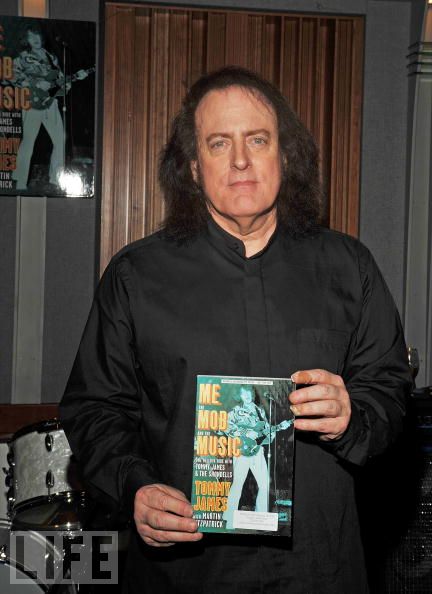
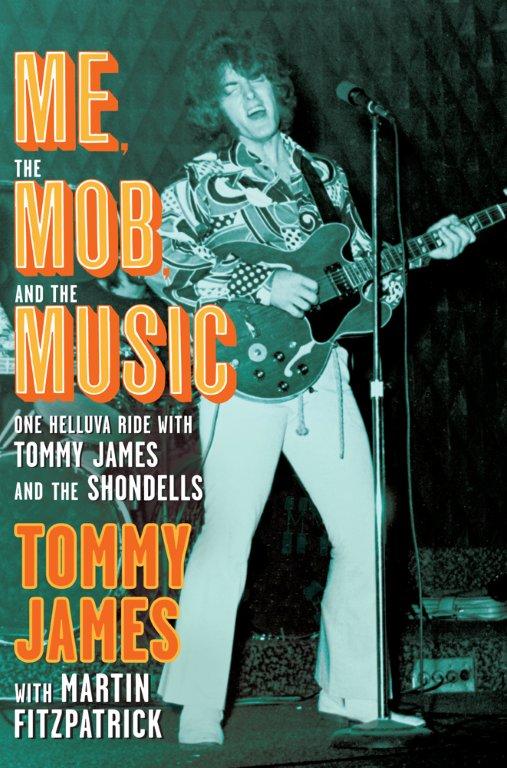
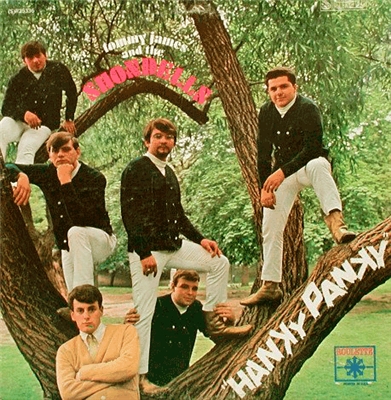
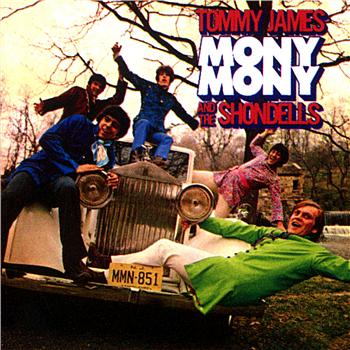
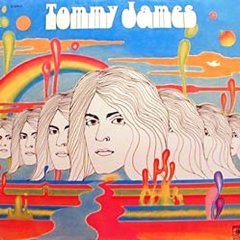
MICHAEL A. VENTRELLA: It’s not every day I get to interview a bona fide rock star! Tommy James had so many hits songs in the 60s and early 70s that I could fill the blog just listing them (I Think We’re Alone Now, Crimson and Clover, Draggin’ The Line, Mony Mony, Mirage, Hanky Panky, Crystal Blue Persuasion… you get the idea). He recently published his autobiography, ME, THE MOB, AND THE MUSIC, which has already gone to its fifth printing. Usually I do these interviews by email, but Mr. James wanted to talk by phone. Do you think I was going to say no?!! We had a great conversation about writing and music!

Mr. James, it’s an honor to be speaking with you today. Let’s start with the latest news about the play or movie rights that are coming up!

TOMMY JAMES: Well, the book ME, THE MOB AND THE MUSIC is going to be made into a Broadway show and movie.

VENTRELLA: Obviously, it’s going to be a musical!

JAMES: Yes, next year the Nederlander will be bringing it to Broadway. We’re really glad to be associated with them. And they’ll be bringing it not only to Broadway but all over the world.

VENTRELLA: And the movie?

JAMES: The movie is being produced by Barry Rosen and Mary Gleason, and we’ll be making an announcement within the next week or two with a whole lot of things concerning the movie. It’s scheduled for release in 2012 and it’s going to be a real all star cast and a first rate production.

VENTRELLA: Who do you want to play you?

JAMES: That’s above my pay scale!

VENTRELLA: Well, who would you like?

JAMES: There’s probably going to have to be two actors involved because of the time span. The older Tommy quite likely will be played by Val Kilmer. He did a great job with Jim Morrisson a few years ago, and he’s a friend and also is a great actor and a musician. He is being very seriously looked at right now.

I take it you’ve read the book?

VENTRELLA: Yes, I have…

JAMES: So you know that it goes all the way from teenage years to 1990, so there’s quite a time span.

VENTRELLA: Since my blog is mostly about books, let me ask you a few questions about that. What was the process you used when you worked with Martin Fitzpatrick?

JAMES: Martin is very skilled at constructing chapters. The book started out like a train leaving a station, kind of slow and easy paced, and as it gets further into the book it gets faster and faster and faster and faster and by the end of the book, it’s quite riveting. I am very glad he wrote it that way. I’m glad it’s concise. I’m glad it’s not a particularly long book. I didn’t want it to be drudgery. I wanted it really to the point and easy to read. And I think that was accomplished.

VENTRELLA: You decided to concentrate the book on your relationship with the mob. Why did you choose that aspect as opposed to marriage relationships or solely on the music for instance?

JAMES: Martin and I actually started out writing a book about music and the studio and that would have been interesting. We were going to call it “Crimson and Clover.” This was almost eight years ago. We got about a third of the way into it and we realized that if we don’t tell the Roulette story, we’re cheating everybody. What happened with Roulette had to be the focal point of the book for a couple of reasons.

I’ve been wanting to tell this story for a very, very long time but I’ve never really felt comfortable doing it.When we decided we wanted to tell the Roulette story, we realized we couldn’t yet because some of these guys were still walking around. So we put the book on the shelf for a couple of years until the last of the ‘Roulette regulars’ passed on.

VENTRELLA: The Genovese family…

JAMES: Exactly. The last one to pass was Giovante, who died in December of ’05 in prison. So the bottom line was that after that, we felt we could really write the book.

VENTRELLA: Any bad experiences since then? No one’s threatened you?

JAMES: No, I haven’t had anything like that although a couple of interesting characters who I thought had passed away hadn’t. Their family members actually came to a couple of our book events and concerts, but I haven’t had any problems.

As soon as we finished the book it got gobbled up by Simon and Shuster. They put it out, since February 16th, and it’s in the fifth printing! So it’s just exploded. I’m amazed. I am really very awed that it has been accepted like this by the media and the fans.

I’ve never been a writer so you never really know if you’ve gotten your point across. Let me tell you – it’s not like writing a song!

Almost immediately we were invited to do the movie and the Broadway show. Since “Jersey Boys,” it’s really opened up Broadway. Rock and roll musicals were sort of taboo a couple of years ago until “Jersey Boys” blew all the doors down.

VENTRELLA: And you have a more interesting story than they do, I think…

JAMES: It’s about real people, and it is a pretty fascinating story. I must say that it is kind of amazing that the star of my autobiography is going to be Morris Levy.

VENTRELLA: But see, you have an interesting story even without that. The whole “Hanky Panky” story about how that song became a hit without you even being aware of it…

JAMES: That is very true. It’s one of those ‘only in America’ stories. When I came to New York – I was still only 18 years old, and with a new group of Shondells – we came out of Pittsburgh – we were so thrilled because we got a ‘yes’ from all the record companies. Everybody!

VENTRELLA: But then Morris Levy got involved.

JAMES: Yes. I went to bed that night feeling so good because we got a thumbs up from everyone: Columbia, RCA, Epic, Atlantic… and the last place we took the record to was Roulette. The next morning, one by one all the companies called up and said, “listen, we gotta pass.” Finally, Jerry Wexler from Atlanta leveled with us and told us Morris Levy called them up one by one and said [Godfather voice] “This is my record.”

He scared everyone else until he was the only one left.

I just want to say though that every time I say something negative about Morris Levy, my conscience bothers me. The truth is that if it hadn’t been for him, there wouldn’t have been a Tommy James. I don’t know why the Good Lord decided to bless me with these people, but He did.

And also, if we had gone with one of the corporate labels, especially with a song like “Hanky Panky,” we would have gone with a producer, gotten lost in the numbers, and that would have been the last time anyone would have heard of me.

VENTRELLA: Yes, you actually had say in what songs you were going to record which not all bands did in those days…

JAMES: They left us alone. He allowed us to morph into whatever we could be. We had the attention of the public long enough that we could go through our different phases. I got an education at Roulette that I would have never gotten anywhere else. I would never have had that freedom anywhere else.

VENTRELLA: Since I’m a musician, that’s the part that interests me the most…

JAMES: What do you play?

VENTRELLA: Bass mostly, and I’ve been in plenty of bands and written plenty songs! You started writing songs early, with “Wishing Well.” When did you first realize that you could write as well as some of the professional guys? What song made you think “Hey, I can do this”?

JAMES: It wasn’t until I got to New York that I felt that I was on top of it. We learned early on, I must say, we had a great revelation. Our first two albums were basically cover songs. And then, Bo [Gentry] and Ritchie [Cordell] came to me with “I Think We’re Alone Now.” And once that happened, we sort of took control of our career. “I Think We’re Alone Now” was a very important moment for us, because I changed studios and began writing in earnest. I had a kind of epiphany that we were writing records, not songs. Suddenly you’re thinking verse / hook, formula – your writing suddenly had bookends it never had before.

VENTRELLA: “I Think We’re Alone Now” also was important in relationship to other songs of the time because it didn’t sound like every other song.

JAMES: It started us down a new road. Up until that time, we pretty much had been a garage band. We really were! But with “I Think We’re Alone Now” we added Jimmy Wisner, who was our George Martin. We really started layering our records properly. Even though it was four track back then – when we first started out, there were four track but they were still recording everything at once even though things were put on different tracks. I sort of went through the technology and began to see how this turned into this and that became that – we literally went from four track to twenty four track right in front of my face. That happened in a very short period of time.

VENTRELLA: That song also made the public take you a bit more seriously too.

JAMES: I think so too. It was our fourth gold record in a row, and we were starting to declare our independence at that moment, really taking control of production. Although Bo and Ritchie were still producing us, basically they answered to me, not Morris. We were learning our craft.

VENTRELLA: And of course you were touring constantly too, and with a record every five months or something…

JAMES: Even sooner than that. We were averaging a record every 90 days.

VENTRELLA: “I Think We’re Alone Now” is sometimes called “the birth of bubblegum” which I don’t think you actually want as your…

JAMES: I think we accidentally invented bubblegum music!

VENTRELLA: But that sound came back again in the ‘new wave’ era, with the Cars and other bands…

JAMES: True enough. When we did “I Think We’re Alone Now” the term ‘bubblegum’ didn’t exist. It was sort of – with the eighth notes… it was just something we went through. It was actually something I had done years before that, and we just incorporated that into the song, and that became a sort of signature sound for us for a bit…

VENTRELLA: You used it in “Mirage” after that.

JAMES: Yes. It was the sound of the album.

VENTRELLA: But then, like the Beatles, you didn’t stick with one sound. There were a lot of bands back in those days that once they had found their sound, they never changed.

JAMES: True enough. It was very important for us to always stretch the envelope and I believe that it’s the reason why we had so many hits. You know, we ended up with twenty three gold singles and nine platinum albums and we sold over a hundred million records.

When you look at it, this was only an eight year period of time, but now it’s been forty four years in the major leagues. This is a business that maybe gives you two or three years, so truly I am very grateful for the longevity. It’s been an amazing time.

VENTRELLA: Back in the 60s when you were writing these songs, did you feel yourself in competition with anybody else?

JAMES: Yeah, everybody! Myself! It’s funny, you know – for the first five or six years of your career (if you’re lucky enough to have it that long) you really believe that if you screw up, they can take it away from you.

We were competing with all the big groups. We went head to head with the Rascals! They were great friends of ours, and we were always working together and they were always one hit record ahead of us. They started out just before we did, and we always felt like we were playing catch up with them. We’ve been friends all this time!

All the acts – we all worked together, we all compared notes. It was a time of incredible creativity. The 60s were an unbelievable moment, we just thought they’d go on forever.

VENTRELLA: Who did you listen to mostly?

JAMES: Who I listened to then, of course, was every radio station I could. You get to know everyone else’s records as good as your own, because you’re always listening hoping to hear your record on the radio. So you start learning everyone else’s records, and so by the time you work with them…

VENTRELLA: You could practically play the songs with them!

JAMES: That’s right! You could do their set.

VENTRELLA: Are you still living in New York?

JAMES: I live just outside of New York, in New Jersey. Where are you from?

VENTRELLA: I’m out in the Poconos, so I’m not too far away.

What cover songs of yours do you like the best?

JAMES: Wow!

VENTRELLA: There have been quite a few…

JAMES: There sure have. Well, Prince did a beautiful job of “Crimson and Clover” last year. The album went #1 and it was the first single. R.E.M. did a fine job with “Draggin’ the Line.” Oh boy! There’s a group from England called Tight Ship that did a great job with “Mony Mony.” That’s probably my favorite version. You know, Tom Jones just did “I’m Alive” around Christmas time. He did it on all the TV shows and it was really funny. He did a great job on it! He did a better job than I did!

But you know, we’ve had over 300 cover versions. Everyone from the Boston Pops to Billy Idol.

VENTRELLA: Let me ask you one questions I’ve been meaning to ask you. Did you really have a dog named Sam that ate purple flowers?

JAMES: I had a cat named Sam, but that just didn’t sound right! [laughs] I can’t sing “my cat Sam”!

VENTRELLA: No, that doesn’t flow right…

So there’s no chance of getting all that money that Morris owed you from all those years ago?

JAMES: Well, you know, the Good Lord has an amazing economy. This story, and with the movie – think of how boring it would be without Morris Levy! What kind of story would I have? “Me, My Mom, and the Music?” [laughs]

Truthfully, this is all payback for those years.

VENTRELLA: When I was a student in Boston, I worked for Strawberry’s record stores, and when I read your book I thought “Oh my God, I was working for the mob and didn’t know it!”

JAMES: Morris was an amazing individual. You read the book so you know all about him…

VENTRELLA: Well, I had heard of him before because of how he screwed over John Lennon.

Where are you performing now?

JAMES: We’re all over the country this year. If you go to my website, www.TommyJames.com, we’re not only performing but we’re doing the book tour.

VENTRELLA: Are you doing new material?

JAMES: Yes! Actually, the original Shondells and I are back in the studio doing music for the movie.

VENTRELLA: The originals?

JAMES: Yes, the originals from Pittsburgh. My touring group has been with me for about 25 years but the original players are with me back in the studio. We just did a really good version of “I Think We’re Alone Now” that we’re going to use for the closing credits. It’s slow. It’s completely opposite from the original record and it changes the meaning of the song. The last scene in the movie is when Morris Levy dies, so “I Think We’re Alone Now” – it really changes the meaning of the lyrics.

VENTRELLA: Wasn’t that song brought to you originally more as a ballad and then you sped it up?

JAMES: The circle is complete!

Interview with author Dennis Tafoya

MICHAEL A. VENTRELLA: I’m pleased to be interviewing author Dennis Tafoya today, whose latest novel THE WOLVES OF FAIRMOUNT PARK has just been released. His first novel, DOPE THIEF, was published by Minotaur Books in 2009. His short story “Above the Imperial” will appear in Philadelphia Noir, coming from Akashic Books in November as part of their award-winning City Noir series. He is a member of the Mystery Writers of America, the International Thriller Writers, and the Liars Club, a Philadelphia-area writers group. He lives in Bucks County, Pennsylvania.

Dennis, let’s begin by talking about how you first got started. What got you interested in being a writer?

DENNIS TAFOYA: Writing is something I’ve always done. When I was nine I wrote a story about a monster with my friend Keith Parker. We thought it was pretty good, but looking back I have to admit it was basically a rip-off of an episode of the TV show, One Step Beyond. I associate my love of writing with a love of reading, and my early stuff was very much influenced by the science fiction and horror authors I loved when I was young, like Ray Bradbury and Robert Bloch and Harlan Ellison. I would still like to write something in a paranormal or horror vein, and I still think those authors are amazing.

VENTRELLA: Do you think starting authors should concentrate on perfecting short stories first? Do you feel the skills needed for novels is different?

TAFOYA: That’s a really interesting question, and I’ve never thought about short story writing as a prerequisite for the aspiring novelist. I know people who are very comfortable in the long form who really don’t like writing short stories, and short story writers who really struggle with the requirements of the novel. I think the best novel chapters are frequently short stories in themselves, though, and trying to master the short story can teach the writer a ton about tight control on the elements of story.

I love writing short stories — I’ve got a bunch of them out or coming out in the next few months, and I’m really proud that I’ve got a story in upcoming Philadelphia Noir from Akashic Books. I did write shorts before I tried a novel, I think to show myself that I could write a complete story. It’s also a lot easier to find a home for a short story because of the explosion of story sites on the web. I frequently advise my aspiring writer friends to take advantage of those sites, both to get work out there and get reactions, and as a way to meet people who are writing in your genre, too.

Actually, my only creative writing teacher was a poet, and I think writing poetry is an excellent path to writing fiction. Writing good poetry requires a brutal discipline, and it kind of distills the tension that should be present in all good writing to a very fine point. Poetry teaches an awareness of rhythm and word choice, too. I think making demands on ourselves as writers is the only way to get better at what we do.

VENTRELLA: Why did you decide to be a “crime writer”? What sort of background do you bring to the genre?

TAFOYA: Oh, not much other than a deep interest in crime. The threads that inform my work are literary fiction and true crime, I think. I have a few relatives with a little Damon Runyon quality to thier lives, but mostly the characters in my novels and stories are out of my imagination, applied to what I’ve read and heard about criminals and the criminal life. I’ve been lucky to know police officers and prosecutors and defense lawyers, and I’ve gotten some amazing things out of those associations, but I’m pretty boring and middle class personally. I think that’s a little disappointing to people who meet me, and I was thinking I should get some tattoos or something to sell the image a little more.

VENTRELLA: What kind of research do you do when preparing a story?

TAFOYA: I’m a fiend for research. I want to get the details right, and I want to write about those worlds as well as I can. I did a ton of research for both DOPE THIEF and WOLVES OF FAIRMOUNT PARK. I read, go to the library and spend thousands of hours on the internet trying to learn the things I want to know.

The cool thing is that research itself can generate new story ideas and take me in directions I wouldn’t have thought to move. Reading about crime in Philly for WOLVES OF FAIRMOUNT PARK, I stumbled on stories about ‘hoppers,’ kids who ride freight trains and live in squats in the city. So I added a couple of hopper characters to the novel, and the stuff I’ve learned is tucked away in my brain in case I want to spend more time developing characters or stories that involve that world.

VENTRELLA: Do you like being called “hard boiled”? What the heck does that mean, anyway?

TAFOYA: I’m not entirely sure. I guess it’s fiction with a gritty edge. I don’t mind the label, but I hope it doesn’t keep people away who might enjoy the books but who think my work might be too intense. My stories are character-driven, and while the stories do involve violence and drug use, I really want to arouse the interest and sympathy of the reader, not shock or alienate anyone. I write about people who struggle in the margins, who live compromised lives but who are still smart and aware and want more from life than their roles would suggest. I hope people recognize themselves, at least a little, in characters like Orlando in WOLVES or Ray in DOPE THIEF.

VENTRELLA: How did you interest a publisher in your first novel?

TAFOYA: I was extraordinarily lucky. Basically, a very nice woman from California, a writer and producer named Cori Stern, took an interest in my work and started me toward publication. She introduced me to her manager, Brooke Ehrlich, who agreed to represent me. Brooke found me an amazing literary agent, Alex Glass of Trident Media, who sold the book to Minotaur. It was all so painless I feel guilty when I hear other writers tell me about trying for years to find representation and get their work in front of editors. Like Blanche Dubois, I depended on the kindness of strangers, but it went much better for me than for Blanche.

VENTRELLA: THE DOPE THIEF was released first in hardcover. Why was that decision made? Do you think it was the right decision?

TAFOYA: It’s been Minotaur’s decision to release both books in harcover. I’m still a little worried that, times being what they are that people will balk at the price, but I have to trust that my publishers know what they’re doing. I think there is more interest and attention aimed at hardcovers, but there is that price issue, too. It’s a tremendous vote of confidence from Minotaur and my editor, but I feel a huge responsibility for it all to go well.

VENTRELLA: Let’s talk about characters. The best and most memorable are flawed in some way yet believable. What sort of process do you take when developing your characters? How do you make sure they don’t turn cliche?

TAFOYA: Trying to avoid cliche is one of my major preoccupations, in my characters, in the plot and in the prose itself. My aim is to write something readers haven’t seen before, but that delivers a satisfying experience and engages them emotionally. It’s a lot to try to accomplish, but I think I’m a better writer for at least moving in those directions.

I’m really only interested in characters who are deeply compromised. Maybe because I see myself that way, maybe because people who are self-contained, capable and sort of unassailable are cyphers to me. I don’t know many people like that in real life, either. Good writing is about tension, and I think that tension between the way we live and the way we want to live is what generates story in a really interesting and organic way.

VENTRELLA: Also difficult is making unsavory characters appealing to a reader. What do you find works best?

TAFOYA: I think some degree of self-knowledge is the key. My characters are drug addicts and criminals, but their awareness of themselves and the gap between what they want for themselves and the lives they lead is something we can all identify with. In DOPE THIEF, the main character is trying to figure out where things went wrong for him and whether he can get to a better life that’s about connection and engagement with his own best impulses. You don’t have to be a criminal to feel that way.

VENTRELLA: What is your writing style? Do you outline heavily, jump right in, start at the end…?

TAFOYA: I outline very briefly and generally, a couple of pages. I find so much in the writing that I don’t want to limit myself. The story will demand it’s own level of planning, too. WOLVES was a mystery, and there are logistical issues that need to be worked out with a little precision when you’re working on that kind of project, but I always find new characters or new ideas, so my sense of the story remains pretty fluid. I do have an image or scene that I’m writing toward, usually, a kind of state I want things to be in at the end. That’s pretty important for me.

VENTRELLA: WOLVES was bought by your publisher based on a one sentence synposis, about a heroin addict trying to solve a mystery. Did that provide a challenge? Are you pleased with the result?

TAFOYA: I don’t know what I was thinking promising to write a mystery. I have so much respect for writers who can deliver those on a regular basis! I’m really glad I did it, and I’m pleased that the book is getting good reviews, but it was a real challenge. It stretched me in new ways, and not just because of the requirements of the mystery form. I knew I was going to have to plan much more extensively, create red herrings and keep control of the way information is revealed, but I was also working for the first time with multiple viewpoints and a much larger palette. It was pretty ambitious, and I can’t tell you how relieved I am that the book is getting good reactions.

VENTRELLA: WOLVES also deals with the seedy underbelly of Philadelphia. What is it about Philly that makes it unique to your stories? Could your fiction work in any other place?

TAFOYA: I was asked that in another interview recently, and I’ve been thinking about how Philadelphia and its characters might be unique. I’ve spent a lot of time in New York and Washington and some other places and I can say people in each of those places really seem different to me. I recently set a short story in Vegas that dealt with characters from the west, and I think the speech patterns, the way people engage one another, reflect a slower pace and sometimes a little more recalcitrance than the people I know here. My friends and relatives from Philly talk fast and loud and share different kinds of information. We’re on display in a way that a guy from rural Nevada might not be.

Another thing I think is interesting is that here in Philly we’re more rooted to the place we live. In my family we used to joke about that, about our relatives who thought they needed a passport to leave South Philly. We’re defined by neighborhoods, by where we grew up and where our families live. Our accents are very specific and we’re very conscious of class and income. My relatives from Oregon Avenue regarded the Main Line as a different planet.

VENTRELLA: Can we expect your third novel to do the same?

TAFOYA: I’m working (very slowly) on a new novel dealing with little criminals from South Jersey. It’s an excuse to do a ton more research, of course, and to spend time in the area getting to know the places and reading local papers, eating in the diners. Research like that is always fun and it always yields really interesting stuff, some of which might actually make it into the book.

VENTRELLA: And finally, what advice would you give the aspiring writer that isn’t obvious (“write better”)?

TAFOYA: Find other writers. I meet people who have been working alone on novels for years, hoping to finish that novel or screenplay, or endlessly refining work they’ve already done. Meeting other people who are doing the same thing you are will help you gain confidence, it will get you help and advice, and it will hopefully let you get reactions from people who are engaged in the same work. Your friends and family might be really supportive, but they’re rarely able to help you get better at your craft or help you find ways to get your work in front of readers or agents or editors. Your best bet is to meet other writers. I think you’ll find, like I have, that writers are extemely generous and supportive. Nearly all of the great things that have happened to me have been because other writers went out of their way to help me or give me advice.

Tafoya

Interview with David Niall Wilson

MICHAEL A. VENTRELLA: I’m pleased to be interviewing David Niall Wilson today. David has been writing professionally since the 1980s. He has more than sixteen novels and 200 short stories published and has won the Bram Stoker Award for poetry and for short fiction. He is an ex-president of the Horror Writer’s Association and an ordained minster. David lives and writes on the edge of the Great Dismal Swamp in North Carolina with the love of his life, Patricia Lee Macomber, their children Stephanie, Billy, Zachar, Zane, and Katie, two brainless Pekingese and a chinchilla named Pook Daddy. David is CEO and founder of Crossroad Press, publishing e-books and professional level audio books. His personal web page is http://www.davidniallwilson.com/ and the publishing site is http://www.crossroadpress.com/catalog

Vampire novels began your career, with White Wolf. Were these stories based on the vampire LARP games? Were you limited in any way because of this?

WILSON: First off, my career (at least by publication date) started with the sale of my stand-alone vampire novel, THIS IS MY BLOOD, followed by the actual publication of CHRYSALIS, my Star Trek Voyager novel.

To answer the question, yes, the White Wolf novels I wrote were all written in their “World of Darkness” and were always intended as companion fiction to their games. The vampires were required to be part of a known clan, to have the proper abilities, and in many cases the novels – while I plotted them – had a particular outcome that was required to further the overall story arc the publishers / editors had in mind. Yes, it was a bit restrictive, but I had a lot of fun with it. Recently I wrote the novel VINTAGE SOUL, which came out in hardcover this past December. It’s the first in a series titled “The DeChance Chronicles” that is written in much the same style and “feel” of my White Wolf novels.

VENTRELLA: You’ve used religion in your writing. What sort of research did you do to prepare?

WILSON: Well, just about every biographical note concerning me will mention that I’m an ordained minister. While that’s a bit tongue in cheek, I spent many years of my youth studying for just that purpose. It wasn’t until about my second year in the US Navy that I determined most (if not all) organized religion was merely an excuse for a small group of people to take control of a larger group by making crazy rules and blaming it on supernatural entities. I left the church behind, but not before I was pretty well versed in The Bible and most denominations who claim to live by it.

VENTRELLA: For the benefit of those unaware, can you describe the plot to THIS IS MY BLOOD?

WILSON: It is a retelling of the gospel from a very different perspective. When Jesus goes into the desert and is tempted by the devil, there is one temptation added. One of the fallen is raised as a woman to tempt him with the flesh. Instead, the woman, named Mary, falls in love with Jesus and his promise of returning her to Heaven.

Cursed to follow him and drink the blood of his followers, Mary walks a fine line between her desire to love and support the Christ, and her burning need to return to Heaven. This novel takes the world of faith, which was the world of men, and of the apostles, and shows it through the eyes of a fallen angel – one who has, in her own words, walked the roads of both Heaven, and Hell. She doesn’t believe there is a God … she knows.

Faithful to the storyline of the original gospels, only weaving in new things when there are gaps in the old, this is a novel of faith, redemption, and ultimate sacrifice.

It’s also my shot at that aforementioned organized religion. In this novel Mary knows that there is a Heaven, and a Hell. She has no need of faith, and this frees her to comment on the lack of belief, harmony, and strength in the apostles … not to mention I’ve always thought Judas got a bad deal, and had fun correcting that as well.

VENTRELLA: Have you received any negative response to your books which use religion as the core?

WILSON: Not a bit. In fact, more than one person (recently, even) has told me that the work has given them new perspective on the Christian faith. So far as I know the only time it’s been an issue was when a German publisher said they could not publish it because they were backed in great part by The Vatican.

VENTRELLA: Have you ever had an idea that bit at you but you couldn’t make work?

WILSON: Not so far. I have had moments where I had an idea I knew to be very, very good, and worried that I wouldn’t be able to pull it off. The first time this happened was when I sat down to write THIS IS MY BLOOD. Oddly, the project I’ve just started feels that way, though after all the years and words, I’m less worried whether I can do it than I am whether I’m ready to do it…I guess time will tell.

VENTRELLA: Writing a short story is much different from writing a novel. What are the difficulties you have found?

WILSON: I’ve always been good with short fiction (I suppose that explains the award). I have noticed, though, that if you spend most of your time writing novels, it can be more difficult to go back to short form with success. You have to change your focus – sort of like the difference between a snapshot and a movie. A short story usually winds around a single conflict, while a novel can have multiple related plots that wind in and around one another. You have to be a lot more careful with your words in the short form and waste none of them.

VENTRELLA: Why do you think some authors specialize in one or the other?

WILSON: Part of it is a difference in career focus. It’s not impossible to make a living with short fiction, but it’s almost as rare as making a career of being a poet. If you want to reach larger audiences and make a mark, it’s necessary to move into longer forms at some point.

For some, creating short stories is the focus. They love theme anthologies, magazines, and collections, and I admire authors who can maintain that focus. As for myself, I write short fiction when time allows, but my focus has largely shifted to novels and screenplays.

VENTRELLA: Do you think the public is sick of vampire stories yet? Will there be a saturation point? (As an aside, I hope not, given my next book…)

WILSON: I don’t think vampires are going anywhere soon. They are very versatile, shifting to fit whatever the fiction style du jour might be. Today they are mostly just characters in bigger stories. In the old school vampire novels, the fact that there were vampires WAS the story. Now they are just characters with a different set of needs, powers, and goals. They’re not going to disappear on us in the foreseeable future.

VENTRELLA: What work of yours would you advise as a starting point for your books and why?

WILSON: It depends entirely on what sort of fiction you enjoy. My most enduring work is THIS IS MY BLOOD, while my personal favorite so far is DEEP BLUE. My latest is VINTAGE SOUL, and I’m hoping that will launch a series that sort of falls halfway between White Wolf and Harry Dresden. I’ve written science fiction, fantasy, thrillers, dark fantasy, and horror. There’s something available out there for nearly everyone.

VENTRELLA: I note that you do not limit your blog to your writing only, and instead discuss whatever you want. What sort of feedback do you receive? Do your fans appreciate this, skip past it, or does it matter?

WILSON: I’ve gotten a lot of positive feedback on the blog, and I have to say, I can’t imagine the purpose of a blog other than to share what’s on your mind. There’s only so much one can write about their work, and if you want to actually create rapport with readers, you have to be willing to give something in return. I am personally turned off by and uninterested in blogs that cover nothing but a writer’s work. It feels like an advertisement rather than a connection.

VENTRELLA: And finally: What advice would you give to an aspiring author that you wish someone had given you?

WILSON: Not sure that it was not given to me and ignored, but I’d say the best advice in today’s writing world is to not get caught up in blogs, websites, hunting for agents, worrying over markets, self-publishing, and “branding” to the point that you forget the most important thing. If you don’t write, write well, and then write some more, all the rest is a waste of time.

Interview with S. C. Butler

MICHAEL A. VENTRELLA: I’m pleased to be interviewing S.C. Butler today.

After graduating from Harvard, S.C. Butler worked in New York’s financial sector. His first published novel was REIFFEN’S CHOICE, published by Tor Books in September, 2006, followed by QUEEN FERRIS in the fall of 2007, and THE MAGICIAN’S DAUGHTER in May, 2009.

S.C., you had tried to make it as a novelist after college, but instead ended up on Wall Street. Tell us about those earlier books. Why do you think they didn’t get accepted?

S.C. BUTLER: My early books didn’t get accepted because they weren’t very good. They were all over the place, too: a scifi rock and roll novel, a baseball novel set in the Old West, a children’s book called THE MOVIE MICE (think Ratatouille with cameras instead of food).

VENTRELLA: Why have you been able to make sales now?

BUTLER: Ten years after I’d stopped writing, I reread one of my novels and realized it wasn’t very good. Which meant not getting published was my fault (and something I could fix by writing better books), and not the fault of a blind publishing industry. (It rarely is).

VENTRELLA: I certainly know the feeling, having gone through a similar process myself. Please tell my readers about your books!

BUTLER: THE STONEWAYS TRILOGY was conceived as one book with three basic parts. In REIFFEN’S CHOICE the reader discovers how Reiffen learns magic; in QUEEN FERRIS we learn what he does with his magic; and in THE MAGICIANS’ DAUGHTER we learn what his magic does to him. The books are very much about the consequences of power, but with a lot of humor and drama along the way. My own favorite character is Durk, the talking rock.

VENTRELLA: Do you have an agent? How has that relationship worked out?

BUTLER: I have an agent. I think it’s very important for writers to have an agent, not just for the doors an agent can open, but for the business knowledge they bring to the table as well. Most agents are definitely worth the money a writer pays them.

VENTRELLA: We met at a science fiction convention. Have you been attending those for very long?

BUTLER: I only started attending conventions after I became published.

VENTRELLA: Do you find that they are useful?

BUTLER: A lot of people find conventions useful for networking and business, but that isn’t the main reason I enjoy them. I attend conventions more for the chance to meet new people, find out what they’re reading, what they like and don’t like, that sort of thing. A writing friend describes attending SF conventions as a writer’s version of hanging out at the water cooler at work. Since writers tend to work alone, we don’t get a lot of chances to hang out together.

VENTRELLA: What other types of promotion have you done for your books and what do you find the most successful?

BUTLER: I’ve done readings, handed out postcards, done interviews, done bookstore signings, gone on radio programs, done podcasts, blogged, and spoken at schools. Speaking at schools is the only promotional activity I’ve found particularly effective, especially if the talk is combined with a school book fair where I can sell books. Most of my attempts at promotion have had relatively little effect, and I’m coming around now to the idea that the best way to sell books is to write another, better one.

VENTRELLA: What makes your fantasy novels different or unique from others in the genre?

BUTLER: I like to think that my books stand a lot of fantasy conventions on their heads. For example, though one of main protagonists in THE STONEWAYS is a 13 year old boy whose kingdom has been stolen from him by his uncle, he never becomes king. A lot of reviewers didn’t get that, perhaps because the red herring was too red, and thought the book was yet another fantasy where the hero conquers the baddies to win the girl and the crown. But, as I said earlier, the books are very much about the consequences of power. Too much fantasy sidesteps that issue entirely – the hero is more powerful than anyone else, yet never really does anything bad. He saves the world and that’s that. What if Boromir had actually gotten hold of the ring in THE LORD OF THE RINGS? That’s the question THE STONEWAYS asks.

VENTRELLA: What clichés do you see in the genre that you hate? How do you avoid them?

BUTLER: I dislike books where the magic has no cost, where magic-users are people with special talents unavailable to the rest of the people in the world. I much prefer magic that anyone can learn and use, but only if they’re willing to pay the cost. It’s how they deal with their power they have that I find most interesting.

VENTRELLA: When we met, we discussed the fact that neither of us have religion in our fantasy novels, which is somewhat unusual in the genre. Why did you make that decision?

BUTLER: This follows nicely from the previous question – another cliché I dislike is the use of religion as a plot device, usually with the bad guys being priests or clerics who want to preserve their power. The actual faiths of these one-dimensional bad guys are never actually described in this sort of book. It’s just one more form of medieval political power, no different from the various kings, barons, or magic-users also out there trying to take over the world. Though I am not religious myself, I recognize that most religions have a great deal of thought and history behind their beliefs. But bad fantasy religions rarely discuss these things. They’re just present to provide easy motivation for the bad guys.

VENTRELLA: What are you working on now?

BUTLER: My current project is a science fiction story I call THE MOON IS A HARSH MISTRESS meets CONTACT. But writing sf is very different from writing fantasy, and I find myself still adjusting my writing style to the new form’s demands. It’s an interesting challenge – I just hope I can pull it off!

Don’t Give Up Your Day Job

Thanks largely to TV and movies which tend to feature successful authors solving mysteries, appearing on talk shows, and living in fancy penthouse apartments in Manhattan, the public believes that all you need is a book in Borders and you’re set for life.

Talk about writing fiction!

Side profile of a journalist typing on a typewriter

As I’ve met more and more authors, interviewed them for this blog, and become friends, I am learning how rare it is to find an author who makes a comfortable living from their work. Seriously, I can only think of a few examples where “writing” is that person’s prime occupation.

One author with many books on the Science Fiction bestseller lists works as a secretary. Another has taken a part time job with the census bureau. There’s a NY Times Bestseller who has complained on her Facebook page about her real life job (but I’m not sure what it is).

Many have been able to find jobs related to writing: English professors and other educators are (not surprisingly) common.

And a few have been able to pay the bills by writing, but they write a lot — fiction, nonfiction, magazine articles, comic books, short stories — anything. This is a good strategy if you can manage it, but ironically it kind of requires you to not have a job first to have enough time to write that much.

There are some who are doing quite well, but not everyone can be J.K. Rowling or Steven King — just like every songwriting musician can’t be Bruce Springsteen or Elvis Costello.

I was on a panel with Lawrence Watt-Evans at a recent convention, and this subject came up. He’s an award-winning author whose books can easily be found at any bookstore. The uncertainty of income is a constant for writers. “One year my total income was $16,000,” he said. Of course, it’s understood that his income could have been ten times that much in the next year when a great bestseller would be released, but the lesson remains:

Don’t become a writer for the money!

Seriously!

There are creative people all over the world — artists, musicians, writers, filmmakers — and for every rich successful one out there, a thousand more are working as waiters while hoping for their big break. Being talented helps, but often the relationship between talent and success is blurry.

Write because you love it! I’m not saying to disregard the public — if you write stuff no one wants to read then it’s rather pointless — but be realistic about your future. Keep your feet on the ground.