Interview with author Peter Orullian

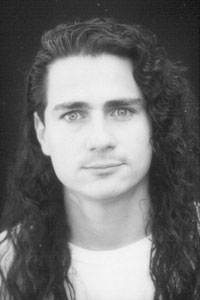
MICHAEL A. VENTRELLA: Today, I am pleased to be interviewing Peter Orullian. In 2006, Peter sold his first short story to a Denise Little anthology, and has since sold numerous stories to both Denise and Marty Greenberg, as well as Orson Scott Card’s “Intergalactic Medicine Show.” Then, in early 2009, Tor purchased the first three books in an epic fantasy series Peter is writing. His web page is here.

How did you get your first “big break” in publishing? Did you have an agent first?

PETER ORULLIAN: I think my story here is pretty traditional, and maybe a tad boring. I did get an agent first, and he then sold my fantasy series, The Vault of Heaven, to Tor. The funny thing is that in today’s publishing world, the path to publication is happening in so many ways. But my “big break” was that I landed a new agent—-I’d had one prior-—who took a deep interest in my work and almost immediately sold my books. There’s much to be said for having someone who really gets behind you.

VENTRELLA: Aspiring authors often seem to think that writing a book is easy and your first one is sure to be a huge hit. What writing experience did you have prior to publication?

ORULLIAN: Well, I’d sold a dozen or so short stories. But more than this, I’d spent several years working on my craft and understanding the business side of writing and publishing by attending workshops and following the industry. That isn’t to say that I’ve got it all figured out, but if a writer is serious, he needs to commit these kinds of things.

On instant success, I get how aspiring writers start to think this way. They’re close to their own work, and they yearn to be writing full time, doing something they love. And unfortunately, the success stories of writers who have this happen to them are oft repeated in writing circles. The thing a writer needs to do is keep writing, put his heart into each book, and then move on to the next one. With that approach, things will generally continue to get better on all fronts.

VENTRELLA: What resources did you use in creating your fantasy world?

ORULLIAN: Lots of imagination. That sounds cavalier, but it’s kinda true. I’m sure that all my years of reading, and my college days, and all my wide interests have found their way into the work. And often you’ll start down a path, and realize you need to know a bit more about a particular thing, and so you’ll do some research. But I like to extol the value of invention. Plus, therein lies the fun!

VENTRELLA: What distinguishes your fantasy world and story from all the others?

ORULLIAN: At the end of the day, stories are about the characters. And I’ve got a unique bunch. Oh, there are things like magic systems, one based on music that is pretty unique —- I’m a musician, you should know. Then, of course, the cosmology is my own, and like that. But I tend to believe that we mostly read for characters, and I’ve put mine through the grinder, as they say. They’re forced to make very hard choices, and to try to reconcile doing the right thing for the wrong reason and vice versa. Those moments of intense personal conflict, I like to think, are one of the hallmarks of my series.

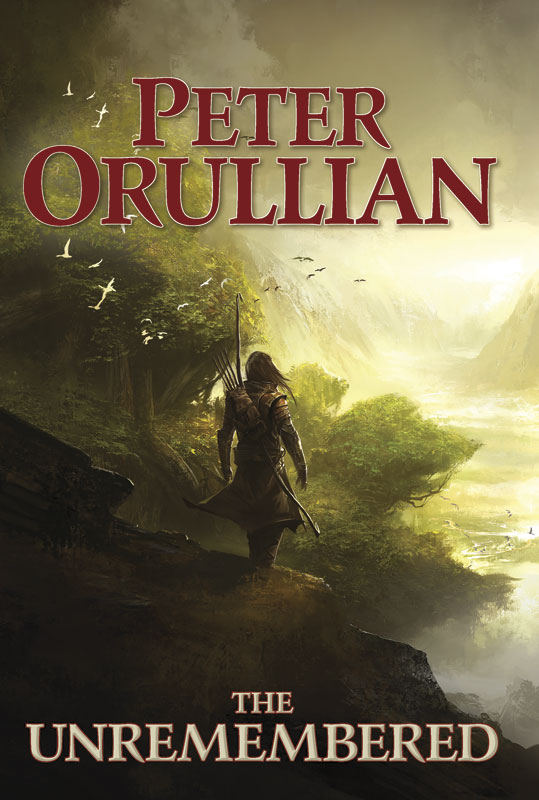
VENTRELLA: THE UNREMEMBERED is the first in a new series. Have you planned them all out in advance or are you taking them one at a time?

ORULLIAN: I’ve got the first three pretty well defined. And I know the ending with a great deal of clarity. Then, the space between the end of book three and the end of the series, I have in broad strokes. So, there’s still some planning to do late in the series.

VENTRELLA: Tell us about the plot for THE UNREMEMBERED.

ORULLIAN: Oh, man. I’m not good at summarizing my own work. And mostly, I don’t think it can be done well in short bits of text for any book. Suffice to say that nations and realms are on the brink of war; social upheaval is putting ideologies at odds; ancient threats and enemies are stirring; and there are some who see the coming storm who are working desperately to avoid it.

See, that’s not real awesome when you boil it down. But I’ve had readers who like George R.R. Martin, Robert Jordan, Brandon Sanderson, Patrick Rothfuss and others email me and tell me liken my work in many respects to these epic fantasists. So, that’s both humbling, and perhaps an indication of the type of books I’m writing.

VENTRELLA: Do you tend to outline heavily or just jump right in? What is your writing style?

ORULLIAN: I’m somewhere in between. I have a rough outline, that I deviate from quite a bit. But having the outline is a nice set of guideposts to get me moving. And I do a great deal of story thinking in my outline phase, which I find helpful when I sit to write. That said, a lot of discovery takes place in the writing itself.

VENTRELLA: When creating believable characters, what techniques do you use?

ORULLIAN: Think first: What matters most to my character? Then, give them conflict and real motivation.

VENTRELLA: What was the biggest mistake you made in your career?

ORULLIAN: I stuck with my first agent for longer than I should have, since he didn’t seem to have an active interest in my career.

VENTRELLA: Tell me about the book trailer. Did you produce this or hire someone to do so, or did your publisher take care of it?

ORULLIAN: I produced it with the help of some friends. I’m lucky to have folks around me with crazy amounts of talent. So, between the set of us, we’ve done some pretty cool things, I think.

VENTRELLA: Do you feel that book trailers help sales at all?

ORULLIAN: Good question. I’m not sure. I don’t have any analytics on my own stuff, so I can’t speak with any kind of authority on it. Mostly, these kinds of things are there to help create awareness of your work. So, doing at least some of these kinds of things seems right. You simply have to take a balanced approach—don’t over-index on marketing stuff. The best sales tool for your work is the work itself.

VENTRELLA: You’ve also placed a map and other information about your world on your web page. Have you found this to help sales at all or is it more for those who have already read your book and want more information?

ORULLIAN: I believe it’s both. Hopefully, readers who haven’t read my work yet might find this information and consider getting the book. But it’s also there to provide some depth for those who have already read it. Whether it helps sales or not really wasn’t my motivation though. I’m a bit of a geek for this kind of stuff, as I love finding it on the websites of authors I read. So, I went ahead and did some of it from a reader’s point of view.

VENTRELLA: Do you find short stories to be easier to write in any way?

ORULLIAN: Well, they take less time. But if you’re asking from a craft standpoint, no. It’s a bit of a different form, for sure. But each has its own unique considerations. I enjoy writing short fiction, as well as novels.

VENTRELLA: Do you advise authors to write short stories to help promote their other work?

ORULLIAN: No, I don’t advise it, as such. The main reason I do it is because I have this idea that some of the stories are too much like a data-dump, were I to drop it into one of the novels. But I like the backstory, and think others might appreciate some of the depth. So, I write the short stories for those who want to have a deeper look into my world. They’re not necessary by any means, but readers who read both the short and long stuff will have a some of those “aha” moments when they’re reading.

VENTRELLA: Many authors are now making short stories set in their world available for free online. Do you think this is a good way to grab new readers? Has it worked for you?

ORULLIAN: Again, I have to say I’m not sure if it’s a good way to grab readers or if it has worked for me. I have no way to track such a thing. For my part, I don’t do it so much as a marketing tactic, as much as I do it because I like the notion of transmedia, where using the strengths of various artistic media to tell a broader story is the goal. What that means is that you can read my book and not read my short fiction (or watch my webisodes, or explore my online map, or spend time looking through the art, etc), and you’d be just fine. But if you read and explore some of these other things, there’s a kind of larger “story experience” available to you. I really dig that possibility. That’s why you see me doing these kinds of things. I love the resonance and enlarging opportunities transmedia affords me as a storyteller. Oh, gosh, I could go on and on . . .

VENTRELLA: How do you prefer to make your short stories available – anthologies, magazines, download? What is better, in your opinion?

ORULLIAN: There’s no science to this yet, in my opinion.

VENTRELLA: Couldn’t help but notice that you’re a musician (as am I). I used music to help explain the magic in my world – has music played a part in your fiction as well?

ORULLIAN: Absolutely! As I mentioned, there’s a music magic system. And it factors heavily in several aspects of my series. Plus, I’m writing a concept album as part of the transmedia approach I mentioned above. It won’t be a retelling of the novel. It’ll be additive story, going into the early life of one of the characters, a old war, and some explanation of what I call “The Song of Suffering,” which is a song of power in my world.

On another level, I think it helps me approach a sense of lyricism in my writing. So, yeah, this is a great big question that we simply don’t have enough space to go into here . . .

VENTRELLA: Why do so many authors also tend to be musicians?

ORULLIAN: I’m not sure that’s true. Thinking now of all the writers I know, most aren’t. But yes, of course, some are, too. Rather, I’d say, “Why do so many authors also tend to engage in other artist pursuits?” Because I know writers who are painters, poets, photographers, etc. I think writers are creative types, and most creatives have more than one creative outlet, or so I’ve noticed.

Interview with Author Cat Grant

MICHAEL A. VENTRELLA: Usually on this blog, I concentrate on fantasy and science fiction since that’s primarily what I read (and write). This means I am missing out on a large portion of the market, and not necessarily providing information for authors who are interested in other genres.

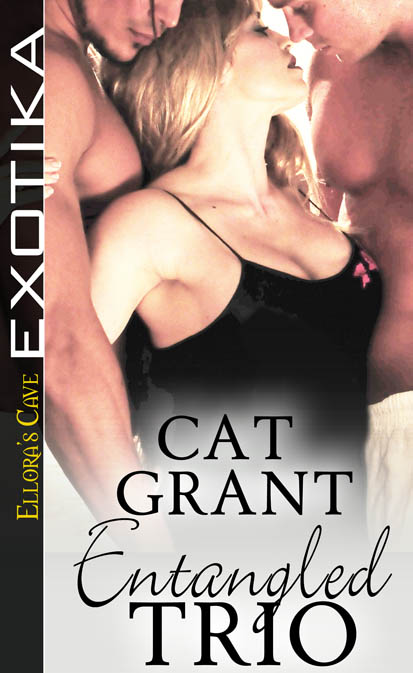
So today I am pleased to be interviewing Cat Grant, writer of what has become to be called “erotic fiction.”

Cat, thanks for answering my questions. What’s the difference between “erotic fiction” and “romance”?

CAT GRANT: People sometimes get the two confused, but they’re really very different. Erotica is about one character’s (or two, or three!) sexual journey. The emotional component, and even the plot, is downplayed in favor of sex scenes – the hotter, the better. Romance is all about characters connecting emotionally. The plot centers around the protagonists and their relationship.

The biggest difference between erotica and romance is that erotica doesn’t require a happy ending. Romance does.

VENTRELLA: Is there a bias against same sex romances that limits your options?

GRANT: Not in e-publishing – in fact, quite the opposite. There are a number of e-presses devoted to same-sex romance, and more are jumping into the pool all the time. There’s no shortage of places to sell my work!

VENTRELLA: Who do you find to be your primary audience?

GRANT: Women, mostly, with gay men a close second.

VENTRELLA: What are the advantages of a small press?

GRANT: In e-publishing, I would say the biggest advantage is that once your manuscript is accepted, it usually doesn’t take very long before it’s published – unlike traditional New York publishing, where it can be a year or more before an accepted manuscript sees print. And also, you get paid a lot faster. Most of the publishers I’ve worked with pay on a monthly basis.

VENTRELLA: Please tell me about how you found your publisher(s) or how they found you.

GRANT: I found my first publisher, Lyrical Press, the usual way – I checked out their website and submitted my first book, THE ARRANGEMENT, to them. They liked it so much, they offered a contract the same day. I ended up publishing five books with them. Then I got an invitation to submit to Amber Quill. Later that year (2010), I went to the Romantic Times convention and met Kelli Collins, the Editor in Chief at Ellora’s Cave, and she invited me to submit to EC. For my latest book, ONCE A MARINE, (due out this November) I’ve decided to go with this amazing new start-up, Riptide Publishing, the brainchild of my good friends Aleksandr Voinov and Rachel Haimowitz. They’re a class act, and I’m very excited to join them.

They will also be republishing my Courtland Chronicles series – re-edited, and in proper reading order – starting in 2012.

VENTRELLA: Of the few romance authors I’ve known, the constant problem they all have is that people tend to think they are writing from experience and have participated in all sorts of sexual situations – have you had this problem and if so, how do you deal with it?

GRANT: Yeah, it can be a bit of a problem, especially with men I’ve met lately. It’s gotten to the point where I don’t tell them what I write until I decide if they’re “keepers” or not! LOL!

VENTRELLA: Do the romance writers have conventions where they can meet readers like the science fiction writers do?

GRANT: Ohh, yes! In fact, I’m attending three of them fairly soon: Authors After Dark in Philadelphia from August 10th through the 14th, Ellora’s Cave’s RomantiCon at the end of September, and the Gay Rom Lit retreat in New Orleans this October.

VENTRELLA: Of what are you most proud?

GRANT: I’m proud of all my work. Getting published is a hard slog, and you won’t make it if you’re not constantly upping your game. However, I do have what I call “books of my heart.” THE ARRANGEMENT was my first published book, so it will always hold a special place for me. Then there’s ALLEGRO VIVACE, which marked a quantum leap forward in my writing ability. ONCE A MARINE is also a favorite. I love Marc and Cole, my two protagonists. And I’m getting some amazing editing from Aleks and Rachel on this one. I can see the book improving with every page I revise. It may very well be my best work yet.

VENTRELLA: What piece of advice would you give an author wanting to write erotic fiction?

GRANT: The same advice I’d give any writer – don’t give up. People will diss you and try to knock you down at every turn, but if this is really, really what you want to do, ignore the naysayers and listen to your instincts. They won’t steer you wrong.

Interview with NY Times Bestselling Author Peter David

MICHAEL A. VENTRELLA: I’ve been a fan of award-winning author Peter David for quite some time now, beginning with his Star Trek novels and progressing through his Knight Life and Sir Apropros series, so I’m quite pleased to be welcoming him to my blog today!

Besides novels, Peter has written comic books (Incredible Hulk, Aquaman, Supergirl), television shows (Babylon 5, Space Cases, Ben 10), short stories, blogs, and more. Check out his web page and his wikipedia page and prepare to be overwhelmed.

Peter, what was your first big break into the business?

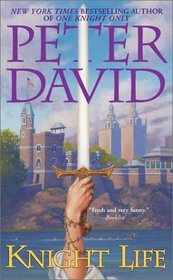
PETER DAVID: Well, I suppose my first really big break was landing a job in the sales department of Playboy Paperbacks, a now defunct but once very literary publishing company that published such authors as Anne Tyler and Morgan Llywelyn. It was through Playboy Paperbacks that I met a woman named Sharon Jarvis—an editor at the time—who eventually became my first lit agent and wound up, in turn, selling my first novel, KNIGHT LIFE. And things just kind of snowballed from there.

VENTRELLA: You’ve also written many comic books – do you find the limitations inherent in the graphic novels to be a major problem?

DAVID: Not really, no. I’ve been doing it for over a quarter of a century; if I was still being frustrated by limitations, then I wouldn’t have learned very much in the intervening years. Plus there are advantages, such as that the artists can convey things visually that normally you’d need a ton of prose to put across. So you can really concentrate on dialogue and character development. “Show, don’t tell,” is one of the axioms of fiction, and what better way to show than through the medium of graphic novels?

VENTRELLA: For your media tie-in novels, do you make proposals or do the studios come to you directly now?

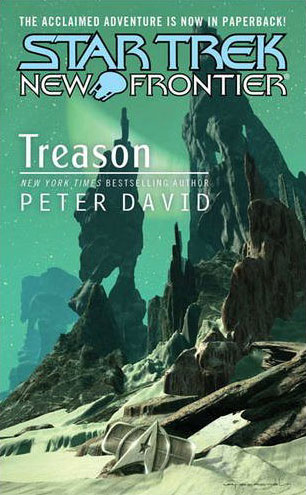
DAVID: If you mean novelizations of movies and such, the book publishers approach me about working off the screenplays to produce novels of them. On the other hand, when I did the original novels based on the video game “Fable,” the guys at Microsoft asked me to pitch a plot to them for the second one (as opposed to the first one where they gave me a basic outline). And the New Frontier novels I pretty much just go off and do whatever I want. So there’s a variety.

VENTRELLA: Do you find using established characters in your media novels to be a limitation?

DAVID: There are inherent limitations, sure. You’re aware that you’re playing in someone else’s sandbox with someone else’s toys, and like any good guest, you have to be sure not to damage them and return them intact when you’re finished. But you learn to work within and sometimes around those limitations.

VENTRELLA: Which Star Trek character do you most enjoy writing? (I recall some hilarious scenes with Worf, especially concerning the size of his medals…)

DAVID: Well, obviously my favorite is Mackenzie Calhoun. He’s my guy, my captain. So I’m going to have the deepest affection for him. Of the Next Gen crew, I’d say Worf, yeah, although I do particularly enjoy writing Riker and Troi as a couple.

VENTRELLA: You were also given the unusual freedom to create your own Star Trek ship and crew with the New Frontier series. How did this come about?

DAVID: That was then-editor John Ordover convincing Paramount that doing a book series that wasn’t directly rooted in a TV series was a good idea. Once he got Paramount to sign off on the basic concept of the New Frontier world, he came to me and asked me to flesh out the mission and develop the characters. Shelby, Selar, and Lefler were always in the mix because he wanted to have a few characters from the TV series in whom readers had a vested interest, but I had total freedom to create the rest of the crew. I suppose the freedom stemmed from Paramount being convinced that the series would tank and so they weren’t feeling particularly controlling about what I came up with.

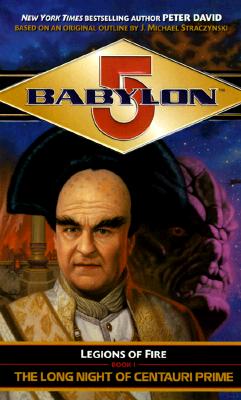
VENTRELLA: I enjoyed your Babylon 5 trilogy, as it provided much background for Vir and the Centari world. How much freedom were you given to develop these things?

DAVID: Joe had very definite ideas as to how events should unfold. I worked off a relatively detailed outline, and although I had freedom to tell the story and develop the characters in my own way, I had years worth of Joe’s characterization and world building to base it upon.

VENTRELLA: Was there ever a problem with continuity with the established Babylon 5 world, where you were told to make changes or include something specific?

DAVID: Troubles? No. I know when I turned in the manuscripts, there were points where Joe said, “No, change this” or “Fix that.” And it’s his world and he’s the final word on it, so that’s pretty much that. On the other hand, there was stuff in there that I put in that my editor was sure would get flagged. For instance, when I had Garibaldi ambushing one of the Drakh by bursting out of hiding and saying, “What’s up, Drakh?” And I was told there would be no way that Joe would sign off on that. And I pointed out that I didn’t establish that Garibaldi was a fan of Warners cartoons, and I didn’t name the aliens the Drakh. So he had no basis for complaint. And sure enough, I was right; Joe expressed no complaint about that.

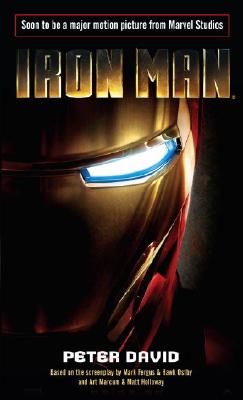
VENTRELLA: You’ve done a number of movie adaptations: Spider-Man, Hulk, Iron-Man, and so on. How much freedom are you given to delve into character background and history?

DAVID: I’ve been fairly fortunate in that regard. I’ve put tons of background or references to the characters’ histories into the novelizations and they’ve sailed right through.

VENTRELLA: I imagine these must have to be completed on a short deadline, and that you are relying mostly upon the scripts. Have any been particularly difficult when dealing with the studios? Have any required massive changes?

DAVID: There have been some difficult slogs, yes. Probably the toughest was “Batman Forever,” in which I would find these plot holes in the script and come up with these elaborate and, I like to think, very compelling fixes. Meanwhile while they were filming the movie, they’d discover the same plot holes and they’d write a single line to cover it and then fax that script change over to me. And of course I’d have to incorporate that change and toss out everything I’d written. Which killed me, because they were slapping on bandaids while I was applying tourniquets. So that was a pain.

VENTRELLA: Do you find writing books based on your own work easier to write than ones with established characters?

DAVID: Sure.

VENTRELLA: For the Knight Life series, wherein Arthur returns and becomes President, I have to ask (SPOILER ALERT): Why did you decide to have him resign before he could accomplish much? What point were you trying to make?

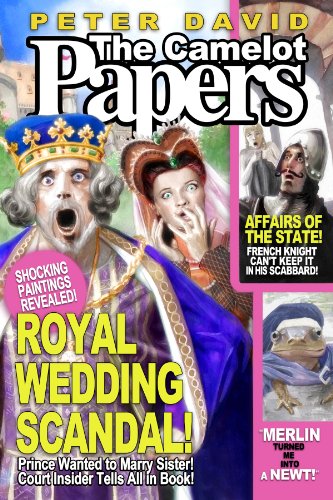
DAVID: Actually, that was originally what I was going to write. Since I was writing it just after Clinton was out of office, I was going to have Arthur get dragged into a sex scandal that threatened to swallow his presidency, which is not only what Clinton did but—let’s face it—is what happened in the original Camelot. So I loved the notion that no matter how much time goes by, the same stuff happens. All that changes is the names. But then 9/11 happened and suddenly it seemed the wrong time to be making fun of the presidency. So I tossed out the book, which was about a third written, and just started all over again. But the notion of doing an Arthurian story that focused on “the more things change/the more things stay the same” stuck with me, and I put much of that into “The Camelot Papers,” which I recently published through http://www.crazy8press.com.

VENTRELLA: Do you think your political views influenced your desire to write this series?

DAVID: Probably.

VENTRELLA: You’ve also written television scripts (you’ve been a very busy man!). Are these easier or do you find their limitations a problem?

DAVID: TV scripts are the most limiting of all because of the specifics of the format. Exactly so many pages, exactly so much time it can take up. It’s pretty challenging to tell a story within those confines, but hey, you manage.

VENTRELLA: Of what are you most proud?

DAVID: My family.

VENTRELLA: Tell me about your new publishing venture. What does this mean for a previously unpublished author?

DAVID: Not much, really. Crazy 8 isn’t a publishing venture in the standard sense. We’re not actively seeking out novice authors. We wouldn’t know what to do with them if we had them. C8 isn’t a corporation; we have no officers. We have no mechanism for dispersing money. C8 is simply a group of us pooling our social networking resources while we put out books ourselves and try to make them available to the fans at a fairly reasonable price. With eBooks making up a greater and greater percentage of book sales, and print on demand as a secondary option for people who prefer paper between their fingers (as do I), there’s no reason we can’t be taking our works and putting them directly into the hands of the readers at prices that won’t break budgets.

VENTRELLA: What is the biggest mistake you see aspiring authors make?

DAVID: Deciding up front that they want to write for franchises. I constantly hear, “I have an idea for a Star Trek novel! How do I sell it?” Well, the answer is, you don’t. Pocket Books isn’t actively looking for new authors. And agents aren’t looking to rep novels that they can only sell to one market. I always tell them that if they have an idea that’s really that compelling, come up with original characters and an original universe, and sell that. That way you have any number of markets you can approach, and you own all the underlying rights.

VENTRELLA: With a time machine and a universal translator, who would you invite to your ultimate dinner party?

DAVID: Jesus. Moses. Thomas Jefferson. And Jim Henson. I have some questions for all of them.

13

It’s the Characters, Stupid

As I write this, the last Harry Potter movie just opened. Harry Potter has made writer Jo Rowlings one of the richest people in the world, and deservedly so.

But why? People have written novels about kids going to magic schools before. Many of the plots are similar to standard fantasy fare, and in some cases even quite predictable. What did she do to make it all work so well?

It boils down to something successful authors understand: A story is not about what it’s about — it’s about the characters.potter

We go back to the books (and movies) we love not because of the idea behind the story, but because of the characters.

When ARCH ENEMIES came out (my first novel) the comments that pleased me most were from readers who talked about how much they liked Terin or Darlissa — how they related to them, and saw how they changed during the course of the story. This was something I specifically set out to accomplish: not just to create believable characters who didn’t act cliche, but also to remember that no matter how clever my plotline was, no matter how surprising my twist ending, it would mean nothing if the reader didn’t care about the characters.

At writers’ conferences and writing groups I’ve attended over the years, I’ve listened to and read works by aspiring authors that I know will never make it unless they realize this point. They have stories about monsters and gadgets and world-shaking events and the characters are secondary. The cleverest idea in the world won’t matter if no one cares what happens to your boring, uninteresting, or cliched hero.

Seriously, think about books you may have stopped reading because you became bored. Think about all those special effects movies that you watch once and never want to see again. I am willing to bet that there is one thing these have in common, and that is uninteresting characters.

I could go on and on — Entire books have been written about how to create believable characters in fiction, but it all boils down to you, the writer, remembering that the characters are the most important element of your story.

So create those characters that are larger than life. They should say clever things, perform amazing acts of bravery, never give up. They should be people we want to read about. (See my last blog on this subject!)

At the same time, they should have definite weaknesses. They should make mistakes, lose their temper, and act like real people act. They don’t have to be likable, just interesting! Sherlock Holmes has many character flaws, but he’s a fascinating character, isn’t he?

Note that I am not limiting this to your protagonist. Too often, writers create a likable good guy hero and then place that person against a “bad guy” who apparently exists only to do bad things. Instead, you should remember that your antagonist is the protagonist in his or her own story. Unless that character is insane in some way, they do not consider themselves evil. Think through their motivations, and give them good attributes to prevent them from being cliched and predictable.

Just always remember: Your story is about characters.

Interview with author A. C. Crispin

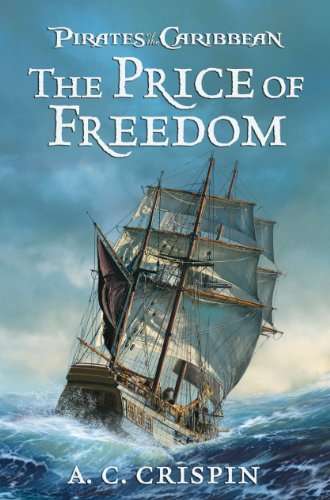
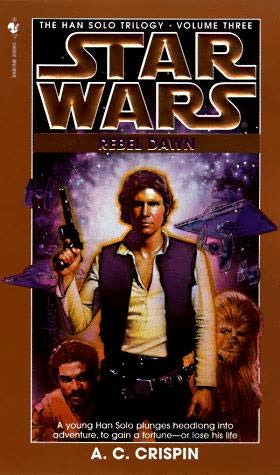
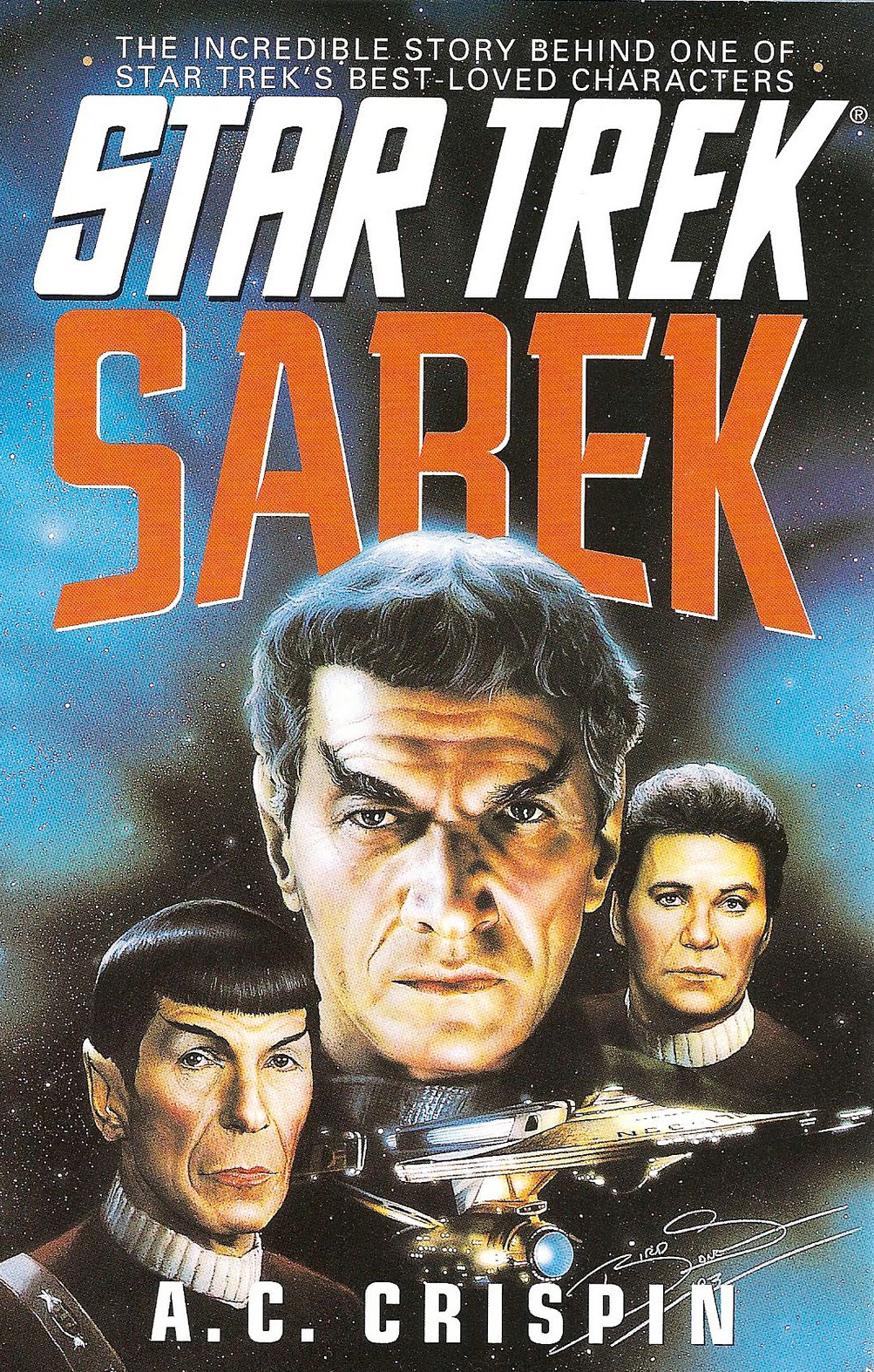
MICHAEL A. VENTRELLA: Today I’m pleased to be interviewing A.C. Crispin, whose new novel is PIRATES OF THE CARIBBEAN: THE PRICE OF FREEDOM. She’s best known for the novelization of the 1984 V TV series, but also for her bestselling Star Wars novels THE PARADISE SNARE, THE HUTT GAMBIT, and REBEL DAWN — although I first discovered her through her Star Trek novels: YESTERDAY’S SON, TIME FOR YESTERDAY, THE EYES OF THE BEHOLDERS, and SAREK.

Ann, You’ve been able to write novels in some of fandom’s favorite stories. How did you manage that?

A.C. CRISPIN: After I wrote YESTERDAY’S SON and V, publishers with franchises approached my agent when they had projects they thought would be a good match for my skills.

If your readers want to read about how to get an agent, soup to nuts, they should read “Notes on Finding a (Real) Literary Agent” on my website.

VENTRELLA: Do you make proposals or do the studios come to you directly now?

CRISPIN: For original novels I write book proposals. For tie-in work, they pretty much come to me.

VENTRELLA: Let’s discuss THE PRICE OF FREEDOM. How much freedom were you given to develop Jack Sparrow’s background?

CRISPIN: After a considerable amount of back and forth on the part of the Disney studio liaison, during which several detailed outlines were not approved, the studio liaison decided that instead of writing the project I had been originally hired to write (the story of the Isla de Muerta mutiny re: the Aztec gold) I should instead write the story of how Jack Sparrow worked for the EITC and wound up making that bargain with Davy Jones. So I knew where the story had to end up. How I got there was left pretty much up to me.

I did consult with both my editors on the book, the acquiring editor and the editor who completed the project. For example, they both agreed that there should be a “Lady Pirate” as a character, so that’s how Doña Pirata was born. The Legend of Zerzura plotline was my creation, but my editors suggested having talismans as a way to get into the Sacred Labyrinth and reach the treasure. So I then came up with the bracelets.

By the time I finished with my outline, it was over 70 single spaced pages long. Of course, THE PRICE OF FREEDOM is a long novel, some 235,000 words.

VENTRELLA: Did Disney censor any of your ideas or tell you to make major changes?

CRISPIN: My Disney editor (somewhat regretfully, because she really liked them) bowdlerized my hottest sex scene. I’m not sure you’d call that a major change. After all, we are talking Disney, here. (The scene was hot, but not graphic — she felt that it was a bit too hot.)

VENTRELLA: What were your main goals in trying to develop his character?

CRISPIN: To create the character of “Jack becoming” so that people would recognize Jack Sparrow, but also know this wasn’t quite the Jack they see in the films … this was a younger, more vulnerable, more trusting and less cynical Jack. He gets more cynical and “savvy” during the course of the book. He’s not the same Jack at the end as he was at the beginning. Of course that’s the goal of good fiction, right?

VENTRELLA: What adventures in your novel help shape Jack into the character we all know?

CRISPIN: Oh, Jack experiences betrayal, disappointment, fear of imminent death, hatred, and as a result learns to be much more wary and cunning, and to trust almost no one. Readers who want teasers can read the excerpts on my website. There are six there.

VENTRELLA: Do any other characters from the film appear in the novel?

CRISPIN: Edward Teague, Cutler Beckett, Hector Barbossa, Pintel and Ragetti, and a certain squid-faced Captain.

VENTRELLA: Were you given a peek at the script for the most recent film in order to work in some foreshadowing?

CRISPIN: No. I was given the script for “At World’s End” before the film released, but my book was finished before the script for “On Stranger Tides” was written.

VENTRELLA: The most recent movie is loosely based on Tim Powers’ novel ON STRANGER TIDES. Did you use that novel at all for reference?

CRISPIN: I’ve read ON STRANGER TIDES a couple of times, but aside from the fact that it’s an excellent pirate yarn, no.

VENTRELLA: Will there be more books in the series?

CRISPIN: That will be Disney’s call. I imagine they’ll base that decision on how well THE PRICE OF FREEDOM sells.

VENTRELLA: What’s your favorite of the Pirates movies?

CRISPIN: The Curse of the Black Pearl.

VENTRELLA: Do you find using established characters in your media novels to be a limitation?

CRISPIN: Nope. I find it a challenge to have them grow and change in ways so subtle that the studio doesn’t realize I’ve done it.

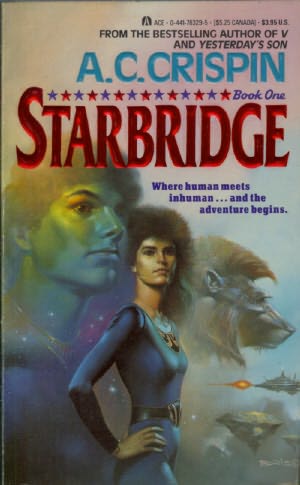
VENTRELLA: You’ve also written your own series: Starbridge. Tell us about this!

CRISPIN: Funny you should ask about that. There’s a good chance that the seven StarBridge novels will soon be re-released as e-books. There have been quite a few requests for them from readers, over the years. The series is about a school for young people from the Fifteen Known Worlds who come to an asteroid in deep space to learn to be diplomats, planetary advocates (known as “interrelators”) and explorers. The books focus on First Contact, and explore what it would be like in a galactic society.

VENTRELLA: Do you find writing books based on your own work easier?

CRISPIN: Not really. I put my full efforts into both my media tie-ins and my original novels. With the original novels, it’s generally a bit more work, because I have to create the world, the technology, the history, the geography, the society, etc. World-building and universe-building have to be done well if you want to create the illusion of reality –- something that’s essential to writing s.f. and fantasy.

VENTRELLA: We met at Balticon this year. Do you enjoy conventions and do you advise authors to attend them?

CRISPIN: You can learn a lot at conventions, and once you’ve gone pro, you can do a fair amount of networking and business at gatherings such as the Nebulas, Worldcon, etc. I enjoy conventions, still, even after all these years.

VENTRELLA: Let’s talk about Writer Beware. How did the idea for this come about?

CRISPIN: Back in 1998, Victoria Strauss and I both realized, independently of each other, that writing scams were proliferating on the internet. At some point our investigations brought us into contact with each other, and we decided to do something about it. SFWA gave us its blessing and sponsorship, and that’s how Writer Beware was born.

VENTRELLA: I meet many authors who have gone the vanity press or self publishing route and then wonder why no one takes them seriously. Other than “don’t do that” do you have any specific pieces of advice for these authors?

CRISPIN: I advise them to go to Writer Beware and read our articles about POD, vanity publishing, etc., so they’ll go into self publishing with a clear vision of what it can and can’t do for an author. E-publishing has taken off in the past six months, and it can now be a realistic way (provided the author has the sales numbers) to break into commercial publishing (advance and royalty paying publishing with a major press, that is). This is generally not true for POD and hardcopy “self publishing.” But there are exceptions.

The main problem with “self-publishing” is when authors confuse it with commercial publishing and expect their books to be on the shelves in bookstores nationwide, plus have other unrealistic expectations. It is really not a shortcut into a successful writing career for the vast majority of those who do it. I believe it’s still true that most POD and self published novels still sell fewer than 100 copies.

VENTRELLA: What bugs you most about the publishing industry and what would you change about it if you could?

CRISPIN: Here are my top two picks for that:

(1) I’d go back in time and eliminate the Thor Power Tools Supreme Court ruling. That had a terrible effect on a publisher’s ability to keep books in stock. Look it up.

(2) I’d get rid of the Internet for two reasons (A) the internet has given aspiring writers the idea that they’re entitled to be published, no matter how well or poorly they write, and (B) because of the internet, writers are getting scammed at an appalling rate.

VENTRELLA: Who do you like to read for pleasure?

CRISPIN: Terry Pratchett, Elizabeth Peters, Jane Austen, Charles Dickens, Margaret Mahy, Ursula K. LeGuin, George R.R. Martin, Lois McMaster Bujold, Charlotte Bronte, and too many others to name.

VENTRELLA: Of what work are you most proud?

CRISPIN: I do my level best on all my books. I’m pretty proud of PIRATES OF THE CARIBBEAN: THE PRICE OF FREEDOM, because I had to do so much research. It took me three years to write, and the whole time I was writing it, I was doing research on the historical period and the nautical stuff.

VENTRELLA: What is your writing process? Do you outline heavily, for instance?

CRISPIN: For tie-in work I HAVE to produce detailed outlines, so I’ve gotten used to working that way. I don’t like writing myself into corners, and a good outline usually prevents that.

VENTRELLA: Fantasy has grown tremendously in popularity over the past twenty or thirty years and now outsells science fiction. Why do you think this is? What is it about fantasy that appeals to readers that they can’t get from science fiction?

CRISPIN: I have no idea. Personally, I prefer science fiction, though I read both.

VENTRELLA: What advice would you give to a starting author that you wish someone had given you?

CRISPIN: Learn to read and analyze publishing contracts. Agents aren’t perfect, and you really need to be able to read a proposed contract and spot pitfalls.

VENTRELLA: What is the biggest mistake you see aspiring authors make?

CRISPIN: Here’s my top five list:

1. They spend years writing a Star Wars or other tie-in novel without ever researching whether they can actually submit the thing and have a chance of having it published. (With Star Wars, for example, they won’t even read the book; all Star Wars novels are contracted for in advance.)

2. They look for shortcuts, such as “self publishing” or POD publishing, often with a scammy publisher like PublishAmerica or Strategic, because it’s the easy thing to do.

3. They develop “golden words syndrome” and can’t see any flaws in their writing, and if someone points them out, they get mad. This is death to any aspiration to ever be a pro.

4. They submit first drafts.

5. They want to write fiction, but they don’t read it. I’ve never yet encountered a single writer, in the dozens, maybe hundreds of workshops I’ve taught, who wrote fiction well but wasn’t a reader. In order to write well, especially fiction, you must be an inveterate reader. No exceptions.

VENTRELLA: What question do you wish interviewers would ask you that they never do?

CRISPIN: Where readers can buy my books. There are links to purchase all my books on my website.

Intrerview with Nebula nominated author Bud Sparhawk

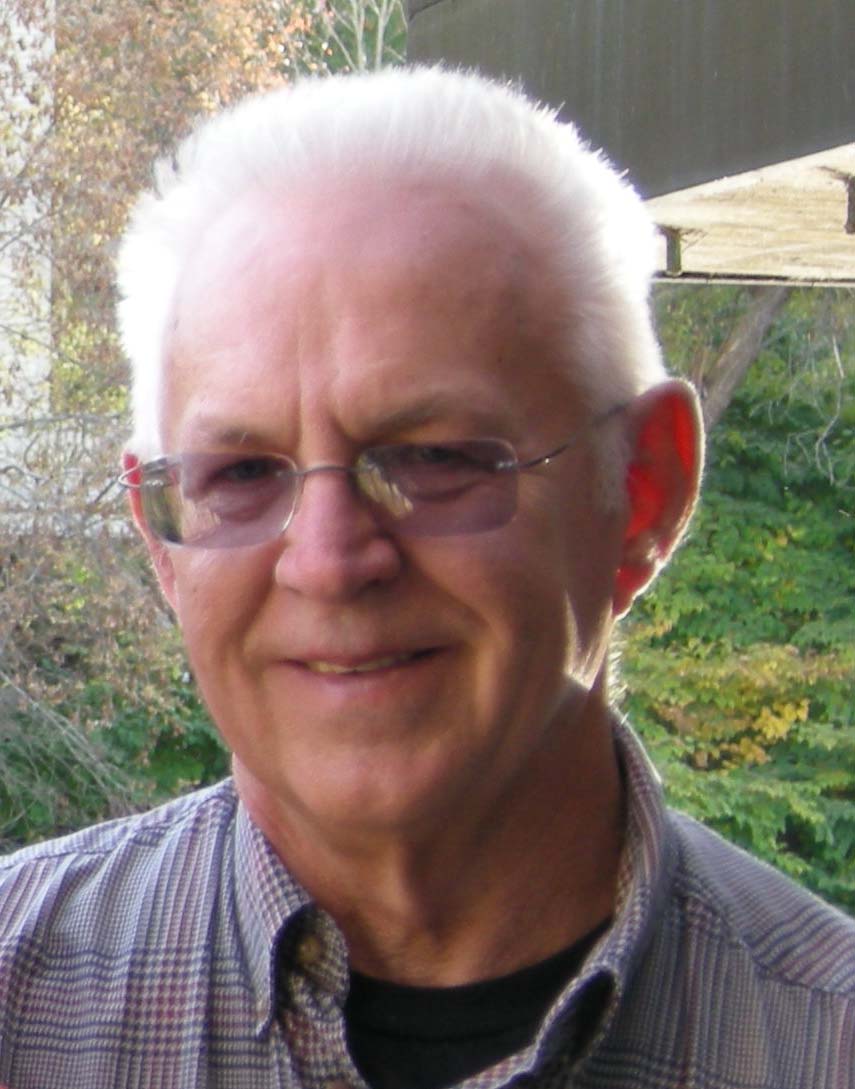
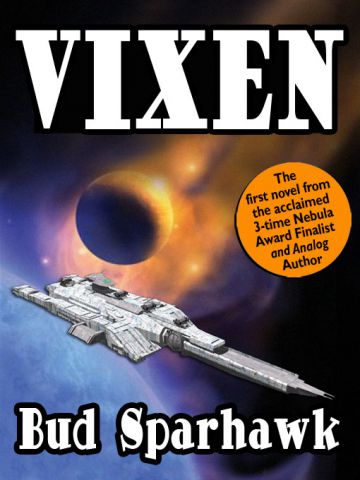
MICHAEL A. VENTRELLA: I’m pleased to be interviewing three times Nebula finalist Bud Sparhawk today. He’s primarily known for his short fiction with heavy and hard science, but also for his humor (in particular his “Sam Boone” series).

Bud, although you have extolled the virtues of outlines, do you think it’s possible to write a great story without an outline?

BUD SPARHAWK: I’m not certain “extolled” is the right word. Certainly I’ve advocated paying considerable attention to a story’s structure – the sequencing of scenes, time frames, and points of view. I don’t think I’ve ever recommended preparing a formal outline where a story is described in detail, point by point.

My own style of writing is to set up the scenes I think the story needs, block in the characters, setting, and time, and then move things around to the way I want to tell the story. Many times I write quite a bit before breaking what I’ve done into key scenes and then add sketch ideas that fill in empty spots. It’s generally a messy back and forth process but it works for me.

VENTRELLA: Have you ever done so?

SPARHAWK: Written a great story or used an outline to write it? All three of my Nebula finalists were done sans outline – just bashing along until they felt complete. I wouldn’t call any of them “great” – entertaining maybe. The one story that I felt was “great” was “Bright Red Star” and which received almost no literary comment, except from David Hartwell who included it in his Years Best SF #14. This story has now appeared in several languages and on audio pubs, which is somewhat of an affirmation. It was my response to some of the hysteria surrounding 9/11.

VENTRELLA: You’ve concentrated almost entirely on short stories and novellas. What is it about the shorter form that appeals to you?

I’ve been blogging about this very subject on budsparhawk.blogspot.com for some time. One of my latest musings dwelled on the differences between novelists and we short people. Although there are clearly differences between the two camps, my conclusion was simply that that some do and some can’t: Temperament, patience, and economic necessity are probably involved in a writers choices, but the mix would vary considerably.

VENTRELLA: Many writers consider short stories to be harder than novels. What is your experience?

SPARHAWK: I don’t think “harder” is the distinction I’d make. Some writers find it impossible to describe anything in a single sentence while I find it difficult to drone endlessly on about anything because I’m always anxious to get to the payoff. In my opinion, brevity always makes a point sharper and I usually edit down to reach that clarity. For example, I recently turned in a 15k piece that was originally 33k in second draft and around 20k in the penultimate one.

When I started writing I could write a 5-7K story in a weekend and once wrote one – “Persistence” – that I later sold to Analog – in an evening. I like to deal with issues or ideas and the short form is ideal for that. Longer pieces deal more with character development or expansion of a situation. I’ve written several as yet unsold novels and have found developing increasing complexity that forces the word count ever upwards tedious, albeit interesting.

Dedicated novelists have told me that they cannot begin a story without discovering that complications arise and they are faced with an irresistible urge to explain, describe, or comment. Then too, other characters come along with their own damn issues, backgrounds, motives and … well, you see how that goes, with the inevitable result is other than short.

VENTRELLA: What usually comes first for you – an idea or a character?

SPARHAWK: The idea or concept, always. I see characters as vehicles that carry the ideas forward, and try to make them eloquent spokespersons for what I try to say.

VENTRELLA: We’ve met at various conventions over the years. Do you enjoy conventions and do you advise authors to attend them?

SPARHAWK: I’m just a ham and enjoy the spotlight, talking to fans, and especially having the opportunity to talk writerish with the other pros. I love the readings, especially by unfamiliar writers to me.

VENTRELLA: What’s your favorite convention experience?

SPARHAWK: The random discussions that arise in the hallways or in the dealers room have be my favorite experiences. I hardly ever leave one of these random discussions without a story idea or two.

VENTRELLA: I meet many authors who have gone the vanity press or self publishing route and then wonder why no one takes them seriously. What’s your opinion on self publishing?

SPARHAWK: The line between vanity and self-published has become very thin. Established writers are self-publishing collections, reverted novels, and even original works – all to take advantage of the opportunities eBooks have created. Some non-professionals (another vague term) have been highly successful with their “vanity” publishing. Results are mixed, but in most cases it seems to depend on the degree of self-promotion one is willing to undertake. Social networking seems key to success for both types.

VENTRELLA: Do you think there is a difference if an already established author self publishes new material?

SPARHAWK: If a writer has already established a reputation, then selling new material via POD or eBook should not be a problem. Otherwise you use up a lot of time, effort, and creative juice that could be used for improving your writing.

VENTRELLA: What bugs you most about the publishing industry and what would you change about it if you could?

The lengthy delays between submission and response, which is an unfortunate consequence of limited staff and/or time available to the publisher. The industry probably needs more underpaid English majors looking for “experience” in the publishing field.

Since most editors now accept electronic submissions I can easily see the day when some maven will design an app that evaluates e-manuscripts on the fly, all tailored to an editor’s preset specifications. That would certainly change the writing game for both writers and editors. Don’t know if this would make the publishers happy or not.

VENTRELLA: What do you like to read for pleasure?

SPARHAWK: Short stories, of course, and mostly SF, but I make an exception for anything by Terry Pratchett.

VENTRELLA: Of what work are you most proud?

SPARHAWK: See above – “Bright Red Star.” Interestingly, I’ve written three more shorts in the same universe, two of which are in McPhail’s anthologies.

VENTRELLA: What are you working on now?

SPARHAWK: I’ve a long novel in penultimate editing, four or five shorts that still need work, and getting as much of my published works into eBook formats as I have time for. The novel deals with the long term effects of human expansion into the universe and what exactly makes our descendants “human.”

VENTRELLA: Fantasy has grown tremendously in popularity over the past twenty or thirty years and now outsells science fiction. Why do you think this is? What is it about fantasy that appeals to readers that they can’t get from science fiction?

SPARHAWK: It is a puzzle that in these days of instant everything and twittering phrases that short fiction does not sell better. Steven King recently observed that much of the popular long form fiction has little substance but does carry the reader along in an engaging, but superficial narrative thread that provides an immersive experience. Summer reading at the beach, in other words. I find that much of the “epic” fantasy fits this description. Clearly, fantasy in general is not my cup of tea, but there are some fantasy works that rises above the rest – like Laura Anne Gilman’s Vineart series.

VENTRELLA: What advice would you give to a starting author that you wish someone had given you?

SPARHAWK: 1. Don’t give up your day job.

2. Put some time aside for writing every day.

3. Learn humility and to accept rejection gracefully.

4. Join SFWA as soon as you can.

VENTRELLA: What is the biggest mistake you see aspiring authors make?

SPARHAWK: Endless rewriting in pursuit of perfection, which can never be achieved. The pursuit of “better” is ever the enemy of “good enough.” A writer should rewrite only until the piece achieves a satisfactory level in their own opinion and, of course, whenever an editor asks.

VENTRELLA: What question do you wish interviewers would ask you that they never do?

SPARHAWK: “Where do you get your Ideas?” to which I respond “a guy in New Jersey sends me two a week for five bucks.”. Ask a silly question …

Seriously though, no one ever asks how the magic is done and the toll it takes on family life, work, and socializing. I wrote for years while holding a fairly demanding job, raising a family, and dealing with the issues of aging parents, yet managed to eke out a few words each night, having them add up to some decent stories and a lot of less than sales worthy. The ideas bubbled up during my non-writing times and, if they were worthy of remembering, finally made it into a story. Truthfully, I have no idea where the ideas come from. I only know how much work it takes to turn them from daydreams to reality.

Heroes

Jeremy Wembley grabbed the broom by the handle. He took forceful steps toward the back of the room where Patrick stood unaware. Patrick paid no notice as Jeremy shortened the distance between them, and seemed completely oblivious to Jeremy’s presence.

Jeremy raised the broom just as Patrick turned around.

“I’ll sweep the stockroom now, Mr. Brenner,” he said.

Jeremy knew that if he continued to impress his boss, it would not be long before he could get that promotion—and soon after, get the real reward he desired: night manager of the Fredricksburg 7-11 on West Norton Avenue.

Unless his arch-nemesis, that kiss-up Eric Stoher got there first…

All the elements are there. There is a goal the main character wishes to reach, and an obstacle that can prevent him. There is character development and conflict.

But, you know, who gives a flying you-know-what?

The fact of the matter is that we want to read stories about people and events that are larger than life. We want to read about heroes to do great things, make clever comments, overcome great odds.

This is nothing new. The ancient Greeks didn’t do plays about the guy who cleaned the stables.

And I am no exception. My books have been about wars and world-shaping events and the heroes whose presence made a difference.

However, at the same time, I have consciously avoided the standard hero that is a mainstay of much of fiction (and especially fantasy). You know the type – the Chosen One from Prophecy who is the seventh son of the seventh son who is the only one who can wield the magic sword Noonah because he has surplus midichlorians and blah blah blah. Maybe this hero starts off the book as a nobody, but he or she ends up as the World’s Greatest Swordsman or Most Powerful Wizard by the end and thus, being superior to us lowly humans, saves the day.

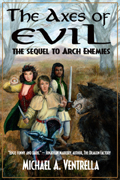
In my two published novels (ARCH ENEMIES and THE AXES OF EVIL) and in a short story in the just released anthology TALES OF FORTANNIS: A BARD’S EYE VIEW, my main character is a teenager named Terin. His problem is that, thanks to a mistake, everyone thinks he’s the Chosen One Who Can Save The Day.

By the end of ARCH ENEMIES, Terin is still running when a fight breaks out and still can barely cast a minor spell. So what makes him the hero?

To me, what makes a real hero is someone who doesn’t have all those skills and yet, through bravery and intelligence, rises above what is expected and does the extraordinary. Terin is the hero because he figures out a solution – he finds a way to solve the problem that is more than merely “hitting the bad guy with the weapon until he falls down.”

I like these kinds of heroes because they remind us that we all can be heroes sometimes.

Oh, I don’t mean to knock down the more traditional heroes: I love Batman and Luke Skywalker as much as the next fan. But when I create a hero for my stories, they tend to be average people put into extraordinary circumstances who must then find something special within themselves to make things right.

In the sequel THE AXES OF EVIL, people are now thoroughly convinced that Terin has wondrous powers, even though he doesn’t. Now he’s confronted with a trio of barbarian prophecies which, he later discovers, contradict each other. On top of this, his liege wants him to get all the barbarians off his land, and a bunch of silly goblins think Terin’s the one who will lead them to victory over the evil humans who oppress them.

These are problems that cannot be resolved by being the biggest fighter. Terin solves them all by the end of the book through his cleverness and resourcefulness, and by being brave and willing to risk it all.

That, to me, is very admirable. It’s what I admire about my real life heroes (Benjamin Franklin and Martin Luther King, to name two). And it’s the kind of hero I like writing about, because I can identify with him and understand his fears and worries.

Interview with Agent Alia Hanna Habib

MICHAEL A. VENTRELLA: Today, I am happy to be interviewing Alia Hanna Habib, a literary agent at McCormick & Williams. She represents narrative non-fiction, memoir, and cookbooks, as well as the occasional novel that strikes her fancy. Before joining McCormick & Williams, she was a publicist at Houghton Mifflin Harcourt. She is a graduate of Barnard College and lives in Brooklyn, New York.

How did you get involved in the publishing business and end up where you are?

ALIA HANNA HABIB: I’d always loved reading, and I knew I’d end up doing something with books. My first job out of college was at Houghton, in the publicity department. I did a bunch of different things between then and now, including non publishing related stuff, but eventually I returned to publishing and realized I really wanted to develop my own projects. Being an agent seemed the best way to do so.

VENTRELLA: Who have you represented in the past? What has been your biggest success?

HABIB: I moved over to being an agent from being a publicist just over a year ago, so none of the books I’ve sold have hit the shelves yet! But I’m very proud to have sold a narrative history of autism by Nightline correspondent John Donvan and television journalist Caren Zucker, a book I think will make a big difference in the life of parents and kids of all stripes. I also have a longtime interest in education — I was the publicist for Paul Tough’s wonderful book on Geoffrey Canada, WHATEVER IT TAKES — so I was thrilled to get to sell Elizabeth Green’s expansion of her wonderful New York Times Magazine cover story on “Building a Better Teacher” to Norton last summer. I think it will really change the way we talk about teachers and education reform.

VENTRELLA: What do you enjoy reading for pleasure?

HABIB: It really runs the gamut. I love what I call spooky literary fiction: Sarah Waters, Lionel Shriver, Jennifer Egan, work that is a little uncanny yet very well-plotted. I represent cookbooks, and they’re my bedtime reading. And as I’m always looking for book ideas, I read a ton of magazines and blogs.

VENTRELLA: New writers trying to get an agent make a ton of mistakes. This blog’s purpose is to try to minimize these mistakes. So let’s discuss a few. First, there is the query letter. What do you look for in a query letter?

HABIB: I like an original idea, and a healthy mix of confidence and humility. I also like to see some sort of publication track record or media platform, particularly for non-fiction.

VENTRELLA: What are some examples of bad query letters you’ve received?

HABIB: I did my graduate degree in nineteenth-century literature, which is easy to figure out with a quick Google search. Someone wrote to me saying I’d like his book because it had all the verve of Dickens and wasn’t prissy and bloodless like Austen. I don’t think anything could have alienated more quickly than insulting Jane Austen. She’s why I went to grad school in the first place! The takeaway from this is your query letter should be about selling you, not denigrating others. That just makes you sound bitter and arrogant, plus you could very well be addressing a fan of the writer you’re taking down.

VENTRELLA: Some agents hardly pay attention to the query letter, stating that writing a good query letter doesn’t mean you’ve written a good book, and vice versa. What’s your view?

HABIB: It’s helpful to see how someone talks about their book, so I’d say a good query is very useful.

VENTRELLA: When you do ask to see a manuscript, what mistakes are most common?

HABIB: You know, once I’ve asked for the manuscript, I really just want to see if the person can write or not and if they can grab the reader from the first page. Don’t bury your story forty pages in.

VENTRELLA: Have you ever had an unimpressive first page yet you continued reading and found it worthy?

HABIB: If I really like the concept, yes, or if it’s a client referral and I know and trust the client’s taste. It’s a lot like picking up a book at the book store. Sometimes you’ll see it through to the end, if you feel invested in the bigger idea, and sometimes you won’t.

VENTRELLA: Let’s talk about the publishing industry. Do you think the rise of e-books will encourage more experimentation and risk-taking among the big publishers?

HABIB: I hope so. I think it’s also shaking up how we think about formats and categories.

VENTRELLA: Is the small press getting more respect due to e-book sales?

HABIB: Yes, and small presses have also been putting out things of really high quality.

VENTRELLA: If a writer had self-published his or her first book, how does that factor into your decision making?

HABIB: If they self-published well, and have a sales track to prove it, I’m always interested.

VENTRELLA: Assuming you are impressed by the manuscript, how important is the writer’s personality to deciding whether to represent him or her? Have you refused to represent someone because of that?

HABIB: The agent/writer relationship is pretty close. I haven’t refused anyone because of personality reservations– and all my clients are really great, so I really haven’t had to– but you do want to keep your relationship with your agent (and eventually your editor and your publicist) as collegial as possible. You want them to want to talk to you.

VENTRELLA: Is there any final piece of advice you’d like to give that I haven’t asked about here?

HABIB: Be nice to everyone you meet along the way!

Meet the “Bard’s Eye View” Authors

I asked the authors of the new collection TALES OF FORTANNIS: A BARD’S EYE VIEW to introduce themselves to you and tell you a bit about their stories:

I’m Davey Beauchamp. I’m the creator of the Writers for Relief anthology series, the Agency 32 series and the Amazing Pulp Adventures Award-nominated Podcast along with Podcasting’s Rich Sigfrit. And thanks to this year’s WTHCon, I will be working on the novella 769, thanks to Jennie Breeden and bunch of amazing individuals who helped raise an insane amount of money for the Children.
When I’m not writing, I am getting my Masters of Library and Information Science Degree from UNCG and working at the Lexington Public Library in Davidson County as their Teen Specialist and Technology Guru.

“A Child’s Tale” is simply that — a child’s tale. This is a world of high fantasy. What is it like to live within this world when you aren’t the hero, but a child? This is a world of heroes and villians that children can look up to that they might one day want to emulate.

Hi, there! I’m Danny Birt, one of the science fiction and fantasy authors in TALES OF FORTANNIS. I’m also a music therapist, massage therapist, composer, filker, and a few other things, but you’re probably more interested in my literary side, aren’t you? Hmm, let’s see. My epic fantasy series The Laurien Pentology currently has three of its five volumes out through Ancient Tomes Press, starting with the book ENDING AN ENDING, and the fourth is coming out later this year. In November 2010 I published my first children’s/YA book BETWEEN A ROC AND A HARD PLACE, the story of a baby dragon who’s abandoned as an egg and is raised by a family of birds. ROC has won three national awards, too, and I’m very pleased with how it came together in the end–especially with the work of my awesome illustrator, Richard Svensson. For more information on those, and on the short stories I have out, visit my website.
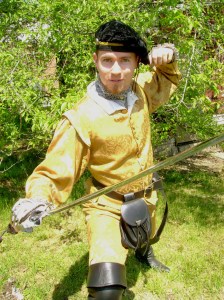
I’m not going to describe my story. Instead, I’m going to give you a three-word teaser for it: “Gryphons versus dirigibles.” …Curious to see which would win? RAFO! (Read-And-Find-Out!)

I’m Nick Bond. I’ve never been published before, but I’ve been writing in the Fortannis setting for over seven years. I’m an IT professional who lives in Bellevue, Washington with my fiancee Amber and my rat Pumpkin. When not working I enjoy writing, reading, lifting weights and getting involved with my local Alliance LARP chapters any way I can.
My writing heroes are Dan Abnett, H.P. Lovecraft and Frank Herbert, and their words have inspired me to pursue writing as a hobby. I am constantly driven to learn more about stories and authors that grab my attention and often find myself researching the history of a novel or other work, finding that often the stories behind the literature are just as interesting as the words themselves.

I feel that the mastery of language is a sign of a truly civilized mind and is a noble pursuit for anyone to undertake.

“The Long Sleep” is the story of an ancient hero being awoken to defend his home and return what has been stolen from his people. He sets off through the forest to take revenge on those who have wronged its children.

Roy C. Booth: I’m a Bemidji, MN born published author, comedian, poet, journalist, essayist, and screenwriter/doctor (with screenplays optioned), and an internationally award winning playwright wtih 54 plays published (Samuel French, Heuer, et al) with 700+ productions worldwide in 27 countries. I own and operate Roy’s Comics and Games of Downtown Bemidji with his wife, Cynthia, and our three sons. I can be found on Facebook, Myspace, and at www.roycbooth.com. Bats right, throws right.
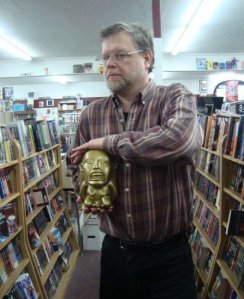
My story “The Great Green Kettle Pie Recipe Caper” is an epic tale about a hobling conquering his greatest nemesis, himself, or, more importantly, his stomach! Inspired by my desire to see fellow writer Brian Woods published in an anthology for the first time and to contribute directly to the Fortannis story universe in a quirky, meaningful way.

Jon Cory: I grew up in small town Indiana, one of three boys. My father owned a restaurant and believed in slave labor, putting us to work at age eight. However, since he also ran a cafeteria in a highly classified manufacturing facility, I had a security clearance ID badge to get in. Great for impressing your school buddies.

After getting a masters degree and a short stint in the Air Force, the corporate grind kept me busy for a number of years. I did manage to publish a business book on the use of computers in retailing.

Since I had enjoyed playing in dirt as a kid, the idea of becoming an amateur archaeologist had a certain appeal. The end result was being a team member of expeditions in Easter Island, Italy, Cyprus, Chile and other overseas locations.
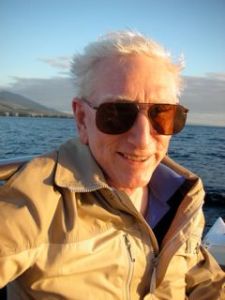
After flunking retirement three times, I returned to creative writing. A Foster City International Writers award for humor inspired me to tackle a novel. The result was that A PLAGUE OF SCOUNDRELS, my debut novel, won a 2009 IPPY Silver Medal for popular fiction and Honorable Mention at the London Book Festival.

In the final phase of editing a second novel with the working title of ROLY’S RELIC.

Wife and I live in Alamo, California.

“The Otherside Alliance” is my story. Even if he wins, he could lose. The tale of Sarlon, a carefree young knight, whose uncle, King Bellabond, has refused to recognize Sarlon’s royal linage. Powerful enemies threaten the kingdom, so Bellabond sends his nephew on an impossible task to secure an alliance with Duke Frost of Ashbury. Sarlon is given a meaningless title and is appointed ambassador.

The young knight errant teams up with Mumblepeg, a spotted dwarf, to outfox the Duke’s commissioner by disguising a worthless Otherside seaport to make it appear as a prosperous trading center. Can he convince the Duke to sign a treaty before his ruse is discovered? Sarlon plays a dangerous double game between King Bellabond and Duke Frost.

Tera Fulbright: I have been a fan of the SF genre since first reading C. S. Lewis’s The Chronicles of Narnia in the 4th grade. My interests range from costuming and stage combat to running conventions to writing, of course.
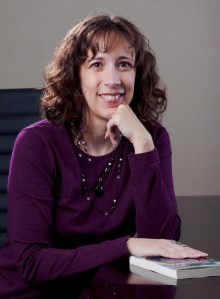
My first short story, “History in the Making” was published in the anthology RUM AND RUNESTONES in 2010. “Anne Bonny’s Child” will be published in the follow-up SPELLS AND SWASHBUCKLERS (Dec. 2011).

As a fan, I serve as the Quartermaster for the DMB Lightning’s Hand of the Buccaneers of the Atlantic Coast. I also enjoy costuming; some of my costumes include Mara Jade & Padme of Star Wars, Hathor of Stargate: SG-1 and various lady pirates. I’m also currently working on a steampunk courier costume. Along with my husband, James, I helped run conventions such as StellarCon and RavenCon for over 15 years before deciding to concentrate on writing.

In my non-fandom life, I work as the Employee Relations Coordinator for Unifi Manufacturing, Inc. And in what, admittedly limited, spare time I have, I enjoys miniature painting, playing D&D, reading and spending time with my husband and daughter at our home in Greensboro, NC.

“Faith” is the story of biata bent on revenge who is transformed as he finds himself cast in the role of a hero when a nearby town is threatened.

Hi, I’m Laurel Anne Hill, author and former underground storage tank operator. Eighteen years ago, I decided to follow my dream and write science fiction and fantasy–an antidote for the scientific, technical and regulatory writing my day job required. Along the way, I wrote some creative essays, as well.

Komenar Publishing released HEROES ARISE, my award-winning novel, in 2007. My shorter works of fiction and nonfiction have appeared in a variety of publications, including Space and Time, Lynx Eye, Nth Zine, RUM AND RUNESTONES, AOL News, the San Jose Mercury News and the Contra Costa Times. NPR broadcast one of my perspectives in 2004 and I have written and recorded several short stories for the Horror Addicts podcast. Watch for my short story “The Vengeance Garden,” in the anthology SPELLS AND SWASHBLUCKERS (Dragon Moon Press, edited by Val Griswold-Ford) scheduled for publication around December 2011.
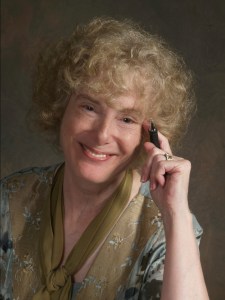
What makes me different and unique? The sum of my experiences, I think. I bake sourdough bread without the use a bread machine. I still beat egg whites by hand. I’ve done Scuba diving, paddled a canoe, rode a surf mat down river rapids, camped in the Sierra Mountains and run a steam locomotive. I’ve nearly drown, faced fire and almost fallen off cliffs. Once, an earthquake slammed me against a wall. On several occasions, I’ve even cleaned up radioactive spills. I bring all of these experiences–and plenty more–to my writing to create authentic story worlds, characters and action scenes. Please visit my website and podcast at http://www.laurelannehill.com.

My story is “Grip of Chaos”: Trovark, a disillusioned young man in his late teens, quarrels with Krespano, his older cousin. Krespano, an apprentice squire, plans to enter the cave of the Ice Mistress alone, to entreat her to forsake her use of chaos magic. The aftermath of her magic has blighted the countryside. But the Ice Mistress is a necromancer capable of freezing living flesh, and Krespano has little ability to sense the aura of a chaos spell brewing or combat the devastating effects. Furthermore, the Ice Mistress is not likely to abandon her magical powers. Krespano dismisses Trovark’s heated advice and heads for the dreaded cave. Nobility nonsense has made Krespano a fool.

Only Trovark can save his cousin from the power of the Ice Mistress. He travels to the cave several hours later, armed with his axe and huntsman’s sling. Yet Trovark’s success in the use of natural magic has grown erratic. Will he prevail or face doom?

My name is Ron F. Leota. I am a writer from the greater Seattle area of Washington state. After leaving my exciting career as a cyborg super spy I decided to settle down with my human wife Michelle. I am a long time gaming fan and musician. My first role-playing game, Carmine: A Role-Playing Game of Alchemical Fantasy, is out now from Attention Span Game Studios for only $19.99. See www.carminerpg.com for more information. I have been playing music in the Seattle scene for over a decade, which I suppose makes me feel a little old.
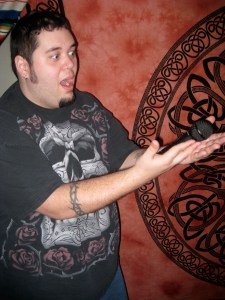
“Suffer the Liar” is the tale of two young con artists who travel to the mining town of Iron Falls. They spin tall tales as the naive townsfolk wine and dine them. Everything is going great for them until monstrous ice trolls attack. It is through a heart pounding series of events that they discover the true consequences of their ways. Will they survive the attack or will they become the heroes they once claimed to be?

Mark Mench: Born in the wrong time, I have been on a a lifelong quest to find my place. I attended Arcadia University in Glenside, Pennsylvania (which had an actual castle on campus) and graduated with a BA in English and Theatrical Arts. Afterwards, I held jobs from professional magician to a bartender at a virtual reality theme park; from developing computer games and MMOs to helping build a college for audio and digital arts. My current project is building a campsite where events like the ones set within this book can be acted out by participants from all walks of life. When not writing stories or game design documents, I can be found participating in Live Action Roleplay games worldwide, building various masks, costumes, weapons and props for the games or entertaining people as a fire eater. More of my work in, and information about, the LARP industry can be found here.
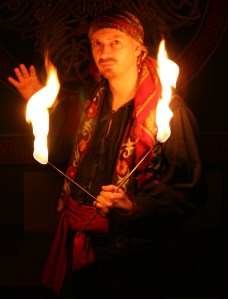
“Behind the Bar”, a tale of a tavernkeep who has a ‘side job’ that doesn’t take no for an answer, is my first officially published fiction work – not counting my credits on roleplaying games and a half dozen online and PC games. I wrote “Behind the Bar” due to the fact that most stories about thieves often have them well known as thieves, all their friends know it or they even get rewarded by nobility for their thieving ways helping them out. The philosophy of my main character is that the most successful thief lives his life rich and anonymous. I wanted to write a story about a thief who does his work quietly, using secret signals and as much misdirection so that not only would no one know he did the deed but that they would consider it impossible for him to have even done it.

Hi. I’m Bernie Mojzes, which (if you’re writing this down) is spelled just like it’s pronounced. Blame my parents; they’re from a country that doesn’t exist (anymore), so they’re used to it. I come from a serious people, a pragmatic people. And this pragmatic streak kicked in after a few semesters as an English major, and I wisely transfered to the Philosophy department. Neither of those has had any relation to any day job I’ve held.

I have a passel of short stories floating about, some online and more in anthologies. There’s a list on my website, including some free stuff. My book, THE EVIL GAZEBO (illustrated by my illustrious spousal unit, Linda Saboe), is a faux children’s story (for faux children) that’s secretly about sex. We’re currently in the process of adapting it for the stage, which is, I must say, an interesting learning process in and of itself.

The other little project I’ve been working on is a little thing called The Journal of Unlikely Entomology (with co-conspirators A.C. Wise and Linda Saboe), an online magazine dedicated to fiction of the buggy variety. We’re planning on launching the debut issue sometime in mid-to-late May. Check us out – http://www.grumpsjournal.com – I’ve been extremely pleased with the quality of the submissions, and I think we have a very strong lineup for Issue 1.
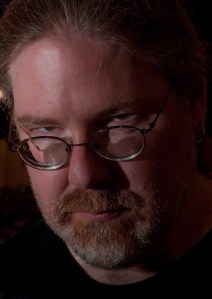
When Mike first announced this project, I wasn’t sure I had anything of value to contribute. The theme being high fantasy stories set in the world of Mike’s novels, which are set in the world of Mike’s LARP system.

I’ve been gaming since the old Traveller box set, since before Basic Dungeons & Dragons came out. But I’ve never LARPed, and for the last 20 years the RPGs I’ve been in haven’t looked terribly much like any other games I’ve seen around. But Mike’s a friend, and I hadn’t written high fantasy since the early 80s, when I thought I could, perhaps, be the next Tolkien. It was a chance to touch base with the roots of my fascination with the genre. So I said, “Tell me about your world, and maybe I’ll be inspired.”

Mike told me about a world of knights and heroes, filled with elves and goblins and cat people and bird people. His own stories center on a land called the Duchy of Ashbury.

Let me tell you, if you grew up in South-East Pennsylvania or New Jersey in the late 70s and early 80s … Well, let’s just say that there’s a whole host of puns in there that are just too tempting to deny.

So, I wrote a story, based on a bad pun, that takes place in Ashbury Park, and involves musicians, and fame, and love. And also evil, treachery, tentacles, sex, death and fabulous hats. I wrote … let’s see, how did I put it at the time? “It seems my concept of ‘high fantasy’ looks more like Jersey shore detective noir urban fantasy comic tragedy stuck in a blender with lovecraftian horror, but such is life, love and tentacles.” I got to the end, and thought to myself – well, that went way darker than I expected. I got some feedback, did some edits, and sent it off to Mike anyway.

Who said something like, “Do you think it’s a bit adult?”

Heh. You should’a seen the previous version.

Matthew C. Plourde: I’m an enterprise consultant by day and a writer by night. After battling cancer and my own social programming for so long, I’ve finally discovered the courage within myself to publish my novels. My first novel, EDEN, has been available on all formats since October 2010 and has spent a considerable amount of time on several Kindle top-100 lists. I recently released my second novel: a science-fiction offering called THE ANTARAN LEGACY. I continue to write and I’m happy to be a part of this project.
My first piece of published fiction was flash on a now decommissioned website. When the call came to write a fantasy-themed short story, I jumped at the chance. “The Messenger’s Trap” follows a reformed thief and his introduction to a path of redemption. If you’ve watched an episode of Legend of the Seeker or a similar show, you will be on familiar territory. Fun, light fantasy fare!

J. Thomas Ross: I retired after thirty-three years teaching high school English and history in southern New Jersey to pursue a second career in writing. I grew up in a Pennsylvania suburb of Philadelphia and now live in a semi-rural New Jersey township with my husband, youngest son, dog, and two cats (the latter three were rescued). I am a long-time science fiction and fantasy fan, but I also enjoy reading newspapers and magazines, historical fiction, mystery, romance, thrillers, and anything else that catches my interest. I don’t read as much as I’d like to because the day has too few hours!

Although primarily interested in writing novels, I also write poetry and short stories and edit others’ manuscripts. My poem “Winter” won an award at the 2010 Philadelphia Writers Conference, and I edited Michael Ventrella’s THE AXES OF EVIL and am the copy editor for A BARD’S EYE VIEW. I am currently working on a coming-of-age young adult novel set in the future, which is the story of the seventeen-year-old narrator and her foster brother, who has some unusual, genetically-engineered abilities.
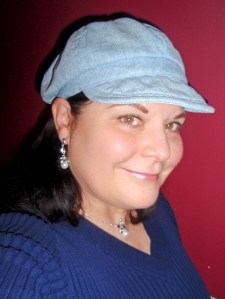
The unique thing about me which pops out at you first is my male middle name. My parents promised my grandfather to name their first child after him. Obviously, the name caused me a great deal of distress as a child, but now I’m proud to have it. My grandfather was a poet and the only member of my family who believed writing is a worthwhile endeavor. He not only supported my interest but he understood my need to write.

My introduction to Fortannis came from reading ARCH ENEMIES and THE AXES OF EVIL; I admit I avoid gaming because if I ever got started, everything else would fall by the wayside. When Michael mentioned the anthology, I knew immediately that I wanted to write a story about goblins. I did some thinking about how the goblin accord with humans might affect the goblins, who had relied, to some degree, on stealing from humans to survive. The economic hardship forms the background for “A Rock Is a Rock Is a Rock … Or Is It?” in which a goblin girl follows the village boys on an adventure, her last adventure before she gets sent off to live with her uncle because of her parents’ poverty. The boys want to follow the old human road to learn why the humans have started using it again. What they discover is not at all what they expected.

My name is Michael Strauss and I am a freelance writer and avid gamer. I mostly write articles for various online publishers, including Yahoo news. This is my first foray into fiction.
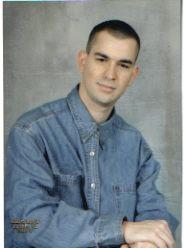
For this first piece of fiction (“Listen to a Tale, My Friends”), I framed the story as bardic tale being told in a tavern. Understanding that readers would not likely be as familiar with the world as I am, this allowed the storyteller to provide explanatory details to the readers without the story feeling disjointed. The story on face value appears to be a rather classic tale of a heroic warrior facing off against an evil necromancer. Rather than ruin the tale, I will simply state that first impressions are very deceiving.

And last but least, I’m Michael A. Ventrella. I edited this new collection, which is based in the world of Fortannis. Fortannis is the setting of a live-action roleplaying game I run called “Alliance” which has chapters all over the country. You may have noticed some of the authors here also write stories for that game, and have transferred their skills to fiction. I had done the same thing with my two novels ARCH ENEMIES and THE AXES OF EVIL, which, like TALES OF FORTANNIS, are published by Double Dragon. You can order all of these in any format (paperback, ebook, kindle, etc.) at my web page. I’d also love it if you would join my Facebook page, where you can get notice whenever I have news or update the blog.
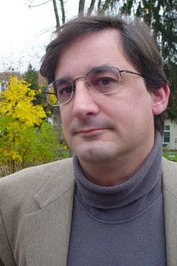
My story (“The Zombie King’s Plan”) features the characters from my two novels. A small town is being attacked by zombies who are demanding that a young girl return some magical rings. It seems this biata girl had used magic to place her memory in these rings but something had gone wrong and the rings were stolen. Our heroes come upon the town after three of the rings had already been recovered. They go on a quest to retrieve the last one, but something just isn’t right. As with all of my stories, there are twists and turns and surprise endings, so I hope you’ll check it out!

There will be future editions of TALES OF FORTANNIS so if you are a writer (and I know many of you reading this are, since that is the focus of this blog) please contact me. Details are on my web page here.

My Turn to be Interviewed

In an amazing coincidence, two blogs have interviews with me today.

First, I have a very nice conversation with Donna Galanti on her “Writing with Gusto” blog today, discussing writing techniques, ideas, and publishing challenges. Check it out!

Second, I discuss the new book with Laurel Anne Hill on her blog. Laurel is one of the writers whose stories appear in TALES OF FORTANNIS: A BARD’S EYE VIEW. Check it out also!