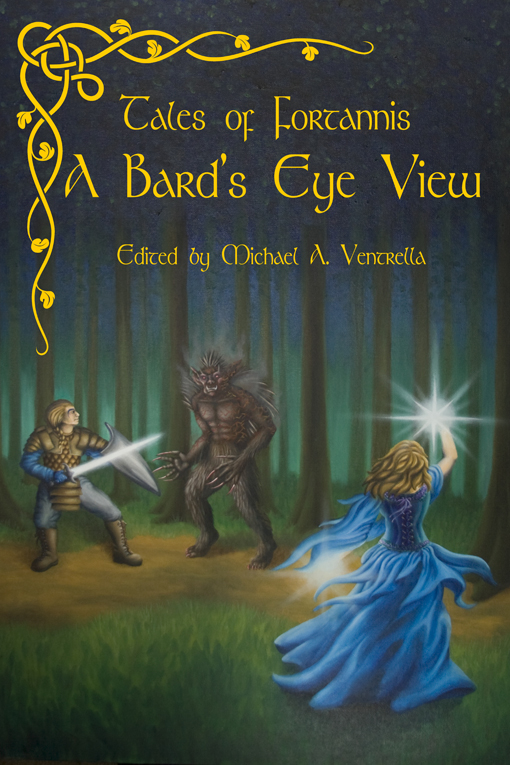
Tales of Fortannis: A Bard’s Eye View

The new collection of short stories taking place in the world of my two novels is here!

TALES OF FORTANNIS: A BARD’S EYE VIEW is the first in a planned series. I’m very pleased with the stories collected here. There is a wide variety of tales being told in a myriad of styles.

“A Bard’ Eye View is a wild and weird collection of fantasy stories that present some of the freshest writing around. Derring-do with a great sense of fun. Highly recommended.” – New York Times bestseller Jonathan Maberry, author of THE KING OF PLAGUES and DUST & DECAY

“Rollicking good fun perfect for a beach read, subway read, airplane read—heck, just buy it and read it! Mirth, mayhem and magic in an intriguing world.” – Gail Z. Martin, author of the Chronicles of the Necromancer series

“A Bard’s Eye View is a varied collection of adventures, whimsies, variously grim, grand and comedic; this book will appeal to fans of gaming and fantasy alike.” – Jay Lake, Campbell Award-winning author of GREEN and MAINSPRING

“You don’t need to know the background material to enjoy the range of stories from the talespinners assembled here. It has plenty of adventures that end with a twist that leave you shaking your head in pleased surprise. I’ll be happy to look for many of these writers in days to come.” – Jody Lynn Nye, author of VIEW FROM THE IMPERIUM and DRAGON’S DEAL

Here’s a short summary of the stories you’ll find:

The Zombie King’s Plan by Michael A. Ventrella: Squire Terin and his friends from the novels ARCH ENEMIES and THE AXES OF EVIL journey to retrieve the last magical ring for a biata girl whose memory was stolen. As they fight through zombies, they begin to discover that something isn’t right…

Stealing the Sky by Danny Birt: A brave admiral — who, as a youth, had his arm bitten off by a gryphon from the lands of Thessi — has been planning his revenge for a very long time. Determined that no one else should suffer his fate, he gathers his army and, with the help of the dwarves, moves against the gryphons with his plan.

Listen to a Tale, My Friends by Mike Strauss: A traveling minstrel fascinates the local townspeople with a horrifying tale of a necromancer — and and provides a surprise ending.

Bad Debts by Bernie Mojzes: A simple job turns out to be anything but simple. An evil ritual, a nameless monster, a dead patron — and a young woman must come to terms with her ex-lover and his new flame before she can defeat the threat.

Grip of Chaos by Laurel Anne Hill: When his squire brother does not return from his quest to fight the Ice Queen, an untrained young man has to face his fears and confront the necromantic creature himself.

The Great Green Kettle Pie Recipe Caper by Roy C. Booth and Brian Woods: A timid hobling decides the only way to obtain his favorite pie from the baker who refuses to share is to break in and steal the recipe — but things never go as planned.

Behind the Bar by Mark Mensch: Nigel the tavernkeeper has a successful business. And he has a secret panel in his back room and a secret retirement plan — a plan that not one of his satisfied patrons suspects.

A Rock is a Rock is a Rock … Or Is It? by J. Thomas Ross: When a group of goblin children sneak into the human’s cave to see what riches the humans are mining, they find no gold or gems … but discover a strange secret.

The Messenger’s Trap by Matthew C. Plourde: A mercenary is not sure who to trust when he is released from prison after promising to deliver a simple message.

Faith by Tera Fulbright: A biata bent on revenge learns his true mettle when faced with a life-threatening emergency.

A Child’s Tale by Davey Beauchamp: The kids love to hear stories of their heroes Oliver Songbringer and Aramis Llyrr, but will they act as bravely when they encounter danger in the woods?

Suffer the Liar by Ron. F. Leota: Two con men who spin fabricated tales of mighty adventures suddenly find themselves in an all-too-real situation fighting ice trolls. Can they discover a way to save their skins from both the monsters and the townspeople?

The Long Sleep by Nick Bond: The ancient forest has awakened its defender, who must seek out the necromancers who have stolen its heart.

The Otherside Alliance by Jon Cory: A lazy knight, whose king demands that he arrange an alliance with Duke Frost or die, comes up with a brilliant plan to obtain the Duke’s support — so long as no one sees through the ruse.

J. Thomas Ross was the copy editor and the cover is by Sheila Haswell.

Next week the authors themselves will introduce themselves and discuss their stories here!

Click here to order your copy!

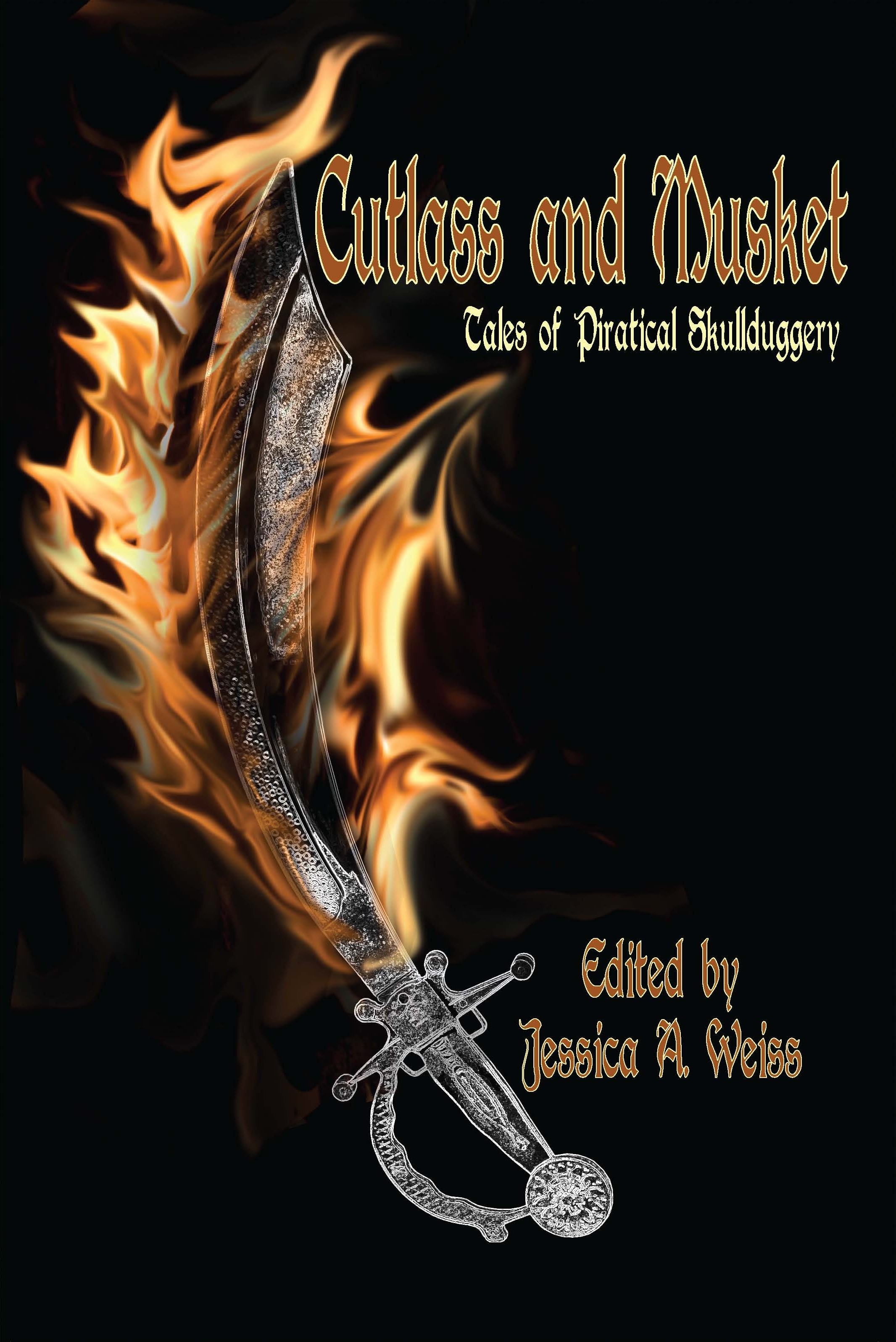
Cutlass and Musket!

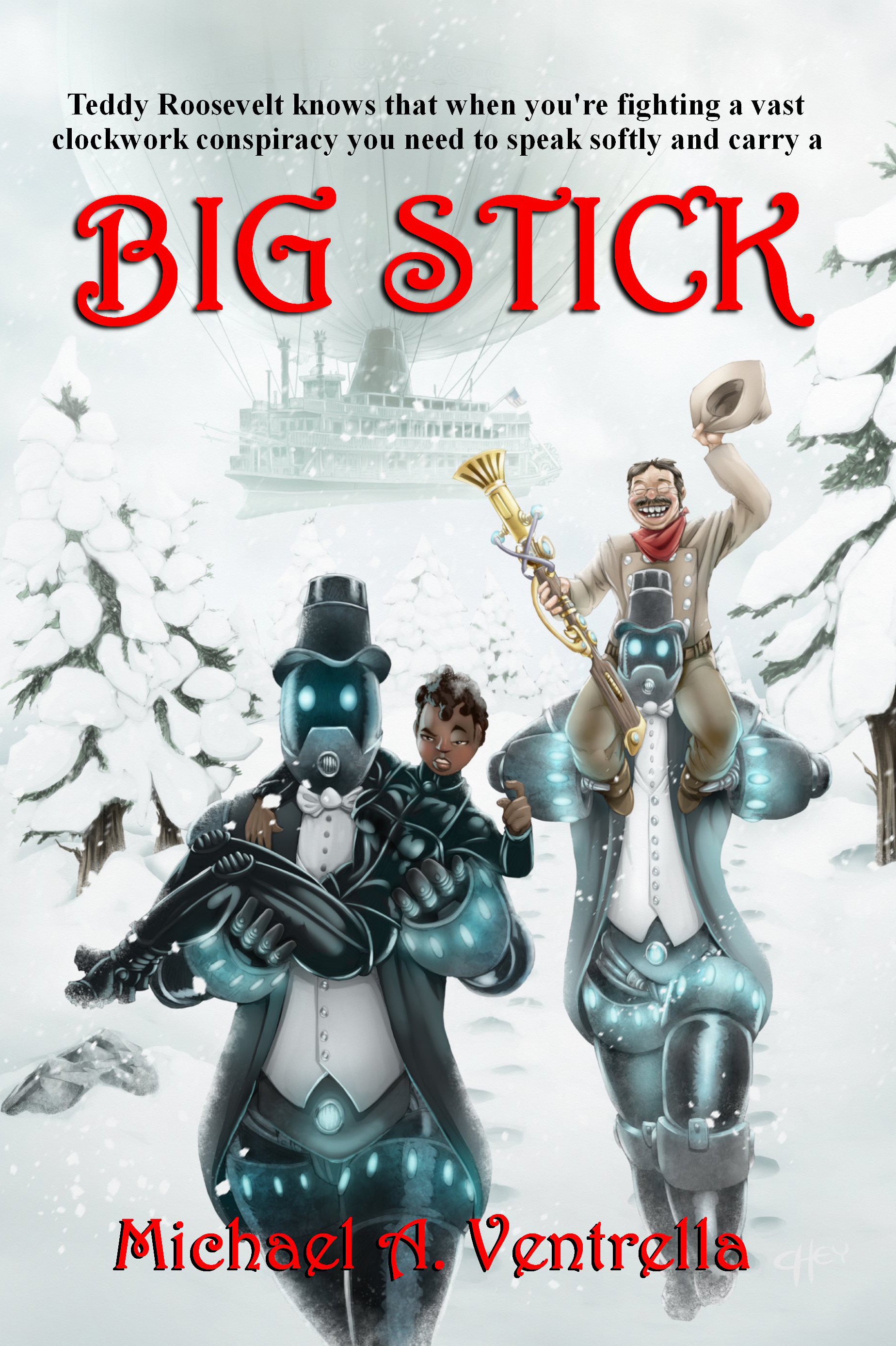
Avast! There be a new pirate story from that scalawag Michael A. Ventrella! This one tells of another adventure of Captain Irad and Greenie, and it be called “Get Kraken!” It be the lead story in a new collection called CUTLASS AND MUSKET: TALES OF PIRATICAL SKULLDUGGERY available now from Wicked East Press. Ye can order a copy here.

Here be the opening of the story…

Bart swallowed deeply as his hand subconsciously rose to his neck.

Through the cage bars, he watched mournfully while the hangman placed the noose around the neck of Captain Irad of The Prickly Rose. Once the hangman finished off Irad, Bart and the rest of the crew would be marched up the gallows, one by one, to meet a similar fate. The crowd stirred impatiently, anxious to see the famed pirate meet his maker.

“It not be fair,” Bart grumbled. “I been with the Cap’n only a few weeks, and never did no raids on the English.”

“Quit your complainin’, Greenie,” Sonia Laveau said in her heavy Creole accent. “Just ‘cause I’s hitchin’ a ride I be captured, too.”

Dogbone snorted. “I always said women be bad luck.”

Sonia raised an eyebrow. “You want to see what bad luck is, boy?” She pointed a finger at the crewman.

Dogbone’s eyes widened and he sat forcefully down in the small space available. “No, ma’am. I be quiet.” His head shrunk into his shoulders and he looked away through the bars, avoiding eye contact with the famed voodoo queen.

The other crewman had long since given up hope. They crowded together, staring out to sea, resigned to their fate.

Irad suddenly looked up. His mane of reddish blonde hair whirled around him like a fire as he tossed back his head and laughed.

“Lieutenant Higgins!” he said. “’Tis a pleasure to see ye! And here I be worried ye’d miss all the fun.”

Higgins crossed his arms and smiled broadly. The bright Caribbean sun gleamed off his shaved head, making it difficult for direct eye contact with the man. His red coat was neatly pressed, buttons polished, and his regulation sword hung by his side like a trophy.

“Ah, Irad. It’s such a pity that our friendship must end in this way.”

Irad grinned. “Ah, ‘tis indeed sad. We’ve had such great adventures together, like that time in Bermuda…”

Higgins’ smile disappeared. “Yes. Well. Goodbye.” He walked away, signaling to the hangman to do his job.

“Good luck gettin’ off this island and back to Bermuda with the kraken on the rampage,” Irad said over the noise of the cheering crowd. “The man who defeats the kraken will surely be promoted and rewarded beyond his wildest dreams. Too bad ye be killin’ the only man who knows how to do it.”

Higgings turned and held his hand up. The hangman paused.

“What is this trick, Irad? What’s your scheme?”

“Arrr, ye cut me to the quick, ye do.” Irad shrugged the best he could with his hands tied behind him. “’Tis just a shame, that’s all. The kraken’s been attackin’ ships in this area forever, and just when I discover how to defeat the beast, I get hanged, taking the secret with me. Ah well, that be life. Or death.” He laughed at his own meager joke.

Higgins shook his head and smiled. “Very well, I’ll bite. What’s this secret?”

“Come now, Lieutenant. I not be that stupid.” Irad gave a reproaching look. “I not be telling ye this for nothin’.”

“Bargaining for your life, are you?”

“Of course! You think me daft? Let me and me crew loose and I promise the kraken will not be a problem no more.”

Higgins climbed the steps to the gallows and the hangman backed away to give him room. Planting his feet forcefully in front of Irad, Higgins once more crossed his arms.

The crowd grew silent. Bart pushed his way past his fellow prisoners to get a better view.

“You must think me a fool,” Higgins finally said. “How can I possibly believe you? The minute I set you free, you’ll disappear and never face the justice you deserve.”

“I give you me word as Cap’n. I promise that me crew has a foolproof plan to defeat the kraken, which cares not what flag a ship be flying. If we fail, then we be dead anyway. This I swear.”

Higgins stared into Irad’s eyes for long seconds. “Your promises are meaningless.” He walked away and motioned to the hangman, who came forward and grasped the handle that would send Irad through the trap door, ending his life.

Irad merely grinned. “I have given me word, and that is not enough for ye?”

“Three,” said Higgins.

“Ye can grab the reward. I promise.”

“Two.”

“I swears, I tell you. I swears I’ll do this!”

Higgins held up his hand and began to speak the final word. The crowd held its breath.

“The Pirate’s Code!” yelled Bart. “Swear on the Pirate’s Code!”

Higgins spun around to stare at the prisoners in the cell.

“Greenie, ye damned fool!” said Irad. “Be quiet!”

“Swear on it!” Bart yelled. “That way he’ll know ye can’t break it!”

“Greenie, I’m ordering ye! Shut yer bloody face, ye blasted blowfish!”

Higgins turned to Irad. “Pirate’s Code? What is this ‘Pirate’s Code’?”

Irad stared back defiantly. “No such thing. Ignore the lad; he be crazy from the heat.”

Turning his back on Irad, Higgins marched down the wooden stairs of the gallows. His steps boomed in the crowd’s silence.

The cage holding the crew of the The Prickly Rose stood about twenty feet from the platform. Armed redcoats surrounded it, and a prominent lock taunted the dirty and crowded inhabitants. Higgins stomped and stood before Bart.

“What is your name?” he asked in a deliberately quiet and calm voice.

“Bart, sir, but everyone calls me ‘Greenie.’”

“Well, Bart, you look a bit young to be traveling with this crowd of villains.”

Bart nodded. “Aye, sir. I only just joined them. I done nothing illegal at all. I just needed a job, sir.”

“Greenie, I order ye to shut the hell up!” yelled Irad.

Higgins pretended he didn’t hear him. “So tell me about this Pirate’s Code.”

Bart looked at his fellow prisoners, each of whom had murder in his eyes. He gulped. “It be a magical Code, sir. All pirates have to swear by it, in blood. It binds us so that if we makes a promise by the Code and don’t keep it, we gets gravely ill. Boils erupt on our faces, our limbs rot, and within a month, we be dead.”

“Is that so?” Higgins scratched at his nose. “How interesting. I wonder why I never heard of it before.”

“Because it be death to he that mentions it!” Irad yelled. “Greenie, yer a dead man!”

“Please, sir, make him swear on the Code and then set me free. There be no loyalty from me to him.”

Higgins marched back to Irad. Bart winced as the other pirates kicked him.

“Well, Captain Irad. Here, then, is my deal.” Higgins grinned. “I will release you and your crew and will provide you with a ship—no, not your ship, but a nice vessel that will serve your purpose. I will captain the ship to make sure you keep your promise.

“You will swear that you will obey my orders as Captain and that no harm will come to me. That includes locking me in the brig or otherwise restricting my movement in any way. A faster and more powerful English ship will follow at a safe distance. I will send them regular signals in a code you won’t know. You will use your secret to defeat the kraken. Once this is completed, I will return you to a port where you can go free.”

“And me ship?”

“I’m allowing you to live and you want your Pickled Rose back, too? I don’t think you realize that your negotiating power isn’t very strong right now.”

Irad growled and mumbled under his breath. “It be The Prickly Rose, ye scum-sucking—”

“You must swear all this on the Pirate’s Code.”

“Ye blasted sour-faced bugswallower! Ye don’t leave me no choice. Right, then.” He took a long breath. “I swear, on the Pirate’s Code, that I will obey ye as Cap’n, make sure no harm comes to ye, not lock ye in the brig, and will use all me powers to defeat the kraken in exchange for the freedom of me and me crew.”

Higgins grinned. “There now, that wasn’t so terrible, was it?” He turned to his soldiers. “Wheel the cage down to the docks and get the crew on board the Fitzgerald. Make sure none of them escape.”

“What about me, sir?” asked Bart.

Higgins shook his head. “You are too useful to me, boy. I need you with me.”

Bart wiped his forehead as Irad’s laugh echoed in his ears.

Interview with author Michele Lang

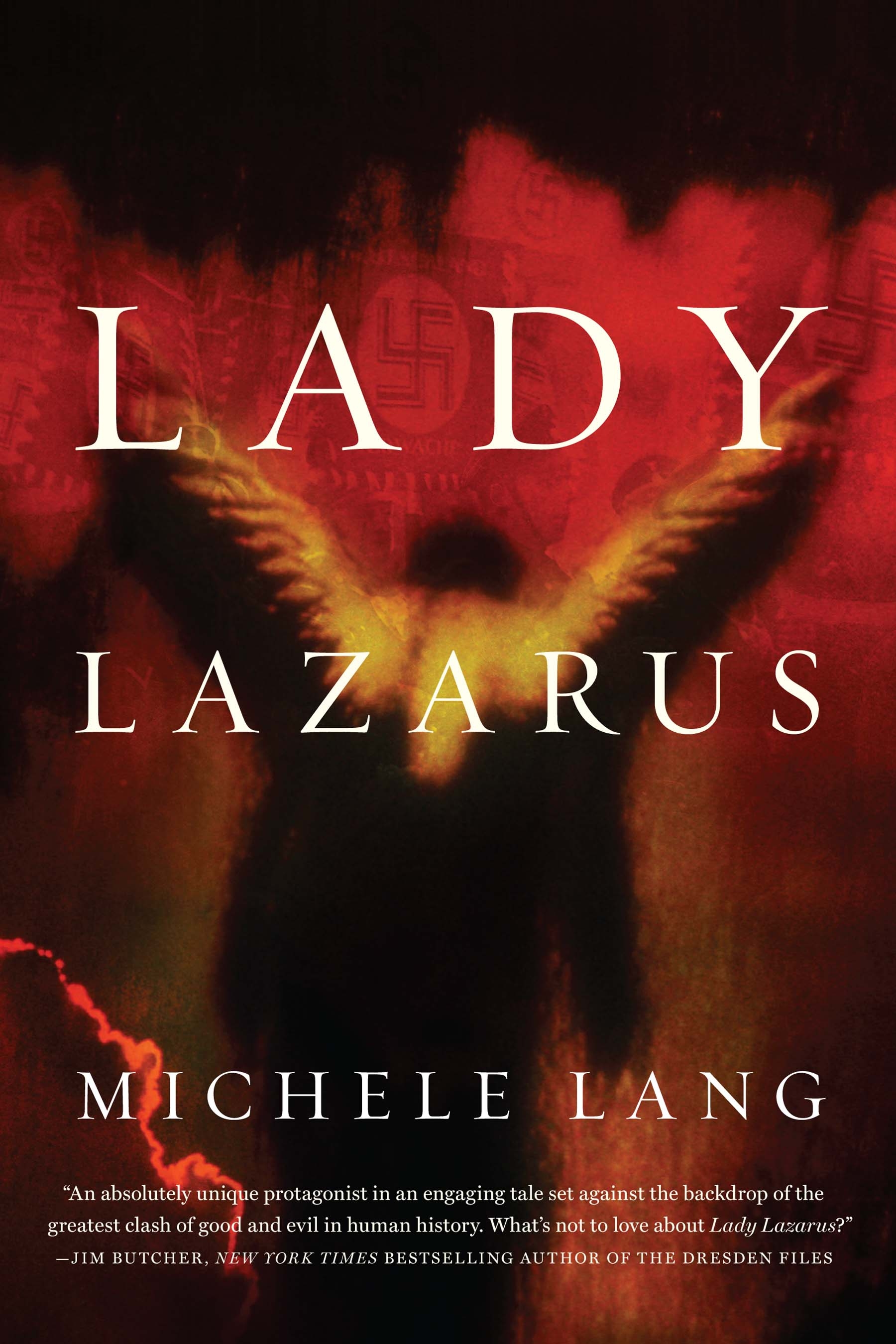
MICHAEL A. VENTRELLA: Today I’m pleased to interview Michele Lang, who writes all kinds of speculative fiction, and has also practiced the unholy craft of litigation in New York and Connecticut. LADY LAZARUS, her latest release, is a historical fantasy, the first of a series (Tor: September 2010). DARK VICTORY, the next book in the series, releases January 2012.

Michele, how did you get your “big break”? Aspiring writers want to know!

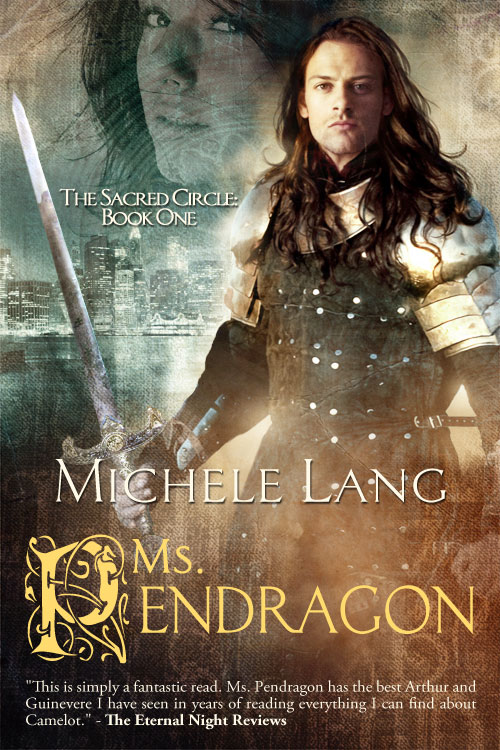
MICHELE LANG: I don’t know that I’ve ever gotten a “big break” exactly, more like a bunch of sweet serendipities that have led me from project to project. My first book, MS. PENDRAGON, was published by a now-defunct e-publisher; I pitched the executive editor at an online workshop run by an online romance writers group, From the Heart.

My first NY contract was with Chris Keeslar, who I met on the plane back from Romantic Times in Daytona in 2006. Now that was a lucky break! Chris is a wonderful editor, and I enjoyed writing NETHERWOOD for his Shomi line. Because of that contract, Lucienne Diver agreed to rep me as an agent, and Lucienne sold the LADY LAZARUS series to Jim Frenkel at Tor.

VENTRELLA: Do you believe that anyone can be a fiction writer or is the ability to tell a story more of an innate thing?

LANG: I think storytelling is part of what makes us human. I know many fantastic storytellers who cannot convey those stories in written form, so writing ability is not exactly correlative with a storytelling gift.

The most important factor, I think, in becoming a fiction writer is sheer determination. I know many talented writers who have broken through, but they didn’t break through because of their talent. They became published, and stay published, because they refuse to give up in the face of rejection and difficulties.

VENTRELLA: I recently blogged about “plowing through that first draft” and you wrote similarly about the “salami list.” What tricks have you found that help you personally get your work done?

LANG: To be honest, a contractual deadline does the trick better than anything else! But, aside from sheer panic, I have found some little tricks that help me to get work done.

The best is to have a daily goal. It can be humble, and probably should be, but most important it must be tied to your long term goals.

Start with a vision – what do you want for your writing life? Tie that vision to a goal you can achieve through your own efforts.

Break down the goal into measurable steps, and break those down into monthly steps. Weekly, and then daily. Work your plan, and review it in writing every month – how are you doing?

Try to get your daily goals done at the beginning of the day, before life sinks its teeth into you. Maybe this is only a tip for the morning people of the world, but it definitely is helpful for me.

Expect resistance and the termites of daily life to attack these goals. But dedicate a daily time to pursuing your goals with passion and consistency, and your dreams won’t be denied.

I try to write every day, though with a bunch of small kids in the house that is not always something I can achieve. I have time dedicated to writing: right now it’s 5:30-6:30 a.m., weekdays. I try my best to tack on another hour during the day, but that is not always possible. But I’ve done my best to make a habit out of the 5:30 hour.

That said, when I’m on deadline all bets are off. I write every minute I possibly can, then. The house goes to hell, but my immersion in the project overwhelms all resistance. I love writing 24 hours a day against a hard deadline – it’s so primal and exhilarating.

VENTRELLA: When creating believable characters, what process do you use?

LANG: I try to listen. When I am deep into a story, I can hear the characters and they tell me what they do and why. They often surprise me too.

If they go off and do something I don’t expect, I follow them and try to figure out what they are doing and most importantly, why. I try mightily not to impose my own judgments and expectations of what they should be doing – when I do that, the writing gets very dull and safe. And that’s death for the story.

When I’m rewriting, I try to climb inside my characters and see the story from their perspectives. And I try to make sure the story reflects their truest natures, whether they are villains or heroes or some combination of the two.

VENTRELLA: Some of your work is hard to categorize. How do you see yourself?

LANG: The stories that come out of me end up in the genre aisles, the romance and fantasy shelves. I think that’s a wonderful destination.

But before that, I am simply a writer. I write the stories that demand to be written, the ones that I have no choice but to write. I write the stories that I wish already existed inside a book.

I read this way, too. I try to read like a kid, without preconceptions about the market, what is marketable, where a story fits in the pantheon of Story. I read for love.

I might find WATERSHIP DOWN in the fantasy aisle, or FULL DARK, NO STARS in general fiction (or at the front of the book store in its own special dump), but the books I love the most transcend category for me. They are just wonderful stories.

To keep writing, it’s important to understand the marketplace, to respect the daunting job of the sales department and marketing department to get books into stores and into the hands of readers.

However, I figure if I write the best book I can possibly write, there will be a place in the market for it, especially now with the rise of ebook distribution and its long, long tail.

VENTRELLA: How does your latest fit into this dilemma? Is this giving your publisher problems with promotion?

LANG: LADY LAZARUS is a historical fantasy, but one with werewolves and vamps. My editor calls it historical urban fantasy, but it’s pretty epic in scope, too. The pacing doesn’t match a standard urban fantasy, but it does get pretty explodey by the end, and the next one, DARK VICTORY, picks up speed and ends up blowing up a good chunk of Eastern Europe and our history of World War II, besides.

Tor’s been great about promoting the books. I went to BEA last year, NYC ComicCon and I just got back from the Empire State Book Festival too. I think the urban fantasy market is very, very crowded but LADY LAZARUS is not quite an urban fantasy, so its out of the box status might actually help set it apart.

VENTRELLA: We met at Lunacon a few years ago; do you attend many conventions? Do you find them worthwhile?

LANG: I only started attending SFF cons after I sold my first book, and love them. I love meeting readers, and so I also find cons a great source of inspiration and new ideas.

I attend as many local cons as I can, and wish I could travel to more. I did get to go to World Fantasy last year and it was wonderful. But the local ones are great too.

VENTRELLA: Tell us about the plotline and setting for LADY LAZARUS.

LANG: The series is set on the eve of World War II in a magical Budapest, and tells the story of Magda Lazarus, a witch with the power to return from the dead. In order to avert her sister’s horrifying visions of the impending war, Magda must battle SS werewolves, wizards, and demons, including the one who has possessed a willing Adolf Hitler.

VENTRELLA: How did you get the idea for the story?

LANG: This idea went and got me, I often say. My parents are both Holocaust survivors. This book is the ultimate what if – could my family have all survived if they had magic on their side?

The title comes from the famous Sylvia Plath poem, “Lady Lazarus.” She uses the idea of a Jewish girl returning from death as an extended metaphor for her own suicides. I am very literal-minded — when I read this poem for the first time I thought the idea of a murdered Jewish girl returning from the dead to kill Nazis was awesome. Wanted to read the story, so I wrote it!

VENTRELLA: Do you find short stories to be a good way for aspiring authors to get noticed?

LANG: Yes, absolutely, though that is not the way I came up in the writing world at all. Short stories are becoming a bigger and bigger market, and I think that’s terrific. The form is going to get more popular, I think, as people’s reading habits continue to change.
Aside from getting noticed, it’s a great way for published writers to promote their longer work, and also a great place for any writer to audition settings and characters for longer stories.

VENTRELLA: Amazon is reporting that e-books are now outselling traditional publications. What effect will this have on the publishing industry?

LANG: Hah – by the time I gave you an answer, it would be out of date, things are moving so fast! I’ll just say that it’s an amazing time to be both a writer and a reader. I write stories, my readers read and enjoy them. The more ways I can get my stories to readers, the better.

VENTRELLA: For beginning authors is this a good thing or a bad thing?

LANG: I’m not sure…it is definitely a confusing thing! The NY publishing route is no longer the only way to achieve financial success as a writer. The best way for a new writer to go forward is to get educated about their rights (read the Copyright Handbook for a start), read any publishing contract very carefully, and go forward boldly.

You will make mistakes – all writers make business mistakes at some point, or have bad luck. But then we start again. As I said above, stubbornness is the key to the game, more than luck or talent.

VENTRELLA: And finally: You’re like the fifth author I have interviewed who was an attorney prior to giving it all up to write. (I’m still practicing, though…) What is it about lawyers that make us want to write fiction?

LANG: I could say something witty here about lawyers and the truth, but I just won’t 😀

Actually, most lawyers I met during my practice were ethical and decent, and many of them were brilliant. I was a litigator, and I can say that the ability to convey a narrative is essential to winning jury trials. Also, to be a good lawyer, you need to be able to read a witness, tell when they are lying, get to the bottom of their motivations, etc.

The other great thing about being a lawyer is you learn to endure. It sounds like I’m joking around again, but I’m not. Generally speaking, litigation is like trench warfare – whoever hurts the other side the most, wins. That stubbornness, again – you need it to be a successful lawyer, you need it to be a pro writer.

Coincidence? Not in my case. Being a lawyer toughened me up for being a writer.

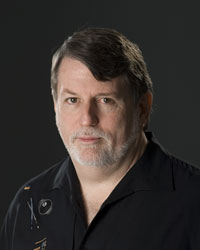
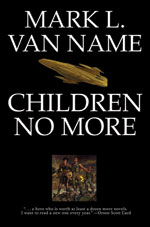
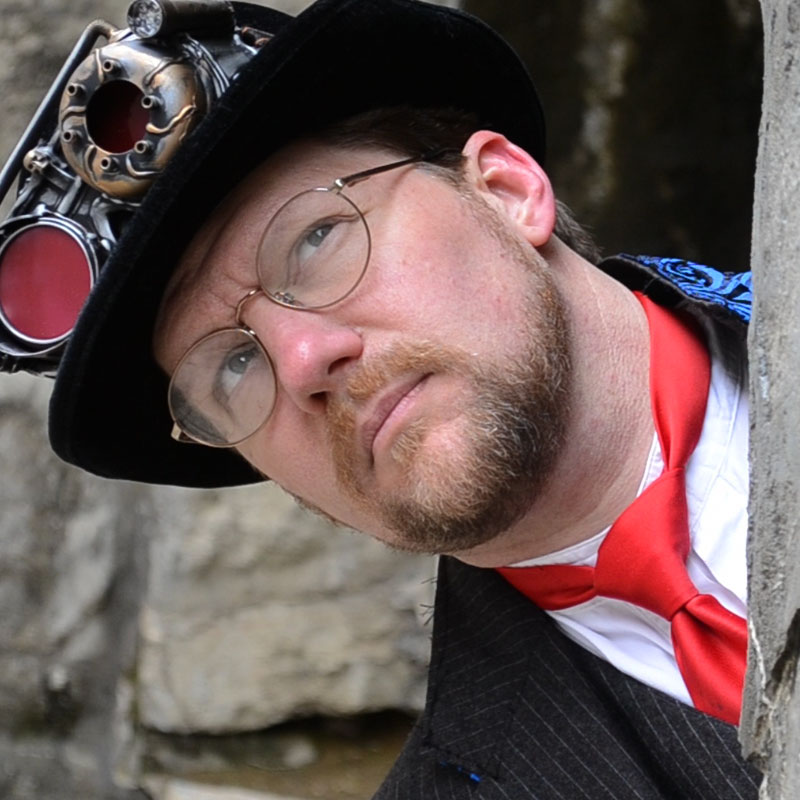
Interview with author Mark L. Van Name

MICHAEL A. VENTRELLA: Today, I am pleased to be interviewing Mark L. Van Name, who I had the pleasure of meeting at the Arisia convention in Boston recently. Mark has worked in the high-tech industry for over thirty years and today runs a technology assessment company in the Research Triangle area of North Carolina. He’s published over a thousand computer-related articles and multiple science fiction stories in a variety of magazines and anthologies.

How important is it that writers of hard SF especially have a background in science?

MARK L. VAN NAME: There are no hard and fast rules about writing, SF or otherwise. The right good, smart writer can pull off just about anything. You can learn so much via research that not having formal training in an area is no excuse for not learning about it. So, I don’t think it’s vital that hard SF writers have a science background.

That said, I do think it’s helpful to have a solid base in any areas you try to cover in depth. Without that base, you better do your research, because otherwise, you’ll make mistakes, and your readers will spot them.

VENTRELLA: Since all of speculative fiction relies on things that are not, do you think a beginning writer should be wary when writing about things of which they have no experience?

VAN NAME: Wary, yes, but afraid to tackle it, no. You just have to respect the material you’re using. If you haven’t been a fire fighter and want to write about them, reading about their work and talking to some would be a very good idea. Making it up entirely based on what you’ve seen on TV, though possibly better than no research at all, is rarely enough for your work to have the verisimilitude it should.

VENTRELLA: Given your background, are you worried about the growing anti-science attitude we are seeing in much of politics these days?

VAN NAME: Definitely, though I have to say that particular concern is lower on my list than many others, including global climate change, the huge levels of hunger and poverty around the world, our national debt, child soldiers, and many other causes. There have always been groups opposed to rationality, and there always will be.

VENTRELLA: How did you break into the field? What was your first sale and how did it come about?

VAN NAME: My first fiction sale of any type was a short story, “Going Back,” to a now-defunct, small-press, feminist SF magazine, Pandora. My first professional (by SFWA guidelines) sale was a short time later, a story, “My Sister, My Self,” that went to Asimov’s but ended up in their original anthology, ISAAC ASIMOV’S TOMORROW’S VOICES. In both cases, the sale went down in the usual way: I mailed them the manuscript, and they bought it. For the first story, the editors asked that I interview some battered women–the protagonist was one–and then do a rewrite based on what I learned. I did, I learned a lot, I rewrote the story, and they bought it. For the Asimov’s piece, I mailed it, and they bought it. Not very exciting, I’m afraid.

VENTRELLA: Did you get an agent?

VAN NAME: Nope. Only after I’d sold the first four novels did I talk to an agent. I’m not at all convinced that agents help beginning writers sell short stories. More to the point, I suspect that few agents you would want to represent you would take you if you were writing only short pieces, and that’s all I was doing for many years.

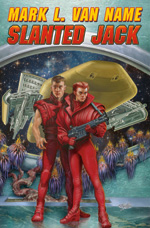
VENTRELLA: Tell us about the Jon and Lobo series!

VAN NAME: Talking about a multi-novel series is a lot like describing a multi-course meal of experimental cuisine: whether you focus on the individual dishes or the overall meal, you’re bound to miss a lot. I’ll try it a bit from both perspectives.

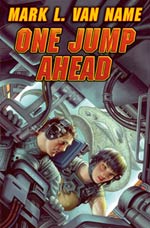
The overall series is a future history that I tell from the first-person perspective of one man, Jon Moore. I’ve always found history more interesting when it comes directly from the people who were there, so I wanted to chronicle a very important time in humanity’s far future–I’m writing about a time roughly 500 years from now–but limit myself largely to what Jon can see and experience. Of course, he’s a most unusual man, as far as he knows the only nanotech-enhanced human alive, so he naturally ends up in quite a few interesting situations. In the first novel, ONE JUMP AHEAD, he meets and becomes first the owner and then the friend of Lobo, an extraordinarily intelligent assault vehicle that can go anywhere–on land, under water, in the air, or in space. Over the course of the many books the series will take to complete–I’m estimating about eighteen, but that’s just an estimate–the characters and the universe will undergo many significant changes.

On an individual book level, each part of the series is simply a novel that should stand entirely on its own. You can pick up any book in the series and enjoy it. You can read them in any order. If you read them all, however, and further, if you read them in order, then you should have a richer experience. I’ve talked to lots of readers who’ve joined the series several books in, and so far, all of them have been able to enjoy whatever books happened to be their starting points.

VENTRELLA: You like to attend science fiction conventions. Are they really worth it, given the expense?

VAN NAME: I have no clue, because hard data on the sales value of cons–or blogs or pretty much any other marketing tool–is almost impossible to get. That said, I don’t go simply to increase sales. I attend cons to be part of the community, to see friends, visit new cities, eat at good restaurants, and so on. You can’t be sure you’ll boost your sales, but you can be sure to see friends and have an entertaining time.

VENTRELLA: What’s the funniest experience you ever had at a convention?

VAN NAME: I’ve done a lot of humor panels at cons, and I’ve done stand-up comedy/spoken-word shows, so that’s a tougher question than you might imagine. Certainly one of the funniest hours I’ve spent was listening to my friend, Lew Shiner, give a talk on humorous mimetic short fiction at a long-ago Disclave at which he was the guest of honor. He delivered the entire thing in very scholarly style, but it was just an excuse to tell a ton of jokes–which he did, brilliantly.

VENTRELLA: What process do you use in order to make believable, realistic characters?

VAN NAME: I don’t see that process as separate from the overall writing process. I sit down to tell a story. The story becomes very real in my head, because I spend a great deal of time living in the world of the story. The story includes people. I get to know those people. Like any other folks, they behave the way they do because of who they are. If I try to make a character do something that she or he simply wouldn’t do, it feels bad, wrong, as wrong as it would feel if a friend suddenly behaved completely out of character. I listen to those feelings. I write the story. The characters behave as they would. That’s about it.

I should probably clarify that I’m not one of those writers who believes his characters are real humans. I know they’re not. I know I control them. I know I could make them do anything I want. I also know, however, that doing so, that violating a character’s identity simply for the sake of a plot, would be bad craft. I don’t want to do that.

VENTRELLA: What is your writing process–-do you outline heavily, for instance?

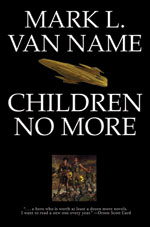
VAN NAME: I generally outline, but how detailed the outline is varies widely. For a thriller, FATAL CIRCLE, that I’m partway through and hope one day to finish, I had to do some research in key areas and consult with some experts. The result was a very detailed, very long outline–over twenty-six thousand words, a quarter of a typical novel. For CHILDREN NO MORE, I went with an outline of barely three thousand words. I outline to the level I feel necessary before I’m ready to start writing the book, and then I write.

I do some writing work every day. That’s been the key to changing me from someone who sold a story every few years to someone who has multiple novels out. I don’t, though, have a word-count quota. I avoid that sort of goal because it’s so easy to fail at it, and I hate failing. Instead, I have a time requirement: I must devote at least half an hour a day solely to writing work. As long as I’ve done that, I’ve succeeded. Most days, I do more. Most days, I get a fair number of words on the page. Some days, I produce very few. As long as I’ve tried for half an hour minimum, I call it a success.

VENTRELLA: What do you see as the future for printed books? For book stores?

VAN NAME: I love books. I really do. My house is full of them. They’re everywhere. Sadly, I believe the printed book is going to become a minority taste. I’m not sure if the transition will take ten years or fifty, but I believe it’s coming. That said, in the fiction world, books are containers for stories, and ebooks are simply other containers for stories. Similarly, I believe bookstores will continue to exist, but they will evolve, and in time their numbers will shrink. I will hate that, because I love bookstores almost as much as I love books.

I hasten to add that I don’t see any of this as the demise of writers or of people paying for stories. They’ll just pay for those stories in other forms.

VENTRELLA: What’s your opinion on self-publishing?

VAN NAME: Rather mixed. I write a blog, so in a sense I self-publish. I sell all my fiction, however, to traditional publishers. I know that some writers can make a great deal of money self-publishing, but being a publisher is a lot of work, and most of that work is not writing, which is what I most want to do. So, for me, selling to a publisher remains the way I hope to continue to bring my fiction to the market.

I also expect most people who self-publish are unlikely to make a lot of money doing so. The sales and marketing experience that a publisher brings to its job helps make each writer a brand–some obviously much bigger brands than others–and it’s hard to manage that feat on your own. Plus, self-publishers have to be good enough at analyzing their own work to know when it’s of publishable quality. I’ve read some who are indeed good at that job, but I’ve also read many who are not.

Like so many things, if others want to do it, I wish them the best. For the most part, though, it’s not for me, at least not now. I add that last bit because even for those of us who work in the future every day, it’s pretty darn hard to predict.

VENTRELLA: With a time machine and a universal translator, who would you invite to your ultimate dinner party?

VAN NAME: I agonized over this question for months. In fact, it’s the biggest reason I’ve been so late getting this interview back to you. I really took the challenge seriously, and I found I simply couldn’t come up with a single ultimate dinner party. I won’t let myself cop out completely, though, so I’m going to give you, in no particular order, a few that particularly caught my fancy.

Each on his own, just so I could focus exclusively on him: Homer, Shakespeare, Keats, and my biological father, whom I’ve met only once for a couple of hours.

My mother as a young woman, but with someone standing by to knock me out if I started to give away the future.

Several women I care about deeply, each alone, each as a young girl, just so I could see who they once were.

I could go on and on, but one thing is clear: I’d be greedy, going for one-on-one time rather than organizing a group.

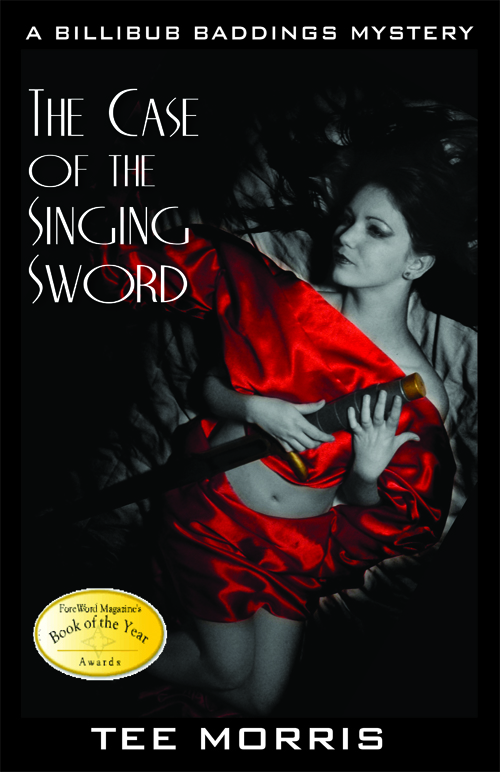
Interview with Author Tee Morris

MICHAEL A. VENTRELLA: I’m pleased to be interviewing Tee Morris today. Tee grew up very near me in Richmond, Virginia yet we never met until a few years ago at a convention. His web page is TeeMorris.com.

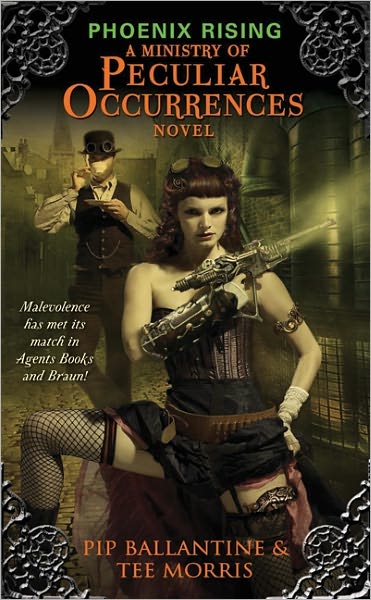
Let’s start by discussing your latest book, which will be first in a series –- PHOENIX RISING: A MINISTRY OF PECULIAR OCCURENCES NOVEL. How did you decide to collaborate with Pip Ballentine?

TEE MORRIS: It was a bit of arm-twisting on Pip’s part. I had a bad experience with co-writing, and my co-author really put me in a precarious position that completely ruined our friendship and professional relationship. So I was quite gun-shy. Pip eventually talked me into a compromise: we would write a podcast-for-pay idea. Unexpectedly, someone contacted Pip’s agent on this “steampunk idea” she was working on, I was then picked up by Pip’s agent, we changed focus and then we got to work on what would become PHOENIX RISING.

I still can’t believe we put this puppy together and are now, presently, closing in on the sequel’s climax.

VENTRELLA: Was there a conscious decision to write a steampunk novel because of current interests in steampunk for business reasons?

MORRIS: Actually, no. Steampunk was a conscious choice, but it was because we wanted to write it.

I first discovered “steampunk” back in 2006 and found it fascinating. I wanted to write something in it, but I didn’t want it to be a knock-off of what I had already read and seen. There’s a lot of cool things to explore in steampunk, and the more I delve into it the cooler it gets. There are authors who are riding the steampunk train to capitalize on its rapidly-growing popularity, but Pip and I wanted to do something we were sincerely drawn to, and steampunk really appealed to us.

VENTRELLA: How much should a writer consider the market when deciding what to write?

MORRIS: The writer should look at what is selling when they want to begin pitching to agents and editors. However, you really should consider how good of a product you are going to produce if you simply write to what’s hot. I’ve seen authors do that, and the writing comes across as trite. If your heart isn’t into it, the reader will assuredly pick up on that. At present, I won’t write a werewolf-vampire-Buffe-Blake urban fantasy because I have nothing new to offer to that market. If I tried, it would probably insult readers of the genre and do a lot of damage to my career.

Sure, look at the market, but don’t try to force a story to happen. That can backfire and really damage a career.

VENTRELLA: How did your collaboration work?

MORRIS: Believe it or not, writing across hemispheres was very productive. Whenever I slept, Pip wrote; and when Pip was asleep, I was writing. Literally we got in 24 hours of non-stop writing. This is one reason why, with Pip working on relocating to the Americas, our word count has taken a hit.

The downside was that we had small windows of time when we could discuss the book. We couldn’t bounce off ideas when we had them, and discussing problematic moments were…well, problematic as we could only do that for a small window of time between hemispheres. Still we managed, and we now have a pretty solid workflow at home.

VENTRELLA: How did you interest Harper? Did you have an agent first? Was the novel completed and then submitted or did they accept a proposal?

MORRIS: The Harper Voyage deal is all due to Laurie McLean, our Super-Agent. What happened was Pip’s write-up in Locus Magazine took an interested party to her website. When they saw she was working on this steampunk property with me, they immediately asked “When could we see it?” So I signed on with Larsen-Pomeda Agency and then we got cracking. The “interest” didn’t really kick in until someone made an offer. Literally, within 24 hours, there was a bidding war (from people who had initially passed on it), and then the wildcard — Harper Voyager — stepped in and said “We want it. Badly.”

The rest is future-history.

VENTRELLA: How are you promoting this book?

MORRIS: Pip learned a lot of new promotion tactics when working with ACE and GEIST. Between our previous experiences with Dragon Moon Press, we’re simply incorporating years of what has (and hasn’t) worked, and creating a plan:

1. The “Tales from the Archives” Podcast. This is the first volume in what could be a continuing series of short stories set in the world of The Ministry of Peculiar Occurrences. We’ve been having a blast with this, watching really talented authors like Valerie Griswold-Ford, Nathan Lowell, O.M. Grey, P.C. Haring, and many others produce original steampunk of various moods. We’re only a few episodes in, and people are really enjoying these works.

2. The Book Trailer.

People have really mixed opinions about book trailers and whether or not they sell books, but I argue that it really does depend on the book trailer. This one was particularly ambitious as we were creating original footage as opposed to working with stock footage as I did with Pip’s Geist trailer (which I edited together). We have been getting a terrific response from it with over 1000 views on YouTube and over 500 shares on Facebook in just over a week. It’s also a great way to get the word out about the book. How will it equate in sales? We don’t know, but it is helping in letting people know what the book is, or at least what the mood of our book is.

3. The Ministry Blog and Podcast Tour. As you see here with your blog, Michael, and others online, Pip and I started writing guest columns and interviews not only with podcasts (which really worked well for us back in August 2008 when we hosted “Double Trouble” online) but with blogs as well. Pip found that work with bloggers — book reviewers, authors, and others — cast our net a little wider than the podosphere. We’re reaching new people who show a little more faith and trust in their book blogs than they do in the mainstream media book critics. (Something we find very telling.)

4. Ministry May-hem. The month of May is when we start with the push of live appearances. It begins on April 30 (Not quite May, but close enough) with a stop at Borderlands in San Francisco. Then on May 7th we return to Staunton, VA (where we filmed the Ministry trailer) at BookWorks, and we will be wearing our steampunk best. May 11 we head up to Harrisburg, PA for a Watch the Skies meeting. Again, we’ll be in our steampunk best. Then May 20-22 is the Steampunk World’s Fair in Sommerset, NJ. We close the May-hem with Balticon May 27-30.

June … we’re going to have a wee rest.

5. Buttons, stickers, bookmarks, and postcards. You can never go wrong with freebies.

Pip and I have learned over the years that the key months of promotion should be the month before a release (keeping it fresh in people’s minds), and then two months after the book’s release (as it has that “new book” smell). If after June the book hasn’t “caught on” it probably won’t. You can still promote and still pimp, but it’s “old news” after that.

For Pip, though, she’s got SPECTYR (the sequel to GEIST) coming at the end of June, so there will be some serious gear shifting during the May-hem. Rather appropriate, now that I think about it.

VENTRELLA: This is your first novel with a major publisher (if I am not mistaken). What differences have you found between Harper and Dragon Moon? (And why do so many small publishers have “Dragon” in their name? My publisher is Double Dragon. Maybe they should merge and become Double Dragon Moon.)

MORRIS: Apart from the advance (which is a mixed blessing in itself), the distribution (which is a blessing no matter how you look at it) and the layout of the book (which I did for myself quite often because I liked that), there is still a “team” feel about working indie and working corporate. I have noticed with Harper Voyager that our publicist is also working hard to get our names and book out there to critics and media outlets, both traditional and new. Having that kind of support in publicity has been very nice! Dragon Moon and I did a lot of great things together, but distribution was always a challenge. I grew as a writer, and they gave me my first opportunity. A lot of terrific things happened to me because of it.

Harper Voyager is not my first orbit around the Moon, but it is definitely my “small step” and “giant leap” into what I hope will be my writing career.

VENTRELLA: You travel to many conventions to promote your books. Do you advise aspiring authors to attend these things? What do you get out of these conventions yourself?

MORRIS: Something else that I have learned in my years as a writer is really, really listen to what other authors have to say. (Both good and bad, when it comes to advice.) Perhaps one of the most important nuggets of know-how I got was from Hugo/Nebula/Aurora/insert-SF-writing-award-here winning author Robert J Sawyer:

“When you get an advance, don’t spend it. That advance is your marketing and advertising budget.”

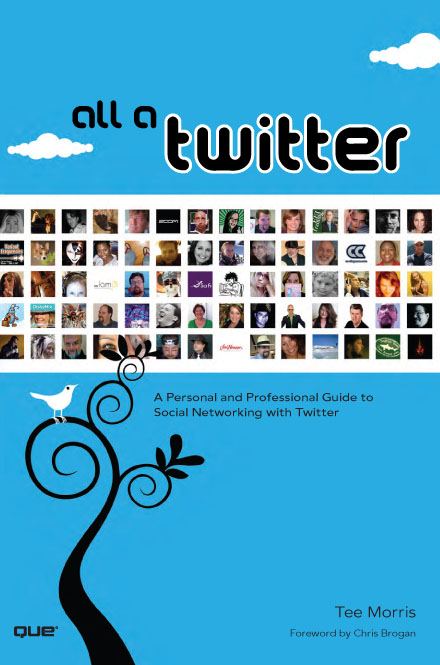
I was traveling without an advance as my budget, and pushed myself several of thousands of dollars into debt. Even when I was writing books like PODCASTING FOR DUMMIES and ALL A TWITTER, I was already so deep in the red. People across the country had my books in hand, sure, but I was broke. Part of the problem was poor financial planning. When I got out of that debt, I plan events very differently now.

Don’t get me wrong, I love going to these conventions. I love talking shop, meeting other authors, and talking to other fans, not just about what I write, but about other geeky things like Firefly, Eureka, and steampunk. I dig that. But as I mentioned on my blog, these conventions are not cheap. I get invited to a lot of cons, but unless some of these costs are offset, I can’t go. In my early days/years, I would never make claims to have cons offset my costs. However, I have to make it a point of asking now as it’s just not that easy for me financially. I think cons are great for authors, provided you are smart about which cons you are going to attend; and more importantly, what you can afford.

VENTRELLA: How has the publishing industry changed since you entered it?

MORRIS: Well, there’s the e-book market for starters. The whole e-book movement has really been fascinating to watch. I think with the development of the ePub format, the elegance of iBook and the Kindle, and the affordability of digital books in comparison to hardbounds, the e-book is coming into its own. The publishing industry is now being forced to adapt, and I think many publishers are on top of it.

I’m also noticing over the year a growing animosity between writers and publishers, more of it coming from writer. There’s a mentality of “Us vs. Them” which rings hollow when I hear writers say “We understand it’s a business.” I’ve always regarded my career as a business, and I can only hope that I’m still writing when my child is in college. Harper Voyager have asked a lot from Pip and myself, but we are all working together to make the best book possible. If the book is a hit, it’s a win from everyone involved. That’s why I’m a little put off by that argument.

Something I have noticed, too, is that misconception of “writers just writing and letting someone else handle promotion as that is someone else’s job” is finally dying out. Even older authors have recognized the power and potential in podcasting, blogging, and social networking. Writers have needed to become Swiss Army Knives, wearing many hats and building up neck muscles in order to support them all. We have to look beyond “the end” and work with our publisher and the public to make our upcoming titles meet their potential.

VENTRELLA: What is the biggest misconception beginning writers have about the craft?

MORRIS: The biggest misconception (apart from the one mentioned in the previous question) is the editor is out to “ruin” your work. Only bad editors tell you something like “Change it, or else.” An editor’s job is to make your good book a great book, and in this process help you become a better writer. Again, it’s a team effort. And when you do have a point of contention, you have to defend your choice with facts and resources backing up your facts. Simply saying “because it is cool” doesn’t cut it. I am thankful for every editor I’ve had, and I am a better, smarter writer because of them.

VENTRELLA: What is the biggest mistake you see beginning writers make?

MORRIS: Superiority complexes. I’ve seen this in both writers with big and indie houses and it sickens me. A byline doesn’t make you any better a person. You just come across to people as a right jerk …with a byline. Maybe fans would “look away” once upon a time, but that kind of behavior can affect your sales. It can also make you a real leper amongst your peers. And even with books, awards, and movie deals (if you are really blessed) behind you, try and keep your head on straight. This ride can end at the drop of a bowler hat. I know that. So, I do what I can to be the best person (who just happens to have a byline) I can be.

VENTRELLA: What’s your next project?

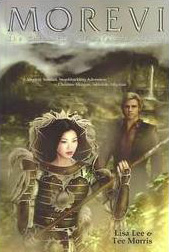
MORRIS: My next project is a steampunk reboot of MOREVI. I love the story and I love the characters of MOREVI; but as it is, MOREVI is not ready for the mainstream press. It needs a rewrite. It needs a new direction. And it needs, for the love of God, to lose the elves. Those were my co-author’s touch, and I’ve hated them since the original printing.

I don’t have a problem with elves. They’re like Vulcans with better tailors. I just felt like they were not a good fit with MOREVI, and I think a complete reboot with Rafe taking to the skies and the region be China. (Still kicking around ideas, you know.) It would be something like Battlestar Galactica, only without so much gender bending.

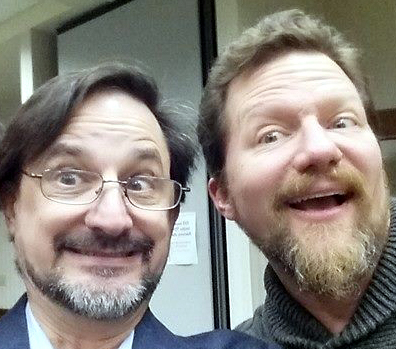
me&tee

Short Stories

Short stories are hard. Harder than novels.

That’s what I and many other writers think, as you can see from some of the interviews here. A novel gives you time to develop characters, control the action, and create a full world. A short story has to do as much of that as possible in a very limited space.

At the same time, a short story can be completed in much less time.

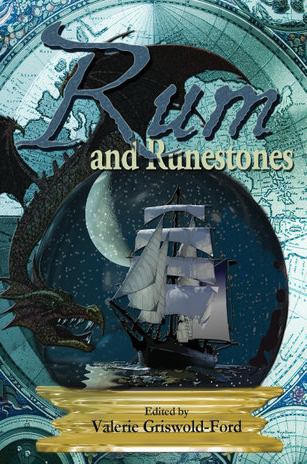
I had a short story published in the anthology RUM AND RUNESTONES last year called “X Spots the Mark” in which pirate Captain Irad the Fair follows a fake treasure map. Of course, being one of my stories, things are never as they seem and you can expect a twist at the end.rum3

The sequel will soon be published in another anthology called CUTLASS AND MUSKET: TALES OF PIRATICAL SKULLDUGGERY. And then my story “The Zombie King’s Plan” will be in the collection TALES OF FORTANNIS: A BARD’S EYE VIEW due out in June (and edited by me!)

I am doing more short stories in anthologies these days for exposure. When someone buys an anthology, they probably have never heard of me or read anything by me. They’re getting it because they like the subject or because there is another author whose story in the anthology they wish to read. But once they have the book, they may take a chance and read my story as well. And then I might have another reader who will want my novels.

Plus I get paid. I mean, come on, that’s nice too.

So if you’re a starting writer, consider short stories as a way to get noticed. In the TALES OF FORTANNIS series I am editing, I am more than happy to read stories from unpublished writers, and in fact, about half of the stories in this first collection are from first time authors. I am already planning the next edition and have set a deadline for August 1, 2011. More information is available here.

My Ravencon 2011 Schedule

I’m looking forward to attending Ravencon on the weekend of April 8th. I grew up in Richmond and went to VCU so it’s great to go back and see how it’s changed, even if most of our time is spent in a hotel!

As I write this, there is a possibility that I will not be able to attend, but I hope we can work everything out (There’s a silly problem with the Hotel being booked).

Anyway, they’re keeping me busy, as I like. Here’s what they have planned for me:

Introduction to LARP (Friday 3:00 pm) What is LARP? Who does it? Why do they do it? Should you be afraid, or intriqued? These and other questions will be answered by our expert panel. With Heidi Hooper.

Bog-Standard Fantasy (Friday 4:00 pm): It’s all been done before, but people keep doing it. Why do fantasy authors keep writing the same story that’s been told a thousand times already? Is originality overrated, or something to which one should aspire despite being doomed to failure? With Allen Wold.

The Biggest Mistakes New Writers Make (Friday 5:00 pm): Like children, fools, and drunkards, new writers need someone to look out for them and keep them from doing silly, self-destructive things. Lucky for you our panel is here to do just that. With Tera Fulbright and Laurel Anne Hill.

Writing a First Chapter That Sells (Friday 8:00 pm): If the first chapter doesn’t hook the publisher, they’ll never read the second. How can you make that first chapter one that keep them reading — and wanting to publish your book?

Book Promotion for the Broke (Friday 10:00 pm): You did the hard part: you finished your novel. Now how do you get people to read it?

Artists verses Authors Pictionary (Saturday 9:00 am): Fun for the guests, fun for the audience, and at the end we have some drawings that can go in the charity auction. With Danny Birt, Chris Impink, Dave Joria, Monica Marier, James Mascia and KT Pinto.

Superheroes and the Law (Saturday 12 noon): What are the legal ramifications of anonymous vigilantes who can read minds, see through walls, and turn invisible? Would a confession compelled by the Lasso Of Truth be admissible in court? Is an invisible jet a hazard to navigation? With James Mascia, James Maxey, Jim Stratton, and John C. Wright.

Writing Combat Scenes (Saturday 1:00 pm): Panelists discuss techniques for writing combat scenes. How much detail is too much? What story purpose does the combat serve? How can you walk the line between accuracy and making the scene understandable to laymen? With Robert Buettner, Charles Gannon, Tom Kratman, Patrick Vanner, Robert Waters, Toni Weisskopf, Diane Whiteside, and John C. Wright.

A Book and its Cover (Saturday 3:00 pm): What is involved in obtaining or creating the cover art for a book? How difficult is it to find art that is both appropriate for the book and which will attract readers? How closely should the author work with the artist? With Robert Buettner, Debra Killeen, Gail Martin, Kurt Miller, Toni Weisskopf.

Interview with Lawrence M. Schoen

MICHAEL A. VENTRELLA: Today, I am honored to be interviewing Hugo-nominated author Lawrence M. Schoen. Lawrence holds a PhD in cognitive psychology and spent ten years as a college professor. He’s also one of the world’s foremost authorities on the Klingon language. A few years back he started Paper Golem, a speculative fiction small press aimed at serving the niche of up-and-coming new authors as well as providing a market for novellas. In 2007 he was nominated for the John W. Campbell Award for best new writer and in 2010 received a Hugo nomination for best short story. He’s the author Guest of Honor at Lunacon next weekend (March 18-20, 2011), where he’ll have a book launch for his second novel, BUFFALITO CONTINGENCY. (I’m just a regular guest, but I am on at least one panel with him!).

Lawrence, Do you enjoy conventions and do you advise authors to attend them?

LAWRENCE M. SCHOEN: I love conventions! Most of my friends are either authors or fans (or both) and they’re scattered all over. Conventions are often my only opportunity to see them and catch up. It’s become trite to talk about how writing is such a solitary experience and how only other authors can really relate to the tribulations of the life, but the reason it’s trite is because there’s so much truth in it. It’s incredibly comforting to settle in with other writers and listen as they share their own joys and complaints and be reminded that it’s actually a kind of club.

Back in my psychology days, I attended research conferences for much the same set of reasons. One of my graduate professors, a brilliant scholar named Thaddeus Cowan — the only person I know to have invented a new impossible figure! — told me that that when it comes to conferences and conventions you’re looking for three things: 1) meet up with an old friend, 2) make a new friend, and 3) come away with a fresh idea. If you do any two, it’s a good event, and if you manage all three, it’s great. Most conventions I’ve been to, I’ve been lucky enough to hit all three, over and over again.

Having said that, I don’t think every author should attend conventions. Conventions aren’t a one-size-fits-all kind of thing. I’m an extravert, a big guy with a loud voice. Having been a professor for ten years, I’m very comfortable standing in front of a room full of people and telling everyone what I think about something, at length. I’m completely at home in that kind of setting, but I know people who can’t abide crowds, let alone being trapped in a room with a bunch of loud people with big egos. Fortunately, it doesn’t have to be an either/or kind of thing. I think you can be very successful as a writer without stepping into the spotlight and bloviating. A shyer author can attend a convention, hang out in the background and chat quietly with other authors and fans, attend functions and make connections. There’s plenty of room for variety, and even people like me get tired and calm down eventually and welcome a quiet conversation before the day’s out.

VENTRELLA: You are known in large part for your promotion and publication of Klingon translations of Shakespeare and other works. What led you to the interest in the language?

SCHOEN: I’ve always been fascinated with languages. I’m not necessarily particularly talented at them — it’s not like I have a great ear for languages, or learn them quickly, I just enjoy them. My academic expertise is in psycholinguistics. I stumbled into Klingon with the right set of skills at the beginning of the internet explosion. So I was in the right place at the right time. Traditionally, the two things that hinder any language, natural or constructed, are 1) time, and 2) distance. I became immersed in Klingon at the precise moment when these factors ceased to be an issue, when the technology and expertise allowed real time communication with people almost anywhere in the world, something that other constructed languages hadn’t previously enjoyed. It was like being on a linguistic rollercoaster, and the ride’s been going nonstop for twenty years!

VENTRELLA: You also established a small press company called “Paper Golem” a few years ago. What led you to that decision?

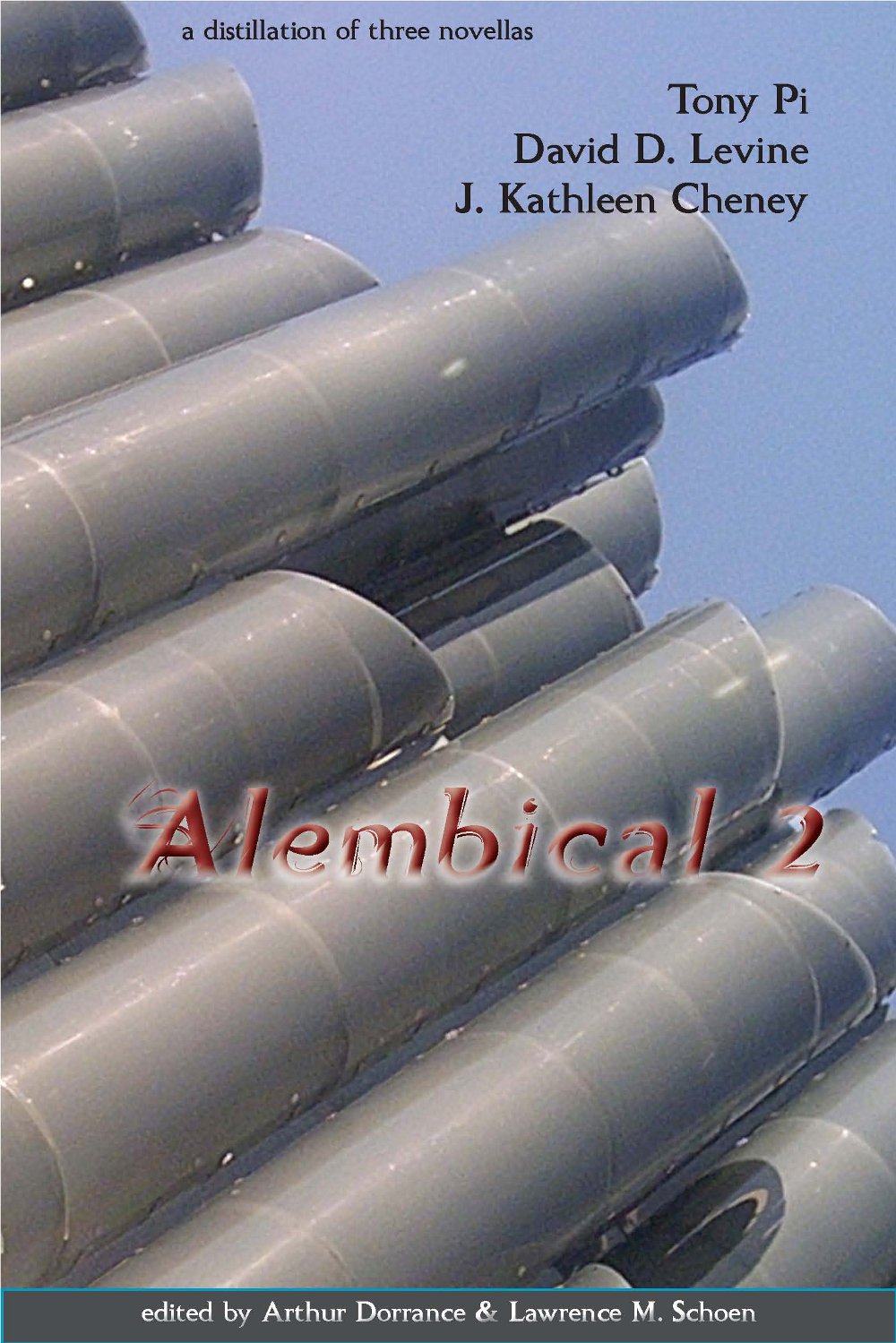
SCHOEN: I’m extraordinarily lucky. I have a good job that pays me a decent wage for part time work. That leaves me free to do things like write. A few years ago some members of Codex (an online community of writers) were kicking around ideas for generating more group identity, and I offered to edit a reprint anthology for them. When I looked at the numbers, I realized it wasn’t that much more time and money to set myself up to do additional books as it was to do just that one book. Basically, I was in a position to commit an act of “paying it forward” and that’s how Paper Golem came about. It’s not intended to make a lot of money. The goals of the press are much more modest. I’m very happy to have a book break even, and anything extra gets folded into the next project. We’ve put out four books to date, with another one due in May. And the last book, ALEMBICAL 2, has an original novella that’s up for a Nebula Award. As you can imagine I’m feeling pretty chuffed about that.

VENTRELLA: What works have you released through Paper Golem that have impressed you?

SCHOEN: We have two “series” that we do. First, I’m committed to providing a venue for novellas, because there aren’t a lot of places where you can sell a story that’s in the 20K – 40K word range, particularly if you’re not a Big Name Author. That’s what ALEMBICAL is for. Second, I like the idea of doing single author collections for writers who are producing incredible stories but haven’t yet written and sold a novel. These are authors who deserve to be read, who deserve to have their work gathered in one place so that potential readers can find them and be delighted. Our first single author collection was for Cat Rambo, and it’s absolutely beautiful. The next one, which I’m finishing up even now, is by Eric James Stone, and contains a novelette that’s also just been nominated for a Nebula Award. It’s incredibly satisfying to work with such talented authors who are going to transform this field as they progress through their careers.

VENTRELLA: Has Paper Golem been the success you hoped?

SCHOEN: Absolutely, particularly because (and this may be the same mindset that originally set me on the road of being an academician) I don’t measure success in terms of how much money is produced. Paper Golem is bringing quality fiction to print, and if you love reading good science fiction and fantasy then there really isn’t a higher mark to hit.

VENTRELLA: What does a small press offer than the larger publishing houses cannot?

SCHOEN: The ability to take chances. The opportunity to work with authors as a labor of love without having to justify it to the accountant. There are tradeoffs, of course. Would I love to publish a best seller? Sure. More sales would mean more money to do more books, but it would also mean reaching more people and introducing them to authors they might not have otherwise found. Don’t get me wrong, I love big presses, and I love what they do. But small presses serve a different niche. Small presses are all about the long tail, the specialized market. For Paper Golem that’s novella-length fiction and newer authors, and seriously, that’s not all that specialized. Somewhere I’m sure there’s a small press that is specialized to serve the reading desires of people who want nothing but humorous SF stories about talking, vampire cats solving computer crime in space. Hmm… I wonder if anyone has a novella about that…

VENTRELLA: What bugs you most about the publishing industry and what would you change about it if you could?

SCHOEN: Lately I’ve become more and more upset about the economics and how that drives what publishing does. I’ve seen author friends who are working on series get dropped by their publishers because while the series is profitable, it’s not as profitable as hoped, so the author has to change publishers, and in effect end their series (the big exception to this being Carrie Vaugh) because what new publisher would want to pick up a series with book #5 when the rights to books #1 through #4 are tied up elsewhere? I understand that publishing is a business, and it would be criminally naive to imagine otherwise, but I don’t read because doing so puts money in some editor’s pocket or employs a proof reader or marketing department; I read because I enjoy what a given author creates.

VENTRELLA: Who do you like to read for pleasure?

SCHOEN: I read anything by Walter Jon Williams, Karl Schroeder, Daniel Abraham, China Mieville. I go on binges where I’ll read everything I can get by a particular author that I’ve stumbled over or rediscovered in my library, and I’ll keep tearing through all of that author’s work for a while until I’m sated and have to come up for air. Last year I devoured books by the late Kage Baker. Right now I’m in the middle of Michael Chabon.

VENTRELLA: How has your background as a psychologist influenced your work?

SCHOEN: I trained as a researcher, and so everything comes back to a question. Everything gets turned into a testable hypothesis. Why does the character do X. What happens if the bad guy is thwarted by removing Y from his path. What are the systematic variables that can affect the outcome? This kind of worldview permeates not just my fiction, but also my daily wife. It drives my wife nuts!

VENTRELLA: How did you come up with the concept of The Amazing Conroy?

SCHOEN: Some years back I was enrolled in the two week workshop that James Gunn offers out of the University of Kansas. It was the last night; we were done. Everyone had gathered and in a celebratory mood, and this line of dialogue just popped into my head and right out of my mouth without any control. It was “Put down the buffalo dog and step away from the bar!”

As soon as I said the room went quiet and everyone was staring at me. I had no idea what it meant or where it had come from, but I vowed to one day write a story with that line. It took years, but then, one day, I found myself writing “Buffalo Dogs.” At the time, I had no idea it was going to lead to another quarter million words and a branded identity.

VENTRELLA: There seems to be a theme in much of speculative fiction about super-humans – the “chosen one” who has special powers no one else has who is the subject of a prophecy to save the world blah blah blah. Of course, that’s an old theme going back forever. The main characters in my books are just normal guys who do their best, make mistakes, yet win in the end, and you have the same attitude in your work. So why do these kinds of characters appeal to you?

SCHOEN: I blame Thornton Wilder. I had to read a lot of his stuff back in high school, and he spent a fair amount of time championing the “every man.” Ordinary people finding themselves in extraordinary circumstances are much easier for a reader to relate to than someone who is superhuman in extraordinary circumstances. Most of us are never going to be James Bond, but we very well could be the guy who lives in the apartment next door to him (of course it’s not his real apartment, just one he keeps as a cover). I like protagonists who aren’t jaded by the chaos and adventure of their lives, but rather are dragged into it by surprise, kicking all the way.

VENTRELLA: Of what work are you most proud?

SCHOEN: The answer to that is constantly changing, because I’m constantly changing as a writer. I’m very happy with the new novel, and I think it represents a new high point in my ability to craft a complex story and tell an entertaining tale. There’s a short story I wrote a while back that came out in January of last year and that I secretly (well, not so secretly now) harbor an unlikely hope that it will make the Hugo ballot. It’s called “The Wrestler and the Spearfisher” and it’s one of my infrequent jaunts into Fantasy.

VENTRELLA: What is your writing process? Do you outline heavily, for instance?

SCHOEN: I’m constantly changing how I work, trying new things. Nowadays, I’m trying to get better at blocking out the scenes in a story or novel before I do too much of the writing. I’m somewhat transitioning from being a seat-of-the-pants writer (what some like to call a “discovery writer”) to an outliner, but I suspect I’m going to stop far short of the end. I’m enjoying knowing more about a work before I sit down to write it though. It’s very different from the way I used to work. But will it last? We’ll just have to see.

VENTRELLA: What advice would you give to a starting author that you wish someone had given you? What is the biggest mistake you see aspiring authors make?

SCHOEN: Problems in Perspective. There are always going to be bigger fish, and if you constantly compare your attainments to them, you’re always going to make yourself miserable. Keep a perspective on things and don’t view this business as a zero-sum game. Instead, if you have to be competitive, compete with yourself. Are you further along now than you were at this time last year? Is your prose improving? Are your plots more involved? Work on improving yourself, rather than trying to be as good as someone else. You’ll get there sooner, and you’ll be happier along the way.

16

My Lunacon 2011 Schedule

I will be participating as a guest at the 2011 Lunacon science fiction convention on the weekend of March 18 – 20. Below is my schedule, and boy, are they keeping me busy!

Developing Believable Cultures and Religions for Fiction (Friday 5:00 pm) (description forthcoming) With Ginjer Buchannan, Gail Z. Martin, and Joshua Palmatier.

LARPing 101 (Friday 6:00 pm) Introduction to Live Action Role-Playing. With Heidi Hooper, James Prego, and Raven Stormbringer.

The Fundamentals of Role-Playing Games (Friday 7:00 pm) The basics of designing and running games. With Neil Levin, Mike McPhail, and Anthony Minacarelli.

Urban Fantasy (Friday 10:00 pm) Are there werewolves on the subway, vampires in the condo next door and faeries in Central Park? What makes Urban Fantasy both “urban” and “fantasy”—and how do you get readers to accept fantastic elements set in a real-world contemporary setting? With Gail Z. Martin, Joshua Palmatier, KT Pinto, and Meredith Schwartz.

The Eye of Argon (Friday midnight) The worst science fiction story ever written gets a reading by our brave panel as they compete to go the longest without tripping over a misspelled word of laughing uncontrollably. Audience members are also encouraged to rake a chance. Can you keep a straight face, especially when the panel begins acting out the story? With Keith DiCandido, Susan De Guardiola, and Hildy Silverman.

The Greatest Animated Films (Saturday 10:00 am) A debate over a list of the greatest animated films. With Daniel Kimmel, Kim Kindya, and Chuck Rothman.

Incorporating the Supernatural (Saturday 11:00 am) Supernatural elements are showing up in fantasy, sci-fi, romance, mystery and cross-genre books. There’s a ghost under every bed and a vampire in every basement. How do writers decide how—or whether—to incorporate supernatural elements? Is the supernatural just a gimmick, or can it add depth to the plot? Find out the tricks from our panel of “ghost” writers. With Pauline Alama, Laura Anne Gilman, Gail Z. Martin, and KT Pinto.

The Biggest Mistakes New Writers Make (Saturday 12:00 noon) (description forthcoming) With Tim Burke, Joshua Palmatier and Michael Stanwick.

Monsters of Modernity (Saturday 1:00 pm) What if a vampire isn’t just a vampire bite? From vampires and sexuality to Frankenstein and the enlightenment, to the Thing and the AIDS epidemic, monsters have often stood in as allegory for modern issues. With James Chambers, Kim Paffenroth and Misty Pendragon.

Self Publishing (Saturday 6:00 pm) Easy as clicking and uploading. But what do you after tyou have it? How do you get it sold? With Tim Burke, Michael D’Ambrosio, and Robert Rosenberg.

Using Social Networks to Promote Your Writing (Saturday 7:00 pm) (description forthcoming) With Shannon Delany and Laura Anne Gilman.

“Real” Folklore and Mythology in Fantasy World Building (Saturday 10:00 pm) World building for fiction and gaming — how to make it believable and real. With Pauline Alma, Hal Johnson, Gail Z. Martin, and Michael Swanwick.

Potter-verse Holes (Sunday 10:00 am) As much as we love them, the Harry Potter books have some logical inconsistencies. This panel will discuss the parts we tend to ignore or overlook. With Marilyn Bahen, Ginjer Buchannan and Ian Randall Stock.

Writing a First Chapter That Sells (Sunday noon) If your first paragraph, first page and first chapter aren’t magical, the editor will never know how good your book is on page 200. Find out how to increase your readership and your chances of publication by learning how to write a first chapter readers can’t stop reading. With Gail Z. Martin, Joshua Palmatier, and Lawrence Schoen.

Book Promoting for the Broke (Sunday 1:00 pm) How to sell your book on a limited promotion budget. Learn how to promote your book in an every-changing world. No secrets here, just tips and tools to make you a better promoter, even without the big bucks. With Michael D’Ambrosio.

Writing Battle Scenes (Sunday 2:00 pm) What do you have to know about weapons, and warfare, to make a battle scene sizzle? Can someone who’s never thrown a punch in real life kick ass on paper? Find out how you can write exciting battle scenes without getting yourself arrested or wounded. With Gail Z. Martin, Kate Paulk, and Joshua Palmatier.

Interview with Publisher Deron Douglas

MICHAEL A. VENTRELLA: Today I’m interviewing Deron Douglas, publisher of Double Dragon Press, the largest science fiction and fantasy e-publisher in the world (and, I might add, the publisher of my books). Deron, is that claim based on the number of books you have available, the most sold, or what?

DERON DOUGLAS: Hi Mike, it’s based on both numbers… sales and number of editions available for purchase from DDP and all our retailer sites worldwide. However, it is a fluctuating number as well.

VENTRELLA: What is in your background that made you want to start Double Dragon?

DOUGLAS: I’ve been involved in the publishing industry, in various aspects for about 25 years. I’m also an avid Science Fiction and Fantasy reader from when I was a kid. About 10 years back I purchased one of the first ebook devices on the market called the Rocket eBook (I still own 3) and found that there weren’t very many titles that I would enjoy reading myself. After further investigation into the technology it “clicked” that I had the personal experience and technical ability to pull it off.

VENTRELLA: Have your standards changed over the years? Now that DD is doing better, are you being pickier with which manuscripts you accept?

DOUGLAS: We’ve always had high standards, but like everyone else are restricted by our submissions pool. But generally I like to select titles that I find interesting and diverse; something that I would want to read myself.

Yes, as the submissions pool gets larger we find that we can select more carefully based on market trends and an author’s current readership base.

VENTRELLA: What is the biggest mistake that aspiring authors make when they submit their work?

DOUGLAS: In a lot of cases they do not bother to read the guidelines or take the time to find out what we publish. Double Dragon Publishing is essentially a Science Fiction and Fantasy publisher, but I still have people sending me relationship books, autobiographies etc. If an author does happen to read the guidelines and are submitting within the right genre, they neglect to send their best possible “polished” work. We edit all titles before they are published, but we won’t accept a title that is still in the development stages and requires massive rewrites.

VENTRELLA: What do you personally like to read?

DOUGLAS: I like science fiction with a time-travel, time paradox sort of twist, as well as “steampunk”, alternate reality, divergent societies sort of stuff.

VENTRELLA: You’ve recently begun to expand a bit and publish other genres. Tell us about that!

DOUGLAS: Actually, from the start we accepted everything in all genres, over time we found what sells and what doesn’t. But occasionally I’ll accept something that is “out there” because it’s well written and I’m curious as to how it will be responded to by our readers. But maybe you are referring to our sister imprints, Carnal Desires Publishing and Blood Moon Publishing? Each is dedicated to a genre that we felt was growing to a degree that it deserved its own identity and staff.

VENTRELLA: You’ve been able to lure some fairly famous authors to DD for their e-books. How has that worked out?

DOUGLAS: It’s worked out very well for us. The things take seem to be common to all is that they’ve heard our reputation for a very expansive eBook distribution network, fair methods of working with authors and our “professionalism”.

VENTRELLA: Most of the paperbacks you publish are print on demand. Do you see a future where you would have regular print runs?

DOUGLAS: No, not at all. In fact I can see a near future where we will be phasing out paper book completely. Last fall (2010) is was reported by Amazon that eBooks were outselling “hardback” books on Amazon. This year in Feb It was reported by Jeff Bezos (CEO and Chairman of Amazon), that eBooks are now outselingl paperbacks. People tend to forget that Double Dragon Publishing is an eBook publisher and has always been, and as a result we are well positioned to take advantage of this huge market. After all, we are one of the pioneering ePublishers and have been involved for more than 10 years.

VENTRELLA: How do you publicize your books?

DOUGLAS: Currently we release between 100-120 titles per year, as such we are unable to publicize every title ourselves. We depend upon the author to promote themselves and build a base of readership. After all, if they leave DDP they will take this base with them. But we also provide venues of promotion such as out blog at blog.double-dragon-ebooks.com, Facebook, etc. We also provide a forum where new authors can discuss methods of publicizing themselves with other seasoned veterans.

VENTRELLA: Do you see e-books as the future? Is this good for the industry?

DOUGLAS: Ebook have taken off from where they began 10 years ago, it seems every major manufacturer is now building an affordable ebook device that allows the seamless purchasing of titles almost anywhere in the world. Yes, I think ebooks have a future and think they are also good for the industry. But the industry will change, portions such as paper book production services will die off. But eBook conversion services will sprout, are sprouting in fact.