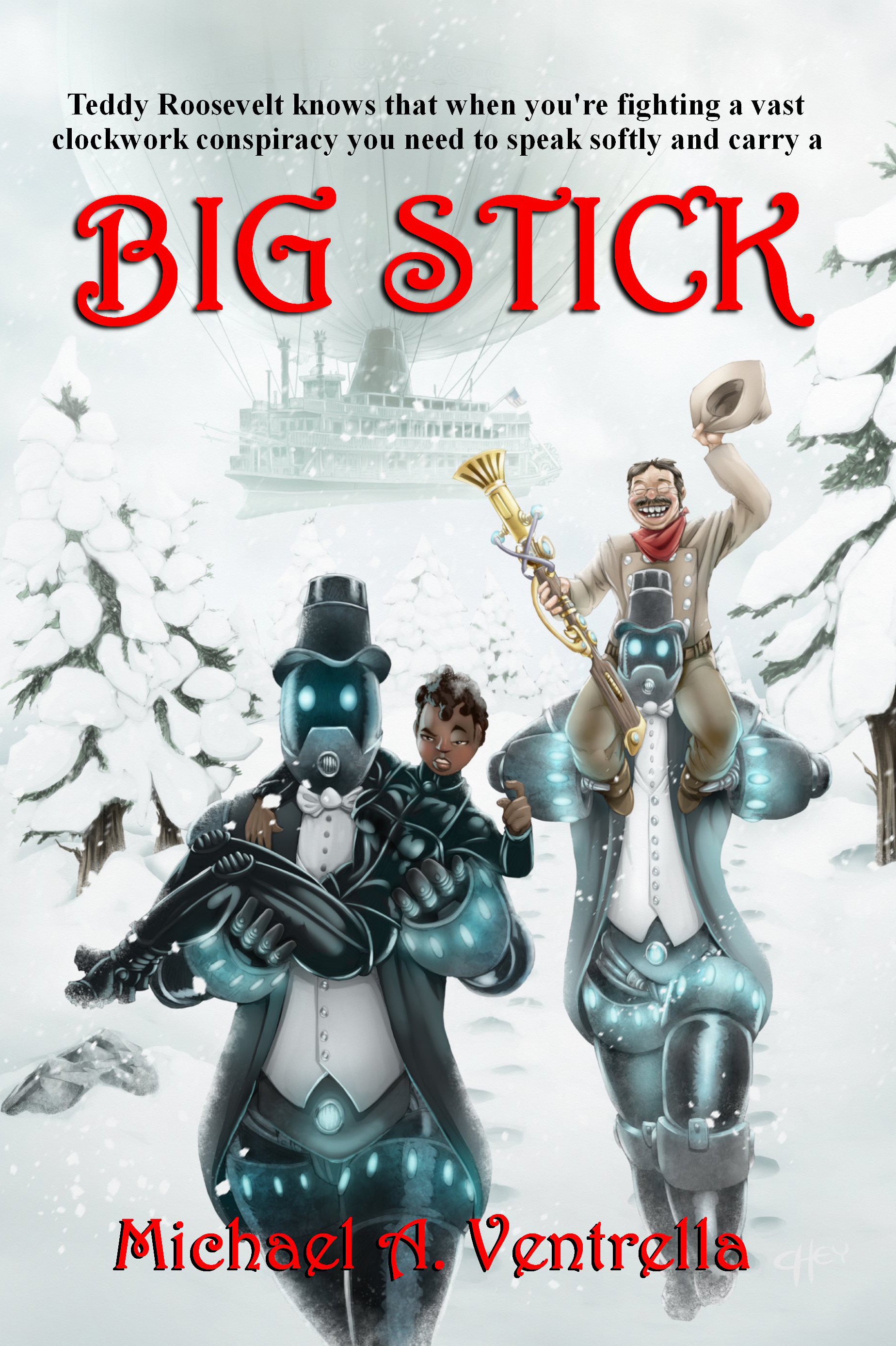
Interview with New York Times Bestselling Author John Ringo

MICHAEL A. VENTRELLA: Today, I am honored to be interviewing New York Times bestselling author John Ringo, who will be the Guest of Honor at this year’s Ravencon convention. (I’ll be there, too!)

John has has over two million copies of his books in print, and his works have been translated into seven different languages. His books range from straightforward science fiction to a mix of military and political thrillers.
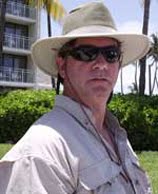
You’ve had an interesting background. What made you decide you wanted to be a writer?

JOHN RINGO: My family tells me I’ve always written but you wouldn’t know it by my memory. I was always the kid who never turned in his essays. But I guess I’ve puttered at writing most of my life. And it’s better than a 9-5 job.

VENTRELLA: You’re also quite unique in that you did not collect a pile of rejection letters before your first novel was published. What’s the secret? Who did you bribe?

RINGO: Sigh. I need to just make a copy of this reply somewhere so I can cut and paste. 🙂

I wrote A HYMN BEFORE BATTLE in two chunks in the mid to late ’90s. It was the second “novel” I’d written. (The quotes are because neither the original version of HYMN nor my first novel were current novel length. And the ‘first story’ is never going to see the light of day.) When I’d finished, at least as well as I knew how at the time, I consulted ‘The Writer’s Digest’ then submitted it to Baen following all the submission requirements exactly. I’d already determined that it was more or less center of the lane for what they published.

I knew it would take months to even get reviewed so in the meantime I started on the sequel (one of my big suggestions to aspiring authors) and poked around on the Baen website. There I found one of the first ‘webforums’ (Baen’s Bar). Being a shy and retiring type, I, of course, just lurked. Hah! By the end of the first month I was one of the top three posters. 🙂

Another top poster was Jim Baen. He’d been active on the internet practically since it was opened to private and business use and he actively involved himself in the discussions. Which meant we were trading frequent discussions (as well as japes, gibes and jousts.) One point to make is that I did not go on there saying ‘I’m an aspiring author! Read my manuscript!’ I just got involved in the discussions. But at one point there was a discussion going on on the Aquatic Ape Theory. Jim was a proponent. I said ‘I think you’re crazy but I have to be nice to you cause I’ve got a book on your slushpile.’ His response was ‘Marla! Find me this manuscript!’ I took that as a jest suggesting that he was going to shred it.
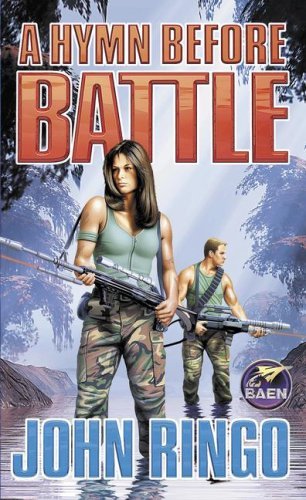
About a week later I got a rejection. Just a mailed form letter with the title (A HYMN BEFORE BATTLE) squeezed into the title blank in a woman’s hand.

By that time I knew enough about Jim that if he had rejected it he’d have sent a personal message. So I sort of put it aside (I think I threw it away, I wish now I’d kept it!) and continued work on the sequel. I knew by then that Lois Bujold had been rejected three times before she published so I wasn’t worried. I had a day job and I’d just keep plugging along until I got published.

A week after I got the rejection (two weeks after Jim’s comment) I got the first email I’d ever gotten from Jim. ‘Nobody can find your manuscript. Send me an rtf.’

I then wrote a really abject letter explaining that it had been rejected but that was planning on reworking it as well as I could and I understood if he didn’t want to override his first reader…

I didn’t know Jim very well at that point. When he read the manuscript he fired the person who rejected it. 🙂

Anyway, I sent him HYMN as well as as much as I’d finished of GUST FRONT. One point that had come up during the discussions was that publishers look for ‘more than a one trick pony.’ They want someone who is going to be able to keep putting out stories. So I wanted to show I had more than one book in me.

He read it then sent me a series of emails telling me what was wrong with it. And the last was ‘if you fix it the way I told you, I’ll buy it.’ (Yes, every aspiring author’s dream.) So I did and he did.

The denouement to the story occurred a few month’s later. Jim accepted HYMN in April of 1998. In August I was puttering around on the computer and got an email from Jim. (Ding! You’ve Got Mail! Remember those days?) 🙂 The email read ‘Your mss Gust Front stops in media res. You have ten minutes.’ 🙂

I’d mentioned that I’d sent ‘as much as I’d finished’ of the sequel to Hymn when I sent Jim the Hymn mss. Well, it was exactly as much as I’d finished. I was working on it at the time so it ended in the middle of a battle in the middle of a sentence in the middle of a prepositional phrase. The last word of the mss was ‘of.’. 🙂

Fortunately, I’d finished it by that time and I sent him the whole thing. And he bought that. It was also when he hooked me up with David Weber.

VENTRELLA: Do you think that someone can learn to be a good writer? In other words, can a distinction be made between the technical skill and the creative skill?

RINGO: I think that any competent person can learn to be a competent writer and sometimes that’s all it takes. To be a really good author, though, I think requires talent. That may seem pompous but… I love music. I listen to music all the time. I have a head for lyrics. I absolutely suck at music. I have zero talent. I can’t figure out how to play the most basic notes, I’m flat as a singer. I just really suck. So I leave the music to people with the talent and admire that talent but I don’t go inflicting it on people.
But talent alone is not enough. ‘How do I get to Carnegie Hall?’ ‘Practice.’ As I mentioned above, I wrote a ‘full’ really really crappy novel before HYMN. And, yes, lots of other stuff before that. (Even if I was lousy about turning in homework.) Figure that you’re going to write a million words before you’re good enough to be published. But don’t get freaked by that. Those ‘million words’ are all the letters you write, emails, blog discussions, essays, etc. If you write them well, you’re advancing in the craft. Go for leet and you’re setting yourself up for failure. (At least until novels are primarily published in leet. 🙂

VENTRELLA: What themes do you find yourself revisiting in your work that may pop up without planning?

RINGO: The competent individual trying to achieve goals using a system in which he has to use people who are below his level of competence to achieve those goals.

Real life in other words. 🙂

VENTRELLA: What is it about science fiction that attracts you?

RINGO: The pallette. In SF you can pretty much create the starting environment and then work within that new millieu.

VENTRELLA: What science fiction stories (literature or movies) have inspired you?

RINGO: Heh. Either due to innate anti-socialness or the fact that I was always the ‘New Kid’, I grew up without alot of friends. Middle school and early HS was particularly bad. So I read instead of, you know, having a social life. So the list is…long.

Heinlein in general. (At least his earlier stuff.) The juveniles, STARSHIP TROOPER, obviously, the first part of TIME ENOUGH FOR LOVE is probably my favorite book of all time. (The latter part being nearly my least favorite Heinlein.) Clarke’s DEEP RANGE was awesome. The list is endless.

VENTRELLA: Lately, fantasy has been outselling science fiction. Why do you think that is?

RINGO: Education. The educational system in the ‘West’ in general has been dumbed down so much that people’s brains aren’t well exercised. SF is designed to make people think. If you’re not used to that it, literally, hurts. A new thought causes increased blood flow to new areas of the brain. This is a good thing but it causes a slight headache. Since people’s brains aren’t broadly stressed by their education and day to day interactions reading SF gives them a headache.

In addition, alot of the traditional ‘core’ SF readers are now doing gaming instead of reading.

Combine the two and you have the relative success of fantasy.

However, thank God for it. For a while there nobody was reading. The population which graduated in the mid 80s into the late 90s contained a miniscule fraction of readers compared to newer graduates. Harry Potter has made reading ‘okay’ again. That’s a good thing.

VENTRELLA: Often, new writers are told to “write what you know.” This would seem to preclude anyone from ever writing science fiction or fantasy. Is this good advice at all?

RINGO: At one point it was suggested that I take over a writer’s workshop at a major convention. (Which idea I rejected.) But the joke was that the first thing I’d do is tell people to get some experiences. ‘The first writing exercise is to RUN to the top of this 22 story hotel! THEN BACK DOWN! When you get back I want a five hundred word essay on HOW YOUR FEET FEEL! MOVE IT MAGGOTS! MOVE IT! 🙂

What ‘write what you know’ means in SF is have a base of experience upon which to draw so as to more effectively tell the story and create the environment. I recently had to write a scene where a space welder is in an out-of-air situation. Have I ever been in an out-of-air situation in space? Nope. But I’ve been in one diving at least six times. (The last one during a cave dive which is why I now have claustrophobia.) So my big suggestion is always ‘Experience life. Then write. That way you’ve got something you ‘know.’
VENTRELLA: What is your writing style? (Do you outline heavily or just jump right in? Do you tend to start with an idea, a character concept, or something else?)

RINGO: Generally I jump right in. But … The ideation for the story is usually solid from months and even years of thinking about and building scenes and concepts. And I generally start with a general idea and a scene. Then, in general, I have scenes that I write to, what I call ‘stringing the pearls.’ Those scenes (‘visions of fire’) are what drive me to keep writing and are, generally, the really good part of my books.

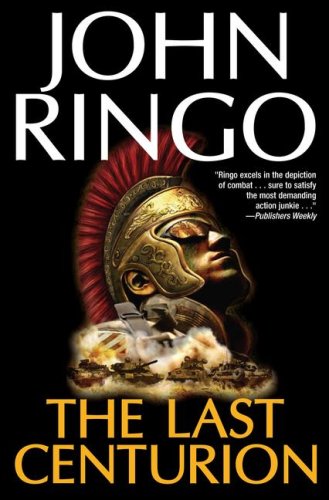
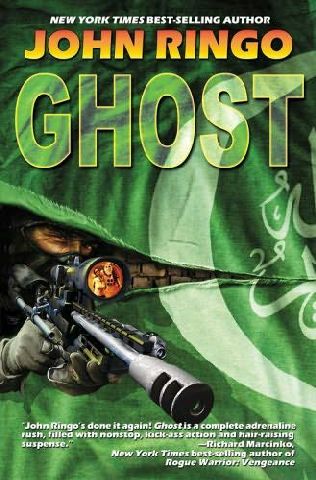
Sometimes stuff comes out of nowhere and requires itself to be written. INTO THE LOOKING GLASS, GUST FRONT, GHOST and THE LAST CENTURION are in that category. Those write themselves and write themselves fast. LOOKING GLASS was a couple of weeks, GUST FRONT (one of my longest books) was a couple of months while I was working, GHOST was a month, LAST CENTURION was seven net days. (153k words)

I love those.

VENTRELLA: Of what work are you most proud?

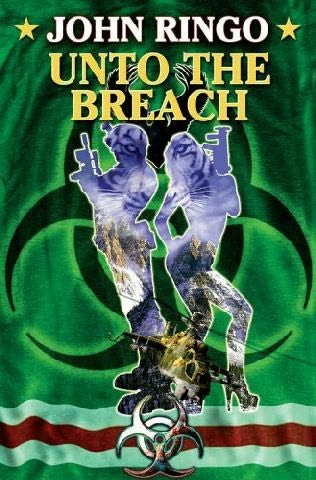
RINGO: UNTO THE BREACH. I don’t recommend the series. Despite it’s popularity (and it’s immensely popular) it’s not everyone’s cuppa.

But UNTO THE BREACH is outstanding. It’s one of the few books of mine I recommend. The last book that was that good was GUST FRONT but GF is weak in prose and grammar. (Early author mistakes.)

VENTRELLA: You’ve done quite a few collaborations. What do you see as the advantage of doing so?

RINGO: For the junior author the advantages are several. They build market by introducing the new author to the established author’s fanbase. They help teach the craft of writing as well as working in the publishing industry. And you can generally get more money from doing a collab as a new author than your own work.

For the senior author they’ve got two or three values. They permit the author to get a story out there that they either don’t have time to write or don’t have quite the right skill set to write. (See ‘write what you know.’) And the senior author gets fairly good money for slightly less work than a full novel.

VENTRELLA: They have obviously worked out, as you continue to do them. Is it a truly collaborative effort, or does one author primarily do the writing and the other act as guide and editor? How do you divide up the responsibilities?

RINGO: Every collaboration is different. I’ve done collaborations where I wrote a 35k outline for the junior author, (THE ROAD TO DAMASCUS, HERO) one where it was the junior author’s idea and I took portions of it as well as teaching the craft of writing, (VON NEUMANN’S WAR) wrote most of it and left portions for the junior author to ‘fill in’ (Vorpal Blade series) to ones where I basically gave the junior author a vague concept and they ran with it. (TULORIAD.)
Every collaboration is different.

VENTRELLA: Have you ever run across unexpected controversy with your writing? If so, how have you dealt with it?

RINGO: Unexpected? No. I’m considered a ‘controversial conservative SF author.’ Not to mention GHOST, which… well, you just don’t get more controversial unless you’re a gangsta rappah under indictment for murder. How do I deal with it? Generally I try to swallow my rage and smile. Because with the exception of some of the stuff in the Ghost series, I really don’t see what I say, what my characters do and say, as particularly controversial, crazy, evil or illogical. I see the people who consider it ‘controversial’ as idiots and morons. (Whereas they view me as a ‘racist, homophobic, xenophobic, genocidal asshole’ in the words of Mercedes Lackey.)

So, mostly, I ignore it.

VENTRELLA: You’ve never shied away from political issues as well (nor have I) – we have had a few interesting discussions in this area. Do you think it is wise for authors to take stands which may alienate readers?

RINGO: As I said in a recent email to a family member, politics has become religion and there is virtually nothing which is not politicized. You can take the PC approach of having the enemy be alter versions of what the Left hates (the US military as in Avatar, Christians, middle-class white males) in which case you can alienate the core readers of SF. Or you can alienate the Left by being a human and American exceptionalist and having characters who, whatever their race, nationality, creed or sex, act in a traditional self-determinant manner and worry about PC after the Human Race has been saved.

Whatever people think, you don’t get the choice to not piss anyone off. ‘You can please some of the people all of the time, all of the people some of the time but you can’t please all of the people all of the time.’

VENTRELLA: Do you think this has affected your sales in any way? Do you care?

RINGO: If anything in the positive. My ‘controversial stands’ fit the market of my core writing. And, no, I don’t even if it’s in the net negative.

VENTRELLA: What advice would you give to a starting author that you wish someone had given you?

RINGO: Get an accountant.

VENTRELLA: What is the biggest mistake you see aspiring authors make?

RINGO: I tend to get sarcastic about this question. Impatience is one. There are alot of people out there that want to get published. Publishers who are even willing to look at unsolicited manuscripts are overwhelmed. So don’t think it’s going to be a fast process. Fill the time by writing your next book. Publishers also want people who have more than one book in you and if you’re a writer you’re going to want to write that one, too. Just write it. It may take years to get published. Unless you’re in your ’60s, you should have them. Be patient and keep writing in the meantime.
‘Puff reads.’ I made this mistake. After HYMN got accepted I asked Jerry Pournelle if he’d read it. He sent me a reply which at the time I took to be very rude to the effect that I’d asked him to do the most odorous chore of a professional writer so, no. Since then I’ve gotten to know more about Jerry and being asked to ‘read my manuscript’ and for Jerry he was being really damned polite.

There are authors who really enjoy that sort of thing. I don’t. Most don’t. So… please don’t ask. When we say ‘Yes’ we’re not really happy about it and when we say ‘No’ we feel like we’re dissing somebody’s baby. So … Don’t ask. Kay?

VENTRELLA: Finally: What’s the latest news on the possibility of movie adaptations? What other exciting scoops can you share?

RINGO: Zero. Nothing moving on that area. It sort of norks me that I’ve got 33 novels published or in the pipeline and so far I don’t have option or contract one. OTOH, given that I’m a ‘controversial conservative sf author’ (three strikes against me since even Syfy no longer does SF) I’m not really surprised. Just…norked. (Mildly irritated.)

Interview with Alyce Wilson

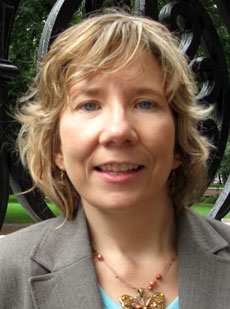
MICHAEL A. VENTRELLA: Today, I am pleased to be interviewing Alyce Wilson, whose web page proclaims her as “writer, editor, poet.” Alyce, which one of those tags best describes you?

ALYCE WILSON: It depends on the day! I would say, though, that I’ve probably considered myself a poet longer, since that started back in second grade, courtesy of a very enthusiastic teacher, Mrs. Johnnie Stahl, who taught us how to write rhyming verse. But I have to admit that I don’t necessarily write poetry every day, while I do tend to write something in prose every day. So perhaps “writer” is more apropos right now.

VENTRELLA: Tell us a little about how you became involved in the business.

WILSON: I love the Joseph Campbell quote, “When you follow your bliss… doors will open where you would not have thought there would be doors; and where there wouldn’t be a door for anyone else.” That’s what I’ve been doing. Aside for a brief flirtation with the idea of being a teacher, I’ve known from a very young age that I wanted to have a career in writing. The question has always been where and how?

In high school, I had an excellent journalism teacher, Mrs. Maryann Hoff, and began to consider that as a possible career path. But by the time I got around to declaring my major at Penn State University, I had fallen in love with radio (thanks to the college radio station, WPSU) and selected Broadcast/Cable. Perhaps if I had been less of a country mouse (raised in a small Pennsylvania town, as I was), I would have immediately sought out employment opportunities at a public radio station after graduation, but instead I felt directionless. The radio jobs available in small towns didn’t appeal to me, but I couldn’t imagine moving to a city. Fortunately, my decision to return to school, like the proverbial groundhog, waiting out six more weeks of winter, brought me to Penn State’s MFA program in Poetry. If I hadn’t panicked at the idea of city life, I wouldn’t have learned such valuable lessons that improved my poetry writing immensely.

Much as I loved grad school, however, I rebelled against the idea of remaining in academia. By that point, I had taught several undergraduate writing courses in essays and poetry, and I loved the students but hated the bureaucracy. I feared that pursuing such a career would be soul-killing and especially damaging to my writing. Instead, I felt it was important to experience life. So in my “hippie days,” I married a wispy dreamer, traveled up the Mississippi, and then took a job as a pizza delivery driver in my hometown (which served as inspiration for my second unfinished novel). Just about the time that my short-lived first marriage petered out, I found a job with the local newspaper (“The Standard-Journal,” Milton, Pennsylvania) as a reporter/assistant editor. This again, was the best thing for me, because it helped me to perfect my skills as a columnist.

However, the daily deadlines were highly stressful, and after putting on about 60 pounds and enduring a weekly migraine, I decided to get out of the newspaper business. I headed next for a PR job in Philadelphia, because after covering county politics and dealing with irate readers, living in the city no longer seemed so scary. While the PR job didn’t last, my love for Philly did, and for the past 10 years, I’ve been doing transcription work to make money and pursuing freelance and personal projects on the side. Coincidentally, spending time with college friends who had moved to Philly introduced me to my second husband, Mike Ryan, and led to our marriage and our 7-month-old son.

I’ll be the first to admit that my career path so far has been much less lucrative than, say, a career in public radio, but I believe that following my bliss has led me to becoming the person, and the writer, I am today.

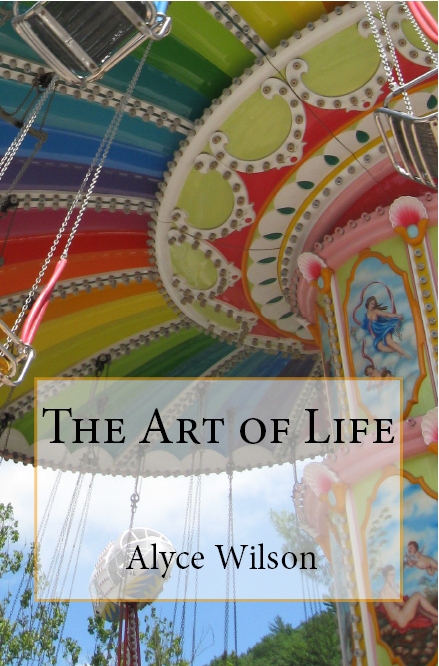
VENTRELLA: Your latest work is “The Art of Life”, a collection of essays on various topics. Where did these first appear and how did you decide which essays to include?

WILSON: The pieces in “The Art of Life” came from three different sources: my “Standard-Journal” newspaper columns; columns I wrote for the now-defunct Comcast site InYourTown.com; and blog entries written between the years 2002 and 2010.

To figure out what to include, I reread all of my blog entries and columns and pulled out the ones I liked the most. Then I reread them once again, keeping in mind the following criteria: Did it stand on its own, outside of the collection? Did it fit with the other pieces? Was it likely to appeal to a broader audience than that for which it was originally intended? If I addressed a similar topic in two pieces, I opted for the one that was stronger. Then I arranged the pieces so that they led into each other, being conscious to alternate topics and tone. Finally, I went back through the manuscript and cut any pieces I felt were not as strong until I got to a reasonable page length.

VENTRELLA: You also are editor of a quarterly online literary magazine. How did that get started?

WILSON: At the time, I was about five years out of grad school, and I felt a calling to make a place for poetry in the world. This was an idea suggested to me by my poetry professors: that it was the responsibility of a poet in these days to make a place for poetry. A friend of mine, Amanda Cornwell, had received her bachelor’s degree in art and shared similar goals. We both felt it was important to make a place for the arts, particularly when you look at how the arts have been increasingly devalued in our society.

Previously, Amanda had launched a small print literary magazine, but funding was difficult and the circulation was small. We looked at the Web as a good forum for accomplishing our goals of making the arts accessible and appealing to the general public. With Amanda doing our initial Web design and serving as the Art Editor, we launched “Wild Violet” in October 2001. After the first three volumes (12 issues), she left to pursue other projects.

VENTRELLA: You’ve also written a book giving advice to those who wish to appear in literary magazines. What’s the biggest piece of advice you can give (other than “read my book”) based on the mistakes you most often see new writers make?

WILSON: Know your market. As the editor of a literary magazine, far too often I receive submissions from people who apparently either cannot be bothered to check out our free online publication or have no clue how to direct their submission toward a specific market. We receive many submissions that are clearly inappropriate, which should be obvious to anyone who had perused the latest issue. It is essential to read the magazines to which you are considering submitting, and to decide which are most appropriate to send your work. It’s not enough just to look for magazines that publish poetry, for example; you need to find a magazine that publishes the kind of poetry you write.

VENTRELLA: “Literary” seems to have a specific meaning to some people in the publishing world. For instance, a science fiction or fantasy writer wouldn’t send their story to a literary magazine, would they?

WILSON: Actually, we receive all kinds of submissions, and we do publish some science fiction and fantasy. The term “literary” has unfortunately acquired an elitist connotation which, through “Wild Violet,” I’m trying to change. To me, “literary” means work which may be more challenging to the reader: writing which goes beyond basic storytelling, whether in terms of character development or the exploration of concepts. The science fiction we publish meets that criteria.

VENTRELLA: Do you think that talent is something that can be learned? In other words, can someone go to school to become a great writer or poet?

WILSON: Talent, that essential flare of ability, cannot be taught. Yet, more of us possess that essential flare than we may realize. A teacher can help you discover what your talents are. You might find, for example, upon taking a painting course, that it’s simply not something that comes naturally to you, but that photography does. That’s the role of education: helping people to discover and refine the talents they do have.

That said, I think education is a surer way to success for many people. There are few individuals with the right mix of raw talent and focused execution to become an overnight success, so to speak. It can happen, but those success stories are rare. Even those who enter a writing career later in life, after pursuing other careers, have more likely than not been honing their communications skills in other ways.

VENTRELLA: What do you see as the future for printed books? For book stores?

WILSON: According to Bloomberg, in the second quarter, for the first time ever, Amazon.com sold more electronic books than hardcovers. I think it’s safe to say that print books are going to take on a new role in our society. Just as with other media that have gone digital, such as music and photography, I think we’re destined for a sea change.

In some capacity, printed books will continue to sell, if for one key reason: there are always slow adopters to new technology. Plus, until somebody figures out a way to sign a digital copy, it will remain the only way to get a signed book. A lot of people like to have an object they can hold which is not subject to, say, a hard-drive crash or computer virus. So there will always be a place for books as more than just a quirky artifact. The number of print copies sold, however, will likely diminish. When you think about it, people are still buying vinyl, too, but nowadays it’s confined to discreet subcultures: namely, DJs and collectors.

Book stores will have to look at how to offer the reader an experience they can’t get from buying a digital copy. I think book stores may become more of a locus to interact: in person with authors for lectures and readings, and perhaps with other readers through reading groups and the like. I would expect at least the chain book stores to add digital kiosks to the store, where readers could sample electronic books and buy them.

If book stores don’t start planning now, they will likely find themselves running into financial trouble, much the same way that record/CD stores have in the last few years with the emergence of the MP3.

VENTRELLA: “The Art of Life” is a self-published work. What are the pros and cons of self-publishing and why did you decide to do so for this book? Would you do it for, say, a novel?

WILSON: Any means of publishing offers pros and cons, which I examined carefully when deciding how to publish “The Art of Life.”

Pros to self-publishing include more control over the finished work. The author determines the final content, layout and book cover. Aligned with that are some obvious cons: you must either do all that work yourself or find someone to do it for you. So it is much more time-consuming, especially to guarantee a high-quality final product.

Another pro of self-publishing is timeliness. You can put the book out as soon as it’s ready, without going through the delays that a publishing house would necessitate. I wanted to get “The Art of Life” out as soon as possible, because I thought it would be a great opportunity to introduce myself to the reading public. Waiting for years for a possible acceptance by a publishing company did not appeal to me. I also felt that this particular collection, because of its range of styles and content matter, would be difficult to fit into the sort of genre or subcategory that publishers prefer.

Still another con, there is still a lot of prejudice towards self-published books, in part because so many sub-standard books have been published this way: poorly edited vanity projects that make the rest of the field look bad. However, as editor of “Wild Violet,” as part of our mission of making a place for the arts, I have reviewed dozens of self-published books. I’m happy to report there is some gold amongst the flax, so I felt like I was in good company.

Yet another con: as a self-published author, you are responsible for any expenses involved in printing and promoting the book. On the pro side, when money comes in, you see it immediately and stand to earn more per copy than through a typical publisher. Along the same lines, you don’t have access to a publisher’s connections when it comes to promotion; however, as I’ve learned from watching other authors, even with a traditional publisher, much of the promotion falls on the shoulders of the author. So if you’re willing to put that time and effort in, you could stand to profit.

Since there’s a long history of self-published poetry chapbooks, I felt comfortable with going that route for my poetry book, “Picturebook of the Martyrs.” Likewise, self-published nonfiction books can still sell, so I felt good about going that route with “The Art of Life,” as well. Unfortunately, when it comes to self-published fiction, there’s a glut in the market, with too many poor-quality books cluttering the field. Therefore, for better or for worse, I think that readers tend to look at self-published fiction a bit askew. The exception here is erotica, especially electronic versions, because that seems to sell strongly no matter the publishing source.

A caveat: these observations are largely anecdotal, so I’d be happy to be corrected by someone with more direct knowledge. However, I myself would be leery of self-publishing a fiction book, unless it were an erotica title.

VENTRELLA: One of the things that I admire about you is that you also run a Monty Python Appreciation Society. How did that come about?

WILSON: Just for clarification, I’m not currently running such a society. However, I am the former president of the Penn State Monty Python Society, and my adventures with MPS are detailed in my online chronicle, “Dedicated Idiocy.” MPS began in the 1970s when “Monty Python’s Flying Circus” first hit the American airwaves. By the ’80s, interest in the group had waned, but just before I joined as a freshman in 1988, MTV had added the show to its late-night schedule, so there were a record number of new members.

I discovered the Monty Python Society through a flyer I saw while attending an Amnesty International meeting. Since the two groups met at the same time, I suppose I should be embarrassed to admit that I sided with comedy over human rights. Still, I think comedy can do a lot of good in the world. One good thing it has done for me is introduce me to some of my oldest, best friends in the world. I’ve often said the real test of friendship is whether you can get together and be silly together. With these folks, I definitely can.

Learning How To Read

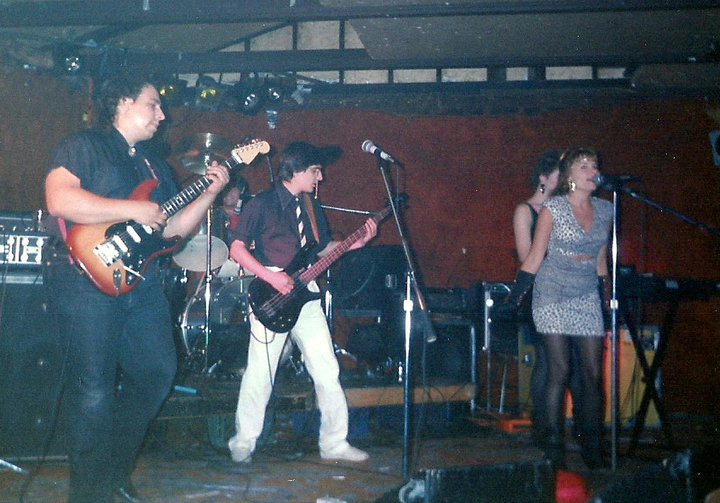
When I lived in Boston back in the 90s, I was in a band called Agent 99. Our music was often described as “Blondie meets the B-52s.” We did mostly original songs, and I wrote my fair share. (That’s me on bass.)

Our guitarist was Richard Marr, who at the time was studying at the prestigious Berklee College of Music and who now runs Galaxy Park recording studios in the Boston area. I often gave him comments about his songs which he accepted and used. I recall one time specifically where he said “You know, I’ve learned more about songwriting from you than I have from my professors.”

So what does this have to do with writing fiction?

Well, this: You can learn more about a creative endeavor by paying attention than you can any other way.

Even now, I don’t just listen to songs — I listen to how they are crafted. I pay attention to whether the writer has placed the lead before the bridge or after, how the instruments play against each other, the way the lyrics flow … everything. I can’t help it, I just do. I hear things in songs that non-musicians and non-writers don’t hear or don’t notice.

My wife is an artist, and she tells me it’s the same with her and art. We can go to a gallery and while I can admire a piece of art in general, she sees it in a completely different way, noting the artist’s techniques and processes, analyzing why the artist made the decisions he made.

And that is how you should be reading.

Oh, I don’t mean that you need to literally study what you’re reading; when I listen to music, I can still enjoy the song while noticing all the rest. But you should take notice how the author structured the story and kept it moving, how the characters become real and believable, how the author used foreshadowing, and so on.

Taking writing classes and learning how to improve your skills are one thing, but learning how to tell a story takes something more — anyone can learn grammatical rules they teach you in school, but not everyone can be a great writer with them.

To use music again as a metaphor: I never really learned how to read music other than the very basics (“OK, that’s a C sharp”). I have played with various musicians who could take a score they had never seen before and play it beautifully. But if you asked them to play a solo, they were lost. They’d ramble all over the place, producing nothing memorable. They just didn’t have the skill needed to go from technically proficient to creative.

And that’s what you need to do with your writing. Those “how to write a novel” books will not teach you as much as if you would just read! Read good books! Books in your genre. Books you will enjoy. And pay attention!

(Oh, and thank you for reading this and letting me have a bit of nostalgia about my old music days!)

My Turn to be Interviewed

Check out this blog for a nice discussion about vampires, writing, politics, and axes of evil! And be sure to leave a comment (blog writers like that!)

Obvious Writing Rules That Aren’t That Obvious

Just because you have a book published does not mean you know everything there is to know about writing. You can always get better.

Since my first novel, I have worked with excellent editors, taken classes from professional authors, attended writer’s conferences, and participated in discussions and panels at conventions. Each one has brought new lessons for me.

And most of these lessons were obvious once I learned them. Each of these came with an “Of course! Why didn’t I see that before!” light bulb attached.

I am now editing a short story collection and have discovered that I am not the only one who was not aware of these obvious rules beforehand … many of the rejected stories were sent back for violating these rules.

So here are my five Obvious Writing Rules that Aren’t That Obvious.snoopy-writing

1. Have a character point of view and don’t change it abruptly. My first two novels were in first person, so that wasn’t an issue, but now that my new novel is in 3rd person, I am paying much more attention to this rule.

Each chapter should be told from a specific character’s point of view. (I imagine the narrator hovering over a specific character and only describing what that character sees, feels, and thinks.) To do otherwise is very jarring to the reader. If you have to switch POV, be sure to make a break somehow to make it clear.

The omnipotent narrator can work, but you’ll find that the story will flow much better by choosing a character for each chapter. And it doesn’t have to be your main character; perhaps this section is told from the point of view of someone meeting your main character, which allows you to better describe your character’s personality quirks and looks (since your main character probably won’t do that).

2. Try not to use words other than “said” and even then, try not to use “said.” And for that matter, steer away from adjectives that describe “said.”

When you use other descriptions (growled, hissed, yelled, screamed, etc.) it can be distracting from the dialog you’re trying to highlight. It should be clear from the dialog.

Better yet, try to avoid “said” whenever possible. Usually, you can indicate who is speaking from the paragraph in other ways.

“Give me that idol!” he screamed angrily.

As opposed to:

His face became red as he pounded his fist on the table. “Give me that idol!”

3. Show, don’t tell! Look at the paragraph above. See how much better the second example is? And it’s obvious who is saying it — you don’t need to add “he said” at the end.

When I’m working on my second draft, I go back and make sure that I am showing, not telling. Maybe it’s my legal training, but I imagine myself cross examining a character:

“He was mad.”

“How do you know that?”

“Well, his face turned red and he pounded his fist on the table.”

4. Trust the reader. You don’t have to spell out your plots completely. The bad guy doesn’t have to detail his evil plan. It should become obvious sooner or later anyway.

Admittedly, I kind of knew this all along. In fact, in my first novel, I even make fun of the “bad guy monologuing” cliche.

But it applies to all parts of your writing. Don’t dumb down the story; the readers will get it. Don’t explain that someone was happy or sad or angry — show it instead and the reader will get it. You don’t have to spell out what’s going on like some bad made-for-TV movie.

5. If you’re skimming over your own work, so will your readers. Leave out the boring parts. You don’t need to describe every detail of the room, or of the main character’s face. The reader will fill that in themselves.

These, then, were the five rules that made me go “Of course!” These are not the only rules for writing, just the ones that hit me recently. There are many other rules that I already knew, and I’m sure there are more I have yet to learn. (And I may come back to visit these in more detail later.)

And, of course, a final disclaimer: There really are no rules in writing. If it works, it works.

My Arisia schedule

Here are the panels in which I will be participating at Arisia in a few weeks. Hopefully I will see you there! (And hopefully I will be on a few more by the time the convention gets here)

The Movie Year in Review (Sat 12:30 PM) Our annual look back at the year in SF, horror, and fantasy film. Our panel of experts will cover every theatrical release of 2010. Find out which ones are worth catching. Note: Time for audience participation is reserved at the end of our panel’s high speed review. With Daniel M Kimmel, Michael A Ventrella , Mimi Noyes, Robert Newton, Garen Daly, John Bowker, and Chris Denmead.

Problem Players (Sat 8:00 PM) Sometimes a player just isn’t right for a gaming group. Sometimes some players simply rub each other the wrong way. How can such conflicts be resolved? And if they can’t, what’s the best way to resolve the situation? With David Nurenberg, Rachel Morris, Genevieve Iseult Eldredge, Michael A Ventrella and Peter Maranci.

LARP Round Table Discussion (Sun 5:00 PM) Come tell war-stories and share the ups and downs of playing and running your favorite (and least favorite) LARPs. With Michael A Ventrella, Rachel Morris, Mark Waks and Susan Weiner.

Eye of Argon Reading (Sun 11:00 PM) The worst science fiction story ever written gets a reading by our brave panel as they compete to go the longest without tripping over a misspelled word or laughing uncontrollably. Audience members are also encouraged to take a chance. Can you keep a straight face, especially when the panel begins acting out the story? With Michael A. Ventrella, Marty Geer, Walter Hunt, Susan de Guardiola, and Hildy Silverman.

Reading (Mon 12:30 PM) With authors Mark L. Van Name and Michael A Ventrella.

Don’t Touch It! It’s Evil! Time Bandits at 30 (Mon 2:00 PM) How does a film about time-travelling dwarves, a map of the universe and a technophilic embodiment of evil stay so popular? One of Terry Gilliam’s first non-Monty Python films explores classic myths, philosophy, and what Napoleon kept up his sleeve. Come discuss a long-time cult favorite among fans and non-fans alike. With Daniel Miller, Michael A Ventrella, Cheryl Braverman, and Ethan Gilsdorf

My Turn to Be Interviewed

Author Alyce Wilson interviews me today on her blog. Please check it out and leave a comment! (Blog writers love to get comments)

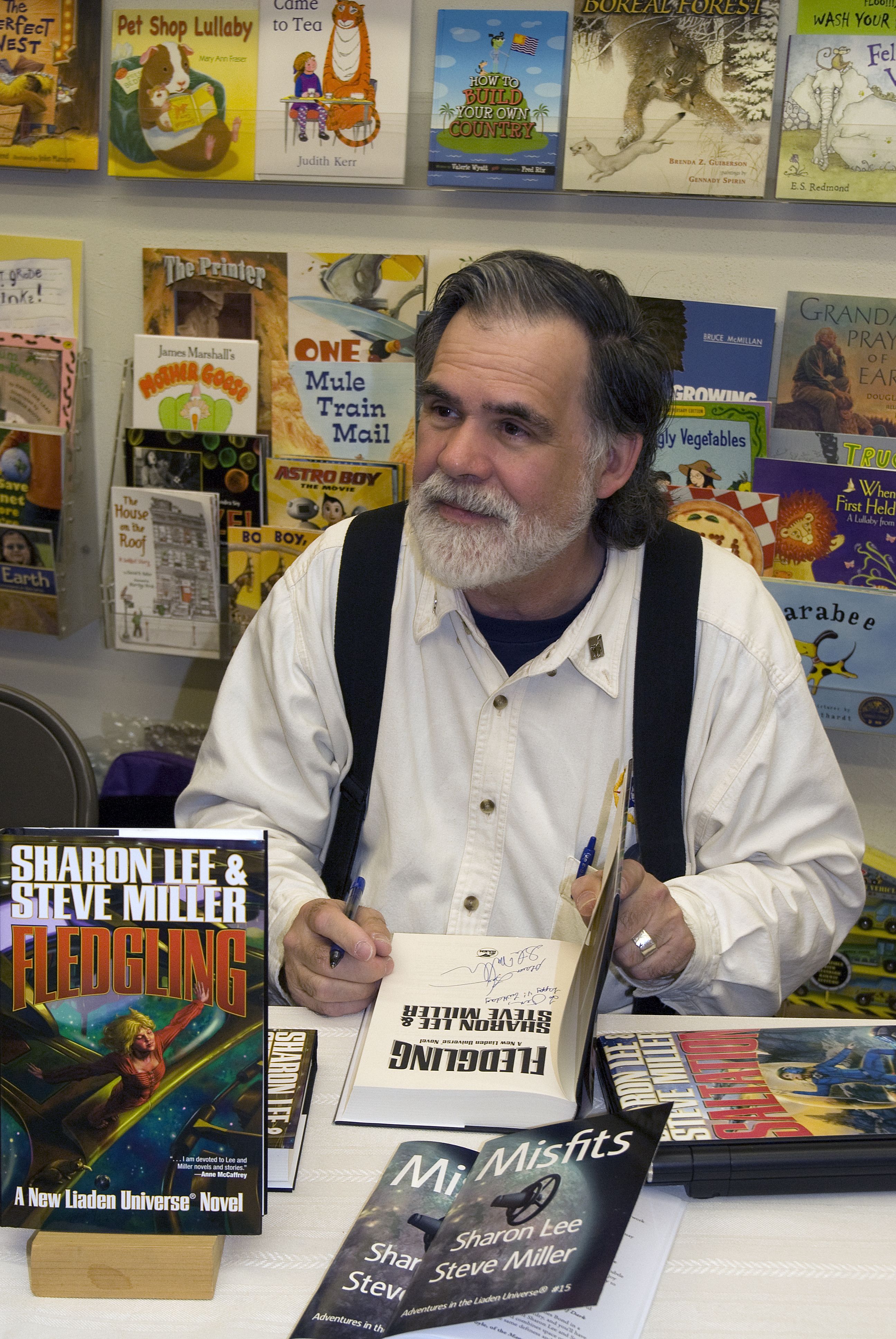
Interview with author Steve Miller

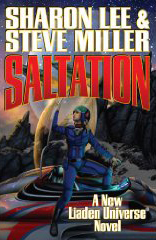
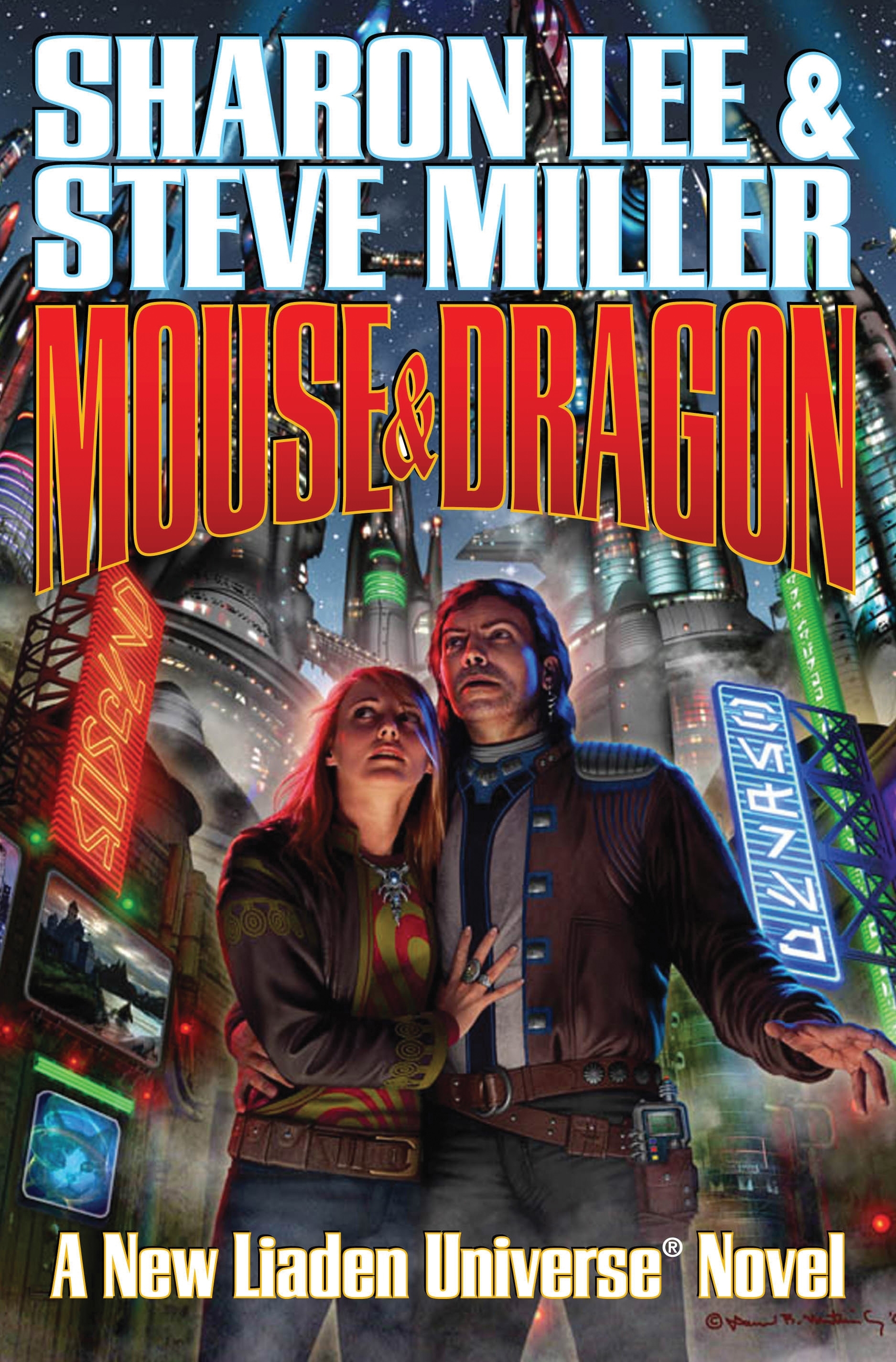
MICHAEL A. VENTRELLA: I am honored to be interviewing Steve Miller today. Steve and I have been on panels together at conventions, and I interviewed his collaborator (and wife) Sharon Lee recently. They started the first Liaden novel in 1984 and have published sixteen novels and several dozen short works together in that series alone, garnering a number of awards as well as invitations as Guests of Honor and Special Guests coast to coast in the US and Canada at many conventions. Their work has enjoyed a number of award nominations, with SCOUT’S PROGRESS being selected for the Prism Award for Best Futuristic Romance of 2001 and LOCAL CUSTOM finishing second for the same award. BALANCE OF TRADE, appeared in hardcover in February 2004 and hit Amazon.com genre bestseller lists before going on to win the Hal Clement Award as Best YA Science fiction for the year. SALTATION is a current nominee for Best SF of the Year on the Goodreads Choice Awards.

Steve, how do you and Sharon work together? What’s the process like?

STEVE MILLER: A madhouse, according to some solo authors.

We often role-play at dinner or after going over the day’s work; sometimes we’ll start driving, get in a discussion of a character or plot point and end up in Canada. The role-playing may involve standing and showing body language, or the raising of voice in character, or the rapid alternation of characters, more or less in voice — I guess, yes, our own madhouse. Sometimes one or another of us will pause at the grocery store, say “storystuff!” and we’ll discuss things right in front of the oatmeal or carrots — story takes precedence.

More prosaically, one of us generally does the typing/sketching of the first draft — Sharon will sometimes retire to the couch and write longhand notes, and I usually work on the netbook or big computer directly, my hand written notes being unreadable the next day. We sometimes switch off in the middle if timing is an issue — neither of us is automatically doing the first run. Generally, the person doing the base work is the “traffic cop” on the book, and is responsible for backing up the book, having the two foot pile of paper in their office, and etc. Since we usually agree on points as the book is written there’s not that much disagreement on things — but the traffic cop gets third vote on a book if there is an impasse about something, thus making calling in the Marines to solve something for us much less likely.

VENTRELLA: What themes do you find yourself revisiting in your work?

MILLER: Oddly enough, or perhaps predictably enough, partnership is one, as is the unreliability of formal education and educational institutions. I note that Sharon and I have both worked in university settings ….

We also tend to stress the need for individuals to have a trusted pool of competent (if not savory) people who they can depend on for advice, at least. I think I also deal with change-as-necessity. We also subscribe to the Andre Norton “there have been prior civilizations” school of thought and all that may be carried forth from there.

VENTRELLA: What makes your work different from others in the genre, in your opinion?

MILLER: I think that I’m a bridge between many of the older ideas and approaches of science fiction and the new, from the old market to the now market. I’ve had breakfast, lunch, dinner, and sometimes a morning or late night glass with writers and editors ranging from John Brunner, Damon Knight, Ted White, and Hal Clement to Roger Zelazny, Jack Chalker, Vonda McIntyre, and Toni Weiskopf; I’ve been to Clarion and I was published in Amazing before the lamented-by-me attempt to turn it into a mediamag. Having talked shop and traded manuscripts with this kind of an array brought me to face to face with idea writers and storytellers. Also, I’ve extrensivly read — not studied, but read and absorbed as a young reader and then a young writer — many of the founders of SF and Fantasy as we know it, both in short fiction and longer fiction. And not just the celebrated classic authors, but the pot-boiling writers to whom story and flow was ghod. Not too long ago I was surprised to see someone recognizably a “name” writer of the 1990s and 2000s assuming to have invented a certain genre … which actually was invented in the 1930s by a famous writer apparently unknown to the “modern” writer. What this means is that I have, and draw on, a breadth of “SF genre” that many newer writers lack — and that some disdain, to their detriment. In other words my meme farm is huge, and I’m not afraid to use it!

VENTRELLA: Everyone who is published was an “aspiring writer” once. What mistakes did you make along the way?

MILLER: How much time do you have? No, seriously, I made a lot in a very short time — especially between the ages of 20 and 24, when I’d been assured by some very good writers that I could probably make it it as a pro someday, based on what they’d seen of my work. They were the fiction writers, of course, because by that age I was already writing for newspapers, magazines, semi-pro zines, anywhere I could — particularly if there was pay involved.

What I didn’t comprehend was that a suggestion by a well-known fiction pro that maybe I should “clean this up and send it on to XXXX magazine” didn’t mean “Tell him I sent you” … and also that once I did get a nibble that I shouldn’t expect instant results, that is, that as a no-name-newbie my work was something that might fill out an issue when it would fit — of course there were more print magazine then and many of the editors had come along as I was coming along, and thought that was how it would work forever — get a foot in, become first a byline, then a signature, then a name, then an invite to write a novel.

Clearly, the biggest mistake I made was lack of patience and in the long run trying to rush things probably cost me a year or two of pro work.

VENTRELLA: What is the biggest misconception people have about being a writer?

MILLER: There are several that go together, I think — One is that being a writer is inherently glamorous and the add-on is that being a writer elevates one to a superior state of being, with all the joys thereof.

VENTRELLA: How did you first interest an agent in your work?

MILLER: Accidentally. I was working as “third key” at Williams-Sonoma in Owings Mills, Maryland — meaning I was official management and got to deal with provblems and situations the manager didn’t want to deal with, like book signings and in store demos. Thus, when we had a double whammy of that, it was me in the front line — we had a cookbook author come to the store for a demo! The day before she came we’d gotten an offer on Agent of Change from Own Locke at Del Rey. It turned out that the cookbook author also wrote fiction… and when I mentioned that we had an offer in hand she recommended us to her agent, who looked over (and improved) the contract and got us through the three Del Rey books. Once we had a record getting the next agent was a little easier, but she was uncomfortable dealing with the SF side of things, and eventually we moved on after personal meetings with several agents at conventions and we’re pleased to link up with Jennifer Jackson.

VENTRELLA: What process do you use when creating believable characters?

MILLER: I’m hoping to write a book about this, but not here. Generally there’s no concious prefabrication involved in my new characters — the story starts, the character stands out from stage left or right, and Ta Da! I rarely base a character on someone I’ve met, but it may be on someone I know — that is, based on a character I’ve met in the thousands of books and stories I’ve read. The key to believabilty is not in the original creation, but on how the character acts in the story. A multi-hundred foot tree as a character? No problem. A sentient dragon looking for love? No problem… as long as they act right by who they are and don’t just act like dolls moved form here to there in a dollhouse.

VENTRELLA: What is your background in writing? What led you to wanting to be a writer?

MILLER: I pretty much have wanted to be a writer since I started reading books, and it probably helped that my grandmother was an award-winning poet so the concept of writing for publication had a priority over writing for school from the time I was quite young.

In high school I worked on the school literary magazine several years before becoming editor as a senior and in college I joined the school newspaper in my freshman year as a reporter, and soon took over some editorial duties. I started reviewing for the school paper as well as a number of fanzine and semi-pro genre mags shortly thereafter, and eventually was Managing Editor. I also contributed to poetry publications — which led to my weekly poetry column in a local newspaper by the time I was 23, IIRC. I was the sceince fiction book reviewer for the Baltimore Sun in my mid-20s when I was also a music columnist for the Baltimore area Star newspapers — and that led to me eventually being a features editor and then to taking over as Editor of several weekly papers. The whole time, from about 17, I was also writing fiction, which began appearing in semi-pro magazines and then in Amazing and some other pro places. I did spend some summers working construction, which helped convince me that writing was the way to go when it came to making a living.

VENTRELLA: The publishing industry is changing daily. What trends do you predict and how will this affect the business and your own publishing?

MILLER: Shoot for the moon: I think IPads in he current size will become obsolete in a couple years and theat reading will increase as people have access to phone readers and more reasonably sized and priced tablets. Paper publishing will continue to be a zoo, the current returns system in the US will crumble with in next 5 years as physically moving books becomes too expensive — this will cut down print runs drastically which will cut a lot of small bookstores out of the loop. We’ll keep on writing.

VENTRELLA: What are you working on now that we can look forward to?

MILLER: I’m told that between a new yet-to-be-seen novel and new Baen editions of previous novels we have at least six books due out in 2011, so it shouldn’t be hard for a a new reader to find us. Those are all books that are written, however.

In the short term, the new stuff? I’m working on finalizing SKYBLAZE, a novella due out as a chapbook from my own SRM Publisher in February. For those familiar with the Liaden Universe(R) this will span the end of the attack from I DARE and the early SUREBLEAK period and is our holiday chapbook (delayed a bit because of my recent hospitalization and the moving of SRM’s principal office).

Beyond that, we have contracts for three more Liaden novels to be delivered over the next 18 months or so. The first is DRAGON SHIP, which is the follow-on to GHOST SHIP; I have notes on that and once SKYBLAZE is done I’ll do a week of rereading of the series and then start right in — it follows Theo from FLEDGLING, SALTATION, and GHOST SHIP as she deals with the results of her pursuit of a, let us say, nonconforming path to independent starship pilot. Also in the works is an unnamed novel set on a post-Korval-arrival Surebleak and the long-awaited JETHRI follow-on, TRADE SECRET, which, depending on where you started reading the series, is a distant prequel to the Agent sequence or a distant follow-on to the Crystal books.

We’ve also committed to several more short stories for 2011 but I can’t say more than that quite yet.

13308401_10156960383575416_1464776046358663657_o

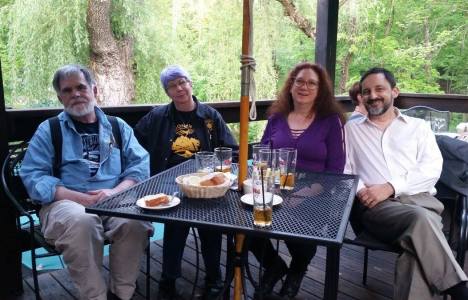
Dinner with Steve and his wife Sharon Lee (and my wife Heidi Hooper) when they visited us

Interview with Author Tracy S. Morris

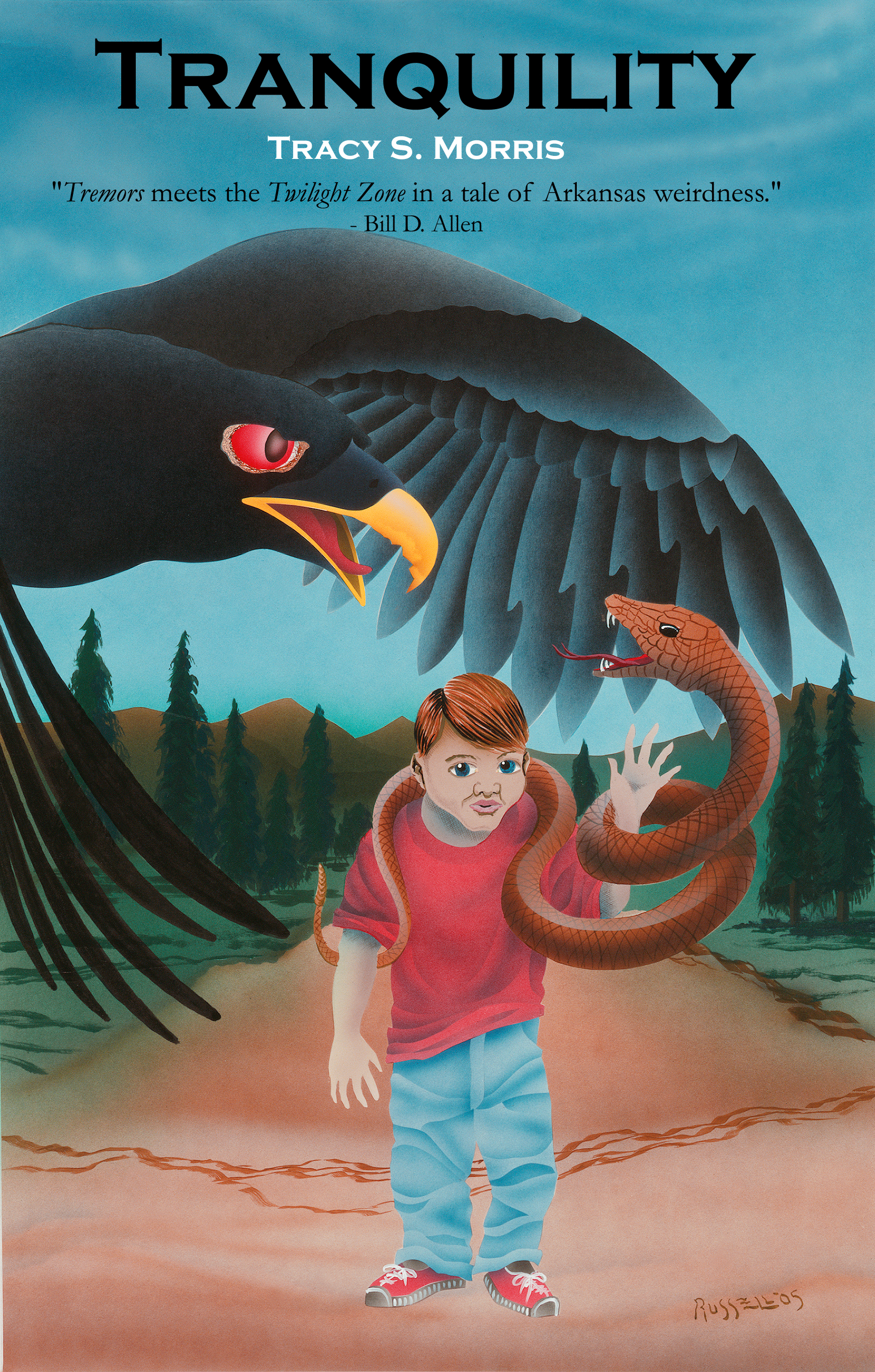
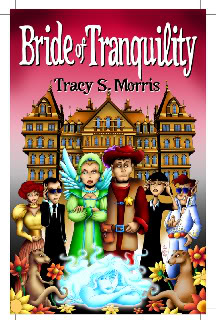
MICHAEL A. VENTRELLA: Today, I am pleased to be interviewing author Tracy S. Morris. She is the author of the Tranquility series of urban fantasy mysteries. The most recent, BRIDE OF TRANQUILITY, is a murder mystery set in a haunted hotel during a Renaissance wedding. She’s also published a number of short stories. Her web page is here.

Hi Tracy! Tell me a little bit about yourself!

TRACY S. MORRIS: I’m a professional writer, so I spend most of my days in front of my home computer in my pajamas. My specialty is service journalism in the gardening industry. Which is a fancy way of saying that I write “how to” articles that deal with topics like compost, animal manure and growing the perfect tomato. I like to call that “living the dream.” Although it probably means that I’ve got no life.

I’m also a retired newspaper photographer/reporter. On my best day, I got to shoot the president (with a camera) which probably put me in the crosshairs of a secret service sniper. On my worst day, I was suspended off of the back of a speedboat in freezing weather and driving sleet to get a picture for a news story.

I got to do some very interesting things in that job. I had a ride in a hot air balloon. I had the best seats in the house for every major sporting event. But I also had no life, no predictable schedule. And after the day with the speedboat in the sleet, I realized that there has to be a better way to make a living. Which is why I now work at home in my bathrobe.

When I do leave the house, I’m a shooting enthusiast, a martial arts black belt and a former fencer. I’m a history buff and I’ve spent some time in the Society for Creative Anachronism, which is a group that recreates history from Roman times through the late-renaissance (the boundaries are nebulous and basically cover anything that other history groups don’t cover.)

VENTRELLA: What’s something unusual or different about you that your readers probably don’t know?

MORRIS: That’s a tough one to answer. I’m pretty transparent about my life, so there isn’t a lot that my readers don’t know about me.

I like to collect antique cameras. The collection is mostly thanks to my dad, who likes to go to garage sales. I asked him to be on the lookout for antique cameras for me. So he used to pick up any old camera he saw at an auction. I have several antique bellows cameras, a couple of twin lens reflex, some very nice medium format box cameras and two or three Brownie Hawkeye still in the box. He even bought me a couple of necklaces with camera charms. Eventually I hit a point where I had no more room for them and I had to ask him to stop buying them for me.

The one camera I want most that I don’t have yet is an old Speed Graphic press camera. One of these days I’m just going to cave in and buy one on E-Bay or something.

VENTRELLA: Your “Tranquility” series seems to combine a number of different genres. How did this come about?

MORRIS: Tranquility really grew out of something I was writing for fun. Because of that, I didn’t try to stick with a formula or say “I’m going to make this just a mystery. Or just an urban fantasy. Or just a horror. I was writing for me, so I made it about the things that interested me.

I grew up on a family farm out on the border of the Ozark mountains. My family lived in that region for four generations. When I was a kid, I read a few too many bigfoot stories. So the things that scared me weren’t the monster under the bed. It was whether there was something out in the dark woods out past the barn. That’s where the horror element from Tranquility came from.

I wanted to write the book as a pure horror, but I also have a skewed sense of humor which kept slithering in. One of the major themes that appeared in the book grew out of my reaction to moving home and really seeing the oddities in my small town for the first time. This made the book feel much more like the TV series Northern Exposure, or possibly the Disney Cartoon Cars with that ‘city slicker comes to the country and discovers that it’s a pretty great place’ theme.

By the time that I finished writing the book, I finally embraced the notion that my natural writing voice is humor instead of horror.

TRANQUILITY was nominated for a Darrell award, and placed runner up in 2006. At the awards ceremony my publisher asked when I was going to give her the second book. When I sat down to write it, I decided to make it as fun and absurd as possible. So I threw in everything but the kitchen sink.

The second book in the series, BRIDE OF TRANQUILITY, came after I had been through the process of helping to plan and put on four weddings (Two of them the same year.) I had dabbled in wedding photography by that point, and I had some sarcastic, slightly cynical views about the business side of the wedding industry.

So I thought ‘what’s the worst thing that can happen at a wedding? How about a murder? What’s the worst thing that can happen in a murder investigation? Why not a killer who can move around the hotel through secret passageways – phantom of the opera style? What about if all of the hotel guests mistrusted the investigator and wouldn’t talk to him? Why would they do that? What if they were conspiracy theorists?

VENTRELLA: Do you think that not fitting into one genre made it a harder sell to editors (and the public)?

MORRIS: I didn’t actually have to sell the series. Which is almost embarrassing to admit, since so many other authors have tales of sending a novel out to 45 agents and 20 publishers before gaining acceptance. I sold TRANQUILITY to Yard Dog Press because I was friends with the publisher. When I was outlining the novel, I told Selina Rosen, the editor about this new project that I was excited about. She asked me to send it to her when it was done.

BRIDE has been easier to sell to the fans, because I have a catchy summary that makes the book sound fun. Where else would you be able to read a murder mystery set in a haunted hotel during a Renaissance wedding?

VENTRELLA: I note that they are from Baen Books in e-format but Yard Dog in paper. How does that arrangement work?

MORRIS: Yard Dog Press does not deal in e-books, so they did not contract those rights. But the publisher has a working relationship with Baen. (Baen bought the e-rights to Selina Rosen’s Misha Merlin titles as well as the Sword Masters series from Dragon Moon Press.)

Additionally, Baen had just bought the E-Rights to another popular Yard Dog Press series, The Four Redheads of the Apocalypse.

Since I already had a working relationship with Baen, Selina suggested that I offer the E-rights to them. I could have put out the E-books myself through Amazon. Authors such as Jim Hines have done that with great success. Another Yard Dog author, Margaret Bonham has put her Yard Dog Press epic fantasy novel Prophecy of Swords out that way. Since then her title has reached the top 10 in epic fantasy e-book category for Kindle.

But Baen brings with them a new audience of readers that I might not reach otherwise. That is very exciting to me.

(By the way, through the month of December 2010, if you purchase either TRANQUILITY or BRIDE OF TRANQUILITY in trade paperback from Yard Dog Press (Direct from the publisher, not from Amazon), I’ll send you a free preview of the first two chapters of the next Tranquility book that is now in progress, which is tentatively titled IT CAME TO TRANQUILITY.

The links to these books on Yard Dog Press are: TRANQUILITY and BRIDE OF TRANQUILITY.

Baen is also running a special on the E-Books. Until January 1, 2011, you can order both TRANQUILITY and BRIDE OF TRANQUILITY along with the books in the “Four Redheads of the Apocalypse” series as a Yard Dog Press bundle for $20.

You can order the E-Books at: http://www.webscription.net/m-9-yard-dog-press.aspx)

VENTRELLA: How did you make your first sale? Did you have an agent?

MORRIS: I still don’t have an agent. Instead I’ve made every sale I have the old fashioned way — by researching markets and sending manuscripts out.

My first sale was to an anthology called OCTOBERLAND that was put out by Flesh and Blood Press. It was a story entitled “Frost King” that I had basically written and rewritten multiple times.

I sold the story exactly the wrong way. It had been the first short story that I ever wrote, I made revisions with the help of an English teacher and then put it in a drawer through my college years. Once I decided to pursue writing again I started sending it out. Every time It was rejected I rewrote it using suggestions that the rejecting editor provided me. Eventually after 12 rewrites over 4 years, I sold the story.

That same week I also sold “Attack of the Godless Undead Zombies” to Yard Dog Press for one of their “Bubbas of the Apocalypse” anthologies. That story was written in the space of two days. I turned it in to Selina Rosen after my husband gave it a single editing pass.

Today I try to get a story to the point that I am happy with it before I send it out instead of changing it with every rejection. I feel much happier with the end result.

VENTRELLA: I have a short story that I can’t seem to sell, as it hardly fits into any specific genre. What advice do you have for me (and other writers reading this) for finding the right editor?

MORRIS: Before you do anything, consider your goals. Do you want to sell a story you are unhappy with for the sake of having a sale? Or do you want to have the best body of representative work you can possibly produce?

If you just want the sale, then rewrite the story along a formula so that it fits into a single genre. But if you are happy with the story as it stands, put it aside until the right editor comes along.

My personal choice would be the second option. I have been writing and reading speculative fiction for 20 years and I have seen genre conventions change drastically over the years. I never thought I would see the day that Jane Austen and Zombies were used in the same genre. I have ‘trunked’ perfectly good stories because they didn’t have the right market, only to have the perfect market for the story come along two years later.

If you change your work into something that you dislike just to make a sale, you may end up with a ‘representative body of work’ that you are unhappy with.

Also bear in mind that compared to novels, short stories are very quick to produce. You can have a short story written within a few days. So if you can’t find a home for one, you can set it aside and devote your attentions to creating and selling a new story.

VENTRELLA: You have two short stories in Baen’s online magazine “The Grantville Gazette”: “Still Life with Wolves and Canvasses” and “A Study in Redheads.” Do you think that online publications are the wave of the future?

MORRIS: Don’t forget about my co-writer for those stories, Brad Sinor.

A few months back Amazon began selling more electronic books than print books. This has a huge impact on magazines. Particularly since the publication business model is not the same as the book business model.

Most print publications don’t get their revenue from selling copies of their magazines. Instead they get revenue from ad sales. So a magazine like Fantasy Magazine once could leverage their sales numbers to attract advertisers. Fewer people are going into stores where these magazines used to sell. Instead, readership is online now.

You are already seeing more magazines online. There are several business models out there. Daily Science Fiction is delivering a story a day directly into my in box. The Grantville Gazettes require a subscription to access their online content. Fantasy Magazine has complete stories up for free with ads in the margins. Clarkesworld offers free content online, but sells their magazine with additional content through Kindle and has occasional donation drives.

When the dust settles, I think the most profitable business model will be the one we see copied.

The thing I admire about what Grantville Gazette is doing is that they are building a community around their 1632 franchise. There are the novels with the bigger name writers. But there are also message boards where fans can interact and have an impact on the storylines. Baen has an entire section devoted to the tech of the 1632 universe where experts (and there are plenty of qualified experts) can hammer out the science of the universe.

If someone wants to submit a story to the Grantville Gazettes, the story is put up on a closed message board where the Grantville fans can pick it over for conflicts with the universe timeline or the science. The author can make the changes and if the story is accepted, the same fans will buy the content.

Eventually, the ‘best of’ stories are the ones that get released in the print anthologies. Which also are bought by the community members.

Business-wise, this is smart. This is what made Dr. Horrible’s Singalong Blog such a success: Joss Whedon has an intensely loyal community that is willing to follow whatever he does.

This is also why celebrities such as Wil Wheaton, and internet celebrity Author Cleolinda Jones do so well with self publication. They’ve built a community of readers who are willing to follow what they do.

VENTRELLA: “Fish Story” is a short story you wrote which appeared in STRIP MAULED, an anthology edited by Esther Friesner. Tell me about that!

MORRIS: “Fish Story” involves a couple of characters that have been living in my mind for a while. Back when Laurel K. Hamilton and Jim Butcher first began publishing urban fantasy, I had a thought that it might be fun to write someone who would live in an urban fantasy world but eschewed magic. How would that person survive if they lived as a sort of magic conscientious objector?

The adventures I wrote were another example of a hard-to-sell genre mashup. I write funny third person. The urban fantasy of that type seems to take itself very seriously, and usually follows the noir detective novel conventions of first person point of view.

The characters are a good example of an idea that was trunked because of a lack of market, only to have the market return. I had an early story with the characters published in a magazine (now defunct) entitled “Whispers from the Shattered Forum”. After that, the Noir Detective novel in the Urban Fantasy market seemed to be dying.

Then TWILIGHT revived the interest in Urban Fantasy Vampires, which always seem to pull readers into the Noir Detective Urban Fantasy novels. And then along came a couple of great TV shows like “Supernatural.”

Prior to selling Fish Story, I sold a short story with these characters entitled Homo “Homini Lupis” to an anthology entitled WOLF SONGS, which was put out by Wolfsinger press. I recently finished a novel with the characters that is based on the plot to this short story.

Then Esther Friesner launched her monsters in suburbia series. The anthologies are open by invitation only. But through a mutual friend I was able to ask her if I could submit a story for consideration for her werewolf-themed anthology. I was very surprised when the story not only made it into the anthology, but was put up on Baen’s website as one of the free preview stories.

I also submitted a story to her for the vampire-themed anthology. But the competition for inclusion in that anthology was a bit stiffer, and I didn’t end up being selected.

VENTRELLA: Would you advise beginning authors to concentrate on getting short stories published first?

MORRIS: There is a huge difference between publishing a short story and publishing a novel. About 15 years ago the accepted career path was to build name recognition through short stories and leverage that to secure a novel contract. Today that wisdom doesn’t hold true. You can get a contract with an agent, or sell a manuscript to Tor or Baen if the novel is good regardless of what your name is. Conversely, you can have a big name in short stories and if your novel isn’t good enough, you won’t be able to sell it.

My advice is to concentrate on honing your craft in the medium that you want to be published in. If you want to write short stories, that’s the area you should focus in. If you want to write novels, start there.

VENTRELLA: What is your opinion on e-book publishers and Print On Demand?

MORRIS: Each publisher is different. Do your homework and contract with a respectable publisher. One good resource is SFWA’s Predators and Editors website.

VENTRELLA: How about self-publishing?

MORRIS: Rule #1 of Self-Publishing: Thou Shall Not Fooleth Thyselfeth.

First thing you must understand is that publishing a book yourself does not put you into the same league as Stephen King, J.K. Rowling or Danielle Steele. You won’t be rolling in piles of money. Nor will you spend your days poolside with a laptop, eating bon bons while you compose deathless prose.

Writing is a business. Publishing is doubly so. You will be responsible for selling the books yourself, handling the details of distributorship and all promotional marketing (these things that publishers normally do).

Additionally, you must overcome the stigma attached to self publishing. Self publishing (from what I’ve observed) is like swimming upstream against a tide of professional ostracism. In the eyes of many professionals (authors, editors, publishers, book sellers) your book lacks the quality editing work that books published with an established house have.

Promotion will be more difficult because many reviewers will give your book less priority than a book sent by a professional house. Science fiction conventions will give preferential treatment to writers who have books with professional houses. If you do manage to get paneling, you may be treated with hostility or veiled contempt by authors with credits through traditional publishers.

There are a number of authors who have been successful with self publishing. Most of them know to treat the business of writing and publishing like a business. Many of them establish a fan following through other means, and dabble in self publishing. Others have an established fan following through traditional publishing that follows them into the self publishing realm.

VENTRELLA: I assume you have cats. (Don’t all writers?) Am I wrong?

MORRIS: No cats. I am owned by two very lazy dogs. When I’m not writing, my job is to cater to their every whim.

My Turn to be Interviewed

The Blog “Rambling Roses, Purple Prose and other Asinine Alliteration” has a very nice interview with me today! Please check it out. http://writertracy.livejournal.com/197182.html