Get a Good Editor!

One of the hardest things for creative people to do is to look at their own work objectively.

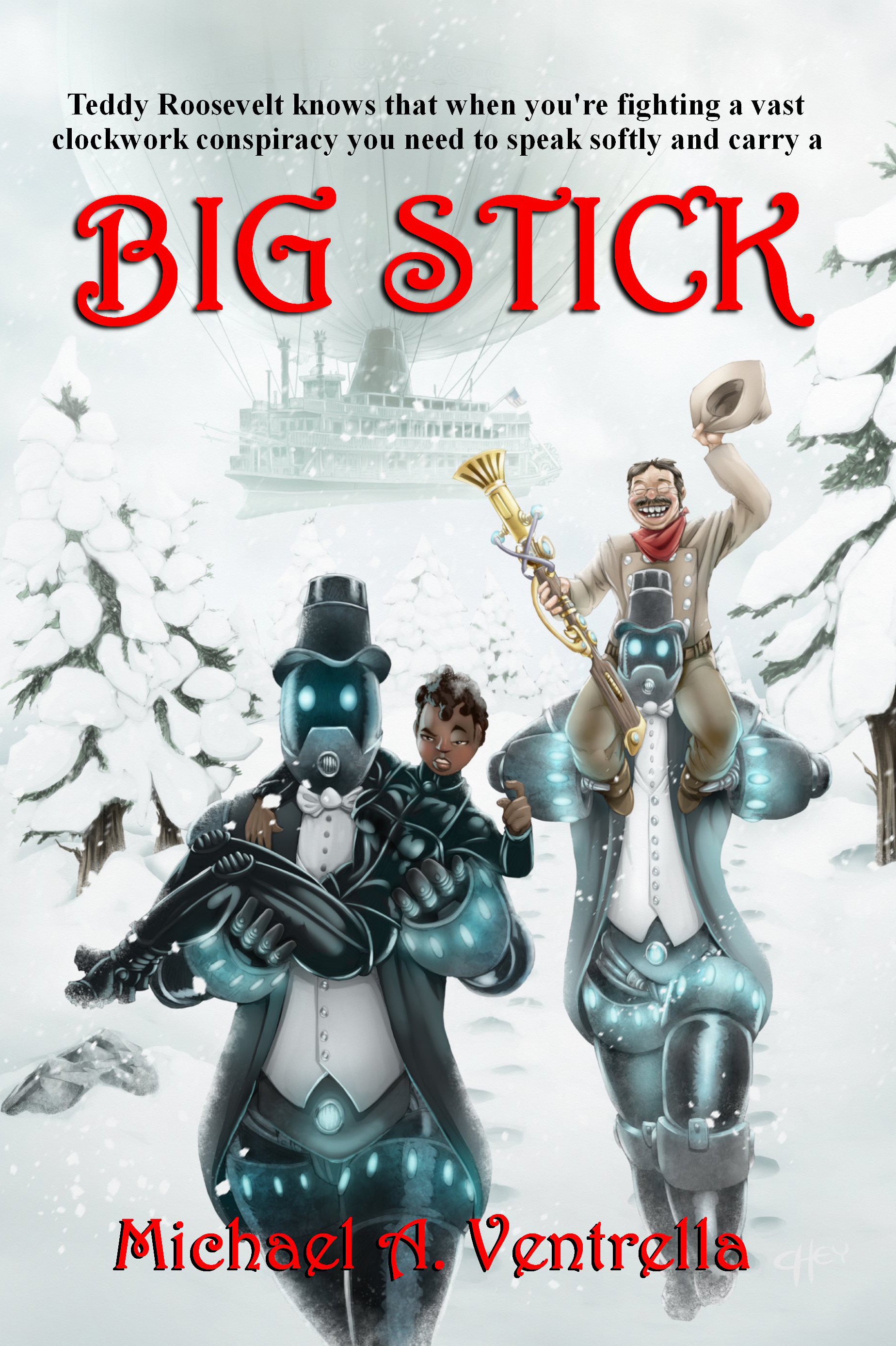
The final edits on my second novel (THE AXES OF EVIL) are now complete, and I am very grateful that I had an excellent editor this time to help me out. J. Thomas Ross, whose blog you should all be reading, tore apart the manuscript and now the book is 100% better.

Some of the edits were based on grammatical errors and phrasing, but any good editor should point those things out. No, what made the difference was having an editor who also pointed out exposition holes and other problems.

I can clearly see a situation in my head as I am writing it, but that doesn’t mean I have explained it well enough for someone else.

Here’s an example: In AXES, there is a scene where Terin, the main character, is trying to sneak into a barbarian village. He has obtained the aid of some rather incompetent goblins, and they are hiding in a food storage shed. Peeking out the window, they observe the scene and make their plans. This is important. A reader needs to understand the layout to not only get what is happening but also to build the tension and suspense as Terin leaves the building and heads toward the prison where his friends are being held.

I thought my description was just fine, but Judy (my editor) couldn’t see it. “Doesn’t the fence get in the way?” she’d ask. “And I thought the jail was the big structure at the end of the clearing.” I eventually emailed her a quick map of the town as I saw it, and that assisted in the rewriting. Hopefully no readers will be confused now.

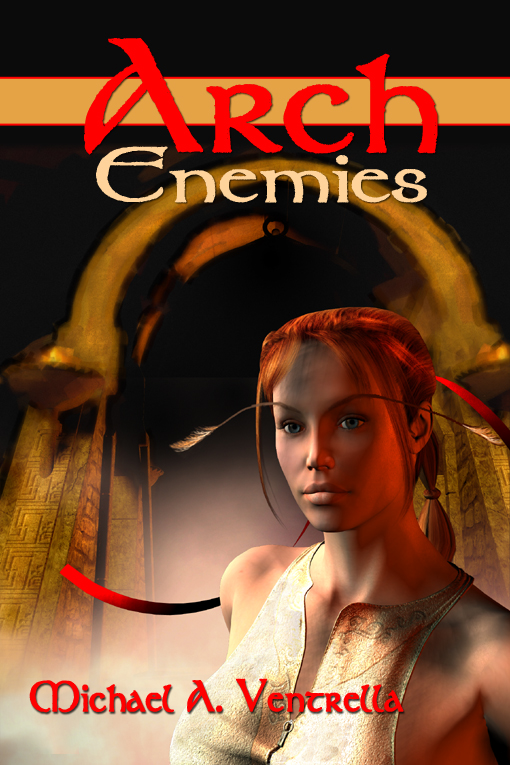
Another problem the original manuscript had was mentioning things that made no sense unless you had read the previous book in the series. Judy had not read ARCH ENEMIES, and this assisted me greatly, as I wanted THE AXES OF EVIL to be a stand-alone novel. We looked at the references and eliminated the ones that were irrelevant to the plot of AXES and explained the ones that were. In doing so, I tried as much as possible not to give away all of the plot to ARCH ENEMIES — what’s the fun in that? Still, some spoilers were unavoidable and necessary.

Having someone edit your work is tremendously important. If you’re receiving many rejection letters, that may just be the reason why. I have always had family and friends read my manuscripts before submitting them, but even then they may not catch everything. Someone who does this at least semi-professionally will make all the difference.

Interview with Christopher Hoare

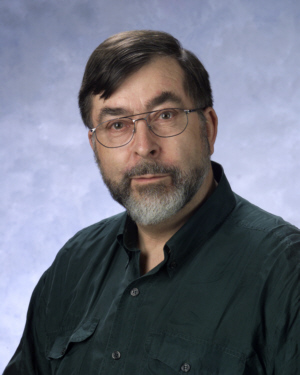
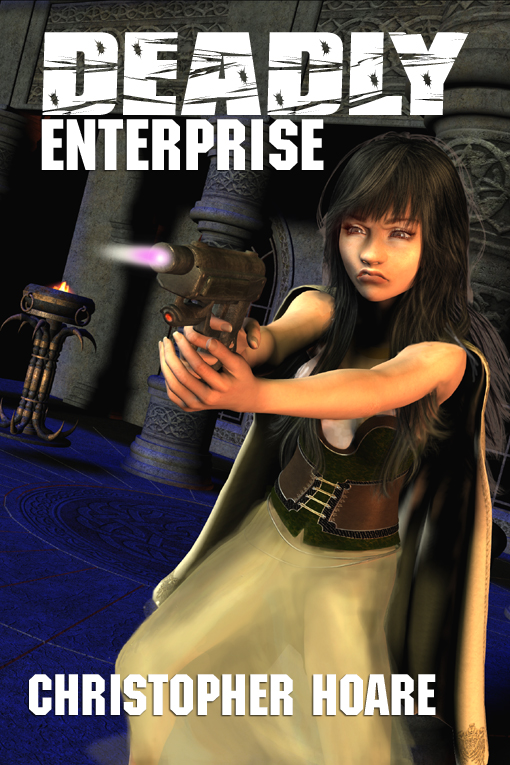
MICHAEL A. VENTRELLA: Today I am interviewing Christopher Hoare, whose books can be found with my publisher Double Dragon. Chris was born in London, England in 1939, immigrated to Canada in 1967, and became a Canadian Citizen in 1974 but we won’t hold that against him. He led an interesting life, studying around the world, serving in the Royal Artillery and then worked in oil exploration in Libya among other things. He now writes full time, living in Alberta at the eastern edge of the Rockies with his wife of almost 40 years, Shirley, and two shelter dogs.

Chris, there are so many new authors out there. What do you say to readers to get them to check out your books?

CHRISTOPHER HOARE: Gisel Matah, the protagonist of my Iskander series, is a woman who excels in a man’s world of action and danger, driving stories that women may find a refreshing change from being treated as sidekicks or helpless targets. She becomes the top security agent for her people when the small group of moderns are stranded in a 17th century world.

VENTRELLA: How did you decide to make the main protagonist a female?

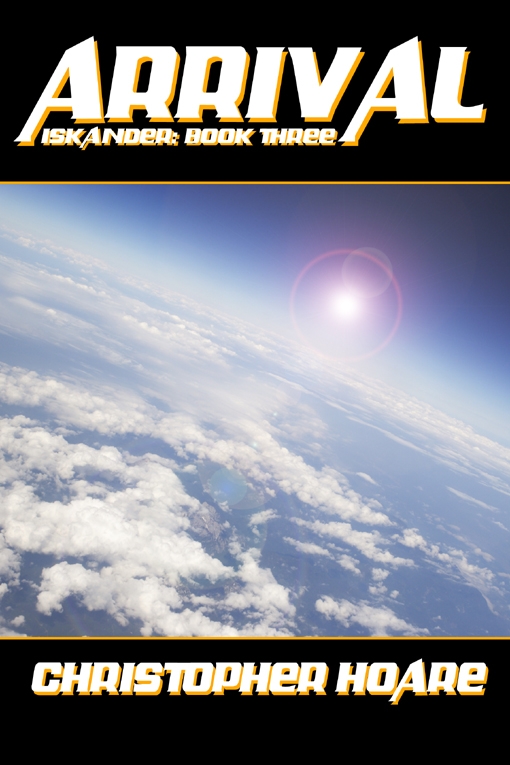
HOARE: I picked my strong and reckless female protagonist to oppose the relegating of women into accidental and amateur roles in action adventure fiction. I felt that women readers would enjoy one of their own who could stand with all the James Bonds and Rambos out there. I have heard skepticism about parts of the early stories where the young Gisel becomes the only person in the situation with the skills to take the lead, but partly because of her age. They query her action because they relate it to our society, that keeps the young in immaturity far longer than earlier societies did. I write such scenes with the age justification for her position carefully buttressed. For example, at 16 in ARRIVAL, she is picked to be Colonel M’Tov’s assistant in training a small group of parachutists because of her gymnastic experience; she then becomes the only person with the technical understanding to lead them on the operational jump when M’Tov breaks an ankle in a training exercise.

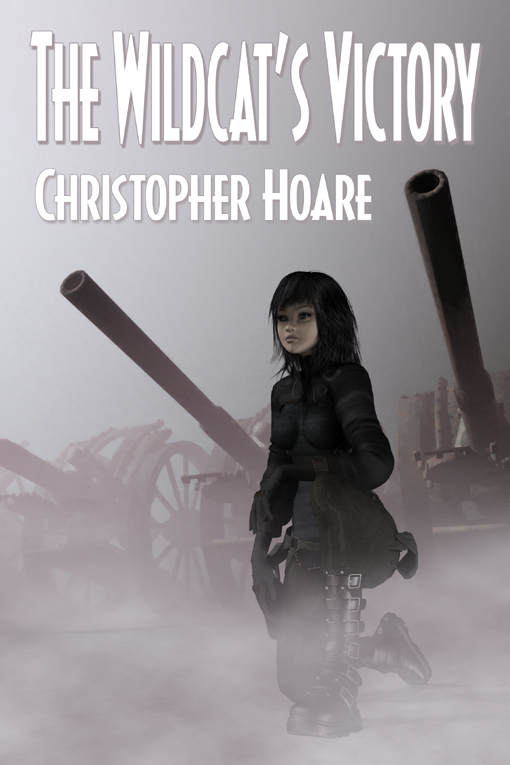
My next release is due to come out very shortly. THE WILDCAT’S BURDEN is a plunge into a dangerous writing minefield – I have Gisel both pregnant and moderately active as the governor of a rebellious city. The mothers in my writing group felt I’d mostly succeeded in depicting her in the conflicting roles, but also added their expert advice into the states of mind she should experience. The final crisis naturally takes place during her confinement and so the novel ends with attacks on her and on the city, while the plans she has prepared for the situation must unfold unattended. Another writer admitted she had a character in a fantasy give birth on a battlefield, but wouldn’t risk it again. We’ll see if readers accept this story.

VENTRELLA: What are you working on next?

HOARE: The novel I should be writing now instead of these answers. I have long wanted to write SF where the power of the mind is more important than the gadgetry. I think Lucas, in “Star Wars”, approaches this with the abilities of the Jedi, and I believe the ’50’s classics did as well in such stories as Alfred Bester’s jaunting in STARS MY DESTINATION (Tiger Tiger) and Asimov’s telepathic “Mule” in SECOND FOUNDATION.

The protagonist I introduce in MINDSTREAM is a retired professor of systems theory who has become abbot of a quasi-Buddhist monastery. He is able to access other beings – on this world, in deep space, and on other worlds – and, mentally, participate in or direct the action there. I blend a lot of the fascinating Tibetan Buddhist esotericism with String Theory in the background scenario. In the novel, Crumthorne and his assistant attend a NASA spaceflight convention to protect it against similar alien intrusion from adepts on other worlds, but it turns out that one of the Earth ‘attendees’ becomes a greater threat to all of them.

VENTRELLA: What’s the hardest part about writing?

HOARE: That’s easy – getting one’s work noticed among the cacophony of other media out there.

VENTRELLA: Have you had any formal writing training? Do you think that is necessary?

HOARE: You should have competence in the language you write in as a prerequisite. I’m appalled at the number of people who write although they have little knowledge of grammar and cannot spell; and even more appalled at those who self publish their writing without rectifying these inadequacies.

As to formal writing programs, I’m always skeptical about over-academicism because it can lead to rigidity and a failure to accept ideas that do not lend themselves to clever analysis. However, I attended a couple of university extensions that contributed greatly to my early development. A writers’ conference at NAU at Flagstaff in the late ’60s had an invited writer whose depth of analysis of fiction really opened my eyes.

VENTRELLA: How did you end up with your current publisher?

HOARE: I’m lucky to have landed with Double Dragon. Deron is supportive of ideas I sometimes spring on him, even when they turn out to be of less value than his own; he allows a writer to amass a growing body of available work without the fear of losing earlier writing to the deadly ‘shelf life’ demon of mainstream publication. Of course, that is also a function of e-publishing, where one is safe from being destroyed by the dreaded ‘returns’ policy.

I have been able to investigate the sales and distribution of POD vs e-books in my own way and learn from my mistakes (the only way I ever learn anything).

VENTRELLA: Do you have other long term goals to grab a more “mainstream” publisher?

HOARE: I would like to have a more mainstream publisher at some point, but I doubt I would find working with them (and they with me) completely successful. Really, the only thing they have that I covet is the greater exposure.”

VENTRELLA: Your short stories have also appeared in various collections, including TWISTED TALES. Do you find short story writing easier?

HOARE: Actually, I don’t like writing short fiction. The two stories accepted in TWISTED TALES II and III are the first short stories I produced since my early writing days. I doubt I will write more as I feel I was not able to get across the intentions I had in writing the stories. Possibly a fault of my lack of experience with the medium, but I really detest the literary genre that most short story writers write in.

VENTRELLA: Do you advise starting writers to concentrate first on short stories?

HOARE: Conventional wisdom when I started writing seriously said that one should always attempt to develop one’s idea first as a poem, then as a short story, and only later consider turning it into a novel. What rot. I do advise a developing writer that the shorter medium is a necessary foil when one is learning the essences of the craft of theme, tone, and plot. In a first novel one can easily lose all control over what one is writing – it certainly happened to my early attempts.

VENTRELLA: What’s your opinion on self-publishing?

HOARE: Would you recommend taking your first transatlantic flight in the captain’s seat rather than the passenger cabin? It requires an inordinate amount of hard work and luck for one’s self pub not to ditch in the ocean.

I do know a few good self published novels (other than Tolstoy’s and Dickens’) but they are exceptions. The writers were not first-time novelists and had some experience and craft knowledge to back their efforts. For a year or two I tried my hand at reviewing fiction and tried to give equal time to self-published works, but after receiving more than one that was actually painful to read I gave up on the exercise.

VENTRELLA: Do you tend to rely on outlines first or do you just plow right in?

HOARE: I much prefer to start with the characters and the opening question and write a first draft as an exploration. By the time the novel reaches the halfway point the ending should have made itself inevitable if one remains true to what has gone before.

There are times, when I’m not sure what should happen in a necessary scene or what comes next, that I will explore ahead with an outline or even an unorganized scattering of issues to determine the logical order which develops the story. I have never sat down and written a detailed outline of a story before starting to write as I feel that would destroy all the life – the illusion of real life happenings – that make the story flow.

VENTRELLA: Tell us about NovelPro.

HOARE: I learned almost all I know about writing during the five or six years I belonged. The partnership with some really brilliant authors and the hard work of extended whole novel critiques was more valuable than a conventional MFA. Not just my opinion, as I saw it expressed by other members who had MFAs.

If you can get in, I’d advise any writer to shelve their own writing ego long enough to submit to the group for awhile. Not everyone can do it. Some quit even before completing their very first novel crit – the be all, end all, of the NPro system – while others get kicked out because they become obstructive. I was cautioned a couple of times, and my posts put on ‘review’. I’m still in contact with some members and past members and have accepted that there will come a time when the writer has to accept that their own needs and the group’s no longer coincide. I still wish them all well, and wait for the time when a work from the group becomes a bigger success than THE DaVINCI CODE – as well as better written.”

In line with others in the NovelPro group I spent an inordinate length of time trying to perfect the query letter and the bit by bit perfection of the opening attention grabber to gain a top NY agent. Then I slowly began to realize that my writer profile ruled me out of their consideration. I’m a grouchy and opinionated senior who lives as far away from New York, and the New York mentality, as it’s possible to get without traveling through space. I tried to bend in the appropriate ways – I became a Toastmaster to hone my public speaking skills for those career building moments on camera, but by the time I became a CTM I realized I hated making speeches. I tried to convince myself that I could turn myself into a saleable ‘brand’ under the tutelage of a wise old literary agent, before I realized that I’m too much of a loner to fit the profile. I’ll go on writing my way and being me – and if that doesn’t fit with the NY concept – to Hell with them.

VENTRELLA: Do you have any specific advice you would give a writer trying to make it in the publishing business that they may not have heard before?

HOARE: I hope a few of the answers I’ve given above have pointed others to useful insights of their own. If there is anything I believe that I’d like to prove true it’s that in order to be a lasting writer – one who produces something that lasts – one has to be a contrarian. Not pretend to be one but to actually feel offended when life tries to squeeze you into a conventional slot.

My old physics prof at engineering college used to say, “If you want to have a brainwave, you have to have a brain, and you have to wave it.” I have absolutely no proof that these qualities will allow you to ‘make it’ in the conventional publishing business, but I assure you they will lead you to a more worthwhile life.

Interview with Tony Ruggiero

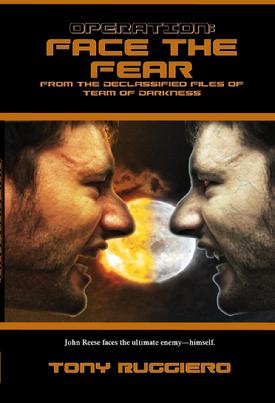
MICHAEL A. VENTRELLA: Tony Ruggiero writes science fiction and fantasy with an edgy realism designed to make people wonder: could it actually be true and could it be happening right now? His eye opening approach within the genre has run the gauntlet of responses from laughter to having people look over their shoulder more often. Either way, Tony is a very happy man. His published novels include OPERATION IMMORTAL SERVITUDE, ALIEN DECEPTION, and SATANIC CREATURES WANTED: HUMANS NEED NOT APPLY. His books are published by Dragon Moon Press (who will also be publishing a short story of mine soon as well). His web page is www.tonyruggiero.com and his email is aruggs@aol.com

TONY RUGGIERO: Hi Michael — I would like to thank you for this opportunity to talk with you as well as your readers.

VENTRELLA: One of the more difficult tasks authors have is convincing potential readers to try someone new. Tony, what do you say to readers to get them to check out your books?

RUGGIERO: If discussing my vampire series, I suggest that if they want to read something different in a vampire novel then they will want to look at the “Team of Darkness Chronicle” Series which begins with OPERATION IMMORTAL SERVITUDE. In this day of vampire stories that show a more “friendlier” vampire, I believe that my series (which has been described as “What If Anne Rice and Tom Clancy had a baby?”) has maintained the traditional lore of vampirism, yet added an approach that not only includes a military aspect, but also a point of view where the vampires see themselves as a creature of God and have a purpose in life to fulfill.

For my science fiction work, if you are a fan of space opera type stories, you will like my ALIEN DECEPTION and ALIEN REVELATION books. These are written in the classic space opera tone that has always been a favorite of mine, but I have added a bit of a twist by setting it in a current and real life scenario that involves Earth politics but also reveals that it doesn’t matter if it is alien or human politics, the same problems exist. It also begins as a light hearted story, but becomes precarious for our two protagonists, Greg and Sarah.

VENTRELLA: Do you think that your web page helps or do people generally already know you by the time they visit it?

RUGGIERO: I think it is a combination of both. We live in an age where information on the internet is a main way of communication especially for writers, so I think this is a good way to have people see their work. But I think it is also important to meet as many people as possible in person and that is where the life blood of science fiction conventions comes into play.

VENTRELLA: You are currently posting a work in progress on your web page, chapter by chapter. Tell me a bit about that story.

RUGGIERO: I was posting some chapters for a new novel called COVEN, which is a thriller-type novel that deals with witches in a modern day setting.

VENTRELLA: Have you completed the entire book and are just serializing it, or are you posting the chapters as you write them?

RUGGIERO: I stopped posting chapters because the book went into editing and my editor and I thought it was best to stop until we are done and then relook at it at that point.

VENTRELLA: What are the copyright considerations? Won’t your publisher consider it an “already published” work?

RUGGIERO: I plan to hopefully publish COVEN soon. If I do it with Dragon Moon Press, I have a very good relationship with the publisher and this will be a non-issue. The publisher realizes that as a small press, you have to work harder than a traditional press and find innovative ways to garner reader’s interest and if this means posting a good part of it on the web for free — then that’s what we need to do.

VENTRELLA: Have you had any formal writing training? Do you think that is necessary?

RUGGIERO: No formal training. I do have a master’s in English, but I believe that most of the writing skills are developed through practice. Three words of encouragement — write — write — write! I am a firm believer in learning through practice. If you have the desire to get formal training, then I am sure that it can’t hurt, but is it a prerequisite? I don’t believe so.

VENTRELLA: How did you end up with your current publisher? Do you have other long term goals to grab a more “mainstream” publisher?

RUGGIERO: Sure, I am always looking for that mainstream publisher. In terms of small press publishers, I have been with several over the past 10-12 years. I remember selling my first story for $5.00. My current relationship with Dragon Moon Press has been by far the best and I look forward to continue working with them in the future.

VENTRELLA: What’s your opinion on self-publishing?

RUGGIERO: It’s another option. If it fits your needs then you should do it. My only thought is that it should not be your first choice. Self publishing involves a cost to you and I think you should avoid that if you can. The distribution issue can also be another reason why you should look elsewhere first.

VENTRELLA: What’s next? What are you working on now?

RUGGIERO: I have two novels in the editing process: COVEN and a new science fiction novel called LAST CHANCE, which includes vampires and werewolves. I have sporadically been working on the next and last vampire novel called OPERATION END GAME. I have been teaching a full load so I am a little behind on the vampire novel which I hope to catch up with for a 2010 release.

VENTRELLA: What is your writing style? Do you tend to rely on outlines first or do you just plow right in?

RUGGIERO: Both and neither. I really don’t have a set pattern. Sometimes I just start writing and then develop an outline later. I also have a large dry marker board where I cram all those ideas on and then try to sort them out.

VENTRELLA: People say authors should “write what they know”. How has your military background influenced your writing?

RUGGIERO: It has certainly helped especially in the way that the vampires interact with the military. But it also helps with writing about diverse cultures and developing relationships. The fact that in the military also helps me to develop a good approach to the writing process by scheduling and setting time aside to accomplish writing has also been a big help.

VENTRELLA: What was your biggest mistake so far in trying to make it as an author?

RUGGIERO: Thinking that the writing was the hard part. It’s really all about selling your work to publishers and readers. Unless you’re a “name,” you have to constantly sell yourself and try and not come off as being too pushy. I think a lot of writers fail at this and they come on too strong and they alienate the reader.

VENTRELLA: Do you have any specific advice you would give a writer trying to make it in the publishing business that they may not have heard before?

RUGGIERO: Have hope and use common sense. Sure, always set your sights on that big contract, but don’t let disappointment make you file it away forever where no one will ever see it. I think it’s better to please 100 readers then to please none. If you do not make that big New York contact, then spend time in the small press realm. Dragon Moon Press has seen its share of writers that have made the transition from small press to big press so it is possible.

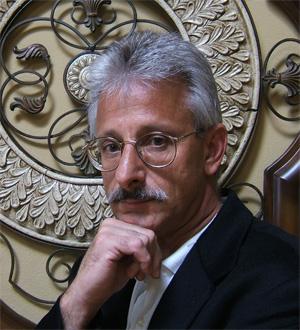
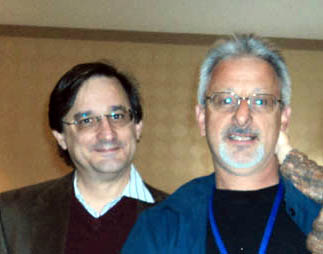
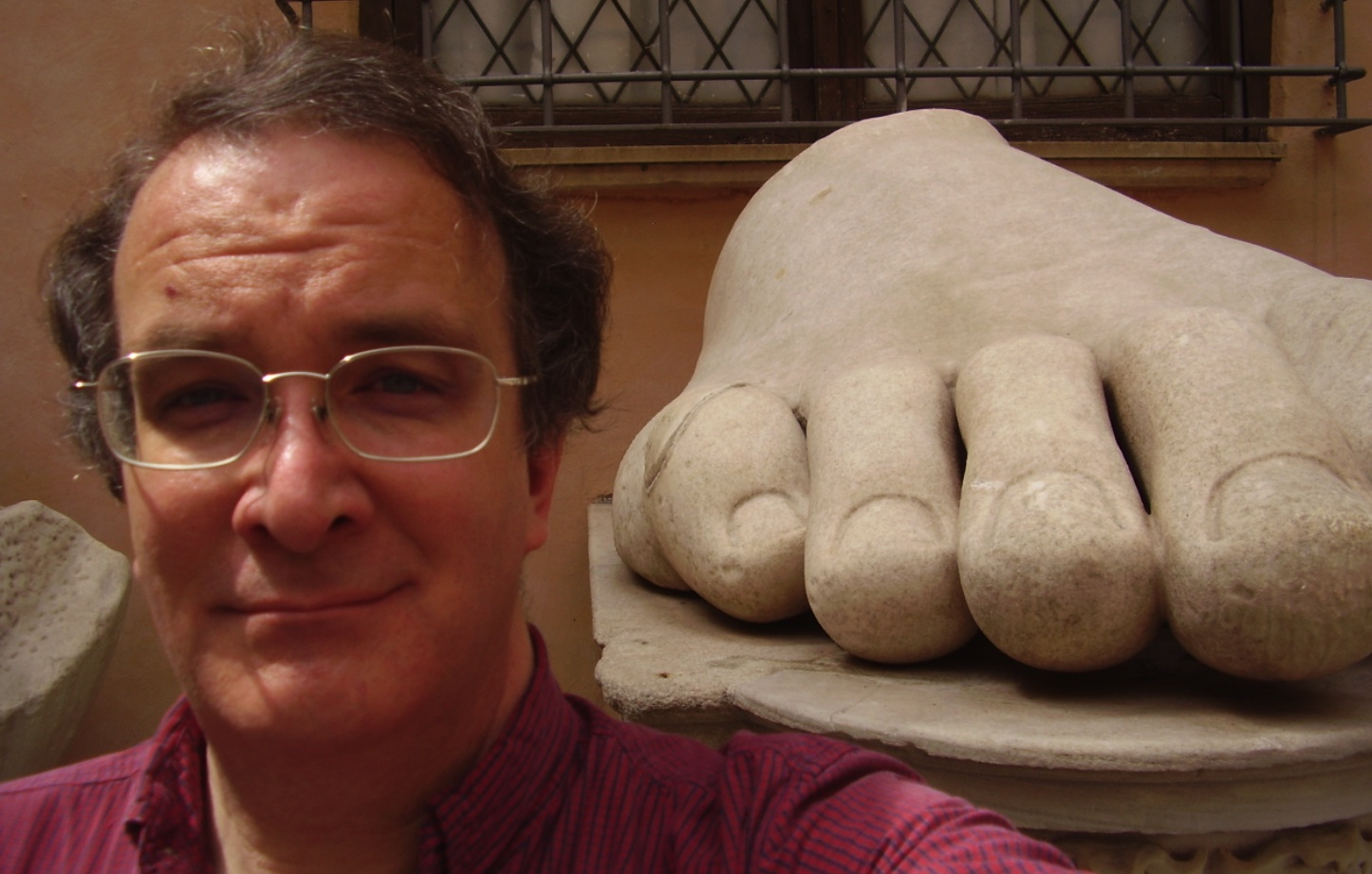
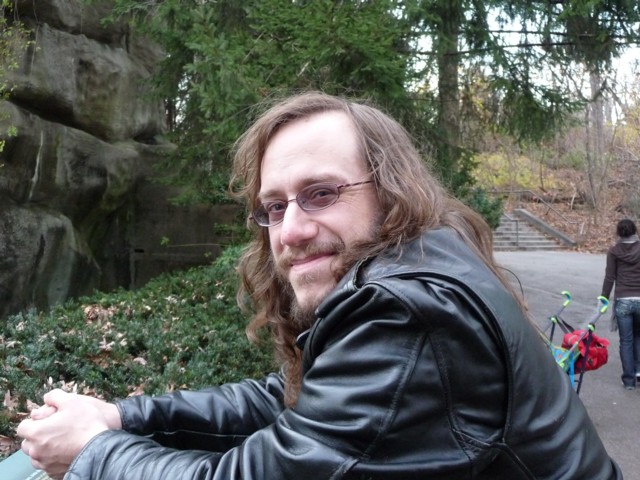
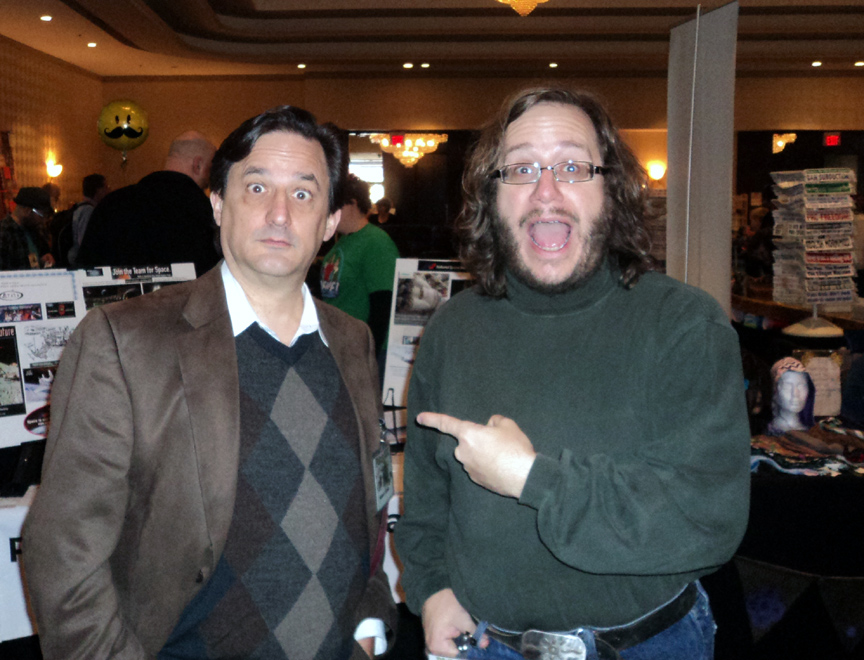
Me and Tony

Networking

Does it seem like a lot of the advice I have been posting here is about promoting yourself as a writer? Have you noticed that a lot of the authors who have been interviewed talk about web pages and Facebook and conventions and such?

That’s not by coincidence.

For years, I wrote … and sent query letters and wrote … and read books about writing and wrote … and while I did get better at the writing part, I wasn’t getting anywhere professionally.

The sad fact is that talent will only get you so far. You need a certain drive and promotional zeal to take it to the next step. You need to make connections and use every avenue at your disposal. And this applies to even published authors.

One way is to attend conventions, which I blogged about previously. You also need to take advantage of all the social networks available to you, such as Facebook, My Space, Twitter, Good Reads, and so on. (Note that my web page has links to all of these.) And of course, you need a professional web page of your own.

I’ll discuss those in more detail in a future blog post, but for now, let’s talk about actual writing groups, where you can meet people face to face.

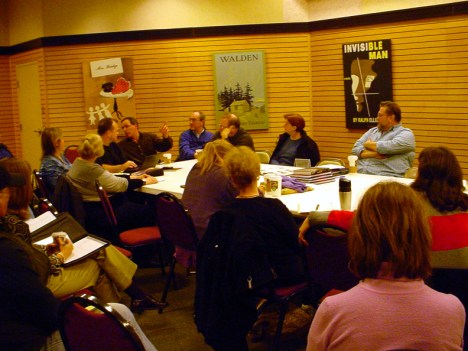
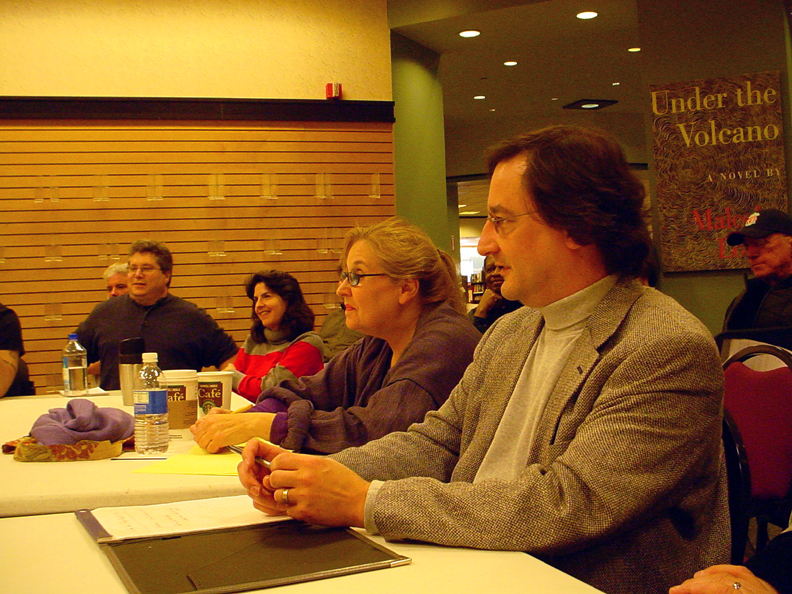
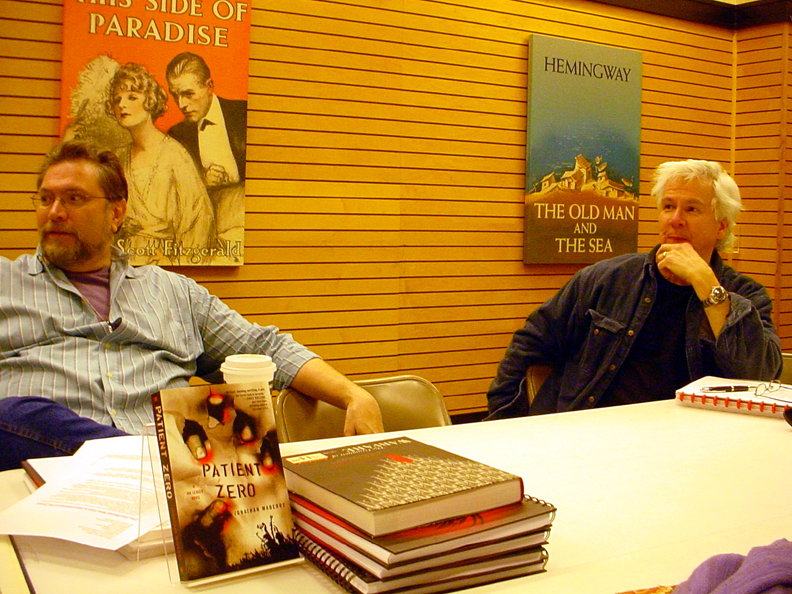
Jonathan Maberry and his friends in the Philly Liar’s Club (including Gregory Frost, Dennis Tafoya, Marie Lamba and others) set up one such group, called the Writer’s Coffeehouse. I first attended about a year ago and have tried my best to never miss one since. I drive over 75 miles one way to go there once a month. It’s invaluable for many reasons.

First, you get to meet professional writers who have experience in the business. They can tell you what has worked for them and what hasn’t. They can help you draft the query letter and maybe even introduce you to agents and editors. They can answer your questions and help steer you away from the rip-offs and traps that plague many starting writers.

Second, other unpublished writers like yourself will have useful connections and relationships. They might know of other groups in your area, for instance. They also want to network just like you. (A quick aside: In case you don’t realize it, you are not in competition with other writers. This is not a zero-sum game. Someone else’s success does not mean your failure.)

Third, you can also learn some writing skills. At the last Writer’s Coffeehouse, there was a nice discussion about voices — how important it is to make sure that each of your characters speaks in a unique way. Ideas were thrown about as to how to best achieve this, with the understanding that what works for one person may not be universal.

Fourth, you can get valuable networking advice. This blog came about because of the Coffeehouse. Jonathan mentioned keeping a public presence and said that interviewing other authors was a fun and fairly easy way to make a weekly post. I decided to gear this blog for aspiring authors and toned my interviews accordingly, starting with Jonathan. It’s been great! I’ve been able to meet many of my favorite authors (albeit mostly through emails), and every time I post another interview, these authors mention it in their Twitter posts and Facebook status updates, and the blog gets visited. Every visitor reads my name over and over again, and quite a few have started following me on Twitter and Facebook as well. It’s a win/win. And it’s an idea I would not have come up with on my own.

Finally, you can promote yourself. It goes without saying that writers are also readers, and maybe they might take an interest in your work, give you valuable comments, and maybe even buy your book once it’s published. Writers I have met at the Coffeehouse have invited me to participate in book signings, interviewed me on their blogs, and otherwise helped expose me to a broader audience.

The Coffeehouse is a great resource, and I am very happy that Jonathan has organized it. He is a tremendously busy writer who has many projects on his agenda. So why does he take the time to meet every month with other writers and writer wannabes?

Haven’t you been paying attention? Networking! Even successful professional writers want to meet others to share ideas, discuss the craft, and see what others may have learned about the trade since the last meeting. Plus they want to promote themselves. I mean, look, I’m writing about Jonathan Maberry, aren’t I? You’re reading it, right? Aha! It worked!

Finally, an obvious disclaimer: All the promotion and networking in the world won’t help you if you are a terrible writer. Work on your craft! You need something to promote, after all.

Interview with James Enge

MICHAEL A. VENTRELLA: I’m pleased to be interviewing fantasy author James Enge today. James, how did you get started in the business?

JAMES ENGE: I’ve been writing since forever, but I was first published when I saw a newish magazine called “Black Gate” had started up. They specialized (and still specialize) in adventure fantasy at shorter lengths (i.e. shorter than a novel) and that’s what I was most interested in writing, so I sent them something. When the editor, John O’Neill, finally wrote me back after many months I assumed it would be another in a long string of rejections … but, in fact, he bought the story (“Turn Up This Crooked Way”) and told me he was interested in more. So that’s when it really started for me. That was in 2005, if I’m remembering right.
VENTRELLA: Creating a fantasy world is never easy, because it must be rooted in believability. What have you done to make your world both fantastic and believable? Have you found it difficult?

ENGE: I try to maintain a certain tension between free invention and concrete realism. My favorite bits in my own writing are physical descriptions which are probably invisible to everyone else. In my first story, the hero has occasion to peer through “a dark shoe-shaped patch of nothingness”. It makes perfect sense in the world of the story, but it’s not something that you’re likely to see on the street on your way to work.

VENTRELLA: Along those same lines, what steps have you taken to plant your characters in this world? In other words, many fantasy novels tend to have characters that behave like modern-day people, only in a different setting. How do you avoid that while still making the characters likeable?

ENGE: Someone called this the phenomenon of the “vegetarian Viking” — anachronistic modern attitudes grafted onto people in non-modern societies. It is tricky, because whenever the characters may be living, the audience is a modern audience and they’re not likely to laugh off chattel slavery or infant exposure (to name only two unsavory customs of the past). But, in my fantasies, it’s much more difficult to say what’s anachronistic, since it’s a secondary world. Writers can get themselves some oxygen but writing a different kind of society than lords and ladies and dukes and peasants: not every imaginary world has to be the Middle Ages with real dragons. And the actual Middle Ages were more complicated than some people think: one can plunder history for interesting ideas. Your standard Viking, for instance, would not have been a vegetarian… but he may have lived (if he came from Iceland) in a republic strikingly free from all that kingy junk we associate with medieval states. Likewise a Florentine banker (and so on).

VENTRELLA: Is religion in fantasy novels something to embrace or avoid, given the controversy it may bring?

ENGE: I think you have to tell the story that you want to tell, and if religion comes up, it comes up. Religion is a normative part of human society, so a society without any religious expression would need some justification … but that in itself might make for an interesting story or world. The novel I’m working on now is starting to feature one set of deities (the Strange Gods) very strongly. I didn’t expect it, but it’s been kind of interesting to watch it develop.

VENTRELLA: What’s your biggest gripe about fantasy novels in general?

ENGE: I can’t claim to have read a representative sample — there’s just too much out there. But I think the tendency to view multivolume narratives as the norm is really not good. The longer the narrative, the more difficult it is to bring to a satisfying conclusion. I’m not knocking George R.R. Martin, by the way: I read A GAME OF THRONES years ago and loved it. But I have resisted reading the other volumes in “A Song of Ice and Fire” since then: I’ll wait till he’s done and read the whole thing, and I have every confidence the end will live up to the beginning. But not everybody is GRRM. Also, he’d been writing for a generation, producing work of classic stature long before he tackled this heroic project.

VENTRELLA: What are your favorite fantasy novels? Favorite authors? Why?

ENGE: Tolkien, Leiber, Zelazny, Le Guin, Brackett, Vance. Zelazny has a great line in THE HAND OF OBERON. He actually speaks to his main character, Corwin, and he says that he’s writing “a philosophical romance shot through with elements of horror and morbidity.” I think that’s what all these guys do, to some extent, and that’s what I’m trying to do. I coined the term philorohorrmorbmance for it once, but it didn’t catch on for some reason, so I usually say I write sword-and-sorcery.

VENTRELLA: How important is an agent for a starting writer?

ENGE: Key. I mean, if what you want to do is sell stories to zines, you don’t need an agent. And small presses don’t usually demand that the writer be represented by an agent. But if you want to sell novels to even medium-sized publishing houses, I think writers mostly need an agent nowadays. More and more work that used to be done by publishers is being offloaded to agents — essentially, they’ve become the first readers for the publishing houses. I’m not saying there are no exceptions, but I know that my novel-writing career went nowhere until I got an agent (the great Mike Kabongo who runs the OnyxHawke Agency).

VENTRELLA: What is your writing style?

ENGE: I have to know how a story ends or I can’t make much progress on it. So I begin with the end and a beginning, and the stuff between I usually negotiate as I go.

VENTRELLA: My second novel comes out in a few months, and, like your work, it is a stand-alone story but set in the same world with the same characters as the first novel. One of the difficulties I had is in giving enough background for a new reader while not boring someone who is already familiar with the world from the first novel. How do you handle that sort of thing?

ENGE: It is hard. Mostly I’ve solved that so far by sending my hero, Morlock Ambrosius, to new places. But, in general, I think that writers have to develop a sense for what exposition is genuinely necessary for the story and what isn’t. A writer should always know more about his or her world than will fit into a story, and because the world is our creation we’re often eager to fill the audience’s ear with excessive detail. On the other hand, new and different worlds are one of the reasons people read sf/f, so what’s excessive for one reader will be just an hors d’oeuvre for others.

VENTRELLA: How has your educational background influenced your writing?

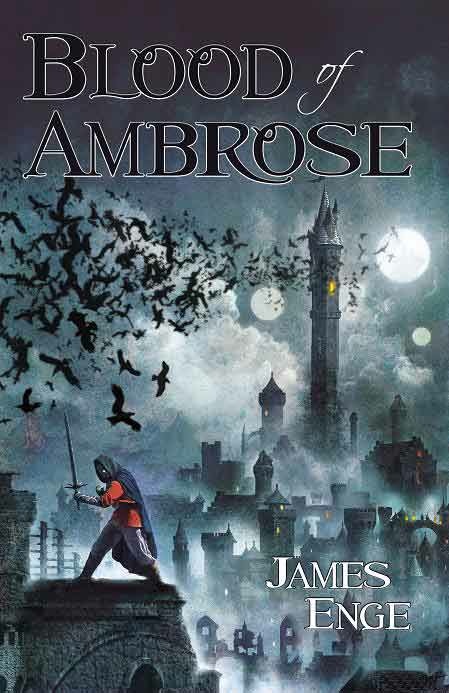
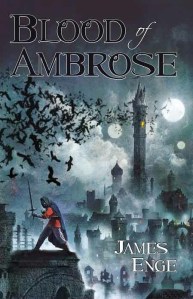
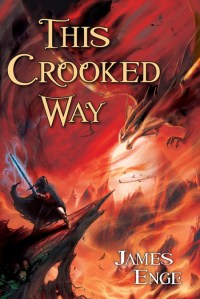
ENGE: I steal stuff from it constantly. My degrees are in Classics, and I studied a few medieval Germanic languages in school, too — all because I was (and remain) nuts about language, mythology and history (three fields that overlap more than one might think). This stuff is a tremendous storehouse for story ideas. For instance, Morlock’s move to defeat the Big Bad in BLOOD OF AMBROSE will seem a little familiar to people who know the myth of Hercules and Antaeus, and when Morlock is confronted by a stone beast in THIS CROOKED WAY he again takes a leaf (or limb) from Hercules’ book to save himself. The trick, when you steal something as blatantly as I do, is to make the borrowed element native to your work. You don’t need to know the Herc myths to read the Morlock stories, but if you do you’ll get an extra smile of recognition sometimes.
VENTRELLA: All authors these days spend a large amount of time on self-promotion, from posting a regular blog to producing podcasts to appearing at conventions. What’s your opinion on the relative value of each?

ENGE: I have no idea. There are so many forms of online community these days, one could spend a working week every week just keeping up. One thing I do feel strongly: online and offline communities may be useful for self-promotion, but they shouldn’t be used solely for that. The communities are meant to be conversational exchanges among people with common interests, and that’s really their primary value.

VENTRELLA: Do you advise aspiring novelists to begin with short stories?

ENGE: I would have said “yes” a few years ago. Now I’m not so sure: the markets are very different in what they want to see, and the forms themselves are diverging radically. When the standard novel was sixty or seventy thousand words and magazines regularly published novelettes and novellas of tens of thousands words, writers with the same skill-set could comfortably operate on book length and short-story length. Now stories seem to be getting shorter and novels are certainly getting longer (at least in sf/f). No doubt a credits-list of stories in reputable publications increases the likelihood that an agent or an editor will take a chance on a new writer. But if novels are what people want to write, maybe they should head straight for that — likewise with stories.

VENTRELLA: Of what work are you most proud?

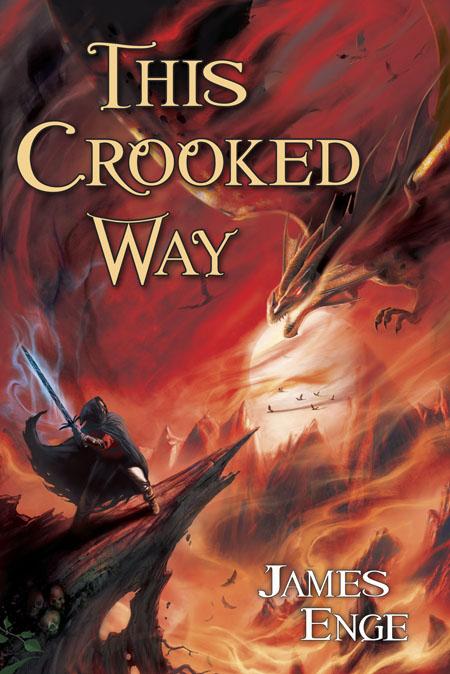
ENGE: You force me to tell you! Okay, since I have no choice in the matter (not that I want one), I really like my second book, THIS CROOKED WAY. The story begins with Morlock’s horse, Velox, being stolen by an unknown enemy. In tracking down the horse, he has a number of adventures that turn out to be clashes with his veiled enemy. When unmasks his enemy, he finds that he’s already involved in a struggle that hinges on someone else’s life-or-death. The book is an homage to the episodic novels of sword-and-sorcery past (like Fritz Leiber’s Lankhmar books, or Vance’s Cugel books, or Moorcock’s Elric books). I got to sneak in some elements that one doesn’t usually see in a heroic fantasy, like robots (i.e. golems), the internet (a.k.a. Whisper Street) or alien species (e.g. the buglike Khroi or the wormlike dark gnomes). There’s an antiheroic dragon-fight that I’m particularly fond of. And there’s some emotional resonance for me in the over-arching plot, which deals with the death or non-death of Morlock’s mother. THIS CROOKED WAY has not, in fact, made a big splash, but even if it never sells another copy it’s the book I’m likeliest to point to and say, “That’s what I do; that stuff.”
VENTRELLA: What’s your opinion on self-publishing? Do you advise new authors to go this route, or is it better to not publish at all than to be self-published?

ENGE: Self-publishing is risky because there are so many people involved who really don’t have a realistic sense of their work’s merit. Everyone, but everyone, can afford to take a hint every now and then, and the self-publishing route usually involves trimming out all the gatekeepers who might say, “This bit doesn’t work” or “Your hero looks like a jerk here. Is that what you want?” The process of traditional publishing may keep some work from being published, but it unquestionably improves the stuff it does let into the light of day. I’m not saying that everyone involved in self-publishing is engaged in self-deception: it provides an outlet for lots of stuff, like local history, textbooks — niche work that would always have trouble with a commercial publisher but may still find an audience. But so much self-published fiction is so problematic that I think it’s a hard sell for most readers.

VENTRELLA: Any last minute words of wisdom for those wanting to break into the publishing business?

ENGE: Write the kind of stuff you’re interested in reading. This seems like obvious advice, but lots of people get involved in writing work they would never look at twice if it were written by someone else.

I’m not sure if those were words of wisdom, but at least they were words. Thanks for the chance to bend your and your audience’s collective ear!

Interview with Keith DeCandido

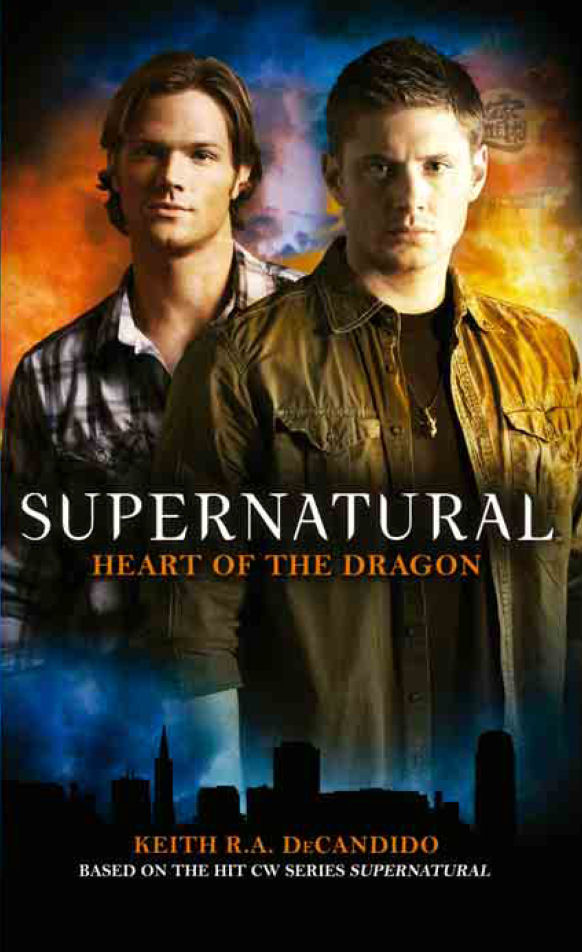
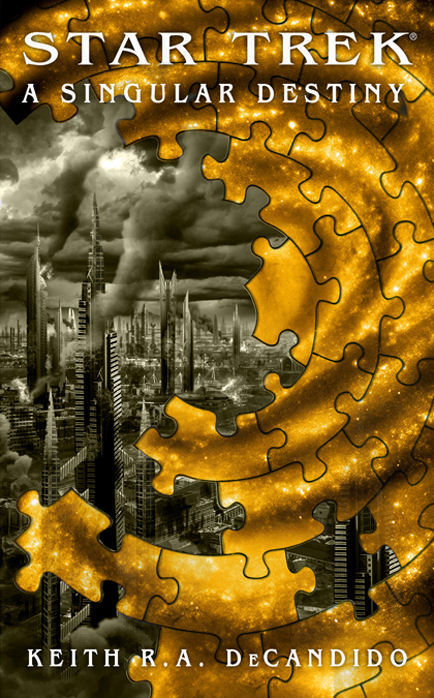
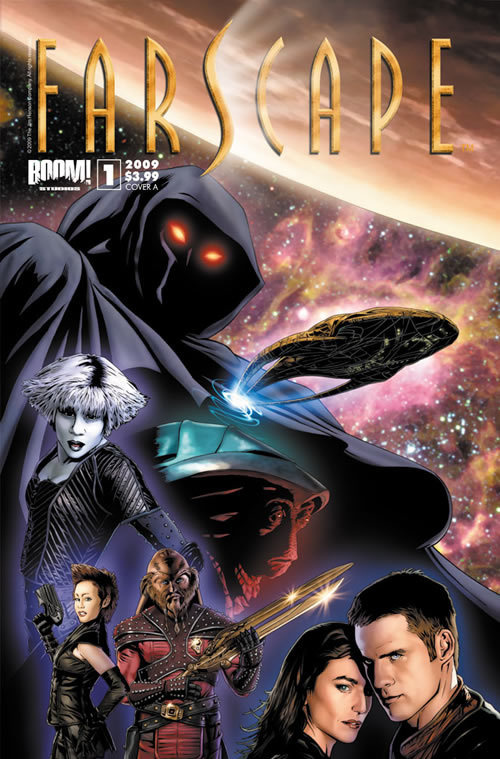
MICHAEL A. VENTRELLA: I’m pleased to be interviewing the very prolific Keith DeCandido, author of numerous novels, short stories, essays, e-books, and probably Bazooka Joe comics too for all I know. He’s best known for his Star Trek fiction, but has written tie-ins for other popular sci-fi and fantasy series as well, such as Doctor Who, Supernatural, Andromeda and Farscape, as well as comic books (Spider-Man) and videogames (World of Warcraft, Starcraft, Command & Conquer). He has also edited various anthologies, including OtherWere, Urban Nightmares, Imaginings, the Doctor Who collection Short Trips: The Quality of Leadership, and the Star Trek anthologies New Frontier: No Limits, Tales of the Dominion War, and Tales from the Captain’s Table.

Keith, you have made quite a name for yourself writing movie adaptations, novel tie-ins, and so on, from Star Trek to Resident Evil to Buffy to CSI. This seems extremely cool and fun. How did this all begin? You weren’t one of those slash writers, were you?

KEITH DeCANDIDO: No, I wasn’t a slash writer—nor, for that matter, have I written any Bazooka Joe comics. I actually got my start on the editorial side of the desk, as I was the genre editor for the late Byron Preiss from 1993-2000, where I edited a large number of tie-ins, most notably the Marvel novels that Byron co-published with Berkley Books in the mid-to-late 1990s. Through that job, I was able to get the opportunity to pitch, both for the Marvel line I worked on (someone else in the office edited me for that work) and for things like Doctor Who and Magic: The Gathering anthologies, which is where I made my first fiction sales. Eventually it snowballed into novel contracts, and now this.

VENTRELLA: Do you primarily write first and then try to sell your work or do you at this stage in your career get assignments for specific books?

DeCANDIDO: There’s never been any consistency to it. Some projects are generated in-house, some are suggested by the editor, some are wholly from the writer. Much of my Star Trek work was developed with the editor—either John Ordover or Marco Palmieri—though not all of it, but that’s always been a collaborative thing. On the extremes, my three Supernatural novels were all my own concepts, but all my work with Blizzard was very much directed by the licensor. It all varies. Sometimes people will come to me—that was what happened with Blizzard and Supernatural both—sometimes I’ll go to them—which is what happened with the new Farscape comics.

VENTRELLA: Do you find it easier to write with pre-established characters, and is that one of the reasons you can be so prolific? Or instead, do you find it somewhat constraining, in that you may anger fans who gripe and exclaim that their favorite character wouldn’t act like that?

DeCANDIDO: : I think it’s a false dichotomy. There are ways that writing your own characters is easier; there are ways that writing in another setting is easier. It depends in part on the type of story you’re trying to tell. I don’t find it constraining at all, though—it’s more of a challenge than a constraint.

VENTRELLA: Does your work get subjected to more editing and control since you do not “own the characters”?

DeCANDIDO: Again, that varies from license to license. Blizzard keeps a very tight hold on their universes—which is the source of their popularity, honestly, so that isn’t a complaint—but it also means that they do more hands-on work. On the other end of it, Tribune Entertainment was very hands-off with my Andromeda novel. With Star Trek, they tend to keep a firmer hand on whatever’s current onscreen—which currently is the JJ Abrams stuff—while letting the writers and editors be more creative with the ends of the franchise that are not being developed onscreen any longer.

VENTRELLA: Do you feel that there is any sort of bias against tie-ins in the book world? I am no expert, so correct me if I am wrong, but it seems to me that they often sell much better than traditional fiction, yet can be ignored by reviewers and awards.

DeCANDIDO: That bias has lessened in the years I’ve been working, which is good to see, though it still does exist. The lack of reviews is frustrating, but a bunch of us have gotten together to redress the award issue by creating our own. In 2006, Lee Goldberg and Max Allan Collins formed the first professional association specifically for us licensed folk, the International Association of Media Tie-in Writers. We also created our own award, the Scribes, which is awarded at Comic-Con International in San Diego every year. I’ve had three of my novels nominated for a Scribe so far, though with no winners, and I also was blessed with a Lifetime Achievement Award by the organization, along with Donald Bain and Alan Dean Foster.

VENTRELLA: Who is your favorite character to write for and why?

DeCANDIDO: Probably Worf from Star Trek. He’s always been one of my favorite characters, and I got to do a great deal of work with the character in his post-DS9 phase, as well.

VENTRELLA: And in a similar note, what’s your favorite Star Trek series and why? And how about that new film, huh?

DeCANDIDO: Deep Space Nine. It had the best writing, the best cast, the best characters, the most complex storytelling, and it really just did almost everything right. I enjoyed the new film for what it was, and I’m glad it’s revived interest in Trek, but it didn’t do much for me—but neither did any of the others. Star Trek has always, in my opinion, been far better suited to television than movies.

VENTRELLA: Have you ever been asked to write a novel based on a movie or TV show you didn’t like?

DeCANDIDO: When that has happened, I’ve found myself able to seek out and focus on the elements of the original that I do like. It’s worked wonders.

VENTRELLA: What’s your opinion on e-books and self publishing? Do you think aspiring authors should work with an e-book or POD publisher, or even self-publish?

DeCANDIDO: Well, eBooks and POD publishers and self-publishers are three entirely different things, and they only overlap in spots. I used to edit the monthly Star Trek eBook line, which were original eBooks published every month focusing on the Starfleet Corps of Engineers. I do not think that aspiring authors should work with such publishers until they’re at the point of last resort. It should be the final option, not the first one. Self-publishing is particular is fraught with difficulties because the need to print, publish, publicize, and distribute takes time away from doing more writing, which is what the writer should focus on. Finally, no author should ever under any circumstances work with a publisher who charges a fee to publish. Money flows to the writer, and any publisher that does so is a scam artist who is cheating you.

VENTRELLA: What’s the worst mistake you have made in your publishing career?

DeCANDIDO: Getting into it in the first place. This business is nuts…

VENTRELLA: And what’s the worst and best piece of advice you have received?

DeCANDIDO: PLASTICS!

5

Interview with Kelly Jameson

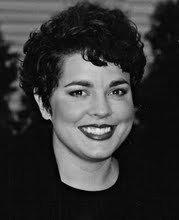
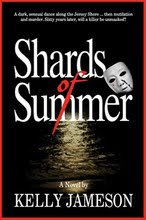
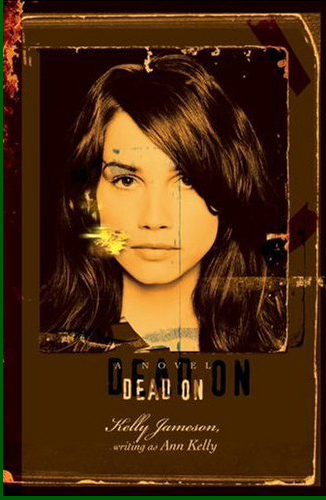
MICHAEL A. VENTRELLA: After last week’s blog about self-publishing, this week we have Kelly Jameson, a self-published author, to discuss her experiences. Kelly has two thrillers published, SHARDS OF SUMMER and DEAD ON.

Kelly, tell me about your books!

KELLY JAMESON: DEAD ON is the story of a medical examiner being stalked through different lifetimes by the same killer. History seems to be repeating itself. I set the story in Doylestown, PA because I grew up in the area. While the story is fictional, there are a lot of real-life places used in the book. I even put a body in the CB West football stadium. DEAD ON was film-optioned for two years by Gold Circle Films (they produced “White Noise” and “My Big Fat Greek Wedding”). It was also named Runner-Up in the 2006 DIY Los Angeles Book Festival. So I feel very fortunate and I think it shows that good things can happen with independently published books that you write and edit yourself. It is possible. In fact, when I was contacted by Gold Circle about movie rights via email, I almost fell out of my chair. The rights are back with me now and I’m working on a screenplay with another screenwriter on the script. We hope to have it completed by end of December and ready to pitch.

VENTRELLA: What’s your writing background?

JAMESON: I’ve wanted to be a writer since I was five years old. I used to write poetry all the time. Some of it was really bad. But that’s how you learn to be a writer—by writing. And reading.

I have a Journalism background. Got a degree from Bloomsburg University. I wanted to be a local sports reporter. Somehow I ended up a medical editor by day. Being an editor, editing my own books, has helped me to polish my indie novels and make them stand out.

VENTRELLA: How did you decide to write these books?

JAMESON: One of the characters in DEAD ON seemed to be tapping me on the shoulder and wanted to have her story told. That’s how it began. With a character and a “what if” situation. SHARDS OF SUMMER was really fun to write. I love the beach and Ocean City and wanted to write a story about lust, love, and obsession, about the wars going on inside each and every one of us every day. I like to write about flawed characters. The story starts with an elderly woman being arrested for the murder of a decorated WWII soldier on the beach 60 years ago. But of course, things aren’t as they seem … As a young woman, the main character was a dancer in a girlie show who got tangled up in an affair with a married homicide detective investigating murders in Ocean City.

VENTRELLA: How did you decide to self-publish?

JAMESON: I’m not very patient. The industry is a tough nut to crack and it seems to be changing on a daily basis. After a few positive rejections for DEAD ON, I followed my intuition and published it myself. I think that’s important in this biz—there’s more than one way to get your work out there and sometimes you just gotta take chances and do something.

VENTRELLA: Had you previously submitted your books to editors and publishers?

JAMESON: Yes. I even had an agent for eight months. However, when the recession hit, he pared his client list down and as a new writer, I was on my own again even though he thought my writing was excellent. I quickly became frustrated with the process. For my second novel, same thing. Got some positive rejections and some incoherent, nonsensical dismissals. It’s a very subjective biz. I decided to see if I could get it cookin’ myself … and fortunately I’ve had the support of established authors such as Ken Bruen (ONCE WERE COPS and GUARDS) who not only read SHARDS OF SUMMER but called it “THE GREAT GATSBY for the beach generation.” It’s so encouraging when a ‘new’ writer finds an established, best-selling author who is willing to read your material and blurb it. Jonathan Maberry says, “DEAD ON by Ann Kelly is a stunning first novel that blends ghostly happenings, romance, eroticism, time travel and intrigue into a genuine page-turner. The Ann Yang character (Bucks County, PA medical examiner) is particularly well-drawn, and the story builds nicely to a satisfying conclusion. I highly recommend it.” Kat Martin, NYT best-selling author says, “She’s a brilliant writer. No questions asked. She has a gift for the eerie. The words she chooses are absolutely brilliant. She has an incredible talent for stringing words together.”

If you like CSI meets the X-Files, you’ll probably like DEAD ON.

VENTRELLA: What do you see as the advantages of self-publishing?

JAMESON: You get to put the book out there pretty quickly and the way you want to. It’s fun to market it yourself, even on a limited budget. There are many local independent stores willing to help out. The Doylestown Bookshop sold 600 copies of DEAD ON so far! They’ve been really great. I think I’ve managed to sell about 2,000 copies of DEAD ON. I’ve read that a traditionally published first book has typical sales of 1,000. So I feel pretty good about my sales and I’d like to thank all my readers.

VENTRELLA: In my last blog, I made some comments about how there is a stigma against self-published books, even if they may be excellent. Do you agree?

JAMESON: I agree that a bias still exists against independently published novels but I think we are seeing some definite, and positive changes, in the publishing arena. I’ve had many positive experiences with my books. I don’t agree with the statement on your blog that “if you really want anyone else to consider you a real writer, avoid these things [self publishing companies] completely.” Of course most of us want to crack the traditional publishing nut and see our books at the front of bookstores everywhere.

Getting published traditionally is becoming more and more like winning the lottery. American publishing is basically averse to taking risks with new writers and tends to want to put everything in a box or a category. The ones who take a chance on multi-genre or slightly literary works still put out literary best sellers. It can happen. And I’m going to keep trying to crack the nut. I believe in my work 200% and I’m following my intuition in putting my books out there and marketing them. In fact, because of my first two novels, a small publisher who likes my style and storytelling approached me about writing a zombie novel and I just got the green light to write it based on my pitch! I’m also working on a new werewolf novel.

If you do publish yourself, investigate the companies. Some are vastly better than others and more fair. Ask other authors about their experiences. Look into the backgrounds of the companies…are there any complaints on the Internet about them? Are there glowing praises?

VENTRELLA:Did you hire an editor?

JAMESON: No … I’m an editor so I did it myself. But sometimes you don’t see things in your own work, so I also have fellow writers and family members who graciously read my work and comment.

VENTRELLA: Did your publisher provide the cover or was that your responsibility as well? Did you have any say in the decision?

JAMESON: For DEAD ON, I gave iUniverse my idea and loved what they came back with. The front looks like sort of an old photograph that’s fading. The book goes back and forth in time between the present and the early 1900s and Ann Yang, the medical examiner, uses all her forensic skills as well as past life regression to solve the present-day crimes. I interviewed a past life regression specialist in Doylestown while writing the book and it was fascinating.

For SHARDS OF SUMMER, I did not go with the cover BookSurge provided because I felt it was too colorful and not right for the tone of the book. A designer from a small publisher helped me out and gave me a great cover, a dark mysterious cover that’s perfect for the book. I’m really pleased with it because I think it’s stunning. And covers are critical if you want readers to check out your book.

VENTRELLA: For those readers who would like to self-publish, what do you advise? How do you decide which company to go with and so on?

JAMESON: Do an Internet search. Keeping in mind your goals for the book, compare prices and services, percentage royalties paid, additional free services and distribution channels, and make a decision. Then go for it…and have fun with it. Don’t plan on making a whole lot of money. Plan on meeting lots of great people who are truly supportive of your work. Plan on making community connections. Plan on doing something that feeds your soul. Plan on your material maybe leading to other unexpected experiences, like trying your hand at screenwriting. Plan on meeting other authors and supporting each other. Set up your own local signings and write press releases and send to the local media.

I’ve also started writing short stories to practice things like dialogue and so far I’ve been published in The Summerset Review, The Mammoth Book of Best New Erotica 8 and 9, Dispatch Litareview, Amazon Shorts, Withersin Magazine, Barfing Frog Press, The Twisted Tongue, The Big Stupid Review, Ruthie’s Club, The American Drivel Review, sliptongue, ThugWorks and Ramble Underground. I have three shorts slated for publication in 2010 in Revenant magazine, TangledBank Press (Australian anthology) and Sex in the City (Paris edition).

VENTRELLA: What have you done to publicize the book?

JAMESON: For my first book, I did a lot of local signings, was interviewed by the Philadelphia Inquirer and other local newspapers, did some advertising myself (on a limited budget) and I’ve kept in touch with several hundred readers who ask for updates on my books and short stories, etc. I did co-op advertising with iUniverse and twelve authors were featured on a one page ad in the NY Times Book Review. That’s where Gold Circle saw my book and contacted iUniverse about the movie rights.

SHARDS OF SUMMER just went live on Amazon.com and so I will be setting up signings very soon. I hope to do some fun things and contests with beach glass because that’s a theme throughout the novel. I have a very limited budget so I’ll be peppering the media with news releases and hoping to do a few signings where the book is set, in Ocean City, New Jersey, too. I just set up a blog at http://kellyjameson.blogspot.com/. Hope you’ll keep in touch!

The Curse of Self-Publishing

These days many authors see an easy way to get published. Hook up with Lulu or Publish America and you too can have your own book! And look, it even gets listed on Amazon.com! It must be legit!

Well, if all you care about is having your novel available for your friends and family to buy, that’s a fine way to go. But if you really want anyone else to consider you a real writer, avoid these things completely.

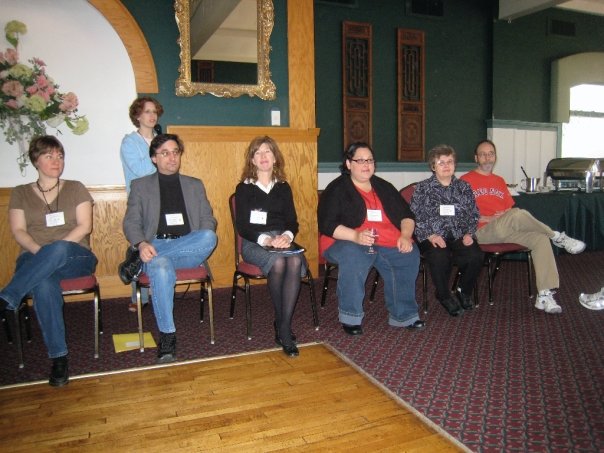
Here’s a true example: Last year I went to a writer’s conference. It was the first I had ever attended and was not sure what to expect, but knew I could learn something. The conference had a number of guests who had published novels and more than a hundred participants who were, like me, there to learn and receive critiques. Quite a few of these people, I discovered, had already published their own books. One fellow was very proud of his Publish America novel.

On Sunday, they set up a question and answer period where the published authors would sit in front and discuss whatever the participants wished. I was honored when the organizers came to me and asked me to join in. The people with the Lulu books and the Publish America books were ignored completely. Even though my novel is with a relatively minor publishing house, the editors and writers who organized the conference considered it worthy.

After all, unlike these self-published books, mine had gone through the process and had been accepted. It had then been edited by a professional editor and I had worked with them to make changes. It showed a level of professionalism that the others did not.

And that’s the image you want, after all. Your work could be great, but if you publish it yourself, the message professionals get is that it was so bad that no one would publish it and that you were forced to put it out yourself.

Of course there are exceptions, which the self-publishing industry will point out as they try to get your business. There’s always that one-in-a-million time when a self-published book grabs the attention of the public and does well. Then there are the other 999,999 books that didn’t. You want to play the odds?

There are times when self-publishing works just fine. The books I edit for my live action role-playing game, for instance, are all self-published. However, I didn’t use a vanity press, because I wanted it to look more professional than that. I set up my own publishing company, paid for a bunch of ISBN numbers I could assign my books, and had them listed in Books in Print. Amazon sends me orders every now and then and Double Dragon (my publisher for the novels) has been distributing the e-book versions of them. But those are non-fiction rule books geared to a small but significant audience. They’re not the kind of thing you’d necessarily find in your local book store. If you’re pushing a novel, that’s not the way to go.

So don’t give up. There are publishers out there who might just love your book, but you may have to take a very long time to find them. And if you get absolutely nothing but rejection letters, maybe your book needs some more work. Maybe it shouldn’t be published yet.

Even by you.

My Turn to be Interviewed

The gaming web site Altern8 interviews me this week. Part one is mostly about my LARP game, and part two is primarily about the novels.

Part one

Part two

Philcon this weekend!

I’ll be one of the guests at the Philcon science fiction convention this weekend. I’ll be hosting a few panels and being a guest on others, so if you’re going to be there, please stop by and say hello.

The Philcon web page is here.

Other writer guests include (but are not limited to):

Catherine Asaro
Keith R.A. DeCandido
Genevieve Iseult Eldredge
Gregory Frost
Walter Hunt
Jonathan Maberry
Gail Z. Martin
Bernie Mojzes