Interview with Author Tee Morris

MICHAEL A. VENTRELLA: I’m pleased to be interviewing Tee Morris today. Tee grew up very near me in Richmond, Virginia yet we never met until a few years ago at a convention. His web page is TeeMorris.com.

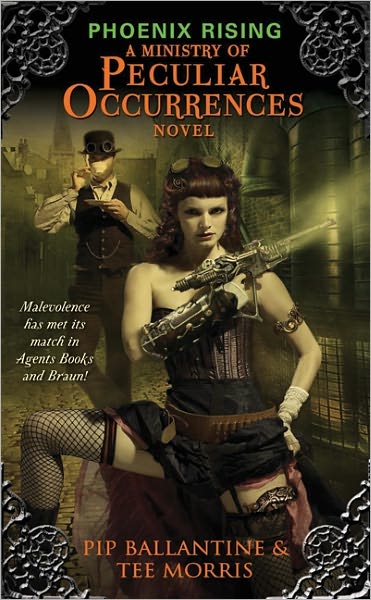
Let’s start by discussing your latest book, which will be first in a series –- PHOENIX RISING: A MINISTRY OF PECULIAR OCCURENCES NOVEL. How did you decide to collaborate with Pip Ballentine?
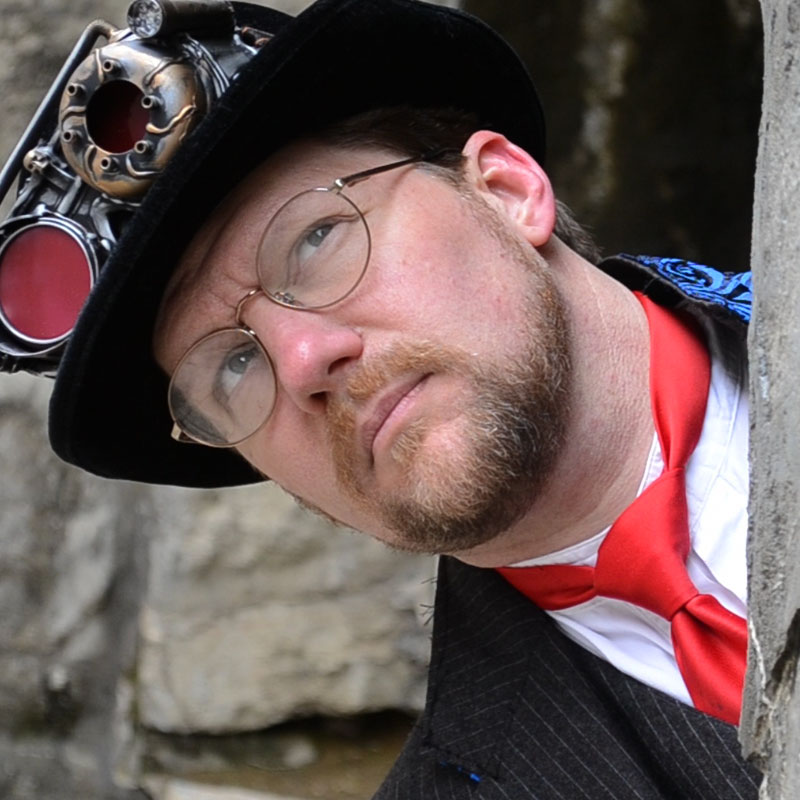
TEE MORRIS: It was a bit of arm-twisting on Pip’s part. I had a bad experience with co-writing, and my co-author really put me in a precarious position that completely ruined our friendship and professional relationship. So I was quite gun-shy. Pip eventually talked me into a compromise: we would write a podcast-for-pay idea. Unexpectedly, someone contacted Pip’s agent on this “steampunk idea” she was working on, I was then picked up by Pip’s agent, we changed focus and then we got to work on what would become PHOENIX RISING.

I still can’t believe we put this puppy together and are now, presently, closing in on the sequel’s climax.

VENTRELLA: Was there a conscious decision to write a steampunk novel because of current interests in steampunk for business reasons?

MORRIS: Actually, no. Steampunk was a conscious choice, but it was because we wanted to write it.

I first discovered “steampunk” back in 2006 and found it fascinating. I wanted to write something in it, but I didn’t want it to be a knock-off of what I had already read and seen. There’s a lot of cool things to explore in steampunk, and the more I delve into it the cooler it gets. There are authors who are riding the steampunk train to capitalize on its rapidly-growing popularity, but Pip and I wanted to do something we were sincerely drawn to, and steampunk really appealed to us.

VENTRELLA: How much should a writer consider the market when deciding what to write?

MORRIS: The writer should look at what is selling when they want to begin pitching to agents and editors. However, you really should consider how good of a product you are going to produce if you simply write to what’s hot. I’ve seen authors do that, and the writing comes across as trite. If your heart isn’t into it, the reader will assuredly pick up on that. At present, I won’t write a werewolf-vampire-Buffe-Blake urban fantasy because I have nothing new to offer to that market. If I tried, it would probably insult readers of the genre and do a lot of damage to my career.

Sure, look at the market, but don’t try to force a story to happen. That can backfire and really damage a career.

VENTRELLA: How did your collaboration work?

MORRIS: Believe it or not, writing across hemispheres was very productive. Whenever I slept, Pip wrote; and when Pip was asleep, I was writing. Literally we got in 24 hours of non-stop writing. This is one reason why, with Pip working on relocating to the Americas, our word count has taken a hit.
The downside was that we had small windows of time when we could discuss the book. We couldn’t bounce off ideas when we had them, and discussing problematic moments were…well, problematic as we could only do that for a small window of time between hemispheres. Still we managed, and we now have a pretty solid workflow at home.

VENTRELLA: How did you interest Harper? Did you have an agent first? Was the novel completed and then submitted or did they accept a proposal?

MORRIS: The Harper Voyage deal is all due to Laurie McLean, our Super-Agent. What happened was Pip’s write-up in Locus Magazine took an interested party to her website. When they saw she was working on this steampunk property with me, they immediately asked “When could we see it?” So I signed on with Larsen-Pomeda Agency and then we got cracking. The “interest” didn’t really kick in until someone made an offer. Literally, within 24 hours, there was a bidding war (from people who had initially passed on it), and then the wildcard — Harper Voyager — stepped in and said “We want it. Badly.”

The rest is future-history.

VENTRELLA: How are you promoting this book?

MORRIS: Pip learned a lot of new promotion tactics when working with ACE and GEIST. Between our previous experiences with Dragon Moon Press, we’re simply incorporating years of what has (and hasn’t) worked, and creating a plan:

1. The “Tales from the Archives” Podcast. This is the first volume in what could be a continuing series of short stories set in the world of The Ministry of Peculiar Occurrences. We’ve been having a blast with this, watching really talented authors like Valerie Griswold-Ford, Nathan Lowell, O.M. Grey, P.C. Haring, and many others produce original steampunk of various moods. We’re only a few episodes in, and people are really enjoying these works.

2. The Book Trailer.

People have really mixed opinions about book trailers and whether or not they sell books, but I argue that it really does depend on the book trailer. This one was particularly ambitious as we were creating original footage as opposed to working with stock footage as I did with Pip’s Geist trailer (which I edited together). We have been getting a terrific response from it with over 1000 views on YouTube and over 500 shares on Facebook in just over a week. It’s also a great way to get the word out about the book. How will it equate in sales? We don’t know, but it is helping in letting people know what the book is, or at least what the mood of our book is.

3. The Ministry Blog and Podcast Tour. As you see here with your blog, Michael, and others online, Pip and I started writing guest columns and interviews not only with podcasts (which really worked well for us back in August 2008 when we hosted “Double Trouble” online) but with blogs as well. Pip found that work with bloggers — book reviewers, authors, and others — cast our net a little wider than the podosphere. We’re reaching new people who show a little more faith and trust in their book blogs than they do in the mainstream media book critics. (Something we find very telling.)

4. Ministry May-hem. The month of May is when we start with the push of live appearances. It begins on April 30 (Not quite May, but close enough) with a stop at Borderlands in San Francisco. Then on May 7th we return to Staunton, VA (where we filmed the Ministry trailer) at BookWorks, and we will be wearing our steampunk best. May 11 we head up to Harrisburg, PA for a Watch the Skies meeting. Again, we’ll be in our steampunk best. Then May 20-22 is the Steampunk World’s Fair in Sommerset, NJ. We close the May-hem with Balticon May 27-30.

June … we’re going to have a wee rest.
5. Buttons, stickers, bookmarks, and postcards. You can never go wrong with freebies.

Pip and I have learned over the years that the key months of promotion should be the month before a release (keeping it fresh in people’s minds), and then two months after the book’s release (as it has that “new book” smell). If after June the book hasn’t “caught on” it probably won’t. You can still promote and still pimp, but it’s “old news” after that.

For Pip, though, she’s got SPECTYR (the sequel to GEIST) coming at the end of June, so there will be some serious gear shifting during the May-hem. Rather appropriate, now that I think about it.

VENTRELLA: This is your first novel with a major publisher (if I am not mistaken). What differences have you found between Harper and Dragon Moon? (And why do so many small publishers have “Dragon” in their name? My publisher is Double Dragon. Maybe they should merge and become Double Dragon Moon.)

MORRIS: Apart from the advance (which is a mixed blessing in itself), the distribution (which is a blessing no matter how you look at it) and the layout of the book (which I did for myself quite often because I liked that), there is still a “team” feel about working indie and working corporate. I have noticed with Harper Voyager that our publicist is also working hard to get our names and book out there to critics and media outlets, both traditional and new. Having that kind of support in publicity has been very nice! Dragon Moon and I did a lot of great things together, but distribution was always a challenge. I grew as a writer, and they gave me my first opportunity. A lot of terrific things happened to me because of it.

Harper Voyager is not my first orbit around the Moon, but it is definitely my “small step” and “giant leap” into what I hope will be my writing career.

VENTRELLA: You travel to many conventions to promote your books. Do you advise aspiring authors to attend these things? What do you get out of these conventions yourself?

MORRIS: Something else that I have learned in my years as a writer is really, really listen to what other authors have to say. (Both good and bad, when it comes to advice.) Perhaps one of the most important nuggets of know-how I got was from Hugo/Nebula/Aurora/insert-SF-writing-award-here winning author Robert J Sawyer:

“When you get an advance, don’t spend it. That advance is your marketing and advertising budget.”

I was traveling without an advance as my budget, and pushed myself several of thousands of dollars into debt. Even when I was writing books like PODCASTING FOR DUMMIES and ALL A TWITTER, I was already so deep in the red. People across the country had my books in hand, sure, but I was broke. Part of the problem was poor financial planning. When I got out of that debt, I plan events very differently now.
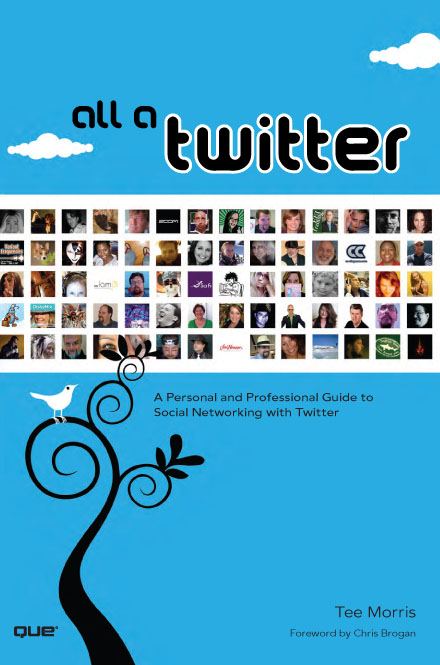
Don’t get me wrong, I love going to these conventions. I love talking shop, meeting other authors, and talking to other fans, not just about what I write, but about other geeky things like Firefly, Eureka, and steampunk. I dig that. But as I mentioned on my blog, these conventions are not cheap. I get invited to a lot of cons, but unless some of these costs are offset, I can’t go. In my early days/years, I would never make claims to have cons offset my costs. However, I have to make it a point of asking now as it’s just not that easy for me financially. I think cons are great for authors, provided you are smart about which cons you are going to attend; and more importantly, what you can afford.

VENTRELLA: How has the publishing industry changed since you entered it?

MORRIS: Well, there’s the e-book market for starters. The whole e-book movement has really been fascinating to watch. I think with the development of the ePub format, the elegance of iBook and the Kindle, and the affordability of digital books in comparison to hardbounds, the e-book is coming into its own. The publishing industry is now being forced to adapt, and I think many publishers are on top of it.

I’m also noticing over the year a growing animosity between writers and publishers, more of it coming from writer. There’s a mentality of “Us vs. Them” which rings hollow when I hear writers say “We understand it’s a business.” I’ve always regarded my career as a business, and I can only hope that I’m still writing when my child is in college. Harper Voyager have asked a lot from Pip and myself, but we are all working together to make the best book possible. If the book is a hit, it’s a win from everyone involved. That’s why I’m a little put off by that argument.

Something I have noticed, too, is that misconception of “writers just writing and letting someone else handle promotion as that is someone else’s job” is finally dying out. Even older authors have recognized the power and potential in podcasting, blogging, and social networking. Writers have needed to become Swiss Army Knives, wearing many hats and building up neck muscles in order to support them all. We have to look beyond “the end” and work with our publisher and the public to make our upcoming titles meet their potential.

VENTRELLA: What is the biggest misconception beginning writers have about the craft?

MORRIS: The biggest misconception (apart from the one mentioned in the previous question) is the editor is out to “ruin” your work. Only bad editors tell you something like “Change it, or else.” An editor’s job is to make your good book a great book, and in this process help you become a better writer. Again, it’s a team effort. And when you do have a point of contention, you have to defend your choice with facts and resources backing up your facts. Simply saying “because it is cool” doesn’t cut it. I am thankful for every editor I’ve had, and I am a better, smarter writer because of them.

VENTRELLA: What is the biggest mistake you see beginning writers make?

MORRIS: Superiority complexes. I’ve seen this in both writers with big and indie houses and it sickens me. A byline doesn’t make you any better a person. You just come across to people as a right jerk …with a byline. Maybe fans would “look away” once upon a time, but that kind of behavior can affect your sales. It can also make you a real leper amongst your peers. And even with books, awards, and movie deals (if you are really blessed) behind you, try and keep your head on straight. This ride can end at the drop of a bowler hat. I know that. So, I do what I can to be the best person (who just happens to have a byline) I can be.
VENTRELLA: What’s your next project?

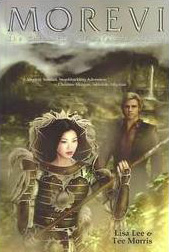
MORRIS: My next project is a steampunk reboot of MOREVI. I love the story and I love the characters of MOREVI; but as it is, MOREVI is not ready for the mainstream press. It needs a rewrite. It needs a new direction. And it needs, for the love of God, to lose the elves. Those were my co-author’s touch, and I’ve hated them since the original printing.

I don’t have a problem with elves. They’re like Vulcans with better tailors. I just felt like they were not a good fit with MOREVI, and I think a complete reboot with Rafe taking to the skies and the region be China. (Still kicking around ideas, you know.) It would be something like Battlestar Galactica, only without so much gender bending.
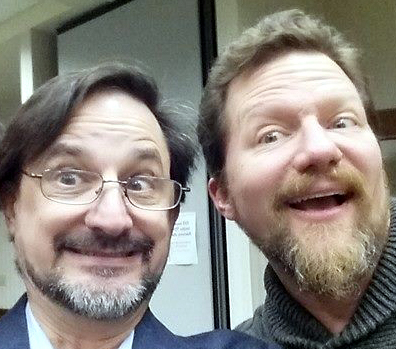
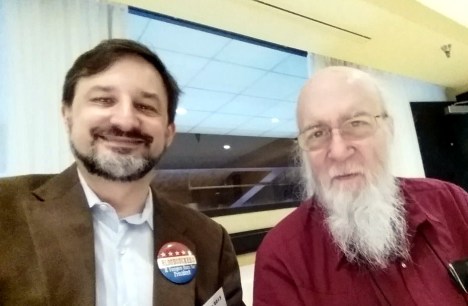
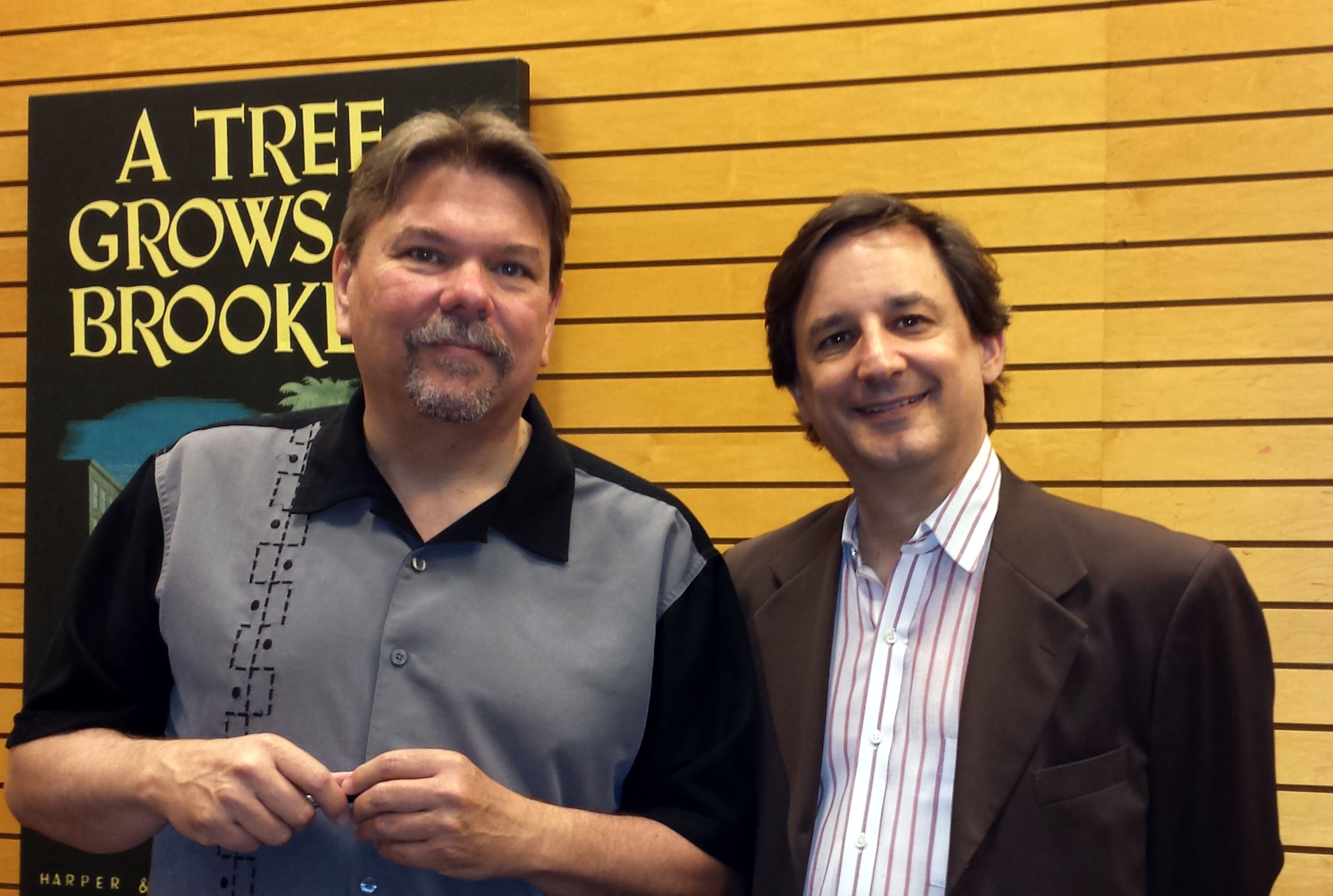
me&tee

Interview with Author Tracy S. Morris

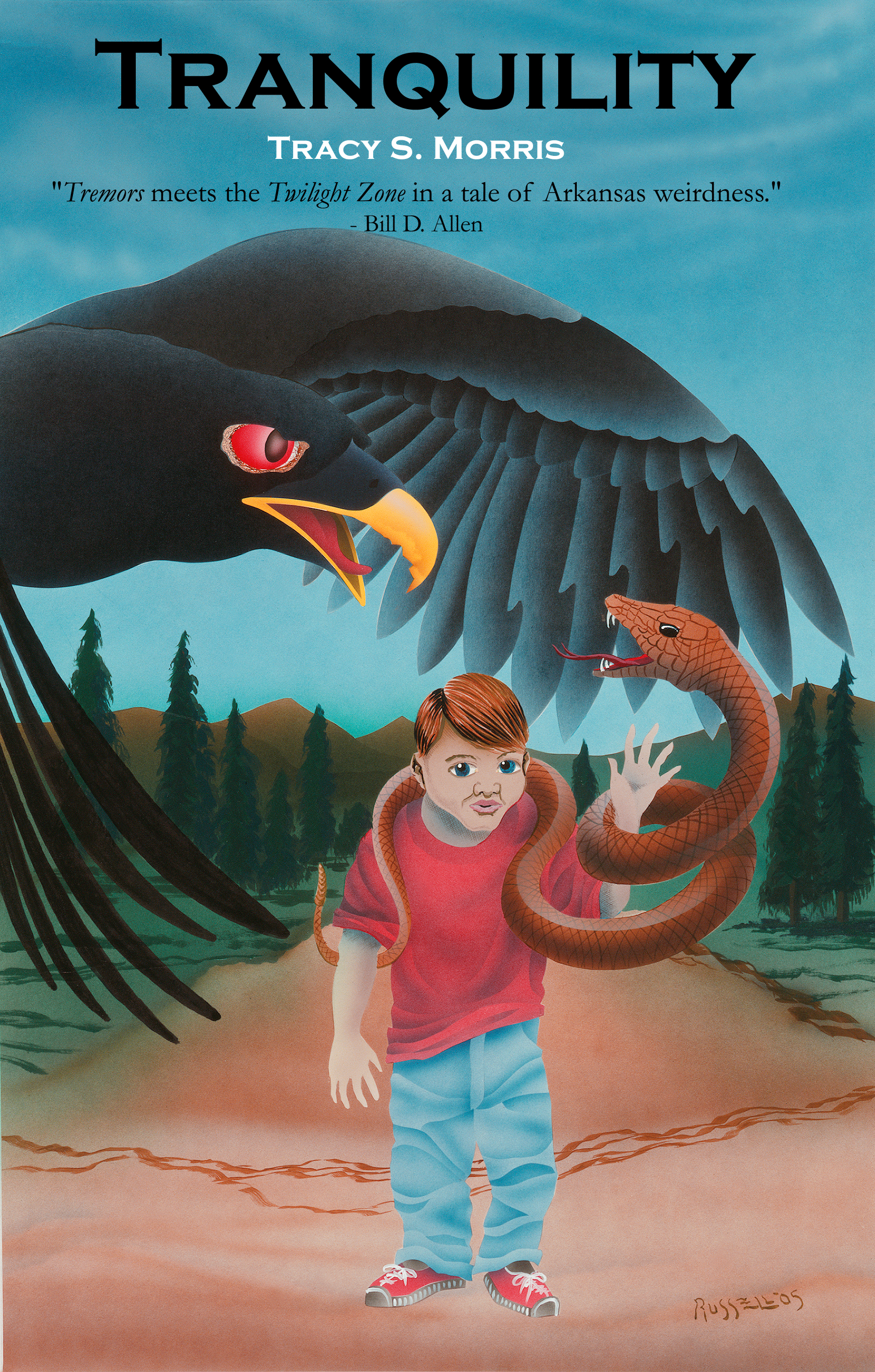
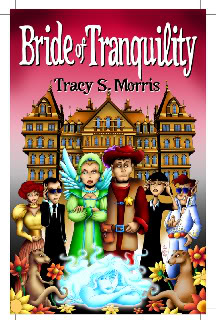
MICHAEL A. VENTRELLA: Today, I am pleased to be interviewing author Tracy S. Morris. She is the author of the Tranquility series of urban fantasy mysteries. The most recent, BRIDE OF TRANQUILITY, is a murder mystery set in a haunted hotel during a Renaissance wedding. She’s also published a number of short stories. Her web page is here.

Hi Tracy! Tell me a little bit about yourself!

TRACY S. MORRIS: I’m a professional writer, so I spend most of my days in front of my home computer in my pajamas. My specialty is service journalism in the gardening industry. Which is a fancy way of saying that I write “how to” articles that deal with topics like compost, animal manure and growing the perfect tomato. I like to call that “living the dream.” Although it probably means that I’ve got no life.

I’m also a retired newspaper photographer/reporter. On my best day, I got to shoot the president (with a camera) which probably put me in the crosshairs of a secret service sniper. On my worst day, I was suspended off of the back of a speedboat in freezing weather and driving sleet to get a picture for a news story.

I got to do some very interesting things in that job. I had a ride in a hot air balloon. I had the best seats in the house for every major sporting event. But I also had no life, no predictable schedule. And after the day with the speedboat in the sleet, I realized that there has to be a better way to make a living. Which is why I now work at home in my bathrobe.

When I do leave the house, I’m a shooting enthusiast, a martial arts black belt and a former fencer. I’m a history buff and I’ve spent some time in the Society for Creative Anachronism, which is a group that recreates history from Roman times through the late-renaissance (the boundaries are nebulous and basically cover anything that other history groups don’t cover.)

VENTRELLA: What’s something unusual or different about you that your readers probably don’t know?

MORRIS: That’s a tough one to answer. I’m pretty transparent about my life, so there isn’t a lot that my readers don’t know about me.

I like to collect antique cameras. The collection is mostly thanks to my dad, who likes to go to garage sales. I asked him to be on the lookout for antique cameras for me. So he used to pick up any old camera he saw at an auction. I have several antique bellows cameras, a couple of twin lens reflex, some very nice medium format box cameras and two or three Brownie Hawkeye still in the box. He even bought me a couple of necklaces with camera charms. Eventually I hit a point where I had no more room for them and I had to ask him to stop buying them for me.

The one camera I want most that I don’t have yet is an old Speed Graphic press camera. One of these days I’m just going to cave in and buy one on E-Bay or something.

VENTRELLA: Your “Tranquility” series seems to combine a number of different genres. How did this come about?

MORRIS: Tranquility really grew out of something I was writing for fun. Because of that, I didn’t try to stick with a formula or say “I’m going to make this just a mystery. Or just an urban fantasy. Or just a horror. I was writing for me, so I made it about the things that interested me.

I grew up on a family farm out on the border of the Ozark mountains. My family lived in that region for four generations. When I was a kid, I read a few too many bigfoot stories. So the things that scared me weren’t the monster under the bed. It was whether there was something out in the dark woods out past the barn. That’s where the horror element from Tranquility came from.

I wanted to write the book as a pure horror, but I also have a skewed sense of humor which kept slithering in. One of the major themes that appeared in the book grew out of my reaction to moving home and really seeing the oddities in my small town for the first time. This made the book feel much more like the TV series Northern Exposure, or possibly the Disney Cartoon Cars with that ‘city slicker comes to the country and discovers that it’s a pretty great place’ theme.

By the time that I finished writing the book, I finally embraced the notion that my natural writing voice is humor instead of horror.

TRANQUILITY was nominated for a Darrell award, and placed runner up in 2006. At the awards ceremony my publisher asked when I was going to give her the second book. When I sat down to write it, I decided to make it as fun and absurd as possible. So I threw in everything but the kitchen sink.

The second book in the series, BRIDE OF TRANQUILITY, came after I had been through the process of helping to plan and put on four weddings (Two of them the same year.) I had dabbled in wedding photography by that point, and I had some sarcastic, slightly cynical views about the business side of the wedding industry.

So I thought ‘what’s the worst thing that can happen at a wedding? How about a murder? What’s the worst thing that can happen in a murder investigation? Why not a killer who can move around the hotel through secret passageways – phantom of the opera style? What about if all of the hotel guests mistrusted the investigator and wouldn’t talk to him? Why would they do that? What if they were conspiracy theorists?

VENTRELLA: Do you think that not fitting into one genre made it a harder sell to editors (and the public)?

MORRIS: I didn’t actually have to sell the series. Which is almost embarrassing to admit, since so many other authors have tales of sending a novel out to 45 agents and 20 publishers before gaining acceptance. I sold TRANQUILITY to Yard Dog Press because I was friends with the publisher. When I was outlining the novel, I told Selina Rosen, the editor about this new project that I was excited about. She asked me to send it to her when it was done.

BRIDE has been easier to sell to the fans, because I have a catchy summary that makes the book sound fun. Where else would you be able to read a murder mystery set in a haunted hotel during a Renaissance wedding?

VENTRELLA: I note that they are from Baen Books in e-format but Yard Dog in paper. How does that arrangement work?

MORRIS: Yard Dog Press does not deal in e-books, so they did not contract those rights. But the publisher has a working relationship with Baen. (Baen bought the e-rights to Selina Rosen’s Misha Merlin titles as well as the Sword Masters series from Dragon Moon Press.)

Additionally, Baen had just bought the E-Rights to another popular Yard Dog Press series, The Four Redheads of the Apocalypse.

Since I already had a working relationship with Baen, Selina suggested that I offer the E-rights to them. I could have put out the E-books myself through Amazon. Authors such as Jim Hines have done that with great success. Another Yard Dog author, Margaret Bonham has put her Yard Dog Press epic fantasy novel Prophecy of Swords out that way. Since then her title has reached the top 10 in epic fantasy e-book category for Kindle.

But Baen brings with them a new audience of readers that I might not reach otherwise. That is very exciting to me.

(By the way, through the month of December 2010, if you purchase either TRANQUILITY or BRIDE OF TRANQUILITY in trade paperback from Yard Dog Press (Direct from the publisher, not from Amazon), I’ll send you a free preview of the first two chapters of the next Tranquility book that is now in progress, which is tentatively titled IT CAME TO TRANQUILITY.

The links to these books on Yard Dog Press are: TRANQUILITY and BRIDE OF TRANQUILITY.

Baen is also running a special on the E-Books. Until January 1, 2011, you can order both TRANQUILITY and BRIDE OF TRANQUILITY along with the books in the “Four Redheads of the Apocalypse” series as a Yard Dog Press bundle for $20.

You can order the E-Books at: http://www.webscription.net/m-9-yard-dog-press.aspx)

VENTRELLA: How did you make your first sale? Did you have an agent?

MORRIS: I still don’t have an agent. Instead I’ve made every sale I have the old fashioned way — by researching markets and sending manuscripts out.

My first sale was to an anthology called OCTOBERLAND that was put out by Flesh and Blood Press. It was a story entitled “Frost King” that I had basically written and rewritten multiple times.

I sold the story exactly the wrong way. It had been the first short story that I ever wrote, I made revisions with the help of an English teacher and then put it in a drawer through my college years. Once I decided to pursue writing again I started sending it out. Every time It was rejected I rewrote it using suggestions that the rejecting editor provided me. Eventually after 12 rewrites over 4 years, I sold the story.

That same week I also sold “Attack of the Godless Undead Zombies” to Yard Dog Press for one of their “Bubbas of the Apocalypse” anthologies. That story was written in the space of two days. I turned it in to Selina Rosen after my husband gave it a single editing pass.

Today I try to get a story to the point that I am happy with it before I send it out instead of changing it with every rejection. I feel much happier with the end result.

VENTRELLA: I have a short story that I can’t seem to sell, as it hardly fits into any specific genre. What advice do you have for me (and other writers reading this) for finding the right editor?

MORRIS: Before you do anything, consider your goals. Do you want to sell a story you are unhappy with for the sake of having a sale? Or do you want to have the best body of representative work you can possibly produce?

If you just want the sale, then rewrite the story along a formula so that it fits into a single genre. But if you are happy with the story as it stands, put it aside until the right editor comes along.

My personal choice would be the second option. I have been writing and reading speculative fiction for 20 years and I have seen genre conventions change drastically over the years. I never thought I would see the day that Jane Austen and Zombies were used in the same genre. I have ‘trunked’ perfectly good stories because they didn’t have the right market, only to have the perfect market for the story come along two years later.

If you change your work into something that you dislike just to make a sale, you may end up with a ‘representative body of work’ that you are unhappy with.

Also bear in mind that compared to novels, short stories are very quick to produce. You can have a short story written within a few days. So if you can’t find a home for one, you can set it aside and devote your attentions to creating and selling a new story.

VENTRELLA: You have two short stories in Baen’s online magazine “The Grantville Gazette”: “Still Life with Wolves and Canvasses” and “A Study in Redheads.” Do you think that online publications are the wave of the future?

MORRIS: Don’t forget about my co-writer for those stories, Brad Sinor.

A few months back Amazon began selling more electronic books than print books. This has a huge impact on magazines. Particularly since the publication business model is not the same as the book business model.

Most print publications don’t get their revenue from selling copies of their magazines. Instead they get revenue from ad sales. So a magazine like Fantasy Magazine once could leverage their sales numbers to attract advertisers. Fewer people are going into stores where these magazines used to sell. Instead, readership is online now.

You are already seeing more magazines online. There are several business models out there. Daily Science Fiction is delivering a story a day directly into my in box. The Grantville Gazettes require a subscription to access their online content. Fantasy Magazine has complete stories up for free with ads in the margins. Clarkesworld offers free content online, but sells their magazine with additional content through Kindle and has occasional donation drives.

When the dust settles, I think the most profitable business model will be the one we see copied.

The thing I admire about what Grantville Gazette is doing is that they are building a community around their 1632 franchise. There are the novels with the bigger name writers. But there are also message boards where fans can interact and have an impact on the storylines. Baen has an entire section devoted to the tech of the 1632 universe where experts (and there are plenty of qualified experts) can hammer out the science of the universe.

If someone wants to submit a story to the Grantville Gazettes, the story is put up on a closed message board where the Grantville fans can pick it over for conflicts with the universe timeline or the science. The author can make the changes and if the story is accepted, the same fans will buy the content.

Eventually, the ‘best of’ stories are the ones that get released in the print anthologies. Which also are bought by the community members.

Business-wise, this is smart. This is what made Dr. Horrible’s Singalong Blog such a success: Joss Whedon has an intensely loyal community that is willing to follow whatever he does.

This is also why celebrities such as Wil Wheaton, and internet celebrity Author Cleolinda Jones do so well with self publication. They’ve built a community of readers who are willing to follow what they do.

VENTRELLA: “Fish Story” is a short story you wrote which appeared in STRIP MAULED, an anthology edited by Esther Friesner. Tell me about that!

MORRIS: “Fish Story” involves a couple of characters that have been living in my mind for a while. Back when Laurel K. Hamilton and Jim Butcher first began publishing urban fantasy, I had a thought that it might be fun to write someone who would live in an urban fantasy world but eschewed magic. How would that person survive if they lived as a sort of magic conscientious objector?

The adventures I wrote were another example of a hard-to-sell genre mashup. I write funny third person. The urban fantasy of that type seems to take itself very seriously, and usually follows the noir detective novel conventions of first person point of view.

The characters are a good example of an idea that was trunked because of a lack of market, only to have the market return. I had an early story with the characters published in a magazine (now defunct) entitled “Whispers from the Shattered Forum”. After that, the Noir Detective novel in the Urban Fantasy market seemed to be dying.

Then TWILIGHT revived the interest in Urban Fantasy Vampires, which always seem to pull readers into the Noir Detective Urban Fantasy novels. And then along came a couple of great TV shows like “Supernatural.”

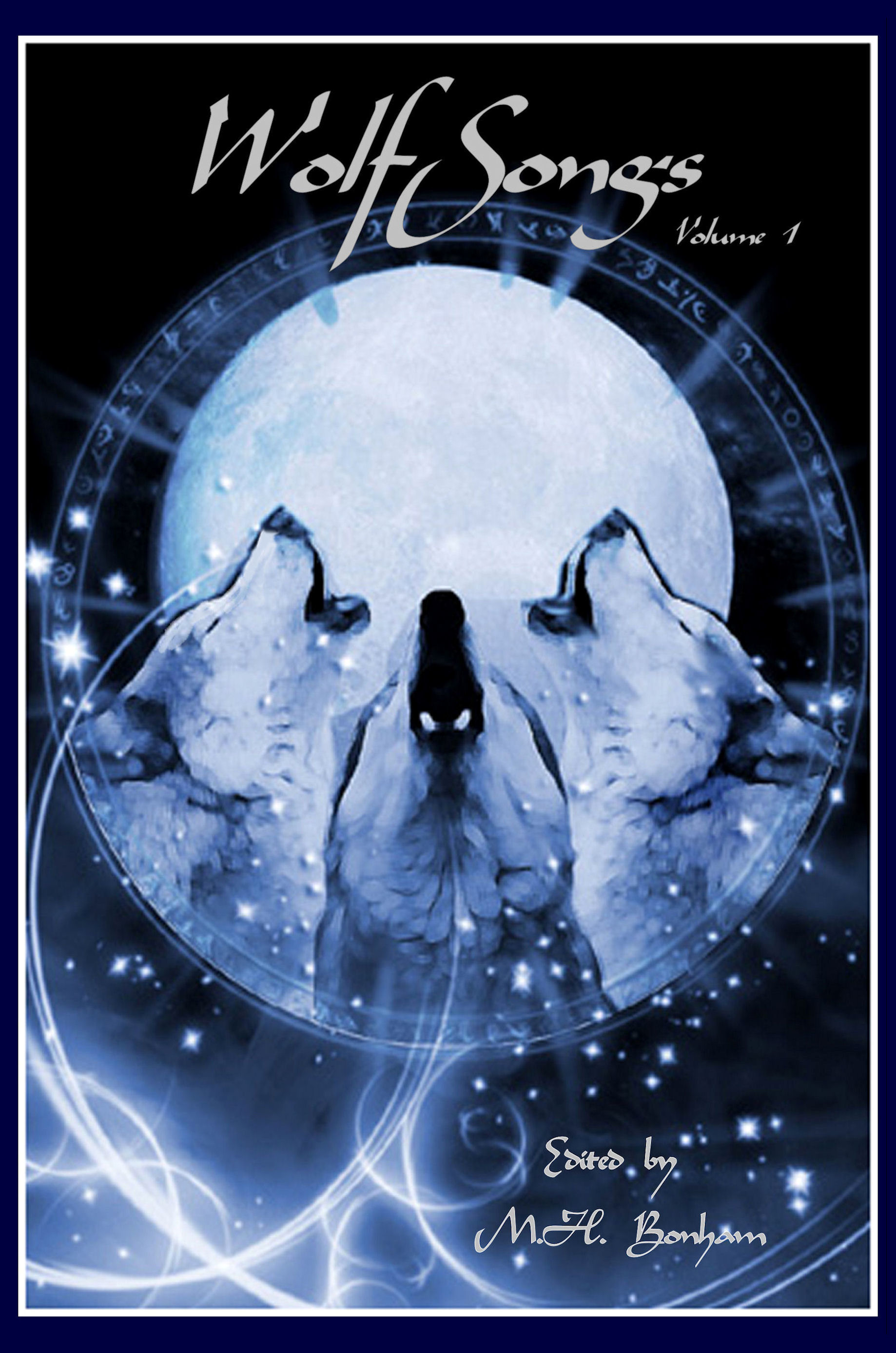
Prior to selling Fish Story, I sold a short story with these characters entitled Homo “Homini Lupis” to an anthology entitled WOLF SONGS, which was put out by Wolfsinger press. I recently finished a novel with the characters that is based on the plot to this short story.

Then Esther Friesner launched her monsters in suburbia series. The anthologies are open by invitation only. But through a mutual friend I was able to ask her if I could submit a story for consideration for her werewolf-themed anthology. I was very surprised when the story not only made it into the anthology, but was put up on Baen’s website as one of the free preview stories.

I also submitted a story to her for the vampire-themed anthology. But the competition for inclusion in that anthology was a bit stiffer, and I didn’t end up being selected.

VENTRELLA: Would you advise beginning authors to concentrate on getting short stories published first?

MORRIS: There is a huge difference between publishing a short story and publishing a novel. About 15 years ago the accepted career path was to build name recognition through short stories and leverage that to secure a novel contract. Today that wisdom doesn’t hold true. You can get a contract with an agent, or sell a manuscript to Tor or Baen if the novel is good regardless of what your name is. Conversely, you can have a big name in short stories and if your novel isn’t good enough, you won’t be able to sell it.

My advice is to concentrate on honing your craft in the medium that you want to be published in. If you want to write short stories, that’s the area you should focus in. If you want to write novels, start there.

VENTRELLA: What is your opinion on e-book publishers and Print On Demand?

MORRIS: Each publisher is different. Do your homework and contract with a respectable publisher. One good resource is SFWA’s Predators and Editors website.

VENTRELLA: How about self-publishing?

MORRIS: Rule #1 of Self-Publishing: Thou Shall Not Fooleth Thyselfeth.

First thing you must understand is that publishing a book yourself does not put you into the same league as Stephen King, J.K. Rowling or Danielle Steele. You won’t be rolling in piles of money. Nor will you spend your days poolside with a laptop, eating bon bons while you compose deathless prose.

Writing is a business. Publishing is doubly so. You will be responsible for selling the books yourself, handling the details of distributorship and all promotional marketing (these things that publishers normally do).

Additionally, you must overcome the stigma attached to self publishing. Self publishing (from what I’ve observed) is like swimming upstream against a tide of professional ostracism. In the eyes of many professionals (authors, editors, publishers, book sellers) your book lacks the quality editing work that books published with an established house have.

Promotion will be more difficult because many reviewers will give your book less priority than a book sent by a professional house. Science fiction conventions will give preferential treatment to writers who have books with professional houses. If you do manage to get paneling, you may be treated with hostility or veiled contempt by authors with credits through traditional publishers.

There are a number of authors who have been successful with self publishing. Most of them know to treat the business of writing and publishing like a business. Many of them establish a fan following through other means, and dabble in self publishing. Others have an established fan following through traditional publishing that follows them into the self publishing realm.

VENTRELLA: I assume you have cats. (Don’t all writers?) Am I wrong?

MORRIS: No cats. I am owned by two very lazy dogs. When I’m not writing, my job is to cater to their every whim.

Interview with Walter H. Hunt

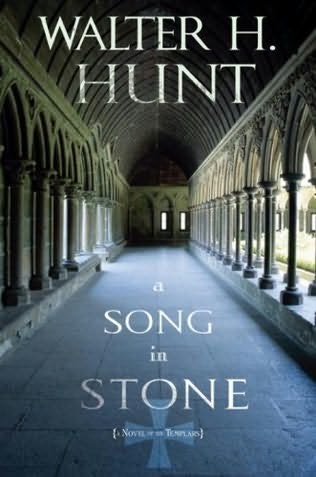
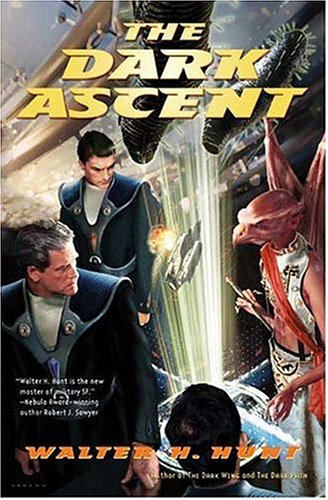
MICHAEL A. VENTRELLA: Walter H. Hunt is a science fiction writer known primarily for his “Dark Wing” series, a “military space opera.” His most recent work, A SONG IN STONE, deals with the Knights Templar. He lives near my old stomping grounds (Boston area) with his wife and daughter. His web page is here.

Walter, you began writing scenarios for games. (As a person who has done the same — albeit for LARPs — I know what that’s like!) How did you get published that way? In other words, how did you turn your hobby into a business?

WALTER H. HUNT: I had the good fortune to encounter Rich Meyer and Kerry Lloyd of Gamelords in 1981 and was pulled into the company as a writer. Between 1981 and 1984 I worked on a number of projects for them. When they stopped publishing Richard and I (along with others, including my wife) began Adventure Architects to write free-lance in the game industry. We worked for Mayfair, Iron Crown, FASA, and several other companies.

VENTRELLA: Is there still much of a market out there for writing for games?

HUNT: It seems so, though I haven’t done any of it for quite some time.

VENTRELLA: When did you decide to start writing fiction, and what were your first attempts like?

HUNT: When I was in elementary school. And it was predictably awful, though it meant that I wrote lots and lots of words and learned how to set scenes and compose dialog. I wrote six novels in middle and high school. They will never be seen, I hope.

VENTRELLA: How did you get your first big break?

HUNT: I’d shown a manuscript to a friendly editor at a convention in 1987, and when he began working for Tor Books in 2000 he contacted me through a mutual friend to see if I still had it available. The mutual friend lined up the agent, so I got the agent and the publisher at the same time. Lucky break – though it took almost 14 years for me to get so lucky.

VENTRELLA: Lately it seems that fantasy of all varieties has taken the place of science fiction on the bookshelves. To what do you attribute this change?

HUNT: Haven’t a clue. There is a lot of bad fantasy, but there is a lot of bad science fiction too – especially on television. Sturgeon’s Law, I suppose.

VENTRELLA: Your most recent work is about the Knights Templar and the Rosslyn Chapel, something most people had never heard of before Dan Brown. How did you decide to tackle that subject?

HUNT: The Order of the Temple is an interesting subject, with plenty of scope for writing. I’d heard of Rosslyn before reading the Brown book – it’s common pseudohistorical fodder in Masonic circles, and I’ve been a Freemason since 1988. When we went to Scotland for Worldcon in 2005 I put it on my itinerary, and was fortunate to receive a tour from a fellow Mason. He pointed to the ceiling of the lady-chapel and said, “that’s the Rosslyn music.” As the lead character in “Despicable Me” is fond of saying, “light bulb.” By the time I came back from Scotland the book was plotted and partially written.

VENTRELLA: You are a regular at science fiction conventions (and indeed, we have been on panels together!). Why do you attend them?

HUNT: Why, to meet fascinating colleagues. Seriously, the opportunity to meet readers and fellow writers is something not to be passed up. For professionals (or aspiring professionals), there are editors and publishers as well. I arranged my most recent book deal at NASFiC this summer by having the right conversation with the right person. And I’m still a fan: I’ve gotten to sit next to people like Robert Sheckley and Frederik Pohl and Connie Willis and David Brin and a dozen others – and talk to them (and listen to them. More listen than talk, I hope.)

VENTRELLA: What advice would you have for an aspiring genre writer for attending these things, even if they haven’t been published yet?

HUNT: Finish the book. No one buys an idea from an aspiring writer – only a manuscript. But by all means believe in your own work; I have seen too many occasions when an unpublished writer lets his/her work be folded, spindled and mutilated by people who want to make it into something else because it might be more “publishable.” Write what you understand, trust your creative instinct, and finish it.

VENTRELLA: What’s your pet peeve about the industry?

HUNT: I’ve heard it said that the criteria and market studies for genre fiction are thirty-plus years out of date. I think that some editors base decisions on what to buy and what to promote based on inaccurate perceptions of the composition and demographics of the buying public. But, again, I have no idea if this is true.

VENTRELLA: What is the biggest mistake you see aspiring authors make?

HUNT: To assume that there’s any money in this business. I’m married; as the old joke goes, “what do you call a full-time writer who’s single?” The answer is, of course, “homeless.”

VENTRELLA: What’s your opinion on small press and self-publishing?

HUNT: Small press deserves better respect, and I think the internet is helping with that. My Rosslyn book A SONG IN STONE is currently published by a small press. Self-publishing is a mistake: it says, essentially, “no one professional will buy my work, but maybe the reader will. I hope so, my garage is full of these things I paid to print.” So I’d wait to have someone buy my work.

VENTRELLA: I see you are a historian or sorts, having studied that in college. With a time machine and a universal translator, who would you invite to your ultimate dinner party?

HUNT: Top of the list would be Benjamin Franklin – polymath, wit, diplomat, Freemason. Erasmus of Rotterdam. Stanley Weinbaum and Cyril Kornbluth, two great science fiction writers. My parents, whom I miss terribly (they’ve been gone for twenty years and never saw me succeed as an author. My mom would enjoy meeting Franklin, I suspect.)

You know that Hendrik van Loon did this little thought experiment, right?

VENTRELLA: Um, no. Hendrik van Loon? Did you make that name up?

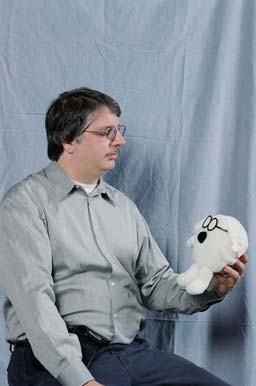
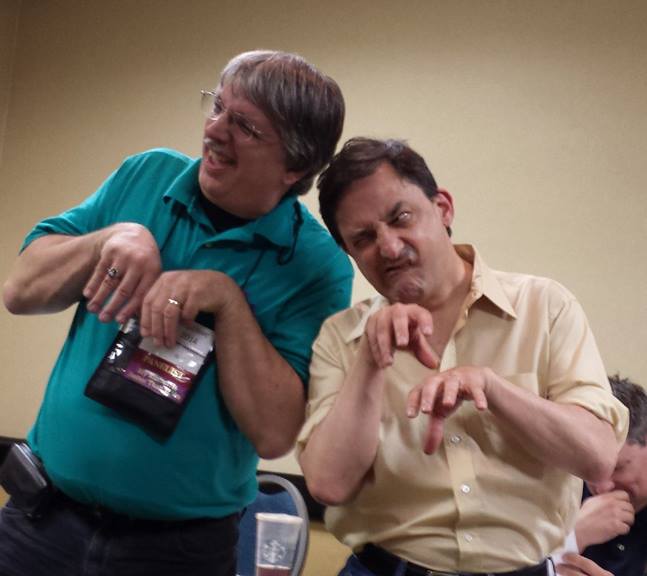
Goofing off at Capclave 2014

Goofing off at Capclave 2014

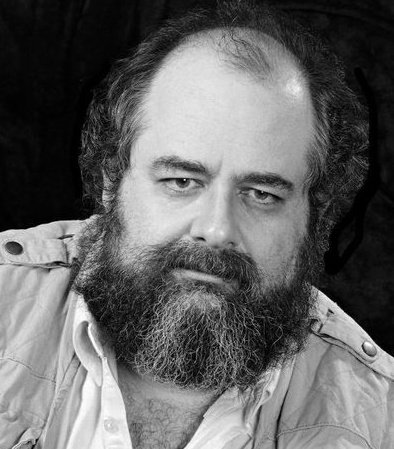
Interview with author Joel Rosenberg

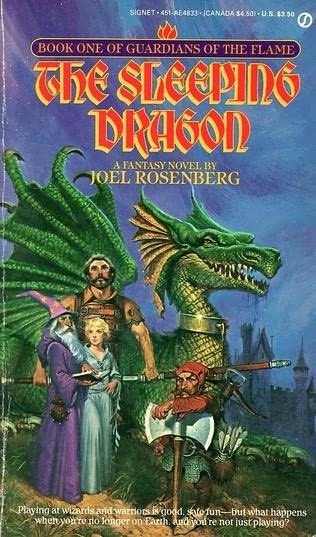
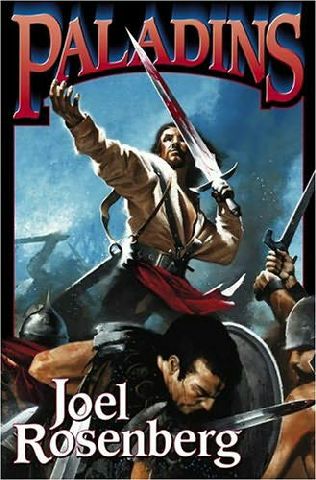
MICHAEL A. VENTRELLA: I’m pleased to be interviewing Joel Rosenberg today. His first published fiction, “Like the Gentle Rains”, appeared in Isaac Asimov’s Science Fiction Magazine in 1982. The following year, he published his first novel, THE SLEEPING DRAGON which was the first in his long-running Guardians of the Flame series. The “Keepers of the Hidden Ways” trilogy similarly places people from the real world into a fantasy setting, making heavy use of Norse mythology. He’s also written in a number of other genres.

I remember reading THE SLEEPING DRAGON when it was first released, and thinking “Oh, this is interesting; a group of gamers who get sucked into another world where they must actually play their characters for real.” A few years later, I helped to found one of the first major fantasy LARPs in America. Coincidence? I think not.

JOEL ROSENBERG: 🙂

VENTRELLA: Anyway, my question is this: It became clear very soon in THE SLEEPING DRAGON that this was no cute little adventure when (spoiler alert) one of the main characters dies fairly quickly. Further books in the Guardian of the Flame series also had no problem handing death to characters we have followed and loved for years. Was there anything specific you were trying to say by doing this?

ROSENBERG: Yup. What I was trying to say, explicitly, is that innocence is no shield, and that I wasn’t using any Plot Armor on my characters. Two reasons: 1. I think that makes a story more entertaining, and 2. I think it’s an important truth, for real life.

At the moment, we’re wrapping up a horrible experience — in mid-August, my wife, Felicia Herman, was falsely arrested and maliciously charged with domestic abuse of our sixteen-year-old daughter, Rachel, and it wasn’t her utter innocence — and I want to be clear: she didn’t do anything wrong, or unlawful — that caused the charges to be dropped just over a week ago, but damn good lawyering by our attorney, David Gross.

It could, absent David, easily have gone the other way.

VENTRELLA: In retrospect, do you think this willingness to kill your characters off has strengthened the popularity of your books or hurt it?

ROSENBERG: I dunno. If I had to guess, I think it’s probably hurt the popularity, but there’s so many other factors in publishing that it’s hard to say what causes any success … or failure, for that matter.

VENTRELLA: Do you have any interest in ever publishing another book in the Guardian of the Flames series?

ROSENBERG: I have to write one; that’s part of my deal with Walter Slovotsky for his collaboration on the nonfiction book in progress, FAMILY MATTERS II: GREENER’S LAW. (see http://familymattersii.com/.) Whether or not somebody publishes it isn’t my call, but I expect that the next Guardians book will find a publisher. First, though, I’ve got to finish FMII.

VENTRELLA: How were you able to sell your first book?

ROSENBERG: It was pretty straightforward. I got an agent; the agent submitted it all around; Sheila Gilbert (then at NAL) made an offer.

VENTRELLA: It has been a long time since your last published work. What happened? What have you been doing?

ROSENBERG: Firearms instruction, tech writing, political activism — you’ll find a lot about it in fmii. It’s been . . . interesting, in a Chinese Curse sense. Never thought I’d walk into Streichers — a local cop shop — and say, “Wayne, I need you to fit me out with body armor. Now.” But I did. Some of the stuff that’s been happening lately is kind of, well, close to the edge.

VENTRELLA: What clichés do you see in the fantasy genre that you hate? How do you avoid them?

ROSENBERG: I try, really hard, not to see cliches. That said, the society that seems to consist solely of muscular warriors, voluptuous barmaids/peasant girls, and evil minor nobility bugs me, so I try to avoid it.

VENTRELLA: You’ve also written science fiction and mysteries. Is there a genre you enjoy above all others?

ROSENBERG: Nah. There’s books I’ve enjoyed writing more than others — writing HOME FRONT was an utter joy, and both of the Guardians Road books had their moments, although I think they cut too close to the bone, personally.

VENTRELLA: What techniques do you use to make sure your characters are realistic and believable?

ROSENBERG: Let me give you two honest answers: 1. All of them. 2. Damned if I know. I don’t mean to be flip, although I don’t mind, but I don’t care if my characters are realistic; I care, to the point of pain, that they’re believable.

VENTRELLA: How do you prepare? Do you outline heavily?

ROSENBERG: Nah. From my POV, an outline is something an agent uses to sell a book that hasn’t been written. That’s a noble endeavor, honest, but it has nothing to do with how I write. (Dave Drake, a writer who I respect tremendously, outlines extensively; I’m not knocking the practice at all. So do Pournelle and Niven, when they collaborate.) Feist and I wrote an outline, kinda, for MURDER IN LaMUT, and then when I took my crack at the first draft, I avoided it. Well, no, that’s not true; I more bent it over a table and violated it.

VENTRELLA: A common theme in your work has to do with freedom, and the consequences (good and bad) that can come from it. What is in your background that makes you interested in this theme?

ROSENBERG: Child abuse. Receiving end. Not that that’s a secret to anybody who has read my books and noticed some similarities to, and some obvious attempts to rewrite, my own family history. (When my sister Dale read D’Shai, she wrote me: “I love it. I didn’t even mind the part where I died.”) Truth is, I’m the dog who has been beat too much, and have been, for more than forty years; writing is one of the ways I deal with it. So, for that matter, is the political activism.

Sorry about the answer, but, hey, you asked. 🙂

VENTRELLA: I always liked the idea in the Guardians series that despite the fact the main characters were the “heroes” they still had problems being elected the leaders. Do you find this a fault or a strength of democracy?

ROSENBERG: All in all, I think that a public who elects heroes is looking for trouble, and will find it. Heroes work best as dictators — temporary ones; see Cincinnatus, or, for that matter, Churchill, or Rudy G. — and then it’s best to put them back behind the glass, with the big sign that says, “In case of emergency, break glass”, and make sure that they can’t break the glass from inside.

VENTRELLA: Do you think that being a successful author has more to do with skills that can be taught, or is it more something more intangible?

ROSENBERG: Neither. I think it has to do with skills that can be learned, as opposed to being taught. On the FMII site, I’ve got partial list of my teachers, and I’ve learned a tremendous amount from all of them.

Interview with author Allen Wold

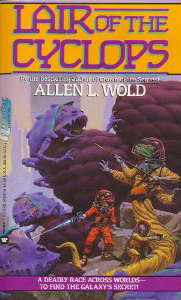
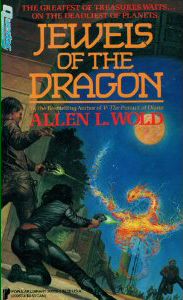
MICHAEL A. VENTRELLA: I’m pleased to be interviewing Allen Wold today. Allen Wold has published nine novels, several short stories (mostly for the Elf Quest anthologies), five non-fiction books on computers, and a number of articles, columns, reviews, and so forth, also concerning computers. He is a member of SFWA and teaches writing.

ALLEN WOLD: Many people have complimented me by assuming that I teach writing classes, at NC State or somewhere. I am not associated with any college, or university, or even a high school. The only “classes” I teach are my writing workshops, which I do at science fiction conventions. Because of people’s comments, I have begun to think of myself as a teacher, and I am quite flattered that people think of me as one. I do have some ideas about how writing can be “taught,” and about college courses in “creative writing” (Manley Wade Wellman said that “creative writing” is redundant, all writing is creative), but some of these are best saved for private conversation. There are, and have been, some excellent writing teachers in various colleges and universities, teachers who’s stories you can read in magazines, or who’s books you can buy in bookstores. But I am not one of them.

VENTRELLA: How did you first get published? Did you have an agent?

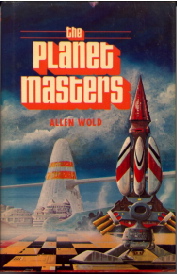
WOLD: I did have an agent. I no longer remember the exact details, I was sending my first novel THE PLANET MASTERS around over the transom. Sharon Jarvis, then fiction editor at Playboy if I remember correctly, suggested two agents to me. I picked one, Lea Braff, and she agreed to represent it. At this time, I had no knowledge of submission protocols, and it probably showed. Lea sold my book to St. Martin’s Press, and after some fluffling around in the editorial department, it finally came out in 1972.

VENTRELLA: How has the publishing industry changed since you entered it?

It has changed a lot, but I’m not really qualified to talk about that. I do not study the industry, and what I have seen, has been seen by many. So many imprints now being owned buy umbrella companies (pun intended); restriction or elimination of non-agented submissions; agents themselves taking new clients only by introduction; and, fortunately, the rise of the small independent publisher.

I felt many years ago, that the small press would, or should, or could become more important, to the average fiction writer, than the large houses, and nothing I have seen so far changes my mind about that. Some small presses lack editing skills, distribution, or money, but some have all of that and more. Big publishing is dominated by the marketing departments of the various houses, rather than by the editors. Sol Stein, one of the founders of Stein and Day, complains about that in his own company. But small presses are usually not subject to their accountants. Baen is probably the largest “small press” in the business, and the publisher, Toni Weisskopf, and her editor in chief, Hank Davis, make their own decisions. At least, that’s how I understand it, I’m sure Toni will correct me if I’m wrong.

My point here being that big publishing, it seems to me, is less concerned with books than with moving product — books or fried chicken, whatver, let’s just sell a lot. I’m not the first to think that.

VENTRELLA: How much should a writer consider the market when deciding what to write?

WOLD: Being aware of the market is essential. If you know, for example, that nobody is publishing paranormal erotica (they are, oh yes they are), and that’s what you want to write, then you have to be prepared to struggle to find a publisher, or perhaps make your story seem more like a similar genre which is being published. I don’t like that idea. Not too long ago, cross-genre work just couldn’t make it. Now it hardly matters. I suppose Lovcraftian Romance (in the sense of a story of love, as opposed to the original idea of a work of fiction) might be a hard sell, and I don’t know if anybody has tried it. Or would even want to. I could be wrong. Anime hentai tentacles…?

But if you devote too much energy to trying to figure out what is going to be popular two to three years down the line, you’ll always be wrong, and you’ll be wasting your time. Right now, paranormal romance is, in fact, doing quite well. And if you write one, just because it is doing well, by the time the book is written, and submitted, and rejected and resubmitted, it may no longer be so popular. Or it might be. But you’re worrying about anticipating a market, rather than about writing your story. If your story is good enough, somebody will take it, even if it is a bit difficult to find its place on a bookstore’s shelves.

So yes, be aware of the market, but don’t write for the market. Write what you have to write. Write a book that you’d like to read. You may start a trend. More likely you won’t, but hey, there are no guarantees in this business. None.

VENTRELLA: Do you think the emphasis on e-books is going to help the individual author?

WOLD: How can it hurt? Every sale is a sale. The more readers a writer has, the better. Several publishers, Baen for example, offer e-book versions of their hard-copy books, usually at a discount. Their cost is minimal, their profit margin is high, distribution costs them only download expenses, which is nothing compared to paper, ink, printing, trimming, binding, and so on. I’m not talking about reading books on line, but buying e-copies which you can read on your computer or your Kindle or Nook or iPad or whatever. These are actual sales, you own the book. It’s just not on paper. And the more people who read you —

Well, you have to have a good story to tell, and you have to tell a good story (not the same thing), or it doesn’t matter what format you’re in. Bad fiction goes nowhere (though some of it does get published, see Pel Toro for example). Good fiction gets found out, and is read. E-publication is something I’m keeping in mind for some of my projects, but not all. As is going with a small independent press. But never vanity, that’s a waste. If you have to pay for it, become your own press. It’s a lot cheaper.

VENTRELLA: What techniques do you use to make sure your characters are realistic and believable?

WOLD: I don’t use techniques. I use my ever increasing understanding of human nature and behavior. I watch people constantly, not deliberately most of the time, but automatically. Everybody I meet becomes a part of that compost heap in the back of my head, from which characterization (not characters) is drawn. Everything my characters do is what I have observed real people do (though I couldn’t tell you who is the model, or how many models there are), it’s the way real people behave.

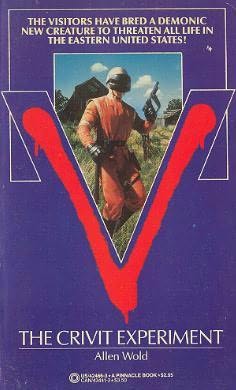
Once a character begins to reveal himself, or herself, or itself to me, my task is to make sure that that behavior is consistent. One of my main gripes with the second version of Star Trek was that developed characters frequently acted out of character. Also true of the TV series V (the original, not the remake). That destroys a story for me.

I discover my characters, or at least, those that work. I discovered Larson McCade, Morgan Scott, Rikard Braeth, Freefoot, and all their supporting characters. I didn’t actually create them per se. And once I got to know them, it wasn’t that hard to portray them as they were, rather than make them go out of character for the sake of the plot.

Larson McCade, from THE PLANET MASTERS, is instructive. The story came to me in a flash of inspiration (lasting about two hours) while I was walking across the UNC-CH campus. But who would be my hero (or anti-hero, as it turned out)? I thought, what if I based McCade on myself, but on my darker self, the aspects of myself that I would never let anybody see, never allow myself to express, the shadow-me. Badly done with Spiderman, unfortunately. So I did. Since McCade was an aspect of me, I knew him intimately. I didn’t direct him on how to get from one plot point to another, I let him do it, that is, I did what I would do if I were he and in his situation, and I just wrote it down as it happened. Fortunately, I’m not Larson McCade, and we should all be thankful.

It’s taken me a long time to perfect that method, and I’m still working on it. I failed many times between now and this century. I didn’t even know what I was doing when I was doing it right. But I do now. All my Elf Quest characters, though I didn’t understand it at the time, were independent people in my head. I just presented them with problems, and let them solve them.

VENTRELLA: How do you prepare? Do you outline heavily?

WOLD: I used to outline, but not any more. My outlines could be five, ten, twenty pages. For my most recent book (rejected twice so far), I had just three plot points: I had to get here, then there, then somewhere else.

At a convention many years ago, I was on a panel with Fred Pohl. The question of outlines came up, and I said, yes, I use an outline, like a road map, or a blueprint. Some people said they hated outlines, because then they were trapped. I couldn’t understand that. Just because it’s in my outline doesn’t mean I have to do it. They said they wanted to be surprised. I felt like I didn’t want to be surprised if, without a blueprint, I discovered that I’d left out a door, or a bathroom. That has actually happened to people I know, with real houses. But Fred Pohl said “I used to outline, but I don’t any more.” I didn’t understand that either. Now I do. I do not predetermine what is going to happen, what people are going to do, what they are going to talk about. I select destinations. He discovers he’s up against a vampire and decides he has to destroy it but doesn’t know how; he is killed by the vampire and in his spirit form discovers how to destroy it but needs a corporeal body to do it; he finds a body he can take over and does what he has to do. Three points, 80,000 words. Rejected twice. But my vampires don’t sparkle. Dracula didn’t sparkle.

On the other hand, for another novel which hasn’t been rejected yet, I had a list of 198 scenes. Each scene was an objective, not a description. I kept to that “outline” as a form of discipline, and it worked. Each scene had a viewpoint character, fifty two in all, and each character was, in my mind, a real person. Sometimes the scene description was something like: Riding in the back seat, the little girl sees the blue lights around the house. Now, what happens? Well, I wrote the scene, and all the others, and we’ll see what happens.

How do I prepare? I need my main character, without which nothing happens. I need my setting, my world, however simple or complex that may be, though I don’t need elaborate details, as I’ll discover more about it later. I need the situation in which my character finds himself, or herself, or itself. (Clumsy, isn’t it? How about themself? Check the OED for the use of they/them as equivalent to “he or she.”) I need to know what my character wants. And I have to know what I, as the Creator — um, creator — want my ending to be. Luke Skywalker wants off Tatooine, to go to university, and become a pilot. George Lucas wants to destroy the Death Star, and has to lead, not push, Luke to that ending.

Then it happens.

VENTRELLA: What is the biggest misconception beginning writers have about the craft?

WOLD: That they need talent. Talent is nice. Talent makes things easy. But talent is not necessary. There are plenty of writers who do quite well and have no talent to speak of, but who have acquired the necessary skills, and the reader can’t tell the difference. Skill is far more important. Talent is what you are born with. Skill is learned, and you can learn an awful lot. Any writer who has written more than one book improves from book to book (or they don’t, depending on their talent rather than acquiring skill, and it shows). Dorothy L. Sayers first novel, WHOSE BODY, is nicely done, somewhat frivolous, and LORD PETER is definitely silly. By the time she gets to GAUDY NIGHT, she is a master, telling a story that is neither romance nor mystery, but a deep tale of two people caught up in a distressing situation. Lord Peter and Harriet Vane are real people. The book can stand alone. Dorothy L. Sayers’ talent was revealed in her first book. Her extensive skills are shown in her last book. (BUSSMAN’S HONEYMOON is a novelization of her own play, and something of a disappointment.)

There are other essentials, such as making, not finding, time; developing discipline; acquiring patience; and having the dedication to actually do it.

This last is truly important. You cannot become a writer if you don’t write. You must make the decision that you are, in fact, going to do it. You decide to acquire those other essentials, putting other aspects of your life aside, and you write. You read extensively, especially what you like to read (and you should write what you like to read, not what you “ought” to write), but read outside your field too. And read non-fiction, especially biography, history, mythology, archaeology, and anything to do with human nature and behavior.

You may discover you don’t really want to do this after all, that it takes too much effort and time, that it’s too hard, that the rewards aren’t worth it. In which case, give it up with a clean conscience. Many people who take my workshop discover that they don’t really want to be writers after all, and that’s fine. They’re now free of that obsession, and can go on to something else.

VENTRELLA: What is the biggest mistake you see beginning writers make?

See above. But not giving it enough time, thinking there’s an easy way, not listening to competent comment, not reading enough, taking TV as their model. (Oh, yes, that’s a good one. Thinking that science fiction is what you see on TV or in the movies. Thinking that characters are what you see on TV or in the movies. Huge mistake.) Not paying attention to the real world.

All good fiction is based on, and derived from, the real world in some way or another. The most bizarre fantasy has roots in the real world, at least in the way people react to the bizarreness. Also, trying to write SF without understanding science. You don’t have to have degrees, but you must have a basic understanding of how the world really works. And if you don’t know, either stuff it in a black box, or do some research. The old Tom Baker Dr. Who did this extremely well. They did not make mistakes in their science. They either knew how it worked, or they black-boxed it. I was quite impressed.

Another is not checking a publisher’s submission guidelines. Always check the guidelines, and submit that way, whether you like it or not. Do not try to save paper by printing single spaced on both sides of the page. Always use adequate margins, a header with name and title and page number. And so on. You can learn basic submission formatting, most publishers with tell you. Follow the guidelines, or you’ll be rejected out of hand. Really.

VENTRELLA: Some of your novels are currently out of print. Do you have any desire to have them released as e-books? Is that possible?

WOLD: I would love to have them come out in any format. Currently, THE PLANET MASTERS should be released soon in a print on demand format from Warren Lapine’s Wilder Books, but I don’t know when. Contact Warren and ask for it. He may be doing something more.

VENTRELLA: Do you think writers should begin with the short story market?

WOLD: A story is as long as it takes to tell it. If you try to condense an idea to a short story format, it won’t work. If you puff an idea to novel length, it won’t work. The short story market is tight, not counting on-line publication, but it’s still there. You have to do your research. Back in the day, most SF&F writers started with the magazines, back when there were more than five or six national magazines that actually paid money. These days the whole industry is completely different. If you love flash fiction, and write it, that’s what you should try to sell. If you prefer the short story format, there are all kinds of magazines (some pretty bad), and open anthologies to which you can sell. If you prefer novels, say 100,000 words or so, that’s what you should do, though it won’t be easy. Especially if you’re a beginner. I know well established writers who are suddenly being dropped by their publishers, though their books continue to sell. I have no idea why. Maybe because the publishers are more interested in moving product than selling books. I don’t know.

Write what you write, know what the market is, and find the right home. You can not write to a market, it’s too volatile, and your heart won’t be in it.

VENTRELLA: What’s the best resource a writer should use in order to find a market for their short stories?

WOLD: There are two: Ralan and Duotrope .

VENTRELLA: What have you been up to lately? What are you working on now?

WOLD: Lately? Writing, of course. That’s what I do. Every day that I can. I have obligations on Saturdays, and Sundays I try to restore my energy, but otherwise, unless something unavoidable comes up, oh, say, having my gall bladder removed, or like that, I write. Every day. See, I’m writing this today.

And I read, mostly non-fiction. And watch movies, to take me away from my writing rather than for inspiration. And attend to my household management responsibilities (my wife works full time and supports me in every way).

Right now I’m doing a complete rewrite of a book I first wrote in 1990. I learned then the absolute necessity, for me, of having my personal Death Star in mind. I threw away four false starts, totaling about 100,000 words, before I finally asked myself, how do I want this to end? When I had that, everything drove toward that ending, though my hero wanted to do something else.

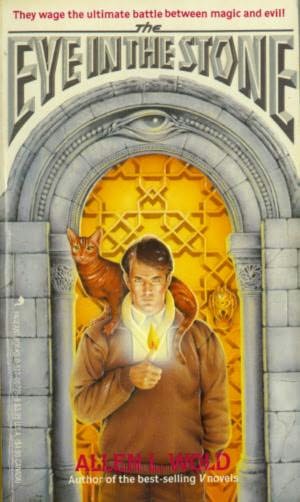
When we came back from England, in ‘98, I reread it, and it wasn’t very good. I had always wanted to do a character-driven story, instead of a plot-driven story, so I rewrote it, giving my characters free rein. It didn’t sell. Then I reread it again, saw how undisciplined my description and dialog was, and I’m rewriting it from scratch, not revising it, keeping the story as written, but tightening, cleaning up, making my characters internally consistent, cutting out unnecessary description, and tons of bad dialogue. It’s turning out pretty well. But we’ll see. When this draft is done, I’m going to do a new book set in THE EYE IN THE STONE world, then come back to STROAD’S CROSS for a final pass, and try to find a market for it. It’s a haunted village, not a haunted house, forgotten by people who live in the small town a mile away, perfectly preserved for fifty years, abandoned with food on the stove, money in cash registers, toys dropped on the floor. Finding out the truth is what the story is about.

Don’t hold your breath. These things take time.

12068598_10156131026780416_4173342998411499168_o

Interview with agent Marisa Iozzi Corvisiero

MICHAEL A. VENTRELLA: I am pleased to be interviewing Marisa Iozzi Corvisiero today.

Marisa is an attorney as well as an agent. She is the founder of The Corvisiero Law Practice, P.C., a boutique law firm in midtown New York City. She is actively building her client list and focusing on science fiction, fantasy, paranormal and romance, as well young adult and children’s literature. In non-fiction, she is interested in seeing proposals for memoirs, how-to (in any industry), guides and tales about the legal practice, parenting, self-help, and mainstream science. No text books please. She’s interested in reading your query and first fifteen pages (full book for children’s books – illustrations not necessary) to Marisa at marisa@lperkinsagency.com You can visit her agent blog at http://thoughtsfromaliteraryagent.blogspot.com and follow her on twitter @mcorvisiero.

I am always surprised to find so many fellow attorneys involved in the publishing industry, although usually I am interviewing fellow authors. I’m curious as to your start as an entertainment attorney and how that led to your becoming an agent – or did the agent thing happen independently?

MARISA IOZZI CORVISIERO: Becoming an agent sort of fell on my lap. It started with a favor for a talented fellow writer. I was writing a cross genre science fiction novel at the time, and started connecting with other authors, going to conferences, joined a critique group and so forth. Eventually, one thing led to another and I found my self sending in submissions for other writers through my law firm and really enjoying representing them.

Then one day, that one talented fellow writer said that he had rekindled a connection with a friend from grammar school, and just found out that she is now a literary agent. Not missing a beat, I asked him to introduce me to this Lori Perkins person, who sounded so fabulous. So he did, and after one conversation with Ms. Perkins, we both knew that we were meant to work together. She offered to mentor me, and to share her 23 years of experience and contacts in the industry with me. She said that after six months with her it would be like having a masters. Of course I agreed, and took on this opportunity of a life time. The six months came and went, and I’m still with the L. Perkins Agency, learning from the best.

VENTRELLA: Do you think having a legal background gives you an advantage over other agents?

CORVISIERO: I think that any additional skills or knowledge that one brings to the table gives one an advantage. Lawyers are trained to spot and solve issues, analyze, strategize, negotiate and draft legal contracts. These are very important skills for an agent, but I think that one doesn’t have to be a lawyer to posses these abilities. Most good agents out there have these skills. So I suppose that being a lawyer helps me be a good agent.

VENTRELLA: A query letter is very important for an author wishing to make an impression, but it seems that the skills necessary to write one are completely different from the skills needed to write a novel. How do you overlook a poor query letter to inspect the manuscript – or do you? (By “poor query letter” I do not mean one that contains misspellings or other obvious errors, but instead one that just does not grab your attention as it should.)

CORVISIERO: Query letters are very important. They not only showcase the author’s work, but also the author as a professional. If a query is sub-par, it is an indication of many things such as lack of attention, professionalism, skills, respect etc. I’ve written an entire blog entry on titled “Don’t Screw Up Your Query: You only get one change to make a good first impression”.

Let’s suppose for a moment that the query looks good, that there are no errors, it briefly describes the novel, says something about the author, provides genre and word count as well as a brief description of the target market and why this novel would appeal to them. If all of this works and the story line does not grab my attention I will consider not reading the work. At this point I ask my self if the storyline is interesting and unique. If not, I go back to the e-mail and type up a short decline letter and tell the author why I’m declining it. If it is interesting and unique, I go on to read a few pages. After that, if I like what I read, I ask for the full synopsis and/or the full manuscript.

VENTRELLA: How important is it for you to love the work in order to represent the client?

CORVISIERO: Very important. I only represent things that I love. My time is very limited and precious. I will not waste it on something that I don’t believe in. Even if it is selling.

VENTRELLA: Do you ever accept work that you believe has potential but needs major editing?

CORVISIERO: The short answer is yes. I have taken on a few diamonds in the rough and it usually pays off in the end. I can’t do this often due to time restraints, but if I see the potential in the work and the writer, I will go out of my way to help them.

VENTRELLA: Is there any story or plotline that you are sick of? Is there anything you wish you’d get more of?

CORVISIERO: I wouldn’t say that I’m sick of them, but I’m very conservative when it comes to vampire novels. One would think that the market is oversaturated with them, but they are still selling. So when considering a vampire story, it will need to be very unique or traditional with a unique plot. I mean seriously, enough with the clumsy but smart teen that falls in love with a vampire who simply can’t resist her. Been there, done that … let’s get creative people!

Which is a good segue into what I do want to see more of. I want good science fiction and urban fantasy. Throw in a good romance or attraction between the characters and I’m even happier. I want someone to send me a well written, fresh story with compelling characters, that will blow my mind. Give me the next Matrix, Harry Potter, Avatar, Mission to Mars, Abyss, Contact. See the pattern?

VENTRELLA: Do you think the vampire trend will end soon? (I hope not, given the manuscript I’m working on now.) Do you see anything new on the horizon?

CORVISIERO: The trend itself, or “frenzie” if you will, will most certainly end. Everyone is riding the coat tails of Stephanie and Charlene. But even after the demand for creatures of the night, or sparkling creatures of the day ends, there will still be market for vampires. I can’t think of a time longer than a couple of years, when a book or movie about vampires wasn’t released. I think its almost like a cycle. Every few years a hot vampire story emerges. Remember Anne Rice, Bram Stoker, Blade, Buffy, The Lost Boys, on and on through the years all the way back to Nosferatu in the 1920’s. People love vampires. And so I think that there will always be a market for them.

The problem is that vampires have been too glamorized. Made to seem almost human but for the need to drink blood, some even eat food and can go into the sunlight with an application of a special lotion (The Gates). Not to mention all the super powers. When I was reading Breaking Dawn (Stephanie Mayer’s 4th book) I kept thinking this is like vampires meets the X-men. So I think the key to a good new vampire story may be to bring it back to basics.

As for trends, we have gone from aliens, to vampires, to werewolves, to zombies, to fallen angels. Now there are talks about super heroes. I have personally seen some keen interest in mermaids. I’ve received at least two really good queries already. I may be the first to say it but I think that there is something there.

VENTRELLA: What do you love to read? Who are your favorite authors, and why?

CORVISIERO: Other than my fabulous clients, I would say that my favorite authors are Nora Roberts and Nicholas Sparks. Now, as you may imagine I read quite a bit and I love many, many authors, but I have to say that when it comes to Nora and Nick I enjoy them above all others. When I pick up one of their books, I know what I’m getting. I trust them. For instance, I know that any novel by Nicholas Sparks will probably make me weep and laugh, and it will provoke thoughts and promote some sort of emotional learning within me. He is fantastic at reaching the reader.

Nora Roberts is a whole different story. I call Nora “My good old reliable”. I know that I can buy any one of her books without even reading the jacket and I will like it. She is a pro at creating believable and intricate characters whom you want to follow through their journey to the end. I usually sprinkle one of her novels into my reading schedule after reading a number of manuscripts and other books. Once in a while “I need a dose of Nora”. When I saw Nora Roberts at RWA this past July I told her this, and I told her that she is one of the few writers that I trust explicitly with my time. She seemed very flattered, even though I’m sure she hears this all the time. And that makes me like her even more.

VENTRELLA: Some people advise authors to attend writer’s conferences specifically for the chance to meet agents and make pitches. Others say such a thing is useless unless the manuscript is finished. What is your opinion on writer’s conferences?

CORVISIERO: Conferences are wonderful, and writers should take every advantage of the resources and opportunities that they offer. If you can attend one or two a year, they should, even if the manuscript is not finished. Attending a conference gives authors the wonderful opportunity to meet other authors, agents, and editors. There is always something to be learned at the workshops. They are invaluable. I would however advice not to pitch a manuscript until it is finished. Also, to get more out of a conference choose one that suits the genre of your work.

VENTRELLA: How will the rise of e-publishing affect your business?

CORVISIERO: E-publishing is changing the industry to a point where sooner rather than later all books will be available as an electronic version. I’m not sure how long it will take until we stop cutting down trees to print books, but that’s something to ponder. This doesn’t affect my business significantly. Other than learning about the new e-publishers popping up everywhere, how they work, and how they like to be reached. Right now, if we sell a book only as an e-book, the advance will usually be lower than an advance from a traditional publisher would pay, but the royalties are higher, and so there is still a profit to be made for agents and authors. Either way its clear to me that e-publishing is the way of the future. As much as I love the feel of a book in my hands; the sound of the pages turning; and the smell of an old and well loved book, as well as that of a newly printed one; I still think that e-books will eventually dominate the market, if not replace it all together.

VENTRELLA: And finally, what general advice do you wish to give to aspiring authors that they may not have heard before?

CORVISIERO: I’m sure that this is not new advice, but I think that it’s good advice none the less. Writers should write what they know about, or what they are passionate about. Don’t write just to sell books, or to please people. Write to tell a good story, one that you’ve conceived. Enjoy the process, even if it means never selling your work. I know that it sounds ridiculous, but most of the great works were created by those with passion for the craft and not for money. The point is to reach the reader and whisk them into your imaginary world, where they will grow with the characters, suffer their pain, and experience their joy in the end when the conflict is resolved.

We are usually best at what we enjoy doing the most. So if you don’t enjoy writing, find a different hobby. Publishing is a tough industry. It is difficult to make good money. When you do, it’s wonderful. But don’t expect your writing to be an overnight best seller and bring you millions (it doesn’t happen that often). Don’t expect to sell your book and get an advance large enough to support you until you sell your next book. The odds are not in your favor. So don’t put all of your eggs in one basket. I had to say that because it’s always good to include a dose of reality. However, good things can happen, and they do. Just be prepared for the rejections and be persistent.

If this is really what you want to do, keep at it. Let every sentence be better than the previous one. Remember that success is a process and not a destination, so enjoy it and learn your lessons along the way. I urge you to never ever give up. If writing is your passion, and you enjoy it, don’t let anything anyone says discourage you from fulfilling your creative dream. Think big, shoot for the stars and when you look back you’ll do so to re-live your journey and not to dwell on missed opportunities!

Interview with author Alan Goldsher

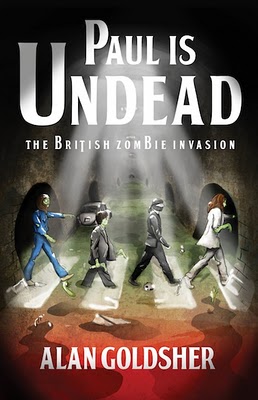
I recently interviewed author Alan Goldsher, whose zombie novel PAUL IS UNDEAD has just been released. Most of my interviews are done over email but Alan was willing to do it through a phone call, which I enjoyed quite a bit!

MICHAEL A. VENTRELLA: I just finished reading PAUL IS UNDEAD, being the big Beatles fan that I am. I hear rumors that this has already has the film rights sold. Is that true?

ALAN GOLDSHER: What was bought was an option from Double Feature Films which is owned by Stacey Sher and Michael Shamberg. They produced “Pulp Fiction” and “Erin Brockovitch” – they’ve done a whole bunch of great stuff. When we were shopping around the novel, they read it from top to bottom and fell in love with it.

Right now they’re putting together talent – screenwriter, director, some stars…

I produced a screenplay for it and I’m really happy with it but if they want to go in another direction if someone wants to, I’m sure they’ll find someone to knock it out of the ballpark. That’s it! Cross your fingers.

VENTRELLA: You actually sold the rights before the book was published?

GOLDSHER: That is correct.

VENTRELLA: Wow. You’ve got a good agent.

GOLDHER: Well, you’ve read it – I’m sure you’ll agree that it’s a particularly visual book, wouldn’t you say?

VENTRELLA: I would think so! I assume they’re going to make it sort of as a mockumentary, sort of like how the book was?

GOLDSHER: You know, that’s like the screenplay that I wrote but there is a concern among some that they should shy away from mockumentaries. I feel that you’ve got “Best in Show” and “Spinal Tap” – and those are classics. Zombies with a documentary format I’d like to think that has the potential to reach that audience that will be loyal and stick with it.

But if they want to do a typical three act thing, I’m sure they’ll find someone great to do it.

VENTRELLA: Do you think there will be any sort of issue over the rights to the songs?

GOLDSHER: That’s certainly an issue. The hard part (and the expensive part) would be using their versions of the songs. If we were to do cover versions, it’s significantly more affordable. For “Across the Universe” they paid $23 million dollars to get the rights, and that’s the budget of an entire movie in some cases.

I have one idea that’s pretty cool, but I’m not sure if anyone is going to bite on it… since we’re dealing with an alternate universe, take the existing songs, throw away the melodies, leave the lyrics and get completely different Beatleseque melodies, and get a very Beatles-sounding band…

VENTRELLA: Sort of a Rutles thing?

GOLDSHER: Yeah, except with the original lyrics. The only thing that will be similar will be the sonic aspect of it. You know, make a song from ’62 sound like it was recorded in ’62. I think that would be cool in that (a) it will be different and interesting and (b) it makes the soundtrack a hot item.

VENTRELLA: That’s true. I certainly bought the Rutles albums…

GOLDSHER: So we’ll see. There’s a lot in the air but as is the case with most books translated to screen situations, the writer doesn’t have too much say. Still, they’re open to hearing my ideas but they’re the pros. They’ll make the final decision.

VENTRELLA: So do you think Paul, as a vegetarian, will object to being portrayed as somebody who eats brains?

GOLDSHER: That’s a good question! Do you want to hear the Paul story?

VENTRELLA: Absolutely!

GOLDSHER: I heard this from a London Times reporter maybe three months before the book came out. He told me that he was at the BAFTA awards speaking with Jason Reichtman and who wanders over but Paul McCartney! Paul and Jason have a long mutual admiration society discussion and there’s this reporter – this is the first time he has ever met a Beatle – God knows why he said this, but he said “Have you ever heard of PAUL IS UNDEAD?”

I mean, if I’m meeting a Beatle, I’m not mentioning my book!

But he asked if Paul had ever heard of PAUL IS UNDEAD and Paul said “We put that rubbish to bed in the 60s.”

And the reporter said, “No, not ‘Paul is dead’ but PAUL IS UNDEAD. It’s a book about you guys as zombies.”

And Paul said “Oh. Heh heh heh” and then he walked away.

VENTRELLA: So now he knows of it.

GOLDSHER: He knows it exists. Ringo knows it exists too because a New York Times reporter mentioned it to him in an interview last month, before his 70th birthday. Ringo was very diplomatic as you would expect from Ringo who is just clearly a nice man. “Well, I don’t read any of the books about the Beatles, I’m just glad the records keep going.” I don’t think he’s going to say a bad thing about anyone.

VENTRELLA: Well, he definitely came across in the book as the nicest guy of the four, you’ve got to admit.

GOLDSHER: I’m sure you’ve watched the Anthology set…

VENTRELLA: Oh, of course.

GOLDSHER: He’s just such a nice man. I’ve watched the Anthology about six or seven times all the way through. At the end of it, Ringo gets kind of teary-eyed and says, “The Beatles were about four guys who really loved each other.” That kind of stuck in my head as I was writing the book. Ringo’s just a sweetheart and he was also the last in the band and he always seemed a little put upon because he wasn’t part of the original gang.

That’s part of why I made him a ninja. It’s kind of a huge metaphor for that. Also, often times in horror books – DRACULA, for instance – there is a living, breathing guide to the underworldy beings. So Ringo’s kind of that guide. He makes sure that nothing bad happens to them on this earth.

VENTRELLA: Did you have any problems with the characters being unlikable in that, you know, they murder people and eat their brains?

GOLDSHER: I think since you’re coming in with a preconception since the Beatles are intrinsically likable, since the humor is so silly and the gore is over the top that it’s kind of hard to dislike them.

VENTRELLA: I agree that you can’t take the book seriously in that regard in that it’s kind of a satire… well, it’s not really a satire… I don’t know! How do you describe it?

GOLDSHER: We had all kinds of discussions before we started the book deal about the legalities of it. There’s some law – if it’s satire or parody, you’d know this better than I would – if it’s very obviously satire then you’re cool as long as you don’t libel anybody.

VENTRELLA: Yes.

GOLDSHER: We were very very careful. We didn’t say anything out-and-out bad like “This guy’s an asshole” or “This guy’s a dick.” Instead it was “Here’s what he knows in this alternate universe.” There’s no way you can believe it, it’s very obviously a parody.

I also tried very hard to tell it with as much love as possible. I really do love the Beatles! I love the band and I hope that comes across.

VENTRELLA: It does.

GOLDSHER: And I’d like to think that if they do read it – If Paul or Ringo or Yoko or anybody associated with the group or who was mentioned in the book reads it that they will realize we’re just having fun, and that’s just a gory, disgusting love letter.

VENTRELLA: Did you ever say to yourself “Oh, this reference is too obscure.” I certainly caught things that an average reader would not… such as John’s first girlfriend, that kind of stuff…

GOLDSHER: I wanted to include as many obscure facts as I could for people like you, who would read it. To me, it made it feel very insider for all the Beatles nerds to take Thelma Pickles’ name and laugh at it since it’s so ridiculous. The whole thing about Jimmy Nichols – those are the kinds that keep Beatles fans from looking at me and thinking “Wow, he’s just trying to wreck the Beatles name and he doesn’t really care about the group.”

I care about the group! I did research for things like when I named their instruments. I was very careful. “This was the instrument Paul was using in ’64 so here’s what he would throw against the wall.” Little nerd stuff like that. Many fans know that stuff right off the top of their heads. I have some incredible nerdy friends. Yeah, I wanted there to be this stuff so people like me wouldn’t get offended.

VENTRELLA: It’s nice when you can make that kind of insider joke and someone else will get it. I was in a band in Boston and playing in a club and a bunch of German sailors were in the audience who were cheering and yelling. My friend Matt then shouted out “Mach Shau!” and maybe three people got it… but it was nice to know someone did.

GOLDSHER: Yeah, if one person gets it, it’s cool. But we are nerds together.

VENTRELLA: Are you working on a sequel now for the solo years?

GOLDSHER: Well, not for the solo years. It’s called POPPERMOST OVER AMERICA will take place immediately after PAUL IS DEAD ends.

VENTRELLA: So you’ll be a zombie in the sequel?

GOLDSHER: No, I actually don’t get turned into a zombie! Put down “Spoiler Alert!” They kidnap me and take me along on their Poppermost Over America tour, where they will continue their quest to take over the world. And depending on what the legal department of whatever publisher I end up going with will say, I’ll put current musicians in there and contemporary figures who will try to stop the Beatles from taking over.

VENTRELLA: Have you read any other similar books? Have you read PAPERBACK WRITER by Mark Shipper?

GOLDSHER: I did not. A number of people have pointed out to me that the book exists, but I didn’t know about it.

VENTRELLA: It’s nothing like yours other than the fact that it’s a fake Beatles history.

GOLDSHER: Is it fun? Is it a good book?

VENTRELLA: Oh, it’s hilarious! It rewrites the history and is full of insider jokes, but it’s been out of print for years.

GOLDSHER: When was it written?

VENTRELLA: Probably in the early 80s, I’m guessing (EDIT: Turns out it was in 1977.)

GOLDSHER: I should probably seek it out so I am knowledgeable in case anyone else ever asks me about it.

VENTRELLA: It’s only because yours are the only two I know of that are fake Beatles histories. Other than that, there’s no relationship. He just changed history and made it funnier.

GOLDSHER: There’s a mythology about the Beatles, so it’s kind of easy to take these events and twist them because they’re already fun to start with!

VENTRELLA: Well, PAPERBACK WRITER came before the Rutles so it’s kind of the Rutles except they didn’t change the names.

Let’s talk about some of your other books. Was JAM your first novel?

GOLDSHER: JAM was the first, and that was almost an experiment to see if I could write a novel. It turned out pretty OK and people seemed to like it. I wrote it in ’96 and finished in ’97. Any writer who has written a number of books knows that it’s embarrassing to reflect on your first novel.

VENTRELLA: Well, I’ll agree with you there; I’d like to go back and rewrite mine. JAM is another music novel though, right?

GOLDSHER: It’s semi-autobiographical. I kind of put my own life in every book. At the beginning of PAUL IS UNDEAD, I discuss how I fell in love with McCartney’s music. That’s the absolute truth. I didn’t know who the Beatles were until I heard “Uncle Albert/Admiral Halsey.”

VENTRELLA: I’m a little bit older than you, I guess. I got into them after “Let It Be” which was probably one of their weakest. At the time, I was still 12 years old or something, I was into the Monkees. Then I heard “Let It Be” and went “Hey, these guys are better than the Monkees!”

GOLDSHER: The first Beatles music I remember having was a 45 of “Hey Jude.” I had the close-and-play record player, and I brought it outside on a hot and sunny day and it melted! I don’t know how much it would be worth now, but it sure would be nice to have it…

Then I got the red and blue greatest hits album, and kind of worked my way backwards.

VENTRELLA: I remember my friend finally got the White Album and back then we didn’t know anything about it. He came to me with a list of songs on the album, and I thought he had made them up. “Oh, really? You expect me to believe there’s a song called ‘The Continuing Story of Bungalow Bill’?”

GOLDSHER: (laughs) “There’s a song called ‘Piggies.”?

VENTRELLA: “‘Everybody’s Got Something To Hide Except For Me And My Monkey’?” Yeah, sure.”

GOLDSHER: How many animal songs on that record?

VENTRELLA: That’s true! I should count them. Back to your books though… you wrote some chick lit books?

GOLDSHER: I was working with a literary agent who said “You have an interesting ability to write in different voices and for an exercise, why don’t you write a chicklit book?” This was around 2004 and the chicklit market was happening at that point and he thought it could be something I could be part of. So I took JAM and took that basic outline and rewrote it with a female protagonist. And then on the second draft through, I threw all that out the window and it became its own entity.

I found a place for it with a publisher in the UK called Little Black Dress. For God knows what reason, they signed me to a three book deal. All three came out and they’ve done pretty well. Up until PAUL IS UNDEAD they were my bestselling books.

I’m working on a new one now called NO ORDINARY GIRL which is a paranormal chicklit book. It’s about a girl who has superpowers. It’s kind of a metaphor for – you know that these books are geared toward a very tight demographic? 21 to 29 women… the metaphor is that women have a certain part of them that they’re not happy with: “Oh, my ass is too big, I’ve got this mole on my face…” and this woman says, “Oh, I’ve got these superpowers.” So it’s about how she comes to terms with something she’s had since birth.

VENTRELLA: You started off writing nonfiction though, correct?

GOLDSHER: The first actual book I wrote was fiction. Then I wrote the book about jazz drummer Art Blakey. I was also doing magazine work at the time.

In a perfect world, I’d write whatever I want! Like right now, I’m jonesing to write a book about Miles Davis. My agent and I are trying to pitch the concept around, because (a) I love Miles Davis and (b) the Miles Davis books that are out there now – some of which are very, very good – are for jazz nerds like me. I’d like to write something that’s a little more populist. I think that would be a cool thing for the jazz canon. My first love was jazz.

VENTRELLA: You were a ghostwriter for quite a few people as well.

GOLDSHER: It’s exciting when it comes along.

VENTRELLA: How do you get those kinds of jobs? How do they seek you out?

GOLDSHER: It starts out with literary agents. The first project I did with a celebrity was Bernie Mac in 2000. He was working on his first book and this agent that I knew reached out and said “Would you be interested in ghostwriting the book and the proposal?”

“Absolutely,” I said. Bernie Mac is a funny, funny man and this was right before he was on the cusp of stardom. He’s from Chicago, and I’m from Chicago, and we hung out and had a great old time. We sold the book and then he ended up going with a ghostwriter who had a little more experience, which is one of the catch-22s about the entertainment industry: You can’t get the gig unless you have more experience and you can’t get more experience unless you get the gig.

That was a great notch in my belt, so in 2007, when I was working with another literary agent and another ghostwriting thing came up, I was ready and was attractive to potential clients.

The ghostwriting project I am proudest out was a book I did with a woman named Sarah Reinestsen. Sarah was the first female above-the-knee amputee to complete the Iron Man triathalon in Hawaii, and she is an absolute inspiration. She has a great joy and was very honest about relaying painful facts. The most painful one was that her father abused her. Her leg was amputated when she was seven, and her father physically and verbally abused her to the point where one consistent punishment for a while was threatening to take away her prosthetic leg if she wouldn’t wash the dishes or something. But she impressed me and it really shows in the book.

I did Robert Englund’s book which was a nice project. Robert was a sweet sweet man and if you were going to say there was a weakness about the project it was that he was too nice! He wouldn’t dish anything. I mean, you get Mackenzie Phillips coming out and saying “Oh, I slept with my dad” and the book is an immediate sensation and sells a lot of copies. With Robert, he talks about how much he loves this person and that person. That doesn’t really translate into sales. I don’t think he has a problem with that, though. He’s proud of the book as it is.

VENTRELLA: I assume as a ghostwriter you get paid a set amount as opposed to a percentage of the book sales.

GOLDSHER: Depends on your negotiations. David Ritz, one of the best pop culture ghostwriters out there, I guarantee gets a percentage of the books because he’s one of those guys whose name brings cache to the table.

VENTRELLA: Are you planning on going to any Beatles conventions to promote PAUL IS UNDEAD?

GOLDSHER: Maybe next year if the book is still doing well, and that’s not out of realm of possibility. PRIDE AND PREJUDICE AND ZOMBIES is still doing well after a year. I will be at the Chicago Comic Con on the weekend of August 20, and then I’ll be at the Comic Con in New York on a panel on October 10.

VENTRELLA: I was going to be on a panel there as well until I realized it conflicted with another convention I had already committed to that exact same weekend.

GOLDSHER: I’m looking forward to it. I think that’s the best place to reach the people who would obviously like the book.

VENTRELLA: Most writers I know who have books on the bestseller lists still have jobs, too. It’s always amazing to me how (with a few exceptions) this is not as profitable an occupation as many people think.

GOLDSHER: I’m doing OK! We make the rent, and my wife and I are trying to start a family. I think there are two things that really help me are (1) I take rejection really well! How do we make this work? How can we get this off the ground? And (2) I have a legitimate interest in writing about all kinds of stuff in all kinds of different platforms and formats.

For instance, my agent hooked me up with a gentleman who had written a 175,000 word novel. That’s a long novel! There was a book buried in there and I had to dig it out. That was a bunch of work, just as if I had worked for a month anywhere else.

So I have all kinds of projects like that, like the superheroine book and a couple other mash-ups in the coffer – I’m doing one called FRANKENSTEIN HAS LEFT THE BUILDING, which is a retelling of the Frankenstein story with Elvis as the creature.

VENTRELLA: That’s the key, I think. The writers who do make a living at it are writing constantly, and they write all kinds of different things. Jonathan Maberry comes to mind; I notice that he gave you a quote for your book cover … He did the same for me, actually!

GOLDSHER: Jonathan’s a nice guy and I would love his career. He’s done wonders for himself. He’s a hustler and that’s also part of the business. And he’s like me in that he takes rejection really well. It seems like he comes up with an idea a day. He’s writing comic books and all sorts of stuff. Total admiration for Jonathan.

(Here we got into a prolonged discussion about bass guitars since both of us play bass. The conversation continued on after the tape ran out!)

Interview with Betty Webb

MICHAEL A. VENTRELLA: Primarily I interview writers of fantasy and science fiction (since that’s what I write) but today, I am pleased to be interviewing mystery writer Betty Webb.

Before writing mysteries full time, Betty Webb worked as a journalist, interviewing everyone from U.S. presidents, astronauts who walked on the moon, and Nobel Prize-winners, as well as the homeless, the dying, and polygamy runaways. The six dark Lena Jones mysteries, based on stories she covered as a reporter, include DESERT LOST (judged “One of the Top Five Mysteries of 2009,
Library Journal), DESERT NOIR (“A mystery with a social conscience,” Publishers Weekly) and DESERT WIVES (“Eye-popping,” New York Times). Her humorous Gunn Zoo series debuted
with the critically-acclaimed, THE ANTEATER OF DEATH (I love that title) to be followed this August 15 with THE KOALA OF DEATH. A long-time book reviewer at Mystery Scene Magazine, Betty is a member of National Federation of Press Women, Mystery Writers of America, and the Society of Southwestern Authors. She also volunteers at the Phoenix Zoo, which is the inspiration for her Gunn Zoo mysteries. Her web site is www.bettywebb-mystery.com.

Ms. Webb, you began your career as a journalist, writing nonfiction. Why and how did you make the switch to fiction?

BETTY WEBB: I was a full-time journalist for 20 years, but after 15 years, all that fact-checking started to drive me nuts. So I thought I’d just write a novel “for fun.” After three rejected novels, I hit pay dirt with DESERT NOIR, the first of my Lena Jones mysteries. The second Lena Jones book, DESERT WIVES: POLYGAMY CAN BE MURDER, was sold to Lifetime-TV, eventually making my retirement from journalism possible.

VENTRELLA: Do you find your writing style changes from fiction to nonfiction?

WEBB: Absolutely. In journalism, which is non-fiction to the max, you must always use non-judgmental language, especially verbs, such as “He said,” as opposed to “He shrilled.” And unless you’re a columnist — which is very, very different than straight reporting — you can never interject your own opinions in an article.

When you’re writing fiction, you can let it all hang out, as I do in both my Lena Jones novels and even the Gunn Zoo series. Of course, the Lena Jones books are much more political and issue oriented; Publishers Weekly called them “mysteries with a social conscience.” The Gunn Zoo books, being very funny and much more relaxed, are much less issue-oriented, but they do give readers a lot of information about exotic animals and a behind-the-scenes look at life in zoos. Plus they say nasty things about people who are cruel to animals.

VENTRELLA: Your Lena Jones books are based on actual cases. How do you go about preparing these mysteries?

WEBB: I spend an average of two years researching each novel, which includes trips to the area where the event happened. During that time, though, I’m doing the actual writing for the previous book. Therefore, although I’m now in the process of writing DESERT WIND, I started researching it two years ago. And I am now in the process of researching the next Gunn Zoo mystery and the Lena Jones book.

VENTRELLA: Have you received any protests for these books (from Mormons, for instance)? And how have you dealt with it?

WEBB: Mainstream Mormons weren’t bothered at all by either DESERT WIVES or DESERT LOST, which were both about polygamy. In fact, various Mormon newspapers and periodicals gave both books warm, accepting reviews. Why? Because the mainstream LDS (Latter Day Saints) church outlawed polygamy almost 150 years ago and today’s Mormons are appalled by polygamy as it is currently being practiced. Also, the state of Utah is leading the way in polygamy prosecutions. They have sent many polygamists to prison for polygamy-related crimes, such as child rape (polygamists like 13 year old girls), financial fraud, and sadly, murder. the infamous Warren Jeffs is just one of the now-imprisoned polygamists.

The people I have had a problem with are the polygamists themselves. I’ve received death threats from them, and some of the male polygamists have shown up at my book signings in order to scare me. They finally stopped doing that when I started identifying them to the audience, and asking them to stand up and take a bow. That’s when I discovered that those guys are cowards. They’re good at intimidating 13 year old girls and battered “sister wives,” but not so good at intimidating grown, non-polygamous women.

VENTRELLA: It certainly seems that you still have that journalistic goal of exposing injustice, but are working through fiction now. Is that the case? Have you had much success about informing people about these issues?

WEBB: I absolutely write the Lena Jones books to expose injustice. For instance, are you aware that we have legally allowed immigrants into this country who believe in cutting off little girls’ genitals in order to make them submissive? They see it as no different than spaying a dog or gelding a horse. Those folks continue their ghastly practice in America today. I exposed it in DESERT CUT, and I named names.

Have I had success? Again, absolutely. DESERT WIVES caused such a fuss in Arizona that the Arizona legislature enacted its first ever anti-polygamy law. Readers of DESERT WIVES continue to organize and ride herd on the still-existent polygamy compounds. DESERT CUT has been read by many social workers, medical professionals, and law enforcement officers, who are now on the lookout for it. Immigrants who continue this practice are now being sent to prison, when before it was just shrugged off as a “cultural difference.”

VENTRELLA: What other issues are you interested in that may make future books?

WEBB: Can’t tell you that. DESERT WIND is still a big secret. I always keep my subject matter secret until the book comes out.

VENTRELLA: Your character also lives in Arizona. Why did you decide to do this?

WEBB: I’ve lived in Arizona since 1982, and much of my subject matter — such as polygamy — is rampant here. Plus, Arizona is a beautiful place to write about. On the other hand, the Gunn Zoo mysteries are all set on the Central California Coast, where I vacation every year. And my zoo keeper sleuth lives on the same houseboat I once spent a summer on.

VENTRELLA: How did you make your first sale? Did you have an agent?

WEBB: I was fortunate enough to get an agent, based upon my reading of “The Literary Marketplace.” She also sold one of my books to Lifetime-TV. Thankfully, I still have my agent!

VENTRELLA: Why did you choose Poison Pen Press for your work?

WEBB: My agent sold my books to Poisoned Pen Press. In a happy coincidence, I had already written an article about that particular publishing company for the newspaper I worked for. Therefore, I was very, very comfortable with the sale. We have now enjoyed a 10-years-long relationship.

VENTRELLA: What is the biggest mistake you think new writers make?

WEBB: I think the biggest mistake they make is in thinking the first book they write deserves to be published. I didn’t write a truly publishable novels until my 4th, which was DESERT NOIR, the first Lena Jones mystery. Even though I’d been a professional journalist for years and wrote for an average of 10 hours a day, 5 days a week at my newspaper job, the two skills don’t always cross over. I had to learn to write like a novelist, and that took about 5 years of writing from 4 a.m. to 8 a.m. every single day before I went to the office. Good, publishable writing is more hard work than most beginners realize.

Another big beginner’s mistake? Writing only when they feel “inspired.” I teach creative writing, and one of the first things I tell my students is, “If you only write when you feel inspired, write a haiku. You won’t able to produce much else.” Professionals write for hours every day, regardless of how “inspired” they feel. As for the entire “inspiration” issue — I say “Baloney!” True inspiration only hits once you’ve been at your keyboard for several hours. Writing is work. Period. It’s not a game you play only when you feel like playing.

VENTRELLA: And finally, a fun question: With a time machine and a universal translator, who would you invite to your ultimate dinner party?

WEBB: William the Conqueror (1066), William’s opponent Harold Godwin (also 1066), Shakespeare, Dorothy Sayers, Dorothy Parker, Ernest Heminway, Lillian Hellman, Truman Capote, William Buckley, and Gore Vidal. Of course, I’d have to wear a suit of armor to that dinner party because it would probably turn very, very violent. And I’d enjoy every savage, bloody minute!

Interview with author Dennis Tafoya

MICHAEL A. VENTRELLA: I’m pleased to be interviewing author Dennis Tafoya today, whose latest novel THE WOLVES OF FAIRMOUNT PARK has just been released. His first novel, DOPE THIEF, was published by Minotaur Books in 2009. His short story “Above the Imperial” will appear in Philadelphia Noir, coming from Akashic Books in November as part of their award-winning City Noir series. He is a member of the Mystery Writers of America, the International Thriller Writers, and the Liars Club, a Philadelphia-area writers group. He lives in Bucks County, Pennsylvania.

Dennis, let’s begin by talking about how you first got started. What got you interested in being a writer?

DENNIS TAFOYA: Writing is something I’ve always done. When I was nine I wrote a story about a monster with my friend Keith Parker. We thought it was pretty good, but looking back I have to admit it was basically a rip-off of an episode of the TV show, One Step Beyond. I associate my love of writing with a love of reading, and my early stuff was very much influenced by the science fiction and horror authors I loved when I was young, like Ray Bradbury and Robert Bloch and Harlan Ellison. I would still like to write something in a paranormal or horror vein, and I still think those authors are amazing.

VENTRELLA: Do you think starting authors should concentrate on perfecting short stories first? Do you feel the skills needed for novels is different?

TAFOYA: That’s a really interesting question, and I’ve never thought about short story writing as a prerequisite for the aspiring novelist. I know people who are very comfortable in the long form who really don’t like writing short stories, and short story writers who really struggle with the requirements of the novel. I think the best novel chapters are frequently short stories in themselves, though, and trying to master the short story can teach the writer a ton about tight control on the elements of story.

I love writing short stories — I’ve got a bunch of them out or coming out in the next few months, and I’m really proud that I’ve got a story in upcoming Philadelphia Noir from Akashic Books. I did write shorts before I tried a novel, I think to show myself that I could write a complete story. It’s also a lot easier to find a home for a short story because of the explosion of story sites on the web. I frequently advise my aspiring writer friends to take advantage of those sites, both to get work out there and get reactions, and as a way to meet people who are writing in your genre, too.

Actually, my only creative writing teacher was a poet, and I think writing poetry is an excellent path to writing fiction. Writing good poetry requires a brutal discipline, and it kind of distills the tension that should be present in all good writing to a very fine point. Poetry teaches an awareness of rhythm and word choice, too. I think making demands on ourselves as writers is the only way to get better at what we do.

VENTRELLA: Why did you decide to be a “crime writer”? What sort of background do you bring to the genre?

TAFOYA: Oh, not much other than a deep interest in crime. The threads that inform my work are literary fiction and true crime, I think. I have a few relatives with a little Damon Runyon quality to thier lives, but mostly the characters in my novels and stories are out of my imagination, applied to what I’ve read and heard about criminals and the criminal life. I’ve been lucky to know police officers and prosecutors and defense lawyers, and I’ve gotten some amazing things out of those associations, but I’m pretty boring and middle class personally. I think that’s a little disappointing to people who meet me, and I was thinking I should get some tattoos or something to sell the image a little more.

VENTRELLA: What kind of research do you do when preparing a story?

TAFOYA: I’m a fiend for research. I want to get the details right, and I want to write about those worlds as well as I can. I did a ton of research for both DOPE THIEF and WOLVES OF FAIRMOUNT PARK. I read, go to the library and spend thousands of hours on the internet trying to learn the things I want to know.

The cool thing is that research itself can generate new story ideas and take me in directions I wouldn’t have thought to move. Reading about crime in Philly for WOLVES OF FAIRMOUNT PARK, I stumbled on stories about ‘hoppers,’ kids who ride freight trains and live in squats in the city. So I added a couple of hopper characters to the novel, and the stuff I’ve learned is tucked away in my brain in case I want to spend more time developing characters or stories that involve that world.

VENTRELLA: Do you like being called “hard boiled”? What the heck does that mean, anyway?

TAFOYA: I’m not entirely sure. I guess it’s fiction with a gritty edge. I don’t mind the label, but I hope it doesn’t keep people away who might enjoy the books but who think my work might be too intense. My stories are character-driven, and while the stories do involve violence and drug use, I really want to arouse the interest and sympathy of the reader, not shock or alienate anyone. I write about people who struggle in the margins, who live compromised lives but who are still smart and aware and want more from life than their roles would suggest. I hope people recognize themselves, at least a little, in characters like Orlando in WOLVES or Ray in DOPE THIEF.

VENTRELLA: How did you interest a publisher in your first novel?

TAFOYA: I was extraordinarily lucky. Basically, a very nice woman from California, a writer and producer named Cori Stern, took an interest in my work and started me toward publication. She introduced me to her manager, Brooke Ehrlich, who agreed to represent me. Brooke found me an amazing literary agent, Alex Glass of Trident Media, who sold the book to Minotaur. It was all so painless I feel guilty when I hear other writers tell me about trying for years to find representation and get their work in front of editors. Like Blanche Dubois, I depended on the kindness of strangers, but it went much better for me than for Blanche.

VENTRELLA: THE DOPE THIEF was released first in hardcover. Why was that decision made? Do you think it was the right decision?

TAFOYA: It’s been Minotaur’s decision to release both books in harcover. I’m still a little worried that, times being what they are that people will balk at the price, but I have to trust that my publishers know what they’re doing. I think there is more interest and attention aimed at hardcovers, but there is that price issue, too. It’s a tremendous vote of confidence from Minotaur and my editor, but I feel a huge responsibility for it all to go well.

VENTRELLA: Let’s talk about characters. The best and most memorable are flawed in some way yet believable. What sort of process do you take when developing your characters? How do you make sure they don’t turn cliche?

TAFOYA: Trying to avoid cliche is one of my major preoccupations, in my characters, in the plot and in the prose itself. My aim is to write something readers haven’t seen before, but that delivers a satisfying experience and engages them emotionally. It’s a lot to try to accomplish, but I think I’m a better writer for at least moving in those directions.

I’m really only interested in characters who are deeply compromised. Maybe because I see myself that way, maybe because people who are self-contained, capable and sort of unassailable are cyphers to me. I don’t know many people like that in real life, either. Good writing is about tension, and I think that tension between the way we live and the way we want to live is what generates story in a really interesting and organic way.

VENTRELLA: Also difficult is making unsavory characters appealing to a reader. What do you find works best?

TAFOYA: I think some degree of self-knowledge is the key. My characters are drug addicts and criminals, but their awareness of themselves and the gap between what they want for themselves and the lives they lead is something we can all identify with. In DOPE THIEF, the main character is trying to figure out where things went wrong for him and whether he can get to a better life that’s about connection and engagement with his own best impulses. You don’t have to be a criminal to feel that way.

VENTRELLA: What is your writing style? Do you outline heavily, jump right in, start at the end…?

TAFOYA: I outline very briefly and generally, a couple of pages. I find so much in the writing that I don’t want to limit myself. The story will demand it’s own level of planning, too. WOLVES was a mystery, and there are logistical issues that need to be worked out with a little precision when you’re working on that kind of project, but I always find new characters or new ideas, so my sense of the story remains pretty fluid. I do have an image or scene that I’m writing toward, usually, a kind of state I want things to be in at the end. That’s pretty important for me.

VENTRELLA: WOLVES was bought by your publisher based on a one sentence synposis, about a heroin addict trying to solve a mystery. Did that provide a challenge? Are you pleased with the result?

TAFOYA: I don’t know what I was thinking promising to write a mystery. I have so much respect for writers who can deliver those on a regular basis! I’m really glad I did it, and I’m pleased that the book is getting good reviews, but it was a real challenge. It stretched me in new ways, and not just because of the requirements of the mystery form. I knew I was going to have to plan much more extensively, create red herrings and keep control of the way information is revealed, but I was also working for the first time with multiple viewpoints and a much larger palette. It was pretty ambitious, and I can’t tell you how relieved I am that the book is getting good reactions.

VENTRELLA: WOLVES also deals with the seedy underbelly of Philadelphia. What is it about Philly that makes it unique to your stories? Could your fiction work in any other place?

TAFOYA: I was asked that in another interview recently, and I’ve been thinking about how Philadelphia and its characters might be unique. I’ve spent a lot of time in New York and Washington and some other places and I can say people in each of those places really seem different to me. I recently set a short story in Vegas that dealt with characters from the west, and I think the speech patterns, the way people engage one another, reflect a slower pace and sometimes a little more recalcitrance than the people I know here. My friends and relatives from Philly talk fast and loud and share different kinds of information. We’re on display in a way that a guy from rural Nevada might not be.

Another thing I think is interesting is that here in Philly we’re more rooted to the place we live. In my family we used to joke about that, about our relatives who thought they needed a passport to leave South Philly. We’re defined by neighborhoods, by where we grew up and where our families live. Our accents are very specific and we’re very conscious of class and income. My relatives from Oregon Avenue regarded the Main Line as a different planet.

VENTRELLA: Can we expect your third novel to do the same?

TAFOYA: I’m working (very slowly) on a new novel dealing with little criminals from South Jersey. It’s an excuse to do a ton more research, of course, and to spend time in the area getting to know the places and reading local papers, eating in the diners. Research like that is always fun and it always yields really interesting stuff, some of which might actually make it into the book.

VENTRELLA: And finally, what advice would you give the aspiring writer that isn’t obvious (“write better”)?

TAFOYA: Find other writers. I meet people who have been working alone on novels for years, hoping to finish that novel or screenplay, or endlessly refining work they’ve already done. Meeting other people who are doing the same thing you are will help you gain confidence, it will get you help and advice, and it will hopefully let you get reactions from people who are engaged in the same work. Your friends and family might be really supportive, but they’re rarely able to help you get better at your craft or help you find ways to get your work in front of readers or agents or editors. Your best bet is to meet other writers. I think you’ll find, like I have, that writers are extemely generous and supportive. Nearly all of the great things that have happened to me have been because other writers went out of their way to help me or give me advice.

Tafoya

Interview with S. C. Butler

MICHAEL A. VENTRELLA: I’m pleased to be interviewing S.C. Butler today.

After graduating from Harvard, S.C. Butler worked in New York’s financial sector. His first published novel was REIFFEN’S CHOICE, published by Tor Books in September, 2006, followed by QUEEN FERRIS in the fall of 2007, and THE MAGICIAN’S DAUGHTER in May, 2009.

S.C., you had tried to make it as a novelist after college, but instead ended up on Wall Street. Tell us about those earlier books. Why do you think they didn’t get accepted?

S.C. BUTLER: My early books didn’t get accepted because they weren’t very good. They were all over the place, too: a scifi rock and roll novel, a baseball novel set in the Old West, a children’s book called THE MOVIE MICE (think Ratatouille with cameras instead of food).

VENTRELLA: Why have you been able to make sales now?

BUTLER: Ten years after I’d stopped writing, I reread one of my novels and realized it wasn’t very good. Which meant not getting published was my fault (and something I could fix by writing better books), and not the fault of a blind publishing industry. (It rarely is).

VENTRELLA: I certainly know the feeling, having gone through a similar process myself. Please tell my readers about your books!

BUTLER: THE STONEWAYS TRILOGY was conceived as one book with three basic parts. In REIFFEN’S CHOICE the reader discovers how Reiffen learns magic; in QUEEN FERRIS we learn what he does with his magic; and in THE MAGICIANS’ DAUGHTER we learn what his magic does to him. The books are very much about the consequences of power, but with a lot of humor and drama along the way. My own favorite character is Durk, the talking rock.

VENTRELLA: Do you have an agent? How has that relationship worked out?

BUTLER: I have an agent. I think it’s very important for writers to have an agent, not just for the doors an agent can open, but for the business knowledge they bring to the table as well. Most agents are definitely worth the money a writer pays them.

VENTRELLA: We met at a science fiction convention. Have you been attending those for very long?

BUTLER: I only started attending conventions after I became published.

VENTRELLA: Do you find that they are useful?

BUTLER: A lot of people find conventions useful for networking and business, but that isn’t the main reason I enjoy them. I attend conventions more for the chance to meet new people, find out what they’re reading, what they like and don’t like, that sort of thing. A writing friend describes attending SF conventions as a writer’s version of hanging out at the water cooler at work. Since writers tend to work alone, we don’t get a lot of chances to hang out together.

VENTRELLA: What other types of promotion have you done for your books and what do you find the most successful?

BUTLER: I’ve done readings, handed out postcards, done interviews, done bookstore signings, gone on radio programs, done podcasts, blogged, and spoken at schools. Speaking at schools is the only promotional activity I’ve found particularly effective, especially if the talk is combined with a school book fair where I can sell books. Most of my attempts at promotion have had relatively little effect, and I’m coming around now to the idea that the best way to sell books is to write another, better one.

VENTRELLA: What makes your fantasy novels different or unique from others in the genre?

BUTLER: I like to think that my books stand a lot of fantasy conventions on their heads. For example, though one of main protagonists in THE STONEWAYS is a 13 year old boy whose kingdom has been stolen from him by his uncle, he never becomes king. A lot of reviewers didn’t get that, perhaps because the red herring was too red, and thought the book was yet another fantasy where the hero conquers the baddies to win the girl and the crown. But, as I said earlier, the books are very much about the consequences of power. Too much fantasy sidesteps that issue entirely – the hero is more powerful than anyone else, yet never really does anything bad. He saves the world and that’s that. What if Boromir had actually gotten hold of the ring in THE LORD OF THE RINGS? That’s the question THE STONEWAYS asks.

VENTRELLA: What clichés do you see in the genre that you hate? How do you avoid them?

BUTLER: I dislike books where the magic has no cost, where magic-users are people with special talents unavailable to the rest of the people in the world. I much prefer magic that anyone can learn and use, but only if they’re willing to pay the cost. It’s how they deal with their power they have that I find most interesting.

VENTRELLA: When we met, we discussed the fact that neither of us have religion in our fantasy novels, which is somewhat unusual in the genre. Why did you make that decision?

BUTLER: This follows nicely from the previous question – another cliché I dislike is the use of religion as a plot device, usually with the bad guys being priests or clerics who want to preserve their power. The actual faiths of these one-dimensional bad guys are never actually described in this sort of book. It’s just one more form of medieval political power, no different from the various kings, barons, or magic-users also out there trying to take over the world. Though I am not religious myself, I recognize that most religions have a great deal of thought and history behind their beliefs. But bad fantasy religions rarely discuss these things. They’re just present to provide easy motivation for the bad guys.

VENTRELLA: What are you working on now?

BUTLER: My current project is a science fiction story I call THE MOON IS A HARSH MISTRESS meets CONTACT. But writing sf is very different from writing fantasy, and I find myself still adjusting my writing style to the new form’s demands. It’s an interesting challenge – I just hope I can pull it off!