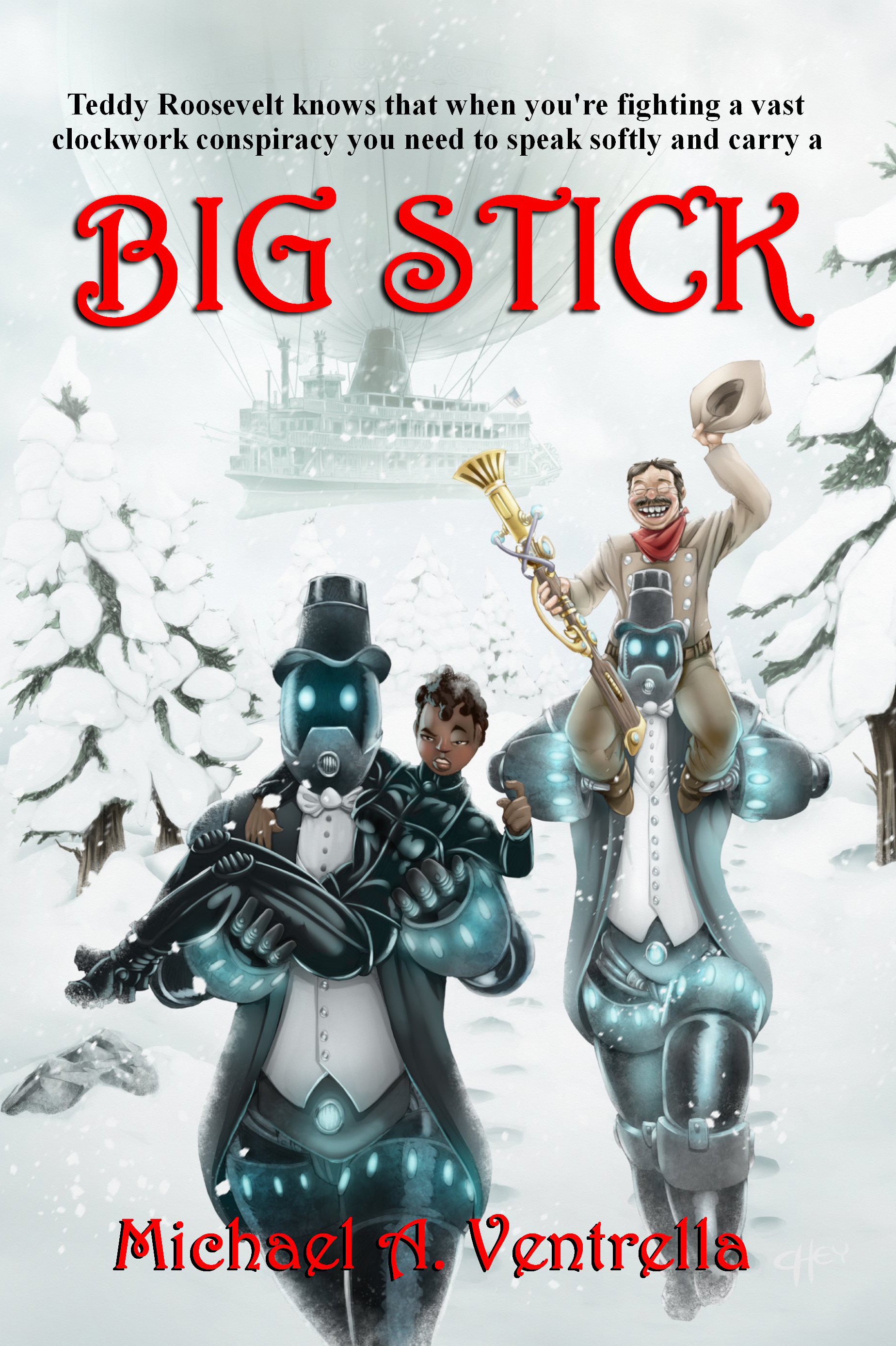
MICHAEL A. VENTRELLA: I’m pleased to be interviewing Washington Post bestseller Stephanie Vance! Stephanie earned her MFA from Western State Colorado University, and writes both non-fiction and fiction. Her non-fiction book THE INFLUENCE GAME was on the Washington Post bestseller list. Her speculative short fiction has been published in a variety of outlets, including Bark Magazine, Andromeda Spaceways, and the anthologies ONE STAR REVIEWS OF THE AFTERLIFE and ENTER THE APOCALYPSE. Her fiction work focuses on romantic comedy and humorous speculative fiction. Her romantic comedy novel ACROSS THE AISLE was released by Entangled Publishing in 2022 and her latest book has just been released as of today! I very much enjoyed it, posted a short review a while ago, and encourage everyone who likes these kinds of stories to check it out.
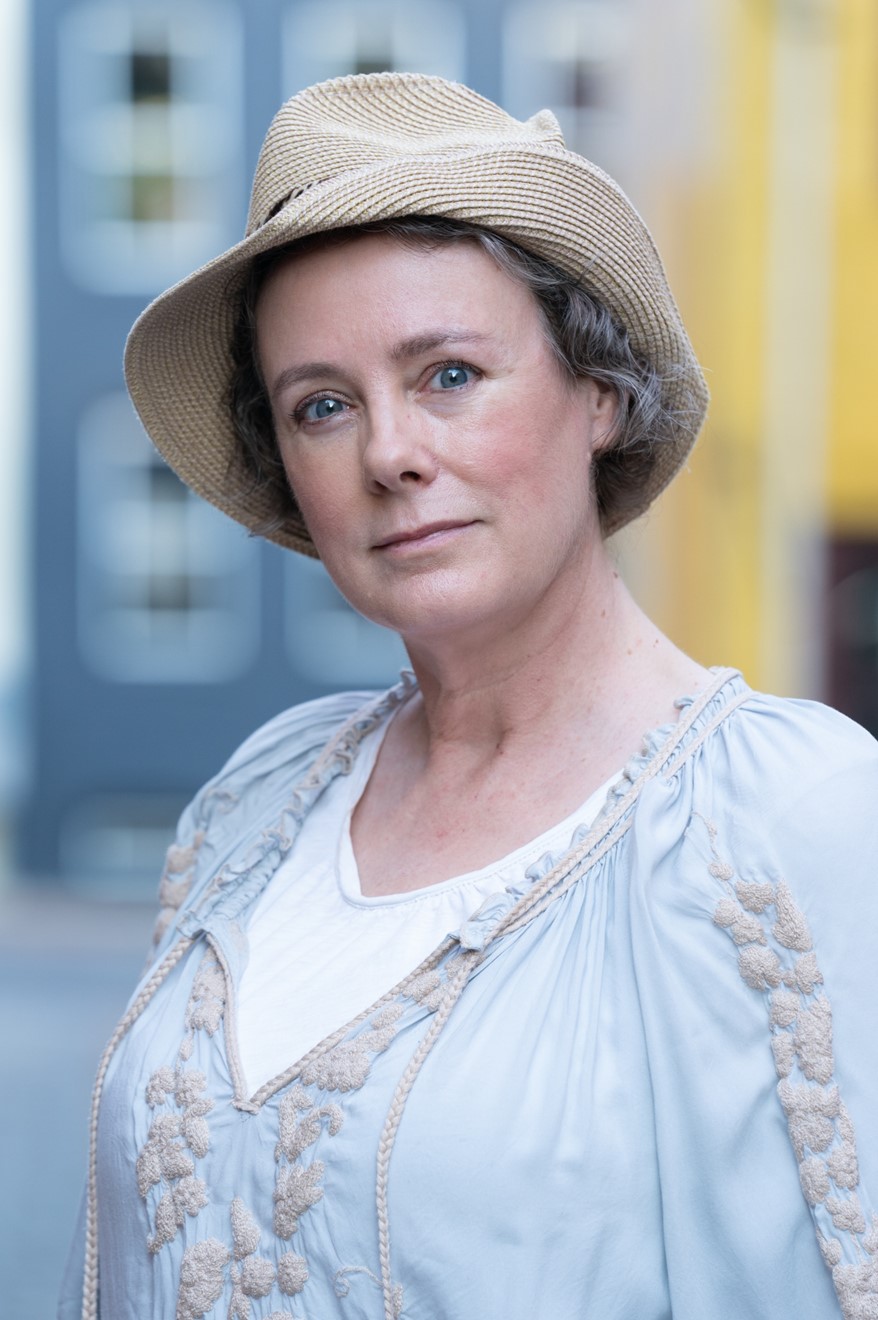
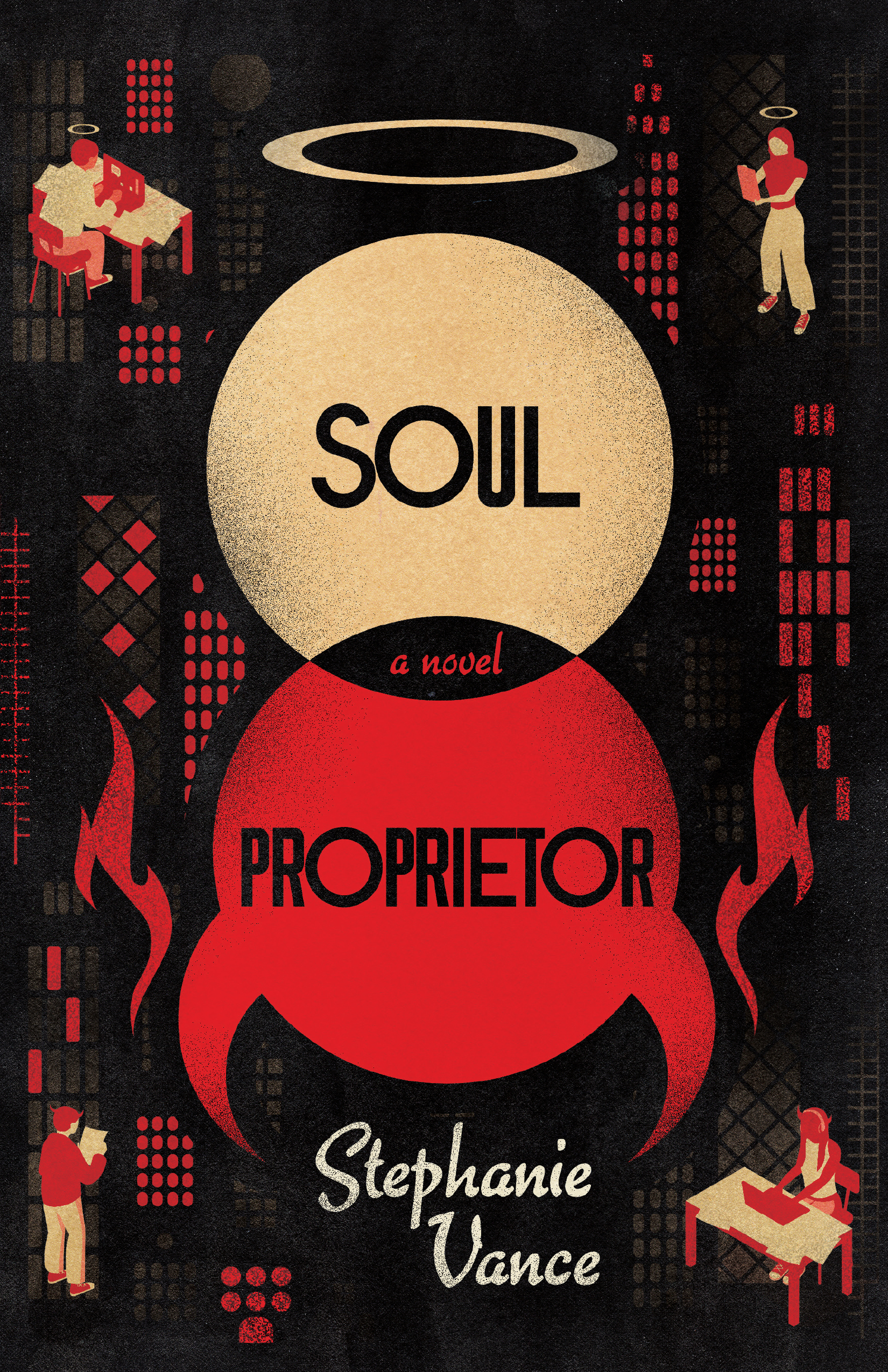
Let’s start by talking about SOUL PROPRIETOR. Please give us a brief synopsis!
VANCE: SOUL PROPRIETOR is an absurdist speculative fiction novel based on the premise that both Heaven and Hell can rent souls to mortals in exchange for favors. The protagonist, a top salesfiend named Tiffani, needs to make only 142 more sales in the next two months to get into Hell’s cushy C-Suite. But in her race to the bottom, she accidentally rents out a porn star’s recalled soul. To get it back, she must do the unthinkable—grant three wishes to an unremarkable mortal. Hilarity ensues as she, her fire-breathing dachshund Fred, her angelic frenemy Barry, and a team of misfit celestials and mortal teenage delinquents attempt to complete the favors before Hell’s Information Agency finds out.
VENTRELLA: Where did the idea originate? Was it from the punish title? (My novel THE AXES OF EVIL had a start like that, where the title came first, and then the story.)
VANCE: Actually, for the longest time the title was “Penny for your Soul,” a rather weak play on the adage “penny for your thoughts.” The much better pun-ish title came from my husband, who is pretty darn witty in his own right. The idea itself stemmed from a short story I wrote about a sales conference in Hell (which is now partly incorporated into the narrative). My writing group, many of whom had to suffer through their own sales conferences as part of their day jobs, found the story both hilarious and cathartic and encouraged me to expand on the idea. So here we are!
VENTRELLA: Do you think you might create more stories in this world?
VANCE: If you’d asked me that a few months ago, I would have said “no,” but I’ve had enough readers telling me they want more that I’m considering it. Based on the epilogue, which I wrote very quickly in a stream of consciousness state because my beta readers didn’t like how I left them hanging, I think my subconscious might be planning something. We’ll see what it comes up with.
VENTRELLA: There does seem to be a lot of humorous fantasy stories about heaven and hell these days, as well as a couple of animated shows I can name. Why do you think that is?
VANCE: As the country becomes more and more divided, I think a lot of people are struggling right now with trying to understand “good” versus “evil,” particularly when confronted with differences in their own family. Some people choose to fight about it. Some choose to ignore it. I, on the other hand, have always turned to humor as a means of both managing conflict and expressing my views. Satire lets me poke fun at what I find absurd in this existence. There’s a reason why SOUL PROPRIETOR has Hell-sponsored data centers. I think other authors out there might share my strategies for maintaining sanity.
VENTRELLA: As a fellow political science graduate who also worked as a lobbyist for years, I am interested in how you decided (like me) to start writing fiction.
VANCE: My DC career focused on grassroots citizen advocacy, and after five non-fiction books, I feel like I had said everything I needed or wanted to say about communicating with elected officials. But I still liked writing and have always been an avid reader, so I decided to try my hand at fiction. It became a great escape and a good way to meet other creative people!
VENTRELLA: How do you think your political views influence your fiction? (Obviously, I’m kind of referring to your novel ACROSS THE AISLE here.)
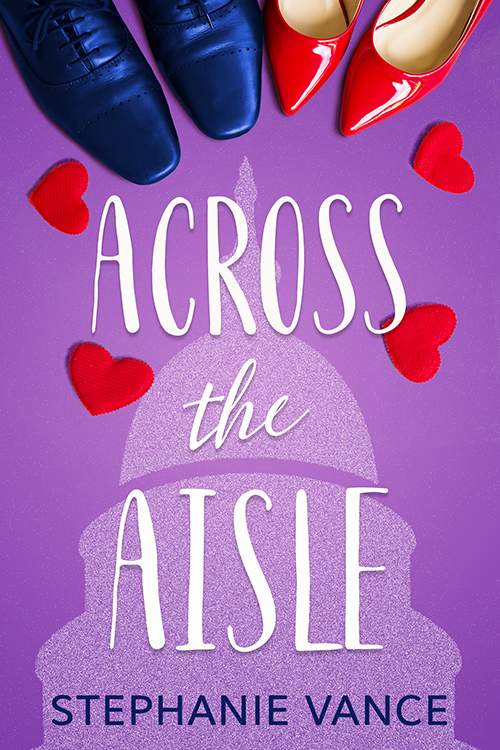
VANCE: Thirty-five years in Washington, DC taught me that there’s a great deal more bi-partisanship in our political system than people realize. Disagreements make news because they are, by their nature, more newsworthy. “Everyone got along and agreed to do something” doesn’t make for an interesting “Breaking News” story. ACROSS THE AISLE reflects that bi-partisan perspective in the ultimate “enemies to lovers” story about two people on opposite ends of the political spectrum. I wrote it to demonstrate how people with differing beliefs can come to a compromise that works for everyone. Readers have also described it as a “love letter to DC,” which is an incredible city that will hopefully survive the current Administration’s attempts at gildification.
VENTRELLA: Do you avoid talking about politics on your social media pages? Do you think authors should do that so as not to alienate readers? (And is that why I don’t sell as many books? {insert nervous laughter here})
VANCE: Ha! I avoid talking politics for a few reasons. First, I still have a “day job” at the grassroots advocacy consulting company I founded twenty-five years ago, and I learned a long time ago never to say anything you don’t want to see misquoted on the front page of the Washington Post.
Second, and more important, I don’t really see the point. I’ve yet to see a healthy conversation about politics occur on social media and I don’t feel like getting into it with strangers on the Internet. I express my dismay at what’s going on in the world in other ways. That said, I have zero objections to others expressing their views, and I know plenty of authors who do so. For the kind of books we write, I don’t think there’s much harm in being vocal. People who are going to be snippy about it probably won’t like your books anyway! I’ve found they often don’t have a good sense of humor.
VENTRELLA: Tell us how you got into fiction. Did you have an agent for your nonfiction books that handled it or did you find a new one? How did you get a publisher interested?
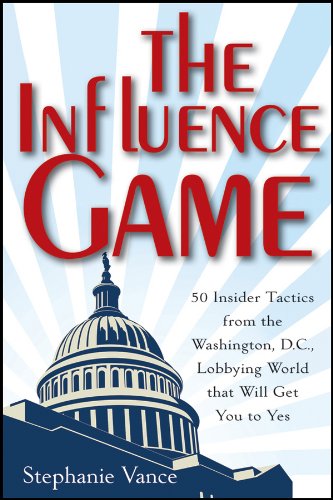
VANCE: I’ve been published in just about every possible way: self, trade, independent, big five, and now, with SOUL PROPRIETOR, hybrid. I started by self-publishing a book titled GOVERNMENT BY THE PEOPLE: HOW TO COMMUNICATE WITH CONGRESS in 2001, mainly as a way to kick-off my career as an advocacy consultant and professional speaker. From there I published two books with a local DC-trade publisher called Columbia Books, then got my “big break” with Wiley Publishing in 2011. I made that connection at a National Speaker’s Association conference. I think I was successful in attracting their attention because I already had a strong platform as a nationally-recognized speaker, and that book, titled THE INFLUENCE GAME, became a Washington Post bestseller.
As I mentioned earlier, I realized I’d said pretty much everything I wanted to say about grassroots advocacy, but I still liked writing, so I shifted to fiction. I started with abysmal short stories, which became gradually less abysmal with the help of the Taos Toolbox Masterclass and an MFA in genre fiction at Western Colorado University. Connections through that program led me to my first publisher for ACROSS THE AISLE.
VENTRELLA: How do you tend to classify your fiction work? I know some authors don’t like being pigeonholed into “romantasy” or “science fiction” or whatever fits on a bookstore’s category. What do you think of when your work doesn’t quite fit any specific genre?
VANCE: This is particularly challenging for me because I write non-fiction, romcoms, and humorous speculative fiction. I’m a lonely little intersection in a bizarre Venn diagram. None of my audiences overlap. I just focus on writing the books I want to write and hoping the right people find them.
VENTRELLA: Are you attending any conventions or doing any public appearances we should know about? Do you enjoy doing those things?
VANCE: I’ll be at the Pacific Northwest Booksellers Association Tradeshow on September 28 and have some queries in to a few cons for later this year and early next. I do enjoy doing these things, although I’m just about the most introverted professional speaker you’ll ever meet. I’m good onstage or with a group for a couple hours, then I need to hide in my hotel room to recharge.
VENTRELLA: What advice might you have for new authors trying to get their book published?
VANCE: My biggest piece of advice is to follow-up on every opportunity that comes your way. I found my first two publishers of my nonfiction works through my professional life; one just by networking and the other at a conference. For my first novel, ACROSS THE AISLE, I got an agent through a connection at my MFA program, and that agent led me to my publisher, Entangled. For SOUL PROPRIETOR, my romcom agent passed (not a surprise since it was a totally different genre), so I queried everyone and their mother for two years and got 63 rejections (I’m counting no response as a rejection). I decided to go the self-publishing route and discovered, as part of that exploration, hybrid publishing.
For those not familiar with this option, hybrid publishing is kind-of between traditional and self-publishing. As with self-publishing the author pays for execution and has a lot more control over the process. As with traditional publishing, the publisher is selective (i.e., they don’t take all books), and the books they create are indistinguishable from something a traditional press might do, assuming you go with a quality hybrid, which I did. I submitted to a few, and two very well-respected companies wanted to work with me. After a lot of research, I went with the GFB imprint of Girl Friday Productions. They have a well-deserved “Excellent” rating with the Alliance of Independent Authors and have been outstanding partners.
I’ve had some pushback from others in the writing community that hybrid publishing is just glorified (and more expensive) self-publishing or, worse “vanity publishing.” I disagree. I think of it as a partnership with experts who have far more knowledge than I do on how to craft a successful, quality book. I went through the same extensive editing process for SOUL PROPRIETOR that I did with ACROSS THE AISLE, and SOUL PROPRIETOR is actually getting better reviews! Readers don’t care how a good book got into their hands.
VENTRELLA: How much of writing is innate? In other words, do you believe there are just some people who are born storytellers but simply need to learn technique? Can anyone become a good writer?
VANCE: As a recovering musician (I was a flute major in college), I’ve thought about this question a great deal, because I realized, early on, that I didn’t have the innate talent and determination to be a professional musician. It’s similar in the writing world.
First, there are some people who were clearly born to write. Period. End of story. Their minds just operate differently than the rest of us. Look at Stephen King’s early drafts versus his edited drafts and you’ll see what I mean. He hardly needs to tweak anything. Yes, they work to hone their craft and learn from their mistakes, but it’s clear that’s what they were put on this earth to do.
Then there are people like me. We have some innate talent, and we work our tails off to figure out what we’re good at and focus on that. I’m never going to be able to write like Toni Morrison or Ursula K Le Guin or Sir Terry Pratchett. But I find it relatively easy to write humor, which I understand doesn’t come easily for others. So, I built on that.
VENTRELLA: What’s the best way to make the antagonist a believable character?
VANCE: Make them the hero of their own story. All plausible antagonists, both in fiction and in life, believe they’re doing the right thing. They have a personal code they live by that requires them to give the protagonist a hard time. In SOUL PROPRIETOR, for example, Tiffani’s nemesis, Lewes Dolan, honestly believes he’s doing the right thing to keep Hell safe.
VENTRELLA: What is your writing process? Do you outline heavily or just jump right in, for instance?
VANCE: I’m both a planner and a pantser. I plan my outlines and then write by the seat of my pants as those outlines fall apart somewhere in the middle of the second act!
VENTRELLA: Do you think it is important to start by trying to sell short stories or should a beginning author jump right in with a novel?
VANCE: I think it can be worthwhile to start with short stories because it’s easier to have a finished product you can start sending out. I’ve had a few published in various anthologies, and those gave me the boost I needed to keep writing. And I’ve found benefits even when I’ve been rejected—for example, I sent one of my earliest stories to Alex Shvartsman for his “Unidentified Funny Objects” anthology. I received a personalized rejection that encouraged me to continue writing humorous speculative fiction as it was clear I have a talent for it. His words sustained me through many, many rejections, and ten years later he agreed to write a blurb for SOUL PROPRIETOR!
VENTRELLA: What sort of advice would you give an un-agented author with a manuscript?
VANCE: Find a writing group and get feedback before you start sending it out! If you can afford it, consider hiring an editor through Reedsy. You want to have the best possible product before putting it out there.
VENTRELLA: Who do you like to read? Who are your favorite authors?
VANCE: I lean heavily into absurd humorists like Douglas Adams, Christopher Moore, Sir Terry Pratchett, and Tom Holt. I’ve also been loving the rise of more female funny authors, like Catherine Valente, Maxie Dara, Caitlin Rozakis, and Randee Dawn. But I don’t restrict myself to just absurdist speculative fiction. I’ve read Jane Austen’s novels about a dozen times each, and am a huge YA fan (Divergent, Hunger Games and, yes, even Twilight). Plus, I’m part of a mystery book club, so I read something in that genre at least once a month.
VENTRELLA: We have a lot in common then, taste-wise. With a time machine and a universal translator, who would you invite to your ultimate dinner party?
VANCE: Douglas Adams, without a doubt. And he’d bring a Babel Fish, so I wouldn’t even need the universal translator! Others on the guest list would include Jane Austen, Dante (because I’d want to know what he thinks of my Divine Comedy-esque depictions of Hell and Heaven), Oscar Wilde, because he’s hysterical, and Sarah Vaughn, because anything she says in that gorgeous voice is worth listening to. That’s just off the top of my head. There are about a million other people I’d want to meet!
Filed under: writing | Tagged: character development, self-publishing, Soul Proprietor, Stephanie Vance, writing advice | Leave a comment »