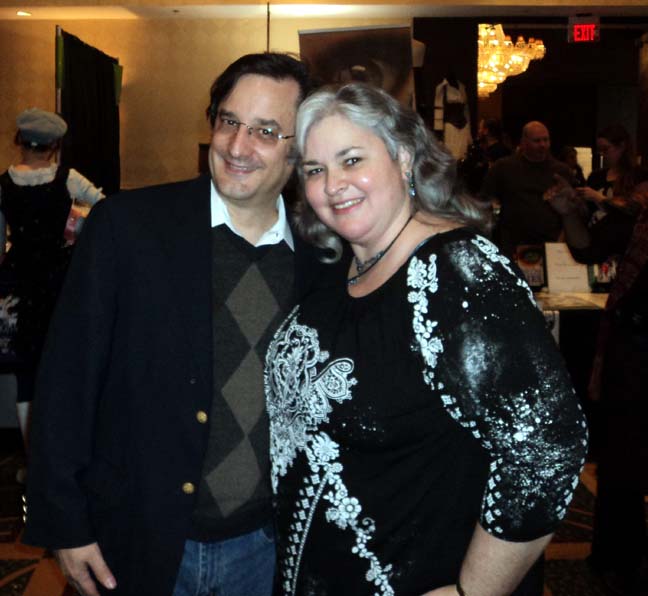
Interview with author and editor Danielle Ackley-McPhail

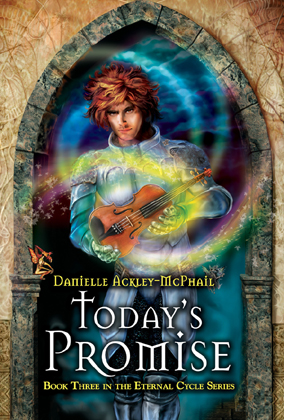
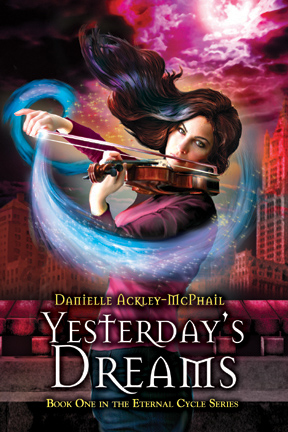
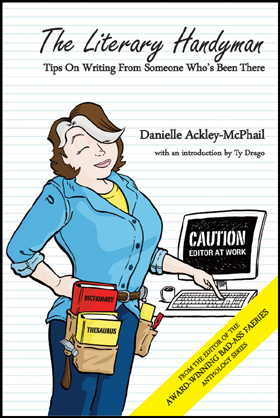
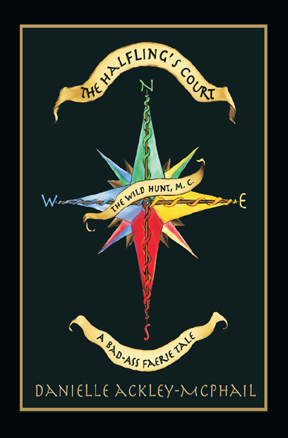
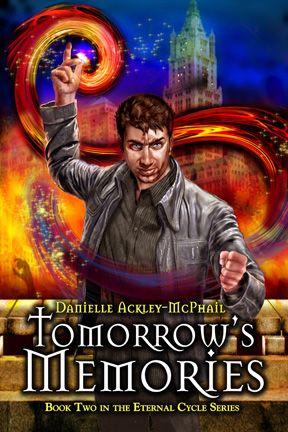
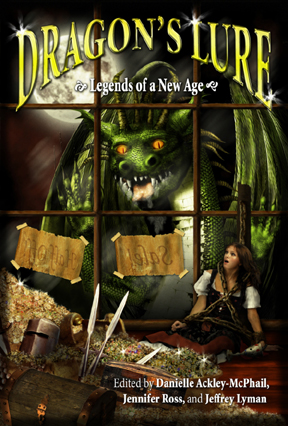
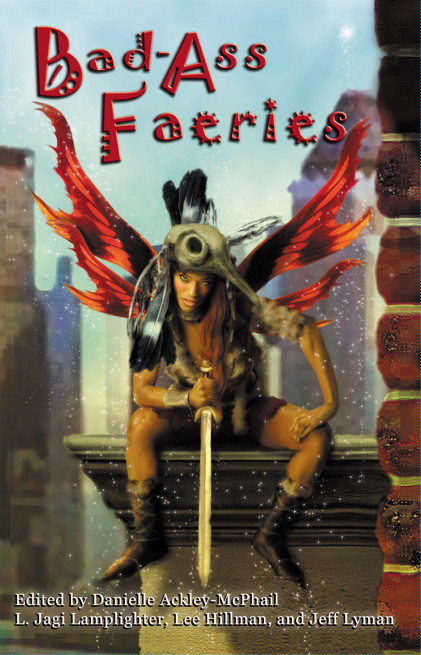
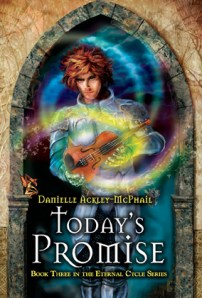
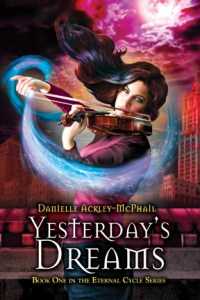
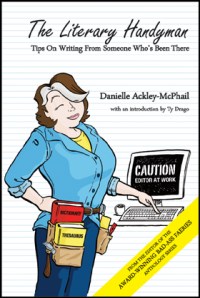
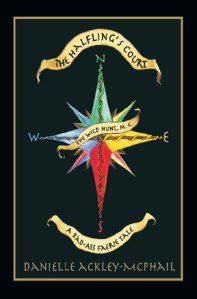
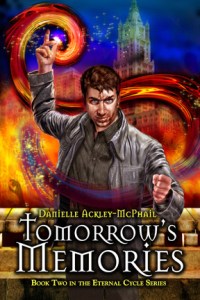
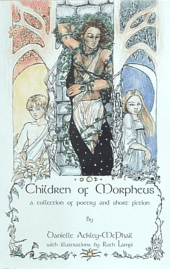
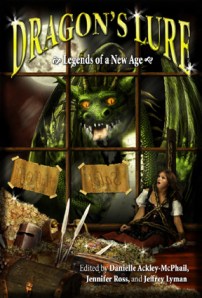
MICHAEL A. VENTRELLA: Please welcome Award-winning author Danielle Ackley-McPhail! Danielle has worked both sides of the publishing industry for over seventeen years. Her works include the urban fantasies YESTERDAY’S DREAMS and TOMORROW’S MEMORIES, the upcoming TODAY’S PROMISE, and THE HALFLING’S COURT, and the writers guide THE LITERARY HANDYMAN. She edits the Bad-Ass Faeries anthologies and DRAGON’S LURE, and has contributed to numerous other anthologies.
To read excerpts from the Eternal Cycle series, and other works by Danielle Ackley-McPhail, visit the excerpts page on her website.

Danielle, tell me about your new “Eternal Cycle” series.

DANIELLE ACKLEY-McPHAIL: Well, I can’t really call the Eternal Cycle series new … or not all of it, anyway. YESTERDAY’S DREAMS was originally published by Vivisphere Publishing back in 2001, then again by Mundania Press in 2006, and TOMORROW’S MEMORIES was also published by Mundania in 2009. TODAY’S PROMISE completes the series and has never before been in print. All three books will be released by Dark Quest Books between now and Summer 2012. In fact, the DQ edition of YESTERDAY’S DREAMS is already available.

When I started this series I had no idea I was writing a novel, let alone a trilogy. I had an idea and then that idea spiraled out of control. I’ve always been interested in Irish mythology but most of the Irish-themed fiction I had picked up over the years never really did anything with the mythology. When I finally realized Yesterday’s Dreams was going to be a novel I saw a chance to indulge my interest in the Irish and mythology in general.

Set in New York, the books follow Kara O’Keefe, a young first-generation Irish American. What Kara doesn’t know is that she is also descended from the Sidhe, the elves of Ireland. When her father begins his second battle with cancer Kara must make a choice. She pawns her heirloom violin to save the family house. She ends up at Yesterday’s Dreams, a pawnshop in the Village run by Maggie McCormick, a full-blooded Sidhe. Kara’s selfless act brings her to the attention of forces both good and evil. One wanting to teach her and keep her save, the other wants to claim her power for his own, by any means necessary.

Olcas is an ancient demigod long ago defeated by the Sidhe when he and his and his brothers, along with their mother Carman terrorized Ireland. Though their bodies were destroyed their spirits lingered. Throughout each book one of them returns by possessing another until they join forces first to take revenge on the Sidhe, then ultimately dominate the world.
This is a classic tale of good versus evil, along with a healthy dose of self-discovery, written in a lyrical style. I like to think I capture the magic and wonder of the old myths, while introducing some truly unique concepts.

VENTRELLA: What makes your series different?

ACKLEY-McPHAIL: You know, I’m not egotistical enough to thing I really bring anything different in content. If you look hard enough you can find similar things somewhere else. What I — and all other authors — bring to the table is perspective. No matter how many times a story has been told the perspective is unique. I also bring passion and vision. I take the same elements that everyone is familiar with and see what unexpected angle I can put on those elements. From time to time I hit on a concept that my readers really seem to appreciate, such as the Great Wall that appears in both TOMORROW’S MEMORIES and TODAY’S PROMISE, where the life forces of the Sidhe take visible representation in the form of a spiraling knotwork pattern that changes and grows with each thing they experience, or in THE HALFLING’S COURT where my biker faeries have wings, but they are only partially physical. They function in the same way as a magic sink, starting as a fin that unfurls from the fae’s body then expands as they draw in more magic. The more magic they gather, the more tendrils come off those fins until they look like angel-style wings made of mage energy. For the most part, though, I just look at things differently. As different as I can manage and then I let my imagination out to play.

VENTRELLA: When you’re approaching a story, how do you begin? Characters, plot, themes?

ACKLEY-McPHAIL: I have a saying: The plot is what happens when you’re getting to know the characters. It is very important to me to have well-developed characters people connect with and care about, or love to loath, depending on their role. Not saying the story isn’t important, but it is filtered through the characters’ perception. Without the characters there is no story. It is my job to ensure the characters are not interchangeable, but distinct and recognizable personalities in and of themselves.

VENTRELLA: What is your writing style? Do you outline heavily, for instance, or just jump right in?

ACKLEY-McPHAIL: You know, I’m told I’m a pantser. Until I was I had never heard the phrase, but basically it means I jump in and discover the story as I go along. I’ve tried writing outlines, but most of my writing starts with an idea. Sometimes one line. Often I don’t know where it’s going until I get there. Most of the time I write a scene until that sparks another idea and I jump to that scene until I have a framework that give me an idea of the shape the project is going to take. Think of it as the supports for a deck. You pour the footing, you build the framework, and then you close everything in.

With YESTERDAY’S DREAMS it started with two things: an idea for a short story about a pawnshop that only accepts goods that are connected to the owner’s soul and a bad guy named Olcas, which is Irish for evil. I named the character that without realizing that there was an actual figure in Irish myth named that. Once I made the discovery that determined that my novel became a trilogy because Olcas had two brothers. So you see, I never approach a project trying to figure out what all the pieces are because my imagination works better when I give it free rein. I’m not saying there aren’t time I know where I want to end up, but I enjoy the discovery of figuring out the in between as I go. I used to think this meant it took longer for me to finish a project, but recently I finished TODAY’S PROMISE, the last book in the Eternal Cycle Series, and it only took three months, without an outline. The process was all-consuming, not to mention exhausting, but the satisfaction in the end is something I’ll never forget. I don’t regret not working from an outline, it’s just the way my brain works. I don’t recommend it for everyone, but it does work and I love the organic feel of the end result. I find that I do need to keep a close eye on details so that if something changes I make the proper adjustments in the bits I’ve already written. By writing the key points as I figure out what they are and then linking everything I end up with a tightly woven story.
VENTRELLA: Do you have a favorite of your babies?

ACKLEY-McPHAIL: I have favorite aspects more than anything. Every book or project has something that stands out. In THE HALFLING’S COURT, my biker faerie novel, it was the weaving of social identity with the fantasy elements and drawing parallels. I was able to draw heavily on mythology, which I really like, but also on dialect and recognizable subcultural elements. Finding the way to meld the recognizable with the fantastic really gets me going. I love turning things on their ear.

In the Eternal Cycle series I again weave mythology with the everyday, but there I actually took an existing myth and expanded on it which was challenging and also really cool. See, Irish mythology is a bit fragmented because it was an oral tradition and the ethnic identity of the Irish people was for so long repressed that a lot of detail has been lost. Taking the bits and pieces and weaving them into something rich and powerful is a real thrill. So much of the myths and legends dovetail nicely, but there was also the challenge of addressing popular belief, particularly with something as popular as elves. We draw on them so heavily in our literature that the lines between legends and creative license have blurred. Take for example the belief that elves or faeries can’t touch cold iron. I’m not saying that doesn’t exist anywhere in world mythology, but I found nothing to support it in Irish mythology. In fact, Goibhniu, one of their major gods, is a blacksmith. Sorry, but blacksmiths work with iron and steel. Also, redcaps … they carry and iron pike. So, I had to find a way to recognize the popular belief while at the same time explaining why I’ve discounted it. One thing I did find, though, is that in the folklore, which is often separate from the actual mythology, it was common to hang iron implements to ward off evil … scissors over cradles and horseshoes over doors, that kind of thing, so I suspect that is the basis for the belief about elves and iron, but that only presumes that elves are evil, which to me isn’t necessarily so. I love playing with details like this.

And … on another front, I actually have a nonfiction book that will always be special to me. It is THE LITERARY HANDYMAN, an informal writer’s guide. This isn’t meant for someone on our level, with either learning or experience already under their belt, but for the beginner who could really use some solid advice about the craft and business of being a writer. That one is special to me because it is so much different from the fiction I write. The core of the book started out as various articles I posted at different sites on the internet, so there is some overlap, but each article is meant to be taken individually so I didn’t worry about that too much. Besides, some points bear reinforcing.
VENTRELLA: Who do you like to read?

ACKLEY-McPHAIL: I do have a few core authors that I follow … Anne McCaffrey, Patricia Briggs, Sherrilyn Kenyon, Mercedes Lackey, Jim Butcher … you know, the ones most people know about. But I also have some personal treasures that have yet to be discovered by the world at large, and I’ve had the pleasure to work with them. They are L. Jagi Lamplighter, Bernie Mojzes, Elaine Corvidae, and James Daniel Ross. There are others, but this would be a really long answer if I tried to include everyone.

Of course, romance is my guilty, junk-food reading.

VENTRELLA: Let’s discuss publishing. You’re with Dark Quest Books. How did that come to be?

ACKLEY-McPHAIL: I was courted. There’s no other way to put it. The publisher, Neal Levin, saw what I was doing on my own and actively sought out a relationship, first on the technical end, and then as an author. He wanted to build his list quickly and effectively and knew I had the promotional experience, as well as contacts in the industry. When I had issues with several titles going out of print Neal was in a position to offer me a home for them, a situation that has benefited us and the authors involved quite nicely.

VENTRELLA: What are the advantages of going with a small press?

ACKLEY-McPHAIL: I have worked for virtually every level of publisher in the industry, from Random House to reprint publishers, specialized markets such as medical or music publishing, even magazines. I have seen pretty much everything there is in publishing. That insight has taught me that no publisher is perfect and many of them have the same flaws when dealing with their authors, no matter the size of the House: response time, royalty payments, and scheduling issues. The majority of authors struggle with all of those things. The larger publishers are both harder to get into and less forgiving of the learning curve. I find by starting out in small press I have had an opportunity to learn the business more fully, make contacts and establish myself. Print distribution is harder for a small press, but with the market drifting more toward ebooks anyway that is less of drawback.

The other concern is marketing. Whether you are with a small house or a big one, in most cases the promotional responsibility falls to the author anyway because the marketing budget is disproportionately divided with the large houses and generally nonexistent with the small ones.

So, when you look at it that way large houses have only two things going for them, visibility and distribution. The drawback: higher expectations and very little flexibility when it comes to identifying a “successful” book.

I know one author who signed a three book deal with a major publisher. The first book came out and performed respectably, but not to the publisher’s expectations. The elected not to release the other two books in the series, but likewise would not release the rights either as they were keeping the first book in print. Unless you do really well at the offset there are only a small proportion of authors out there (relative to the number that are actually published) that have staying power with a large publisher, whereas small press by using print-on-demand technology, can afford to maintain a large backlist and allow titles to grow in visibility over a prolonged period of time. Unless a publisher goes out of business or the relationship is dissolved by one or the other party, books stay in print indefinitely.
Personally, I also find small press affords me a lot of creative control, more personal interaction with my publishers, and deeper understanding of the process because I am involved at virtually every stage. In many cases I have taken books from concept to completion before even approaching a publisher to sign it. This experience has allowed me to work on projects a major publisher probably never would have considered, some of them which have been quite profitable, as well as award-winning. With a larger publisher you are luck if they even ask what you would like to see on the cover. Once you give them the manuscript you take what you get, a lot of the time, and it isn’t always representative of your book’s content.

This doesn’t mean I would never consider or pursue a contract with a large publisher, it just means that I will always maintain a relationship with small press as well.

VENTRELLA: You’re Marketing Director for Dark Quest. Were you involved in its inception?

ACKLEY-McPHAIL: Well, not really. See, Dark Quest started out as a game company over ten years ago. That arm of the company still exists, but separate from the fiction division of Dark Quest Books. Neal Levin had tested the waters with SKEIN OF SHADOWS, a novella collection based on a gaming universe. That book had already been produced and Dark Quest was looking to take things further into full-fledged book publishing. They were familiar with my work both writing and promoting through the Garden State Horror Writers, a writers group we both were members of. He first approached me to come on staff as Promotions Director. At the same time he approached my husband, Mike McPhail, to pick up the role playing game he’s had under development. That game is the Alliance Archive Martial Role Playing Game, which is scheduled to release later this year.

While we were negotiating our participation another publisher of ours made the decision to opt out of the business. Unfortunately, that company published our best-selling anthologies: The Bad-Ass Faeries series and the Defending the Future series. Dark Quest Books stepped in to contract the Defending the Future books, collections of military science fiction short stories by some of the biggest names in the industry. In fact, SO IT BEGINS was the first book Dark Quest released, after SKEIN OF SHADOWS, which was a venture of the gaming arm of the business.

Between Mike and I, we’ve been taking an active role ever since, not just as authors, but editors, promoters, designers, and artists. Just recently the Defending the Future series has become the core of a new imprint, DTF Publications, which offers military science fiction novels and anthologies by well-known and beginning authors. Mike McPhail is the administrator of that imprint.
VENTRELLA: Let’s discuss marketing. These days, even authors with major publishers need to know how to market themselves. What are some of the smartest things an author can do to promote their own work?

ACKLEY-McPHAIL: Create an internet presence. You can do this via a professional looking website, social media, blogs, being featured on book sites, making sure your work is in the database sites with accurate information and covers wherever the book is listed. You should also solicit author interviews, guest blogs, and book reviews, as well as join productive professional organizations or groups, such as Broad Universe or SFWA (Science Fiction and Fantasy Writers of America). Not only do such groups offer support and networking opportunities, but they are a great way to learn of events. Other than possible membership fees, all of these are free promotions.

With your website include more than just who you are and what you’ve published. Have excerpts, a schedule of author events, free stories, a link to a blog you update regularly, that kind of thing. Some authors even have contests. Make the site something that warrants repeat visits. On mine I include my costuming and crafting efforts as well as a point of interest. Mike, my husband and fellow author and editor, includes the development phases for his creative works.

The other thing I recommend is conventions. Both attending them and distributing flyers or bookmarks at them. If you can attend you meet your target audience first hand and benefit from the celebrity phenomenon, an one would presume the potential readers can actually see your book and perhaps even buy it. If you can’t attend most conventions will accept promotional goods for free, or a slight fee if you want the materials put in the registration packs. If you write speculative fiction or one of the other established genres like romance or horror, this is a surefire way to reach those you want to reach, whereas a general book fair might not be as effective.

VENTRELLA: What are some of your marketing pet peeves?

ACKLEY-McPHAIL: My biggest issue I have with promoting (beyond the fact that it is a massive time-sink) is that once you make the contact requesting a review or interview you have no control over 1) if anything comes of it, and 2) if the person responsible for posting the review or interview presents it either professionally or accurately. I have not encountered this, but a friend solicited a review from a site and sent a physical copy of the book. When the review posted it was clear the reviewer only read the back cover copy, which had certain incorrect information on it that made it obvious the reviewer hadn’t actually read the book.
One thing I did encounter myself was one person I gave a book to for review who rather than writing a review of their own lifted two of the Amazon reviews for the book and posted it on their site, as if they had wrote them.

VENTRELLA: You’re also an anthology editor. Do you find that to be a difficult job to take on?

ACKLEY-McPHAIL: Again, like promotions, this is a time-consuming job. There are many elements in being a project editor that are not the fun bits. Paperwork, organizing details, acting as a go-between with the publisher and the authors. Working with difficult personalities. I love taking a book from concept to completion, but some of the stages in between are pure torture.

VENTRELLA: I also edit my own anthologies and it’s not easy, especially when you have to say no to friends who submit stories. Has this been a problem for you?

ACKLEY-McPHAIL: I’ve had to deal with a lot of things across the ten anthology projects that have actually published, and a number that are still in the works. There have been problems with unpleasantness when it came to rejections, but my biggest problems have been with temperamental authors having issue with the editing process or the publisher’s terms, and not dealing with either in a constructive manner.

Sadly, this has lead me to be more circumspect in who I invite to a project because editing an anthology has enough inherent headaches involved without voluntarily inviting gratuitous headaches on board.

VENTRELLA: Anthologies just do not sell like they once did, given Smashwords and other places on the internet to get stories. What have you done to get attention and increase sales?

ACKLEY-McPHAIL: We’ve built something of a reputation, for one. Of the projects I am directly involved in five have been finalists for various awards, three have won. There are plenty of excellent reviews, and, of course, we have made a point to be very visible at conventions through launch parties, panel discussions, adds, and a presence in the dealer’s room. For our two major series, Bad-Ass Faeries and Defending the Future we have dedicated websites with extra content and lots of information about the series. Another thing we do is try and solicit submissions from big name authors who happen to be friends, people likely to do it for the love, not those who want big money. I also tend to give more consideration to authors who write well and I know put effort into promoting every project they are a part of. The two series I mentioned are by far our best sellers, with sales in the thousands, but all of them do respectably, particularly in ebook.
VENTRELLA: Do you accept unsolicited stories? If so, what are you looking for now?

ACKLEY-McPHAIL: My projects are a bit different from the usual collection. I require every author to present me with a proposal for approval because my biggest gripe is having to reject a perfectly good story just because it is too close to something I already have, so yes, I will consider proposals from authors that have not been approached for the collection, but the stories will have been discussed beforehand in those instances. I do not generally consider stories that were not specifically written for the collections because we do theme anthologies, so unless the author has talked to us in advance and made a case for their story, it is best to wait until there is a call for submissions and then pitch your idea.

I have two projects in the works currently, but the deadline has passed for both of them and any future projects will be invitation only as I have learned that there is much less hassle that way. But you know, I have had to make the decision recently to step back from anthologies for a while. Between the stress and the time involved I haven’t been accomplishing anything toward advancing my personal writing career. I don’t see departing anthology work altogether—there are a large group of people who likely wouldn’t let me—it’s definitely taking a back burner for a while. Mostly I discovered I have six partially completed novels on my computer…and having learned if I focus on them I can complete them relatively quickly, there is something very wrong with them being stuck in limbo.

VENTRELLA: The “Bad Ass Faeries” series is probably your most popular. How did that come to be?

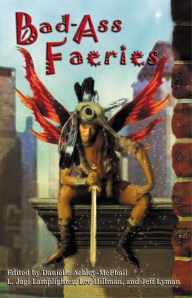
ACKLEY-McPHAIL: This series was borne out of the artwork of Ruth Lampi. Really and truly. At Albacon one year I met this then-aspiring young artist and she showed me some sketches on notebook paper. Her skill was such that when I had a project I wanted illustrated I contacted her. Years later we were holding a shared promotional event that was, unfortunately, barren of attendees. While sitting there with the store’s staff chatting to entertain ourselves we were talking about how we met and suddenly an anthology was conceived. Because most people have come to think of faeries as the pastel princesses portrayed in children’s shows and related media, we decided it was time to be true to the spirit of the faerie legend of old where they were mischievous, malevolent or warriors. They were tough and wicked and sometimes downright ugly. Thus, Bad-Ass Faeries. The series has taken on a life of its own.
VENTRELLA: You’re a regular at east coast conventions (where we have shared a few panels from time to time). What are the reasons you attend?

ACKLEY-McPHAIL: Being a writer is for the most part a solitary endeavor. We pour ourselves out on to the page and we desperately want to know that the readership enjoys what we have written. Reviews are usually few and far between, not to mention at times mixed. By going to conventions I have the unique opportunity to interact with my fans, learn what they liked and what they didn’t, and conversely, share with them the development and thought that went into the books I’ve written or been a part of. Conventions more than any other promotional event allow the author to make a personal connection with the fans in a comfortable, relaxed, and informal setting. The other reasons I put so much time and effort into conventions are networking, as a means to distribute my books (which is a challenge for small-press authors), and being social with fellow authors and fans, which is a great way to generate ideas and keep touch with what is going on in the industry.
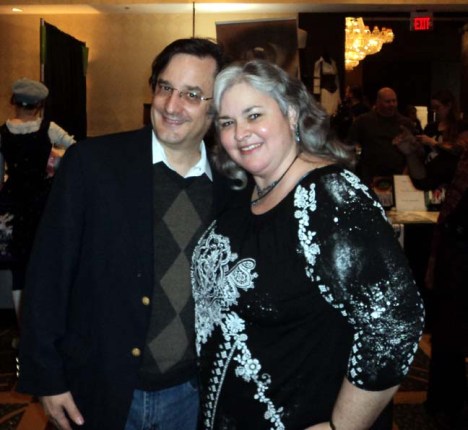
Interview with Author Donna Galanti

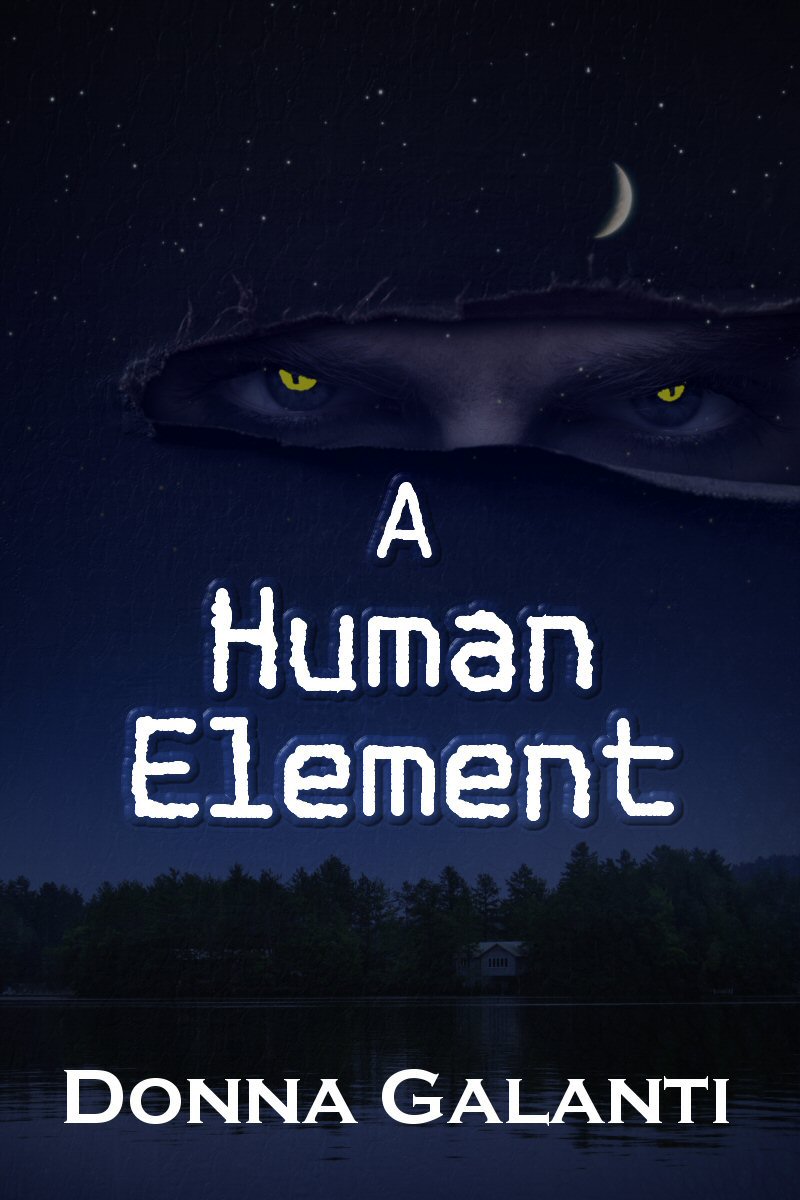
MICHAEL A. VENTRELLA: Today, I am pleased to be interviewing Donna Galanti. Donna is the author of the paranormal suspense novel A HUMAN ELEMENT (Echelon Press). She has a B.A. in English and a background in marketing. She is a member of International Thriller Writers, The Greater Lehigh Valley Writers Group, and Pennwriters. Her blog is here. You can connect with Donna here on Twitter and Facebook and purchase her book here!

Donna, your first novel has just been released. Tell us about it!

DONNA GALANTI: Absolutely!

In my paranormal suspense novel A HUMAN ELEMENT, Laura Armstrong’s friends and adoptive family members are being murdered, and despite her unique healing powers, she can do nothing to stop it. The savage killer haunts her dreams, tormenting her with the promise that she is next. Determined to find the killer, she follows her visions to the site of a crashed meteorite –- her hometown. There, she meets Ben Fieldstone. In a race to stop a mad man, they unravel a frightening secret that binds them together. But the killer’s desire to destroy Laura face-to-face leads to a showdown that puts Laura and Ben’s emotional relationship and Laura’s pure spirit to the test. With the killer closing in, Laura discovers her destiny is linked to his and she has two choices –- redeem him or kill him.

Readers who devour paranormal books with a smidge of horror and steam will enjoy A HUMAN ELEMENT, the new novel about loss, redemption, and love.

Here’s what reviewers are saying:

“A HUMAN ELEMENT is an elegant and haunting first novel. Unrelenting, devious but full of heart. Highly recommended.” – Jonathan Maberry, New York Times best-selling author of ASSASSIN’S CODE and DEAD OF NIGHT

“A HUMAN ELEMENT is a haunting look at what it means to be human. It’s a suspenseful ride through life and love…and death, with a killer so evil you can’t help but be afraid. An excellent read.” –Janice Gable Bashman, author of WANTED UNDEAD OR ALIVE, nominated for a Bram Stoker Award.

VENTRELLA: How did the idea originate?

GALANTI: It came to me in a flash from nowhere 15 years ago driving to work. I wrote the entire outline on my lap as I drove (dangerously) and shelved it until 2 years ago.

VENTRELLA: Do you tend to outline heavily or just jump right in? What is your writing style?

GALANTI: I do outline but when I over-outline I can’t get started. I tend to write an 8-10 page preliminary synopsis, bulleted chapter outline, and a 1-page worksheet detailing each character. I like to write “from the dark places” in the third person. A HUMAN ELEMENT has a ton of dark in it from murder and mystery with an evil paranormal thread. However, I did challenge myself to write a middle grade adventure fantasy recently in the first person and had a lot of fun.

VENTRELLA: Aspiring authors often seem to think that writing a book is easy and your first one is sure to be a huge hit. What writing experience did you have prior to publication?

GALANTI: I definitely don’t think it’s easy or a sure thing to be a huge hit. Being a writer is constant learning and improving your craft. You may write a good book but you still need other elements like having professional editing skills, a good cover, and be marketing savvy. Before this novel came out I was writing in one way or another since I was seven. I majored in English and Journalism in college and did some news reporting for Gannett News Service. I eventually ended up in marketing communications and after several layoffs launched my own resume writing service and also became a freelance advertising copywriter. I closed up my resume business to write novels.

VENTRELLA: What was the biggest mistake you made when first starting out as a writer?

GALANTI: Writing a book before I learned the craft. I became involved with other writers and took writing workshops after I finished my first book. This required going back and fixing a ton of things! I don’t regret the learning that took place afterwards as I can now write a better book from the beginning. And hopefully keep learning and writing even better books. The sequel (in progress), A HIDDEN ELEMENT, starts out fast and dark and propels you into an evil underworld where chaos, despair, redemption, and murder reign.

VENTRELLA: OK, let’s be honest here — You (like me) are with a smaller, independent publisher. Of course, we’d both like to be with Random House or some other huge publisher, where we could be easily found in book stores. Did you make an effort to obtain an agent first and go the traditional route or did you instead look to the smaller publishing houses for your first venture?

GALANTI: I did submit to agents first, yes. I spent several months doing this and waiting on feedback from manuscript requests. However, I knew my premise was a harder sell for a debut author as it crosses genres in a blend of paranormal, romance with a smidge of horror and sci-fi. I believed in the story and so did Echelon Press, a small press with a solid 10 years in the industry. Karen Syed, the president, worked with me on developmental edits before I even signed so she was invested. I’m also not focused on “getting in every brick and mortar bookstore” in America. I am focused on being seen at the online bookstores.

VENTRELLA: What do you think are the advantages of a smaller publisher?

GALANTI: Definitely personal attention. I like that. I also like that Echelon Press honored my title and delivered on the cover I was pursuing. They listened to me as an author, and I was not treated as a product. I also have much leeway with my own marketing, and as a former marketer I like having that control.

These days, it takes much more to be a successful author than merely writing a good book. What efforts have you made to publicize yourself and do you think they have been worth your time?
With a book coming out, one in editing, and one being written – I’m finding out that this is only half my author time spent. The other half is “being seen.” And it’s absolutely worth the effort. I have an active blog where I post and host guest authors. I’m also active on Twitter, Facebook with a personal and author page, and GoodReads. It takes time to build relationships in all these places and manage them while promoting others too, yet I have met many supportive peers through these avenues and built a network of readers and professionals. I am currently running a blog tour (as seen here!) which involves multiple articles written, a grand giveaway, and a GoodReads giveaway. I also coordinated a book launch (4/21 at The Doylestown Bookshop) and wrote several press releases around the locales in A HUMAN ELEMENT.

VENTRELLA: I’ve met so many people who think self-publishing is the way to go, and I have tried to dissuade them of this idea. What is your opinion?

GALANTI: I honestly think a writer should start at the top and work their way down. It takes patience and waiting. Lots of waiting. I understand some people don’t want to wait. I gave myself a timeframe to look for agents and decided, after that time, it was best to go with a small press. I don’t regret it, as it allows me the ability to sell my books at conferences and be on conference panels. These are some things self published authors may not have access to. Yes, there is still a stigma. I also could not have become an accepted active member in International Thriller Writers if I self published. That being said, I see many authors with much success being self published. If you are marketing savvy I believe you can have success with it if you deliver a good product, great cover, and know how to be seen. Being a debut author, I think there are benefits to having a respected publisher standing behind you.

Interview with Hugo, Nebula, and Campbell Winning Author David Brin

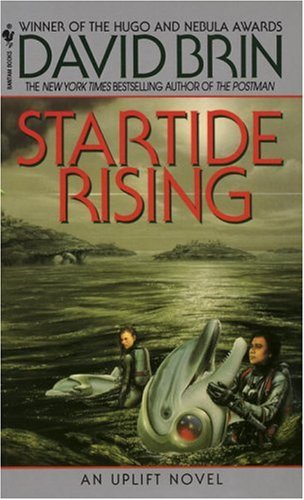
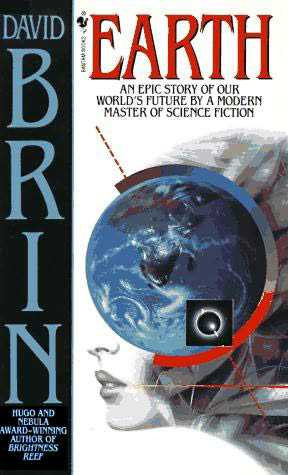
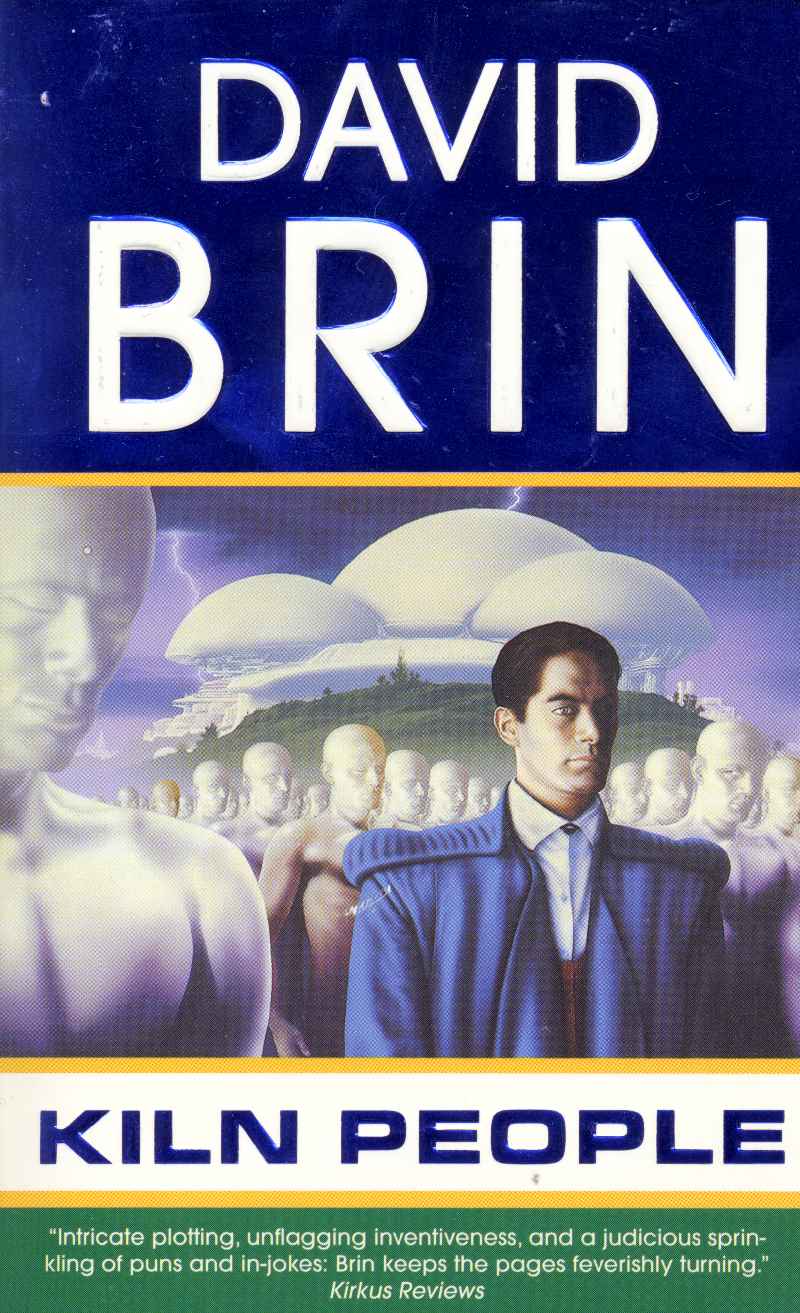
MICHAEL A. VENTRELLA: I am tremendously happy to be interviewing one of my favorite authors this week, David Brin! The number of award-winning books he has authored is amazing, among them EARTH, STARTIDE RISING, GLORY SEASON, THE POSTMAN, SUNDIVER, and the UPLIFT series. His KILN PEOPLE is a fast-moving noir detective novel, set in a vivid future when people can literally be in two places at once.

His hard science fiction comes from someone who knows his stuff — he has a doctorate in space sciences among his degrees and honors and is a fellow of the Institute for Ethics and Emerging Technologies.

He also does graphic novels: TINKERERS shows a future when the nation’s manufacturing has declined and searches for answers, and THE LIFE EATERS explores how mystically-obsessed Nazis might have hoped to use a bizarre kind of magic.

And then there’s his popular nonfiction romp that stirred lots of controversy, STAR WARS ON TRIAL: SCIENCE FICTION AND FANTASY WRITERS DEBATE THE MOST POPULAR SCIENCE FICTION FILMS OF ALL TIME.

His web page is here. And, if you are interested in writing advice from a real professional, David has a section on his web page for you.

David, a theme in many of your work is about enlightenment and human progress. Humanity only started progressing recently in human history, primarily because of science. Do you think enlightened literature (specifically science fiction) has helped to bring this about?

DAVID BRIN: Of course it has. Science fiction arose to prominence in the United States and Britain exactly in pace with the climb to scientific pre-eminence in both nations. It flowered then in Japan and is now burgeoning in China, even as it has fallen into harder times in the U.S. See the correlation?

But it goes beyond simply inspiring a new generation of vividly motivated technical types. Science fiction also reflects the concerns of the times. Self-preventing prophecies like 1984, “Soylent Green” and “Dr. Strangelove” made us ponder, soberly, the possible ways that liberty, or the planet, or life itself might be lost, girding millions to dedicate themselves, striving to prevent the portrayed worlds from coming true. That’s power.

And SF offered the opposite – portrayals of us coping, learning, growing, improving. Stories of hope, like “Alien Nation” and – of course – “Star Trek.” Alas, these have grown unfashionable, much to our loss.

VENTRELLA: There’s a noted backlash against science in America these days. Certain political personalities rebel against things they know nothing about, denying climate change and evolution. How does one fight against this kind of stupidity?

BRIN: First, we must expose who benefits from this callous, cynically destruction thing called “culture war”… which has spoiled the generally pragmatic American genius for negotiation and practical compromise. We tend to not be dogmatic types… unless we are at war. Indeed, I look at the furious rage that now infests us, manifesting in outright war-level campaigns against scientists, teachers, doctors, journalists, economists, professors, skilled labor, civil servants… against all the “smartypants” clades… and I am compelled to realize – we are in Phase Three of the American Civil War.

VENTRELLA: Do you worry that lately we as a society may be moving backwards?

BRIN: Back in the 1950s, Robert Heinlein foresaw this kind of an era. He forecast the year 2012 as when a briefly maniacal United States would “elect” a non-plurality president – a fundamentalist preacher named Nehemia Scudder – who would them proceed to clamp a theocracy upon our land. Scary stuff and dismally prescient.

VENTRELLA: One of my favorite novels of yours is EARTH, which made some staggering predictions about the near future, many of which have already come true. How much of that novel was the result of research and how much was pure guesswork? Have any of your predictions surprised you?

BRIN: Actually, my fans have noticed the unusual number of “hits” or predictive successes that seem to have been scored in EARTH. These accurate foretellings … and some that were embarrassingly off-target(!) are now being tracked here.

VENTRELLA: Do you see a future for religion?

BRIN: While I am scientifically trained, with my union card as an astrophysicist, and I am proud to be a member of a rational civilization that does not need threats of hell to behave far better than any other. I refuse to go to the opposite extreme as so many have, and deride our neighbors who believe. (Indeed, I have some levels of spirituality, myself.) Yes, some versions of God are excluded now by our clear-eyed view of reality and the cosmos, but some have not been and I see no harm in acknowledging some tasty… possibly theologically redolent… ambiguity.

In fact, see me get all biblical! Science-friendly theology? At the recent Singularity Summit 2011 I gave a talk to all those folks who think that technology will soon empower us to construct super-intelligent artificial intelligences, or perfect intelligence enhancing implants, or even cheat death. The title: “So you want to make gods. Now why would that bother anybody?”.

VENTRELLA: What themes do you find yourself revisiting in your work that may pop up without planning?

BRIN: I am behooved to revisit the Uplift Universe and answer many riddles. I hope also to keep channeling ideas as bizarre and enticing as I had in KILN PEOPLE. Some will say this happened in EXISTENCE (coming in June from Tor Books.)

VENTRELLA: What is your writing style? (Do you outline heavily or just jump right in? Do you tend to start with a scientific idea, a character concept, or something else?)

BRIN: All of the above. I like to surprise myself!

VENTRELLA: How has your educational background influenced your writing?

BRIN: Let me admit and avow that writing was not my own first choice of a career. True, I came from a family of writers. It was in my blood. But I wanted something else — to be a scientist. And by the fates, I became one.

I also had this hobby though — writing stories — and it provided a lot of satisfaction. I always figured that I’d scribble a few stories a year… maybe a novel now and then… while striving to become the best researcher and teacher I could be.

Don’t mistake this for modesty! It’s just that I perceive science — the disciplined pursuit of truth — to be a higher calling than spinning imaginative tales, no matter how vivid, innovative, or even deeply moving those tales may turn out to be.

I know this seems an unconventional view.

Even now that civilization has made it clear that it wants me to write and not do research (by paying me better) I still try to bring the thinking tools of science into all that I write, even light fantasy.

VENTRELLA: What’s on your plate these days? What can we look forward to?

BRIN: Keep your eyes peeled next June for a sprawling near future novel called EXISTENCE. My first big-Brin-book in some years, it’s filled with epic scope, adventure, and more huge ideas than you’ve ever seen packed in one place! It also has some “uplift portions”… and a first contact scenario that I guarantee you’ve never seen before. Stay tuned!

And yes, folks want more Uplift. I do hope to get back to Tom, Creideiki and the others soon. (I assume you’ve read the second Uplift trilogy, starting with BRIGHTNESS REEF? ) Till then, see the story “Temptation” downloadable here. Some will argue that EXISTENCE is Uplift!

VENTRELLA: Any news on SKY HORIZON?

BRIN: SKY HORIZON is a short but exciting novel in the Heinlein tradition won the Hal Clement Award for best SF novel for young adult readers. The limited run, from Subterranean, is sold out. I’ll announce when a mass market edition is available… as well as the sequel, written with the great young author Jeff Carlson!

VENTRELLA: Any other news you’d like to share?

BRIN: I was a cast member on the History Channel show “The ArchiTechs” as well as History’s most popular show ever: “Life After People.” I’m now appearing frequently on the science shows “The Universe” and “Alien Worlds.”

My Lunacon 2012 Schedule

I will be participating as a guest at the 2012 Lunacon science fiction convention on the weekend of March 16th. There are some great guests this year, including many who have been interviewed on this blog: Danielle Ackley-McPhail, Neil Clarke, Myke Cole, Keith DeCandido, Genevieve Iseult Eldredge, Esther Friesner, C. J. Henderson, Marvin Kaye, Michele Lang, Gail Martin, Mike McPhail, Joshua Palmatier, Tamora Pierce, KT Pinto, John Ringo, Lawrence M. Schoen, Ian Randal Strock, and Howard Tayler (among many others)…
Below is my schedule. It’s not as crowded as last years’, but I should still have a great time. I’ll even be doing a reading from my upcoming novel BLOODSUCKERS. And then there’s “Blindfolded Sculpting” where a group of guest artists (including my wife!) will compete to make clay sculptures in a few minutes from ideas from the audience — while blindfolded. (I’m the MC for that one!)

And of course, the old favorite “The Eye of Argon” which has this description: “The worst science fiction story ever written gets a reading by our brave panel as they compete to go the longest without tripping over a misspelled word of laughing uncontrollably. Audience members are also encouraged to rake a chance. Can you keep a straight face, especially when the panel begins acting out the story?”

Fantasy Without Gods (Friday 7:00 pm)

LARPing 101 (Saturday noon)

Michael A. Ventrella Reading (Saturday 1:30 pm)

Blindfolded Sculpting (Saturday 3:00 pm)

Marketing and Promotion for Authors and Artists (Saturday 7:00 pm)

The Eye of Argon (Sunday 10:00 am)

Interview with author Joshua Palmatier

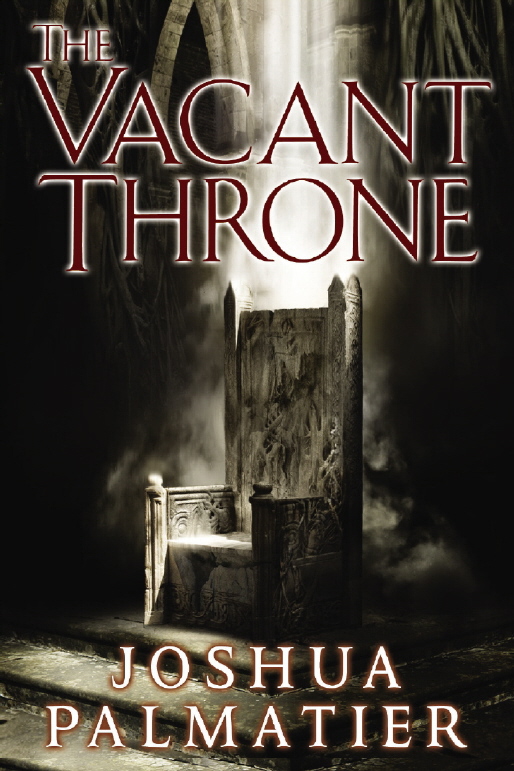
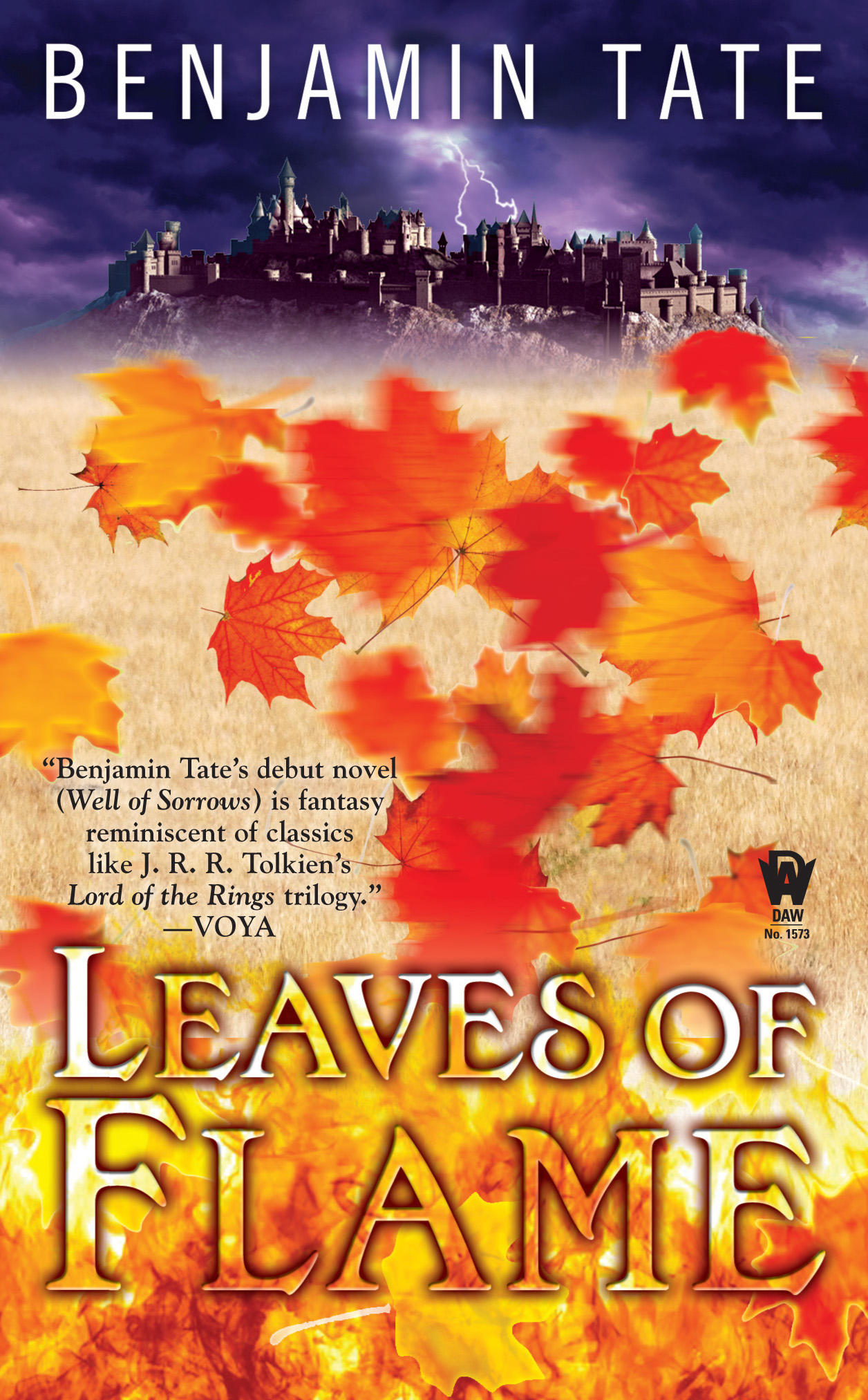
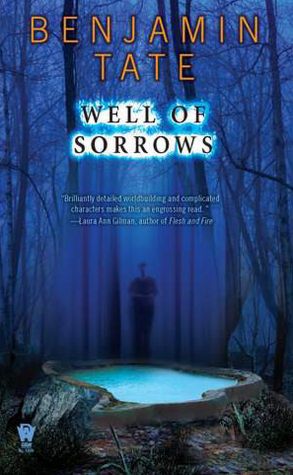
MICHAEL A. VENTRELLA: Today, I am pleased to be interviewing Joshua Palmatier. Josh and I have been on panels at various SF conventions together, and we’ve had some great discussions about writing and fantasy. Joshua is a fantasy writer with DAW Books, with two series on the shelf, a few short stories, and is co-editor with Patricia Bray of two anthologies. Check out the “Throne of Amenkor” trilogy — THE SKEWED THRONE, THE CRACKED THRONE, and THE VACANT THRONE — under the Joshua Palmatier name. And look for the “Well” series — WELL OF SORROWS and the just released LEAVES OF FLAME — by Benjamin Tate. Short stories are included in the anthologies CLOSE ENCOUNTERS OF THE URBAN KIND (edited by Jennifer Brozek), BEAUTY HAS HER WAY (Jennifer Brozek), and RIER (Alma Alexander). And the two anthologies he’s co-edited are AFTER HOURS: TALES FROM THE UR-BAR and the upcoming THE MODERN FAE’S GUIDE TO SURVIVING HUMANITY (March 2012). His web pages are www.joshuapalmatier.com and www.benjamintate.com, as well as on Facebook, LiveJournal (jpsorrow), and Twitter (bentateauthor).

Josh, your Tate books take place in the same fantasy world as the Palmatier books, although not at the same time or with the same characters. Why have two different authors? When new authors are trying to get that important name recognition, doesn’t this put you at a disadvantage?

JOSHUA PALMATIER: Well, the two names were actually a strategy brought up by the marketing department at my publisher. The idea was that we’d release the new books under the Ben Tate name and make it an open secret. Hopefully, the Joshua Palmatier fans would learn of the name switch and buy the new Tate books, while the Tate name would bypass the ordering structure of the bookstores so that they’d carry the new books on the shelves and pull in new readers. It was an attempt to increase the audience for my books. The sales for the Palmatier books were OK, but not as high as hoped, so the publisher was looking for ways to draw in additional readers. At this point, I would have to say that the ploy didn’t work, although I think there were numerous factors as to why it didn’t work.

VENTRELLA: Is the voice the same in the two series?

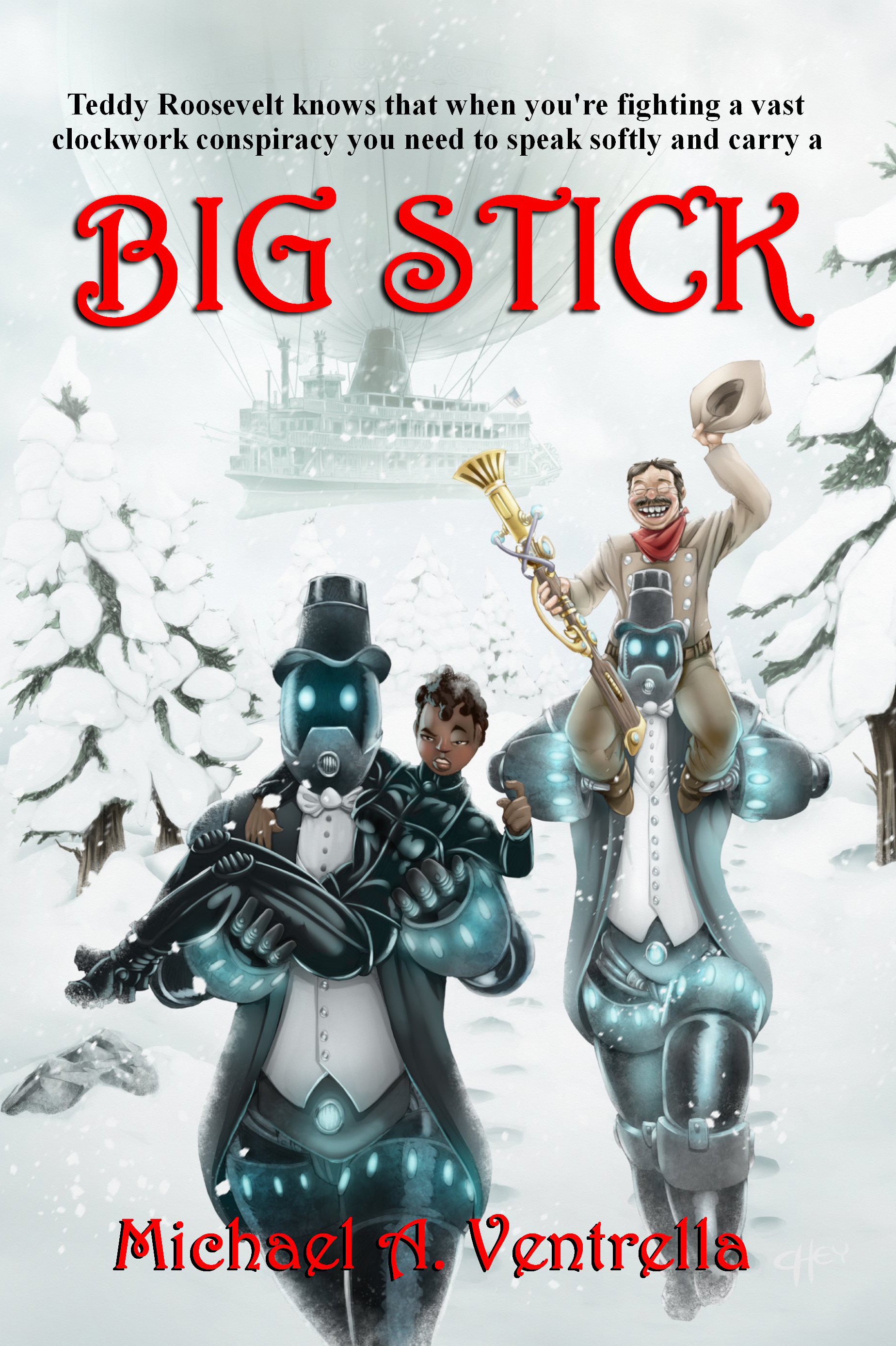
PALMATIER: That’s one of the reasons that I didn’t protest too much when the publisher suggested the name change for the new series —- the voice of the new series is significantly different than the original. So even though it’s set in the same world, it had different characters, was set at a different time period in the history of the world, on a completely different continent, and -— like the Palmatier books, which were focused on one character, written in first person, and were essentially “urban fantasies” set on an alternate world —- the new series was much more epic in nature. There are multiple POV characters and threads that the reader follows, and the action takes place over two different continents and over a much larger time span. So the feel of the books are different than from that original series. Both are dark in nature though, as the covers of THE VACANT THRONE and WELL OF SORROWS suggest.

VENTRELLA: How did you get your first “big break” in publishing? Did you have an agent first?

PALMATIER: My “big break” was sort of interesting actually. I wrote my first book (unpublished) and started sending it out to editors and agents at the same time (one editor at a time, but multiple agents). I spent the next ten years writing three additional novels, sending each out to editors and agents and getting rejections from all. But most of the rejections were good, meaning they said, “I’m not interested in this project, but the writing’s good and I’d like to see whatever you write next.” This was encouraging, and it allowed me to focus my attentions on those editors and agents who were interested. I basically kept a running list for each, in order of my preference and tweaked based on the responses I got.

So when it came time to send out THE SKEWED THRONE, I started at the top of my editor list (Sheila Gilbert at DAW) and the first seven agents on my list. I heard back from those first seven agents quickly (all rejections), so sent out the next batch of seven, all while DAW still had the book. I was also getting my PhD in mathematics at the same time, at the point where I was defending my dissertation. I got a call from one of the agents, Amy Stout, while prepping for that defense. After a lengthy discussion on the phone over representation, I signed on with her and told her that DAW currently had the book. Amy called up Sheila and started talking. Meanwhile, I continued my job search and defense.

I was away at a mathematics conference, doing interviews and such, when Amy called back to tell me that DAW wanted to buy THE SKEWED THRONE. I was thrilled! But they also wanted to talk about the sequels. So in the midst of finishing up my dissertation and job hunting, I worked up the proposals to THE CRACKED THRONE and THE VACANT THRONE and almost immediately had contracts for the entire trilogy. My first sale! I was on my way!

But keep in mind that it took me ten years and I wrote three other novels before THE SKEWED THRONE found a home. And I lost count of the number of rejections.

VENTRELLA: Aspiring authors often seem to think that writing a book is easy and your first one is sure to be a huge hit. What writing experience did you have prior to publication?

PALMATIER: *snort* Writing a book isn’t easy. I said before that I wrote three other novels before I sold one, but that isn’t quite true. I started writing while I was in high school and kept writing all the way through college. It wasn’t until grad school that I sat back and asked myself whether I was going to do this for fun, or if I was going to try to sell something. So it was ten years and four novels total from the moment I decided to get serious. There were ten years of “fun” writing before that.

And that “fun” writing was actually my entire set of writing experience. I took a few classes here and there in college as part of my other degrees (electives and such), but for the most part, those ten years of writing were me teaching myself how to write. I wrote my first true novel five different times, each time learning more about the craft and what was good writing and how much mine sucked. It wasn’t until the 5th draft that I finally thought I’d written something that could potentially be published. (And those first few drafts were bad. I mean bad. Indescribably bad.)

I also pretty much trained myself in how to send that manuscript out to find a publisher to call home. That simply amounted to a bunch of research and time on my part, reading up on what “manuscript format” meant and what publishers wanted in a “query” or “partial.” All of that’s even easier to research now with the internet, and I strongly suggest aspiring writers take the time to do the research and make a list of publisher and agents they want to submit to when they’re ready.

But of course, you have to have that stellar book first, and that part ain’t easy at all.

VENTRELLA: Tell us about the books!

PALMATIER: I was waiting for you to ask. *grin* All of my novels are dark fantasy, the Tate books more epic in nature than the Palmatier books.

I’ll start with the “Throne of Amenkor” series, which begins with a young girl, Varis, barely surviving in the slums of the city of Amenkor. She’s on her way to becoming lost, like so many other souls in the slums, when she runs across a Seeker—an assassin sent by the Mistress of the city to mete out justice—named Erick. Erick trains her to protect herself and uses her to hunt his marks in the slums. Of course, these marks lead Varis beyond the slums into the heart of the Amenkor and deep into its politics. Eventually, she’s hired to kill the Mistress herself, protected by the magic of the Skewed Throne.

The series continues beyond that, with attacks from a race called the Chorl from the sea, and eventually leads to Amenkor’s sister city of Venitte. But I don’t want to spoil anything. Everyone will just have to read the books to find out what happens.

My Tate novels are a little different, set on a different continent and sort of combining the settling of a newly discovered continent with fantasy elements. Colin’s family has fled the coming war in their homeland to the new continent across the ocean, landing in one of the few settlements on the new coast. But the politics of the old world have followed them to the new. In order to escape, Colin’s father accepts responsibility for a wagon train heading into the unexplored plains to form a new settlement inland. They head out . . . only to discover entire new races of people, a beautiful new world, and unexpected and magical dangers. Attacked by one such race, the wagon train is driven into a dangerous and dark forest, where Colin’s life is changed forever when he is forced to drink for the Well of Sorrows in order to survive. But the waters of the Well transform him into something more than human. Struggling to maintain his grasp on humanity, he attempts to use his newfound powers to end the war between the three clashing races —- the humans from his homeland, the dwarren, and the Alvritshai.

VENTRELLA: You are the editor of a new anthology about fae coming out soon. How did that come about?

PALMATIER: Ah, the role as editor. That actually came about at a bar. You see, a bunch of my fellow friends and authors had gotten together for a signing and afterwards we, of course, hit the bar for a few drinks. While chatting, someone brought up the idea of doing an anthology centered around a bar, and thus AFTER HOURS: TALES FROM THE UR-BAR was born. I wrote up a proposal for that and sent it out. DAW liked the idea and thus my editing career (with Patricia Bray) was born. After the bar anthology, Patricia and I proposed a few other ideas and DAW bought THE MODERN FAE’S GUIDE TO SURVIVING HUMANITY.

VENTRELLA: As someone who has edited a short story collection and is working on a second, I find that the hardest thing to do is reject stories, especially from friends. How have you handled this?

PALMATIER: Well, for the first anthology, AFTER HOURS, Patricia and I only invited around 17 authors to contribute. A few had to drop out because of their own schedules, so we ended up not needing to reject anyone for that anthology. However, for MODERN FAE we invited over 30 people to contribute stories, so of course we had to pick and choose from the selection there. Pretty much all of those invited were friends, of course, but we were up front with everyone and in the end we simply handled everything professionally. Both Patricia and I were able to separate the friendships from the editorial job, so while rejecting some of the friends (some of them friends for decades) was hard, we just . . . did it. Like ripping that band-aid off all in one go. Everyone knew that getting rejected was a possibility, and I think everyone understood why certain stories didn’t make the cut.

VENTRELLA: When editing an anthology, do you ever do any rewriting of the stories submitted yourself?

PALMATIER: All of the stories in the anthology were edited, of course. Neither Patricia nor I do what I would call “rewriting” though. Each of us reads the story and we compare notes on what we thought and how we think the story could be improved. One of us then sends out our notes about suggested revisions (we divide the authors up into two teams —- Team Patricia and Team Joshua). It’s up to the authors to revise the story, with the idea that at this stage there’s still a chance that the story will be cut if the revisions aren’t satisfactory. But all of our authors have reacted professionally to our suggestions, so we’ve never had any trouble. I think everyone realizes that we all want the best stories possible in the anthology and we’re all working toward that one goal. I think both anthologies are spectacular.

VENTRELLA: What resources do you use in creating your fantasy worlds?

PALMATIER: I use everything when creating my fantasy worlds. *grin* By this, I mean that I use bits and pieces of many different cultures all tweaked to fit the circumstances of the world where these characters and these stories are being told.

For example, in the “Well” series, I have three main cultures clashing on the plains. The human culture has aspects from the settlers who were setting out into the American West, but it’s obvious that they aren’t those settlers. For their homeland, I meshed numerous European cultures. The dwarren are reminiscent of some of the American Indian cultures, but various additions of my own, enough that I wouldn’t say they’re based on any one particular culture. What I’m trying to capture is a flavor, but I want that flavor to be unique —- familiar enough to be comfortable, but different enough to intrigue the reader.

Of course, you need to be familiar with numerous cultures in order to do this well. I wouldn’t say that I have any particular resources for this. I simply read and absorb as much about other cultures as I can.

VENTRELLA: With so many fantasy novels out these days, what have you done to make your series stand out from the rest? What’s different about them?

PALMATIER: Hmm . . . well, I’d like to think the writing. But, I also try to make the characters as interesting as possible and play around with the magic.

I think for a fantasy, you really need to pay attention to the magic and think about what makes your magic different from everyone other fantasy novel out there. In the “Throne” series, I have two main magical components that I focus on — the White Fire and the Skewed Throne. These two magics are obvious: the White Fire is a wall of white flame that passes through the city for a second time during Varis’ lifetime (it passed through once before 1000+ years ago). No one knows what this Fire is, but it touches and affects everyone in various ways. For Varis, a piece of the Fire appears to settle inside of her and she eventually learns how to use it. The Skewed Throne is designed to store all of the personalities of those who have touched it inside, so that the ruler has the ability to access this information and knowledge and, in theory, become a better ruler. The problem is that in Varis’ time, there are so many personalities stored inside the throne that it has essentially gone insane. For the “Well” series, I have the water inside the Well of Sorrows as the main magical component. This water gives the person who drinks it limited powers over time, but it also taints the drinker and eventually alters them into . . . something else.

These are the key elements that I think make my fantasy different than other fantasy novels out there. But again, that isn’t enough on its own. I think my books are darker and more realistic than other fantasies on the shelf at the moment, and I think that if you don’t have interesting, relatable characters, then all the cool magic in the world isn’t going to save you.

VENTRELLA: When creating believable characters, what techniques do you use?

PALMATIER: Wow, that couldn’t have been a better segue if I’d planned it. So, yeah, the characters are incredibly important. People won’t keep reading if they don’t care about the characters, no matter how interesting the magic or the plot. Everyone wants someone to root for. I don’t think there are too many tricks to creating believable characters though. The only real technique is to get inside of that character’s head and to seriously ask exactly what it is that the character would do in such a situation. It isn’t easy, and it takes practice to get yourself into that headspace (because it’s a slightly different headspace for each character), but you literally need to “become” that character for those scenes. You have to put yourself in that person’s world and feel them. At least, that’s how I do it. What would they think, what would they say, what would they do in this situation? Those are the key questions you have to ask in every scene.

VENTRELLA: What is your background? How did you decide to become a writer?

PALMATIER: Well, I decided to become a writer in the 8th grade, when an English teacher assigned us a “Twilight Zone” story and I wrote a rip-off of the Atlantis story with spaceships. But the teacher’s comment was, “This is good, you should write more.” I think that’s the first time it seriously crossed my mind that PEOPLE WROTE THE BOOKS I WAS READING! And that person could be me! It was a stunning revelation. I immediately began writing, doing short stories for Andre Norton’s MAGIC IN ITHKAR series (even though I never sent anything in) and eventually sitting down to write a typical “me and all my friends get transported to a fantasy world!” kind of story. It sucked of course, and I never finished it. But it was the first effort at writing something longer, and it taught me that writing wasn’t easy. I started my first SERIOUS effort at a novel shortly after that, and that one I finished (even though it sucked).

I never really had a “background” in writing. My degrees are in mathematics (something has to pay the bills) and I never really took any particular writing classes for the sole purpose of “learning” to write. I took a few creative writing classes in college, mostly for the elective credit. Everything else I taught myself.

VENTRELLA: You’re a math professor, right? Don’t those kinds of nerds usually end up writing hard science fiction?

PALMATIER: Ha! Yeah, science fiction. I think there are two reasons that I don’t write science fiction. The first is that, as a reader, I was never really drawn to science fiction. Everything I read when I was younger leaned more toward fantasy. I “discovered” fantasy and science fiction by accidentally checking out an Andre Norton book from the library. After that I was hooked. I read everything of Andre Norton’s I could get my hands on . . . but even then I gravitated toward her fantasy, not her SF. So I was a fantasy reader early on. It only made sense that I’d want to write fantasy on my own.

The other reason I write fantasy and not SF, I think, is because I needed something totally different from the mathematics to focus on while in grad school. The writing was, essentially, my “break” from all of the hardcore equations. In fact, it was such a break that Varis, my main character in the “Throne” books, hated mathematics. So when I got tired of the math, I’d switch gears and focus on the writing and the fantasy; and when the writing slowed down, I turned back to the fantasy. I think they complemented each other rather well.

In fact, I think the structure that’s the basis of mathematics helped me write better fantasy novels—keeping the plot in line and not scattered, keeping the magic realistic, with rules of its own, etc. And the fantasy helped the mathematics as well, since you need to be creative and think “out of the box” in order to come up with new ways to solve previously unsolved problems (which is what you do for your dissertation in math—solve something no one has solved before).

VENTRELLA: What was the biggest mistake you made in your career?

PALMATIER: I think the biggest mistake I made was writing the sequel to my first novel when it hasn’t sold yet. You see, I wrote that first novel and started sending it out to agents and editors. But it was the first book in a trilogy (of course), and I was so confident that it would sell that while it was out doing the rounds I worked on the sequel and got it finished. But of course, that first novel never sold. So I wasted a year of writing working on the sequel, when I should have been writing a different book completely in case that first book didn’t sell. Looking back on it, it’s obvious, but at the time I had no clue. I may have gotten published earlier if I hadn’t lost all of that time.

VENTRELLA: What do you see as the biggest mistakes starting authors make in their writing?

PALMATIER: Well, I still see people making that same mistake I made: writing that sequel when the first book hasn’t sold yet. You should work on something else, because then you have another novel to shop around, and if that first book sell you can still write the sequel. But the biggest mistake I see aspiring writers making is that they don’t take the time to do the research you need to do before you start sending manuscripts out there. Every writer needs to sit down and research the publishers and editors and get a good idea of who they’d like to publish their work. Make a list, with their top choice down. Do the same for agents, paying particular attention to make certain the publisher and agents are legitimate. Do a second list for top agent down. Research each one to see what they want from the writer (some want just a query letter, some want a partial, some will take the full manuscript, etc). Make certain the manuscript is in the proper format. Once all of this research is done, then send out the manuscript. All of this research won’t take up much time (in comparison to the time it took to write the manuscript in the first place) and it makes your submission professional. Publishers want good books first and foremost . . . but they’re also looking to work with someone who approaches them in a professional manner.

VENTRELLA: What piece of advice do you wish someone had given you when you first began writing?

PALMATIER: I think I was rather lucky in that I did get good advice pretty much right at the start, and that advice was, “Have patience.” You won’t get a contract immediately. You’re going to get rejections, and you have to realize that the rejections aren’t personal. So you have to accept the rejections (with perhaps some wine or chocolate and a few good writer friends for support) and persevere. Keep sending that manuscript out, submitting down your list, and keep writing that next project. Because by the time you get through your list, if you keep writing, you’ll have another novel ready to send out. By then you’ll have a revised list based on the rejections you’ve gotten, and that revised list gives you a better chance of success.

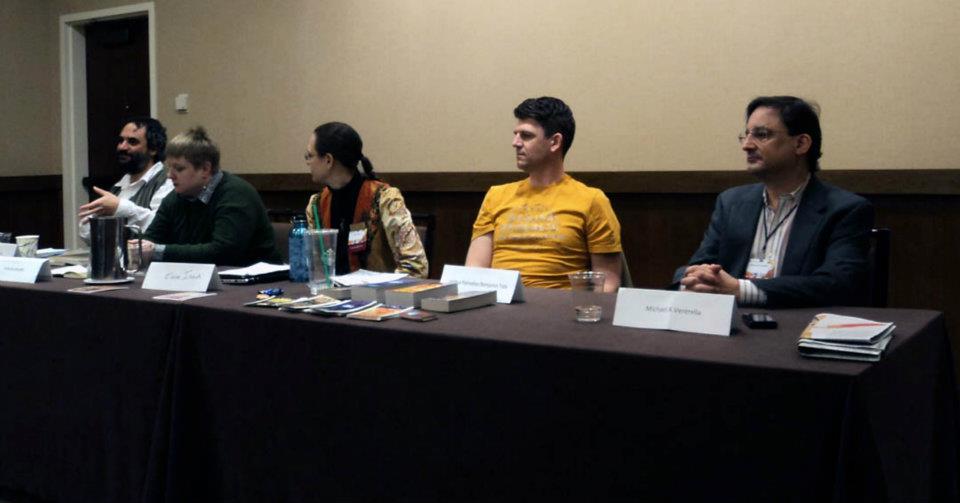
Joshua and I on a panel together at the 2012 Arisia convention

The Query Letter

I’m at that stage where I’m sending out query letters to agents for my next novel. While the publishing industry changes daily, the advantages of having an agent to sell your book has not disappeared.

Query letters are tremendously important, but too many authors get hung up on them — as if agents will laugh in your face if your query letter isn’t absolutely perfect.

You’d better use proper grammar and have no misspelled words, but if an agent thinks your book sounds interesting — and if it’s the kind of book they handle — then the other stuff doesn’t matter too much.

The key is to get them interested and make them want to read it. They want to read your letter and think “Hey, that could sell if done well.”

Remember: This is a business letter, not a piece of fiction. Act professional. Treat it like you would a cover letter for your resume.

(an example of a bad query letter)

There’s a hilarious blog called “Slush Pile Hell” in which an anonymous agent posts some of the terrible queries received. It amazes me that people think they sound professional when they oversell their work as the greatest thing ever written or ask questions that are the equivalent of raising your hand and admitting you know nothing about the business. Keep in mind that you are hoping to establish a business relationship with the agent. No matter how good your novel, no one will want to represent you if you present a “difficult” image.

You’re just wasting time if you don’t know who is receiving your letter. Never send a “Dear Agent” letter. Find out which agents are right for you. Make sure they like the kind of book you’ve written. Agents who represent cook books won’t be interested in your science fiction novel. A textbook agent couldn’t care less about your children’s story. You might as well just toss your letter into the trash before you even mail it and save the postage, since the result will be the same.

Make sure you read their guidelines. Do they want an email instead of a letter? Do they want to read the first ten pages? Do they want it in the body of the email or as an attachment? Seriously, if you can’t follow simple directions, how difficult of a client will you be?

The world of publishing is smaller than you think. Agents talk to each other. If you make a fool of yourself with one, it probably won’t be long until another knows about it. There’s plenty of information out there for you to learn how to do it right, so you have no excuse.

Finally, do not take rejection harshly. That’s part of the business. Every author has been rejected before. Sometimes the work just isn’t what the agent wants, and sometimes the agent likes the work but doesn’t know how to sell it. It doesn’t mean your novel is bad. (There are plenty of great novels that were rejected many times — for that matter, there are plenty of bad novels that make the best seller lists…)

In a future post I’ll share my standard query letter (which is adjusted and changed based on who is to receive it) and will discuss the format. And I’ll be sure to let you know if I have any success with it!

My Turn To Be Interviewed

The blog Juniper Grove has an interview with me today! Check it out and leave a comment! (Blog writers love getting comments).

Interview with author Gabrielle Faust

MICHAEL A. VENTRELLA: Today, I am pleased to be interviewing Gabrielle Faust, author of the acclaimed vampire series ETERNAL VIGILANCE, three collections of poetry entitled BEFORE ICARUS, AFTER ACHILLES, CROSSROADS and THE BEGINNING OF NIGHTS, the horror novella REGRET and the celebrated new dark fantasy adventure novel REVENGE. Her short stories, illustrations and editorial commentary have appeared in a variety of online and print publications such as SciFiWire, Blaster, Doorways Magazine, Girls & Corpses Magazine and Fear Zone. She was the Guest of Honor at the Queen of the Damned Vampire Ball in 2008. In 2009 she was crowned “New Orleans Vampire Royalty” by the Vampire Lestat Fan Club at the Tru Blood & Gold vampire ball and was a Special Guest and performer at the House of Blues for the 2011 Endless Night ball. In 2011 Faust was awarded the Texas Social Media Award by the Austin American Statesman. More information on Gabrielle can be found at www.gabriellefaust.com.

Your latest novel REVENGE comes out soon. What’s it about?

GABRIELLE FAUST: My co-author, Solomon Schneider, and I are absolutely thrilled to see this project finally finding its way into the hands of our readership. It was a project that was born of chaos, in chaos and has experienced a rather turbulent road to publication over the past year. That said, we feel strongly that it is some of the finest work we have produced. This will be my seventh book I have had published. However, it will be Solomon’s first foray into the world of novel writing as he has primarily been a poet, philosopher and musician up until this point. Or, as he likes to say, a “wandering wizard”.

As for the tale itself, here is a brief synopsis to give you a bit more of an insight into the epic dark fantasy tale, which I like to describe as “Lord of the Rings” meets “Dante’s Inferno” — “When Marcus Glenfield committed suicide, he took his place among the Legions of Hell as the Demon of Regret. When he learns that the Prince of Wickedness, Belial, is planning to take his former fiancé, Brenda, as his consort, Marcus’ newfound belief in a second chance is quickly shattered in a fit of all too human rage. Incensed by the new demon’s disrespectful hostility, Belial plunges Marcus into the deepest pits of Hell.

But Lucifer has other plans for Marcus. For in the tormented lands of Purgatory, a strange and powerful uprising has gathered to form a new plane of existence—one that would break the ancient caste system of Heaven, Hell, Purgatory, Limbo and Earth, thwarting both God and Satan’s permanency within the universe. Not only have these brash metaphysical pirates kidnapped the powerful child born of Brenda and Belial’s union, they have also guided Marcus out of the prisons of Hell to their new realm.

When they promise Marcus freedom in return for his help, he realizes that he will finally have to choose a side. But can he find one that he can truly believe in?”

VENTRELLA: This is your first collaboration. How did that work out? Did you share the writing equally or was there some other method?

FAUST: Yes, this is the first time I have collaborated with another author on a project for the novel itself. Prior to this, I teamed up with Michael Marano to complete a series of illustrations for his collection “Stories From the Plague Years” in 2010.

The collaboration with Solomon Schneider came about in 2010 when I came across an ancient cryptic blog post he had posted in 2005 which ended up inspiring me for the sequel to a novella I was working on. Solomon is a masterful storyteller and I saw it as an opportunity for us to mesh creative minds and really produce something otherworldly. The first 5 chapters of REVENGE are actually the original novella REGRET, which I combined with this manuscript to give it a true “first book in a series” beginning. After that, we divvyed up the chapters based on the characters we felt most passionate about. There were particular characters who were solely Sol’s invention and vice versa. After the creation of these separate chapters, however, it was up to me to take everything and make it mesh so that it sounds like one cohesive author’s voice throughout the book. I’m quite pleased with how it turned out!

VENTRELLA: Your work has been distributed mostly through mid-sized publishers (like me!). What are the advantages and disadvantages of this?

FAUST: The advantage to mid-size publishers is a personal connection with the publisher and an ability to, usually, contact them directly about issues. However, as all authors know, there are a lot of untrustworthy publishers out there in the mid-size world and, unfortunately, an author must keep their wits about them at all time. There is also the issue of a lack of marketing budget. Thus, the author must be prepared to pay for their own book tours, organize most of their own publicity, etc. I feel quite blessed to be with my current publisher, Barking Rain Press, as they have been a true breath of fresh air! I’m just thrilled to be working with them.

VENTRELLA: Aspiring authors often seem to think that writing a book is easy and your first one is sure to be a huge hit…

FAUST: HA! Writing a book is never an easy task. In fact, many an author have compared it to childbirth. However, if it is your passion, you will embrace the process, which may very well drive you insane by the words “THE END” are typed, and revel in all of its glory and madness. There is no guarantee your first book will be a “huge hit”. In fact, that is a very rare anomaly. As with all artistic processes, we learn about our strengths and weaknesses with each project. We learn what our audience gravitates towards with zeal and, at times, we cringe at the mistakes we made.

VENTRELLA: What was the biggest mistake you made when first starting out as a writer?

FAUST: I’d say I made two big mistakes when I first started out: as aforementioned in the above question, I truly believed my first book was going to make millions and I was going to galavant around the world riding trains and living the romantic dream of the author of old. It was a brutal awakening to realize that the world just doesn’t work that way and, no matter how many stellar reviews I received, it was still going to be a very hard road to true success. As I like to say, “You can’t eat critical acclaim.”

The other mistake I made was to trust blindly that your editor is going to catch every single typo. That’s just not the case. The editing process is a two-way street and each time an editor sends you a PDF to review you have to carve out a week and comb over each and every page with a magnifying glass. Editors, no matter how amazing and detail oriented they may be, are still human. That said, every book I have ever come across has had at least one typo in them and, so long as there are just one or two, it’s simply not the end of the world.

VENTRELLA: I admittedly don’t read much horror so I’m not sure where in ones inner self you would find these ideas… What’s your process in developing a story?

FAUST: Everyone has their inner demons. We wrestle with darkness on a daily basis. The human species is only one step away from their animal instincts at all time and it really and truly takes very little push someone to their breaking point. It’s terrifying but true. For me, that is the true “evil”. Not hell-spawned demons or other mischievious paranormal and supernatural entities, but our fellow human beings. One simply has to turn on the evening news to find inspiration for a horror novel.

VENTRELLA: Do you tend to outline heavily or just jump right in? What is your writing style?

FAUST: Lately I have begun outlining more and more for the initial stages of my novels. This is primarily because the plotlines are becoming more intense involving multiple levels and dozens of characters. It’s really the only way I can keep track of them all. However, I always like to leave at least a little organic process to my writing. I may know all of the key points that need to happen throughout the book to get from A to Z but what happens between A and B is still a mystery even to me.

VENTRELLA: Do you enjoy the labels people have put on your work or do you think it may limit your audience?

FAUST: I actually find it highly amusing when people try to label my work because they always do it with a slight degree of confused uncertainty. The fact is that my work can’t really be pigeonholed because there are multiple elements running throughout. However, people do adore their labels.

VENTRELLA: When I have discussed the current novel I am working on (BLOODSUCKERS, about a vampire who runs for President), many agents and editors roll their eyes and say “Oh, not another vampire book.” Yet vampire books continue to sell. Do you think the market is oversaturated or will people always be interested in this?

FAUST: Vampires will always sell because people identify with the vampire on a primal level. The vampire is also the penultimate escapism in the supernatural world. Right now, I do believe there is an oversaturation of the “paranormal romance” vampire story which has basically, in my opinion, defanged our beloved predators and turned them into GQ playboys. However, I will always remain true to my own vampire mythos and will never feel in the least bit threatened. When people tire of their frolicking, sparkly playthings, they know where to find vampires with real “bite”!

VENTRELLA: What’s your opinion on self-publishing? Do you think this is a good idea for first-time authors?

FAUST: Honestly, unless you already have an established, widespread fanbase before you even release the book, you should try to publish traditionally first. Self-publishing is very expensive, time consuming and most bookstores will still not carry your work if they know it’s self-published because of the reputation that industry has for low-quality work.

VENTRELLA: What does the future hold for you? What projects are in the pipeline?

FAUST: I am currently working on the fourth ETERNAL VIGILANCE book, which I hope to have completed by the end of 2012. I will also begin work on the sequel to REVENGE next month. I will be touring extensively throughout the year to promote REVENGE.

Interview with author Jon McGoran

MICHAEL A. VENTRELLA: Today, I am pleased to be interviewing Jon McGoran a/k/a D. H. Dublin. Writing as D. H. Dublin, Jon McGoran is the author of the forensic crime thrillers BODY TRACE, BLOOD POISON, and FREEZER BURN from Penguin Books. As Jon McGoran, his fiction has appeared in several anthologies, including LIAR, LIAR and THE STORIES IN BETWEEN and the upcoming “Zombies Versus Robots” anthology from IDW. He is a member of the Philly Liars Club, the MWA and the ITW.

Jon and I met at the Writer’s Coffeehouse near Philadelphia and he has provided some excellent advice for me in the past concerning my fiction.

Jon, they always say “Write what you know.” What background do you bring to your crime thrillers?

JON McGORAN: I have no background in law enforcement, either side it — or zombies or robots, for that matter, — but I think the whole “Write What You Know” axiom is worth considering. It sounds like great advice, but I think it only goes so far. Everyone I have spoken to in law enforcement pretty much agrees that all fictional depictions of their jobs are wildly misrepresentation, even the good ones, and in some ways especially the good ones.

Take a private eye novel: the vast majority of what goes on in the work life of a PI would never make it into a book, not should it. No one would want to read a truly realistic portrayal of the life of most private eyes. I am not saying there are not many, many valuable insights into the world of the cop or the criminal that can only be gained by living those lives, but for the most part, there is a lot of drudgery in those jobs, and very likely most of those professionals rarely if ever encounter the excitement twists and turns in most PI novels.

I think, to be honest, most PI novels, and most genre fiction, is more informed by the conventions of the genre than by the realities of the world it purports to depict. (And if you write a series, you are almost by definition writing off any level of realism; the events in each novel would take a huge toll on the main character, and who would want to read a PI series where after the fourth book the protagonist just sits in a corner and rocks back and forth?).

People generally don’t want to read about the mundaneity of everyday life. They want to read about something special. But they want to read about those fantastic things happening to people who are on some level very real. That’s what makes them care.

So, I would replace “Write What You Know” with two other axioms: “Write Who You Know,” since the essence of writing a good novel of any sort is knowing the characters in it, and depicting them realistically; and “Know What You Write,” because while you do not have to start out an expert in the area you are writing about, you have to become one in order to do it well. Especially in a genre such as forensics, you have to do your research. Apart from the importance of writing knowledgably and with confidence about a given topic, it can be devastating to the reading experience to catch the author in an error. Research can be hugely fun and fascinating, but when it comes down to it though, your job as a writer is to make stuff up.

VENTRELLA: Having helped teach the “Write a Novel in Nine Months” course, what are the biggest mistakes you see new writers make?

McGORAN: I used to hate it when writers would pontificate that character is everything, and I still don’t like it (because nothing is everything, that’s why there is other stuff) — but character is hugely important, and while plot and setting, etc., are also important, one of the hardest things to grasp is how important it is that character thoroughly pervades every other aspect of a story. That point of view and voice impact everything, and they all stem from character. You learn about plot and setting and character as different things, but when you get to that next level, you have to learn in order for your writing to be immersive for the reader to lose themselves and get absorbed in it, everything must be experienced through the lens of character. As with so many aspects of writing, that is easier to grasp than it is to keep in mind while you are writing. One of the greatest perks in teaching the Novel in Nine Months class, apart from meeting so many talented writers, is that by reiterating the lessons of good writing, you are reminding yourself, and reinforcing your own writing.

VENTRELLA: What mistakes did you make when you first started writing?

McGORAN: The full list of mistakes I made while writing my first novel would be longer than the novel itself, but I learned a lot from making those mistakes, and even more from correcting them. The biggest mistakes had to do with point of view. It was a sprawling, raucous thriller with four or five plot lines and maybe ten different points of view. Unfortunately, it was only after I finished the first draft that I fully grasped what “Point of View” really meant. There were POV errors on every other page, and scenes with shifts of POV that were physically impossible. It took me months to sort it out, maybe full year, through several rewrites and drafts, before I had fixed all of the POV errors and inconsistencies. But through the process, I learned a lot about the importance and the subtleties of POV.

VENTRELLA: What is the process you use to create believable characters?

McGORAN: For me, writing process is closely related to character development, and getting inside the heads of characters, especially characters in some ways very different from me. I have always been a strong proponent of outlines, and the more I write, the more convinced I am of their importance. I know some writers do not outline, and it seems to work for them, but it is an essential part of my writing process. And when writing a story with a mystery at its core, outlines are particularly important, because you’re not just concerned with the structure of the plot, you also have to think about how you reveal information, both to the characters and to the readers. You almost need a second outline, just dealing with the revelation of clues and other information needed to solve the crime. When writing a forensic mystery it is even more important: you are not just getting information from witnesses or informants, you are deriving it from forensic techniques; evidence that has to be discovered, then interpreted, and often reinterpreted. The revelation of that information is part of the pacing of the story, and I think it’s almost impossible to do it well without a solid outline.

So what does all this time spent outlining have to do with believable characters and being a male author writing from a woman’s point of view? I think preparation is hugely important, and outlines are a big part of that. As I was preparing to write BODY TRACE, the first book in the D. H, Dublin series, I was a little concerned about writing from a woman’s point of view. But my outlining process helped me a lot, because the time that I spent working on the outline, I was really getting to know my characters, especially Madison, the main character. By the time I started writing the first draft, I had already been so immersed in the outline, and so immersed in Madison, that her point of view was second nature for me. This is not to say that there weren’t surprises or revelations about her while writing that draft, and there were definitely aspects of her character that revealed themselves toward the end of the book, causing revisions of earlier passages, but for the most part, I knew Madison before I started the draft. By the time I started writing, I was no longer worried about, “Is this how a woman would think or act,” I was thinking “Is this how Madison would think or act?” And by outlining so extensively, I had already answered many of those questions for myself, which helped define Madison in my mind. Writing a detailed outline helped me in the ways that a detailed outline always helps, but in addition, that added time spent living in Madison’s world before I starting the first draft helped me to become completely comfortable with her point of view, and her voice. By the time I started writing the first draft, I had a fully-formed character to occupy –- a character for whom being a woman is just one of many defining characteristics. The same is true for the other characters in the book: All that time spent in preparation is time your are getting to know all of your characters better, so that they are more or less fully formed before you start your draft.

VENTRELLA: What do you think is the biggest misconception people have about the publishing business?

McGORAN: I would say probably the biggest misconceptions in the publishing industry these days are things that were stated with absolute certainty by well-informed experts six months ago. Things are changing, and fast. Frankly, I am torn, at times trying to keep up and make sense of the constant changes, and other times keeping my head low, concentrating on my writing, and wondering what it’s all going to look like when things finally settle down.

Self-publishing is absolutely not what it used to be; it is a viable alternative, and one that many successful authors are exploring, and many new authors are having great success with. That said, some of the major knocks against it remain true: while there is a lot of great stuff being published, there is much more that is not very good, and your great self-published book will have a hard time punching through all that clutter to get any attention. And when you self publish, you are not just a self-published writer, you are now a self-publishing publisher, and you have to do all of the things that a publisher does, including all the production, promotion, distribution, and sales. Some people say the traditional publishing houses barely do that stuff anymore, but don’t kid yourself: they could certainly do more, and they could do some things better, but they do a lot. Self publishing can be a great option if you have the time to put into it, but make no mistake, you are taking on a whole other job, and a big one at that, one that could take up all that time you would have been able to spend writing that next great novel.

VENTRELLA: As a fan, who do you enjoy reading?

McGORAN: There are a number of local writers whose work I really enjoy, including our friends Jonathan Maberry and Dennis Tafoya, as well as Duane Swierczynski. Still, though, I think my favorite author is Elmore Leonard, he of the crackling dialogue and zero percent body fat prose.

7.28.13f

My Arisia 2012 Schedule

One of my favorite conventions is Arisia in Boston, which this year will be on the weekend of January 13th. I’ve attended almost every one since the first (which was when I still lived in Boston back in the 80s). The Guest of Honor this year is Phil Foglio who does the Hugo-award winning comic Girl Genius. If you’re not reading this, you’re missing out on a great story with great art. Anyway, I met Phil at the first Arisia and bought one of his original works that still hangs on my wall today! I’m so glad he has been so successful.

Anyway, this year Arisia is keeping me busy as usual! Here’s my schedule.

The Eye of Argon (Friday midnight): The worst science fiction story ever written gets a reading by our brave panel as they compete to go the longest without tripping over a misspelled word or laughing uncontrollably. Audience members are also encouraged to take a chance. Can you keep a straight face, especially when the panel begins acting out the story? With Susan de Guardiola, Daniel Kimmel, and Hildy Silverman. (This is one of my favorite panels, ever since we started acting this out about a year ago. I’m in charge of this panel and I think I have assembled a great group for it. See pictures from previous ones on my Facebook page!)

Harry Potter in the Future (Saturday 10:00 AM): We experienced Harry Potter as a series of books where we eagerly anticipated the release of each one, and then saw them come to life in series of vivid movies. Will future fans encounter them the same way? How will seeing the movies first affect future fans when they encounter the books? Or will the movies come to replace the books as the “Harry Potter experience”? Did the eight films do the seven books justice? With James Hinsey, Cecilia Tan, Frances K. Selkirk, and Cynthia A Shettle-Meleedy.

Character Building (Saturday 11:30 AM): Making memorable characters that resonate with the reader and fit perfectly for the story is an art. How do you find the core of a character — their traits, habits, and attitudes–and show them effectively to your audience? Our panelists discuss various methods of getting to know your character in the course of your writing. With Toni L.P. Kelner, Catt Kingsgrave-Ernstein, Carolyn Van Eseltine, Resa Nelson. (I’m moderating this panel, so I’m already working on questions for the panel to discuss.)

Science in Politics (Saturday 2:30 PM): How are science and scientific advances used in the political arena? How do large-scale, long-term projects like the mission to the Moon get approved? Are technological achievements hampered by the political process? Do science and politics always have to be at odds with one another? With Stephen R Balzac, John Costello, A. Joseph Ross, and Ian Randal Strock.

Why You Should/Should Not Self-Publish (Sunday 11:30 AM): The good news is that anyone can self-publish. The bad news is, well, just that. There’s a lot of stigma associated with self-publishing, even more so than small-press publishing. Why? What can authors who wish to self-publish do to avoid this? When should you consider being your own publisher versus letting someone else publish your work? With Susan Soares, Gordon Linzner, Don Sakers, and Ian Randal Strock. (Another one that I am moderating!)

Point of View (Sunday 1:00 PM): The use of different points of view can reveal or obscure elements of your story from the audience. Do certain points of view only work with certain types of stories? What are the strengths and weaknesses of each form? With Elaine Isaak, Victoria Janssen, Joshua Palmatier and David Sklar.

Harry Potter: The Films (Sunday 4:00 PM): With the release of the final Deathly Hallows film last year, we seem to have reached the end of an era. Wipe your tears and swallow back your sobs, for now we discuss the transformation of the beloved books into the box office-dominating film series. Is this truly the end? With Melissa Gavazzi, James Hinsey, and Resa Nelson. (Hmm, I just noticed that I’m moderator for this group too, so maybe I should start preparing!)

Making Politics Work in Fiction (Sunday 7:00 PM): Real world political narratives are filled with cultural revolutions, passionate speeches about social change, war, and intricate, Machievellian plots. How can you portray them convincingly in your story? From noble houses in fantasy worlds to galaxy-spanning empires in SF, how do you make them believable and engaging without burying your reader in the intricacies of your setting’s political theory? With Leah Cypess, Kimberley Long-Ewing, Kenneth Schneyer, and Phoebe Wray.

If you’ll be at Arisia, be sure to say hi!