Interview with author Joshua Palmatier

MICHAEL A. VENTRELLA: Today, I am pleased to be interviewing Joshua Palmatier. Josh and I have been on panels at various SF conventions together, and we’ve had some great discussions about writing and fantasy. Joshua is a fantasy writer with DAW Books, with two series on the shelf, a few short stories, and is co-editor with Patricia Bray of two anthologies. Check out the “Throne of Amenkor” trilogy — THE SKEWED THRONE, THE CRACKED THRONE, and THE VACANT THRONE — under the Joshua Palmatier name. And look for the “Well” series — WELL OF SORROWS and the just released LEAVES OF FLAME — by Benjamin Tate. Short stories are included in the anthologies CLOSE ENCOUNTERS OF THE URBAN KIND (edited by Jennifer Brozek), BEAUTY HAS HER WAY (Jennifer Brozek), and RIER (Alma Alexander). And the two anthologies he’s co-edited are AFTER HOURS: TALES FROM THE UR-BAR and the upcoming THE MODERN FAE’S GUIDE TO SURVIVING HUMANITY (March 2012). His web pages are www.joshuapalmatier.com and www.benjamintate.com, as well as on Facebook, LiveJournal (jpsorrow), and Twitter (bentateauthor).
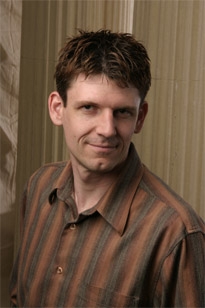
Josh, your Tate books take place in the same fantasy world as the Palmatier books, although not at the same time or with the same characters. Why have two different authors? When new authors are trying to get that important name recognition, doesn’t this put you at a disadvantage?

JOSHUA PALMATIER: Well, the two names were actually a strategy brought up by the marketing department at my publisher. The idea was that we’d release the new books under the Ben Tate name and make it an open secret. Hopefully, the Joshua Palmatier fans would learn of the name switch and buy the new Tate books, while the Tate name would bypass the ordering structure of the bookstores so that they’d carry the new books on the shelves and pull in new readers. It was an attempt to increase the audience for my books. The sales for the Palmatier books were OK, but not as high as hoped, so the publisher was looking for ways to draw in additional readers. At this point, I would have to say that the ploy didn’t work, although I think there were numerous factors as to why it didn’t work.

VENTRELLA: Is the voice the same in the two series?

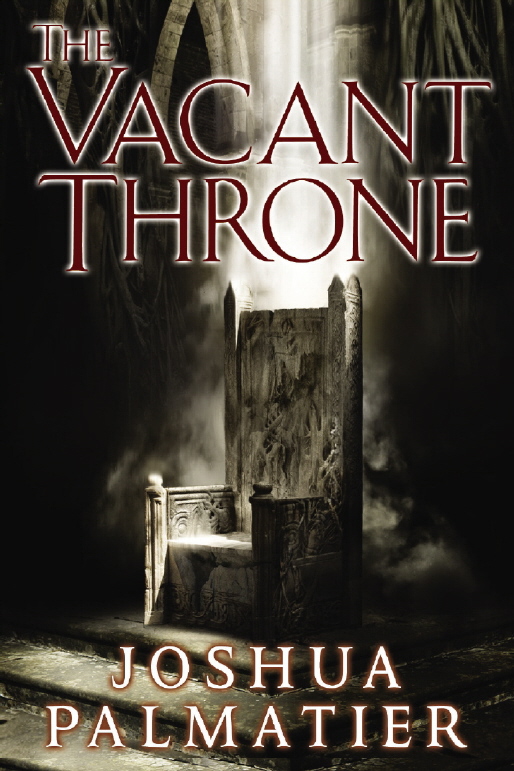
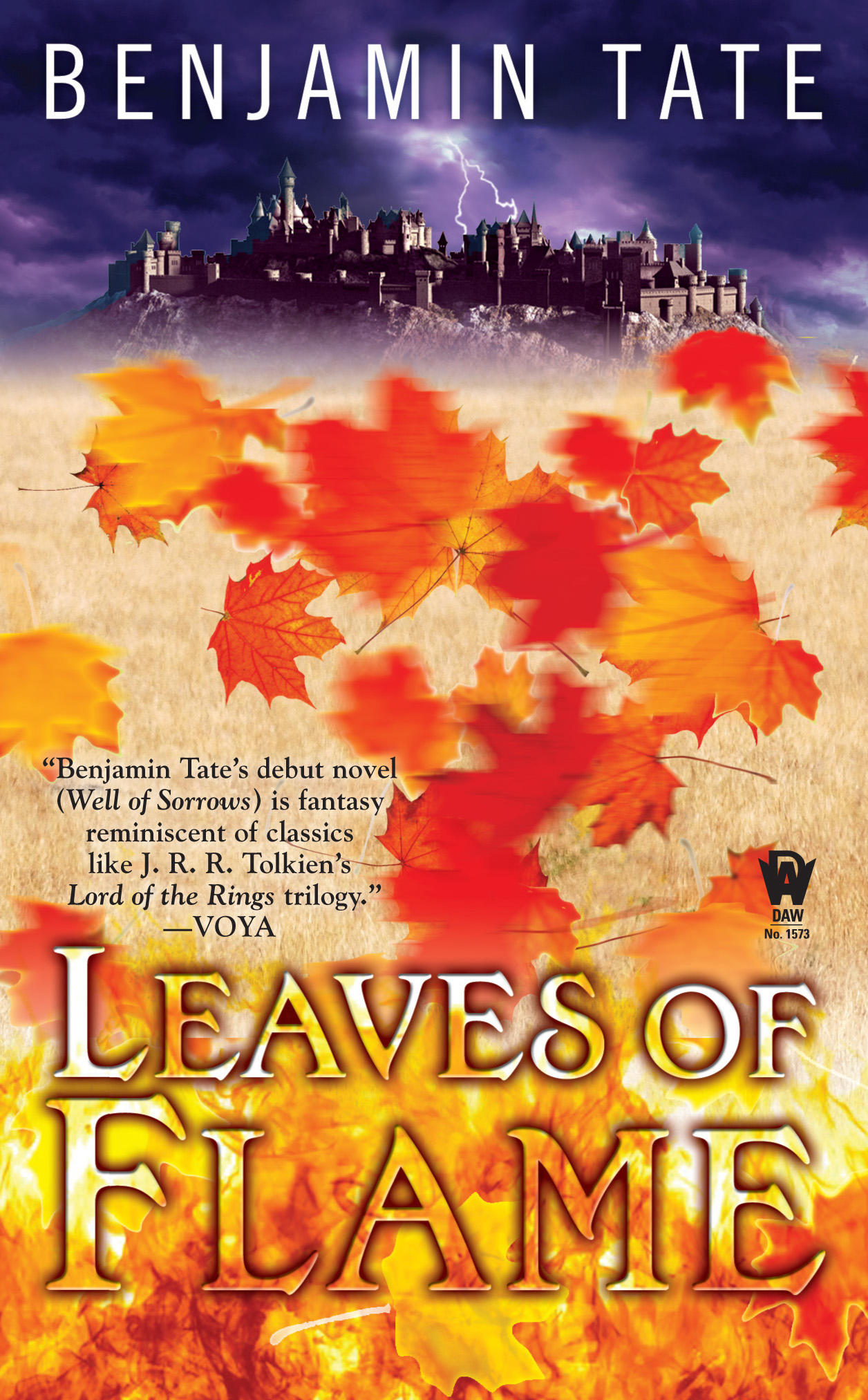
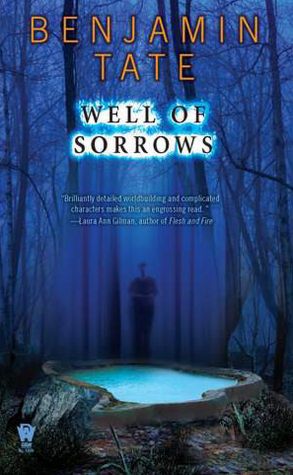
PALMATIER: That’s one of the reasons that I didn’t protest too much when the publisher suggested the name change for the new series —- the voice of the new series is significantly different than the original. So even though it’s set in the same world, it had different characters, was set at a different time period in the history of the world, on a completely different continent, and -— like the Palmatier books, which were focused on one character, written in first person, and were essentially “urban fantasies” set on an alternate world —- the new series was much more epic in nature. There are multiple POV characters and threads that the reader follows, and the action takes place over two different continents and over a much larger time span. So the feel of the books are different than from that original series. Both are dark in nature though, as the covers of THE VACANT THRONE and WELL OF SORROWS suggest.

VENTRELLA: How did you get your first “big break” in publishing? Did you have an agent first?

PALMATIER: My “big break” was sort of interesting actually. I wrote my first book (unpublished) and started sending it out to editors and agents at the same time (one editor at a time, but multiple agents). I spent the next ten years writing three additional novels, sending each out to editors and agents and getting rejections from all. But most of the rejections were good, meaning they said, “I’m not interested in this project, but the writing’s good and I’d like to see whatever you write next.” This was encouraging, and it allowed me to focus my attentions on those editors and agents who were interested. I basically kept a running list for each, in order of my preference and tweaked based on the responses I got.

So when it came time to send out THE SKEWED THRONE, I started at the top of my editor list (Sheila Gilbert at DAW) and the first seven agents on my list. I heard back from those first seven agents quickly (all rejections), so sent out the next batch of seven, all while DAW still had the book. I was also getting my PhD in mathematics at the same time, at the point where I was defending my dissertation. I got a call from one of the agents, Amy Stout, while prepping for that defense. After a lengthy discussion on the phone over representation, I signed on with her and told her that DAW currently had the book. Amy called up Sheila and started talking. Meanwhile, I continued my job search and defense.

I was away at a mathematics conference, doing interviews and such, when Amy called back to tell me that DAW wanted to buy THE SKEWED THRONE. I was thrilled! But they also wanted to talk about the sequels. So in the midst of finishing up my dissertation and job hunting, I worked up the proposals to THE CRACKED THRONE and THE VACANT THRONE and almost immediately had contracts for the entire trilogy. My first sale! I was on my way!

But keep in mind that it took me ten years and I wrote three other novels before THE SKEWED THRONE found a home. And I lost count of the number of rejections.

VENTRELLA: Aspiring authors often seem to think that writing a book is easy and your first one is sure to be a huge hit. What writing experience did you have prior to publication?

PALMATIER: *snort* Writing a book isn’t easy. I said before that I wrote three other novels before I sold one, but that isn’t quite true. I started writing while I was in high school and kept writing all the way through college. It wasn’t until grad school that I sat back and asked myself whether I was going to do this for fun, or if I was going to try to sell something. So it was ten years and four novels total from the moment I decided to get serious. There were ten years of “fun” writing before that.

And that “fun” writing was actually my entire set of writing experience. I took a few classes here and there in college as part of my other degrees (electives and such), but for the most part, those ten years of writing were me teaching myself how to write. I wrote my first true novel five different times, each time learning more about the craft and what was good writing and how much mine sucked. It wasn’t until the 5th draft that I finally thought I’d written something that could potentially be published. (And those first few drafts were bad. I mean bad. Indescribably bad.)

I also pretty much trained myself in how to send that manuscript out to find a publisher to call home. That simply amounted to a bunch of research and time on my part, reading up on what “manuscript format” meant and what publishers wanted in a “query” or “partial.” All of that’s even easier to research now with the internet, and I strongly suggest aspiring writers take the time to do the research and make a list of publisher and agents they want to submit to when they’re ready.

But of course, you have to have that stellar book first, and that part ain’t easy at all.

VENTRELLA: Tell us about the books!

PALMATIER: I was waiting for you to ask. *grin* All of my novels are dark fantasy, the Tate books more epic in nature than the Palmatier books.

I’ll start with the “Throne of Amenkor” series, which begins with a young girl, Varis, barely surviving in the slums of the city of Amenkor. She’s on her way to becoming lost, like so many other souls in the slums, when she runs across a Seeker—an assassin sent by the Mistress of the city to mete out justice—named Erick. Erick trains her to protect herself and uses her to hunt his marks in the slums. Of course, these marks lead Varis beyond the slums into the heart of the Amenkor and deep into its politics. Eventually, she’s hired to kill the Mistress herself, protected by the magic of the Skewed Throne.
The series continues beyond that, with attacks from a race called the Chorl from the sea, and eventually leads to Amenkor’s sister city of Venitte. But I don’t want to spoil anything. Everyone will just have to read the books to find out what happens.

My Tate novels are a little different, set on a different continent and sort of combining the settling of a newly discovered continent with fantasy elements. Colin’s family has fled the coming war in their homeland to the new continent across the ocean, landing in one of the few settlements on the new coast. But the politics of the old world have followed them to the new. In order to escape, Colin’s father accepts responsibility for a wagon train heading into the unexplored plains to form a new settlement inland. They head out . . . only to discover entire new races of people, a beautiful new world, and unexpected and magical dangers. Attacked by one such race, the wagon train is driven into a dangerous and dark forest, where Colin’s life is changed forever when he is forced to drink for the Well of Sorrows in order to survive. But the waters of the Well transform him into something more than human. Struggling to maintain his grasp on humanity, he attempts to use his newfound powers to end the war between the three clashing races —- the humans from his homeland, the dwarren, and the Alvritshai.

VENTRELLA: You are the editor of a new anthology about fae coming out soon. How did that come about?

PALMATIER: Ah, the role as editor. That actually came about at a bar. You see, a bunch of my fellow friends and authors had gotten together for a signing and afterwards we, of course, hit the bar for a few drinks. While chatting, someone brought up the idea of doing an anthology centered around a bar, and thus AFTER HOURS: TALES FROM THE UR-BAR was born. I wrote up a proposal for that and sent it out. DAW liked the idea and thus my editing career (with Patricia Bray) was born. After the bar anthology, Patricia and I proposed a few other ideas and DAW bought THE MODERN FAE’S GUIDE TO SURVIVING HUMANITY.

VENTRELLA: As someone who has edited a short story collection and is working on a second, I find that the hardest thing to do is reject stories, especially from friends. How have you handled this?

PALMATIER: Well, for the first anthology, AFTER HOURS, Patricia and I only invited around 17 authors to contribute. A few had to drop out because of their own schedules, so we ended up not needing to reject anyone for that anthology. However, for MODERN FAE we invited over 30 people to contribute stories, so of course we had to pick and choose from the selection there. Pretty much all of those invited were friends, of course, but we were up front with everyone and in the end we simply handled everything professionally. Both Patricia and I were able to separate the friendships from the editorial job, so while rejecting some of the friends (some of them friends for decades) was hard, we just . . . did it. Like ripping that band-aid off all in one go. Everyone knew that getting rejected was a possibility, and I think everyone understood why certain stories didn’t make the cut.

VENTRELLA: When editing an anthology, do you ever do any rewriting of the stories submitted yourself?

PALMATIER: All of the stories in the anthology were edited, of course. Neither Patricia nor I do what I would call “rewriting” though. Each of us reads the story and we compare notes on what we thought and how we think the story could be improved. One of us then sends out our notes about suggested revisions (we divide the authors up into two teams —- Team Patricia and Team Joshua). It’s up to the authors to revise the story, with the idea that at this stage there’s still a chance that the story will be cut if the revisions aren’t satisfactory. But all of our authors have reacted professionally to our suggestions, so we’ve never had any trouble. I think everyone realizes that we all want the best stories possible in the anthology and we’re all working toward that one goal. I think both anthologies are spectacular.

VENTRELLA: What resources do you use in creating your fantasy worlds?

PALMATIER: I use everything when creating my fantasy worlds. *grin* By this, I mean that I use bits and pieces of many different cultures all tweaked to fit the circumstances of the world where these characters and these stories are being told.

For example, in the “Well” series, I have three main cultures clashing on the plains. The human culture has aspects from the settlers who were setting out into the American West, but it’s obvious that they aren’t those settlers. For their homeland, I meshed numerous European cultures. The dwarren are reminiscent of some of the American Indian cultures, but various additions of my own, enough that I wouldn’t say they’re based on any one particular culture. What I’m trying to capture is a flavor, but I want that flavor to be unique —- familiar enough to be comfortable, but different enough to intrigue the reader.

Of course, you need to be familiar with numerous cultures in order to do this well. I wouldn’t say that I have any particular resources for this. I simply read and absorb as much about other cultures as I can.

VENTRELLA: With so many fantasy novels out these days, what have you done to make your series stand out from the rest? What’s different about them?

PALMATIER: Hmm . . . well, I’d like to think the writing. But, I also try to make the characters as interesting as possible and play around with the magic.

I think for a fantasy, you really need to pay attention to the magic and think about what makes your magic different from everyone other fantasy novel out there. In the “Throne” series, I have two main magical components that I focus on — the White Fire and the Skewed Throne. These two magics are obvious: the White Fire is a wall of white flame that passes through the city for a second time during Varis’ lifetime (it passed through once before 1000+ years ago). No one knows what this Fire is, but it touches and affects everyone in various ways. For Varis, a piece of the Fire appears to settle inside of her and she eventually learns how to use it. The Skewed Throne is designed to store all of the personalities of those who have touched it inside, so that the ruler has the ability to access this information and knowledge and, in theory, become a better ruler. The problem is that in Varis’ time, there are so many personalities stored inside the throne that it has essentially gone insane. For the “Well” series, I have the water inside the Well of Sorrows as the main magical component. This water gives the person who drinks it limited powers over time, but it also taints the drinker and eventually alters them into . . . something else.
These are the key elements that I think make my fantasy different than other fantasy novels out there. But again, that isn’t enough on its own. I think my books are darker and more realistic than other fantasies on the shelf at the moment, and I think that if you don’t have interesting, relatable characters, then all the cool magic in the world isn’t going to save you.

VENTRELLA: When creating believable characters, what techniques do you use?

PALMATIER: Wow, that couldn’t have been a better segue if I’d planned it. So, yeah, the characters are incredibly important. People won’t keep reading if they don’t care about the characters, no matter how interesting the magic or the plot. Everyone wants someone to root for. I don’t think there are too many tricks to creating believable characters though. The only real technique is to get inside of that character’s head and to seriously ask exactly what it is that the character would do in such a situation. It isn’t easy, and it takes practice to get yourself into that headspace (because it’s a slightly different headspace for each character), but you literally need to “become” that character for those scenes. You have to put yourself in that person’s world and feel them. At least, that’s how I do it. What would they think, what would they say, what would they do in this situation? Those are the key questions you have to ask in every scene.

VENTRELLA: What is your background? How did you decide to become a writer?

PALMATIER: Well, I decided to become a writer in the 8th grade, when an English teacher assigned us a “Twilight Zone” story and I wrote a rip-off of the Atlantis story with spaceships. But the teacher’s comment was, “This is good, you should write more.” I think that’s the first time it seriously crossed my mind that PEOPLE WROTE THE BOOKS I WAS READING! And that person could be me! It was a stunning revelation. I immediately began writing, doing short stories for Andre Norton’s MAGIC IN ITHKAR series (even though I never sent anything in) and eventually sitting down to write a typical “me and all my friends get transported to a fantasy world!” kind of story. It sucked of course, and I never finished it. But it was the first effort at writing something longer, and it taught me that writing wasn’t easy. I started my first SERIOUS effort at a novel shortly after that, and that one I finished (even though it sucked).

I never really had a “background” in writing. My degrees are in mathematics (something has to pay the bills) and I never really took any particular writing classes for the sole purpose of “learning” to write. I took a few creative writing classes in college, mostly for the elective credit. Everything else I taught myself.

VENTRELLA: You’re a math professor, right? Don’t those kinds of nerds usually end up writing hard science fiction?

PALMATIER: Ha! Yeah, science fiction. I think there are two reasons that I don’t write science fiction. The first is that, as a reader, I was never really drawn to science fiction. Everything I read when I was younger leaned more toward fantasy. I “discovered” fantasy and science fiction by accidentally checking out an Andre Norton book from the library. After that I was hooked. I read everything of Andre Norton’s I could get my hands on . . . but even then I gravitated toward her fantasy, not her SF. So I was a fantasy reader early on. It only made sense that I’d want to write fantasy on my own.

The other reason I write fantasy and not SF, I think, is because I needed something totally different from the mathematics to focus on while in grad school. The writing was, essentially, my “break” from all of the hardcore equations. In fact, it was such a break that Varis, my main character in the “Throne” books, hated mathematics. So when I got tired of the math, I’d switch gears and focus on the writing and the fantasy; and when the writing slowed down, I turned back to the fantasy. I think they complemented each other rather well.

In fact, I think the structure that’s the basis of mathematics helped me write better fantasy novels—keeping the plot in line and not scattered, keeping the magic realistic, with rules of its own, etc. And the fantasy helped the mathematics as well, since you need to be creative and think “out of the box” in order to come up with new ways to solve previously unsolved problems (which is what you do for your dissertation in math—solve something no one has solved before).
VENTRELLA: What was the biggest mistake you made in your career?

PALMATIER: I think the biggest mistake I made was writing the sequel to my first novel when it hasn’t sold yet. You see, I wrote that first novel and started sending it out to agents and editors. But it was the first book in a trilogy (of course), and I was so confident that it would sell that while it was out doing the rounds I worked on the sequel and got it finished. But of course, that first novel never sold. So I wasted a year of writing working on the sequel, when I should have been writing a different book completely in case that first book didn’t sell. Looking back on it, it’s obvious, but at the time I had no clue. I may have gotten published earlier if I hadn’t lost all of that time.

VENTRELLA: What do you see as the biggest mistakes starting authors make in their writing?

PALMATIER: Well, I still see people making that same mistake I made: writing that sequel when the first book hasn’t sold yet. You should work on something else, because then you have another novel to shop around, and if that first book sell you can still write the sequel. But the biggest mistake I see aspiring writers making is that they don’t take the time to do the research you need to do before you start sending manuscripts out there. Every writer needs to sit down and research the publishers and editors and get a good idea of who they’d like to publish their work. Make a list, with their top choice down. Do the same for agents, paying particular attention to make certain the publisher and agents are legitimate. Do a second list for top agent down. Research each one to see what they want from the writer (some want just a query letter, some want a partial, some will take the full manuscript, etc). Make certain the manuscript is in the proper format. Once all of this research is done, then send out the manuscript. All of this research won’t take up much time (in comparison to the time it took to write the manuscript in the first place) and it makes your submission professional. Publishers want good books first and foremost . . . but they’re also looking to work with someone who approaches them in a professional manner.

VENTRELLA: What piece of advice do you wish someone had given you when you first began writing?

PALMATIER: I think I was rather lucky in that I did get good advice pretty much right at the start, and that advice was, “Have patience.” You won’t get a contract immediately. You’re going to get rejections, and you have to realize that the rejections aren’t personal. So you have to accept the rejections (with perhaps some wine or chocolate and a few good writer friends for support) and persevere. Keep sending that manuscript out, submitting down your list, and keep writing that next project. Because by the time you get through your list, if you keep writing, you’ll have another novel ready to send out. By then you’ll have a revised list based on the rejections you’ve gotten, and that revised list gives you a better chance of success.
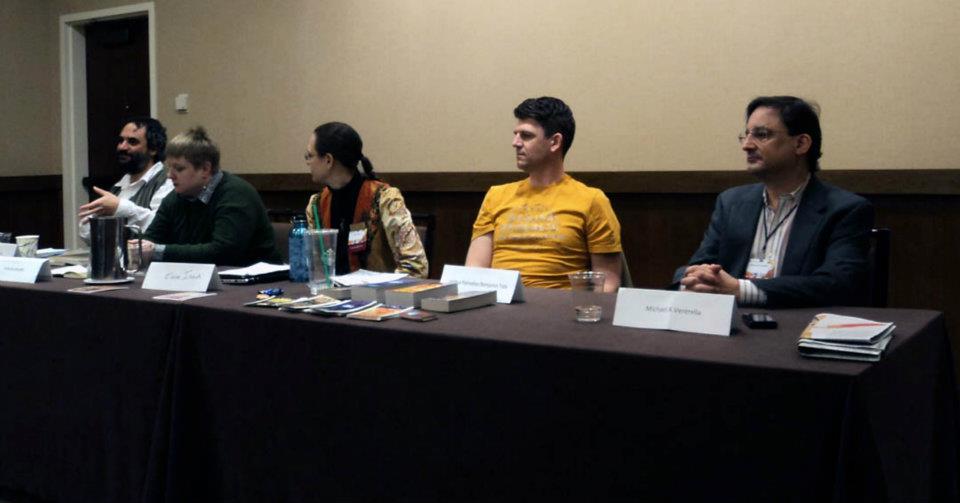
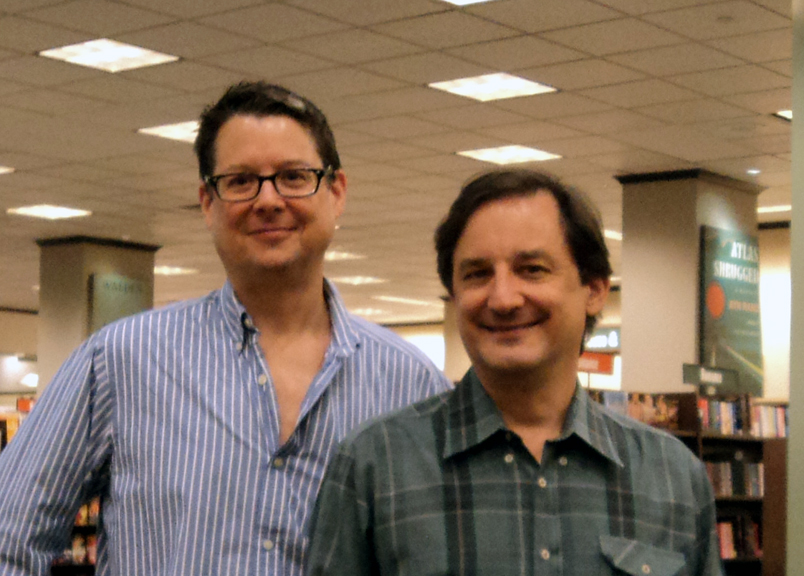
Joshua and I on a panel together at the 2012 Arisia convention

The Query Letter

I’m at that stage where I’m sending out query letters to agents for my next novel. While the publishing industry changes daily, the advantages of having an agent to sell your book has not disappeared.

Query letters are tremendously important, but too many authors get hung up on them — as if agents will laugh in your face if your query letter isn’t absolutely perfect.

You’d better use proper grammar and have no misspelled words, but if an agent thinks your book sounds interesting — and if it’s the kind of book they handle — then the other stuff doesn’t matter too much.

The key is to get them interested and make them want to read it. They want to read your letter and think “Hey, that could sell if done well.”

Remember: This is a business letter, not a piece of fiction. Act professional. Treat it like you would a cover letter for your resume.

(an example of a bad query letter)

There’s a hilarious blog called “Slush Pile Hell” in which an anonymous agent posts some of the terrible queries received. It amazes me that people think they sound professional when they oversell their work as the greatest thing ever written or ask questions that are the equivalent of raising your hand and admitting you know nothing about the business. Keep in mind that you are hoping to establish a business relationship with the agent. No matter how good your novel, no one will want to represent you if you present a “difficult” image.

You’re just wasting time if you don’t know who is receiving your letter. Never send a “Dear Agent” letter. Find out which agents are right for you. Make sure they like the kind of book you’ve written. Agents who represent cook books won’t be interested in your science fiction novel. A textbook agent couldn’t care less about your children’s story. You might as well just toss your letter into the trash before you even mail it and save the postage, since the result will be the same.

Make sure you read their guidelines. Do they want an email instead of a letter? Do they want to read the first ten pages? Do they want it in the body of the email or as an attachment? Seriously, if you can’t follow simple directions, how difficult of a client will you be?

The world of publishing is smaller than you think. Agents talk to each other. If you make a fool of yourself with one, it probably won’t be long until another knows about it. There’s plenty of information out there for you to learn how to do it right, so you have no excuse.

Finally, do not take rejection harshly. That’s part of the business. Every author has been rejected before. Sometimes the work just isn’t what the agent wants, and sometimes the agent likes the work but doesn’t know how to sell it. It doesn’t mean your novel is bad. (There are plenty of great novels that were rejected many times — for that matter, there are plenty of bad novels that make the best seller lists…)

In a future post I’ll share my standard query letter (which is adjusted and changed based on who is to receive it) and will discuss the format. And I’ll be sure to let you know if I have any success with it!

My Turn To Be Interviewed

The blog Juniper Grove has an interview with me today! Check it out and leave a comment! (Blog writers love getting comments).

Interview with author Gabrielle Faust

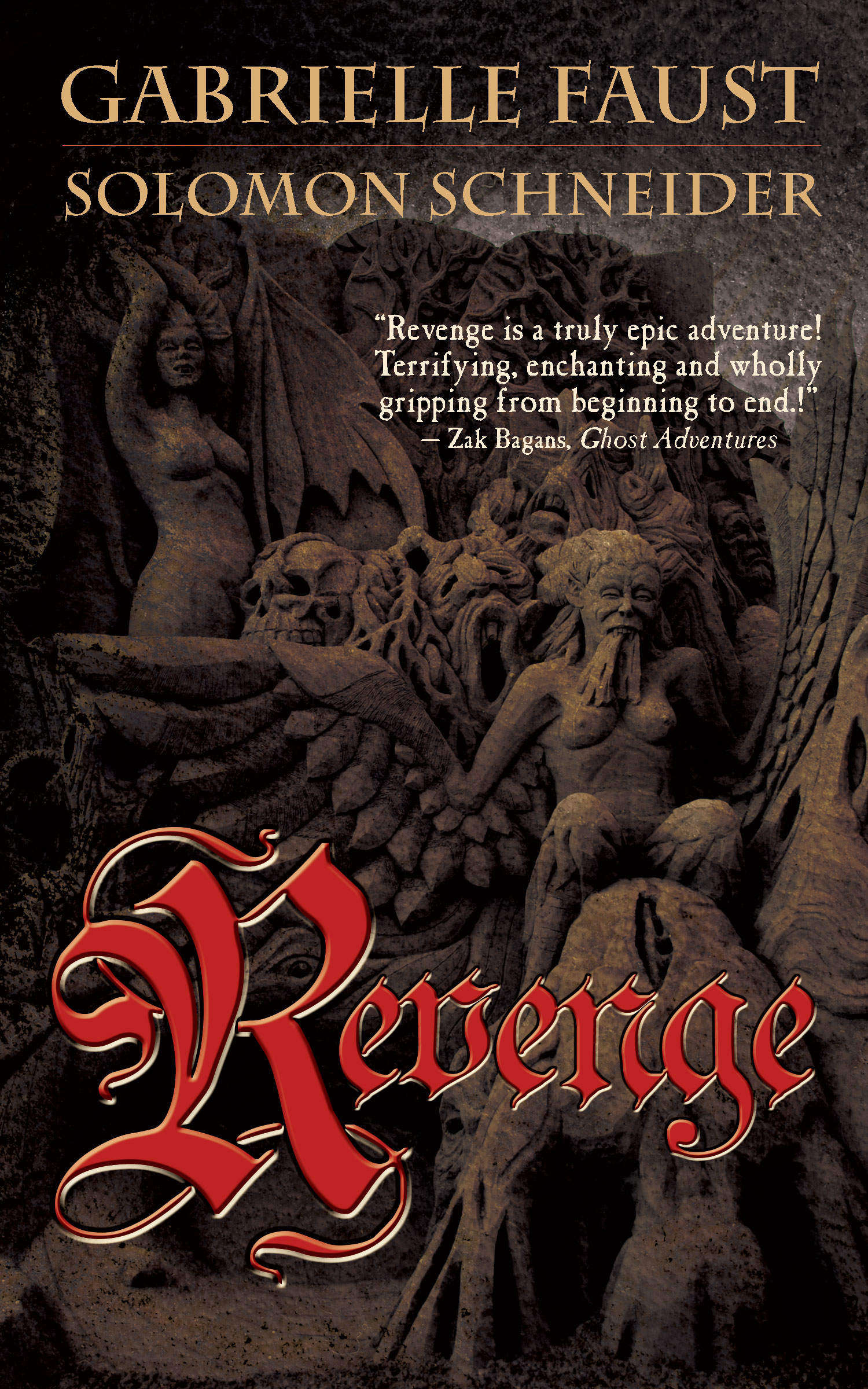
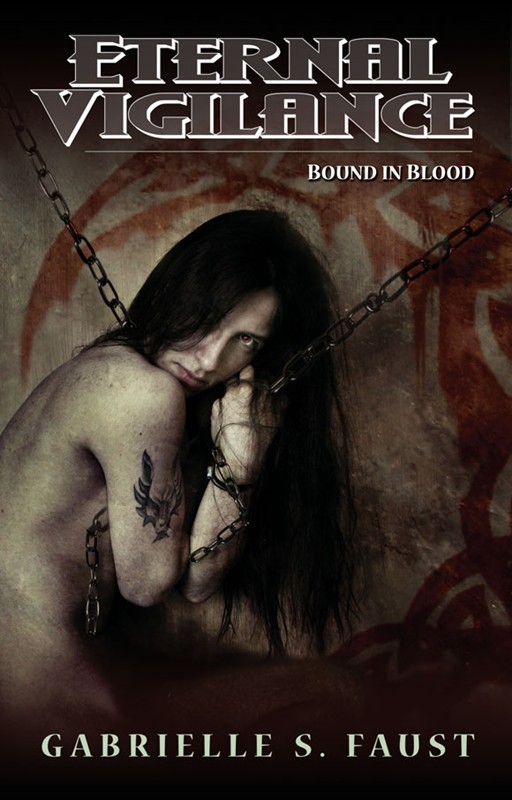
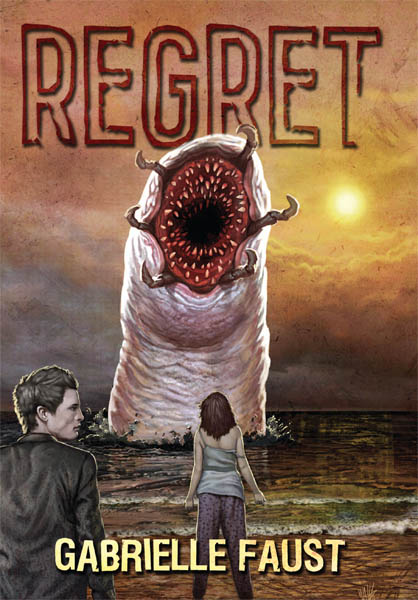
MICHAEL A. VENTRELLA: Today, I am pleased to be interviewing Gabrielle Faust, author of the acclaimed vampire series ETERNAL VIGILANCE, three collections of poetry entitled BEFORE ICARUS, AFTER ACHILLES, CROSSROADS and THE BEGINNING OF NIGHTS, the horror novella REGRET and the celebrated new dark fantasy adventure novel REVENGE. Her short stories, illustrations and editorial commentary have appeared in a variety of online and print publications such as SciFiWire, Blaster, Doorways Magazine, Girls & Corpses Magazine and Fear Zone. She was the Guest of Honor at the Queen of the Damned Vampire Ball in 2008. In 2009 she was crowned “New Orleans Vampire Royalty” by the Vampire Lestat Fan Club at the Tru Blood & Gold vampire ball and was a Special Guest and performer at the House of Blues for the 2011 Endless Night ball. In 2011 Faust was awarded the Texas Social Media Award by the Austin American Statesman. More information on Gabrielle can be found at www.gabriellefaust.com.

Your latest novel REVENGE comes out soon. What’s it about?

GABRIELLE FAUST: My co-author, Solomon Schneider, and I are absolutely thrilled to see this project finally finding its way into the hands of our readership. It was a project that was born of chaos, in chaos and has experienced a rather turbulent road to publication over the past year. That said, we feel strongly that it is some of the finest work we have produced. This will be my seventh book I have had published. However, it will be Solomon’s first foray into the world of novel writing as he has primarily been a poet, philosopher and musician up until this point. Or, as he likes to say, a “wandering wizard”.

As for the tale itself, here is a brief synopsis to give you a bit more of an insight into the epic dark fantasy tale, which I like to describe as “Lord of the Rings” meets “Dante’s Inferno” — “When Marcus Glenfield committed suicide, he took his place among the Legions of Hell as the Demon of Regret. When he learns that the Prince of Wickedness, Belial, is planning to take his former fiancé, Brenda, as his consort, Marcus’ newfound belief in a second chance is quickly shattered in a fit of all too human rage. Incensed by the new demon’s disrespectful hostility, Belial plunges Marcus into the deepest pits of Hell.

But Lucifer has other plans for Marcus. For in the tormented lands of Purgatory, a strange and powerful uprising has gathered to form a new plane of existence—one that would break the ancient caste system of Heaven, Hell, Purgatory, Limbo and Earth, thwarting both God and Satan’s permanency within the universe. Not only have these brash metaphysical pirates kidnapped the powerful child born of Brenda and Belial’s union, they have also guided Marcus out of the prisons of Hell to their new realm.

When they promise Marcus freedom in return for his help, he realizes that he will finally have to choose a side. But can he find one that he can truly believe in?”

VENTRELLA: This is your first collaboration. How did that work out? Did you share the writing equally or was there some other method?

FAUST: Yes, this is the first time I have collaborated with another author on a project for the novel itself. Prior to this, I teamed up with Michael Marano to complete a series of illustrations for his collection “Stories From the Plague Years” in 2010.

The collaboration with Solomon Schneider came about in 2010 when I came across an ancient cryptic blog post he had posted in 2005 which ended up inspiring me for the sequel to a novella I was working on. Solomon is a masterful storyteller and I saw it as an opportunity for us to mesh creative minds and really produce something otherworldly. The first 5 chapters of REVENGE are actually the original novella REGRET, which I combined with this manuscript to give it a true “first book in a series” beginning. After that, we divvyed up the chapters based on the characters we felt most passionate about. There were particular characters who were solely Sol’s invention and vice versa. After the creation of these separate chapters, however, it was up to me to take everything and make it mesh so that it sounds like one cohesive author’s voice throughout the book. I’m quite pleased with how it turned out!

VENTRELLA: Your work has been distributed mostly through mid-sized publishers (like me!). What are the advantages and disadvantages of this?

FAUST: The advantage to mid-size publishers is a personal connection with the publisher and an ability to, usually, contact them directly about issues. However, as all authors know, there are a lot of untrustworthy publishers out there in the mid-size world and, unfortunately, an author must keep their wits about them at all time. There is also the issue of a lack of marketing budget. Thus, the author must be prepared to pay for their own book tours, organize most of their own publicity, etc. I feel quite blessed to be with my current publisher, Barking Rain Press, as they have been a true breath of fresh air! I’m just thrilled to be working with them.

VENTRELLA: Aspiring authors often seem to think that writing a book is easy and your first one is sure to be a huge hit…

FAUST: HA! Writing a book is never an easy task. In fact, many an author have compared it to childbirth. However, if it is your passion, you will embrace the process, which may very well drive you insane by the words “THE END” are typed, and revel in all of its glory and madness. There is no guarantee your first book will be a “huge hit”. In fact, that is a very rare anomaly. As with all artistic processes, we learn about our strengths and weaknesses with each project. We learn what our audience gravitates towards with zeal and, at times, we cringe at the mistakes we made.

VENTRELLA: What was the biggest mistake you made when first starting out as a writer?

FAUST: I’d say I made two big mistakes when I first started out: as aforementioned in the above question, I truly believed my first book was going to make millions and I was going to galavant around the world riding trains and living the romantic dream of the author of old. It was a brutal awakening to realize that the world just doesn’t work that way and, no matter how many stellar reviews I received, it was still going to be a very hard road to true success. As I like to say, “You can’t eat critical acclaim.”

The other mistake I made was to trust blindly that your editor is going to catch every single typo. That’s just not the case. The editing process is a two-way street and each time an editor sends you a PDF to review you have to carve out a week and comb over each and every page with a magnifying glass. Editors, no matter how amazing and detail oriented they may be, are still human. That said, every book I have ever come across has had at least one typo in them and, so long as there are just one or two, it’s simply not the end of the world.

VENTRELLA: I admittedly don’t read much horror so I’m not sure where in ones inner self you would find these ideas… What’s your process in developing a story?

FAUST: Everyone has their inner demons. We wrestle with darkness on a daily basis. The human species is only one step away from their animal instincts at all time and it really and truly takes very little push someone to their breaking point. It’s terrifying but true. For me, that is the true “evil”. Not hell-spawned demons or other mischievious paranormal and supernatural entities, but our fellow human beings. One simply has to turn on the evening news to find inspiration for a horror novel.

VENTRELLA: Do you tend to outline heavily or just jump right in? What is your writing style?

FAUST: Lately I have begun outlining more and more for the initial stages of my novels. This is primarily because the plotlines are becoming more intense involving multiple levels and dozens of characters. It’s really the only way I can keep track of them all. However, I always like to leave at least a little organic process to my writing. I may know all of the key points that need to happen throughout the book to get from A to Z but what happens between A and B is still a mystery even to me.

VENTRELLA: Do you enjoy the labels people have put on your work or do you think it may limit your audience?

FAUST: I actually find it highly amusing when people try to label my work because they always do it with a slight degree of confused uncertainty. The fact is that my work can’t really be pigeonholed because there are multiple elements running throughout. However, people do adore their labels.

VENTRELLA: When I have discussed the current novel I am working on (BLOODSUCKERS, about a vampire who runs for President), many agents and editors roll their eyes and say “Oh, not another vampire book.” Yet vampire books continue to sell. Do you think the market is oversaturated or will people always be interested in this?

FAUST: Vampires will always sell because people identify with the vampire on a primal level. The vampire is also the penultimate escapism in the supernatural world. Right now, I do believe there is an oversaturation of the “paranormal romance” vampire story which has basically, in my opinion, defanged our beloved predators and turned them into GQ playboys. However, I will always remain true to my own vampire mythos and will never feel in the least bit threatened. When people tire of their frolicking, sparkly playthings, they know where to find vampires with real “bite”!

VENTRELLA: What’s your opinion on self-publishing? Do you think this is a good idea for first-time authors?

FAUST: Honestly, unless you already have an established, widespread fanbase before you even release the book, you should try to publish traditionally first. Self-publishing is very expensive, time consuming and most bookstores will still not carry your work if they know it’s self-published because of the reputation that industry has for low-quality work.

VENTRELLA: What does the future hold for you? What projects are in the pipeline?

FAUST: I am currently working on the fourth ETERNAL VIGILANCE book, which I hope to have completed by the end of 2012. I will also begin work on the sequel to REVENGE next month. I will be touring extensively throughout the year to promote REVENGE.

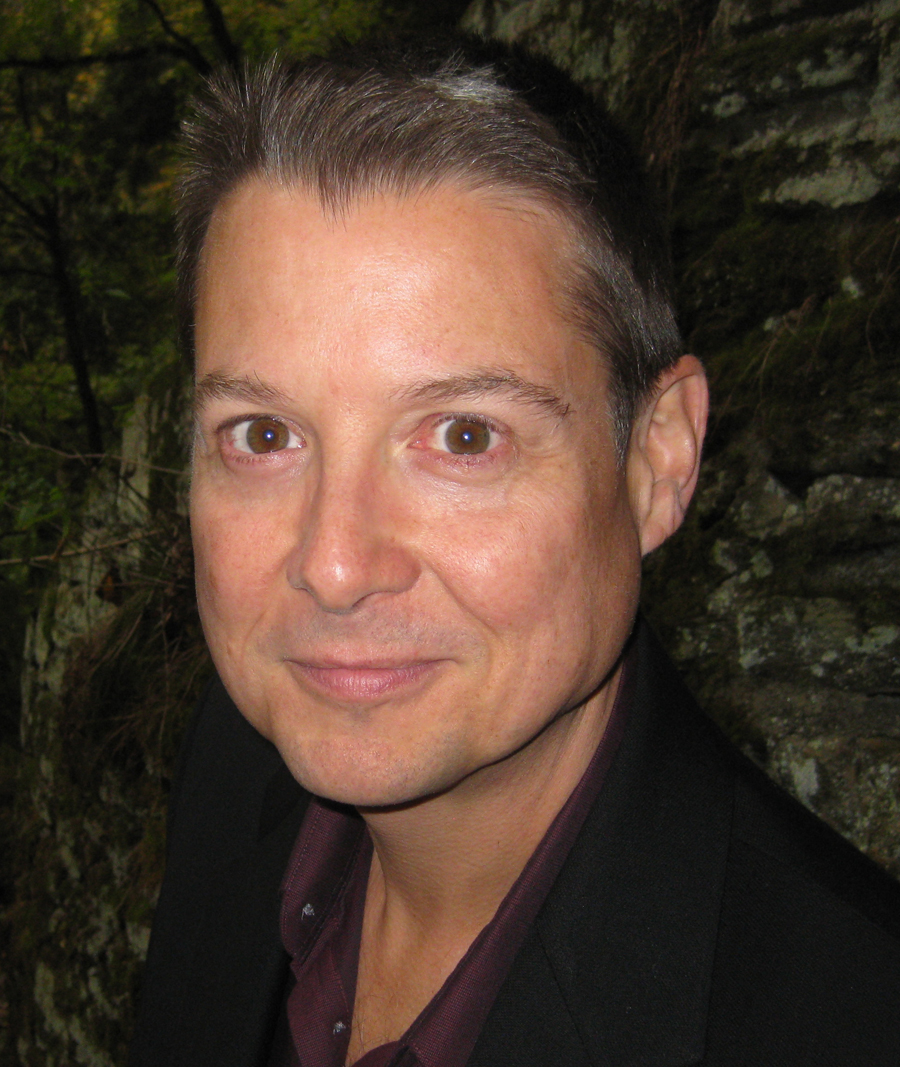
Interview with author Jon McGoran

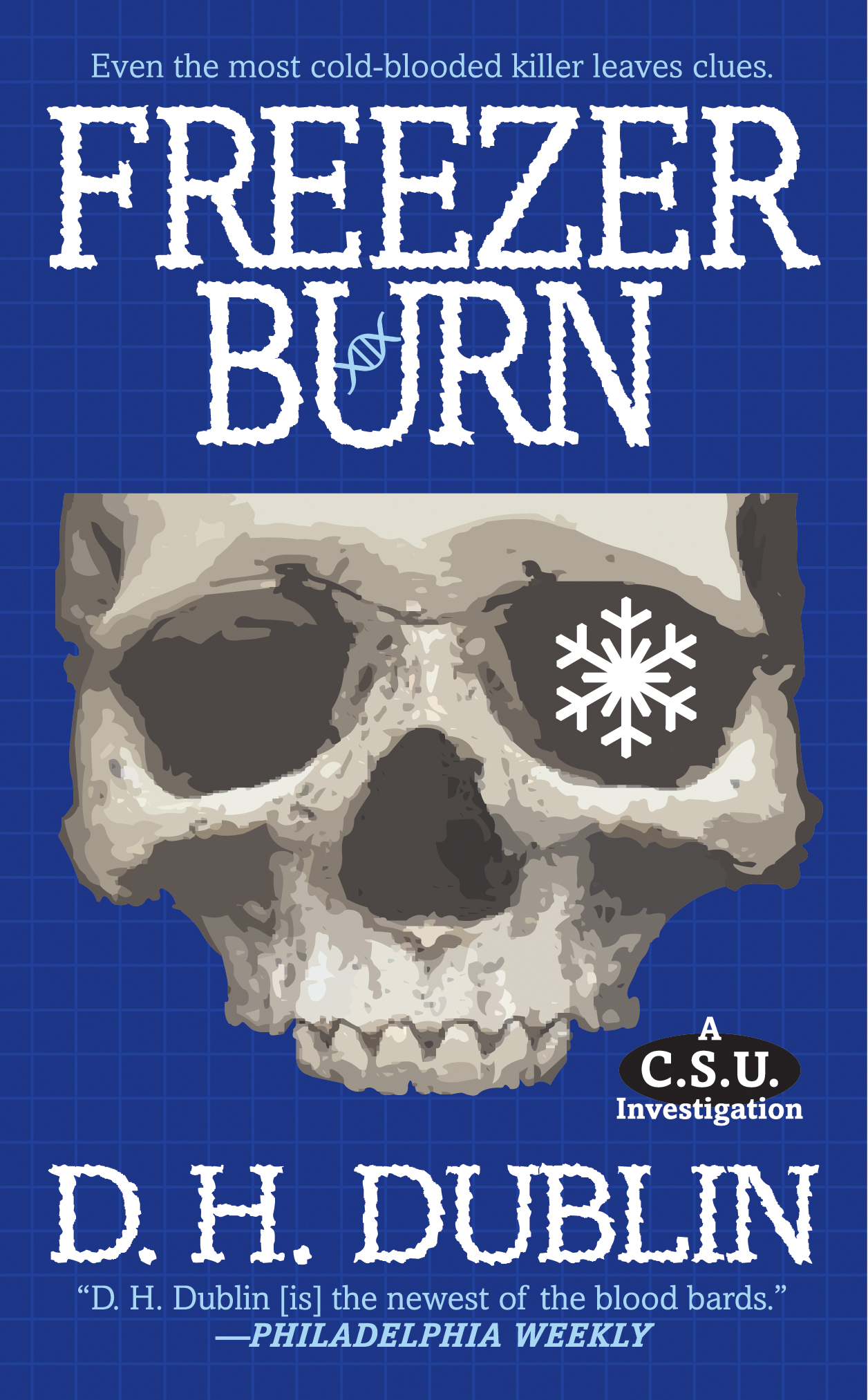
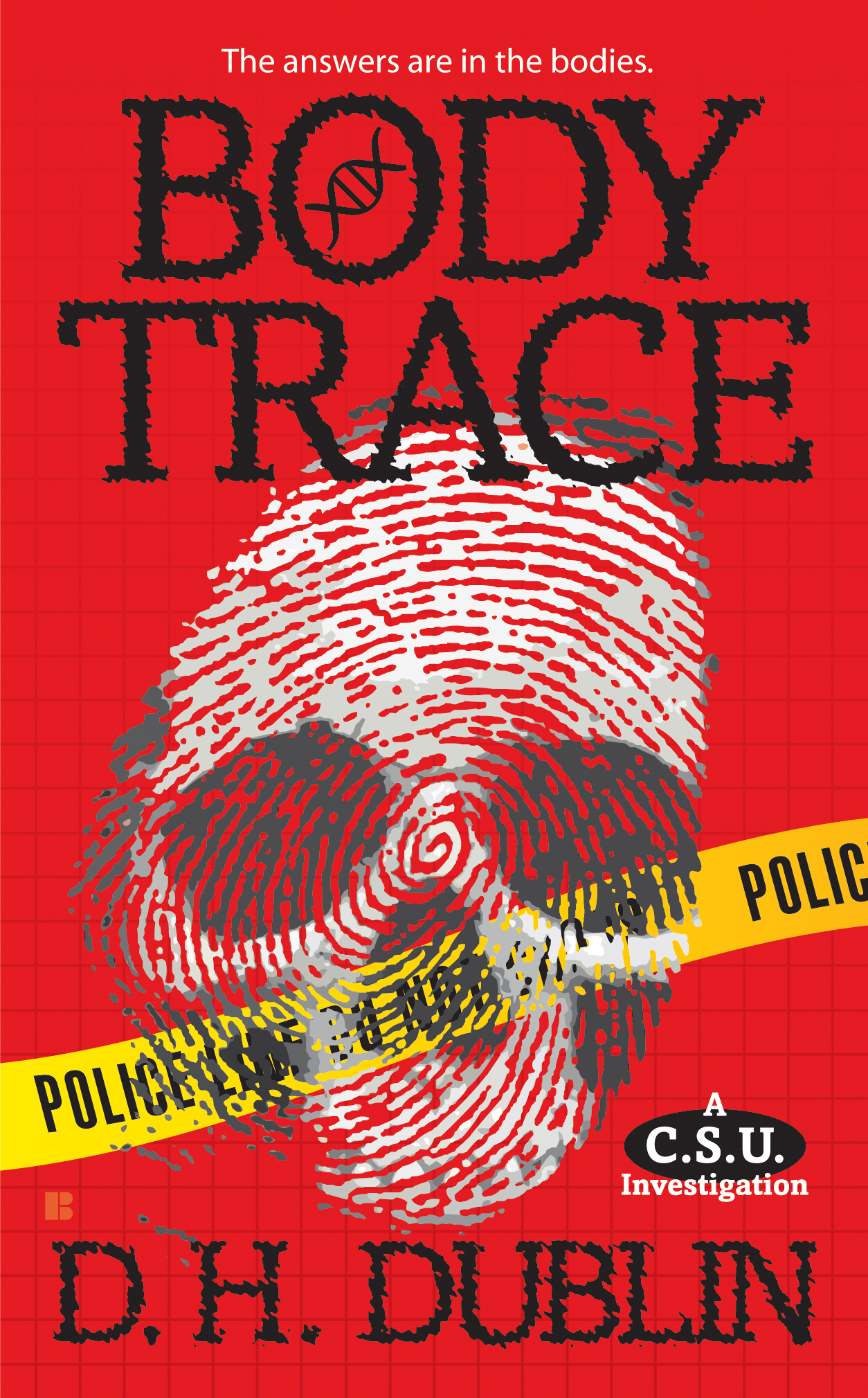
MICHAEL A. VENTRELLA: Today, I am pleased to be interviewing Jon McGoran a/k/a D. H. Dublin. Writing as D. H. Dublin, Jon McGoran is the author of the forensic crime thrillers BODY TRACE, BLOOD POISON, and FREEZER BURN from Penguin Books. As Jon McGoran, his fiction has appeared in several anthologies, including LIAR, LIAR and THE STORIES IN BETWEEN and the upcoming “Zombies Versus Robots” anthology from IDW. He is a member of the Philly Liars Club, the MWA and the ITW.

Jon and I met at the Writer’s Coffeehouse near Philadelphia and he has provided some excellent advice for me in the past concerning my fiction.

Jon, they always say “Write what you know.” What background do you bring to your crime thrillers?

JON McGORAN: I have no background in law enforcement, either side it — or zombies or robots, for that matter, — but I think the whole “Write What You Know” axiom is worth considering. It sounds like great advice, but I think it only goes so far. Everyone I have spoken to in law enforcement pretty much agrees that all fictional depictions of their jobs are wildly misrepresentation, even the good ones, and in some ways especially the good ones.

Take a private eye novel: the vast majority of what goes on in the work life of a PI would never make it into a book, not should it. No one would want to read a truly realistic portrayal of the life of most private eyes. I am not saying there are not many, many valuable insights into the world of the cop or the criminal that can only be gained by living those lives, but for the most part, there is a lot of drudgery in those jobs, and very likely most of those professionals rarely if ever encounter the excitement twists and turns in most PI novels.

I think, to be honest, most PI novels, and most genre fiction, is more informed by the conventions of the genre than by the realities of the world it purports to depict. (And if you write a series, you are almost by definition writing off any level of realism; the events in each novel would take a huge toll on the main character, and who would want to read a PI series where after the fourth book the protagonist just sits in a corner and rocks back and forth?).

People generally don’t want to read about the mundaneity of everyday life. They want to read about something special. But they want to read about those fantastic things happening to people who are on some level very real. That’s what makes them care.

So, I would replace “Write What You Know” with two other axioms: “Write Who You Know,” since the essence of writing a good novel of any sort is knowing the characters in it, and depicting them realistically; and “Know What You Write,” because while you do not have to start out an expert in the area you are writing about, you have to become one in order to do it well. Especially in a genre such as forensics, you have to do your research. Apart from the importance of writing knowledgably and with confidence about a given topic, it can be devastating to the reading experience to catch the author in an error. Research can be hugely fun and fascinating, but when it comes down to it though, your job as a writer is to make stuff up.

VENTRELLA: Having helped teach the “Write a Novel in Nine Months” course, what are the biggest mistakes you see new writers make?

McGORAN: I used to hate it when writers would pontificate that character is everything, and I still don’t like it (because nothing is everything, that’s why there is other stuff) — but character is hugely important, and while plot and setting, etc., are also important, one of the hardest things to grasp is how important it is that character thoroughly pervades every other aspect of a story. That point of view and voice impact everything, and they all stem from character. You learn about plot and setting and character as different things, but when you get to that next level, you have to learn in order for your writing to be immersive for the reader to lose themselves and get absorbed in it, everything must be experienced through the lens of character. As with so many aspects of writing, that is easier to grasp than it is to keep in mind while you are writing. One of the greatest perks in teaching the Novel in Nine Months class, apart from meeting so many talented writers, is that by reiterating the lessons of good writing, you are reminding yourself, and reinforcing your own writing.

VENTRELLA: What mistakes did you make when you first started writing?

McGORAN: The full list of mistakes I made while writing my first novel would be longer than the novel itself, but I learned a lot from making those mistakes, and even more from correcting them. The biggest mistakes had to do with point of view. It was a sprawling, raucous thriller with four or five plot lines and maybe ten different points of view. Unfortunately, it was only after I finished the first draft that I fully grasped what “Point of View” really meant. There were POV errors on every other page, and scenes with shifts of POV that were physically impossible. It took me months to sort it out, maybe full year, through several rewrites and drafts, before I had fixed all of the POV errors and inconsistencies. But through the process, I learned a lot about the importance and the subtleties of POV.

VENTRELLA: What is the process you use to create believable characters?

McGORAN: For me, writing process is closely related to character development, and getting inside the heads of characters, especially characters in some ways very different from me. I have always been a strong proponent of outlines, and the more I write, the more convinced I am of their importance. I know some writers do not outline, and it seems to work for them, but it is an essential part of my writing process. And when writing a story with a mystery at its core, outlines are particularly important, because you’re not just concerned with the structure of the plot, you also have to think about how you reveal information, both to the characters and to the readers. You almost need a second outline, just dealing with the revelation of clues and other information needed to solve the crime. When writing a forensic mystery it is even more important: you are not just getting information from witnesses or informants, you are deriving it from forensic techniques; evidence that has to be discovered, then interpreted, and often reinterpreted. The revelation of that information is part of the pacing of the story, and I think it’s almost impossible to do it well without a solid outline.

So what does all this time spent outlining have to do with believable characters and being a male author writing from a woman’s point of view? I think preparation is hugely important, and outlines are a big part of that. As I was preparing to write BODY TRACE, the first book in the D. H, Dublin series, I was a little concerned about writing from a woman’s point of view. But my outlining process helped me a lot, because the time that I spent working on the outline, I was really getting to know my characters, especially Madison, the main character. By the time I started writing the first draft, I had already been so immersed in the outline, and so immersed in Madison, that her point of view was second nature for me. This is not to say that there weren’t surprises or revelations about her while writing that draft, and there were definitely aspects of her character that revealed themselves toward the end of the book, causing revisions of earlier passages, but for the most part, I knew Madison before I started the draft. By the time I started writing, I was no longer worried about, “Is this how a woman would think or act,” I was thinking “Is this how Madison would think or act?” And by outlining so extensively, I had already answered many of those questions for myself, which helped define Madison in my mind. Writing a detailed outline helped me in the ways that a detailed outline always helps, but in addition, that added time spent living in Madison’s world before I starting the first draft helped me to become completely comfortable with her point of view, and her voice. By the time I started writing the first draft, I had a fully-formed character to occupy –- a character for whom being a woman is just one of many defining characteristics. The same is true for the other characters in the book: All that time spent in preparation is time your are getting to know all of your characters better, so that they are more or less fully formed before you start your draft.

VENTRELLA: What do you think is the biggest misconception people have about the publishing business?

McGORAN: I would say probably the biggest misconceptions in the publishing industry these days are things that were stated with absolute certainty by well-informed experts six months ago. Things are changing, and fast. Frankly, I am torn, at times trying to keep up and make sense of the constant changes, and other times keeping my head low, concentrating on my writing, and wondering what it’s all going to look like when things finally settle down.

Self-publishing is absolutely not what it used to be; it is a viable alternative, and one that many successful authors are exploring, and many new authors are having great success with. That said, some of the major knocks against it remain true: while there is a lot of great stuff being published, there is much more that is not very good, and your great self-published book will have a hard time punching through all that clutter to get any attention. And when you self publish, you are not just a self-published writer, you are now a self-publishing publisher, and you have to do all of the things that a publisher does, including all the production, promotion, distribution, and sales. Some people say the traditional publishing houses barely do that stuff anymore, but don’t kid yourself: they could certainly do more, and they could do some things better, but they do a lot. Self publishing can be a great option if you have the time to put into it, but make no mistake, you are taking on a whole other job, and a big one at that, one that could take up all that time you would have been able to spend writing that next great novel.

VENTRELLA: As a fan, who do you enjoy reading?

McGORAN: There are a number of local writers whose work I really enjoy, including our friends Jonathan Maberry and Dennis Tafoya, as well as Duane Swierczynski. Still, though, I think my favorite author is Elmore Leonard, he of the crackling dialogue and zero percent body fat prose.

7.28.13f

My Arisia 2012 Schedule

One of my favorite conventions is Arisia in Boston, which this year will be on the weekend of January 13th. I’ve attended almost every one since the first (which was when I still lived in Boston back in the 80s). The Guest of Honor this year is Phil Foglio who does the Hugo-award winning comic Girl Genius. If you’re not reading this, you’re missing out on a great story with great art. Anyway, I met Phil at the first Arisia and bought one of his original works that still hangs on my wall today! I’m so glad he has been so successful.

Anyway, this year Arisia is keeping me busy as usual! Here’s my schedule.

The Eye of Argon (Friday midnight): The worst science fiction story ever written gets a reading by our brave panel as they compete to go the longest without tripping over a misspelled word or laughing uncontrollably. Audience members are also encouraged to take a chance. Can you keep a straight face, especially when the panel begins acting out the story? With Susan de Guardiola, Daniel Kimmel, and Hildy Silverman. (This is one of my favorite panels, ever since we started acting this out about a year ago. I’m in charge of this panel and I think I have assembled a great group for it. See pictures from previous ones on my Facebook page!)

Harry Potter in the Future (Saturday 10:00 AM): We experienced Harry Potter as a series of books where we eagerly anticipated the release of each one, and then saw them come to life in series of vivid movies. Will future fans encounter them the same way? How will seeing the movies first affect future fans when they encounter the books? Or will the movies come to replace the books as the “Harry Potter experience”? Did the eight films do the seven books justice? With James Hinsey, Cecilia Tan, Frances K. Selkirk, and Cynthia A Shettle-Meleedy.

Character Building (Saturday 11:30 AM): Making memorable characters that resonate with the reader and fit perfectly for the story is an art. How do you find the core of a character — their traits, habits, and attitudes–and show them effectively to your audience? Our panelists discuss various methods of getting to know your character in the course of your writing. With Toni L.P. Kelner, Catt Kingsgrave-Ernstein, Carolyn Van Eseltine, Resa Nelson. (I’m moderating this panel, so I’m already working on questions for the panel to discuss.)

Science in Politics (Saturday 2:30 PM): How are science and scientific advances used in the political arena? How do large-scale, long-term projects like the mission to the Moon get approved? Are technological achievements hampered by the political process? Do science and politics always have to be at odds with one another? With Stephen R Balzac, John Costello, A. Joseph Ross, and Ian Randal Strock.

Why You Should/Should Not Self-Publish (Sunday 11:30 AM): The good news is that anyone can self-publish. The bad news is, well, just that. There’s a lot of stigma associated with self-publishing, even more so than small-press publishing. Why? What can authors who wish to self-publish do to avoid this? When should you consider being your own publisher versus letting someone else publish your work? With Susan Soares, Gordon Linzner, Don Sakers, and Ian Randal Strock. (Another one that I am moderating!)

Point of View (Sunday 1:00 PM): The use of different points of view can reveal or obscure elements of your story from the audience. Do certain points of view only work with certain types of stories? What are the strengths and weaknesses of each form? With Elaine Isaak, Victoria Janssen, Joshua Palmatier and David Sklar.

Harry Potter: The Films (Sunday 4:00 PM): With the release of the final Deathly Hallows film last year, we seem to have reached the end of an era. Wipe your tears and swallow back your sobs, for now we discuss the transformation of the beloved books into the box office-dominating film series. Is this truly the end? With Melissa Gavazzi, James Hinsey, and Resa Nelson. (Hmm, I just noticed that I’m moderator for this group too, so maybe I should start preparing!)

Making Politics Work in Fiction (Sunday 7:00 PM): Real world political narratives are filled with cultural revolutions, passionate speeches about social change, war, and intricate, Machievellian plots. How can you portray them convincingly in your story? From noble houses in fantasy worlds to galaxy-spanning empires in SF, how do you make them believable and engaging without burying your reader in the intricacies of your setting’s political theory? With Leah Cypess, Kimberley Long-Ewing, Kenneth Schneyer, and Phoebe Wray.

If you’ll be at Arisia, be sure to say hi!

Interview with Hugo nominated author Michael Flynn

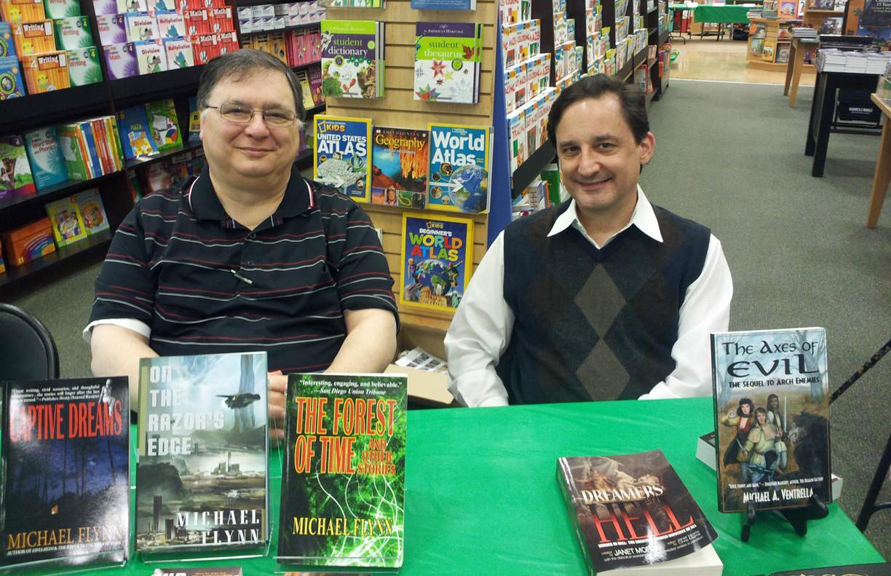
MICHAEL A. VENTRELLA: Today I am pleased to be interviewing Hugo-nominated author Michael Flynn. Mike and I met at the Greater Lehigh Valley Writer’s Group and have run across each other at Philcon and other conventions before, but we’ve never really had a conversation together, so this should resolve that.

Mike, what was your first big break into the business?

MICHAEL FLYNN: I entered a contest by Charlie Ryan, who was editor at the old Galileo magazine. It was for never-before published writers. So I wrote a story “Slan Libh,” about a fellow who has invented a time machine and decides to use it to feed his ancestors during the Irish Potato Famine. Charlie decided to buy it for the magazine instead, which was a larger payment. However, the payment was “due on publication,” and that never happened. Galileo went belly-up. My brothers, ever willing to offer encouragement, suggested the magazine folded because they had been reduced to the desperation of buying my story. For a while, Charlie tried to shop an anthology, but nothing came of it. So, I took the rights back and tried it at Analog, where Stan Schmidt bought it. It appeared in the November 1984 issue.

Two of my first four stories made it onto the Hugo ballot, which certainly did not hurt. This led another writer, the late Charles Sheffield, to urge his own agent to take me on as a client. Charles became a very dear friend, and not least because I only found out years later that he had done that.

VENTRELLA: Did you have any formal writing training before submitting your first work?

FLYNN: Nope. Just the usual English classes in HS and college. Never did workshops, either. OTOH, I did read voraciously.

VENTRELLA: You’ve done quite a few short stories. Do you find them more difficult than longer works?

FLYNN: Stories are less forgiving than novels, in that there is no space for self-indulgence. A novel can meander a bit and still keep the plot going, and has more room in it for scenes devoted to character-building, scene-setting, and the like. But shorter fiction must do all that with a greater economy of words. I find that they take longer to write relative to their length and from an economic perspective not at all cost effective. But I still write them because there are some stories that don’t need a novel to rattle around in. Take a story idea and put it in a novel, and you lose density. The whole seems fluffy. But put an idea in the right length of story and it is more dense and powerful. At least, that’s the way I think of it.

VENTRELLA: Your work is usually classified as “hard science fiction.” Do you agree with that classification?

FLYNN: Well, I’ve often considered them to be “high viscosity” science fiction, a term I coined in a moment of whimsy, but which seems appropriate. Some reviewers have made such comments as “…unlike most hard SF…” without seeming to notice that they were undermining their own idea of what hard SF means. There is an unexamined assumption that hard SF gives insufficient attention to character. But that may have been more a matter of decade than of genre. A story stands on four legs – idea, plot, setting, and character – and can remain upright on any three of them. I don’t insist that all stories have the same strengths. A captivating idea executed in a page-turner plot in a vivid setting can tolerate characters from central casting.

To this we can add the actual wordsmithing, or style. The rumor is that hard SF is less “literary” in style. I’m not entirely sure what that means, except that it leads reviewers to write things like “…unlike most hard SF…” when they notice stylistic acuteness.

VENTRELLA: How do you define “hard science fiction”?

FLYNN: As “science fiction.” Emphasis on both words. It should be a story in which some element of speculative science or technology plays a vital role, and does not serve as simple stage props. And the author takes some pains to “get the science right.” So “Flowers for Algernon” is hard SF, but “Star Wars” is not.

Of course, no one gets everything right, and sometimes the speculative science turns out to be wrong; so it’s more a matter of intent and thrust than it is of successful calculations and prognostications.

VENTRELLA: Science fiction is being outsold by fantasy these days. Why do you think that is?

FLYNN: The Modern Ages, which were among other things the Age of Science, have ended and we have moved on and/or back.

VENTRELLA: Do you find that there is less respect for science these days?

FLYNN: Yes. Partly, this is due to scientific hubris by which (mostly) fanboys of science set Science-with-a-capital-S as the colonial power of the intellectual world, invading other domains of human thought and disparaging philosophy, humanism, religion, and other endeavors. Partly, it is due to feminism, environmentalism, and government funding. Modern Science differed from Medieval Science in an important respect. The natural philosophers of old were in it to comprehend and appreciate the beauty of nature; modern science was redefined by Bacon, Descartes, and others to be subordinated to the production of useful products “to increase Man’s dominion over the universe.” They meant Man in a very masculine sense, and the exploitation of nature as completely open-ended. Hence, the feminist and environmentalist critiques in the Postmodern Age were not without some merit. Thirdly, as Eisenhower warned in his Farewell Address, the government-science funding complex meant that eventually science would be subordinated to political goals. All these strands contributed to undermining regard for science in the Late Modern Ages. When the American Chemical Society funded an exhibit on the contributions of science to modern life, they were astonished when the Smithsonian came up with an exhibit that presented American science as a series of moral debacles and environmental catastrophes: Hiroshima and Nagasaki, Silent Spring, Love Canal, Three Mile Island, and the explosion of the space shuttle.

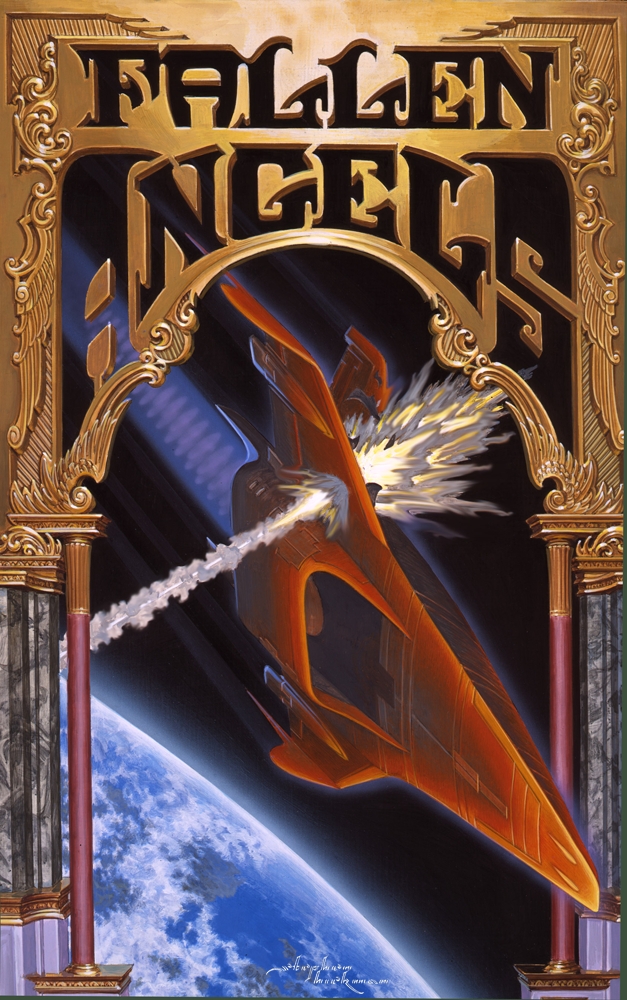
VENTRELLA: Let’s discuss FALLEN ANGEL, your collaboration with Larry Niven and Jerry Pournelle. How did that occur?

FLYNN: Niven and Pournelle had promised FALLEN ANGELS to Jim Baen, but were under contract to deliver a book to another publisher. But there was no bar to writing a Niven-Pournelle-Third Author collaboration, so they invited a friend to do the rough draft while they worked on the other book. But time went by and the other writer did nothing, so they invited him out. Then they went to Jim Baen and asked him to pick a collaborator. Jim had just published my first novel, IN THE COUNTRY OF THE BLIND, and was about to do a story collection, THE NANOTECH CHRONICLES. Larry and Jerry liked what they read, and so Jim Baen contacted my agent who passed it on to me.

VENTRELLA: How did you handle collaboration?

FLYNN: Superbly.

OK, seriously. (The three of us were on a con panel the year FALLEN ANGELS came out, we were asked that question, and gave that answer in unison.)

It befell thusly. I was given rough drafts of the first two chapters, and outline of the remainder that became sketchier as it went along, and character sketches for a bunch of characters, both fictional and real fans who would be Tuckerized. I was a speaker at a quality control convention in San Francisco and Larry came up and we talked story and batted plot ideas around.

I rewrote the first two chapters, added two more; visited East Coast conventions to harvest more characters, and showed the results to Larry and Jerry. They liked what they saw, made some suggestions, and gave me the green light.

“Showed” doesn’t cut it. This may have been the first novel written by modem. There were problems. I had a Mac, they used DOS boxes. We wound up sending files — dial up modems! Forsooth! — to Jim Baen, who was able to figure out the proper modem settings and translate from one to the other. So “showed” electronically.

Eventually, they made a breakthrough on the main book, then started doing rewrite behind me. There was two of them and only one of me, and I could write only part-time; so they began to catch up fast.

Funny thing was that I met Larry only twice — as aforesaid and at a Norwescon — and Jerry not at all until after the book was finished and I found myself on a client assignment in LA, where we all got together.

VENTRELLA: When creating worlds (either science fiction or fantasy), too often writers ignore politics. You have not done so. How do you make sure you are creating a realistic political world?

FLYNN: I used to be a filthy politician. Not the kind that runs for office — They asked once and I declined — but the kind that runs caucuses and so on. I was precinct committeeman, district captain, and eventually House District Leader. So I’ve seen politicking from backstage. Then, too, as a consultant, I have encountered all sorts of corporate-regulatory interactions. As for other settings, I read a lot of history.

VENTRELLA: When you create a story, do you begin with the characters or do you have some basic plot idea?

FLYNN: Yes.

Typically, its one thing or another. Setting, Idea, Plot, Character. Any of them can be the stimulus. For example, “Melodies of the Heart” started with an idea. In his book, THE MAN WHO MISTOOK HIS WIFE FOR A HAT, Oliver Sacks tells of cases of “incontinent nostalgia,” in which the patient re-hears music from her childhood and sometimes re-sees scenes of her childhood. That is, they don’t remember hearing or seeing in the past as such, but are hearing and seeing these things in the present time. So the notion occurred to me of a woman who as time goes by re-hears tunes from further and further in the past until one day the doctor realizes that the tunes are now “too early” and begins to wonder how old the woman is.

Okay, so what was the story? Doctor listens to old woman hum tunes is not a story. Even doctor discovers old woman’s age is not a story. Who is the doctor? Who is the woman? Why would it matter, to either one of them, how old she is? From this I developed the characters of Mae Holloway and Dr. Wilkes and why it mattered very much to them both. So this was a case of Idea then Character then Plot.

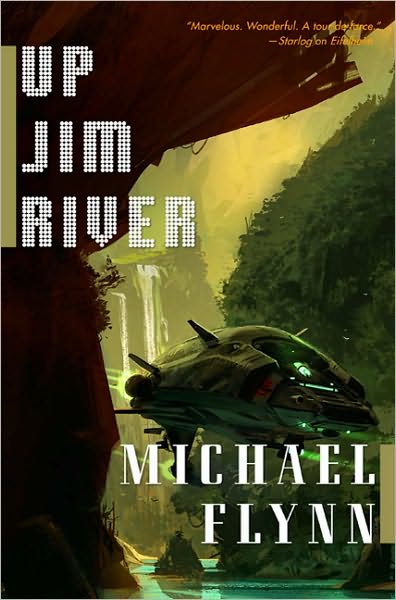
OTOH, I recently sold a novelette, “The Journeyman: On the Short-Grass Prairie,” to Analog. In this story, the Character came first: Teodorq sunna Nagarajan, the Wildman bodyguard in UP JIM RIVER. I got a kick out of his character, and the idea of writing his backstory appealed to me. Likewise, “Elmira, 1895,” started with the characters of Sam Clemens and Rudyard Kipling; while “Places Where the Roads Don’t Go” started with an abstract idea suggested by Searle’s Chinese Room and Lucas’ Goedelian Proof. It may the first hard SF where the S is not physics but metaphysics. “The Iron Shirts,” recently selected for Gardner Dozois’ annual anthology, was suggested by plot elements, as will usually be the case with alternate histories.

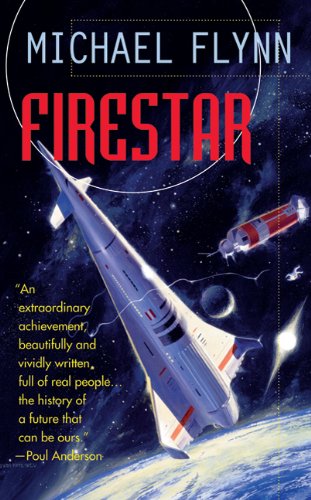
VENTRELLA: Tell us about the FIRESTAR cycle.

FLYNN: I was at a con once with Charles Sheffield. I forget which. And we were at the Tor party. Tom Doherty was holding forth on what Science Fiction needed, which he told me was “near future, high tech, and optimistic.” I pondered on that for a while, since I had been playing with an image of someone listening outside a high school classroom and not hearing learning taking place. The listener became an industrialist, for industry was already hurting for educated workers. But it was a very vague idea. Listening to Tom Doherty started to make it percolate. Setting up a school system to deliberately produce technologically literate students.

Then David Hartwell, an editor at Tor, called and asked if I had ever thought of writing a book for Tor and I said yes and he said what kind of book and I said, “near future, high tech, and optimistic.” Well, you know that had to be a good fit.

The original concept was of a single book covering the maturation of a cohort of students at one of these schools as they grow into the middle managers who save the world. (I had also read Strauss and Howe’s book GENERATIONS.) It was to cover a thirty-year arc; but after 200 pp. it was clearly not going to fit into a single book.

Interestingly, although the near future of FIRESTAR is now the recent past — it’s set during 1999-2007 — Tor has recently issued a second edition without any updating, making it a sort of alternate history.

VENTRELLA: What other works are you most proud?

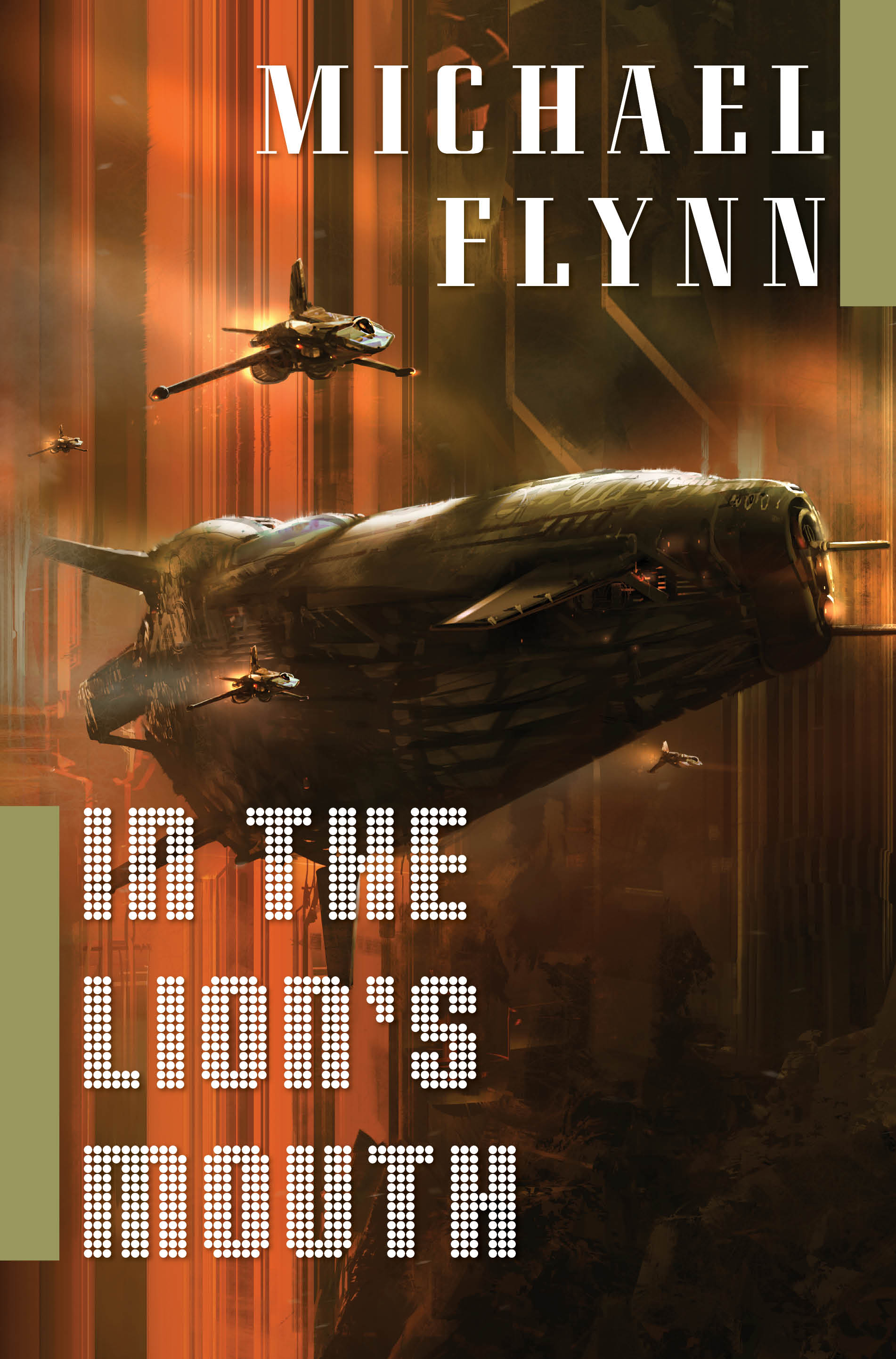
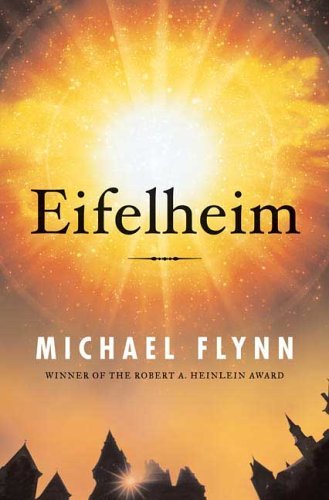
FLYNN: I would have to say EIFELHEIM, since it was a Hugo finalist for best SF novel of the year. It did win the Seiun Award for the Japanese translation and the Prix Julie Verlanger for the French translation. The SPIRAL ARM series is shaping up nicely. THE JANUARY DANCER made #6 for SF paperbacks in October, which is not bad considering that #1-#4 was George R.R. Martin’s GAME OF THRONES books. And both UP JIM RIVER and IN THE LION’S MOUTH have gotten good reviews.

There is also THE WRECK OF THE RIVER OF STARS, which did not sell as well as it should have. It is a bit darker.

On the short fiction front, I have always been fond of “Dawn, and Sunset, and the Colours of the Earth,” of “Melodies of the Heart,” “House of Dreams,” “The Clapping Hands of God.” The forthcoming “Places Where the Roads Don’t Go” may also pass the test of time. I think. There is also a story series set in the Irish Pub, of which I think “Where the Winds Are All Asleep” is probably the best.

VENTRELLA: What would you advise a reader to go to first if they wanted to check out your fiction?

FLYNN: EIFELHEIM, because it stands alone. THE JANUARY DANCER, because it is first in the series. For short fiction, a collection THE FOREST OF TIME AND OTHER STORIES is available in ebook format, and a new collection CAPTIVE DREAMS is forthcoming. The latter overlaps one story with FOREST OF TIME, but contains three stories written specifically for the ebook.

VENTRELLA: What are you working on now?

FLYNN: Answering these questions.

Oh, wait. Books and stories…. I just sent a short, “Elmira, 1895,” to Analog, fate unknown. A fourth SPIRAL ARM book, ON THE RAZOR’S EDGE, is in the can. For the moment I am working without contract on two possible novels:

1. THE SHIPWRECK OF TIME, about tantalizing hints found in Old Books, Old Film, and Old Bones, in a story that runs from a scholar in 14th century Freiburg-im-Breisgau to historical researchers in 1960s Milwaukee, a documentary film maker in 1980s Denver, and a police detective in contemporary small town Pennsylvania.

2. THE CHIEFTAIN, an historical fantasy (yes, fantasy) revolving around David O Flynn, chieftain of the Sil Maelruain in 1224. The magical element will be not the wizard and warlock kind, but prayer and saints, a bit of a change in pace.

VENTRELLA: How have the changes in the publishing industry affected you and what do you see for the future in publishing?

FLYNN: The only effect is another channel for books, the electronic one. However, going forward I think Mike Resnik and Barry Malzberg are right, and the whole print industry will be turned upside down. Self-publishing is becoming easier; but may become too easy, flooding the market with so much self-indulgent publishing that one may have a hard time separating wheat from chaff.

VENTRELLA: What piece of advice would you give an author wanting to write science fiction?

FLYNN: 1. Learn science.

2. Learn fiction.

At least in third-party publishing, the sort of writing that got by in the 30s and 40s will no longer do, and a certain stylistic mastery will be expected. Editors will often work with promising newbies, but editors may pass away if electronic self-publishing drives third-party publishing out of the pool. The same is true of agents. You may need one to convince Tor or Ace to publish your book; but you do not need one to convince yourself. (And that is the big trap.)

It is also more difficult to write good SF about the science of the 40s or 50s or 60s. Much of what was once speculative science is now mainstream. There was a time, and not too long ago, when a story about a kid using a home computer to garner the information needed to solve a problem wold have been high SF. Now, it’s your son or daughter doing a homework problem. So learn where the cutting edge is today; and if you must use the tropes of yesteryear, give them a new spin that makes them fresh.

Writing fanfic is okay for practice and for beginners; but fanfic will always be derivative and imitative. Whatever you write had got to be genuine and genuinely yours.

flynn

Interview with author Mike McPhail

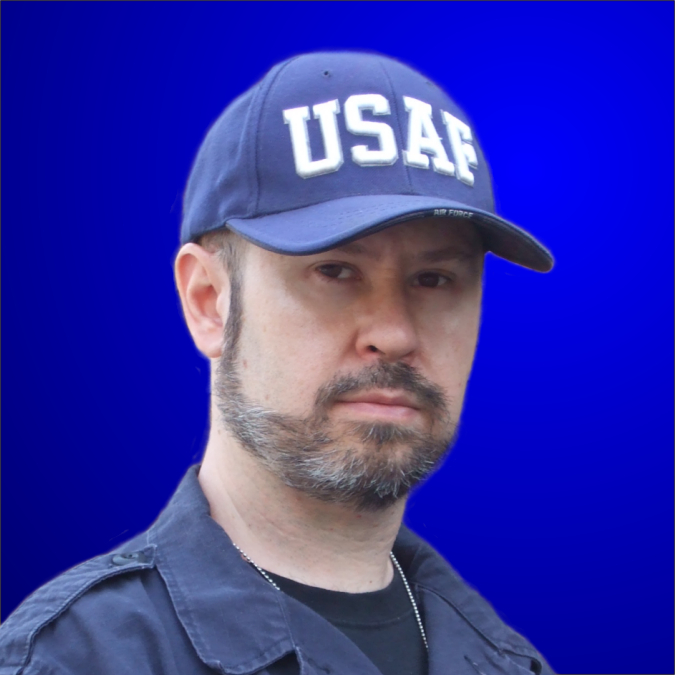
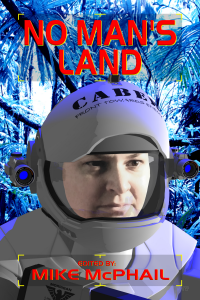
MICHAEL VENTRELLA: Today I am pleased to interview author Mike McPhail. Author and artist Mike McPhail is best known as the editor of the award-winning Defending the Future (DTF) series of military science fiction anthologies. Currently he is the administrator for the Dark Quest Books’ imprints DTF Publications (MilSciFi) and Starsong Press (SciFi).

He is the creator of the science fiction universe the Alliance Archives (All’Arc), which serves as the backdrop to his (and other authors’) stories. Its related role-playing game is part of the dC percentile family of game mechanics, as used in the Martial Role-Playing Game (MRPG) series.

As a member of the Military Writers Society of America, he is dedicated to helping his fellow service members (and deserving civilians) in their efforts to become authors, as well as supporting related organizations in their efforts to help those “who have given their all for us.”

Mike – you began, like me, developing plots and worlds for games. How did you decide to start writing fiction?

MIKE McPHAIL: It was an accident, no really it was. My wife (the award-winning Danielle Ackley-McPhail), had long been after me to let her write a story set within my gaming universe — The Alliance Archives (All’Arc) — but I was worried that she didn’t have enough experience playing the game to get the finer points right. So I wrote a back story (a little more advanced than you would for a game scenario), which was heavily laden with techno-babble, terminology, and in-game historical reference, in order to help her along.

Well she read it and said, “I don’t need to write the story, you can do it yourself.” and thus I was proclaimed to a writer.

VENTRELLA: Were your first attempts successful?

McPHAIL: Yes, but I had the advantage of working with people that already “had been there,” to advise me on how to pick and work for a specific project, rather than just sending work out, and hoping someone would buy it. Plus not having any “dreams of grandeur” helped; I hadn’t planned to be an author, so whatever came my way, I looked at as a blessing.

VENTRELLA: Let’s talk about the problems inherent in using games as a foundation for your fiction. I have advised those who have asked that they should begin by throwing out all the game rules. Have you found that to be the case?

McPHAIL: Not in my case. The All’Arc game mechanics were developed during my Academy days to allow the Marines in the group to have a more realistic portrayal of combat (a.k.a. what they learned and did in real life). But generally I would agree with that statement, since most gaming systems don’t have a real-world application, it could very easily get in the way of making your story seem plausible.

VENTRELLA: The goal in my fantasy fiction has been to make sure it doesn’t read like it was based on a game. Do you agree, and if so, what techniques do you use to accomplish this goal?

McPHAIL: Overall I would agree, that is unless your writing a tie-in book for a game, then I think the readers are hoping for some form of homage to the original work. The most realistic way is just to have a character make a game reference, just as I’ve seen them do in real life combat. “Well that bad-guy didn’t make his luck roll.”

VENTRELLA: What advice would you give to someone wanting to write a story in a game world?

McPHAIL: Don’t take it verbatim from a game you have played. What works when a group of friends are sitting around a table enjoying themselves almost never translates. So use the game only as inspiration, taking from it the key facts, and relating some of the more interesting events. Above all, have people outside your gaming group read your work, since your players are going to be too close to be objective about how good, or bad it is, or what needs to be done to advance it.

VENTRELLA: Tell us about your novels.

McPHAIL: I don’t have an “inner need” to write novels. I’m much happier doing short stories. But having said that, my publisher is looking to have me write some game tie-in novellas to go along with the re-release (or should I say, his release) of the All’Arc, now to be known as the Martial Role-Playing Game (MRPG) Core Manual.

VENTRELLA: Do the short story collections you edit take place in the world of your novels?

McPHAIL: I haven’t done an Archives collection yet, but my stories in the DTF anthology series are set within the realm of the All’Arc. In Dani’s case, she writes in the “universe” using the technology/terminology, but her stories aren’t part of the game’s original timeline.

VENTRELLA: What are the biggest difficulties you have faced when editing a collection?

McPHAIL: Keeping all the contributing authors “happy.” We’ve be fortunate enough to have in the DTF series some of the biggest names in science fiction, and their participation is purely due to them knowing us. As the saying goes, “small-press, small-pay,” so they are not in it for the money. Over time we have had problems with the books’ publishers, and naturally the authors come to us when they have issues. Then I would chase down the publisher for answers. Now-a-days, that chain of command is shorter. Dark Quest Books (the current publisher of the series), made me an administrator for one of their imprints, so now I’m in charge of publishing the series. And yes I yell at myself all the time over it.

VENTRELLA: What is your military background?

McPHAIL: I enlisted in the Air National Guard; originally I was hoping for ordinance, but the only opening was in Air Cargo, so by the family standards, I’m a slacker. Dad joined the Army Air Corp in WWII, and served until Vietnam; my father-in-law was a Navy attack pilot in Vietnam; and my wayward-son is an Army Lieutenant, winner of the Bronze Star.

VENTRELLA: Do you believe it is important to “write what you know”?

McPHAIL: Yes, but that doesn’t mean you can’t learn new things to write about. Typically I spend a third of my time writing, the rest either looking things up on the internet (or in my reference library, yes I’m talking about books), or calling someone I know that is in that related field.

The more of your own life experiences you can introduce in to your characters, the more believable and relatable they will become to your readers.

VENTRELLA: What projects are you working on now?

McPHAIL: For 2012, besides the re-release of the Dark Quest version of the MRPG, we have started working on DTF5 Best Laid Plans; producing Phoebe Wray’s Jemma 7729 and J2; updating James Daniel Ross’ Radiation Angels series; David Sherman also has something in the pipeline. With 2013’s projects already forming up in the queue.

VENTRELLA: Have you found that publishing short stories has helped you gather new readers?

McPHAIL: Name association from the DTF anthologies is priceless. For example if you did an Amazon search for say Jack Campbell (LOST FLEET), well he’s been in several of the books I’m in, so my work show up as a related title.

VENTRELLA: How did you find your publisher?

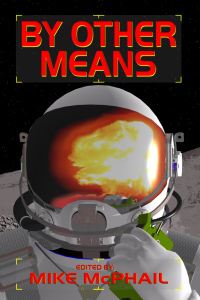
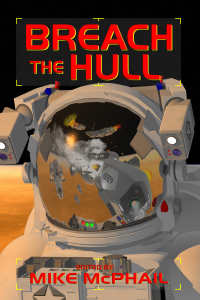
McPHAIL: We met at a gaming convention, things where slow, so we sat and talked. I told him about the game I came up with at the Academy, and how I put it on the shelf and only used it as reference for my writing. Well, the small press that had published my first DTF book (BREACH THE HULL) gave us the go-a-head to do the second one (SO IT BEGINS), but, when the time came for us to transfer the finished file so he could send it off to press, all of a sudden, his publishing empire was no more.

Then we remembered that game publisher we had met at the convention, he had said something about wanting to do books as well as games, and the rest his history.

VENTRELLA: What are the advantages of a small press?

McPHAIL: Accessibly. The big-houses are pretty much out of reach for a new writer, all they seem to want these days are top seller author, and even at that you only have a few months to prove your worth or you’re out.

VENTRELLA: What’s your opinion on self-publishing? Do you advise starting writers to consider that?

McPHAIL: Generally I would not advice self-publishing if you’re looking to become a “main-stream” author; writing the story is only part of the process. There are a lot of different skills needed to produce a professional-looking book, everything from editing and layout, to cover art and back cover copy, and yes, you will be judged by the cover of your book.

My wife and I have been out on the frontline as authors, books sellers and promoters for over a decade now. In our case, we had the advantage having worked in the printing / publishing industry.

Mike’s Websites: www.mcp-concepts.com
www.milscifi.com
www.allianceacrchives.net
www.defendingthefuture.com

4

Attending Conventions

One of my favorite conventions is Philcon, run by the Philadelphia Science Fiction Society in New Jersey. (Look, just run with it.)

Philcon is the oldest science fiction convention still in operation, although it’s still one of the smaller conventions, apparently by design. It’s next weekend (as I write this) — November 18 – 20, and the main guests are Cory Doctorow and Boris Vallejo.

Many of my writer and artist friends attend and it’s great to see them all again. There’s this sub-group of convention goers — fans, writers, artists — who attend a lot of these things, most of which occur during the winter. For many of us, Philcon is the first time we’ve seen each other in many months. Then there’s Arisia (Boston) in January, Mysticon (Roanoak) in February, Lunacon (New York) in March, Ravencon (Richmond) in April, and Balticon (Baltimore) in May. There are even more, but they’re either too far away for me to attend or too small.

And these are just the literary cons that specialize in books. You see, when people think of science fiction conventions, they usually think of Comic Con and the like, where it seems that the vast majority of attendees are there in a costume from their favorite TV show or comic book and all they want to do is buy toys and stuff. A literary convention is very different. Or sure, some people do show up in costume, but the main point is to discuss books.

Yes, these conventions are for people who actually still read!

Which is why, if you are an aspiring writer, you should be attending these. Not only can you go to panels where authors discuss their writing processes, but you will make all sorts of connections. Agents and editors attend these too, you know.

Usually I post my panel schedule on the blog before each convention, but for some reason Philcon hasn’t sent out their schedule yet; but here are some examples from previous conventions so you can see what they’re like: Ravencon; Lunacon; Arisia.

Anyway, please say hi if you attend. I’ll be spending some time at my publisher’s table in the Dealer’s Room with fellow author Peter Prellwitz. Look for the “Double Dragon” banner!

Leggo My Ego

I’ve found that the writers I’ve met fall into two categories:

First, there are the brooders who think they’re no good. “I can’t stand what I’ve written! I refuse to look at it again. No one will buy this book, because I’m such a terrible writer!”

Then there are the egotists who think they can do no wrong. “This is a masterpiece! It’s the best book ever written! It’s sure to be a best seller and be made into a movie!”

You know where I’m going with this, right? That the truth is that there are some absolutely terrible and amazingly talented writers in each group?

Still, the problem comes in recognizing yourself if you fall into one of these categories, and then learning to take a step back and trying to view your own work objectively. That’s not easy.8

It’s always difficult for any creative person to look at their own work and analyze it fairly. And that’s understandable. Your children are smarter, prettier, and more talented than everyone else’s children, right?

I, unfortunately, tend to fall into the second category too often. I finish a story and go “Wow! This is great! I can’t see any way to improve upon what I have just written!” I get all excited — and then I’m crushed when I receive rejection letters.

What has helped me is a good editor who can knock some sense into me from time to time and bring me back to earth. Usually the changes she suggests make me go “Now why didn’t I see that the first time?” (I’ve discussed how and why an editor is important before, by the way.)

It is important to have a healthy ego and be proud of your work. It’s what keeps you striving and happy, in my mind. I think many authors in that first group never get very far because they are not confident in their own work to promote it properly.

But at the same time, you have to know your limitations. I am perfectly aware that I am not a great writer — but I am very proud that I am a good writer! I can be proud of my characters and my plot twists and the way I keep my story moving while acknowledging that I am still learning the techniques to make it read even better.