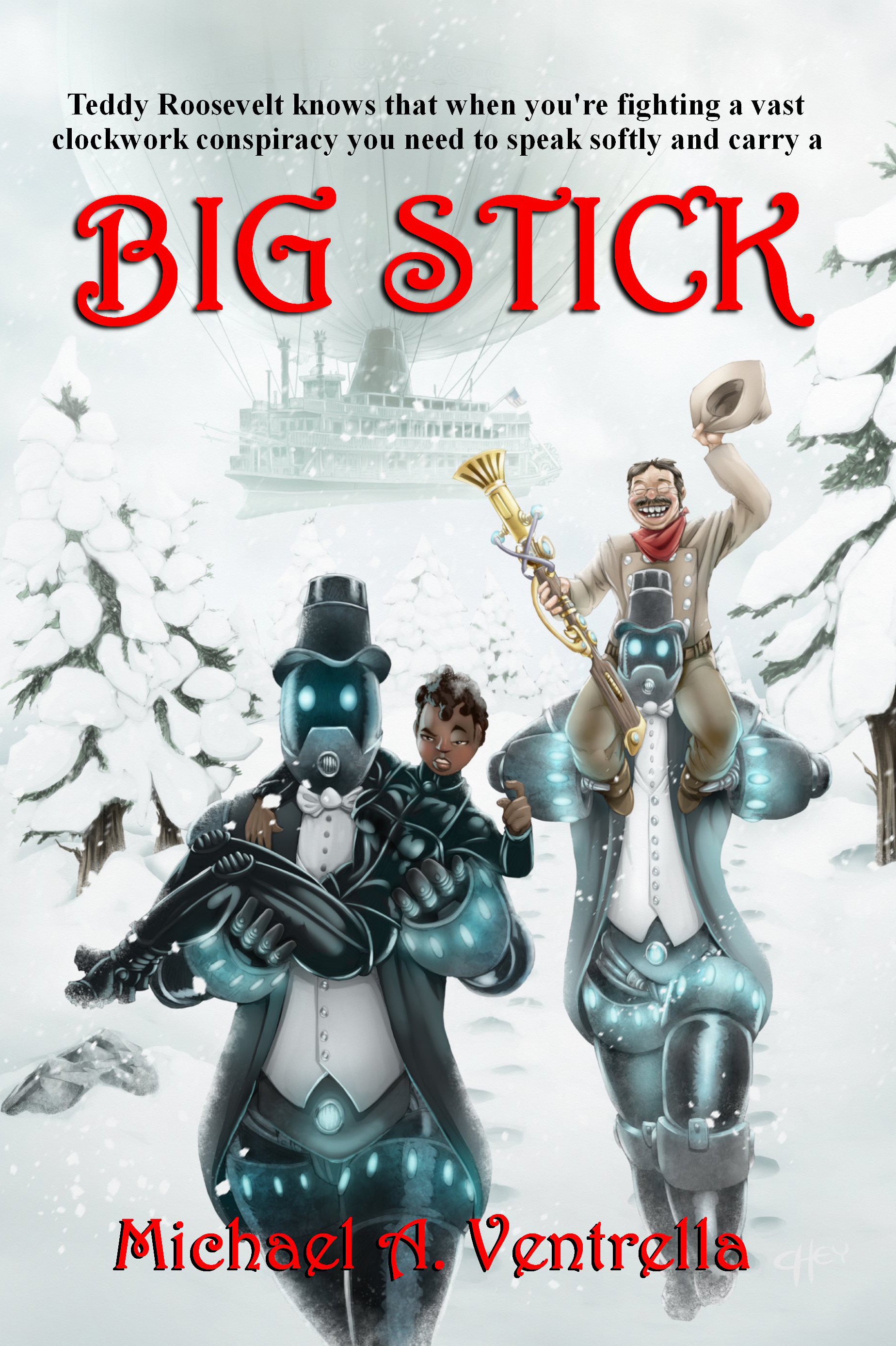
Plowing Through That First Draft

One piece of advice that professional writers have given me over and over again is to just keep writing until that first draft is done.

It’s also one of the hardest things I’ve found to do!

But it’s true. If you don’t force yourself to write — even if what you’re writing is crap — you’ll never get anything done. It’s better to just plow ahead with your story and worry about the pacing and the details later.

Just keep saying to yourself “It’s just a first draft.” No one will see it unless you show it to them.

But you have to at least get that done if you expect to ever have a book completed.

I’ve met so many potential authors who have commented that they have a book started that they never finished. They do the first few chapters and then go back and polish those up and then polish them some more and some more, and the book never gets done. Meanwhile, others who may not be as talented actually get theirs completed and published, because no editor will be interested in looking at your incomplete manuscript no matter how good it is.

The hardest part is pushing onward, no matter what. It is very tempting to go back and make changes. Instead you need to fight the temptation and say to yourself “I’m not allowed to make changes until I get to the end of the book.” That way, it becomes a reward you can give yourself when you finish.

This is especially difficult when you’re facing that dreaded Writer’s Block. Sometimes I’m at point A and I need to get to point B but am not sure exactly how to do that, so I just plow ahead. Even if what you write is later tossed completely, it should get you past that hump and onto the next section. And sometimes an idea will hit you that you never would have thought of had you planned it all out in advance.

For instance, in AXES OF EVIL, there is a climatic scene near the end where our hero — the coward Terin Ostler — meets his enemy, who has the most powerful magic weapon in the world. Terin, who has no skills whatsoever, must defeat the villain. How to do this? I wasn’t quite sure, so I began writing the scene. I just plowed ahead, figuring I can always come back to it later and fill in the blanks. Instead, when I was done I realized that my solution was perfect — not only did it make logical plot sense for the characters to act that way, but it was even foreshadowed in an ironic way. I guess my subconscious knew something I didn’t.

And don’t wait for inspiration. Writing is work! If you wait for that moment to hit, you’ll never get anything accomplished. Force yourself to write.

Imagine a sculptor staring at a lump of clay. In his mind, he has his outline of what he wants to accomplish — a horse, for instance — but he’s not quite certain exactly what the final version will look like. He starts molding the clay to the form he wants, and after a while, he can step back and look at his “first draft” and realize that even though it’s rough and crude, it certainly looks like a horse. He now knows how it will be posing and the rest is easier, because it’s the clean up and polishing.

If instead he had concentrated on the horse’s left foot, he’d end up having spent the same amount of time with a lump of clay with a very nice foot sticking out of it. Seeing that little bit done doesn’t encourage you to work harder, I don’t think. Instead, I think it depresses you that so much effort has been spent on a foot, no matter how good it is.

I always enjoyed working on the second and third drafts, because that’s where you can flesh out your character’s personalities better, insert some foreshadowing you hadn’t thought of before, and really turn the work from a passable story to something special. But getting through that first draft — that’s the hard part!

Interview with Jody Lynn Nye

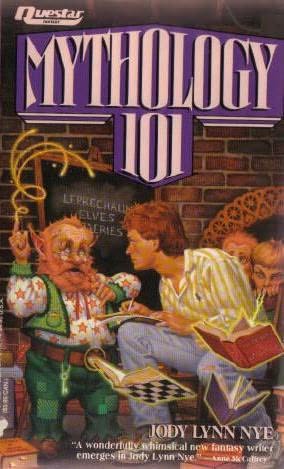
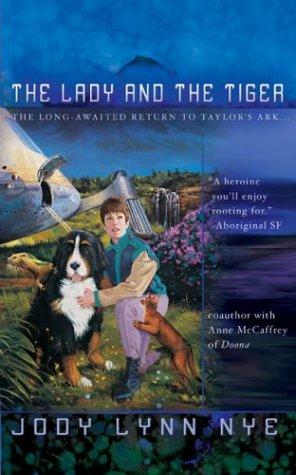
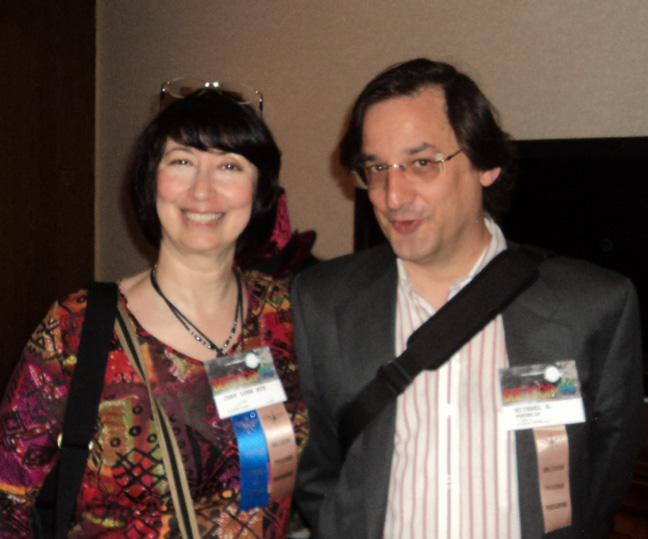
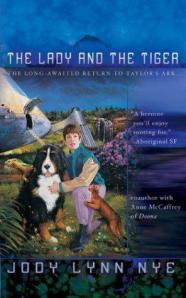
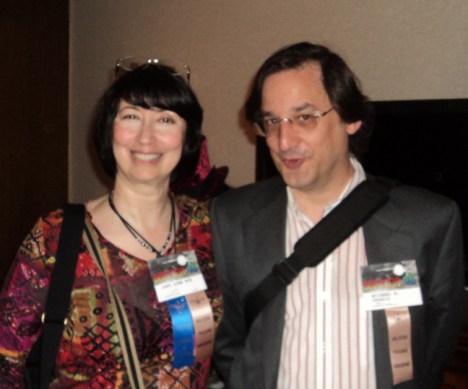
MICHAEL A. VENTRELLA: I’m pleased to be interviewing Jody Lynn Nye today. Since 1985, she has published 39 books and over 100 short stories. Among them are her epic fantasy series The Dreamland, five contemporary humorous fantasies starting with MYTHOLOGY 101, and three medical science fiction novels starting with TAYLOR’S ARK. STRONG ARM TACTICS, a humorous military science fiction novel, is the first of Jody’s new series, The Wolfe Pack. Jody collaborated with Anne McCaffrey on four science fiction novels, and edited an anthology of humorous stories about mothers in science fiction, fantasy, myth and legend, entitled DON’T FORGET YOUR SPACESUIT, DEAR! She has written eight books with the late Robert Lynn Asprin. Her web page is http://www.sff.net/people/jodynye.
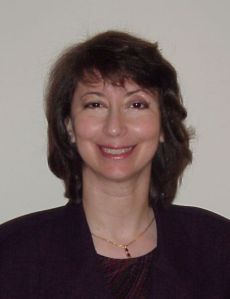
Jody, I first became aware of your work with the fun MYTHOLOGY 101 series. Was MYTHOLOGY 101 your first published work?

JODY LYNN NYE: MYTHOLOGY 101 was my first solo novel, but not my first published work. I wrote some humor and short pieces (unpaid) for various digests and newsletters after college. While I was working for WFBN-TV in Chicago, I contributed technical articles for Video Action magazine. For those, I was paid sometimes in money, but sometimes with technology items that VA had been given to review. My first paid work was for Mayfair Games, Inc. They published the Role-Aids game supplements to Dungeons and Dragons. I wrote modules for D&D and the Ellery Queen Mystery Magazine game.

Because of the game materials, I had credentials to ask to be included in the Crossroads game book series for TOR Books, which were choose-your-path novels but based upon established science fiction or fantasy series. I had volunteered to write adventures for a couple of other books in the series until Anne McCaffrey gave consent to allow the creator/editor of Crossroads, Bill Fawcett, to commission Pern-based adventures. As a big fan of Anne’s, I couldn’t resist dropping my previous selections and writing one of those.

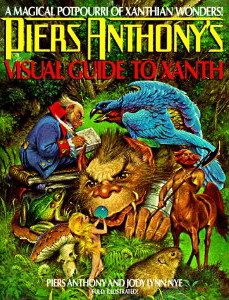
That first Crossroads book was DRAGONHARPER (not to be confused with the current novel by Anne & Todd McCaffrey, DRAGON HARPER). It was published in 1987. I eventually wrote four Crossroads adventures, two in Pern and two in Piers Anthony’s Xanth. Once Anne and Piers found I was easy to work with and respected their worlds, Bill had me write the VISUAL GUIDE TO XANTH and the DRAGONLOVER’S GUIDE TO PERN. The DLG is in its second edition and who knows which printing.
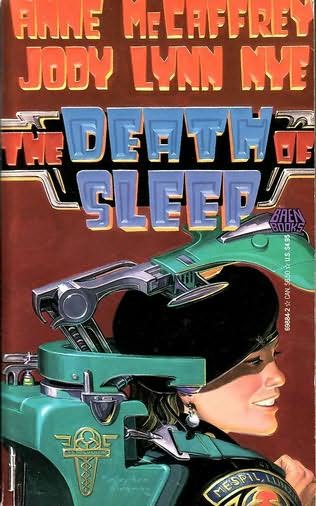
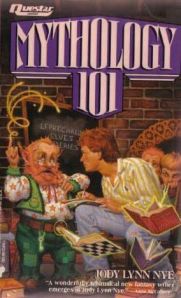
I wanted to work on my own novels, of course. I sold MYTHOLOGY 101 to Brian Thomsen of Warner Books in 1988. I did not have an agent, but as you may know, SF/fantasy editors are far more accessible to fans and would-be writers than in many other genres. I got to know Brian through friends and professional contacts. At a SF convention, I chatted with him about my concept for the series, and he asked to have me send a proposal to him at Warner (note to aspiring writers: do not try and load an editor down with paperwork at a convention. Always send it to their offices.). He bought it, and I was off to the races. MYTHOLOGY 101 came out the same year as the first of my collaborations with Anne McCaffrey, THE DEATH OF SLEEP. So far, there have been four books in the series.

VENTRELLA: I always imagined that the idea must have come to you while secreted in some college library. Is that true? What was your influence for this series?

NYE: You are absolutely right. The Midwestern University college library is based upon a real library. If you had ever seen the original, you would be able to identify it. Some alumni of that university have come up to me and asked about it.
In fact, the library itself was the influence for the series, not the characters. Those came later. In the carrels among the nine-story stacks, it was warm and quiet — except for the sounds of distant voices. I could never make out what they were saying. It was odd, because no one around me was talking, nor was anyone in the reading rooms out front. The sensation of the disembodied voices stuck in my mind for years. Finally, one day I began to think about it. Where were those voices coming from? Who were the speakers? And somehow, they became the little people who lived in the basement of the library.

VENTRELLA: Will we ever see another MYTHOLOGY 101 book?

NYE: I certainly hope so. From Warner, the series moved to Meisha Merlin Publishing, which ceased to publish a few years ago. I would dearly love to place the Mythology series with another house. I have more stories to tell. After all, Keith and Diane finally got engaged!

VENTRELLA: More than most authors, you’ve managed to work with some of the biggest names in speculative fiction. How did these arrangements come about?

NYE: SF actors Wil Wheaton, Roxann Dawson, Armin Shimerman and Nigel Bennett were once on a panel at a convention when the subject came up how some of them had become published authors. Armin, Roxann and Nigel each said that because they knew Bill Fawcett, they had been approached to co-author books with science-fiction writers for the Star Line, an imprint of Baen Books that had been arranged and packaged by Bill. Wil noted down carefully, that to become published, one needed to “know Bill Fawcett.”

One of the many hats Bill wears is that of ‘book packager.’ His function is to create a book or series, staff it with one or more authors, supply illustrations and maps if needed, possibly even commission the cover from an artist, and put the whole, production-ready package into the hands of a publisher. It is what a publishing house would do for itself if it had far more employees than one typically does.

In the late 1980s, Bill created a package for Baen Books that paired CJ Cherryh with three junior writers apiece to write a series of co-authored novels. CJ’s was “Sword of Knowledge”, and included Nancy Asire, the well-known filker Lesley Fish, and a new fantasy writer named Mercedes Lackey. These series gave the senior writer a chance to have ideas for which s/he had no time to do alone, and gave a boost to the career of the junior writers, who would get to work closely with a noted name in the field whom they admired.
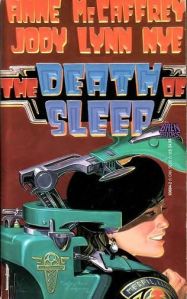
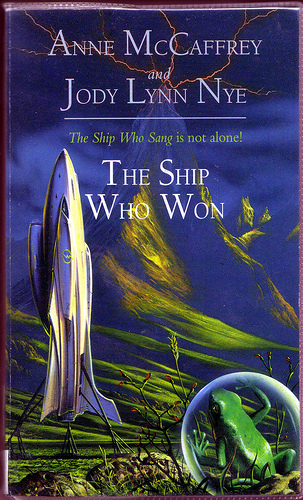
A few years later, Bill interested Anne McCaffrey in trying the same thing. She liked the idea, because she had always had more ideas than she would ever have time to write in some of her non-Pern series. I was one of the three noobs who were signed on to co-author books in the Planet Pirate trilogy with her. She already knew my work from the DLG and two Pern Crossroads books. She and I wrote THE DEATH OF SLEEP. Chronologically, it is the first novel in the trio, but was published second, after SASSINAK, by Anne and Elizabeth Moon.

VENTRELLA: How did you meet Robert Asprin?

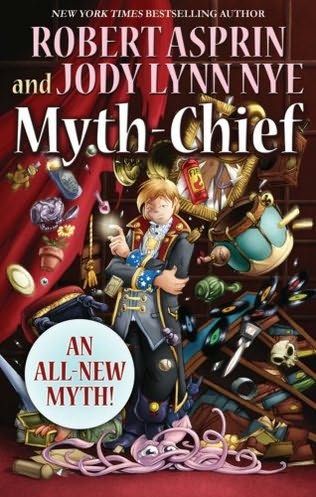
NYE: I read ANOTHER FINE MYTH the year it was published in mass market paperback by Ace Books. I loved it. At the time I never thought I would ever meet any author at all, let alone end up collaborating with Robert Asprin on eight books.

It’s funny, but I seemed to have been following Bob into so many places long before I met him. I was a member of the Society for Creative Anachronism in the late 1970s, early 80s, but he, known there as Yang the Nauseating, had already stopped going to events. His legend, however, persisted. I knew dozens of stories about him. How he had founded the Dark Horde. How he was mischievously disrespectful to the king. His songs. His quips. His legendary prowess with women.

When a friend whom I knew from the SCA took me to my first convention, I found at least one more Myth book in the dealers’ room. I heard legends of Bob. His perpetual ‘office’ in the hotel bar (sort of a permanent party). His love of Irish whisky. His friendship with Gordon R. Dickson. His irrepressible humor and memorable filks. His legendary prowess with women. But he had already stopped going to so many conventions, so I never ran into him.
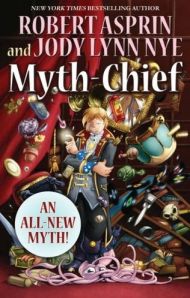
It was not until Bill, then my fiancé, took me up to Ann Arbor to meet Bob and his wife, fantasy author Lynn Abbey, that I met the man himself. Bill was one of Bob’s closest circle of friends. At the time, Bob was writing his own books as well as co-editing the shared-world anthology series Thieves’ World with Lynn. He and Lynn were so kind and gracious to me, a baby writer, that the impression has never faded. Bob was encouraging about my efforts in humor fiction, but at that time the subject of collaborating didn’t come up.

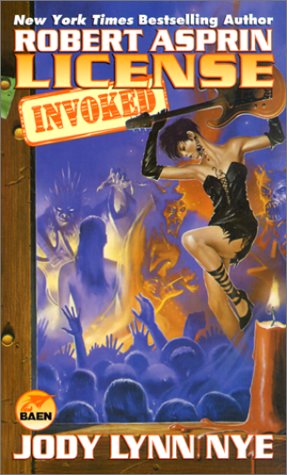
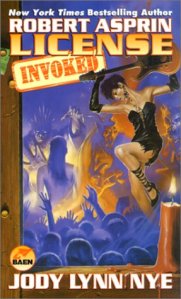
Later, when Bob had some trouble with writer’s block, we agreed to try writing together. We found we were very compatible as co-writers. We had a lot of interests in common, which meant we got one another’s jokes. Our first book was LICENSE INVOKED, a novel about spies, magic and rock and roll.

VENTRELLA: When working on the Myth Adventures series with him, how much input did he have?

NYE: We communicated mainly by e-mail and in person at conventions. After the first Myth novel, MYTH ALLIANCES, we would get together at DragonCon in Atlanta every Labor Day weekend and work out the plot over a table in one of the restaurants. When we got going, the ideas came out faster and more furious than a hive of angry bees. It was a lot of fun. We threw around plenty of concepts; what we didn’t use for the book that year I squirreled away in a laptop file to discuss at future dates. Bob was not great at keeping notes, and I type faster than he did.

VENTRELLA: What sort of arrangement do you have to continue the series?

NYE: Ace Books has purchased two new Myth novels (and one Dragons novel). I am already working on the first one.

VENTRELLA: How did your collaboration with Anne McCaffrey work?

NYE: Each of the four collabs I did with her was different. On THE DEATH OF SLEEP, she had a basic outline for each of the three novels. Since they were being written simultaneously we juniors had to adhere to the structure we were given to maintain series continuity, though we had room to add our own ideas. I wrote the first draft and sent it to Anne. She worked on it and sent it back to me. I made changes or corrections, then it went back to her for a final look and polish. As the senior writer she had the final say on everything, but she was intensely generous with me. For example, she had no problem using one of my ideas if she liked it better than her own. I learned an incredible amount from her.
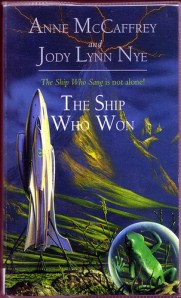
VENTRELLA: Do you find collaborations easier or harder than writing on your own?

NYE: They go faster than solo books. When you are bouncing ideas off another person, you can crank out a lot of energy. That’s not to say that when I am working alone I don’t cackle over my keyboard at something that strikes me as funny and pound the keys at top speed to get it down. Collaborations are more work because you can’t just keep an idea in your mind and come back to it later. You must share everything with your co-writer that you expect or hope to have in the final manuscript. You must prepare to compromise and respect your co-writer’s opinion and skills. Only in solo books can you get your way on everything. I think it’s worthwhile to learn to work with someone else. It’s like teaching: you learn a good deal about your craft when you have to explain something to someone else.

VENTRELLA: Some writers tend to think that humor in fiction means that it can’t be taken seriously as literature, and therefore should not be considered as “worthy”. What’s your take?

NYE: I deplore the fact that just because something makes one laugh that it is not worthy of the respect enjoyed by tragedy. Without the light moments, no one could stand all the dark ones. Those writers who don’t consider humor to be literature have to turn their backs on Mark Twain, Anthony Trollope and many others whose books occupy the Literature shelves in bookstores and libraries. Shakespeare’s comedies are held in the same esteem as his dramas. I would put up a Terry Pratchett Discworld novel against any number of popular dramatic novels that I don’t consider nearly as well written.

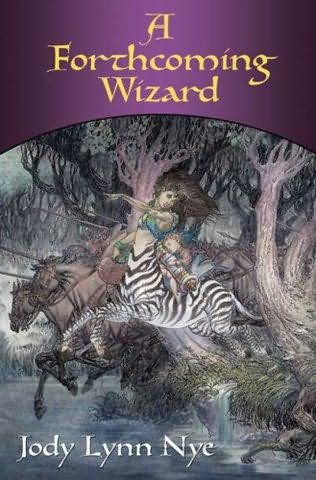
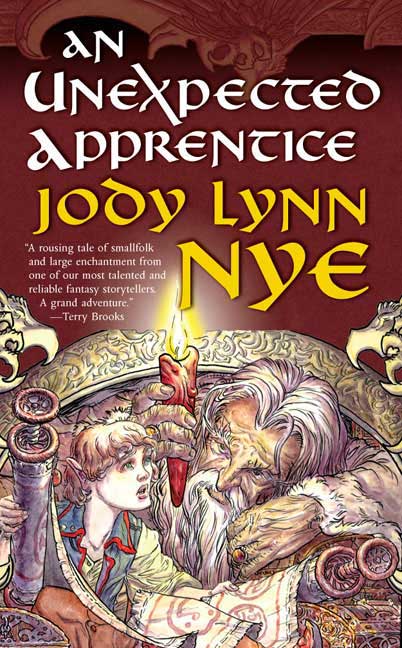
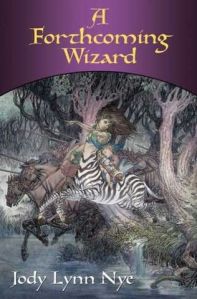
VENTRELLA: Your most recent work, A FORTHCOMING WIZARD, is a stand-alone novel. What’s it about?

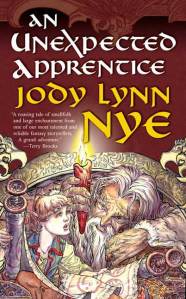
NYE: That is actually the second half of an epic fantasy I wrote for TOR. It does stand alone, the vicissitudes of publishing being what they are, but I hope people will seek out both books. The first half is called AN UNEXPECTED APPRENTICE. The story concerns a smallfolk girl named Tildi Summerbee who, like Frodo Baggins, is thrown into an epic struggle not of her making. She comes into possession of a page of the Great Book, a magical tome that can change reality. Only Tildi, because of a chance gift from her parents, can touch the book without being harmed. She becomes part of a fellowship to regain possession of the book and restore it to a place of safety before it destroys the world.
VENTRELLA: What are you working on now?

NYE: Already finished and heading for your shelves in December is DRAGONS DEAL. This is the third in the Dragons series created and written by Robert Asprin for Ace Books. The first two were DRAGONS WILD and DRAGONS LUCK. The copy-edited manuscript of the second landed on my doorstep only a few weeks after Bob died. I took care of it, and some time later, when we had all recovered a little, the editor asked me if I could and would continue the series. I hope that our readers will enjoy it. The Dragons series is about a brother and sister named Griffen and Valerie McCandles who discover that they are hereditary dragons. And they are by no means the only dragons out there. Hence, drama and comedy ensues. DEAL takes place during Mardi Gras. As the series is set in New Orleans, where Bob lived the last many years of his life, I felt that was fitting.

At Baen Books, I have an entirely new humorous SF book, which I hope will become a series, called VIEW FROM THE IMPERIUM. If you ever read P.G. Wodehouse’s Jeeves and Wooster books, you will understand something about my two main characters. Thomas Innes Loche Kinago is a foolish, spoiled, rich, good-hearted young noble who has never had to work a day in his life. He has just graduated from the space academy and is serving his required stint on a warship. His duties, as he is a noble (pretty nearly useless in this society), are nominal. That’s not to say he can’t spin a perfectly ordinary assignment into chaos. To keep him from doing more damage than is strictly necessary, Thomas has assigned to him an aide de camp, Commander Parsons, who seems to know absolutely everything, and is never at a loss for the right action to take. VIEW FROM THE IMPERIUM is due out in April of 2011.
VENTRELLA: When creating characters, how do you make them real and believable to a reader?

NYE: As CJ Cherryh said during a panel discussion I once sat on with her, in the end all stories are about people. The protagonist of a story, or at the very most distant, the sidekick, needs to be someone with whom the reader can identify. In the Sherlock Holmes stories, it is Dr. Watson, a nice, normal human being, intelligent, caring and devoted, with whom most readers feel empathy. For us, Watson asks why. Through him we feel involved in the action. The reader will be drawn into the book by a compelling proxy.

I need to know what motivates my characters. Often, a new writer will only know what s/he wants a character to do, but maybe not why. Such characters will feel wooden and artificial. Once you know where your character is coming from, you can see how it will behave in various situations.

All beings have flaws. Perfect people are irritating or boring (or both). Imperfections give characters vulnerability that we understand, or can learn to understand. Hidden hurts or past events in my characters’ back stories inform their behavior.

When I create a character, an image often appears in my mind. A few of my writer friends like to use celebrities as the basis of their cast, but that hasn’t worked for me. Only once have I ever run into anyone who resembled one of my characters.
One thing I dislike enormously is having a character do something stupid just to advance a plot. If I have created realistic personalities, it will feel wrong if I try to steer them into an unrealistic situation. That’s not to say I can’t have a character behave stupidly –- people do dumb things all the time -– but it can’t be to make things easy for me as the writer. I owe my readers real people.

VENTRELLA: I tried to avoid cliches in my fantasy novels (regarding the typical “chosen one” hero and so on) while also relying upon them too (elves, dwarves, wizards…). How does one meet the balance of creating a world that balances both?

NYE: There is always an element of the “chosen one,” or else why are we reading about him or her? If that character isn’t special, then can anyone do what s/he does? What if there had been a hundred Arthurs who could have pulled the sword from the stone, but he just happened to be the one who tried that day? (Hmm, there’s an unexplored story.) But why that one, and what happened afterward to all the others? When I write a story, I have to focus upon my protagonist. What is extraordinary about this person? How can s/he succeed when others have failed? I think a successful story will tweak the reader’s perception and give a new way of thinking about the meaning of a hero/ine. Archetypes exist because they have a core of truth about the eternal journey. Cliches exist because some storytellers can only think of telling an archetypal story the way we have always heard it.

I agree, there have been a LOT of books lately featuring familiar tropes like elves, dwarves, werewolves, pirates, vampires, pixies, princesses, and so on. There’s nothing wrong with using these creatures, as long as you don’t necessarily believe that they all belong in the same worlds all the time. Or if you do, have a good reason for it. Only in D&D do Aztec gods occupy the same sphere as leprechauns.

VENTRELLA: You’ve also written role-playing books (a subject close to my heart, since I have been doing that for 20 years now myself). How did you arrange those?

NYE: I’ve been affiliated with the gaming industry for a long time. I got into D&D role-playing when I was nineteen. It’s always been dear to my heart, though I haven’t played in a long while. My first DM introduced me to one of the partners at TSR whom I dated for a year. I ended up typing out Gary Gygax’s manuscripts for the new Player’s Handbook, Dungeon Master’s Guide and Monster Manual for Advanced Dungeons & Dragons. I guess you could call that my first job in publishing. It made me aware of the game industry, where I met an amazing number of creative people. For a short time, I worked with a couple of fellow players who wanted to create game materials. I attended every GenCon from 1977 until it moved from Wisconsin to Indianapolis. Because I had a background in role-play, I had the expertise to write for Mayfair Games and later for TOR Books’ Crossroads series, as I mentioned above.
VENTRELLA: And finally, tell me… why do so many writers have cats? (I have four, by the way…)

NYE: Cats are the superior species in the universe, or haven’t they told you that? I like to use the Two Cat System of writing, my take on Dave Barry’s Two Dog System. My cats specialize in holding me in one place, usually through Cat Gravity (read Robin Woods’s excellent small book on her Theory), so I have to stay put and work. Other writers I know use more or fewer cats, depending on how much inspiration they require. Some writers, like Mr. Barry, use dogs for inspiration. Cats are a convenient size for laps and do not need to be walked in the rain, so I prefer them. Also, purring is a near-magical soother to a creative person’s troubled soul. I often rely upon purring to get me through a complicated story.

Thanks for interviewing me! I enjoyed your questions.
Interview with author Dennis Tafoya

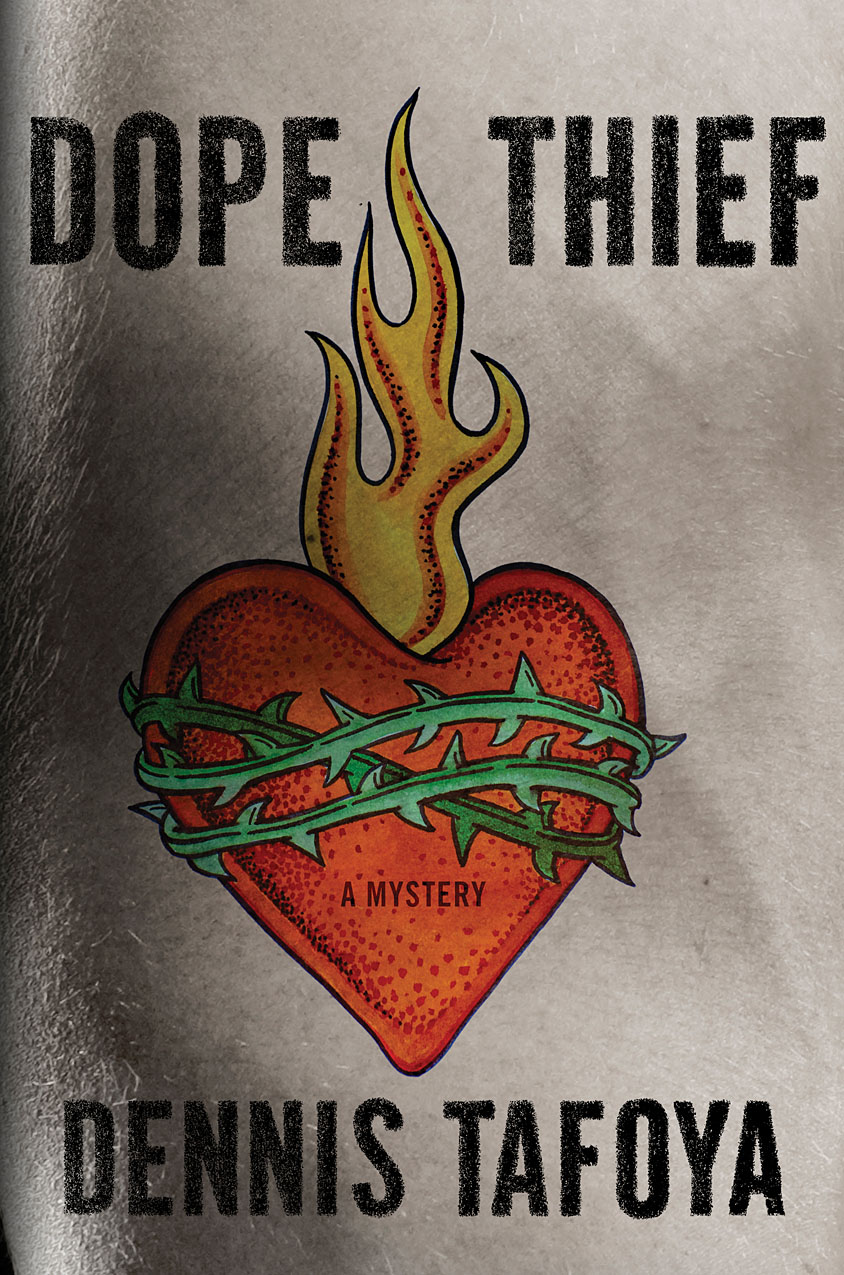
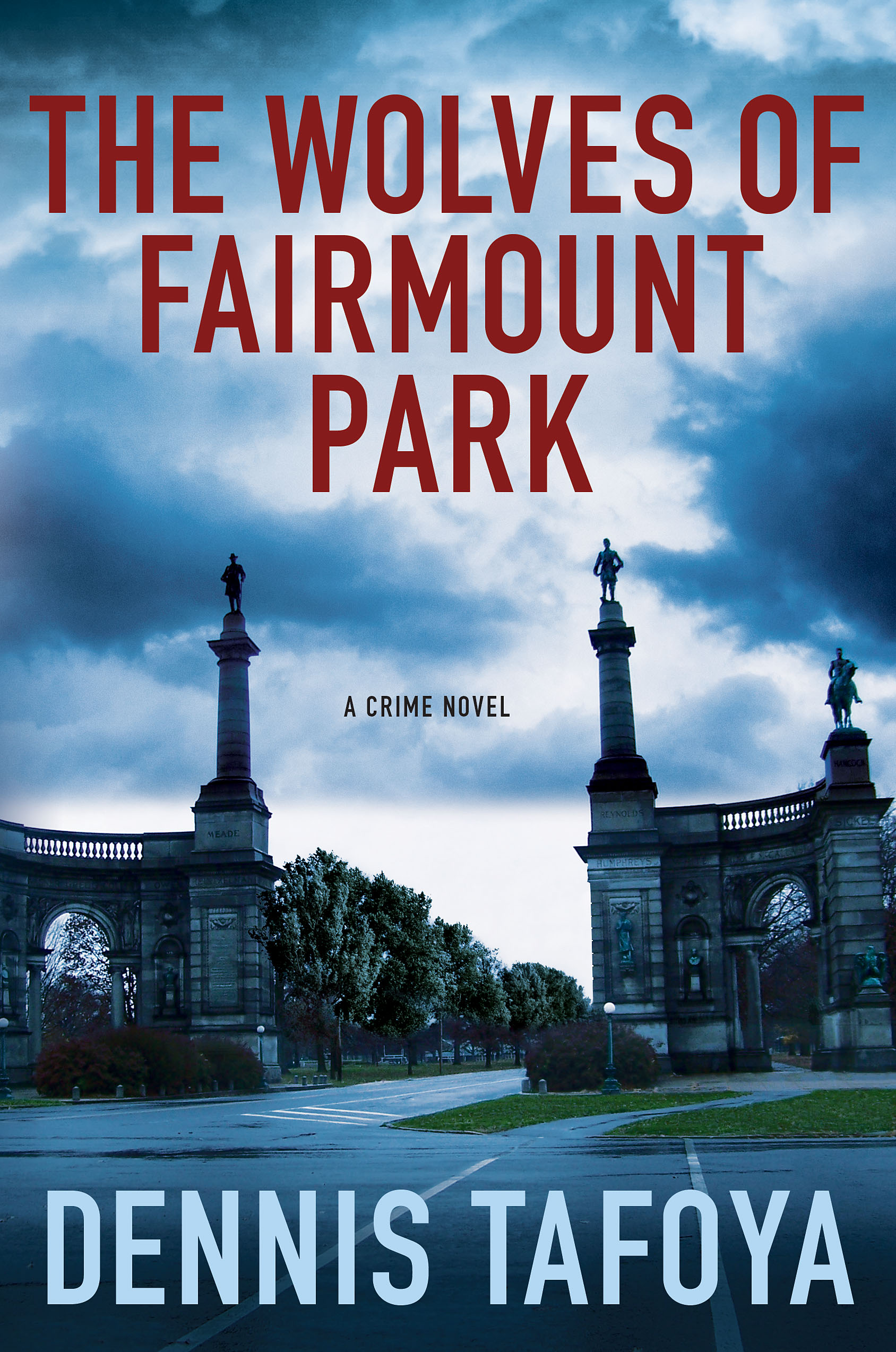
MICHAEL A. VENTRELLA: I’m pleased to be interviewing author Dennis Tafoya today, whose latest novel THE WOLVES OF FAIRMOUNT PARK has just been released. His first novel, DOPE THIEF, was published by Minotaur Books in 2009. His short story “Above the Imperial” will appear in Philadelphia Noir, coming from Akashic Books in November as part of their award-winning City Noir series. He is a member of the Mystery Writers of America, the International Thriller Writers, and the Liars Club, a Philadelphia-area writers group. He lives in Bucks County, Pennsylvania.

Dennis, let’s begin by talking about how you first got started. What got you interested in being a writer?

DENNIS TAFOYA: Writing is something I’ve always done. When I was nine I wrote a story about a monster with my friend Keith Parker. We thought it was pretty good, but looking back I have to admit it was basically a rip-off of an episode of the TV show, One Step Beyond. I associate my love of writing with a love of reading, and my early stuff was very much influenced by the science fiction and horror authors I loved when I was young, like Ray Bradbury and Robert Bloch and Harlan Ellison. I would still like to write something in a paranormal or horror vein, and I still think those authors are amazing.

VENTRELLA: Do you think starting authors should concentrate on perfecting short stories first? Do you feel the skills needed for novels is different?

TAFOYA: That’s a really interesting question, and I’ve never thought about short story writing as a prerequisite for the aspiring novelist. I know people who are very comfortable in the long form who really don’t like writing short stories, and short story writers who really struggle with the requirements of the novel. I think the best novel chapters are frequently short stories in themselves, though, and trying to master the short story can teach the writer a ton about tight control on the elements of story.

I love writing short stories — I’ve got a bunch of them out or coming out in the next few months, and I’m really proud that I’ve got a story in upcoming Philadelphia Noir from Akashic Books. I did write shorts before I tried a novel, I think to show myself that I could write a complete story. It’s also a lot easier to find a home for a short story because of the explosion of story sites on the web. I frequently advise my aspiring writer friends to take advantage of those sites, both to get work out there and get reactions, and as a way to meet people who are writing in your genre, too.

Actually, my only creative writing teacher was a poet, and I think writing poetry is an excellent path to writing fiction. Writing good poetry requires a brutal discipline, and it kind of distills the tension that should be present in all good writing to a very fine point. Poetry teaches an awareness of rhythm and word choice, too. I think making demands on ourselves as writers is the only way to get better at what we do.

VENTRELLA: Why did you decide to be a “crime writer”? What sort of background do you bring to the genre?

TAFOYA: Oh, not much other than a deep interest in crime. The threads that inform my work are literary fiction and true crime, I think. I have a few relatives with a little Damon Runyon quality to thier lives, but mostly the characters in my novels and stories are out of my imagination, applied to what I’ve read and heard about criminals and the criminal life. I’ve been lucky to know police officers and prosecutors and defense lawyers, and I’ve gotten some amazing things out of those associations, but I’m pretty boring and middle class personally. I think that’s a little disappointing to people who meet me, and I was thinking I should get some tattoos or something to sell the image a little more.

VENTRELLA: What kind of research do you do when preparing a story?

TAFOYA: I’m a fiend for research. I want to get the details right, and I want to write about those worlds as well as I can. I did a ton of research for both DOPE THIEF and WOLVES OF FAIRMOUNT PARK. I read, go to the library and spend thousands of hours on the internet trying to learn the things I want to know.

The cool thing is that research itself can generate new story ideas and take me in directions I wouldn’t have thought to move. Reading about crime in Philly for WOLVES OF FAIRMOUNT PARK, I stumbled on stories about ‘hoppers,’ kids who ride freight trains and live in squats in the city. So I added a couple of hopper characters to the novel, and the stuff I’ve learned is tucked away in my brain in case I want to spend more time developing characters or stories that involve that world.

VENTRELLA: Do you like being called “hard boiled”? What the heck does that mean, anyway?

TAFOYA: I’m not entirely sure. I guess it’s fiction with a gritty edge. I don’t mind the label, but I hope it doesn’t keep people away who might enjoy the books but who think my work might be too intense. My stories are character-driven, and while the stories do involve violence and drug use, I really want to arouse the interest and sympathy of the reader, not shock or alienate anyone. I write about people who struggle in the margins, who live compromised lives but who are still smart and aware and want more from life than their roles would suggest. I hope people recognize themselves, at least a little, in characters like Orlando in WOLVES or Ray in DOPE THIEF.

VENTRELLA: How did you interest a publisher in your first novel?

TAFOYA: I was extraordinarily lucky. Basically, a very nice woman from California, a writer and producer named Cori Stern, took an interest in my work and started me toward publication. She introduced me to her manager, Brooke Ehrlich, who agreed to represent me. Brooke found me an amazing literary agent, Alex Glass of Trident Media, who sold the book to Minotaur. It was all so painless I feel guilty when I hear other writers tell me about trying for years to find representation and get their work in front of editors. Like Blanche Dubois, I depended on the kindness of strangers, but it went much better for me than for Blanche.

VENTRELLA: THE DOPE THIEF was released first in hardcover. Why was that decision made? Do you think it was the right decision?

TAFOYA: It’s been Minotaur’s decision to release both books in harcover. I’m still a little worried that, times being what they are that people will balk at the price, but I have to trust that my publishers know what they’re doing. I think there is more interest and attention aimed at hardcovers, but there is that price issue, too. It’s a tremendous vote of confidence from Minotaur and my editor, but I feel a huge responsibility for it all to go well.

VENTRELLA: Let’s talk about characters. The best and most memorable are flawed in some way yet believable. What sort of process do you take when developing your characters? How do you make sure they don’t turn cliche?

TAFOYA: Trying to avoid cliche is one of my major preoccupations, in my characters, in the plot and in the prose itself. My aim is to write something readers haven’t seen before, but that delivers a satisfying experience and engages them emotionally. It’s a lot to try to accomplish, but I think I’m a better writer for at least moving in those directions.

I’m really only interested in characters who are deeply compromised. Maybe because I see myself that way, maybe because people who are self-contained, capable and sort of unassailable are cyphers to me. I don’t know many people like that in real life, either. Good writing is about tension, and I think that tension between the way we live and the way we want to live is what generates story in a really interesting and organic way.

VENTRELLA: Also difficult is making unsavory characters appealing to a reader. What do you find works best?

TAFOYA: I think some degree of self-knowledge is the key. My characters are drug addicts and criminals, but their awareness of themselves and the gap between what they want for themselves and the lives they lead is something we can all identify with. In DOPE THIEF, the main character is trying to figure out where things went wrong for him and whether he can get to a better life that’s about connection and engagement with his own best impulses. You don’t have to be a criminal to feel that way.

VENTRELLA: What is your writing style? Do you outline heavily, jump right in, start at the end…?

TAFOYA: I outline very briefly and generally, a couple of pages. I find so much in the writing that I don’t want to limit myself. The story will demand it’s own level of planning, too. WOLVES was a mystery, and there are logistical issues that need to be worked out with a little precision when you’re working on that kind of project, but I always find new characters or new ideas, so my sense of the story remains pretty fluid. I do have an image or scene that I’m writing toward, usually, a kind of state I want things to be in at the end. That’s pretty important for me.

VENTRELLA: WOLVES was bought by your publisher based on a one sentence synposis, about a heroin addict trying to solve a mystery. Did that provide a challenge? Are you pleased with the result?

TAFOYA: I don’t know what I was thinking promising to write a mystery. I have so much respect for writers who can deliver those on a regular basis! I’m really glad I did it, and I’m pleased that the book is getting good reviews, but it was a real challenge. It stretched me in new ways, and not just because of the requirements of the mystery form. I knew I was going to have to plan much more extensively, create red herrings and keep control of the way information is revealed, but I was also working for the first time with multiple viewpoints and a much larger palette. It was pretty ambitious, and I can’t tell you how relieved I am that the book is getting good reactions.

VENTRELLA: WOLVES also deals with the seedy underbelly of Philadelphia. What is it about Philly that makes it unique to your stories? Could your fiction work in any other place?

TAFOYA: I was asked that in another interview recently, and I’ve been thinking about how Philadelphia and its characters might be unique. I’ve spent a lot of time in New York and Washington and some other places and I can say people in each of those places really seem different to me. I recently set a short story in Vegas that dealt with characters from the west, and I think the speech patterns, the way people engage one another, reflect a slower pace and sometimes a little more recalcitrance than the people I know here. My friends and relatives from Philly talk fast and loud and share different kinds of information. We’re on display in a way that a guy from rural Nevada might not be.

Another thing I think is interesting is that here in Philly we’re more rooted to the place we live. In my family we used to joke about that, about our relatives who thought they needed a passport to leave South Philly. We’re defined by neighborhoods, by where we grew up and where our families live. Our accents are very specific and we’re very conscious of class and income. My relatives from Oregon Avenue regarded the Main Line as a different planet.

VENTRELLA: Can we expect your third novel to do the same?

TAFOYA: I’m working (very slowly) on a new novel dealing with little criminals from South Jersey. It’s an excuse to do a ton more research, of course, and to spend time in the area getting to know the places and reading local papers, eating in the diners. Research like that is always fun and it always yields really interesting stuff, some of which might actually make it into the book.

VENTRELLA: And finally, what advice would you give the aspiring writer that isn’t obvious (“write better”)?

TAFOYA: Find other writers. I meet people who have been working alone on novels for years, hoping to finish that novel or screenplay, or endlessly refining work they’ve already done. Meeting other people who are doing the same thing you are will help you gain confidence, it will get you help and advice, and it will hopefully let you get reactions from people who are engaged in the same work. Your friends and family might be really supportive, but they’re rarely able to help you get better at your craft or help you find ways to get your work in front of readers or agents or editors. Your best bet is to meet other writers. I think you’ll find, like I have, that writers are extemely generous and supportive. Nearly all of the great things that have happened to me have been because other writers went out of their way to help me or give me advice.

Tafoya

Interview with NY Times Bestselling Author Rachel Caine

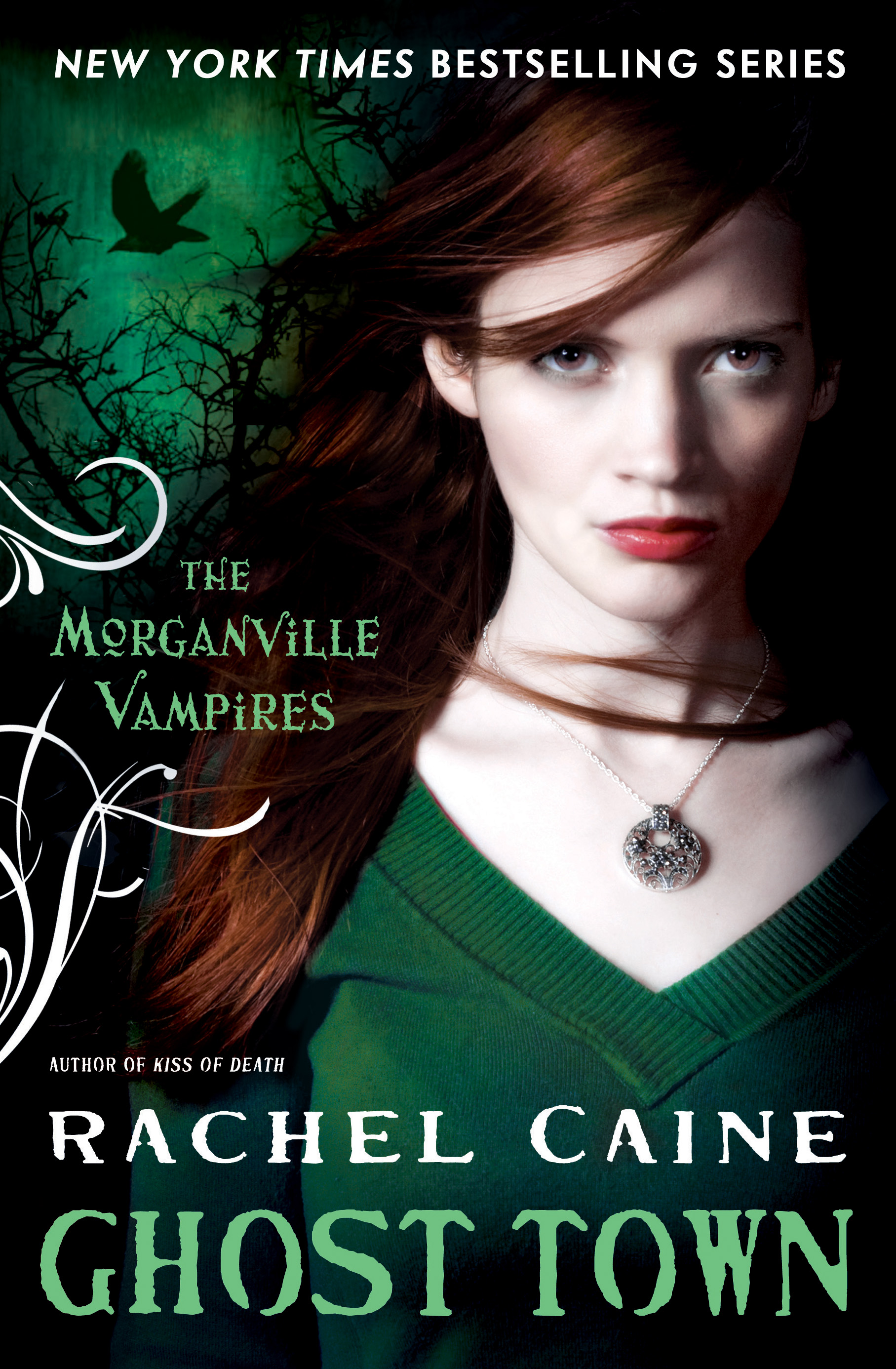
MICHAEL A. VENTRELLA: I’m pleased to be interviewing NY Times bestselling author Rachel Caine. Rachel has the Morganville Vampires series, Weather Warden series, and the Outcast Season series, as well as writing paranormal romantic action/adventure and many other genres. Rachel will be the Guest of Honor at Ravencon next weekend (April 9 – 11, 2010) where I am a mere minor guest! Her web page is here.

Rachel, what is it that makes a novel a “young adult” novel?

RACHEL CAINE: The way I look at it, it’s purely a matter of the age of the central characters. My four main characters are ages 17, 18 and 19 now, and as with all characters, their ages and life experience shape the events of the book. So it’s not that I deliberately target the audience … it’s that I think in order to be faithful to the characters and the story, it should naturally appeal to a young adult audience. (Although I have plenty of adult readers of this series as well.)

VENTRELLA: It seems like you have a new book out every month! How do you manage to be so prolific?

CAINE: Ha, I don’t think it’s *every* month. But definitely 3 or 4 a year, that’s true. Most of that’s driven by the YA series (Morganville Vampires) because the schedule for that is we’re publishing one every six months vs. a year for the adult novels (Weather Warden and Outcast Season). But when you add it all together, three series going at the same time does tend to add up fast.

I think I’m lucky that I really enjoy writing to tight deadlines (generally) — it’s been a really great balance against my sometimes stressful day job.

VENTRELLA: There is an ironic balance that has to be met when writing about the supernatural, in that it has to be rooted in reality to be believable. How have you made decisions about integrating the real with fantasy?

CAINE: I’m going to shamelessly quote Jim Butcher, who once said that in order to have urban fantasy that feels realistic you need to have about as much “real” as you do “fantasy.” I believe that’s true … If you look at the success of the movie “Hellboy”, I think that first film achieved a wonderful balance in that area. Sure, you’ve got a big red devil guy running around fighting monsters, but there’s so much real world complication that it makes it all that much funnier and more outrageous. I thought that in the second film, good as it was, they forgot that balance, and slid it to about 75% fantasy, 25% real world … and I think it wasn’t as strong as the first.

So I try to balance my fantastic elements with the fact that everybody, even supernaturally gifted people, have to worry about bills and dry cleaning and child care. 🙂

VENTRELLA: What is it about vampires that attracts such attention these days? Do you think this is just a trend? (I hope not, since my third novel will be a vampire book …)

CAINE: Well, I’ve actually been in the vampire field when it was cool before (in the early 90s) and when it wasn’t (in the late 90s), and now it’s cool again, which is kind of great. Vampires never really go out of style — we’ve been afraid of them for thousands of years, and writing about them in fiction for more than 100 years. The fascinating thing is that in the beginning, vampires were soulless monsters … reflecting that hidden terror that those you know and love can suddenly become monsters. And then they took on personalities and became more sympathetic, and eventually (by the mid-70s) became actual misunderstood romantic anti-heroes. By the mid-1980s, vampires had become heroic, appearing as police officers, detectives, doctors, all kinds of professions that had always been seen as admirable. Now, it seems that they’re back to the dark, romantic Heathcliff-type heroes (at least in the romance circles), but then there’s graphic novels like 30 DAYS OF NIGHT that harken back to the terrifying soulless monster vampires prototypes. So there’s lots of room to do anything you’d like in vampires, which I think is fantastic fun.

VENTRELLA: For those unfamiliar with your work, can you give a quick description of your main series?

CAINE: The Morganville Vampires series (Young Adult) follows the adventures of Claire Danvers and her fellow housemates Eve, Shane and Michael in the town of Morganville … just your average Texas college town, except that it’s controlled by vampires, and the city taxes get collected by Bloodmobiles. Once you’re in on the secret, you’ll never make it out of town alive. Not all the vampires are bad, but they’re all unpredictable, and Claire and her friends often find themselves caught in the middle of the ultimate haves-and-have-not struggle.

The Weather Warden series (Urban fantasy) features Joanne Baldwin, a sexy, sassy woman with a secret … she can control the weather, and she’s part of a secret organization that battles the forces of nature on a regular basis. Mother Nature really doesn’t like us, and only Joanne and the Wardens stand between us and total extinction … when they’re not battling among themselves. Oh, and there are Djinn (genies) who sometimes serve the Wardens, and quite often turn on them with fatal results. Trust Joanne to engage in the most dangerous kind of romance … with one of the most powerful Djinn in existence.

The Outcast Season series (Urban fantasy) is a spin off of the Warden universe, and concerns Cassiel, a former Djinn who’s been cut off from her supernatural kin and now must survive in a human world she doesn’t understand or like, with the aid of Wardens she’s never respected. But in her struggle to survive, she finds herself drawn more and more to the humans she cares for, in particular Warden Luis Rocha — which makes things more difficult when she realizes that she may have a destiny after all: to destroy the human race.

VENTRELLA: How have you planned out the Morganville series?

CAINE: I had a six-book story arc planned, and I’m making the second set of six more standalone stories. There is a certain continuity to the storyline, but I’m trying to avoid too many cliffhangers. 🙂

VENTRELLA: What do you do to create believable characters who learn and grow from their adventures?

CAINE: I don’t know that it’s a conscious process for me … the characters really seem to do that on their own. I have found that less is more in character development … the more tics and traits you give a character, the less natural they seem over time. I find that starting small gives characters plenty of room to grow.

VENTRELLA: How did you break into the publishing business?

CAINE: Not in any way that anyone else should look on as typical! I never intended to … a friend bought me a ticket to a writer’s conference and dropped me at the door. He wanted me to learn about being a writer because I’d been writing on my own (and hiding it) for more than 15 years at that point. So I thought I’d talk to an editor or two, and that would be that.

Only the first editor I talked to hired me to do my first novel. So that worked a little better than I expected, actually. That was in 1990, and I’ve been publishing ever since … with the occasional career hiccup.

VENTRELLA: Some of your earlier works were written under other names. Why did you do that, and would you advise others to do so?

CAINE: And that would be the “occasional career hiccup” referred to above. 🙂 I wrote as Roxanne Longstreet (my maiden name) when first starting out, but my books didn’t really burn up the shelves in any significant way. When my first publisher told me they wouldn’t be able to buy more from me, I changed my name to my married name (Roxanne Conrad) and tried again, with similar results. Rachel Caine is proof that the third time is the charm, I think!

I did use the name “Julie Fortune” for a media tie-in novel for Stargate, mainly because at that time the “Rachel Caine” identity was still new and fragile, and I didn’t want to risk bad sales on something so far outside of my new areas of expertise. But Julie actually has done pretty well on her own.

VENTRELLA: Of which book are you most proud? What would you like to be remembered for?

CAINE: I don’t think I’d like to be remembered for one book … more for a body of work. I can’t really say that I prefer one book over another; from my perspective they each have different characters, but mostly in the sense of where I was emotionally at the time I did the work. I’m not the best judge of that sort of thing. I’m just happy that it seems to touch people and entertain them.

VENTRELLA: What’s your opinion on e-books? Do you think they’re the wave of the future or a step down from traditional publishing?

CAINE: I don’t think it’s a step down at all, but there are a number of people who simply don’t like to read on the screen, so I think traditional publishing will always have a place. For people who read for the experience of the story, versus collecting books, I think ebooks are perfect — portable, simple, and disposable. For collectors, nothing will replace the experience of a book.

I do think there is a real and growing problem related to ebooks … there’s a basic misunderstanding of copyright as it relates to electronic files. Buying an ebook doesn’t give someone the right to copy it wholesale and sell it on to others … and there’s a constant issue with this happening. Most of those people don’t understand that what they’re doing is setting themselves up as a digital publisher, which is robbing both the author and the publisher. Unless we can collectively get that settled, it’s going to bleed the industry dry over time.

VENTRELLA: You’ve wisely advised authors before not to self-publish. Why is that important?

CAINE: I don’t say never self-publish, but it’s not a good way to launch a career as a writer. If the person wants simply to have a book, and has no expectations of continuing to advance in it as a career, then self-publishing might be okay. But there are a lot of drawbacks to self-publishing … you’re responsible for marketing, getting your books into physical stores, and competing with authors who don’t have to do any of that for themselves. Don’t kid yourself: it takes time away from your writing, and trying to break into bookstores in any kind of volume is difficult, if not almost impossible.

Self-publishing also has a reputation — sometimes undeserved, but often accurate — of not being good quality. Often the covers aren’t very good, and unless you’re extremely good at self-editing, or employ a professional editor who knows their stuff, the product is often easy to detect as amateurish rather than professional. So you have a huge burden to overcome.

The last thing I’ll say is this: very few people have ever made decent money from self-publishing, and those that have, generally jumped to traditional publishers as quickly as possible. Don’t get fooled by companies that promise you they’ll publish your book, but then require you to pay for editorial, marketing, and other services. They make money off of you. Your chances of making money from them is pretty small.

VENTRELLA: Finally, what is it about conventions that you like?

CAINE: I love hanging out with my people. 🙂 I’ve always been drawn to conventions — where I can have endlessly fun conversations about things that I’m passionate about, whether it’s geeky obsession over a TV show or deep conversation about life, the universe, and everything (thanks, Douglas Adams!). I’ve met many of my best friends through conventions, and had some of my finest times ever.
Thanks for giving me the opportunity to talk with you! Looking forward to seeing you at RavenCon!

Interview with Hugo Award-winning author Lawrence Watt-Evans

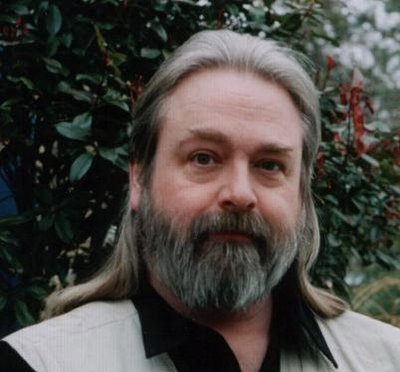
Lawrence Watt Evans grew up with parents who were science fiction readers, so he grew up reading the stuff, and decided at the age of seven or eight that he wanted to write it. He has been a full-time writer for more than thirty years, producing more than forty novels, over one hundred short stories, over one hundred and fifty published articles, and a few comic books. Most of his writing has been in the fields of science fiction, fantasy, and horror, and he has received a few awards, including the Hugo for best short story in 1988, for ”Why I Left Harry’s All-Night Hamburgers.” He served as president of the Horror Writers Association from 1994 to 1996. He lives in Maryland with his wife and the obligatory writers’ cat.

MICHAEL A. VENTRELLA: Lawrence, thank you! Let’s start by letting us know what your latest work is that is available and what we can expect next.

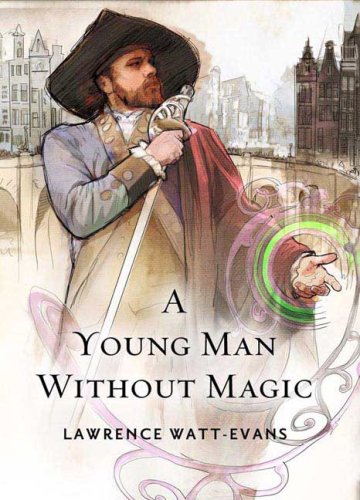
LAWRENCE WATT-EVANS: My latest novel is called A YOUNG MAN WITHOUT MAGIC; Tor released the hardcover in November of 2009. This is the first volume of a fantasy series called the Fall of the Sorcerers; the second volume, ABOVE HIS PROPER STATION, will be out in November 2010. Whether there will be more remains to be seen. If there’s sufficient interest from readers and publishers, this series could go a long time — I have about a dozen novels plotted.

VENTRELLA: You try to break down traditional plot cliches in your stories. What are your plotline pet peeves?

WATT-EVANS: My biggest is simply people doing things, or failing to do things, because it’s necessary to make the plot work, and not because that’s how real people would act. Plots that depend on people not telling each other important things when there’s no reason to keep them secret, for example. Real people generally like to talk, and keeping a secret is hard, so why do so many characters in books go to such lengths to not tell each other things?

Why don’t characters in novels call the cops more often? Why don’t they tell their friends what they’re up to?

VENTRELLA: I’ve commented on this blog before about how I dislike the typical fantasy hero who is a noble-born chosen one with special powers. Why do you think it’s important to avoid those kinds of characters?

WATT-EVANS: I don’t think it’s important to avoid them; I just think they’ve been overdone, and I prefer to focus on more ordinary people.

VENTRELLA: Do you ever worry about genre when your work crosses the line? Do your publishers and editors ever give you a hard time about it?

WATT-EVANS: When I started out I never used to worry about genre. Back in the ’80s, I wrote whatever I wanted and let the publisher worry about labeling it. By the ’90s, that looked like a bad idea — my fantasy was much more successful than my science fiction or horror, so writing SF or horror was dragging down my sales and hurting my career. My agent eventually convinced me of that, and I mostly stopped writing SF and horror novels. (In short fiction, no one cared.) I’d intended to go on writing SF under a different name, but that never really worked out. By the turn of the century I was purely a fantasy writer.
But the thing is, the market kept changing, and now readers and publishers want cross-genre stuff — pure traditional fantasy isn’t selling well anymore. Urban fantasy, crossing fantasy with hard-boiled detective stories — that’s selling. Paranormal romance is selling. Historical fantasy is selling. Since I write for a living, I can’t afford to ignore that, so I’m currently working on an urban fantasy novel called ONE-EYED JACK, and I’m looking at some other genre-bending possibilities.

I’m perfectly happy working in various genres, but I do try to keep up with what publishers are buying.

VENTRELLA: Are humorous stories easier or harder to write?

WATT-EVANS: Easier than what?

For me, each story has its own natural tone, and that has nothing to do with the difficulty of writing it. Some funny stories are easy, some are hard; some serious stories are easy, some are hard.

VENTRELLA: What difficulties and pitfalls face someone trying to write humor?

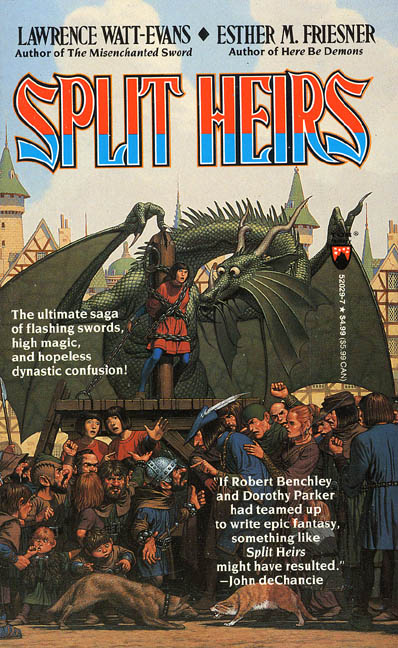
WATT-EVANS: The tricky thing about writing humor is that senses of humor vary. What one person finds funny may leave another cold. When Esther Friesner and I were writing SPLIT HEIRS, while we were mostly in accord, I found out that Esther has a more vicious sense of humor than I do, but isn’t as fond of pratfalls — with one exception, any scene in the book where death or serious injury is played for laughs, Esther wrote it, while I think all the falls are mine. Knowing what readers will find funny — well, I’m not sure there’s anything that every reader will find funny. There are people out there who don’t find Terry Pratchett funny, which I find incomprehensible.

So what you need to do is to incorporate a variety of humor. Don’t stick entirely to one thing — there’s no gag that won’t get old eventually. Maybe you think puns are the epitome of wit, but relying entirely on puns is going to leave most readers cold. SPLIT HEIRS had puns and pratfalls and pain, contrived explanations and elaborate absurdity, double entendres and drunk acts, so if a reader didn’t laugh at one bit, the next might get him. Overusing any one joke can kill it. Change it up.

Also, don’t try too hard. Don’t overdo it. Humor has to have some grounding in reality in order to work. There’s a reason the classic comedy acts always included a straight man. Have some respect for your characters, no matter how absurd their situation may become. It’s much funnier when something ridiculous happens to an ordinary guy than when it happens to a capering buffoon.

VENTRELLA: I know there isn’t a template that is used each time, but when creating a new world, what is your process? Do you first concentrate on the story and characters and then think about the politics and religion of the world?

WATT-EVANS: Oh, it varies. A lot. I mean, a lot.

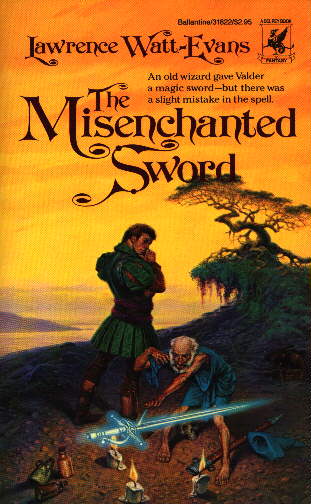
Ethshar started out as a map I drew during a boring geometry class in ninth grade; the locations of Aldagmor and the three Ethshars were where the point of a compass had marked the paper when I used it as backing for an assignment. That was 1969. I added names and worked out some of the linguistics between then and 1972, and figured out some of how warlockry functioned, then put it aside until 1977, when I started designing the other kinds of magic. History and politics and religion came along between 1977 and 1983, but I didn’t have any stories to set there until about 1982. I started writing THE MISENCHANTED SWORD in December 1983. I’m still adding details.

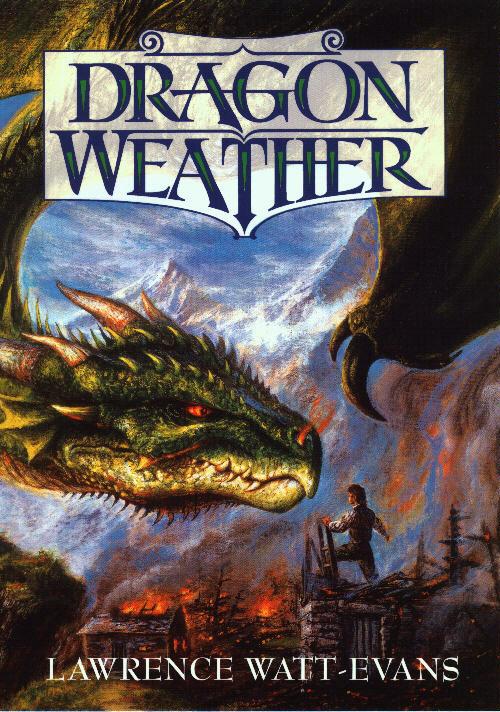
For the Lands of Man, on the other hand, I knew the story first, and wanted a setting. I started with the history, from the wars against the dragons to the opening of DRAGON WEATHER, but I didn’t know the geography or magic, or history before the wars, until after I started writing the novel. I never did get the linguistics straight.

NIGHTSIDE CITY was inspired by the Los Angeles of Ross Macdonald’s Lew Archer novels — “inspired” not meaning copied, at all. Lew Archer’s L.A. is a city of night, where the real world Los Angeles is a very sunny place, and that got me thinking about a city where it’s always been night, but the sun’s about to come up. (A “Little Nemo in Slumberland” strip where the sun dissolves King Morpheus’ palace may also have figured in.) So I started designing out a world where that would be possible, and even hired a planetologist, Dr. Sheridan Simon, to work out the physics for me.

VENTRELLA: Do you prefer writing short stories or novels?

WATT-EVANS: I used to find novels easier, though obviously they take longer, but somewhere in the late ’80s I got the hang of writing short stories, and since then I don’t find one more difficult than the other.

As for which I prefer, do you prefer steak or chocolate cake? They’re different. Sometimes I want one, sometimes I want the other.

VENTRELLA: What do you see as the primary difference between the two?

WATT-EVANS: The primary difference is that a short story is about a single change, while a novel is about something developing, step by step. The first time I was asked this question, many years ago, I said that a short story is a kiss, and a novel is a courtship, and I still think that’s a pretty good analogy.

VENTRELLA: Publisher’s Weekly said of your latest (A YOUNG MAN WITHOUT MAGIC) that the characters were “unlikeable” but that the “the tight plotting and absorbing new world make this tale readable.” Do you agree that the characters are “unlikable”?

WATT-EVANS: I didn’t think they were unlikable — not all of them, anyway. I like Anrel quite a bit. Several of the others are less than charming, I admit, including Anrel’s best friend, but I thought I’d come up with a protagonist readers would find pleasant company. I suspect the reviewer found him too fatalistic, a trait that fades greatly in the sequel, ABOVE HIS PROPER STATION.

VENTRELLA: How do you deal with negative criticism?

WATT-EVANS: Mostly, I ignore it. I know I can’t please everybody. In one case, though, a reader’s comment about TOUCHED BY THE GODS me rethink the whole story, which is a part (though only a small one) of why there’s no sequel and will never be one.

VENTRELLA: What themes do you find yourself revisiting in your work that may pop up without planning?

WATT-EVANS: How broadly are you defining “theme”? A lot of my stories turn out to be about someone finding a place for himself in the world. I also seem to write about a lot of immortal (or at least ancient) characters who have lived in isolation and are reconnecting with the world. And characters who are struggling to control some power that could cause great destruction if unleashed.

I don’t know why.

VENTRELLA: What is your writing style?

WATT-EVANS: It varies, but usually it goes like this:

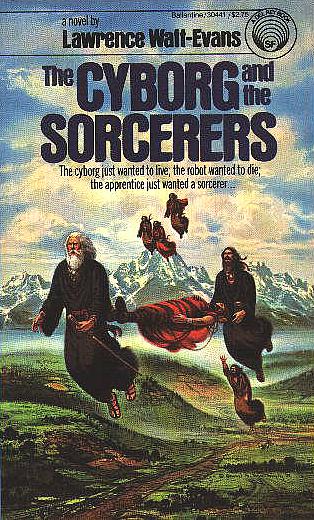
Come up with central concept, which can vary hugely in complexity — it could be a gadget, a spell, a characteristic of the setting, a plot element, a scene, a character. THE MISENCHANTED SWORD started with the spell on the sword, NIGHTSIDE CITY started with the doomed city, THE CYBORG AND THE SORCERORS started with the scene of Slant talking to the wizards of Teyzha. Sometimes this concept is the result of combining two or more old ideas I had kicking around.

Usually, I let this stew for awhile, accreting material. If I didn’t start with a character, figure out who the characters are who would be involved. Work out a background where this could take place — which might be a setting that already exists, or a new one.

Write an opening scene, to get the material fixed in my head. Sometimes this comes before the stewing.

Figure out how the story ends.

Come up with some rough plan for getting from the opening to the ending.

Start writing.

Usually, I’ll stop after awhile — usually the first time I hit a plot problem — and write up a working outline, running from three to thirty pages; when I’m satisfied with that, I’ll go on writing the story.

The first draft is usually skimpy; the second draft is largely filling in details I skipped over while working through the plot. I generally don’t know the characters all that well when I start, but I get to know them writing the first draft, so the second draft lets me flesh them out.

And after that it’s just polishing.

However, not every story follows this model. I do whatever works. Sometimes I never do write an outline. Sometimes I write one, but don’t follow it. Whatever works.

VENTRELLA: Of what work are you most proud?

WATT-EVANS: DRAGON WEATHER. That one came out really good. Some others came close, but I’d rate that one as my best.

VENTRELLA: And finally, who do you like to read?

Terry Pratchett, Fritz Leiber Jr. — right now I’m not sure who else, as I seem to be in a transitional period where I’m losing my taste for old favorites (e.g., Robert Heinlein) and haven’t yet settled on new ones.

51

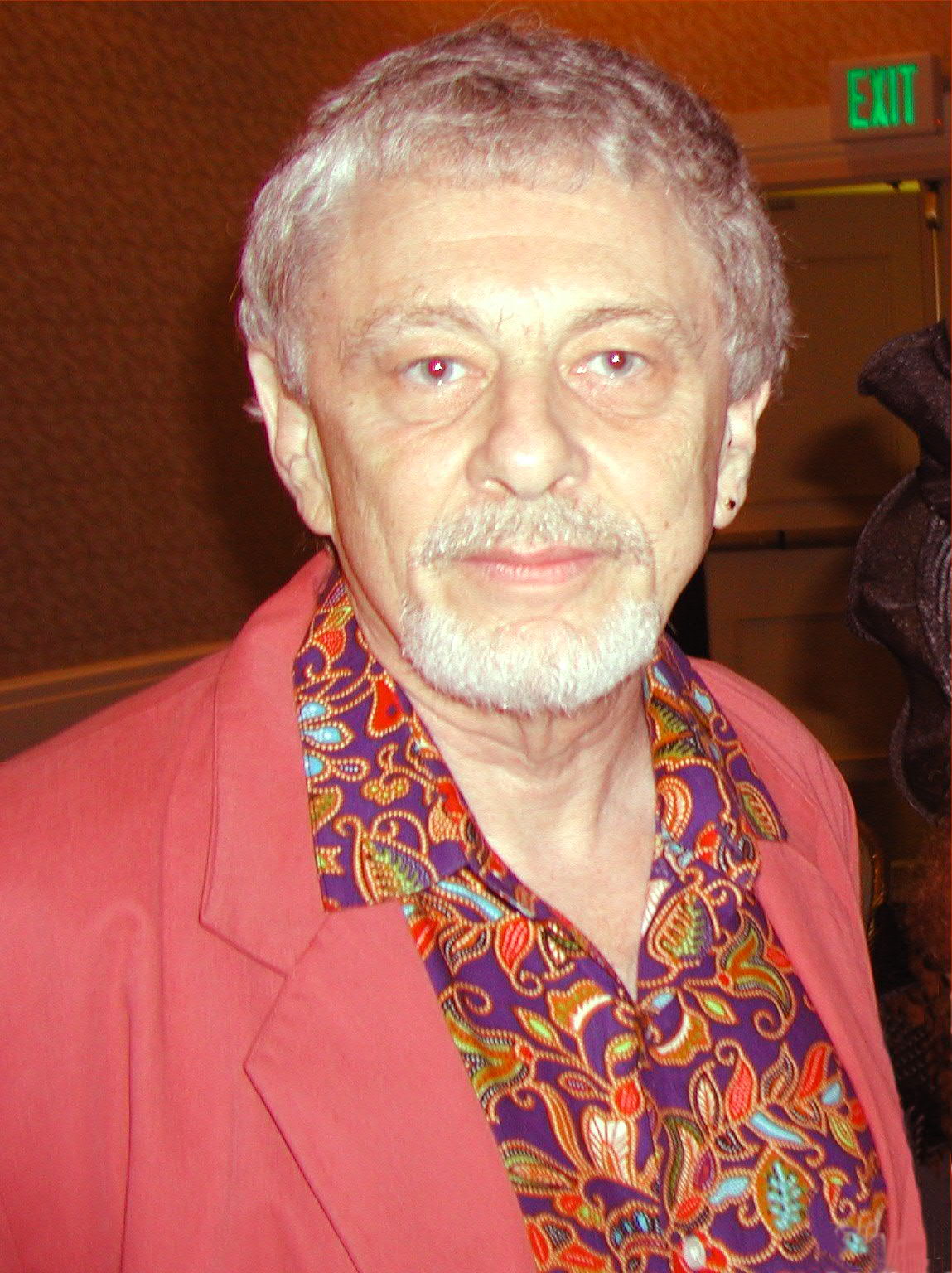
Interview with Hugo and Nebula Award Winning Author Norman Spinrad

MICHAEL A. VENTRELLA: I’m pleased to be interviewing Norman Spinrad, one of my favorite authors! Norman Spinrad is the author of some 20 or so novels, five or six dozen short stories, a classic “Star Trek” episode, a couple of flop movies, an album’s worth of songs, political columns, film criticism, literary criticicsm, mini-cookbooks, autobiography, and a bunch of assorted other stuff.

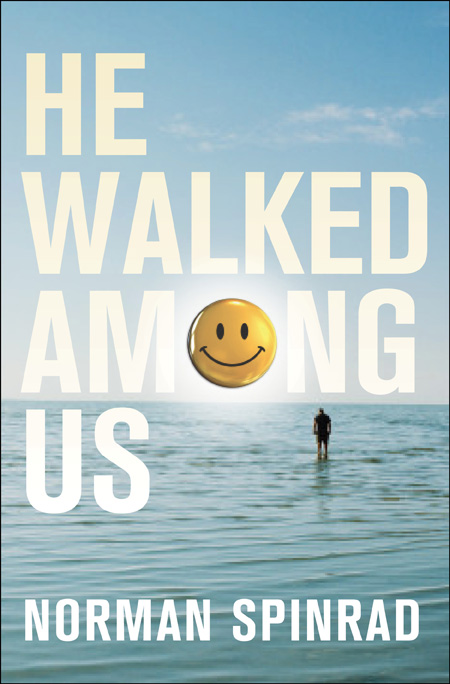
The latest novel to be written is a called WELCOME TO YOUR DREAMTIME, in which the reader is the viewpoint character. The latest novel to be published, in April 2010 by Tor, will be HE WALKED AMONG US.

His web page is here.

I can still recall when a friend and I both read BUG JACK BARRON within a short period of time, and spent months talking about it and saying what a good movie it would make. If you don’t mind, let’s start with that. You have written scripts before (most notably for the original “Star Trek”) and have produced one for BUG JACK BARRON, but somehow, due to Hollywood politics, it has never been made. What has stood in its way and is there the possibility that it might still happen?

NORMAN SPINRAD: This is always the wrong question. The right question is “How does any film get made?” I’ve had the experience of pitching a film project of THE BIG FLASH six times in one day, and what I was doing was walking into someone’s office and saying in effect “gimme $15 million.” Try it some time and see how it feels!

You can look at my YouTubes about this for gory details, but basically, the situation is that Universal had to pay the pick-up money when it looked like Costa Gavras was going to do it, Costa Gavras killed himself in Hollywood with HANNAH K, there were blown scripts, they didn’t like mine, never got made though any number of directors and producers have tried to get it away from Universal (in those days a “pick up” meant they owned the rights forever) because of a tax dodge in which studios keep phantom projects “alive” so they can use them to write-off annual deductions in the form of enhanced overhead for “development.” There are hundreds of such projects in the same situation in Hollywood for the same reason.

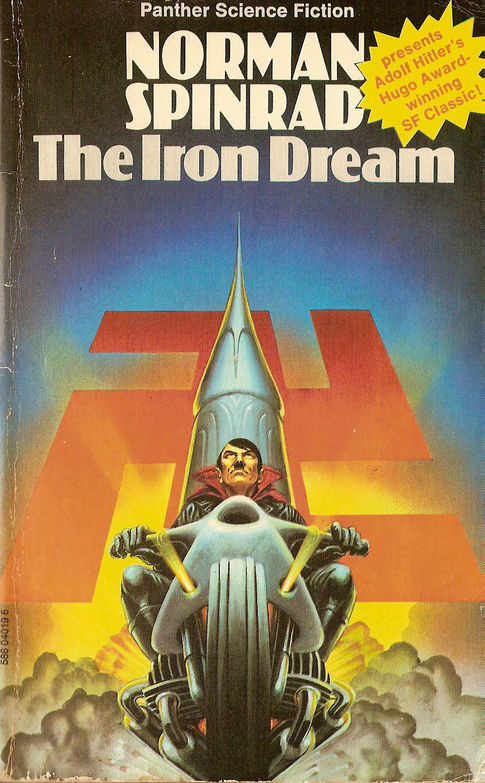
VENTRELLA: After the controversy over BUG JACK BARRON, did you make a conscious decision to push the limits even farther with your book THE IRON DREAM?

SPINRAD: No, I never do that, consciously seek to push limits, I just ignore limits.

VENTRELLA: How did you get the idea?

SPINRAD: I got the idea for THE IRON DREAM by asking Mike Moorcock how he wrote all his commercial fantasies. “Take a myth, or a story from history, run it through a lot of Freudian imagery, and there you have it,” he told me.

“You mean like for instance Nazi Germany…?”

VENTRELLA: Looking back, are you happy with the results?

SPINRAD: In retrospect, after THE IRON DREAM got all those good reviews in over a dozen countries, won an Apollo, was nominated for an American Book Award, I was finally convinced I had written a suigenerous classic. Before that I hated the novel; it took me a long time to figure out that what I hated was the unpleasant work of writing it, not the result.

VENTRELLA: Your novel HE WALKED AMONG US has gone through a most interesting publication history. Can you explain a bit about this? How much of this was by your design and how much of it was because of problems with publishers?

SPINRAD: All of it was problems with publishers, and I’m not going to go into it here. Suffice it to say that HE WALKED AMONG US was finally published by Fayard in French translation last year, a much more presitigous and serious publisher than any of those who rejected it, and will finally be published by Tor in April 2010.

VENTRELLA: You’ve dealt with language in the future in your novels. Where do you think we are heading? Is English taking over the world because of our culture?

SPINRAD: No. Our (pop, Hollywood, etc.) culture is taking over the world because of English, which is the most popular second language in the world as well as the first language of something like half a billion people. The Anglophone market is by far the biggest.

VENTRELLA: As a transplanted New Yorker, what is it about Paris that made you move?

SPINRAD: Nothing, if you mean back to NY, except financial and real estate complicatons. If you mean to Paris, I moved there for what I thought would be a year to write RUSSIAN SPRING, set primarily in Paris. But by the time I had finished, what was going on in Europe was much more interesting to me as a speculative writer, and personally I just enjoyed living in Europe, and particularly in France, much more than in the US. More diversity in the same area.

VENTRELLA: I read an interview you did with Woody Allen where you two discussed how much better artists are received in Europe. What is it about the culture that makes that possible there and not here?

SPINRAD: In part, it may be that it’s an individual thing, my work somehow resonates powerfully with the French as does Woody’s. But as a generality, I think it has a lot to do with American anti-intellectualism. If you’re living off an art, you’re less than macho, and if you are not employed, you’re a bum. How this evolved, I’m not sure, but I think it has to do with the extreme laisez faire capitalism of the US, and the idea that the bottom line is the bottom line. This is not true in France, for example, although the French are very keen on making money, where it is clearly “cultural patrimony” — literature, art, film, music, even comics, that trumps money psychologically and socially.

VENTRELLA: Do you consider yourself an optimist? Does the world today look like you imagined it when you began writing, and do you think it will improve?

SPINRAD: Neither an optimist nor a pessimist, but a realist. And I’ve imaged all sorts of contradictory futures, as have most serious writers of speculative fiction. The point is not prediction, the point is exploring possibilities, even very improbable ones.

VENTRELLA: What is your writing process?

SPINRAD: Story comes first, no story, no writing, and story, at least at novel length implies structure, at least knowing where you’re going before you start, and why you’e going there. So with novels, I don’t so much write “outlines” to begin with but treatments in the film manner, not just the events and the characters, but the voices and the styles.

With short stories, I guess I often do just start writing some stuff to see what happens.

VENTRELLA: Do you have any tricks you use for making sure that your characters are believable and consistent?

SPINRAD: Not really. Except mainly in fiction as in the real world, chez Emerson, “consistency is the hobgoglin of little minds,” meaning that fictional characters don’t have to be and probably shouldn’t be “consistent” if you want them to be “believable.”

VENTRELLA: Have you ever had to make changes you regret due to publisher/editor requests?

SPINRAD: Not really, except for some title changes.

VENTRELLA: Let’s discuss the publishing business a bit. With self-publishing and e-books becoming more prominent, how do you think this will change the demand and market for new writers?

SPINRAD: Not at all. I worked at the Scott Meredith fee reading service, which charged would-be writers for “editorial advice” and promised to try to sell what was marketable.. What was marketable was about 5% of amateur submissions. No technology will ever change this except maybe by increasing the size of editors’ slush piles.

VENTRELLA: The publishing industry still seems to be stuck in a “bricks and mortar” mentality, and is slow to embrace e-books and the like. Do you think that publishers will eventually be forced to reduce their prices on e-books?

SPINRAD: All this is in a creatively chaotic state of flux, and will be for a year or two. Publishers are not now slow to embrace ebooks, far from it, they’re almost desperately trying to figure out business models, pricing, power relationships with Amazon, Barnes and Noble, etc.

In my opinion, the devices to make ebooks take off are already here, more or less, what isn’t is realistic business models stripped of excessive greed. It seems clear to me that an ebook should be treated first like a trade paperback, later as a mass market paperback.

Meaning that when it’s a new title, it should sell for about $10 or $12, say, which is a 20% or so discount from the current standard price of a trade paperback, and this is the difference in numbers that Amazon and Macmillan were fight about, and it’s no big deal. But publishers, for titles that they want to launch in hardcover, should be able to delay ebooks for several months to protect hardcover prices, just as they now delay paperbacks a year to protect them. Once a book as been around over a year or so, the ebook price should be competative with that of a mass market paperback.

This, in general, is the just, workable model that will work, and therefore I believe it will enventually emerge. Think of it as evolution in action.

VENTRELLA: Finally, what is your favorite? For what would you like to be remembered?

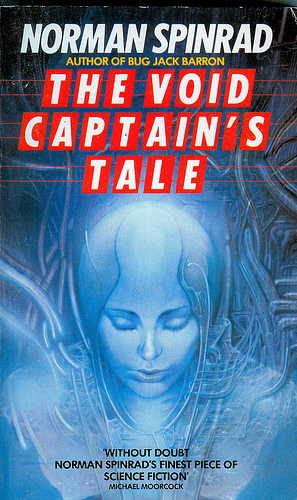
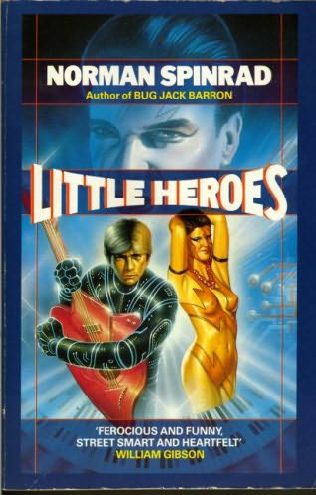
SPINRAD: Like asking someone with 20 kids which is his favorite. I suppose though, I have an A list: HE WALKED AMONG US, CHILD OF FORTUNE, THE VOID CAPTAIN’S TALE, LITTLE HEROES, BUG JACK BARRON…

As for what I would like to otherwise be remembered for:

He opened doors.

Many people walked through them.

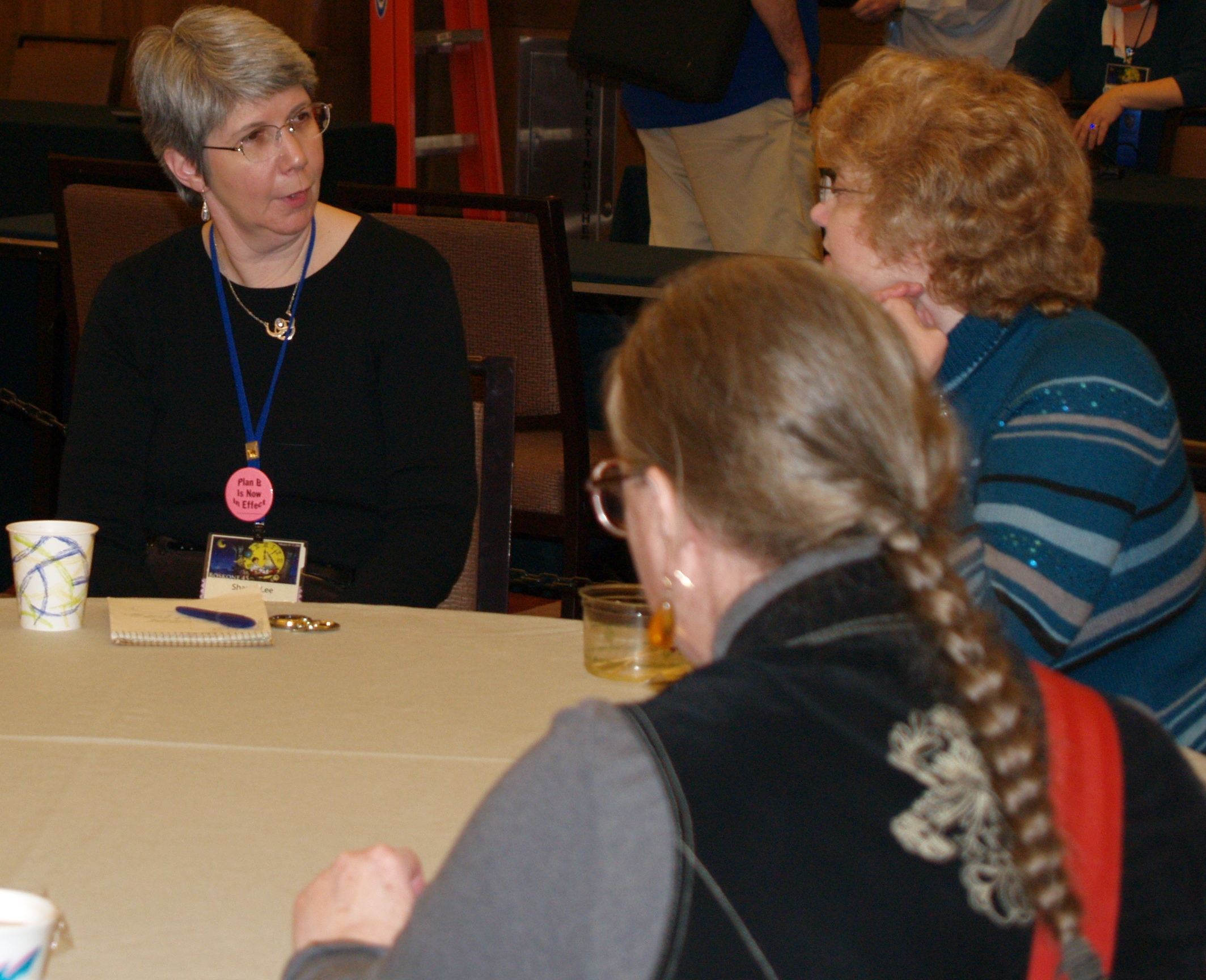
Interview with Sharon Lee

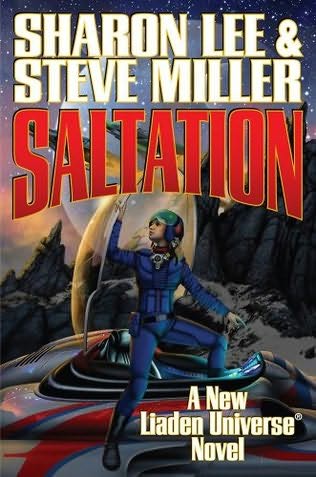
MICHAEL A. VENTRELLA: I am honored to be interviewing Sharon Lee today. Sharon Lee is, with Steve Miller, the co-author of seventeen novels, most of them set in the Liaden Universe (R). She’s been executive director, vice president and president of the Science Fiction and Fantasy Writers of America.

Creating believable and unique characters, free from cliche, is often a difficult chore. What process do you use to develop personalities for your characters?

SHARON LEE: Creating believable and unique characters is hard to do only if you concentrate on the notion that you-the-god-author are creating characters. The story isn’t about you, after all; it’s about them. If you approach a character as if you were meeting someone for the first time; ask them gentle, probing questions, display an interest in them, find out what they want — no, what they really want — it becomes surprisingly easy to write about them in a believable way, because you’re writing about people you know, not about ciphers you’ve invented.

I look at some of the “systems” for creating characters that are offered to writers, and I wonder if I’m the only person who had an imaginary friend when I was a kid.

VENTRELLA: Do you have a preference between writing science fiction or fantasy? Is one easier than the other?

LEE: There’s a false either-or here. In terms of the work required of the author, science fiction and fantasy are exactly the same. The work is: build a believable world, populated by characters people care about, who have [a] compelling problem(s).

I think, rather than fantasy or science fiction being easier or harder to write, that some stories are less and more challenging to tell. AGENT OF CHANGE, for instance, was fun and easy to write — we had the whole thing up and out the door in three months. Of course, it was our first novel; we didn’t know it was supposed to be hard. CARPE DIEM, our third novel, was difficult to write — looking back, that would have been because it was the first book where we actually had to buckle down and do continuity — which is, of course, key to writing a long series in the same universe and dealing with at least some of the same characters. Not that we knew that, then, either. We were learning by doing.

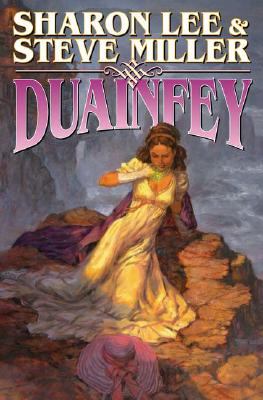
More recently the Fey Duology — DUAINFEY and LONGEYE — were difficult to write, not because they were fantasy, but because we were building the world around us at the same time we were becoming acquainted with the characters. And a book that I thought would be very difficult to write — MOUSE AND DRAGON — practically wrote itself.

VENTRELLA: How does your collaboration with Steve Miller work?

LEE: After seventeen novels and mumble-mumble short stories, I’d say it works pretty well, thanks.

Let’s see… We talk out the story-in-progress between us and role-play key scenes — kind out acting out the first draft. Usually, but not always, I do the first written draft — because I type faster, not because Steve is too Grand to undertake the work.

Some books are more one than the other of us. Because of that, and because there are two of us, each book that we write together has a traffic cop. The traffic cop is usually the one who brought the project to the table, and holds a third vote, in case of a tie. Instances of ties have been pretty low — I think we’ve each used our third vote once.

Because we do write character-driven fiction and because the story is about them, not about us, we tend to resolve most points of disagreement by studying on what the character would do and/or want. That exercise unties most knots — and it’s notable that, in the two instances where the tie-breaker was invoked, the point of disagreement was a plot issue.

VENTRELLA: Have you ever had something published and then regret it, wanting to make changes?

LEE: Certainly, there are books that I wanted more time with; that’s one of the trade-offs you make, when you’re writing to a contracted deadline, as opposed to writing on spec. Nobody cares if you take ten years to write a book on spec[ulation]– it’s your baby and you don’t have to let it go until it’s perfect. Or ever.

A book under contract, though — that comes with encumbrances: a deadline; a target word count; a place in the publisher’s schedule; a cover artist . . . A writer with a book under contract simply writes the best book she’s capable of writing at that point in her career, and within the constraints set out in the contract. Then, she does it again, with the next book.

VENTRELLA: Tell us about what you’re working on now. (Is that GHOST SHIP?) Give us a hint! We want a scoop here!

LEE: Not much of a scoop, I’m afraid, since I’ve been talking about it on my LJ, but — yes! GHOST SHIP; the long-awaited “book after I DARE” and, coincidentally, the “book immediately after SALTATION,” is our current writing project; it’s due at Baen in August. I don’t have a firm publication date, but surely not before spring or summer of 2011.

VENTRELLA: Even established authors need to promote themselves these days. What do you do in that regard?

LEE: We do interviews 🙂 We do book signings. We send out the Liaden Universe (R) InfoDump (an electronic newsletter), which has over a thousand subscribers. Hard-core fans can join the Friends of Liad, a social and discussion list has been running for, oh, a dozen years or more, I guess, most recently under the able management of Scott Raun.

Conventions. . .We go to science fiction conventions, yes, to promote our work, but also because . . . we like to go to conventions.

In terms of social networking, both Steve and I have Live Journal and Facebook accounts. I prefer LJ to Facebook, mostly because I’m an introvert and Facebook is just too “noisy.” Twitter doesn’t hold much appeal for me, as you might imagine.

However a writer decides to promote their work, the key is that they should enjoy it. If you (universal you) go to conventions, or do book signings — or tweet — and you hate it, you won’t be happy, and the people who have come to see/tweet/hear you will notice that you’re not happy, and will assume, y’know, because most people are nice, that it’s them. Plainly, you don’t want people to think that they’re making you unhappy; so you want to interact with them in an environment where everyone’s comfortable.

VENTRELLA: You had to trademark your Liaden Universe(R) to prevent its misuse. How did that come about (if you are free to discuss it)?

LEE: I can say that we had an internet stalker who was bent on mischief, and the best protection for our work was to trademark it. We made the decision because the laws governing trademark are in general more thoroughly understood, should the mischief have gone to court, than copyright.

I certainly don’t advise all authors to go to trademark; it’s a non-trivial expense and one’s trademark needs to be “protected” in ways that copyright doesn’t demand. And in most cases — absent an active mischief-maker — copyright is perfectly adequate protection.

VENTRELLA: Do you think the publishing industry is much different now than when you began? If so, how?

LEE: A lot of things are different about the business, but I’m not sure that the publishing industry has changed that much. Well, let me take that back. There are fewer publishers, with fewer imprints; fewer print magazines; the distribution system has imploded a couple of times; and the megastores want to dictate what gets published in order to maximize their profits.

OK, I guess the publishing industry has changed. Another change is the rise of smaller presses, to fill the void left by the consolidations of the bigger houses. And the willingness of practically everybody except the big houses to experiment with this internet thing for fun and potential profit.

VENTRELLA: What’s the biggest mistake you see new writers make? And what is the biggest piece of advice you would give to an unpublished author?

LEE: The biggest mistake. . .lack of research. Now, granted, the internet is full of disinformation, but it’s also full of good information. A new writer who is serious about becoming professionally published needs to find reputable sources that will teach her how to achieve her goal.

It may not be easy for a brand-new writer to figure out at first which sites are disreputable, or offering false information. Reputable sites include: The Association of Authors’ Representatives, Science Fiction and Fantasy Writers of America, specifically the author information page and Writer Beware.

The biggest piece of advice I would give an unpublished author . . . Have patience. And no, that is not easy for me to say.

VENTRELLA: Who are your favorite authors?

LEE: I think Laura Anne Gilman is perfectly charming; and I’m quite fond of Jim Morrow. Elizabeth Moon is lovely, and . . .

Oh . . . wait . . .

One of the downsides of pursuing a career as a writer is that writing cuts into your reading time. I used to have a three-book-a-week habit. I still have the habit, but I don’t have the time to indulge it.

Writers who influenced me, back when I was reading everything I could get my hands one, like a one-woman locust swarm? CJ Cherryh, Isaac Asimov, Anne McCaffrey, Poul Anderson, Georgette Heyer, Ian Fleming, Dorothy Sayers, Daphne DuMaurier, Frank Yerby, Mary Stewart, Rex Stout, Paul Gallico, Elswyth Thane, Charles Dickens, Carl Sandburg, Agatha Christie, Samuel Shellabarger, Charlotte Bronte, Jane Austen, Thorne Smith, James Thurber.

To name a few.

Nowadays, I read new books when I can, but I’m too scattershot to have a favorite author to read. In the last year, the novels I’ve read that have really stuck with me as good reads were FLESH AND FIRE by Laura Anne Gilman, SHAMBLING TOWARD HIROSHIMA by James Morrow, THIRTEENTH CHILD by Patricia C. Wrede.

VENTRELLA: Why do so many authors have cats?

LEE: Because cats keep you humble.

VENTRELLA: And finally, of all your work, what are you most proud? For what would you like to be remembered?

LEE: LOL! I’m not done yet.

1

Dinner with Steve, Sharon, and my wife Heidi

Networking

Does it seem like a lot of the advice I have been posting here is about promoting yourself as a writer? Have you noticed that a lot of the authors who have been interviewed talk about web pages and Facebook and conventions and such?

That’s not by coincidence.

For years, I wrote … and sent query letters and wrote … and read books about writing and wrote … and while I did get better at the writing part, I wasn’t getting anywhere professionally.

The sad fact is that talent will only get you so far. You need a certain drive and promotional zeal to take it to the next step. You need to make connections and use every avenue at your disposal. And this applies to even published authors.

One way is to attend conventions, which I blogged about previously. You also need to take advantage of all the social networks available to you, such as Facebook, My Space, Twitter, Good Reads, and so on. (Note that my web page has links to all of these.) And of course, you need a professional web page of your own.

I’ll discuss those in more detail in a future blog post, but for now, let’s talk about actual writing groups, where you can meet people face to face.

Jonathan Maberry and his friends in the Philly Liar’s Club (including Gregory Frost, Dennis Tafoya, Marie Lamba and others) set up one such group, called the Writer’s Coffeehouse. I first attended about a year ago and have tried my best to never miss one since. I drive over 75 miles one way to go there once a month. It’s invaluable for many reasons.

First, you get to meet professional writers who have experience in the business. They can tell you what has worked for them and what hasn’t. They can help you draft the query letter and maybe even introduce you to agents and editors. They can answer your questions and help steer you away from the rip-offs and traps that plague many starting writers.

Second, other unpublished writers like yourself will have useful connections and relationships. They might know of other groups in your area, for instance. They also want to network just like you. (A quick aside: In case you don’t realize it, you are not in competition with other writers. This is not a zero-sum game. Someone else’s success does not mean your failure.)

Third, you can also learn some writing skills. At the last Writer’s Coffeehouse, there was a nice discussion about voices — how important it is to make sure that each of your characters speaks in a unique way. Ideas were thrown about as to how to best achieve this, with the understanding that what works for one person may not be universal.

Fourth, you can get valuable networking advice. This blog came about because of the Coffeehouse. Jonathan mentioned keeping a public presence and said that interviewing other authors was a fun and fairly easy way to make a weekly post. I decided to gear this blog for aspiring authors and toned my interviews accordingly, starting with Jonathan. It’s been great! I’ve been able to meet many of my favorite authors (albeit mostly through emails), and every time I post another interview, these authors mention it in their Twitter posts and Facebook status updates, and the blog gets visited. Every visitor reads my name over and over again, and quite a few have started following me on Twitter and Facebook as well. It’s a win/win. And it’s an idea I would not have come up with on my own.

Finally, you can promote yourself. It goes without saying that writers are also readers, and maybe they might take an interest in your work, give you valuable comments, and maybe even buy your book once it’s published. Writers I have met at the Coffeehouse have invited me to participate in book signings, interviewed me on their blogs, and otherwise helped expose me to a broader audience.

The Coffeehouse is a great resource, and I am very happy that Jonathan has organized it. He is a tremendously busy writer who has many projects on his agenda. So why does he take the time to meet every month with other writers and writer wannabes?

Haven’t you been paying attention? Networking! Even successful professional writers want to meet others to share ideas, discuss the craft, and see what others may have learned about the trade since the last meeting. Plus they want to promote themselves. I mean, look, I’m writing about Jonathan Maberry, aren’t I? You’re reading it, right? Aha! It worked!

Finally, an obvious disclaimer: All the promotion and networking in the world won’t help you if you are a terrible writer. Work on your craft! You need something to promote, after all.

Where Do You Get Your Ideas?

One of my blog readers (Stop laughing! Seriously, I do have some!) said that he appreciated the focus of this blog — helping aspiring writers with advice and examples — but wanted to know more basic information. For instance, he asked, how do I get ideas?

I recall reading somewhere that same question being asked of Isaac Asimov who responded with “How do you not get ideas?”

Most of the times ideas come from a “what if” scenario, especially when you’re writing speculative fiction. Everyone’s played “what if”. My writing has followed that pattern.

I read a lot of fantasy fiction. A common thread in many of these is The Special One who has some prophecy to fulfill and goes through a rigorous training in order to meet their destiny. Think of “Star Wars” for instance. With ARCH ENEMIES, I began with “What if they got the wrong guy? What if he was suddenly thrown into the adventure and didn’t have all those years of training and preparation?”writing

With THE AXES OF EVIL (the sequel, due out early 2010), I asked “What if he was faced with three prophecies which contradict each other and had to solve all three?”

Those were just the starting points, of course, because then the fun was throwing in the monkey wrenches. I love plot twists and turns and surprising my readers. Usually, that just involves looking at my outline and saying “Things are going smoothly in this part. What can I do to mess it up?”

Basically, the adventure should never be too easy and should never be predictable. I dislike books and movies where I can figure out what’s going to happen next, so I try my best to avoid cliches like the plague. (That was a joke.) My readers have told me that they really like the “Whoa! Wasn’t expecting that!” sections of my books, and the “How the heck is he going to solve this problem?” that isn’t revealed until the very last minute.

Doing that well takes preparation (which I have discussed in an earlier blog entry) because in order to work, all the clues have to be in place. Pulling something out of a hat at the last minute is a cheat and feels like one, especially if you’re writing a book with magic. I’ve seen too many movies and books where the solution is something magical: The “All you had to do was click your heels three times” ending doesn’t reward the hero in the slightest. Take Disney’s “Sleeping Beauty” — the hero Prince is fighting the dragon. What an exciting battle! How does he defeat the creature? Oh, the three fairies come in and give him magic. Yawn, boring.

I like my heroes to do something special and unexpected yet completely in character. To be honest, that’s one of the hardest parts of writing, but also the most fun.

In THE AXES OF EVIL, there is a scene where a werewolf who can only be destroyed by a silver dagger through the heart must be killed. There is an elaborate plan laid out in which the the four main characters, armed with two silver daggers, attempt to accomplish this feat. But that’s too easy. Things go awry and soon Terin (the cowardly hero) gets stuck in a room full of werewolves with no weapon whatsoever. “This is great!” I thought. “This is exactly the situation I want.” Of course, it took me another month to think of a solution, but it’s much more satisfying and surprising than if there was just a great battle and the hero managed to stab his enemy.

I was recently given an assignment to write a short story “using pirates and magic.” Arrr! I love pirates! I had no idea for a story, however, so I just began thinking of typical pirate props — parrots, ships, peg legs, treasure maps and the like. Treasure maps led me to “X Marks the Spot” and being the lover of puns I am (oh, you can’t tell that from the two previous book titles?) this quickly became “X Spots the Mark.” What if the treasure map was a fake and the pirate was merely a “mark” for the scam? That began the adventure, but it didn’t lend itself to much of a story — until I brought out my monkey wrench.

Once THE AXES OF EVIL is finished with its editing (that will be the subject of another blog, I promise), I’ll begin work on BLOODSUCKERS: A VAMPIRE RUNS FOR PRESIDENT. The idea for that began when I heard someone refer to Congress as a bunch of bloodsuckers and I thought “Hey! What if….”

Bottom line: My technique is to start with the “What if”, come up with a basic story, and then throw as many unpredictable barriers in the way of my heroes as possible. This does not work for all types of fiction or all types of writers, but seems to keep me happy with my storylines.

Next week: back to interviews!

Honesty is the best plot twist

Ages ago when I began this blog (March, actually, but it feels like ages ago), my first entry was about creating a believable “reluctant hero”. In it, I discussed how Terin, the main character in ARCH ENEMIES, never becomes a superhero, but saves the day “with intelligence, honesty, and bravery.” I then promised to discuss honesty in a future blog, and then never did.

Which made it seem like I was lying. Time to clarify and rectify.

I value honesty as the highest virtue. No! Wait! Decisiveness. Definitely decisiveness is the highest. Or maybe punctuality. No, decisiveness. Or charity.ArchEnemies-510

All kidding aside, I define “honesty” very broadly to include having high ethical standards, honoring your word, and being trustworthy. This is not an easy standard to meet but it is always a worthy goal.

This is a lesson that young Terin in ARCH ENEMIES learns through his adventures. No, it’s not the Pinocchio story, nor is it a heavy-handed morality play. But (as I stated in another blog post), character development is very important to me. A story in which the hero is unchanged by his journey is unsatisfying.

In ARCH ENEMIES, the final chapter isn’t the one where the goal is achieved and Terin is proclaimed a hero due to his bravery during battle. It’s the next one — where he feels guilt over his deceptions and faces a challenge just as daunting: admitting the truth to everyone even when it could hurt his own interests. That’s the kind of conflict I love.

I’ve never had to face something as serious as what Terin faces, and I hope I could do the same. The closest I’ve experienced is having some of my clients decide to fire me as their lawyer because I refused to let them lie or present false testimony. The damage there is only a loss of income.

Being brave and true sometimes requires much more.