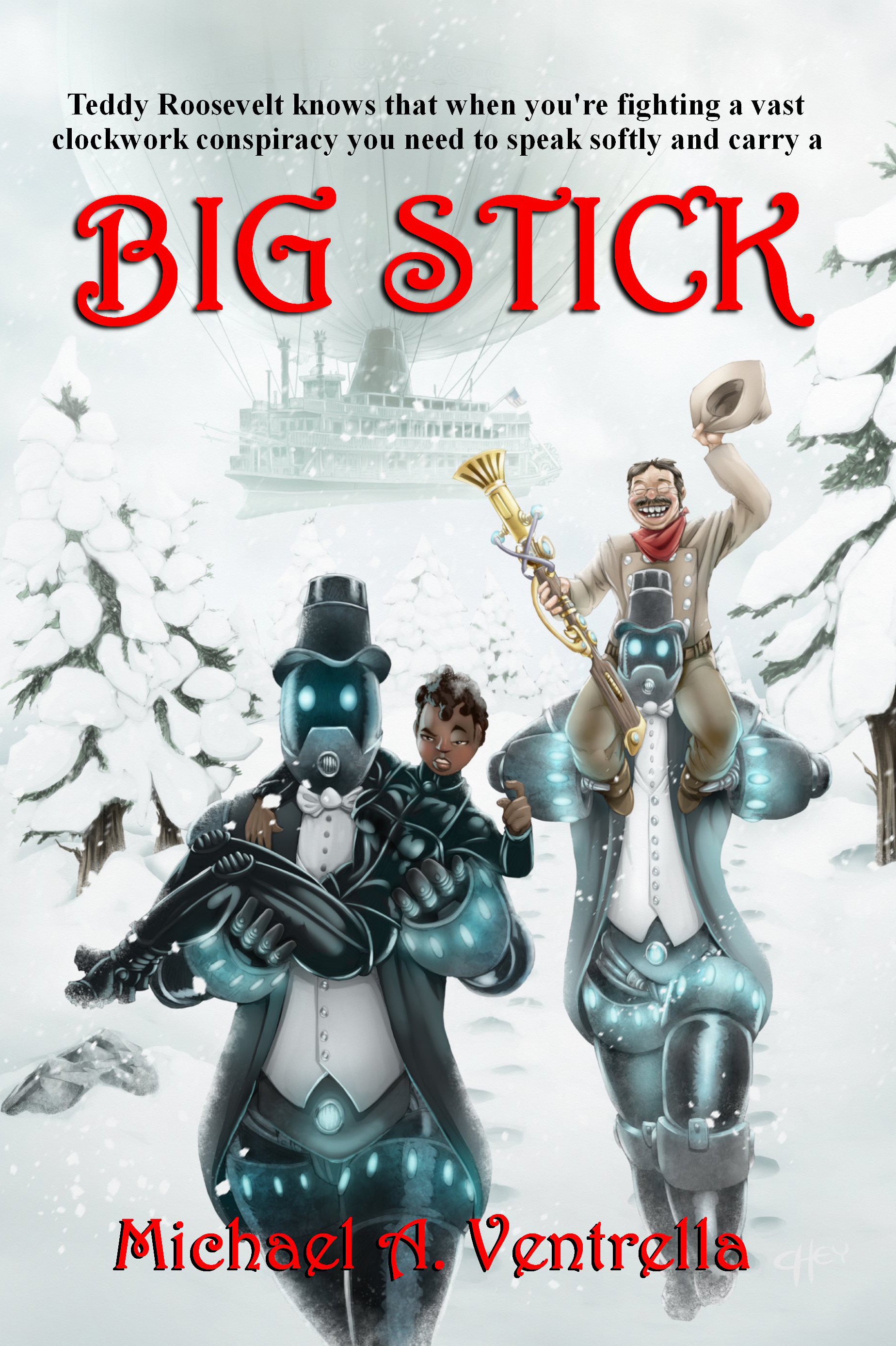
My 2014 Lunacon Schedule

Lunacon is one of the oldest literary science fiction conventions in the United States. The 2014 convention is the weekend of March 14th, and I will once again be one of the guest panelists! The Guest of Honor this year is Ryk E. Spoor who just read my upcoming novel BLOODSUCKERS and gave me a wonderful blurb for the cover! logo_lunacon

Here’s my schedule:

The Biggest Mistakes New Authors Make (Friday 5:30 pm): From poor openings to uninteresting characters to cliched plots, this panel will discuss the most common storytelling mistakes seen from new authors. With Ken Altabef, April Grey, Mercurio Rivera, Ryk Spoor, and Ian Randal Strock.

Meet the Pros (Friday 8:00 pm): A time when you can hang out with all the guests and have a drink or two.

Rules? Rules? There are no Rules! (Friday 10:00 pm): When writing fiction, if it works, it works. Our panel debates whether authors need to know “rules” that they can then break if they are good enough, or if this only constrains creativity. With Keith R. A. DeCandido, Michael F. Flynn, William Freedom, and Kate Paulk.

Introduction to LARP (Saturday 10:00 am): What exactly is a LARP? What kinds are there? How can I find one? These questions and more will be answered in this panel introducing the wide world of Live Action Role Play. With Devon Oratz.

New Writer Workshop (Saturday 11:00 am): If you have never been to a writers workshop, if you have never (or rarely) participated in a writer’s group, if you’ve never been published, this is a good workshop to start your Lunacon experience. With Sarah Avery.

The Future of Privacy (Saturday 1:00 pm): Our concepts of privacy are changing daily and mostly due to technology. What will the future hold? With Ellen Asher, Seth Breidbart, and Matthew Kressel.

If I Am Ever The … (Saturday 5:00 pm): If I Am Ever the (Evil Overlord, the Hero, the Sidekick, the Love Interest, The Galactic Emperor…) Pick a “character type.” The moderator will state a scenario, and you answer in the character, of what you would do… With Susan de Guardiola, Esther Friesner, Chuck Rothman, and Ryk Spoor.

The Eye of Argon (Saturday 11:00 pm): Our brave panelists read the worst fantasy story ever written, mistakes and all, and if they laugh or read it incorrectly, they are forced to act out the story. Just try not to fall over laughing! With Keith R.A. DeCandido, Daniel Kimmel, and Ryk Spoor.

Reading (Sunday 10 am): I’ll be reading from my latest work for anyone who shows up. Plus there will be cookies.

Interview with author Leah Cypess

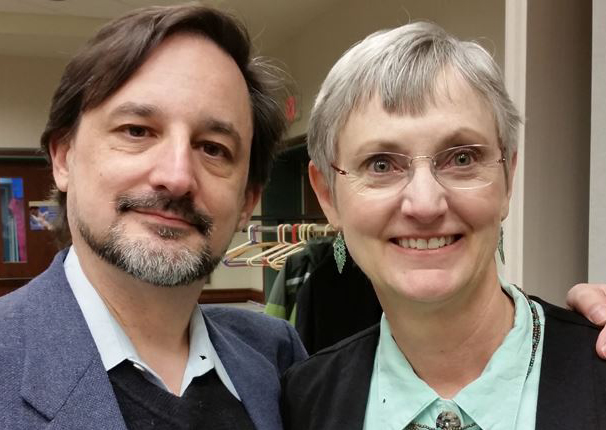
MICHAEL A. VENTRELLA: Leah Cypess is a writer of Young Adult fantasy who I’ve met at various conventions and am thrilled to be interviewing today. She used to be an attorney living in New York City, and is now a writer living in Boston. Leah Cypess author photo 1 She much prefers her current situation. When she is not writing or chasing her kids around (or doing both simultaneously), she enjoys reading, biking, hiking, and drawing.

Let’s start by discussing your latest release, DEATH SWORN. Tell us about the story!

LEAH CYPESS: To quote Kirkus: “A teenage sorceress without magic attempts to solve a murder in a cave full of killers. What could possibly go wrong?”

DEATH SWORN is the tale of a sorceress, Ileni, who was raised to believe she would be the next leader of her people — until her powers began to fade. Now she has been sent to be magic tutor to a cave of assassins, as part of a forced tribute. The last two tutors before her both died under mysterious circumstances, and presumably she is next … unless she can figure out what happened to them and how to keep it from happening to her. But she will soon discover that those murders are part of a much larger plot, and ultimately she will have to make a decision that could change the world.

VENTRELLA: This is not a sequel to your previous works. What made you decide to move on?

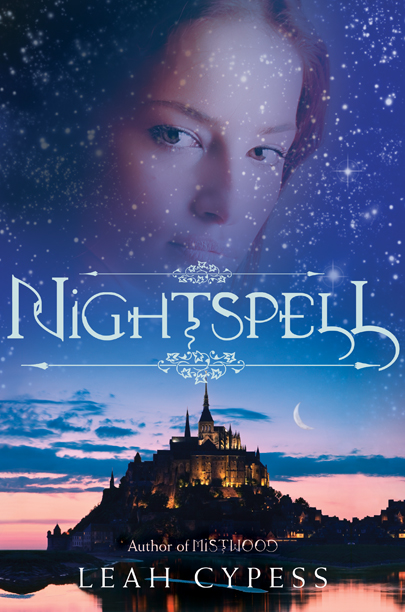
CYPESS: I started writing DEATH SWORN before I got an offer to publish MISTWOOD. I couldn’t write a sequel to MISTWOOD or NIGHTSPELL because I didn’t know if either of them would ever get published.

VENTRELLA: It seems that these days, all it takes for a book to be considered “Young Adult” is to have a young protagonist. Do you agree?

CYPESS: Pretty much, yes. DeathSworn HC CContrary to the opinions of many, there are almost no content or style restrictions in young adult, and more than half of its readers are actually adults.

VENTRELLA: Do you hold back anything when writing YA?

CYPESS: Nope. First, like I said, there’s no need to hold anything back; and second, since I started writing DEATH SWORN thinking I was writing an adult novel — because at the time, I wasn’t that familiar with how the YA genre had evolved.

VENTRELLA: What YA do you like to read? Who are your favorite YA authors?

CYPESS: I mostly read speculative fiction YA, since that’s my favorite genre in general! As for favorite authors, I have many, but to pull a few out of the bucket: Sarah Rees Brennan, Anna Jarzab, Leila Sales, and Megan Whalen Turner.

VENTRELLA: What do you think separates your books from all the other fantasy novels out there?

CYPESS: I don’t think of fantasy books as being generic, any more than I think of realistic literature as being generic. In fact, I think they can be more original because not only do you have a unique character and a unique plot, you also get to make a unique world!

VENTRELLA: What led you to write MISTWOOD? What inspired you?

CYPESS: I had an imagine in my mind of a shapeshifter hiding in a forest, being hunted by men on horseback. I started writing without having any idea where the story was going. In fact, I thought it was a short story, though about an hour later I realized this was going to be a novel.

VENTRELLA: Did your publisher ask for a sequel or was there already one in the works?

CYPESS: MISTWOOD doesn’t have a sequel, no matter what Goodreads says. 🙂 Mistwood hc cNIGHTSPELL is a “companion novel” to MISTWOOD — it’s a unique story with new main characters, though it does take place in the same world and have a few cross-over minor characters.

VENTRELLA: How are you promoting your works, and have you found anything that seems to be more successful?

CYPESS: I do promote my books, both online and through bookstore visits. I have no way to judge what’s successful and what’s not, though. I do the things I enjoy or at least am comfortable with.

VENTRELLA: You’ve attended science fiction conventions — do you think these are worthy expenditures of time and money in order to promote your work?

CYPESS: If you’re going just for promotion, then no — dollar for dollar and hour for hour, I don’t think it’s worth it. (At least not as a young adult author.) If you enjoy them, though, you do get the benefit of some promotional value as well.

VENTRELLA: Do you plan on attending more?

CYPESS: I do, though I’m considering holding off until my kids are older and childcare isn’t such a hassle. Of course, I’ve said that in the past and then reneged…

VENTRELLA: When I speak about writing with other authors, I find that I tend to be very organized with my outlines, and I know exactly where I want to go and what information needs to be placed where before I even start writing. Is this a lawyer thing? Do you do that, too?

CYPESS: See above re how I wrote MISTWOOD. 😉 I am a terribly disorganized writer. At some point, my manuscript resembles a jigsaw puzzle with me trying to fit all the scenes together in a way that makes sense. So, I suspect it’s not a lawyer thing, though you’d probably be better off polling lawyers who are still practicing.

VENTRELLA: Do you think a particular style is better or is there no right way to do it?

CYPESS: I think the best style varies by writer, and sometimes even by project. To quote A.J. Liebling, “The only way to write is well and how you do it is your own damn business.”Nightspell hc c

VENTRELLA: What sort of advice would you give an un-agented author with a manuscript?

CYPESS: Get it critiqued (more than once!), revise it (more than once!), then write a killer query and start sending it to agents. And while you’re doing that, write a new manuscript.

VENTRELLA: What’s the best piece of writing advice you ever got?

CYPESS: When the manuscript is done, read it out loud.

VENTRELLA: What projects are you working on now? What can we expect next from you?

CYPESS: Right now, I am hard at work on the sequel to Death Sworn! And it’s scheduled for March 2015, so that’s definitely what’s next.

VENTRELLA: And finally – what is it about lawyers that make us want to write science fiction and fantasy? There seems to be so many of us…

CYPESS: On my first day of law school, the dean said, “You’re all here because you got good grades, but you don’t like math and you can’t stand the sight of blood.” That’s not entirely true, of course, but I think law does tend to attract many people who don’t have a strong ambition to enter another profession … which means it’s going to attract a number of people who really, deep down, want to be writers. (But not the poverty-stricken kind.)

Thank you for interviewing me!

My 2014 Mysticon Schedule

This weekend (February 21 – 23, 2014) I will be a programming guest at Mysticon in Roanoke, Virginia.

They’ve asked me to be a guest before, but I’ve generally said no because it is so far away! However, this year I gave in.

I’ve only been to Roanoke once before. When I was in college, a bunch of us drove there from Richmond to see a concert with Elvis Costello and Squeeze.

I figured more people would read this if I had a picture of Q here

I figured more people would read this if I had a picture of Q here

I’m sure it’s changed a bit in the last 35 years or so…

Anyway, Mysticon looks to be fun. The main guest is John DeLancie, who played “Q” on all those Star Trek shows. Also in attendance will be many of my friends, including some I have interviewed here on this blog: Keith R.A. DeCandido, Gail Z. Martin, KT Pinto, Peter Prellwitz, Tony Ruggiero and Allen Wold.

And if you’re a fan of my Fortannis anthologies, you’ll find some of those authors as well (namely Davey Beauchamp, Danny Birt and Tera Fulbright, as well a few who will be in the forthcoming collection A BARD DAY’S KNIGHT — Angela Pritchett and the aforementioned KT Pinto).

Anyway, if you’re there, be sure to say hi! I’ll be on a bunch of panels and my artist wife Heidi Hooper will be judging the Masquerade competition and hosting some art panels as well.

Here’s my schedule:

The Biggest Mistakes Made by Beginning Authors (Friday 4 pm): We’ll discuss not only writing mistakes but also promotional mistakes.  How writers have screwed themselves over and killed their chances of making it in the publishing world doing easily preventable things! With Tony Daniel, A.J. Hartley, Jonny Lupsha, and Gail Z. Martin.

Who is Behind that Curtain? (Friday 5 pm): The use of different points of view can reveal or obscure elements of your story from the audience. Do certain points of view only work with certain types of stories? What are the strengths and weaknesses of each form? With Stuart Jaffe, Gail Z. Martin, and Patrick Thomas.MystiCon

If You Spell “Cheif” Like That One More Time!! (Saturday 11 am): Our guest editors offer tips on how to avoid their reject pile and provide insight into some of their pet peeves when reading a submitted manuscript. With Anita Allen, Laura Haywood-Cory, and Michael M. Jones

Dancing Neck to Neck: Romancing the Vampire (Saturday 6 pm): Explore the evolution of the blood sucking undead from foul, fearsome creature prowling the Carpathians to debonair, bodice ripping object of modern desire. With Alexandra Christian, Kenneth Hite, and KT Pinto

I Am the Game Master, You Are My Pawns: Game Mastering Basics (Saturday 7 pm): How do you keep players engaged in a game? How do you manage different kinds of role-players and types of play? What about interruptions like roommates and smartphones? Share your secret techniques and best practices for running role-playing games (and other moderated games) that keep players coming back for more.  With Brandon Blackmoor, Kenneth Hite, John Jones, Greg Porter, and John Watts

The Eye of Argon (Saturday 11 pm): The worst science fiction story ever written gets a reading by our brave panel as they compete to go the longest without tripping over a misspelled word or laughing uncontrollably. Audience members are also encouraged to take a chance. Can you keep a straight face, especially when the panel begins acting out the story? With Keith DeCandido, Gail Z. Martin, KT Pinto and Peter Prellwitz.

Making Politics Work in Fiction (Saturday midnight): Real world political narratives are filled with cultural revolutions, passionate speeches about social change, war, and intricate, Machievellian plots. How can you portray them convincingly in your story? From noble houses in fantasy worlds to galaxy-spanning empires in SF, how do you make them believable and engaging without burying your reader in the intricacies of your setting’s political theory? With Brandon Blackmoor, Tom Kratman, Peter Prellwitz, and Leona Wisoker

Tooting Your Own Horn (Sunday noon): Done properly, self-promotion is an important part of building a career. Poorly executed, self-promotion can do more harm than good. Our panelists will discuss what works and doesn’t work along with these common questions: Do book-signings really help a small author? Are bookmarks and/or postcards effective at garnering attention? Does a blog help or hurt an author? Does an author have to have a website? With Tally Johnson, Gail Z. Martin, Michael Pederson, and Gray Rinehart.

Interview with author Kathryn Craft

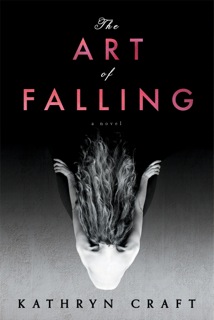
MICHAEL A. VENTRELLA: I am thrilled to be interviewing friend and now-successful author Kathryn Craft today! Kathryn is the author of two novels from Sourcebooks: THE ART OF FALLING, and the upcoming WHILE THE LEAVES STOOD STILL. Craft_small_photoHer work as a developmental editor at Writing-Partner.com, specializing in storytelling structure and writing craft, follows a nineteen-year career as a dance critic (Morning Call, Allentown, PA).

Long a leader in the southeastern Pennsylvania writing scene, she served for a decade on the board of the Greater Lehigh Valley Writers Group, and now serves on the board of the Philadelphia Writers Conference and as book club liaison for the Women’s Fiction Writers Association. She hosts lakeside writing retreats for women in northern New York State, leads Craftwriting workshops, and speaks often about writing. She is a member of the Liars Club, an author’s collective started by NY Times bestselling author Jonathan Maberry and fantasy writer Gregory Frost. She lives with her husband in Bucks County, PA.

Kathryn, let’s start by talking about your first big novel, THE ART OF FALLING, which is already in its second printing! How does that make you feel?

KATHRYN CRAFT: That was a huge surprise! My book was only six days past its publication date when I found out —- I couldn’t believe it when I saw the email from my publisher. I of course realized, from social media and trade shows and the number of reviews, that the book had truly “left home.” But who knew the extent to which it had traveled? I’m thrilled.

VENTRELLA: I recall you saying that you queried 112 agents before you found the right one. Tell us about the story, and what kept you going? (I gave up on my latest novel after about twenty-five…)

CRAFT: I kept going all the way through to publication for one reason: I was powerless to quit. THE ART OF FALLING was more than a path to publication for me. It was the source of my healing.

I turned to writing fiction after my first husband’s suicide, sixteen years ago. I had a lingering need to use my writing to form a more hopeful story from the chaos of those events.

Penelope Sparrow was my path.

I placed her in a harsh environment —- in a dance world with even harsher expectations about a woman’s body than those of our celebrity-driven society -— then watched as inner conflict about her imperfections imploded her dreams and relationships. I dismantled her support system. Gave her talent and passion and exclusive training then whittled away at her faith and resolve with years of rejection. Then I gave her a taste of success, a taste of love, then yanked both away at the same time. Finally, at that point, I thought, maybe she might be at the brink of self-harm.

But I wasn’t sure. So when Penelope wakes up at the start of the novel in a Philadelphia hospital room, and learns that she had landed on a car parked below her fourteenth story penthouse, what happened on that balcony remains a mystery that Penelope must reckon with. And when she bravely started rebuilding her life, I knew I would do whatever it took to see her story told.

VENTRELLA: What advice do you have for people trying to find an agent?

CRAFT: Here are five quick tips:

1. Pass the pitch test. If your project is hard to boil down into a succinct statement about your protagonist’s goal and the chief obstacle faced, rethink your project’s structure. Deepen the motivation and raise the stakes until the story matters — then your pitch will hook the reader.

2. Adjust your inner clock. I’ve heard many estimate that it takes ten years of consistent work to make a novelist, and a couple of years to get an agent. I started submitting early to get a feel for where I was and so learned both the art of writing and the business of pitching simultaneously. Querying is an investment in your career as worthy as writing a good book, so think of it as a process.

3. Submit in small batches. Too many authors use the ease of digital reproduction to blanket the industry with a flawed submission package, blowing opportunities they could have salvaged by tweaking all along. Send no more than 15 at a time.

4. Look for young agents at established agencies. These agents have more time and more room on their lists, yet have all the clout and resources of a reputable agency behind them.

5. Reframe “rejection.” To buoy your spirits for the long haul, mentally thank each agent who steps aside so that your true agent will one day be revealed. If an agent doesn’t know how to sell your book, you don’t want him representing it. You want him to love your work, because that passion will fuel his desire long after the money earned per time spent ratio is surpassed.

VENTRELLA: What was it like dealing with the publisher? Did it meet your expectations?

CRAFT: Sourcebooks exceeded my expectations in almost every way. What I’d heard: You’ll get no advance. (I got a decent advance.) Editorial support will be lacking. (I had two editors who loved my book.) You’ll have to fight for a decent cover. ArtOfFallingSmall(The cover blew me away, as did their retitling.) They’ll put no effort into promotion. (My publicist arranged my blog tour, arranged for giveaways, booked signings, and arranged for radio, TV, and newspaper support.) They no longer put money into marketing. (Good! Paid ads are no longer as effective as the other forms of trade marketing into which they poured their efforts.)

Clearly they’ve done something right, due to the great reviews and the early second printing. I’m a happy camper.

VENTRELLA: How much of the book changed between the time you submitted it to the editor and the time it was released?

CRAFT: Because I’d been working on it so long, and had developmental input from my agent, only one scene was swapped out for something different. All other changes were minor, such as ironing out how to portray one character’s accent.

VENTRELLA: What are you doing to promote the book?

A lot! No one loves this book, or wants it to succeed to its full ability, more than I do. My efforts have included:

• Thirteen years of volunteerism and relationship building in multiple writing communities

• Author website, Facebook Page, author newsletter, social media, and years of regular posts at high-visibility group blogs (The Blood-Red Pencil, Writers in the Storm).

• Facebook meme campaign.

• Two bookstore launch parties in “home” communities (I even had a flash mob!)

• A 9-hour virtual launch party on Facebook with eight other women’s fiction authors with new releases.

• One-month blog tour — both writing the guest posts my publicist arranged and interviews and posts I arranged.

• Signings in PA, MD, DE, NY, MA, and OH in places where I have friends I can stay with.

• Paid marketing through AuthorBuzz (expensive, but it took me thirteen years to get here and I don’t want to squander the chance).

VENTRELLA: What kind of responses are you getting from readers?

CRAFT: The response has been beyond my wildest expectations. I love living in the era of Goodreads and book bloggers, for sure, but direct communication from readers has been so much fun! My absolute favorite so far was from a man (not my target market!) named Douglas in Michigan:

“I stumbled onto THE ART OF FALLING while perusing the ‘New Books’ section of my local library. It was among the stack of books that I got out that day and it sat in my apartment untouched for a week. I didn’t open the cover until I was looking for something to release me from my insomnia last night. It did not have the intended effect. What I found was a beautifully written narrative about a world I know nothing about — modern dance — and something I have personal experience with — expressing those feelings we hold so close to ourselves. In the last day, I haven’t been able to put it down. It’s not often that this happens, that a book is so truthful and engaging that you beg for it never to be over, but when it does happen, you want to shout it from the rooftops.”

VENTRELLA: You also help run writers’ conferences (and once more, thank you for helping me with the Pocono Writer’s Conference we did last October!). How important do you think it is for authors to attend these?

CRAFT: I’d think it would be difficult to get a fully rounded education in publishing without them. And it’s a great way to get a concentrated hit of craft classes, as well, if you don’t have regular access to them. But pitching to agents in person — only available through conferences — has been priceless to me. Gauging their excitement, seeing that they are book lovers just like me, receiving their feedback (you almost always get a request to submit, and almost always receive personalized feedback) really helped usher me along. I also enjoy interpersonal interaction with authors and other writers — I met my critique partner in 2005 at The Write Stuff, and she had traveled there from Ithaca, NY!

VENTRELLA: What is your writing process? Do you outline heavily or just jump right in, for instance?

CRAFT: This novel was a NaNoWriMo mess that took six years to sort out and another two to develop fully. At this point I’m not a believer in directionless fast drafting. I like to write about the story first, exploring how best to bring its structure to life, then write. What I end up with is more like an extended synopsis (my last was a hundred pages) than an outline. Results show that the few months I invested in that step will save me years in the editing phase.

VENTRELLA: What’s your opinion on self-publishing?

CRAFT: I think it’s a viable option for certain well-developed works that have built-in markets and authors who know how to reach them. For my kind of “literary book club fiction” this was never a consideration. I needed broad distribution that would allow my audience to self-select. Since these are the types of books I love, I don’t tend to read self-published work.

VENTRELLA: What’s the worst piece of writing advice you ever got?

CRAFT: “Story is conflict.” That is a partial truth that allows authors to fall into a junk pit where they can get sidetracked climbing over obstacles as diverse as explosive as nuclear rockets and as incongruous as the kitchen sink. “Each story is about a certain kind of conflict” — now that’s much better.

VENTRELLA: What’s the best piece of writing advice you ever got?

It’s from Virginia Woolf: “Each sentence must have, at its heart, a little spark of fire, and this, whatever the risk, the novelist must pluck with his own hands from the blaze.” Two things strike me: that she said “each sentence,” and that the best writing takes risks that might get uncomfortable.

VENTRELLA: What advice would you give to a starting writer?

CRAFT: If you want to get published you need a public, so seek out and pay attention to the feedback that will allow you to evolve as a writer. Surround yourself with wickedly smart people who are farther down the road than you are, never forgetting to turn around and give a hand to those following behind. In doing so you will have mentors, readers, and a good life.

VENTRELLA: What projects are you working on now? What can we expect next from you?

CRAFT: My next novel, WHILE THE LEAVES STOOD STILL, is due out from Sourcebooks in Spring 2015. Based on true events that resulted in my husband’s suicide 16 years ago, it is the story of a tense ten-hour standoff between one desperate man ready to take his life and the police, while the three women who loved him most, and the larger community, grapple with how best to respond.

I’d better get back to work on it — it’s due June 1! Thanks for having me, Michael!

workshop

Interview with author and editor Bernie Mojzes

MICHAEL A. VENTRELLA: Bernie Mojzes is a writer and editor, responsible for a variety of stories ranging from fantasy and science fiction to horror to erotica, and even some non-genre work. He’s a friend who I see regularly at conventions, and has contributed some amazing and captivating stories my own TALES OF FORTANNIS series. bernie-spikeIn his copious spare time, he edits Unlikely Story.

Bernie, How did you first become interested in writing?

BERNIE MOJZES: I read voraciously as a kid, from day one of “Dick and Jane” when I finished the book while the other kids were trying to figure out page 3 (and was then told by the teacher that I was never to read faster than the other kids again. I wish I could have been there when my dad discussed that with the teacher.). But seriously, I loved reading, loved falling into those new and interesting worlds, and for as long as I’ve been reading, I’ve wanted to be one of those people who can create that sense of wonder in others.

VENTRELLA: How much of writing is innate? In other words, do you believe there are just some people who are born storytellers but simply need to learn technique? Or can anyone become a good writer?

MOJZES: Ah, the nature/nurture question. There’s a massive difference between being a writer (being able to use written language to clearly and convincingly convey an idea) and being a storyteller (being able to create an interesting narrative that captivates an audience), and in the intersection of those two things is that creature that most people call “a writer.” Within that intersection, there are three major things that are necessary:

* a willingness to learn the craft (everything from basic grammar to how to incorporate beats and cadance into your prose)
* cultivation of the imagination
* observation and transformation of the world around you
* an openness to hearing critique

Yeah, I know. That’s four things. I can count. I swear.

Different people’s brains work in different ways. How we observe, how we perceive and what interpretations we make of those perceptions, and how we process and integrate and assimilate that information. And that’s not all, but it’s also how we connect the dots between that, what we’ve learned in the past, and what we will learn in the future, and then how we use all that to construct new worlds and new characters and new stories. Some people will weave intricate multilayered tapestries while others write linear, full-throttle with guns a-blazin’ adventures. What’s the right approach? There is none; there’s only the approach that works best for that particular writer.

If you can figure out the way your brain works best, and then train to minimize your weaknesses, and do the hard work of the three (4) things I listed above, I think most people can become good writers. But there are no shortcuts. It’s hard work – harder than most folks realize – and in the end, a lot of aspiring writers falter because they aren’t willing to do the work.

VENTRELLA: Tell us about your latest work!

MOJZES: Last October I had a story in the debut issue of Betwixt Magazine called “The Red Danube,” available here. EvilGazebo_lgThis is the most difficult and unflinching piece I’ve had published, and I’m very proud of it. Technique-wise, it was a challange and a blast to write. I wanted to do two things simultaneously: pull the reader close into the the most intimate thoughts and actions of the characters while simultaneously pushing the reader away, holding the reader at a distance. Since one of my weaknesses is talking about my own work, its probably better to point you at a review of it up at ChiZine, which starts:

No end-of-year round up would be complete without mentioning Bernie Mojzes’s “The Red Danube” (Betwixt Issue 1, Fall 2013). This story is something else.

Charlotte Ashley reads deeply, and writes insightful reviews; she’s worth following closely.

VENTRELLA: How did you decide upon the theme for your magazine? I mean, really, bugs?

MOJZES: Hm. Yes, bugs. The magazine started its life as The Journal of Unlikely Entomology, a biannual online magazine dedicated to stories involving bugs. How we came up with that is a long and sordid tale that involves, well … it’s long and sordid, and since this is a PG13 blog, let’s just leave it at that. Ultimately, we decided that we wanted to see what we could do with a really unusual and specific theme. There was the danger, of course, that everyone would look at it and think, eww, bugs, I’ll send my horror story about spiders. Fortunately, the writing community came through for us, sending us, yes, some horror stories, but also stories about love and loss, death and transformation. About race relations and science and society and historical revisionism. Interestingly, by focusing in on such a seemingly narrow, weird theme, we’ve been able to put together issues of astounding diversity.

VENTRELLA: How has it been received?

MOJZES: Really well, surprisingly. When we first opened up for submissions, we were terrified of the grand experiment being a flop, but from Issue 1 on, we’ve had good to excellent reviews. We’ve had stories by some of the more interesting authors on the scene today. Stories that have appeared in our pages have gone on to make honorable mention lists and appear in Best of Year anthologies.

VENTRELLA: You’re expanding, though. Tell us about your new endeavor.

MOJZES: Expanding? Diversifying is probably a better word. In 2013 we decided that we’d offer new and interesting (for us, and hopefully for others) games to play. With this decision, we realized that The Journal of Unlikely Entomology was no longer properly descriptive, so we’ve gone with “Unlikely Story.” Under the Unlikely Story umbrella, we’ll continue to put out one issue of Unlikely Entomology, and also one issue of The Journal of Unlikely Cryptography (stories involving cryptography, ciphers, hacking, etc.), and one other issue. The first of those was The Journal of Unlikely Architecture (stories about buildings); the second will be The Journal of Unlikely Cartography (stories involving maps). Cryptography will be coming out in February, and we’re currently accepting submissions for the next Entomology issue.

VENTRELLA: You’ve co-written stories (for example, in the TALES OF FORTANNIS: A BARD IN THE HAND anthology, ahem) … how did you go about doing that? bardinhand-510 What was the process?

MOJZES: Co-writing a story is an interesting process. I wrote “Embarassing Relations” with Bob Norwicke, a friend of mine from an old D&D campaign. He’s since moved to a different state, and we’d lost touch, but he had this brilliantly twisted character in the game that I wanted to use as a foil for my protagonist. I found Bob online and asked if he’d mind me stealing his character. That’s how I found out that Bob’s also a writer, and we decided to give co-authoring a try. I sent him a rough one paragraph concept for the story, he liked it, so I wrote an opening scene, written from my protagonist’s POV. Sent it to Bob, who wrote the next scene from his protagonist’s POV. From there we alternated. Some of what we did was writing toward the conclusion, writing to move the plot along. But some of what we did was writing a scene that intentionally put the other’s protagonist into a bind. This was the challenge — write your way out of the bind while still moving the plot along. That created some really interesting and unexpected twists that, I think, led us to bring the story to places we might not have otherwise discovered.

We did establish some ground rules. First was that I had veto power (because it was my story idea), and would eventually do an editing pass to make the story stylistically cohesive. Second, either of us could say “my character wouldn’t do that,” and offer rewrite suggestions. Third, both of us were free to re-write any dialog that the other author put in our character’s mouth.

Other than that, we created a vague outline early on (which included the phrase “hijinx ensue” multiple times) – left intentionally vague in order for us to both have the freedom to play within the plot and let the plot evolve.

VENTRELLA: How do you make your protagonist a believable character? And what’s the best way to make the antagonist a believable character?

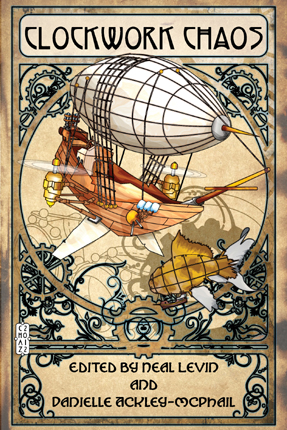
MOJZES: Okay, first thing is, these two are secretly the same question, and I’d expand that out to include the secondary and tertiary characters that appear in your work.ClockworkChaos_lg All of these characters have, to the degree allowable by the point of view from which the story is told and the amount of time they have on the page, be as fully developed and “real” as possible.

First thing to remember is that every character is the protagonist of their own story. So whenever anyone does anything, it has to make sense for that individual to be doing that. Sometimes you find yourself writing a scene where the needy, self-absorbed and completely narcissistic friend of a friend suddenly does something immensely selfless in order to move a plot point along, you’ve got to take a step back and rethink. Maybe you need to rethink the character. Maybe you have to rethink how you get through that plot point.

But most importantly, remember that nobody is perfect. If you have a character that always does the right thing (or that always does the wrong thing, in the case of the villain), you end up with a caricature, not a character. Good people have flaws and failings. Bad people have good in them. That’s what it means to be human. You have to show that humanity in your characters.

VENTRELLA: Do you think readers want to read about “believable” characters or do they really want characters that are “larger than life” in some way?

MOJZES: A character can be larger than life but still be believable. That’s the trick, isn’t it? Finding a character that’s big enough to be interesting but human enough to be believable.

Writers are told to “write what you know.” What does this mean to you?

Not much. I think as advice goes, it’s easily taken to mean that you should know your proper place and not dare step beyond it. All that leads to is solipsism. I think reversing it – know what you write – is more interesting. By which I mean, research deeply and respectfully, and with an open mind. Don’t be superficial, and don’t look to media representations of something for reality. Think three-dimensionally, and consider the wider context.

VENTRELLA: What do you do to avoid “info dumps”?

MOJZES: Whenever possible, I try to break the info dumps into smaller pieces and incorporate that into dialogue or action. fantasic_erotica_cover_comp_400x600Sometimes you’re stuck with an expository lump, though – information that you just need to get across to the reader, and can’t for whatever reason (word count limits, for example) deal with it more elegantly.

So, lets say there’s a 10 sentence paragraph that fills a whole page and sits like a giant indigestable lump in the middle of your story. So first, for each piece of information, decide whether or not the reader really needs it. (You may need someone else to point these out to you). Cut the bits that aren’t needed.

Now you have a 7 sentence info dump. See if there’s any of that that can be incorporated naturally into dialogue or action.

Now you have a 5 sentence info dump paragraph. Break it into 2 paragraphs and separate them with one or more paragraphs of dialogue and/or action.

Lastly, rewrite those two paragraphs so that the info that is dumped is done strongly through your POV character’s perspective. So, not just [fact], but [fact as your character perceives it]. By doing this, you’re taking what is largely an uninteresting declarative statement of fact and making it do double duty as something that reveals character. And like magic, you’ve turned a giant, boring info dump into interesting, compelling prose.

VENTRELLA: As an editor, what is the biggest problem you have when dealing with authors?

MOJZES: We have blessedly not really had any major problems with authors. The biggest problem has been technological, where the author wasn’t seeing all of the edits we had sent them, either due to old software, file format incompatibilities, or whatever. And that ultimately leads to misunderstandings and aggravation on all sides. Probably the most problematic of these issues comes from authors having their software set to use .docx format by default, and we suggest that people change the default settings to use .doc or .rtf instead.

VENTRELLA: In this market, with the publishing industry changing daily, how important is the small press?

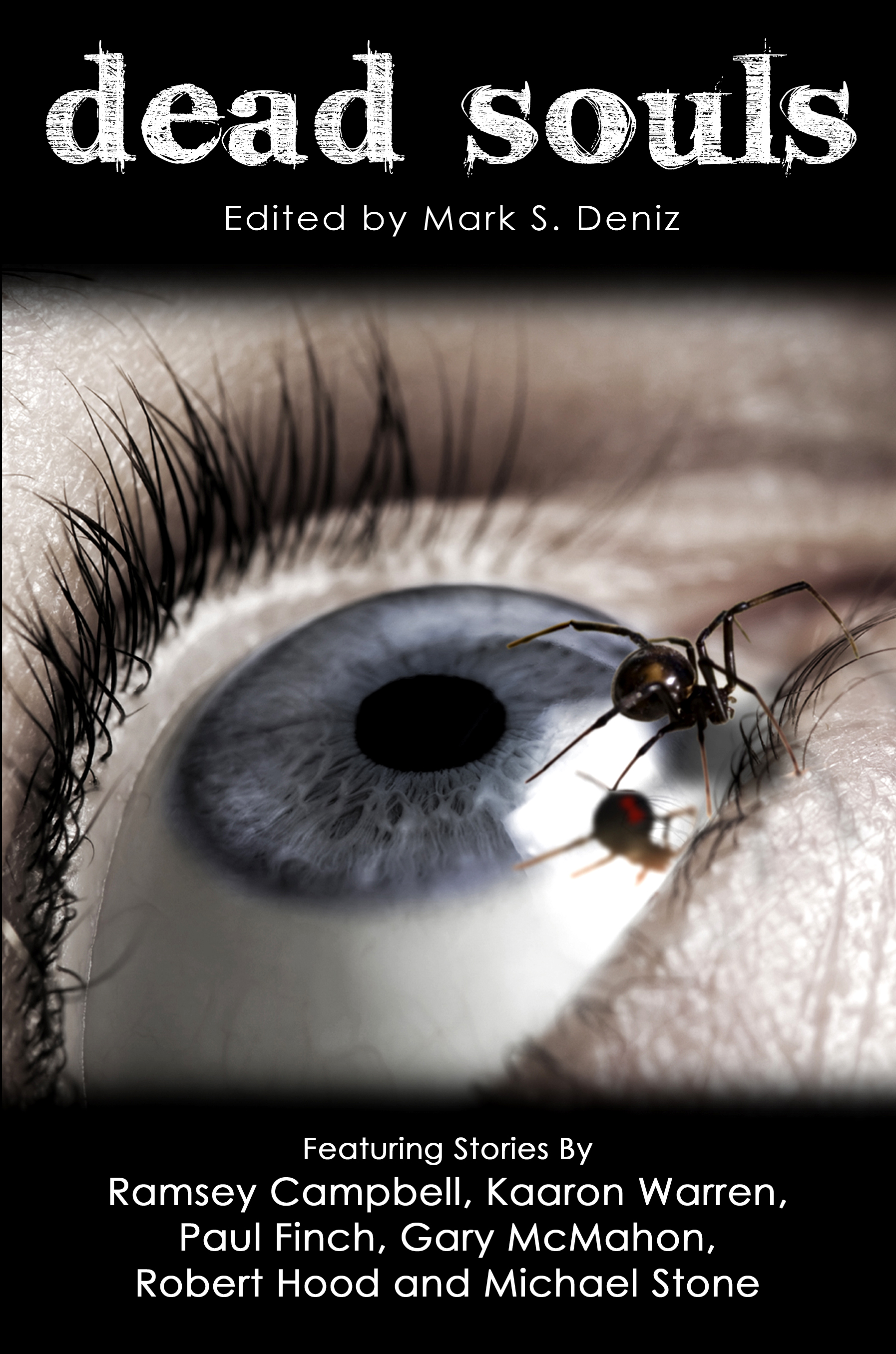
MOJZES: In an environment in with that large presses are contracting and consolidating, small press is critically important. Dead_souls_Cover_Final OnlyWell, first, we should really define some terms. There are small presses like Small Beer and Subterranean that have significant resources and ability to put books into bookstores, and micro-presses which perhaps only put out a few titles a year. I think it’s important to understand that distinction, because they really fulfill a different need in the market.

The are three technological innovations that allow small presses to be successful with books that a large press won’t touch: Print-on-Demand, The Internet, and e-books. POD and e-books allow small press to reduce or eliminate the need to order and warehouse large print runs of books that aren’t guaranteed to sell. The Internet allows people to find obscure and niche books, leading to something called “The Long Tail.” Small and micro-press can cater to niche markets and be successful selling smaller unit counts.

This creates opportunities for a wide variety of authors who simply could not be successful under a large press marketing scheme.

Interview with author Thomas Erb

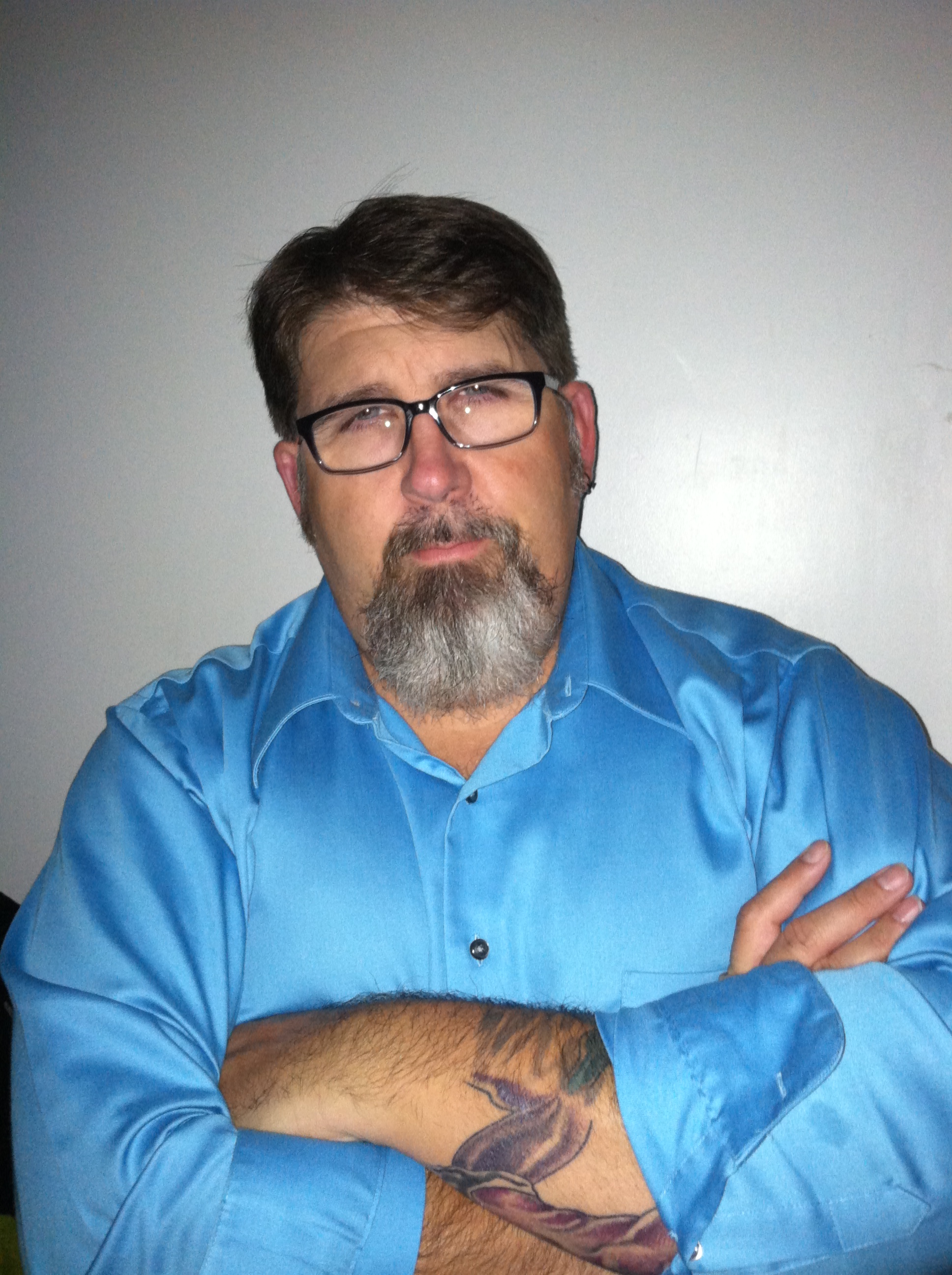
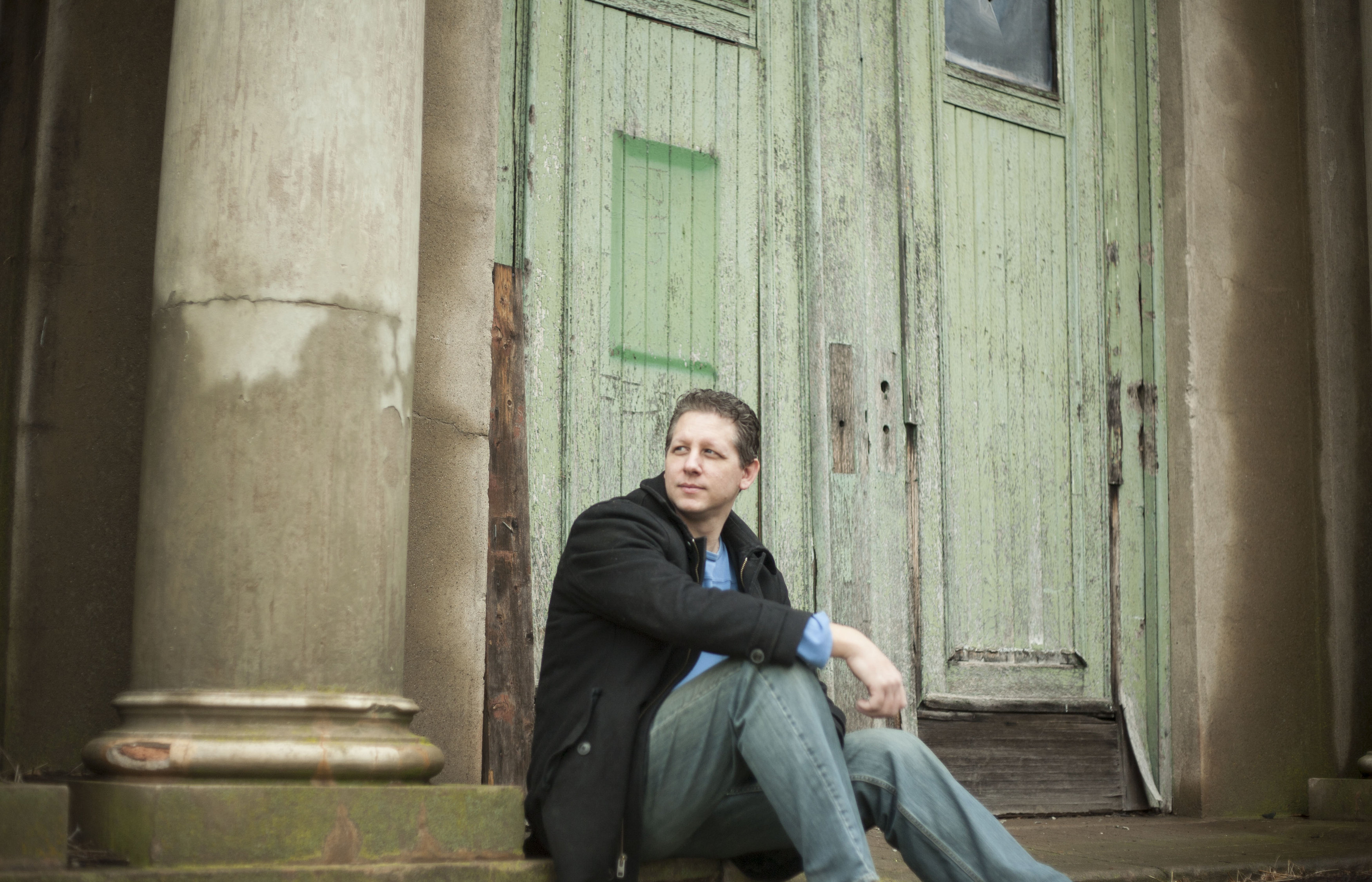
MICHAEL A. VENTRELLA: From the snowy confines of Upstate New York, from a place he calls “Hell’s 1/2 Acre,” author/artist Thomas A. Erb brings stories of the unlikely hero: from extreme brutal violence, to touching, gripping interpersonal relationships sure to catch the reader and never let them free. (He wrote that.) 2012-09-29 22.36.48

Thomas, how did you first become interested in writing?

THOMAS ERB: I’ve always been a storyteller. It started visual when I was two and used to draw elaborate battles with army men fighting the Nazis or another vile foe. It then turned to comic books. For most of my young life, all I wanted to do was work for Marvel comics. I would create my own characters and write whole story arcs to accompany all my great illustrations. (pure sarcasm intended.)

Then I got into role-playing games. Yup, that’s right … Dungeons & Dragons, Traveller, Champions, Twilight 2000, Call of Cthulu, you name it, I’ve played it. And, just like for comics, I’d have to create highly detailed character backstories and potential subplots for my DM(s). Although, I never knew if they liked that I did that or not. Oh, as a word of advice … Never piss off a Game Master. Bad idea.

Now, I’ve fallen in love with writing my very own fiction — a love that keeps on growing with each tale I tell.

VENTRELLA: I must admit, my background is similar — I went from creating worlds and stories in D&D to creating them in LARPs to writing my own stories (the characters in my books are so much easier to control than my players).

How much of writing is innate? In other words, do you believe there are just some people who are born storytellers but simply need to learn technique? Or can anyone become a good writer?

ERB: I believe we all have an innate creative talent. Each one of us has something to say and in that yes, we are all storytellers. However, much like my philosophy with the visual and musical arts, I think that innate ability has a limitation. By that I mean, while we all can create, there is a certain level where some folks top off their talent. Some folks are just “born” to be X. Poe/Hemingway/Toklien/King were surely born to the written word. Michaelangelo, Da Vinci, Picasso, Rembrandt were put on this earth to give us visual masterpieces. Krupa, Rich, Peart were born to make playing the drums into a sonic art form. Same goes for the rest of us.

Quick life anecdote: While I was born to draw, I never tried hard. It’s always come easy to me. I had friends that would bust their humps and draw for hours and hours and no matter what, they couldn’t draw the same level as I did. (Now, I am saying this with no ego at all. Just an observation.) The same holds true for drumming. I’ve been playing drums since I was 16 and really love jamming. Sure, I’ve been in many bands and jammed with some amazingly talented musicians but I’ve plateaued my drumming talent. I know I will never be a Neil Peart. I wasn’t “born” with that level of ability. Even if I took more lessons and practiced for ten hours a day. It’s just a reality.

So … very long answer I know, but yes, writing talent is human nature but the level of craftsmanship,language, once in a generation storytelling ability does have a cut off. Not everyone can be Stephen King, Tolkien or James Joyce.

VENTRELLA: Tell us about TONES OF HOME!

ERB: My very first novella, TONES OF HOME, was released in June of last year and it’s the most brutal, violent story I’ve ever written. If you dig graphic scenes with tons of blood, machetes and shotguns, rednecks and oh yeah, the Beatles … then this story is right up your jukebox.TONES official Cover
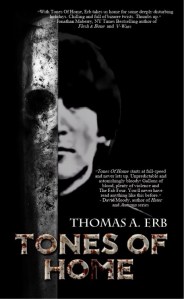
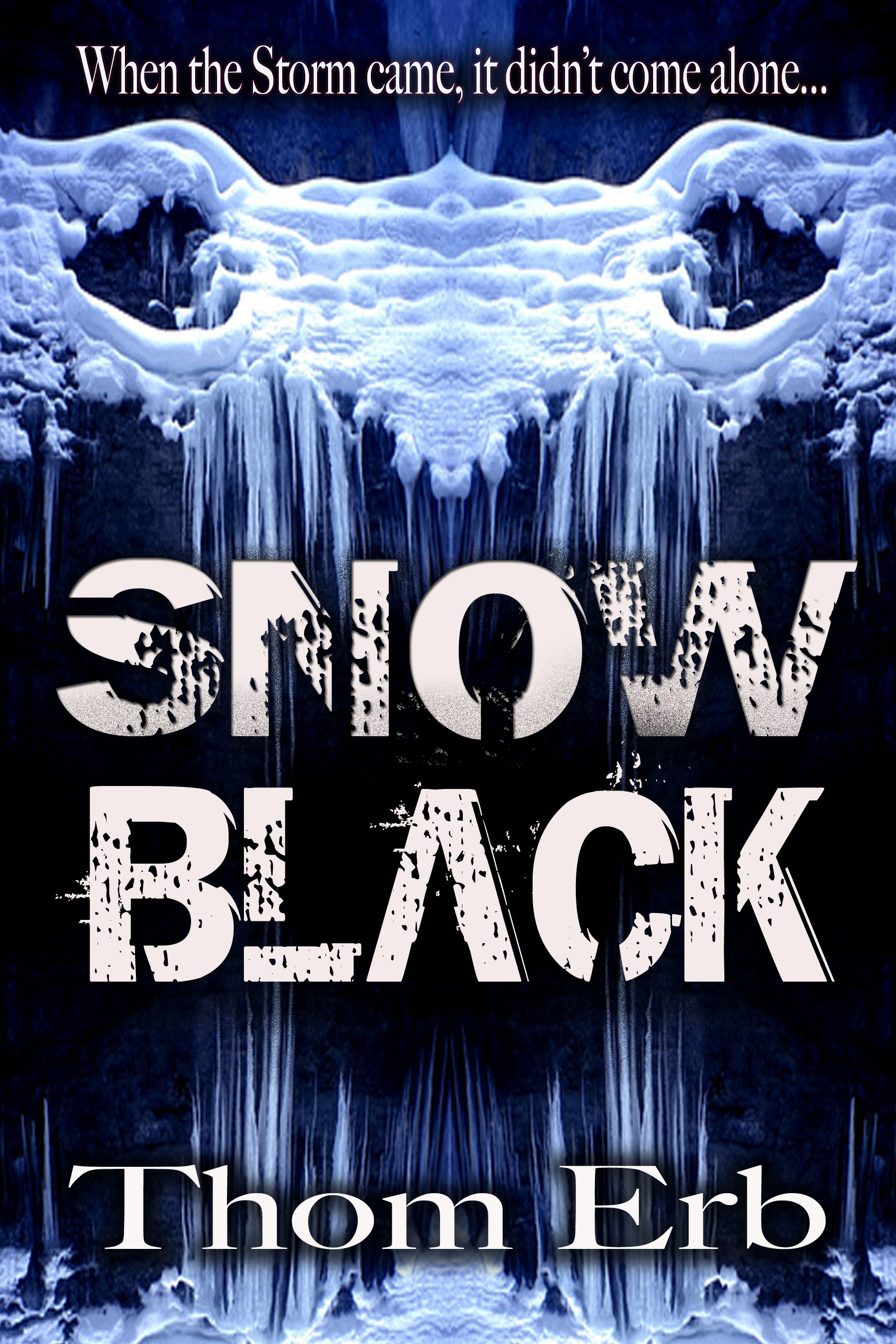
I am currently working on my first novel. (well, the one that I actually want folks to read.) It’s a deep story of loss, troubled relationships, a Nor’easter and a black monster coming to a small lakeside town, seeking revenge. I’m really loving this project and hope to have it in the hands of an agent by Thanksgiving.

VENTRELLA: What should someone read first if they want to get to know your work?

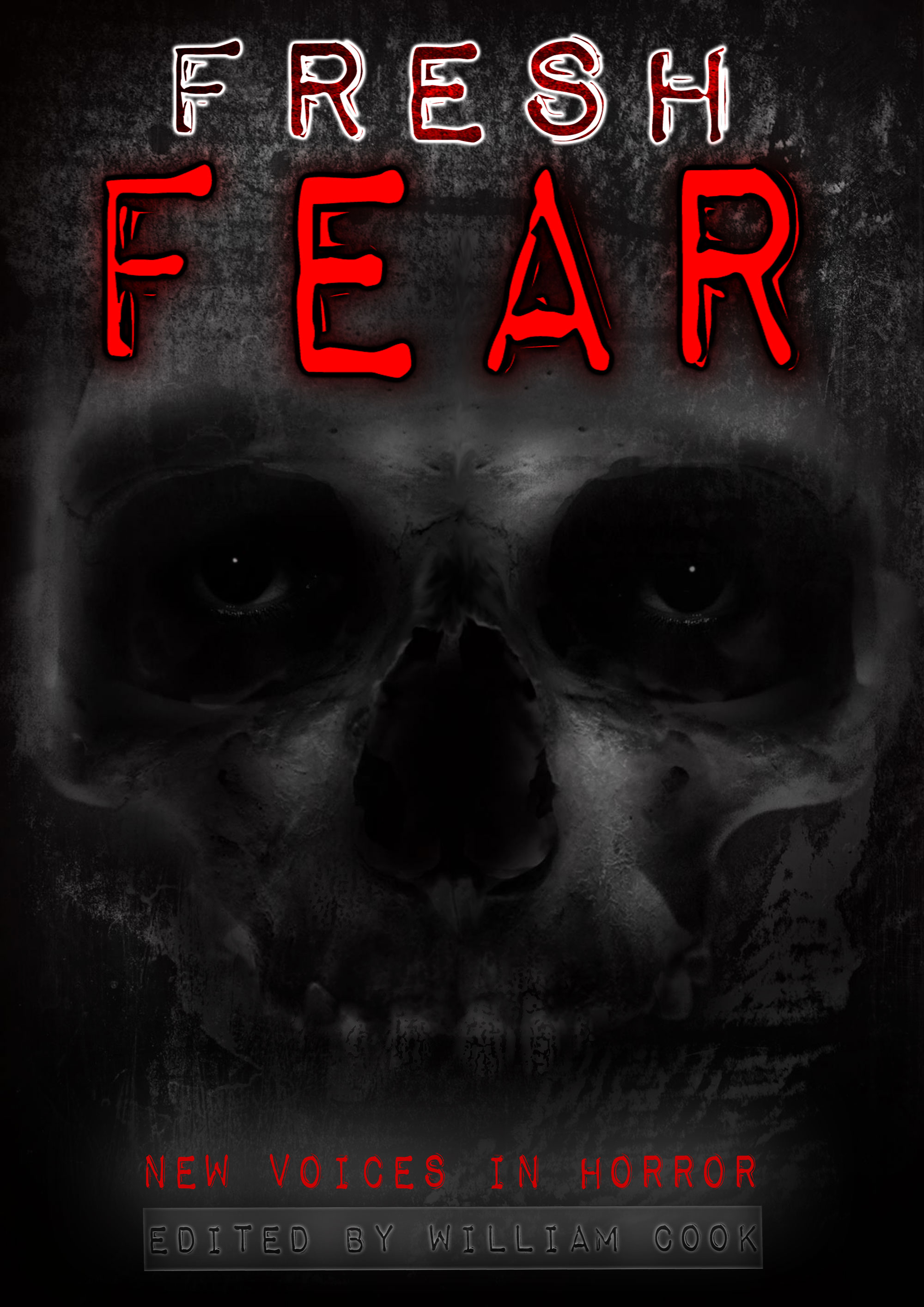
ERB: That’s a really tough one. I feel like I am just now, seeing my true “voice” come to fruition. While I loved writing all the great bloodletting in TONES OF HOME, I don’t think I am a Richard Laymon kind of writer. But, it’s the best work I’ve done thus far. So, Yeah, I’d say check out TONES OF HOME or “Spencer Weaver gets Rebooted.” It’s in a new anthology called FRESH FEAR.

VENTRELLA: How do you make your protagonist a believable character?

ERB: All of my stories seem to be based around an extremely flawed character. Or, as I like to refer to them, the unlikely hero. Usually they have something about them, whether it be a physical or mental determent. I have a weakness for the “loser”. The outcast, the outsider. A fat or skinny kid with asthma. I just identify with that and my thinking is, “hey, if I can feel for this guy/gal, then the readers should as well.” It’s not about having the Chisel-chinned, barrel-chested hero, saving the day. No … that’s the easy way out. It’s more of a challenge to break away from that trope and find a way for this less-than-heroic protagonist to overcome all the huge hurdles that makes up a great compelling story.

All characters must have flaws. Both protagonists and antagonists. (even Darth Vader has a soft side.)

VENTRELLA: Certainly agree with that (as you can tell if you read about the reluctant “hero” of my fantasy books.)

ERB: There are so many basic story ideas out there in the ether and to me, it’s more of how you get there as opposed to reworking old ground. Either way, readers want to escape and I hope I offer a wide mix of rich characters and tales they can sink their hungry teeth into.

VENTRELLA: What is your writing process? Do you outline heavily or just jump right in, for instance?

ERB: When I first started writing, I just sat down, opened a cold beer and let the muse of chaos take the wheel. That’s how I wrote my first novel. (a zombie tale that might see the light of day … someday.) But, when I went back to write a second draft, I was overwhelmed. Too many characters. Too many plots and subplots.

So, now, I am working on a happy medium kind of approach. I need to have some kind outline. It’s always loose and organic. Nothing is written in concrete. That would feel too much like a term paper and not an adventure.

I write the basic novel idea is. Usually the characters come to me almost immediately. I then write a very loose outline and then, write the first draft. Get it all down, fast and dirty. Never looking back.

Side note: Dry erase boards and sticky notes are a writer’s best friend.

VENTRELLA: Writers are told to “write what you know.” What does this mean to you?

ERB: This is lame, but I’m going to steal from the master. Stephen King states in his must-read ON WRITING book that we should take that statement as much extensively and inclusively as possible.

While I may not know anything about being a Gunny Sargent in the Royal Space Marines guarding the Princess Allayha, I do know what it’s like to always try to live with the demon of my father being a cruel man whom I could never please. You can use that kind of thing in your fiction.

VENTRELLA: How did you get started? What was your first story or book published?

After on a whim, I spent a year writing a zombie novel, I decided that I really enjoyed this writing thing and I started meeting other writers online. Back then, it was Myspace and through a few message boards. I discovered Brian Keene, (who’s book GHOUL made me want to write seriously) and found out he was attending a con in Ohio. I went and met him and some other folks that changed my life forever.

I began writing short stories and then submitted my short story, “Cutting Class” to the DARK THINGS II anthology edited by Ty Schwamberger (whom I met at the con) and next thing I knew, Bazzinga! I was a published author. mock cover

VENTRELLA: Do you think it is important to start by trying to sell short stories or should a beginning author jump right in with a novel?

ERB: I think each person tackles their writing in their own way. I jumped straight into the novel but I was only doing it for fun. It wasn’t until later that I wanted to do something with this whole writer gig.

With some hindsight, I’d suggest write some short stories first. With shorter works, you really learn how to write tight, lean prose. Plus, it’s far easier (and I use that term loosely) to get published.

VENTRELLA: Do you think short stories are harder to write than novels?

ERB: I think both have their own angels and demons. It also depends on what kind of storyteller you are. If you like deep character development and more than two intricate plots…a novel is best for you. If you really dig fast-paced, gripping tales with a small cast… short stories are for you.
I love writing both. I usually like to write a short story in between other long works. It’s a nice change of pace.

VENTRELLA: How do you promote your work?

ERB: Platform. Publishers are looking to see if you have an effective and active writer’s platform. And to me, that means an engaging, fresh online presence. A blog, Facebook, Twitter, Pintrest, Goodreads account. And many, many more. Too many, in my opinion. It can be a distraction, trying to keep up with updating all your social media sites. (A necessary evil, but still evil.)

I do giveaways, I’ve done podcast interviews, blog talk radio interviews. I go to conventions when the money is right and try to post something funny, new and interesting on the social sites as much as I can manage.

I’m always looking for new ways to get my work out there. It’s an ongoing process.

13. Do you attend conventions or writing conferences? Do you find these to be a useful activity?

I attend as many as time and finances allow. Conventions are one of the biggest reasons I’m here today. I’ve made many, life-long friendships as well as business connections. It’s a must to get you and your words out there. We writers live and create in a room, all alone. You need to get out and meet other like-minded folks who know what you’ve been going through.

Plus, I’ve gotten the blurbs for my books and stories because of the conventions and conferences. Writing and life in general is about relationships.

Get you and your stories out there.

VENTRELLA: What’s your opinion on self-publishing?

ERB: When I first started writing back in 2007, self-publishing was the devil’s work. It was much maligned- rightfully so and very much a joke. But now, in 2014, you are a fool if you don’d consider exploring the self-publishing market. Things are fluid and ever-changing in the publishing world and the once hated and mocked world of self-publishing is now becoming common place.
The secret is to put out work that kicks the crap out of any book that comes out of the big 6, 5, 4, 3, 2, 1 …

VENTRELLA: What’s the best piece of writing advice you ever got?fresh-fear3

ERB: Get the first draft down, fast and dirty. Don’t stop to worry if it’s good. That’s what second and third drafts are for.

VENTRELLA: What advice would you give to a starting writer that you wish someone had given to you?

ERB: Research the publisher before you sign a contract. Know the business side of things. Royalty rates/payments/editing, etc.

VENTRELLA: Who do you like to read? Who are your favorite authors?

ERB: Anything from Jonathan Maberry. They guy is a monster and tackles all the genres I love. YA zombies, military thrillers, comic books, you name it. He is my mentor and I use him as my career guidepost.

VENTRELLA: And I couldn’t help but notice he named a character after you in his latest novel…

ERB: Jon was so kind to have his signature cop-turned Department of Military Sciences bad ass Joe Ledger clean my clock in his last Ledger novel, EXTINCTION MACHINE. I think my jaw still pops when I talk.

VENTRELLA: What can we expect next from you?

ERB: I have a retro-zombie novella that is looking for a new home. And I am currently writing a wintry monster novel that I hope to have completed and in the hands of agent by the end of the year.

I am also working on a comic script, a screenplay and a self-publishing project of my short works I hope to have out early in 2015.

I love having a lot on my plate. Not just saying that as a fat guy. I have many stories and projects inside me and time is of the essence.

Interview with author K. Edwin Fritz

MICHAEL A. VENTRELLA: I have blogged many times warning beginning fiction writers not to self-publish. Today, I am interviewing self-published author K. Edwin Fritz, who will discuss his experiences (and talk about writing!) Keith’s web page is here!
View More: http://dianaliedl.pass.us/keithfritz-hilo4cbw

Keith, you’ve self-published your books so far. How do you deal with editing?

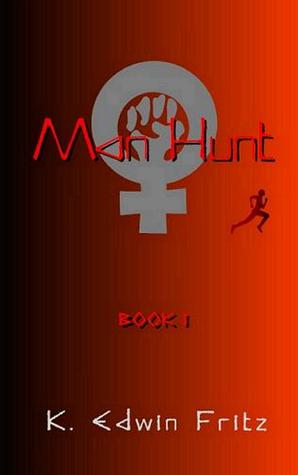
K. EDWIN FRITZ: I did MAN HUNT by myself, and it was hard. Really hard. And even though I’m an English teacher by day, I still published it with about a dozen mistakes. It’s was pretty embarrassing. For the second book in the series, I’m asking a favor of another teacher friend. Fortunately, she loved MAN HUNT and is willing to take on the burden.

VENTRELLA: What process did you use when choosing a cover?

FRITZ: I designed it myself. I like simple-looking covers that make you think once you look closer. Busy or chaotic images are distracting to me, so I guess it’s not surprising all my covers are relatively simple but are laced with symbolism.

VENTRELLA: How have sales been?

FRITZ: There is always a surge when one of my books first comes out, but that’s pretty much over after a month or so. I used to think friends and family would buy lots of my books, but that’s proven to be wrong. Most of them have avoided me like the plague. One nice thing, though, is that the ones who truly do support you become obvious immediately and are consistent. I’ve recently begun to advertise to the big world out there, and the results are mixed. I’ve had one nice success and a couple of flops. It’s a lot of work and a lot of time I’d rather be spending writing more stories.

VENTRELLA: Is this something you want to continue to do?

FRITZ: No… and yes… but no. I’d love to land a big publishing contract, of course, (or even a decent one) and if that ever happens it’ll be goodbye self-publishing. But in the meantime, there are some positives that have kept me going.

VENTRELLA: What are the benefits of self-publishing?

FRITZ: Probably the freedom is the best. I can put out whatever story I like, and no editor, publisher, or agent is going to mangle it. Another big plus is the time it takes. From what I hear, traditional publishing still takes a long time… many months to even a year or more. With self-publishing, once my book is done I can have it ready for sale in a matter of days if I bust my butt enough. One final reason is subtle but, in my opinion, still pretty big. Man HuntThere is a big boost to your self-esteem when you actually have a finished book to put into people’s hands. The same thing would happen with traditional publishing, of course, but with self-publishing you are guaranteed to get there.

VENTRELLA: What do you see your long-term goal?

FRITZ: Ultimately, I’d like to make a living out of writing. Until that happens, I’ll be happy making enough money to go on vacation once a year.

VENTRELLA: Do you advise other authors to self-publish their novels?

FRITZ: I think that depends on what your goals are. Don’t do it to make money. But do do it to gain experience and grow a fan base.

VENTRELLA: One of the reasons I advise authors to avoid self-publishing is because many publishers see this as a negative when they are considering your next book (unless you’ve sold 10,000 copies or something). Do you think that stigma (even if undeserved) is realistic?

FRITZ: Yes, and not just from publishers. Whenever I tell my new students or strangers that I’m a published author, they perk up. But when I add that word “self” there is a visible disappointment in their eyes. It stinks of “Oh. You couldn’t get a published the real way, so you must not be very good”.

Having said that, the publishing world is going through big changes thanks mostly to the ebook craze, and I’ve heard that traditional publishers are taking on fewer new clients because of it. “Successful” self-published authors (whatever that means) are used as a litmus test by traditional publishers, and you’re right about those sales numbers. If you can do well on your own, they’re happy to ride your coattails to even more sales when they put their name behind you. I consider that situation a win-win … with a touch of humility. But most self-published book can only count on a couple hundred sales at most. Getting to the kinds of numbers that will actually attract a publisher is very very unlikely. And there’s something else, too … the truth is most self-published books really aren’t that good. Trust me … I’ve read many.

VENTRELLA: How did you get started? What was your first story or book published?

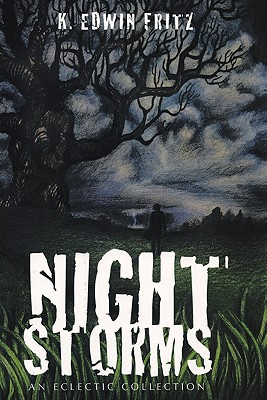
FRITZ: It was a short story called “Doctor Time” and it’s about a man who invents a potion that makes him live forever. The story follows him as he slowly (very slowly) watches life of all kinds change and die off around him. It’s a sad story, but it’s also kind of peaceful in its way. The first time I told it was more or less a dare from a friend who challenged me to tell a story off the top of my head, which I did. I told it a few more times after that around campfires, etc, and it came out a little different and a little better each time. Later I tried to write it down, which took several tries over a 6-month period. Eventually, it was published in my college newspaper. An updated version appears as the final piece in my NIGHT STORMS collection.

VENTRELLA: How much of writing is innate? In other words, do you believe there are just some people who are born storytellers but simply need to learn technique? Or can anyone become a good writer?

FRITZ: I do believe that many people are born with an ability to tell a great story, however that’s not the same thing as being able to write one. They are similar but not identical skills, and learning the difference is a LOT of hard work. But can people who can’t already tell a story learn how to write one? Probably not. You need a foundation to work with.

VENTRELLA: Tell us about MAN HUNT.

FRITZ: My debut novel is a thriller, dystopian, horror story. It takes place in the North Pacific Ocean on an island that has been forgotten by mankind. Living there are men who have committed all manner of moral crimes. Deceived by an elaborate ruse, they wake deep within fortress walls where they are tortured, brainwashed, and then trained to physical perfection. When they are finally released to the island’s hills and abandoned streets, they are told one simple rule: Survive long enough and you will be sent home. The island’s only other inhabitants are women.

I like to think that in MAN HUNT, survival of the fittest means being literally hunted. It’s LORD OF THE FLIES meets hard-core feminism, because it tells both sides of the story.

VENTRELLA: What should someone read first if they want to get to know your work?

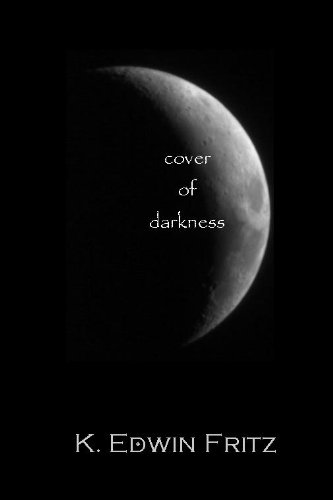
FRITZ: I have a bit of an eclectic range, so it depends on your tastes. Horror/ Thriller lovers should jump straight to MAN HUNT. People who prefer Dark Fantasy or Sci-Fi would probably like COVER OF DARKNESS (collection of 13 short stories). Cover of DarknessMy first book (also a collection) is more Young Adult/ Light Horror with some more Dark Fantasy & Sci-Fi thrown in.

VENTRELLA: How do you make your protagonist a believable character?

FRITZ: I pay attention to real people. I think the difference between a good author and a mediocre one is when he/she is willing to be a student of the world.

VENTRELLA: What’s the best way to make the antagonist a believable character?

FRITZ: I actually took a great workshop on this once, and I’ve come to truly believe the answer I was told that day: A great antagonist doesn’t believe they are bad. He/she just has a warped vision of what is the right thing to do.

VENTRELLA: Which of your characters was the hardest to write and why?

FRITZ: Believe it or not, it’s one of my 2 protagonists, Obe. (It’s a label the women of MAN HUNT give him … he can’t remember his real name). He’s hard to write because he has the most change to undergo, and because I started him out as a little too sympathetic even though he has inherent guilt. In my first draft, he came off as a complete wimp. Changing him to someone who could be empathized with while still being vulnerable took for-ev-er.

VENTRELLA: What makes your fiction unique? In other words, what is it about your stories that makes them stand out against all the other similar stories out there?

FRITZ: My biggest influences are Stephen King and William Shakespeare. As a result, most of what I write tends to be a mixture of pop culture horror/fantasy and traditional literature. It may sound like a strange mix, but I think it works well. Sort of like how the biggest cry you have for a TV character is when the one who always makes you laugh suddenly suffers a tragedy. It’s that mixture that makes such a profound impact.

VENTRELLA: Do you find yourself creating a plot first, a character first, or a setting first? What gets your story idea going?

FRITZ: I often start with a simple “What If?” question and have fun answering it in detail. But no matter what, plot must always come first, even though this isn’t my first instinct (I like to think about the characters and all their crazy mannerisms). Ultimately, people remember and talk about the story, not about who was in it. Yes, great characters are remembered too, but when you really listen to what people say, it’s about what those characters did, not about who they were.

VENTRELLA: Writers are told to “write what you know.” What does this mean to you?

FRITZ: It’s like that old adage: Intelligence = Knowledge of Things (a tomato is technically a fruit), but Wisdom = Intelligence + Experience (tomatoes don’t belong in a fruit salad). Writing what you know means writing about the things you’ve experienced, which means you are sharing your wisdom with the world.

VENTRELLA: When going through second and third drafts, what do you look for? What is your main goal?

FRITZ: Every story has it’s own message, it’s own reason for being … it’s own wisdom to impart, if you will. I rarely know what that is when I’m drafting, so revision for me is about seeing what that message is then making sure it shows up loud and clear in all the right places.

VENTRELLA: Science Fiction doesn’t seem to be selling as much as fantasy these days, including urban fantasy and all the varieties. Why do you think that is?

FRITZ: Probably because the advances in real life science are making the fiction element less attractive. Who wants to read about fake space ships if there’s a real one going into orbit? Having said that, I’m a huge sucker for sci-fi, and I doubt it will ever die off completely. It’s human nature to advance the species. It will just change as the science of life changes.

VENTRELLA: Do you think it is important to start by trying to sell short stories or should a beginning author jump right in with a novel?

FRITZ: Definitely start with short stories. You need the experience of creating a complete story arc with all those characters, etc. It’s not that you can’t do a novel first, it’s that early in your writing career you will make mistakes and doing them on a novel means a lot more time and energy wasted. A bad short story can be tossed and forgotten. A bad novel will follow you for years.

VENTRELLA: How do you promote your work?

FRITZ: Facebook, Twitter, LinkedIn, Goodreads, my blog, author signings, going to (and running one) writing groups, and recently I added paid advertising to my repertoire. Night StormsBasically I innundate my life with writing. I even wear a wristband that says “Ask Me About My Novel” so that strangers will know what I do. (And, yes, I have sold a couple of books because of it).

VENTRELLA: What’s the worst piece of writing advice you ever got?

FRITZ: Them: “You should write a story about (x)!”

Me: “Oh, you have an idea for a story but you can’t write it yourself so you want me to do it for you even though it’s totally outside my wheelhouse and since we’re friends/relatives I should be expected to drop everything I’m barely finding the time to work on and write your story instead? Thanks. I’ll get right on that.”

VENTRELLA: What’s the best piece of writing advice you ever got?

FRITZ: “Read a lot. Write a lot.” There simply is no substitute. Reading a lot shows you different styles, different skills, and often different errors not to commit yourself. Writing a lot gives you the opportunity to gain that valuable experience. But you must do both or you’ll never get better. If you only do one of them, you’ll only ever stay the same.

VENTRELLA: What advice would you give to a starting writer that you wish someone had given to you?

FRITZ: Short stories first. I started MAN HUNT in 1994. Book 1 was finally published in 2013. I’m not exaggerating when I say there have been at least 100 versions of the first 20 pages, and at least 20 versions of the first 100 pages. The final draft was over a thousand pages, and it took me 6 years to draft it. That’s when the hellish process of revision began. I’m quite proud of the first book in this now-trilogy, but I can’t shake the feeling that I could have written far more stories of equal or greater quality if I would have learned my writing chops on some short pieces first.

VENTRELLA: With a time machine and a universal translator, who would you invite to your ultimate dinner party?

FRITZ: I can think of 5 people:

1) Leonardo DaVinci. He’s probably the greatest Renaissance Man of all time. He was so far ahead of his time on so many things. Sometimes I actually find myself wondering if he was a time traveler or an alien. I would love to bring him to the modern world and watch him react to it… and then start making immediate plans to improve everything. 😉

2 & 3) Sitting on either side of him should be Shakespeare and Mr. King, of course. They are my idols. I owe them a beer in the very least. And watching them banter about writing over and around DaVinci’s whirlwind and chaotic head would be pure heaven.

4) Across the table would be Helen Keller. She’s incredibly wise despite having such a long, hard setback in life. Come to think of it, she’s probably wise because of it. She’d probably put everything all those other guys are saying into perspective.

5) My wife. She’s a little bit of all of the above, and there’s nobody in the world with whom I’d rather share such a great moment.

Publishing Scams

I’ve written about the perils of self-publishing before (and when it’s okay to self-publish), but this is more basic: Don’t be scammed.

All contracts should be between parties who each have something to offer. scamA publisher wants your book because they think they can make money on it. They’re not going to offer you a contract otherwise. This gives you some leverage in negotiations. You should never look at any contract as if it’s a gift to you. You are giving them something they want (your book) and they in return will give you something you want (money, distribution, editing, promotion…).

New authors are so excited about being published that they sometimes grab the first thing that comes along no matter how terrible the arrangement. There are many publishing scams out there you need to avoid.

Pay to Publish: Do you have to pay them to publish your book? That’s not how it works. The money should flow one way. If they aren’t willing to invest in you, then they don’t think your book will sell and are looking to make money from you instead of from your readers. Companies such as Author House or Vantage Press are good examples of this.

This includes fake contest scams, where you can submit your poem or story and if accepted it will be published in a new anthology! And you can buy the book with your story in it! Only $60! Needless to say, no story or poem is ever rejected, and that book will never be found anywhere except in the homes of the people it scammed.

Gatekeeping: Do they accept every book that is submitted to them? Once submitted, are you assigned an editor (who does more than just proofread)? For that matter, is there even a proofreader? Legitimate publishers have a keen financial interest in making sure their product is the best it can be. Scam artists don’t care at all.

Pay to Promote: Do they require you to pay them for cover blurbs and reviews? Do you have to pay extra to be listed on Amazon and with other retailers? That’s not how it works. It costs them nothing to list you, and you shouldn’t have to pay them anything to do what a publisher is supposed to do.

Some scam companies pretend that they are your agent as well, but then ask you to pay them up front for their services (something a real agent never does). “Pay us $2000 and we’ll turn your book into a script and give it to top Hollywood producers!” Yeah, right.

They’ll also charge you for “social media services” which means they set up a Facebook and Twitter account for you, which you can do for free yourself.

Oversight: Even scams that don’t require you to pay up front aren’t looking out for your interests. One of the worst offenders is Publish America. There are class action lawsuits pending against this company, which makes promises it can’t keep and charges you for it.

Some of the things Publish America does are amazing to recount:

They once told people if they paid them $100, they’d make sure J.K. Rowling would see their work. Rowling denied it completely, and Publish America admitted that they were just going to mail the manuscript to Rowling.

They mark the price of the books tremendously higher than other books by real publishers because they know the person who will be buying most of them will be you.

They misspell words on the spine and cover and then demand that you pay them to make corrections.

They charge for editing that is never done. One person submitted pages of absolute garbage containing no actual words that was accepted by Publish America without question.

(NOTE: I usually don’t edit posts once they’re up, but this is important. Publish America’s latest scam is simple — they changed their name to “America Star Books.” Don’t be fooled! They know their reputation is shot and so they’re hiding behind a new name. Don’t be scammed.)

Do your research! A great source is Writers Beware, which was started and organized by the late great Anne Crispin (Friend of this Blog).

Mind you, if all you’re trying to do is make some copies of some book for your family and friends, go right ahead. Self-publish by starting your own company, hiring editors and book cover artists, and making sure that the quality is top notch. (I did something similar with my nonfiction gaming books, which are targeted to a small and specific audience.)

So don’t fall for these scams. Keep searching. There are many small publishers out there who may love your book, and if you can’t find one willing to invest in you, then perhaps your book just isn’t good enough to be published. (Sorry, but it’s true. Get to work on the next one; you will improve with each book.)

My Most Popular Interviews

When I first started this blog back in 2009, Jonathan Maberry suggested that I interview authors as a way to get more views on the blog (as well as have fun talking about writing with some of the people whose work I read!). I’ve very much enjoyed it, and I advise writers with blogs to do the same.

I checked my blog stats recently just to see which interviews got the most hits. Here are the results:

1. May Pang
2. Rachel Caine
3. Norman Spinrad
4. Michael Flynn
5. Sharon Lee
6. Tommy James
7. Darrin Bell
8. Tanya Huff
9. Lori Perkins
10. Alia Hana Habib
11. Stephen Brust
12. Tim Powers
13. Jonathan Maberry
14. Tad Williams
15. John Ringo
16. Lawrence Watt-Evans
17. Stephen Barnes
18. Jay Lake
19. Mike Kabongo
20. Keith DeCandido
21. Joel Rosenberg
22. David Wellington
23. Jon F. Merz
24. Mark Waid
25. Jodi Lynn Nye

Write a story without bad guys

There’s my advice for today.  Write a story without bad guys.

Oh, I don’t mean leave out the antagonist.  01-snidely-whiplashMake that antagonist put all sorts of obstacles in your protagonist’s way.

But don’t make “bad guys” in the way we see much too often (especially in the movies).

Writers can get lazy when it comes to their antagonists.  It’s so easy to just say “He’s the evil bad guy” and never have to explain why he acts that way.  “Well, he’s evil, so that’s why” is false and readers know it. It doesn’t make your story full.

A good exercise is to take a scene and rewrite it from your antagonist’s point of view. Why is he or she acting this way? What is the ultimate goal? Surely the antagonist wants something more than being evil and standing in the hero’s way.

Remember: the antagonist is the hero of his own story.

My favorite bad guys have what they believe to be good motives. It’s why I think Dolores Umbridge is a better “bad guy” than Voldemort. She’s not evil — she is trying to bring order, consistency, and a respect for the law to the wild children at Hogwarts. We believe that she could exist because we know people like her. And we love to hate her for it.

My next novel BLOODSUCKERS (due out in May; film rights available) has a few important antagonists. The main one is Norman Mark, the vampire who is running for President. He lives a very long time, and he has a long term goal which is very good. He believes that his power to control others will enable him to pass laws through Congress that will help all Americans, discover and remove corruption, and move the world into a new renaissance of peace and prosperity. And if a few innocent people have to die along the way, so what? He’s doing this for the good of all humanity.

There are other antagonists who are vampires wanting to keep the secret of vampires from the population. They are not evil either (in their minds) and are afraid that if people realize vampires exist, they will begin hunting them. People will suspect each other of being vampires, wars will break out and economies will fall. These vampires are trying to stop Norman Mark for their own reasons, but they are not the protagonists.

The protagonist is Steven Edwards, a reporter who has been framed for the attempted assassination of Mark and has gone into hiding. In order to prove his innocence, he has to prove that vampires exist. He was a Mark supporter and is conflicted with the problem — he knows Mark will be a better President than his opponent, but dammit, he’s a vampire!

Anyway, you can see what I’ve tried to do here. None of my bad guys think they’re bad guys. They don’t just randomly perform evil acts simply because they can. They only do them when necessary, and even then for a future goal that is good in their minds.

Remember: not counting the insane, no one in the real world thinks of themselves as bad guys.

So take some time and write a little short story from the point of view of your “bad guy”. You may discover parts of his or her personality that were hidden before. And if you’re good, you will make your antagonist a full, complete, and believable character.