My Turn to be Interviewed

Chris Redding hosts a very nice interview with me on her blog today, in which I discuss fantasy games, fantasy cliches, and axes (of evil)!

Interview with Author and Editor Cecilia Tan

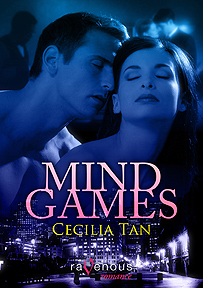
MICHAEL A. VENTRELLA: I’m pleased to be interviewing Cecilia Tan today. Cecilia has been writing and editing professionally for the better part of two decades, both independently and for the small press she founded in 1992, Circlet Press, who specialize in material that mixes the erotic with the fantastic. She has written numerous erotic romances for Ravenous Romance, has edited anthologies for Alyson Books, Thunder’s Mouth Press, Carroll & Graf, Masquerade Books, Blue Moon Books, and others, and collections of her short stories have been published by HarperCollins and Running Press. On top of all that, she also writes and edits publications on baseball.

Cecilia, What brought about the founding of Circlet Press?

CECILIA TAN: I had written a story called “Telepaths Don’t Need Safewords” and just knew at the time I finished it that it was the best story I had written to date. It mixed explicitly kinky erotic action with a science fiction plot. Then I looked around for somewhere to submit it. There was nowhere. Science fiction magazines had explicit rules against sexual content. Porn magazines had explicit rules against both science fiction and any plot beyond “two people meet, then have sex.” The BDSM magazines of the time were either exclusively lesbian or exclusively gay, and my characters were neither. I had been working in book publishing for a few years at that point so I knew the business and I thought “this is nuts. Someone has to do this!” And of course that someone ended up being me.

VENTRELLA: Has it met your expectations?

TAN: Circlet Press has met all my hopes and dreams except for the financial one. We grew by leaps and bounds, garnered fabulous critical acclaim, excellent notice, a great reputation, helped to blow the doors off the old restrictions and show how good mixing the genres could be, jumpstarted the careers of a whole generation of writers … but once the Returns Crisis hit the book publishing industry in the late 1990s, it’s been a financial uphill battle ever since. I’m too stubborn to quit, though, and the ebook has suddenly allowed us to start reaching the readership that mainstream bookstores abandoned. So all of a sudden, there’s some cash flow! Who knows? Maybe someday we’ll turn a profit. What’s most important to me is that we’re still able to connect authors to readers, and then put money back in the pocket of the authors. That part of the business is the same as always … in fact, it’s better.

VENTRELLA: There are many examples of small press these days; do you think this is good for the publishing industry or does it tend to water down the field?

TAN: Oh no. It’s the mainstream presses, not the small presses, who are the most watered down. That’s where you’ll find the most mediocre, recycled pap being packaged and put on the shelf. Granted, it’s not 100% the fault of the big publishers — it’s also the fault of the buyers at Borders and Barnes & Noble, who just want the same thing over and over again, in the hopes that what sold before will sell again. They are all chasing the book equivalent of the Top 40 radio hit and making a lot of boring noise in the process. The small presses are more directly connected with the readership and what they actually want. The small presses occupy the specialty niches.

Another way to look at it is with a comparison to restaurants. The big presses are the chain restaurants. They’re Applebee’s and the Olive Garden and Budweiser. The small presses are that great little gourmet Italian restaurant in your neighborhood, and handcrafted microbrews.

Small presses are also the minor leagues, but for the most part the authors being published in the small press aren’t any less talented than the ones in the mainstream press. They are sometimes less experienced, or less marketable, or just less lucky.

VENTRELLA: As a small press author, I thank you for that!

Has the rise of self-publishing been good for the business?

TAN: Absolutely.

VENTRELLA: When acting as an editor, what is it you look for? What will immediately get a story chucked in the trash?

TAN: The first thing I tell my assistant editors when its time to read the slush pile is DO NOT read the cover letter until after you read the story. Far too many authors think that the job of a short story cover letter is to build you up into a froth of excitement about how great the story is going to be, thus ensuring that a) you’ll be let down, and b) any suspense or joy of discovery in the story has been killed for the reader. I think many amateur writers are confused about the difference between submitting a short story and pitching a novel proposal to an agent or editor, and some just can’t imagine that all they should introduce in the letter is THEMSELVES and let the short story speak for itself.

We get a lot less utter garbage than we used to, though, honestly, and I think the reason why is that thanks to the Internet, writers are actually better informed about how to go about submitting, and they are much more likely to have practiced their grammar and spelling skills on a daily basis. It’s that or the Internet has somehow
swallowed up the attention of most of the crackpots who used to send us wacky submissions in red crayon and the like.

VENTRELLA: What sorts of things do you want in a query letter?

TAN: Since most of what we read is short stories, we don’t read queries. We just want a professional introduction of the author, with whatever credentials they have, but if none, just a firm, no-nonsense hello. It’s professional courtesy to include a cover letter. Sticking a post-it note shaped like a heart on the story is not professional.

Actually, these days, we only accept manuscripts by email, so whenever anything arrives in the mail, I know it’s likely to be from the land of psychoceramics.

VENTRELLA: As a writer of erotic and romantic fiction, what would you advise to someone wanting to enter this field?

TAN: Both romance and erotica have a lot of cliches. The whole trick to writing something that will thrill the pants (sometimes literally) off your readers is to satisfy their expectations while at the same time exceeding them. Be aware of the boundaries of any genre that you write in, and then find out how you can play with and cross those boundaries.

That is, unless thinking about that sort of thing paralyzes you and saps your will to write. In that case, forget everything I said and JUST WRITE. That’s probably the best advice. Step one, start writing. Step two, finish what you started. You’ll get better every time.

VENTRELLA: What trends do you see in the publishing industry that excite you? Which ones worry you?

TAN: I’m very excited at how social networking is allowing authors and readers to connect directly. But the problem is how do you find out about new authors you might like if you’re a reader, when now there isn’t just a publisher-wholesaler-retail chain delivering you a limited selection to choose from? A lot of things are changing now because of that.

It worries me a little that the newer system rewards authors more based on their marketing savvy than on their writing ability … but then I look at a lot of the junk that was published that still hit the New York Times best-seller list over the past 20 years and I realize that’s ALWAYS been true. There have always been populist and popular writers who weren’t particularly great artists.

VENTRELLA: Writing a short story is much different from writing a novel. What are the difficulties you have found? Why do you think some authors specialize in one or the other?

TAN: I’ve written a fair number of both and I really think they are different arts, just like painting and sculpture are different arts. A short story writer has to have guts and brio; a novelist has to have stamina and vision. For me short stories have always come pretty easily. I grab an idea and just pound it until it’s done. A novel takes a bit more planning. The one time I just grabbed hold of a novel with minimal planning, it took six years to finish and came out three times too long to be a commercial novel. (That’s DARON’S GUITAR CHRONCILES, which I’m serializing now on the web.) The next time I plotted out 12 chapters of 5,000 words each and bam, I hit my target right on the nose.

The secret to writing outlines for me is realizing that in the second half I’m going to deviate quite significantly from the outline I wrote, but that some kind of internal logic is at work in my subconscious, so if I forge on, it will all work out. I still have to write the outline, which to me is like sketching out the map of the mountain I’m going to climb. But when I get to the top, exactly halfway through the journey, and am at the turning point, I look down the other side of the mountain… and discover it always looks totally different from the top than it did from where you started at the bottom. Some of the landmarks are the same, but how you get to them changes.

VENTRELLA: Are you sick of vampire stories yet? Is there any plot you have seen too often?

TAN: I love vampires! But even sixteen years ago when I edited my very first anthology of vampire stories, called BLOOD KISS, there were some cliches I didn’t ever need to see. Like setting your vampire story in a goth nightclub … cliche cliche cliche! It really isn’t very imaginative to think “what if those spooky kids who look like vampires actually WERE?” Not exactly an original idea. I actually had to turn down a lot of stories where the “surprise” ending was that one of the two people who met in the bar turns out at the end to be… A VAMPIRE!

I had to write rejections that said things like “It’s a vampire anthology. Every readers KNOWS at least one of them is a vampire.” Then there were the millions who tried the surprise twist: they’re BOTH vampires! Argh. Or surprise twist two: the other one is a vampire hunter! I saw literally hundreds of stories with these plots even after I explicitly banned them in my submission guidelines.

Then there are some ideas that go through fads. I kid you not. One year I received no fewer than four stories all with this exact same plot: an artist falls in love with a model in a painting (usually a Renaissance painting) and gets artistically blocked, can’t paint, is wasting away… until the day the model shows up at the door to have
fantastic sex, looking just like the painting, because s/he is a vampire. Somewhere, once upon a time, that was an original plot. Now, it’s a cliche.

VENTRELLA: How do you think your education has helped your writing?

TAN: Well aside from the actual writing courses I took, it was important to me as someone who writes science fiction to learn some high level science. In college I went right for what was cutting edge at the time, cognitive science (artificial intelligence, neurology, etc) and genetics. Anything you learn that stimulates your brain is going to help your writing. I took a fair amount of psychology in that mix, as well as literature, music, etc. … Long live the liberal arts.

VENTRELLA: Besides “keep writing” what specific advice would you give an aspiring author that you wish someone had given you when you began?

TAN: I think I must have started out with some pretty good advice, because I can’t think of anything. I suppose the advice I would give is this.

You need your reader to trust you to lead them on a rollercoaster ride. For them to trust you, you have to trust yourself. To trust yourself, you have to know your craft and be constantly improving it, constantly learning about yourself and the way your writing affects your readers. So don’t write in a vacuum because you’re afraid people won’t like it. Find the ones who do like it, and write more for them!

Interview with Tanya Huff

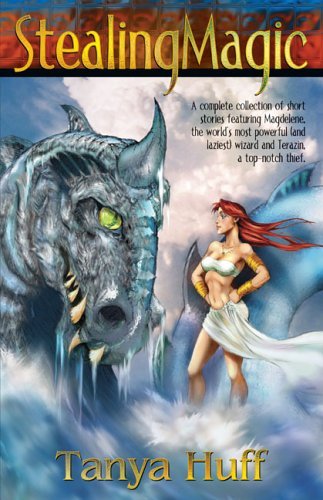
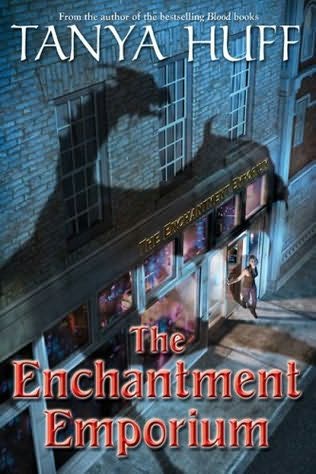
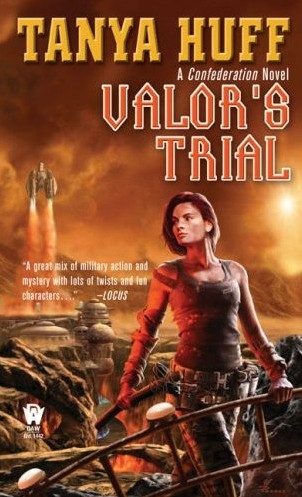
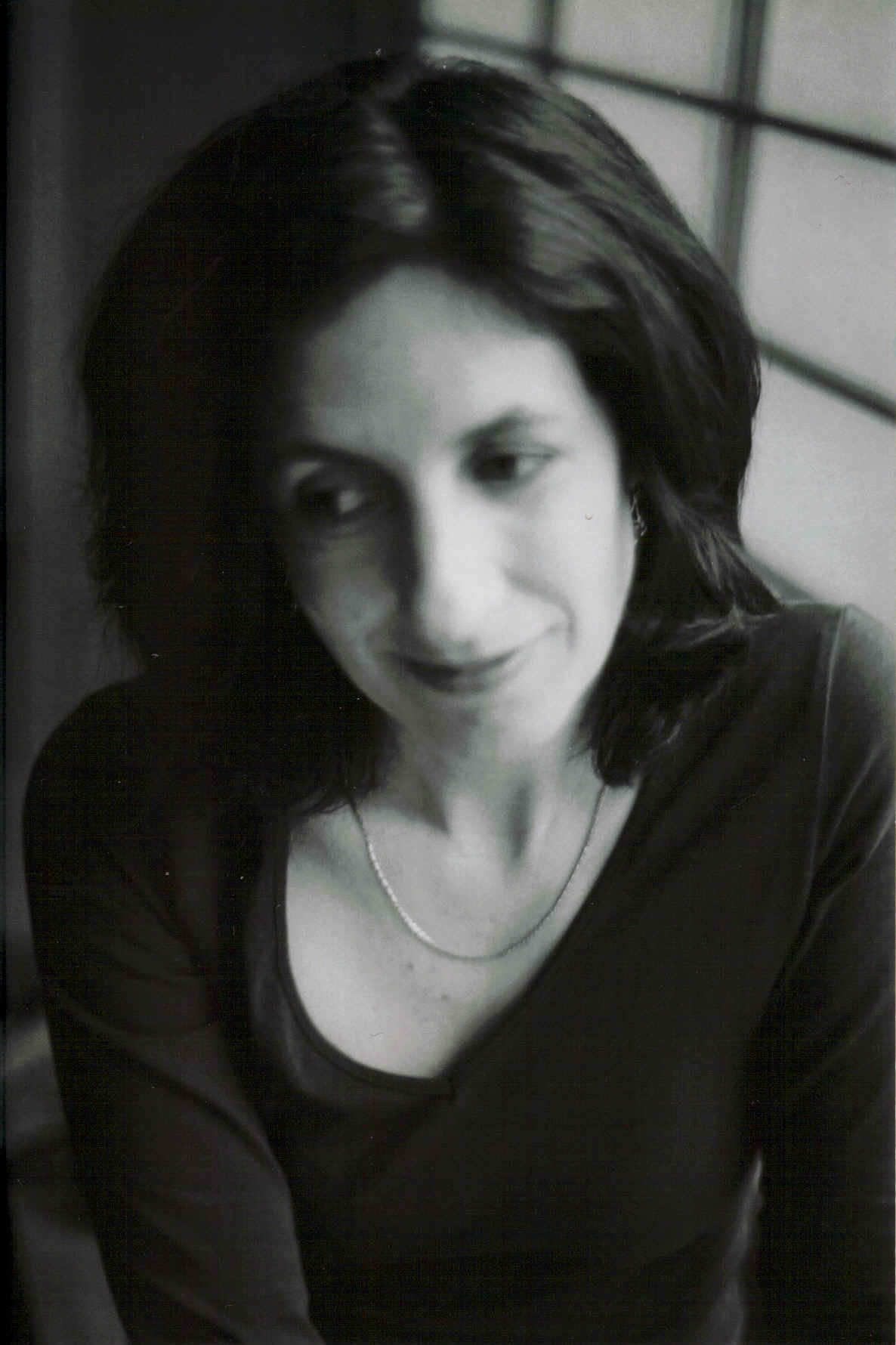
MICHAEL A. VENTRELLA: I am pleased to be interviewing Tanya Huff today! Tanya Huff lives in rural Ontario, Canada with her partner Fiona Patton and, as of last count, nine cats. Her 26 novels and 68 short stories include horror, heroic fantasy, urban fantasy, comedy, and space opera. She’s written four essays for Ben Bella’s pop culture collections. Her Blood series was turned into the 22 episode BLOOD TIES and writing episode nine allowed her to finally use her degree in Radio & Television Arts. Her latest novel is THE TRUTH OF VALOR (DAW, September 2010). When not writing, she practices her guitar and spends too much time on line.

Tanya, How did you break into the publishing business?

TANYA HUFF: I started by sending out Third Time Lucky to the digests — Asimov didn’t want it and Amazing did. At the same time, I’d finished writing CHILD OF THE GROVE (in about 80% the same shape as the published book) and sent it out as a YA to Terri Windling at one of the Ace imprints I think. It was twenty-five years ago so details are foggy. Terri suggested I submit it as an adult book.

One of the things they suggest when you’re looking for a publisher is to look at what who publishes what you read and I was split about 50/50 between DAW and Del Rey. But I had a friend, S. M. Stirling who’d sold two books to Sheila Gilbert while she was at Signet and now she was at DAW and that seemed like a sign. I was heading to NYC to see some shows and Steve said he’d call Sheila and ask if she had time to see me. Unfortunately, he forgot and when I called Sheila, she said she hadn’t heard from him in a few years but if I could get there right away, she’d just had someone cancel and could see me for about twenty minutes.

Never do this, btw. Never cold call an editor and mention you just happen to be in town. It was barely doable 25 years ago. It’s really isn’t now.

We talked, I left the manuscript for CHILD OF THE GROVE with her, eventually, a year and a rewrite later, she bought it and, in the intervening years, she’s bought another 25.

VENTRELLA: You’ve stated in the past that you decide to write a vampire book because, basically, you knew they were popular now.

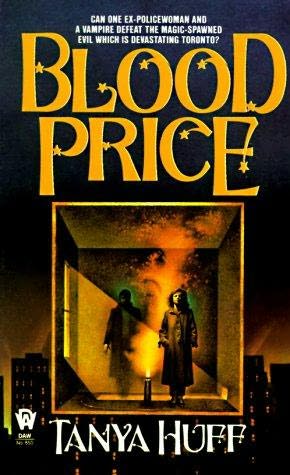
HUFF: No, what I said was, I decided to write a vampire book because I was working in a bookstore and had observed that vampire readers were very, very loyal to their genre. That they’d buy anything with fangs on the cover in the desperate hope of finding something decent to read. I figured if I wrote a good vampire book, then I’d give the vampire fans what they were looking for and they’d be that loyal to me. So I did. And they are. But twenty odd years ago when I wrote BLOOD PRICE, vampires were no where near as widely popular as they are now. This was pre-Buffy, remember.

VENTRELLA: This leads to an interesting question in general: How much of writing is about art and how much is about business? Do you think most authors write for the love of writing or because they want to be successful? Are the two incompatible? And is there anything wrong in that?

HUFF: The two are certainly not incompatible. On one level it doesn’t matter what job you do, if you’re just in it for the money, it’ll show and it won’t be pretty. On another, good writing requires a piece of your soul so you’d better love it given that you’re gouging chunks out of yourself to produce it. Also, as I tell the high school kids I occasionally talk to, you’d better love it because the odds are very good you’ll never make much money at it. On the other hand, I’ve never met a writer who doesn’t have a mulitude of ideas floating about and the smart ones will look at what’s selling, try to use that to figure out what’ll be selling in a year to eighteen months when any book you may start now will actually be published, and develop the idea that has the best chance in the market. On yet another hand, sometimes you just want to tell a particular story so badly that the market be damned and it then becomes your agent or editor’s job to reign you in.

So the short answer is, no.

VENTRELLA: You ignored many traditional vampire myths in your books. (I’m doing the same in my next novel, by the way, about a vampire who runs for President.) What led to that decision? Did you get any complaints from the hard core vampire fans?

HUFF: In order for myth to remain alive, it has to grow and change. Once a myth codifies, it dies. I used the parts of vampire myth that were relevant to my story and ignored what wasn’t. So far, no one’s complained. Well, not to me anyway.

VENTRELLA: You’ve been fortunate (and talented) enough to have a TV series based on one of your series. How did that come about?

HUFF: The wonderful guys at Kaleidoscope optioned the Blood series because they loved them and then worked their butts off to bring it to the screen. All I had to do was cash the option check. They did all the work.

VENTRELLA: Were you pleased with the result?

HUFF: I loved the result. Christina Cox was one the actors I saw playing Vicki back in the early 90’s when she was on a show called F/X THE SERIES and I was thrilled when she got the part. Dylan Neal was not how I physically saw Mike — until I saw Dylan play Mike and I loved his interpretation. I’d never been able to cast Henry Fitzroy but now I can only see Kyle Schmid in the part.

VENTRELLA: Did the TV series inspire you to make changes in future books of the series? Did you care about continuity at all, or was that not an issue?

HUFF: I wrote the last Blood book in… I think 1996 so it was totally a non issue. I said at the time that BLOOD DEBT was the last and it has been. There’s been a few short stories since Blood Ties but I have no problem keeping the show mythos and the book mythos straight.

VENTRELLA: What process do you use when preparing a novel? Do you do extensive research? Do you outline?

HUFF: First I have the idea — or, more accurately, separate the idea I’m currently excited about from the herd. Then I write up a pitch for my agent to give my editor — this is a very short outline and has, in the past, actually used the phrase, “And a bunch of stuff happens in the middle.” I always know where I’m starting from and I always know where I’m going, I just don’t always know how I’m going to get there. After the book sells, I research for two to three months until the weight of information tips me over into writing. Then I start at the beginning and tell the story until I finish. Because I edit as I go, my first draft about 95% similar to the book you buy.

VENTRELLA: How do you personally create a new fantasy world, with its own rules? In other words, how much planning and background information do you write?

HUFF: When I create a new fantasy world I need a map so I know the climate, the type of food, the industry, the type of farming, the housing needs. I need to know what time of year it is. I need to know what the religon is, and I need to work out the profanity. Most profanity is very tied to religion and is often the hardest thing to come up with in a created world.

VENTRELLA: What do you bring to the genre that other similar books miss? In other words, what is different about your books?

HUFF: Well, I don’t take myself or the genre (or various) subgenre too seriously while still respecting my readers, but I’m not the only one. I like kick ass women and witty repartee, so that’s going to be included every time. I guess the big thing that’s different about my books, is that I’ve written them…

VENTRELLA: Many aspiring authors get conned by self-publishers who pretend not to be, or by “editors” who do little more than proofreading for a large fee. How does one avoid these scams?

HUFF: They’re not hard to avoid. Publishers and editors pay you — you’re creating the product. If you’re paying them, it’s a scam.

VENTRELLA: Besides “keep writing” what specific advise would you give an aspiring author?

HUFF: Put a third of every check you receive into a separate tax account. Sure, it won’t matter for years but there will come a day when you’re actually making a living wage and the goverment will want a surprising amount of it. If you’re Canadian, you have to pay both halves of the Canada Pension Plan and that’s a surprise when it hits the first time, believe me. It’s best to remember that you’re essentially a small business all year long, not just in April.

Remember that publishers, editors, and agents all talk to each other. They will talk about you. You don’t have to be a saint, but don’t be an ass. If you get a reputation as being unprofessional or hard to work with, it won’t matter if you have all the talent in the world.

And speaking of talent, discipline matters more. I guarentee that more disciplined people with minimal talent are published than talented people with minimal discipline.

Write subjectively. Edit objectively.

Have fun.

Interview with author Marie Lamba

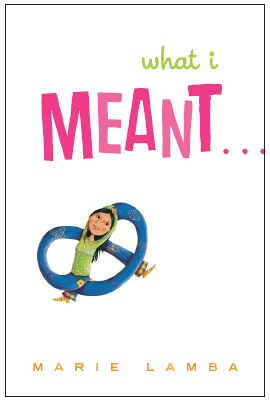
MICHAEL A. VENTRELLA: I’m pleased to be interviewing Young Adult author Marie Lamba today. Marie is the author of the humorous young adult novel WHAT I MEANT…, which Publisher’s Weekly has dubbed “an impressive debut.” She has two more novels which will be coming out soon. In addition to her fiction writing, Marie has written and published more than 100 articles, including features in national magazines such as Garden Design, Your Home, and Sports International. Her most recent piece, “Plotting a Novel Group,” appears in the February 2008 issue of Writer’s Digest. Her web page is www.marielamba.com.

MARIE LAMBA: Hi Michael. Thank you for having me on your blog.

VENTRELLA: Marie, what is it that makes a novel a Young Adult novel?

LAMBA: To me, a young adult novel is categorized primarily by the age of the main character. Since readers read about characters older than themselves, if you have a 13-year-old protagonist, you’ve just written a middle reader (not a YA), and will have mostly elementary school aged readers. Also, content figures in. Sometimes the content is not right for the YA market. But these days, almost anything goes for YA readers. The edgier the better, though you may just be banned by schools…which usually reaps great press and even better sales, interestingly enough.

VENTRELLA: You keep a pretty active blog. Do you think this is necessary to help promote your work?

LAMBA: My site helps me promote my work every single day. I’ve heard people say that if you don’t update your blog at least 3 times a week, then don’t bother having one. I heartily disagree. Sometimes it’s not about getting a huge number of subscribers, but about having a presence, and being able to be found in various ways.

While my blog may seem really active, I sometimes post as rarely as once a month. I just don’t think there’s a point in posting unless I really have something to say. Yet the site is dynamic and gets a fair number of hits everyday because I’ve got a lot going on there. In addition to offering updates about my work, essays on writing, and book reviews, I’ve made it function as my website, www.marielamba.com. So folks are going there to find out about my appearances, to read my bio, to read excerpts from my books, etc. And with links to my Twitter feed, there is always something new to see.

By combining my website with my blog, people stumble onto it while doing the weirdest searches. Like when looking for the menu of Nat’s Pizza. And then they see that my novel has a scene set there. Then they click on my link to buy my Doylestown-based novel. All because of a blog post that tagged Nat’s Pizza in it, if that makes sense?

VENTRELLA: Should unpublished authors have a blog?

LAMBA: Absolutely. It’s a great way to start establishing yourself and your voice. Everything from the color scheme you use to the tone of your bio can help create a feel for who you are. Have a page on your blog with short excerpts of your work, but don’t give away too much material there. Just enough for a taste.

If you really want to be savvy, then you could use your site for things such as book reviews and editor and publisher interviews, which would make your name familiar to the “powers that be.”

VENTRELLA: What can an author do to make their blog stand out among the many out there?

LAMBA: I think it goes back to your voice. Who you are should come through in the tone of your writing, and what you choose to highlight. Then, of course, you need to connect with your audience. That’s where bringing your site to the attention of an organization can help. For example, after I wrote a post about plotting, I saw on a children’s writing message board that I belong to that there was some recent discussion about plotting. I immediately commented there, providing my link to my post.

VENTRELLA: You also make extensive use of Twitter. How can you make your tweets stand out when there are so many people on Twitter? And do you think this is an efficient use of your time?

LAMBA: You know, Twitter is so quick that it isn’t the time suck that sites like Facebook seem to be. At least not for me. Here’s the trick though: when you post there, make it under 40 characters so that you can easily be retweeted to others. Also, try to always provide a link, whether it is to a relevant blog post or a Facebook invite to an event. Links are always too long, so go to www.bitly.com, paste the link there, and you’ll get a shorter link that you can use. And don’t always make your tweets about you. Highlight the accomplishments of others. It’s fun to do, plus I think it’s just good karma.

As for making your tweets stand out, I definitely avoid the whole “I’m getting a cup of coffee now” variety of posts. Again, I only go on there when I have something to say or I really want to respond to someone. I think then people will pay more attention to you. You aren’t the annoying talker everyone wishes would go away. And I try not to follow just anyone or anything. My list is made up of people I know, and of publishers, editors, librarians, media, authors. In short (in the spirit of Twitter), folks who might actually care to hear what I have to say.

VENTRELLA: What is your writing process? (Do you outline heavily, create character backgrounds first, come up with the basic concept and run with it, etc.?)

LAMBA: Good question. It’s evolving. For my past few novels, I knew my final scene. I had my opening dialogue. And then I was off! Kind of like knowing I’m driving to California, and therefore start heading west, but without a map. I do get to the end eventually. The fun thing about this method is the unexpected twists and turns. The not-so-fun thing is cleaning up the mess that I’ve created, trying to make it more direct and cohesive. It can take a long time.

With my current novel, I’m trying to be more organized. I’ve plotted it out, and now I’m in the outlining stage. Then I’ll start writing. I’m hoping that this will help me write faster. My last novel DRAWN (which is now out on submission), took over a year and a half to write. I want to be much more productive than that.

VENTRELLA: What are you doing in your fiction that no one else is doing? What makes your book different and exciting?

LAMBA: I think, again, it comes down to voice. I’m the only person with my point of view and my humor, and that flavors the plot and the characters. With WHAT I MEANT… (Random House YA), the book’s cast of bi-racial characters mirrors my own family’s blend of Italian-American and Asian-Indian personalities. Because WHAT I MEANT… has a mixed race protagonist, yet it is a mainstream story not focused on race, it became a standout in the field.

VENTRELLA: Have you received any surprising results from your writing?

LAMBA: It is always touching to have readers contact me saying that they identified with the characters and that WHAT I MEANT… is their favorite book. One girl even said that she never cries at anything, yet she found herself bawling at the end of my novel because it touched her. That was humbling.

On a funny note, an ex-boyfriend from high school assumed that one of the guy characters in the novel was named after him. He wasn’t.

VENTRELLA: You do a lot of personal appearances to promote your books. What are the advantages and disadvantages of doing these? How do you organize them?

LAMBA: The main advantage is making a personal connection with a reader. If someone meets you and enjoys talking with you, they’ll also remember you and feel a connection to your writing. This is really how books are sold: one reader at a time. I love meeting people, and appearances take me away from my isolated little writing spot and out into the real world. All good. The disadvantage? I can’t think of a single one. I’m careful to pick and choose where and when I go so it doesn’t take away from my writing time.

Events happen many ways. Sometimes booksellers or conferences or teachers contact me. Sometimes I get in touch with them if I have a specific event idea. And I have done presentations to hundreds and hundreds of scouts. I also have to mention that I’m a proud member of the Philly Liars Club, a collection of 13 authors who basically lie for a living. Together we stage a slew of oddball events, and have a blast.

VENTRELLA: Let’s discuss the publishing business a bit. With self-publishing and e-books becoming more prominent, how do you think this will change the demand and market for new writers?

LAMBA: I really think that self-publishing and e-books represent a revolution in publishing, the likes of which we haven’t seen since the 1460’s when old Guttenberg came onto the scene with his printing press, displacing those hard-working monks and their illuminated manuscripts. Documents at that time show that people didn’t realize the magnitude or ramifications of what was going on. Quite simply, the change was so huge that they couldn’t envision the implications.

And so it goes with us. We speculate, but we can barely foresee what all these huge changes mean. I say look to the music industry, to prevalent iPods and the dearly departed record stores. And be cautious. Will books on paper no longer exist? Will bookstores and libraries disappear? Will publishers become obsolete? The only thing I know for sure is that no matter what form content will take, someone will have to write it.

Cling to that, writers and future writers. We are not replaceable.

VENTRELLA: Do you think the stigma of being self-published will continue? Do you think it’s deserved?

LAMBA: Some self-published books are brilliant. Others are painful and shouldn’t see the light of day. Books that are horribly written and barely edited definitely ruin the reputation of others out there, sadly.

I do think that as distribution of self-published novels improves, and more established authors step into this arena, that this stigma will fade. I mean, what does an author like Stephen King really need a publisher for? Couldn’t someone of that stature just put books out into the stratosphere by himself by self-publishing? J.A. Konrath has started to do it with some success, though he still also goes the traditional route.

VENTRELLA: Who are your favorite authors? Why?

LAMBA: Anne Tyler for her beautiful imagery and quirky characters. T.H. White for his epic storytelling, sense of grandeur, and sense of humor. Audrey Niffeneger for her amazing plotting abilities. Sarah Dessen for her touching and real YA voice.

VENTRELLA: What’s the biggest mistake you see aspiring writers make?

LAMBA: Not taking the time to polish their work, and really learn their craft. Writers need to work so hard to improve everything they do. Established authors are always struggling to polish, to edit. They value pointed criticism, and vigorously revise. When I see someone with talent refusing to do this type of work to polish their manuscript, or not absorbing decent criticism, I know that they are limiting themselves, and that’s a shame.

VENTRELLA: What advice can you offer that you wish someone had offered you?

LAMBA: Writing is not only an art, it’s a business. And sometimes in this business really nasty crap will happen to you. In fact, expect it. Your novel, no matter how important it is to you, is just a commodity in the business world. Be as businesslike as you can, while protecting the sensitive artist within. And write another book. And another. And another.

VENTRELLA: And what’s next? What can we look forward to seeing from you?

LAMBA: My YA paranormal DRAWN (excerpt on my blog/website) is under consideration right now. It’s about a teen artist who moves to England in search of a normal life. But then she starts channeling one very hot ghost through her drawings. Not normal at all.

And right now I’m working on a novel for adults: When an Italian grandmother shares old fashioned recipes for sauces and for a happy life, her three granddaughters test the ingredients in fresh ways, cooking up a surprising blend of spice, passion, trouble and true love.

That pretty much sums it up! Thanks, again, for having me here.

7.28.13g

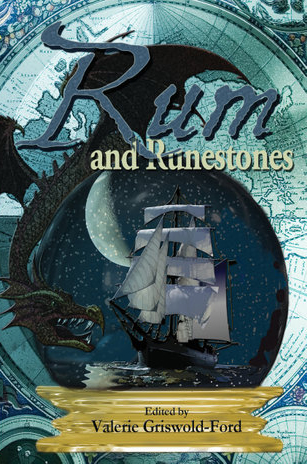
Rum and Runestones

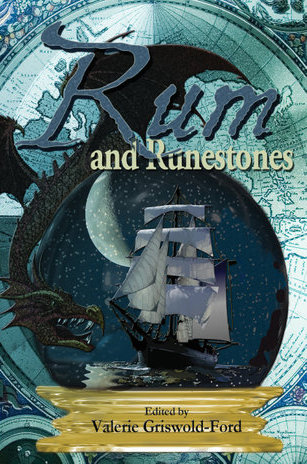
Yarr, ye scurvy landlubbers! There be a new collection of short stories about pirates and magic! It be called “Rum and Runestones” and a picture of the tome appears before ye!

‘Tis edited by Valerie Griswold-Ford and contains short stories from many gifted writers, including Yours Truly, who apparently thinks today is “Talk Like a Pirate Day.”

My story be called “X Spots the Mark”. ‘Tis about Irad the Pirate Captain and a treasure map — but was he fooled into buying a fake one? With almost all of his crew gone, victims of deadly traps, will he complete his quest to obtain the booty of his hated enemy Rummy Jack? Well, since this be a Ventrella story, ye can be sure of some rough sailin’ ahead with many unexpected twists and turns!

Other contributors include:

Danielle Ackerly-McPhail

Danny Beauchamp

Danny Birt

M.J. Blehart

B.A. Collins

Tara Fullbright

Laurel Anne Hill

Stuart Jaffe

Gail Z. Martin

Misty Massey

James R. Stratton

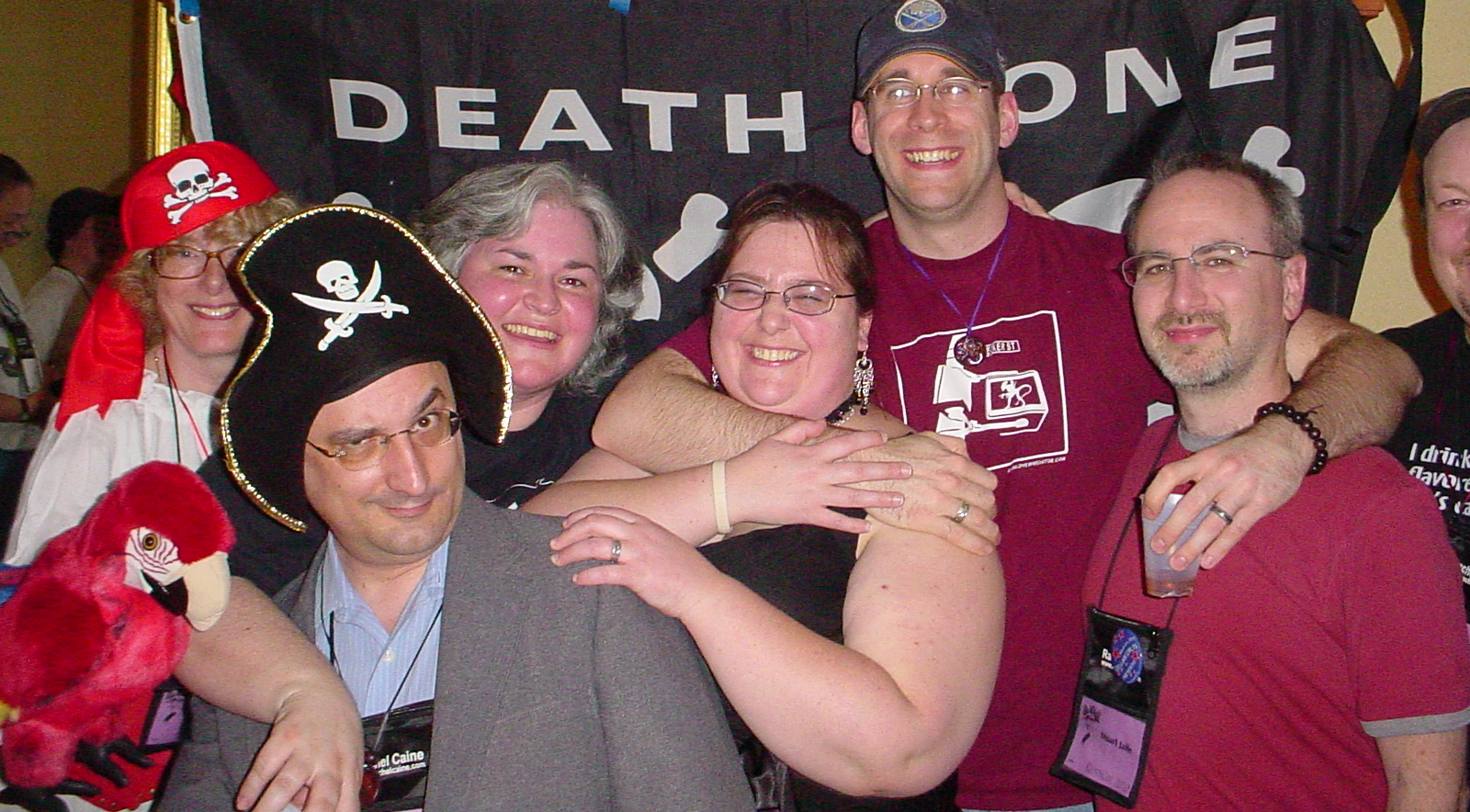
Some of these scoundrels were seen at a convention in Virginia recently for a book release party, standing before a jolly roger and enjoying quite a lot of rum while tryin’ to scratch their autographs on the parchment! And thar be Ventrella himself in his pirate hat. Yarr!

The book can be purchased on Amazon now, so what are ye waitin’ for?

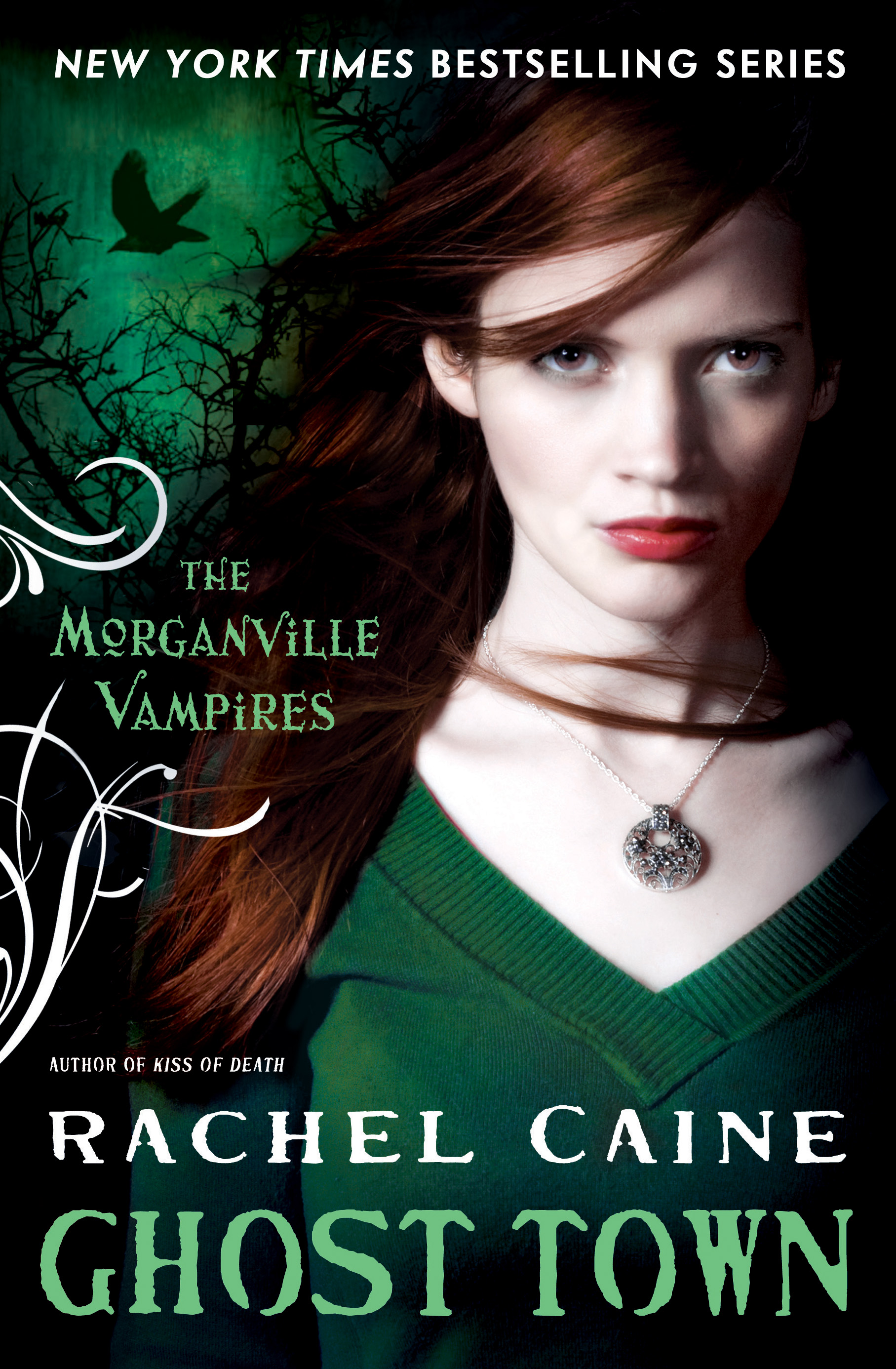
Interview with NY Times Bestselling Author Rachel Caine

MICHAEL A. VENTRELLA: I’m pleased to be interviewing NY Times bestselling author Rachel Caine. Rachel has the Morganville Vampires series, Weather Warden series, and the Outcast Season series, as well as writing paranormal romantic action/adventure and many other genres. Rachel will be the Guest of Honor at Ravencon next weekend (April 9 – 11, 2010) where I am a mere minor guest! Her web page is here.

Rachel, what is it that makes a novel a “young adult” novel?

RACHEL CAINE: The way I look at it, it’s purely a matter of the age of the central characters. My four main characters are ages 17, 18 and 19 now, and as with all characters, their ages and life experience shape the events of the book. So it’s not that I deliberately target the audience … it’s that I think in order to be faithful to the characters and the story, it should naturally appeal to a young adult audience. (Although I have plenty of adult readers of this series as well.)

VENTRELLA: It seems like you have a new book out every month! How do you manage to be so prolific?

CAINE: Ha, I don’t think it’s *every* month. But definitely 3 or 4 a year, that’s true. Most of that’s driven by the YA series (Morganville Vampires) because the schedule for that is we’re publishing one every six months vs. a year for the adult novels (Weather Warden and Outcast Season). But when you add it all together, three series going at the same time does tend to add up fast.

I think I’m lucky that I really enjoy writing to tight deadlines (generally) — it’s been a really great balance against my sometimes stressful day job.

VENTRELLA: There is an ironic balance that has to be met when writing about the supernatural, in that it has to be rooted in reality to be believable. How have you made decisions about integrating the real with fantasy?

CAINE: I’m going to shamelessly quote Jim Butcher, who once said that in order to have urban fantasy that feels realistic you need to have about as much “real” as you do “fantasy.” I believe that’s true … If you look at the success of the movie “Hellboy”, I think that first film achieved a wonderful balance in that area. Sure, you’ve got a big red devil guy running around fighting monsters, but there’s so much real world complication that it makes it all that much funnier and more outrageous. I thought that in the second film, good as it was, they forgot that balance, and slid it to about 75% fantasy, 25% real world … and I think it wasn’t as strong as the first.

So I try to balance my fantastic elements with the fact that everybody, even supernaturally gifted people, have to worry about bills and dry cleaning and child care. 🙂

VENTRELLA: What is it about vampires that attracts such attention these days? Do you think this is just a trend? (I hope not, since my third novel will be a vampire book …)

CAINE: Well, I’ve actually been in the vampire field when it was cool before (in the early 90s) and when it wasn’t (in the late 90s), and now it’s cool again, which is kind of great. Vampires never really go out of style — we’ve been afraid of them for thousands of years, and writing about them in fiction for more than 100 years. The fascinating thing is that in the beginning, vampires were soulless monsters … reflecting that hidden terror that those you know and love can suddenly become monsters. And then they took on personalities and became more sympathetic, and eventually (by the mid-70s) became actual misunderstood romantic anti-heroes. By the mid-1980s, vampires had become heroic, appearing as police officers, detectives, doctors, all kinds of professions that had always been seen as admirable. Now, it seems that they’re back to the dark, romantic Heathcliff-type heroes (at least in the romance circles), but then there’s graphic novels like 30 DAYS OF NIGHT that harken back to the terrifying soulless monster vampires prototypes. So there’s lots of room to do anything you’d like in vampires, which I think is fantastic fun.

VENTRELLA: For those unfamiliar with your work, can you give a quick description of your main series?

CAINE: The Morganville Vampires series (Young Adult) follows the adventures of Claire Danvers and her fellow housemates Eve, Shane and Michael in the town of Morganville … just your average Texas college town, except that it’s controlled by vampires, and the city taxes get collected by Bloodmobiles. Once you’re in on the secret, you’ll never make it out of town alive. Not all the vampires are bad, but they’re all unpredictable, and Claire and her friends often find themselves caught in the middle of the ultimate haves-and-have-not struggle.

The Weather Warden series (Urban fantasy) features Joanne Baldwin, a sexy, sassy woman with a secret … she can control the weather, and she’s part of a secret organization that battles the forces of nature on a regular basis. Mother Nature really doesn’t like us, and only Joanne and the Wardens stand between us and total extinction … when they’re not battling among themselves. Oh, and there are Djinn (genies) who sometimes serve the Wardens, and quite often turn on them with fatal results. Trust Joanne to engage in the most dangerous kind of romance … with one of the most powerful Djinn in existence.

The Outcast Season series (Urban fantasy) is a spin off of the Warden universe, and concerns Cassiel, a former Djinn who’s been cut off from her supernatural kin and now must survive in a human world she doesn’t understand or like, with the aid of Wardens she’s never respected. But in her struggle to survive, she finds herself drawn more and more to the humans she cares for, in particular Warden Luis Rocha — which makes things more difficult when she realizes that she may have a destiny after all: to destroy the human race.

VENTRELLA: How have you planned out the Morganville series?

CAINE: I had a six-book story arc planned, and I’m making the second set of six more standalone stories. There is a certain continuity to the storyline, but I’m trying to avoid too many cliffhangers. 🙂

VENTRELLA: What do you do to create believable characters who learn and grow from their adventures?

CAINE: I don’t know that it’s a conscious process for me … the characters really seem to do that on their own. I have found that less is more in character development … the more tics and traits you give a character, the less natural they seem over time. I find that starting small gives characters plenty of room to grow.

VENTRELLA: How did you break into the publishing business?

CAINE: Not in any way that anyone else should look on as typical! I never intended to … a friend bought me a ticket to a writer’s conference and dropped me at the door. He wanted me to learn about being a writer because I’d been writing on my own (and hiding it) for more than 15 years at that point. So I thought I’d talk to an editor or two, and that would be that.

Only the first editor I talked to hired me to do my first novel. So that worked a little better than I expected, actually. That was in 1990, and I’ve been publishing ever since … with the occasional career hiccup.

VENTRELLA: Some of your earlier works were written under other names. Why did you do that, and would you advise others to do so?

CAINE: And that would be the “occasional career hiccup” referred to above. 🙂 I wrote as Roxanne Longstreet (my maiden name) when first starting out, but my books didn’t really burn up the shelves in any significant way. When my first publisher told me they wouldn’t be able to buy more from me, I changed my name to my married name (Roxanne Conrad) and tried again, with similar results. Rachel Caine is proof that the third time is the charm, I think!

I did use the name “Julie Fortune” for a media tie-in novel for Stargate, mainly because at that time the “Rachel Caine” identity was still new and fragile, and I didn’t want to risk bad sales on something so far outside of my new areas of expertise. But Julie actually has done pretty well on her own.

VENTRELLA: Of which book are you most proud? What would you like to be remembered for?

CAINE: I don’t think I’d like to be remembered for one book … more for a body of work. I can’t really say that I prefer one book over another; from my perspective they each have different characters, but mostly in the sense of where I was emotionally at the time I did the work. I’m not the best judge of that sort of thing. I’m just happy that it seems to touch people and entertain them.

VENTRELLA: What’s your opinion on e-books? Do you think they’re the wave of the future or a step down from traditional publishing?

CAINE: I don’t think it’s a step down at all, but there are a number of people who simply don’t like to read on the screen, so I think traditional publishing will always have a place. For people who read for the experience of the story, versus collecting books, I think ebooks are perfect — portable, simple, and disposable. For collectors, nothing will replace the experience of a book.

I do think there is a real and growing problem related to ebooks … there’s a basic misunderstanding of copyright as it relates to electronic files. Buying an ebook doesn’t give someone the right to copy it wholesale and sell it on to others … and there’s a constant issue with this happening. Most of those people don’t understand that what they’re doing is setting themselves up as a digital publisher, which is robbing both the author and the publisher. Unless we can collectively get that settled, it’s going to bleed the industry dry over time.

VENTRELLA: You’ve wisely advised authors before not to self-publish. Why is that important?

CAINE: I don’t say never self-publish, but it’s not a good way to launch a career as a writer. If the person wants simply to have a book, and has no expectations of continuing to advance in it as a career, then self-publishing might be okay. But there are a lot of drawbacks to self-publishing … you’re responsible for marketing, getting your books into physical stores, and competing with authors who don’t have to do any of that for themselves. Don’t kid yourself: it takes time away from your writing, and trying to break into bookstores in any kind of volume is difficult, if not almost impossible.

Self-publishing also has a reputation — sometimes undeserved, but often accurate — of not being good quality. Often the covers aren’t very good, and unless you’re extremely good at self-editing, or employ a professional editor who knows their stuff, the product is often easy to detect as amateurish rather than professional. So you have a huge burden to overcome.

The last thing I’ll say is this: very few people have ever made decent money from self-publishing, and those that have, generally jumped to traditional publishers as quickly as possible. Don’t get fooled by companies that promise you they’ll publish your book, but then require you to pay for editorial, marketing, and other services. They make money off of you. Your chances of making money from them is pretty small.

VENTRELLA: Finally, what is it about conventions that you like?

CAINE: I love hanging out with my people. 🙂 I’ve always been drawn to conventions — where I can have endlessly fun conversations about things that I’m passionate about, whether it’s geeky obsession over a TV show or deep conversation about life, the universe, and everything (thanks, Douglas Adams!). I’ve met many of my best friends through conventions, and had some of my finest times ever.

Thanks for giving me the opportunity to talk with you! Looking forward to seeing you at RavenCon!

Interview with Author and Editor Val Griswold-Ford

MICHAEL A. VENTRELLA: Today I am happy to be interviewing Valerie Griswold-Ford, writer and editor. Val was journalism major in college and covered several political beats, wrote a weekly column and rose to associate managing editor of The Daily Campus, the fifth largest daily newspaper in Connecticut. Val writes dark fantasy, horror, paranormal romance and urban fantasy, in addition to her nonfiction works. She is currently co-editing the third book in the “Complete Guide” series with Lai Zhao, entitled THE COMPLETE GUIDE TO WRITING FANTASY: THE AUTHOR’S GRIMOIRE. Her two dark fantasy novels NOT YOUR FATHER’S HORSEMAN and DARK MOON SEASONS are available from Dragon Moon Press, and she is working on the third book in the trilogy, LAST RITES. She lives with her husband and three kittens in Concord, New Hampshire. Her web page is www.vg-ford.com

Val, your most recent work is the pirates and magic collection of short stories RUM AND RUNESTONES, due out in April of 2010. Where did the idea for this come from?

VAL GRISWOLD-FORD: Well, I’m a pirate addict. I adore pirates, and always have. So I was at a party at RavenCon last year with Misty Massey and Gail Martin, and we decided that we had to do an anthology of pirates and magic. I pitched it to Gwen Gades, the head of Dragon Moon Press, got the okay, and we were off!

VENTRELLA: Tell us about this new collection!

GRISWOLD-FORD: It’s amazing. More than I’d ever imagined. The writers were given a very simple assignment: to write a short story, under 8k, that used pirates and magic as the main impetus of the story. It was an invitation-only anthology, and I approached about 20 authors. Thirteen of them (including you!) responded. We’ve got everything from dark and creepy to love-lost-and-found to comedy. Even a song! It’s a great anthology, and I’m very proud to be the editor.

VENTRELLA: What is the process that you take as an editor when organizing short story collections?

GRISWOLD-FORD: This is my first short story collection, so I sort of made it up as I went along. I waited until I had everyone’s story in and read, then I listed them all in a word document and arranged them in an order that I thought made sense.

VENTRELLA: Some short story collections are reprints, and some (like RUM AND RUNESTONES) are by invitation. Is one easier or better?

GRISWOLD-FORD: Easier for who? The writer or the editor? : )

I think that by invitation is easier for the editor, because you can pick and choose your authors, so you’re getting a known quality as far as work. I specifically chose authors for R&R that I enjoyed reading, so I knew what level of quality I was getting. On the other hand, as a writer, I can see how the invitation-only anthologies might seem a bit cliquish. I don’t normally write short stories, but I was in one invitation-only anthology (WRITERS FOR RELIEF 2), and knowing that I had been chosen put a little bit of added pressure on me. Could I finish the story to the editor’s expectations? It can be tough.

VENTRELLA: You’ve also cowritten guides to writing, specifically THE COMPLETE GUIDE TO WRITING FANTASY. Why did you think such a book was needed?

GRISWOLD-FORD: Because there wasn’t a how-to on specifically writing fantasy. The Complete Guide is more like a reference guide than a “this is how you write.” Each book (there are three in total) goes into detail on topics that specifically apply to fantasy. The first one has topics like medieval feasts and clothing, writing fantasy fight scenes, things like that. We went a little deeper in the second book, building on the first and going into topics like combining mystery and fantasy, writing sex into your fantasy and government systems to use in fantasy. The third book was what to do once the book was written -– it went into things like querying magazines, agents and publishers, writing query letters, what to do about advertising -– things that writers don’t necessarily think about. It definitely filled a need –- I’m still getting emails from writers about what they’ve found in it.

VENTRELLA: As an editor, what submissions have you seen that just make you scream?

GRISWOLD-FORD: Hmm. Well, when we were doing the second guide, we got a submission that looked like it had been written in another language and then run through Babelfish to translate it to English. It was seriously weird -– all odd tenses and sentence construction. That was really the oddest. Most the subs I get are from professional authors, so I don’t get too many howlers.

VENTRELLA: You’ve also written novels and short stories of your own. Does a background in editing help? When an editor is assigned to your work, have there been major problems?

GRISWOLD-FORD: Not really. I tend to edit my own work before I send it off to Tina (my long-suffering editor), so she’s yet to threaten to murder me. The only time I saw her slightly aggravated was when I was having issues with a chapter in Horseman –- I actually sent her the chapter with “This sucks” as every other line. She was not impressed.

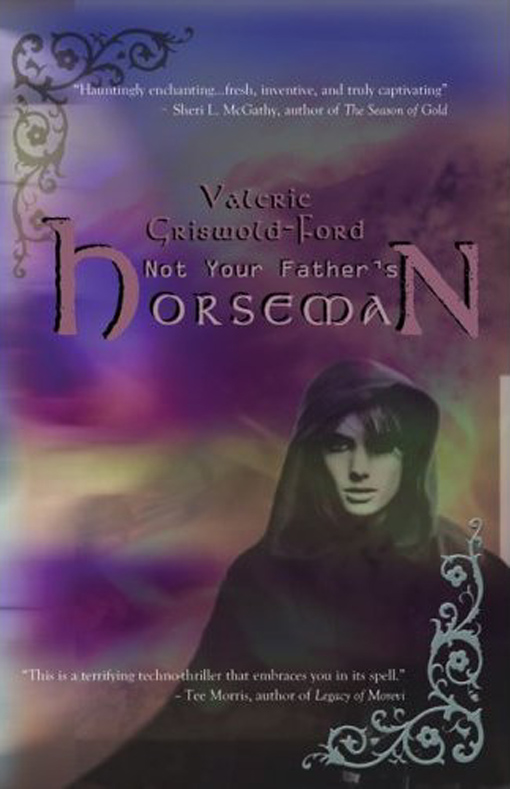
VENTRELLA: Where did the idea for NOT YOUR FATHER’S HORSEMAN come from?

GRISWOLD-FORD: I belong to a group called the Society for Creative Anachronism (SCA), and I’m part of the Storyteller’s Guild for our barony. We were doing a storytelling exercise, making up a story around a word we were given, and my word was Plague. I made up the story, and then had a dream that night about a modern-day Horseman. Nikki was the result.

VENTRELLA: Tell us about your most recent novel, DARK MOON SEASONS.

GRISWOLD-FORD: DARK MOON SEASONS is the second part of the Apocalypse trilogy. Nikki now knows both more and less than she did before, and she’s on the hunt for the other Horsemen. Now, though, she has more to deal with than just Gene-Tech –- the government has gotten involved, and she’s got to worry about Department V agents as well.

VENTRELLA: What do you do to promote your books and let people know about them?

GRISWOLD-FORD: Well, I’m on Twitter, and I run contests on my blog. I also have teabags with my books’ names on them that I put out on the freebie tables at various cons I attend. I’m going to be podcasting HORSEMAN this summer, and DREAMS this coming winter, which I hope will garner some more interest as well.

VENTRELLA: Many new authors, anxious to see their book in print, rely on self-publishing. What’s your opinion on this?

GRISWOLD-FORD: Self-publishing is a hard road. Unless you’ve exhausted all your options, and are prepared to hustle your rear off selling, I would advise against self-publishing. If you really think you can make it, go for it, but don’t make it your first choice. I know it’s a long road -– I’m still trying to find an agent -– but don’t give up. You can’t have a thin skin in this business.

VENTRELLA: Do you advise authors to start with the small press publishers and build up a reputation first, or should the pitch be given to the majors first?

GRISWOLD-FORD: Shoot for the top. Don’t get me wrong -– I adore my publisher, but seriously, if you don’t try for the apex, you’ll never know if you could have sold it to Tor, or Baen, or St. Martin’s. Believe in your work, and go for the gold.

VENTRELLA: What do you see as the future of publishing? Will e-books eventually take the largest share of the market?

GRISWOLD-FORD: Honestly, I don’t know. I like ebooks, but until the readers come done in price, I don’t know that they’ll take over. I still love my paper books, and don’t own an e-reader, although I do read books on my computer. But ebooks have definitely come, and they aren’t going away.

VENTRELLA: What’s the best piece of advice you could give aspiring writers?

GRISWOLD-FORD: Don’t stop reading and writing. Don’t judge your journey by anyone else’s. And don’t give up. Ever.

I will tell you the story of how I got HORSEMAN published as an example. Feel free to laugh, because I was a true newbie at the time.

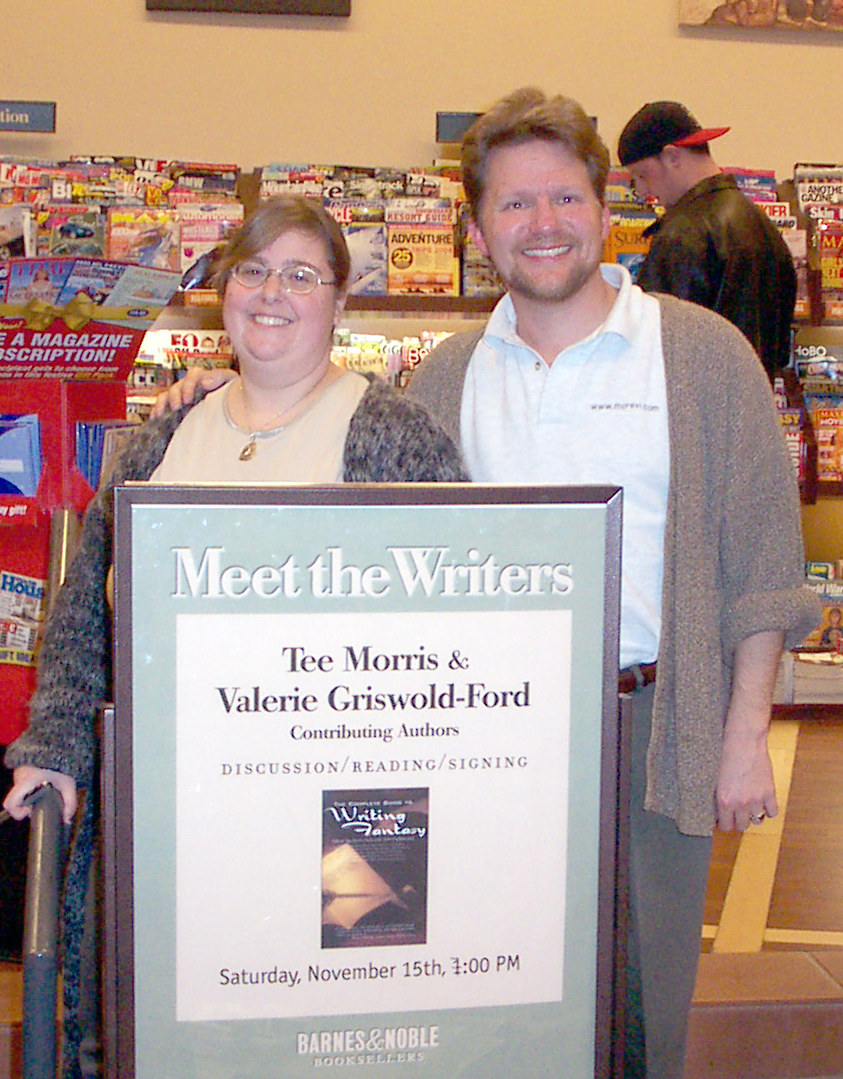
So, it’s September 2004, and THE COMPLETE GUIDE TO WRITING FANTASY has just come out. It’s my first byline since college, and I have never been published as an author before. We’re talking on the email list that spawned the Guide about what we can do to promote it, and I offer to set up a book tour up here in New Hampshire. Tee Morris (of MOREVI and Billibubb Baddings fame) takes me up on it, and we go on a 3-state, 6-stop tour in 4 days. Seriously a whirlwind. We end up with nothing to do Saturday afternoon, so we take out our laptops (another bit of advice: have something to write with at all times!) and he starts editing. I start noodling around with a story that will eventually become HORSEMAN. He reads what I have and says, “This is really good! You know I’m going to push you to write more, right?”

Flash forward to December 8, 2004. I know this date, because there was an ice storm and I stayed home from work. Tee calls me, and our conversation goes like this:

Tee: How’s the book coming?

Me: Um, it’s coming.

Tee: Good! Do you have an outline?

Me: Um, sort of?

Tee: Well, Gwen wants to see it tomorrow morning.

Me: …!

I pulled an outline from somewhere, and sent it off to her. She emailed me back and asked to see a rough draft. I finished it at 45k (yes, 45k!) and sent it off to her on Jan. 4, 2005. She came back and said that it was good, but short –- could I lengthen it? Of course!

Well, by then, Tee and I were working on OPUS MAGNUS, and we were talking to Gwen about launching at Westercon 58, which was going to be in Calgary that year. In one email she sent, Gwen mentioned three launches they were looking to do: LEGACY OF MOREVI (Tee’s book), THE GUIDE, and HORSEMAN. I sat and looked at that email for a good five minutes before I got up the courage to email her back and ask if that meant she was buying HORSEMAN. She emailed back and said she’d told Tee in December that she was. Hadn’t he told me?

Well, he hadn’t, because he’d thought she was kidding. Unknown authors do not sell books based on a chapter outline. But I had.

Which is why you never give up. Never.

My Turn to be Interviewed

Listen to a fun podcast where fantasy author Gail Z. Martin and I discuss “popcorn” books. Who says that good books have to be serious and deep? What’s wrong with a fast paced adventure? Give a listen!

Interview with Hugo Nominated Author Steven Barnes

MICHAEL A. VENTRELLA: Today, I am honored to be interviewing Hugo nominated author Steven Barnes.

Steven Barnes has a very interesting background: His martial arts accomplishments include black belt in karate and judo. He is a trained hypnotherapist, and studies yoga and other physical arts. His writing includes a number of novels by himself and others, short stories, and television episode scripts.

Steven, I have to begin by discussing something personal. You see, years ago friends and I read DREAM PARK and become enamored of the idea. It wasn’t too much later that we began the New England Roleplaying Organization, one of the largest Live Action Role-Playing games in North America. I edited all of their Rule Books and have since moved off and started my own group (Alliance LARP) – all because of a spark started by you and Larry Niven. And now I’m writing my own novels…

My first question, then, is: Did you realize how much of an influence that book had?

STEVEN BARNES: Not until Larry and I attended the first IFGS gaming conference. Being surrounded by hundreds of LARPers really drove it home. We’d created, or certainly influenced, an entire sub-culture.

VENTRELLA: That was not your first novel with Larry Niven. How did that relationship begin?

BARNES: I was about twenty-seven, and writing my butt off without getting anything published. My theory is that if you want to learn something, find someone else who is doing it, and figure out what they’re doing. I needed a role model…or a mentor, if I could be that lucky. A friend told me that Larry Niven and Jerry Pournelle frequented the LASFS clubhouse (Los Angeles Science Fiction/Fantasy Society) on Thursday nights. I went up there, met Larry, and convinced him to read a few of my stories. He liked what he saw, and gave me a chance to work on an unpublished story of his called “The Locusts.” Luckily, I saw a flaw in the story that my particular skills could improve. It was published in Analog, and was nominated for a Hugo.

VENTRELLA: What process do you use when you collaborate? Do you split up subplots, or does one person write and the other rewrite?

BARNES: We work out the plot outline extensively, and then I write the first draft. Larry rewrites, suggests, tells me when I’m on the crazy train.

VENTRELLA: What themes do you find yourself revisiting in your work that may pop up without planning?

BARNES: What I would call “Self Directed Human Evolution” — the process of personal growth as it has been expressed in world culture, religion, philosophy and myth.

VENTRELLA: What is it about science fiction that attracts you? You have written a few things that are out of the genre (like some “Baywatch” episodes) –- what brings you back?

BARNES: The size of the canvas, perhaps. Most probably, the fact that I was just a dreamer as a kid, and loved stories of heroic adventure against exotic back-drops. But if I had had access to Ian Fleming instead of Larry Niven, I’d be writing spy novels.

VENTRELLA: Do you feel that editors and publishers still are fairly conservative when it comes to taking chances, even with science fiction?

BARNES: No more than their audience. I consider science fiction to be quite socially conservative in some ways, but that may be another discussion.

VENTRELLA: What is your writing style? (Do you outline heavily or just jump right in? Do you tend to start with an idea, a character concept, or something else?)

BARNES: Usually I’ll start with an idea, and then create characters to people that world. I outline using 3×5 cards, outlining programs, whatever. Every way of looking at a story reveals different details.

VENTRELLA: Of what work are you most proud?

BARNES: LION’S BLOOD. I felt as if I had finally managed to create a work that expressed my core sense of social reality in America.

VENTRELLA: Have you ever run across unexpected controversy with your writing? If so, how have you dealt with it?

BARNES: Again, LION’S BLOOD, set in an alternate world in which Islamic Africans colonized the Americas, bringing European slaves. The reversal of racial roles was already pushing the edge. But 9/11 happened, and we were demonizing Muslims. That was the worst timing for a book you could imagine.

VENTRELLA: What bugs you most about the publishing industry and what would you change about it if you could?

BARNES: Oh, I don’t know if there’s anything. There are some things about human nature — tribalism — that have worked to my disadvantage, but that’s also a survival trait, so I guess I have to grin and bear it.

VENTRELLA: What advice would you give to a starting author that you wish someone had given you?

BARNES: A writer should write for the sheer passionate love of it as much as possible. You have no idea how much external success you will ever have, so you’d better find a way to be happy just being a writer.

VENTRELLA: What’s the biggest mistake you see aspiring authors make?

BARNES: Chasing the market.

VENTRELLA: You’ve posted on your Facebook page about self growth and fulfillment. What are your goals and aspirations and how well have you met them?

BARNES: I reached every goal I ever set as a kid. I wanted love, to be a martial artist, and a successful writer. Got ’em. Now I’m redefining myself, and setting up new challenges. Primarily, I don’t want to be a professional writer any more. I want to be an amateur writer, writing for the sheer love of it. That means setting up an entirely new business. In this instance, coaching writers and those who want balanced lives. I offer a free phone coaching session to anyone: your readers can reach me at steven@diamondhour.com

VENTRELLA: With a time machine and a universal translator, who would you invite to your ultimate dinner party?

BARNES: Sun Tzu, Aristotle, Shaka Zulu (leave the assagai at the door, please!), Lewis Carrol, Nelson Mandela, Thomas Jefferson, Musashi Miamoto (likewise with the katana), William Shakespeare … and the most important women in their lives.

VENTRELLA: And finally, do you find yourself optimistic about the future?

BARNES: Very optimistic. I am most worried by people who don’t believe there is much risk of overpopulation. Frankly, I think this is leftover meme from the time humans were on the brink of extinction. Overpopulation won’t destroy the world, but it could destroy the ability to sustain a technological civilization.

13346987_10156960385390416_8355725557480929681_n

My Turn to be Interviewed

The Teen Book Connection asked some good questions for my recent interview. Please check it out!