Heroes

Jeremy Wembley grabbed the broom by the handle. He took forceful steps toward the back of the room where Patrick stood unaware. Patrick paid no notice as Jeremy shortened the distance between them, and seemed completely oblivious to Jeremy’s presence.

Jeremy raised the broom just as Patrick turned around.

“I’ll sweep the stockroom now, Mr. Brenner,” he said.

Jeremy knew that if he continued to impress his boss, it would not be long before he could get that promotion—and soon after, get the real reward he desired: night manager of the Fredricksburg 7-11 on West Norton Avenue.

Unless his arch-nemesis, that kiss-up Eric Stoher got there first…

All the elements are there. There is a goal the main character wishes to reach, and an obstacle that can prevent him. There is character development and conflict.

But, you know, who gives a flying you-know-what?

The fact of the matter is that we want to read stories about people and events that are larger than life. We want to read about heroes to do great things, make clever comments, overcome great odds.

This is nothing new. The ancient Greeks didn’t do plays about the guy who cleaned the stables.

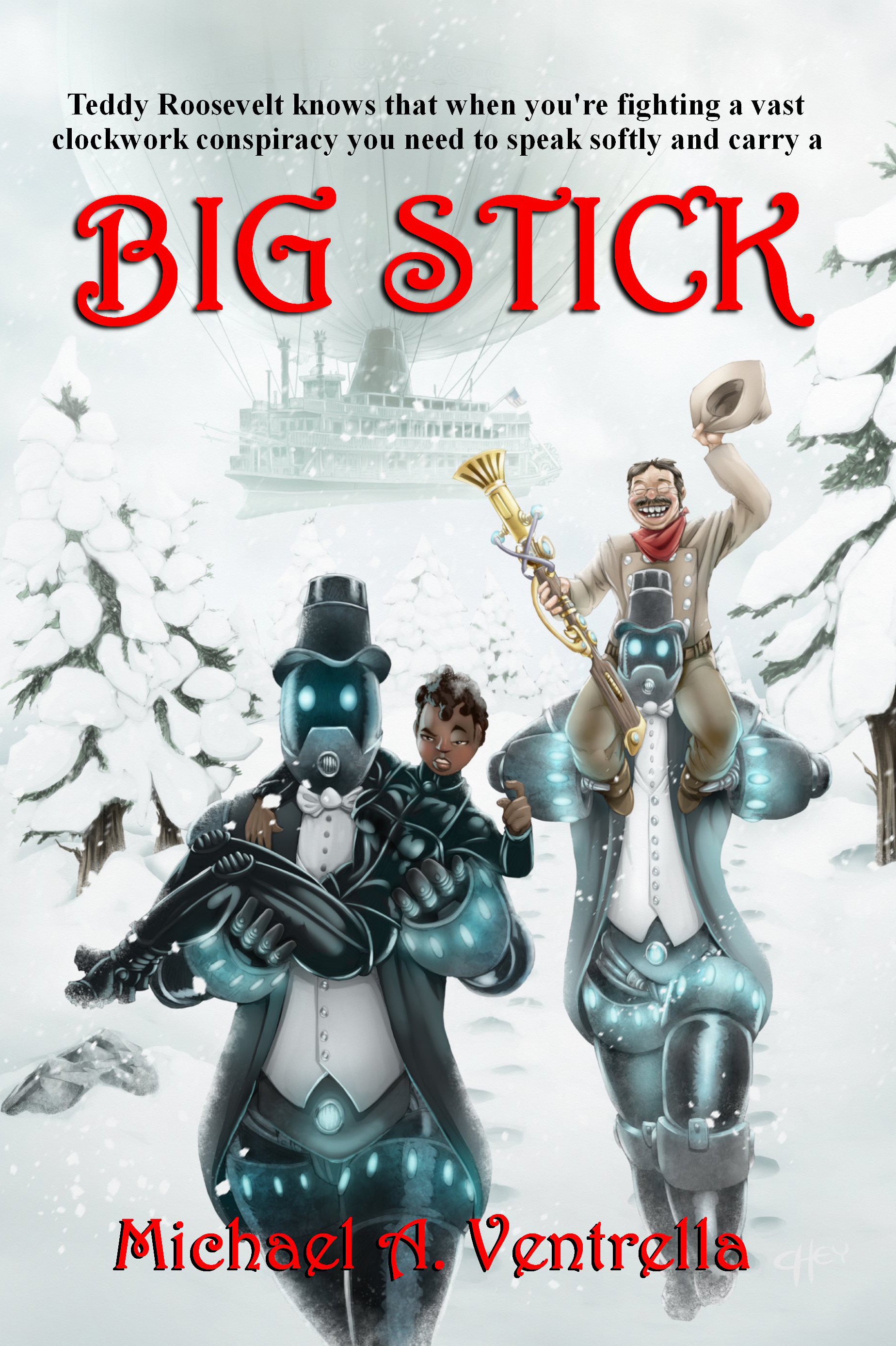
And I am no exception. My books have been about wars and world-shaping events and the heroes whose presence made a difference.

However, at the same time, I have consciously avoided the standard hero that is a mainstay of much of fiction (and especially fantasy). You know the type – the Chosen One from Prophecy who is the seventh son of the seventh son who is the only one who can wield the magic sword Noonah because he has surplus midichlorians and blah blah blah. Maybe this hero starts off the book as a nobody, but he or she ends up as the World’s Greatest Swordsman or Most Powerful Wizard by the end and thus, being superior to us lowly humans, saves the day.

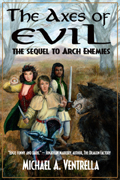
In my two published novels (ARCH ENEMIES and THE AXES OF EVIL) and in a short story in the just released anthology TALES OF FORTANNIS: A BARD’S EYE VIEW, my main character is a teenager named Terin. His problem is that, thanks to a mistake, everyone thinks he’s the Chosen One Who Can Save The Day.

By the end of ARCH ENEMIES, Terin is still running when a fight breaks out and still can barely cast a minor spell. So what makes him the hero?

To me, what makes a real hero is someone who doesn’t have all those skills and yet, through bravery and intelligence, rises above what is expected and does the extraordinary. Terin is the hero because he figures out a solution – he finds a way to solve the problem that is more than merely “hitting the bad guy with the weapon until he falls down.”

I like these kinds of heroes because they remind us that we all can be heroes sometimes.

Oh, I don’t mean to knock down the more traditional heroes: I love Batman and Luke Skywalker as much as the next fan. But when I create a hero for my stories, they tend to be average people put into extraordinary circumstances who must then find something special within themselves to make things right.

In the sequel THE AXES OF EVIL, people are now thoroughly convinced that Terin has wondrous powers, even though he doesn’t. Now he’s confronted with a trio of barbarian prophecies which, he later discovers, contradict each other. On top of this, his liege wants him to get all the barbarians off his land, and a bunch of silly goblins think Terin’s the one who will lead them to victory over the evil humans who oppress them.

These are problems that cannot be resolved by being the biggest fighter. Terin solves them all by the end of the book through his cleverness and resourcefulness, and by being brave and willing to risk it all.

That, to me, is very admirable. It’s what I admire about my real life heroes (Benjamin Franklin and Martin Luther King, to name two). And it’s the kind of hero I like writing about, because I can identify with him and understand his fears and worries.

Interview with Agent Alia Hanna Habib

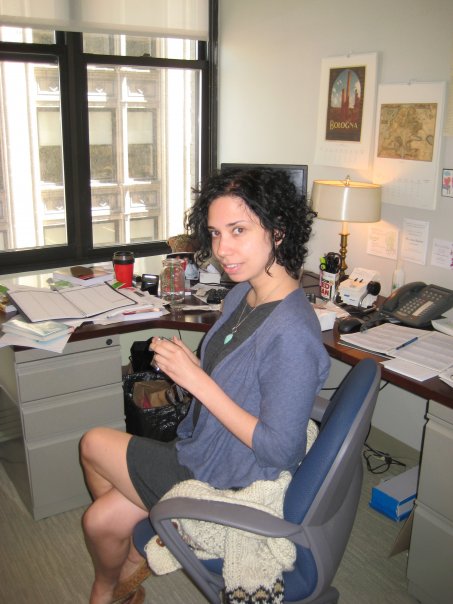
MICHAEL A. VENTRELLA: Today, I am happy to be interviewing Alia Hanna Habib, a literary agent at McCormick & Williams. She represents narrative non-fiction, memoir, and cookbooks, as well as the occasional novel that strikes her fancy. Before joining McCormick & Williams, she was a publicist at Houghton Mifflin Harcourt. She is a graduate of Barnard College and lives in Brooklyn, New York.

How did you get involved in the publishing business and end up where you are?

ALIA HANNA HABIB: I’d always loved reading, and I knew I’d end up doing something with books. My first job out of college was at Houghton, in the publicity department. I did a bunch of different things between then and now, including non publishing related stuff, but eventually I returned to publishing and realized I really wanted to develop my own projects. Being an agent seemed the best way to do so.

VENTRELLA: Who have you represented in the past? What has been your biggest success?

HABIB: I moved over to being an agent from being a publicist just over a year ago, so none of the books I’ve sold have hit the shelves yet! But I’m very proud to have sold a narrative history of autism by Nightline correspondent John Donvan and television journalist Caren Zucker, a book I think will make a big difference in the life of parents and kids of all stripes. I also have a longtime interest in education — I was the publicist for Paul Tough’s wonderful book on Geoffrey Canada, WHATEVER IT TAKES — so I was thrilled to get to sell Elizabeth Green’s expansion of her wonderful New York Times Magazine cover story on “Building a Better Teacher” to Norton last summer. I think it will really change the way we talk about teachers and education reform.

VENTRELLA: What do you enjoy reading for pleasure?

HABIB: It really runs the gamut. I love what I call spooky literary fiction: Sarah Waters, Lionel Shriver, Jennifer Egan, work that is a little uncanny yet very well-plotted. I represent cookbooks, and they’re my bedtime reading. And as I’m always looking for book ideas, I read a ton of magazines and blogs.

VENTRELLA: New writers trying to get an agent make a ton of mistakes. This blog’s purpose is to try to minimize these mistakes. So let’s discuss a few. First, there is the query letter. What do you look for in a query letter?

HABIB: I like an original idea, and a healthy mix of confidence and humility. I also like to see some sort of publication track record or media platform, particularly for non-fiction.

VENTRELLA: What are some examples of bad query letters you’ve received?

HABIB: I did my graduate degree in nineteenth-century literature, which is easy to figure out with a quick Google search. Someone wrote to me saying I’d like his book because it had all the verve of Dickens and wasn’t prissy and bloodless like Austen. I don’t think anything could have alienated more quickly than insulting Jane Austen. She’s why I went to grad school in the first place! The takeaway from this is your query letter should be about selling you, not denigrating others. That just makes you sound bitter and arrogant, plus you could very well be addressing a fan of the writer you’re taking down.

VENTRELLA: Some agents hardly pay attention to the query letter, stating that writing a good query letter doesn’t mean you’ve written a good book, and vice versa. What’s your view?

HABIB: It’s helpful to see how someone talks about their book, so I’d say a good query is very useful.

VENTRELLA: When you do ask to see a manuscript, what mistakes are most common?

HABIB: You know, once I’ve asked for the manuscript, I really just want to see if the person can write or not and if they can grab the reader from the first page. Don’t bury your story forty pages in.

VENTRELLA: Have you ever had an unimpressive first page yet you continued reading and found it worthy?

HABIB: If I really like the concept, yes, or if it’s a client referral and I know and trust the client’s taste. It’s a lot like picking up a book at the book store. Sometimes you’ll see it through to the end, if you feel invested in the bigger idea, and sometimes you won’t.

VENTRELLA: Let’s talk about the publishing industry. Do you think the rise of e-books will encourage more experimentation and risk-taking among the big publishers?

HABIB: I hope so. I think it’s also shaking up how we think about formats and categories.

VENTRELLA: Is the small press getting more respect due to e-book sales?

HABIB: Yes, and small presses have also been putting out things of really high quality.

VENTRELLA: If a writer had self-published his or her first book, how does that factor into your decision making?

HABIB: If they self-published well, and have a sales track to prove it, I’m always interested.

VENTRELLA: Assuming you are impressed by the manuscript, how important is the writer’s personality to deciding whether to represent him or her? Have you refused to represent someone because of that?

HABIB: The agent/writer relationship is pretty close. I haven’t refused anyone because of personality reservations– and all my clients are really great, so I really haven’t had to– but you do want to keep your relationship with your agent (and eventually your editor and your publicist) as collegial as possible. You want them to want to talk to you.

VENTRELLA: Is there any final piece of advice you’d like to give that I haven’t asked about here?

HABIB: Be nice to everyone you meet along the way!

Meet the “Bard’s Eye View” Authors

I asked the authors of the new collection TALES OF FORTANNIS: A BARD’S EYE VIEW to introduce themselves to you and tell you a bit about their stories:

I’m Davey Beauchamp. I’m the creator of the Writers for Relief anthology series, the Agency 32 series and the Amazing Pulp Adventures Award-nominated Podcast along with Podcasting’s Rich Sigfrit. And thanks to this year’s WTHCon, I will be working on the novella 769, thanks to Jennie Breeden and bunch of amazing individuals who helped raise an insane amount of money for the Children.
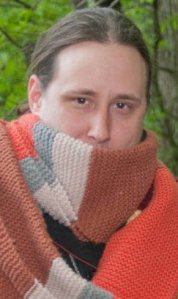
When I’m not writing, I am getting my Masters of Library and Information Science Degree from UNCG and working at the Lexington Public Library in Davidson County as their Teen Specialist and Technology Guru.

“A Child’s Tale” is simply that — a child’s tale. This is a world of high fantasy. What is it like to live within this world when you aren’t the hero, but a child? This is a world of heroes and villians that children can look up to that they might one day want to emulate.

Hi, there! I’m Danny Birt, one of the science fiction and fantasy authors in TALES OF FORTANNIS. I’m also a music therapist, massage therapist, composer, filker, and a few other things, but you’re probably more interested in my literary side, aren’t you? Hmm, let’s see. My epic fantasy series The Laurien Pentology currently has three of its five volumes out through Ancient Tomes Press, starting with the book ENDING AN ENDING, and the fourth is coming out later this year. In November 2010 I published my first children’s/YA book BETWEEN A ROC AND A HARD PLACE, the story of a baby dragon who’s abandoned as an egg and is raised by a family of birds. ROC has won three national awards, too, and I’m very pleased with how it came together in the end–especially with the work of my awesome illustrator, Richard Svensson. For more information on those, and on the short stories I have out, visit my website.
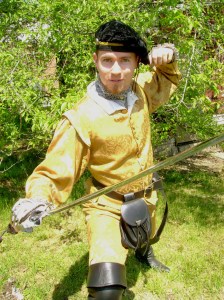
I’m not going to describe my story. Instead, I’m going to give you a three-word teaser for it: “Gryphons versus dirigibles.” …Curious to see which would win? RAFO! (Read-And-Find-Out!)

I’m Nick Bond. I’ve never been published before, but I’ve been writing in the Fortannis setting for over seven years. I’m an IT professional who lives in Bellevue, Washington with my fiancee Amber and my rat Pumpkin. When not working I enjoy writing, reading, lifting weights and getting involved with my local Alliance LARP chapters any way I can.

My writing heroes are Dan Abnett, H.P. Lovecraft and Frank Herbert, and their words have inspired me to pursue writing as a hobby. I am constantly driven to learn more about stories and authors that grab my attention and often find myself researching the history of a novel or other work, finding that often the stories behind the literature are just as interesting as the words themselves.

I feel that the mastery of language is a sign of a truly civilized mind and is a noble pursuit for anyone to undertake.

“The Long Sleep” is the story of an ancient hero being awoken to defend his home and return what has been stolen from his people. He sets off through the forest to take revenge on those who have wronged its children.

Roy C. Booth: I’m a Bemidji, MN born published author, comedian, poet, journalist, essayist, and screenwriter/doctor (with screenplays optioned), and an internationally award winning playwright wtih 54 plays published (Samuel French, Heuer, et al) with 700+ productions worldwide in 27 countries. I own and operate Roy’s Comics and Games of Downtown Bemidji with his wife, Cynthia, and our three sons. I can be found on Facebook, Myspace, and at www.roycbooth.com. Bats right, throws right.
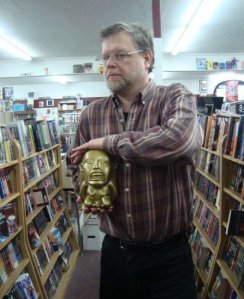
My story “The Great Green Kettle Pie Recipe Caper” is an epic tale about a hobling conquering his greatest nemesis, himself, or, more importantly, his stomach! Inspired by my desire to see fellow writer Brian Woods published in an anthology for the first time and to contribute directly to the Fortannis story universe in a quirky, meaningful way.

Jon Cory: I grew up in small town Indiana, one of three boys. My father owned a restaurant and believed in slave labor, putting us to work at age eight. However, since he also ran a cafeteria in a highly classified manufacturing facility, I had a security clearance ID badge to get in. Great for impressing your school buddies.

After getting a masters degree and a short stint in the Air Force, the corporate grind kept me busy for a number of years. I did manage to publish a business book on the use of computers in retailing.

Since I had enjoyed playing in dirt as a kid, the idea of becoming an amateur archaeologist had a certain appeal. The end result was being a team member of expeditions in Easter Island, Italy, Cyprus, Chile and other overseas locations.
After flunking retirement three times, I returned to creative writing. A Foster City International Writers award for humor inspired me to tackle a novel. The result was that A PLAGUE OF SCOUNDRELS, my debut novel, won a 2009 IPPY Silver Medal for popular fiction and Honorable Mention at the London Book Festival.

In the final phase of editing a second novel with the working title of ROLY’S RELIC.

Wife and I live in Alamo, California.

“The Otherside Alliance” is my story. Even if he wins, he could lose. The tale of Sarlon, a carefree young knight, whose uncle, King Bellabond, has refused to recognize Sarlon’s royal linage. Powerful enemies threaten the kingdom, so Bellabond sends his nephew on an impossible task to secure an alliance with Duke Frost of Ashbury. Sarlon is given a meaningless title and is appointed ambassador.

The young knight errant teams up with Mumblepeg, a spotted dwarf, to outfox the Duke’s commissioner by disguising a worthless Otherside seaport to make it appear as a prosperous trading center. Can he convince the Duke to sign a treaty before his ruse is discovered? Sarlon plays a dangerous double game between King Bellabond and Duke Frost.

Tera Fulbright: I have been a fan of the SF genre since first reading C. S. Lewis’s The Chronicles of Narnia in the 4th grade. My interests range from costuming and stage combat to running conventions to writing, of course.
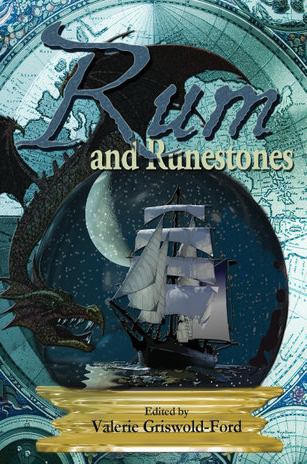
My first short story, “History in the Making” was published in the anthology RUM AND RUNESTONES in 2010. “Anne Bonny’s Child” will be published in the follow-up SPELLS AND SWASHBUCKLERS (Dec. 2011).

As a fan, I serve as the Quartermaster for the DMB Lightning’s Hand of the Buccaneers of the Atlantic Coast. I also enjoy costuming; some of my costumes include Mara Jade & Padme of Star Wars, Hathor of Stargate: SG-1 and various lady pirates. I’m also currently working on a steampunk courier costume. Along with my husband, James, I helped run conventions such as StellarCon and RavenCon for over 15 years before deciding to concentrate on writing.

In my non-fandom life, I work as the Employee Relations Coordinator for Unifi Manufacturing, Inc. And in what, admittedly limited, spare time I have, I enjoys miniature painting, playing D&D, reading and spending time with my husband and daughter at our home in Greensboro, NC.

“Faith” is the story of biata bent on revenge who is transformed as he finds himself cast in the role of a hero when a nearby town is threatened.

Hi, I’m Laurel Anne Hill, author and former underground storage tank operator. Eighteen years ago, I decided to follow my dream and write science fiction and fantasy–an antidote for the scientific, technical and regulatory writing my day job required. Along the way, I wrote some creative essays, as well.

Komenar Publishing released HEROES ARISE, my award-winning novel, in 2007. My shorter works of fiction and nonfiction have appeared in a variety of publications, including Space and Time, Lynx Eye, Nth Zine, RUM AND RUNESTONES, AOL News, the San Jose Mercury News and the Contra Costa Times. NPR broadcast one of my perspectives in 2004 and I have written and recorded several short stories for the Horror Addicts podcast. Watch for my short story “The Vengeance Garden,” in the anthology SPELLS AND SWASHBLUCKERS (Dragon Moon Press, edited by Val Griswold-Ford) scheduled for publication around December 2011.
What makes me different and unique? The sum of my experiences, I think. I bake sourdough bread without the use a bread machine. I still beat egg whites by hand. I’ve done Scuba diving, paddled a canoe, rode a surf mat down river rapids, camped in the Sierra Mountains and run a steam locomotive. I’ve nearly drown, faced fire and almost fallen off cliffs. Once, an earthquake slammed me against a wall. On several occasions, I’ve even cleaned up radioactive spills. I bring all of these experiences–and plenty more–to my writing to create authentic story worlds, characters and action scenes. Please visit my website and podcast at http://www.laurelannehill.com.

My story is “Grip of Chaos”: Trovark, a disillusioned young man in his late teens, quarrels with Krespano, his older cousin. Krespano, an apprentice squire, plans to enter the cave of the Ice Mistress alone, to entreat her to forsake her use of chaos magic. The aftermath of her magic has blighted the countryside. But the Ice Mistress is a necromancer capable of freezing living flesh, and Krespano has little ability to sense the aura of a chaos spell brewing or combat the devastating effects. Furthermore, the Ice Mistress is not likely to abandon her magical powers. Krespano dismisses Trovark’s heated advice and heads for the dreaded cave. Nobility nonsense has made Krespano a fool.

Only Trovark can save his cousin from the power of the Ice Mistress. He travels to the cave several hours later, armed with his axe and huntsman’s sling. Yet Trovark’s success in the use of natural magic has grown erratic. Will he prevail or face doom?

My name is Ron F. Leota. I am a writer from the greater Seattle area of Washington state. After leaving my exciting career as a cyborg super spy I decided to settle down with my human wife Michelle. I am a long time gaming fan and musician. My first role-playing game, Carmine: A Role-Playing Game of Alchemical Fantasy, is out now from Attention Span Game Studios for only $19.99. See www.carminerpg.com for more information. I have been playing music in the Seattle scene for over a decade, which I suppose makes me feel a little old.
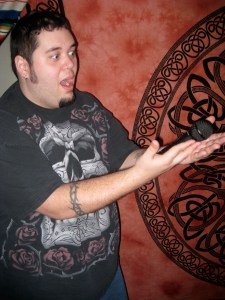
“Suffer the Liar” is the tale of two young con artists who travel to the mining town of Iron Falls. They spin tall tales as the naive townsfolk wine and dine them. Everything is going great for them until monstrous ice trolls attack. It is through a heart pounding series of events that they discover the true consequences of their ways. Will they survive the attack or will they become the heroes they once claimed to be?

Mark Mench: Born in the wrong time, I have been on a a lifelong quest to find my place. I attended Arcadia University in Glenside, Pennsylvania (which had an actual castle on campus) and graduated with a BA in English and Theatrical Arts. Afterwards, I held jobs from professional magician to a bartender at a virtual reality theme park; from developing computer games and MMOs to helping build a college for audio and digital arts. My current project is building a campsite where events like the ones set within this book can be acted out by participants from all walks of life. When not writing stories or game design documents, I can be found participating in Live Action Roleplay games worldwide, building various masks, costumes, weapons and props for the games or entertaining people as a fire eater. More of my work in, and information about, the LARP industry can be found here.

“Behind the Bar”, a tale of a tavernkeep who has a ‘side job’ that doesn’t take no for an answer, is my first officially published fiction work – not counting my credits on roleplaying games and a half dozen online and PC games. I wrote “Behind the Bar” due to the fact that most stories about thieves often have them well known as thieves, all their friends know it or they even get rewarded by nobility for their thieving ways helping them out. The philosophy of my main character is that the most successful thief lives his life rich and anonymous. I wanted to write a story about a thief who does his work quietly, using secret signals and as much misdirection so that not only would no one know he did the deed but that they would consider it impossible for him to have even done it.

Hi. I’m Bernie Mojzes, which (if you’re writing this down) is spelled just like it’s pronounced. Blame my parents; they’re from a country that doesn’t exist (anymore), so they’re used to it. I come from a serious people, a pragmatic people. And this pragmatic streak kicked in after a few semesters as an English major, and I wisely transfered to the Philosophy department. Neither of those has had any relation to any day job I’ve held.

I have a passel of short stories floating about, some online and more in anthologies. There’s a list on my website, including some free stuff. My book, THE EVIL GAZEBO (illustrated by my illustrious spousal unit, Linda Saboe), is a faux children’s story (for faux children) that’s secretly about sex. We’re currently in the process of adapting it for the stage, which is, I must say, an interesting learning process in and of itself.

The other little project I’ve been working on is a little thing called The Journal of Unlikely Entomology (with co-conspirators A.C. Wise and Linda Saboe), an online magazine dedicated to fiction of the buggy variety. We’re planning on launching the debut issue sometime in mid-to-late May. Check us out – http://www.grumpsjournal.com – I’ve been extremely pleased with the quality of the submissions, and I think we have a very strong lineup for Issue 1.
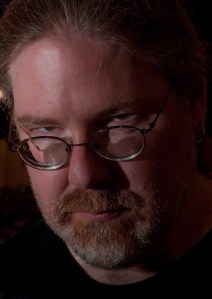
When Mike first announced this project, I wasn’t sure I had anything of value to contribute. The theme being high fantasy stories set in the world of Mike’s novels, which are set in the world of Mike’s LARP system.

I’ve been gaming since the old Traveller box set, since before Basic Dungeons & Dragons came out. But I’ve never LARPed, and for the last 20 years the RPGs I’ve been in haven’t looked terribly much like any other games I’ve seen around. But Mike’s a friend, and I hadn’t written high fantasy since the early 80s, when I thought I could, perhaps, be the next Tolkien. It was a chance to touch base with the roots of my fascination with the genre. So I said, “Tell me about your world, and maybe I’ll be inspired.”

Mike told me about a world of knights and heroes, filled with elves and goblins and cat people and bird people. His own stories center on a land called the Duchy of Ashbury.

Let me tell you, if you grew up in South-East Pennsylvania or New Jersey in the late 70s and early 80s … Well, let’s just say that there’s a whole host of puns in there that are just too tempting to deny.

So, I wrote a story, based on a bad pun, that takes place in Ashbury Park, and involves musicians, and fame, and love. And also evil, treachery, tentacles, sex, death and fabulous hats. I wrote … let’s see, how did I put it at the time? “It seems my concept of ‘high fantasy’ looks more like Jersey shore detective noir urban fantasy comic tragedy stuck in a blender with lovecraftian horror, but such is life, love and tentacles.” I got to the end, and thought to myself – well, that went way darker than I expected. I got some feedback, did some edits, and sent it off to Mike anyway.

Who said something like, “Do you think it’s a bit adult?”

Heh. You should’a seen the previous version.

Matthew C. Plourde: I’m an enterprise consultant by day and a writer by night. After battling cancer and my own social programming for so long, I’ve finally discovered the courage within myself to publish my novels. My first novel, EDEN, has been available on all formats since October 2010 and has spent a considerable amount of time on several Kindle top-100 lists. I recently released my second novel: a science-fiction offering called THE ANTARAN LEGACY. I continue to write and I’m happy to be a part of this project.

My first piece of published fiction was flash on a now decommissioned website. When the call came to write a fantasy-themed short story, I jumped at the chance. “The Messenger’s Trap” follows a reformed thief and his introduction to a path of redemption. If you’ve watched an episode of Legend of the Seeker or a similar show, you will be on familiar territory. Fun, light fantasy fare!

J. Thomas Ross: I retired after thirty-three years teaching high school English and history in southern New Jersey to pursue a second career in writing. I grew up in a Pennsylvania suburb of Philadelphia and now live in a semi-rural New Jersey township with my husband, youngest son, dog, and two cats (the latter three were rescued). I am a long-time science fiction and fantasy fan, but I also enjoy reading newspapers and magazines, historical fiction, mystery, romance, thrillers, and anything else that catches my interest. I don’t read as much as I’d like to because the day has too few hours!

Although primarily interested in writing novels, I also write poetry and short stories and edit others’ manuscripts. My poem “Winter” won an award at the 2010 Philadelphia Writers Conference, and I edited Michael Ventrella’s THE AXES OF EVIL and am the copy editor for A BARD’S EYE VIEW. I am currently working on a coming-of-age young adult novel set in the future, which is the story of the seventeen-year-old narrator and her foster brother, who has some unusual, genetically-engineered abilities.
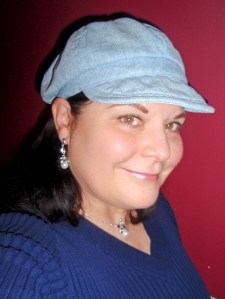
The unique thing about me which pops out at you first is my male middle name. My parents promised my grandfather to name their first child after him. Obviously, the name caused me a great deal of distress as a child, but now I’m proud to have it. My grandfather was a poet and the only member of my family who believed writing is a worthwhile endeavor. He not only supported my interest but he understood my need to write.

My introduction to Fortannis came from reading ARCH ENEMIES and THE AXES OF EVIL; I admit I avoid gaming because if I ever got started, everything else would fall by the wayside. When Michael mentioned the anthology, I knew immediately that I wanted to write a story about goblins. I did some thinking about how the goblin accord with humans might affect the goblins, who had relied, to some degree, on stealing from humans to survive. The economic hardship forms the background for “A Rock Is a Rock Is a Rock … Or Is It?” in which a goblin girl follows the village boys on an adventure, her last adventure before she gets sent off to live with her uncle because of her parents’ poverty. The boys want to follow the old human road to learn why the humans have started using it again. What they discover is not at all what they expected.

My name is Michael Strauss and I am a freelance writer and avid gamer. I mostly write articles for various online publishers, including Yahoo news. This is my first foray into fiction.
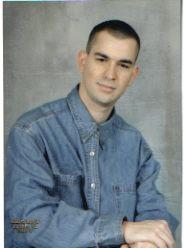
For this first piece of fiction (“Listen to a Tale, My Friends”), I framed the story as bardic tale being told in a tavern. Understanding that readers would not likely be as familiar with the world as I am, this allowed the storyteller to provide explanatory details to the readers without the story feeling disjointed. The story on face value appears to be a rather classic tale of a heroic warrior facing off against an evil necromancer. Rather than ruin the tale, I will simply state that first impressions are very deceiving.

And last but least, I’m Michael A. Ventrella. I edited this new collection, which is based in the world of Fortannis. Fortannis is the setting of a live-action roleplaying game I run called “Alliance” which has chapters all over the country. You may have noticed some of the authors here also write stories for that game, and have transferred their skills to fiction. I had done the same thing with my two novels ARCH ENEMIES and THE AXES OF EVIL, which, like TALES OF FORTANNIS, are published by Double Dragon. You can order all of these in any format (paperback, ebook, kindle, etc.) at my web page. I’d also love it if you would join my Facebook page, where you can get notice whenever I have news or update the blog.

My story (“The Zombie King’s Plan”) features the characters from my two novels. A small town is being attacked by zombies who are demanding that a young girl return some magical rings. It seems this biata girl had used magic to place her memory in these rings but something had gone wrong and the rings were stolen. Our heroes come upon the town after three of the rings had already been recovered. They go on a quest to retrieve the last one, but something just isn’t right. As with all of my stories, there are twists and turns and surprise endings, so I hope you’ll check it out!

There will be future editions of TALES OF FORTANNIS so if you are a writer (and I know many of you reading this are, since that is the focus of this blog) please contact me. Details are on my web page here.

My Turn to be Interviewed

In an amazing coincidence, two blogs have interviews with me today.

First, I have a very nice conversation with Donna Galanti on her “Writing with Gusto” blog today, discussing writing techniques, ideas, and publishing challenges. Check it out!

Second, I discuss the new book with Laurel Anne Hill on her blog. Laurel is one of the writers whose stories appear in TALES OF FORTANNIS: A BARD’S EYE VIEW. Check it out also!

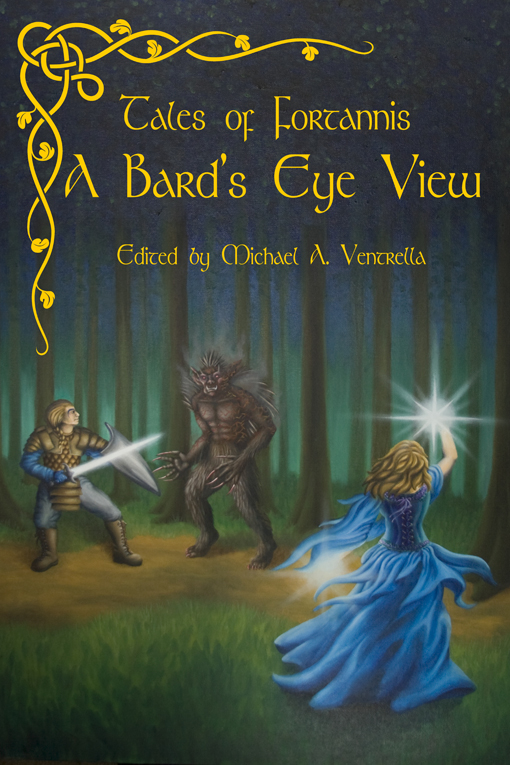
Tales of Fortannis: A Bard’s Eye View

The new collection of short stories taking place in the world of my two novels is here!

TALES OF FORTANNIS: A BARD’S EYE VIEW is the first in a planned series. I’m very pleased with the stories collected here. There is a wide variety of tales being told in a myriad of styles.

“A Bard’ Eye View is a wild and weird collection of fantasy stories that present some of the freshest writing around. Derring-do with a great sense of fun. Highly recommended.” – New York Times bestseller Jonathan Maberry, author of THE KING OF PLAGUES and DUST & DECAY

“Rollicking good fun perfect for a beach read, subway read, airplane read—heck, just buy it and read it! Mirth, mayhem and magic in an intriguing world.” – Gail Z. Martin, author of the Chronicles of the Necromancer series

“A Bard’s Eye View is a varied collection of adventures, whimsies, variously grim, grand and comedic; this book will appeal to fans of gaming and fantasy alike.” – Jay Lake, Campbell Award-winning author of GREEN and MAINSPRING

“You don’t need to know the background material to enjoy the range of stories from the talespinners assembled here. It has plenty of adventures that end with a twist that leave you shaking your head in pleased surprise. I’ll be happy to look for many of these writers in days to come.” – Jody Lynn Nye, author of VIEW FROM THE IMPERIUM and DRAGON’S DEAL

Here’s a short summary of the stories you’ll find:

The Zombie King’s Plan by Michael A. Ventrella: Squire Terin and his friends from the novels ARCH ENEMIES and THE AXES OF EVIL journey to retrieve the last magical ring for a biata girl whose memory was stolen. As they fight through zombies, they begin to discover that something isn’t right…

Stealing the Sky by Danny Birt: A brave admiral — who, as a youth, had his arm bitten off by a gryphon from the lands of Thessi — has been planning his revenge for a very long time. Determined that no one else should suffer his fate, he gathers his army and, with the help of the dwarves, moves against the gryphons with his plan.

Listen to a Tale, My Friends by Mike Strauss: A traveling minstrel fascinates the local townspeople with a horrifying tale of a necromancer — and and provides a surprise ending.

Bad Debts by Bernie Mojzes: A simple job turns out to be anything but simple. An evil ritual, a nameless monster, a dead patron — and a young woman must come to terms with her ex-lover and his new flame before she can defeat the threat.

Grip of Chaos by Laurel Anne Hill: When his squire brother does not return from his quest to fight the Ice Queen, an untrained young man has to face his fears and confront the necromantic creature himself.

The Great Green Kettle Pie Recipe Caper by Roy C. Booth and Brian Woods: A timid hobling decides the only way to obtain his favorite pie from the baker who refuses to share is to break in and steal the recipe — but things never go as planned.

Behind the Bar by Mark Mensch: Nigel the tavernkeeper has a successful business. And he has a secret panel in his back room and a secret retirement plan — a plan that not one of his satisfied patrons suspects.

A Rock is a Rock is a Rock … Or Is It? by J. Thomas Ross: When a group of goblin children sneak into the human’s cave to see what riches the humans are mining, they find no gold or gems … but discover a strange secret.

The Messenger’s Trap by Matthew C. Plourde: A mercenary is not sure who to trust when he is released from prison after promising to deliver a simple message.

Faith by Tera Fulbright: A biata bent on revenge learns his true mettle when faced with a life-threatening emergency.

A Child’s Tale by Davey Beauchamp: The kids love to hear stories of their heroes Oliver Songbringer and Aramis Llyrr, but will they act as bravely when they encounter danger in the woods?

Suffer the Liar by Ron. F. Leota: Two con men who spin fabricated tales of mighty adventures suddenly find themselves in an all-too-real situation fighting ice trolls. Can they discover a way to save their skins from both the monsters and the townspeople?

The Long Sleep by Nick Bond: The ancient forest has awakened its defender, who must seek out the necromancers who have stolen its heart.

The Otherside Alliance by Jon Cory: A lazy knight, whose king demands that he arrange an alliance with Duke Frost or die, comes up with a brilliant plan to obtain the Duke’s support — so long as no one sees through the ruse.

J. Thomas Ross was the copy editor and the cover is by Sheila Haswell.

Next week the authors themselves will introduce themselves and discuss their stories here!

Click here to order your copy!

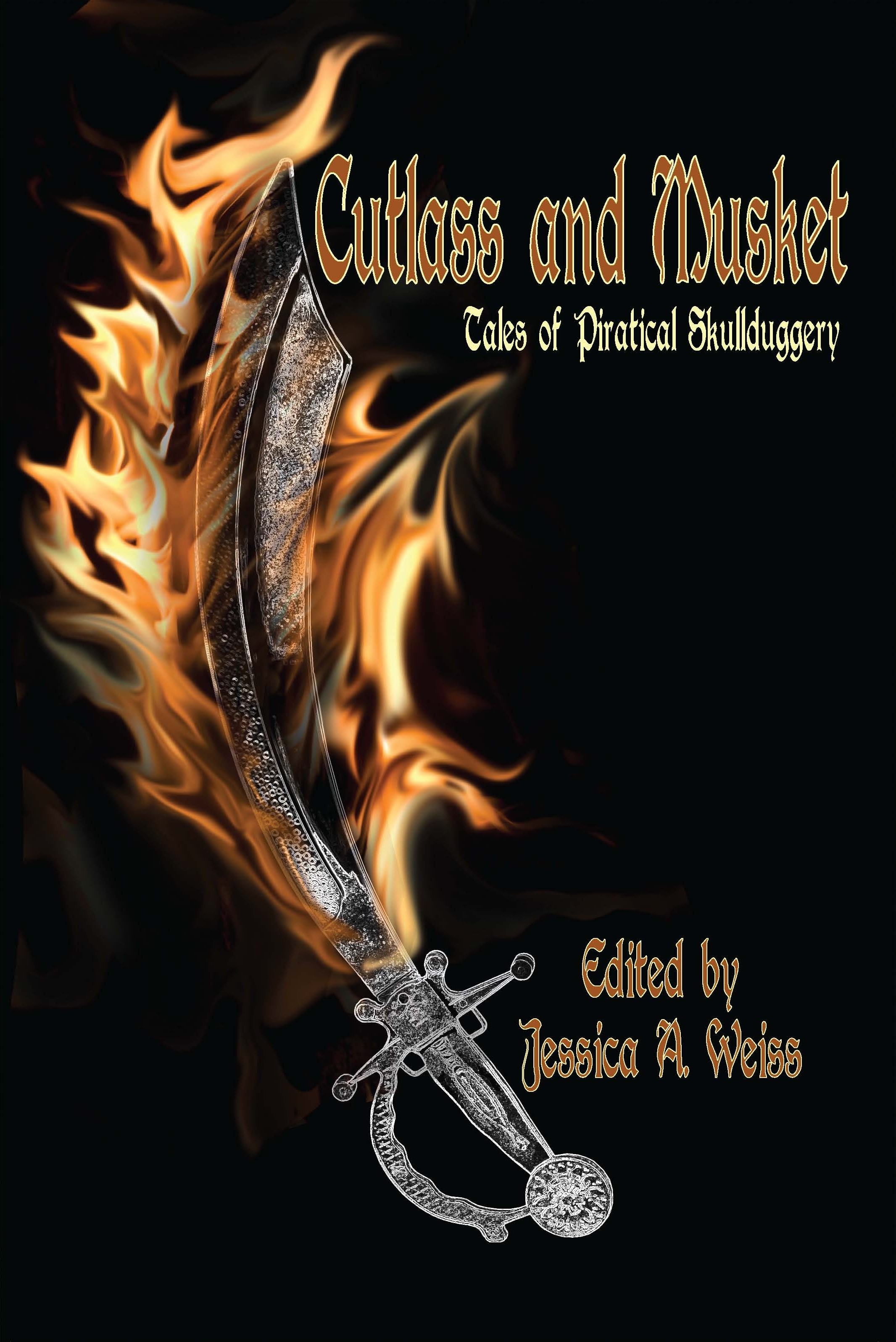
Cutlass and Musket!

Avast! There be a new pirate story from that scalawag Michael A. Ventrella! This one tells of another adventure of Captain Irad and Greenie, and it be called “Get Kraken!” It be the lead story in a new collection called CUTLASS AND MUSKET: TALES OF PIRATICAL SKULLDUGGERY available now from Wicked East Press. Ye can order a copy here.

Here be the opening of the story…

Bart swallowed deeply as his hand subconsciously rose to his neck.

Through the cage bars, he watched mournfully while the hangman placed the noose around the neck of Captain Irad of The Prickly Rose. Once the hangman finished off Irad, Bart and the rest of the crew would be marched up the gallows, one by one, to meet a similar fate. The crowd stirred impatiently, anxious to see the famed pirate meet his maker.

“It not be fair,” Bart grumbled. “I been with the Cap’n only a few weeks, and never did no raids on the English.”

“Quit your complainin’, Greenie,” Sonia Laveau said in her heavy Creole accent. “Just ‘cause I’s hitchin’ a ride I be captured, too.”

Dogbone snorted. “I always said women be bad luck.”

Sonia raised an eyebrow. “You want to see what bad luck is, boy?” She pointed a finger at the crewman.

Dogbone’s eyes widened and he sat forcefully down in the small space available. “No, ma’am. I be quiet.” His head shrunk into his shoulders and he looked away through the bars, avoiding eye contact with the famed voodoo queen.

The other crewman had long since given up hope. They crowded together, staring out to sea, resigned to their fate.

Irad suddenly looked up. His mane of reddish blonde hair whirled around him like a fire as he tossed back his head and laughed.

“Lieutenant Higgins!” he said. “’Tis a pleasure to see ye! And here I be worried ye’d miss all the fun.”

Higgins crossed his arms and smiled broadly. The bright Caribbean sun gleamed off his shaved head, making it difficult for direct eye contact with the man. His red coat was neatly pressed, buttons polished, and his regulation sword hung by his side like a trophy.

“Ah, Irad. It’s such a pity that our friendship must end in this way.”

Irad grinned. “Ah, ‘tis indeed sad. We’ve had such great adventures together, like that time in Bermuda…”

Higgins’ smile disappeared. “Yes. Well. Goodbye.” He walked away, signaling to the hangman to do his job.

“Good luck gettin’ off this island and back to Bermuda with the kraken on the rampage,” Irad said over the noise of the cheering crowd. “The man who defeats the kraken will surely be promoted and rewarded beyond his wildest dreams. Too bad ye be killin’ the only man who knows how to do it.”

Higgings turned and held his hand up. The hangman paused.

“What is this trick, Irad? What’s your scheme?”

“Arrr, ye cut me to the quick, ye do.” Irad shrugged the best he could with his hands tied behind him. “’Tis just a shame, that’s all. The kraken’s been attackin’ ships in this area forever, and just when I discover how to defeat the beast, I get hanged, taking the secret with me. Ah well, that be life. Or death.” He laughed at his own meager joke.

Higgins shook his head and smiled. “Very well, I’ll bite. What’s this secret?”

“Come now, Lieutenant. I not be that stupid.” Irad gave a reproaching look. “I not be telling ye this for nothin’.”

“Bargaining for your life, are you?”

“Of course! You think me daft? Let me and me crew loose and I promise the kraken will not be a problem no more.”

Higgins climbed the steps to the gallows and the hangman backed away to give him room. Planting his feet forcefully in front of Irad, Higgins once more crossed his arms.

The crowd grew silent. Bart pushed his way past his fellow prisoners to get a better view.

“You must think me a fool,” Higgins finally said. “How can I possibly believe you? The minute I set you free, you’ll disappear and never face the justice you deserve.”

“I give you me word as Cap’n. I promise that me crew has a foolproof plan to defeat the kraken, which cares not what flag a ship be flying. If we fail, then we be dead anyway. This I swear.”

Higgins stared into Irad’s eyes for long seconds. “Your promises are meaningless.” He walked away and motioned to the hangman, who came forward and grasped the handle that would send Irad through the trap door, ending his life.

Irad merely grinned. “I have given me word, and that is not enough for ye?”

“Three,” said Higgins.

“Ye can grab the reward. I promise.”

“Two.”

“I swears, I tell you. I swears I’ll do this!”

Higgins held up his hand and began to speak the final word. The crowd held its breath.

“The Pirate’s Code!” yelled Bart. “Swear on the Pirate’s Code!”

Higgins spun around to stare at the prisoners in the cell.

“Greenie, ye damned fool!” said Irad. “Be quiet!”

“Swear on it!” Bart yelled. “That way he’ll know ye can’t break it!”

“Greenie, I’m ordering ye! Shut yer bloody face, ye blasted blowfish!”

Higgins turned to Irad. “Pirate’s Code? What is this ‘Pirate’s Code’?”

Irad stared back defiantly. “No such thing. Ignore the lad; he be crazy from the heat.”

Turning his back on Irad, Higgins marched down the wooden stairs of the gallows. His steps boomed in the crowd’s silence.

The cage holding the crew of the The Prickly Rose stood about twenty feet from the platform. Armed redcoats surrounded it, and a prominent lock taunted the dirty and crowded inhabitants. Higgins stomped and stood before Bart.

“What is your name?” he asked in a deliberately quiet and calm voice.

“Bart, sir, but everyone calls me ‘Greenie.’”

“Well, Bart, you look a bit young to be traveling with this crowd of villains.”

Bart nodded. “Aye, sir. I only just joined them. I done nothing illegal at all. I just needed a job, sir.”

“Greenie, I order ye to shut the hell up!” yelled Irad.

Higgins pretended he didn’t hear him. “So tell me about this Pirate’s Code.”

Bart looked at his fellow prisoners, each of whom had murder in his eyes. He gulped. “It be a magical Code, sir. All pirates have to swear by it, in blood. It binds us so that if we makes a promise by the Code and don’t keep it, we gets gravely ill. Boils erupt on our faces, our limbs rot, and within a month, we be dead.”

“Is that so?” Higgins scratched at his nose. “How interesting. I wonder why I never heard of it before.”

“Because it be death to he that mentions it!” Irad yelled. “Greenie, yer a dead man!”

“Please, sir, make him swear on the Code and then set me free. There be no loyalty from me to him.”

Higgins marched back to Irad. Bart winced as the other pirates kicked him.

“Well, Captain Irad. Here, then, is my deal.” Higgins grinned. “I will release you and your crew and will provide you with a ship—no, not your ship, but a nice vessel that will serve your purpose. I will captain the ship to make sure you keep your promise.

“You will swear that you will obey my orders as Captain and that no harm will come to me. That includes locking me in the brig or otherwise restricting my movement in any way. A faster and more powerful English ship will follow at a safe distance. I will send them regular signals in a code you won’t know. You will use your secret to defeat the kraken. Once this is completed, I will return you to a port where you can go free.”

“And me ship?”

“I’m allowing you to live and you want your Pickled Rose back, too? I don’t think you realize that your negotiating power isn’t very strong right now.”

Irad growled and mumbled under his breath. “It be The Prickly Rose, ye scum-sucking—”

“You must swear all this on the Pirate’s Code.”

“Ye blasted sour-faced bugswallower! Ye don’t leave me no choice. Right, then.” He took a long breath. “I swear, on the Pirate’s Code, that I will obey ye as Cap’n, make sure no harm comes to ye, not lock ye in the brig, and will use all me powers to defeat the kraken in exchange for the freedom of me and me crew.”

Higgins grinned. “There now, that wasn’t so terrible, was it?” He turned to his soldiers. “Wheel the cage down to the docks and get the crew on board the Fitzgerald. Make sure none of them escape.”

“What about me, sir?” asked Bart.

Higgins shook his head. “You are too useful to me, boy. I need you with me.”

Bart wiped his forehead as Irad’s laugh echoed in his ears.

Interview with author Michele Lang

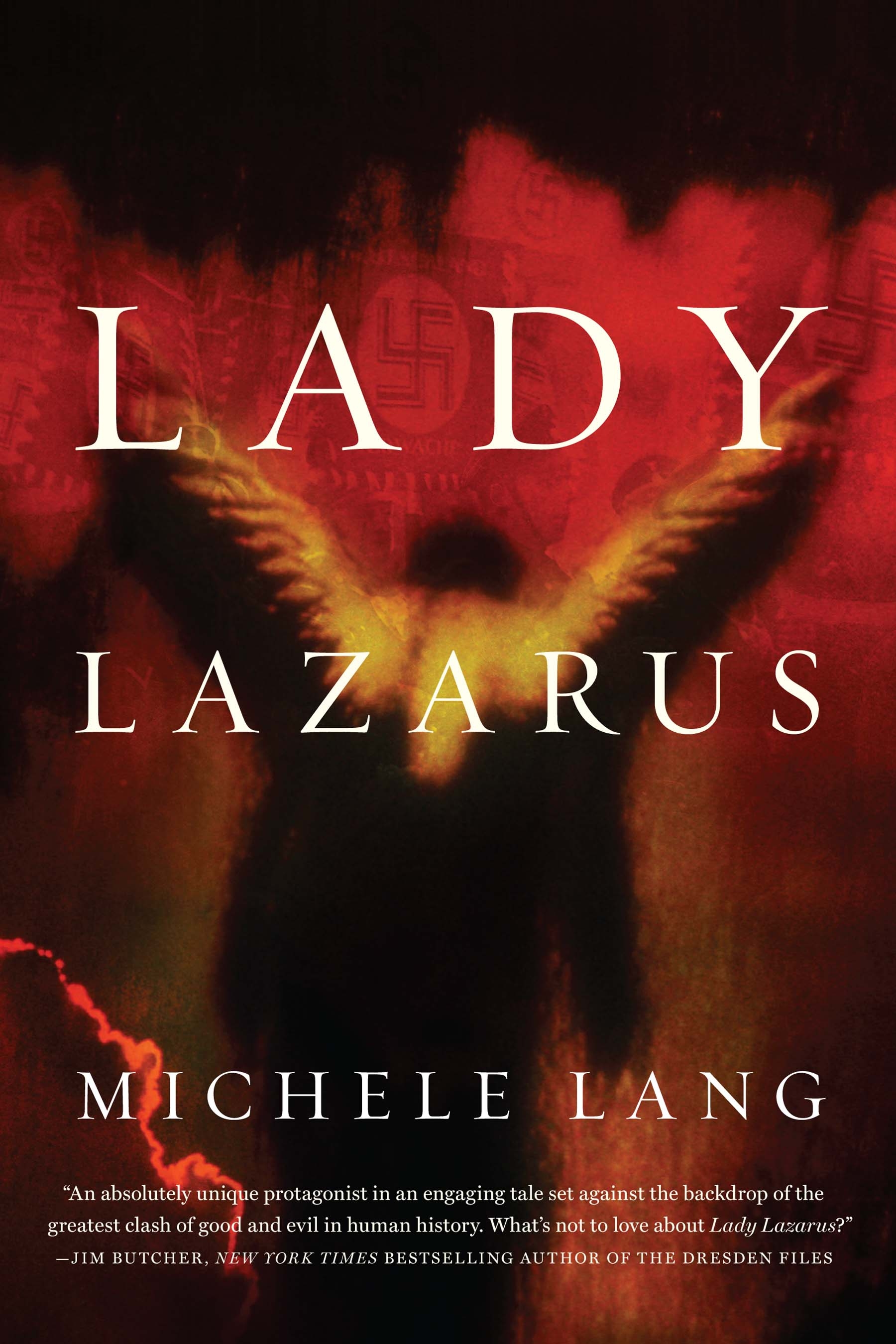
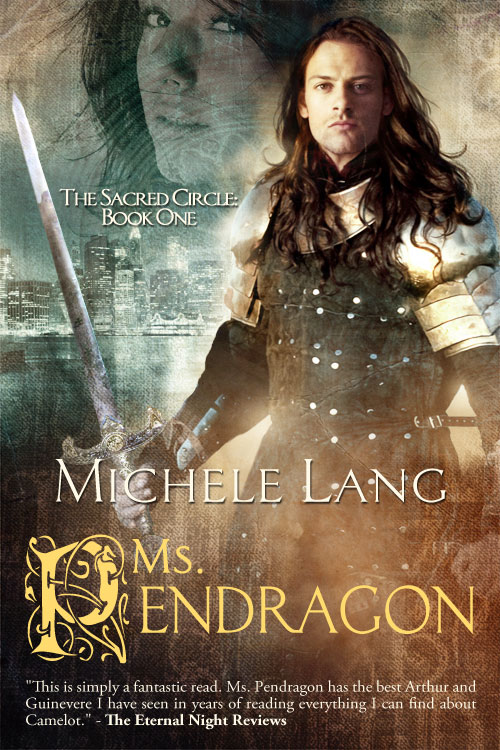
MICHAEL A. VENTRELLA: Today I’m pleased to interview Michele Lang, who writes all kinds of speculative fiction, and has also practiced the unholy craft of litigation in New York and Connecticut. LADY LAZARUS, her latest release, is a historical fantasy, the first of a series (Tor: September 2010). DARK VICTORY, the next book in the series, releases January 2012.

Michele, how did you get your “big break”? Aspiring writers want to know!

MICHELE LANG: I don’t know that I’ve ever gotten a “big break” exactly, more like a bunch of sweet serendipities that have led me from project to project. My first book, MS. PENDRAGON, was published by a now-defunct e-publisher; I pitched the executive editor at an online workshop run by an online romance writers group, From the Heart.

My first NY contract was with Chris Keeslar, who I met on the plane back from Romantic Times in Daytona in 2006. Now that was a lucky break! Chris is a wonderful editor, and I enjoyed writing NETHERWOOD for his Shomi line. Because of that contract, Lucienne Diver agreed to rep me as an agent, and Lucienne sold the LADY LAZARUS series to Jim Frenkel at Tor.

VENTRELLA: Do you believe that anyone can be a fiction writer or is the ability to tell a story more of an innate thing?

LANG: I think storytelling is part of what makes us human. I know many fantastic storytellers who cannot convey those stories in written form, so writing ability is not exactly correlative with a storytelling gift.

The most important factor, I think, in becoming a fiction writer is sheer determination. I know many talented writers who have broken through, but they didn’t break through because of their talent. They became published, and stay published, because they refuse to give up in the face of rejection and difficulties.

VENTRELLA: I recently blogged about “plowing through that first draft” and you wrote similarly about the “salami list.” What tricks have you found that help you personally get your work done?

LANG: To be honest, a contractual deadline does the trick better than anything else! But, aside from sheer panic, I have found some little tricks that help me to get work done.

The best is to have a daily goal. It can be humble, and probably should be, but most important it must be tied to your long term goals.

Start with a vision – what do you want for your writing life? Tie that vision to a goal you can achieve through your own efforts.

Break down the goal into measurable steps, and break those down into monthly steps. Weekly, and then daily. Work your plan, and review it in writing every month – how are you doing?

Try to get your daily goals done at the beginning of the day, before life sinks its teeth into you. Maybe this is only a tip for the morning people of the world, but it definitely is helpful for me.

Expect resistance and the termites of daily life to attack these goals. But dedicate a daily time to pursuing your goals with passion and consistency, and your dreams won’t be denied.

I try to write every day, though with a bunch of small kids in the house that is not always something I can achieve. I have time dedicated to writing: right now it’s 5:30-6:30 a.m., weekdays. I try my best to tack on another hour during the day, but that is not always possible. But I’ve done my best to make a habit out of the 5:30 hour.

That said, when I’m on deadline all bets are off. I write every minute I possibly can, then. The house goes to hell, but my immersion in the project overwhelms all resistance. I love writing 24 hours a day against a hard deadline – it’s so primal and exhilarating.

VENTRELLA: When creating believable characters, what process do you use?

LANG: I try to listen. When I am deep into a story, I can hear the characters and they tell me what they do and why. They often surprise me too.

If they go off and do something I don’t expect, I follow them and try to figure out what they are doing and most importantly, why. I try mightily not to impose my own judgments and expectations of what they should be doing – when I do that, the writing gets very dull and safe. And that’s death for the story.

When I’m rewriting, I try to climb inside my characters and see the story from their perspectives. And I try to make sure the story reflects their truest natures, whether they are villains or heroes or some combination of the two.

VENTRELLA: Some of your work is hard to categorize. How do you see yourself?

LANG: The stories that come out of me end up in the genre aisles, the romance and fantasy shelves. I think that’s a wonderful destination.

But before that, I am simply a writer. I write the stories that demand to be written, the ones that I have no choice but to write. I write the stories that I wish already existed inside a book.

I read this way, too. I try to read like a kid, without preconceptions about the market, what is marketable, where a story fits in the pantheon of Story. I read for love.

I might find WATERSHIP DOWN in the fantasy aisle, or FULL DARK, NO STARS in general fiction (or at the front of the book store in its own special dump), but the books I love the most transcend category for me. They are just wonderful stories.

To keep writing, it’s important to understand the marketplace, to respect the daunting job of the sales department and marketing department to get books into stores and into the hands of readers.

However, I figure if I write the best book I can possibly write, there will be a place in the market for it, especially now with the rise of ebook distribution and its long, long tail.

VENTRELLA: How does your latest fit into this dilemma? Is this giving your publisher problems with promotion?

LANG: LADY LAZARUS is a historical fantasy, but one with werewolves and vamps. My editor calls it historical urban fantasy, but it’s pretty epic in scope, too. The pacing doesn’t match a standard urban fantasy, but it does get pretty explodey by the end, and the next one, DARK VICTORY, picks up speed and ends up blowing up a good chunk of Eastern Europe and our history of World War II, besides.

Tor’s been great about promoting the books. I went to BEA last year, NYC ComicCon and I just got back from the Empire State Book Festival too. I think the urban fantasy market is very, very crowded but LADY LAZARUS is not quite an urban fantasy, so its out of the box status might actually help set it apart.

VENTRELLA: We met at Lunacon a few years ago; do you attend many conventions? Do you find them worthwhile?

LANG: I only started attending SFF cons after I sold my first book, and love them. I love meeting readers, and so I also find cons a great source of inspiration and new ideas.

I attend as many local cons as I can, and wish I could travel to more. I did get to go to World Fantasy last year and it was wonderful. But the local ones are great too.

VENTRELLA: Tell us about the plotline and setting for LADY LAZARUS.

LANG: The series is set on the eve of World War II in a magical Budapest, and tells the story of Magda Lazarus, a witch with the power to return from the dead. In order to avert her sister’s horrifying visions of the impending war, Magda must battle SS werewolves, wizards, and demons, including the one who has possessed a willing Adolf Hitler.

VENTRELLA: How did you get the idea for the story?

LANG: This idea went and got me, I often say. My parents are both Holocaust survivors. This book is the ultimate what if – could my family have all survived if they had magic on their side?

The title comes from the famous Sylvia Plath poem, “Lady Lazarus.” She uses the idea of a Jewish girl returning from death as an extended metaphor for her own suicides. I am very literal-minded — when I read this poem for the first time I thought the idea of a murdered Jewish girl returning from the dead to kill Nazis was awesome. Wanted to read the story, so I wrote it!

VENTRELLA: Do you find short stories to be a good way for aspiring authors to get noticed?

LANG: Yes, absolutely, though that is not the way I came up in the writing world at all. Short stories are becoming a bigger and bigger market, and I think that’s terrific. The form is going to get more popular, I think, as people’s reading habits continue to change.

Aside from getting noticed, it’s a great way for published writers to promote their longer work, and also a great place for any writer to audition settings and characters for longer stories.

VENTRELLA: Amazon is reporting that e-books are now outselling traditional publications. What effect will this have on the publishing industry?

LANG: Hah – by the time I gave you an answer, it would be out of date, things are moving so fast! I’ll just say that it’s an amazing time to be both a writer and a reader. I write stories, my readers read and enjoy them. The more ways I can get my stories to readers, the better.

VENTRELLA: For beginning authors is this a good thing or a bad thing?

LANG: I’m not sure…it is definitely a confusing thing! The NY publishing route is no longer the only way to achieve financial success as a writer. The best way for a new writer to go forward is to get educated about their rights (read the Copyright Handbook for a start), read any publishing contract very carefully, and go forward boldly.

You will make mistakes – all writers make business mistakes at some point, or have bad luck. But then we start again. As I said above, stubbornness is the key to the game, more than luck or talent.

VENTRELLA: And finally: You’re like the fifth author I have interviewed who was an attorney prior to giving it all up to write. (I’m still practicing, though…) What is it about lawyers that make us want to write fiction?

LANG: I could say something witty here about lawyers and the truth, but I just won’t 😀

Actually, most lawyers I met during my practice were ethical and decent, and many of them were brilliant. I was a litigator, and I can say that the ability to convey a narrative is essential to winning jury trials. Also, to be a good lawyer, you need to be able to read a witness, tell when they are lying, get to the bottom of their motivations, etc.

The other great thing about being a lawyer is you learn to endure. It sounds like I’m joking around again, but I’m not. Generally speaking, litigation is like trench warfare – whoever hurts the other side the most, wins. That stubbornness, again – you need it to be a successful lawyer, you need it to be a pro writer.

Coincidence? Not in my case. Being a lawyer toughened me up for being a writer.

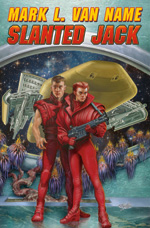
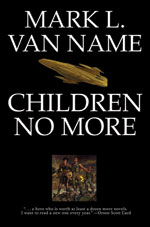
Interview with author Mark L. Van Name

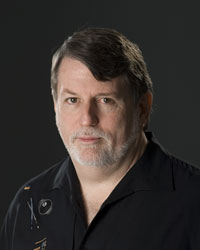
MICHAEL A. VENTRELLA: Today, I am pleased to be interviewing Mark L. Van Name, who I had the pleasure of meeting at the Arisia convention in Boston recently. Mark has worked in the high-tech industry for over thirty years and today runs a technology assessment company in the Research Triangle area of North Carolina. He’s published over a thousand computer-related articles and multiple science fiction stories in a variety of magazines and anthologies.

How important is it that writers of hard SF especially have a background in science?

MARK L. VAN NAME: There are no hard and fast rules about writing, SF or otherwise. The right good, smart writer can pull off just about anything. You can learn so much via research that not having formal training in an area is no excuse for not learning about it. So, I don’t think it’s vital that hard SF writers have a science background.

That said, I do think it’s helpful to have a solid base in any areas you try to cover in depth. Without that base, you better do your research, because otherwise, you’ll make mistakes, and your readers will spot them.

VENTRELLA: Since all of speculative fiction relies on things that are not, do you think a beginning writer should be wary when writing about things of which they have no experience?

VAN NAME: Wary, yes, but afraid to tackle it, no. You just have to respect the material you’re using. If you haven’t been a fire fighter and want to write about them, reading about their work and talking to some would be a very good idea. Making it up entirely based on what you’ve seen on TV, though possibly better than no research at all, is rarely enough for your work to have the verisimilitude it should.

VENTRELLA: Given your background, are you worried about the growing anti-science attitude we are seeing in much of politics these days?

VAN NAME: Definitely, though I have to say that particular concern is lower on my list than many others, including global climate change, the huge levels of hunger and poverty around the world, our national debt, child soldiers, and many other causes. There have always been groups opposed to rationality, and there always will be.

VENTRELLA: How did you break into the field? What was your first sale and how did it come about?

VAN NAME: My first fiction sale of any type was a short story, “Going Back,” to a now-defunct, small-press, feminist SF magazine, Pandora. My first professional (by SFWA guidelines) sale was a short time later, a story, “My Sister, My Self,” that went to Asimov’s but ended up in their original anthology, ISAAC ASIMOV’S TOMORROW’S VOICES. In both cases, the sale went down in the usual way: I mailed them the manuscript, and they bought it. For the first story, the editors asked that I interview some battered women–the protagonist was one–and then do a rewrite based on what I learned. I did, I learned a lot, I rewrote the story, and they bought it. For the Asimov’s piece, I mailed it, and they bought it. Not very exciting, I’m afraid.

VENTRELLA: Did you get an agent?

VAN NAME: Nope. Only after I’d sold the first four novels did I talk to an agent. I’m not at all convinced that agents help beginning writers sell short stories. More to the point, I suspect that few agents you would want to represent you would take you if you were writing only short pieces, and that’s all I was doing for many years.

VENTRELLA: Tell us about the Jon and Lobo series!

VAN NAME: Talking about a multi-novel series is a lot like describing a multi-course meal of experimental cuisine: whether you focus on the individual dishes or the overall meal, you’re bound to miss a lot. I’ll try it a bit from both perspectives.

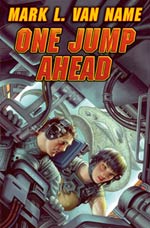
The overall series is a future history that I tell from the first-person perspective of one man, Jon Moore. I’ve always found history more interesting when it comes directly from the people who were there, so I wanted to chronicle a very important time in humanity’s far future–I’m writing about a time roughly 500 years from now–but limit myself largely to what Jon can see and experience. Of course, he’s a most unusual man, as far as he knows the only nanotech-enhanced human alive, so he naturally ends up in quite a few interesting situations. In the first novel, ONE JUMP AHEAD, he meets and becomes first the owner and then the friend of Lobo, an extraordinarily intelligent assault vehicle that can go anywhere–on land, under water, in the air, or in space. Over the course of the many books the series will take to complete–I’m estimating about eighteen, but that’s just an estimate–the characters and the universe will undergo many significant changes.

On an individual book level, each part of the series is simply a novel that should stand entirely on its own. You can pick up any book in the series and enjoy it. You can read them in any order. If you read them all, however, and further, if you read them in order, then you should have a richer experience. I’ve talked to lots of readers who’ve joined the series several books in, and so far, all of them have been able to enjoy whatever books happened to be their starting points.

VENTRELLA: You like to attend science fiction conventions. Are they really worth it, given the expense?

VAN NAME: I have no clue, because hard data on the sales value of cons–or blogs or pretty much any other marketing tool–is almost impossible to get. That said, I don’t go simply to increase sales. I attend cons to be part of the community, to see friends, visit new cities, eat at good restaurants, and so on. You can’t be sure you’ll boost your sales, but you can be sure to see friends and have an entertaining time.

VENTRELLA: What’s the funniest experience you ever had at a convention?

VAN NAME: I’ve done a lot of humor panels at cons, and I’ve done stand-up comedy/spoken-word shows, so that’s a tougher question than you might imagine. Certainly one of the funniest hours I’ve spent was listening to my friend, Lew Shiner, give a talk on humorous mimetic short fiction at a long-ago Disclave at which he was the guest of honor. He delivered the entire thing in very scholarly style, but it was just an excuse to tell a ton of jokes–which he did, brilliantly.

VENTRELLA: What process do you use in order to make believable, realistic characters?

VAN NAME: I don’t see that process as separate from the overall writing process. I sit down to tell a story. The story becomes very real in my head, because I spend a great deal of time living in the world of the story. The story includes people. I get to know those people. Like any other folks, they behave the way they do because of who they are. If I try to make a character do something that she or he simply wouldn’t do, it feels bad, wrong, as wrong as it would feel if a friend suddenly behaved completely out of character. I listen to those feelings. I write the story. The characters behave as they would. That’s about it.

I should probably clarify that I’m not one of those writers who believes his characters are real humans. I know they’re not. I know I control them. I know I could make them do anything I want. I also know, however, that doing so, that violating a character’s identity simply for the sake of a plot, would be bad craft. I don’t want to do that.

VENTRELLA: What is your writing process–-do you outline heavily, for instance?

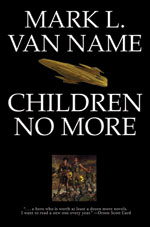
VAN NAME: I generally outline, but how detailed the outline is varies widely. For a thriller, FATAL CIRCLE, that I’m partway through and hope one day to finish, I had to do some research in key areas and consult with some experts. The result was a very detailed, very long outline–over twenty-six thousand words, a quarter of a typical novel. For CHILDREN NO MORE, I went with an outline of barely three thousand words. I outline to the level I feel necessary before I’m ready to start writing the book, and then I write.

I do some writing work every day. That’s been the key to changing me from someone who sold a story every few years to someone who has multiple novels out. I don’t, though, have a word-count quota. I avoid that sort of goal because it’s so easy to fail at it, and I hate failing. Instead, I have a time requirement: I must devote at least half an hour a day solely to writing work. As long as I’ve done that, I’ve succeeded. Most days, I do more. Most days, I get a fair number of words on the page. Some days, I produce very few. As long as I’ve tried for half an hour minimum, I call it a success.

VENTRELLA: What do you see as the future for printed books? For book stores?

VAN NAME: I love books. I really do. My house is full of them. They’re everywhere. Sadly, I believe the printed book is going to become a minority taste. I’m not sure if the transition will take ten years or fifty, but I believe it’s coming. That said, in the fiction world, books are containers for stories, and ebooks are simply other containers for stories. Similarly, I believe bookstores will continue to exist, but they will evolve, and in time their numbers will shrink. I will hate that, because I love bookstores almost as much as I love books.

I hasten to add that I don’t see any of this as the demise of writers or of people paying for stories. They’ll just pay for those stories in other forms.

VENTRELLA: What’s your opinion on self-publishing?

VAN NAME: Rather mixed. I write a blog, so in a sense I self-publish. I sell all my fiction, however, to traditional publishers. I know that some writers can make a great deal of money self-publishing, but being a publisher is a lot of work, and most of that work is not writing, which is what I most want to do. So, for me, selling to a publisher remains the way I hope to continue to bring my fiction to the market.

I also expect most people who self-publish are unlikely to make a lot of money doing so. The sales and marketing experience that a publisher brings to its job helps make each writer a brand–some obviously much bigger brands than others–and it’s hard to manage that feat on your own. Plus, self-publishers have to be good enough at analyzing their own work to know when it’s of publishable quality. I’ve read some who are indeed good at that job, but I’ve also read many who are not.

Like so many things, if others want to do it, I wish them the best. For the most part, though, it’s not for me, at least not now. I add that last bit because even for those of us who work in the future every day, it’s pretty darn hard to predict.

VENTRELLA: With a time machine and a universal translator, who would you invite to your ultimate dinner party?

VAN NAME: I agonized over this question for months. In fact, it’s the biggest reason I’ve been so late getting this interview back to you. I really took the challenge seriously, and I found I simply couldn’t come up with a single ultimate dinner party. I won’t let myself cop out completely, though, so I’m going to give you, in no particular order, a few that particularly caught my fancy.

Each on his own, just so I could focus exclusively on him: Homer, Shakespeare, Keats, and my biological father, whom I’ve met only once for a couple of hours.

My mother as a young woman, but with someone standing by to knock me out if I started to give away the future.

Several women I care about deeply, each alone, each as a young girl, just so I could see who they once were.

I could go on and on, but one thing is clear: I’d be greedy, going for one-on-one time rather than organizing a group.

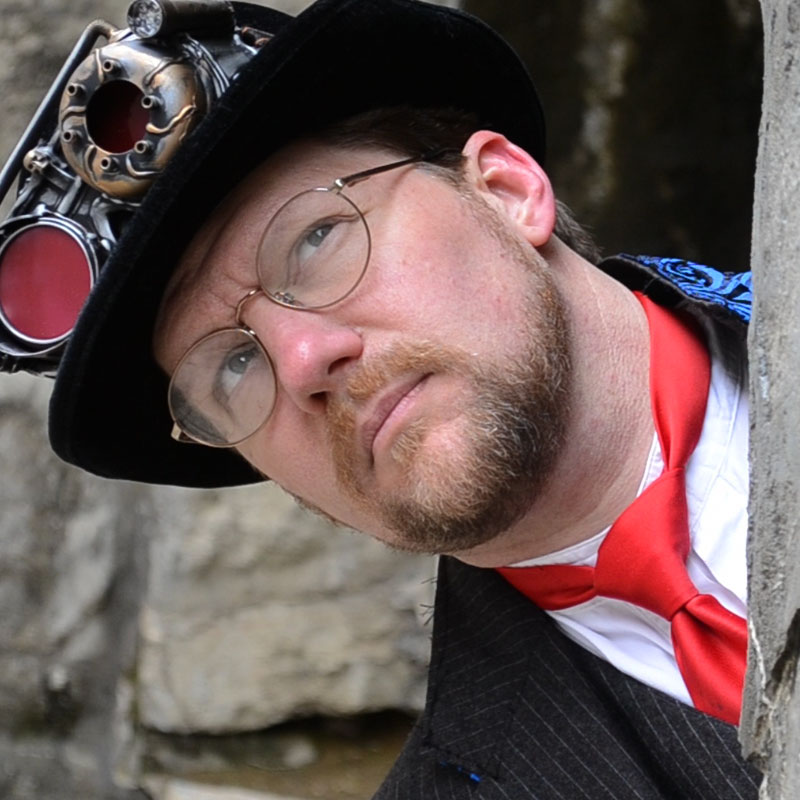
Interview with Author Tee Morris

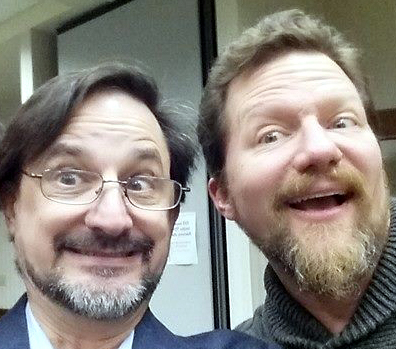
MICHAEL A. VENTRELLA: I’m pleased to be interviewing Tee Morris today. Tee grew up very near me in Richmond, Virginia yet we never met until a few years ago at a convention. His web page is TeeMorris.com.

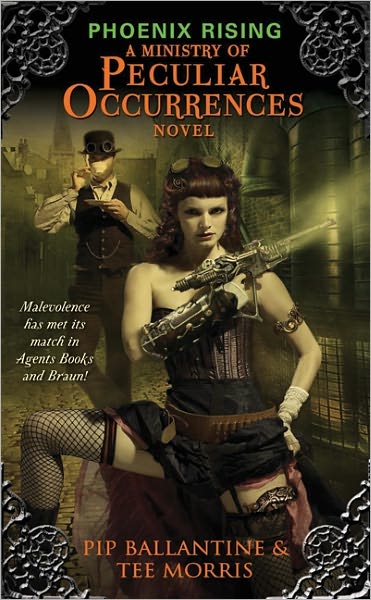
Let’s start by discussing your latest book, which will be first in a series –- PHOENIX RISING: A MINISTRY OF PECULIAR OCCURENCES NOVEL. How did you decide to collaborate with Pip Ballentine?

TEE MORRIS: It was a bit of arm-twisting on Pip’s part. I had a bad experience with co-writing, and my co-author really put me in a precarious position that completely ruined our friendship and professional relationship. So I was quite gun-shy. Pip eventually talked me into a compromise: we would write a podcast-for-pay idea. Unexpectedly, someone contacted Pip’s agent on this “steampunk idea” she was working on, I was then picked up by Pip’s agent, we changed focus and then we got to work on what would become PHOENIX RISING.

I still can’t believe we put this puppy together and are now, presently, closing in on the sequel’s climax.

VENTRELLA: Was there a conscious decision to write a steampunk novel because of current interests in steampunk for business reasons?

MORRIS: Actually, no. Steampunk was a conscious choice, but it was because we wanted to write it.

I first discovered “steampunk” back in 2006 and found it fascinating. I wanted to write something in it, but I didn’t want it to be a knock-off of what I had already read and seen. There’s a lot of cool things to explore in steampunk, and the more I delve into it the cooler it gets. There are authors who are riding the steampunk train to capitalize on its rapidly-growing popularity, but Pip and I wanted to do something we were sincerely drawn to, and steampunk really appealed to us.

VENTRELLA: How much should a writer consider the market when deciding what to write?

MORRIS: The writer should look at what is selling when they want to begin pitching to agents and editors. However, you really should consider how good of a product you are going to produce if you simply write to what’s hot. I’ve seen authors do that, and the writing comes across as trite. If your heart isn’t into it, the reader will assuredly pick up on that. At present, I won’t write a werewolf-vampire-Buffe-Blake urban fantasy because I have nothing new to offer to that market. If I tried, it would probably insult readers of the genre and do a lot of damage to my career.

Sure, look at the market, but don’t try to force a story to happen. That can backfire and really damage a career.

VENTRELLA: How did your collaboration work?

MORRIS: Believe it or not, writing across hemispheres was very productive. Whenever I slept, Pip wrote; and when Pip was asleep, I was writing. Literally we got in 24 hours of non-stop writing. This is one reason why, with Pip working on relocating to the Americas, our word count has taken a hit.

The downside was that we had small windows of time when we could discuss the book. We couldn’t bounce off ideas when we had them, and discussing problematic moments were…well, problematic as we could only do that for a small window of time between hemispheres. Still we managed, and we now have a pretty solid workflow at home.

VENTRELLA: How did you interest Harper? Did you have an agent first? Was the novel completed and then submitted or did they accept a proposal?

MORRIS: The Harper Voyage deal is all due to Laurie McLean, our Super-Agent. What happened was Pip’s write-up in Locus Magazine took an interested party to her website. When they saw she was working on this steampunk property with me, they immediately asked “When could we see it?” So I signed on with Larsen-Pomeda Agency and then we got cracking. The “interest” didn’t really kick in until someone made an offer. Literally, within 24 hours, there was a bidding war (from people who had initially passed on it), and then the wildcard — Harper Voyager — stepped in and said “We want it. Badly.”

The rest is future-history.

VENTRELLA: How are you promoting this book?

MORRIS: Pip learned a lot of new promotion tactics when working with ACE and GEIST. Between our previous experiences with Dragon Moon Press, we’re simply incorporating years of what has (and hasn’t) worked, and creating a plan:

1. The “Tales from the Archives” Podcast. This is the first volume in what could be a continuing series of short stories set in the world of The Ministry of Peculiar Occurrences. We’ve been having a blast with this, watching really talented authors like Valerie Griswold-Ford, Nathan Lowell, O.M. Grey, P.C. Haring, and many others produce original steampunk of various moods. We’re only a few episodes in, and people are really enjoying these works.

2. The Book Trailer.

People have really mixed opinions about book trailers and whether or not they sell books, but I argue that it really does depend on the book trailer. This one was particularly ambitious as we were creating original footage as opposed to working with stock footage as I did with Pip’s Geist trailer (which I edited together). We have been getting a terrific response from it with over 1000 views on YouTube and over 500 shares on Facebook in just over a week. It’s also a great way to get the word out about the book. How will it equate in sales? We don’t know, but it is helping in letting people know what the book is, or at least what the mood of our book is.

3. The Ministry Blog and Podcast Tour. As you see here with your blog, Michael, and others online, Pip and I started writing guest columns and interviews not only with podcasts (which really worked well for us back in August 2008 when we hosted “Double Trouble” online) but with blogs as well. Pip found that work with bloggers — book reviewers, authors, and others — cast our net a little wider than the podosphere. We’re reaching new people who show a little more faith and trust in their book blogs than they do in the mainstream media book critics. (Something we find very telling.)

4. Ministry May-hem. The month of May is when we start with the push of live appearances. It begins on April 30 (Not quite May, but close enough) with a stop at Borderlands in San Francisco. Then on May 7th we return to Staunton, VA (where we filmed the Ministry trailer) at BookWorks, and we will be wearing our steampunk best. May 11 we head up to Harrisburg, PA for a Watch the Skies meeting. Again, we’ll be in our steampunk best. Then May 20-22 is the Steampunk World’s Fair in Sommerset, NJ. We close the May-hem with Balticon May 27-30.

June … we’re going to have a wee rest.

5. Buttons, stickers, bookmarks, and postcards. You can never go wrong with freebies.

Pip and I have learned over the years that the key months of promotion should be the month before a release (keeping it fresh in people’s minds), and then two months after the book’s release (as it has that “new book” smell). If after June the book hasn’t “caught on” it probably won’t. You can still promote and still pimp, but it’s “old news” after that.

For Pip, though, she’s got SPECTYR (the sequel to GEIST) coming at the end of June, so there will be some serious gear shifting during the May-hem. Rather appropriate, now that I think about it.

VENTRELLA: This is your first novel with a major publisher (if I am not mistaken). What differences have you found between Harper and Dragon Moon? (And why do so many small publishers have “Dragon” in their name? My publisher is Double Dragon. Maybe they should merge and become Double Dragon Moon.)

MORRIS: Apart from the advance (which is a mixed blessing in itself), the distribution (which is a blessing no matter how you look at it) and the layout of the book (which I did for myself quite often because I liked that), there is still a “team” feel about working indie and working corporate. I have noticed with Harper Voyager that our publicist is also working hard to get our names and book out there to critics and media outlets, both traditional and new. Having that kind of support in publicity has been very nice! Dragon Moon and I did a lot of great things together, but distribution was always a challenge. I grew as a writer, and they gave me my first opportunity. A lot of terrific things happened to me because of it.

Harper Voyager is not my first orbit around the Moon, but it is definitely my “small step” and “giant leap” into what I hope will be my writing career.

VENTRELLA: You travel to many conventions to promote your books. Do you advise aspiring authors to attend these things? What do you get out of these conventions yourself?

MORRIS: Something else that I have learned in my years as a writer is really, really listen to what other authors have to say. (Both good and bad, when it comes to advice.) Perhaps one of the most important nuggets of know-how I got was from Hugo/Nebula/Aurora/insert-SF-writing-award-here winning author Robert J Sawyer:

“When you get an advance, don’t spend it. That advance is your marketing and advertising budget.”

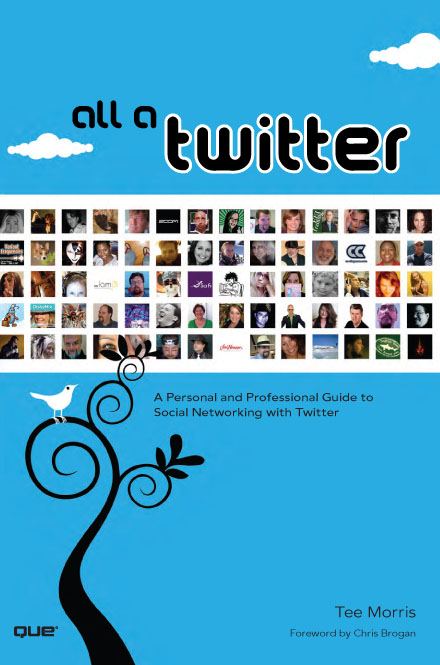
I was traveling without an advance as my budget, and pushed myself several of thousands of dollars into debt. Even when I was writing books like PODCASTING FOR DUMMIES and ALL A TWITTER, I was already so deep in the red. People across the country had my books in hand, sure, but I was broke. Part of the problem was poor financial planning. When I got out of that debt, I plan events very differently now.

Don’t get me wrong, I love going to these conventions. I love talking shop, meeting other authors, and talking to other fans, not just about what I write, but about other geeky things like Firefly, Eureka, and steampunk. I dig that. But as I mentioned on my blog, these conventions are not cheap. I get invited to a lot of cons, but unless some of these costs are offset, I can’t go. In my early days/years, I would never make claims to have cons offset my costs. However, I have to make it a point of asking now as it’s just not that easy for me financially. I think cons are great for authors, provided you are smart about which cons you are going to attend; and more importantly, what you can afford.

VENTRELLA: How has the publishing industry changed since you entered it?

MORRIS: Well, there’s the e-book market for starters. The whole e-book movement has really been fascinating to watch. I think with the development of the ePub format, the elegance of iBook and the Kindle, and the affordability of digital books in comparison to hardbounds, the e-book is coming into its own. The publishing industry is now being forced to adapt, and I think many publishers are on top of it.

I’m also noticing over the year a growing animosity between writers and publishers, more of it coming from writer. There’s a mentality of “Us vs. Them” which rings hollow when I hear writers say “We understand it’s a business.” I’ve always regarded my career as a business, and I can only hope that I’m still writing when my child is in college. Harper Voyager have asked a lot from Pip and myself, but we are all working together to make the best book possible. If the book is a hit, it’s a win from everyone involved. That’s why I’m a little put off by that argument.

Something I have noticed, too, is that misconception of “writers just writing and letting someone else handle promotion as that is someone else’s job” is finally dying out. Even older authors have recognized the power and potential in podcasting, blogging, and social networking. Writers have needed to become Swiss Army Knives, wearing many hats and building up neck muscles in order to support them all. We have to look beyond “the end” and work with our publisher and the public to make our upcoming titles meet their potential.

VENTRELLA: What is the biggest misconception beginning writers have about the craft?

MORRIS: The biggest misconception (apart from the one mentioned in the previous question) is the editor is out to “ruin” your work. Only bad editors tell you something like “Change it, or else.” An editor’s job is to make your good book a great book, and in this process help you become a better writer. Again, it’s a team effort. And when you do have a point of contention, you have to defend your choice with facts and resources backing up your facts. Simply saying “because it is cool” doesn’t cut it. I am thankful for every editor I’ve had, and I am a better, smarter writer because of them.

VENTRELLA: What is the biggest mistake you see beginning writers make?

MORRIS: Superiority complexes. I’ve seen this in both writers with big and indie houses and it sickens me. A byline doesn’t make you any better a person. You just come across to people as a right jerk …with a byline. Maybe fans would “look away” once upon a time, but that kind of behavior can affect your sales. It can also make you a real leper amongst your peers. And even with books, awards, and movie deals (if you are really blessed) behind you, try and keep your head on straight. This ride can end at the drop of a bowler hat. I know that. So, I do what I can to be the best person (who just happens to have a byline) I can be.

VENTRELLA: What’s your next project?

MORRIS: My next project is a steampunk reboot of MOREVI. I love the story and I love the characters of MOREVI; but as it is, MOREVI is not ready for the mainstream press. It needs a rewrite. It needs a new direction. And it needs, for the love of God, to lose the elves. Those were my co-author’s touch, and I’ve hated them since the original printing.

I don’t have a problem with elves. They’re like Vulcans with better tailors. I just felt like they were not a good fit with MOREVI, and I think a complete reboot with Rafe taking to the skies and the region be China. (Still kicking around ideas, you know.) It would be something like Battlestar Galactica, only without so much gender bending.

me&tee

Short Stories

Short stories are hard. Harder than novels.

That’s what I and many other writers think, as you can see from some of the interviews here. A novel gives you time to develop characters, control the action, and create a full world. A short story has to do as much of that as possible in a very limited space.

At the same time, a short story can be completed in much less time.

I had a short story published in the anthology RUM AND RUNESTONES last year called “X Spots the Mark” in which pirate Captain Irad the Fair follows a fake treasure map. Of course, being one of my stories, things are never as they seem and you can expect a twist at the end.rum3

The sequel will soon be published in another anthology called CUTLASS AND MUSKET: TALES OF PIRATICAL SKULLDUGGERY. And then my story “The Zombie King’s Plan” will be in the collection TALES OF FORTANNIS: A BARD’S EYE VIEW due out in June (and edited by me!)

I am doing more short stories in anthologies these days for exposure. When someone buys an anthology, they probably have never heard of me or read anything by me. They’re getting it because they like the subject or because there is another author whose story in the anthology they wish to read. But once they have the book, they may take a chance and read my story as well. And then I might have another reader who will want my novels.

Plus I get paid. I mean, come on, that’s nice too.

So if you’re a starting writer, consider short stories as a way to get noticed. In the TALES OF FORTANNIS series I am editing, I am more than happy to read stories from unpublished writers, and in fact, about half of the stories in this first collection are from first time authors. I am already planning the next edition and have set a deadline for August 1, 2011. More information is available here.